Article

Gamification and Active Learning in Agricultural Engineering: Evaluating the Impact of an Interactive Response System on Academic Performance and Stress Reduction

by
Patricia Marín-Membrive
,
Araceli Peña-Fernández
* and
Diego Luis Valera-Martínez
Department of Engineering, University of Almería, 04120 Almería, Spain
*
Author to whom correspondence should be addressed.
Educ. Sci. 2026, 16(8), 1320; https://doi.org/10.3390/educsci16081320
Submission received: 8 July 2026 / Revised: 10 August 2026 / Accepted: 13 August 2026 / Published: 18 August 2026

Abstract

The transition towards active-learning pedagogies represents an important challenge in STEM (Science, Technology, Engineering, and Mathematics) education, particularly in Agricultural Engineering courses characterised by mathematically demanding content and complex engineering problem solving. Although gamification and Student Response Systems (SRSs) have shown promising educational potential, empirical evidence regarding their combined application in Agricultural Engineering remains limited. This quasi-experimental repeated-measures study evaluated an Educational Innovation Project integrating the Wooclap Student Response System with structured gamification activities—including educational escape rooms, forensic engineering simulations, collaborative challenges, and peer discussion—in two undergraduate Agricultural Engineering courses at the University of Almería. Academic performance was assessed through short-term (one week) and medium-term (one month) knowledge-retention tests, while students’ perceptions were explored using repeated questionnaire administrations throughout the intervention. Quantitative analyses included descriptive statistics, assessment of normality, paired-samples Student’s t-tests, 95% confidence intervals, and Cohen’s d effect sizes. The intervention was associated with statistically significant improvements in short-term and medium-term academic performance, with medium to large effect sizes, while students also reported high levels of engagement, perceived knowledge retention, technological usability, and reduced academic stress. These findings suggest that integrating a Student Response System with structured gamification may support active learning and knowledge retention in technically demanding Agricultural Engineering courses. Nevertheless, because of the quasi-experimental repeated-measures design and the absence of a parallel control group, the findings should be interpreted as evidence of an association between the instructional approach and the observed educational outcomes rather than as proof of causal effectiveness. Further controlled studies involving larger and more diverse engineering cohorts are warranted.

1. Introduction

Higher education is undergoing a profound transformation driven by technological advances, evolving labour-market demands, and the need to prepare graduates with both disciplinary knowledge and transferable competencies. Within this context, engineering education has progressively shifted from traditional teacher-centred approaches towards student-centred pedagogies that emphasise active participation, critical thinking, collaboration, and authentic problem solving (Crawley et al., 2014; Dewey, 1986; Johri & Olds, 2015; Kolb, 1984; Piaget, 1952). These educational models are particularly relevant in engineering, where students must integrate theoretical principles with practical decision-making in increasingly complex professional environments (Dym et al., 2005).
Among these pedagogical approaches, Active Learning has consistently demonstrated its effectiveness in improving academic achievement and conceptual understanding compared with conventional lecture-based instruction (Freeman et al., 2014; Hake, 1998; Michael, 2006; Prince, 2004). More recent systematic reviews confirm that active learning approaches supported by gamification and digital technologies continue to produce positive effects on student engagement and academic performance across higher education, although their effectiveness depends on instructional design and pedagogical implementation (Ulloa Arias & Carcausto Calla, 2024). Rather than positioning students as passive recipients of information, Active Learning promotes engagement through discussion, collaborative problem solving, reflection, and immediate application of knowledge. According to the ICAP framework, deeper cognitive engagement is achieved when learners actively construct and interact with knowledge rather than simply receiving information (Chi & Wylie, 2014). Similarly, the CDIO educational model advocates instructional environments that integrate technical knowledge with professional competencies through authentic engineering experiences (Crawley et al., 2014).
Despite these well-established educational principles, maintaining active participation remains particularly challenging in engineering programmes characterised by mathematically intensive content and highly analytical problem-solving tasks. Subjects such as Structural Analysis, Machine Design, and Agricultural Engineering frequently require students to manipulate abstract concepts, perform complex calculations, and interpret technical information under considerable cognitive demand. Under these conditions, conventional lecture-based instruction may limit opportunities for interaction, formative feedback, and sustained attention, reducing students’ engagement with the learning process (Freeman et al., 2014; Prince, 2004).
Agricultural Engineering presents additional educational challenges because it combines theoretical instruction with practical applications across multiple disciplines, including mechanics, structural engineering, hydraulics, and agricultural systems. Students are therefore expected not only to master complex analytical procedures but also to transfer this knowledge to realistic engineering contexts. These characteristics make Agricultural Engineering an appropriate setting for evaluating innovative teaching strategies designed to increase participation, improve conceptual understanding, and enhance knowledge retention.
Among the active-learning strategies currently receiving increasing attention, gamification has emerged as a promising approach for enhancing motivation, engagement, and participation in higher education. Gamification refers to the intentional incorporation of game design elements into non-game educational contexts with the aim of promoting meaningful learning experiences (Deterding et al., 2011; Kapp, 2012). Unlike game-based learning, which relies on complete educational games, gamification integrates elements such as points, challenges, narratives, leaderboards, immediate feedback, and collaborative missions into existing instructional activities to encourage active participation (Hunicke et al., 2004; Koivisto & Hamari, 2019).
The educational effectiveness of gamification is generally explained through motivational and cognitive perspectives. According to Self-Determination Theory, learning environments that support autonomy, competence, and social relatedness enhance intrinsic motivation and sustained engagement (Ryan & Deci, 2000). Similarly, the MDA framework (Mechanics, Dynamics, and Aesthetics) emphasises that carefully designed game mechanics can shape learners’ interactions and emotional experiences, ultimately influencing educational outcomes (Hunicke et al., 2004). Empirical studies have consistently associated gamified learning with increased participation, motivation, collaboration, and academic performance across a wide range of higher education contexts (Buckley & Doyle, 2016; Koivisto & Hamari, 2019; Majuri et al., 2018; Sailer et al., 2017). These findings are supported by recent systematic reviews, which conclude that gamification generally enhances active learning and student engagement when implemented within coherent pedagogical frameworks rather than as an isolated technological resource (Ulloa Arias & Carcausto Calla, 2024).
In engineering education, however, the value of gamification extends beyond motivation. Well-designed gamified activities can encourage students to repeatedly apply theoretical concepts in authentic problem-solving situations, thereby supporting conceptual understanding and professional decision-making. Recent reviews have highlighted the growing adoption of gamification within engineering programmes, particularly in activities involving design thinking, collaborative learning, and complex problem solving (Deng et al., 2026; Nawaz et al., 2026; Senevirathna et al., 2023). Nevertheless, empirical evidence remains limited for highly technical Agricultural Engineering subjects, where students must integrate mathematical reasoning with engineering judgement. Recent studies conducted in engineering education have reported positive effects of gamified active learning on students’ engagement, participation, and conceptual understanding, particularly when these methodologies are embedded within authentic engineering activities (El-Thalji, 2025). However, further evidence is still required to determine whether these benefits extend to medium-term knowledge retention and more complex engineering contexts such as Agricultural Engineering.
Alongside gamification, Student Response Systems (SRS) have become widely adopted as tools for promoting interaction and formative assessment in higher education. These systems enable students to respond to questions in real time using mobile devices while allowing instructors to monitor understanding and provide immediate feedback (Caldwell, 2007; Kay & Lesage, 2009). Previous research has shown that SRS increase classroom participation, improve attention, and facilitate collaborative discussion, particularly when integrated into active-learning environments rather than being used solely as polling tools (Blasco-Arcas et al., 2014; Keough, 2012; Vallely & Gibson, 2018). More recently, systematic evidence has confirmed that audience response systems positively influence student motivation, engagement, and learning outcomes when combined with active learning methodologies (Serrada-Sotil et al., 2025).
Among the available SRS platforms, Wooclap has gained increasing popularity because of its seamless integration with institutional Learning Management Systems (LMSs), support for Learning Tools Interoperability (LTI), and broad range of interactive question formats. Beyond collecting responses, the platform enables instructors to incorporate quizzes, ranking exercises, brainstorming tasks, and collaborative activities into synchronous classroom sessions, creating opportunities for continuous formative feedback and peer interaction. These characteristics align closely with contemporary recommendations advocating technology-enhanced active learning in STEM education (Chi & Wylie, 2014; Toda et al., 2019). Recent reviews further suggest that Student Response Systems are most effective when integrated into structured instructional strategies combining formative assessment, collaboration, and immediate feedback (Serrada-Sotil et al., 2025).
Although gamification and Student Response Systems have independently demonstrated positive educational effects, comparatively few studies have examined their combined implementation in Agricultural Engineering courses characterised by high cognitive demand and intensive analytical problem solving. Consequently, further empirical evidence is needed to determine whether integrating these approaches can improve both academic performance and students’ learning experiences in technically demanding engineering education.
Despite the growing body of evidence supporting Active Learning, gamification, and Student Response Systems in higher education, important gaps remain within engineering education. Most published studies have focused on general STEM courses or introductory engineering subjects, whereas comparatively little empirical evidence is available for Agricultural Engineering, where students routinely address highly analytical and multidisciplinary problems requiring the integration of theoretical knowledge with engineering decision-making (Deng et al., 2026; Johri & Olds, 2015; Nawaz et al., 2026). Furthermore, previous research has frequently examined gamification or Student Response Systems as independent instructional approaches, while fewer studies have investigated their combined implementation within coherent pedagogical designs intended to promote conceptual understanding, collaborative learning, and sustained knowledge retention.
Another limitation of the existing literature concerns the assessment of educational outcomes. Most studies have concentrated on immediate indicators of engagement, motivation, or academic performance, whereas relatively few have examined whether the benefits of gamified active learning persist beyond the classroom. Recent systematic reviews have also identified a shortage of studies simultaneously evaluating immediate learning, medium-term knowledge retention, and students’ perceptions within engineering education (Ulloa Arias & Carcausto Calla, 2024). Consequently, evidence regarding medium-term knowledge retention, students’ perceptions of mathematical confidence, and the educational use of mobile devices in technically demanding engineering courses remains limited. Addressing these aspects is particularly relevant for Agricultural Engineering programmes, in which durable conceptual understanding is essential for subsequent professional practice.
The present study addresses these gaps through the implementation and evaluation of a structured Educational Innovation Project integrating Wooclap with gamification-based active-learning strategies in two undergraduate Agricultural Engineering courses. Rather than introducing digital technology as an isolated instructional resource, the intervention combined real-time formative assessment, collaborative problem solving, contextualised engineering scenarios, and progressive learning challenges designed to promote both cognitive engagement and conceptual understanding.
The study adopted a within-subject quasi-experimental repeated-measures design to evaluate the educational impact of the intervention from complementary perspectives. Quantitative analyses examined immediate and medium-term knowledge retention, whereas qualitative data explored students’ perceptions regarding engagement, technological usability, stress reduction, and overall satisfaction with the instructional methodology. By combining objective learning outcomes with students’ educational experiences, the study provides a more comprehensive evaluation of the pedagogical value of gamified Student Response Systems in Agricultural Engineering education.
Accordingly, the objectives of this study were: (i) to evaluate whether the implementation of a Wooclap-supported gamified instructional approach was associated with improvements in students’ academic performance and conceptual understanding; (ii) to examine the stability of learning outcomes through a delayed knowledge-retention assessment; and (iii) to analyse students’ perceptions regarding engagement, classroom participation, technological usability, stress reduction, and overall satisfaction with the proposed instructional approach. It was hypothesised that combining structured gamification with a Student Response System would be associated with improved learning outcomes, greater student engagement, and a more positive educational experience in technically demanding Agricultural Engineering courses.
Therefore, this study addressed the following research questions:
RQ1. Was the implementation of Wooclap within a gamified active-learning methodology associated with improvements in students’ immediate academic performance?
RQ2. Were the improvements in academic performance observed after the instructional intervention still evident one month later?
RQ3. How do students perceive the effects of the intervention on engagement, motivation, classroom participation, and learning experience?

2. Materials and Methods

2.1. Context and Participants

This study was conducted within the framework of a Educational Innovation Project implemented at the University of Almería (Spain) during the 2025–2026 academic year. The intervention was carried out in two compulsory courses of the Agricultural Engineering degree programme: Machine Elements and Agricultural Structures II. Both subjects are characterised by a high level of analytical and mathematical complexity associated with structural and kinematic calculations.
Previous studies, together with accumulated teaching experience, suggest that such technical demands are frequently linked to reduced student motivation, elevated levels of academic stress, and increased rates of early academic withdrawal. Consequently, these courses were considered particularly suitable contexts for evaluating both the pedagogical effectiveness and the affective impact of gamification strategies and the Peer Instruction methodology.
The combined official enrolment of the participating courses constituted the study population. A total of N = 30 students completed all phases of the intervention and were therefore included in the final analysis. According to the institutional regulations governing Educational Innovation Projects at the University of Almería (Spain), formal approval by an Institutional Review Board (IRB) or Research Ethics Committee was not required because the study did not involve clinical interventions or the collection of sensitive personal data. Nevertheless, before the study commenced, all participants received a Participant Information Sheet describing the aims of the study, the voluntary nature of participation, the anonymous processing of the collected data, and their right to withdraw at any time without academic consequences. The Participant Information Sheet was presented before the first intervention session and was also made available through the University’s Virtual Learning Environment.
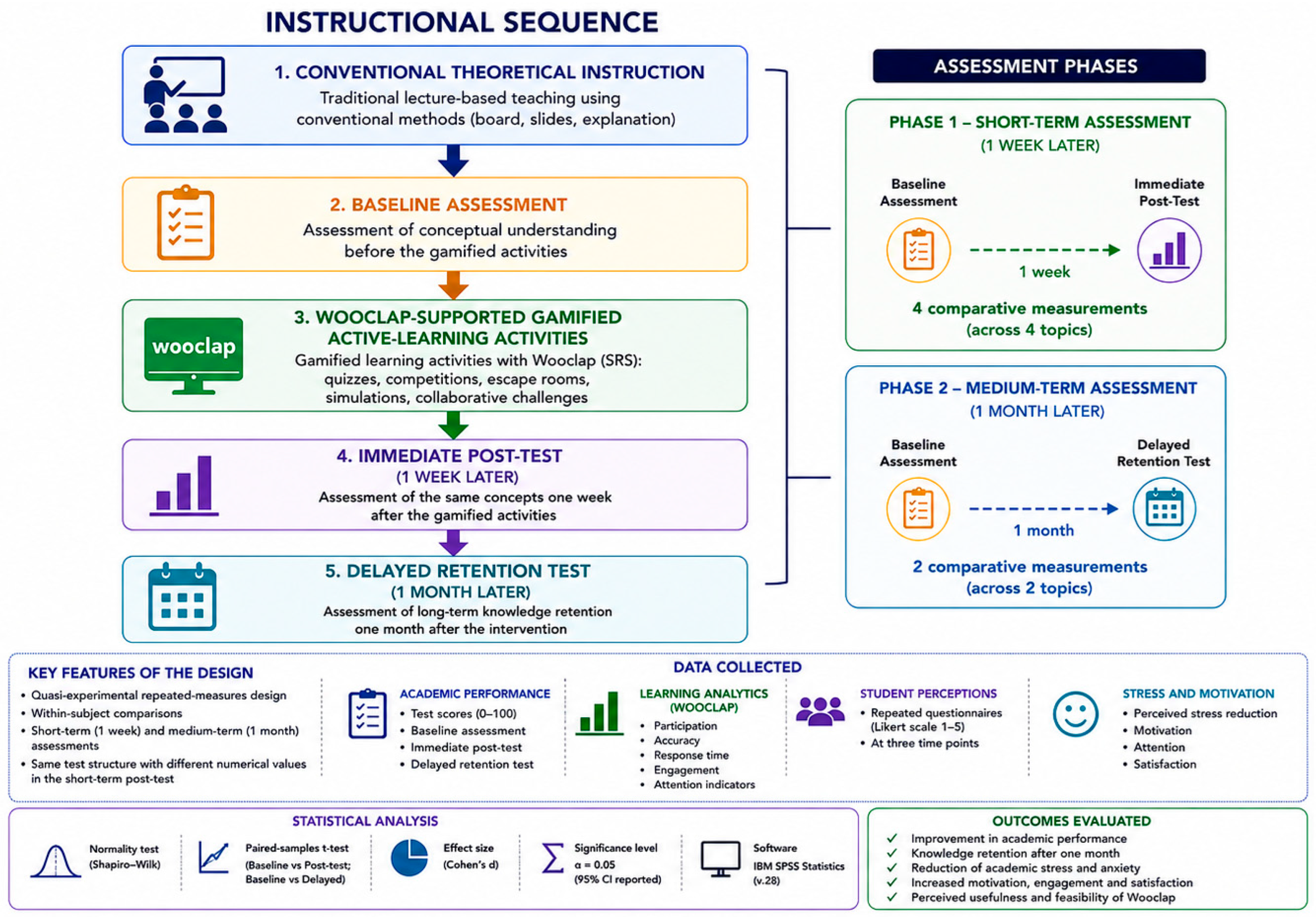
Figure 1 illustrates the overall experimental design adopted in this study. A within-subject quasi-experimental design was implemented, in which the same cohort of students completed baseline assessments, followed the instructional sequence including Wooclap-supported gamified active-learning activities, and subsequently undertook immediate and delayed knowledge-retention assessments.

2.2. Technological Tool and Virtual Learning Environment

The intervention was supported by Wooclap, an interactive learning platform that enables the collection of participation and performance data in real time. Students completed baseline and subsequent assessments as part of the instructional sequence. Wooclap was used as the central Student Response System during the gamified active-learning activities, supporting real-time interaction, formative assessment, peer discussion, and immediate feedback.
Wooclap was directly integrated into the University of Almería Virtual Learning Environment through the Learning Tools Interoperability (LTI) standard. This integration allowed students to access the platform using their institutional credentials, ensuring secure authentication, unambiguous participant identification, and complete traceability of learning activities.
Furthermore, the connection between Wooclap and the institutional Learning Management System (LMS) enabled the automatic synchronisation of results and grades, reducing technical issues commonly associated with external platforms while simplifying the management of the teaching intervention.
During the intervention, Wooclap was not used exclusively as an assessment platform. It functioned as the central Student Response System (SRS) supporting the implementation of the gamified learning activities by facilitating real-time interaction, formative assessment, structured peer discussion, and immediate feedback. Students used Wooclap to answer conceptual and problem-solving questions individually after brief peer discussions, while the instructor used the aggregated responses to guide classroom discussion, clarify misconceptions, and provide immediate formative feedback. Consequently, Wooclap served both instructional and assessment purposes throughout the intervention, supporting student engagement as well as the collection of academic performance data.

2.3. Research Design (Quantitative Approach)

The study adopted a quasi-experimental repeated-measures design in which the same cohort of students was assessed before and after the instructional sequence. This approach enabled the evaluation of changes in academic performance and knowledge retention across the instructional sequence while maintaining the ecological validity of the regular classroom environment. The study was structured into two temporal phases (short-term and medium-term assessment) to evaluate immediate and sustained changes in academic performance.
  • Phase 1: Short-Term Assessment (8 Sessions): This phase evaluated changes in students’ academic performance following the sequential implementation of the instructional approach. Students first received conventional theoretical instruction, after which a baseline assessment was administered. Gamified active-learning activities supported by Wooclap were subsequently implemented, and an immediate post-test was administered one week later. Numerical values within the test items were modified between assessments to minimise short-term memorisation effects while preserving the conceptual structure of the problems. Four paired measurements were obtained across the eight sessions.
  • Phase 2: Medium-Term Assessment (4 Sessions): This phase evaluated the persistence of the observed learning performance through delayed assessments administered one month after completion of the gamified learning activities. The delayed assessments were not designed as a comparison between traditional and gamified instruction, but rather as a follow-up assessment of knowledge retention after the complete instructional sequence. The original test questions were maintained unchanged to evaluate the retention and subsequent retrieval of the previously addressed engineering concepts. Two paired delayed measurements were obtained during this phase.

2.4. Design of the Gamification Activities

The practical teaching sessions replaced conventional instructor-centred board explanations with ten discipline-specific gamified activities specifically designed for Agricultural Engineering education. These activities constituted the gamified component of the overall instructional approach and followed the initial conventional theoretical instruction. Accordingly, the study evaluated changes in students’ performance across the instructional sequence rather than comparing two independent instructional conditions. These activities were organised into three strategic categories.
  • Category 1: Educational Escape Rooms and Time-Attack Challenges. These activities immersed students in time-constrained critical scenarios where successful completion depended exclusively on the accurate application of engineering calculations.
  • Category 2: Forensic Engineering and Technical Investigation Activities (Role-Playing and Real Cases). Practical sessions were transformed into professional auditing and investigation environments in which students defended engineering calculations, identified design failures, and applied reverse-engineering principles to real-world cases.
  • Category 3: Competitive Challenges, Contests, and High-Speed Problem-Solving Activities. These activities promoted mathematical agility, mental calculation skills, and cost-optimisation decision-making within highly interactive competitive or collaborative environments.
Peer Instruction principles were incorporated throughout the intervention by encouraging students to discuss each question in small groups before submitting their answers through the Student Response System (SRS). These structured peer discussions allowed students to explain their reasoning, compare alternative solutions, and receive immediate formative feedback before the instructor reviewed the correct answer with the whole class. Rather than being implemented as an independent instructional methodology, Peer Instruction constituted an integral component of the gamified active-learning approach adopted in this study.
To facilitate the systematic implementation of these methodologies, Table 1 summarises the relationship between each gamified activity, the engineering competency assessed, the corresponding learning objective, and the primary gamification mechanism employed.

2.5. Qualitative Assessment Instruments

In parallel with the quantitative analysis, a repeated qualitative data collection conducted at different stages of the intervention was conducted to evaluate students’ perceptions of the intervention. Participants completed structured questionnaires through Wooclap using five-point Likert scales across three stages of the study.
Initial Phase:
  • Attention loss during lectures and non-academic use of digital devices;
  • Participation levels and perceptions of traditional teaching approaches;
  • Previous experience with gamification.
Intermediate Phase:
  • Impact on motivation and classroom engagement;
  • Technological usability;
  • Perceived effectiveness of feedback
  • Interaction and collaboration.
Final Phase:
  • Perceived impact on knowledge retention;
  • Development of digital competencies;
  • Contribution to academic performance;
  • Reduction in academic stress
  • Overall satisfaction and transferability of the methodology.
The specific questionnaire items administered during each phase, together with the dimensions evaluated and response scales employed, are presented in Table 2.
The questionnaires used in this study were specifically developed for the purposes of the Educational Innovation Project and were intended as exploratory instruments to capture student perceptions regarding the intervention. Consequently, the results should be interpreted as indicative measures of perceived impact rather than as outcomes derived from previously validated psychometric scales.
Each gamified activity included a structured peer discussion phase prior to individual response submission using Wooclap, following the principles of Peer Instruction.

2.6. Statistical Analysis

To systematically evaluate the impact of the gamification and Student Response System (SRS)-based intervention, a formal statistical analysis protocol was established for both academic performance data (Phases 1 and 2) and qualitative perception surveys.
The analytical framework comprised the following procedures:
  • Descriptive Analysis: Descriptive statistics were calculated for all quantitative variables, including the arithmetic mean (X), standard deviation (SD), standard error (SE), and 95% confidence intervals (95% CI). Percentage improvements relative to baseline performance were also computed to facilitate interpretation of learning gains.
  • Assessment of Parametric Assumptions: Prior to inferential testing, the normality of the paired differences between pre- and post-intervention scores was evaluated using the Shapiro–Wilk test. Since the assumption of normality was not satisfied for any of the paired comparisons (Shapiro–Wilk, p < 0.05), both parametric and non-parametric inferential procedures were considered to ensure the robustness of the statistical conclusions.
  • Inferential Analysis: Paired-samples Student’s t-tests were performed to compare baseline and post-intervention scores. Because the normality assumption was not satisfied for the paired differences, complementary Wilcoxon signed-rank tests were also conducted to evaluate the robustness of the findings. Both statistical approaches produced consistent conclusions.
  • Statistical significance was evaluated at both the 95% (α = 0.05) and 99% (α = 0.01) confidence levels. Differences were considered statistically significant when p-values were below the corresponding threshold values.
  • Effect Size Estimation: To evaluate the practical significance of the observed differences, Cohen’s d for paired samples (d) was calculated. Effect sizes were interpreted according to Cohen’s conventional criteria: small (d ≈ 0.20), medium (d ≈ 0.50), and large (d ≥ 0.80).
  • Analysis of Qualitative Perception Data: Students’ perceptions were assessed through three questionnaire administrations conducted at different stages of the course (before the intervention, at the midpoint of the semester, and after completion of the instructional activities). Responses collected using five-point Likert scales were analysed descriptively by calculating the arithmetic mean for each questionnaire item. Because the questionnaires were designed as exploratory instruments, the results were interpreted descriptively without inferential statistical comparisons.
  • Statistical Software: All data management, descriptive analyses, assumption testing, inferential analyses, and effect size calculations were performed using IBM SPSS Statistics (Version 28.0).
The inclusion of descriptive statistics, confidence intervals, normality assessment, complementary non-parametric analyses, and effect size estimation provides a more comprehensive evaluation of both the statistical significance and the educational relevance of the intervention.

3. Results

3.1. Quantitative Results: Academic Performance and Knowledge Retention

To evaluate changes in academic performance across the instructional sequence, performance scores from the study sample (N = 30) were analysed using a standardised scale ranging from 0 to 100%. Paired-samples Student’s t-tests were conducted using baseline and subsequent assessment scores. Because the normality assumption was not satisfied for the paired differences, complementary Wilcoxon signed-rank tests were also performed to assess the robustness of the findings.

3.1.1. Short-Term Knowledge Retention

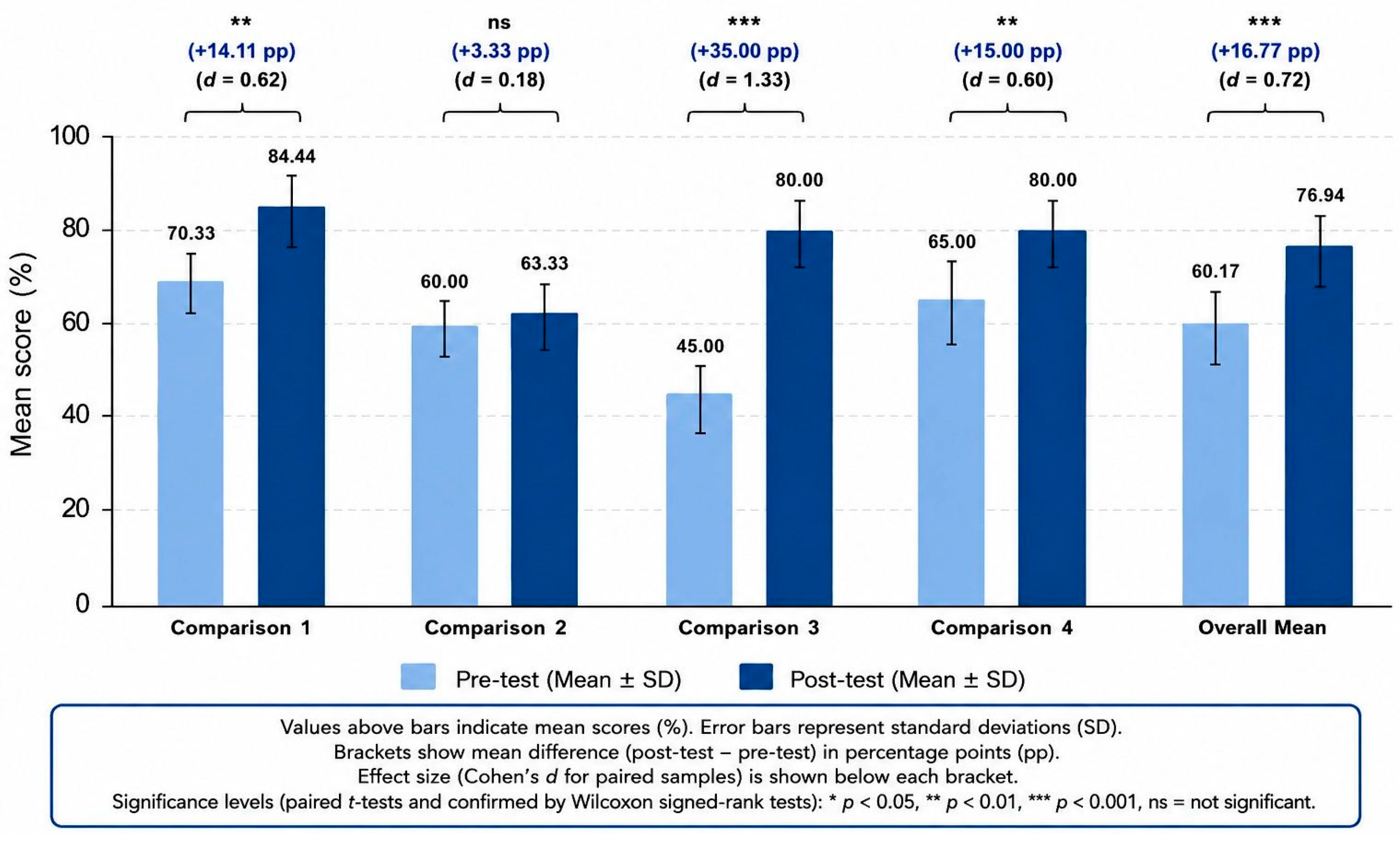
Students’ immediate post-test performance was higher than baseline performance across most assessed topics. Table 3 and Table 4 summarises the descriptive statistics, Table 5 reports the inferential analyses, and Figure 2 illustrates the changes in mean scores between the baseline assessment and the immediate post-test.
Overall performance increased from 60.17 ± 37.11% at baseline to 76.94 ± 17.10% in the immediate post-test, corresponding to an average increase of 16.86 percentage points. This change represents the difference in performance observed following the sequential instructional approach and should not be interpreted as a direct comparison between independent traditional and gamified instructional conditions.
The inferential analyses identified statistically significant increases in three of the four short-term comparisons (Table 5). Comparison 1 showed a significant increase in academic performance from 70.33% at baseline to 84.44% in the immediate post-test (mean difference = 14.11 percentage points), corresponding to a medium effect size (Cohen’s d = 0.62). Comparison 3 exhibited the largest improvement, with mean scores increasing from 45.00% at baseline to 80.00% in the immediate post-test (mean difference = 35.00 percentage points), representing a large effect size (Cohen’s d = 1.33). Likewise, Comparison 4 showed a statistically significant improvement in academic performance from 65.00% at baseline to 80.00% in the immediate post-test (mean difference = 15.00 percentage points), with a medium effect size (Cohen’s d = 0.60).
By contrast, Comparison 2 showed only a modest increase in academic performance from 60.00% at baseline to 63.33% in the immediate post-test (mean difference = 3.33 percentage points. Neither the paired-samples Student’s t-test nor the Wilcoxon signed-rank test detected statistically significant differences, and the corresponding effect size was small (Cohen’s d = 0.18), indicating that this specific assessment did not show a statistically significant change.
Taken together, the descriptive and inferential analyses indicate meaningful increases in short-term academic performance across the instructional sequence. Although the magnitude of the gains differed across learning activities, the agreement between the parametric and non-parametric tests supports the robustness of the observed changes.

3.1.2. Medium-Term Knowledge Retention (One-Month Assessment)

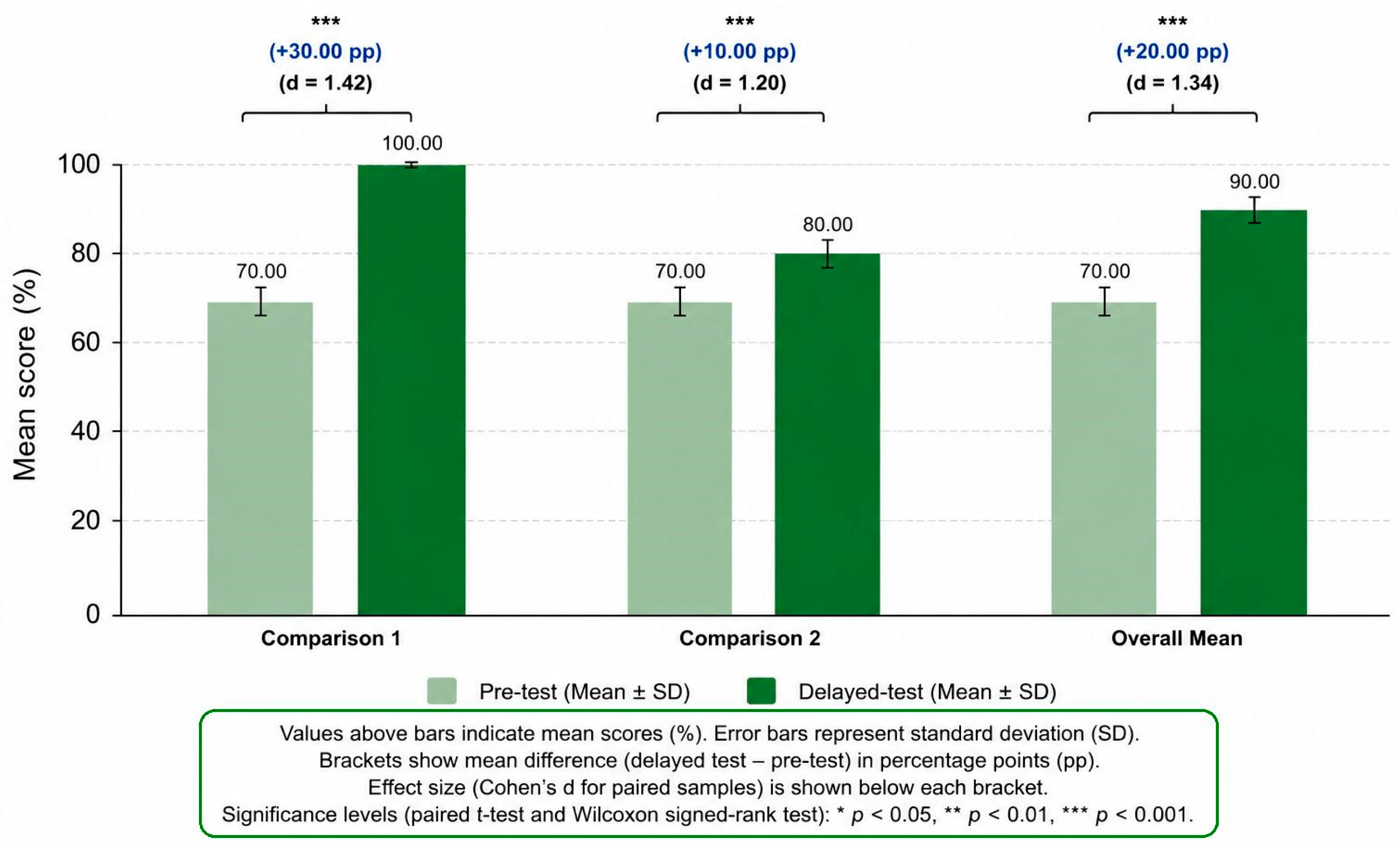
To evaluate the persistence of academic performance over time, students completed a delayed assessment one month after completion of the instructional sequence. Descriptive statistics are presented in Table 4, inferential analyses in Table 5, and the graphical comparison is shown in Figure 3.
As shown in Table 4, the Overall Mean increased from 70.00 ± 21.17% before the intervention to 90.00 ± 10.45% in the delayed assessment, corresponding to an average improvement of 20.00 percentage points. The lower post-intervention variability indicates that students achieved a more consistent level of performance during the delayed evaluation.
Both medium-term comparisons showed statistically significant improvements (Table 5). Comparison 1 increased from 70.00% at baseline to 100.00% in the delayed assessment, representing a 30.00 percentage point improvement and a large effect size (Cohen’s d = 1.42). Comparison 2 also showed a significant increase from 70.00% at baseline to 80.00% in the delayed assessment, corresponding to a 10.00 percentage point improvement and a large effect size (Cohen’s d = 1.20).
The agreement between the paired-samples Student’s t-tests and the Wilcoxon signed-rank tests supports the robustness of the observed improvements. Overall, the delayed assessment indicates that the higher performance observed following the instructional sequence was maintained one month later. Because the delayed assessment was conducted after completion of the full instructional sequence, these findings should be interpreted as evidence of sustained performance over time rather than as a direct comparison between traditional and gamified instruction. Nevertheless, considering the quasi-experimental design, the fixed instructional sequence, and the absence of a control group, these findings should not be interpreted as definitive evidence of a causal effect of gamification or Wooclap.
Table 5 provides a consolidated overview of the inferential analyses conducted across the two assessment phases. In both cases, statistically significant improvements were observed, accompanied by large effect sizes according to Cohen’s classification, supporting the educational relevance of the intervention beyond statistical significance alone.

3.2. Qualitative Results: Student Perceptions

Students’ perceptions were explored through three questionnaire administrations conducted at different stages of the course: before the implementation of the gamified instructional intervention (baseline), at the midpoint of the semester, and after completion of all teaching activities. This repeated data collection enabled the descriptive evaluation of students’ perceptions throughout the intervention.

3.2.1. Diagnosis of Traditional Teaching Practices (Initial Phase)

The initial diagnostic phase revealed a common challenge in engineering education: relatively high levels of distraction and limited stimulation under traditional lecture-based instruction.
The results are summarised in Table 6.
The findings presented in Table 6 indicate that students expressed considerable interest in the subjects (4.30 and 3.50, respectively), while simultaneously reporting frequent distraction during traditional lectures due to the passive nature of classroom instruction. This trend is reflected in the relatively low ratings assigned to the stimulating capacity of conventional teaching methods (3.00 and 2.30).
A substantial difference was also observed regarding prior exposure to gamification. While 83.33% of students enrolled in Agricultural Structures II had never previously experienced gamified learning activities, 66.67% of students in Machine Elements reported some degree of prior familiarity with digital participation tools.

3.2.2. Impact of the Intervention and Technological Usability (Intermediate Phase)

The intermediate evaluation revealed a clear transformation in classroom dynamics and student attitudes following the systematic implementation of Wooclap-based synchronous learning activities (Table 7).
The technological usability of the integrated LMS–Wooclap environment was unanimously rated as excellent, achieving the maximum score of 5.00/5.00 in both groups.
Similarly, the effectiveness of gamification in capturing and sustaining student attention received exceptionally high ratings (4.80/5.00).
However, an interesting discrepancy emerged regarding social interaction (Item C1). Students enrolled in Agricultural Structures II reported a near-maximal enhancement of communication and interaction (4.80), whereas students in Machine Elements assigned a substantially lower score (2.80). This difference may reflect the greater emphasis on individual analytical calculations within Machine Elements, which potentially limited immediate peer-to-peer interaction during classroom activities.

3.2.3. Final Evaluation: Knowledge Retention, Skill Development, and Stress Reduction (Final Phase)

The final assessment, administered at the end of the academic period, evaluated students’ perceptions regarding the overall impact of the intervention on their learning process, competency development, and satisfaction with the Educational Innovation Project.
The quantitative results are summarised in Table 8. providing complementary numerical and visual evidence of student perceptions.
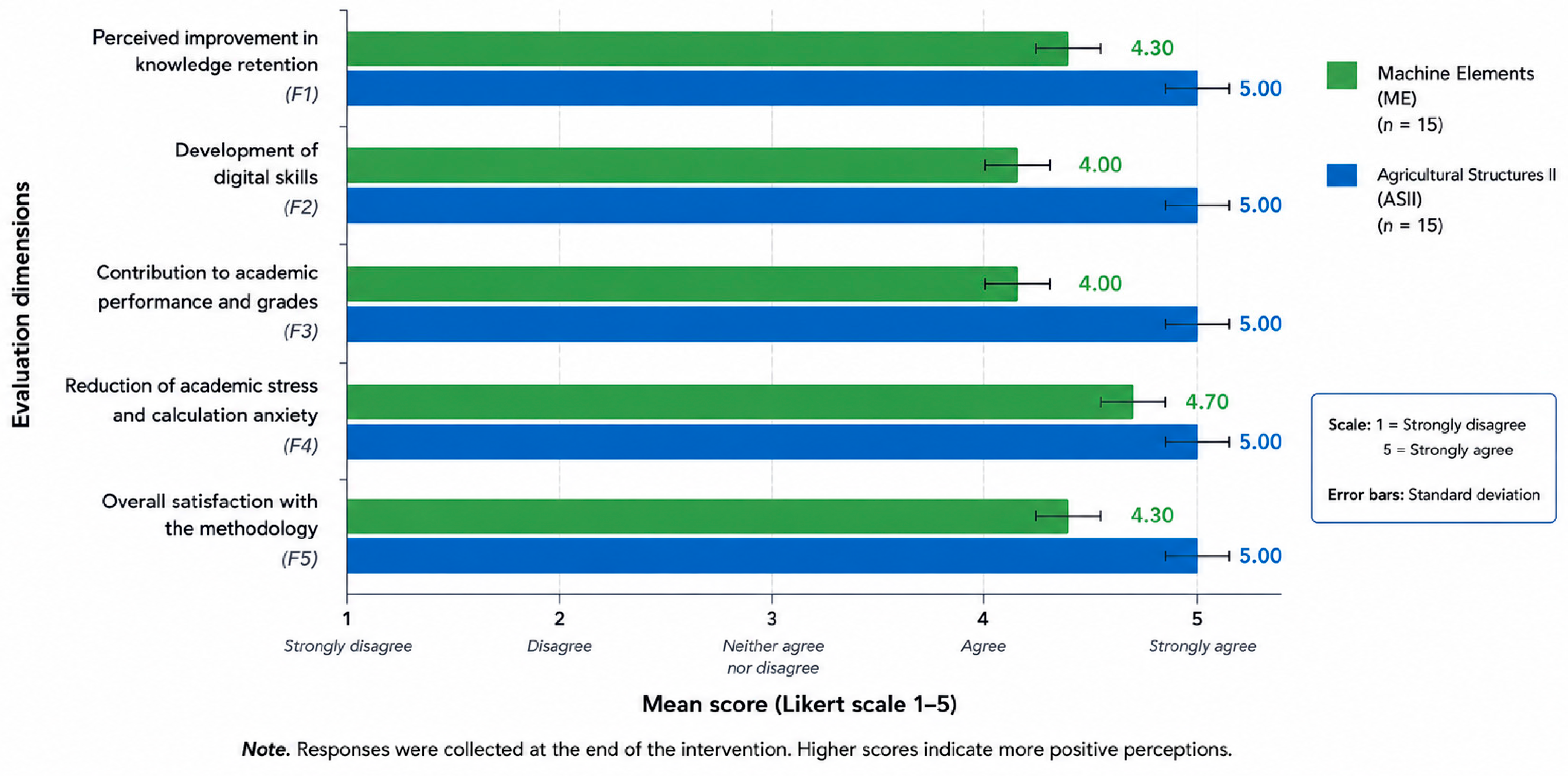
To facilitate interpretation of the questionnaire results, Figure 4 summarises students’ perceptions of the educational impact of the intervention across the principal evaluated dimensions. The graphical representation shows consistently high ratings for learning effectiveness, engagement, technological usability, reduction in mathematical anxiety, and overall satisfaction. The close clustering of the mean scores near the upper end of the Likert scale indicates a highly positive evaluation of the instructional methodology, while the small standard errors suggest broad agreement among participants.
Students’ perceptions of the instructional intervention remained highly positive throughout the course and reached their highest values in the final questionnaire (Table 6, Table 7 and Table 8). Overall, the responses indicate that students considered the gamified methodology supported by Wooclap to be beneficial not only for learning but also for motivation, classroom participation, and the overall educational experience.
Students enrolled in Agricultural Structures II assigned the maximum possible rating (5.00/5.00) to all dimensions related to the cognitive and psychoeducational impact of the intervention. Particularly high scores were observed for the perceived reduction in calculation-related stress and mathematical anxiety (Item F4), suggesting that students felt more confident when approaching technically demanding engineering problems. Likewise, students reported maximum ratings for knowledge retention, digital competency development, and the perceived contribution of the methodology to their academic performance.
Students enrolled in Machine Elements also reported highly favourable perceptions, although the ratings were slightly lower than those observed in Agricultural Structures II. Perceived improvements in knowledge retention reached 4.30/5.00, while the reduction in calculation-related stress achieved 4.70/5.00, indicating broad acceptance of the instructional approach across both courses.
Regarding the potential transferability of the methodology (Item F6), all students enrolled in Machine Elements (100%) recommended extending the approach to other Agricultural Engineering courses. In Agricultural Structures II, 80% of the students supported its implementation in additional courses, whereas 20% expressed reservations about wider adoption.
Taken together, these descriptive findings indicate that students perceived the instructional intervention as a valuable educational approach that promoted engagement, supported learning, and contributed to a more supportive and less stressful classroom environment. Given the exploratory nature of the perception questionnaires, these findings should be interpreted descriptively and in conjunction with the quantitative learning outcomes presented in the preceding sections.

4. Discussion

The findings of this study indicate that the implementation of Wooclap as a Student Response System (SRS), combined with structured gamification strategies, was associated with improvements in students’ classroom engagement and academic performance. Rather than viewing engagement and learning as separate educational outcomes, the present findings are consistent with the well-established view that active participation, sustained attention, and meaningful interaction constitute key mechanisms through which active-learning methodologies facilitate student learning. Consequently, the observed improvements in academic performance are interpreted within the broader educational context in which engagement supports conceptual understanding and knowledge acquisition. This interpretation is consistent with the extensive body of literature demonstrating that active-learning approaches and technology-enhanced instructional strategies enhance both student engagement and academic achievement in higher education (Ar & Abbas, 2021; Freeman et al., 2014; Pegalajar Palomino, 2021; Wieman, 2014). Furthermore, the present study extends this evidence to Agricultural Engineering, a discipline in which empirical research on structured gamification supported by Student Response Systems remains comparatively limited (Nawaz et al., 2026; Serrada-Sotil et al., 2025).
The short-term assessments showed statistically significant improvements in three of the four instructional comparisons, with effect sizes ranging from medium to large. Only one comparison produced a small, non-significant improvement, suggesting that the educational impact of the intervention may depend on the characteristics of the learning activity and the complexity of the concepts being addressed. This interpretation is consistent with Cognitive Load Theory (Sweller, 1988), which proposes that instructional designs capable of organising information into manageable learning sequences reduce unnecessary cognitive demands and allow students to allocate greater cognitive resources to meaningful learning. This interpretation is also supported by recent evidence indicating that gamified learning environments are more effective when integrated into active learning methodologies that align game mechanics with clearly defined educational objectives rather than using gamification as an isolated motivational strategy (Pegalajar Palomino, 2021). Similarly, a systematic review of engineering education concluded that gamification contributes to improved conceptual understanding, engagement, and collaborative learning, although its educational impact depends strongly on instructional design and disciplinary context (Ar & Abbas, 2021).
Rather than presenting engineering problems as lengthy and cognitively demanding tasks, the gamified activities divided them into successive challenges that required continuous reasoning, immediate decision-making, and rapid formative feedback. This instructional structure may have reduced extraneous cognitive load while promoting the progressive construction of conceptual knowledge. Similar mechanisms have been identified in active-learning environments, where sustained student engagement and frequent interaction with learning materials contribute to improved academic performance (Freeman et al., 2014; Hake, 1998).
An additional aspect deserving attention is the variability in the magnitude of the observed effects across the different instructional comparisons. While some activities produced large learning gains and large effect sizes, others showed more modest improvements that did not reach statistical significance. This variability suggests that the magnitude of the observed changes may depend on the characteristics of each learning activity, including the cognitive demands of the task, the nature of the engineering concepts involved, and the instructional design.
The design of the intervention may also explain part of the observed learning gains. Rather than using gamification solely as a motivational resource, the activities were intentionally organised according to microlearning principles, encouraging students to solve authentic engineering problems through a sequence of progressively interconnected challenges. This approach is consistent with recommendations in engineering education advocating learning environments that combine active participation, contextualised problem solving, and continuous feedback to promote deeper conceptual understanding (Felder, 1988). Consequently, the observed improvements are likely to reflect the combined influence of gamification, active learning, and carefully structured instructional design, rather than the technological platform itself. This interpretation is consistent with recent reviews showing that the educational effectiveness of gamification depends primarily on how game elements are pedagogically integrated into the learning process rather than on the technology itself (Ar & Abbas, 2021; Pegalajar Palomino, 2021).
The medium-term assessments showed that the higher performance observed in the immediate post-test was also evident one month later. Both delayed comparisons showed statistically significant increases relative to baseline, with large effect sizes. These findings provide preliminary evidence of sustained academic performance over time following the instructional sequence. However, because the delayed assessment was conducted after completion of the full instructional sequence and no parallel control group was included, the observed pattern cannot be attributed specifically to gamification, Wooclap, or any individual pedagogical component. The overall mean score increased from 70.00% before the intervention to 90.00% in the delayed assessment, suggesting that students retained a substantial proportion of the acquired knowledge over time. These findings are consistent with recent systematic evidence showing that Student Response Systems embedded within active learning environments contribute not only to immediate engagement but also to improved knowledge retention and sustained academic performance (Serrada-Sotil et al., 2025). Likewise, recent studies in engineering education have reported that gamified instructional approaches supported by digital technologies can facilitate durable conceptual understanding when combined with authentic engineering tasks and continuous formative assessment (El-Thalji, 2025). Although the quasi-experimental design and the absence of a control group preclude establishing causal relationships, these findings provide evidence that the intervention was associated with sustained learning performance beyond the classroom sessions.
From a cognitive perspective, these findings are consistent with the principles of retrieval practice and desirable difficulties, which propose that repeated recall and application of previously acquired knowledge strengthen long-term memory traces and improve subsequent retrieval (Bjork & Bjork, 2011; Roediger & Karpicke, 2006). Rather than memorising isolated formulas or procedures, students repeatedly applied engineering concepts in authentic contexts through escape-room activities, forensic engineering investigations, and role-playing scenarios. Such learning experiences may have encouraged the development of integrated cognitive schemas that facilitated later recall and transfer of knowledge.
This interpretation is also compatible with Cognitive Load Theory (Sweller, 1988). As engineering procedures become progressively automated through repeated application, fewer working-memory resources are required to solve subsequent problems, allowing students to devote greater attention to higher-order reasoning and decision-making. The favourable delayed performance observed in the present study is consistent with the possibility that the instructional sequence supported both immediate comprehension and the consolidation of conceptual knowledge over time. However, this interpretation remains tentative given the absence of a control group and the combined nature of the instructional components. This pattern is consistent with recent evidence indicating that sustained learning gains are more likely when gamification is embedded within structured instructional sequences that promote repeated retrieval, reflection, and application of knowledge over time (El-Thalji, 2025; Serrada-Sotil et al., 2025).
One of the delayed assessments achieved very high post-intervention performance. Although this finding should be interpreted cautiously given the quasi-experimental design and relatively small sample, it suggests that contextualised engineering scenarios may facilitate the retrieval and application of complex technical knowledge.
Another important outcome concerns the collaborative dimension of the intervention. The learning activities incorporated structured peer discussion before response submission, encouraging students to explain their reasoning, compare alternative solutions, and challenge misconceptions. These processes closely resemble the principles of Peer Instruction (Crouch & Mazur, 2001; Mazur, 1996), in which conceptual understanding emerges through discussion and argumentation rather than passive reception of information. Consequently, the observed learning gains are likely to reflect not only individual engagement with the gamified activities but also the educational benefits of collaborative reasoning and social knowledge construction. Recent research has likewise highlighted that structured peer interaction supported by digital technologies and gamified learning environments enhances the quality of classroom discussions, improves peer feedback, and promotes deeper cognitive engagement (Wlodarski et al., 2025). Although the present study cannot isolate the individual contribution of peer interaction from the other instructional components, these findings are consistent with the positive perceptions reported by the participants. In the present study, these collaborative interactions were implemented following the principles of Peer Instruction, in which students discussed alternative solutions before submitting their responses through the Student Response System. Although Peer Instruction was not evaluated as an independent intervention, its integration within the overall instructional approach may have contributed to the collaborative learning environment observed during the activities.
The intervention also illustrates how digital technologies can be transformed from potential sources of distraction into valuable instructional resources when their use is embedded within a well-structured pedagogical framework. Although mobile devices are often perceived as detrimental to students’ attention during lectures, the present findings suggest that integrating smartphones into interactive learning activities may help redirect students’ attention towards academic tasks rather than competing with them. This interpretation is consistent with previous studies indicating that purposeful educational use of mobile technologies may be more effective than restrictive classroom policies aimed solely at limiting device access (Keough, 2012; Tess, 2013). Likewise, our findings support previous research highlighting the educational potential of mobile-supported Student Response Systems to foster classroom participation, engagement, and active learning in higher education (Toda et al., 2019). Nevertheless, because the intervention combined several complementary pedagogical elements, including gamification, collaborative learning, and immediate feedback, these positive outcomes should be interpreted as reflecting the overall instructional approach rather than the isolated effect of the digital platform itself.
An equally relevant finding concerns students’ perceptions of reduced academic stress and lower mathematical anxiety during the learning activities. These findings should be interpreted cautiously because they were derived from exploratory questionnaire items rather than validated psychological instruments. Engineering education frequently requires students to solve complex analytical problems under time pressure, conditions that may negatively influence both confidence and performance (Ashcraft, 2002; Ramirez et al., 2018). The combination of collaborative problem solving, immediate formative feedback, and progressively challenging activities appears to have created a learning environment in which mistakes were perceived as opportunities for learning rather than indicators of failure. Such conditions are closely aligned with effective feedback practices (Hattie & Timperley, 2007; Vallely & Gibson, 2018) and with educational approaches that promote resilience, self-efficacy, and a growth-oriented mindset in engineering education (Crawley et al., 2014; Dym et al., 2005). Although these psychoeducational benefits are consistent with the positive perceptions reported by the participants, they should be interpreted within the methodological limitations of the present study and confirmed through future research employing validated psychological measures and controlled experimental designs.
Although these findings are encouraging, they should be interpreted considering the methodological limitations discussed in the section Study Limitations.

Study Limitations

Several methodological limitations should be considered when interpreting the findings of this study.
First, the intervention was conducted within a single Agricultural Engineering programme at one Spanish university and involved a relatively small sample (N = 30). Consequently, the findings should be regarded as evidence from a pilot quasi-experimental study, providing preliminary empirical support for the proposed instructional approach rather than results that can be directly generalised to broader higher education contexts. Nevertheless, pilot studies play an important role in evaluating the feasibility and educational potential of innovative teaching strategies before their implementation in larger multi-institutional investigations.
Second, although the repeated-measures within-subject design reduced inter-individual variability by allowing each participant to serve as their own reference, the absence of a parallel control group limits the ability to establish causal relationships between the intervention and the observed improvements. Alternative explanations, including increased familiarity with course content, independent study, informal peer interaction, or concurrent learning experiences, cannot be completely excluded. This limitation is further supported by the fact that one of the short-term comparisons did not reach statistical significance, suggesting that the effectiveness of the intervention may vary across learning activities. Furthermore, the intervention intentionally combined several pedagogical components, including the Wooclap Student Response System, gamification mechanics, structured peer interaction, and immediate formative feedback. Consequently, the present study cannot determine the individual contribution of each component to the observed learning improvements. The reported effects should therefore be interpreted as reflecting the combined instructional approach rather than the isolated influence of any single educational strategy. Future studies employing factorial or controlled experimental designs would help clarify the relative contribution of these different pedagogical elements. Such designs have recently been recommended in systematic reviews of gamification research in engineering education, which emphasise the need to distinguish the educational effects of individual instructional components and to improve methodological rigour in future intervention studies (Tonhão et al., 2023).
Third, the perception questionnaires were specifically developed for this Educational Innovation Project to evaluate dimensions closely related to the implemented instructional methodology. Although these exploratory instruments allowed the collection of valuable information regarding students’ experiences, technological usability, motivation, and perceived learning benefits, they were not based on previously validated psychometric scales. Consequently, the qualitative findings should be interpreted with appropriate caution. Future studies should incorporate validated educational instruments and examine psychometric properties such as internal consistency, construct validity, and reliability to strengthen the robustness of the reported perceptions.
The evaluation of knowledge retention was limited to a one-month follow-up period. Although the delayed assessment provided preliminary evidence suggesting that the observed learning gains may persist beyond the immediate instructional period, longer follow-up intervals are required to determine whether these benefits remain stable throughout subsequent academic courses or professional engineering training. Future longitudinal studies involving multiple institutions, larger student cohorts, and different engineering disciplines would contribute to establishing the external validity and long-term educational impact of structured gamification supported by Student Response Systems. Future longitudinal studies involving multiple institutions, larger student cohorts, and different engineering disciplines would contribute to establishing the external validity and long-term educational impact of structured gamification supported by Student Response Systems. Recent systematic reviews have also highlighted the need for more longitudinal, multi-institutional, and methodologically rigorous studies capable of evaluating both learning outcomes and the specific contribution of different gamification techniques across engineering education contexts (Di Nardo et al., 2024).
Another limitation of the study is that all students experienced the instructional sequence in the same order, with traditional instruction followed by the gamified activities. Consequently, part of the observed improvement may reflect practice effects, increased familiarity with the subject matter, or additional learning time. Future studies should consider crossover or counterbalanced designs including control groups.
Future research should also investigate which characteristics of gamified instructional activities are associated with larger educational effects across different engineering domains, as well as identify which combinations of game mechanics, Student Response Systems, collaborative learning, and formative assessment produce the greatest educational benefits. These priorities are consistent with recent systematic reviews calling for more robust comparative studies capable of informing evidence-based instructional design in engineering education (Di Nardo et al., 2024; Tonhão et al., 2023).

5. Conclusions

This investigation examined the educational impact of a structured instructional intervention integrating the Wooclap Student Response System (SRS) with gamified active-learning pedagogies in Agricultural Engineering education. Adopting a within-subject quasi-experimental design, the study monitored changes in academic performance through repeated assessments. Quantitative results demonstrated that students achieved statistically significant improvements in three of the four short-term evaluations and across all medium-term retention tests, yielding medium to large Cohen’s d effect sizes. Although one initial comparison remained statistically non-significant, the collective evidence suggests that students achieved substantially higher scores following the instructional sequence compared with baseline performance. These outcomes should be understood as associations within the broader pedagogical framework rather than as proof of a causal relationship between gamification or the digital platform and learning gains.
Analysis of qualitative perception data indicated that participants highly valued the intervention for its contribution to engagement, classroom participation, and the overall educational experience. Students identified the integration of mobile technologies, collaborative problem-solving tasks, and the provision of immediate formative feedback as particularly effective components of the instructional activities. Nevertheless, these exploratory findings should be interpreted descriptively, as the survey instruments were developed specifically for the purposes of this Educational Innovation Project and did not utilise previously validated psychometric scales.
The delayed assessments administered one month later provided preliminary evidence of sustained academic performance. Both medium-term comparisons revealed statistically significant improvements relative to baseline scores, suggesting that the instructional methodology may facilitate knowledge retention beyond the immediate classroom context. However, because of the quasi-experimental design, the absence of a control group, and the fixed nature of the instructional sequence, it is not possible to isolate the individual contributions of gamification, Student Response Systems, peer interaction, or formative feedback. The observed improvements likely reflect the combined effect of these interconnected pedagogical strategies.
Notwithstanding these methodological constraints, the study contributes empirical evidence to the field of Agricultural Engineering education, where research on structured gamification and audience response systems remains limited. The findings suggest that a coherent instructional sequence combining real-time interaction, gamified challenges, and collaborative learning represents a promising strategy for enhancing student engagement and conceptual understanding in technically demanding engineering courses.
Future research should involve larger, multi-institutional cohorts and employ validated psychological instruments alongside longitudinal assessments. Controlled experimental or factorial designs are warranted to determine the relative effectiveness of specific instructional components and to establish the long-term educational value of gamified Student Response Systems in the wider context of higher engineering education.

Author Contributions

Conceptualization, P.M.-M., A.P.-F. and D.L.V.-M.; methodology, P.M.-M., A.P.-F. and D.L.V.-M.; validation, P.M.-M., A.P.-F. and D.L.V.-M.; formal analysis, P.M.-M., A.P.-F. and D.L.V.-M.; investigation, P.M.-M., A.P.-F. and D.L.V.-M.; resources, P.M.-M., A.P.-F. and D.L.V.-M.; data curation, P.M.-M., A.P.-F. and D.L.V.-M.; writing—original draft preparation, P.M.-M., A.P.-F. and D.L.V.-M.; writing—review and editing, P.M.-M., A.P.-F. and D.L.V.-M.; visualization, P.M.-M., A.P.-F. and D.L.V.-M.; supervision, P.M.-M., A.P.-F. and D.L.V.-M.; project administration, P.M.-M., A.P.-F. and D.L.V.-M.; funding acquisition, P.M.-M., A.P.-F. and D.L.V.-M. All authors have read and agreed to the published version of the manuscript.

Funding

This research was funded by the University of Almería through the Teaching Innovation Project “Gamification and Active Learning in Agricultural Engineering: Evaluation of the Impact of Wooclap on Student Attention and Academic Performance” (Grant No. 25_26_1_54C).

Institutional Review Board Statement

Ethical review and approval were waived for this study because the research involves exclusively non-interventional, anonymous web-based surveys evaluating students’ level of knowledge. No identifiable personal data, physiological, clinical, or sensitive psychological information were collected. In accordance with Spanish and European legislation (Spanish Organic Law 3/2018 on the Protection of Personal Data and Guarantee of Digital Rights, and EU General Data Protection Regulation 2016/679), formal ethical approval from an Institutional Review Board is not required for non-medical, completely anonymous opinion or educational surveys. Full informed consent was obtained from all participants prior to their voluntary involvement.

Informed Consent Statement

Informed consent was obtained from all subjects involved in the study.

Data Availability Statement

The data supporting the findings of this study are available from the corresponding author upon reasonable request.

Acknowledgments

The authors would like to express their gratitude to the University of Almería for its Teaching Innovation Projects Programme. They also gratefully acknowledge the active participation of the students and professors from the engineering degree programmes involved in the project, whose main findings are presented in this paper.

Conflicts of Interest

The authors declare no conflicts of interest.

Abbreviations

The following abbreviations are used in this manuscript:
BYODBring Your Own Device
CDIOConceive–Design–Implement–Operate
CIConfidence Interval
CSICrime Scene Investigation (used metaphorically in the gamified activities)
HEBEuropean Wide-Flange H Steel Section
ICTsInformation and Communication Technologies
ICAPInteractive–Constructive–Active–Passive Framework
IPEEuropean I-Beam Steel Profile
LMSLearning Management System
LTILearning Tools Interoperability
MDAMechanics, Dynamics, and Aesthetics
SEStandard Error
SDStandard Deviation
SRSStudent Response System
STEMScience, Technology, Engineering and Mathematics
VLEVirtual Learning Environment

References

  1. Ar, A. Y., & Abbas, A. (2021, April 21–23). Role of gamification in engineering education: A systematic literature review. 2021 IEEE Global Engineering Education Conference (EDUCON), Vienna, Austria. [Google Scholar] [CrossRef] [Scilit]
  2. Ashcraft, M. H. (2002). Math anxiety consequences. Current Directions in Psychological Science, 11, 181–185. Available online: http://www.mccc.edu/~jenningh/Courses/documents/math_anxiety.pdf (accessed on 1 January 2026). [CrossRef] [Scilit]
  3. Bjork, E., & Bjork, R. (2011). Making things hard on yourself, but in a good way: Creating desirable difficulties to enhance learning. Psychology and the Real World: Essays Illustrating Fundamental Contributions to Society, 2, 56–64. [Google Scholar]
  4. Blasco-Arcas, L., Buil, I., Hernández-Ortega, B., & Sese, F. J. (2014). Using clickers in class. The role of interactivity, active collaborative learning and engagement in learning performance. Computers & Education, 62, 102–110. [Google Scholar] [CrossRef] [Scilit]
  5. Buckley, P., & Doyle, E. (2016). Individualising gamification: An investigation of the impact of learning styles and personality traits on the efficacy of gamification using a prediction market. Computers & Education, 106, 43–55. [Google Scholar] [CrossRef] [Scilit]
  6. Caldwell, J. (2007). Clickers in the large classroom: Current research and best-practice tips. Life Sciences Education, 6(1), 9–20. [Google Scholar] [CrossRef] [Scilit] [PubMed]
  7. Chi, M. T. H., & Wylie, R. (2014). The ICAP framework: Linking cognitive engagement to active learning outcomes. Educational Psychologist, 49(4), 219–243. [Google Scholar] [CrossRef] [Scilit]
  8. Crawley, E. F., Malmqvist, J., Sören Östlund, D. R. B., & Edström, K. (2014). Rethinking engineering education: The CDIO approach. The CDIO approach (2nd ed.). Springer. [Google Scholar] [CrossRef] [Scilit]
  9. Crouch, C. H., & Mazur, E. (2001). Peer instruction: Ten years of experience and results. American Journal of Physics, 69(9), 970–977. [Google Scholar] [CrossRef] [Scilit]
  10. Deng, Y., Lucas, C., & Liu, W. (2026). A systematic review of design thinking implementations in higher engineering education. European Journal of Engineering Education, 1–41. [Google Scholar] [CrossRef] [Scilit]
  11. Deterding, S., Dixon, D., Khaled, R., & Nacke, L. (2011). From game design elements to gamefulness: Defining “gamification”. In The MindTrek ’11: 15th international academic MindTrek conference: Envisioning future media environments (pp. 9–15). ACM Digital Library. [Google Scholar] [CrossRef] [Scilit]
  12. Dewey, J. (1986). Experience and education. The Educational Forum, 50(3), 241–252. [Google Scholar] [CrossRef] [Scilit]
  13. Di Nardo, V., Fino, R., Fiore, M., Mignogna, G., Mongiello, M., & Simeone, G. (2024). Usage of gamification techniques in software engineering education and training: A systematic review. Computers, 13(8), 196. [Google Scholar] [CrossRef] [Scilit]
  14. Dym, C., Agogino, A., Eris, O., Frey, D., & Leifer, L. (2005). Engineering design thinking, teaching, and learning. Journal of Engineering Education, 94, 103–120. [Google Scholar] [CrossRef] [Scilit]
  15. El-Thalji, I. (2025). Boosting active learning through a gamified flipped classroom: A retrospective case study in higher engineering education. Education Sciences, 15(4), 430. [Google Scholar] [CrossRef] [Scilit]
  16. Felder, R. (1988). Learning and teaching styles in engineering education. Journal of Engineering Education, 78, 674–681. [Google Scholar]
  17. Freeman, S., Eddy, S. L., McDonough, M., Smith, M. K., Okoroafor, N., Jordt, H., & Wenderoth, M. P. (2014). Active learning increases student performance in science, engineering, and mathematics. Proceedings of the National Academy of Sciences, 111(23), 8410–8415. [Google Scholar] [CrossRef] [Scilit] [PubMed]
  18. Hake, R. (1998). Interactive-engagement versus traditional methods: A six-thousand-student survey of mechanics test data for introductory physics courses. American Journal of Physics, 66, 64–74. [Google Scholar] [CrossRef] [Scilit]
  19. Hattie, J., & Timperley, H. (2007). The power of feedback. Review of Educational Research, 77(1), 81–112. [Google Scholar] [CrossRef] [Scilit]
  20. Hunicke, R., Leblanc, M., & Zubek, R. (2004, July 25–26). MDA: A formal approach to game design and game research. AAAI Workshop on Challenges in Game AI, Menlo Park, CA, USA. [Google Scholar]
  21. Johri, A., & Olds, B. M. (2015). Cambridge handbook of engineering education research (pp. 1–763). Cambridge University Press. [Google Scholar] [CrossRef] [Scilit]
  22. Kapp, K. (2012). The gamification of learning and instruction: Game-based methods and strategies for training and education. Pfeiffer. [Google Scholar]
  23. Kay, R., & Lesage, A. (2009). Examining the benefits and challenges of using audience response systems: A review of the literature. Computers & Education, 53, 819–827. [Google Scholar] [CrossRef] [Scilit]
  24. Keough, S. (2012). Clickers in the classroom a review and a replication. Journal of Management Education, 36, 822–847. [Google Scholar] [CrossRef] [Scilit]
  25. Koivisto, J., & Hamari, J. (2019). The rise of motivational information systems: A review of gamification research. International Journal of Information Management, 45, 191–210. [Google Scholar] [CrossRef] [Scilit]
  26. Kolb, D. (1984). Experiential learning: Experience as the source of learning and development. Journal of Business Ethics, 1, 270–289. [Google Scholar]
  27. Majuri, J., Koivisto, J., & Hamari, J. (2018). Gamification of education and learning: A review of empirical literature. GamiFIN, 2186, 11–19. [Google Scholar]
  28. Mazur, E. (1996). Peer instruction. A user’s manual (prentice hall series in educational innovation) (Pearson, Ed.; 1st ed.). AIP Publishing. [Google Scholar]
  29. Michael, J. (2006). Where’s the evidence that active learning works? Advances in Physiology Education, 30(4), 159–167. [Google Scholar] [CrossRef] [Scilit] [PubMed]
  30. Nawaz, M. S. S., Das, S., Söbke, H., & Baalsrud-Hauge, J. (2026). Games for teaching and training decision-making in engineering: A systematic literature review. European Journal of Engineering Education, 1–32. [Google Scholar] [CrossRef] [Scilit]
  31. Pegalajar Palomino, M. (2021). Implicaciones de la gamificación en educación superior. Revista de Investigacion Educativa, 39(1), 169–188. [Google Scholar] [CrossRef] [Scilit]
  32. Piaget, J. (1952). The origins of intelligence in children. In M. Cook (Ed.), The origins of intelligence in children (p. 419). W. W. Norton & Company. [Google Scholar] [CrossRef] [Scilit]
  33. Prince, M. (2004). Does active learning work? A review of the research. Journal of Engineering Education, 93, 223–231. [Google Scholar] [CrossRef] [Scilit]
  34. Ramirez, G., Shaw, S. T., & Maloney, E. A. (2018). Math anxiety: Past research, promising interventions, and a new interpretation framework. Educational Psychologist, 53(3), 145–164. [Google Scholar] [CrossRef] [Scilit]
  35. Roediger, H. L., 3rd, & Karpicke, J. D. (2006). The power of testing memory: Basic research and implications for educational practice. Perspectives on Psychological Science: A Journal of the Association for Psychological Science, 1(3), 181–210. [Google Scholar] [CrossRef] [Scilit] [PubMed]
  36. Ryan, R., & Deci, E. (2000). Self-determination theory and the facilitation of intrinsic motivation, social development, and well-being. American Psychologist, 55, 68–78. [Google Scholar] [CrossRef] [PubMed]
  37. Sailer, M., Hense, J., Mayr, S., & Mandl, H. (2017). How gamification motivates: An experimental study of the effects of specific game design elements on psychological need satisfaction. Computers in Human Behavior, 69, 371–380. [Google Scholar] [CrossRef] [Scilit]
  38. Senevirathna, L., KrishnaPillai, K., Morgan, J., & Cameron, S. (2023). An innovative engineering curriculum to train next generation water engineers: A successful case study. European Journal of Engineering Education, 48(6), 1213–1228. [Google Scholar] [CrossRef] [Scilit]
  39. Serrada-Sotil, J., Huertas Martínez, J. A., & Granado-Peinado, M. (2025). Do audience response systems truly enhance learning and motivation in higher education? A systematic review. Humanities and Social Sciences Communications, 12(1), 1767. [Google Scholar] [CrossRef] [Scilit]
  40. Sweller, J. (1988). Cognitive load during problem solving: Effects on learning. Cognitive Science, 12(2), 257–285. [Google Scholar] [CrossRef] [PubMed]
  41. Tess, P. (2013). The role of social media in higher education classes (real and virtual)—A literature review. Computers in Human Behavior, 29, A60–A68. [Google Scholar] [CrossRef] [Scilit]
  42. Toda, A., Klock, A., Oliveira, W., Toledo Palomino, P., Rodrigues, L., Shi, L., Bittencourt, I., Gasparini, I., Isotani, S., & Cristea, A. (2019). Analysing gamification elements in educational environments using an existing Gamification taxonomy. Smart Learning Environments, 6, 16. [Google Scholar] [CrossRef] [Scilit]
  43. Tonhão, S., Shigenaga, M., Herculani, J., Medeiros, A., Amaral, A., Silva, W., Colanzi, T., & Steinmacher, I. (2023). Gamification in software engineering education: A tertiary study. In ACM international conference proceeding series (pp. 358–367). ACM Digital Library. [Google Scholar] [CrossRef] [Scilit]
  44. Ulloa Arias, D. F., & Carcausto Calla, W. (2024). Efecto de la gamificación en el aprendizaje activo: Revisión sistemática. Horizontes Revista de Investigación En Ciencias de La Educación, 8, 931–944. [Google Scholar] [CrossRef] [Scilit]
  45. Vallely, K. S. A., & Gibson, P. (2018). Engaging students on their devices with Mentimeter. Compass: Journal of Learning and Teaching in Higher Education, 11(2). [Google Scholar] [CrossRef] [Scilit]
  46. Wieman, C. E. (2014). Large-scale comparison of science teaching methods sends clear message. Proceedings of the National Academy of Sciences, 111(23), 8319–8320. [Google Scholar] [CrossRef] [Scilit] [PubMed]
  47. Wlodarski, R., Sousa, L. D. S., & Pensky, A. C. (2025). Level up peer review in education: Investigating genAI-driven gamification system and its influence on peer feedback effectiveness. arXiv, arXiv:2504.02962. [Google Scholar] [CrossRef] [Scilit]
Figure 1. Schematic overview of the quasi-experimental repeated-measures design used in this study.
Education 16 01320 g001
Figure 2. Short-term academic performance across the instructional sequence. Bars represent mean scores (±SD) at baseline and in the immediate post-test for each assessed engineering topic. Brackets indicate the mean difference between the immediate post-test and baseline scores in percentage points (pp).
Education 16 01320 g002
Figure 3. Medium-term knowledge retention following the instructional sequence. Bars represent mean assessment scores (± SD) for the baseline and one-month delayed assessments across the evaluated engineering topics.
Education 16 01320 g003
Figure 4. Students’ perceptions of the educational impact of Wooclap-based gamified learning. Mean Likert scores (± SE) are presented for the main evaluated dimensions, including learning effectiveness, engagement, technological usability, reduction of mathematical anxiety, and overall satisfaction.
Education 16 01320 g004
Table 1. Correspondence matrix between gamification activities, engineering competencies, learning objectives, and gamification mechanisms.
Gamification ActivityEngineering Competency AssessedPractical Learning ObjectivePrimary Gamification Mechanism
Category 1
(1) Plant EmergencySelection of SNR bearings using official cataloguesDetermine the optimal bearing designation and interpolate limiting factors e and YEscape Room/Time-Attack
(2) Red Alert at the PlantApplication of Euler–Eytelwein theory and limiting stress calculationsIdentify and invalidate analytical errors in multiple-pulley systemsCountdown timer/Silent work/Specialised roles
(3) Operation Pyrenees WarehouseUltimate limit state calculations and combined wind–snow loadingVerify the flexural-compressive resistance of IPE purlinsIntergroup competition/Real-time pressure
(4) Agro-Rescue OperationDesign of compound transmission systems and gear kinematicsSolve kinematic and dynamic relationships synchronouslyCollaborative mission/Defined roles/Envelope-opening mechanics
Category 2
(5) Agricultural CSIComponent failure analysis and nominal service-life estimationApply reverse engineering to determine the actual failure loadAudit role-play/Reverse engineering/Forensic analysis
(6) Agro-Industrial CSIBelt-drive dynamics and friction justification under grain-dust conditionsDevelop technical arguments in a simulated trial and assign responsibility for failureMock trial/Structured debate/Role allocation
(7) The Warehouse CollapseElastic instability due to buckling and flexural-compression in HEB columnsDetermine stiffness and bending moments to issue a technical reportStructural forensic role-play/Courtroom defence
Category 3
(8) Engineering Tender ChallengeGoodman multiaxial fatigue theory and material optimisationDetermine the minimum optimal shaft diameter while minimising steel costsSynchronous competition (Wooclap)/Rewards (power-ups)
(9) The RelayCoordination of sequential mathematical operationsCalculate bearing nominal service life through a rapid collaborative sequencePhysical relays/Verbal communication restrictions/Total interdependence
(10) Survive the HarvestDecision-making under cost and service-life constraintsAvoid instructional traps by evaluating three-dimensional load distributionRisk-based case study/Technical survival challenge
Table 2. Summary of qualitative assessment items applied during the initial, follow-up, and final evaluation phases.
IDPedagogical DimensionÍtem/Survey QuestionResponse Scale
Initial Phase
A1AttentionHow often do you lose concentration during long theoretical lectures?1 = Never to 5 = Always
A2HabitsHow often do you use personal devices (phones/tablets) for non-academic purposes during class?1 = Never to 5 = Always
A3EngagementHow active do you feel when participating in discussions or answering questions in traditional lectures?1 = Very passive to 5 = Very Active
P1InterestRate your general interest level in the topics of this course.1 = Very Low to 5 = Very High
P2DifficultyDo you consider the content of this course to be particularly complex or tedious?1 = Strongly Disagree to 5 = Strongly Agree
P3MethodologyDo you find traditional, expository teaching methodologies (chalk-and-talk) stimulating?1 = Not Stimulating to 5 = Very Stimulating
P4ExperienceHave you previously experienced gamification or interactive sessional tools in other university courses?Yes/No (Percentage)
Intermediate Phase
W1AttentionUsing Wooclap (games, contests) helps me maintain focus throughout the session.1 = Strongly Disagree to 5 = Strongly Agree
W2MotivationThe gamified dynamics with Wooclap increased my motivation to attend and participate in class.1 = Strongly Disagree to 5 = Strongly Agree
W3ComprehensionDo you feel that Wooclap facilitates better concept understanding by reducing feedback time?1 = Strongly Disagree to 5 = Strongly Agree
C1InteractionWooclap has fostered greater interaction with the instructor and/or my peers.1 = Strongly Disagree to 5 = Strongly Agree
C2CollaborationI feel that the classroom activities promoted cooperation and healthy competition.1 = Strongly Disagree to 5 = Strongly Agree
T1UsabilityHow easy was it for you to interact with the Wooclap application?1 = Very Difficult to 5 = Very Easy
Final Phase
F1RetentionCompared to other courses, do you believe Wooclap improved your long-term knowledge retention?1 = Much Worse to 5 = Much Better
F2Digital SkillsDo you feel that this methodology helped you develop or improve your professional digital skills?1 = Strongly Disagree to 5 = Strongly Agree
F3PerformanceDo you consider that the use of Wooclap contributed positively to your final course grades?1 = Much Worse to 5 = Much Better
F4StressDid the sessional Wooclap dynamics help reduce stress associated with evaluation and complex calculations?1 = Strongly Disagree to 5 = Strongly Agree
F5SatisfactionRate your overall satisfaction with the integrated gamification and active learning methodology.1 = Very Dissatisfied to 5 = Very Satisfied
F6TransferWould you recommend other Agricultural Engineering instructors to adopt Wooclap in their classes?Yes/No (Percentage)
Table 3. Descriptive statistics for short-term academic performance at baseline and one week after the instructional sequence.
Phase 1Engineering Topic AssessedBaseline
Assessment
(Mean ± SD)
Immediate
Post-Test (Mean ± SD)
Mean
Difference (pp)
SE95% CI
Comparison 1Bearing selection and catalogue interpolation procedures70.33 ± 33.9984.44 ± 16.9114.114.414.95 to 23.27
Comparison 2Euler–Eytelwein theory and geometric limit conditions60.00 ± 35.7263.33 ± 18.263.333.33−3.59 to 10.26
Comparison 3Combined loading actions and flexural-compression analysis of IPE frames45.00 ± 40.6880.00 ± 16.6135.004.7225.20 to 44.80
Comparison 4Goodman multiaxial fatigue theory and shaft optimisation65.00 ± 38.0680.00 ± 16.6115.004.485.70 to 24.30
Overall MeanGlobal conceptual assimilation60.17 ± 37.1176.94 ± 17.1016.864.248.07–25.66
Note: Values are expressed as mean ± standard deviation (SD). Mean differences are reported in percentage points (pp). The “Overall Mean” corresponds to the arithmetic mean of the four short-term assessments and is included exclusively to provide an overall descriptive summary.
Table 4. Medium-term knowledge retention: baseline and one-month delayed assessment scores.
Phase 2Engineering Topic AssessedBaseline
Assessment (Mean ± SD)
Delayed
Assessment (Mean ± SD)
Mean
Difference (pp)
SE95% CI
Comparison 1SNR catalogue interpolation and equivalent failure load determination70.00 ± 21.17100.00 ± 0.0030.003.8122.10–37.90
Comparison 2Combined flexural-compression criteria and HEB structural stiffness analysis70.00 ± 21.1780.00 ± 14.7810.001.496.90–13.10
Overall MeanGlobal conceptual assimilation70.00 ± 21.1790.00 ± 10.4520.002.6514.50–25.50
Note: Values are expressed as mean ± standard deviation (SD). Mean differences are reported in percentage points (pp). The identical baseline means and SD for Comparisons 1 and 2 are correct because both engineering topics were assessed jointly in the same baseline evaluation with the same group of students. The “Overall Mean” represents the arithmetic mean of the two medium-term assessments and is included exclusively for descriptive purposes.
Table 5. Inferential statistics and effect sizes for short- and medium-term knowledge retention assessments.
Assessment PhaseStudent’s t
(df = 29)
p-ValueWilcoxon (W)p-ValueCohen’s dEffect SizeInterpretation
Comparison 1
(Short-term retention)
3.4200.001930.00.00490.62MediumSignificant improvement
Comparison 2
(Short-term retention)
0.9830.3336161.00.13760.18SmallNo significant difference
Comparison 3
(Short-term retention)
7.300<0.0010.0<0.0011.33LargeSignificant improvement
Comparison 4
(Short-term retention)
3.2980.002623.00.00200.60MediumSignificant improvement
Comparison 1
(Medium-term retention)
7.761<0.0010.0<0.0011.42LargeSignificant improvement
Comparison 2
(Medium-term retention)
6.595<0.0010.0<0.0011.20LargeSignificant improvement
Note: Student’s paired t-tests and Wilcoxon signed-rank tests were performed to compare pre- and post-intervention scores. Cohen’s d was calculated to estimate the magnitude of the intervention effect and interpreted according to Cohen’s conventional thresholds (small ≈ 0.20, medium ≈ 0.50, large ≥ 0.80).
Table 6. Descriptive statistics (mean Likert scores) for students’ perceptions before the implementation of the gamified instructional intervention (Baseline questionnaire; N = 30).
IDDimension/ItemMachine ElementsAgricultural Structures II
A1Perceived distraction during lectures (1–5)3.703.30
A2Use of devices for non-academic purposes (1–5)3.302.70
A3Level of active participation (1–5)3.002.80
P1General interest in the subject (1–5)4.303.50
P2Perceived complexity or tediousness of the subject (1–5)2.702.70
P3Perceived stimulation provided by traditional lectures (1–5)3.002.30
P4Previous experience with gamification (Yes/No)Yes: 66.67%/No: 33.33%Yes: 16.67%/No: 83.33%
Note: Values represent descriptive statistics obtained from a five-point Likert scale (1 = Strongly disagree; 5 = Strongly agree). Mean values are presented to facilitate the interpretation of the ordinal response data.
Table 7. Descriptive statistics (mean Likert scores) for students’ perceptions at the midpoint of the instructional intervention (Mid-course questionnaire; N = 30).
IDDimension/ItemMachine ElementsAgricultural Structures II
W1Sustained attention throughout the session (1–5)4.804.80
W2Increased motivation to attend and participate (1–5)4.004.60
W3Improved understanding through reduced feedback delays (1–5)4.304.80
C1Enhanced interaction with instructors and peers (1–5)2.804.80
C2Promotion of cooperation and healthy competition (1–5)3.804.80
T1Ease of use of the Wooclap platform (1–5)5.005.00
Note: Values represent descriptive statistics obtained from a five-point Likert scale (1 = Strongly disagree; 5 = Strongly agree). Mean values are presented to facilitate the interpretation of the ordinal response data.
Table 8. Descriptive statistics (mean Likert scores) for students’ perceptions at the end of the instructional intervention (Final questionnaire; N = 30).
IDDimension/ItemMachine ElementsAgricultural
Structures II
F1Perceived improvement in knowledge retention (1–5)4.305.00
F2Development of digital skills (1–5)4.005.00
F3Contribution to academic performance and final grades (1–5)4.005.00
F4Reduction in assessment-related stress and calculation anxiety (1–5)4.705.00
F5Overall satisfaction with the methodology (1–5)4.305.00
F6Recommendation for adoption by other instructors (Yes/No)Yes: 100.00%/
No: 0.00%
Yes: 80.00%/
No: 20.00%
Note: Values represent descriptive statistics obtained from a five-point Likert scale (1 = Strongly disagree; 5 = Strongly agree). Mean values are presented to facilitate the interpretation of the ordinal response data.
Disclaimer/Publisher’s Note: The statements, opinions and data contained in all publications are solely those of the individual author(s) and contributor(s) and not of MDPI and/or the editor(s). MDPI and/or the editor(s) disclaim responsibility for any injury to people or property resulting from any ideas, methods, instructions or products referred to in the content.