


Abstract
The rapid expansion of English-medium instruction (EMI) in transnational education (TNE) has increased the need for evidence-based higher education (HE) curriculum models that support diverse student cohorts in cross-cultural contexts. This exploratory mixed-methods study examines the effectiveness of block models in EMI TNE partnerships by comparing English as an additional language/dialect (EAL/D) student outcomes across traditional semester-based models and immersive block-model delivery in China and Papua New Guinea, and by exploring students’ block-model experiences. Retrospective institutional data on student success (N = 8974) and satisfaction (N = 2067) were analysed alongside focus group data on student experiences. Findings indicate that the block model is associated with significantly higher student success rates in China (76.3–92.2%) and Papua New Guinea (57.3–72.1%; both p < 0.001), while satisfaction remained high and increased significantly in China. In addition, students perceive the model as fostering self-discipline, autonomous learning, and collaborative skills. This study extends the limited evidence base on curriculum innovation in English-medium transnational higher education, indicating that immersive block models can support positive student outcomes while highlighting the importance of local implementation conditions in shaping students’ experiences. Implications emphasise the need for consistent operationalisation of the block model and pedagogical scaffolding to optimise effectiveness in cross-cultural higher education settings.
1. Introduction
Higher education (HE) is undergoing significant change globally. This is driven by a wide range of factors, including national education and workforce agendas (Australian Universities Accord Panel, 2024), evolving funding approaches (Zajda, 2020) and technological advancements (Crawford & Jenkins, 2017). Globalisation, the internationalisation of universities (Macaro et al., 2018), and the rise of English as a lingua franca in academia and international business beyond English-dominant Western countries are also significantly shaping the higher education landscape (Gu et al., 2024; Leslie, 2025). These factors have contributed to a rise in transnational education (TNE) and English-Medium Instruction (EMI) university programs worldwide, which, although distinct fields of research, often intersect in offshore programs delivered in English, across national and institutional boundaries.
Despite changes in the higher education landscape, many core practices have remained the same: assessment (e.g., exams, essays), content delivery (e.g., lectures, textbooks), and the semester-based academic calendar (Wilson et al., 2025). At the same time, higher education providers are reconsidering how to better meet the diverse learning needs of their student populations. Students’ desires for more flexible, blended forms of learning that enable them to study around competing work and family commitments are evident in large-scale surveys globally (e.g., see Quacquarelli Symonds, 2022) and research in a range of countries (e.g., Azerbijan, see Bayramova & Aliyev, 2019; in the United Kingdom (UK), see Turner et al., 2021; in Australia, see Williams, 2023). As such, student preferences have also become a prominent driver of curriculum reform in higher education.
Immersive block models structure learning into shorter teaching periods (4–6 weeks) comprising only one or two subjects (Samarawickrema et al., 2022) and have been increasingly adopted in higher education to support flexible learning. A growing body of evidence demonstrates the positive impacts of immersive block models on student learning outcomes (Goode et al., 2023, 2024b; Samarawickrema & Cleary, 2021). However, research has largely focused on the success, satisfaction, and experiences of both domestic and international students studying within a higher education provider’s home-country contexts (Goode et al., 2024b; Roche et al., 2026; Samarawickrema & Cleary, 2021). Consequently, little is known about the appropriateness of these curriculum innovations, comprising compressed scheduling, guided active learning, and scaffolded assessment, in transnational EMI contexts. To the authors’ knowledge, this is the first multi-site study to explore the outcomes and experiences of students with English as an additional language/dialect (EAL/D) enrolled in immersive block-model programs delivered in English through TNE higher education partnerships. The study investigates partnerships between a public Australian university and institutions in the People’s Republic of China and Papua New Guinea. It addresses the following questions for EAL/D students:
- How does academic achievement in a traditional EMI study mode compare with their achievement in an EMI immersive block model, as measured by success/pass rates?
- How does satisfaction in a traditional EMI study mode compare with their achievement in an EMI immersive block model, as measured by:
- Unit satisfaction
- Teaching Satisfaction
- What are the experiences of studying in a cross-cultural EMI TNE immersive block model program?
1.1. Immersive Block Model Learning in HE
Curriculum is a multifaceted construct encompassing strategies for teaching, content delivery, and assessment design (Woelert et al., 2022). Its central role in establishing the conditions for success for diverse student populations in contemporary higher education has been widely recognised (Kahu & Nelson, 2018; Kift, 2015). Consequently, higher education institutions worldwide are seeking innovative, evidence-based approaches to curriculum reform to accommodate more diverse cohorts and to widen participation in HE. Immersive block models are one such innovative approach to higher education that are being implemented in various contexts to improve student learning outcomes. “Block”, “intensive”, “accelerated” (Davies, 2006) or “immersive” models (Goode et al., 2023; Turner et al., 2021) typically structure the academic calendar into shorter 4–6 week teaching periods with a full-time load of 1–2 units at a time (Samarawickrema et al., 2022). Most immersive block models enrol students in one subject at a time over approximately 4-week teaching periods (Konjarski et al., 2023). Recently implemented immersive block models (e.g., Roche et al., 2025) are underpinned by cognitive load theory (Sweller, 1988) and aim to reduce interference effects from multiple simultaneous subjects and assessments, and in turn increase student focus and improve academic achievement (Goode et al., 2024b; Richmond et al., 2015).
Immersive block models, beyond their focused subject scheduling, involve fundamental transformations to an institution’s pedagogical framework (Buck & Tyrrell, 2022; Goode et al., 2023; McCluskey et al., 2019; Roche et al., 2025. For example, at Colorado College, USA; De Montfort University, the United Kingdom; and Southern Cross University, Australia, active learning pedagogies were introduced across the institutions alongside the block calendar (Roche et al., 2025; Wilson et al., 2025). Active or engaged learning, drawing on the theoretical perspectives of Dewey (1938) and Kolb (1984), aims to foster knowledge acquisition and skill development in HE more effectively than didactic, lecture-based approaches (Kozanitis & Nenciovici, 2023). Block model programs are also used for Masters courses in some German institutions, including the University of Hohenheim (2022) and beyond the Global North in countries such as Ethiopia (Areaya et al., 2011; Sewagegn & Diale, 2021).
The international uptake of immersive block models is therefore both an institutional strategy for increasing the success of diverse student cohorts and a response to student preferences for more flexible and engaging learning (Helfand, 2013; Loton et al., 2022). Increased pass rates have been found in various studies of block model delivery, including research focused on domestic pathway (or foundation) education students (Goode et al., 2024b), first-year undergraduates (Buck & Tyrrell, 2022; Goode et al., 2023; Loton et al., 2022), international students (for undergraduates see Goode et al., 2024b, for postgraduates see Goode et al., 2025), and underrecognised or ‘equity’ students (Samarawickrema & Cleary, 2021; Roche et al., 2025). Block has also been shown to work well across a range of HE disciplines (Roche et al., 2026). However, less is known about the appropriateness of block models in transnational partnerships. This exploratory study focuses on the satisfaction, success and experiences of English as an additional language or dialect (EAL/D) learners studying in an immersive block-model program in EMI TNE collaborations between a public Australian university and universities in the People’s Republic of China and Papua New Guinea.
1.2. Transnational Education (TNE) and English Medium Instruction (EMI)
Transnational education denotes a form of cross-border education in which programs and providers, rather than students, are internationally mobile (Kleibert, 2022; Knight & McNamara, 2017). Students gain an internationally recognised qualification without relocating, through joint programs delivered at local joint institutes or branch campuses, sometimes wholly or in combination with online study (Knight & McNamara, 2017). There is an emerging body of literature exploring the opportunities, challenges, and potential of these collaborations for stakeholders (Healey & Hickey, 2025; Tran et al., 2023).
TNE partnerships offer a range of potential benefits, including advancing internationalisation across partner institutions and associated reputational advantages considered in higher global university rankings, which may ultimately lead to improved financial sustainability (Carter, 2024; Gafu & Collins, 2025; Le Thanh Phan et al., 2024; Wang, 2025). For students, the financial costs associated with overseas study are reduced, thereby providing more equitable access to international higher education. At the program level, transnational education has the potential to foster cross-cultural curriculum and pedagogical innovation, as local education contexts offer global content (Le Thanh Phan et al., 2024; H. T. L. Nguyen et al., 2025). However, there are also challenges, including the need to localise curriculum and pedagogy to ensure “institutional harmonisation” (Healey & Hickey, 2025, p. 174).
TNE higher education partnerships continue to grow globally, with student numbers increasing from 1.6 to more than 6.4 million between 2020 and 2022 (Fernandez-Chung & Gill, 2025); however, research to date has largely prioritised institutional perspectives. Studies across China, the United Arab Emirates (UAE), and broader regions highlight how pedagogy and intercultural responsiveness shape student satisfaction and learning outcomes (Cui & Gardiner, 2025; D. Liu et al., 2023; Trotter & Qureshi, 2023). The student voice remains underrepresented (Carter, 2024; Wang, 2025). Greater engagement with students as active contributors is essential to improving educational outcomes and enhancing student success and satisfaction (D. Liu et al., 2023; Wang, 2025).
English-medium instruction higher education, in which programs are offered in English rather than local languages, has also grown significantly globally in the 21st Century and is a feature of many transnational education collaborations. In Europe, EMI programs more than tripled to 24,043 in the 10 years to 2024 (Wingrove et al., 2025). Similarly, in the Asia-Pacific region, there has been a remarkable expansion of tertiary institutions offering EMI programs over the past decade (Leslie, 2025; Walkinshaw et al., 2017).
Although EMI programs are perceived as offering a wide range of benefits to their graduates, such as improved English skills and access to jobs that can subsequently enhance social mobility (Macaro et al., 2018), their growth has not been without criticism. They have long been discussed as a form of cultural imperialism (Pennycook, 1994; Phillipson, 1992). The potential adverse effects of English-medium instruction on local culture and languages have been highlighted in Southeast Asia (Kirkpatrick & Liddicoat, 2017) and beyond. The transfer of foreign curricula and pedagogy underpinning both EMI and TNE programs into local settings may marginalise local knowledge and practices (Le Thanh Phan et al., 2024; Wang, 2025). Other studies highlight EMI’s potential to exacerbate economic and social inequalities by widening the gap between affluent and disadvantaged groups in society (Alhamami, 2023). Researchers have also raised concerns that local students would sometimes prefer to study in their own language (Arabic in Qatar, Ahmadi, 2017; in Oman, Al-Masheikhi et al., 2014).
Academic outcomes in English-medium instruction are also shaped by the English-language proficiency of instructors and students (Jiang et al., 2019 Roche et al., 2016) and by their ability to use available digital tools effectively (Ahmed & Roche, 2021). Digital platforms and virtual exchange may broaden access and participation and strengthen linguistic, intercultural and digital competencies (O’Dowd, 2021). However, their effectiveness depends on inclusive design, user capability and reliable infrastructure. Outcomes may also suffer when students’ expectations differ from the educational practices of the awarding institution, contributing to lower achievement, higher dissatisfaction and attrition (Sinha et al., 2018). Addressing these challenges in transnational partnerships requires institutional alignment between locally responsive teaching and awarding-institution standards, as well as ongoing negotiations among institutional partners to ensure positive outcomes for students and their communities (Healey & Hickey, 2025).
Measuring these outcomes, and therefore the effectiveness of EMI TNE collaborations, commonly involves data related to student success (pass rates) and satisfaction (student feedback surveys). These data inform students’ decision-making about where to study (Pabel & Shah, 2025), help universities identify areas for improvement and good practice (Bedggood & Donovan, 2012; Thomas et al., 2025), and assist governments in quality assurance and funding negotiations (Pabel & Shah, 2025; Wong & Chapman, 2023). Satisfaction, shaped by teaching quality, learning environment, academic workload and assessment volume (Q. Nguyen et al., 2017; Redfern, 2016; Hornstein, 2017), has emerged as particularly central in international collaborations. For example, a study of over 45,000 international students across nearly 100 institutions in Australia, the UK, and the USA found that satisfaction with the learning experience had the strongest influence on overall experience (Ammigan & Jones, 2018). Teaching is regarded as particularly important for international students (Poon, 2019), underscoring the need to better understand students’ experiences with innovative TNE approaches, such as immersive block-model programs in higher education where English is the medium of instruction.
This study aimed to provide an initial, context-sensitive exploration of student outcomes and experiences across two transnational education settings that offer block-model programs and use English as the medium of instruction, informed by both institutional data and with students as active contributors.
2. The Southern Cross Model: An EMI TNE Case Study
This paper presents an exploratory case study examining the satisfaction, success rates (pass rates) and experiences of students enrolled in an immersive block model as part of an EMI TNE partnership. The retrospective observational study was conducted at two universities, one in Papua New Guinea and the other in the People’s Republic of China. Both universities are engaged in a TNE partnership with Southern Cross University, a regional public HE institution in Australia. These sites were selected because they were the University’s established TNE partnerships in which the immersive block model had been implemented.
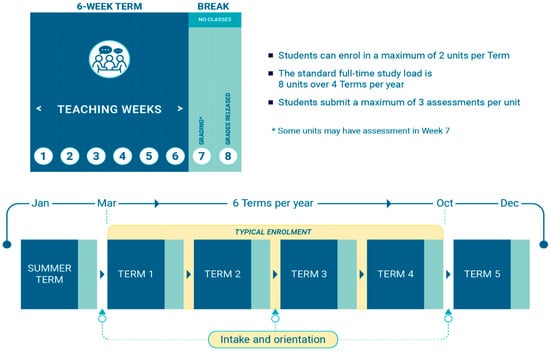
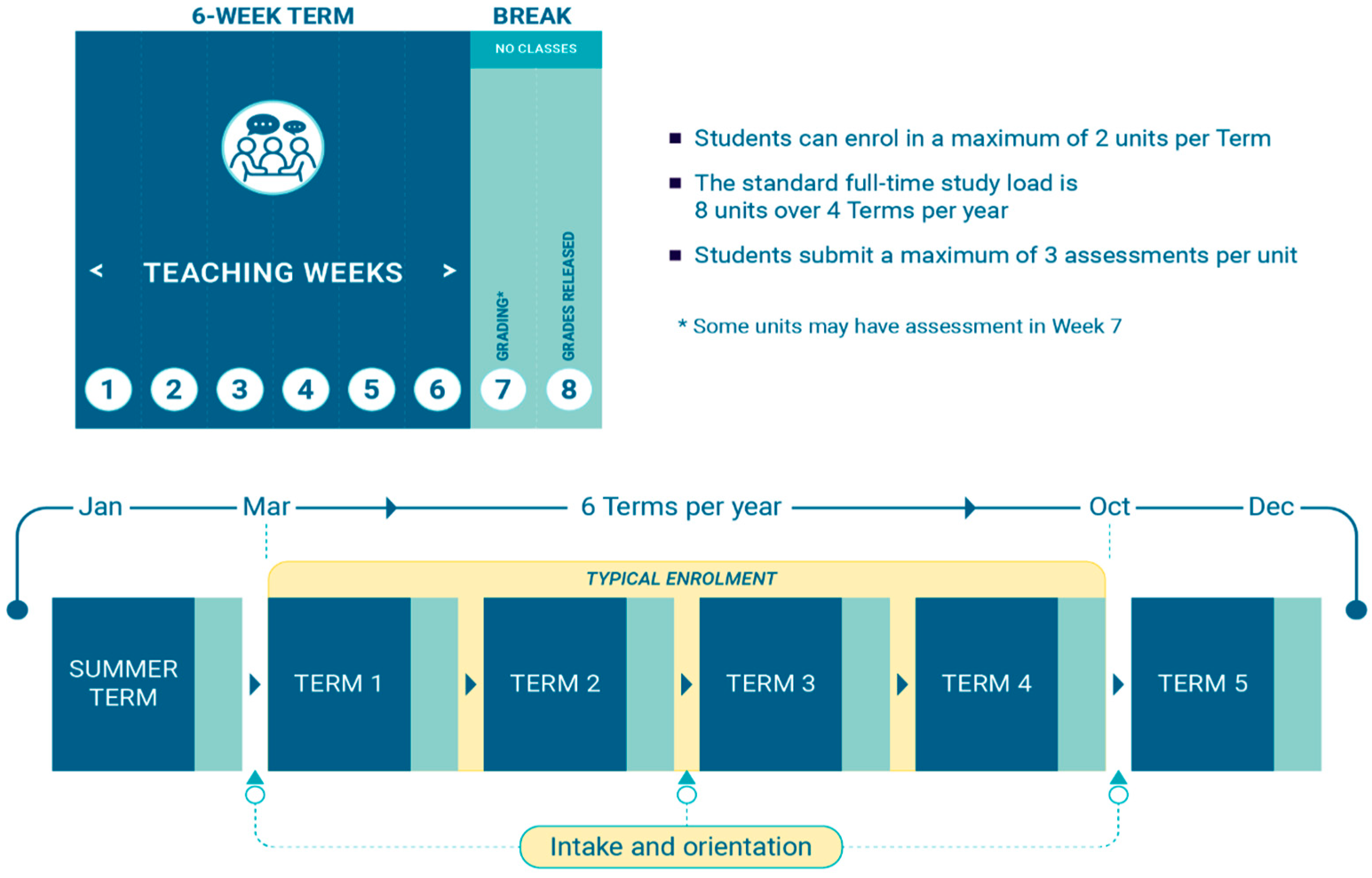
From 2021, an immersive block approach, the Southern Cross Model (SCM), was used to reform the University’s academic calendar from 12-week study periods into six terms of six weeks each (see Figure 1). Full-time students with a typical enrolment pattern complete eight units a year, as they would in the traditional model; however, unlike the common one-unit-at-a-time structure of most block models, here students can complete up to two units at a time. Students typically will study these two units across four consecutive six-week blocks. At both partner institutions in this study, the SCM retained the same core structural and pedagogical features, comprising up to two units studied concurrently in six-week terms, guided active learning, interactive online modules and scaffolded assessment.
Figure 1.
Southern Cross Model (Roche et al., 2025).
This immersive block model creates the conditions for student success by drawing on a pedagogy of guided active learning (Wilson et al., 2025). Guided active learning is an instructional approach that combines active learner engagement with structured teacher guidance in class or through instructional materials (Roche et al., 2025). It leverages principles of human cognitive architecture to optimise learning efficiency by reducing cognitive load, providing explicit direction, and scaffolding the learning process, ensuring learners build understanding effectively and efficiently without becoming overwhelmed or experiencing too many unhelpful digressions (Kirschner et al., 2006). Guided active learning outperforms discovery or unguided learning by providing structured pathways for developing understanding of complex concepts and skills (Kirschner et al., 2006).
In practice, the focused, guided, active curriculum is embedded in three main forms of learning in each subject:
- Self-access online modules that are media-rich, interactive and responsive (Goode et al., 2024a)
- Scheduled classes that are guided and interactive, involving activities such as discussion, problem-based scenarios and simulations rather than lectures
- Assessments that are authentic and scaffolded, with no more than three assessments per unit (Wilson et al., 2025)
- As such, the immersive block model used here aligns with Dehaene’s (2020) four pillars of learning: attention (here, focus), active engagement, error feedback, and consolidation. It also aligns with many of Chickering and Gamson’s (1991) seven principles for good practice in undergraduate education (e.g., active learning, student-faculty interaction, feedback).
3. Methodology
This convergent mixed-methods design (Creswell & Plano Clark, 2018) draws on both quantitative institutional data and qualitative focus group data. The quantitative component addresses the first two research questions by comparing student success, unit satisfaction and teaching satisfaction across the traditional semester-based and immersive block models, while the qualitative component addresses the third research question by exploring students’ broader experiences of the block model within their EMI TNE contexts through focus groups. This study replicates the approach used in related Southern Cross Model studies in Australia (e.g., Goode et al., 2024a) but instead focuses on student experience, success, and satisfaction at partner institutions in Papua New Guinea and China. The study, approved by the institution’s Human Research Ethics Committee (approval number 2022/054), was designed to generate context-specific understandings of student outcomes and experiences at two established TNE sites offering block-model curriculum.
The current study drew on student outcomes from the EMI TNE institutions in Papua New Guinea (PNG) and the People’s Republic of China, including two years of achievement (success) (N = 8974) and satisfaction (N = 2067) data from units that transitioned to the immersive model. For each student group considered in the analysis, outcomes for a control group that stayed in the traditional model for the duration of the study were also considered.
3.1. Data Collection and Analysis
3.1.1. Quantitative Data Collection and Analysis
Institutional quantitative data were sourced from the University’s Office of Business, Intelligence and Quality. Two sets of data were obtained: (1) students’ final unit results; and (2) student responses given on a 5-point Likert scale to a series of questions in the University’s Unit Feedback Survey (UFS). The UFS is conducted at the end of each teaching period and closes prior to the release of final grades. The University’s institutional data were then reviewed and cleaned to construct a final dataset suitable for analysis (Pallant, 2020). The data were uploaded to SPSS 30.0 and separated into samples comprising student data from units offered at three timeframes of interest:
- T0: in the semester model, 2019
- T1: in the semester model, 2021–2022, during the SCM transition
- SCM: in the SCM, 2022–2024
T0 represents the baseline for student outcomes, before the COVID-pandemic (2020), and before the university began to revise its policies and practices as the SCM was progressively rolled out. T0 is the traditional university approach: semesters, 4-unit-at-a-time, lectures and exams. T1 is a transitional phase when the same subjects were still structured into semesters, but policy changes associated with the SCM, around assessment and teaching delivery, had begun to be implemented across the institution. The SCM sample includes the same units delivered in the six-week, 2-unit-at-a-time guided and active learning model.
Success rates were calculated according to the following formula, excluding students who withdrew prior to a teaching period: Census Date: Completed/(Completed + Failed + Withdrawn). As per Field’s (2018) recommendation for non-normally distributed data, Pearson’s chi-square tests were conducted to test for significant change between T0 and SCM, and T1 and SCM. Cramér’s V (effect size) was also calculated.
Two items were extracted from the UFS: “Overall, I am satisfied with this unit” and “Overall, I am satisfied with the teaching in this unit”. The data were classified into agreement (ratings of 5 strongly agree, or 4 agree), and non-agreement (ratings of 3 average, 2 disagree or 1 strongly disagree). Pearson’s chi-square tests were conducted, and Cramér’s V were generated.
3.1.2. Qualitative Data Collection and Analysis
To address the third research question, focus groups were conducted to explore how students experienced the immersive block model in their specific EMI TNE contexts and to provide explanatory depth beyond institutional measures of success and satisfaction. Students’ perceptions of the immersive block model were gathered through one-hour qualitative focus groups in 2025. Participation invitations were issued in early 2025 and distributed via unit learning sites and email at the two participating institutions in PNG and China, where the block model has been introduced. This convenience sampling approach resulted in two focus groups, one in PNG and one in China, held in July and March 2025, respectively (Table 1).
Table 1.
Participants.
Face-to-face focus groups were facilitated by the authors, and the sessions were recorded and transcribed. Groups were conducted in English, and participants were able to use translation tools. Participant names were replaced by pseudonyms in the transcripts before analysis commenced to ensure anonymity, with C and P used to designate participants from China and PNG, respectively. The anonymised focus group transcripts were analysed by the first author using reflective thematic analysis (Braun & Clarke, 2022), a systematic six-step reflexive approach to generating codes and themes pertinent to the three research questions. Themes were constructed as patterns of meaning comprising multiple codes which coalesced into organising concepts, as distinct from topic summaries. They were also shaped by the researchers’ engagement with the data set and the questions driving the research (Braun & Clarke, 2022). The final set of themes was checked by the remaining authors, with iterative adjustments made to the resulting narrative until all authors approved the final written summary.
The convergent mixed-methods design used in this study was chosen as it enabled the examination of academic outcomes and experiences. The quantitative component allowed comparison of success rates, unit satisfaction and teaching satisfaction between the traditional semester-based model and the immersive Southern Cross Model. The qualitative component enabled a deeper understanding of students’ experiences of studying under the block model in a transnational education context, with English as the medium of instruction. Taken together, these data sources facilitated a more thorough evaluation of the block model’s impact on students, therefore addressing all three research questions.
4. Results
The results are presented in two parts, reflecting the study’s convergent mixed-methods design. First, the quantitative results present and compare students’ success and satisfaction across the traditional semester model, the transitional period, and the Southern Cross Model at the partner institutions in China and Papua New Guinea, focusing on the first two research questions. Second, qualitative findings present further insight into students’ experiences of the block model through three themes: Soft (Power) Skills, A Balancing Act and Access Challenges, focusing on addressing the third research question driving this study.
4.1. Quantitative
Table 2 reports student success outcomes across T0, T1 and SCM at the PNG and Chinese partner locations. In China, a low baseline success rate in T0 (76.3%) increased significantly in both the T1 transitional semester model (96.0%) and the SCM (92.2%). Success remained very high in the SCM (>90%) but did decline significantly by 3.8 percentage points compared to T1. At PNG, strong significant increases in success were observed in the SCM (72.1%) compared to both T0 (57.3%) and T1 (61.2%).
Table 2.
International offshore student success, 2019–2024.
Student satisfaction outcomes are presented in Table 3. Baseline satisfaction in T0 was high for both units and teaching at both institutions (>85%). This did not change significantly in PNG during T1 or the SCM, remaining high. At the Chinese university, significant increases in unit and teaching satisfaction were observed in the SCM (89.7% unit and 91.5% teaching) compared to T1 (81.3% unit and 84.0% teaching). No significant change was observed in the SCM compared to T0.
Table 3.
International offshore student satisfaction, 2019–2024.
4.2. Qualitative
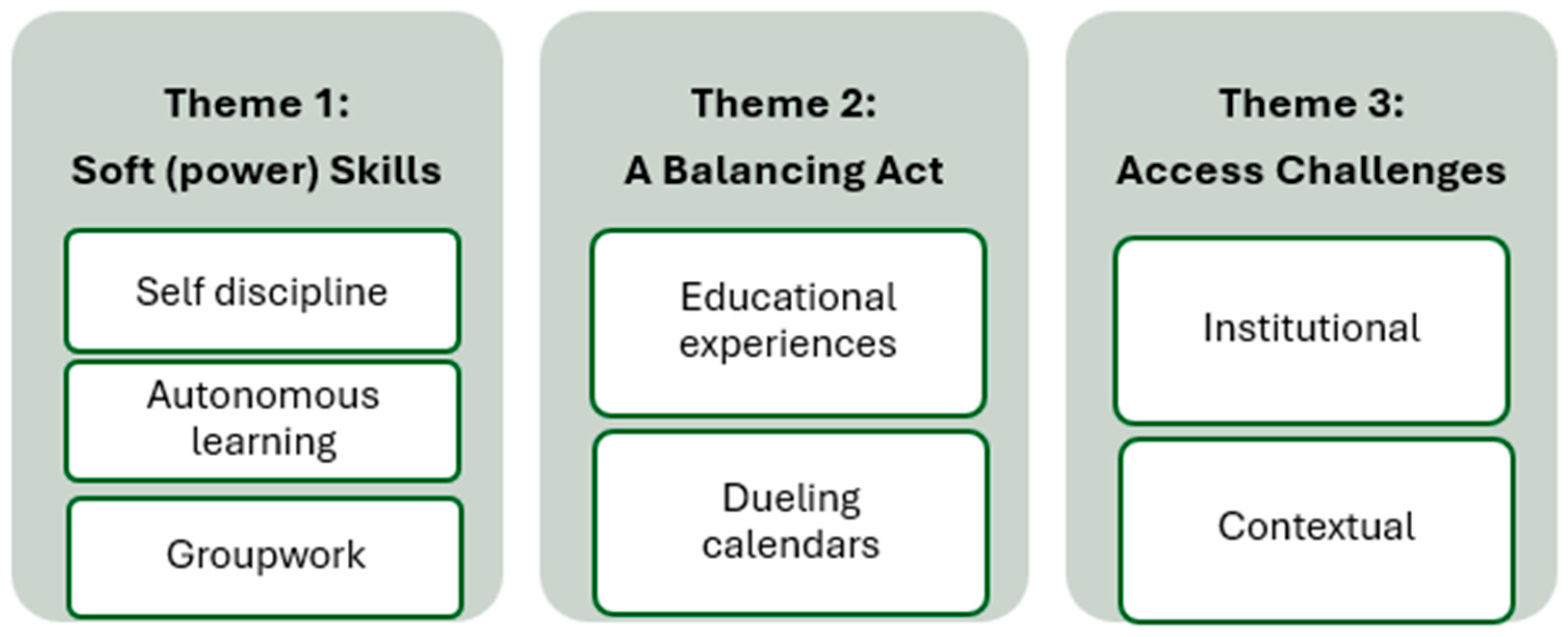
Three themes were constructed to encapsulate students’ experiences of studying in a TNE cross-cultural immersive block program: Soft (Power) Skills, A Balancing Act, and Access Challenges, as depicted in Figure 2.
Figure 2.
Themes Constructed to Represent Students’ Experiences of the Block Model.
4.2.1. Theme 1: Soft (Power) Skills—Graduate Attributes
The first theme, Soft (Power) Skills, was constructed to reflect an idea repeatedly expressed in the focus groups: that students learned more than just discipline-related knowledge and skills through the block model. These are traditionally called soft skills, also referred to as power skills or empl) andity skills (Marin-Zapata et al., 2022), and correspond with the University’s graduate attributes that all students should develop during their studies: self-discipline, intellectual rigour, creativity, life-long (autonomous) learning and communication, social skills and cultural competency (teamwork).
The first element in this theme is self-discipline. Each of the PNG students explicitly referred to needing self-discipline to succeed in the six-week block model: “It’s all about self-discipline…If you cannot discipline yourself, then you won’t be able to complete the task or the units” (P 1). Chinese students’ references to self-discipline were more implicit. They discussed their determination to understand the course content and complete assessments in the six-week timeframe, in English. Despite challenges, studying in English was regarded as important for their future:
“It’s good for us to practice our English skills, you know, we are cooperating with Australians, some of us definitely wants [sic] to go abroad and learn in Australia some day, and if so, I think the best way to learn is in English”.(C 5)
Others referred to the strong personal motivation engendered by the block model and its shorter time frame: “It pushed me all the time and alerted me: I have to finish my homework.1 The assessment will decide my final grade, and it’s important” (C 8).
The second element of Theme 1: was constructed to reflect students’ references to autonomous learning and personal reflection at both institutions. Students referred to undertaking research beyond module content, understanding that in the block model, not everything would be delivered through lectures: “we need to spend a lot of time to develop our self-skills… self-thinking skills” (C 1). There were references to self-initiated research using external, independently accessed sources: “I learned more from reading by myself and doing my own research” (P 2). Furthermore, participants highlighted the value of clear learning goals and breaks between each study term: “give me a lot of time to self-reflect… I can learn …what I truly want to do in the future” (C 3).
The third key skill students referred to developing was group work. It was regarded as both a key source of professional learning for their future careers and a source of frustration. Students said they would “…work as a group… Groupwork will give us a lot of experience, like cooperation, which is very important in our job because we cannot do everything by ourselves” (C 5). Despite the perceived importance of groupwork and students’ willingness to undertake more group assessments, they acknowledged it was not always easy due to uneven contributions by group members: “I hope in the future there will be more work together. However, it’s difficult to cooperate with other students” (C 1). This was also reported by students in PNG, who gave individual and cultural reasons for the difficulties of working in a team: “…in group work, most of the students rely on others to do the work…our PNG way of life is too lenient to others” (P 4).
4.2.2. Theme 2: A Balancing Act
The second theme, A Balancing Act, was constructed to reflect the direct references students made to balancing competing factors while trying to meet assessment deadlines. Students at both institutions had to adjust to the formative assessment-based approach of the immersive block model, which contrasted with their past test- and exam-based education experiences in high school or other university courses. A PNG student commented: “[We would do] tests every two weeks… and then exams… Yeah, I was also expecting exams and tests before I came here” (P 2). Similarly, students in China noted the different pedagogical approaches:
“The difference is how we learn the knowledge in Chinese courses. We learn for the final exam or the middle exam… We just squeeze all the knowledge into our brain to attend the exam, to pass the exam. In the SCU model, we will have to learn the homework (see note 1)”.(C 7)
Although students at both institutions acknowledged that the block model’s authentic, assessment-driven, skills-oriented learning was very different to the exam-centred systems that they had previously experienced, overall, they saw clear value in the block model approach:
“In my Chinese courses… we just need to finish the exam in the end… In the SCU model… I will learn a lot of skills through… my assessment. Sometimes it’s hard for me to finish… but I really like the pattern for us”.(C 4)
A second issue arose for the Chinese students specifically. This was related not to the block model itself, but to how the model was implemented in their local context. Contrary to the intent of the block model approach, students at the Chinese institution were also required to complete traditional semester-based subjects in parallel to their block model subjects. Due to this specific approach to implementation, these students experienced the additional hurdle of juggling two competing academic calendars. This dampened the benefit of focused learning associated with the structure and pedagogy of the block model, as the following student expressed:
You know, we are a Chinese and Australian… project … we have Chinese courses and Australian courses altogether. They are combined… it’s quite hard for us…without Chinese courses, I think the six-week module is quite good.(C 7)
However, students also believed that their studies in the block model, despite the need to balance calendars and schedules, were an investment in their future: “Maybe I will get a Master’s degree in Australia… [this] degree can help me a lot because I don’t need to start at the beginning, not like other Chinese students” (C 5).
4.2.3. Theme 3: Access Challenges
Theme 3: Access Challenges, reflects students’ references to factors at the institutional and broader contextual levels that impacted their access to digitally-rich content in the SCM. Among the access challenges at the institutional level, Chinese students reported difficulties using the learning management system (LMS), which hosts content for individual university units (subjects). Some students reported challenges navigating the LMS, which was structured differently to the Chinese LMS: “The assessment page is hidden too deep in the website. Sometimes, I’ll have to look through all the pages to find what I need” (C 7). Others noted that a recent update had impacted their ability to use translation tools with the site: “We are Chinese… [we] use the translate, but it’s not running smoothly… in the old version it can translate the whole page” (C 5). A more latent reading of students’ experiences suggests that varying levels of language proficiency and digital literacy may have also contributed to students’ access challenges.
There were also broader contextual factors that impacted students’ abilities to access materials, including electricity reliability and data affordability in PNG, and national internet firewalls in China. Summarised in shorthand as “PNG Power”, students in that country spoke about unreliable power supply as their biggest challenge to accessing materials in the SCM, which features media-rich online modules as one of its key design features. Access was also affected by the cost of data: “a factor here is data because I have to go online every single day, and you know, I’m a student, so I have to have a reliable data source” (P 1). While students could access the sites when on campus without incurring personal financial costs, paying for data was an issue when studying from home. For Chinese students, one of the access hurdles they reported was the blocking of some course content by internet firewalls. They noted that “To log into some website like YouTube, we cannot” (C 8). This limited their engagement with some of the digitally-rich content.
5. Discussion
This exploratory mixed-methods study has investigated students’ success, satisfaction, and experiences in an immersive block-model program as part of a transnational education collaboration between a public Australian university and universities in Papua New Guinea and the People’s Republic of China. It has been found that, overall, students in the block model report higher satisfaction and success rates than those in the traditional semester model, and that they are positive about their experiences. This aligns with similar studies conducted in non-TNE contexts (Buck & Tyrrell, 2022; Goode et al., 2023; Loton et al., 2022) and provides an initial understanding of this previously underexamined TNE EMI context. Importantly, this study found that students across two very different international contexts are not only achieving high levels of success and satisfaction, but are also potentially developing soft skills (e.g., interpersonal and non-technical skills) through block model study—a valued outcome from both student and institutional perspectives. However, students’ experiences of block model study in the EMI TNE context also highlight the complexities of how local contextual factors shape students’ perceptions of their learning experiences. All of these findings have implications for the implementation of block-model programs in transnational higher education collaborations that use English as a medium of instruction and warrant further research.
The impact of block model study on interpersonal and non-technical skill development is a nascent area of investigation; this study is among the first to report that students perceived gains in self-discipline and autonomy through immersive block programs. Prior research on block model study in Australia (Goode et al., 2024a; C. Liu et al., 2025; Wilson et al., 2025), Germany (van der Sluis & Tausch-Nebel, 2023), and Ethiopia (Areaya et al., 2011; Sewagegn & Diale, 2021) does offer some relevant insights into time management, focus, independent learning, peer interaction, and collaboration, which inform the present findings. Previous studies have found that the heightened focus on time management required in block model programs can help students pace their work more effectively, avoid procrastination, take greater responsibility for meeting program demands (Goode et al., 2024a), and develop effective study habits (C. Liu et al., 2025). Broader research on the student experience of English-medium transnational education also indicates that successful students maintain consistent study routines and are highly motivated, helping them meet foreign academic expectations (Tsiligiris & Hill, 2021). However, because they often remain in their home countries, they may not automatically achieve the same level of independence as students studying abroad (Healey & Hickey, 2025). This study suggests that a block model can foster student autonomy and self-discipline in transnational education contexts, helping students develop interpersonal and non-technical, or soft (power), skills associated with successful university study and future employment, even if they stay in their home countries.
Students’ complex experiences of groupwork in this study are consistent with prior research on block model formats. The engaged learning design, recognised as critical for fostering knowledge acquisition and skill development in higher education (Chickering & Gamson, 1991), and smaller class sizes that characterise most block model programs, can foster more interactive classes, stronger collaborative relationships among students (C. Liu et al., 2025), and a greater sense of belonging (Long & McLaren, 2024). In contrast, shorter timeframes can also intensify the difficulties international students face when collaborating (Goode et al., 2024a; Sewagegn & Diale, 2021). Both the benefits and challenges of groupwork are expressed by the students in this study, but the underlying reasons for their challenges may differ in the TNE EMI context from those identified in previous block model studies. Prior research in higher education contexts where English is the medium of instruction has found that language proficiency and the need to adapt to different academic norms can impact group work (Cui & Gardiner, 2025; Tran et al., 2023). It is unclear to what extent these factors affected students’ experiences in this exploratory study, and further investigation is recommended to increase understanding. However, based on this study, the expectations and rationale for group work in block model study within TNE EMI contexts may require clearer, more explicit communication with student cohorts and their teachers.
Students in both PNG and China expressed some surprise at the lack of high-stakes exams and the focus on formative assessment in the block model. They noted how markedly different this was from their past education experiences. The impact of international students’ prior educational experiences on their perspectives on block model study was also noted by Goode et al. (2024a); and research in the Middle East (Sinha et al., 2018) has similarly demonstrated that students may face challenges moving from a local high school system based on testing, exams and memorization to an EMI TNE context where group work and other engaged forms of assessment are privileged. It can be inferred that the authentic, scaffolded assessment that characterises block model programs may need additional explanation, scaffolding and modelling for students in the TNE EMI context. As with group work, task requirements may need to be more explicit, with modelling provided so that students can develop the skills needed to successfully undertake these assessments. This is another area that deserves further investigation in the transnational education context.
Misaligned study calendars were also found to impact the experiences of Chinese students studying in the block model. They expressed satisfaction with the block model study but noted that studying some subjects in the block model and others in the more traditional semester model simultaneously at their home university posed challenges. By their nature, transnational education partnerships bring foreign curricula and pedagogy into local contexts, with potential positive and negative impacts for local knowledge and practices (Le Thanh Phan et al., 2024; Wang, 2025). The findings underscore the significance of “institutional harmonisation” (Healey & Hickey, 2025, p. 74) in TNE EMI collaborations to ensure that the curriculum integration process is mindful of the overall student experience.
The broader contextual factors that affected students’ experiences in this study also highlight the significance of local conditions in the delivery of the block model in an EMI TNE context. Internet data costs, the reliability of paper and internet firewalls vary by location. While universities cannot influence the underlying geopolitical and economic causes, understanding their impact on students’ experiences enables institutions to explore other ways to ensure equitable educational experiences across campuses and countries. This has implications for curriculum design. For example, consideration should be given to whether digital resources that are not embedded within learning sites are needed. Furthermore, digital literacy and English proficiency also emerge as possible contributing factors impacting students’ experiences and warrant further investigation in transnational education contexts.
Limitations and Implications
This exploratory study at two locations was small-scale, and further qualitative research focused on students’ perspectives is needed to determine whether the students’ experiences in this study are representative of the wider student cohorts in both contexts. Clearly, some of the findings in this study are specific to the locations where the focus groups were conducted; for example, electricity reliability in PNG or internet accessibility issues in China. Yet they provide useful insights into how students experience block model study in particular contexts and offer guidance for institutions and educators working in TNE EMI contexts. Further exploration of the development of student autonomy and self-discipline in block-model study may reveal that to be a more universal phenomenon. However, it is likely that local, institutional and national factors all shape students’ experience of block model learning. As such, all of the findings in this study warrant further qualitative investigation.
As the researchers in this study can attest, there are clear challenges and limitations when conducting research across different countries and time zones, including confidentiality concerns, cultural norms and local gatekeepers. However, this study highlights that as universities increasingly engage in transnational education and block models become more popular globally, the overall student experience and program equity need to be foregrounded as core considerations in EMI TNE partnership arrangements. In particular, harmonising calendar approaches and providing clear explanations and discussions around pedagogies that emphasise formative assessment and group collaboration over tests and examinations appear to be important considerations in implementing block model TNE EMI programs.
6. Conclusions
This exploratory study extends previous research on student success and satisfaction in a block model study by examining the outcomes and experiences of students studying through English in transnational education contexts in China and Papua New Guinea. The findings provide evidence of higher student success under the block model, sustained or improved satisfaction, and suggest students’ development of self-discipline, autonomous learning and collaboration. The study also provides unique context-specific insights into how pedagogical practices, the implementation of block-model study, and digital infrastructure can support and enhance the student experience in transnational contexts. Based on the analysis of the results presented, there are key implications for institutions, curriculum designers, and practitioners in establishing higher education EMI TNE partnerships and undertaking contextually responsive curriculum innovation.
At the institutional level
- Align institutional systems: Ensure thoughtful coordination of any competing academic calendars and assessments to avoid competing demands, thereby adhering to the block model principle of focus.
- Support equitable digital access: For digitally-rich block learning approaches, ensure students have sufficient access to the required technology to reduce access constraints. This may include ensuring that access to digital technology is a study pre-requisite in TNE EMI partnerships.
For curriculum designers
- Scaffold transition to block assessment approaches: Clarify expectations, provide models and scaffolded examples of non-test-based assessment tasks. Provide explicit structure and expectations for group and peer assessment.
- Make soft skill development explicit: Explicitly integrate time-management and self-regulation development opportunities into the curriculum to help students manage block-model learning. Provide time for feedback on the essential skills students will need to develop and update on their progress.
For practitioners
- Scaffold transition to block classroom pedagogies: Practitioners need to provide clear orientation about the expectations of the classroom, particularly in terms of engaged learning and peer-engaged, group work. Model good practice and scaffold activities so that students develop the necessary skills (e.g., classroom participation, group work).
This novel study indicates that, with these considerations in mind, block model learning can be implemented across varied transnational education contexts, supporting and benefiting students and contributing to fruitful and sustainable international partnerships. The qualitative findings, in particular, provide the foundation for larger-scale studies of student experiences across diverse transitional education contexts.
Author Contributions
Conceptualization, S.L., T.R., E.G. and R.S.; methodology, S.L., T.R. and E.G.; formal analysis, S.L., T.R. and E.G.; investigation, E.G. and R.S.; data curation, S.L., T.R. and E.G.; writing—original draft preparation, S.L., T.R. and E.G.; writing—review and editing, S.L., T.R., E.G. and R.S.; visualization, S.L., T.R. and E.G.; supervision, S.L.; project administration, S.L. All authors have read and agreed to the published version of the manuscript.
Funding
This research received no external funding.
Institutional Review Board Statement
The study was conducted in accordance with the Declaration of Helsinki and approved by the Southern Cross University Human Research Ethics Committee (HREC) in May 2022, approval number [2022/054].
Informed Consent Statement
Informed consent was obtained from all subjects involved in the study.
Data Availability Statement
The data that support the findings of this study are not publicly available due to reasons of sensitivity and privacy. To protect the identities of students and participants, the institutional data were anonymised and summarised for reporting.
Acknowledgments
The authors would like to acknowledge the support of students and colleagues at Southern Cross University and their institutional partners in the Asia-Pacific.
Conflicts of Interest
The authors declare no conflicts of interest.
Abbreviations
The following abbreviations are used in this manuscript:
| TNE | Transnational education |
| EMI | English-medium instruction |
| EAL/D | English as an additional language or dialect |
| HE | Higher education |
| PNG | Papua New Guinea |
| UFS | Unit feedback survey |
| SCM | Southern Cross Model |
Notes
| 1 | Homework, 作业 zuòyè in Chinese, refers to academic tasks assigned to students to complete outside of class and includes assessments. |
References
- Ahmadi, Q. S. (2017). Unwelcome? English as a medium of instruction (EMI) in the Arabian gulf. English Language Teaching, 10(8), 11–17. [Google Scholar] [CrossRef] [Scilit][Green Version]
- Ahmed, S., & Roche, T. (2021). Making the connection: Examining the relationship between undergraduate students’ digital literacy and academic success in an English medium instruction (EMI) university. Education and Information Technology, 26, 4601–4620. [Google Scholar] [CrossRef] [Scilit]
- Alhamami, M. (2023). Inequity, inequality, and language rights in English as a medium of instruction programs. Evaluation and Program Planning, 99, 102297. [Google Scholar] [CrossRef] [Scilit] [PubMed]
- Al-Masheikhi, F., Al-Mahrooqi, R., & Denman, C. J. (2014). Investigating college of science student attitudes towards using English as a medium of instruction. In The 2014 WEI international academic conference proceedings (pp. 99–113). Academic Press. [Google Scholar]
- Ammigan, R., & Jones, E. (2018). Improving the student experience: Learning from a comparative study of international student satisfaction. Journal of Studies in International Education, 22(4), 283–301. [Google Scholar] [CrossRef] [Scilit]
- Areaya, S., Shibeshi, A., & Tefera, D. (2011). Academic staff’s views and practices of modular course delivery. The Ethiopian Journal of Education, 31(2), 63–106. [Google Scholar]
- Australian Universities Accord Panel. (2024). Australian universities accord: final report. Australian Government Department of Education. Available online: https://www.education.gov.au/australian-universities-accord/resources/final-report (accessed on 8 August 2026).
- Bayramova, U., & Aliyev, A. (2019). Innovations in higher education: MOODLE in Azerbaijan universities. In 2019 1st international informatics and software engineering conference (UBMYK). IEEE. [Google Scholar] [CrossRef] [Scilit]
- Bedggood, R. E., & Donovan, J. D. (2012). University performance evaluations: What are we really measuring? Studies in Higher Education, 37(7), 825–842. [Google Scholar] [CrossRef] [Scilit]
- Braun, V., & Clarke, V. (2022). Thematic analysis: A practical guide. Sage. [Google Scholar]
- Buck, E., & Tyrrell, K. (2022). Block and blend: A mixed method investigation into the impact of a pilot block teaching and blended learning approach upon student outcomes and experience. Journal of Further and Higher Education, 46(8), 1078–1091. [Google Scholar] [CrossRef] [Scilit]
- Carter, D. (2024). The student experience of transnational education (HEP Report 184). Reading, Higher Education Policy Institute. Available online: https://www.hepi.ac.uk/wp-content/uploads/2024/12/The-student-experience-of-transnational-education.pdf (accessed on 17 May 2026).
- Chickering, A. W., & Gamson, Z. F. (1991). Applying the seven principles for good practice in undergraduate education. New Directions for Teaching and Learning, no. 47. Jossey-Bass. [Google Scholar]
- Crawford, R., & Jenkins, L. (2017). Blended learning and team teaching: Adapting pedagogy in response to the changing digital tertiary environment. Australasian Journal of Educational Technology, 33(2), 51–72. [Google Scholar] [CrossRef] [Scilit]
- Creswell, J. W., & Plano Clark, V. L. (2018). Designing and conducting mixed methods research (3rd ed.). SAGE Publications. [Google Scholar]
- Cui, X., & Gardiner, I. A. (2025). Investigating students’ academic language-related challenges and their interplay with English proficiency and self-efficacy on EMI success in transnational education (TNE) programs in China. English for Specific Purposes, 78, 53–69. [Google Scholar] [CrossRef] [Scilit]
- Davies, W. M. (2006). Intensive teaching formats: A review. Issues in Educational Research, 16(1), 1–20. [Google Scholar] [CrossRef] [Scilit][Green Version]
- Dehaene, S. (2020). How we learn: The new science of education and the brain. Penguin UK. [Google Scholar]
- Dewey, J. (1938). Experience and education. Macmillan. [Google Scholar]
- Fernandez-Chung, R. M., & Gill, R. S. (Eds.). (2025). Transnational education: Bridging borders, transforming futures. Taylor & Francis. [Google Scholar]
- Field, A. (2018). Discovering statistics using IBM SPSS (5th ed.). SAGE Publications. [Google Scholar]
- Gafu, G., & Collins, N. (2025). Universities branching out: Towards a typology of transnational education partnerships in central Asia. Central Asian Survey, 44, 1–21. [Google Scholar] [CrossRef] [Scilit]
- Goode, E., Roche, T., Wilson, E., & McKenzie, J. W. (2023). Implications of immersive scheduling for student achievement and feedback. Studies in Higher Education, 48(7), 1123–1136. [Google Scholar] [CrossRef] [Scilit]
- Goode, E., Roche, T., Wilson, E., & Zhang, J. (2025). The impact of an immersive block model on international postgraduate student success and satisfaction: An Australian case study. Education Sciences, 15(11), 1425. [Google Scholar] [CrossRef] [Scilit]
- Goode, E., Roche, T., Wilson, E., Zhang, J., & McKenzie, J. W. (2024a). The success, satisfaction and experiences of international students in an immersive block model. Journal of University Teaching and Learning Practice, 21(2), 1–26. [Google Scholar] [CrossRef] [Scilit]
- Goode, E., Syme, S., & Nieuwoudt, J. E. (2024b). The impact of immersive scheduling on student learning and success in an Australian pathways program. Innovations in Education and Teaching International, 61(2), 263–275. [Google Scholar] [CrossRef] [Scilit]
- Gu, M. M., Li, Z. J., & Jiang, L. (2024). Navigating the instructional settings of EMI: A spatial perspective on university teachers’ experiences. Journal of Multilingual and Multicultural Development, 45(2), 564–578. [Google Scholar] [CrossRef] [Scilit]
- Healey, N., & Hickey, R. (2025). Managing transnational education partnerships–an evolving journey. In An insider’s guide to working in international higher education (pp. 161–191). Routledge. [Google Scholar]
- Helfand, D. J. (2013). The social conquest of general education. The Journal of General Education, 62(1), 43–51. [Google Scholar] [CrossRef] [Scilit]
- Hornstein, H. A. (2017). Student evaluations of teaching are an inadequate assessment tool for evaluating faculty performance. Cogent Education, 4(1), 1304016. [Google Scholar] [CrossRef] [Scilit]
- Jiang, L., Zhang, L. J., & May, S. (2019). Implementing English-medium instruction (EMI) in China: Teachers’ practices and perceptions, and students’ learning motivation and needs. International Journal of Bilingual Education and Bilingualism, 22(2), 107–119. [Google Scholar] [CrossRef] [Scilit]
- Kahu, E. R., & Nelson, K. (2018). Student engagement in the educational interface: Understanding the mechanisms of student success. Higher Education Research and Development, 37(1), 58–71. [Google Scholar] [CrossRef] [Scilit]
- Kift, S. (2015). A decade of transition pedagogy: A quantum leap in conceptualising the first year experience. HERDSA Review of Higher Education, 2, 51–86. [Google Scholar]
- Kirkpatrick, A., & Liddicoat, A. J. (2017). Language education policy and practice in east and southeast Asia. Language Teaching, 50(2), 155–188. [Google Scholar] [CrossRef] [Scilit]
- Kirschner, P. A., Sweller, J., & Clark, R. E. (2006). Why minimal guidance during instruction does not work: An analysis of the failure of constructivist, discovery, problem-based, experiential, and inquiry-based teaching. Educational Psychologist, 41(2), 75–86. [Google Scholar] [CrossRef] [Scilit] [PubMed]
- Kleibert, J. M. (2022). Transnational spaces of education as infrastructures of im/mobility. Transactions of the Institute of British Geographers, 47(1), 92–107. [Google Scholar] [CrossRef] [Scilit]
- Knight, J., & McNamara, J. (2017). Transnational education: A classification framework and data collection guidelines for international programme and provider mobility (IPPM) (p. 46). British Council and DAAD. Available online: https://www.britishcouncil.org/sites/default/files/tne_classification_framework-final.pdf (accessed on 9 August 2026).
- Kolb, D. A. (1984). Experiential learning: Experience as the source of learning and development. Prentice-Hall. [Google Scholar]
- Konjarski, L., Weldon, J., Ashley, S., Freeman, T., Shanata, J., Yamanishi, M., Lotz, E., Gilde, C., & Ganzel, A. (2023). The block: A catalyst for ongoing innovation. Journal of University Teaching and Learning Practice, 20(4), 13. [Google Scholar] [CrossRef] [Scilit]
- Kozanitis, A., & Nenciovici, L. (2023). Effect of active learning versus traditional lecturing on the learning achievement of college students in humanities and social sciences: A meta-analysis. Higher Education, 86, 1377–1394. [Google Scholar] [CrossRef] [Scilit]
- Leslie, S. (2025). The professional role and identity of English for academic purposes teachers in Australian universities: A phenomenological study [Doctoral dissertation, Queensland University of Technology]. [Google Scholar]
- Le Thanh Phan, H., Tran, L. T., & Blackmore, J. (2024). Overview of internationalisation of higher education and the curriculum. In Internationalisation of the curriculum: A comparative perspective across Australian and Vietnamese universities (1st ed.). Routledge. [Google Scholar] [CrossRef] [Scilit]
- Liu, C., Watt, A., Solomonides, I., & Thomas, M. (2025). Examining international postgraduate student reflections of intensive and semester modes of delivery. Journal of University Teaching and Learning Practice, 22(7), 1–17. [Google Scholar] [CrossRef] [Scilit]
- Liu, D., Wimpenny, K., DeWinter, A., & Harrison, P. (2023). Students’ perceptions and experiences of teaching and learning in transnational higher education in China: Implications of the intercultural dialogue framework. Teaching in Higher Education, 28(7), 1465–1483. [Google Scholar] [CrossRef] [Scilit]
- Long, S. L., & McLaren, M. R. (2024). Belonging in remote higher education classrooms: The dynamic interaction of intensive modes of learning and arts-based pedagogies. Journal of University Teaching and Learning Practice, 21(2), 1–23. [Google Scholar] [CrossRef] [Scilit]
- Loton, D., Stein, C., Parker, P., & Weaven, M. (2022). Introducing block mode to first-year university students: A natural experiment on satisfaction and performance. Studies in Higher Education, 47(6), 1097–1120. [Google Scholar] [CrossRef] [Scilit]
- Macaro, E., Curle, S., Pun, J., An, J., & Dearden, J. (2018). A systematic review of English medium instruction in higher education. Language Teaching, 51(1), 36–76. [Google Scholar] [CrossRef] [Scilit]
- Marin-Zapata, S. I., Román-Calderón, J. P., Robledo-Ardila, C., & Jaramillo-Serna, M. A. (2022). Soft skills, do we know what we are talking about? Review of Managerial Science, 16(4), 969–1000. [Google Scholar] [CrossRef] [Scilit]
- McCluskey, T., Weldon, J., & Smallridge, A. (2019). Re-building the first year experience, one block at a time. Student Success, 10(1), 1–15. [Google Scholar] [CrossRef] [Scilit]
- Nguyen, H. T. L., Tran, L. T., Thao Luu, A. P., Luong, D. H., & Pham, H. H. (2025). Trends and patterns of research on transnational education: A bibliometric analysis with Scopus data, 1972–2023. Journal of Studies in International Education, 30(2), 208–230. [Google Scholar] [CrossRef] [Scilit]
- Nguyen, Q., Rienties, B., Toetenel, L., Ferguson, R., & Whitelock, D. (2017). Examining the designs of computer-based assessment and its impact on student engagement, satisfaction, and pass rates. Computers in Human Behavior, 76, 703–714. [Google Scholar] [CrossRef] [Scilit]
- O’Dowd, R. (2021). Virtual exchange: Moving forward into the next decade. Computer Assisted Language Learning, 34(3), 209–224. [Google Scholar] [CrossRef] [Scilit]
- Pabel, A., & Shah, M. (2025). Student experience survey: Trends and insights in Australian higher education from 2017 to 2023. Perspectives: Policy and Practice in Higher Education, 1–13. [Google Scholar] [CrossRef] [Scilit]
- Pallant, J. (2020). SPSS survival manual: A step-by-step guide to data analysis using IBM SPSS. Routledge. [Google Scholar]
- Pennycook, A. (1994). The cultural politics of English as an international language. Longman. [Google Scholar]
- Phillipson, R. (1992). Linguistic imperialism. Oxford University Press. [Google Scholar]
- Poon, J. (2019). Postgraduate student satisfaction in the UK. Property Management, 37(1), 115–135. [Google Scholar] [CrossRef] [Scilit]
- Quacquarelli Symonds. (2022). Global international student survey 2022: Building resilience in global higher education. Quacquarelli Symonds. [Google Scholar]
- Redfern, K. (2016). An empirical investigation of the incidence of negative psychological symptoms among Chinese international students at an Australian university. Australian Journal of Psychology, 68(4), 281–289. [Google Scholar] [CrossRef] [Scilit]
- Richmond, A. S., Murphy, B. C., Curl, L. S., & Broussard, K. A. (2015). The effect of immersion scheduling on academic performance and students’ ratings of instructors. Teaching of Psychology, 42(1), 26–33. [Google Scholar] [CrossRef] [Scilit]
- Roche, T., Goode, E., & Wilson, E. (2026). The impact of an immersive block curriculum on student achievement and feedback across disciplines. Journal of University Teaching and Learning Practice, 23(1), 1–22. [Google Scholar] [CrossRef] [Scilit]
- Roche, T., Harrington, M., Sinha, Y., & Denman, C. (2016). Vocabulary recognition skill as a screening tool in English-as-a-lingua-franca university settings. In J. Read (Ed.), Post-admission language assessment of university students (pp. 159–178). Springer International Publishing. [Google Scholar]
- Roche, T., Wilson, E., Goode, E., & McKenzie, J. W. (2025). Supporting the academic success of underrecognised higher education students through an immersive block model. Higher Education Research & Development, 44(3), 721–735. [Google Scholar] [CrossRef] [Scilit]
- Samarawickrema, G., & Cleary, K. (2021). Block mode study: Opportunities and challenges for a new generation of learners in an Australian university. Student Success, 12(1), 13–23. [Google Scholar] [CrossRef] [Scilit]
- Samarawickrema, G., Cleary, K., Male, S., McCluskey, T., & Samarawickrema, R. (2022). Designing learning for intensive modes of study. Higher Education Research and Development Society of Australasia. [Google Scholar]
- Sewagegn, A. A., & Diale, B. M. (2021). Modular/Block teaching: Practices and challenges at higher education institutions of ethiopia. Teaching in Higher Education, 26(6), 776–789. [Google Scholar] [CrossRef] [Scilit]
- Sinha, Y., Roche, T., & Sinha, M. (2018). Understanding higher education attrition in English medium programs in the arab gulf states: Identifying push, pull and fallout factors at an Omani university. In English education in Oman (pp. 195–229). Springer. [Google Scholar]
- Sweller, J. (1988). Cognitive load during problem solving: Effects on learning. Cognitive Science, 12(2), 257–285. [Google Scholar] [CrossRef] [Scilit]
- Thomas, M. B., Muscat, A., & Marland, B. (2025). Building a picture of the block model: A scoping review. Journal of Block and Intensive Learning and Teaching, 3(1), 3–25. [Google Scholar] [CrossRef] [Scilit]
- Tran, N. H. N., Amado, C. A. d. E. F., & Santos, S. P. d. (2023). Challenges and success factors of transnational higher education: A systematic review. Studies in Higher Education, 48(1), 113–136. [Google Scholar] [CrossRef] [Scilit]
- Trotter, J., & Qureshi, F. (2023). Student perspectives of hybrid delivery in a transnational education context during COVID-19. Journal of Applied Learning & Teaching, 6(1), 1–9. [Google Scholar] [CrossRef] [Scilit]
- Tsiligiris, V., & Hill, C. (2021). A prospective model for aligning educational quality and student experience in international higher education. Studies in Higher Education, 46(2), 228–244. [Google Scholar] [CrossRef] [Scilit]
- Turner, R., Webb, O. J., & Cotton, D. R. (2021). Introducing immersive scheduling in a UK university: Potential implications for student attainment. Journal of Further and Higher Education, 45(10), 1371–1384. [Google Scholar] [CrossRef] [Scilit]
- University of Hohenheim. (2022). The blocked system for master’s programs of the faculties A and N. Available online: https://www.uni-hohenheim.de/en/service-teaching-block-system-master-studies-faculty-a-faculty-n (accessed on 19 May 2026).
- van der Sluis, H., & Tausch-Nebel, L. (2023). “You can concentrate better on the topics and invest more time in it”: A case study evaluating the impact of immersive scheduling on students. Compass: Journal of Learning and Teaching in Higher Education, 16(2), 47–62. [Google Scholar] [CrossRef] [Scilit]
- Walkinshaw, I., Fenton-Smith, B., & Humphreys, P. (2017). EMI issues and challenges in Asia-pacific higher education: An introduction. In English medium instruction in higher education in Asia-Pacific: From policy to pedagogy (pp. 1–18). Springer. [Google Scholar] [CrossRef] [Scilit]
- Wang, J. (2025). Triple-A transnational education (TNE): Addressing intercultural challenges. Frontiers in Communication, 10, 1568138. [Google Scholar] [CrossRef] [Scilit]
- Williams, T. (2023, May 10). Rise in working students ‘should prompt radical teaching rethink’. Times Higher Education. Available online: https://www.timeshighereducation.com/news/rise-working-students-should-prompt-radical-teaching-rethink (accessed on 9 August 2026).
- Wilson, E., Roche, T., Goode, E., & McKenzie, J. W. (2025). Creating the conditions for student success through curriculum reform: The impact of an active learning, immersive block model. Higher Education. Advance online publication. [Google Scholar] [CrossRef] [Scilit]
- Wingrove, P., Zuaro, B., Yuksel, D., Nao, M., & Hultgren, A. K. (2025). English-medium instruction in european higher education: Measurement validity and the state of play in 2023/2024. Applied Linguistics, 47(2), 193–215. [Google Scholar] [CrossRef] [Scilit]
- Woelert, P., Vidovich, L., & O’Donoghue, T. (2022). Breaking the mould: A comparative study of ‘radical’ university curriculum reforms in a context of global-local policy flows. Compare: A Journal of Comparative and International Education. Advance online publication. [Google Scholar] [CrossRef] [Scilit]
- Wong, W. H., & Chapman, E. (2023). Student satisfaction and interaction in higher education. Higher Education, 85(5), 957–978. [Google Scholar] [CrossRef] [Scilit] [PubMed]
- Zajda, J. (2020). Globalisation, ideology and neo-liberal higher education reforms. Springer. [Google Scholar] [CrossRef] [Scilit]

Disclaimer/Publisher’s Note: The statements, opinions and data contained in all publications are solely those of the individual author(s) and contributor(s) and not of MDPI and/or the editor(s). MDPI and/or the editor(s) disclaim responsibility for any injury to people or property resulting from any ideas, methods, instructions or products referred to in the content. |
© 2026 by the authors. Licensee MDPI, Basel, Switzerland. This article is an open access article distributed under the terms and conditions of the Creative Commons Attribution (CC BY) license.