


Abstract
The digital transformation associated with Industry 4.0 has increased the demand for engineers with competencies in condition monitoring, the Internet of Things (IoT), and artificial intelligence (AI). However, evidence on educational methodologies integrating these technologies within a competency-based assessment framework remains limited. This study developed and preliminarily evaluated a competency-based educational methodology and characterized the technical, digital, and analytical competency profiles of Mechanical Engineering students following participation in smart maintenance learning activities. A descriptive–exploratory case study was conducted with 31 students enrolled in an Industrial Maintenance course. The methodology integrated vibration analysis, infrared thermography, acoustic monitoring, IoT-based remote monitoring, and ChatGPT-assisted fault diagnosis. Competencies were assessed using an analytic rubric applied by six faculty evaluators, while students’ perceptions were examined through a 22-item questionnaire. The Global Competency Index for Smart Maintenance (GCIIM) was 72.86%, indicating a moderate overall competency level. Critical evaluation of artificial intelligence achieved the highest score, whereas fault diagnosis, technical communication, and technological adaptability showed the lowest performance. Students reported a favorable overall perception score (75.04%) across the questionnaire dimensions. These findings provide preliminary evidence of the feasibility of an integrated competency-based framework for smart maintenance education and its potential to support the responsible incorporation of digital technologies and artificial intelligence into engineering curricula.
1. Introduction
The digital transformation driven by Industry 4.0 has redefined industrial production processes through the integration of technologies such as the Internet of Things (IoT), artificial intelligence (AI), cyber–physical systems (CPSs), and advanced data analytics, enabling greater connectivity, automation, and integration between physical assets and digital systems (Xu et al., 2018; Alcácer & Cruz-Machado, 2019; Ryalat et al., 2023). In this context, maintenance has evolved toward smart maintenance, which is based on continuous condition monitoring, predictive analytics, and data-driven decision-making to enhance the availability, reliability, and efficiency of industrial systems (Bokrantz et al., 2020; Bokrantz & Skoogh, 2023). Consequently, industry increasingly demands engineers capable of integrating traditional maintenance knowledge with digital, analytical, and decision-making competencies to perform effectively in smart industrial environments (Benhamza Hlihel et al., 2024).
In response to these emerging demands, engineering education has evolved toward the Education 4.0 paradigm, which promotes active learning methodologies and competency-based educational models aimed at developing the technical, digital, and professional competencies required by Industry 4.0 (Coşkun et al., 2019; Hernández-de-Menéndez et al., 2020; Garcés et al., 2025). Accordingly, demonstrated competencies require the integration of knowledge in condition monitoring, data analytics, and the Internet of Things, together with performance-based assessment grounded in observable evidence obtained through authentic learning experiences that closely reflect professional engineering practice (Azofeifa et al., 2024).
More recently, Industry 5.0 has expanded engineering priorities beyond automation and digitalization to include human-centeredness, sustainability, and resilience. In parallel, Education 5.0 emphasizes advanced technologies, creativity, ethical reasoning, and human–AI collaboration. Engineering education must therefore develop not only technical competence but also adaptability, critical thinking, and the responsible use of emerging technologies in authentic learning environments (Adel, 2024; Ahmad et al., 2023; Supriya et al., 2024; Izourane et al., 2024).
At the same time, generative AI has emerged as a powerful tool with significant potential to enhance teaching and learning in engineering education. Evidence indicates that generative AI can improve feedback, technical information analysis, and personalized learning, thereby contributing to students’ academic performance and motivation (Azofeifa et al., 2024; Bahroun et al., 2023; Liu et al., 2025). However, its educational benefits depend on appropriate pedagogical design, as excessive reliance on these tools may hinder the development of critical thinking and the transfer of learning to real-world engineering problems (Neaga, 2019; Salah et al., 2020; Fan et al., 2025). Therefore, generative AI should be integrated as a tool to support engineering reasoning rather than as a substitute for students’ analytic processes.
Although the literature on Education 4.0, smart maintenance, and generative artificial intelligence has expanded considerably in recent years, these research areas remain largely fragmented. Existing studies have primarily focused independently on the educational impact of generative AI, smart maintenance applications based on IoT, artificial intelligence, and digital twins, or the competencies required by Industry 4.0 (Bahroun et al., 2023; Fan et al., 2025; Mikołajewska et al., 2025). Consequently, there is limited empirical evidence regarding educational methodologies that integrate condition monitoring, IoT technologies, generative artificial intelligence, and competency-based assessment. Likewise, few studies have combined performance-based assessment through an analytic rubric with students’ perceptions to provide a comprehensive evaluation of demonstrated competencies in smart maintenance. This gap is particularly relevant because preparing students for smart maintenance requires not only exposure to emerging technologies but also instructional sequences that support and assess technical, digital, and analytic competencies. Educational frameworks must therefore align these competencies with the technological demands of Industry 4.0 and the human-centered principles of Industry 5.0 and Education 5.0 (Chakraborty et al., 2023; Chakraborty et al., 2025).
Against this background, this study developed and implemented a competency-based educational methodology integrating condition monitoring, IoT, and generative AI to characterize the competency profiles demonstrated by Mechanical Engineering students following participation in the educational activities. The competency profiles were assessed using an analytic rubric as an evaluator-rated performance assessment, while students’ perceptions were collected using a perception questionnaire, providing complementary evidence regarding the educational intervention.
Accordingly, the objective of this study was to characterize the competency profiles demonstrated by Mechanical Engineering students following participation in a competency-based educational methodology integrating condition monitoring, Internet of Things (IoT), and generative artificial intelligence (AI). To provide complementary evidence regarding the educational intervention, competency profiles were evaluated using both an evaluator-rated performance assessment and a student perception questionnaire.
The main contribution of this work is the proposal and preliminary evaluation of an integrated and competency-based educational framework that incorporates emerging technologies into an instructional process focused on diagnostic reasoning, evidence integration, and engineering performance assessment.
2. Materials and Methods
This study used a descriptive–exploratory educational case study design with a post-intervention assessment to characterize the technical, digital, and analytical competencies of Mechanical Engineering students in the context of smart maintenance and Industry 4.0.
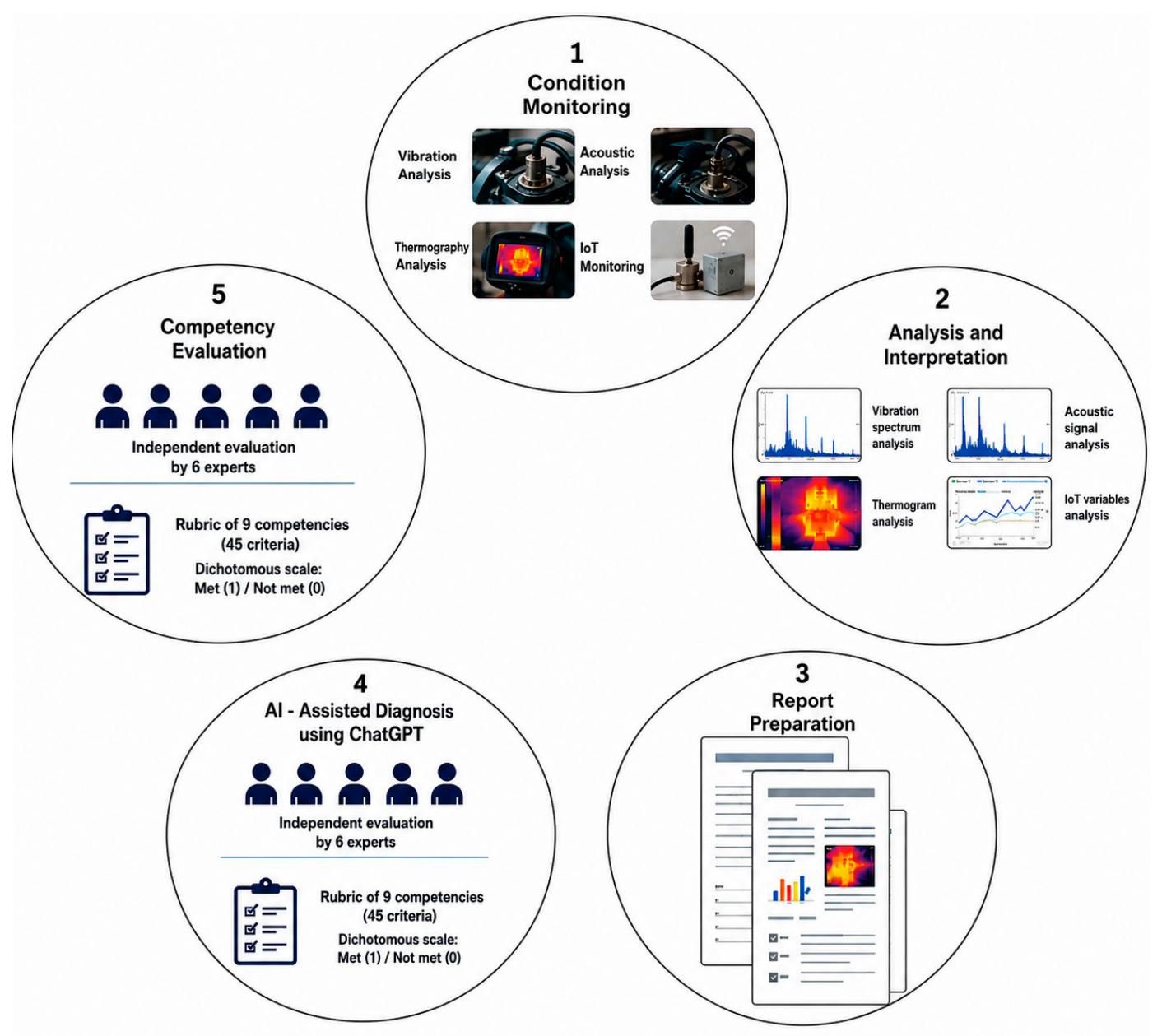
Because the study included a single group and no pre-intervention assessment or comparison group, it was not designed to establish causality or measure changes in competency over time. The findings therefore describe students’ competency profiles and perceptions after participating in these educational activities. Data were obtained from students’ technical reports, an analytic competency rubric, and a student perception survey. The methodology comprised five stages: (i) preparatory activities, (ii) implementation of smart maintenance activities, (iii) competency assessment using technical reports and the analytic rubric, (iv) administration of the student perception survey, and (v) descriptive statistical analysis (Figure 1).
Figure 1.
Simplified graphical representation of the instructional sequence.
2.1. Educational Context and Participants
The study included all 31 students enrolled in the elective Industrial Maintenance course during the first semester of the 2025 academic year in the Administrative Mechanical Engineering program at the Universidad Autónoma de San Luis Potosí. Participants were 21–24 years old and included 24 male and 7 female students. The course was delivered over a 16-week semester and consisted of one hour of theoretical instruction and two hours of laboratory activities per week.
Students worked in four teams during the practical activities, but all competency assessments were conducted individually. The activities were part of the regular course curriculum, and all enrolled students were included; no separate recruitment process was conducted.
The technical reports and learning activities were part of the regular coursework and were subsequently anonymized and analyzed for research purposes. No course requirements or instructional activities were modified for the study.
Before analysis, student names and other identifying information were removed from all technical reports and survey responses, and only aggregated results were reported.
The study was exempt from formal ethical review under institutional regulations for minimal-risk educational research involving adult university students and non-invasive activities.
2.2. Learning Activities
Prior to the intervention, students received theoretical instruction in predictive maintenance and completed preparatory activities involving equipment identification, inspection point selection, and data recording. They subsequently completed five hands-on smart maintenance activities.
The educational activities were implemented sequentially throughout the semester and comprised approximately 16 contact hours distributed across five modules: vibration analysis (4 h), infrared thermography (3 h), acoustic monitoring (2 h), IoT-based remote monitoring (2 h), and generative artificial intelligence (5 h). Each instructional session lasted approximately two hours, although the number of sessions varied according to the complexity of the technique being addressed. All student teams worked with the same equipment, case studies, and datasets to ensure consistency across the educational experience. Teams rotated through the practical stations when appropriate, while competency assessments remained individual.
Instruction was provided by two faculty members. Each activity began with a demonstration of the equipment, machinery, and measurement procedures, followed by guided practice in which students completed the assigned tasks and prepared technical reports. Except for the IoT activity, which involved remote monitoring, all activities were conducted in person.
All measurements were conducted using industrial-grade instruments commonly employed in predictive maintenance applications, including a TIME7230 portable vibration analyzer (Beijing TIME, Beijing, China), a FLK-TiS20+ thermal imaging camera (9 Hz; Fluke Corporation, Everett, WA, USA), and a CA 1310 Class 2 integrating sound level meter (Chauvin Arnoux, Asnières-sur-Seine, France). The use of these instruments allowed students to perform condition monitoring tasks under conditions comparable to those encountered in industrial maintenance practice.
2.2.1. Activity 1: Fault Diagnosis Through Vibration Analysis
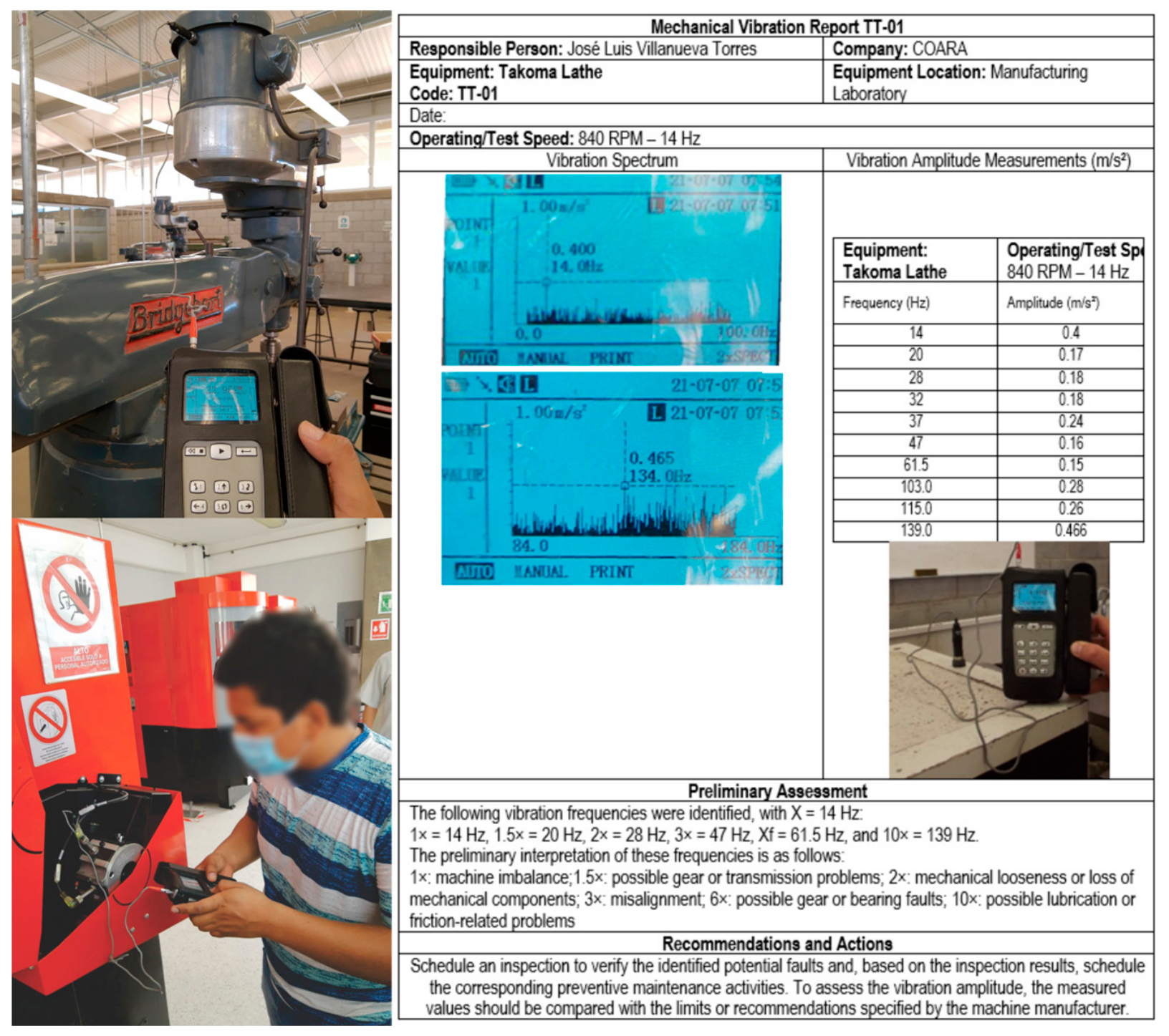
Students measured vibration on machine tools in the Manufacturing Laboratory using a TIME7230 portable vibration analyzer (Beijing TIME, China). The equipment included Takoma and Kent lathes, Kent and Bridgeport milling machines, bench drills, a bench grinder, and a horizontal band saw (Figure 2). Students analyzed dominant frequencies and harmonics, including 1×, 2×, and 3× components, to identify potential fault mechanisms such as imbalance, misalignment, mechanical looseness, lubrication deficiencies, bearing defects, and transmission-related problems. Students then prepared technical reports containing diagnostic assessments and maintenance recommendations.
Figure 2.
Vibration analysis performed on industrial equipment for condition monitoring and fault diagnosis.
2.2.2. Activity 2: Fault Diagnosis Through Infrared Thermographic Inspection
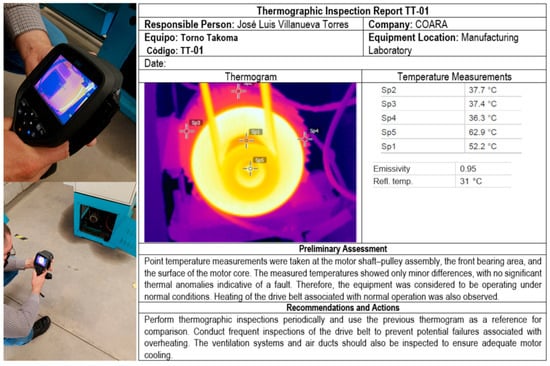
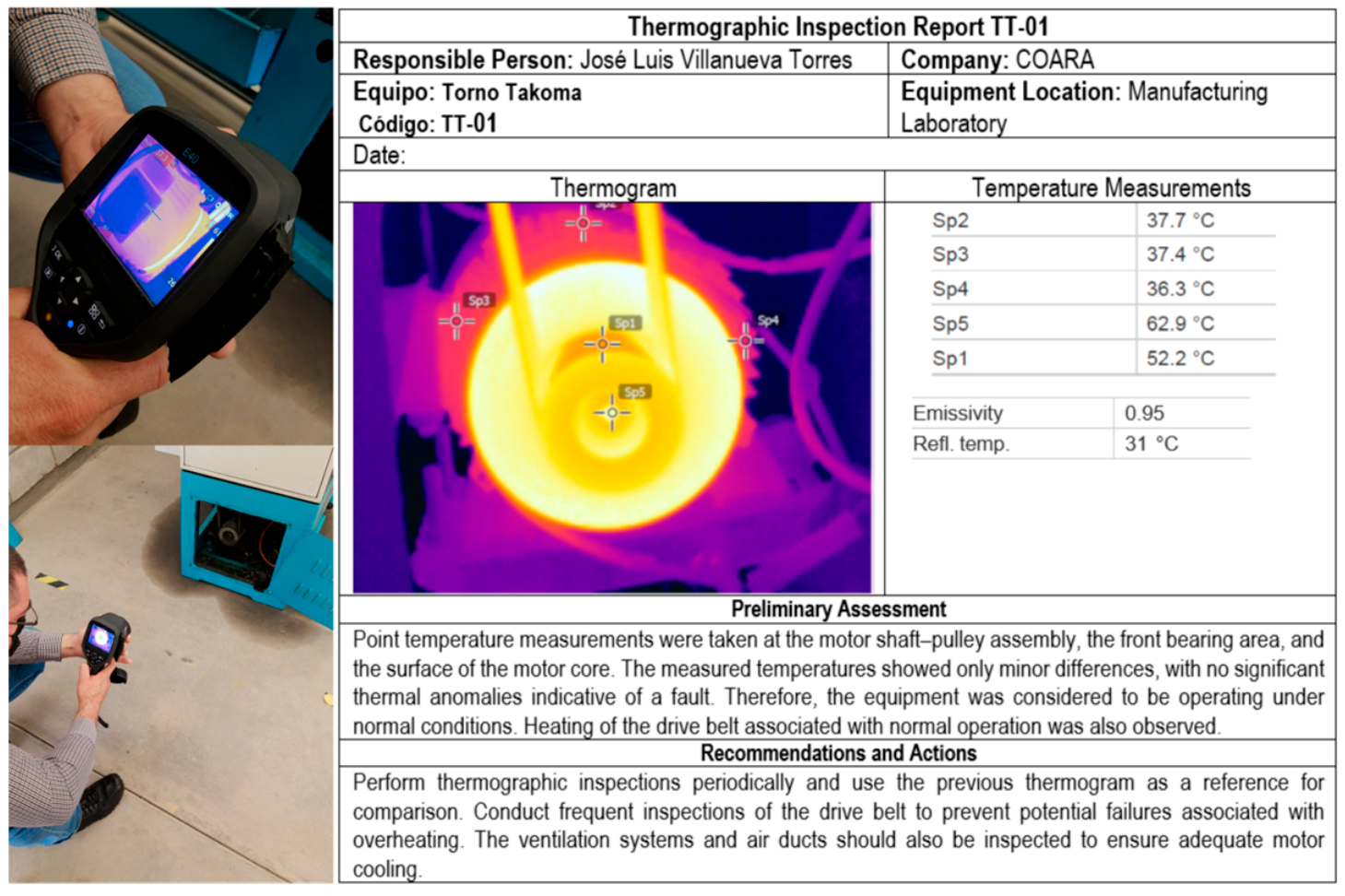
Students performed thermographic inspections of motors, bearings, electrical panels, spindles, and transmission systems using an FLK-TiS20+ infrared camera (Fluke Corporation, Everett, WA, USA; 9 Hz) (Figure 3). They identified thermal anomalies and temperature gradients associated with overheating, friction, lubrication deficiencies, electrical overloads, and cooling system deficiencies. Standardized technical reports included thermograms, point temperature measurements, diagnostic interpretations, and maintenance recommendations.
Figure 3.
Infrared thermography activity for condition monitoring and fault diagnosis in industrial equipment.
2.2.3. Activity 3: Fault Diagnosis Through Acoustic Monitoring
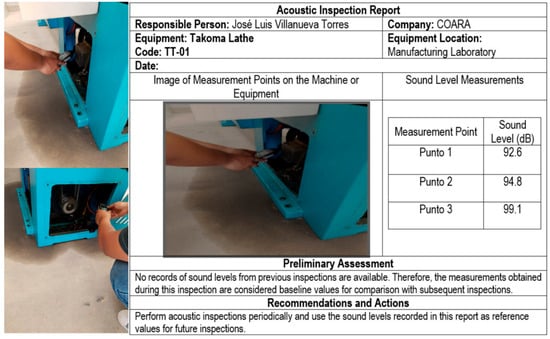
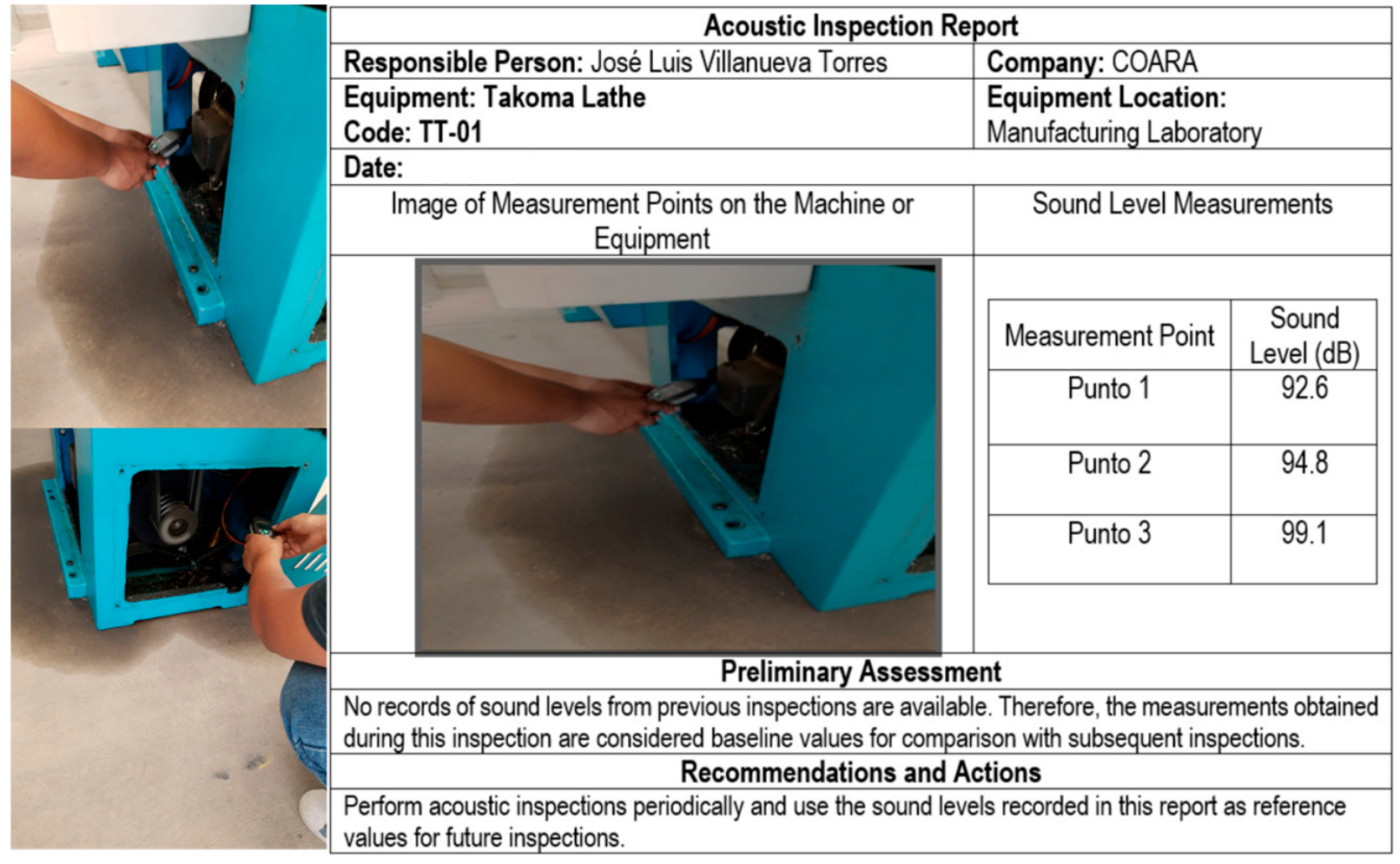
Students used a CA 1310 Class 2 integrating sound level meter to measure sound pressure levels at predefined locations on workshop machines (Figure 4). The measurements were used to establish baseline operating conditions and identify anomalies associated with mechanical wear, misalignment, lubrication deficiencies, mechanical looseness, and operational problems. Students prepared technical reports containing measured sound levels, preliminary evaluations, and recommendations for future monitoring activities.
Figure 4.
Acoustic monitoring activity for condition monitoring and fault diagnosis in industrial equipment.
2.2.4. Activity 4: Remote Monitoring Using a Pico-Hydraulic System
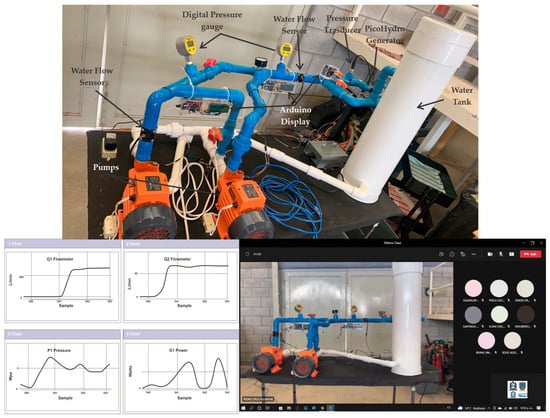
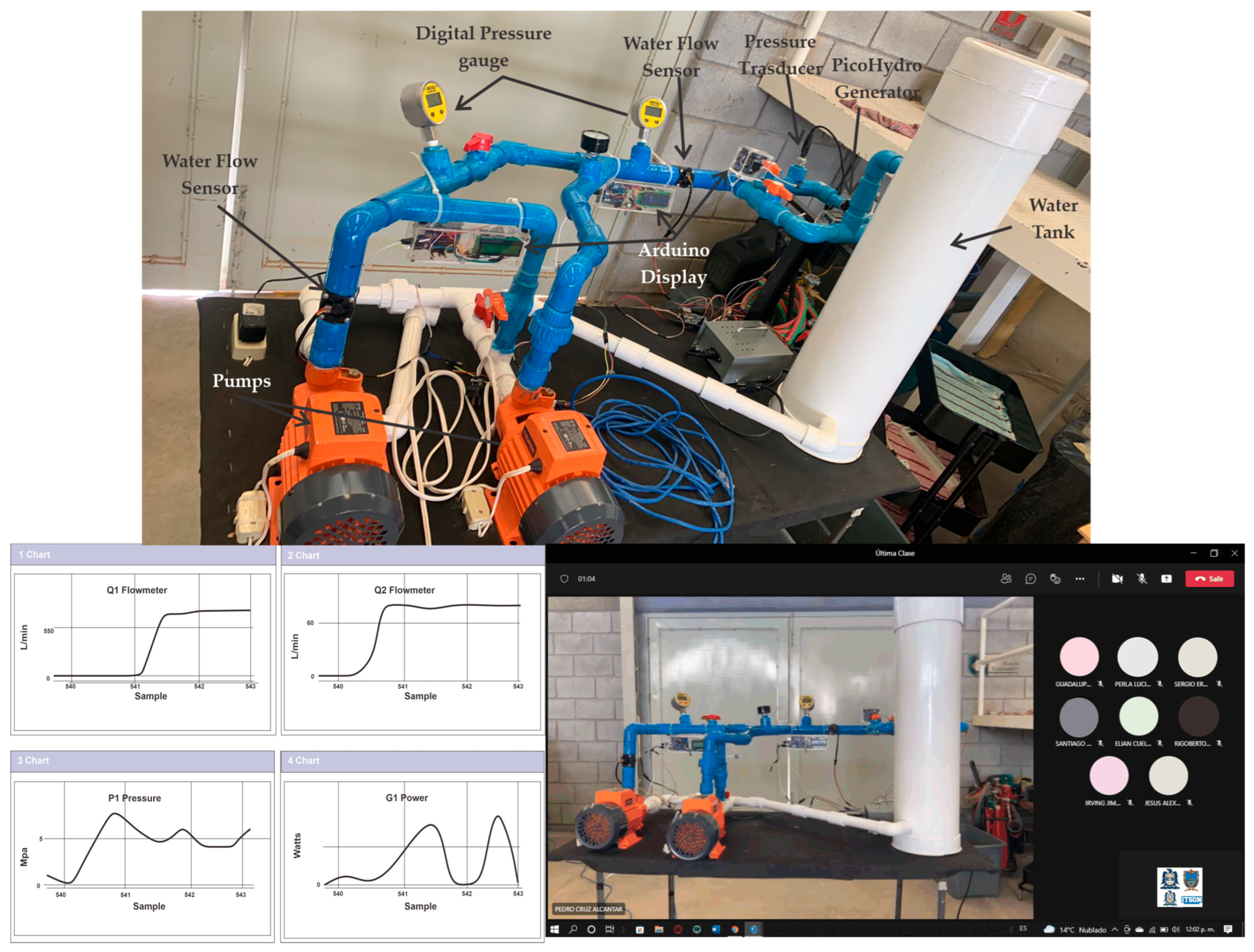
Remote monitoring was performed using an instrumented pico-hydraulic system equipped with pressure, flow, voltage, current, and power sensors and integrated with an IoT platform (Figure 5). The IoT infrastructure consisted of an Arduino UNO R3 monitoring station connected to the Arduino IoT Cloud platform. Students accessed the monitored variables remotely using personal computers, tablets, or smartphones, while synchronous Microsoft Teams sessions provided live video of the equipment during operation.
Figure 5.
IoT-based remote monitoring activity using an instrumented pico-hydraulic system.
The monitored variables included flow rates Q1 and Q2, pressure P3, generator voltage, electrical current, and calculated power output. Sensor data were transmitted at 30 s intervals, enabling students to observe operational trends and analyze relationships among hydraulic and electrical parameters in real time. Students used the acquired data to analyze system behavior, identify operating conditions, and relate the monitored variables to maintenance and monitoring applications.
The competency associated with Activity 4 was assessed using the “IoT-Based Monitoring” criterion of the analytic rubric, which evaluated students’ ability to access, interpret, and communicate real-time data obtained from the IoT platform.
2.2.5. Activity 5: Artificial Intelligence-Assisted Fault Diagnosis
The objective of the artificial intelligence-assisted fault diagnosis activity was to develop students’ ability to use generative artificial intelligence tools to support machinery analysis and fault diagnosis. Students interacted with ChatGPT using the GPT-4o model (OpenAI, San Francisco, CA, USA) on 6 June 2025.At the time of the intervention, the platform was operating with OpenAI’s GPT-4o model, which was the default model available through the ChatGPT web interface during that period. All students used the same standardized prompt, which is provided as Supplementary Material (S1). Because the activity was conducted using the publicly accessible web interface, user-configurable generation parameters (e.g., temperature, top-p, and seed values) were not available and therefore could not be standardized or recorded.
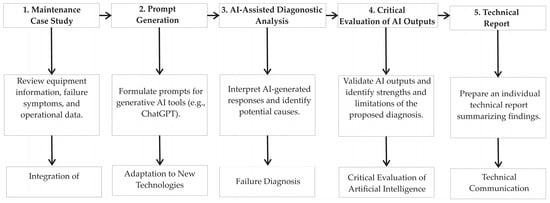
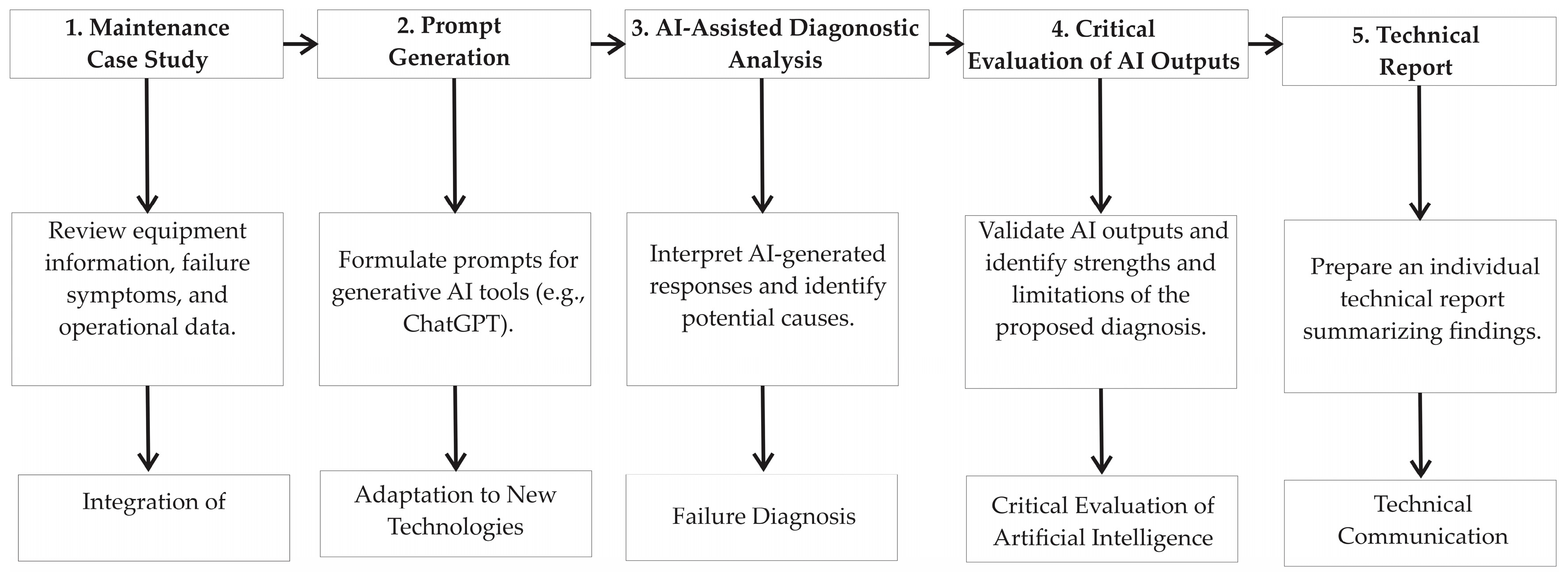
Each participant engaged in a single interaction with the tool, providing the technical information corresponding to the assigned case study, including data obtained from vibration analysis, infrared thermographic inspection, acoustic monitoring, and IoT-based monitoring, with the aim of generating a preliminary fault diagnosis. Subsequently, students compared the AI-generated response with the experimental evidence, identifying potential errors or inconsistencies and technically validating the proposed recommendations, thereby fostering critical thinking and evidence-based decision-making. Figure 6 illustrates the AI-assisted diagnostic workflow implemented during Activity 5, including the corresponding student tasks and assessment criteria used to evaluate students’ competencies.
Figure 6.
AI-assisted diagnostic workflow implemented during Activity 5, showing the sequence of student tasks and their alignment with the assessment criteria of the analytic rubric.
Students completed the activity individually and were required to critically evaluate AI-generated outputs, identify potential limitations, and justify their conclusions using the case study information.
Students did not enter personal, academic, or identifiable information into ChatGPT. The interaction was limited to standardized maintenance case studies and technical data generated during the educational activities. A representative AI-generated output and the corresponding student validation process are provided in Supplementary Material (Table S1).
2.3. Competency Assessment Procedure
As evidence of learning, students prepared individual technical reports documenting the completed activities. Immediately after submission, the course instructor removed all personal identifiers from the reports and replaced them with anonymous participant codes (RRF2_1–RRF2_31). The anonymized reports were then independently evaluated by six faculty members with expertise in industrial maintenance using the same analytic rubric as part of the regular academic assessment process of the course.
The analytic rubric comprised nine competencies associated with smart maintenance. Each competency included five performance criteria scored dichotomously (meets the criterion = 1; does not meet the criterion = 0), yielding a maximum of five points per competency and 45 points overall. Evaluators’ scores were averaged to obtain the final competency score for each student, and the averaged score was used for the competency analyses reported in this study.
Table 1 summarizes the competencies and the assessment criteria included in the analytic rubric.
Table 1.
Competencies and assessment criteria included in the analytic rubric for smart maintenance.
The complete analytic rubric, including competency-specific indicators and scoring rules, is provided as Supplementary Material (Table S2).
Scores across the nine competencies were summed to calculate the Global Competency Index for Smart Maintenance (GCIIM), which served as a descriptive indicator of students’ competency profiles. The index ranged from 0 to 45 points and was also expressed as a percentage of the maximum possible score.
All competencies were assigned equal weight because the GCIIM was intended to provide a descriptive and integrative measure of students’ competency profiles. Given the exploratory nature of the study and the lack of empirical or theoretical support for differential weighting, equal weighting was adopted to improve transparency and comparability rather than to imply equivalent importance across competency domains.
Individual evaluator scores were retained to estimate inter-rater reliability. Reliability was assessed using the overall rubric score (0–45 points) independently assigned by each of the six evaluators to each student’s technical report. A two-way mixed-effects intraclass correlation coefficient (ICC) model was used to estimate both consistency and absolute-agreement reliability. Single-measures [ICC(3, 1)] coefficients were calculated to evaluate the reliability of an individual evaluator, whereas average-measures [ICC(3, 6)] coefficients were used to estimate the reliability of the average rating across the six evaluators, which corresponded to the final student score. The ICC analysis was performed in IBM SPSS Statistics version 21 using the Intraclass Correlation Coefficient procedure (Analyze → Scale → Reliability Analysis) with a two-way mixed-effects model and both consistency and absolute-agreement definitions. Single-measures and average-measures ICCs, together with their corresponding 95% confidence intervals, were reported. Although no formal evaluator training or calibration sessions were conducted prior to the assessment process, all evaluators received the same analytic rubric and competency definitions and independently evaluated each student’s work.
For descriptive interpretation, GCIIM scores were expressed as percentages and classified as Low (0–59%), Moderate (60–79%), or High (80–100%). These author-defined categories were used for exploratory and descriptive purposes and do not represent previously validated competency thresholds.
2.4. Student Perception Survey
Upon completion of the activities, students completed a perception survey addressing the competencies they perceived they had developed and the challenges associated with smart maintenance, Industry 4.0, and artificial intelligence. The instrument comprised 22 items across four dimensions (Table 2), rated on a five-point Likert scale (1 = Strongly Disagree; 5 = Strongly Agree). The complete questionnaire is provided in the Supplementary Material (Table S3).
Table 2.
Dimensions and items of the student perception questionnaire.
The questionnaire was developed by the authors based on the competencies addressed during the educational intervention and concepts reported in the literature on Engineering Education 4.0, smart maintenance, Industry 4.0, and generative AI. The initial instrument was reviewed by the same panel of six faculty members with expertise in industrial maintenance and engineering education to assess item relevance, clarity, and alignment of the items with the intended dimensions. Minor wording adjustments were made following this review.
The questionnaire was administered in Spanish, the native language of all participants; therefore, no translation was required. Responses were collected anonymously at the end of the semester using a self-administered format, and no personally identifiable information was recorded.
2.5. Statistical Analysis
Data from the competency assessment rubric and student perception survey were analyzed descriptively, with each student treated as an independent unit of analysis. Frequencies, percentages, means, and standard deviations were calculated for each competency, survey item, and questionnaire dimension. All analyses were performed using IBM SPSS Statistics, version 21. The GCIIM was calculated by summing the scores obtained across the nine assessed competencies and was expressed both on a scale of 0 to 45 points and as a percentage of the maximum possible score.
Students were classified into three competency levels (low, moderate, and high) according to the ranges established in Table 3.
Table 3.
Classification criteria for the Global Competency Index for smart maintenance (GCIIM).
The GCIIM categories (low: 0–59%, moderate: 60–79%, and high: 80–100%) were established by the authors as exploratory thresholds to facilitate the interpretation and communication of competency profiles in the context of this educational intervention. These categories were not derived from previously validated competency frameworks, institutional grading policies, or external educational standards and should therefore be interpreted as descriptive classifications intended for exploratory purposes.
An overall perception score was calculated for each student by averaging the responses to the 22 questionnaire items. Item scores ranged from 1 (Strongly Disagree) to 5 (Strongly Agree), and the resulting mean score was expressed as a percentage of the maximum possible score using the following transformation: (Mean item score/5) × 100. No missing questionnaire responses were observed; therefore, the overall perception score for each student was calculated from all 22 questionnaire items. This overall perception score was used exclusively for the Spearman correlation analysis with the GCIIM. Because the questionnaire included items addressing self-perceived competencies, attitudes toward digital technologies and artificial intelligence, and future professional challenges, the overall perception score should be interpreted as a composite descriptive measure of students’ perceptions across the four questionnaire dimensions rather than as a measure of demonstrated competency. In particular, agreement with items related to future professional challenges (Q20–Q22) reflects students’ recognition of the need for further preparation rather than representing uniformly positive perceptions.
The internal consistency of the four predefined dimensions of the student perception questionnaire was assessed using McDonald’s omega (ω) and Cronbach’s alpha (α), both estimated from Pearson inter-item correlations. McDonald’s omega was considered the primary reliability coefficient because it accommodates congeneric items with potentially unequal factor loadings, whereas Cronbach’s alpha was reported as a complementary and widely recognized measure to facilitate comparisons with previous educational research (Cronbach, 1951; Dunn et al., 2014). Reliability coefficients of 0.70 or greater were used as a general guideline for acceptable internal consistency rather than as thresholds for statistical significance. Given the relatively small sample size (n = 31), all reliability estimates were interpreted cautiously and considered exploratory in nature. Accordingly, the reliability coefficients reported in this study should be considered preliminary estimates and interpreted with caution, as the questionnaire has not undergone a formal psychometric validation process.
Descriptive statistics (means and standard deviations) were calculated for each questionnaire item and each questionnaire dimension. Reliability was assessed using McDonald’s omega and Cronbach’s alpha. Item-level descriptive statistics are presented in the Supplementary Material (Table S4).
3. Results
3.1. Competency Assessment Through Technical Reports
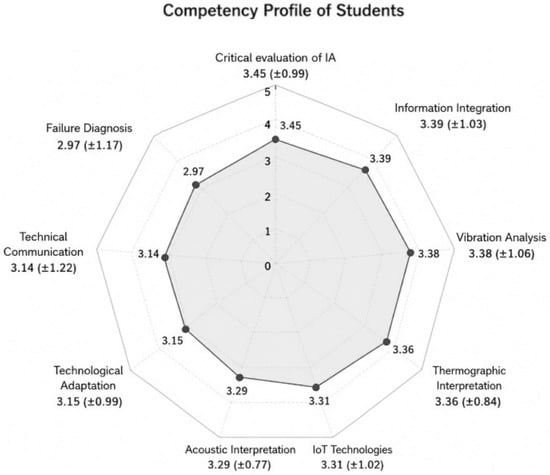
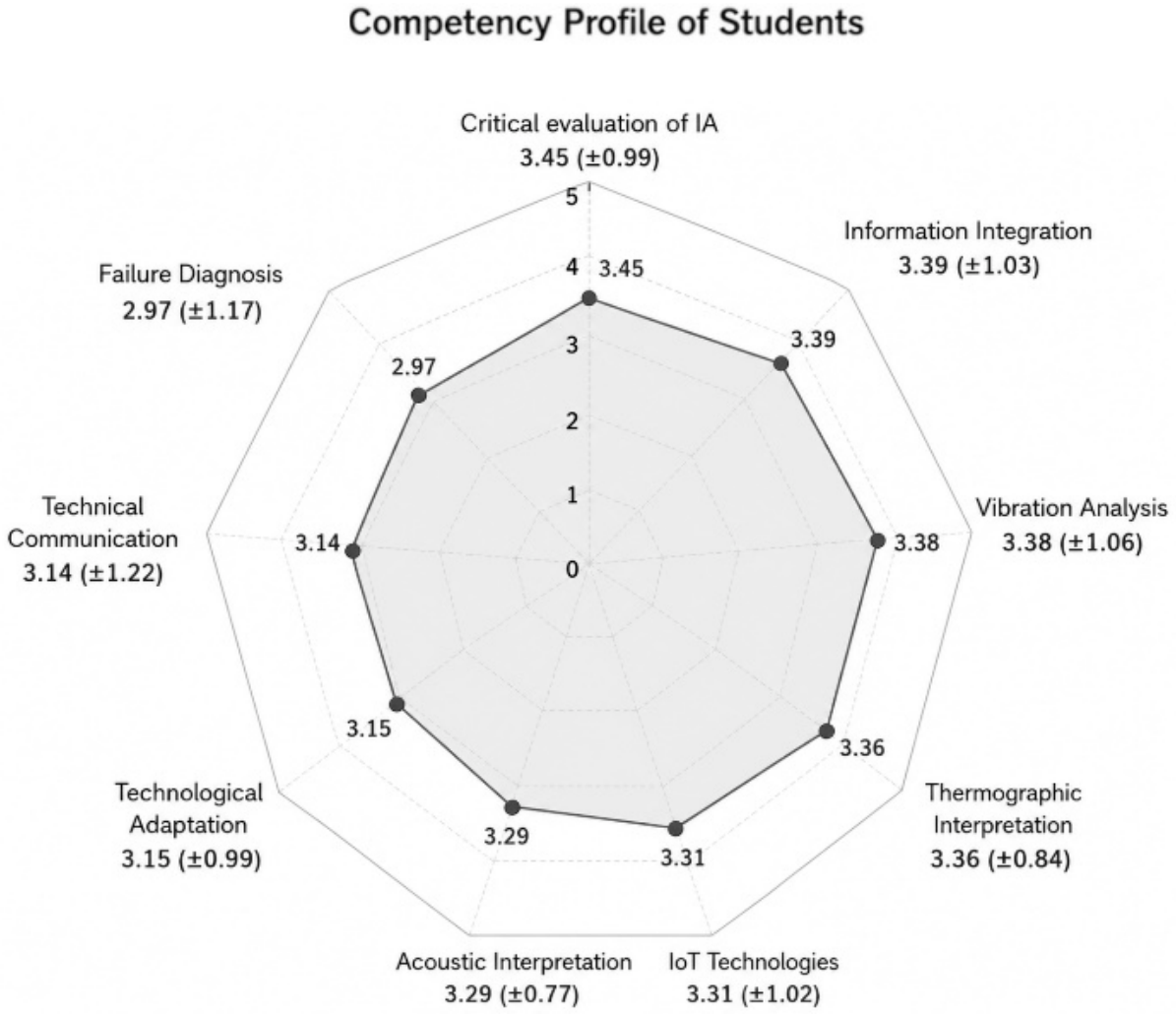
Table 4 summarizes the competency assessment results obtained using the analytic rubric. Mean scores ranged from 2.97 to 3.45 on a five-point scale, indicating a moderate level of demonstrated competency across the assessed domains. The highest scores were obtained for critical evaluation of artificial intelligence (3.45 ± 0.99), information integration (3.39 ± 1.03), vibration analysis interpretation (3.38 ± 1.06), and thermographic interpretation (3.36 ± 0.84). In contrast, fault diagnosis (2.97 ± 1.17), technical communication (3.14 ± 1.22), and technological adaptability (3.15 ± 0.99) received the lowest scores, highlighting opportunities for further strengthening these competencies.
Table 4.
Descriptive statistics of competency assessment using the analytic rubric (n = 31).
Standard deviations ranged from 0.77 to 1.22, indicating moderate variability in student performance. The comparatively high score for critical evaluation of AI suggests that students were generally able to assess AI-generated recommendations against the information provided in the case studies.
Inter-rater reliability was evaluated using the overall rubric scores (0–45 points) independently assigned by each of the six evaluators. Both consistency and absolute agreement intraclass correlation coefficients were calculated to assess the reliability of individual evaluators and of the average rating across evaluators. The corresponding reliability coefficients are presented in Table 5.
Table 5.
Consistency and absolute agreement intraclass correlation coefficients for the competency assessment rubric.
The single-measures coefficient (ICC(3, 1) = 0.995) indicated excellent reliability for an individual evaluator, whereas the average-measures coefficient (ICC(3, 6) = 0.999) indicated excellent reliability for the average of the six evaluators. The close agreement between the consistency and absolute-agreement coefficients suggests that systematic scoring differences among evaluators were negligible. The corresponding 95% confidence intervals remained within the range of excellent agreement, further supporting the high inter-rater reliability of the competency assessment.
Figure 7 presents the mean scores for the assessed competencies in descending order to facilitate comparison.
Figure 7.
Mean competency scores obtained through the analytic rubric (Mean ± SD).
3.2. Global Competency Index (GCIIM)
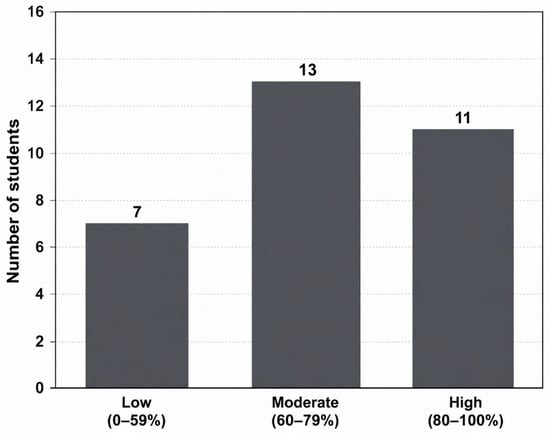
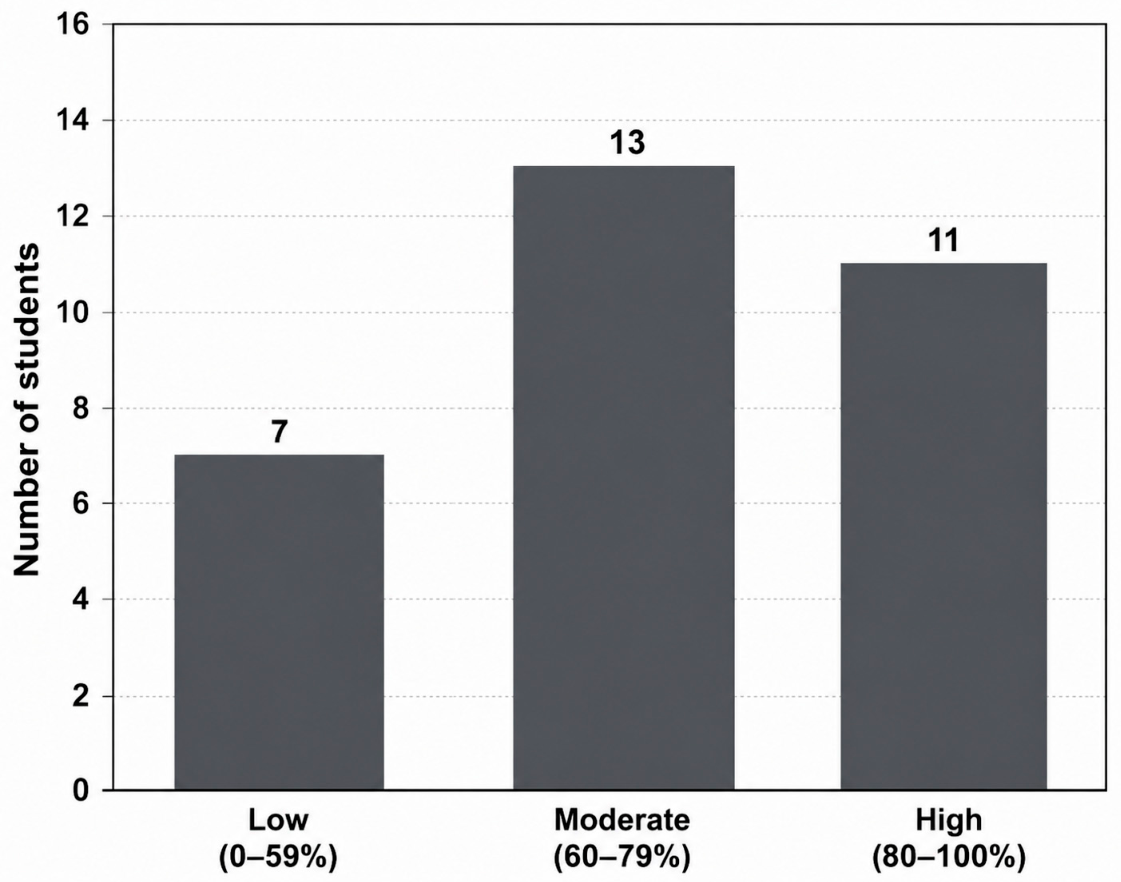
The GCIIM was used to provide an overall descriptive measure of students’ demonstrated competencies by integrating the scores obtained across the nine competencies assessed through the analytic rubric. Table 6 presents the descriptive statistics of the GCIIM, whereas Table 7 and Figure 8 show the distribution of students according to the established competency levels.
Table 6.
Descriptive statistics of the Global Competency Index for smart maintenance (GCIIM) (n = 31).
Table 7.
Distribution of students according to the Global Competency Index (GCIIM).
Figure 8.
Distribution of students according to the Global Competency Index for smart maintenance.
The GCIIM yielded a mean score of 32.78 ± 7.84 points, equivalent to 72.86 ± 17.41% of the maximum possible score. This result indicates an overall moderate level of demonstrated competency in smart maintenance among the participating students. According to the author-defined exploratory classification, the largest proportion of students (41.93%) was classified within the author-defined moderate category, whereas 35.49% were classified within the author-defined high category, and 22.58% were classified as having a low competency level (Table 7). The distribution of students according to competency level is presented in Figure 8.
Using the author-defined exploratory classification, approximately 77% of participants were classified within the author-defined moderate or high GCIIM categories. These categories were established solely to facilitate the descriptive interpretation of the GCIIM and should not be interpreted as validated competency standards. Overall, the GCIIM scores suggest that most students exhibited competency profiles corresponding to the author-defined moderate or high descriptive categories. However, the proportion of students classified within the author-defined low category highlights the need for complementary instructional strategies and additional support for students with lower performance to promote more consistent demonstrated competencies across the cohort.
3.3. Students’ Perceptions
3.3.1. Internal Consistency of the Perception Questionnaire
The internal consistency of the perception questionnaire was assessed using Cronbach’s alpha (α) and McDonald’s omega (ω) coefficients. As shown in Table 8, the questionnaire demonstrated acceptable-to-good internal consistency across the four dimensions evaluated.
Table 8.
Internal consistency coefficients for the dimensions of the perception questionnaire.
Table 8 presents the internal consistency results for the perception questionnaire. McDonald’s omega coefficients ranged from 0.711 to 0.886, indicating acceptable-to-good reliability across all four dimensions. Although Cronbach’s alpha values for the Digital Competencies and Industry 4.0 dimension (α = 0.686) and the Use of Artificial Intelligence in Engineering dimension (α = 0.633) were slightly below the conventional threshold of 0.70, the corresponding McDonald’s omega coefficients exceeded this value, supporting the internal consistency of these dimensions within the context of this exploratory study. Overall, these findings indicate that the questionnaire exhibited adequate internal consistency for exploratory purposes, although the dimensions with lower Cronbach’s alpha values may benefit from further refinement in future applications.
3.3.2. Students’ Perceptions by Dimension
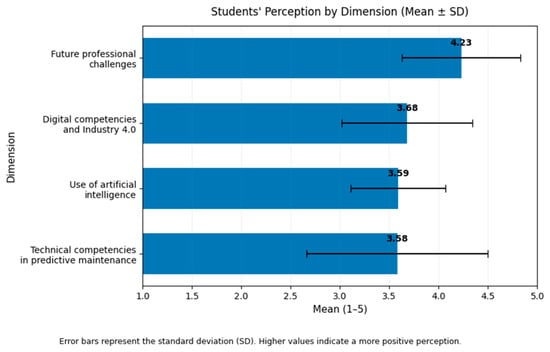
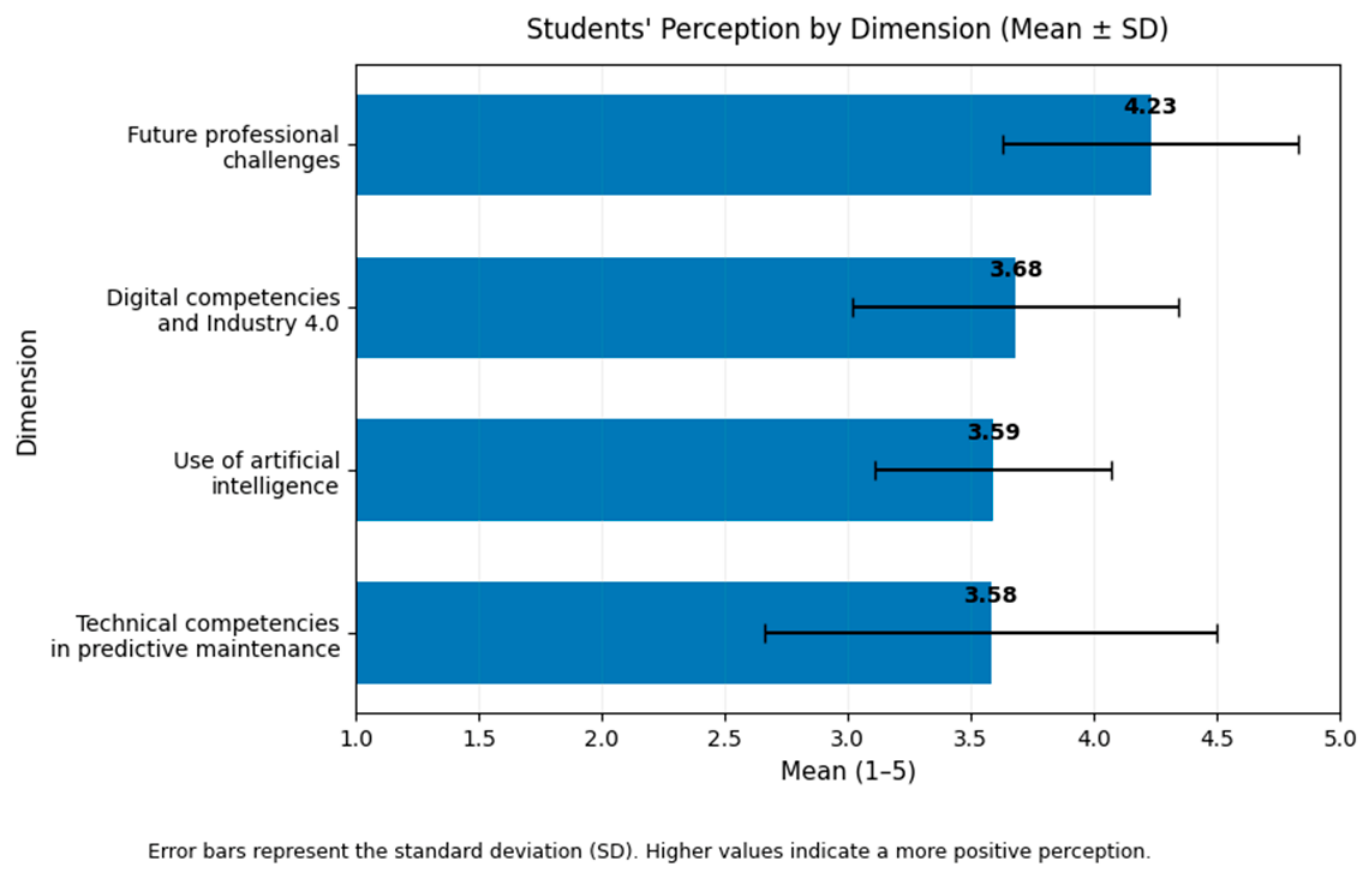
Table 9 summarizes students’ perceptions across the four evaluated dimensions. The highest mean score was observed for Future Professional Challenges (4.23 ± 0.60), indicating strong agreement regarding the relevance of smart maintenance, Industry 4.0, and AI to students’ future professional practice. The Digital Competencies (3.68 ± 0.66) and Artificial Intelligence (3.59 ± 0.48) dimensions received intermediate scores, reflecting generally positive perceptions of the technologies incorporated into the learning activities. The lowest mean score corresponded to Technical Competencies (3.58 ± 0.92), suggesting that students perceived greater room for improvement in the development of technical skills related to smart maintenance.
Table 9.
Descriptive statistics of students’ perceptions by questionnaire dimension.
Item-level analyses revealed variation both across and within the questionnaire dimensions. The highest ratings were associated with the perceived usefulness of AI and the relevance of future professional challenges, whereas comparatively lower ratings were observed for selected items related to technical competencies and AI. Complete item-level descriptive statistics are provided in the Supplementary Material (Table S4). Figure 9 presents the mean scores obtained for the four dimensions of the perception questionnaire.
Figure 9.
Students’ perception by questionnaire dimension (Mean ± SD).
3.4. Integration of Competency Assessment and Students’ Perception
The integration of the competency assessment and the perception survey provided a comprehensive view of students’ preparedness for smart maintenance. Whereas the analytic rubric provided an evaluator-rated assessment of students’ demonstrated competencies, the perception questionnaire captured students’ perceptions regarding the integration of smart maintenance technologies into engineering education.
Although both the Global Competency Index for Smart Maintenance (GCIIM) and the students’ perception questionnaire were expressed as percentages to facilitate interpretation, they were derived from different instruments, response formats, and constructs and therefore should not be interpreted as directly comparable. Instead, they provide complementary evidence regarding students’ competency profiles and their perceptions of the educational experience. To further explore the relationship between both measures, an individual-level Spearman correlation analysis was performed (Table 10). The analysis revealed no significant association between the GCIIM and students’ perception scores (Spearman’s ρ = −0.040, p = 0.833), suggesting that the performance-based competency assessment and the self-reported perception questionnaire captured distinct dimensions of the educational intervention.
Table 10.
Spearman rank correlation between the Global Competency Index for Smart Maintenance (GCIIM) and students’ perception scores.
The competency assessment identified stronger performance in critical evaluation of artificial intelligence, information integration, vibration analysis interpretation, and thermographic interpretation, whereas comparatively lower scores were observed for fault diagnosis, technical communication, and technological adaptability. In contrast, the perception questionnaire indicated generally favorable student perceptions regarding smart maintenance, Industry 4.0, and generative artificial intelligence, particularly with respect to their future professional relevance.
Taken together, these findings indicate that evaluator-rated performance assessment and students’ perceptions provide complementary perspectives on the educational outcomes of the intervention. The GCIIM reflects students’ demonstrated performance in the competency-based assessment, whereas the perception questionnaire captures students’ self-reported perceptions of the learning experience and the relevance of the technologies incorporated into the course. Considering both sources of evidence provides a broader understanding of the educational outcomes than either measure alone.
4. Discussion
4.1. Post-Intervention Competency Profiles in Smart Maintenance
The findings indicate that students demonstrated competency profiles relevant to smart maintenance following participation in the educational activities. The resulting GCIIM score of 72.86% indicated a moderate level of demonstrated competency. Overall, students demonstrated stronger performance in competencies related to condition monitoring techniques, including vibration analysis, infrared thermography, acoustic monitoring, information integration, and the critical evaluation of AI. By contrast, competencies involving engineering reasoning and decision-making showed comparatively weaker performance, suggesting that their achievement may require more sustained and progressively structured instructional experiences.
This pattern distinguishes students’ ability to interpret individual sources of technical data from their ability to perform integrated diagnostic reasoning. The latter involves a more complex level of cognitive processing and represents a particularly demanding competency in smart maintenance education. These findings are consistent with the ongoing transition toward smart maintenance and Maintenance 4.0, in which engineers are expected to complement conventional maintenance expertise with digital competencies and data-driven decision-making skills (Bokrantz et al., 2020; Benhamza Hlihel et al., 2024).
In this context, engineering education should no longer focus solely on mastering condition monitoring techniques but should also promote students’ ability to integrate information from multiple sources and use it to support well-founded maintenance decisions. Although the overall demonstrated competencies were moderate, this finding is consistent with previous studies indicating that the development of Maintenance 4.0 competencies is inherently progressive and that empirical evidence regarding effective educational methodologies remains limited (Benhamza Hlihel et al., 2022; Ansari et al., 2022). Similarly, Bokrantz and Skoogh (2023) emphasize that the rapid pace of technological advancement continues to widen the gap between the competencies required by industry and the preparation of future engineering professionals. Accordingly, the comparatively lower performance observed in fault diagnosis and technological adaptability may reflect the greater cognitive complexity of these competencies. Collectively, these findings support the adoption of competency-based educational methodologies that integrate digital technologies, authentic industrial scenarios, problem-based learning, and progressively more complex hands-on learning experiences (Jerman et al., 2020; Nasir et al., 2025).
4.2. Contribution of AI-Assisted Diagnosis to Engineering Education
One of the most notable findings of this study was that critical evaluation of AI achieved the highest mean score among the nine competencies assessed (3.45 ± 0.99). This result suggests that students were able to use generative AI as a decision-support tool for fault diagnosis while critically evaluating AI-generated recommendations against experimental evidence. These findings are consistent with previous studies reporting that generative artificial intelligence can enhance learning by providing personalized feedback and facilitating the analysis of complex technical information (Bahroun et al., 2023; Liu et al., 2025; Fan et al., 2025). However, recent reviews have also emphasized that its educational benefits depend on appropriate instructional design, and that uncritical or indiscriminate use may weaken critical thinking and hinder the transfer of learning to real-world contexts (Neaga, 2019; Salah et al., 2020).
A principal contribution of the proposed methodology is the integration of generative AI as a diagnostic support tool whose outputs must be critically examined and validated against experimental evidence before being accepted. This approach more closely reflects industrial practice, in which such tools complement, rather than replace, professional engineering judgment. Under these conditions, their use may support learning activities intended to foster competencies relevant to smart maintenance while preserving students’ central role in engineering decision-making.
4.3. Competencies Requiring Further Development
Students demonstrated competency profiles relevant to smart maintenance. Nevertheless, the assessment identified specific competency domains that may benefit from further instructional support.
Fault diagnosis, technical communication, and technological adaptability received the lowest scores, indicating that these competencies posed greater challenges for students at this stage of their engineering education. Fault diagnosis exhibited the lowest level of performance, possibly because it requires students to integrate information obtained from multiple condition monitoring techniques, establish cause-and-effect relationships, and justify maintenance decisions using experimental and diagnostic evidence. The absence of a significant association between students’ perceptions and demonstrated competencies indicates that these instruments captured different dimensions of the educational outcomes in this sample. Consequently, favorable perceptions of smart maintenance technologies should not be interpreted as direct indicators of students’ demonstrated competencies.
Unlike the interpretation of results from individual monitoring techniques, fault diagnosis requires higher-order analytic reasoning and sound engineering judgment. In this regard, competency frameworks for Maintenance 4.0 identify fault diagnosis as one of the most cognitively demanding professional activities because it requires the integration of technical knowledge, data interpretation, and decision-making (Benhamza Hlihel et al., 2024; Bokrantz et al., 2020).
Similarly, technical communication and technological adaptability require cross-disciplinary competencies that extend beyond proficiency in specific tools or technologies. Digital transformation requires professionals who can communicate evidence-based decisions effectively, integrate interdisciplinary knowledge, and continuously adapt to emerging technologies (Bokrantz et al., 2020; Nasir et al., 2025). These findings suggest that, although the practical activities provided learning experiences aligned with technical and digital competencies, strengthening higher-order competencies may require more sustained learning experiences, case-based instruction, and problem-based projects grounded in authentic engineering scenarios. Such experiences should progressively reinforce analytic reasoning, evaluation, and decision-making.
4.4. Educational Implications of Competency-Based Assessment
The combined consideration of the competency assessment and students’ perceptions offers complementary insights into students’ learning outcomes. The competency assessment and the student perception questionnaire provide complementary information regarding different dimensions of the educational outcomes. Whereas the analytic rubric evaluated students’ demonstrated competencies through evaluator-rated performance, the perception questionnaire captured students’ self-reported perceptions regarding technical competencies, digital technologies, artificial intelligence, and future professional challenges. Self-perception measures provide valuable information regarding motivation, acceptance of educational innovations, and perceived preparedness, whereas competency-based assessments provide direct evidence of students’ ability to perform authentic engineering tasks. Accordingly, the complementary use of performance-based assessment and students’ perceptions provides a broader understanding of educational outcomes and highlights competency domains that may benefit from additional instructional support.
Nevertheless, favorable perceptions should not be interpreted as direct evidence of demonstrated competency. This finding is consistent with previous studies recognizing students’ perceptions primarily as indicators of motivation, self-efficacy, and acceptance of educational innovations rather than as direct evidence of students’ demonstrated competencies (Coşkun et al., 2019; Hernández-de-Menéndez et al., 2020; Khan & Lee, 2025). The combined use of an analytic rubric and a perception questionnaire enabled the educational intervention to be evaluated through both demonstrated performance and students’ perceptions, thereby providing complementary evidence from two distinct dimensions of student learning.
From a curricular perspective, the findings support the implementation of competency-based methodologies that integrate authentic industrial scenarios, condition monitoring techniques, digital technologies, and AI within performance-based competency assessment processes. This approach is aligned with the recommendations of Engineering Education 4.0, which emphasize active learning and the development of technical, digital, and analytic competencies (Azofeifa et al., 2024; Hernández-de-Menéndez et al., 2020; Garcés et al., 2025).
Moreover, the proposed methodology is broadly consistent with the principles of Education 5.0, which emphasize human-centered applications of AI, interdisciplinary learning, and sustainability-oriented engineering education. In this regard, competency-based learning experiences involving IoT, condition monitoring, and generative AI may contribute to preparing future engineers for the evolving requirements of Society 5.0 and Industry 5.0 (Ahmad et al., 2023; Chakraborty et al., 2025; Supriya et al., 2024).
Within the proposed framework, competencies related to IoT and generative AI were assessed through observable student performance rather than through exposure to the technologies alone. IoT-related competencies were evaluated through students’ interpretation of monitored variables, analysis of operational trends, and use of remotely collected data to support maintenance decisions.
Similarly, generative AI competence was assessed through the formulation of technically relevant queries, critical examination of AI-generated diagnoses, identification of inconsistencies, and validation of recommendations against experimental evidence. This performance-based approach provides a structured mechanism for assessing and documenting how students use emerging technologies in engineering. It also aligns the methodology with the competency requirements of Industry 4.0 and with the human-centered orientation associated with Industry 5.0 and Education 5.0.
Likewise, using artificial intelligence as a tool to support analysis and decision-making, rather than as a substitute for engineering judgment, may promote the demonstration of competencies required for smart maintenance (Azofeifa et al., 2024; Liu et al., 2025).
Overall, integrating condition monitoring, IoT, artificial intelligence, and competency-based assessment, together with the combined analysis of demonstrated performance and student perceptions, provides a more comprehensive understanding of learning outcomes and offers a robust approach for designing engineering education programs aligned with the demands of Industry 4.0 and the principles of Industry 5.0.
4.5. Limitations and Future Research
The present study was conducted as a case study involving an intact group of 31 Mechanical Engineering students from a single institution; therefore, the findings should be generalized with caution. Furthermore, competencies were assessed only at the end of the intervention, and no control group was included, limiting the ability to examine demonstrated competencies over time or establish causal relationships between the implemented methodology and the observed competency profiles.
Although inter-rater reliability was excellent, no formal evaluator training, calibration sessions, or blinding procedures were implemented. Therefore, the observed level of agreement should be interpreted within the context of a structured assessment process involving experienced faculty members and a rubric designed to minimize scoring ambiguity.
Because inter-rater reliability was estimated using the overall rubric scores (0–45 points), the present analysis does not provide information regarding agreement at the level of the individual competency indicators. Future studies should retain evaluator-level scores for each rubric indicator to enable more detailed analyses of inter-rater reliability.
Another limitation relates to the use of generative artificial intelligence. The AI-assisted diagnostic activity was based on a standardized prompt and a single interaction with ChatGPT, ensuring methodological consistency across participants but preventing analysis of the effects of iterative prompting, prompt refinement, or the use of different generative AI models on demonstrated competencies.
Future research should validate the proposed methodology using larger samples, different engineering programs, and multiple higher education institutions. In addition, future studies should investigate how different AI interaction strategies influence diagnostic reasoning and demonstrated competencies. Likewise, longitudinal studies, experimental research designs, and complementary assessment instruments such as performance observations, learning portfolios, and assessments conducted in authentic industrial settings would provide stronger evidence regarding the effectiveness of this methodology for developing competencies in smart maintenance.
5. Conclusions
This study evaluated competencies relevant to smart maintenance through an educational methodology integrating condition monitoring techniques, the Internet of Things (IoT), and generative artificial intelligence into the education of Mechanical Engineering students. The combination of an analytic rubric and a student perception questionnaire provided complementary evidence regarding students’ demonstrated performance and their perceptions of the learning experience. The principal findings are summarized as follows:
- Students obtained moderate scores across the assessed technical, digital, and analytic competency domains, corresponding to a Global Competency Index for Smart Maintenance (GCIIM) of 72.86%.
- Critical evaluation of artificial intelligence achieved the highest mean score, whereas fault diagnosis, technical communication, and technological adaptability represented the lowest levels of performance. These findings identify priority areas for further development and highlight the need for progressively more complex and sustained learning experiences.
- Students’ perceptions and demonstrated competencies represented complementary but distinct dimensions of the educational outcomes and were not significantly associated in this sample, underscoring the value of combining self-perception measures with evaluator-rated performance-based assessments.
- The findings support the gradual incorporation of smart maintenance technologies into engineering education through hands-on learning activities and competency-based assessment strategies, thereby fostering preparation more closely aligned with the requirements of Industry 4.0. The proposed framework is also consistent with the human-centered orientation of Industry 5.0 and Education 5.0 because it integrates IoT and generative AI as decision-support technologies while maintaining critical evaluation and professional engineering judgment as central components of the learning process.
- As a descriptive–exploratory case study, this research provides preliminary evidence that an integrated framework combining condition monitoring, the Internet of Things (IoT), generative artificial intelligence, and performance-based assessment may support the design of educational initiatives aligned with the competency requirements of Industry 4.0.
Finally, although the findings are exploratory and limited to a single educational context, they suggest that competency-based learning experiences integrating condition monitoring, IoT, and generative artificial intelligence may support the incorporation of digital technologies into engineering curricula. Further studies involving larger samples, multi-institutional settings, longitudinal designs, and comparison groups are needed to examine the broader applicability of the proposed educational framework.
Supplementary Materials
The following supporting information can be downloaded at https://www.mdpi.com/article/10.3390/educsci16081287/s1, Supplementary Material S1: Standardized Prompt Used During Activity 5; Table S1: Representative Example of the AI-Assisted Diagnostic and Validation Process; Table S2: Analytical Dichotomous Rubric for Smart Maintenance Competency Assessment; Table S3: Perception Questionnaire on Intelligent Maintenance Competencies among Mechanical Engineering Students; Table S4: Item-Level Descriptive Statistics for the Student Perception Questionnaire.
Author Contributions
Conceptualization, P.C.-A. and M.C.d.R.T.-G.; methodology, P.C.-A., R.A.F.-D., and A.J.B.-G.; validation, S.R.R.-R. and O.A.G.-P.; writing—original draft preparation, P.C.-A.; writing—review and editing, P.C.-A., I.C.-M., and M.C.d.R.T.-G. All authors contributed to the discussion of the results and the preparation of the manuscript. All authors have read and agreed to the published version of the manuscript.
Funding
This research received no external funding.
Institutional Review Board Statement
Ethical review and approval were waived for this study because it involved a non-invasive educational intervention with adult university students, posed minimal risk to participants, and collected no sensitive personal information. The completed study was reviewed by the Secretary General of the Multidisciplinary Academic Unit, Altiplano Region, Universidad Autónoma de San Luis Potosí (UASLP), who determined that formal review by an Institutional Research Ethics Committee or Institutional Review Board was not required. Consequently, no ethics approval code or Institutional Review Board approval number was issued. Institutional authorization for the educational activities had been granted before implementation of the course. Following completion of the study, an institutional exemption letter was issued by the Secretary General of the Multidisciplinary Academic Unit, Altiplano Region, Universidad Autónoma de San Luis Potosí (UASLP), in July 2026 for publication purposes. This determination was based on a review by the institutional authority of UAMRA, Universidad Autónoma de San Luis Potosí (UASLP), of the study objectives, methodology, and data collection procedures. The review concluded that the project constituted minimal-risk educational research involving adult university students, anonymized educational records, and non-invasive educational activities and, therefore, did not require formal review by an Institutional Research Ethics Committee or Institutional Review Board. Both institutional documents have been submitted to the Editorial Office.At the beginning of the course, students were informed that anonymized coursework generated during the predictive maintenance activities could be used for a parallel educational research study. Participation in the research component was voluntary, and students were informed that they could decline the use of their coursework for research purposes without any effect on their academic evaluation or final course grade. All students verbally agreed to the use of their anonymized coursework for the research analyses reported in this study.
Informed Consent Statement
Written informed consent was waived because the study involved secondary analysis of anonymized educational records generated during routine coursework and was classified as minimal-risk educational research under institutional regulations. At the beginning of the course, students were informed about the research use of anonymized coursework, participation was voluntary, and all students verbally agreed to the use of their anonymized coursework for research purposes.
Data Availability Statement
The data supporting the findings of this study are available from the corresponding author upon reasonable request.
Conflicts of Interest
The authors declare no conflicts of interest.
Abbreviations
| AI | Artificial Intelligence |
| CPSs | Cyber–Physical Systems |
| GCIIM | Global Competency Index for Smart Maintenance |
| GPT | Generative Pre-trained Transformer |
| IoT | Internet of Things |
| IRB | Institutional Review Board |
| SD | Standard Deviation |
| UASLP | Universidad Autónoma de San Luis Potosí |
| α | Cronbach’s Alpha |
| ω | McDonald’s Omega |
References
- Adel, A. (2024). The convergence of intelligent tutoring, robotics, and IoT in smart education for the transition from industry 4.0 to 5.0. Smart Cities, 7, 325–369. [Google Scholar] [CrossRef] [Scilit]
- Ahmad, S., Umirzakova, S., Mujtaba, G., Amin, M. S., & Whangbo, T. (2023). Education 5.0: Requirements, enabling technologies, and future directions. arXiv, arXiv:2307.15846. [Google Scholar] [CrossRef] [Scilit]
- Alcácer, V., & Cruz-Machado, V. (2019). Scanning the industry 4.0: A literature review on technologies for manufacturing systems. Engineering Science and Technology, an International Journal, 22, 899–919. [Google Scholar] [CrossRef] [Scilit]
- Ansari, F., Nixdorf, S., & Sihn, W. (2022, April 13–15). A work-based learning approach for developing robotics skills of maintenance professionals. 12th Conference on Learning Factories (CLF 2022) (pp. 321–330), Stellenbosch, South Africa. [Google Scholar] [CrossRef] [Scilit]
- Azofeifa, J. D., Rueda-Castro, V., Camacho-Zúñiga, C., Chans, G. M., Membrillo-Hernández, J., & Caratozzolo, P. (2024). Future skills for industry 4.0 integration and innovative learning for continuing engineering education. Frontiers in Education, 9, 1412018. [Google Scholar] [CrossRef] [Scilit]
- Bahroun, Z., Anane, C., Ahmed, V., & Zacca, A. (2023). Transforming education: A comprehensive review of generative artificial intelligence in educational settings through bibliometric and content analysis. Sustainability, 15, 12983. [Google Scholar] [CrossRef] [Scilit]
- Benhamza Hlihel, F., Chater, Y., & Boumane, A. (2022). Maintenance 4.0 employees’ competencies: Systematic literature review. In Proceedings of the 2022 2nd international conference on innovative research in applied science, engineering and technology (IRASET), Meknes, Morocco, 3–4 March 2022 (pp. 1–14). IEEE. [Google Scholar] [CrossRef] [Scilit]
- Benhamza Hlihel, F., Chater, Y., & Boumane, A. (2024). Developing a competency model for maintenance 4.0 stakeholders. International Journal of Quality & Reliability Management, 41(6), 1519–1549. [Google Scholar] [CrossRef] [Scilit]
- Bokrantz, J., & Skoogh, A. (2023). Adoption patterns and performance implications of smart maintenance. International Journal of Production Economics, 256, 108746. [Google Scholar] [CrossRef] [Scilit]
- Bokrantz, J., Skoogh, A., Berlin, C., Wuest, T., & Stahre, J. (2020). Smart maintenance: A research agenda for industrial maintenance management. International Journal of Production Economics, 224, 107547. [Google Scholar] [CrossRef] [Scilit]
- Chakraborty, S., Gonzalez-Triana, Y., Mendoza, J., & Galatro, D. (2023). Insights on mapping industry 4.0 and education 4.0. Frontiers in Education, 8, 1150190. [Google Scholar] [CrossRef] [Scilit]
- Chakraborty, S., Sertu, B. B., & Galatro, D. (2025, June 17–21). Artificial intelligence (AI), sustainability and engineering education: Implementation trends in STEM to realize society 5.0. Canadian Engineering Education Association (CEEA), Montreal, QC, Canada. [Google Scholar] [CrossRef] [Scilit]
- Coşkun, S., Kayıkcı, Y., & Gençay, E. (2019). Adapting engineering education to industry 4.0 vision. Technologies, 7(1), 10. [Google Scholar] [CrossRef] [Scilit]
- Cronbach, L. (1951). Coefficient alpha and the internal structure of tests. Psychometrika, 16, 297–334. [Google Scholar] [CrossRef] [Scilit]
- Dunn, T. J., Baguley, T., & Brunsden, V. (2014). From alpha to omega: A practical solution to the pervasive problem of internal consistency estimation. British Journal of Psychology, 105, 399–412. [Google Scholar] [CrossRef] [Scilit] [PubMed]
- Fan, L., Deng, K., & Liu, F. (2025). Educational impacts of generative artificial intelligence on learning and performance of engineering students in China. Scientific Reports, 15, 18083. [Google Scholar] [CrossRef] [Scilit] [PubMed]
- Garcés, G., Sanz-Benlloch, A., Montalbán-Domingo, L., & Díaz-Lantada, A. (2025). Future engineering competencies for a sustainable world: An integral framework for engineering education in the industry 4.0 era. International Journal of Sustainability in Higher Education. ahead-of-print. [CrossRef] [Scilit]
- Hernández-de-Menéndez, M., Escobar Díaz, C. A., & Morales-Menendez, R. (2020). Engineering education for smart 4.0 technology: A review. International Journal on Interactive Design and Manufacturing, 14, 789–803. [Google Scholar] [CrossRef] [Scilit]
- Izourane, F. Z., Ardchir, S., Ounacer, S., & Azzouazi, M. (2024). Smart campus based on AI and IoT in the era of industry 5.0: Challenges and opportunities. In Industry 5.0 and emerging technologies: Transformation through technology and innovations (pp. 39–57). Springer. [Google Scholar] [CrossRef] [Scilit]
- Jerman, A., Pejić Bach, M., & Aleksić, A. (2020). Transformation towards smart factory system: Examining new job profiles and competencies. Systems Research and Behavioral Science, 37(2), 388–402. [Google Scholar] [CrossRef] [Scilit]
- Khan, J., & Lee, S. (2025). From maintenance 4.0 to maintenance 5.0: Human-centric robotic systems and smart maintenance in emerging-economy and SME manufacturing—A systematic literature review. International Journal of Computer Science and Mobile Computing, 14(11), 155–161. [Google Scholar] [CrossRef] [Scilit]
- Liu, X., Guo, B., He, W., & Hu, X. (2025). Effects of generative artificial intelligence on K-12 and higher education students’ learning outcomes: A meta-analysis. Journal of Educational Computing Research, 63(5), 1249–1291. [Google Scholar] [CrossRef] [Scilit]
- Mikołajewska, E., Mikołajewski, D., Mikołajczyk, T., & Paczkowski, T. (2025). Generative AI in AI-based digital twins for fault diagnosis for predictive maintenance in industry 4.0/5.0. Applied Sciences, 15, 3166. [Google Scholar] [CrossRef] [Scilit]
- Nasir, N., Saud, M., & Mohd Ahyan, N. (2025). Internet of things competencies for mechanical engineers. International Journal of Academic Research in Business and Social Sciences, 15(8), 176–187. [Google Scholar] [CrossRef] [Scilit] [PubMed]
- Neaga, I. (2019, June 9–12). Applying industry 4.0 and education 4.0 to engineering education. 2019 Canadian Engineering Education Association (CEEA-ACEG19) Conference, Ottawa, ON, Canada. [Google Scholar] [CrossRef] [Scilit]
- Ryalat, M., ElMoaqet, H., & AlFaouri, M. (2023). Design of a smart factory based on cyber-physical systems and internet of things towards industry 4.0. Applied Sciences, 13, 2156. [Google Scholar] [CrossRef] [Scilit]
- Salah, B., Khan, S., Ramadan, M., & Gjeldum, N. (2020). Integrating the concept of industry 4.0 by teaching methodology in industrial engineering curriculum. Processes, 8, 1007. [Google Scholar] [CrossRef] [Scilit]
- Supriya, Y., Bhulakshmi, D., Bhattacharya, S., Gadekallu, T. R., Vyas, P., Kaluri, R., Sumathy, S., Koppu, S., Brown, D. J., & Mahmud, M. (2024). Industry 5.0 in smart education: Concepts, applications, challenges, opportunities, and future directions. IEEE Access, 12, 81938–81967. [Google Scholar] [CrossRef] [Scilit]
- Xu, H., Yu, W., Griffith, D., & Golmie, N. (2018). A survey on industrial internet of things: A cyber-physical systems perspective. IEEE Access, 6, 78238–78259. [Google Scholar] [CrossRef] [Scilit] [PubMed]

Disclaimer/Publisher’s Note: The statements, opinions and data contained in all publications are solely those of the individual author(s) and contributor(s) and not of MDPI and/or the editor(s). MDPI and/or the editor(s) disclaim responsibility for any injury to people or property resulting from any ideas, methods, instructions or products referred to in the content. |
© 2026 by the authors. Licensee MDPI, Basel, Switzerland. This article is an open access article distributed under the terms and conditions of the Creative Commons Attribution (CC BY) license.