


Abstract
This study investigates a secondary science teacher’s beliefs and attitudes toward marginalized minority students and examines how these beliefs and attitudes influenced students’ science identity development. The study focused on an experienced Black female biology teacher with an MEd in STEM education and her students at an urban high school in a U.S. state where anti-diversity, equity, and inclusion influences on curriculum were particularly strong. All students in the class (N = 21) identified as marginalized minority students. Data sources included teacher interviews, classroom observations, field notes, and student surveys. These data were analyzed and interpreted through the frameworks of Critical Race Theory and culturally responsive teaching. Findings showed that students expressed a strong sense of belonging when their diverse voices, backgrounds, and experiences were acknowledged in the classroom. However, many students also described feeling disconnected from the traditional image of a scientist, which contributed to self-doubt about their potential participation in scientific careers. This study highlights the importance of educators actively engaging with students’ identities, promoting diverse representations within science, and creating supportive and inclusive classroom environments. At the same time, the findings reveal the limits of classroom-based support for science identity development when broader structural barriers and dominant stereotypes about science remain strong influences.
1. Introduction
Achieving educational equity in science education remains a key challenge. The persistent nature of this challenge (García et al., 2019; Reilly et al., 2021), combined with recent trends in policy (e.g., Shook & Lizarraga-Dueñas, 2024) suggest the need for an exploration of the intersections between race, culture, and science teaching and learning in today’s secondary science classrooms. Specifically, this study explores the possibility that combining Culturally Responsive Teaching (Gay, 2002; Villegas & Lucas, 2002) and Critical Race Theory (CRT) (Bhopal, 2023; Delgado & Stefancic, 1998) offers a promising framework for transforming the academic experiences of marginalized minority students, defined herein as those students who typically participate in STEM careers in lower rates than peers based on race, gender, sexual identities, and/or disability status. By integrating culturally responsive teaching with CRT’s attention to systemic inequities, teachers can foster marginalized minority students’ science identity in ways that support empowerment and success (Cech, 2022; Hazari et al., 2022).
Systemic racism and bias against marginalized minorities in science are well-documented. For example, Black, Indigenous, and People of Color (BIPOC) individuals and women remain significantly underrepresented in scientific careers, especially in senior leadership roles (Alexander, 2023; Gibbs et al., 2014). This disparity stems from historical inequalities, limited access to quality education and resources, limited opportunities for racially and culturally responsive mentorship, and biased hiring and promotion practices (Gibbs et al., 2014). Research also highlights the influence of implicit biases—unconscious attitudes or stereotypes that affect judgment and decision-making in the science community (Ginther et al., 2011; Milkman et al., 2015). Numerous studies have demonstrated how implicit biases can impact perceptions of competence, credibility, and potential for success, hindering the advancement of marginalized scientists (Gibbs et al., 2014; Ginther et al., 2011).
Although efforts to address systemic racism and bias in science continue, they face challenges. Recent anti-diversity, equity, and inclusion (DEI) executive orders and legislation in the U.S. undermines progress by restricting discussions on race, gender, and systemic inequality in education (Lammert & Godfrey, 2023; see Shook & Lizarraga-Dueñas, 2024 for a comprehensive overview). These constraints limit educators’ ability to engage in equity work but also may influence their attitudes toward the classroom (Handelman, 2025). Understanding educators’ attitudes and beliefs is essential as their attitudes shape their capacity to create equitable learning environments.
Further, fostering a supportive environment that nurtures diverse students’ science identities is vital for combating systemic racism and promoting equitable opportunities. Studies show that a positive science identity boosts students’ engagement and achievement in science (Hazari et al., 2010), and students with a positive science identity are more persistent, motivated, and perform better academically (Reilly et al., 2021). To develop marginalized students’ science identity, an inclusive, culturally responsive learning environment is vital (Estrada et al., 2011; Jones, 2019). This helps students develop a positive self-image as scientists and empowers them to contribute unique perspectives to the scientific community (Hazari et al., 2022). Research shows students’ interest in science often declines in secondary school; however, secondary education remains a critical period for developing a positive science identity (Anderhag et al., 2016; Hazari et al., 2010). Therefore, this study focused on the secondary science classroom environment.
Ultimately, negative stereotypes and biases can result in differential treatment and lowered expectations for marginalized minority students, leading to unequal educational outcomes and reinforcing existing hierarchies and discriminatory practices (Pager & Shepherd, 2008). Teachers play an important role in shaping students’ science identities, and their beliefs and attitudes can significantly affect students’ success, particularly for marginalized minority students (Perry & McConney, 2010). Science teachers’ biases may influence their expectations for students’ learning processes and outcomes, as well as their teaching methods and interactions. For example, teachers may provide students they view as capable with specific, critical feedback while offering BIPOC students only general encouragement such as “good job.” Such patterns can contribute to stereotype threat, which undermines student performance and engagement (Harris & Rosenthal, 1985; Reilly et al., 2021).
While teachers’ attitudes, beliefs, and instructional practices may affect students’ learning processes and outcomes, there is a lack of research examining how students’ perceptions of their teachers’ attitudes, beliefs and practices influence their sense of belonging, engagement and science identity development. This study addresses the gap by developing a more comprehensive understanding of the factors shaping science identity among marginalized students. Therefore, this study explored a science teacher’s beliefs and attitudes toward marginalized minority students and examined how students’ perceptions of their teachers influenced their science identities. By focusing in depth on a case situated in an urban school setting with a large population of marginalized students, this case study offers a much-needed description of a science classroom taught by a Black woman science teacher who viewed her students as capable of developing science identities. It also examines students’ responses to and perceptions of the teacher’s practices and beliefs, as well as how these perceptions influenced their own science identity development and engagement in their science classroom. The research questions guiding this study were as follows:
- What beliefs and attitudes does a secondary science teacher hold toward marginalized minority students, and how do these beliefs and attitudes shape teacher–student interactions?
- How do marginalized minority students perceive their teacher’s beliefs and attitudes, and how do these perceptions influence their sense of belonging, engagement, and science identity development?
2. Critical Race Theory (CRT) and Culturally Responsive Teaching
This study is theoretically grounded in CRT and culturally responsive teaching. These theories interlock since culturally responsive teaching advocates for a pedagogy of an inclusive environment that respects students’ cultural backgrounds, while CRT provides conceptual tools to critique systemic inequalities in education (Bhopal, 2023; Gay, 2002).
CRT views race as a social construct used to maintain power hierarchies (Brand & Tutwiler, 2022) and examines how race intersects with other identities to shape lived experiences (Cho et al., 2013). It aims to expose racism embedded in structures and policies, challenge dominant narratives, and advocate for social change (Hughes et al., 2013; Yosso, 2005). In education, CRT provides a critical lens for examining how race, power, and structural inequalities intersect to shape system, practices, and outcomes (Burrell-Craft, 2020). It posits that racism is deeply embedded in societal norms and institutional structures, extending beyond individual actions (Ladson-Billings, 1998, 2014; Villegas & Lucas, 2002). In educational settings, CRT offers a useful framework for examining classroom power dynamics and highlighting systemic biases that affect teacher beliefs (Gay, 2002; Phuntsog, 2001).
Culturally responsive teaching has garnered recognition for its role in diverse educational settings (Brand & Tutwiler, 2022). This instructional approach values students’ diverse backgrounds, experiences, and cultural identities, understanding their influence on students’ perspectives (Gay, 2002; Phuntsog, 2001). For decades, the push for culturally responsive teaching has aimed to create inclusive learning environments where students feel seen and valued through the integration of their cultural backgrounds into curricula and classroom practices, thereby fostering a sense of belonging and engagement (Villegas & Lucas, 2002; Wlodkowski & Ginsberg, 1995). Paris (2021) further argues that teaching should not merely acknowledge students’ cultures but intentionally sustain them through responsive classroom action. Similarly, Nieto (2000) and Sleeter (2001, 2017) highlight culturally responsive teaching’s potential to promote educational equity and social justice by empowering marginalized students. Beyond academic achievement, culturally responsive teaching addresses social-emotional needs and systemic inequities, building positive student-teacher relationships and promoting community and trust (Gay, 2002; Villegas & Lucas, 2002). Ultimately, culturally responsive teaching empowers students to embrace their identities, appreciate diversity, and develop critical thinking skills applicable to real-world contexts (Brand & Tutwiler, 2022; Gay, 2002). It advocates for a dynamic and inclusive educational process that leverages each student’s unique strengths and perspectives (Wlodkowski & Ginsberg, 1995).
In this study, we use CRT as a lens to explore how systemic racism influences science teachers’ beliefs about marginalized students and how those beliefs shape students’ science identities. Culturally responsive teaching is used to identify classroom strategies teachers employ to mitigate the effects of systemic racism and enhance educational equity, while also examining how teachers’ beliefs align with these practices and affect students.
3. Teacher Beliefs and Attitudes
When examined through a CRT lens and culturally responsive teaching framework, teacher beliefs can reveal how race, power, and institutional inequities operate within science classrooms (Wallace & Brand, 2012). CRT helps identify structural and institutional barriers that affect marginalized students’ academic opportunities, while culturally responsive teaching emphasizes the importance of valuing students’ cultural knowledge, identities, and lived experiences in instruction (Civitillo et al., 2019; Hayes & Juárez, 2011). In the current research, beliefs refer to what teachers understand or assume to be true about students, science, and learning, whereas attitudes refer to teachers’ evaluative orientations toward students and groups of students. Together, teacher beliefs and attitudes may shape classroom expectations, instructional decisions, teacher–student relationships, and students’ participation in science classrooms.
For example, when teachers hold deficit-oriented beliefs or rely on stereotypes about marginalized minority students’ abilities or interest in science, these beliefs can contribute to differential treatment, lower expectations, and inequitable learning opportunities (Madkins & Morton, 2021; Polat et al., 2019; Rubinstein-Avila & Lee, 2014). Conversely, teachers who demonstrate cultural competence and asset-based perspectives are more likely to enact inclusive practices, hold high expectations, and support students’ academic and identity development (Madkins & Morton, 2021; Matthews & López, 2019).
Research has also documented the persistence of stereotypes and biases among teachers, including assumptions that certain racial or ethnic groups are less capable of or less interested in science (Madkins & Morton, 2021; Polat et al., 2019; Rubinstein-Avila & Lee, 2014). These biases may inform both implicit and explicit attitudes. Implicit attitudes are unconscious and automatic, yet they can still shape teachers’ expectations and interactions with students through unintended differential treatment or reduced support (Pit-ten Cate & Glock, 2019; Liu et al., 2023). Explicit attitudes, by contrast, are conscious and more directly visible in teacher–student relationships, curriculum decisions, and instructional practices (Pit-ten Cate & Glock, 2019). In science education, explicit stereotypes about marginalized minority students’ abilities can contribute to stereotype threat, in which students’ awareness of negative stereotypes leads to anxiety or underperformance in situations relevant to those stereotypes (Schmidt et al., 2019). Explicit attitudes may also appear through differential treatment, such as providing more support, attention, or opportunities to students who align with dominant cultural norms, thereby reinforcing exclusion and contributing to disparities in academic outcomes (Sammons et al., 2007). Although these studies establish that teacher beliefs, attitudes, and biases affect educational opportunities, fewer studies examine how marginalized minority students make meaning of teacher attitudes and actions or how such perceptions influence their science identities during secondary schooling.
4. Marginalized Minority Students’ Perceptions and Science Identity
Students may interpret teachers’ expectations, responsiveness, and classroom interactions as signals of whether they are valued and capable in science. These perceptions can influence students’ self-efficacy, sense of belonging, cultural identity, and science identity development (Byrd, 2016; Cholewa et al., 2014; Estrada et al., 2011; Hazari et al., 2013). When students perceive their teachers as supportive, encouraging, and confident in their abilities, they are more likely to develop stronger science self-efficacy (Estrada et al., 2011). Similarly, students who perceive their teachers as inclusive and respectful of their cultural backgrounds tend to report a stronger sense of belonging in science classrooms (Hazari et al., 2013). Teachers who incorporate culturally relevant content and affirm students’ cultural identities can also strengthen students’ cultural identity and engagement in science (Byrd, 2016). Conversely, when students perceive teachers as biased, dismissive, or culturally unresponsive, they may experience isolation, disengagement, and reduced motivation to pursue science.
Science identity refers to how students understand themselves in relation to science, including their sense of competence, recognition, belonging, and possible future participation in scientific fields (Carlone & Johnson, 2007; Hazari et al., 2013; Williams et al., 2021). Students who see themselves as capable science learners are more likely to ask questions, participate in scientific practices, and pursue opportunities that deepen their scientific understanding (Archer et al., 2010; Tucker-Raymond et al., 2012; Wade-Jaimes et al., 2022). Science identity develops not only through career aspirations but also through curiosity, participation in scientific activities, citizen science, science communication, informal learning, and interdisciplinary engagement (Archer et al., 2010; Barton et al., 2008; Estrada et al., 2011; Williams et al., 2021). This expanded view is important for equity because it challenges narrow definitions of who belongs in science and creates space for students from diverse racial, cultural, linguistic, and socioeconomic backgrounds to see themselves as science participants (Jones, 2019). In this sense, science identity is shaped by individual experiences as well as broader cultural and social contexts, including race, gender, ethnicity, class, and access to recognition within science spaces (Archer et al., 2010; Estrada et al., 2011; Hazari et al., 2010; Ma & Xiao, 2021).
For marginalized minority students, science identity development is particularly important because these students often encounter stereotypes, underrepresentation, and systemic barriers that can undermine their confidence and belonging in science (Carlone & Johnson, 2007; García et al., 2019; Jackson & Suizzo, 2015). When students feel accepted, supported, and valued in science classrooms, they are more likely to develop positive science identities and sustained interest in STEM, which in turn help them to see themselves as belonging in science (Aschbacher et al., 2010; Diamond & Stebleton, 2019; Jackson & Suizzo, 2015). Because science identity may begin to decline as early as middle school, there is a need to examine how teacher beliefs and attitudes contribute to students’ science identities, particularly for marginalized minority students in secondary science classrooms (Archer et al., 2010; Hazari et al., 2017). Understanding this connection can clarify how recognition, belonging, competence, and participation are shaped by teachers’ attitudes, classroom interactions, and culturally responsive practices.
5. Methods
This study used a qualitative case study methodology (Yin, 2014) to examine a secondary science teacher’s beliefs and attitudes toward marginalized minority students and in turn, students’ perceptions of their teacher’s beliefs and attitudes. Case study research attends deeply to context. In this study, the case was bounded at the level of the classroom community, which included both the teacher and her students.
5.1. Participants
In this study, a Black female biology teacher and her students were recruited and agreed to participate. The teacher taught at an urban high school in a U.S. state where anti-DEI influences on curriculum were particularly strong. Specifically, a new state-level policy implemented in late 2021 prohibits teachers from discussing certain topics, such as the idea that an individual is inherently racist or oppressive simply because of their race. To protect participants’ confidentiality, we do not identify the state in which the research was conducted. At the time of data collection, the teacher had five years of teaching experience, an undergraduate degree in biology, and a master’s degree in STEM education. The class included 21 BIPOC students: two Hispanic boys, four Hispanic girls, ten Black boys, and five Black girls. Among the Hispanic students, one boy and one girl spoke only Spanish at home. The boy was fluent in English, whereas the girl was learning English as a second language. All Black students spoke English at home. Including both the teacher and her students enabled a detailed, in-depth analysis of how one teacher experienced and navigated culturally diverse and marginalized student communities. Educational researchers have used single-case studies to reveal nuanced, context-specific insights (Stake, 1995). Such studies can contribute to theoretical generalizability by identifying key themes and deepening understanding of individual experiences in real-world settings, which may inform broader educational contexts (Flyvbjerg, 2006).
5.2. Data Collection
5.2.1. Teacher Interview
This study employed semi-structured interviews (Rubin & Rubin, 2011) to explore the teacher’s beliefs and attitudes. The Professional Beliefs About Diversity Scale (Pohan & Aguilar, 2001) informed the interview questions. Interview questions focused on teacher perceptions of marginalized minority students and the use of responsive teaching to support them. The first author interviewed the participating teacher three times. The first interview occurred before observing her class and lasted 45 min. The subsequent two interviews occurred after each classroom observation (in total, two classroom observations took place) to provide clarification about her teaching. The interviews were audio-recorded and transcribed.
5.2.2. Classroom Observations
The first author observed the participating teacher’s classroom on two separate occasions during regular classroom instruction. While the content of her science teaching was not the focus of this study, we describe a few key aspects of these lessons. The first observed class was a lab session with the topic of ecological succession. Because the state-level science standards require students to describe how events and processes during ecological succession can change populations and specifies diversity, students explored the ecological changes that occur over time in a hay field, studying the population dynamics of various tree species over a century. Following this hands-on activity, the students engaged in both lab group discussions and a whole-class dialogue. The second observed class was a discussion-based lesson on sexual health and positive relationships. While such topics often fall under health education in other contexts, this session was treated as valid instance of science teaching because the host district integrates this state-mandated instruction—covering the prevention of child abuse, family violence, dating violence, and sex trafficking—directly into the biology curriculum. For this opt-in lesson, the teacher utilized the specific district-adopted resource to guide the discussion and created opportunities for student participation through group discussions and an open forum for questions. Both observations were audio recorded. On both occasions, the first author also took timestamped field notes to document student and teacher actions, teacher-to-student nonverbal interactions, and student-to-student nonverbal interactions. These detailed field notes allowed the researcher to capture emotions and nonverbal cues that may not have been evident from transcripts alone. Following the observations, the audio recordings of the classroom sessions were transcribed for further analysis.
5.2.3. Student Surveys
Given the heightened potential for social desirability bias in interview settings between adults and youth participants, we collected student data using anonymous written student surveys (Hazari et al., 2017; Liu et al., 2023). Student surveys were conducted twice, once after each classroom observation. The questions were adapted from the Persistence Research in Science and Engineering (PRiSE) science identity survey. Items focused on students’ interests, confidence in their scientific abilities, and the influence of classroom experiences on their interest in science (Hazari et al., 2010). While the original PRiSE instrument uses a 6-point Likert scale and comprehensively assesses students’ broad science experiences and career plans, the instrument was purposefully adapted for this study to specifically measure the influence of the teacher’s inclusive practices on students’ science identity. The adapted survey measured dimensions of recognition (e.g., teacher respect for cultural background and fair treatment), interest/performance (e.g., encouragement to pursue science careers), and overall science identity and belonging. Responses were recorded using a 5-point Likert scale ranging from “Strongly Disagree” to “Strongly Agree”. Additional open-ended items were included to broadly examine students’ perceptions of how their experiences impacted their engagement. Since we did not use interviews as a data source, open-ended items were added to further examine students’ perceptions of their teacher’s beliefs and attitudes, and how those perceptions influenced their science identity. To further reduce bias, students were informed that their responses to the surveys could not influence their grades since only the researchers, not their teacher, would have these data. The full survey is provided in Supplementary Materials.
5.3. Data Analysis
Consistent with single case study methods (Yin, 2014), the combination of teacher interviews, student surveys, and classroom observations captured by field notes permitted triangulation to support the validity of the findings. Since the teacher and all of the student participants were BIPOC, and since we bounded the case at the level of the classroom community, rather than individuals (Yin, 2014), we did not disaggregate the data by participants’ race.
To address the first research question, our analysis began with the semi-structured interview data. After transcribing this data, it was unitized into idea-level statements averaging 4 words per unit. Then, following Saldaña (2016), open thematic coding was conducted. While we utilized CRT as our guiding analytic lens (i.e., attention to bias, respect, competence, and stereotyping emerged as subcodes), we also saw the need to center the teacher’s lived experiences through direct quotations. Table 1 shows the results for the teachers’ beliefs, while Table 2 shows codes for the teacher’s attitudes.
Table 1.
Codes and subcodes used for teacher beliefs.
Table 2.
Codes and subcodes used for teacher attitudes.
Then, we examined the field notes from the classroom observations to identify places of agreement and disagreement in the data. Resultingly, these codes were merged into themes (n = 4) for teacher beliefs and attitudes (n = 3), as reflected in the findings section.
Next, we addressed the second research question beginning with the open-ended student survey responses. Since we used a modified version of a previously validated instrument, we relied on qualitative, thematical analysis rather than inferential statistics. We identified ten codes, which were aligned to four overarching themes. Then, these findings were summarized in a narrative format (Saldaña, 2016), highlighting key insights and student voices. This approach allowed for a comprehensive understanding of students’ experiences, going beyond mere numerical data to capture the complex aspects of their perspectives. Several steps were taken to ensure the trustworthiness of the findings. Specifically, the authors looked for not only recurring themes but also variations and possible contradictions in the teacher’s beliefs and attitudes. For example, after the analysis was completed, the teacher participant was engaged in member checking via email to verify the validity of the themes. Further, explicit reflexivity was maintained throughout the study; the first author kept a reflexive journal to critically examine personal biases and documented their positionality. The first author also established an audit trail by maintaining a clear, detailed record of the data analysis process, coding steps, and the rationale behind analytical decisions. In addition, the first two authors engaged in collaborative coding to resolve disagreements. Consistent with the stance that all qualitative analysis is an interpretive exercise, we relied on discussion and group consensus to ensure reliability (see Brinkmann & Kvale, 2015).
6. Results
6.1. Research Question 1: Secondary Science Teacher Beliefs and Attitudes
In exploring the beliefs and attitudes of a secondary science teacher toward her marginalized minority students, seven themes emerged. These themes are shown in Table 3 in order from most to least salient. We note that salience was determined by coding frequency. Specifically, the themes are ranked based on the total number of times their corresponding codes appeared across the interview transcripts, classroom observations, and field notes.
Table 3.
Themes around teacher beliefs and attitudes.
6.1.1. Themes Related to Teacher Beliefs
Four themes related to teacher beliefs emerged. The first theme, Cultural and Societal Influences, encompasses both cultural beliefs, including the positive and negative cultural biases teachers may hold and their respect for diversity. During interviews, the teacher shared several personal experiences that highlighted how her cultural backgrounds and societal contexts shaped her educational beliefs and attitudes. These reflections revealed underlying biases, both positive and negative, that affected her interactions with students from diverse backgrounds. She viewed students’ diverse backgrounds as enriching assets and combats societal beliefs that undervalue certain students based on their backgrounds; “When I see students from diverse backgrounds, I see a wealth of knowledge and experience that can enrich our learning.” She also mentioned how societal belief played a role in shaping her belief toward education and students:
In my community, there is a prevailing belief that certain students are unvaluable or inadequate in science because of their backgrounds. In the classroom or school setting, these individuals often are the last to be resourced, looked over, or even lack effective learning environments. I work hard to challenge that notion, but it is disheartening to see how deeply ingrained these attitudes can be.
In observations, she often fostered inclusivity by ensuring all answers were respected, promoting openness by stating “all answers are welcome here,” and “consider others’ beliefs before speaking about your own.” When asked about the practice of embracing students’ cultural backgrounds, she noted it “opens up a dialogue that makes the classroom feel more alive,” highlighting the importance of inclusivity.
The theme of “Equity, Fairness, and Differentiated Instruction” highlights the teacher’s commitment to providing opportunities for all students. In interviews, she emphasized the importance of equal opportunities and tailoring teaching methods to meet diverse learning needs, making statements such as, “Equal opportunity! Every student deserves the same opportunities to learn and succeed, regardless of their background.” Although she used the word equal, in practice, she created equitable opportunities by acknowledging varied learning preferences, especially among ESL students, and offering choices in assignments and prioritizing building trust-based relationships by regularly checking in with students. She explained, “I make it a point… I want to know if they’re struggling or if they need extra support. It’s not just about teaching content; it’s about building relationships based on trust and understanding.” While striving for fairness, she recognized the challenge of balancing diverse classroom needs, demonstrating her dedication to fairness and support for students while reflecting on her practice; “Sometimes, I worry that I’m not doing enough, especially for those who are often overlooked.”
The theme of “Collaboration and Professional Development” highlighted the importance of collaborative support and meaningful professional development programs in shaping the teacher’s educational environment. During the interviews, the teacher explained that collaboration with peers helped her improve her teaching by exchanging resources, building community, and developing a shared sense of purpose. She noted that working with colleagues outside her school strengthened her confidence and enriched her instruction by exposing her to new perspectives and practical forms of support. However, the teacher also critiqued Professional Development (PD) programs for their lack of practical application. She expressed concern that PD programs that she was involved in were often disconnected from her classroom needs; “To be honest, a lot of the training we receive feels disconnected from what we actually face in the classroom.” She also indicated that negative perceptions among her peers hindered collaborative efforts. She expressed frustration, noting, “Sometimes, I feel like some teachers and other personnel don’t really empathize with our students.” This comment reflects her concern that some colleagues may lack empathy for the challenges students face. Empathy, defined as the ability to recognize, understand, and share the feelings of others, is especially important in relation to the struggles that students from diverse backgrounds may encounter throughout their educational journeys (Warren, 2018). The teacher elaborated on this frustration saying, “It’s hard to collaborate when I feel my experience or ideas aren’t valued (from my peers).”
The theme of “Student Potential and Teacher Outlook” focuses on fostering students’ intrinsic motivation and recognizing each student’s abilities. This theme developed from the teacher articulating her beliefs about student motivation and potential. Observations of classroom practices further revealed a consistent emphasis on promoting a growth mindset among students which helped to solidify this theme. The teacher used language that encouraged resilience and perseverance, helping students understand that abilities can be developed through effort and learning from mistakes. During her interview, she said “I always tell my students, mistakes can be made here. They are just stepping stones to learning.” The teacher clearly created an atmosphere where her students felt that they were not judged but encouraged to share their thinking and understanding in the class. She often emphasized the importance of fostering intrinsic motivation, the idea that students should find personal relevance and interest in their learning. The teacher emphasizes that every student can succeed and nurtures resilience through probing questions and encouragement; “When students understand that their abilities can grow with effort, it changes everything!” This belief in student potential was actualized through her science-specific pedagogical moves. For example, during the observed lesson on sexual health, she maintained high cognitive demand by requiring students to recall prior knowledge of virology to explain disease pathology. Rather than simply giving students the definition of an asymptomatic infection, she utilized disciplinary discourse moves to position students as knowers of science. She scaffolded their scientific thinking by asking probing questions such as, “Who remembers when we say asymptomatic? What does that mean? Think about what we learned about the virus unit…What does that mean if we have a lysogenic cycle?” These questions guided students to articulate that the virus “doesn’t show symptoms right away” during that cycle.
However, the teacher was aware of possible biases that she may have, which could affect her beliefs and practices. The teacher shared, “I try to be fair, open-minded and don’t expect no two of my students to be the same or act the same, so I don’t worry that I might not see my own biases.” As such, the teacher expressed her awareness of her own biases and her confidence in her ability to set aside biases when she recognized her own biases.
She acknowledged the possibility of bias and emphasized her ongoing efforts to enact fairness in her teaching. She noted the challenges of treating all students equitably given their varied backgrounds; “I want to believe that I treat all my students equally, but I know that sometimes my expectations might differ based on a particular student’s background. It’s something I’m constantly working on.” Her reflective practice and awareness of potential bias may serve as assets in her continued development as a responsive teacher as she recognized the possible presence of unconscious biases and explained that she actively works to identify and counter them.
6.1.2. Themes Related to Teacher Attitudes
Focusing on teacher attitudes—specifically, the explicit attitudes expressed by the teacher and reflected in her actions—three themes emerged. The theme of “Advocacy and Support for Student Success” highlights the teacher’s commitment to promoting student success by setting high expectations and fostering a supportive classroom environment. She described her belief in every student’s potential and explained that she actively provided personalized feedback to support students’ academic growth. Her efforts likely contributed to students’ science identity development, as well as their academic achievement. The teacher also stated that she regularly checked in with students and celebrated their achievements, both large and small, to strengthen their confidence and motivation in her class. Her positive attitudes toward students were clearly reflected in her actions, including her recognition of students’ accomplishments. These practices contributed to a classroom culture of positivity and motivation, allowing students to take pride in and ownership of their achievements.
To create an inclusive classroom in which every voice was respected, she used flexible grouping strategies that allowed students to work in pairs or small groups. These arrangements created opportunities for students from diverse backgrounds to interact with and learn from one another. This commitment to inclusivity not only enhanced student engagement but also cultivated a sense of belonging that is vital for effective learning; “I use group activities to mix students of different backgrounds and abilities because it’s easy for my students to click up [or sit with the same group of students] early on. It helps them learn from one another and appreciate each other’s strengths when they are mixed up.” Her approach to forming groups demonstrated her effort to provide students with more opportunities to engage with peers from diverse backgrounds during learning activities.
The theme of “Positive Relationships and Family Engagement” emerged from the teacher’s commitment to building a supportive educational environment. She sought to create a classroom in which students felt respected and encouraged to express themselves, which helped cultivate trust. She explained, “Building trust with my students is essential. When they know I care about them as individuals, they’re much more willing to engage and take risks in their learning.” This inclusive approach fostered openness, allowing students to feel comfortable asking questions and sharing their thoughts. As a result, students demonstrated increased engagement and mutual respect. She remarked,
I always encourage my students to ask questions and share their thoughts no matter how silly they think [the questions and thoughts] are. I allow them to be unapologetically themselves. I want them to know that their opinions are valued, and that’s only possible when we have a positive relationship.
By emphasizing relationships with marginalized students and their families, the teacher recognized the importance of community in building confidence and participation; “Taking the time to establish relationships with [marginalized minority] students and their families…is particularly important to build community for them to gain confidence, trust, and buy-in to the educational experience.” Through regular communication and events like science night that invite the family, she dedicated herself to promoting family involvement, bridging the gap between home and school. The teacher put it best by explaining, “When families and teachers work together, it sends a powerful message to students that their education is important to all of us. It builds a community around learning.”
Finally, the theme of “Cultural Competence and Professional Collaboration” highlights the teacher’s dedication to understanding and integrating cultural diversity into her teaching practices. By recognizing her students’ varied backgrounds, she built meaningful connections, creating a supportive learning environment. For example, the teacher made a culturally responsive pedagogical move as she incorporated local community history and cultural references into science lessons around sexual health, allowing students to see their experiences reflected in the curriculum. This practice not only made the content more relatable but also validated students’ identities. By making students feel “seen”, the teacher acknowledges the importance of representation in education. This practice not only affirmed students’ identities but also promoted an inclusive atmosphere where everyone felt comfortable engaging, which further adds to the cultural competence theme. As she articulated, “When I incorporate culturally relevant materials and examples into my lessons, I see my students light up. They feel seen, and that makes a world of difference in their engagement”. This approach demonstrated her deep pedagogical content knowledge (PCK). She did not merely embrace diversity in a general sense; she strategically scaffolded complex biological concepts by framing them within the students’ local realities and lived experiences. For example, during the discussion-based lesson on sexual health, she explicitly connected the HIV antibody screening process to students’ recent real-world experiences with COVID-19 testing, stating, “When they swab your inside of your nose for the COVID test…we’re looking for an antibody that indicates that you have COVID…same thing with the [HIV test]”. Furthermore, she leveraged their prior knowledge of RNA and CD4 white blood cells to explain how the HIV virus specifically attacks the immune system. By intentionally merging these biological mechanisms with culturally sustaining pedagogy, she actively positioned her marginalized students as capable participants in the science community.
Further, in collaboration with colleagues, the teacher shared strategies and experiences, strengthening her effectiveness and building a supportive professional community. This theme differs from the way collaboration manifested in her beliefs. While that theme focused on her belief in ongoing engagement in learning experiences, this theme emphasizes her attitude that sharing her own knowledge with others was a form of advocacy for marginalized minority students outside of her classroom. The teacher said that sharing strategies, resources, and experiences with colleagues enhances her effectiveness as an educator: “I have a professional learning community with other teachers in my science department who’ve been at this school longer than me where we share our successes and challenges. It’s incredibly motivating to know I’m not alone in this.” By continuously learning about her students’ cultures and collaborating with her peer teachers, she aimed to tailor her teaching, positively impacting educational experiences.
6.2. Research Question 2: Perceptions of Marginalized Minority Students and Its Impact
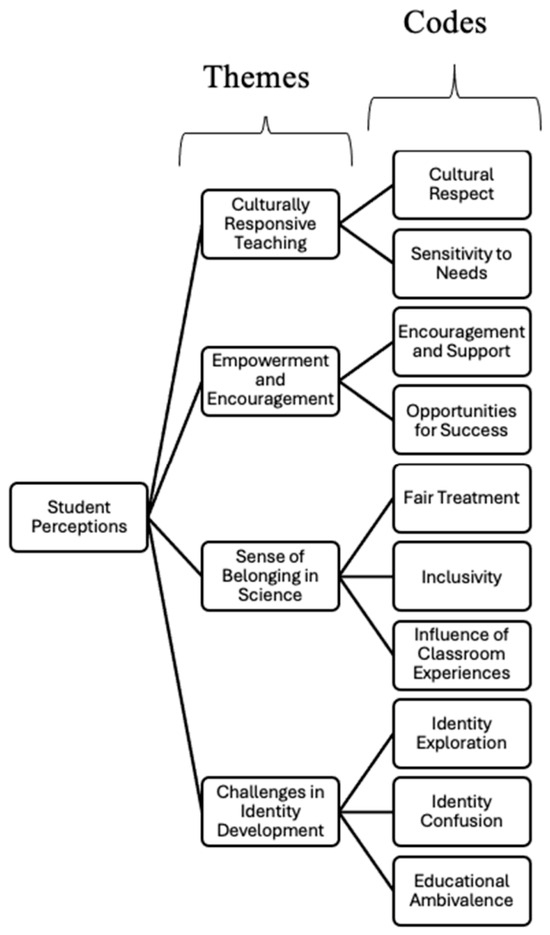
Student open-ended survey responses were analyzed to identify recurring themes and sentiments (Figure 1). Figure 1 illustrates the emergent themes in marginalized minority students’ perceptions of their teachers’ beliefs and attitudes.
Figure 1.
Emergence of student perception themes.
The theme of Culturally Responsive Teaching highlighted the importance of integrating students’ diverse backgrounds and experiences into the learning environment. In the survey, students were asked whether they believed their teacher valued and respected their cultural backgrounds and treated them fairly regardless of race or ethnicity. All students agreed or strongly agreed with this statement (100%, n = 21). Students also expressed strong appreciation for their teacher’s efforts to make the curriculum relevant to their lives. As one student wrote, “[My teacher] lets us talk about things that matter to us and things we like. It makes me feel important.” Another stated, “She always includes examples that relate to our lives, so I feel like I can relate with the lessons.” These responses suggest that the teacher cultivated a sense of belonging and encouraged active engagement by providing opportunities for students to connect course material to their own lives. This finding indicates that the teacher’s beliefs and attitudes were recognized by her students as part of her effort to cultivate an equitable and inclusive learning environment.
The theme of Empowerment and Encouragement highlighted the role of teacher support in fostering student engagement. This theme revealed how supportive teaching practices can positively influence students’ confidence and academic success in science. Students appreciated their teacher’s genuine care and commitment to their individual growth. One student shared, “[My teacher] knows me and cares. She wants to see me do good in class.” Another student emphasized the importance of this supportive atmosphere, stating, “I struggle, [my teacher] is there to help. She believes in me when I thought I would fail.” These quotes illustrate the teacher’s role as a source of encouragement and suggest that her belief in students’ abilities empowered them to take risks, express their thoughts, and ask questions. The teacher’s advocacy, support for student success, and belief in students’ potential were clearly reflected in students’ perceptions of her.
The theme of Sense of Belonging in Science indicates how students’ perceptions of inclusion in the classroom directly influenced their science identities. Students expressed appreciation for their teacher’s commitment to treating students equitably. One student noted, “I see [my teacher] treating everyone the same, no matter where they are from. It’s cool.” This statement reflects the importance of creating a classroom culture that values diversity and promotes respect among students. Students also emphasized the importance of having their voices heard in the classroom. One student remarked, “Our teacher makes sure everyone gets to share their ideas in class, and that makes me feel included.” This practice of encouraging dialogue fostered an inclusive classroom atmosphere in which students felt valued for their contributions. Survey responses further supported this finding: all students agreed or strongly agreed that the teacher tried to include all students in the classroom (100%, n = 21), and 86% (n = 18) agreed that the teacher encouraged and supported their participation in class discussions. The relevance of students’ personal experiences was also a critical aspect of belonging. As one student explained, “When we talked about our own experiences with nature in my neighborhood, I felt like what I said mattered in class.” This emphasis on connecting lessons to students’ lived experiences validated their identities and encouraged deeper engagement with the subject matter. Overall, students appeared to appreciate the teacher’s cultural competence, as well as her equitable and responsive instructional approaches.
However, while the findings indicate that the teacher’s beliefs and attitudes were recognized and perceived positively by her students, students also expressed a sense of disconnection between their classroom experiences and the broader scientific community. Many students described feeling disconnected from the traditional image of a scientist. As one student candidly stated, “I feel like I don’t fit in with the whole scientist vibe.” The theme of Challenges in Identity Development illustrates a significant barrier to students’ science identity development. Although students felt empowered to participate in discussions and succeed academically within the classroom, they did not report a clear understanding of how they could connect with or contribute to the broader science community. The notion of a “scientist” often carries stereotypes that may not align with students’ personal experiences, cultural backgrounds, or identities, which can lead to feelings of exclusion and discouragement. Another student noted, “I really like this [science] class, but I don’t see how I can be like a scientist. It may be for other people.” This statement reflects a common tension among students who enjoy science content but struggle to see science as a field in which they belong. These findings suggest that while classroom dynamics can foster individual confidence and engagement, especially when a teacher actively advocates for DEI in the classroom, broader societal and structural biases and stereotypes may remain influential in shaping students’ science identities, as other researchers have found (Pager & Shepherd, 2008). Thus, students’ science identity development was supported within the classroom context but continued to be constrained by dominant representations of who can be recognized as a scientist.
7. Discussion
The findings indicate that the participating teacher’s attitudes and beliefs meaningfully shaped her interactions with marginalized minority students and her instructional practices. Consistent with previous research, her positive beliefs and attitudes about students’ potential, reflected through empathy, high academic expectations, and responsiveness to students’ cultural backgrounds, helped foster a supportive and engaging classroom environment (Estrada et al., 2011; Hazari et al., 2013). Overwhelmingly, her students described feeling valued because of, rather than despite, their cultural backgrounds, which increased their willingness to participate in class and seek the teacher’s support.
Viewed through CRT, these findings show how teacher beliefs and attitudes are not merely individual dispositions but are also shaped by broader racialized structures within schooling and science education. The teacher’s culturally responsive practices challenged deficit-oriented assumptions about marginalized minority students by positioning students as capable science learners whose identities and experiences belonged in the classroom. In this way, her instruction worked against dominant narratives that often frame marginalized minority students as underprepared, uninterested, or less suited for science. Students’ perceptions of her beliefs and actions therefore function as important evidence of how race, power, and belonging are negotiated in everyday classroom interactions. At the same time, students’ positive perceptions of the teacher did not fully translate into a sense of belonging in the broader scientific community beyond the classroom. This finding is particularly important in light of prevailing anti-DEI legislation (Lammert & Godfrey, 2023; Shook & Lizarraga-Dueñas, 2024) and bans on race-conscious admissions policies in the United States, which have restricted discussions of race, equity, and diversity in educational settings. From a CRT perspective, this disconnect reveals the limits of individual teacher action when institutional and societal structures continue to signal that science and STEM fields are not equally accessible to all students.
Although the teacher’s attitudes and beliefs motivated her to enact culturally responsive teaching, her efforts alone were not sufficient to fully disrupt students’ internalized understandings of systemic racial inequities in STEM fields (Cech, 2022; Hazari et al., 2022). Even when students are taught by a highly empathetic and supportive teacher, they may still experience diminished motivation and persistence in science if broader institutional and societal support for their science aspirations is lacking. In this sense, systemic barriers may continue shaping students’ long-term science identity development, even within classrooms where teachers actively advocate for equity and inclusion (Warren, 2018). The case study of this teacher highlights several implications for how individual educators can foster more engaging and inclusive learning environments while also demonstrating the limits of classroom-level change. Her beliefs about students’ abilities directly influenced her instruction and interactions with students. In particular, her high expectations were reflected in tailored and differentiated instructional practices that enhanced students’ engagement and agency. Her commitment to collaboration and cultural competence also enriched her instruction and contributed to a more inclusive classroom environment. Thus, her case underscores the importance of integrating students’ cultural backgrounds into the curriculum to enhance engagement, strengthen motivation, and promote more equitable learning environments. Furthermore, her practice illustrates the necessary intersection of culturally responsive teaching and science-specific PCK (Magnusson et al., 1999; Shulman, 1986). By intentionally scaffolding argumentation and utilizing equitable science discourse moves (Barton & Tan, 2010; Carlone et al., 2011), she actively positioned her marginalized students as legitimate “knowers” of science, proving that effective equity work in STEM must be deeply embedded in disciplinary practice.
However, CRT also requires attention to what remains unresolved. Despite the teacher’s strong advocacy for DEI and culturally responsive teaching, the inclusive and identity-affirming learning context she created appeared to be largely localized within her classroom and somewhat isolated from the broader scientific community. Further, the teacher acknowledged that her expectations might sometimes differ based on students’ backgrounds, while also expressing confidence that being fair and open-minded enabled her to recognize and set aside her biases. Our findings suggest that her confidence in her ability to overcome bias may underestimate how implicit assumptions, institutional practices, and broader community and policy contexts shape teaching practices and student learning outcomes, regardless of teachers’ conscious intent. Thus, the “denial of bias” identified in our coding (see Table 1) does not indicate that the teacher completely rejected the possibility of her bias. Rather, it captures how teacher bias can coexist with confidence in one’s ability to act independently of the racialized structures. This finding suggests that supportive teacher beliefs, while necessary, are not sufficient to counter the racialized patterns of exclusion that students encounter throughout science education and along STEM pathways. From a CRT perspective, developing responsive practice therefore requires not only individual self-reflection but also sustained attention to how race, power, and structural conditions influence teaching and learning. Accordingly, this study serves as a call for continued research and professional development that equips educators with concrete tools to support diverse learners while also addressing the broader systemic issues students face. In summary, the findings suggest that even with a dedicated teacher, there remains a need to confront the structural barriers that marginalize students in science education and STEM pathways (Cech, 2022). Although the teacher fostered a strong sense of inclusivity and supported students’ emerging science identities, many students recognized that her positive beliefs and supportive practices alone were insufficient to dismantle systemic inequities that may limit their future participation in science. Her experiences, together with her students’ perceptions, indicate that positive teacher beliefs must be paired with concrete, systemic strategies to address educational inequities and support marginalized students’ long-term science aspirations.
This study has several limitations. First, it focused on a single case teacher and her students. While this design provided an in-depth understanding of one classroom in which culturally responsive teaching was evident, additional cases across varied school contexts would provide broader insight into how teacher beliefs, attitudes, and practices shape students’ science identity development. Second, the study did not include student interviews. Instead, student data were drawn from classroom observations and surveys. Consequently, our data lacked detailed, qualitative descriptions of students’ internalized stereotypes, such as what they believe a “scientist” looks like. To address this limitation, future research that incorporates student interviews could provide meaningful insight into how students perceive their teachers, explicitly explore the stereotypes that hinder them, and reveal how they understand their own science identities. Future studies should also examine the dynamics of teacher professional development programs and professional learning communities, particularly how teachers navigate their beliefs and attitudes in relation to externally imposed norms, such as curriculum standards, standardized testing, and policy restrictions. Third, the student survey findings showed perfect or near-perfect agreement on multiple items, such as all 21 students reporting that the teacher valued their cultural backgrounds and tried to include everyone. Because the survey was administered within the participating teachers’ own classroom, these results likely reflect a degree of social desirability or response bias. Furthermore, the perfect agreement on these adapted PRiSE-style items signals potential ceiling effects and item insensitivity within this specific context. Therefore, future research should administer such instruments in more neutral settings and ensure survey items are calibrated to capture more nuanced variations in student experiences. Also, further research is needed to understand how teachers negotiate with colleagues, institutional expectations, and broader political contexts as they advocate for DEI during an era in which anti-DEI legislation increasingly influences educational practice.
Supplementary Materials
The following supporting information can be downloaded at https://www.mdpi.com/article/10.3390/educsci16081194/s1.
Author Contributions
Conceptualization, L.M.J., M.P. and C.L.; Methodology, L.M.J. and M.P.; Writing original draft preparation, L.M.J. and M.P.; Writing—review and editing, L.M.J., M.P. and C.L. All authors have read and agreed to the published version of the manuscript.
Funding
This research received no external funding.
Institutional Review Board Statement
The study was conducted in accordance with the Declaration of Helsinki, and approved by the Texas Tech University IRB Committee (protocol code IRB2024-23 and 14 April 2024).
Informed Consent Statement
Informed consent was obtained from all subjects involved in the study.
Data Availability Statement
The data are not publicly available due to privacy or ethical restriction.
Conflicts of Interest
The authors declare no conflicts of interest.
References
- Alexander, B. K. (2023). Onboarding, orientation, and mentoring as culture-crafting processes: A rac(e)y autoethnography of resistance in higher education administration. Qualitative Inquiry, 29(7), 825–839. [Google Scholar] [CrossRef] [Scilit]
- Anderhag, P., Wickman, P. O., Bergqvist, K., Jakobson, B., Hamza, K. M., & Säljö, R. (2016). Why do secondary school students lose their interest in science? Or does it never emerge? A possible and overlooked explanation. Science Education, 100(5), 791–813. [Google Scholar] [CrossRef] [Scilit]
- Archer, L., DeWitt, J., Osborne, J., Dillon, J., Willis, B., & Wong, B. (2010). “Doing” science versus “being” a scientist: Examining 10/11-year-old schoolchildren’s constructions of science through the lens of identity. Science Education, 94(4), 617–639. [Google Scholar] [CrossRef] [Scilit]
- Aschbacher, P. R., Li, E., & Roth, E. J. (2010). Is science me? High school students’ identities, participation and aspirations in science, engineering, and medicine. Journal of Research in Science Teaching, 47(5), 564–582. [Google Scholar] [CrossRef] [Scilit]
- Barton, A. C., & Tan, E. (2010). We be burnin’! Agency, identity, and science learning. The Journal of the Learning Sciences, 19(2), 187–229. [Google Scholar] [CrossRef] [Scilit]
- Barton, A. C., Tan, E., & Rivet, A. (2008). Creating hybrid spaces for engaging school science among urban middle school girls. American Educational Research Journal, 45(1), 68–103. [Google Scholar] [CrossRef] [Scilit]
- Bhopal, K. (2023). Critical race theory: Confronting, challenging, and rethinking white privilege. Annual Review of Sociology, 49, 111–128. [Google Scholar] [CrossRef] [Scilit]
- Brand, S. T., & Tutwiler, M. S. (2022). Beyond critical race theory: Infusing culturally relevant pedagogy into the K-16 curriculum. In J. Keengwe (Ed.), Handbook of research on social justice and equity in education (pp. 160–182). IGI Global. [Google Scholar] [CrossRef] [Scilit]
- Brinkmann, S., & Kvale, S. (2015). Interviews: Learning the craft of qualitative research interviewing (3rd ed.). SAGE. [Google Scholar]
- Burrell-Craft, K. (2020). Are (we) going deep enough?: A narrative literature review addressing critical race theory, racial space theory, and black identity development. Taboo: The Journal of Culture and Education, 19(4), 9–26. [Google Scholar]
- Byrd, C. M. (2016). Does culturally relevant teaching work? An examination from student perspectives. Sage Open, 6(3), 1–10. [Google Scholar] [CrossRef] [Scilit]
- Carlone, H. B., Haun-Frank, J., & Webb, A. (2011). Assessing equity beyond knowledge-and skills-based outcomes: A comparative ethnography of two fourth-grade reform-based science classrooms. Journal of Research in Science Teaching, 48(5), 459–485. [Google Scholar] [CrossRef] [Scilit]
- Carlone, H. B., & Johnson, A. (2007). Understanding the science experiences of successful women of color: Science identity as an analytic lens. Journal of Research in Science Teaching, 44(8), 1187–1218. [Google Scholar] [CrossRef] [Scilit]
- Cech, E. A. (2022). The intersectional privilege of white able-bodied heterosexual men in STEM. Science Advances, 8(24), eabo1558. [Google Scholar] [CrossRef] [Scilit] [PubMed]
- Cho, S., Crenshaw, K. W., & McCall, L. (2013). Toward a field of intersectionality studies: Theory, applications, and praxis. Signs: Journal of Women in Culture and Society, 38(4), 785–810. [Google Scholar] [CrossRef] [Scilit]
- Cholewa, B., Goodman, R. D., West-Olatunji, C., & Amatea, E. (2014). A qualitative examination of the impact of culturally responsive educational practices on the psychological well-being of students of color. The Urban Review, 46, 574–596. [Google Scholar] [CrossRef] [Scilit]
- Civitillo, S., Juang, L. P., Badra, M., & Schachner, M. K. (2019). The interplay between culturally responsive teaching, cultural diversity beliefs, and self-reflection: A multiple case study. Teaching and Teacher Education, 77, 341–351. [Google Scholar] [CrossRef] [Scilit]
- Delgado, R., & Stefancic, J. (1998). Critical race theory: Past, present, and future. Current Legal Problems, 51(1), 467–491. [Google Scholar] [CrossRef] [Scilit]
- Diamond, K. K., & Stebleton, M. J. (2019). The science identity experiences of undergraduate, foreign-born immigrant women in STEM at US institutions. Journal of Women and Gender in Higher Education, 12(2), 143–165. [Google Scholar] [CrossRef] [Scilit]
- Estrada, M., Woodcock, A., Hernandez, P. R., & Schultz, P. W. (2011). Toward a model of social influence that explains minority student integration into the scientific community. Journal of Educational Psychology, 103(1), 206–222. [Google Scholar] [CrossRef] [Scilit] [PubMed]
- Flyvbjerg, B. (2006). Five misunderstandings about case-study research. Qualitative Inquiry, 12(2), 219–245. [Google Scholar] [CrossRef] [Scilit]
- García, H. A., Bryan, K., & McNaughtan, J. (2019). “Why not?”: How STEM identity development promotes black transfer and transition. Journal of Negro Education, 88(3), 343–357. [Google Scholar] [CrossRef] [Scilit]
- Gay, G. (2002). Preparing for culturally responsive teaching. Journal of Teacher Education, 53(2), 106–116. [Google Scholar] [CrossRef] [Scilit]
- Gibbs, K. D., McGready, J., Bennett, J. C., & Griffin, K. (2014). Biomedical science PhD career interest patterns by race/ethnicity and gender. PLoS ONE, 9(12), e114736. [Google Scholar] [CrossRef] [Scilit] [PubMed]
- Ginther, D. K., Schaffer, W. T., Schnell, J., Masimore, B., Liu, F., Haak, L. L., & Kington, R. (2011). Race, ethnicity, and NIH research awards. Science, 333(6045), 1015–1019. [Google Scholar] [CrossRef] [Scilit] [PubMed]
- Handelman, M. (2025). From book bans to affirmative action: DARVO as a political tool against critical race theory. Journal of Prevention & Intervention in the Community, 53(1), 153–173. [Google Scholar]
- Harris, M. J., & Rosenthal, R. (1985). Mediation of interpersonal expectancy effects: 31 meta-analyses. Psychological Bulletin, 97(3), 363–386. [Google Scholar] [CrossRef]
- Hayes, C., & Juárez, B. (2011). There is no culturally responsive teaching spoken here: A critical race perspective. Democracy and Education, 20(1), 1. Available online: https://democracyeducationjournal.org/home/vol20/iss1/1 (accessed on 18 November 2023). [CrossRef] [Scilit]
- Hazari, Z., Brewe, E., Goertzen, R. M., & Hodapp, T. (2017). The importance of high school physics teachers for female students’ physics identity and persistence. The Physics Teacher, 55(2), 96–99. [Google Scholar] [CrossRef] [Scilit]
- Hazari, Z., Dou, R., Sonnert, G., & Sadler, P. M. (2022). Examining the relationship between informal science experiences and physics identity: Unrealized possibilities. Physical Review Physics Education Research, 18(1), 010107-1–010107-14. [Google Scholar] [CrossRef] [Scilit]
- Hazari, Z., Sadler, P. M., & Sonnert, G. (2013). The science identity of college students: Exploring the intersection of gender, race, and ethnicity. Journal of College Science Teaching, 42(5), 82–91. [Google Scholar]
- Hazari, Z., Sonnert, G., Sadler, P. M., & Shanahan, M. C. (2010). Connecting high school physics experiences, outcome expectations, physics identity, and physics career choice: A gender study. Journal of Research in Science Teaching, 47(8), 978–1003. [Google Scholar] [CrossRef] [Scilit]
- Hughes, S., Noblit, G., & Cleveland, D. (2013). Derrick Bell’s post-brown moves toward critical race theory. Race Ethnicity and Education, 16(4), 442–469. [Google Scholar] [CrossRef] [Scilit]
- Jackson, K. M., & Suizzo, M. A. (2015). Sparking an interest: A qualitative study of Latina science identity development. Journal of Latina/o Psychology, 3(2), 103–120. [Google Scholar] [CrossRef] [Scilit]
- Jones, T. C. (2019). Creating a world for me: Students of color navigating STEM identity. Journal of Negro Education, 88(3), 358–378. [Google Scholar] [CrossRef] [Scilit]
- Ladson-Billings, G. (1998). Just what is critical race theory and what’s it doing in a nice field like education? International Journal of Qualitative Studies in Education, 11(1), 7–24. [Google Scholar] [CrossRef] [Scilit]
- Ladson-Billings, G. (2014). Culturally relevant pedagogy 2.0: A.K.A. the remix. Harvard Educational Review, 84(1), 74–84. [Google Scholar] [CrossRef] [Scilit]
- Lammert, C., & Godfrey, V. C. (2023). Teachers’ self-censorship of children’s literature in Texas—What’s legislation got to do with it? AERA Open, 9. [Google Scholar] [CrossRef] [Scilit]
- Liu, P. P., McKinney, D., Lee, A. A., Schmidt, J. A., Marchand, G. C., & Linnenbrink-Garcia, L. (2023). A mixed-methods exploration of mastery goal support in 7th-grade science classrooms. Cognition and Instruction, 41(2), 201–247. [Google Scholar] [CrossRef] [Scilit]
- Ma, Y., & Xiao, S. (2021). Math and science identity change and paths into and out of STEM: Gender and racial disparities. Socius, 7, 1–15. [Google Scholar] [CrossRef] [Scilit]
- Madkins, T. C., & Morton, K. (2021). Disrupting anti-blackness with young learners in STEM: Strategies for elementary science and mathematics teacher education. Canadian Journal of Science, Mathematics and Technology Education, 21, 239–256. [Google Scholar] [CrossRef] [Scilit] [PubMed]
- Magnusson, S., Krajcik, J., & Borko, H. (1999). Nature, sources, and development of pedagogical content knowledge for science teaching. In Examining pedagogical content knowledge: The construct and its implications for science education (pp. 95–132). Springer. [Google Scholar]
- Matthews, J. S., & López, F. (2019). Speaking their language: The role of cultural content integration and heritage language for academic achievement among Latino children. Contemporary Educational Psychology, 57, 72–86. [Google Scholar] [CrossRef] [Scilit]
- Milkman, K. L., Akinola, M., & Chugh, D. (2015). What happens before? A field experiment exploring how pay and representation differentially shape bias on the pathway into organizations. Journal of Applied Psychology, 100(6), 1678. [Google Scholar] [CrossRef] [Scilit] [PubMed]
- Nieto, S. (2000). Placing equity front and center: Some thoughts on transforming teacher education for a new century. Journal of Teacher Education, 51(3), 180–187. [Google Scholar] [CrossRef] [Scilit]
- Pager, D., & Shepherd, H. (2008). The sociology of discrimination: Racial discrimination in employment, housing, credit, and consumer markets. Annual Review of Sociology, 34, 181–209. [Google Scholar] [CrossRef] [Scilit] [PubMed]
- Paris, D. (2021). Culturally sustaining pedagogies and our futures. The Educational Forum, 85(4), 364–376. [Google Scholar] [CrossRef] [Scilit]
- Perry, L. B., & McConney, A. (2010). Does the SES of the school matter? An examination of socioeconomic status and student achievement using PISA 2003. Teachers College Record, 112(4), 1137–1162. [Google Scholar] [CrossRef] [Scilit]
- Phuntsog, N. (2001). Culturally responsive teaching: What do selected United States elementary school teachers think? Intercultural Education, 12(1), 51–64. [Google Scholar] [CrossRef]
- Pit-ten Cate, I. M., & Glock, S. (2019). Teachers’ implicit attitudes toward students from different social groups: A meta-analysis. Frontiers in Psychology, 10, 2832. [Google Scholar] [CrossRef] [Scilit] [PubMed]
- Pohan, C. A., & Aguilar, T. E. (2001). Measuring educators’ beliefs about diversity in personal and professional contexts. American Educational Research Journal, 38(1), 159–182. [Google Scholar] [CrossRef] [Scilit]
- Polat, N., Mahalingappa, L., Hughes, E., & Karayigit, C. (2019). Change in preservice teacher beliefs about inclusion, responsibility, and culturally responsive pedagogy for English learners. International Multilingual Research Journal, 13(4), 222–238. [Google Scholar] [CrossRef] [Scilit]
- Reilly, J. M., McGivney, E., Dede, C., & Grotzer, T. (2021). Assessing science identity exploration in immersive virtual environments: A mixed methods approach. The Journal of Experimental Education, 89(3), 468–489. [Google Scholar] [CrossRef] [Scilit]
- Rubin, H., & Rubin, I. (2011). Qualitative interviewing: The art of hearing data (3rd ed.). Sage. [Google Scholar]
- Rubinstein-Avila, E., & Lee, E. H. (2014). Secondary teachers and English Language Learners (ELLs): Attitudes, preparation and implications. The Clearing House: A Journal of Educational Strategies, Issues and Ideas, 87(5), 187–191. [Google Scholar] [CrossRef] [Scilit]
- Saldaña, J. (2016). The coding manual for qualitative researchers (3rd ed.). Sage. [Google Scholar]
- Sammons, P., Day, C., Kington, A., Gu, Q., Stobart, G., & Smees, R. (2007). Exploring variations in teachers’ work, lives and their effects on pupils: Key findings and implications from a longitudinal mixed-method study. British Educational Research Journal, 33(5), 681–701. [Google Scholar] [CrossRef] [Scilit]
- Schmidt, J. A., Kafkas, S. S., Maier, K. S., Shumow, L., & Kackar-Cam, H. Z. (2019). Why are we learning this? Using mixed methods to understand teachers’ relevance statements and how they shape middle school students’ perceptions of science utility. Contemporary Educational Psychology, 57, 9–31. [Google Scholar] [CrossRef] [Scilit]
- Shook, L. M., & Lizarraga-Dueñas, L. I. (2024). Of DEI and denials: A critical discourse analysis of Texas’ 88th legislative session. Education Policy Analysis Archives, 32, 1–24. [Google Scholar] [CrossRef]
- Shulman, L. S. (1986). Those who understand: Knowledge growth in teaching. Educational Researcher, 15(2), 4–14. [Google Scholar] [CrossRef]
- Sleeter, C. E. (2001). Preparing teachers for culturally diverse schools: Research and the overwhelming presence of whiteness. Journal of Teacher Education, 52(2), 94–106. [Google Scholar] [CrossRef] [Scilit]
- Sleeter, C. E. (2017). Critical race theory and the whiteness of teacher education. Urban Education, 52(2), 155–169. [Google Scholar] [CrossRef] [Scilit]
- Stake, R. E. (1995). The art of case study research. Sage Publications, Inc. [Google Scholar]
- Tucker-Raymond, E., Varelas, M., Pappas, C. C., & Keblawe-Shamah, N. (2012). Young children’s multimodal identity stories about being scientists. In Identity construction and science education research (pp. 79–95). Brill. [Google Scholar] [CrossRef] [Scilit]
- Villegas, A. M., & Lucas, T. (2002). Preparing culturally responsive teachers: Rethinking the curriculum. Journal of Teacher Education, 53(1), 20. [Google Scholar] [CrossRef] [Scilit]
- Wade-Jaimes, K., Cohen, J. D., & Calandra, B. (2022). A cultural historical comparison of in- school and out-of-school STEM activity systems for African-American girls. Cultural Studies of Science Education, 17(2), 511–540. [Google Scholar] [CrossRef] [Scilit]
- Wallace, T., & Brand, B. R. (2012). Using critical race theory to analyze science teachers culturally responsive practices. Cultural Studies of Science Education, 7, 341–374. [Google Scholar] [CrossRef] [Scilit]
- Warren, C. A. (2018). Empathy, teacher dispositions, and preparation for culturally responsive pedagogy. Journal of Teacher Education, 69(2), 169–183. [Google Scholar] [CrossRef] [Scilit]
- Williams, K. A., Hall, T. E., & O’Connell, K. (2021). Classroom-based citizen science: Impacts on students’ science identity, nature connectedness, and curricular knowledge. Environmental Education Research, 27(7), 1037–1053. [Google Scholar] [CrossRef] [Scilit]
- Wlodkowski, R. J., & Ginsberg, M. B. (1995). A framework for culturally responsive teaching. Educational Leadership, 53(1), 17–21. [Google Scholar]
- Yin, R. K. (2014). Case study research: Design and methods (5th ed.). SAGE Publications. [Google Scholar]
- Yosso, T. J. (2005). Whose culture has capital? A critical race theory discussion of community cultural wealth. Race Ethnicity and Education, 8(1), 69–91. [Google Scholar] [CrossRef] [Scilit]

Disclaimer/Publisher’s Note: The statements, opinions and data contained in all publications are solely those of the individual author(s) and contributor(s) and not of MDPI and/or the editor(s). MDPI and/or the editor(s) disclaim responsibility for any injury to people or property resulting from any ideas, methods, instructions or products referred to in the content. |
© 2026 by the authors. Licensee MDPI, Basel, Switzerland. This article is an open access article distributed under the terms and conditions of the Creative Commons Attribution (CC BY) license.