


Abstract
Artificial intelligence (AI) has created new opportunities to generate instructional materials calibrated to learners’ proficiency levels; however, evidence on its use in extensive and intensive reading instruction remains limited. This mixed-methods quasi-experimental study examined the association between CEFR-calibrated AI-generated reading texts and EFL learners’ reading comprehension and attitudes. A total of 171 Saudi undergraduate EFL learners participated in a 13-week intervention and were assigned to one of three instructional conditions: Intensive Reading using C1-level texts (G1, n = 55), Extensive Reading using B2-level texts (G2, n = 58), or Extensive Reading using A2-level texts (G3, n = 58). AI-generated reading materials were independently validated using Text Inspector and the Pearson GSE Toolkit before implementation. Reading comprehension was assessed using common pre- and post-tests, and learner perceptions were measured using a post-intervention questionnaire. All three instructional conditions were associated with statistically significant improvements in reading comprehension over the intervention period. Among the three groups, the B2 Extensive Reading condition achieved the highest post-test reading comprehension scores, whereas the A2 Extensive Reading condition received the most favorable evaluations across the questionnaire dimensions. These findings suggest that, within the instructional configuration examined in this study, moderately challenging AI-generated texts were associated with stronger reading-comprehension outcomes, whereas less demanding texts were associated with more positive learner perceptions. The study extends current research by providing empirical evidence on the use of CEFR-calibrated AI-generated reading materials within extensive and intensive reading contexts and offers practical implications for integrating AI-supported reading instruction in EFL classrooms.
1. Introduction
Artificial intelligence (AI) is increasingly reshaping language education through adaptive learning, automated feedback, and personalized instructional support. In educational contexts, AI has been recognized as a transformative force that can enhance instructional design, technological innovation, and personalized learning environments (Fadel et al., 2019; G.-J. Hwang & Tsai, 2011; Baker & Siemens, 2014). In language education specifically, AI technologies now support the generation of adaptive learning materials, automated feedback, and individualized instructional pathways, creating new possibilities for second language (L2) development (Coppin, 2004; Timms, 2016).
Within L2 reading pedagogy, two major approaches have traditionally dominated: Extensive Reading (ER) and Intensive Reading (IR). ER emphasizes large-volume reading at or below learners’ proficiency levels to promote fluency, enjoyment, and independent learning (Renandya & Jacobs, 2002; Krashen, 2004), whereas IR focuses on detailed analysis of linguistically demanding texts to strengthen vocabulary, grammar, and comprehension skills (I. S. Nation, 2008; Hulstijn, 2001; Laufer & Hulstijn, 2001). Both approaches have demonstrated important benefits for language development and reading comprehension (Lin & Tsai, 2016).
AI has recently become a focal point in educational research because of its potential to personalize reading instruction and generate proficiency-aligned materials for language learners (Alghamdi & Alghizzi, 2026; Fadel et al., 2019). Although AI-assisted tools can adapt texts to learners’ needs and support reading development, research examining their impact on EFL learners’ reading comprehension remains limited (G. J. Hwang & Fu, 2019). In particular, little research has compared AI-assisted ER and IR within a single framework or explored how proficiency-calibrated AI-generated texts influence learner attitudes, engagement, and comprehension outcomes. To address this gap, the present study investigates the impact of AI-generated reading materials adapted to different CEFR levels within ER and IR frameworks. Specifically, it examines whether texts positioned below, above, or substantially beyond learners’ proficiency levels differentially affect reading comprehension and learner attitudes. By integrating AI-assisted personalization with established reading approaches, the study contributes to current discussions on adaptive input, learner engagement, and AI-supported L2 reading instruction.
2. Literature Review
2.1. Theoretical Background
Extensive Reading (ER) and Intensive Reading (IR) are widely recognized approaches in L2 reading pedagogy (Carrell & Carson, 1997). ER promotes large-volume reading for fluency, enjoyment, and independent learning (Renandya & Jacobs, 2002), whereas IR emphasizes close analysis of shorter and linguistically demanding texts to develop vocabulary, grammar, and comprehension skills (Scrivener, 2005).
Two major theories underpin these approaches: Krashen’s Input Hypothesis (IH) and the Information-Gap Hypothesis (IGH). Krashen (1982, 1985, 2004) argued that language acquisition is optimized when learners receive comprehensible input slightly above their current proficiency level (“i + 1”). Within reading instruction, this supports the use of graded and level-adjusted materials that facilitate incremental vocabulary and grammar development (Krashen, 2004). However, the Input Hypothesis has been criticized for its limited attention to interaction, learner variability, and explicit instruction (Swain, 1985; Long, 1983).
By contrast, the Information-Gap Hypothesis emphasizes active meaning-making and strategic engagement with language (I. S. Nation, 2008). From this perspective, learners benefit when texts create manageable comprehension challenges that encourage inferencing, problem-solving, and deeper cognitive processing (Deci & Ryan, 1985). Empirical evidence reflects this tension. Krashen (2004) reported stronger outcomes when learners read materials slightly below their proficiency level, whereas I. S. Nation (2008) found that moderately challenging texts promoted greater learning gains (Hulstijn, 2001).
2.2. Extensive Reading Approach
2.2.1. Definition and Context of Extensive Reading
Extensive Reading (ER) aims to develop reading through large-volume, meaning-focused engagement rather than explicit linguistic analysis (I. S. Nation, 2008). Research consistently demonstrates its positive effects on reading comprehension, vocabulary growth, fluency, and learner motivation. Mason and Krashen (1997), for example, found that ER significantly improved EFL learners’ language proficiency and encouraged reluctant readers to engage with English texts. Similarly, Yamashita (2008) reported substantial gains in reading comprehension and vocabulary knowledge among learners participating in ER programs, although long-term effects across other language skills remain underexplored.
2.2.2. Utilizing Graded Readers and AI-Supported Platforms
Graded readers and adaptive reading platforms have been widely associated with improvements in reading comprehension, vocabulary acquisition, and reading fluency (P. Nation & Ming-Tzu, 1999; Nakanishi, 2015; Beglar & Hunt, 2014; Huffman, 2014). Chen et al. (2020) demonstrated that AI-assisted ER programs significantly enhanced EFL learners’ reading comprehension over a 13-week intervention, while Suk (2017) reported improvements in learners’ error identification and correction abilities through graded reading exposure. Building on this literature, the present study integrates AI-driven tools such as ChatGPT (3 + 4) and Text Inspector to generate CEFR-aligned reading materials. Using AI-generated texts calibrated to different proficiency levels enables systematic manipulation of reading difficulty. Accordingly, the IR group received advanced C1-level texts, whereas the ER groups were exposed to texts slightly above (B2) or below (A2) their established B1 proficiency level.
2.3. Intensive Reading Approach
Intensive Reading (IR) emphasizes detailed analysis of vocabulary, grammar, text structure, and meaning under teacher guidance (Richards & Schmidt, 2002). It plays a central role in English for Academic Purposes (EAP) by developing analytical reading skills and strategic language awareness. Research has consistently shown that strategy-based IR instruction enhances comprehension and inferencing abilities (Carrell, 1985; Kern, 1989).
Metacognitive awareness is particularly important within IR because learners must actively monitor comprehension and apply reading strategies effectively. Previous studies have highlighted the importance of explicit strategy instruction, text-structure awareness, and guided analysis in improving reading proficiency in academic contexts (Carrell & Carson, 1997; Kern, 1989). Although IR promotes deeper linguistic processing, its effectiveness may depend heavily on the appropriateness of text difficulty and the availability of instructional scaffolding.
2.4. Convergent Treatments of Extensive and Intensive Reading
Research increasingly suggests that combining ER and IR may produce complementary learning benefits. Beglar and Hunt (2014) found that learners exposed to integrated reading approaches outperformed those receiving traditional instruction in reading comprehension, vocabulary, and fluency. Similarly, Horst (2005), Waring and Takaki (2003), Hitosugi and Day (2004), and Renandya and Jacobs (2002) reported strong effects of ER on vocabulary acquisition and retention, while Rashidi and Piran (2011) demonstrated that both ER and IR contribute to vocabulary size, depth, and fluency. These findings suggest that integrating AI-supported personalization with both approaches may further strengthen reading development and learner engagement.
2.5. Artificial Intelligence in Education
Artificial intelligence is increasingly transforming education through adaptive learning systems, personalized instruction, and automated feedback mechanisms (Chassignol et al., 2018). Chen et al. (2020) highlighted AI’s growing role in instructional support, administrative processes, and individualized learning pathways. Similarly, Ouyang and Jiao (2021) proposed three educational AI paradigms: AI-directed, AI-supported, and AI-empowered learning, reflecting AI’s evolution from a technological tool into a collaborative educational partner. Consequently, AI is increasingly positioned as a transformative force in contemporary education (Alghamdi & Alghizzi, 2025).
2.6. AI in L2 Reading
Despite the growing role of AI in education, its integration with ER and IR approaches in L2 reading remains underexplored. Existing research has rarely examined how AI-generated texts calibrated to learners’ proficiency levels influence reading comprehension and learner attitudes. Accordingly, the present study investigates the impact of AI-generated CEFR-aligned texts within ER and IR frameworks to better understand how adaptive AI-supported input can enhance L2 reading instruction and learner outcomes.
The current research enriches the body of both extensive and intensive reading literature concerning reading comprehension and the role of AI on language learning (reading skill) by posing and addressing the following research questions:
RQ1: To what extent did tailoring AI-generated reading texts to be either slightly above or below EFL learners’ actual proficiency levels impact reading comprehension outcomes in both the Extensive Reading (ER) and Intensive Reading (IR) groups?
RQ2: Among the three groups, G1 (IR with C1-level texts), G2 (ER with texts above proficiency level), and G3 (ER with texts below proficiency level), which group demonstrated the most significant improvement in reading comprehension performance?
RQ3: What were the participants’ attitudes in each group (G1, G2, G3) toward the use of AI-generated texts in terms of effectiveness, cognitive load, and cognate when those texts were adapted to their proficiency level?
3. Materials and Methods
3.1. Research Design and Setting
This study employed a mixed-methods quasi-experimental design to investigate the effects of AI-assisted Extensive Reading (ER) and Intensive Reading (IR) on EFL learners’ reading comprehension and attitudes. Quantitative data were collected through pre- and post-reading comprehension tests, while attitudinal data were obtained through a structured questionnaire administered after the intervention. The study was conducted in the English Department of a Saudi university during the first semester of the 2023–2024 academic year and lasted 13 weeks.
The adopted design enabled examination of both the cognitive and affective dimensions of AI-assisted reading instruction. Combining comprehension outcomes with attitudinal measures provided a more comprehensive evaluation of the intervention’s impact on learner performance and engagement. Mixed-methods approaches are particularly suitable for technology-enhanced learning research because they allow richer interpretation through methodological triangulation (Creswell & Clark, 2011). Furthermore, incorporating attitudinal measures aligns with Dörnyei’s (2007) argument that learners’ beliefs, emotional responses, and preferences are central variables in language learning research. In AI-supported educational contexts, factors such as cognitive load, engagement, and user satisfaction may substantially mediate the effectiveness of learning (G. J. Hwang & Fu, 2019; Chen et al., 2020).
3.2. Participants
A total of 302 male Saudi undergraduate students enrolled in the Reading Comprehension course (Eng. 109) at a Saudi university were initially screened for participation. Following the application of the predetermined eligibility criteria, 171 participants were included in the study. To ensure a relatively homogeneous sample, participants were required to (a) have completed the university preparatory-year programme without transferring from another institution, (b) report reading in English for more than two hours per week, following the recommendation of Al-Nujaidi (2003), and (c) obtain scores between 10 and 18 on an IELTS-based reading comprehension pre-test, corresponding to the B1 proficiency level of the Common European Framework of Reference for Languages (CEFR).
After eligibility screening, participants were randomly assigned to one of three instructional conditions: an Intensive Reading (IR) group receiving AI-generated C1-level texts (G1, n = 55), an Extensive Reading (ER) group receiving AI-generated B2-level texts (G2, n = 58), and an Extensive Reading (ER) group receiving AI-generated A2-level texts (G3, n = 58). The intervention was conducted over 13 weeks. To encourage sustained participation and minimize attrition, students received course credit following completion of all intervention activities, the post-test, and the attitude questionnaire. Table 1 summarizes the demographic and instructional characteristics of the three groups.
Table 1.
Demographic and instructional characteristics of the participants.
Comparison Between Groups in the Pre-Test
Prior to the intervention, baseline equivalence among the three instructional groups was examined using a one-way analysis of variance (ANOVA) on the pre-test reading comprehension scores. As shown in Table 2, no statistically significant differences were observed among the three groups (F(2, 168) = 0.83, p = 0.439), indicating that participants entered the study with comparable levels of reading comprehension. Mean pre-test scores ranged from 12.67 to 12.91, and the relatively small standard deviations indicated a similar distribution of scores across the three instructional conditions. These findings support the assumption of baseline equivalence and strengthen the internal validity of subsequent between-group comparisons by suggesting that any post-intervention differences are unlikely to reflect pre-existing differences in reading ability.
Table 2.
Comparison between groups in the pre-measurement using a one-way ANOVA test.
3.3. Instruments
An AI-assisted reading tool was developed from task paragraphs for the ER and IR approaches. Pre- and post-tests were administered to assess participants’ reading comprehension levels before and after the intervention. Each test was time-limited to 30 min and comprised 40 items evenly distributed across four passages, providing a balanced evaluation of literal understanding, vocabulary, and inferencing skills. All participants, regardless of treatment group, completed identical versions of the pre- and post-tests to ensure uniform measurement. In this regard, the texts selected for these assessments were drawn from CEFR B1-level sources to align with the learners’ established proficiency, minimizing construct-irrelevant variance and ensuring fairness across groups. This alignment was crucial to accurately attributing any gains to the intervention rather than to variation in text complexity. Equating procedures included lexical analysis and syntactic matching, ensuring that both tests imposed equivalent cognitive demands and provided a reliable framework for interpreting differences in outcomes as reflecting actual learning effects.
On the other hand, the questionnaire was reviewed by language education experts to ensure content validity and to refine the clarity of the items, as outlined in Table 3. Internal consistency was confirmed with a Cronbach’s alpha of 0.972 overall, with subscale reliabilities exceeding 0.91 (see Table 3). Participants’ attitudes were measured through a structured questionnaire administered after the post-test to capture their experiences with AI-generated texts. The instrument included items grouped into three subscales: affective (e.g., enjoyment and interest), cognitive (e.g., clarity and mental effort), and overall satisfaction. Furthermore, responses were collected using a 5-point Likert scale ranging from “Strongly Disagree” to “Strongly Agree”. Responses were recorded on a five-point Likert scale (1 = Strongly Disagree to 5 = Strongly Agree) as detailed in Appendix A. Negatively worded items (e.g., “I felt more anxious and overwhelmed…” and “I prefer traditional textbooks…”) were reverse-coded prior to computing subscale and total questionnaire scores to ensure that higher scores consistently represented more positive perceptions of the AI-assisted reading intervention (Dörnyei & Taguchi, 2010).
Table 3.
Questionnaire Validity and Reliability.
Post Hoc Tests
Based on the Tukey HSD post hoc analysis of the pre-test, there were no statistically significant differences among the three groups (G1, G2, G3). All p-values were well above the 0.05 threshold, and the 95% confidence intervals for mean differences included zero, confirming the absence of meaningful pairwise differences as detailed in Table 4.
Table 4.
Tukey HSD Post Hoc Comparisons of Pre-Test Scores by Group.
Tukey’s HSD multiple-comparison procedure confirmed the results of the omnibus ANOVA. None of the pairwise comparisons among G1, G2, and G3 were statistically significant, and all 95% confidence intervals included zero. These findings provide additional evidence that the three instructional groups were statistically equivalent before the intervention, thereby supporting the internal validity of the subsequent treatment comparisons.
3.4. Treatment
The three instructional conditions received AI-generated reading materials that were systematically calibrated to predetermined CEFR proficiency levels. Rather than dynamically adapting texts to individual learners during the intervention, each instructional condition followed a fixed proficiency pathway throughout the 13-week study. Consequently, the intervention compared three predefined CEFR-calibrated instructional configurations rather than individualized adaptive learning trajectories, as previous research supports the effectiveness of the latter in EFL and ESL contexts (Alghizzi & Elyas, 2022; Abdelmoati, 2023).
The Extensive Reading groups engaged with AI-generated texts for 13 weeks. Group 2 (ER–B2) received texts slightly above their proficiency level, whereas Group 3 (ER–A2) received texts below their proficiency level. Participants in both ER groups read one text in class and two additional texts independently each week. This structure aligns with ER principles emphasizing reading volume, learner autonomy, and meaning-focused engagement (Al-Homoud & Schmitt, 2009; I. S. Nation, 2008; Day & Bamford, 1998). In contrast, the Intensive Reading group (G1) worked with linguistically demanding C1-level texts ranging between 700 and 800 words. Students analyzed vocabulary, grammar, and textual meaning under instructor guidance and completed translation and analytical tasks. They read one text in class and four additional texts at home weekly.
The reading materials differed across groups in lexical and syntactic complexity but remained thematically comparable to reduce content bias. Topics such as daily routines, environmental issues, and cultural customs were maintained across conditions while text difficulty was calibrated to CEFR levels (A2 for G3, B2 for G2, and C1 for G1). Importantly, the reading comprehension tests were not based directly on the instructional materials. Instead, unfamiliar B1-level passages were used to assess general reading proficiency and minimize memorization effects. Participants also maintained reading logs throughout the intervention, and collaborative discussions with teachers and peers were encouraged to support engagement and the development of comprehension (Carrell & Carson, 1997; I. S. Nation, 2008; Rashidi & Piran, 2011; Renandya, 2007).
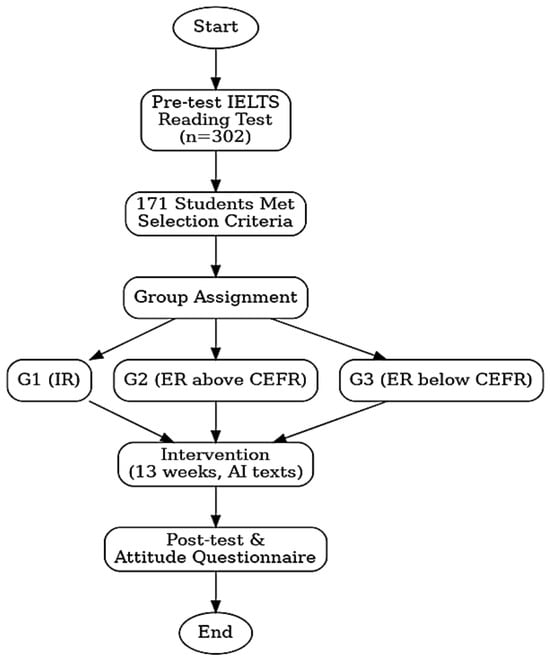
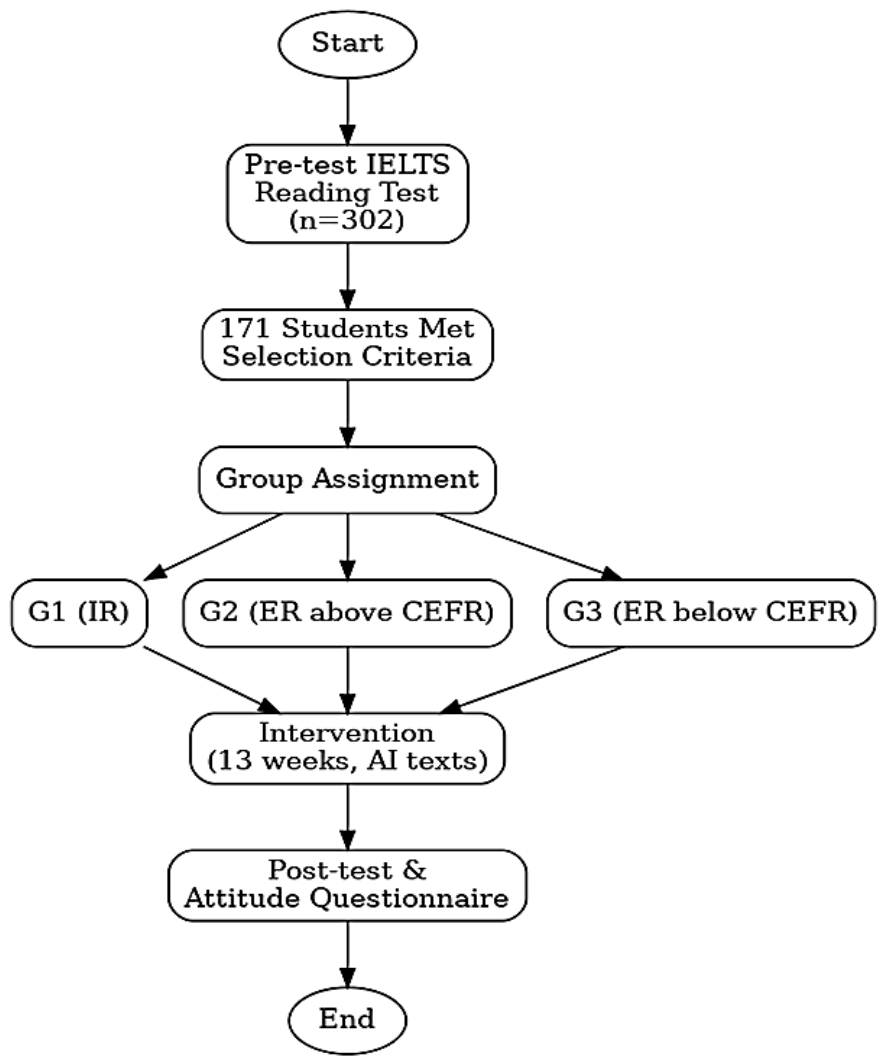
The AI-generated texts followed a systematic and replicable development process. First, CEFR-aligned vocabulary lists were compiled from (https://textinspector.com/help/lexis-evp/, accessed on 2 July 2026), and (EnglishProfile), which categorizes vocabulary according to CEFR proficiency bands. Researchers then used AI tools such as ChatGPT to generate narrative and expository texts aligned with target proficiency levels through structured prompts (e.g., “Write a 350-word A2-level text on travel”). Generated texts were subsequently analyzed using (2023; https://textinspector.com/) and cross-checked with (2023, [https://www.english.com/gse/teacher-toolkit/user/lo, accessed on 27 June 2026]) to verify lexical and syntactic alignment with the intended CEFR level. Texts for the lower-level group primarily contained A1–A2 vocabulary, whereas the B2 and C1 materials incorporated increasingly advanced lexical and syntactic features. This multi-stage validation procedure was adopted because recent evidence suggests that ChatGPT-generated texts do not always align precisely with the intended CEFR proficiency levels, making independent linguistic validation essential for research that requires proficiency-sensitive instructional materials (Uchida, 2025). Accordingly, this procedure enhanced the precision, consistency, and replicability of the intervention, as shown in Figure 1. Further details regarding text generation and CEFR validation procedures are provided in Appendix B.
Figure 1.
Flowchart of the sample recruitment, processing, and intervention procedures.
AI-Generated Reading Materials
To operationalize Krashen’s (1982) i + 1 principle, the study employed AI-generated reading texts calibrated to different CEFR difficulty levels relative to participants’ B1 proficiency. The Extensive Reading groups received texts slightly above (B2) or below (A2) their level, whereas the Intensive Reading group engaged with more demanding C1-level texts. This design examined how varying input complexity affects reading comprehension and learners’ attitudes in AI-assisted reading environments.
Texts were generated using OpenAI ChatGPT through prompts specifying CEFR level, word count, and thematic constraints aligned with EFL objectives. Generated materials were subsequently analyzed using Text Inspector and the Pearson GSE Toolkit to verify lexical and syntactic alignment with the intended proficiency band. Vocabulary items exceeding the target level were revised to ensure CEFR consistency. The texts were additionally evaluated for thematic familiarity, lexical accessibility, and opportunities for inference to maintain comprehensible yet cognitively engaging input. For example, B2-level ER texts primarily contained B1-level vocabulary with limited higher-level lexical expansion to preserve the intended “+1” challenge, whereas the C1-level IR texts incorporated more advanced syntactic structures and discipline-specific vocabulary to promote analytical reading. This calibration aligns with Day and Bamford’s (1998) principles of extensive reading and Park’s (2020) findings regarding the effectiveness of appropriately scaffolded i + 1 input for comprehension and learner engagement.
3.5. Data Analysis
All statistical analyses were conducted using IBM SPSS Statistics Version 29.0 (IBM Corp., Armonk, NY, USA). Descriptive statistics (means and standard deviations) were computed to summarize reading comprehension performance and questionnaire responses across the three instructional conditions. Prior to inferential analyses, the assumptions of parametric tests were evaluated. Normality was assessed using standardized residuals along with skewness and kurtosis indices; homogeneity of variances was examined using Levene’s test; and the data were screened for influential outliers. No substantial violations of these assumptions were identified.
Baseline equivalence was examined using a one-way ANOVA on the pre-test scores. Paired-samples t-tests were conducted within each group to assess changes in reading comprehension from pre-test to post-test, with Cohen’s d calculated to estimate within-group effect sizes. Between-group differences in post-test reading comprehension, overall questionnaire scores, and the four questionnaire subscales were examined using one-way ANOVAs. When omnibus tests were significant, Tukey’s HSD was used for reading comprehension, and Scheffé’s procedure was used for questionnaire outcomes to identify pairwise differences. Statistical significance was set at p < 0.05. Exact p-values, effect sizes, and confidence intervals are reported where appropriate.
4. Results
4.1. Pre- and Post-Intervention Comparison Within Each Group
All groups demonstrated statistically significant improvements in reading comprehension from pre-test to post-test. Group 1 improved from 12.91 to 13.55 (p = 0.007). Group 2 demonstrated the largest improvement, with mean scores increasing from 12.67 to 14.97 (p < 0.001). Group 3 also showed significant improvement, with mean scores increasing from 12.76 to 14.28 (p < 0.001), indicating that all instructional conditions were associated with significant gains in reading comprehension (see Table 5).
Table 5.
Comparison between the pre- and post-test in each group using the Paired Samples t-test.
Paired-samples t-tests demonstrated statistically significant improvements in reading comprehension across all three instructional conditions. The Intensive Reading group (G1) improved from 12.91 to 13.55 (p = 0.007). The B2 Extensive Reading group (G2) improved from 12.67 to 14.97 (p < 0.001), representing the largest gain among the three groups. The A2 Extensive Reading group (G3) improved from 12.76 to 14.28 (p < 0.001). Overall, all three instructional conditions produced significant improvements in reading comprehension, with the B2 Extensive Reading condition demonstrating the greatest improvement.
4.1.1. Between-Group Comparison of Post-Test Reading Comprehension
To examine differences in reading comprehension across the three instructional conditions, a one-way ANOVA was conducted on post-test scores. As shown in Table 6, the analysis revealed a statistically significant effect of instructional condition on post-test reading comprehension, F (2, 168) = 8.52, p < 0.001, η2 = 0.09. Post hoc Tukey HSD indicated that only the B2 Extensive Reading group (G2) significantly outperformed the C1 Intensive Reading group (G1) (p = 0.001). The differences between G2 and G3 (p = 0.130) and between G1 and G3 (p = 0.108) were not statistically significant. Although G2 obtained the highest mean post-test score, its advantage over G3 did not reach statistical significance.
Table 6.
Comparison between groups in the post-test using a one-way ANOVA test.
4.1.2. Comparison Between Groups in the Questionnaire
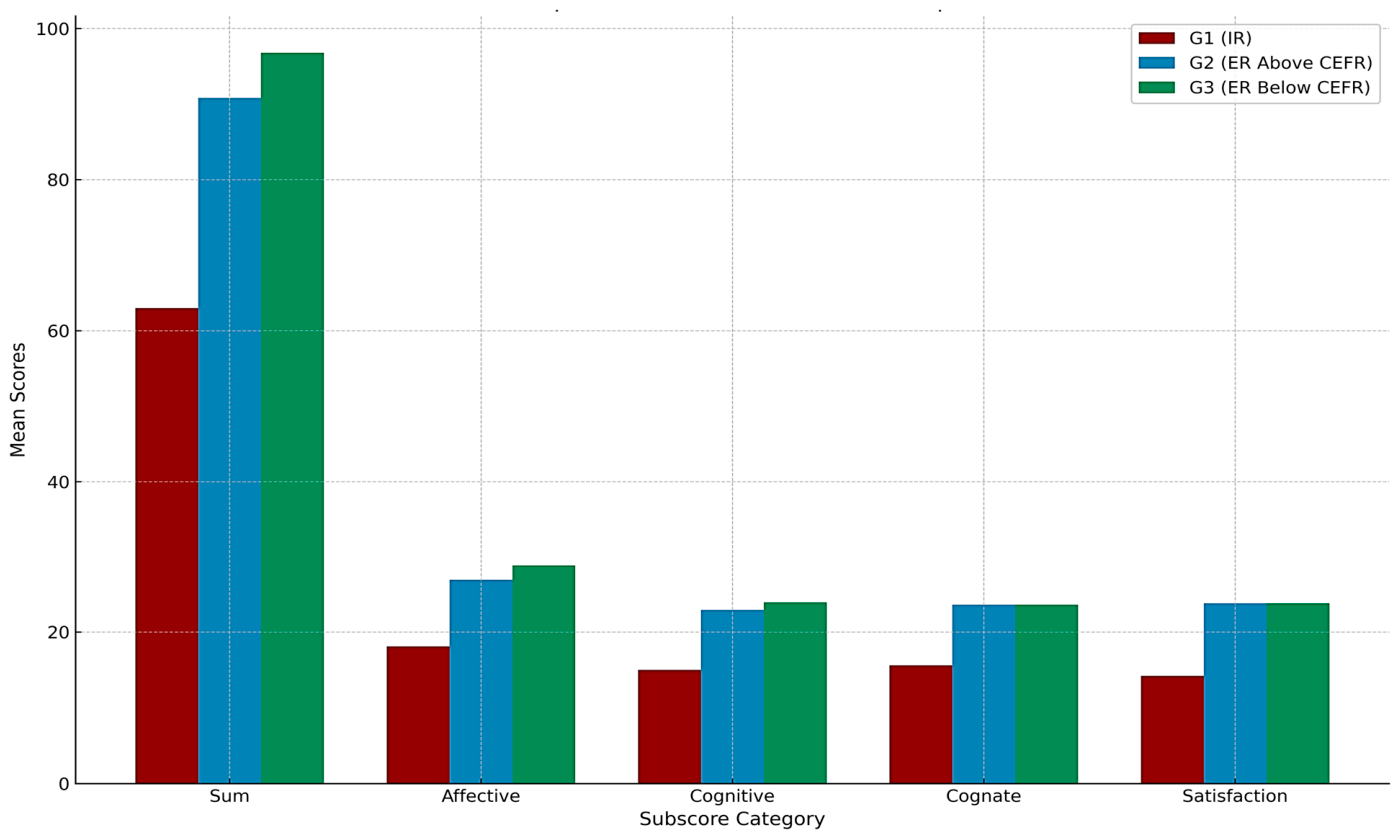
Participants’ perceptions of the AI-assisted reading intervention were compared across groups using one-way ANOVAs for the overall questionnaire score and the four questionnaire dimensions (affective responses, cognitive responses, cognate recognition, and satisfaction). As shown in Table 7, significant between-group differences were found for the overall score and all four subscales (all p < 0.001). Across all dimensions, the Intensive Reading group (G1) reported the least favorable perceptions, whereas both Extensive Reading groups reported significantly more positive experiences. The Extensive Reading group receiving A2-level AI-generated texts (G3) obtained the highest overall questionnaire score (M = 96.81, SD = 11.21), followed by the B2 Extensive Reading group (G2; M = 90.78, SD = 11.59), while the Intensive Reading group (G1) reported the lowest score (M = 62.95, SD = 23.70). This pattern was consistent across all four questionnaire dimensions.
Table 7.
Comparison between groups in the questionnaire using a one-way ANOVA test.
Although the B2 extensive reading condition produced the greatest improvement in reading comprehension, the A2 condition elicited the most positive learner perceptions, suggesting that moderately challenging texts may optimize learning outcomes, whereas easier texts maximize learner comfort and satisfaction.
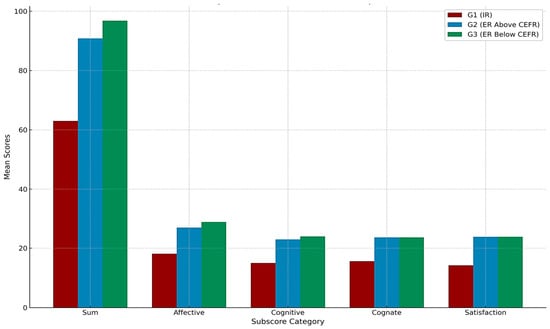
The pattern of questionnaire responses demonstrates that learners’ perceptions varied systematically with the linguistic difficulty of the AI-generated texts. Whereas the Extensive Reading groups consistently evaluated the intervention positively, participants in the Intensive Reading condition expressed comparatively lower levels of engagement and satisfaction. These findings suggest that reducing linguistic complexity may improve learners’ subjective experiences even when slightly more demanding materials produce greater objective gains in reading comprehension. Consequently, the cognitive and affective outcomes of AI-assisted reading instruction should be considered complementary rather than interchangeable when selecting the most appropriate level of text difficulty, as detailed in Figure 2. This is particularly evident in the sum category, where G1’s mean score is 62.95, significantly lower than G2’s 90.78 and G3’s 96.81, with an F-statistic of 68.01 and a significance level of 0.001, indicating highly significant differences among the groups.
Figure 2.
Post-Intervention Attitudinal Feedback: Trends in Affective, Cognitive, Cognate, and Satisfaction Scores by Group.
The consistent pattern across all categories (i.e., affective, cognate, cognitive, and satisfaction) suggests that the intervention tested in the study has a differential impact on the groups, with G3 benefiting the most. These findings suggest that the intervention might be more effective for Groups 2 and 3, or that these groups may have advantages that contribute to higher scores. Table 8 presents results from a multiple-comparison analysis using the Scheffé method, focusing on differences among groups G1, G2, and G3 across various questionnaire categories.
Table 8.
Multiple comparisons between groups in the questionnaire using the Scheffe method.
Scheffé post hoc comparisons (Table 8) showed that the Intensive Reading group (G1) reported significantly lower overall questionnaire scores than both Extensive Reading groups (G2 and G3), whereas no significant difference was found between the two Extensive Reading conditions. The same pattern was observed across all four questionnaire dimensions (affective responses, cognitive responses, cognate recognition, and satisfaction). These findings indicate that the differences in learner perceptions were primarily attributable to the contrast between the Intensive Reading and Extensive Reading approaches rather than to the difficulty level of the AI-generated texts within the Extensive Reading conditions. Although the A2 group consistently reported higher mean scores than the B2 group, these differences were not statistically significant.
5. Discussion
This study examined how three CEFR-calibrated AI-generated reading configurations were associated with EFL learners’ reading comprehension development and post-intervention attitudes. Across the 13-week intervention, all three groups showed statistically significant improvement from pre-test to post-test, suggesting that structured engagement with AI-generated reading materials can support reading development when integrated into classroom instruction. However, the pattern of outcomes differed across the three instructional configurations. The B2 Extensive Reading condition was associated with the strongest reading-comprehension outcomes, whereas the A2 Extensive Reading condition was associated with the most favorable learner perceptions. By contrast, the C1 Intensive Reading condition produced smaller gains and less positive attitudinal responses. These findings should not be interpreted as evidence that extensive reading is inherently superior to intensive reading. Rather, within the specific instructional configuration examined in this quasi-experimental study, the combination of reading approach, CEFR text level, and weekly reading volume appeared to shape both cognitive and affective outcomes.
5.1. Research Question 1: Effects of AI-Generated Text Difficulty
The findings suggest that the effectiveness of AI-generated reading materials depended less on AI generation itself than on how closely text difficulty aligned with learners’ instructional readiness. Although all groups improved significantly, the B2 Extensive Reading condition produced the largest gains, indicating that CEFR-calibrated AI-generated texts may be most effective when they provide an appropriate balance between comprehensibility and cognitive challenge. This pattern is consistent with theories emphasizing the optimal challenge of input for language development (Krashen, 1982, 1985, 2004; I. S. Nation, 2008). For learners with B1 proficiency, B2 texts likely encouraged inferencing, vocabulary expansion, and strategic reading while remaining sufficiently accessible for meaning-focused processing. In contrast, the combination of C1 texts, intensive reading, and higher cognitive demands may have constrained gains in comprehension despite significant improvement (Chandler & Sweller, 1991; Sweller, 2024). Conversely, the A2 Extensive Reading condition appeared to support fluent reading and learner confidence, but may have offered fewer opportunities for linguistic growth.
These findings should be interpreted in light of the study design. Because reading approach, text difficulty, and reading volume varied simultaneously, the independent contribution of each factor cannot be determined (Shadish et al., 2002). Rather, the findings suggest that the instructional value of AI-generated texts lies in their pedagogical calibration and integration within teacher-guided reading instruction rather than in AI generation alone (Aldamen et al., 2026; Ironsi & Bostanci, 2026; Nguyen et al., 2026).
5.2. Research Question 2: Which Group Performed Best?
The B2 Extensive Reading condition was associated with the strongest reading comprehension outcomes, suggesting that the instructional value of AI-generated texts depended on their alignment with learners’ proficiency rather than on AI generation itself. For learners at the B1 level, B2 texts appeared to provide sufficient linguistic challenge to promote inferencing, vocabulary growth, and meaning-focused reading while remaining accessible for successful comprehension. This interpretation is consistent with extensive reading principles, which emphasize appropriately challenging input for sustained language development (Day & Bamford, 1998; I. S. Nation, 2008; Renandya & Jacobs, 2002). It also accords with recent evidence indicating that CEFR-calibrated AI-generated texts can support reading development when their linguistic complexity is validated and aligned with learners’ proficiency (Aldamen et al., 2026; Nguyen et al., 2026).
The comparatively weaker outcomes in the A2 and C1 conditions further suggest that both insufficient and excessive linguistic challenge may reduce instructional effectiveness. Easier texts may promote reading fluency and confidence but provide fewer opportunities for linguistic development, whereas substantially more demanding texts may increase cognitive demands without corresponding gains in comprehension, particularly during intensive reading (Chandler & Sweller, 1991; Sweller, 2024). This interpretation is consistent with recent classroom research showing that AI-supported reading is most effective when embedded within teacher-guided instruction that aligns text difficulty with learners’ proficiency and learning goals (Ironsi & Bostanci, 2026; Aldamen et al., 2026). Accordingly, the findings suggest that AI contributes most effectively to reading instruction when it supports pedagogically calibrated text design rather than functioning as an instructional intervention in its own right.
5.3. Research Question 3: Learner Attitudes Toward AI-Generated Texts
Learners’ perceptions of AI-generated reading materials were shaped not simply by AI use, but by the level of linguistic challenge. The A2 Extensive Reading group reported the most positive perceptions, suggesting that more accessible texts increased reading confidence, reduced perceived cognitive load, and promoted sustained engagement. These findings align with Krashen’s (1982, 1985) Affective Filter Hypothesis, extensive reading research emphasizing the motivational value of fluent, comprehensible input (Day & Bamford, 1998; Renandya & Jacobs, 2002), and recent AI-mediated reading research showing that learner engagement is enhanced when AI-supported activities are calibrated to learners’ proficiency rather than AI being used as an end in itself (Ironsi & Bostanci, 2026; Isaee & Barjesteh, 2026).
Notably, the condition that produced the most positive perceptions did not yield the strongest gains in comprehension. Although the B2 Extensive Reading group achieved the highest learning outcomes, the A2 group reported greater satisfaction and lower cognitive burden. This finding suggests that maximizing learner comfort does not necessarily maximize language development, highlighting the importance of balancing cognitive challenge with affective support (Alghamdi & Alghizzi, 2026). In contrast, the less favorable perceptions of the C1 Intensive Reading group likely reflect excessive linguistic complexity and instructional demands rather than the intensive reading approach itself. Overall, these findings indicate that the value of AI-generated reading materials should be evaluated from both cognitive and affective perspectives.
5.4. Pedagogical Implications
The findings suggest that the effectiveness of AI-generated reading materials depends on aligning text difficulty with learners’ proficiency and instructional objectives. Within the present study, moderately challenging B2 texts were associated with stronger reading comprehension, whereas more accessible A2 texts elicited greater learner satisfaction, indicating that different CEFR levels may serve different pedagogical purposes. Rather than adopting a single level for all learners, teachers should calibrate AI-generated texts to instructional goals and learners’ proficiency levels. Although generative AI can efficiently produce CEFR-targeted materials, decisions regarding text selection, validation, sequencing, and classroom implementation remain essential pedagogical responsibilities.
5.5. Theoretical Contribution
The study extends research on AI-supported language learning by suggesting that the effectiveness of AI-generated reading materials depends on pedagogical calibration rather than automated text generation alone. Consistent with the Input Hypothesis (Krashen, 1982, 1985), learners achieved the strongest outcomes when input provided an appropriate level of challenge, while the comparatively weaker performance in the C1 condition accords with Cognitive Load Theory, which predicts that excessive instructional demands may constrain learning (Sweller, 2024). The findings, therefore, position AI as a means of supporting the systematic generation of proficiency-appropriate instructional materials within established theories of second language acquisition rather than as an instructional intervention in itself.
5.6. Human-in-the-Loop AI and Reading Instruction
The findings also support a human-in-the-loop perspective on AI-supported language instruction. Although AI generated the reading materials, their instructional effectiveness depended on teacher-guided CEFR validation, pedagogical sequencing, and classroom facilitation. Rather than replacing teacher expertise, AI functioned as a pedagogical support tool whose value emerged through effective human oversight. This interpretation aligns with recent work arguing that successful educational AI depends on complementary human expertise rather than technological autonomy (Ouyang & Jiao, 2021).
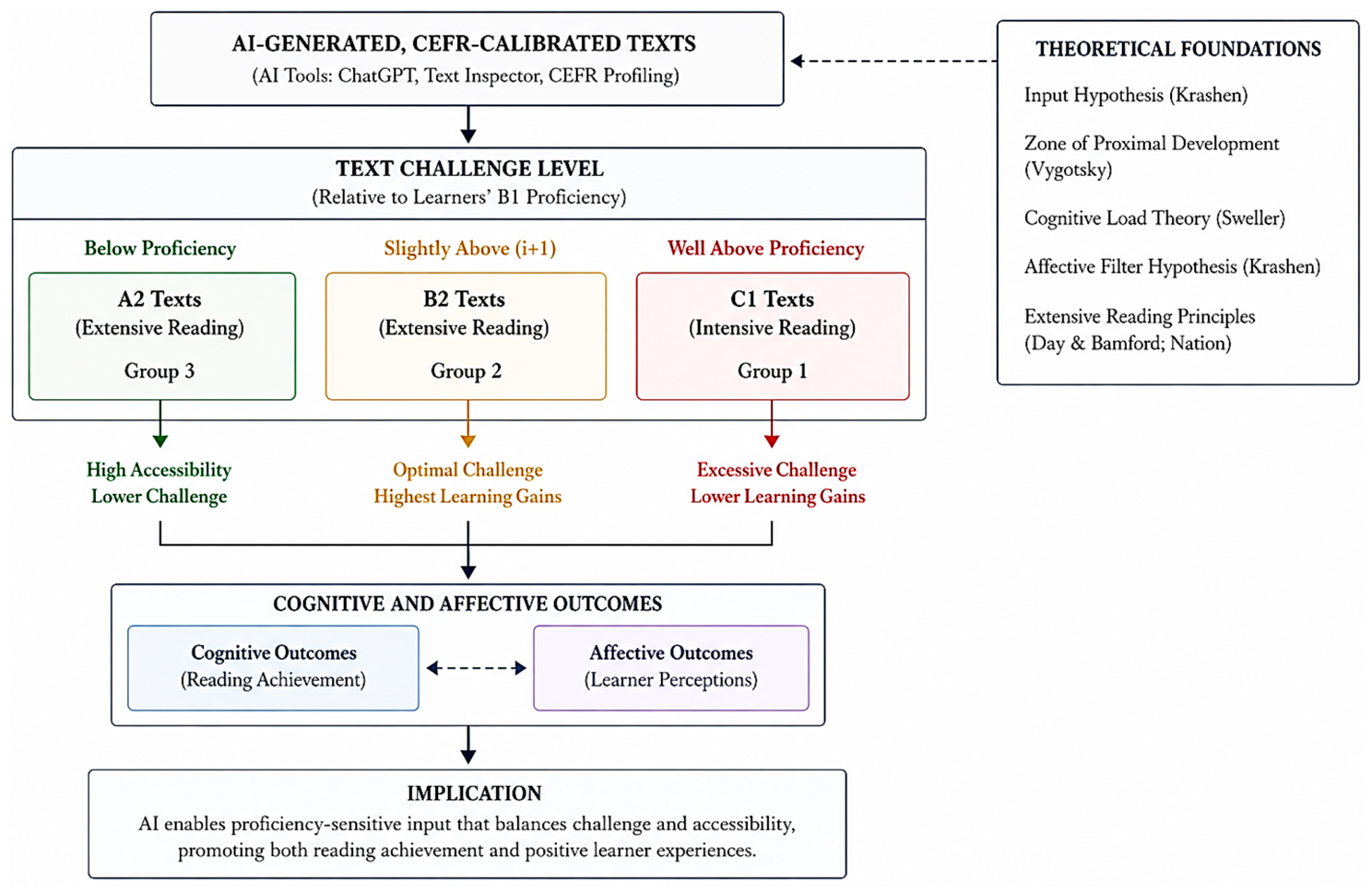
Figure 3 synthesizes the study’s principal theoretical proposition. Rather than conceptualizing AI as an autonomous instructional agent, the framework positions AI as a mechanism for generating CEFR-calibrated instructional input whose educational value depends on the interaction among linguistic challenge, learner readiness, and teacher-guided implementation. Accordingly, the framework integrates the study’s cognitive and affective findings into a single pedagogical model of AI-supported reading instruction.
Figure 3.
Conceptual Framework of CEFR-Calibrated AI-Supported Reading Instruction.
6. Conclusions
This study examined how CEFR-calibrated AI-generated reading materials of varying linguistic difficulty were associated with EFL learners’ reading comprehension and attitudes within extensive and intensive reading contexts. While all instructional configurations were associated with significant improvements in reading comprehension, the findings suggest that the educational value of AI-generated texts depends on how effectively their linguistic difficulty is aligned with learners’ proficiency and instructional goals. Within the present study, moderately challenging B2-level texts were associated with stronger reading comprehension, whereas more accessible A2-level texts were associated with more positive learner perceptions, highlighting the need to balance cognitive challenge with affective engagement in AI-supported reading instruction.
Beyond its empirical findings, the study contributes to AI-assisted language learning by demonstrating a transparent framework for integrating AI-generated reading materials into classroom practice. Rather than relying solely on AI-generated output, the instructional materials were independently verified using Text Inspector and the Pearson GSE Toolkit, illustrating the importance of combining generative AI with pedagogical and linguistic validation. These findings, therefore, position AI as a tool for supporting the development of CEFR-calibrated instructional materials rather than as an autonomous instructional intervention. Overall, the study suggests that the educational potential of AI in L2 reading lies not simply in generating instructional content but in enabling teachers to develop proficiency-appropriate reading materials that can be systematically integrated into evidence-informed pedagogy. As AI technologies continue to evolve, their contribution to language education is likely to depend on the extent to which technological capabilities remain guided by sound pedagogical principles and teacher expertise.
Limitations and Future Research Directions
A key limitation of this study is that instructional approach (Extensive Reading vs. Intensive Reading), CEFR text difficulty (A2, B2, and C1), and weekly reading volume varied simultaneously across the three instructional conditions. Specifically, the Intensive Reading group received more linguistically demanding C1-level texts and a greater weekly reading load than the Extensive Reading groups, which received either B2- or A2-level texts and fewer weekly reading assignments. Consequently, the independent effects of reading approach, text difficulty, and reading volume cannot be disentangled. The comparatively weaker performance of the Intensive Reading group, therefore, cannot be attributed solely to the instructional approach, as it may also reflect the greater linguistic demands and workload associated with the C1 materials. Consistent with principles of quasi-experimental inference (Shadish et al., 2002), the findings should be interpreted as comparisons of three predefined CEFR-calibrated instructional configurations rather than as evidence of the isolated causal effects of any single instructional variable.
Second, the study involved Saudi male B1 EFL learners from a single university and examined outcomes over a 13-week intervention. Consequently, the findings may not generalize to other learner populations, proficiency levels, or longer instructional periods. Longitudinal studies incorporating delayed post-tests would provide greater insight into the durability of AI-supported reading development. A further limitation concerns the operationalization of text difficulty. Although AI-generated texts were independently verified using Text Inspector and the Pearson GSE Toolkit, CEFR calibration primarily reflects lexical and syntactic complexity and does not fully capture discourse organization, inferential demands, or background knowledge. Future research should therefore combine linguistic validation with process-oriented measures, such as think-aloud protocols, eye-tracking, interaction logs, and learning analytics, to provide a more comprehensive understanding of how learners engage with AI-generated reading materials. Additionally, future studies should also employ factorial or randomized experimental designs that independently manipulate reading approach, text difficulty, and reading volume to enable stronger causal inferences regarding the relative contributions of each instructional component to reading comprehension and learner perceptions. As AI technologies continue to evolve, further research should examine adaptive systems that dynamically calibrate text difficulty while evaluating the complementary roles of AI and teacher mediation in supporting reading instruction.
Author Contributions
Both authors contributed equally to the research and preparation of this manuscript. Each author was involved in the study’s conception, design, data collection, analysis, and writing. All authors have read and agreed to the published version of the manuscript.
Funding
This work was supported and funded by the Deanship of Scientific Research at Imam Mohammad Ibn Saud Islamic University (IMSIU) (grant number IMSIU-DDRSP2604).
Institutional Review Board Statement
The study was conducted in accordance with the Declaration of Helsinki, and approved by the Ethical Board Committee within the College of Languages and Translation at Imam Mohammad Ibn Saud Islamic University (protocol code: 1038 and date of approval: May 15 2024).
Informed Consent Statement
Informed consent was obtained from all subjects involved in the study.
Data Availability Statement
The data from this study is not publicly accessible to ensure the privacy and confidentiality of the participants. However, data supporting the findings of this research can be made available upon reasonable request by contacting the corresponding author at lalghamdi@kku.edu.sa. Access to the data will be granted following ethical guidelines to protect participant anonymity.
Acknowledgments
Completing this study would not have been possible without the support and contributions of the following. First and foremost, sincere gratitude is extended to the participating students at the Imam Mohammad Ibn Saud Islamic University. Their willingness to engage in the experiment and provide honest feedback significantly enriched the quality and depth of this research. I would also like to acknowledge the indispensable role of AI tools such as ChatGPT (3 + 4), Text Inspector, and Pearson’s CEFR resources, which were instrumental in generating and analyzing level-appropriate reading materials. Their integration was central to the innovation and execution of this research.
Conflicts of Interest
All authors declare no conflicts of interest associated with this research. We have no financial, personal, or other relationships with any organizations or individuals that could influence the outcomes of this study.
Abbreviations
| AI | Artificial Intelligence |
| EFL | English as a Foreign Language |
| CEFR | Common European Framework of Reference for Languages |
| ER | Extensive Reading |
| IR | Intensive Reading |
| AIEd | AI in Education |
| G1, G2, G3 | Group 1, Group 2, Group 3 |
| IH | Input Hypothesis |
| IGH | Information-Gap Hypothesis |
| SLA | Second Language Acquisition |
| EAP | English for Academic Purposes |
| C1, B2, A2 | Proficiency levels according to CEFR |
Appendix A. Questionnaire and Statistical Summary
Appendix A.1. Questionnaire Structure
Table A1.
Structure of the Post-Intervention Questionnaire Used to Assess Learners’ Perceptions of AI-Generated Reading Materials.
Appendix A.2. Some Representative Questionnaire Items
Table A2.
Representative Questionnaire Items Used to Assess Learners’ Perceptions of AI-Generated Reading Materials.
Appendix A.3. Reliability of the Questionnaire
Table A3.
Internal Consistency Reliability of the Post-Intervention Questionnaire.
Appendix A.4. Descriptive Statistics of Questionnaire Scores
Table A4.
Descriptive Statistics of Post-Intervention Questionnaire Scores by Instructional Group.
Appendix A.5. One-Way ANOVA Summary
Table A5.
One-Way ANOVA Results for Between-Group Comparisons of Questionnaire Scores.
Appendix B. The Processes of Adjusting an AI-Generated Text for a Specific Group
- A word list of CEFR Proficiency levels, A1 to C1, was compiled from the website of EnglishProfile: the CEFR for English.
- Then, for extensive reading group one (ERO), a command was given to an artificial intelligence website (e.g., ChatGPT) to generate a reading text of 300–400 words and of CEFR level A2 based on a provided range of words. The generated text was:
My New Home
My name is Sam. Last month, I moved to a new home in a small village. It is very different from where I used to live in the city. Now I live in a little cottage near the countryside. The cottage has two bedrooms and one bathroom. It also has a living room and a kitchen. My bedroom is small, but it’s comfortable. I like my new bed—it is very soft! The bathroom has a shower and a sink. Around the cottage, there is a big garden. In the garden, there are trees like apples and pears. There are also plants and flowers. I want to learn about the plants and flowers in the garden. Sometimes, I see little birds in the trees. The village has only a few houses. Most people here live on farms near the village.
My neighbors are very friendly. The man next door is called John; he is a farmer. His wife’s name is Mary. They have two children—a boy named Tom and a girl named Jane. Tom is ten years old, and Jane is 8. Sometimes they come to play in my garden. During the day, it is hushed here. In the evenings, it is dark because there are no street lights. At night I can see many stars in the sky. It is very different from the city where I could not see stars because of the bright lights. The countryside is beautiful, but sometimes it rains a lot! When it rains, I have to stay inside. I watch television, read books, or play games on my computer. Sometimes, if it does not rain too heavily, I go for walks in the fields around the village. I like listening to the birds singing. There is a small shop in the village where I can buy food. The shop sells things like bread, milk, eggs and fruit. Sometimes, on Saturdays, a market is in a nearby big town. We can buy fresh vegetables, meat, and other things from the market. I am enjoying living in the countryside; it is very peaceful here.
- 3.
- The generated text was analyzed via Textinspector’s website (2023). The results of the analysis showed that though the CEFR level was A2+, one phrase (e.g., come to) was B2, and eight words (e.g., eight, ten, etc.) were unlisted CEFR levels. The latter phrase and words had to be rechecked via Pearson’s website (Pearson, 2023) before making any adjustments to the text. The result showed that they were of A1/A2 CEFR level.
References
- Abdelmoati, M. R. (2023). Reciprocal teaching as a cognitive and metacognitive strategy in promoting Saudi University students’ reading comprehension. Open Education Studies, 5(1), 20220200. [Google Scholar] [CrossRef] [Scilit]
- Aldamen, H., Alnemrat, A., Al-Deaibes, M., & Alsharefeen, R. (2026). Using AI to adapt reading input for mixed-proficiency EFL learners. Frontiers in Education, 11, 1737903. [Google Scholar] [CrossRef] [Scilit]
- Alghamdi, L. H., & Alghizzi, T. M. (2025). Educators’ reflections on AI-automated feedback in higher education: A structured integrative review of potentials, pitfalls, and ethical dimensions. Frontiers in Education, 10, 1704820. [Google Scholar] [CrossRef] [Scilit]
- Alghamdi, L. H., & Alghizzi, T. M. (2026). Integrating synergistic learning and ability grouping with AI-generated multi-tiered tasks to enhance reading attitudes and outcomes. Acta Psychologica, 263, 106188. [Google Scholar] [CrossRef] [Scilit] [PubMed]
- Alghizzi, T. M., & Elyas, T. (2022). The effect of graded-reading websites/applications on EFL undergraduates’ reading comprehension during the COVID-19 pandemic. Electronics, 11(11), 1751. [Google Scholar] [CrossRef] [Scilit]
- Al-Homoud, F., & Schmitt, N. (2009). Extensive reading in a challenging environment: A comparison of extensive and intensive reading approaches in Saudi Arabia. Language Teaching Research, 13(4), 383–401. [Google Scholar] [CrossRef] [Scilit]
- Al-Nujaidi, A. (2003). The relationship between vocabulary size, reading strategies, and reading comprehension of EFL learners in Saudi Arabia [Unpublished doctoral dissertation, Oklahoma State University]. Available online: https://drepo.sdl.edu.sa/handle/20.500.14154/54316 (accessed on 2 July 2025).
- Baker, R. S., & Siemens, G. (2014). Educational data mining and learning analytics. In R. K. Sawyer (Ed.), The Cambridge handbook of the learning sciences (2nd ed., pp. 253–272). Cambridge University Press. [Google Scholar] [CrossRef] [Scilit]
- Beglar, D., & Hunt, A. (2014). Pleasure reading and reading rate gains. Reading in a Foreign Language, 26(1), 29–48. [Google Scholar] [CrossRef] [Scilit]
- Carrell, P. L. (1985). Facilitating ESL reading by teaching text structure. TESOL Quarterly, 19(4), 727–752. [Google Scholar] [CrossRef] [Scilit]
- Carrell, P. L., & Carson, J. G. (1997). Extensive and intensive reading in an EAP setting. English for Specific Purposes, 16(1), 47–60. [Google Scholar] [CrossRef] [Scilit]
- Chandler, P., & Sweller, J. (1991). Cognitive load theory and the format of instruction. Cognition and Instruction, 8(4), 293–332. [Google Scholar] [CrossRef] [Scilit] [PubMed]
- Chassignol, M., Khoroshavin, A., Klimova, A., & Bilyatdinova, A. (2018). Artificial intelligence trends in education: A narrative overview. Procedia Computer Science, 136, 16–24. [Google Scholar] [CrossRef] [Scilit]
- Chen, X., Zou, D., Cheng, G., & Xie, H. (2020). Detecting and addressing cognitive overload in learning with technology: A systematic literature review. Educational Technology & Society, 23(4), 113–127. [Google Scholar] [CrossRef] [Scilit]
- Coppin, B. (2004). Artificial intelligence illuminated. Jones and Bartlett. Available online: https://tinyurl.com/y6koq6qp (accessed on 27 June 2026).
- Creswell, J. W., & Clark, P. V. L. (2011). Designing and conducting mixed methods research. SAGE Publications. [Google Scholar]
- Day, R. R., & Bamford, J. (1998). Extensive reading in the second language classroom. Cambridge University Press. [Google Scholar] [CrossRef] [Scilit]
- Deci, E. L., & Ryan, R. M. (1985). Intrinsic motivation and self-determination in human behavior. Plenum Press. [Google Scholar] [CrossRef] [Scilit]
- Dörnyei, Z. (2007). Creating a motivating classroom environment. In J. Cummins, & C. Davison (Eds.), International handbook of English language teaching (pp. 719–731). Springer. [Google Scholar] [CrossRef] [Scilit]
- Dörnyei, Z., & Taguchi, T. (2010). Questionnaires in second language research: Construction, administration and processing (2nd ed.). Routledge. [Google Scholar] [CrossRef] [Scilit]
- Fadel, C., Holmes, W., & Bialik, M. (2019). Artificial intelligence in education: Promises and implications for teaching and learning. Centre for Curriculum Redesign. Available online: https://curriculumredesign.org/our-work/artificial-intelligence-in-education/ (accessed on 27 June 2026).
- Hitosugi, C. I., & Day, R. R. (2004). Extensive reading in Japanese. Reading in a Foreign Language, 16(1), 20–39. [Google Scholar] [CrossRef] [Scilit]
- Horst, M. (2005). Learning L2 vocabulary through extensive reading: A measurement study. The Canadian Modern Language Review, 61(3), 355–382. [Google Scholar] [CrossRef]
- Huffman, J. (2014). Reading rate gains during a one-semester extensive reading course. Reading in a Foreign Language, 26(2), 17–33. [Google Scholar] [CrossRef] [Scilit]
- Hulstijn, J. H. (2001). Intentional and incidental second language vocabulary learning: A reappraisal of elaboration, rehearsal and automaticity. In P. Robinson (Ed.), Cognition and second language instruction (pp. 258–286). Cambridge University Press. [Google Scholar]
- Hwang, G. J., & Fu, Q. K. (2019). Trends in the research design and application of mobile language learning: A review of 2007–2016 Publications in Selected SSCI Journals. Interactive Learning Environments, 27, 567–581. [Google Scholar] [CrossRef] [Scilit]
- Hwang, G.-J., & Tsai, C.-C. (2011). Research trends in mobile and ubiquitous learning: A review of publications in selected journals from 2001 to 2010. British Journal of Educational Technology, 42(4), E65–E70. [Google Scholar] [CrossRef] [Scilit]
- Ironsi, C. S., & Bostanci, H. B. (2026). Enhancing the reading comprehension and autonomy of foreign language students using generative AI-integrated assistant. Frontiers in Education, 11, 1763238. [Google Scholar] [CrossRef] [Scilit]
- Isaee, H., & Barjesteh, H. (2026). Exploring teachers’ and learners’ perceptions of AI-supported pedagogical tools in English language teaching. Discover Artificial Intelligence, 6, 224. [Google Scholar] [CrossRef] [Scilit]
- Kern, R. (1989). Second language reading strategy instruction: Its effects on comprehension and word inference ability. The Modern Language Journal, 73(2), 135–149. [Google Scholar] [CrossRef]
- Krashen, S. D. (1982). Principles and practice in second language acquisition. Pergamon Press. [Google Scholar]
- Krashen, S. D. (1985). The input hypothesis: Issues and implications. Longman. [Google Scholar]
- Krashen, S. D. (2004). The power of reading: Insights from the research (2nd ed.). Libraries Unlimited. [Google Scholar]
- Laufer, B., & Hulstijn, J. (2001). Incidental vocabulary acquisition in a second language: The construct of task-induced involvement. Applied Linguistics, 22(1), 1–26. [Google Scholar] [CrossRef] [Scilit]
- Lin, C.-H., & Tsai, C.-C. (2016). The role of reading comprehension in second language learning. Journal of Computer Assisted Learning, 32(5), 499–512. [Google Scholar] [CrossRef] [Scilit]
- Long, M. H. (1983). Native speaker/non-native speaker conversation and the negotiation of comprehensible input. Applied Linguistics, 4(2), 126–141. [Google Scholar] [CrossRef] [Scilit]
- Mason, B., & Krashen, S. (1997). Extensive reading in English as a foreign language. System, 25(1), 91–102. [Google Scholar] [CrossRef] [Scilit]
- Nakanishi, T. (2015). A meta-analysis of extensive reading research. TESOL Quarterly, 49(1), 6–37. [Google Scholar] [CrossRef] [Scilit]
- Nation, I. S. (2008). Teaching ESL/EFL reading and writing. Routledge. [Google Scholar] [CrossRef] [Scilit]
- Nation, P., & Ming-Tzu, K. (1999). Graded readers and vocabulary. Reading in a Foreign Language, 12(2), 355–380. [Google Scholar] [CrossRef] [Scilit]
- Nguyen, N. H., Huang, X., & Dang, T. N. Y. (2026). Lexical profile of ChatGPT-generated reading materials targeting EFL learners across the CEFR levels. International Journal of TESOL Studies, 8(3), 113–133. [Google Scholar] [CrossRef] [Scilit]
- Ouyang, F., & Jiao, P. (2021). Artificial intelligence in education: The three paradigms. Computers and Education: Artificial Intelligence, 2, 100020. [Google Scholar] [CrossRef] [Scilit]
- Park, A. Y. (2020). A comparison of the impact of extensive and intensive reading approaches on the reading attitudes of secondary EFL learners. Studies in Second Language Learning and Teaching, 10(2), 337–358. [Google Scholar] [CrossRef] [Scilit]
- Pearson. (2023). The GSC teacher toolkit. Available online: https://www.english.com/gse/teacher-toolkit/user/textanalyzer/requestdetails (accessed on 27 June 2026).
- Rashidi, N., & Piran, M. (2011). The effect of extensive and intensive reading on Iranian EFL learners’ vocabulary size and depth. Journal of Language Teaching and Research, 2(2), 471–482. [Google Scholar] [CrossRef] [Scilit]
- Renandya, W. A. (2007). The power of extensive reading. RELC Journal, 38(2), 133–149. [Google Scholar] [CrossRef] [Scilit]
- Renandya, W. A., & Jacobs, G. M. (2002). Extensive reading: Why aren’t we all doing it? University Press. [Google Scholar] [CrossRef] [Scilit]
- Richards, J. C., & Schmidt, R. (2002). Longman dictionary of language teaching and applied linguistics (3rd ed.). Longman. [Google Scholar]
- Scrivener, J. (2005). Learning teaching: A guidebook for English language teachers (2nd ed.). Macmillan Education. [Google Scholar]
- Shadish, W. R., Cook, T. D., & Campbell, D. T. (2002). Experimental and quasi-experimental designs for generalized causal inference. Houghton Mifflin. [Google Scholar]
- Suk, N. (2017). The effects of extensive reading on reading comprehension, reading rate, and vocabulary acquisition. Reading Research Quarterly, 52(1), 73–89. [Google Scholar] [CrossRef] [Scilit]
- Swain, M. (1985). Communicative competence: Some roles of comprehensible input and comprehensible output in its development. In S. Gass, & C. Madden (Eds.), Input in second language acquisition (pp. 235–253). Newbury House. [Google Scholar]
- Sweller, J. (2024). Cognitive load theory and individual differences. Learning and Individual Differences, 110, 102423. [Google Scholar] [CrossRef] [Scilit]
- Timms, M. J. (2016). Letting artificial intelligence in education out of the box: Educational cobots and smart classrooms. International Journal of Artificial Intelligence in Education, 26(2), 701–712. [Google Scholar] [CrossRef] [Scilit]
- Uchida, S. (2025). Generative AI and CEFR levels: Evaluating the accuracy of text generation with ChatGPT-4o through textual features. Vocabulary Learning and Instruction, 14(1), 2078. [Google Scholar] [CrossRef] [Scilit]
- Waring, R., & Takaki, M. (2003). At what rate do learners learn and retain new vocabulary from reading a graded reader? Reading in a Foreign Language, 15(2), 130–163. [Google Scholar] [CrossRef] [Scilit]
- Yamashita, J. (2008). Extensive reading and development of different aspects of L2 proficiency. System, 36(4), 661–672. [Google Scholar] [CrossRef] [Scilit]

Disclaimer/Publisher’s Note: The statements, opinions and data contained in all publications are solely those of the individual author(s) and contributor(s) and not of MDPI and/or the editor(s). MDPI and/or the editor(s) disclaim responsibility for any injury to people or property resulting from any ideas, methods, instructions or products referred to in the content. |
© 2026 by the authors. Licensee MDPI, Basel, Switzerland. This article is an open access article distributed under the terms and conditions of the Creative Commons Attribution (CC BY) license.