Systematic Review

Generative AI in STEAM Education: Applications and Development Prospects for Promoting Artistic Creativity

College of Life Sciences, South China Normal University, Guangzhou 510631, China
*
Author to whom correspondence should be addressed.
Educ. Sci. 2026, 16(7), 1012; https://doi.org/10.3390/educsci16071012
Submission received: 9 April 2026 / Revised: 3 June 2026 / Accepted: 15 June 2026 / Published: 26 June 2026

Abstract

With the rapid development in generative artificial intelligence (GenAI) technologies, their application in STEAM education offers new possibilities for promoting interdisciplinary integration of technology and the arts. This study employs a systematic literature review method. Six databases—Google Scholar, Web of Science, PubMed, Taylor & Francis, Springer Link, and Scopus—were searched for publications from January 2021 to January 2026. After independent screening and review by two reviewers, 21 empirical studies out of 424 initial records were included. A comprehensive analysis was conducted using a combination of open and axial coding. The findings indicate that GenAI’s support for artistic creativity in STEAM education is primarily manifested in four dimensions: lowering the threshold for creation to enhance the accessibility of artistic creativity, stimulating interdisciplinary associations to strengthen subject integration, supporting critical artistic recreation to deepen cultural engagement, and building a human–GenAI collaborative creation ecosystem to foster reflexivity. Based on this, the study constructs a GCD (Guiding questioning–Co-refining–Deepening reflection) cyclic instructional framework, providing teachers with an actionable pedagogical pathway for using GenAI to cultivate students’ interdisciplinary artistic creativity across different educational stages. Furthermore, the study systematically analyzes ethical challenges such as technological dependency, cultural homogenization, educational equity, and originality, and proposes corresponding pedagogical strategies to address them. It should be noted that the current body of relevant empirical research is limited in quantity and exhibits substantial heterogeneity, and the GCD framework still requires further classroom-based practical validation. Future research could strengthen empirical longitudinal tracking of longterm effects, deepen the construction of support systems for teachers’ digital literacy, and continue to advance the exploration of ethical, equity, and cultural diversity issues in GenAI-based artistic creativity education.

1. Introduction

With the rapid advancement of Generative Artificial Intelligence (GenAI) technology, its application in the educational domain has become increasingly widespread. The core of STEAM education lies in integrating the artistic, creative thinking of the Arts with the logical, scientific reasoning of STEM, establishing a highly promising model for cultivating 21st-century skills (Rafiq-uz-Zaman et al., 2025). However, science and technology emphasize logical thinking, precise calculation, and standardized operations, whereas art focuses on sensory expression, divergent ideation, and personalized creation. This disciplinary divergence presents significant challenges for students in achieving interdisciplinary integration. GenAI, capable of generating creative content in various forms such as text, images, and music, offers a novel possibility for breaking down this barrier (Epstein et al., 2023b). It not only promotes a deeper fusion of science/technology and art but also lowers the entry threshold for artistic creation while enhancing the efficiency of creative tasks. A recent review has initially explored the application value of GenAI in STEAM education. However, there is still a lack of discussion on how GenAI promotes the deep integration of technology and art in STEAM education, and no mature teaching framework is available for teachers to cultivate students’ interdisciplinary artistic creativity with GenAI. Therefore, this paper uses the systematic literature review method to synthesize relevant studies on GenAI in STEAM education from 2021 to 2026, explores its current application status, challenges and future development directions in enhancing artistic creativity in STEAM education, and constructs the GCD cycle teaching framework to provide theoretical guidance and practical reference for educational practice.

2. Literature Review

2.1. Evolution and Challenges of STEAM Education

In the 1980s, the National Science Board (NSB) proposed the concept of “STEM (Science, Technology, Engineering, Mathematics) education integration”. This proposal later developed into a national strategy, aiming to enhance the country’s competitiveness in science and technology (National Science Board, 1987). However, as society raised higher requirements for the comprehensive quality of innovative talents, the education model that only emphasized science and engineering gradually showed its limitations. In the 21st century, Georgette Yakman, a scholar from Virginia Polytechnic Institute and State University, added Arts as an important humanistic factor to the original STEM education. This formed the STEAM education framework (Yakman, 2008), which aims to cultivate compound talents with stronger creativity, critical thinking and cross-disciplinary abilities. Existing research divides the role of arts in STEAM education into two mainstream paradigms. The first is the tool-oriented paradigm. In this paradigm, arts are seen as auxiliary tools for STEM teaching, helping students understand abstract scientific concepts through visualization and engaging presentation. The second is the integration-oriented paradigm. Here, arts are regarded as an epistemologically independent field with their own unique inquiry methods and meaning construction logic, forming equal dialogue and integration with STEM disciplines (Maeda, 2013; G. Li & Lyu, 2018). This study adopts the second paradigm. We believe that arts are not just “decorations” for STEM learning, but an indispensable core dimension of cross-disciplinary innovation (Yakman, 2008). This also determines that GenAI in this study is not a simple technical tool, but a cognitive partner promoting the deep integration of science, technology and art.
Sousa pointed out that the arts provide the abilities and tools necessary for individual survival and development, such as pattern recognition, observation, imagination and creative understanding (Sousa, 2006). Artistic creativity refers to the ability of all individuals to solve artistic problems and produce novel ideas or products with high aesthetic value. It should be noted that creativity is a complex concept in the fields of education and psychology. Its connotation is far more than just the improvement of output efficiency brought by technology empowerment (Feist, 1998; Zeki, 2001). In the context of generative AI participating in creation, five core dimensions need to be clearly distinguished. Originality refers to the uniqueness of creative ideas. Expressiveness refers to the ability to convey emotions and thoughts. Aesthetic quality refers to the formal beauty of works. Domain knowledge refers to the mastery of disciplinary laws. Authorship refers to the creator’s subjectivity and responsibility for the final results. Some current studies tend to equate the improvement of output efficiency under AI assistance with the improvement of creativity itself, ignoring the essential differences between these dimensions (Scala et al., 2025).
John Maeda, the president of Rhode Island School of Design, stated, “Science, Technology, Engineering and Math—the STEM subjects—alone will not lead to the kind of breathtaking innovation the 21st century demands. The STEAM movement is an opportunity for America to sustain its role as innovator of the world.” (Maeda, 2013) However, the education concept of valuing science over arts is deeply rooted. In the transformation from STEM to STEAM education, two core problems remain to be solved: “how to connect the common characteristics of arts and STEM education” and “in what way should arts be integrated” (G. Li & Lyu, 2018). Meanwhile, this paper focuses on the role of GenAI in promoting cross-disciplinary artistic creativity in STEAM education, with an emphasis on the integration mechanism of science, technology and art. We also acknowledge the complexity and multifaceted nature of creativity, and do not attempt to cover all its connotations.

2.2. Development and Advantages of Generative AI

In recent years, GenAI has made significant breakthroughs. It provides a new paradigm to address these challenges. The United Nations Educational, Scientific and Cultural Organization (UNESCO) defines GenAI as an artificial intelligence technology that automatically generates response content based on natural language prompts (UNESCO, 2023). In 2017, the Transformer architecture was published. It introduced an attention mechanism to process long-sequence data and quickly became the mainstream architecture for GenAI models. In 2022, OpenAI publicly released ChatGPT-3.5, a generative pretrained large language model based on the Transformer architecture (OpenAI, 2026). In 2023, OpenAI launched GPT-4. With this release, GenAI gradually matured. This progress sparked a debate over the value of GenAI’s application in education. The core question is whether GenAI is an enabling tool for educational equity, or a new variable that widens the digital divide. Some studies argue that GenAI’s ease of use transcends economic, geographic, and language barriers. It allows students without advanced artistic skills to participate in creative expression, offering new possibilities for narrowing educational gaps. However, other scholars point out that differences in access to technology and uneven teacher digital literacy may amplify existing educational inequalities. Overreliance on AI-generated content can also weaken students’ independent thinking and original creativity (Scala et al., 2025). Most existing studies focus on single-perspective empirical descriptions and lack systematic responses to these core debates. This gap is precisely the starting point of this study.
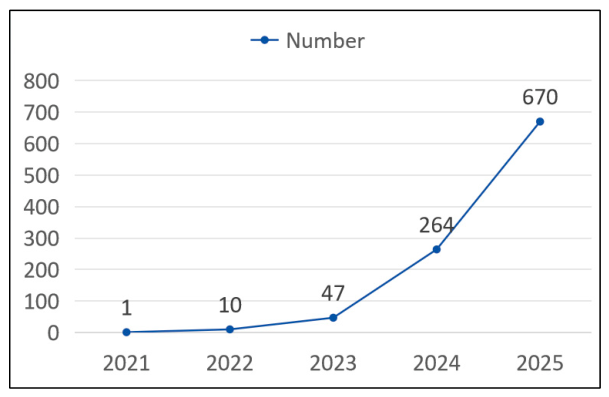
Against this background, interdisciplinary research on GenAI and STEAM education has developed rapidly. According to Google Scholar search data, the number of academic papers with the keywords “Generative AI” and “STEAM Education” grew exponentially from 2021 to 2025. It showed a particularly sharp increase between 2023 and 2025 (see Figure 1), reflecting that this field has become a cutting-edge topic in educational technology research. Existing studies show that GenAI demonstrates two major advantages in STEAM teaching. First, GenAI’s accessibility overcomes economic, geographic, and language barriers. It provides students with abundant inspiration and interactive opportunities, effectively lowering the threshold for creative initiation (Epstein et al., 2023b). Second, integrating STEAM teaching with GenAI can significantly improve students’ engagement, self-efficacy, and collaborative skills. It should be specially noted that all discussions in this section are based on classic and cutting-edge background literature in the field. This study will use a rigorous systematic review method to screen core empirical literature and conduct an in-depth, targeted analysis of these debates.

2.3. Problem Statement

Despite the initial successes of GenAI in STEAM education, current research still lacks a systematic exploration of the mechanisms by which GenAI fosters the deep integration of science/technology and art. Furthermore, there is no mature framework to guide educators in effectively leveraging GenAI to cultivate interdisciplinary artistic creativity. Additionally, issues such as the erosion of original student creativity due to AI dependency, the exacerbation of resource inequality, and cultural homogenization urgently need to be addressed. Therefore, this study conducts a Systematic Literature Review (SLR) of research on GenAI in STEAM education from 2021 to 2026 to address the following core questions:
How does GenAI facilitate the interdisciplinary integration of science/technology and art in STEAM education?
How can an effective and operational framework be constructed to guide the practice of using GenAI to foster artistic creativity in STEAM education?
How should ethical, equity, and pedagogical essence challenges be addressed during the implementation of such a framework?
The remainder of this paper is organized as follows: Section 3 details the SLR methodology, outlining the search strategy, database selection, and inclusion criteria. Section 4 presents and discusses the SLR results. Section 5 constructs an integrated framework for GenAI-empowered interdisciplinary creativity in STEAM based on the preceding findings. Finally, Section 6 summarizes the contributions of this study.

3. Method

This study adopts the Systematic Literature Review (SLR) method and follows the PRISMA guidelines to establish a rigorous literature screening and analysis process, thereby mapping the current state of research on GenAI’s application in fostering artistic creativity within STEAM education. SLR is a standard method used to determine research questions, identify research gaps, and provide justifications for future studies (Liberati et al., 2009). Furthermore, this research synthesizes domestic and international studies on tool selection, instructional activity design, and performance across different educational levels regarding the use of GenAI to cultivate students’ artistic creativity in STEAM teaching. This synthesis aims to summarize the current research landscape and assessment progress, providing a reference for future studies in this field.

3.1. Search Strategy

To ensure the quality and coverage of the sample literature, this study selected six databases: Google Scholar, Web of Science, PubMed, Taylor & Francis, Springer Link, and Scopus. All the databases mentioned above were systematically included in the final search. The selection of databases was based on the following three dimensions.
The first consideration is breadth of coverage and disciplinary relevance. The core theme of this study—the application of GenAI to artistic creativity in STEAM education—is inherently interdisciplinary, spanning multiple fields such as educational technology, art education, cognitive science, and computer science. As a comprehensive citation database, Web of Science can cover high-level journal literature, ensuring the quality of core academic sources. PubMed, in turn, supplements relevant research from the perspectives of cognitive science and educational neuroscience. Scopus enhances retrieval coverage through its extensive inclusion of educational technology and art education journals. As major academic publishing platforms, Taylor & Francis and Springer Link index a large number of SSCI journals in education and the arts, which are highly aligned with the theme of this study.
The second is the prioritization strategy of recall over precision. The application of GenAI in STEAM education is an emerging and rapidly growing research field where academic terminology has not yet been fully standardized; terms such as “Generative AI”, “GenAI”, and “AIGC” are often used interchangeably, and empirical studies may also be scattered across various journals and conferences. Relying solely on traditional bibliographic databases for keyword field searches would easily miss important literature due to terminological variations. It is precisely based on this consideration that this study specifically included Google Scholar. It must be acknowledged that Google Scholar is not a structured bibliographic database in the strict sense; its indexing mechanism lacks transparency, and the reproducibility of its search results is relatively limited. However, Google Scholar possesses irreplaceable advantages in recall rate, as it can index cutting-edge conference papers in emerging fields. At the same time, its full-text indexing feature means that even if a document’s title and abstract do not contain the core search terms, it may still be retrieved as long as the main body text is highly relevant.
Finally, regarding the technical implementation of the search strategy: this study employed appropriate Boolean operators to combine keywords for searching, and a uniform search expression was used across all databases: (“Generative AI” OR “GenAI” OR “Artificial Intelligence Generated Content” OR “AIGC”) AND (“STEAM education”) AND (“artistic creativity” OR “creative expression”). To minimize the risk of omitting relevant literature and to maintain consistency in the search strategy across databases, this study adopted a full-text search strategy (using the All Fields or Full Text field) wherever practically feasible. This choice made it possible to capture studies that empirically explored the cultivation of artistic creativity in depth within the body text, but whose titles or abstracts did not precisely match the search terms. The searches across all six databases were completed on 28 January 2026, with the search time range uniformly restricted to 1 January 2021 to 28 January 2026, in order to ensure both the timeliness and comprehensiveness of the research content. A complete record of the search strategy has been provided as Supplementary Material (see File S1 for details). Admittedly, full-text search reduces retrieval precision to some extent and increases the workload of manual screening; however, in a specialized field that is still in a period of academic growth, adopting a recall-prioritized search strategy can provide a more complete initial literature pool for subsequent rigorous screening, thereby enhancing review validity and reducing publication bias.
Regarding the search dates and time range: To ensure timeliness, the searches in five databases—Google Scholar, Web of Science, PubMed, Taylor & Francis, and SpringerLink—were all uniformly conducted on 28 January 2026. Due to a technical interruption of institutional access to Scopus at that time, the supplementary search of this database was postponed and completed on 5 May 2026. To ensure that the time windows for including literature across all six databases were completely consistent, the supplementary search in Scopus was strictly restricted to the period between 1 January 2021 and 28 January 2026. The literature added after 28 January 2026 was not included. Although the search execution dates varied, this approach ensured consistency in the core time window, thereby minimizing any impact on the review conclusions. The complete search strategy records have been provided as Supplementary Material (File S1).

3.2. Screening and Review

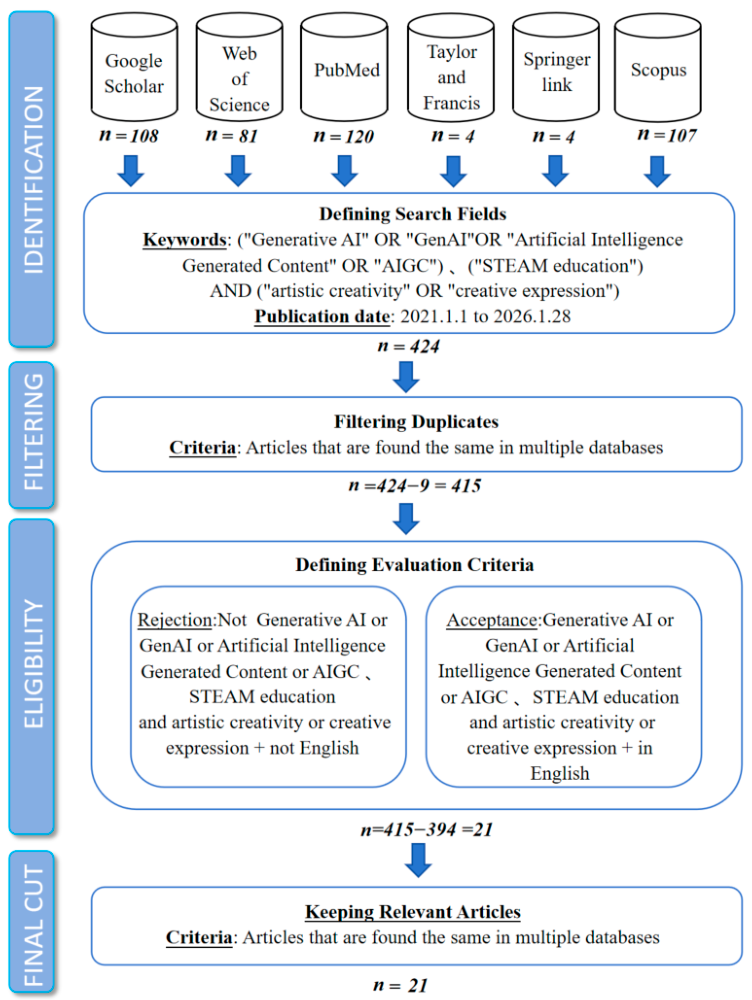
After the initial literature retrieval, researchers assessed the relevance of the documents based on the research theme. The initial search across the five databases yielded 424 articles, as shown in Table 1.
To ensure the objectivity and reproducibility of the screening process, this study employed a dual independent review mechanism. Figure 2 illustrates the entire screening process from the initial retrieval to the final selection. After retrieval, duplicate articles—those with identical titles and content but from different databases—were removed. After removing 9 duplicate articles, the titles, abstracts, and keywords of the remaining 415 articles were screened to determine whether the literature met the following criteria: (1) written in English; (2) set in the context of STEAM education; (3) studies supported by empirical data (including journal articles and rigorously peer-reviewed conference papers, such as those indexed in authoritative academic databases like ACM, to ensure that high-quality scholarly outputs are not omitted while maintaining research comprehensiveness); and (4) related to enhancing artistic creativity. The first step of screening involved reviewing the title, abstract, and keywords of each article. At this stage, two reviewers independently made inclusion or exclusion decisions, and any disagreements were resolved through discussion or by arbitration from a third reviewer. If an article aligned with the defined criteria, it was selected for further review. The second screening step involved a full-text reading of the selected articles to ensure they met the established criteria. After the two-step screening, a total of 394 articles that did not meet the criteria were excluded, and 21 valid articles were finally identified.

3.3. Screening Summary and Construction of Analytical Dimensions

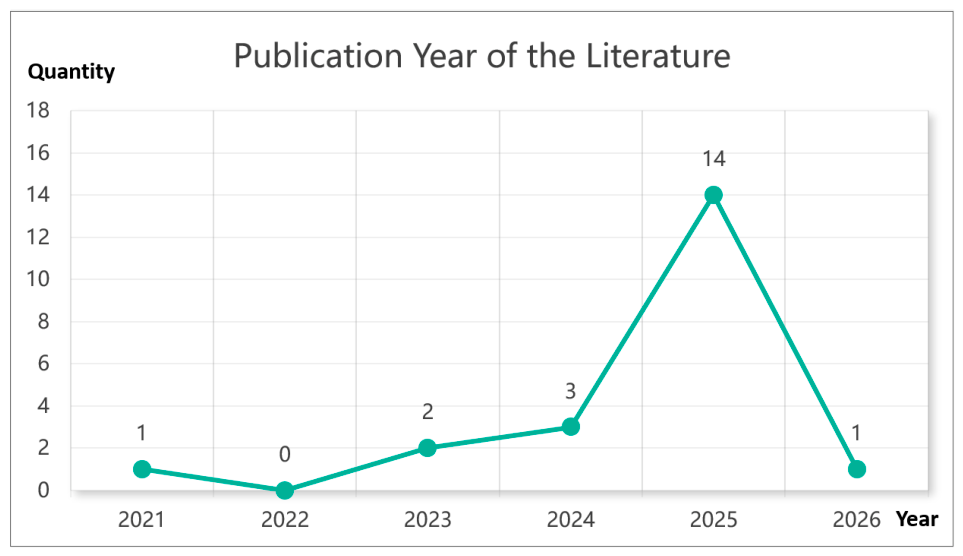
Figure 3 presents the distribution of the 21 selected articles by publication year. Specifically, the publication year distribution of these articles is as follows: 1 article in 2021, 2 in 2023, 3 in 2024, 14 in 2025, and 1 in 2026. This distribution is fully consistent with the list of included studies in File S3, indicating a significant increase in research activity in this field over the past two years.
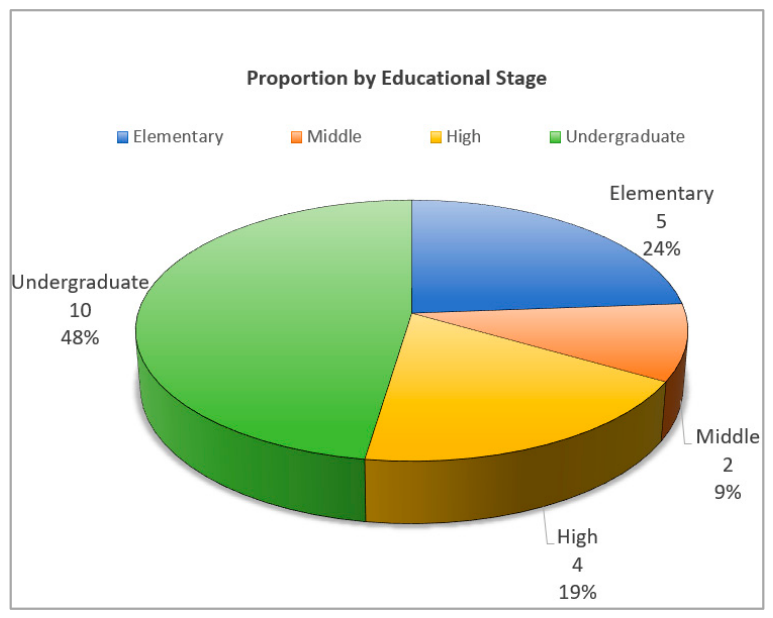
Figure 4 shows the proportional distribution of relevant literature across different educational stages. In the collected sample, the most concentrated research stages are the undergraduate level (10 articles, 48%) and the primary school level (5 articles, 24%), followed by the high school level (4 articles, 19%), while the middle school level has only 2 articles (9%).
The data indicate that the middle school education stage (ages 12–15) represents a serious gap in current research on GenAI and STEAM integration. Middle school students are in a critical transitional period from the concrete operational stage to the formal operational stage; compared with primary school applications that focus on stimulating interest, although middle school students possess abstract logical thinking, they have not yet developed a mature metacognitive evaluation mechanism when confronted with complex multimodal information generated by GenAI, which greatly increases the difficulty of designing empirical studies and to some extent reflects the adaptability challenges of instructional practices in integrating GenAI into middle school STEAM education during students’ cognitive transition period. Regarding the theoretical construction of analytical dimensions, this study, through a combination of open coding and axial coding, derived core categories from the 21 articles; these dimensions are grounded in the empirical findings of the sample literature and also refer to existing theories of educational technology integration.
Regarding the theoretical construction of the analytical dimensions, two researchers independently conducted open coding on the final 21 included studies, extracting initial concepts related to the tools, activities, educational stage characteristics, and assessment methods associated with GenAI-facilitated artistic creativity. Subsequently, axial coding was employed to establish logical relationships among categories, ultimately yielding four core analytical dimensions: tool selection, instructional activity design, performance across different educational stages, and research progress on relevant assessments. These four dimensions are grounded in the empirical findings of the sample literature and also draw on established theories of educational technology integration. During the coding process, any disagreements between the two coders were first addressed through face-to-face discussion to reach consensus; if consensus could not be achieved after discussion, a third reviewer was introduced to arbitrate.

3.4. Methodological Limitations and Quality Appraisal

This study employed a systematic review methodology and strictly followed a dual independent screening and coding process to control research bias. Two coders independently performed open coding on the included studies, and then resolved initial coding disagreements through discussion. For coding items on which consensus could not be reached, a third review expert was introduced for arbitration, ultimately achieving full agreement. However, it must be clearly acknowledged that selecting peer-reviewed empirical studies cannot, in itself, fully substitute for a structured quality appraisal. Given the substantial heterogeneity in research methods (spanning quantitative, qualitative, and mixed methods) and study designs among the 21 finally included studies, uniformly applying a standardized risk of bias assessment tool (such as the MMAT or CASP checklists) poses applicability challenges at this stage. Therefore, this paper did not perform independent methodological quality scoring for each included study, which constitutes a clear methodological limitation of this review and is further discussed in Section 6.2. To minimize bias, we ensured the robustness of the review findings by establishing strict inclusion and exclusion criteria, conducting dual independent reviews, and performing inter-coder reliability tests. Future revisions will consider adopting evaluation tools suitable for mixed-methods research to conduct formal quality assessments and risk-of-bias grading of the included studies.

4. Analysis and Discussion

To clearly present the logical relationships between evidence and claims, this chapter divides the content into three progressive levels for indepth analysis: Section 4.1 directly presents the evidence obtained from the systematic literature review and its core characteristics; Section 4.2 develops an interpretive discussion based on the evidence from Section 4.1, focusing on analyzing the strength of evidence, differences across studies, and existing limitations; and Section 5 explicitly elaborates the derivation process from the existing evidence to the GCD conceptual framework, defining the nature of this framework as a pedagogical proposal rather than a direct conclusion of the review.

4.1. Results of the Literature Review

Through systematic screening, 21 empirical studies were finally included. This section will progressively present the core facts identified in the review from three aspects: distribution characteristics of the studies, evidence synthesis of four types of application models, and cross-study trend comparisons.

4.1.1. Basic Distribution Characteristics of the Included Studies

In terms of temporal distribution, the 21 articles were mainly published after 2024: 3 articles were published in 2024. The number increased significantly to 14 in 2025, and 1 article was published in 2026 up to the search date. Regarding educational stage distribution, the highest number of studies were at the higher education and primary school levels, followed by the high school level, while the middle school level had the fewest studies, only 2. In terms of geographic coverage, these studies involve multiple regions including North America, Europe, and Asia, but most studies’ samples come from only a single school or a few classes, and the overall sample sizes are generally small. The detailed summary information of these 21 studies is provided in File S3.

4.1.2. The Facilitating Role of GenAI in Artistic Creativity Within STEAM Education

Based on a systematic analysis of 21 empirical studies and case studies, this study extracts four core analytical dimensions through which GenAI facilitates artistic creativity in STEAM education: accessibility, integration, culturality, and reflexivity.
In this study, the definition of artistic creativity goes beyond the single dimension of “image generation”. Specifically, it refers to individuals’ ability to solve complex creative problems and produce works that embody novelty, scientificity, aesthetics, and cultural connotations within a STEAM education context. Among these, “novelty” is derived from the classic definition of artistic creativity (Feist, 1998; Zeki, 2001); “scientificity” is grounded in the principles of STEM disciplines (Aulia Fikri et al., 2026); “aesthetics” emphasizes the compatibility between formal beauty and disciplinary content (Epstein et al., 2023b); and “culturalness” requires engagement with traditional or contemporary cultural connotations (Bian et al., 2025). These four characteristics together constitute the complete dimensions of interdisciplinary artistic creativity. The logical relationship is as follows: scientificity serves as the foundation of interdisciplinary creation, aesthetic quality represents the formal requirement of artistic expression, novelty is the core manifestation of creativity, and culturality constitutes the value core of the work; these four dimensions progressively build upon one another and are mutually reinforcing. The corresponding aesthetic evaluation criteria are as follows: formal beauty, meaning that composition, color, rhythm, and other elements conform to the basic laws of art; expressive appropriateness, referring to the degree of alignment between artistic form, disciplinary content, and cultural connotation; creative integration, representing the naturalness and depth with which interdisciplinary knowledge is incorporated into artistic expression; and personalized expression, reflecting the creator’s unique perspective and thinking. Issues such as the erosion of original student creativity due to AI dependency, the exacerbation of resource inequality, and cultural homogenization urgently need to be addressed.
  • Lowering the Creative Barrier and Enhancing Accessibility
Table 2 demonstrates the principle of “enabling students of all skill levels to participate in artistic creation.” The core mechanism involves using GenAI tools to simplify technical operations, allowing students to rapidly transform their creative ideas into multimodal outputs, thereby preventing promising concepts from being abandoned due to insufficient technical proficiency. This application is highly concentrated in elementary and special education settings. For example, through Stable Diffusion, students generated high-definition creative art images from simple verbal descriptions. The images featured fresh, harmonious color palettes and balanced composition (formal aesthetics), while precisely reflecting the core elements described by the students, achieving a unity of expressive appropriateness and personalized expression (Lee et al., 2024). They also draw on AutoDraw, where AI recognizes their rough sketches and provides refined icon suggestions. These generated icons exhibit balanced composition and harmonious color schemes that conform to basic artistic aesthetic principles, ensuring formal aesthetics. Furthermore, tools like Google Quick Draw and Google AutoDraw enable students to quickly translate simple mental images into visual representations, facilitating personalized expression (Relmasira et al., 2023). Additionally, platforms such as Stable Diffusion Online and Canva offer a low-threshold entry point for students in special schools to experience the core text-to-image functionality of GenAI. Students can describe their ideas according to their cognitive level, and the AI-generated works generally match their intended meaning, ensuring expressive appropriateness (Liu et al., 2023).
The core of aesthetic evaluation in this dimension is expressive appropriateness and personalized expression. As long as a student’s creative output aligns with their cognitive level and accurately conveys their idea through the AI tool, it meets the foundational standard for aesthetic evaluation. The primary focus here is on the equitable realization of the “right to creative participation.”
b.
Stimulating Interdisciplinary Association and Enhancing Integrativity
GenAI can transform abstract concepts, invisible processes, or highly logical principles from science, technology, biology, and mathematics into intuitive, perceptible, and aesthetically rich artistic forms, thereby enhancing its potential for human interaction (Christiansen et al., 2024). Table 3 illustrates how students, in human–AI collaboration, convert knowledge from different disciplines into interdisciplinary artistic outputs. For instance, high school students used Microsoft Copilot, ChatGPT, and Google Gemini to transform hand-drawn sketches of a water purification device into digital visualizations. These images not only accurately reproduced the device’s structural principles (scientificity) but also employed rational color zoning and proportional labeling to enhance formal aesthetics, achieving a natural fusion of science and art and strengthening creative integrativity (Aulia Fikri et al., 2026). University students, after analyzing artworks from art history, used Leonardo. Ai/ChatGPT to generate 3D modeling reference images that complied with geometric rules. These references not only precisely presented geometric principles but also incorporated the aesthetic qualities of the historical artworks in their form design and light-shadow treatment, deeply integrating interdisciplinary knowledge into the artistic expression (Chaves-Guerrero & Moral-Sánchez, 2025).
The focus of aesthetic evaluation in this dimension is on creative integrativity and formal aesthetics. The core criterion is not the sophistication of artistic technique, but whether interdisciplinary knowledge is naturally and deeply integrated into the artistic expression, avoiding the problem of technology and art being two separate entities.
c.
Supporting Critical Artistic Re-Creation and Deepening the Cultural Dimension of Artistic Creation
In the contemporary context intertwined with globalization and digitalization, cultural identity and creative transformation have become important missions of art education. Examples are provided in Table 4. First, GenAI is employed as a platform for cultural dialogue: large language models assist in conceiving plot frameworks and character dialogues, text-to-image models construct key scenes, and text-to-video and text-to-audio models infuse stories with dynamism and atmosphere (Naveed et al., 2025). For example, senior high school students, combining the history and culture of Ijen Geopark, use AI chatbots and visual generation technologies to promote the protection of cultural heritage. The accurate extraction and presentation of the geopark’s historical context, regional cultural symbols, and heritage values align with the visual form, narrative logic, and local cultural connotations of the promotional works (R. Li, 2025). Second, critical dialogue is adopted to avoid the risk of “cultural homogenization”, guiding students to root themselves in the historical background and aesthetic standards of specific regions, compare and revise local elements with AI-generated content, and prevent classical aesthetics from being diluted by generic material databases. For instance, elementary school students extract core images, emotional tones, and scene features from poems, and transform the artistic conception of ancient poems into concrete visual paintings via Bing AI—Copilot (Bian et al., 2025). Such practices are mainly targeted at upper elementary to senior high school students, as children enter a period of “socio-cultural consciousness awakening” after the age of 10 and are able to understand the historical context behind traditions. Therefore, in such teaching, GenAI serves as both a cultural scaffold and a trigger for critical thinking. The core of aesthetic evaluation in this dimension lies in “expressive appropriateness” and “novelty”—the evaluation criteria include the accuracy of cultural element extraction, the compatibility between artistic form and cultural connotation, and whether innovative expressions conforming to contemporary aesthetics are created on the basis of tradition.
Such practices are primarily targeted at upper elementary to high school students, as children typically enter a “period of socio-cultural awareness awakening” around age 10 and can understand the historical context behind traditions. Therefore, in this type of instruction, GenAI serves as both a cultural scaffold and a catalyst for critical thinking. The core of aesthetic evaluation in this dimension is expressive appropriateness and novelty—the evaluation criteria include the accuracy of cultural element extraction, the congruence between the artistic form and cultural connotation, and whether the work generates an innovative expression that is grounded in tradition yet aligned with contemporary aesthetics.
d.
Constructing a Human–AI Co-Creation Ecosystem to Promote Reflective Enhancement of Artistic Creativity
This dimension focuses on “higher-order creativity cultivation.” Its core is to drive iterative ideation and critical thinking through bidirectional interaction between GenAI and students, elevating creativity from “single-output production” to a “continuous process of reflection, optimization, and refinement.” As GenAI becomes deeply embedded in the creative process, fostering reflectivity in art education has become critical. As shown in Table 5, high school students used tools such as ChatGPT, DALL·E, Canva AI, Bing Image Creator, and Adobe Firefly to critically evaluate AI-generated content, reflect on issues of algorithmic transparency, intellectual property, and authorship, and finally compare AI-generated solutions with manual ones (Scala et al., 2025).
This type of application is primarily aimed at high school and university students because it emphasizes a deep retrospective analysis of the human–AI collaborative process, requiring students to possess a higher level of metacognition to scrutinize algorithmic limitations and develop a personal style. The focus of aesthetic evaluation in this dimension is on personalized expression—the core criteria include whether the work embodies the creator’s unique thinking, whether the creative iteration process demonstrates a logic of continuous optimization, and whether the work conveys a deep understanding of technology, culture, and the self.

4.2. Ethics and Fairness in the Use of GenAI in STEAM Education

4.2.1. Challenges at the Cognitive and Social Levels

Over-reliance on generative tools risks weakening users’ ability of independent verification and tends to induce blind conformity to automated outputs (Scala et al., 2025). Issues such as the erosion of students’ original creativity due to AI dependency, technological dependence, lagging teacher training, and the exacerbation of educational inequity have also aroused profound concerns in academia over the essence of education and the loss of originality.

4.2.2. Aesthetic Homogenization at the Ethical and Cultural Levels

Long-term immersion in the “standard aesthetics” defined by AI models will gradually dull students’ sensitivity to the nuances of local culture. Therefore, when applying global models to localized heritage projects, it is essential to guard against the impairment of cultural sovereignty and strike a balance between technological application and cultural diversity.

4.2.3. Response Strategies at the Instructional Design Level

To mitigate the risk of “uncritical automation”, prompts should be transformed from simple instructions into a “medium for critical examination”, and prompt engineering should be adopted to shift students from passive recipients to active decision-makers. First, multi-dimensional comparative evaluation prompts can be applied: students compose two sets of differentiated prompts for the same creative goal and instruct GenAI to generate multiple solutions simultaneously (Cotroneo & Hutson, 2023). Second, chain-of-thought constrained prompts: students are required to add instructions in the prompts to force AI to output its “logical derivation process” or “creative sketch explanation” before generating the final outcome (Đira, 2024). Third, adversarial failure induction: students are guided to actively exploit the limitations of AI and induce system “failures” or “imperfections” by setting mutually contradictory constraints.

4.2.4. Reflections on Heterogeneity and Quality of Evidence in Included Studies

The evidence synthesis in this section reveals significant heterogeneity across multiple dimensions in the existing studies. First, sample sizes are generally small, and most studies involve short-term interventions within a single semester, lacking longitudinal follow-up data, as summarized in the “Limitations” column of Table 2, Table 3, Table 4 and Table 5. Second, creativity assessment tools vary considerably, ranging from standardized scales to expert scoring of works, making cross-study meta-analysis difficult. Therefore, the four application dimensions proposed in this paper—accessibility, integration, cultural relevance, and reflexivity—should be regarded as a conceptual synthesis of the existing exploratory evidence rather than definitive conclusions. Future empirical research will need to validate these dimensions using more rigorous designs, such as randomized controlled trials and longitudinal follow-up studies, as well as more consistent assessment tools.

5. The GCD Framework in STEAM Education

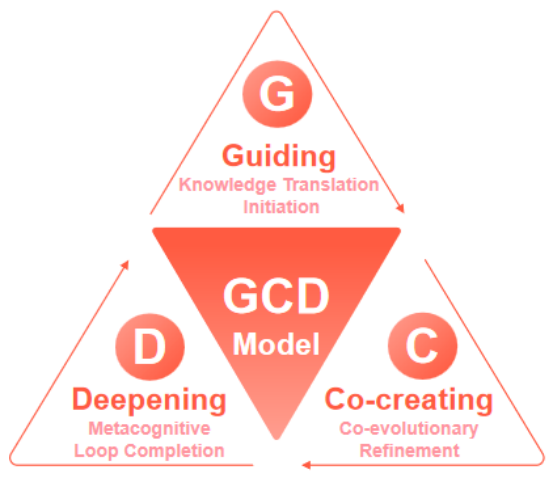
To establish a theoretically grounded and practically feasible instructional paradigm, this study proposes the GCD Cyclic Framework, which consists of Guiding–Co-creating–Deepening and is tailored to the cognitive characteristics of students across different educational stages (Figure 5). This framework forms a progressive, closed logical loop: GenAI transforms from a mere “tool” into a “cognitive partner”, while prompts serve as the “translational medium” that converts interdisciplinary knowledge into artistic language. Ultimately, real-time generated feedback drives creative ideation. Compared with mainstream models such as inquiry learning and design thinking, the GCD framework emphasizes human–AI collaboration and interdisciplinary aesthetic education. Inquiry learning centers on scientific problems. It emphasizes logical deduction and practical exploration, and aims to develop students’ logical thinking (P. H. Li et al., 2025). Design thinking includes three key stages: identifying design challenges, generating ideas and solutions, and reflecting on optimized design. It leans toward product design and practical problem-solving (Do & Gross, 2001). Differently, the GCD framework regards prompt engineering as its core medium. It integrates GenAI as a cognitive partner into the whole creative process and focuses on transforming interdisciplinary knowledge into artistic creativity. While inheriting the essence of inquiry and iteration, it further integrates aesthetic expression, cultural inheritance and critical reflection. This makes the GCD framework better meet the core requirement of in-depth integration of technology and art in STEAM education.

5.1. The Guiding Stage: Initiating the Creative Cycle of Knowledge Transformation

The core task of this stage is to transform disciplinary knowledge into perceivable artistic instructions, providing students with the first visual anchor for reflecting on their thinking and stimulating their initial exploratory motivation. In this process, GenAI acts as a creative embodied translator, which can instantly convert students’ textual descriptions based on disciplinary concepts into multimodal drafts in visual, auditory, or narrative forms, enabling abstract concepts to take on perceptible aesthetic forms (Zheng et al., 2019). Writing prompts is not simply issuing commands, but a deep cognitive activity: students need to deconstruct and select disciplinary knowledge, and recode it according to aesthetic rules such as composition, style, and emotion (Đira, 2024).
To this end, teachers should provide an interdisciplinary prompt scaffold to guide students in translating abstract principles in biology, physics, and other subjects into instructions with aesthetic parameters. Meanwhile, students are encouraged to use keywords with local cultural characteristics to endow the initial prototypes with distinct cultural identity. The teaching focus of this stage is to build the interdisciplinary prompt scaffold, help students master the mediating strategies of knowledge transformation, and bridge the emerging intelligent divide that may result from differences in technological literacy from the outset (Alfarwan, 2025). In actual teaching, teachers first need to deconstruct the core knowledge of STEAM disciplines. They should demonstrate how to integrate the writing logic and aesthetic elements of prompt words. Then they guide students to complete the preliminary preparation and generation of prompt words. Finally, teachers lead students to check how well the output results match the disciplinary knowledge and aesthetic intention. Students obtain the first round of immediate feedback from the initial outputs generated by GenAI. If the outputs fail to accurately reflect the core knowledge or aesthetic intention, students must backtrack and revise the prompts.

5.2. The Co-Creating Stage: Deepening Meaning Negotiation in Collaborative Co-Evolution

In the stage of refining initial generative outputs, GenAI first acts as a “co-evolutionary partner” that can effectively stimulate students’ divergent and convergent thinking, and promote the externalization of their creative thinking processes (Leon et al., 2025). In response to the potential homogenization tendency of AI, students can revise the initial AI-generated schemes through “reverse prompting” or “style restriction”. The continuous revision of prompts is essentially an externalized record of students’ internal thinking processes and their level of knowledge integration.
The introduction of social mechanisms such as peer assessment into human–AI interaction helps counteract algorithmic dependence and strengthen critical thinking, enabling students to achieve deep reconstruction of their cognitive structures in the dynamic cycle of “formulation–generation–reflection–reformulation” (Cotroneo & Hutson, 2023).
GenAI shifts the focus of teaching evaluation from final outputs to an examination of the thinking process throughout the cycle. Evaluation should emphasize how students evaluate different proposals and integrate the strengths of multiple generative outputs in alignment with the project’s scientific, narrative, and innovative goals. In real practice, teachers need to teach students optimization skills such as reverse prompts and style limits to help students correct the homogeneous output of AI, and then organize groups to carry out peer review, so that students can compare schemes and integrate ideas in communication. Concurrently, the evaluation criteria focus on the thinking process of prompt word iteration, knowledge integration and creative optimization, rather than focusing solely on the final generated works.

5.3. The Deepening Stage: Achieving Closed-Loop Learning and Metacognitive Ascension

In the summarization stage of the framework, GenAI guides students to analyze their concrete performance in collaboration and transforms technology application into an opportunity for cognitive sublimation, which is mainly reflected in the following three aspects: First, students conduct an in-depth dissection of technological limitations to cultivate critical technological literacy. By analyzing logical flaws, aesthetic limitations, or cultural biases in generated content, students transform AI from a tool into a catalyst for critical thinking. Through questioning whether AI dilutes cultural diversity and how to use prompt engineering to resist “aesthetic mediocrity”, students can perceive the socially constructed nature of technology and turn abstract ethical discussions into practice-oriented deep reflections (Online Learning Consortium [OLC], 2025). Second, a systematic review of prompting strategies makes the efficiency of knowledge transformation visible. Reflective activities focus not only on the final works, but also on a systematic review of the evolution of prompts. By comparing the differences in feedback resulting from different prompts, students evaluate their “strategic efficiency” in transforming knowledge into creativity. The explicit analysis of creative decisions enables students to master more effective prompting strategies and convert these insights into high-level feedback that penetrates their deep cognitive system (Queloz, 2025).
Third, triggering metacognitive awakening enables the internalization and transfer of deep learning. Taking the opportunity of adolescents’ awakening of cultural consciousness, guiding them to identify gender biases or stereotypes in AI-generated works can effectively stimulate cultural awareness. Metacognitive analysis of one’s own cognitive and expressive processes marks the occurrence of deep learning, which is the key to the internalization and transfer of knowledge transformation ability. This ensures that students can enter the next round of “Guiding” with a clearer technological perspective and interdisciplinary understanding. Issues such as the erosion of original student creativity due to AI dependency, the exacerbation of resource inequality, and cultural homogenization urgently need to be addressed. In the actual implementation, teachers should guide students to analyze the flaws and inherent biases of AI-generated content item by item. They need to lead students to repeatedly iterate on prompt words and summarize corresponding optimization strategies. Teachers can arrange human–computer cooperation, cultural expression and original theme reflection activities according to the cognitive characteristics of different learning stages. In this way, students can finally realize the sublimation of creative closed-loop thinking and metacognitive ability.
For example, a Stable Diffusion workshop with Korean fifth-grade students illustrates this cycle. In the Guiding stage, the teacher explained the basic principles of image-generating AI to students. They provided a prompt manual covering three key elements: subject, supplementary details, and artistic style. Students combined their imaginative diary themes to turn text ideas into standard prompts. They used the Stable Diffusion model on the Dream Studio platform to create initial art images and finished the first visual translation of their creativity. In the Co-creating stage, students optimized their works by revising prompts and generating images repeatedly. They chose the most suitable images from multiple versions and took part in group discussions to compare the visual effects of different prompts. They improved their artworks through human–computer cooperation and peer interaction. In the Deepening stage, teachers guided students to review the whole process of prompt writing and image generation. Students shared their experiences of creating with AI. They discussed how well AI-generated images fit their creative ideas and reflected on the strengths and limits of AI tools in art creation. They also built a basic understanding of AI ethics and algorithm bias. Finally, students finished their imaginative picture diaries with optimized AI images (Lee et al., 2024). This entire process illustrates the complete GCD cycle. However, the GCD framework remains a preliminary conceptual model based on comprehensive analysis. Its practical implementation and grade-level appropriateness still need to be tested through empirical research to provide more scientifically grounded guidance for future teaching practice.

6. Conclusions and Future Prospects

6.1. Main Findings and Conclusions

6.1.1. Revealing the Four Mechanisms Through Which GenAI Fosters Artistic Creativity in STEAM Education

Based on a systematic literature review, this study examines the current applications and mechanisms of GenAI in fostering artistic creativity within STEAM education. The included studies indicate that the value of GenAI in STEAM artistic creation lies not merely in providing tools for image, music, or text generation; rather, by lowering the creative threshold, facilitating interdisciplinary knowledge transformation, activating cultural expression, and promoting critical reflection, it demonstrates the potential to transform the ways students engage in artistic creation, understand scientific concepts, and express personal meaning. Drawing on the synthesis of these scattered findings, this paper encapsulates GenAI’s support for artistic creativity into four dimensions—accessibility, integration, culturality, and reflectivity—which together serve as an analytical framework for understanding current practices and mechanisms in this field.

6.1.2. Constructing the GCD Teaching Framework to Clarify the Pedagogical Pathway for Human–AI Co-Creation

Based on the above literature analysis, another contribution of this study is the proposal of the GCD Cyclic Framework, which consists of three stages: Guiding, Co-creating, and Deepening. This framework emphasizes that the pedagogical value of GenAI in STEAM education should not be reduced to the automatic generation of works. Rather, this paper argues that GenAI should possibly be understood as a cognitive medium that supports students’ knowledge transformation, meaning negotiation, and deep reflection.
In the Guiding stage, research suggests that teachers use prompt scaffolds to help students transform disciplinary knowledge into artistic expression. In the Co-creating stage, some cases show that students continuously revise AI-generated outputs through human–AI interaction and peer discussion. In the Deepening stage, students are guided to further examine the scientificity, aesthetics, cultural relevance, and ethical implications of their works. In this way, the GCD framework provides teachers with a clear pedagogical pathway and operational pathway for designing GenAI-supported STEAM artistic creation activities that await empirical testing, serving as a reference.

6.1.3. Emphasizing the Ethical and Cultural Dimensions of AI-Supported Artistic Creativity Education

Based on a comprehensive literature analysis, this study argues that ethical, equity, and cultural issues are not external constraints on the use of GenAI. Instead, they are central to understanding the educational meaning of AI-supported artistic creativity. Existing studies indicate that GenAI changes how creative works are produced. It also reopens questions of authorship, originality, cultural belonging, data sources, and technological equity.
Existing studies have shown that GenAI challenges traditional boundaries of authorship, ownership, creative inspiration, and remixing (Epstein et al., 2023a). Therefore, in STEAM-based artistic creation, teachers should not only consider whether students can generate visually appealing works. They should also examine whether students can explain their creative decisions, identify biases in AI-generated content, preserve the distinctiveness of local cultural expression, and understand the power structures behind technological platforms.
UNESCO’s guidance on GenAI in education also emphasizes a human-centered approach, with attention to human agency, inclusion, equity, and linguistic and cultural diversity (UNESCO, 2023). Therefore, AI-supported artistic creativity education should not take efficiency and output as its only goals. Instead, student agency, cultural diversity, and educational equity should be incorporated into instructional design and assessment criteria.

6.2. Research Limitations

6.2.1. Limitations in Search Scope and Database Selection

This study mainly searched Google Scholar, Web of Science, PubMed, Taylor & Francis, SpringerLink and Scopus. These databases cover parts of the literature in educational technology, STEAM education, AI in education, and related interdisciplinary fields.
However, due to limitations in database selection and search scope, the literature coverage of this review may still be incomplete. On the one hand, commonly used education databases, such as ERIC, Education Source, and ProQuest, were not systematically included. This may have led to the exclusion of some studies in education, art education, curriculum, and instruction. On the other hand, this study mainly included English-language publications and paid limited attention to Chinese and other non-English studies. As a result, educational practices related to GenAI and STEAM-based artistic creativity in different countries and regions, especially in non-English contexts, may not have been fully represented. Future research may expand the range of databases and include multilingual and regional studies to improve the comprehensiveness of the review findings.

6.2.2. Limited Number of Included Studies and High Research Heterogeneity

The final number of eligible studies included in this review was relatively limited. This indicates that research on GenAI for fostering artistic creativity in STEAM education is still at an early stage, and the relevant empirical evidence has not yet formed a stable body of literature. It also means that the conclusions of this study mainly reflect an initial synthesis of current research trends and mechanisms. Their generalizability should therefore be interpreted with caution, and do not support a strong claim that GenAI has systematically ‘reshaped’ art education or student cognition.
At the same time, the included studies showed considerable heterogeneity in participants, educational stages, instructional tasks, technological tools, and assessment methods. Existing studies include image generation and introductory art activities in primary education, as well as interdisciplinary projects, cultural heritage preservation, interactive art creation, and AI-assisted design in senior high school and higher education. The tools used also vary widely, including ChatGPT, DALL·E, Stable Diffusion, Canva, Bing Image Creator, and others.
Because the intervention duration, task complexity, and creativity assessment methods differed across studies, it is difficult to make a unified quantitative judgment about the pedagogical effects of GenAI. Therefore, this study is more suitable for mechanism analysis and framework construction than for drawing strong causal conclusions or for extending instructional recommendations to all developmental stages. Furthermore, as noted in Section 4.2.4, existing studies exhibit high heterogeneity in sample size, intervention duration, and creativity assessment tools. This directly hinders the ability to make a unified quantitative evaluation of GenAI’s teaching effectiveness. The conclusions of this study are primarily based on pattern recognition and theoretical construction from the available evidence, rather than deterministic causal inference. Readers should fully consider this limitation when interpreting the teaching recommendations.

6.2.3. The Framework Requires Further Empirical Validation

Based on the literature analysis, this study proposed the GCD Cyclic Framework of Guiding, Co-creating, and Deepening to explain the pedagogical pathway through which GenAI supports the development of artistic creativity in STEAM education. The framework conceptually summarizes students’ basic process of interdisciplinary artistic creation with AI support through three aspects: prompt construction, human–AI collaborative iteration, and deep reflection.
However, the framework remains a theoretical construction at this stage. It has not yet been fully tested through large-scale classroom practice or long-term empirical research. Future studies should examine the applicability of the GCD framework across different educational stages, STEAM themes, and technological conditions.
For example, design-based research, quasi-experimental studies, classroom observation, interviews, and artwork analysis could be used to examine whether the framework can effectively promote students’ artistic creativity, interdisciplinary understanding, aesthetic judgment, and technological reflection. Further research should also analyze the difficulties teachers may face when implementing the framework, such as designing prompt scaffolds, evaluating AI-generated content, managing students’ AI dependency, and organizing classroom discussions on ethical and cultural issues. Only through continuous practical testing and revision can the GCD framework develop from a theoretical model into a pedagogical approach with broader practical value.

6.3. Prospects

Although this study proposes a preliminary integration framework, the application of GenAI in education is evolving rapidly. Future research can be further deepened in the following three areas:

6.3.1. Strengthening Empirical Tracking of Long-Term Effects

Most existing studies focus on short-term instructional activities. They are therefore insufficient for determining whether students can develop stable creative transfer abilities. They also provide limited evidence on whether long-term use of AI tools may lead to technological dependency or aesthetic convergence. Future research should conduct long-term longitudinal studies to examine the effects of sustained GenAI use on students’ autonomous creativity, aesthetic preferences, and cognitive load to verify or revise the potential assumptions based on short-term observations.

6.3.2. Deepening the Ecological Support System for Teachers’ Digital Literacy

The effective implementation of the GCD framework requires teachers not only to be familiar with GenAI tools, but also to design prompt scaffolds, organize human–AI collaborative discussions, evaluate the scientificity and cultural appropriateness of generated content, and guide students in ethical reflection. Therefore, future research should further explore teacher training, curriculum resource development, assessment rubric design, and school-level technical support mechanisms. These efforts can help educators better identify students’ creative insights during human–AI interaction and provide more targeted interdisciplinary guidance.

6.3.3. Advancing Research on Ethics, Equity, and Cultural Diversity

As more powerful multimodal models, such as Sora and GPT-4, become increasingly involved in the conception, generation, and revision of artistic works, students’ ability to explain which parts come from their own ideas, which parts are generated by AI, and which parts are selected and revised by themselves will become an important basis for evaluating creativity. At the same time, global models may reinforce dominant aesthetic norms and weaken the visibility of local cultures, minority cultures, and non-mainstream forms of expression. Research on data colonialism reminds us that digital technologies are not neutral tools. They involve issues of data access, platform power, and the appropriation of cultural resources. Therefore, future STEAM education research should not only ask how GenAI can be used more efficiently. It should also examine how students can maintain creative agency, cultural distinctiveness, and ethical judgment in AI-mediated environments.

Supplementary Materials

The following supporting information can be downloaded at: https://www.mdpi.com/article/10.3390/educsci16071012/s1; File S1: Complete Record of Search Strategy; File S2: Literature Screening Process and Reasons; File S3: Detailed Summaries of the 21 Studies.

Author Contributions

Conceptualization, C.F., Q.L. and G.H.; Methodology, C.F. and Q.L.; Formal Analysis, Q.L. and G.H.; Data Curation, G.H.; Writing—Original Draft Preparation, Q.L., G.H. and C.F.; Writing—Review & Editing, C.F., W.Z. and Y.W.; Visualization, Q.L. and G.H.; Supervision, C.F. All authors have read and agreed to the published version of the manuscript.

Funding

This work was supported by the National Social Science Fund of China [grant number CHA220291] for the project “Research on the Construction of Interdisciplinary Thematic Curriculum in Junior High Schools Based on Big Ideas”.

Data Availability Statement

The data supporting the reported results are contained within the article and its Supplementary Materials.

Conflicts of Interest

The authors declare no conflict of interest.

References

  1. Alfarwan, A. (2025). Generative AI use in K–12 education: A systematic review. Frontiers in Education. [Google Scholar] [CrossRef]
  2. Aulia Fikri, R., Suwono, H., Susilo, H., & Gofur, A. (2026). Fostering students creative thinking through inquiry-design-based STEM water purification project. Journal of Pedagogical Research. Advance online publication. [CrossRef]
  3. Bian, C., Wang, X., Huang, Y., Zhou, S., & Lu, W. (2025). Effects of AI-generated images in visual art education on students’ classroom engagement, self-efficacy and cognitive load. Humanities and Social Sciences Communications, 12, 1548. [Google Scholar] [CrossRef]
  4. Chaves-Guerrero, E. I., & Moral-Sánchez, S. N. (2025). Transformative art history, empowering geometry: STEAM-H education and critical–visual maker culture towards sustainable futures. Education Sciences, 15(11), 1458. [Google Scholar] [CrossRef]
  5. Christiansen, M. B., Rafsanjani, A., & Jørgensen, J. (2024). Nature redux: Interrogating biomorphism and soft robot aesthetics through generative AI. Frontiers in Robotics and AI, 11, 1472051. [Google Scholar] [CrossRef] [PubMed]
  6. Cotroneo, P., & Hutson, J. (2023). Generative AI tools in art education: Exploring prompt engineering and iterative processes for enhanced creativity. International Journal of Art & Design Education, 42(3), 456–470. [Google Scholar] [CrossRef]
  7. Do, Y. L., & Gross, M. D. (2001). Thinking with diagrams in architectural design. Artificial Intelligence Review, 15(1), 135–149. [Google Scholar] [CrossRef]
  8. Đira, M. (2024). Generative artificial intelligence and prompting: Utilizing existing artworks for educational purposes. In M. Marinšek, & M. Hmelak (Eds.), Interdisciplinary research in teaching and learning: New perspectives and approaches (pp. 545–561). University of Maribor Press. [Google Scholar] [CrossRef]
  9. Epstein, Z., Hertzmann, A., Herman, L., Leach, R., & Meyer, J. G. (2023a). Art and the science of generative AI. Science, 380(6650), 1110–1111. [Google Scholar] [CrossRef] [PubMed]
  10. Epstein, Z., Hertzmann, A., Herman, L., Leach, R., & Meyer, J. G. (2023b). Art and the science of generative AI: A deeper dive. arXiv, arXiv:2306.04141. [Google Scholar] [CrossRef]
  11. Feist, G. J. (1998). A meta-analysis of personality in scientific and artistic creativity. Personality and Social Psychology Review, 2(4), 290–309. [Google Scholar] [CrossRef] [PubMed]
  12. Lee, U., Han, A., Lee, J., Lee, E., Kim, J., Kim, H., & Lim, C. (2024). Prompt aloud!: Incorporating image-generative AI into STEAM class with learning analytics using prompt data. Education and Information Technologies, 29(8), 9575–9605. [Google Scholar] [CrossRef]
  13. Leon, C., Lipuma, J., & Oviedo-Torres, X. (2025). Artificial intelligence in STEM education: A transdisciplinary framework for engagement and innovation. Frontiers in Education, 10, 1619888. [Google Scholar] [CrossRef]
  14. Li, G., & Lyu, L. J. (2018). From STEM education to STEAM education: Analysis of the role of arts. China Educational Technology, (9), 31–39, 47. [Google Scholar] [CrossRef]
  15. Li, P. H., Lee, H. Y., Lin, C. J., Wang, W. S., & Huang, Y. M. (2025). Inquiry GPT: Augmenting ChatGPT for enhancing inquiry-based learning in STEM education. Journal of Educational Computing Research, 62(8), 1937–1966. [Google Scholar] [CrossRef]
  16. Li, R. (2025). AI-enhanced traditional crafts in art education: A digital approach to revitalizing Chinese tie-dye in high school. Asia Pacific Economic and Management Review, 2(5). [Google Scholar] [CrossRef]
  17. Liberati, A., Altman, D. G., Mulrow, C., Gøtzsche, P. C., Ioannidis, J. P., Clarke, M., Devereaux, P., Kleijnen, J., & Moher, D. (2009). The PRISMA statement for reporting systematic reviews and meta-analyses of studies that evaluate health care interventions: Explanation and elaboration. Journal of Clinical Epidemiology, 62, e1–e34. [Google Scholar] [CrossRef] [PubMed]
  18. Liu, X., Lau, N., Chuin, A., & Zhang, Y. (2023). Understanding students’ perspectives, practices, and challenges of designing with AI in special schools. In Proceedings of the 11th international symposium on Chinese CHI (pp. 197–209). ACM. [Google Scholar] [CrossRef]
  19. Maeda, J. (2013). STEM + Art = STEAM. The STEAM Journal, 1(1), 34. [Google Scholar] [CrossRef]
  20. National Science Board, Task Committee on Undergraduate Science and Engineering Education. (1987). Undergraduate science, mathematics and engineering education. National Science Board. [Google Scholar]
  21. Naveed, H., Khan, A. U., Qiu, S., Tang, W., & Bennamoun, M. (2025). A comprehensive overview of large language models. ACM Transactions on Intelligent Systems and Technology, 16, 1–72. [Google Scholar] [CrossRef]
  22. Online Learning Consortium [OLC]. (2025). GenAI use and ethics framework: A pedagogical model for responsible AI integration in education. Available online: https://onlinelearningconsortium.org/ (accessed on 25 January 2026).
  23. OpenAI. (2026). Introducing ChatGPT. Available online: https://openai.com/blog/chatgpt (accessed on 25 January 2026).
  24. Queloz, M. (2025). Explainability through systematicity: The hard systematicity challenge for artificial intelligence. Minds and Machines, 35(3), 35. [Google Scholar] [CrossRef] [PubMed]
  25. Rafiq-uz-Zaman, M., Malik, N., & Bano, S. (2025). Effectiveness of STEAM education in enhancing 21st century skills: A systematic review. Journal of Asian Development Studies, 14(3), 590–598. [Google Scholar] [CrossRef]
  26. Relmasira, S. C., Lai, Y. C., & Donaldson, J. P. (2023). Fostering AI literacy in elementary science, technology, engineering, art, and mathematics (STEAM) education in the age of generative AI. Sustainability, 15(18), 13595. [Google Scholar] [CrossRef]
  27. Scala, G., Di Palma, D., & Romano, G. (2025). From integration to transformation: STEAM teaching methods and generative artificial intelligence to develop critical thinking, creativity and co-design in secondary schools. Frontiers in Artificial Intelligence, 5(4), 1–15. [Google Scholar]
  28. Sousa, D. A. (2006). How the arts develop the young brain: Neuroscience research is revealing the impressive impact of arts instruction on students’ cognitive, social, and emotional development. School Administrator, 63(11), 26–31. [Google Scholar]
  29. UNESCO. (2023). Guidance for generative AI in education and research. United Nations Educational, Scientific and Cultural Organization. [Google Scholar] [CrossRef]
  30. Yakman, G. (2008, June 1–5). STE@M educational model: STEM education: An overview of creating a model of integrative education [Conference contribution]. PATT 2008 Publication, Blacksburg, VA, USA. [Google Scholar]
  31. Zeki, S. (2001). Artistic creativity and the brain. Science, 293(5527), 51–52. [Google Scholar] [CrossRef] [PubMed]
  32. Zheng, X., Wang, M., & Rao, J. (2019). On embodied learning and its design: From the perspective of embodied cognition. Research on Electro-Education, 40(1), 25–32. [Google Scholar] [CrossRef]
Figure 1. Growth Trend of Research Papers on GenAI in STEAM Education (2021–2025).
Education 16 01012 g001
Figure 2. Flowchart of the SLR-based literature screening process.
Education 16 01012 g002
Figure 3. Publication year of selected articles.
Education 16 01012 g003
Figure 4. Proportional distribution of selected articles by educational stage.
Education 16 01012 g004
Figure 5. The GCD Teaching Framework for GenAI-Supported STEAM.
Education 16 01012 g005
Table 1. Search results from Google Scholar, Web of Science, PubMed, Taylor & Francis, SpringerLink and Scopus databases.
DatabaseNumber of Articles
Google Scholar108
Web of Science81
PubMed120
Taylor and Francis4
SpringerLink4
Scopus107
Total424
Table 2. Examples of GenAI enhancing the accessibility of artistic creation.
No.TitleStudy DesignSample SizeCountryParticipantsIntervention DurationInstrumentsMain FindingsLimitations
1Fostering AI Literacy in Elementary Science, Technology, Engineering, Art, and Mathematics (STEAM) Education in the Age of Generative AIUsing generative AI tools such as Google AutoDraw, Quick Draw, Teachable Machine, Instagram AI filters, DALL-E to organize collaborative drawing, image classification, AI-assisted recognition, and deepfake content creation.77IndonesiaElementaryThree lessonsStudent reflection essays (open-ended questions: what worked really well, what did you struggle with, what new ideas did you have), combined with qualitative coding and learning experience network analysis.The real-time recognition and partner collaboration features of AI lower the threshold for creation, significantly enhancing the accessibility of artistic expression and classroom engagement among elementary school students.The sample has regional limitations, and the short intervention duration lacked long-term tracking of AI literacy improvement.
2Implication of a Case Study using Generative AI in Elementary School: Using Stable Diffusion for STEAM EducationUsing Stable Diffusion, students generated images by entering prompts and used the AI-generated images to create “imagination picture diaries.”46South KoreaElementary90 minSemi-structured interviews, student artwork, thematic analysis.Text-to-image tools can expand the imaginative boundaries of elementary school students and significantly reduce the time cost of manual creation through personalized creative expression.The sample size is small, and participants were from economically advantaged areas. Additionally, the “visual awkwardness” generated by the tool exposed technical biases and ethical issues.
3Prompt Aloud! Incorporating image-generative AI into STEAM class with learning analytics using prompt dataUsing Stable Diffusion to help students generate creative images and write imagination diaries.46South KoreaElementary90 minQuestionnaire (Likert scale), semi-structured interviews, prompt data analysis, generated image scoring, imagination diary scoring and vocabulary analysis.AI successfully transforms students’ language proficiency into visual art to alleviate painting frustration, and prompt word data can effectively visualize the thought process.The sample size is small and concentrated in a single higher grade. Furthermore, foreign language learners’ reliance on translation software affected the natural expression of prompt engineering.
4Understanding Students’ Perspectives, Practices, and Challenges of Designing with AI in Special SchoolsUsing text-to-image generative AI tools such as Stable Diffusion Online and Canva, guiding special school students to generate images by entering prompts.7Hong Kong (China)Middle1 hQuestionnaire (5-point Likert scale), workshop video analysis, student design works (AI-generated images and final game assets), user journey maps, semi-structured interviews (Phase 1).Generative AI constructs visual scaffolds for students with fine motor impairments to express their ideas, effectively cultivating their conceptualization abilities in writing.This is a preliminary exploratory qualitative study with a very small sample (7 participants), and the tools present certain language and registration barriers.
5Effects of AI-generated images in visual art education on students’ classroom engagement, self-efficacy and cognitive loadQuasi-experimental design with experimental and control groups, pre-test post-test design78ChinaElementaryApproximately 40 min per learning taskClassroom Engagement Questionnaire, Self-Efficacy Questionnaire, Cognitive Load Questionnaire, Student Painting Score (rated by three teachers based on five dimensions: technique, theme, composition, creativity, and effort)Generative AI constructs visual scaffolds for students with fine motor impairments to express their ideas, effectively cultivating their conceptualization abilities in writing.The experiment lasted only 3 weeks and had a single cultural background, failing to deeply explore the instructional support needed by low-creativity students in prompt engineering.
6An Innovative Approach in Arts Education: Student Experiences of Abstract Art Practices Supported by Generative AIUsing ChatGPT and Copilot (https://copilot.microsoft.com/) to generate abstract art sketches and visual inspiration to assist oil painting creation.12TurkeyUndergraduate12 weeksSemi-structured interviews, reflective journals, analysis of files including AI interaction screenshots, sketches, final paintings.Students use AI-generated images as “sketches” and sources of inspiration for oil painting creation, effectively lowering the psychological and technical barriers to abstract art creation.It covered only 12 art major students and was limited by the usage limits of free tools and a steep learning curve for prompts in the early stages.
Table 3. Examples of GenAI Enhancing Interdisciplinary Integrativity.
No.TitleStudy DesignSample SizeCountryParticipantsIntervention DurationInstrumentsMain FindingsLimitations
1Is It Possible for Young Students to Learn the AI-STEAM Application with Experiential Learning?Using Personal Image Classifier and MIT App Inventor platform, combined with experiential learning framework, conducting a 6-week AI-STEAM interdisciplinary teaching intervention.20Taiwan (China)Middle6 weeks, once a week, 45 min eachResearcher-developed learning achievement test, self-efficacy scale (adapted from MSLQ, Cronbach’s α = 0.930), active learning scale.Experiential learning has significantly enhanced students’ understanding of mechatronics and AI concepts, successfully achieving interdisciplinary integration of hand-drawing, model training, and hardware programming.The sample was restricted to a single class, the scope of AI application was narrow, and the instructional design failed to significantly improve the programming logic dimension of students.
2Fostering students’ creative thinking through inquiry-design-based STEM water purification projectGenerative AI-assisted design + IDBL-STEM pedagogy. Researchers had students use generative AI tools (e.g., Microsoft Copilot, ChatGPT, or Google Gemini) to visualize design sketches, then combined with inquiry-based design learning (IDBL) model for prototyping and iterating water purification devices.72IndonesiaHigh3 weeks, 5 consecutive class periodsCreative thinking test covering fluency, flexibility, originality, and elaboration (10 items); classroom observation and artifact analysis.Exploring AI applications under design patterns effectively broadens students’ design space, utetheisa kong, reinforcing interdisciplinary integration capabilities through the “design-test-redesign” cycle.Students demonstrated insufficient deep reflection when deepening and refining their ideas, and the study lacked qualitative records of the specific trajectory of thinking evolution during the design process.
3Compositional tools based on artificial intelligence for choral artistic education: Enhancing creative skills in choral arrangementsUsing KITS AI (generative AI singing voice generator) to assist choral arrangement teaching, combined with traditional curriculum in an experimental study. Pretest-posttest control group design: experimental group received AI-integrated instruction, control group received traditional choral training.70ChinaUndergraduate Approximately 8 months, twice a weekCreative skills assessment scale (Cronbach’s α = 0.858); standardized choral arrangement skills assessment by experts (ICC = 0.87); Wilcoxon test, Mann–Whitney U test, Pearson correlation analysis.AI assistance significantly stimulated students’ innovation in harmony selection and part assignment, promoting the collaborative development of music arrangement skills and computational thinking.Both the sample and the AI tools (only KITS AI) were quite singular; the intervention period was relatively short, and subjective bias may exist in the student self-assessment portion.
4Transformative Art History, Empowering Geometry: STEAM-H Education and Critical-Visual Maker Culture Towards Sustainable FuturesHaving students use generative AI tools (e.g., Leonardo AI, ChatGPT) to generate images related to Sustainable Development Goals (SDGs), then transform these 2D AI images into 3D physical models (prototyping).106SpainUndergraduate2 academic yearsCritical spatial literacy classification matrix; traffic-light analysis; geometric fidelity assessment for conversion from AI-generated images to physical models.Creation combined with art history significantly improved students’ ability to transform 2D geometric forms into 3D physical materials and integrate socially critical interpretations.Students developed a dependency on technical outputs, performing poorly when modeling abstract social issues and handling equal spatial scaling.
5The analysis of generative artificial intelligence technology for innovative thinking and strategies in animation teachingUsing generative AI to construct animation scenes, character actions, style-transfer materials, etc. Quantitative and qualitative methods: experimental group received GAI-integrated teaching, control group received traditional teaching.120ChinaUndergraduate12 weeks, 4 times per week, 2 h eachBasic knowledge test; applied skills test; learning feedback questionnaire (Likert scale); classroom behavior analysis; creativity test; teamwork and problem-solving assessment.Intelligent instructional resources improved animation creation efficiency by 24.5%, significantly strengthening the team’s collective creative integration while deeply blending multiple disciplines.The instruction relies heavily on high-performance computing devices and complex learning frameworks, making it difficult to popularize in schools with resource constraints or low configurations.
6Empowering Creativity through Generative AI in Digital Art Education in Higher EducationHaving students use Midjourney, DALL-E, Stable Diffusion, Photoshop Generative Fill, ChatGPT, etc., to transform hand-drawn sketches into visual images of various styles, thereby assisting in the construction of 3D assets.52USAUndergraduate15 weeks (one semester)Beginning/end-of-semester questionnaires; project documentation review; classroom observation and oral presentations; qualitative observations by instructors on student work and processes.AI liberated productivity by handling tedious tasks like texturing, enabling students to break through skill constraints and focus on core creative decisions by quickly generating mood boards.Some students faced the risk of algorithmic reliance and questioned whether core creativity was being devalued; there was also a widespread lack of deep understanding regarding copyright, ethics, and underlying AI concepts.
Table 4. Examples of GenAI Deepening Cultural Relevance.
No.TitleStudy DesignSample SizeCountryParticipantsIntervention DurationInstrumentsMain FindingsLimitations
1Effects of AI-Generated Drawing on Students’ Learning Achievement and Creativity in an Ancient Poetry CourseUsing Bing AI Copilot (DALL-E-based GenAI tool) to assist High in generating scene images for ancient Chinese poetry, combined with 3D glasses (Google Cardboard) for situated learning.60Taiwan (China)High3 weeksLearning achievement test, creativity tendency questionnaire, learning motivation questionnaire, self-efficacy questionnaire, cognitive load questionnaire, semi-structured interviews, drawing content coding analysis.Students improved their linguistic expression through repeated descriptive interactions with AI, which deepened the critical re-creation of ancient poetic imagery for students with high creative tendencies.The sample size was small and limited to a specific group of high school students. The short and discontinuous intervention affected the continuity of tool usage.
2The application of scaffolding instruction and AI-driven diffusion models in children’s aesthetic education: A case study on teaching traditional Chinese painting of the twenty-four solar terms in Chinese cultureUsing a fine-tuned AI diffusion model (AE24STDM), students input text prompts related to the “24 solar terms” to generate traditional Chinese painting images with specific artistic conception and composition; then, with teacher scaffolding support, critically analyze and re-create these images.45ChinaElementary2 sessions, 90 min eachSeven-dimensional image evaluation scale covering solar term representation, aesthetic value, cultural heritage, etc.
Comparative analysis of student works across three stages: “initial creation (no scaffolding),” “secondary creation (referencing AI),” and “final creation (scaffolding removed).”
The fine-tuned Chinese painting model performed excellently in composition and brushwork, successfully guiding children as a scaffold to capture and apply the cultural imagery of traditional solar terms.Growth at the technical level was not fully transformed into pure creative expression, and AI struggles to encompass the cultural essence of traditional painting, easily causing understanding to remain superficial.
3AI-Enhanced Traditional Crafts in Art Education: A Digital Approach to Revitalizing Chinese Tie-Dye in High SchoolUsing AI image generation and simulation tools to create a virtual tie-dye lab, employing AI design software for interdisciplinary project creation, supporting integrated learning from virtual design to hands-on production.42ChinaHighApproximately 4 weeks5-point Likert scale questionnaire (Cronbach’s α = 0.85), focus group interviews.The virtual lab supported efficient iteration of tie-dye patterns and cultural resonance, guiding students to understand intangible cultural heritage aesthetics while transforming digital patterns into physical works.Excessive digitalization might weaken the technical depth of manual practice and exacerbate the digital divide. Currently, there is a disconnect due to the lack of systematic teacher training.
4The commodification of creativity: Integrating Generative Artificial Intelligence in higher education design curriculumUsing image generation tools like DALL-E and Midjourney versus hand drawing to assist visual communication design students in logo creation tasks, combined with reflective journals for critical analysis.85AustraliaUndergraduate12 weeksReflective journals documenting qualitative feedback on GenAI use; NVivo software for thematic analysis of qualitative data.Students became aware of the homogenization flaws in AI outputs and clearly defined its role as a co-pilot, injecting personal aesthetics and human agency through prompt engineering as a mediator.The sample only targeted lower-grade design students from a single university, and because the study was based on the early stages of GenAI, limitations in output quality affected its forward-looking assessment.
Table 5. Examples of GenAI constructing a human–AI co-creation ecosystem.
No.TitleStudy DesignSample SizeCountryParticipantsIntervention DurationInstrumentsMain FindingsLimitations
1From integration to transformation: STEAM teaching methods and generative artificial intelligence to develop critical thinking, creativity and co-design in secondary schoolsQuasi-experimental study with mixed methods. Using generative AI tools such as ChatGPT, DALL·E, Canva AI, Copilot Designer, integrated with STEAM subjects, organizing students to carry out interdisciplinary projects (e.g., sustainable lighting system design, drone motion analysis) to promote human–AI collaborative creation, reflection, and cooperation.150ItalyHigh6 months, twice a week, 2 h eachQuantitative: MSLQ problem-solving subscale, ASES academic self-efficacy scale, STCCLQ collaboration tendency questionnaire, peer assessment questionnaire.
Qualitative: semi-structured interviews (students, teachers), thematic analysis using NVivo.
Human–machine collaboration and digital reflection reinforced students’ metacognition and autonomous decision-making power; the visual AI environment demonstrated good special education inclusivity for students with ADHD.The intervention lasted only one semester; students faced the risk of “algorithmic blind compliance” by uncritically accepting outputs, and ethical issues such as copyright of generated content remain unresolved.
2Integration of AI GPTs in Music Education and Their Impact on Students’ Perception and CreativityUsing ChatGPT to build a human–AI collaborative teaching system: deeply integrated ChatGPT into piano theory courses, combining divergent thinking, convergent thinking, and flow theory, designing specific prompt algorithms to guide students in interacting with AI during half of the class time for personalized queries, theoretical deepening, and improvisation assistance.566ChinaUndergraduateAcademic year 2023–2024 (approximately 1 year)1. Torrance Tests of Creative Thinking (TTCT) (pre/post)
2. Technology perception questionnaire
3. IBM SPSS 20 (statistical analysis)
The frequency of using recommended prompt algorithms was significantly positively correlated with students’ creativity scores, and large language models became highly efficient resources for explaining complex music theory.The sample was overly focused on a specific major (piano), and the experiment did not effectively control for external variables such as family background and hobbies that might interfere with creativity development.
3Empowering Engineering Students Through Artificial Intelligence (AI): Blended Human–AI Creative Ideation Processes With ChatGPTRandomized controlled trial + mixed methods. Using ChatGPT as a collaborative ideation partner to help students generate innovative ideas in time-constrained design tasks, compared with non-AI-assisted ideation processes, to analyze the impact of a human–AI collaborative creation ecosystem on creative outputs and students’ reflective cognition.51SpainUndergraduate60 min ideation, plus questionnaire and peer assessmentQuantitative: self-developed ideation assessment scale (creativity, innovativeness, feasibility, user benefit, value, complexity, overall assessment, 4-point Likert).
Qualitative: structured questionnaire with open-ended questions, thematic analysis (two-level coding).
The process of screening and reorganizing AI suggestions activated students’ reflective metacognition, and the final effect of human–machine collaboration relied heavily on the user’s AI familiarity.Conclusions are limited to text models (GPT-3.5) and specific design tasks, and rely entirely on peer reviews, lacking evaluation perspectives from experts or teachers.
4Human versus hybrid creation: A comparative study on AIGC-assisted oil painting in art educationUsing Midjourney/DALL·E AIGC tools to assist oil painting creation. In oil painting courses, using generative AI for ideation and composition planning, followed by fully manual oil painting execution by students, building an “AI ideation–human execution” collaborative ecosystem.20ThailandUndergraduate10 daysExpert evaluation rubric assessing technical proficiency, compositional complexity, originality; plus student self-report questionnaire, observation records, visual analysis coding table.AIGC acted as a visual scaffold that cut oil painting ideation time nearly in half and enhanced composition complexity, but deep reflection and personal style still relied on manual intervention.The sample size was small and limited to a single project, and the lack of long-term tracking makes it impossible to evaluate whether AI has a degenerative effect on traditional manual drawing skills.
5Integrating Generative AI Into Design Thinking: Assessing Impact on Creativity and Innovation in STEM EducationUsing ChatGPT, Perplexity, and Gemini to assist product design thinking. Guiding students to use generative AI tools for empathy map construction, needs statement writing, idea classification and prioritization, and storyboard generation. Building a human–AI collaborative ecosystem aimed at stimulating engineering students’ creative thinking through AI intervention.9MexicoUndergraduate4 hCreative self-efficacy scale (CSES); Basic Empathy Scale-Brief (BES-B); Design Thinking Mindset questionnaire (DTM); Perceived Usefulness scale (PU).AI acting as a creative collaborator broke the purely rational logic of engineering thinking, effectively guiding students to focus on the emotional empathy needs of end users within design thinking.Only a single 4 h intervention was carried out without a control group, and the extremely small sample size (9 participants) causes the study to lack conventional statistical inference power.
Disclaimer/Publisher’s Note: The statements, opinions and data contained in all publications are solely those of the individual author(s) and contributor(s) and not of MDPI and/or the editor(s). MDPI and/or the editor(s) disclaim responsibility for any injury to people or property resulting from any ideas, methods, instructions or products referred to in the content.