


Abstract
This study investigates the pedagogical landscape of state language instruction in Hungarian-medium schools in Slovakia. Situated within the wider context of European minority language policies, this study explores the institutional ecosystems, didactic approaches and teaching strategies, and the relationship between teacher- and student-centered methodologies in state language instruction. A questionnaire survey based on a self-developed Multi-Level Diagnostic Model was administered to a representative sample of teachers, accounting for 23% of the total Slovak teacher population working in this distinctive sociolinguistic setting (N = 112). Although the results indicate that the educational process is shaped by various factors and there is an endeavor to promote communicative practice, the competence–use gap persists due to the reliance on conventional teacher-centered teaching approaches. This trend is driven by a methodological vacuum, the absence of specialized L2 teaching materials and the lack of modern digital resources; it also suggests that teachers are forced to prioritize instructional security rather than being resistant to innovation. The findings suggest that the current educational system is ready for change, but it requires systemic investment in resources to promote the balanced development of intercultural communicative competence. Addressing the linguistic distance between Hungarian L1 and Slovak L2 through specialized materials may promote a model of additive bilingualism that ensures professional credibility and the protection of minority cultural identity.
1. Introduction
With the growing demand for plurilingualism and inclusivity in Europe nowadays, the relationship between state language proficiency and minority identity continues to be a source of considerable pedagogical and socio-political conflicts. Even though the Council of Europe (2020) promotes plurilingual and intercultural education as a fundamental component of social unity, the reality for many national minorities reflects a fragmented educational experience, with the state language often being perceived as a compulsory burden rather than a valuable resource (Cummins, 2021). This phenomenon is particularly significant in Central and Eastern Europe, which is well known for historical grievances and shifting borders that transform language from a simple tool for communication into a marker of political loyalty and cultural preservation (Kamusella, 2008).
This phenomenon has reached a critical point in the Slovak Republic. For almost half a million Hungarian-speaking citizens, learning the Slovak state language is not simply a cognitive challenge; it is, in fact, a negotiated process shaped by geographical isolation, insufficient specialized educational resources, and deeply rooted language attitudes. In response to these complexities, the country took significant steps in 2021 to reform its educational legislation through Act. No. 415, 2021, which amended the existing School Act (Act No. 245, 2008) and prioritized inclusive education and the protection of minority rights. By modernizing the legal framework, the government explicitly acknowledged that linguistic equity is a prerequisite for true inclusion. The legislative shift mandated the transition of Slovak language instruction in minority schools from a ‘native speaker’ pedagogical model to a framework more closely aligned with Second Language Acquisition principles. This was intended to transform the state language from a barrier to a bridge, ensuring that Hungarian-speaking students could achieve functional language proficiency in the state language while preserving their primary cultural identity.
The legislative progress has also exposed a significant pedagogical gap. Although the legislative shift and the subsequent curricular reform that took place in 2023 provide a legal and ethical foundation for inclusive education, they also reveal an important methodological vacuum—an unfulfilled requirement that reflects a practical bridge between the progressive rights and execution in classrooms when it comes to teaching the state language. Despite the legal recognition of minority linguistic rights, there remains a perceived gap regarding the availability and implementation of specific pedagogic manuals and course books tailored to minority populations. Teachers are very often required to maintain an inclusive and communicative approach in their teaching; yet, they lack a clearly defined methodological structure designed for the specific linguistic and cultural reality of Hungarian-speaking minorities (Vančo, 2019).
The central problem we address is the implementation gap between legislative progress and pedagogical capacity. Without a specialized methodological infrastructure (manuals on contrastive grammar and teacher retraining), inclusive legislation will remain a mandated requirement that cannot be fulfilled. To address the complexities of state language acquisition in minority contexts, this research introduces a Multi-Level Diagnostic Model, offering a structured framework that can be used by international policymakers and researchers working in similar minority or indigenous contexts. This model enables moving away from the Separate Underlying Proficiency (SUP) trap—which treats the state language as an isolated cognitive system—and supports the transition towards a cross-linguistic pedagogy rooted in the Common Underlying Proficiency (CUP) theory (Cummins, 2021). The model serves as a transferable tool for assessing the readiness of a school system to implement inclusive language reforms, proving that legislation alone is insufficient. Without alignment between teacher agency and methodological resources, the rights-based progress achieved through reforms such as the Slovak Act of 2021 cannot translated into functional communicative competence for minority students.
2. Literature Review
To understand why inclusive legislation often fails to be implemented successfully within the classroom setting, it is important to examine the mental readiness of those involved; in other words, to examine attitudes towards teaching and learning. The earliest definitions of attitude are rooted in Allport’s (1935) work, who asserted that attitude represents a neural state of readiness organized through experience that directly influences an individual’s responses. Attitudes are rarely neutral in minority educational contexts, as they are greatly influenced by cultural stereotypes and geopolitical factors (Gardner, 1985, 2001). Domonkosi (2007) argued that attitudes are evaluative standpoints not only towards a linguistic system itself but also towards the cultural environment and geopolitical history it represents.
Specifically, in the Central and Eastern European contexts, the state language is often associated with what Lanstyák (2000) termed ‘forced bilingualism’—a state in which the second language represents not a voluntary choice but a structural prerequisite for social survival. Such a perception very often triggers an affective filter that creates mental boundaries, which might result reduced cognitive engagement when teachers and students perceive the state language as a tool of assimilation rather than a vehicle for opportunity and personal growth. Moreover, despite the presence of legislation that aims to promote and mandate inclusion, it does not guarantee the preservation of minority identity. To understand the defensive mechanisms underlying minority populations’ resistance to state language instruction, some studies refer to the theoretical perspective on the concept of ethnophagy introduced by Despagne (2013), who criticized the recognition of diversity as a tool to incorporate it into national standards rather than for empowerment. Thus, in an ethnophagic state, the minority language is accommodated only as a transitional tool towards the dominant culture and rather than as a resource to be maintained. Although the contexts differ, the absence of culturally relevant L2 materials for minority Hungarian students in Slovakia creates a risk of subtle assimilation, wherein the minority identity is gradually erased through the very same program meant to include it.
To systematically explore these socio-pedagogical dynamics, this research draws upon the framework of Grin (2003), which states that success in language acquisition depends on three interconnected pillars: capacity (or competence), opportunity (support at the macro-level), and desire (willingness). A gap between competence and real language use (the competence–use gap) often emerges in educational settings for minorities, which Duibhir (2019) illustrates, in Irish and Basque contexts, as a rise in linguistic competence (or language capacity) that does not automatically translate into daily use. This gap is particularly visible in the Slovak–Hungarian context, where the legislative progress focuses on legal rights at the macro level, while the pedagogical gap at the micro-level of classrooms fails to provide opportunities for and stimulate the desire for spontaneous communication in the state language. Recent research conducted by Nagy (2025) in Hungarian-medium vocational schools across Eastern Europe showed a clash between the pedagogical expectations of the education system and the overall preparedness of teachers in teaching ethnic minority students. Likewise, Duibhir (2019) noted that greater linguistic distance increases the complexity of achieving capacity in the state language.
Other factors influencing state language acquisition include the linguistic distance of the majority and minority languages, as described by the Multilingual Education Model of Cenoz (2009). Unlike other minority contexts such as the Valencian community, where the distance between the two languages (Spanish and Catalan) is rather narrow, the Slovak–Hungarian context is defined by a vast typological distance between an agglutinative Finno-Ugric language (Hungarian) and an inflective Slavic language (Slovak). Furthermore, there may be a conflict between investment in the state language and motivation (Norton, 2013). Students may possess the instrumental motivation necessary to succeed in exams; however, if they do not engage with the state language as a component of their identity due to significant historical, cultural, and geopolitical differences, it is highly probable that the negative impacts on state language acquisition will persist. Additionally, outdated teaching practices, the unavailability of suitable materials, and misalignment with communicative competence standards can lead to limited success in state language acquisition among Hungarian minority students (Tódor et al., 2024; Vančo, 2017). While Act No. 415 (2021) and the 2023 curricular reform have successfully targeted capacity by mandating an L2 framework for acquiring the state language, the other two pillars—opportunity and desire—are unfortunately neglected. In geographically isolated minority settings, schools are often the primary space where learners are exposed to the state language. Thus, if practical education remains bound to a Separate Underlying Proficiency model (Cummins, 2021), which refers to Slovak and Hungarian as two isolated language systems, students may acquire the formal capacity necessary to use the state language but lack the motivation to employ it. Therefore, investment is needed (Norton, 2013) to stimulate genuine and spontaneous communication beyond the artificial environment of the classroom.
Against this backdrop, state language acquisition cannot be understood solely in technical or functional terms, as it also intersects with questions of identity. Young adults in minority contexts often face disagreement between state-level integration and solidarity with their peer group. We can see this in the Irish and Welsh contexts, where, if a language is limited to the educational setting, the risk of it being portrayed solely as a symbol of schooling rather than as a living tool for self-expression increases substantially (Price & Tamburelli, 2016). For the Hungarian minority in Slovakia, investment in the state language can only occur if learners are able to picture their future selves within a broader, socially inclusive society (Darvin & Norton, 2014). This will enhance the cognitive, social, and cultural wellbeing of the minority community, provided that the educational framework is built upon the principles of additive bilingualism, which promote high-level proficiency in both languages (Cummins, 2014), with the native language continuing to be valued while the second language acts as a source of enrichment. Considering the aforementioned issues, the pedagogical gap we are addressing is not simply an absence of well-prepared books and materials; it is the lack of a communicative environment that allows students to integrate the state language into their bilingual identity without feeling the burden of cultural loss.
3. Materials and Methods
3.1. Research Goals and Questions
While the legislative framework of Slovakia formally recognizes the importance of state language acquisition through its L2 framework, the empirical reality at the micro-level of classrooms suggests a deep decoupling between policy intent and pedagogical implementation. This research aims at moving beyond a descriptive account of linguistic proficiency towards an investigation of the systemic factors contributing to the competence–use gap (Duibhir, 2019) in geographically isolated clusters of minority Hungarians in Slovakia.
By positioning the Slovak–Hungarian context within the global discourse on minority language education, this study examines how the absence of specialized L2 methodological scaffolding impacts the linguistic capacity and identity investment (Norton, 2013) of minority learners. In this context, state language acquisition is not only a technical task to be accomplished but rather a complex and demanding process. Without proper instructional support, systemic pressures often trigger subtle forms of assimilation, where learners gradually compromise their primary identity instead of achieving functional multilingualism. Consequently, the primary objective of this study was to survey Slovak language teachers to evaluate, on the one hand, the language learning obstacles faced by students and the institutional conditions that facilitate state language use and, on the other hand, the prevailing pedagogical and methodological practices employed in Slovakian language classrooms. The following research questions guided the inquiry:
- RQ1: What specific learning difficulties and challenges do language teachers encounter with Hungarian minority students in Slovakia during the acquisition of the state language?
- RQ2: What are the characteristics of the pedagogical and institutional ecosystems supporting Slovak language acquisition in Hungarian minority schools?
- RQ3: What are the dominant didactic orientations and educational strategies held by Slovak language teachers?
- RQ4: What is the relationship between teacher- and student-centered methodologies in the practice of state language instruction?
3.2. Participants and Sampling
To ensure the representativeness of the research findings, a stratified and proportionally controlled random sampling was employed, which was determined based on the estimated population of Slovak language teachers in primary and secondary schools with Hungarian as the medium of instruction and was stratified by the country’s districts. Data on the target institutions were collected from the database of the Slovak Centre for Scientific and Technical Information (CVTI SR, n.d.). The stratified and proportionally controlled sampling plan allowed us to achieve the planned 23% representativeness of the target population (N = 490 teachers, out of whom 302 were lower secondary education ISCED 2 teachers and 188 were secondary education ISCED 3 teachers). The final sample comprised 112 teachers from 201 schools. The proportion of teachers by school type was as follows: 69 (61.6%) teachers from lower secondary education (ISCED 2) and 43 (38.4%) teachers from secondary education (ISCED 3). The sample was thus proportional to the composition of the target population, allowing for the analysis of the relationships between ISCED 2/ISCED 3 and other variables. The demographic and professional profiles of the participants revealed significant sociolinguistic complexity (the composition of the sample reflected that of the target population):
- Linguistic background: A total of 101 participants (90.2%) identified Hungarian as their mother tongue, while 11 (9.8%) declared themselves to be native Slovak speakers.
- Educational trajectory: Reflecting the minority context, 77.7% (N = 87) completed their primary education in Hungarian, as did 66.9% (N = 75) in secondary education. In contrast, higher education trajectories were predominantly Slovak-centric: 57.2% (N = 64) studied exclusively in Slovak, while 36.6% (N = 41) acquired their degrees in a bilingual (Slovak–Hungarian) environment.
- Professional experience: The sample represented a broad spectrum of experience, including novice teachers (5.3%), teachers with 6–15 years of experience (27.7%), 19–25 years of experience (25.9%), 26–35 years of experience (31.3%), and over 36 years of experience (9.8%).
- Qualifications: Most participants held a university diploma qualifying them to teach Slovak (75.0%), while 16.9% had expanded their existing teaching certifications to include the state language. A small minority taught Slovak after completing additional pedagogical studies (4.6%) or without a formal teaching qualification (3.5%).
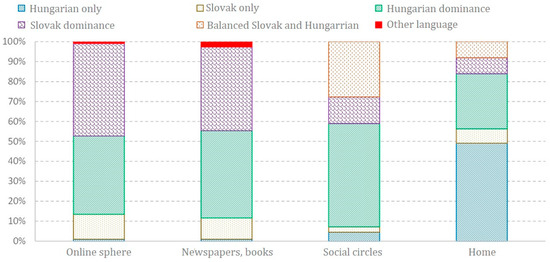
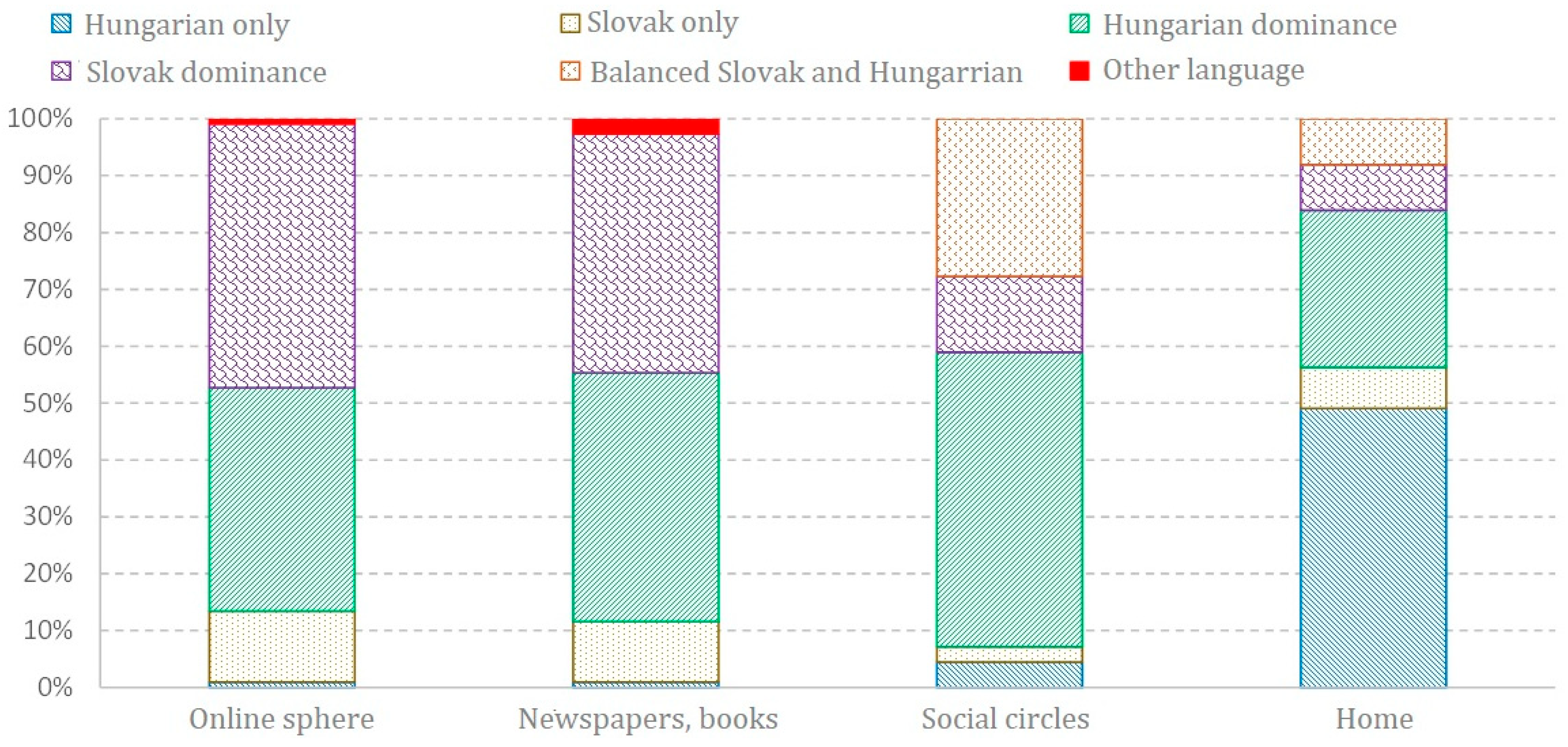
- Preferred language use: The participants’ preferred language use in their personal life was characterized by a balanced use of Slovak and Hungarian (see Figure 1).
Figure 1.
Preferred language use in personal life.
3.3. Instruments and Study Procedure
To examine the teaching of Slovak as an L2, we applied a self-developed, multi-dimensional conceptual model comprising the institutional and pedagogical environment, teacher methodological practices, student learning activities, and student linguistic outcomes. The self-developed model assumes that institutional conditions and target language dominance have a direct impact on didactic decision-making, which subsequently shapes student learning autonomy and communicative competence (including the quality of spontaneous communication in Slovak and the degree of language difficulties encounter by learners).
The survey instrument was structured into four distinct analytical levels:
- Student outcome level: This level focused on perceived deficits in Slovak language acquisition, specifically focusing on formal, receptive, and productive difficulties, speaking confidence, and the capacity for spontaneous and fluent communication.
- Institutional–pedagogical level: This level focused on the environmental scaffolding for language use, including increased frequency of lessons, after-school clubs, inter-school relations, trips to L2 environments, target language dominance in lessons, the use of textbooks and methodological manuals, and instructional focus (e.g., grammar-centric vs. communicative-practical).
- Methodological level: This level focused on teacher-led didactic and assessment practices, including semantic explanation strategies (descriptions, synonym use, use in context, and others), error correction strategies (immediate vs. delayed, with explanation), teacher preparation (planning lessons and resource use), and multifaceted assessment forms (oral, written, self- and peer assessment).
- Learning level (bipolar): This level comprised student-centered, active language learning methods vs. teacher-led, structured, model-based language learning, including autonomy, creativity, project work, independent problem-solving, cooperation, and model-based, rule-oriented learning.
As for its design, the survey instrument consisted of two distinct measurement frameworks. The perceptual dimensions (Levels 1 and 2) were measured via a four-point Likert scale (ranging from 1: Strongly Disagree to 4: Strongly Agree). This section included nine items (Appendix A; Cronbach’s α = 0.872, Split-Half Coefficient = 0.835, and McDonald’s ω = 0.885) assessing student learning difficulties with the language systems, as well as language production and reception, which determine and influence the security and efficacy of students’ language use, especially when students lack the knowledge or face uncertainties. Another 13 items (Appendix B; Cronbach’s α = 0.630, Split-Half Coefficient = 0.688, and McDonald’s ω = 0.624) focused on the pedagogical and institutional environment for L2 acquisition, comprising classroom conditions, curricula, and institutional environment for supporting regular and functional L2 use (the intensity of L2 use in the classroom, the nature of pedagogical focus, and organizational and educational opportunities that support authentic language use). The operational dimensions (Levels 3 and 4) were measured via a frequency scale (ranging from 1: Never to 4: Always). These dimensions were measured via 20 items (Appendix C; Cronbach’s α = 0.824, Split-Half Coefficient = 0.898, and McDonald’s ω = 0.846) focusing on student-centered methodologies that promote active participation and autonomous learning, and 11 items (Appendix D; Cronbach’s α = 0.715, Split-Half Coefficient = 0.831, and McDonald’s ω = 0.709) focusing on comprehensive teacher-led approaches (integrating translation, communicative tasks, inductive and deductive teaching, intercultural teaching, and the use of digital tools). A final questionnaire containing five items inquired about participants’ specific didactic/assessment practices, including how educational content was conveyed, approaches to handling student errors, assessment of classwork, and monitoring of student performance (strategies for explaining meanings, the timing and nature of error correction, resources used for teaching and teacher training, and oral and written forms of assessment).
To ensure high data quality and eliminate social desirability bias, data collection was conducted via an anonymous online platform under the direct, in-person supervision of the research leads. This hybrid approach maintained the rigor of a proctored environment while ensuring participant privacy.
3.4. Data Analysis
The data collected via the online platform were processed using IBM SPSS Statistics version 30, JASP version 0.95.4, and Microsoft Excel 2016. In all cases, descriptive statistical indicators were used to analyze individual items. Teachers’ views on the difficulties faced by minority students in learning Slovak and on the environment in supporting language use were compared across subsamples, and the relationships among individual variables were also explored. Given the non-normal distribution of the variables, the Chi-square test was applied for subsample comparisons, while Spearman’s correlation coefficient was used to explore the strength and direction of relationships between variables.
To identify the underlying latent constructs of the pedagogical environment and methodological practices, a principal component analysis (PCA) with Varimax rotation was performed. This reduction technique allowed for the identification of distinct dimensions reflecting the internal differentiation of pedagogical approaches in minority education. Simultaneously, these dimensions showed strong coherence, thereby offering substantial support for the multi-level model described above. To categorize pedagogical profiles, hierarchical cluster analysis was conducted using Ward’s method. The stability and validity of the resulting clusters were subsequently verified using a non-hierarchical K-means clustering procedure. This statistical framework was designed to validate the internal coherence of the multi-level model and to provide a robust diagnostic of the clash between official policy and classroom reality.
4. Results
In this section, the empirical findings of our comprehensive survey conducted in 2025 among educators teaching Slovak in Hungarian-medium schools across Slovakia are presented. The results are structured into two primary dimensions: (1) teacher-observed challenges faced by learners in language acquisition and usage, and (2) the dominant pedagogical and methodological frameworks within these classrooms.
4.1. Teacher Perceptions of Challenges Faced by Minority Students and the Linguistic Environment
The analysis of teacher perceptions (measured using the questionnaire presented in Appendix A) revealed that the most significant obstacles to state language acquisition were related to the internal language systems: vocabulary range (M = 3.50; SD = 0.658), grammatical accuracy (M = 3.40; SD = 0.690), and orthographic control (M = 3.38; SD = 0.661). These deficiencies were reported to be present most intensely during reading comprehension tasks and expressive language production. Conversely, fundamental communicative functions, such as phonological control (M = 2.49; SD = 0.816) and the ability to understand and follow instructions (M = 2.50; SD = 0.836), were perceived as significantly less problematic. This suggests that students are generally able to master basic functional thresholds.
The data indicate a high degree of variance in teacher opinions regarding the two fundamental communicative functions mentioned above, largely influenced by the sociolinguistic context of the teachers. For instance, teachers who mostly employed Slovak for public business in their personal lives perceived student pronunciation to be a significantly smaller challenge (χ2 = 7.589; p = 0.022) than those who conducted their business predominantly in Hungarian (M = 2.91; SD = 0.684). This difference likely reflects varying densities of Hungarians and Slovaks within specific settlements. In regions with higher Hungarian concentrations, administrative tasks are more frequently conducted in the minority language, which may potentially influence teachers’ exposure to, or expectations of, high-level Slovak phonology.
As for the perceived difficulties faced by students in understanding and following instructions, differences can be explained by several significant variables:
- Teachers’ native language (χ2 = 6.996; p = 0.008; Hungarian: N = 101; M = 2.50, SD = 0.832; Slovak: N = 11; M = 3.18, SD = 0.603);
- Gographical location of the school (χ2 = 8.480; p = 0.014; Western Slovakia: N = 39, M = 2.33, SD = 0.772; Central Slovakia: N = 41, M = 2.51, SD = 0.898; Eastern Slovakia: N = 32, M = 2.91, SD = 0.734);
- Preferred language for public business (χ2 = 9.789; p = 0.007; predominantly Slovak, but also Hungarian: N = 47, M = 2.33, SD = 0.810; predominantly Hungarian, but also Slovak: N = 22, M = 2.95, SD = 0.575);
- Type of institution (χ2 = 384.500; p = 0.040; nine-grade primary school: N = 54, M = 2.54; SD = 0.719; secondary school: N = 20, M = 2.10, SD = 0.788).
Regarding oral production, a significant difference was observed in relation to the teachers’ level of education (χ2 = 561.000; p = 0.026; graduate: N = 84, M = 3.27, SD = 0.665; recent majors: N = 19, M = 3.63, SD = 0.597) and their personal media consumption habits (i.e., the language of the books and newspapers they read) (χ2 = 4.762; p = 0.029). Regarding written production and phonological control, a significant difference related to the geographical location of the school was observed (χ2 = 9.628; p = 0.008 and χ2 = 7.050; p = 0.029). Audio-visual comprehension was found to be related to the language preferred when conducting public business (χ2 = 9.497; p = 0.009).
In summary, these findings indicate that students’ Slovak language difficulties are perceived by teachers to be primarily related to productive language use, specifically regarding vocabulary acquisition, grammatical accuracy, orthographic control, and oral and written expression. On the other hand, receptive activities, including reading comprehension, audio-visual comprehension, and phonological control, are viewed as secondary concerns. Accordingly, in alignment with the CEFR requirements and suggestions (Council of Europe, 2020), pedagogical practices must transcend beyond isolated lexical or grammatical instruction to favor the holistic development of communicative language competences. Rather than addressing linguistic deficits, effective L2 teaching requires a balance between receptive, productive, interactive, and mediating activities. By integrating linguistic, sociolinguistic, and pragmatic components into a unified instructional framework, teachers can more effectively bridge the prevailing competence–use gap. This will enable learners to not only accumulate theoretical knowledge but also to develop the functional capacity required for spontaneous, authentic communication in the target language within the broader environment.
Regarding differences between the subsamples, it can be stated that teachers’ perceptions of the difficulties faced by minority students in productive and receptive communication (audio-visual and reading comprehension, as well as written and spoken production and interaction) are affected by the native language and qualifications of the teachers, the nature of their educational institution, and geographical setting. On the other hand, teachers’ perceptions of students’ understanding of language systems (grammatical accuracy, orthographic and phonological control, and vocabulary range) are shaped by the geographical location of their educational institution.
Participants’ perceptions of students’ language difficulties were also examined via a principal component analysis (with Varimax rotation) (KMO = 0.846; Bartlett’s χ2 = 422.755; p = 0.000).
The communalities of the variables are all above 0.50, indicating that the retained components adequately explained the variance of the individual items. To determine the number of principal components, a scree plot analysis was performed. Based on the distribution of eigenvalues, the curve showed a marked break after the second component. Therefore, two principal components were retained in the analysis, explaining 60.956% of the total variance (Appendix F).
The two principal components were (1) language use and (2) language knowledge problems. The rotated component matrix, including factor weights and the percentage of variance explained by each component, is given in Appendix F.
Moderate to strong correlations were observed among the perceived student difficulties (Table 1). Based on the correlation matrix, three groups of variables could be identified: (1) difficulties related to productive language use (written and oral production), (2) difficulties related to reception (audio-visual and reading comprehension, as well as oral comprehension regarding the understanding of instructions), and (3) difficulties related to the internal system and formal elements of the Slovak language.
Table 1.
Correlation matrix of perceived student difficulties related to Slovak language acquisition.
Teacher perceptions regarding classroom conditions (Appendix B) further highlight the focus on productive language use. Specifically, respondents noted that Slovak language classes heavily prioritize language use in everyday life (M = 3.23; SD = 0.684) and situational dialogs (M = 3.22; SD = 0.611). This is further confirmed by the priority placed on the practical use of Slovak in everyday life situations than on Slovak literature resources (M = 1.70; SD = 0.655) and grammatical instruction (M = 2.01; SD = 0.704). A serious deficiency related to either the lack of, or the failure to use, a pedagogical manual for assisting with the teaching of the Slovak language in a minority setting is also highlighted (M = 1.88; SD = 0.871).
A principal component analysis was conducted to explore the data and revealed four independent components capturing different aspects of Slovak language classroom conditions (KMO = 0.692; Bartlett’s χ2 = 352.393; p = 0.000). The first component represents a more traditional instructional paradigm centered on grammar and literature. The second component reflects communicative pedagogy and target language immersion, emphasizing authentic Slovak language interactions in the classroom. The third component highlights the importance of the broader institutional and cultural environment in supporting language acquisition. The fourth component focuses on the availability and effective use of instructional materials and pedagogical guidance.
Overall, the model indicates that effective Slovak language education is shaped not only by classroom methodology but also by language exposure and the quality of pedagogical support resources.
When determining the number of principal components, an effort was made to ensure that the eigenvalue value was not less than 60%, which is an accepted threshold in social science research. The rotated component matrix, together with its associated factor weights and percentage of variance explained by each component, is given in Appendix G.
The correlation matrix of variables related to conditions of Slovak language classes indicates two main sources of influence: (1) active and exclusive use of the state language and (2) utilitarianism in everyday communication vs. teaching Slovak literature and grammar (Table 2). Teachers clearly see monolingual, learner-centered teaching strategies and practice in everyday life situations as the most suitable strategies for overcoming problems related to language production, interaction, and reception among students.
Table 2.
Correlation matrix of classroom conditions related to learning Slovak as an L2.
4.2. Teaching and Learning Pedagogical Practices in Slovak Language Classes
To explore the relationships between variables examining the organization of Slovak language classes (measured using the questionnaire presented in Appendix C), principal component analysis with Varimax rotation (KMO = 0.789; Bartlett’s χ2 = 751.130; p = 0.000) was conducted. The communalities of the variables were acceptable, with most values being above 0.50, indicating that the retained components adequately explained the variance of the individual items.
In addition to the Kaiser criterion, a scree plot analysis was also performed to determine the number of principal components. Although the eigenvalue curve showed a marked break after the third component, suggesting a three-factor solution, additional components were isolated through Varimax rotation. Because these additional components either contained few elements or represented meaningful content-specific sub-dimensions (Appendix H), the final interpretation was based on the four most stable principal components.
The first principal component (PC1.1) includes classroom activities related to student autonomy and self-regulated learning. This component is associated with high factor weights for variables describing independent processing of learning materials, individual task-solving, working according to one’s own ideas, and the independent search for information. It represents forms of learning organization in which students take an active role in shaping their own learning processes, make decisions, and bear responsibility for choosing their own learning strategies. This component is related to learner-centered, autonomy-supporting pedagogical approaches (Holec, 1979; Zimmerman, 2002).
The second principal component (PC1.2) can be interpreted as a dimension reflecting structured, model-based language learning. It primarily includes items describing the imitation of language models, task completion based on given models, work on guided tasks containing new knowledge, and reading texts in Slovak. This component encompasses classroom practices in which the learning process is characterized by strong teacher guidance and a predetermined structure. This component is therefore more closely related to more traditional instructional-driven language teaching methods, where linguistic input and modeling are given a prominent role (Ellis, 2003).
The third principal component (PC1.3) is related to creative, exploratory, and collaborative forms of learning. Variables describing cooperation, creativity development, the independent discovery of new knowledge, and the use of one’s task-solving strategies are associated with this component with high factor weights. The component reflects a learning environment in which joint work, experiential learning and creative problem-solving play important roles. From a methodological point of view, this component can be linked to constructivist pedagogical principles (Vygotsky & Cole, 1978) and, in the language pedagogical context, to communication-centered and task-based language teaching. According to Skehan (1998), problem-solving and meaning-centered tasks promote not only language use but also language proficiency development, especially when they encourage cooperation and reflective thinking among students.
The fourth principal component (PC1.4) represents a traditional, teacher-centered instructional approach to Slovak language education. The learning process is primarily guided by the teacher through the explicit explanation of grammatical rules, demonstration of correct language patterns, and structured practice activities. Students typically solve language tasks based on previously presented examples and models, while practicing fixed word combinations and sample sentences. This component therefore reflects a highly structured and deductive teaching methodology in which knowledge transmission, guided instruction, and accuracy-oriented language practice play central roles.
An additional component identified during Varimax rotation primarily includes activities related to authentic auditory and visual language input (PC1.5). Due to its low item count and narrow thematic focus, this component was excluded from the final interpretative framework, though it can be regarded as a complementary element of structured language learning.
The presence of these four principal components suggests that the examined classroom practices combine elements of several pedagogical paradigms. The identified autonomy-supporting, structured, and constructivist forms of learning organization do not exclude, rather, they complement each other. This is in line with contemporary language pedagogical approaches, which consider a flexible methodological repertoire adapted to the learning situation and the age and developmental level of students as desirable.
Overall, the results of the principal component analysis suggest that Slovak language classroom conditions can be described along four pedagogically distinct learning organization dimensions: (1) support for student autonomy; (2) structured, model-based learning; (3) creative and collaborative learning; and (4) traditional teacher-directed, rule-based learning. Together, these dimensions provide a comprehensive picture of the examined classroom practices and learning organization methods examined in this study.
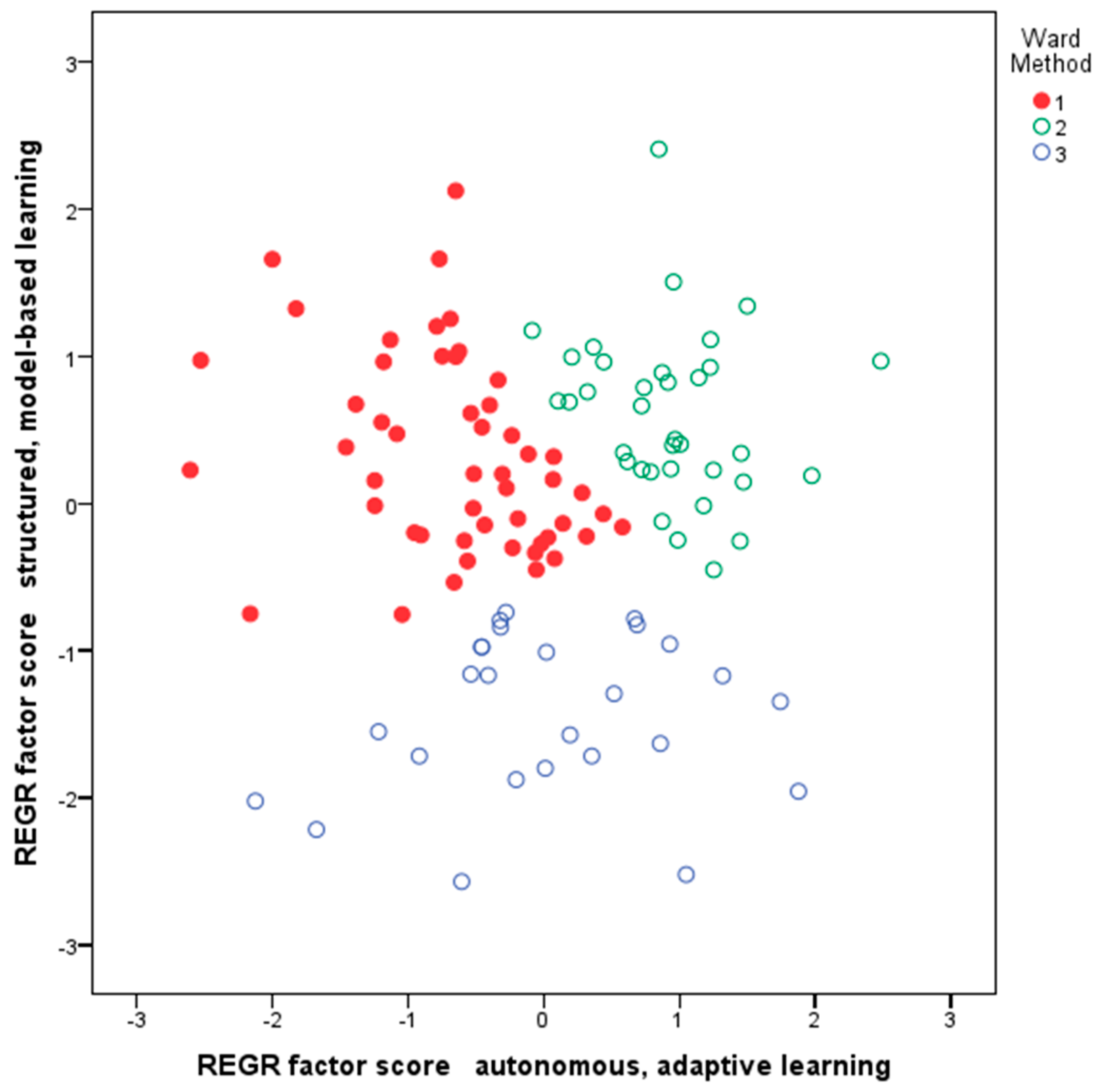
Based on the factor scores derived from the principal component analysis, we conducted a hierarchical cluster analysis employing Ward’s method, which resulted in three distinct clusters. These clusters’ arrangement clearly illustrates learning organization profiles across the dimensions of student autonomy and structured, model-based language learning. Based on the dendrogram and their pedagogical clarity, the three clusters were retained.
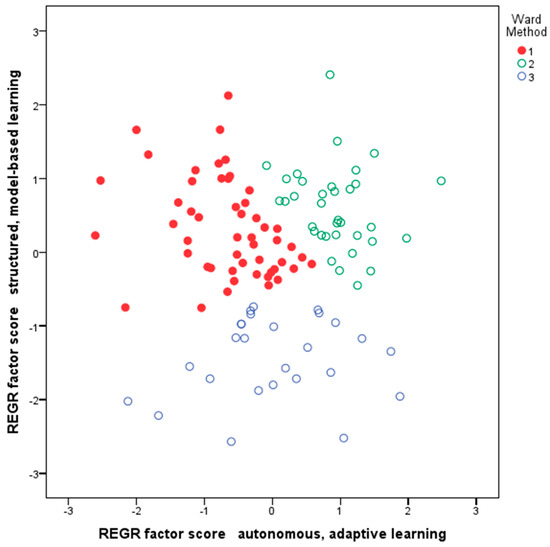
The scatterplot displays the distribution of cases along the two standardized factor dimensions derived from the principal component analysis: autonomous, adaptive learning and structured, model-based learning. The spatial arrangement of the clusters reflects the relative positions of the cluster centroids on these latent dimensions. Positive factor scores indicate an above-average representation of a given pedagogical orientation, whereas negative scores indicate a below-average representation. The distances between clusters represent relative dissimilarities in pedagogical profiles, as Ward’s hierarchical clustering method aims to minimize within-cluster variance while maximizing between-cluster separation. The partial overlap observed among some clusters suggests the existence of transitional or mixed pedagogical profiles rather than entirely discrete pedagogical categories.
The first cluster (N = 47; cluster centroid: −0.92098; 0.72901) is characterized by high values on the autonomous, adaptive learning dimension and slightly high values on the structured, model-based learning dimension. It can therefore be interpreted as reflecting an autonomous, adaptive learning organization profile. The second cluster (N = 34; cluster centroid: 0.89109; 0.2654) shows below-average values on the autonomous, adaptive and structured, model-based learning dimensions, especially the latter, indicating a low-structured, uncertain learning organization environment. The third cluster (N = 31; cluster centroid: −0.39209; −1.03729) is separated along low autonomy and high structured-based learning; it can thus be interpreted as reflecting a structured, teacher-led learning organization profile. The results of the one-way analysis of variance show that the clusters are markedly separated along both learning dimensions (p < 0.001), supporting the descriptive validity of the cluster solution (Figure 2). The results indicate that student autonomy becomes an effective learning organization principle in a pedagogical sense when it is supported by an appropriate structure; on its own without a supporting framework, it does not necessarily lead to a higher level of learning quality.
Figure 2.
Distribution of clusters across the autonomous, adaptive learning and structured, model-based language learning dimensions.
Descriptive statistical analysis concerning the individual items (Table 3) adds depth to the above discussion by indicating that Slovak language teaching is predominantly characterized by structured, pattern-based, and rule-oriented pedagogical practices. While this approach may foster linguistic security, it simultaneously offers limited support for the cultivation of autonomous, creative, and authentic language use. The use of these pedagogical practices is especially significant in environments where minority languages are spoken, as students’ opportunities for natural language interaction are somewhat restricted.
Table 3.
Variables related to the learning organization of Slovak language classes.
We endeavored to clarify language teaching methodology in the classroom through additional inquiries (questionnaire presented in Appendix D). According to the descriptive statistical analysis, the most prevalent methods used included thorough explanations of linguistic phenomena and rules (M = 3.46; SD = 0.747; Mo = 4), the application of grammar through communicative situations (M = 2.99; SD = 0.691; Mo = 3), and role-playing in real-life contexts (M = 2.87; SD = 1.018; Mo = 3). The most significant variations were observed between teachers in the last of these three methods. Conversely, the least commonly used methods are those in which students independently deduce certain grammatical rules (M = 2.10; SD = 0.722; Mo = 2) and translate Slovak texts into Hungarian (M = 2.31; SD = 0.806; Mo = 2).
Additionally, a principal component analysis (with Varimax rotation; KMO = 0.729; Bartlett’s χ2 = 333.188; p = 0.000) on these variables was conducted, revealing four distinct methodological dimensions within the classroom: (PC2.1) communicative, life situation-based language use; (PC2.2) translation- and meaning-focused receptive language learning; (PC2.3) inductive, student-centered language learning; and (PC2.4) deductive, teacher-driven language learning and cultural mediation. The component structure distinctly illustrates the internal differentiation of pedagogical approaches employed in Slovak language instruction while simultaneously demonstrating close alignment with the prior descriptive statistical and principal component analysis findings.
When determining the number of principal components, an effort was made to ensure that the eigenvalue value was not less than 60%, which is an accepted threshold in social science research. The rotated component matrix, together with the associated factor weights and percentage of variance explained by each component, is given in Appendix I.
Looking at the component structure as a whole, it can be stated that Slovak language teaching methodology follows several pedagogical logics that exist in parallel with each other. In practice, traditional teacher-centered, rule-oriented, and translation-based approaches dominate over learning forms based on communication, autonomy, and authentic language use. This result fits organically with the previously presented explanatory model, according to which classroom practice prioritizing linguistic security may limit the long-term development of spontaneous and functional language use.
A comparison of the results obtained from the two analytical procedures shows (Table 4) that the principal components are content-stable, while the second principal component analysis reveals a finer internal structure. In particular, structured, rule-oriented learning shows clear internal differentiation. The previously identified component FK1.2 is broken down into two pedagogically distinct components (deductive vs. inductive grammar learning). In contrast, the creative and authentic learning elements integrate content elements from several previously separate components, reflecting a complex communicative, life situation-based learning dimension.
Table 4.
Relationship between the two main component structures.
Regarding the processing of curricular materials (measured using the questionnaire presented in Appendix E), our results indicate that participants preferred semantic clarification of unknown expressions through descriptive explanation (83.9%) and synonymy (79.5%), whereas higher-order cognitive strategies such as analogy (19.6%) and anonymity (27.7%) showed lower levels of preference. The participants’ error correction strategies were characterized by a high level of teacher intervention. A majority of teachers (50.9%) provided explicit corrective feedback (explaining the reasoning behind errors), while only a minority (14.3%) opted for correction without explanation.
Regarding the overall assessment of student work, we can see a teacher-centric hierarchy with formative and summative evaluation being dominated by teachers’ perspectives (sometimes: 13.4%; often: 60.7%; always: 25.9%). In contrast, self-evaluation (sometimes: 25.9%; often: 41.1%; always: 32.1%) and peer assessment (never: 6.3%; sometimes: 38.4%; often: 36.6%; always: 18.8%)—critical components in the development of metacognitive awareness—were noticeably less frequent. Teachers’ preparatory activities prioritized structured outputs, with significant focus on lesson planning (never: 3.6%; sometimes: 19.6%; often: 47.3%; always: 29.5%), the preparation of audio and video recordings (never: 0.9%; sometimes: 22.3%; often: 65.2%; always: 11.6%), and the compilation of homework assignments (never: 2.7%; sometimes: 30.4%; often: 56.3%; always: 10.7%).
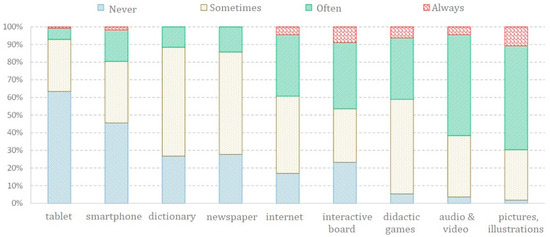
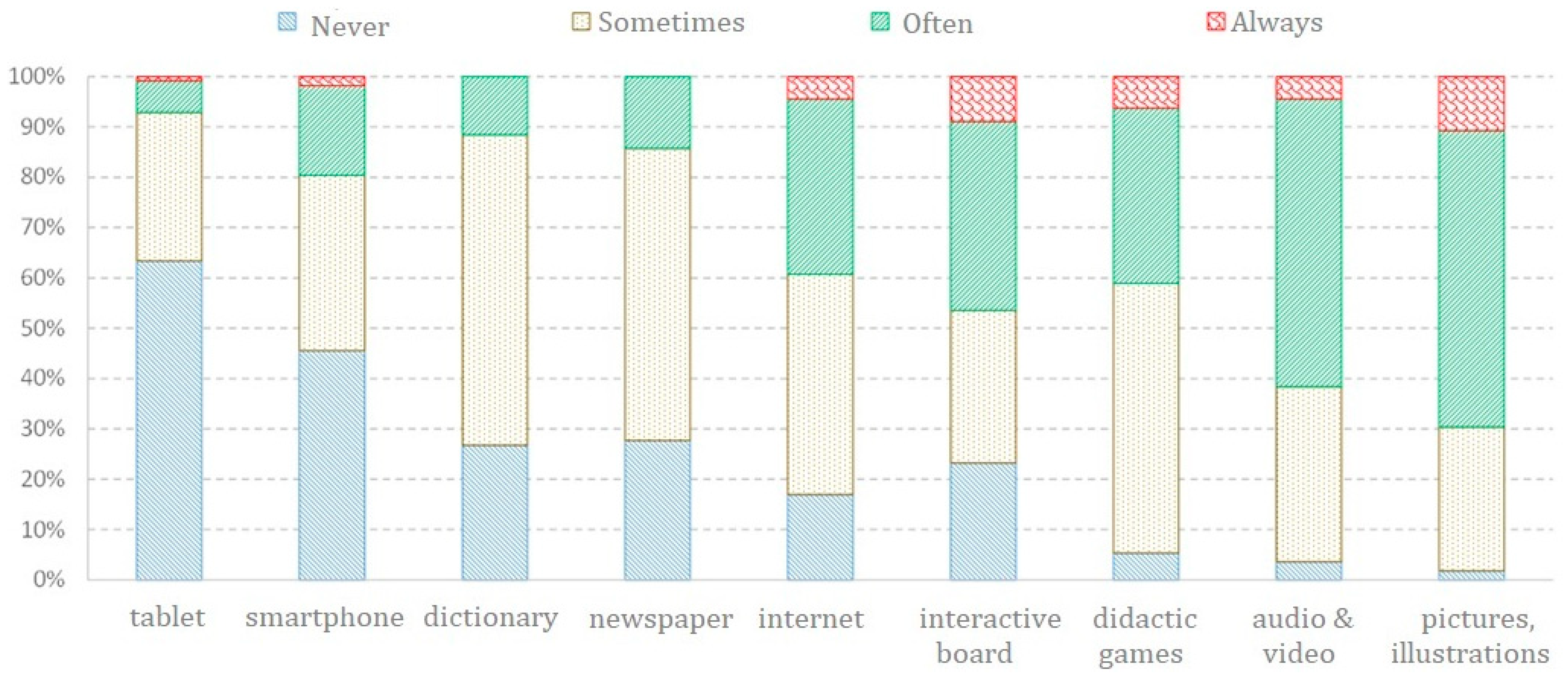
Furthermore, the hierarchy of teaching aids (Figure 3) reflects a traditional reliance on visual and auditory scaffolding. The use of pictures and illustrations (M = 2.79; SD = 0.650; Mo = 3), audio and video recordings (M = 2.63; SD = 0.631; Mo = 3), and didactic games (M = 2.42; SD = 0.693; Mo = 2) dominated the teaching process, while tablets (M = 1.45; SD = 0.655; Mo = 1), smartphones (M = 1.76; SD = 0.808; Mo = 1), and dictionaries (M = 1.85; SD = 0.603; Mo = 2) were used but remained peripheral to classroom practice.
Figure 3.
Teaching aids used in Slovak language classes.
In summary, these findings illustrate a pedagogical environment characterized by highly teacher-led, rule-governed instruction and controlled language production. The choice of pedagogical methods—ranging from semantic explanation to evaluative feedback—consistently reinforces a deductive pedagogical logic. While modern communicative tools and illustrative elements have been integrated into the classroom, they appear to be used as ‘supplementary aids’ rather than as catalysts for transforming the fundamental structure of learning organization.
While this teaching model provides a highly structured and predictable learning environment in the short term, it arguably sustains the competence–use gap by prioritizing receptive and rule-oriented language instruction over active engagement. Thus, the current framework risks restraining students’ communicative competence to a rule-based level, which may limit the development of autonomous, reflective, and spontaneous language use that is essential for successful integration into the broader environment where the state language dominates.
5. Discussion and Study Limitations
The results of this study reveal a disconnection between the state legislative requirements in Slovakia, including the 2021 and 2023 reforms, and the educational reality in schools for minority students with Hungarian as the language of instruction. The findings reveal a methodological gap in the educational process that might have influenced how teachers instruct Hungarian minority students who struggle with the transition from formal language knowledge to practical language use in developing their communicative competence in the state language. Even though the results indicate a positive trend towards adopting communicative goals, with teachers valuing functional language use, several factors must be considered. Specifically, while students’ understanding of language systems depends heavily on a school’s location, challenges in language production and reception are further complicated by teachers’ qualifications, native language use, and institutional characteristics. This suggests that while language rules are taught somewhat consistently across the regions, the ability to use the state language in diverse communicative settings is rather dependent on the human and institutional resources available.
The principal component analysis identified a clear tension between student autonomy, structured modeling, and collaborative creativity. At present, the dominance of teacher-led, rule-oriented instruction can be interpreted as reflecting the Separate Underlying Proficiency model as the current dominant pedagogical paradigm. Guarda (2025) noted that, when not accompanied by specific methodological support, macro-level institutional requirements are very often unsuccessful in reshaping classroom practice and experiences. Within this context, the lack of specialized pedagogical manuals and digital tools can force teachers to rely on traditional deductive methods to maintain their instructional security, even when they strive for interaction. This mirrors Nagy’s (2025) finding that teachers in minority settings are often unprepared. Consequently, legislative reform without systemic methodological support remains a mandate that cannot be met.
To bridge the competence–use gap, pedagogical practice should shift from a narrow focus on linguistic competence to a balanced development of the sociolinguistic and pragmatic components of communicative competence. As the Council of Europe (2020) emphasizes, these are keys for developing overall proficiency in a second language. The cluster analysis indicated that student autonomy is only effective if supported by an appropriate structure. The clusters reflect this contrast: the autonomous, adaptive profile (showing that high-quality learning can occur when independent processing is supported by a framework of guided knowledge) and the structured, teacher-led profile (prioritizing language reception and lacking the functional discourse necessary for spontaneous interaction). Developing the sociolinguistic and pragmatic components of communicative competence is not only a technical requirement but also a social one, especially given the bilingual geographic setting in which this study was conducted. It allows learners to navigate academic and social conventions, thus facilitating effective participation in broader social contexts. Building upon the work of Dixon et al. (2025), the findings suggest that a cross-linguistic pedagogy, treating Hungarian L1 as a resource rather than an obstacle, is the only workable way to achieve this balanced competence development.
The finding that teachers prioritize rule-based instruction and model-based learning over spontaneous communication suggests that state language instruction is seen as a technical examination-bound subject rather than as an integrated component of a bilingual social identity. To address the dynamics that have been reported, our interpretive framework proposes that the implementation of a cross-linguistic pedagogy, combined with intercultural communicative competence (Byram, 2020), can serve as a fundamental bridge. This strategy may assist in easing the affective filters related to communication anxieties that teachers observe among minority students, thus promoting greater social inclusion while preserving their primary cultural identities.
Furthermore, the findings underscore the need for specialized L2 materials. While teachers clearly value functional language use and show a positive trend toward adopting communicative goals, achieving high-level state language education requires a well-working methodological infrastructure designed specifically to address the Slovak–Hungarian typological distance. The current reliance of teachers on traditional visual and audio teaching aids and the marginalization of digital tools suggest that the classroom, in practice, is not yet equipped with the ‘Opportunity’ domain (Grin, 2003). Reflecting on what Jávorffy-Lázok (2025) noted, language proficiency should work as a geostrategic instrument of social legitimacy. Therefore, providing culturally relevant L2 resources is not only a pedagogical choice but also a requirement for ensuring that the 2021 Act and the subsequent 2023 educational reform translate into functional multilingualism.
Finally, it is important to note that this study relies on self-reported data and examines the personal perspectives of teachers. Although the survey was administered to a representative sample of teachers, the findings reflect the subjective professional reality of participants rather than objective classroom observations. As a result, while the data offer deep insights into teachers’ daily challenges and pedagogical intentions, they may be influenced by social desirability bias or by aspirational perspectives towards the achievement of educational objectives. Furthermore, it would be crucial to compare these findings with research results based on student perceptions, as this may validate and/or add further detail to the aforementioned findings. Nevertheless, the consistent indication of a methodological gap, the insufficient development of certain elements of communicative competence, and the limited application of contemporary digital tools imply a significant level of authenticity, which we believe reflects the genuine structural limitations that currently hinder innovative efforts.
6. Conclusions
The objective of this study was to address the implementation gap between recent advancements in legislation and pedagogical practices concerning state language acquisition in Slovakia within Hungarian minority contexts, particularly in schools where Hungarian is the language of instruction. This study introduced a Multi-Level Diagnostic Model that offers a structured framework designed to assess the perceptions of teachers regarding Slovak language instruction, focusing on the challenges and obstacles encountered in teaching and learning, as well as the dominant pedagogical and methodological approaches utilized in Slovak language classrooms.
Regarding the research questions posed at the beginning of the study, for RQ1 and RQ4, the data reveal that although there exists competence–use gap, it is not because of the unwillingness of teachers to include communicative language practice. Teachers were found to successfully provide a strong linguistic foundation for their students; however, the transition to functional language proficiency is hindered by a lack of opportunities for autonomous learning. The current teacher-led classroom environment ensures instructional security, but the next step for the policy to succeed is to foster spontaneous language production and interaction among learners.
Regarding RQ2 and RQ3, our findings highlight that the existing methodological gap is the primary burden to innovative and creative teaching. Teachers of Slovak as the state language are not resistant towards modern teaching approaches and methods; instead, they are operating within an environment that is equipped with deductive, rule-oriented models but lacking modern resources. To address this gap, it is important to provide materials that support the development of intercultural communicative competence and space for language production, interaction, and mediation. Such resources will allow educators to move beyond model-based instruction with the understanding that Hungarian L1 is a cognitive bridge rather than a burden.
In conclusion, Slovak language acquisition in the country has started to move towards a successful model of additive bilingualism. The fact that Hungarian remains the primary language in certain social circles is a sign of cultural resilience and not a failure of L2 instruction. By supporting teachers with the necessary pedagogical tools, we believe that the state language can be fully embraced as a tool for social and professional integration while coexisting harmoniously with the rich culture of the Hungarian minority in Slovakia.
Author Contributions
Conceptualization, P.T., K.P., K.S.H. and K.H.; methodology, P.T.; software, P.T.; validation, K.H. and K.S.H.; formal analysis, P.T. and K.P.; investigation, P.T., K.P., K.S.H. and K.H.; resources, K.P.; data curation, P.T. and K.P.; writing—original draft preparation, K.P. and P.T.; writing—review and editing, K.P.; visualization, P.T.; supervision, K.S.H. and K.H.; project administration, K.H.; funding acquisition, K.H. All authors have read and agreed to the published version of the manuscript.
Funding
This research was funded by Recovery and Resilience Plan of the Slovak Republic—Funded by the European Union NextGenerationEu within the project Slovak as a Second Language in Pre-Graduate Teacher Training. Abbreviation of the project SLOV2LIN; grant number 06R02-20-V01-00001.
Institutional Review Board Statement
The study was conducted in accordance with the Declaration of Helsinki and approved by the Ethics Committee of of J. Selye University (protocol code 1/2025, with approval granted on 28 January 2025).
Informed Consent Statement
Informed consent was obtained from all subjects involved in the study.
Data Availability Statement
The information provided in this research can be obtained upon request from the corresponding author to safeguard data privacy and limit unauthorized access.
Acknowledgments
During the preparation of this manuscript, the authors used Gemini 3 Flash Pro for the purposes of text revision, word selection enhancement, and proofreading. The authors have reviewed and edited the output and take full responsibility for the content of this publication.
Conflicts of Interest
The authors declare no conflicts of interest.
Abbreviations
The following abbreviations are used in this manuscript:
| L2 | Second Language |
| L1 | First Language |
| CEFR | Common European Framework of Reference for Languages |
Appendix A
Students’ language proficiency and skills
(Scale: 1—Strongly Disagree, 2—Disagree, 3—Agree, 4—Strongly Agree)
- Slovak orthography causes difficulties for learners.
- Slovak grammar causes difficulties for learners.
- Pronunciation causes difficulties for learners.
- Vocabulary causes difficulties for learners.
- Learners have difficulties with oral comprehension.
- Learners have difficulties with written comprehension.
- Learners have difficulties with oral production
- Learners have difficulties with written production
- Learners have difficulties with understanding and following instructions
Appendix B
Slovak in schools
(Scale: 1—Strongly Disagree, 2—Disagree, 3—Agree, 4—Strongly Agree)
- The spontaneous communication of learners in Slovak classes is coherent and fluent
- Learners answer teachers’ questions and complete tasks exclusively in Slovak
- The school organizes extracurricular activities in Slovak
- Slovak is taught with an increased number of lessons at the school
- The course books used are beneficial for practical language acquisition
- During lessons, I focus more on grammar than on everyday language use of my learners
- During lessons, I focus more on literature than everyday language use of my learners
- During lessons, I focus most on practical, everyday language use of my learners.
- I regularly use the methodological manual for the course book for teaching
- The school organises activities with schools with Slovak as the language of instruction
- The school organises trips to environments where Slovak language is preferred
- I provide many opportunities for learners to practice the language with each other
- In my classes, learners communicate with each other solely in Slovak
Appendix C
In my lessons, students …
(Scale: 1—Never, 2—Sometimes, 3—Often, 4—Always)
- read texts in the Slovak language.
- imitate linguistic models.
- work on tasks that contain new knowledge for them.
- suggest their own ways to solve problems.
- work on various projects.
- watch films in the Slovak language
- imitate dialogues
- work through the material on their own
- solve problems using their own reasoning
- independently seek solutions to all stages of a problem-solving task.
- listen to recordings in the Slovak language.
- solve problems based on a provided model.
- apply and develop their own creativity.
- actively participate in discovering new knowledge.
- solve problems and tasks independently.
- Receive ready-made information about grammatical rules.
- practice model phrases and sentences.
- complete grammar exercises in the way I show them.
- independently look up information to complete the exercises.
- Have the opportunity to collaborate with classmates.
Appendix D
In my lessons …
(Scale: 1—Never, 2—Sometimes, 3—Often, 4—Always)
- we read and translate sentences or texts from Slovak to Hungarian.
- with translations, we emphasize a correct understanding of the meaning and a literal translation.
- we simulate real situations through role-playing.
- we tackle tasks with a specific communicative goal, such as planning a trip or writing a letter.
- students practice Slovak through other subjects than Slovak.
- we compare Slovak and Hungarian cultures and explore values, customs, and traditions in the context of language
- we use playful gestures and movements when teaching the language.
- we use online platforms that students can access even outside of class.
- I explain grammatical phenomena and rules in detail.
- I teach grammar through communicative tasks.
- students discover grammatical rules themselves.
Appendix E
- 1.
- I explain unknown terms and expressions in Slovak by: (multiple answers possible)
- ☐
- Description.
- ☐
- Synonym.
- ☐
- Antonym.
- ☐
- Analogy.
- ☐
- Estimating the meaning from context.
- ☐
- Through model sentences.
- 2.
- I correct students’ grammatical errors and mistakes (multiple answers possible):
- ☐
- As soon as the student makes a mistake, without an explanation.
- ☐
- As soon as the student makes a mistake, with an explanation.
- ☐
- After the answer is finished, without an explanation.
- ☐
- After the answer is finished, with an explanation.
- 3.
- Select the option that best describes you regarding student evaluation:(Scale: 1—Never, 2—Sometimes, 3—Often, 4—Always)
- ○
- Students have the opportunity for self-assessment.
- ○
- Students have the opportunity for peer assessment.
- ○
- I evaluate student performance with verbal feedback.
- ○
- I verify students’ knowledge in written form.
- ○
- I verify students’ knowledge in oral form.
- 4.
- Select the option that best describes you. In lessons, students use …(Scale: 1—Never, 2—Sometimes, 3—Often, 4—Always)
- ○
- visual aids (photos, pictures, cards, illustrations).
- ○
- didactic aids and games (memory games, puzzles, Scrabble, puppets, board games, crosswords, etc.).
- ○
- interactive whiteboard.
- ○
- smartphones.
- ○
- tablets.
- ○
- computers and the internet.
- ○
- translation dictionaries.
- ○
- explanatory dictionaries.
- ○
- synonym dictionaries.
- ○
- phraseological dictionaries.
- ○
- slovak spelling guide.
- ○
- picture dictionary.
- ○
- online translator.
- ○
- journals and magazines.
- ○
- fiction.
- ○
- encyclopedias.
- ○
- audio and video recordings.
- 5.
- Select the option that best describes you regarding lesson preparation:(Scale: 1—Never, 2—Sometimes, 3—Often, 4—Always)
- ○
- I use journals and magazines for lesson preparation.
- ○
- I use fiction/literature for lesson preparation.
- ○
- I use encyclopedias for lesson preparation.
- ○
- I use audio and video recordings for lesson preparation.
- ○
- I come to the lesson with detailed preparation.
- ○
- I assign homework during lessons.
Appendix F
Table A1.
Total variance explained by the principal components underlying Hungarian minority students’ difficulties with the Slovak language.
Figure A1.
Scree plot showing the principal components underlying Hungarian minority students’ difficulties with the Slovak language.
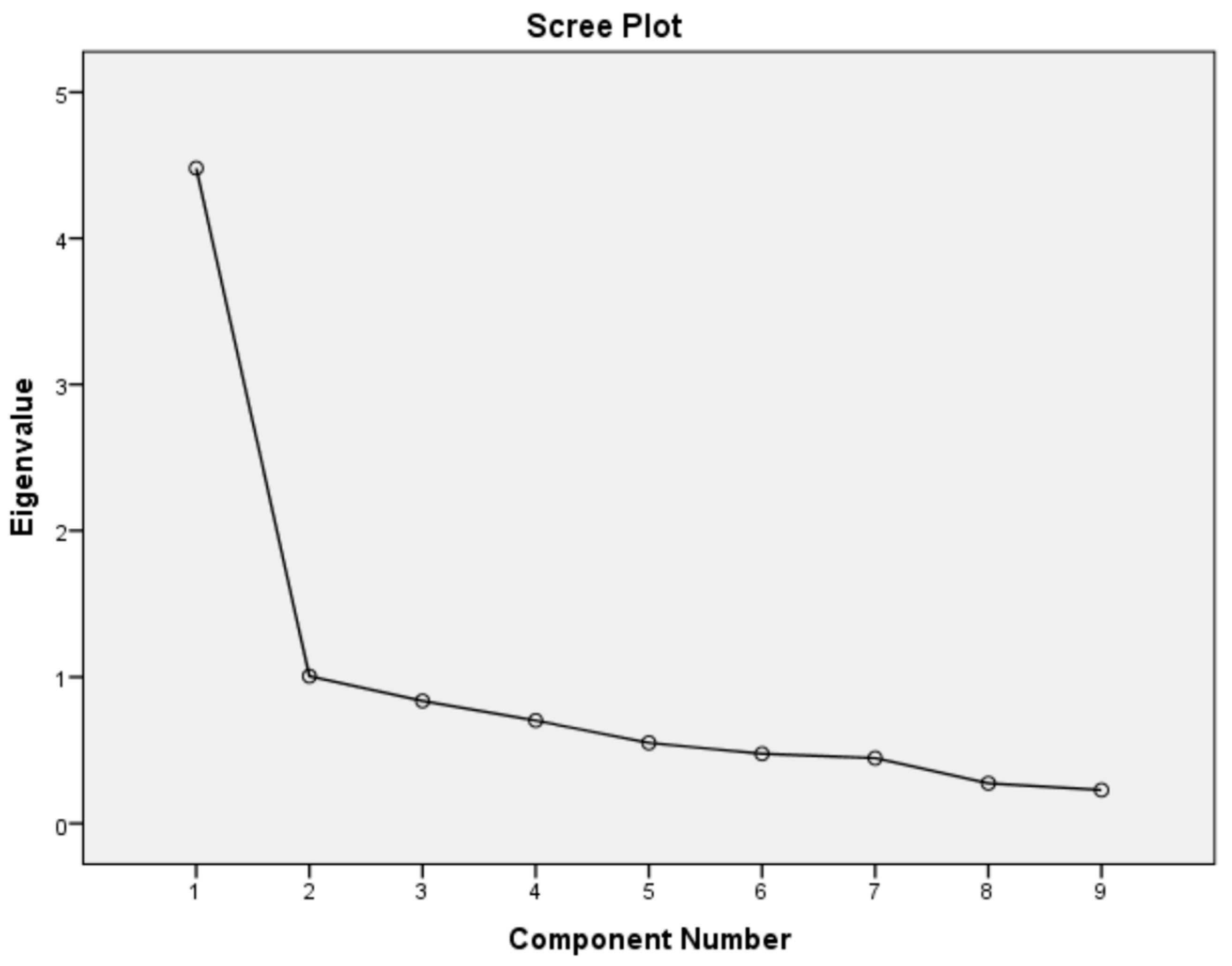
Table A2.
Rotated component matrix of the principal components underlying Hungarian minority students’ difficulties with the Slovak language.
Appendix G
Table A3.
Total variance explained by the principal components underlying teachers’ opinions on classroom teaching conditions.
Table A4.
Rotated component matrix of the principal components underlying teachers’ opinions on classroom teaching conditions.
Appendix H
Figure A2.
Scree plot showing the principal components underlying the learning organization of Slovak language classes.
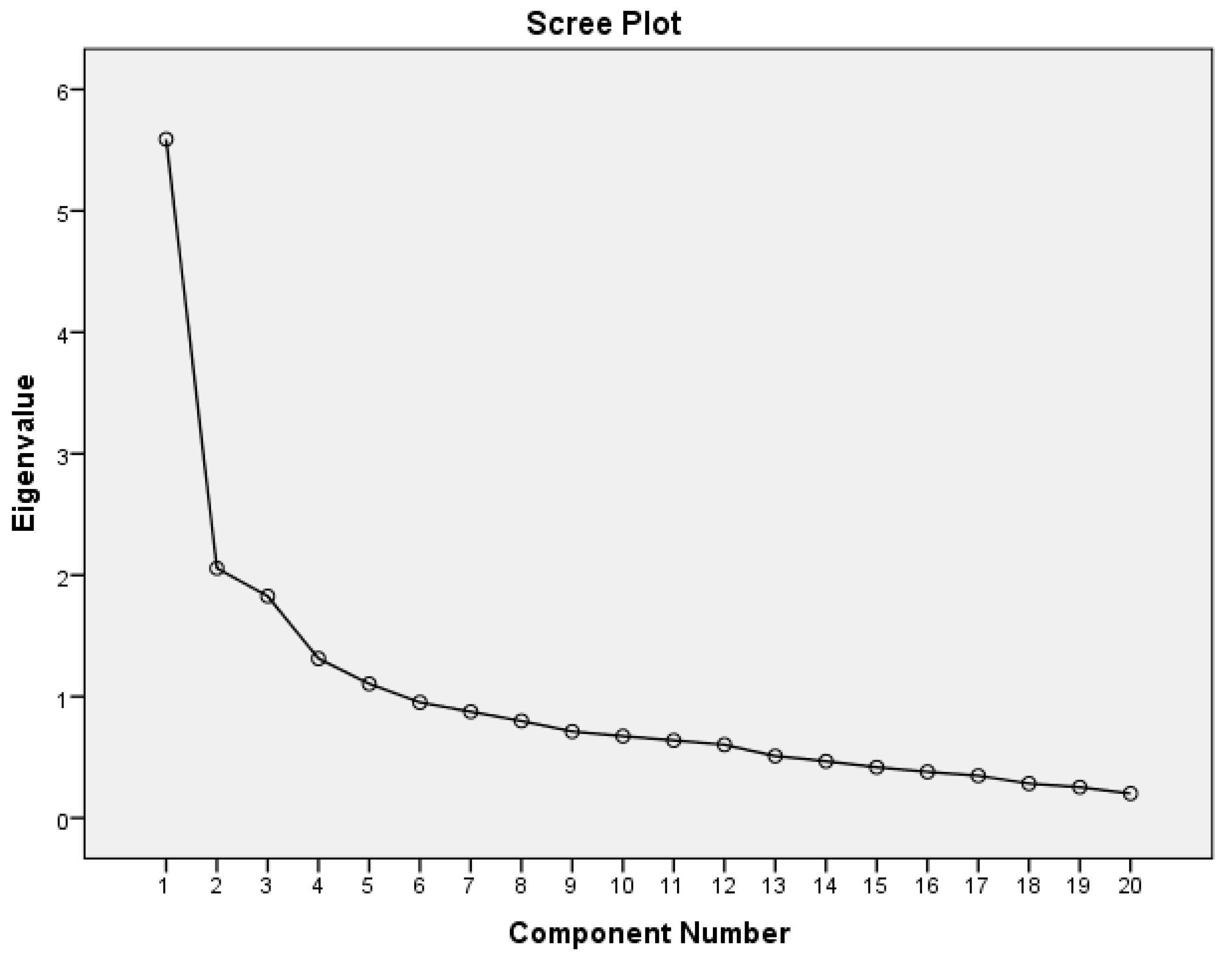
Table A5.
Total variance explained by the principal components underlying the learning organization of Slovak language classes.
Table A6.
Rotated component matrix of the principal components underlying the learning organization of Slovak language classes.
Appendix I
Figure A3.
Scree plot showing the principal components underlying Slovak language teaching methodology.
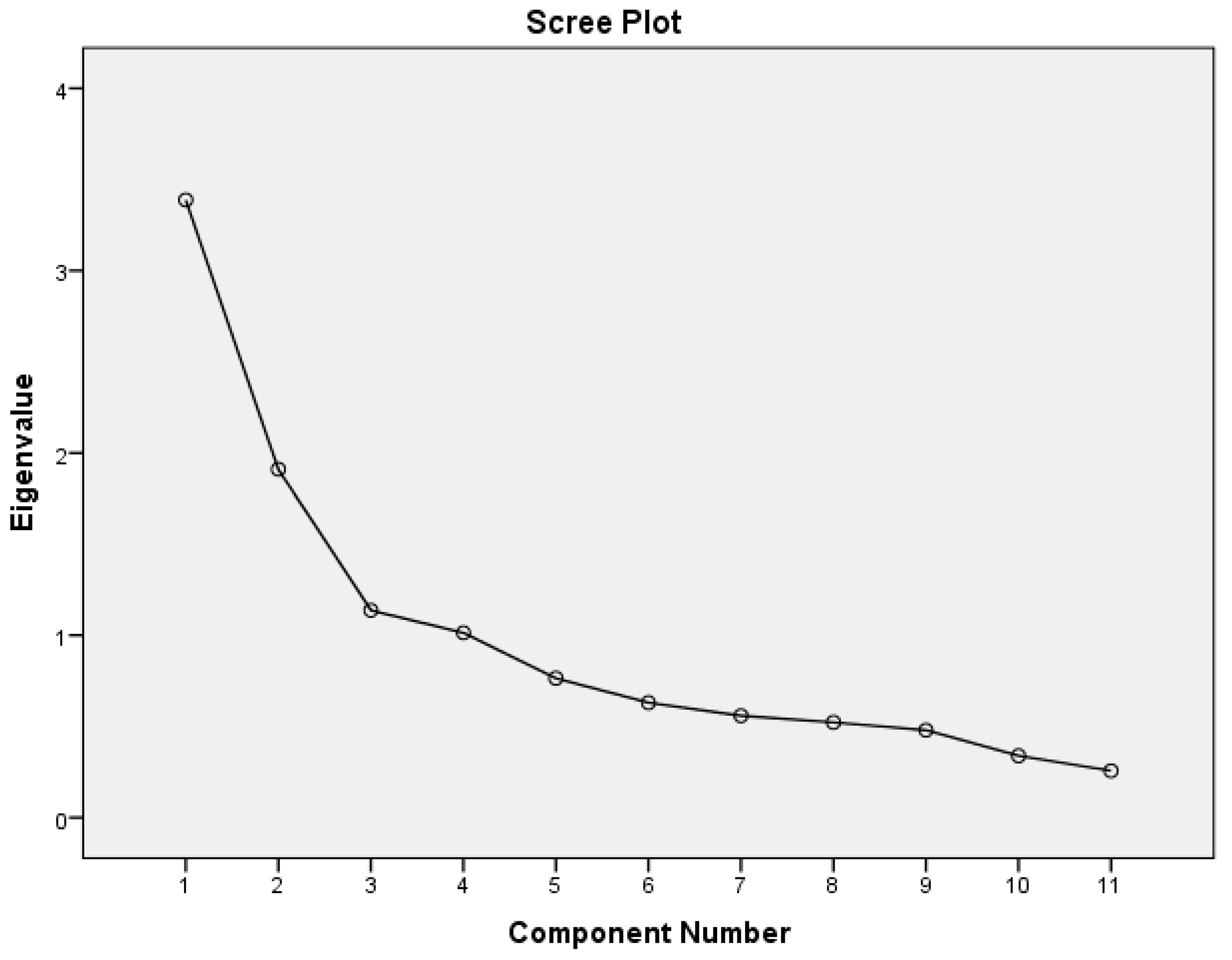
Table A7.
Total variance explained by the principal components underlying Slovak language teaching methodology.
Table A8.
Rotated component matrix of the principal components underlying Slovak language teaching methodology.
References
- Act No. 245. (2008). Coll. on education. Available online: https://www.slov-lex.sk/ezbierky/pravne-predpisy/SK/ZZ/2008/245/ (accessed on 11 January 2026).
- Act No. 415. (2021). Coll. on the use of languages of national minorities in official communication. Available online: https://www.slov-lex.sk/ezbierky/pravne-predpisy/SK/ZZ/2021/415/ (accessed on 11 January 2026).
- Allport, G. W. (1935). Attitudes. In C. A. Murchinson (Ed.), A handbook of social psychology (pp. 798–844). Clark University Press. [Google Scholar]
- Byram, M. (2020). Teaching and assessing intercultural communicative competence: Revisited. Multilingual matters. [Google Scholar]
- Cenoz, J. (2009). Towards multilingual education: Basque educational research from an international perspective. Multilingual Matters. [Google Scholar]
- Council of Europe. (2020). Common European framework of reference for languages: Learning, teaching, assessment—Companion volume. Council of Europe Publishing. [Google Scholar]
- Cummins, J. (2014). Bilingualism, language profiency, and metalinguistic development. In Childhood bilingualism (pp. 57–73). Psychology Press. [Google Scholar]
- Cummins, J. (2021). Rethinking the education of multilingual learners: A critical analysis of theoretical concepts (Vol. 19). Multilingual Matters. [Google Scholar]
- CVTI SR. (n.d.). Database of Slovak educational institutions. Available online: https://www.cvtisr.sk (accessed on 10 December 2024).
- Darvin, R., & Norton, B. (2014). Social class, identity, and migrant students. Journal of Language, Identity & Education, 13(2), 111–117. [Google Scholar] [CrossRef] [Scilit]
- Despagne, C. (2013). Indigenous education in Mexico: Indigenous students’ voices. Diaspora, Indigenous, and Minority Education, 7(2), 114–129. [Google Scholar] [CrossRef] [Scilit]
- Dixon, P., Humble, S., Gittins, L., Seery, F., & Counihan, C. (2025). Evidence for language policy in government pre-primary schools in Nigeria: Cross-language transfer and interdependence. Education Sciences, 15(9), 1197. [Google Scholar] [CrossRef] [Scilit]
- Domonkosi, Á. (2007). Attitűd, értékítélet, minősítés: Az értékszempont érvényesülése a nyelvi-nyelvhasználati reflexiókban [Attitude, value judgment, and evaluation: The role of value perspectives in reflections on language and language use]. Acta Academiae Paedagogicae Agriensis, Sectio Linguistica Hungarica, 34, 38–54. [Google Scholar]
- Duibhir, P. Ó. (2019). Bilingual education in minority language contexts: When a high level of linguistic competence is not enough. ELIA: Estudios de Lingüística Inglesa Aplicada, (1 Monogr.), 39–64. [Google Scholar] [CrossRef] [Scilit]
- Ellis, R. (2003). Task-based language learning and teaching. Asian Journal of English Language Teaching, 13, 125–129. [Google Scholar]
- Gardner, R. C. (1985). Social psychology and second language learning: The role of attitudes and motivation. Edward Arnold. [Google Scholar]
- Gardner, R. C. (2001). Integrative motivation and second language acquisition. In Motivation and second language acquisition (Tech. Rep. No. 23). University of Hawaii, Second Language Teaching and Curriculum Center. [Google Scholar]
- Grin, F. (2003). Language policy evaluation and the European charter for regional or minority languages. Springer. [Google Scholar]
- Guarda, M. (2025). Fostering educational change at the intersection of macro-level institutional narratives and micro-level classroom experiences. Education Sciences, 15(4), 472. [Google Scholar] [CrossRef] [Scilit]
- Holec, H. (1979). Autonomy and foreign language learning. Council of Europe. [Google Scholar]
- Jávorffy-Lázok, A. (2025). Hungarian higher education beyond Hungary’s borders as a geostrategic instrument. Social Sciences, 14(8), 459. [Google Scholar] [CrossRef] [Scilit]
- Kamusella, T. (2008). The politics of language and nationalism in modern central Europe. Springer. [Google Scholar]
- Lanstyák, I. (2000). A magyar nyelv Szlovákiában [The Hungarian language in Slovakia] (No. III). Osiris Kiadó–Kalligram Könyvkiadó–MTA Kisebbségkutató Műhely. [Google Scholar]
- Nagy, E. K. (2025). The education of Roma students: Integrated education and teacher preparedness in Hungarian-language schools. Education Sciences, 15(4), 454. [Google Scholar] [CrossRef] [Scilit]
- Norton, B. (2013). Identity and language learning: Extending the conversation. Multilingual matters. [Google Scholar]
- Price, A. R., & Tamburelli, M. (2016). Minority language abandonment in Welsh-medium educated L2 male adolescents: Classroom, not chatroom. Language, Culture and Curriculum, 29(2), 189–206. [Google Scholar] [CrossRef] [Scilit]
- Skehan, P. (1998). A cognitive approach to language learning. Oxford University Press. [Google Scholar]
- Tódor, E. M., Tódor, I., & Tankó, E. (2024). Romániai magyar középiskolások másodnyelvű szocializációja [Second language socialisation of Hungarian secondary school students in Romania]. Presa Universitară Clujeană. [Google Scholar]
- Vančo, I. (2017). A szlovák nyelv tanítása szlovákiai magyar tanítási nyelvű iskolákban: Általános helyzetkép [Teaching the Slovak language in Hungarian-medium schools in Slovakia: A general overview]. Magyar Nyelvőr, 141(3), 272–291. [Google Scholar]
- Vančo, I. (2019). A szlovák nyelvi készségek kialakítása a szlovákiai magyar tanítási nyelvű iskolák alsó tagozatán [Developing Slovak language competencies at the first stage of Hungarian-language primary schools in Slovakia]. Magyar Nyelvőr, 143(2), 138–150. [Google Scholar]
- Vygotsky, L. S., & Cole, M. (1978). Mind in society: Development of higher psychological processes. Harvard university press. [Google Scholar]
- Zimmerman, B. J. (2002). Becoming a self-regulated learner: An overview. Theory into Practice, 41(2), 64–70. [Google Scholar] [CrossRef] [Scilit]

Disclaimer/Publisher’s Note: The statements, opinions and data contained in all publications are solely those of the individual author(s) and contributor(s) and not of MDPI and/or the editor(s). MDPI and/or the editor(s) disclaim responsibility for any injury to people or property resulting from any ideas, methods, instructions or products referred to in the content. |
© 2026 by the authors. Licensee MDPI, Basel, Switzerland. This article is an open access article distributed under the terms and conditions of the Creative Commons Attribution (CC BY) license.