


Abstract
Hands-on engineering design can help bridge the gap between theoretical coursework and real-world engineering practice, particularly during the middle years of undergraduate programs. This paper presents the implementation and outcomes of an open-ended final project in ELEC 310: Embedded Systems Design at the University of San Diego. Student teams designed and prototyped smart environmental monitoring systems using STM32 microcontrollers, selecting sensors and defining system objectives under realistic constraints. Project outcomes were evaluated using prototype demonstrations, team technical reports, and post-project student reflections analyzed through inductive thematic analysis. Reflections and project artifacts suggest that debugging and hardware–software integration functioned as key learning mechanisms through which students developed system-level thinking while also supporting teamwork and confidence. Students also reported common challenges encountered in embedded systems development, including peripheral integration, timing behavior, and intermittent hardware instability. Overall, the findings suggest that tightly structured but open-ended embedded-systems projects can provide authentic design experiences that promote both technical and professional skill development.
1. Introduction
Engineering education has long emphasized theoretical learning, particularly in sophomore and junior years. However, bridging the gap between theoretical knowledge and practical application remains a challenge. First-year design courses and senior capstone projects often provide hands-on learning opportunities. In contrast, the middle years of undergraduate engineering education frequently lack comparable experiences. This gap has been described as a “missing middle” in experiential learning. Graham (2018) documents this curricular pattern across leading institutions, noting a concentration of design-focused learning at the beginning and end of programs.
This misalignment contributes to a growing theory-practice divide. According to a 2021 report by the American Association of Colleges and Universities (AAC&U), 49% of employers believed that recent engineering graduates were “very well prepared” to apply their knowledge in real-world settings without additional training (Association of American Colleges and Universities [AAC&U], 2021). The discrepancy stems in part from traditional curricula that prioritize technical accuracy and problem-solving in idealized scenarios, but underemphasize open-ended design, systems integration, or decision-making under uncertainty (Ibrahim, 2025).
Project-based learning (PBL) and problem-based learning approaches have been shown to enhance student engagement, conceptual understanding, and professional skill development across engineering disciplines. Recent systematic reviews and large-scale studies report that PBL environments improve students’ problem-solving abilities, teamwork skills, and capacity to apply theoretical knowledge in authentic contexts (J. Chen et al., 2020; Doulougeri et al., 2024; Hidayat et al., 2024; Ingale et al., 2024; Lavado-Anguera et al., 2024; Ramírez de Dampierre et al., 2024; Tembrevilla et al., 2024). These approaches are particularly effective when students are given autonomy over design decisions and are required to integrate multiple technical components into a cohesive system.
More recent engineering education research reinforces this concern, emphasizing the need for structured yet open-ended design experiences during the middle years of undergraduate programs to support skill integration and professional identity development (de Graaff & Kolmos, 2023; Forbes et al., 2024; Ibrahim, 2025; Nolen et al., 2024; Tembrevilla et al., 2024).
These benefits are well documented, and the theory–practice gap remains a concern in traditional curricula. For this reason, ELEC 310: Embedded Systems Design was intentionally aligned with project-based learning principles. To create a meaningful and realistic design experience, the course incorporated an open-ended final project where students designed a “Smart Environmental Monitoring System.” This project allowed students to integrate sensors and microcontrollers to monitor environmental factors such as temperature and air quality. Students had significant autonomy in selecting components, defining system objectives, and overcoming real-world engineering constraints.
Embedded systems design represents a promising context for project-based learning due to its inherent complexity, including hardware–software integration, real-time constraints, debugging ambiguity, and susceptibility to hardware failures. Prior work on laboratory-based engineering education emphasizes that hands-on hardware projects expose students to authentic engineering challenges that are difficult to replicate through simulations or narrowly scoped laboratory exercises, particularly when systems must be designed, integrated, and debugged under realistic constraints (Feisel & Rosa, 2005). These characteristics make embedded systems well suited for addressing the “missing middle” in engineering curricula.
This study aims to evaluate the outcomes of this project using student reflections, technical reports, and prototype evaluations. Specifically, it adopts a qualitative interpretive approach grounded in case study methodology (Yin, 2018), examining how students experience debugging and hardware–software integration within a bounded instructional context. The goal is not statistical generalization, but analytic insight into learning mechanisms operative in embedded-systems design education, a scope consistent with qualitative engineering education research (Walther et al., 2013). By analyzing these elements, the paper explores how open-ended design projects contribute to the development of engineering skills, problem-solving capabilities, and confidence in undergraduate students, while also serving as formative preparation for subsequent capstone-level design experiences.
While capstone design courses typically emphasize synthesis of knowledge at the end of an engineering program, the present study targets a different pedagogical function. This project is implemented in a junior-level course, where students are still developing technical independence and system-level thinking. Unlike capstone experiences, which often involve multidisciplinary scope and extended timelines, this work focuses on structured skill development within a guided design environment. The findings demonstrate that authentic design experiences can be achieved earlier in the curriculum, addressing the “missing middle” in engineering education.
This paper contributes to the engineering education literature in three ways. While prior studies have examined project-based learning in capstone and other structured instructional contexts, fewer studies have empirically examined how debugging and hardware–software integration function as learning mechanisms within constrained, junior-level embedded systems environments.
First, this study provides a qualitative account of how students experience debugging and hardware–software integration as central learning processes in embedded systems design. Second, it provides evidence that a tightly scaffolded, time-bounded project can support meaningful design experiences in the middle years of undergraduate engineering education. Third, it offers empirical insight into the alignment between observable technical outcomes and student-reported learning experiences.
Theoretical Framework
This study is guided by Experiential Learning Theory (ELT), which describes learning as a recurring cycle of concrete experience, reflective observation, abstract conceptualization, and active experimentation (Kolb, 1984).
Experiential learning has become an important theoretical perspective in engineering education because engineering knowledge is often developed through design activities, experimentation, troubleshooting, and iterative refinement rather than through passive instruction alone (Tembrevilla et al., 2024). Prior qualitative engineering education research has also used ELT to examine how students interpret project experiences and transform those experiences into meaningful learning (Chan, 2012).
The embedded-systems course examined in this study was intentionally designed to provide students with multiple opportunities to engage in experiential learning through lectures, laboratory activities, testing and debugging exercises, and an open-ended design project. These activities required students to apply engineering knowledge in practical contexts, reflect on design decisions and project outcomes, and iteratively refine their solutions. The final project provided an opportunity for students to apply, test, and refine ideas developed through earlier course experiences.
Within this framework, ELT provides the theoretical lens for understanding how students learned through participation in the course and how they interpreted those learning experiences. Student reflections are viewed as evidence of how learners made meaning from their experiences, and the thematic analysis was used to identify patterns in how students described their technical development, problem-solving processes, teamwork experiences, and confidence growth. ELT therefore provides the theoretical foundation linking the study’s research questions, learning environment, qualitative analysis, and interpretation of findings.
To guide this study, the following research questions are addressed:
- RQ1: How do students describe their experiences with debugging and hardware–software integration in an open-ended embedded systems design project?
- RQ2: What themes emerge from student reflections regarding confidence development and professional skill growth?
- RQ3: In what ways does a junior-level embedded systems project address the experiential learning gap in the middle years of undergraduate engineering education?
These research questions are addressed through analysis of student reflections and technical project outcomes.
The rest of the paper is organized as follows. Section 2 describes the systems and methods used in the project. Section 3 presents the results. Section 4 discusses the findings in relation to existing literature. Section 5 concludes the paper, and Section 6 outlines limitations and directions for future work.
2. Systems and Methods
2.1. Course and Project Context
We piloted this project in a junior-level course: ELEC 310 Embedded Systems Design. This course is a required course for electrical engineering majors at the University of San Diego. It introduces students to fundamental concepts of embedded systems, including General-Purpose Input/Output (GPIO), Analog-to-Digital Converters (ADCs), Digital-to-Analog Converters (DACs), timers, and interrupts. This course is usually taken by junior and senior students.
The project was intentionally designed as a structured yet open-ended experience appropriate for junior-level students. It incorporated staged deliverables, defined technical constraints, and guided checkpoints to support progressive skill development. The five-week duration and constrained embedded-systems domain required students to focus on hardware–software integration, debugging, and system-level reasoning within a manageable scope.
This design aligns with core principles of project-based learning, including open-ended problem definition, sustained inquiry, integration of multiple technical concepts, and iterative refinement under realistic constraints. Compared to traditional laboratory-based courses, which typically involve well-defined procedures and expected outcomes, this project required students to navigate ambiguous system behavior, make design trade-offs, and iteratively refine their solutions.
In contrast to capstone design courses, which often involve longer timelines, broader multidisciplinary scope, and less structured guidance, this project emphasizes tighter scaffolding, targeted technical integration, and bounded open-ended challenges within a constrained embedded-systems domain. These design choices ensure that the project remains both achievable and technically meaningful, while supporting the development of system-level thinking and debugging skills.
Building on this structure, the project also reflects core elements of engineering design as defined by ABET. Students defined system objectives and functional requirements during the proposal stage, iteratively developed and integrated hardware and software components during implementation, and evaluated system performance under constraints such as budget, timing behavior, and peripheral limitations. These processes required students to make design trade-offs and refine their solutions throughout the staged project deliverables.
Table 1 summarizes how major project activities were aligned with representative ABET student outcomes. Rather than assessing outcomes through isolated assignments, the project was designed so that students demonstrated multiple outcomes through interconnected stages of the engineering design process, including problem definition, system development, testing, and teamwork.
Table 1.
Alignment of Project Activities with Representative ABET Student Outcomes.
The course structure combines three weekly lectures and a three-hour laboratory session. Students engage in hands-on lab assignments such as interfacing with LEDs and analog-to-digital conversion, which build foundational skills. Labs prepare students for the final project, where they integrate multiple concepts into a cohesive design.
Beyond reinforcing concepts introduced in ELEC 310, the project required students to synthesize knowledge acquired across multiple areas of the electrical engineering curriculum. Successful project implementation drew upon prior experience with programming, digital logic, circuit analysis, electronics, and laboratory-based experimentation, while also requiring students to integrate these skills within a complete embedded system. Students combined sensor interfacing, software development, hardware integration, debugging, testing, and technical communication to develop functional prototypes, reflecting the interdisciplinary and integrative nature of contemporary embedded-systems education (Junior et al., 2020).
Key course objectives include:
- Writing and debugging microcontroller programs in C.
- Interfacing sensors with microcontrollers for real-time monitoring and control.
- Utilizing peripheral components for embedded system functionality.
- Documenting technical designs and presenting outcomes effectively.
- Approach and solve an open-ended design problem in a small group.
All of the course objectives, with the exception of number 5, were addressed through active-learning lectures and problem sets. The team-based design project that is the subject of this paper specifically addressed the 5th objective, however, it also reinforced learning from the other objectives. Additionally, the project addressed the following ABET-accreditation program outcomes:
- An ability to identify, formulate, and solve complex engineering problems by applying principles of engineering, science, and mathematics.
- An ability to apply engineering design to produce solutions that meet specified needs with consideration of public health, safety, and welfare, as well as global, cultural, social, environmental, and economic factors.
- An ability to function effectively on a team whose members together provide leadership, create a collaborative and inclusive environment, establish goals, plan tasks, and meet objectives.
- An ability to develop and conduct appropriate experimentation, analyze and interpret data, and use engineering judgment to draw conclusions.
These outcomes are reflected in specific elements of the project design. Students engaged in identifying and solving complex engineering problems through open-ended system development, applied engineering design under constraints such as budget and technical requirements, and demonstrated teamwork, communication, and experimental skills through collaborative development, presentations, and system testing.
The final project constituted 25% of the course grade and spanned five weeks. Students worked in teams of 2–3 to design and prototype their systems. In the 2025 course offering, there were 15 students enrolled in the course, including 4 female students and 11 male students. All students were majoring in electrical engineering. The instructor, a faculty member in Electrical Engineering, was experienced in teaching engineering design.
2.2. Design Challenge
Teams of students were instructed to design and prototype a smart device using the STM32L476RG microcontroller Nucleo board to monitor environmental parameters such as temperature, humidity, light levels, and air quality. (The STM32L476RG Nucleo is a development board based on an ARM Cortex-M4 microcontroller and is widely used in embedded-systems instruction.) This system processes these inputs to provide real-time data and alerts based on environmental thresholds. The system is intended for home automation systems, where it helps residents maintain optimal living conditions. Teams are free to use any sensor, whether specified or not. The method of processing sensor data and the manner of alerting is also up to the teams, allowing for creative and technical freedom.
The project intentionally included realistic sources of technical friction, such as peripheral configuration errors, communication instability, and integration challenges. These features encouraged iterative debugging and system-level reasoning rather than linear implementation.
In addition to project implementation, students were expected to apply several core embedded-systems concepts throughout the design process. These included sensor interfacing and signal acquisition using ADCs, interrupt-driven event handling, timer-based scheduling, peripheral communication, modular firmware design, and hardware–software integration. Students were also required to consider timing behavior, resource constraints, system reliability, and interactions between software and hardware. These requirements encouraged application of foundational embedded-systems concepts within an open-ended engineering design context (Junior et al., 2020).
Design constraints included:
- Budget: Teams were allowed to utilize existing materials from their lab kits or repurpose components from other projects. Teams had a $30 limit for purchasing additional components. Free or repurposed materials were assigned a market value for budget accounting.
- Technical Requirements: Projects were required to incorporate at least two of the following topics: GPIO, Interrupts, Timers, ADC, or DAC. Using three or more of these topics was eligible for bonus credit.
- Safety: All designs were required to meet standard electronic safety guidelines.
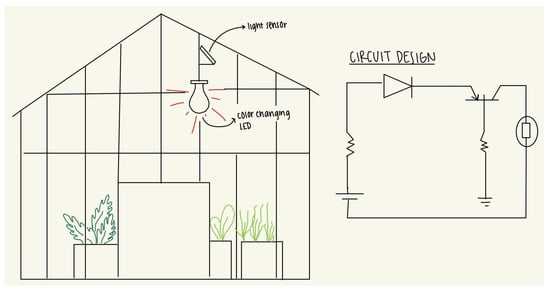
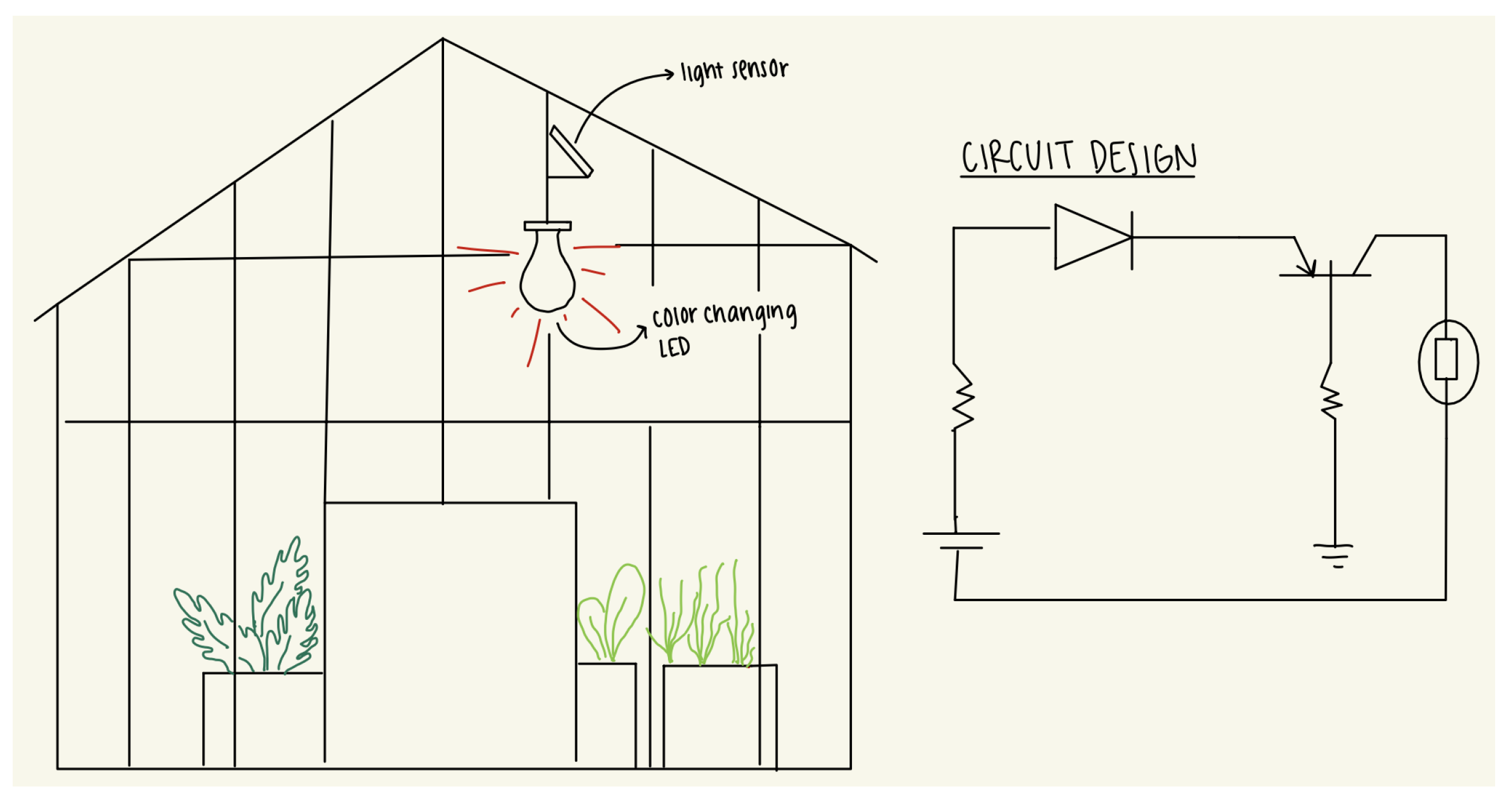
Figure 1 provides an example schematic from a team project, illustrating a representative design approach used to integrate sensing and output components prior to hardware implementation.
Figure 1.
Example schematic of a student-designed embedded system, illustrating the planned integration of a light-dependent resistor sensor and RGB LED output prior to hardware implementation.
2.3. Deliverables and Timeline
The project spanned a five-week period, resulting in a final in-class demonstration. Students participated in dedicated laboratory sessions to support in-class development, but were also expected to work independently between meetings. Deliverables were structured to guide teams through a progressive and open-ended engineering design process from early concept development through implementation, documentation, and reflection. In the first week of the timeline, students submitted a preliminary project proposal. Final presentations, technical reports, and supporting materials were submitted at the end of the project period. The project timeline is as follows:
- Project Proposal (week 1): A short written document in which teams introduced their proposed project, outlined the problem to be addressed, described their initial solution concept, and identified potential technical or logistical challenges. This proposal also included preliminary design sketches or block diagrams and served as a foundation for subsequent development.
- Design Review Presentation (week 3): A short in-lab presentation where teams showcased early-stage prototypes, described key design decisions made since the proposal, and received formative feedback from the instructor. This review emphasized iterative improvement and encouraged students to reflect on test results or technical barriers encountered so far.
- Working Prototype and Presentation (week 4): A fully functional embedded system prototype demonstrated live in class. The prototype had to successfully integrate hardware and software components to monitor environmental data and respond with appropriate outputs. Teams also prepared a short oral overview of system features, use cases, and interface design.
- Technical Report (week 5): A formal written report submitted by each team that documented the entire design and development process. It included a clear problem statement, system objectives, circuit schematics, hardware–software integration strategies, annotated code snippets, debugging logs, testing results, and recommendations for future improvement or commercialization.
- Project Video (week 5): A short (3–5 min) recorded video demonstrating the project’s functionality and explaining its features and implementation. All team members were required to contribute to the narration or demonstration.
- Peer and Self-Evaluation (week 5): A confidential feedback form completed individually by each student, assessing their own contribution and those of their team members. Criteria included teamwork, technical effort, communication, reliability, and leadership. These evaluations helped ensure fair grading and encouraged personal accountability.
- Personal Reflection (week 5): Each student submitted written responses to two structured reflection prompts. The first asked about their most valuable learning experiences during the project, and the second explored personal challenges faced and how they were overcome. Each response was limited to 200 words and encouraged awareness of both technical and non-technical growth.
It is important to note that while each deliverable is assigned an estimated duration or due date, these are provided primarily as pacing guidelines to help students organize their workflow. In practice, students were encouraged to manage their time flexibly and pursue overlapping tasks when appropriate.
2.4. Grading
The overall project grade was distributed evenly across multiple components. Assessment criteria included technical complexity and creativity of the project, presentation and demonstration quality, quality and depth of the technical report, peer and self-assessment, and individual reflection, each weighted equally.
Each deliverable outlined in the project timeline contributed to the final grade, reinforcing the importance of sustained engagement throughout the design process. In addition to team-based outputs, individual contributions were assessed through confidential peer and self-evaluation forms, which provided insight into collaboration dynamics, effort distribution, and team communication. This grading approach ensured a holistic evaluation of both technical skills and professional competencies such as teamwork, accountability, and reflective learning.
2.5. Qualitative Analysis of Student Reflections
Student reflections were analyzed using an inductive thematic analysis approach following the framework proposed by (Braun & Clarke, 2006). Qualitative thematic analysis is widely used in engineering education research to examine student learning experiences in authentic instructional settings (Case & Light, 2020; Walther et al., 2013). This approach is appropriate here because the research questions concern how students interpret and make meaning of complex design processes such as debugging and hardware–software integration, which cannot be adequately captured through quantitative measures alone.
The dataset consisted of 15 student reflections totaling approximately 3000 words (approximately 200 words per student). While modest in size, this dataset is consistent with qualitative engineering education research in bounded course contexts (Walther et al., 2013). The emphasis of this study is on analytical insight and interpretive depth within a bounded case, which is the appropriate scope for a single-course qualitative study of this kind (Yin, 2018).
The primary coding and analysis were conducted by the course instructor, who has subject-matter expertise in embedded systems and engineering education.
While this dual role may introduce potential bias, it also supports accurate interpretation of technically specific student descriptions that may be difficult for an external coder to assess. This perspective aligns with prior work in engineering education research that recognizes domain expertise as a component of analytic trustworthiness (Walther et al., 2013).
The analysis proceeded through multiple iterative phases. First, all reflections were read in full to achieve familiarization with the dataset. Initial codes were then generated to capture salient ideas related to debugging, system integration, use of prior knowledge, confidence development, and teamwork. These codes were subsequently reviewed and grouped into broader candidate themes based on conceptual similarity and recurrence across reflections. Themes were refined through repeated comparison with the original data to ensure internal coherence and clear distinction. Higher-order synthesis was reserved for the discussion section.
Analytic decisions were documented throughout the coding process, and the instructor’s dual role was explicitly acknowledged. Representative anonymized quotations were included for each theme to ensure alignment between interpretations and the underlying data.
Table 2 provides representative examples illustrating how initial codes derived from student reflections were grouped into broader themes during analysis. Multiple related codes often contributed to a single theme, reflecting recurring patterns across participants. The examples are intended to illustrate the analytic process and theme development rather than provide an exhaustive list of all codes.
Table 2.
Representative Examples of Code and Theme Development.
Negative or divergent cases that did not align with dominant patterns were examined during theme refinement but did not warrant separate themes due to limited recurrence. Result-level themes reported in Section 3 describe recurring patterns identified directly from student reflections, while the discussion synthesizes these themes into higher-order constructs that reflect interpretive analysis.
This study adopts a reflexive thematic analysis approach, in which themes are understood as researcher-generated interpretations rather than objective features inherent in the data. Accordingly, coding agreement is not treated as a meaningful indicator of analytic quality. Intercoder reliability was therefore not employed, consistent with Braun and Clarke (2022) and related qualitative methodology literature (Halpin, 2024; O’Connor & Joffe, 2020), which caution against using coding consensus as a quality criterion in interpretive approaches. Instead, trustworthiness was supported through transparent documentation of analytic decisions, acknowledgment of researcher positionality, and iterative comparison between codes, themes, and raw data.
3. Results
This section presents the outcomes of the embedded-systems final design project implemented in ELEC 310. Results are organized into two parts: (i) technical outcomes of student projects and (ii) qualitative results derived from student reflections. The procedures used to analyze student reflections are described in Section 2; only the results of that analysis are reported here.
3.1. Project Technical Outcomes
3.1.1. Project Participation and Scope
A total of 15 students completed the final project in ELEC 310. Students worked in small teams of two to three members, resulting in six distinct embedded-system prototypes. The resulting projects spanned a range of application domains, including environmental monitoring, temperature regulation, assistive safety devices, and automated control systems.
3.1.2. Summary of Implemented Projects
Across the course, students implemented embedded systems using various peripherals, including I2C (Inter-Integrated Circuit) which is a serial communication protocol, and PWM (Pulse-Width Modulation) which is used to control signals such as motor speed.
Representative examples include:
- OLED-based temperature monitoring and control systems integrating ADC sensing and fan actuation,
- environmental monitoring systems using light or temperature sensors with visual feedback,
- an assistive obstacle-detection system employing an ultrasonic sensor and audible alerts,
- automated cooling systems using threshold-based logic and actuator control.
Table 3 summarizes the final project prototypes, highlighting the range of application goals, peripheral configurations, and demonstration outcomes across teams.
Table 3.
Summary of final embedded-system project prototypes, key peripherals, and demonstration outcomes (2025 cohort).
Despite differences in application focus, all projects required students to integrate sensing, processing, and actuation within a constrained embedded environment.
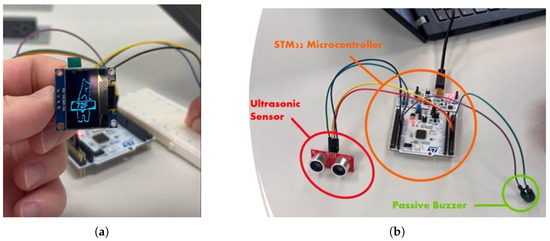
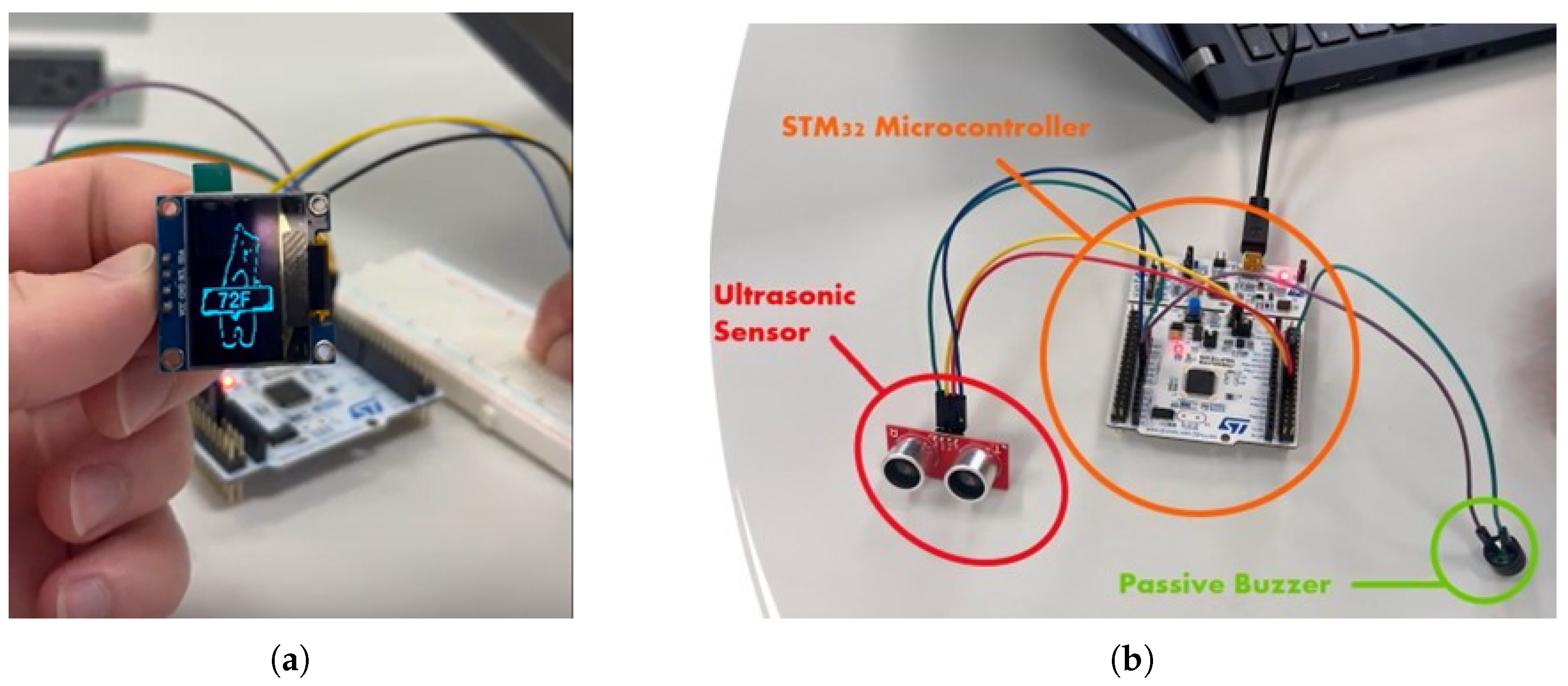
Figure 2 shows representative final project prototypes developed by student teams, illustrating the diversity of embedded-system applications implemented in the course.
Figure 2.
Representative final project prototypes developed by student teams, illustrating diverse embedded-system applications implemented in ELEC 310. (a) Environmental monitoring system with OLED display. (b) Assistive obstacle-detection system (smart cane).
3.1.3. Hardware Peripherals and System Features
Across all submitted projects, students demonstrated integration of multiple embedded-system peripherals, including:
- Sensors: analog temperature sensors, light sensors, and ultrasonic distance sensors,
- Displays: OLED displays interfaced via I2C communication,
- Actuators: DC fans, LEDs, buzzers, and RGB indicators,
- User Interfaces: push buttons and simple input controls using GPIO and interrupts.
On the software side, projects commonly employed ADC configuration and scaling, I2C communication, timer-based delays or PWM control, interrupt-driven logic (where system behavior is triggered by external or timed events rather than continuous polling), watchdog timers (hardware timers that automatically reset the system if the firmware becomes unresponsive), and modular firmware structures.
3.1.4. Definition of Functional Success
A project was considered functionally successful if it met the following criteria:
- correct acquisition of sensor data using ADC or digital interfaces,
- meaningful real-time output via displays, LEDs, or actuators,
- stable operation during final demonstration without crashes or unsafe behavior,
- clear correspondence between sensor input and system response.
Projects demonstrating core functionality with intermittent failures or incomplete features were classified as partially successful.
3.1.5. Demonstration Outcomes
During final demonstrations, most teams achieved fully functional systems integrating sensing, processing, and output components as shown in Table 3. One project demonstrated partial functionality due to intermittent display instability but still met the minimum system-operation requirements. No projects failed completely; all teams demonstrated at least one working subsystem during the final evaluation.
These outcomes indicate that the open-ended design format was achievable while still presenting meaningful technical challenges appropriate for a junior-level embedded-systems course.
3.1.6. Common Technical Challenges
Across projects, students encountered recurring technical difficulties characteristic of real-world embedded-system development:
- I2C communication issues, particularly initialization order and display stability;
- ADC scaling and calibration challenges when converting raw values into physical units;
- power and grounding issues when driving external actuators such as fans or buzzers;
- timing and state-management bugs related to blocking delays and peripheral interactions;
- integration complexity when merging code generated by STM32CubeMX with custom logic.
These challenges were typically resolved through iterative debugging, hardware rewiring, references to datasheets, and incremental testing.
3.1.7. Summary of Technical Outcomes
To provide a quantitative summary of project outcomes, all six teams (100%) completed a working or partially working prototype. Five of six teams (83.3%) achieved fully functional systems meeting all design criteria, while one team (16.7%) demonstrated partial functionality due to intermittent display instability.
Further insight into system complexity is provided by the distribution of peripheral implementations across teams. All teams (100%) integrated ADC-based sensing; five of six teams (83.3%) used an I2C display peripheral; and four of six teams (66.7%) implemented interrupt-driven logic.
These outcomes provide descriptive evidence that the project was achievable within the constraints of a junior-level embedded systems course while still presenting meaningful technical challenges. These metrics are intended to characterize project outcomes rather than to serve as a causal measure of learning effectiveness.
3.2. Student Reflections: Qualitative Results
This subsection summarizes themes from post-project student reflections, focusing on how students described learning, technical challenges, and teamwork during the project. Reflections prompted students to describe their most valuable learning takeaways as well as the challenges they encountered and how they addressed them. The analysis focused on identifying recurring patterns in students’ descriptions of learning processes, technical challenges, and collaborative experiences.
3.2.1. Reflection Dataset Overview
Post-project reflections were collected from all 15 participating students following the final project demonstration. Reflections consisted of short written responses addressing learning outcomes and challenges experienced during the project. These reflections served as qualitative evidence of student perceptions regarding the learning value and technical demands of the open-ended embedded-systems design experience.
3.2.2. Result-Level Themes
Analysis of the reflections revealed several recurring themes that were consistently reported across students. These themes are presented below and supported with representative anonymized quotations (labeled R1–R15) drawn from students’ own reflections.
Theme 1: Debugging and Troubleshooting as Central Learning Activities
A dominant theme across reflections was the role of debugging and troubleshooting as a primary mechanism for learning. Students emphasized that resolving integration issues, timing errors, and unexpected system behavior significantly deepened their understanding of embedded systems.
“The biggest challenge I encountered was when integrating all the subsystem code. By slowing down and debugging step by step, I was eventually able to find the problem.”(Student R3)
“Testing hardware early and pacing ourselves helped us figure out why things weren’t working instead of rushing and making more problems.”(Student R11)
Students frequently described debugging as frustrating but ultimately valuable, reinforcing the importance of patience, iterative testing, and methodical problem-solving.
Theme 2: Integration of Hardware and Software Concepts
Students highlighted the challenge and learning value associated with integrating hardware peripherals and software components into a single functional system. Reflections emphasized coordinating sensors, displays, timers, and actuators within a constrained microcontroller environment.
“This project helped me understand how hardware and software interact and how important timing and code structure are when working with sensors.”(Student R5)
“Integrating multiple peripherals like the ADC, OLED display, and fan made everything we learned in lab come together.”(Student R8)
Theme 3: Use of Prior Knowledge, Datasheets, and Reference Materials
Many students reported relying heavily on prior laboratory exercises, datasheets, and reference materials to overcome project challenges. Revisiting earlier work was frequently cited as essential for successful system integration.
“We reused code from previous labs and modified it to fit our project, which helped us move forward when we didn’t know where to start.”(Student R9)
“Navigating STM32CubeMX files and datasheets was challenging at first, but it taught me how to work with professional documentation.”(Student R12)
Theme 4: Increased Confidence in Embedded Systems Skills
Students consistently reported increased confidence in their ability to design, implement, and troubleshoot embedded systems. The project was frequently described as a meaningful transition from guided laboratory work to independent system design.
“This project boosted my confidence in debugging and system-level thinking.”(Student R5)
“Being able to take an idea and turn it into a working system made me feel more prepared for future engineering projects.”(Student R14)
Theme 5: Teamwork, Communication, and Project Management
Many reflections emphasized the importance of teamwork, communication, and coordination in successfully completing the project. Students described learning to distribute tasks, manage time, and leverage team strengths.
“Clear communication and dividing responsibilities based on strengths made the project manageable.”(Student R6)
“Working with teammates who had different skill sets helped me learn faster and stay motivated.”(Student R10)
4. Discussion
The reflection results reveal how an open-ended embedded-systems design project supported both technical and professional learning outcomes. Students described learning that came from integrating subsystems, diagnosing unexpected behavior, and iterating toward stable performance, suggesting that debugging and hardware–software integration function as specific mechanisms through which students develop system-level understanding in embedded-systems design contexts.
4.1. Synthesis of Reflection Findings
Table 4 summarizes three higher-order constructs that synthesize the result-level themes reported in Section 3. These constructs represent interpretive groupings of student experiences rather than direct codes from the data.
Table 4.
Higher-Order Constructs Synthesized from Student Reflection Themes.
4.2. Alignment Between Technical Outcomes and Student Reflections
The qualitative themes identified from student reflections show alignment with the observed technical outcomes. This alignment serves as a form of triangulation between reflection-based themes and independently observed technical outcomes, supporting the interpretive validity of the qualitative findings. In addition to project outcomes, team technical reports provided supporting documentation of the debugging and integration challenges described in student reflections, further reinforcing this alignment across multiple data sources.
First, the theme of debugging and troubleshooting corresponds directly to the technical challenges encountered by students, including I2C communication instability, ADC calibration issues, and timing-related bugs. Students who emphasized debugging in their reflections were typically those who engaged in iterative problem-solving to resolve these issues.
Second, the theme of hardware–software integration is reflected in the fact that all teams integrated sensing, processing, and output components. The successful implementation of multi-peripheral systems across all projects supports the prominence of integration as a central learning experience.
Third, the theme of confidence development aligns with project outcomes, highlighting variation across teams. Students with fully functional systems reported higher confidence and satisfaction, whereas the partially functional team described more persistent technical uncertainty. While based on a small sample, this pattern suggests a potential relationship between successful system implementation and self-efficacy development (X.-Y. Chen et al., 2023; Power et al., 2025).
These findings are consistent with Experiential Learning Theory (ELT) (Kolb, 1984). Students’ reflections suggest that engagement with design challenges, iterative debugging, and hardware–software integration provided opportunities for students to develop understanding through direct experience and subsequent reflection.
4.3. Engineering Design Mindset
Student reflections suggest that the project supported the development of an engineering design mindset characterized by system-level thinking, iteration, and adaptation. Many students described learning to interpret datasheets, configure microcontroller peripherals, and simplify system designs to achieve reliable functionality. Building on prior laboratory code, example projects, and documentation allowed students to connect theoretical concepts to practical implementation.
Students also valued the autonomy inherent in the open-ended project structure. Several reflections emphasized that working with unfamiliar components, development environments, or incomplete documentation required additional research, experimentation, and design trade-offs. These experiences reinforced habits associated with professional embedded-systems practice, particularly the need to balance ideal functionality with practical constraints such as timing behavior, power limitations, and hardware availability.
These findings align with prior work demonstrating that project-based learning environments support system-level thinking and iterative design practices by requiring students to make and justify trade-offs under realistic constraints (J. Chen et al., 2020; Doulougeri et al., 2024). In embedded systems contexts, such practices are especially salient due to the tight coupling between hardware configuration and software behavior.
4.4. Navigating Complexity Through Problem-Solving
A second construct highlights students’ experiences navigating technical complexity. Debugging emerged as a central learning mechanism, with students frequently encountering integration challenges involving ADC scaling, I2C communication, timing behavior, and actuator control. Several students reported difficulties related to wiring errors, power distribution, and unexpected interactions between hardware and firmware generated through development tools, all of which required iterative testing and refinement.
Time management and coordination challenges were also reported by some students. Students described balancing competing academic demands and coordinating work across team members with different technical roles. In response, many teams adopted clearer communication practices, modular code development, and incremental testing strategies to manage complexity more effectively. These experiences are consistent with recent research showing that productive struggle, debugging, and iterative failure are central mechanisms for learning in engineering design education, particularly in project-based learning environments that require system integration and problem-solving under uncertainty (Ingale et al., 2024; Kapur, 2016; Lavado-Anguera et al., 2024; Ramírez de Dampierre et al., 2024; Swenson et al., 2024).
Rather than functioning solely as a technical obstacle, debugging emerged as the primary mechanism through which students developed system-level understanding, learned to manage complexity, and gained confidence in their engineering abilities.
4.5. Growth in Confidence and Collaboration
Finally, reflections indicate meaningful growth in both technical confidence and collaborative skills. Many students reported increased self-efficacy in embedded programming, hardware–software integration, and troubleshooting. Initial uncertainty particularly when working with unfamiliar sensors, development environments, or system architectures often gave way to confidence through iterative progress, peer discussion, and successful demonstrations.
This growth mirrors findings from recent studies on engineering identity and self-efficacy, which suggest that sustained engagement in open-ended, team-based design projects can strengthen students’ confidence and sense of belonging within the engineering profession (X.-Y. Chen et al., 2023; Godwin et al., 2021; Lavado-Anguera et al., 2024; Power et al., 2025).
Such outcomes are especially important in mid-program courses, where students are still developing professional identities and technical independence.
Team-based collaboration played a critical role in this growth. Students highlighted the importance of communication, role delegation, and shared problem-solving, noting that these practices improved both efficiency and learning outcomes. These observations align with prior findings on the role of open-ended projects in supporting collaborative competence and professional skill development (Guerra et al., 2025; Mutanga, 2024).
Overall, the reflection results suggest that open-ended embedded-systems projects can provide authentic learning experiences that extend beyond technical skill acquisition to include resilience, collaboration, reflective problem-solving, and system-level thinking. Such experiences may be particularly valuable in the middle years of the engineering curriculum, where opportunities for integrative design are often limited (Graham, 2018). Students’ emphasis on debugging, iterative testing, and incremental integration mirrors professional embedded systems practice, in which engineers routinely encounter ambiguous failures, incomplete documentation, and non-deterministic system behavior. In this way, open-ended embedded projects may help bridge academic preparation and industry expectations.
Lastly, the qualitative analysis approach adopted in this study is consistent with established standards for interpretive research in engineering education, which emphasize transparency, researcher positionality, and the use of representative participant quotations to support analytic claims (Case & Light, 2020; Walther et al., 2013).
4.6. Implications for Engineering Educators
The findings suggest that junior-level embedded-systems projects can serve as an effective mechanism for addressing the experiential learning gap that often exists between introductory design courses and senior capstone experiences. For engineering educators, the results highlight the value of incorporating structured but open-ended design projects that require hardware–software integration, iterative debugging, and team-based problem solving. The findings further suggest that debugging should be viewed not only as a technical challenge but also as a meaningful learning process that supports system-level thinking, confidence development, and professional skill growth.
5. Conclusions
This study examined the implementation of an open-ended embedded-systems design project in a junior-level engineering course to address the “missing middle” in undergraduate engineering education.
The findings indicate that debugging and troubleshooting function not merely as technical challenges, but as primary mechanisms through which students develop system-level understanding in embedded systems contexts. Non-deterministic hardware–software interactions also appear to serve as a source of productive learning experiences, consistent with work on productive struggle and experiential learning in engineering education (Kapur, 2016; Lavado-Anguera et al., 2024).
The results further suggest that a tightly scaffolded, time-bounded project can provide meaningful design experiences at the junior level through structured integration and iterative debugging. This offers an alternative to the traditionally capstone-centered model of design education and addresses the underexplored “missing middle” in engineering curricula.
Finally, the successful integration of hardware and software components appears to serve as a meaningful mastery experience that contributes to student confidence, suggesting a specific mechanism linking technical achievement with self-efficacy in mid-program engineering education (X.-Y. Chen et al., 2023; Power et al., 2025).
These findings contribute to the engineering education literature by identifying specific mechanisms, particularly debugging and non-deterministic hardware–software interactions, that support technical and professional development in the middle years of undergraduate programs.
6. Limitations and Future Work
This study should be interpreted within the context of its limitations. First, the study was conducted within a single course offering with a relatively small cohort (N = 15). While this is typical of upper-level engineering courses in this institutional context, it limits the generalization of the findings. Second, the qualitative analysis is based on short written reflections, which may constrain the depth of individual student perspectives.
Third, the analysis was conducted by a single researcher. Consistent with reflexive thematic analysis (Braun & Clarke, 2022; Halpin, 2024; O’Connor & Joffe, 2020), intercoder reliability was not employed; instead, trustworthiness was supported through systematic documentation of analytic decisions, acknowledgment of researcher positionality, and iterative comparison between codes, themes, and the original data. Future studies may extend this work through member checking or peer debriefing.
Finally, this study does not include a comparison cohort or pre/post-assessment measures. Given its exploratory design, the findings provide descriptive insights into student experiences rather than establishing causal relationships or enabling direct comparison with alternative instructional approaches.
Similar constraints are common in classroom-based engineering education studies, which are often conducted in course-specific contexts and rely on qualitative data such as student reflections to examine learning experiences (J. Chen et al., 2020; Forbes et al., 2024; Lavado-Anguera et al., 2024; Tembrevilla et al., 2024; Walther et al., 2013).
Future work may incorporate validated instruments (e.g., the Engineering Self-Efficacy Scale (Mamaril et al., 2016; Power et al., 2025)), comparative cohort designs, and longitudinal tracking into capstone courses to better understand the longer-term impact of junior-level project-based learning experiences.
Funding
This research received no external funding.
Institutional Review Board Statement
This study was conducted in accordance with the Declaration of Helsinki (1975, revised in 2013) and was reviewed and approved by the Institutional Review Board of the University of San Diego (IRB-2025-65; approval granted on 17 October 2024). The study was classified as Exempt under Category 1 of the U.S. Department of Health and Human Services regulations (45 CFR 46.104(d)(1)), as it was conducted in an established educational setting and involved normal educational practices.
Informed Consent Statement
A consent form for participation was distributed to all participants, and written informed consent was obtained (signed) from all participants involved in the study. Students were informed that their coursework artifacts (e.g., reflections and technical reports) could be used for research purposes and were given the option to opt out of data inclusion without any impact on their course grades.
Data Availability Statement
The data supporting the findings of this study are not publicly available due to privacy and confidentiality considerations related to student participants.
Conflicts of Interest
The author declares no conflict of interest.
References
- Association of American Colleges and Universities (AAC&U). (2021). How college contributes to workforce success: Employer views on what matters most. AAC&U. Available online: https://www.aacu.org/research/how-college-contributes-to-workforce-success (accessed on 3 June 2026).
- Braun, V., & Clarke, V. (2006). Using thematic analysis in psychology. Qualitative Research in Psychology, 3(2), 77–101. [Google Scholar] [CrossRef] [Scilit]
- Braun, V., & Clarke, V. (2022). Thematic analysis: A practical guide. SAGE Publications. [Google Scholar]
- Case, J. M., & Light, G. (2020). Emerging research methodologies in engineering education research. Journal of Engineering Education, 100, 186–210. [Google Scholar] [CrossRef] [Scilit]
- Chan, C. K. Y. (2012). Exploring an experiential learning project through Kolb’s Learning Theory using a qualitative research method. European Journal of Engineering Education, 37(4), 405–415. [Google Scholar] [CrossRef] [Scilit]
- Chen, J., Kolmos, A., & Du, X. (2020). Forms of implementation and challenges of PBL in engineering education: A review of literature. Education Sciences, 10(8), 209. [Google Scholar] [CrossRef] [Scilit]
- Chen, X.-Y., Usher, E. L., Roeder, M., Johnson, A. R., Kennedy, M. S., & Mamaril, A. (2023). Mastery, models, messengers, and mixed emotions: Examining the development of engineering self-efficacy by gender. Journal of Engineering Education, 112(1), 64–89. [Google Scholar] [CrossRef] [Scilit]
- de Graaff, E., & Kolmos, A. (2023). Project-based and problem-based learning in engineering education. In The Cambridge handbook of engineering education research. Cambridge University Press. [Google Scholar]
- Doulougeri, K., Kolmos, A., & Guerra, A. (2024). Challenge-based learning implementation in engineering education: A systematic literature review. Journal of Engineering Education, 113(2), 312–347. [Google Scholar] [CrossRef] [Scilit]
- Feisel, L. D., & Rosa, A. J. (2005). The role of the laboratory in undergraduate engineering education. Journal of Engineering Education, 94(1), 121–130. [Google Scholar] [CrossRef] [Scilit]
- Forbes, M., Gibbons, M., & Hoople, G. (2024). Hands-on engineering design in an undergraduate thermodynamics learning context. International Journal of Mechanical Engineering Education, 53, 530–548. [Google Scholar] [CrossRef] [Scilit]
- Godwin, A., Potvin, G., Hazari, Z., & Lock, R. (2021). Identity, critical agency, and engineering: An affective model for predicting engineering as a career choice. Journal of Engineering Education, 110(1), 136–160. [Google Scholar] [CrossRef] [Scilit]
- Graham, R. (2018). The global state of the art in engineering education. Massachusetts Institute of Technology. Available online: https://www.rhgraham.org/resources/Global-state-of-the-art-in-engineering-education---March-2018.pdf (accessed on 17 June 2025).
- Guerra, A., Jiang, D., Du, X., Abou-Hayt, I., & Valderrama Pineda, A. F. (2025). Examining engineering design students’ perceptions of agency for sustainability in a problem- and project-based learning context. International Journal of Technology and Design Education, 35, 723–746. [Google Scholar] [CrossRef] [Scilit]
- Halpin, S. N. (2024). Inter-coder agreement in qualitative coding: Considerations for its use. American Journal of Qualitative Research, 8(3), 23–43. [Google Scholar] [CrossRef] [Scilit]
- Hidayat, H., Anwar, M., Harmanto, D., Dewi, F. K., Orji, C. T., & Isa, M. R. M. (2024). Two decades of project-based learning in engineering education: A 21-year meta-analysis. TEM Journal, 13(4), 3514–3525. [Google Scholar] [CrossRef] [Scilit]
- Ibrahim, A. (2025). Identifying gaps and contributions of project-based learning in vocational education and STEM fields: A comprehensive bibliometric analysis. Journal of Scientometric Research, 14(1), 86–98. [Google Scholar] [CrossRef] [Scilit]
- Ingale, S., Kulkarni, V., Patil, A., & Vibhute, S. (2024). Implementing project-based learning in engineering education: An analytical study of student engagement and learning outcomes. Educational Administration: Theory and Practice, 30, 4333–4342. [Google Scholar]
- Junior, A. G. D. S., Gonçalves, L. M. G., de Paula Caurin, G. A., Tamanaka, G. T. B., Hernandes, A. C., & Aroca, R. V. (2020). BIPES: Block based integrated platform for embedded systems. IEEE Access, 8, 197955–197968. [Google Scholar] [CrossRef] [Scilit]
- Kapur, M. (2016). Examining productive failure, productive success, unproductive failure, and unproductive success in learning. Educational Psychologist, 51(2), 289–299. [Google Scholar] [CrossRef] [Scilit]
- Kolb, D. A. (1984). Experiential learning: Experience as the source of learning and development. Prentice-Hall. [Google Scholar]
- Lavado-Anguera, S., Velasco-Quintana, P.-J., & Terrón-López, M.-J. (2024). Project-based learning (PBL) as an experiential pedagogical methodology in engineering education: A review of the literature. Education Sciences, 14(6), 617. [Google Scholar] [CrossRef] [Scilit]
- Mamaril, N. A., Usher, E. L., Li, C. R., Economy, D. R., & Kennedy, M. S. (2016). Measuring undergraduate students’ engineering self-efficacy: A validation study. Journal of Engineering Education, 105(2), 366–395. [Google Scholar] [CrossRef] [Scilit]
- Mutanga, M. B. (2024). Students’ perspectives and experiences in project-based learning: A qualitative study. Trends in Higher Education, 3(4), 903–911. [Google Scholar] [CrossRef] [Scilit]
- Nolen, S. B., Michor, E. L., & Koretsky, M. D. (2024). Engineers, figuring it out: Collaborative learning in cultural worlds. Journal of Engineering Education, 113(1), 164–194. [Google Scholar] [CrossRef] [Scilit]
- O’Connor, C., & Joffe, H. (2020). Intercoder reliability in qualitative research: Debates and practical guidelines. International Journal of Qualitative Methods, 19, 1–13. [Google Scholar] [CrossRef] [Scilit]
- Power, J. R., Tanner, D., & Buckley, J. (2025). Self-efficacy development in undergraduate engineering education. European Journal of Engineering Education, 50(1), 1–25. [Google Scholar] [CrossRef] [Scilit]
- Ramírez de Dampierre, M., Gaya-López, M. C., & Lara-Bercial, P. J. (2024). Evaluation of the implementation of project-based learning in engineering programs: A review of the literature. Education Sciences, 14(10), 1107. [Google Scholar] [CrossRef] [Scilit]
- Swenson, J., Johnson, A., & Toftegaard, J. (2024). Engineering students’ epistemic affect and meta-affect in solving ill-defined problems. Journal of Engineering Education, 113(2), 287–311. [Google Scholar] [CrossRef] [Scilit]
- Tembrevilla, G., Phillion, A., & Zeadin, M. (2024). Experiential learning in engineering education: A systematic literature review. Journal of Engineering Education, 113(1), 195–218. [Google Scholar] [CrossRef] [Scilit]
- Walther, J., Sochacka, N. W., & Kellam, N. N. (2013). Quality in interpretive engineering education research: Reflections on an example study. Journal of Engineering Education, 102(4), 626–659. [Google Scholar] [CrossRef] [Scilit]
- Yin, R. K. (2018). Case study research and applications: Design and methods (6th ed.). SAGE Publications. [Google Scholar]

Disclaimer/Publisher’s Note: The statements, opinions and data contained in all publications are solely those of the individual author(s) and contributor(s) and not of MDPI and/or the editor(s). MDPI and/or the editor(s) disclaim responsibility for any injury to people or property resulting from any ideas, methods, instructions or products referred to in the content. |
© 2026 by the author. Licensee MDPI, Basel, Switzerland. This article is an open access article distributed under the terms and conditions of the Creative Commons Attribution (CC BY) license.