


Abstract
Research on ChatGPT GPT-4 and GPT-5 in higher education has focused on quantitative adoption models (intention to use and predictors) and fragmented effects (writing, performance, well-being, dependence, or ethics). However, this approach keeps the debate stuck in an outdated phase of debate about the tool’s acceptance, even though ChatGPT is part of the academic ecosystem. The objective of the study is to understand, from students’ voices, how the quality of academic interaction with ChatGPT is configured, and to identify patterns of decision-making, validation, ethical regulation, and communication (transparency/concealment) in university contexts. An interpretive qualitative approach was followed. A total of 418 university students participated, all of whom provided qualitative data through semi-structured virtual interviews. The data were analyzed using reflective thematic analysis in six phases, with the support of ATLAS.ti software for rooting and density calculations. The results revealed ten categories that structure the phenomenon (adoption, attitudes, writing, translation, performance, cross-cutting skills, integrity, well-being, disciplinary use, and institutional integration). A continuum was observed between high-quality interaction (verification, rewriting, appropriation, and responsible authorship) and low-quality interaction (cognitive delegation, overconfidence, dependence, and concealment). The quality of student interaction with ChatGPT requires critical, ethical, and institutional regulation to guide and legitimize the academic process.
1. Introduction
The emergence of generative artificial intelligence, particularly ChatGPT, has rapidly transformed the higher education ecosystem, sparking a global debate about its pedagogical, ethical, and epistemological implications. Since its launch, this tool has been incorporated into multiple academic contexts for writing, problem-solving, virtual tutoring, and assessment support, prompting a growing body of research to understand its effects on university learning (Strzelecki, 2024a, 2024b; Lo, 2023). At the same time, it has been noted that its adoption poses substantive challenges related to academic integrity, the authenticity of learning, and the redefinition of assessment processes (Cotton et al., 2024; Sullivan et al., 2023; Crawford et al., 2023), considering that their use requires technological literacy and even cultural training (Aad et al., 2024).
Recent studies have begun to focus on university students’ self-regulated learning in the context of ChatGPT use (S.-J. Jang, 2024), as well as on the need to understand interaction with AI tools—particularly ChatGPT—from the students’ own perspective (Jo, 2023), which constitutes the central focus of this study. Thus resignifying the understanding of students’ engagement with ChatGPT, as well as interaction patterns and perceptions (H. Jang et al., 2026),
Numerous studies have examined the acceptance of ChatGPT using established technology adoption models, such as the Technology Acceptance Model (TAM) and the Unified Theory of Acceptance and Use of Technology (UTAUT). These studies identify perceived usefulness, ease of use, and social influence as key predictors of behavioral intention (Agnihotri & Chen, 2025; Afacan Adanır, 2025; Barry & Haque, 2025; Mariñas et al., 2025; Moradi, 2025). Other research has expanded these frameworks by incorporating psychological and motivational factors, such as self-determination and the relationship between technology and performance, and by emphasizing the importance of autonomy and the perception of task-technology fit in adoption (Al-Mamary & Abubakar, 2025; Jazim et al., 2025). Similarly, recent studies highlight the significance of habit and performance expectations as important determinants of effective use (Strzelecki, 2024a, 2024b; Moradi, 2025).
Research on students’ perceptions of ChatGPT in higher education generally shows positive attitudes, mainly due to its versatility, accessibility, and perceived ability to assist with personalized academic tasks (Akter et al., 2026; Pietrzak, 2025; Kessler, 2026). However, the literature also highlights ongoing concerns about the reliability of generated information, the risk of overdependence on technology, and new ethical challenges related to academic integrity (Chan & Hu, 2023; Chan, 2023; Nunez-Pacheco et al., 2026; Fajt & Schiller, 2025; Hasib & Islam, 2025). Additionally, comparative studies indicate that patterns of use and assessment of ChatGPT differ across academic disciplines and institutional settings, emphasizing how educational environments influence students’ attitudes, practices, and engagement with the tool (Apuzzo et al., 2026; Ateeq et al., 2026; Salama et al., 2025; Madhusudhan et al., 2025; Vasudevan et al., 2025).
One of the most studied areas has been academic writing and language learning. Various studies report improvements in textual organization, cohesion, immediate feedback, and reduced anxiety (Ledesma-Pérez & Rodríguez Paredes, 2025; Puteri et al., 2025; Limna & Shaengchart, 2025). In the specific field of English language learning, advances in pronunciation, fluency, and communication skills have been documented through quasi-experimental interventions (Ahmed et al., 2025; Esteban et al., 2025; Kanoksilapatham & Takrudkaew, 2025; Barona-Onate et al., 2026). However, some studies warn that improvements in textual quality do not always reach statistical significance when compared to traditional methods, suggesting a complementary rather than a substitute role (Puteri et al., 2025).
Regarding academic performance, experimental and quasi-experimental studies indicate that using ChatGPT can support specific learning outcomes, particularly in mathematical creativity, computational thinking, academic self-efficacy, and performance in certain subjects (Z. Liu et al., 2025; Yilmaz & Karaoglan Yilmaz, 2023; Ukume et al., 2026). However, the evidence is not entirely consistent. While improvements are often seen in task-related cognitive outcomes, attitudinal variables—such as motivation or learning dispositions—usually show weaker or more variable effects (N. Kaya et al., 2025). These mixed results suggest that the educational impact of ChatGPT depends heavily on contextual and pedagogical factors, emphasizing the need for more robust, long-term research designs and qualitative studies that explore students’ experiences, meanings, and interaction practices when using the tool in academic settings.
On a psychological level, recent research highlights both the motivational advantages and the risks of overdependence and overestimating performance (Akiba, 2025; Rais et al., 2026; Z. Liu et al., 2025). ChatGPT can lower participation anxiety and support academic integration, especially among international students (Aydin et al., 2026), but it can also create illusions of competence or interfere with deep cognitive processes.
From an institutional perspective, multiple authors concur on the urgency of establishing clear policies, teacher training, and ethical frameworks to guide the responsible use of AI in higher education (Chan, 2023; Cotton et al., 2024; Lo, 2023; Sullivan et al., 2023; Crawford et al., 2023). The lack of formal guidelines at several universities reveals a gap between technological adoption and academic governance (Madhusudhan et al., 2025).
Overall, existing research has mainly examined whether students adopt ChatGPT and what results follow from its use, but has paid less attention to how students actually interact with the tool in daily academic practice. As generative AI becomes common in university settings, understanding these interaction processes becomes crucial. This shift in focus allows us to examine the phenomenon from a new angle: the quality of students’ interactions with ChatGPT.
1.1. Theoretical Framework
Rethinking the Quality of Student Interaction with ChatGPT
The integration of ChatGPT into higher education marks a shift from a focus on technological adoption to a deeper concern with how students engage with artificial intelligence in real academic contexts. While prior research has extensively documented its benefits—such as enhanced writing, cognitive support, and personalized learning—as well as associated risks, the central challenge now lies in understanding the nature and quality of these interactions in everyday academic practice (Sullivan et al., 2023; Cotton et al., 2024).
Research on technology acceptance indicates that factors like perceived usefulness, performance expectations, motivation, and habit predict how effectively a tool is used (Strzelecki, 2024a, 2024b; Romero-Rodríguez et al., 2023). However, explaining why ChatGPT is used is not the same as understanding how it is used or the criteria governing its integration into academic practices. At this stage, a necessary shift in focus becomes evident. Beyond usage frequency or intent, it is crucial to assess the quality of students’ interactions with generative AI.
The quality of student interaction with ChatGPT refers to how students manage, evaluate, and regulate their academic relationship with the tool. It is not just about using the system instrumentally, but involves a set of cognitive, ethical, strategic, and communicative processes that shape how they use it for university tasks. In other words, quality is not measured by how quickly or efficiently they produce text. However, by the level of critical thinking, academic responsibility, and independence they demonstrate in their use.
Conceptually, this category integrates three key axes identified in the recent literature. First, the axis of adoption and intentional use, where perceived usefulness and performance expectations explain initial behavior toward technology (Agnihotri & Chen, 2025; Moradi, 2025). Second, the ethical-institutional axis, which pertains to academic integrity, the authenticity of learning, and the need for clear regulatory frameworks (Chan, 2023; Crawford et al., 2023). Third, the formative-critical axis, related to the development or decline of critical thinking, self-regulation, and academic agency (Acosta-Enriquez et al., 2024; Vázquez-Cano et al., 2023).
In line with these contributions, the quality of interaction can be defined as the degree to which students integrate ChatGPT into their academic practices through conscious processes of critical evaluation, ethical regulation, and autonomous decision-making, considering both its instrumental usefulness and its educational and institutional implications. This definition acknowledges the central tension highlighted in the literature: AI can enhance learning when critically mediated, but it can erode deep cognitive processes when used uncritically or in a dependent manner.
From an operational perspective, the quality of interaction manifests itself in four interrelated dimensions:
- Technical dimension: evaluation of the accuracy, consistency, and relevance of responses, as well as practices for verifying and contrasting information.
- Cognitive dimension: degree of critical thinking, personal reformulation, and recognition of the model’s limitations.
- Ethical dimension: criteria for authorship, academic responsibility, and decisions regarding transparency or concealment of use.
- Communicative-institutional dimension: perception of university norms, regulatory expectations, and positioning regarding AI governance.
These dimensions allow us to understand how students oscillate between trust and caution, cognitive support and risk of dependence, transparency and concealment. In this way, the quality of student interaction with ChatGPT is consolidated as the central category that articulates the phenomenon, overcoming the binary debate about “to use or not to use” and placing the analysis in the realm of academic agency, formative ethics, and the construction of digital citizenship in contemporary higher education.
1.2. Research Gap
Despite the rapid growth of research on ChatGPT in higher education, the literature remains largely centered on technology adoption models. Most studies rely on quantitative frameworks derived from TAM, UTAUT, and related models to identify predictors of intention and use (Agnihotri & Chen, 2025; Afacan Adanır, 2025; Barry & Haque, 2025; Mariñas et al., 2025; Moradi, 2025). These contributions explain why students adopt ChatGPT, but they continue to address a question that is becoming less relevant in practice: whether the tool should be accepted. In contemporary universities, ChatGPT is already embedded in the academic ecosystem; the critical issue is no longer adoption, but how it is integrated into academic work.
At the same time, empirical evidence has developed in fragmented domains—such as academic writing, language learning, performance, creativity, well-being, and ethics—documenting both benefits and risks associated with its use (Akter et al., 2026; Puteri et al., 2025; Z. Liu et al., 2025; Rais et al., 2026). However, these studies typically examine isolated outcomes and rarely capture how students navigate the practical dilemmas of using ChatGPT, including evaluating response reliability, verifying information, regulating ethical boundaries, managing dependence, and deciding whether to disclose or conceal AI assistance in real academic tasks.
Even when ethical and institutional perspectives are addressed (Cotton et al., 2024; Chan, 2023; Sullivan et al., 2023), the focus tends to be placed on policies, plagiarism risks, or governance frameworks, rather than on the lived experiences and decision-making processes of students interacting with generative AI. As a result, the literature lacks an integrated analytical perspective capable of explaining not only whether students use ChatGPT, but also how they regulate and justify its use in academic practice.
Consequently, a significant theoretical and empirical gap persists: the absence of a systematic conceptualization of the quality of student interaction with ChatGPT as the central analytical axis of the phenomenon. While most studies explain adoption or measure outcomes, few examine how students evaluate AI responses, reformulate or delegate tasks, negotiate authorship, and construct transparency in concrete academic contexts. Addressing this gap requires qualitative approaches that capture these processes from students’ perspectives and integrate the technical, cognitive, communicative, and ethical dimensions that shape AI-mediated academic work.
The rapid integration of ChatGPT into higher education requires a shift in the academic debate—from a focus on adoption and functional use toward a deeper examination of the quality of student interaction with generative AI. Traditional discussions centered on prompt design, efficiency, or task performance are no longer sufficient to capture the complexity of this phenomenon. As ChatGPT becomes embedded in everyday academic practices, the critical issue is not how to use it, but how students engage with it cognitively, ethically, and strategically.
In this context, the main research problem addressed in this study is the lack of a comprehensive, integrated understanding of the quality of student interactions with ChatGPT in higher education.
Accordingly, the study aims to understand, from students’ perspectives, how the quality of academic interaction with ChatGPT is configured in university contexts, with particular attention to decision-making processes, validation practices, ethical regulation, and communication strategies.
To guide the study, the following research questions are proposed:
- RQ1: How do university students interact with ChatGPT in their academic activities?
- RQ2: What criteria do students use to evaluate and validate the information generated by ChatGPT?
- RQ3: How do students regulate the ethical use of ChatGPT in academic contexts?
- RQ4: What patterns of decision-making and dependency emerge in the use of ChatGPT?
- RQ5: How do students manage transparency and concealment regarding the use of ChatGPT in their academic work?
This study contributes to the literature by moving beyond adoption-based approaches and proposing the concept of quality of student interaction as an integrative analytical framework. It offers a qualitative perspective that captures the cognitive, ethical, and communicative processes underlying the use of generative AI in higher education.
A brief overview of the paper’s structure is provided below. The Introduction section outlines the theoretical background and consists of three subsections: Related Work, which reviews key research on ChatGPT in higher education; ChatGPT: Rethinking the Quality of Student Interaction, which presents the conceptual framework guiding the study; and Research Gap, which identifies the theoretical and empirical gap addressed by this research. The Materials and Methods section details the methodological design, including the approach, the definition of the analytical category, participant description, data collection instruments, and the fieldwork process. It also covers the data analysis procedure based on six phases of reflective thematic analysis: familiarization with the data, generation of initial codes, theme search, theme review, theme definition and naming, and report writing. Additionally, this section explains the criteria used to ensure methodological rigor. The Results section is divided into two subsections: Descriptive overview of students’ interaction with ChatGPT, providing contextual descriptive information, and Thematic structure of student–ChatGPT interaction, presenting the emergent thematic categories from the analysis. The Discussion interprets these findings by examining the ten categories in relation to existing scientific evidence. Lastly, the Conclusions section summarizes the main findings, discusses limitations, suggests future research directions, and considers implications for educational practices and institutional policies. The article concludes with a list of references.
2. Materials and Methods
2.1. Methodological Approach
This study used a qualitative interpretive approach to gain a full understanding of students’ experiences, perceptions, and practices regarding the academic use of ChatGPT in higher education. An exploratory design with reflective thematic analysis was adopted, following the methodological framework proposed by Braun and Clarke (2006), who conceive thematic analysis as a flexible and rigorous method for identifying, analyzing, and reporting patterns of meaning within a qualitative data set.
This approach is relevant insofar as the phenomenon studied—academic interaction with ChatGPT—cannot be reduced solely to observable variables or predictive relationships; rather, it involves cognitive, ethical, emotional, and institutional dimensions that require contextualized interpretation. Consistent with this, the study did not seek to measure frequency of use, but rather to understand how students signify, regulate, and justify their relationship with ChatGPT within their university practices.
The analysis followed an inductive approach, meaning that the categories were not predefined but emerged progressively from the participants’ discourse. Through repeated readings of the interview transcripts, the researchers identified patterns of meaning and generated initial codes directly grounded in the data. These codes were subsequently compared, refined, and grouped into broader themes, allowing the categories to develop iteratively throughout the analytical process. This inductive strategy ensured that the interpretation remained closely connected to the participants’ experiences and perspectives rather than being imposed by pre-existing theoretical classifications.
2.2. Category
The central focus of this study is the quality of student interaction with ChatGPT, defined as the range of cognitive, ethical, strategic, and communicative processes through which students manage, assess, and regulate their academic use of generative artificial intelligence. This focus goes beyond how often or why students use ChatGPT; it examines how they incorporate the tool into their university practices, making deliberate decisions about verifying information, authorship, and academic responsibility (Lo, 2023; Cotton et al., 2024). Conceptually, this focus is based on three axes drawn from the literature: (a) the axis of adoption and intentional use, which considers factors like perceived usefulness, performance expectations, and habits; (b) the ethical-institutional axis, connected to academic integrity, learning authenticity, and university regulations; and (c) the formative-critical axis, related to the development of critical thinking and self-regulation. According to these principles, the quality of interaction is understood as how well students incorporate ChatGPT through critical evaluation, ethical considerations, and autonomous decision-making, going beyond merely instrumental use (Strzelecki, 2024a, 2024b; Agnihotri & Chen, 2025; Chan, 2023; Crawford et al., 2023; Acosta-Enriquez et al., 2024; Vázquez-Cano et al., 2023; Moradi, 2025).
From an operational perspective and aligned with the qualitative design, the category was expressed in participants’ discourse through four interconnected analytical dimensions: (1) technical, referring to the evaluation of accuracy, consistency, and response verification; (2) cognitive, related to critical thinking, reformulation, and recognizing the model’s limitations; (3) ethical, linked to authorship, responsibility, and transparency criteria; and (4) communicative-institutional, connected to perceptions of norms, strategies of disclosure or concealment, and expectations of regulation. These dimensions guided coding and thematic analysis, enabling us to identify different levels of quality in academic interactions with ChatGPT and to interpret the results more effectively (Sullivan et al., 2023; Cotton et al., 2024; Kamalov et al., 2023).
2.3. Sample and Sampling
The study population consisted of 874 students from a private university in Lima, Peru, comprising 290 undergraduates and 584 graduate students. The sample included 418 university students from Education programs at both undergraduate and graduate levels. Participants were selected through non-probabilistic convenience sampling, based on accessibility and availability during the data collection period. Of the total participants (see Table 1), 287 were women (68.7%), and 131 were men (31.3%). Regarding academic levels, 221 were undergraduates (52.9%), 118 were doctoral students (28.2%), and 79 were master’s students (18.9%).
Table 1.
Gender and Academic Level.
The ages ranged from 17 to 72 years (M = 35.67; SD = 12.94). The median age was 17 years, indicating a large group of young students, while older participants were also included, contributing to intergenerational diversity in the research (see Table 2).
Table 2.
Descriptive statistics.
Inclusion and exclusion criteria: The study included university students enrolled in bachelor’s, master’s, or doctoral programs across various fields and educational levels. The inclusion criteria were: (a) enrollment in a higher education institution at the time of data collection, (b) access to the internet and ability to complete the online questionnaires, and (c) providing written informed consent via an online form. Students were excluded if they: (a) did not consent, (b) did not fully complete the questionnaires, or (c) submitted inconsistent or duplicate responses within the system.
Informed consent, voluntariness, and anonymity: Participation was entirely voluntary, with no incentives and no academic repercussions. All participants were asked to provide informed consent beforehand, which included an explanation of the study’s objectives, the nature of participation, and the right to withdraw at any time without consequences. This consent was recorded in writing via an online form, in which students explicitly authorized the publication of aggregated results. Anonymity was maintained by excluding personally identifiable data from the questionnaires, ensuring that the information collected was kept confidential and used solely for scientific purposes.
2.4. Data Collection Instruments
The main data collection method was the semi-structured interviews, chosen for their effectiveness in exploring complex phenomena involving subjective processes, ethical decision-making, and meanings constructed within real-life contexts. Since the study’s goal was not to quantify ChatGPT usage but to understand how students shape their academic interactions with this tool, the semi-structured interviews provided access to detailed, nuanced, and reflective stories about their experiences. The interviews were conducted virtually via secure digital platforms, which allowed students with different schedules and availability to participate and created a comfortable environment for open discussion. The virtual format was especially suitable because the phenomenon under study—the interaction with generative artificial intelligence—occurs in digital environments, thus maintaining ecological consistency between the subject and the method of data collection.
A semi-structured guide was used, designed around the theoretical framework and the study’s central category, yet flexible enough to allow further exploration of emerging issues. This guide addressed key dimensions such as: motivations for using ChatGPT; levels of trust and strategies for validating the information generated; practices related to writing and academic production; decisions related to transparency or concealment of use; perceptions of the impact on learning, performance, and well-being; and understanding of institutional regulations regarding artificial intelligence. The interviews were conducted virtually through synchronous sessions using Zoom and Google Meet, during which the study was explained to participants and guidelines for participation were provided. Following this orientation, the semi-structured interview guide was administered through a Google Form. Participants completed their responses asynchronously within an agreed-upon one-week time frame for each group, ensuring flexibility and allowing them to answer thoughtfully without external pressure. This process also facilitated the systematic organization of responses and maintained consistency in the questions asked across participants.
All 418 participants contributed qualitative data through a semi-structured interview guide administered via Google Forms and completed asynchronously. Thus, the qualitative corpus consists of 418 written interview responses.
2.5. Fieldwork
Data collection occurred during the second half of 2025. Interviews were conducted virtually to maintain confidentiality and encourage voluntary participation. The study has the following institutional code: EDUSIL-2026-L3-ODS4-OR-08. All participants provided written informed consent, authorizing both their participation and the publication of results in anonymized form. The protection of identities, the exclusive academic use of the information, and adherence to research integrity principles were guaranteed. The six participants leading the study coordinated the instrument’s application across their respective academic contexts, ensuring a shared understanding of the research objectives and participation criteria. Before data collection, a methodological alignment session was held to explain the study’s goals, the operational definition of the central category, and ethical guidelines, to ensure consistency in implementation and data gathering.
2.6. Data Analysis
The analysis was carried out strictly following the six phases of reflective thematic analysis proposed by Braun and Clarke (2006), also integrating the use of ATLAS.ti software (version 8) is a support tool for the organization, systematization, and deepening of the analytical process.
The analytical process involved both individual and collaborative stages among the researchers. Initially, each researcher independently familiarized themselves with the data, making preliminary notes and identifying potential codes from the interview corpus. Later, the research team held collaborative sessions to compare interpretations, discuss coding choices, and develop the emerging thematic structure. These meetings helped refine codes, identify conceptual overlaps, and gradually build shared themes. The final steps of reviewing, defining, and naming themes were completed through iterative group discussions to ensure consistency and consensus among the researchers.
- Phase 1: Familiarization with the data.
The full transcript of the interviews was downloaded and subsequently subjected to multiple analytical readings of the corpus. During this stage, initial notes, reflective memos, and emerging patterns were recorded. Recurring tensions related to trust, information validation, ethical regulation, and the risk of dependency were identified.
- Phase 2: Generation of initial codes.
We systematically coded units of meaning throughout the corpus. The codes generated included expressions such as “I verify sources,” “I do not fully trust it,” “I use it as support,” “I rephrase it,” and “it depends on the teacher.” The coding was managed in ATLAS.ti, which allowed us to organize the textual segments and associate them with specific codes in a structured manner.
- Phase 3: Search for themes.
The codes were grouped into potential themes through a process of constant comparison. At this stage, dimensions related to adoption, academic writing, ethics, well-being, and institutional regulation began to emerge. The software facilitated the visualization of preliminary semantic networks between codes and categories.
- Phase 4: Review of themes.
The internal coherence of each theme (level 1) and its consistency with the total data set (level 2) were verified. Using network and co-occurrence tools in ATLAS.ti, conceptual overlaps were reviewed, semantic boundaries were adjusted, and the preliminary thematic map was refined.
- Phase 5: Definition and naming of themes.
An iterative process of conceptual clarification was used until 10 emerging categories were consolidated to explain the quality of student interaction with ChatGPT. In this phase, indicators of groundedness (frequency and empirical support for each code in the corpus) and density (the level of connections between codes and categories) were analyzed, enabling us to identify central nodes and relational patterns in the thematic structure.
- Phase 6: Report production.
Finally, representative excerpts were selected, and the analysis was articulated in relation to the research question and the existing literature—combining reflective thematic analysis with the groundedness and density indicators provided by ATLAS.ti. The study strengthened the interpretive consistency, analytical transparency, and argumentative depth.
2.7. Rigorous Criteria
To enhance the study’s credibility and interpretive consistency, various methodological strategies were used to ensure qualitative rigor. First, internal coding triangulation was performed by systematically reviewing the codes and their alignment with the original excerpts, ensuring interpretations remained grounded in empirical data. Second, an iterative review of the thematic map was undertaken, enabling the gradual refinement of the conceptual framework, the removal of redundancies, and the strengthening of coherence between categories and subcategories. Additionally, the criterion of conceptual saturation was addressed. Finally, constant analytical reflexivity was maintained throughout the research process, acknowledging the researcher’s potential prior biases regarding the phenomenon under study and aiming to reduce interpretive biases through critical review and ongoing comparison of data, categories, and relevant literature.
3. Results
3.1. Descriptive Overview of Students’ Interaction with ChatGPT
Before the thematic analysis, some descriptive data from the interviews are presented to characterize students’ reported behavior regarding their use of ChatGPT in academic writing. These data help provide context for interaction practices with the tool in the sample and offer an initial overview of usage patterns, confidence levels, and verification strategies used by the participants (Table 3).
Table 3.
Sample characterization and reported ChatGPT usage behavior.
In terms of usage behavior, AI is very integrated into academic writing: 75.1% of students report frequent use, 15.5% occasional use, and 9.3% sporadic use. These data show that the tool is part of most participants’ regular academic routines, with frequent use clearly dominant. Regarding confidence in AI-generated responses, a moderate level leads (54%), followed by high confidence (32%), while 14% report low confidence and a strong need for verification. Consistently, 71% say they reformulate the content before submitting it, and 64% check it against academic sources, while only 12% admit to using it without meaningful modifications. As for main purposes, grammatical correction and style improvement are the most common uses (85%), followed by drafting initial versions (78%) and organizing ideas and outlines (52%). Academic translation (48%) also plays a significant role, while complete academic writing is less common (12%). This percentage aligns with group reporting using ChatGPT without substantial modification, implying that full delegation of writing is limited to a small share of the sample. However, this practice carries educational risks, as it can displace key cognitive processes such as planning, argumentation, and conceptual development, weaken the development of intellectual authorship, and threaten academic integrity if there is no critical engagement with the generated content.
3.2. Thematic Structure of Student–ChatGPT Interaction
The thematic analysis of the interviews was carried out strictly following the six phases proposed by Braun and Clarke (2006), enabling us to move from a descriptive immersion in student discourse to the interpretive construction of ten emerging categories that structure the quality of students’ interactions with ChatGPT in higher education. Rather than describing isolated uses, the analytical process allowed us to understand how students configure, regulate, and justify their academic relationship with generative artificial intelligence.
- Phase 1. Familiarization with the data.
The first phase involved reading and rereading the complete transcripts thoroughly to achieve deep immersion in the corpus. During this stage, recurring discursive patterns related to trust, verification, comparison with academic sources, personal adaptation of the generated content, and ethical criteria for use were recorded. From the outset, a structural tension emerged that runs through the entire phenomenon: usefulness versus caution. Expressions such as “I contrast it with reliable sources” (S278), “I use it as a draft” (S45), “if I detect errors, I discard it” (S63), or “I verify it before submitting it” (S102) showed that use is neither automatic nor uncritical. These recurrences made it possible to anticipate that the phenomenon could not be explained solely through the logic of technological adoption, but rather through a more complex architecture involving epistemic, ethical, emotional, and institutional processes. In analytical terms, the notion of differentiated interaction quality began to take shape, reflecting how students actively regulate their engagement with the tool. As one participant summarized: “The difference isn’t in whether you use ChatGPT or not, but in how you interact with it. If you just copy the response, you don’t learn much; but if you question it, verify the information, and improve upon what it gives you, then it truly becomes a learning tool” (S27).
Other student statements subtly capture this notion of interaction quality, highlighting the iterative and reflective nature of working with ChatGPT.
- “When I use it properly, ChatGPT does not replace my thinking; instead, it helps me organize my ideas better.” (S413)
- “When you really want the result to be good, using ChatGPT takes time. You have to review its responses, refine your prompts, and try several times.” (S52)
- “It is not just about asking for an answer, and that is it. If you use it well, it becomes a process of asking, correcting, and refining the content until it reaches a good quality.” (S86)
- “Interacting with ChatGPT is like an ongoing conversation. The more you review and question it, the better the final result becomes.” (S41)
- Phase 2. Generation of initial codes.
In the second phase, the entire corpus was systematically coded. Codes such as verification with academic sources, triangulation with other tools, use as a draft, strategic paraphrasing, fear of inventing sources, time saving, organizational support, contextual dependence, risk of superficiality, personal judgment, complementary learning, and strategic concealment, among others, were identified. These codes were applied consistently, enabling us to capture both explicit usage patterns and underlying dimensions (such as insecurity, moral rationalization, and normative negotiation). At this stage, a relevant distinction for the study emerged: while some students described instrumental use focused on efficiency, others engaged in critical evaluation, reformulation, and personal appropriation of content. This preliminary differentiation indicated different levels of quality in academic interaction with the tool.
- Phase 3. Search for themes.
Grouping the codes helped us find broader patterns. Codes related to verification, contrast, and validation were first grouped around conditional trust; those associated with paraphrasing, adaptation, and concealment began forming a dimension of strategic text management. Meanwhile, codes linked to organizing ideas and writing support established a dimension of cognitive mediation. At the same time, codes related to anxiety, relief from academic load, dependence, and fear of error revealed an emotional-behavioral dimension of use. This phase confirmed that interaction with ChatGPT involves technical, cognitive, ethical, emotional, and normative aspects, emphasizing the importance of understanding the phenomenon in terms of interaction quality rather than mere adoption or isolated impact.
- Phase 4. Review of themes.
The thematic review involved evaluating the internal consistency of each group and its alignment with the entire corpus. Some initial themes were combined or redefined to prevent overlapping concepts. For example, codes related to academic verification and conditional trust were merged into a broader category associated with acceptance models and adoption predictors, as they reflected not only individual practices but also utility, perceived risk, and trust in context. Similarly, the practices of paraphrasing and textual adaptation were differentiated by their purpose: either legitimate enhancement of the writing process or a strategy to bypass institutional norms. This refinement allowed for the creation of a thematic map organized around ten clearly distinct yet interconnected interpretive cores, all of which contributed to understanding the quality of academic interaction.
- Phase 5. Defining and naming topics.
In the fifth phase, the final categories were conceptually defined to ensure that each represented a specific aspect of the phenomenon and aligned with the overall analytical narrative. The process ended with the identification of ten emerging categories.
- Technology Acceptance and Adoption, where usage is explained through perceived usefulness, ease of use, conditional trust, and perceived risk.
- Student Profiles and Attitudinal Patterns, evidencing heterogeneity in positions, motivations, and styles of use.
- Conditioned Academic Performance Outcomes, where performance effects depend on verification, critical engagement, and personal appropriation.
- AI-Assisted Academic Writing, with ChatGPT functioning as an organizational scaffold and initial drafting support.
- AI-Assisted Translation and Grammar Correction, particularly in translation, grammar correction, and communicative skills enhancement.
- Disciplinary-Specific Usage Patterns, reflecting variations across academic fields and professional risk levels.
- Institutional Pedagogical Integration, marked by demands for clear guidelines and assessment redesign.
- Academic Integrity and Ethical Risks, highlighting concerns related to plagiarism, superficial learning, and legitimacy.
- Psychological Well-Being and Technological Dependence, including stress reduction alongside risks of overreliance.
- AI-Mediated Transversal Skills Development, including critically mediated thinking and regulated autonomy.
In the qualitative analysis conducted with ATLAS.ti, the structural indicators of groundedness and density were used to interpret the emerging conceptual network (Figure 1). Groundedness was operationalized as the number of citations associated with each code, indicating its empirical weight in the corpus. Meanwhile, density refers to the number of formal links between codes, serving as an indicator of theoretical integration and relational centrality within the network.
Figure 1.
Semantic network. “=” is the symbol used to indicate “related to.”
The node “Quality of Student–ChatGPT Interaction” serves as the central axis of the model, with high relational density, connecting three types of dimensions represented by different colors: structural conditions of the phenomenon (gray), which include prior factors like technological acceptance, students’ attitudinal profiles, and performance expectations that influence the usage context; AI-mediated academic practices (yellow), where specific interactions with ChatGPT occur in tasks such as academic writing, translation, or disciplinary activities; and pedagogical, ethical, and institutional consequences (green), which encompass the effects of this interaction on academic integrity, pedagogical integration, psychological well-being, technological dependence, and the development of transversal skills.
The gray categories—Technology Acceptance and Adoption, Student Profiles and Attitudinal Patterns, and Conditioned Academic Performance Outcomes—show less relational density, which does not indicate less theoretical importance but rather a different structural role within the system. These dimensions serve as antecedent conditions for the phenomenon, shaping the framework of acceptance, expectations, and dispositions that influence students’ decisions to use ChatGPT. In other words, they establish the environment for legitimizing or questioning the use, influencing whether interaction with the tool develops openly, strategically, or even covertly in relation to traditional evaluative norms.
The yellow categories represent specific academic practices mediated by AI—that is, the spaces where student–ChatGPT interaction takes place. These include AI-Assisted Academic Writing, AI-Assisted Translation and Grammar Correction, and Disciplinary-Specific Usage Patterns. In these areas, it is observed how students incorporate the tool into specific academic tasks, using it to structure texts, improve linguistic accuracy, or support activities unique to particular disciplines. These categories reflect the operational level of the phenomenon, where the interaction becomes observable through usage strategies, forms of cognitive delegation, or co-construction processes of academic work.
The green categories represent the systemic implications and effects of interaction with AI, including Institutional Pedagogical Integration, Academic Integrity and Ethical Risks, Psychological Well-Being, Technological Dependence, and the development of AI-Mediated Transversal Skills. These dimensions illustrate how interaction with ChatGPT goes beyond mere tools and extends into areas such as institutional regulation, ethical challenges, technological dependence, and skill development. In this way, these categories reflect the formative, ethical, and organizational aspects of the phenomenon, in which tensions among pedagogical innovation, academic integrity, and the transformation of university practices are evident.
The combined analysis of groundedness and density helps differentiate between codes with higher descriptive frequency and those with greater explanatory power within the model. While usage practices (yellow) contain much of the empirical data, a comprehensive understanding of the phenomenon centers around the ethical, pedagogical, and institutional dimensions (green) and the conditions of acceptance and legitimacy (gray) that influence how students interact with ChatGPT within the university ecosystem.
- Phase 6. Report production.
This phase integrated empirical findings into a clear interpretive narrative. It simultaneously developed a detailed theoretical review that allowed for the verification and validation of the 10 emerging empirical themes by selecting studies directly related to each category. This process enhanced the conceptual validity of the model, ensuring alignment between the qualitative evidence and international theoretical frameworks on technology adoption, AI-assisted writing, academic integrity, conditioned performance, psychological well-being, and pedagogical integration. Overall, the analysis uncovered a spectrum ranging from high-quality interactions—characterized by verification, reformulation, and responsible authorship—to low-quality interactions—marked by cognitive delegation and uncritical use—shifting the debate from simple adoption to understanding the quality of academic interactions with ChatGPT in higher education.
Based on the ten emerging categories identified through fieldwork with higher education students, a documentary foundation was created to organize recent empirical evidence from 2023 to 2026 (see Table 4). It compares the nuances and similarities between the studies in each category, paying particular attention to recurring tensions within the phenomenon: utility versus dependency, efficiency versus deep learning, innovation versus standardization, and responsible use versus cover-up practices.
Table 4.
Emerging Categories and Direct Student Statements.
4. Discussion
4.1. Technology Acceptance and Adoption
Among the models of acceptance and adoption of this technology, theories range from technical to individual/emotional and to a mixed or hybrid approach, including the Technology Acceptance Model (TAM), Unified Theory of Acceptance and Use of Technology (UTAUT), Self-Determination Theory (SDT), Value-Based Adoption Model (VAM), Diffusion of Innovations (DOI), and hybrid integrative models. Their discussion is important because, as Ghimire et al. (2024) argue, although students generally have positive perceptions and experiences regarding the use of ChatGPT in learning and writing tasks, the technology is also susceptible to misuse. Therefore, analyzing the factors that influence their intention to use it is a fruitful task that will help better regulate its implementation.
From a technical perspective, various studies use the Technology Acceptance Model (TAM) as a theoretical basis for explaining the acceptance of ChatGPT in education. Agnihotri and Chen (2025), in a study conducted with university students in India, highlighted factors for its adoption, such as perceived ease of use (PEU), which directly influences perceived usefulness (PU) and behavioral intention to use (IU), while perceived risk and technostress reduce the willingness to adopt it. This result also aligns with Zogheib and Zogheib (2024), who argue that students are more likely to adopt ChatGPT if they perceive it as useful and easy to use. Similarly, Aguilos and Fuchs (2024), Le and van Tran (2024), Y. Wang and Gu (2025), and García-Alonso et al. (2024) confirm the relevance of perceived usefulness and ease of use as predictors of students’ behavioral intention toward ChatGPT.
Similarly, Mariñas et al. (2025), in a study of 340 university students in the Philippines, examine nine variables of the TAM and show that attitude, along with perceived reliability and credibility, predicts both the intention to use and the actual use of ChatGPT. However, even though Masa’deh et al. (2024) agree that credibility and perceived usefulness strengthen attitude, they warn that enjoyment is not significant. In summary, perceived ease of use and usefulness are the main factors influencing university students’ adoption of ChatGPT; however, concerns about privacy and misinformation need to be addressed. Additionally, AI developers could improve their products and services to ensure a better user experience.
From a more individual/institutional approach, Afacan Adanır (2025) employs the Unified Theory of Acceptance and Use of Technology (UTAUT) in university students of Education in Turkey, and concludes that performance expectancy and effort expectancy are the most influential factors in the intention to use, while social influence and facilitating conditions are not significant. On the other hand, Cabero-Almenara et al. (2025) find that performance expectancy is the strongest predictor of intention, followed by effort expectancy, and that intention directly impacts actual use. However, students report insufficient training for effective use, highlighting the need for AI literacy programs and structured pedagogical strategies.
Coincidentally, the results of Barry and Haque (2025) revealed that perceived trust (PT), performance expectancy (PE), effort expectancy (EE), and social influence (SI) have a significant impact on university students’ intention to use ChatGPT in Malaysia. Additionally, the intention to use and facilitating conditions (FCs) have a significant impact on ChatGPT acceptance (ACC). Similarly, Grassini et al. (2024) confirm that performance expectancy is the most influential factor, followed by habit, in a study conducted with Norwegian university students. Furthermore, Moradi (2025) and Romero-Rodríguez et al. (2023) agree that habitual behavior significantly influences students’ behavioral intentions (BI) and their actual usage behavior (UB), highlighting the importance of fostering regular engagement with ChatGPT. Performance expectancy and social influence also positively affect behavioral intention, whereas hedonic motivation, effort expectancy, and price value have no significant effect.
Delving deeper into the analysis, Elshaer et al. (2024) integrated gender and discipline as moderators into the model, showing that men and social science students are more influenced by performance expectations and social influence, respectively. Additionally, M. H. Kaya and Adiguzel (2025) not only agree that performance expectancy and effort expectancy are determinants but also point out that hedonic motivation, that is, enjoyment, also contributes to acceptance. Tam and Kataoka (2024) found that the acceptance of ChatGPT is more likely among college students who show a higher degree of agreement with the value of ChatGPT’s price. Likewise, if college students are more sensitive to social influence, those with lower agreement regarding the value of the price also tend to show greater acceptance of ChatGPT. In conclusion, based on the UTAUT theory, performance expectancy and effort expectancy are the most influential in the intention to use ChatGPT, followed by other variables such as habit, hedonic motivation, social influence, and facilitating conditions. Therefore, universities will need to focus on improving institutional support and training to facilitate broader acceptance of ChatGPT among students and faculty.
Within the Diffusion of Innovations (DOI) framework, studies such as Apuzzo et al. (2026) examine the propensity to use and level of knowledge of ChatGPT across different faculties at an Italian university. Their findings suggest that diffusion depends on the field of study and the students’ profiles, reflecting the importance of social and disciplinary characteristics in adoption. The practical and theoretical implications could lead to more effective and personalized learning methods, revolutionizing the education and learning sector. Likewise, on the side of learning styles, Caluña et al. (2025) conclude that students’ perceptions of the academic value and the alignment of ChatGPT with their learning preferences are stronger predictors of the intention to use than sociodemographic characteristics, reinforcing the need for AI integration strategies in higher education that are pedagogically aligned and inclusive.
Theories related to individual and emotional factors are also discussed, rather than purely technical ones. In this regard, Al-Mamary and Abubakar (2025) integrate Self-Determination Theory (SDT) with the Technology-to-Performance Chain (TPC) theory. Their findings show that autonomy and perceived relatedness significantly influence the adoption of ChatGPT, while competence has no effect. Perceptions of autonomy and connection with the technology primarily explain the intention to use it. Similarly, Mahmud et al. (2024) apply an extended Value-Based Adoption Model (VAM) that incorporates social influence, self-efficacy, and personal innovativeness. Their results indicate that attitudes toward ChatGPT are primarily determined by personal innovativeness, followed by self-efficacy and enjoyment. These findings can be useful to educational policymakers and researchers, as efforts to improve university students’ adoption of AI technologies should focus on their psychological needs. Additionally, these results support the creation and prioritization of student-centered educational services.
From a mixed approach, Faruk et al. (2023) propose a hybrid approach that combines technological gratifications (perceived usefulness, ease of use, and facilitating conditions), contextual factors (perceived humanity and novelty value), and psychological traits (kindness, extraversion, openness, conscientiousness, and neuroticism) in the use of ChatGPT. Their results show that perceived usefulness, along with perceived humanity and novelty value, predict ChatGPT usage, while traits such as openness and neuroticism influence acceptance. Jazim et al. (2025) also integrate multiple dimensions (institutional support, social influence, trust, task, and technology characteristics) and conclude that external factors such as institutional support and social influence are the main drivers of adoption.
The reviewed studies show that the acceptance and adoption of ChatGPT in education can be explained by a combination of technical factors (usefulness, ease of use), psychological factors (self-efficacy, autonomy, innovativeness), social factors (peer influence, institutional support), and contextual factors (discipline, culture). As Supianto et al. (2024) argue, there are significant relationships among variables such as performance expectancy, effort expectancy, social influence, and facilitating conditions, and behavioral intention and usage behavior regarding ChatGPT. This highlights the need for higher education institutions to develop strategies for integrating AI technologies, with a focus on the psychosocial factors that influence students’ acceptance and use. Each model offers a different perspective, but all agree that perceived usefulness and ease of use are the most robust predictors.
4.2. Student Profiles and Attitudinal Patterns
Recent literature increasingly supports the view that students’ interactions with ChatGPT do not follow a uniform adoption pattern but are shaped by heterogeneous attitudinal profiles. Various studies show that college students recognize the academic potential of generative artificial intelligence tools, particularly for supporting learning tasks, information searching, and academic writing, which helps explain the generally positive evaluations they report across different educational contexts (Ngo, 2023; Ajlouni et al., 2023; Estrada-Araoz et al., 2024a). However, these favorable perceptions coexist with reservations about response reliability, academic integrity, and the risk of technological dependence, shaping cautious optimism about the use of these tools (Sarwanti et al., 2024; Rezai et al., 2024).
The research also suggests that these attitudinal patterns cannot be explained solely by general variables such as academic level, but rather depend on a combination of personal, technological, and contextual factors. Studies based on technology acceptance models show that variables such as perceived usefulness, ease of use, social influence, or trust in technology significantly influence the intention to use and the evaluation of the system (Zogheib & Zogheib, 2024; Raman et al., 2024; Y. Wang & Gu, 2025; Namatovu & Kyambade, 2025; Supianto et al., 2024). At the same time, other works indicate that perceptions of ChatGPT can vary depending on the academic discipline, prior experience with digital technologies, or the institutional context in which the educational experience takes place (Szügyi et al., 2024; Gil-Vera, 2024; Le & van Tran, 2024).
From a more interpretive perspective, some studies have advanced efforts to identify types of student interaction with artificial intelligence. These investigations suggest that students not only differ in their level of acceptance of ChatGPT but also in how they integrate it into their learning practices, ranging from instrumental and strategic to reflective uses (Pietrzak, 2025; Y. Zhang et al., 2025; Hwang et al., 2025). In Latin American and European contexts, these differences have been linked to factors such as digital self-efficacy, artificial intelligence literacy, and expectations about the role of technology in the educational process (Alarcón-Llontop et al., 2024; Pavlović et al., 2024).
The findings of this study align with the literature by demonstrating that interaction with generative AI is organized around distinct profiles of openness, caution, trust, and reflexivity in using the tool. Recent studies also point in this direction by indicating that the ways ChatGPT is adopted are mediated by educational and cultural factors, such as the level of artificial intelligence literacy and the existence of pedagogical guidelines that promote a critical and ethical use of these technologies (Tunga et al., 2025; Acosta-Enriquez et al., 2024). Likewise, it has been observed that the pedagogical integration of AI systems can foster experiential learning processes, linguistic development, and academic participation when their use is accompanied by reflective teaching strategies (Sun & Deng, 2025; Rezai et al., 2024).
Recent research continues to confirm that the relationship between students and ChatGPT is shaped by diverse attitudinal patterns, influenced by perceptions of usefulness, user experiences, and specific educational conditions. While some students value the tool as a useful resource for idea generation, writing, or quick access to information, others express concerns related to content reliability, technological dependence, or academic integrity (Akter et al., 2026; Ibeh et al., 2025). These differences are also moderated by contextual variables such as academic discipline, institutional environment, and pedagogical guidelines governing the use of artificial intelligence in universities (Cervantes & Morales, 2025; Mariscal et al., 2025). Overall, empirical evidence confirms that student–generative AI interaction cannot be understood solely as a technological adoption phenomenon but as a complex educational process that is shaped within specific academic ecologies and that gradually contributes to reconfiguring forms of learning, assessment, and knowledge production in higher education (Firat, 2023; Kessler, 2026; Rahman et al., 2025; Nadeer et al., 2025).
4.3. Conditioned Academic Performance Outcomes
In our study, one of the emerging categories identified was Conditioned Academic Performance Outcomes, which is directly linked to the quality of students’ interaction with ChatGPT. The analyzed testimonies suggest that academic performance cannot be explained solely by the presence of the tool, but rather by how students regulate their interaction with it, particularly in verifying, comparing information, and appropriating the generated content. In this sense, performance appears as an outcome conditioned by usage practices that integrate the tool into active cognitive processes.
This interpretation is reinforced by recent literature on the educational impact of generative chatbots. Several experimental and quasi-experimental studies report improvements in specific competencies when ChatGPT is integrated into structured pedagogical contexts, particularly in linguistic skills, critical reading, creative problem solving, and self-efficacy (Ukume et al., 2026; Yu et al., 2025; Shang et al., 2025; Urban et al., 2024; Emran et al., 2024). However, these findings suggest that the positive effects do not stem merely from the availability of the technology, but from its integration within intentional instructional designs in which the chatbot acts as an assistant or tutor, rather than as a substitute for the student’s cognitive activity.
From the perspective of interaction quality, this implies that learning is strengthened when students use ChatGPT as a resource to expand, contrast, or reorganize knowledge, rather than delegating the construction of academic content to the tool. In other words, performance improvements appear to be associated with reflective and regulated forms of use in which the student retains epistemic control over the learning process.
At the same time, empirical evidence shows that the impact of ChatGPT on academic performance is not uniform. Some studies report discrepancies between test performance and metacognitive calibration, revealing overestimation of one’s own performance when using the tool. Similarly, research in domains such as medical education reports contradictory results, where ChatGPT can outperform students in certain types of questions but not in others, depending on item type, question phrasing, or the version of the model used (Z. Liu et al., 2025; Soulage et al., 2024; Sallam & Al-Salahat, 2023; Gutierrez Aguilar et al., 2023). Additionally, structural models indicate that satisfaction with ChatGPT may be mediated by variables such as efficiency in information acquisition or linguistic competence, which qualifies the assumption that higher satisfaction necessarily implies better learning outcomes (Z. Liu et al., 2025).
Taken together, these findings allow academic performance to be interpreted as an outcome conditioned by the quality of interaction with AI. Rather than being an automatic effect of the technology itself, performance depends on how students integrate ChatGPT into active, metacognitively regulated cognitive processes oriented toward understanding. From this perspective, the pedagogical debate shifts from whether the use of the tool improves performance to a more substantive question: what forms of interaction with AI truly foster meaningful learning?
4.4. AI-Assisted Academic Writing
One of the emerging categories was AI-Assisted Academic Writing, which is closely connected to the quality of students’ interaction with ChatGPT. Student testimonies showed that academic writing is one of the contexts in which this interaction is most visible, as the tool is frequently integrated into tasks such as generating ideas, structuring arguments, correcting grammar, and refining drafts. These findings resonate with the literature, which consistently describes generative AI as a scaffold that supports multiple stages of the writing process rather than replacing it (H. Jang et al., 2026; Puteri et al., 2025; Robillos, 2024; Emran et al., 2024; Cerezo Herrero & Marchante, 2025; Alkamel & Alwagieh, 2024). Evidence suggests that students with stronger disciplinary competence tend to use the tool strategically during ideation or planning, whereas others integrate it more extensively during drafting and revision. Empirical studies report improvements in textual organization, coherence, and argumentation, although differences compared with traditional writing approaches are not always statistically significant (H. Jang et al., 2026; Puteri et al., 2025), reinforcing the interpretation of ChatGPT as a complementary cognitive scaffold rather than a substitute for academic writing.
From the perspective of interaction quality, the critical issue is not merely the generation of text but how students incorporate AI into the entire writing cycle, including critical reading, information verification, rewriting, and attribution. Previous studies indicate that AI-assisted writing can enhance students’ engagement, confidence, and autonomy (Puteri et al., 2025) and facilitate lexical exploration and textual expression (H. Jang et al., 2026). Similarly, AI-supported revision processes have been associated with improvements in organization, coherence, and argumentative development, and may contribute to higher-order cognitive processes such as analysis and reflection (Robillos, 2024; Emran et al., 2024). However, these benefits depend strongly on students’ capacity to regulate their interaction with the tool and critically appropriate the generated content.
At the same time, the literature highlights important ethical tensions associated with AI-assisted writing. Although students frequently value ChatGPT for its ability to provide grammatical feedback and improve textual coherence (Limna & Shaengchart, 2025; Ledesma-Pérez & Rodríguez Paredes, 2025), concerns persist regarding dependence on AI and potential risks to academic integrity. Several studies show that students often express ethical concerns while simultaneously developing strategies to legitimize or “secure” their use of AI, for instance, through paraphrasing generated content, combining AI-generated fragments with personal writing, or incorporating additional references to strengthen credibility (Limna & Shaengchart, 2025; Ledesma-Pérez & Rodríguez Paredes, 2025; Nunez-Pacheco et al., 2026; Al Harahsheh et al., 2025; Črček & Patekar, 2023). These practices suggest a continuum between instrumental efficiency and responsible academic integration, reflecting different levels of interaction quality.
Consequently, academic writing becomes a privileged domain for observing how the quality of interaction with ChatGPT is negotiated in practice. While AI can improve writing fluency, textual organization, and reflective thinking, it also raises concerns about overreliance and the need to preserve students’ creative and analytical capacities (Alkamel & Alwagieh, 2024; Al Harahsheh et al., 2025). In this context, the role of the instructor shifts toward that of a formative mediator, whose task is not to prohibit the technology but to guide students in establishing explicit criteria for verification, authorship, transparency, and responsible use (Cerezo Herrero & Marchante, 2025). Thus, the central pedagogical challenge is no longer whether AI should be used in academic writing, but how to cultivate high-quality interaction practices that integrate technological support with critical and ethical academic engagement.
4.5. AI-Assisted Translation and Grammar Correction
Unlike other domains where AI use may be episodic, language learning contexts tend to involve continuous, dialogic interaction with ChatGPT, making them particularly revealing for understanding the quality of students’ engagement with generative AI. In our study, the category AI-Assisted Translation and Grammar Correction emerged as a key dimension where interaction with the tool becomes iterative and formative. Students frequently described using ChatGPT to rehearse expressions, verify translations, or refine grammatical structures, suggesting that the value of the tool lies not only in producing correct forms but in enabling repeated cycles of feedback and adjustment. This interpretation aligns with the literature, which consistently reports benefits in fluency development, vocabulary expansion, grammar practice, and conversational simulation when AI is integrated within structured pedagogical environments and supported by teachers (Ahmed et al., 2025; Kanoksilapatham & Takrudkaew, 2025; Barona-Onate et al., 2026; Rahmani, 2025; Rezai et al., 2024; Dillon, 2024; Kucuk, 2024; Luan, 2024). Across these studies, the availability of immediate feedback and a “non-judgmental” practice space appears to reduce anxiety and encourage sustained participation, positioning chatbots as conversational partners or rehearsal coaches in language learning processes.
From the perspective of interaction quality, however, the analytical question extends beyond the availability of rapid feedback. What appears decisive is how students regulate the use of the tool within their own learning strategies. When ChatGPT is used as a reflective support—allowing students to test expressions, compare alternatives, and evaluate corrections—it can strengthen communicative confidence and self-regulated learning. Conversely, some studies point to significant limitations, including unspecific feedback in phonetic or prosodic dimensions, technical constraints, and the risk that learners may delegate too much of their deliberate effort to the system. Under these conditions, the quality of interaction deteriorates when AI use is reduced to superficial correction of linguistic form rather than contributing to the development of deeper communicative competence.
The literature also reveals that the perceived value of ChatGPT varies according to the type of linguistic task. Activities such as translation or written reformulation tend to show high pragmatic utility, whereas tasks involving oral interaction or discursive creativity tend to receive more mixed evaluations. In particular, the use of AI for translation appears to be shaped by factors such as prior experience with digital tools, disciplinary background, and the degree of instructional support available, suggesting that effective AI literacy cannot be reduced to general guidelines but must be anchored in specific communicative practices such as translating, arguing, conversing, and writing (L. Wang et al., 2025; Neshkovska et al., 2025; Esteban et al., 2025; Zhou et al., 2024; Al-Alami, 2024).
The literature indicates that the motivational dimension of interaction—including perceived usefulness, boredom, and sense of control—plays a critical role in shaping students’ cognitive engagement with the tool. When ChatGPT is perceived as a complementary support, it can enhance confidence and promote sustained language practice. However, when it functions as a substitute for communicative effort, it may weaken the consolidation of linguistic competence. In this sense, language learning becomes a particularly sensitive domain for observing how interaction with ChatGPT oscillates between formative mediation and instrumental dependence, revealing different levels of quality in students’ engagement with generative AI.
4.6. Disciplinary-Specific Usage Patterns
A distinctive contribution of our findings is the identification of Disciplinary-Specific Usage Patterns as an emerging category that reveals how the epistemic and professional characteristics of each disciplinary field strongly mediate the quality of students’ interaction with ChatGPT. Student accounts suggested that the legitimacy, intensity, and caution surrounding the use of generative AI vary substantially across domains. This observation resonates with the broader literature, which indicates that the perceived utility and acceptable scope of ChatGPT are shaped by the risk profile and professional accountability associated with each discipline. In fields such as pharmacy, nursing, and medicine, studies report both openness toward integrating AI tools and persistent concerns about reliability, ethical responsibility, and the potential consequences of inaccurate outputs (Vasudevan et al., 2025; Salama et al., 2025; Estrada-Araoz et al., 2024b; Cabañuz & García-García, 2024). In these contexts, ChatGPT may support tasks such as preparing educational materials or reviewing knowledge. However, its use also raises concerns about academic fraud, overreliance, and the need to redesign assessment strategies.
From the perspective of interaction quality, these patterns suggest that trust in AI cannot be treated as uniform across disciplines. In high-stakes domains—particularly those involving health care or professional decision-making—trust tends to be conditional and mediated by verification practices, supervision protocols, and explicit validation criteria. In contrast, in more technical or computational domains such as programming or mathematics, the interaction pattern appears more pragmatic. Students often use ChatGPT as supplementary support for problem-solving or code debugging, while simultaneously resisting the idea that the tool should replace the instructor’s pedagogical role. Evidence also indicates that improvements in academic performance are not always directly attributable to the tool’s use, reinforcing the idea that disciplinary practices shape both expectations and outcomes.
Other fields highlight different dimensions of the interaction. In library and information science, the debate is closely tied to institutional governance, with concerns about the lack of clear policies and the potential for technological dependence if AI use remains weakly regulated (Madhusudhan et al., 2025). Similarly, research in sustainability-related domains suggests that generative AI is increasingly being integrated into broader educational frameworks that aim to develop socio-environmental competencies and interdisciplinary problem-solving capacities (Gumonan et al., 2025; Wojas & Stachura, 2025; Funes et al., 2025; S. Liu et al., 2024; Lau & Guo, 2023).
Taken together, these findings reinforce the interpretation that the quality of interaction with ChatGPT is inherently contextual and discipline-dependent. Rather than following a uniform pattern of adoption, the use of generative AI is shaped by the epistemic norms, risk tolerance, and regulatory cultures of each field. Consequently, evaluating the educational implications of ChatGPT requires moving beyond generalized assumptions about AI in higher education and recognizing how disciplinary standards, professional accountability, and institutional governance frameworks modulate the conditions under which high-quality interaction can emerge.
4.7. Institutional Pedagogical Integration
Another key category emerging from our analysis is Institutional Pedagogical Integration, which situates the quality of interaction with ChatGPT not only at the individual level but within the broader pedagogical and institutional ecosystem. Student narratives revealed that the way generative AI is integrated into teaching practices significantly shapes how responsibly and effectively the tool is used. This observation aligns with the literature, which consistently shows that the most robust educational scenarios do not arise from spontaneous or unregulated adoption, but from intentional instructional design, including explicit training in prompt formulation, guided classroom activities, assessment frameworks with transparent criteria, and active teacher mediation (Eljack et al., 2025; Brognoli & Rodrigues, 2025; Economides & Perifanou, 2024; Sevnarayan, 2024; Sánchez-Guerrero et al., 2024).
From the perspective of interaction quality, these findings reinforce the idea that students’ engagement with AI is not merely an individual competence but an ecological phenomenon shaped by institutional structures and pedagogical cultures. When universities provide clear guidelines, promote critical AI literacy, and redesign evaluation practices to account for AI-assisted work, students are more likely to engage in transparent and regulated interactions with ChatGPT. Conversely, in the absence of such frameworks, students tend to develop fragmented or improvised practices that may increase the risk of superficial use, concealment strategies, or excessive dependence on the tool.
The literature also highlights the relevance of the student–teacher gap in the integration process. While many students perceive ChatGPT as a valuable resource for increasing interactivity, support, and efficiency in learning tasks, some instructors express reservations regarding academic integrity, pedagogical control, or the reliability of AI-generated outputs. This tension suggests that the integration of generative AI in higher education is not solely a technological matter but also a cultural and epistemic negotiation within academic communities.
At the institutional level, several studies emphasize that improving the quality of interactions with AI requires developing AI literacy initiatives, establishing clear regulatory frameworks, and implementing structured training programs. Workshops and professional development activities for both students and faculty have been shown to generate high levels of satisfaction and to facilitate a transition from informal or concealed uses of AI toward practices characterized by transparency and responsible engagement (Aydin et al., 2026; Ortega-Rodríguez & Pericacho-Gómez, 2025; Ortiz-Bonnin et al., 2025; Cebrián-Cifuentes et al., 2024; Rahman et al., 2025). Without such institutional support, however, the integration of generative AI tends to remain uneven and fragmented, increasing the likelihood of technological dependence or misuse.
Taken together, these findings suggest that the quality of students’ interaction with ChatGPT is inseparable from the pedagogical and institutional conditions that regulate its use. Rather than emerging spontaneously from individual experimentation, high-quality interaction practices appear to depend on coordinated efforts that combine instructional design, academic governance, and the development of critical AI literacy across the university ecosystem.
4.8. Academic Integrity and Ethical Risks
A central dimension emerging from our findings is Academic Integrity and Ethical Risks, which places the quality of students’ interaction with ChatGPT at the intersection of ethical responsibility, institutional regulation, and communicative transparency. Student testimonies revealed a recurring tension between the tool’s perceived academic usefulness and concerns about plagiarism, originality, and intellectual dependence. This pattern mirrors findings in the literature, which frequently describe a triadic dynamic of ethics, trust, and concealment. While many students recognize the pedagogical potential of generative AI, they simultaneously express doubts about its reliability and the legitimacy of its use in assessments, particularly in unsupervised contexts (Fajt & Schiller, 2025; Hasib & Islam, 2025; Obed et al., 2025; Al Ghazo et al., 2025; Altikriti & Nemrawi, 2025; Chuah & Sumintono, 2024). Some studies even report explicit acknowledgment of strategies to circumvent AI detection mechanisms, with variations depending on institutional culture and disciplinary norms.
From the perspective of interaction quality, these findings suggest that ethical concerns cannot be separated from the regulatory frameworks that structure students’ engagement with AI tools. Positive attitudes toward ChatGPT frequently coexist with strong ethical ambivalence, and some studies have explored correlations between willingness to use the tool and tolerance toward plagiarism, highlighting that the central issue lies less in the technology itself than in the pedagogical and evaluative conditions that shape its use. In this context, lower-quality interaction tends to manifest as strategic behaviors aimed at minimizing detection or maximizing efficiency. In contrast, higher-quality interaction is associated with practices such as transparency, source verification, and responsible authorship.
A growing body of research has therefore shifted attention toward pedagogical responses that move beyond detection-based approaches. Studies proposing interventions to strengthen ethical awareness, improve citation practices, and develop critical AI literacy show promise in guiding responsible integration of generative tools in academic work (Henchiri & Al-Aamri, 2025; Bsharat et al., 2025; Acosta-Enriquez et al., 2024; Gammoh, 2024; Hassoulas et al., 2023). These contributions highlight an important debate within the literature between approaches centered on surveillance and punishment and those oriented toward assessment redesign, ethical literacy, and the cultivation of responsible academic practices.
From the standpoint of interaction quality, this distinction becomes decisive. When institutional strategies rely primarily on control mechanisms, they may unintentionally foster cultures of concealment and strategic compliance. In contrast, when universities promote regulatory clarity, authentic assessment, and critical training in the use of AI, they create conditions for regulated and transparent interaction with generative technologies. Evidence demonstrating the difficulty of reliably distinguishing AI-generated text from human writing further reinforces the need to move beyond intuitive detection toward structural reforms in evaluation and academic culture.
In this sense, the category of Academic Integrity and Ethical Risks serves as a conceptual hinge in the study, linking students’ subjective experiences to broader institutional responsibilities. The findings suggest that the quality of interaction with ChatGPT cannot be evaluated solely in terms of academic productivity or efficiency, but must also be understood in terms of its ethical coherence, transparency, and alignment with the normative principles of university integrity.
4.9. Psychological Well-Being and Technological Dependence
Another dimension emerging from our analysis is Psychological Well-Being and Technological Dependence, which highlights that the quality of students’ interaction with ChatGPT extends beyond cognitive or instrumental aspects to include affective and self-regulatory dimensions. Student narratives revealed that interaction with the tool often carries an emotional component: it can reduce anxiety when facing complex tasks, provide reassurance during the writing or problem-solving process, and offer a sense of continuous support. These perceptions are consistent with findings in the literature, which report that generative AI tools may alleviate academic stress, enhance motivation, and provide personalized assistance in learning contexts (Rais et al., 2026; Akiba, 2025; Vu & Park, 2025; Abdillah et al., 2023; Avello-Martínez et al., 2024). At the same time, these benefits coexist with concerns about cognitive overload, social isolation, and emerging forms of psychological dependence, particularly when students begin to rely on the system as a constant source of validation.
From the perspective of interaction quality, these findings suggest that the relationship between students and AI tools must be understood as a process of emotional and cognitive regulation. High-quality interaction occurs when students maintain agency over the learning process, using ChatGPT strategically to complement their reasoning rather than replace their own judgment. In contrast, lower-quality interaction may emerge when the tool becomes a substitute for independent thinking, creating an illusion of competence or excessive reliance on automated feedback. This dynamic becomes even more sensitive when ChatGPT is used in discussions related to health, well-being, or personal guidance, where issues of reliability, trust, and validation take on broader implications that extend beyond strictly academic contexts.
The literature also points to behavioral implications associated with prolonged interaction with generative AI. Some experimental studies report potential unintended effects, such as reductions in innovation or risk-taking when users rely heavily on automated suggestions. Conversely, other research suggests that the use of AI tools can increase motivation and even foster entrepreneurial intention, with certain variations observed across demographic groups, including gender differences (Hassan et al., 2025; Boutaqqa & El Maliki, 2025). These mixed results indicate that the psychological effects of AI-assisted interaction cannot be interpreted in simplistic terms but depend on contextual variables such as task type, duration of use, and pedagogical framing.
Overall, the evidence suggests that psychological well-being and technological dependence represent a critical axis for evaluating the quality of interaction with ChatGPT. Rather than being inherently beneficial or harmful, the psychological impact of AI appears to be shaped by how the tool is integrated into learning practices. When used within clear pedagogical boundaries and with an emphasis on self-regulation, ChatGPT can support motivation and engagement; when used without such boundaries, it may foster dependence and reduce students’ sense of intellectual autonomy.
4.10. AI-Mediated Transversal Skills Development
Beyond immediate academic outcomes, another category emerging from our analysis concerns the development of cross-cutting competencies and broader educational transformations associated with the use of generative AI. Student narratives suggested that interaction with ChatGPT may strengthen autonomy, information management, and self-directed learning strategies, while simultaneously raising questions about the depth of critical engagement when the tool is used primarily for rapid answer generation. This interpretation aligns with the literature, which indicates that generative AI can foster independent learning behaviors and support skill development related to information processing and academic organization, but may also create tensions with critical thinking when interaction is reduced to passive consumption of generated responses (Arones et al., 2025; M. Zhang & Yang, 2025; Komba, 2026; Lucas et al., 2024; Tu & Hwang, 2024).
From the perspective of interaction quality, these findings suggest that the educational value of ChatGPT depends largely on the extent of academic agency that students exercise. When the tool is approached as a dialogic tutor capable of stimulating reflection, questioning, and iterative revision, it can strengthen self-regulation and autonomous learning processes. Conversely, when it is perceived as an automatic substitute for reasoning, it may generate what can be described as “cognitive comfort”—a condition in which high confidence in the generated output is not accompanied by critical verification or deeper intellectual engagement. In this sense, confidence in AI-generated responses is not inherently positive or negative; its educational implications depend on whether it is accompanied by practices such as validation, source comparison, and reflective interpretation.
A second relevant dimension emerging from the literature concerns the socio-educational implications of AI-mediated learning environments. Recent studies show that generative AI tools and customized GPT-based learning assistants can contribute to the development of competencies related to environmental awareness, collaborative learning, and reflective attitudes toward sustainability. While improvements are often observed in attitudinal indicators—such as environmental awareness—these do not always translate into sustained behavioral change (N. Kaya et al., 2025; Palomino-Gámez et al., 2025). Similarly, research employing computational learning environments and AI-supported educational platforms reports advances in critical thinking under certain interaction conditions, although other studies caution that excessive reliance on automated systems may reduce creativity or foster technological dependence (Islam et al., 2025; Gunawan et al., 2024).
The broader literature on generative AI and transversal competencies further reinforces this perspective. A systematic review by Deroncele-Acosta et al. (2025) identifies a wide spectrum of competencies that can be strengthened through AI-supported learning, including critical thinking, creativity, communication, collaboration, AI literacy, ethical responsibility, digital literacy, and autonomous learning. Their findings also highlight that the sustainable integration of generative AI in higher education depends on coordinated institutional processes, including the critical and ethical appropriation of the technology, faculty development, curricular transformation, and pedagogical innovation. In this sense, generative AI does not automatically produce transversal competencies; rather, it creates conditions of possibility that must be pedagogically orchestrated.
Taken together, these findings reinforce the interpretation that the development of transversal competencies is determined not solely by the technological model but also by the didactic architecture that frames its use. Tasks, assessment strategies, feedback mechanisms, verification practices, and opportunities for argumentation and critical dialog play a decisive role in shaping students’ interactions with AI systems. Consequently, the quality of interaction with ChatGPT should not be measured exclusively by short-term productivity or efficiency, but by its capacity to strengthen critical, creative, and autonomous competencies over the medium and long term, thereby contributing to deeper educational transformations in higher education.
5. Conclusions
The debate on ChatGPT in higher education has shifted from adoption to the quality of student–AI interaction. As an embedded academic actor, its use is now defined by how students regulate trust, verification, and authorship. The core challenge is not use, but ensuring high-quality, ethical, and cognitively engaged interaction.
The objective of this study was to understand how the quality of students’ interaction with ChatGPT is configured in real academic contexts, moving beyond the dominant focus of the literature on technology adoption, usage intention, or isolated learning effects. Through an interpretive qualitative approach and reflective thematic analysis grounded in student voices, the study reconstructed the phenomenon as a multidimensional system comprising decision-making processes, validation practices, ethical regulation, and communicative strategies surrounding the use of generative AI.
The findings show that the interaction between students and ChatGPT cannot be understood as a purely technical act but rather as a situated academic practice in which students simultaneously negotiate trust, verification, responsibility, institutional norms, and learning goals. The analysis revealed ten interconnected dimensions that structure this phenomenon, including (1) Technology Acceptance and Adoption, (2) Student Profiles and Attitudinal Patterns, (3) Conditioned Academic Performance Outcomes, (4) AI-Assisted Academic Writing, (5) AI-Assisted Translation and Grammar Correction, (6) Disciplinary-Specific Usage Patterns, (7) Institutional Pedagogical Integration, (8) Academic Integrity and Ethical Risks, (9) Psychological Well-Being and Technological Dependence, and (10) AI-Mediated Transversal Skills Development. These dimensions demonstrate that the central issue is not the frequency of AI use, but how students regulate and justify that use in academic practice. In this sense, the results highlight a set of tensions that organize students’ experiences with generative AI: utility versus deep learning, efficiency versus responsible authorship, support versus dependence, innovation versus institutional norms, and transparency versus concealment.
A key contribution of the study is the proposal of interaction quality as a continuum. At one end, high-quality interaction occurs when students maintain academic agency: they verify information, reformulate responses, critically evaluate outputs, and assume responsibility for the final product. At the other end, interaction deteriorates when the tool becomes a shortcut, leading to delegated cognition, minimal verification, and strategic concealment. This distinction allows the debate to move beyond the simplistic dichotomy of “allowing or prohibiting” AI and instead focus on the forms of interaction that universities should encourage.
Finally, the findings suggest that the quality of interaction with ChatGPT should be understood as an ecological phenomenon, shaped not only by individual student behavior but also by institutional conditions. When academic norms are ambiguous, students tend to develop tactical or concealed uses; when universities provide clear guidelines, training, and redesigned assessment practices, more transparent and critically regulated interactions emerge. In this sense, the study offers an interpretive framework that can inform university governance, pedagogical strategies, and AI literacy initiatives, emphasizing that the challenge is not merely about technological adoption but about cultivating responsible and reflective academic engagement with generative AI.
5.1. Limitations
The study has limitations to consider when interpreting the findings. First, convenience sampling and the context of a specific university course may limit transferability to other programs, disciplines, or institutional cultures. Second, the evidence is based on interviews and is therefore mediated by self-reporting, which may underestimate sensitive practices (e.g., concealment) or overrepresent normative discourses. Third, virtual data collection favored access and convenience but limited the capture of classroom dynamics, interaction with teachers, or actual decisions during assessments. Finally, the study does not incorporate the perspectives of teachers, administrators, or institutional policies, which would be key to triangulating how the rules and expectations that influence the quality of interaction are constructed.
5.2. Future Research Perspectives
Future lines of research will focus on deepening and contrasting the quality of interaction as a multidimensional construct. It is recommended to (a) implement longitudinal studies to analyze how trust, dependence, verification, and transparency evolve as use becomes normalized; (b) combine interviews with observation methods and task analysis (e.g., tracking writing iterations, thinking aloud, analyzing prompts and revisions) to reduce self-report biases; (c) making comparisons across disciplines, educational levels, and regulatory contexts (universities with explicit vs. implicit policies); (d) evaluate educational interventions focused on critical literacy, authorship, and verification, measuring changes in actual practices; and (e) analyze the role of mediating variables such as self-efficacy, technostress, academic anxiety, and metacognition, given their impact on patterns of dependency and overconfidence.
5.3. Implications for Educational Policy
The findings suggest that university educational policy should shift from a reactive approach (prohibition/detection) to a regulatory-educational approach focused on the quality of interaction. This implies: (1) defining explicit acceptable use policies by task and assessment type, including criteria for authorship and transparency; (2) establishing institutional guidelines for citing/declaring AI use, reducing the regulatory uncertainty that fuels concealment; (3) promoting evaluative redesign toward authentic tasks, justifiable processes, and products, reducing the usefulness of “ready-made answers”; and (4) implementing AI literacy programs for students and teachers, with a focus on information verification, biases, model limitations, and academic responsibility.
In high-risk domains (health, clinical, and professional decision-making), policy should include reinforced standards of supervision, validation, and conditional use, aligned with disciplinary protocols, and avoid “general” trust, which increases risk.
5.4. Implications for Educational Practice
In teaching practice, the results suggest that effective integration of ChatGPT requires treating it as a learning object rather than just a productivity tool. Four applied guidelines are derived: (a) design activities where students must compare answers with academic sources and justify decisions to accept or reject them, reinforcing verification and critical thinking; (b) incorporate process evaluation (drafts, traceability of changes, metacognitive reflection) to discourage covert use and promote responsible authorship; (c) teach AI writing practices focused on rewriting, argumentation, and attribution, preventing the tool from replacing intellectual construction; and (d) address the emotional component: promote self-regulation of use, prevention of dependency, and digital well-being criteria, especially in students with high anxiety or academic overload.
Author Contributions
Conceptualization, A.D.-A.; methodology, A.D.-A.; software, A.D.-A.; validation, A.D.-A., M.d.l.Á.S.-T., M.L.P.-N., P.N.D.B., C.A.A.-P. and E.S.-V.; formal analysis, A.D.-A. and M.d.l.Á.S.-T.; investigation, A.D.-A., M.d.l.Á.S.-T., M.L.P.-N., P.N.D.B., C.A.A.-P. and E.S.-V.; resources, A.D.-A., M.d.l.Á.S.-T., M.L.P.-N., P.N.D.B., C.A.A.-P. and E.S.-V.; data curation, A.D.-A.; writing—original draft preparation, A.D.-A., M.d.l.Á.S.-T., M.L.P.-N., P.N.D.B., C.A.A.-P. and E.S.-V.; writing—review and editing, A.D.-A., M.d.l.Á.S.-T., M.L.P.-N., P.N.D.B., C.A.A.-P. and E.S.-V.; visualization, A.D.-A.; supervision, A.D.-A.; project administration, A.D.-A. All authors have read and agreed to the published version of the manuscript.
Funding
This research received no external funding.
Institutional Review Board Statement
The study was conducted in accordance with the Declaration of Helsinki, and approved by Postgraduate Research Group in Education approved by the Vice-Rectorate for Research of the Universidad San Ignacio de Loyola (protocol code EDUSIL-2026-L3-ODS4-OR-08 and date of approval: 12 January 2026).
Informed Consent Statement
Informed consent was obtained from all subjects involved in the study. Written informed consent has been obtained from the participants.
Data Availability Statement
The data supporting the findings of this study are available upon reasonable request from the institutional research group EDUSIL. The data are not publicly available due to privacy and ethical restrictions related to participant confidentiality.
Conflicts of Interest
The authors declare no conflicts of interest.
References
- Aad, S., Dagher, G. K., & Hardey, M. (2024). How does cultural upbringing influence how university students in the Middle East utilize ChatGPT technology? Administrative Sciences, 14(12), 330. [Google Scholar] [CrossRef] [Scilit]
- Abdillah, H. Z., Partino, & Madjid, A. (2023). Enhancing student well-being through AI ChatGPT in the smart education university learning environment: A preliminary review of research literature. E3S Web of Conferences, 440, 05005. [Google Scholar] [CrossRef] [Scilit]
- Acosta-Enriquez, B. G., Arbulú Ballesteros, M. A., Arbulu Perez Vargas, C. G., Orellana Ulloa, M. N., Gutiérrez Ulloa, C. R., Pizarro Romero, J. M., Gutiérrez Jaramillo, N. D., Cuenca Orellana, H. U., Ayala Anzoátegui, D. X., & López Roca, C. (2024). Knowledge, attitudes, and perceived ethics regarding the use of ChatGPT among generation Z university students. International Journal for Educational Integrity, 20(1), 10. [Google Scholar] [CrossRef] [Scilit]
- Afacan Adanır, G. A. (2025). An investigation into Turkish university students’ acceptance of ChatGPT in education. In AI use in social sciences (pp. 265–292). IGI Global. [Google Scholar] [CrossRef] [Scilit]
- Agnihotri, P., & Chen, S. (2025). Understanding university students’ adoption of ChatGPT: A TAM-based exploration of key factors. E & M: Economics and Management, 28(4), 211–226. [Google Scholar] [CrossRef] [Scilit]
- Aguilos, V., & Fuchs, K. (2024). Using an extended technology acceptance model to determine university students’ behavioral intentions of ChatGPT. Qwerty, 19(2), 102–123. [Google Scholar] [CrossRef] [Scilit]
- Ahmed, K., Akhter, S., Siwok, S. R., Tambi, F., Khan, A. A., & Farooqi, U. R. (2025). Role of ChatGPT in enhancing English language learning: A case study of university students. Forum for Linguistic Studies, 7(7), 460–469. [Google Scholar] [CrossRef] [Scilit]
- Ajlouni, A. O., Wahba, F. A.-A., & Almahaireh, A. S. (2023). Students’ attitudes towards using ChatGPT as a learning tool: The case of the University of Jordan. International Journal of Interactive Mobile Technologies, 17(18), 99–117. [Google Scholar] [CrossRef] [Scilit]
- Akiba, D. (2025). ChatGPT told me to say it: AI chatbots and apprehension of class participation among university students. Education Sciences, 15(7), 897. [Google Scholar] [CrossRef] [Scilit]
- Akter, F., Biswas, M. S., & Hasan, S. (2026). Impact of artificial intelligence in academia: Navigating the perceptions and usage of ChatGPT among university students. International Journal of Technology in Education and Science, 10(1), 178–190. [Google Scholar] [CrossRef] [Scilit]
- Al-Alami, S. (2024). Exploring the attitudes of EFL university instructors and students toward utilizing ChatGPT for acquiring writing fluency and accuracy skills. International Journal of English Language and Literature Studies, 13(3), 421–432. [Google Scholar] [CrossRef] [Scilit]
- Alarcón-Llontop, L.-R., Esteban Lomas Chacón, P., Cruz Páez, P., Pasapera-Ramírez, S., & Torres-Mirez, K. (2024, July 17–19). The ChatGPT application: Perceptions of university communication students from Ecuador and Peru. LACCEI International Multi-Conference for Engineering, Education and Technology, San Jose, Costa Rica. [Google Scholar] [CrossRef] [Scilit]
- Al Ghazo, R., Fatima, G., Malik, M., Abdelhamid, S. E., Jahanzaib, M., Nayab, D. E., & Raza, A. (2025). Exploring ChatGPT’s role in higher education: Perspectives from Pakistani University students on academic integrity and ethical challenges. Education Sciences, 15(2), 158. [Google Scholar] [CrossRef] [Scilit]
- Al Harahsheh, A., Almahasees, Z., & Rousan, R. A. (2025). The use of ChatGPT in academic writing by university students in Jordan. International Journal of Information and Education Technology, 15(7), 1468–1476. [Google Scholar] [CrossRef] [Scilit]
- Alkamel, M. A. A., & Alwagieh, N. A. S. (2024). Utilizing an adaptable artificial intelligence writing tool (ChatGPT) to enhance academic writing skills among Yemeni University EFL students. Social Sciences and Humanities Open, 10, 101095. [Google Scholar] [CrossRef] [Scilit]
- Al-Mamary, Y. H., & Abubakar, A. A. (2025). Empowering ChatGPT adoption in higher education: A comprehensive analysis of university students’ intention to adopt artificial intelligence using self-determination and technology-to-performance chain theories. The Internet and Higher Education, 66, 101015. [Google Scholar] [CrossRef] [Scilit]
- Altikriti, S., & Nemrawi, Z. (2025). The use of ChatGPT as a learning tool among Jordanian students in technical universities: Attitudes and perceptions. International Journal of Interactive Mobile Technologies, 19(5), 144–158. [Google Scholar] [CrossRef] [Scilit]
- Apuzzo, A., Della Volpe, M., Perisano, G., & Mario Testa, M. (2026). ChatGPT and university students: How family education and disciplinary fields of study matter? In A. Visvizi, O. Troisi, V. Corvello, & M. Grimaldi (Eds.), Springer proceedings in complexity (pp. 285–298). Springer Science and Business Media B.V. [Google Scholar] [CrossRef] [Scilit]
- Arones, M., Chauca, C., Phun-Pat, Y., Curro-Urbano, O., & de la Cruz-Arones, M. (2025, September 18–21). Heutagogical learning and the use of ChatGPT in the pre-professional practice of university students. 2024 the 16th International Conference on Education Technology and Computers (pp. 155–160), Porto, Portugal. [Google Scholar] [CrossRef] [Scilit]
- Ateeq, A., Arshad, S., Alfiras, M., Alnimer, R., Thulasi, V. V. Y. R., & Milhem, M. (2026). Academia: Assessing ChatGPT utilization among university students. In Strategic decision-making in dynamic business environments (Vol. 642, pp. 353–373). Springer Science and Business Media Deutschland GmbH. [Google Scholar] [CrossRef] [Scilit]
- Avello-Martínez, R., Gajderowicz, T., & Gómez-Rodríguez, V. G. (2024). Is ChatGPT helpful for graduate students in acquiring knowledge about digital storytelling and reducing their cognitive load? An experiment. Revista de Educación a Distancia, 24(78). [Google Scholar] [CrossRef] [Scilit]
- Aydin, H., Halpern, C., Arphattananon, T., & Guo, Z. (2026). Can ChatGPT help international students integrate socially and academically in US and Thai universities? A multiple case study approach. International Journal of Comparative Education and Development, 28(1), 36–53. [Google Scholar] [CrossRef] [Scilit]
- Barona-Onate, R. V., Guachimboza-Villalva, M. V., Mocha-Bonilla, J. A., & Mocha Altamirano, G. J. (2026). ChatGPT voice as a tool for improving pronunciation in English: A case study of Spanish-speaking university students. In L. T. De Paolis, P. Arpaia, & M. Sacco (Eds.), Lecture notes in computer science: 15743 LNCS (pp. 222–231). Springer Science and Business Media Deutschland GmbH. [Google Scholar] [CrossRef] [Scilit]
- Barry, M., & Haque, A. (2025). Factors affecting the acceptance of ChatGPT: A study of Malaysian University students. In Web 3.0 unleashed: Transforming experiences with AR, AI, and immersive technologies (pp. 1–20). Emerald Publishing. [Google Scholar] [CrossRef] [Scilit]
- Boutaqqa, H., & El Maliki, S. (2025). The impact of ChatGPT on the entrepreneurial intention of students at Sidi Mohamed Ben Abdellah University: A gender-based approach. In B.-E. Boudriki Semlali, I. Ben Abdel Ouahab, & F. Angeletti (Eds.), Lecture notes in information systems and organisation: 81 LNISO (pp. 156–165). Springer Science and Business Media Deutschland GmbH. [Google Scholar] [CrossRef] [Scilit]
- Braun, V., & Clarke, V. (2006). Using thematic analysis in psychology. Qualitative Research in Psychology, 3(2), 77–101. [Google Scholar] [CrossRef] [Scilit]
- Brognoli, P. C., & Rodrigues, M. B. (2025). ChatGPT at the University of Perugia: Empowering interaction between faculty and students. Encontros Bibli, 30, 1–24. [Google Scholar] [CrossRef] [Scilit]
- Bsharat, T. R. K., Ahmad, I. S., & Khlaif, Z. N. (2025). Advantages and disadvantages of access to ChatGPT among university students: A systematic literature review. In Enhancing learning experiences with digital tools: AI, ChatGPT, and virtual and augmented reality (pp. 23–45). IGI Global. [Google Scholar] [CrossRef] [Scilit]
- Cabañuz, C., & García-García, M. (2024). ChatGPT is an above-average student at the Faculty of Medicine of the University of Zaragoza and an excellent collaborator in the development of teaching materials. Revista Espanola de Patologia, 57(2), 91–96. [Google Scholar] [CrossRef] [Scilit] [PubMed]
- Cabero-Almenara, J., Palacios-Rodríguez, A., Rojas Guzmán, H. D. L. Á., & Fernández Scagliusi, V. (2025). Prediction of the use of generative artificial intelligence through ChatGPT among Costa Rican University students: A PLS model based on UTAUT2. Applied Sciences, 15(6), 3363. [Google Scholar] [CrossRef] [Scilit]
- Caluña, E. R. M., Diaz, D. J. C., Caluña, C. I. M., & Capelo, F. X. A. (2025). Sociodemographic predictors and usability perceptions explaining academic use intention of ChatGPT among university students in Ecuador. Frontiers in Education, 10, 1649034. [Google Scholar] [CrossRef] [Scilit]
- Cebrián-Cifuentes, S., Guerrero Valverde, E., & Caballero, S. (2024). The vision of university students from the educational field in the integration of ChatGPT. Digital, 4(3), 648–659. [Google Scholar] [CrossRef] [Scilit]
- Cerezo Herrero, E. C., & Marchante, B. M. (2025). University students’ attitudes toward ChatGPT for proofreading texts autonomously in English as a foreign language: An exploratory study. Quaderns de Filologia: Estudis Linguistics, 30, 21–44. [Google Scholar] [CrossRef] [Scilit]
- Cervantes, D., & Morales, E. (2025). Perception and use of ChatGPT among university students. Analysis based on K-Modes. Data and Metadata, 4, 729. [Google Scholar] [CrossRef] [Scilit]
- Chan, C. K. Y. (2023). A comprehensive AI policy education framework for university teaching and learning. International Journal of Educational Technology in Higher Education, 20(1), 38. [Google Scholar] [CrossRef] [Scilit]
- Chan, C. K. Y., & Hu, W. (2023). Students’ voices on generative AI: Perceptions, benefits, and challenges in higher education. International Journal of Educational Technology in Higher Education, 20(1), 43. [Google Scholar] [CrossRef] [Scilit]
- Chuah, K.-M., & Sumintono, B. (2024). University student readiness and academic integrity in using ChatGPT and AI tools for assessments. In Lecture notes in educational technology: Part F3676 (pp. 69–88). Springer Science and Business Media Deutschland GmbH. [Google Scholar] [CrossRef] [Scilit]
- Cotton, D. R. E., Cotton, P. A., & Shipway, J. R. (2024). Chatting and cheating: Ensuring academic integrity in the era of ChatGPT. Innovations in Education and Teaching International, 61(2), 228–239. [Google Scholar] [CrossRef] [Scilit]
- Crawford, J., Cowling, M., & Allen, K.-A. (2023). Leadership is needed for ethical ChatGPT: Character, assessment, and learning using artificial intelligence (AI). Journal of University Teaching and Learning Practice, 20(3), 2. [Google Scholar] [CrossRef] [Scilit]
- Črček, N., & Patekar, J. (2023). Writing with AI: University students’ use of ChatGPT. Journal of Language and Education, 9(4), 128–138. [Google Scholar] [CrossRef] [Scilit]
- Deroncele-Acosta, A., Sayán-Rivera, R. M. E., Mendoza-López, A. D., & Norabuena-Figueroa, E. D. (2025). Generative artificial intelligence and transversal competencies in higher education: A systematic review. Applied System Innovation, 8(3), 83. [Google Scholar] [CrossRef] [Scilit]
- Dillon, T. (2024). Korean University students’ prompt literacy training with ChatGPT: Investigating language learning strategies. English Teaching, 79(3), 123–157. [Google Scholar] [CrossRef] [Scilit]
- Economides, A. A., & Perifanou, M. (2024). University students using ChatGPT in project-based learning. In M. Perifanou, & A. A. Economides (Eds.), Communications in computer and information science: 2247 CCIS (pp. 27–39). Springer Science and Business Media Deutschland GmbH. [Google Scholar] [CrossRef] [Scilit]
- Eljack, N. S., Altahir, N. A., Mohammed, N. I., & Osman, S. A. (2025). ChatGPT as an AI assistant tool to enhance university students’ teaching, assessment and academic achievements: A case study of an EAP lecturer. Journal of Language Teaching and Research, 16(6), 1813–1823. [Google Scholar] [CrossRef] [Scilit]
- Elshaer, I. A., Hasanein, A. M., & Sobaih, A. E. E. (2024). The moderating effects of gender and study discipline in the relationship between university students’ acceptance and use of ChatGPT. European Journal of Investigation in Health, Psychology and Education, 14(7), 1981–1995. [Google Scholar] [CrossRef] [Scilit]
- Emran, A. Q., Aldallal, A., & Nadheer, A. (2024). Investigating the impact of ChatGPT on enhancing university students’ critical thinking skills. In Studies in systems, decision and control (Vol. 538, pp. 567–574). Springer Science and Business Media Deutschland GmbH. [Google Scholar] [CrossRef] [Scilit]
- Esteban, A. J., Park, I., Nga, N. T., Perunovic, S., Park, S. E., & Yi, J.-I. (2025). Undergraduate students’ perceptions on the use of ChatGPT for English learning at a Korean University. rEFLections, 32(2), 994–1016. [Google Scholar] [CrossRef]
- Estrada-Araoz, E. G., León-Hancco, L. B., & Avilés-Puma, B. (2024a). University students’ perceptions of using ChatGPT during their professional training. Gaceta Medica de Caracas, 132(2), 291–299. [Google Scholar] [CrossRef] [Scilit]
- Estrada-Araoz, E. G., Paredes-Valverde, Y., Quispe-Herrera, R., Gallegos-Ramos, N. A., Rivera-Mamani, F. A., & Romani-Claros, A. (2024b). Investigating the attitude of university students towards the use of ChatGPT as a learning resource. Data and Metadata, 3, 268. [Google Scholar] [CrossRef] [Scilit]
- Fajt, B., & Schiller, E. (2025). ChatGPT in Academia: University Students’ attitudes towards the use of ChatGPT and plagiarism. Journal of Academic Ethics, 23(3), 1363–1382. [Google Scholar] [CrossRef] [Scilit]
- Faruk, L. I. D., Rohan, R., Ninrutsirikun, U., & Pal, D. (2023, December 6–9). University students’ acceptance and usage of generative AI (ChatGPT) from a psycho-technical perspective. 13th International Conference on Advances in Information Technology, Bangkok, Thailand. [Google Scholar] [CrossRef] [Scilit]
- Firat, M. (2023). What ChatGPT means for universities: Perceptions of scholars and students. Journal of Applied Learning and Teaching, 6(1), 57–63. [Google Scholar] [CrossRef] [Scilit]
- Funes, J. O., Martín, P., Droguett, B., & Burgos, A. (2025). ChatGPT and the learning of the integral factor of the differential equation (y3 + x) dx + xy2dy = 0 in engineering students at the University of Antofagasta-Chile. Journal of Physics: Conference Series, 3027(1), 012038. [Google Scholar] [CrossRef] [Scilit]
- Gammoh, L. A. (2024). ChatGPT in academia: Exploring university students’ risks, misuses, and challenges in Jordan. Journal of Further and Higher Education, 48(6), 608–624. [Google Scholar] [CrossRef] [Scilit]
- García-Alonso, E. M., León-Mejía, A. C., Sánchez-Cabrero, R., & Guzman-Ordaz, R. (2024). Training and technology acceptance of ChatGPT in university students of social sciences: A netcoincidental analysis. Behavioral Sciences, 14(7), 612. [Google Scholar] [CrossRef] [Scilit]
- Ghimire, S. N., Bhattarai, U., & Baral, R. K. (2024). Implications of ChatGPT for higher education institutions: Exploring Nepali University students’ perspectives. Higher Education Research and Development, 43(8), 1769–1783. [Google Scholar] [CrossRef] [Scilit]
- Gil-Vera, V. D. (2024). ChatGPT use by university students: A relational analysis. Formacion Universitaria, 17(5), 129–138. [Google Scholar] [CrossRef] [Scilit]
- Grassini, S., Aasen, M. L., & Møgelvang, A. (2024). Understanding university students’ acceptance of ChatGPT: Insights from the UTAUT2 model. Applied Artificial Intelligence, 38(1), 2371168. [Google Scholar] [CrossRef] [Scilit]
- Gumonan, K. M. V. C., Bernus, J. U., Godinez, V. A. L., & Sayson, J. J. Z. (2025, May 23–25). ChatGPT perception and usage in object-oriented programming of students from a Philippine private university. 2025 11th International Conference on Education and Training Technologies (ICETT) (pp. 50–56), Macao, China. [Google Scholar] [CrossRef] [Scilit]
- Gunawan, N., Palupi, S., Hardi, R., Pribadi, A. S., Zulkarnain, R., Setiawan, M. N., Wulan Sari, N. W. W., & Utomo, D. T. (2024, July 12). Enhancing computational strategies to decode ChatGPT’s influence on the critical thinking abilities of university students. 2024 4th International Conference of Science and Information Technology in Smart Administration (ICSINTESA) (pp. 27–32), Balikpapan, Indonesia. [Google Scholar] [CrossRef] [Scilit]
- Gutierrez Aguilar, O. G., Delgado-Delgado, F., Meza-Málaga, J., Turpo-Gebera, O., & Ticona-Apaza, F. T. (2023). Predictors of academic performance through the use of ChatGPT in university students. Human Review. International Humanities Review/Revista Internacional de Humanidades, 21(2), 411–421. [Google Scholar] [CrossRef] [Scilit]
- Hasib, M., & Islam, M. S. (2025). How University students in Bangladesh engage with ChatGPT: A qualitative study. PLoS ONE, 20(3), e0344589. [Google Scholar] [CrossRef] [Scilit]
- Hassan, M., Amin, E., Mansour, S., & Kelani, Z. (2025). Is ChatGPT detrimental to innovation? A field experiment among university students. Review of Economics and Political Science, 1–19. [Google Scholar] [CrossRef] [Scilit]
- Hassoulas, A., Powell, N., Roberts, L., Umla-Runge, K., Gray, L., & Coffey, M. J. (2023). Investigating marker accuracy in differentiating between university scripts written by students and those produced using ChatGPT. Journal of Applied Learning and Teaching, 6(2), 71–77. [Google Scholar] [CrossRef] [Scilit]
- Henchiri, M., & Al-Aamri, A. (2025). Investigation of GPT-based tools in preventing plagiarism and enhancing research skills for university students with technical English language challenges: An experimental approach to promoting ethical awareness. International Journal of Information and Education Technology, 15(10), 2115–2127. [Google Scholar] [CrossRef] [Scilit]
- Hwang, M., Lee, E., & Lee, H.-K. (2025). Profiling and understanding EFL university students’ purposes for using ChatGPT: A latent profile analysis. Journal of Asia TEFL, 22(1), 1–26. [Google Scholar] [CrossRef] [Scilit]
- Ibeh, L., Mutai, N., Pattanaik, P., Manh-Cuong, N., Bensam-Sambiri, B., Chelabi, K., Mercy-Popoola, O., Makarov, A., & Gubbi-Sateeshchandra, N. (2025). Exploring university students’ perspectives’ on ChatGPT integration in education. Journal of Technology and Science Education, 15(2), 289–301. [Google Scholar] [CrossRef] [Scilit]
- Islam, M. J., Akhi, A. B., Rahman, M. M., Tuhin, H. H., Kayum, M. A., & Hasan, M. U. (2025, February 13–15). The impact of AI and ChatGPT on Bangladeshi University students: A machine learning approach. 2025 International Conference on Electrical, Computer and Communication Engineering, ECCE 2025, Chittagong, Bangladesh. [Google Scholar] [CrossRef] [Scilit]
- Jang, H., Jin, L., & So, H.-J. (2026). Examining university students’ engagement with ChatGPT in English essay writing: Interaction patterns and perceptions. Asia-Pacific Education Researcher. Advance online publication. [CrossRef] [Scilit]
- Jang, S.-J. (2024). A case study of ChatGPT on university students? Self-regulated learning. In Progress in education (Vol. 82, pp. 27–49). Nova Science Publishers, Inc. [Google Scholar]
- Jazim, F., Al-Mamary, Y. H., & Abubakar, A. A. (2025). Developing an integrated model to explore key factors influencing university students’ behavioral intentions to use ChatGPT in enhancing higher education in the hail region. Acta Psychologica, 259, 105445. [Google Scholar] [CrossRef] [Scilit] [PubMed]
- Jo, H. (2023). Understanding AI tool engagement: A study of ChatGPT usage and word-of-mouth among university students and office workers. Telematics and Informatics, 85, 102067. [Google Scholar] [CrossRef] [Scilit]
- Kamalov, F., Santandreu Calonge, D., & Gurrib, I. (2023). New era of artificial intelligence in education: Towards a sustainable multifaceted revolution. Sustainability, 15(16), 12451. [Google Scholar] [CrossRef] [Scilit]
- Kanoksilapatham, B., & Takrudkaew, T. (2025). Integrating ChatGPT to enhance university students’ communication skills: Pedagogical considerations. World Journal of English Language, 15(6), 173–183. [Google Scholar] [CrossRef] [Scilit]
- Kaya, M. H., & Adiguzel, T. (2025). Exploring the acceptance of ChatGPT in higher education: A comprehensive quantitative study of university students and faculty. Frontiers in Education, 10, 1652292. [Google Scholar] [CrossRef] [Scilit]
- Kaya, N., Parlak, L., & Duru, P. (2025). The effect of ChatGPT on the development of medical waste attitudes, behaviors, and environmental awareness among university students: A quasi-experimental study. Evaluation and Program Planning, 111, 102595. [Google Scholar] [CrossRef] [Scilit]
- Kessler, S. H. (2026). Students and ChatGPT: Insights from the University of Zurich. Studies in Communication Sciences, 25(3), 221–234. [Google Scholar] [CrossRef] [Scilit]
- Komba, M. M. (2026). The influence of ChatGPT on digital learning: Experience among university students. Global Knowledge, Memory and Communication, 75(1–2), 397–411. [Google Scholar] [CrossRef] [Scilit]
- Kucuk, T. (2024). ChatGPT integrated grammar teaching and learning in EFL classes: A study on Tishk international university students in Erbil, Iraq. Arab World English Journal, 2024, 100–111. [Google Scholar] [CrossRef] [Scilit]
- Lau, S., & Guo, P. (2023, August 7–11). From «ban it till we understand it» to «resistance is futile»: How university programming instructors plan to adapt as more students use AI code generation and explanation tools such as ChatGPT and GitHub Copilot. 2023 ACM Conference on International Computing Education Research (pp. 106–121), Chicago, IL, USA. [Google Scholar] [CrossRef] [Scilit]
- Le, M. T. T., & van Tran, K. (2024). Vietnamese university students’ perceptions of ChatGPT for homework assistance. International Journal of Interactive Mobile Technologies, 18(15), 190–204. [Google Scholar] [CrossRef] [Scilit]
- Ledesma-Pérez, F. E., & Rodríguez Paredes, S. A. (2025). ChatGPT and academic writing in university students. Edutec Revista Electrónica de Tecnología Educativa, 179–195. [Google Scholar] [CrossRef] [Scilit]
- Limna, P., & Shaengchart, Y. (2025). Generative AI as an English writing aid: Thai University students’ perceptions and experiences with ChatGPT and Gemini. Suranaree Journal of Social Science, 19(3), e279466. [Google Scholar] [CrossRef] [Scilit]
- Liu, S., Jiang, J., Wei, K., Wu, R., & Xu, Y. (2024, November 15–17). Enhancing university students’ ESG competencies through ’artificial intelligence + education’—A case study of ChatGPT. 2024 International Conference on Digital Technology and Intelligent Education (ICDTIE) (pp. 27–30), Shenzhen, China. [Google Scholar] [CrossRef] [Scilit]
- Liu, Z., Zuo, H., Feng, J., & Lu, Y. (2025). Who is the best helper for university students’ mathematical creativity? A quasi-experimental study of Human–ChatGPT, Human–Google, and Human–Human co-creation. Computer Applications in Engineering Education, 33(6), e70100. [Google Scholar] [CrossRef] [Scilit]
- Lo, C. K. (2023). What is the impact of ChatGPT on education? A rapid review of the literature. Education Sciences, 13(4), 410. [Google Scholar] [CrossRef] [Scilit]
- Luan, Y. (2024). Human-machine collaboration in the teaching-learning process of Spanish writing: The impact of ChatGPT in the educational context of chinese university students. Revista de Lingüística Teórica y Aplicada Concepción (Chile), 62(2), 13–35. [Google Scholar] [CrossRef] [Scilit]
- Lucas, J., Madyatmadja, E. D., & Syahchari, D. H. (2024, July 12). Analyzing the impact of ChatGPT on enhancing academic skills and learning concepts among university students in Jakarta. 2024 4th International Conference of Science and Information Technology in Smart Administration (ICSINTESA) (pp. 254–258), Balikpapan, Indonesia. [Google Scholar] [CrossRef] [Scilit]
- Madhusudhan, M., Pandey, P., & Bharti, R. K. (2025). Use of ChatGPT by the library and information science students at the University of Delhi. DESIDOC Journal of Library and Information Technology, 45(2), 85–91. [Google Scholar] [CrossRef] [Scilit]
- Mahmud, A., Sarower, A. H., Sohel, A., Assaduzzaman, M., & Bhuiyan, T. (2024). Adoption of ChatGPT by university students for academic purposes: Partial least square, artificial neural network, deep neural network and classification algorithms approach. Array, 21, 100339. [Google Scholar] [CrossRef] [Scilit]
- Mariñas, K. A., Saflor, C. S., Alvarado, P., Uminga, J. M., & Verde, N. A. (2025). Assessing the importance of variables from a revised technology acceptance model for the use of ChatGPT by university students. Computers and Education: Artificial Intelligence, 9, 100435. [Google Scholar] [CrossRef] [Scilit]
- Mariscal, D. C., Segura, A., & Pinto, M. (2025). The challenge of artificial intelligence: A case study of the perceptions of ChatGPT use among university students of education and information and documentation. Ibersid: Revista de Sistemas de información y documentación, 19(2), 117–130. [Google Scholar] [CrossRef] [Scilit]
- Masa’deh, R., Majali, S. A. L., Alkhaffaf, M., Ramayah, R., Almajali, D., Altarawneh, K., Al-Sherideh, A., & Altarawni, I. (2024). Antecedents of adoption and usage of ChatGPT among Jordanian University students: Empirical study. International Journal of Data and Network Science, 8(2), 1099–1110. [Google Scholar] [CrossRef] [Scilit]
- Moradi, H. (2025). Integrating AI in higher education: Factors influencing ChatGPT acceptance among Chinese university EFL students. International Journal of Educational Technology in Higher Education, 22(1), 30. [Google Scholar] [CrossRef] [Scilit]
- Nadeer, A., Adam, S., Edwar, M., Saeed, H., Alfiras, M., & Emran, A. Q. (2025). Developing university students’ attitudes towards the use of AI through ChatGPT: Evidence from Bahraini context. In Studies in systems, decision and control (Vol. 566, pp. 229–235). Springer Science and Business Media Deutschland GmbH. [Google Scholar] [CrossRef] [Scilit]
- Namatovu, A., & Kyambade, M. (2025). Leveraging AI in academia: University students’ adoption of ChatGPT for writing coursework (take home) assignments through the lens of UTAUT2. Cogent Education, 12(1), 2485522. [Google Scholar] [CrossRef] [Scilit]
- Neshkovska, S., Ivanovska, L., Trajkovska, V., & Kasaposka-Chadlovska, M. (2025). ChatGPT in foreign language acquisition: A close ally or a distant concept for Macedonian university students? Respectus Philologicus, 47(52), 50–65. [Google Scholar] [CrossRef] [Scilit]
- Ngo, T. T. A. (2023). The perception by university students of the use of ChatGPT in education. International Journal of Emerging Technologies in Learning, 18(17), 4–19. [Google Scholar] [CrossRef] [Scilit]
- Nunez-Pacheco, R., Barreda-Parra, A., Vidal, E., Castro-Gutierrez, E., & Turpo-Gebera, O. (2026). Perception of using ChatGPT in academic writing in Peruvian University students. In P. C. López-López, M. Vernier, Ú. Freundt-Thurne, & D. Ibáñez (Eds.), Smart innovation, systems and technologies: 458 SIST (pp. 113–121). Springer Science and Business Media Deutschland GmbH. [Google Scholar] [CrossRef] [Scilit]
- Obed, K., Anangisye, W. A. L., & Sanga, P. (2025). Academic integrity considerations of using ChatGPT in assessment activities among university student teachers. Quality Assurance in Education, 33(2), 305–320. [Google Scholar] [CrossRef] [Scilit]
- Ortega-Rodríguez, P. J., & Pericacho-Gómez, F. J. (2025). The educational perceived usefulness of ChatGPT by university students. Pixel-Bit, Revista de Medios y Educacion, 72, 159–178. [Google Scholar] [CrossRef] [Scilit]
- Ortiz-Bonnin, S., Rejón-Guardia, F., & Blahopoulou, J. (2025). Artificial intelligence at university: A training to promote the responsible use of ChatGPT among students. Praxis Educativa, 20, 1–19. [Google Scholar] [CrossRef] [Scilit]
- Palomino-Gámez, S., Lis-Gutierrez, J. P., Henao-Rodriguez, L. C., & Vazquez-Parra, J. C. (2025). Environmental transformation in the classroom: Evaluation of a narrative GPT effect on university students’ environmental awareness. International Journal of Information and Learning Technology, 43(2), 105–124. [Google Scholar] [CrossRef] [Scilit]
- Pavlović, D., Soler-Adillon, J., & Stanisavljevic-Petrovic, Z. (2024). A full-time professor dedicated to you: ChatGPT from university students’ perspective. Revista Espanola de Pedagogia, 82(289), 563–584. [Google Scholar] [CrossRef] [Scilit]
- Pietrzak, P. (2025). Perception of ChatGPT by university students in Poland. In Building trust in the generative artificial intelligence era: Technology challenges and innovations (pp. 155–165). Taylor and Francis. [Google Scholar] [CrossRef] [Scilit]
- Puteri, C. G., Cahyono, B. Y., Widiati, U., & Suryati, N. (2025). Using ChatGPT as a writing assistant: A study on essay quality development among Indonesian EFL University students. Indonesian Journal of Applied Linguistics, 15(2), 332–346. [Google Scholar] [CrossRef] [Scilit]
- Rahman, A., Islam, M. K., Al Mamun, A., & Islam, M. S. (2025). Teachers’ and students’ use of ChatGPT at social science faculty in the public and private Universities of Bangladesh. F1000Research, 14, 269. [Google Scholar] [CrossRef] [Scilit]
- Rahmani, K. (2025). Incorporating ChatGPT into English communication: Sidi Mohamed Ben Abdellah University students in Focus. Arab World English Journal, 2025, 307–318. [Google Scholar] [CrossRef] [Scilit]
- Rais, S., El Maliki, S., & Boussouf, Z. (2026). Exploring the psychological impact of AI integration in digital learning: ChatGPT use among university students in Morocco. In S. Motahhir, B. Bossoufi, & J. M. Guerrero (Eds.), Lecture notes in networks and systems: 1640 LNNS (pp. 231–240). Springer Science and Business Media Deutschland GmbH. [Google Scholar] [CrossRef] [Scilit]
- Raman, R., Mandal, S., Das, P., Kaur, T., Jp, J. P., & Nedungadi, P. (2024). Exploring university students’ adoption of ChatGPT using the diffusion of innovation theory and sentiment analysis with gender dimension. Human Behavior and Emerging Technologies. Advance online publication. [CrossRef] [Scilit]
- Rezai, A., Namaziandost, E., & Hwang, G.-J. (2024). How can ChatGPT open promising avenues for L2 development? A phenomenological study involving EFL university students in Iran. Computers in Human Behavior Reports, 16, 100510. [Google Scholar] [CrossRef] [Scilit]
- Robillos, R. J. (2024). Synergizing generative pre-trained transformer (GPT) chatbots in a process-based writing paradigm to enhance university students’ writing skill. Journal of Language and Education, 10(3), 79–94. [Google Scholar] [CrossRef] [Scilit]
- Romero-Rodríguez, J.-M., Ramírez-Montoya, M.-S., Buenestado-Fernández, M., & Lara-Lara, F. (2023). Use of ChatGPT at university as a tool for complex thinking: Students’ perceived usefulness. Journal of New Approaches in Educational Research, 12(2), 323–339. [Google Scholar] [CrossRef] [Scilit]
- Salama, N., Bsharat, R., Alwawi, A., & Khlaif, Z. N. (2025). Knowledge, attitudes, and practices toward AI technology (ChatGPT) among nursing students at Palestinian universities. BMC Nursing, 24(1), 269. [Google Scholar] [CrossRef] [Scilit]
- Sallam, M., & Al-Salahat, K. (2023). Below average ChatGPT performance in medical microbiology exam compared to university students. Frontiers in Education, 8, 1333415. [Google Scholar] [CrossRef] [Scilit]
- Sarwanti, S., Sariasih, Y., Rahmatika, L., Islam, M. M., & Riantina, E. M. (2024). Are They Literate on ChatGPT? University Language Students’ Perceptions, Benefits and Challenges in Higher Education Learning. Online Learning Journal, 28(3), 105–130. [Google Scholar] [CrossRef] [Scilit]
- Sánchez-Guerrero, J., Miranda-López, X., Buenaño, H., & Lozada-Miranda, D. (2024). ChatGPT to motivate critical thinking in the teaching–learning process of first semester students at the Technical University of Ambato. In A. Rocha, J. M. R. Rodríguez, & C. H. Fajardo-Toro (Eds.), Smart innovation, systems and technologies (Vol. 380, pp. 169–179). Springer Science and Business Media Deutschland GmbH. [Google Scholar] [CrossRef] [Scilit]
- Sevnarayan, K. (2024). Exploring the dynamics of ChatGPT: Students and lecturers’ perspectives at an open distance e-learning university. Journal of Pedagogical Research, 8(2), 212–226. [Google Scholar] [CrossRef] [Scilit]
- Shang, J., Huang, Y., Xu, M., Huang, Y., Shen, X., Wang, G., Wang, Y., & Zhang, L. (2025). Competition between human learners and ChatGPT: Enhancing university EFL students’ reading comprehension and critical thinking through competitive questioning. Computer Assisted Language Learning. Advance online publication. [CrossRef] [Scilit]
- Soulage, C. O., van Coppenolle, F., & Guebre-Egziabher, F. (2024). The conversational AI “ChatGPT” outperforms medical students on a physiology university examination. Advances in Physiology Education, 48(4), 677–684. [Google Scholar] [CrossRef] [Scilit] [PubMed]
- Strzelecki, A. (2024a). Students’ acceptance of ChatGPT in higher education: An extended unified theory of acceptance and use of technology. Innovative Higher Education, 49(2), 223–245. [Google Scholar] [CrossRef] [Scilit]
- Strzelecki, A. (2024b). To use or not to use ChatGPT in higher education? A study of students’ acceptance and use of technology. Interactive Learning Environments, 32(9), 5142–5155. [Google Scholar] [CrossRef] [Scilit]
- Sullivan, M., Kelly, A., & McLaughlan, P. (2023). ChatGPT in higher education: Considerations for academic integrity and student learning. Journal of Applied Learning and Teaching, 6(1), 31–40. [Google Scholar] [CrossRef] [Scilit]
- Sun, R., & Deng, X. (2025). Using Generative AI to Enhance Experiential Learning: An Exploratory Study of ChatGPT Use by University Students. Journal of Information Systems Education, 36(1), 53–64. [Google Scholar] [CrossRef] [Scilit]
- Supianto, S., Widyaningrum, R., Wulandari, F., Zainudin, M., Athiyallah, A., & Rizqa, M. (2024). Exploring the factors affecting ChatGPT acceptance among university students. Multidisciplinary Science Journal, 6(12), e2024273. [Google Scholar] [CrossRef] [Scilit]
- Szügyi, J. S., Szügyi, E., & Takács, M. (2024, May 23–25). Evaluating the use of ChatGPT by university and high school students. 2024 IEEE 18th International Symposium on Applied Computational Intelligence and Informatics (SACI) (pp. 497–502), Timisoara, Romania. [Google Scholar] [CrossRef] [Scilit]
- Tam, C. L., & Kataoka, R. (2024, March 22–24). Factors influencing the acceptance of ChatGPT as an autonomous English learning tool by university students in Japan. 2024 13th International Conference on Educational and Information Technology (ICEIT) (pp. 12–17), Chengdu, China. [Google Scholar] [CrossRef] [Scilit]
- Tu, Y.-F., & Hwang, G.-J. (2024). University students’ conceptions of ChatGPT-supported learning: A drawing and epistemic network analysis. Interactive Learning Environments, 32(10), 6790–6814. [Google Scholar] [CrossRef] [Scilit]
- Tunga, Y., Geris, A., & Çelik, B. (2025). Artificial intelligence myths: Prevalence among Turkish University students and comparative analysis of ChatGPT responses. Participatory Educational Research, 12(3), 292–311. [Google Scholar] [CrossRef] [Scilit]
- Ukume, G. D., Jacob, K. J., Uguma, V. U., Okoh, A. S., Egbai, P. O., & Akpa-Inyang, F. F. (2026). Enhancing academic outcomes of year 3 English education lexicology students in the University of Calabar, Cross River State, Nigeria using ChatGPT AI: A quasi-experimental study. International Journal of Learning, Teaching and Educational Research, 25(1), 779–803. [Google Scholar] [CrossRef] [Scilit]
- Urban, M., Děchtěrenko, F., Lukavsky, J., Hrabalová, V., Svacha, F., Brom, C., & Urban, K. (2024). ChatGPT improves creative problem-solving performance in university students: An experimental study. Computers and Education, 215, 105031. [Google Scholar] [CrossRef] [Scilit]
- Vasudevan, R., Alqahtani, T., Alqahtani, S., Devanandan, P., Kandasamy, G., Saad, R., Amer, A., Abduallah, R., Waleed, G., Hasan, R., & Ahmed, L. (2025). Integrating AI in healthcare education: Attitudes of pharmacy students at King Khalid University towards using ChatGPT in clinical decision-making. Healthcare, 13(11), 1265. [Google Scholar] [CrossRef] [Scilit]
- Vázquez-Cano, E., Ramírez-Hurtado, J. M., Sáez-López, J. M., & López-Meneses, E. (2023). ChatGPT: The brightest student in the class. Thinking Skills and Creativity, 49, 101380. [Google Scholar] [CrossRef] [Scilit]
- Vu, C. B., & Park, D. Y. (2025). Why would university students use ChatGPT for health discourses? A moderated mediation analysis. Journal of Consumer Health on the Internet, 29(2), 149–173. [Google Scholar] [CrossRef] [Scilit]
- Wang, L., Xu, S., & Liu, K. (2025). What drives university students to use ChatGPT for translation? Disciplinary and experiential influences. International Journal of Applied Linguistics. Early view. [CrossRef] [Scilit]
- Wang, Y., & Gu, X. (2025). Predictors of university students’ acceptance of ChatGPT in Chinese academic context. Innovations in Education and Teaching International. Advance online publication. [CrossRef] [Scilit]
- Wojas, W., & Stachura, P. (2025). The use of the Chat GPT to solve mathematical programming tasks: A didactic experiment with the participation of Warsaw University of Life Sciences students. In M. Paszynski, A. S. Barnard, & Y. J. Zhang (Eds.), Lecture notes in computer science: 15912 LNCS (pp. 333–346). Springer Science and Business Media Deutschland GmbH. [Google Scholar] [CrossRef] [Scilit]
- Yilmaz, R., & Karaoglan Yilmaz, F. G. (2023). The effect of generative artificial intelligence (AI)-based tool use on students’ computational thinking skills, programming self-efficacy and motivation. Computers and Education: Artificial Intelligence, 4, 100147. [Google Scholar] [CrossRef] [Scilit]
- Yu, Q., Yu, K., Yang, R., & Li, B. (2025). Can ChatGPT as a generative AI tool enhance university student academic achievement? Innovations in Education and Teaching International. Advance online publication. [CrossRef] [Scilit]
- Zhang, M., & Yang, X. (2025). Google or ChatGPT: Who is the better helper for university students. Education and Information Technologies, 30(4), 5177–5198. [Google Scholar] [CrossRef] [Scilit]
- Zhang, Y., Yang, X., & Tong, W. (2025). University students’ attitudes toward ChatGPT profiles and their relation to ChatGPT intentions. International Journal of Human-Computer Interaction, 41(5), 3199–3212. [Google Scholar] [CrossRef] [Scilit]
- Zhou, Y., Wu, X., & Qu, K. (2024). The role of ChatGPT in English language learning: A hedonic motivation perspective on student adoption in Chinese universities. Language Teaching Research Quarterly, 43, 132–154. [Google Scholar] [CrossRef] [Scilit]
- Zogheib, S., & Zogheib, B. (2024). Understanding university students’ adoption of ChatGPT: Insights from TAM, SDT, and BEYOND. Journal of Information Technology Education: Research, 23, 025. [Google Scholar] [CrossRef] [Scilit] [PubMed]
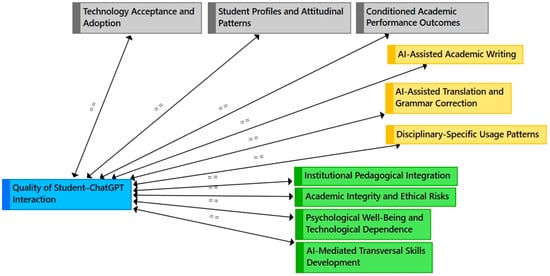
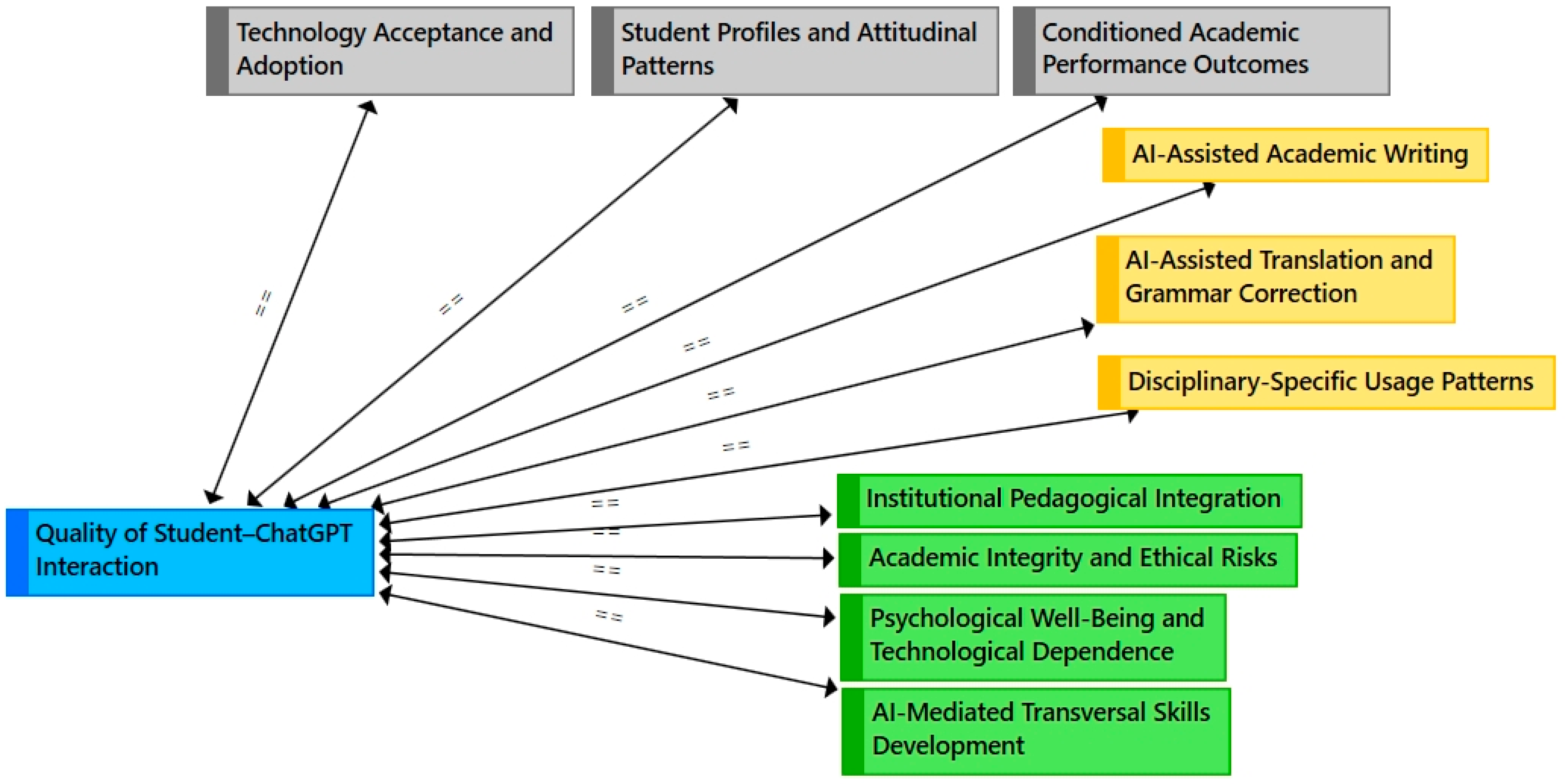

Disclaimer/Publisher’s Note: The statements, opinions and data contained in all publications are solely those of the individual author(s) and contributor(s) and not of MDPI and/or the editor(s). MDPI and/or the editor(s) disclaim responsibility for any injury to people or property resulting from any ideas, methods, instructions or products referred to in the content. |
© 2026 by the authors. Licensee MDPI, Basel, Switzerland. This article is an open access article distributed under the terms and conditions of the Creative Commons Attribution (CC BY) license.