


Abstract
Academia has undergone significant changes recently, such as financial cuts, restructuring, new management policies, precarious employment, and rapid technological advancement. We argue that these shifts can lead to organizational anomie, characterized by deregulation and a breakdown of academia’s normative structure, impacting teaching, learning, and research. In Norway, we conducted qualitative individual interviews with academics (n = 12) and two group interviews with students (n = 13) to explore whether they perceive their academic environment in terms of organizational anomie. Staff participants see the academic environment as transformative but increasingly shaped by economic rationality. They also see a conflict between academic ideals and current work designs and practices, which are highly gamified, reliant on quantified performance measures, and dependent on external funding. They view these changes negatively, casting doubt on whether universities can still fulfil their mission in pursuit of independent critical inquiry. Students report a mismatch between expectations and reality, with some viewing academia instrumentally as a platform to the labor market, reflecting governmental policies to promote employability as a key goal of higher education. Others regard academia as a space for critical inquiry. Although the focus group discussions ultimately converged on the university’s norms and values being a space for critical inquiry, both groups expressed dissatisfaction that the current system fails to fully meet either of these goals. These findings are discussed in light of our understanding of organizational anomie in academia.
1. Introduction
Academia has experienced several concurrent changes and tensions in recent decades. One of the most significant developments is the transformation of how academia operates. This includes the growing number of administrators and the addition of new administrative responsibilities to academic roles (Graeber, 2019; Sørensen & Traweek, 2022), the dominance of neoliberal economic rationality and competition in higher education (Busch, 2017; Dafermos, 2023), the precarization of the academic labor market through the decline of long-term and permanent positions and the rise in temporary and/or zero-hour contracts (Burton & Bowman, 2022; Dafermos, 2023; Loher et al., 2019), the commodification of higher education as a private rather than a public good (Busch, 2017), and an increased emphasis on quantifying quality and setting quantifiable excellence standards (Busch, 2017; Mau, 2019; Sørensen & Traweek, 2022). Many of these changes have far-reaching consequences, some of which are already evident, such as increasing inequalities (Blanden & Machin, 2004; Boliver, 2013) and a decline in trust in science, experts, and academic institutions in certain contexts and populations (Bauer et al., 2012; Kavanagh & Rich, 2018).
Similar to the dominance of economic rationality, academics are facing budget cuts and are increasingly encouraged to compete for external sources of funding. Relying on external funding of research dramatically impacts the knowledge production by shifting focus from basic to applied research, restricting academic freedom, replacing intrinsic motivation with external incentives, creating new hierarchies among academics, and increasing emphasis on demonstrable research impact (Grove, 2017). The funding structure, increased competition, and the quantification of research quality contribute to what has been described as “the natural selection of bad science” within the current institutional framework that can lead to a disciplinary crisis (Smaldino & McElreath, 2016; Teymoori & Trappes, 2026).
Moreover, another significant development in academia is the rapid rise in technological advancements affecting educational practices. While technology has long influenced higher education, through computers, the internet, digital platforms and applications, and digital communication networks, the emergence of generative artificial intelligence and large language models is now seen as a paradigm shift in educational practices (Bozkurt, 2023). The impact of AI in academia extends beyond its influence on efficiency (Károly, 2025). AI also has the potential to shift epistemic agency and epistemic governance in academia, affecting who creates what kind of knowledge and how that knowledge is produced (Lindebaum et al., 2025). Many aspects of education are affected by AI, such as its impact on assessment in higher education (Xia et al., 2024). Lack of proper regulation of such rapid technological changes would have implications for academic normative structure.
Finally, there are also various forms of inequality in higher education’s labor market intersecting with academics’ gender, race, and socioeconomic status background (Burton & Bowman, 2022; Oliveira et al., 2025; Sim & Bierema, 2025). For example, women and marginalized groups are disproportionately employed on temporary and precarious contracts (Sim & Bierema, 2025). Besides the material precarization, such as short-term employment, zero-hour contracts, and reduced funding, there is also a prevailing fatalistic ideological narrative that there is no alternative, encouraging individualistic career strategies to not only survive but also embody the existing normative structure of the academic environment (Oliveira et al., 2025).
Although most of these changes are occurring globally, their extent and specific characteristics vary across contexts. For example, in Turkey, nearly 6000 academics lost their jobs for supporting peace with the country’s Kurdish minorities, and hundreds more were prosecuted along with numerous closure or restructuring plans (Loher et al., 2019). In the US, ongoing tensions include anti-diversity legislation, drastic budget cuts, and executive orders to increase surveillance and control of academics and students. In the UK, the changes have been more policy-driven, characterized by the gradual neoliberalization of higher education over the past few decades (Burton & Bowman, 2022). In Iran, higher education has experienced a mix of neoliberal policies and increased state-imposed ideological control (Ramezani, 2025). Generally, the changes in academia across diverse contexts point to increasing neoliberal policies, a toxic and competitive environment, and a zombie leadership style (Morley, 2024; Erickson et al., 2021; Fahie, 2020; Smyth, 2017).
In Norway, where the current study is conducted, the recent policies emphasize that higher education should contribute to national competitiveness and innovation and increasingly align with labour market competence needs and employability goals (Ministry of Education and Research, 2022, 2023). Such emphasis on competitiveness is coupled with the shift and competition for acquisition of external project funding as well as the rise in temporary employment in the university and college sector, creating a precarious and competitive work environment (Proba Samfunnsanalyse, 2023). Academic staff often work beyond standard hours, frequently using evenings, weekends, and holidays to secure uninterrupted time for research and development activities (Gunnes & Wendt, 2025). These conditions may conflict with the traditional normative ideals of academia in Norwegian higher education.
For instance, Norway’s publication indicator system and its channel classification (Level 1 and Level 2) tie publication points to university funding (Norwegian Publication Indicator, 2025). National reviews and technical work highlight both the administrative burden of the indicator infrastructure and ongoing contestation over indicators of quality (Det Nasjonale Publiseringsutvalget, 2024; Aksnes, 2025), creating normative ambiguity about what counts as good academic work (Aagaard et al., 2015).
One of the most significant changes in Norway has been the introduction of New Public Management (NPM) policies in universities (Frølich, 2005). NPM seeks to apply market-oriented efficiency principles to the governance of universities. Emerged in the 1980s alongside broader neoliberal reforms, NPM introduced new approaches to governing higher education such as using accounting techniques to control, discipline, and manage the public education system; applying economic rationality—such as efficiency, productivity, cost–benefit analysis, and expected utility—to evaluate academic performance; imposing strict surveillance of academia under the rationale of “value for money” and financial calculation; and encouraging the internalization of quantified indicators and rankings as technologies of the self among academic staff (Frølich, 2005; Loher et al., 2019). Despite the dominance of market logic at the macro-governance level, mid-level management in Norwegian academia retains some elements of democratic decision-making, although these democratic elements are increasingly under pressure (Larsen, 2010).
These concurrent changes have significant consequences for the academic environment and its research and educational activities. Durkheim (1997, 2005) theorized that when changes occur at a very rapid pace, the normative structure—i.e., a set of norms and standards that governs the actions of society’s members—may lose its ability to regulate individual behavior, potentially leading society to fall into a state of anomie. Extending Durkheim’s perspective, Messner and Rosenfeld (2001) developed the Institutional Anomie Theory (IAT), arguing that the dominance of economic rationality such as prioritizing success, maximizing utility, accumulating wealth, and promoting individual benefit and competition within non-economic institutions such as education, healthcare, religion, and cultural or political organizations create a condition that Habermas (1985) calls the colonization of the lifeworld by economic forces.
Hence, anomie at the societal level refers to deregulation and disintegration of society’s normative structure (Durkheim, 1997, 2005; Neerdaels et al., 2026; Teymoori, 2016; Teymoori et al., 2016, 2017). Extensive research demonstrates that societal anomie has profound psychological consequences for individuals living under such conditions, including pervasive negative emotions such as helplessness, hopelessness, and apathy (Teymoori et al., 2017) and increased authoritarianism and harsher intergroup relations (Heydari et al., 2012, 2014; Neerdaels et al., 2026). Even the belief in the existence of anomie in society can already influence academic dishonesty among students (Caruana et al., 2000).
Research on anomie in organizational and institutional contexts is limited, with a growing call to explore this area further (Johnson & Duberley, 2011; Messner & Rosenfeld, 2001; Syre et al., 2025). There are few studies examining the existence of anomie at the organizational and institutional level (Messner & Rosenfeld, 2001), with some focusing on its presence in the school system (Groß et al., 2018; Yarim & Çelik, 2021), higher education (Caruana et al., 2000; Pehlivanli & Eslen-Ziya, 2025; Watermeyer et al., 2025), and homecare institutions (Syre et al., 2025). For instance, Yarim and Çelik (2021) reported corruption and administrative deregulation, confusion around the norms, distrust, and procedural unfairness as indicators of anomie in Turkey’s school system, affecting teachers’ performance and well-being. In the UK, Watermeyer et al. (2025) argue that anomie in academia is reflected in growing feelings of disconnection, the deregulation of academia driven by economic rationality, and the erosion of academic values, all of which contribute to high turnover in the academic workforce. Watermeyer et al. (2025) connect academic anomie to the sudden onset of the pandemic crisis, which caused significant disconnection. While we agree that abrupt disruptions can accelerate the deregulation of academic institutions (see shock doctrine, Klein, 2007), anomie in academia has come about not just through sudden crises, but may stem from various factors.
Theoretically, we argue that the current state and changes in academia reflect organizational anomie for three reasons. First, academia is undergoing rapid change driven by neoliberal policies (Busch, 2017; Frølich, 2005; Mau, 2019; Oliveira et al., 2025) as well as technological advancement (Bozkurt, 2023), which can make it difficult for staff and students to adapt to the new organizational realities, leading to organizational anomie from a Durkheimian perspective (Durkheim, 1997, 2005). Second, there is a growing dominance of economic rationality in academia, which has traditionally been a non-economic institution, prioritizing market-oriented rationality of efficiency and expected utility over academic normative duties, which can generate organizational anomie according to IAT (Messner & Rosenfeld, 2001). Finally, drawing on Merton’s (1938, 1968) perspective, the increasing pressure on academics and students may create a conflict between achievement demands, the standards of excellence in academia, the resources available to meet those standards, and one’s normative ideals (also see Syre et al., 2025). Thus, from a theoretical perspective, academia may go through organizational anomie as a result of rapid changes, the dominance of economic rationality, and the conflict between individuals’ normative ideals and the existing work design in academia. Such systematic theoretical grounding regarding the existence of anomie in academia requires empirical examination. This is precisely the objective of this study: to examine how the academics and students in Norwegian higher education perceive their working and learning environments in light of recent changes and to what extent those perceptions and experiences can be described in anomic terms.
2. The Current Study
In this qualitative study, the aim is to explore how academics and students may perceive anomie in academia by exploring the extent to which they perceive confusion in academia’s value system and normative structure (cf. Durkheim, 1997, 2005), experience conflicts between achievement demands and expectations, standards of excellence, available resources to meet those standards, and personal normative ideals (cf. Merton, 1938, 1968), and perceive the domination of economic rationality in the university environment (cf. Messner & Rosenfeld, 2001). With that in mind, two main research questions are developed for this study:
- How do academics and students perceive and experience academia?
- To what extent, and in what ways, do academics and students perceive the university working and studying environment in terms of organizational anomie?
3. Method
3.1. Research Methodology
The study employs a qualitative approach, using semi-structured individual interviews with staff and group interviews (focus group) with students to gain a deeper understanding of their perceptions and experiences of academia. The individual interviews with staff participants allow for in-depth exploration of their experiences in, and perceptions of, academia (Brinkmann & Kvale, 2015). For student participants, we chose a group interview design to encourage discussion and capture a wider range of perspectives (Krueger & Casey, 2014), given the comparatively limited individual experiences in academic settings. The textual data are analyzed using reflective thematic analysis (Braun & Clarke, 2021). We developed an interview guide for individual interviews and prepared guiding questions for the group interviews in both Norwegian and English. The group interviews with student participants were conducted in Norwegian, and the individual interviews with staff participants were held either in Norwegian or English to accommodate staff members with international backgrounds.
3.2. Recruitment
For individual interviews with staff participants, we used a convenience sampling method by emailing a random list of academics from three faculties (from a social and behavioral science faculty and two natural sciences faculties) at UiB and personally following up by visiting their offices. About 30% of those contacted agreed to be interviewed. For group interviews, students were recruited from four common areas in the Psychological and Educational Sciences building. Over two days, more than 100 students were approached, with around 10 percent agreeing to participate. These students formed two groups, one with 6 participants and the other with 7. Both student and staff participants received an information sheet and a consent form prior to the study.
3.3. Participants
The sample consists of 12 staff participants (n = 12) for individual interviews. The group interview study included two groups of student participants, each with 6–7 students (n = 13). Demographic information for all participants is presented in Table 1.
Table 1.
Demographics of participants.
3.4. Data Collection
For the individual interviews with staff participants, we used an interview guide consisting of open-ended questions and a list of follow-up questions. For group interviews with student participants, we developed a set of guiding questions designed to prompt discussion among participants, encourage the sharing of diverse viewpoints, and facilitate group interaction. While moderating the group discussions with student participants, we ensured that most students expressed their opinions, inviting them to share if they agreed, disagreed, or had different experiences.
The individual interviews lasted between 25 and 70 min (with an average of around 50 min), and the group interviews lasted for 53 and 59 min. All data collection took place face-to-face with the second author over a three-month period in Spring 2025. Audio recordings of the individual and group interviews were transcribed using a slightly edited transcription method (Braun & Clarke, 2021). All identifying information was removed during transcription, and pseudonyms were used to ensure participants’ anonymity.
3.5. Analysis Strategy
Using reflexive thematic analysis, we first familiarized ourselves with the data (phase 1). Using semantic inductive coding (Braun & Clarke, 2021), we generated a list of codes focused on how participants interpret and find meaning in their academic environment (phase 2). For individual interviews, both authors coded one interview together and discussed codes from two additional interviews closely to enhance rigor. One of the authors coded the remaining individual interviews. For group interviews, both authors coded one group interview collaboratively, and one of the authors coded the second group interview. Both individual and group interview codes were discussed in regular meetings as well. Authors then collaboratively categorized and developed themes from the codes (phases 3 and 4), followed by rigorous refinement, thematic mapping, and definition in several meetings (phase 5). Findings for the individual interviews relevant to our research questions are presented below, with themes, subthemes, and their definitions in Table 2, and the thematic map in Figure 1. We have presented the findings from group interviews with student participants following the discussion of the individual interview findings.
Table 2.
Findings of thematic analysis: Themes, subthemes and their definitions based on individual interviews with staff participants.
Figure 1.
Thematic map of our findings from individual interviews with staff participants. Purple indicates theme; light blue indicates subtheme.
4. Findings
Individual Interview Analysis with Staff Members
In our final thematic map (Figure 1), we generated four themes and 11 subthemes. Three themes describe academics’ working environments: academia as a transformative space, extending working life into private life, and winds of change, for the worse. The fourth theme, experiences in the system leading to gradual disillusionment, captures interviewees’ experiences of anomie in academia, comprising five subthemes.
5. Perception of Working Environment
5.1. Academia as a Transformative Space
Many of our informants describe academia as a transformative space, personally, professionally and normatively, meaning that academia profoundly influences personal growth and drives social development. For some informants, this appears to describe their initial encounter with academia at the start of their higher education, which motivated them to pursue a career in academia, and for some others, it is the nature of work that can be characterized as transformative throughout their career in academia.
Several of our respondents described work in academia as a calling, viewing it as more than just a job because it provides a profound sense of purpose and meaning: ‘I think academia has been a very valuable resource for me as a person; it has helped me find a direction in life’ (Sandra). They emphasized pursuing it out of passion and commitment rather than for financial gain or external rewards, and it becomes closely tied to one’s self-understanding: ‘It’s become a sort of symbiosis. This is part of your identity’ (Julian). The nature of work is also appealing for many, driven by an ideal of seeking truth and knowledge: ‘what I like about academia is to discover new exciting thing or make new discoveries about earth and seismic waves…that excites me the most… I also like to read discoveries from others, which academia allows me to do… It’s a fantastic way to go through life’ (Alex).
In addition, several interviewees describe how the norms governing the academic working environment are communal and collaborative by nature, emphasizing the value of active participation in the academic community: ‘I choose to come to the office instead of working from home because I feel I need that kind of contact with colleagues and friends’ (Simon). Apart from physical environment, even if researchers often work individually or in the isolation of their offices, they still depend on a community of scholars and colleagues at various career stages in the knowledge production process: ‘There are important expectations from my scientific community, especially regarding how well I communicate my research to peers. So it’s crucial to stay informed about my colleagues’ work and remain connected’ (Alex). When contact or collaboration is lacking, our interviewees stated its negative impact on their work: ‘There are interesting, exciting people to be around, but they’re not here much, and many don’t participate actively, so it’s not an ideal work environment overall’ (Sara).
Finally, our interviewees regard academia as a transformative space rooted in academic values, where with freedom comes responsibility, meaning that the freedom to pursue knowledge and the free exchange of ideas must be practiced with integrity, respect, and accountability to create constructive dialogue. There were many academic values that seem dear to our interviewees: ‘It [academia] should represent an institution that can inspire people and convey values that make them open to new experiences, respectful toward others, and that promote human rights’ (Simon); ‘When you’re employed here and have the privilege of this freedom, there’s also a responsibility to give something back’ (Julian). Alex considers three main values in academia, including ‘training of the next generation, …fundamental research to make new discoveries and develop new concepts and tools with applications for society, … and freedom to discuss ideas freely without any barrier or censorship’. Hence, academia serves as an arena for upholding values of freedom and participation in dialogue and public discourse.
5.2. Extending Working Life to Personal Life
For many of our informants, working life extends into their personal lives, blurring the boundaries between the professional and the private. That means, work tasks and responsibilities often spill over into personal time, with several informants describing evening and weekend work as a normal part of their routine: ‘In the evening, from nine to eleven, sometimes until twelve or one, I enter a new flow. I become sharper and more focused again. After eleven o’clock I either have to stop, or switch to easier tasks’ (Adam). Some describe such extension as a normal practice: ‘It’s very rare that I don’t work in the evening. I usually don’t work on Saturdays, but always on Sunday afternoons… that’s how you need to work if you want to be at an international level’ (Sara). One of our early career participants stated, ‘The number of tasks we have to do in our job is almost endless, so it’s quite a demanding job’ (Emma). Few informants state that they try to distance themselves from the idea that academia should be all-consuming of one’s time, emphasizing the importance of drawing clear boundaries between work and private life: ‘In academia, there’s a bad habit… It seems like they work 36 h a day, just because they enjoy it so much… I work from 8 to 3 and then I’m done. When I leave work, I’m finished with work’ (Julian). But even trying to have work–life balance may not work all the time: ‘I’m not the type to stay at work for 12 h every day, though there are times when I need to work longer [such as writing papers, meeting deadlines, reviewing student theses]’ (Ove). This extension of working life into private life is partly driven by the precarization of the academic labor market and the gamification of work, which can foster a work environment conducive to organizational anomie.
5.3. Winds of Change, for the Worse
Many changes have taken place in universities over the past two decades, which our interviewees viewed negatively, including troubling shifts driven by financial austerity, shrinking resources, changing norms and values, and new management policies.
Several interviewees highlight the intensification of work amid growing academic bureaucracy, highlighting that they have expanded the load of administrative work along with shrinking resources at the expense of doing substantive scholarly work: ‘…researchers are required to handle a significant amount of administrative work… If researchers had fewer administrative responsibilities, their research performance would significantly improve’ (Adam). Due to reduced funding, researchers are expected to secure external funding, which adds administrative tasks related to grant applications. This workload is further intensified by a recent reduction in administrative staff, requiring academics to take on even more administrative duties.
In addition, both senior and junior researchers affirm the increasing precarity of the early career researchers’ position, with the proliferation of short-term academic positions (e.g., PhDs, postdocs, and other temporary appointments). Temporary appointments amid increasing competition for fewer permanent positions create insecurity, instability, job discontinuity, and heavy workloads for early-career researchers. The precarization of the academic labor market reflects broader austerity measures affecting public institutions: ‘so in a way, academia, it’s become kind of like cheap labor for industries, which benefit from research without paying for most of it’ (Hannah). A significant portion of research is carried out by early-career researchers, such as PhDs and Postdocs. In comparison to other countries, the precarity in Norway is not as extreme: ‘here, people are paid quite well, but in countries like Germany, France, Spain, or Portugal, PhDs have extremely low salaries and often extremely overworked… and expectations may even include working from 8 to 6, then Saturdays and even Sundays’ (Hannah). Though due to current educational policies in Norway and rising competition, early career researchers often take on extra work in hopes of securing a permanent position, hence the early career phase is an ‘uneasy and uncomfortable situation, which there may be no secure jobs after the PhD’ (Simon). On the other hand, given that the competition is high, the early career researchers engage in very strict discipline to direct their attempt for being competitive in the labor market: ‘Everything is very calculated, and it feels like every minute of the day is planned. […] It’s not like we really have time to think’ (Emma). This happens because ‘the likelihood of getting a permanent job without working yourself to death is extremely small’ (Nathan). Precarity not only limits the ability to settle down in one place but also influences the scientific quality as well, since ‘it makes it difficult to tackle larger and more complex issues due to short-term perspectives’ (Nathan). Hence, the need to quickly produce research results to qualify for permanent jobs, combined with time spent on applications and job searches, reduces the space for scholarly depth and long-term projects.
The third subtheme, referencing Bill Clinton’s well-known phrase, is called it’s the market, stupid, characterizing the changes in academia towards increasing commercialization and commodification, with market forces and economic rationality dominating academic activities from funding structure, research, and teaching to reform and management strategies. Universities have reduced internal research funding and become reliant on external sources: ‘attracting funding has become more important than the actual science, especially for leadership of university due to financial pressures. Someone who can bring in funding and start big research projects is now seen as making the most valuable contribution’ (Ove). This also means that the research agenda is shaped by funding agencies: ‘You have to apply for funding there, and it often ends up that you research what they want, instead of what you yourself believe is important or interesting’ (Nathan). This way of funding research potentially becomes problematic and may change the way people do research. Funding agencies encourage more applied research at the expense of fundamental research: ‘I’ve noticed a shift away from fundamental research toward projects with direct applications during last two decades I’ve worked here, forgetting a little bit about the importance of fundamental research’ (Alex). Such a tendency towards applied research potentially creates dependency, especially from the private sector, changing the nature of academic work, where one may feel being “sold out”: ‘We forget what questions we actually want to ask… We just focus on who brings in the most money and who looks good in the market’ (Emma). Securing funding success becomes a performance goal in itself: ‘It’s about promoting yourself and the institution, getting good numbers in terms of money, for example through external funding or students’ (Emma). Some of senior informants point to the early 2000s as a turning point: ‘[early 2000s] I had professors who had time to think and the freedom to organize the teaching as they wished … [but today] Every hour with the students is carefully calculated, how much time I have for supervision, how much for preparing lectures, etc.’ (Emma). Hence quantification is becoming dominant, with a commercialized and efficiency-oriented model taking priority. The emphasis on measurable resources and results highlights the growing market logic that shapes higher education.
6. Perceived Anomie in Academia
Experiences in the System Lead to Gradual Disillusionment
When normative ideals seem to slip away and changes appear to move in the wrong direction, frustration, doubt, and disillusionment arise. The theme Experiences in the system lead to gradual disillusionment illustrates such perceived deregulation in academia, in which lived experiences of realities of academic institution and structure—such as its bureaucracy, politics, hierarchies, and/or resource constraints—steadily erode staffs’ sense of optimism, purpose, and trust.
First and foremost, we witness a clash of universities’ normative ideals with market and other external forces in academia, meaning that the policies and agendas set by external actors (private funding agencies/governmental institutions) are often driven by political, economic, or administrative interests and may not be in line with universities’ core values and academic missions for critical inquiry and the pursuit of knowledge for the public good. Several interviewees expressed concerns about the increasing top-down governance undermining the democratic and autonomous nature of academic work, academic self-governance, and collegiality: ‘Processes become a bit rushed. It’s a bit top-down… we’ve had [financial] cut sharply without any academic prioritization… and a lot is decided at the middle-management level, and less by the person responsible for the subject’ (Sara). Such changes bureaucratized and commodified teaching at the expense of rich learning experience: ‘Large lectures with many students and a single lecturer are cheap to administer but make it harder for students’ engagement and follow-up’ (Nathan). In addition, many academics value having a free space for autonomous thinking, but funding structures often hinder this ideal. Current research funding homogenizes the process in which it favors certain personality traits such as strong self-confidence, competitive mindset, and low self-criticism, which, to some, ‘these traits aren’t necessarily beneficial for academia, but they benefit the individual’ (Emma). As the current system tends to favor certain personality types or even gender, it may have a long-term effect on ideals of openness and diversity:
‘In Norway today, there are hardly any female professors in pure mathematics, maybe not even one. But if you go back fifteen/twenty years, there were more…. it’s gone the opposite way from what you’d expect… we had some truly outstanding female mathematic professors to having none at all now. So clearly, there’s something wrong with the way we support and nurture academic talent in Norway’.(Karl)
Shifts in academic priorities, limited substantive democratic influence, austerity measures, and funding structure have created an environment unlike the ideals of academia for many academics, fueling frustration and demotivation.
Next, some interviewees perceived that academic activities are gamified, characterized by target management, quantification, and competition. While the academic normative ideal emphasizes intellectual curiosity and critical inquiry, and many view academia as a transformative and collaborative space, institutional performance assessments and work designs turn academic activities as a strategic game: ‘If I can, I like working on research that I enjoy, collaborating with others, and studying topics in depth to truly understand them, an interest in the topic rather than driven by fame, pushing up citations, winning prizes…’ (Ove). But work design has turned research activities into a strategic game where performance indicators are crucial: ‘in the 90s, things were a bit more easy going in terms of what people could work on scientifically, while nowadays it’s becoming more strategic because one needs to get funding… so people work on topics that are more easily funded’ (Ove). In addition to funding, other research activities may also become strategic, such as going into a ‘production mode’ of scientific articles: ‘Publishing becomes a game. For me, it’s a game’ (Adam). This becomes integrated into institutional framework, in hiring and funding processes: ‘If I apply for a postdoc, it’s going to be like, ok, how many papers have you published? Even if I have three good papers, but someone else has like 6 ones might get hired, it’s a numbers game in the end. It’s unfair, but that’s how it works’ (Hannah). Gamification also alters the collaborative nature of academic activities, as it constitutes competition and values individual achievement encouraging people to willingly engage in these activities, effectively extracting more labor from academics during times of austerity. Gamification also aim at increasing efficiency t times of austerity: ‘We need to have more students, more teaching, and apply for more research funding, but with less money and fewer staff’ (Sara); ‘We have to go through the teaching and see what we can cut, but quality is still not supposed to go down’ (Nathan). Gamification thus helps ensure scientists’ conformity to such a model that many deem to be unproductive and damaging for science and academic activities.
Another notable experience in academia is that our interviewees express how dependence limits autonomy and controls thought. This means that increasing gamification, dominance of economic rationality and reliance on external funding agencies create dependence that reduces freedom for independent thinking, leading to compliance and submission. Some of these dependencies and lack of autonomy for free thinking is very conscious as Sara states that ‘All core funding for research and essentially the basic funds needed have been removed… So one can ask: How easy is it to conduct free research when you have neither time nor money?’. Lack of funding for research would also have long-term consequences, ‘If you don’t have money to do good research, it becomes harder to qualify for funding. In the long term, research will suffer’ (Nathan). But funding agencies have their own criteria to grant, with several of our interviewees express concerns about the sole focus on applied research for funding (e.g., Alex and Nathan). This means that one needs to work within the status quo, and it is hard to keep the critical distance that is needed for independent thinking.
What may also contribute to the experience of anomie in academia was what we call excess of chaff and scarcity of substance, meaning an overabundance of trivial and superficial knowledge production and academic activities alongside a lack of meaningful, valuable, and substantive content or space for rigorous research. This is partly due to what has been termed an institutional framework for the natural selection of bad science, where the quantity of articles, journal impact factors, altmetrics like media attention, and similar metrics become key indicators for employment and other institutional policy (Smaldino & McElreath, 2016; for a review, see Teymoori & Trappes, 2026). Pressure to publish, or what has been termed as publish or perish culture in academia (Sherif, 1977; Smaldino & McElreath, 2016), leads to an overproduction of lower-quality research: ‘It has become more important how many publications you have and where you publish than the quality of what you actually do’ (Nathan). Hence, there is a constant pressure to ‘to deliver papers, papers, papers, the more the better’ (Hannah). In such a condition, the overproduction of scientific articles does not equate with better understanding: ‘We have a performance goal, not a mastery goal… We don’t necessarily want to understand the topic, we want to look better on paper’ (Emma). Such excess of chaff and scarcity of substance affect the accumulation of scientific evidence and promote poor scientific practices that should instead focus on testing or developing new theories and frameworks: ‘We haven’t really learned anything new; we’ve just given the same thing a new name’ (Emma). Consequently, these practices lead to mediocre research that ‘neither solve problems, nor build something to resemble anything like scientific progress’ (Adam).
Finally, interviewees point to another indication of normative confusion and anomie in academia, which is being equal in principle but different in practice. Despite formal commitments to ideals and rules of equality and diversity, disparities and inequalities persist across gender, ethnicity, race, migrant status, and seniority levels. For instance, international staff felt excluded from decision-making processes: ‘It was always the same, ‘Interesting perspective. Period’… (over time) I gave up, and I don’t care anymore’ (Adam). This exclusion was not just a language issue but also cultural, with Adam describing a ‘Norwegian wall’ he could not decipher. Another sign of inequality is the distance between administration and staff: ‘I feel there are strong power structures between administration and staff’ (Simon). Simon called for a more democratic structure with real decision-making power to ensure equal participation, especially of early-career researchers. Conversely, some Norwegian staff noted an unequal share of administrative work falling heavily on locals: ‘…it’s harder for international staff to take on administrative work, since that’s all in Norwegian, and they also tend to be excused from some of the first-year teaching. So, it kind of ends up putting a bit of extra burden on the Norwegian staff’ (Karl). Other inequalities were noted, with Emma pointing to elitism and the circulation of leadership and committee roles within a small group: ‘People think academia is diverse, but no, those who hold power are a very small group’ (Emma).
Gender and seniority inequalities were also experienced and reported, with junior researchers facing fewer secure employment opportunities and the hardest hits in crises, and women slowly excluded as norms become more competitive and male-dominated, especially in natural sciences. Inequalities in practice can result in negative consequences such as epistemic exclusion of minorities—i.e., the suppression of both their identities and the knowledge they produce (Settles et al., 2024)—as well as hostile intergroup relationships, creating schism in the workforce (c.f., Hjelle et al., 2024). Hence there is a mismatch between the equality and diversity principles in academia and the reproduction of inequality across social, gender and cultural levels.
7. Group Interviews with Student Participants
We generated two themes from the group interviews with student participants: the first, It’s not exactly what I imagined describes students’ experiences of the university and study environment; the second, University is dead, long live university! highlights how students perceive the university environment in terms of organizational anomie.
7.1. It’s Not Exactly What I Imagined
This theme refers to how students began university with a mix of passion and career ambitions, but have gradually become a bit disappointed that it satisfied neither passion nor proper career path. When starting out, academia was often imagined as both a space for the pursuit of personal passion and a meaningful career path: ‘I started because I’m interested in helping people’ (Taylor). Similarly, Semantha said ‘I started this bachelor’s degree because I’m interested in people and psychology.’ However, as students progressed, many found that university did not meet their expectations for passion or career development. Several cited lecturers as a key source of disappointment: ‘The expectation is that lecturers are passionate about what they teach and able to present the materials in a way that’s both understandable and interesting… But in reality, that experience has been mixed’ (Andrea). Nils echoed this frustration, noting that some lecturers ‘even said straight out that they hate lecturing and only care about the research part.’ For some others, university has not satisfied their career development, expecting to gain practical knowledge of the working like: ‘I was expecting to be prepared for working life, to have a clearer sense of how things function in practice… [but the program] has been theoretical, with little focus on how that theory can actually be applied’ (Jolanda).
Most students in the focus groups noted that financial cuts had affected their study experiences, leading to fewer resources for training and learning, larger lecture halls, and fewer lecturers: ‘It really just comes down to economics and resources. It feels a bit like a mill you’re just being pushed through’ (Peter). Financial priorities, as students discussed, also guide the restructuring of the Exphil course, a long-standing philosophy class meant to introduce students to both the formative and preparatory aspects of higher education. Students noted the course was made easier to pass, its depth and breadth reduced to require fewer resources, class sizes increased, and the course moved later in the program to prevent early dropouts, since funding depends on student retention: ‘But if the funding were the same regardless of dropouts, they could put Exphil first, as a way of filtering out those who might not be ready for university. So I think that’s really where the problem starts: with the financing model itself’ (Mark). Such a financial model also means that the value of education, especially the formative courses, has faded. When teaching becomes more personal, the experience improves significantly:
‘There’s been a noticeable improvement from the bachelor’s to the master’s level, mainly because of the difference in size. In the bachelor’s program, there were sixty of us, while in the master’s we’re just over twenty. That means smaller classrooms, more interaction with professors, and generally more support’.(Michael)
It seemed that the difference in students’ expectations and perceptions of university was somehow shaped by their socioeconomic background and the type of secondary school they attended. Those from lower socioeconomic backgrounds often had a more idealized image of university: ‘You see all these movies where campus life seems so engaging and there’s close contact with professors and all that, but it’s really not like that’ (Peter). Tylor added, ‘I thought it would be more like sitting alone with a professor, discussing the subject in depth… But it hasn’t really been like that.’ In contrast, students from more affluent background felt better prepared for university’s realities: ‘In a way, high school actually prepared us quite well for what university would be like, that there would be very little personal contact, large lecture halls, and considerable distance between students and professors’ (Helen). Students’ pre-university environments shape what they expect from higher education.
7.2. University Is Dead, Long Live University!
This theme captures students’ experiences with the university’s normative structure, highlighting their confusion over norms, contradictory expectations from the university being an arena for critical thinking and/or a platform for the job market, and concerns about AI.
Several students described how exams have become an end in themselves rather than a meaningful reflection of what they had learned. In a field meant to be practice-oriented, many found it paradoxical that assessments are almost exclusively written exams. This focus on theoretical testing was seen as outdated and poorly aligned with how competence should be demonstrated and applied in future work: ‘We’ve mostly had written school exams—no real assignments or project work, apart from the bachelor’s thesis’ (Madeleine), leaving little opportunity to demonstrate broader skills or applied competence. The lack of diversity in forms of assessment is also deemed problematic: ‘Personally, I really enjoy oral exams… but we’ve had almost everything in written form… it’s been a very old-fashioned kind of exam system’ (Elenor). Students felt that the exam system was geared more toward administrative efficiency and summative assessment than truly assessing capability or supporting formative learning process throughout the course: ‘exams don’t necessarily reflect how you’ll perform in your work’ (Helen) and one can instead do a more continuous assessment, such as ‘requiring people to come prepared for lectures’ (Elenor), to encourage deeper engagement.
Several participants discussed the Gap between market demands and university training, feeling their education had not adequately prepared them for the realities of working life. Several also mentioned the distance from university to the labor market as a problem. While most acknowledged the value of theoretical knowledge, they described a striking lack of opportunities to translate this theory into practice. Jolanda had expected to ‘feel more prepared for working life, to have a clearer sense of how things function in practice,’ but found the program to be ‘very theoretical, with little focus on how that theory can actually be applied.’ Others expressed a desire for closer ties to industry and more practical experience: ‘It’s disappointing that we don’t have more contact with companies. When you look at bachelor’s programs at places like Høyskolen Kristiania or BI, they have internships, company visits, and guest speakers who actually work in the field. But here, we have none of that’ (Tylor). This disconnect left some students uncertain about their competence and hesitant to enter the labor market: ‘[I’m graduating, but] I almost don’t dare to apply for jobs in the field yet… [I feel I don’t] have much to contribute’ (Helen). This sense of uncertainty illustrates a broader perception that universities are not keeping pace with competencies demanded by the labor market: ‘when other institutions evolve and improve, the universities don’t really keep up’ (Elenor). As a result, some students experience deep insecurity about their employability after graduation.
The course of the discussion in the focus group was also very interesting. At first, many participants in one of the focus groups saw the university mainly as a platform for the job market: ‘To be completely honest, I think the main value of higher education is that it’s an excuse to get a job’ (Tylor). However, one of the participants contested and argued universities should prioritize critical thinking and knowledge for its own sake: ‘You’re supposed to find answers quickly, publish quickly, get results quickly… I think universities should represent the opposite, a space where thinking can take time’ (Michael). The group reached a consensus at the end that the space for critical inquiry is a far more important mission than the preparation for the labor market. They even developed a more balanced view of the university being a space for critical reflection on the demands of the market itself and the role of technology and market in society: ‘starting with ethical discussions [on new technologies and market demand]… is probably the right approach’ (Tylor). Despite this consensus, all agreed that the current system fails at both aims, neither adequately preparing them for the labor market due to a rigid, standardized curriculum and lack of practical training, nor fostering a critical approach because there is limited space for independent thinking.
Finally, students discussed the promise and peril of AI, expressing contradictory views about its role in academia. Most felt that AI was predominantly seen as a threat, with its value as a useful tool often overlooked: ‘When AI first appeared, the reaction from the university was very explosive. In lectures, it was all about cracking down on it, making things harder, preventing cheating, and so on’ (Madeleine). Many saw this defensive stance as a broader pattern of universities struggling to adapt to changes: ‘Right now, it feels like they’re just closing their eyes and pretending it’s not happening’ (John). By presenting it as a threat, universities shaped how students experienced AI in their studies, emphasizing control and prohibition rather than guidance and exploration: ‘Instead of pretending AI will go away, universities should do everything they can to integrate it responsibly’ (Madeleine). Elenor added, ‘If universities offered proper courses, made AI tools safely available, and set clear guidelines for what counts as misconduct versus legitimate use, it would create a much more constructive learning environment’. Students thus called for proactive integration and better regulation of AI use.
Some pointed to the potential for AI to reduce social inequalities: ‘It really depends on how familiar you are with academia from home… That’s why I think AI can help reduce those differences’ (Tylor). This suggests AI could act as a democratizing force, helping students from diverse backgrounds access academic language and conventions more equally. However, despite recognizing these benefits, many expressed concern that overreliance on AI could undermine the learning process itself: ‘AI takes away from the very idea of academia as a formative space, of learning how to think’ (Michael). For some, independent thinking and learning without the use of AI, especially in the early phases of study, were essential: ‘I’m very grateful that AI wasn’t available at earlier phase of my study’ (Semantha), so she can have her own independent and reflective learning. In this way, AI was seen both as a support for learning and as a potential threat to the development of critical and independent thinking.
Many students feared that the university’s failure to adapt to rapid changes—whether in industry, the rise in AI, or societal shifts—could have dramatic consequences for its relevance. They emphasized the need for a well-organized, regulated, and critical approach to maintain the university’s significance and relevance.
8. Discussion
Academia is currently facing several challenges, including the dominance of neoliberal economic rationality, the implementation of new management policies, rapid technological advances, restructuring, and financial cuts. In this qualitative study, using both individual and group interviews, we aimed to explore how staff and student participants perceive the academic environment and to determine whether their characterizations reflect elements of organizational anomie.
In terms of perceived working environment, staff stated that academia is a transformative and collaborative space, with academic values marked by free and independent inquiry, open dialogue, preparation of next generation of thinkers and scientists, and community engagement. However, there are changes in academia that may have consequences for its normative structure, from the blurring boundaries between work and personal life to negative institutional changes that include increased bureaucracy, precarization of academic’s labor market, and domination of market-driven economic rationality.
Based on individual interviews with staff participants, the changes in academia and its current state can create confusion regarding its normative structure. Most staff participants expressed conflicts between university ideals and existing work design, gamification of academic work, lack of independent and critical inquiry, an abundance of superficial work over meaningful scholarship, and persistent inequalities despite formal commitments to equality. In the group interviews, students held varied and sometimes conflicting views of the university’s norms and values—some saw it as a platform for the job market, others as a space for critical inquiry and independent thinking. However, all agreed that the university falls short in both preparing for employment and fostering critical independence, often prioritizing economic logic in assessments and resource allocation. There were genuine concerns about whether the university can lead responsible AI integration or merely respond passively to market and government regulations.
Hence, we observe signs of perceived organizational anomie across all three operationalizations: resulting from rapid changes and deregulation (Durkheim, 2005), dominance of economic rationality and market logic over academia (cf. Messner & Rosenfeld, 2001), and conflicts between personal/university ideals and the current academic environment (cf. Merton, 1968). Although elements of all three operationalizations of organizational anomie were present in our findings, the dominance of economic rationality was far more pronounced in students’ and academics’ reflections. This aligns with literature suggesting that the current academic landscape is primarily shaped by neoliberal policies and economic rationality (Burton & Bowman, 2022; Busch, 2017; Dafermos, 2023; Frølich, 2005; Loher et al., 2019), which undermines the pursuit of independent critical inquiry (Busch, 2017). It is also consistent with the few studies that have been conducted showing how the current state of academia suffers from organizational or institutional anomie (e.g., Watermeyer et al., 2025).
The question arises how such perceived deregulation of the academic normative structure persists despite widespread awareness of its problems and negative consequences. For example, many recognized that this work design shifts focus from basic to applied research, increases structural inequalities despite formal commitments to equality, and reduces diversity in scientific perspectives, knowledge production, and the academic workforce. Many also noted that the existing funding structure creates dependence, limits autonomy, and hinders independent research and critical inquiry. There is also a repercussion of this in the public, where scientists are increasingly seen as elitists, conformists to government policies, leading to declining trust in science, academic institutions, and their findings (Bauer et al., 2012; Kavanagh & Rich, 2018).
Further research is needed to understand the persistence of deregulation and the disintegration of academia, despite widespread recognition of their negative consequences. In particular, examining the roles that academics and students play in both perpetuating and resisting these trends would be valuable. We think that, in addition to fieldwork with students and staff, a historical approach is also essential to understand such persistence of deregulation and the disintegration of academia. For instance, it would be simplistic to just argue that academics and students have become dependent and docile, reducing their willingness to resist these trends in academia. But a historical analysis shows that there have been structural changes that limit the impact of individuals in the process.
Take the example of the late 60s and early 70s, when the public demanded that universities be accessible to all, regardless of gender, race, or age, and called for democratizing political decisions at national and international levels, all of which were pioneered by student activism (Chomsky, 2003), challenging policymakers’ ability to govern universities. Such challenges were later highlighted as crisis of democracy (Crozier et al., 1975), expressing concerns that excessive freedom and democracy among students and academics made their governance difficult. In response to such radical and direct democratic participation, restructuring measures and policies have been adopted to increase control such as increasing administrative layers and control, indoctrination through economic rationality of efficiency, micromanagement of universities, and making universities, academics and students economically dependent on external agencies (Chomsky, 2003; Frølich, 2005; Graeber, 2019; Loher et al., 2019). These changes and the NMPs also aligned with the neoliberal policies that ensued in the following decade (Burton & Bowman, 2022; Busch, 2017; Dafermos, 2023; Loher et al., 2019).
Older staff participants in our study repeatedly noted the changes that they have experienced in academia, such as funding structure, the job market, and shifts toward applied, policy-based research. Market-driven efficiency leads to larger classrooms, more temporary staff, heavier workloads, and less faculty-student contact. Both individual and group interviews highlighted the lack of contact as a major drawback, frustrating students and negatively affecting their academic experience. Many authors have also observed that the gamification of academic activities, job insecurity and the precarization of academic labor, along with the deregulation of universities, stifle intellectual creativity, increase discontent, and reduce diversity in academia (for a review, see McKeown, 2022). As a normative institution, academia should provide a space that encourages rational dialogue and genuine critical inquiry with continuous learning and self-criticism (Habermas, 1985; Teymoori & Mataji, 2025). However, some staff participants in our study specifically mention that the current system attracts researchers with a specific personality, i.e., researchers who are competitively minded, have high self-confidence and low self-criticism, excel at selling ideas to funders and quickly adapt to their interests.
Our findings align with critical diversity literature, indicating that issues of inequality and diversity extend beyond gender and racial representation. Inequalities across diverse groups are rooted in neoliberal meritocratic structures that maintain power relations that reproduce inequality (Ahmed, 2020; Bourabain, 2023). Recent evidence also suggests that maintaining structures that reproduce inequality results not only in reduced diversity but also in the epistemic exclusion of knowledge produced by minorities (Settles et al., 2024). Reduced diversity may also weaken the resilience of academic systems by narrowing the range of perspectives and response options under uncertainty, as underrepresented scholars can contribute disproportionately to novelty even as their innovations are discounted over time (Duchek et al., 2020; Hofstra et al., 2020). Future studies could examine this more systematically, comparing individuals from diverse backgrounds and also comparing those who leave academia with those who succeed within the current system to examine their perceptions of anomie in academia, the type of research that they are interested in, and its implications for science.
While we witness that there have been negative changes in the last few decades, it does not imply that there has been a ‘golden age’ for universities in the past. In fact, the activism of the 1960s and 70s challenged hierarchy, demanded more democratic participation, and fought against systematic exclusion based on gender and race. Although those ideals were not fully realized, progress has been made in inclusion—particularly regarding gender—as reflected in the more diverse student bodies worldwide and greater access to higher education for broader segments of society.
We showed that the shift toward governing universities through economic rationality has created a condition best described as anomic, with consequences for students, academics, teaching activities, the nature scientific knowledge production, as well as university’s role in a rapidly changing society. There are, however, some limitations in our study. Our sample is rather limited, given that we focus only on one university in a Norwegian context. In addition, regarding our group interview design, we have recruited only 2 focus groups with student participants from psychology and educational sciences; hence, it lacks the diversity that we have in our academic staff sample. More evidence from students in other disciplines may bring forth more insights into students’ experience of academia and its perceived normative structure. We hope future empirical research will replicate and extend this research among both students and staff in other disciplines, universities, and countries. There is also a need to explore the consequences of organizational anomie for academics and students, as well as how they may adapt to and resist this perceived anomie in academia. Systematically examining the consequences of anomie in academia could reveal important effects of anomie on staff and students, group dynamics in academia, academic roles in society, and knowledge production processes as well.
Author Contributions
Both authors contributed equally to this manuscript; they are ordered alphabetically: Conceptualization, A.T.; methodology, E.L. and A.T.; validation, E.L. and A.T.; formal analysis, E.L. and A.T.; data curation, E.L.; writing—original draft preparation, A.T.; writing—review and editing, E.L. and A.T.; visualization, E.L. and A.T.; supervision, A.T.; project administration, E.L. All authors have read and agreed to the published version of the manuscript.
Funding
This research received no external funding.
Institutional Review Board Statement
Ethical review and approval were not required for this non-health-related study, which does not involve collecting personally identifiable information such as precise age, religion, or political views. In case of not collecting personally identifiable information, we are recommended to follow the ethical norms as recommended by the Norwegian National Research Ethics Committees: https://www.forskningsetikk.no/en/about-us/our-committees-and-commission/nesh/guidelines-nesh (accessed on 10 January 2025). The research followed the ethical principles related to work with humans established in the Declaration of Helsinki. Prior to each interview, the informants received a brief overview of the study and a consent form. The participants’ anonymity was also safeguarded through anonymization of data in the transcription process. The study was registered in the RETTE system at the University of Bergen (ID: S4143).
Informed Consent Statement
Informed consent was obtained from all subjects involved in the study.
Data Availability Statement
An anonymized version of the interview transcript can be made available from the corresponding author for research purposes.
Conflicts of Interest
The authors declare no conflicts of interest.
References
- Aagaard, K., Bloch, C. W., & Schneider, J. W. (2015). Impacts of performance-based research funding systems: The case of the Norwegian Publication Indicator. Research Evaluation, 24(2), 106–117. [Google Scholar] [CrossRef] [Scilit]
- Ahmed, S. (2020). On being included: Racism and diversity in institutional life. Duke University Press. [Google Scholar]
- Aksnes, D. W. (2025). Grunnlagsanalyse for beregning av publiseringsindikatorens nivå 2: En utredning for Det nasjonale publiseringsutvalget (Arbeidsnotat 2025:22). NIFU. Available online: https://npi.hkdir.no/dok/Grunnlagsanalyse_for_beregning_av_publiseringsindikatorens_niva2.pdf (accessed on 14 March 2026).
- Bauer, M. W., Shukla, R., & Allum, N. (2012). The culture of science: How the public relates to science across the globe. Routledge. [Google Scholar]
- Blanden, J., & Machin, S. (2004). Educational inequality and the expansion of UK higher education. Scottish Journal of Political Economy, 51(2), 230–249. [Google Scholar] [CrossRef] [Scilit]
- Boliver, V. (2013). How fair is access to more prestigious UK universities? The British Journal of Sociology, 64(2), 344–364. [Google Scholar] [CrossRef] [Scilit] [PubMed]
- Bourabain, D. (2023). The university in crisis: Why (neoliberal) diversity is not the answer. Politics of the Low Countries, 5(2), 184–189. [Google Scholar] [CrossRef] [Scilit]
- Bozkurt, A. (2023). Generative artificial intelligence (AI) powered conversational educational agents: The inevitable paradigm shift. Asian Journal of Distance Education, 18(1), 198–204. [Google Scholar]
- Braun, V., & Clarke, V. (2021). Thematic analysis: A practical guide. Sage. [Google Scholar]
- Brinkmann, S., & Kvale, S. (2015). Interviews: Learning the craft of qualitative research interviewing. Sage Publications. [Google Scholar]
- Burton, S., & Bowman, B. (2022). The academic precariat: Understanding life and labour in the neoliberal academy. British Journal of Sociology of Education, 43(4), 497–512. [Google Scholar] [CrossRef] [Scilit]
- Busch, L. (2017). Knowledge for sale: The neoliberal takeover of higher education. The MIT Press. [Google Scholar]
- Caruana, A., Ramaseshan, B., & Ewing, M. T. (2000). The effect of anomie on academic dishonesty among university students. International Journal of Educational Management, 14(1), 23–30. [Google Scholar] [CrossRef] [Scilit]
- Chomsky, N. (2003). Chomsky on democracy & education. Routledge. [Google Scholar]
- Crozier, M., Huntington, S. P., & Watanuki, J. (1975). The crisis of democracy: Report on the governability of democracies by the trilateral commission. New York University Press. [Google Scholar]
- Dafermos, M. (2023). The neoliberal transformation of university and restructuring of academic labour. Journal of Critical Education Policy Studies, 21(1), 1–37. Available online: http://www.jceps.com/archives/14767 (accessed on 14 March 2026).
- Det Nasjonale Publiseringsutvalget. (2024, May 31). Kvalitet i vitenskapelig publisering: Organisering og innretning av publiseringsindikatoren, publiseringsstatistikken og kanalregisteret. Universitets og Høgskolerådet. Available online: https://www.uhr.no/_f/p1/i0c07c3dd-6f9f-4a4d-a534-37e2179a3807/kvalitet-i-vitenskapelig-publisering-31-mai-2024.pdf (accessed on 14 March 2026).
- Duchek, S., Raetze, S., & Scheuch, I. (2020). The role of diversity in organizational resilience: A theoretical framework. Business Research, 13(2), 387–423. [Google Scholar] [CrossRef] [Scilit]
- Durkheim, E. (1997). The division of labor in society. Free Press. [Google Scholar]
- Durkheim, E. (2005). Suicide: A study in sociology. Routledge. [Google Scholar]
- Erickson, M., Hanna, P., & Walker, C. (2021). The UK higher education senior management survey: A statactivist response to managerialist governance. Studies in Higher Education, 46(11), 2134–2151. [Google Scholar] [CrossRef] [Scilit]
- Fahie, D. (2020). The lived experience of toxic leadership in Irish higher education. International Journal of Workplace Health Management, 13(3), 341–355. [Google Scholar] [CrossRef] [Scilit]
- Frølich, N. (2005). Implementation of new public management in Norwegian universities. European Journal of Education, 40(2), 223–234. [Google Scholar] [CrossRef] [Scilit]
- Graeber, D. (2019). Bullshit jobs: The rise of pointless work, and what we can do about it. Penguin Books. [Google Scholar]
- Grove, L. (2017). The effects of funding policies on academic research [Doctoral thesis, University College London]. Available online: https://eprints.lse.ac.uk/88207/ (accessed on 12 February 2026).
- Groß, E. M., Hövermann, A., & Messner, S. F. (2018). Marketized mentality, competitive/egoistic school culture, and delinquent attitudes and behavior: An application of institutional anomie theory. Criminology, 56(2), 333–369. [Google Scholar] [CrossRef] [Scilit]
- Gunnes, H., & Wendt, K. (2025). Ingen uke er gjennomsnittlig: Tidsbruksundersøkelse for vitenskapelig ansatte ved norske universiteter og høgskoler i 2025 (Rapporter 2025/32). Statistisk Sentralbyrå. Available online: https://www.ssb.no/teknologi-og-innovasjon/forskning-og-innovasjon-i-naeringslivet/artikler/tidsbruksundersokelse-for-vitenskapelig-ansatte-ved-norske-universiteter-og-hogskoler-i-2025/_/attachment/inline/b076523d-f64f-4d9c-aca4-95e91814708b%3Ae35ce896af9e0407441a91537bf6f77d0e381e98/RAPP2025-32.pdf (accessed on 14 March 2026).
- Habermas, J. (1985). The theory of communicative action (vol. 2): Lifeworld and system: A critique of functionalist reason. Beacon Press. [Google Scholar]
- Heydari, A., Teymoori, A., Haghish, E. F., & Mohamadi, B. (2014). Influential factors on ethnocentrism: The effect of socioeconomic status, anomie, and authoritarianism. Social Science Information, 53(2), 240–254. [Google Scholar] [CrossRef] [Scilit]
- Heydari, A., Teymoori, A., Nasiri, H., & Fardzadeh, H. E. (2012). Relationship between socioeconomic status, anomie, and authoritarianism. E-BANGI, 7(1), 176–188. [Google Scholar]
- Hjelle, I. Ø., Nordrum, H., Wentzeck, J.-W., & Teymoori, A. (2024). The powerless bosses: The working day experience of bicycle messengers and its impact on their identities and wellbeing. BMC Psychology, 12(1), 799. [Google Scholar] [CrossRef] [Scilit]
- Hofstra, B., Kulkarni, V. V., Munoz-Najar Galvez, S., He, B., Jurafsky, D., & McFarland, D. A. (2020). The diversity–innovation paradox in science. Proceedings of the National Academy of Sciences, 117(17), 9284–9291. [Google Scholar] [CrossRef] [Scilit] [PubMed]
- Johnson, P., & Duberley, J. (2011). Anomie and culture management: Reappraising durkheim. Organization, 18(4), 563–584. [Google Scholar] [CrossRef] [Scilit]
- Kavanagh, D., & Rich, M. D. (2018). Truth decay: An initial exploration of the diminishing role of facts and analysis in American public life. Rand Corporation. [Google Scholar]
- Károly, A. (2025). AI in Academia–Balancing between effectiveness and responsibility. The European Educational Researcher, 8(3), 25–32. [Google Scholar] [CrossRef] [Scilit]
- Klein, N. (2007). The shock doctrine: The rise of disaster capitalism. Macmillan. [Google Scholar]
- Krueger, R. A., & Casey, M. A. (2014). Focus groups: A practical guide for applied research. Sage Publications. [Google Scholar]
- Larsen, I. M. (2010). From democracy to management-oriented leadership? The manager-academic in Norwegian higher education. In V. L. Meek, L. Goedegebuure, R. Santiago, & T. Carvalho (Eds.), The changing dynamics of higher education middle management (pp. 145–164). Springer. [Google Scholar] [CrossRef] [Scilit]
- Lindebaum, D., Nolan, E., Ashraff, M., Islam, G., & Ramirez, M. F. (2025). The transformation of epistemic agency and governance in higher education through large language models–toward a future of organized immaturity. Organization Studies. [Google Scholar] [CrossRef] [Scilit]
- Loher, D., Strasser, S., Monterescu, D., Dabağcı, E., Gallo, E., Shore, C., Gupta, A., Mathur, C., Anton, L., & Zane, R. (2019). On politics and precarity in academia. Social Anthropology/Anthropologie Sociale, 27(S2), 97–117. [Google Scholar] [CrossRef] [Scilit]
- Mau, S. (2019). The metric society: On the quantification of the social. Polity Press. [Google Scholar]
- McKeown, M. (2022). The view from below: How the neoliberal academy is shaping contemporary political theory. Society, 59(2), 99–109. [Google Scholar] [CrossRef] [Scilit]
- Merton, R. K. (1938). Social structure and anomie. American Sociological Review, 3(5), 672–682. [Google Scholar] [CrossRef] [Scilit]
- Merton, R. K. (1968). Social theory and social structure. Simon and Schuster. [Google Scholar]
- Messner, S. F., & Rosenfeld, R. (2001). Crime and the American dream. Wadsworth. [Google Scholar]
- Ministry of Education and Research. (2022). Meld. St. 5 (2022–2023): Langtidsplan for forskning og høyere utdanning 2023–2032. Available online: https://www.regjeringen.no/contentassets/9531df97616e4d8eabd7a820ba5380a9/no/pdfs/stm202220230005000dddpdfs.pdf (accessed on 14 March 2026).
- Ministry of Education and Research. (2023). Meld. St. 14 (2022–2023): Utsyn over kompetansebehovet i norge. Available online: https://www.regjeringen.no/contentassets/d4a1053c98614420a71de98352902464/no/pdfs/stm202220230014000dddpdfs.pdf (accessed on 14 March 2026).
- Morley, C. (2024). The systemic neoliberal colonisation of higher education: A critical analysis of the obliteration of academic practice. The Australian Educational Researcher, 51(2), 571–586. [Google Scholar] [CrossRef] [Scilit]
- Neerdaels, J., Teymoori, A., Tröster, C., & Van Quaquebeke, N. (2026). When lack of control leads to uncertainty: Explaining the effect of anomie on support for authoritarianism. Journal of Personality and Social Psychology, 130(1), 57–76. [Google Scholar] [CrossRef] [Scilit]
- Norwegian Publication Indicator. (2025). Information about the Norwegian Publication Indicator (NPI). Directorate for Higher Education and Skills. Available online: https://npi.hkdir.no/ (accessed on 14 March 2026).
- Oliveira, T., Nada, C., & Magalhães, A. (2025). Navigating an academic career in marketized universities: Mapping the international literature. Review of Educational Research, 95(2), 255–292. [Google Scholar] [CrossRef] [Scilit]
- Pehlivanli, E., & Eslen-Ziya, H. (2025). Academic state of anomie in gender studies: Masked and expressed emotions within the academic environment in Turkey. Journal of Gender Studies, 34(7), 1084–1097. [Google Scholar] [CrossRef] [Scilit]
- Proba Samfunnsanalyse. (2023). Analyse av ekstern finansiering og midlertidighet i universitets og høyskolesektoren: Utarbeidet for Kunnskapsdepartementet (Rapport 2023–7). Available online: https://www.regjeringen.no/contentassets/9d2406cf6f8c41008ac3bc5cf989dc98/analyse-av-ekstern-finansiering-og-og-midlertidighet-i-uh-sektoren.pdf (accessed on 14 March 2026).
- Ramezani, S. G. (2025). The hybrid model of academic capitalism in Iranian higher education: A complex interplay of neoliberal and state-controlled practices. Higher Education Policy, 38(4), 665–692. [Google Scholar] [CrossRef] [Scilit]
- Settles, I. H., Jones, M. K., Buchanan, N. T., Dotson, K., Grower, P., O’Rourke, M., Rinkus, M., & Latimer, K. (2024). Epistemic exclusion: A theory for understanding racism in faculty research evaluations. American Psychologist, 79(4), 539–552. [Google Scholar] [CrossRef] [Scilit]
- Sherif, M. (1977). Crisis in social psychology: Some remarks towards breaking through the crisis. Personality and Social Psychology Bulletin, 3(3), 368–382. [Google Scholar] [CrossRef] [Scilit]
- Sim, E., & Bierema, L. L. (2025). Intersectional precarity in academia: A systematic literature review. Equality, Diversity and Inclusion: An International Journal, 45, 162–180. [Google Scholar] [CrossRef] [Scilit]
- Smaldino, P. E., & McElreath, R. (2016). The natural selection of bad science. Royal Society Open Science, 3(9), 160384. [Google Scholar] [CrossRef] [Scilit]
- Smyth, J. (2017). The Toxic University: Zombie leadership, academic rock stars and neoliberal ideology. Palgrave Macmillan. [Google Scholar]
- Sørensen, K. H., & Traweek, S. (2022). Questing excellence in academia: A tale of two universities. Taylor & Francis. [Google Scholar]
- Syre, R., Berntzen, S., Haukeland, J., & Teymoori, A. (2025). Organisational anomie: A qualitative study on homecare workers’ experiences of work and organisational normative structure. Journal of Community & Applied Social Psychology, 35(1), e70027. [Google Scholar] [CrossRef] [Scilit]
- Teymoori, A. (2016). The psychology of anomie [Ph.D. thesis, University of Queensland]. Available online: https://espace.library.uq.edu.au/view/UQ:406959 (accessed on 12 January 2025).
- Teymoori, A., Bastian, B., & Jetten, J. (2017). Towards a psychological analysis of anomie. Political Psychology, 38(6), 1009–1023. [Google Scholar] [CrossRef] [Scilit]
- Teymoori, A., Jetten, J., Bastian, B., Ariyanto, A., Autin, F., Ayub, N., Badea, C., Besta, T., Butera, F., Costa-Lopes, R., Cui, L., Fantini, C., Finchilescu, G., Gaertner, L., Gollwitzer, M., Gómez, Á., González, R., Hong, Y. Y., Jensen, D. H., … Wohl, M. (2016). Revisiting the measurement of anomie. PLoS ONE, 11(7), e0158370. [Google Scholar] [CrossRef] [Scilit]
- Teymoori, A., & Mataji, A. (2025). Is it possible to form a rational identity? A critical reading of Habermas’ account of social identity. Philosophy & Social Criticism. [Google Scholar] [CrossRef] [Scilit]
- Teymoori, A., & Trappes, R. (2026). The recurrence of fundamental questions: A historical and philosophical analysis of major disciplinary crises in psychology. Review of General Psychology. [Google Scholar] [CrossRef] [Scilit]
- Watermeyer, R., Bolden, R., Knight, C., & Crick, T. (2025). Academic anomie: Implications of the ‘great resignation’ for leadership in post-COVID higher education. Higher Education, 89(5), 1215–1233. [Google Scholar] [CrossRef] [Scilit]
- Xia, Q., Weng, X., Ouyang, F., Lin, T. J., & Chiu, T. K. (2024). A scoping review on how generative artificial intelligence transforms assessment in higher education. International Journal of Educational Technology in Higher Education, 21(1), 40. [Google Scholar] [CrossRef] [Scilit]
- Yarim, M. A., & Çelik, S. (2021). Organizational anomie: A qualitative research on educational institutions. Open Journal for Educational Research, 5(2), 161–176. [Google Scholar] [CrossRef] [Scilit]
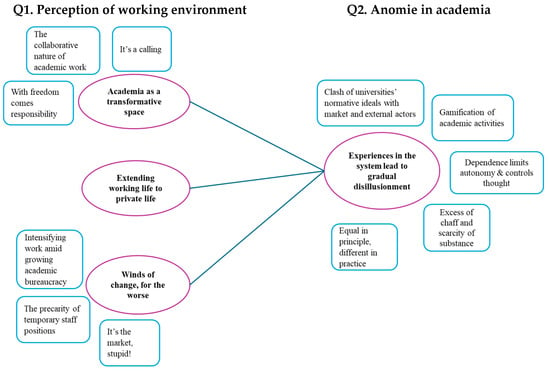
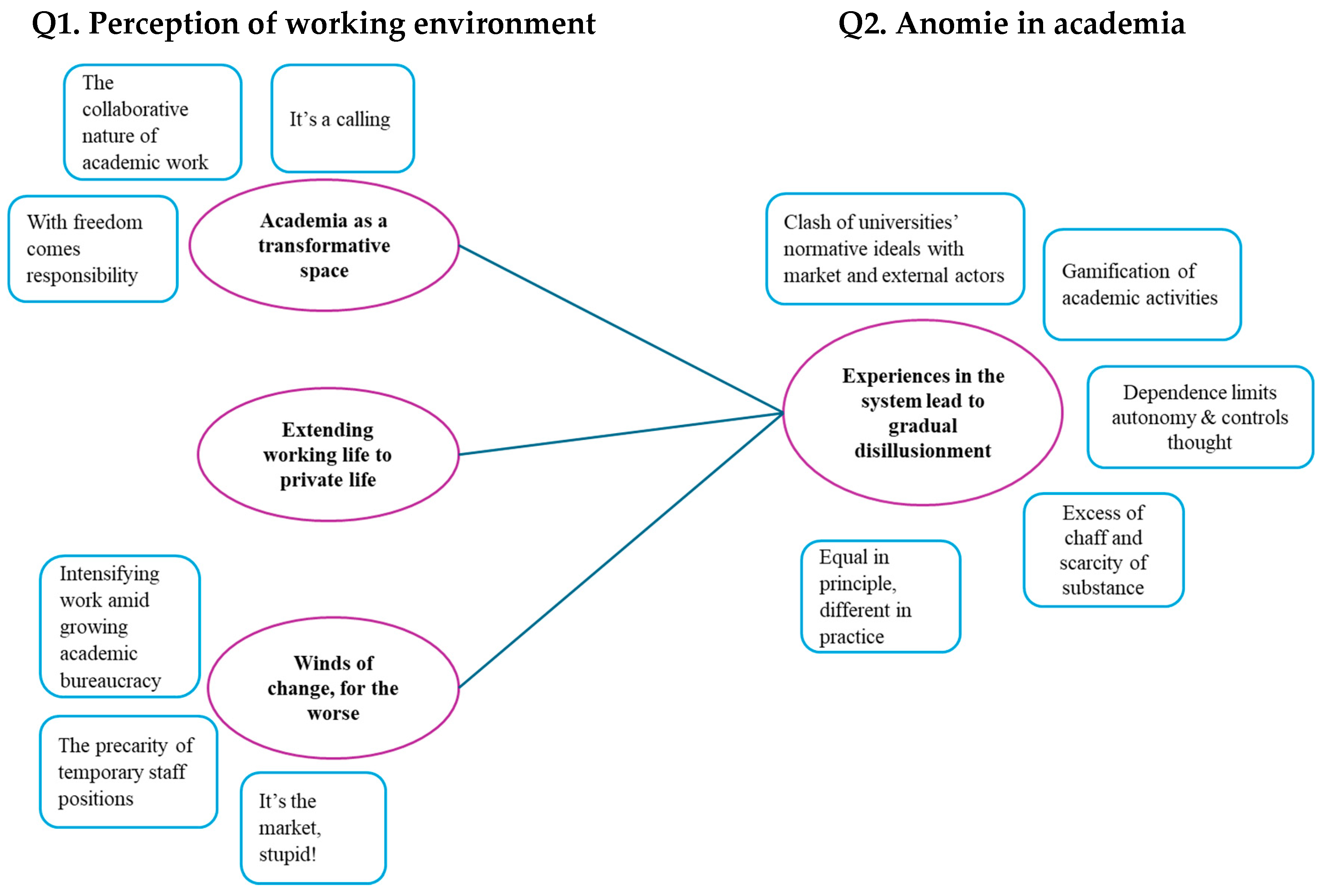

Disclaimer/Publisher’s Note: The statements, opinions and data contained in all publications are solely those of the individual author(s) and contributor(s) and not of MDPI and/or the editor(s). MDPI and/or the editor(s) disclaim responsibility for any injury to people or property resulting from any ideas, methods, instructions or products referred to in the content. |
© 2026 by the authors. Licensee MDPI, Basel, Switzerland. This article is an open access article distributed under the terms and conditions of the Creative Commons Attribution (CC BY) license.