1. Introduction
This article presents the results of a study conducted within the framework of the
Amygdala Project, which promotes psychological well-being among young people. The project seeks to identify and respond to experiences of psychological suffering (diagnosed or not, particularly adjustment disorders: distress, depression, and anxiety) through music, not as therapy, but rather as a counterproposal aimed at understanding what effects specific musical genres have on listeners, and how these effects are produced, conceptualised, and staged. Research in psychology and neuroscience has shown that musical experiences can influence emotional states and activate neural structures involved in emotional processing and reward (
P. N. Juslin et al., 2008;
Koelsch, 2014), and that engagement with music is frequently used as a strategy for emotional self-regulation (
Saarikallio, 2011). Within contemporary youth cultures, electronic music events have become significant spaces for collective emotional engagement, where music, performance, and social interaction converge. Emerging research suggests that participation in electronic dance music (EDM) events may positively influence psychological well-being and social connectedness among attendees (
Cannon & Greasley, 2021). This
mise en scène may allow us to approach a pressing issue that characterises our “burnout society”, and affects young people, particularly those who are experiencing, or at risk of developing, adjustment disorders.
In order to contextualise the study, a literature review on music, emotions, and youth mental health was conducted, following selection criteria inspired by the PRISMA guidelines for systematic reviews (
Page et al., 2021).
From this analysis it can be inferred that, in recent decades, youth mental health has become one of the primary social, educational, and public health concerns in contemporary societies. Various epidemiological studies report a significant increase in symptoms associated with anxiety, depression, stress, and adjustment disorders among adolescents and young adults (
Patel et al., 2007;
Twenge et al., 2019;
Racine et al., 2021;
World Health Organization, 2022). Recent literature has emphasised that such forms of distress cannot be understood solely from a clinical perspective, but must also be analysed in relation to the cultural, social, and experiential contexts in which they occur (
Thapar et al., 2012;
Orben & Przybylski, 2019). In this regard, several interdisciplinary approaches have begun to explore the role that certain cultural practices—among them, music—may play in emotional regulation, in the subjective processing of distress, and in the construction of experiences of psychological well-being (
DeNora, 2000;
P. Juslin & Sloboda, 2001).
Among these practices, music occupies a central place in the everyday lives of young people, both as a form of cultural consumption and as a space for emotional identification and socialisation (
A. C. North et al., 2000;
Schäfer et al., 2013). Numerous studies have shown that listening to music can significantly influence emotional regulation, psychological coping processes, and the construction of shared affective states (
Koelsch, 2014;
Saarikallio, 2011). In particular, electronic music has become, over the past decades, one of the most prominent sonic environments within global youth culture, especially in collective listening contexts such as festivals and live concerts (
Butler, 2006;
Garcia, 2020). However, despite its enormous cultural presence, this genre has been comparatively less studied with regard to its emotional and attentional effects in real performative contexts. Hence the practical and academic need to investigate, through empirical tools capable of measuring collective emotional responses, how such musical experiences may influence emotional activation, shared attention, and affective regulation processes among young people, particularly those experiencing adjustment disorders.
Within this framework, it is therefore pertinent to explore empirically the emotional impact of electronic music in collective listening contexts such as live concerts.
It should be emphasised that this is a Proof of Concept (PoC): an initial study or experiment has been conducted with the aim of demonstrating—while simultaneously describing the experience—the technical feasibility and potential value of the proposed idea and method. The primary objectives are to validate its functioning, identify risks, obtain feedback, and make informed decisions on how to proceed.
This research is based on a field study carried out during Steve Aoki’s concert at Cosquín Rock Festival (Valladolid, 2024), one of the most renowned DJs in the global electronic music scene. From this event, and through active listening, a playlist of 48 songs was designed, compiled, and analysed. Conducting the field study in real time required the development of an analytical model structured around two main dimensions. The first dimension focuses on musical analysis in the strict sense, while the second examines the performance and the broader context in which the concert takes place. From this dual perspective, the proposal integrates theoretical and methodological frameworks previously applied in musicology and performance studies, and is articulated through three complementary types of analysis: (1) contextual analysis of musical, performative, and extramusical stimuli; (2) recording of group electrodermal activity using Sociograph technology; and (3) administration of an individual questionnaire to capture emotions experienced before, during, and after the concert.
In sum, the aim of this study is to assess and evaluate the “effect” that electronic music produces in young people affected by so-called adjustment disorders (distress, depression, and anxiety). It takes as its starting point the statement of one of our team members, diagnosed with depression and anxiety: “electronic music relaxes and calms me.” This assertion became the basis for the musical selection used in the study. Rather than revisiting theoretical reflections (or even practical approaches) that often lead to predictable or commonplace conclusions (such as the undisputed relaxing qualities of classical music or the positive effects of music therapy), the purpose of this research is to advance towards real and scientifically measurable results concerning emotions and music, as produced and consumed in mental health contexts outside of clinical settings.
3. Methodology
The methodological context refers to a PoC and, as such, emphasises its exploratory nature, which obviates the need for more formal statistical analyses (e.g., ANOVA, SEM), including p values, effect sizes, or confidence intervals. This approach justifies the absence of classical inferential statistics and supports the adequacy of the sample for the study’s aims.
The fieldwork for this research was conducted during the Cosquín Rock using a mixed-methods approach that combined quantitative and qualitative methods. Participants were recruited primarily from among students of the University of Valladolid. Additional young adults, both with and without a prior diagnosis of adjustment disorder, were subsequently incorporated through snowball sampling. The final sample consisted of 20 participants: 10 who self-reported a previous diagnosis of adjustment disorder (DP) and 10 without such diagnosis (UP), with equal numbers of men and women in each group. Given the exploratory PoC design and the naturalistic conditions of fieldwork, no medical documentation was requested, nor were data collected on medication use, psychotherapy, or other clinical interventions. Accordingly, classification into the two groups relied on participants’ self-report at the time of recruitment. Exact age was not recorded for confidentiality reasons; however, participants were young adults and were estimated to fall approximately within the 18–35 age range, since the recruitment context mainly involved undergraduate and postgraduate students. Familiarity with electronic music was explored through the questionnaire, but it was not established as an inclusion or exclusion criterion. These issues should be taken into account when interpreting the findings, which are exploratory rather than causal in scope.
All participants provided informed consent, including for the secondary use of data and the processing of images. It is important to note that the study was conducted in accordance with the approval of the Internal Review Board, within the framework of the project
Implementation of an Immersive Methodology for the Ethical Assessment of Cases in Ethics and Bioethics, led by L. Valera from the Department of Philosophy at the University of Valladolid (
Valera & Carrasco, 2021).
Participation in the real-time field study required the design of an analytical model articulated around two main dimensions. The first focused on musical analysis per se,
1 and the second on the performance and the overall context in which the concert took place. The proposal thus drew upon diverse theoretical and methodological perspectives previously applied in musicology and performance studies, resulting in three complementary types of analysis: (1) contextual analysis of musical, performative, and extramusical stimuli; (2) measurement of group electrodermal activity using Sociograph technology; and (3) an individual questionnaire to record emotions before, during, and after the concert.
The analysis was also informed by diverse professional perspectives integrated within the Amygdala Project and drawn from the Social Entrepreneurship Laboratory at the University of Valladolid. The research team included a social educator, a specialist in marketing science, an audiovisual technician, a musicologist, a sociologist, a philologist, and a historian. Each contributed complementary perspectives, all of which proved essential for the analysis and evaluation of the results in accordance with the proposed analytical framework.
From a methodological standpoint, it was assumed that the group constitutes an ecosystem with its own specific reactions, in which human emotions acquire distinct meanings when experienced collectively, thereby allowing us to speak of collective emotions (
Möller Recondo, 2025). Within this framework, Sociograph technology enabled the measurement of such reactions and emotions through the recording of
group electrodermal activity (EDAg), a somatic marker used to quantify collective levels of attention and emotion across different social contexts and groups of participants.
This technology operates through wristbands connected to sensors located on the hand, enabling between 20 and 40 synchronised measurements per second for all group participants. The data are processed using time-series mathematical models, which eliminate spontaneous individual variability in order to detect only group reactions, with high levels of signal amplification (between 16 and 50 subjects). In sum, it makes possible the identification of group reactions and phenomena that would otherwise remain undetectable (
Sociograph, 2025). It thus extends beyond widely validated data-collection instruments concerning emotions, such as the
Achievement Emotions Questionnaire (AEQ) (
Pekrun, 2005) or the
Motivated Strategies for Learning Questionnaire (MSLQ) (
Pintrich et al., 1993).
The results of the EDAg-based measurements are derived from three components. First, EDLg activity (
group electrodermal activity level, or tonic activity) measures the group’s cortical activation levels (arousal) involved in attentional processes. Second, EDRg activity (
group electrodermal response, or phasic activity) captures simultaneous individual changes to a stimulus, forming a single variable that quantifies emotional reactions mediated by the limbic system. Third, NSAg activity (
group non-specific activity, or spontaneous activity) reflects individual vegetative lability, measured concurrently, which may mask or interfere with the other components.
2To complement these data, an online questionnaire was administered, accessible via participants’ mobile phones, which collected emotions experienced before, during, and after the concert. The questionnaire was divided into three sections and asked participants to assess their mood using six basic emotions (fear, surprise, happiness, sadness, disgust, and anger), their level of anxiety, and their relationship with electronic music. For reasons of confidentiality and due to the small sample size, no sociodemographic variables were collected.
For the musical analysis, an instrument was developed that integrated and cross-referenced several studies. It drew upon the model proposed by
Aguilar (
2006), who argued that music should be understood as a sound structure organised in time. From this perspective, the analysis aimed to account for the multiple levels constituting the musical work (form, texture, rhythm, dynamics, melody, harmony, etc.), and particularly their interrelationships, thereby allowing an indepth and contextualised reading of the sonic phenomenon. For gestural analysis, we adopted the approach developed by López Cano based on his study of Jarrett’s performance (
López Cano, 2009). This model conceives the performer’s body as an expressive and cognitive agent, actively participating in the construction of musical meaning. Finally, the performative dimension of analysis was grounded in contributions from studies that consider musical performance as a cultural, social, and ritual event. Building on the works of
Small (
1998),
Cook (
2012), and
Auslander (
2021), music is understood not merely as a sonic phenomenon but as a communicative act, a form of cultural discourse, and an embodied practice involving both performers and audiences. In this context, stagecraft was also considered, defined as the set of visual and spatial elements (such as scenography, lighting, costume, or spatial arrangement) that shape the concert environment and contribute to meaning-making. This perspective allows the live performance to be approached as a relational experience, imbued with meaning, in which identities are constructed, social roles negotiated, and cultural knowledge generated.
Approaching the study from these dimensions allows the musical experience to be understood as the result of a complex interaction between sonic, performative, spatial, and contextual elements. This perspective has proved particularly useful within the Amygdala Project, where the proposed model not only facilitated analysis of the components shaping the musical event but also deepened understanding of its impact on the listener’s experience. At the same time, it provided a pathway to explore the relationship (here, between electronic music and emotional states such as anxiety or depression) by revealing how music, performance, and environment may intensify or mitigate specific emotional effects.
The subsequent analytical work generated several proposals, including the development of a model for analysing musical, performative, and extramusical stimuli to support data interpretation. Such a model would supplement statistical and social perspectives with a multidisciplinary approach, enabling the identification of key milestones that advance understanding of severe psychological suffering and adjustment disorders, both at individual and collective levels. To this end, the research team re-watched the concert recording. The live concert experience is a complex phenomenon in which multiple dimensions converge (from the strictly musical to the performative and contextual), all of which shape audience perception. Accordingly, the team revisited the study to review the results and confirm or revise the conclusions initially reached.
4. Results
The data obtained were analysed by considering both the emotional dimension and the sustained attention of participants, as well as the differential impact of musical, visual, and contextual stimuli. Through the triangulation of physiological measurements, questionnaires, and performative observation, analytical categories were generated that allowed for the interpretation of differences between the DP and UP groups.
4.1. Musical, Performative, and Extramusical Stimuli
Electronic music has historically been associated with cultures of escapism, sensory exploration, and, in some cases, substance use. Therefore, the relationship between this genre and states such as anxiety or depression cannot be fully understood without considering how the event environment facilitates or constrains processes of emotional containment during and after the collective experience.
The observation took place at an open-air concert, within the framework of the Cosquín Rock, in a location relatively distant from the city centre, on a particularly cold night, and with less fluid access compared with urban events. All these conditions influence bodily states, emotional disposition, and possibilities for peer containment. Moreover, the nature of the audience (their ages, expectations, and levels of familiarity with the artist or the genre) also plays a role in shaping the relationship with the collective experience. These factors, although extramusical, are decisive in understanding why the same artistic proposal may be experienced so differently across individuals, particularly when mental health diagnoses are involved. In contexts of emotional vulnerability, the environment is not a backdrop but an active agent that can amplify the transformative power of the event.
From a musical perspective, the formal organisation of the set (through cycles of tension and release, repetitive structures, expansive harmonic progressions, and resources such as drops (sudden changes in rhythm, bass, or volume marking a climactic release), leads (the main melodic line of a track), or risers (gradually increasing pitch or volume effects used to build tension)) exerts an influence on listeners’ emotional modulation. At certain moments, the artist also employs vocal drops to foreground the audience’s voice above the music, generating an interactive dynamic between performer and the public.
This sonic design, characteristic of genres such as electro house or big room house, produces a sequence of stimuli that fosters collective immersion and mood alteration, potentially generating effects such as catharsis or heightened excitement.
The performative analysis, in turn, reveals how the construction of immersive atmospheres (through the use of textures, sonic layers, panning, lighting, visual effects, and gestures) actively contributes to shaping an expanded sensory experience (in other words, music is not only heard but also seen, felt, and physically lived).
During the concert, stage resources were employed to intensify sensory perception, including smoke, fire, strobe lights, and visuals synchronised with the music. Lights flickered in synchrony with the acceleration of the tempo marked by the music, potentially reinforcing sensations of restlessness, anxiety, or urgency. Meanwhile, fire and smoke, combined with confetti and cakes, added tactile and visual dimensions that extended the sonic experience into the corporeal realm. Autoreferential elements were also incorporated: the artist’s logo and name appeared repeatedly in the visuals as a constant signature, not only reaffirming his identity but also maintaining the audience’s attention and contributing to the construction of the aesthetic narrative.
The DJ functioned as an effective mediator through real-time manipulation of multimedia stimuli directly impacting the listeners’ bodies. This performative dimension is key to understanding the emotional intensity of the event, as well as the possible states of dissociation or trance that may arise in the participants’ behaviour.
In terms of the contextual and experiential dimension, analysis of the physical, social, and symbolic environment of the concert allows the experience to be understood in light of the fact that the event space not only shapes sensory perception but also influences how participants emotionally process what they have experienced. In this sense, the concert may operate both as a space of collective containment and affective regulation, and as a site of sensory overload and subjective disconnection (particularly in the case of young people experiencing states of anxiety and depression).
4.2. Group Emotional Responses Based on Biometric Data
The data obtained were analysed by considering both the emotional dimension and participants’ sustained attention, as well as the differential impact of musical, visual, and contextual stimuli. Through the triangulation of physiological measurements, questionnaires, and performative observation, analytical categories were generated that allowed for the interpretation of differences between the DP and UP groups.
4.2.1. Levels of Attention and Emotional Connection (Engagement)
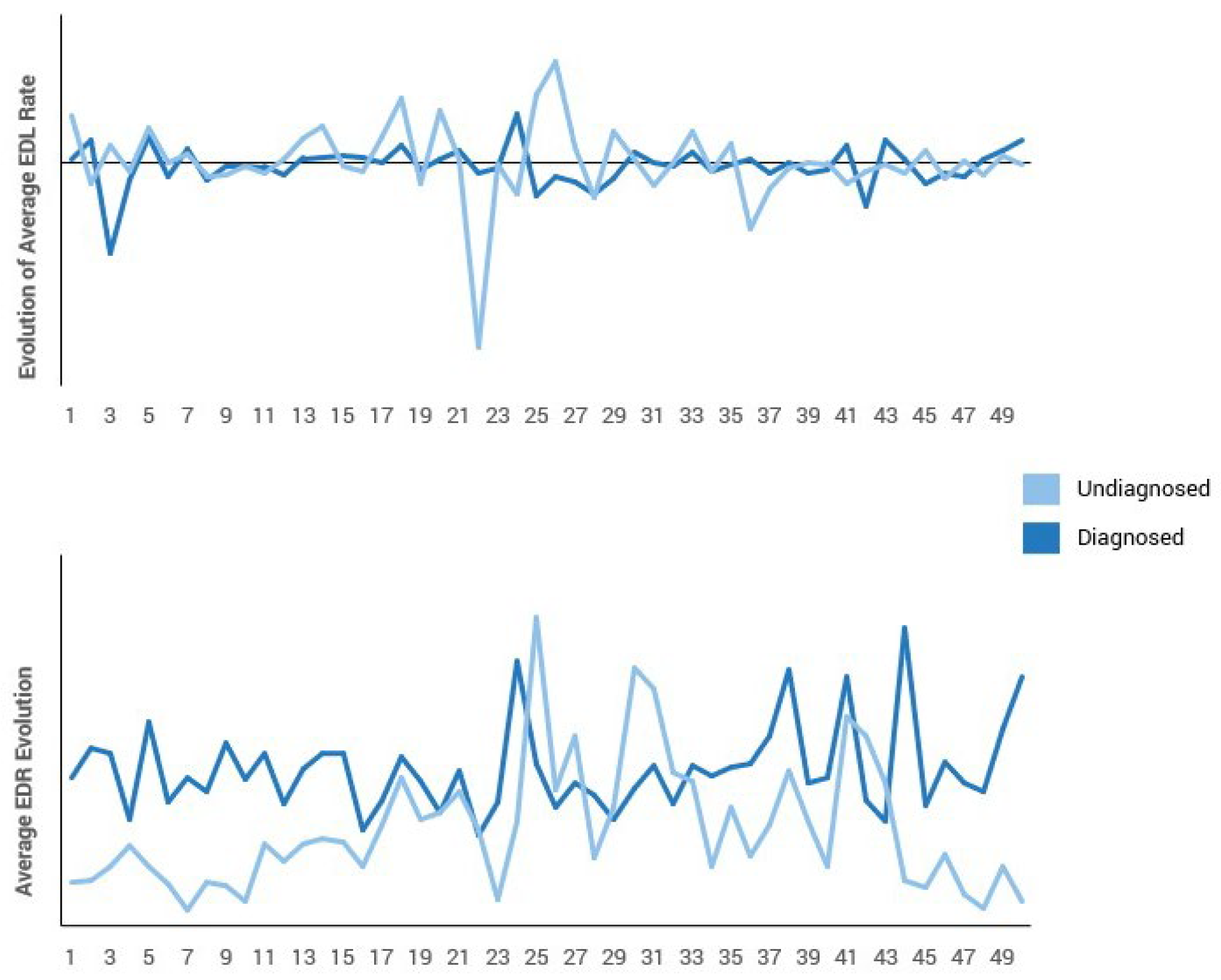
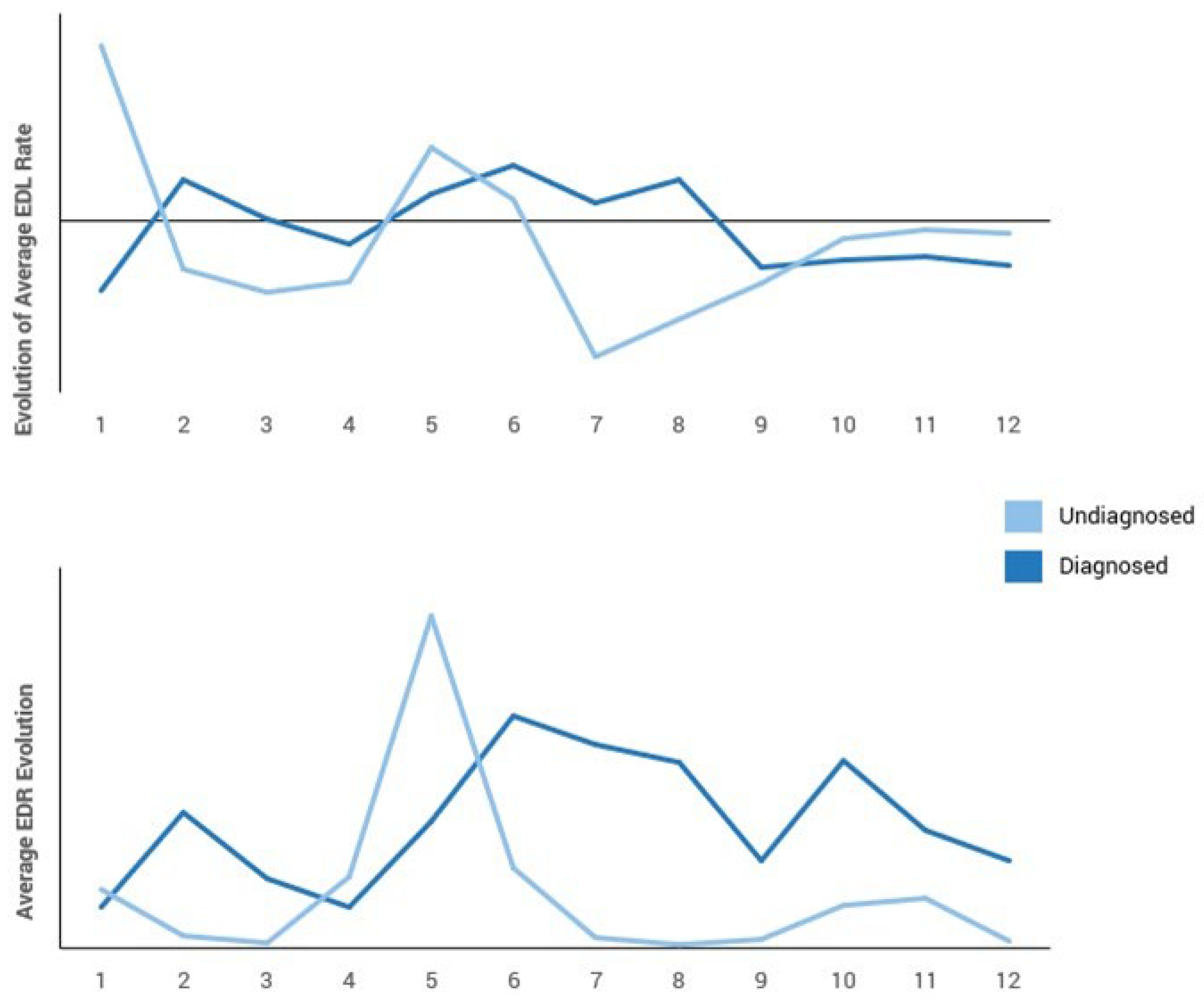
The biometric data collected through the implementation of Sociograph technology reveal significant differences between the two groups in terms of emotional connection and attention. Overall, the DP group displayed a more constant and profound emotional connection during the concert, compared with the UP group, whose levels of attention exhibited a more fluctuating pattern.
In the case of the DP group, a high and sustained level of emotional connection was observed throughout the entire event. This intense emotional response was particularly pronounced during electronic music tracks and at moments incorporating striking visual stimuli, such as confetti and pyrotechnic effects, present in songs such as Toxic, Bésame, or Said Me. With regard to levels of attention, although relatively stable, they tended to be slightly lower than those recorded for the UP group. The questionnaires complement these findings by indicating that participants interpreted this emotional stability as an experience of “immersion”, in which the concert was perceived as an “emotional escape”.
The UP group, by contrast, exhibited a less sustained emotional response, characterised by more abrupt changes over the course of the concert. Their attention levels, however, rose significantly at specific moments, such as during the Cake Me ritual, in which the artist throws cakes at the audience, suggesting a more reactive response to spectacular stimuli. According to the questionnaires, members of the UP group tended to assess the event from a perspective of entertainment and socialisation, describing it as “fun” and “attractive”, but without highlighting any profound emotional impact. This interpretation is consistent with the biometric data, which show considerable emotional variability, especially during instrumental sections without lyrics that functioned as interludes, provoking emotional disconnection in this group. These patterns are reflected in the corresponding figure, which analyses emotional responses during songs No. 21 (One Piece), No. 22 (Cry Me a River), and No. 23 (Two Times). In this segment, an increase in emotional response was observed with tracks such as Toxic (No. 25), Rihanna (No. 26), and Bésame (No. 29). However, a decline in emotional connection was detected with song No. 31 by BTS, which at that time was perhaps not as familiar to the Spanish audience. In contrast to the UP group, the DP group maintained relatively constant emotional levels, with the exception of the decrease recorded between songs No. 21 and No. 23, with Two Times marking the lowest point.
In summary, although certain moments of the concert did not fully capture the attention of the DP group, these participants maintained a sustained emotional connection, less subject to abrupt variations. This distinction between attention and emotion underscores the particular way in which this group experienced the musical event, privileging the affective dimension over the reactive or spectacular.
The biometric data therefore indicate that, overall, the DP group exhibited a more constant and profound emotional connection throughout the concert compared with the UP group, while attention levels followed divergent patterns (
Figure 1).
4.2.2. Responses to Songs and Instrumental Sections
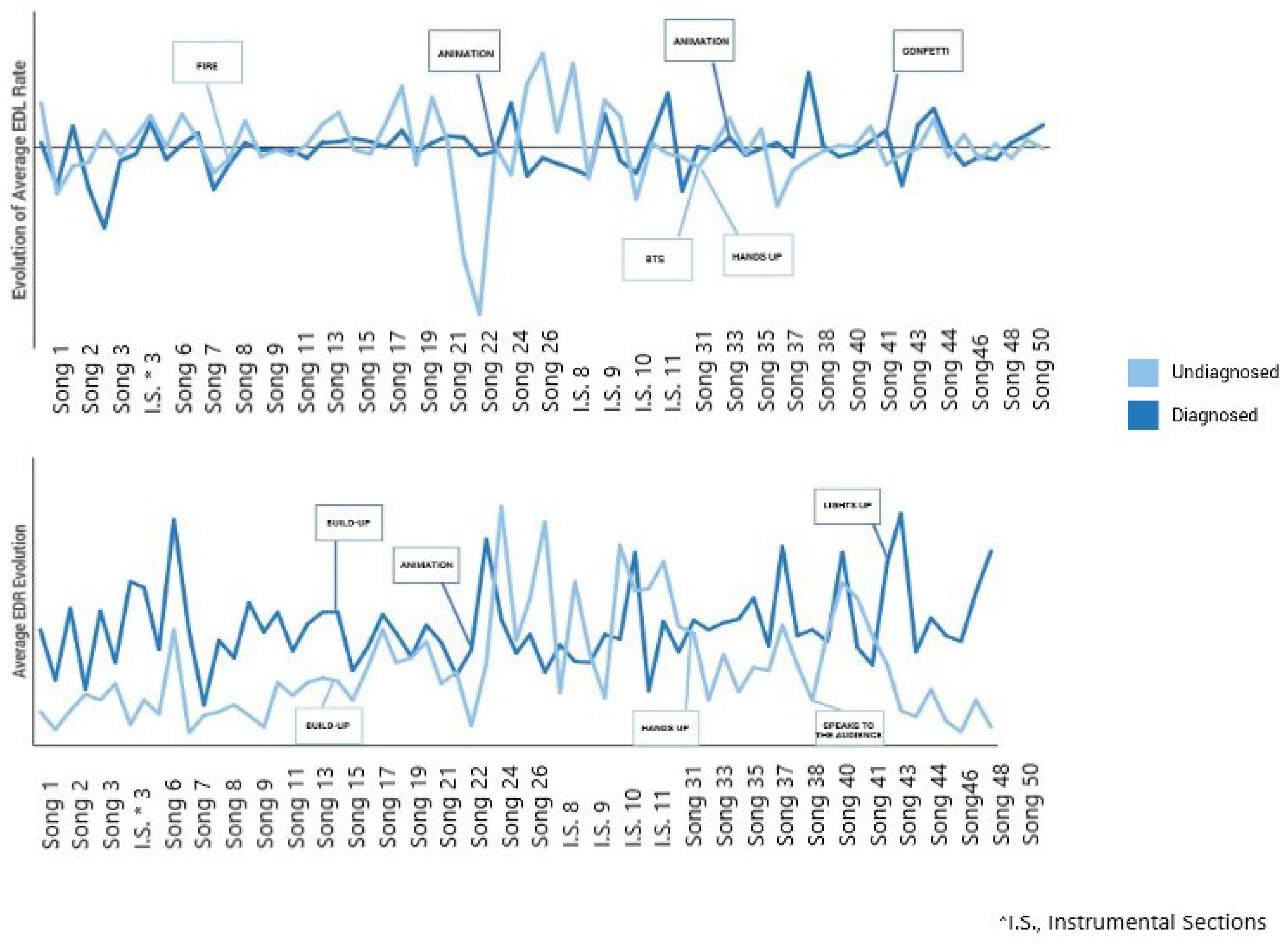
The results reveal a differentiated impact of music depending on the type of stimulus (songs, defined here as pieces with vocal parts and lyrics, versus instrumental sections without lyrics) and the group analyzed (
Figure 2). In the DP group, songs generated a significantly high emotional connection, reaching a level of emotional stability in 86% of the pieces performed. Moreover, this group displayed higher levels of attention during electronic music tracks, suggesting stronger emotional and cognitive engagement in response to stimuli with greater sensory load and structural complexity.
In contrast, the UP group exhibited moderate levels of attention and emotional connection to songs. The more melodic pieces, such as Bésame (No. 29), elicited the highest attention, which may be interpreted as a preference for compositions with more conventional and easily recognisable structures. This suggests a form of engagement more closely associated with aesthetic enjoyment or entertainment, rather than a profound emotional experience.
With regard to instrumental sections, the behaviour of the two groups also diverged. In the DP group, although emotional connection was maintained, it was less intense than that recorded for complete songs. Nevertheless, an emotional peak was identified at instrumental section 4 (located between song No. 6, Turbulence, and No. 7, Cedhead), which may be attributable to a structural turning point or to cumulative sonic intensity.
The UP group, by contrast, exhibited higher levels of attention during the instrumental bases than the DP group, particularly in the first half of the concert. A representative case occurred at instrumental section 8 (between songs No. 24, Kernkraft 400, and No. 25, Toxic), where a significant increase in attention was recorded. However, this group also showed greater instability throughout the concert, with marked fluctuations in their capacity to sustain attention, especially during instrumental sections 7 and 8.
In general terms, both attention and emotion showed an upward trend across the concert with respect to the instrumental bases. Nonetheless, while in the DP group this evolution was more sustained and coherent, in the UP group the changes were more abrupt, reflecting less consistency in emotional involvement.
4.2.3. Impact of Special Effects and the Cake Me Phenomenon
Visual and performative effects, such as the use of confetti, fireworks, and the phenomenon known as “Cake Me”, referring to the act of throwing cakes at the audience, proved to be key moments in the concert, although their impact differed between the two groups observed.
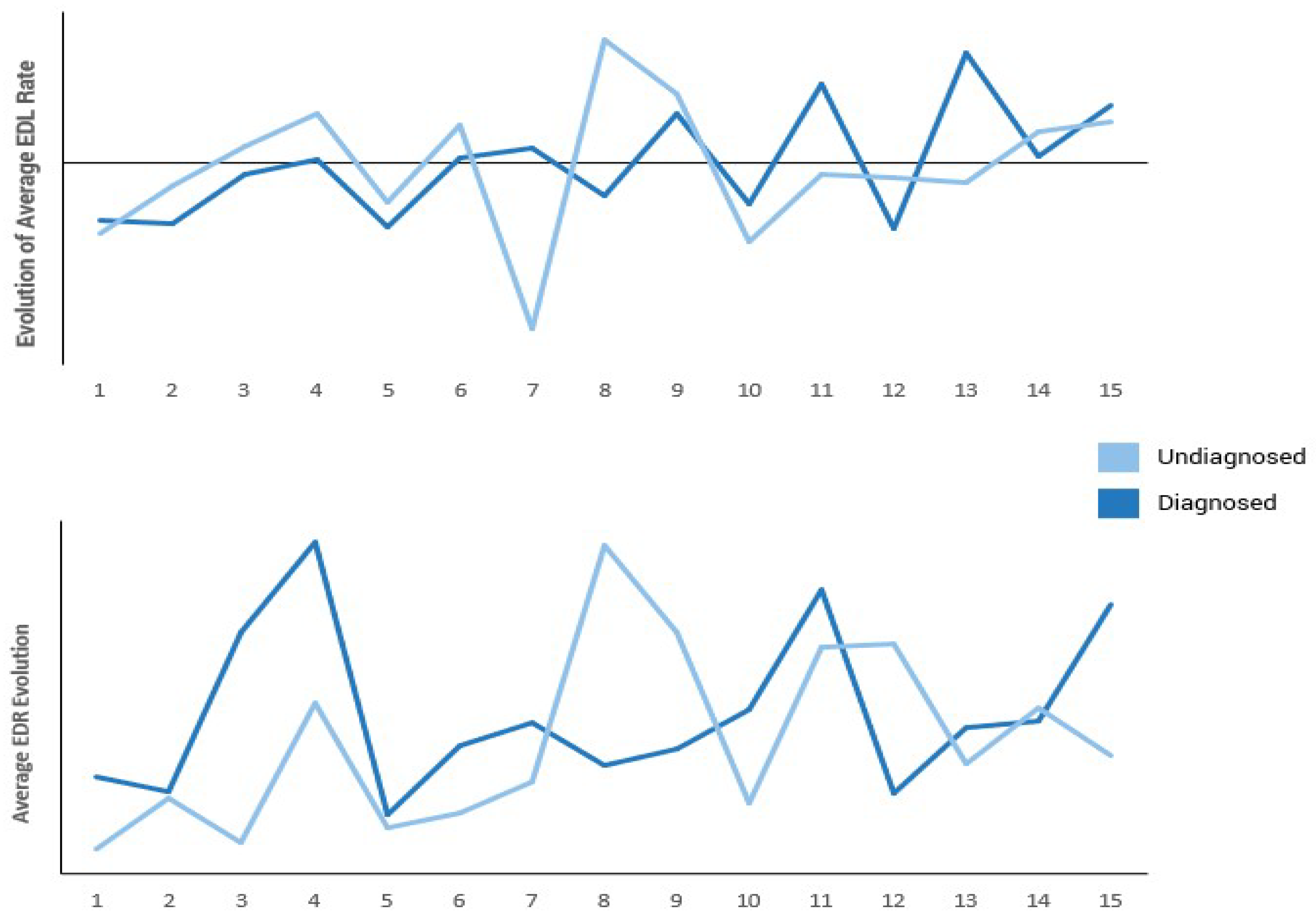
In the DP group, data obtained through Sociograph technology indicate that these effects contributed to maintaining a sustained emotional connection and stable levels of attention. During the cake-throwing moments, this group exhibited low variability in attentional response, suggesting a state of continuous emotional engagement. This pattern is reflected in peaks of attention and emotional involvement, as evident in
Figure 3 and
Figure 4.
In contrast, the UP group responded in a more reactive and less sustained manner. Special effects and cake-throwing generated isolated peaks of attention, particularly during the fourth throw, when this group registered its maximum level of attention. However, outside these specific stimuli, attention declined more rapidly than in the DP group, indicating a lower capacity to maintain continuous emotional connection.
It is worth noting that, although the Cake Me phenomenon may be considered less appealing from an aesthetic or narrative perspective, it nonetheless succeeded in emotionally connecting with the DP group, which maintained stable levels of emotional response. By contrast, the UP group exhibited weak emotional connection throughout most of the segment, with a single significant peak during the fourth cake-throw.
4.2.4. Perception of Artist–Audience Interaction
The artist’s direct interaction with the audience was perceived by both groups as having a low emotional and attentional impact. Although it formed part of the performative design of the event, its overall reception was lukewarm and did not significantly contribute to collective engagement.
In the DP group, biometric data indicate that the artist’s verbal and gestural interaction generated low levels of attention and limited emotional connection. In most cases, the participants’ response was neutral, with no indication of significant emotional resonance.
Similarly, the UP group displayed a low attentional response during these moments, particularly in the second half of the concert. The interaction appeared not to play a significant role in the experience of this group, which proved more responsive to the visual, sonic, and spectacular aspects of the event than to the artist’s direct communication with the audience.
One aspect that warrants closer interpretation is the behaviour of the UP group, characterised by fluctuations in attention and an experience that participants themselves describe primarily in terms of entertainment. This pattern may be interpreted in light of several studies on the functional role of music in everyday contexts. The literature has shown that, for individuals who do not experience significant emotional distress, music tends to fulfil functions related to leisure, sensory stimulation, or sociability rather than deep emotional regulation (
Schäfer et al., 2013;
A. North & Hargreaves, 2008). In this respect, the variability in attention levels observed in the UP group may be associated with factors such as the novelty of the musical stimulus, the degree of familiarity with the genre, or the motivation to participate in the collective experience of the concert.
Furthermore, several studies in the psychology of music have indicated that the regulatory effects of music listening tend to be more intense when there is a prior emotional need that motivates the use of music as a coping or affective regulation resource (
Saarikallio, 2011;
Koelsch, 2014). From this perspective, the lower intensity of the responses observed in the UP group may be explained by the absence of an emotional demand comparable to that of the DP. Consequently, whereas in the DP group the musical experience appears to fulfil a more evident regulatory function, in the UP group, music is situated primarily within the domain of the playful and social experience characteristic of the concert context.
4.3. Emotions Reported by Participants
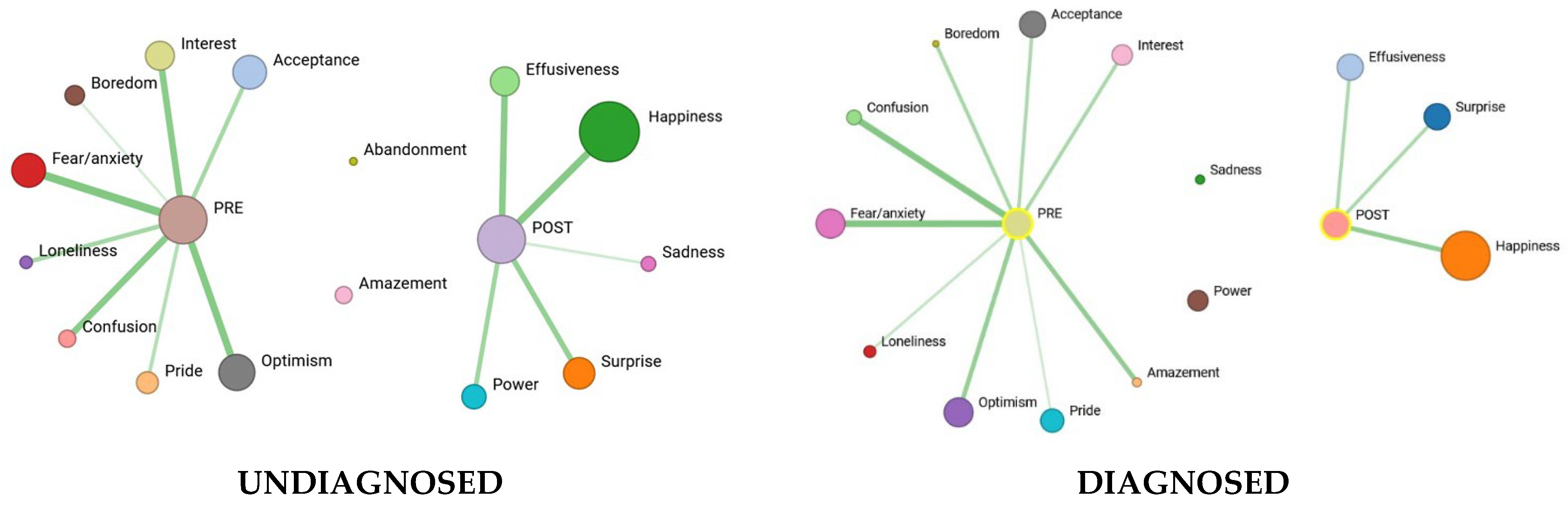
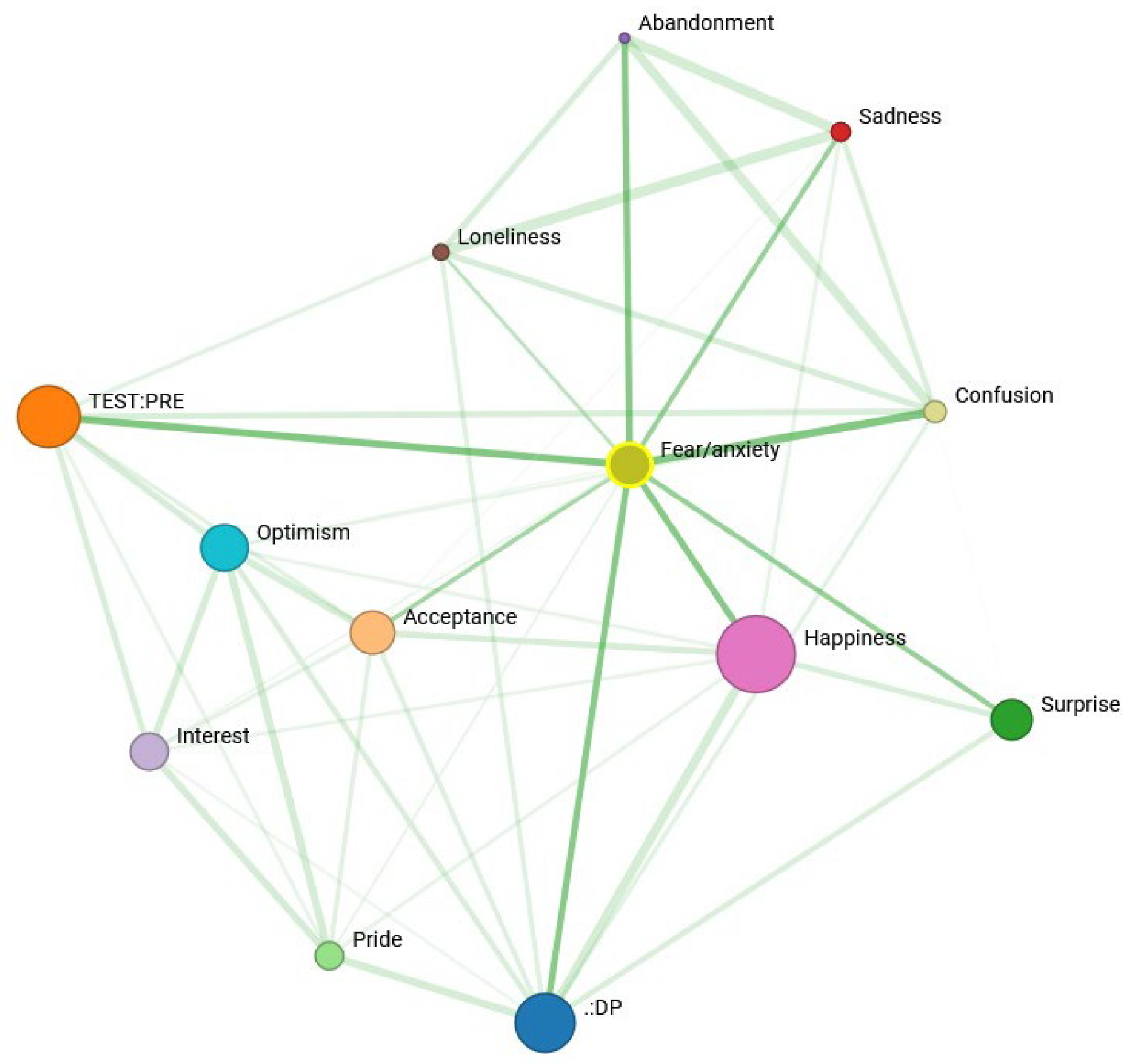
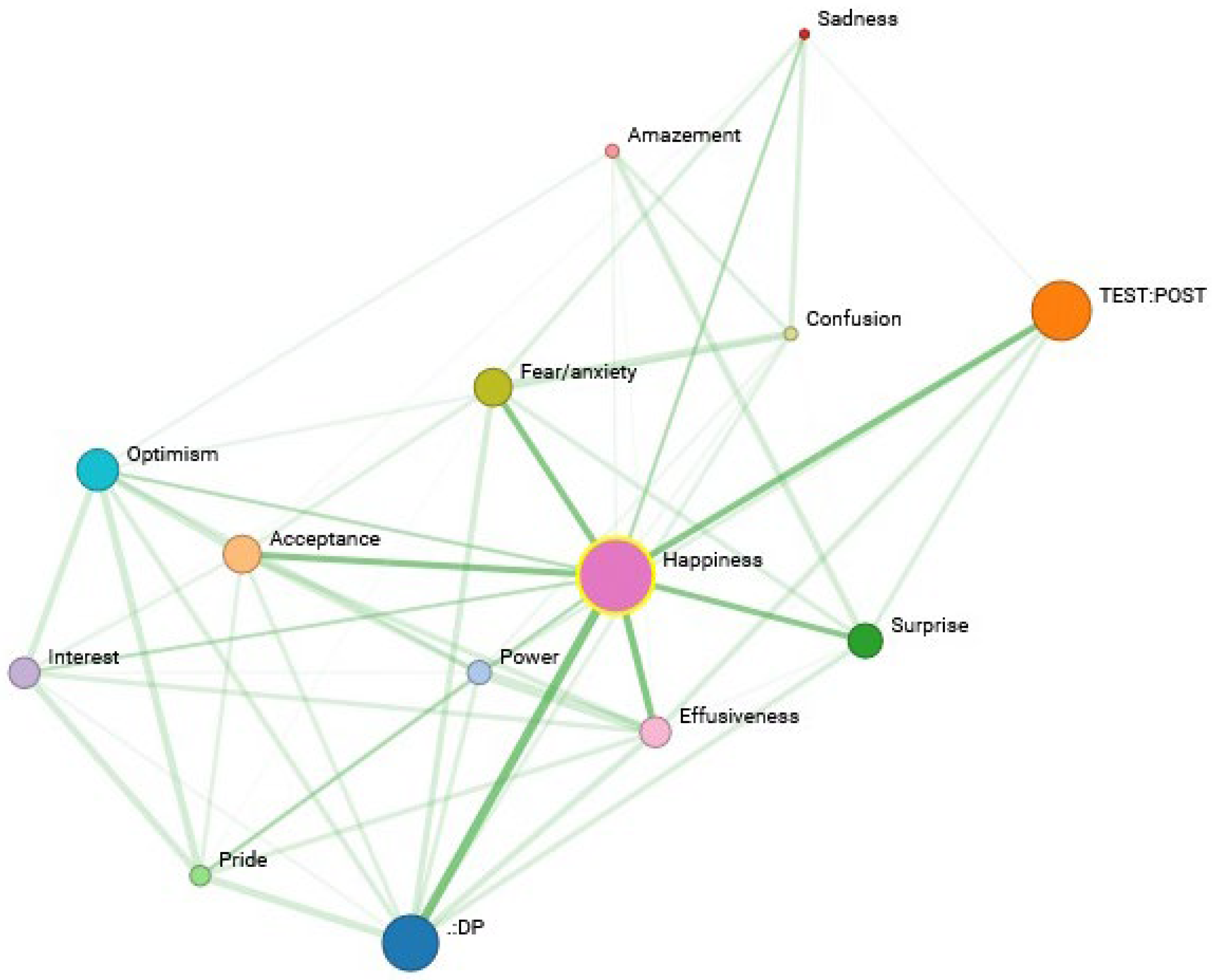
The network analysis of co-occurrences is based on frequency records to identify patterns of association between different categories of responses, constructing a graph that visualises these relationships both visually and quantitatively. Each node (circle) represented in the graph symbolises a specific category, in this case, emotions. The size of each node corresponds directly to its frequency of occurrence: the larger the node, the more frequently that category appears in the dataset.
The connections between nodes (edges) represent co-occurrences between categories, that is, the simultaneous appearance of two elements within the same case. The thickness of these edges indicates the statistical strength of the co-occurrence, calculated using Haberman’s statistic. Greater thickness denotes a stronger relationship between the two connected categories.
This network representation allows for the visual and analytical identification of the most relevant relationships in participants’ emotional and attentional experiences during the concert, highlighting both the most frequent categories and the most significant associations (p < 0.05) among them.
From a technical perspective, we now proceed to analyse the results of the survey on emotions reported by participants before and after the concert.
Scheme 1 illustrates the evolution of basic emotions related to fear and anxiety. The network analysis indicates that anxiety was a central emotion prior to the concert in both groups, although notable differences emerged in its subsequent evolution. In the DP group, anxiety later became linked with positive emotions such as surprise, happiness, and optimism, reflecting a favourable affective transition. By contrast, in the UP group these connections were not statistically significant. The intensity and frequency of emotional associations in the DP group support the hypothesis that the collective musical experience exerts a stronger reparative effect.
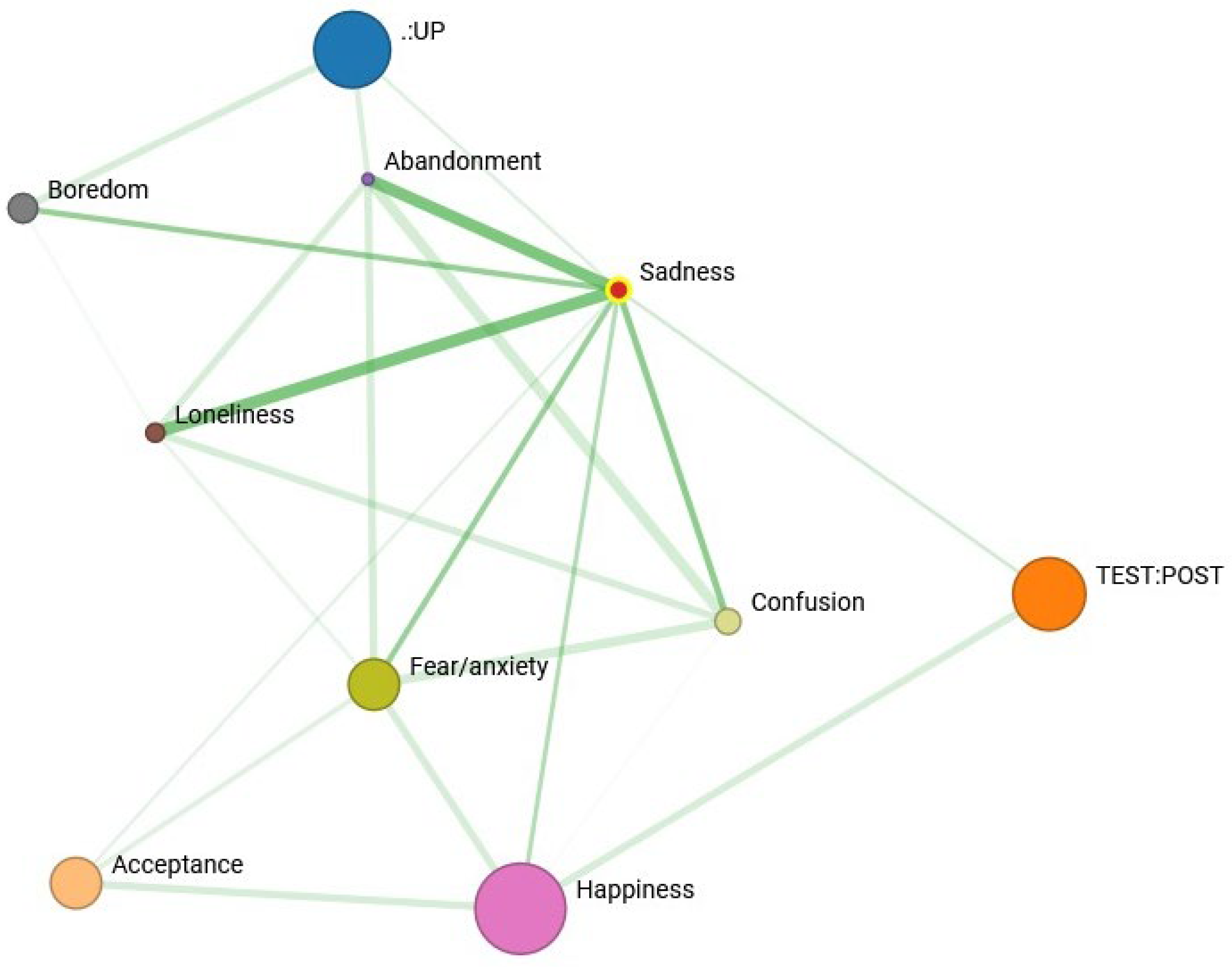
The network analysis centred on the emotion of sadness (
Scheme 2) indicates that it was a minor emotion in terms of both presence and impact across the two groups. Sadness appeared with low centrality and did not generate significant co-occurrences with other emotions or with specific moments of the concert. In the UP group, sadness persisted after the concert, although it did not form meaningful networks with other emotions. In the DP group, it was not present and displayed no statistically significant connections, reinforcing its limited role in the overall emotional experience and its displacement following the event.
The graph illustrates that sadness may have manifested sporadically, but without shaping a solid or recurrent emotional network, and without playing a decisive role in the emotional experience of either group. Its association with emotions linked to affective disconnection, such as boredom or abandonment, situates it at the margins of the overall emotional impact generated by the musical event.
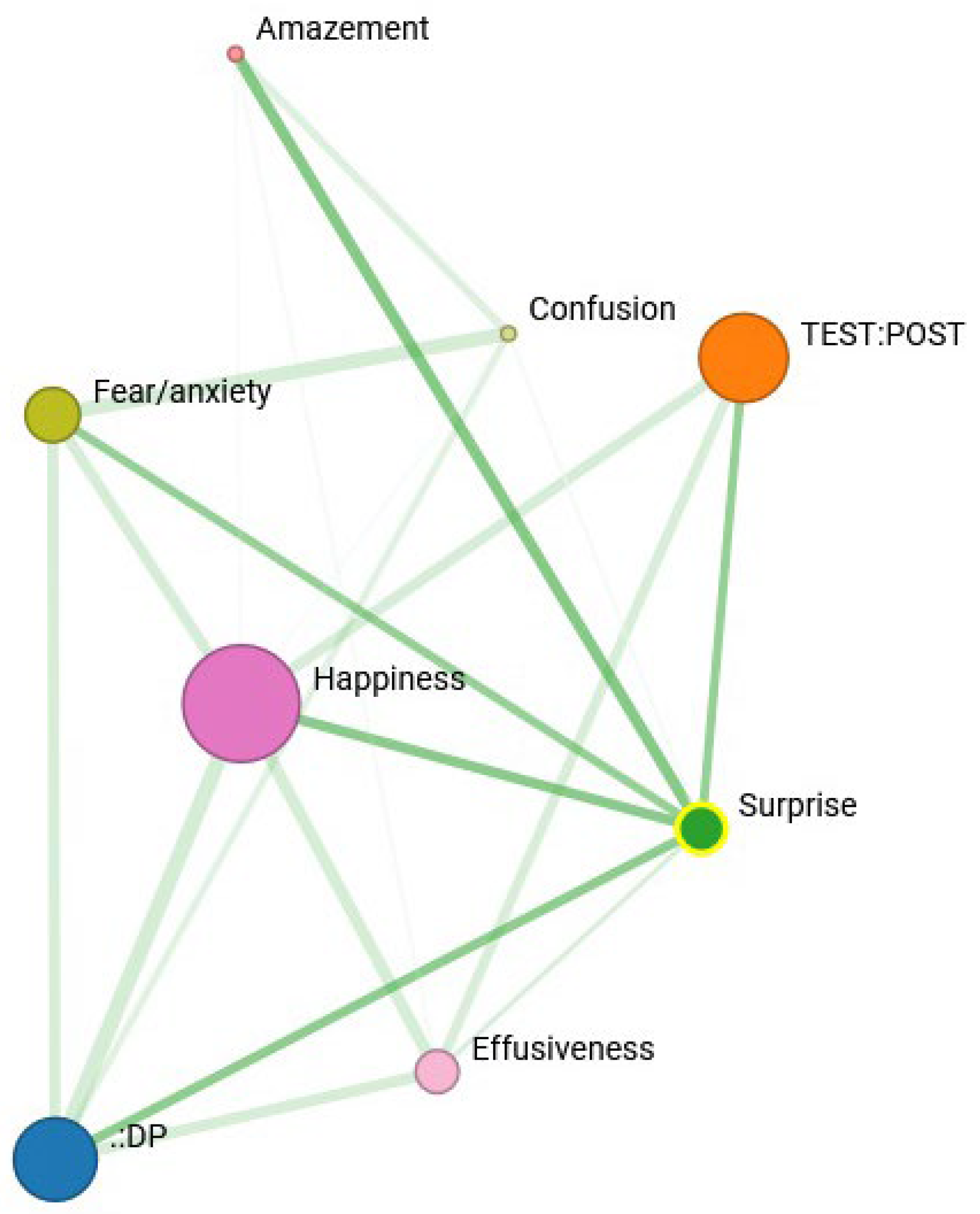
The emotion of surprise (
Scheme 3) reveals a significant connection with other positive emotions, particularly happiness, although with lower relative frequency. This emotion emerged primarily after the concert, becoming associated in the DP group with other positive emotions such as happiness and amazement, suggesting favourable emotional activation. Visual analysis further shows that significant co-occurrences were concentrated in the lower area of the graph, corresponding to the DP group after the concert, reinforcing the hypothesis that the experience generated positive emotional activation in this cohort.
In the UP group, although surprise was also present, its appearance was more occasional and less emotionally articulated, indicating a not statistically significant impact. Its occurrence was associated with a positive emotional transition, linked to emotions such as happiness and amazement, and may be interpreted as a sign of emotional openness or affective renewal following the collective musical experience.
The network analysis focused on the emotion of happiness (
Scheme 4) reveals that it was the most prominent emotion across the dataset, both in terms of frequency and centrality within the emotional network. In the DP group, happiness emerged as the most central and connected emotion after the concert, linking with states such as optimism, pride, and surprise.
This dense network suggests a significant emotional shift, characterised by the transformation of negative emotions (e.g., fear or anxiety) and neutral emotions (e.g., acceptance). This transition was accompanied by an increase in high-arousal positive emotions, indicating an intense and revitalising emotional experience.
In the UP group, by contrast, no significant links were observed. Although happiness was also present among these participants, its centrality and integration within the overall emotional experience proved more limited.
The emotional analysis reveals a clear differential impact between the groups: whereas the DP group exhibited a marked transition from negative emotions towards positive and cohesive affective states, transformations in the UP group were comparatively milder and more fragmented. These findings suggest that the collective musical experience not only enhances pleasant emotions but may also serve as an especially effective mechanism of emotional regulation for young people with adjustment disorders.
Post-Event Impact and Overall Satisfaction
The analysis of the post-concert questionnaires revealed clear differences in the perceived emotional impact between the two groups. In the DP group, most participants reported a highly satisfactory experience, emphasising feelings of “emotional escape”, calm, and disconnection from routine. Although some mentioned a degree of emotional exhaustion, this was interpreted as the outcome of an intense yet positive experience. The most highly valued elements were the songs and the visual effects.
By contrast, satisfaction in the UP group was more moderate and primarily associated with entertainment. While participants described the event as “enjoyable” or “unrepeatable”, they did not report a sustained emotional transformation. For this group, the experience was perceived more as a recreational moment than as a space of affective reconfiguration.
These differences are also reflected in the emotional graphs (
Scheme 5): the DP group exhibited post-event networks that were more cohesive and centred on positive emotions, whereas in the UP group mixed or negative emotions (such as sadness) persisted, albeit in a peripheral manner.
Taken together, the results reinforce the hypothesis that electronic music in collective contexts may serve as a more effective tool for emotional regulation among young people with adjustment disorders. The network representations in both figures complement this interpretation. Within the UP group, the emotional network appeared more fragmented and centred on mixed emotions, with the persistence of negative emotions such as sadness even after the event. By contrast, the DP group displayed a more cohesive network, with a greater prevalence of positive emotions in the post-test phase, including calm, surprise, happiness, and relaxation.
5. Discussion and Conclusions
5.1. Emotional Impact of the Concert Experience
The Steve Aoki concert provided an emotionally intense and meaningful experience, particularly for the DP group, who experienced a sustained emotional connection throughout the event. This group reported continuous immersion, especially fostered by songs with lyrics and by moments where special effects or performative elements were combined with the music. The concert structure, characterised by high levels of intensity and visually striking episodes, helped maintain stable attention and emotional connection for 90% of this group, who described the music and effects as a form of “emotional escape” and “revitalisation”, noting that it helped them to relax and to feel attuned to the energy of both the music and the crowd. For the DP group, therefore, the event was not only a spectacle of entertainment but also an enriching emotional experience that enabled stable and profound connection, generating a transformative overall experience.
By contrast, the UP group experienced the concert differently. For them, the event was primarily “a highly gratifying and curious experience, full of diversity, charm, and happiness”. This group displayed high levels of attention at key moments, such as during the Cake Me phenomenon, where the visual spectacle captured their focus intensely, albeit only temporarily. However, this experience did not result in a prolonged emotional connection but rather in isolated peaks of heightened attention that contributed to overall enjoyment without producing the same degree of emotional immersion as in the DP group.
Regarding the emotional impact of electronic music, the results indicate a particularly significant effect for the DP group. Among these participants, emotions such as anxiety were transformed into positive states, including happiness and surprise, reflecting a process of emotional regulation facilitated by the collective musical experience. While anxiety was present in both groups, its transformation into positive emotions in the DP group suggests that electronic music could serve as a complementary tool in initiatives for individuals with adjustment disorders. Positive changes were also observed in the UP group, although of lower intensity and with greater affective dispersion. In this case, while electronic music had an overall positive effect, its impact was less profound in participants without a prior diagnosis.
5.2. Possible Mechanisms of Emotional Regulation
One possible explanation for this sustained emotional engagement may lie in the activation of neural reward systems during musical experiences. Neuroscientific research has demonstrated that music can engage dopaminergic pathways associated with pleasure and emotional processing, particularly in brain regions such as the nucleus accumbens and the ventral striatum. These mechanisms may contribute to the perception of music as emotionally rewarding and may help explain why participants in the DP group described the concert as a form of emotional “escape”. In the case of electronic music performances, the repetitive rhythmic structures and high-intensity sonic environments may further facilitate emotional release and contribute to the regulation of negative affect.
These findings may be related to the phenomenon of collective emotional empathy. Several authors have argued that emotions do not arise solely at the individual level (this was confirmed by Sociograph technology), but can also be amplified and transmitted within a group through processes of emotional contagion and affective resonance, particularly in contexts where individuals share intense and synchronised sensory stimuli. Musical concerts constitute a particularly favourable setting for such processes, as the combination of sound, rhythm, bodily movement, and collective presence may generate shared emotional states that intensify individual experience and reinforce the sense of belonging to the group. In this context, the measurement of group electrodermal activity through Sociograph technology makes it possible to approach empirically these processes of shared emotional synchronisation that emerge during live musical experiences.
5.3. Performative and Contextual Factors in the Concert Experience
Special effects and performative situations synchronised with the music were essential to the design of the concert and proved effective for both groups, albeit with different levels of emotional impact. The synchronisation of visual and sonic effects with key musical moments contributed to an inclusive experience that, while designed to appeal to a broad audience, was emotionally intense and transformative for the DP group. This aspect was crucial in maintaining their attention and emotional connection, making special effects a fundamental part of the overall experience. For the UP group, although the effects also heightened attention and proved attractive, they were primarily perceived as visual and sensory entertainment, without reaching the same depth of emotional connection.
The artist’s interaction with the audience, although important to the concert structure, had a relatively limited impact for both groups. This attempt to generate proximity through verbal and gestural contact did not succeed in establishing itself as a highlight of the collective experience, suggesting that its effectiveness may be influenced by contextual and cultural variables.
One such variable is language. The artist spoke primarily in English, a language not widely used among the Spanish audience, which may have constrained the emotional reception of his interventions. However, when he used a few words in Spanish or made direct references to Spain, the audience responded more enthusiastically, as manifested in cheers, applause, and increased participation. Similarly, songs performed in Spanish elicited higher levels of identification and affective response, indicating that linguistic and cultural proximity plays a significant role in shaping the bond between artist and audience. These findings suggest that, in contexts where the vehicular language does not coincide with that of the majority of the audience, the strategic inclusion of local linguistic elements may enhance interaction and the emotional impact of the event.
The collective nature of electronic music events may also play a crucial role in these emotional processes. Previous research on electronic dance music cultures has described festivals and concerts as environments that foster affective attunement and shared emotional states among participants. Within these contexts, rhythm, movement, and sonic intensity contribute to the emergence of collective emotional atmospheres in which individuals experience a sense of belonging and shared affective resonance. Such collective emotional dynamics may amplify the emotion-regulating effects of music, particularly for participants experiencing psychological distress.
5.4. Methodological Contribution of the Study
These observations align with the qualitative analyses conducted by the interdisciplinary team within the Amygdala Project, which interpreted the data from sensory, contextual, and symbolic perspectives. The team collectively concluded that the musical experience had a differential emotional impact, highlighting the need for further investigation in future research on youth well-being and collective emotions.
From a methodological perspective, this study also makes a relevant contribution by demonstrating the usefulness of combining biosocial methods of collective physiological measurement with qualitative tools and self-report assessments of emotion in real cultural contexts. The use of Sociograph technology to record group electrodermal activity made it possible to observe patterns of attention and emotional activation that would be difficult to detect through questionnaires or retrospective interviews alone.
The application of this type of methodology in natural settings, such as live concerts, opens new possibilities for the empirical study of collective emotions and the processes of affective synchronisation that emerge during shared cultural experiences. In this respect, the methodological approach adopted in this study may prove valuable for future research on music, emotional well-being, and group dynamics, as well as for the design of cultural interventions aimed at promoting psychological well-being among young people.
This study reinforces the notion that live electronic music, beyond its aesthetic dimension, can serve as a resource for emotional regulation and group cohesion, particularly among young people experiencing psychological vulnerability. These findings clearly open a pathway for the design of cultural and educational initiatives aimed at promoting emotional well-being through collective musical experiences. They also suggest potential directions for future research on the role of collective musical experiences in promoting emotional well-being among young people.
5.5. Limitations and Future Research
With regard to general limitations, and following the recommendations of
Simons et al. (
2017), the results of this study should be interpreted within the bounds of generality typical of a Proof of Concept (PoC). The exploratory nature of the design, the small sample size (20 young people), and the specific conditions of the event (a live Steve Aoki concert during the Cosquín Rock Festival 2024 in Valladolid) constrain the extent to which the findings can be generalised.
Concerning the participants, purposive and snowball sampling allowed for the assembly of two comparable groups (young people diagnosed and undiagnosed with adjustment disorders), but it does not guarantee population representativeness. Factors such as age, sociocultural context, or prior familiarity with the artist and musical genre may have influenced emotional responses. Therefore, the results should not be extrapolated to other age, cultural, or clinical groups without further empirical verification.
Regarding materials and procedures, the musical, visual, and performative stimuli were specific to a particular concert, with its own aesthetics, pacing, and narrative. Changes in musical genre, the artist, or acoustic and spatial conditions could alter the responses observed. Nevertheless, it is considered that the recording methods employed (particularly Sociograph technology for measuring group electrodermal activity and self-report emotional questionnaires) are replicable in other musical contexts, maintaining their validity and sensitivity for detecting collective attention and emotional patterns.
Finally, the environmental and social context constitutes a key component of the phenomenon analysed. The emotional experience in a large outdoor event with intense sensory stimuli cannot be equated with controlled laboratory listening sessions or individual listening experiences. It is therefore likely that the results could differ substantially in indoor settings or with smaller audiences. Environmental factors related to the venue (such as temperature, distance from the city centre, and transportation accessibility) may also have influenced participants’ emotional responses. Although these aspects were qualitatively documented during field observations, they were not systematically recorded as quantitative variables. Future studies should incorporate environmental measurements to better assess their potential impact on collective musical experiences.
In sum, the findings reflect consistent trends within a real and ecologically valid experimental framework, but they require replication with larger samples, diverse contexts, and different musical genres to consolidate generalisation and strengthen predictive value. These considerations therefore encourage further research, which is currently underway.




 ,
,