


Abstract
This paper explores Indigenous Maya practices, ways of sensing, from a personal perspective to provoke discussion on ways to ground mathematics education through land and ancestors. This paper is largely based on my doctoral research work (2018–2022). I adopt a sensory ethnography approach as a viable means to explore Maya Elders’ ways of knowing. Over a period of three years, I walked alongside my Elders and journeyed into a world of mysticism and mathematical wonder. These experiences evoked the questions: “What are the challenges in engaging with this form of knowing as a learner and translator? How can these experiences help us to ground Indigenous forms of mathematical knowing? What insights can we learn via our own Indigenous mathematical heritage?” I argue that an embodied and sensory approach to mathematics through the ways of our ancestors leads to a more meaningful and purposeful mathematics. In this more-than-human context, the predominant view of mathematics as a-human, a-cultural, and a-historical is blurred to reveal mathematics as human and very much grounded in our ways of yearning to make sense of the world around us.
1. Introduction
I found my place. I know who I am and where I came from. I discovered a sense of self and belonging. I am a descendant of the Maya, a People who created one of the greatest civilizations the world has ever known. I did not always associate with this identity. In fact, I struggled painfully to come to terms with this. For you see, I come from a region of the New World considered “post-colonial”, and to identify as Maya, or to speak in your native tongue instills a sense of shame and guilt. To call yourself Maya meant to be seen and treated as illiterate, a peasant from the poorest region of our country, uncivilized and uneducated bush people. This identity made you believe and feel that your culture is inferior to others.1
The culture of our people has always struggled to survive. This sense of shame is a product of five hundred years of oppression. Historically, our Spanish masters systematically ravaged our lands and attempted to erase our identity as a people. The raison d’etre of the Conquistadors to the New World was land and gold, and in their pursuit of it they stole, raped, and pillaged our lands and people. Those who could not be made slaves were murdered. Few history books will tell you that the missionaries to the New World viewed our ancestors as heathens, devil worshipers, and therefore lacking morality. They saw the writings in our ancestors’ books and dismissed them as paganism—lies of the devil. And in a single act of cleansing, they burnt them all. The missionaries’ goal was to subjugate, assimilate, and convert the heathen, ‘pagans’, to Christianity.
This is the history of our people seldomly told, even to this day. It is a violent history not taught. I live in a country that dreams of a nonviolent and imagined past, one that made a peaceful transition from colonial governance into a prospering independent nation state. This is false.
1.1. Inheritance
Mathematics in Central America does not begin with the European missionaries. It began over two thousand years ago with our ancestors, the Maya (Medina, 2022). A predominant view of Eurocentric mathematics is the way non-European cultures are represented, in particular their ingenious mathematical achievements. Few textbooks in schools discuss Mesoamerican contributions to the field. Most of the math and mathematicians are of European origin. Therefore, there is a need to challenge this Eurocentric view.
First, the contemporary view of mathematics as a European product is false (Bishop, 1988; Gerdes, 1999; D’Ambrosio, 1987; Joseph, 2000). Author George Joseph in his book The Crest of the Peacock (2000), demonstrated the deep influence other cultures (Egyptians, Babylonians, Indians, Arabs, Chinese) have had on the development of European mathematics (Joseph, 2000). He contended that European mathematics has non-European roots. It is important to note that the conquest of the Americas by European colonial powers did arrest and were responsible for the near extinction of Pre-Columbian Mesoamerican mathematics. Even in a supposedly neutral subject matter such as mathematics, Eurocentric perspectives persist and continue to overly influence school curricula (Powell & Frankenstein, 1997).
Second, there is the wider issue of who ‘makes’ math, what counts as ‘legitimate’ mathematics and which culture defines it. The evidence of Maya-ethnomathematics presented here also raises questions about what constitutes mathematics. Is there a need to conform to symbolic logic (European) before a given cultural practice is recognizable as mathematics? Does it need to be expressed in English (written or spoken)? Some questions provoked by this study are: How do we judge what is valuable mathematics? How do we legitimize the math of our ancestors? What aspects of these knowings add to our current treatment of math? These questions are valuable questions than can brought to the forefront by engaging with our cultural heritage and the few surviving mathematical knowledges that have survived through the sacred spaces and practices of our Elders. Even if these forms of knowing do not align with the formal study of logic to deduce certainty, there is value to them, one being the human and spiritual humility that it engenders, especially a sense of cultural identity.
1.2. School Mathematics
The mathematics we all learn in school, academic or school mathematics, is but one form of math. Research by Ascher and Ascher (1981, 1986), D’Ambrosio (1985, 2001), Gerdes (1986, 1995, 1997), Zaslavsky (1979, 1999), and Joseph (1997, 2000), works I consider classics in the field of ethnomathematics, demonstrated the existence of diverse forms of cultural maths.2 The field of ethnomathematics—considered the study of mathematical practices of identifiable cultural groups (D’Ambrosio, 1985)—broadens the conceptualization and treatment of mathematics as cultural expressions of concepts situated within a socio-cultural context. Ethnomathematics troubles the predominant Eurocentric view of mathematics as objective, universal, and disembodied. This field challenges the view that “mathematical knowledge exists outside of and unaffected by culture; and that only a narrow part of human activity is mathematical and, moreover, worthy of serious contemplation as ‘legitimate’ mathematics” (Powell & Frankenstein, 1997, p. 2). This paper, in the same spirit, challenges the notion of a single universal logic governing all thought—a single global mathematics.
I argue that within the theoretical framework of ethnomathematics, the culture and practice of mathematics become contextualized. Through this approach, mathematics becomes a living, breathing human activity. By treating mathematics as grounded in the corpus of cultural practices—as a means of understanding the world around us—math becomes less history-free, cultural-free, and body-free. Humans across cultures have and continue to advance and innovate mathematical thinking. So, via work with culturally grounded and diverse ethnomathematics, our sense of what we mean by mathematics is challenged. This paper explores these dimensions of mathematics through the contemporary practices of Maya3 Elders.
2. A Sensory Ethnographic Approach
In mathematics education research, a common approach to the embodied character of mathematics and its role in mathematical practice is through case study inquiry of learners’ embodied imagery, speech acts, embodied metaphors, and physical motions and gestures (see for example, Nemirovsky & Ferrara, 2009; Gerofsky, 2015; Radford, 2003, 2014; Sinclair & Tabaghi, 2010; de Freitas & Sinclair, 2012). The approach to embodied research in mathematics education is often case studies involving the analysis of learners’ external representations of thought. These approaches are based on the philosophical premise that human thought can be uncovered through in-depth report, description, and external representations in the form of words, drawings, and actions, and that these media can provide an indication of the nature and relationship of these ways of knowing (Gray, 1999, p. 241). The methods associated with this common approach to embodied research in mathematics education are, for example: interviews, participant-observation, analysis of think-aloud protocols, analysis of gesture and speech, stimulated recall, analysis of video recordings, quantitative testing, or a combination of these.
However, in terms of methodology, there is not much research that looks at a sensory approach to explore mathematics within a cultural and Indigenous framework. Research in this area is scarce, specifically as it relates to non-European ways of mathematical knowing within non-traditional settings, for example, a rainforest or maize field farming. Most case study inquiries on embodied and sensory research are carried out with students within a formal classroom setting and with Euro-American mathematics. These research methods privilege European modes of thought. Participants are often observed and studied within the context of mathematics problem solving—the mathematics is Eurocentric and reflects academic mathematics (see, for example, Radford, 2014).
I argue that Indigenous mathematical practice, for example, Maya mathematics, should be taken on its own terms of place and time. The exploration of cultural forms of mathematics, or any form of Indigenous mathematics for that matter, using a sensory approach, is limited in mathematics education research. This inquiry therefore presented an opportunity for such exploration.
Research evidence indicates that mathematicians and most people, in general, think using both abstract and sensory ways—they visualize, they gesture, they abstract by drawing on sensory experiences. People act as agents within a recursive thinking process (Sinclair & Tabaghi, 2010). However, sensory ways of knowing within an ethnomathematics framework are often overlooked, specifically within former colonial countries, who seem to be at the peripheries of research. It is this paper’s theoretical disposition that mathematical practice carries with it a sensory dimension within a situated cultural context. I assert that mathematics practitioners (just about everyone) are not passive agents in the process of doing mathematics. Rather they have degrees of mathematical agency4 in thinking—which in the context of ethnomathematics does rely on certain sensory acts. I argue that the senses are important aspects that need to be considered alongside these cultural forms of knowing and therefore mathematics education in general.
2.1. Approaches to Mathematics and Cultural Research
Research on mathematics and culture has “encouraged a few studies on the evolution of the concepts of mathematics in a cultural and anthropological framework” (D’Ambrosio, 1985, p. 44). Ethnomathematics researchers Gerdes (1988b, 1999) and Ascher (1987, 1991) for example, applied an anthropological approach to their research. Their research showed evidence of mathematical practices—counting, sorting, measuring, weighing, and ordering—performed by cultural groups in different ways than conventional mathematics taught and learned in schools.
Gerdes (1993) recommended that for research involving mathematics and culture, qualitative research methodologies are not only promising but also appropriate. Gerdes (1993) utilized a qualitative approach that analyzed and replicated the production technique of given cultural objects to study the mathematics embedded in them. He applied this approach in Mozambique to “unfreeze” the hidden geometry in basket weaving, mats, and fish-traps. This approach focused on the exploration of “hidden” mathematics embedded in certain cultural objects and practices of making (see Gerdes, 1988a, 1988b, 1993, 1995). These traditional cultural activities or practices were interpreted as embedding mathematics and mathematical thinking.
In addition to the study of cultural objects and practices, Boaler (1993) proposed that “additional measures such as open-ended and semi-structured interviews and observation of behavior must be included if richer and more accurate references must be made” (p. 348). In her research, she used a combination of observations, interviews, and material analyses. More recent studies (see, for example, D’Ambrosio, 2001; Alangui, 2010, 2006) showed that research on mathematics and culture follow a socio-cultural approach using qualitative methods such as ethnography, interviews, journaling, field observations, participatory-inquiry, and “think-aloud” protocols.
However, the above approaches have not gone unchallenged. Within the study of cultural objects and practices, the qualitative approaches that investigate and interpret the mathematics embedded in them have been questioned. Vithal and Skovsmose (1997) criticized and questioned the process of interpreting cultural practices as mathematical. One may ask: “Does juxtaposing conventional, formal mathematical ideas and models onto Indigenous mathematics not influence or reorganize the reality of these cultural practices? What of the practitioners’ thinking or views?” Then there is the issue of whether these practices are truly mathematical. Authors Rowlands and Carson (2002) argued that many practices that can be described mathematically are not necessarily the case. Is the cultural knowledge under investigation mathematical? How are these ‘relevant’ mathematical ideas extracted? Do they truly reflect the authentic mathematics of that culture?
Alangui (2006) and Aishikin (2010) countered the above criticisms and proposed the methodology of Mutual Interrogation. Alangui’s (2010) doctoral work defined mutual interrogation as “the process of setting up two systems of knowledge in parallel to each other to illuminate their similarities and differences [to] explore the potential of enhancing and transforming each other” through critical dialog (p. 86). The systems of knowledge in question reflected the embedded cultural knowledge of a given object or practice on the one hand, and conventional, formal mathematical knowledge (i.e., academic mathematics) on the other. As a methodological approach, the process involved interrogation between both systems through critical dialog mediated by the researcher (Aishikin, 2010).
For example, a group of mathematicians may look at the structure and form of a given cultural object and then proceed to ask their practitioners certain questions, via the researcher, about the construction techniques that yielded a given form and pattern. Mathematicians would then question, offer recommendations, and even challenge the practitioners’ practice. Through this dialog, a platform was established where the practitioners offered their feedback, insights into their craft, and challenged conventional mathematical thinking. In short, the process explored mathematics through a collaborative dialog between both parties’ ways of mathematical thinking.
Alangui (2006) proposed mutual interrogation as a methodological approach to counter Vithal and Skovsmose (1997) and Rowlands and Carson’s (2002) pertinent criticism regarding the process of interpreting the embedded cultural knowledge of objects or practices as mathematical, and the lack of research considering practitioners’ views and opinions. This methodology was proposed to avoid the dual problem of ideological colonialism—the process of imposing concepts and structures of academic mathematics onto cultural knowledge, and knowledge decontextualisation—the “taking of knowledge or practice out of their cultural context to highlight their ‘inherent’ mathematical value” (Alangui, 2010, p. 11).
I contend that from a standpoint where mainstream “academic” mathematics is viewed as superior, the study of Indigenous knowing woven in culture-based practices is often dismissed as “folk” mathematics and its study motivated by simple curiosity. Often there is no imperative to go deeper to understand and connect with it. These forms of maths are often treated and presented as alternatives to an already established “superior” and global mathematics. For example, Indigenous number systems are often used as backdrops to the mainstream decimal numbers system.
I would like to highlight that the Maya of Mesoamerica has a complete number system that is one of the most economic and efficient systems of counting and writing. They created a concept of zero and used a total of only three symbols to theoretically count and represent any number well into the billions and trillions. This knowledge is often dismissed in schools, often because to admit to this would mean to admit to how much we would have to learn from a culture who was well advanced in mathematics.
From this standpoint, I contend that there is a need to approach ethnomathematics by aiming to understand and connect more deeply and as profoundly as is possible with these forms of knowing in its cultural context. This paper presents a viable approach for research into contemporary Indigenous mathematics not just through structured or semi-structured interviews in formal settings, mutual interrogation, participant observations (participants as passive objects to be observed) or as an outsider looking into an Indigenous knowledge system, but rather through humility, reverence, mutual learning relationships, and authentic conversations. The suitable methodological approach I adopted to explore Indigenous mathematics is that of sensory ethnography.
2.2. Sensory Ethnography
Pink (2015) defined sensory ethnography as: a critical methodology that is a reflexive and experiential process through which understanding, knowing and (academic) knowledge are produced […] sensory ethnography does not privilege any one type of data or research method. Rather, it is open to multiple ways of knowing and to the exploration of and reflection on new routes of knowledge (p. 8).
Pink argued that to understand these forms of knowing required developing a reflexive sensory approach. This notion of “a reflexive and experiential process” was central to my research approach to Indigenous knowledge. As questions emerged from my interactions in the field, I acknowledged that the inquiry was a self-reflexive experience as conversations and participant observations were obtained (Ellis & Bochner, 2000). Saukko (2005) concurs: “Self-reflexive awareness of mediation, thus, is the most characteristic criterion for good or valid research in the paradigm” (p. 350). My aim was to be critically aware of my own sensory experiences, the meanings I made of these, and how I applied them purposefully to cultivate what Culhane (2016) referred to as “sensory embodied reflexivity” (p. 49), which means self-consciously and reflexively attending to the senses throughout the research process, the fieldwork, analysis, interpretation, and representation of findings. Sensory ethnography, an embodied process, I argue, is a suitable methodology to explore Indigenous mathematics.
Pink (2015) explained: The experiencing, knowing and emplaced body is central to the idea of a sensory ethnography. Ethnographic practice entails our multisensorial embodied engagement with others (perhaps through participation in activities or exploring their understandings in part verbally) and with their social, material, discursive and sensory environments. It requires us to reflect on these engagements, to conceptualize their meaning theoretically and to seek ways to communicate the relatedness of experiential and intellectual meanings to others. It is equally important for ethnographers to acknowledge their own emplacement as individuals in and as part of specific research contexts (p. 25).
I carried out my research by participating alongside Maya Elders’ practices. I explored maths through open conversations and reflected on these engagements and entanglements throughout the research process. I documented slowly how our understandings were troubling. I explored and attempted to make what was invisible visible and allowed it to emerge on its own terms. I allowed such experiences to call me in and many times, I had to relinquish control and just let this knowledge arrest me.
I did this by immersing myself in the practices of my Elders. I observed, participated and meditated with them through their work. We conversed openly about mathematics and the knowledge integrated into the customs and practices of our ancestors, especially with the land itself. I listened to their stories, their philosophies, and world views. I walked and spoke alongside them in informal settings—in the rainforest, as we planted, as we wove plant fibers.
I thought carefully about what I observed, sensed, and experienced. I interpreted and talked to these participants to check in with their sense of the emerging interpretations. I inserted myself into the trajectories to which my Elders related via Maya cultural practices and thus attempted to relate similarly to them. As O’Reilly (2009) suggested, this process involves “direct and sustained contact with human agents, within the context of their daily lives” (p. 3). And Pink (2015) reaffirmed, “they are alternative, and ultimately valid, ways of seeking to understand and engage with peoples’ worlds through sharing activities, practices and inviting new forms of expressions” (p. 9). In my approach to explore Indigenous Maya mathematics, I remained opened to these experiences and was prepared to engage reflexively and analytically with such experiences. This meant paying attention to how I, as a researcher, might use my own body and senses as a measuring instrument alongside my participants.
In summary, my research focused on sensory experiences and ways of knowing. My study adopted a sensory approach to explore mathematical ways of knowing, ways of experiencing, and ways of feeling through Maya practices. The focus was on the role of “the experiencing, knowing body” (Pink, 2015, p. 28) as central and integral to ways of knowing and feeling. It calls attention to the sensory experiences of the bodies at work in mathematical practice. I adopted sensory ethnography (Pink, 2015) as a viable methodology to explore and enrich understandings of diverse ways of mathematical knowing and sensory knowledge that may be integrated in certain cultural practices.
I now describe three episodes of my field work to provoke discussion on how this approach to Indigenous Maya mathematics can provide insights and therefore ground mathematics education through land and ancestors.
3. Ways of Sensing
Be still, breathe, let your mind empty. Don’t hold on to your thoughts—be calm and be still.—Narciso, Maya Elder (in Medina, 2022)
If you listen closely, you can hear the plants and animals speaking It is not easy to describe the serene beauty of the Maya rainforest. Sensing the rainforest puts a greater-than-human perspective on life. It is not easy to understand the mysticism of the forest. It takes time, patience, and humility to learn to sense by being still.
3.1. Episode 01: Sensing the Rainforest
“I will immerse myself, and as I do, I will unmake myself. My search for truth has led me into the rainforest of Belize” (Medina, 2022). As I wrote, my mind flashed back to my time in the rainforest, to the smell, sound, and sensations that invigorated my soul—to a moment when all that existed and excited was the moment.
As I wandered through the rainforest teeming with life, I experienced the dazzling patterns of sunlight peering through these giant, ancient, and wise trees. I could smell and taste the crisp fresh air. I could hear the songs of birds, and the melody of water as they cascaded over the creek beds. If you have ever walked in the rainforest and bathed in the ambiance of a lush, fertile, and vibrant space teeming with life, you can sense the passage of time. My Elder would say, “Quiet your mind, listen, and you can hear the plants and animals speaking”. The rainforest evokes this sensory feeling of beauty and patterns, a sensory beauty that must be experienced to be understood.
The direction of the sun has now shifted. It begins its slow descent behind the trees. I can sense the evening approaching. The wind has shifted its blow. The birds are now coming home to nest after a full day’s work. The ground beneath my feet is no longer moist. The plants appear a bit weary, almost yawning as if preparing for bed, to sleep, to rest as almost every living creature in the rainforest begins to do so. The crickets now chirp, signaling the change in temperature, the colder it gets, the louder they sound. The day is now at an end. The sun has gone down, swallowed by the distant horizon. The night and its darkness gradually blanket the forest and the sounds of the creatures of the night make their presence known. An owl screeches overhead. It is now time to go home.
It is now dark, left foot, right foot forward. We keep walking, walking up this lonely road, an uphill climb. It is dark, it is night, there is only complete calm and silence, we keep walking. I am still climbing.
It is morning and the rays of sunshine begin to penetrate the forest’s canopy creating an ambience of dancing light and shade. As I walk, I begin to smell the fresh earth beneath my feet. The misty coolness of the forest rubs against my skin. I could hear the soothing sounds of water droplets as they hit the leaves from above. The birds in the trees so full of life fill the air with songs of liveliness and exciting energy. I never felt more at peace than when I was in the Maya rainforest.
It is now noon. The sun moves according to the hour, like a clock. At four-thirty in the morning, the end of the sky (the horizon) is a sea of black clouds. Gradually, light brightens, giving birth to a freshness of life that washes over you. At noon, the sun is directly above you, but the trees still shelter you in their freshness and coolness underneath their leaves. Small critters are out foraging for food. Suddenly, a gray fox runs across our path.
After several weeks of walking back and forth in the rainforest, plants that once appeared foreign to me took on personalities. I could identify some by smell, others by appearance, and yet others by just what grew around a given area. The forest that once appeared alien and sometimes frightening to me was becoming a familiar, friendly, and fun place of learning. The more I learned, the more fascinated I became with the intricate structures of the plants I saw. I came to be able to identify some of the sacred plants of my people (see Figure 1 and Figure 2 below).
Figure 1.
An example of perennial trees, shrubs, palms, and plants. These trees shade the surrounding plants and help conserve water in the soil from which other plant species benefit. Cayo, Belize, 2018. Photo credit Myron A. Medina.
Figure 2.
The ‘give and take’ tree, notice the prickles covering its bark. Our ancestors used these in blood-letting rituals. Some refer to it as “nature’s needles”. Photo credit Myron A. Medina.
The plants have life, the trees have life, and the fruits you eat have life. You can sense their energy if you listen closely. Here, close your eyes and gently run your fingers over these leaves and you will feel its energy. If you listen closely, you can hear the plants whispering. Like us, they have their own stories to tell, you just must know how to listen…It is these plants that give us life, without them humans would disappear. We need them just as much as they need us. We breathe their air and they breathe ours.
The rainforest speaks to us, there is a sense of yearning to know how our ancestors lived, how they experienced and viewed their world. Our window into understanding our heritage is through partaking in the various cultural practices that are still here, what our sacred fathers and mothers taught their sons and daughters, and what they taught us. We are proud to be Maya. We are proud to know that our ancestors possessed a rich culture and still do! (Elder, in Medina, 2022).
3.2. Sensing Non-Linear Time
“For our ancestors, the passage of time was divine and sacred,” Rafael spoke. With weeks gone by, I am beginning to understand what Rafael meant. I find myself paying closer attention to certain events and occurrences. I see the shadows of fixed objects moving and changing angles. I feel the fluctuation in temperatures at certain locations in the forest. The moon shifts and changes as days become weeks and weeks into months. The amount of time I have spent outdoors has heightened my sense of awareness. I find myself making observations of the environment around me. At first, I did not notice anything significant or interesting other than the rising and setting of the sun.
As I walked through certain locations, my senses were stimulated. It is as if these stimuli call to me, touching, whispering, shifting. The sounds that accompanied moments in time shift and change. The morning birds signal the coming of dawn, the evening crickets heightened my awareness and sense of the setting sun, and darkness is about to descend over the land.
The more time I spent in the rainforest, the more I came to realize the reasons why my Elders’ notion of time is linked to certain occurrences in nature. It is something that they can sense, even anticipate. For example, around six in the morning, you can hear the birds singing merrily as if welcoming the new day, the air is crisp and fresh, the living creatures move with more energy, everything seems renewed and awakened. Around noon, your shadow is directly beneath you, and the sun is highest in the sky. At three in the afternoon, the birds are perched high in the trees, resting and sheltering from the sweating sun. As six in the evening approaches, between five and six, the sun begins to descend on the distant horizon, beyond the mountains. The parrots fly over the corn fields, back and forth, almost in a gracious dance, they are coming home to nest.
Noticing these hourly, daily, and seasonal patterns would have been commonplace for people of previous generations who lived outdoors and closer to the land, but for town and city dwellers of my generation, it takes experience to become fully aware of these sensory markers of time. This is the actuality of life on Earth, noticed by all our ancestors, and by Maya astronomer priests millennia ago. These experiences of the passage of time are tied to these naturally occurring cycles—alternating diurnal light and darkness, moon cycles, the annual cycle of seasons, the start and end of the rainy season. I say naturally as they are not influenced by human interactions.
This sensory experience of time as repeating occurrences is not just tied to the behavior of birds but also to all other living beings—the howler monkeys, for example. During the month of May, when the rain is about to begin, the howler monkeys can be heard howling in the distance, signaling the coming of the rainy season (field notes, May 2019). They howl continuously as they descend from among the trees to the river for a drink of water. The sun begins its slow descend behind the horizon as darkness slowly creeps into the land. My Elders view and treat time as repeating cycles, something tangible and not linear.
As Narciso explains, “There are events in our lives that occur in cycles: growth, decay, droughts, moon phases, the first rains, planting, harvesting. This delicate balance we must respect for Earth Mother is wiser than us all.” This sensory notion of time is grounded in the reoccurrence of certain events upon which Maya livelihood depends on, the annual seasonal changes for example—of planting and harvesting, of growth and decay. Rafael: “There is order to things. Todo tiene su tiempo (everything has its own time) … Around the first three days in May, our rain God Chak will break open the dark swollen clouds, and the first rains will fall to quench the earth’s thirst. So, we prepare our corn fields by clearing and burning during the last two weeks of April.” This notion of rain anticipation, closely tied to the maize planting cycle reveals a depth of knowledge that is enacted and embodied through the ecological knowledge of Elders who toil the soil.
These forms of sensing time go back centuries, to our ancestors. Rafael once explained, “this knowledge that has been taught to us, has been handed down through the generations, it is the bridge into our past, it links us to the memories and spirit of our forefathers. Their knowledge lives through us. They are not dead but here with us.” At first, I found Rafael’s expression to be quite spiritual. It was not until I sensed the first rains and saw the tiny shoots of corn emerging from the ground that I began to fully appreciate not just the logic that governs the corn field’s growth cycle, but more importantly the cultural context and spirituality associated with it.
I was able to experience this form of cyclical knowing to a degree over the course of time I spent in the rainforest with my Elders. Belize geographically, is situated in a transition zone between sub-tropical and tropical climate. We do not experience four seasons, we have two: dry and rainy. During the months of March to late May, the climate is dry and humid, the earth is dry, the savannah grassland scorched, and rivers and lagoons run shallow. As the month of June nears, the rain comes, and for the next five or six months, we experience lush rainforests teeming with life. It is as if the earth soaks up life-giving water, a rebirth. The change in the passage of time is very much connected to these natural occurrences, the rising and setting of the sun, the movements and sounds of birds, the moon, and the beginning and end of the dry and rainy seasons.
As a research scholar, I find my Elders’ treatment of time as repeating cycles fascinating. It presents an alternate space where moments in time can and do repeat, such as the coming of the first rains upon which a successful corn harvest depends. Moments in time like these can be re-experienced or re-lived through communion with the land and soil, as in the planting of corn. This practice is a two-thousand-year-old practice—a powerful and sacred gift of our ancestors that has withstood the test of time. To re-emphasize, without this embodied knowledge, settlement and life in Pre-Colombian Mesoamerica would not have been possible. Acknowledgement of this historical context is valuable in highlighting the achievements of other cultures.
3.3. Episode 02: Roof Thatching
Belize is in a region of the globe a little north of the equator creating a transition zone between a tropical and sub-tropical rainforest. The tropical rainforest is dominated by broad-leaved tree species, generally growing in stratified layers and exhibiting a canopy structure. The canopy is an interconnected layer of trees growing at similar height, up to two hundred feet, and connected by vines and lianas. These forests are typified by immense biodiversity requiring up to one hundred and fifty inches of rainfall per year! This is the home of the Sha-an.
The Sha-an, Mopan Mayan for Bayleaf Palm or Botán in Spanish, grows and thrives in the understory of the rainforest5. Its palm leaves, huano (pronounced whaa noh) or thatch, are very pliable and durable making them an ideal sought-after material for roofing by the Mayas of Belize. Little did I know, there is more to roof making than meets the eyes.
According to my Elders Narciso and Edwin, these leaves cannot be harvested anytime, for optimum longevity of twenty-five to thirty-years, “they must be cut three days after la luna llena (Spanish for full moon). During this period, the roots of the palm trees become more porous, and water begins to bleed from the plant. After three days, following the full moon, the leaves are ready to be cut. Otherwise, the palm leaves hold their water inviting a bug called wewee to infiltrate and thus rot them from the inside out. The goal is to get them dry” (field notes, in Medina, 2022).
In addition, Edwin continued: “Most people don’t know that they are two types of palm leaves, the male and the female”. I asked, “How do you tell the difference”? “Well, based on their physical appearance, one is much larger. The male is twice the length span of the female. Also, the upper surface that is exposed to the elements is more tough. The female is the one you want. It is smaller, softer, and more malleable to work with. Its surface unlike the male, is soft to the touch. That is how you can tell the difference, by feeling its surface.” “I find it very interesting how you categorize the palm leaves as a binary: male or female, and how you can tell them apart through keen observation and touch”, I said to him.
“Yes”, he continued, “in thatching a roof, the upper part of the palm leaves is what remains outside the structure and exposed to the elements. The reason for this is that the rain will run off easier and not collect, the natural structure of the leaves is what guides the rain back into Earth Mother” (field notes, 2019).
Here I offer a summary of this roof thatching process through my participants’ voices6.
Elders: Once you have the beams of the roof (Figure 3), you will go weaving around this structure starting at the second beam. Each palm leaf to be laid requires a pair of horizontal beams, the roof’s framework. The distance of separation between beams is about half the length of the palm leaves. To begin thatching, you start at the second beam from the base of the roof structure. You part like a curtain, the leaves of the palm into three partitions: a left, middle, and right one. The left and right partitions (upper ones) will go over the beam and the middle one under. You go weaving these partitions two over and one under. The palm leaf extends and will rest over the first beam below, hence the need for these pairs of lines. You proceed in the same fashion by adding a second palm leaf. You partition it three ways. You weave two over, one under, adjacent to the previous laid one. One of the outer partitions of the second palm leaf will go across and over to cover the middle gap left by the first one—gap left by its middle partition going under and over. The opposite partition of the first will then go across and over the gap of the second one. You go weaving in this pattern along the beam, adding one leaf at a time in sequence (see Figure 4 and Figure 5).
Figure 3.
Freshly cut palm leaves, or huano, to be used for roof-thatching. These are grouped into neat, easy to transport bulks, an average of sixteen to eighteen leaves per bulk. Each is cut three days after a full moon to ensure longevity.
Figure 4.
Sketch depicting weaving technique used in roof thatching, numbers indicate the framework of the roof’s horizontal beams.
Figure 5.
Elder demonstrating the weaving technique used in roof thatching.
This weaving process is interesting in that it takes intimate knowledge of forest cultivation prior to gathering the materials—knowing where to locate the plant, and time for cutting (three days after a full moon).
As one begins to weave each palm leaf onto the roof’s framework, adjacent palm leaves are moved, aligned, and compacted into position using a double-pointed stick (Figure 6 below). Once the first horizontal beam has been covered, weavers proceed to the next one above it and so on in sequence until they reach the very top of the roof structure. Weavers gradually move upwards, adding one leaf at a time along horizontal beams (see Figure 7). The sample pictures (Figure 6 and Figure 7) illustrate this process.
Figure 6.
Elder thatching roof. He uses the double-pointed stick to align, re-align and neatly pack the palms together so the overall surface structure stays tightly compact. This tool is used to move the leaves closer to each other. This technique has been used for over two-thousand years.
Figure 7.
Interior and outer structure of roof, palm leaves are woven in a spiral pattern using an intricate technique. This is an example of applied ethnomathematical knowledge, doing and being. This case captures centuries old knowledge handed down through the generations from grandfathers to fathers to sons.
While this study seeks to foreground and validate my Elders’ sensory knowing of how to thatch roofs, I found myself analyzing the process through a more conventional mathematical lens. In doing so, I notice how such an embodied process for some might lead others, educators familiar with and interested in a more formalist approach, to express the weaving process in an abstract way. To ascertain such entanglements for those coming to this ancient knowledge schooled in colonial knowledge, I offer my own analysis as an example.
3.4. Mathematical Patterning
At the inception of weaving, one can notice that there is an initial palm leaf; let us index this as “P-sub-one” denoted as P1 followed by P2, P3, P4, …, Pn per beam. Each palm leaf, “P-sub-i” (Pi) has three partitions: a left partition (Li), a middle partition (Mi), and a right partition (Ri). Starting at P1, if one adds P2 to the left of it, then R2 will go over M1 and L1 will go over M2. Next, if one adds P3 to the left P2, then R3 will go over L1 and L2 will go over M3 (see Figure 8 below). Adding P4 means R4 will go over L2 and L3 will go over M4 and so on ending at “P-sub-n” (Pn) meeting P1. Note the nesting order: R3 over L1 over M2, R4 over L2 over M3, R5 over L3 over M4, …, closing at P1 and Pn with Ln over R2 over M1 and R1 over Ln−1 over Mn (Figure 8). This weaving pattern can be generalized as Ri+1 over Li−1 over Mi, starting at i = 2. The weaving pattern begins left of P1 and closes with Ln over R2 over M1.
Figure 8.
Roof weaving pattern analyzed by myself which brought me much joy.
This intricate weaving technique yields a particular geometric sequence. The weaving process (Figure 8) embodies order and structure. By partitioning leaves in three and weaving two-over and one-under along a line, one at a time, a geometric nested sequence is generated. By coding this process as in Figure 8, we see the notion of binary embedded in this structure, leaves are placed one after another in sequence. Given this binary, we can express the notion of ordered pairs where direction matters as (P2, P1), (P3, P2), (P4, P3), …, (P1, Pn). If we were to weave to the right of P1, the sequence of ordered pairs could be referenced as (P1, P2), (P2, P3), (P3, P4), …, (Pn, P1). This coding is relative to our orientation, of visualizing a roof in front of us and our notion of left and right.
This example illustrates how a math teacher could explore the concept of say: order, structure, partitions, sequences, ordered pairs, indexing, nesting, structures within structures, and notions of symmetry abstractly. However, I stress the importance of situating the written abstract (Figure 8) in context. That is, connecting it directly to the physical and tangible practice of weaving. The doing is what will breathe life and meaning into the written abstraction. This I stress is important as it will deepen understanding of the written symbols which exemplify an individual’s own thinking faculties. As seen above, understandings of the notion of order and structure, for example, can be developed through this weaving practice as some form of sensory knowing through the act of sensing and doing as opposed to just the written abstraction.
Similarly, we can observe the use of logic being applied, for example: If R3 is over L1 and L1 is over M2 then R3 is over M2. This logic is fundamental to every branch of mathematics, for example, in set theory: If . It is also used in chain arguments of the form I argue that seeing, touching, and feeling how order and structure arises in and through this form of weaving practice, directly engaging with the palm leaves, can foster the development of deep conceptual understandings in more tangible ways, possibly connecting meaning to written abstract expressions. The stress that the sensing through touch and doing makes the written abstract tangible.
As such, it seems feasible that connections to textbook (formal) mathematics can be used in close collaboration with Elders’ oral explanations and demonstrates an example of how formal math can co-exist alongside Indigenous ways of making. However, I do emphasize the importance of finding ways to connect the Elders’ teachings and school math ideas in respectful and authentic ways. Most of this exploration was carried out orally and onsite. I provided the notations, but the knowing came first from my Elders who communicated it to me orally (as seen in Figure 4), and the coding was first co-explored orally and visually (as seen in Figure 4 and Figure 5).
As a math educator, I came to view this weaving technique as a sensory experiential source towards abstraction. For me, it weaves together the: physical, visual, verbal, and symbolic. The connections between self and these external representations can support useful sensory representations of concepts. It can allow learners of mathematics to connect the physical to the abstract and vice versa through a sensory form of experiential knowing.
3.5. Episode 03: Rich Cuentos
This segment contains brief samples of the rich cuentos (Spanish term for stories) that my Elders shared with me at different points throughout my fieldwork: periods when we conversed in the rainforest, when we walked through the corn fields, when we sat down to weave. I am deeply grateful to these spiritual storytellers and healers who willingly shared their moral teachings and wisdom with me. It is my hope you will enjoy reading as much as I did in listening to them. The reason for this section is to illustrate the primary medium through which Indigenous knowledge is shared, storytelling or cuentos. My attempt here is to let my Elders’ voice comes through as if you were there listening to them.
As my Elder Alisa weaved, she recounted a story her grandmother once told her as a child. Alisa: “Do you know how the alligator lost its tongue?” “No, I don’t,” I responded curiously.
Long ago, deep in the rainforest there was a body of water. And in that water lived a humble alligator. One day, a dog who had no tongue happened upon the water. The dog was so thirsty but could not drink. The dog being so thirsty asked the alligator: “Mr. Alligator, I am so weary and dying of thirst, can you kindly loan me your tongue so I can have a drink? As soon as I am finished, I will return it to you.” The alligator responded: “I do not trust you.” The dog replied: “You can trust me. I dare not steal your tongue, for you with your swiftness and speed you’ll surely snatch me up and tear me in two with your mighty jaws.” The alligator thought for a moment and finally gave in. The alligator took out its tongue and gave it to the dog. It wasn’t long before the dog was lapping and lapping and lapping at the water. Just before the dog had had its fill, it perked its ears upwards, looked to its left and said, “listen”. Within a split second, as soon as the alligator looked right, the dog made a great leap backwards and took off running into the forest. Before the alligator could process what had happened, the dog was long gone. And this is why to this day, the alligator and the dog remain enemies. And this is why you should not trust everyone.
For our ancestors, the Ceiba Tree was revered, and still is, as the Sacred Tree of Life. Its structure symbolizes a connection between three worlds: the Under World (its roots), the Living World (its buttressed trunk), and the Upper World (its wide emergent canopy). Maya legend tells that the Ceiba Tree is the hiding place of the Ixtabai.
On moonlit nights, by the trunk of the giant Ceiba Tree, you will find the Ixtabai (the enchantress). All men beware, though she is beautiful she will take you. Legend has it that she was once a virtuous kind maiden, a beautiful Maya woman with long straight black hair, seductive eyes, and an enchanting smile. Every young male in her village desired her including a gallant noble. But she was different, moral and firm in her beliefs, choosing rather to wait for true love and marriage. A jealous sorceress desired the noble for herself and so tricked the maiden into drinking a potion that unlocked the desires of the flesh. This sent the maiden into the arms of the noble as well as other males in the village. She became a slave under the sorceress’ spell and lived a life not of her choosing. Unable to break the potion’s grasp, she was unable to contain her actions, and she slowly wasted away into an empty shell of her former self. Her family and community shunned her, and she became disgusted with herself. She retreated into the rainforest and died a premature death.
These stories would provide the much-needed fertile ground to connect the three major strands I advocate for: math, history, and culture. Teachings would be enriched and enlivened through stories. Let us use a story to tell the history of Maya mathematics, ecology, botany, time—all the facets of Indigenous knowledge as they should be experienced, within the context of storytelling.
A man was unhappy, all the animals of the forest saw how unhappy he was, so they gathered in council and call forth the man beneath the great Ceiba tree. They asked: “Why are you sad?” The man replied: “I cannot run fast, I cannot swim, I cannot climb, I cannot see far”. So, one by one each of the animals gave of their gift to the man. The Jaguar gave him his speed, the howler monkey, his skill of climbing, the fishes, the gift of swimming, the eagle the gift is great sight, and so on. The man left. The owl, the wisest among them, was sad. He said: “man will remain unhappy. I saw his heart and there is a hole in it that cannot be filled.” Years after years passed, and the man returned but the animals were no longer there. All that remained was the old tree, now fallen. Among the decaying tree there was a tiny green shoot, a sign of life. A small gust of wind blew—a whisper: “My dear child, I have no more to give. I have given you all I have to give.” The man’s heart was touched. He took the tiny plant and started to care for it.
Like a flower that blooms in spring, everything has its own time. There are seeds on the forest floor that wait sometimes up to thirty years for the right conditions to germinate. We should not force the natural order of things. Earth Mother has been around for years and she knows best. She is our wisest teacher. She takes care of us, and we must take care of her in return. Her plants make the food, and she gifts us with it—we are not producers, we are consumers. She provides food, water, and shelter for us. What will we eat if we destroy her? Where will we live? The least we can do is listen to her whispers, she never shouts.
Andreotti (2021) in her book Hospicing Modernity wrote, “In wording the world, we are socialized (conditioned) to treat stories as tools of communication that enable us to describe reality, prescribe the future, and accumulate knowledge (p. xi). I assert, to break away from the mindset of stories as simply “folklore”, is to keep an open mind and allow the stories of others and their meanings in by listening with our hearts—meanings that have echoed across time. Archibald (2008) in her book Indigenous storywork: Educating the heart, mind, body, and sprit, conveys the central message that understanding these cultural teachings and their applications to learning will be an iterative process. That these meanings progress in a spiral that adds a little with each thematic rendition rather than building an Aristotelian argument step-by-step (p. 2).
The context of oral storytelling is a viable means, I argue, through which thoughts and emotions are conveyed more effectively compared to static linear writing devoid of colors—we need to iterate these narratives. I have presented a snapshot of the stories of our ancestors, how they world their world through their thoughts and wisdom. It is the medium that I advocate should be incorporated into ethnomathematical research or any critical theorization and revisioning of mathematics education.
In this section, I have tried to wrestle with the potential medium through which educators can open other possibilities for experiencing math through stories. How this is to be achieved is yet to be discovered. Perhaps these can present entry points towards exploring a given Indigenous math concept. The stories presented here are the stories of our ancestors. They may or may not have any direct relation to any specific mathematical concept, but future studies may very well find these in them. By presenting them as is here, it provides evidence of how we can one day world our math world through stories.
To borrow Kimmerer’s words: “—a Navajo woman without a day of university botany training in her life—spoke for hours and I hung on every word… She also shared the stories held by those plants, their origin myths, how they got their names, and what they have to tell us. She spoke of beauty… I felt like a malnourished refugee invited to a feast, the dishes scented with the herbs of home” (Kimmerer, 2013, p. 44).
Indigenous stories can teach us to take fibers of humility, emotions, and concepts and weave them into beautiful narratives interconnecting them with our history and cultural practices so they can carry an emotional central message across time.
This section described three episodes of my field work to provoke discussion on how a sensory ethnographic approach to Indigenous mathematics can yield insights and therefore ground mathematics education through land and ancestors.
4. Discussion: As Learner and Translator
One of the gaps in ethnomathematical research is the challenge researchers face in conducting studies of this nature, specifically, remaining authentic to how Indigenous knowing is expressed and shared. I return to my initial question: What are the challenges in engaging with this form of knowing as a learner and translator? How does one remain true to what Elders share? I attempt to answer these questions drawing on my field research experiences as a learner and translator of Indigenous forms of mathematical knowing, an overlooked aspect of ethnomathematics research.
4.1. As Learner
On this journey I was conflicted by two worlds: the conventional approach to conventional, academic mathematics and Indigenous ways of knowing. Given my academic training in formal mathematics, first as a student and later as an educator, I often relapsed to formalistic thinking. I would often conventionally analyze, categorize, and theorize observable cultural practice. This caused me to be very conflicted. “Who am I writing for?” “Will my writings be acceptable as research”? “Will it be accepted in the realm of scholarly writings”? “Is my writing academically rigorous enough?”
It was not until I found myself deeply reflecting on these conflicting internal feelings that I realized that I needed to present as best as I could, the knowledge of my Elders as I had experienced it. I had experienced it as stories, as humble conversations—as an emplaced knowing body in a sensory and spiritual world. It took a long time for me to ‘let go’ of my formal training of neat categories and logical rigor of seeing things. I began to feel and sense what it meant to silence my mind and listen with my heart. By un-making my formal self, which was painful, I was allowing these sources of knowing to emerge through the act of being and doing.
My investigation took me to a world that is not filled with neat categories. The oratory nature of communication through storytelling and open-uncoerced conversations grounded most of my Elders’ experiential knowing. My Elders’ colorful stories of nature’s way of teaching us were both insightful and eye-opening. As I came to learn, some things cannot be quantified or put into words, they must be experienced and felt. This is the essence of sensory ethnography (Pink, 2015).
It is a painful process because colonialism is a scarring of the human soul. Despite my Elders thinking that what they had to say was inferior, not worthy, un-valuable, what they said was extremely valuable. Sharing my own experiences of this fear with them during my studies abroad in a foreign country in a foreign language, made us recognize we were helping each other to unmask ourselves. We were unmasking our cultural identity by exploring our fears as learners of our own mathematical heritage which meant paying attention to and feeling our feelings. This vulnerability became our strength. We were no longer looking in from the outside. Rather, we were looking out from within. My Elders would say: Our deepest wisdom and insights come from within, from our hearts and spirits. We were not holding the math of our ancestors at arms’ length but rather hugging it by reflecting inward.
4.2. As Translator
Ahenakew (2016) explained that there are difficulties when translating and interpreting Indigenous epistemologies through non-Indigenous ontologies (p. 323). He used the term ‘grafting’ as the act of “transplanting ways of knowing and being from a context where they emerge naturally to a context where they are artificially planted” (p. 323). In other words, researchers with their academic spaces and tools often face a strong inclination to transplant sets of concepts and neat categories of their subject matter onto Indigenous knowing. Alangui (2010) refers to this process as ideological colonialism and knowledge decontextualization.
To quote Kimmerer (2013), as scholars we are trained “to distinguish perception from reality…to honor the chain of evidence and logic, to discern one thing from another, to savor the pleasure of precision” (p. 43). This training carries a tendency to transplant “objective” ontologies onto Indigenous epistemologies. I experienced this temptation at the onset of my field research as I began to translate and make meaning of my Elders’ knowledge.
As a practitioner of mathematics, I was trained to answer questions “objectively” with the tools of mathematics. My form of thinking was reflected in the way I wrote as an undergrad student and secondary school teacher of mathematics. This perspective was altered during the course of my research (2018–2021). I experienced a degree of personal struggle as a translator in trying to make the untechnical, technical, the unfamiliar, familiar, and the subjective, “objective”. I struggled to understand my Elders knowledge using an “objective” plane. I came to learn Indigenous forms of knowing and being had to be taken on their own terms using tools unfamiliar to me or risk losing their meanings.
My formalist way of thinking was pushed to its boundaries creating inner conflicts within myself as I struggled to make sense of my Elders’ knowledge and teachings. When I could no longer push back, I surrendered and found myself walking naked as a learner.
4.3. Walking Naked
Within the worldview of my Elders, it is important to view teachings, or rather wisdom, as experiences grounded in feelings of empathy, respect, and love. Over the course of my field work, I came to understand that such knowledge cannot be easily framed within the ‘traditional’ view of formal academic writings and “objective” categories. Understanding this form of non-Euro-American knowledge required me to unmake my scholarly academic training. In most instances, I had to empty my mind and walk naked among a plethora of sensory experiences grounded in the land and people. I was a painful experience. I had to strip myself of any preconceived notions of what I thought I knew or what European math I could extract and analyze from a given Maya practice. I found myself walking naked, stripped of my academic armor and lens. I had to learn to be still, let go, and reshape my view of what it means to do mathematics. I was a learner in a somewhat alien world, unmaking and making myself.
Why do I talk about this process? It is important because these internal conflicts meant a stripping away of my academic armor. I stopped fighting the urge to resist what was being shared with me—these ways of sensing (see sensing the rainforest). Had I not surrendered, I may have never found the determination to listen intently with my Indigenous soul. I began to direct my energy to write with a voice that spoke to what I was sensing. I was set free in a sense. So, this surrender became my window into my attempt to learn and translate Indigenous ways of knowing even if it meant not being able to answer my research questions or speak cogently with the words of academia. The process in and of itself opened a space to question and push against the “objective” tools that so prevented me from seeing with my Indigenous eye. This is one of the challenges in engaging with this form of knowing as a learner and translator—holding onto what is knowable, that comfortable certainty. I am a learner and I will make mistakes because it is a translation of the unknowable and the uncertain. I do not have exact answers. In fact, I have more questions than answers. How does one balance these two worlds: Indigenous and non-Indigenous knowledge and be at peace with them? Are they separate from each other?
Through this process of engagement with my Elders, a critical discourse emerged. As a learner, I asked: What culture or group of people defines what mathematics is? What or whose math is worthy of serious contemplation? Why should we care about the math of other cultures? I continue to contemplate these questions. Does mathematics really have to adhere to purely axiomatic treatment? Does rigor and formal reasoning, whatever that may be, constitute the only form of mathematics? I argue it does not. My research into uncharted territory provided a catalyst to trouble conventional views and treatment of mathematics. Mathematics is human and very much a reflection of cultural perspectives, values, and beliefs. This may pose a problem for philosophers and educators who like tidy categories, but that is the strength of this approach to mathematics—mathematics as a living, breathing, sensory, and creative human form of expression through active doing (cultural practices).
4.4. Two-Eyed Seeing
Elder Albert Marshall (Mi’kmaw Nation, Canada), uses the phrase Two-Eyed Seeing as a guiding principle which refers to learning to see from one eye with the strengths of Indigenous knowledges and ways of knowing, and from the other eye with the strengths of Western knowledges and ways of knowing (in Bartlett et al., 2012). This he refers to as the gift of multiple perspectives.
I discovered this on my journey, it shapes my philosophy of mathematics learning: drawing on different ways of knowing to foster deeper understandings of mathematics, not just the dominant eye—the Euro-American-centric eye. Author Kimmerer in her book Braiding Sweetgrass, writes: “We see the world more fully when we use both” (Kimmerer, 2013, p. 46). I extend these notions by going a step further to say: we sometimes need to deliberately close this Eurocentric eye to strengthen the sight of the other. Our Indigenous eye, as I came to see through, took me to a place where I became very conscious of my interconnectivity and dependence on our natural world. It is sometimes difficult to convey this in words as it does not fit into a set of neat concepts and categories of any one discipline depicting the relations between them.
By closing the dominant eye, I was put on a quest to understand and connect with the culture I was removed from by colonialism. I did this by closing my eyes, focusing on my breathing, and silencing my thoughts. I allowed myself to feel the energy of my ambience—the sound of the wind, the sound of water flowing over the creek beds, the smell of the crisp fresh air. I cannot say I can offer a full answer as to how we can connect or integrate Euro-American mathematics with Indigenous mathematics in schools. I am still searching for ways we may connect both, the process is iterative. What’s important is that we should foster mutual respect for each of their strengths and ways, while giving the less dominant eye an equal chance to see.
In the space of Indigenous ways of knowing, native scholar Cajete (2000) expresses: we can say we understand something only when we understand it through four aspects: mind, body, emotion, and spirit. I prefer to order it as: mind, body, reverence, and soul, the latter three being the sensory mediums through which we get to experience the deeper meanings of our understandings. Mathematics privileges the first way of knowing: the mind. As a young student of mathematics, I did not question the tools of my training which I do now. My journey made me realize that math is not without history, it is not without culture, it is not -human. It is a creative human form of expression grounded in the spirit of the human soul seeking out itself and a place in the world.
I spent all my time trying to make certain what is uncertain. I only realized later in my research that not all certainties are certain. So, how do we live in those two dimensions at once? We want that certainty because it is comforting and knowable, but we also want to discover and explore the unknown, assuming it is all knowable. We want absolute certainty in the field of academic mathematics, yet in the field of ethnomathematics, that uncertainty is integral to ways of knowing and being. So how do we juggle both and be in harmony, that knowable yet unknowable, that certainty yet uncertainty? At first, I thought that maybe you had to choose. It seemed as if mathematics and ethnomathematics were too conflicting. I now look at ethnomathematics as a broader view and treatment of mathematics. It allows you to value other forms of knowing. It allows you to realize that not all mathematical knowing is scientific or categorical.
Another paradox is how to live in a world that predominantly values objectivity and logic yet yearns for that, which is not “objective”—one’s love from Earth Mother for example. Mainstream practices and policies in mainstream math education focus and value the abstract “objective” but lose meaningful ways of exploring math through “non-objective” means. That subjective humanness is what makes math more meaningful, but we continue to treat and present math as a-human. It seems as if we are afraid to embrace the notion that Earth Mother is our oldest and wisest teacher, and the cultures that commune with her have lots of insights (wisdom) to offer us.
My investigation took me to a world that is not organized into neat categories. The oratory nature of communication through storytelling and open-uncoerced conversations grounded most of my Elders’ experiential knowing. My Elders’ colorful stories of nature’s ways of teaching us were very insightful and eye-opening. As I came to learn, some knowledge cannot be quantified, or put into words, they must be experienced—felt, heard. As a mathematics educator, I discovered that cultural beliefs and practices are not easy to translate. I often told myself: if I were a poet, I would stand a better chance of finding better words to capture these forms of knowing on paper.
I do not claim to know all the answers to my research questions. I have more questions than answers. But what I have attempted to do in this paper is discuss some of the difficulties in engaging with this form of knowing as a learner and translator—the difficult paradox Indigenous knowings face when attempting to occupy academic places—by drawing on my own field research experiences and the experiences of learning to let go and allowing myself to walk naked in a plethora of sensory meanings.
5. Conclusions
Towards Expressive Human Math
Returning to my initial questions: “What are the challenges in engaging with this form of knowing as a learner and translator? How can these experiences help us to ground Indigenous forms of mathematical knowing? What insights can we learn via our own Indigenous mathematical heritage?” For one, it can teach us to make formal or academic mathematics more human. Indigenous mathematics can teach us that inviting our feelings and stories into our exploration of mathematics including academic writing is not a bad thing. I would like to justify aspects of my writings by arguing that personal or expressive writing makes the reader have a more personal sense of why aspects of a writer’s arguments or position should be taken on their own merits, even if those thoughts are nothing more than epiphenomena of unresolved struggles. This is true of mathematics as an exploratory process. An overlooked aspect of mathematics teaching is how learners struggle and feel about a given idea which is equally, or more important, than a single answer. The process of how a learner arrives at a conclusion or result and the feelings they experience in getting there (and sharing it) is equally or more important than a single universal answer to a given math problem.
We must offer opportunities for self-exploration and self-expression to students and have them talk about it. The challenge lies in that formal teaching of mathematics in schools heavily emphasizes the written as opposed to learners’ self-exploratory processes and emotions. Seldom are they asked to discuss their thinking or how they feel about it. This approach distances learners from their emotions because of the demands to be certain and “objective” with no room for error.
Previously I discussed the difficulties in engaging with this form of knowing and the conflict between two worlds: the world of the abstract and the physical/emotional, the knowable and unknowable, the explainable and unexplainable. However, it was this conflict that made me question the nature of how we teach and learn mathematics and what counts as legitimate mathematics. That personal aspect of self-exploration of math through a tangible cultural experience became important and can be for educators. We must be careful not to dismiss Indigenous forms of knowing if they differ completely from our own thinking or predisposition. By reporting on this aspect of my research, I demonstrate that Indigenous forms of knowing carry with them a more-than-human aspect.
As it pertains to the adaptability and application of Indigenous Maya mathematics to the educational context and curriculum, the message is: be grounded, let the mystery of the rainforest, its people, and its ethnomathematics set their own appropriate pace. Let us not become so fixated on neat categories, fixed schedules, or rigorous mathematical certainties. Let us recognize that in the Maya rainforest, things move at their own natural rhythm and even mysticism. The Indigenous practices that enable a given knowing should be allowed to naturally flow and evolve and thus be engaged accordingly (see section on sensing the rainforest).
I contend, by embracing this wider consciousness of mathematics as a creative human expression grounded in the land itself, educators can begin to appreciate the relationship between contemporary mathematics and our Elders’ practices. The absolutists’ “objective” approach to mathematics can be enriched by the sacred Indigenous knowing of our ancestors.
6. Final Thoughts
This paper contributes to the field of math education and ethnomathematics a viable approach, sensory ethnography, to provoke discussions on how Indigenous ways can ground mathematics education through land and ancestors and therefore enact an empowering and critical mathematical discourse. I end with one of my Elder’s words: “Our Indigenous knowledge, preserved in and through our practices, are the books our colonizers could not burn” (Medina, 2022, field notes).
Funding
This research received no external funding.
Institutional Review Board Statement
Research ethics approval was obtained from the University of British Columbia from the Behavioural Research Ethics Board, UBC BREB NUMBER: H17-03223. To conduct research in Belize, I secured ethics approval from the Institute for Social and Cultural Research, Belize, permit number: ISCR/H/2/69.
Informed Consent Statement
Informed consent was obtained from all subjects involved in the study.
Data Availability Statement
The original contributions presented in this study are included in the article. Further inquiries can be directed to the corresponding author.
Conflicts of Interest
The author declares no conflicts of interest. The funders had no role in the design of the study; in the collection, analyses, or interpretation of data; in the writing of the manuscript; or in the decision to publish the results.
Notes
| 1 | This perspective is the legacy of colonialism, to feel ashamed of one’s own culture. As a teacher, I saw it in the classrooms across the many faces of my Maya students. |
| 2 | In British English, and in the English language of Australia, New Zealand, South African and India, it is common to abbreviate ‘mathematics’ as ‘maths’. The term maths in this study is used in the plural sense to denote the existence of multiple cultural forms or types of mathematics. |
| 3 | The term Maya, noun and adjective, describes the people and their culture while the term Mayan denotes their language. Maya rather than Mayan is used to denote the people as used by the leading experts in the field of Maya studies (see, for example, Coe, 2012; Ford & Nigh, 2015). |
| 4 | The term mathematical agency is defined in relatively simple terms, it refers to the degree of power learners’ hold over their own mathematical thinking (see Latour, 2005). Learners are not passive agents in their reception of mathematical ideas; rather they have degrees of independence over ideas, interpretation, reception, practical adaptation, inversion or perversion within a situated context. |
| 5 | The heart of the Bayleaf palm is edible and is locally called Coshan. |
| 6 | All of my Elders’ homes are very modest one-room houses, just as they were built thousands of years ago. |
References
- Ahenakew, C. (2016). Grafting Indigenous ways of knowing onto non-Indigenous ways of being. International Review of Qualitative Research, 9(3), 323–340. [Google Scholar] [CrossRef] [Scilit]
- Aishikin, A. N. (2010). Weaving mathematics and culture: Mutual interrogation as a methodological approach. Journal of Mathematics and Culture, 4, 88–103. [Google Scholar]
- Alangui, W. (2006). Mutual interrogation as an ethnomathematical approach. [PowerPoint slides]. Available online: http://www.math.auckland.ac.nz (accessed on 15 January 2025).
- Alangui, W. (2010). Stone walls and water flows: Interrogating cultural practice and mathematics [Doctoral dissertation, University of Auckland]. [Google Scholar]
- Andreotti, V. (2021). Hospicing modernity: Facing humanity’s wrongs and the implications of social activism. North Atlantic Books. [Google Scholar]
- Archibald, J. (2008). Indigenous Storywork: Educating the heart, mind, and spirit. UBC Press. [Google Scholar]
- Ascher, M. (1987). Mu torere: An analysis of a maori game. Mathematical Magazine, 60(2), 90–100. [Google Scholar] [CrossRef]
- Ascher, M. (1991). Ethnomathematics: A multicultural view of mathematical ideas. Brooks/Cole. [Google Scholar]
- Ascher, M., & Ascher, R. (1981). Code of the quipu: A study in media, mathematics, and culture. University of Michigan Press. [Google Scholar]
- Ascher, M., & Ascher, R. (1986). Ethnomathematics. History of Science, 24, 125–144. [Google Scholar] [CrossRef] [Scilit]
- Bartlett, C., Marshall, M., & Marshall, A. (2012). Two-eyed seeing and other lessons learned within a co-learning journey of bringing together indigenous and mainstream knowledges and ways of knowing. Journal of Environmental Studies and Sciences, 2(4), 331–340. [Google Scholar] [CrossRef] [Scilit]
- Bishop, A. J. (1988). Mathematical enculturation: A cultural perspective on mathematics education. Reidel. [Google Scholar]
- Boaler, J. (1993). Encouraging the transfer of ‘school’ mathematics to the ‘real world’ through the integration of process and content, context and culture. Educational Studies in Mathematics, 25, 341–373. [Google Scholar] [CrossRef] [Scilit]
- Cajete, G. (2000). Native science: Natural laws of interdependence. Clear Light Publishers. [Google Scholar]
- Coe, M. D. (2012). Breaking the Maya code. Thames & Hudson Inc. [Google Scholar]
- Culhane, D. (2016). Sensing. In D. Elliott, & D. Culhane (Eds.), A different kind of ethnography: Imaginative practices and creative methodologies (pp. 45–67). University of Toronto Press. [Google Scholar]
- D’Ambrosio, U. (1985). Ethnomathematics and its place in the history and pedagogy of mathematics. For the Learning of Mathematics, 5(1), 44–48. [Google Scholar]
- D’Ambrosio, U. (1987). Reflections on ethnomathematics. International Study Group on Ethnomathematics Newsletter, 3(1), 3–5. [Google Scholar]
- D’Ambrosio, U. (2001). Ethnomathematics: Link between traditions and modernity. Brill. [Google Scholar]
- de Freitas, E., & Sinclair, N. (2012). Diagram, gesture, agency: Theorizing embodiment in the mathematics classroom. Educational Studies in Mathematics, 80(1–2), 133–152. [Google Scholar] [CrossRef] [Scilit]
- Ellis, C., & Bochner, A. (2000). Auto-ethnography, personal narrative, reflexivity. In N. K. Denzin, & Y. S. Lincoln (Eds.), Handbook of qualitative research (2nd ed., pp. 733–768). Sage. [Google Scholar]
- Ford, A., & Nigh, R. (2015). The Maya forest garden: Eight millennia of sustainable cultivation of the tropical woodland. Left Coast Press. [Google Scholar]
- Gerdes, P. (1986). On Culture, mathematics and curriculum development in Mozambique. In S. Mellin-Olsen, & M. Johnson Hoines (Eds.), Mathematics and culture: A seminar report (pp. 15–42). [Google Scholar]
- Gerdes, P. (1988a). On culture, geometrical thinking and mathematics education. Educational Studies in Mathematics, 19(3), 137–162. [Google Scholar] [CrossRef] [Scilit]
- Gerdes, P. (1988b). On possible uses of traditional Angolan sand drawings in the mathematics classroom. Educational Studies in Mathematics, 19(3), 3–32. [Google Scholar] [CrossRef] [Scilit]
- Gerdes, P. (1993, July 26–29). Survey of current work on ethnomathematics. The Annual Meeting of the American Association for Advancement of Science, Boston, MA, USA. [Google Scholar]
- Gerdes, P. (1995). Ethnomathematics and education in Africa. University of Stockholm Institute of International Education. [Google Scholar]
- Gerdes, P. (1997). Survey of current work on ethnomathematics. In A. B. Powell, & M. Frankenstein (Eds.), Ethnomathematics: Challenging eurocentrism in mathematics education (pp. 331–371). State University of New York Press. [Google Scholar]
- Gerdes, P. (1999). Geometry from Africa: Mathematical and educational explorations. The Mathematical Association of America. [Google Scholar]
- Gerofsky, S. (2015). Approaches to embodied learning in mathematics. In L. D. English, & D. Kirshner (Eds.), Handbook of international research in mathematics education (3rd ed., pp. 60–96). Routledge. [Google Scholar]
- Gray, E. (1999). Spatial strategies and visualization. In O. Zaslavsky (Ed.), Proceedings of the 23rd conference of the international group for the psychology of mathematics education (PME) (Vol. 1, pp. 235–242). PME. [Google Scholar]
- Joseph, G. G. (1997). Foundations of Eurocentrism in Mathematics. In A. B. Powell, & M. Frankenstein (Eds.), Ethnomathematics: Challenging Eurocentrism in mathematics education (pp. 61–81). State University of New York Press. [Google Scholar]
- Joseph, G. G. (2000). The crest of the peacock: Non-European roots of mathematics. Princeton University Press. [Google Scholar]
- Kimmerer, R. W. (2013). Braiding sweetgrass: Indigenous wisdom, scientific knowledge, and the teaching of plants. Milkweed Editions. [Google Scholar]
- Latour, B. (2005). Reassembling the social: An introduction to Actor-Network-Theory. Oxford University Press. [Google Scholar]
- Medina, M. A. (2022). Weaving Indigenous mathematics: Ways of sensing, being, and doing [Doctoral dissertation, University of British Columbia]. Available online: https://open.library.ubc.ca/soa/cIRcle/collections/ubctheses/24/items/1.0421274?o=1 (accessed on 2 January 2025).
- Nemirovsky, R., & Ferrara, F. (2009). Mathematical imagination and embodied cognition. Educational Studies in Mathematics, 70(2), 159–174. [Google Scholar] [CrossRef] [Scilit]
- O’Reilly, K. (2009). Key concepts in ethnography. Sage. [Google Scholar]
- Pink, S. (2015). Doing sensory ethnography. Sage. [Google Scholar]
- Powell, A. B., & Frankenstein, M. (Eds.). (1997). Ethnomathematics: Challenging Eurocentrism in mathematics education. State University of New York Press. [Google Scholar]
- Radford, L. (2003). Sensous cognition. In D. Martinovic, V. Freiman, & Z. Karadag (Eds.), Visual mathematics and cyberlearning (pp. 141–162). Springer. [Google Scholar]
- Radford, L. (2014). Towards an embodied, cultural, and material conception of mathematics cognition. Mathematics Education, 46(3), 349–361. [Google Scholar] [CrossRef] [Scilit]
- Rowlands, S., & Carson, R. (2002). Where would formal, academic mathematics stand in a curriculum informed by ethnomathematics? A critical review of ethnomathematics. Educational Studies in Mathematics, 50, 79–102. [Google Scholar] [CrossRef] [Scilit]
- Saukko, P. (2005). Methodologies for cultural studies: An integrative approach. In N. K. Denzin, & Y. S. Lincoln (Eds.), Handbook of qualitative research (3rd ed., pp. 343–356). Sage. [Google Scholar]
- Sinclair, N., & Tabaghi, S. G. (2010). Drawing space: Mathematicians’ kinetic conceptions of eigenvectors. Educational Studies in Mathematics, 74(3), 223–240. [Google Scholar] [CrossRef] [Scilit]
- Vithal, R., & Skovsmose, O. (1997). The end of innocence: A critique of ‘ethnomathematics’. Educational Studies in Mathematics, 34(2), 131–157. [Google Scholar] [CrossRef] [Scilit]
- Zaslavsky, C. (1979). Africa counts: Number and patterns in African culture. Lawrence Hill Books. [Google Scholar]
- Zaslavsky, C. (1999). Africa counts: Number and pattern in African cultures (2nd ed.). Chicago Review Press. [Google Scholar]
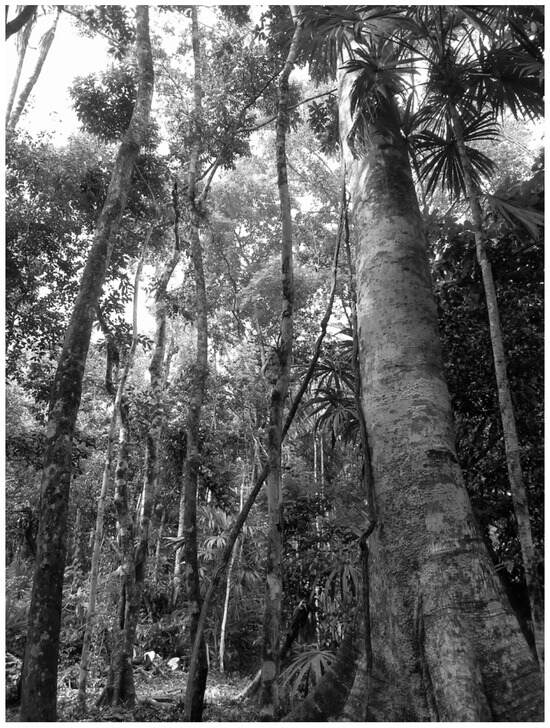
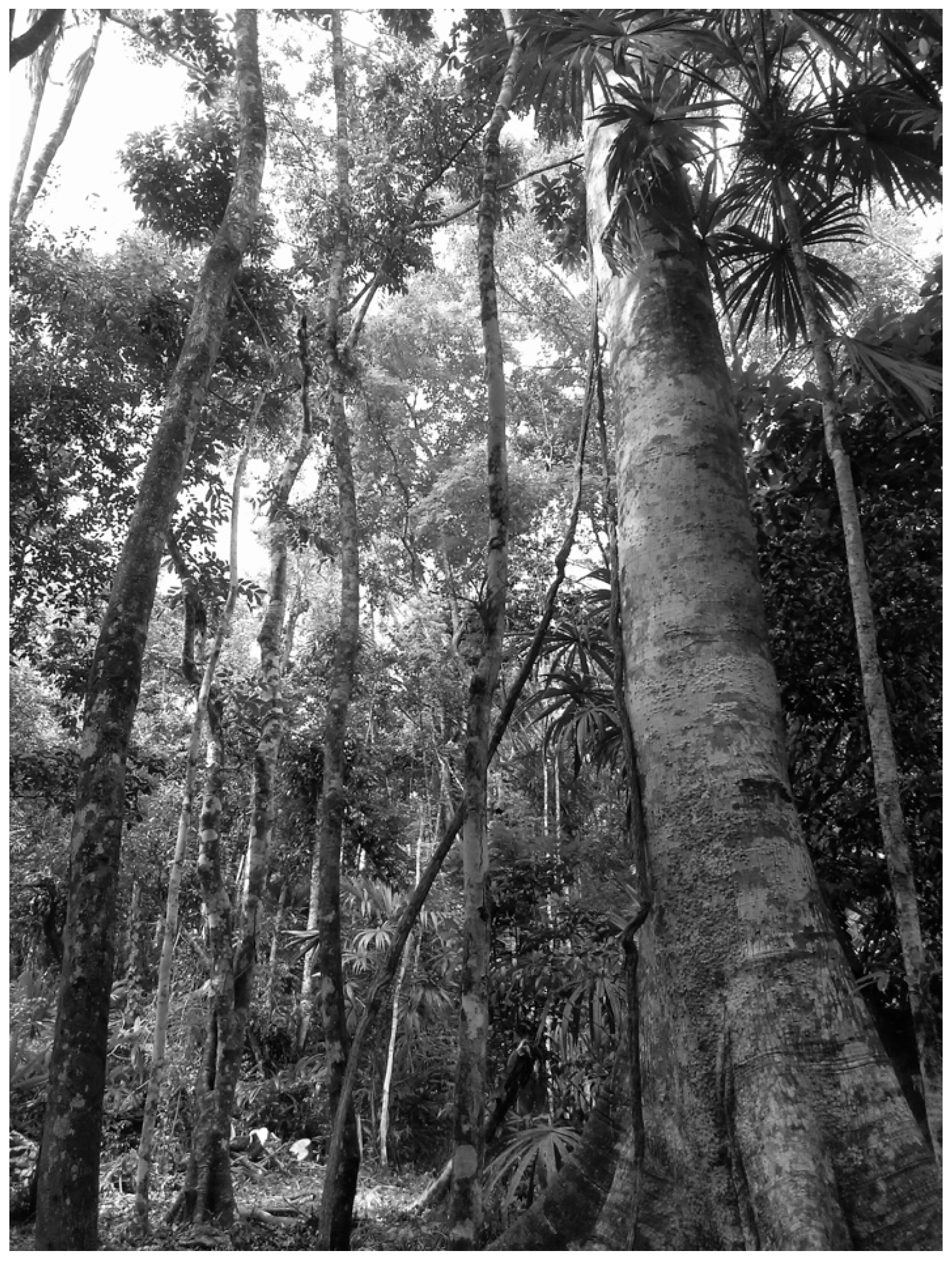
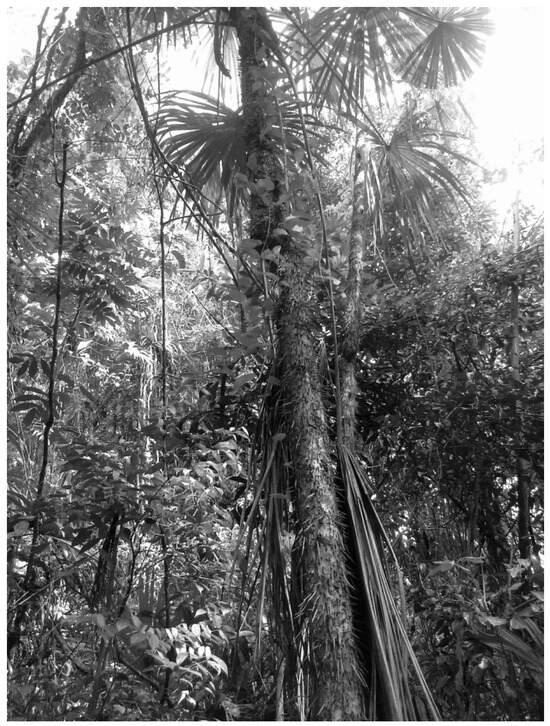
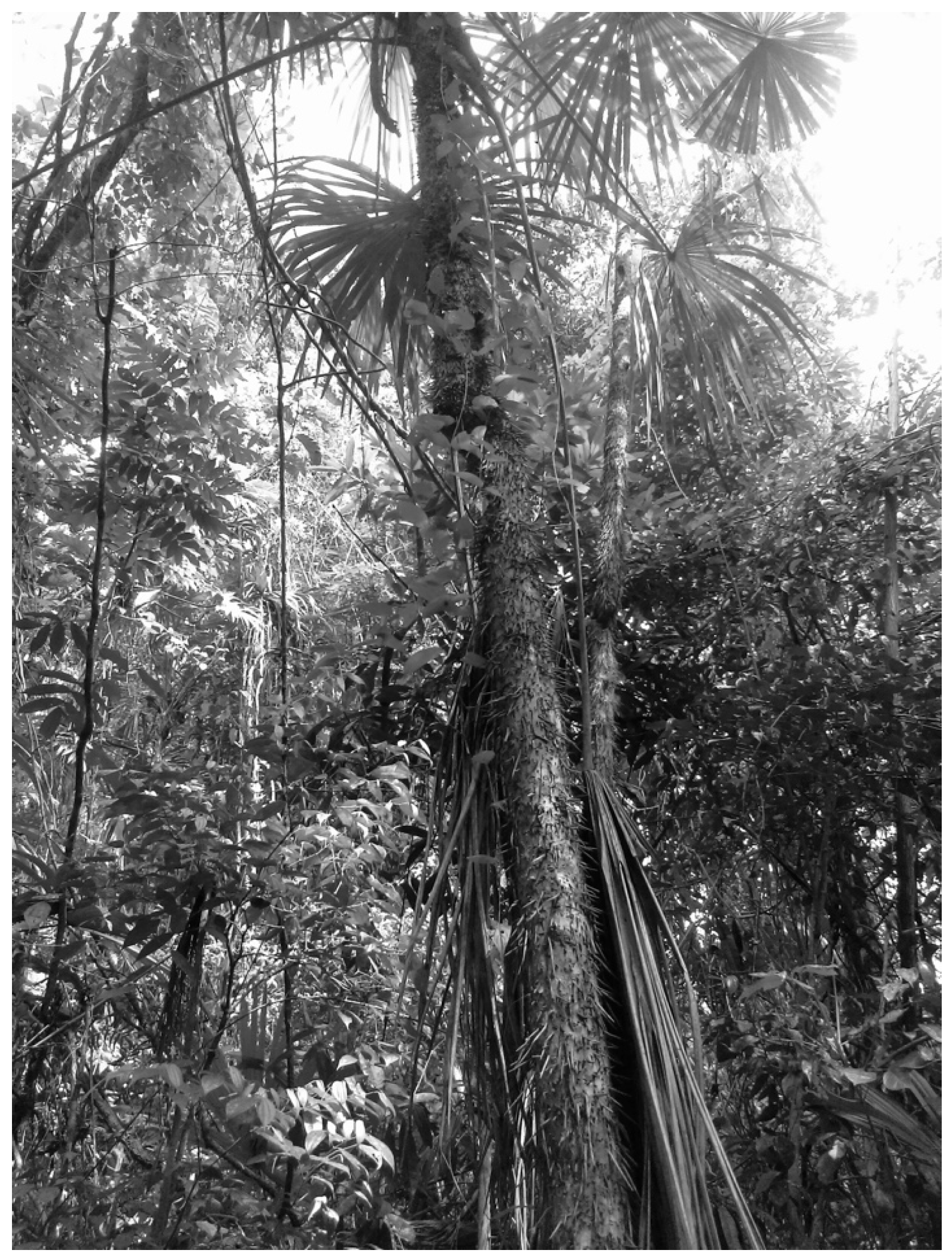
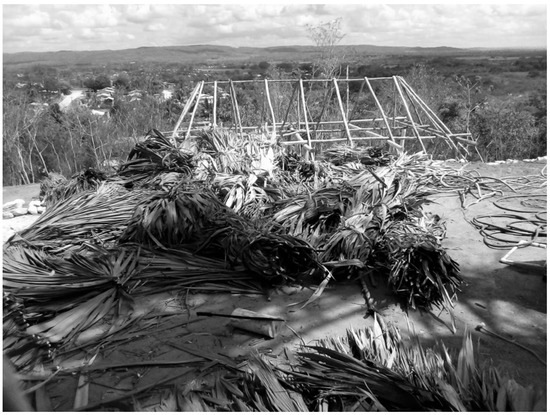
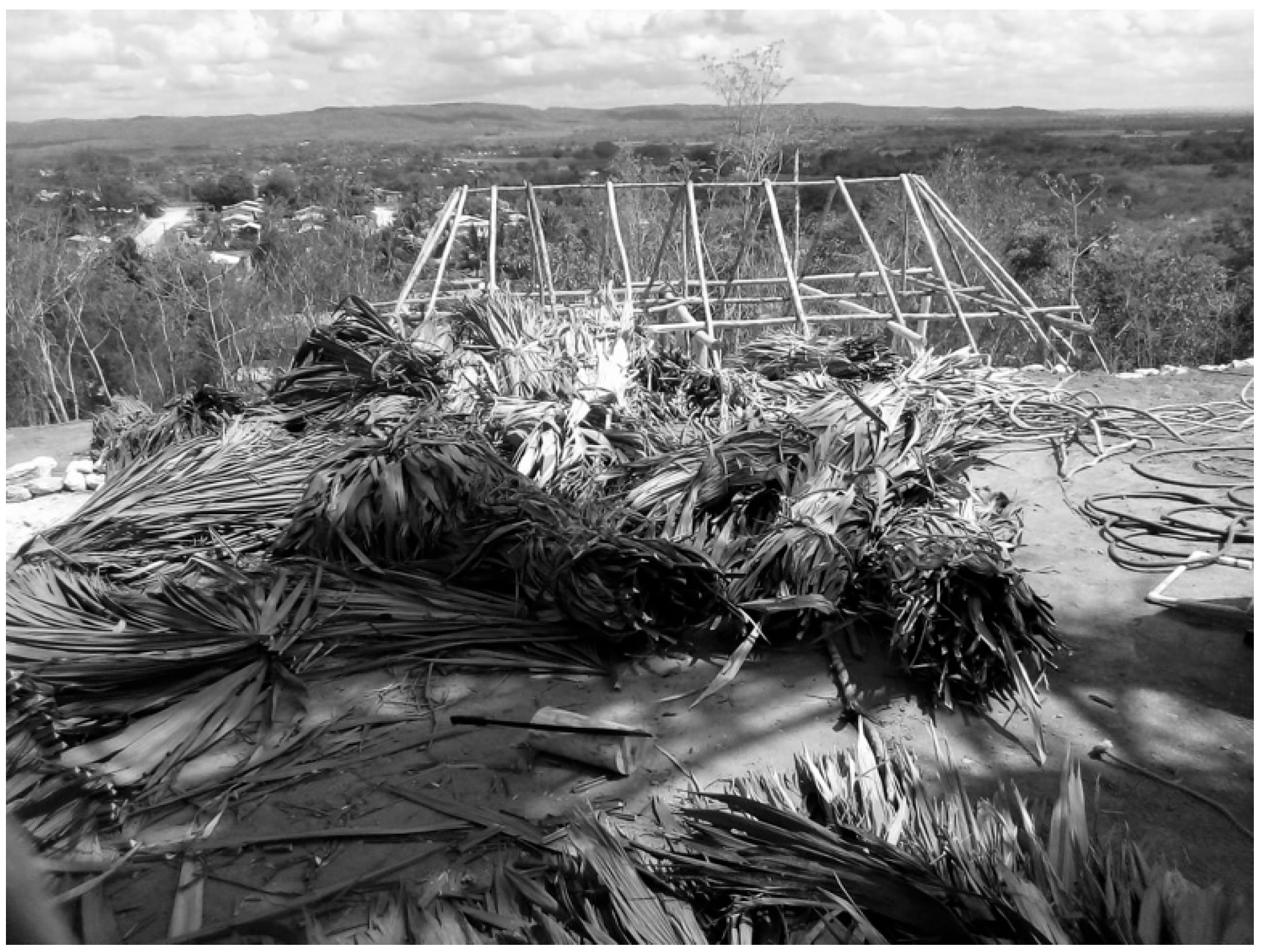
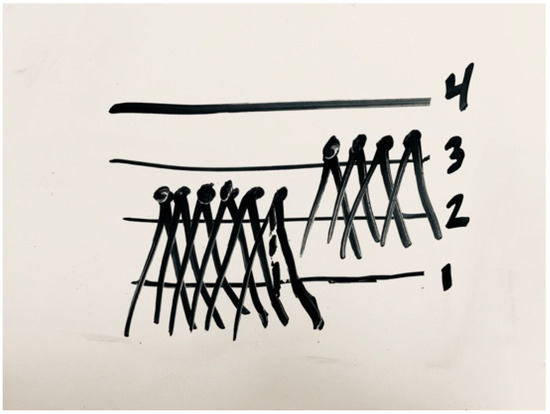
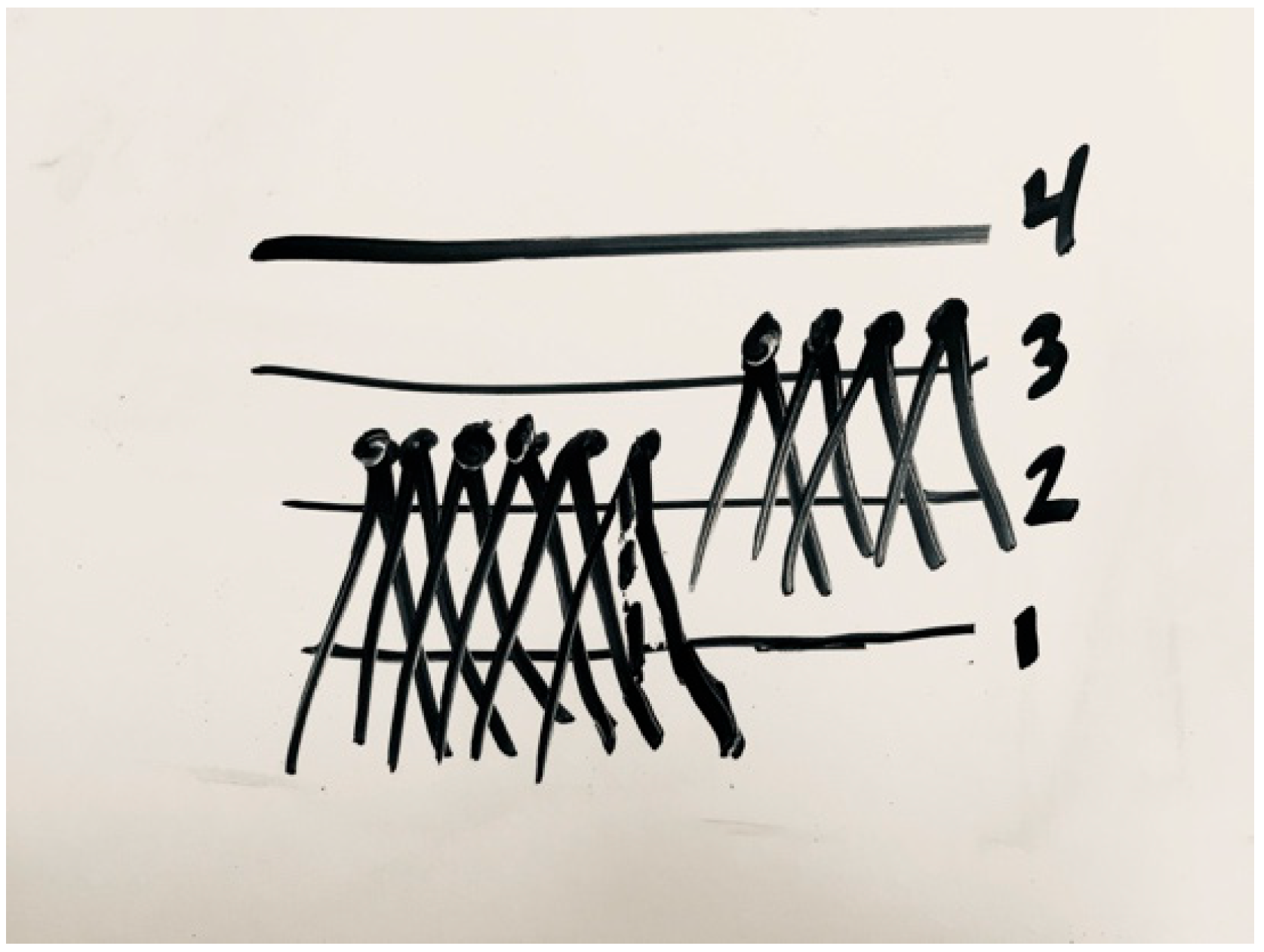
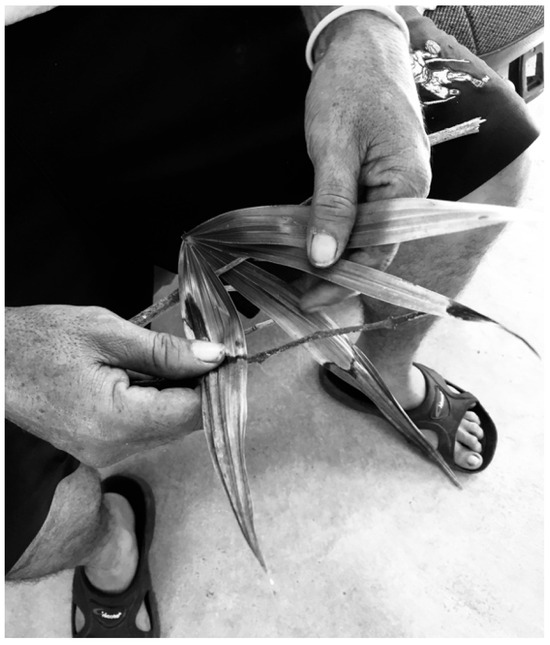
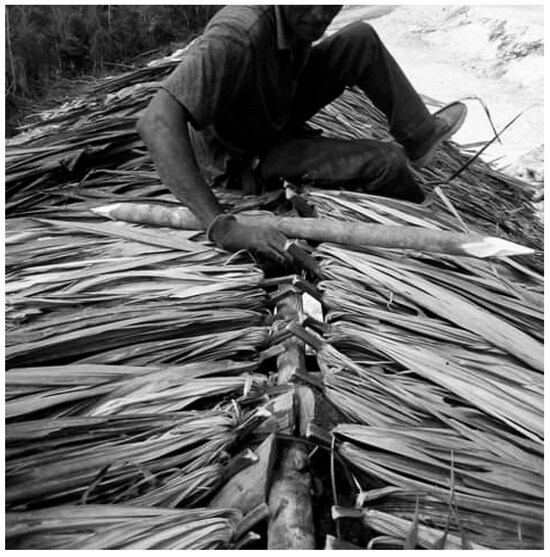
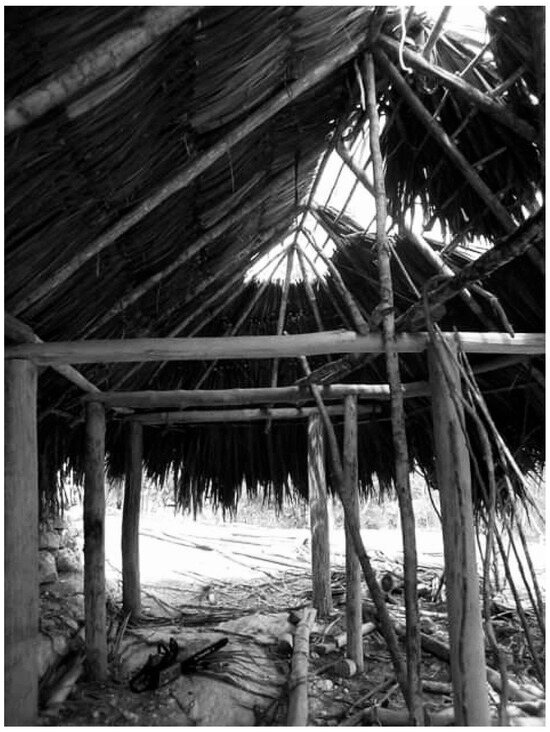
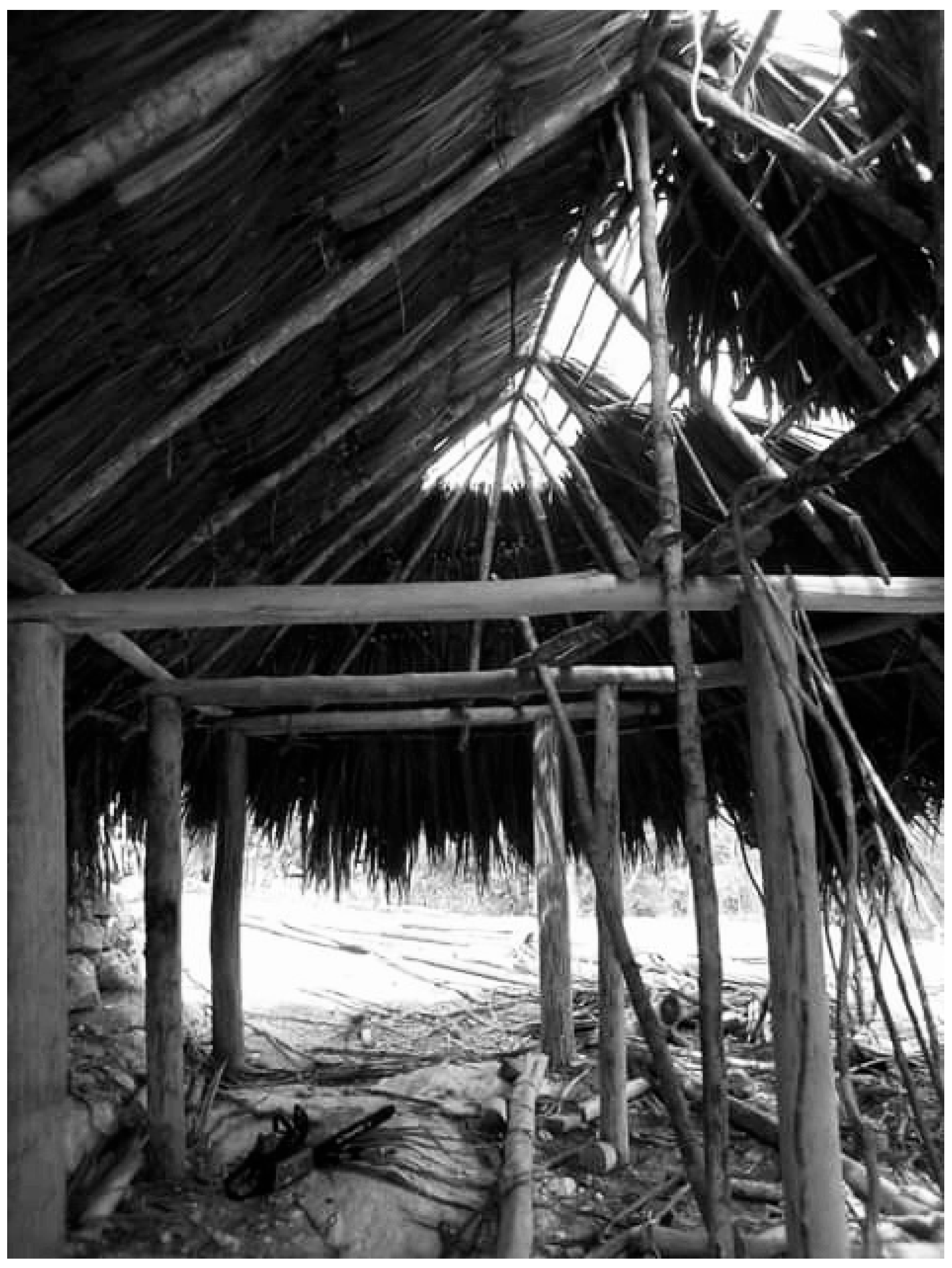
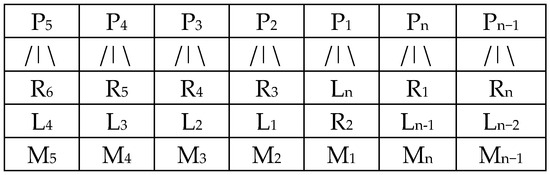
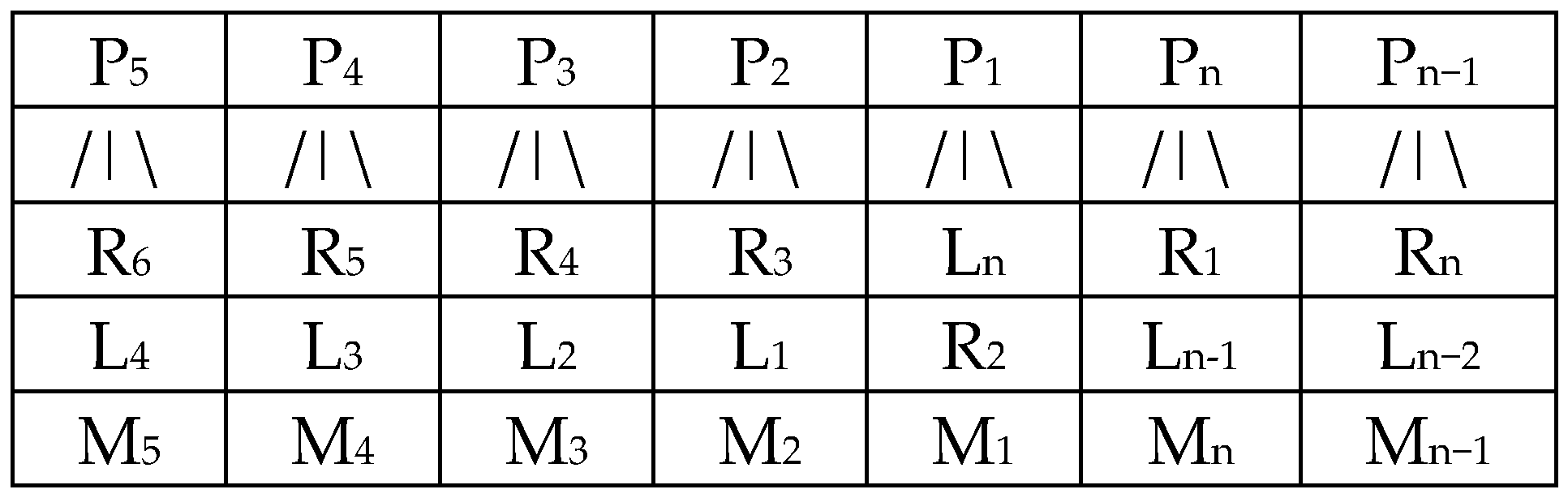
Disclaimer/Publisher’s Note: The statements, opinions and data contained in all publications are solely those of the individual author(s) and contributor(s) and not of MDPI and/or the editor(s). MDPI and/or the editor(s) disclaim responsibility for any injury to people or property resulting from any ideas, methods, instructions or products referred to in the content. |
© 2026 by the author. Licensee MDPI, Basel, Switzerland. This article is an open access article distributed under the terms and conditions of the Creative Commons Attribution (CC BY) license.