


Abstract
The economic and societal advantages of Science, Technology, Engineering, Mathematics, and Medicine (STEMM) occupations are considerable; however, access to STEMM education and training opportunities is unequal, especially for youth from low-socioeconomic-status (SES) areas. Young people from low-SES areas may experience sustained structural, financial, and social barriers that limit their ability to develop identities as STEMM practitioners and to persist in pursuing these fields. This case study describes the design, implementation, and evaluation of a community-based mini-medical summer camp held in a low-SES area to support the development of STEMM identities and to increase 6th–11th-grade students’ biomedical and medical knowledge and career interests. The program utilized partnerships with local entities to provide access to biomedical and medical content. Nineteen students completed the program; fifteen consented to and assented to assessment using pre- and post-tests of STEMM-related knowledge and self-efficacy, and completed all measurements. Students’ STEMM knowledge levels increased significantly; however, their STEMM self-efficacy did not change, possibly due to high initial confidence and the short duration of participation. Students reported high engagement and increased interest in the sciences and medicine. Overall, this study suggests that community-centered outreach programs can increase STEMM engagement and learning in low-SES environments.
1. Introduction
The disciplines of science, technology, engineering, mathematics, and medicine (STEMM) are associated with economic growth, innovation, and health in the United States (Crane et al., 2021; U.S. Bureau of Labor Statistics, n.d.; West, 2011). Investing in STEMM education benefits more than an individual; it is a public investment that shapes community well-being. Indeed, in 2025, a recent report found that one-third of Americans held STEMM jobs, accounting for 39% of GDP (Nin & Li, 2025). Economically, STEMM education yields a significant return on investment. Individuals working in STEMM have lower unemployment rates than non-STEMM employees (NCSES, 2021). Moreover, individuals in STEMM have a median annual wage of $94,003, compared with $52,354 for non-STEMM jobs (Nin & Li, 2025). However, the financial costs of preparing for STEMM careers and the unequal access many communities face mean that the benefits are unevenly distributed across the U.S. population.
1.1. Barriers to Entry into the STEMM Workforce Start Early and Persist
Parental income during childhood and early adolescence affects children’s aspirations and future career paths, with children of parents with college degrees or incomes over $90,000 having more positive attitudes toward science (Porter-Stransky et al., 2024). This is especially apparent when examining who enters the medical field. While 20% of households in the U.S. make up the top quintile at $121,000 or greater, over 50% of matriculating medical students in 2017 were in the top quartile, and less than 5% were in the bottom quartile (An updated look at the economic diversity of U.S. medical students, AAMC, 2018). These data support the need to create opportunities for individuals across all economic brackets to enter STEMM fields to improve workforce readiness.
There are economic costs to pursuing a career in STEMM. Student attendance at a well-funded, well-resourced school with access to advanced math and science offerings provides an advantage in preparing for a future in STEMM (Cannady et al., 2017; Taylor et al., 2022). This can create a financial barrier for families whose children lack access to such schools, as they may be required to pursue private education or supplemental programs. Undergraduate and graduate degrees in STEMM often require additional fees for lab equipment, additional credits, and specialized equipment purchases. In addition, the rigor of the coursework can make it hard to work during school years. Especially for those pursuing professional degrees, the cost of attendance is high, and many graduates carry significant debt. Indeed, a 2020 AAMC report indicates that 73% of medical school graduates had debt, with a median debt of $200,000 (Youngclaus & Fresne, 2020).
There are additional barriers to entry into STEMM. Individuals from lower socioeconomic backgrounds who aspire to attend college have reduced social capital, access to resources, role models, awareness of career options, networks and connections, and knowledge of how to navigate academia (R. D. Davis & Wilson-Kennedy, 2023; Henley & Roberts, 2016; Hung et al., 2020). Studies show that students from low socioeconomic status (SES) backgrounds are at a disadvantage when entering STEMM majors in college (Niu, 2017). Students from high-SES neighborhoods have greater access to advanced offerings and are more likely to take these courses than their peers from low-SES backgrounds (Han et al., 2025). Moreover, living in a high-SES area can prove protective, in part due to access to resources (Martens et al., 2014). Additionally, individual SES impacts educational attainment (Hung et al., 2020; Sanderson et al., 2021). Men from high-SES backgrounds are more likely to enter STEMM early than those from low-SES backgrounds (Lissitsa & Chachashvili-Bolotin, 2025). Students from lower-SES backgrounds are more likely to work while in college, and this is a negative predictor of success (Ghazzawi et al., 2022).
1.2. Community-Based STEMM Outreach and Pathway Programs (OPPs) Can Help Reduce Barriers to Entry into STEMM
STEMM OPPs can reduce barriers to entry into STEMM by providing networking opportunities, mentorship, and access to advanced offerings. Moreover, these programs benefit students’ self-efficacy (defined as belief in their capability to organize and execute the actions required to achieve specific outcomes (Bandura, 1997)), improve perceptions of college readiness, and reaffirm their science identity (Naik et al., 2024). Despite the documented benefits of STEMM pathways and outreach programs, many still fail to reach the populations that would benefit most. Persistent barriers within underserved and low-SES communities continue to limit participation and impact. To be effective, program design must explicitly address barriers rooted in access, awareness, and culture. Considerations such as program location, transportation availability, community routines, and anticipated scheduling constraints must be integrated into early planning. Outreach and communication strategies should be locally grounded, using familiar channels and culturally resonant messages to foster awareness and buy-in. Community-based and community-driven programs, in particular, are uniquely positioned to confront these barriers directly, leveraging local insights and partnerships to create effective pathways to STEMM participation and to improve both access and return on investment for communities.
1.3. While Community-Based STEMM OPPs Require Significant Investment, They Are of Great Value
While OPPs require investment, they can yield significant social and economic returns at the community and national levels in the long term. Identity development and community empowerment are core returns of STEMM education pathway programs. At the community level, encouraging students’ sense of belonging in STEMM and creating spaces where they can see their identities reflected in STEMM fosters empowerment, representation, and interest in STEMM careers. Inclusive teaching and role modeling are central to helping students develop a STEMM identity that aligns with their personal identity (Singer et al., 2020).
We define STEMM identity in this manuscript as a multi-faceted concept that represents the extent to which students view themselves as “science or medicine people,” have an ability to carry out STEMM activities, and feel a sense of belonging within STEMM environments (Carlone & Johnson, 2007; Singer et al., 2020). Confidence in one’s ability to complete STEMM-based tasks is defined by self-efficacy, which is grounded in motivation and curiosity about STEMM content, as well as in the exploration of STEMM careers (Blotnicky et al., 2018). Self-efficacy is a domain-specific judgment of competence that reflects what individuals believe they can accomplish, rather than the knowledge or skills they objectively possess. Within Social Cognitive Theory, self-efficacy influences motivation, persistence, and resilience in the face of challenge and develops primarily through mastery experiences and repeated opportunities to successfully engage in increasingly complex tasks (Bandura, 1997).
Social Cognitive Career Theory suggests that self-efficacy and expected outcomes shape how individuals develop their academic and career interests, which, in turn, influence their long-term goals and persistence in pursuing STEMM educational pathways (Lent et al., 1994). In accordance with the principles of Social Cognitive Career Theory, an individual develops a STEMM identity by integrating their competency beliefs, recognition of others as being seen as capable of participating in STEMM, and ongoing interest into their overall self-concept and by visualizing themselves as future contributors to the STEMM disciplines (Carlone & Johnson, 2007; Duan et al., 2025; Jiang et al., 2025). Although self-efficacy and interest are related concepts, they are not synonymous with identity; rather, they are foundational building blocks that together shape an individual’s identity.
Research demonstrates that authentic learning experiences (hands-on, real-world STEMM tasks) and exposure to diverse role models (people in STEMM who share students’ identities) help students form stronger STEMM identities. In general, a strong STEMM identity is associated with higher STEMM career intention, though this relationship varies across subgroups and contexts (Jiang et al., 2025). These findings highlight the need for targeted, identity-focused interventions that intentionally help students see themselves as capable STEMM participants.
An additional benefit of this investment is that OPPs can increase recruitment of individuals entering STEMM in the regions where they grow up. Studies have shown that medical professionals from low-socioeconomic status or underserved areas are more likely to practice in those areas than their peers (Walker et al., 2012; Xierali & Nivet, 2018). Studies looking at MEDPREP, a program intended to prepare underrepresented or socioeconomically disadvantaged post-baccalaureate students for applying to medical and dental programs, have found that 68% of participants were accepted into their chosen program, an estimated two to three times the national acceptance rates for applicants from the same demographics (Jackson et al., 2003; Metz, 2017). Upon matriculation, their students are also 2.7 times more likely to practice in underserved areas (Metz, 2017). For this reason, many suggest that an effective way to address care deficits in underserved areas is to increase recruitment and training from this demographic and encourage a stronger STEMM identity (Xierali & Nivet, 2018).
Involving local stakeholders, such as professional organizations, schools, and families, helps ensure that the program reflects local identities and needs. Local stakeholders are also uniquely positioned to ensure program sustainability and continuity within the community. Partnerships with familiar and trusted community members will also build the program’s credibility and promote buy-in. Such partnerships represent a collective investment in community capacity and identity development. We expect that strategic investment in this way will support a stronger program, a collective endeavor that will deliver returns more efficiently. This article describes a community-based, community-driven mini medical summer camp designed to foster STEMM and career interest among youth in an underserved area (namely, Pontiac, Michigan) and serves as a case study for how academic institutions can partner with communities and leverage collective strengths to create outreach opportunities. Moreover, in this article, we present findings from our initial program evaluation, reporting participants’ perceptions of the program’s usefulness and knowledge gains from participation.
2. Materials and Methods
2.1. Theoretical Framework for the Development of the Program
The development of the program’s activities was guided by the constructivist framework. Learners are viewed as active participants in their learning process, drawing on their surroundings and prior experiences to expand their knowledge (Mann & MacLeod, 2015). In this program, participants engage in hands-on learning experiences and discussions, and are encouraged to reflect on and incorporate their prior knowledge. Moreover, they are encouraged to share this information with their peers, mentors, staff, families, and members of the local community.
2.2. Program Development
2.2.1. Community Engagement and Its Role in the Development of the Program
This program was developed through community engagement. In this work, outreach is defined as the transfer of information from an agent or organization seeking to induce change within the community. In contrast, engagement involves incorporating the community into mutually beneficial activities. The International Association for Public Participation Spectrum was used to guide the program’s development (Public participation guide: Selecting the right level of public participation, US EPA, n.d.). This framework conceptualizes community participation as a spectrum. At one end, there is little to no involvement; at the other, the community controls outcomes. The spectrum consists of five levels: informing-community is told what is occurring; consulting-community is asked for input into processes and receives feedback; involving-community is involved in the work, and their input is considered throughout the decision-making process; collaborating- the community is engaged at all levels, considered a partner, and their input is incorporated as much as possible, but the final decisions remains with the agency developing the program or activity; and empowering- agencies provide communities the opportunity to make the final decision and the agency acts on the wishes of the community. While this program was led by a faculty member and the director of a local community group, Bound Together, community members were surveyed about their interest in STEMM activities and consulted on aspects of the program. Parents were surveyed to ensure that programming reflected their children’s needs and interests, including preferred foods, topics, learning styles, and other preferences. Gathering their responses ensured that parents were part of the planning process and that activities were relevant and meaningful. Parents and participants were also invited to a pre-program orientation and dinner, where they could view the program spaces, review the content and materials, meet the staff and other participants, and sign assent and consent documents three days before the program began. This also provided an opportunity for parents to ask questions, raise concerns, or provide additional input.
2.2.2. Program and Site Location Rationale
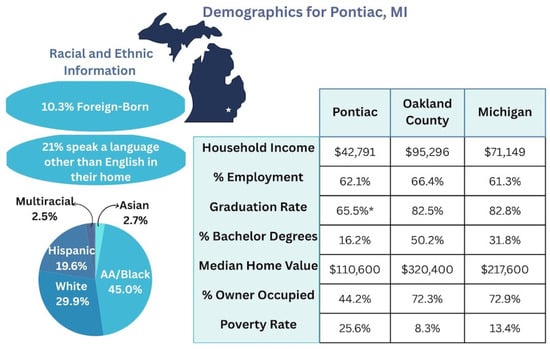
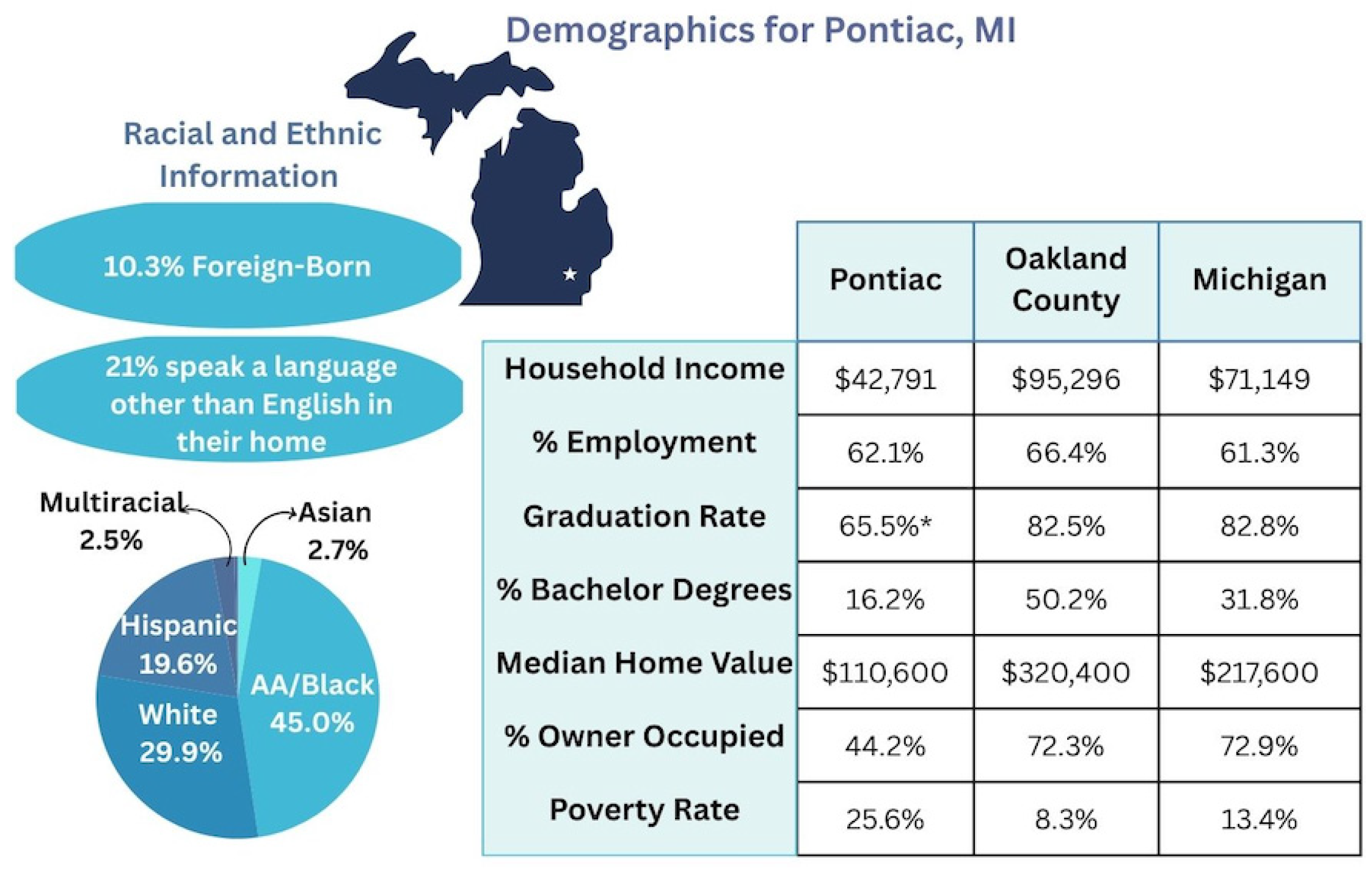
One way to improve access and engagement for individuals from lower-income backgrounds in STEMM is through early intervention through targeted outreach and pathway programs. Creating opportunities for early engagement in STEMM promotes sustained interest and engagement, leading to retention in the STEMM pathway (Berk et al., 2014; Blotnicky et al., 2018; Hiğde & Aktamış, 2022). Moreover, these programs increase self-efficacy and a sense of belonging among individuals from lower-income backgrounds and underrepresented minorities (Kuchynka et al., 2022; Yong et al., 2023), which is critical for STEMM persistence (Hansen et al., 2024). Our goal was to increase engagement in STEMM for youth residing in a lower-resource area. We explored this through a single-site exploratory intervention study. We created a mini medical summer camp for youth residing in Pontiac, MI, hosted by All Saints Episcopal Church. Pontiac, MI, exemplifies the impact of social determinants of health and education on well-being, financial stability, and adult economic success. The participants that we serve reside in Pontiac, MI, a city with a high degree of ethnic and racial diversity (Figure 1). Pontiac is less affluent than the county in which it resides and the state of Michigan. While individuals are employed at rates similar to the county, educational attainment, home values, occupancy rates, and incomes are lower.
Figure 1.
Demographics for Pontiac. Graduation rates for 2023–2024 were accessed from the Michigan Department of Education (downloaded 9 December 2025; https://www.mischooldata.org/graddropout-rate/). * Pontiac graduation rates are a combination of Pontiac School District (67%), Pontiac Academy for Excellence (56%), Arts and Technology Academy of Pontiac (79%), and Flex High School of Pontiac (28%). The 2025 ethnic distribution is from the Oakland County website (downloaded 11 December 2025; https://www.advantageoakland.com/demographics.html?icTool=demographics&geoId=26125) and rounded to the nearest tenth. The remainder of the ethnic distribution, not shown in the pie chart, is ~0.4% and consists of Pacific islander, American Indian, and Other. All other data were accessed from the U.S. Census Quick Facts 2019–2023 (https://www.census.gov/quickfacts/fact/table/US/PST045224; downloaded 9 December 2025).
2.2.3. Community Partner
Since 1994, Bound Together has served ~25 children in 1st–8th grade annually. Demographically, 90% of student participants identify as African American, 10% Hispanic, and 80% as asset-limited/income-constrained/employed. Currently, Bound Together’s programming includes weekly tutoring sessions and academic support on three days; weekly “Funday Mondays” with educational and recreational activities; dinners; transportation for student learners; and holiday celebrations, all provided free of charge. All of this is designed to support students, especially those who may not otherwise have access to academic assistance or mentorship, and to foster strong community connections. For instance, through the “Funday Monday” program, they have partnered with the faculty and medical students of the Oakland University William Beaumont (OUWB) School of Medicine to enhance STEMM education. The goals of this programming include expanding STEMM educational opportunities, introducing students to STEMM vocations that they may not otherwise have access to or support for, building analytical skills, promoting collaboration, and practicing evidence-based reasoning.
2.2.4. Program Recruitment and Sample Size
As a community organization with over 30 years of experience in Pontiac, Bound Together played a substantive role in the project, including participant recruitment and developing an enrollment process. As a new opportunity outside academic-year programming, raising awareness among parents/guardians was the primary objective, as was positioning the program as a desirable, high-impact experience for their children.
The program’s marketing strategy relied on disseminating information in digital formats to community partners who were both legitimate and well-connected. Flyers were developed and disseminated via email after phone calls and email communications with organizational leadership, and all flyers included QR codes that linked users directly to action items. The ability to quickly forward an email to interested parties increases the likelihood that information will be shared, whether through institutional channels or word-of-mouth. These flyers, which were also duplicated for use on bulletin boards or hardcopy distribution, were made available on the Bound Together website; forwarded to principals, counselors, and STEMM teachers at all schools serving Pontiac middle and high school students (charter and public); shared with staff at the Oakland Intermediate School District; forwarded to all members of Pontiac City Council; sent to faith communities in the city; and promoted with community organizations such as Kiwanis, Optimists Club, Main Street Pontiac, Oakland University Pontiac Initiative for Early Childhood Education, Pontiac United Education Coalition, and the Pontiac Chamber of Commerce.
A pre-registration “save the date” flyer was sent in February 2025, including a QR code that linked to a Google Form to capture interest and contact information. Flyers with a QR code linking to the application were distributed in March 2025 and translated into Spanish with the assistance of a community volunteer, along with the online application. Following introductory phone and email communications and the dissemination of forms, multiple phone and email follow-ups were conducted with stakeholders at all levels of community leadership, particularly in schools, through mid-June 2025.
The program’s application was a Google Form that captured all information and permissions in a single document and provided global access to participant information in the resulting spreadsheet, which could be distilled into multiple data centers. This document elicited information from participating students’ parents/guardians regarding their attitudes and core strengths, as well as relevant medical and behavioral information. Moreover, parents were asked to provide information regarding their child’s unique needs and whether they required adaptations or assistive supports. Full permissions for treatment, image and likeness, work products, and transportation were obtained in this document.
A total of 30 individuals were recruited. Two individuals with applications did not meet the age requirements for participation, and two declined to participate after opting into another program that remediated math and science. The remaining seven individuals who were unable to attend cited reasons such as changes in parents’ or guardians’ work schedules, the need to care for siblings, and a lack of transportation to the program. Indeed, one individual started the program but did not return after day one due to transportation issues. This left nineteen participants. Seventeen participants resided in Pontiac, and two were members of faith communities in the city who were allowed to participate due to their connections to the targeted population. It should be acknowledged that the attrition rate represents a limitation for this study, constraining its generalizability. Moreover, it enables the identification of barriers and the exploration of how to address them, such as transportation and caregiving responsibilities, in greater depth.
Twenty parents consented to their child being in the study; however, three children did not assent and were excluded from data analysis. In addition, one child who assented did not complete the post-knowledge assessment, and another did not complete the pre-knowledge assessment. These two children were excluded from the analyses of pre- and post-knowledge assessments. This left 15 individuals for analysis.
2.2.5. Staff and Volunteer Training and Recruitment
Six medical students at Oakland University William Beaumont School of Medicine were hired as peer mentors, and two college students who previously volunteered in the Bound Together program were recruited as additional staff. The staff members participated in two days of training on general policies for working with children, expectations, neurodiversity and best practices, and how socioeconomic factors may affect the children we recruited. Staff members were also trained in all hands-on activities, and medical students were permitted to develop an anatomy lesson to teach to students over two days.
2.2.6. Program Objectives
The program objectives were for participants to: (1) become introduced to health-related careers, (2) promote the development of medical pre-matriculation competencies as defined by the AAMC, and (3) explore transitional skills needed for success in college and beyond. The specific aims were as follows:
- Aim 1: Participants will explore medical careers, careers related to medicine, and pathways into medical careers (maps to objective 1)
- Methods:
- Participants will engage in hands-on activities such as performance of mock physical exams, assessment of data, and laboratory experiments
- At the end of the camp, experts in science and medicine, and college and medical school admissions professionals will be invited for a panel
- Participants will learn about body systems and how they function
- Aim 2: Participants will become aware of what is required to become college-ready and practice pre-matriculation competencies related to teamwork, analytical thinking, and science knowledge (maps to objectives 2 and 3)
- Methods:
- At the end of the camp, experts in science and medicine, and college and medical school admissions professionals will be invited for a panel
- Participants will participate in a group research project and present their findings orally and in an infographic
2.2.7. Program Design
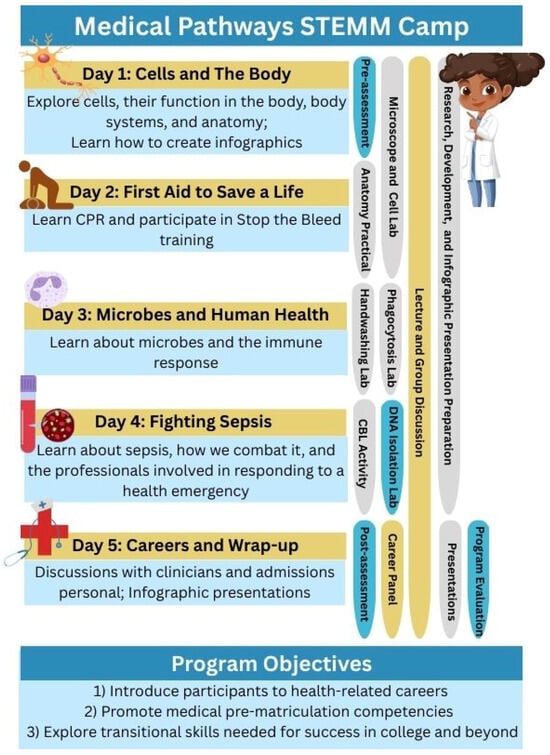
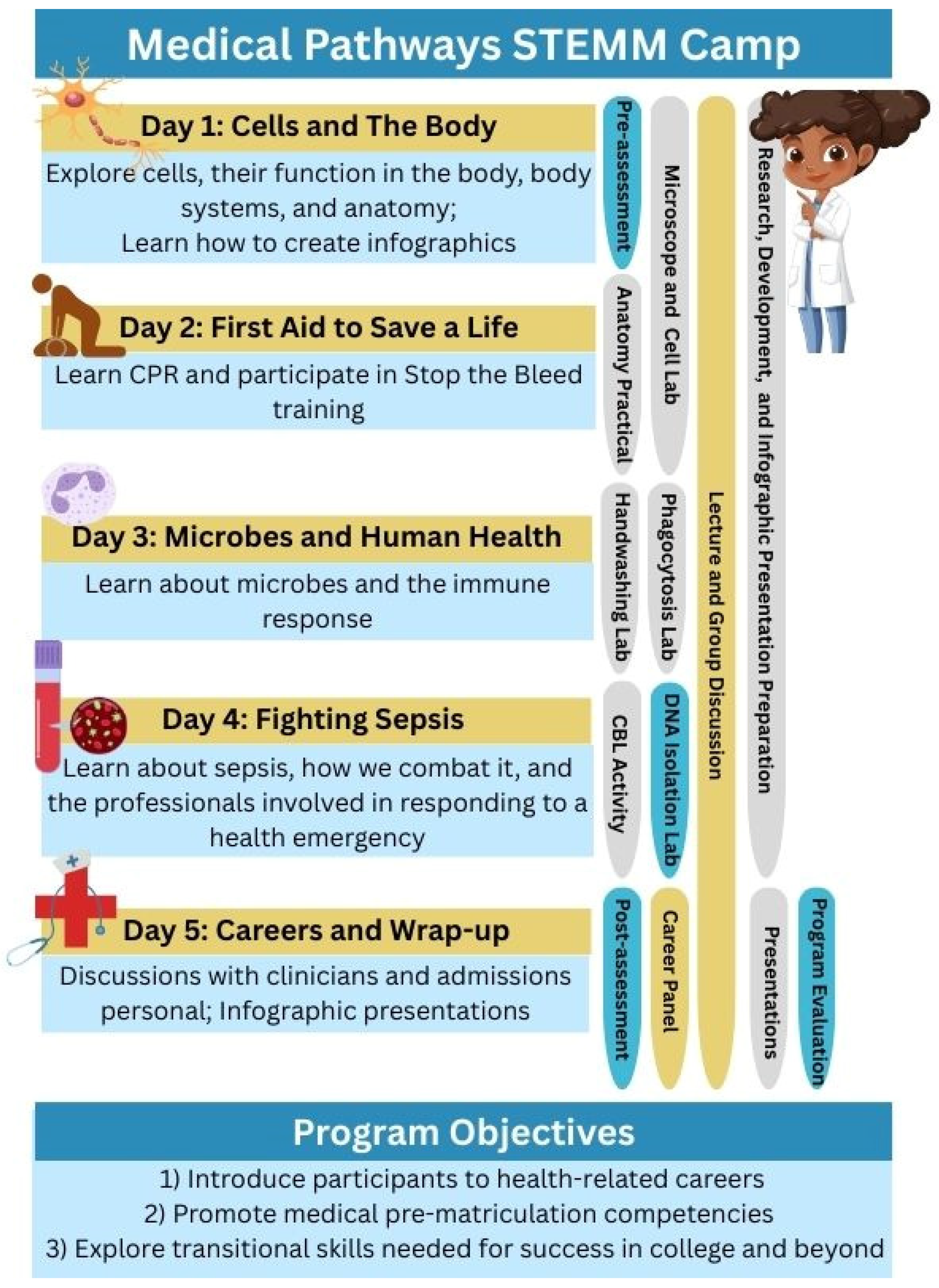
The program included five days of sessions, with each day’s theme and objectives aligned with the program’s objectives (Figure 2). Participants engaged in short lectures, discussions, a group research project and hands-on activities such as first-aid, CPR, and stop-the-bleed training; laboratory exercises that involved collecting data and analyzing (microscope and cheek cell staining lab, phagocytosis lab, handwashing microbiology lab, and DNA isolation lab); virtual and model dissections; group anatomy practical; and a case-based learning (CBL) activity on sepsis, how we treat sepsis, and the health professionals involved in care. Participants attended a virtual panel with clinicians to learn about what it is like to be a doctor. Members of the Oakland University William Beaumont (OUWB) admissions team visited with the participants to discuss how to prepare for college and medical school. Finally, on the final day of the program, participants developed and presented infographics on a research topic to the community. The daily schedules consisted of a morning snack/check-in, followed by either a hands-on activity or a lecture/discussion; a morning snack; a lecture/discussion; a hands-on activity; lunch; a recess break; and afternoon research time. Flexibility was built into their recess to allow participants to choose among playing in the gym, going to the library to read, play board games, work on puzzles, or draw; completing morning work; or designing and implementing their own experiments using materials on hand. This was made possible by the ratio of staff to participants (1:2), allowing for appropriate coverage of rooms and providing release time to staff. Efforts were made to ensure the program was accessible to a variety of learners. Accessibility features were made available on participants’ laptops; individuals had access to quiet corners; instructions were provided verbally and in writing; procedures were modeled; and all participants received the daily schedule in advance. Supplemental Document S1 contains the daily schedules.
Figure 2.
Program Outline for the week. Individual activities are blue, small-group activities are gray, and large-group activities are gold. The activities span the days on which they were held. Note that some activities spanned multiple days. Note: CBL stands for case-based learning.
2.3. Program Assessments and Feedback
Pre- and post-knowledge assessments with identical items were administered to the participants. The assessments consisted of 16 multiple-choice questions aligned with the covered units (see Supplemental Document S2). A pre- and post-knowledge assessment was chosen because it is a common practice for measuring knowledge gains in education and a standard in STEMM outreach programs (Panebianco et al., 2023). The assessment questions were developed by one team member and assessed and modified based on feedback from other team members. Items were scored as correct or incorrect, and the total number of correct items was summed and divided by the total number of items. The pre- and post-self-efficacy tests were administered to participants using a previously validated survey (objective 1; Fertman & Primack, 2009). The survey was initially developed for elementary students and was administered to a diverse national cohort of 4th- and 5th-grade students attending urban, rural, and suburban schools; it has since been used to assess self-efficacy among middle school students (Powell et al., 2024). The survey comprises a 5-point Likert scale with 20 items that collectively assess three domains of students’ self-efficacy. The first domain is labelled “Perceived Learning Self-Efficacy” and comprises nine items assessing self-efficacy for self-regulated learning. The second domain is labelled “Perceived Peer Self-Efficacy” and comprises eight items assessing social self-efficacy. The third domain, “Perceived Drug Use Self-Efficacy,” is a 3-item construct. The domains can be tested together or individually. Because the third domain focused on drug use self-efficacy, it was not utilized. Cronbach’s alpha was previously reported as 0.83 for Learning-Associated Self-Efficacy and 0.75 for Peer-Associated Self-Efficacy. In this program evaluation, Cronbach’s alpha for the combined items was 0.84, 0.85 for Learning-Associated Self-Efficacy, and 0.76 for Peer-Associated Self-Efficacy. In addition, participants completed a program evaluation at the end of the program using a 5-point Likert-like scale, and the average score was calculated for the total items and for the two self-efficacy domains for each individual. The questions asked were adapted from a previously published program evaluation (Hurse et al., 2023). Participants were also asked for feedback about aspects of the program as it progressed during the morning introductory meetings. For example, participants indicated a preference for a longer recess; therefore, the schedule was modified to add 30 min per day beginning on the second day. Moreover, those who finished their work early were allowed to start their recess early.
2.4. Data Analysis
Pre- and post-test assessment data were tested for normality by the Shapiro–Wilk test (https://www.statskingdom.com/shapiro-wilk-test-calculator.html last accessed 13 February 2026). A paired one-tailed T-test was used to assess statistical significance (α = 0.05). A one-tailed test was used because test scores were expected to increase in one direction. The effect size was determined via Cohen’s D.
Statistical significance was assessed for the pre- and post-self-efficacy surveys using a one-tailed Wilcoxon signed-rank test after assessing normality (https://www.statskingdom.com/175wilcoxon_signed_ranks.html last accessed 13 February 2026). This test was chosen because the samples are dependent, and scores were expected to shift to the right (i.e., increase).
2.5. Figures
All figures were made in this paper using Canva according to their content licensing agreement-https://www.canva.com/policies/content-license-agreement/ (accessed on 14 January 2026).
2.6. IRB
The Oakland University Institutional Review Board approved this study in June 2025 (Protocol # IRB-FY2025-345). All participants were informed of the confidentiality policy and provided informed assent before being included in the study. All parents/legal guardians of participants gave informed consent.
3. Results and Discussion
3.1. Connect with Community Partners
When planning a program, it is important to consider that individuals and organizations within your target audience may be doing work that supports your program’s goals. These may include pre-existing programs that focus on school retention, college readiness and access, and awareness of career opportunities (Detgen et al., 2021). Tutoring programs and exploratory learning programs are two common examples. Bound Together is a program based in Pontiac, MI, that offers a range of educational and outreach programs for children.
Many community partners possess a wealth of assets, including established relationships with community resources and organizations that may help bridge gaps identified in the program-building process, such as access to transportation, connections to local groups and educators, and knowledge of how and where to begin recruiting participants. Such information and community investment can help mitigate costs and increase the value of student experiences and community engagement (Turner & Piso, 2024). Reports from educational and resource-based programming support this, arguing that this is crucial for generating lasting, positive, and necessary impacts within the community they serve (Sheikhattari et al., 2022; Turner & Piso, 2024). For example, Bound Together’s existing connection to the M1 Mobility bus service enabled it to provide transportation for participants. M1 Mobility provided two buses and drivers for the programming week. It allowed for participants residing within the city of Pontiac to have safe transport home from the program. This is a service that otherwise would have been more difficult to acquire during program formation, or that may have been overlooked if Bound Together was not already aware and able to plan for the need. Because Bound Together recognized the difficulties of balancing transportation to the program with work schedules, an extended soft-landing period was built in for participants who informed the program of earlier work schedules. Additionally, Bound Together provided connections to the Oakland County Intermediate School District, the Pontiac School District, and the Pontiac United Education Coalition, as well as access to their participant list to streamline recruitment and encourage Pontiac families to participate.
Despite being in one of the wealthiest counties in Michigan, Pontiac is one of Michigan’s most impoverished cities, with a poverty rate of 25.6% (Figure 1 and (Kim, 2025)). Because of the many challenges that this community faces and the disproportionate impact of certain social determinants of health (especially economic), it was vital that we worked with a community partner such as Bound Together who not only knew the community and could easily garner contact and support, but also understood their needs and helped us identify services that could help families who wanted their child to participate, but faced challenges such as transportation. Access to transportation is a significant factor in educational decision-making by students and parents—including what school to attend and participation in various educational programs— that disproportionately impacts students in underserved areas, supporting the idea that, by providing this connection to M1 Mobility, Bound Together provided a crucial service for participants (Avent & Jayaratne, 2017; Burdick-Will & Stein, 2025).
Working with these existing connections goes beyond bridging material or resource gaps that programs may encounter. Also, it satisfies what some researchers identify as the obligation to be a capacity builder. Institutions or individuals working with community partners should not only aim to address resource gaps but also strengthen existing connections through integration and investment. Research has shown that community partners value the role of institutions seeking to conduct research or add new programs in strengthening their credibility with new connections, as well as bringing existing partners further into their programming by finding meaningful ways for them to be involved in new initiatives (Turner & Piso, 2024).
A key component of the Bound Together Mini Medical Program was the intentional involvement of community members, families, and university partners in the camp’s design and implementation. This approach plays a key role in demonstrating how communities can come together to support youth and create meaningful opportunities for them. Community members, including retired teachers, medical professionals, and others, shared their skills and experiences. Their involvement strengthened trust, reduced program costs, and provided hands-on expertise. For example, a retired computed tomography technologist prepared daily lunch for participants, and a local nurse taught CPR and Stop the Bleed training. This enabled participants to connect with community adults with experience and connections in STEMM, helping students expand their professional networks. Moreover, program content and delivery should reflect local perspectives and lived experiences, ensuring that participants see themselves and their communities represented in STEMM contexts and that these perspectives are incorporated. Confronting these structural and cultural barriers is essential for the broader STEMM community to nurture interest, engagement, and a sense of STEMM identity among historically marginalized groups. These efforts support the systemic conditions necessary for identity-affirming work in STEMM learning environments (H. Davis et al., 2025; Park et al., 2023). Findings from programs serving individuals from underserved communities have identified identity affirmation and community involvement as crucial moderators of interest, engagement, and likelihood of pursuing a career in STEMM (Park et al., 2023; Rocha et al., 2022).
Medical Students from the William Beaumont School of Medicine at Oakland University served as mentors, with one to two mentors per group. Additionally, undergraduate premedical students who had previously volunteered with Bound Together assisted medical students in ensuring smooth operations and participated in various activities throughout the day. Faculty and staff from Oakland University with expertise in neurodiversity and trauma-informed practices were consulted on best practices and provided staff training prior to the start of the camp. Similar educational programs with this type of training have been shown to significantly reduce disruption, improve educators’ perceptions of students, and strengthen student-teacher relationships (Loomis et al., 2025). Clinicians and admissions representatives from the Oakland University William Beaumont School of Medicine participated in the program, providing guidance on educational pathways, college readiness, and healthcare careers. The clinicians shared their unique journeys with the participants, offering a valuable glimpse into the different paths that can be taken to achieve one’s goal. This program demonstrates the power of communities working together to provide mentorship, resources, and guidance, showing that collective effort can create meaningful opportunities with the potential for lasting impact. We contend that entities seeking to develop outreach programs should engage with community partners who are already doing this work.
3.2. The Bound Together Mini Medical Program Appears to Have Encouraged Participants’ Learning and Pursuit of STEMM Interest
Fifteen individuals assented to having their data analyzed and completed all components of the assessments. Among participants who completed the program and provided consent and assent, 73% identified as female. The highest grade completed ranged from 6th to 10th grade, and participants were from racially diverse backgrounds (Table 1).
Table 1.
Self-reported Participant Data.
At the conclusion of the program, the participants were surveyed about their experience and the gains they had made. The results of this survey are presented in Table 2. These self-reported responses reflect participants’ perceptions of the program’s impact. While these results suggest positive outcomes, they should be interpreted with caution, given that the survey measures short-term outcomes. In addition, the small sample size is a limitation for this analysis, limiting its generalizability. However, it enables the identification of barriers and the exploration of how to address them, such as transportation and caregiving responsibilities, in greater depth.
Table 2.
Program Evaluation Feedback Indicates Participants Find the Program Valuable.
These results support the conclusion that the program has successfully met its primary objectives: introducing participants to health-related careers, increasing STEMM learning, and promoting interest in science and medicine. Participant responses to the program evaluation indicate increased interest in STEMM fields and enjoyment of the program (Table 2), consistent with findings from other STEMM programs (Babb et al., 2025). Participant scores on the post-assessment test improved significantly compared to the pre-assessment test (Table 3; p = 0.004; d = −0.98, effect size large). Given the narrow time constraints of this program, it remains unclear whether these gains reflect merely short-term or lasting knowledge acquisition and STEMM interest. In contrast, participant self-efficacy did not appear to change during the camp. These results suggest that while the timeframe may have been insufficient to observe changes in self-efficacy, participants demonstrated meaningful gains in knowledge and understanding. It should also be noted that participants had high levels of self-efficacy at program entry (Supplemental Figure S1). Other STEMM programs focused on adolescents have also demonstrated meaningful gains in knowledge, as measured by pre- and post-testing, with many employing a similar combination of group work, didactic instruction, and hands-on learning (H. Davis et al., 2025; Rabinowitz et al., 2025). However, many of them demonstrated increases in participants’ self-efficacy; it is unclear whether this is due to differences in baseline levels relative to our study or to differences in the programs’ time frames. For example, Rabinowitz et al. consisted of 75 h over four weeks, and Babb et al. took place over four weeks. Both studies saw a measurable increase in self-efficacy. However, Park et al., who held 7–8 lessons per summer, did not see a statistically significant increase in self-efficacy. It may be that longer, intensive interventions are needed to capture meaningful changes in self-efficacy, whereas short-term, intensive interventions are more likely to influence proximal outcomes, such as knowledge acquisition and situational interest, which can shift following brief but meaningful exposure. In contrast, self-efficacy reflects a belief in one’s capability that develops through repeated mastery experiences over time (Bandura, 1997). Given the five-day duration of this program, the observed gains in knowledge and expressed interest constitute contextually appropriate and theoretically consistent outcomes rather than evidence of limited impact. The program’s short time frame is a limitation of this analysis, underscoring the importance of continued engagement and follow-up with this population. Similar programs in the future might consider extending the duration of such camps or incorporating additional follow-up evaluations at multiple time points to assess lasting impacts.
Table 3.
Descriptive Statistics for the Pre- and Post-Knowledge Assessments.
4. Conclusions
It is critical that we create pathways into STEMM that are accessible to all. One way is through outreach programs. These programs can be more effective at reaching their target populations by centering themselves within the community and leveraging its strengths. However, developing community-driven pathway programs requires coordinated investment across systems, including schools, community organizations, and, potentially, NGOs or government agencies. Communities may provide personnel or volunteers, as well as access to space, whereas external partners may provide funding, policy support, or specialized expertise. Rather than viewing these contributions solely as costs, we interpret them as collective commitments toward building sustainable STEMM ecosystems.
Identity development and community empowerment are core returns of STEMM education pathway programs (H. Davis et al., 2025). At a regional level, community-driven pathway programs support local industries, community relationships, and educational pipelines. These programs promote community awareness of local education programs and schools that host and develop them. They can also increase awareness of participating regional STEMM professional organizations that serve as guest speakers, teachers, or mentors (such as the Red Cross). At the national level, increasing participants’ interest in and identity with STEMM helps address workforce shortages and promotes innovation in STEMM fields (Thibodeaux et al., 2025). In this sense, investment in identity-affirming pathway programs yields broad societal returns that extend far beyond traditional economic metrics.
This case study outlines how community partners and agencies can collaborate to develop effective STEMM programming. The importance of these findings lies in their alignment with theoretical models of STEMM identity development, which conceptualize identity as an evolving, layered process shaped by beliefs about one’s ability, the formation of interests, and social validation (Carlone & Johnson, 2007; Lent et al., 1994). Although there was no significant change in self-efficacy during the brief summer camp experience, participants reported greater knowledge of STEMM-related concepts (p = 0.004; d = −0.98; effect size large) and expressed interest in further exploring STEMM (Table 2). Short-term intervention programs can influence an individual’s interest and confidence in their ability to perform a task before the change in self-concept occurs, as described by the Social Cognitive Career Theory (Blotnicky et al., 2018; Lent et al., 1994). Most individuals develop their identities through sustained involvement and support across multiple areas of life over extended periods (Jiang et al., 2025; Singer et al., 2020). Future research should focus on conducting longitudinal studies to examine how repeated community-based interventions may lead to long-term changes in STEMM identity, self-efficacy, and career choices.
Supplementary Materials
The following supporting information can be downloaded at: https://www.mdpi.com/article/10.3390/educsci16030459/s1, Figure S1: Box and Whisker Plot results on the pre- and post-self-efficacy survey results; Supplemental Document S1: Schedule for the program; Supplemental Document S2: pre/post knowledge assessment.
Author Contributions
Conceptualization, K.K.; methodology, K.K., N.A., M.F., N.K., P.P., L.S. and A.T.; investigation, K.K., N.A., M.F., N.K., P.P., L.S. and A.T.; formal analysis, K.K.; resources, K.K., N.A., M.F., N.K., P.P., L.S., A.T. and M.W.; data curation, S.L.; writing—original draft preparation, all authors; writing—review and editing, all authors; visualization, all authors; supervision, K.K.; project administration, K.K.; funding acquisition, K.K. and M.W. All authors have read and agreed to the published version of the manuscript.
Funding
This research was funded by an NBME Innovations to Advance Pathways and Bridges to Medicine Programs Grant.
Institutional Review Board Statement
The study was conducted in accordance with the Declaration of Helsinki, and approved by the Institutional Review Board of The Oakland University Institutional Review Board (protocol code IRB-FY2025-345 and date of approval 26 June 2025).
Informed Consent Statement
Informed consent was obtained from all subjects involved in the study.
Data Availability Statement
The raw data supporting the conclusions of this article will be made available by the authors on request.
Acknowledgments
We would like to acknowledge Deidre Hurse, Department of Foundational Medical Studies, Oakland University William Beaumont School of Medicine, and Alicia Garcia, Director, Joanne and Ted Lindsay Foundation Autism Outreach Services at the Oakland University Center for Autism Outreach Services, for providing staff training. Additionally, we would like to thank those who provided student instruction, as well as Varna Taranikanti and Enrique Calvo-Ayala, Oakland University William Beaumont School of Medicine, along with staff from the latter’s Office of Admissions and Center for Community Engagement (Compass), for facilitating student discussion. We are deeply grateful to the National Board of Examiners and the Association of STEMM Pathway and Bridge Programs for providing the funding to make this project possible, and would also like to thank Oakland University and Oakland University William Beaumont School of Medicine for the provision of material and personnel support enabling us to write this report. Finally, we would like to thank community partners and volunteers: All Saints Episcopal Church for hosting the program and M1 Mobility for providing student bus transportation; Tara Chaney, Pontiac School District, who graciously provided translation services for program documents; and the various volunteers and donors, particularly Patricia Robertson and Yousif Kaakarli, who provided crucial logistical support throughout the program week.
Conflicts of Interest
The authors declare no conflicts of interest.
Abbreviations
The following abbreviations are used in this manuscript:
| STEMM | Science, Technology, Engineering, Math, and Medicine |
| OPP | Outreach and Pathway programs |
| SES | Socioeconomic Status |
| OUWB | Oakland University William Beaumont |
| K–12 | Kindergarten through 12th grade |
| GDP | Gross Domestic Product |
| U.S. | United States |
| AAMC | Association of American Medical Colleges |
| IRB | Institutional Review Board |
| FY | Fiscal Year |
| CPR | Cardiopulmonary Resuscitation |
| CBL | Case-Based Learning |
| IQR | Interquartile Range |
| NGO | Non-Governmental Organization |
| N | Sample Size |
References
- AAMC. (2018). An updated look at the economic diversity of U.S. medical students. Available online: https://www.aamc.org/data-reports/analysis-brief/report/updated-look-economic-diversity-us-medical-students (accessed on 14 January 2026).
- Avent, M. D., & Jayaratne, K. S. U. (2017). Factors limiting youth participation in 4-H and other youth development programs in underserved communities. Journal of Extension, 55(4), 14. [Google Scholar] [CrossRef] [Scilit]
- Babb, K., Campbell, L. O., & Wright, G. (2025). Underrepresented middle grades learners STEM career exploration: An active learning experience. Career and Technical Education Research, 50(1), 31–51. [Google Scholar]
- Bandura, A. (1997). Self-efficacy: The exercise of control. W H Freeman/Times Books/Henry Holt & Co. Available online: https://psycnet.apa.org/record/1997-08589-000 (accessed on 14 January 2026).
- Berk, L. J., Muret-Wagstaff, S. L., Goyal, R., Joyal, J. A., Gordon, J. A., Faux, R., & Oriol, N. E. (2014). Inspiring careers in STEM and healthcare fields through medical simulation embedded in high school science education. Advances in Physiology Education, 38(3), 210–215. [Google Scholar] [CrossRef] [Scilit] [PubMed]
- Blotnicky, K. A., Franz-Odendaal, T., French, F., & Joy, P. (2018). A study of the correlation between STEM career knowledge, mathematics self-efficacy, career interests, and career activities on the likelihood of pursuing a STEM career among middle school students. International Journal of STEM Education, 5(1), 22. [Google Scholar] [CrossRef] [Scilit] [PubMed]
- Burdick-Will, J., & Stein, M. L. (2025). Transit trade-offs: Public transportation difficulty, schedule variation, and school preferences. Social Science Research, 128, 103160. [Google Scholar] [CrossRef] [Scilit]
- Cannady, M. A., Moore, D., Votruba-Drzal, E., Greenwald, E., Stites, R., & Schunn, C. D. (2017). How personal, behavioral, and environmental factors predict working in STEMM vs non-STEMM middle-skill careers. International Journal of STEM Education, 4(1), 22. [Google Scholar] [CrossRef] [Scilit]
- Carlone, H. B., & Johnson, A. (2007). Understanding the science experiences of successful women of color: Science identity as an analytic lens. Journal of Research in Science Teaching, 44(8), 1187–1218. [Google Scholar] [CrossRef] [Scilit]
- Crane, K., Colvin, T., Goldman, A., Grumbling, E., & Ware, A. (2021). Economic benefits and losses from foreign STEM talent in the United States. Science and Technology Policy Institute. Available online: https://www.ida.org/research-and-publications/publications/all/e/ec/economic-benefits-and-losses-from-foreign-stem-talent-in-the-united-states (accessed on 14 January 2026).
- Davis, H., Davey, B., Cornish, J., Smith, N., Boz, T., & Hammack, R. (2025). Disease ecology camp: A model for engaging undergraduates in outreach with underserved youth. Journal of STEM Outreach, 8(1), 04. [Google Scholar] [CrossRef] [Scilit] [PubMed]
- Davis, R. D., & Wilson-Kennedy, Z. (2023). Leveraging cultural wealth, identities and motivation: How diverse intersectional groups of low-income undergraduate STEM students persist in collegiate STEM environments. Education Sciences, 13(9), 888. [Google Scholar] [CrossRef] [Scilit]
- Detgen, A., Fernandez, F., McMahon, A., Johnson, L., & Dailey, C. R. (2021). Efficacy of a college and career readiness program: Bridge to employment. Career Development Quarterly, 69(3), 231–247. [Google Scholar] [CrossRef] [Scilit]
- Duan, S., Cai, Q. V., Song, L., & McNary, S. (2025). Fostering STEM identity in underrepresented elementary students: Integrating robotics and reflective practice. TechTrends, 70(1), 106–121. [Google Scholar] [CrossRef] [Scilit]
- Fertman, C. I., & Primack, B. A. (2009). Elementary student self-efficacy scale development and validation focused on student learning, peer relations, and resisting drug use. Journal of Drug Education, 39(1), 23–38. [Google Scholar] [CrossRef] [Scilit]
- Ghazzawi, D., Pattison, D. L., & Horn, C. L. (2022). Investigating the interplay between participation in a STEM-focused student success program and workforce participation on STEM undergraduate degree completion. Frontiers in Sociology, 7, 818032. [Google Scholar] [CrossRef] [Scilit]
- Han, S. W., Kang, C., & Weis, L. (2025). Reducing socioeconomic disparities in STEM opportunities? Trends in access to advanced science and math courses in American high schools, 1992–2013. Journal of Education for Students Placed at Risk, 30(3), 273–310. [Google Scholar] [CrossRef] [Scilit]
- Hansen, M. J., Palakal, M. J., & White, L. (2024). The importance of STEM sense of belonging and academic hope in enhancing persistence for low-income, underrepresented STEM students. Journal for STEM Education Research, 7(2), 155–180. [Google Scholar] [CrossRef] [Scilit]
- Henley, L., & Roberts, P. M. (2016). Perceived barriers to higher education in STEM among disadvantaged rural students: A case study. Inquiry, 20(1), 19–38. [Google Scholar]
- Hiğde, E., & Aktamış, H. (2022). The effects of STEM activities on students’ STEM career interests, motivation, science process skills, science achievement, and views. Thinking Skills and Creativity, 43, 101000. [Google Scholar] [CrossRef] [Scilit]
- Hung, M., Smith, W. A., Voss, M. W., Franklin, J. D., Gu, Y., & Bounsanga, J. (2020). Exploring student achievement gaps in school districts across the United States. Education and Urban Society, 52(2), 175–193. [Google Scholar] [CrossRef] [Scilit]
- Hurse, D., Grogan, J., Kamel-ElSayed, S., Taylor, T. A. H., Williams, T., Freeman, A., & Kemp, K. (2023). In-person to online transition increased access and geographical diversity in Oakland university William Beaumont school of medicine high school outreach programs. Journal of STEM Outreach, 6(1), 1–13. [Google Scholar] [CrossRef] [Scilit]
- Jackson, E. W., McGlinn, S., Rainey, M., & Bardo, H. R. (2003). MEDPREP–30 years of making a difference. Academic Medicine: Journal of the Association of American Medical Colleges, 78(5), 448–453. [Google Scholar] [CrossRef] [Scilit] [PubMed]
- Jiang, Z., Tang, X., Tan, L., Su, R., & Wei, B. (2025). STEM identity and STEM career intention: A meta-analysis. International Journal of STEM Education, 12(1), 57. [Google Scholar] [CrossRef] [Scilit]
- Kim, S. (2025). The impact of COVID-19 on community-based nonprofits and the roles of community-university partnerships: A study of a community-university partnership in Pontiac, MI. Collaborations: A Journal of Community-Based Research and Practice, 8(1), 2. [Google Scholar] [CrossRef] [Scilit]
- Kuchynka, S. L., Reifsteck, T. V., Gates, A. E., & Rivera, L. M. (2022). Which STEM relationships promote science identities, attitudes, and social belonging? A longitudinal investigation with high school students from underrepresented groups. Social Psychology of Education, 25(4), 819–843. [Google Scholar] [CrossRef] [Scilit]
- Lent, R. W., Brown, S. D., & Hackett, G. (1994). Toward a unifying social cognitive theory of career and academic interest, choice, and performance. Journal of Vocational Behavior, 45(1), 79–122. [Google Scholar] [CrossRef] [Scilit]
- Lissitsa, S., & Chachashvili-Bolotin, S. (2025). The early bird gets the worm: Age of entry to STEM-related academic education–gender and SES differences. Research in Science and Technological Education, 43(3), 840–855. [Google Scholar] [CrossRef] [Scilit]
- Loomis, A. M., Rabuka-Conklin, F., & DeSilva, C. (2025). Effects of trauma-informed training on teacher perceptions of child outcomes: Student-teacher relationships, behavior, and expulsion risk. Early Childhood Education Journal, 53(7), 2687–2698. [Google Scholar] [CrossRef] [Scilit]
- Mann, K., & MacLeod, A. (2015). Constructivism: Learning theories and approaches to research. In Researching medical education. John Wiley & Sons, Ltd. [Google Scholar] [CrossRef] [Scilit]
- Martens, P. J., Chateau, D. G., Burland, E. M. J., Finlayson, G. S., Smith, M. J., Taylor, C. R., Brownell, M. D., Nickel, N. C., Katz, A., Bolton, J. M., Burchill, C., Chartier, M., Doupe, M., Fransoo, R., Goh, C. Y., Hu, M., Jutte, D., Katz, L., Lix, L., … Walld, R. (2014). The effect of neighborhood socioeconomic status on education and health outcomes for children living in social housing. American Journal of Public Health, 104(11), 2103–2113. [Google Scholar] [CrossRef] [Scilit]
- Metz, A. M. (2017). Medical school outcomes, primary care specialty choice, and practice in medically underserved areas by physician alumni of MEDPREP, a postbaccalaureate premedical program for underrepresented and disadvantaged students. Teaching and Learning in Medicine, 29(3), 351–359. [Google Scholar] [CrossRef] [Scilit]
- Naik, A. R., Davidson, C. J., Hurse, D. N., & Kemp, K. (2024). A preliminary study of educational experiences that promote perceptions of college readiness in individuals from lower socioeconomic backgrounds interested in pursuing a career in science, technology, engineering, math, or medicine (STEMM). Frontiers in Education, 9, 1463923. [Google Scholar] [CrossRef] [Scilit]
- NCSES. (2021). The STEM labor force of today: Scientists, engineers, and skilled technical workers. NCSES. [Google Scholar]
- Nin, T., & Li, W. (2025). Science at work the people and industries powering America’s prosperity. Available online: http://www.aaas.org (accessed on 14 January 2026).
- Niu, L. (2017). Family socioeconomic status and choice of stem major in college: An analysis of a national sample. College Student Journal, 51(2), 298–313. [Google Scholar]
- Panebianco, C. J., Bhadouria, N., Kim, O. S., Frost, J. R., Huang, A., Dutta, P., Vernengo, A., & Weiser, J. (2023). An inquiry-based learning STEM outreach module to teach principles of bioadhesives and tissue repair. In Annual conference & exposition: Final program and proceedings. American Society for Engineering Education. [Google Scholar] [CrossRef] [Scilit]
- Park, C. M., Donnelly, H. K., Rodriguez, A., Esquivel, L., Nardi, C., Trunfio, P., Oliver-Davila, A., Howard, K. A. S., & Solberg, V. S. H. (2023). Developing STEM career identities among Latinx youths: Collaborative design, evaluations, and adaptations during COVID-19. Behavioral Sciences, 13(11), 949. [Google Scholar] [CrossRef] [Scilit]
- Porter-Stransky, K. A., Yang, W., & Vollbrecht, P. J. (2024). Examining the relationship between attitudes toward science and socioeconomic status among middle-class, midwestern middle school students. Frontiers in Education, 9, 1403039. [Google Scholar] [CrossRef] [Scilit]
- Powell, T., Wetzel, G., & Cardoso, J. B. (2024). The dynamic adaptation of the journey of hope: A school-based intervention to support pandemic and disaster-affected children and youth. Children & Schools, 46(4), 233–243. [Google Scholar] [CrossRef] [Scilit]
- Rabinowitz, G., Moore, K. S., Ali, S., Weckel, M., Lee, I., Gupta, P., & Chaffee, R. (2025). Study of an effective machine learning-integrated science curriculum for high school youth in an informal learning setting. International Journal of STEM Education, 12(1), 23. [Google Scholar] [CrossRef] [Scilit]
- Rocha, J., Castillo-Lavergne, C. M., Byrd, M. J., Carnethon, M. R., Miller, R., Lin, M., Marsh, E. E., Jackson, J. K., & Yancy, C. W. (2022). Reimagining educational equity through strategic alliance partnerships in response to the USA STEM-M diversity gap. Health Promotion International, 37(2), daab094. [Google Scholar] [CrossRef] [Scilit]
- Sanderson, C. D., Hollinger-Smith, L. M., & Cox, K. (2021). Developing a social determinants of learning framework: A case study. Nursing Education Perspectives, 42(4), 205–211. [Google Scholar] [CrossRef] [Scilit] [PubMed]
- Sheikhattari, P., Shaffer, E., Barsha, R. A. A., Silver, G. B., Elliott, B., Delgado, C., Purviance, P., Odero-Marah, V., & Bronner, Y. (2022). Building capacity for community-academia research partnerships by establishing a physical infrastructure for community engagement: Morgan CARES. International Journal of Environmental Research and Public Health, 19(19), 2467. [Google Scholar] [CrossRef] [Scilit]
- Singer, A., Montgomery, G., & Schmoll, S. (2020). How to foster the formation of STEM identity: Studying diversity in an authentic learning environment. International Journal of STEM Education, 7(1), 57. [Google Scholar] [CrossRef] [Scilit]
- Taylor, J., Allen, T., An, B., Denecker, C., Edmunds, J., Fink, J., Giani, M., Hodara, M., Hu, X., Tobolowsky, B., & Chen, W. (2022). Research priorities for advancing equitable dual enrollment policy and practice. The University of Utah. Available online: https://cherp.utah.edu/publications/research_priorities_for_advancing_equitable_dual_enrollment_policy_and_practice.php (accessed on 14 January 2026).
- Thibodeaux, T., Jordan, S., & Kemerly, S. (2025). Student perceptions of STEM camp experience and STEM career pathways: A mixed methods study. Discover Education, 4(1), 224. [Google Scholar] [CrossRef] [Scilit]
- Turner, T. N., & Piso, Z. (2024). Sustaining community-university partnered sustainability research: A typology grounded in community partners’ goals and motivations. Journal of Higher Education Outreach and Engagement, 28(2), 119–136. [Google Scholar]
- U.S. Bureau of Labor Statistics. (n.d.). Highest paying occupations: Occupational outlook handbook. U.S. Bureau of Labor Statistics. Available online: https://www.bls.gov/ooh/highest-paying.htm (accessed on 11 January 2026).
- US EPA. (n.d.). Public participation guide: Selecting the right level of public participation. Available online: https://www.epa.gov/international-cooperation/public-participation-guide-selecting-right-level-public-participation (accessed on 12 February 2026).
- Walker, K. O., Moreno, G., & Grumbach, K. (2012). The association among specialty, race, ethnicity, and practice location among California physicians in diverse specialties. Journal of the National Medical Association, 104(1–2), 46–52. [Google Scholar] [CrossRef] [Scilit]
- West, D. (2011, September). Improving STEM education in the united states. Brookings. Available online: https://www.brookings.edu/articles/improving-stem-education-in-the-united-states/ (accessed on 14 January 2026).
- Xierali, I. M., & Nivet, M. A. (2018). The racial and ethnic composition and distribution of primary care physicians. Journal of Health Care for the Poor and Underserved, 29(1), 556–570. [Google Scholar] [CrossRef] [Scilit]
- Yong, S. A., Kawtharani, M., Ashcroft, J. M., & Rodriguez, B. A. (2023). Constructing STEM mentorship pathways to empower students in low-socioeconomic communities. Journal of Latinos and Education, 22(1), 402–409. [Google Scholar] [CrossRef] [Scilit]
- Youngclaus, J. J., & Fresne, J. A. (2020). Physician education debt and the cost to attend medical school: 2020 update. Association of American Medical Colleges. [Google Scholar]

Disclaimer/Publisher’s Note: The statements, opinions and data contained in all publications are solely those of the individual author(s) and contributor(s) and not of MDPI and/or the editor(s). MDPI and/or the editor(s) disclaim responsibility for any injury to people or property resulting from any ideas, methods, instructions or products referred to in the content. |
© 2026 by the authors. Licensee MDPI, Basel, Switzerland. This article is an open access article distributed under the terms and conditions of the Creative Commons Attribution (CC BY) license.