


Abstract
This article analyses the professional needs of foreign language teachers in rural territories, with a primary analytical focus on teachers’ linguistic competence and how it is sustained over time. Using a mixed-methods needs analysis informed by Participatory Action Research, data were obtained from questionnaires, interviews, and classroom observations in rural Andalusia (southern Spain). The results foreground persistent challenges in maintaining a high level of command of the target language—especially oral fluency and pronunciation—within linguistically isolated professional environments. Methodological and technological issues are reported as contextual conditions that shape (and sometimes constrain) teachers’ opportunities to develop and enact linguistic competence, including multi-grade and multicultural classrooms, limited time for peer collaboration, and uneven student access to devices and connectivity at home. Overall, the findings point to the need for localized, flexible, and participatory professional development that prioritizes teachers’ ongoing linguistic development while addressing contextual barriers in rural schools.
1. Introduction
Foreign language education in Spain is shaped by a blend of regional language policies, multilingual realities, and efforts to enhance mainly English proficiency as part of broader bilingual and trilingual education models1. It is not simple to depict foreign language education in this country due to the variation in frameworks according to the regions (called “autonomous communities” because of their high degree of self-government). Thus, many autonomous communities implement bilingual education involving Spanish plus a regional language (e.g., Catalan, Basque, Galician), with English as a third language added at an early age in many schools. It is common in the schools of such communities to use regional languages as the medium of instruction, and they boast a preference for the use and preservation of regional languages. These dynamics influence how foreign languages (especially English) are integrated, as teachers balance maintaining heritage languages with developing global competencies. Thus, in bilingual communities, teachers engage in more code-switching between the regional language and Spanish than their urban counterparts (Hannum, 2020). In monolingual regions like Andalusia, bilingual programs require subjects like biology and social science to be taught partly in English, though implementation often varies depending on teacher preparedness and local resources (Ruiz Pérez, 2019).
While national and regional language policies promote bilingual and trilingual schooling, the implementation of foreign language programs remains uneven across territories, and the gap is particularly visible in rural schools where staffing, infrastructure, and sustained support can be limited (Anghel et al., 2012; Hannum, 2020; Ruiz Pérez, 2019). In rural language education—understood here as language teaching and learning in non-metropolitan communities where schools are small and geographically dispersed—teachers often act as the main (and sometimes only) consistent source of target-language input, cultural mediation, and communicative practice for students (Rubinstein-Ávila & Lee, 2014). The quality of rural foreign language education is tightly linked to teachers’ linguistic competence and to the contextual conditions that enable or constrain its development and classroom enactment. Research on rural language teacher development repeatedly highlights professional isolation, limited authentic target-language input, and constrained access to sustained professional learning as recurring pressures on teachers’ ongoing language proficiency.
This article reports a needs analysis developed within the broader AGORA research project on rural language education, focused on teachers’ ongoing linguistic competence in rural foreign language teaching. The study examines educators working with English and other foreign languages in the remote, sparsely populated inland areas of Andalusia (southern Spain). Drawing on questionnaires, interviews, and classroom observations, it maps teachers’ perceived linguistic development needs and analyses methodological and technological constraints as contextual factors that shape opportunities for linguistic growth and communicative classroom practice. The research aim is to identify the most salient linguistic development needs of rural foreign language teachers and the contextual conditions that influence these needs. The guiding research question is: What linguistic competence needs do rural foreign language teachers in inland Andalusia report, and which contextual (methodological and technological) factors do they identify as shaping their linguistic development and classroom enactment?
2. Foreign Language Education in Rural Areas
The current state of education in rural areas presents a range of strengths and challenges. Rural education is key for development and progress, partly because a substantial share of the world’s population still lives outside metropolitan areas. Globally, rural dwellers represented just over two-fifths of the total population in 2024 (World Bank, 2024). Being educated in a rural community can offer rich opportunities for personalized learning and community engagement through hands-on, outdoor learning, and service-learning activities (Franz, 2018; Hashim & Said, 2021; Maposah-Kandemiri et al., 2009; Strasser, 2010). Rural schools often foster strong student–teacher and peer relationships, creating a sense of belonging and support that can enhance motivation and well-being (Cristescu, 2015). With smaller class sizes and fewer students, learners may receive more individual attention and have more opportunities to participate in learning activities and leadership roles (e.g., Barley & Beesley, 2007; Scott, 1999). Rural teachers also tend to play visible roles in the local community, which gives them opportunities to shape values and expectations and to support students’ trajectories (Ledwaba & Sefotho, 2024).
Furthermore, due to resource constraints, teachers often become highly creative and adaptive, tailoring lessons using local materials or practical applications to engage students effectively (Nurteteng et al., 2024). For these and other factors like the frequent strong relationships between schools and families, in contexts where rural education is well supported, rates of school dropout, academic failure, and student dissatisfaction can be quite low (Gbaguidi & Adetou, 2024).
However, rural education often faces systemic constraints, including inequities in infrastructure, staffing, and access to specialized services, which can contribute to lower educational attainment in some contexts (Ingersoll & Tran, 2023; Qian, 2019). Rural education research has also been described as comparatively under-resourced and shaped by urban-centric policy agendas, which can limit evidence-informed rural policy design (Sherwood, 2000; Thier et al., 2021). Regarding infrastructure, rural schools may contend with funding inequities and geographic constraints that affect facilities, connectivity, and access to updated learning materials (Wen & Wang, 2009). These conditions can be compounded by professional isolation, limited decision-making power, and fewer career growth opportunities for teachers (Ingersoll & Tran, 2023).
Rural language education refers to the teaching and learning of languages in communities outside of urban and metropolitan areas. It typically takes place in small schools with geographically dispersed populations. In such areas, language education is influenced by local culture, available resources, and regional language policies. Foreign language teaching in rural areas may be tied to the linguistic and cultural identity of the community, where the local language is often used alongside the target one in the classroom (Ergeshova, 2023). Teachers may work with students who speak more than one language at home and be forced to adapt their methods to reflect criteria such as the students’ language backgrounds and level in the target language. Practical language teaching is shaped by a range of factors such as sociopolitical frameworks, national policies, institutional arrangements, and curriculum design. However, teachers’ preparation and attitude play a key role in how language education is actually undertaken in the classroom and experienced by the learners (Rubinstein-Ávila & Lee, 2014).
Education in rural environments entails distinct strengths and challenges for foreign language education. Learners often view foreign languages—especially English—as a gateway to education, employment, and mobility, which can strengthen motivation (Hossain, 2016). Many rural communities are already bilingual, which can support additional language learning and intercultural development when programs are well designed (Ringler & Jones, 2020). Given teachers’ commitment and leadership in tightly knit communities, foreign language programs can thrive—even with limited resources—through creativity, adaptability, and locally meaningful content (Ergeshova, 2023; Wrigley, 2000). Learning can also be enriched through storytelling, local songs, and community activities that anchor communication in familiar practices and identities (Hornberger, 1995; see also Evans & Morgan, 2016). Finally, the characteristic small classroom groups can make it easier for teachers to provide individualized attention and tailored language support (Evans & Morgan, 2016).
Following the analysis above for general education, rural environments face a range of systemic challenges that hinder the effectiveness of instruction in foreign languages. Foreign language teachers need to constantly update their target language communicative competences, to improve not only teaching quality, but also how the students can learn. Many rural schools, however, suffer from a shortage of teachers who are qualified and familiar with effective instruction techniques for English as a foreign language. Target language competence depends on both the confidence to take communicative risks and continued practice to reinforce fluency and prevent language loss. Rural teachers often lack up-to-date training and the opportunity to practice the target language, so they cease to teach it as a vehicle for real interpersonal communication and tend to rely on outdated, exam-focused methods (Kumar & Malekar, 2017). Furthermore, access to language labs, audio–visual aids, reading books, authentic materials, and updated learning technologies is limited. This, together with rigid curricula and government-imposed textbooks which are usually heavily urban-centered, limits opportunities for meaningful, engaging, and culturally relevant language use in the countryside (Cuong, 2021). Another disadvantage comes from the limited availability of parental support. In many rural homes, parents have low levels of education and modest abilities to support language development, as they typically do not speak the language being taught and have low literacy skills (Poolman et al., 2017), not to mention their poor use of modern technological learning devices.
Many foreign language intervention projects have been undertaken in rural territories in the last decade all over the world. Başer and Karaman (2015) present a case study on how curriculum implementation in rural schools requires adaptation to local needs, especially in the context of English language teaching in Turkey. The study followed a new English language teacher working in a rural Turkish elementary school, examining the challenges and strategies involved in implementing the national English curriculum in a rural environment. The goal was to explore how teacher identity, community relationships, and contextual understanding influence the way curriculum is interpreted and delivered in rural schools. The key findings included the relevance of teacher identity, adaptation, community integration and curriculum flexibility. Firstly, the new teacher’s personal values, sense of professionalism, and cultural sensitivity were seen to play key roles in how they interpreted and modified the curriculum. Secondly, the teacher found that the national English curriculum, designed with urban schools in mind, needed to be modified to fit the students’ language level, daily realities, and available resources in the rural setting. Thirdly, the teacher’s involvement in the community helped build trust with students and parents. This increased motivation and support for learning English. Fourthly, using locally relevant examples and adapting tasks to students’ experiences helped make learning more meaningful, leading to better engagement in English classes. Hossain (2016) explored English language teaching in low-resourced rural Bangladeshi schools, emphasizing how student motivation can be significantly boosted through locally relevant learning approaches, despite major limitations in infrastructure. Programs adapted lessons to students’ real-life rural contexts (such as farming, local markets, or community issues). The double goal was to understand the challenges in rural English education and identify motivational factors that sustain student interest. Regarding the former, lack of infrastructure and teacher training were highlighted: many rural schools faced serious shortages of qualified English teachers, teaching aids, books, and exposure to spoken English. In addition, teachers were often trained in grammar-focused, exam-oriented methods, which limited communicative competence. The results of the implementation of locally specific methods included, firstly, an increased motivation, with students showing unprecedented interest and enthusiasm for learning English, primarily because they associated it with future job opportunities, social mobility, and educational advancement. Secondly, English was made more meaningful, engaging, and easier to learn. Thirdly, the study emphasized that teacher training should incorporate rural realities to create locally meaningful English lessons. Annam (2022) investigated Task-Based Language Teaching (TBLT) to address the learning difficulties of first-generation students of English in India’s rural colleges. Coming from backgrounds where English is rarely spoken, these students often find the language daunting and irrelevant to their lives. This disconnect frequently leads them to prioritize rote memorization for exams over genuine communication. As a result, many hesitate to speak or use English, hampered by low confidence and insufficient real-world practice.
The intervention replaced traditional lecture-based methods with task-based activities rooted in real-life communication. Activities were interactive and social—such as role plays, group discussions, and simulations of everyday tasks (e.g., ordering food, asking for directions, planning events). The TBLT framework promoted authentic language use, focusing on what learners need to do with the language, not just grammar rules or textbook drills. Students were seen to be more at ease speaking English in real-life situations, and the classroom transformed into a student-centered space with students feeling more at ease speaking English fluently and naturally in real-life situations.
As can be seen, the diverse interventions implemented across rural territories in recent years reveal that foreign language education in these contexts is both challenging and full of promise. Projects in countries around the world show that, when educational strategies are locally grounded, context-sensitive, and student-centered, they lead to greater student motivation, engagement, and proficiency. Teacher identity, classroom adaptation, and community integration consistently emerge as vital components for effective curriculum delivery. Furthermore, the importance of strategy awareness and communicative pedagogy highlights the need to move beyond traditional grammar-based instruction toward practices that empower rural learners as active users and transmitters of the target language. Taken together, these studies exemplify that successful foreign language learning in rural settings depends not only on access to resources but also on innovative pedagogy, meaningful content, and responsive teaching tailored to learners’ social and linguistic realities, all of which rest with the teachers.
In Spain, foreign language intervention projects have also been undertaken in rural territories in the last decade. Domingo-Peñafiel and Carrete-Marín (2022) investigated how small, often isolated schools adapt to diverse student needs. The focus was on multi-grade rural classrooms, which are settings where one teacher may instruct students from different grade levels simultaneously. Multi-grade classrooms demand educational leaders, shaping both curriculum and school culture in ways that empower learners, and adaptable teaching structures, allowing for personalized pacing and differentiated instruction. The results from the study showed that rural teachers were very innovative and had a high commitment level, overcoming resource limitations in a creative way. They frequently used learner-centered methods such as cooperative work or project-based learning in order to make language learning more authentic and meaningful. This approach emphasizes language use for expression, collaboration, and problem-solving rather than focusing on grammar and vocabulary.
Against initial expectations, rotational stations, thematic units, and mixed-age grouping proved effective for engaging students in foreign language learning across age levels. San Isidro and Lasagabaster (2019) focused their research on a rural multilingual school in Galicia in the northwest of Spain, where students learn in Galician and Spanish, with English introduced through CLIL (Content and Language Integrated Learning; Marsh, 2002). The school was located in a community with a strong regional identity and cultural–linguistic traditions. The goal was to investigate whether plurilingual development could be enhanced in rural contexts through a well-planned CLIL program, despite the limited resources typically associated with non-urban schools. Against initial assumptions that integrating English would harm development in the home or regional languages, the results highlighted that students in the CLIL group outperformed their peers in the control group (not only in English, but also in Spanish and Galician) due to a general gain in cross-linguistic awareness and cognitive flexibility. Therefore, contrary to expectations, the rural school context did not hinder the success of the CLIL program.
The key was a thoughtfully designed pedagogy, teacher collaboration, and adaptation to local realities. Teachers involved in the project received specialized training, and their positive attitudes toward CLIL were critical. As a result, students also showed high levels of engagement, motivation, and linguistic creativity, which were key for the attainment of the learning goals. Castellano-Sanz and Martí-Climent (2023) offered a comprehensive study of how “School Language Projects” are designed and implemented in rural schools throughout Valencia, a bilingual region on the east coast of Spain. These plans, which each school must create autonomously, are designed to promote trilingual education (Valencian, Spanish, and English) and align with regional language policy goals. The research emphasized the importance of aligning multilingual education policy with the local sociolinguistic scenario, particularly in small communities with limited resources and peculiar linguistic profiles. The two main methodological models were CLIL (teaching content subjects in English) and ILT (Integrated Language Treatment), a coordinated approach that aligns teaching strategies across the three target languages, the latter of which was more prevalent as it required less resources and adapted better to the various linguistic scenarios. Teachers reported insufficient subject-specific training in English, time for multilingual planning, and materials adapted to rural multilingual classrooms, and expressed a need for greater institutional support and localized training programs.
As seen across the projects and interventions discussed above, regardless of geographical context, institutional setting, or instructional model—whether CLIL, integrated language approaches, or literacy-based programs—contextual adaptation and teaching strategy consistently emerge as the two pillars of effective foreign language education in rural settings. Each local reality demands tailored methods that respond to its specific linguistic, cultural, and educational needs. The teacher is key to this process, interpreting the curriculum, adapting materials as a privileged knower of the surrounding realities, managing classroom diversity, and forging meaningful relationships with students. This is something that compensates for difficulties such as complex demographic scenarios, limited resources, and a lack of institutional support. Their pedagogical decisions, cultural sensitivity, and ability to engage learners increase the possible success of any learning activities they undertake. Therefore, given the context-sensitive nature of educational requirements, conducting a needs analysis of the target group before implementing any intervention is not just beneficial but essential to ensure that the process achieves its full potential.
3. Methodology
The needs analysis presented below is part of the AGORA research project, which was developed to address the unique challenges faced by foreign language teachers working in socioeconomically disadvantaged rural areas of Spain. Methodologically, the project was informed by Participatory Action Research (PAR), emphasizing collaboration, empowerment, and context-sensitive inquiry (Borthwick, 2022). Ethical approval and informed-consent procedures were secured prior to recruitment and data collection, in accordance with institutional guidelines.
The study adopted a mixed-methods needs analysis design, blending qualitative insights with quantitative data, and was informed by Participatory Action Research principles. Rather than a conventional “case study” with a tightly bounded case and case-based analytical claims, La Loma is used as a focal rural setting within a broader needs analysis framework. Following Creswell’s (2014) concurrent-triangulation model, the research team gathered and examined multiple data streams to enhance credibility, while giving analytical priority to teachers’ narratives and lived experience. Qualitative interpretation was guided by established thematic approaches (Braun & Clarke, 2006) and triangulation principles (Denzin, 2012).
The first step undertaken in this project was a needs analysis conducted in three inland rural regions of Spain: El Bierzo (León, in the northwest), El Bajo Aragón (Teruel, in the northeast), and La Loma (Jaén, in the south-central part). The results of this analysis directly shaped interventions aimed at empowering foreign language teachers. Foundational needs analysis frameworks informed instrument design and interpretation (Brown, 1995; Hutchinson & Waters, 1987). In this article, the primary analytical construct is teachers’ linguistic competence (particularly sustained oral proficiency), while methodological and technological dimensions are treated as contextual factors that influence opportunities for linguistic development and communicative teaching in rural settings (Read et al., 2021). AGORA also incorporated affective and contextual variables such as teacher agency and community profile, which are particularly salient in rural education.
This study primarily focuses on the rural region of La Loma. While Jaén is not generally considered as socioeconomically disadvantaged as León or Teruel, it is, according to Bandrés and Azón (2021), at a high risk of depopulation and economic stagnation—two key structural challenges linked to the phenomenon known as “emptied Spain”. This politically charged term refers to the severe depopulation and economic decline that many rural and inland areas of Spain have faced, particularly since the mid-20th century (del Molino, 2016; Bandrés & Azón, 2021). The target population consisted of frontline foreign language teachers working in primary and secondary education, along with school authorities serving as complementary data sources.
To ensure methodological rigor, all collected data were triangulated by contrasting questionnaire responses with interview data and observational notes, thereby enhancing internal credibility and identifying areas of convergence and divergence (Denzin, 2012; Creswell, 2014). Thus, three principal instruments were used in the data collection phase: firstly, questionnaires with open-ended items; secondly, semi-structured interviews with educational authorities; and thirdly, classroom observations guided by established observation traditions in educational research (e.g., Cohen et al., 2018). The questionnaire was structured into four sections, summarized below, to capture teacher/school profiles, community relationships, linguistic needs, and professional development patterns.
- Teacher and school profile (16 questions about gender, age, place of birth, place of residence, other personal information, mother tongue, type of school, etc.).
- Relationship with the school and social environment (28 questions about professional motivation, engagement and expectations, connection and integration in the community, participation in local activities, etc.).
- Linguistic, methodological, and technological aspects of the teaching context (25 questions about target language competence goals, established methodologies, availability of technological resources, etc.).
- Teacher training and lifelong learning (11 questions about past training, level of satisfaction, willingness and availability to attend teacher training courses, identified areas for improvement, etc.).
Secondly, interviews were conducted with educational authorities from the same schools as the teachers. A total of six interviews were conducted using a semi-structured guide with ten questions. The interviews followed a qualitative, interpretive approach, allowing themes to emerge from participant narratives. The inclusion of educational authorities offered critical insight into the institutional and systemic barriers impacting teacher performance and innovation. Thirdly, we conducted classroom observations. Despite limited access due to administrative barriers, classroom observations were conducted in two of the participating schools. These allowed researchers to gather direct evidence on pedagogical practice, resource use, and environmental constraints. Observational data played a vital role in triangulating and validating the findings from the other instruments. In total, the needs analysis undertaken in La Loma consisted of fourteen questionnaires to teachers, six interviews to non-teaching staff, and two class observations.
Finally, ethical approval was obtained in accordance with institutional guidelines because, although the target population were adults, underaged subjects were involved. Collaborating teachers and schools were contacted through the Teacher Training Centre in Úbeda (in the province of Jaén). They were located in Solana de Torralba, Begijar, Ibros, and Sabiote (all of them with under 4000 inhabitants). It should be noted that families were informed about the research project, and, as highlighted in the literature (Graham et al., 2015), the procedures required to obtain the necessary permissions—particularly for the two classroom observation episodes conducted—were notably faster than in urban schools. Apart from this, all participants provided informed consent and were assured of their anonymity and the confidentiality of their responses. In keeping with PAR ethics, preliminary findings were shared with participants (Yanar et al., 2016), and their feedback was incorporated into the following stages of project design.
4. Results
What follows are the most relevant results from the needs analysis conducted among foreign language teachers in rural Andalusia. To align with the study’s analytical focus, results are reported with teachers’ linguistic competence as the central professional concern, while methodological and technological issues are presented as contextual conditions that shape opportunities for linguistic development and communicative classroom practice. Data were generated through questionnaires, interviews, and classroom observations and interpreted through a triangulated mixed-methods lens (Creswell, 2014; Denzin, 2012).
4.1. Teacher and School Profile
A clear picture of the demographic and professional features of the teaching population and the respective centers was obtained as part of the participant profiling process. The group reflected diversity in terms of gender, educational roles, institutional contexts, academic background, and command of languages. While the study was grounded in the region of La Loma, a small percentage of Spanish participants also came from towns and cities outside the province of Jaén (e.g., Córdoba, Mataró, Murcia). The participants spanned a wide age bracket, mostly from 30 to over 50 years, combining emerging professionals with mid-career educators and seasoned veterans. All the participants held university degrees, as expected by the appliable legislation (mostly in English Studies and Education), although some boasted a higher level of specialization, with postgraduate qualifications such as Master’s and PhDs. Additional qualifications—including diplomas in Translation, Tourism, Art Therapy, and Coaching—underscored their commitment to continuous professional development. In the words of one of the interviewees: “When we look at candidates for a language teaching job in a rural school, the difference compared to their urban counterparts depends on whether it is their first job. My impression is that rural teachers start their careers at the same level, but as time goes by, they seem to fall behind.” (I1). Teachers declared that they do not speak many language:, two or three at most. Regarding their proficiency in the language they taught, they showed a certain level of hesitance or insecurity. These findings reflect the broad tendency in rural regions to rely on locally trained professionals who may not always have extensive international exposure or native-level command of the target language, yet still carry out essential foreign language instruction.
Respondents of the questionnaires claimed to serve in a variety of capacities, ranging from classroom teachers at the primary, secondary, and vocational levels to complementary administrative and leadership roles such as Head of Department, Headmaster, and educational advisor. Their employment contracts were equally diverse: some were funcionarios de carrera (trans. “permanent civil servants”), while others were funcionarios interinos (trans. “temporary or interim staff”). This contractual diversity entailed various levels of job security and stability. Professional experience varied, with some educators having just a few years of teaching, while others claimed over a decade of service—many with more than 11 years in their current roles. Teacher rotation typically occurs within the first ten years of their career. Educational institutions also oscillated between a few large secondary schools (Institutos de Educación Secundaria or IES), which accommodate between 500 and 1000 students from the region and offer a wide curriculum including Bachillerato, vocational training, and adult education programs, and many smaller primary schools (Colegios de Educación Infantil y Primaria or CEIP) and rural public schools (Colegios Públicos Rurales or CPR), with some of the latter comprising as few as 20 students across three single-classroom units. This wide range illustrates the diversity of educational scenarios in Jaen’s rural areas.
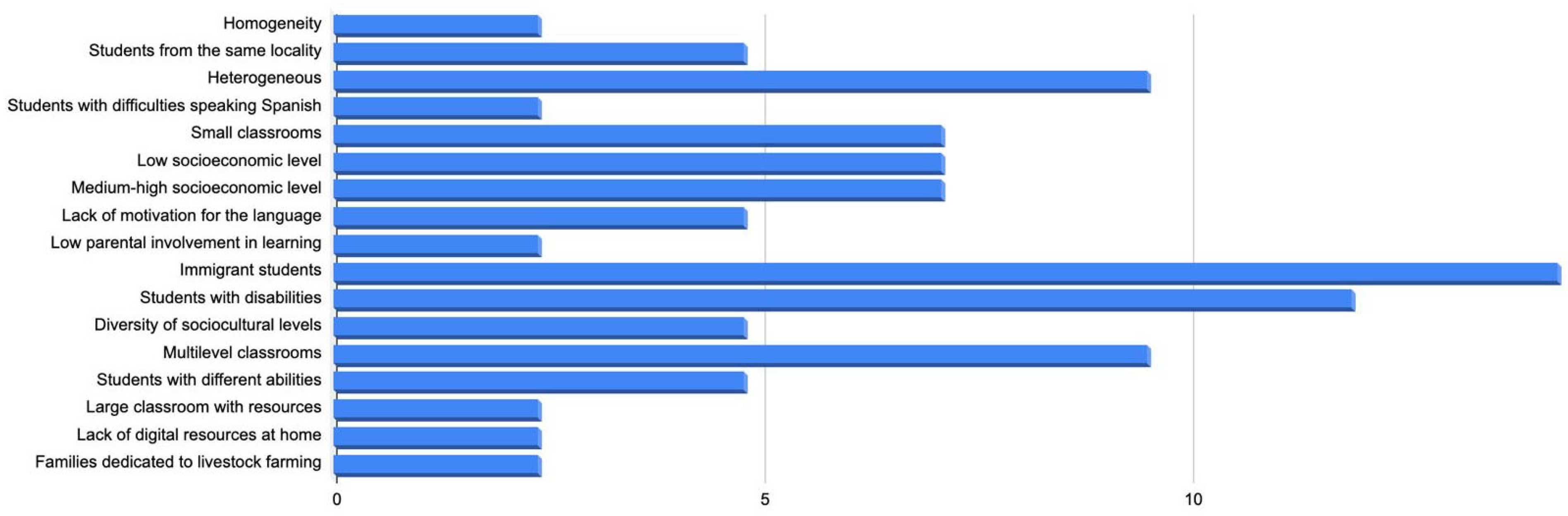
A central concern expressed by many participants in the questionnaires was related to job stability, which is often shaped by temporary contracts, mobility within the public education system, and uncertainty of placements. Economic improvement was cited as a key personal objective, highlighting the financial vulnerability that can accompany teaching posts in geographically and economically disadvantaged areas. In contrast, interpersonal issues among school staff were generally considered to be of lesser importance, suggesting a relatively harmonious or at least non-confrontational work environment, and possibly the prioritization of structural and economic issues over relational ones. Figure 1 represents the answer to question 16 of Section 1 in the questionnaire: “Which of the following characteristics apply to the context in which you are currently working (e.g., size of the classroom; homogeneity of the group according to the level of knowledge, socio-economic and cultural background of the pupils; their geographical origin; disabilities; etc.)?”.
Figure 1.
Teachers’ perspectives on their respective educational centers.
Regarding the educational context, teachers reported a number of daily hurdles at school. Notably, for 14.3%, the large concentration of immigrant students in a single classroom presented a significant challenge, arguably calling for adjustments in teaching approaches and heightened cultural awareness. Interestingly, migration in the province of Jaén has undergone a significant transformation: a shift from being a region people left to one experiencing considerable inward migration. Recent decades have seen Jaén emerge as a destination, attracting immigrants with employment prospects in areas like agriculture, notably the olive industry. This population is diverse, with individuals originating from various countries across Africa (mainly Morocco), Europe (mainly Romania and other Easter European countries), and Latin America (mainly Colombia and Ecuador) (INE, 2022)2.
This demographic shift has had deep implications for rural schooling in Jaén. The flow of immigrant families has led to more diverse classroom compositions, introducing new cultural and linguistic dynamics in them. Teachers in rural schools now face the challenge of addressing the needs of students from diverse international backgrounds, who need adaptations in teaching methods and curricula to make sure everyone integrates well and gets what they need educationally. This reality explains why educators are urgently requesting training designed for truly inclusive, multicultural teaching. Additionally, interviewed school authorities acknowledged the pressing need for solid support systems to help immigrant children and their families settle into local life.
The questionnaire answers showed concerns about classroom heterogeneity and the presence of mixed-ability groups (both cited by 9.5%), which required differentiated instruction and often went unsupported in resource-limited settings. A further 11.9% explicitly mentioned students with disabilities as a complicating factor in lesson planning and delivery and expanded to demand classroom support not only for English instruction but also for Spanish, as some of their migrant students exhibited extremely low proficiency in both languages. This was further compounded by the educational authorities, who expressed their concern about the highly segregated social and cultural environments in which these students live, which, according to them, severely limits their exposure to and acquisition of the common language. This view was supported in every way by classroom observers, who attended extra-curricular support classes for immigrant students in a particular school and noticed closed-off behaviors on their part and that of their mothers/female relatives. In particular, Arab students interacted among themselves in class and played together during breaks, radically separated from the rest of the group. Their adult relatives also spoke among themselves when dropping off or picking up their children from school, using their native language, and none of them approached the teachers, who were present in the playground at that time. In addition, observers reported that several of these children presented symptoms compatible with more or less severe speaking and learning difficulties (e.g., stuttering, false starts, fidgeting, clumsy out-loud reading, messy handwriting).
A direct outcome was the unavoidable shifting of scarce school personnel, like psychologists and speech therapists. Support traditionally aimed at pupils with psychopedagogic needs such as ADHD or dyslexia was necessarily channeled towards the pressing requirements of immigrant newcomers. Contrasting with this challenge, a neighboring school head noted that the presence of immigrant students had a crucial benefit: the arrival of immigrant students helped stem the tide of rural depopulation, helping to sustain school enrolments, and thus sustaining the very existence of educational institutions there. The findings underscore the complex and multifaceted nature of teaching in rural schools, where educators must adapt to heterogeneous classrooms with insufficient backing and tools.
4.2. Relationship with Their School and Social Environment
The research also provided results on teacher integration, identity, and professional outlook in rural contexts. More than half of the teachers surveyed declared that they did not reside in the same locality where they worked but, instead, lived in a larger town nearby and intended to remain there indefinitely or move to an urban destination if/when possible. This relative geographic connection often reflects a perception of rural teaching as a temporary assignment rather than a long-term career goal, especially for those in the early stages of their careers (Monge López et al., 2022). For many, rural teaching posts represent a formative experience or a transitional phase in pursuit of future professional promotion, rather than a destination in itself. Despite this, almost 80% reported feeling a strong attachment to the surrounding cultural values and traditions, typically close to their own, and integrated in the rural communities where they were teaching. They particularly valued the psychological and emotional benefits associated with rural life, such as a calm pace, close contact with nature, and a peaceful environment (Bárcena et al., 2025). However, they expressed dissatisfaction with the limited cultural and recreational offerings in these areas, which were the least valued aspects of their current settings.
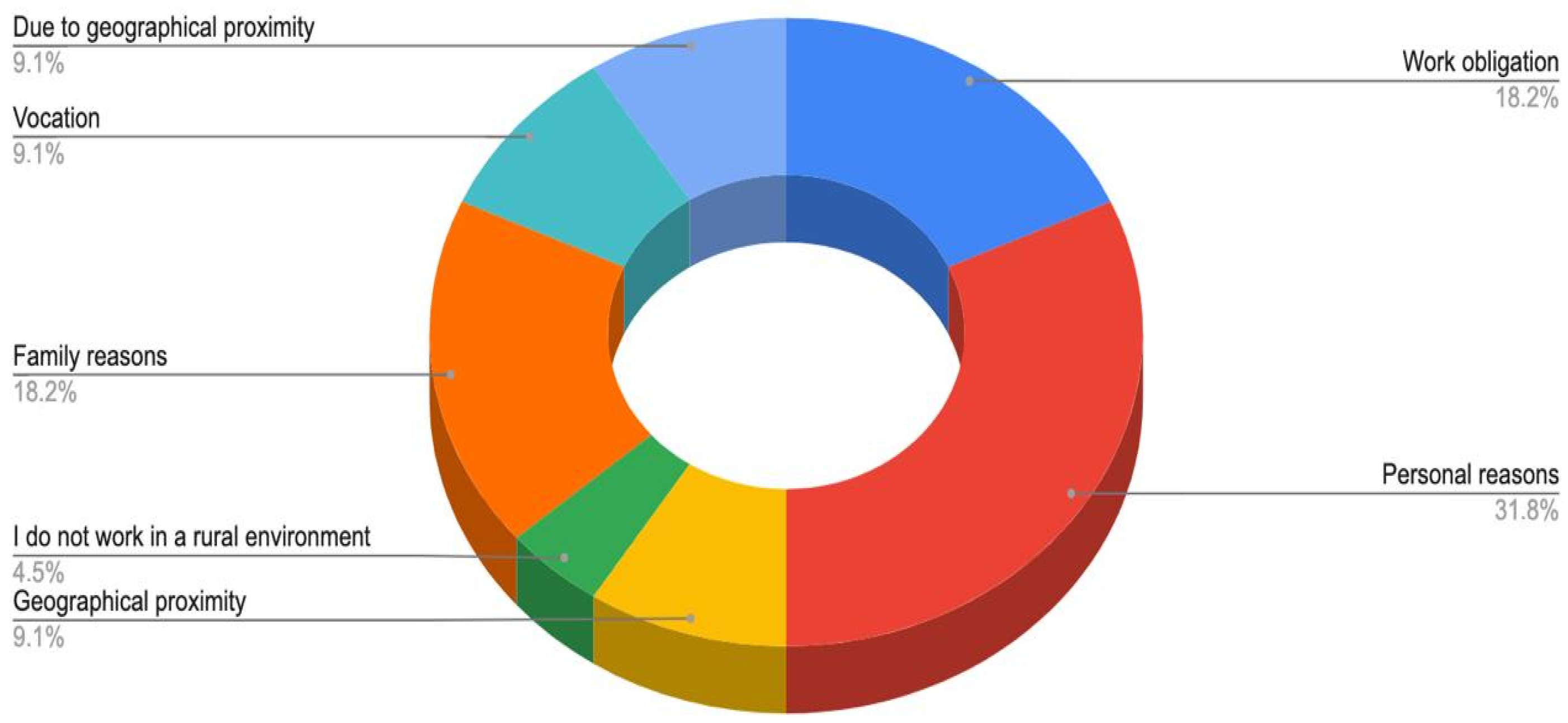
Moreover, teachers generally felt supported by their schools and students’ families once contact had been established. Collaboration with local officials and community groups was also welcomed, though teachers consistently hoped for deeper engagement. When it came to development opportunities, nearly all teachers surveyed indicated that they would like to be involved in educational innovation projects, showing a distinct preference for working with peers. There was less enthusiasm for involvement in academic research, which was seen as more abstract or less immediately applicable to their day-to-day teaching. This was interpreted as a sign of commitment towards the hands-on tasks of their professional activity. Figure 2 represents the answer to question 2 of Section 2 in the questionnaire: “Why do you work in a rural environment?”.
Figure 2.
Teachers’ involvement with their rural community.
In terms of diversity and inclusion, teachers acknowledged that they lacked specific preparation for handling migrant backgrounds, disabilities, and socioeconomic disadvantage. Despite a largely local student population, the core difficulties appeared rooted not so much in open peer conflict or violence, but rather in deeply rooted social prejudices and insufficient sensitivity towards gender norms, marginalization, diverse learning capabilities, and national or ethnic backgrounds. In the interviews, school authorities also reported a lack of integration among students from different backgrounds, rather than incidents of open conflict, which is coherent with the classroom observation experience undertaken.
4.3. Linguistic Competence and Contextual Methodological/Technological Conditions
Regarding their working environment, participating teachers expressed a strong interest in being exposed to a wider range of teaching methodologies and strategies, particularly those that could revitalize their instructional approaches and better support the weakest students. Furthermore, they claimed that further resources (e.g., modern, diverse, adequate, and reliable teaching materials) would significantly enhance their daily teaching practice, and complained of the poor quality, obsolescence, and scarce availability of some of them. This view was only partly shared by the school educational authorities interviewed, who pointed out that sometimes teachers did not leverage the tools available to their full pedagogical potential: “Some of the technologies demanded by the teachers are already available but they are not making the most out of them, such as a platform for collaboration, the use of mobile devices in class, or the creation of open resources for sharing” (I3). However, another interviewee stated: “The truth is that there is often a mismatch between high policies and rural school realities. The former can fail to account for the specific needs and constraints of rural schools, such as a restricted budget, staffing, materials… Our voice is small because the student population is small” (I2), and, later on: “Rural teachers work hard, really hard. It is usually thought that fewer students involve less work but some of these schools have really mixed-ability and mixed-age classes, which might make dealing with diversity an ordeal rather than a challenge”. Classroom observation revealed that collaborative platforms were occasionally underutilized in ways that could support learner autonomy or peer interaction. Likewise, open educational resources were found to be in use; however, they were either created by the teachers themselves and not shared or consisted of content originally shared online by others and directly taken from various internet platforms. There was hardly any evidence of prolonged and open ethical collaboration in the (re-)creation, (re-)adaptation, or (re-)purposing of materials and other educational resources.
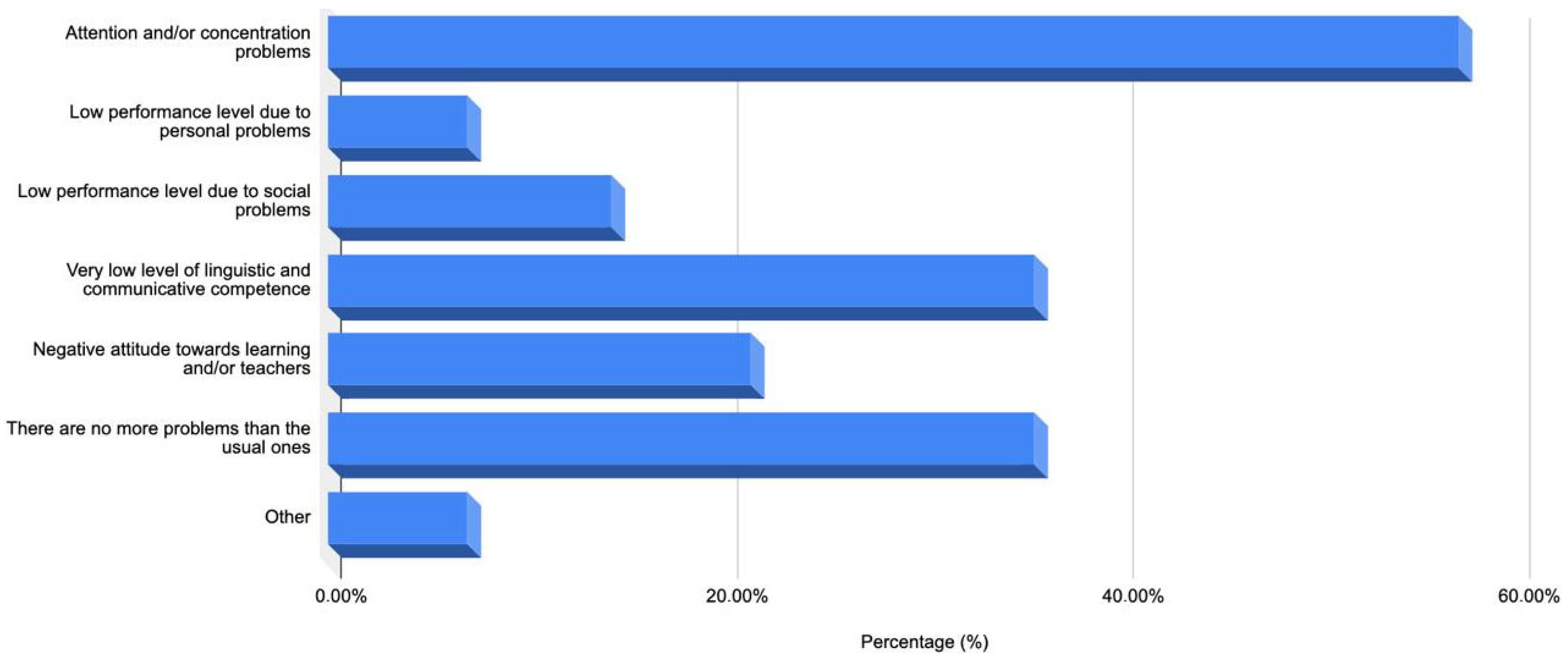
The prevailing approach among foreign language educators was communicative, aiming for student interaction and practical communication skills. Yet a significant counterpoint was teacher anxiety regarding their personal oral proficiency, particularly in less predictable conversational moments. However, a recurring concern was their own oral proficiency in the target language, particularly in spontaneous and conversational contexts. Classroom visits underscored this very need, revealing opportunities to update teachers’ verbal skills. Bilingual programs, in which subjects are taught in English, were also a source of concern for participating teachers, partly due to their own linguistic insecurities, and partly because of perceived disadvantages these programs might pose for students from lower-income backgrounds.3 Figure 3 illustrates the responses to Question 6 in Section 3 of the questionnaire: “Would you highlight any of the following problems among your students that affect their learning?”
Figure 3.
Teachers’ perceptions of students’ learning difficulties.
Regarding student performance, although teachers reported speaking to students in English as part of their communicative approach, they realized that some of them found it challenging to interact in the language. A recurrently mentioned cause was psychopedagogic issues (such as motivation and self-regulation), which appeared closely tied to their general academic performance and occupational expectations rather than teachers’ strategies. As one interviewee noted:
“I am the secretary of the centre but also work in a fairly large public high school near Jaén. I teach most groups in our school, and classes are largely textbook based. Specifically, I teach the International Baccalaureate (IB) group, second-year ESO (Compulsory Secondary Education or pre-baccalaureate level), tourism vocational training students, and a specially supported third-year ESO group (referred to as Diversificación [trans. ‘Diversification’]). In my opinion, performance differences are mostly due to academic level. The IB group is very small—only six female students—with excellent English proficiency. The tourism group is also small, with ten students of mixed genders and varying English levels, but they generally perform well in everyday tasks. With the IB group, I’ve been preparing their internal assessment—a 15-min high-level speaking test based on a literary work, followed by a discussion that expands to broader topics. I’ve had help from our native language assistant, and the students have practiced extensively. The ESO group also has ten students, who struggle more with expressing themselves in English, but they are motivated and actively participate in class. The tourism students focus more on oral skills related to their future jobs in hotels and restaurants, and they’re doing fine. In addition to their ESP (English for Specific Purposes) training, they also practice informal client interactions. For the ESO Diversificación group, my work is always mainly motivational and aimed at reinforcing foundational language skills.”(I4).
From an infrastructure standpoint, teachers noted that the technological setup within schools was generally sufficient. Most classrooms were equipped with essential digital tools: computers (desktop or laptop), some form of display like an interactive whiteboard or projector, and often access to mobile devices such as tablets. Teachers typically found the school’s internet connection stable enough for their needs, and felt reasonably familiar with using educational technology, at least at a basic operational level. However, according to school authorities, a significant barrier existed outside the classroom: “Technology is used in a basically ok way in class but not outside of class. We get all sorts of scenarios at home, but teachers are committed to all their students.” (I3). Teachers confirmed that many students’ homes lacked access to up-to-date devices and/or robust, high-speed internet, which hampered the reliability of digital learning. Even when families did possess digital tools, they often lacked the necessary digital skills, and the devices themselves were frequently outdated or slow, limiting the effectiveness of homework and hybrid learning tasks.
4.4. Teacher Training and Lifelong Learning
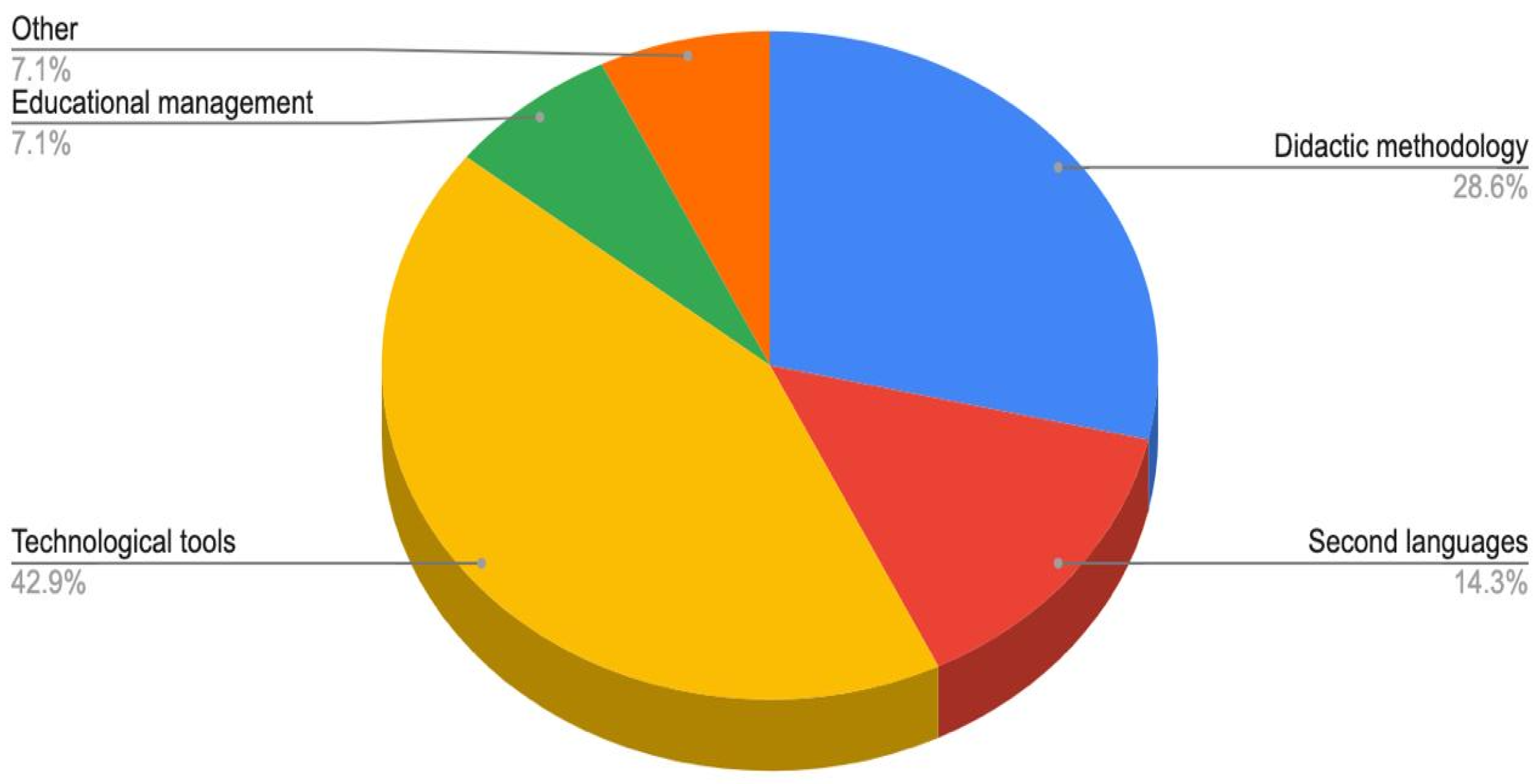
The data gathered revealed a strong awareness of the relevance of professional development among rural foreign language teachers. Just over half of the teachers (57.14%) reported that their school provided them with training opportunities, suggesting that, while some institutional support was available, it probably was not sufficiently structured or widely accessible. A significant 78% of the respondents reported that they updated their professional knowledge out of personal interest, whereas only a small minority (14.29%) indicated that training was mandated by their school or integrated into the school’s organizational plan. When it came to the focus areas of current training, technological tools ranked highest (42.86%), followed by didactic methodology (28.57%), and finally foreign language training (14.29%), suggesting a notable training gap in language-specific tuition, even though it was the very subject they taught and despite the abundant literature on the widespread tendency toward fossilization in teachers’ target language proficiency (Selinker, 1972; Han, 2004; Toloczko, 2024). The priorities established by teachers about their training requirements often stood in stark contrast to those they received, except for educational management training, revealing a significant disconnect between institutional offerings and the actual professional needs perceived by frontline educators themselves. Figure 4 represents the answer to question 2 of Section 4 in the questionnaire: “What types of professional training have you received or do you regularly receive?”.
Figure 4.
Teachers’ regular professional training.
The training typologies proposed below are grounded in the needs analysis data: they synthesize the recurring areas of training demand reported in questionnaires and interviews (e.g., oral proficiency, pronunciation, CLIL-related language, adaptable methodology, and pragmatic technology use) and are organized for clarity alongside commonly cited professional development formats in the literature.
Dissatisfaction was evident regarding foreign language training: 42.86% considered the training they receive in this area to be insufficient, while only 28.57% rated it as satisfactory, and 21.43% felt it was inappropriate, which suggests that language training probably needed to be reconsidered by educational authorities. As argued by the authors, linguistically isolated environments offer little or no exposure to native or near-native speakers. Without regular interaction in the target language (mostly English), their input becomes limited, repetitive, and non-authentic, leading to stagnation. Furthermore, over time, teachers as target language speakers develop habits which include automatic or canned language, non-standard or decontextualized language, and incorrections. It can be said, then, that their language use has become fossilized, i.e., resistant to improvement or receding (Selinker, 1972). The fact remains that teachers in rural areas may spend years teaching basic or intermediate content, which can limit their own language growth. In addition, the use of old textbooks, non-authentic resources, etc., can limit exposure to evolving, real-world usage of the target language, leading to outdated or unnatural use. When asked about how updated teachers’ linguistic skills were in their opinion, educational authorities were mostly concerned with spoken skills which, in their view, could limit their ability to teach the language communicatively and result in over-reliance on grammar-focused or exam-based instruction: “Even some youngest teachers, who have had opportunities more recently to practise the language at university or abroad, seem to struggle with oral expression and pronunciation, and this limitation is likely to be passed on to their own students” (I2), and, later on: “The problem with all language classes is the limited exposure and use of the language in real life, outside the classroom… and here [in rural communities], English is rarely needed in everyday life, which limits the opportunities for authentic communication”. Another interviewee added about this issue: “There is a cultural tendency in Spain—more pronounced in some rural areas—to associate ‘real’ English with native speakers from the UK or USA. I think this can undermine the confidence of local teachers, mostly Spaniards, in their classroom” (I1). Table 1 provides a representative summary of the types of linguistic training suitable for foreign language teachers, with particular attention to rural settings (highlighted in italics).
Table 1.
Common types of foreign language teacher linguistic training in rural areas.
The answers to the questionnaire revealed a clear openness to international collaboration with other teachers, with 71.43% of respondents expressing a desire to receive training alongside teachers from other countries—far exceeding the interest in local or subject-specific training groups (42.86%). This finding underscores the potential for internationalization initiatives, such as Erasmus+ or eTwinning, to address both training needs and motivational triggers. Indeed, an emerging opportunity for rural teachers is their increasing participation in international exchange programs such as Erasmus+ and eTwinning, which provide valuable exposure to diverse linguistic communities and access to updated language teaching models. In addition, a recent Spanish initiative known as “Campus Rural” (trans. “Rural Campus”)4 has adapted the core principles of Erasmus+ to the national context, targeting rural and sparsely populated areas within Spain. Unlike traditional Erasmus+, which emphasizes international mobility, Campus Rural focuses on domestic mobility, creating pathways for university students to undertake educational and professional placements within rural communities. While rural teachers are not the program’s direct target audience, they stand to benefit significantly through classroom support, peer collaboration, and mentoring opportunities. Furthermore, their involvement contributes to a broader strategy aimed at revitalizing rural education and attracting new talent to often-overlooked schools and communities. Other indirect initiatives arise through programs such as auxiliares de conversación (trans. “language assistants”) call, organized annually by the Spanish Ministry of Education5. While primarily aimed at recent graduates, this program also represents a valuable option for language teachers interested in gaining international experience. Participants are placed in countries where they support language instruction in schools while immersing themselves in different educational systems and cultural contexts. Those who participate travel to other countries, where they get firsthand exposure to different educational approaches and cultural norms. While not specifically created for practicing teachers, it delivers a powerful professional development experience that can improve their language abilities, broaden their cultural understanding, and offer fresh perspectives on teaching methods.
The most accessible pathway provided by the provincial educational authority is through the so-called CAL courses (Cursos de Actualización Lingüística, or “Language Refresher Courses”) offered at escuelas oficiales de idiomas (trans. “official language schools”). CALs are annual courses that go up to C1 level. Their particularity is that they are exclusively for teachers, although not necessarily for foreign or second language teachers. Moreover, they require mandatory face-to-face attendance (except for the distance-learning English program That’s English!6, which only goes up to B1 level) at an official language school twice a week. In addition to their generalist approach, another drawback of these courses is that they are only offered at these specific institutions. The province of Jaén is large and mountainous, and there are currently only six official language schools; since they require physical attendance, this requires long commutes and a significant time investment—something that most teachers struggle to manage.
As seen above, foreign language teachers in rural schools required specific methodological training that addresses the unique challenges and opportunities of their teaching context. Challenging elements were mentioned, which include multi-grade and mixed-ability classrooms, limited resources and infrastructure, isolation and lack of peer collaboration, contextual relevance, and the need for resource adaptability. Table 2 provides a representative summary of the types of methodological training suitable for foreign language teachers with a breakdown by educational level, with tailored adjustments to rural settings (highlighted in italics).
Table 2.
Common types of foreign language teacher methodological training in rural areas.
Teacher technological training courses are designed to help educators integrate digital tools and platforms into their classroom practice. Some teachers revealed particular interest in further developing specific skill areas they wanted to develop further, especially in content creation, namely the production of audiovisual materials that can enrich language input and stimulate learner engagement. Alongside this, there was a clear desire to master collaborative platforms that could improve teamwork with other educators, regardless of location (i.e., within their own schools and in other regions or countries). Finally, understanding how to embed CALL (Computer-Assisted Language Learning) methodologies into their regular classroom routines emerged as another significant area of interest. While the exact content and structure of this training can vary depending on the region, institutional priorities, teacher skills, and educational level/student age group, the emphasis should be on low-tech, cost-effective, and offline-compatible tools, as well as teacher autonomy in content creation and adaptability to limited infrastructure. Table 3 provides a representative summary of the types of technological training suitable for foreign language teachers, with particular attention to rural settings (highlighted in italics).
Table 3.
Common types of foreign language teacher technological training in rural areas.
When it comes to preferred training modalities and research and teaching innovation projects, hybrid learning models were favored by 42.86% of teachers, while 28.57% preferred in-person sessions held at their own schools. Both preferences reveal the need for flexible formats to balance professional responsibilities with family and personal life. Most teachers reported that they felt overworked, which is often overlooked in practice by teacher training centers. As a result, unless they are offered highly flexible course formats adapted to their various circumstances, they are unable to participate, despite their interest and willingness to contribute to their own professional development.
5. Discussion
Across the dataset, teachers’ linguistic competence—especially sustained oral fluency, pronunciation, and confidence in spontaneous interaction—emerges as the core professional need in rural foreign language education. Participants repeatedly linked their perceived linguistic stagnation to limited authentic exposure and few opportunities for professional language use beyond routine classroom discourse, a pattern consistent with work on teacher language development and fossilization (Selinker, 1972; Toloczko, 2024). This helps explain why teachers often reported anxiety in unpredictable communicative moments and, in some cases, a drift toward safer, textbook-driven or exam-oriented routines when they felt their oral proficiency was under strain (Kumar & Malekar, 2017).
Methodological and technological dimensions function in the findings primarily as contextual conditions that mediate teachers’ ability to develop and enact linguistic competence. For example, multigrade, mixed-ability, and increasingly multilingual classrooms in depopulating rural regions increase the need for differentiated, interaction-rich pedagogies; yet these same conditions can reduce teachers’ time for sustained target-language practice and peer collaboration. Similarly, while many schools had basic classroom technologies, uneven student access to devices and connectivity at home constrained the continuity of out-of-class language exposure and limited the feasibility of certain communicative and blended-learning tasks. These constraints indicate that linguistic development initiatives will be most effective when paired with context-sensitive methodological supports (e.g., adaptable communicative task design for multilevel groups) and low-bandwidth technological solutions that extend opportunities for meaningful language use beyond the classroom (Cuong, 2021; Read et al., 2021). Examples include downloadable/offline Moodle or Google Classroom content packets, sharing audio/video via USB/SD cards or local school servers, using asynchronous voice notes (e.g., on widely available messaging apps) for speaking practice, and designing paper-based task sequences that can later be digitized when connectivity permits.
Taken together, the results suggest a clear hierarchy for professional development design in rural Andalusia: prioritize sustained teacher linguistic development, and address methodological and technological barriers insofar as they enable (or hinder) that development and its classroom enactment. Recent work on virtual and hybrid professional development highlights the potential of flexible formats to support teachers’ ongoing language growth, particularly where geography and workload limit face-to-face provision (Pashmforoosh et al., 2025). Within participatory frameworks, co-designing language development opportunities with rural teachers—while leveraging existing networks and mobility programs—can reduce isolation and increase uptake, thereby strengthening equity in rural language education. While the findings are situated in inland Andalusia, they may transfer to other rural contexts where teacher linguistic isolation and limited opportunities for authentic target-language use intersect with multigrade/multilingual classrooms and uneven digital access.
6. Conclusions
This article presented a mixed-methods needs analysis of foreign language teachers working in inland rural Andalusia, within the wider context of “emptied Spain”. The results foreground teachers’ sustained linguistic competence—particularly oral proficiency—as the central professional need in linguistically isolated rural contexts. Methodological and technological issues, while important, emerged mainly as contextual conditions that shape teachers’ opportunities to develop and enact linguistic competence (e.g., multigrade and multicultural classrooms, limited time for collaboration, and uneven student access to devices and connectivity).
At the same time, the findings reinforce that rural schools should not be viewed through a deficit lens. Even where material resources are limited, rural settings can offer strong community engagement and opportunities for personalized learning. To improve rural foreign language education, investment should therefore begin with teacher development that is explicitly contextualized: sustained language development opportunities (especially for speaking and pronunciation), paired with practical methodological supports for small, mixed-ability groups and low-cost, low-bandwidth technological solutions that extend meaningful language use beyond the classroom.
Ultimately, supporting rural foreign language teachers means investing in equity and meaningful learning opportunities regardless of geography. Needs analyses like the one presented here can help translate teachers’ priorities into more relevant professional development and policy support by keeping linguistic competence at the analytical center and treating other dimensions as enabling conditions. By listening to those working closest to students, educational authorities can design language programs that are not only policy-compliant but genuinely empowering.
Author Contributions
Conceptualization, J.J.M.-R., E.B.M. and T.R.; Methodology, J.J.M.-R., E.B.M. and T.R.; Formal analysis, J.J.M.-R., E.B.M. and T.R.; Data curation, J.J.M.-R., E.B.M. and T.R.; Writing—original draft, J.J.M.-R., E.B.M. and T.R.; Writing—review & editing, J.J.M.-R., E.B.M. and T.R. All authors have read and agreed to the published version of the manuscript.
Funding
The research published in this article has been funded by the AGORA project (from the Spanish Ministry of Science and Innovation, ref.: PID2021-128182OB-I00).
Institutional Review Board Statement
The research published here has been undertaken in accordance with the ethics committee indications at UNED (https://www.uned.es/universidad/inicio/unidad/comite-de-etica-de-la-investigacion.html, accessed on 15 November 2025).
Informed Consent Statement
Informed consent was obtained from all subjects involved in the study.
Data Availability Statement
No new data were created or analyzed in this study. Data sharing is not applicable to this article.
Conflicts of Interest
The authors declare no conflict of interest.
Notes
| 1 | The research presented in this article is part of the AGORA project (ref. no.: PID2020-113453RB-I00), which is funded by the Spanish Ministry of Science and Innovation under the National Program for Knowledge Generation and Scientific and Technological Strengthening of the R&D&I System. This funding supports the project’s objectives to develop innovative training programs and resources tailored to the unique needs of rural foreign language teachers, thereby contributing to educational equity and quality in underserved areas. |
| 2 | Retrieved from https://www.ine.es (accessed on 5 December 2025). |
| 3 | In relation to this, there are studies showing that children whose parents have low education levels struggle more with subjects taught in English, highlighting a growing equity gap (Anghel et al., 2012). |
| 4 | https://www.miteco.gob.es/es/reto-demografico/temas/campus_rural.html (accessed on 15 November 2025). |
| 5 | |
| 6 | https://www.thatsenglish.com/gestion/login (accessed on 21 November 2025). |
References
- Anghel, B., Cabrales, A., & Carro, J. M. (2012). Evaluating a bilingual education program in Spain: The impact beyond foreign language learning. SERIEs, 3(2), 187–219. [Google Scholar] [CrossRef] [Scilit]
- Annam, R. (2022). Strategies for English as the second language for rural students—A task-based approach. International Journal of English Literature and Social Sciences (IJELS), 7(1), 294–298. [Google Scholar] [CrossRef] [Scilit]
- Bandrés, E., & Azón, S. (2021). Spain is empty: An analysis of the socioeconomic impacts of depopulation. Journal of Regional Studies, 15(2), 134–152. [Google Scholar]
- Barley, Z. A., & Beesley, A. D. (2007). Rural school success: What can we learn? Journal of Research in Rural Education, 22(1), 1–16. [Google Scholar]
- Başer, Z., & Karaman, A. C. (2015). Enacting the national curriculum in a rural elementary school: A qualitative study of a beginning language teacher’s experiences. Elementary Education Online, 14(1), 118–132. [Google Scholar] [CrossRef]
- Bárcena, E., Castrillo, M. D., & Martín-Monje, E. (Eds.). (2025). Redefining the concept of the smart library in the context of rural Spain: A transliteracy approach [Special issue on language teacher training in rural environments]. Forum for Linguistic Studies, 7(12), 1714–1732. [Google Scholar] [CrossRef] [Scilit]
- Borthwick, K. (2022). Rethinking educational research through participatory action. Educational Action Research, 30(4), 501–518. [Google Scholar]
- Braun, V., & Clarke, V. (2006). Using thematic analysis in psychology. Qualitative Research in Psychology, 3(2), 77–101. [Google Scholar] [CrossRef] [Scilit]
- Brown, J. D. (1995). The elements of language curriculum: A systematic approach to program development. Heinle & Heinle. [Google Scholar]
- Castellano-Sanz, J. A., & Martí-Climent, J. M. (2023). El tratamiento de las lenguas adicionales en el Proyecto Lingüístico de Centro: Un análisis comparativo de la aplicación en contextos rurales y urbanos. Revista de Educación Bilingüe, 12(1), 55–72. [Google Scholar]
- Cohen, L., Manion, L., & Morrison, K. (2018). Research methods in education (8th ed.). Routledge. [Google Scholar]
- Creswell, J. W. (2014). Research design: Qualitative, quantitative, and mixed methods approaches (4th ed.). SAGE Publications. [Google Scholar]
- Cristescu, M. (2015). Educational adaptation and success of the rural environment in the context of sustainable development. Procedia-Social and Behavioral Sciences, 180, 972–978. [Google Scholar]
- Cuong, P. H. (2021). English language education in rural areas: Current issues, complexities and ways forward. VNU Journal of Science: Education Research, 37(4), 39–48. [Google Scholar] [CrossRef] [Scilit]
- del Molino, S. (2016). La España vacía: Viaje por un país que nunca fue. Turner Noema. [Google Scholar]
- Denzin, N. K. (2012). Triangulation 2.0. Journal of Mixed Methods Research, 6(2), 80–88. [Google Scholar] [CrossRef] [Scilit]
- Domingo-Peñafiel, L., & Carrete-Marín, N. (2022). Las escuelas rurales no tienen libros y materiales adaptados a su realidad. Available online: https://theconversation.com/las-escuelas-rurales-no-tienen-libros-y-materiales-adaptados-a-su-realidad-190072 (accessed on 23 November 2025).
- Ergeshova, G. (2023). Scientific and practical foundations of teaching English in rural schools. Bulletin of Science and Practice, 9(11), 355–359. [Google Scholar] [CrossRef] [Scilit]
- Evans, J., & Morgan, A. M. (2016). Teacher and university educator perspectives on teaching languages in rural settings: A sonata form case study. Australian and International Journal of Rural Education, 26(1), 67–82. [Google Scholar] [CrossRef] [Scilit]
- Franz, N. (2018). The landscape of rural service learning, and what it teaches us all. Journal of Higher Education Outreach and Engagement, 22(1), 189–192. [Google Scholar]
- Gbaguidi, V. E., & Adetou, D. (2024). Factors affecting school dropout: Comparative study of rural and urban settings. International Journal of Educational Management and Development Studies, 5(2), 233–256. [Google Scholar] [CrossRef] [Scilit]
- Graham, A., Powell, M., & Taylor, N. (2015). Ethical research involving children: Putting the evidence into practice. Family Matters, 96, 23–28. [Google Scholar]
- Han, Z. (2004). Fossilization in adult second language acquisition. Multilingual Matters. [Google Scholar]
- Hannum, K. L. (2020). Language policy and practice between urban and rural schools in Galicia, Spain. GeoJournal, 85(4), 1009–1024. [Google Scholar] [CrossRef] [Scilit]
- Hashim, M. S., & Said, I. (2021). Vocabulary knowledge in science learning on children’s development through farming activities in the rural area. Southeast Asia Early Childhood Journal, 10(1), 39–48. [Google Scholar] [CrossRef] [Scilit]
- Hornberger, N. H. (1995). Five vowels or three? Linguistics and politics in Quechua language planning in Peru. In J. W. Tollefson (Ed.), Power and inequality in language education (pp. 187–205). Cambridge University Press. [Google Scholar]
- Hossain, M. (2016). English language teaching in rural areas: A scenario and problems and prospects in Bangladesh. Academic Research International, 7(4), 182–188. [Google Scholar]
- Hutchinson, T., & Waters, A. (1987). English for specific purposes: A learning-centred approach. Cambridge University Press. [Google Scholar]
- Ingersoll, R. M., & Tran, H. (2023). Teacher shortages and turnover in rural schools in the U.S.: An organizational analysis. Educational Administration Quarterly, 59(2), 396–431. [Google Scholar] [CrossRef] [Scilit]
- Kumar, T. V., & Malekar, I. S. (2017). Difficulties in teaching English to rural students. International Journal of Research and Analytical Reviews (IJRAR), 4(1), 31–39. [Google Scholar]
- Ledwaba, R. G., & Sefotho, M. M. (2024). Curriculum adaptation for learners with diverse learning needs: A case of South African inclusive rural schools. South African Journal of Education, 44(4), 2510. [Google Scholar] [CrossRef] [Scilit]
- Maposah-Kandemiri, M., Higgins, P., & Mclaughlin, P. (2009). Outdoor learning: Curriculum imperatives and community relevance in a rural setting. Education, 37(1), 15–28. [Google Scholar] [CrossRef] [Scilit]
- Marsh, D. (2002). CLIL/EMILE—The European dimension: Actions, trends and foresight potential. European Commission, Directorate-General for Education and Culture. [Google Scholar]
- Monge López, C., García Prieto, F. J., & Gómez Hernández, P. (2022). La escuela rural en la formación inicial del profesorado de Educación Infantil y Primaria: Un campo por explorar. Profesorado, Revista de Currículum y Formación del Profesorado, 26(2), 141–159. [Google Scholar] [CrossRef] [Scilit]
- Nurteteng, N., Sunra, L., & Dollah, S. (2024). Adapting the English language teaching curriculum to overcome resource limitations in rural areas. Jambura Journal of English Teaching and Literature, 5(2), 71–82. [Google Scholar] [CrossRef] [Scilit]
- Pashmforoosh, R., Irby, B. J., Lara-Alecio, R., Tong, F., & Taheri, M. (2025). Virtual professional development for enhancing teacher leaders’ linguistic competency in teaching. NABE Journal of Research and Practice, 1–18. [Google Scholar] [CrossRef] [Scilit]
- Poolman, B., Leseman, P., Doornenbal, J., & Minnaert, A. (2017). Development of the language proficiency of five- to seven-year-olds in rural areas. Early Child Development and Care, 187(7), 1123–1137. [Google Scholar] [CrossRef] [Scilit]
- Qian, Y. (2019). Study on education policy in rural China. Open Journal of Social Sciences, 7(5), 1–9. [Google Scholar]
- Read, T., Kukulska-Hulme, A., Barcena, E., & Traxler, J. (2021). Mobile open social learning for languages (MOSL4L). Journal of Universal Computer Science, 27(5), 425–436. [Google Scholar] [CrossRef] [Scilit]
- Ringler, M. C., & Jones, K. D. (2020). Preparing school leaders for dual language programs in rural settings. In M. C. Ringler, & K. D. Jones (Eds.), Handbook of research on leadership and advocacy for children and families in rural poverty (pp. 1–22). IGI Global. [Google Scholar]
- Rubinstein-Ávila, E., & Lee, E. (2014). Secondary teachers and English language learners (ELLs): Attitudes, preparation and implications. The Clearing House: A Journal of Educational Strategies, Issues and Ideas, 87(5), 187–191. [Google Scholar] [CrossRef] [Scilit]
- Ruiz Pérez, M. d. C. (2019). The practice of bilingualism in Andalusia, Spain. International Journal for Infonomics (IJI), 12(4), 1916–1919. [Google Scholar] [CrossRef] [Scilit]
- San Isidro, X., & Lasagabaster, D. (2019). The impact of CLIL on pluriliteracy development and content learning in a rural multilingual setting: A longitudinal study. Language Teaching Research, 23(5), 584–602. [Google Scholar] [CrossRef] [Scilit]
- Scott, G. (1999). Change matters: Making a difference in education and training. Allen & Unwin. [Google Scholar]
- Selinker, L. (1972). Interlanguage. International Review of Applied Linguistics in Language Teaching, 10(3), 209–231. [Google Scholar] [CrossRef] [Scilit]
- Sherwood, T. (2000). Where has all the rural gone?: Rural education research and current federal reform. Journal of Research in Rural Education, 16(3), 159–167. [Google Scholar]
- Strasser, R. (2010). Community engagement: A key to successful rural clinical education. Rural and Remote Health, 10(3), 1543. [Google Scholar] [CrossRef] [Scilit] [PubMed]
- Thier, M., Longhurst, J. M., Grant, P. D., & Hocking, J. E. (2021). Research deserts: A systematic mapping review of U.S. rural education definitions and geographies. Journal of Research in Rural Education, 37(2), 1–24. [Google Scholar]
- Toloczko, E. (2024). A cognitive model of language teacher fossilization. Journal of Language Teaching and Research, 15(5), 1518–1525. [Google Scholar] [CrossRef] [Scilit]
- Wen, M., & Wang, G. (2009). Personal, social, and ecological factors of loneliness and life satisfaction among rural–urban migrants in Shanghai, China. International Journal of Comparative Sociology, 50, 155–182. [Google Scholar]
- World Bank. (2024). Rural population (% of total population) (indicator SP.RUR.TOTL.ZS). World Development Indicators. [Google Scholar]
- Wrigley, T. (2000). The power to learn: Stories of success in the education of Asian and other bilingual pupils. Trentham Books. [Google Scholar]
- Yanar, Z. M., Fazli, M., Rahman, J., & Farthing, R. (2016). Research ethics committees and participatory action research with young people. Journal of Empirical Research on Human Research Ethics, 11(2), 122–128. [Google Scholar] [CrossRef] [Scilit]

Disclaimer/Publisher’s Note: The statements, opinions and data contained in all publications are solely those of the individual author(s) and contributor(s) and not of MDPI and/or the editor(s). MDPI and/or the editor(s) disclaim responsibility for any injury to people or property resulting from any ideas, methods, instructions or products referred to in the content. |
© 2026 by the authors. Licensee MDPI, Basel, Switzerland. This article is an open access article distributed under the terms and conditions of the Creative Commons Attribution (CC BY) license.