


Abstract
The accelerating digitalization of education has heightened the need for instructional approaches that are developmentally appropriate for young learners and capable of supporting both linguistic growth and creative speech production. This study investigates the pedagogical potential of integrating adapted English-language podcasts and media-based tasks into primary English instruction to foster originality, contextual coherence, expressive flexibility, and emotional richness in learners’ productive speech. The research employed a quasi-experimental pretest–posttest design implemented in intact classroom groups and involved 233 third- and fourth-grade students (experimental group, n = 116; control group, n = 117). Over one academic semester (January–May 2025), the experimental group participated in a structured programme embedded within regular lessons that combined short podcast episodes with dialogic and narrative tasks, while the control group followed the standard curriculum without podcast integration or comparable multimedia enrichment. Data analysis combined quantitative comparison of pre- and post-intervention speech outcomes with qualitative evaluation of learners’ oral and written products, supplemented by student and teacher feedback. The results showed statistically significant improvements in the experimental group across key indicators of creative speech performance. Qualitative evidence further indicated a shift toward more independent, personally meaningful language use, with learners demonstrating greater willingness to experiment with narrative transformation, evaluative retelling, and expressive variation. Taken together, the findings suggest that adapted podcasts, when systematically integrated into routine classroom practice, can serve as an effective and feasible tool for strengthening creative speech development in primary English language education and for enriching contemporary media pedagogy in digitally evolving learning environments.
1. Introduction
The development of digital technologies in primary school has led to a reconsideration of approaches to foreign language instruction, as the modes of information perception, the nature of learning activities, and the accessibility of multimedia resources are undergoing significant transformation. Contemporary research emphasizes that combining traditional communicative methods with multimodal audio tools expands young learners’ opportunities for spoken practice and deepens the process of meaning construction. Podcasts adapted in terms of content and speech rate for the primary school age group make it possible to incorporate authentic speech models in a format that sustains attention and stimulates children’s linguistic imagination (Indahsari, 2020). Their structural compactness and thematic completeness create favourable conditions for the development of basic interpretative skills, meaning prediction, and speech production.
One of the conceptually significant directions concerns examining how audio-media resources influence the formation of creative parameters in children’s speech. Within the tradition of research on speech creativity, scholars identify such characteristics as variability in the use of linguistic means, originality of semantic solutions, logical organization of utterances, and emotional-expressive colouring of speech. These parameters reflect not only the level of linguistic proficiency but also the degree to which cognitive mechanisms of meaning construction and flexible thinking in children have been developed (Porter et al., 2022). For primary school learners, the development of such characteristics is closely linked to their ability to construct short narratives, combine previously learned language units, employ elementary expressive devices, and produce coherent meaning sequences.
Despite the existence of studies describing the pedagogical benefits of digital audio formats, the impact of adapted podcasts on young learners’ productive speech remains insufficiently explored. In particular, the didactic criteria for selecting audio materials for the 8–10 age group, the ways of integrating them into lesson structure, and the procedures for valid assessment of changes in students’ speech products have not been adequately described. The limited number of investigations is also associated with the insufficient development of mixed-method designs that would enable the comparison of quantitative indicators of speech dynamics with qualitative features of children’s oral and written texts (Pikhart et al., 2024).
The aim of the study is to identify the impact of systematic use of adapted English-language podcasts on the development of creative parameters of productive speech in primary school students. To achieve this aim, the following objectives were set: to determine the methodological foundations for the use of podcasts in early English language education; to outline principles for adapting audio materials and designing productive tasks; to operationalize the parameters of speech creativity; to conduct a pedagogical intervention; to evaluate the dynamics of speech indicators; and to compare quantitative data with qualitative changes in students’ utterances.
The scientific novelty of the study lies in considering podcasts as a mediating tool facilitating the transition from perception to productive speech, while the parameters of speech creativity are conceptualized as measurable indicators integrated into assessment procedures. The theoretical significance consists of clarifying the relationship between audio-media stimuli and the cognitive mechanisms of meaning construction in young learners. The practical significance derives from the applicability of the proposed methodology in mainstream school settings, including institutions with limited technological resources. The study seeks to address the following questions:
- (1)
- Does regular use of adapted podcasts contribute to the development of creative parameters of productive speech?
- (2)
- What changes emerge in the semantic organization, linguistic variability, and expressiveness of children’s utterances?
- (3)
- How do quantitative data correspond to the qualitative characteristics of students’ speech production?
1.1. Theoretical Background
1.1.1. Evolution of Digital Audio Tools in EFL for Young Learners
In recent years, there has been a significant increase in scholarly research devoted to the use of digital audio formats—primarily educational podcasts in foreign language instruction for young learners. Systematic reviews and meta-analyses published in leading international journals confirm a consistent trend toward the integration of audio media into early language education. For example, the review by Sundqvist and Sylvén (2016) demonstrates that digital audio resources have become one of the key components of the multimodal educational environment, supporting the development of both receptive and productive dimensions of communicative competence. Likewise, previous systematic reviews of technology-enhanced language learning indicate that digital audio resources, including educational podcasts, can support listening comprehension and vocabulary development among young learners (Shadiev & Yang, 2020). It is also notable that contemporary research increasingly distinguishes between a mere “increase in interest” among educators and empirically verified learning effects. While publications in the early 2020s tended to have a predominantly descriptive character, by 2023–2024, there was a marked rise in studies featuring rigorous research designs and statistically validated outcomes (Ramirez, 2024).
1.1.2. Pedagogical Affordances of Podcasts for Primary-Age EFL Learners
Contemporary media pedagogy conceptualizes podcasts as a tool offering several stable didactic advantages for young learners. These include the brevity and structured nature of audio episodes, an adaptable rate of speech delivery, thematic segmentation, and the possibility for regular exposure to authentic yet simplified language aligned with A1–A2 proficiency levels. Research indicates that podcasts ensure a high level of cognitive engagement, stimulate sustained attention, and facilitate more active processing of new lexical and grammatical structures. An equally important feature concerns the enhancement of learning motivation: according to Ramirez (2024), regular listening to podcasts increases interest in the language and fosters learner autonomy, which is particularly essential in primary school settings where attention strongly depends on the emotional appeal of the instructional material. Impressive results are also reported in studies on multimodal perception. Impressive results are also reported in studies on multimodal perception, where the integration of audio content with visual scaffolds has been shown to deepen cognitive processing in interactive digital storytelling environments. This tendency is further supported by Rizvic et al. (2019), who demonstrate that interactive digital storytelling environments integrating narrative structure, multimedia input and classroom participation can significantly enhance learners’ engagement and depth of meaning construction. Similarly, research on augmented reality–enhanced learning indicates that expanding perceptual channels through AR-supported activities can increase learners’ engagement and support learning outcomes in early education (Rapti et al., 2023).
This aligns with evidence that podcast-based instruction can function as a socially relevant, classroom-embedded intervention that supports engagement and meaningful language use in EFL settings (Chaves-Yuste & De-La Peña, 2023).
1.1.3. Conditions Influencing the Effectiveness of Podcast-Based Instruction
The effectiveness of podcasts as an educational tool largely depends on the conditions under which they are integrated into the learning process. One of the key factors is episode length: research indicates that short audio segments are more appropriate for young learners, as longer recordings may lead to a noticeable decline in sustained attention (Shadiev & Yang, 2020). Speech rate is another critical parameter: slowed-down authentic speech combined with expressive intonation yields better outcomes than mechanically simplified diction. The presence of visual and textual scaffolding such as keywords, pictograms, and story schemes also plays an essential role, as these supports help compensate for young learners’ limited cognitive resources. A crucial condition concerns the methodological integration of podcasts into the lesson structure. A clear sequence of pre-listening, while-listening, and post-production activities ensures a stronger instructional effect, as consistently emphasized in research on listening pedagogy (Vandergrift & Goh, 2012). For younger learners, the teacher’s role is particularly important: well-designed pedagogical guidance aimed at the gradual reduction in learning difficulties significantly increases the success of working with audio materials. Finally, age-related characteristics constrain the speed of information processing, which necessitates carefully calibrated methodological dosage and adaptation of audio content. This aligns with findings that technology-enhanced interfaces, including tangible and interactive formats, can support foreign language development among young learners by strengthening multimodal engagement (Noh & Lee, 2020).
1.1.4. Critical Evaluation of Empirical Findings
Despite the growing body of research, findings from experimental studies remain heterogeneous, necessitating a critical assessment of the existing evidence base. Most studies employ quasi-experimental or pre/post designs without randomization, which reduces the generalizability of conclusions. Empirical data consistently demonstrate improvements in vocabulary acquisition, grammar development, and listening comprehension; however, the impact of podcasts on productive speech remains less clearly defined. For instance, studies by Hamzaoğlu and Koçoğlu (2016) report weak or inconsistent effects on parameters such as cohesion and elaboration of learners’ oral utterances. The authors attribute these outcomes to the absence of specifically designed tasks targeting speech production. Recent large-scale empirical work also indicates that podcast-integrated speaking instruction may positively influence informal digital learning and speaking performance, particularly when embedded within structured pedagogical frameworks (Peng et al., 2025). Methodological limitations frequently include small sample sizes (most often fewer than 60 participants), a lack of long-term follow-up, insufficient reporting on the reliability and validity of assessment instruments, and minimal use of mixed-method designs, which could have provided a deeper understanding of how audio content influences young learners’ speech development.
1.1.5. Identified Research Gaps
A critical analysis of the existing literature reveals several substantial research gaps. First, despite broad interest in podcasts, there is an almost complete absence of studies examining their influence on the parameters of productive speech in 7–10-year-old learners, including verbal flexibility, narrative cohesion, and originality in speech production. Second, most studies lack validated instruments for assessing the speech development of young learners. Third, the use of mixed-method approaches remains extremely limited, although such designs could offer a comprehensive understanding of the cognitive and behavioural effects of podcast-integrated learning. Finally, there is a lack of systematic models for integrating podcasts into lessons specifically aimed at developing creative, productive speech, highlighting the relevance and scientific novelty of the present study.
1.1.6. Creativity in Language Education: Theoretical Models and Empirical Studies
The concept of creativity in language education is associated with a set of fundamental cognitive characteristics, such as divergent thinking, originality, fluency, and flexibility, first described in the classical works of Guilford (1977) and Torrance (2006). These parameters formed the basis for methods of assessing productive language activity and influenced the design of instructional tasks aimed at stimulating non-standard speech behavior. Contemporary theorists emphasize the importance of situational adaptability and expressive orientation in speech as key indicators of creativity. Porter et al. (2022) draws attention to emotional self-expression as a factor that deepens the communicative context, particularly in early school age. Research in multimedia learning demonstrates that multimodal digital formats enhance cognitive engagement and can stimulate creative strategy activation in educational contexts (Mayer, 2021). The work Does Digital Learning Stimulate Creativity? (Pikhart et al., 2024) offers a conceptual framework in which students’ creative potential is developed through media practices involving non-standard meaning construction.
The psycholinguistic aspects of the development of speech creativity in children have also been extensively explored in current studies. Research on digital learning and creativity suggests that digital environments may foster neurocognitive readiness for creative transformation of linguistic material. This tendency is confirmed by the systematic review conducted by Li et al. (2022), which synthesizes evidence on emerging technologies as catalysts for creative engagement in educational contexts. A comparable cognitive-discursive perspective is offered by Nurbayeva et al. (2019), who demonstrate that multimodal media texts activate associative-semantic restructuring processes that shape meaning construction at the cognitive level. In turn, the review emerging technologies for creativity shows that the successful development of creativity among primary schoolchildren requires the adaptation of global models to local educational contexts. These findings align organically with Bruner’s (1990) cognitive theory of learning, which emphasizes the role of active knowledge reconstruction in the learning process.
The practice of project-based and narrative reconstruction becomes an important means of generating original speech utterances. As demonstrated by Ramirez (2024), children involved in producing their own podcasts exhibit higher levels of lexical originality and speech coherence. Similar results are presented in the study by Mayer (2021), which highlights the influence of narrative structure on language development. From a neurodidactic perspective, the effectiveness of such structured narrative formats is further explained by evidence showing that cognitively aligned educational content enhances attention regulation, information processing, and adaptive intellectual development in younger learners (Zhumabayeva et al., 2025). In the context of cultural-historical psychology, Vygotsky (1987) conceptualizes creativity as a higher mental function developing within the sociocultural environment, while Piaget (1926) underscores the role of sensorimotor activity as the basis for symbolic representation—an aspect particularly relevant to digital learning environments.
Finally, it is important to underscore the connection between speech creativity and communicative flexibility, especially within the framework of CEFR standards. Nunan (1999) notes that creative language use requires not only lexical and grammatical knowledge, but also the ability to adapt to situational and pragmatic demands. According to the Council of Europe (2018), flexibility and originality in language use constitute important descriptors within the learner’s communicative competence profile. Littlewood (1981) reinforces this position by emphasizing the importance of meaningful variation in classroom language use as an indicator of functional communicative proficiency.
1.1.7. National and Regional Context: Kazakhstani Research and the Implementation of Digital Solutions in Primary Education
Contemporary Kazakhstani pedagogy demonstrates a sustained interest in the integration of digital tools, including podcasts, into the system of primary education, which is reflected in recent empirical studies. In particular, the works of Isabekova (2022) emphasize the significance of the digital educational environment as a motivational resource for the speech development of primary schoolchildren. The author notes that the use of interactive formats, including audio content, contributes to increased linguistic engagement and a higher level of cognitive activity. Research on technology-mediated language learning highlights the role of digital platforms in fostering learner autonomy, particularly in contexts where traditional instructional models demonstrate limited flexibility (Benson, 2011).
Importantly, broader regional studies on the psychosocial aspects of the educational environment, such as the work by Assylbekova et al. (2024), reveal that emotional safety and student engagement in Kazakhstan’s schools are significantly influenced by access to inclusive and adaptive digital practices. Although the study focuses on higher education, its findings underscore the foundational importance of technological integration in promoting both well-being and educational performance—principles that can be meaningfully transferred to primary schooling settings. Of particular relevance is the adaptation of international pedagogical models to the realities of Kazakhstan’s national education system. The shift in focus from reproductive acquisition to productive use of language in the digital context necessitates a rethinking of methodological guidelines. In this regard, the concepts of task variability, multimodal presentation of material, and the consideration of regional sociocultural features become especially pertinent. National studies based on the analysis of real practices of digital tool implementation indicate positive dynamics in the development of students’ language competence, particularly in terms of speech spontaneity and flexibility.
Methodologically, podcasts function as media intermediaries that integrate the cognitive, speech, and creative potential of the child into a unified communicative structure. In the course of the field research presented in this study, the productive use of podcasts was confirmed not only as a means of linguistic influence but also as a tool for fostering elements of speech creativity. Taking this into account, one can speak of the emergence of an integrated educational model that combines the principles of digitalization, cultural relevance, and communicative-creative orientation within the framework of primary language education in the Republic of Kazakhstan.
2. Materials and Methods
2.1. General Research Design
The study was conducted using a quasi-experimental, non-equivalent groups pretest–posttest design with an integrated mixed-methods component. This design was determined by the realities of the primary school context, in which instructional interventions were implemented within intact classroom units and without individual-level random assignment. Consequently, the study prioritised ecological validity and pedagogical realism while maintaining analytical rigour through systematic comparison of experimental and control conditions over time.
The quantitative component of the design aimed to examine changes in creative speech performance associated with podcast- and media-integrated instruction, whereas the qualitative component was intended to capture the processual and structural features of children’s spoken and written language production. By combining these methodological strands, the study sought not only to assess instructional effectiveness but also to describe the pedagogical conditions under which linguistic flexibility, originality, and learner autonomy may emerge in productive foreign-language speech at the primary level.
2.2. Research Setting and Sample
The empirical study was conducted in two general education institutions in Almaty, Kazakhstan—Secondary School No. 42 and Gymnasium School No. 187. The sample comprised 233 students from Grades 3 and 4 (aged 9–10), including 116 learners in the experimental group and 117 in the control group.
Group formation followed a natural cluster sampling approach, with intact classes serving as units of allocation. No individual-level random assignment or artificial redistribution of learners was undertaken; as existing classroom structures were preserved to maintain typical instructional conditions. Accordingly, the study employed a quasi-experimental comparison of naturally occurring groups, a design commonly used in school-based educational research.
Baseline diagnostics conducted prior to the intervention revealed no statistically significant differences between the experimental and control groups on the principal pre-intervention indicators (p > 0.05), providing an empirical basis for subsequent between-group comparisons. At the same time, reliance on a convenience cluster sample limits statistical generalisation beyond comparable educational contexts, an issue addressed explicitly in the limitations section.
Instruction in the control group followed the standard English language curriculum, relying primarily on printed textbooks and conventional classroom formats. The experimental group pursued the same curricular objectives, supplemented by the systematic integration of age-appropriate English-language podcasts and multimedia-based tasks.
Podcast materials were drawn from Brains On! (American Public Media), But Why? (VPR Kids), and Little Stories for Tiny People. Selection was guided by criteria of linguistic authenticity and clarity, thematic coherence, developmental appropriateness, transcript availability, and manageable episode length (4–6 min). Topics reflected children’s everyday interests—nature, emotions, friendships, and imaginative narratives supporting engagement and emotional involvement. All materials were adapted to learners’ proficiency level (CEFR A1–A2) through controlled listening load, targeted vocabulary preparation, and scaffolded follow-up activities.
2.3. Research Stages
The study was implemented in three successive stages during one academic semester (January–May 2025), each fulfilling a distinct methodological role within the overall research design.
During the diagnostic stage, baseline quantitative measures were administered and initial samples of learners’ oral and written production were collected in both the experimental and control groups. This phase was intended not only to establish pre-intervention performance levels but also to ensure initial comparability between intact classroom groups under typical instructional conditions.
The formative stage consisted of a media-integrated instructional programme designed by the research team and embedded directly into regular English language lessons in the experimental group. Rather than introducing isolated activities, podcast-based tasks were incorporated into the existing curriculum structure. Classroom work included guided listening to short podcast episodes, dialogic interaction, narrative reconstruction and transformation, alternative endings, evaluative retelling, short creative writing tasks, and elements of dramatization. These activities were implemented systematically as part of everyday classroom practice, allowing the intervention to remain pedagogically realistic and ecologically valid. The control group continued to follow the standard curriculum without podcast integration or comparable multimedia enrichment.
The formative intervention extended across one academic semester and comprised 24 structured instructional sessions integrated into scheduled English lessons. Depending on school timetables, sessions were conducted one to two times per week, which ensured continuity of exposure while preserving natural classroom rhythms. Each session lasted approximately 30–35 min and followed a consistent instructional sequence: pre-listening vocabulary activation, focused listening to brief podcast segments, and post-listening productive tasks designed to stimulate creative speech production. In total, learners in the experimental group received approximately 12–14 h of podcast-integrated instruction. Teaching was carried out by regular classroom English teachers, each with more than five years of experience in primary education. Prior to implementation, teachers were familiarised with the instructional framework developed by the research team. Consistency of implementation was supported through shared lesson outlines, unified task formats, and ongoing informal coordination between teachers and researchers. No external instructors were involved, which allowed the intervention to remain fully embedded within authentic school practice.
The final stage involved post-intervention assessment using the same quantitative instruments and qualitative speech tasks administered at baseline. In addition, reflective feedback from participating teachers and students was collected to document perceived learning effects, levels of engagement, and practical challenges associated with podcast integration. The combination of outcome-focused measures and process-oriented observations made it possible to evaluate not only instructional effectiveness but also the feasibility of integrating adapted podcasts into ordinary classroom contexts.
2.4. Research Methods
The methodological framework integrated four complementary components in order to capture both outcome-level changes and process-level features of creative speech development in a primary EFL classroom context.
First, a classroom-based quasi-experimental intervention was implemented in intact classes under routine instructional conditions. The experimental programme embedded age-appropriate English-language podcasts (e.g., Brains On!, But Why?, Little Stories for Tiny People) into regular lessons through a stable instructional sequence: (a) pre-listening vocabulary activation supported by visual cues and short guided prompts; (b) focused listening to brief podcast segments (approximately 4–6 min) with comprehension support; and (c) post-listening productive tasks designed to elicit creative language use while keeping cognitive load manageable for young learners. Productive tasks included narrative transformation, alternative endings, evaluative retelling, short creative writing, paired oral presentations, and elements of dramatization. The control group followed the standard curriculum without podcast integration or comparable multimedia enrichment.
Second, learners’ oral and written productions were evaluated using an analytic Creative Speech Rubric developed for this study on the basis of Torrance-inspired dimensions of creativity and adapted to a primary EFL context. The psychometric foundations and ongoing critical discussions surrounding the Torrance Tests of Creative Thinking (TTCT) have been extensively reviewed in the literature (Kim, 2006), which informed the theoretical grounding of the present rubric design. The rubric operationalised creative speech performance through five criteria: (1) originality of ideas, (2) expressiveness, (3) variability of lexico-grammatical resources, (4) communicative completeness, and (5) stylistic appropriateness. Each criterion was rated on a four-level scale (0–3), producing a maximum composite score of 15 points. To ensure scoring stability, two evaluators with experience in primary EFL instruction rated the same set of speech samples independently. Prior to formal scoring, evaluators completed a calibration procedure that involved joint review of rubric descriptors and a set of representative examples, followed by alignment of interpretive thresholds for each level. Discrepancies were then reconciled through structured discussion and consensus decisions, allowing the rubric to function as a reliable analytic tool for classroom-based assessment. To clarify the theoretical grounding of the analytic rubric, Table 1 presents the alignment between creativity constructs, rubric dimensions, and observable linguistic indicators.
Table 1.
Theoretical alignment between creativity constructs and Creative Speech Rubric dimensions.
Third, learner engagement and perceived instructional effects were examined through two targeted instruments and semi-structured interviews. Learners’ perceptions were measured with the Learner Podcast Engagement Questionnaire (LPEQ), an author-adapted instrument informed by motivational and self-regulated learning approaches (e.g., Zimmerman & Schunk, 2011) and redesigned for primary school respondents through simplified wording, short statements, and visually supported response formats. The LPEQ included 12 items organised into three domains: attentional engagement (e.g., sustaining focus during listening), emotional involvement (e.g., enjoyment and interest), and perceived communicative value (e.g., perceived usefulness for expressing one’s own ideas). Responses were recorded using a three-point visual Likert-type scale (smiling/neutral/uncertain icons). Example items included: “I liked telling my own story after listening to the podcast” and “The podcast helped me find new ideas for speaking in English.” Teachers’ perspectives were captured with the Teacher Feasibility and Classroom Observations Questionnaire (TFCOQ) (n = 12), which focused on instructional practicality, observed learner participation, and classroom manageability of podcast-integrated tasks. In addition, semi-structured interviews were conducted with a purposive subset of experimental-group students (n = 18) using an age-appropriate interview guide piloted for clarity of wording and interactional comfort. Qualitative responses were coded thematically by two researchers using an agreed coding framework. Coding decisions were refined through iterative comparison and adjudication of ambiguous cases, ensuring interpretive coherence across coders and enhancing the transparency of qualitative inference.
Fourth, quantitative analysis was conducted using descriptive statistics and independent-samples Student’s t-tests to evaluate between-group differences and pre–post changes in key indicators of creative speech performance. Quantitative results were interpreted alongside rubric-based evaluation and qualitative evidence, allowing instructional effects to be assessed under ecologically valid classroom conditions while preserving methodological clarity and analytical accountability.
2.5. Validity and Reproducibility
To enhance methodological credibility, the study employed methodological triangulation, integrating quantitative outcomes, qualitative analysis of speech products, and participant feedback. All instructional materials and research instruments were piloted prior to full implementation, enabling refinement of task instructions, calibration of linguistic complexity, and verification of developmental appropriateness under authentic classroom conditions. The piloting stage also allowed preliminary alignment between theoretical constructs of creative speech and their operational representation in classroom-based assessment procedures, which contributed to strengthening the interpretive validity of the instruments. Creative speech in the present study was conceptualised as a theoretically grounded multidimensional construct integrating divergent semantic production, situational flexibility, expressive elaboration, and communicative coherence. These construct domains were operationalised prior to data collection and informed the design of productive tasks, rubric descriptors, and analytic procedures.
Validity considerations were addressed primarily at the levels of content and construct relevance. Content validity of adapted tasks and questionnaire items was supported through alignment with theoretical models of creative speech development and learner engagement, including Torrance-inspired creativity dimensions, Guilford’s framework of divergent thinking, and contemporary models of linguistic creativity in primary EFL education, complemented by expert review focused on age appropriateness. Construct relevance was ensured through the consistent operationalization of creativity-related dimensions across instructional tasks, qualitative assessment, and quantitative measures. In particular, the analytic rubric, questionnaire domains, and intervention tasks were intentionally mapped onto shared conceptual categories (originality, flexibility, expressiveness, communicative completeness), which enhanced conceptual coherence between theoretical constructs and empirical indicators. Importantly, the analytic rubric functioned as a theory-driven measurement framework rather than a purely instructional evaluation tool. Each rubric dimension was explicitly aligned with established creativity constructs: originality corresponded to divergent semantic generation, flexibility reflected variability of linguistic resources, expressiveness captured affective-semantic elaboration, and communicative completeness represented structural organisation of narrative production. This construct-to-indicator alignment ensured that scoring procedures operationalised theoretically defined parameters of creative speech rather than subjective classroom judgement. Formal factorial validation and advanced psychometric modelling were beyond the scope of the present study and are identified as priorities for future research, given the exploratory and ecologically grounded character of the quasi-experimental design implemented in intact classroom settings.
Reliability considerations focused on internal consistency of quantitative measures and procedural consistency in qualitative analysis. Internal consistency coefficients (Cronbach’s alpha) indicated acceptable reliability for the adapted instruments within the context of classroom-based mixed-method research. For qualitative components, reliability was supported through double coding, shared analytic rubrics, and consensus-based adjudication, rather than through formal inter-rater or inter-coder reliability coefficients. Such an approach prioritised interpretive alignment and pedagogical realism, which are considered appropriate for exploratory studies of creative speech in young learners. While this approach enhances interpretive stability, it also constitutes a limitation with respect to psychometric generalizability.
Reproducibility was supported through standardized instructional sequences, unified lesson structures for podcast integration, consistent administration procedures across participating classes, and transparent documentation of task design and analytic criteria. Detailed reporting of session structure, rubric descriptors, and questionnaire adaptation procedures further contributes to procedural transparency and supports replication attempts in comparable primary EFL contexts. These measures enable replication of the instructional model in comparable primary EFL contexts while acknowledging the contextual constraints inherent in intact-class quasi-experimental research.
2.6. Ethical Considerations
The study complied with international and national ethical standards governing research with children and was conducted during the 2024–2025 academic year (January–May 2025). Ethical approval was formally granted by the Ethics Committee of Abai Kazakh National Pedagogical University (Protocol No. 12, dated 9 January 2025, Almaty, Republic of Kazakhstan). The approved protocol covered the quasi-experimental research design, the participating institutions (Secondary School No. 42 and Gymnasium No. 187, Almaty), and all procedures involving minor participants. The study was classified as minimal-risk and non-invasive. Participation of children was entirely voluntary and based on written parental or guardian consent as well as child assent. No personal identifiers were collected; all data were anonymized and stored securely in accordance with institutional policies and Kazakhstani data-protection legislation. Only educational audio and multimedia materials were used, and no audio or video recording of children was conducted without explicit separate consent. Administrative permissions from partner schools were obtained prior to data collection. The study adhered fully to the principles of the Declaration of Helsinki (as revised in 2013), including voluntariness, confidentiality, beneficence, respect for participants, and the avoidance of psychological pressure or negative evaluative practices. All procedures were coordinated with the principal investigator and the host institution, and the research team was committed to informing the Ethics Committee of any substantial protocol amendments.
3. Results
3.1. General Characteristics of the Empirical Data and Participants
The empirical basis of the study is represented by a sample of 233 primary school students (grades 3–4) from general education schools in the city of Almaty, who participated in a pedagogical experiment aimed at evaluating the effectiveness of using adapted podcasts and digital media in English language instruction. Within the framework of a control–experimental group design implemented in intact classroom settings, two cohorts were formed: Experimental Group (EG)—n = 116 students, in whose instructional process adapted podcasts (authentic excerpts, simplified texts, narrated dialogues) and multimedia tasks (illustrated exercises, audiovisual dictations, interactive storytelling activities) were systematically integrated; Control Group (CG)—n = 117 students, who were taught using a traditional methodology emphasizing printed textbooks and frontal forms of instruction, without the use of podcasts or digital media.
Group allocation was determined by the natural classroom structure of participating schools (i.e., intact classes were assigned to either the experimental or the control condition), without individual-level random assignment. To ensure the comparability of groups and to minimise potential selection effects, baseline equivalence was examined prior to the formative stage using descriptive statistics and pre-intervention measures of English language proficiency and communicative creativity. The analysis confirmed that the EG and CG were sufficiently homogeneous on key baseline parameters (age range 9–10 years, gender distribution, and initial performance indicators), supporting the validity of subsequent between-group comparisons (see Table 2).
Table 2.
Socio-demographic parameters and baseline indicators of creative speech skills (before the start of the experiment).
p-values greater than 0.05 across all parameters confirm the absence of statistically significant differences between the groups at the beginning of the experiment. Thus, the experimental and control conditions can be interpreted as comparable, and the changes recorded at subsequent stages may be attributed to the pedagogical intervention rather than to background disparities.
3.2. Quantitative Results: Dynamics in the Development of Creative Speech Skills
The objective of this analytical stage was to identify statistically significant changes in the levels of creative speech skills among primary school students as a result of integrating adapted podcasts and digital tasks into English language instruction. Comparative analysis was carried out based on data collected before and after the pedagogical experiment in the experimental group (n = 116) and the control group (n = 117). The assessment of creative speech skills was conducted across four parameters:
- –
- Verbal flexibility (variability of linguistic means);
- –
- Originality (non-standard speech solutions);
- –
- Cognitive meaningfulness (logic and coherence of utterances);
- –
- Emotional-expressive richness (expression of personally nuanced meanings).
Statistical processing included Student’s t-tests for dependent and independent samples and calculation of effect size using Cohen’s d. Prior to the experiment, there were no significant differences between the groups (p > 0.05), confirming the validity of group assignment. Following the implementation of media podcasts, statistically significant differences were observed across all parameters (t(116) > 7.8; p < 0.001; d = 0.96–1.37), indicating a high level of intervention effect. The analysis of aggregated data (see Table 3) revealed a marked positive dynamic in the experimental group, with statistical stability in the control group. The obtained values confirm the high effectiveness of the media-based approach in fostering speech creativity in primary school learners (see Table 3).
Table 3.
Comparison of mean values for creative speech skill parameters before and after the experiment in the control and experimental groups.
Statistical summary:
The following t-values were recorded in the experimental group:
- –
- Verbal flexibility: t(116) = 11.35, p < 0.001, d = 1.37
- –
- Originality of speech solutions: t(116) = 9.74, p < 0.001, d = 1.14
- –
- Cognitive meaningfulness: t(116) = 8.05, p < 0.001, d = 1.03
- –
- Emotional-expressive richness: t(116) = 7.83, p < 0.001, d = 0.96
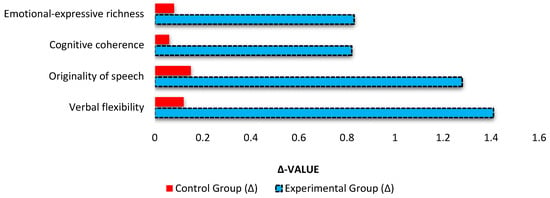
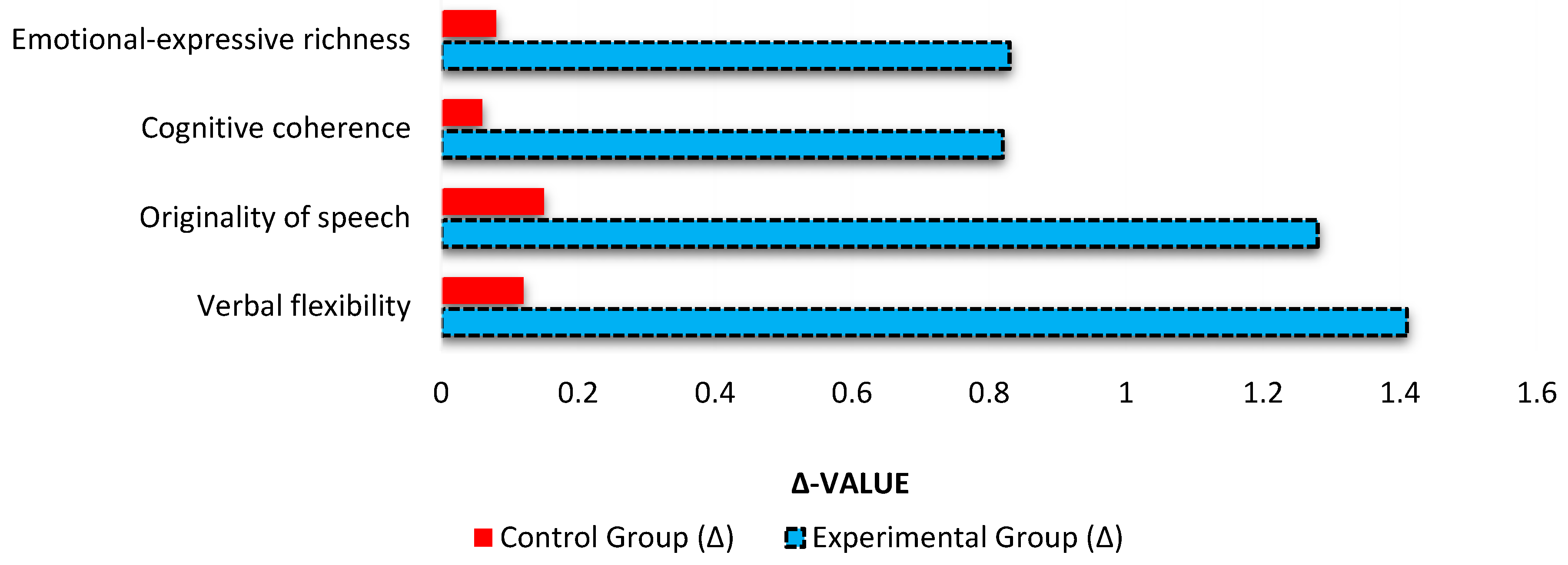
These data confirm significant differences between the pre- and post-experimental results and indicate a high level of impact of media technologies on the development of speech creativity in primary school students. The visualization of changes in the levels of creative speech skills illustrates the growth of each parameter in the experimental group relative to the control group. This approach provides additional clarity and highlights the degree of influence that media technologies exert on learners’ speech productivity (see Figure 1).
Figure 1.
Δ-Gain in creative speech skills in the experimental and control groups. (Graph of gain across four parameters: vertical axis—scores; horizontal axis—parameters; two lines: EG and CG).
The graphical results confirm that the greatest improvement was observed in the following aspects: verbal flexibility (+1.41 points) and originality of speech solutions (+1.28 points), while cognitive meaningfulness and emotional-expressive richness also improved but to a lesser extent (+0.82 and +0.83 points, respectively). This suggests that audio formats and media texts predominantly stimulate semantic variation and divergent thinking rather than cognitive coherence or expressive elaboration. The findings align with conclusions drawn by a number of researchers who emphasize the high effectiveness of multimedia and podcast-based content in fostering creative language activity among primary school learners. According to the study by Mayer (2021), the use of multimodal tools enhances engagement and builds a stable motivational foundation for linguistic self-expression.
Thus, the quantitative data confirm the high effectiveness of the implemented methodology in cultivating creative speech activity among younger learners. The consistent improvement across all four parameters indicates a systemic influence of media content on linguistic flexibility, the generation of original utterances, and the ability to produce meaningful and expressive speech. Taken together with a validated statistical foundation, these findings support the pedagogical relevance of using adapted podcasts as a component of an innovative educational process at the primary level of foreign language instruction.
3.3. Structural Components of Development: Factor and Correlation Analysis
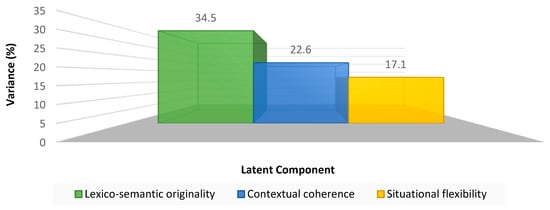
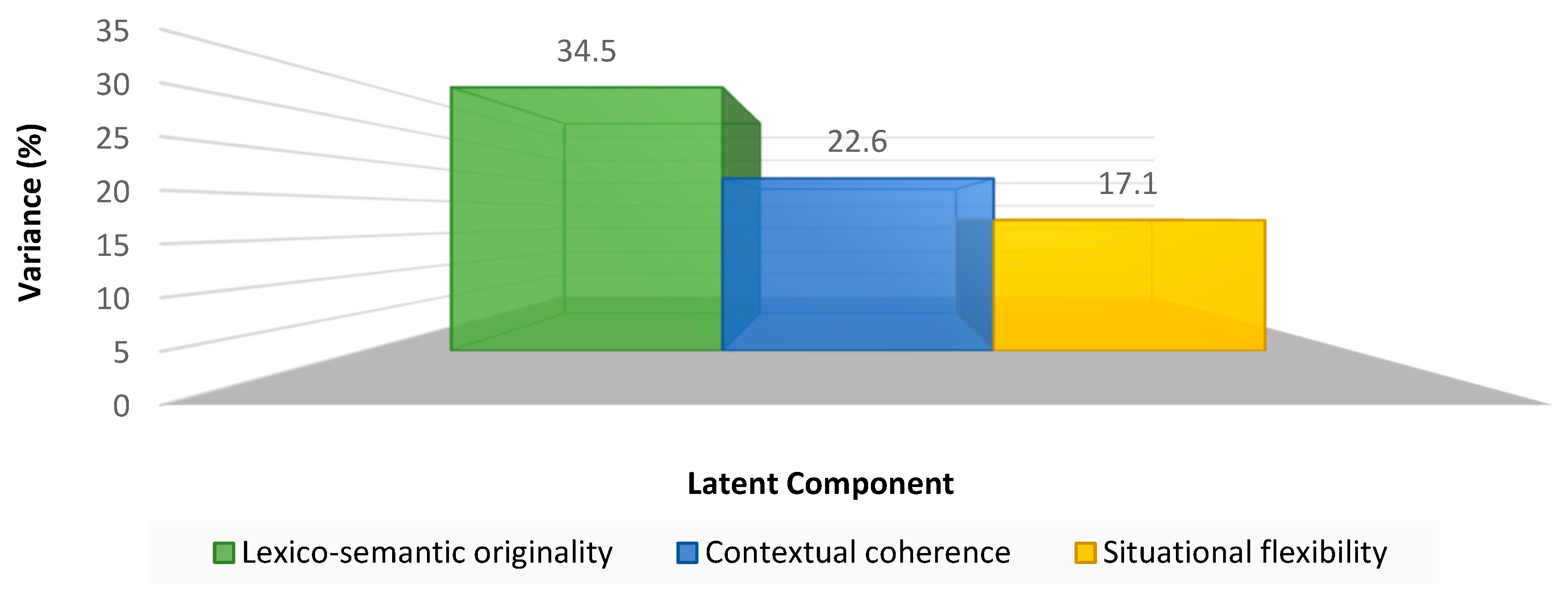
To identify the latent mechanisms underlying the formation of creative speech competence in primary schoolchildren under the conditions of podcast integration, a factor-correlation analysis was conducted. This approach enabled a transition from surface-level tracking of indicator dynamics to the conceptual interpretation of internal interrelationships between aspects of productive speech and the construction of a structural model of its organization. At the first stage, a principal component analysis (PCA) with varimax rotation was performed. The statistical adequacy checks indicated that the KMO index was 0.812, and Bartlett’s test of sphericity was significant (χ2 = 263.27; p < 0.001), confirming the suitability of the data for factorization. The analysis made it possible to extract three stable components explaining 74.2% of the total variance and forming the foundational structure of creative, productive speech in primary learners:
Lexical-semantic originality (34.5%)—reflects semantic divergence, stylistic expressiveness, and the generation of non-standard utterances rich in expressiveness and individual interpretation.
Contextual coherence (22.6%)—characterizes the logical connectedness and argumentativeness of speech, systemic thinking, and thematic integrity.
Situational flexibility (17.1%)—reflects verbal variability and the ability to adapt speech to communicative tasks by restructuring it depending on the context (see Figure 2).
Figure 2.
Contribution of latent components to the overall structure of speech creativity.
The diagram illustrates the relative share of the three factors in explaining the variance. The predominance of the lexical-semantic component indicates the dominance of creative semantic generation under the conditions of the media-based approach. The substantial contribution of coherence and flexibility confirms the complex influence of the media environment on the multidimensional structure of speech skills in primary schoolchildren. At the second stage of the study, a correlation analysis (Pearson correlation coefficients) was conducted between the extracted factors and the final values of the four speech parameters. The aim of the analysis was to verify the resulting component structure and to clarify the degree of interrelationship between the latent dimensions and the empirically recorded manifestations of speech productivity (see Table 4).
Table 4.
Correlation coefficients between latent components and productive speech scales (Experimental group, after implementation of the media-based approach).
The correlation profile demonstrated a high degree of consistency between the empirical parameters and the identified factors. The strongest correlation (r = 0.87) was observed between the originality of speech solutions and the lexical-semantic originality factor, confirming the effectiveness of the podcast environment in stimulating divergent speech thinking. A strong association between cognitive meaningfulness and coherence (r = 0.84) shows that children develop not only the ability for creative expression but also for logical integrity in their utterances. A substantial correlation between flexibility and adaptive speech variability (r = 0.81) indicates the development of a mechanism for situational restructuring of speech patterns during media podcasting.
These results allow us to conclude that speech creativity formed under the influence of the media-based approach has a multilevel nature: media tasks and podcasts not only stimulate speech but also contribute to a profound reconfiguration of the learners’ cognitive-communicative foundation. This process fosters abilities such as spontaneous combination of language units, semantic empathy, and structurally organized expression. Thus, media technologies serve not merely as auxiliary tools but as full-fledged agents of speech development.
3.4. Qualitative Characterization of Students’ Speech Products as a Reflection of Deep Transformations in Creative Competence
One of the key directions in verifying the effectiveness of media podcasts in developing speech creativity in primary schoolchildren was a content-based study of the linguistic material produced by students during the formative stage of the experiment. Unlike statistical indicators that record external dynamics, linguistic analysis of speech products allows us to identify the cognitive and semantic transformations taking place within the framework of individual language experience. The qualitative changes captured in students’ oral and written work provide grounds for a deeper interpretation of the mechanisms underlying the formation of productive speech in the context of media technologies.
The analytical corpus was based on three types of tasks that representatively reflect the students’ cognitive-linguistic activity:
- -
- audio retellings of the listened fragments;
- -
- creative stories and dialogues built upon a given situation or narrative prompt;
- -
- mini-projects involving the construction of a meaningful story in oral or written form, based on visual stimuli, personal associations, and cultural codes.
The analysis was conducted using an adapted model of speech creativity that included the following parameters: semantic originality, figurative variability, logical-compositional integrity, situational relevance of linguistic means, and emotional-stylistic richness. Methodologically, the analysis followed a component-based approach, integrating elements of cognitive linguistics, narratology, and psycholinguistic typology of child speech. The aim was not only to record speech fragments but also to identify deep cognitive shifts—such as the capacity for metaphorization, pattern deconstruction, situational improvisation, and semantic flexibility. To illustrate the transformation of students’ speech behavior, it is appropriate to present examples in which creativity acquires a cognitively grounded structure, demonstrating the development of original thinking, thematic associativity, and the ability for semantic variation (see Table 5).
Table 5.
Examples of students’ speech utterances reflecting levels of creative language activity under the media-based approach.
The analysis of the presented utterances demonstrates a significant increase in the cognitive complexity of students’ speech: learners exhibit not only creative activity within a given template but also the ability to transform the initial impulse (narrative, podcast theme, lexical image) into original, logically organized, and stylistically coherent speech. This indicates a transition from reproductive speech activity to constructive modeling of new semantic realities.
Thus, media podcasts and their accompanying tasks become tools not only for language skill development but also for cultivating cognitive flexibility, narrative awareness, and semantic autonomy in learners. The obtained qualitative data complement the results of the quantitative analysis and reveal hidden mechanisms of speech creativity that extend beyond formal assessment scales.
3.5. Motivational and Affective Foundations of Speech Activity: Results of Questionnaire and Reflective Analysis
Against the backdrop of the statistical and cognitive-linguistic findings, the analysis of learners’ subjective perceptions of educational media formats acquires particular importance. In the early school years, speech activity develops not only at the cognitive level but also at the affective level, where emotional engagement, motivation, and readiness for reflection play a crucial role. In this regard, capturing the emotional acceptance of podcasts and related tasks becomes conceptually significant for evaluating the effectiveness of the implemented methodology.
As part of the study, a comprehensive examination was conducted on the motivational-value and emotional responses of the experimental group learners (n = 116), based on a specially adapted questionnaire incorporating visual scaling and open-ended verbal responses. The questionnaire included four items reflecting key dimensions of affective perception aligned with theories of learning autonomy and cognitive engagement. The evaluated parameters were: emotional interest in the tasks, perceived difficulty, willingness to participate again, and overall impression of the podcast format. Responses were recorded using a three-level scale (positive/neutral/negative), visually enhanced with pictograms to correspond with age-related characteristics. All wording was preliminarily tested and pedagogically validated.
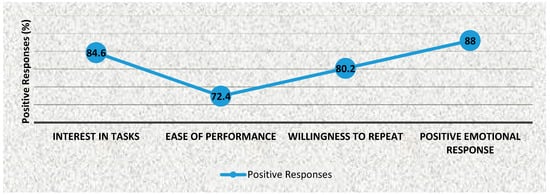
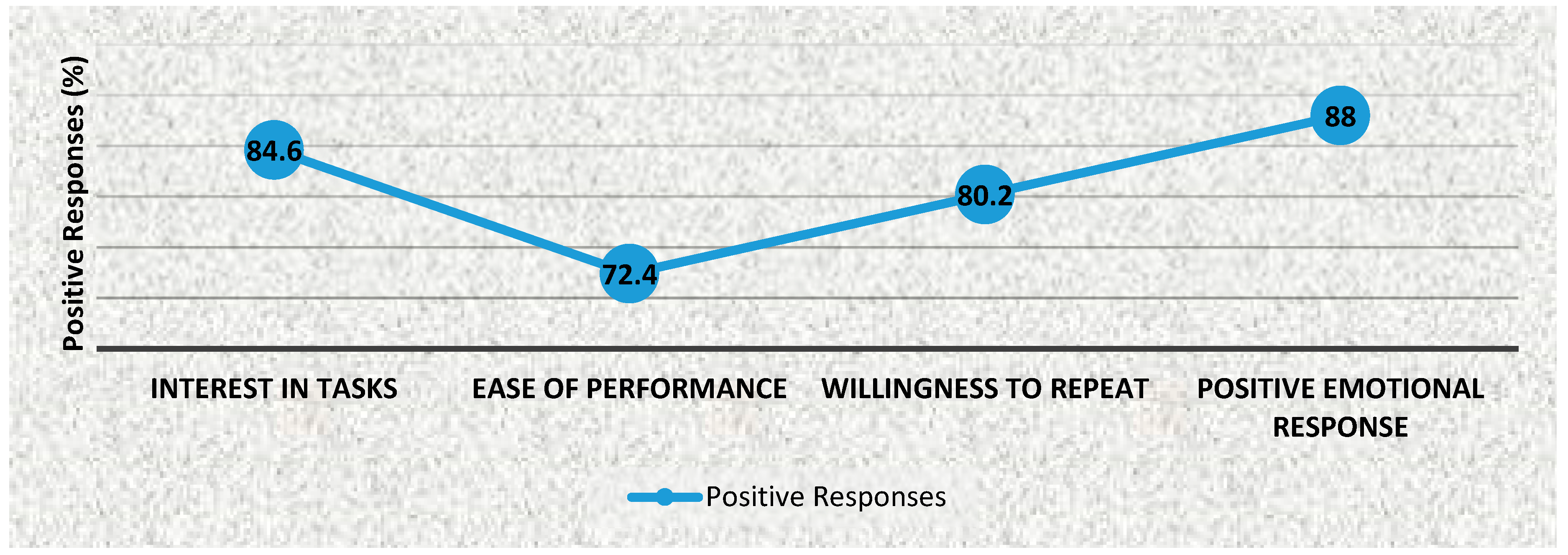
The results showed a consistent predominance of positive responses across all four dimensions. Most students described the tasks as interesting, manageable, and motivating for repeated participation. This indicates not situational engagement, but the formation of an intrinsic didactic orientation toward productive speech activity initiated by media podcasting. Notably, podcasts were perceived not only as content-rich but also as an interactive format that served as an alternative to traditional types of classroom speech. To ensure visual clarity and analytical fixation of the distribution of motivational-affective reactions, a graph (Figure 3) was constructed illustrating the frequency characteristics for each scale.
Figure 3.
Distribution of student ratings across key scales of the questionnaire instrument.
The graph is based on aggregated questionnaire data from 116 students in the experimental group and processed using methods of descriptive statistics. For each scale, the percentage distribution of the three types of responses (positive, neutral, negative) was calculated, after which the data were visualized in the form of a bar chart using Microsoft Excel. The results demonstrate the following structure:
- –
- 84.6% of students found the tasks interesting,
- –
- 72.4% reported no difficulties completing them,
- –
- 80.2% expressed willingness to engage in the same format again, and
- –
- 88.0% evaluated the podcast format as emotionally positive.
These indicators confirm the high emotional and cognitive valence of media podcasts, allowing them to be viewed not only as a means of activating speech but also as an internal motivator for creative self-expression.
Additional significant data were obtained through the analysis of open-ended responses submitted by students in the final part of the questionnaire. They were asked to describe the most memorable episode and explain its significance. The processing followed a thematic coding methodology aimed at identifying dominant semantic and emotional structures. The analysis was carried out manually in collaboration with English language teachers of the experimental classes. Responses were classified according to semantically stable categories and assessed in terms of frequency, depth of emotional and cognitive reaction, and the degree of expressed subjective speech activity (see Table 6).
Table 6.
Thematic dominants of students’ verbal self-reflections and their semantic content.
The emergence of themes such as reflection, self-assessment of speech efforts, and the transfer of experience beyond the classroom in students’ responses indicates the formation of a foundation for conscious linguistic subjectivity in primary schoolchildren. The podcast media format becomes not merely a means of delivering information, but a catalyst for personal engagement, cognitive curiosity, and a desire to enter into communicative interaction. Students not only perceive podcasts as interesting material but also associate them with their own abilities, experiences, and real social contacts.
Thus, the questionnaire and reflective analysis confirm that media podcasts serve a dual function in the educational process: on the one hand, they activate speech productivity as a response to external tasks; on the other hand, they foster an internal readiness for linguistic self-expression, grounded in emotional acceptance, cognitive motivation, and conscious reflection. This combination of external activity and internal value orientation allows us to consider the media-based approach not as an auxiliary form, but as a structural element of the educational environment that develops speech autonomy and creative initiative in primary schoolchildren learning English.
4. Discussion
4.1. Discussion in the Context of Scientific and Pedagogical Literature
The results of the present study gain particular relevance when interpreted through established theories of creativity and contemporary approaches to early language education. The observed patterns suggest a multilayered character of speech creativity, broadly consistent with Guilford’s view of divergent thinking as a basis of creative expression. Higher scores in lexical-semantic originality indicate that learners were more willing to produce figurative and emotionally nuanced utterances, reflecting dimensions of fluency, flexibility, and originality described in Torrance’s framework. At the same time, increased situational flexibility and coherence point to a closer alignment between imaginative expression and communicative structure. Rather than indicating profound cognitive transformation, these tendencies appear to reflect a more organised use of linguistic resources within meaningful contexts, aligning with contemporary perspectives on contextual relevance and semiotic adaptability in linguistic creativity (Porter et al., 2022).
Age-related factors also provide an important interpretive lens. The multimodal and narrative character of podcast materials appears to support emotional engagement and imaginative participation among primary school learners. Students’ expressed willingness to continue similar tasks suggests that media-based activities align with developmental needs without exceeding cognitive demands. In this sense, podcast integration may be viewed as an age-sensitive extension of communicative language teaching practices.
Within the Kazakhstani educational context, the findings extend theoretical discussions proposed by Isabekova by providing classroom-based evidence of how media integration can be associated with shifts in communicative participation and creative speech behaviour during early foreign language learning (see Table 7).
Table 7.
Comparison of research findings with leading theories and models.
Thus, the integration of adapted podcasts appears to reinforce core parameters of creativity discussed in international scholarship while situating them within the realities of digitally mediated learning and age-specific language development.
At the same time, it is important to acknowledge that empirical evidence regarding the impact of podcasts and digital audio formats on productive speech development remains heterogeneous. Several studies report that while podcasts consistently enhance listening comprehension and learner engagement, their influence on higher-level speech production skills may be limited or context-dependent. For example, Hamzaoğlu and Koçoğlu (2016), demonstrate that the effects of podcast-based instruction are not uniformly robust and depend on the presence of structured pedagogical scaffolding. Similarly, previous research on technology-enhanced language learning suggests that the pedagogical effect of digital audio tools varies substantially depending on instructional design and the degree of teacher mediation (Shadiev & Yang, 2020). Taken together, these findings suggest that the observed effects should not be attributed to podcasts as inherently transformative tools; rather, they appear to reflect the pedagogical value of carefully scaffolded media integration that supports creative language use. This interpretation is further consistent with the theoretical foundations of computer-supported collaborative learning, which conceptualize technology not as an autonomous instructional agent but as a mediational environment enabling shared meaning construction and dialogic participation (Stahl et al., 2006).
These contrasting findings also help contextualize the present results, suggesting that the observed gains in originality and flexibility are likely linked not only to exposure to podcasts as a medium but to the structured pedagogical scaffolding embedded in the intervention design. In this sense, the study contributes to the ongoing debate by demonstrating that media integration becomes pedagogically meaningful when accompanied by guided interaction and task-based mediation rather than functioning as an independent technological driver.
4.2. Integration of Quantitative and Qualitative Data
The combined interpretation of quantitative and qualitative findings provides a more balanced view of how podcast-integrated instruction may relate to the development of creative speech in primary EFL learners. Statistically significant differences observed in fluency (t = 2.94; df = 115; p < 0.01), originality (t = 3.18; df = 115; p < 0.01), and flexibility (t = 2.71; df = 115; p < 0.05) suggest that sustained engagement with media-based tasks was associated with measurable changes in students’ productive language use. Rather than implying direct causality, these results indicate that podcast activities may create conditions that encourage more exploratory and personally meaningful speech production.
Qualitative observations complement these patterns by revealing increased narrative experimentation, situational adaptation, and expressive variation in learners’ responses. Students’ utterances more frequently included metaphorical elements, original thematic choices, and context-sensitive phrasing, which together point to a gradual expansion of communicative possibilities within familiar classroom tasks. These tendencies should be understood as developmental shifts in engagement and expression rather than as evidence of deeper cognitive restructuring.
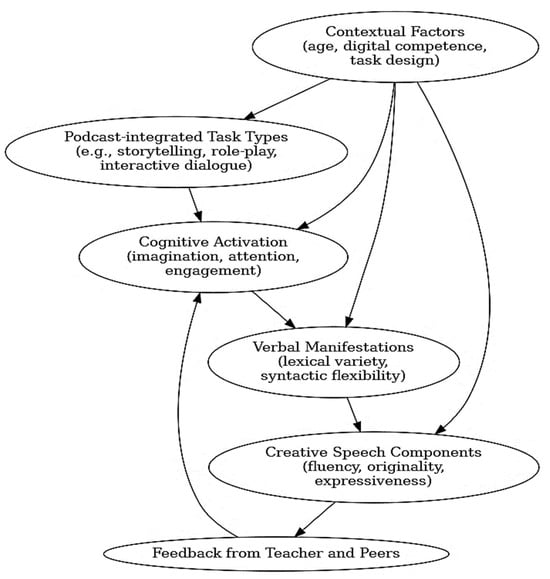
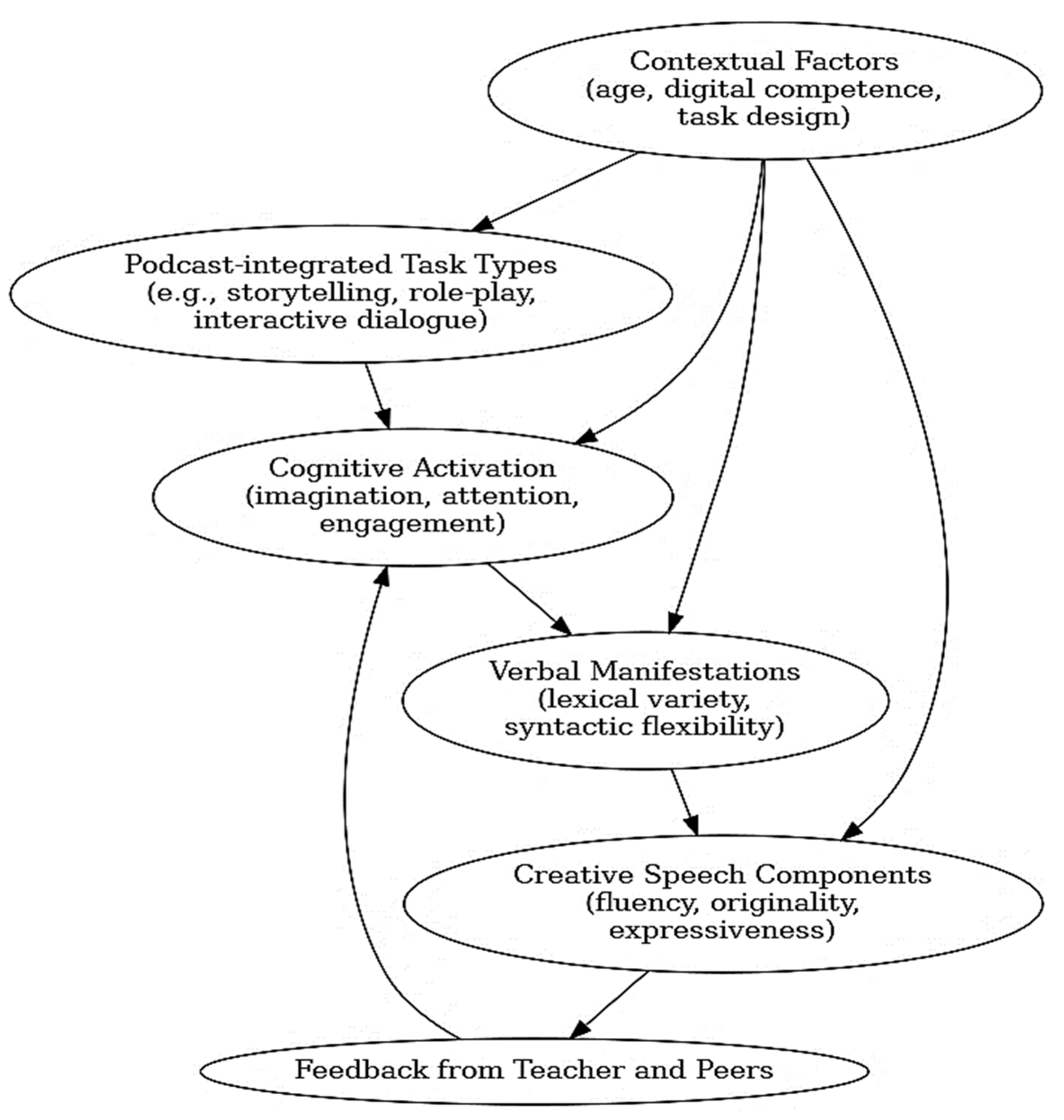
The conceptual model presented in Figure 4 synthesizes the relationships between types of media tasks (storytelling, role-play improvisation, dialogues), learner participation, and observable speech outcomes. The model also acknowledges contextual influences such as age, classroom environment, and teacher feedback, positioning these factors as mediating conditions rather than independent variables. In this sense, the model serves primarily as an interpretive framework for understanding how multimodal tasks may support creative language practice.
Figure 4.
Conceptual model of the influence of media content on the development of creative speech in primary schoolchildren.
The theoretical contribution of this study lies in confirming that podcasts, as multimodal resources, activate mechanisms of perception and cognitive flexibility, which aligns with the principles of constructivism (Bruner, 1990) and multimodal learning (Mayer, 2021).
The practical implications of the results can be implemented in the pedagogical practice of primary English language education:
- Podcasts can be effectively used as a stimulus for activating spontaneous speech production in play-based and dialogic formats.
- Including tasks that involve creative story continuation or alternative endings fosters flexible and original thinking.
- The short and content-rich format of podcasts allows for their use even in settings with limited time and technical resources, which is especially relevant for rural and small-scale schools.
4.3. Limitations and Future Research
The present study has several limitations that should be considered when interpreting the findings. First, the quasi-experimental design relied on intact classroom groups without individual random assignment, which restricts causal inference and limits statistical generalizability beyond comparable primary school contexts. Second, although an analytic rubric informed by Torrance-based creativity dimensions was used to evaluate students’ speech products, this rubric functioned as an instructional assessment tool rather than a fully standardized psychometric instrument. Formal inter-rater reliability coefficients and advanced psychometric procedures were not calculated, which constrains the generalizability of qualitative judgments.
Third, the study did not include an active control group employing alternative forms of digital or interactive instruction. Consequently, the observed effects cannot be attributed exclusively to podcast use, as increased engagement, novelty, or interactivity may have contributed to the outcomes. Finally, the sample was limited to two urban schools and a specific age range (9–10 years), which further narrows the scope of external validity.
Future research should address these limitations by incorporating randomized or matched designs where feasible, developing and validating standardized rubrics for creative speech assessment, and applying advanced psychometric analyses, including factorial validation and alternative reliability estimates. The inclusion of active control conditions and more diverse educational contexts would allow for a more precise evaluation of the unique contribution of podcasts to creative speech development in primary EFL education.
5. Conclusions
The findings of the present study demonstrate that the integration of adapted podcasts and media-based tasks into primary English language instruction can support meaningful development of learners’ creative speech production within authentic classroom contexts. The results indicate that regular exposure to structured podcast activities encourages learners to move beyond reproductive language use toward more flexible, personally meaningful expression. Improvements observed in originality, contextual appropriateness, and expressive richness suggest that multimodal input may function as a catalyst for more active and engaged language production among young learners.
Quantitative comparisons between groups revealed consistent positive changes in key indicators of creative speech performance following the semester-long intervention. At the same time, qualitative analyses of learners’ oral and written responses showed a gradual shift toward more independent narrative construction, evaluative interpretation, and emotionally nuanced expression. Rather than reflecting isolated skill gains, these changes point to a broader reorientation of classroom communication toward exploratory and dialogic forms of language use.
Questionnaire responses and reflective observations further highlighted the motivational dimension of podcast-based learning. Students tended to perceive podcast activities not merely as instructional tasks but as opportunities for authentic participation and self-expression. Teachers also noted increased attentional engagement and willingness to experiment with language during productive activities, suggesting that the media-integrated format may help create a more supportive communicative environment for developing creative competence.
The study contributes to contemporary discussions on digital pedagogy by providing empirically grounded evidence that podcast integration can be implemented within ordinary school conditions without disrupting existing curricular structures. From a theoretical perspective, the findings support the view that creative speech development emerges through the interaction of cognitive engagement, communicative practice, and emotional involvement rather than through isolated skill training. From a practical standpoint, the proposed instructional framework offers a classroom-feasible model that can be adapted across diverse educational contexts, including resource-constrained settings.
Overall, the results suggest that adapted podcasts may serve as a valuable component of modern foreign language education, enriching classroom interaction and expanding opportunities for learner-centered speech development within the evolving digital learning environment.
Author Contributions
Conceptualization, S.K. and L.L.; methodology, S.K., L.L. and J.G.L.; software, S.K.; validation, S.K., L.L., L.A. and M.G.; formal analysis, S.K. and M.G.; investigation, S.K., E.U. and M.G.; resources, S.K., E.U. and L.A.; data curation, S.K. and E.U.; writing—original draft preparation, S.K.; writing—review and editing, L.L., L.A., J.G.L. and M.G.; visualization, S.K.; supervision, L.L. and J.G.L.; project administration, S.K. All authors have read and agreed to the published version of the manuscript.
Funding
This research received no external funding.
Institutional Review Board Statement
The study was conducted in accordance with the Declaration of Helsinki (2013) and approved by the Ethics Committee of Abai Kazakh National Pedagogical University (Protocol No. 12, Date: on 9 January 2025, Almaty, Republic of Kazakhstan).
Informed Consent Statement
Written informed consent was obtained from the parents or legal guardians of all participating children, and child assent was obtained prior to participation.
Data Availability Statement
The data presented in this study are not publicly available due to ethical and privacy restrictions related to research involving minors. Anonymized datasets may be made available from the corresponding author upon reasonable request.
Conflicts of Interest
The authors declare no conflicts of interest.
Correction Statement
This article has been republished with a minor correction to an author’s ORCID. This change does not affect the scientific content of the article.
Abbreviations
The following abbreviations are used in this manuscript:
| Abbreviation | Definition |
| EG | Experimental Group |
| CG | Control Group |
| EFL | English as a Foreign Language |
| CEFR | Common European Framework of Reference for Languages |
| TTCT | Torrance Tests of Creative Thinking |
| PCA | Principal Component Analysis |
| KMO | Kaiser–Meyer–Olkin measure of sampling adequacy |
| SD | Standard Deviation |
| M | Mean value |
| p | Significance level |
| d | Effect size (Cohen’s d) |
References
- Assylbekova, M., Shaikhymuratova, I., Atmaca, T., Somzhurek, B., & Slambekova, T. S. (2024). Hidden wounds: Unveiling the impact of social ostracism and bullying in university life (comparison of Kazakhstan and Türkiye). Cogent Education, 11(1), 2434774. [Google Scholar] [CrossRef] [Scilit]
- Benson, P. (2011). Teaching and researching autonomy in language learning (2nd ed.). Routledge. [Google Scholar]
- Bruner, J. S. (1990). Acts of meaning. Harvard University Press. [Google Scholar]
- Chaves-Yuste, B., & De-La Peña, C. (2023). Podcasts’ effects on the EFL classroom: A socially relevant intervention. Smart Learning Environments, 10, 20. [Google Scholar] [CrossRef] [Scilit]
- Council of Europe. (2018). Common European framework of reference for languages: Learning, teaching, assessment. Companion volume with new descriptors. Council of Europe Publishing. Available online: https://rm.coe.int/cefr-companion-volume-with-new-descriptors-2018/1680787989 (accessed on 28 January 2026).
- Guilford, J. P. (1977). The nature of human intelligence. McGraw-Hill. [Google Scholar]
- Hamzaoğlu, H., & Koçoğlu, Z. (2016). The application of podcasting as an instructional tool to improve Turkish EFL learners’ speaking anxiety. Educational Media International, 53(4), 313–326. [Google Scholar] [CrossRef] [Scilit]
- Indahsari, D. (2020). Using podcast for EFL students in language learning. Journal of English Educators Society, 5(2), 103–110. [Google Scholar] [CrossRef] [Scilit]
- Isabekova, A. B. (2022). Mediatekhnologii v yazykovoy podgotovke mladshikh shkol’nikov [Media technologiesin language training of primary schoolchildren]. Pedagogika i Psikhologiya, 3(48), 114–121. [Google Scholar]
- Kim, K. H. (2006). Can we trust creativity tests? A review of the Torrance Tests of Creative Thinking (TTCT). Creativity Research Journal, 18(1), 3–14. [Google Scholar] [CrossRef] [Scilit]
- Li, Y., Kim, M., & Palkar, J. (2022). Using emerging technologies to promote creativity in education: A systematic review. Journal of Educational Research Open, 3, 100177. [Google Scholar] [CrossRef] [Scilit]
- Littlewood, W. (1981). Communicative language teaching: An introduction. Cambridge University Press. [Google Scholar]
- Mayer, R. E. (2021). Multimedia learning (3rd ed.). Cambridge University Press. [Google Scholar] [CrossRef] [Scilit]
- Noh, H., & Lee, M. (2020). Teaching young learners a foreign language via tangible interfaces. British Journal of Educational Technology, 51(6), 2389–2405. [Google Scholar] [CrossRef] [Scilit]
- Nunan, D. (1999). Second language teaching & learning. Heinle & Heinle. [Google Scholar]
- Nurbayeva, A., Kunakova, G., Bugenova, L., Kalambayeva, G., & Tansykbayeva, B. (2019). Cognitive mechanisms of Kazakhstan commercial and social advertising text. Opción, 35(88), 280–303. [Google Scholar]
- Peng, L., Akhter, S., & Hashemifardnia, A. (2025). Podcast-integrated speaking instruction: Enhancing informal digital learning of English. Acta Psychologica, 258, 105158. [Google Scholar] [CrossRef] [Scilit] [PubMed]
- Piaget, J. (1926). The language and thought of the child. Routledge & Kegan Paul. [Google Scholar]
- Pikhart, M., Habeb Al-Obaydi, L., & Klimova, B. (2024). Does digital learning stimulate creativity? Cogent Arts & Humanities, 11, 2407103. [Google Scholar] [CrossRef] [Scilit]
- Porter, A., Graham, S., Myles, F., & Holmes, B. (2022). Creativity, challenge and culture in the languages classroom: A response to the Ofsted Curriculum Research Review. The Language Learning Journal, 50(6), 747–751. [Google Scholar] [CrossRef] [Scilit]
- Ramirez, M. G. (2024). The use of podcasts for language learning: A systematic review of literature. International Journal of English Language Studies, 6(1), 47–53. [Google Scholar] [CrossRef] [Scilit]
- Rapti, S., Sapounidis, T., & Tselegkaridis, S. (2023). Enriching a traditional learning activity in preschool through augmented reality: Children’s and teachers’ views. Information, 14(10), 530. [Google Scholar] [CrossRef] [Scilit]
- Rizvic, S., Boskovic, D., Okanovic, V., Sljivo, S., & Zukic, M. (2019). Interactive digital storytelling: Bringing cultural heritage in classroom. Journal of Computers in Education, 6, 143–166. [Google Scholar] [CrossRef] [Scilit]
- Shadiev, R., & Yang, M. (2020). Review of studies on technology-enhanced language learning and teaching. Sustainability, 12(2), 524. [Google Scholar] [CrossRef] [Scilit]
- Stahl, G., Koschmann, T. D., & Suthers, D. D. (2006). Computer-supported collaborative learning (pp. 409–426). Cambridge University Press. [Google Scholar]
- Sundqvist, P., & Sylvén, L. K. (2016). Extramural English in teaching and learning: From theory and research to practice. Palgrave Macmillan. [Google Scholar] [CrossRef] [Scilit]
- Torrance, E. P. (2006). Torrance tests of creative thinking: Technical manual and scoring guide. Scholastic Testing Service. [Google Scholar]
- Vandergrift, L., & Goh, C. C. M. (2012). Teaching and learning second language listening: Metacognition in action. Routledge. [Google Scholar] [CrossRef] [Scilit]
- Vygotsky, L. S. (1987). Thinking and speech. In R. W. Rieber, & A. S. Carton (Eds.), The collected works of L. S. Vygotsky (Vol. 1). Plenum Press. [Google Scholar]
- Zhumabayeva, Z., Bazarbekova, R., Nurzhanova, S., Stambekova, A., & Kalbergenova, S. B. (2025). Development of neuro-didactic content aimed at developing the intelligence of younger schoolchildren. Frontiers in Education, 10, 1584490. [Google Scholar] [CrossRef] [Scilit]
- Zimmerman, B. J., & Schunk, D. H. (2011). Self-regulated learning and academic achievement: Theoretical perspectives (2nd ed.). Routledge. [Google Scholar]

Disclaimer/Publisher’s Note: The statements, opinions and data contained in all publications are solely those of the individual author(s) and contributor(s) and not of MDPI and/or the editor(s). MDPI and/or the editor(s) disclaim responsibility for any injury to people or property resulting from any ideas, methods, instructions or products referred to in the content. |
© 2026 by the authors. Licensee MDPI, Basel, Switzerland. This article is an open access article distributed under the terms and conditions of the Creative Commons Attribution (CC BY) license.