


Abstract
The widespread adoption of Learning Management Systems (LMSs) in higher education has not necessarily led to profound pedagogical transformations, raising questions about how digital technologies are actually integrated into teaching practices. This study aims to describe and map the techno-pedagogical configurations used by instructors at the University of Extremadura (Spain) to identify teaching patterns and characterize course design within a virtual campus. Using log data from 12,361 Moodle courses during the 2021–2022 academic year, a K-means clustering analysis was applied to classify courses based on their use of digital tools and resources. The analysis identified five distinct clusters ranging from traditional models with minimal LMS use (67.37%) to advanced innovation configurations (3.98%), including audiovisual-based innovation, participative traditional models, and repository-focused approaches. The results indicate that the implementation of techno-pedagogical strategies is highly heterogeneous and that courses classified as more innovative do not consistently produce better academic outcomes. These findings suggest that for most faculty, the LMS functions as digital support for traditional face-to-face teaching rather than as a driver of pedagogical transformation, highlighting the need for teacher-centered analytics capable of capturing instructional design patterns beyond mere behavioral metrics.
1. Introduction
The progressive digitization of higher education has positioned LMSs as essential infrastructures for coordinating face-to-face and blended learning. Their expansion during the pandemic consolidated these environments as a basic support for the organization of academic materials, activities, and interactions. There are numerous factors that support the use of LMSs for educational purposes (Balderas et al., 2018; Regueras et al., 2019), mainly because they offer temporal and spatial flexibility, facilitate advanced interactivity between students and teachers, and enable the reuse of resources. In addition, they allow teachers to distribute learning materials, create and manage thematic discussions and bulletin boards, survey and evaluate students, integrate online resources, create collaborative glossaries, and manage grades. However, despite their widespread implementation, various studies have shown that their presence does not automatically translate into profound pedagogical transformations, but rather into very diverse configurations of use conditioned by institutional, disciplinary, and cultural factors. In this vein, recent studies in the Spanish university context show how LMSs are integrated unevenly according to the teaching practices and organizational models of each institution, generating plural techno-pedagogical ecologies (Regueras et al., 2025; García-Peñalvo, 2017).
Various contributions have suggested that LMS usage patterns vary significantly between areas of knowledge, suggesting that discipline, academic culture, and methodological tradition play a decisive role in the adoption and significance of digital tools (Tinjić & Nordén, 2024; Whitelock-Wainwright et al., 2020). For example, while some disciplines tend to prioritize audiovisual materials or interactive activities, others use LMSs primarily as a repository or administrative tool. These differences make it difficult to develop universal interpretive frameworks and highlight the need for contextualized studies capable of describing how these practices materialize in specific environments.
At the same time, the field of learning analytics has experienced remarkable growth, proposing models for analyzing, visualizing, and interpreting data derived from LMSs (Quesada et al., 2023). However, many of these proposals have focused primarily on student behavior, leaving understanding of teaching actions and the pedagogical design that structures each course in the background (Persico & Pozzi, 2015; Romero & Ventura, 2020). The recent literature insists on the need to move toward interpretable, teacher-oriented analytics capable of capturing not only the use of certain tools, but also the design patterns that underpin them (Ross et al., 2025; Akpen et al., 2024).
An additional challenge relates to the fragmentary nature of records in hybrid settings. The absence of complete traces of face-to-face interactions means that LMS data provide only a partial picture of the educational process, limiting the representativeness of analyses and the interpretation of results (Rodríguez-Ortiz et al., 2025; Sghir et al., 2023). This methodological gap underscores the importance of designing approaches that combine quantitative techniques with interpretive criteria that allow for the reconstruction of underlying pedagogical logics.
In this context, it is particularly important to study how techno-pedagogical practices are configured in specific university environments and what patterns emerge from teacher interaction with the LMS. Systematically describing these configurations not only allows us to understand the degree of technological integration achieved, but also to generate useful knowledge for instructional design, teacher training, institutional planning, and decision-making (Veluvali & Surisetti, 2022). The objective of this study is, therefore, to offer an empirical and methodologically grounded characterization of LMS usage patterns in a regional context, contributing to the development of interpretable analytical frameworks adapted to the complexity of contemporary higher education.
To address these questions, cluster analysis was performed on Moodle log data to identify instructional design patterns and their pedagogical implications. This approach enables systematic characterization of teaching configurations beyond mere behavioral metrics, contributing to the development of interpretable, teacher-centered analytics frameworks that can inform institutional decision-making and professional development initiatives.
Towards Interpretable and Teacher-Centered Analytics
In recent years, the field of learning analytics has experienced remarkable growth, both in terms of data availability and the development of analysis techniques aimed at understanding educational processes, where different methods are used to detect hidden usage patterns in LMSs: statistical methods, visual information, and data mining techniques (e.g., classification and clustering).
Despite these advances, much of the literature continues to focus on predictive models aimed primarily at student behavior, relegating to the background the understanding of instructional design and teaching practices that structure courses in digital environments (Persico & Pozzi, 2015; Romero & Ventura, 2020). This asymmetry has generated a growing consensus around the need to develop analytical approaches that place teachers at the center, not only as data producers, but also as pedagogical subjects whose decisions shape learning.
One of the key elements in this discussion is the difficulty of linking LMS records with the pedagogical intentions underlying course design. As Mangaroska and Giannakos (2019) have pointed out, there is still a methodological gap that prevents us from accurately tracking how teaching decisions translate into specific digital structures, which affects our ability to properly interpret usage patterns. Lockyer et al. (2013) added that this gap between pedagogical design and available data limits the potential of analytics to inform teaching improvement processes. The problem is exacerbated in hybrid scenarios, where face-to-face interactions leave no digital footprint and therefore generate fragmentary data (Rodríguez-Ortiz et al., 2025), reducing the visibility of actual practices.
In this context, various studies have advocated for analytical models that combine quantitative techniques with interpretive criteria that allow for the reconstruction of teachers’ pedagogical logic (Pan et al., 2024; Viberg et al., 2018). This line of work has highlighted the usefulness of considering not only the frequency with which certain LMS resources are used, but also the patterns of combination and sequencing that emerge from the design of each course. Thus, approaches focused on identifying techno-pedagogical configurations allow for the recognition of differentiated teaching styles, beyond the mere intensive or limited use of the digital environment (Regueras et al., 2019; Sghir et al., 2023).
Interpretability is a fundamental aspect of this process. Indeed, one of the risks associated with incorporating advanced techniques—especially opaque models or those with high algorithmic complexity—is that their results cannot be understood or used by teachers or institutional leaders (Salem & Shaalan, 2025). Given that the ultimate goal of educational analytics is to inform pedagogical practice, it is essential that the models used provide results that are understandable, actionable, and aligned with the professional language of teachers (Akpen et al., 2024). Several studies have shown that the most effective models are those that strike a balance between technical sophistication and interpretive clarity, facilitating informed decision-making (Chytas et al., 2022; Manhiça et al., 2022).
On the other hand, the literature has consistently shown that teaching practices vary significantly between disciplines. Studies such as those by Tinjić and Nordén (2024) or Whitelock-Wainwright et al. (2020) show that the integration of LMSs does not follow a homogeneous pattern, but is conditioned by epistemological and organizational factors specific to each field. In experimental or practical areas, LMSs can play a complementary role, while in theoretical disciplines it acts as a structuring axis for activities and resources. These differences mean that LMS usage patterns, if analyzed without disciplinary context, can lead to erroneous or incomplete interpretations.
The need to interpret teaching practices from a holistic perspective has driven research aimed at combining LMS data with instructional design structure (Ross et al., 2025). This integration allows for more accurate identification of the logic behind techno-pedagogical decisions and avoids reductionist interpretations based exclusively on activity metrics. The literature also highlights the importance of considering the new types of resources incorporated into the LMS after the pandemic, such as asynchronous videos, synchronous sessions, and interactive elements, which have expanded the repertoire of teaching strategies and made data interpretation more complex (Bond et al., 2021; Rapanta et al., 2020).
Taken together, these contributions indicate that moving toward teacher-centered analytics involves not only applying data analysis techniques, but also establishing solid interpretive frameworks that allow us to understand how courses are actually configured in digital environments. This approach offers a way to recognize the diversity of techno-pedagogical practices, identify consistent patterns, and support processes of teaching and institutional improvement. In this sense, the study presented here contributes to strengthening the methodological foundations necessary to interpret the use of LMSs from a situated, contextualized, and pedagogical design-centered perspective.
2. Materials and Methods
This study is one of three studies from the research project funded by the Spanish Ministry of Science and Innovation (TED2021-130743B-I00) entitled: “The digital transformation of university degrees. Academic analytics, subjectivities, and performance in pre-pandemic times and during COVID-19 (UNIDIGIT@L)”.
Our objectives, along with the dimensions of the study, are as follows:
- Mapping Techno-Pedagogical Configurations: to describe and map the real configurations used by teachers to identify teaching patterns and characterize course design within a virtual university campus.
- Developing Interpretable Frameworks: to contribute to the development of analytical frameworks that are interpretable and adapted to the specific complexities of contemporary higher education.
- Bridging the Gap Between Design and Data: to design approaches capable of reconstructing underlying pedagogical intentions and instructional design decisions from digital system records, particularly in hybrid teaching contexts.
- Enhancing Institutional Knowledge: to understand the degree of technological integration achieved in order to generate actionable knowledge for instructional design, teacher training, institutional planning, and strategic decision-making.
- Promoting Teacher-Centered Analytics: to move toward analytics that focus on the instructor as a pedagogical subject, capturing not only the frequency of tool use but the design patterns that underpin their teaching.
These objectives are operationalized through the following research questions: (RQ1) what distinct techno-pedagogical profiles emerge from the analysis of LMS usage patterns? (RQ2) How do these profiles vary across disciplinary areas? (RQ3) What relationships exist between techno-pedagogical profiles and academic performance outcomes?
2.1. Methods
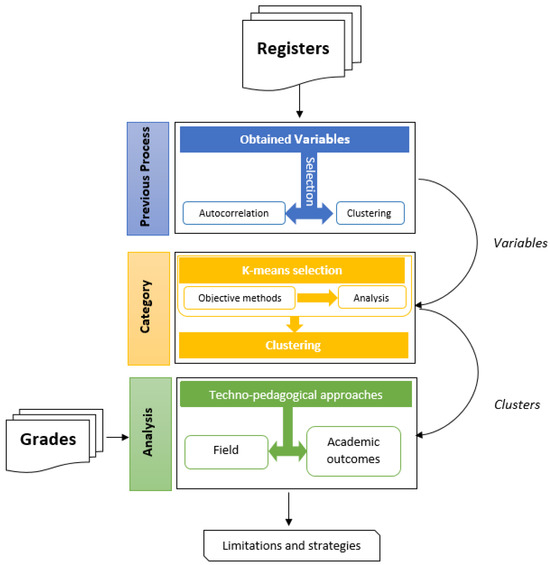
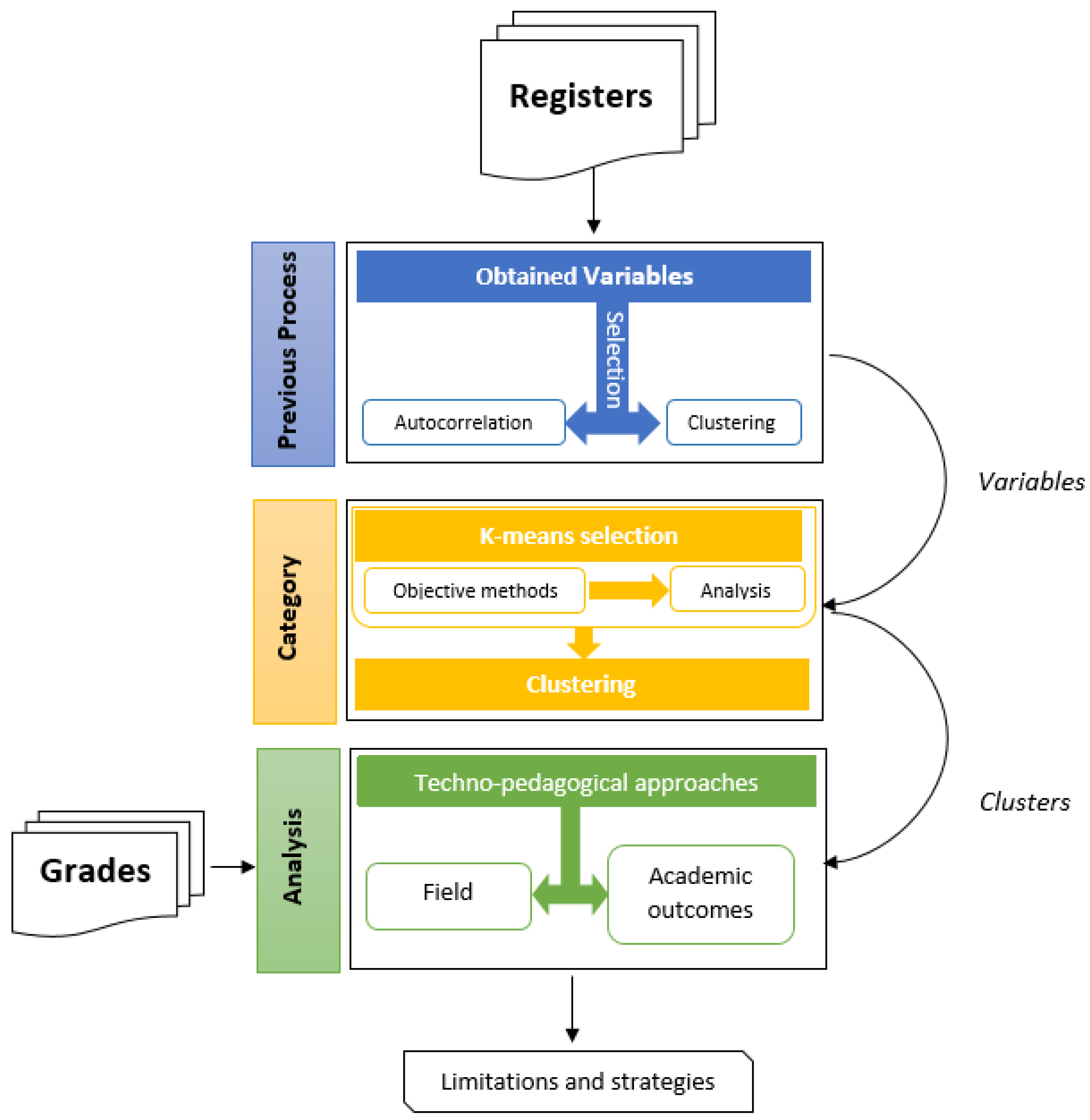
To carry out the analysis, we started by obtaining the log data (Figure 1) from Moodle. We then divided the procedure into different phases in which a preliminary process of preparing the data to be analyzed was carried out; in this phase, the variables of interest were obtained. This preparation process is necessary due to the large amount of data being analyzed.
Figure 1.
Methodology schema.
The determination of the final number of clusters and the labeling of techno-pedagogical configurations employed a mixed-methods approach. Initial statistical criteria (silhouette coefficient and within-cluster sum of squares) guided the selection of cluster solutions. Subsequently, a panel of three experts in educational technology and university pedagogy independently reviewed each cluster’s composition, resource distribution, and statistical indicators. Through structured consensus discussions, definitive labels were assigned to each profile, ensuring that classifications reflected both statistical coherence and pedagogical meaningfulness. This process explicitly distinguished between objective statistical criteria and expert interpretive judgment, enhancing the transparency and validity of the resulting configurations.
The data collected from the records provided findings related to the course design implemented by the instructors, specifically the structure and context of each course, both for the different resources and for the activities available on Moodle. Other relevant data found related to student interactions linked to the analysis, specifically those related to the active use of the Moodle “Forum” tool. Information on the start of discussion threads and the publication of messages by students in these forums was also found. In this sense, students used the “Forum” tool to form both structured and free-style debates. Its use as a means of communication between students and teachers and among teachers was also recorded. It was also used to establish question and answer dynamics (Ouariach et al., 2024). Regarding the findings, it can be noted that interactions can help to form an overview of student interactions and participation on the Moodle platform, as well as the pedagogical approach that teachers give to the “Forums” tool.
The study includes records from Moodle version 3.6. Given the stability of the database throughout its various iterations, this lends robustness to the proposed methodology. Therefore, the methodology applied can be used in different versions of the platform, whether current, older, or those that may be developed in the future. However, the analytical variables used have been designed to aggregate various types of Moodle activities, a strategy that minimizes the possible variability that may arise from the heterogeneity of the installed add-ons. Consequently, this approach optimizes the transferability of the study’s findings to university environments that operate with plugins tailored to the needs of each center and/or university.
The records found were exported to CSV files and summary tables were generated for each Moodle element using Python 3.11. Initially, 142 tables were created, containing aggregated information on the various LMS resources and activities used (assignments, comments, folders, etc.). Elements that appeared in less than 1% of courses, such as badges, books, databases, and SCORM, were excluded from the analysis. Finally, 142 summary tables remained, containing data corresponding to different Moodle resources and activities. The following table (Table 1) shows the percentage of courses in which each resource is used, providing an overview of the study.
Table 1.
Structure and context indicators for each Moodle element.
Analysis of the data in the tables helped identify the most relevant variables. This enabled the rigorous selection of variables for the clustering technique with the aim of eliminating those that do not provide significant information, ensuring that the selected variables effectively influence the classification of the data, and facilitating the interpretability of the clustering results.
To achieve optimization, a methodological strategy was applied that combines (1) autocorrelation techniques to detect variables with a high correlation coefficient and then select a set of non-redundant characteristics, in addition to (2) clustering techniques to determine which attributes best defined the formation of clusters and, in turn, discard those that are irrelevant. The combination of both methods has allowed for a significant reduction in dimensionality, limiting each set to one or two variables that represent the different usage patterns of each element of the Moodle platform. As can be seen in Table 2, in most cases, the number of items was the only variable suitable for defining techno-pedagogical teaching strategies.
Table 2.
Variables selected for each Moodle element.
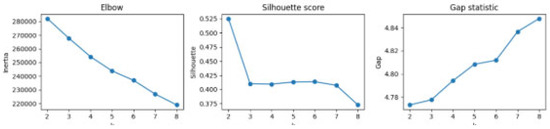
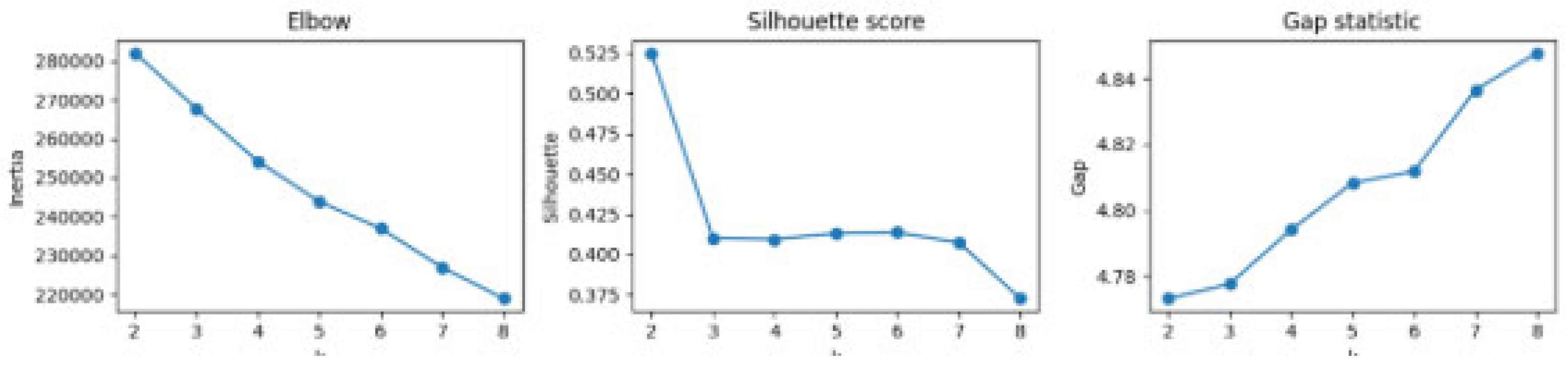
Once the selection of variables was complete, clustering techniques were applied with the aim of defining the different groups. Prior to creating the clusters, it was essential to determine the optimal number of classes (K). In this regard, as there is no standardized solution, a combined approach was chosen that integrates both objective methods and those that include statistical indicators (Elbow), which considers the silhouette coefficient (Silhouette) and the gap statistic (Gap statistic). However, it should be noted that these methods do not converge on a single optimal value, but rather provide solutions based on the indicator used. Therefore, the results obtained from these analyses were subjected to a subjective evaluation based on expert judgment in order to find a solution that offered the most meaningful conceptual interpretation.
Following the analyses carried out, it can be observed that a very low k value generated clusters with limited interpretability and practical use, while a larger number of clusters offered a more accurate classification of courses based on the different uses of virtual classrooms. Consequently, this dual approach combining autocorrelation and clustering techniques enabled the selection of a series of clusters that were simultaneously internally homogeneous and conceptually interpretable, which, in turn, facilitated a more detailed definition of the various techno-pedagogical teaching strategies present on the Moodle platform.
The final phase of the process consists of interpreting and labeling the resulting clusters. To carry out the analysis, Python 3.11 was used to generate summary tables for each element of the Moodle platform, complemented by various functions from the R 4.2.1 statistical environment. Specifically, the k-means method was used for clustering. The objective determination of the optimal number of clusters was carried out using the fviz_nbclust() and NbClust() functions. The stability of the clusters obtained was verified using the clusterboot() function, and the statistical significance of the differences between the samples was evaluated using the Kruskal–Wallis test (Kruskal.test()).
2.2. Population and Sample
The research was carried out at the University of Extremadura. A university that in the 2021–2022 academic year had some 20,146 students enrolled and 1859 teachers. The university offers bachelor’s and master’s degrees in different areas: Arts and Humanities (12), Experimental Sciences (16), Health Sciences (15), Engineering and Architecture (41), and Social and Legal Sciences (58), for a total of 142 bachelor’s and master’s degrees.
The University of Extremadura has its own ad hoc version of Moodle called “Campus Virtual UEx,” which has been used to complement teaching since its launch. This space includes undergraduate and master’s degree courses, the university’s own degrees, micro-credentials, department spaces, research group spaces, and continuing education courses, among others.
The data for this study was collected during the 2021–2022 academic year, the year in which students returned to the classroom after COVID-19 and periods of lockdown, virtual classes, and dual-mode classes (half of the students attended in person and the other half attended virtually, this system alternated groups, with those who attended in person one week doing so virtually the next and vice versa).
The information came from the Virtual Campus activity logs (Moodle logs data). After excluding those courses that did not register any activity on the Virtual Campus, the final sample for analysis consisted of 12,361 subjects (Moodle courses).
2.3. Research Ethics
Within the context of educational analysis and research, data ownership and privacy represent a fundamental ethical challenge. To address this concern in the present study, a process of integrating two data sources (the Moodle platform and the academic management system) was undertaken using course identifiers. These identifiers were subsequently encoded to mitigate any potential ethical conflicts. The anonymity of the studied population (students and faculty) was rigorously ensured by removing all personal identifiers from the dataset. Furthermore, and in strict compliance with Spanish personal data protection legislation, no sensitive information such as racial or ethnic origin, religious beliefs, or health-related data was collected.
3. Results
This section presents the results obtained from the data and methods described above. K-means clustering, an unsupervised learning method, was applied to the pre-processed dataset to identify distinct clusters. Based on a combination of objective and subjective criteria for determining the optimal number of clusters, five clusters were ultimately selected (Regueras et al., 2025). Objective methods indicated two (NbClust and Silhouette method) and four (Elbow method) as better potential values for k (Figure 2). When analyzing the data with k = 2, the model simply distinguished between courses that used Moodle and those that did not.
Figure 2.
Graphs of statistical indicators: elbow, silhouette and graphic gap.
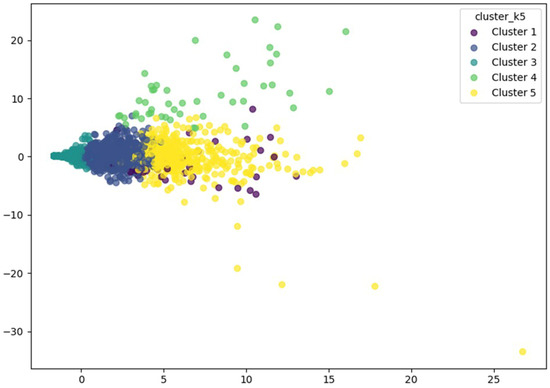
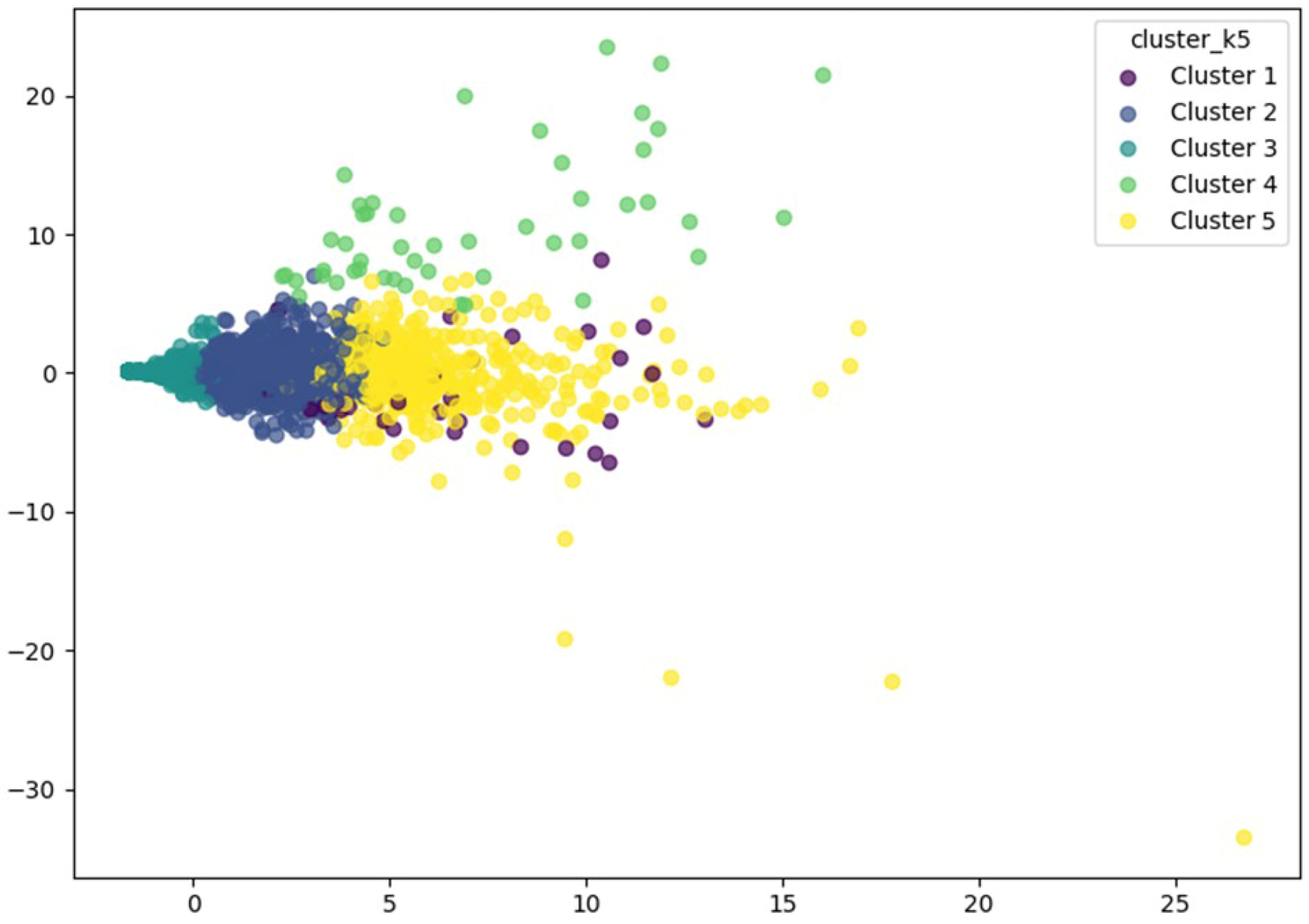
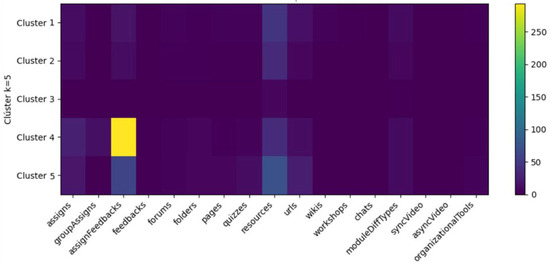
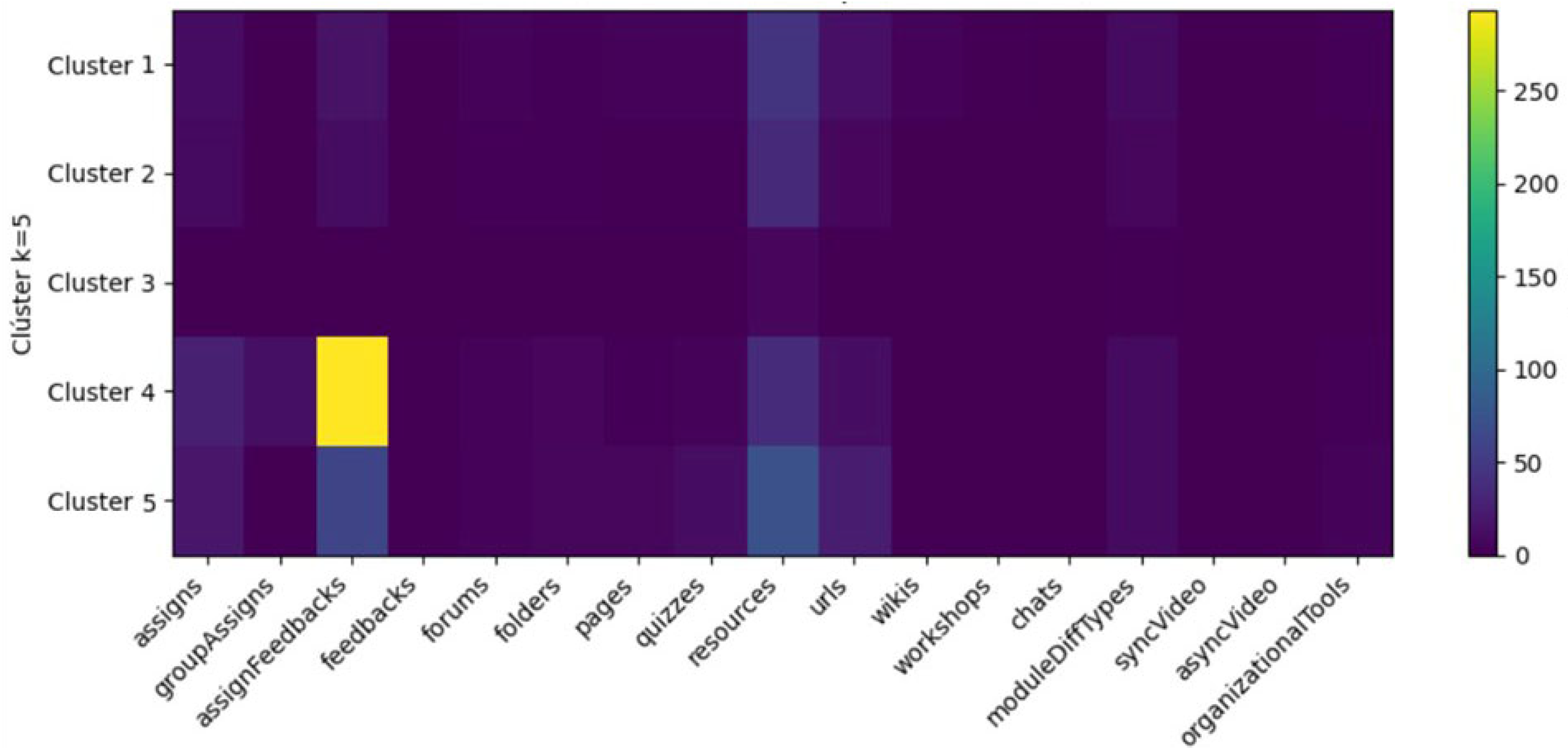
With k = 4, more nuanced differences emerged, primarily related to the intensity or level of use of various Moodle modules. For this reason, the use of k = 5 was also explored, which allowed for a more qualitative differentiation between clusters (Regueras et al., 2025). To validate the robustness of the clusters (Figure 3 and Figure 4), their stability was assessed being how consistent the clusters are under different conditions. The resulting five clusters demostrated moderate to high stability, with average stability values exceeding 0.8 according to clusterboot().
Figure 3.
Courses distribution by cluster.
Figure 4.
Mean values by cluster.
The upper graph (scatter plot) illustrates the distribution of the 12,361 courses analyzed across the five identified clusters, where each point represents a course and its position is based on the techno-pedagogical characteristics extracted from its Moodle design. The lower graph (heatmap) details the intensity of use of different Moodle tools and resources for each cluster. More intense colors (yellow) indicate a higher frequency of use of a specific tool within a cluster, allowing visualization of the dominant instructional design patterns in each group.
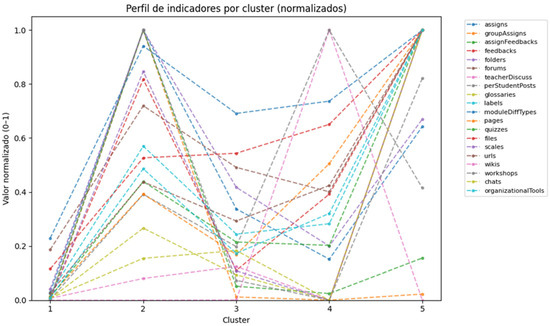
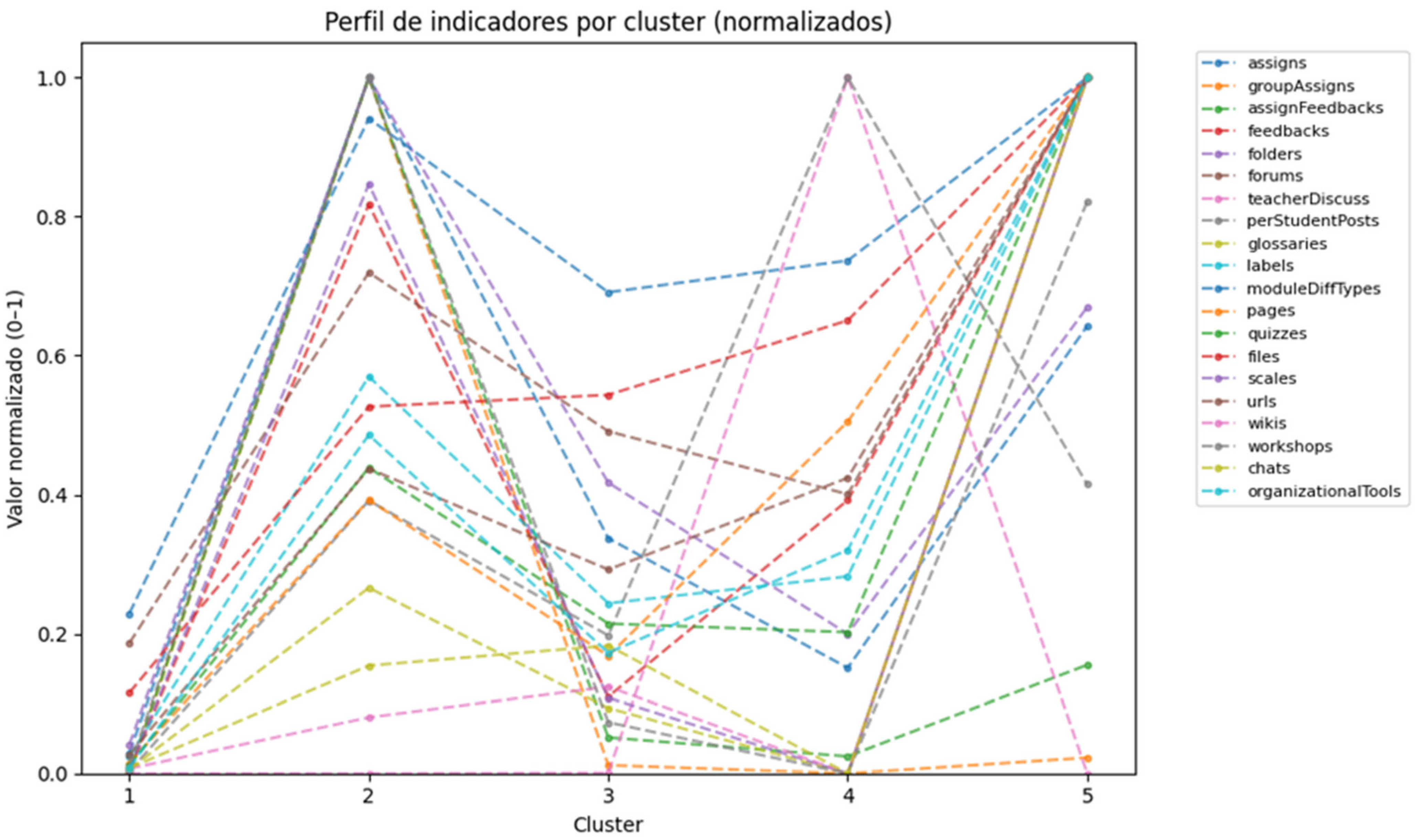
This bar chart (Figure 5) compares the mean usage values of the main Moodle tools across each of the five clusters. The height of each bar represents the normalized frequency of use of a specific tool, enabling the identification of distinctive techno-pedagogical profiles. For instance, the predominance of forums in Cluster 3 can be observed, as well as the intensive use of a wider variety of modules (moduleDiffTypes) in Cluster 5, reinforcing its innovative character.
Figure 5.
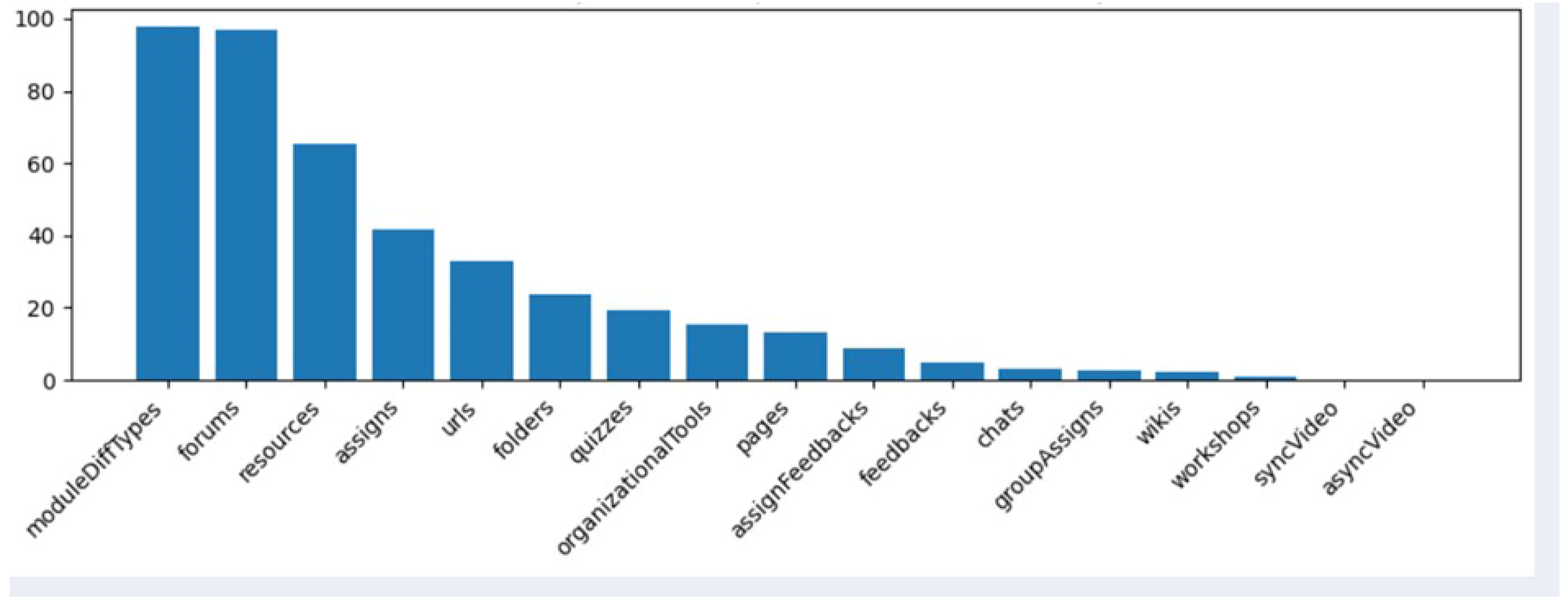
Percent values of resources of Moodle elements aggregated in UEx Moodle variables.
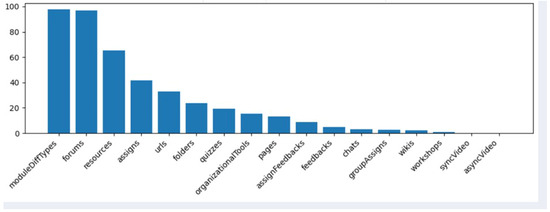
This chart illustrates the percentage distribution of the use of different types of resources and activities within the University of Extremadura’s Moodle platform (Figure 6). This analysis shows which elements are most commonly used in course design overall. The predominance of certain resources, such as forums and generic resources, over less frequently used ones like workshops or synchronous videos, provides an overview of teaching practices at the institution.
Figure 6.
Description of the main characteristics of the five clusters identified.
This five-cluster solution offered the most interpretable and pedagogically relevant classification, based on the distinct characteristics that defined each group (see Figure 2):
Cluster 1—balanced and moderated use of virtual classrooms, with a predominant focus on videoconferences, static resources (files, links and asynchronous presentations) and forums, although with limited students’ participation. These courses often featured a high presence of asynchronous video presentations, suggesting that classes recorded during the pandemic were retained and reused. In some cases, these materials may have been repurposed to support flipped classroom approaches.
Cluster 2—minimal use of virtual classrooms. These courses reflect a lack of pedagogical innovation supported by technology and a continued reliance on traditional, face-to-face teaching models.
Cluster 3—moderated use of virtual classrooms, characterized by a greater number of group assignments and, above all, increased student participation in forums (second only to cluster 5). These courses suggest a traditional structure supported by the virtual classrooms but incorporating elements of participative practices.
Cluster 4—limited use of virtual classrooms, primarily as a notice board, repository and platform for submitting and receiving feedback on assignments, but without any group-based assignments. These courses reflect a digital shift from paper-based practices to the use of technology as a repository and/or as a document exchange system for teachers and students.
Cluster 5—comprehensive and balanced use of virtual classrooms, including both instructional and organizational elements. These courses reflect innovative techno-pedagogical approaches that integrate a variety of Moodle tools in a coherent way, suggesting intentional instructional design supported by digital technologies.
Table 3 presents the definition and relative size of each of the five clusters identified.
Table 3.
Definition of the five clusters.
The resulting clusters indicate that the use of LMSs did not imply a substantive transformation of teaching strategies but rather, in many cases, a mere digitalization of traditional learning models. Furthermore, preliminary findings showed that the two clusters representing the most innovative uses (clusters 1 and 5) were associated with lower academic performance compared to those less intensive clusters (Sosa-Alonso et al., 2025). However, this finding requires further investigation, since the distribution of clusters varies significantly across different areas of knowledge (see Figure 3).
4. Discussion
The findings of this study reveal that the application of techno-pedagogical strategies in higher education is remarkably diverse and frequently does not involve a profound transformation of teaching practices. This conclusion is consistent with previous research indicating that the widespread adoption of Learning Management Systems (LMSs) does not always lead to pedagogical innovation, but often merely digitizes traditional teaching models.
The methodological approach of the study is similar to other recent ones such as that of (Maulana & Mariam, 2024) who make their methodological proposal with the same orientation.
Contrary to expectations, our analysis indicates that courses considered more innovative, such as those based on audiovisual materials or the flipped classroom format, do not systematically guarantee better academic outcomes. This finding contrasts with studies such as Sailer et al. (2024) which posit that active and technology-enhanced strategies can improve learning when carefully implemented and supported.
In particular, traditional teaching models with minimal use of technological tools were associated with better academic performance indicators in the different fields.
Cluster analysis helps us understand the different ways students use the LMS in relation to the pedagogical models implemented by the teaching staff. Previous studies, such as that of Riestra-González et al. (2021), apply cluster analysis to differentiate groups of students. Our study seeks to find the same clusters as the study by our colleagues at the University of Valladolid (Regueras et al., 2025), who are involved in the project.
While these patterns may suggest a better alignment between pedagogical approaches and disciplinary expectations, it is essential to interpret these results with caution. There are unmeasured variables that could be influencing the outcomes, such as students’ prior knowledge levels, their motivation, or the quality of the course’s instructional design. The integration of Learning Management Systems (LMSs) in higher education has transitioned from a specialized distance education tool to a central infrastructure supporting both face-to-face and blended learning models. Following the mass adoption triggered by the pandemic, virtual classrooms have become essential for organizing academic materials and interactions, yet their widespread use has not necessarily resulted in a profound pedagogical transformation. Instead, the teaching ecosystem displays a highly heterogeneous reconfiguration where technology is often used to digitally replicate traditional instructional models. This phenomenon highlights a persistent challenge in reconstructing pedagogical intentions and instructional design decisions solely from system records, particularly in hybrid contexts where significant activity occurs outside the digital environment.
Some usage patterns focus on the LMS primarily as a repository and management tool, facilitating a digital shift from paper-based practices to document exchange and feedback systems without necessarily increasing instructional complexity. At the most integrated level, advanced innovation models demonstrate a coherent and balanced use of diverse tools, suggesting an intentional instructional design that leverages both organizational and interactive digital resources. Recognizing these distinct profiles is essential for moving toward teacher-centered analytics that can capture the underlying pedagogical logic rather than just behavioral metrics.
Ultimately, the ability to automatically categorize these practices lays the groundwork for the automatic certification of digital competence. While this idea may seem futuristic, we intend to continue seeking evidence to achieve accreditation of such competence. This allows institutions to move beyond basic presence metrics and instead recognize specific teaching strategies and faculty efforts. By implementing analytical frameworks that prioritize interpretability and faculty-centered design, universities can better drive instructional improvement and strategic educational planning.
5. Conclusions
In this section, it is time to discuss the conclusions we have been able to reach at the current stage, based on the data we have been able to analyze.
- Mapping Techno-Pedagogical Configurations
The study successfully identified and mapped five distinct techno-pedagogical archetypes within the virtual campus. These range from a traditional model with low use (the most prevalent at 67.37%) to advanced innovation (3.98%), including configurations focused on audiovisual resources, participative practices, and simple repositories. The mapping reveals that for a majority of faculty, the LMS functions as a digital support for traditional face-to-face teaching rather than a driver of pedagogical transformation.
- Developing Interpretable Frameworks
To address the complexity of higher education, the research developed a framework that balances statistical rigor with pedagogical meaningfulness. By combining objective methods (such as the Elbow and Silhouette indicators) with expert judgment, the study concluded that a five-cluster solution offers the most interpretable classification for instructors and institutional leaders. This ensures the results are actionable and aligned with professional educational language rather than being obscured by algorithmic complexity.
- Bridging the Gap Between Design and Data
The methodology proves capable of reconstructing pedagogical intentions from fragmentary digital records, even in hybrid contexts where much activity occurs offline. By selecting non-redundant variables that represent specific usage patterns—such as the number of group assignments or forum interactions—the study translates raw system logs into a clear picture of the instructional logic structuring each course.
- Enhancing Institutional Knowledge
By systematically describing these configurations, the university gains an empirical foundation for strategic decision-making and educational planning. This generated knowledge allows the institution to understand the actual degree of technological integration and to design targeted teacher training and support services that address the diverse needs identified across the different clusters.
- Promoting Teacher-Centered Analytics
The study marks a shift from student-focused predictive modeling to analytics that prioritize the instructor as a pedagogical subject. Categorizing these teaching patterns provides a robust foundation for the automatic certification of digital competence.
5.1. Future Research Line
This study has allowed us to offer a series of findings focused on the results that learning analytics studies can provide using LMS data files. We have seen that we can identify patterns that allow us to work on evaluating the competencies of both teaching strategies and students. For this reason, we suggest continuing the search for evidence that allows us to demonstrate the digital competence of teachers and students. This allows the institution to go beyond basic activity metrics and, instead, recognize the specific strategies and pedagogical efforts of the teaching staff.
5.2. Study Limitations
The integration of Learning Management Systems (LMSs) into higher education has transitioned from a specialized tool for distance education to a central infrastructure that supports both face-to-face and blended learning models. However, the sources emphasize that the widespread adoption of these platforms—accelerated by the pandemic—has not necessarily resulted in a uniform pedagogical transformation. Instead, the teaching ecosystem displays a highly heterogeneous reconfiguration where technology is frequently used to digitally replicate traditional instructional models rather than innovate them.
Analysis of instructor interactions in the University of Extremadura study allows for the mapping of five specific techno-pedagogical archetypes that reflect different levels of digital integration. These configurations range from audiovisual-based innovation, where teachers reuse recorded materials, to an advanced innovation model that integrates a balanced variety of interactive and organizational tools. Despite these possibilities, the most prevalent pattern remains the traditional low-use approach, accounting for over 67% of courses, where the virtual campus serves only as a minor complement to face-to-face teaching.
To bridge the gap between raw system data and actual teaching practices, the study developed an interpretable framework that combines objective clustering methods with expert judgment. This approach enables the reconstruction of underlying pedagogical intentions and instructional design decisions from digital records, providing a foundation for the automatic certification of digital competence based on objective usage patterns rather than manual evaluation. By shifting the focus toward teacher-centered analytics, institutions can move beyond simple activity metrics to recognize the specific strategies and instructional efforts of their faculty.
Nevertheless, the sources identify several critical limitations that must be considered when interpreting these findings. A primary challenge is the fragmentary nature of digital records in hybrid settings, as the system cannot capture face-to-face interactions that constitute a large part of the educational process. Additionally, unmeasured variables such as student motivation, prior knowledge, and the transitional nature of the post-pandemic period may influence academic outcomes, meaning the detected patterns might reflect temporary adaptations rather than stable, long-term trends. Ultimately, while these analytical frameworks provide valuable institutional knowledge for strategic planning, they require contextualized interpretation to truly support pedagogical improvement.
To better understand this reality, we can think (as a metaphor) of the LMS as a modern professional kitchen: while some users only utilize the counters to store prepared ingredients (the repository model), others master every specialized appliance and tool to create a complex, original menu (advanced innovation).
Author Contributions
Conceptualization, F.-I.R.-D. and J.G.-A.; methodology, F.-I.R.-D. and J.G.-A.; software, F.-I.R.-D. and J.G.-A.; validation, F.-I.R.-D., J.G.-A., A.G.-P. and R.A.-M.; formal analysis, F.-I.R.-D. and J.G.-A.; investigation, F.-I.R.-D., J.G.-A., A.G.-P. and R.A.-M.; resources, F.-I.R.-D., J.G.-A., A.G.-P. and R.A.-M.; data curation, F.-I.R.-D. and J.G.-A.; writing—original draft preparation, F.-I.R.-D., J.G.-A., A.G.-P. and R.A.-M.; writing—review and editing, F.-I.R.-D., J.G.-A., A.G.-P. and R.A.-M.; visualization, F.-I.R.-D.; supervision, F.-I.R.-D. and J.G.-A. All authors have read and agreed to the published version of the manuscript.
Funding
This activity has been co-financed 85% by the European Union, the European Regional Development Fund and the Regional Government of Extremadura. Managing Authority: Ministry of Finance. Grant File Number: GR24115.
Institutional Review Board Statement
The research reported in this manuscript was conducted using log data files consisting of fully anonymized data from students and faculty members of the University of Extremadura. The data are indirect in nature and comprise solely records of user actions within the learning management system (e.g., clicking links or uploading PDF files). According to the regulations and guidelines of the University of Extremadura, research based exclusively on fully anonymized log data does not require approval from an Ethics Committee. The data were provided by the University’s Virtual Campus Service under the authorization of the Vice-Rector for Research and the Vice-Rector for Academic Planning, with the approval of the Data Protection Officer of the University of Extremadura. The study was conducted in accordance with the principles of the Declaration of Helsinki and complied with the European General Data Protection Regulation (GDPR), ensuring the confidentiality and protection of personal data.
Informed Consent Statement
Informed consent for participation is not required as per ethical approval and local authorization granted by the University of Extremadura.
Data Availability Statement
The dataset presented in this article is not readily available because it cannot be shared with third parties in accordance with the ethical approval.
Conflicts of Interest
The authors declare no conflicts of interest.
References
- Akpen, C. N., Asaolu, S., Atobatele, S., Okagbue, H., & Sampson, S. (2024). Impact of online learning on student’s performance and engagement: A systematic review. Discover Education, 3, 205. [Google Scholar] [CrossRef] [Scilit]
- Balderas, A., De-La-Fuente-Valentin, L., Ortega-Gomez, M., Dodero, J. M., & Burgos, D. (2018). Learning management systems activity records for students’ assessment of generic skills. IEEE Access, 6, 15958–15968. [Google Scholar] [CrossRef] [Scilit]
- Bond, M., Bedenlier, S., Marín, V. I., & Händel, M. (2021). Emergency remote teaching in higher education: Mapping the first global online semester. International Journal of Educational Technology in Higher Education, 18(1), 50. [Google Scholar] [CrossRef] [Scilit] [PubMed]
- Chytas, K., Tsolakidis, A., Triperina, E., & Skourlas, C. (2022). Educational data mining in the academic setting: Employing the data produced by blended learning to ameliorate the learning process. Data Technologies and Applications, 57(3), 366–384. [Google Scholar] [CrossRef] [Scilit]
- García-Peñalvo, F. J. (2017). Ecosistemas tecnológicos: Innovando en la educación abierta [Technological ecosystems: Innovating in open education]. Universidad de Salamanca/GRIAL. Available online: https://www.slideshare.net/slideshow/ecosistemas-tecnolgicos-innovando-en-la-educacin-abierta/71042850 (accessed on 9 February 2026).
- Lockyer, L., Heathcote, E., & Dawson, S. (2013). Informing pedagogical action: Aligning learning analytics with learning design. American Behavioral Scientist, 57(10), 1439–1459. [Google Scholar] [CrossRef] [Scilit]
- Mangaroska, K., & Giannakos, M. (2019). Learning analytics for learning design: A systematic literature review of analytics-driven design to enhance learning. IEEE Transactions on Learning Technologies, 12(4), 516–534. [Google Scholar] [CrossRef] [Scilit]
- Manhica, R., Santos, A., & Cravino, J. (2022, June 22–25). The use of artificial intelligence in learning management systems in the context of higher education: Systematic literature review. 2022 17th Iberian Conference on Information Systems and Technologies (CISTI) (pp. 1–6), Madrid, Spain. [Google Scholar] [CrossRef] [Scilit]
- Maulana, I., & Mariam, M. (2024). Analysis of student activities based on log files in e-learning using clustering algorithm. Journal of Advanced Research in Applied Sciences and Engineering Technology, 53, 1–15. [Google Scholar] [CrossRef] [Scilit]
- Ouariach, F. Z., Nejjari, A., Ouariach, S., & Khaldi, M. (2024). Place of forums in online communication through an LMS platform. World Journal of Advanced Engineering Technology and Sciences, 11(1), 96–104. [Google Scholar] [CrossRef] [Scilit]
- Pan, Z., Biegley, L., Taylor, A., & Zheng, H. (2024). A systematic review of learning analytics: Incorporated instructional interventions on learning management systems. Journal of Learning Analytics, 11(2), 52–72. [Google Scholar] [CrossRef] [Scilit]
- Persico, D., & Pozzi, F. (2015). Informing LD with LA to improve teacher inquiry. British Journal of Educational Technology, 46, 230–248. [Google Scholar] [CrossRef] [Scilit]
- Quesada, B. V., Zarco, C., & Cordón, O. (2023). Mapping the situation of educational technologies in the Spanish university system using social network analysis and visualization. International Journal of Interactive Multimedia and Artificial Intelligence, 8, 190–201. [Google Scholar] [CrossRef] [Scilit]
- Rapanta, C., Botturi, L., Goodyear, P., Guàrdia, L., & Koole, M. (2020). Online university teaching during and after the COVID-19 crisis: Refocusing teacher presence and learning activity. Postdigital Science and Education, 2, 923–945. [Google Scholar] [CrossRef] [Scilit]
- Regueras, L. M., Verdú, M. J., & Castellanos Nieves, D. (2019). Clustering analysis for automatic certification of LMS strategies in a university virtual campus. IEEE Access, 7, 137680–137690. [Google Scholar] [CrossRef] [Scilit]
- Regueras, L. M., Verdú, M. J., de Castro, J. P., & Álvarez-Álvarez, S. (2025). Techno-pedagogical approaches and academic performance: A quantitative study based on LMS log data. Education Sciences, 15, 1533. [Google Scholar] [CrossRef] [Scilit]
- Riestra-González, M., Paule-Ruíz, M. D. P., & Ortin, F. (2021). Massive LMS log data analysis for the early prediction of course-agnostic student performance. Computers & Education, 163, 104108. [Google Scholar] [CrossRef] [Scilit]
- Rodríguez-Ortiz, M. Á., Santana-Mancilla, P. C., & Anido-Rifón, L. E. (2025). Machine learning and generative AI in learning analytics for higher education: A systematic review of models, trends, and challenges. Applied Sciences, 15(15), 8679. [Google Scholar] [CrossRef] [Scilit]
- Romero, C., & Ventura, S. (2020). Educational data mining and learning analytics: An updated survey. Wiley Interdisciplinary Reviews: Data Mining and Knowledge Discovery, 10(3), e1355. [Google Scholar] [CrossRef] [Scilit]
- Ross, T., Sondergaard, R., Ives, C., Han, A., & Graf, S. (2025). Enhancing access to educational data for educators and learning designers: Staged evaluation of the academic analytics tool. Technology, Knowledge and Learning, 30, 1371–1393. [Google Scholar] [CrossRef] [Scilit]
- Sailer, M., Ninaus, M., Huber, S. E., Bauer, E., & Greiff, S. (2024). The end is the beginning is the end: The closed-loop learning analytics framework. Computers in Human Behavior, 158, 108305. [Google Scholar] [CrossRef] [Scilit]
- Salem, M., & Shaalan, K. (2025). Unlocking the power of machine learning in e-learning: A comprehensive review of predictive models for student performance and engagement. Education and Information Technologies, 30, 19027–19050. [Google Scholar] [CrossRef] [Scilit]
- Sghir, N., Adadi, A., & Lahmer, M. (2023). Recent advances in predictive learning analytics: A decade systematic review (2012–2022). Education and Information Technologies, 28(7), 8299–8333. [Google Scholar] [CrossRef] [Scilit] [PubMed]
- Sosa-Alonso, J. J., Hernández Rivero, V. M., Sanabria Mesa, A. L., & Bethencourt Aguilar, A. (2025). Adoption of digital educational resources by early childhood education teachers: A fad or a conviction? Computers & Education, 238, 105396. [Google Scholar] [CrossRef] [Scilit]
- Tinjić, D., & Nordén, A. (2024). Crisis-driven digitalization and academic success across disciplines. PLoS ONE, 19(2), e0293588. [Google Scholar] [CrossRef] [Scilit] [PubMed]
- Veluvali, P., & Surisetti, J. (2022). Learning management system for greater learner engagement in higher education—A review. Higher Education for the Future, 9(1), 107–121. [Google Scholar] [CrossRef] [Scilit]
- Viberg, O., Hatakka, M., Bälter, O., & Mavroudi, A. (2018). The current landscape of learning analytics in higher education. Computers in Human Behavior, 89, 98–110. [Google Scholar] [CrossRef] [Scilit]
- Whitelock-Wainwright, A., Tsai, Y.-S., Lyons, K., Kaliff, S., Bryant, M., Ryan, K., & Gašević, D. (2020, March 23–27). Disciplinary differences in blended learning design: A network analytic study. Tenth International Conference on Learning Analytics & Knowledge (pp. 579–588), Frankfurt, Germany. [Google Scholar] [CrossRef] [Scilit]

Disclaimer/Publisher’s Note: The statements, opinions and data contained in all publications are solely those of the individual author(s) and contributor(s) and not of MDPI and/or the editor(s). MDPI and/or the editor(s) disclaim responsibility for any injury to people or property resulting from any ideas, methods, instructions or products referred to in the content. |
© 2026 by the authors. Licensee MDPI, Basel, Switzerland. This article is an open access article distributed under the terms and conditions of the Creative Commons Attribution (CC BY) license.