1. Introduction
In the past decade, a dramatic change has taken place in how educational systems conceptualize feedback. While feedback was once seen primarily as a means of assessment and error correction, in the age of artificial intelligence (AI) it has become a dialogic space for learning. Educational AI systems, including educational chatbots, now provide students with complete formulations, examples, and answers at the click of a button. As noted by
L. Chen et al. (
2020), artificial intelligence is redefining the boundaries of teaching and learning, enabling the creation of adaptive and dialogic learning environments. Although these tools offer efficient and immediate responses, they tend to reduce cognitive engagement, reflective thinking, and the learner’s sense of self-efficacy.
Within this context, an essential question arises: what is the role of the chatbot in teaching and learning? Should it provide correct answers, or should it trigger a process of independent thinking? Most existing chatbots, such as ChatGPT, Copilot, and Gemini, operate in a reactive model. They wait for a learner’s question and then generate a direct answer or a complete text in response. While this approach is convenient and efficient, it reinforces external dependence and weakens the learner’s own voice.
Mili was developed from an opposite pedagogical standpoint: it is not designed to answer but to ask. Mili is a dialogic, mediating chatbot that operates according to the principles of literacy resilience, reflective feedback, and pedagogical mediation. Instead of responding to the learner’s question with an immediate answer, Mili asks clarifying questions, invites the learner to refine meaning, and guides them to construct their own response. This represents a paradigmatic shift in the structure of human–machine dialogue, moving from reactive AI to learning-generative AI.
The design of Mili as a proactive educational chatbot aims to promote active and process-aware learning. Its dialogue is based on the principles of dialogic feedback (
Carless & Boud, 2018;
Nicol, 2012) and on Amir’s psycho-pedagogical model (in preparation), which views reflective dialogue as a prerequisite for building literacy resilience. Within this interaction, feedback is not the end of a process but its beginning; it invites the learner to ask, examine, and define their knowledge and abilities.
The development of Mili therefore stemmed from the need to explore how a pedagogical chatbot in Hebrew could function as a learning partner rather than merely as a source of answers. The central guiding question of the study was: How can an educational chatbot be designed to provide dialogic and thought-provoking feedback that encourages learners to ask, explain, and formulate independently, thereby fostering their literacy resilience?
The novelty of this study lies in presenting a new model of a proactive pedagogical chatbot based on the principles of dialogic feedback and literacy resilience. While most chatbots are designed to respond to user input, Mili is structured to act proactively: it poses questions, introduces pedagogical delay, and allows learners to articulate their understanding in their own words. In doing so, it demonstrates a new conception of feedback in the age of artificial intelligence, feedback as a partnership in thinking rather than as an automatic or corrective response.
2. Theoretical Framework
2.1. The Constructivist Approach and Knowledge Building
The theoretical foundation of all meaningful learning is based on the constructivist approach, which views the learner as an active agent who constructs knowledge through interaction, reflection, and negotiation of meaning. According to
Piaget (
1973) and Bruner (
Matsumoto, 2017), knowledge is not transmitted from teacher to learner but actively constructed through cognitive adaptation between prior concepts and new experiences. Vygotsky (
Erbil, 2020) added the social dimension by introducing the concept of the “zone of proximal development,” the space in which the learner advances through mediation, dialogue, and joint activity with others. Learning, therefore, is not a technical process but a social, linguistic, and meaningful one.
Subsequent theorists expanded this understanding into online learning contexts.
Garrison and Cleveland-Innes (
2005) emphasized the importance of cognitive presence in online learning and argued that learning occurs when the learner is emotionally and cognitively engaged in a process of inquiry, interpretation, and meaning-making.
Constructivist teaching, accordingly, places the teacher’s role as a mediator rather than a transmitter of knowledge (
Brooks & Brooks, 1999). The goal of instruction is to create conditions in which learners explore, make mistakes, revise, and reconstruct their understanding. This approach serves as a central pedagogical foundation for the development of intelligent learning environments in the digital age that encourage independent meaning-making through dialogue.
2.2. Feedback as a Learning Process
In line with constructivist principles, feedback has evolved from a technical evaluation mechanism into a central cognitive and emotional component of learning. For decades, feedback has been recognized as one of the most significant factors in teaching and learning (
Hattie & Timperley, 2007). In recent years, however, a profound shift has occurred in its conceptualization. Whereas traditional feedback focused on the transmission of information from teacher to student, contemporary approaches emphasize the importance of dialogic feedback that stimulates discussion, interpretation, and reflection (
Carless & Boud, 2018;
Nicol, 2012). Effective feedback integrates cognitive, emotional, and motivational aspects and aims not merely to correct but to build a sense of competence and ownership of learning (
Daumiller et al., 2025).
Instead of concentrating on outcomes (“what is right or wrong”), dialogic feedback focuses on process (“how did you understand this, how can it be improved”). It creates an ongoing interaction between learner and mediator in which shared meaning is constructed. This emphasis on process does not imply that disciplinary correctness is secondary or subjective. Rather, it reflects a pedagogical distinction in how learners arrive at an accurate understanding. Dialogic feedback guides students to construct conceptually correct knowledge through scaffolded inquiry, reflective questioning, and recognition of misconceptions, not by providing immediate answers that bypass the learner’s thinking process. The constructivist principle applied here is one of guided construction (
Wood et al., 1976;
Vygotsky, 1978): learners actively build understanding within disciplinary norms and standards, mediated by pedagogical questioning rather than direct transmission. In this sense, dialogic feedback does not abandon the right-wrong distinction but approaches it through a process that fosters deeper conceptual understanding and learner agency.
This perspective views feedback not simply as an assessment tool but as a learning mechanism through which learners build self-understanding, develop learning strategies, and strengthen their sense of self-efficacy.
Understanding feedback as a cognitive and emotional partnership between learner and teacher, or between learner and system, also requires feedback literacy, the ability to understand, interpret, and apply feedback to future learning. Learners with high feedback literacy know how to derive value from comments they receive, plan corrective actions, and reconstruct their understanding (
Carless & Boud, 2018).
Therefore, meaningful feedback in the current era is that which encourages learners to engage in both internal and external dialogue, to recognize the gap between current and desired performance, and to exercise self-regulation within a sense of security and partnership in the process. In this sense, feedback is not the conclusion of instruction but an ongoing learning mechanism, a bridge between understanding and action. This view of feedback as dialogue and as an invitation to independent learning forms the foundation for understanding the concept of literacy resilience.
2.3. Metacognitive and Reflective Learning
Metacognitive learning serves as a direct bridge between the constructivist approach and feedback processes.
Flavell (
1979) defined metacognition as the learner’s ability to think about their own thinking process, to plan, monitor, evaluate, and adjust their learning strategies in real time. Recent studies (
Dignath & Veenman, 2021;
Heaysman & Kramarski, 2022) indicate that metacognitive learning strengthens both cognitive and emotional resilience and promotes deep, reflective understanding.
Zimmerman (
2002) developed the model of self-regulated learning, emphasizing that learners who are aware of their cognitive processes develop independence, confidence, and the capacity to cope with learning challenges. These approaches illustrate that learning is not a final product but an ongoing process of reflection and interpretation.
In first-language (L1) instruction, this understanding is particularly critical.
Rijlaarsdam and Couzijn (
2000) conceptualize writing as a dual process: writing to learn and learning to write. They argue that effective writing instruction must engage learners in metacognitive reflection about their writing processes, not merely focus on the final product. This approach aligns with the principles of self-regulated learning, where reflective questions such as “What did you want to say?”, “How can you clarify your idea?”, or “What did you learn about your own thinking process?” (
Amir et al., 2021) enhance learners’ awareness of their writing processes and strengthen their sense of control over knowledge construction. These abilities constitute a central component of literacy resilience.
2.4. Literacy Resilience
Literacy Resilience is an innovative and evolving construct coined by
Amir (
2023,
2024,
2025) to describe the learner’s capacity to integrate linguistic literacy with self-regulated learning, acting with awareness, reflection, and persistence in situations of uncertainty.
This perspective draws on
Bandura’s (
1977) theory of self-efficacy, which posits that confidence in one’s ability to cope with challenges serves as a central mechanism in motivation, perseverance, and self-regulation. In this sense, literacy resilience relies not only on linguistic knowledge but also on the learner’s sense of efficacy in performing complex linguistic actions, facing critique, and planning steps for improvement. Accordingly, literacy is viewed not as a purely technical skill but as an
adaptive, reflective competence that includes planning, monitoring, and evaluating the learning process while integrating emotional expression, perseverance, and personal responsibility.
At the core of this concept lies the assumption that the challenges of learning in the age of artificial intelligence do not stem from a lack of information but rather from its abundance, complexity, and the resulting sense of cognitive overload or loss of control. Therefore, literacy resilience develops through metacognitive and dialogic discourse, in which learners experiment with constructing ideas, asking questions, interpreting, evaluating, and rewriting their understanding.
Through these processes, a connection emerges between the cognitive and the emotional: the ability to deal with a text, a difficulty, or criticism is intertwined with confidence and a developing sense of self-efficacy.
In Amir’s recent studies (
Amir, 2024,
2025), literacy resilience is conceptualized as an integration between two core dimensions,
linguistic literacy and
self-regulated learning (SRL), as illustrated in
Figure 1.
Figure 1 presents the components of Literacy Resilience (LR) as the intersection of two major domains:
Linguistic Literacy and
Self-Regulated Learning (SRL). The intersecting circles emphasize that literacy resilience is not a sum of two independent areas but a synthesis of both. The central overlapping zone (marked in yellow) represents the operational space in which linguistic and metacognitive abilities interact, enabling learners to cope with complex tasks through awareness, perseverance, and agency.
From this perspective, literacy resilience serves as a bridge between linguistic and reflective learning. It enables learners to understand themselves as active interpreters, to use language as a tool for constructing knowledge, and to develop high-level awareness of their cognitive processes.
Pedagogically, literacy resilience is not an innate trait but a learned and evolving capability built in environments that encourage dialogue, reflection, and meaningful discussion about learning processes.
When teachers and feedback systems succeed in establishing such environments, they enhance learners’ ability to cope independently with complex tasks, critique information, select appropriate strategies, and demonstrate both emotional and intellectual endurance.
Consequently, the transition from theoretical conceptualization to pedagogical practice requires translating the principles of literacy resilience into tangible mechanisms of teaching and assessment.
One of the most central mechanisms is feedback, particularly dialogic feedback, which mediates between linguistic thinking and self-regulated learning processes. In recent years, as educational AI systems have developed, feedback has acquired a new dimension: it has evolved from a traditional human mechanism into an intelligent, interactive tool capable of fostering dialogue, reflection, and learner autonomy.
This integration of emotional efficacy and cognitive literacy forms the psycho-pedagogical foundation for effective learning in the age of artificial intelligence. Building on the principles of literacy resilience and metacognitive learning, there is an increasing need to explore how these ideas can be implemented in AI-supported learning environments that provide dialogic feedback, encourage reflection, and promote independent meaning-making.
2.5. AI-Based Feedback
Artificial intelligence (AI)-based tools enable personalized adaptation of tasks and feedback for individual learners, opening new possibilities for customized learning: from identifying a learner’s level to providing tailored hints and real-time feedback (
Troussas et al., 2025). Recent systematic reviews confirm that AI-based adaptive learning platforms can significantly improve student engagement and academic performance by dynamically adjusting instructional content and learning pathways to offer personalized learning experiences (
Strielkowski et al., 2024). However, emerging research warns that when AI adopts a solution-focused approach rather than fostering active dialogue, it may threaten core components of self-directed learning, independent thinking, and learners’ cognitive regulation processes. Studies indicate that excessive reliance on AI-generated solutions may undermine students’ critical thinking and problem-solving abilities, leading to what researchers term “metacognitive laziness” and a decline in independent thinking capabilities (
Kasneci et al., 2023;
Fan et al., 2025). Empirical research in physics education, for instance, showed that while AI-generated formative feedback improved test scores for certain student subgroups, students’ self-regulation and autonomy were found to be “fragile and vulnerable when interacting with AI,” even when using carefully designed interfaces (
X. Chen et al., 2025). These findings underscore that the pedagogical design of AI-based tools requires a delicate balance between supporting learning and encouraging autonomy and self-regulation (
Guan et al., 2025).
Accordingly, the pedagogical challenge is not only to provide adaptive feedback but to transform it into process-oriented and dialogic feedback: feedback that encourages pausing, self-comparison, choice, rewriting, and metacognitive dialogue. Such feedback functions as a gateway to cognitive and emotional mediation, not merely as a technical mechanism for information transmission. According to
Garrison and Cleveland-Innes (
2005), dialogic feedback fosters cognitive presence and learning presence in online environments and strengthens learners’ sense of engagement and meaningfulness.
Hattie and Timperley’s (
2007) classic feedback model emphasizes that effective feedback addresses three core questions: “Where am I going?”, “How am I progressing?”, and “What’s the next step?”, thereby shifting the focus from feedback on performance to feedback on process and self-regulation. Dialogic feedback, therefore, is not merely a correction mechanism but a process of reflective thinking in which the learner develops a deeper understanding of their own learning actions.
Recent studies reinforce this pedagogical orientation by showing that metacognitive and dialogic feedback in AI-supported environments can enhance both cognitive and emotional outcomes.
Yin et al. (
2024) demonstrated that educational chatbots providing metacognitive feedback significantly improved students’ knowledge retention and transfer in science learning, by encouraging reflection rather than providing direct answers. Similarly,
Klar (
2025) found that generative AI-based chatbots can effectively support self-directed learning when they encourage increased use of their adaptive capabilities, although light-touch interventions significantly improved self-directed and collaborative learning but did not significantly affect cognitive aspects such as cognitive load or learning outcomes. Complementing these findings, a systematic review of intelligent tutoring systems (ITS) in K-12 showed that ITS effects on learning and performance are generally positive, though moderated compared to non-intelligent tutoring systems, highlighting that these systems can be most effective only when they embody good pedagogical features implemented under the right conditions, such as immediate feedback, guided practice, and adaptivity: features grounded in decades of instructional theory and having notable positive effects on learning (
Honebein & Reigeluth, 2020). Together, these studies emphasize that pedagogically informed design—not automation alone—is critical to realizing the full potential of AI-based feedback.
From a methodological perspective, the feedback literacy approach proposed by
Carless and Boud (
2018) and further developed by (
Winstone & Carless, 2019) underscores the importance of learners’ active participation in the feedback process. Feedback becomes effective when learners understand its purpose, interpret it within their personal context, and learn to apply it to future learning. Building on this, recent models such as
Zhan et al.’s (
2025) conceptualization view feedback as a cyclical process of feedback forethought, feedback control, and feedback retrospect, emphasizing the learner’s personal responsibility to plan, regulate, and evaluate how feedback is used.
When these principles are embedded in the design of educational AI systems, there emerges a potential to expand feedback from a technical mechanism into a psychopedagogical process: one that nurtures learners’ literacy resilience, encourages reflection, and strengthens their sense of competency and ownership over their learning journey. In this sense, AI-based feedback is not a substitute for human teaching but an extension of intelligent dialogic interaction, in which the algorithm mediates learning through inquiry, dialogue, and intentional choice.
2.6. Educational Chatbots and Dialogic Learning
In the past decade, there has been growing interest in integrating educational chatbots into teaching and learning processes as part of a broader shift from a technological view of artificial intelligence to a pedagogical and dialogic one (
Celik et al., 2022;
Yin et al., 2024). Research has highlighted the potential contributions of chatbots to cognitive, emotional, and metacognitive dimensions of learning (
D’mello & Graesser, 2013;
Amir, 2024;
Lai, 2024).
However, most existing educational chatbots are still based on a reactive model: they wait for a question and provide a complete answer (
Okonkwo & Ade-Ibijola, 2021;
Winkler & Söllner, 2018). While some systems incorporate elements of dialogue or scaffolding, few integrate proactive questioning with learner autonomy and resilience-building as core design principles (
Kocielnik et al., 2018). While this approach supports technical comprehension, it does not foster self-directed thinking or reflective dialogue (
Guan et al., 2025;
Celik et al., 2022).
Consequently, researchers have proposed designing interactions in which the chatbot functions as a dialogic partner, encouraging learners to explain, inquire, and reason (
Carless & Boud, 2018;
Nicol, 2012). This perspective underscores the importance of thought-provoking dialogic feedback, which guides learners to develop self-regulation strategies and literacy resilience.
Emerging from this pedagogical framework, the development of the Mili chatbot was initiated, a Hebrew-language model that applies principles of pedagogical mediation, emotional reinforcement, and reflective guidance.
The guiding research question behind the development was: How can an educational chatbot be designed to provide dialogic feedback that fosters literacy resilience, reflective thinking, and a sense of self-efficacy among learners?
3. Materials and Methods
This study was grounded in the Design-Based Research (DBR) approach, which aims to bridge pedagogical theory and educational practice through the iterative development and examination of educational innovations in real-world contexts.
The article describes the development process of Mili, an AI-based dialogic feedback system that integrates the principles of literacy resilience, metacognitive learning, reflection, and dialogic feedback. Mili was developed as part of a proof of concept initiative designed to explore how theoretical educational principles can be translated into a dialogic–algorithmic language that fosters autonomous, reflective, and self-regulated learning (
McKenney & Reeves, 2018;
Wang & Hannafin, 2005).
The development took place between 2024 and 2025 through close collaboration between the principal researcher, pedagogical instructors from the national supervision of Hebrew language teaching at the Israeli Ministry of Education, and a team of pedagogical–digital developers. The goal was to design an AI system that would serve as a supportive learning companion, capable of providing each learner with adaptive, sensitive, and nonjudgmental feedback, extending the teacher’s pedagogical role rather than replacing it.
3.1. Data Collection
The data were drawn from a systematic documentation repository of Mili’s development versions, which included hundreds of simulated dialogues created during the training and testing phases. No human participants were involved; all dialogues were internally generated simulations created for design and analysis purposes. These dialogues, produced by pedagogical instructors who simulated learner responses, served as the analytical basis for examining how Mili operationalized the principles of literacy resilience and dialogic feedback in practice. The corpus consisted of 150 simulated dialogues (approximately 25,500 words total), with each dialogue comprising an average of 10 conversational turns (5 student turns, 5 Mili turns).
The analyzed materials included:
Transcripts of simulated dialogues with Mili in tasks such as argumentative writing, summarizing, and comparison.
Documented versions of prompts that were formulated, refined, and tested over time.
Reflective notes and annotations recorded by the development team throughout the process.
The aim of the analysis was to identify recurring patterns of dialogue that promoted reflective thinking, self-directed inquiry, expressions of empathy and recognition of effort, as well as instances of pedagogical delay, in which Mili intentionally refrained from providing an immediate answer, instead responding with a guiding question to deepen understanding and stimulate reasoning.
3.2. Coding Process
To ensure interpretative reliability, a double coding procedure was conducted on a sample of 45 dialogues (30% of the corpus), purposively selected to represent the three task types and different development stages. The two coders were the principal researcher (an expert in literacy education and dialogic pedagogy) and a senior pedagogical expert from the development team with extensive experience in Hebrew language instruction. The coding framework was based on three key categories derived from the theoretical model of dialogic feedback:
Question answered with a question: examining levels of learner inquiry, reasoning, and autonomy.
Pedagogical delay: identifying moments in which Mili postponed direct answers to allow time for learner reflection.
Emotional reinforcement and learning support: detecting expressions of empathy, encouragement, and affirmation.
The three main categories were deductively derived from the theoretical framework presented in
Section 2: “Question answered with a question” and “pedagogical delay” correspond to dialogic feedback principles (
Carless & Boud, 2018;
Nicol, 2012), while “emotional reinforcement” aligns with literacy resilience theory (
Amir, 2024,
2025) and self-efficacy principles (
Bandura, 1977). Subcategories within each main category emerged inductively during the coding process. The coding process proceeded in three phases: initial calibration (10 dialogues with joint discussion to clarify category definitions), independent coding (40 additional dialogues, achieving initial inter-coder agreement of 87%), and consensus resolution (discussion of all disagreements until full agreement). During coding, subcategories emerged from the data; for example, “emotional reinforcement” was subdivided into recognition of effort (“I see you’re working hard”), expressions of empathy (“I understand this is challenging”), and encouragement statements (“You’re on the right track”). Examples of coded segments include: — Question answered with a question: Student: “How do I start?” Mili: “What is the main idea you want to convey?” — Pedagogical delay: “Before I respond, what do you think the writer was trying to say?” Emotional reinforcement: “I can see you worked hard to refine your argument, well done.”
3.3. Data Analysis
Methodologically, the analysis was conducted across two interrelated dimensions:
Pedagogical dimension: examining how the principles of literacy resilience and dialogic feedback were manifested in learning dialogues, particularly how questioning, delay, and reinforcement supported reflective thinking and self-regulated learning processes.
Technological dimension: analyzing how these pedagogical principles were translated into Mili’s response mechanisms: how the system generated open-ended questions, constructed reflective dialogue sequences, and balanced cognitive challenge with emotional support.
The integration of these two dimensions represents an educational proof of concept, an initial demonstration of how theoretical educational principles can be embodied within a smart digital design, where pedagogical language functions as the central engine of meaningful learning.
4. The Development Process
4.1. Phase A: Presenting the Mili Chatbot and Its Pedagogical Foundations
Mili is an educational chatbot powered by artificial intelligence (AI), developed to serve as a dialogic learning partner in first-language (L1) instruction. Its goal is not to provide ready-made solutions or instant answers, but rather to act as a reflective companion throughout the learning process, encouraging learners to think, ask questions, refine their ideas, and construct their own understanding.
The system is grounded in the constructivist principle that knowledge is built through inquiry, formulation, and discussion, rather than through passive reception of information. This conception is embodied in Mili’s conversational design, where each question or response functions as an invitation to reconsider, reflect, and co-construct meaning.
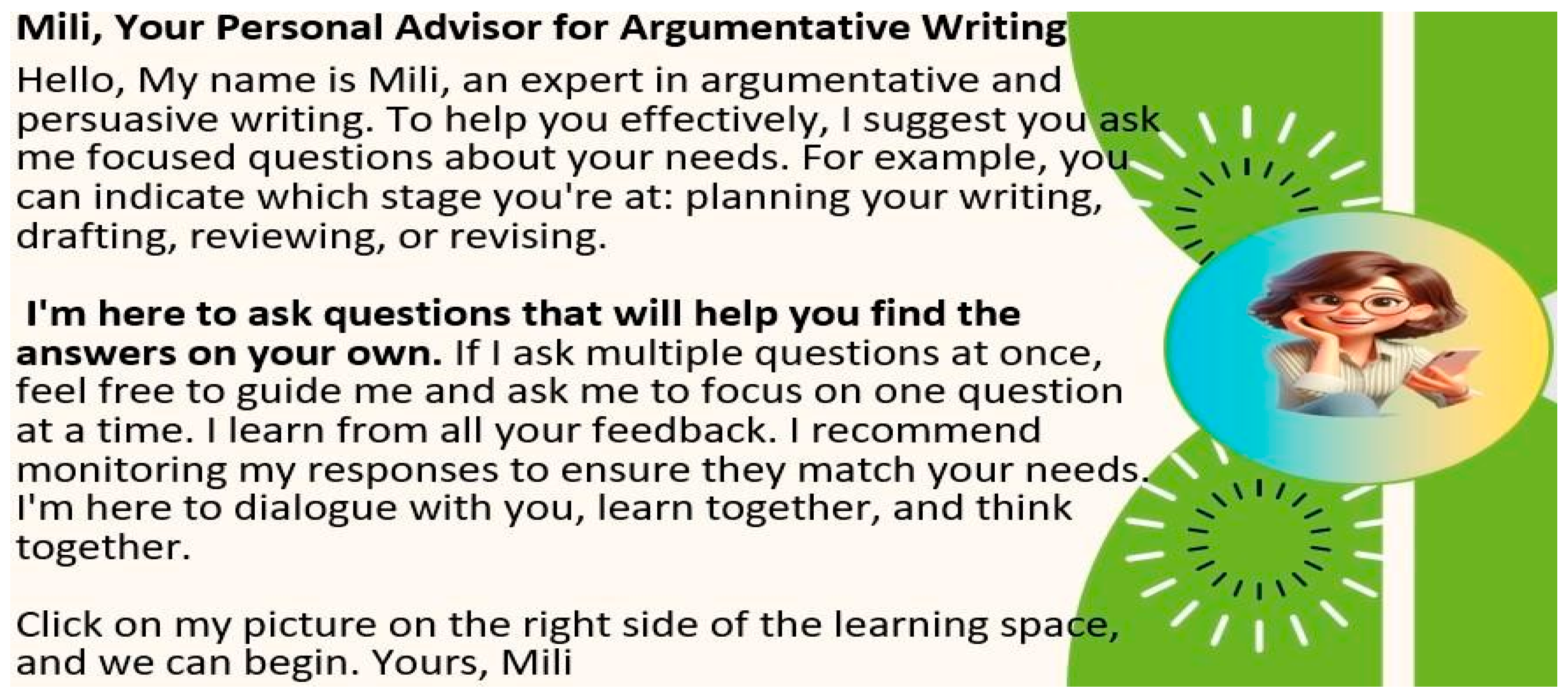
Mili operates within a closed and monitored digital environment designed for middle- and high-school students under the supervision of the Israeli Ministry of Education. Its integration within this ecosystem ensures safe, ethical, and trust-based teaching and learning, while maintaining privacy and data protection. The chatbot’s linguistic style was intentionally designed to be natural, warm, and non-judgmental, encouraging a positive and reflective learning experience. Within the dialogic interaction, each learner engages in a process of articulation, clarification, and conceptualization, a process that serves as the foundation for developing literacy resilience. The visual and character design of Mili was also intended to reflect these pedagogical principles, as shown in
Figure 2.
As illustrated in
Figure 2, Mili is represented as a young female character with a friendly smile and calm expression, conveying openness, confidence, and accessibility. This design was chosen to evoke a sense of human closeness, to foster empathetic dialogue, and to serve as a visual symbol of attentiveness, encouragement, and positive reinforcement.
4.2. Phase B: Identifying the Pedagogical Need and Defining Development Goals
The development of Mili originated from the emerging challenges faced by Hebrew L1 teachers in an era of AI-driven learning tools. Many teachers report difficulty in providing personalized feedback and in facilitating reflective dialogue about students’ writing and comprehension processes. At the same time, students increasingly rely on tools such as ChatGPT and Gemini, which offer grammatically correct and stylistically polished formulations but often hinder independent thinking and authentic learning. This widening gap between information accessibility and meaningful understanding has created an urgent pedagogical need.
In response, the project defined its primary goal: to design an educational-dialogic AI system that functions as a learning support tool, a differential assistant that helps teachers accompany their students in a personalized way and enables each learner to construct knowledge through individual reflective dialogue. Mili was thus conceived as a synthesis of pedagogical and technological dimensions: combining the educational principles of literacy resilience and dialogic feedback with the algorithmic mechanisms of artificial intelligence, in order to promote questioning, self-regulation, and gradual knowledge construction.
From the earliest design stage, it was decided that Mili would be integrated into the “Kivun HaIvrit” (Hebrew Compass) platform, a closed and supervised digital environment developed by the Ministry of Education as the official platform for Hebrew language learning. This development context was selected for its pedagogical and ethical advantages: ensuring privacy, maintaining pedagogical oversight, and allowing integration of digital learning tools within a coherent instructional framework.
On this foundation, a value-based framework was formulated for Mili, emphasizing responsibility, transparency, and professional ethics as the guiding principles for the system’s educational design.
4.3. Phase C: Designing the Pedagogical Principles and the Dialogic Structure
The design of the system is grounded in an integrated theoretical framework that brings together literacy resilience, metacognitive learning, dialogic feedback, and constructivist principles. Literacy resilience (
Amir, 2024,
2025) serves as the overarching framework, integrating linguistic-cognitive, metacognitive, and emotional dimensions of learning. Metacognitive learning provides tools for planning, monitoring, and evaluating understanding, while dialogic feedback establishes the interactive mechanism through which questions replace answers and meaning is co-constructed. Grounded in constructivist theory, the system positions learners as active knowledge builders rather than passive recipients of feedback. This integration was intentionally chosen to address the multidimensional nature of literacy learning and to support learners’ cognitive engagement, emotional persistence, and reflective agency. These principles are translated into concrete design features, which are detailed in the following sections. Specifically, learners are positioned as active knowledge builders through concrete design features, including open-ended prompts that require self-articulation, graduated questioning that builds on learners’ prior responses, pedagogical delay that intentionally withholds immediate answers, and reflective prompts that invite learners to evaluate and refine their own thinking. These features operationalize the theoretical principles of dialogic feedback, metacognitive learning, and literacy resilience by embedding reflection, agency, and self-regulation directly into the interactional structure of the system.
Building on this integrated theoretical framework, this stage focused on translating the psycho-pedagogical principles into practical operational guidelines embedded in the system. The design process was guided by five key theoretical pillars: literacy resilience, metacognitive learning, dialogic feedback, learning through observation, and the constructivist approach. These principles served as a compass for developing Mili’s pedagogical language, a language designed to stimulate thinking, reflection, and a sense of ownership over learning.
To operationalize these pedagogical principles in practice, the design process required systematic exposure to authentic pedagogical discourse and assessment language. Accordingly, the system was trained on a broad corpus of academic articles, pedagogical models, and professional assessment materials from the field of first-language instruction. This repository included recent scholarly sources addressing dialogic feedback (
Carless & Boud, 2018;
Nicol, 2012;
Winstone & Carless, 2019), metacognitive learning (
Dignath & Veenman, 2021;
Heaysman & Kramarski, 2022), and literacy resilience (
Amir, 2024,
2025). Each article was analyzed not only for its findings but also for its pedagogical discourse, that is, the ways in which questions, responses, and reasoning processes create active learning.
In addition to theoretical literature, Mili was also exposed to official professional assessment rubrics used in evaluating first-language writing. The purpose of this exposure was not to train the chatbot for evaluative grading, but to integrate the language of pedagogical assessment, the ways in which teachers identify linguistic quality, conceptual clarity, depth of analysis, and syntactic precision.
For example, the argumentative writing rubric used during the development process included criteria such as clarity of claim, conceptual coherence, and use of diverse reasoning. These criteria were embedded within Mili’s response framework, enabling the chatbot to ask questions that prompted learners to identify these same dimensions in their own writing.
The inclusion of such rubrics contributed to the creation of a shared pedagogical–language bridging teacher–student dialogue with intelligent conversational mechanisms. Rather than “writing on behalf of the learner,” Mili mediates the thinking process by posing questions that invite self-exploration and linguistic understanding.
Alongside this general theoretical infrastructure, the system incorporated a disciplinary foundation specific to the domain of first-language instruction, drawing on the work of
Avidov-Ungar and Amir (
2018,
2020), who emphasized the importance of aligning technology with the pedagogical logic of the discipline. This foundation clarifies that the dialogic guidance implemented in the system is not epistemically unconstrained, but operates within clearly defined theoretical and disciplinary boundaries. These boundaries orient learners toward accurate and standards-aligned understanding, even when feedback is delivered through guided inquiry rather than direct correction. In line with this perspective, Mili integrated disciplinary criteria into its dialogic guidance, allowing exploratory dialogue while maintaining alignment with established standards of first-language instruction.
4.4. Phase D: The Three Pedagogical Discourse Mechanisms of Mili
Based on the integration of principles from literacy resilience, dialogic feedback, metacognitive learning, and the constructivist approach, three central mechanisms were formulated to shape Mili’s discourse. These mechanisms define how the system operates as a collaborative learning mediator, encouraging self-inquiry, reflection, and motivation for learning.
The first mechanism is grounded in the understanding that meaningful learning arises from independent inquiry rather than receiving answers. Instead of providing an immediate solution, Mili responds with a question that directs the learner to re-examine their own reasoning:
“What do you think is missing in your argument?” “How could you refine your idea so that the reader better understands your point?” Through this process, feedback shifts from a one-directional message to an open dialogue, in which learners must articulate, examine, and validate their thoughts. This mechanism encourages reflection and metacognitive learning, fosters self-awareness, and strengthens learners’ sense of responsibility for their own learning.
- b.
Pedagogical Delay: Creating Space for Thought and Patient Learning
The second mechanism is based on the concept of pedagogical delay, a deliberate postponement of pedagogical response that grants learners time for internal processing.
Mili does not answer immediately or definitively; instead, it creates a brief moment of cognitive silence, inviting the learner to pause and think:
“Before I respond, what do you think the writer was trying to say?” “What detail might help you clarify your message?”
This delay embodies the logic of constructivist learning (
Wood et al., 1976;
Vygotsky, 1978) and self-regulated learning (
Zimmerman, 2002), allowing the learner to become an active partner in the thinking process rather than a passive recipient of information. In this way, a cognitive and emotional learning space is formed, one in which the learner can confront difficulty without fear, representing a tangible expression of literacy resilience (
Amir, 2025).
- c.
Emotional Reinforcement and Learning Support: Empathic and Strengthening Feedback
The third mechanism addresses the emotional dimension of pedagogical dialogue. Every response from Mili includes an element of acknowledgment, encouragement, or positive reinforcement aimed at cultivating self-efficacy (
Bandura, 1977) and creating a supportive learning experience:
“That’s a great idea! Let’s try to refine it a bit more together.” “I like the way you phrased your explanation. Maybe we could add an example to make it clearer?”
Mili’s language is designed to reduce learning anxiety and to build self-confidence in writing and dialogue. The empathetic feedback fosters an emotional–educational bond that enables the learner to take risks, make mistakes, experiment, and revise, essential conditions for the development of sustained cognitive and literacy resilience.
4.5. Phase E: Prompt Training and Refinement
At this stage, a focused fine-tuning process was conducted to refine Mili’s pedagogical language and to examine the consistency of its dialogic structure across different learning contexts.
The process relied on a large corpus of simulated dialogues generated by the pedagogical development team, which included the principal researcher, pedagogical supervisors from the Ministry of Education’s Department for Hebrew Language Instruction, and digital content developers.
Throughout this phase, dozens of educational prompts were formulated, tested, and revised according to the three core principles guiding the chatbot’s discourse design: a question answered with a question, pedagogical delay, and emotional reinforcement and learning support.
Each prompt was evaluated in terms of its capacity to generate a dialogic sequence that encourages independent thinking, reflection, and linguistic precision.
To that end, a series of simulated learning scenarios was developed to model student chatbot interactions in various linguistic tasks, such as argumentative writing, rewriting, summarizing, and comparing texts. The resulting dialogues were analyzed using both qualitative criteria (clarity of phrasing, pedagogical coherence, depth of discourse) and quantitative measures (number of conversational turns, dialogic sequence structure).
Insights from this analysis were used to iteratively improve the wording of prompts and the conversational flow until a stable pedagogical version of Mili was established. Throughout the process, system versions, simulated dialogues, and team reflections were systematically documented. This documentation provided a key source of data for understanding how Mili’s pedagogical language was shaped, forming the empirical basis for the analysis of findings presented in the following chapter.
4.6. Phase F: Preparation for Implementation and Establishing a Framework for Future Application
At this stage, the pedagogical and design preparations for integrating Mili into the Ministry of Education’s official digital learning environment, “Kivun HaIvrit.” (Hebrew Compass), were completed.
The goal was not to evaluate the system’s empirical effectiveness but to establish a responsible, ethical, and pedagogically grounded framework for its introduction into the educational system.
To support this, a set of instructional and orientation materials was developed to mediate the principles of dialogic learning for both teachers and students, fostering a shared understanding of how to engage with Mili as a reflective learning partner. The materials included introductory pages, visual guides, and infographics designed to present Mili as a learning companion that promotes expression, refinement, and depth, rather than a source of ready-made answers, as illustrated in
Figure 3.
As shown in
Figure 3, the sample instructional page presented to learners is titled:
“Mili, Your Personal Advisor for Writing an Opinion Essay.”
This title clarifies Mili’s pedagogical role as a supportive learning partner who encourages independent and reflective writing, not an authority providing final solutions.
On the visual side of the page, Mili is depicted as a young, smiling character with a calm expression, conveying openness, empathy, and approachability. The design aims to foster a sense of safety and human connection between learner and system, reflecting values of sensitivity, mutual respect, and positive reinforcement.
The accompanying text does not explain theoretical concepts but rather guides learners on how to interact effectively with Mili: to provide detailed responses, to use questions as tools for thinking, and to evaluate Mili’s replies critically and consciously. The tone is intentionally simple and personal (“Click on my image,” “Yours, Mili”) to build trust and create a natural entry point into AI-supported educational dialogue.
Subsequent versions of the instructional materials were developed for a variety of linguistic tasks, including reading comprehension, summarizing, and comparison, ensuring pedagogical consistency and strengthening Mili’s adaptability across different L1 learning contexts.
In parallel, a preliminary teacher training framework was designed to deepen teachers’ pedagogical and disciplinary understanding and to support the informed integration of Mili into dialogue-based teaching and learning processes. This framework was informed by earlier models of professional development for digital pedagogy integration (
Amir, 2024), emphasizing ethics, professional responsibility, and the preservation of disciplinary identity.
This phase concluded the proof-of-concept development, laying the pedagogical and ethical foundation for the next stage: analyzing the implementation of these principles as manifested in Mili’s feedback language and dialogic interaction patterns, which are discussed in the following Findings section.
5. Results: Development Findings and Their Interpretation
This chapter presents the main findings of the development process and their interpretation, following the Design-Based Research (DBR) approach in which the development process itself serves as a source of research knowledge. The findings emerge from the interaction between theory, pedagogy, and technology, demonstrating how the principles of literacy resilience, reflective learning, and dialogic feedback were translated into an algorithmic-pedagogical language within the Mili system.
The findings reported here are based on documentation from the design, training, and testing stages of the Mili educational chatbot, which was developed as a dialogic learning partner for first-language instruction. Analysis of the systematically documented system versions, simulated dialogues, and the development team’s reflections revealed three key findings that capture the evolution of Mili’s feedback language and the ways in which theoretical principles were practically implemented in the system:
Challenges in refining the pedagogical prompts
Patterns of dialogic feedback
Manifestations of literacy resilience in the learning dialogue
The following sections present these findings both descriptively and interpretively, illustrating how theoretical principles of dialogic, reflective, and self-regulated learning were embodied in Mili’s development process.
5.1. Challenges in Refining Prompts and the Training Process
The prompt development process exposed one of the most delicate challenges in designing an educational chatbot: how to embed principles of dialogic teaching within a system that is inherently designed to provide quick answers. Two main challenges characterized this stage of training.
The first challenge lay in embedding Mili’s core principle, responding to a question with another question.
In the early stages of development, Mili tended to reply in an informative and solution-oriented manner, consistent with the behavior of large language models
(LLMs). For example, when a simulated learner asked, “How do I start my argument?” Mili initially responded with a procedural answer: “Begin by introducing the topic and then continue with supporting reasons.”
Only after multiple training cycles and the input of hundreds of examples of reflective dialogues did Mili begin to internalize the principles of “a question answered with a question” and pedagogical delay, instead responding with prompts such as: “What is the main idea you want to convey?” or “Why is this topic important to you?”
This change required a fundamental restructuring of the prompts: developing clear instructions for the chatbot not to answer directly, but to respond with a question; incorporating examples of delayed dialogue sequences; and creating controls for the order and pacing of the conversation. The result was a shift in Mili’s pedagogical identity, from a system that delivers information to one that fosters self-inquiry and critical thinking.
These control mechanisms were specifically designed to address a limitation observed in general-purpose AI systems: the tendency to generate extended question sequences that can lead to cognitive overload. The safeguards include limiting questions per turn (1–2 maximum), requiring pauses to await learner responses, and triggering simplified responses when confusion is detected. These features maintain learner engagement without causing the fatigue that can occur when dialogic interaction lacks pedagogical structure.
- b.
Maintaining Focus and Natural Flow in Dialogue
In its early versions, Mili tended to ask long sequences of consecutive questions, which led to cognitive overload (for example: “What is your position? Who is your audience? What arguments will you use?”).
Pedagogical instructors who participated in the simulations reported that the interaction felt “too intense,” losing its emotional containment.
In response, several control mechanisms were added to the prompt design:
Limiting each dialogue turn to one question (or two clarification questions at most).
Instructing the chatbot to wait for the learner’s response before continuing the dialogue.
Incorporating a “confusion detection mechanism” that identifies expressions of difficulty (such as “I don’t understand,” or “This is too hard”) and triggers slower, focused responses like “Let’s focus on one question, what is your position on the topic?”
These two challenges illustrated the tension between the advisory nature of LLMs, which tend to provide rapid, direct information, and the pedagogical need for delay, focus, and mediated dialogue that promotes self-directed exploration.
Through iterative refinement based on repeated simulation feedback, the prompt design gradually reached a new balance: a non-judgmental, supportive, and focused dialogue that nonetheless guided learners toward independent and self-regulated thinking.
To achieve this, control mechanisms were integrated into the prompts to limit response length and the number of questions per turn, while enabling the chatbot to recognize situations where learners expressed confusion or overload (for example, “I don’t know what to say,” or “This is too much”) and to respond by slowing down and refocusing (“Let’s focus on one question, what is your position on the topic?”).
This process, informed by continuous insights from simulation-based testing, led to significant improvement in the coherence and pedagogical quality of Mili’s dialogic interactions.
5.2. Patterns of Dialogic Feedback
After the initial refinement phases were completed and the two challenges described above were addressed, an additional series of simulations was conducted to examine how Mili actually implemented the principles of dialogic feedback in practice. These findings are based on a systematic analysis of dozens of simulated conversations between Mili and simulated learners, created by the development team and pedagogical supervisors following the advanced stage of prompt training.
The analysis revealed three main feedback patterns that characterize Mili’s feedback language and reflect the internalization of the theoretical principles that guided its design.
Guiding questions as an alternative to direct feedback: Each response is framed as a question that encourages the learner to examine their understanding, expand their answer, and reformulate their ideas (for example, “What led you to choose this argument?” or “How might you explain this differently?”).
This pattern represents a shift from feedback that provides information to feedback that stimulates reflective and self-regulated learning.
Pedagogical delay in feedback: Mili intentionally delays providing direct information, sometimes responding with a guiding question such as “What do you think should be done next?”
This delay creates a feedback pause, allowing learners time for processing, planning, and deepening their understanding before taking action.
Emotional reinforcement and learning support: Mili’s responses are characterized by an empathetic, non-judgmental tone (for example, “I can see you worked hard to refine your argument, well done.”).
Such expressions strengthen learners’ sense of self-efficacy and confidence, consistent with
Bandura’s (
1977) framework of efficacy beliefs.
The feedback interaction becomes a collaborative learning space, where each question serves as a point of departure for inquiry, and every response is designed to invite the learner to think, refine, and construct meaning.
The three patterns illustrate how Mili successfully transformed the theoretical feedback principles, questioning, pedagogical delay, and emotional reinforcement, into a pedagogical–algorithmic language that operates in real time within the learning process.
To demonstrate how these dialogic feedback patterns are expressed in practice, the following example (
Table 1) presents an excerpt from one of the simulations conducted after the advanced training stage.
This example was chosen because it clearly illustrates how Mili activates its dialogic feedback mechanisms, translating pedagogical principles into a collaborative and reflective dialogue that promotes deep learning.
As shown in
Table 1, the dialogue opens with a simple and direct request from the student:
“Hi Mili, I need help writing an argument.”
Already in her first response, Mili applies the principles of dialogic feedback, combining openness, accessibility, and empathy. Instead of providing an immediate answer or a ready-made writing template, she chooses to employ the “question answered with a question” strategy:
“Can you tell me what topic you’re writing about?”
Through this question, Mili shifts the responsibility to the learner, inviting the student to define the purpose of the writing task independently and positioning them as an active agent in the feedback process.
When the student introduces the topic, “whether it’s right to allow students to use mobile phones at school”, Mili responds with positive reinforcement followed by a probing question:
“Excellent topic! Before we start building the text, let’s think about your position: Are you for or against using phones at school?”
The affirmation (“Excellent topic!”) functions as an emotional support element, but it does not end there. Mili immediately continues with a reflective question that prompts the learner to think critically about their stance. In doing so, feedback transforms from a one-way message into an inquiry-based, thought-provoking dialogue.
A pivotal moment occurs when the student expresses uncertainty:
“I don’t know. On one hand, phones sometimes help with learning, but on the other hand, it’s also very tempting to play on the phone.”
Instead of offering an explanation or ready-made answer, Mili chooses to delay her response, a pedagogical delay, and formulate a new question that returns responsibility to the learner:
“If you think about day-to-day life in the classroom, what do you think happens more? Do phones really help with learning, or in practice do they interfere with concentration?”
This is a clear instance of dialogic feedback that generates learning: the chatbot does not supply a solution but rather guides the student to explore, compare, and construct understanding independently.
Thanks to this mechanism, the dialogue naturally progresses toward the formation of an autonomous position. The student moves from describing general hesitation to articulating a reasoned argument:
“I think they interfere more. Even when it’s allowed to use them for something educational, in the end, everyone goes on WhatsApp or TikTok and loses concentration.”
Here it becomes evident that Mili’s questioning feedback has triggered a reflective learning process: the student draws a personal conclusion based on observation of classroom behavior, not external instruction.
Mili then responds in a way that deepens the feedback process rather than closing it: “It sounds like you’re starting to form a clear position, right?”
Instead of offering praise alone, she asks a metacognitive question that encourages the learner to recognize the development of their own thinking, a pivotal moment of self-awareness and reflection.
When the student finally articulates their position in their own words, “I think phone use should be banned during school hours because it harms concentration…”, Mili provides a concluding feedback statement that blends emotional reinforcement with process evaluation:
“How wonderful, I can see your position is really well-formed… Did the conversation with me help you?”
This question marks a transition from external to self-generated feedback; the learner is invited to evaluate their own learning process and the contribution of the dialogue to their understanding.
These characteristics are not incidental; they represent recurring patterns identified in hundreds of student–Mili interactions that were reviewed and analyzed by the development team throughout the system’s design and validation phases. In all cases, the same core principles were consistently observed: a question answered with a question, pedagogical delay, and emotional-cognitive reinforcement. Together, these principles form the foundation of dialogic, learning-oriented feedback, reflecting Mili’s role as an educational AI that fosters independent thinking, self-regulation, and literacy resilience.
In this way, feedback is no longer merely an assessment tool but becomes a dialogic teaching mechanism, a continuous process of articulation, refinement, and deepening of understanding.
The feedback discourse that Mili generates demonstrates how an algorithm can “speak pedagogy”, embodying, through language itself, the principles of dialogic, inquiry-based, and empathetic teaching.
The next section presents the pedagogical implications of Mili’s dialogic feedback: how it supports the development of literacy resilience, reflective thinking, and learners’ sense of self-efficacy.
5.3. Manifestations of Literacy Resilience
The third finding concerns the emergence of manifestations of literacy resilience in the simulated dialogues between Mili and the simulated learners, as documented during the training and testing stages following the refinement of the prompts.
At this stage, Mili had already internalized the principles of dialogic feedback and was applying them consistently, creating learner-centered interactions that were open, cognitively engaging, and emotionally attuned.
The analysis revealed how Mili’s language actively elicited behaviors associated with literacy resilience, a cognitive, emotional, and metacognitive phenomenon reflecting the learner’s ability to cope with complex linguistic tasks while maintaining a sense of efficacy and persistence (
Amir, 2024,
2025;
Heaysman & Kramarski, 2022).
- 1.
Recognizing Difficulty and Taking Responsibility for Learning
One of the most prominent findings was the learners’ growing ability to identify their own weaknesses in writing or comprehension and to reflect upon them.
When Mili asked questions such as “What do you think is missing in your argument?” or “How could you explain this so that it is clearer to the reader?”, learners tended to respond in self-aware terms:
“I think I didn’t connect my example well enough to my main claim,” or “I need to explain why this is important.”
Such dialogues illustrate self-regulated learning, in which learners engage in self-assessment and improvement in response to non-judgmental, thought-provoking feedback rather than corrective evaluation.
- 2.
Persistence and Coping with Cognitive Challenge
In many cases, learners were not discouraged by difficulty but chose to actively confront it.
Instead of asking for a direct answer (“Can you write me an example?”), they responded with repeated attempts to refine their phrasing and test alternatives (“Maybe it’s better to say it strengthens the community, not just the individual?”).
Mili supported this process through expressions such as “That’s a good idea, let’s try to refine it together,” or “This is an excellent start, how could you expand it?”
These interactions exemplify what
Amir (
2025) defines as cognitive-literacy resilience, the capacity to tolerate complexity and to operate within it while preserving a sense of agency and ownership of the learning process.
- 3.
Shifting from Reactive to Reflective Thinking
Another significant finding concerned the transition from reactive dialogue (“What’s right?”, “How do I do this?”) to reflective dialogue (“What do I want to say?”, “How will this sound to the reader?”).
This shift stemmed from Mili’s question-driven interactional structure, which required learners to explain their intentions, evaluate their formulations, and justify their linguistic choices.
As a result, a pedagogical slowing-down occurred: the dialogue shifted from a result-oriented to a process-oriented focus, a fundamental change in the nature of language learning.
This pattern concretely demonstrates the connection between dialogic feedback and literacy resilience: when dialogue invites time to think and formulate, learners learn to “listen to themselves.”
- 4.
Emotional Reinforcement and a Sense of Efficacy
An emotional dimension was particularly evident in dialogues where Mili praised effort rather than outcome, for example: “
I appreciate that you insisted on explaining it again,” or “
It looks like you really put thought into this.” Such phrasing generated a sense of security and motivation to keep trying. Learners used expressions like “
Now it’s clearer to me” or “
I think I managed to improve,” reflecting an enhanced sense of self-efficacy, a key component in the development of literacy resilience (
Bandura, 1977;
Amir, 2024).
This finding suggests that Mili is not merely a technological tool providing feedback but a dialogic system that cultivates dynamic literacy resilience, a synergy of emotional efficacy, cognitive regulation, and reflective thought.
This integration illustrates the potential of AI-mediated scaffolding as a new pedagogical space in which learners “think through language” and transform it into an instrument of agency and personal empowerment.
6. Discussion
The findings of this development study demonstrate the potential of designing an educational AI system that is grounded in pedagogical and psycho linguistic principles rather than technological efficiency alone. Throughout the iterative training and refinement process, Mili evolved from a tool that offers immediate answers into a dialogic learning partner that encourages reflection, self-regulation, and deliberate cognitive engagement. This shift aligns with contemporary approaches to feedback that emphasize process over correction and dialogic interaction over transmission, as articulated in the work of
Carless and Boud (
2018), and
Nicol (
2012). Instead of providing direct solutions, Mili consistently uses questions, prompts reflection, and incorporates pedagogical delay, inviting learners to pause, reconsider, and reformulate their ideas. As the findings show, this dialogic structure reshapes feedback from a one-directional message into a space for inquiry and metacognitive awareness.
The development process illustrates that Mili does not focus on supplying information but instead supports the learner in articulating purpose, clarifying meaning, identifying gaps, and strengthening the coherence of their writing. These dialogic interactions exemplify the shift from performance feedback to feedback that fosters self-evaluation and strategic thinking, consistent with models of effective feedback that ask learners to consider where they are going, how they are progressing, and what comes next (
Hattie & Timperley, 2007). By repeatedly encouraging learners to justify choices, compare alternatives, and evaluate clarity, Mili strengthens their ability to plan, monitor, and regulate their work. This aligns with the feedback literacy framework, in which feedback becomes effective only when learners actively interpret and use it to improve future performance (
Carless & Boud, 2018;
Molloy et al., 2020).
Alongside these core mechanisms, the findings show that emotional safety is a necessary condition for reflective learning. The system was intentionally trained to respond with empathy, affirmation, and respect. Phrases that acknowledge effort and encourage persistence appear to generate confidence and willingness to revise, echoing research that highlights the importance of emotional presence in online and AI-mediated feedback (
Garrison & Cleveland-Innes, 2005). These patterns were evident both in simulated learner dialogues and in teachers’ responses during demonstrations, where supportive language and the absence of judgment created psychological readiness for cognitive challenge.
An important pedagogical consideration concerns student engagement and choice. Mili is designed for learners who are willing to engage in reflective, dialogic learning processes. However, as one reviewer aptly noted, there is a genuine risk that less-engaged students may bypass dialogic AI tools in favor of immediate-answer systems such as ChatGPT or Gemini. This challenge cannot be resolved through system design alone. Rather, it requires institutional and pedagogical framing. Mili operates within the “Kivun HaIvrit” platform under teacher supervision, where educators assign tasks, monitor engagement, and mediate students’ interactions with the system. This structured environment positions Mili not as a replacement for teaching but as an extension of the teacher’s dialogic role. Future empirical research will be essential to examine how students choose between dialogic and direct-answer AI systems, what factors influence these choices, and how teachers can effectively support engagement with reflective learning tools.
A critical distinction exists between general-purpose conversational AI and pedagogically designed educational systems. While tools such as ChatGPT, Gemini, and DeepSeek can engage in dialogic exchanges, they lack the intentional pedagogical architecture necessary for effective learning support. General-purpose AI systems are optimized for conversational fluency rather than for specific learning processes such as metacognitive reflection, self-regulated learning, or literacy resilience. Mili differs fundamentally in three pedagogical dimensions. First, it incorporates dialogue management mechanisms that prevent cognitive overload: limiting questions per turn (1–2 maximum), recognizing learner confusion, and deliberately pacing interaction to allow processing time. General LLMs often generate extended question sequences without pedagogical structure, potentially leading to user fatigue. Second, Mili is designed for depth-oriented rather than surface-organizing dialogue. Its questions scaffold progression from uncertainty to reasoned position-taking (
Table 1), transforming thinking rather than merely organizing existing ideas. Third, Mili integrates emotional support with cognitive challenge, grounded in self-efficacy theory (
Bandura, 1977), creating psychological safety for sustained engagement.
The findings also illustrate how dialogic AI feedback can support the development of literacy resilience, a construct that integrates linguistic, cognitive, and emotional dimensions and emphasizes the ability to persevere through complex literacy tasks (
Amir, 2024,
2025). Mili’s questioning techniques encourage learners to clarify what they understand, identify difficulties, and articulate next steps. The pedagogical delay embedded in the system gives learners time to engage with uncertainty and remain cognitively active rather than reverting to quick answer seeking. Through this structure, learners demonstrate behaviors associated with literacy resilience, including reflective thinking, cognitive endurance, and the willingness to persist through ambiguity. The emotional support embedded in Mili’s language reinforces learners’ sense of self-efficacy, which is central to resilience development and deeply connected to learners’ capacity to face literacy challenges with agency.
These findings resonate with recent empirical investigations of AI-mediated feedback. Studies in science learning environments have shown that chatbots that prompt learners to explain reasoning, reflect on prior knowledge, or evaluate accuracy lead to deeper cognitive processing and more sustained engagement (
Yin et al., 2024). Research with K to 12 learners highlights that chatbots are often used as content generators unless actively designed to support self-regulated learning processes, as shown in a series of studies examining students’ perceptions, interaction habits, and metacognitive behaviors when using generative AI (
Klar, 2025). Complementing these findings, large-scale analyses of AI-based learning tools in K to 12 settings indicate that while AI can improve learning outcomes, its impact varies considerably depending on the quality of feedback and the degree to which it promotes cognitive and reflective engagement rather than automation (
Lee & Kwon, 2024). When considered together, these studies reinforce that AI systems designed to ask questions, prompt reflection, and encourage metacognitive regulation are more likely to support meaningful learning than systems that provide direct answers or automated corrections.
Design-based research in educational technology has emphasized the importance of grounding AI systems in pedagogical theory rather than technical capability alone (
Giannakos et al., 2025). A central challenge in the development of Mili was translating abstract pedagogical principles such as dialogic feedback, metacognitive prompting, emotional sensitivity, and literacy resilience into an algorithmic structure that can be implemented consistently. The process required converting pedagogical concepts into text-based rules and prompt architectures, constructing contextual awareness that allows the system to adapt responses to different phases of the dialogue, and embedding ethical and emotional considerations into the language patterns. Through this work, the system became not only linguistically coherent but pedagogically intentional. Rather than mimicking a teacher’s tone, it internalized the logic of educational mediation: asking, delaying, clarifying, connecting, and reinforcing.
Recent frameworks for AI in education emphasize the need for systems that function as learning partners rather than answer providers, complementing teachers rather than replacing them (
Labadze et al., 2023). As the findings reveal, Mili operates as a learning partner that encourages students to think with language rather than consume language. Instead of replacing the teacher, the system extends the dialogic space of learning and creates opportunities for learners to develop reflective habits, regulate their thinking, and strengthen their literacy skills. This repositions AI not as a shortcut for knowledge acquisition but as a facilitator of deeper reasoning and resilient literacy practices. By framing feedback as a dialogic and metacognitive process, Mili contributes to a reconceptualization of AI-based feedback as a catalyst for reflection, ownership, and cognitive growth. The balance between emotional safety, cognitive challenge, and reflective questioning demonstrates how AI can be designed to enhance assessment and feedback practices while preserving the human values at the core of meaningful learning.
7. Conclusions and Contributions
This study offers an innovative educational framework for understanding the role of artificial intelligence in teaching, not as a technology that replaces the teacher, but as an intelligent partner that expands the space for dialogue, thinking, and feedback. The Mili system demonstrates how AI can be designed around pedagogical principles rather than algorithmic logic alone, turning feedback into a process of reflective and self-regulated learning.
Unlike systems that focus on efficiency or technical correctness, Mili is grounded in questioning, intentional delay, and empathetic language that stimulates inquiry and critical thought.
At the theoretical level, the study extends the concept of literacy resilience (Amir, 2022–2025) into the field of educational AI. It conceptualizes literacy resilience as a psycho-pedagogical framework integrating linguistic skills, self-regulation, and emotional sensitivity within technology-supported learning.
The principle of pedagogical delay, the intentional postponement of an immediate answer to allow time for processing, reflection, and awareness, embodies these foundations and situates learning as an active experience of thinking rather than a passive reception of answers.
This model of AI-mediated learning introduces a new paradigm: a system operating according to principles of reflective dialogue, self-efficacy, and internal reinforcement, keeping the human being at the center even in technologically rich environments.
Mili demonstrates that meaningful learning occurs at the intersection of challenge, support, and reflection.
Its dialogic language invites self-expression, personal articulation, and tolerance for uncertainty, key components of a learner with literacy resilience.
It contributes to shaping a new concept of reflective pedagogical intelligence: a system capable of learning the language of mediation, clarification, and encouragement, not only the language of knowledge.
This integration between pedagogical and algorithmic logic establishes communication between humans and machines based on trust, listening, and sensitivity.
From a practical perspective, the study underscores the need to design educational AI systems grounded in broad pedagogical understanding, informed by cognitive-emotional foundations rather than mere efficiency algorithms. This approach responds to calls in the field for pedagogically grounded AI design that prioritizes learning processes over technical efficiency (
Giannakos et al., 2025;
Jensen et al., 2025).
The development of Mili demonstrates how an AI system can be trained to ask graduated questions, delay responses, mirror learning processes, and formulate reinforcing feedback that nurtures competence and confidence.
In doing so, it presents a model of pedagogically intelligent technology, a system that understands process rather than merely product, and that generates learning rather than simply reflecting it.
The theoretical contribution of this study lies in introducing a new educational category: AI-mediated learning, while the practical contribution lies in demonstrating how AI systems can operate from an educational, emotional, and human understanding. Mili illustrates how technology can not only facilitate teaching but also preserve the human dimension, stimulate critical thinking, and strengthen literacy resilience in an era of continuous change.
7.1. Practical Implications and Educational Policy Directions
The study yields several practical implications at the levels of teaching, teacher education, and educational policy.
First and foremost, the integration of AI-based educational chatbots that employ dialogic feedback into first-language instruction has the potential to enrich teaching, foster reflective learning, and strengthen students’ literacy resilience. The Mili system demonstrates how AI tools can become part of the teaching process itself, not as replacements for teachers, but as dialogic partners that stimulate independent thinking and inquiry.
In addition, teachers are required to develop a new form of digital-pedagogical literacy that recognizes artificial intelligence as a learning-supporting agent rather than as an automatic answer provider.
To achieve this, targeted professional development programs should be established to deepen teachers’ understanding of metacognitive dialogue, feedback literacy, and literacy resilience, enabling the thoughtful, sensitive, and ethical use of AI tools in the classroom.
Finally, educational systems must formulate a comprehensive policy for responsible AI use, grounded in principles of trust, transparency, and value-based education. Such a policy should position artificial intelligence as an integral part of the human mediation ecosystem, not as a substitute for it.
In doing so, it can ensure that technology remains a means for fostering thought, dialogue, and creativity, rather than an end in itself.
7.2. Future Research Directions
Future research directions point toward a substantial expansion of knowledge on AI-based dialogic feedback, as outlined below.
- 1.
Empirical studies with students and teachers
Following the necessary ethical and institutional approvals, an empirical study will soon be conducted to examine learners’ and teachers’ experiences with Mili in authentic educational settings.
The research will include the analysis of questionnaires, chatbot–learner dialogues, and interviews with students and teachers.
This study will allow for empirical validation of the pedagogical hypotheses and theoretical principles that guided the system’s development.
- 2.
The teacher’s evolving role in the age of intelligent feedback
This line of inquiry will explore the changing dynamics among teacher, student, and chatbot, the distribution of pedagogical responsibilities between human and AI-based feedback, and how teachers integrate Mili into their instructional practices.
The findings will contribute to a deeper understanding of the teacher’s role in the AI era and to the development of models for human–machine pedagogical collaboration.
- 3.
The impact of Mili on differentiated instruction. Mili may enable teachers to implement differentiated instruction more effectively. Future studies will investigate how Mili supports personalized feedback tailored to students’ individual needs, abilities, and learning pace, and to what extent it frees the teacher to focus on complex mediation for students requiring additional support. Such research can offer insight into the potential of dialogic AI systems to promote equity, personalization, and pedagogical inclusivity. Future iterations may also explore mechanisms for incorporating longitudinal learner profiles, tracking progress, identifying patterns, and adapting questions based on individual learning histories, while carefully addressing privacy, consent, and ethical considerations. Such development would enhance adaptive personalization while maintaining Mili’s role as a complement to, rather than a replacement for, human pedagogical judgment.
- 4.
Student choice and engagement with dialogic vs. direct-answer AI A critical area for future research concerns understanding why and when students choose dialogic AI systems like Mili over direct-answer tools such as ChatGPT or Gemini. Research should examine: (a) patterns of student choice in different task contexts, (b) factors that influence sustained engagement with reflective AI tools, (c) the role of teacher mediation in shaping these choices, and (d) differences between engaged and less engaged learners in their use of dialogic feedback systems. Such research would provide essential insights into how dialogic AI can be positioned to maximize educational impact while acknowledging realistic constraints on student motivation and engagement.
8. Research Limitations
The present study was conducted as a design-based development process and did not include empirical data from participants or implementation in real classrooms. Accordingly, the findings are derived from simulated dialogues, iteratively refined prototypes, and expert evaluations, rather than from actual student performance or observations of authentic learning. This approach made it possible to distill the principles of dialogic feedback and construct a coherent pedagogical model, yet it limits the generalizability of the results to real classroom experiences.
Another limitation relates to the nature of the simulated dialogues used during the training phase. Although these dialogues were carefully constructed to represent common learner behaviors, they do not fully capture the complexity, heterogeneity, and unpredictability that characterize interactions with real students. Actual learners may respond differently, particularly when experiencing frustration, uncertainty, or linguistic difficulties.
Finally, because the study focused on translating pedagogical principles into algorithmic structures, it did not examine long-term outcomes such as improved writing quality, the development of literacy resilience, or sustained changes in self-regulation.
Future empirical research will be essential for evaluating Mili’s effectiveness in authentic educational settings.
Additionally, this study acknowledges that Mili’s effectiveness depends significantly on pedagogical framing and teacher mediation. The system presupposes students who are willing to engage in reflective dialogue rather than seek immediate answers. Whether students choose Mili over direct-answer tools like ChatGPT depends on institutional context, task design, and teacher guidance—factors that extend beyond the system’s algorithmic design. Future research must examine these dynamics empirically to understand adoption patterns and engagement sustainability.
It is important to emphasize that Mili is not designed to replace the teacher but rather to expand the space for pedagogical dialogue. The teacher maintains deep personal familiarity with each student and provides the personalized mediation and emotional support that an AI system cannot replicate. Mili functions as a complementary partner within the learning session, while the teacher remains responsible for holistic, individualized instruction.





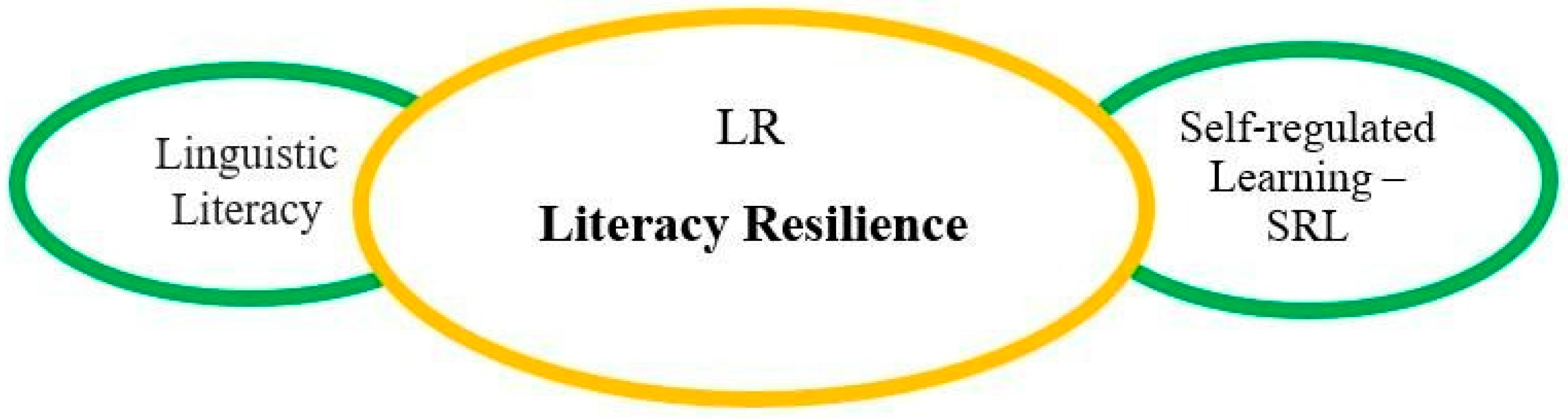



 Student
 Mili
Mili Mili
Mili Mili
Mili Mili
Mili Mili
Mili Mili
Mili