Article

Enhancing L2 Learners’ Perceived Social Presence and Vocabulary Learning Grit: The Mobile Vocabulary Learning-Pal Gamification

1
School of Education, Iowa State University, Ames, IA 50011, USA
2
Department of Learning Technologies, Design & School Library Media, Towson University, Towson, MD 21252, USA
3
Curriculum and Instruction, Purdue University, West Lafayette, IN 47907, USA
*
Author to whom correspondence should be addressed.
Educ. Sci. 2026, 16(2), 278; https://doi.org/10.3390/educsci16020278
Submission received: 9 January 2026 / Revised: 5 February 2026 / Accepted: 5 February 2026 / Published: 9 February 2026
(This article belongs to the Special Issue Bilingual Education and Second Language Acquisition)

Abstract

Vocabulary learning has been a challenge for second language (L2) learners, often due to its repetitive nature and the massive time investment it requires. To address these challenges, digital gamification features have been introduced to L2 learners and educators in higher education contexts to enhance the learning experience and foster learner grit. This study examined the impact of a mobile collaborative gamification feature, the learning-pal activity, on L2 vocabulary acquisition, focusing on learners’ vocabulary learning grit and perceived social presence. Using a quasi-experimental design, 100 L2 students from a Chinese university were divided into two groups: an experimental group (N = 62), which used the learning-pal feature within the Shanbay Danci (SBDC) app, and a control group (N = 38), which used the app without the collaborative feature. Employing a mixed-methods approach, the study found that participation in the learning-pal activity significantly improved learners’ vocabulary learning grit. However, the activity did not significantly enhance perceived social presence; notably, the experimental group reported lower levels of perceived social presence than the control group. These findings suggest that mobile collaborative gamification can effectively foster sustained vocabulary learning efforts but provide limited opportunities for social interaction during the vocabulary learning process.

1. Introduction

Vocabulary acquisition is a critical component of second language (L2) learning, requiring sustained effort and significant time investment. However, research has shown that many L2 instructors struggle to allocate sufficient classroom time for effective vocabulary instruction. Consequently, most vocabulary learning occurs informally outside of class (Schmitt, 1998; Schmitt, 2010). When L2 learners engage in vocabulary learning independently, they often face challenges in maintaining consistent effort toward their learning goals (Nation, 2022). As Nation (2022) emphasizes, vocabulary learning demands prolonged engagement, and the transfer of lexical items from working memory to long-term memory requires repeated exposure and active recall. Sustaining this level of effort can be difficult, especially in out-of-class settings where learners often lack structured support or peer accountability.
To support learners’ continuous efforts in learning vocabulary outside the classroom, mobile learning applications (Apps) increasingly incorporate gamification features designed to boost motivation and engagement during the vocabulary learning process (Yu, 2023). Learning through mobile devices has become one of the most actively discussed topics in the MALL domain (Duman et al., 2015; Burston, 2015; Li et al., 2022). Gamified elements (e.g., points, digital badges, leaderboards, and reward systems) aim to make the learning process more enjoyable and stimulating (Zainal, 2023). Commercial MALL applications such as Duolingo, Babbel, and italki integrate these features alongside social and multimedia components to sustain engagement. However, several scholars have highlighted potential drawbacks of game-based or gamified learning, particularly its difficulty in sustaining learners’ interest and motivation over the long term (Furdu et al., 2017). Consequently, the effective integration of gamification into language learning remains a topic warranting further investigation and critical discussion.
Learning grit, as a personality trait, has become a central topic in vocabulary learning research. Duckworth et al. (2007) conceptualized grit as comprising two sub-constructs: perseverance of effort (PE) and consistency of interest (CI). To capture this construct more accurately in language learning contexts, Teimouri et al. (2022) developed a language-specific grit scale, arguing that learner behaviors and motivational patterns in L2 learning extend beyond domain-general grit to include subject-specific factors such as language enjoyment, language anxiety, learners’ mindsets about language ability, and sustained intended effort and attention during language learning. Their findings also revealed that L2 vocabulary learning grit is closely associated with both language learning motivation and achievement, positioning grit as a significant predictor of L2 learning success. While grit has been consistently linked to higher engagement, the role of interactive or collaborative learning activities in fostering grit remains underexplored.
The value of peer interaction in learning has been recognized since the late 18th century (Kim & Baylor, 2006). Bandura’s (1999) social cognitive theory posits that learners develop psychological models by observing peers, enhancing their self-efficacy through exposure to competent models. Similarly, socio-cultural theory (Vygotsky & Cole, 1978) emphasizes that learning is inherently social, with higher-order cognitive processes emerging from social interaction. Collaborating with peers of similar skill levels can promote the exchange of ideas in a supportive environment (Driscoll, 2014). Moreover, interaction with peers and instructors outside of the classroom has been shown to foster deeper engagement. For instance, Chickering and Ehrmann (1996) indicated that students who stay in contact with their instructors are encouraged to keep working over an extended period, which further enhances their intellectual commitment.
Social presence, along with teaching and cognitive presence, is one of the constructs of the Community of Inquiry (CoI) framework that refers to the “ability of participants in a Community of Inquiry to project their personal characteristics into the community, thereby presenting themselves to other participants as ‘real people’” (Garrison et al., 2001, p. 89). Social presence has been found to be important in online environments to increase learners’ satisfaction and perceived learning (Richardson, 2001). However, how certain gamification features can be used to enhance social presence is still underdeveloped, especially in a mobile learning environment. Previous research has predominantly examined affective factors, such as learners’ attitudes and perceptions toward mobile-assisted vocabulary learning, yet few studies have investigated how vocabulary learning activities can be enriched from a social interaction perspective. Studies focusing on vocabulary learning outcomes have reported limited effectiveness (Xu et al., 2025), suggesting that persistence and goal-oriented effort are crucial for successful vocabulary acquisition. Given that vocabulary learning inherently demands long-term effort, exploring learners’ vocabulary learning grit becomes particularly meaningful. Therefore, the present study addresses this research gap by examining whether the learning-pal gamification feature embedded in a mobile vocabulary learning application can enhance L2 learners’ perceived social presence. Furthermore, it investigates whether this feature contributes to the development of learning grit among L2 learners.

2. Literature Review

2.1. Social Presence and Mobile-Assisted Language Learning (MALL)

Social presence has been recognized as an important factor in enhancing learning performance and satisfaction. Both practitioners and researchers have explored different instructional strategies to enhance social presence, such as integrating collaborative projects, increasing instructor visibility through recorded videos, sending weekly greetings, and sharing personal stories (Fiock, 2020).
Mobile learning affords several advantages for language learning, including greater accessibility, flexibility, and increased opportunities for interaction. It allows learners to access content anytime and anywhere, thereby enhancing continuous and self-directed learning (Kukulska-Hulme & Shield, 2008; Palalas, 2015). Several studies have investigated the potential of mobile learning to improve learners’ social presence. For instance, Alsadoon (2018) found a positive correlation between social presence and learning satisfaction in a mobile learning environment. The study suggests that enhancing social presence through mobile technologies can increase learner satisfaction, motivation, and learning outcomes. Participants reported that the use of WhatsApp, a mobile messaging application, provided more opportunities for interaction and fostered a sense of belonging within the course. proposed the concept of “mobile social presence,” distinguishing it from traditional online social presence. According to their study, mobile social presence benefits from features such as “personalized control” and “location-free interactions”. They argue that mobile learning environments enriched with social context-awareness, flexible communication, and personalized interactivity are particularly effective in enhancing social presence.
Similarly, Çakmak (2019) developed a conceptual framework presenting MALL design principles. The framework highlights the role of personalization in increasing social presence, noting that mobile communication tends to support more conversational and informal interactions, in contrast to the formal learning environments often found in traditional educational settings. In large classes, where opportunities for interaction are limited, even in face-to-face environments, students may experience feelings of isolation. Leveraging the communicative affordances of mobile learning can help decrease this isolation, enhance social presence, and ultimately boost motivation for language learning.

2.2. Gamification and Vocabulary Learning

Integrating gamification into vocabulary learning has become an increasingly popular approach in second language (L2) acquisition. Zainal (2023), in a literature synthesis, found that L2 learners in higher education contexts generally hold positive attitudes toward gamified vocabulary learning. The study highlighted that gamification creates a rich learning environment and supports competitive learning techniques, which further enhances learner motivation. Studies have examined the integration of gamification features to support language learning. For instance, Fithriani (2021) conducted a study with Indonesian EFL students and found that mobile-assisted gamification improved students’ vocabulary acquisition, motivation, and overall enjoyment of the learning process. Govender and Arnedo-Moreno (2021), after reviewing 114 published studies on game-based language learning, identified vocabulary acquisition and retention as the most commonly targeted outcomes of digital gamification. They noted that gamification techniques frequently include feedback, leaderboards, competition, collaboration, leveling systems, and various formats of learning challenges. Liu (2020) also found that incorporating both competitive and collaborative elements in learning environments significantly enhanced L2 learners’ effectiveness, motivation, and enjoyment.
Building upon these findings, the current study employs a collaborative gamification feature offered by a mobile vocabulary learning app called Shanbay Danci (SBDC). Specifically, this study focuses on the app’s learning-pal feature, which facilitates peer accountability and mutual encouragement.

2.3. Vocabulary Learning Grit

Grit has been widely studied as a personal trait that contributes to the achievement of long-term goals across different domains. According to Duckworth et al. (2007), grit consists of two sub-constructs: perseverance of effort (PE) and consistency of interest (CI). PE refers to “a person’s inclination to invest durable energy over a long period of time” (Teimouri et al., 2022, p. 896), while CI refers to “a person’s consistency of passion for a high-order goal, even when encountering challenges, obstacles, or failures” (Teimouri et al., 2022, p. 896). As a noncognitive trait, grit has been proven to be an important factor together with talent, to achieve long-term and difficult goals. Several researchers indicated that grit is a significant predictor of academic success and performance (Duckworth, 2017; Credé, 2018).
In the field of L2 acquisition, grit has increasingly been recognized as a personal trait that contributes to successful language learning, especially for vocabulary acquisition, which requires sustained effort, self-regulation, and continuous motivation. For example, El Hadim and Ghaicha (2024) found that both PE and CI significantly contributed to vocabulary knowledge among first-year English majors in Morocco. Furthermore, Teimouri et al. (2022) developed and validated a scale specifically designed to measure L2 learning grit. Their study found a positive relationship between grit, L2 learning motivation, and achievement.

2.4. Integrating Social Presence, Gamification, and Vocabulary Learning Grit

Although social presence, gamification, and learning grit have each been widely studied, their interrelationship within mobile-assisted language learning remains underexplored. Gamified features, specifically those that support peer interaction and collaboration, may simultaneously enhance learners’ social presence and foster sustained effort toward vocabulary acquisition. From the perspective of the Community of Inquiry (CoI) framework (Garrison et al., 2001), social presence serves as a mediating construct that enables meaningful engagement and persistence. When applied in a gamified mobile context, features such as peer accountability, progress tracking, and mutual encouragement could help sustain both social connection and learning grit. Thus, the current study positions collaborative gamification as a potential enhancement linking social presence and grit within mobile-assisted vocabulary learning environments.
Given the importance of grit in L2 vocabulary acquisition, it is critical to explore strategies that promote vocabulary learning grit. Despite the growing interest in this area, limited research has investigated how collaborative mobile gamification might influence L2 learners’ grit. Additionally, most existing studies on mobile-assisted vocabulary learning rely heavily on self-report surveys, with little attention paid to learners’ actual learning behaviors (Lee, 2024).
To address these gaps, the present study examines how the learning-pal gamified feature of the SBDC influences L2 learners’ perceived social presence and vocabulary learning grit. In addition to self-reported perceptions of social presence, this study incorporates behavioral data, specifically, the cumulative number of vocabulary learning days recorded by the SBDC, as an indicator of grit.
The research questions of this study are:
  • To what extent does the learning-pal gamification feature increase L2 learners’ vocabulary learning grit?
  • To what extent does the learning-pal gamification feature improve L2 learners’ perceived social presence level in the vocabulary learning process?
  • What are L2 learners’ perceived social presence learning experiences of using the learning-pal gamification feature?

3. Method

3.1. Research Design and Participants

This study aimed to investigate the effect of the learning-pal gamification feature on L2 learners’ social presence and learning grit. To achieve this, we employed a quasi-experimental design to compare the use of the gamification feature in the experimental group with the control group (see Figure 1). The research question focused on whether the learning-pal gamification feature resulted in higher levels of social presence and learning grit in the experimental group than in the control group. Both qualitative and quantitative data were collected through surveys and interviews to evaluate the impact of the gamification feature on the learners’ social presence and learning grit.
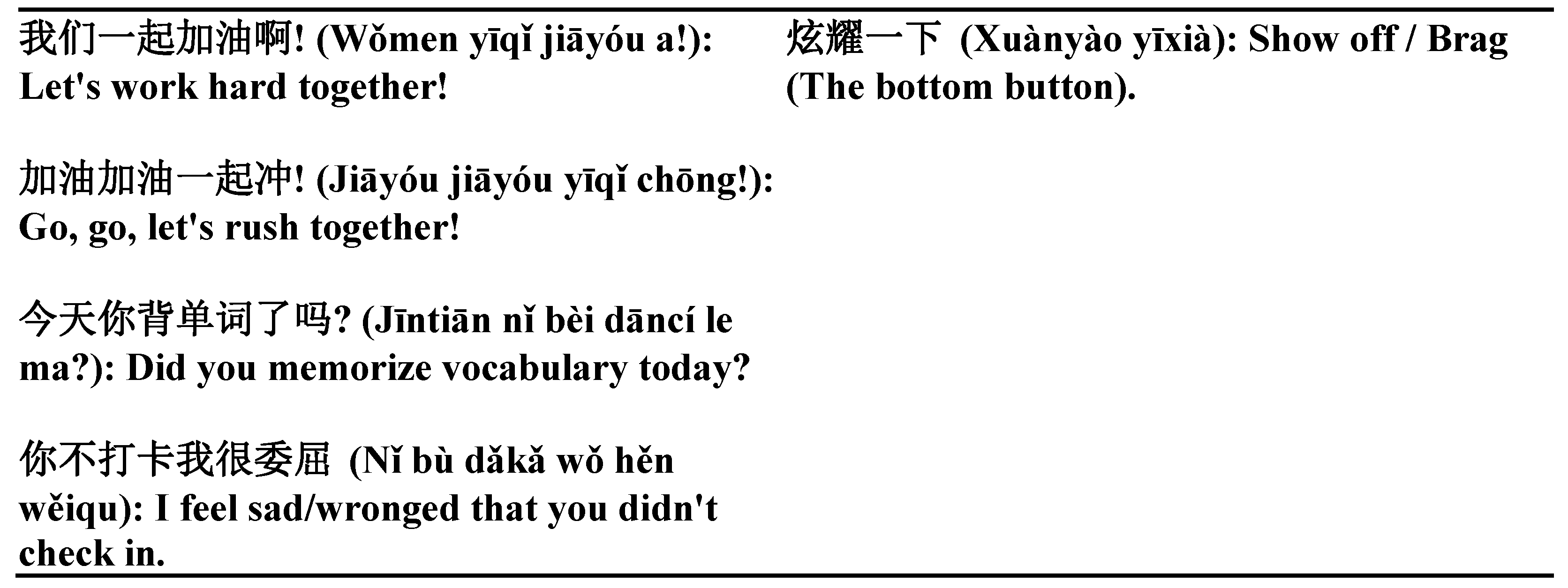
This study utilized a convergent parallel mixed methods design to examine the effects of learning-pal gamification on L2 learners’ perceived social presence and learning grit (see Table 1). The study was conducted with 108 participants who were enrolled in a college English course at a large university in Northern China during the Fall of 2022. The participants were divided into two groups: an experimental group with 68 participants and a control group with 40 participants, both sections had the same instructor. However, 6 participants failed to report the accumulative vocabulary learning reports in the experimental group and 2 participants failed to submit the accumulative vocabulary learning report in the control group. To ensure data consistency, this research study only included participants who had completed the social presence survey and submitted the grit accumulative vocabulary learning reports. All participants in the study has passed the College English Test 4 (CET 4) and were preparing for the CET 6, which demonstrates their intermediate level of proficiency in English. Collaborating with the instructor, one of the researchers in the study reached out to the participants during the first week of the course, and shared the instructions for using the App. Participants were invited to participate in the study and were asked to sign a consent form if they agreed. During the learning process, all students used the Shanbay application to learn the CET 6 full-list vocabulary book, which contains 7818 English words. Two social media groups were created for each section, allowing participants to voluntarily share their daily vocabulary learning badges. The experimental group (N = 62) participated in the learning-pal activity, while the control group (N = 38) did not. After the six-month intervention, seven semi-structured interviews were conducted with participants who agreed to be involved in the interview.

3.2. The Learning Pal Feature

To become learning pals, users will firstly commit to studying together. Both learners can track each other’s progress and send reminders to complete daily learning tasks. The partnership continues as long as both users remain active and regularly share learning badges. If either user fails to meet the study goals, the partnership is temporarily dissolved; however, users have the option to restart the partnership and continue accumulating “learning-pal days.”
To reinforce sustained engagement, the App awards digital badges to both learning partners upon reaching specific milestones in their partnership. These milestones include 3, 7, 14, 21, 30, 60, 100, 200, 365, 600, 1000, and 2000 days of shared learning activity. This gamified collaborative approach is designed to increase learners’ grit and motivation in vocabulary acquisition. Appendix C presents screenshots of the learning-pal interface, illustrating the features of the learning-pal system.

3.3. Data Collection

3.3.1. Quantitative Strand: Social Presence and Vocabulary Learning Grit

Quantitative data on social presence were collected using the online survey platform Wenjuanxing. The survey was administered in English, with Chinese translations provided for selected terms such as “belonging,” “interaction,” and “a sense of” to support students’ understanding of the survey items. The survey included nine items with a five-point Likert type response format, ranging from strongly agree (5) to strongly disagree (1). Survey items were drawn from the social presence dimension of the CoI Framework Survey developed and validated by Arbaugh et al. (2008). They examined the instrument’s reliability and construct validity using Cronbach’s alpha coefficients and exploratory factor analysis. Results demonstrated strong reliability and construct validity for the CoI survey. For the social presence dimension, which was the only dimension used in our study, the reported Cronbach’s alpha was 0.91 (Arbaugh et al., 2008), indicating high internal consistency among the nine items. Although the original CoI instrument includes social, teaching, and cognitive presence dimensions, only the social presence scale was administered in this study.
Learning grit was measured by the accumulative days the participants completed the pre-set daily vocabulary learning goal. The data were recorded by the App automatically and then participants submitted a screenshot of the report at the end of the intervention. The data were extracted from students’ learning reports.

3.3.2. Qualitative Strand: L2 Leaners’ Perceived Social Presence Learning Experiences

To better understand the perceived social presence learning experiences by engaging with the Learning Pal gamification feature, this study also conducted seven semi-structured interviews with participants from the experimental group. The interview questions were adapted from Swan and Shih (2005) and designed to ask learners’ perceived social presence from the aspect of the sense of learning community, getting to know their classmates, using social media to communicate with classmates, participating in online discussion, interacting and expressing disagreement, sense of trust and collaboration with classmates (See Appendix A for the interview questions). The questions were adapted from the original context of asynchronous online discussion to the mobile learning context, and specifically focused on vocabulary learning. The interviews were conducted in English; however, Chinese translations were provided to interviewees upon request.
At the end of the social presence survey, participants were asked whether they were willing to participate in a follow-up interview. Eight students expressed interest; however, only seven interviews were conducted due to scheduling conflicts with two participants. This may introduce potential bias, as the interviewees were not purposefully selected. Table 2 presents participant information, including gender, cumulative vocabulary learning days, and perceived social presence levels.

3.4. Data Analysis

3.4.1. Quantitative Data Analysis: Vocabulary Learning Grit and Perceived Social Presence

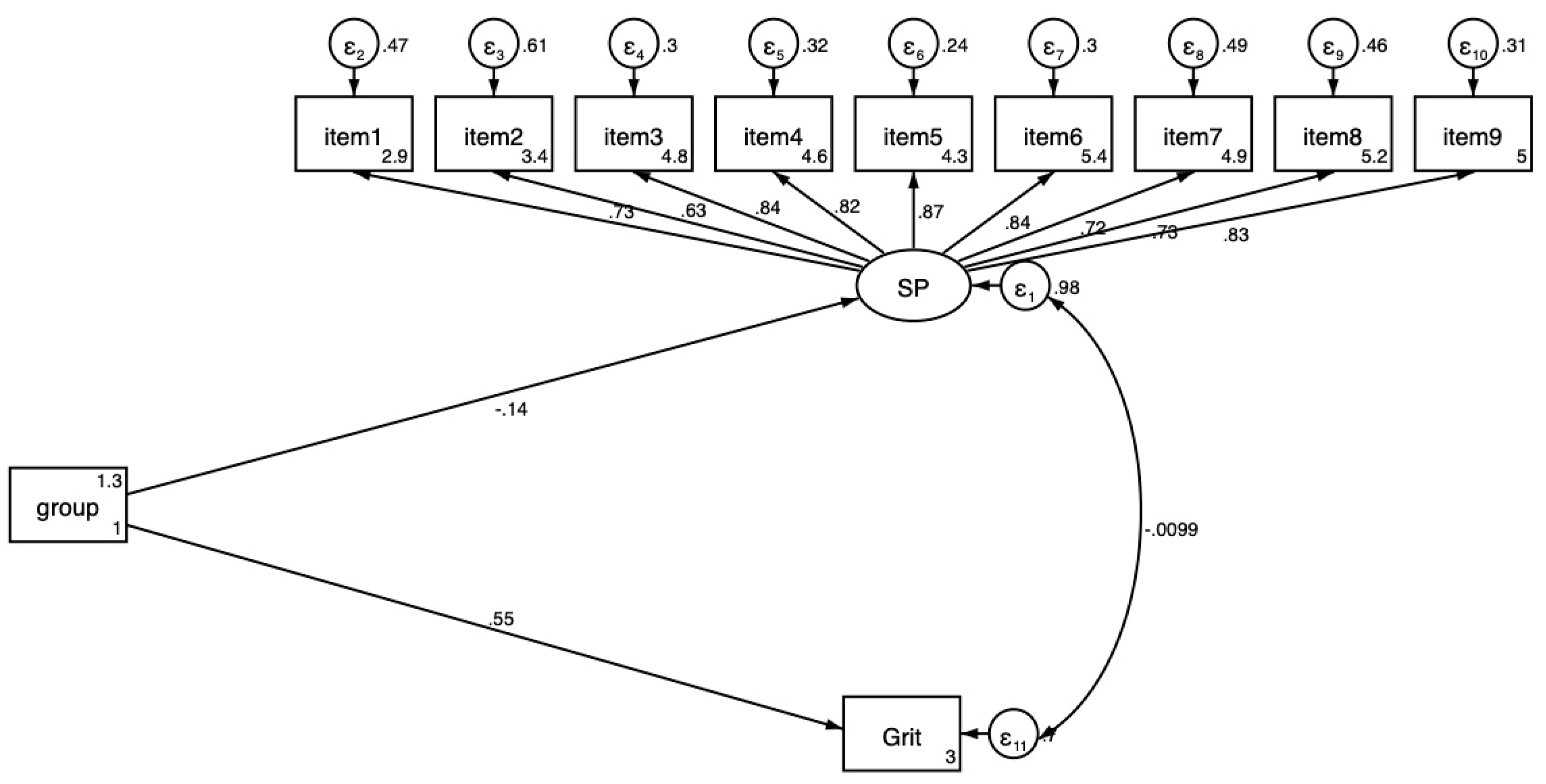
To examine whether group differences in vocabulary learning grit and perceived social presence were statistically significant, structural equation modeling (SEM) was conducted using maximum likelihood estimation with robust standard errors. This approach was chosen for two reasons: (1) to account for measurement error in the social presence scale, and (2) to address non-normality observed in the control group (Kolmogorov–Smirnov test, p < 0.001). In the structural model (see Figure 2), the group was modeled as a binary observed exogenous variable, vocabulary learning grit was specified as an observed endogenous variable, and social presence was modeled as a latent endogenous variable indicated by nine observed items. Model fit was assessed using the Standardized Root Mean Square Residual (SRMR). SRMR less than 0.08 was considered adequate model fit according to Hu and Bentler’s (1999) recommendation. Data analysis was completed in StataNow/SE 18.5.

3.4.2. Qualitative Data Analysis: Perceived Social Presence Experience in Using the SBDC and the Learning Pal Gamification Feature

To answer the third research question, the study adopted a thematic analysis coding method. The coding sheet is from Swan (2003) including three themes (affective responses, interactive responses, and cohesive responses). Appendix B provides detailed descriptions of each theme, indicator, and definition. The researchers adopted both deductive and inductive coding to analyze the data. Two cycles of coding were performed in the NVivo 12.
The first cycle of coding was conducted at the sentence level and employed provisional coding. Researchers categorize codes with the pre-defined coding schema according to the established codebooks (Saldaña & Omasta, 2016). The second round of coding employed pattern coding, which is to review the codes and revise some potential initial codes to surface themes and explanations (Saldaña & Omasta, 2016). One researcher completed each cycle of coding primarily and the work was checked by the second coder to ensure reliability (Merriam & Tisdell, 2016).

4. Results

4.1. Results for Research Question 1: The Effect of the Learning-Pal Feature on Vocabulary Learning Grit

As shown in Table 3, learners who participated in the learning-pal activity reported substantially higher levels of vocabulary learning grit (M = 119.45, SD = 28.38) compared to those in the control group (M = 86.55, SD = 17.14). On average, participants in the experimental group spent approximately 33 more hours on vocabulary learning than their peers in the control group, indicating greater grit and sustained engagement with vocabulary study tasks.
The structural equation modeling (SEM) analysis further supported this finding (see Figure 2). Group membership significantly predicted learners’ vocabulary learning grit (β = 0.55, SE ₍robust₎ = 0.07, p < 0.001, 95% CI [0.41, 0.68]). This large positive standardized coefficient suggests that participation in the collaborative gamification activity had a strong and practically meaningful effect on learners’ persistence. The SRMR value of 0.064 indicated good model fit, aligning with Hu and Bentler’s (1999) recommendation that SRMR < 0.08 reflects an acceptable model.
These results confirm that the collaborative gamification element—specifically, the learning-pal feature—effectively enhanced learners’ grit-related behaviors in vocabulary learning.

4.2. Results for Research Question 2: The Effect of the Learning-Pal Feature on Perceived Social Presence

In contrast, participants in the experimental group reported lower perceived social presence (M = 3.74, SD = 0.73) than those in the control group (M = 4.03, SD = 0.79). The SEM results indicated that this difference was not statistically significant (β = −0.14, SE ₍robust₎ = 0.10, p = 0.16, 95% CI [−0.034, 0.06]). This negative but non-significant relationship suggests that, while collaborative gamification increased engagement and persistence, it did not translate into higher levels of perceived interpersonal connectedness or social awareness among learners.
This outcome may reflect the limited interactivity within the learning-pal feature. Although it supports mutual tracking and progress sharing, it does not provide direct communication or real-time social exchanges. The current results thus indicate that while peer accountability mechanisms can foster grit, meaningful social interaction requires richer communication opportunities designed or facilitated by instructors, such as messaging, feedback, or synchronous discussion tools.

4.3. Results for Research Question 3: What Are L2 Learners’ Perceived Social Presence Learning Experiences of Using the Learning-Pal Gamification Feature?

Our first theme, affective responses, refers to indicators such as emotional expression, values, and personal feelings, which were prevalent in participants’ reflections.
Many students conveyed strong emotions (EM) regarding the vocabulary learning task. Zhao, for example, expressed that both she and her partner found vocabulary learning “so boring,” but they still pushed themselves to complete the task. This shared struggle highlights how emotion can be both a barrier and a motivator in a peer-supported mobile learning environment.
Zhao also shared feelings of guilt and obligation, stating, “I feel it is a commitment to complete the learning task because of the Learning Pal activity… I feel guilty if I don’t complete it.” This reflects not just emotional engagement, but also a value-based (VL) commitment to accountability within a collaborative framework.
Another emotional dimension was highlighted by Lu and Ni, who shared that they felt “less stressed about sharing with friends than with teachers,” suggesting a sense of psychological safety when collaborating with peers.
The second theme category captures the social elements that connect learners together, and several participants emphasized the role of pre-existing relationships in forming these learning communities.
For example, multiple participants (Zhao, Chen, Zhong) indicated that they selected their learning partners because they were already familiar with them. Specifically, Yin noted, “I chose this person as my learning pal because I already got very familiar with him/her.” This is a clear example of self-disclosure (SD), revealing a personal preference and reliance on existing trust with their learning pals.
Guo also reflected on the evolution of his relationship with his learning pal: “We were familiar with each other before but we never discussed English learning related topics… After we became learning pals, we started to discuss vocabulary learning.” This transition from social to academic interaction highlights how cohesive bonds can evolve through shared vocabulary learning goals.
Lu’s initiative to create a group (GR) for sharing achievements further reinforced social connections, saying, “We created a social media group for sharing the badge… I will send him a reminder if he didn’t share the badge.” This not only reflects a group-oriented mindset but also suggests a desire to maintain the shared vocabulary learning goal as a team.
The third theme indicates that interactive elements were central to sustaining communication and encouraging mutual support between peers throughout the learning process.
Participants often described giving or receiving approval (AP) and encouragement. For instance, Lu stated, “My peer also shares some learning resources that I didn’t know before. I think he is really helpful,” reflecting both acknowledgment and appreciation for peer connections and help. Guo added, “Thanks to her that I can get the task done,” showing reliance and recognition of his partner’s role in encouraging his learning.
In addition, invitations (I) to interact were evident as well. Zhong shared that she sent pictures of difficult readings to her partner to ask for help via social media, demonstrating initiative and trust. Lu mirrored this behavior and said he would remind his peers when they forgot to post achievements, fostering ongoing dialogue and support during the vocabulary learning process.
Finally, participants also offered personal advice (PA) and strategy-sharing. Yin discussed how his learning pal conversations included details about “how many words I learned daily,” indicating peer-to-peer learning strategy exchanging that enriched their learning strategies.

5. Discussion

The present study examined the effects of a mobile collaborative gamification feature, the learning-pal activity, on L2 learners’ vocabulary learning grit and perceived social presence. The results demonstrated that participation in the learning-pal activity significantly enhanced learners’ vocabulary learning grit. However, contrary to expectations, perceived social presence decreased among learners who used the collaborative gamified feature. Qualitative findings revealed nuanced emotional, cohesive, and interactive experiences that illuminate these patterns.

5.1. Collaborative Gamification Significantly Enhances Vocabulary Learning Grit

The learning-pal gamified activity proved to be an effective instructional strategy for fostering long-term learning behaviors by assigning learners a partner with whom they shared responsibility for meeting vocabulary learning goals. The significant increase in grit among learning-pal participants supports the notion that collaborative gamification can operationalize motivation into durable effort.
Conceptually, this finding extends Duckworth et al.’s (2007) notion of grit by demonstrating how grit can be supported through collaborative gamification, rather than treated solely as a stable individual trait. While grit has been shown to correlate with conscientiousness and long-term achievement (McCrae & Costa, 1999), our results suggest that thoughtfully designed learning environments can scaffold the sustained effort needed to pursue challenging language-learning goals.
In the context of L2 learning, our findings align with and extend Teimouri et al. (2022) by moving beyond self-reported grit to include behavioral indicators of persistence, such as cumulative learning days. The observed gains in grit among learning-pal participants suggest that collaborative gamification may help translate learners’ motivation into consistent, observable engagement over time. This is particularly important for L2 vocabulary learning, which inherently requires repeated practice and long-term investment.
Qualitative findings further revealed that peer accountability, which was expressed as feelings of commitment, guilt, and mutual encouragement, served as an affective driver of persistence. This pattern can be interpreted through the lens of Self-Determination Theory (Ryan & Deci, 2000), which posits that satisfaction of relatedness and competence needs fosters intrinsic motivation and long-term persistence. Thus, the learning-pal activity’s social accountability mechanism was found to have enhanced learners’ grit by fulfilling these motivational needs, even in the absence of rich interpersonal interaction.

5.2. The Decrease of the Social Presence

Contrary to expectations and previous findings (e.g., Perez-Mira & Wright, 2019; Antonaci et al., 2019), learners in the experimental group reported lower levels of perceived social presence than those in the control group. This paradox suggests that the learning-pal activity, while fostering perseverance, did not equally promote interpersonal connectedness.
Several factors may explain this outcome. First, the group structure. The limited pairs group structure likely restricted opportunities for broader peer interaction. Many participants selected friends they already knew, reducing exposure to new social dynamics and thus limiting community expansion. Meanwhile, members of the control group, lacking assigned partners, appeared to rely more heavily on the larger shared social media group for interaction, which may have produced stronger perceived connectedness.
Second, the nature of the gamified interaction was largely instrumental rather than relational. The partnership emphasized accountability and task completion but lacked communicative richness or emotional immediacy. According to the Community of Inquiry (CoI) framework (Garrison et al., 2001), social presence includes affective, cohesive, and interactive dimensions. The learning-pal feature supported cohesion through shared goals but provided limited affordances for affective or interactive expression, which includes no synchronous communication, limited feedback, and minimal self-disclosure.
This finding echoes earlier research suggesting that gamified collaboration can promote engagement without necessarily increasing emotional connection or social belonging (Zainal, 2023). The qualitative findings reinforce this: while participants expressed gratitude and mutual encouragement, interactions were primarily logistical and goal-driven, not socially expressive.

5.3. Designing for Social Presence: Implications for Large-Class Learning

Social presence has long been emphasized as a critical factor in online learning environments, shown to positively influence students’ perceived learning, course satisfaction, and instructor satisfaction (Richardson et al., 2017). However, the importance of social presence also extends to face-to-face and blended learning contexts, particularly in large classes where opportunities for interaction between students and instructors are limited (Doo & Bonk, 2020). Even in physical classrooms, students may feel isolated if they lack meaningful opportunities to communicate and engage with peers and instructors (Blatchford et al., 2009; Mulryan-Kyne, 2010). One common strategy for fostering social presence in such settings is to use small groups to promote peer interaction, which has been found to be effective, especially in large-class contexts (Lowry et al., 2006).
Fiock (2020) synthesized a set of strategies for enhancing social presence in online learning, including real-time communication, the use of social software, smaller student–instructor ratios, and the intentional development of human connections to help students feel comfortable communicating. Although these strategies were designed for online courses, they are also useful in face-to-face or blended learning environments with large enrollments, where students may similarly feel disconnected.
In addition, the instructor’s role in facilitating social presence is essential (Oyarzun et al., 2018). In our study, the learning-pal activity was entirely student-driven, with minimal involvement from the instructor. This absence of instructor presence may have contributed to the lower levels of perceived social connection in the experimental group. These findings highlight the importance of not only integrating digital gamification to enhance student interaction but also incorporating intentional instructor facilitation to create a more interactive and socially engaging learning environment. Instructor interventions, such as providing feedback, facilitating group reflections, and encouraging cross-pair interactions, are essential. Moreover, task design should promote interaction among diverse peers, not just pre-existing friends, to broaden social networks and foster genuine community building. In addition, thoughtful gamification design could integrate social affordances such as badges for helpfulness, optional chat spaces, or reflective prompts that encourage emotional sharing. These features could elevate affective and cohesive dimensions of social presence while retaining the motivational benefits that drive grit.

5.4. Moving Forward: Facilitating Effective Vocabulary Learning

Vocabulary acquisition is a long-term, self-directed process requiring perseverance and self-regulation (Xu & Richardson, 2024). The current findings demonstrate that collaborative gamification can effectively sustain effort but that social presence must be deliberately cultivated.
From a Self-Determination Theory (Ryan & Deci, 2000) perspective, learners persist in goal-oriented tasks when they experience autonomy, purpose, and supportive feedback. The learning-pal feature enhanced accountability but did not fully address the social-emotional dimensions that sustain enjoyment and belonging, both of which are related to ongoing self-directed engagement. For L2 educators, designing vocabulary tasks that blend gamified accountability with explicit community-building activities could benefit vocabulary learning outcomes and increase learning satisfaction. Encourage reflective sharing, peer feedback, and small-group discussions that allow learners to express emotions and strategies openly. For L2 learners, choosing partners strategically to maintain both emotional support and academic accountability could enhance the learning. For example, regularly reflect on motivation sources, whether intrinsic (interest) or extrinsic (peer encouragement), to maintain balance between social enjoyment and sustained effort. For app designers: Incorporate features that enhance affective presence, such as real-time messaging, reaction tools, or prompts for emotional check-ins. Beyond competition and progress tracking, design mechanisms that reward social interaction and mutual support. Ultimately, mobile collaborative gamification holds promise for promoting vocabulary learning grit, but its success in enhancing social presence depends on balancing behavioral engagement with social connection. Future research should explore how richer communication affordances and guided facilitation can transform peer accountability into genuine community presence in MALL environments.

6. Conclusions

Vocabulary instruction has long posed challenges for both L2 teachers and learners. For teachers, limited classroom time often leads to a greater focus on other language components (e.g., grammar and reading), leaving vocabulary learning to occur outside of class in more informal settings (Nation, 2022). Mobile applications, by nature, support social interaction and offer collaborative opportunities for L2 learners to share strategies, stay engaged, and pursue common learning goals (Xu & Richardson, 2024).
This study examined the impact of a collaborative gamified feature within a mobile vocabulary learning app and found that it effectively enhanced L2 learners’ vocabulary learning grit. This finding reinforces the hypothesis that structured peer accountability can foster learning persistence and self-regulated effort in long-term vocabulary learning behavior. However, unlike previous studies that emphasized the social benefits of gamification, our findings revealed a decrease in perceived social presence among learners in the experimental group compared to the control group. This paradox highlights the need to view gamified collaboration not merely as a social enhancement tool but as a motivational mechanism that functions through accountability rather than emotional connection. From the perspective of Self-Determination Theory (Ryan & Deci, 2000), the learning-pal feature successfully supported learners’ competence and relatedness in terms of behavioral engagement, but failed to foster the affective dimension of relatedness that underpins social presence. Similarly, drawing on the Community of Inquiry (CoI) framework (Garrison et al., 2001), the findings suggest that affective and cohesive components of social presence require richer interpersonal communication beyond task-based collaboration.
The study contributes to the growing body of MALL literature by offering both theoretical and methodological insights. Theoretically, it bridges SDT and CoI frameworks to explain how motivational and social processes interact within mobile gamified learning. Methodologically, it introduces behavioral data (cumulative learning days) as an observable indicator of vocabulary learning grit, complementing traditional self-reported measures.
Pedagogically, the results highlight that integrating gamified collaboration is not, by itself, sufficient to enhance learners’ sense of community. Intentional instructor facilitation, designing for emotional exchange, and broadening peer interaction networks are essential for fostering social presence in large or mobile-supported language classes. Future research could examine how adding synchronous communication features, structured reflection, or adaptive feedback might balance the motivational and social dimensions of mobile gamified learning.
In summary, while collaborative gamification can effectively promote grit and sustained engagement in vocabulary learning, it must be strategically designed and pedagogically supported to achieve its full potential in cultivating both motivation and social connectedness.
One limitation of this study lies in the qualitative sampling procedure. The interview participants from the experimental group were not purposefully selected; rather, students were invited to participate on a voluntary basis, and only those who expressed interest were included. While this approach ensured ethical transparency and participant willingness, it may have introduced self-selection bias, as students with more positive experiences or higher motivation levels might have been more inclined to volunteer. Consequently, the qualitative data may not fully represent the diversity of learners’ perspectives, particularly those who experienced lower levels of social presence, reduced engagement, or less success with the learning-pal feature.
This non-strategic sampling limits the transferability and representativeness of the qualitative findings, as the voices of learners who disengaged or struggled may have been underrepresented. Future research should therefore consider employing purposeful sampling techniques to include participants with a range of social presence and grit levels. Such an approach would generate richer, more balanced insights into how individual differences shape learners’ experiences with collaborative gamification. Additionally, triangulating interview data with in-app behavioral metrics or longitudinal tracking could enhance the robustness and depth of qualitative interpretations.

Author Contributions

Conceptualization, Q.X. and J.C.R.; methodology, Z.Z.; software, Z.Z.; validation, Z.Z.; formal analysis, Q.X.; investigation, J.C.R.; resources, Q.X.; data curation, Z.Z.; writing—original draft preparation, Q.X.; writing—review and editing, Q.X. and Z.Z. and J.C.R.; visualization, Z.Z.; supervision, J.C.R.; project administration, J.C.R. All authors have read and agreed to the published version of the manuscript.

Funding

This research did not receive any specific funding.

Institutional Review Board Statement

This study received ethical approval from the Institutional Review Board at Purdue University, approval code IRB-2021-265 on 11 February 2021.

Informed Consent Statement

All participants took part voluntarily and provided informed consent prior to participation. Data were anonymized during analysis to ensure confidentiality. The authors declare no competing interests or financial conflicts related to this research. The study was approved by the Institutional Review Board (IRB; Approval No. IRB-2021-265) to ensure ethical conduct of the research.

Data Availability Statement

The data that support the findings of this study are available from the corresponding author, Qian Xu, upon reasonable request.

Conflicts of Interest

The authors declare no conflicts of interest.

Abbreviations

The following abbreviations are used in this manuscript:
MALLMobile-assisted Language Learning
CoICommunity of Inquiry
CIconsistency of interest
PEperseverance of effort

Appendix A

Interview questions (Swan & Shih, 2005)
  • What did you think about when you were preparing to write a message to your peers? Did you think about how you would sound to others? Did you think about how what you say would influence how others think of you?
  • Did you use any strategies to put “personal” touches in your messages? If so, why did you want to make yourself sound more personal?
  • How did the ways other students wrote their messages influence your impressions of them? Did others’ language use influence yours? If so, how?
  • What did you think about when you were responding to others’ message?
  • Did you choose certain people to be your learning pals? Have you built a sense of bonding with those students?
  • Do you think a sense of bonding is important to learning in mobile learning environments? Why or why not?
  • What were the criteria you used while choosing which messages to respond to?
  • As the tone of your voice is not available in the online environment, did you find it a big constraint when communicating with your peers? If so, what did you do to overcome the constraints?

Appendix B

Table A1. Social presence codebook (Swan & Shih, 2005).
CategoryIndicators (Code)Definition
Affective responsesParalanguage (PL)features of text outside formal syntax used to convey emotion
Emotion (EM) use of descriptive words that indicate feelings
Value (VL)expressing personal values, beliefs and attitudes
Humor (H)Use of humor—teasing cajoling, irony, sarcasm, understatement
Self-disclosure (SD)Sharing personal information, expressing vulnerability
Cohesive responsesGreetings and Salutations (GS)Greeting, closures
Vocatives (V)Addressing classmates by name
Group reference (GR)Referring to the group as “we”, “us”, “our”.
Social sharing (SS)Social sharing information unrelated to the course
Self-reflection (RF)Reflection on the course itself, a kind of self-awareness of the group
Interactive responsesAcknowledgement (AK)Referring directly to the contents of others’ messages; quoting from others’ messages agreement
Agreement and disagreement (AG)Expressing agreement or disagreement with others’ messages
Approval (AP)Expressing approval, offering praise, encouragement
Invitation (I)Asking questions or otherwise inviting response
Personal advice (PA)Offering specific advice to classmates

Appendix C

Figure A1. The Learning Pal activity interface.
Education 16 00278 g0a1aEducation 16 00278 g0a1bEducation 16 00278 g0a1c

References

  1. Alsadoon, E. (2018). The impact of social presence on learners’ satisfaction in mobile learning. Turkish Online Journal of Educational Technology (TOJET), 17(1), 226–233. [Google Scholar]
  2. Antonaci, A., Klemke, R., Lataster, J., Kreijns, K., & Specht, M. (2019, September 16–19). Gamification of MOOCs adopting social presence and sense of community to increase user’s engagement: An experimental study. In European conference on technology enhanced learning (pp. 172–186). Springer International Publishing. [Google Scholar] [CrossRef] [Scilit]
  3. Arbaugh, J. B., Cleveland-Innes, M., Diaz, S. R., Garrison, D. R., Ice, P., Richardson, J. C., & Swan, K. P. (2008). Developing a community of inquiry instrument: Testing a measure of the community of inquiry framework using a multi-institutional sample. The Internet and Higher Education, 11(3–4), 133–136. [Google Scholar] [CrossRef] [Scilit]
  4. Bandura, A. (1999). Social cognitive theory: An agentic perspective. Asian Journal of Social Psychology, 2(1), 21–41. [Google Scholar] [CrossRef] [Scilit]
  5. Blatchford, P., Russell, A., & Brown, P. (2009). Teaching in large and small classes. In International handbook of research on teachers and teaching (pp. 779–790). Springer US. [Google Scholar]
  6. Burston, J. (2015). Twenty years of MALL project implementation: A meta-analysis of learning outcomes. ReCALL, 27(1), 4–20. [Google Scholar] [CrossRef] [Scilit]
  7. Chickering, A. W., & Ehrmann, S. C. (1996). Implementing the seven principles: Technology as lever. AAHE Bulletin, 49(2), 3–6. [Google Scholar]
  8. Credé, M. (2018). What shall we do about grit? A critical review of what we know and what we don’t know. Educational Researcher, 47(9), 606–622. [Google Scholar] [CrossRef] [Scilit]
  9. Çakmak, F. (2019). Mobile Learning and Mobile Assisted Language Learning in Focus. Language and Technology, 1(1), 30–47. [Google Scholar]
  10. Doo, M. Y., & Bonk, C. J. (2020). The effects of self-efficacy, self-regulation and social presence on learning engagement in a large university class using flipped learning. Journal of Computer Assisted Learning, 36(6), 997–1010. [Google Scholar] [CrossRef] [Scilit]
  11. Driscoll, M. P. (2014). Psychology of learning for instruction (4th ed.). Pearson. [Google Scholar]
  12. Duckworth, A. L. (2017). Grit—Why passion and resilience are the secrets to success. Vermilion. [Google Scholar]
  13. Duckworth, A. L., Peterson, C., Matthews, M. D., & Kelly, D. R. (2007). Grit: Perseverance and passion for long-term goals. Journal of Personality and Social Psychology, 92(6), 1087–1101. [Google Scholar] [CrossRef] [Scilit] [PubMed]
  14. Duman, G., Orhon, G., & Gedik, N. (2015). Research trends in mobile assisted language learning from 2000 to 2012. ReCALL, 27(2), 197–216. [Google Scholar] [CrossRef] [Scilit]
  15. El Hadim, H., & Ghaicha, A. (2024). The relationship between L2 grit and vocabulary knowledge in first-year Moroccan university students. System, 123, 103316. [Google Scholar] [CrossRef] [Scilit]
  16. Fiock, H. (2020). Designing a community of inquiry in online courses. The International Review of Research in Open and Distributed Learning, 21(1), 135–152. [Google Scholar] [CrossRef] [Scilit]
  17. Fithriani, R. (2021). The utilization of mobile-assisted gamification for vocabulary learning: Its efficacy and perceived benefits. Computer-Assisted Language Learning Electronic Journal, 22(3), 146–163. [Google Scholar]
  18. Furdu, I., Tomozei, C., & Koşe, U. (2017). Pros and cons gamification and gaming in classroom. arXiv, arXiv:1708.09337. [Google Scholar] [CrossRef] [Scilit]
  19. Garrison, D. R., Anderson, T., & Archer, W. (2001). Critical thinking, cognitive presence, and computer conferencing in distance education. American Journal of Distance Education, 15(1), 7–23. [Google Scholar] [CrossRef] [Scilit]
  20. Govender, T., & Arnedo-Moreno, J. (2021). An analysis of game design elements used in digital game-based language learning. Sustainability, 13(12), 6679. [Google Scholar] [CrossRef] [Scilit]
  21. Hu, L. T., & Bentler, P. M. (1999). Cutoff criteria for fit indexes in covariance structure analysis: Conventional criteria versus new alternatives. Structural Equation Modeling: A Multidisciplinary Journal, 6(1), 1–55. [Google Scholar] [CrossRef] [Scilit]
  22. Kim, Y., & Baylor, A. L. (2006). A social-cognitive framework for pedagogical agents as learning companions. Educational Technology Research and Development, 54(6), 569–596. [Google Scholar] [CrossRef] [Scilit]
  23. Kukulska-Hulme, A., & Shield, L. (2008). An overview of mobile assisted language learning: From content delivery to supported collaboration and interaction. ReCALL, 20(3), 271–289. [Google Scholar] [CrossRef] [Scilit]
  24. Lee, S. M. (2024). L2 vocabulary learning with an AI chatbot: From linguistic, affective, and cognitive perspectives. In Theory and practice in vocabulary research in digital environments (pp. 115–131). Routledge. [Google Scholar]
  25. Li, F., Fan, S., & Wang, Y. (2022). Mobile-assisted language learning in Chinese higher education context: A systematic review from the perspective of the situated learning theory. Education and Information Technologies, 27(7), 9665–9688. [Google Scholar] [CrossRef] [Scilit]
  26. Liu, I. F. (2020). The study of intention to learn in game-based learning with a smartphone. International Journal of Distance Education Technologies (IJDET), 18(3), 25–41. [Google Scholar] [CrossRef] [Scilit]
  27. Lowry, P. B., Roberts, T. L., Romano, N. C., Jr., Cheney, P. D., & Hightower, R. T. (2006). The impact of group size and social presence on small-group communication: Does computer-mediated communication make a difference? Small Group Research, 37(6), 631–651. [Google Scholar] [CrossRef] [Scilit]
  28. McCrae, R. R., & Costa, P. T., Jr. (1999). A five-factor theory of personality. In L. A. Pervin, & O. P. John (Eds.), Handbook of personality: Theory and research (3rd ed., pp. 139–153). Guilford Press. [Google Scholar]
  29. Merriam, S. B., & Tisdell, E. J. (2016). Qualitative research: A guide to design and implementation (4th ed.). John Wiley & Sons. [Google Scholar]
  30. Mulryan-Kyne, C. (2010). Teaching large classes at college and university level: Challenges and opportunities. Teaching in Higher Education, 15(2), 175–185. [Google Scholar] [CrossRef] [Scilit]
  31. Nation, P. (2022). Learning vocabulary in another language (3rd ed.). Cambridge University Press. [Google Scholar]
  32. Oyarzun, B., Barreto, D., & Conklin, S. (2018). Instructor social presence effects on learner social presence, achievement, and satisfaction. TechTrends, 62(6), 625–634. [Google Scholar] [CrossRef] [Scilit]
  33. Palalas, A. (2015). The ecological perspective on the ‘anytime anyplace’ of mobile-assisted language learning. In E. Gajek (Ed.), Technologie mobilne w kształceniu językowym (pp. 29–48). Texter. [Google Scholar]
  34. Perez-Mira, B., & Wright, S. (2019). Applying gamification and social presence to certification classes. Available online: https://aisel.aisnet.org/amcis2019/treo/treos/83/ (accessed on 4 February 2026).
  35. Richardson, J. C. (2001). Examining social presence in online courses in relation to students’ perceived learning and satisfaction [Doctoral dissertation, State University of New York at Albany]. [Google Scholar]
  36. Richardson, J. C., Maeda, Y., Lv, J., & Caskurlu, S. (2017). Social presence in relation to students’ satisfaction and learning in the online environment: A meta-analysis. Computers in Human Behavior, 71, 402–417. [Google Scholar] [CrossRef] [Scilit]
  37. Ryan, R. M., & Deci, E. L. (2000). Self-determination theory and the facilitation of intrinsic motivation, social development, and well-being. American Psychologist, 55(1), 68–78. [Google Scholar] [CrossRef]
  38. Saldaña, J., & Omasta, M. (2016). Qualitative research: Analyzing life. SAGE Publications. [Google Scholar]
  39. Schmitt, N. (1998). Tracking the incremental acquisition of second language vocabulary: A longitudinal study. Language Learning, 48(2), 281–317. [Google Scholar] [CrossRef] [Scilit]
  40. Schmitt, N. (2010). Key issues in teaching and learning vocabulary. In R. Chacón-Beltrán, C. Abello-Contesse, & M. M. Torreblanca-López (Eds.), Insights into non-native vocabulary teaching and learning (pp. 28–40). Multilingual Matters. [Google Scholar]
  41. Swan, K. (2003). Developing social presence in online course discussions. In Learning and teaching with technology (pp. 151–168). Routledge. [Google Scholar]
  42. Swan, K., & Shih, L. F. (2005). On the nature and development of social presence in online course discussions. Journal of Asynchronous Learning Networks, 9(3), 115–136. [Google Scholar]
  43. Teimouri, Y., Plonsky, L., & Tabandeh, F. (2022). L2 grit: Passion and perseverance for second-language learning. Language Teaching Research, 26(5), 893–918. [Google Scholar] [CrossRef] [Scilit]
  44. Vygotsky, L. S., & Cole, M. (1978). Mind in society: Development of higher psychological processes. Harvard University Press. [Google Scholar]
  45. Xu, Q., & Richardson, J. C. (2024). The impact of social media and gamification of a mobile vocabulary learning app: Self-regulation and learning persistence. Online Learning, 28(4), 4–32. [Google Scholar] [CrossRef] [Scilit]
  46. Xu, Q., Richardson, J. C., Zhang, Z., Cheng, Z., & Guo, F. P. (2025). Using a mobile vocabulary application to enhance l2 learners’ vocabulary acquisition: Possibilities and challenges. Online Learning, 29(3), 66–102. [Google Scholar] [CrossRef] [Scilit]
  47. Yu, Z. (2023). Learning outcomes, motivation, and satisfaction in gamified English vocabulary learning. SAGE Open, 13(2), 21582440231158332. [Google Scholar] [CrossRef] [Scilit]
  48. Zainal, N. (2023). University students’ perspectives on gamification in vocabulary learning: A literature review. Malaysian Journal of Social Sciences and Humanities (MJSSH), 8(5), e002314. [Google Scholar] [CrossRef] [Scilit]
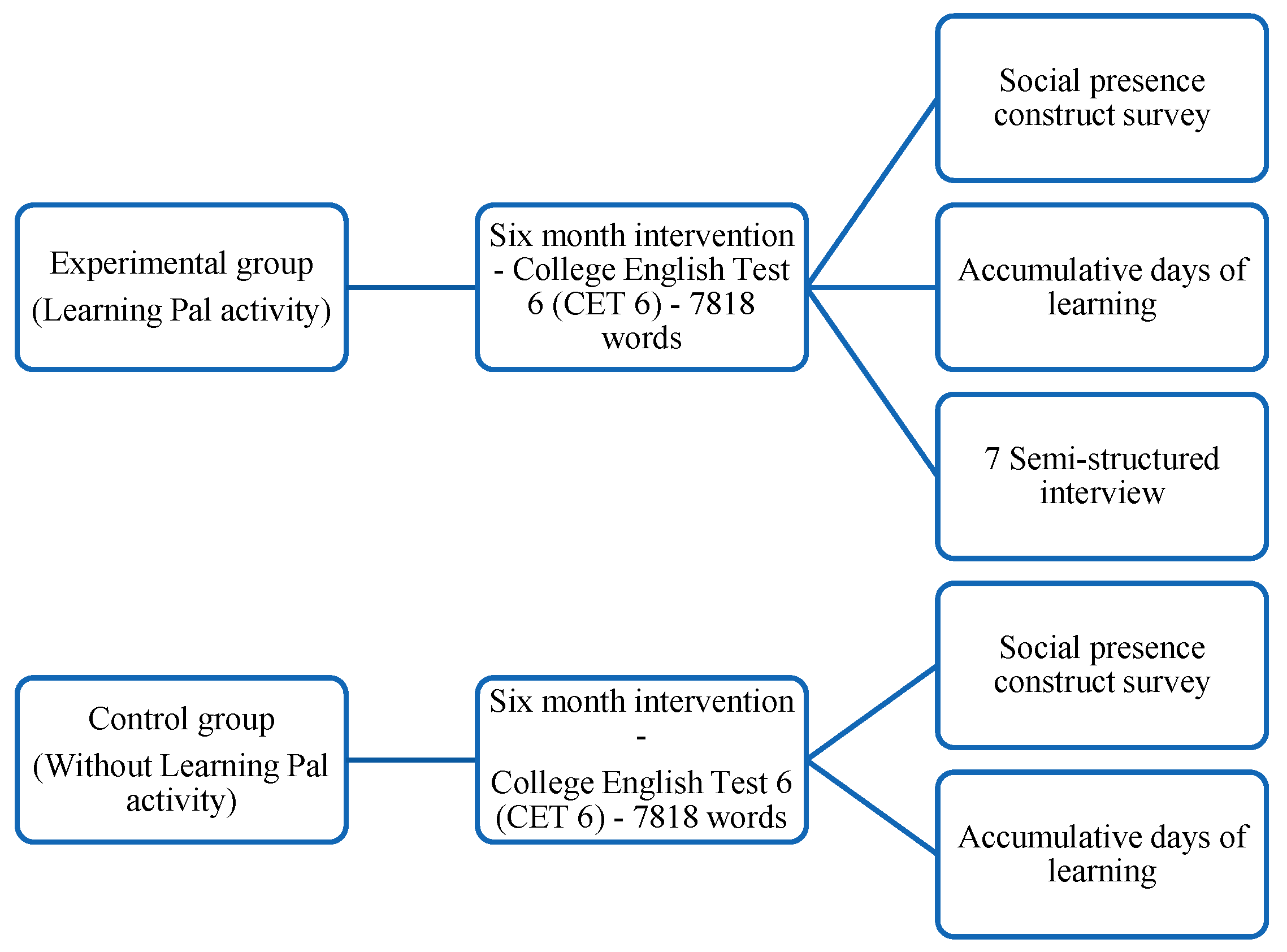
Figure 1. Research Procedures.
Education 16 00278 g001
Figure 2. Structural Model Including Group, Learning Grit, and Social Presence.
Education 16 00278 g002
Table 1. Research Design.
RQsData CollectionParticipantsData Analysis
RQ 1:
Does the learning-pal gamification feature increase L2 learners’ vocabulary learning grit?
Cumulative vocabulary learning daysN = 100
Experimental group (N = 62) Control group (N = 38)
t-test
RQ 2:
Does the learning-pal gamification feature improve L2 learners perceived social presence level in the vocabulary learning process?
Social presence construct of the CoI survey (Arbaugh et al., 2008)N = 100
Recruited from an English course at a large university in Northern China
t-test
  • Experimental group (N = 62)
  • Control group (N = 38)
RQ 3:
What are L2 learners’ perceived social presence learning experiences of using the learning-pal gamification feature?
Semi-structured interview (Swan & Shih, 2005)7 participants from experimental groupThematic analysis
Table 2. Interview participants’ information.
Participants (Pseudonym)GenderAccumulative Learning DaysPerceived Social Presence Level (Out of 5)
LuFemale1833.58
ChenFemale1643.25
GuoMale1203.5
NiMale1413.75
ZhongMale1303.83
ZhaoFemale1012.67
YinMale1013.83
Table 3. Descriptive Results.
NMeanSD
Learning GritControl3886.5517.14
Experimental62119.4528.38
Social PresenceControl 384.030.79
Experimental623.740.73
Disclaimer/Publisher’s Note: The statements, opinions and data contained in all publications are solely those of the individual author(s) and contributor(s) and not of MDPI and/or the editor(s). MDPI and/or the editor(s) disclaim responsibility for any injury to people or property resulting from any ideas, methods, instructions or products referred to in the content.