


Abstract
The Special Education Center at National Taiwan Normal University implemented the PSMIGP (Problem-Solving and Multiple Intelligences for Gifted Preschoolers) program, designed to cultivate problem-solving abilities and multiple intelligences in gifted preschool children. The program included four cohorts with a total of 73 participants identified through multidimensional assessments in academic and artistic domains. Twenty years later, when participants were aged 23–27, their educational experiences and talent development were examined using a mixed-methods design through questionnaires and semi-structured interviews. Quantitative data were analyzed with SPSS and qualitative interviews were coded using NVivo 15; the data were validated through participant feedback and peer review. The results showed that nearly all the participants attended top universities in Taiwan or abroad, with a higher proportion than that in the general population receiving gifted education services. The consistent satisfaction reflected the influence of motivation, curriculum quality, supportive teachers, and access to diverse learning opportunities. Talent development resulted from dynamic, multilevel interactions—social, personal, cultural, and task-related—rather than innate ability alone.
1. Introduction
The preschool years represent a crucial period for both cognitive and affective development; they are characterized by heightened brain plasticity and rapid growth in executive functions, emotional regulation, and social competence. The rapid development of executive functions during preschool is linked to later academic outcomes (Blair & Razza, 2007; Denham, 2006; Shonkoff & Phillips, 2000). The National Association for the Education of Young Children (2020) emphasizes that all domains of development—cognitive, social, emotional, linguistic, and executive functioning—are interrelated in early childhood and should be concurrently supported in quality preschool programs. However, for children with special needs, most early intervention programs focus on providing special education for disabilities, often neglecting the provision of gifted education. As a result, many parents of gifted children find that their children feel bored or lack motivation to learn in kindergarten. In response to both educational theory and practical needs, the Special Education Center at National Taiwan Normal University launched the PSMIGP (Problem-Solving and Multiple Intelligences for Gifted Preschoolers) program in 2003, aimed at nurturing both problem-solving skills and multiple intelligences (Maker, 2001, 2005; Kuo et al., 2010). Children aged four to five were identified through a multidimensional process and placed into academic or artistic domains. Enrichment classes were held on Saturdays, offering problem-solving, group activities, specialized learning, and self-chosen tasks (Kuo, 2003; Kuo et al., 2005, 2011; Wu & Peng, 2011). Over four cohorts, 73 children participated, many of whom were later recognized publicly for achievements such as performances or international awards (Yu, 2025).
Two decades later, these individuals—now young adults—offer a unique opportunity to revisit their early gifted education experiences and the factors influencing their talent development. Early research in gifted education was strongly influenced by positivism and focused on examining relationships between variables and outcomes. However, whether such complex developmental processes can be adequately described using linear causal models remains questionable. In fact, a systems theory-based approach is more appropriate for addressing these complex processes (Dai, 2019; Ziegler & Phillipson, 2012). Rather than explaining the whole by first understanding its parts, a systems perspective allows us to understand the parts through an understanding of the whole. In other words, systems theory focuses on the context of the components rather than on the components themselves.
Accordingly, the present study adopts a systemic perspective to examine talent development across three dimensions: structure (what), process (how), and time (when). The primary research questions focus on individuals who were identified as having gifted potential in early childhood and seek to answer the following questions:
- What are the participants’ current educational attainment and postsecondary outcomes?
- What gifted education experiences have the participants encountered during different educational stages?
- What factors influence the participants’ satisfaction with gifted education?
- What are the convergent and divergent factors that influenced the talent development of these students in the academic and artistic domains?
- How do the different factors that influence talent development interact with one another?
Through this systematic inquiry, the study aims to achieve a deeper and more comprehensive understanding of the long-term trajectories of talent development among these gifted individuals. This article is adapted from the first author’s doctoral dissertation (Yu, 2025), which examined educational experiences, talent development, and career decision-making among students from this preschool gifted program. The present paper focuses specifically on gifted education experiences and talent-development trajectories, with analyses of career decision-making to be reported separately.
2. Literature Review
2.1. From Static Ability to Systematic Perspective
Modern gifted education is founded on the assumption proposed by Terman and others that “gifted children become eminent adults.” Oden also stated that all available evidence shows that, with few exceptions, superior children grow up to be superior adults (Subotnik & Arnold, 1994). From Terman and Oden (1959) to Stanley (1976), the psychometric view of giftedness has been sustained, positing that giftedness and talent are innate human traits—like seeds that will grow into what they are destined to become when provided with the right soil and nutrients. In other words, giftedness is predetermined at birth, and its development merely involves bringing these inherent potentials to full expression (Dai, 2019). Therefore, once certain students are identified as possessing outstanding potential, we naturally expect to see superior achievements and growth.
However, Terman’s study has been critically examined by later researchers and several well-known critiques focused on his use of IQ tests and related methodological choices. The deficiencies are as follows: 1. a narrow definition of giftedness (overreliance on IQ), 2. sampling bias and a lack of diversity; 3. teacher nomination and selection issues; 4. rigid measures of success; and 5. limited historical and sociocultural contexts (Warne, 2019). As the concept of gifted education continues to evolve, there have been increasing calls for reform from within the field. For example, the “gifted child paradigm,” which emphasizes identifying and segregating students for special cultivation, has been challenged. Researchers now conceptualize giftedness not merely as an internal cognitive ability but as a complex construct composed of both cognitive and noncognitive factors, influenced by temporal, environmental, and opportunity-related variables (Olszewski-Kubilius et al., 2015). Epistemologically, scholars argue that human potential is dynamically shaped through interactions with the environment; thus, we should not focus solely on static individual traits or intelligence, but instead view the development of these abilities from a systemic perspective (Dai, 2017, 2021).
Departing from the traditional view of giftedness as an individual potential, scholars have placed greater emphasis on the dynamic interplay among factors in the developmental trajectory from giftedness to talent. Bloom (1985) and his colleagues developed a model suggesting that each stage of talent development requires distinct types of emphasis and support. The first, or “romantic,” stage is characterized by engaging and enjoyable encounters with areas of interest that spark rapid progress and elicit encouragement from parents and teachers. In the second stage, parents seek skilled teachers or coaches who provide ongoing emotional, technical, and skill-based guidance. In the third stage, individuals commit to their domain as a life choice, requiring mentors who guide them toward independent creative work and the formation of unique personal approaches (Subotnik et al., 2011).
Gagné proposed the Differentiated Model of Giftedness and Talent (DMGT), which distinguishes between these two concepts and describes the transformation from giftedness to talent as a process in which innate aptitudes are converted into systematically developed competencies under the catalytic influence of both environmental and intrapersonal factors (Gagné, 2004, 2005). Similarly, Tannenbaum (1986, 2003) presented a model explaining the development of talent from childhood potential to adult achievement, which comprises five components: (1) general ability, (2) special or domain-specific ability, (3) noncognitive factors, (4) environmental support, and (5) the active role of chance. He particularly emphasized the significance of opportunity in realizing potential.
Subotnik and colleagues also proposed a developmental model of talent that suggests that giftedness is inherently developmental. In the early stages, potential is the key variable, whereas in later stages, achievement becomes the defining criterion. The process of talent development involves several transformations: “potential becomes competence, competence becomes expertise, and expertise becomes eminence” (Subotnik et al., 2011). Researchers have argued that doing is more important than being—that giftedness cannot be understood solely as an individual trait but rather as a dynamic process shaped by numerous interacting factors across different developmental phases. Yet, both sides of this paradigmatic debate have their limitations. Dai (2019) suggested that a systemic research approach may offer a solution.
2.2. Evolving Complexity Theory (ECT)
Against the backdrop of theoretical evolution and paradigm shifts in gifted education, Dai (2017) proposed the Evolving Complexity Theory (ECT), which argues that gifted education should be grounded in a broader psychosocial foundation that conceptualizes human development as an open, dynamic, and adaptive system. Within this framework, individuals continually adjust themselves through interactions with environments, opportunities, and challenges. Talent development is viewed as an ongoing evolutionary process characterized by increasing differentiation—a progression of evolving complexity. The ECT explicates talent development across four dimensions (see Table 1). Domain: Domains evolve from generality toward individuality, encompassing foundational, professional, and personal levels. Person: As development unfolds, individuals discover their own niches by seeking opportunities and contexts that align with their strengths and needs. This process reflects characteristic adaptation (CA). They then move toward maximal adaptation (MA) in which they more actively construct their future selves. Development: CA refers to self-generated developmental pathways formed when internal resources respond to environmental opportunities and challenges, whereas MA involves more intentional and sustained efforts to construct one’s identity and future. Thus, the emergence of CA and the transition from CA to MA represent critical turning points in talent development. Culture: Culture transmits values, standards, and prestige through social mechanisms, shaping how talents are recognized, cultivated, and rewarded.
Table 1.
The four dimensions of Evolving Complexity Theory (ECT).
Dai (2021) cited Kenneth Libbrecht’s description of snowflake formation (“Even the tiniest protruding points will grow faster than their surroundings and thus protrude even more. Small corners grow into branches; random bumps on the branches grow into side branches. Complexity is born.”) to illustrate that talent development in individuals is a process of interaction with the environment, during which one demonstrates agency and experiences self-transformation across multiple levels and dimensions. Consequently, talent evolves toward greater complexity and advancement under the combined influences of domain characteristics, personal traits, and cultural context. This perspective also serves as a conceptual foundation for the present study, which explores how multiple interwoven factors shape the talent development of gifted preschoolers throughout their journey from childhood to adulthood.
2.3. Preschool Gifted Education
The preschool stage is a crucial period for both cognitive and affective development. Appropriate education and enriched environments can meet the unique needs of gifted young children, promote potential development, and provide an appropriate level of challenge, all of which have a significant impact on their physical and psychological growth (Cukierkorn et al., 2007; Huang, 2006; Kuo, 2003; Kuo et al., 2010; Wu & Peng, 2011). Therefore, early intervention has long been an important issue in special education. However, for gifted students—who represent one end of the special education spectrum—this aspect is often neglected. Kettler et al. (2017) reported that 95% of preschools in the United States lacked formal policies or practices for providing educational services to children demonstrating advanced cognitive development. Reviews continue to document systemic barriers, including unreliable early identification, limited professional preparation, and misconceptions about the appropriateness of gifted education in early childhood (Kettler et al., 2017; Pfeiffer, 2015; Silverman, 2018).
Despite growing recognition of early giftedness, many studies suggest that program availability has not expanded proportionally with research knowledge, and service provision remains highly inconsistent across regions (Harrison et al., 2019). Recent Australian and international studies further indicated that early childhood educators often feel underprepared to recognize and support giftedness, particularly when advanced cognitive abilities coexist with social–emotional asynchrony or twice-exceptionality. To address this gap, Wellisch (2019) conducted surveys and interviews with early childhood educators and parents, revealing that educators frequently expressed uncertainty regarding the intellectual, social, and emotional needs of gifted young children, while parents reported that their children’s abilities were often misunderstood or overlooked. Subsequent studies have reinforced these findings, highlighting a persistent mismatch between parental expectations and institutional responses, as well as the need for systematic professional development and multi-dimensional identification approaches in early childhood settings (Kettler et al., 2017).
In conclusion, early identification and support of gifted preschoolers can facilitate their learning later. The benefits of providing gifted education services in preschools include long-term positive effects on students’ elementary education, the enhancement of teachers’ professional competence, and improved institutional reputation and parental engagement (Kuo et al., 2011; Kettler et al., 2017).
Launch of Preschool Gifted Education in Taiwan
In 2003, the National Taiwan Normal University launched the PSMIGP (Problem-Solving and Multiple Intelligences for Gifted Preschoolers) program, which ran successfully for four consecutive cohorts. The model proved effective and subsequently served as a reference for local governments in developing similar preschool gifted programs. The PSMIGP was designed specifically for gifted preschool children, including those with twice-exceptionality (2e). Its core philosophy was inspired by the DISCOVER model (Maker, 2001, 2005); however, all assessment tools, curriculum designs, and instructional materials were independently developed and localized by Taiwanese educators. The following sections outline the PSMIGP’s teacher training program, identification process, and curriculum design (Kuo, 2003; Kuo et al., 2010).
2.4. Teacher Training
Prof. June Maker, founder of the DISCOVER model, was invited to provide teacher training and to serve as a consultant for the program. Two major workshops were conducted for all participating teaching personnel. First, teachers were required to attend a three-day seminar on multiple intelligences and curriculum design, submit a curriculum design report following the seminar, and participate in a one-day knowledge-sharing meeting. Subsequently, they attended a five-day seminar on the DISCOVER model, after which, they were required to submit a practical report based on an individual child case study and to participate in a two-day knowledge-sharing meeting.
Teachers were selected from among those who had previously participated in relevant seminars and symposia. The selected participants included (a) researchers from the Special Education Center at National Taiwan Normal University, (b) senior teachers from gifted education classes in high schools and primary schools, and (c) kindergarten teachers. In addition, professors in related fields of preschool education or gifted education, as well as senior kindergarten teachers, were invited to serve as consultants, guiding identification, curriculum design, environmental design, and other key components of the program (Kuo et al., 2011).
As described above, the selection of teachers was highly rigorous. In addition, the participating teachers—who included professors and researchers specializing in special education as well as certified teachers in gifted education—demonstrated a high level of professional commitment and extensive experience in gifted education. After completing the DISCOVER training program, these educators were able to effectively identify students’ areas of strength, foster problem-solving abilities, and further enhance the children’s creative potential (Kuo et al., 2011).
2.5. Identification of Gifted Preschool Children
In response to the characteristics of gifted and twice-exceptional preschoolers, the program adopted a multi-stage, multi-dimensional identification process to accurately identify students’ potential and gifted traits. A three-stage identification process was used (see Figure 1).
Figure 1.
Identification model of PSMIGP. Resource: Kuo (2021).
- Stage I: Screening I
Various methods and tools—including checklists, interviews, observations, group intelligence tests, and portfolios—were employed for preliminary screening.
- Stage II: Screening II
Through activity-based observations and dynamic assessments, children’s performances across multiple intelligences and the characteristics of twice-exceptional learners were examined.
- Stage III: Identification
The results from activity and task assessments, expert panel meetings, and observation reports were integrated to confirm each child’s domain of strength and to determine group placements.
The primary aim of this program was to identify and nurture children who demonstrate outstanding performance or potential across diverse domains of multiple intelligences. Accordingly, intellectual test performance alone was not treated as the primary criterion for identification. Furthermore, consistent with best practices in the identification of children with twice-exceptionality, standardized identification procedures were flexibly adapted rather than rigidly applied. To avoid overreliance on conventional gifted identification criteria, observational nominations and portfolio assessments were incorporated to capture strengths that may not be evident in standardized testing contexts (Kuo et al., 2010; Kuo, 2011).
The identification criteria adopted in this study are shown in Figure 1. During the identification stage, children who ranked within the top quartile (top 25%) in any one of the six domains of giftedness were identified as meeting the program criteria. Throughout the identification process, assessment methods were flexibly selected, combined, or modified in response to the diverse needs of twice-exceptional children. Test administration procedures and materials were adapted as necessary to ensure accessibility, particularly for children with sensory disabilities. The group-based assessment utilized the Nonverbal Intelligence Test (TONI). Typically developing children were assessed in small-group settings, whereas twice-exceptional children were assessed individually. Additional accommodations in testing materials and administration time were implemented as needed. For example, one child with autism spectrum disorder required the response options of nonverbal reasoning items to be physically separated and reassembled using a hands-on puzzle format before engaging cooperatively in the task. For children who were totally blind, tactile graphic materials with raised lines or Braille-based graphic cognition assessments were used as alternatives. During individual assessment, twice-exceptional children frequently required increased levels of prompting, verbal explanation, gestural support, and extended response time. Consequently, their assessment sessions were typically lengthened. Depending on the child’s disability profile, certain subtests were omitted or modified. Intellectual development was evaluated using the subscales that most effectively allowed each child to demonstrate maximal performance and potential. Finally, comprehensive data were collected through parent interviews and hospital or clinical evaluation records. In parallel, information specifically reflecting each child’s strengths and dominant intelligences was gathered to ensure a holistic evaluation of the potential of twice-exceptional children.
2.6. Curriculum Design and Implementation
The enrichment program for cultivating problem-solving abilities and multiple intelligences for gifted preschoolers was developed based on the DISCOVER (Discovering Intellectual Strengths and Capabilities while Observing Varied Ethnic Responses) model (Maker, 2001). The curriculum guided children through problem-solving training using a series of tasks that progressed from structured to open-ended formats.
The courses were collaboratively designed by university professors, gifted education teachers from elementary and junior high schools, and preschool educators in Taiwan. In addition to problem-solving skill development, instruction was tailored to each child’s area of strength to further nurture their talents (Kuo et al., 2010). The important principles of the DISCOVER program were incorporated and adapted to the setting of Taipei. These features included (a) learning from experience and prior knowledge to facilitate future success, (b) nurturing in-depth thinking and problem-solving abilities, (c) helping children use certain skills to learn new problem-solving approaches, (d) in-depth exploration into several topics instead of perfunctory analysis, (e) encouraging students to be active in learning, and (f) encouraging students to communicate their own knowledge in multiple ways (Kuo et al., 2011). In this research, six themes were woven into the target goal for the classroom activities: relationship, pattern, change, individuality, cycles, and environment. Based on the main themes, six units of activities were designed. The six units, in chronological order, were “Shape and Colors”, “Others and Me”, “Growing-up”, Festival”, “Four Seasons”, and “Family”.
The program implemented full-day enrichment sessions on Saturdays. In the morning, all participating children engaged in Exploring DISCOVER and Group Activities, which were designed to cultivate foundational problem-solving abilities and collaborative skills. Afternoon sessions consisted of Talent Development and Self-Choice Activities, which were differentiated based on each child’s identified intelligence strengths and personal interests, thereby providing developmentally appropriate and domain-specific enrichment opportunities (Kuo, 2011; Kuo et al., 2005).
3. Materials and Methods
3.1. Research Design
This study adopted a mixed-methods design, integrating quantitative and qualitative approaches to examine the long-term educational experiences and talent development of participants from the preschool gifted program.
3.2. Participants
The participants of this study were students from the Preschool Gifted Education Program, which was implemented across four cohorts. Based on the identification results and observational assessments, students in each cohort were grouped according to their areas of strength. A total of 82 enrollments were recorded across the four cohorts; however, 9 students participated in more than one cohort, resulting in 73 unique participants in the program (see Table 2).
Table 2.
Number of children participating in each cohort of the preschool gifted program.
As more than twenty years have passed since the program was conducted, some participants had either moved abroad or changed their contact information. Through follow-up via telephone and email, 41 participants were successfully contacted and completed the questionnaire (see Table 3). Subsequently, based on the willingness of the questionnaire respondents, 18 participants were invited to take part in interviews (9 from the academic group and 9 from the artistic group). In addition to the participants’ consent, the selection of interviewees also considered a balance in terms of gender, cohort, and strength domain across the two groups, with the aim of including participants from diverse cohorts, genders, and talent domains (see Table 4).
Table 3.
Demographic information of the questionnaire respondents.
Table 4.
Current status of the interviewees.
3.3. Instruments
The researchers developed the questionnaire and interview outline based on the objectives of the study. To ensure expert validity, five experts were invited to review the questionnaire and interview questions. These experts included professors from departments of special education at four universities, all of whom specialize in gifted education and have conducted related longitudinal follow-up research (including studies on gifted women, accelerated students, and early-entry gifted students). Their feedback was incorporated to revise and refine the instruments, resulting in the final versions of the questionnaire and interview questions.
The questionnaire included items on the participants’ current status, educational experiences across different stages of education (including participation in gifted education, talent development, and satisfaction with gifted education and talent development), and career development (including satisfaction and educational and employment plans). The final section asked if the participants were willing to take part in interviews. Satisfaction-related items were measured using a five-point Likert scale, with 1 indicating very dissatisfied and 5 indicating very satisfied.
The interview outline covered structural factors (i.e., factors within the personal, family, learning, and sociocultural systems that influence talent development), process factors (i.e., how different systems influence talent development), and temporal factors (i.e., patterns of talent development across different stages, the time invested, and the key people and events that were important at each stage).
3.4. Data Analysis
Quantitative data from the questionnaires were analyzed using SPSS 23. Given the small sample size and non-experimental design, the quantitative analyses were primarily descriptive and supplementary. Qualitative interview data were transcribed and coded using NVivo 15, following open, axial, and selective coding procedures. Participant validation and peer review were employed to enhance the accuracy and reliability of the coding.
The analysis was guided by the method of Dai and Li (2023) and was divided into the following three stages:
- Step 1
Generate case narratives to illustrate each individual’s current development status, gifted education experiences, and talent development factors.
- Step 2
Identify convergent factors and divergent factors. Based on the results of Step 1, common themes were determined while notable individual differences were observed among the nine cases in each domain. This inductive process included cross-checking and consensus-building to enhance reliability and credibility.
- Step 3
Apply the ECT to analyze cases and identify interactions between different systems. Using a systemic perspective, the study explored the factors influencing the talent development of students from the preschool gifted program.
3.5. Research Trustworthiness and Ethical Considerations
This study employed both questionnaires and semi-structured interviews to collect relevant data. To enhance trustworthiness, information obtained from different sources—including research participants and significant others—was cross-validated to supplement and verify the findings. Interview transcripts were returned to the interviewees to have them confirm the accuracy. Any content requiring revision or removal from the research results was adjusted according to the participants’ preferences.
To further strengthen credibility, a research collaborator with relevant expertise was invited to review the interview transcripts and coding procedures. Differences in conceptual interpretations were discussed and clarified, and suggestions for refinement were incorporated into the analysis.
In addition, the study adhered to the ethical requirements of the Institutional Review Board (IRB) at National Taiwan Normal University.
4. Results
4.1. Gifted Education Experiences
4.1.1. Participation Across Educational Stages
The participants’ engagement in gifted education varied in terms of stage: 41.5% were in elementary school, 31.7% in junior high school, and 24.4% in high school.
In elementary school, most attended general intellectual gifted classes (n = 11), while smaller numbers joined music (n = 2), art (n = 1), or dance (n = 1) programs; two did not specify their placement. In junior high school, the participants’ placements in gifted education included science and mathematics classes (n = 4) and music (n = 3), language (n = 3), and gifted programs (n = 2), with one student placed in dance and another in an honors English class. At the high school level, their gifted-class placements comprised science (n = 3), science and mathematics (n = 2), humanities and social sciences (n = 2), AP courses (n = 2), music (n = 1), and honors class (n = 1). According to the 2024 Special Education Statistical Yearbook of Taiwan, the number of gifted students in schools at the senior high school level and below was 28,595, accounting for approximately 1.23% of the total student population from elementary to senior high school in that year. In contrast, among students who participated in preschool gifted programs, a relatively high proportion continued to receive gifted education services at subsequent educational stages.
In terms of educational attainment, all participants were able to enter higher education, with many enrolling in universities abroad, including the Massachusetts Institute of Technology, The Juilliard School, Wellesley College, and City University of Hong Kong. Domestically, participants were admitted to highly competitive universities in Taiwan. Furthermore, a number of participants continued their academic trajectories at the graduate level, pursuing master’s or doctoral degrees (see Table 5).
Table 5.
Higher Education Institutions Attended by Students Who Participated in the Preschool Gifted Program.
4.1.2. Satisfaction with Gifted Education
Using a five-point Likert-scale questionnaire, the respondents’ satisfaction with each educational stage (elementary school, junior high school, and senior high school) was examined. Based on the responses, the mean satisfaction score was 3.78 (SD = 0.906) for elementary school, 3.55 (SD = 0.870) for junior high school, and 3.66 (SD = 1.045) for senior high school (see Table 6). The mean scores across the three educational stages were similar, with all exceeding 3.5. Further t-tests showed that the differences among the three stages did not reach statistical significance (see Table 7).
Table 6.
Participants’ satisfaction with gifted education across educational stages.
Table 7.
Paired-sample t-test results at different educational stages.
4.1.3. Factors Influencing Satisfaction with Gifted Education
In Taiwan, according to the Special Education Act, six categories of giftedness are formally defined: gifted in intelligence, gifted in academic aptitude, talented in the arts, talented in creativity, talented in leadership, and gifted/talented in other areas. The implementation of gifted education varies across different educational stages. Most studies in Taiwan examining satisfaction with gifted education at various stages and types have primarily focused on teaching content and instructional methods. In contrast, this study integrated multiple dimensions—individual, school, and family—across different educational levels. Through open-ended questions, it explored the factors influencing students’ satisfaction with gifted education at different stages of their schooling.
The findings reveal several common factors that influence satisfaction across stages, including students’ motivation and attitudes, high-quality and appropriate curricula, diverse learning opportunities, competent teachers and positive teacher–student relationships, opportunities to demonstrate learning outcomes, and whether students have received gifted education services. At the elementary and senior high school levels, the students emphasized that a positive and flexible learning environment provides exposure to diverse areas and supports talent development. In contrast, the students in gifted programs in junior high school noted that being surrounded by peers with similar abilities in gifted classes fostered mutual growth and advancement. Additionally, the students in gifted programs in senior high school highlighted that the programs helped them identify their strengths and interests. However, as they faced academic pressure and the demands of college entrance examinations, they expressed a greater need for counseling and support resources.
From these findings, it is evident that schools play a crucial role in influencing students’ satisfaction with gifted programs. Key factors include providing high-quality curricula and instruction, fostering positive teacher–student and peer relationships, maintaining a supportive learning environment, and creating opportunities for students to showcase their achievements. Beyond school-related factors, students’ motivation and attitudes also play a significant role at different educational stages, while open-minded family attitudes enable more diverse learning experiences. At the senior high level, access to adequate resources and counseling is particularly important to help students manage stress and academic transitions. Finally, across all stages, some students mentioned that their lack of participation in gifted education negatively affected their satisfaction, underscoring the need to expand and strengthen the availability of gifted education services.
4.2. Talent Development
Based on the interview data collected from the participants, the findings were organized separately for students in academic and artistic domains. Through cross-case comparisons, the study identified convergent factors (shared factors influencing talent development) and divergent factors (factors that led to different outcomes). Ultimately, the analysis aimed to explore the trajectories of talent development among students from different domains (Dai & Li, 2023).
4.2.1. Academic Domain Convergent Factors
- Personal Factors
- (1)
- Domain-related potential or performance: Examples include linguistic communication and application (S11); mathematical logic (S03, S14, and S28); memory (S12); motor response (S27); multiple talents (S27); and strong execution ability (S28).
- (2)
- Affective traits: These include concentration (S03), persistence (S03), self-discipline (S03), humility (S03), openness and willingness to try diverse experiences (S03, S25, and S30), optimism (S03 and S27), sensitivity (S11), learning motivation (S11, S25, and S30), attentiveness to detail (S13 and S30), sense of responsibility (S28), and ability to think outside the box (S28).
- (3)
- Exploring diverse interests and experiences: S03 and S25 did not confine themselves to their areas of interest—they actively sought a variety of learning experiences and found enjoyment in them. In addition, S25 deliberately confronted personal weaknesses by joining the debate club—almost forcing himself to improve in less proficient areas.
- (4)
- Focusing on personal interests: S03 was able to focus intensely on activities he enjoys, which enhanced engagement. This “focused motivation,” defined as “undeterred, intentional perseverance,” has been identified as a key trait among many high achievers (Paik, 2013). Roe’s longitudinal study on male scientists also found that the ability to immerse oneself fully in work is central to achieving scientific recognition (Subotnik & Arnold, 1994). Since childhood, S03 discovered a natural ability to concentrate on mathematical tasks and, with family support, was able to invest deeply in areas of personal interest.
- (5)
- Awareness of talent development: S27 clearly understood the key focuses and performance expectations during different stages of their developmental trajectory.
- (6)
- Cultivation of self-directed learning: S03 observed that from high school to university, learning became increasingly self-directed. Although the time it takes to develop this ability varies among individuals, S03 believes that acquiring self-learning skills earlier strongly supports talent development. S12 utilized the internet and books for self-study to enhance personal ability, whereas S30 developed consistent learning habits tailored to her personal needs.
- Family System
Gozali and Paik (2023) noted that family factors affecting talent development include parent–child relationships, parenting practices and beliefs, routine of family life, expectations, and supervision—factors that encompass both physical and psychological resources.
- (1)
- Family support and resources: S03, S11, S14, and S25 mentioned that their families paid close attention to their learning from an early age and provided numerous opportunities to develop their talents. Beyond academic support, S03 and S11’s families also enriched their life experiences. Additionally, S03 and S30 noted that their families offered not only material resources but also emotional support and companionship.
- (2)
- Positive family education: High-achieving children often have high-achieving parents, and vice versa. Research has shown that parents of gifted children generally have above-average educational attainment, academic or professional accomplishments, and high-prestige occupations (Perrone et al., 2010). In terms of parenting, providing structured freedom, encouraging independence, maintaining reasonable discipline and expectations, and fostering autonomy, competence, and relatedness help children develop an authentic sense of self. This approach aligns with the authoritative parenting style (Ryan & Deci, 2000). For example, S03’s parents encouraged independence rather than indulgence; S11 felt that her highly educated parents offered valuable guidance and influence; and S30 described how she and her parents cultivated shared interests together, achieving a high level of engagement and skill.
- Learning System
According to Gierczyk and Pfeiffer (2021), school-related factors such as institutional structure, type, policies, gifted programs, instructional methods, extracurricular activities, teacher attitudes, and students’ expertise are intrinsically linked to giftedness and talent development. Their retrospective study on gifted university students in the UK and Poland identified three key themes: the significance of teachers, the strategies in the school environment, and the significance of pedagogical approaches.
Similarly, Gozali and Paik (2023) emphasized that schools support the development of focused motivation by providing appropriate material resources, such as sufficient and high-quality facilities and qualified teachers. Teachers further contribute by setting high expectations, challenging students, encouraging excellence, and offering support. Another positive influence in the school environment is the presence of like-minded peers, who reinforce excellence, extend friendships, and foster a sense of belonging (Debebe, 2023).
The findings of this study also highlight the significance of a high-quality educational environment, competent teachers, and peer relationships in talent development. Moreover, learning systems extend beyond school to include workplace and international learning experiences.
- (1)
- Additional learning opportunities: S11, S14, and S25 mentioned that both in-school and extracurricular programs—such as gifted classes, talent development workshops, and clubs—helped them cultivate their abilities.
- (2)
- Opportunities for discovering and showcasing talents: S11 and S13 participated in competitions; S11 and S27 joined talent development programs or activities; and S13 discovered and demonstrated their talents through identification processes.
- (3)
- Guidance from inspiring teachers: S27 noted that having the right teacher not only sparked interest, but also led to significant improvement in learning.
- (4)
- Peer motivation and competition: S03, S25, S27, and S30 mentioned that peers motivated each other to collectively improve, creating a positive competitive environment. S13 also found that being among peers with similar abilities fostered their personal growth.
- (5)
- Learning suited to individual differences: S27 believes that identifying a learning style suited to oneself enables breakthroughs and advancement, whereas S14 pointed out that inappropriate learning methods or content could have negative consequences.
- (6)
- Flexibility and autonomy provided by schools: S03 valued self-directed learning and felt that schools offering flexibility and freedom are especially beneficial for students with strong independent learning abilities.
- (7)
- International learning experiences: S28 reported that studying abroad enhanced his research and execution skills. S30, who had opportunities to study or intern overseas, said these experiences not only contributed to her academic growth but also shaped her personality.
- (8)
- Learning through work: In addition to school-based learning, S11 found that work experiences allowed her to apply and transform her talents. Workplace culture and performance expectations also fostered further talent development.
- Sociocultural System
S03 reported that studying and working in different countries enabled him to absorb the strengths of diverse cultures, while S30 noted that exposure to different cultural environments also influenced and transformed her personality.
4.2.2. Academic Domain Divergent Factors
- Personal Factors
- (1)
- Certainty about one’s talent: S27 was identified as gifted in arts during elementary school. Although he performed well, he did not perceive himself as truly talented. In junior high school, he participated in another gifted program screening to verify whether he truly possessed artistic talent but was not selected. Because gifted identification results can vary across educational stages, he remained uncertain about whether he genuinely had talent. In general, some students clearly recognized their strengths in certain domains, while others were unsure or lacked confidence in their abilities.
- (2)
- External validation and self-identity: Some students relied on external affirmation to strengthen their sense of self. S14 believed that his self-understanding came from external sources rather than self-discovery so he needed recognition from others or awards to validate his abilities. Conversely, S30 reflected that external affirmation sometimes made it difficult for her to balance confidence and social adaptation, creating inner tension between self-assurance and conformity.
- Family System
- (1)
- Family guidance and preferences: S12 demonstrated talent across multiple domains but sensed that his family favored certain areas of development, subtly steering him toward specific paths. S14 noted that his family’s attitude toward talent development changed under academic pressure—initially supportive of diverse abilities but later prioritizing academic advancement due to the demands of school entrance examinations.
- (2)
- Family respect: Some students mentioned that family support and respect for their interests positively influenced their talent development. However, S27 believed that his family’s respect for his autonomy—without imposing early expectations or discipline—might have limited his opportunities for growth. He reflected that if his family had applied some degree of pressure or structure early on, encouraging broader exposure, he might have developed different abilities or achievements.
- Learning System
A major drawback of gifted or advanced programs is the sense of isolation that arises from separation from peers—an experience commonly reported among gifted adults (Perrone et al., 2010). Research by Hébert and McBee (2007) also found that many gifted individuals experienced isolation during their elementary and secondary education. Furthermore, heightened emotional sensitivity often exacerbates this feeling (Tieso, 2007).
While being identified as gifted provides opportunities for advanced learning and fulfillment of intellectual needs, it can also lead to social and emotional difficulties. Most students acknowledged that gifted programs offered valuable learning opportunities. However, S11 noted that the distributed nature of gifted education caused interpersonal challenges, leading her to question her participation. S30, on the other hand, described how her gifted label fostered rebellious behavior and a tendency to exploit perceived privileges. She admitted to “maximizing the privileges” of being a high-achieving student to do unconventional things. Although being gifted was often admired, she developed a sense of resistance toward living according to the “gifted student” template.
- Sociocultural System
- (1)
- Societal and cultural bias: In Taiwan, gifted education continues to emphasize mathematics and science. S11’s mother observed that the imbalance or discontinuation of non-STEM gifted programs deprived students with talents outside of math and science of equal learning opportunities. Similarly, S12, who studied abroad, noticed that access to certain academic disciplines differed according to societal values, revealing a bias toward fields that are more culturally valued.
- (2)
- Conformity to mainstream values: Within the framework of prevailing social values, S13 and S14 felt that when their personal strengths aligned with mainstream expectations, they experienced greater ease and confidence in learning. In contrast, S28 believed that his family’s emotional security allowed him to pursue talent development without being constrained by societal pressures or dominant cultural values.
4.2.3. Artistic Domain Convergent Factors
- Personal Factors
- (1)
- Domain-related potential or performance: Artistic talent is often regarded as innate and recognizable from an early age. A classic example is Mozart, who began composing and performing concerts at the age of six (Nørlem & Stegeager, 2022). Similarly, S17 mentioned having absolute pitch—being able to identify musical notes played by a pitch chime set while still in kindergarten. S32 also noted possessing strong musical memory, which facilitated talent development. However, artistic growth is not confined to a single art form; it often integrates multiple artistic expressions and extends into broader contexts and ecosystems, requiring interdisciplinary and systemic abilities (Nørlem & Stegeager, 2022). Reflecting this, S34 described having both artistic and logical thinking abilities, while S09, S39, and S41 also identified themselves as possessing diverse talents beyond the arts.
- (2)
- Affective traits: Positive traits that enhance talent development include creativity (S09), humor (S17), adaptability (S33), diverse interests (S34), perseverance (S35), and confidence in public settings (S36). Conversely, traits that negatively affect development include lack of motivation or passion (S32), a sense of inauthenticity (S32), and excessive group dependency (S32). Interestingly, some seemingly negative traits may have positive effects—S35, for instance, explained that her shyness helped her develop independence and strong self-directed learning and integration skills.
- Family System
- (1)
- Family support and value placed on talent: S09, S17, S35, and S36 mentioned that their families provided consistent support for talent development during their school years. S32’s mother, being a special education teacher, was particularly attentive to her child’s potential and created motivating opportunities to encourage talent growth.
- (2)
- Family economic status: Artistic education requires significant financial and time investment. S33 emphasized that stable family finances made it possible for her to pursue talent-related learning opportunities.
- (3)
- Parental professional influence: S34’s parents had professional backgrounds in art and literature. She noted that their expertise provided her with early exposure and inspiration for artistic development—guidance that continued into adulthood and was deeply influential in shaping her path.
- Learning System
Nørlem and Stegeager (2022), studying the Danish Talent Academy (DTA) through an ecological and systems-based approach, identified several key features in schools that support the development of young artists. These emergent properties encompass “to discover the passion of doing art,” “to be taken seriously,” “to work hard,” “to be able to experience art,” “to embrace interdisciplinarity,” and “to be seen by others,” each representing a contextual condition that supports and shapes artistic talent development.
Similarly, participants in the preschool gifted program identified the following factors within the learning system that influence talent development:
- (1)
- Schools offering diverse learning opportunities: These include gifted classes or programs (S09 and S17), camps (S09), performance opportunities (S34), competitions (S35), events (S36), internships (S36), and clubs (S39). Schools should provide multiple platforms for students to explore and develop their talents.
- (2)
- High-quality and appropriate schools: S35 mentioned that attending a reputable school offering small-class instruction and rigorous teaching supported her growth. S34 added that a school culture valuing individual development not only improved her academic performance but also fostered the formation of a sound worldview.
- (3)
- Guidance from exemplary teachers: Teachers play a vital role in discovering potential (S17), supporting professional development (S17), providing differentiated instruction (S33), and shaping emotional and moral development (S32, S33, and S41).
- (4)
- Peer influence: Interaction with peers of similar abilities encouraged mutual learning and growth (S33, S39, and S41).
- (5)
- Learning suited to individual needs: Early recognition of critical periods for talent development is key (S09). Conversely, inappropriate teaching methods or unengaging content can reduce learning meaning and enjoyment (S34).
- (6)
- Resources for self-directed learning: Students also cultivated their talents independently through books, television, and the internet (S35). Additionally, AI tools were cited as useful resources for supporting talent development (S09).
4.2.4. Artistic Domain Divergent Factors
- Personal Factors
- (1)
- External validation and self-identity: Although most children with artistic talent feel drawn to different kinds of activities than their peers from an early age, Nørlem and Stegeager (2022) found that many young artists they interviewed described a “stumbling” trajectory in their artistic development. S32 mentioned not understanding his own abilities or interests, while S33 expressed uncertainty about her artistic talent, doubting whether she truly possessed creative ability. As a result, S33 needed external validation to confirm her identity and sense of worth. In contrast, S34 did not fully trust external recognition—she believed that others’ understanding of her was often superficial and insufficient for her to place genuine trust in them.
- Family System
Perrone et al. (2010) noted that the most effective parenting style for gifted children is the authoritative style, which encourages independence while setting clear boundaries and control, providing warmth and nurturing through open communication. Among the families of the preschool gifted program’s art-track students, differences were observed in both the level of resource provision and the expectations placed on their children.
- (1)
- Family support and resource provision: The families of S17, S34, S35, and S36 offered unconditional support and resources for their children’s talent development. However, S09’s family believed that, given limited resources, they must be strategically allocated—ensuring that available resources align with the child’s abilities and potential to create the best fit for growth.
- (2)
- Family expectations: Regarding talent development, S09’s family emphasized tangible outcomes and closely monitored his learning progress. In contrast, S36’s family adopted a more relaxed approach, refraining from forcing or pressuring her—if she lost interest, they simply stopped insisting. S34’s family took an encouraging yet non-pressuring stance, fostering intrinsic motivation rather than external obligation.
- Learning System
Nørlem and Stegeager (2022) found that young artists frequently experienced doubt and insecurity—feelings that intensified with age and the need to make career decisions. Similarly, students from the preschool gifted program’s art track often faced conflicts between academic advancement and talent development, along with shifting family attitudes toward support.
- (1)
- Academic pressure: The pursuit of academic success sometimes conflicted with artistic development. S33 and S39 reported having to make trade-offs, sacrificing time and effort that could have been devoted to advancing their artistic skills. S39 mentioned that although her family initially supported her engagement in multiple artistic activities, this support diminished when academic pressures increased. S09, who had shown artistic and musical talent since childhood, attended a private high school where the intense focus on college entrance exams left little room for continued artistic growth. Later, in college, this prolonged pressure led to resistance and negatively affected his motivation for learning.
- Sociocultural System
Internalization and resistance to sociocultural values: When choosing between academic and talent development paths, some students conformed to socially valued academic disciplines. S33 and S36 viewed this to be a result of the internalization of dominant sociocultural norms. In contrast, S35 sought to go beyond traditional expectations—while pursuing academic achievement, she also aspired to express herself through art and creativity, using it as a means to challenge conventional thinking.
These convergent and divergent factors point to the need to examine talent development through a systemic lens, which is further elaborated in the following section (see Table 8).
Table 8.
Convergent and divergent factors across domains.
4.2.5. Systemic Perspective on Talent Development
Bronfenbrenner (1979) argued that multiple dimensions of a child’s life interact with and influence their development. Seeking to move beyond purely individual developmental factors, he proposed the ecological systems theory, which emphasizes that the dynamic interactions within ecological systems exert a constitutive influence on human development. Building on this idea, Henriksen et al. (2010, 2011) shifted the focus of talent development from an individual-centered perspective to one that considers the broader context and ecology in which talent emerges. Using a holistic ecological approach, they examined how talent development interacts with the environments that talented youth encounter.
Thus, talent development should not be simplified as a result of personal factors alone but rather understood as the outcome of interactions among multiple systems. It is a dynamic concept, where individual students and their unique abilities grow and evolve through nurturing and development (Feldhusen, 1992).
Dai (2017) proposed the Evolving Complexity Theory (ECT), which views developing individuals as open, dynamic, and adaptive systems that continuously interact with their environments, opportunities, and challenges while adapting themselves. Dai and Li (2023) explained the core concepts of the Evolving Complexity Theory (ECT) through four dimensions and applied it to examine the developmental trajectories of accelerated scientific talent as well as the influence of the Matthew Effect. They argued that the Matthew Effect arises from the dynamic interaction between the individual and the environment, resulting in developmental shifts and transformations at higher levels. Through this process-based lens, one can observe how different systems interact to shape changes in talent development.
The present study adopted a phenomenological research approach to explore how the participants understand and interpret their experiences and lived realities of talent development. By collecting the uniqueness of multiple cases and conducting cross-case comparisons, the study aimed to construct a systemic perspective on talent development (Gierczyk & Pfeiffer, 2021). From a structural perspective, the study examined the influences of personal, familial, learning, and sociocultural factors on talent development, while from a temporal perspective, it investigated different stages of talent development across time (see Figure 2). Finally, guided by the four interactive dimensions and developmental transformations proposed in Dai’s (2017) Evolving Complexity Theory (ECT), the study examined students’ talent development trajectories and the interactions among the multiple systems shaping these processes.
Figure 2.
A systemic perspective of talent development. Note. The figure was designed by the authors considering the work of Olszewski-Kubilius et al. (2015) and Dai (2019).
4.2.6. Social-Level Interaction—From Passive to Active
Even prodigies do not develop talents merely by choice; rather, their growth often begins with parental encouragement (Dai & Li, 2023). Children who display potential or distinctive traits early on tend to attract attention and support from adults, enabling their personal characteristics and environmental opportunities to interact. This process helps them move from passively receiving support to actively engaging in learning and performance.
In this study, most students demonstrated potential in specific domains during childhood, thereby receiving support and opportunities from both family and school.
As reported by S03’s mother, his mathematical talent was evident from an early age. She described how he engaged in spontaneous numerical play: “His favorite game in the car was counting from one to one hundred and then backward again”; in addition, she noted that both the family and the school provided rich resources and opportunities, including participation in math competitions.
S30, who excelled in music, mathematics, and athletics, had opportunities to explore different areas and reflect on her interests: “I analyze why I enjoy doing certain things—what benefits or meanings they bring me—and consider how important each should be in my life.”
S25 described finding motivation through enjoyment: “In my learning process, I often look for ways to stay motivated. For example, if I’m learning drawing or crafts, I invest time to discover what’s fun about it.”
These examples illustrate that talent development emerges from the interaction between innate potential and opportunities for learning or performance, which—when supported by family, school, or culture—lead individuals to reflect on their interests and strengths, thereby deepening engagement and achieving higher levels of mastery.
4.2.7. Task-Level Interaction—From Receptive to Productive
During talent development, even gifted children begin as receptive learners (e.g., learning language) before becoming productive creators (e.g., literary writers). This transformation not only involves overcoming capacity limitations but also represents a shift in the mode of operation (Dai & Li, 2023).
S17, under the guidance of her teacher, progressed from music learning to composition: “My teacher, Ms. Wu, knew I could compose, so she had me practice by adapting simple pieces—like turning Bach’s two-part inventions into well-known folk melodies.”
S11 demonstrated early linguistic strengths, incorporating words she heard into her own speech and later excelling in speech and writing competitions. She noted, “I joined many language competitions—speech and writing—and was fortunate to receive numerous awards. In high school, I enrolled in a Gifted Humanities and Social Sciences Program, where I applied these abilities in project-based work and leadership roles.” She eventually applied these linguistic strengths to her career: “I now work in advertising. Writing ad copy and presenting proposals to clients rely on the same expressive skills, though they’re no longer about winning awards.”
S35, studying at Oxford, developed a distinctive writing style through intensive instruction: “At Oxford, the teaching is one-on-one. I spent much time reading and writing—ten-page essays due weekly. That practice helped me hone my writing style and voice.”
Education aims to transform students from consumers of knowledge into producers of knowledge—a challenging process facilitated by learning tasks that require the application, synthesis, and creation of ideas.
4.2.8. Personal-Level Interaction—From Characteristic to Maximal Adaptation
At the personal level, individuals shift from adapting their traits to meet opportunities and challenges toward achieving maximal adaptation, characterized by higher standards and expectations. This transformation involves the construction of self and future goals within broader cultural contexts.
S03 determined his direction in mathematics early on and felt unrestrained in pursuing it: “There were no real obstacles. If I wanted to do something, I could. Basically, I’ve always done what I love.”
S30 learned to clarify her own goals rather than conforming to others’ expectations: “I realized I can’t just become what others want me to be.” Through career exploration and reflection, she identified the domain she truly wanted to pursue.
S34 expressed her determination to continue developing artistic skills even outside her career path: “I hope to strengthen this aspect more and more. Even if it’s not my profession, whenever I have free time, I want to keep developing my art.”
Characteristic adaptation reflects Ziegler’s concept of subjective action space, where individuals make choices based on their strengths and niches. Maximal adaptation, however, involves purposeful pursuit of personal meaning and values, which requires reflection, resilience, and sustained effort despite doubts or obstacles. Gifted students often display this reflective capacity, allowing them to align their efforts with long-term aspirations.
Bloom (1985) found that high-achieving scientists, musicians, and athletes do more than refine their skills—they also connect their work to broader personal and societal meanings.
S11 expanded beyond the pursuit of awards to explore diverse interests: “Success, as defined by Taiwan’s exam-oriented education, often means winning prizes or honors. But I see success as the freedom to explore different things and invest my energy in various projects.”
S30 reflected deeply on the meaning of her efforts: “I analyze why I like doing certain things, what strengths they bring me, and how important they should be in my life.”
S28 aimed to make a meaningful contribution through his professional work: “I want to have an impact. After working ten or twenty years, what will I have changed? Even improving prediction accuracy by 0.01% feels meaningful—it means I made a difference.”
Talent development thus involves multilevel interactions and transformations—from social, task, and personal to cultural levels. The convergent responses observed in this study highlight the occurrence of these transformative processes.
By applying the Evolving Complexity Theory (ECT) framework to the four interactive levels of talent development, this study demonstrates that talent development cannot be attributed solely to innate ability or isolated factors. Instead, it emerges through ongoing interactions across multiple levels of the system, in which developmental pathways continually evolve and transform.
5. Conclusions and Recommendations
Based on the questionnaire and interview findings, this study examins the gifted education experiences and talent development of students who participated in the preschool gifted program and proposes the following recommendations. These findings are most directly applicable to high-resource families in university-affiliated enrichment contexts; future research is needed to examine similar trajectories in under-resourced and marginalized groups.
5.1. Strengthen Preschool Gifted Education
Both in Taiwan and abroad, there remains a lack of gifted education services for preschool-aged children, and many scholars continue to express concern about the reliability of early identification. However, the results of the present study indicate that children who participated in preschool gifted programs were far more likely than students in the general population to receive gifted education at subsequent educational stages, to gain admission to top universities both domestically and internationally, and to demonstrate outstanding performance in both academic achievement and competitions.
The Taiwan DISCOVER-inspired program, the direct involvement of the model’s founder, and the way local educators shaped the curriculum are critical pieces of gifted education. Based on the participants’ retrospective reflections on their learning experiences, it can be observed that they indeed exhibited characteristics and potential consistent with giftedness. Overall, the findings are consistent with the idea that preschool gifted identification can capture enduring strengths in this cohort, and suggest that appropriately designed gifted programs may effectively support the development of students’ potential (Maker et al., 2008, 2023).
5.2. Increase the Accessibility of Gifted Education and Address the Needs of Different Gifted Categories
Satisfaction with gifted education was consistently high across all educational stages, with no significant differences observed. Several students noted, however, that the absence of gifted education services at their schools negatively affected their overall satisfaction. S11 shared that participation in a pull-out gifted program during elementary school created challenges in peer relationships within the regular classroom, which at times led to self-doubt regarding the appropriateness of such placement. Furthermore, S11’s mother remarked that the discontinuation of the humanities and social sciences gifted program may have limited students’ opportunities to cultivate and demonstrate their talents—an unfortunate outcome. Consequently, it is recommended that the accessibility and inclusiveness of gifted education be enhanced through diversified program models and placement options, ensuring that students across various domains of giftedness are provided with equitable opportunities for talent development.
5.3. Emphasize Academic Performance and Affective Counseling Needs
Among the negative factors affecting satisfaction with gifted education were not only the lack of appropriate curricula, qualified teachers, or overemphasis on academics, but also students’ personal issues such as low motivation, stress, competition, lack of goals, school maladjustment, and adolescent rebellion. These findings suggest that, beyond academic learning, affective support and counseling are essential to meet students’ socio-emotional needs and sustain their long-term development.
5.4. Foster Positive Interactions Among Different Systems
Although individuals differ in their innate abilities, environments, and opportunities, the interviews revealed convergent influences across personal, family, educational, and sociocultural systems on talent development. Based on the responses of the 18 interview participants, it was evident that, regardless of whether they were in the academic or artistic domain, several common patterns emerged. At the individual level, participants demonstrated early potential or manifestations of talent and possessed personal characteristics that supported their development. At the family level, family support was identified as a critical factor facilitating talent development. At the learning level, the guidance of effective teachers, encouragement and competition among peers, appropriately matched learning experiences, and access to diverse opportunities were consistently reported as shared and influential elements in their talent development. Recognizing and optimizing these interconnected factors can help provide students with better opportunities and environments for growth. Since these systems interact dynamically, it is crucial to adopt a systemic perspective that promotes positive, balanced interactions between these systems while avoiding bias or neglect. Only through healthy systemic interplay can we achieve optimal outcomes in talent development.
6. Research Limitations
The present study employed a retrospective approach to examine the participants’ gifted education experiences and talent development from early childhood to adulthood. However, given the span of more than two decades and the fact that the participants were very young when they attended the preschool gifted program, it is difficult to directly verify the program’s effectiveness based on their recollections alone. The findings therefore rely primarily on the participants’ current learning performance and developmental outcomes, indicating that students identified through the preschool program subsequently demonstrate strong academic or professional performance. As with all retrospective interviews, participants’ accounts likely reflect their current identities and interpretations as much as their past experiences.
A major challenge of longitudinal follow-up research is sample attrition. Although considerable effort was made to contact the participants from the original cohort of 73 students, only 44 individuals could be reached. Among them, 3 declined to participate in the questionnaire or interviews, resulting in a final sample of 41 questionnaire respondents and 18 interview participants. Because data from 32 individuals were unavailable, it is not possible to determine whether systematic differences exist between the participants and non-participants. Moreover, the participants’ current academic performance or achievements may have influenced their willingness to take part in the study. Among those who declined participation, one individual reported severe depression, while the other two were siblings who declined through their parents. Additionally, some non-participation may have resulted from changes in contact information or personal circumstances. Consequently, caution is required when interpreting the findings, as the results only reflect the experiences and perspectives of the individuals who agreed to participate. As a result, the findings primarily reflect the experiences of participants who remained contactable, were willing to participate 20 years later, and may be more positively disposed toward their gifted education experiences.
At the time of the study, some participants were still pursuing their education, while others had only recently entered the workforce. Many described themselves as still being in an exploratory phase of development, suggesting that their achievements or trajectories may evolve further over time. Accordingly, the findings primarily reflect talent development during the stages of higher education and early career entry. Given that certain forms of talent development require longer periods of accumulation, future follow-up studies may be necessary to obtain a more comprehensive understanding of long-term developmental outcomes.
Author Contributions
Conceptualization, C.-H.Y. and C.-C.K.; Methodology, C.-H.Y. and C.-C.K.; Software, C.-H.Y. and C.-C.K.; Validation, C.-H.Y. and C.-C.K.; Formal analysis, C.-H.Y.; Investigation, C.-H.Y.; Resources, C.-C.K.; Writing—original draft, C.-H.Y.; Writing—review and editing, C.-C.K.; Supervision, C.-C.K.; Project administration, C.-C.K.; Funding acquisition, C.-C.K. All authors have read and agreed to the published version of the manuscript.
Funding
This research received no external funding.
Institutional Review Board Statement
The study was conducted in accordance with the Declaration of Helsinki and approved by the Institutional Review Board at National Taiwan Normal University on 9 April 2024 (No. 202404HS010).
Informed Consent Statement
Informed consent was obtained from all subjects involved in the study.
Data Availability Statement
The original contributions presented in this study are included in the article. Further inquiries can be directed to the corresponding author.
Conflicts of Interest
The authors declare no conflicts of interest.
References
- Blair, C., & Razza, R. P. (2007). Relating effortful control, executive function, and false belief understanding to emerging math and literacy ability in kindergarten. Child Development, 78(2), 647–663. [Google Scholar] [CrossRef] [Scilit]
- Bloom, B. S. (1985). Developing talent in young people. Ballantine Books. [Google Scholar]
- Bronfenbrenner, U. (1979). The ecology of human development. Harvard University Press. [Google Scholar]
- Cukierkorn, J. R., Karnes, F. A., Manning, S. J., Houston, H., & Besnoy, K. (2007). Serving the preschool gifted child: Programming and resources. Roeper Review, 29, 271–276. [Google Scholar] [CrossRef] [Scilit]
- Dai, D. Y. (2017). Envisioning a new foundation for gifted education: Evolving complexity theory (ECT) of talent development. Gifted Child Quarterly, 61(3), 172–182. [Google Scholar] [CrossRef] [Scilit]
- Dai, D. Y. (2019). New directions in talent development research: A developmental systems perspective. New Directions for Child and Adolescent Development, 168, 177–197. [Google Scholar] [CrossRef] [Scilit] [PubMed]
- Dai, D. Y. (2021). Evolving complexity theory (ECT) of talent development: A new vision for gifted and talented education. In R. J. Sternberg, & D. Ambrose (Eds.), Conceptions of giftedness and talent (pp. 99–121). Palgrave. [Google Scholar]
- Dai, D. Y., & Li, X. (2023). A multi-case study of accelerated trajectories of science talent development: Matthew effects re-Examined. Gifted Education International, 39(2), 148–167. [Google Scholar] [CrossRef] [Scilit]
- Debebe, G. (2023). Authentic talent development in sociocultural context: Interdisciplinary perspectives. European Journal of Training and Development, 47(3–4), 281–300. [Google Scholar] [CrossRef] [Scilit]
- Denham, S. A. (2006). Social–emotional competence as support for school readiness: What is it and how do we assess it? Early Education and Development, 17(1), 57–89. [Google Scholar] [CrossRef] [Scilit]
- Feldhusen, J. F. (1992). Talent identification and development in education. Gifted Education International, 8(2), 68–76. [Google Scholar] [CrossRef] [Scilit]
- Gagné, F. (2004). Transforming gifts into talents: The DMGT as a developmental theory. High Ability Studies, 15(2), 119–147. [Google Scholar] [CrossRef] [Scilit]
- Gagné, F. (2005). From gifts to talents: The DMGT as a developmental model. In R. J. Sternberg, & J. E. Davidson (Eds.), Conceptions of giftedness (2nd ed., pp. 98–119). Cambridge University Press. [Google Scholar]
- Gierczyk, M., & Pfeiffer, S. I. (2021). The impact of school environment on talent development: A retrospective view of gifted British and Polish college students. Journal of Advanced Academics, 32(4), 567–592. [Google Scholar] [CrossRef] [Scilit]
- Gozali, C., & Paik, S. J. (2023). Nurturing focused motivation: Leadership development in Indonesia. European Journal of Training and Development, 47(3–4), 348–368. [Google Scholar] [CrossRef] [Scilit]
- Harrison, C., Jung, J. Y., & Jung, J. (2019). Early childhood gifted education: International perspectives and future directions. Gifted Education International, 35(1), 3–17. [Google Scholar] [CrossRef] [Scilit]
- Henriksen, K., Stambulova, N., & Roessler, K. K. (2010). Successful talent development in track and field: Considering the role of environment. Scandinavian Journal of Medicine and Science in Sports, 20, 122–132. [Google Scholar] [CrossRef] [Scilit] [PubMed]
- Henriksen, K., Stambulova, N., & Roessler, K. K. (2011). Riding the wave of an expert: A successful talent development environment in kayaking. The Sport Psychologist, 25(3), 341–362. [Google Scholar] [CrossRef] [Scilit]
- Hébert, T. P., & McBee, M. T. (2007). The impact of an undergraduate honors program on gifted university students. Gifted Child Quarterly, 51, 136–151. [Google Scholar] [CrossRef] [Scilit]
- Huang, S. Y. (2006). Early intervention: Developmental success for young gifted children. Journal of Humanities and Social Sciences of Kao Yuan University, 3, 187–206. [Google Scholar] [CrossRef]
- Kettler, T., Oveross, M. E., & Bishop, J. C. (2017). Gifted education in preschool: Perceived barriers and benefits of program development. Journal of Research in Childhood Education, 31(3), 342–359. [Google Scholar] [CrossRef] [Scilit]
- Kuo, C. C. (2003). Thirty years later: The beginning of preschool gifted education. Gifted Education, (88), 7–17. [Google Scholar]
- Kuo, C. C. (2011). An inclusive learning environment for twice exceptional young children: Example of “enrichment program for cultivating problem-solving abilities and multiple intelligences for gifted preschoolers”. Gifted Education Quarterly, (120), 1–10. [Google Scholar] [CrossRef]
- Kuo, C. C. (2021). Expanding the conception of gifedness to talent development. Gifted Education International, 38(3), 438–444. [Google Scholar] [CrossRef] [Scilit]
- Kuo, C. C., Hu, C., Wu, S. M., Su, F. L., Chen, S. F., & Lin, Y. H. (2005, June 4). The PSMIGP program: A curriculum for problem-solving and multiple intelligences in preschool gifted education. The 2005 Gifted Education Conference, Taipei, Taiwan. [Google Scholar]
- Kuo, C. C., Maker, J., Su, F. L., & Hu, C. (2010). Identifying young gifted children and cultivating problem-solving abilities and multiple intelligences. Learning and Individual Differences, 20(4), 365–379. [Google Scholar] [CrossRef] [Scilit]
- Kuo, C. C., Su, F. L., & Maker, J. (2011). Cultivating problem-solving abilities in gifted preschoolers. Gifted Education International, 27, 311–326. [Google Scholar] [CrossRef] [Scilit]
- Maker, C. J. (2001). DISCOVER: Assessing and developing problem-solving. Gifted Education International, 15(3), 232–251. [Google Scholar] [CrossRef] [Scilit]
- Maker, C. J. (2005). The DISCOVER project: Improving assessment and curriculum for diverse gifted learners. Senior Scholars Series Monograph. National Research Center on the Gifted and Talented. [Google Scholar]
- Maker, C. J., Bahar, A. K., Pease, R., & Alfaiz, F. A. (2023). DISCOVERing and nurturing creative problem solving in young children: An exploratory study. Journal of Creativity, 33, 100053. [Google Scholar] [CrossRef] [Scilit]
- Maker, C. J., Muammar, O., & Jo, S. M. (2008). Development of creativity: The influence of traditional and non-traditional pedagogy. Learning and Individual Differences, 18, 402–417. [Google Scholar] [CrossRef] [Scilit]
- National Association for the Education of Young Children. (2020). Developmentally appropriate practice in early childhood programs serving children from birth through age 8 (4th ed.). National Association for the Education of Young Children. [Google Scholar]
- Nørlem, J., & Stegeager, N. (2022). Emergent properties of an art talent environment: An empirical study of young artists’ experiences within a talent development program. International Journal for Talent Development and Creativity, 10(1–2), 151–162. [Google Scholar] [CrossRef]
- Olszewski-Kubilius, P., Subotnik, R. F., & Worrell, F. C. (2015). Conceptualizations of giftedness and the development of talent: Implications for counselors. Journal of Counseling & Development, 93, 143–152. [Google Scholar] [CrossRef] [Scilit]
- Paik, S. J. (2013). Nurturing talent, creativity, and productive giftedness: A new mastery model. In K. H. Kim, J. C. Kaufman, J. Baer, & B. Sriraman (Eds.), Creatively gifted students are not like other gifted students (pp. 101–119). Sense Publishers. [Google Scholar]
- Perrone, K. M., Wright, S. L., Ksiazak, T. M., Crane, A. L., & Vannatter, A. (2010). Looking back on lessons learned: Gifted adults reflect on their experiences in advanced classes. Roeper Review, 32, 127–139. [Google Scholar] [CrossRef] [Scilit]
- Pfeiffer, S. I. (2015). Essentials of gifted assessment. Wiley. [Google Scholar]
- Ryan, R. M., & Deci, E. L. (2000). Intrinsic and extrinsic motivations: Classic definitions and new directions. Contemporary Educational Psychology, 25(1), 54–67. [Google Scholar] [CrossRef] [Scilit]
- Shonkoff, J. P., & Phillips, D. A. (Eds.). (2000). From neurons to neighborhoods: The science of early childhood development. National Academy Press. [Google Scholar]
- Silverman, L. K. (2018). Giftedness 101. Springer Publishing. [Google Scholar]
- Stanley, J. C. (1976). Identifying and nurturing the intellectually talented. Phi Delta Kappan, 58(3), 234–237. [Google Scholar]
- Subotnik, R. F., & Arnold, K. D. (1994). Longitudinal study of giftedness and talent. In R. F. Subotnik, & K. D. Arnold (Eds.), Beyond Terman contemporary longitudinal studies of giftedness and talent. Ablex Publishing Corporation. [Google Scholar]
- Subotnik, R. F., Olszewski-Kubilius, P., & Worrell, F. C. (2011). Rethinking giftedness and gifted education: A proposed direction forward based on psychological science. Psychological Science in the Public Interest, 12, 3–54. [Google Scholar] [CrossRef] [Scilit]
- Tannenbaum, A. J. (1986). Giftedness: A psychosocial approach. In R. J. Sternberg, & J. E. Davidson (Eds.), Conceptions of giftedness (pp. 21–52). Cambridge University Press. [Google Scholar]
- Tannenbaum, A. J. (2003). Nature and nurture of giftedness. In N. Colangelo, & G. A. Davis (Eds.), Handbook of gifted education (3rd ed., pp. 45–59). Pearson. [Google Scholar]
- Terman, L., & Oden, M. (1959). The gifted group at mid-life: Thirty-five years’ follow-up of the superior child. In Genetic studies of genius, volume V. Stanford University Press. [Google Scholar]
- Tieso, C. L. (2007). Patterns of overexcitabilities in identified gifted students and their parents: A hierarchical model. Gifted Child Quarterly, 51, 11–22. [Google Scholar] [CrossRef] [Scilit]
- Warne, R. T. (2019). An evaluation (and vindication?) of Lewis Terman: What the father of gifted education can teach the 21st century. Gifted Child Quarterly, 63(1), 3–21. [Google Scholar] [CrossRef] [Scilit]
- Wellisch, M. (2019). Ceilinged out: Gifted preschoolers in early childhood services. Journal of Advanced Academics, 30(3), 326–354. [Google Scholar] [CrossRef] [Scilit]
- Wu, S. M., & Peng, C. C. (2011). Cultivating gifted preschoolers through the implementation of enrichment programs. Gifted Education Review, (121), 1–9. [Google Scholar] [CrossRef]
- Yu, C. H. (2025). A longitudinal study on the educational experiences, talent development, and career decision-making of students from a preschool gifted program [Unpublished doctoral dissertation, National Taiwan Normal University]. [Google Scholar]
- Ziegler, A., & Phillipson, S. N. (2012). Towards a systemic theory of gifted education. High Ability Studies, 23, 3–30. [Google Scholar] [CrossRef] [Scilit]
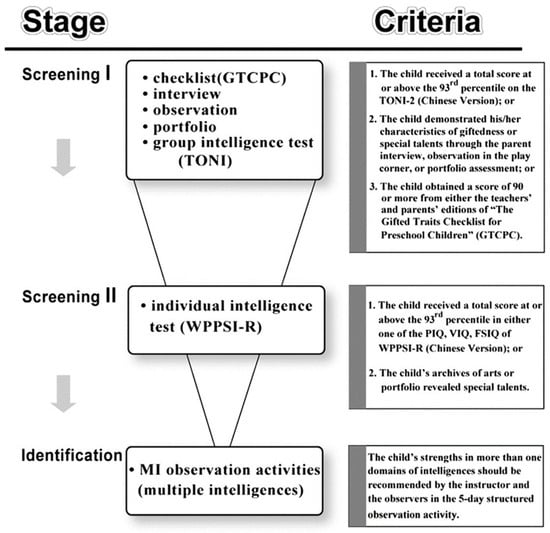
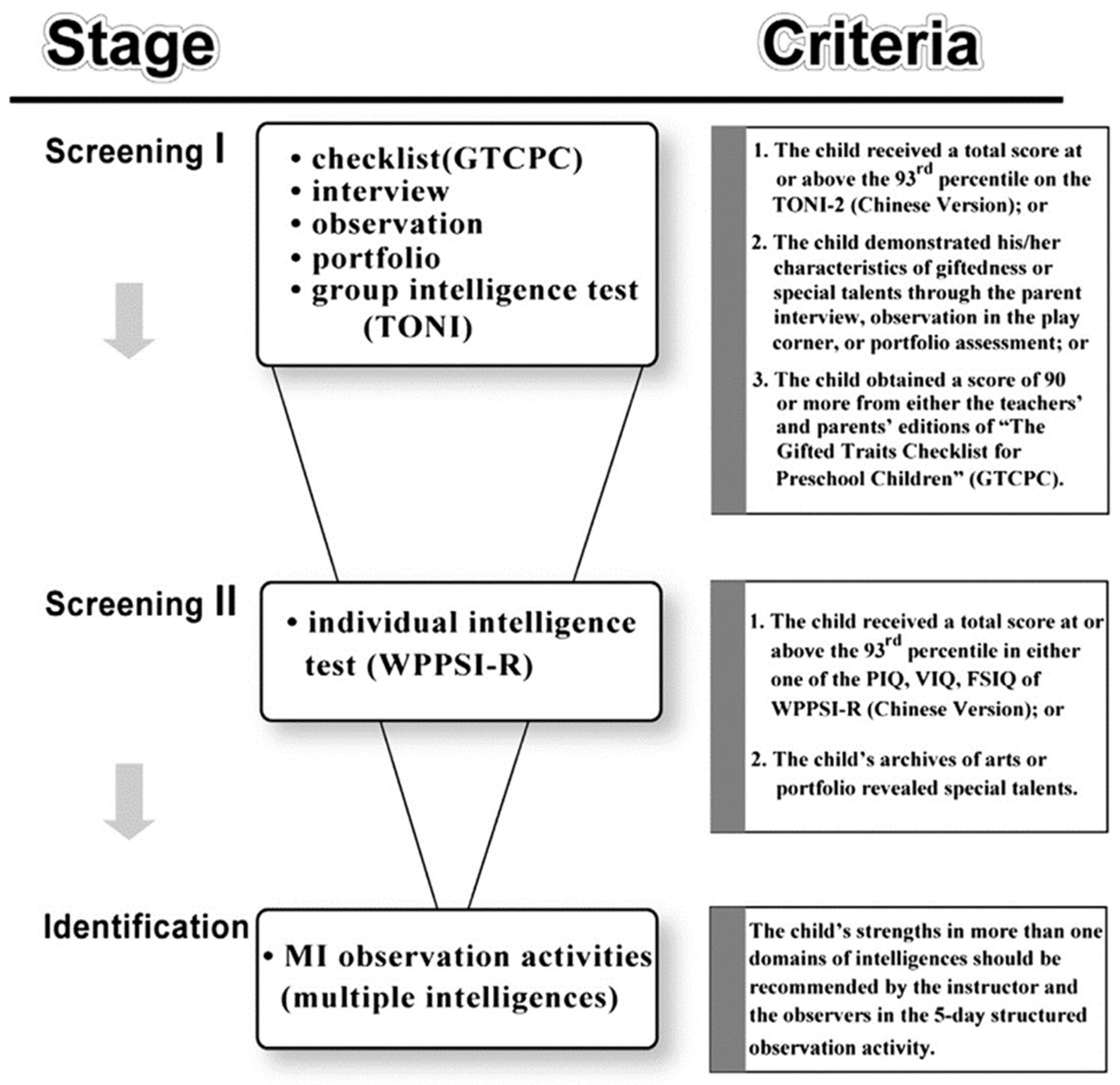
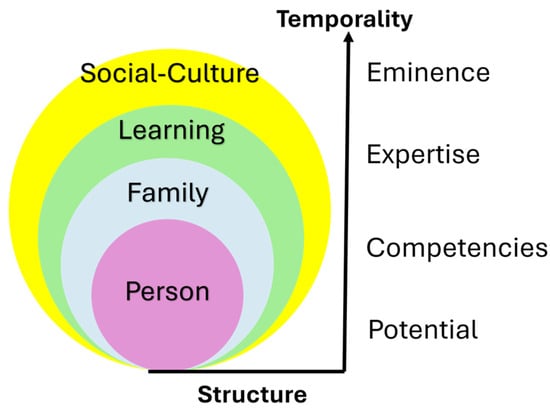
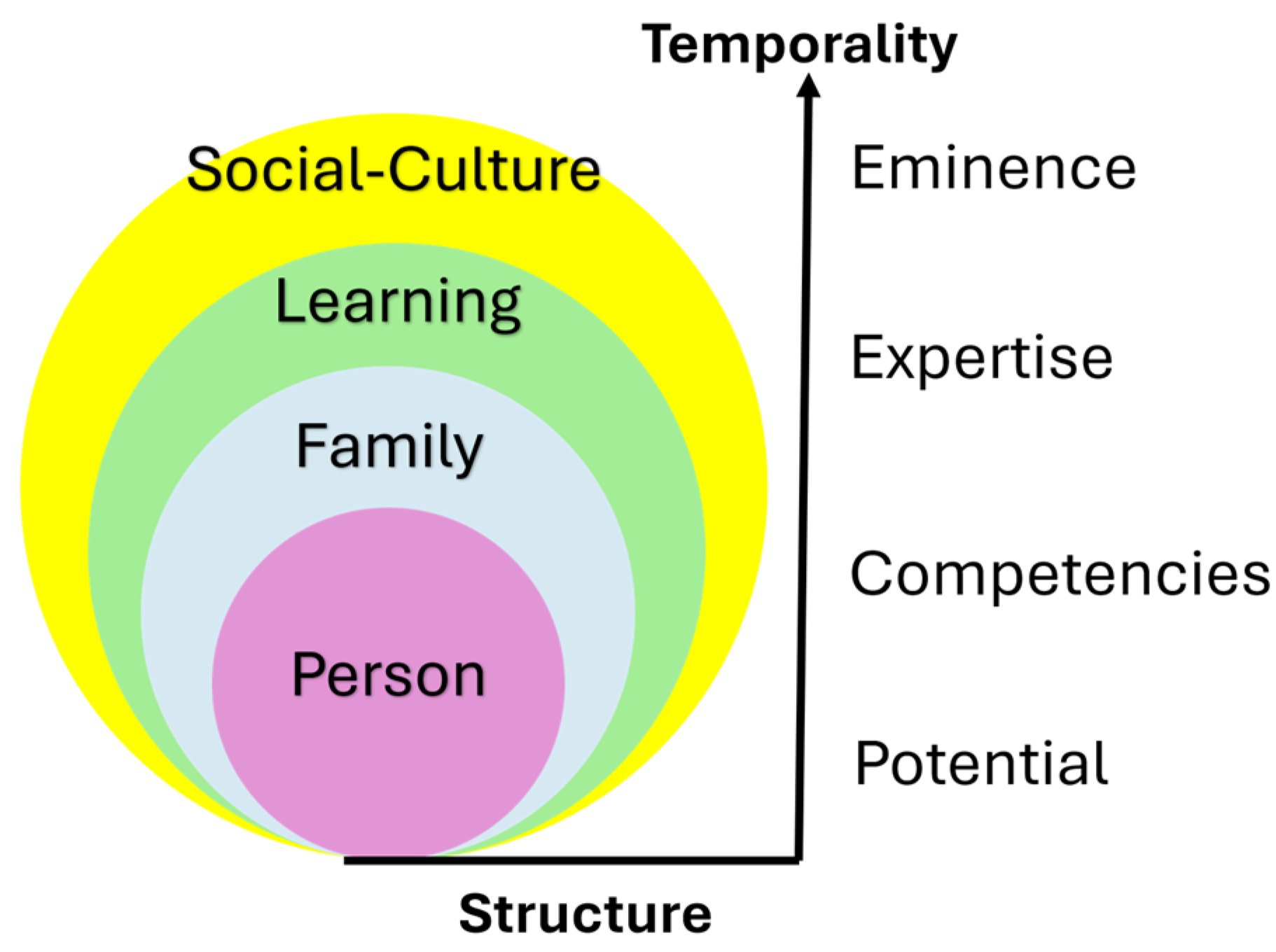

Disclaimer/Publisher’s Note: The statements, opinions and data contained in all publications are solely those of the individual author(s) and contributor(s) and not of MDPI and/or the editor(s). MDPI and/or the editor(s) disclaim responsibility for any injury to people or property resulting from any ideas, methods, instructions or products referred to in the content. |
© 2026 by the authors. Licensee MDPI, Basel, Switzerland. This article is an open access article distributed under the terms and conditions of the Creative Commons Attribution (CC BY) license.