


Abstract
Digital competence has become a key component of teaching excellence in higher education. This study, from a global framework, presents a bibliometric analysis of scientific production on digital competences in the university context to identify research trends, collaboration networks, and thematic evolution in Latin America. A total of 1985 papers published between 1993 and 2025 in the Web of Science Core Collection were analyzed using a PRISMA-based protocol. The results show exponential growth in publications since 2019, underscoring the global relevance of digital literacy in transforming teaching and learning processes. Spain stands out as a leading country in productivity and impact, supported by consolidated institutional frameworks such as DigComp and DigCompEdu. Keyword analysis reveals a transition from a tech-skills-focused approach to a more holistic perspective that incorporates critical thinking, ethics, and responsible use of emerging technologies, especially artificial intelligence. Although Latin America shows an increase in its contributions, its international visibility remains limited and requires strengthening scientific collaboration. This study provides a broad understanding of the field’s academic structure and outlines strategic directions to advance teachers’ digital competence and promote more inclusive, innovative, and sustainable university systems.
1. Introduction
The digital revolution has profoundly transformed the way society interacts, learns, and develops (Jahan & Zhou, 2023). In this context, digital skills have been consolidated as an essential component for effective, equitable, and sustainable participation in contemporary life (Aparicio-Gómez et al., 2023; Narrea et al., 2024). Over the last two decades, academic interest in its analysis in higher education has grown exponentially, driven by the convergence between technological innovation, pedagogical transformation, and social sustainability (Basantes-Andrade et al., 2022).
The development of digital competencies among university teachers and students not only addresses technological literacy but also fosters critical, collaborative, and ethical capacities in response to new digital educational scenarios (Cabero-Almenara et al., 2020; Kaqinari, 2023). These competencies are today a cross-cutting axis of international educational policies and university quality frameworks, especially in Europe and Latin America, where the aim is to harmonize teaching competency models with standards such as DigCompEdu and DigComp 2.2 (Redecker, 2017; Vuorikari et al., 2016).
In Latin America, various studies have shown that the development of these competencies faces structural barriers linked to technological infrastructure, teacher training, and institutional management (Carabregu-Vokshi et al., 2024; Ramírez-Montoya & Lugo-Ocando, 2020). The COVID-19 pandemic intensified these challenges by accelerating the adoption of digital technologies without sufficient pedagogical preparation (Tejedor et al., 2020). The transition from emergency remote teaching to hybrid modalities has opened a new debate on the sustainability of digital practices and the need for comprehensive approaches that integrate technological, human, and institutional dimensions (García-Peñalvo et al., 2020; Kaqinari, 2023).
At the same time, the rise of emerging technologies, such as generative artificial intelligence, poses new demands for digital literacy and ethics. In this scenario, the responsible integration of these tools in higher education becomes relevant, thereby strengthening teachers’ autonomy and critical judgment without replacing their pedagogical function (Haroud & Saqri, 2025; Raji & Dommett, 2024; Zuo et al., 2025). Research on digital competences is thus moving towards more complex frameworks that integrate instrumental skills with cognitive, social, and ethical dimensions of digital learning (Cebollero-Salinas et al., 2025). Despite growing academic interest, there is no integrated vision that clarifies how research on digital competences in higher education is structured, evolves, and is distributed globally, particularly given the unequal production and visibility in the global South. Although the motivation of this study emerges from the need to understand the development of digital competences in Latin American higher education, the bibliometric scope is intentionally global. This decision responds to the structural configuration of scientific production indexed in the Web of Science, in which research on digital literacy is predominantly concentrated in Europe and other Global North regions. This global mapping enables the identification of asymmetries, visibility gaps, and transfer dynamics that directly affect Latin American academic ecosystems.
Unlike previous reviews that focused primarily on teaching digital competence or on specific institutional contexts, this study offers an expanded perspective on the field by incorporating an exhaustive bibliometric analysis of more than two decades of international scientific production on digital competences in higher education. This approach allows us to comprehensively identify the dynamics of growth, collaboration patterns, emerging issues, and regional inequalities that have not yet been sufficiently clear in the literature (Lin, 2025; Sánchez-Macías et al., 2024). Likewise, this work offers an updated assessment of the role of artificial intelligence in the recent reconfiguration of the study of digital competences, and a strategic vision to guide teaching excellence in the coming years.
Given this panorama, it is pertinent to conduct a bibliometric analysis to understand, from a global perspective, the evolution, trends, and patterns of scientific production on digital competences in higher education. This approach enables the identification of the main collaboration networks, the dominant thematic foci, and the knowledge gaps that structure the field, as well as the examination of the position and visibility of Latin America in the international literature. The purpose of this study is to provide a comprehensive overview of the field’s development, considering both its global configuration and its regional dynamics, and to analyze its contribution to strengthening a more inclusive, innovative, and oriented higher education system towards teaching excellence. In this context, this study is guided by the following research question: (RQ1) How has scientific production on digital competences evolved globally in higher education? (RQ2) Which countries, institutions, and journals lead research in this field, and what is the relative participation of Latin America? (RQ3) What networks of scientific collaboration structure the field, and how are Latin American actors integrated into them? (RQ4) What emerging issues define the current research trends linked to teaching excellence and university digital transformation?
The article is organized as follows. First, a conceptual and theoretical framework is developed that delimits digital competencies in higher education, integrating international approaches and considerations specific to the Latin American context. Secondly, the bibliometric methodology used is presented, based on a PRISMA protocol and the analysis of records indexed in Web of Science. Subsequently, the results of the study are presented, accounting for patterns of scientific production, collaboration networks, academic impact, and thematic evolution. Finally, the findings are discussed from a global perspective, the gaps in visibility and regional participation are analyzed, and conclusions are formulated along with future lines of research aimed at strengthening teaching excellence and the digital transformation of higher education.
2. Conceptual and Theoretical Framework
2.1. Conceptualization of Digital Competences
Digital skills have evolved into a multidimensional concept that extends beyond mere technical proficiency with devices. Ferrari (2013) and Sánchez-Macías et al. (2024) defines them as “the set of knowledge, skills, and attitudes necessary today to be functional in a digital environment”, establishing a basis that integrates cognitive, procedural, and attitudinal dimensions (Marrero-Sánchez & Vergara-Romero, 2023). This definition was expanded by Vuorikari et al. (2016), who propose that digital competences imply the safe, critical, and creative use of digital technologies to achieve objectives related to work, employability, learning, leisure, inclusion, and social participation.
The European DigComp framework, developed by the European Commission, has established itself as one of the most influential models for conceptualising digital competences. In its most recent version, Vuorikari et al. (2016) identify five areas: information and data literacy, communication and collaboration, digital content creation, security, and problem-solving. This framework has inspired the formulation of public policies and national frameworks across different educational contexts, including adaptations for university teaching (Basantes-Andrade et al., 2022; Redecker, 2017).
From a critical perspective, van Dijk (2021) argues that digital skills should be analyzed within the broader context of the digital divide, which depends not only on access to technology but also on the ability to use it meaningfully (Zare et al., 2023). This view highlights the influence of socioeconomic, cultural, and educational factors on the development of digital skills, an approach adopted in recent studies that link digital literacy to critical thinking and social sustainability (Cebollero-Salinas et al., 2025; Pelaez-Sanchez et al., 2024).
In the literature, the terms digital competence, digital skills, and digital literacy are frequently used interchangeably, particularly in empirical and policy-oriented research. Nevertheless, several authors have proposed conceptual distinctions among them. Digital skills are commonly associated with operational and technical abilities required to use digital tools and technologies effectively, often emphasizing functional proficiency and task-oriented performance. In contrast, digital competence is understood as a broader construct that integrates knowledge, skills, and attitudes, enabling individuals to use digital technologies in a confident, critical, and responsible manner across diverse contexts (Ferrari, 2013; Vuorikari et al., 2016).
From a more critical perspective, digital literacy extends beyond functional or competence-based approaches by emphasizing reflective, ethical, and socio-cultural engagement with digital environments. This perspective highlights the capacity to critically evaluate information, understand the social implications of technology use, and participate meaningfully in digital societies (Aparicio-Gómez et al., 2023; Cebollero-Salinas et al., 2025). Given the substantial overlap in how these terms are employed in the indexed scientific literature, especially within large-scale reviews and bibliometric studies, this research adopts an integrative perspective that encompasses these conceptual dimensions, consistent with prevailing bibliometric practices and international frameworks such as DigComp and DigCompEdu (Redecker, 2017).
2.2. Theoretical and Methodological Approaches in Digital Competence Research
The study of digital competences has been based on multiple theoretical and methodological approaches that reflect their complex and dynamic nature. Drawing on constructivism, Koehler and Mishra (2009) developed the TPACK (Technological Pedagogical Content Knowledge) model, which integrates technological, pedagogical, and disciplinary knowledge, offering a robust framework for understanding how teachers articulate their digital practice (Saltos-Rivas et al., 2023).
Methodologically, research has shifted toward mixed approaches that integrate objective measurements with subjective perceptions. Hatlevik et al. (2015) recommend instruments that go beyond self-evaluation and include authentic tasks that assess real performance (Moreira-Choez et al., 2024). Along these lines, bibliometric analyses have become relevant for examining the scientific evolution of digital skills, as they allow the identification of collaboration networks, conceptual trends, and knowledge gaps (Bojórquez-Roque et al., 2024; Farias-Gaytan et al., 2023; Moral-Muñoz et al., 2020).
Currently, research methodologies also incorporate emerging perspectives that link digital literacy to the development of educational artificial intelligence (Zuo et al., 2025) and to the ethics of technological use (Gómez-Trigueros, 2023; Haroud & Saqri, 2025), thereby strengthening the relationship between digital competence, innovation, and teaching excellence.
2.3. Digital Competences in the Context of Higher Education
Higher education is a key space for the development of digital skills, both through its training function and through its impact on employability and teaching innovation. Redecker (2017), through the DigCompEdu framework, designed specifically for educators, identifies six areas, ranging from professional engagement to student empowerment, and directly links teachers’ digital competence to the quality of learning.
In Latin America, this relationship takes on particular characteristics. Baião and Veraszto (2025); Ramírez-Montoya and Lugo-Ocando (2020) identify challenges in technological infrastructure, teacher training, and institutional policies, and highlight the need for contextualized models that account for the region’s socioeconomic and cultural realities. Recent studies complement this vision by emphasizing that the development of digital competencies among university teachers requires institutional support and ongoing training strategies to foster professional empowerment (Díaz-Noguera et al., 2022; dos Santos et al., 2023; Kaqinari, 2023; Saavedra & Cervera, 2023).
Prensky (2001) introduced the notion of “digital natives,” which sparked debate over generational differences in technology use. However, subsequent research (Helsper & Eynon, 2010) showed that access to or technological familiarity does not guarantee advanced skills, reinforcing the importance of educational mediation (Luengo-Aravena et al., 2024; Pais et al., 2024). In this sense, teacher self-efficacy in the use of digital technologies is a relevant predictor of effective pedagogical use of these tools (Cabero-Almenara et al., 2020; Narrea et al., 2024).
2.4. Digital Skills and Post-Pandemic Educational Transformation
The COVID-19 pandemic necessitated digitalization of education, accelerating transformations that have modified university teaching. Hodges et al. (2020) introduced the term “emergency remote teaching” to describe immediate institutional responses during lockdown. In Latin America, inequalities in infrastructure and technological training generated significant gaps in teaching and learning processes (Carabregu-Vokshi et al., 2024; García-Peñalvo et al., 2020; Vargas et al., 2024).
Subsequent research has shown a transition from the instrumental use of technology to a more comprehensive understanding of digital competences, including pedagogical, ethical, and social dimensions (Rapanta et al., 2020). Likewise, the need for public policies and university strategies aimed at sustainable digital literacy and institutional resilience is recognized. The integration of practices grounded in critical thinking and deep learning represents a new horizon for teaching excellence in the digital age (Cebollero-Salinas et al., 2025; Lin, 2025).
This conceptual framework provides the theoretical and methodological foundations for interpreting the results of the bibliometric analysis developed in this study, contributing to understanding the role that digital competences play in transforming higher education towards more inclusive, ethical, and sustainable models.
3. Methodology
3.1. General Approach of the Study
This study adopts a descriptive and analytical bibliometric approach to examine the evolution and trends of the scientific literature on digital competences in higher education at a global level, incorporating a specific interpretive emphasis on the Latin American context to identify patterns of visibility, collaboration, and structural gaps in regional scientific production. Bibliometrics is recognized as a quantitative technique that allows the exploration of patterns in scientific production and provides a comprehensive view of the structure, dynamics, and networks of knowledge within a specific field (Ellegaard & Wallin, 2015). This approach is particularly relevant for mapping the theoretical consolidation of digital competences and their expansion towards models of teaching excellence and educational sustainability (Farias-Gaytan et al., 2023).
3.2. Data Source and Search Criteria
The data were obtained from the Web of Science (WoS) database, which is recognized internationally for its multidisciplinary coverage and reliability in indexing peer-reviewed literature (Basantes-Andrade et al., 2022; Bojórquez-Roque et al., 2024; López-Núñez et al., 2024). The main collections considered were Science Citation Index Expanded (SCI-EXPANDED), Social Sciences Citation Index (SSCI), Arts & Humanities Citation Index (A&HCI), and Emerging Sources Citation Index (ESCI).
The search strategy was executed in the topic field (title, abstract and author keywords) using the terms: (“digital competenc*” OR “digital skill*” OR “digital literac*” OR “digital capabilit*” OR “ICT competenc*” OR “technological competenc*” OR “digital proficienc*” OR “e-skill*” OR “digital abilit*” OR “digital know-how” OR “digital fluenc*”) AND (“higher education” OR “university” OR “universities” OR “college*” OR “higher learning”). The time period spanned 1993 to 2025, to capture the conceptual and empirical evolution of the field from the beginning of the twenty-first century to the present.
3.3. Document Identification and Selection Process
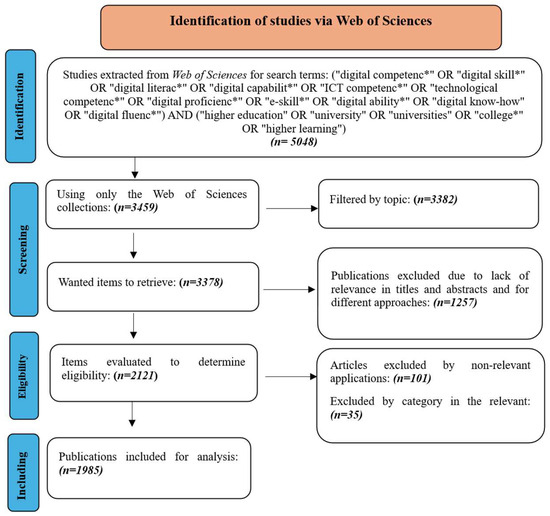
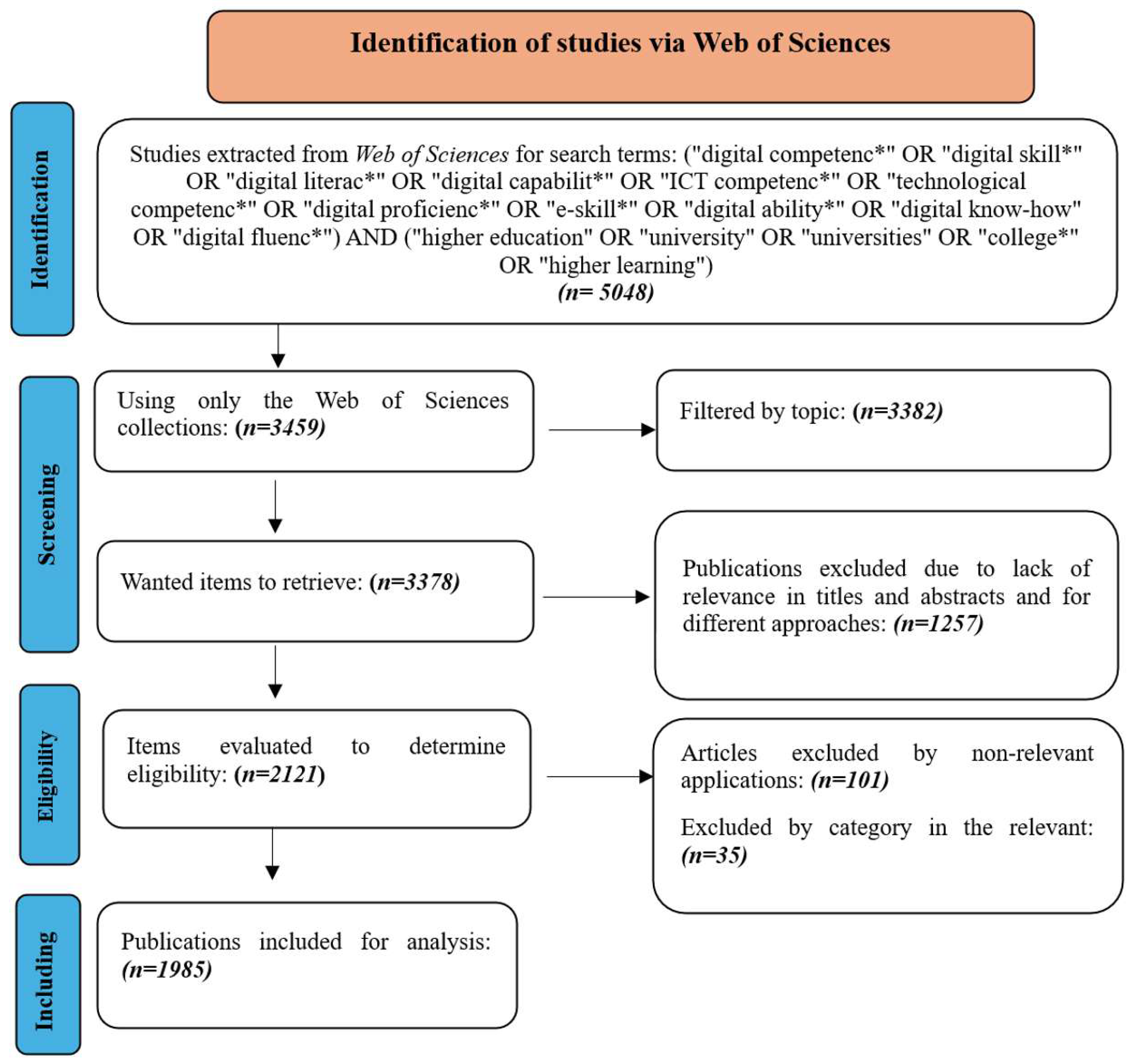
The procedure for reviewing and filtering records was carried out in accordance with the PRISMA 2020 (Preferred Reporting Items for Systematic Reviews and Meta-Analyses) guidelines, which establish standards to ensure transparency, reproducibility, and methodological consistency in systematic reviews (Page et al., 2021). The initial search in WoS yielded 5048 records. In the identification phase, the sample was restricted to the Core Collection, resulting in a set of 3459 documents. In the screening phase, a thematic filter was applied (Saltos-Rivas et al., 2023) to exclude documents that did not explicitly address digital competences, digital literacy, or digital skills in higher education contexts. Documents focused exclusively on clinical health, pure computer science, engineering algorithms, or non-educational technological development were excluded. Editorials, book reviews, corrections, and non-peer-reviewed materials were also removed, leaving 3382 records; after eliminating four retracted articles, 3378 remained.
In the eligibility phase, 1257 non-pertinent documents were discarded due to their focus or content type, leaving 2121 articles. Subsequently, 101 papers were excluded for non-relevance, and 35 were classified as editorial material, book reviews, or corrections. The final sample included 1985 publications submitted to bibliometric analysis. The complete document screening and selection process is summarized in Figure 1, which shows the PRISMA 2020 flowchart used in this study.
Figure 1.
PRISMA Flowchart of the Study Selection Process. Note: The search combined synonyms with and linked digital competencies with higher education with , using truncation (*) to capture lexical variations and extend the retrieval of relevant studies.
3.4. Data Extraction and Normalization
The selected records were exported in BibTeX and CSV formats, including metadata of authors, titles, years, sources, affiliations, countries, citations, and references. A standardization and purification process was applied to ensure data consistency, unify variants of author, institution, and country names, and eliminate duplication and typographical errors. This step proved essential to strengthen the validity of the metrics and the accuracy of the co-occurrence and collaboration maps.
3.5. Bibliometric Tools and Analysis
The analysis was developed using a combination of specialized software. The Bibliometrix package (Aria & Cuccurullo, 2017) was used to compute productivity, impact, and scientific collaboration indicators. The VOSviewer program (v.1.6.20) (van Eck & Waltman, 2010) enabled the creation of network visualization maps that group nodes by co-authorship, co-citation, and co-occurrence of terms. Additionally, Microsoft Excel was used for preliminary management and validation of data consistency.
The indicators analyzed included annual production, international collaboration index, citation impact, thematic concentration, and keyword evolution. These metrics enabled the identification of leading scientific actors, the most active institutional networks, and emerging lines of research in university digital literacy.
4. Results
4.1. Main Information
The bibliometric analysis of scientific production on digital competences reveals significant patterns in the temporal evolution and characteristics of indexed publications in higher education. The period analyzed spans 1993 to 2025, offering a longitudinal view of the field’s development over more than three decades.
The initial search of the Web of Science database identified 5048 publications. This set was subjected to a rigorous selection and filtering process following the guidelines of the PRISMA (Preferred Reporting Items for Systematic Reviews and Meta-Analyses) methodology, which guarantees the transparency, completeness, and reproducibility of systematic review processes (Page et al., 2021).
The filtering was carried out in several stages. First, the search was restricted to the Web of Science Core Collection, which includes the Science Citation Index Expanded (SCI-EXPANDED), Social Sciences Citation Index (SSCI), Arts & Humanities Citation Index (A&HCI), and Emerging Sources Citation Index (ESCI) collections, reducing the corpus to 3459 documents. Subsequently, the application of specific thematic filters yielded 3382 publications directly related to the object of study.
During the screening phase, four retracted articles were identified and eliminated, leaving 3378 documents for further analysis. In the eligibility stage, 1257 publications that did not address the research objective were excluded, resulting in a total of 2121 articles. Likewise, 101 documents belonging to 20 thematic categories not relevant to the study were excluded, reducing the corpus to 2020 publications. Finally, in the inclusion phase, 35 documents classified as corrections, book reviews, letters, conference abstracts, or editorial material were discarded, obtaining a final sample of 1985 documents for bibliometric analysis.
Regarding the distribution by document type, the results show a clear predominance of research articles, which account for 93.0% of the total (1847 papers). They are followed by early access articles, with 89 publications (4.5%), proceedings papers, with 31 (1.6%), and data papers, with 18 (0.9%).
This distribution reflects the consolidation of the field of study and a preference for the traditional scientific article format, which indicates a high degree of formalization and academic maturity. The proportion of early-access articles indicates an active and expanding field of knowledge, in which the rapid dissemination of results is a distinctive feature of the research community. The presence of data-based publications and papers presented at conferences also suggests a diversification of scholarly communication formats, accompanied by quality control mechanisms that reinforce the credibility and self-regulation of the field.
Finally, the methodological rigor applied in filtering the records strengthens the reliability of the results. It provides a solid basis for analyzing trends, networks, and conceptual clusters that characterize the development of digital competencies in higher education. This initial panorama confirms the field’s growing institutionalization and its relevance for teacher training focused on digital excellence and sustainable pedagogical innovation (Hussain et al., 2025; Raji & Dommett, 2024).
4.2. Scientific Production per Year
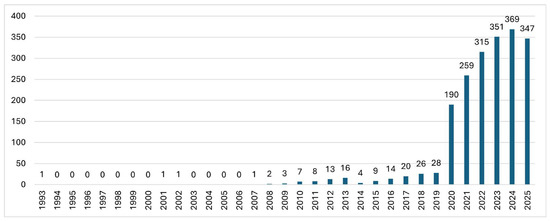
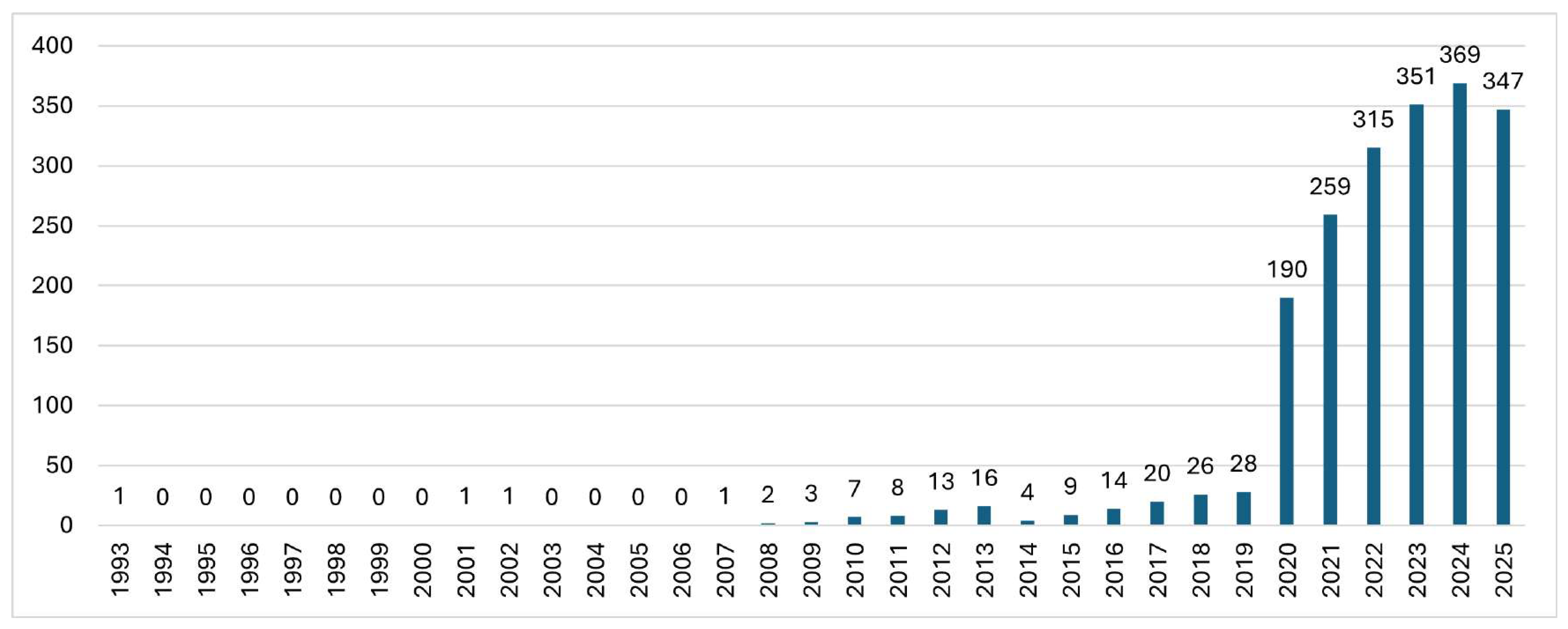
Figure 2 presents the temporal evolution of scientific production on digital competences in higher education during the period 1993 to 2025. The analysis of the annual distribution of publications shows exponential growth in the field, with particularly pronounced behavior from 2019 onwards. This increase reflects an expanding academic interest, associated with the incorporation of digital literacy as a transversal axis of university teacher training and pedagogical innovation (Carabregu-Vokshi et al., 2024).
Figure 2.
Annual production of digital skills in higher education.
For almost two decades (1993–2019), the field maintained gradual growth, accumulating only 304 publications, representing about 15% of the total production analyzed. However, 2020 marks an unprecedented turning point: production increased by a factor of 7 compared to the previous year, initiating a phase of sustained expansion that reaches its all-time high in 2024, with 369 publications. This behavior is directly linked to the effects of the COVID-19 pandemic (Narrea et al., 2024; Zare et al., 2023), which acted as a catalyst for global digitalization and transformed university teaching, positioning digital competencies as essential skills for pedagogical continuity and teaching excellence (Basantes-Andrade et al., 2022; Díaz-Noguera et al., 2022).
The period 2020–2025 accounts for 85% of all scientific production (1681 documents), confirming that digital skills have ceased to be an emerging topic and have consolidated as a mature, strategic, and priority field within the contemporary academic landscape.
Likewise, this intensification of scientific interest coincides with the incorporation of new lines of research focused on critical digital literacy, the application of artificial intelligence to education, and the sustainability of digital learning (Haroud & Saqri, 2025; Kaqinari, 2023; Zuo et al., 2025). These trends suggest a conceptual transition toward models of digital teaching excellence, in which technological competencies are integrated with the ethical, reflexive, and collaborative dimensions of educational work (Aires et al., 2025).
4.3. Most Relevant Journals
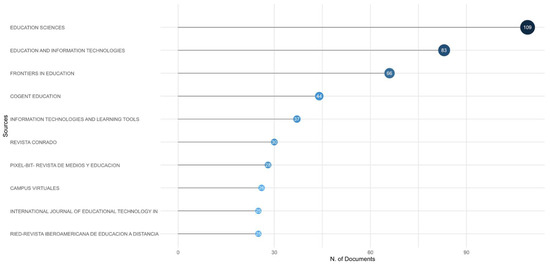
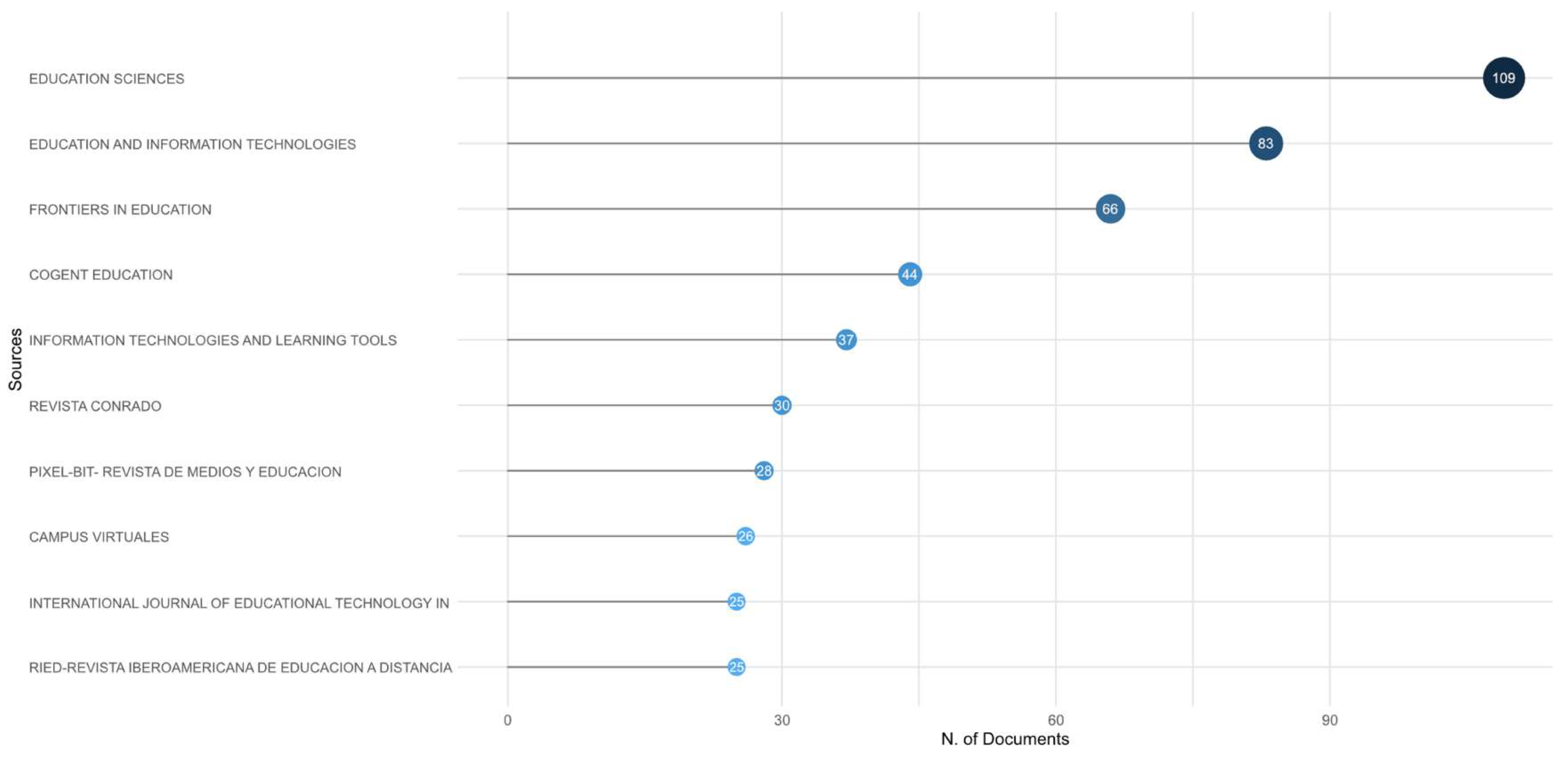
Figure 3 shows the distribution of publications among the most influential journals in the field of digital skills, revealing a high concentration of scientific production in specialized sources in education and educational technology. Education Sciences is the leading journal, with 109 papers, followed by Education and Information Technologies with 83 publications and Frontiers in Education with 66 articles. This pattern shows the consolidation of the topic in open-access and high-impact journals, particularly those that promote pedagogical innovation and teacher digital literacy.
Figure 3.
Most relevant journals in scientific production on digital skills.
The leadership of Education Sciences is particularly significant, as it is one of the most active publishing platforms for disseminating research on digital skills, higher education, and teaching excellence (Baião & Veraszto, 2025). Their role reinforces the trend towards the global visibility of educational knowledge under the open science model, facilitating the international circulation of research results and interregional academic exchange (Basantes-Andrade et al., 2022; García-Peñalvo et al., 2020).
Likewise, the geographical and disciplinary diversification of the sources stands out, with a notable presence of Ibero-American journals such as Revista Conrado (30 documents), Pixel-Bit: Revista de Medios y Educación (28 papers), Campus Virtuales (27 documents), and RIED – Ibero-American Journal of Distance Education (25 documents). This representation reflects the strengthening of Spanish-speaking academic communities in educational research and the integration of digital competence into university teacher-training policies (Ramírez-Montoya & Lugo-Ocando, 2020).
Overall, the distribution of publications across international and regional sources indicates a diverse and complementary editorial network, in which research on digital skills is consolidating as an interdisciplinary field of strategic relevance for the transformation of higher education in the digital age.
4.4. Impact of Journals (H-Index)
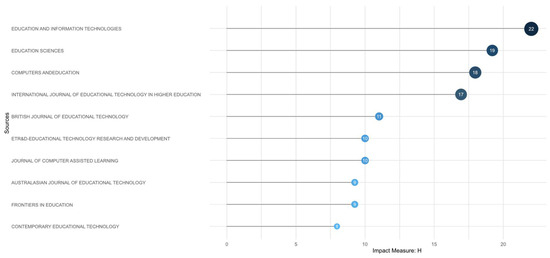
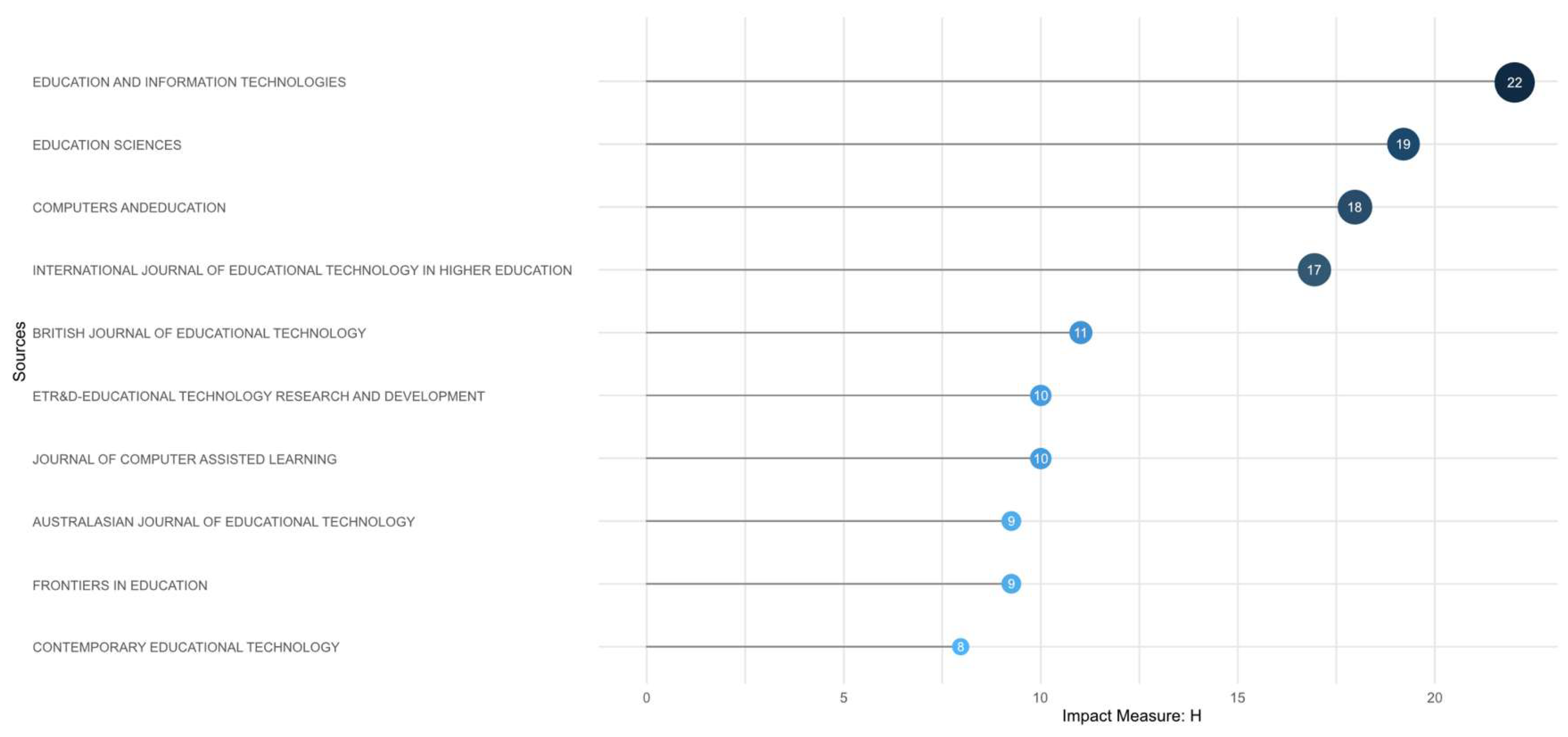
Figure 4 presents the scientific impact of journals, measured by the H-index, an indicator that combines productivity and citation influence within the corpus analyzed. The results show that Education and Information Technologies tops the ranking with an H-index of 22, followed by Education Sciences with 19 and Computers & Education with 18. This leadership confirms that journals specialized in educational technology not only publish a high volume of publications on digital skills, but also generate sustained academic impact within the international scientific community.
Figure 4.
Impact of journals according to the H-index on the production of digital skills.
The prominence of Education and Information Technologies and Education Sciences reflects their consolidation as key publishing platforms for disseminating knowledge on pedagogical innovation, digital literacy, and university teaching excellence. Its predominance in the H-index suggests a combination of visibility, citation, and leadership in the publication of empirical research and systematic reviews that define the field’s lines of development (Díaz-Noguera et al., 2022; García-Peñalvo et al., 2020; Lin, 2025).
On the other hand, the presence of internationally renowned journals such as the International Journal of Educational Technology in Higher Education (H = 17), the British Journal of Educational Technology (H = 11), and the Journal of Computer Assisted Learning (H = 10) demonstrates the maturity of research on digital competences and its recognition within the main educational technology forums. These publications act as reference nuclei that legitimize the integration of digital learning, teacher training, and interdisciplinary research in higher education (Basantes-Andrade et al., 2022; Kaqinari, 2023).
Likewise, there is a rise in emerging journals, such as Frontiers in Education (H = 9) and Contemporary Educational Technology (H = 8), whose sustained growth in citations suggests the emergence of new editorial spaces focused on educational artificial intelligence, digital ethics, and the sustainability of learning. This phenomenon reflects a healthy diversification of the scientific ecosystem, where established publications coexist with newer forums that expand the field’s thematic scope.
Overall, the distribution of the H-index evidences the academic maturity of the study on digital skills, highlighting the coexistence of leading Anglo-Saxon journals and emerging Ibero-American platforms. This pattern of impact not only demonstrates the quality and global influence of published research but also confirms the role of digital literacy and teaching excellence as central axes of educational transformation in the digital age.
4.5. Most Productive Institutions
Table 1 presents the most productive academic institutions in the field of digital skills, with an intense concentration in Europe, particularly in Spain. The Ministry of Education and Science of Ukraine leads the ranking with 158 publications, followed by the University of Granada with 63 articles and the University of Seville with 58, forming a leading group that accounts for 279 publications, equivalent to 14% of the total analysed.
Table 1.
Most relevant institutions in research on digital skills.
The predominance of Spain is particularly significant, with seven institutions ranked among the ten most productive: Granada, Seville, Malaga (43 articles), Salamanca (37), Valencia (35), Barcelona (31) and Rovira i Virgili (27). Together, these institutions concentrate 294 publications, which represent 15% of the total corpus. This leadership confirms the consolidation of the Spanish university system as an international benchmark in research on literacy and digital competence, driven by institutional frameworks such as DigCompEdu and by public policies for teaching innovation (Redecker, 2017; Vuorikari et al., 2016).
The presence of two Latin American institutions in the top 10 (the Tecnológico de Monterrey, with 46 articles, and the César Vallejo University of Peru, with 35 articles) highlights the progressive expansion of research on digital skills in Latin America. Although still in the consolidation stage, this participation reflects a growing regional articulation between institutions that adopt digital transformation strategies and teacher strengthening programs in line with international standards (Basantes-Andrade et al., 2022; Ramírez-Montoya & Lugo-Ocando, 2020).
These results show a geographical pattern of concentration and transfer of knowledge from Europe to Latin America, where Spanish institutions function as nodes of reference and international collaboration. The expansion of interregional academic networks, especially between Spain, Mexico and Peru, suggests the emergence of a transnational research ecosystem that promotes teaching excellence and the sustainability of digital literacy in the global university context (Luengo-Aravena et al., 2024; Sánchez-Macías et al., 2024).
4.6. Country of Correspondence
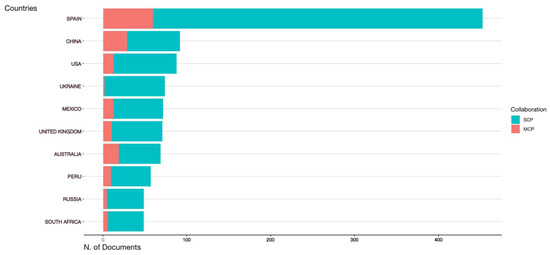
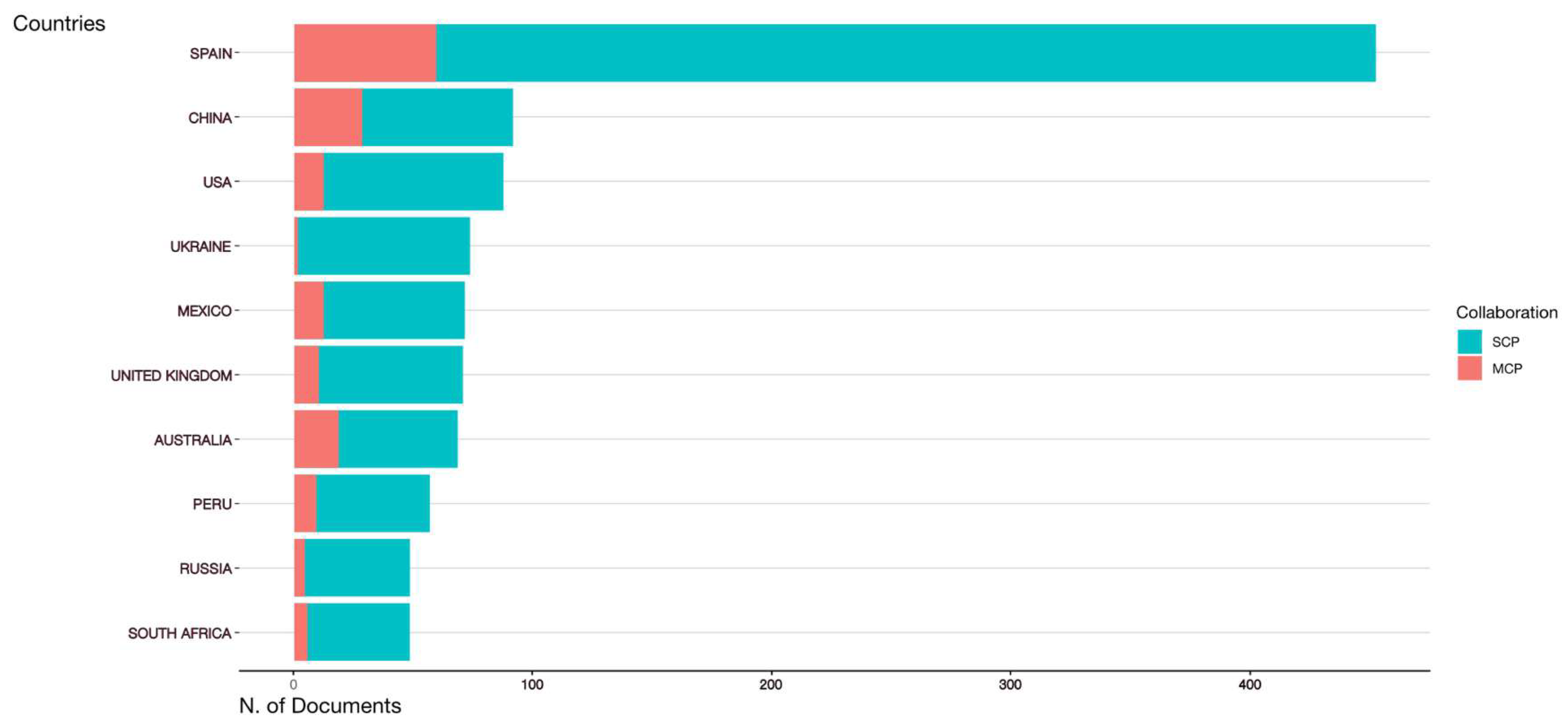
Figure 5 presents the geographical distribution of the corresponding authors, differentiating between publications from a single country (SCP: Single Country Publications) and those with international collaboration (MCP: Multiple Country Publications). The results show significant patterns in the dynamics of scientific production and cooperation in the field of digital skills.
Figure 5.
Countries of correspondence in the production of digital skills.
Spain stands out in the global scene, with approximately 500 publications, of which a considerable proportion involve international collaborations (MCP). This result confirms its role as an academic epicentre in research on digital competences and as a key articulator in global scientific networks (Urakova et al., 2023). Spanish leadership is explained by both the institutional continuity of European projects and the consolidation of active academic communities around the development and application of the DigCompEdu framework (Redecker, 2017).
At a considerable distance, China and the United States are in second and third place, with around 110 and 100 publications, respectively, followed by Ukraine, Mexico, and the United Kingdom, with an average of 80–90 documents each. This pattern evidences a contribution structure in which countries in the global north account for the largest share of production, while Latin American nations and the global south are beginning to increase their scientific visibility through interregional collaboration (Basantes-Andrade et al., 2022; Ramírez-Montoya & Lugo-Ocando, 2020).
The presence of Mexico and Peru among the ten most productive countries is particularly relevant, though with distinct profiles. Both nations have a higher proportion of publications from a single country (SCP), suggesting the consolidation of local research capacities and the development of national agendas in university digital literacy. In contrast, Spain and the United Kingdom exhibit a high percentage of publications with international collaboration (MCP), reflecting their institutional maturity and their role as poles of attraction for global co-authorship networks.
The distribution also shows the emerging participation of countries from different continents, including Australia, Russia, and South Africa, thereby five times thatreinforcing the study’s global and interdisciplinary nature. However, the marked concentration of leadership in the Spanish academic ecosystem (which is five times the output of any other country) underscores its structural influence on the international research agenda on digital literacy and teaching excellence.
4.7. Most Cited Countries
Table 2 shows the international impact of research on digital skills, based on an analysis of citations by country, revealing Spain’s apparent hegemony in academic influence. Spain leads the ranking with 5125 citations, more than double those of the United Kingdom (1948), confirming that its leadership extends beyond production volume to the impact and international visibility of its research.
Table 2.
Countries with the highest number of citations in research on digital skills.
The group of the five most cited countries is completed by China (1704 citations), the United States (1637), and Australia (1370), which evidences the consolidation of academic networks linking Europe, Asia, and Oceania within the global configuration of the field. However, none of these countries reaches 40% of Spain’s total citations, reaffirming Spain’s dominant position as the epicentre of university digital literacy.
The prominent presence of European nations such as Germany (856 citations), the Netherlands (605), and Ireland (391) reinforces the continent’s leadership in research on digital skills, driven by educational innovation programmes and European public policies on digital teacher transformation (Vuorikari et al., 2016).
In turn, the inclusion of Malaysia (391) and South Africa (360) in the top 10 reflects an incipient geographical diversification of impact, with a gradual opening to emerging contexts increasingly integrated into the international scientific debate.
On the other hand, the absence of Latin American countries among the most cited nations, despite their presence in the production ranking, is a critical finding. This imbalance suggests the persistence of gaps in the region’s visibility, positioning, and international collaboration. These results show the need to strengthen publication strategies, intercontinental cooperation, and the methodological quality of Latin American research on digital skills to increase its impact and participation in the global scientific agenda (Adetunla & Chowdhury, 2025; Basantes-Andrade et al., 2022; Ramírez-Montoya & Lugo-Ocando, 2020).
4.8. Most Frequent Words
Table 3 presents the analysis of the most commonly used words in the literature on digital competences, offering a clear overview of the main concepts and approaches that structure this field of research. The term education appears most frequently, with 244 mentions, followed by students (176) and technology (144). This semantic triad reflects the predominant orientation of research toward a student-centered, technology-mediated pedagogical approach, in which digital teaching and learning are conceived as interdependent processes.
Table 3.
Most frequent terms in the literature on digital skills.
The prominent presence of the terms teachers (127) and skills (114) underlines the dual importance of teachers as a facilitating agent and of competence development as a cross-cutting axis of educational transformation. The frequency of words associated with the university context, such as higher education (108), university (98), and information and communication technologies (108), shows that the academic debate on digital competences is mainly concentrated in the field of tertiary education, where technological integration is linked to institutional policies for teaching innovation (García-Peñalvo et al., 2020; Redecker, 2017).
Likewise, the recurrence of the term literacy (90 mentions) within the top 10 reveals the field’s conceptual evolution toward a broader vision of digital competence that transcends instrumental skills and addresses the critical, ethical, and social dimensions of technology use. This trend aligns with contemporary approaches that conceive digital literacy as a comprehensive process of empowerment, in which teachers and students develop reflective, collaborative, and sustainable capacities in the face of the challenges posed by digital transformation (Aparicio-Gómez et al., 2023; Cebollero-Salinas et al., 2025).
Overall, the frequency of these terms shows that current research on digital competences is oriented towards a pedagogical model focused on teaching excellence and the critical training of digital citizens, reaffirming the role of higher education as a strategic space for the development of ethical, inclusive, and sustainable digital literacy (Gómez-Trigueros, 2023).
4.9. Keyword Clouds
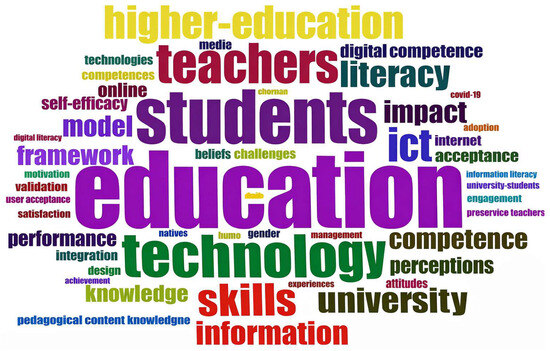
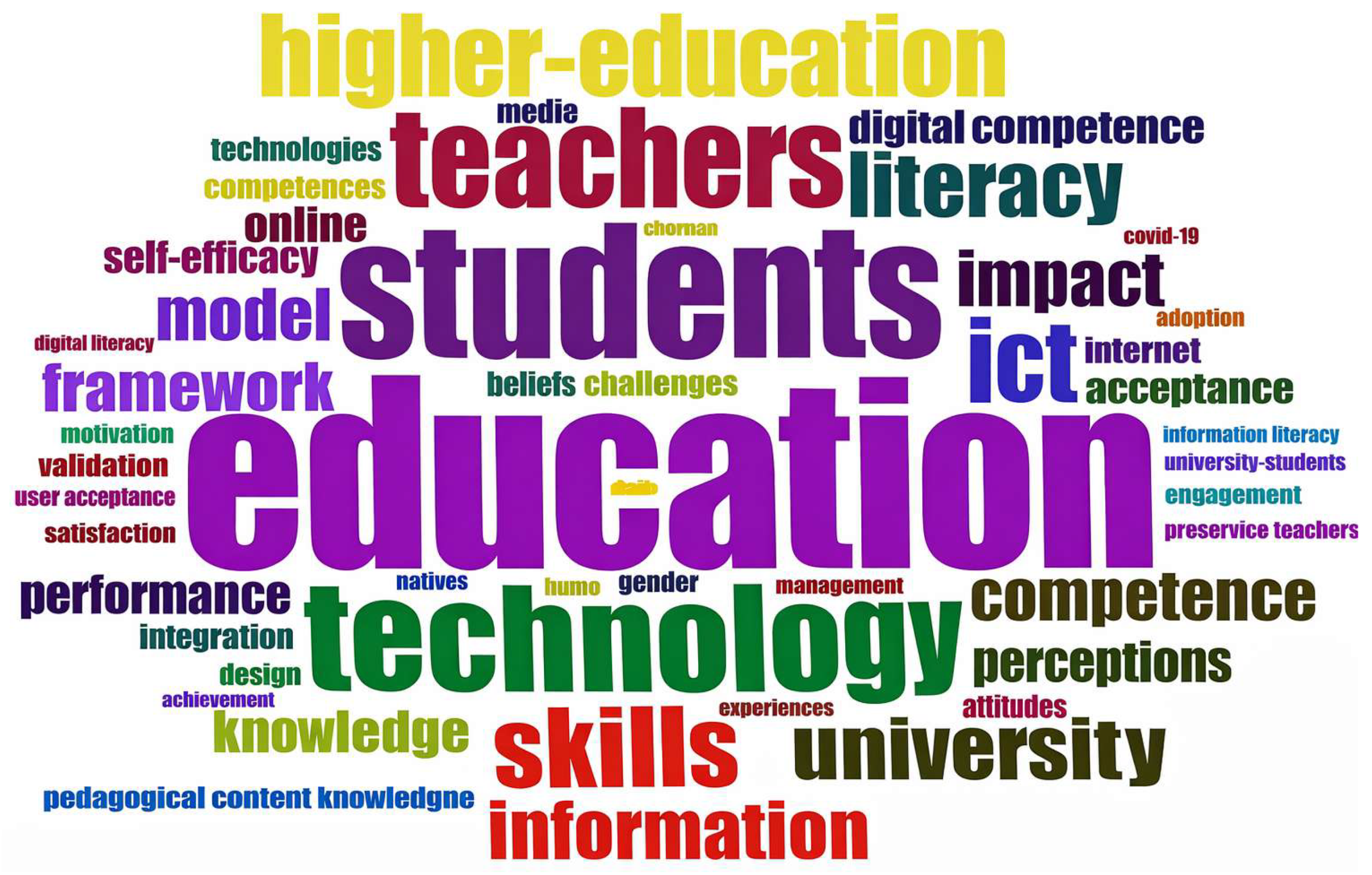
Figure 6 presents a word cloud that visualizes the predominant semantic network in research on digital competences, confirming and complementing the previous frequency analysis by depicting the field’s conceptual interconnections.
Figure 6.
Cloud of key terms in digital skills research.
At the core of the visualization are the terms education, students, teachers, technology, skills, and information, which are represented in larger size due to their high frequency and centrality. These concepts constitute the articulating axis of the field of study, which combines the pedagogical dimension, technological mediation, and the formation of competencies as pillars of university digital literacy.
Around these central terms, a constellation of second-level concepts (such as higher education, digital competence, literacy, ICT, and university) unfolds, reinforcing the predominant focus on higher education and the processes of institutional transformation associated with technological integration. In a complementary way, terms such as framework, model, perceptions, beliefs, attitudes, and self-efficacy reflect the main theoretical and methodological lines of the field, which aim to study the cognitive, attitudinal, and contextual dimensions of competence development (Hatlevik et al., 2015).
The appearance of terms such as COVID-19, online, challenges, impact, and engagement is particularly significant, indicating the recent incorporation of pandemic-related topics and the expansion of hybrid and virtual learning environments. These peripheral words reveal how crisis contexts can be situations that force pedagogical innovation, promoting the use of digital technologies and the adaptation of teaching models to new educational realities (García-Peñalvo et al., 2020; Tejedor et al., 2020).
Likewise, the inclusion of terms such as pedagogical content knowledge, integration, performance, validation, acceptance, and achievement confirms the field’s interdisciplinary nature and its progressive methodological maturity. These concepts refer to a holistic approach that goes beyond the instrumental view of digital competence, integrating pedagogical, evaluative, and educational outcomes that reflect the evolution of digital literacy towards a reflective and sustainable practice in higher education.
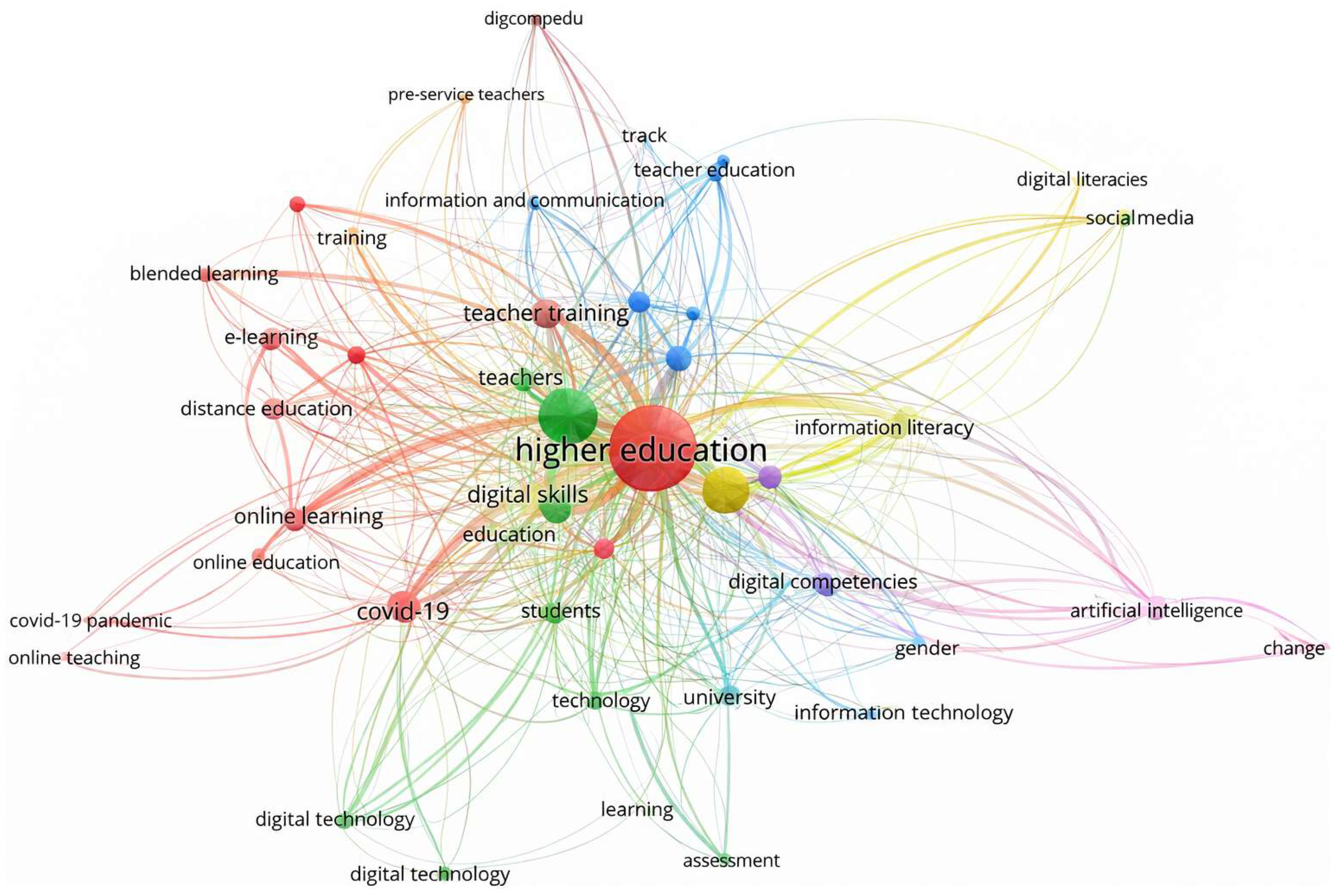
4.10. Key Terms Network
Figure 7 presents a visualization of the network of co-occurrence of key terms in research on digital competences generated by VOSviewer, revealing the main thematic groupings, their interrelationships, and the field’s conceptual structure. The network is organized around three dominant nodes that serve as articulating centers: “higher education” (green, larger central node), “teacher training” (blue), and “COVID-19” (red), each of which configures distinctive clusters that reflect the main lines of research. The green cluster focused on “higher education” is closely linked to “students”, “digital competencies”, “university”, “technology”, and “learning”, indicating a predominant focus on higher education as the context for the development of digital competencies. The red group, dominated by “COVID-19”, shows dense connections with “online learning”, “distance education”, “online learning”, “online teaching”, “blended learning” and “online education”, confirming the simultaneity between the pandemic, the incorporation of digital educational modalities and the presence of research in the field. The blue cluster articulated around “teacher training” is closely connected with “teacher education”, “teachers”, “pre-service teachers”, “tpack”, “information and communication”, and “digcompedu”, reflecting the centrality of teacher training as a strategic approach to the systemic development of digital competences.
Figure 7.
Network of Key Terms.
Particularly noteworthy is the presence of the yellow cluster that groups “information literacy”, “digital literacies”, and “social media”, as well as the emergence of emerging terms in the periphery, such as “artificial intelligence” and “ChatGPT”, suggesting new frontiers of research linked to artificial intelligence technologies. The dense connections among the different clusters reveal the field’s interdisciplinary and integrated nature, where pedagogical, technological, institutional, and educational policy perspectives converge. At the same time, the central position of “higher education” and its high connectivity confirm its role as the backbone of research on digital competences, articulating the dimensions of teacher training, student experience, institutional digital transformation, and response to global crises such as the COVID-19 pandemic (Carabregu-Vokshi et al., 2024).
5. Discussion
The results of the bibliometric study show that digital competences are a mature and expanding field of research, particularly in higher education (Farias-Gaytan et al., 2023). The temporal evolution of scientific production shows exponential growth from 2019 onwards, a phenomenon that coincides with the accelerated digitalization of educational environments and the redefinition of digital literacy as a transversal competence linked to teaching excellence and educational sustainability (Basantes-Andrade et al., 2022; García-Peñalvo et al., 2020). This sustained increase in publications and citations confirms the transition of digital competencies from an instrumental approach to a critical, reflective, and ethical perspective, in line with the DigComp and DigCompEdu frameworks (Redecker, 2017; Vuorikari et al., 2016). These changes reinforce the need for a reflective, responsible, and pedagogically grounded digital practice that enables teachers to achieve teaching excellence (Gómez-Trigueros, 2023).
The results of this study partially align with previous reviews that report European leadership in scientific production on digital skills, particularly in university teacher training. However, unlike studies such as Basantes-Andrade et al. (2022) and Verdú-Pina et al. (2023), which focus on digital competence for teachers as a central theme, this bibliometric analysis offers a broader view of the field by covering various dimensions of digital transformation in higher education over more than two decades. Likewise, the characterization of the phenomenon is broadened by highlighting the gap between the growing Latin American production and its still-limited international visibility, a gap that has been little documented in previous literature (Marrero-Sánchez & Vergara-Romero, 2023; Zare et al., 2023). Recent studies also show that certification models such as DigCompEdu could help reduce disparities in research visibility and institutional alignment (Baião & Veraszto, 2025). Finally, identifying artificial intelligence as an emerging node positions this study in a post-pandemic context that goes beyond the merely instrumental approach described in previous reviews.
In terms of academic leadership, the results reflect apparent European hegemony, with Spain as the central node for scientific production, citations, and collaboration. This leadership can be attributed to the development of institutional policies and regulatory frameworks that integrate digital competence in teacher training and in the assessment of university quality (Díaz-Noguera et al., 2022). In fact, teacher evaluation and incentive systems based on digital competence levels are becoming increasingly common in European institutions (Narrea et al., 2024). The density of co-authorship networks and the high number of international collaborations (MCPs) demonstrate the research maturity of the Spanish academic ecosystem, characterized by its capacity for global articulation and by the alignment between pedagogical innovation and university digital transformation.
In contrast, the analysis reveals a persistent gap in the participation and visibility of Latin American research, particularly in high-impact and citation production (Luengo-Aravena et al., 2024; Pais et al., 2023, 2024). Although countries such as Mexico and Peru are beginning to rank among the most productive, their lower presence in international citation circuits indicates structural challenges in financing, interregional collaboration, and publication in indexed journals. These findings align with Ramírez-Montoya and Lugo-Ocando (Ramírez-Montoya & Lugo-Ocando, 2020), who highlight the need to strengthen research capacities and knowledge-transfer networks in Latin America to reduce global asymmetries in the development of digital skills. To achieve this, new strategies must include scientific mentoring networks and collaborative publication programs to support emerging regions (Carabregu-Vokshi et al., 2024). When examining Latin America specifically, the findings reveal a growing volume of scientific production but a persistent deficit in international visibility and citation impact. This disparity suggests structural constraints in funding, international institutionalization, and access to high-impact publication venues, reinforcing the need for targeted regional strategies.
The semantic network of terms and thematic co-occurrence reveals an interdisciplinary field with four principal research axes: teacher training, higher education, critical digital literacy, and post-pandemic educational transformation. The central weight of the higher education cluster confirms that the university is consolidating itself as the space par excellence for experimentation and the institutionalisation of digital competence. At the same time, the centrality of the teacher training cluster underscores the relevance of teachers as agents of pedagogical change, while the COVID-19 group confirms the disruptive role of the pandemic as a context in which technological and methodological innovation was necessary (de Carvalho et al., 2023; Tejedor et al., 2020; Vargas et al., 2024).
The emergence of terms such as artificial intelligence, ChatGPT, and ethics suggests a new stage of digital literacy, associated with the development of critical capabilities for interacting with generative technologies. This shift demands developing educators’ AI literacy to make informed and ethical decisions when integrating generative tools into learning processes (Sánchez-Macías et al., 2024). This epistemological shift aligns with recent approaches by Haroud and Saqri (2025) and Cebollero-Salinas et al. (2025), who warn against integrating artificial intelligence into training processes without displacing the pedagogical agency or ethical judgment of the teacher. In this sense, digital competence is redefined as a dynamic construct that articulates technical skills with cognitive, socio-emotional, and digital citizenship dimensions.
From a methodological perspective, applied bibliometrics enabled the identification not only of global trends but also of knowledge gaps that require further exploration. Three priority areas stand out: measuring the real impact of institutional policies on digital competence, integrating mixed approaches combining bibliometric indicators with qualitative content analysis, and incorporating digital sustainability indicators into the evaluation of university technological literacy. Future evaluations should adopt multidimensional indicators that link competence development with measurable improvements in teaching effectiveness (Lin, 2025).
Overall, the results of this study confirm that the field of digital skills has reached a high level of conceptual and empirical maturity, but faces the challenge of balancing its growth across regions and of incorporating new issues arising from artificial intelligence, digital ethics, and educational equity. Bibliometric evidence suggests that the future of research in this field should be oriented towards collaborative, open, and sustainable models that link teaching excellence with inclusion and social justice in digital education in the 21st century.
6. Conclusions
The core question of this research was to understand how scientific production on digital skills has evolved in higher education and what dynamics shape its current development. After a systematic analysis of 1985 documents indexed in Web of Science, it is concluded that digital competencies have emerged as a structural axis for teaching excellence, curricular innovation, and educational sustainability. The exponential growth in publications observed since 2019 has coincided with universities’ accelerated digital transformation during the pandemic, leading to new pedagogical practices that leverage technological tools and hybrid learning.
The results show Europe’s global leadership in production, citations, and scientific collaboration, highlighting Spain as the epicentre of knowledge generation. This positioning is linked to institutional policies and consolidated frameworks of digital competence, such as DigComp and DigCompEdu, which have enabled alignment between research and teacher evaluation and certification processes. In contrast, Latin America shows progress but maintains a significant gap in visibility and international impact, reflecting challenges in infrastructure, academic internationalization, and research funding.
Finally, the field’s conceptual evolution demonstrates a transition from instrumental skills to a comprehensive digital competence that incorporates critical thinking, digital citizenship, and ethical responsibility in the face of emerging technologies, such as generative artificial intelligence. With this, digital skills are positioned as an essential component to train professionals capable of responding to the social and technological challenges of the 21st century (Bojórquez-Roque et al., 2024; Moreira-Choez et al., 2024; Pelaez-Sanchez et al., 2024).
7. Theoretical, Social, and Educational Implications
The results of this bibliometric research support the conceptualization of digital competencies as a multidimensional construct that extends beyond technical skills to encompassreviewed theoretical frameworks demonstrate that teachers’ digital competence is directly linked to their cognitive, ethical, and communicative dimensions of educational work. The theoretical frameworks reviewed demonstrate that teachers’ digital competence is directly linked to the ability to transform teaching processes and promote active participation in the knowledge society.
From a social perspective, the findings show the persistence of digital divides that impact educational equity. The lower visibility of Latin American countries in high-impact scientific production reflects a disparity in access to infrastructure, training resources, and international collaboration networks. Therefore, digital skills must be considered a necessary condition for the exercise of the right to education in digitalised environments.
In the educational field, the results reinforce the need to institutionalize teacher training in digital competencies through evaluation and continuous improvement systems that certify the levels of competence achieved (dos Santos et al., 2023; Saavedra & Cervera, 2023). It highlights the usefulness of instruments derived from the DigCompEdu model for monitoring teachers’ professional development, promoting personalized training, and ensuring that pedagogical practices meet the criteria for teaching excellence.
Likewise, the integration of emerging technologies, especially generative artificial intelligence, implies a redefinition of the relationship between technology and teaching. University excellence demands that the use of AI keeps pedagogical leadership in the hands of faculty and fosters critical thinking, creativity, and student autonomy.
8. Future Lines of Research
The analysis conducted enables us to outline a research agenda to strengthen the relationship between digital literacy and teaching excellence in higher education. It is necessary to deepen studies analysing the impact of digital competence on students’ learning outcomes and professional careers, especially in areas where the digitalisation of work is accelerating.
A priority line of research is to evaluate the effectiveness of teacher training programs based on recognized models, such as DigCompEdu, across universities in different regions, considering varying levels of institutional maturity and technological capabilities. This approach will enable comparisons of strategies and inform more context-specific educational policies.
Likewise, studies are needed to explore the pedagogical integration of generative artificial intelligence and its relationship to teaching excellence. It is recommended to delve deeper into how the critical use of AI-based tools contributes to the development of innovative methodologies, the ethical management of digital learning, and the promotion of superior cognitive skills such as problem-solving and creativity.
Finally, future research should focus on strengthening Latin American production in high-impact journals through collaborative, multilingual studies, as well as on developing indicators to monitor the progress of digital literacy as a policy of institutional and social transformation.
9. Limitations
This work has some limitations to consider. First, the analysis used only the Web of Science (WoS) database. While WoS is recognized for quality, it does not index all works on digital competence in higher education. This choice may have excluded relevant studies from regional journals or open-access repositories, especially in Latin America and other areas of the global south. Second, the bibliometric approach favors quantitative indicators, such as productivity, citations, and term co-occurrence, which limits a deeper understanding of the pedagogical, sociocultural, and political factors that shape digital competence. Also, data standardization may introduce errors due to variations in institutional or author names.
Finally, the review included works up to 2024, so new research (especially on generative artificial intelligence and digital ethics) may change the thematic networks and collaboration patterns. Despite these limitations, the results provide a solid, current view of global trends and research gaps that inform future agendas for teaching excellence and educational transformation in the digital age.
Author Contributions
Conceptualization, A.X.B.-d.-Á. and M.R.-C.; Methodology, A.X.B.-d.-Á. and M.R.-C.; Software, M.R.-C.; Validation, L.-E.J.-F., H.S.-L., M.N.S.-G. and K.P.J.-A.; Formal analysis, M.R.-C.; Investigation, A.X.B.-d.-Á.; Resources, L.-E.J.-F., H.S.-L., M.N.S.-G. and K.P.J.-A.; Data curation, M.R.-C.; Writing—original draft preparation, A.X.B.-d.-Á. and M.R.-C.; Writing—review and editing, A.X.B.-d.-Á., M.R.-C., L.-E.J.-F., H.S.-L., M.N.S.-G. and K.P.J.-A.; Visualization, M.R.-C.; Supervision, L.-E.J.-F., H.S.-L., M.N.S.-G. and K.P.J.-A.; Project administration, A.X.B.-d.-Á. and M.R.-C. All authors have read and agreed to the published version of the manuscript.
Funding
This research received no external funding.
Institutional Review Board Statement
Not applicable.
Informed Consent Statement
Not applicable.
Data Availability Statement
The data are contained in the same manuscript.
Conflicts of Interest
The authors declare no conflict of interest.
References
- Adetunla, G., & Chowdhury, G. (2025). Towards a sustainable automated library operation; the imperatives of digital skills and related factors of digital skills development of university library professionals in Nigeria. Information Research an International Electronic Journal, 30, 884–896. [Google Scholar] [CrossRef] [Scilit]
- Aires, L., Amante, L., Fernández-Márquez, E., & Nunes, C. (2025). Digital skills in distance university students: A psychometric analysis. Revista Fuentes, 2, 149–163. [Google Scholar] [CrossRef] [Scilit]
- Aparicio-Gómez, O.-Y., Ostos-Ortiz, O.-L., & Feigenblatt, O. F. V. (2023). Competencia digital y desarrollo humano en la era de la Inteligencia Artificial. Hallazgos, 20, 217–235. [Google Scholar] [CrossRef] [Scilit]
- Aria, M., & Cuccurullo, C. (2017). bibliometrix: An R-tool for comprehensive science mapping analysis. Journal of Informetrics, 11, 959–975. [Google Scholar] [CrossRef] [Scilit]
- Baião, E., & Veraszto, E. (2025). Competências digitais de professores e formação docente. ETD—Educação Temática Digital, 27, e025036. [Google Scholar] [CrossRef] [Scilit]
- Basantes-Andrade, A., Casillas-Martín, S., Cabezas-González, M., Naranjo-Toro, M., & Guerra-Reyes, F. (2022). Standards of teacher digital competence in higher education: A systematic literature review. Sustainability, 14, 13983. [Google Scholar] [CrossRef] [Scilit]
- Bojórquez-Roque, M. S., Garcia-Cabot, A., Garcia-Lopez, E., & Oliva-Córdova, L. M. (2024). Digital competence learning ecosystem in higher education: A mapping and systematic review of the literature. IEEE Access, 12, 87596–87614. [Google Scholar] [CrossRef] [Scilit]
- Cabero-Almenara, J., Gutiérrez-Castillo, J.-J., Palacios-Rodríguez, A., & Barroso-Osuna, J. (2020). Development of the teacher digital competence validation of DigCompEdu check-in questionnaire in the university context of Andalusia (Spain). Sustainability, 12, 6094. [Google Scholar] [CrossRef] [Scilit]
- Carabregu-Vokshi, M., Ogruk-Maz, G., Yildirim, S., Dedaj, B., & Zeqiri, A. (2024). 21st century digital skills of higher education students during COVID-19—Is it possible to enhance digital skills of higher education students through E-Learning? Education and Information Technologies, 29, 103–137. [Google Scholar] [CrossRef] [Scilit]
- Cebollero-Salinas, A., Mauri-Medrano, M., & Denoni-Buján, M. (2025). Deep learning in spanish university students: The role of digital literacy and critical thinking. Education Sciences, 15, 1183. [Google Scholar] [CrossRef] [Scilit]
- de Carvalho, L. P., Poleto, T., Ramos, C. C., de Assis Rodrigues, F., de Carvalho, V. D. H., & Nepomuceno, T. C. C. (2023). Predictors of digital competence of public university employees and the impact on innovative work behavior. Administrative Sciences, 13, 131. [Google Scholar] [CrossRef] [Scilit]
- Díaz-Noguera, M. D., Hervás-Gómez, C., la Calle-Cabrera, A. M. D., & López-Meneses, E. (2022). Autonomy, motivation, and digital pedagogy are key factors in the perceptions of Spanish higher-education students toward online learning during the COVID-19 pandemic. International Journal of Environmental Research and Public Health, 19, 654. [Google Scholar] [CrossRef] [Scilit]
- dos Santos, A. I., Chinkes, E., Carvalho, M. A. G., Solórzano, C. M. V., & Marroni, L. S. (2023). The digital competence of academics in higher education: Is the glass half empty or half full? International Journal of Educational Technology in Higher Education, 20, 9. [Google Scholar] [CrossRef] [Scilit]
- Ellegaard, O., & Wallin, J. A. (2015). The bibliometric analysis of scholarly production: How great is the impact? Scientometrics, 105, 1809–1831. [Google Scholar] [CrossRef] [Scilit] [PubMed]
- Farias-Gaytan, S., Aguaded, I., & Ramirez-Montoya, M.-S. (2023). Digital transformation and digital literacy in the context of complexity within higher education institutions: A systematic literature review. Humanities and Social Sciences Communications, 10, 386. [Google Scholar] [CrossRef] [Scilit]
- Ferrari, A. (2013). Digital competence in practice: An analysis of frameworks. Joint Research Centre of the European Commission, 91, 82116. [Google Scholar] [CrossRef]
- García-Peñalvo, F. J., Corell, A., Abella-García, V., & Grande, M. (2020). La evaluación online en la educación superior en tiempos de la COVID-19. Education in the Knowledge Society (EKS), 21, 26. [Google Scholar] [CrossRef] [Scilit]
- Gómez-Trigueros, I. M. (2023). Digital skills and ethical knowledge of teachers with TPACK in higher education. Contemporary Educational Technology, 15, ep406. [Google Scholar] [CrossRef] [Scilit] [PubMed]
- Haroud, S., & Saqri, N. (2025). Generative AI in higher education: Teachers’ and students’ perspectives on support, replacement, and digital literacy. Education Sciences, 15, 396. [Google Scholar] [CrossRef] [Scilit]
- Hatlevik, O., Ottestad, G., & Throndsen, I. (2015). Predictors of digital competence in 7th grade: A multilevel analysis. Journal of Computer Assisted Learning, 31, 220–231. [Google Scholar] [CrossRef] [Scilit]
- Helsper, E. J., & Eynon, R. (2010). Digital natives: Where is the evidence? British Educational Research Journal, 36, 503–520. [Google Scholar] [CrossRef] [Scilit]
- Hodges, C., Lockee, B., Trust, T., & Bond, A. (2020). The difference between emergency remote teaching and online learning. Educause Review, 27, 1–9. [Google Scholar]
- Hussain, A., Rafiq, M., & Ahmad, R. (2025). Digital skills competencies among university librarians in Islamabad, Pakistan. New Review of Academic Librarianship, 1–19. [Google Scholar] [CrossRef] [Scilit]
- Jahan, N., & Zhou, Y. (2023). COVID-19 and digital inclusion: Impact on employment. Journal of Digital Economy, 2, 190–203. [Google Scholar] [CrossRef] [Scilit]
- Kaqinari, T. (2023). Facilitators and barriers to online teaching and educational technology use by university lecturers during COVID-19: A systematic review of qualitative evidence. Trends in Higher Education, 2, 636–666. [Google Scholar] [CrossRef] [Scilit]
- Koehler, M. J., & Mishra, P. (2009). What is technological pedagogical content knowledge (TPACK)? Available online: https://citejournal.org/volume-9/issue-1-09/general/what-is-technological-pedagogicalcontent-knowledge/ (accessed on 18 April 2025).
- Lin, S. (2025). Assessment of digital skills of university MOOC instructors: A systematic quantitative study of multidimensional indicators. Interactive Learning Environments, 33, 3425–3445. [Google Scholar] [CrossRef] [Scilit]
- López-Núñez, J.-A., Alonso-García, S., Berral-Ortiz, B., & Victoria-Maldonado, J.-J. (2024). A systematic review of digital competence evaluation in higher education. Education Sciences, 14, 1181. [Google Scholar] [CrossRef] [Scilit]
- Luengo-Aravena, D., Cabello, P., & Bachino, B. R.-M. (2024). Online collaborative problem-solving as a tangible outcome of digital skills in technical and vocational higher education. Computers & Education, 218, 105079. [Google Scholar] [CrossRef] [Scilit]
- Marrero-Sánchez, O., & Vergara-Romero, A. (2023). Digital competence of the university student. A systematic and bibliographic update. Revista Amazonia Investiga, 12, 9–18. [Google Scholar] [CrossRef] [Scilit]
- Moral-Muñoz, J. A., Herrera-Viedma, E., Santisteban-Espejo, A., & Cobo, M. J. (2020). Software tools for conducting bibliometric analysis in science: An up-to-date review. El Profesional de la Información, 29, 4. [Google Scholar] [CrossRef] [Scilit]
- Moreira-Choez, J. S., Barzola, K. E. G., de Rodríguez, T. M. L., Sabando-García, A. R., Mendoza, J. C. C., & Barcia, L. A. C. (2024). Assessment of digital competencies in higher education faculty: A multimodal approach within the framework of artificial intelligence. Frontiers in Education, 9, 1425487. [Google Scholar] [CrossRef] [Scilit]
- Narrea, J. C. P., Mendoza-García, E., Ingelmo, R. M. G., & Moral-García, J. E. (2024). RelaRelación entre Burnout y las competencias digitales en el proceso de enseñanza-aprendizaje de los docentes universitarios peruanos durante la pandemia COVID-19. Apuntes Universitarios, 14, 30–44. [Google Scholar] [CrossRef] [Scilit]
- Page, M. J., McKenzie, J. E., Bossuyt, P. M., Boutron, I., Hoffmann, T. C., Mulrow, C. D., Shamseer, L., Tetzlaff, J. M., Akl, E. A., Brennan, S. E., Chou, R., Glanville, J., Grimshaw, J. M., Hróbjartsson, A., Lalu, M. M., Li, T., Loder, E. W., Mayo-Wilson, E., McDonald, S., … Moher, D. (2021). The PRISMA 2020 statement: An updated guideline for reporting systematic reviews. BMJ, 372, n71. [Google Scholar] [CrossRef] [Scilit]
- Pais, M. R., Quiroz, J. S., & Carrasco-Manríquez, C. (2023). Development of digital competences in students of a public state-owned Chilean University considering the safety area. Education Sciences, 13, 710. [Google Scholar] [CrossRef] [Scilit]
- Pais, M. R., Véliz-Campos, M., & Quiroz, J. S. (2024). Digital competences in chilean year-1 university students from Technical-Vocational Secondary Education (TVSE) and Scientific-Humanistic Secondary Education (SHSE). Education and Information Technologies, 29, 9825–9842. [Google Scholar] [CrossRef] [Scilit]
- Pelaez-Sanchez, I. C., Glasserman-Morales, L. D., & Rocha-Feregrino, G. (2024). Exploring digital competencies in higher education: Design and validation of instruments for the era of Industry 5.0. Frontiers in Education, 9, 1415800. [Google Scholar] [CrossRef] [Scilit]
- Prensky, M. (2001). Digital natives, digital immigrants part 1. On the Horizon, 9, 1–6. [Google Scholar] [CrossRef] [Scilit]
- Raji, N. A. S., & Dommett, E. J. (2024). Evaluating a university-wide digital skills programme: Understanding the student journey. Education Sciences, 14, 1295. [Google Scholar] [CrossRef] [Scilit]
- Ramírez-Montoya, M.-S., & Lugo-Ocando, J. (2020). Systematic review of mixed methods in the framework of educational innovation. Comunicar, 28, 9–20. [Google Scholar] [CrossRef] [Scilit]
- Rapanta, C., Botturi, L., Goodyear, P., Guàrdia, L., & Koole, M. (2020). Online university teaching during and after the COVID-19 crisis: Refocusing teacher presence and learning activity. Postdigital Science and Education, 2, 923–945. [Google Scholar] [CrossRef] [Scilit]
- Redecker, C. (2017). European framework for the digital competence of educators: DigCompEdu (Joint Research Centre (JRC) Science for Policy Report 95). Publications Office. [Google Scholar] [CrossRef]
- Saavedra, L. E. P., & Cervera, M. G. (2023). Autopercepción del profesorado universitario sobre la competencia digital docente. Educar, 59, 437–455. [Google Scholar] [CrossRef] [Scilit]
- Saltos-Rivas, R., Novoa-Hernández, P., & Rodríguez, R. S. (2023). Understanding university teachers’ digital competencies: A systematic mapping study. Education and Information Technologies, 28, 16771–16822. [Google Scholar] [CrossRef] [Scilit] [PubMed]
- Sánchez-Macías, A., Veytia-Bucheli, M. G., & Flores-Rueda, I. C. (2024). Las competencias digitales y la autonomía del estudiantado de educación superior. Validación y diagnóstico. Revista Electrónica Educare, 28, 21–44. [Google Scholar] [CrossRef] [Scilit]
- Tejedor, S., Cervi, L., Pérez-Escoda, A., & Jumbo, F. T. (2020). Digital literacy and higher education during COVID-19 lockdown: Spain, Italy, and Ecuador. Publications, 8, 48. [Google Scholar] [CrossRef] [Scilit]
- Urakova, F. K., Ishmuradova, I. I., Kondakchian, N. A., Akhmadieva, R. S., Torkunova, J. V., Meshkova, I. N., & Mashkin, N. A. (2023). Investigating digital skills among Russian higher education students. Contemporary Educational Technology, 15, ep398. [Google Scholar] [CrossRef] [Scilit] [PubMed]
- van Dijk, J. (2021). The digital divide. Journal of the Association for Information Science and Technology, 72, 136–138. [Google Scholar] [CrossRef] [Scilit]
- van Eck, N. J., & Waltman, L. (2010). Software survey: VOSviewer, a computer program for bibliometric mapping. Scientometrics, 84, 523–538. [Google Scholar] [CrossRef] [Scilit] [PubMed]
- Vargas, C. G. A. P., Muro, J. P. M., Delgado, J. W. P., Carrasco, D. K. E., Cueva, A. F., & Acosta-Enriquez, B. G. (2024). Mediating role of digital skills and mobile self-efficacy in the stress and academic engagement of Peruvian university students in postpandemic virtual environments. BMC Psychology, 12, 481. [Google Scholar] [CrossRef] [Scilit]
- Verdú-Pina, M., Lázaro-Cantabrana, J. L., Grimalt-Álvaro, C., & Usart, M. (2023). El concepto de competencia digital docente: Revisión de la literatura. Revista Electrónica de Investigación Educativa, 25, 1–13. [Google Scholar] [CrossRef] [Scilit]
- Vuorikari, R., Punie, Y., Carretero, S., & Brande, L. V. D. (2016). DigComp 2.0: The digital competence framework for citizens (pp. 1–40). Publications Office. Jrc-Ipts. [Google Scholar] [CrossRef]
- Zare, E. J. G., Abanto, S. E. S., Paredes, N. P. R., del Rosario Merino Salazar, T., Flores, S. E. P., Baldárrago, J. L. B., Salas-Ruiz, J. A., & Pardo, P. I. M. (2023). Technological devices and digital competences: A look into the digital divides for university continuity during the COVID-19 pandemic. Sustainability, 15, 8494. [Google Scholar] [CrossRef] [Scilit]
- Zuo, Z., Luo, Y., Yan, S., & Jiang, L. (2025). From perception to practice: Artificial intelligence as a pathway to enhancing digital literacy in higher education teaching. Systems, 13, 664. [Google Scholar] [CrossRef] [Scilit]

Disclaimer/Publisher’s Note: The statements, opinions and data contained in all publications are solely those of the individual author(s) and contributor(s) and not of MDPI and/or the editor(s). MDPI and/or the editor(s) disclaim responsibility for any injury to people or property resulting from any ideas, methods, instructions or products referred to in the content. |
© 2026 by the authors. Licensee MDPI, Basel, Switzerland. This article is an open access article distributed under the terms and conditions of the Creative Commons Attribution (CC BY) license.