


Abstract
Teacher shortages and high turnover remain persistent challenges in rural and remote school systems worldwide, with significant implications for educational equity, instructional quality, and community sustainability. Despite increased policy attention, geographically isolated schools continue to struggle to attract and retain qualified teachers. This review responds to the need for a consolidated, up-to-date synthesis of research on teacher retention in rural contexts. Using a PRISMA-informed systematic scoping review design, peer-reviewed empirical studies published in English between 2010 and 2025 were identified through database searches complemented by targeted hand searches. The review included qualitative, quantitative, and mixed-methods studies examining teacher retention, attrition, or turnover in rural or remote K–12 settings. Following screening and full-text review, 42 studies were included. Independent coding and thematic analysis were conducted, yielding high inter-rater agreement (Cohen’s κ = 0.77). The findings indicate a growing research base, particularly after 2020, dominated by studies from North America. Teacher retention in rural contexts is a multidimensional phenomenon shaped by interactions among organizational, community, individual, and policy factors. Supportive school leadership, positive school culture, strong community connections, and access to meaningful professional development are consistently associated with higher retention, whereas financial incentives alone show mixed, and often limited, long-term effects. Professional isolation, remoteness, and insufficient support structures remain key challenges, highlighting a mismatch between short-term policy measures and empirically supported retention strategies.
1. Introduction
Teacher turnover and staffing shortages remain core challenges in rural education systems worldwide. Despite shrinking student enrollments in some settings, rural schools continue to struggle to fill vacancies, driven largely by pre-retirement turnover and the uneven distribution of qualified teachers across locales (cf. Ingersoll & Tran, 2023). These shortages affect instructional continuity and student outcomes, and strain already limited rural resources. Persistent difficulties in recruiting and retaining teachers in rural schools have significant implications for educational equity and system stability. Rural contexts often include geographic isolation, limited resources, and challenges in attracting qualified staff (Jiang & Yip, 2024). The shortage of qualified teachers is a societal problem with severe consequences for communities, students, and society. Because educational quality is closely associated with the availability of qualified teachers, unequal access to them creates structural disparities, denying students in certain schools and regions equivalent educational opportunities. Most acute teacher shortages are in rural and disadvantaged areas (OECD, 2025a). Schools that fail to provide a high-quality education also affect the well-being of the entire community, thereby contributing to unequal conditions for students’ future education.
International surveys alert to a severe teacher shortage in the future. According to UNESCO’s global report on teachers, to address the projected need, 44 million primary and secondary teachers will be needed by 2030 (UNESCO, 2024a). Only in the Sub-Saharan region are 15 million teachers needed, and in Australia, more than 50% of public-school teachers report a shortage, according to the Teaching and Learning International Survey (OECD, 2025b; UNESCO, 2024b). The deepening teacher shortage is a worldwide issue. Also, higher-income countries face a complex challenge: an aging workforce alongside teacher turnover, attrition, and a declining attractiveness of the profession (European Commission, 2023). As many of the reasons behind teacher shortage seem to be aggregated in certain geographic areas, our interest is directed towards schools in remote and rural areas1, as these schools turn out to be hard to staff all around the world (OECD, 2025a, 2025b, 2025c; Mewborn-Gundlach, 2025; Skolverket, 2025; Tan et al., 2025).
Teacher shortage is a complex issue, as it is part of the problem of depopulation and declining vitality in remote and sparsely populated rural areas (Tessaro et al., 2021; OECD, 2025a, 2025b; Skolverket, 2025; Tan et al., 2025). To attract families to live outside population centers, schools are important factors influencing the decision to settle down in a rural or remote area. In this context, teacher retention becomes a key component for the survival of both the school and the community, and for attracting teachers who stay in the region and become part of the local community. School is key for survival for these communities, and qualified teachers in the school are a matter of equity.
Against this background, our focus in this research overview was on teacher retention in remote and rural areas, highlighting and presenting research on how rural and remote schools retain and attract qualified teachers.
The purpose of this literature review is to synthesize and evaluate existing research on teacher retention in rural areas, focusing on the factors influencing retention, the challenges unique to rural school contexts, and strategies proposed to improve teacher stability in these settings. The objectives of the study were as follows:
- (a)
- Identify and classify patterns and trends in the research concerning retention in rural school contexts from 2010 to 2025.
- (b)
- Identify contextual and individual factors contributing to teacher retention.
- (c)
- Identify and analyze strategies to support teacher retention in rural contexts presented in the literature.
- (d)
- Compare and discuss the findings in the previous research, and suggest a future research agenda.
2. Previous Research
Drawing on recent studies and reviews across multiple contexts, this overview synthesizes previous research on rural teacher retention, including organizational conditions, compensation and incentives, professional learning, and community embeddedness (cf. Ingersoll & Tran, 2023), and facts from international policy reports UNESCO (2024a, 2024b) and OECD (2025a, 2025c) consistently highlight severe global teacher shortages, with rural and hard-to-staff areas facing the greatest challenges in retaining qualified educators. These reports emphasize that improving working conditions, professional support, and the overall attractiveness of the teaching profession is crucial to strengthening teacher retention across disadvantaged regions. Furthermore, global policy analyses stress the need for coordinated national and international strategies to address unequal teacher distribution and to ensure that all students, regardless of geography, have access to well-supported, effective teachers. A review of previous research has revealed several key themes, which are presented below.
2.1. Structural and Organizational Drivers
Across global educational systems, rural schools face persistent structural and organizational challenges that contribute to teacher shortages and high turnover (cf. Ingersoll & Tran, 2023; Oyen & Schweinle, 2021). Research across multiple regions in the US (Learning Policy Institute, 2024) shows that these difficulties stem less from a lack of qualified teachers than from contextual factors such as demanding working conditions, limited resources, and high pre-retirement turnover. Rural schools frequently contend with inadequate funding, lower salaries, and restricted access to professional support, all of which weaken workforce stability.
International studies also highlight widespread professional isolation, multi-grade teaching, and limited opportunities for specialization, conditions that reduce job satisfaction and depress both recruitment and retention compared with non-rural districts. Such constraints have been documented across diverse contexts, including Asia, Europe, and Australia (cf. Kfouri & Rowe, 2024; S. White et al., 2021; Roberts et al., 2022; Jiang & Yip, 2024).
Moreover, global research indicates that teachers often leave rural schools due to dissatisfaction with administration, accountability pressures, and limited autonomy rather than salary alone. This pattern underscores the importance of leadership quality, school climate, and teacher participation in decision-making. Systematic reviews consistently show that organizational support and a positive school climate are major determinants of teachers’ decisions to stay. Evidence suggests that strong leadership, supportive working conditions, and collaborative professional cultures are central to improving rural teacher retention worldwide, often more influential than financial compensation alone (Yang et al., 2025).
2.2. Leadership and Community Influences
International research also shows that rural teacher retention is shaped by interacting with individual, school, and community factors. A systematic review identifies six main influences: personal characteristics, family factors, classroom dynamics, school climate, community relationships, and social support, highlighting the multilevel nature of retention (See et al., 2020). Qualitative studies further emphasize relational dimensions: teachers who remain in rural schools often cite strong commitment to students, collaborative opportunities, and meaningful community ties, which help counterbalance limited resources (Seelig & McCabe, 2021).
Evidence also underscores the importance of robust professional support structures. High-quality, job-embedded professional development and structured induction with mentoring reduce isolation and strengthen teacher competence, contributing to higher retention (American Institutes for Research, 2019). Leadership plays a similarly critical role, as supportive administration and opportunities for teacher voice consistently predict persistence (Barbosa & Coneway, 2023). Recent guidance for rural systems recommends layered strategies, including evidence-based induction, targeted mentoring, and regional or online professional networks, to address the specific challenges rural educators face (Fregoso, 2024).
2.3. Financial Incentives
Financial incentives remain prominent in rural teacher policy. Evidence from Western China suggests differential effects: living subsidies increased attraction but did not reliably improve retention, whereas tuition and loan reimbursements positively affected both attraction and retention. Importantly, the effectiveness of incentives depended on alignment with teacher needs, perceived fairness, and the magnitude of the subsidy; the study argues for data-informed thresholds (e.g., ~15% of monthly salary) to ensure salience. (Jiang & Yip, 2024). Broader policy analyses recommend pairing compensation strategies with non-monetary support, relocation assistance, and access to high-quality professional learning to achieve sustained retention. Without improvements in working conditions and professional culture, incentive effects tend to attenuate over time (Fregoso, 2024).
3. Review Design
Building on previous research (cf. Gough et al., 2017; Nguyen, 2021; Yang et al., 2025) this paper presents a systematic review of teacher retention in rural areas within an international context. The following sections outline the methodology, search strategies, data collection procedures, and selection criteria. This literature review adopted a descriptive–analytical design (cf. Cacchione, 2016; Snyder, 2019) to synthesize empirical evidence on teacher retention/attrition/turnover in rural/remote school settings. The review followed PRISMA-informed (PRISMA, 2020) procedures for transparent identification, screening, eligibility assessment, and inclusion of studies, adapted for education research contexts. We aligned our documentation of the search, screening, and synthesis processes with PRISMA conventions used in recent education reviews (Fink, 2021). Regarding the work process for the systematic research review, the guidelines specified by Gough et al. (2017) were followed, from formulating the research questions, delimiting the scope, screening, coding, and describing the field, to finally synthesizing and communicating the results.
3.1. Selection and Screening
A preliminary, broad search using keywords derived from the research questions was conducted to establish the study’s overall scope. The inclusion criteria focused on empirical studies that used qualitative, quantitative, or mixed-methods approaches, examined factors related to teacher retention, attrition, or turnover in rural or remote K–12 settings, and were published in English. Studies were excluded if they were conceptual or commentary pieces, addressed nonrural or higher-education contexts, or lacked sufficient methodological detail. These parameters align with prior syntheses that distinguish personal, organizational, and policy-level factors influencing teacher turnover and retention.
This search, limited to peer-reviewed English-language articles or dissertations in the social sciences, was conducted across both multidisciplinary and education-specific databases, including ERIC, Web of Science, and Scopus, between January and February 2026. The database search was further complemented by targeted handsearching of key journals and the screening of reference lists to ensure the inclusion of relevant studies. The search combined terms related to teacher workforce; retention/attrition/turnover AND rural areas/remote areas AND teacher shortage.
We used the following keywords and their thesaurus terms for each search:
- “teacher retention” OR “teacher attrition” AND “rural areas, OR “remote areas.”
- “teacher retention” OR “teacher attrition” AND “rural areas, OR “remote areas AND “teacher shortage.”
- “teacher retention” AND “rural areas” OR “remote areas.”
- “teacher attrition “AND “remote areas” OR “rural areas.”
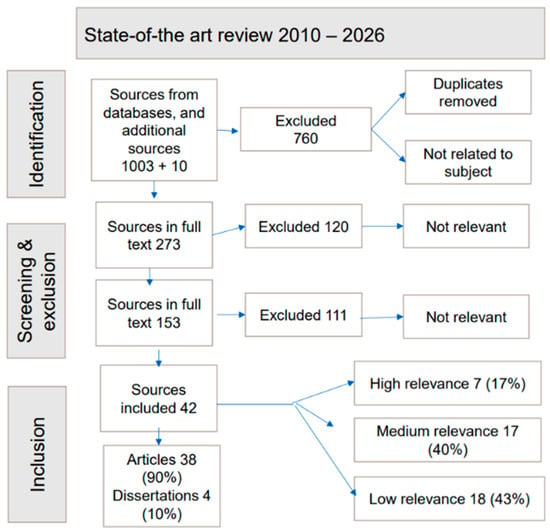
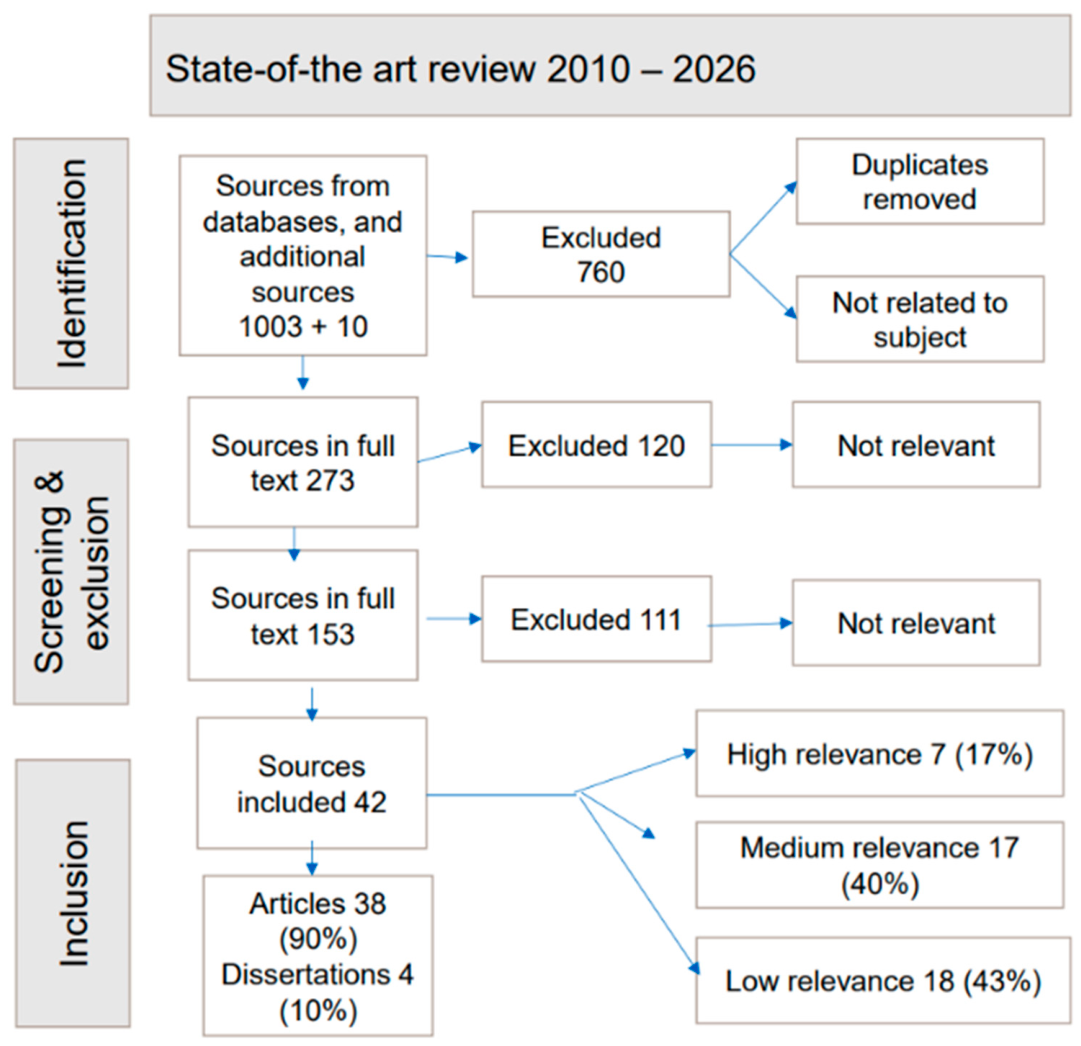
The combination of the search terms yielded 1003 records, and an additional 10 records were identified through hand searching, resulting in a total of 1013 records. Following the removal of duplicates and records not related to the review topic, 273 studies remained for full-text assessment. During the first screening stage, 120 studies were excluded, leaving 153 studies for further evaluation. A subsequent full-text review resulted in the exclusion of an additional 111 studies because they did not focus on teacher retention in rural or remote areas. This process resulted in a final sample of 42 studies included in the review.
In the next phase, each text was critically and independently evaluated by both researchers to determine its relevance and explanatory value. The assessment followed the established evaluation criteria for the included studies. The review of the 42 texts resulted in consensus on 37 of the articles. Cohen’s kappa (Cohen, 1960) was used to assess the reliability and level of agreement between the reviewers. The test yielded a Cohen’s kappa value of 0.77, indicating a high degree of inter-rater agreement. The five texts for which the researchers initially reached different assessments were re-examined and discussed until consensus was achieved.
The final assessment did not lead to the exclusion of any articles. The selection process is documented via a PRISMA-style flow description and illustrated in Figure 1.
Figure 1.
Number and percentage of reviewed texts.
3.2. Limitations
As with most education reviews, variations in how “rural” is defined and measured across studies complicate cross-study comparisons, as do differences in outcome operationalizations (e.g., retention vs. intent to stay). Moreover, the field includes both organizational analyses and context specific case studies; our narrative synthesis privileges patterns robust across designs while acknowledging that policy and labor context-specific case studies; our narrative synthesis privileges patterns robust across designs while acknowledging that policy and labor-market conditions vary by region and time.
3.3. Validity and Reliability
To ensure the scientific quality of the study, we placed strong emphasis on validity throughout the integrative review process. We selected articles that met the inclusion criteria “teacher retention in rural areas” and verified that they matched the search results to ensure the accuracy of the search strategy. Contextual relevance was also assessed in relation to the study’s purpose, as shown in Table 1: high (21.4%), medium (40.5%), and low (38.1%).
Table 1.
Distribution of Relevance for the Studies’ Aims.
Validity was strengthened through several steps: the material was quality-checked, sorted, categorized, and analyzed according to established documentation (see Table 1). First, we continuously compared our analyses and interpretations of the same sources. We then jointly reviewed and critically discussed these interpretations before reaching agreement on the key themes. During data extraction, we used the following categories: author, year of publication, continent, methodological approach and relevance for the review. Based on this, we conducted an independent thematic analysis to identify recurring themes (cf. Braun & Clarke, 2006).
4. Findings
This section outlines the outcomes of the review and is structured around three levels of analysis: the first is a contextual level of distribution of publication years, methodological approaches, continents, and study perspectives. The second is at the content level of thematic analysis, and the third level is an analytic approach to synthesizing the findings.
4.1. Contextual Level of Analysis
The temporal distribution of the 42 included publications is illustrated in Table 2 (see list of texts in Supplementary Materials). The results show a clear increase in research output over time, with the majority (71.5%) published between 2021 and 2025. This upward trend may indicate growing scholarly interest in the topic during the most recent years. The relatively low number of earlier publications suggests that the field has expanded notably in the last decade.
Table 2.
Publication year.
Table 3 presents the geographical distribution of studies by continent of research. North America (primarily the US, with one study from Canada) accounts for the majority of publications (61.9%), indicating a strong research focus in this region. Europe and the international category contribute a smaller proportion, whereas Asia, Africa, and Australia each represent 7.1% of the sources. The variation across continents suggests differing levels of research engagement and accessibility within the field.
Table 3.
Continents Among the Sources.
Table 4 summarizes the methodological approaches employed in the 42 reviewed studies. Qualitative methods dominate the sample (52.4%), indicating a strong emphasis on exploratory and interpretative research designs. Quantitative approaches make up just over a quarter of the studies, while mixed-method designs are used less frequently (11.9%). A small proportion of the studies (9.5%) do not clearly report their methodological approach, suggesting some variability in reporting standards.
Table 4.
Distribution of Methodological Approach.
We attempted to categorize the studies according to the perspectives they articulated, such as teacher retention, attrition, and turnover; rural and remote areas; international implications; policy; and other emerging themes. However, it proved challenging to sort the material into these discrete categories because the perspectives were deeply intertwined within the texts. Many studies addressed multiple themes simultaneously, making it difficult to assign them exclusively to a single analytical dimension. As a result, the boundaries between categories remained fluid rather than clearly separable.
4.2. Content Level of Analysis
This section discusses the content in the articles that has to do with (a) contextual conditions, factors, and challenges in supporting teacher retention in rural areas, (b) strategies and interventions to support teacher retention in rural contexts, and (c) synthesizing the findings.
4.2.1. Contextual Conditions, Factors, and Challenges
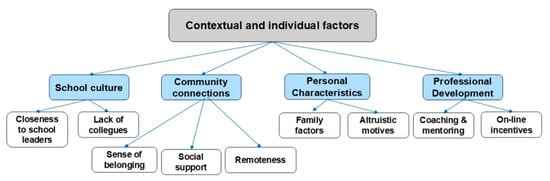
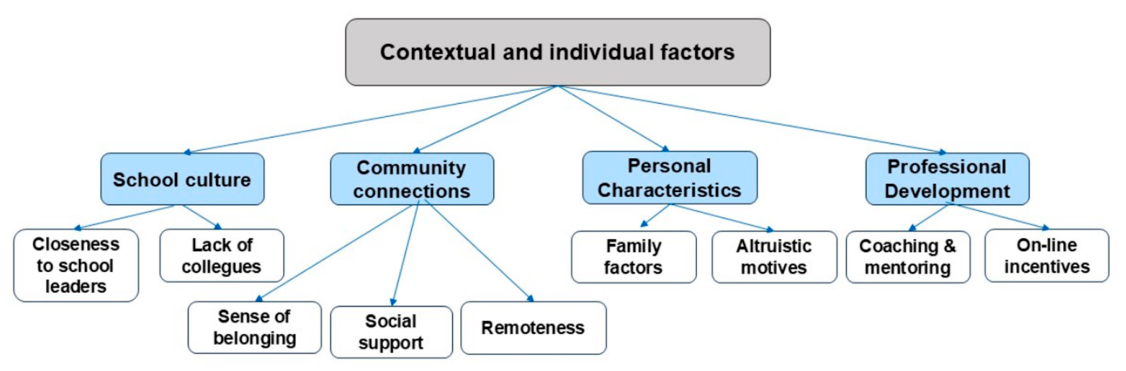
In the analysis of contextual conditions, factors, and challenges, five subthemes emerged (see Figure 2): school culture, community connections, personal characteristics, and professional development.
Figure 2.
Themes concerning contextual and individual factors.
School Culture
A close relationship with school leaders is often seen as an important characteristic of smaller schools in remote and rural areas, and opportunities for teachers to interact with them contribute to teacher retention. Both larger survey studies (Yang et al., 2025; Zhi et al., 2025) and smaller qualitative studies (Frahm & Cianca, 2021; Klar et al., 2024; Ruppar et al., 2024) arrive at this conclusion. School leaders who help teachers build positive peer relations, thus supporting collaborative practices and providing mentorship, together with administrative support, enhanced teacher retention (Nguyen et al., 2020; Nguyen, 2021; Williams et al., 2022). Supportive leadership practices are described as pivotal, with school leaders fostering inclusive environments, respecting teachers’ voices, and maintaining open communication, which heavily affect teacher retention in rural areas (Anderson, 2025; Feibel, 2025; Ruppar et al., 2024). Besides collegial cooperation and support, small class sizes are also forwarded as a characteristic in rural and remote schools that strengthens teachers’ willingness to stay (Anderson, 2025).
Regarding school culture, it is important to note the limited collaboration with colleagues that may occur, which can affect both teachers’ and principals’ working conditions (Klar et al., 2024; Lund & Karlberg-Granlund, 2023; McCredie et al., 2025). Professional and social isolation increase the risk of teacher attrition, particularly in small schools where principals are only sporadically present due to their responsibilities for multiple schools. Additionally, the shortage of special education teachers in remote areas negatively influences teachers’ experiences, especially when working with students who have significant special needs (Prater, 2025; Rosenblatt et al., 2019).
Community Connections
A sense of belonging to the local community emerges as a strong incentive for teachers to remain in remote areas (Anderson, 2025; Feibel, 2025; McCredie et al., 2025; Ruppar et al., 2024; Seelig & McCabe, 2021; Skolverket, 2025). Relationships are central in the empirical material, particularly those with students and their families, which are frequently highlighted as valued aspects of rural contexts. Social support from the school thus appears to encourage new teachers to settle in the community (Chen et al., 2022; Seelig & McCabe, 2021). Non-material values such as trust, security, and close social relations—both within and beyond the school—are emphasized as positive characteristics of rural life. Evidence from African studies further suggests that overall life circumstances influence teacher retention (Acheampong & Gyasi, 2019; Mazzuki, 2025).
Remoteness poses a major challenge to the recruitment and retention of new teachers. Long distances to population centers often discourage teachers from seeking positions in rural and remote areas (Acheampong & Gyasi, 2019; Frahm & Cianca, 2021). In addition, small school sizes and limited collegial support, sometimes involving a single teacher per subject, hinder teacher attraction and retention (Yang et al., 2025).
Personal Characteristics
Some characteristics of those more apt to apply for teaching positions in rural or remote areas are tied to the individual, their history, or their life circumstances. Family factors stand out as one such characteristic. Females, particularly married teachers, are more frequently represented in rural areas. Furthermore, an already existing preparedness for life in a rural area by already being a resident in the area contributes to the choice to work as a teacher in the region (Acheampong & Gyasi, 2019; Anderson, 2025; Mhishi et al., 2012; McCredie et al., 2025; Seelig & McCabe, 2021;). Thus, knowledge of the area and a personal connection to the place through relatives and relations motivate teachers to stay in the area. That familiarity with remote living plays a role in the decision to teach in such an area is also reflected in studies conducted with teacher students (McCredie et al., 2025).
In studies highlighting motivational factors for teaching in rural and remote areas, altruistic motives also play an important role in several studies. Commitment to students is highly ranked as a motivational factor (Feibel, 2025; Seelig & McCabe, 2021; Yang et al., 2025) and a desire to make a difference for students. Altruistic motives were also forwarded in both Australian and American settings (Barnes, 2025; Feibel, 2025; Perryman & Calvert, 2020). In addition, teachers in remote and rural areas may lack full qualifications for the job; thus, the provision of adequate education in these areas warrants attention, which connects to the theme of professional development (Acheampong & Gyasi, 2019; Mhishi et al., 2012).
Professional Development
Both coaching and mentoring are mentioned in many of the articles as means to retain teachers in remote and rural areas (Anderson, 2025; Casely-Hayford et al., 2022; Frahm & Cianca, 2021; Nguyen, 2021; Nguyen et al., 2020; Sindelar et al., 2025; Williams et al., 2022). When opportunities for professional development are lacking, such absence instead contributes to teacher attrition and for new teachers to choose other schools (Tessaro et al., 2021; Lund & Karlberg-Granlund, 2023; Mason & Choate, 2023; Roberts et al., 2022; Rosenblatt et al., 2019; Sindelar et al., 2025; Sweatt, 2018; R. White, 2025). Pathways for professional development may differ from induction programs and different mentoring programs with principals and colleagues coaching new teachers. Also, networking across schools is promoted as a relevant alternative for professional development and joint problem-solving.
The lack of colleagues makes online initiatives and blended approaches to professional development particularly important in remote contexts (Lund & Karlberg-Granlund, 2023; Mason & Choate, 2023; Mhishi et al., 2012; Rosenblatt et al., 2019; Sindelar et al., 2025). Digital connections enable joint learning and formal education regardless of geographical location. However, in-service education in remote areas is needed, especially given the absence of colleagues teaching the same subject and the insufficient preparation for rural contexts in teacher education programs (Medeiros & Kane, 2024). Limited training in multigrade teaching may negatively affect both recruitment and teachers’ ability to manage their work. Furthermore, the lack of special education support in rural and remote areas remains a major challenge, particularly in regions with low educational attainment and high special needs, highlighting the need for both qualified teachers and effective support systems (Mason & Choate, 2023; Ruppar et al., 2024).
4.2.2. Strategies for Supporting Teacher Retention in Rural Areas
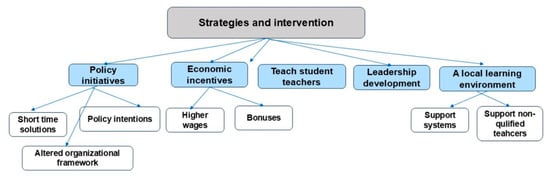
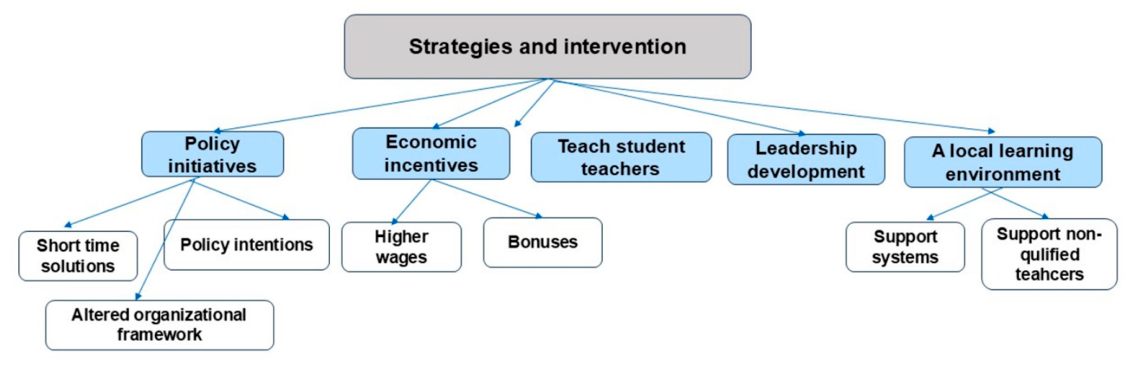
In the analysis of strategies and interventions to support teacher retention in rural contexts, the following five subthemes emerged (see Figure 3): policy initiatives, economic incentives, altered organizational framework, leadership development, and local learning environment.
Figure 3.
Themes concerning strategies and interventions.
Policy Initiatives
Staffing policies are used worldwide to recruit and retain teachers. In American rural states, financial policies have been used to enhance teacher retention and recruitment, i.e., Rural Recruitment Initiative (RRI), which was launched in the state of South Carolina. According to Tran and Smith (2021), who studied the program’s efficacy, funding was primarily used for short-term solutions to fill the most urgent vacancies, with little or no effect on teacher retention. In a subsequent study in the same district (Tran et al., 2024) on the policy’s effects, the authors conclude that only 0.57% of reduced teacher turnover was associated with RRI funding, indicating only minor effects of state funding on both recruitment and teacher retention.
In an analysis of Australian teacher workforce policy, labor market perspectives were identified as a strong influence; thus, missing out on both teachers’ working conditions, the declining status of the profession, and the effects of place, not giving adequate attention to the specific conditions of rural and remote areas (McPherson & Lampert, 2025). According to Nguyen et al. (2020), educational policies external to schools are exerting a growing influence. Above all, the authors conclude that the interplay between school and teacher characteristics has gained extended attention.
A radical initiative to improve teacher retention in Australia was the introduction of four-day workweeks (Thompson, 2025). However, the expected benefits did not materialize. Instead, teacher mobility increased in regions adopting the model, particularly in rural districts where it was intended to boost recruitment. Female teachers and younger white teachers with lower formal qualifications were most likely to change jobs, while highly qualified and non-white teachers were more likely to leave the profession altogether. In contrast, a study from rural American contexts found that four-day weeks attracted some applicants (Barnes, 2025), although other factors also influenced teachers’ employment decisions.
Economic Incentives
In addition to state-funded staffing policies, various economic incentives are used to attract teachers to rural and remote areas. Studies indicate that higher wages seem to enhance teacher retention (Acheampong & Gyasi, 2019; Feibel, 2025). For example, a study from Ghana concludes that higher wages for teachers choosing to work in remote areas have been beneficial. Also, Feibel (2025), in her dissertation on teacher retention in the American rural setting, points out economic incentives as favorable.
Bonuses and merit pay play a growing role in teacher retention, according to the analyses of Nguyen et al. (2020). Salary and economic benefits are also mentioned by Barnes (2025) as motivating factors in teachers’ decision-making about working in a rural school district. In studies of teacher turnover and attrition, lower salaries may be one reason why teachers leave (Frahm & Cianca, 2021; Ruppar et al., 2024; Zhi et al., 2025).
However, the lack of monetary incentives in studies of teacher retention is striking. Instead, factors related to the community connections, personal factors, motives, and opportunities for professional development are forwarded as major reasons for teachers to stay in rural and/or remote areas. As Sindelar et al. (2025) conclude, it is important to consider non-monetary incentives when developing strategies to enhance teacher retention.
Teach Student Teachers
Recruitment measures aimed at teacher students may also contribute to long-term staffing solutions, although rural teaching is sometimes underrepresented in teacher education programs. For example, Medeiros and Kane (2024) found that rural perspectives were largely absent across 25 teacher education programs in Alabama, despite severe shortages in rural schools. Some initiatives seek to address this gap. Lux et al. (2022) describe a “Rural Community Walk” field experience in which student teachers engage with and reflect on rural contexts through video-recorded exploration. Similarly, Rosenblatt et al. (2019) argue that teacher preparation programs should cultivate realistic expectations of rural teaching while reinforcing the importance of community connections.
In a Chinese study among teacher students, the impact of policy perceptions (Rural Revitalization Strategy) on intentions to be employed in a rural school indicated that higher policy perceptions led to an increase in student teachers’ intentions to work in rural settings. The linkage between policy perception and intentions to work in a rural school was primarily mediated by social support and positive job perception, indicating multiple reasons for being attracted to teacher positions in rural districts (Chen et al., 2022).
Leadership Development
Strong leadership support is described as an utterly important factor to administrative support as well as for the build-up of an inclusive and supportive school culture (Anderson, 2025; Nguyen et al., 2020; Nguyen, 2021; Ruppar et al., 2024; Williams et al., 2022; Zhi et al., 2025). The higher up in the organization support is available, the more effectively conditions are created for school development to take place (Frahm & Cianca, 2021). As many principals or head teachers are the only person in that position, initiatives have been taken to connect school leaders with one another and encourage networking. When participating in a professional community, the school leaders experienced leadership support, the exchange of ideas, and support in developing strategies to increase teacher retention through a research-practice partnership (Klar et al., 2024). Similar advantages were observed in a Nordic study in which principals could collaborate (Lund & Karlberg-Granlund, 2023). Breaking the loneliness of school leaders in rural and remote areas and creating conditions for development and joint reflection appear to impact teacher retention by strengthening school leaders in their work.
A Local Learning Environment
Studies emphasize strong local community connections, both for teachers’ well-being and for their ability to identify and make use of local resources (Feibel, 2025; Mazzuki, 2025). Schools with higher retention rates are characterized by deliberate efforts to build such connections, often through community engagement and support structures (Anderson, 2025; Frahm & Cianca, 2021; Yang et al., 2025; McCredie et al., 2025).
Central to these efforts are structured support systems, including mentoring and induction programs for novice teachers (Frahm & Cianca, 2021). High levels of collaboration within schools are strongly associated with teacher retention (Nguyen, 2021), an aspect that appears particularly crucial in rural contexts (Ruppar et al., 2024). Such support systems could foster a collaborative school culture embedded in the local community (Seelig & McCabe, 2021). Similarly, initiatives that extend beyond the school walls, such as health-promoting support aimed at improving teachers’ overall well-being, have been shown to strengthen retention in rural areas (Casely-Hayford et al., 2022).
Professional development opportunities also play a significant role in sustaining a rural teaching workforce. Several studies advocate online and digital alternatives to overcome geographical isolation (Mazzuki, 2025; McCredie et al., 2025; Mhishi et al., 2012; Sindelar et al., 2025). McCredie et al. (2025) emphasize the preparedness of remotely located Australian teachers to engage in remote teaching and learning, while other studies identify access to professional development as a key retention factor in rural settings (Acheampong & Gyasi, 2019; Tessaro et al., 2021; R. White, 2025). Digital tools can further support both teachers and school leaders by enabling professional communities across isolated schools (Klar et al., 2024).
Another retention strategy involves supporting locally based teachers who lack formal qualifications to attain accredited teacher training, thereby strengthening the local workforce and reducing turnover in remote and rural districts (Acheampong & Gyasi, 2019).
Despite these efforts, challenges remain. Tessaro et al. (2021) illustrates the limited incentives available to attract and retain teachers in northern Canadian school districts. Overall, the literature indicates that recruitment and retention in remote and rural areas require broad, multilayered, and holistic approaches. Crucially, context sensitivity emerges as a key factor for understanding local conditions and for developing sustainable strategies to retain teachers in desolate areas.
5. Discussion
The aim of this scoping review was to synthesize existing research on teacher retention in rural and remote areas, with particular attention to (a) contextual and individual factors influencing retention, (b) strategies proposed to support teacher stability, and (c) patterns and gaps in the research literature. The findings demonstrate that teacher retention in rural contexts is a multidimensional phenomenon shaped by interactions among school, community, individual, and systemic factors. Consistent with prior organizational analyses, the results suggest that while policy initiatives and financial incentives are frequently emphasized, relational, professional, and contextual conditions play a more substantial role in sustaining a stable rural teaching workforce (Ingersoll & Tran, 2023; Yang et al., 2025).
5.1. Factors Influencing Teacher Retention
Across the reviewed studies, school culture emerged as one of the most influential contextual factors shaping teacher retention in rural and remote areas. Supportive leadership, close relationships between teachers and principals, and opportunities for collaboration were consistently associated with higher retention rates (Yang et al., 2025; Nguyen et al., 2020; Ruppar et al., 2024; Williams et al., 2022). These findings align with international research demonstrating that teachers are more likely to remain in schools characterized by trust, shared decision-making, and professional respect, particularly in settings with limited material resources (Ingersoll & Tran, 2023; See et al., 2020).
At the same time, the results highlight how limited collegial interaction and professional isolation continue to undermine retention in rural schools. Several studies report that small school size, single-teacher subjects, and principals’ responsibility for multiple schools constrain collaboration and mentorship (Lund & Karlberg-Granlund, 2023). These organizational conditions increase teachers’ workload and sense of isolation, reinforcing earlier findings that professional loneliness is a strong predictor of attrition in rural contexts (Tessaro et al., 2021).
Community connections also appear as a central retention factor. A sense of belonging to the local community, strong relationships with students and families, and social support beyond the school were repeatedly identified as reasons teachers choose to stay in rural or remote areas (Anderson, 2025; Seelig & McCabe, 2021). Similar patterns have been documented across different national contexts, including African and Asian studies, where broader life circumstances and community embeddedness influence teachers’ long-term commitment (Acheampong & Gyasi, 2019; Chen et al., 2022; Mazzuki, 2025).
Despite these positive relational aspects, remoteness itself remains a persistent barrier to recruitment and retention. Long distances to population centres, reduced access to services, and limited professional support discourage teachers from seeking or maintaining rural positions (Frahm & Cianca, 2021; Tessaro et al., 2021). These findings underscore the importance of viewing rurality not only as a context of opportunity but also as a structural condition that shapes teachers’ professional and personal lives.
Individual and biographical factors further intersect with contextual conditions. Prior familiarity with rural life, family ties to the region, and personal motivations such as altruism and commitment to students are associated with stronger retention intentions (Feibel, 2025; Seelig & McCabe, 2021). Studies involving teacher students indicate that exposure to rural contexts during training can positively influence willingness to work in rural schools, suggesting that retention is partially shaped before teachers formally enter the workforce (McCredie et al., 2025).
5.2. Strategies for Supporting Teacher Retention
Regarding strategies to improve teacher retention, the review reveals a notable gap between commonly implemented policies and empirically supported practices. Financial incentives such as salary supplements, bonuses, and subsidies are frequently discussed in policy contexts, yet evidence of their sustained impact on retention is mixed. While some studies report positive effects on attraction or short-term retention (Acheampong & Gyasi, 2019; Feibel, 2025), others show limited or negligible long-term outcomes when financial incentives are not paired with improvements in working conditions (Tran & Smith, 2021; Tran et al., 2024).
In contrast, strategies centred on professional development, mentoring, and induction are consistently associated with improved retention. Coaching and mentoring programs reduce professional isolation, support instructional competence, and strengthen teachers’ sense of efficacy, particularly for early-career teachers (Frahm & Cianca, 2021; Nguyen, 2021; Sindelar et al., 2025). In remote contexts, digital and blended professional development models play a crucial role by enabling access to professional communities and continuous learning despite geographical constraints (Lund & Karlberg-Granlund, 2023; Mason & Choate, 2023; Rosenblatt et al., 2019).
Leadership development also emerges as a promising but under-researched strategy. Studies indicate that strengthening principals’ professional networks and leadership capacity has indirect but meaningful effects on teacher retention by improving school culture and support structures (Klar et al., 2024; Lund & Karlberg-Granlund, 2023). However, as Rhinesmith et al. (2023) note, rigorous empirical evaluations of leadership-focused retention initiatives remain scarce.
Teacher education represents another strategic arena with implications for long-term retention. Several studies demonstrate that rural contexts are underrepresented in teacher education programs despite persistent staffing shortages (Medeiros & Kane, 2024). Initiatives such as rural field experiences and community-based learning show promise in shaping realistic expectations and strengthening place attachment among teacher students (Lux et al., 2022; Rosenblatt et al., 2019). Evidence from China further suggests that teachers’ perceptions of policy support and social recognition influence intentions to work in rural settings (Chen et al., 2022).
6. Conclusions
In conclusion, teacher retention in rural and remote areas is shaped by complex and interdependent factors that extend beyond economic incentives. Supportive leadership, strong community connections, meaningful professional development, and context-sensitive teacher education are central to sustaining a stable rural teaching workforce. Addressing rural teacher retention, therefore, requires integrated, multilayered approaches that recognize both the challenges and the unique strengths of rural educational contexts.
6.1. Policy and Practice Implications
The findings of this scoping review suggest that policies aimed at improving rural teacher retention should move beyond short-term recruitment solutions and address the relational and professional conditions shaping teachers’ daily work. Strengthening leadership capacity, ensuring access to mentoring and professional development, and fostering collaborative school cultures appear particularly important in rural and remote contexts (Nguyen et al., 2020; Ruppar et al., 2024).
For practice, the results underscore the importance of school leaders in cultivating supportive environments where teachers feel valued, included, and professionally supported. Engagement with local communities should be viewed not only as a social resource but also as a strategic element of teacher retention (Seelig & McCabe, 2021). Teacher education institutions also have a critical role in preparing future teachers for rural contexts and aligning programs with workforce needs (Symeonidis et al., 2025).
6.2. Research Gaps and Future Directions
Although research on rural teacher retention has grown significantly since 2020, this review highlights persistent gaps. Empirical evaluations of policy initiatives remain limited, and most studies focus on single contexts or short timeframes. There is a need for longitudinal, comparative research examining how combinations of strategies influence retention over time and across regions. Greater geographical diversity in studies would also strengthen the international evidence base. According to Nguyen et al. (2020), external policies and labor market conditions are linked to teacher turnover and must be considered. Even though research on rural teacher retention has grown, empirical evaluations of policies and programs remain scarce (Rhinesmith et al., 2023).
Supplementary Materials
The following supporting information can be downloaded at: https://www.mdpi.com/article/10.3390/educsci16122025/s1, File S1: List of the 42 studies included in the review.
Author Contributions
Conceptualization, L.B. and U.D.; methodology, L.B.; validation, L.B. and U.D.; formal analysis, L.B. and U.D.; investigation, L.B. and U.D.; writing—original draft preparation, L.B. and U.D.; writing—review and editing, L.B.; visualization, L.B.; project administration, L.B.; funding acquisition, L.B. All authors have read and agreed to the published version of the manuscript.
Funding
This research was funded by Interreg Sweden Norway, grant number 20366075.
Institutional Review Board Statement
Not applicable.
Informed Consent Statement
Not applicable.
Data Availability Statement
The original contributions presented in this study are included in the article. Further inquiries can be directed to the corresponding authors.
Conflicts of Interest
The authors declare no conflicts of interest.
Note
| 1 | There are similarities and differences concerning the concepts of rural and remote. Rural areas are countryside regions where people live and work at low population density, while remote areas are geographically isolated and far from cities and services, whether rural or not (OECD, 2011). |
References
- Acheampong, P., & Gyasi, J. F. (2019). Teacher retention: A review of policies for motivating rural basic school teachers in Ghana. Asian Journal of Education and Training, 5(1), 86–92. [Google Scholar] [CrossRef] [Scilit]
- American Institutes for Research. (2019). Mentoring & induction toolkit 2.0: Supporting teachers in underserved contexts. Available online: https://www.air.org/GTL-Center/rethink-professional-learning (accessed on 7 November 2026).
- Anderson, A. M. (2025). Embedded in education: Exploring rural remote teachers’ perspectives of connection on attraction, retention, and attrition in southeastern Montana schools [Doctoral dissertation, Montana State University, Bozeman]. [Google Scholar]
- Barbosa, R., Jr., & Coneway, B. (2023). The unique challenges and best practices for rural school principals: Attracting and retaining skilled teachers in small communities. School Leadership Review, 18(1), 1. [Google Scholar]
- Barnes, K. (2025). Rewriting the school calendar: A mixed-methods analysis of four-day school week implementation in Arkansas [Doctoral dissertation, University of Arkansas]. [Google Scholar]
- Braun, V., & Clarke, V. (2006). Using thematic analysis in psychology. Qualitative Research in Psychology, 3(2), 77–101. [Google Scholar] [CrossRef] [Scilit]
- Cacchione, P. Z. (2016). The evolving methodology of scoping reviews. Clinical Nursing Research, 25(2), 115–119. [Google Scholar] [CrossRef] [Scilit] [PubMed]
- Casely-Hayford, J., Björklund, C., Bergström, G., Lindqvist, P., & Kwak, L. (2022). What makes teachers stay? A cross-sectional exploration of the individual and contextual factors associated with teacher retention in Sweden. Teaching and Teacher Education, 113, 103664. [Google Scholar] [CrossRef] [Scilit]
- Chen, S., Wang, R., Wang, T., & Zhou, W. (2022). The impact of student-teacher policy perception on employment intentions in rural schools for educational sustainable development based on push–pull theory: An empirical study from China. Sustainability, 14(11), 6639. [Google Scholar] [CrossRef] [Scilit]
- Cohen, J. (1960). A coefficient of agreement for nominal scales. Educational and Psychological Measurement, 20(1), 37–46. [Google Scholar] [CrossRef] [Scilit]
- European Commission. (2023). Indicators for monitoring teacher shortage in the European Union: Possibilities and constraints. Publications Office of the European Union. Available online: https://op.europa.eu/lv/publication-detail/-/publication/c538fe41-8828-11ee-99ba-01aa75ed71a1/language-en (accessed on 7 November 2026).
- Feibel, S. (2025). Unveiling the tapestry: Exploring the lived experiences of rural high school teachers and the influences on their professional commitment [Doctoral dissertation, Southern Arkansas University]. [Google Scholar]
- Fink, A. (2021). Conducting research literature reviews. From the internet to paper (5th ed.). SAGE Publications. [Google Scholar]
- Frahm, M. T., & Cianca, M. (2021). Will they stay or will they go? Leadership behaviors that increase teacher retention in rural schools. The Rural Educator, 42(3), 1–13. [Google Scholar] [CrossRef] [Scilit]
- Fregoso, J. (2024). Enhancing teacher retention in rural schools: Analysis and recommendations. Available online: https://evidence2impact.psu.edu/wp-content/uploads/dlm_uploads/2024/04/Enhancing-Teacher-Retention-in-Rural-Schools-Analysis-and-Recommendations-1.pdf (accessed on 5 May 2025).
- Gough, D., Oliver, S., & Thomas, J. (Eds.). (2017). An introduction to systematic reviews (2nd ed.). SAGE. [Google Scholar]
- Ingersoll, R., & Tran, H. (2023). Teacher shortages and turnover in rural schools in the US: An organizational analysis. Educational Administration Quarterly, 59(2), 396–431. [Google Scholar] [CrossRef] [Scilit]
- Jiang, J., & Yip, S. Y. (2024). Teacher shortage: An analysis of the rural teachers living subsidy policy on teacher attraction and retention in rural Western China. Asia-Pacific Journal of Teacher Education, 52(3), 316–331. [Google Scholar] [CrossRef] [Scilit]
- Kfouri, C. K., & Rowe, M. W. (2024). Curriculum inquiry to strengthen teacher preparation for supporting multilingual learners in rural settings. The Rural Educator, 45(4), 49–61. [Google Scholar] [CrossRef] [Scilit]
- Klar, H. W., Paufler, N. A., & Carter, A. D. (2024). Learning with and from each other: Creating safe spaces in a professional community for school leadership development. Journal of Professional Capital and Community, 9(4), 363–376. [Google Scholar] [CrossRef] [Scilit]
- Learning Policy Institute. (2024). How states can support teacher apprenticeships: The case of Tennessee. Available online: https://learningpolicyinstitute.org/product/tennessees-teacher-apprenticeship-program-brief (accessed on 3 March 2025).
- Lund, S., & Karlberg-Granlund, G. (2023). Making rural areas attractive for teachers and principals: Putting rural educational settings on the agenda. Nordic Studies in Education, 43(2), 181–196. [Google Scholar] [CrossRef] [Scilit]
- Lux, N., Downey, J., Luebeck, J., & Hicks, J. (2022). Digital rural community walks: Building preservice teachers’ rural engagement through technology integration. Journal of Technology and Teacher Education, 30(2), 135–143. [Google Scholar] [CrossRef] [Scilit]
- Mason, T., & Choate, J. (2023). A tale of two grant-funded special education recruitment and training projects focused on assistive technology. Journal of Special Education Preparation, 3(2), 66–74. [Google Scholar] [CrossRef] [Scilit]
- Mazzuki, B. D. (2025). Preparing preservice teachers for rural teaching through professional learning during teaching practice. The Rural Educator, 46(2), 35–49. [Google Scholar] [CrossRef] [Scilit]
- McCredie, T., McLennan, B., & McIlveen, P. (2025). Teaching in Australian rural and remote locations: Thriving in practice and place. The Australian Educational Researcher, 52(5), 3805–3832. [Google Scholar] [CrossRef] [Scilit]
- McPherson, A., & Lampert, J. (2025). An analysis of Australian teacher workforce policy: Challenges and opportunities for teacher recruitment and retention. Policy Futures in Education, 23(2), 446–463. [Google Scholar] [CrossRef] [Scilit]
- Medeiros, A., & Kane, E. (2024). Rural teacher preparation in the State of Alabama. The Rural Educator, 45(3), 57–67. [Google Scholar] [CrossRef] [Scilit]
- Mewborn-Gundlach, M. (2025). Addressing the problem of teacher shortage in the Australian educational context. In A. Gehrmann, & P. Germer (Eds.), Teacher shortage in international perspectives: Insights and responses. Springer. [Google Scholar] [CrossRef] [Scilit]
- Mhishi, M., Bhukuvhani, C. E., & Sana, A. F. (2012). Science teacher training programme in rural schools: An ODL lesson from Zimbabwe. The International Review of Research in Open and Distributed Learning, 13(1), 72–86. [Google Scholar] [CrossRef] [Scilit]
- Nguyen, T. D. (2021). Linking school organizational characteristics and teacher retention: Evidence from repeated cross-sectional national data. Teaching and Teacher Education, 97, 103220. [Google Scholar] [CrossRef] [Scilit]
- Nguyen, T. D., Pham, L. D., Crouch, M., & Springer, M. G. (2020). The correlates of teacher turnover: An updated and expanded meta-analysis of the literature. Educational Research Review, 31, 100355. [Google Scholar] [CrossRef] [Scilit]
- OECD. (2011). OECD regional typology. OECD Publishing. Available online: https://www.oecd.org/en/data/datasets/oecd-geographical-definitions.html (accessed on 30 April 2025).
- OECD. (2025a). Education at a glance 2025: OECD indicators. OECD Publishing. [Google Scholar] [CrossRef] [Scilit]
- OECD. (2025b). How severe are teacher shortages across countries? Education at a glance 2025. Available online: https://www.oecd.org/en/publications/education-at-a-glance-2025_1c0d9c79-en.html (accessed on 30 June 2025).
- OECD. (2025c). Results from TALIS 2024: The state of teaching. OECD Publishing. [Google Scholar] [CrossRef] [Scilit]
- Oyen, K., & Schweinle, A. (2021). Addressing teacher shortages in rural America: What factors encourage teachers to consider teaching in rural settings? The Rural Educator, 41(3), 12–25. [Google Scholar] [CrossRef] [Scilit]
- Perryman, J., & Calvert, G. (2020). What motivates people to teach, and why do they leave? Accountability, performativity, and teacher retention. British Journal of Educational Studies, 68(1), 3–23. [Google Scholar] [CrossRef] [Scilit]
- Prater, M. A. (2025). Ethnically diverse rural special educators who are highly qualified: Pathways, preparation, and persistence [Doctoral dissertation, Brigham Young University]. [Google Scholar]
- PRISMA. (2020). PRISMA statement. Available online: https://www.prisma-statement.org/ (accessed on 10 March 2025).
- Rhinesmith, E., Anglum, J. C., Park, A., & Burrola, A. (2023). Recruiting and re-taining teachers in rural schools: A systematic review of the literature. Peabody Journal of Education, 98(4), 347–363. [Google Scholar] [CrossRef] [Scilit]
- Roberts, P., Downes, N., & Reid, J. (2022). Teacher education for a rural-ready teaching force: Swings, roundabouts, and slippery slides? Australian Journal of Teacher Education, 47(3), 6. [Google Scholar] [CrossRef] [Scilit]
- Rosenblatt, K., Badgett, K., & Eldridge, J. (2019). Teacher retention: Important considerations for rural and urban districts in Texas. International Journal of Innovative Business Strategies, 5(1), 1–5. [Google Scholar] [CrossRef] [Scilit]
- Ruppar, A. L., McCabe, K. M., & Roberts, C. A. (2024). Making sense of the special rural education teacher shortage: Contexts, conditions, and consequences. Rural Special Education Quarterly, 43(1), 3–17. [Google Scholar]
- See, B. H., Morris, R., Gorard, S., & El Soufi, N. (2020). What works in attracting and retaining teachers in challenging schools and areas? Oxford Review of Education, 46(6), 678–697. [Google Scholar] [CrossRef] [Scilit]
- Seelig, J. L., & McCabe, K. M. (2021). Why teachers stay: Shaping a new narrative on rural teacher retention. Journal of Research in Rural Education, 37(8), 1–16. [Google Scholar] [CrossRef]
- Sindelar, P. T., Mason-Williams, L., Bettini, E., & Gilmour, A. F. (2025). The demand for special education teachers in rural schools: Trends, shortages, and im-plications. Rural Special Education Quarterly, 44(2), 67–82. [Google Scholar]
- Skolverket. (2025). Grundskola i glesbygd [Primary school in a rural area] (Rapport 1015: 18). Available online: https://www.skolverket.se/publikationer?id=13312 (accessed on 12 March 2025).
- Snyder, H. (2019). Literature review as a research methodology: An overview and guidelines. Journal of Business Research, 104, 333–339. [Google Scholar] [CrossRef] [Scilit]
- Sweatt, J. D. (2018). The demand for special education teachers in rural schools. Journal of Special Education Leadership, 31(1), 29–41. [Google Scholar] [CrossRef] [Scilit]
- Symeonidis, V., Guberman, A., & Cooper, R. (2025). Addressing teacher shortages in an international context: Implications for the quality and status of teacher education. European Journal of Teacher Education, 48(1), 1–8. [Google Scholar] [CrossRef] [Scilit]
- Tan, T. S., Comai, S., & Patrick, S. K. (2025). State teacher shortages 2025 update: Teaching positions left vacant or filled by teachers without full certification. Learning Policy Institute. Available online: https://learningpolicyinstitute.org/product/state-teacher-shortages-vacancy-resource-tool-2025 (accessed on 25 February 2025).
- Tessaro, D., Landertinger, L., & Restoule, J.-P. (2021). Strategies for teacher education programs to support Indigenous Teacher Employment and Retention in Schools. Canadian Journal of Education, 44(3), 600–623. [Google Scholar] [CrossRef] [Scilit]
- Thompson, P. N. (2025). Four-day school weeks and teacher mobility: Evidence from rural districts. Educational Policy, 39(2), 245–272. [Google Scholar]
- Tran, H., & Smith, D. A. (2021). How hard-to-staff rural school districts use state funds to improve teacher recruitment and retention. American Journal of Education, 127(3), 447–481. [Google Scholar] [CrossRef] [Scilit]
- Tran, H., Smith, D. A., & Cain, C. M. (2024). The promises and pitfalls of government-funded teacher staffing initiatives in rural schools. Educational Administration Quarterly, 60(1), 72–104. [Google Scholar]
- UNESCO. (2024a). Global report on teachers: Addressing teacher shortages and transforming the profession (Full report PDF). United Nations Digital Library. Available online: https://digitallibrary.un.org/record/4039006?v=pd (accessed on 5 April 2025).
- UNESCO. (2024b). Global report on teachers: What you need to know. Available online: https://www.unesco.org/en/articles/global-report-teachers-what-you-need-know (accessed on 13 April 2025).
- White, R. (2025). Addressing teacher attrition in a rural Central Georgia school: A qualitative exploratory case study [Doctoral dissertation, Valdosta State University]. [Google Scholar]
- White, S., Lock, G., Hastings, W., Cooper, M., Reid, J.-A., & Green, B. (2021). Investing in sustainable and resilient rural social space: Lessons for teacher education. Australian and International Journal of Rural Education, 31(2), 46–55. [Google Scholar] [CrossRef] [Scilit]
- Williams, K. M., Hardré, P. L., & Sullivan, D. W. (2022). Exploring perceptions related to teacher retention issues in the rural western United States. The Rural Educator, 43(2), 15–29. [Google Scholar]
- Yang, H., Hassan, A. B., & Wan Jaafar, W. M. B. (2025). Factors influencing rural teacher retention: A systematic literature review based on different countries from 2008 to 2023. International Journal of Academic Research in Business and Social Sciences, 15(1), 123–143. [Google Scholar] [CrossRef] [Scilit] [PubMed]
- Zhi, L., Wang, Y., & Chen, H. (2025). Research on the factors affecting rural teachers’ retention: A bibliometric and thematic analysis. Frontiers in Education, 10, 1298743. [Google Scholar]

Disclaimer/Publisher’s Note: The statements, opinions and data contained in all publications are solely those of the individual author(s) and contributor(s) and not of MDPI and/or the editor(s). MDPI and/or the editor(s) disclaim responsibility for any injury to people or property resulting from any ideas, methods, instructions or products referred to in the content. |
© 2026 by the authors. Licensee MDPI, Basel, Switzerland. This article is an open access article distributed under the terms and conditions of the Creative Commons Attribution (CC BY) license.