


Abstract
History teaching continues to rely heavily on traditional methodologies based on lectures, textbook reading, and memorization, which frequently leads to low student motivation, limited interaction, and difficulties in understanding historical contexts in a meaningful way. This issue is relevant because the lack of active participation in history courses can negatively affect academic performance, critical thinking, and long-term knowledge retention. Although previous research has explored the use of augmented reality (AR), virtual reality (VR), and mixed reality (MR) technologies in education, most of these studies have focused mainly on usability, technology acceptance, or student perception, without objectively measuring improvements in academic performance through rigorous experimental designs with control (CG) and experimental (EG) groups. To address this limitation, the present study proposes the use of HistARium, an immersive educational application developed with AR technology for the Meta Quest 3 headset. HistARium was designed to provide interactive and contextualized historical experiences through 3D visualization and immersive interaction. The research employed an experimental design with 60 university students divided into a CG and an EG. Both groups completed a pre-test before the intervention and a post-test afterwards in order to assess differences in academic performance. The EG interacted with HistARium, whereas the CG received traditional instruction. The results showed a significant improvement in the academic performance of the EG compared with the CG, which exhibited only minimal progress after the intervention. In addition, the instruments used reached adequate levels of reliability through statistical validation with Cronbach’s alpha. These findings suggest that immersive technologies such as HistARium can increase student engagement, facilitate historical understanding, and improve learning outcomes, supporting the integration of immersive educational applications into future teaching methodologies.
1. Introduction
History teaching continues to face significant challenges related to student motivation, content comprehension, and long-term knowledge retention (Szlachta & Tete Ramos, 2019). In many educational settings, history courses are still delivered mainly through traditional methodologies centered on lectures, textbook reading, and the memorization of dates, events, and historical figures (Azhar et al., 2019; Wong et al., 2025). Although these approaches make it possible to convey theoretical knowledge, they often limit students’ active participation and reduce opportunities for experiential and contextualized learning (Lazaro Carrascosa et al., 2024). As a result, many students perceive history courses as repetitive, not very dynamic, and detached from real experiences, which negatively affects academic interest and student performance (Kysela & Štorková, 2015).
In recent years, digital technologies such as augmented reality (AR) and virtual reality (VR) have begun to transform educational environments by creating more immersive, interactive, and dynamic learning experiences (Challenor & Ma, 2019). These technologies allow students to interact with 3D digital content embedded in real or simulated environments, fostering higher levels of attention and participation (Priyono et al., 2025). Several studies have shown that immersive technologies can positively influence learning, motivation, usability, and academic performance in different educational fields (Lai & Hu, 2025; Radianti et al., 2020).
Unlike traditional teaching methods, immersive technologies offer the possibility of experiencing educational content through interaction and active exploration (Li et al., 2025; Vidak et al., 2023). In the context of history teaching, AR applications make it possible to recreate historical settings, monuments, civilizations, and relevant events, enabling students to visualize and interact with historical contexts instead of merely reading textual descriptions (Priyono et al., 2025; Tripoulas & Koutromanos, 2024). This type of experiential learning can contribute to a deeper understanding of historical processes and promote meaningful learning (Yengui & Stechert, 2021). In addition, immersive environments are aligned with constructivist approaches to learning, as they allow students to build knowledge through direct interaction with digital objects and contextualized scenarios (Santos et al., 2014; Zulfiqar et al., 2023).
In this context, the present research introduces HistARium, an immersive educational application designed to support history learning through AR technology. HistARium was developed to provide interactive historical experiences using the Meta Quest 3 headset, allowing students to visualize and explore historical events, settings, and content through immersive interaction. The application seeks to complement traditional teaching methodologies by promoting active participation, visual learning, and a contextualized understanding of historical content.
The present study employs an experimental design with a control group (CG) and an experimental group (EG) in order to objectively measure the educational impact of HistARium on students’ academic performance. Both groups first completed a pre-test to determine their prior level of knowledge before educational intervention. The EG then interacted with the HistARium application using the Meta Quest headset, while the CG received traditional instruction based on conventional strategies. Finally, both groups took a post-test to assess differences in learning outcomes and academic performance achieved after the intervention.
Accordingly, the objectives addressed in this research are as follows:
RO1. To analyze the impact of the immersive application HistARium on the academic performance of university students in history teaching through an experimental design with a CG and an EG.
RO2. To compare the pre-test and post-test results obtained by the EG and the CG in order to identify significant differences in learning.
The comparison between the EG and the CG provides objective evidence regarding the effectiveness of immersive technologies for improving educational outcomes in history teaching.
This research first presents the context of the problem identified and the use of AR technology as a solution. Section 2 then presents the literature review. Section 3 describes the experimental methodology used in the research. Section 4 details the results obtained. Section 5 discusses the results in relation to the research objectives. Section 6 presents the conclusions. Section 7 addresses future work.
2. Literature Review
The growing interest in the use of immersive technologies in education has driven the development of numerous experimental and quasi-experimental studies over the years (Martin & Ertzberger, 2013; Müller et al., 2007; Richert et al., 2019). One study analyzed more than 130 investigations related to AR applied to education between 2012 and 2021, reporting significant positive effects on students’ academic performance, motivation, and learning outcomes (Chang et al., 2022). The authors concluded that AR technologies can increase student participation and improve educational effectiveness when they are properly designed and integrated into the teaching–learning process.
Similarly, recent research indicates that immersive environments can enhance knowledge acquisition by combining 3D visualization, interaction, and experiential learning (Abdullah & Rokmain, 2023; Gervasi et al., 2023; Hossain et al., 2021). AR technology has shown positive effects in higher education by allowing students to interact with simulations and scenarios that are difficult to reproduce in conventional classrooms (Ibarra et al., 2019; Li et al., 2025; Sural, 2018). These technologies also enable repeatable and self-directed learning experiences, strengthening students’ understanding and confidence during academic activities (Makransky & Mayer, 2022; Suryodiningrat et al., 2024).
In this context, a relevant study on AR in education was carried out by Wu et al. (Wu et al., 2013) who analyzed the current state of AR applied to learning and concluded that this technology can significantly improve conceptual understanding, student participation, and experiential learning. The authors pointed out that AR supports the visualization of complex concepts and promotes more active learning than traditional methodologies.
Likewise, Radianti et al. (2020) conducted a systematic review of immersive VR applications in higher education and identified positive effects on learning, motivation, and student participation. The authors reported that students who interact with immersive technologies show higher levels of interest and engagement during educational activities, especially in settings where spatial visualization and hands-on interaction are relevant.
With regard to history teaching, several studies have begun to explore the potential of AR to represent historical events and cultural contexts in a more immersive way. The research group led by Apriyanto et al. (2024) carried out an experimental study focused on the implementation of AR for history learning. The study used an experimental design with a CG and an EG, showing that students who used AR tools obtained better academic results and higher levels of participation than those who received traditional instruction. The authors concluded that AR could facilitate the understanding of complex historical events through visual and interactive experiences.
Along the same lines, Yoo et al. (2023) developed an AR system aimed at improving the understanding of Korean historical paintings related to real events of the Joseon dynasty. The authors found that many historical works contain cultural and narrative information that is difficult to interpret for visitors without prior knowledge. To address this problem, they proposed an AR system capable of virtually restoring historical elements in 3D and enabling immersive interaction with the events depicted in the paintings. This study demonstrates the potential of AR to facilitate the interpretation of complex historical content through immersive interaction and contextualized virtual reconstruction.
In addition, Remolar et al. (2021) analyzed the combined use of VR and AR to improve history learning through gamified experiences centered on Ancient Rome. The authors noted that traditional history classes tend to be unmotivating for students, so they designed an immersive experience in which users could build Roman cities, walk through historical buildings, and interact with virtual characters and objects. The results showed a significant increase in students’ interest in history and better retention of historical concepts than with traditional methods. In addition, participants reported high levels of motivation and engagement during the immersive experience. The study concludes that VR and AR technologies can turn history learning into a more interactive, enjoyable, and effective experience.
Finally, Čejka et al. (2021) evaluated the use of AR interfaces to explore underwater historical sites and improve the educational and cultural experience of users. The authors developed two AR systems for underwater environments: one based on visual markers and another using acoustic localization. The research was motivated by the difficulties visitors face in understanding underwater archaeological remains that have deteriorated or been covered by marine organisms. The results showed that AR made it possible to generate more immersive and engaging experiences, increasing users’ interest in and understanding of underwater historical heritage. In addition, participants were able to recall the historical elements visualized through AR more easily.
The rapid advance of immersive hardware has also favored the adoption of these technologies in educational settings. Devices such as the Meta Quest 3 headset incorporate advanced features including high-resolution displays, hand tracking, spatial interaction, and AR passthrough systems that make it possible to integrate digital objects into the real physical environment (Criollo-C et al., 2024, 2025). These capabilities facilitate the development of interactive educational applications able to increase students’ immersion and participation during learning activities (Criollo-C et al., 2024). As a result, immersive technologies are beginning to establish themselves as relevant tools within modern educational models.
Despite the growing volume of research related to immersive technologies in education, there are still few experimental studies specifically focused on measuring improvements in academic performance in history teaching through AR applications. For this reason, an important gap remains regarding the objective measurement of the impact of immersive applications on history learning.
Although previous research demonstrated positive effects of AR on history learning through experimental designs, the present study extends the current scientific literature by incorporating immersive AR experiences with the Meta Quest 3 headset together with a rigorous statistical analysis of academic performance. Unlike earlier studies focused mainly on student engagement and general learning outcomes, this research integrates detailed pre-test and post-test analyses, reliability validation, and statistical methods aimed at ensuring the reliability and consistency of the instruments used during the study, thus providing solid quantitative evidence on the educational effectiveness of immersive historical environments. Consequently, this research seeks to contribute to scientific knowledge related to the use of immersive technologies in education by providing experimental evidence on the impact of HistARium on academic performance. The study also aims to provide relevant information for future research oriented towards the development of immersive educational applications capable of improving the learning experience and driving educational innovation in higher education settings.
3. Methodology
3.1. The HistARium Application
HistARium is an AR-based application designed to support history learning through immersive and interactive experiences. Its design focuses on the visualization of historical elements in a 3D environment using devices such as the Meta Quest 3 headset. The application allows students to observe historical figures, objects, settings, and events represented as 3D models, facilitating a more dynamic understanding of educational content.
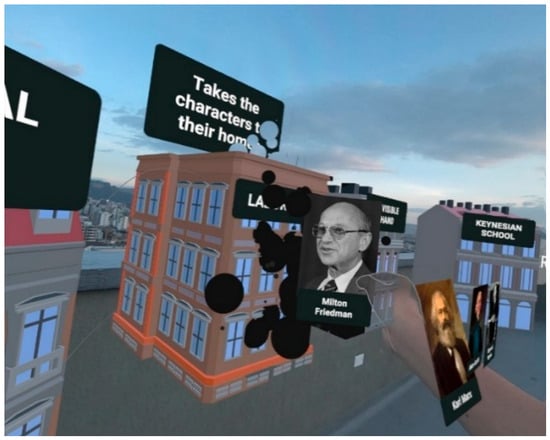
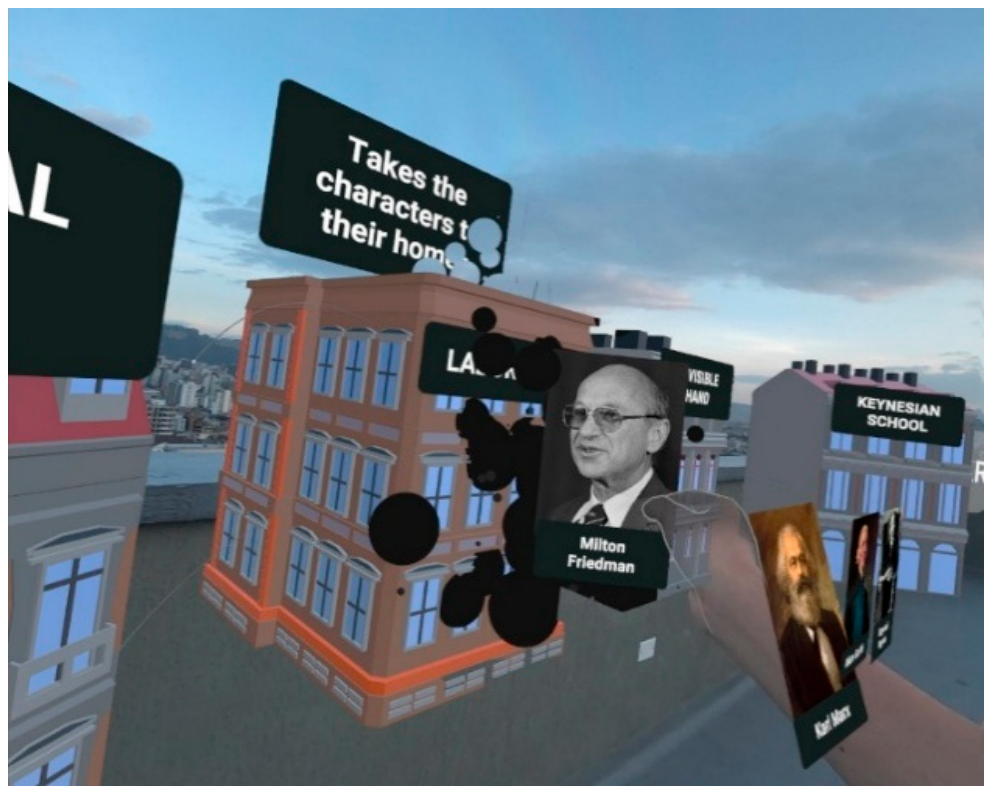
Figure 1 shows one of the scenarios developed within HistARium, in which different economic schools of thought and relevant historical figures, such as Milton Friedman and Karl Marx, are presented using 3D visual elements and interactive information panels. This type of representation allows students to relate historical and economic concepts in a more visual and intuitive way.
Figure 1.
An interactive scenario on economic thought in HistARium, presenting key figures (e.g., Milton Friedman, Karl Marx) and conceptual panels that learners can organize spatially.
Figure 2 shows an interactive activity related to the Mexican Revolution, in which students must identify historical figures and associate them with specific events through visual cards and questions in AR. This functionality encourages active participation and exploration-based learning.
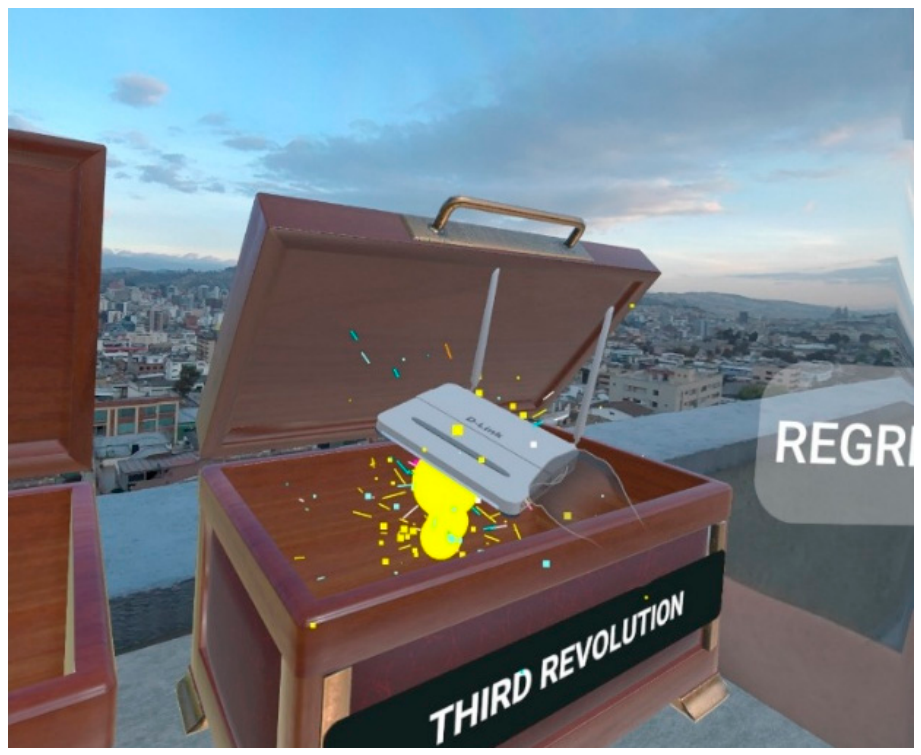
Figure 3 shows a module related to the Third Industrial Revolution, in which technological objects such as network devices are represented in 3D, allowing students to understand technological evolution and its impact on society in a practical way. Direct interaction with the virtual objects improves immersive experience and facilitates understanding of the historical content.
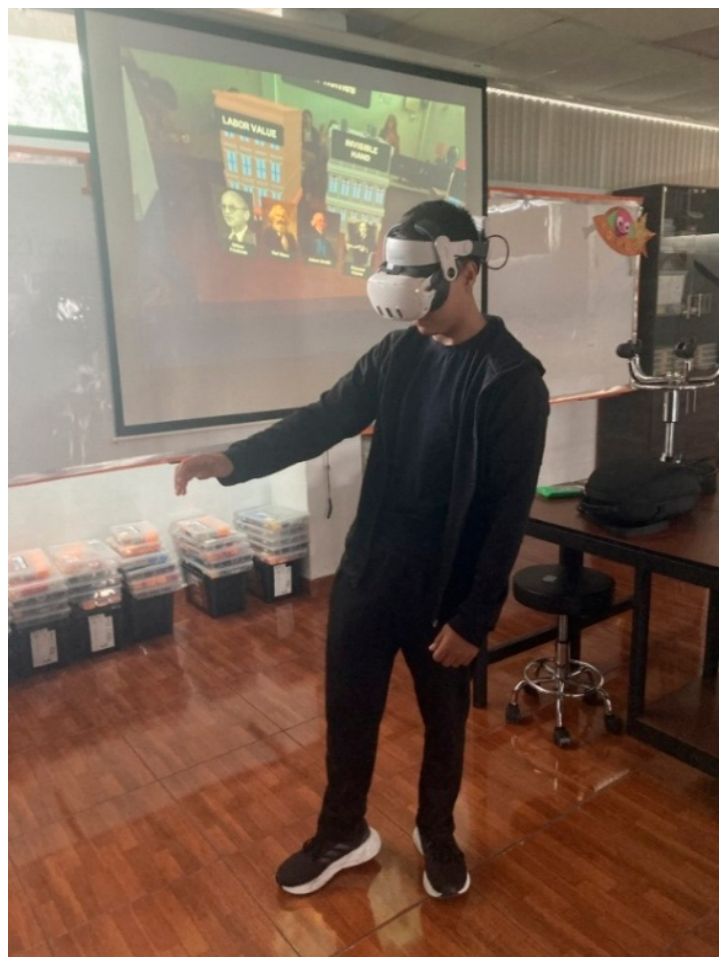
Finally, Figure 4 shows a student using the HistARium application with the Meta Quest 3 headset in a real educational environment. The application uses passthrough and AR to overlay virtual content on the physical environment, allowing the student to interact naturally with the historical elements using hand movements and basic gestures.
Regarding its operation, HistARium uses a simple and intuitive interface in which students can select different historical modules from a main menu. Once a topic has been chosen, the application displays visual and informative content in the user’s physical space through AR. Students can interact with the virtual objects using basic hand gestures, such as selecting, moving, or zooming in on historical elements to explore additional information. In addition, each scene includes descriptive texts, images, and brief explanations that complement the learning experience.
Figure 2.
An interactive scenario on the Mexican Revolution in HistARium, highlighting an active learning task where students match historical personalities with corresponding historical events using interactive visual cards.
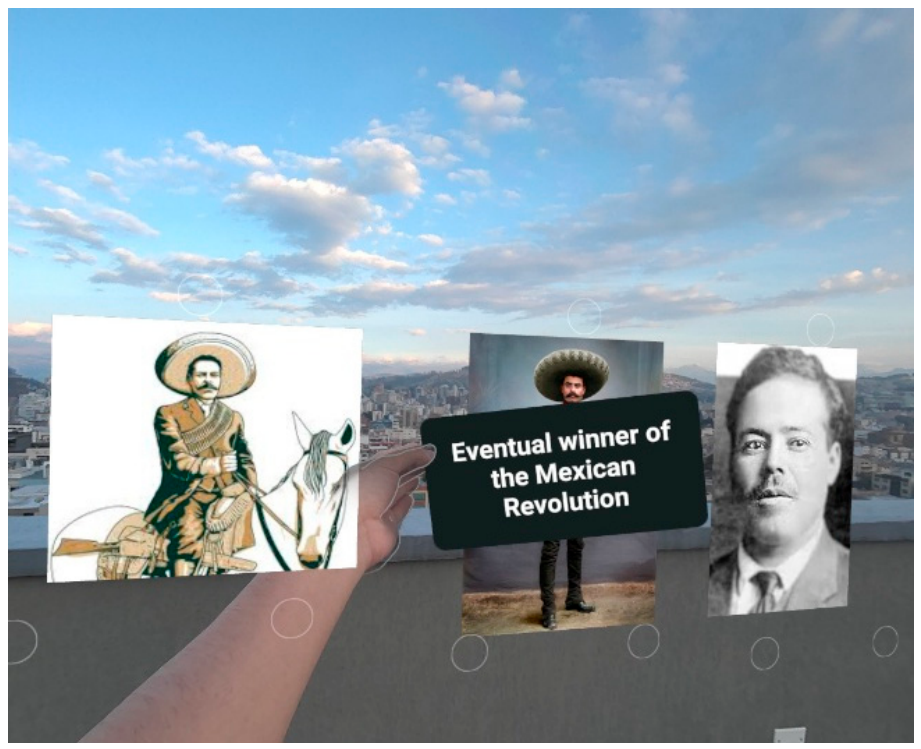
Figure 3.
An interactive scenario on the Third Industrial Revolution in HistARium, featuring interactive technological artifacts (e.g., network equipment) to illustrate socio-technological evolution.
The main purpose of HistARium is to improve history teaching through visual and interactive resources that increase student motivation, participation, and understanding. The application seeks to transform traditional learning into a more engaging experience, promoting knowledge retention and autonomous learning through the use of immersive technologies.
Figure 4.
Student using the HistARium application with the Meta Quest headset.
3.2. Students
The research involved 60 university students enrolled in higher education programs, equally distributed into two groups: an EG of 30 students and a CG of 30 students. Participants were selected, considering students aged between 18 and 20 years, ensuring similar demographic characteristics in both groups in order to maintain homogeneous conditions during the experiment. In both groups, 30% of the participants were women and 70% were men.
The sample size was determined by the number of eligible students enrolled in the course and available during the study period. Therefore, no a priori statistical power analysis was used to determine sample size. This constitutes a limitation of the study and should be considered when interpreting the generalizability and precision of the estimates.
Before the research was carried out, all participants received detailed information about the objectives, procedures, and scope of the study. They then signed an informed consent form, voluntarily authorizing their participation in the experiment. The confidentiality of the data collected, as well as the exclusive academic use of the information obtained during the research process, were also guaranteed.
Regarding prior experience with immersive technologies, none of the students had advanced knowledge or detailed experience in the use of AR educational applications with the Meta Quest headset. However, several participants indicated that they had had basic contact with AR technologies through mobile applications, interactive filters on social networks, and commercial video games. Nevertheless, those experiences were mainly oriented toward entertainment rather than educational or academic learning.
In addition, before the experimental intervention, the EG participants completed a familiarization session with the Meta Quest headset using neutral activities unrelated to the historical content assessed. This stage allowed participants to become familiar with hand tracking, the selection and manipulation of virtual objects, and navigation in the immersive environment. Familiarization was carried out before using HistARium in order to reduce the possible influence of the novelty effect associated with first contact with the technology on the research results.
3.3. Instrument
Academic performance was assessed using a pre-test and a post-test designed to measure students’ knowledge of the historical contents addressed during the intervention. Each test consisted of 10 items, covering History. The items included multiple-choice and true–false questions. Each correct answer was assigned one point, resulting in a maximum score of ten.
To establish content validity, the instruments were reviewed by three experts with expertise in history education and educational assessment. The experts evaluated the relevance, clarity, and correspondence of each item with the intended learning outcomes. Internal consistency was subsequently examined using Cronbach’s alpha (α), obtaining α = 0.778 for the pre-test and α = 0.964 for the post-test.
The pre-test and post-test were designed as equivalent forms rather than identical tests. Both instruments assessed the same learning objectives, covered the same content domains, contained the same number and type of items, and used the same scoring criteria, while the wording and/or ordering of the questions differed to reduce recall effects.
3.4. Task
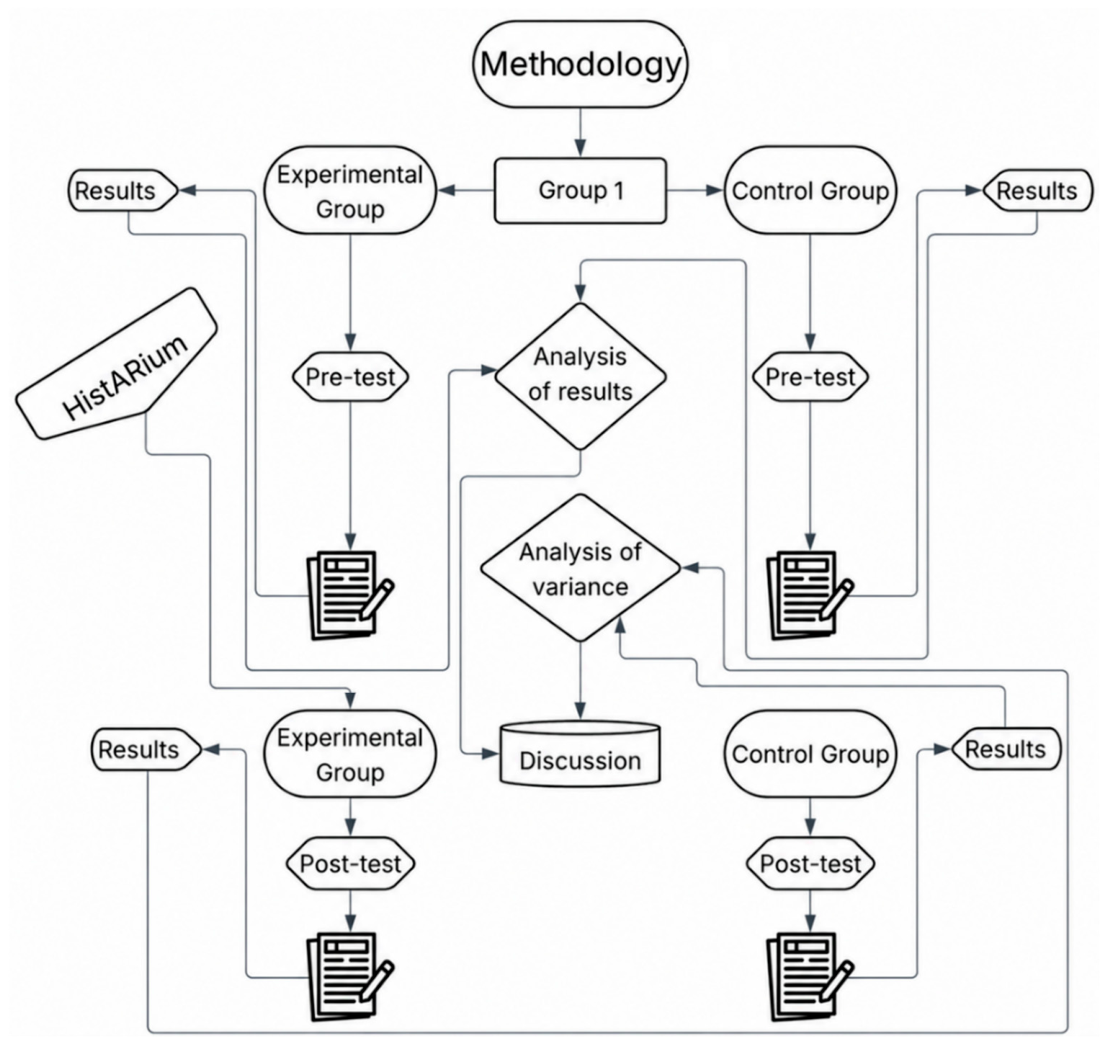
The research was developed through an experimental design with a CG and an EG, using pre-test and post-test assessments to evaluate academic performance and the time taken to complete activities related to historical content. The intervention was conducted over 4 sessions during a period of 1 week. Each session lasted approximately 45 min. Both groups received instruction on the same historical contents and learning objectives. Before the experiment began, all participants signed an informed consent form authorizing their voluntary participation in the research. The procedure followed is shown in Figure 5 and described below:
- Pre-test administration. Both groups completed a pre-test consisting of questions related to the historical content addressed in the research. During this phase, two main variables were recorded: the scores obtained by each student and the time taken to complete the assessment. The pre-test made it possible to identify students’ initial level of knowledge before the educational intervention.
- Educational intervention. Experimental group: Students used the HistARium application with the Meta Quest headset, interacting with historical content in AR and passthrough. Control group: Students attended classes based on traditional teaching methodologies, including teacher explanations and conventional materials.
- Post-test administration. After the educational intervention had finished, both groups completed a post-test with characteristics similar to those of the pre-test. Once again, the scores obtained and the completion times of each student were recorded. This stage made it possible to compare academic performance and completion speed after the learning process.
Figure 5.
Methodology used in the research.
4. Results
The research was conducted using an experimental pre-test–post-test design with a CG and an EG, in which students’ academic performance was assessed before and after applying traditional instruction and instruction based on HistARium. This design made it possible to compare changes in the results and to evaluate the effect of AR with respect to a traditional methodology, ensuring the validity of the results through random assignment and statistical analysis.
Comparison between pre-test and post-test results made it possible to identify the improvement in students’ academic performance, while comparison between the CG and the EG made it possible to verify the specific effect of the teaching method applied in each case. In this study, participants were randomly assigned to each group (CG, EG), which helps to ensure their initial equivalence and to increase the internal validity of the study. The number of participants in the EG and the CG is shown in detail in Figure 6.
In addition, the data analysis relied on inferential statistical techniques, such as t-tests for the comparison of means and analysis of variance (ANOVA), which made it possible to determine the significance of the observed differences. In this way, a robust analysis of the effectiveness of new educational methodologies, such as the use of AR in the teaching–learning process, was ensured.
In addition, because the data are on a continuous scale, Cronbach’s alpha was calculated in order to obtain a measure of the reliability of the tests. Table 1 shows the values, which indicate that there is internal consistency in the responses to the tests (pre-test and post-test).
Figure 6.
Distribution of participants by gender and group.
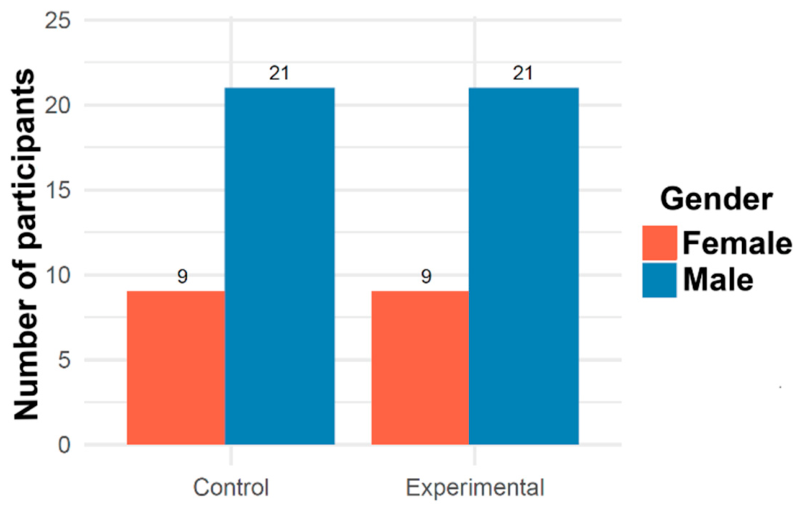
Table 1.
Internal consistency of the tests applied.
4.1. Results of the Pre-Test Stage Data
The descriptive statistics of the pre-test scores are presented in Table 2, followed by the corresponding t-test results in Table 3. Similarly, the descriptive statistics of the time taken by students to complete the pre-test are reported in Table 4, with the corresponding t-test results presented in Table 5. These results are also graphically illustrated in Figure 7 and Figure 8.
4.1.1. Analysis of the Pre-Test Results
Table 2 shows a slight difference between the mean pre-test scores, amounting to 0.21 points. In addition, Figure 7 and Table 2 show that there is a slight difference between the results of the CG and the EG, with the CG being slightly higher. It can also be observed that the interquartile boxes overlap widely and that the means of the CG and the EG are very close. These observations suggest that the difference between groups is small; this is verified statistically below.
Table 2.
Descriptive statistics of the pre-test results (0–10).
This analysis is reinforced by the data in Table 3, in which the t-test yields a p-value = 0.21, which is greater than 0.05, and a value of t = 1.27, indicating that there are no significant differences in initial performance between the groups with respect to the scores obtained in the pre-test stage. This result is important for the research because it shows that the groups are suitable for further analysis in terms of the initial knowledge of the two study groups.
Figure 7.
Pre-test results by group.
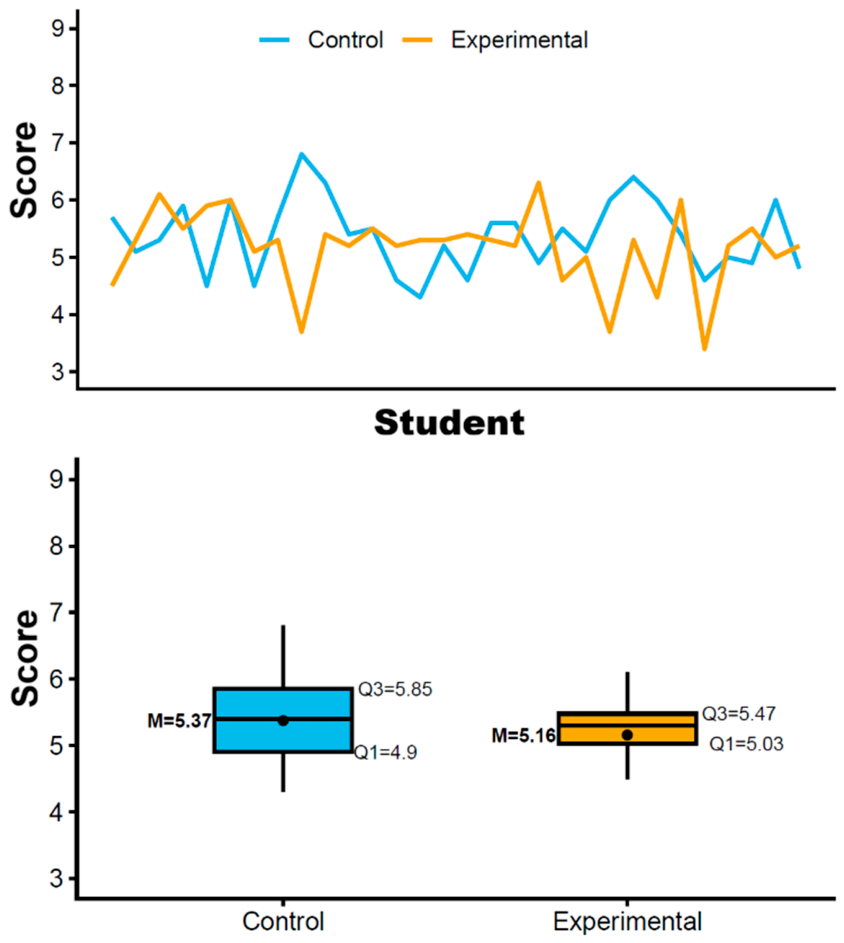
Table 3.
t-test for the pre-test results.
4.1.2. Analysis of Pre-Test Completion Time
With respect to completion time, Table 4 shows that, in the values of the time taken by the students to answer the pre-test, there is a difference between the means of the EG and the CG of 0.45 min, with the CG taking longer to complete the pre-test than the EG. In addition, Figure 8 shows this difference graphically, so it can be concluded that, in general terms, the EG required less time than the CG to complete the pre-test.
The t-test confirmed the results presented: Table 5 reports t = 3.42 and p = 0.0013, which indicates that there is a significant difference and, therefore, that the EG completed the test significantly faster than the CG.
Table 4.
Descriptive statistics of the pre-test response time (min).
Figure 8.
Pre-test completion times by group.
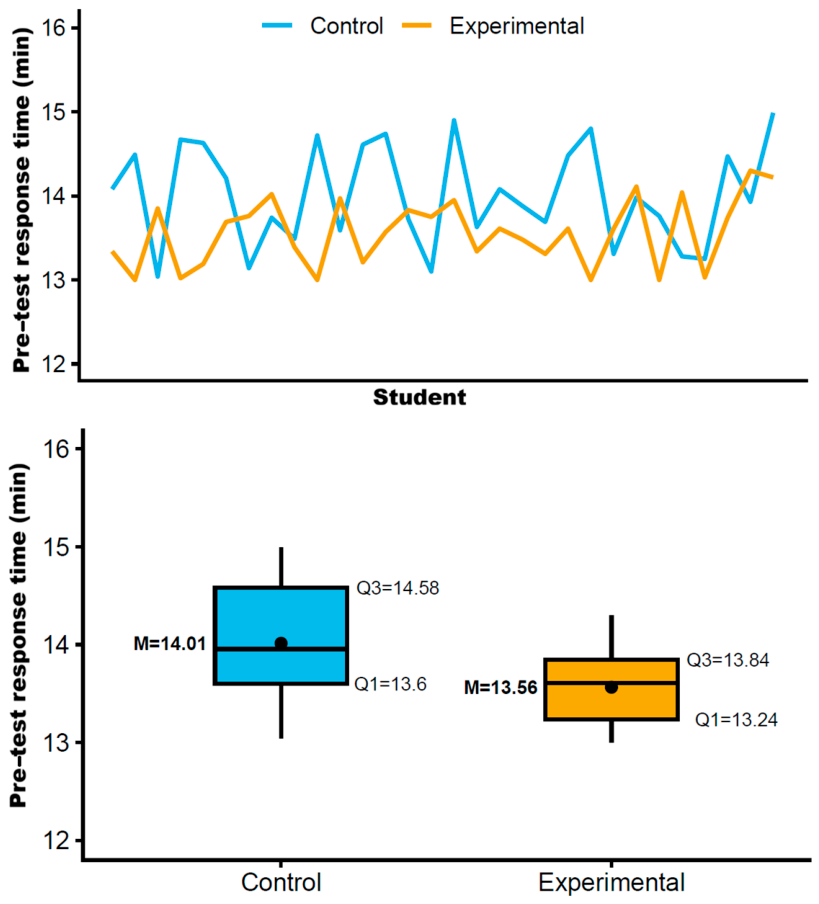
Table 5.
t-test of the pre-test time.
4.2. Results of the Post-Test Stage Data
The descriptive statistics of the post-test scores are presented in Table 6, followed by the corresponding t-test results in Table 7. Similarly, the descriptive statistics of the time taken by students to complete the post-test are reported in Table 8, with the corresponding t-test results presented in Table 9. These results are also graphically illustrated in Figure 9 and Figure 10.
4.2.1. Analysis of the Post-Test Results
Table 6 shows a higher performance of the EG compared with the CG, together with a substantial difference between the means of 2.6 points. In addition, Figure 9 shows both groups (EG and CG), and it is noticeable that the EG has a much higher mean score than the CG. This graphical evidence is consistent with a difference between the observed means, which is verified statistically below.
Table 6.
Descriptive statistics of the post-test results (0–10).
Figure 9.
Post-test results by group.
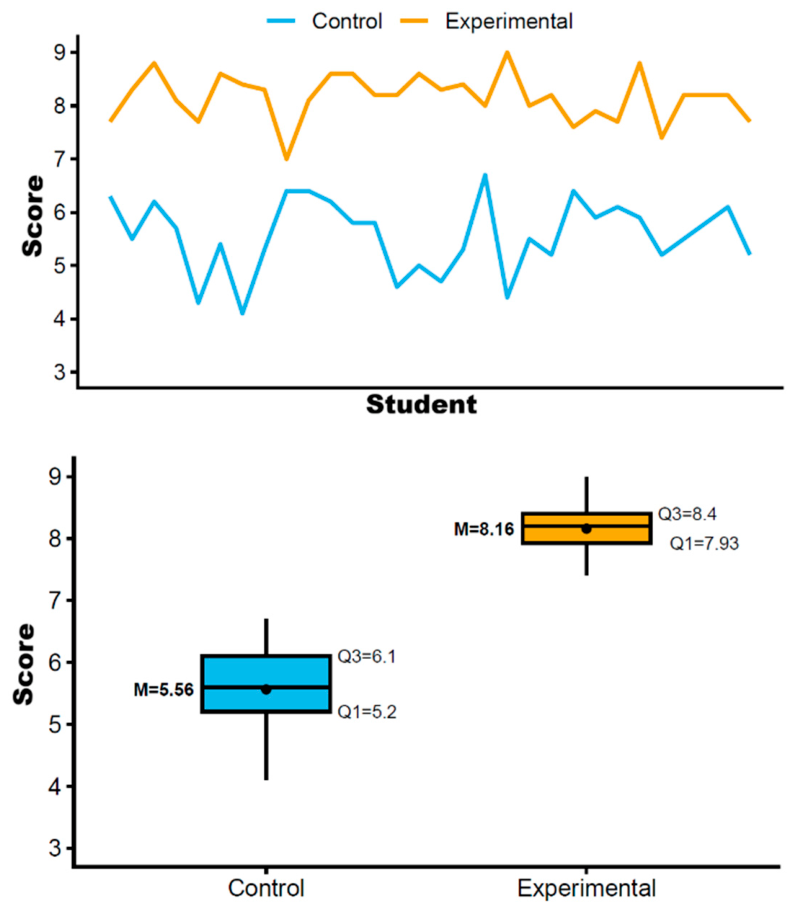
Table 7.
t-test for the post-test results.
4.2.2. Analysis of the Post-Test Completion Time
As in the pre-test stage, Table 8 shows that, in the values of the time taken by the students to answer the post-test, there is a difference between the means of the EG and the CG of 0.43 min. In addition, Figure 10 shows graphically that the CG took less time to complete the post-test than the EG; therefore, in general terms, the EG required more time than the CG to complete the test at the post-test stage.
Table 8.
Descriptive statistics of the post-test response time (min).
Figure 10.
Post-test completion times by group.
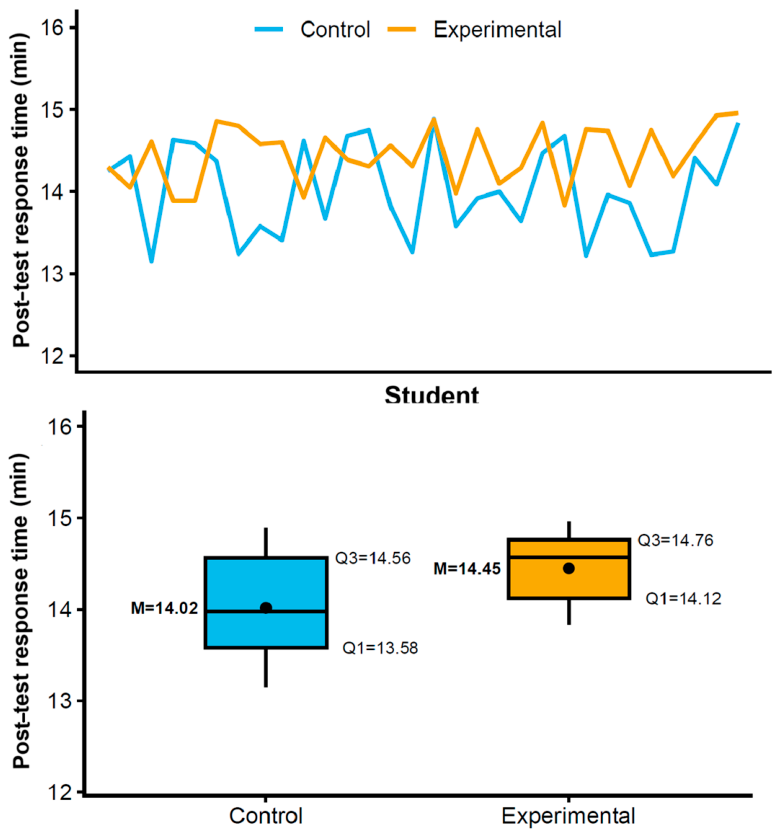
These results are confirmed by the t-test, which indicates that there is a statistically significant difference and, therefore, that the EG completed the test significantly more slowly than the CG.
When these results are compared with the pre-test, in which the EG was faster, a change in behavioral pattern is observed. This increase in time could be associated with deeper processing of the information or with greater dedication to completing the tasks, which could be considered consistent with the significant increase in performance, based on the results obtained by the EG in the post-test.
Table 9.
t-test for the post-test time data.
4.3. Results of ANOVA
To conduct analysis using ANOVA, the student groups (CG and EG) and the assessment time points (pre-test and post-test) are used as reference points. Based on this premise, an ANOVA was conducted to evaluate the scores, as shown in Table 10 and Figure 11. In addition, an ANOVA was conducted to evaluate the completion times, as shown in Table 11 and Figure 12.
Table 10.
ANOVA results for the scores.
Figure 11 shows the change in academic performance between the pre-test and post-test for both groups. It can be seen that students in the CG show a slight improvement in average grades, while students in the EG show a considerable increase following implementation of the AR-based intervention.
Figure 11.
Interaction of mean scores used to visualize the ANOVA results.
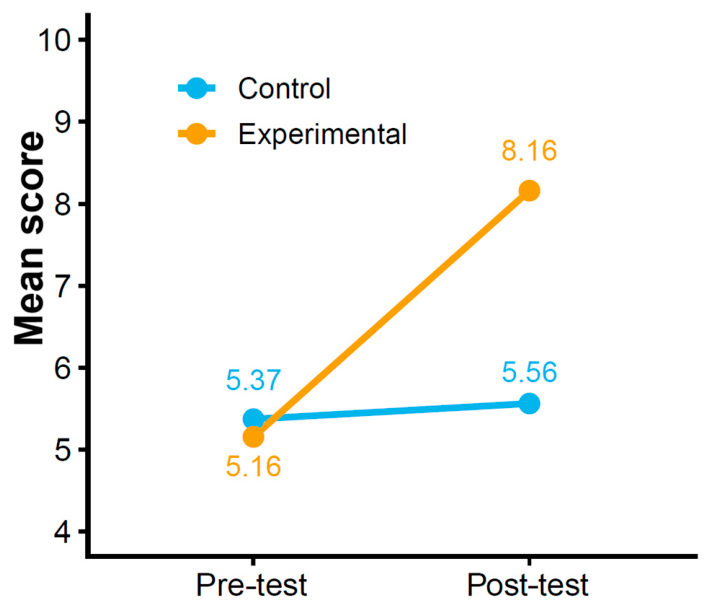
Table 11.
ANOVA results for resolution times.
Figure 12.
Interaction of mean resolution times used to visualize the ANOVA results.
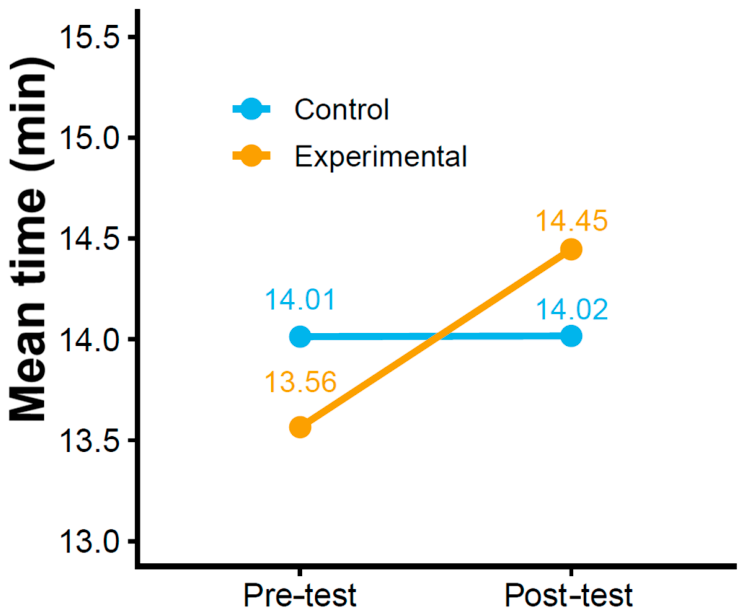
Figure 12 shows the change in average problem-solving time between the pre-test and post-test for both groups. It can be seen that the CG maintained nearly constant times, while the EG showed a notable increase in problem-solving time.
The difference in the slope of the lines indicates that the trend in resolution time differed for each group. This pattern aligns with the ANOVA results, which revealed significant differences between groups and assessment time points. These results indicate that test-completion time changed differently across groups. However, completion time alone does not establish a more elaborate or reflective problem-solving process, because the cognitive mechanisms underlying this difference were not directly assessed.
5. Discussion
The results obtained provide favorable evidence regarding the use of HistARium as a complementary resource for history teaching.
A residual novelty effect should be considered when interpreting the findings. Before the intervention, the experimental group completed a familiarization session using neutral activities unrelated to the historical content assessed. This procedure was intended to reduce initial unfamiliarity with the Meta Quest headset, but it cannot establish that excitement associated with immersive technology was eliminated. Novelty-related interest or attention may therefore have contributed to the observed performance differences. Because novelty was not directly measured and the control group did not receive a comparable technology-based experience, its contribution cannot be separated from other features of the HistARium instructional condition. Future studies should examine repeated exposure over longer periods, include an active technology-based control condition, and assess whether the observed differences persist after initial novelty has diminished.
5.1. RO1: Impact of HistARium on Academic Performance
RO1 aimed to analyze the impact of the immersive application HistARium on the academic performance of university students in history teaching by comparing a CG and an EG. Before the intervention, the CG obtained a mean of 5.37 and the EG a mean of 5.16. The t-test showed that this difference was not statistically significant (p = 0.21), indicating that both groups had comparable initial levels of knowledge.
After the intervention, a clearly different behavior was observed. The CG reached a mean of 5.56, whereas the EG obtained a mean of 8.16, resulting in a difference of 2.60 points between the two groups. The t-test confirmed that this difference was statistically significant (p = 5.69 × 10⁻²³). Because the groups had similar initial levels and participants were randomly assigned, these results support the association between HistARium intervention and the improvement observed in academic performance. All these data are confirmed via the ANOVA tests that were carried out for this research.
The results are consistent with previous research on immersive technologies applied to education. For example, Apriyanto et al. (2024) reported better academic results in students who used AR for history learning than in students who received traditional instruction. Similarly, Remolar et al. (2021) found benefits in the retention of historical concepts through immersive experiences. The HistARium results extend this evidence by incorporating an immersive experience with the Meta Quest headset and by objectively assessing academic performance using an experimental pre-test–post-test design.
One possible explanation for these results lies in the characteristics of the activities implemented in HistARium. Students did not merely receive textual information; they also interacted with historical figures, 3D objects, and events, and carried out identification and association activities. These characteristics could favor a more contextualized representation of the content. However, because the present study did not directly assess variables such as motivation, engagement, or cognitive load, these mechanisms should be regarded as possible explanations and not as effects demonstrated by the experiment.
Consequently, the results corresponding to RO1 indicate that the use of HistARium was associated with significantly higher academic performance than that obtained through the traditional methodology under the experimental conditions evaluated. These findings support its use as a complementary tool for history teaching, without necessarily implying the replacement of conventional pedagogical strategies.
5.2. RO2: Comparison of Pre-Test and Post-Test Results
RO2 sought to compare the pre-test and post-test results obtained by the EG that used HistARium and the CG that received traditional instruction in order to identify significant differences in learning. The comparison reveals different patterns of change between the two groups. The CG went from a mean of 5.37 in the pre-test to 5.56 in the post-test, which represents an increase of only 0.19 points. In contrast, the EG went from 5.16 to 8.16, equivalent to an increase of 3.00 points.
This difference is particularly relevant because the pre-test showed no significant differences in the initial scores, whereas after the intervention, a statistically significant difference was found between the groups. Therefore, the pre-test–post-test pattern indicates that the greatest academic change occurred in the students exposed to HistARium, while the group that received traditional methodology showed limited variation.
The analysis of completion time provides an additional result. In the pre-test, the EG completed the assessment significantly faster than the CG (13.56 versus 14.01 min; p = 0.0013). In the post-test, however, this trend was reversed: the EG took 14.45 min compared with 14.02 min for the CG, a difference that was also statistically significant (p = 1.04 × 10⁻³). This result shows that the improvement in the EG’s scores was not accompanied by a reduction in completion time. The increase in the time spent by the EG could be related to greater attention, reflection, or processing of the questions after interacting with HistARium. All these data are confirmed via the ANOVA tests that were carried out for this research.
Nevertheless, this interpretation must be made with caution, since the study did not include specific measures of cognitive processing that would make it possible to determine the cause of this behavior. It would therefore not be appropriate to interpret the longer time as direct evidence of greater cognitive depth. The demonstrable finding is that the EG achieved better academic results even though it took slightly longer to complete the post-test.
Taken together, the results corresponding to RO2 show a substantial improvement in performance between the pre-test and the post-test, mainly in the group that used HistARium. This provides favorable quantitative evidence regarding its integration as a complementary resource for history learning. However, future research will need to determine whether these improvements are maintained in the long term and to explore the cognitive, motivational, and pedagogical mechanisms that could explain the observed effect.
5.3. Costs and Economic Viability
The practical adoption of HistARium also requires consideration of the resources associated with headset-based instruction. Relevant factors include the acquisition and availability of Meta Quest devices, maintenance and replacement, cleaning, software and content updates, technical support, and teacher preparation. Shared-device arrangements may reduce the number of headsets required, but can introduce scheduling constraints and additional demands on instructional time. These factors may influence accessibility and scalability, particularly in institutions with limited resources. Because the present study did not collect implementation-cost data or conduct an economic evaluation, the observed learning outcomes should not be interpreted as evidence of cost-effectiveness. Future research should document total implementation costs and examine their relationship with learning outcomes and the number of students served.
6. Conclusions
This study evaluated HistARium, an immersive AR application used with Meta Quest 3, through a pre-test–post-test comparison involving 60 university students. Under the conditions examined, the experimental group achieved higher immediate post-test scores and a larger increase in performance than the control group receiving conventional instruction. These findings support further investigation of HistARium as a complementary resource for history education.
The contribution of this research extends beyond the development of an immersive application to the empirical evaluation of its educational use. Alongside interest in artificial intelligence in education, it remains important to assess AR tools through measured learning outcomes. The educational value of technology should be examined in relation to learning objectives, instructional activities, and assessment results. In this respect, HistARium illustrates how the evaluation of interactive historical content can contribute evidence to decisions about educational technology adoption. The present study does not establish the comparative effectiveness of AR and AI.
The findings remain limited to the sample, instructional setting, and immediate assessment examined. They do not establish long-term retention, identify the specific mechanisms responsible for the observed differences, or rule out residual novelty effects. Broader implementation should therefore consider both educational outcomes and practical feasibility, including equipment availability, staff preparation, and implementation costs.
7. Future Work
As future work, it is proposed to increase the number and diversity of participants in order to assess the generalizability of the results across different institutions, educational levels, and sociocultural contexts. It would also be advisable to conduct longitudinal assessments using delayed tests to determine whether the observed improvements are maintained over time and whether HistARium supports the retention of historical knowledge.
It is also recommended to analyze separately the different content and activities implemented in HistARium in order to identify which of them contribute most to learning. In addition, future research could incorporate additional variables such as usability, technology acceptance, motivation, cognitive load, and user experience, making it possible to understand not only whether academic performance improves, but also how and why immersive interaction can contribute to learning.
Finally, it is recommended to replicate the experiment with larger samples and to evaluate different intervention durations and modalities, as well as to incorporate complementary measures of learning, critical thinking, and long-term retention. This would make it possible to establish more precisely the educational scope of HistARium and to generate stronger evidence for its integration into history teaching methodologies in higher education.
Author Contributions
Conceptualization, L.S.C. and S.L.-M.; methodology, L.S.C.; software, L.S.C.; validation, L.S.C., J.G.-M. and O.M.-Z.; formal analysis, L.S.C.; investigation, L.S.C.; resources, L.S.C.; data curation, L.S.C.; writing—original draft preparation, L.S.C.; writing—review and editing, Y.M.A.; visualization, A.D.S.; supervision, L.S.C.; project administration, L.S.C.; funding acquisition, L.S.C. All authors have read and agreed to the published version of the manuscript.
Funding
This research was funded by Universidad de Las Américas grant number 627.AXVIII.26.
Institutional Review Board Statement
The study was conducted in accordance with the Declaration of Helsinki, and approved by the Ethics Committee of CEISH-UDLA (Análisis De Experiencia De Usuario En Las Tecnologías Digitales Más Utilizadas Para La Educación: Principales Beneficios Y Problemas, Protocol No.: 2026-REN-002, 16 June 2026).
Informed Consent Statement
Written informed consent has been obtained from the participants for the publication of this article.
Data Availability Statement
Criollo, Luis Santiago (2026), “HistARium: An Experimental Study of Immersive Augmented Reality for History Learning in Higher Education”, Mendeley Data, V2, doi: 10.17632/sjbxcz9rvz.2.
Conflicts of Interest
The authors declare no conflict of interest.
References
- Abdullah, N. A. S., & Rokmain, N. S. S. (2023, July 14–16). Learning human anatomy using augmented reality mobile application. International Conference on Digital Applications, Transformation & Economy (pp. 1–5), Miri, Malaysia. [Google Scholar] [CrossRef] [Scilit]
- Apriyanto, A., Maharjan, K., & Wei, Z. (2024). Implementation of augmented reality technology in history learning: Experimental study. Journal of Computer Science Advancements, 2(4), 222–230. [Google Scholar] [CrossRef] [Scilit]
- Azhar, N. H. M., Diah, N. M., Ahmad, S., & Ismail, M. (2019). Development of augmented reality to learn history. Bulletin of Electrical Engineering and Informatics, 8(4), 1425–1432. [Google Scholar] [CrossRef] [Scilit]
- Challenor, J., & Ma, M. (2019). A review of augmented reality applications for history education and heritage visualisation. Multimodal Technologies and Interaction, 3(2), 39. [Google Scholar] [CrossRef] [Scilit]
- Chang, H. Y., Binali, T., Liang, J. C., Chiou, G. L., Cheng, K. H., Lee, S. W. Y., & Tsai, C. C. (2022). Ten years of augmented reality in education: A meta-analysis of (quasi-) experimental studies to investigate the impact. Computers & Education, 191, 104641. [Google Scholar] [CrossRef] [Scilit]
- Criollo-C, S., Guerrero-Arias, A., Buenaño-Fernández, D., Jaramillo-Alcazar, Á., & Luján-Mora, S. (2024). Using Mixed Reality (MR) as an emerging technology for improving higher education: Analysis of mental workload. Emerging Science Journal, 8, 410–424. [Google Scholar] [CrossRef] [Scilit]
- Criollo-C, S., Guerrero-Arias, A., Samala, A. D., Arif, Y. M., & Lujan-Mora, S. (2025). Enhancing the educational model using mixed reality technologies with Meta Quest 3: A usability analysis using IBM-CSUQ. IEEE Access, 13, 56930–56945. [Google Scholar] [CrossRef] [Scilit]
- Čejka, J., Mangeruga, M., Bruno, F., Skarlatos, D., & Liarokapis, F. (2021). Evaluating the potential of augmented reality interfaces for exploring underwater historical sites. IEEE Access, 9, 45017–45031. [Google Scholar] [CrossRef] [Scilit]
- Gervasi, O., Perri, D., & Simonetti, M. (2023). Empowering knowledge with virtual and augmented reality. IEEE Access, 11, 144649–144662. [Google Scholar] [CrossRef] [Scilit]
- Hossain, M. F., Barman, S., Biswas, N., & Haque, A. K. M. B. (2021, February 19–20). Augmented reality in medical education: AR bones. International Conference on Computing, Communication, and Intelligent Systems (pp. 348–353), Greater Noida, India. [Google Scholar]
- Ibarra, M., Gomez, E., Barzola, B., Castillo, M., Ibanez, V., & Quispe, R. (2019, October 30–November 1). Improving student’s learning motivation in schools using augmented reality. XIV Latin American Conference on Learning Technologies (pp. 259–264), San Jose Del Cabo, Mexico. [Google Scholar]
- Kysela, J., & Štorková, P. (2015). Using augmented reality as a medium for teaching history and tourism. Procedia—Social and Behavioral Sciences, 174, 926–931. [Google Scholar] [CrossRef] [Scilit]
- Lai, C. H., & Hu, P. Y. (2025). The gaming revolution in history education: The practice and challenges of integrating game-based learning into formal education. Information, 16(6), 490. [Google Scholar] [CrossRef] [Scilit]
- Lazaro Carrascosa, C., Ylardia, I. P., Paredes-Velasco, M., & Garcia-Suelto, M. d. C. N. (2024). Game-based learning with augmented reality for history education. Revista Iberoamericana de Tecnologias del Aprendizaje, 19, 14–23. [Google Scholar] [CrossRef] [Scilit]
- Li, G., Luo, H., Chen, D., Wang, P., Yin, X., & Zhang, J. (2025). Augmented reality in higher education: A systematic review and meta-analysis of the literature from 2000 to 2023. Education Sciences, 15(6), 678. [Google Scholar] [CrossRef] [Scilit]
- Makransky, G., & Mayer, R. E. (2022). Benefits of taking a virtual field trip in immersive virtual reality: Evidence for the immersion principle in multimedia learning. Educational Psychology Review, 34(3), 1771–1798. [Google Scholar] [CrossRef] [Scilit] [PubMed]
- Martin, F., & Ertzberger, J. (2013). Here and now mobile learning: An experimental study on the use of mobile technology. Computers and Education, 68, 76–85. [Google Scholar] [CrossRef] [Scilit]
- Müller, D., Bruns, F. W., Erbe, H.-H., Robben, B., & Yoo, Y.-H. (2007). Mixed reality learning spaces for collaborative experimentation: A challenge for engineering education and training. International Journal of Online Engineering, 3(4), 15–19. [Google Scholar] [CrossRef] [Scilit]
- Priyono, C. D., Sok, V., & Souza, F. (2025). The use of augmented reality in history education: A study on conceptual understanding effects. Journal Neosantara Hybrid Learning, 2(3), 470–483. [Google Scholar] [CrossRef] [Scilit]
- Radianti, J., Majchrzak, T. A., Fromm, J., & Wohlgenannt, I. (2020). A systematic review of immersive virtual reality applications for higher education: Design elements, lessons learned, and research agenda. Computers & Education, 147, 103778. [Google Scholar] [CrossRef] [Scilit]
- Remolar, I., Rebollo, C., & Fernández-Moyano, J. A. (2021). Learning history using virtual and augmented reality. Computers, 10(11), 146. [Google Scholar] [CrossRef] [Scilit]
- Richert, A., Mai, V., Mengen, H., & Wolf, S. (2019, June 12–14). Mixed reality games in engineering education. 5th Experiment International Conference (pp. 365–370), Funchal, Portugal. [Google Scholar] [CrossRef] [Scilit]
- Santos, M. E. C., Chen, A., Taketomi, T., Yamamoto, G., Miyazaki, J., & Kato, H. (2014). Augmented reality learning experiences: Survey of prototype design and evaluation. IEEE Transactions on Learning Technologies, 7(1), 38–56. [Google Scholar] [CrossRef] [Scilit]
- Sural, I. (2018). Augmented reality experience: Initial perceptions of higher education students. International Journal of Instruction, 11(4), 565–576. [Google Scholar] [CrossRef] [Scilit]
- Suryodiningrat, S. P., Ramadhan, A., Prabowo, H., Santoso, H. B., & Hirashima, T. (2024). Mixed reality systems in education: A systematic literature review. Journal of Computers in Education, 11(3), 855–878. [Google Scholar] [CrossRef] [Scilit]
- Szlachta, A. M., Junior, & Tete Ramos, M. E. (2019). Possibilidades para a educação patrimonial por meio de games de realidade aumentada. Metis-Historia e Cultura, 18(35), 97–119. [Google Scholar] [CrossRef] [Scilit]
- Tripoulas, C., & Koutromanos, G. (2024). The use of augmented reality in teaching history to primary and secondary-school students in formal and informal learning environments: A review of the literature. In Smart mobile communication & artificial intelligence (vol. 936, pp. 3–14). Springer. [Google Scholar] [CrossRef] [Scilit]
- Vidak, A., Šapić, I. M., Mešić, V., & Gomzi, V. (2023). Augmented reality technology in teaching about physics: A systematic review of opportunities and challenges. European Journal of Physics, 45(2), 023002. [Google Scholar] [CrossRef] [Scilit]
- Wong, J. H., Chua, F.-F., & Lim, A. H.-L. (2025, October 6–8). An interactive mobile learning tool for Malaysian history education. IEEE International Conference on Computing (pp. 512–517), Kuching, Malaysia. [Google Scholar] [CrossRef] [Scilit]
- Wu, H. K., Lee, S. W. Y., Chang, H. Y., & Liang, J. C. (2013). Current status, opportunities and challenges of augmented reality in education. Computers and Education, 62, 41–49. [Google Scholar] [CrossRef] [Scilit]
- Yengui, M. H., & Stechert, C. (2021, August 16–20). On the activation of students through augmented reality experiences. International Conference on Engineering Design, Gothenburg, Sweden. [Google Scholar]
- Yoo, E., Kwon, O., & Yu, J. (2023). Evaluation of an augmented reality for historical context experiences of 3D restored court paintings. IEEE Access, 11, 39197–39212. [Google Scholar] [CrossRef] [Scilit]
- Zulfiqar, F., Raza, R., Khan, M. O., Arif, M., Alvi, A., & Alam, T. (2023). Augmented reality and its applications in education: A systematic survey. IEEE Access, 11, 143250–143271. [Google Scholar] [CrossRef] [Scilit]

Disclaimer/Publisher’s Note: The statements, opinions and data contained in all publications are solely those of the individual author(s) and contributor(s) and not of MDPI and/or the editor(s). MDPI and/or the editor(s) disclaim responsibility for any injury to people or property resulting from any ideas, methods, instructions or products referred to in the content. |
© 2026 by the authors. Licensee MDPI, Basel, Switzerland. This article is an open access article distributed under the terms and conditions of the Creative Commons Attribution (CC BY) license.