


Abstract
Artificial intelligence (AI) is increasingly used in education, yet evidence regarding its adoption by kindergarten teachers remains limited, particularly in Indonesian early childhood settings. This study investigated the AI tools used by kindergarten teachers, their educational purposes, implementation challenges, and technology acceptance factors influencing AI integration in Malang, Indonesia. The design used was an exploratory sequential mixed-methods approach. Ten Guru Penggerak and five kindergarten administrators participated in interviews, observations, and document analysis to gather qualitative data. Findings informed a questionnaire administered to 250 kindergarten teachers selected through equal-allocation stratified random sampling across five districts of Malang City. Partial least squares structural equation modeling was used to analyze quantitative data. Qualitative findings showed that teachers used AI for lesson planning, play-based learning design, storytelling, media creation, assessment, documentation, parent communication, and professional learning. Teachers critically reviewed AI-generated content to ensure developmental, curricular, cultural, ethical, and safety appropriateness. Major challenges included limited AI literacy, inadequate infrastructure, restricted premium features, inaccurate outputs, insufficient institutional support, and privacy concerns. According to quantitative findings, behavioral intention was positively and substantially correlated with performance expectancy, effort expectancy, and enabling factors, but there was no statistically significant correlation with social influence. Behavioral intention influenced the effects of performance expectation, effort expectancy, and enabling environments and was substantially correlated with self-reported AI integration. These results imply that teachers’ perceptions of AI’s utility, usability, institutional support, and professional competence all play a role in its successful incorporation in kindergarten. Strengthening AI literacy, prompting skills, ethical awareness, and developmentally appropriate pedagogical practices is essential for sustainable AI implementation in early childhood education.
1. Introduction
Artificial intelligence has rapidly entered educational practice, particularly through generative tools capable of producing text, images, audio, instructional activities, and assessment materials. Quantitative evidence shows that most of the 318 educators surveyed expected generative AI to substantially influence teaching and assessment, fewer than half of 89 K–12 teachers had integrated it into professional practice, 88 schoolteachers and educational leaders and 76 educators identified teaching, learning, assessment, and administration as its principal applications, while studies involving 466 Indonesian teachers and international samples of 237 and 358 educators showed that teachers’ intentions and actual usage of AI were influenced by perceived utility, ease of use, AI literacy, technology pedagogical expertise, performance expectation, effort expectancy, social influence, trust, and institutional policy (Al-Abdullatif, 2024; Cheah et al., 2025; Chiu, 2024; Khlaif et al., 2024; Mulyani et al., 2025; Ng et al., 2025). In early childhood education, AI can support curriculum planning, personalised learning, social robots, adaptive learning, intelligent feedback, and the creation of developmentally appropriate learning experiences (Su & Zhong, 2022). Teachers can also employ ChatGPT, Claude, DALL-E, Canva, Craiyon, ElevenLabs, and Microsoft Copilot to develop lesson plans, curricula, teaching materials, and professional learning resources (Jambunathan, 2025). In assessment practice, AI can assist with developing test specifications and items, scoring student work, generating feedback, interpreting results, and preparing assessment reports (Owan et al., 2023)
Kindergarten education requires play-based, developmentally appropriate, contextual, and interactive learning supported by visual and concrete materials. Artificial intelligence can assist this process through adaptive learning, interactive storytelling, educational robots, and personalised activities aligned with early childhood curriculum principles (Su & Zhong, 2022; Yi et al., 2024). Age-appropriate AI tools may also support participation, creativity, computational thinking, and collaborative learning through play- and game-based activities (Yim & Su, 2024). Their educational value nevertheless depends on teachers’ technological pedagogical knowledge, curriculum alignment, available resources, and cultural awareness (Yang et al., 2022). Kindergarten teachers can use generative AI to develop lesson plans, stories, illustrations, songs, games, worksheets, differentiated activities, assessments, developmental reports, administrative documents, and parent communications (Jambunathan, 2025). These outputs require careful review because they may contain inaccuracies, cultural bias, inappropriate language, privacy risks, or content that does not match children’s developmental needs (Nguyen et al., 2023). Responsible integration should therefore uphold pedagogical appropriateness, transparency, fairness, privacy, safety, and children’s rights (Adams et al., 2023). Teachers’ pedagogical competence is essential for selecting, evaluating, and adapting AI-generated materials while preserving play, social interaction, observation, and professional judgement as the foundations of kindergarten teaching (Cheah et al., 2025).
Indonesia’s digital transformation has expanded teachers’ access to generative AI, although its adoption remains uneven due to differences in digital readiness, training, institutional guidance, and resource availability (Harsanti et al., 2025). Teachers’ attitudes toward AI are influenced by digital competence, AI-specific knowledge, and confidence in integrating technology into teaching (Darko et al., 2026). Pedagogical support, curriculum alignment, usability, and content accuracy also shape how educators use ChatGPT in Indonesian classrooms (Slamet, 2024). School leadership and technological infrastructure provide important conditions for sustained AI integration (Cheng & Wang, 2023), while professional development can strengthen teachers’ understanding, trust, and willingness to use AI-supported tools (Nazaretsky et al., 2022). Adoption is also associated with AI literacy, perceived usefulness, self-efficacy, institutional support, and access to credible information (Granström & Oppi, 2025; Hazzan-Bishara et al., 2025; Ma & Lei, 2024) Indonesian research has largely focused on primary, secondary, and language education, leaving limited evidence about the types, frequency, and pedagogical purposes of AI use among kindergarten teachers.
Malang city has a diverse early childhood education ecosystem comprising public, private, religious, laboratory, and community-based kindergartens. Local evidence shows that AI-focused training can strengthen early childhood teachers’ digital competence, while AI workshops in Malang schools indicate growing use of ChatGPT and related tools for instructional planning (Özenoğlu et al., 2026; Yafie et al., 2024). Differences in teacher readiness, infrastructure, institutional support, and school leadership may nevertheless produce unequal patterns of adoption (Elyana et al., 2026). Indonesian evidence also confirms that AI use in early childhood education remains concentrated in institutions with adequate technology and digitally competent educators (Khosibah et al., 2025). Research in Malang is therefore needed to identify the tools used by kindergarten teachers, their frequency and purposes of use, and the challenges encountered in pedagogical and administrative practice.
Against this local background, differences in AI integration among kindergarten teachers in Malang can be examined through the Unified Theory of Acceptance and Use of Technology (UTAUT), which explains technology use through individual perceptions, social contexts, supporting conditions, behavioral intention, and actual behaviour (Venkatesh et al., 2003). Performance expectancy reflects teachers’ belief that AI can improve instructional quality, work efficiency, and professional performance (An et al., 2023; Wang et al., 2024). Effort expectancy concerns the perceived ease of learning and operating AI tools, which can strengthen teachers’ willingness to adopt them (Adigun et al., 2025; Lin et al., 2025). Social influence represents encouragement and expectations from colleagues, school leaders, professional communities, and other relevant actors regarding AI use in teaching (Hu et al., 2025; Kong et al., 2024). Facilitating conditions refer to the availability of devices, internet connectivity, training, institutional policies, and technical support required for effective AI use (Du & Lv, 2024; Nikolic et al., 2024). These four factors may shape teachers’ behavioral intention, which functions as the psychological mechanism connecting their perceptions and working environment with the actual integration of AI into kindergarten pedagogical practices.
Despite the growing educational use of AI, three gaps remain in the context of kindergarten education. Evidence concerning the AI tools actually used by kindergarten teachers is still limited, while existing studies focus mainly on the potential applications of AI rather than teachers’ everyday practices (Jambunathan, 2025; Su & Zhong, 2022). The pedagogical purposes, developmental considerations, and practical challenges associated with AI-generated materials also remain insufficiently understood, particularly in culturally specific early childhood settings (Adams et al., 2023; Nguyen et al., 2023). Empirical testing of factors that influence AI integration among Indonesian early childhood teachers is similarly scarce, although technology-acceptance research indicates that teachers’ perceptions and institutional environments shape their intention to adopt AI (An et al., 2023; Nikolic et al., 2024). While qualitative findings cannot estimate the relative effects of performance expectancy, effort expectancy, social influence, and facilitating conditions on behavioral intention and actual use, quantitative evidence alone cannot reveal the variety of tools, classroom purposes, and contextual barriers faced by teachers. A mixed-methods design therefore combines qualitative exploration of AI tools, practices, purposes, challenges, and barriers with quantitative testing of the proposed UTAUT relationships. This integration is expected to produce a context-sensitive explanation of how and why kindergarten teachers in Malang adopt AI and to inform professional development, institutional policy, and responsible pedagogical integration (Hu et al., 2025; Kong et al., 2024).
This study aims to investigate the practices, pedagogical purposes, challenges, and determinants of artificial intelligence integration among kindergarten teachers in Malang, Indonesia. Specifically, it seeks to:
- Identify the types of artificial intelligence tools used by kindergarten teachers in their professional and instructional practices.
- Explore how kindergarten teachers use artificial intelligence and the pedagogical purposes underlying its integration into kindergarten teaching.
- Examine the challenges and barriers encountered by kindergarten teachers when integrating artificial intelligence into their pedagogical practices.
- Examine how kindergarten teachers’ behavioral intention to employ artificial intelligence is affected by performance expectancy, effort expectancy, social influence, and enabling factors.
- Examine the effect of behavioral intention on artificial intelligence integration in kindergarten teaching.
- Analyse the mediating role of behavioral intention in the relationships between performance expectancy, effort expectancy, social influence, facilitating conditions, and artificial intelligence integration in kindergarten teaching.
Theoretical Model and Hypothesis Development
This study draws on the Unified Theory of Acceptance and Use of Technology (UTAUT), which explains technology acceptance through performance expectancy (PE), effort expectancy (EE), social influence (SI), facilitating conditions (FC), and behavioral intention (BI) (Venkatesh et al., 2003). The model is applied specifically to kindergarten teachers with prior AI-use experience; therefore, it addresses continued acceptance and integration rather than initial adoption. The original UTAUT relationships are retained, while the model is extended by examining direct associations between the four antecedents and Self-Reported AI Integration, a context-specific construct reflecting AI use in lesson planning, learning-media development, differentiated activities, assessment and reporting, and administrative or parent communication. These domains were refined through the preceding qualitative phase.
Performance expectancy reflects teachers’ perceptions that AI can improve instructional quality, efficiency, and professional performance. Consistent with UTAUT, teachers who perceive greater benefits from AI are expected to report stronger intentions to continue using it (Venkatesh et al., 2003; An et al., 2023; Wang et al., 2024). Among teachers who already use AI, perceived benefits may also correspond with broader integration across pedagogical and professional activities. Thus:
H1.
Performance expectancy is positively associated with behavioral intention to use AI.
H2.
Performance expectancy is positively associated with Self-Reported AI Integration.
Effort expectancy concerns the perceived ease of learning and operating AI tools. Technologies perceived as understandable and manageable are generally associated with stronger behavioral intentions (Venkatesh et al., 2003; Adigun et al., 2025). Ease of use may also facilitate teachers’ integration of AI across multiple professional tasks. Social influence, meanwhile, represents support and expectations from colleagues, school leaders, and professional communities (Hu et al., 2025; Kong et al., 2024). Such professional environments may correspond with both teachers’ intention to continue using AI and their reported integration practices. Accordingly:
H3.
Effort expectancy is positively associated with behavioral intention to use AI.
H4.
Effort expectancy is positively associated with Self-Reported AI Integration.
H5.
Social influence is positively associated with behavioral intention to use AI.
H6.
Social influence is positively associated with Self-Reported AI Integration.
Facilitating conditions encompass access to appropriate devices, reliable internet connectivity, training, institutional policies, and technical support. These resources may support both teachers’ willingness and their capacity to integrate AI into professional practice (Du & Lv, 2024; Nikolic et al., 2024). Behavioral intention, in turn, represents teachers’ plans and willingness to continue using AI. Because the study is cross-sectional, its relationship with AI integration is conceptualised as an association rather than a causal sequence. Thus:
H7.
Facilitating conditions are positively associated with behavioral intention to use AI.
H8.
Facilitating conditions are positively associated with Self-Reported AI Integration.
H9.
Behavioral intention is positively associated with Self-Reported AI Integration.
Behavioral intention is further examined as a statistical mediator linking the four UTAUT antecedents with Self-Reported AI Integration. Favourable perceptions of AI usefulness, ease of use, social support, and facilitating conditions may correspond with stronger behavioral intention, which may subsequently be associated with more extensive reported AI integration. Given the cross-sectional design, these relationships are interpreted as indirect statistical associations rather than evidence of causal mechanisms. Therefore:
H10.
Behavioral intention mediates the association between performance expectancy and Self-Reported AI Integration.
H11.
Behavioral intention mediates the association between effort expectancy and Self-Reported AI Integration.
H12.
Behavioral intention mediates the association between social influence and Self-Reported AI Integration.
H13.
Behavioral intention mediates the association between facilitating conditions and Self-Reported AI Integration.
The original UTAUT moderators—age, gender, experience, and voluntariness of use—are not incorporated as moderators in the proposed structural model because the study focuses on the principal acceptance–integration relationships within a specific population of teachers with prior AI-use experience. Demographic characteristics and previous AI training are treated as descriptive characteristics rather than statistical controls unless they are explicitly included in the final model. The resulting framework therefore distinguishes the core UTAUT paths (PE, EE, SI, and FC → BI) from the study-specific extensions linking these antecedents directly to Self-Reported AI Integration, with BI additionally representing the indirect pathway between the UTAUT antecedents and reported integration. The proposed theoretical framework is presented in Figure 1. It distinguishes the UTAUT antecedents of behavioral intention from the direct and indirect associations with Self-Reported AI Integration.
Figure 1.
Proposed Theoretical Model of AI Integration in Kindergarten Teaching.
2. Material and Methods
2.1. Research Design
An exploratory sequential mixed-methods design was adopted in this two-phase investigation. The kindergarten teachers’ use of AI tools, their goals and methods, and the difficulties they faced were all examined throughout the qualitative phase. The quantitative questionnaire was developed and contextually modified based on its findings. The impacts of performance expectation, effort expectancy, social influence, and enabling factors on behavioral intention and AI integration—including the mediating function of behavioral intention—were examined in the quantitative phase. In order to offer a contextual and empirical explanation of AI integration among kindergarten instructors, both data were combined during interpretation.
2.2. Research Setting, Participants, and Sampling
The study was conducted in public, private, religious, laboratory, and community-based kindergartens across the five districts of Malang City: Blimbing, Kedungkandang, Klojen, Lowokwaru, and Sukun. The qualitative phase involved 15 informants comprising five school principals and ten Guru Penggerak, selected through purposive sampling based on their leadership experience, knowledge of school practices, and experience using AI. Data saturation was assessed progressively during the interviews and was considered reached when successive interviews no longer generated substantial new themes. The quantitative phase involved 250 kindergarten teachers selected using equal-allocation stratified random sampling, in which each of the five districts constituted a sampling stratum and contributed 50 respondents. The sampling frame was compiled from the available administrative lists of active kindergarten teachers obtained through participating schools and local education networks. From an eligible population of 1000 teachers, 275 teachers were initially invited to participate. Of the 275 teachers initially invited to participate, 263 returned the questionnaire, representing a response rate of 95.6%. Thirteen questionnaires were subsequently excluded because they contained incomplete responses based on the predefined data-completeness criteria, resulting in a final analytical sample of 250 teachers. Within each district, eligible teachers were randomly selected from the sampling frame. When an initially selected teacher did not respond or submitted an incomplete questionnaire, a replacement participant was randomly selected from the remaining eligible teachers within the same district until the predetermined allocation of 50 valid respondents per district was achieved. Because the allocation was intentionally equal across districts rather than based on the relative size of each district’s teacher population, the sampling design was not treated as proportionate allocation, and the analysis was conducted on the unweighted respondent-level dataset. Eligible participants were active kindergarten teachers in Malang City who had previous experience using AI for professional, instructional, or administrative purposes. Teachers who were inactive, had no prior AI-use experience, or submitted incomplete questionnaire responses were excluded. Consequently, the quantitative findings should be interpreted as representing AI integration among kindergarten teachers with prior AI-use experience, rather than initial AI adoption among the entire kindergarten-teacher population. Demographic information included age, gender, educational qualification, teaching experience, school type, district, and previous AI training.
The adequacy of the final sample size (N = 250) was evaluated in relation to the complexity of the structural model and its statistical sensitivity. The most complex endogenous construct in the proposed model was predicted by five constructs. Rather than relying solely on heuristic sample-size rules, sample adequacy was considered in relation to the number of predictors, the expected magnitude of the structural relationships, and the statistical power required for PLS-SEM estimation. Given that the study had already been completed, this assessment was treated as a sensitivity and sample-adequacy evaluation rather than retrospectively presented as an a priori power analysis. The final sample of 250 participants was considered adequate for estimating the proposed structural relationships and assessing the measurement and structural models. The equal allocation of 50 teachers per district was a sampling-design decision intended to ensure balanced representation across the five districts and was not used as the statistical justification for the overall sample size. The distribution and sampling of research participants are summarized in Table 1.
Table 1.
Distribution and Sampling of Research Participants.
2.3. Research Instruments and Data Collection
Qualitative data were collected from January to March 2026. Data collection involved semi-structured interviews, classroom observations, and document analysis. Fifteen interviews were conducted with five kindergarten principals and ten Guru Penggerak. Each interview lasted between 40 and 60 min. The interviews were conducted in Indonesian, audio-recorded with consent, and transcribed verbatim. Ten classroom observations were conducted, with each session lasting approximately 60 min. The observations examined the use and adaptation of AI-supported materials, teacher and child interaction, developmental appropriateness, and children’s engagement. Document analysis covered 35 materials, including lesson plans, teaching modules, learning media, assessment instruments, developmental reports, and parent communication materials. The data were analysed through familiarisation, initial coding, categorisation, theme development, and cross-source interpretation. Two researchers participated in the coding process. The first researcher coded the complete dataset, while the second researcher independently reviewed 30% of the transcripts, observation records, and documents. Coding differences were resolved through discussion and re-examination of the original evidence. Trustworthiness was supported through triangulation, member checking with five participants, an audit trail, and thematic saturation. Selected excerpts were translated into English and independently checked for conceptual equivalence. All codes and frequency classifications were verified using the final coding matrix. “Frequent” indicated routine use, “occasional” indicated task-specific use, and “rare” indicated isolated or specialised use.
Quantitative data were collected using a five-point Likert questionnaire ranging from 1 (strongly disagree) to 5 (strongly agree). The indicators were adapted from UTAUT and educational AI-adoption studies indexed in Scopus (Adigun et al., 2025; Du & Lv, 2024; Hu et al., 2025; Kong et al., 2024; Venkatesh et al., 2003). Indicators of actual AI integration were refined using findings from the qualitative phase to reflect kindergarten practices in Malang. The instruments were reviewed by experts in early childhood education, educational technology, and research methodology, followed by pilot testing with teachers outside the main sample. All participants received information about the study and provided informed consent. Participation was voluntary, and personal identities and institutional information were kept confidential. The qualitative data-collection framework is presented in Table 2.
Table 2.
Qualitative Data-Collection Framework.
The quantitative variables and their measurement indicators are presented in Table 3.
Table 3.
Quantitative Variables and Measurement Indicators.
2.4. Data Analysis and Mixed-Methods Integration
The interactive model of Miles et al. (2015), which includes data condensation, data presentation, and conclusion formulation and verification, was used to analyze qualitative data. To find themes on AI technologies, usage patterns, pedagogical goals, difficulties, and obstacles, interview transcripts, observation notes, and documents were coded. Credibility was achieved by member verification, data-source and technique triangulation, dependability and confirmability through an audit trail, and transferability through thorough participant and study setting descriptions. Quantitative data were analyzed using partial least squares structural equation modeling (PLS-SEM) with SmartPLS 4 (SmartPLS GmbH, Bönningstedt, Germany). The measurement and structural models were evaluated, and the significance of direct and indirect relationships was assessed using bootstrapping with 5000 resamples. Indicator loadings, Cronbach’s alpha, composite reliability, average variance extracted, and the heterotrait–monotrait ratio were used to evaluate the outer model. Collinearity, path coefficients, coefficient of determination, effect magnitude, and predictive relevance were used to assess the inner model. Using bootstrapping and 5000 resamples, direct and mediated effects were examined. By linking qualitative findings to the creation of the questionnaire and collaboratively interpreting both datasets, mixed-methods integration took place. To explain how instructors’ experiences matched the statistical relationships between UTAUT variables, behavioral intention, and AI integration, convergence, complementarity, and divergence were investigated.
For the qualitative analysis, the regularity of AI-tool use was classified as frequent, occasional, or rare based on participants’ reported patterns of professional use and corroborating observational and documentary evidence where available. Frequent use referred to tools incorporated routinely or recurrently into teachers’ professional activities, occasional use referred to task-specific or theme-dependent use, and rare use referred to isolated, experimental, or specialized use. The unit of classification was the tool–purpose combination rather than the number of participants mentioning a particular tool. Classification was based primarily on participants’ reported regularity of use, while observational and documentary evidence was used for triangulation. When evidence across data sources differed, the interview account was used to establish the reported regularity of use, whereas observation and documentary data were used to confirm or contextualize the reported pattern rather than as simple frequency counts.
3. Results
3.1. Qualitative Findings
3.1.1. Types of Artificial Intelligence Tools Used by Kindergarten Teachers
The integrated analysis of interview transcripts, classroom observation records, and teaching-related documents identified several categories of AI tools used by kindergarten teachers. These included text-generative AI, text and productivity tools, AI-supported design platforms, image-generation tools, audio and video production tools, language-support applications, assessment tools, and documentation tools. The reported categories, frequency classifications, informant codes, and data-source codes were cross-checked against the final coding matrix and the corresponding qualitative evidence before being presented. The types, functions, and regularity of AI-tool use are summarized in Table 4.
Table 4.
Types, Functions, and Frequency of AI Tools Used by Kindergarten Teachers.
The findings show that the participating kindergarten teachers used a diverse but functionally connected set of AI tools. ChatGPT, Google Gemini, Canva AI, and CapCut AI were used most frequently. These platforms supported several stages of teachers’ work, including planning, material production, classroom preparation, documentation, and communication. Their frequent use was associated with accessibility, ease of operation, and the capacity to reduce preparation time. Text-generative AI supported the preparation of learning objectives, daily activity sequences, thematic play ideas, stories, guiding questions, and developmental narratives. Teachers used ChatGPT and Google Gemini to generate initial drafts and alternative ideas. They did not treat the generated outputs as finished instructional products. Observation records showed that teachers reviewed the outputs before classroom use. They simplified instructions, changed examples, reorganised activity sequences, and adjusted task difficulty. The teaching documents contained similar modifications. This convergence indicates that text-generative AI functioned as an initial planning resource under teacher supervision.
This pattern was also reflected in participants’ accounts. One Guru Penggerak explained, “Usually, I use ChatGPT to look for initial ideas or an overview of an activity. After that, I read it again and adapt it to the children’s conditions and the activities that will be implemented in the classroom. So, I do not directly use the output from ChatGPT as it is” (GP01). A principal similarly described AI as supporting planning activities: “AI is quite helpful in preparing lessons, for example, in finding activity ideas or assisting in the preparation of learning materials. However, everything still needs to be checked and adapted by the teacher because not everything provided by AI is necessarily appropriate for the children’s needs” (KP01). These accounts reinforced the observational and documentary evidence showing that AI-generated outputs were treated as preliminary resources that required teacher review and adaptation before classroom use.
Microsoft Copilot was used less regularly. Its use focused on curriculum summaries, weekly plans, classroom schedules, presentations, and learning reports. Compared with ChatGPT and Google Gemini, Copilot was more closely associated with productivity and administrative work. Its occasional use reflected the availability of alternative tools and differences in teachers’ familiarity with its functions. Canva AI was prominent in the development of visual learning materials. Teachers used its design and writing functions to prepare picture cards, visual schedules, emotion cards, worksheets, story sequences, and presentations. Observation and documentary evidence showed that teachers modified the generated templates before use. Colours, images, vocabulary, and visual density were adjusted to suit children’s attention spans and developmental characteristics. Teachers also replaced unfamiliar images with objects, environments, and social situations that children could recognise. The need to adapt AI-generated visual materials was also evident in participants’ accounts. One Guru Penggerak explained, “After creating the material in Canva, I usually adjust the pictures, colors, and words so that they are easier for young children to understand. I also adapt the examples to the children’s environment and local context” (GP06). This account illustrates that Canva-generated materials were not used without modification but were reviewed and adapted by teachers to ensure their developmental appropriateness and contextual relevance.
CapCut AI supported audiovisual material production and classroom documentation. Teachers used it to edit short videos of experiments, movement activities, art processes, and classroom routines. Captions, narration, music, and visual transitions were added according to the intended activity. The videos were generally used as brief demonstrations or documentation materials. They did not replace direct play, movement, conversation, or hands-on exploration. More specialised tools were used for narrower purposes. DALL-E and Microsoft Designer supported the production of story illustrations, characters, thematic backgrounds, and picture prompts. Suno AI was used to create songs for weekly themes, classroom transitions, movement, and concept reinforcement. ElevenLabs and other voice tools supported narration, character voices, and listening materials. Quizizz AI assisted teachers in preparing picture-based quizzes. Grammarly and QuillBot were used for English-language materials and professional communication.
The use of specialised tools depended on digital competence, prompting skills, access to premium features, and available school infrastructure. These tools were usually selected for a particular theme or professional task. They were not consistently embedded in teachers’ daily routines. A tool classified as rare could still appear in several data sources. The frequency classification represented regularity of use rather than the number of participants who mentioned the tool. Patterns of AI use also differed according to professional responsibility. Classroom teachers primarily used AI to prepare stories, illustrations, songs, games, play invitations, and interactive learning materials. Principals used AI more frequently for instructional supervision, reports, school documentation, presentations, and parent communication. This distinction suggests that AI integration was shaped by participants’ institutional roles and immediate professional needs.
The qualitative participants were principals and Guru Penggerak with previous AI-use experience. The findings therefore describe the practices of relatively experienced users. They should not be interpreted as the initial adoption patterns of all kindergarten teachers in Malang. Teachers without previous AI-use experience may encounter different technical, psychological, and institutional barriers. Across the qualitative evidence, teachers acted as pedagogical filters between AI-generated content and young children. They evaluated outputs for factual accuracy, linguistic accessibility, developmental suitability, emotional safety, cultural relevance, and alignment with play-based learning. Generated materials were selected, revised, or rejected according to these criteria. Teacher judgement therefore remained central throughout the integration process.
This filtering process was particularly visible in visual and multimodal materials. Canva templates, AI-generated illustrations, and CapCut media were often simplified or contextualised. Teachers modified colours, characters, backgrounds, vocabulary, activity sequences, and visual density. Materials considered too abstract, culturally unfamiliar, commercially oriented, or visually overstimulating were revised or excluded. Such practices show that teacher mediation extended beyond technical editing. Teachers considered how the materials might influence children’s attention, understanding, emotional responses, and creative participation. The developmental importance of this practice can be understood through the relationship between aesthetic sensitivity and creativity. Ceran’s (2025) meta-analysis found a substantial positive relationship between aesthetic sensitivity and artistic creativity, with an effect size of r = 0.55. Aesthetic sensitivity encompasses perceptual, emotional, and cognitive responses to artistic stimuli. Although Ceran’s (2025) study did not focus specifically on young children or AI-generated learning materials, its findings help explain why visual experiences require careful educational mediation.
Highly standardised, culturally unfamiliar, or developmentally unsuitable AI-generated images may reduce the contextual richness of children’s aesthetic experiences. Teachers’ modification of generated illustrations, design templates, and audiovisual materials can therefore serve as a developmental safeguard. This practice preserves cultural familiarity, aesthetic diversity, emotional appropriateness, and opportunities for children’s imaginative interpretation. It also prevents technological efficiency from weakening the exploratory and open-ended qualities of play-based learning. Overall, AI integration among the participating kindergarten teachers was selective, role-dependent, and pedagogically mediated. AI tools supported planning, material production, assessment, documentation, and professional communication. They did not function as independent instructional systems. Teachers retained responsibility for selecting tools, evaluating outputs, modifying content, and determining suitability for classroom use. The educational value of AI therefore depended on teachers’ capacity to transform generated content into developmentally appropriate and locally meaningful learning experiences.
3.1.2. AI Usage Practices and Pedagogical Purposes
The integrated qualitative findings showed that AI use was embedded primarily in the planning, preparation, documentation, and communication routines of kindergarten education. Teachers used AI to develop teaching modules, prepare play invitations, support storytelling and circle-time activities, design visual materials, formulate observation indicators, document children’s development, and communicate learning progress to parents. The reported practices, contextual applications, and data-source codes were cross-checked against the final coding matrix and the corresponding interview, observation, and documentary evidence. Teachers accessed AI through smartphones and laptops. Smartphones were commonly used to search for immediate activity ideas, while laptops supported more complex tasks such as preparing teaching modules, designing visual media, editing videos, and drafting developmental reports. Prompt construction was shaped by the learning topic, children’s age, developmental objectives, activity duration, available materials, and expected forms of play. Teachers reviewed the generated outputs before use. Evaluation focused on developmental appropriateness, play-based learning, curriculum alignment, cultural relevance, physical and emotional safety, privacy, and opportunities for direct social interaction. The practices and pedagogical purposes of AI use are summarized in Table 5.
Table 5.
AI Usage Practices and Their Pedagogical and Non-Pedagogical Purposes in Kindergarten Education.
The findings indicate that AI was incorporated most strongly into the preparatory and documentation stages of kindergarten instruction. Teachers used it to generate initial ideas for teaching modules, play invitations, stories, visual materials, songs, inquiry activities, and observation indicators. Interview evidence concerning these practices was consistent with the teaching materials identified during document analysis. Classroom observations further showed that AI-generated resources were generally reviewed and mediated by teachers before being introduced to children.
AI-supported planning followed an iterative process. Teachers first identified a learning topic or professional task. They then formulated prompts containing information about children’s age, developmental objectives, activity duration, available materials, and expected learning experiences. The initial output was examined and revised. Teachers changed prompts or edited the output when the activity was too formal, linguistically complex, unsafe, culturally unfamiliar, or inconsistent with play-based learning. AI use therefore required both technical prompting skills and pedagogical judgement. Participants explicitly described this iterative process. One teacher stated, “I usually revise the prompt several times when the first result does not match what I need. I give more specific instructions to ChatGPT and then adjust the output again based on the learning objectives and the children’s needs” (GP03). Another participant emphasize d the importance of adapting generated activities to young children: “The activities generated by AI cannot be used directly. I modify them into play-based activities and simplify the instructions so that they are appropriate for the children’s age and level of development” (GP02).
Play-based learning remained the principal criterion for deciding whether AI-generated ideas were suitable. Teachers transformed general suggestions into construction, role-play, art, sensory, literacy, numeracy, music, movement, and science activities. Digital outputs were connected with blocks, natural materials, recycled objects, loose parts, picture cards, musical instruments, and other concrete resources. This transformation was important because generative systems frequently produced descriptions of activities rather than complete experiences appropriate for young children.
Classroom observations showed that digital media did not replace concrete play materials or direct interaction. Videos, narrated stories, picture quizzes, and visual prompts were used briefly to introduce an idea, stimulate discussion, or demonstrate an activity. Teachers subsequently involved children in movement, conversation, role-play, art, construction, or direct exploration. The pedagogical value of AI-supported media emerged when teachers connected digital suggestions with active participation and social interaction. Language and literacy activities represented another prominent area of use. Teachers used AI to generate short stories, character dialogues, prediction questions, and vocabulary materials. The initial outputs were often revised because they contained long sentences, difficult vocabulary, unfamiliar social settings, or overly explicit moral messages. Teachers shortened the narratives, simplified the language, and added questions that encouraged children to predict, imagine, and express their own interpretations. AI thus assisted story preparation without replacing interactive storytelling.
Visual materials underwent similar mediation. Teachers used Canva AI, DALL-E, and Bing Image Creator to produce illustrations, story sequences, emotion cards, and picture prompts. However, the generated images were not automatically considered appropriate. Teachers checked visual complexity, cultural familiarity, emotional expression, clothing, family representation, background settings, and correspondence with the intended concept. Images that were confusing or culturally distant were modified or replaced. AI also supported differentiated learning. Teachers requested alternative versions of activities for children with different levels of language, attention, motor coordination, or conceptual understanding. Differentiation involved changes to instructions, visual support, activity duration, response modes, and teacher assistance. These outputs were used as possible adaptations rather than fixed prescriptions. Final decisions remained based on teachers’ direct knowledge of each child and the classroom context.
Assessment and developmental documentation required particularly careful review. AI assisted teachers in drafting observable indicators, anecdotal records, portfolio descriptions, and developmental narratives. However, teachers retained responsibility for checking each statement against their own observation evidence. AI-generated narratives were not treated as independent assessments of children. Personal identifiers were excluded from prompts, and the resulting text was revised to avoid unsupported developmental conclusions, deficit-oriented language, and excessive generalisation. The distinction between pedagogical and nonpedagogical uses was not absolute. Administrative tasks such as documentation, reporting, and parent communication indirectly supported teaching by reducing preparation demands and improving the organisation of information. Nevertheless, these practices differed from direct classroom integration. The use of AI to draft a report or announcement did not necessarily indicate that AI was used with children during classroom activities. This distinction is important when interpreting the extent of AI integration.
Patterns of use also reflected participants’ professional roles. Classroom teachers focused on play activities, stories, visual materials, songs, assessment, and developmental documentation. Principals used AI more frequently for supervision, school reports, presentations, planning documents, and communication. These role-based differences indicate that AI integration responded to immediate professional responsibilities rather than following a uniform pattern across kindergarten settings. Teacher judgement remained central throughout the process. Outputs resembling formal academic instruction, requiring long periods of concentration, or depending heavily on worksheets were simplified or rejected. Teachers also revised materials that did not reflect Indonesian family life, local environments, familiar objects, or children’s everyday experiences in Malang. Unsafe activity suggestions and requests involving personal data were excluded. AI consequently functioned as a source of ideas and production support rather than an independent instructional authority. Meaningful use depended on teachers’ ability to construct context-rich prompts, evaluate outputs, protect children’s information, and connect digital suggestions with play-based pedagogy. The findings demonstrate that access to AI alone was insufficient. Educational value emerged through teachers’ capacity to transform generic outputs into safe, culturally relevant, and developmentally appropriate learning experiences.
3.1.3. Challenges and Barriers to AI Integration
The integrated qualitative findings identified four interrelated groups of barriers to AI integration: teacher-level barriers, technology-related barriers, institutional barriers, and pedagogical and ethical challenges. These barriers shaped teachers’ capacity to select suitable tools, construct effective prompts, evaluate generated content, and transform AI outputs into developmentally appropriate learning experiences. The reported categories and data-source codes were cross-checked against the final coding matrix and corresponding qualitative evidence.
The barriers were not experienced uniformly across the participating schools. Teachers differed in digital competence, access to devices, internet quality, institutional support, and opportunities for professional training. Participants addressed these difficulties through peer learning, repeated prompt refinement, manual verification, contextual adaptation, and restrictions on the use of children’s personal information. These strategies reduced some risks but did not eliminate the need for school-level policies, sustained professional development, and reliable technological support. The main themes concerning challenges and barriers are presented in Table 6.
Table 6.
Themes and Categories of Challenges and Barriers to AI Integration.
Teacher-level and technological barriers were closely interconnected. Teachers with limited AI literacy were generally able to generate basic text but were less confident when using image, audio, video, assessment, or differentiation functions. Limited prompting skills also reduced the relevance of generated outputs. Prompts that omitted children’s age, developmental objectives, activity duration, available materials, or expected forms of play frequently produced activities that were too general, abstract, or academically oriented. Teachers addressed this limitation through repeated experimentation and by developing prompt templates containing contextual information about the learning topic, developmental domains, classroom resources, and expected participation. Nevertheless, similar prompts could still produce inconsistent or unsuitable responses, making professional verification essential. Nevertheless, similar prompts could still produce inconsistent or unsuitable responses, making professional verification essential. One principal described this difficulty: “Sometimes we have to try the prompt several times because the result is not always what we expect. Even when the prompt is already specific, we still need to check the information and adjust the output because AI does not always understand the context of our children and learning activities” (KP03). Teachers needed to examine factual information, story content, developmental indicators, activity procedures, assessment language, and visual representations. Teachers needed to examine factual information, story content, developmental indicators, activity procedures, assessment language, and visual representations. Although AI accelerated initial idea generation, the need to simplify vocabulary, correct information, adjust illustrations, replace unsuitable materials, and align activities with curriculum expectations often increased revision time. These demands became more pronounced when teachers relied on personal smartphones, unstable internet connections, shared laptops, limited storage, or unavailable projectors. Technological constraints were also evident in participants’ accounts. One Guru Penggerak explained, “Sometimes the internet connection is unstable, especially when I need to access AI applications during lesson preparation. There are also occasions when the available devices are limited, so the process takes longer or has to be postponed until the connection improves” (GP04). Subscription restrictions also limited access to high-quality images, longer videos, premium templates, and advanced editing functions. Teachers responded by combining legally accessible tools, manually editing basic outputs, downloading materials for offline use, printing selected resources, sharing authorised school devices, and preparing non-digital alternatives.
The quality and cultural relevance of AI-generated content presented further difficulties. Similar prompts sometimes produced different responses, while generated images contained unrealistic objects or inconsistent characters. Indonesian-language outputs occasionally included unnatural expressions, formal vocabulary, and sentence structures unsuitable for young children. Stories and visual materials also presented foreign foods, clothing, family structures, celebrations, and environments that did not correspond with children’s everyday experiences in Malang. Teachers addressed these limitations by specifying Indonesian settings, local environments, familiar objects, and children’s daily experiences in their prompts. They also replaced unfamiliar names, images, foods, and narratives with locally meaningful content. Institutional conditions influenced teachers’ capacity to perform this adaptation. Participants reported that available training often introduced AI applications without providing sustained practice in prompt construction, output verification, data protection, or integration with play-based pedagogy. Teachers consequently relied on informal peer learning and professional communities, including networks involving Guru Penggerak. Peer mentoring supported the exchange of prompt templates, tool demonstrations, and discussions of problematic outputs. However, access to mentoring, technical guidance, collaborative planning, devices, and institutional licences differed across schools. The absence of clear school policies also created uncertainty concerning permitted tools, copyright, attribution, verification responsibilities, data storage, and the use of AI in developmental reporting. The need for clearer institutional guidance was also emphasize d by a principal: “At the moment, we do not have specific guidelines from the school on how AI should be used in learning. Teachers mostly learn by themselves, so I think we need training and clear guidance about what can be used, what needs to be checked, and how AI should be used appropriately with young children” (KP04). Professional communities therefore supported AI integration but could not replace institutional infrastructure, structured professional development, and formal governance.
Pedagogical and ethical concerns were the most consequential barriers because they directly involved children’s development, safety, privacy, and rights. AI-generated activities sometimes contained long explanations, advanced academic tasks, excessive worksheets, unsafe materials, or procedures that exceeded children’s attention spans and developmental capacities. Teachers responded by shortening activities, simplifying instructions, replacing unsafe materials, and transforming digital suggestions into movement, construction, role-play, art, and direct exploration. Privacy concerns also emerged when AI use involved children’s names, photographs, behavioral descriptions, or developmental records. Teachers reduced these risks by removing identifying information, using anonymous descriptions, avoiding facial-image uploads, and manually verifying developmental reports. Privacy concerns were explicitly expressed by participants. One Guru Penggerak stated, “We are careful about entering children’s personal information into AI applications. I would not upload their names, photographs, or detailed developmental records because that information is private. We usually use general descriptions or remove identifying information before asking AI for help” (GP07). Participants further recognised that excessive reliance on AI could weaken teacher creativity and professional control, produce repetitive activities, standardise visual materials, and reduce opportunities for direct play and social interaction. They therefore used AI primarily as a source of initial ideas while retaining responsibility for every instructional decision. Overall, the barriers extended beyond technological access and involved the interaction of teacher competence, infrastructure, institutional support, pedagogical judgement, cultural relevance, and ethical responsibility. Responsible AI integration consequently requires reliable resources, sustained professional development, clear school policies, secure data procedures, and continued teacher authority in preserving play, direct interaction, local context, and developmentally appropriate practice.
3.2. Quantitative Findings
3.2.1. Respondent Characteristics
The quantitative phase involved 250 kindergarten teachers from five districts of Malang City: Blimbing, Kedungkandang, Klojen, Lowokwaru, and Sukun. Respondent characteristics were examined based on gender, age, educational attainment, teaching experience, kindergarten type, and participation in AI-related training. These characteristics provide the demographic and professional context for interpreting teachers’ acceptance and integration of AI. The demographic and professional characteristics of respondents are summarized in Table 7.
Table 7.
Demographic and Professional Characteristics of Respondents (N = 250).
The sample was predominantly female (95.2%), reflecting the gender composition commonly found in the kindergarten teaching profession. Most respondents were between 26 and 45 years old, accounting for 64.4% of the sample. Regarding educational attainment, 80.8% held bachelor’s degrees, while 11.2% had completed master’s degrees. Teaching experience was relatively diverse, although the largest group had worked for 5–10 years (28.8%), followed by teachers with 11–15 years of experience (22.0%). This distribution indicates that the sample included both early-career teachers and experienced practitioners. Private and religious kindergartens represented 70.0% of the participating institutions, while public, laboratory, and community-based kindergartens accounted for the remaining 30.0%. Despite teachers’ growing exposure to AI, participation in formal training remained limited. More than one-third of respondents had never attended AI-related training, and 34.4% had participated only once. Only 7.2% had attended more than three training activities. This pattern suggests that teachers’ AI use may be shaped more by independent exploration, peer learning, and informal professional communities than by sustained institutional training.
3.2.2. Measurement Model Assessment (Outer Model)
The outer model was assessed using indicator loadings to determine the reliability of each item in measuring its respective construct. An indicator was considered acceptable when its loading exceeded 0.70.
All indicators had outer loadings between 0.701 and 0.952, exceeding the minimum criterion of 0.70. SI1 recorded the highest loading (0.952), whereas BI1 had the lowest loading (0.701). Therefore, all 25 indicators demonstrated adequate indicator reliability and were retained for the subsequent reliability and validity assessments
3.2.3. Construct Reliability and Convergent Validity
Construct reliability was evaluated using Cronbach’s alpha, rho_A, and composite reliability, while convergent validity was assessed through the average variance extracted (AVE). Reliability coefficients above 0.70 and AVE values above 0.50 were considered acceptable.
Cronbach’s alpha values ranged from 0.844 to 0.919, while composite reliability values ranged from 0.893 to 0.943, with all coefficients exceeding the recommended minimum of 0.70 and confirming satisfactory internal consistency. The AVE values ranged from 0.631 to 0.804 and exceeded the minimum criterion of 0.50, indicating that each construct explained more than half of the variance in its indicators and demonstrated satisfactory convergent validity. The composite reliability and AVE for Social Influence were recalculated using the indicator loadings reported in Table 8, resulting in corrected values of 0.909 and 0.718, respectively, instead of the previously reported values of 0.877 and 0.647. The rho_A value for Performance Expectancy was 0.967, which exceeded the recommended upper threshold of 0.95 and indicated possible semantic similarity or redundancy among its indicators. Nevertheless, all indicators were retained because they represented theoretically distinct aspects of perceived instructional and professional performance, had undergone content-validity review, and continued to demonstrate satisfactory Cronbach’s alpha, composite reliability, and AVE.
Table 8.
Outer Loading Results.
Construct reliability and convergent validity are reported in Table 9.
Table 9.
Construct Reliability and Convergent Validity Results.
3.2.4. Discriminant Validity, Collinearity, and Common Method Bias
Discriminant validity was evaluated using the heterotrait–monotrait ratio of correlations. Collinearity was examined at the indicator and structural levels using outer and inner variance inflation factors. Common method bias was assessed using full-collinearity VIF and Harman’s single-factor test. HTMT values below 0.85 were considered satisfactory. VIF values below 5.0 were used to identify problematic multicollinearity, while the more conservative threshold of 3.3 was considered in the full-collinearity assessment of common method bias.
The heterotrait–monotrait ratios are presented in Table 10.
Table 10.
Heterotrait–Monotrait Ratio Results.
All HTMT values were below the threshold of 0.85, supporting discriminant validity. The highest value was observed between Behavioral Intention and Self-Reported AI Integration at 0.821. Although this value was relatively close to the threshold, it remained acceptable and indicated that intention and integration were empirically distinguishable. The HTMT value between Social Influence and Facilitating Conditions was only 0.170. This result indicates that the two constructs were empirically distinct despite the possible conceptual proximity between SI2, which represented school-leader support, and institutional facilitating conditions. The collinearity diagnostics are summarized in Table 11.
Table 11.
Outer and Inner Collinearity Assessment.
Outer VIF values ranged from 1.387 to 4.153 and remained below the maximum threshold of 5.0. The highest outer VIF was found for PE4, but it did not indicate critical indicator collinearity. Inner VIF values ranged from 1.038 to 2.023 and were below both 3.3 and 5.0. These findings indicate that collinearity among the structural predictors was not sufficiently high to distort the estimated path coefficients. The low inner VIF values for Social Influence and Facilitating Conditions further support their empirical separation.
The common method bias assessment is summarized in Table 12.
Table 12.
Common Method Bias Assessment.
The full-collinearity VIF values ranged from 1.096 to 3.389. Five of the six constructs remained below the conservative threshold of 3.3. Behavioral Intention produced a value of 3.389, which marginally exceeded this criterion but remained well below the general collinearity threshold of 5.0. Harman’s single-factor test showed that the first unrotated factor explained 28.26% of the total variance, substantially below the reference value of 50%. Taken together, the findings do not indicate that a single common method factor dominated the quantitative responses. Nevertheless, the marginal full-collinearity VIF for Behavioral Intention suggests that a limited degree of common method variance cannot be entirely excluded and should be acknowledged as a minor limitation of the cross-sectional self-report design.
The potential conceptual overlap between SI2 and Facilitating Conditions was also examined. SI2 represented perceived support from school leaders, whereas Facilitating Conditions captured the availability of resources, infrastructure, training, institutional guidance, and technical assistance. The low HTMT value of 0.170 between Social Influence and Facilitating Conditions, together with their low structural VIF values, indicates that respondents distinguished perceived social encouragement from the practical conditions enabling AI use. SI2 was therefore retained within Social Influence on theoretical and content-validity grounds.
3.2.5. Structural Model Explanatory and Predictive Power
The structural model was evaluated using the coefficient of determination (R2), which indicates the proportion of variance in each endogenous construct explained by its predictors. The coefficients of determination are presented in Table 13.
Table 13.
Coefficient of Determination Results.
The model explained 50.6% of the variance in behavioral intention and 60.4% of the variance in AI integration. After adjustment for model complexity, the explained variance remained 48.5% and 58.3%, respectively. These results indicate that the structural model has moderate explanatory power for both endogenous constructs.
The unique contribution of each predictor to the explanatory power of the endogenous constructs was evaluated using the f2 effect size. Values of 0.02, 0.15, and 0.35 were interpreted as small, medium, and large effects, respectively, while values below 0.02 indicated a negligible contribution.
The structural effect sizes are reported in Table 14.
Table 14.
Effect-Size Assessment of the Structural Relationships.
Facilitating Conditions made the largest contribution to Behavioral Intention, with f2 = 0.905, followed by Effort Expectancy at 0.121 and Performance Expectancy at 0.079, while Social Influence produced a negligible contribution of 0.001. Behavioral Intention made the largest contribution to Self-Reported AI Integration, with f2 = 0.690. Effort Expectancy and Performance Expectancy produced small effects of 0.094 and 0.071, respectively. Social Influence produced a small effect of 0.033, while Facilitating Conditions demonstrated a negligible direct contribution below 0.001. These results indicate that Facilitating Conditions contributed most strongly to teachers’ intentions, whereas Behavioral Intention provided the largest unique contribution to Self-Reported AI Integration.
Stone-Geisser’s Q2 was used to evaluate the structural model’s predictive relevance, while PLSpredict was used to evaluate its out-of-sample predictive performance. Predictive relevance is shown by Q2 values more than zero; small, medium, and high predictive relevance are represented by values of 0.02, 0.15, and 0.35. Q2_predict, root mean square error, and mean absolute error were used to evaluate PLSpredict. Satisfactory predictive performance is indicated by positive Q2_predict. The predictive relevance results are presented in Table 15 and decreased PLS-SEM prediction errors compared to the linear-model benchmark.
Table 15.
Predictive-Relevance Assessment of the Endogenous Constructs.
The out-of-sample predictive performance is summarized in Table 16.
Table 16.
Out-of-Sample Predictive Performance.
Behavioral Intention demonstrated medium predictive relevance, with Q2 = 0.324, while Self-Reported AI Integration demonstrated large predictive relevance, with Q2 = 0.427. All Q2_predict values were positive, and the PLS-SEM values for RMSE and MAE were lower than the corresponding linear-model errors across all endogenous indicators. This pattern would indicate satisfactory out-of-sample predictive performance, with stronger prediction for Self-Reported AI Integration than for Behavioral Intention.
3.2.6. Direct Effects and Hypothesis Testing
The direct relationships between constructs were examined using bootstrapping. The evaluation was based on the path coefficient (β), t-statistic, and p-value. A relationship was considered significant when the t-statistic exceeded 1.96 and the p-value was below 0.05. The path coefficient indicates the direction and strength of each relationship.
Facilitating Conditions showed the strongest positive association with Behavioral Intention (β = 0.692, t = 13.163, p < 0.001, 95% bootstrap CI [0.592, 0.794]). The confidence interval remained entirely above zero, supporting the statistical significance and positive direction of the relationship. This finding indicates that access to devices, reliable internet connections, training, institutional guidance, and technical support was associated with stronger intentions among kindergarten teachers to use AI. Effort Expectancy also showed a significant positive association with Behavioral Intention (β = 0.308, t = 3.988, p < 0.001, 95% bootstrap CI [0.154, 0.458]), followed by Performance Expectancy (β = 0.251, t = 3.704, p < 0.001, 95% bootstrap CI [0.118, 0.385]). The confidence intervals for both relationships excluded zero, confirming the positive direction and statistical significance of these associations. Social Influence was not significantly associated with Behavioral Intention (β = 0.022, t = 0.263, p = 0.793, 95% bootstrap CI [−0.140, 0.186]). Its confidence interval crossed zero, indicating that the direction of the relationship could not be established with sufficient statistical precision. Encouragement from colleagues, school leaders, and professional communities therefore showed no independent statistical association with teachers’ intentions after the other predictors were considered.
Behavioral Intention was the strongest direct predictor of Self-Reported AI Integration (β = 0.735, t = 8.788, p < 0.001, 95% bootstrap CI [0.572, 0.900]). The confidence interval was entirely positive, indicating a strong and statistically significant association. Performance Expectancy (β = 0.202, t = 3.019, p = 0.003, 95% bootstrap CI [0.073, 0.334]) and Effort Expectancy (β = 0.227, t = 3.455, p < 0.001, 95% bootstrap CI [0.095, 0.358]) were also positively associated with Self-Reported AI Integration. Both confidence intervals excluded zero, supporting the significance of these relationships. Social Influence was not significantly associated with AI integration (β = 0.134, t = 1.766, p = 0.077, 95% bootstrap CI [−0.015, 0.287]), while Facilitating Conditions showed a negligible and nonsignificant direct association (β = 0.005, t = 0.057, p = 0.955, 95% bootstrap CI [−0.169, 0.177]). Both intervals crossed zero, indicating that neither direct relationship was statistically distinguishable from zero. The strong association between Facilitating Conditions and Behavioral Intention, combined with its nonsignificant direct association with AI integration, suggests that facilitating conditions may operate indirectly through teachers’ behavioral intentions. The bootstrapping output for the measurement and structural models is presented in Figure 2.
Figure 2.
PLS-SEM Bootstrapping Results for the Measurement and Structural Models. Note. Arrows represent the estimated relationships between constructs. The numerical labels must be interpreted according to the selected SmartPLS display.
3.2.7. Indirect Effects and Mediation Analysis
The indirect effects were examined to determine whether Behavioral Intention mediated the relationships between Performance Expectancy, Effort Expectancy, Social Influence, Facilitating Conditions, and AI Integration in kindergarten teaching. The mediation analysis was assessed using the bootstrapping procedure with 5000 subsamples and a two-tailed significance test at the 5% level. The indirect effect was calculated as the product of the predictor-to-mediator path and the mediator-to-outcome path. Accordingly, the indirect effects were aligned with the structural coefficients reported in Table 17, where Behavioral Intention to AI Integration was β = 0.735. Statistical significance was evaluated using the t-statistic, exact p-value, and 95% bootstrap confidence interval. An indirect effect was considered significant when the confidence interval did not include zero. The mediation type was determined by considering the significance of both the indirect and corresponding direct effects.
Table 17.
Direct-Effect Testing Results.
The indirect effects through behavioral intention are reported in Table 18.
Table 18.
Indirect Effects Through Behavioral Intention.
The results indicate that Behavioral Intention significantly mediated the relationships between Performance Expectancy, Effort Expectancy, and Facilitating Conditions and AI Integration. The indirect effect of Performance Expectancy was positive and significant (β = 0.184, t = 3.680, p < 0.001, 95% bootstrap CI [0.086, 0.283]). The indirect effect of Effort Expectancy was also positive and significant (β = 0.226, t = 3.965, p < 0.001, 95% bootstrap CI [0.112, 0.337]). Because the corresponding direct effects remained significant, both relationships represented complementary partial mediation. Facilitating Conditions demonstrated the largest indirect effect on AI Integration through Behavioral Intention (β = 0.509, t = 7.169, p < 0.001, 95% bootstrap CI [0.375, 0.646]). Since its direct effect on AI Integration was not significant (β = 0.005, p = 0.955), the relationship was classified as indirect-only mediation within the cross-sectional model. In contrast, the indirect effect of Social Influence was small and statistically nonsignificant (β = 0.016, t = 0.262, p = 0.794, 95% bootstrap CI [−0.102, 0.135]). The confidence interval crossed zero, indicating that Behavioral Intention did not mediate the relationship between Social Influence and AI Integration. Overall, the findings indicate that teachers’ perceptions of usefulness and ease of use contribute to AI integration both directly and through Behavioral Intention. Facilitating Conditions, however, appear to operate primarily by strengthening teachers’ intentions to use AI rather than through a direct pathway to AI integration.
3.3. Mixed-Methods Integration
The qualitative and quantitative findings were integrated through a joint-display analysis to examine convergence, complementarity, and divergence across the two strands of evidence. The qualitative themes were mapped onto the UTAUT-based constructs and Self-Reported AI Integration, while the quantitative structural relationships were used to assess whether teachers’ reported experiences were consistent with the statistical patterns. Integration focused on Performance Expectancy, Effort Expectancy, Social Influence, Facilitating Conditions, Behavioral Intention, and Self-Reported AI Integration. Table 19 presents the resulting mixed-methods meta-inferences.
Table 19.
Joint Display of Qualitative and Quantitative Findings on AI Integration in Kindergarten Teaching.
The joint display showed substantial convergence between the qualitative and quantitative findings, particularly for Performance Expectancy, Effort Expectancy, Facilitating Conditions, and Behavioral Intention. The main divergence concerned Social Influence, which appeared important in teachers’ narratives but was not statistically significant as an independent predictor. The qualitative findings also expanded the quantitative model by showing that responsible AI integration depended on developmental appropriateness, play-based pedagogy, privacy, safety, cultural relevance, and continued teacher professional judgement.
4. Discussion
4.1. Artificial Intelligence Tools, Pedagogical Practices, and Contextual Challenges in Kindergarten Education
The findings show that kindergarten teachers in Malang use a diverse but uneven range of AI tools. Text-generative applications, particularly ChatGPT and Google Gemini, were commonly used because they could support lesson planning, thematic activity development, storytelling, questioning, and developmental-report drafting through a single interface. Canva AI and CapCut AI were also frequently selected because visual and audiovisual materials correspond closely with the concrete and multimodal characteristics of kindergarten learning. More specialised applications for image, music, voice, language, and interactive assessment were used less consistently. This pattern supports previous research showing that AI in early childhood education is mainly adopted for curriculum planning, resource creation, and personalised learning support (Jambunathan, 2025; Su & Zhong, 2022). The dominance of accessible and multifunctional tools is also consistent with evidence that teachers initially apply generative AI to lesson preparation and administrative duties rather than more complex classroom integration (Cheah et al., 2025). The variety of tools identified indicates growing experimentation, yet their frequency of use reflects differences in digital competence, technological confidence, training, and infrastructure (Jatileni et al., 2024; Yim & Su, 2024; Yue et al., 2022). Indonesian evidence similarly demonstrates that targeted training can enable early childhood teachers to produce teaching modules and picture stories with AI, although successful application requires guided practice and sustained professional support (Özenoğlu et al., 2026; Yafie et al., 2024).
Teachers did not generally use AI as an autonomous instructor but as a design assistant whose outputs were evaluated and modified before classroom use. They constructed prompts by specifying children’s ages, developmental objectives, themes, activity duration, available materials, and expected forms of play. Outputs were then simplified, contextualized, and converted into stories, picture cards, songs, movement activities, science explorations, and play invitations. This practice reflects the principle that AI-supported learning in early childhood should preserve exploration, social interaction, and teacher mediation (Yang et al., 2022; Yim & Su, 2024). Play-centered AI literacy can be developmentally appropriate when digital experiences are linked to imaginative, collaborative, and hands-on activities (Lee, 2026), while systematic evidence emphasize s that AI pedagogy should align technological functions with age-appropriate learning objectives and instructional strategies (Yue et al., 2022). The teachers’ use of AI for differentiated activities, assessment indicators, developmental narratives, parent communication, and professional learning also shows that its value extends beyond content generation. This finding is consistent with Indonesian early childhood practice, in which multimedia resources can support children’s language and social-emotional learning when guided by teachers (Yafie et al., 2021). AI integration therefore remained pedagogically meaningful when teachers compared generated materials with curriculum objectives, children’s observed development, local experiences, and established classroom practices (Cimino et al., 2025; Khosibah et al., 2025).
The challenges identified in this study demonstrate that AI integration is shaped by interconnected personal, technological, institutional, pedagogical, and ethical conditions. Limited AI literacy and prompting skills made it difficult for some teachers to generate suitable activities, while unreliable internet access, restricted devices, paid features, and limited Indonesian cultural representation increased the time required to revise outputs. Such barriers reinforce the importance of digital readiness, leadership, training, and institutional support in teachers’ technology adoption (Harsanti et al., 2025; Kong et al., 2024). More critical concerns involved inaccurate content, developmentally unsuitable activities, unsafe materials, cultural bias, children’s privacy, and the possibility that excessive dependence on AI could weaken teacher creativity and professional judgement. These issues correspond with ethical frameworks that emphasize transparency, fairness, privacy, human agency, accountability, and children’s well-being in educational AI use (Adams et al., 2023; Berson et al., 2025; Nguyen et al., 2023). Teachers responded by anonymizing children’s data, verifying information, adapting cultural elements, replacing unsafe materials, limiting screen exposure, and converting digital outputs into physical and social play. These strategies demonstrate professional agency, but individual adjustments cannot replace school-level policies, pedagogically focused training, and equitable access to technological support. Responsible integration consequently requires a balance between artificial and human intelligence, with observation, relationships, play, and professional judgement remaining central to early childhood education (Crescenzi-Lanna, 2023).
4.2. Technology-Acceptance Determinants and Pathways of AI Integration in Kindergarten Teaching
Facilitating conditions, effort expectancy, and performance expectancy significantly influenced kindergarten teachers’ behavioral intention to use AI, whereas social influence had no significant effect. Facilitating conditions emerged as the most influential determinant, indicating that teachers’ willingness to adopt AI depends strongly on access to devices, reliable internet, training, technical assistance, and institutional support. Intention was also strengthened when AI was perceived as easy to operate and useful for planning lessons, developing media, conducting assessments, and preparing documentation. These findings support UTAUT and previous studies identifying technological support, usability, perceived benefits, and teacher confidence as central determinants of AI acceptance (An et al., 2023; Deshen et al., 2026; Granić, 2022; Harsanti et al., 2025; Venkatesh et al., 2003). The nonsignificant role of social influence suggests that encouragement from colleagues or school leaders does not necessarily create adoption intention when teachers lack resources or do not perceive AI as pedagogically relevant, reflecting the contextual variability of social influence across educational settings (Zraydi et al., 2026).
Behavioral intention significantly influenced AI integration and represented its strongest direct determinant. Teachers who intended to continue using AI were more likely to incorporate it into instructional planning, media production, developmental assessment, administrative documentation, and communication with parents. Effort expectancy and performance expectancy also had significant direct effects, showing that AI integration is more likely when applications are manageable and provide visible benefits for teachers’ work (Nafisah et al., 2023; Khlaif et al., 2024; Mulyani et al., 2025; Venkatesh et al., 2003). This result is consistent with evidence that teachers adopt AI when it fits existing professional routines, reduces workload, and supports instructional quality (Honig et al., 2025; Miranda & Chamorro-Mera, 2026; Tang & Zhong, 2026; Wang et al., 2024). Facilitating conditions and social influence did not directly affect AI integration, indicating that access to resources and social encouragement alone cannot ensure pedagogical implementation without teachers’ willingness and perceived value of the technology.
Behavioral intention significantly mediated the effects of effort expectancy, facilitating conditions, and performance expectancy on AI integration. Its mediation of effort expectancy and performance expectancy was partial because both constructs also maintained significant direct effects. Facilitating conditions influenced integration entirely through behavioral intention, indicating that infrastructure, training, policies, and technical support become meaningful when they strengthen teachers’ commitment to use AI. This finding confirms behavioral intention as the psychological mechanism connecting technological perceptions and environmental support with actual professional practice (Hazzan-Bishara et al., 2025; Kong et al., 2024; Nikolic et al., 2024). Behavioral intention did not mediate the effect of social influence, reinforcing the limited role of external expectations in a context where AI adoption remains largely voluntary and teacher-initiated. Teachers’ integration decisions therefore appear to be driven more by perceived usefulness, ease, readiness, and professional confidence than by normative pressure (Liu et al., 2025; Verano-Tacoronte et al., 2025).
The nonsignificant role of Social Influence warrants particular attention in the Indonesian context, which is often characterized by relatively collectivistic professional and social relationships. The qualitative findings suggest that collegial interaction and peer mentoring were present, but such support may function primarily as a source of professional learning and competence development rather than as normative pressure to adopt AI. Similarly, encouragement from school leaders may be perceived as an institutional resource that strengthens facilitating conditions rather than directly shaping behavioral intention. Teachers ultimately remain responsible for evaluating the pedagogical appropriateness, developmental suitability, accuracy, and privacy implications of AI-generated content, which may strengthen professional autonomy in adoption decisions. The nonsignificant association should also be interpreted in relation to the restricted quantitative sample, as all respondents had prior experience using AI. Social influence may be more consequential during initial adoption among non-users than among teachers who have already incorporated AI into their professional practices.
4.3. Limitations and Directions for Future Research
This study has several limitations that should be considered when interpreting the findings. First, the cross-sectional design and reliance on common-source self-report data limit causal interpretation and may introduce common method variance and social-desirability bias. Although the statistical assessment did not indicate substantial common method bias, it cannot be completely excluded. Moreover, the quantitative sample included only kindergarten teachers with prior AI-use experience, potentially introducing self-selection bias and limiting the applicability of the findings to non-users. The study was also confined to Malang City, while the qualitative informants were purposively selected and relatively experienced, which may restrict the generalizability of the findings to other educational and regional contexts.
Second, AI technologies and their educational applications are evolving rapidly, meaning that the reported practices may change as tools, policies, and institutional conditions develop. The absence of independent behavioral measures also means that AI integration reflects teachers’ self-reported practices rather than directly observed usage across the quantitative sample. Measurement considerations include the rho_A value of Performance Expectancy exceeding 0.95, suggesting possible indicator redundancy, and the conceptual proximity between Behavioral Intention and Self-Reported AI Integration. Future studies should therefore employ longitudinal and multi-source designs, include both AI users and non-users, involve more diverse educational contexts, and incorporate independent behavioral measures of AI integration.
5. Conclusions
Kindergarten teachers in Malang used various AI tools to support lesson planning, play-based activity design, visual and audiovisual media production, assessment, developmental documentation, administration, and parent communication. Teachers adapted AI outputs to children’s developmental levels, curriculum objectives, local culture, safety requirements, and play-based learning principles. AI integration was constrained by limited AI literacy, inadequate infrastructure and training, institutional inequality, content inaccuracies, privacy concerns, and the risk of reducing social interaction and teacher judgement.
The quantitative findings indicate that performance expectancy, effort expectancy, and facilitating conditions significantly strengthened teachers’ behavioral intention, whereas social influence had no significant effect. Behavioral intention significantly influenced AI integration and mediated the effects of performance expectancy, effort expectancy, and facilitating conditions but did not mediate social influence. Effective AI integration in kindergarten therefore requires accessible technology, practical training, institutional guidance, and strong pedagogical competence to ensure that AI supports rather than replaces play, human interaction, and teachers’ professional judgement.
Author Contributions
Conceptualization, E.Y. and Y.A.H.; methodology, E.Y., Y.A.H. and T.I.S.; software, T.I.S.; validation, E.Y., W.A. and S.K.; formal analysis, E.Y., Y.A.H. and R.P.; investigation, E.Y., Y.A.H., T.I.S., W.A., S.K. and R.P.; resources, E.Y. and Y.A.H.; data curation, Y.A.H., T.I.S. and R.P.; writing—original draft preparation, E.Y. and Y.A.H.; writing—review and editing, E.Y., W.A., S.K. and N.A.S.; visualization, T.I.S. and R.P.; supervision, E.Y.; project administration, E.Y. and S.K. All authors have read and agreed to the published version of the manuscript.
Funding
This research was funded by Universitas Negeri Malang through the PPG Scheme Research and Community Service Program (Skema Program Profesi Guru UM) Year 2026, Grant Number 13.4.281/UN32/KP/2026.
Institutional Review Board Statement
Ethical review and approval were waived for this study because it involved voluntary participation by adult kindergarten teachers and school principals, collected no sensitive personal data, and posed no more than minimal risk to participants. The study was conducted in accordance with the ethical principles of the Declaration of Helsinki. Participation was voluntary, informed consent was obtained from all participants, and all personal and institutional information was anonymized and treated confidentially.
Informed Consent Statement
Informed consent was obtained from all subjects involved in the study prior to data collection. All participants received information regarding the study objectives, procedures, voluntary nature of participation, and confidentiality of the collected data. No personally identifiable information was disclosed in this publication.
Data Availability Statement
The data presented in this study are available from the corresponding author upon reasonable request. The data are not publicly available because they contain qualitative interview materials and institutional information that could compromise participant confidentiality.
Acknowledgments
During the preparation of this manuscript, the authors used ChatGPT (OpenAI) to assist with language editing, grammar correction, and readability improvement. All AI-assisted outputs were reviewed and edited by the authors, who take full responsibility for the accuracy, integrity, and final content of the manuscript.
Conflicts of Interest
The authors declare no conflicts of interest.
Abbreviations
The following abbreviations are used in this manuscript:
| Abbreviation | Definition |
| AI | Artificial Intelligence |
| AII | Artificial Intelligence Integration |
| AVE | Average Variance Extracted |
| BI | Behavioral Intention |
| EE | Effort Expectancy |
| FC | Facilitating Conditions |
| GP | Guru Penggerak |
| HTMT | Heterotrait–Monotrait Ratio |
| IRB | Institutional Review Board |
| KP | Kindergarten Principal |
| PE | Performance Expectancy |
| PLS-SEM | Partial Least Squares Structural Equation Modeling |
| SEM | Structural Equation Modeling |
| SI | Social Influence |
| UTAUT | Unified Theory of Acceptance and Use of Technology |
References
- Adams, C., Pente, P., Lemermeyer, G., & Rockwell, G. (2023). Ethical principles for artificial intelligence in K-12 education. Computers and Education: Artificial Intelligence, 4, 100131. [Google Scholar] [CrossRef] [Scilit]
- Adigun, O. T., Tijani, F. A., Haihambo, C. K., & Enock, S. L. (2025). Understanding pre-service teachers’ intention to adopt and use artificial intelligence in Nigerian inclusive classrooms. Frontiers in Education, 10, 1519472. [Google Scholar] [CrossRef] [Scilit]
- Al-Abdullatif, A. M. (2024). Modeling teachers’ acceptance of generative artificial intelligence use in higher education: The role of AI literacy, intelligent TPACK, and perceived trust. Education Sciences, 14(11), 1209. [Google Scholar] [CrossRef] [Scilit]
- An, X., Chai, C. S., Li, Y., Zhou, Y., Shen, X., Zheng, C., & Chen, M. (2023). Modeling English teachers’ behavioral intention to use artificial intelligence in middle schools. Education and Information Technologies, 28(5), 5187–5208. [Google Scholar] [CrossRef] [Scilit]
- Berson, I. R., Berson, M. J., & Luo, W. (2025). Innovating responsibly: Ethical considerations for AI in early childhood education. AI, Brain and Child, 1(1), 2. [Google Scholar] [CrossRef] [Scilit]
- Ceran, S. (2025). The relationship between aesthetic sensitivity and artistic creativity: A meta-analysis in the context of correlational studies. International Journal of Modern Education Studies, 9(2), 580–609. [Google Scholar] [CrossRef] [Scilit]
- Cheah, Y. H., Lu, J., & Kim, J. (2025). Integrating generative artificial intelligence in K-12 education: Examining teachers’ preparedness, practices, and barriers. Computers and Education: Artificial Intelligence, 8, 100363. [Google Scholar] [CrossRef] [Scilit]
- Cheng, E. C. K., & Wang, T. (2023). Leading digital transformation and eliminating barriers for teachers to incorporate artificial intelligence in basic education in Hong Kong. Computers and Education: Artificial Intelligence, 5, 100171. [Google Scholar] [CrossRef] [Scilit]
- Chiu, T. K. F. (2024). The impact of Generative AI (GenAI) on practices, policies and research direction in education: A case of ChatGPT and Midjourney. Interactive Learning Environments, 32(10), 6187–6203. [Google Scholar] [CrossRef] [Scilit]
- Cimino, S., Maremmani, A. G. I., & Cerniglia, L. (2025). The use of artificial intelligence (AI) in early childhood education. Societies, 15(12), 341. [Google Scholar] [CrossRef] [Scilit]
- Crescenzi-Lanna, L. (2023). Literature review of the reciprocal value of artificial and human intelligence in early childhood education. Journal of Research on Technology in Education, 55(1), 21–33. [Google Scholar] [CrossRef] [Scilit]
- Darko, E. N. K. O., Qi, Z., & Wang, Z. (2026). Teachers’ competence, self-efficacy, and their attitudes toward generative AI in education: A correlational study. Frontiers in Psychology, 17, 1756148. [Google Scholar] [CrossRef] [Scilit] [PubMed]
- Deshen, M., Harari, R., & Aharony, N. (2026). Teachers’ adoption of generative artificial intelligence (GenAI) in educational settings. Cogent Education, 13(1), 2624877. [Google Scholar] [CrossRef] [Scilit]
- Du, L., & Lv, B. (2024). Factors influencing students’ acceptance and use generative artificial intelligence in elementary education: An expansion of the UTAUT model. Education and Information Technologies, 29(18), 24715–24734. [Google Scholar] [CrossRef] [Scilit]
- Elyana, L., Ristiana, H., Septiani, S., & Nunna, B. P. (2026). Enhancing multicultural education models through artificial intelligence: The role of teacher competence, technological readiness, and institutional support in early childhood education. Frontiers in Education, 11, 1823478. [Google Scholar] [CrossRef] [Scilit]
- Granić, A. (2022). Educational technology adoption: A systematic review. Education and Information Technologies, 27(7), 9725–9744, (Correction in 2022, Education and Information Technologies, 27, 11971). [Google Scholar] [CrossRef] [Scilit] [PubMed]
- Granström, M., & Oppi, P. (2025). Assessing teachers’ readiness and perceived usefulness of AI in education: An Estonian perspective. Frontiers in Education, 10, 1622240. [Google Scholar] [CrossRef] [Scilit]
- Harsanti, H. R., Sudibjo, N., Riady, S., & Yu, P. (2025). Exploring Indonesian teachers’ intention to use artificial intelligence in schools: The impact of digital leadership, digital readiness, and perceived usefulness. Cogent Social Sciences, 11(1), 2593596. [Google Scholar] [CrossRef] [Scilit]
- Hazzan-Bishara, A., Kol, O., & Levy, S. (2025). The factors affecting teachers’ adoption of AI technologies: A unified model of external and internal determinants. Education and Information Technologies, 30(11), 15043–15069. [Google Scholar] [CrossRef] [Scilit]
- Honig, C., Rios, S., & Desu, A. (2025). Generative AI in engineering education: Understanding acceptance and use of new GPT teaching tools within a UTAUT framework. Australasian Journal of Engineering Education, 30(1), 80–92. [Google Scholar] [CrossRef] [Scilit]
- Hu, L., Wang, H., & Xin, Y. (2025). Factors influencing Chinese pre-service teachers’ adoption of generative AI in teaching: An empirical study based on UTAUT2 and PLS-SEM. Education and Information Technologies, 30(9), 12609–12631. [Google Scholar] [CrossRef] [Scilit]
- Jambunathan, S. (2025). Integrating artificial intelligence into early childhood teacher education. Contemporary Issues in Early Childhood. Advanced online publication. [Google Scholar] [CrossRef] [Scilit]
- Jatileni, C. N., Sanusi, I. T., Olaleye, S. A., Ayanwale, M. A., Agbo, F. J., & Oyelere, P. B. (2024). Artificial intelligence in compulsory level of education: Perspectives from Namibian in-service teachers. Education and Information Technologies, 29(10), 12569–12596. [Google Scholar] [CrossRef] [Scilit]
- Khlaif, Z. N., Ayyoub, A., Hamamra, B., Bensalem, E., Mitwally, M. A. A., Ayyoub, A., Hattab, M. K., & Shadid, F. (2024). University teachers’ views on the adoption and integration of generative AI tools for student assessment in higher education. Education Sciences, 14(10), 1090. [Google Scholar] [CrossRef] [Scilit]
- Khosibah, S. A., Rahmaningrum, A., & Kusumawardani, C. T. (2025). Potensi dan praktik literasi artificial intelligence (AI) dalam pendidikan anak usia dini di Indonesia: Systematic literature review. JEA (Jurnal Edukasi AUD), 11(1), 55–69. [Google Scholar] [CrossRef] [Scilit]
- Kong, S. C., Yang, Y., & Hou, C. (2024). Examining teachers’ behavioural intention of using generative artificial intelligence tools for teaching and learning based on the extended technology acceptance model. Computers and Education: Artificial Intelligence, 7, 100328. [Google Scholar] [CrossRef] [Scilit]
- Lee, J. (2026). Play with AI (PL-AI): A play-centered, design-based curriculum for AI literacy in pre-K and kindergarten. Computers and Education: Artificial Intelligence, 10, 100569. [Google Scholar] [CrossRef] [Scilit]
- Lin, X., Zhang, J., Cao, X., & Zhao, B. (2025). A study on behavioral intentions of artificial intelligence learning platform: Comparing the perspectives of teachers and students. Interactive Learning Environments, 33(1), 223–243. [Google Scholar] [CrossRef] [Scilit]
- Liu, Y., Wang, Q., & Lei, J. (2025). Adopting generative AI in future classrooms: A study of preservice teachers’ intentions and influencing factors. Behavioral Sciences, 15(8), 1040. [Google Scholar] [CrossRef] [Scilit] [PubMed]
- Ma, S., & Lei, L. (2024). The factors influencing teacher education students’ willingness to adopt artificial intelligence technology for information-based teaching. Asia Pacific Journal of Education, 44(1), 94–111. [Google Scholar] [CrossRef] [Scilit]
- Miles, M. B., Huberman, A. M., & Saldaña, J. (2015). Qualitative data analysis: A methods sourcebook (3rd ed.). Sage Publication. [Google Scholar]
- Miranda, F. J., & Chamorro-Mera, A. (2026). Exploring the adoption of generative artificial intelligence tools among university teachers. Higher Education Research & Development, 45(3), 680–696. [Google Scholar] [CrossRef] [Scilit]
- Mulyani, H., Istiaq, M. A., Shauki, E. R., Kurniati, F., & Arlinda, H. (2025). Transforming education: Exploring the influence of generative AI on teaching performance. Cogent Education, 12(1), 2448066. [Google Scholar] [CrossRef] [Scilit]
- Nafisah, A. D., Pranoto, Y. K. S., & Nuzulia, S. (2023). The impact of father involvement in the early childhood problematic behavior. JPUD—Jurnal Pendidikan Usia Dini, 17, 14–30. [Google Scholar] [CrossRef] [Scilit]
- Nazaretsky, T., Ariely, M., Cukurova, M., & Alexandron, G. (2022). Teachers’ trust in AI-powered educational technology and a professional development program to improve it. British Journal of Educational Technology, 53(4), 914–931. [Google Scholar] [CrossRef] [Scilit]
- Ng, D. T. K., Chan, E. K. C., & Lo, C. K. (2025). Opportunities, challenges and school strategies for integrating generative AI in education. Computers and Education: Artificial Intelligence, 8, 100373. [Google Scholar] [CrossRef] [Scilit]
- Nguyen, A., Ngo, H. N., Hong, Y., Dang, B., & Nguyen, B.-P. T. (2023). Ethical principles for artificial intelligence in education. Education and Information Technologies, 28(4), 4221–4241. [Google Scholar] [CrossRef] [Scilit] [PubMed]
- Nikolic, S., Wentworth, I., Sheridan, L., Moss, S., Duursma, E., Jones, R. A., Ros, M., & Middleton, R. (2024). A systematic literature review of attitudes, intentions and behaviours of teaching academics pertaining to AI and generative AI (GenAI) in higher education: An analysis of GenAI adoption using the UTAUT framework. Australasian Journal of Educational Technology, 40(6), 56–75. [Google Scholar] [CrossRef] [Scilit]
- Owan, V. J., Abang, K. B., Idika, D. O., Etta, E. O., & Bassey, B. A. (2023). Exploring the potential of artificial intelligence tools in educational measurement and assessment. Eurasia Journal of Mathematics, Science and Technology Education, 19(8), em2307. [Google Scholar] [CrossRef] [Scilit] [PubMed]
- Özenoğlu, Y. E., Aydoğdu, F., & Gürsoy, F. (2026). Preschool teachers’ artificial intelligence awareness: An experimental study. European Journal of Education, 61(1), e70473. [Google Scholar] [CrossRef] [Scilit]
- Slamet, J. (2024). Potential of ChatGPT as a digital language learning assistant: EFL teachers’ and students’ perceptions. Discover Artificial Intelligence, 4(1), 46. [Google Scholar] [CrossRef] [Scilit]
- Su, J., & Zhong, Y. (2022). Artificial Intelligence (AI) in early childhood education: Curriculum design and future directions. Computers and Education: Artificial Intelligence, 3, 100072. [Google Scholar] [CrossRef] [Scilit]
- Tang, Y., & Zhong, L. (2026). K-12 teachers’ adoption of generative AI for teaching: An extended TAM perspective. Education Sciences, 16(1), 136. [Google Scholar] [CrossRef] [Scilit]
- Venkatesh, V., Morris, M. G., Davis, G. B., & Davis, F. D. (2003). User acceptance of information technology: Toward a unified view. MIS Quarterly, 27(3), 425–478. [Google Scholar] [CrossRef] [Scilit]
- Verano-Tacoronte, D., Bolívar-Cruz, A., & Sosa-Cabrera, S. (2025). Are university teachers ready for generative artificial intelligence? Unpacking faculty anxiety in the ChatGPT era. Education and Information Technologies, 30(14), 20495–20522. [Google Scholar] [CrossRef] [Scilit]
- Wang, K., Ruan, Q., Zhang, X., Fu, C., & Duan, B. (2024). Pre-service teachers’ GenAI anxiety, technology self-efficacy, and TPACK: Their structural relations with behavioral intention to design GenAI-assisted teaching. Behavioral Sciences, 14(5), 373. [Google Scholar] [CrossRef] [Scilit] [PubMed]
- Yafie, E., Anisa, N., Maningtyas, R. D. T., Iriyanto, T., Jumaat, N. F., & Widiasih, R. M. (2024). Enhancing early childhood educator’s digital competencies through AI-Powered Learning Modules (AI-PEL) training program. Al-Athfal: Jurnal Pendidikan Anak, 10(1), 73–82. [Google Scholar] [CrossRef] [Scilit]
- Yafie, E., Olufunke, O.-F. T., Ali, M., Robbaniyah, I., Maulidia, L. N., & Setyaningsih, D. (2021). The combination of imaginative teaching methods and multimedia learning in early childhood education during COVID pandemic: Social-emotional and language development. Al-Athfal: Jurnal Pendidikan Anak, 7(1), 1–14. [Google Scholar] [CrossRef] [Scilit]
- Yang, W., Luo, H., & Su, J. (2022). Towards inclusiveness and sustainability of robot programming in early childhood: Child engagement, learning outcomes and teacher perception. British Journal of Educational Technology, 53(6), 1486–1510. [Google Scholar] [CrossRef] [Scilit]
- Yi, H., Liu, T., & Lan, G. (2024). The key artificial intelligence technologies in early childhood education: A review. Artificial Intelligence Review, 57(1), 12. [Google Scholar] [CrossRef] [Scilit]
- Yim, I. H. Y., & Su, J. (2024). Artificial intelligence (AI) learning tools in K-12 education: A scoping review. Journal of Computers in Education, 12, 93–131. [Google Scholar] [CrossRef] [Scilit]
- Yue, M., Jong, M. S.-Y., & Dai, Y. (2022). Pedagogical design of K-12 artificial intelligence education: A systematic review. Sustainability, 14(23), 15620. [Google Scholar] [CrossRef] [Scilit]
- Zraydi, F., Opoku, M. P., Guirguis, B. M., Ndijuye, L. G., & Gyimah, E. M. (2026). Towards promoting innovation in inclusive education: Behavioural intention of teachers towards adopting AI to teach students with learning disabilities in the UAE. Smart Learning Environments, 13(1), 2. [Google Scholar] [CrossRef] [Scilit]
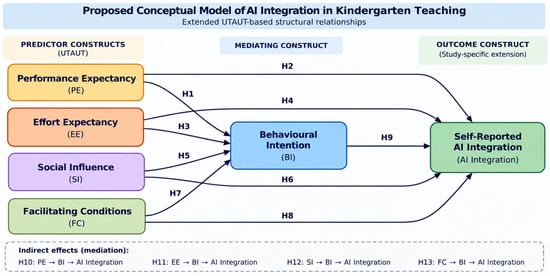
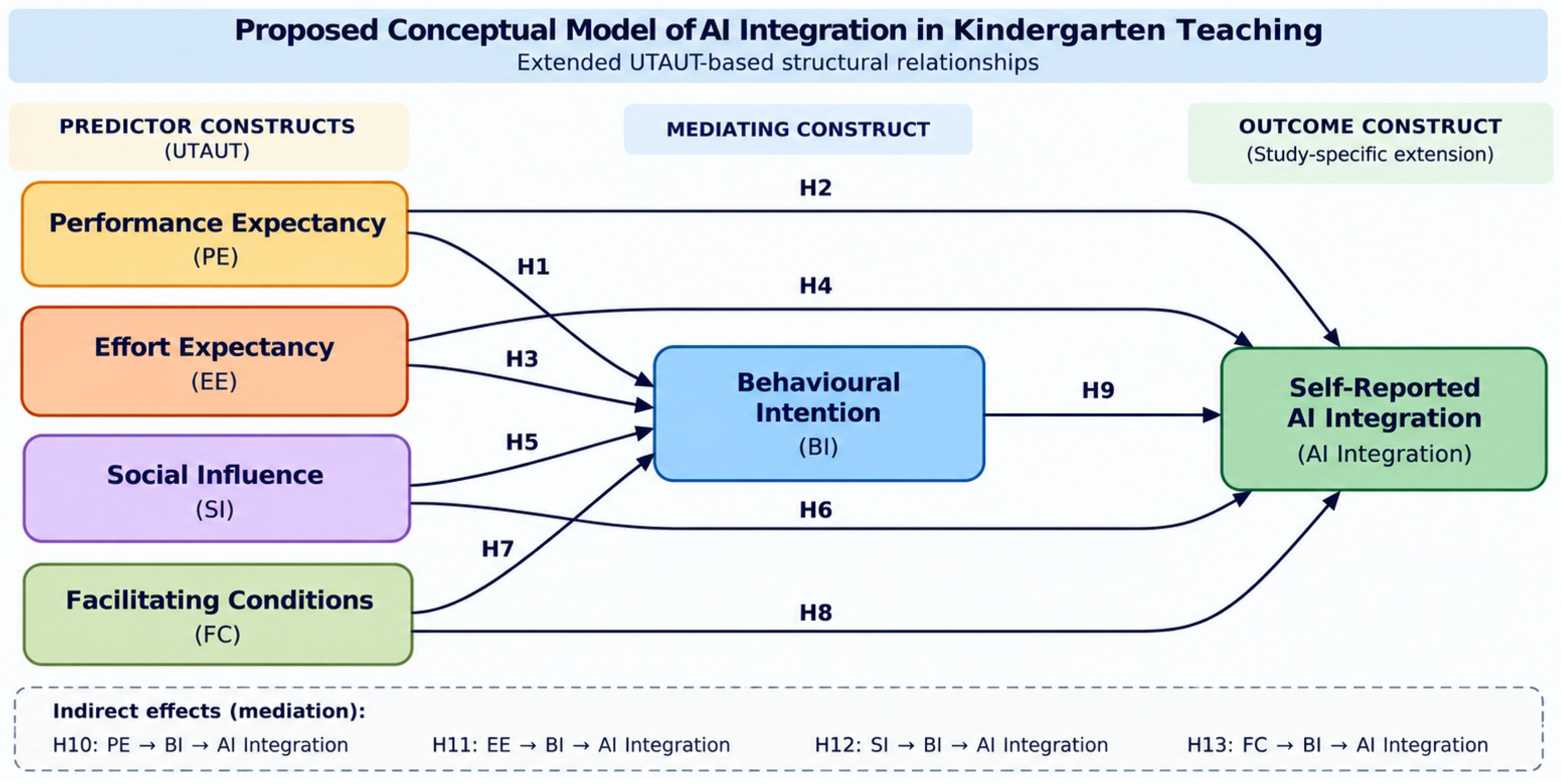
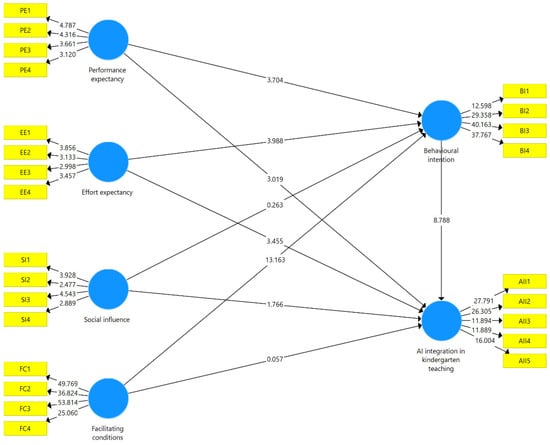
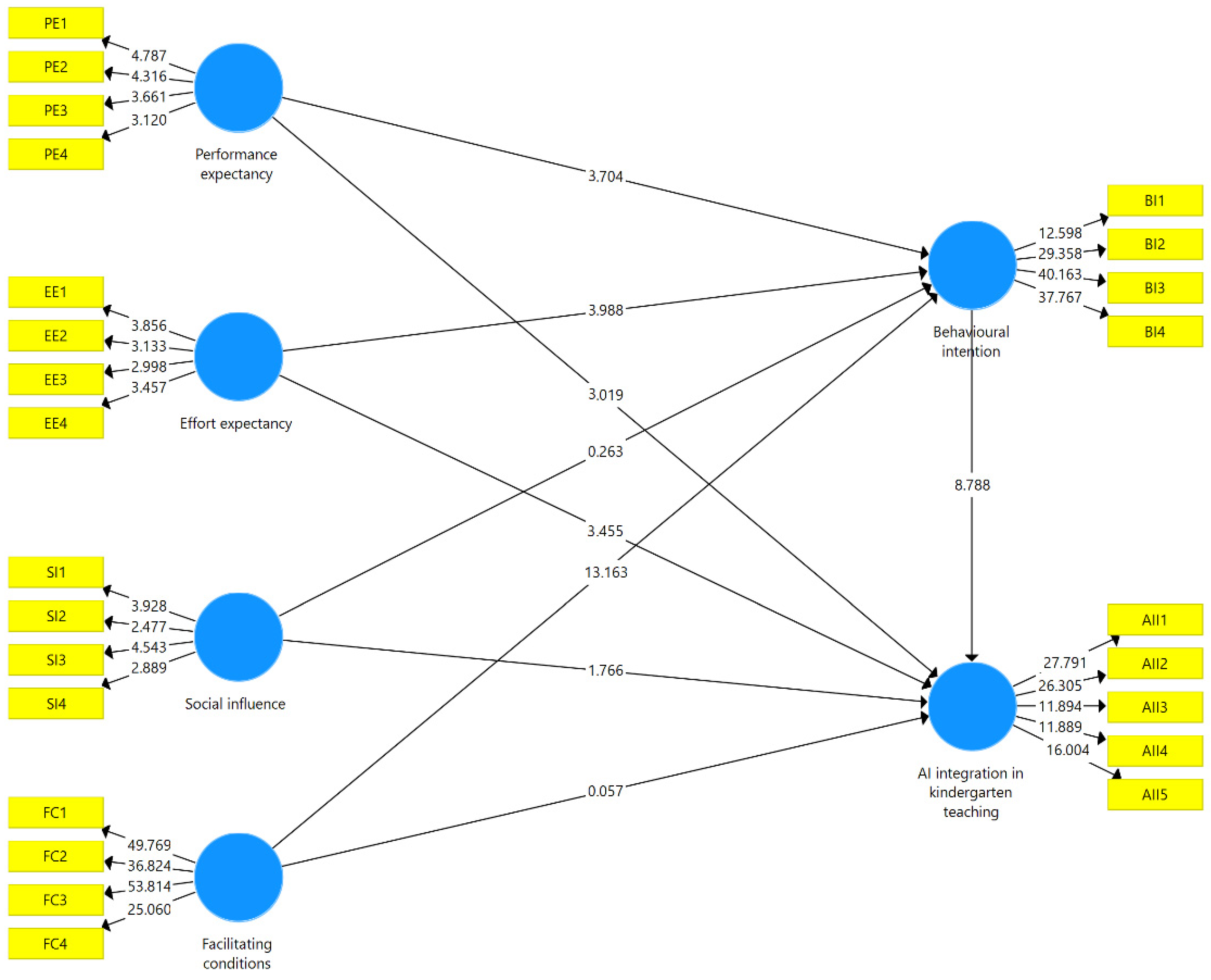

Disclaimer/Publisher’s Note: The statements, opinions and data contained in all publications are solely those of the individual author(s) and contributor(s) and not of MDPI and/or the editor(s). MDPI and/or the editor(s) disclaim responsibility for any injury to people or property resulting from any ideas, methods, instructions or products referred to in the content. |
© 2026 by the authors. Licensee MDPI, Basel, Switzerland. This article is an open access article distributed under the terms and conditions of the Creative Commons Attribution (CC BY) license.