


Abstract
Generative artificial intelligence (GenAI) tools such as ChatGPT have rapidly entered higher education, challenging longstanding norms around authorship, assessment, and disciplinary expertise. While early GenAI scholarship has largely emphasized student outcomes, adoption trends, and academic integrity, comparatively little empirical work has examined how faculty and staff make sense of this disruption over time. Guided by Transformative Learning Theory (TLT) as an interpretive lens for faculty discourse, this qualitative study examines how educators interpret GenAI as a “disorienting dilemma” and how patterns in faculty discourse differ across two cross-sectional cohorts during the first year of widespread adoption. We analyzed open-ended survey responses to the question, “How do you think AI tools like ChatGPT will impact the future of your discipline?” collected at a large U.S. R1 Hispanic-serving public research university. Two cohorts were examined: an early-adoption dataset gathered in 2023 (n = 104) and a follow-up dataset collected in 2024 (n = 313). Using Braun and Clarke’s reflexive thematic analysis procedures, we identified persistent themes and qualitative differences in how participants described GenAI-related concerns and opportunities. No educator-navigation theme differed significantly in proportional prevalence between cohorts. Accordingly, interpretations of cross-cohort differences rest on variations in thematic framing, tone, and illustrative detail rather than on statistically demonstrated temporal change. The 2023 responses more often foregrounded academic-integrity concerns and defensive assessment redesign, whereas the 2024 responses included more concrete descriptions of pedagogical experimentation and potential uses of GenAI to support faculty productivity and professional practice. Across both years, persistent anxieties regarding student dependency, erosion of foundational skills, and the potential dehumanization and homogenization of academic discourse remained salient. These results highlight faculty as active agents engaged in reflection and adaptation and show how aggregate patterns of faculty sensemaking are compatible with early processes described by Transformative Learning Theory. TLT is used here as an interpretive lens for cohort-level faculty discourse, not as evidence that individual instructors underwent internal perspective transformation. This underscores the need for institutionally supported, human-centered approaches to GenAI integration, including policy clarity, sustained faculty development, and communities of practice that enable ethical, reflective experimentation.
1. Introduction
The rise of generative artificial intelligence (GenAI) tools such as ChatGPT has introduced a profound shift across multiple sectors of society, including education. Developed through advanced transformer-based neural networks trained on massive amounts of human language data (Baidoo-Anu & Owusu Ansah, 2023), these tools exhibit capabilities once thought to be uniquely human, namely, language generation, problem-solving, and contextual reasoning (Zawacki-Richter et al., 2019). Since its public release in November 2022, ChatGPT has rapidly permeated academic environments, where it is being used for a range of tasks, from drafting assignments and automating administrative tasks to brainstorming and content analysis (Dwivedi et al., 2023; Kasneci et al., 2023; Sun et al., 2023). Unlike previous educational technologies that required gradual institutional adoption, GenAI achieved widespread faculty and student use within months. As institutions grapple with both the opportunities and the risks posed by this technology, a fundamental question arises: How do faculty perceive the ways in which academic practices and disciplinary futures are being disrupted, transformed, or redefined by GenAI?
Recent bibliometric analyses have shown a volatile increase in scholarship on GenAI in education since 2022 with hundreds of articles published annually across education, technology, and discipline-specific journals (Shahzad et al., 2025). These studies overwhelmingly focus on academic performance, adoption trends, and themes such as academic integrity, personalized learning, and ethical challenges, often from the student perspective (Shahzad et al., 2025; Xie & Luo, 2025). At the same time, position papers and conceptual analyses stress that GenAI is not a neutral tool but a technology laden with values, metaphors, and power relations that may reconfigure core educational practices, educational equity, and human agency (Bozkurt et al., 2024). Together, this work underscores both the centrality of GenAI to contemporary education and the need for theoretically grounded, longitudinal research that examines how educators themselves interpret and respond to this disruption (Bozkurt et al., 2024; Shahzad et al., 2025). However, there is still limited empirical work that traces how faculty and staff articulate disruption, adaptation, and disciplinary futures over time, particularly using systematically collected open-ended survey data.
Understanding this question is particularly urgent in higher education, where traditional norms around teaching, learning, authorship, and evaluation are increasingly being challenged (Bravo & Cruz-Bohórquez, 2024; Johri et al., 2023). The capabilities of ChatGPT to simulate human-like text and offer immediate responses to complex queries have prompted intense debates among faculty and administrators. Some see the tool as a threat to academic integrity and foundational skills such as critical thinking and writing; others view it as a catalyst for innovation and rethinking outdated pedagogical approaches (Farina, 2024; Francis et al., 2025). Recent critical work frames GenAI as a deeply consequential socio-technical phenomenon that is “here to stay” and already reshaping how knowledge is produced, communicated, and evaluated in higher education (Bozkurt et al., 2024). Such analyses emphasize that GenAI systems and the metaphors used to describe them are not ideologically neutral but embed particular worldviews that can reinforce existing inequities, reshape assessment regimes, and potentially erode human creativity, critical thinking, and empathy if adopted uncritically (Bozkurt et al., 2024). These tensions raise important questions about how academic practices are evolving and how disciplines are reimagining their futures in response to GenAI.
To gain deeper insight into how GenAI is reshaping academia, this study examines two faculty surveys conducted at a large, R1-designated Hispanic-serving public research institution with over 77,000 students and a nationally recognized College of Engineering. The first survey, launched shortly after the release of ChatGPT (February 2023), collected 243 responses from faculty/staff, capturing initial responses during peak uncertainty. A second iteration, conducted one year later (April 2024), yielded 884 faculty/staff responses, capturing responses after an additional year of public and institutional exposure to GenAI. From these datasets, the present analysis focuses on a subset of respondents who provided usable open-ended responses. The surveys aimed to explore how ChatGPT was being used for research, tutoring, and personalized learning; how it was perceived in terms of academic integrity; and how it might influence essential academic skills and future disciplinary developments. This repeated cross-sectional design enables examination of perceived disruption and adaptation in academic practices that single-point studies cannot capture. In contrast to prior faculty studies that are predominantly cross-sectional or focused on general attitudes toward AI adoption, this study analyzes changes in aggregate faculty discourse across two time points, situating GenAI as a catalyst for potential perspective shifts. While the surveys included both quantitative and qualitative items, this study focuses on responses to the open-ended question: “How do you think AI tools like ChatGPT will influence the future of your discipline?”, which serves as the primary analytic lens for examining faculty sensemaking of GenAI’s impact. The richness of this data allows for a grounded, in-depth exploration of how faculty and staff perceive disruption, adaptation, and transformation across time.
Although faculty-centered research has begun to document instructors’ ambivalent perceptions of GenAI, including perceived benefits for teaching and research, concerns about academic integrity and student overreliance, and calls for clearer institutional guidance, much of this work remains cross-sectional or focused on general attitudes toward adoption (Almisad & Aleidan, 2025; Buele & Llerena-Aguirre, 2025; de Silva et al., 2026; Han et al., 2025; Henderson et al., 2026; Tang et al., 2025). Consequently, limited empirical research has examined how faculty collectively interpret GenAI as a disruption to academic practices and disciplinary futures across different stages of its adoption.
To address this gap, the present study examines faculty and staff perceptions of GenAI across two repeated cross-sectional survey cohorts collected in 2023 and 2024. The quantitative comparison assesses the proportional prevalence of finalized themes, whereas the qualitative analysis examines differences in thematic framing, tone, and illustrative detail across the two independent cohorts. Specifically, we address the following research questions:
RQ1. How do faculty and staff describe the anticipated impact of GenAI on their disciplines across two cross-sectional survey cohorts during the first year of widespread adoption?
RQ2. What patterns of persistence, emergence, attenuation, and change characterize aggregate faculty and staff discourse across the two cohorts, and how can these patterns be interpreted through Transformative Learning Theory?
Using TLT (Mezirow, 1991, 2018) as an interpretive framework, the study provides a theoretically informed, repeated cross-sectional account of how GenAI is framed as both disruption and opportunity within a large public research university. Because the cohorts are independent, the study does not infer population-level temporal effects or individual change; no educator-navigation theme differed significantly in proportional prevalence between cohorts, and cross-cohort interpretations therefore rest on qualitative contrasts in thematic framing, tone, and illustrative detail.
2. Literature Review
2.1. Generative AI as a Technological Disruption in Higher Education
2.1.1. Emergence and Capabilities of Generative AI Tools
GenAI technologies such as ChatGPT are built on transformer-based large language models trained on extensive textual datasets (Brown et al., 2020; Meakin, 2024; Radford et al., 2019; Vaswani et al., 2017). Their ability to process contextual relationships at scale enables them to generate coherent responses, synthesize information, and support language-based tasks across multiple domains. These capabilities have contributed to the rapid diffusion of GenAI across education, medicine, business, and other professional contexts (Dwivedi et al., 2023; Kasneci et al., 2023). Within academic settings, GenAI can support information retrieval, summarization, writing, explanation generation, problem solving, and decision support (Brown et al., 2020; Radford et al., 2019; Dwivedi et al., 2023; Kasneci et al., 2023). By assisting with tasks ranging from drafting and synthesis to higher-order reasoning, these tools have the potential to reshape established academic workflows and professional practices.
2.1.2. Adoption Patterns and Disciplinary Variation
Bibliometric reviews of research on GenAI in education from 2015 to 2025 show a sharp rise in publications beginning in 2023 with particularly rapid growth in higher education contexts (Shahzad et al., 2025). Dominant themes include academic performance, technology acceptance, academic integrity, and the transformative potential of tools such as ChatGPT, Gemini, and Copilot for teaching and learning. However, these reviews consistently note that empirical work remains heavily student-centered, with comparatively limited attention to faculty perspectives and the longitudinal evolution of academic practices. Early adoption of GenAI has been widespread; several studies have shown that students and researchers increasingly use GenAI tools like ChatGPT for writing assistance and tutoring (Dwivedi et al., 2023; Kasneci et al., 2023). Adoption patterns also vary demographically, with higher uptake reported among advanced students (e.g., seniors and graduate students) and lower adoption among older or less technologically engaged populations. Disciplinary cultures and local norms around authorship, rigor, and tool use also shape how and where GenAI is integrated into academic practices. The accessibility of GenAI tools is increasing their integration into educational workflows, raising both opportunities and challenges for academic integrity and learning outcomes.
Recent empirical work suggests that GenAI adoption in higher education is unfolding across at least three interconnected levels: student learning, institutional policy, and faculty practice (Han et al., 2025). At the student level, systematic and meta-analytic evidence from experimental and quasi-experimental studies indicates that GenAI can improve learning outcomes under some instructional conditions, but that effects vary by subject area, learning task, implementation design, and the extent to which students receive scaffolding for critical and responsible use (Balart et al., 2026a). Similarly, studies comparing GenAI-generated feedback with teacher feedback suggest that students may value AI for immediacy and accessibility while continuing to perceive human feedback as more trustworthy, contextualized, and pedagogically meaningful (Henderson et al., 2026). These findings indicate that GenAI’s educational value is not inherent to the tool itself, but depends on how it is integrated into learning environments.
At the institutional level, universities have rapidly produced policies, guidelines, sample syllabus statements, and classroom-use recommendations in response to GenAI. An analysis of GenAI guidance from research-intensive U.S. universities found that many institutions encourage responsible classroom integration while simultaneously placing substantial responsibility on instructors to redesign assessment, clarify acceptable use, and manage academic integrity concerns (McDonald et al., 2024). This policy environment creates uneven pressures for faculty: they are expected to adapt quickly, but often without consistent institutional support, disciplinary consensus, or clear evidence about best practices.
Faculty-centered studies further show that instructors’ perceptions of GenAI are persistently ambivalent. Empirical work with faculty and students has documented simultaneous interest in GenAI’s potential for efficiency, creativity, and instructional support, alongside concerns about plagiarism, student overreliance, loss of foundational skills, and uncertainty about appropriate pedagogical boundaries (Petricini et al., 2024). Sentiment and thematic analyses of faculty discourse similarly show that educators express both optimism about AI-assisted academic work and anxiety about its implications for student learning, assessment validity, and professional identity (Mamo et al., 2024). Across these studies, faculty are not passive adopters of GenAI; rather, they function as mediators between institutional policy, student use, disciplinary expectations, and their own pedagogical values. This reinforces the need for research that examines not only whether faculty accept or reject GenAI, but how they make sense of its disruptive implications for academic practices over time.
Student-centered studies similarly report a mixed pattern of perceived benefits and risks. GenAI can support academic performance, higher-order thinking, and independent learning, while concerns remain regarding plagiarism, reliability, overreliance, and uneven effects on motivation and confidence (Dwivedi et al., 2023; Kasneci et al., 2023; Xie & Luo, 2025). Collectively, this literature reinforces the relative absence of faculty-centered, longitudinal analyses examining how educators interpret and adapt to GenAI in professional practice (Shahzad et al., 2025; Xie & Luo, 2025).
Key drivers encouraging AI adoption include perceived academic benefits, ease of use, and familiarity with the technology, while barriers such as concerns about reliability, potential misuse, and information overload deter usage. The use of these tools for writing, tutoring and research is prompting institutions to develop policies to promote responsible and ethical use of AI. Beyond higher education, practitioner reflective research in school contexts has begun to articulate principles for “teaching with” GenAI rather than simply reacting to it. Wall et al. (2025), working in Australian secondary history classrooms, propose three cross-cutting principles: teach students how to use GenAI tools, teach to promote discernment and critical thinking, and teach for “the whole human,” aligning GenAI use with broader humanistic aims and general capabilities (Wall et al., 2025). Their work illustrates how GenAI forces educators to revisit questions of digital literacy, academic integrity, student voice, and human-centered ethics in everyday practice. While such practitioner accounts provide valuable situated insights, there remains limited systematic, institution-wide empirical research examining how faculty negotiate similar tensions over time (Bozkurt et al., 2024; Wall et al., 2025).
GenAI has been shown to possess the potential to redefine concepts of creativity and plagiarism in academic writing due to AI generated text becoming more common and accepted (Dwivedi et al., 2023; Kasneci et al., 2023). The release and rapid diffusion of ChatGPT triggered massive global response with education being the most discussed topic, generating mixed sentiment (52% positive, 32% negative, 16% neutral) among educators worldwide. These mixed reactions highlight a disorienting tension between the perceived benefits of GenAI and fears about erosion of core academic values, setting the stage for transformative shifts in how disciplines conceptualize originality, authorship, and assessment. Recent critical work emphasizes that GenAI is not a neutral tool but one that carries embedded values and metaphors that reshape human agency and educational equity if adopted uncritically (Bozkurt et al., 2024). As the boundary between human and machine-generated authorship becomes increasingly blurred, ongoing empirical research and policy development are needed to address emerging ethical, pedagogical, and epistemological challenges. Taken together, these strands of research highlight an unresolved gap: few studies systematically examine how faculty perceive GenAI as a disruption to academic practices and disciplinary futures over time. This study addresses that gap by analyzing cohort-level shifts in faculty narratives between 2023 and 2024 within a large public research university, using Transformative Learning Theory to interpret reported disruptions, forms of reflection, and emerging AI-driven pedagogical changes.
2.2. Theoretical Framework
Transformative Learning Theory (TLT) (Mezirow, 1991, 2018) is the principal theoretical lens guiding this study. TLT explains how adults experience deep shifts in perspective when confronted with “disorienting dilemmas”, experiences that challenge existing beliefs and assumptions. In this study, GenAI tools such as ChatGPT are conceptualized as disorienting dilemmas that prompt faculty to reconsider established academic practices and their disciplines’ futures. Through content, process, and premise reflection, faculty reassess longstanding practices and explore new pedagogical approaches. TLT is particularly well suited for examining how faculty navigate cognitive, emotional, and professional shifts in response to technological disruption. In the present study, we draw on TLT as a sensitizing, interpretive framework for reading faculty narratives, rather than as a model used to verify complete transformative cycles in identified individuals.
Developed by Mezirow (1991, 2018), TLT explains how individuals undergo deep cognitive and perspective shifts when faced with experiences that challenge their existing beliefs and assumptions. This theory is particularly relevant in adult education, where learning extends beyond knowledge acquisition to include critical reflection, dialogue, and perspective transformation. Transformative learning occurs when an individual experiences a “disorienting dilemma”, which prompts them to reassess their previous understanding, ultimately leading to a fundamental shift in their worldview (Can et al., 2023; Mendoza, 2020). For faculty, GenAI-related dilemmas often center on assessment practices, academic integrity, and evolving expectations for disciplinary competence. While TLT is rooted in individual-level processes, it has also been used to interpret cohort-level accounts of change in educator groups, and our application follows this tradition by focusing on shared patterns in how faculty describe disorienting dilemmas and reflection.
At the individual level, TLT explains how educators undergo cognitive and pedagogical shifts in response to ChatGPT’s emergence. Faculty members encounter “disorienting dilemmas”, particularly when students use AI-generated content in ways that challenge traditional notions of originality and intellectual effort (de Silva et al., 2026; ElSayary, 2024). These experiences may align with phases of Mezirow’s transformative process, including disorientation, critical reflection, and eventual reintegration of new perspectives into practice. Some educators initially perceive AI as a threat to critical thinking and independent learning, while others begin to see its potential as a tool for creativity and knowledge expansion (White et al., 2024). Through the three types of critical reflection (content, process, and premise), faculty reassess not just what they teach but how they teach and why their traditional approaches may need fundamental reconsideration. Through critical reflection and dialogue, faculty members reassess their approaches to teaching, shifting from content delivery to fostering analytical and evaluative skills in students (Mollick & Mollick, 2024). This aligns with previous research on technological disruptions in education, which suggests that faculty adaptation plays a crucial role in determining whether an emerging technology is integrated productively or resisted entirely (Bates, 2019). In our analysis, these constructs guide the categorization and interpretation of themes; they do not serve as criteria to determine whether individual educators have fully completed a transformative learning process.
In this study, the connection between TLT and GenAI-driven pedagogical change is operationalized through three related mechanisms. First, GenAI functions as a disorienting dilemma because it destabilizes familiar assumptions about authorship, originality, assessment validity, disciplinary expertise, and the boundary between student work and machine-assisted production. Second, faculty responses to this disruption can be understood as forms of critical reflection. Content reflection appears when educators question specific AI-related problems, such as plagiarism or inaccurate outputs; process reflection appears when they reconsider how learning should be assessed or scaffolded; and premise reflection appears when they question deeper assumptions about what it means to teach, learn, write, assess, or demonstrate expertise in an AI-rich environment. Third, pedagogical experimentation represents an early form of perspective transformation, as faculty begin to test new roles, redesign assignments, incorporate AI critique into coursework, or reposition themselves from content transmitters toward facilitators of judgment, verification, and ethical reasoning. These mechanisms are inferred from faculty’s written accounts at the cohort level, recognizing that individual trajectories remain anonymous and cannot be tracked across time points.
Furthermore, TLT emphasizes the importance of dialogue and perspective-taking as part of the learning process (Mezirow, 2018). Critical reflection occurs through three types: content reflection (evaluating problem content), process reflection (contemplating problem-solving strategies), and premise reflection (questioning problem importance and underlying assumptions). Premise reflection is most crucial for transformative learning as it challenges fundamental assumptions. As educators debate the ethical and pedagogical implications of AI, many institutions are fostering collaborative discussions and professional development initiatives to help faculty navigate these changes. This aligns with research indicating that faculty adaptation to technological disruptions is an iterative process, requiring ongoing learning, experimentation, and policy adjustments (Hutson et al., 2022; Zhou et al., 2024). Within this study, TLT therefore provides a coherent framework for analyzing how aggregate faculty responses interpret GenAI as a disruption and how patterns in those responses appear to shift over time, without assuming that every participant has undergone full, documented transformation.
Figure 1 summarizes the theoretical model guiding this study. GenAI is conceptualized as a disorienting dilemma that challenges established assumptions about authorship, assessment, disciplinary expertise, and student learning. Faculty responses are interpreted through Transformative Learning Theory using sensitizing concepts related to disorienting dilemmas, critical reflection, experimentation, and changing perspectives. Importantly, the model does not assume that all faculty experience full perspective transformation. Instead, it visualizes the range of responses observed in the data, from concern and defensive adaptation to strategic experimentation and human-centered integration. The downward arrows depict a conceptual sequence through which GenAI-related disruption may be interpreted in relation to reflection, faculty sensemaking, practice-level responses, institutional conditions, and human-centered integration. The dashed curved arrow indicates that these relationships are iterative and non-linear. The figure is a theoretical heuristic for interpreting cohort-level discourse; it does not depict observed individual faculty trajectories, a universal developmental sequence, or completed perspective transformation.
Figure 1.
Interpretive application of Transformative Learning Theory to cohort-level faculty discourse about GenAI.
Accordingly, this study does not claim to observe completed perspective transformation at the individual level. Because respondents were anonymous and the two survey waves cannot be linked at the individual level, such transformation could not be empirically established; TLT is used instead as an interpretive vocabulary for examining cohort-level discourse that is compatible with disorientation, reflection, and adaptation in faculty discourse.
3. Methodology
3.1. Research Design
This study adopts a qualitative research design, employing reflexive inductive thematic analysis to explore faculty perceptions of how GenAI tools, specifically ChatGPT, are impacting their academic disciplines. Because the core research questions concern sensemaking and anticipated impacts rather than measurable outcomes, faculty narratives and subjective perceptions are treated as the primary empirical data source. An open-ended survey format offers breadth across large faculty cohorts but necessarily limits opportunities for follow-up probing, clarification, and exploration of underlying motivations that would be possible in interviews or focus groups. A repeated cross-sectional qualitative design, based on two waves of data collected at different time points, enables examination of both change and continuity over time at the aggregate level, addressing how perceptions and practices evolve during periods of technological disruption. The aim is to provide a nuanced understanding of the disruptions, transformations, and systemic adaptations occurring in higher education in response to GenAI technologies. Given the sampling approach and institutional context, this understanding is situated rather than universally representative, and potential self-selection bias among respondents is acknowledged as a limitation. The research draws on two datasets collected across two consecutive years (2023 and 2024), facilitating comparison of evolving attitudes and institutional responses during GenAI’s first year of widespread adoption. This repeated cross-sectional approach reduces reliance on retrospective recall by capturing perceptions at distinct time points and allows for the identification of temporal patterns in faculty sensemaking that cross-sectional studies cannot reveal. The analysis and interpretation of the results are informed by the theoretical framework presented. TLT operates in this study as a multi-level interpretive lens for patterns in faculty discourse rather than as a strict process model applied to identified individuals. At the individual level, it directs attention to how faculty encounter disorienting dilemmas, engage in critical self-reflection, and explore new roles in response to GenAI disruption; at the organizational level, it frames pedagogical and assessment redesign as expressions of perspective transformation in practice; and at the systemic level, it illuminates how disciplinary norms and institutional policies both enable and constrain transformative trajectories. Importantly, TLT is applied here as a sensitizing, non-predictive framework to interpret faculty narratives, rather than as a model used to confirm complete transformative cycle in specific individuals. Not all faculty are expected to progress through all phases, and the framework’s applicability is understood to be contingent on individual context, disciplinary culture, and institutional environment. Because the samples are anonymous, independent across waves, and not linkable at the individual level, temporal comparisons are explicitly interpreted as cohort-level shifts rather than as tracked change in specific individuals. This acknowledged limitation of TLT informs how temporal comparisons between the 2023 and 2024 datasets are interpreted: as evidence of aggregate shifts in the direction of transformation rather than as confirmation that transformation is complete or uniform.
3.2. Data Collection
The study analyzed open-ended survey responses to the question: “How do you think AI tools like ChatGPT will impact the future of your discipline?”. Responses were collected from faculty and staff at a large research-intensive university in the United States. This question was strategically designed to capture both immediate perceptions and future-oriented thinking, enabling analysis of how participants described anticipated discipline-related implications of GenAI. The 2023 survey received 243 total responses, of which 104 respondents provided a response to the open-ended item analyzed in this study. The 2024 survey received 884 total responses, of which 313 respondents provided a response to the same item. The open-ended item was optional; therefore, the difference between the total survey responses and the responses analyzed here reflects item nonresponse rather than exclusion through qualitative screening. For the purposes of this study, a response was considered eligible for analysis if the respondent provided a response to the open-ended item; no additional qualitative screening criterion was applied. The surveys were distributed through institution-wide faculty/staff mailing lists. A verified count of eligible recipients for each survey wave was not available to the research team; therefore, crude survey response rates could not be reliably calculated.
- Dataset 1 (April 2023): The survey received 243 total responses from faculty and staff across diverse disciplines, of which 104 respondents provided a response to the open-ended item analyzed in this study. Launched approximately three months after ChatGPT’s November 2022 public release, this timing captured initial perceptions during peak uncertainty and early technology exploration, shortly after the introduction and early adoption of ChatGPT. This dataset reflects early reactions, concerns, and expectations during the initial phase of GenAI adoption.
- Dataset 2 (April 2024): The survey received 884 total responses collected one year later from faculty and staff, of which 313 respondents provided a response to the open-ended item analyzed in this study. This 15-month interval from the launch of ChatGPT allowed sufficient time for meaningful adaptation and experience accumulation while maintaining relevance during GenAI’s rapid evolution period. This dataset captures more developed perspectives, including reported adaptations in practice, and emerging institutional responses after increased exposure to GenAI tools in academic settings.
Participants were recruited through the bulk mail system available to all faculty and staff at the university. To protect confidentiality and encourage candid responses, the survey did not collect departmental or disciplinary identifiers (for example, engineering or other STEM fields). While this recruitment method enabled broad institutional reach, it may have introduced selection bias toward participants with stronger opinions about AI tools, either positive or negative. Both datasets are completely anonymized and contain rich qualitative narratives suitable for thematic analysis. The increase in response rate from 104 to 313 usable responses (approximately 200% increase) suggests growing engagement with AI-related issues across the institution, but it also reinforces the need to treat the two samples as distinct cohorts rather than as a single longitudinal panel. Due to anonymization, it is not possible to determine whether participants are repeated across waves, and the datasets should therefore be treated as repeated cross-sectional rather than panel data. Accordingly, all temporal inferences in this study concern changes in aggregate response patterns and thematic emphases, not documented evolution in the views of individual instructors. Moreover, because participation was voluntary and drawn from a single large research-intensive U.S. university, the findings are not intended to be statistically generalizable to small liberal arts colleges, regional universities, or institutions in other countries with different cultures of academic integrity and technology use. Instead, the results should be interpreted as contextually grounded insights that may be transferable to similar settings where GenAI adoption is rapid and institutional guidance is still emerging. We therefore frame the study as documenting early-stage faculty sensemaking in one institutional context, complementary to outcome-based and multi-institutional research on GenAI in higher education.
3.3. Ethical Considerations
Both survey administrations underwent ethics review through the University Institutional Review Board under protocol IRB2023-1152 and were determined to be exempt because no direct personal identifiers were collected and survey responses were anonymous. Participation was voluntary and limited to individuals aged 18 years or older. Before accessing the survey, participants were presented with an electronic informed consent form describing the purpose of the study, expected participation time, voluntary nature of participation, confidentiality protections, potential risks, and contact information for the principal investigator and the university’s Human Research Protection Program. Participants indicated informed consent by confirming that they had read and understood the consent information and proceeding to the survey. Participants could decline participation, skip questions, or discontinue the survey at any time without penalty. The datasets used in the present analysis contained no direct personal identifiers.
3.4. Data Analysis
The data collected from the open-ended survey responses from 2023 (n = 104) and 2024 (n = 313) were analyzed using reflexive thematic analysis, following the methodological guidelines established by Braun and Clarke (2006). Braun and Clarke’s six-phase framework was selected for its systematic approach to identifying, analyzing, and reporting patterns within qualitative data: (1) familiarization with data, (2) generating initial codes, (3) searching for themes, (4) reviewing themes, (5) defining and naming themes, and (6) writing up. This approach was selected for its theoretical flexibility and its suitability for analyzing large-scale qualitative survey data while preserving interpretive depth. The analysis sought to uncover faculty and staff perceptions of how GenAI tools, particularly ChatGPT, are impacting their academic disciplines and practices as described in the two cohorts. Because the data derive from single written responses rather than in-depth interviews, the analysis focuses on recurring patterns and articulated rationales, while recognizing that some nuanced motivations and contradictions may remain underexplored. To support analytic transparency and credibility, the research team used iterative team discussion, codebook documentation, an audit trail, and ongoing reflexive engagement with researchers’ assumptions and interpretive decisions. A limited intercoder agreement calculation was conducted solely to contextualize the supplementary theme-presence comparison described below.
Phase 1: Data Familiarization—Initially, both datasets were reviewed independently by two members of the research team to ensure familiarization with the data (Clarke & Braun, 2013). During this phase, researchers read and re-read the responses, noting preliminary ideas and potential patterns. This immersive process involved multiple readings to achieve deep familiarity and began identifying potential patterns before formal coding commenced. The involvement of multiple researchers at this stage supported triangulation by incorporating diverse interpretive perspectives early in the analytic process.
Phase 2: Initial Coding—Next, initial codes were generated across both datasets using an inductive, open coding approach (Saldaña, 2025). Codes were developed from the data rather than imposed a priori, ensuring alignment with participants expressed perspectives. Coding was conducted at a semantic level initially, with later phases incorporating more interpretive (latent) coding where appropriate.
Following the initial coding, the researchers convened to compare and reconcile their respective code lists. Consistent with a reflexive thematic analysis approach, the goal was not to achieve statistical intercoder reliability but to deepen interpretive engagement through dialogue. Disagreements in coding were discussed collaboratively, allowing assumptions to be examined and meanings to be clarified. To provide an additional indicator of coding consistency, intercoder agreement was calculated on a subset of the data, yielding a Cohen’s kappa of 0.876, indicating strong agreement. This process supported credibility through both consensus-building and demonstrated consistency. A shared codebook was developed and iteratively refined to document working definitions, inclusion and exclusion boundaries, and representative excerpts for the codes used in the cross-cohort comparison (Guest et al., 2012). In this study, the codebook functioned as a documentation and transparency tool rather than as a fixed instrument that predetermined thematic meaning. The codebook underwent iterative refinement to address “coding creep”, that is, the possibility that coders’ understanding of codes may shift over the course of analysis, by regularly revisiting early coding decisions and ensuring consistency across the datasets. The codebook was iteratively refined as coding progressed, ensuring consistency and rigor in the application of codes across both datasets.
Phase 3–4: Theme Development and Review—The coded data were then organized into broader themes that captured key aspects of faculty perceptions and experiences with AI integration. This phase involved identifying patterns within and across codes, examining the relationships between them, and grouping them into meaningful thematic categories (Nowell et al., 2017). Themes were developed as interpretive constructs rather than mere aggregations of codes, ensuring alignment with the research question and theoretical framework. The review process ensured themes were coherent, distinct, and adequately supported by the data. The themes developed during this phase included both persistent themes that appeared across 2023 and 2024 and emergent themes that reflected shifts in perceptions after a year of experience with GenAI.
After the thematic structure had been developed and refined, the research team added a limited, post hoc quantification step to support transparent comparison of thematic salience across the two independent cohorts. Specifically, each finalized theme was recorded as present or absent within each response. This procedure did not treat themes as objectively existing variables, assign equivalent meaning or weight to every instance of a theme, or seek to validate themes through numerical frequency. Rather, the presence/absence coding provided a bounded descriptive indicator of the relative distribution of finalized interpretive themes across the 2023 and 2024 datasets. This qualitatively driven, supplementary quantitative procedure enabled the study to distinguish changes in coded thematic prevalence from changes in the meaning, framing, and articulation of themes. The reflexive thematic analysis remained primary: the interpretation of participants’ accounts, including the development and meaning of themes, was grounded in the full written narratives rather than in theme counts alone.
Comparative Analysis—The research team engaged in a comparative analysis between the 2023 and 2024 datasets. Given the repeated cross-sectional design, this comparison focused on aggregate shifts in thematic patterns rather than individual-level change. This temporal comparison identified patterns of stability and change, highlighting how disorienting dilemmas (TLT), concerns, and sensemaking were articulated differently across the two cohorts, including more differentiated forms of adaptation, resistance, or normalization. Accordingly, the comparison does not map a developmental sequence within particular respondents or demonstrate that individual faculty members moved through TLT phases. This process allowed the identification of cohort-level differences in reported perceptions and thematic emphases over the first year of widespread GenAI adoption and how perceived disciplinary futures were rearticulated.
Phase 5–6: Theme Definition and Theoretical Integration—Finally, the themes were defined and refined and then interpreted through the lens of the study’s theoretical framework. Drawing on TLT, the analysis connected themes to aggregate patterns compatible with individual-level perspective shifts, changes in pedagogical and assessment practices, and emerging institutional patterns around GenAI. An audit trail documenting analytic decisions, code revisions, and theme development was maintained throughout these phases, enhancing transparency and confirmability. Researchers also engaged in ongoing reflective practice, critically examining how their positionalities and assumptions may have influenced the analysis. This framework thus supported a multi-level analysis of GenAI-related sense-making and adaptation, spanning faculty cognition and emotion, local teaching practices, and broader institutional and disciplinary trajectories, while ensuring methodological rigor and trustworthiness across the analytic process. In keeping with the study’s design, all such interpretations are grounded in participants’ written accounts and are offered as theoretically informed readings of cohort-level discourse rather than as claims about objectively measured outcomes or verified individual perspective transformation.
4. Results
Analysis of the 2023 (n = 104) and 2024 (n = 313) datasets revealed both persistent and differently articulated themes in how faculty and staff perceive the role of GenAI in their disciplines. While the two datasets differ in size, frequencies are reported as counts and contextualized with proportions to highlight relative salience across years. Following established practices for repeated cross-sectional qualitative comparison, findings are organized by time point and cross-temporal patterns, enabling attention to both stability and qualitative differences in participants’ accounts. This approach supports comparison of thematic prominence without implying statistical generalizability. Because the datasets are anonymized and do not track the same individuals over time, the findings should be interpreted as contrasts in aggregate response patterns rather than as direct evidence of transformation in the internal beliefs of particular instructors. Likewise, because disciplinary identifiers were not collected, the results cannot distinguish adaptation trajectories for specific faculty groups such as engineering; all findings therefore reflect institution-wide patterns across the combined sample.
To provide a transparent, supplementary comparison of thematic salience across cohorts, each finalized theme was coded for its presence or absence within individual responses after the reflexive thematic analysis and thematic structure had been completed. This quantification was not used to validate the themes, to imply that individual instances of a theme carried equivalent meaning, or to convert the analysis into a purely positivist measurement exercise. Rather, it offered a bounded descriptive indicator of how often each finalized interpretive pattern appeared in the two datasets and helped distinguish changes in coded thematic prevalence from changes in thematic meaning. For each theme, raw counts and proportional frequencies were calculated separately for 2023 and 2024. Cross-year comparisons were then conducted using 2 × 2 contingency tables comparing theme presence/absence by survey year. Chi-square tests of independence were used when expected cell counts were sufficient, while Fisher’s exact tests specified for any low-frequency themes with sparse expected counts; however, all five comparisons reported in Table 1 met the criteria for chi-square testing. Effects sizes were calculated using phi (φ) to contextualize the magnitude of observed differences. These tests were used as supplementary evidence to support interpretation of thematic prevalence, not to claim statistical generalizability beyond the analyzed responses. The inferential tests were interpreted cautiously as supplementary, within-sample evidence regarding coded theme distribution across the two cohorts. They do not establish the objective prevalence of faculty views, validate the qualitative themes, or support statistical generalizability beyond the analyzed responses and institutional context.
Table 1.
Proportional frequency and cross-year comparison of educator-navigation themes.
Temporal analysis revealed four distinct patterns of change: (1) persistent themes that remained consistent across both datasets, (2) emergent themes that appeared predominantly in 2024 data, (3) evolving themes that shifted in emphasis or focus between time periods, and (4) diminishing themes that appeared less frequently in 2024. These categories are used as analytic heuristics rather than fixed classifications and reflect the dynamic nature of faculty adaptation during technological disruption, where some concerns persist while others evolve or attenuate as experience accumulates. Importantly, not all qualitative shifts corresponded to statistically significant changes in proportional frequency. Therefore, the results distinguish between changes in thematic prevalence, which are supported through counts, proportions, and statistical tests, and changes in thematic meaning, which are supported through qualitative interpretation of participants’ responses. This distinction is important because some themes remained relatively stable in frequency but shifted substantially in how faculty described, interpreted, or acted upon them. Table 1 presents the proportional frequency and statistical comparison of all educator navigation themes across both datasets, and the narrative sections below interpret both the quantitative patterns and the qualitative shifts in meaning. Throughout, references to “transformation” should be understood cautiously: the data more directly demonstrate changing patterns of reported sensemaking, experimentation, and adaptation at the cohort level than completed individual perspective transformation.
Within each theme, we describe the nature of faculty responses and provide representative quotes to illustrate perceptions. Representative quotes were selected to demonstrate both typical and atypical perspectives, ensuring findings reflect the full range of participant experiences while maintaining anonymity. Taken together, the qualitative and quantitative evidence suggests that faculty navigation of GenAI disruptions was both persistent and varied in its articulation across cohorts. No educator-navigation theme showed a statistically significant difference in proportional prevalence between 2023 and 2024. However, the qualitative accounts differed in tone, framing, and illustrative examples. The 2023 responses more often foregrounded initial disruption, uncertainty, and reactive adaptation, whereas the 2024 responses included more concrete descriptions of intentional experimentation, strategic integration, and more concrete understandings of AI’s implications for teaching, learning, research, and professional identity. These qualitative contrasts are interpretive observations grounded in thematic content and representative quotations. They should not be read as statistically demonstrated population-level trends, causal effects of time or GenAI exposure, or evidence that the same faculty members moved through identical developmental stages. The quantitative analysis identifies which themes were prevalent or stable across cohorts, whereas the qualitative analysis illuminates how faculty framed, interpreted, and described those themes differently over time. The subsections below elaborate on each theme in turn.
4.1. Educators’ Navigation of Disruptions
Beyond their concerns about academic norms, faculty frequently reflected on how they personally navigated the presence of AI in their teaching and professional practices. These accounts illustrate processes of sensemaking and adaptation that are consistent with, but not reducible to, transformative learning trajectories. Across both years, faculty described a mixture of concern, uncertainty, experimentation, and professional adaptation. The two cohorts differed primarily in how these recurring orientations were framed and illustrated. Quantitatively, educator-navigation themes were among the most prominent across both datasets. However, the analysis indicates that the most important cross-cohort differences were qualitative contrasts rather than statistically significant changes in proportional prevalence. The numerical analysis identifies how frequently each theme appeared, while the qualitative analysis explains how the meaning and emphasis of each theme differed across time. Because disciplinary identifiers were not available, these findings represent institution-wide response patterns rather than discipline-specific trajectories.
4.1.1. Teaching Adaptations & Pedagogical Experimentation
One of the most salient themes under this research question was the adaptation of teaching practices in response to GenAI. This theme appeared in 36 of 104 responses in 2023 (34.6%) and 108 of 313 responses in 2024 (34.5%). This represents a negligible descriptive decrease of 0.1 percentage points. The difference was not statistically significant, χ2(1) = 0.00, p = 0.984, φ = 0.001. Thus, the quantitative evidence suggests that teaching adaptation remained highly stable across both years, while the qualitative evidence indicates a contrast in the kinds of teaching adaptations described. In 2023, excerpts primarily emphasized protective or reactive redesign of assessment; in 2024, excerpts more often described intentional experimentation with AI as an object of critique or a bounded pedagogical resource.
2023: Reactive Adaptation Dominates. In 2023, adaptations were primarily reactive, with faculty redesigning assignments to minimize the potential for AI misuse. Instructors described moving away from essays and homework toward in-person examinations, oral assessments, or assignments that required detailed explanations of process. This pattern aligns with an initial phase of transformative learning: encountering disorienting dilemmas and critically reassessing previously established assessment norms.
“I am already having to reconsider some assignments, and restructure them to take ChatGPT into account. I don’t think that traditional ‘essay writing’ will be an accurate mode of evaluating knowledge acquisition in the future.”(2023)
“In terms of teaching, it will force us to evaluate students’ learning differently. Solving problems or writing essays at home may not be a favorable way of testing students’ learning. We need to find alternate ways of measuring the students’ learning or reduce the impact of these tasks on the final grade.”(2023)
These responses are consistent with recent case studies showing faculty shifts toward more authentic, process-centered assessment strategies and the development of pedagogical guardrails to counter AI-related academic dishonesty (Zhou et al., 2024).
2024: Pedagogical Experimentation and Integration. By 2024, however, the theme of pedagogical experimentation was described with greater intentionality and more concrete examples of integrating AI into learning experiences. Faculty began designing assignments where students were expected not to avoid AI, but to engage with it critically. This marks the emergence of the “exploration and strategy planning” phases in transformative learning, where faculty test new approaches and reflect on their pedagogical outcomes. These examples suggest that 2024 marked the beginning of a more exploratory phase, where educators used AI as a pedagogical partner and encouraged students to interrogate its strengths and limitations.
“I have set up a chatGPT-based chatbot for my programming course. It contains guardrails on what type of help it gives, so it won’t give too much help. I think this has been really good for my class.”(2024)
“I did an entire teaching experiment with my students where they were asked to use ChatGPT or Bard in increasingly complex assignments, including analyzing what AI did well and poorly.”(2024)
The progression from reactive redesign toward intentional pedagogical partnership with AI illustrates a shift in faculty roles from knowledge transmitters to facilitators of analytical and ethical engagement with technology. Although the proportional prevalence of this theme remained statistically stable, the qualitative content of the responses suggests a meaningful conceptual shift in how faculty approached AI in teaching practice. However, the present design does not allow us to determine whether this reflects deep transformation in individual instructors’ internal beliefs or a more pragmatic adaptation to changing classroom conditions. This evolution aligns with recent conceptual work arguing that GenAI can act as a catalyst for more dialogic, inquiry-oriented learning, provided educators actively scaffold critical engagement rather than prohibit use (Meakin, 2024; Wall et al., 2025).
4.1.2. Skill Development Shifts
This theme is closely tied to teaching adaptations where faculty reflected on how AI was reshaping the skills students must develop. Skill Development Shifts appeared in 31 of 104 responses in 2023 (29.8%) and 84 of 313 responses in 2024 (26.8%). This represented a small descriptive decrease of 3.0 percentage points and was not statistically significant, χ2(1) = 0.34, p = 0.557, φ = 0.029. Thus, the quantitative evidence suggests that this theme remained relatively stable in proportional prevalence across years. As with the other themes, this pattern should be interpreted as a cohort-level shift in emphasis rather than a tracked developmental trajectory within the same respondents.
In 2023, faculty expressed concerns that reliance on ChatGPT would erode foundational abilities, particularly writing, problem-solving, and critical thinking. Several worried that students might overuse AI as a shortcut, leading to what some described as “brain atrophy.” Others stressed the importance of maintaining a balance between teaching core skills and introducing AI tools responsibly, warning that neglecting fundamentals would leave students ill-prepared for professional practice.
“I am definitely worried of an overreliance on ChatGPT where students abuse the knowledge to get answers without putting in any effort themselves first.”(2023)
By 2024, faculty increasingly emphasized new or heightened competencies to cultivate in an AI-rich environment. Responses more often emphasized the importance of teaching students how to reason, critique, and apply judgment when using AI. Many argued that memorization would become less important while critical evaluation and adaptability would grow in relevance.
“Need to adjust assignments to address more critical thinking and the ability of students to analyze what content is accurate online. Therefore, students must still be knowledgeable about their discipline to use ChatGPT effectively.”(2024)
“I think if used well, ChatGPT has the ability to enable students to spend more time on critical thinking skills and less time on route memorization.”(2024)
These accounts mirror broader debates in the literature that position GenAI as a potential catalyst for shifting emphasis from reproducing information toward critical thinking, metacognition, and higher-order skills, while cautioning that such shifts are not automatic and require deliberate curriculum redesign. Although the proportional frequency of this theme did not change significantly, its qualitative emphasis shifted from concern about erosion of foundational skills toward a more constructive focus on AI literacy, critical evaluation, judgment, and adaptability. Throughout these shifts, faculty underscored the importance of striking a thoughtful balance: retaining foundational skills while fostering judgement, adaptability, and critical engagement (Can et al., 2023; Meakin, 2024; Shahzad et al., 2025). Because discipline-level data were not collected, the analysis cannot determine whether this emphasis varied across fields, including engineering and other STEM disciplines.
4.1.3. Professional Identity & Productivity Transformation
Faculty also reflected on how GenAI reshaped their own professional roles, productivity, and sense of identity as educators and researchers. This theme encompassed a spectrum of reactions: from enthusiasm about productivity and research acceleration to anxiety about professional redundancy and the erosion of expertise. Professional Identity & Productivity Transformation appeared in 45 of 104 responses in 2023 (43.3%) and 152 of 313 responses in 2024 (48.6%). This represented a descriptive increase of 5.3 percentage points, but the difference was not statistically significant, χ2(1) = 0.88, p = 0.349, φ = 0.046. These results suggest that this theme remained consistently salient across both years rather than increasing significantly in prevalence.
In 2023, faculty tended to describe cautious uses of ChatGPT that supported discrete tasks such as code checking, rubric drafting, or preparing materials. The prevailing tone was exploratory but tentative; respondents highlighted potential gains in efficiency while voicing concerns that overreliance might dilute academic rigor or obscure underlying understanding.
“In terms of research, it can save time for many tasks that consume a significant amount, such as literature review or keeping up with the latest research. It can also serve as a tool to go from idea to research paper/concept.”(2023)
“We must do a better job understanding how to directly assess learning and understanding, not just test the ability to regurgitate information.”(2023)
Faculty used ChatGPT to support practical tasks such as coding, rubric design, or content organization, and described experimenting with ChatGPT as a companion for brainstorming or checking assignments, while simultaneously worrying about its reliability and long-term effects.
By 2024, faculty articulated not only how AI saved them time but also how it reshaped the very scope of their research and professional practice. For some, ChatGPT was seen as a generative partner capable of expanding intellectual horizons. Others highlighted the acceleration of research cycles, explaining that AI allowed them to test ideas rapidly, run standard analyses, and gain preliminary insights.
“I think it will push researchers and practitioners to formulate more advanced questions and methods to conceptualize thought and action toward both research and practice problems.”(2024)
“I honestly hope that AI will allow me to quickly take my hypotheses, access my data, run standard stats and give me my first insights to what the data show. I also hope that they can run all the analyses of genetic sequences and help give practical answers to questions that require genetic data analysis.”(2024)
This shift from tentative trial to decisive integration echoes recent accounts of GenAI as both a productivity tool and a catalyst for rethinking academic work with implications for academic identity, expertise, and the kinds of questions scholars are able to pursue. Although the theme did not increase statistically in proportional frequency, the qualitative content became more concrete in 2024. Faculty increasingly described AI not only as a tool for efficiency but also as a collaborator that could reshape research workflows, disciplinary practice, and professional identity. Even so, these findings indicate reported re-framing of professional roles at the aggregate level rather than verified transformation of faculty identity among the same individuals. Overall, the shift from tentative trial to decisive integration signals that professional identity for faculty is in dynamic flux: moving toward a collaborative, technologically enhanced vision but still grounded in disciplinary expertise, creative inquiry, and human judgment (Bozkurt et al., 2024; Meakin, 2024). The absence of disciplinary identifiers also prevents examination of whether this pattern differed between more applied fields and more text-centered disciplines.
4.1.4. Student Dependency Concerns
This theme captures concerns about overreliance, shortcut learning, students bypassing effort, cognitive offloading, laziness in thinking, diminished originality, reduced critical thinking, and erosion of foundational skills. Concerns about student dependency appeared across both years and were described more expansively in 2024, with faculty reporting both anecdotal incidents and broader classroom patterns where students increasingly relied on GenAI for coursework. Student Dependency Concerns appeared in 17 of 104 responses in 2023 (16.3%) and 65 of 313 responses in 2024 (20.8%). This represented a descriptive increase of 4.4 percentage points, but the difference was not statistically significant, χ2(1) = 0.97, p = 0.326, φ = 0.048. These results indicate that the theme was not rare; rather, it appeared in roughly one-fifth of responses in 2024 and remained relatively stable in proportional prevalence across years.
In 2023, faculty tended to frame dependency in terms of dishonesty and shortcuts, worrying that students might bypass authentic learning.
“Any use cases where students are passing off results from ChatGPT as their own is wholly wrong.”(2023)
By 2024, however, responses expanded beyond dishonesty to emphasize intellectual atrophy and dehumanization. Several faculty cited direct observation of students relying on ChatGPT not only to complete assignments but also to formulate arguments and structure their writing, reinforcing fears of declining engagement and genuine skill development. Faculty warned that excessive reliance on ChatGPT could undermine students’ intrinsic motivation and ability to reason. Faculty noted that without intentional guidance, such dependency could lead to a loss of originality, creativity, and other humanistic qualities critical to the mission of higher education. Beyond skill erosion, several faculty highlighted the risk of dehumanizing education, arguing that certain qualities cannot be replicated by AI.
“…as students offload more of the academic “heavy lifting” of critical thinking, writing, and editing, they will become less competent professionals…”(2024)
“The only fear I have for ChatGPT in writing is if everyone becomes dependent on it then we may all develop the same writing style, technique and language.”(2024)
These reflections parallel wider ethical discussions about over-reliance on GenAI, which warn that uncritical use can weaken critical thinking, homogenize discourse, and erode the humanistic dimensions of education if not carefully scaffolded. The quantitative results show that this theme did not become significantly more prevalent proportionally; however, the qualitative evidence suggests that its meaning expanded in 2024. Dependency was no longer framed only as cheating or shortcut use, but also as a risk to originality, cognitive engagement, professional competence, and humanistic learning. These concerns highlight unresolved tensions about how to balance the benefits of AI as a learning aid with the risks of overdependence. These concerns may also function as boundary-setting efforts through which faculty seek to preserve valued disciplinary practices, standards of judgment, and human-centered educational purposes amid rapid technological change.
“The use of AI enables laziness in thinking and problem solving. So what happens when you end up in a place where you can’t use it? Then people won’t be able to think for themselves.”(2024)
4.1.5. Curiosity, Enthusiasm & Novelty
In parallel with concerns, a notable rise in curiosity and experimentation emerged by 2024 with an increasing number of faculty reporting deliberate and creative explorations of GenAI in their classrooms. Curiosity, Enthusiasm & Novelty appeared in 9 of 104 responses in 2023 (8.7%) and 20 of 313 responses in 2024 (6.4%). This represented a small descriptive decrease of 2.3 percentage points and was not statistically significant, χ2(1) = 0.62, p = 0.432, φ = 0.039. This suggests that curiosity and enthusiasm remained a low-frequency but conceptually meaningful theme across both years.
At the same time, this enthusiasm was tempered by a sense of “first-mover fear”, with some respondents acknowledging the risks of experimenting ahead of formal institutional guidance, which often resulted in cautious, incremental attempts at integration while larger policy frameworks were still forming.
In 2023, a few faculty framed ChatGPT as akin to rediscovering a familiar tool like the internet. Such reflections captured the novelty of the tool and the sense of wonder it generated in early adopters.
“I have shared this tool with many colleagues, and each time they use it, it’s like watching someone rediscover the internet.”(2023)
By 2024, curiosity was described through more deliberate pedagogical and professional experimentation. Faculty incorporated ChatGPT into assignments specifically to spark critical discussion. Others reflected on their own learning journey and technological adaptation. This enthusiasm was tempered by ambivalence, including what some participants characterized as a “first-mover fear.” Faculty were excited about innovating but also uneasy about experimenting without formal institutional guidance. Others highlighted the risk of premature adoption, sometimes holding back from broader use due to fears of criticism or negative ramifications in the absence of clear institutional support.
“We must embrace it now, early on… if we, as educators, ignore its presence, that sends a message that AI is wrong or bad.”(2024)
“AI tools are augmenting our human capabilities. In my case I did not know how to use python to code. Now I use ChatGPT as a helper to materialize my ideas into working code. So thanks to it I can create applications that help others.”(2024)
“I’m using the ChatGPT API to automate repeatable portions of systematic literature reviews. And I’ve started including linear algebra and basic explanations of NLP in my lectures on the fundamental concepts of architecture. So many exciting developments!”(2024)
This sense of creative possibility resonates with practitioner and manifesto work that frames GenAI as a prompt for rethinking core educational purposes and for experimenting with new, more participatory pedagogies, while also calling for careful ethical and governance frameworks. Although Curiosity, Enthusiasm & Novelty remained low in proportional frequency, the 2024 excerpts provided more detailed illustrations of deliberate pedagogical and professional experimentation than the 2023 excerpts. Faculty described possibilities for extending their teaching, research, and professional capacities. Because the theme did not differ significantly in proportional prevalence, these excerpts should not be interpreted as evidence that curiosity or experimentation increased among faculty overall. Whether such early experiments become sustained pedagogical practices remains a question for future longitudinal and discipline-specific research.
5. Discussion
Faculty accounts of GenAI in this study are consistent with patterns of disruption, reflection, and adaptation during the first year of widespread adoption. Importantly, none of the five cross-year comparisons of coded theme presence was statistically significant. Thus, the findings do not establish a statistically demonstrable year-over-year increase in strategic adaptation, decrease in reactive anxiety, or temporal evolution in the prevalence of the identified themes. Early responses were more often foregrounded disorienting dilemmas: concerns about academic rigor, skepticism toward AI outputs, and anxiety about both student dependency and their own professional futures. In the 2024 cohort, responses included more concrete descriptions of reflective and exploratory forms of adaptation, characterized by experimentation, recalibrated pedagogical goals, and a willingness to develop new teaching approaches integrating AI as an active learning partner. Because the study compares independent, anonymous cohorts, these patterns should be interpreted as differences in aggregate faculty discourse rather than as evidence of a linear or universal developmental sequence among individual faculty members. This finding aligns with Buele and Llerena-Aguirre (2025), whose narrative review of nine empirical studies found that faculty perceptions of GenAI are persistently ambivalent, with many instructors acknowledging potential pedagogical benefits while simultaneously expressing uncertainty, ethical concern, and fear of professional displacement. A related analysis of the same repeated cross-sectional datasets interpreted faculty and staff accounts through Disruptive Innovation Theory and Complex Adaptive Systems Theory, emphasizing the distinction between disruptive innovation in the strict market-based sense and uneven institutional adaptation to GenAI (Balart et al., 2026b). The present study offers a theoretically distinct interpretation by using Transformative Learning Theory to examine patterns of disorientation, reflection, and pedagogical experimentation in faculty discourse. The qualitative contrast between more protective 2023 accounts and more concrete 2024 examples of experimentation is compatible with TLT concepts of disruption, critical reflection, exploration of new roles, and emerging AI-informed practices; it does not demonstrate that faculty members progressed through a shared transformative-learning sequence. At the same time, the persistence of uncertainty suggests that many faculty accounts continued to reflect ambivalence and unresolved tensions rather than settled orientations toward GenAI.
The 2024 accounts also included more explicit discussion of a shift from memorization and rote skills toward facilitating students’ critical thinking, evaluative judgment, and adaptability in an AI-rich environment. Although the proportional prevalence of Skill Development Shifts did not change significantly between 2023 and 2024, the qualitative accounts differed in emphasis. Faculty described redesigning assignments to reduce opportunities for unreflective AI use, adopted more authentic and process-centered assessments, and crafted activities that invite students to critique AI outputs rather than simply consume them. These accounts suggest that GenAI may be prompting faculty to reconsider what counts as knowledge and learning in higher education, including the relationship between content mastery and the ability to interrogate, contextualize, and evaluate AI-generated information. These findings are consistent with de Silva et al. (2026), who found that STEM faculty at a large public university similarly reported moving away from traditional assessments toward dual strategies that included both controlled in-person evaluations and assignments explicitly requiring students to compare AI-generated work with their own. Together, these findings suggest that pedagogical reorientation toward critical evaluation and authentic assessment may be visible across disciplinary and institutional contexts, although the present study cannot identify discipline-specific patterns. Complementing the present TLT-oriented reading, the related analysis of these same cohorts identified assessment transformation as its most prevalent challenge theme and described 2023 accounts of controlled assessment alongside 2024 accounts of process-oriented activities involving AI critique, verification, and explanation (Balart et al., 2026b). These accounts are also consistent with broader arguments that GenAI can catalyze a move from content reproduction toward higher-order, metacognitive, and ethical competencies, provided instructors deliberately scaffold these outcomes. This interpretation is also consistent with a separate engineering faculty study in which participants recommended preserving foundational knowledge while explicitly developing transferable AI literacy, verification process, systems thinking, and adaptability under uncertainty, rather than emphasizing familiarity with rapidly changing individual tools (Raju et al., 2026).
These possibilities may nevertheless create uneven learning experiences across courses and institutions, particularly where faculty differ in their willingness or capacity to redesign curricula. This concern is supported by Danault (2025), who notes that AI integration without adequate institutional support can deepen the digital divide between educators who adopt AI and those who lack the resources or training to do so, amplifying existing structural inequities in higher education. At the same time, the emerging use of AI to support faculty research and teaching preparation suggests that educators are beginning to reimagine their own work as augmented by AI, rather than solely threatened by it, even as questions of rigor, originality, and academic integrity remain unresolved (Shahzad et al., 2025; Bozkurt et al., 2024). This dual positioning of AI as both tool and epistemic disruptor complicates traditional boundaries between human and machine contributions to knowledge production.
This process was far from uniformly optimistic. Persistent worries about student overreliance, intellectual “atrophy,” and the erosion of authentic, human-centered learning surfaced in both cohorts. Although the proportional prevalence of Student Dependency Concerns did not differ significantly, the 2024 accounts more often linked dependency to originality, cognitive engagement, professional competence, and the humanistic purpose of education. Faculty narratives about students using AI to bypass cognitive effort, homogenize writing, or disengage from difficult thinking resonate with ethical critiques that warn of dehumanization and the narrowing of discourse when GenAI is used uncritically (Wall et al., 2025). These concerns converge with findings from Tyton Partners (2023), who reported that faculty across a range of institutional types consistently identified student over-reliance and erosion of fundamental skills as primary concerns about GenAI, and with Mamo et al. (2024), who found that faculty sentiment analysis on social media revealed fear and sadness associated with perceived risks to student cognition and academic authenticity. In the present data, dependency concerns appeared in a substantial minority of responses in both cohorts. This suggests that these concerns were not marginal but represented a meaningful strand of faculty discourse about GenAI, particularly around risks to motivation, originality, and authentic learning. These concerns may also function as boundary-setting efforts through which faculty seek to preserve valued disciplinary practices, standards of judgment, and human-centered educational purposes amid rapid technological change.
Similarly, faculty described GenAI as a source of both stress and empowerment for their own roles: some celebrated time-saving gains and expanded analytic capacity, while others questioned their unique value proposition as educators and researchers in a context where AI can draft text, generate examples, or even propose methods. This tension mirrors the findings of Akyıldız (2026), whose thematic analysis revealed that teacher professional identity shifts in AI-supported environments are characterized by a move from knowledge authority toward pedagogical mediation, and that these shifts are experienced differently across career stages, with in-service faculty more likely to negotiate continuity within established roles rather than adopt entirely new ones. The present findings likewise suggest that faculty expertise may be renegotiated to include knowledge curation, validation, contextualization, and ethical oversight alongside disciplinary knowledge. Rather than replacing expertise, GenAI may intensify the importance of human judgment in evaluating outputs, establishing appropriate boundaries for use, and connecting AI-generated material to disciplinary and educational purposes. These tensions suggest that transformative learning in this context is iterative and uneven, with adaptation coexisting alongside skepticism and concern (Bozkurt et al., 2024; Meakin, 2024).
A key cross-cutting finding is the theme of “first-mover fear”: faculty who were curious and willing to experiment often expressed unease about innovating ahead of clear institutional policies, assessment guidelines, or support structures. This apprehension points to the limits of individual adaptation in the absence of coordinated organizational responses and reflects manifestos and practitioner work that call for human-centered, ethically grounded governance of GenAI in education (Bozkurt et al., 2024; Wall et al., 2025). Rather than being unique to this sample, this pattern is consistent with findings reported by the Digital Education Council (2025), whose global faculty AI survey found that while 61% of faculty have used AI in teaching, 88% do so minimally, and 40% reported that they were only beginning their AI literacy journey. These figures suggest that early-stage engagement and cautious experimentation are widespread. Rather than simply indicating resistance, this hesitation can be understood as a rational response to institutional ambiguity, where the risks of pedagogical innovation are borne individually while the benefits remain uncertain or unevenly distributed. Buele and Llerena-Aguirre (2025) similarly found that faculty often perceive GenAI adoption as a top-down institutional imposition rather than a pedagogically driven choice, and that the absence of inclusive organizational models involving faculty in decision-making intensifies feelings of exclusion and loss of agency.
The data suggest that without explicit institutional frameworks, professional development, and communities of practice, early adopters may shoulder disproportionate risk and emotional labor, and more cautious colleagues may delay engagement, exacerbating inequities in how GenAI is integrated across disciplines. A separate focus-group study with engineering faculty similarly identified transparent communication, trust-building, responsible technology guidance, leadership development, and stakeholder engagement as strategies for navigating academic disruption (Raju et al., 2025). This dynamic highlights how technological change can amplify existing structural inequalities within academic systems, particularly across resource levels, disciplinary norms, and institutional support structures. These dynamics position faculty as both agents of change and actors constrained by institutional ambiguity. The related DIT/CAS analysis of the same cohorts similarly identified faculty requests for clearer guidance, support for assessment redesign, faculty development, and equitable access to capable tools, interpreting these requests as evidence of uneven and emergent institutional adaptation rather than a uniform institutional response (Balart et al., 2026b).
Taken together, these findings position faculty not merely as implementers of GenAI policy but as active agents in sensemaking, pedagogical experimentation, and boundary-setting in response to technological disruption. The coexistence of disorientation, experimentation, and, in some cases, advocacy reflects varied forms of critical and generative engagement with AI tools, rather than a uniform shift from one orientation to another. Crucially, this capacity is not solely an individual attribute but is shaped by access to institutional resources, disciplinary cultures, and opportunities for collaborative sensemaking. This interpretation resonates with the AAUP report on AI and academic professions, which found that 71% of faculty respondents indicated that AI adoption in their institutions is primarily administration-led with little meaningful input from faculty, and that 62% reported at least somewhat worse outcomes for the teaching environment as a result, suggesting that faculty adaptation occurs against a backdrop of systemic disempowerment that both shapes and constrains their opportunities for experimentation and participation in AI governance (American Association of University Professors, 2025). Collectively, the results suggest that GenAI-related change in higher education is best understood as “transformation under constraint,” where individual, pedagogical, and institutional adaptations unfold unevenly within governance structures that both enable and limit faculty agency.
On this basis, we propose a concise three-level framework to guide GenAI integration, with each level grounded in themes identified in the faculty and staff responses. At the individual level, recurring accounts of uncertainty, curiosity, professional-role reconsideration, and experimentation suggest the value of structured opportunities for faculty sensemaking and collaborative learning, such as inquiry groups or communities of practice. At the pedagogical level, themes concerning teaching adaptations, student dependency, and shifting skill priorities support assignment and curriculum designs that foster critical AI literacy, preserve foundational skill development, and position GenAI as both a tool for learning and an object of critical evaluation. At the institutional level, faculty concerns regarding academic integrity, uncertainty, and the conditions surrounding experimentation point to the need for clearer guidance and participatory governance in which faculty contribute to AI policies, academic integrity norms, and shared institutional practices. These recommendations also align with engineering-faculty accounts that emphasize resilience, transparent communication, scenario-based learning, responsible technology use, and flexible curricular structures as components of disruption preparedness (Raju et al., 2025, 2026).
These recommendations extend beyond generic calls for training by emphasizing the connections among faculty sensemaking, classroom design, and institutional governance. More broadly, the findings suggest that effective GenAI integration requires attention not only to tool adoption but also to pedagogical practices, professional roles, and the institutional conditions that shape faculty experimentation. Figure 2 provides an interpretive synthesis of the major qualitative contrasts in faculty discourse between the 2023 and 2024 cohorts. The figure does not depict statistically significant changes in theme prevalence. Rather, it synthesizes qualitative contrasts in the ways participants described recurring themes across the two cohorts. In 2023, faculty responses were more often framed in terms of reactive adjustment, especially around academic integrity and assessment redesign. By 2024, faculty discourse included more concrete descriptions of strategic experimentation, including AI-integrated assignments, critical evaluation of AI-generated outputs, and the use of GenAI to support faculty productivity. The figure is intended as an interpretive synthesis of these qualitative contrasts, not as evidence of a temporal trajectory or a transformation in individual faculty beliefs. Persistent concerns about student dependency, erosion of foundational skills, authorship ambiguity, and dehumanization remained visible across both years. Accordingly, Figure 2 visualizes the coexistence and differing qualitative articulation of concern, experimentation, and unresolved tension across the two cohorts.
Figure 2.
Interpretive synthesis of qualitative contrasts in aggregate faculty discourse about GenAI across 2023 and 2024 cross-sectional cohorts.
6. Limitations and Future Directions
While this study provides rich insight into faculty and institutional adaptation to GenAI, several important limitations must be acknowledged. First, the research is based on qualitative datasets from a single large, R1-designated public university. Although the institution is diverse and includes a nationally recognized College of Engineering, findings may not fully generalize across different types of institutions, disciplinary contexts, or international contexts. The specific organizational culture, resources, and policy environment may have uniquely shaped faculty experiences with GenAI tools. A related limitation concerns the absence of disaggregated disciplinary data. Because the survey did not collect departmental or field-level identifiers, it is not possible to examine how faculty perceptions of GenAI varied across disciplines such as engineering or other STEM fields; as a result, the aggregate thematic patterns reported here may obscure meaningful variation between disciplinary contexts. Accordingly, we frame our claims in terms of transferability rather than statistical generalizability and position this work as a contextually grounded contribution that complements multi-institutional and outcome-focused studies of GenAI in higher education.
Second, the use of open-ended survey responses, while yielding broad perspectives across large respondent groups (n = 104 in 2023; n = 313 in 2024), limits the depth and nuance of individual responses. Unlike interviews or focus groups, survey narratives do not allow for prolonged probing or clarification and might have missed nuanced perspectives or complex reasoning. The average response length and specificity of examples may have varied, potentially obscuring deeper motivation, disciplinary particulars, or contradictions in faculty thinking. Future studies could benefit from triangulating survey data with longitudinal interviews, participant observation, or analysis of classroom artifacts to develop more granular and multidimensional insights into how GenAI use actually unfolds in practice. Moreover, the study does not include institutional documents, work plans, performance indicators, or direct measures of student learning outcomes, and we do not make claims about objective improvements or declines in teaching quality; instead, we focus on how faculty themselves describe anticipated and experienced impacts. Because the 2024 cohort included 313 usable open-ended responses, compared with 104 in 2023, the greater number of concrete pedagogical examples identified in the 2024 corpus may partly reflect the larger volume of qualitative material and increased general societal familiarity with ChatGPT, rather than a cohort-wide shift in faculty perspectives.
Third, the anonymity of survey responses, while protecting confidentiality, made it impossible to track individual-level change over time. As such, the temporal comparisons between 2023 and 2024 are conducted at the aggregate level, comparing cohort-level patterns rather than reflecting specific faculty trajectories of transformation. This design cannot account for individual differences in adaptation speed, disciplinary or career stage effects, or potential cohort effects (for example, if particularly resistant faculty ceased participation in 2024). We therefore interpret differences between the two survey waves as qualitative contrasts in collective discourse rather than as evidence that particular individuals have changed their views. This is a substantive constraint for the application of TLT, which theorizes transformation at the individual level. Because this study captures qualitative contrasts in aggregate thematic rather than individual perspective change, it is not possible to confirm that any given faculty member has undergone full perspective transformation as defined by Mezirow. The findings should therefore be interpreted as cohort-level discourse that is compatible with TLT concepts of disorientation, reflection, and experimentation, rather than as evidence of population-level movement toward transformative learning or completed individual transformation. Future studies employing panel designs that track the same participants over multiple waves would be better positioned to examine whether and how individual faculty move through TLT phases, and what factors moderate the speed and depth of that process.
Fourth, possible self-selection bias is inherent in voluntary survey participation. Faculty and staff with strong opinions or direct experiences with GenAI were more likely to participate, potentially amplifying certain concerns or perspectives while underrepresenting others who are less engaged, digitally skeptical, or working in disciplines with lower AI adoption. This bias may skew the sample toward both early adopters and vocal critics, potentially exaggerating polarization and missing more moderate or ambivalent middle positions. Fifth, as with all qualitative research, the interpretations presented are shaped by the researchers’ analytical frameworks, disciplinary backgrounds, and positionality. While multiple coders and iterative consensus checks enhanced credibility and trustworthiness, some degree of subjectivity is unavoidable. Our thematic claims should thus be understood as theoretically informed interpretations grounded in participants’ written accounts, rather than as neutral or purely objective summaries of the data. Finally, the evolving nature of GenAI technologies means that faculty experiences, concerns, and institutional responses documented in 2024 may already be shifting. New model releases, emerging plagiarism detection tools, and evolving institutional policies may reshape the landscape within months. This study therefore captures a particular moment in GenAI adoption and should be understood as a historical snapshot rather than a stable or predictive portrait of faculty adaptation.
To address these limitations, future research should: (1) employ multi-institutional, cross-disciplinary sampling and international sampling designs to test whether findings generalize beyond research-intensive US contexts; (2) incorporate mixed-methods designs that combine surveys with interviews, classroom observation, and document analysis to capture both breadth and depth of faculty experience; (3) leverage true longitudinal panel designs in which the same faculty members are tracked across three or more waves, enabling analysis of individual transformation trajectories and identification of moderating factors; (4) examine how disciplinary norms, career stage, institutional type, and access to professional development shape faculty adaptation, including explicit comparisons across engineering and other STEM fields; and (5) conduct iterative, responsive research that tracks how faculty perceptions and practices evolve as GenAI technologies mature and institutional policies solidify. In combination, such designs would enable researchers to link subjective faculty perceptions with institutional documents, performance indicators, and student learning outcomes, thereby extending and testing the patterns identified in the present study.
7. Conclusions
This study reveals that GenAI, particularly ChatGPT, has created cascading disruptions across multiple levels of higher education during its critical first year of widespread adoption. Across the two cross-sectional cohorts, none of the five educator-navigation themes differed significantly in proportional prevalence. The findings therefore do not demonstrate a statistically established shift from reactive anxiety in 2023 to strategic adaptation in 2024. Rather, the qualitative accounts differed in how recurring concerns and opportunities were framed and illustrated. The 2023 responses more often foregrounded immediate disruption, uncertainty, academic-integrity concerns, and defensive assessment redesign, whereas the 2024 responses included more concrete descriptions of pedagogical experimentation, critical engagement with AI-generated outputs, and AI-supported professional work. This contrast in tone and framing is a contextually situated qualitative interpretation based on thematic content and illustrative quotations; it should not be interpreted as a statistically demonstrated population-level trend, a causal effect of time or GenAI exposure, or evidence that the same faculty members changed their views. Academic integrity concerns, while not among the most frequently coded themes, persisted throughout both periods, with accounts extending beyond straightforward plagiarism to include authorship, dependency, and the humanistic dimensions of education. Faculty accounts also emphasized the importance of recalibrating skill development in an AI-rich environment, including critical evaluation, ethical reasoning, adaptability, and AI literacy alongside continued attention to foundational knowledge and skills. These qualitative contrasts suggest that what it means to teach, learn, and know in higher education is being actively reconsidered in relation to rapid technological change, although the present study does not establish the direction, magnitude, or durability of that reconsideration across the broader faculty population.
The study highlights perceived connections among faculty sensemaking, reported classroom practices, and perceived institutional policy needs. At the aggregate level, the two cohorts offered different qualitative descriptions of pedagogical practice and institutional guidance needs. These patterns are compatible with a multilevel process in which individual reflection, pedagogical experimentation, and institutional conditions interact; however, the present repeated cross-sectional design cannot establish causal relationships, individual trajectories, or completed perspective transformation. Rather than treating disruption, reflection, and adaptation as sequential stages, the findings show that concern, experimentation, and ambivalence coexisted across both cohorts. This coexistence underscores the importance of attending to faculty as reflective practitioners and institutional leaders, not merely as policy recipients. Faculty hesitation should not be assumed to constitute resistance; within these accounts, it often appeared connected to ambiguous policies, uneven access to support, and uncertainty about appropriate pedagogical boundaries.
Taken together, the findings point to several implications that educators, administrators, and policymakers may wish to consider. For educators, the findings suggest several concrete priorities. First, prioritize authentic assessment design that reduces incentives for unreflective AI use while inviting critical engagement with AI outputs. Second, develop AI literacy alongside disciplinary expertise, recognizing that students and faculty need both domain knowledge and critical understanding of AI capabilities and limitations. Third, support low-stakes, reflective pedagogical experimentation through opportunities for faculty to share emerging practices, uncertainties, and lessons learned with peers. The qualitative accounts suggest that experimentation can be a productive means of engaging critically with GenAI, but the study does not establish that early experimentation produces more confident or effective integration over time.
For administrators, the findings highlight the need for multi-pronged institutional strategies that respond to faculty concerns and aspirations. Establish clear, regularly updated AI policies that balance innovation with integrity, explicitly addressing acceptable uses, disclosure requirements, and citation practices. Critically, these policies should be developed in genuine collaboration with faculty across disciplines rather than issued top-down, because participants’ accounts indicated that institutional ambiguity and limited faculty involvement could constrain experimentation and contribute to unease. Provide equitable access to appropriate AI tools and professional development resources, recognizing that faculty in well-resourced disciplines and institutions may innovate faster, potentially widening disparities. Invest in sustained faculty development programs focused on AI-enhanced pedagogy, disciplinary applications, and ethical reasoning, moving beyond one-time workshops to communities of practice. The theme of “first-mover fear” in particular points to the value of structured peer mentoring and collaborative inquiry spaces that distribute the emotional and intellectual labor of early adoption more equitably across faculty.
For policymakers at institutional and governmental levels, the study underscores the urgency of addressing workforce and equity implications of AI integration in ways that respond to faculty-identified needs. Ensure that educational preparation aligns with evolving professional demands while preserving critical thinking, creativity, and humanistic values central to higher education’s mission. Support research infrastructure and funding for longitudinal, multi-institutional studies that track how GenAI adoption unfolds across diverse contexts and populations, enabling evidence-based governance. The repeated cross-sectional design of this study represents a starting point rather than an endpoint; future panel-based longitudinal research that follows the same faculty across multiple waves would be better positioned to determine whether and how individual perspective transformation, as theorized by TLT, actually occurs and what institutional conditions make it more likely.
The study ultimately suggests that constructive navigation of AI-related disruption may require intentional, multi-level strategies that harness technological capabilities while maintaining the human-centered values that define meaningful education. GenAI is neither inherently threatening nor salvific; its impact depends on how deliberately educators, administrators, and institutions integrate it into learning and scholarly work. Rather than documenting a uniform evolution in faculty attitudes, this study provides a contextually grounded qualitative comparison of the concerns, experiments, and unresolved tensions articulated by two independent cohorts during the early diffusion of GenAI. By honoring both the promise and the peril, and by creating conditions for collective, reflective adaptation, institutions may be better positioned to use GenAI as a catalyst for rethinking what higher education is for in an AI-saturated world.
Author Contributions
Conceptualization, G.R.; Methodology, G.R.; Formal analysis, G.R. and T.B.; Investigation, G.R. and T.B.; Data curation, K.J.S.; Writing—original draft, G.R. and T.B.; Writing—review & editing, G.R., T.B. and K.J.S.; Visualization, T.B.; Supervision, K.J.S.; Project administration, K.J.S. All authors have read and agreed to the published version of the manuscript.
Funding
This research received no external funding.
Institutional Review Board Statement
The study was conducted in accordance with the Declaration of Helsinki, and approved by the Institutional Review Board (or Ethics Committee) of TEXAS A&M UNIVERSITY, STUDY2024-1323, 3 March 2025.
Informed Consent Statement
Not applicable.
Data Availability Statement
The data presented in this study are available on request from the corresponding author due to privacy reasons.
Conflicts of Interest
The authors declare no conflicts of interest.
Abbreviations
The following abbreviations are used in this manuscript:
| AI | Artificial Intelligence |
| GenAI | Generative Artificial Intelligence |
| NLP | Natural Language Processing |
| TLT | Transformative Learning Theory |
References
- Akyıldız, S. T. (2026). Professional identity in AI-supported EFL teaching: A comparative qualitative study of pre-service and in-service teachers. Frontiers in Education, 11, 1783566. [Google Scholar] [CrossRef] [Scilit]
- Almisad, B., & Aleidan, A. (2025). Faculty perspectives on generative artificial intelligence: Insights into awareness, benefits, concerns, and uses. Frontiers in Education, 10, 1632742. [Google Scholar] [CrossRef] [Scilit]
- American Association of University Professors. (2025). Artificial intelligence and academic professions. Available online: https://www.aaup.org/reports-publications/aaup-policies-reports/topical-reports/artificial-intelligence-and-academic (accessed on 10 June 2026).
- Baidoo-Anu, D., & Owusu Ansah, L. (2023). Education in the era of generative artificial intelligence (AI): Understanding the potential benefits of ChatGPT in promoting teaching and learning. Journal of AI, 7(1), 52–62. [Google Scholar] [CrossRef] [Scilit]
- Balart, T., Díaz, B., & Shryock, K. J. (2026a). A systematic literature review on the pedagogical implications and impact of GenAI on students’ critical thinking. Algorithms, 19(3), 179. [Google Scholar] [CrossRef] [Scilit]
- Balart, T., Raju, G., & Shryock, K. J. (2026b). Examining generative AI disruption: A repeated cross-sectional study of faculty and staff sensemaking in higher education. Algorithms, 19(8), 703. [Google Scholar] [CrossRef] [Scilit]
- Bates, A. W. (2019). Teaching in a digital age (2nd ed.). BCcampus. Available online: https://pressbooks.bccampus.ca/teachinginadigitalagev2/ (accessed on 10 June 2026).
- Bozkurt, A., Xiao, J., Farrow, R., Bai, J. Y. H., Nerantzi, C., Moore, S., Dron, J., Stracke, C. M., Singh, L., Crompton, H., Koutropoulos, A., Terentev, E., Pazurek, A., Nichols, M., Sidorkin, A. M., Costello, E., Watson, S., Mulligan, D., Honeychurch, S., … Asino, T. I. (2024). The manifesto for teaching and learning in a time of generative AI: A critical collective stance to better navigate the future. Open Praxis, 16(4), 487–513. [Google Scholar] [CrossRef] [Scilit]
- Braun, V., & Clarke, V. (2006). Using thematic analysis in psychology. Qualitative Research in Psychology, 3(2), 77–101. [Google Scholar] [CrossRef] [Scilit]
- Bravo, F. A., & Cruz-Bohórquez, J. M. (2024). Engineering education in the age of AI: Analysis of the impact of chatbots on learning in engineering. Education Sciences, 14(5), 484. [Google Scholar] [CrossRef] [Scilit]
- Brown, T. B., Mann, B., Ryder, N., Subbiah, M., Kaplan, J., Dhariwal, P., Neelakantan, A., Shyam, P., Sastry, G., Askell, A., Agarwal, S., Herbert-Voss, A., Krueger, G., Henighan, T., Child, R., Ramesh, A., Ziegler, D. M., Wu, J., Winter, C., … Amodei, D. (2020). Language models are few-shot learners. arXiv. [Google Scholar] [CrossRef] [Scilit]
- Buele, J., & Llerena-Aguirre, L. (2025). Transformations in academic work and faculty perceptions of artificial intelligence in higher education. Frontiers in Education, 10, 1603763. [Google Scholar] [CrossRef] [Scilit]
- Can, Z. B., Duman, H., Buluş, B., & Erişen, Y. (2023). How did ChatGPT transform us in terms of transformative learning? Zenodo. [Google Scholar] [CrossRef]
- Clarke, V., & Braun, V. (2013). Successful qualitative research: A practical guide for beginners. SAGE. [Google Scholar]
- Danault, R. (2025). Adapting to AI: The evolving role of faculty in higher education. University of New Hampshire Scholars’ Repository. Available online: https://scholars.unh.edu/cgi/viewcontent.cgi?article=3166&context=faculty_pubs (accessed on 10 June 2026).
- de Silva, A., Song, I. H. J., Yang, H., & Humayoun, S. R. (2026). STEM faculty perspectives on generative AI in higher education. Proceedings of the AAAI Symposium Series, 8(1), 640–647. [Google Scholar] [CrossRef] [Scilit]
- Digital Education Council. (2025). Digital Education Council global AI faculty survey 2025. Available online: https://www.digitaleducationcouncil.com/post/digital-education-council-global-ai-faculty-survey (accessed on 10 June 2026).
- Dwivedi, Y. K., Kshetri, N., Hughes, L., Slade, E. L., Jeyaraj, A., Kar, A. K., Baabdullah, A. M., Koohang, A., Raghavan, V., Ahuja, M., Albanna, H., Albashrawi, M. A., Al-Busaidi, A. S., Balakrishnan, J., Barlette, Y., Basu, S., Bose, I., Brooks, L., Buhalis, D., … Wright, R. (2023). Opinion paper: “So what if ChatGPT wrote it?” Multidisciplinary perspectives on opportunities, challenges and implications of generative conversational AI for research, practice and policy. International Journal of Information Management, 71, 102642. [Google Scholar] [CrossRef] [Scilit]
- ElSayary, A. (2024). Integrating generative AI in active learning environments: Enhancing metacognition and technological skills. Journal of Systemics, Cybernetics and Informatics, 22(3), 34–37. [Google Scholar] [CrossRef] [Scilit]
- Farina, A. (2024). Rethinking assessment and feedback: Adapting evaluation methods for the age of artificial intelligence (AI). In ChatGPT and global higher education: Using artificial intelligence in teaching and learning. STAR Scholars Network. Available online: https://ojed.org/cies/article/view/6183 (accessed on 10 June 2026).
- Francis, N. J., Jones, S., & Smith, D. P. (2025). Generative AI in higher education: Balancing innovation and integrity. British Journal of Biomedical Science, 81, 14048. [Google Scholar] [CrossRef] [Scilit] [PubMed]
- Guest, G., MacQueen, K. M., & Namey, E. E. (2012). Introduction to applied thematic analysis. In G. Guest, K. M. MacQueen, & E. E. Namey (Eds.), Applied thematic analysis (pp. 3–20). SAGE. [Google Scholar] [CrossRef] [Scilit]
- Han, X., Peng, H., & Liu, M. (2025). The impact of GenAI on learning outcomes: A systematic review and meta-analysis of experimental studies. Educational Research Review, 48, 100714. [Google Scholar] [CrossRef] [Scilit]
- Henderson, M., Scully, D., Skeat, J., & Associates. (2026). Comparing generative AI and teacher feedback: Student perceptions of usefulness and trustworthiness. Assessment & Evaluation in Higher Education, 51, 863–878. [Google Scholar] [CrossRef] [Scilit]
- Hutson, J., Jeevanjee, T., Vander Graaf, V., Lively, J., Weber, J., Weir, G., Arnone, K., Carnes, G., Vosevich, K., Plate, D., Leary, M., & Edele, S. (2022). Artificial intelligence and the disruption of higher education: Strategies for integration across disciplines. Creative Education, 13(12), 3953–3980. [Google Scholar] [CrossRef]
- Johri, A., Katz, A. S., Qadir, J., & Hingle, A. (2023). Generative artificial intelligence and engineering education. Journal of Engineering Education, 112(3), 572–577. [Google Scholar] [CrossRef] [Scilit]
- Kasneci, E., Sessler, K., Küchemann, S., Bannert, M., Dementieva, D., Fischer, F., Gasser, U., Groh, G., Günnemann, S., Hüllermeier, E., Krusche, S., Kutyniok, G., Michaeli, T., Nerdel, C., Pfeffer, J., Poquet, O., Sailer, M., Schmidt, A., Seidel, T., … Kasneci, G. (2023). ChatGPT for good? On opportunities and challenges of large language models for education. Learning and Individual Differences, 103, 102274. [Google Scholar] [CrossRef] [Scilit]
- Mamo, Y., Crompton, H., Burke, D., & Nickel, C. (2024). Higher education faculty perceptions of ChatGPT and the influencing factors: A sentiment analysis of X. TechTrends, 68, 520–534. [Google Scholar] [CrossRef] [Scilit]
- McDonald, N., Johri, A., Ali, A., & Hingle, A. (2024). Generative artificial intelligence in higher education: Evidence from an analysis of institutional policies and guidelines. arXiv. [Google Scholar] [CrossRef] [Scilit]
- Meakin, L. (2024). Integrating generative artificial intelligence to transform education. Journal of Transformative Learning, 11(1), 67–79. [Google Scholar]
- Mendoza, J. J. N. (2020). Pre-service teachers’ reflection logs: Pieces of evidence of transformative teaching and emancipation. International Journal of Higher Education, 9(6), 200–226. [Google Scholar] [CrossRef] [Scilit]
- Mezirow, J. (1991). Transformative dimensions of adult learning. Jossey-Bass. [Google Scholar]
- Mezirow, J. (2018). Transformative learning theory. In Contemporary theories of learning (pp. 114–128). Routledge. [Google Scholar] [CrossRef] [Scilit]
- Mollick, E. R., & Mollick, L. (2024). Instructors as innovators: A future-focused approach to new AI learning opportunities, with prompts. SSRN. [CrossRef] [Scilit]
- Nowell, L. S., Norris, J. M., White, D. E., & Moules, N. J. (2017). Thematic analysis: Striving to meet the trustworthiness criteria. International Journal of Qualitative Methods, 16(1), 1609406917733847. [Google Scholar] [CrossRef] [Scilit]
- Petricini, T., Zipf, S., & Wu, C. (2024). Perceptions about generative AI and ChatGPT use by faculty and students. Transformative Dialogues: Teaching and Learning Journal, 17(2). [Google Scholar] [CrossRef]
- Radford, A., Wu, J., Child, R., Luan, D., Amodei, D., & Sutskever, I. (2019). Language models are unsupervised multitask learners. OpenAI. Available online: https://cdn.openai.com/better-language-models/language_models_are_unsupervised_multitask_learners.pdf (accessed on 10 June 2026).
- Raju, G., Balart, T. S., Ligler, G. T., Shryock, K. J., & Brumbelow, K. (2026). Engineering faculty perspectives on curricular preparedness for disruption. In Proceedings of the 2026 ASEE Annual Conference & Exposition. American Society for Engineering Education. [Google Scholar] [CrossRef] [Scilit]
- Raju, G., Shryock, K., Balart, T., Brumbelow, K., & Ligler, G. (2025). Engineering the unexpected: Faculty strategies for navigating academic disruptions. In 2025 IEEE Frontiers in Education Conference (FIE). IEEE. [Google Scholar] [CrossRef] [Scilit]
- Saldaña, J. (2025). The coding manual for qualitative researchers. SAGE. [Google Scholar] [CrossRef] [Scilit]
- Shahzad, M. F., Xu, S., An, X., & Asif, M. (2025). Are generative AI technologies transforming education for the 21st century? Research trends, challenges, and benefits. SAGE Open, 15(3), 1–18. [Google Scholar] [CrossRef] [Scilit]
- Sun, J., Ma, H., Zeng, Y., Han, D. S., & Jin, Y. (2023). Promoting the AI teaching competency of K-12 computer science teachers: A TPACK-based professional development approach. Education and Information Technologies, 28(2), 1509–1533. [Google Scholar] [CrossRef] [Scilit]
- Tang, Q., Deng, W., Huang, Y., Wang, S., & Zhang, H. (2025). Can generative artificial intelligence be a good teaching assistant? An empirical analysis based on generative AI-assisted teaching. Journal of Computer Assisted Learning, 41(3). [Google Scholar] [CrossRef] [Scilit]
- Tyton Partners. (2023). Bridging student and faculty perspectives on digital learning. Available online: https://tytonpartners.com/app/uploads/2023/06/Time-for-Class-2023-Report_Final.pdf (accessed on 10 June 2026).
- Vaswani, A., Shazeer, N., Parmar, N., Uszkoreit, J., Jones, L., Gomez, A. N., Kaiser, Ł., & Polosukhin, I. (2017). Attention is all you need. arXiv. [Google Scholar] [CrossRef] [Scilit]
- Wall, V., Bedford, A., & Redmond, P. (2025). Generative artificial intelligence in education: Initial principles developed from practitioner reflexive research. The Journal of Educational Research, 118, 610–621. [Google Scholar] [CrossRef] [Scilit]
- White, L., Balart, T., Amani, S., Shryock, K. J., & Watson, K. L. (2024). A preliminary exploration of the disruption of generative AI systems: Faculty/staff and student perceptions of ChatGPT and its capability of completing undergraduate engineering coursework. arXiv. [Google Scholar] [CrossRef] [Scilit]
- Xie, M., & Luo, L. (2025). Unlocking learning potentials: The transformative effect of generative AI in education across grade levels. arXiv. [Google Scholar] [CrossRef] [Scilit]
- Zawacki-Richter, O., Marín, V. I., Bond, M., & Gouverneur, F. (2019). Systematic review of research on artificial intelligence applications in higher education: Where are the educators? International Journal of Educational Technology in Higher Education, 16, 39. [Google Scholar] [CrossRef] [Scilit]
- Zhou, X., James, C., & Al-Samarraie, H. (2024). Digital technology adaptation and initiatives: A systematic review of teaching and learning during COVID-19. Education and Information Technologies, 36, 813–834. [Google Scholar] [CrossRef] [Scilit] [PubMed]
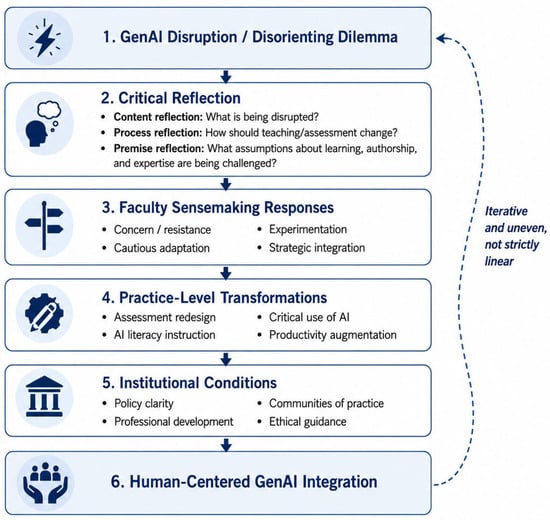
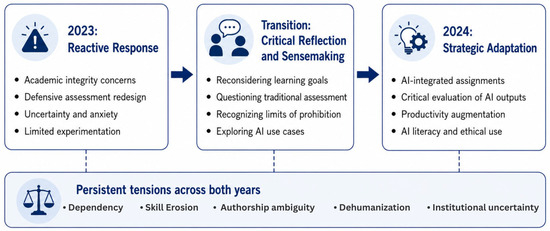

Disclaimer/Publisher’s Note: The statements, opinions and data contained in all publications are solely those of the individual author(s) and contributor(s) and not of MDPI and/or the editor(s). MDPI and/or the editor(s) disclaim responsibility for any injury to people or property resulting from any ideas, methods, instructions or products referred to in the content. |
© 2026 by the authors. Licensee MDPI, Basel, Switzerland. This article is an open access article distributed under the terms and conditions of the Creative Commons Attribution (CC BY) license.