Article

Redefining Agency: A Capability-Driven Research Agenda for Generative AI in Education

Faculty of Life Science, Graduate School of Education, Seisa University, Yokohama 231-0021, Japan
Educ. Sci. 2026, 16(1), 155; https://doi.org/10.3390/educsci16010155
Submission received: 1 October 2025 / Revised: 6 December 2025 / Accepted: 6 January 2026 / Published: 19 January 2026
(This article belongs to the Special Issue Supporting Learner Engagement in Technology-Rich Environments)

Abstract

(1) Aim: This paper aims to develop a research agenda grounded in the Capability Approach to address the “quality of use” gap emerging from the proliferation of generative AI (GenAI) in education. (2) Method: We conducted a deductive thematic analysis of 21 recent academic papers (2023–2025) using the Capability-Driven Digital Education Framework (CDDEF) to synthesise emerging discourse on digital empowerment. (3) Findings: The thematic synthesis reveals three cross-cutting themes: the ambiguous impact of AI on human capabilities (scaffold vs. crutch), the shift in educational inequality from access to quality and justice, and the necessity of redefining human agency in partnership with AI. (4) Implications: The resulting agenda provides a roadmap for researchers and policymakers to ensure GenAI functions as a scaffold for expanding substantive freedoms rather than exacerbating digital divides.

1. Introduction

The rapid proliferation of generative AI (GenAI) is poised to significantly impact society (Baldassarre et al., 2023), bringing with it both soaring expectations for educational innovation and profound concerns (Capraro et al., 2024). While GenAI offers the potential to create more engaging, personalised, and effective learning experiences (Gabriel, 2024), there is a growing apprehension that it may exacerbate existing social disparities.
Indeed, recent research suggests that GenAI is reshaping the very nature of the digital divide. The issue is rapidly evolving beyond the “first-level divide” of mere physical access to technology. Instead, we are now confronting a more complex, intensified chasm defined by disparities in AI literacy, comprehension, and quality of use—a “second-level divide” that separates those who can effectively comprehend, create with, and critically control these new technologies from those who cannot (Gabriel, 2024; Hendawy, 2024).
To visualise this shift, consider a classroom where all students have equal access to a GenAI chatbot. Student A, lacking critical AI literacy, uses the tool merely as a shortcut to generate an essay, bypassing the cognitive struggle of writing and accepting the output passively. In contrast, Student B, possessing higher “quality of use” skills, employs the same tool as a Socratic tutor—prompting it to critique their arguments, brainstorm alternative perspectives, and iteratively refine their original ideas. While both have “access,” the educational outcome is vastly unequal: one fosters dependency, the other expands capability. This illustrates the “quality of use gap.”
This emerging “Generative AI Divide” is not a future possibility but a present reality. Recent international assessments underscore this disparity. For instance, data from the International Computer and Information Literacy Study (ICILS 2023) reveals that while access to digital devices is high, a significant portion of students lack the critical digital skills to use them effectively for learning (IEA, 2025). Similarly, OECD reports highlight that despite high connectivity, many schools lack the pedagogical strategies to translate digital access into improved learning outcomes (OECD, 2025). Furthermore, empirical data from the United States shows that awareness and early adoption of GenAI are already concentrated in areas with higher levels of education and economic advantage (Daepp & Counts, 2025).
To address this deepening divide, education, particularly digital education, must be positioned as central to any empowerment strategy. While historical research on digital empowerment often emphasised physical access to resources and basic skills training, the focus has rightly shifted. As digital access becomes increasingly ubiquitous, the critical role of educational support in developing the deep-seated digital skills and competencies necessary for meaningful social participation has become paramount. However, despite the recognised importance of digital education, a specific research framework tailored to this new challenge has been notably absent. Existing frameworks, such as those in ICT for Development (ICT4D), provide broad insights but do not adequately address the specific nuances of education for genuine digital empowerment. While general digital empowerment frameworks often prioritise the acquisition of technical skills or access as ends in themselves, the Capability Approach (CA) offers a distinct normative lens.
The present work argues that to grasp the true nature of this educational challenge, we must turn to the Capability Approach (CA), as developed by Amartya Sen and Martha Nussbaum. The CA is uniquely suited to this task because it shifts the evaluative focus from mere resources to “agency” and the “substantive freedoms” individuals have to achieve the lives they value. Its core principle is to shift the evaluative focus from mere resources (such as access to AI) to the substantive freedoms—or “capabilities”—that individuals have to live a life they have reason to value (Alkire, 2005). This approach allows us to measure well-being beyond narrow economic indicators and to focus on the intrinsic educational outcomes essential for genuine empowerment, placing the equitable distribution of capabilities at the core of its social justice agenda (Otto & Ziegler, 2006). It compels us to ask not just “Do people have access to AI?” but “Does their education enable them to use AI to expand the real choices and opportunities available in their lives?”
Despite the CA’s clear relevance, and while educational research on generative AI is diverse, it currently lacks a systematic map—a research agenda—guided by these principles. The present research seeks to address this gap. Its purpose is to present a comprehensive research agenda that systematically organises the key issues for educational research in the age of generative AI. To achieve this, the study asks the following research question:
  • Research Question: From the perspective of educational research centred on digital empowerment, what aspects of the impact of generative AI on education should be focused on, and how should research questions be identified to ensure the expansion of human capabilities?
To answer this question, the investigation utilises the Capability-Driven Digital Education Framework (CDDEF), a research framework grounded in the CA (T. Saito, 2025). By employing the CDDEF as an analytical lens to synthesise existing research, this paper proposes a structured agenda to guide future inquiry, ensuring that technological advancements contribute to a more equitable and human-centred digital society.

2. Analytical Framework: The Reconstructed CDDEF

The paper employs the Capability-Driven Digital Education Framework (CDDEF) as its analytical lens (T. Saito, 2025). The CDDEF is designed to evaluate educational practices through the multidimensional values they bring to learners.
Derivation of the Framework: The original CDDEF was constructed using the KJ Method (Kawakita Jiro Method), a rigorous bottom-up qualitative synthesis technique (Ohiwa et al., 1990; Scupin, 1997). This method mapped diverse normative concepts from the CA literature into a coherent spatial structure. For this study, we have reconstructed these spatial clusters into six core theses (A–F) to serve as a linear coding frame for deductive analysis (see Figure 1). This ensures that the theses are grounded in a systematic theoretical synthesis rather than arbitrary selection.
A.
Education enhances human capabilities through both its intrinsic and instrumental values.
The first thesis posits that education encompasses both instrumental utility—such as fostering human capital for economic growth and employment (Chiappero-Martinetti & Sabadash, 2014; Robeyns, 2006)—and intrinsic worth, serving as a fundamental right for personal growth and human dignity (Rajapakse, 2016). However, contemporary policy often prioritises a narrow instrumentalist perspective rooted in human capital theory (Algraini, 2019; Moodie & Wheelahan, 2018; Rajapakse, 2016). This trend, exemplified by embedding career education into STEM to meet employer demands (Reiss & Mujtaba, 2017), risks commodifying education and exacerbating inequalities (Kromydas, 2017), often “watering down” intrinsic values even within inclusive policies (Bakhshi et al., 2017).
To address this imbalance, the Capability Approach (CA) offers a multi-criteria evaluative framework (Rajapakse, 2016), advocating that A1. Educational policies and systems must give equal consideration to both the instrumental and intrinsic values of education (Kromydas, 2017; Algraini, 2019). The goal is not merely creating productive workers but expanding capabilities—the substantive freedoms to lead valued lives (Robeyns, 2006). Consequently, A2. Through the expansion of learners’ capabilities, the instrumental and intrinsic values of education sustain the very purpose of the education system as a public good (Boyadjieva & Ilieva-Trichkova, 2016; Walker, 2018). This reframes education as a driver of social justice and human dignity beyond economic justification (Rajapakse, 2016).
B.
Education is key to freeing individuals from capability deprivation by providing an institutional foundation for individual and collective agency.
The second thesis frames education as the primary institutional mechanism for overcoming “capability deprivation”—a lack of substantive freedom (Hick & Burchardt, 2016)—by fostering agency, the freedom to pursue valued goals (Ó Murchú, 2019). The Capability Approach (CA) posits that education, as a fundamental human right (Osmani, 2000), must act not as passive knowledge transmission but as a liberating practice that empowers learners (Gupta et al., 2019). From this perspective, B1. The essential role of education is to foster both individual and collective agency by meeting the capability needs of its learners. This entails developing a child’s agency as an explicit goal (Hart & Brando, 2018) and cultivating capabilities to address shared challenges (Ó Murchú, 2019; Wood, 2016), while remaining attentive to inequalities such as gender (Robeyns, 2003). Consequently, B2. In public and institutional contexts, the outcome of education is assessed by its contribution to advancing capabilities through the enhancement of individual and collective agency. This assessment focuses on whether learners have expanded their freedom to make informed choices (Morselli, 2017) and gained epistemological and social access beyond physical entry (Blackie et al., 2016). Ultimately, education is viewed as a process of empowerment (Lanzi, 2007) central to social justice frameworks (Lopez-Fogues, 2016).
C.
Education lays the foundation for individual well-being by expanding core capabilities.
The third thesis shifts education’s ultimate purpose from mere knowledge acquisition to the cultivation of individual well-being and human flourishing (Biggeri & Santi, 2012). The Capability Approach (CA) elucidates how C1. Education shapes individuals’ conception of their well-being, both directly and indirectly. It provides knowledge and opportunities while developing the critical judgement necessary to choose a valued life (M. Saito, 2003), widening the gap between current functioning and potential capabilities (Al-Janabi, 2018). Even in contexts of vulnerability, this empowerment fosters a desire for further education and social participation (Agboli et al., 2020).
This well-being is realised because C2. Education expands core capabilities, including health, critical and scientific thinking, informed judgement, creativity, narrative imagination, and public reasoning. These ideals are fostered through concrete pedagogies: language education can cultivate narrative imagination (Imperiale, 2017), and curricula can be structured to develop practical reason and value formation (Vaughan & Walker, 2012). Specific capabilities, such as autonomy and affiliation, are crucial for diverse groups, including students with disabilities (Stella & Corry, 2017), while specific subjects develop unique capability sets (Walkington et al., 2018). Ultimately, education fundamentally equips learners with these core capabilities essential for navigating a just society (Walker, 2019).
D.
Education simultaneously ensures each community’s cultural distinctiveness and each member’s capability for cultural self-determination.
The fourth thesis addresses the tension between preserving cultural heritage and fostering individual freedom. From the Capability Approach (CA) perspective, education expands “life chances” and choice (Roy, 2019). Therefore, D1. Education empowers individuals to live as self-determining agents beyond local cultural constraints. This is crucial for challenging restrictive norms, such as gender roles (Akala & Divala, 2016; Cin & Walker, 2016), via interventions like interactive science education (Addabbo et al., 2016) and fostering cosmopolitan engagement (Boni & Calabuig, 2017).
However, D2. Educational interventions highlight the tension between preserving local traditions and connecting to universal knowledge. Dominant models may conflict with local conceptions of “meaningful education” (Matengu et al., 2019), creating friction between global and local languages (Mohanty, 2017) or fuelling migration aspirations (Semela & Cochrane, 2019). Innovative models like intercultural universities bridge this divide by integrating knowledge systems (Mateos Cortés, 2017), ultimately prioritising the enhancement of substantive freedom.
E.
The pedagogical importance of education lies in its contribution to expanding learners’ capabilities throughout the entire teaching process.
The fifth thesis shifts the analytical focus from quantifiable outputs to the pedagogical journey itself. In this view, E1. The outcomes of education manifest in the learners’ capabilities, as shaped by their particular social contexts. True success lies in expanded freedoms rather than test scores, though assessing these context-dependent capabilities is complex (Sandri et al., 2018). Effective education must therefore provide resources to convert learning into tangible opportunities in contexts like entrepreneurship (Ikebuaku & Dinbabo, 2018), the workplace (Abma et al., 2016), and broader societal goals (Ndubuka & Rey-Marmonier, 2019).
Consequently, E2. The expansion of learners’ capabilities emerges through educational processes and teacher expertise grounded in learner agency. How students learn is as critical as what they learn (Nussbaum, 2006). Since crucial goals like well-being and agency are often “unmeasurable” (Unterhalter, 2017), they require qualitative, relational pedagogies. This centralises teachers’ professional capabilities in creating empowering environments (Buckler, 2016), demonstrated, for example, when students learn to apply the CA to assess client well-being (Slabbert, 2018).
F.
Equitable access to education is a foundation for social justice.
The final thesis connects education to social justice, a central CA concern (Otto & Ziegler, 2006). The CA asserts that F1. Equitable access to education is the essence of social justice (Boyadjieva & Ilieva-Trichkova, 2017; Walker, 2003). Equity requires distinguishing diverse forms to expand capabilities (Unterhalter, 2009), moving beyond mere enrolment to ensuring meaningful participation for marginalised learners by considering external socio-cultural factors (Calitz et al., 2016; Tumuheki et al., 2016).
Furthermore, F2. Beyond economic benefits, education fosters a commitment to social justice. Diverse educational experiences cultivate values for civic engagement (Peppin Vaughan, 2016), while informed educational choice constitutes justice (Skovhus, 2016), prioritising justice over narrow economic interests in policy evaluation (Gale & Molla, 2015; Loots & Walker, 2016). However, F3. Education can both amplify inequalities and promote equity in learners’ social capital. While systems may reproduce inequalities, agency enables individuals to navigate these structures (Hart, 2019; Mendoza Cazarez, 2019; Molla & Pham, 2019). Finally, F4. Inclusive education represents a commitment to social justice (Polat, 2011), despite implementation dilemmas (Norwich & Koutsouris, 2017). The CA reframes inclusion from a deficit model to one ensuring every learner’s capability to achieve valued outcomes (Broderick, 2018; Dalkilic & Vadeboncoeur, 2016; Norwich, 2014).

3. Methodology

The present work employs an exploratory review methodology to construct a forward-looking research agenda for the intersection of generative AI and education, viewed through the lens of digital empowerment. This approach is similar to that of survey papers, which aim to map the state of the art in a specific field using a purpose-built conceptual framework for categorisation (Federico et al., 2017). The approach is not a formal systematic literature review (SLR) with rigid, replicable protocols (cf. Mick et al., 2024), but rather a structured exploration to map the emerging landscape of academic discourse in a nascent, interdisciplinary field.

3.1. Data Collection and Search Protocol

An exploratory search on Google Scholar was conducted on 10 July 2025, to identify literature situated at the intersection of the Capability Approach and generative AI. The search utilised the specific keywords “capability,” “Sen,” “Nussbaum,” and “generative AI” to ensure the retrieved literature was grounded in the foundational theories of the CA.
This targeted search yielded approximately 10 pages of results. From this pool, we purposively selected 21 papers based on a review of their titles and abstracts, focusing on studies that provided theoretical depth regarding educational empowerment. A summary of the selected papers is provided in Table 1.

3.2. Methodological Rationale

The selection of 21 papers and the analytical approach of this study are grounded in the KJ Method (as detailed in Section 2) and the epistemological nature of the Capability Approach itself. Unlike systematic literature reviews (SLR) that aim for exhaustive coverage to establish statistical representativeness, this study prioritises deep hermeneutic insights over objective probability distributions of literature themes.
The Capability Approach focuses on the diverse and qualitative nature of individual well-being and agency, which often resists simple quantification. Therefore, our methodology aims to derive meaningful, interpretable knowledge that captures the complex, undefined semantic shifts GenAI is causing in education. This framework serves as a heuristic tool to identify emerging issues rather than to validate pre-existing hypotheses through large-scale data.

3.3. Data Analysis

The collected papers were analysed using a qualitative descriptive approach (Vaismoradi et al., 2013). Specifically, we conducted a thematic analysis, a method for identifying and analysing patterns in qualitative data (Clarke & Braun, 2013). We adopted a deductive, or “top-down,” approach to this analysis (cf. Johansson et al., 2024), in which the reconstructed Capability-Driven Digital Education Framework (CDDEF) served as the pre-existing theoretical framework to guide theme identification.
A qualitative synthesis was performed by thoroughly reading the selected papers (Familiarisation) and systematically identifying, extracting, and collating passages relevant to each of the six pre-defined CDDEF theses. These collated extracts were then synthesised and interpreted within each thesis to answer the guiding research question.

3.4. Limitations

We acknowledge that this framework, derived from a small, purposive sample (N = 21), may lack the robustness required for large-scale social surveys or broad statistical generalizability. Rather than functioning as an exhaustive catalogue of all available literature, the framework is designed to serve a specific and valuable purpose: to aid in the exploratory identification of issues in small-scale case studies and to provide a semantic capture of the emerging, fluid phenomena of GenAI in education, where interpretation is often more critical than frequency.

3.5. Use of Generative AI in This Paper

During the preparation of this manuscript, the author used Gemini (a large language model by Google) as a writing assistant. The tool was used to synthesise literature notes, draft sections based on the author’s detailed outlines and source materials, refine academic language, and format the manuscript and citations. The author has reviewed and edited all AI-generated output and takes full responsibility for the content of this publication.

4. Results

This section presents the findings from the thematic analysis of 21 papers (listed in Table 1) on the Capability Approach and generative AI, organised according to the six theses of the reconstructed CDDEF. For each thesis, the analysis is presented in two parts: first, a deeper consideration of the impact of the advent of generative AI on the existing thesis; and second, new perspectives for expanding the thesis and its associated research agenda.

4.1. Thesis A: Education Enhances Human Capabilities Through Both Its Intrinsic and Instrumental Values

The literature on generative AI underscores the renewed urgency of the long-standing debate over the dual values of education. It sharpens the existing tension between instrumental outcomes and intrinsic growth, introducing the educator’s own capabilities as a critical new dimension.

4.1.1. Deeper Considerations: The Trade-Off and Measurement of Values

The tension between cultivating instrumental values (e.g., economic outcomes, job skills) and intrinsic values (e.g., humanistic growth, critical citizenship) is a perennial challenge in education. An overemphasis on short-term employment skills, for instance, can crowd out the time and resources needed to foster critical thinking and civic-mindedness. Our analysis indicates that generative AI could exacerbate this trade-off. Consequently, to ensure that educational policies give equal consideration to both values (Thesis A1), the literature underscores the urgent need for new assessment frameworks. These frameworks must be able to measure AI’s contributions to the intrinsic aspects of education, such as well-being and civic engagement, moving beyond conventional metrics of efficiency and task performance. The evaluation of AI should be based on how it expands human capabilities—the substantive freedoms people have to live a life they have reason to value—rather than relying solely on narrow instrumental indicators (Khullar et al., 2025).
Such an approach requires concrete methods for assessing AI’s benefits on non-monetary aspects of well-being. Capability-based protocols can offer a direct blueprint (Kim et al., n.d.). Furthermore, AI introduces unavoidable value conflicts, such as efficiency versus accountability. These conflicts necessitate procedural justice frameworks to ensure that the trade-offs between instrumental and intrinsic values are navigated in a democratically legitimate manner (de Fine Licht, 2025). The literature also suggests that, to sustain the purpose of education as a public good (Thesis A2), research must explore how generative AI can serve not as a divisive force but as a mediator that helps reconcile and achieve both instrumental and intrinsic goals simultaneously (Dua et al., 2025; Muthukrishna et al., 2025). This involves designing and evaluating AI-integrated educational systems based on their ability to expand learners’ substantive freedoms, not just equality of opportunity (Pang et al., 2024).

4.1.2. New Perspectives for Expansion: The Capabilities of Educators

A focus on learner capabilities is insufficient; educators’ capabilities emerge as a critical and novel area of inquiry. If a proper balance between instrumental and intrinsic values is not maintained (Thesis A1), there is a significant risk that teachers will be reduced to mere “operators” of AI systems, leading to a “deskilling” that strips them of their professional creativity and autonomy. The pursuit of “convenience AI” in educational settings could accelerate this erosion of professional judgement and pedagogical expertise (Leonelli & Mussgnug, n.d.).
Therefore, to maintain the integrity of the education system as a public good (Thesis A2), the discourse must be expanded to include the impact of AI on educators’ well-being and professional development from a capabilities perspective. This involves positioning teachers not as passive implementers of technology, but as facilitators of STEM education, which acts as a “catalyst for enhancing capabilities” (Sharma & Acharya, 2025). Indeed, empirical evidence shows that educators are already responding to the rise of generative AI by redefining their roles, shifting their focus to fostering higher-order thinking, creativity, and ethics (Bower et al., 2024). Understanding and supporting this professional evolution is a crucial new research direction for ensuring that technology enhances, rather than undermines, the human-centric goals of education.

4.2. Thesis B: Education as an Institutional Foundation for Agency

The literature on generative AI brings a critical new lens to the role of education in fostering agency. While Thesis B posits that education is the institutional foundation for agency, the introduction of AI complicates this function, forcing a distinction between “authentic” and “simulated” agency and expanding the concept from an individual to a collective dimension.

4.2.1. Deeper Considerations: Distinguishing “Authentic” from “Simulated” Agency

From the perspective of fostering learners’ agency (Thesis B1), the central question is whether the agency a learner exercises is authentic or merely a simulation crafted by AI. While an AI that provides optimised choices may give the appearance of self-determination, it may exist only within the confines of an algorithm, potentially robbing learners of the opportunity to formulate their own questions and learn through trial and error. There is a tangible risk that such tools could foster dependency and inhibit learning in the absence of AI (Muthukrishna et al., 2025).
Therefore, assessing education’s contribution to agency (Thesis B2) requires a crucial distinction: under what conditions does AI support act as a “scaffold” that promotes autonomy, and when does it become a “crutch” that hinders it? Answering this requires insights from cognitive and learning sciences to determine how to transform learners from “passive consumers” to “active agents” (Muthukrishna et al., 2025). Furthermore, the ability to translate AI resources into genuine capabilities is not uniform; it is mediated by “conversion factors” such as gender norms, linguistic capital, and digital literacy. For instance, research on a legal chatbot for women in Tanzania demonstrates that these social and environmental conditions determine whether the AI tool can be effectively converted into the capability to exercise legal rights (Stephens, 2025).

4.2.2. New Perspectives for Expansion: From Individual to Collective Agency

The literature suggests that to fulfil its essential role in the era of generative AI (Thesis B1), education must expand its focus from purely individual agency to also cultivating “collective agency”—the capacity for communities to collaborate in solving common problems. In contexts of social justice and democracy, this collective dimension is indispensable. This expanded role requires new curricular components, such as algorithmic literacy, which has been identified as a crucial capability for informed civic engagement and the defence of democratic systems (Boots et al., n.d.).
This perspective views knowledge not as an individual possession but as socially situated and collective. AI poses a risk to this collective knowledge by potentially eroding the epistemic foundations of specific communities (Van Slyke et al., 2025). Therefore, a key challenge for education is to leverage generative AI to foster this collective agency. New pedagogical approaches could be institutionalised, such as project-based learning that bridges classroom activities with local policy-making, thereby enabling new ways to assess education’s contribution to society (Thesis B2). This repositions the goal of lifelong learning as the power to “reinvent oneself” both professionally and socially, and frames the success of educational institutions by their contribution to this expanded form of agency (James, 2023; Kouam & Muchowe, 2025; London & Heidari, 2024).
Illustrative Vignette: The potential for AI to foster agency is vividly illustrated by Stephens (2025), who evaluated a legal chatbot (“Dada Wakili”) in Tanzania. The tool was designed not merely to deliver information but to enhance women’s agency regarding inheritance rights. By providing accessible legal knowledge in a local context, the AI empowered women to navigate complex legal systems and assert their rights, effectively transforming a technological intervention into an instrument for expanding substantive freedoms.

4.3. Thesis C: Education as the Foundation for Well-Being Through Core Capabilities

The literature on generative AI highlights a profound ambiguity in its relationship with the core capabilities that underpin well-being. The examination suggests that while AI can be a powerful tool for capability expansion, it also poses a significant risk of capability atrophy, while simultaneously highlighting the importance of social and emotional capabilities.

4.3.1. Deeper Considerations: The Ambiguous Impact of Generative AI on Core Capabilities

While Thesis C1 suggests education shapes our conception of well-being, the analysed literature warns that AI has an ambiguous, double-edged impact on the very capabilities needed to pursue it. For example, while AI can serve as a creative partner during brainstorming, its misuse can lead to reliance on clichés and a decline in original thought. Similarly, while it can provide access to diverse information, it can also generate convincing misinformation that paralyses critical thinking. This leads to a critical concern: if used improperly, AI may trivialise or erode the core capabilities it is meant to enhance. This is supported by educators who, in response to AI, recognise an increased need for education to focus on human-centric skills like critical thinking, creativity, and ethics (Bower et al., 2024).
Therefore, the central question for the realisation of Thesis C2 is not whether to use AI, but rather under what pedagogical conditions and with which teaching methods AI can be used to genuinely expand core capabilities. The literature suggests that integrating AI requires it to expand learners’ freedom and adaptive capacity, including core capabilities such as critical thinking and public reasoning (Dua et al., 2025; Muthukrishna et al., 2025). A significant challenge in this regard is the risk of “epistemic injustice,” where AI, due to data biases and overgeneralization, devalues or erases the knowledge systems of marginalised groups. This can directly harm core capabilities such as practical reason by stripping individuals of the conceptual tools needed to understand their own experiences and participate in society (Van Slyke et al., 2025).

4.3.2. New Perspectives for Expansion: The Impact on Social and Emotional Capabilities

The advent of AI expands the scope of Thesis C2, suggesting a need to look beyond purely cognitive capabilities. The literature highlights that human well-being is inextricably linked to “social and emotional capabilities,” such as empathy, collaboration, emotional regulation, and relationship-building. This introduces a crucial new area of inquiry for ensuring well-being (Thesis C1): does an AI-mediated learning environment foster these social and emotional skills, or does it inhibit them?
Research on “social AI” warns that interactions with AI could degrade real-world human relationship skills and empathy (Teubner & Ivey, 2025). This suggests an urgent need for empirical research that draws on insights from developmental psychology and sociology to investigate the long-term effects of AI-rich learning environments on these vital human capabilities.

4.4. Thesis D: Education for Cultural Distinctiveness and Self-Determination

The review of literature on generative AI sharpens the focus on the inherent tension within education’s dual role: to honour cultural distinctiveness while fostering individual self-determination. The introduction of AI-driven educational tools accentuates the friction between universal and local knowledge systems and, in response, brings forward the concept of “decolonising AI” as a new imperative for research and practice.

4.4.1. Deeper Considerations: The Pedagogy of “Integration” Between Universal and Local Knowledge

While education empowers individuals to act as self-determining agents (Thesis D1), the analysed literature suggests that AI-based educational interventions can intensify the tension between local traditions and universal knowledge (Thesis D2). A key challenge lies in developing a pedagogy that can creatively integrate universal knowledge (e.g., science, global legal frameworks) with traditional, local knowledge. A significant risk identified in the literature is “epistemic injustice,” in which generative AI, trained predominantly on universal or Western knowledge, systematically devalues, excludes, or misrepresents local and indigenous knowledge systems (Van Slyke et al., 2025). This raises critical questions about whose knowledge is legitimised and whose is rendered invisible in the selection and implementation of AI-based educational materials.
The failure of past universal technology solutions, such as the “One Laptop Per Child” initiative, serves as a powerful case study. The project’s shortcomings are attributed to its failure to adapt a universal technological solution to local curricula, languages, and cultural contexts (Muthukrishna et al., 2025). This highlights that educational interventions that neglect integrating local and universal knowledge are likely to fail, underscoring the need for pedagogical approaches that can respectfully mediate this tension.

4.4.2. New Perspectives for Expansion: The Decolonisation of Educational AI and Epistemological Diversity

To effectively empower individuals for cultural self-determination (Thesis D1), the literature points toward a new, expanded perspective: the “decolonisation of educational AI.” This extends beyond the mere application of AI to education, calling for a fundamental redesign of AI systems based on diverse epistemologies (Sahebi & Formosa, 2025). Current AI development is heavily concentrated in WEIRD (Western, Educated, Industrialised, Rich, and Democratic) countries, thereby embedding significant cultural and epistemological biases into the tools themselves (Sahebi & Formosa, 2025).
A practical approach to addressing this is “cultural co-design,” in which AI tools are developed in collaboration with local communities to address specific, context-rooted challenges. The development of a legal chatbot for women in Tanzania provides a compelling example, where an AI tool was created within a specific cultural and social context to empower users to challenge the constraints of local customary law and exercise their rights (Stephens, 2025). Such interventions demonstrate how education can empower individuals to transcend local constraints and achieve self-determination (James, 2023; Stephens, 2025). To properly assess such interventions, a further research avenue is the development of new CA-compliant scales to measure the capability for cultural self-determination in the age of AI.
Illustrative Vignette: The tension between global AI and local culture is highlighted by Van Slyke et al. (2025), who warn of “epistemic injustice” where GenAI privileges dominant Western knowledge systems. Conversely, the legal chatbot in Tanzania (Stephens, 2025) demonstrates that local adaptation—tailoring the AI to specific national laws and cultural norms—is essential for the technology to be meaningfully adopted and to support cultural self-determination rather than impose external values.

4.5. Thesis E: The Pedagogical Importance of Education Lies in Its Contribution to Expanding Learners’ Capabilities Throughout the Entire Teaching Process

The introduction of generative AI into education reinforces the importance of the pedagogical process, shifting the focus from outcomes to the quality of the learning experience itself. The literature suggests that AI necessitates a redefinition of the teacher’s professional role and opens new possibilities for redesigning collaborative learning.

4.5.1. Deeper Considerations: The New Professionalism of Teachers in the AI Era

The analysed literature suggests that the proliferation of generative AI fundamentally alters the teacher’s role, moving it away from the “transmitter of knowledge” model (Thesis E2). This raises a critical question: What new pedagogical roles and expertise are required of teachers in the era of AI? The possibilities are varied, including the teacher as a “curator of knowledge,” a “coach for critical thinking,” a “mentor for AI ethics,” or a “facilitator of collaborative learning.” Empirical research shows that educators are already recognising this shift, emphasising the need to focus more on the “learning process” itself and to view learners as active collaborators (Bower et al., 2024).
This new professionalism is crucial for mediating how educational outcomes manifest in learners’ capabilities, which are shaped by their particular social contexts (Thesis E1). A key research challenge is to understand the complementary relationship between teacher expertise and AI support, and to identify the scenarios in which a teacher’s diagnosis, scaffolding, and evaluation are indispensable. The literature strongly posits that the professional development and support of teachers is the “essential channel” for the effective and ethical implementation of AI (Muthukrishna et al., 2025), positioning teachers as active players in STEM education, which should be a “catalyst for enhancing capabilities” (Sharma & Acharya, 2025).

4.5.2. New Perspectives for Expansion: Redesigning Collaborative Learning Enabled by AI

The focus on the educational process (Thesis E2) and its social context (Thesis E1) opens up an expanded research agenda: redesigning collaborative or peer learning with AI. The literature suggests that AI should be reconceptualised not merely as a tool for individualised learning, but as a “catalyst for enriching social learning”. This new perspective involves exploring how AI can, for instance, stimulate group discussion by highlighting diverse perspectives or promote metacognition by visualising a group’s consensus-building process. The need for this redesign is already being recognised in practice, with educators proposing a shift toward collaborative assessment methods, such as group work, in response to AI (Bower et al., 2024).
However, this endeavour is not without risks. Research on “social AI” warns that interactions with AI may also hinder the development of social skills, such as cooperation and empathy (Teubner & Ivey, 2025). This frames a crucial design challenge: how can we design AI-integrated learning processes that respect learner agency and enrich, rather than impede, social learning, ensuring that the process itself contributes to capability expansion (Dua et al., 2025; London & Heidari, 2024)? This new research direction is vital for ensuring that the pedagogical process continues to expand the full range of human capabilities in the age of AI.
Illustrative Vignette: Regarding the pedagogical process, Bower et al. (2024) report that educators are shifting assessment focus from final outputs to the learning process itself (e.g., critical thinking, iterative drafting) to counter AI-induced shortcuts. Similarly, Khullar et al. (2025) argue that, in a healthcare context, human-centred evaluation must assess not only efficiency but also whether the system supports the worker’s (or learner’s) broader aspirations and the expansion of their capabilities.

4.6. Thesis F: Equitable Access to Education Is a Foundation for Social Justice

The literature on generative AI profoundly complicates the relationship between educational access and social justice. While AI is seen as a potential tool for mitigating equity gaps, it also introduces new, more subtle forms of inequality that go beyond mere access. This expands the discourse on social justice to include not only the “quality of use” but also the ethical dimensions of the global AI supply chain itself.

4.6.1. Deeper Considerations: From “Access Gaps” to “Quality of Use Gaps”

To realise equitable access to education as the essence of social justice (Thesis F1), the analysed literature suggests we must look beyond physical or economic barriers. While AI holds the potential to reduce educational disparities by providing low-cost, individualised learning opportunities (Kouam & Muchowe, 2025), it also carries the systemic risk of amplifying them (Thesis F3). Even if all learners were granted free access to AI, a new digital divide emerges: the “quality of use” gap. For example, learners from affluent backgrounds may be taught to use AI for creative inquiry and higher-order thinking, while those in under-resourced environments might only use it for rote memorisation and drill exercises.
This creates what has been described as a “capability caste system,” in which the quality of AI a person can access—often determined by costly subscription models—directly translates into the quality of their learning opportunities, thereby exacerbating socio-economic divides (Xiao & Sun, 2025). The literature warns that while AI can offer pathways to equity, it also risks deepening existing inequalities if the most advanced technologies are reinforcing capability hierarchies (Muthukrishna et al., 2025).

4.6.2. New Perspectives for Expansion: Global Justice in the Educational AI Supply Chain

A comprehensive social justice perspective must extend beyond the “user” of educational AI, according to the literature. While fostering a commitment to social justice in learners is a key role of education (Thesis F2), the literature urges an examination of the ethical foundations of the tools themselves. This includes recognising that lifelong learning should encompass “social inclusion and democratic understanding” alongside economic and personal development (James, 2023). This opens a new research agenda focused on the ethics and justice of the educational AI supply chain. Drawing on critiques of global injustice in AI development, this perspective questions how educational AI tools are produced, highlighting issues such as the exploitation of low-wage data workers and the environmental impact of resource extraction for hardware (Girija et al., 2024; Kluge Corrêa & Mönig, 2024; Sahebi & Formosa, 2025).
This expanded view of social justice calls for legal and institutional frameworks to guarantee “AI justice for all,” positioning access to AI, including for educational purposes, as a fundamental requirement of social justice (Xiao & Sun, 2025). It also aligns with the ideal of inclusive education (Thesis F4), a commitment reinforced by international frameworks such as the UN’s Sustainable Development Goals (Akpınar et al., 2025). This connection proposes research into “inclusive evaluation design,” such as the standardisation of AI-assisted accommodations for learners with diverse physical, developmental, and linguistic needs. Ultimately, this perspective reframes equity as the availability of processes that enable capability expansion for all (London & Heidari, 2024) and reinforces that education, through a commitment to fostering critical skills like algorithmic literacy, has a role in fostering a commitment to social justice that transcends purely economic benefits (Boots et al., n.d.).
Illustrative Vignette: A concrete example of addressing equity is found in Girija et al. (2024), who analyse “frugal innovation” in India. Their study shows how low-cost, accessible AI technologies designed specifically for marginalised women can directly contribute to social justice (SDG 5). By adapting technology to the constraints of rural contexts (e.g., resource limitations), these innovations bridge the gap between mere availability and actual “quality of use,” thereby fostering inclusion and reducing gender-based inequalities.

5. Discussion

This section synthesises the individual findings presented in the Results section to discuss the academic and practical significance of this study. First, it extracts and discusses the critical cross-cutting themes for educational research in the age of generative AI that have emerged across the six theses, clarifying the overall picture of the research agenda proposed by this study. Second, it discusses the implications of these findings for researchers, educational practitioners, policymakers, and the theoretical framework itself.

5.1. Synthesising the Research Agenda: Cross-Cutting Themes in the Age of Generative AI

The discussion in Section 4 reveals several key cross-cutting themes that transcend the individual theses of the CDDEF. These themes represent the core issues for understanding the impact of generative AI on education and for setting the course for future research.

5.1.1. The Double-Edged Sword: Navigating the Ambiguous Impact of AI on Human Capabilities

A prominent theme emerging from the review is the ambiguity of generative AI. While AI can be a powerful tool for expanding capabilities (Thesis C), it also carries the risk of atrophying them if used improperly. It can serve as a “scaffold” that promotes learner autonomy or become a “crutch” that deepens dependency (Thesis B; Muthukrishna et al., 2025).
This ambiguity does not exist in a vacuum. Societal pressures, particularly from the economy and industry, exert a strong utilitarian demand on individuals to “optimise for productivity.” Conforming to this pressure is often the pragmatic choice in a competitive environment. Consequently, there is constant societal pressure for generative AI to be used as a convenient “crutch”—a tool for efficiency rather than for deepening understanding.
In this context, public education functions as a counterbalancing force. As a nexus connecting society, local communities, and individual learners, education is uniquely positioned to mitigate this productivity demand. It must provide the essential time and space for learners to consider the purpose of AI use reflectively. Only through such structured and critical educational engagement can generative AI be internalised as a capability rather than remaining an external “crutch.” This process of internalisation transforms a piece of technology into an integral part of an individual’s intellectual and creative repertoire.

5.1.2. From “Access” to “Quality” and “Justice”: The Evolving Landscape of Educational Inequality

The second theme is the new landscape of inequality brought about by generative AI. The analysis shows that the problem of educational inequality is shifting from a mere “access gap” to a more subtle and complex “quality of use gap” (Thesis F; Muthukrishna et al., 2025). Furthermore, behind this shift lie multi-layered social justice issues such as “epistemic injustice” (Thesis D, C; Van Slyke et al., 2025) and “global justice in the AI supply chain” (Thesis F; Sahebi & Formosa, 2025).
Generative AI, while a commercial product of global tech companies, is beginning to take on the nature of public infrastructure. This dual identity demands careful consideration within the educational context. If education were to shun or ignore the existence of generative AI, the “access gap” that already exists among learners would, depending on their family and socioeconomic backgrounds, directly lead to a “quality of use gap,” and ultimately to a gap in capabilities—or, from the perspective of those left behind, a “deprivation of capabilities.”
Based on this premise, we must acknowledge that education is nearly the only social function that can directly and systematically intervene in the “quality of use gap” of generative AI. Education assumes the role of a “bulwark” to cultivate in all learners the ability to use AI creatively and critically. However, its role does not stop at correcting disparities. As a place where learners acquire sound critical thinking skills, education is also called upon to be a space that fosters democratic citizenship. This involves directing students’ attention to the deeper social justice issues surrounding AI, including the “epistemic injustice” embedded in its algorithms and the ethical problems within its global supply chain, thereby cultivating the very capabilities needed for informed civic engagement (Boots et al., n.d.).

5.1.3. The Human in the Loop: Redefining the Roles of Educators and Learners

The third theme is the redefinition of human roles (educators and learners) following the introduction of AI. AI challenges the role of the teacher as a mere transmitter of knowledge and demands a new professionalism as an introducer of the “catalyst for capability development” (Thesis A, E; Sharma & Acharya, 2025). At the same time, the learner’s agency also faces the question of what constitutes “authentic agency” (Thesis B).
That generative AI can serve as a learning assistant, analogous to eyeglasses or hearing aids that extend human perceptual functions, has a certain legitimacy. However, returning to the original definition of the Capability Approach, the point that an “efficiency of learning” or “increase in productivity” unwanted by the learner does not constitute an expansion of that person’s capabilities must always remain a central tenet.
While keeping this in mind, it is also an educational act to pose to learners that the expansion of cognition arising from the interactive process with a more autonomous computer could be a new form of agency. The key here is the “dialogical relationship” woven among the teacher, the learner, and the computer in the educational setting. How this tripartite interaction is designed—how it balances guidance with freedom, and efficiency with reflection—will determine whether AI can become a partner that genuinely expands a learner’s capabilities, rather than remaining a mere tool (London & Heidari, 2024). The design of an education that permits such a “dialogical relationship,” and furthermore, the nature of societal demands on education that support it, are precisely the new academic subjects to be explored from the standpoint of the Capability Approach.

5.2. Implications of the Study

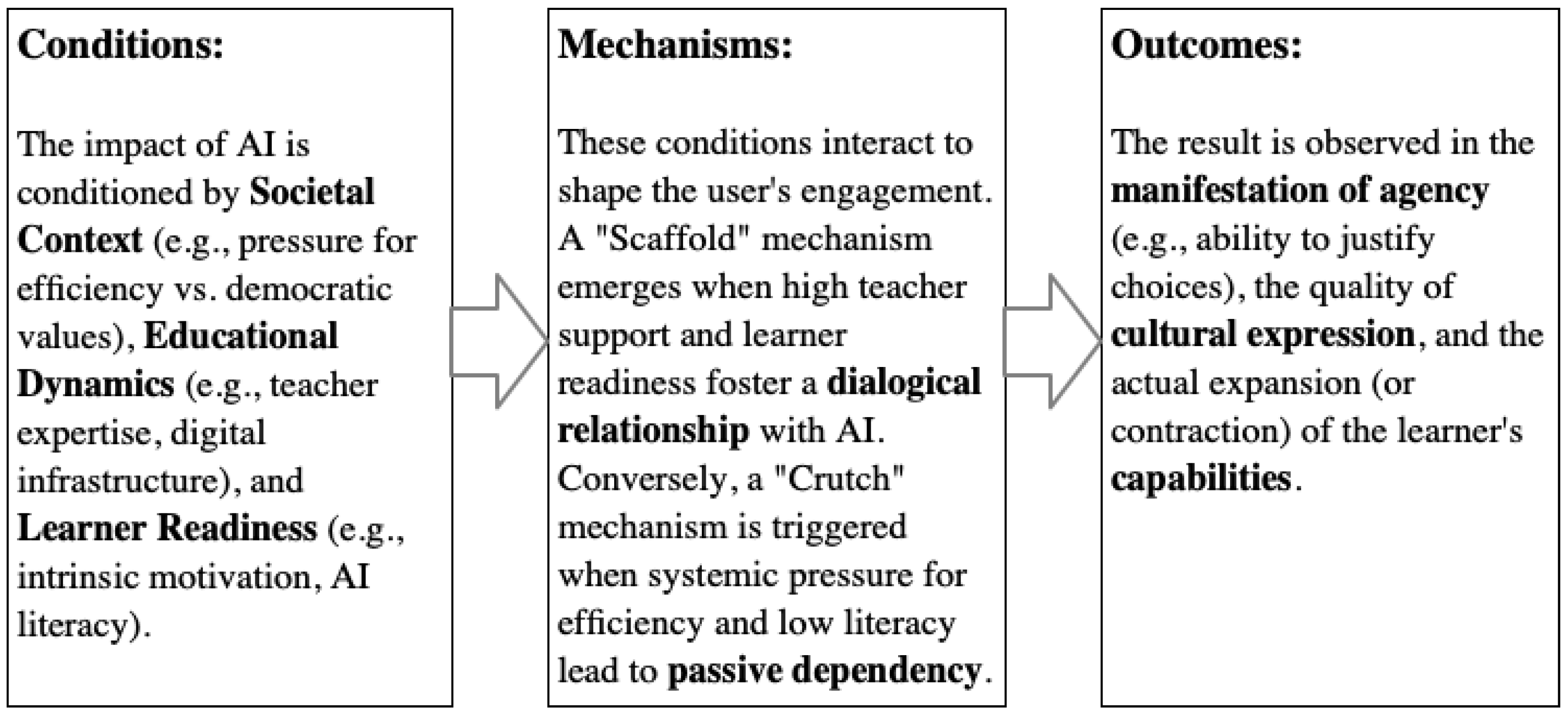
To visualise how Generative AI functions as either a scaffold or a crutch, and to derive actionable implications, we first conceptualise the dynamic interaction of various conversion factors (Figure 2).
As illustrated in Figure 2, the impact of AI is conditioned by Societal Context (e.g., pressure for efficiency), Educational Dynamics (e.g., teacher agency), and Learner Readiness (e.g., AI literacy). These interact to trigger either a “Scaffold” mechanism (dialogical engagement) or a “Crutch” mechanism (passive dependency). Based on this understanding, we offer specific recommendations for researchers, practitioners, and policymakers.

5.2.1. Implications for Researchers: A Roadmap for Future Inquiry

Researchers should focus on validating the mechanisms proposed above through empirical studies. By combining the findings in Section 4 with the cross-cutting themes, we propose a matrix of candidate indicators (Table 2) that serves as a concrete roadmap. Future studies should use these indicators to quantitatively and qualitatively assess the impact of GenAI on human capabilities.

5.2.2. Implications for Practitioners

Educators should design learning environments that actively prevent the “Crutch” mechanism and foster “authentic” agency (Thesis B, E).
  • Recommendation 1 (Pedagogy): Implement “AI-Fading” strategies in curriculum design. Rather than constant AI assistance, educators should design sequences where AI support is gradually withdrawn to ensure skill internalisation and autonomy.
  • Recommendation 2 (Assessment): Shift assessment focus from summative grading to formative feedback. As AI can easily generate final outputs, the pedagogical value must shift to the process of “dialogue” with AI (e.g., critiquing AI outputs, iterative prompting).
  • Recommendation 3 (Collaboration): Foster “Collective Agency” by designing group projects where learners use AI to address local community challenges, thereby connecting technical skills with social purpose.

5.2.3. Implications for Policymakers

Policymakers must create the institutional conditions that enable AI to function as a scaffold (Thesis A, F).
  • Recommendation 1 (Equity): Position education as a bulwark against the “quality of use gap.” This requires public investment not just in access, but in equitable infrastructure (high-quality models and hardware) for under-resourced schools to prevent a “capability caste system.”
  • Recommendation 2 (Protection): Protect “Educational Time” from market pressures. Regulations should ensure that AI integration is not aimed solely at “productivity gains” or cost-cutting, but guarantees temporal space for reflective inquiry and human mentorship.
  • Recommendation 3 (Literacy): Mandate “Algorithmic Literacy” education. To ensure democratic participation, curricula must include a critical understanding of AI’s mechanisms and biases, empowering learners to govern the technology rather than be governed by it.

5.3. Theoretical Contribution and Limitations

5.3.1. Advancing the CDDEF as an Analytical Tool

The most significant theoretical contribution of this study is its demonstration that the CDDEF is an effective analytical tool for analysing a new technological impact, such as generative AI, and systematically generating future research agendas from it (T. Saito, 2025). This study applied the human-centric lens of the CDDEF to filter the complex and emerging discourse on “generative AI and education.” In doing so, it demonstrated a shift in the analytical framing: moving from a technology-centric discussion of functions to a human-centric inquiry asking, “What impact does this technology have on human values and capabilities?”
The CDDEF has served as a common language for extracting educationally essential issues from cross-disciplinary literature and reconfiguring them into a systematic research agenda. This suggests that the CDDEF holds potential not only for evaluating specific educational practices but also as a heuristic framework for identifying the ethical and educational challenges we must address and for mapping scholarly inquiry when new technologies emerge.

5.3.2. Limitations and Future Directions

To accurately position this study’s contributions, we need to clarify the limitations that could undermine our findings and outline concrete methodologies for future verification.
Limitations: Threats to Validity
  • Selection Bias: As an exploratory review with a small, purposive sample (N = 21), this study does not capture the entire landscape of AI education research. A broader systematic review, including grey literature or non-English sources, might reveal different themes or contradict our findings regarding the “quality of use” gap.
  • Framework Dependence: Our results are heavily contingent on the specific theoretical lens of the CDDEF. If this framework fails to capture certain dimensions—such as the political economy of EdTech or cognitive science perspectives on learning transfer—the proposed research agenda may be incomplete or skewed.
  • Lack of Triangulation: The present analysis relies on a deductive thematic analysis of text. Without empirical triangulation (e.g., comparing our theoretical themes with actual classroom data), the “cross-cutting themes” remain interpretative hypotheses rather than proven phenomena.
Future Directions: Methodological Proposals
To address these limitations and empirically test the proposed agenda, we recommend the following specific research designs:
  • Design-Based Research (DBR): Researchers should engage in DBR to iteratively design and test educational interventions that serve as “scaffolds.” By cycling through design, enactment, analysis, and redesign in real-world settings, researchers can identify the specific pedagogical conditions that prevent AI from becoming a “crutch.”
  • Mixed Methods Approaches: Future studies should combine the quantitative indicators proposed in Table 2 (e.g., anxiety levels, time allocation) with qualitative methods (e.g., interviews, ethnography). This triangulation is necessary to understand why certain usage patterns lead to capability expansion while others do not.
  • Longitudinal Studies: Cross-sectional data cannot capture the long-term impact of AI on human development. Longitudinal tracking is essential to determine whether early reliance on AI leads to a long-term atrophy of core capabilities or, conversely, frees up cognitive resources for higher-order skill acquisition.

6. Conclusions

The present paper contributes a systematic research agenda grounded in the Capability Approach to navigate the complex educational landscape of generative AI, moving beyond mere access to address the emerging “quality of use” gap. The central message is that education must actively steer the integration of AI to function as a “scaffold” that expands authentic human agency and capability, rather than allowing it to become a “crutch” that fosters dependency and deepens inequalities. We call upon researchers and policymakers to prioritise this human-centric perspective, ensuring that technological advancement serves the ultimate goal of equitable human development rather than efficiency alone.

Funding

This research was funded by JSPS KAKENHI grant number 22K02834, and the APC was funded by Seisa University.

Institutional Review Board Statement

Not applicable.

Informed Consent Statement

Not applicable.

Data Availability Statement

The data presented in this study are available within the article (see Table 1 and References). No new primary datasets were generated during this study.

Conflicts of Interest

The author declares no conflict of interest.

References

  1. Abma, F. I., Brouwer, S., de Vries, H. J., Arends, I., Robroek, S. J. W., Cuijpers, M. P. J., & van der Klink, J. J. L. (2016). The capability set for work: Development and validation of a new questionnaire. Scandinavian Journal of Work, Environment & Health, 42(1), 34–42. [Google Scholar] [CrossRef]
  2. Addabbo, T., Di Tommaso, M. L., & Maccagnan, A. (2016). Education capability: A focus on gender and science. Social Indicators Research, 128(2), 793–812. [Google Scholar] [CrossRef]
  3. Agboli, A., Botbol, M., O’Neill, S., Richard, F., & Aujoulat, I. (2020). Transforming vulnerability into power: Exploring empowerment among women with Female Genital Mutilation/Cutting (FGM/C) in the context of migration in Belgium. Journal of Human Development and Capabilities, 21(1), 49–62. [Google Scholar] [CrossRef]
  4. Akala, B., & Divala, J. (2016). Gender equity tensions in South Africas post-apartheid higher education: In defence of differentiation. South African Journal of Higher Education, 30(1), 1–16. [Google Scholar] [CrossRef][Green Version]
  5. Akpınar, B., Barut, M., Akpınar, E. N., & Balıkçı, H. C. (2025). Lifelong learning supported by artificial intelligence and technology for sustainable development goals: An OECD perspective. Sustainable Development, 33(5), 7826–7843. [Google Scholar] [CrossRef]
  6. Algraini, S. (2019). Education for human development: A capability perspective in Saudi public education. Compare: A Journal of Comparative and International Education, 51(5), 716–732. [Google Scholar] [CrossRef]
  7. Al-Janabi, H. (2018). Do capability and functioning differ? A study of U.K. survey responses. Health Economics, 27(2), e119–e124. [Google Scholar] [CrossRef]
  8. Alkire, S. (2005). Why the capability approach? Journal of Human Development, 6(1), 115–135. [Google Scholar] [CrossRef]
  9. Bakhshi, P., Babulal, G. M., & Trani, J. F. (2017). Education of children with disabilities in New Delhi: When does exclusion occur? PLoS ONE, 12(9), e0183885. [Google Scholar] [CrossRef]
  10. Baldassarre, M. T., Caivano, D., Fernández Nieto, B., Gigante, D., & Ragone, A. (2023, September 6–8). The social impact of generative AI: An analysis on ChatGPT. ACM International Conference on Information Technology for Social Good (GoodIT ’23) (pp. 1–6), Lisbon, Portugal. [Google Scholar]
  11. Biggeri, M., & Santi, M. (2012). The missing dimensions of children’s well-being and well-becoming in education systems: Capabilities and philosophy for children. Journal of Human Development and Capabilities, 13(3), 373–395. [Google Scholar] [CrossRef]
  12. Blackie, M., le Roux, K., & McKenna, S. (2016). Possible futures for science and engineering education. Higher Education, 71(6), 755–766. [Google Scholar] [CrossRef]
  13. Boni, A., & Calabuig, C. (2017). Education for global citizenship at universities: Potentialities of formal and informal learning spaces to foster cosmopolitanism. Journal of Studies in International Education, 21(1), 22–38. [Google Scholar] [CrossRef]
  14. Boots, B. C., Matlack, A. K., & Richardson-Gool, T. (n.d.). A call for promoting algorithmic literacy. SSRN. Available online: https://ssrn.com/abstract=4912427 (accessed on 10 July 2025).
  15. Bower, M., Torrington, J., Alfano, M., Lai, J. W. M., & Petocz, P. (2024). How should we change teaching and assessment in response to increasingly powerful generative Artificial Intelligence? Outcomes of the ChatGPT teacher survey. Education and Information Technologies, 29, 15403–15439. [Google Scholar] [CrossRef]
  16. Boyadjieva, P., & Ilieva-Trichkova, P. (2016). Rethinking missions and values of higher education: Insights from the capability approach and the institutional perspective. In J. Huisman, & M. Pausits (Eds.), Positioning higher education institutions: From here to there (pp. 41–62). Sense Publishers. [Google Scholar] [CrossRef]
  17. Boyadjieva, P., & Ilieva-Trichkova, P. (2017). Between inclusion and fairness: Social justice perspective to participation in adult education. Adult Education Quarterly, 67(2), 97–117. [Google Scholar] [CrossRef]
  18. Broderick, A. (2018). Equality of what? The capability approach and the right to education for persons with disabilities. Social Inclusion, 6(1), 29–39. [Google Scholar] [CrossRef]
  19. Buckler, A. (2016). Teachers’ professional capabilities and the pursuit of quality in sub-saharan African education systems: Demonstrating and debating a method of capability selection and analysis. Journal of Human Development and Capabilities, 17(2), 161–177. [Google Scholar] [CrossRef]
  20. Calitz, T. M. L., Walker, M., & Wilson-Strydom, M. (2016). Theorising a capability approach to equal participation for undergraduate students at a South African university. Perspectives in Education, 34(2), 57–69. [Google Scholar] [CrossRef]
  21. Capraro, V., Lentsch, A., Acemoglu, D., Akgun, S., Akhmedova, A., Bilancini, E., Bonnefon, J. F., Brañas-Garza, P., Butera, L., Douglas, K. M., Everett, J. A., Gigerenzer, G., Greenhow, C., Hashimoto, D. A., Holt-Lunstad, J., Jetten, J., Johnson, S., Kunz, W. H., Longoni, C., … Viale, R. (2024). The impact of generative artificial intelligence on socioeconomic inequalities and policy making. PNAS Nexus, 3(6), pgae191. [Google Scholar] [CrossRef]
  22. Chiappero-Martinetti, E., & Sabadash, A. (2014). Integrating human capital and human capabilities in understanding the value of education. In S. Ibrahim, & M. Tiwari (Eds.), The capability approach: From theory to practice (pp. 206–230). Palgrave Macmillan. [Google Scholar] [CrossRef]
  23. Cin, F. M., & Walker, M. (2016). Reconsidering girls’ education in Turkey from a capabilities and feminist perspective. International Journal of Educational Development, 49, 134–143. [Google Scholar] [CrossRef]
  24. Clarke, V., & Braun, V. (2013). Teaching thematic analysis: Overcoming challenges and developing strategies for effective learning. The Psychologist, 26(2), 120–123. [Google Scholar]
  25. Daepp, M. I. G., & Counts, S. (2025, June 23–26). The emerging generative artificial intelligence divide in the United States. Nineteenth International AAAI Conference on Web and Social Media (ICWSM 2025), Copenhagen, Denmark. [Google Scholar]
  26. Dalkilic, M., & Vadeboncoeur, J. A. (2016). Re-framing inclusive education through the capability approach: An elaboration of the model of relational inclusion. Global Education Review, 3(3), 122–137. [Google Scholar]
  27. de Fine Licht, K. (2025). Resolving value conflicts in public Al governance: A procedural justice framework. Government Information Quarterly, 42(2), 102033. [Google Scholar] [CrossRef]
  28. Dua, M., Singh, J. P., & Shehu, A. (2025). The ethics of national artificial intelligence plans: An empirical lens. AI and Ethics, 5, 3803–3831. [Google Scholar] [CrossRef]
  29. Federico, P., Heimerl, F., Koch, S., & Miksch, S. (2017). A survey on visual approaches for analyzing scientific literature and patents. IEEE Transactions on Visualization and Computer Graphics, 23(9), 2179–2198. [Google Scholar] [CrossRef]
  30. Gabriel, S. (2024, December 5–6). Generative Al and educational (in)equity. International Conference on Al Research, Lisbon, Portugal. [Google Scholar]
  31. Gale, T., & Molla, T. (2015). Social justice intents in policy: An analysis of capability for and through education. Journal of Education Policy, 30(6), 810–830. [Google Scholar] [CrossRef]
  32. Girija, S., Banerji, B., Batra, N., Paruchuru, M., & Yeediballi, T. (2024). Making frugal innovations inclusive: A gendered approach. Journal of Cleaner Production, 434, 140182. [Google Scholar] [CrossRef]
  33. Gupta, A., Singh, N. C., & Duraiappah, A. K. (2019). Education for humanity: Freire and Sen re-examined. In C. A. Torres (Ed.), The Wiley handbook of Paulo Freire (pp. 321–334). John Wiley & Sons. [Google Scholar] [CrossRef]
  34. Hart, C. S. (2019). Education, inequality and social justice: A critical analysis applying the Sen-Bourdieu analytical framework. Policy Futures in Education, 17(5), 582–598. [Google Scholar] [CrossRef]
  35. Hart, C. S., & Brando, N. (2018). A capability approach to children’s well-being, agency and participatory rights in education. European Journal of Education, 53(3), 293–309. [Google Scholar] [CrossRef]
  36. Hendawy, M. (2024, June 14). The intensified digital divide: Comprehending GenAI. Internet Policy Review. Available online: https://policyreview.info/articles/news/intensified-digital-divide-comprehending-genai/1772 (accessed on 30 September 2025).
  37. Hick, R., & Burchardt, T. (2016). Capability Deprivation. In D. Brady, & L. M. Burton (Eds.), The Oxford handbook of the social science of poverty (pp. 1–22). Oxford University Press. [Google Scholar] [CrossRef]
  38. IEA. (2025). ICILS 2023 international report: An international perspective on digital literacy. International Association for the Evaluation of Educational Achievement. Available online: https://www.iea.nl/ (accessed on 21 November 2025).
  39. Ikebuaku, K., & Dinbabo, M. (2018). Beyond entrepreneurship education: Business incubation and entrepreneurial capabilities. Journal of Entrepreneurship in Emerging Economies, 10(1), 154–174. [Google Scholar] [CrossRef]
  40. Imperiale, M. G. (2017). A capability approach to language education in the Gaza Strip: “To plant hope in a land of despair”. Critical Multilingualism Studies, 5(1), 37–58. [Google Scholar]
  41. James, D. (2023, July). Human-centric lifelong learning for an era of digital transformation (Working Paper 10). Digital Futures of Work Research Programme. [Google Scholar]
  42. Johansson, P. E., Bruch, J., Chirumalla, K., Osterman, C., & Stålberg, L. (2024). Integrating advanced digital technologies in existing lean-based production systems: Analysis of paradoxes, imbalances and management strategies. International Journal of Operations & Production Management, 44(6), 1158–1191. [Google Scholar] [CrossRef]
  43. Khullar, A., Nalin, N., Prasad, A., Mampilli, A. J., & Kumar, N. (2025, April 26–May 1). Nurturing capabilities: Unpacking the gap in human-centered evaluations of Al-based systems. CHI Conference on Human Factors in Computing Systems (CHI ’25), Yokohama, Japan. [Google Scholar] [CrossRef]
  44. Kim, R., Maurya, Y., & Mukku, G. (n.d.). Designing a benefit assessment protocol for Al systems. Carnegie Mellon University. [Google Scholar]
  45. Kluge Corrêa, N., & Mönig, J. M. (2024). Catalog of general ethical requirements for AI certification. Center for Science and Thought, University of Bonn. [Google Scholar]
  46. Kouam, A. W. F., & Muchowe, R. M. (2025). Assessing the role of Al technology in mitigating the equity gap in educational access in Zimbabwe: Barriers and implications. Journal of Applied Learning & Teaching, 8(1), 1–10. [Google Scholar] [CrossRef]
  47. Kromydas, T. (2017). Rethinking higher education and its relationship with social inequalities: Past knowledge, present state and future potential. Palgrave Communications, 3(1), 1. [Google Scholar] [CrossRef]
  48. Lanzi, D. (2007). Capabilities, human capital and education. Journal of Socio-Economics, 36(3), 424–435. [Google Scholar] [CrossRef]
  49. Leonelli, S., & Mussgnug, A. M. (n.d.). Convenience Al. PhilSci-Archive. [Google Scholar]
  50. London, A. J., & Heidari, H. (2024). Beneficent intelligence: A capability approach to modeling benefit, assistance, and associated moral failures through Al systems. Minds and Machines, 34, 41. [Google Scholar] [CrossRef]
  51. Loots, S., & Walker, M. (2016). A capabilities-based gender equality policy for higher education: Conceptual and methodological considerations. Journal of Human Development and Capabilities, 17(2), 260–277. [Google Scholar] [CrossRef]
  52. Lopez-Fogues, A. (2016). A social justice alternative for framing post-compulsory education: A human development perspective of VET in times of economic dominance. Journal of Vocational Education and Training, 68(2), 161–177. [Google Scholar] [CrossRef]
  53. Matengu, M., Korkeamäki, R. L., & Cleghorn, A. (2019). Conceptualizing meaningful education: The voices of indigenous parents of young children. Learning, Culture and Social Interaction, 22, 100242. [Google Scholar] [CrossRef]
  54. Mateos Cortés, L. S. (2017). Indigenous youth graduating from intercultural universities: Capability building through intercultural higher education in Veracruz, Mexico. Journal of Intercultural Studies, 38(2), 155–169. [Google Scholar] [CrossRef]
  55. Mendoza Cazarez, D. C. (2019). Factors affecting school dropout and completion in Mexico: Does agency matter? Journal of Human Development and Capabilities, 20(3), 311–328. [Google Scholar] [CrossRef]
  56. Mick, M. M. A. P., Kovaleski, J. L., & Chiroli, D. M. D. G. (2024). Sustainable digital transformation roadmaps for SMEs: A systematic literature review. Sustainability, 16(19), 8551. [Google Scholar] [CrossRef]
  57. Mohanty, A. (2017). Multilingualism, education, English and development: Whose development? In C. H. Williams, & J. E. P. L. T. Williams (Eds.), Multilingualism and development (pp. 261–280). Cambridge University Press. [Google Scholar]
  58. Molla, T., & Pham, L. (2019). Editorial: Capital, capability and educational justice. Policy Futures in Education, 17(5), 575–581. [Google Scholar] [CrossRef]
  59. Moodie, G., & Wheelahan, L. (2018). Implications of the human capability approach for relations between Australian vocational and higher education. Monash commission’s designing the future seminar. Monash University. Available online: https://www.monash.edu/__data/assets/pdf_file/0009/1476144/Moodie_Wheelahan1.pdf (accessed on 30 September 2025).
  60. Morselli, D. (2017). Boundary crossing workshops for enterprise education: A capability approach. In V. Ramadani, L. P. Dana, S. Gërguri-Rashiti, & V. Ratten (Eds.), Contemporary issues in entrepreneurship research (Vol. 7, pp. 283–306). Emerald Group Publishing Limited. [Google Scholar] [CrossRef]
  61. Muthukrishna, M., Dai, J., Panizo Madrid, D., Sabherwal, R., Vanoppen, K., & Yao, H. (2025). Al can revolutionise education but technology is not enough: Human development meets cultural evolution. Journal of Human Development and Capabilities, 26, 482–492. [Google Scholar] [CrossRef]
  62. Ndubuka, N. N., & Rey-Marmonier, E. (2019). Capability approach for realising the sustainable development goals through responsible management education: The case of UK business school academics. The International Journal of Management Education, 17(3), 100319. [Google Scholar] [CrossRef]
  63. Norwich, B. (2014). How does the capability approach address current issues in special educational needs, disability and inclusive education field? Journal of Research in Special Educational Needs, 14(1), 16–21. [Google Scholar] [CrossRef]
  64. Norwich, B., & Koutsouris, G. G. (2017). Addressing dilemmas and tensions in inclusive education. In G. W. Noblit (Ed.), Oxford research encyclopedia of education. Oxford University Press. [Google Scholar] [CrossRef]
  65. Nussbaum, M. C. (2006). Education and democratic citizenship: Capabilities and quality education. Journal of Human Development, 7(3), 385–395. [Google Scholar] [CrossRef]
  66. OECD. (2025). The impact of digital technologies on students’ learning. OECD Publishing. [Google Scholar]
  67. Ohiwa, H., Kawai, K., & Koyama, M. (1990). Idea processor and the KJ method. Journal of Information Processing, 13, 44–48. [Google Scholar]
  68. Osmani, S. (2000). Human rights to food, health, and education. Journal of Human Development, 1(2), 273–298. [Google Scholar] [CrossRef]
  69. Otto, H., & Ziegler, H. (2006). Capabilities and education. Social Work & Society, 4(2), 269–287. [Google Scholar]
  70. Ó Murchú, N. (2019). Education and agency freedom in Du Bois and Sen. Journal of Human Development and Capabilities, 20(4), 452–467. [Google Scholar] [CrossRef]
  71. Pang, M.-S., Tafti, A., & Tanriverdi, H. (2024). Digital technologies and the advancement of social justice. MIS Quarterly, 48(4), 1591–1616. [Google Scholar] [CrossRef]
  72. Peppin Vaughan, R. (2016). Education, social justice and school diversity: Insights from the capability approach. Journal of Human Development and Capabilities, 17(2), 206–224. [Google Scholar] [CrossRef]
  73. Polat, F. (2011). Inclusion in education: A step towards social justice. International Journal of Educational Development, 31(1), 50–58. [Google Scholar] [CrossRef]
  74. Rajapakse, N. (2016). Amartya Sen’s capability approach and education: Enhancing social justice. Revue LISA/LISA e-Journal, 14. [Google Scholar] [CrossRef]
  75. Reiss, M. J., & Mujtaba, T. (2017). Should we embed careers education in STEM lessons? The Curriculum Journal, 28(1), 137–150. [Google Scholar] [CrossRef]
  76. Robeyns, I. (2003). Sen’s capability approach and gender inequality: Selecting relevant capabilities. Feminist Economics, 9(2–3), 61–92. [Google Scholar] [CrossRef]
  77. Robeyns, I. (2006). Three models of education: Rights, capabilities and human capital. Theory and Research in Education, 4(1), 69–84. [Google Scholar] [CrossRef]
  78. Roy, P. (2019). Development as improved life chances: Education for improved life chances. Kardan Journal of Social Sciences and Humanities, 2(2), 1–12. [Google Scholar] [CrossRef]
  79. Sahebi, S., & Formosa, P. (2025). Artificial intelligence (AI) and global justice. Minds and Machines, 35(1), 4. [Google Scholar] [CrossRef]
  80. Saito, M. (2003). Amartya Sen’s capability approach to education: A critical exploration. Journal of Philosophy of Education, 37(1), 17–33. [Google Scholar] [CrossRef]
  81. Saito, T. (2025). Empowering marginalized communities through digital education: Building a research framework based on the capability approach. In M. Leahy, & C. Reffay (Eds.), Digitally transformed education: Are we there yet? Springer. [Google Scholar] [CrossRef]
  82. Sandri, O., Holdsworth, S., & Thomas, I. (2018). Assessing graduate sustainability capability post-degree completion: Why is it important and what are the challenges? International Journal of Sustainability in Higher Education, 19(1), 2–14. [Google Scholar] [CrossRef]
  83. Scupin, R. (1997). The KJ method: A technique for analyzing data derived from Japanese ethnology. Human Organization, 56(2), 233–237. [Google Scholar] [CrossRef]
  84. Semela, T., & Cochrane, L. (2019). Education—Migration nexus: Understanding youth migration in Southern Ethiopia. Education Sciences, 9(2), 77. [Google Scholar] [CrossRef]
  85. Sharma, B., & Acharya, B. B. (2025). Leveraging remittances for STEM education: A capability approach to development in the Global South. American Journal of STEM Education: Issues and Perspectives, 13, 1–20. [Google Scholar] [CrossRef]
  86. Skovhus, R. B. (2016). A focus on educational choice has social justice consequences—An empirical study informed by Sen’s capability approach. Journal of the National Institute for Career Education and Counselling, 36, 54–60. [Google Scholar] [CrossRef]
  87. Slabbert, I. (2018). Applying the capability approach in social work education. Social Work Education, 37(7), 867–880. [Google Scholar] [CrossRef]
  88. Stella, J., & Corry, M. (2017). A capability approach for online primary and secondary students with disabilities. British Journal of Special Education, 44(4), 448–464. [Google Scholar] [CrossRef]
  89. Stephens, S. (2025). The development and evaluation of a legal chatbot for women in Tanzania. SSRN. Available online: https://ssrn.com/abstract=5251610 (accessed on 29 September 2025).
  90. Teubner, J. D., & Ivey, R. M. (2025, May). Social Al and human connections: Benefits, risks and social impact. Human Flourishing Program, Institute for Quantitative Social Science, Harvard University. [Google Scholar]
  91. Tumuheki, P. B., Zeelen, J., & Openjuru, G. L. (2016). Towards a conceptual framework for developing capabilities of “new” types of students participating in higher education in Sub-Saharan Africa. International Journal of Educational Development, 47, 54–62. [Google Scholar] [CrossRef]
  92. Unterhalter, E. (2009). What is equity in education? Reflections from the capability approach. Studies in Philosophy and Education, 28(5), 415–424. [Google Scholar] [CrossRef]
  93. Unterhalter, E. (2017). Negative capability? Measuring the unmeasurable in education. Comparative Education, 53(1), 1–16. [Google Scholar] [CrossRef]
  94. Vaismoradi, M., Turunen, H., & Bondas, T. (2013). Content analysis and thematic analysis: Implications for conducting a qualitative descriptive study. Nursing & Health Sciences, 15(3), 398–405. [Google Scholar] [CrossRef]
  95. Van Slyke, C., Sarabadani, J., & Mosafer, H. (2025, August 14–16). Epistemic injustice in generative Al. AMCIS 2025 Proceedings (Paper 6), Montréal, QC, Canada. [Google Scholar]
  96. Vaughan, R. P., & Walker, M. (2012). Capabilities, Values and Education Policy. Journal of Human Development and Capabilities, 13(3), 495–512. [Google Scholar] [CrossRef]
  97. Walker, M. (2003). Framing social justice in education: What does the “capabilities” approach offer? British Journal of Educational Studies, 51(2), 168–187. [Google Scholar] [CrossRef]
  98. Walker, M. (2018). Dimensions of higher education and the public good in South Africa. Higher Education, 76(3), 555–569. [Google Scholar] [CrossRef]
  99. Walker, M. (2019). Defending the need for a foundational epistemic capability in education. Journal of Human Development and Capabilities, 20(2), 218–232. [Google Scholar] [CrossRef]
  100. Walkington, H., Dyer, S., Solem, M., Haigh, M., & Waddington, S. (2018). A capabilities approach to higher education: Geocapabilities and implications for geography curricula. Journal of Geography in Higher Education, 42(1), 7–24. [Google Scholar] [CrossRef]
  101. Wood, L. (2016). Community development in higher education: How do academics ensure their community-based research makes a difference? Community Development Journal, 52(4), 685–701. [Google Scholar] [CrossRef]
  102. Xiao, Y., & Sun, X. (2025). Integration of Soft and Hard Laws: Profiling Legal Protection for “Al for All”. International Journal of Digital Law and Governance. Advance online publication. [Google Scholar] [CrossRef]
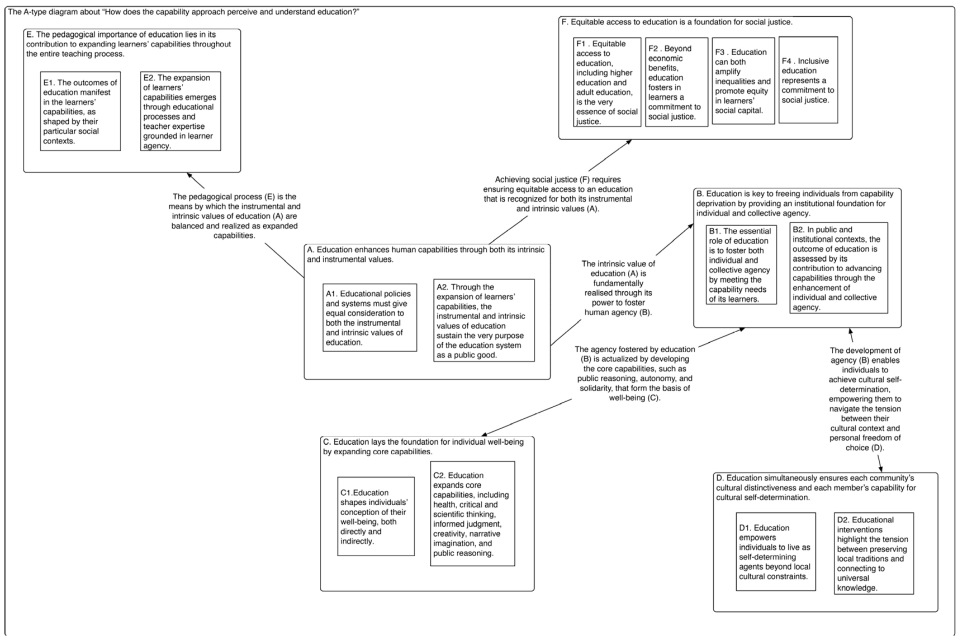
Figure 1. The reconstructed Capability-Driven Digital Education Framework (CDDEF) illustrates its six core theses and their interrelationships. The spatial arrangement of the theses follows the structure of an A-type diagram from the KJ Method, a methodology for synthesising qualitative data (for a detailed explanation of its application, see T. Saito (2025)).
Education 16 00155 g001
Figure 2. The Mechanism of “Scaffold vs. Crutch”: Conditions, Mechanisms, and Outcomes.
Education 16 00155 g002
Table 1. Summary of the 21 papers reviewed in this study.
No.Reference (Author/Year)TypeFocus/Key ThemeMethodology
1Akpınar et al. (2025)Journal ArticleLifelong learning and AI for Sustainable Development Goals (SDGs) in OECD countries.Quantitative (MMQREG, KRLS); Analysis of OECD data (2005–2019)
2Boots et al. (n.d.)Working PaperThe need for “Algorithmic Literacy” as a prerequisite for agency and informed citizenship.Conceptual analysis; Literature review
3Bower et al. (2024)Journal ArticleEducators’ views on how teaching and assessment should change due to GenAI.Mixed methods; Survey (n = 318) and thematic analysis
4de Fine Licht (2025)Journal ArticleResolving value conflicts (e.g., efficiency vs. legality) in public AI governance.Conceptual framework; Case study (Swedish Public Employment Service)
5Dua et al. (2025)Journal ArticleEthical priorities in national AI strategies and their alignment with human capabilities.Content analysis (LDA topic modelling) of 54 national AI plans
6Girija et al. (2024)Journal Article“Frugal innovation” in AI to empower marginalised women and reduce inequality.Qualitative; Interviews with marginalised women in India (n = 25)
7James (2023)Working PaperHuman-centric lifelong learning in the digital age, emphasising agency over skills.Policy analysis; Qualitative insights from expert interviews
8Khullar et al. (2025)Conference PaperGap between worker aspirations and AI evaluation metrics in healthcare.Mixed methods; Design-Based Implementation Research (DBIR)
9Kim et al. (n.d.)Working PaperProtocol for assessing AI “benefits” using Capability Approach indicators.Protocol design; Expert interviews (n = 5)
10Kluge Corrêa and Mönig (2024)White PaperEthical requirements for AI certification (e.g., fairness, sustainability).Normative framework development
11Kouam and Muchowe (2025)Journal ArticleAI’s role in mitigating educational equity gaps and access barriers in Zimbabwe.Qualitative; Interviews with lecturers and students (n = 12)
12Leonelli and Mussgnug (n.d.)Preprint“Convenience AI” in research and its impact on epistemic integrity and labour.Conceptual analysis; Philosophy of science
13London and Heidari (2024)Journal ArticleFormalising “benefit” and “assistance” in AI ethics to avoid paternalism/exploitation.Theoretical modelling; Capability Approach integration
14Muthukrishna et al. (2025)Journal ArticleCultural evolution of AI in education; critique of “techno-fix” approaches (e.g., OLPC).Comparative policy analysis; Case studies (Estonia, Uruguay)
15Pang et al. (2024)Journal ArticleFramework for the interplay between digital technologies and social justice.Theoretical framework development
16Sahebi and Formosa (2025)Journal ArticleGlobal justice implications of AI, focusing on supply chain harms (labour/extraction).Philosophical analysis; Capability Approach application
17Sharma and Acharya (2025)Journal ArticleLeveraging remittances to fund STEM education and build capabilities in the Global South.Theoretical model proposal (Remittance-Induced Development)
18Stephens (2025)Working PaperDeveloping a legal chatbot for women’s inheritance rights in Tanzania.Design science; User evaluation (n = 5)
19Teubner and Ivey (2025)White PaperImpact of “Social AI” on human connection and social capabilities.Conceptual framework; Expert panel discussions
20Van Slyke et al. (2025)Conference Paper“Epistemic injustice” in GenAI and its impact on marginalised knowledge systems.Conceptual analysis
21Xiao and Sun (2025)Journal ArticleLegal protection for “AI for All”; integrating soft and hard laws to address inequality.Legal and policy analysis; Theoretical framework (World-Systems Theory)
Table 2. Matrix of Candidate Indicators for Future Empirical Research.
Thesis (Core Value)Candidate Indicators for Empirical Verification
A. Intrinsic & Instrumental Value
  • Correlation of Well-being & Motivation: The correlation between students’ perceived sense of well-being and their intrinsic motivation for learning in AI-integrated environments.
  • Time Allocation: Amount of time spent on non-instrumental, exploratory learning activities vs. rote efficiency tasks.
B. Agency
  • Justification Ability: Percentage of students who can critically explain and justify decisions made with AI assistance.
  • Agency Rubrics: Scores on “agency-in-use” rubrics assessing active vs. passive AI usage behaviours.
C. Core Capabilities
  • Anxiety & Learner Fulfilment: Deltas in anxiety levels and the sense of fulfilment as a learner when using AI as a “scaffold” (support) vs. a “crutch” (dependency).
  • Critical Thinking: Performance on tasks requiring the identification of AI hallucinations or bias.
D. Cultural Identity
  • AI Usage & Cultural Awareness: The correlation between the form/frequency of AI usage and the degree of awareness of one’s cultural identity.
  • Local Usage: Frequency of access to locally trained/fine-tuned models.
E. Pedagogical Process
  • Shift in Assessment Time: Shifts in teacher time allocation from summative assessment (grading) to formative assessment (personalised feedback/mentoring).
  • AI-Fading: Percentage of lessons designed with “AI-fading” to ensure skill internalisation.
F. Social Justice (Equity)
  • Quality of Use Gap: Differences in “creative vs. rote” AI usage patterns across SES (Socio-Economic Status) groups.
  • Inclusion: Availability and usage rates of AI accommodations for learners with disabilities.
Disclaimer/Publisher’s Note: The statements, opinions and data contained in all publications are solely those of the individual author(s) and contributor(s) and not of MDPI and/or the editor(s). MDPI and/or the editor(s) disclaim responsibility for any injury to people or property resulting from any ideas, methods, instructions or products referred to in the content.