


Abstract
The main objective of the paper is to assess the importance of selected components of digital human capital in shaping the digital transformation capacity of European countries, measured through the Network Readiness Index. The focus is on basic digital skills, ICT specialists and ICT graduates in relation to the Network Readiness Index and its four pillars. The empirical analysis is based on panel data for 27 European countries in 2018–2024. Digital human capital is measured through selected DESI Human Capital indicators, while digital transformation capacity is assessed using the Network Readiness Index. Kendall’s tau correlation analysis and fixed-effects panel regression were applied. The results show that the analyzed components of digital human capital differ in importance. The strongest positive relationship was identified for basic digital skills. In the panel regression model, basic digital skills were positively and statistically significantly associated with the overall NRI, whereas ICT specialists and ICT graduates were not statistically significant. The study provides a differentiated assessment of digital human capital components and their relevance for the digital transformation capacity of European economies. Improving basic digital skills can support digital inclusion, reduce disparities between countries and enhance participation in digital society.
Keywords:
digital human capital; digital transformation capacity; digital skills; ICT specialists; ICT graduates; European economies; digital policy JEL Classification:
O33; J24; O38; C23
1. Introduction
Digital transformation is one of the most important drivers of current economic development, competitiveness and structural change in modern economies. The dynamic expansion of digital technologies affects production systems, labor markets, institutional environments and social interactions, bringing new opportunities but also increasing demands on human capital. In this context, digital skills are increasingly considered a fundamental prerequisite for effective technological adaptation, innovative performance and long-term economic resilience (OECD, 2019, 2023; van Laar et al., 2017).
European countries differ significantly in their ability to reap the benefits of digital transformation. Recent monitoring under the Digital Decade framework confirms that substantial differences persist among EU Member States in digital skills, infrastructure, business digitalization and digital public services (European Commission, 2024). These differences are reflected not only in the level of technological infrastructure or the quality of the institutional environment, but also in the level and structure of digital competences of the population and the digital workforce. While specialized ICT professionals play an important role in supporting technological development and innovation, the widespread dissemination of basic digital skills in society can be an equally important factor influencing the overall digital readiness of economies.
Recent studies also emphasize the economic relevance of digital transformation in the European context. Digitalization is increasingly associated with economic growth, innovation capacity, labor productivity and competitiveness (Magoutas et al., 2024). From this perspective, digital readiness should be understood not only as a technological phenomenon, but also as an economic capability shaped by human capital, institutions and the ability of countries to absorb and use digital technologies. In this study, digital readiness refers to the capacity of countries to adopt, use and benefit from digital technologies.
Recent empirical studies confirm that digital human capital represents an important factor in explaining differences in digital transformation and economic performance across European countries. DESI-based research has shown that digital skills, ICT specialists and ICT graduates are closely related to the broader level of digital transformation performance, while persistent differences between leading and lagging countries remain visible (Tran et al., 2023; Kovács et al., 2022; Huňady et al., 2024). However, the relationship is not purely linear, as digital readiness is also shaped by technological infrastructure, innovation capacity, R&D intensity, income level and institutional conditions (Švarc et al., 2021; Roszko-Wójtowicz et al., 2024). Therefore, digital human capital should be understood as one component of a wider system of capabilities that enables countries to benefit from digital transformation.
Despite the growing interest in the issue of digital transformation, empirical research on the differential importance of individual digital skills indicators in explaining differences in countries’ digital readiness remains relatively limited. Existing studies often focus either on aggregate indices of digitalization or on specific segments of the digital labor market, paying less attention to the interaction between the population’s basic digital competences, specialized digital human capital, and their relationship to broader structural aspects of the digital transformation of economies (Švarc et al., 2021; Kovács et al., 2022; Tran et al., 2023).
The aim of the paper is to assess the role of selected components of digital human capital in shaping the digital transformation capacity of European countries, with particular attention paid to the differentiated importance of basic digital skills, ICT specialists and ICT graduates. Digital transformation capacity is operationalized through the Network Readiness Index and its four pillars. The paper contributes to a better understanding of digital human capital as a multidimensional factor of digital transformation capacity by providing comparative empirical evidence based on panel data for European countries in the period 2018–2024.
2. Theoretical Background
The theoretical framework of the paper adopts an interdisciplinary perspective on digital transformation, understood as a complex process involving technological innovation, the development of digital human capital and the adaptation of the institutional environment (Švarc et al., 2021; Kovács et al., 2022; Roszko-Wójtowicz et al., 2024). Therefore, examining the digital readiness of economies requires taking into account multiple analytical perspectives, including the macroeconomic determinants of digitalization, the structure of the population’s digital competences, and the ability of countries to transform technological progress into measurable economic and social benefits.
In this context, the theoretical part of the paper focuses on two key areas. First, attention is paid to the concept of digital readiness and its measurement using the Network Readiness Index. Then, the role of digital skills as a component of digital transformation is analyzed.
2.1. Network Readiness Index as a Proxy for Digital Transformation Capacity
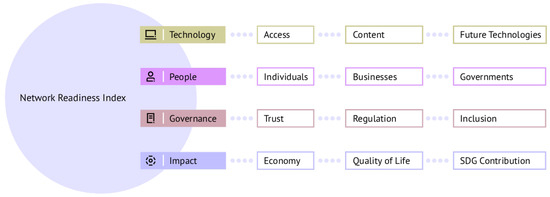
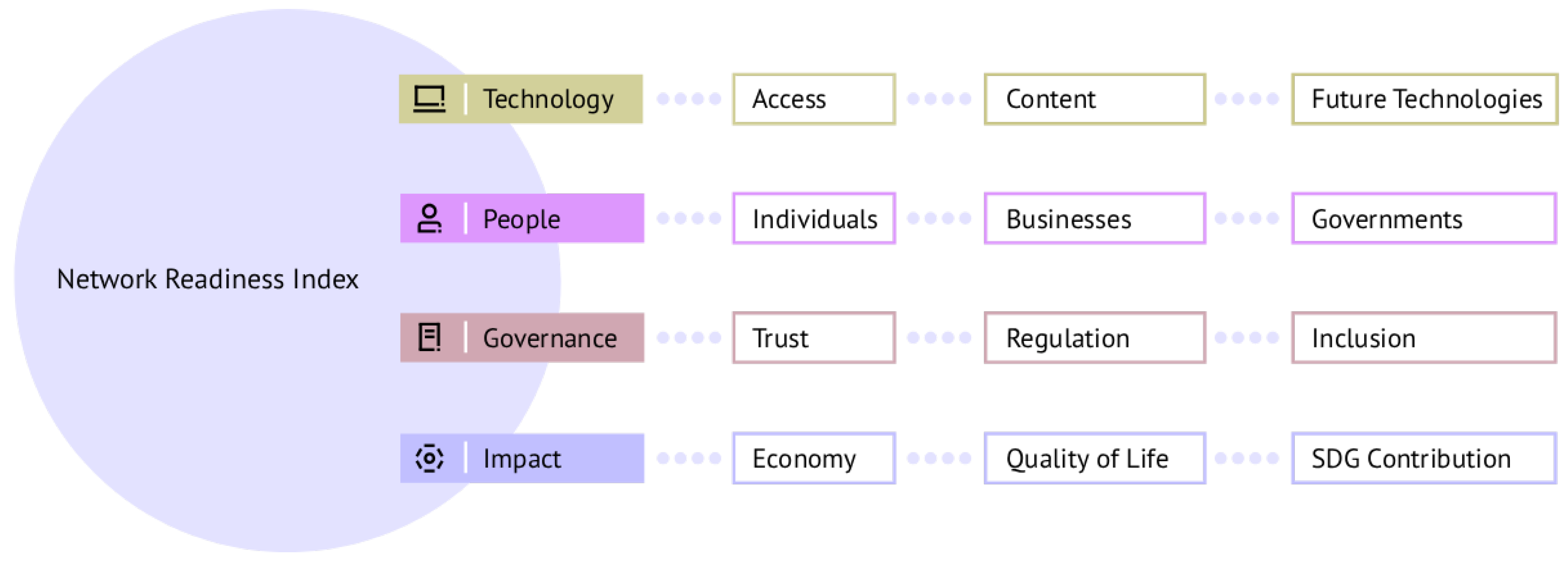
Digital readiness of economies is a comprehensive concept reflecting the ability of countries to use digital technologies to support economic growth, innovation and social development. One of the most commonly used composite indicators to assess this ability is the Network Readiness Index (NRI), which provides a multidimensional view of the determinants of digital transformation and focuses on assessing the technological, institutional and socio-economic prerequisites for digitalization through four main pillars: Technology, People, Governance and Impact. This framework allows us to analyze not only the availability of digital infrastructure and technological resources, but also the readiness of society to use digital innovations and the ability of economies to transform technological advances into measurable economic and social benefits (Escalona Reynoso & Lanvin, 2026). Digital readiness is associated with the competitiveness of economies, productivity and the ability to adapt to technological change. Empirical studies show that countries with higher levels of digital readiness perform better in terms of innovation, entrepreneurial dynamism and public service efficiency (Dutta & Lanvin, 2019; Chakravorti et al., 2025). For this reason, the NRI represents a relevant analytical tool for examining the structural determinants of digital transformation.
In empirical studies, the Network Readiness Index is often interpreted as a comprehensive measure of countries’ capacity to use digital technologies effectively. Compared with narrower digitalization indicators, the NRI captures not only technological infrastructure, but also the readiness of individuals, businesses and governments; the quality of the regulatory and institutional environment; and the economic and social impacts of digital transformation (Kleszcz & Nowak, 2020; Dutta & Lanvin, 2019). This makes it suitable for analyzing the relationship between digital human capital and the broader readiness of economies for digital development.
The conceptual structure of the Network Readiness Index, including its four core pillars, is illustrated in Figure 1.
Figure 1.
Conceptual structure of the Network Readiness Index and its four pillars. Source: Adapted from Escalona Reynoso and Lanvin (2026).
2.2. Digital Skills as a Component of Digital Transformation
Digital skills are a key component of digital human capital and play a fundamental role in shaping the ability of individuals, businesses and public institutions to adapt to technological change. In a broader sense, digital skills include the ability to use digital technologies to obtain information, communicate, collaborate, create digital content, ensure safety and solve problems in digital environments (van Laar et al., 2017; Vuorikari et al., 2022).
Digital skills can be seen as a multi-level concept encompassing basic digital competencies of the population, advanced technical skills and specialized ICT capabilities. While high-end digital competencies support technological innovation and the development of digital industries, the broad distribution of basic digital skills in society increases the absorptive capacity of economies and enables more efficient use of digital infrastructure and digital services (OECD, 2019).
In empirical research on digital transformation, digital skills are often operationalized through composite indicators capturing different aspects of digital human capital. In the European context, one of the most important analytical tools is the Digital Economy and Society Index (DESI), which assesses the progress of European Union countries in digitalization through several thematic dimensions. One of its key components is the Human Capital dimension, aimed at assessing the level of digital skills of the population and the availability of a specialized digital workforce (European Commission, 2023). This dimension includes indicators reflecting the level of basic digital competencies of the population, the representation of ICT specialists in the labor market, as well as the structural characteristics of the digital workforce, including gender aspects. The aforementioned indicators provide a relevant empirical basis for examining the relationships between digital skills and broader processes of digital transformation of economies. DESI-based studies further confirm that the digital performance of European countries is closely related to broader processes of competitiveness, innovation and sustainable economic development (Paraschiv et al., 2024).
Previous empirical research has used DESI as a key framework for assessing digital transformation in the European Union. DESI-based studies have shown that countries with higher levels of digital skills tend to achieve stronger digital transformation performance, although convergence in digital skills across EU member states has not been fully confirmed (Kovács et al., 2022; Huňady et al., 2024). In this context, basic digital skills are particularly important for digital inclusion and for the use of digital public services, e-commerce, online banking and e-health (Coban & Căpăţînă, 2023). At the same time, ICT specialists and ICT graduates represent more specialized components of digital human capital that may support innovation, business digitalization and the implementation of advanced digital solutions (OECD, 2022; Tran et al., 2023; Roszko-Wójtowicz et al., 2024). This distinction is also important from a labor-market perspective, as the employment effects of digitalization depend not only on digital intensity itself, but also on the task structure and routineness of occupations, while demand for digital skills continues to increase across a broad range of occupations (Cirillo et al., 2021; Cedefop, 2023a).
Empirical studies also point to the importance of socio-demographic determinants of digital skills, with age, education level and income of individuals being among the most important. Higher levels of education are generally associated with a higher probability of effective use of digital technologies, suggesting a strong link between investments in human capital and the ability of economies to adapt to technological change (Chyláková & Huňady, 2025).
From a macroeconomic and regional perspective, digital skills are associated with productivity, innovation potential and the ability of economies to transform technological investments into measurable economic and social benefits. Evidence from European regions also indicates that workforce digital skills are positively associated with technological diversification and innovation capacity (Montresor & Quatraro, 2021). In this context, digital skills can be considered an important determinant of countries’ digital readiness, as they condition the effective use of digital infrastructure, the development of digital services and the overall ability of society to participate in the digital economy. Exploring the differential impact of individual digital skills indicators on the level of digital readiness represents a relevant research challenge from the perspective of economic policy, regional development and the formation of digital transformation strategies.
Based on the above theoretical foundations, digital skills can be considered an important factor influencing the digital readiness of economies. However, the differentiated role of individual digital skills indicators remains insufficiently examined, especially in the context of European countries. Although existing studies confirm the importance of digital skills for digital transformation, they often analyze digital human capital either as an aggregate dimension or as part of a broader composite index (Švarc et al., 2021; Kovács et al., 2022; Tran et al., 2023). Less attention has been paid to distinguishing between the effects of the general digital skills of the population and more specialized labor-market indicators, such as ICT specialists and ICT graduates. This distinction is important because broad digital literacy may support digital inclusion and the everyday use of digital technologies, while specialized ICT human capital may affect innovation, business digitalization and the implementation of advanced digital solutions (Coban & Căpăţînă, 2023; Roszko-Wójtowicz et al., 2024). This study addresses this gap by comparing these three components of digital human capital in relation to the overall NRI and its four pillars. Recent evidence also suggests that skills adequacy plays an important role in linking digitalization with innovation and sustainable development, which further supports the need to distinguish between different forms of digital human capital (Rindasu et al., 2023).
For this reason, the empirical part of the paper assesses the role of selected components of digital human capital in shaping digital transformation capacity with particular attention paid to the differentiated importance of basic digital skills, ICT specialists and ICT graduates.
2.3. Hypothesis Development
Basic digital skills represent the broadest component of digital human capital, as they enable individuals to use digital technologies, access online services and participate effectively in the digital economy. Their widespread development supports digital inclusion and strengthens the absorptive capacity of economies by allowing a larger share of the population to adopt and use digital solutions. Previous studies indicate that higher levels of basic digital skills are associated with stronger digital transformation performance, more intensive use of digital public and private services and a higher overall level of digital readiness (Kovács et al., 2022; Coban & Căpăţînă, 2023; Huňady et al., 2024). Based on these findings, the following hypothesis was formulated:
H1.
There is a statistically significant relationship between the level of basic digital skills of the population and the overall value of the NRI.
ICT specialists represent a more specialized component of digital human capital, as they contribute to the development, implementation, maintenance and security of advanced digital technologies and information systems (Cedefop, 2023b). Their presence in the labor market supports innovation, business digitalization and the creation of technologically intensive activities. Previous research indicates that the availability of ICT specialists is associated with stronger digital transformation performance, innovation capacity and the ability of economies to absorb and use digital technologies effectively (Švarc et al., 2021; Tran et al., 2023; Roszko-Wójtowicz et al., 2024). Based on these findings, the following hypothesis was formulated:
H2.
There is a statistically significant relationship between the representation of ICT specialists in employment and the overall value of the NRI.
The Network Readiness Index captures several distinct dimensions of digital transformation through its Technology, People, Governance and Impact pillars. Since individual components of digital human capital perform different functions within the digital economy, their relationships with these pillars may also differ. Basic digital skills primarily support broad participation in digital society and the use of digital services, whereas ICT specialists and ICT graduates are more closely associated with technological development, innovation and the availability of specialized knowledge. Previous studies suggest that digital human capital does not affect all dimensions of digital transformation uniformly, as its contribution depends on the interaction between skills, technological infrastructure, institutional quality and innovation capacity (Kovács et al., 2022; Rindasu et al., 2023; Roszko-Wójtowicz et al., 2024). Based on these considerations, the following hypothesis was formulated:
H3.
The relationships between individual digital skills indicators and the pillars of the NRI vary in terms of their intensity.
ICT graduates represent a potential source of specialized digital human capital and may contribute to the future development of the digital workforce. However, the relationship between the share of ICT graduates and the digital transformation capacity of economies may depend on the ability of labor markets to absorb graduates, provide appropriate employment opportunities and translate their qualifications into innovation and technological development. Previous studies indicate that the contribution of ICT graduates to digital transformation may be indirect, delayed or conditioned by broader structural factors, including labor-market demand, technological infrastructure and innovation capacity (Tran et al., 2023; Roszko-Wójtowicz et al., 2024; Rindasu et al., 2023). Based on these findings, the following hypothesis was formulated:
H4.
There is a statistically significant relationship between the share of ICT graduates and the overall value of the Network Readiness Index.
3. Methods
The aim of the paper is to assess the role of selected components of digital human capital in shaping the digital transformation capacity of European countries, with particular attention paid to the differentiated importance of basic digital skills, ICT specialists and ICT graduates. Digital transformation capacity is operationalized through the Network Readiness Index and its four pillars. The empirical analysis is based on a panel data set covering 27 European countries in the period 2018–2024, with the selection of countries conditioned by the availability of consistent time series for all input indicators. The data used in the analysis were obtained from the publicly available DESI database of the European Commission (2026) and the NRI database of the Portulans Institute (Escalona Reynoso & Lanvin, 2026). The research sample includes 189 observations, with complete data for all analyzed variables.
Digital skills are represented in the paper by three indicators taken from the Human Capital dimension of the Digital Economy and Society Index (DESI), namely:
- The share of individuals with at least basic digital skills;
- The number of ICT specialists in employment expressed in thousands of individuals;
- The share of ICT graduates expressed as a percentage of all graduates.
The level of digital readiness of economies is measured in the paper using the Network Readiness Index (NRI), which is a comprehensive composite indicator capturing the technological, institutional and societal aspects of digital transformation.
The analysis is based on the total value of the NRI as well as the values of its four pillars:
- Technology (NRI_PIL_1)—reflecting the availability and level of digital infrastructure and technological resources;
- People (NRI_PIL_2)—capturing digital competencies and readiness of individuals;
- Governance (NRI_PIL_3)—representing the regulatory and institutional environment supporting digitalization;
- Impact (NRI_PIL_4)—expressing the economic and social effects of digital transformation.
Taking into account the pillar structure of the index allows us to identify differentiated links between individual digital skills indicators and structural components of countries’ digital readiness.
To ensure a clear interpretation of the empirical analysis, Table 1 provides an overview of the variables used in the study, including their meaning, source and role in the empirical model.
Table 1.
Variables used in the empirical analysis.
The selected DESI indicators capture both the general digital competences of the population and the more specialized components of digital human capital represented by ICT specialists and ICT graduates. These three indicators were selected because they represent complementary levels of digital human capital. Basic digital skills capture the general digital capacity of the population, ICT specialists reflect the current stock of specialized digital labor in the economy, and ICT graduates represent the potential future supply of ICT-related human capital. Their combined use therefore allows the analysis to distinguish between broad population-level digital competences, existing labor-market capacity and the educational pipeline of specialized digital skills. Other DESI Human Capital indicators were not included because they either overlap conceptually with the selected variables, are not available consistently for the entire 2018–2024 period, or capture narrower demographic or structural characteristics that fall outside the main objective of the study. This distinction is important because these components may influence digital transformation capacity through different mechanisms.
Focusing on European countries allows us to analyze the relationships between digital skills and digital readiness in a relatively homogeneous economic and institutional environment, thereby reducing the impact of the extreme heterogeneity typical of global comparisons.
To achieve the main objective of the contribution, the following sub-objectives were set:
- Analyze the level and variability of digital skills in the analyzed European countries,
- Identify statistically significant relationships between digital skills and the overall value of the Network Readiness Index,
- Explore the differentiation of relationships between digital skills indicators and the pillars of the NRI,
- Assess the relative importance of the digital skills of the population and the digital workforce for the level of digital readiness of economies.
To test the hypotheses formulated in Section 2.3, Kendall’s tau correlation analysis and panel regression analysis were applied.
Kendall’s tau correlation analysis was used to identify the direction and intensity of relationships between the analyzed variables. The statistical significance of individual correlation coefficients was assessed at the significance level of p < 0.05. The choice of the aforementioned statistical tool was based on the nature of the analyzed data, in particular the presence of uneven distribution, extreme values, and different levels of variability between variables. Kendall’s tau is particularly suitable for ordinal or non-normally distributed data and has been applied in comparative studies examining relationships between digitalization and economic indicators across EU countries (Kendall, 1938; Brodny & Tutak, 2022a, 2022b).
The contribution of the paper lies in the comparative examination of several indicators of digital skills and their relationship to the structural components of the digital readiness of economies, thereby contributing to a better understanding of the factors determining the successful digital transformation of countries.
In order to complement the results of the correlation analysis and assess the relative importance of individual digital skills indicators, the analysis was extended to include a panel regression analysis. The total value of the Network Readiness Index was used as the dependent variable, while the explanatory variables were three digital skills indicators taken from the DESI. The panel nature of the data allowed us to take into account cross-sectional differences between countries and the time evolution of the analyzed indicators. The use of a fixed-effects model also allowed us to eliminate the influence of time-invariant country-specificities. The model was estimated using a panel specification with fixed effects, using robust standard errors clustered at the country level.
Before estimating the final panel regression model, several diagnostic tests were performed in order to select the appropriate model specification. The Breusch–Pagan test was used to assess whether a panel data model was more appropriate than pooled OLS (Breusch & Pagan, 1980). The robust test for differing group intercepts was applied to verify the relevance of country-specific effects. The Wald joint test on time dummies was used to assess the presence of time effects. The Hausman specification test was applied to compare fixed-effects and random-effects models and to determine whether the individual effects were correlated with the explanatory variables (Hausman, 1978). The importance of these tests for selecting among pooled OLS, random-effects and fixed-effects models has also been emphasized in applied panel-data research using European data (Onali et al., 2017). Robust standard errors clustered at the country level were used to account for possible heteroskedasticity and within-country correlation over time.
Descriptive statistics presented in Table 2 show a relatively high average level of basic digital skills in the analyzed countries (mean = 85.5%), while the variability of this indicator is relatively low. On the contrary, the indicator measuring the number of ICT specialists in employment shows significant dispersion (coefficient of variation exceeding 130%), which indicates significant structural differences between countries in the area of the digital labor market.
Table 2.
Descriptive statistics of digital skills indicators and NRI (2018–2024).
The overall level of digital readiness measured by the NRI, as well as the values of its individual pillars, shows a medium degree of variability, suggesting that differences in the level of digital readiness between countries exist, but they are not as pronounced as differences in the capacity of the digital workforce. This heterogeneity may reflect the different stages of the digital transformation of economies and their ability to create and absorb a highly skilled digital workforce.
4. Results
The results of the empirical analysis provide insight into the relationships between digital skills and the digital readiness of European countries. In the first step, the results of the correlation analysis are analyzed, which capture the direction and intensity of the relationships between the monitored variables. Subsequently, the results of the panel regression analysis are presented, which allows identifying the relative importance of individual factors while taking into account the temporal dynamics and heterogeneity between countries.
Over time, a moderate increase in the level of basic digital skills can be observed in most of the analyzed countries. On the contrary, the indicator of the representation of ICT specialists shows significant variability between countries and over time, which points to persistent structural differences in the digital labor market. The level of digital readiness measured by the NRI shows a relatively stable development with slight year-on-year fluctuations.
When comparing countries across the board, significant differences can be identified. The countries with the highest levels of digital skills and digital readiness in the long term are mainly Nordic countries, such as Denmark, Finland and Sweden, as well as the Netherlands. Conversely, the lowest values are mainly achieved by countries in South-Eastern Europe, especially Bulgaria and Romania. These differences point to the persistent heterogeneity in the level of digital transformation within Europe.
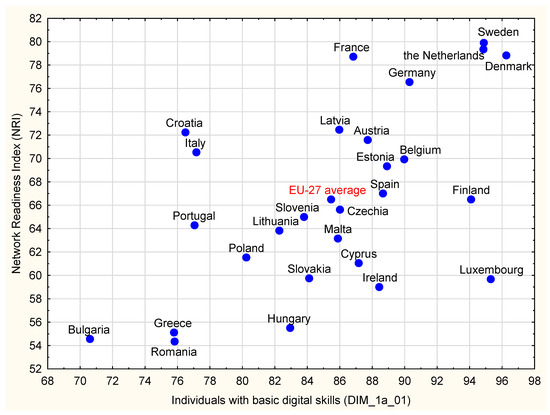
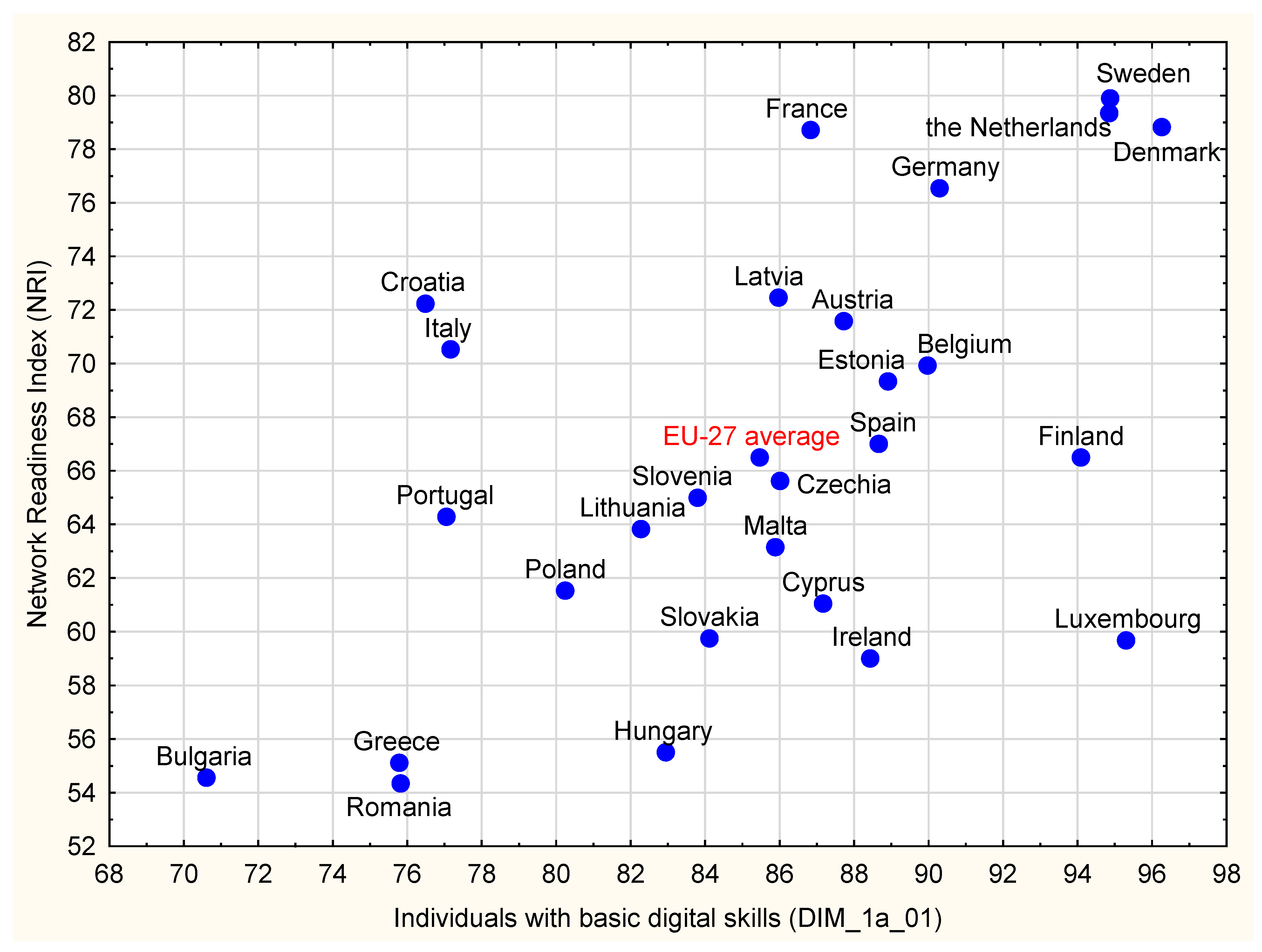
To complement the descriptive assessment and provide a clearer visual representation of cross-country differences, Figure 2 illustrates the relationship between the average level of basic digital skills and the average value of the Network Readiness Index in European economies. The figure enables the identification not only of the general association between these variables, but also of the specific position of individual countries.
Figure 2.
Basic digital skills and digital transformation capacity across European economies. Source: Authors’ own elaboration based on European Commission and Portulans Institute data.
Figure 2 indicates a positive cross-country association between the average level of basic digital skills and the average value of the Network Readiness Index. Countries such as Denmark, the Netherlands, Sweden, France and Germany combine relatively high levels of both indicators, whereas Bulgaria, Romania and Greece are positioned at the lower end of the distribution. Several countries, including Luxembourg, Ireland and Finland, do not fully follow the general pattern, suggesting that digital transformation capacity is shaped not only by basic digital skills but also by broader technological, institutional and economic conditions.
4.1. Evaluation of Correlation Analysis Results
Kendall’s tau correlation analysis was used to identify the underlying relationships between the observed variables, the results of which are presented in Table 3.
Table 3.
Kendall’s tau correlations between digital skills indicators and NRI.
The results of Kendall’s tau correlation analysis indicate the presence of statistically significant relationships between selected digital skills indicators and the level of digital readiness of European countries.
The strongest positive relationship was identified between the share of individuals with at least basic digital skills (DIM_1a_01) and the Governance pillar of the NRI (NRI_PIL_3; τ = 0.3948). This pillar reflects trust, regulation and inclusion in the digital environment. The result suggests that a higher level of basic digital skills is associated with institutional conditions that facilitate secure, inclusive and effective participation in the digital economy. A statistically significant, although weaker, positive relationship was also identified between basic digital skills and the overall NRI (τ = 0.2480), as well as with the remaining NRI pillars.
The number of ICT specialists in employment (DIM_1b_05) also shows positive and statistically significant correlations with the NRI (τ = 0.2372), with relatively stronger links identified in relation to the first and fourth pillars of the NRI. This pattern suggests that ICT specialists are particularly associated with the Technology (τ = 0.2536) and Impact (τ = 0.3344) pillars of the NRI.
On the contrary, the indicator of ICT graduates (DIM_1b_06) does not show a statistically significant relationship with the overall NRI and in most cases is associated with low to negative values of correlation coefficients. This result may indicate a mismatch between the supply of ICT graduates and their effective application in the labor market.
Overall, the findings show that the three digital human capital indicators have heterogeneous relationships with digital readiness. Basic digital skills show the strongest association with the Governance pillar (τ = 0.3948) and a slightly stronger relationship with the overall NRI (τ = 0.2480) than ICT specialists (τ = 0.2372). ICT specialists, however, show stronger associations with the Technology and Impact pillars than basic digital skills. ICT graduates display weak, negative or statistically non-significant relationships across most dimensions. This differentiated pattern supports H3.
4.2. Results of Panel Regression Analysis
Before interpreting the results of the panel regression analysis, diagnostic tests were performed to determine the appropriate model specification. The results of these tests are presented in Table 4.
Table 4.
Diagnostic Tests for Panel Model Specification.
The Breusch–Pagan test rejected the null hypothesis of zero unit-specific variance, indicating that a panel data model was more appropriate than pooled OLS. The robust test for differing group intercepts confirmed statistically significant differences across countries, supporting the inclusion of country fixed effects. The Wald joint test on time dummies indicated significant common time effects, while the Hausman specification test favored the fixed-effects model over the random-effects alternative. Based on these results, the final specification was estimated as a two-way fixed-effects model with country and time effects and robust standard errors clustered at the country level.
The results of the selected two-way fixed-effects model are presented in Table 5.
Table 5.
Results of the two-way fixed-effects panel regression analysis.
The estimated panel model suggests that the share of individuals with at least basic digital skills (DIM_1a_01) is positively and statistically significantly associated with the digital readiness of European economies. Specifically, a one-percentage-point increase in the share of individuals with at least basic digital skills is associated with an estimated increase of 0.1651 points in the overall NRI, holding the other variables and fixed effects constant. The estimated coefficient also suggests that the growth of the population’s digital competencies is associated with an increase in the level of digital readiness of countries. This finding supports the relevance of widespread digital literacy for digital transformation and for the effective use of digital infrastructure and technological resources.
Conversely, the number of ICT specialists in employment (DIM_1b_05) did not appear to be a statistically significant factor influencing the overall level of digital readiness in the fixed effects model. Therefore, the positive coefficient should not be interpreted as evidence of a systematic effect on the overall NRI. Although the presence of a skilled digital workforce plays an important role in supporting innovation and technological development, the non-significant coefficient may be related to broader structural conditions, such as institutional quality, technological infrastructure and the capacity of economies to absorb new technologies.
Similarly, the share of ICT graduates (DIM_1b_06) does not show a statistically significant relationship with the overall level of digital readiness. Accordingly, the estimated positive coefficient cannot be distinguished statistically from zero and should be interpreted with caution. This result suggests that the supply of ICT graduates alone is not a sufficient prerequisite for increasing the digital readiness of countries unless it is accompanied by their effective application in the economy.
The inclusion of time effects also points to the significant dynamics of digital transformation in the analyzed period. The development of digital readiness was likely influenced by common technological trends, policy initiatives and macroeconomic factors that operated across all countries.
Overall, the results of the panel regression analysis suggest that while specialized digital human capital is an important component of digital ecosystems, a broader distribution of basic digital skills in the population is a more stable and systematic factor supporting the digital readiness of European economies. The relatively high value of within R2 also suggests that the model can explain a significant amount of within-country variability in digital readiness over time. These findings provide a basis for a deeper interpretation of the results in the following discussion.
Based on the correlation and panel regression results, hypothesis H1 was supported, as basic digital skills showed a statistically significant relationship with the overall NRI in both analyses. Hypothesis H2 received partial support: the number of ICT specialists was positively and significantly correlated with the overall NRI, but its coefficient was not statistically significant in the fixed-effects model. Hypothesis H3 was supported, as the strength of the relationships between the digital skills indicators and the individual NRI pillars varied. Hypothesis H4 was not supported, because the share of ICT graduates did not show a statistically significant relationship with the overall NRI in either the correlation analysis or the panel regression model.
5. Discussion
The results of the empirical analysis reveal differentiated relationships between the selected digital skills indicators and the digital readiness of European economies. The correlation analysis identified positive and statistically significant relationships for basic digital skills and ICT specialists, whereas the relationships involving ICT graduates were generally weak, negative or statistically non-significant. The panel regression analysis provided a more rigorous assessment of the relative importance of these indicators by accounting for unobserved country heterogeneity and common time effects.
The key finding is that the basic digital skills of the population are positively and statistically significantly associated with the digital readiness of economies. This result is in line with theoretical approaches emphasizing the importance of inclusive development of digital human capital as a prerequisite for effective digitalization. Broad digital literacy not only enables individuals to adapt to technological change, but also supports the absorptive capacity of economies, thereby creating favorable conditions for the diffusion of innovations and productivity growth.
This finding is consistent with previous studies emphasizing that basic digital skills are essential for digital inclusion and for the effective use of digital public services, e-commerce, online banking and other digital tools (Coban & Căpăţînă, 2023). From this perspective, general digital literacy strengthens the absorptive capacity of economies and allows a wider part of the population to participate in digital transformation. The results therefore suggest that the broad diffusion of digital skills may be more directly connected with national digital readiness than the mere presence of specialized ICT labor.
In contrast, indicators focused on the specialized digital workforce did not show a statistically significant association with the level of digital readiness in the panel model. This result may indicate that the presence of ICT specialists may not automatically lead to an increase in the digital readiness of countries, unless it is accompanied by an adequate institutional framework, technological infrastructure and the ability of the economy to effectively implement digital solutions. One possible explanation is that the relationships involving specialized digital human capital may emerge with a time lag or may depend on broader structural conditions that are not fully captured by the present model.
An interesting finding is the absence of a statistically significant relationship between the share of ICT graduates and the digital readiness of economies. This result suggests that the supply of ICT graduates alone is not a sufficient prerequisite for increasing digital readiness unless it is accompanied by their effective application in the economy. One possible explanation is that the relationship between ICT graduates and digital readiness depends on broader structural conditions, such as labor-market absorption capacity, institutional quality and technological infrastructure.
This result does not necessarily mean that ICT specialists and ICT graduates are unimportant for digital transformation. Rather, their effect may depend on the ability of economies to absorb specialized labor, create high-quality digital jobs and transform technical expertise into innovation and business digitalization. Previous studies suggest that ICT specialists are closely linked to ICT development and innovation performance, but the strength of this relationship may depend on technological infrastructure, institutional quality, R&D intensity and the structure of the business sector (Tran et al., 2023; Roszko-Wójtowicz et al., 2024). The non-significant effect of ICT graduates may also reflect a time lag between education and labor-market impact, as well as potential mismatches between graduates’ skills and the needs of the digital economy. This interpretation is consistent with the view that the contribution of specialized digital human capital depends on the broader innovation ecosystem, institutional quality, technological infrastructure and the labor market’s capacity to absorb and effectively use digital competences (Švarc et al., 2021; Roszko-Wójtowicz et al., 2024; Rindasu et al., 2023).
The significance of the time effects further indicates that digital transformation was influenced by common external factors extending beyond individual country characteristics. Technological progress, European policy initiatives in the field of digitalization, or macroeconomic shocks could fundamentally shape the trajectory of digital readiness across Europe during the analyzed period.
Overall, the results contribute to a better understanding of the factors associated with digital transformation by highlighting the differing roles of broad digital competencies and specialized digital human capital. While a highly skilled digital workforce remains important for technological development and innovation performance, the systematic improvement of digital skills across the population appears to be particularly relevant for strengthening the overall digital readiness of economies. The results thus point to the need to perceive digital transformation as a complex process in which not only technological progress and specialized human capital play a key role, but especially the systematic increase in the digital competencies of the entire society.
5.1. Theoretical Implications
The findings extend the existing literature on digital human capital by showing that its individual components do not contribute to digital transformation capacity in the same way. The statistically significant association of basic digital skills suggests that broad digital literacy should be understood not only as a social inclusion factor, but also as a structural component of national digital readiness. In contrast, the non-significant effects of ICT specialists and ICT graduates in the fixed-effects model indicate that specialized digital human capital may influence digital transformation indirectly, through innovation systems, institutional quality, technological infrastructure and labor-market absorption capacity. These results therefore support a differentiated understanding of digital human capital and highlight the importance of distinguishing between general digital competences and specialized ICT-related capabilities, in line with previous studies emphasizing the role of institutional quality, innovation systems and labor-market absorption in shaping the effects of digital human capital (Švarc et al., 2021; Roszko-Wójtowicz et al., 2024; Rindasu et al., 2023).
5.2. Practical and Policy Implications
The findings have direct implications for digital policy. Strategies aimed at strengthening national digital transformation capacity should not focus exclusively on the development of highly specialized ICT expertise. Public policies should therefore support digital education, lifelong learning, reskilling programs and inclusive access to digital services (Coban & Căpăţînă, 2023; Huňady et al., 2024). A balanced policy approach combining the development of specialized ICT human capital with the systematic improvement of basic digital skills may help reduce digital divides, strengthen participation in the digital economy and increase the capacity of European countries to benefit from technological change. Although ICT specialists and ICT graduates remain essential for innovation, cybersecurity, advanced digital services and business digitalization (Tran et al., 2023; Roszko-Wójtowicz et al., 2024), the results indicate that a broader diffusion of basic digital skills across the population is equally important.
5.3. Research Limitations
Several limitations should be considered when interpreting the findings. First, the analysis is based on aggregated country-level indicators, which do not capture differences between sectors, firms or population groups. Second, the selected DESI variables represent only specific dimensions of digital human capital and therefore cannot fully reflect its qualitative aspects. Third, the relatively short period from 2018 to 2024 may limit the identification of delayed effects, particularly in the case of ICT graduates and specialized digital labor. Finally, although the fixed-effects specification controls for time-invariant country characteristics and common time shocks, other time-varying factors may still influence national digital transformation capacity.
5.4. Future Research Agenda
Future research could extend the present analysis in several directions. A longer time horizon would make it possible to examine delayed effects of ICT education and labor-market absorption more accurately. Further studies could also compare groups of countries according to their level of digital development, income, innovation capacity or institutional quality. At the microeconomic level, firm-level or individual-level data could provide a more detailed understanding of how digital skills are translated into technology adoption, productivity and innovation. Sectoral analyses may also reveal whether the contribution of ICT specialists and ICT graduates differs across industries with varying levels of digital intensity.
6. Conclusions
The paper assessed the role of selected components of digital human capital in shaping the digital transformation capacity of European countries in the period 2018–2024. Empirical analysis based on panel data pointed to the differentiated importance of individual components of digital human capital for the process of digital transformation of economies.
The results of both correlation and panel regression analyses showed that the basic digital skills were positively and statistically significantly associated with the digital readiness of countries. This result suggests that the broad diffusion of digital competencies in society may create favorable conditions for the effective use of digital technologies, support the diffusion of innovation and enhance the adaptive capacity of economies in an environment of rapid technological change.
Conversely, indicators focused on the specialized digital workforce, including the representation of ICT specialists and the share of ICT graduates, did not show statistically significant associations with the overall level of digital readiness in the panel model. This result suggests that the digital transformation of economies is conditioned by a wider range of factors, in particular the quality of the institutional environment, investments in digital infrastructure and the ability to effectively use a digitally skilled workforce.
The paper contributes to a better understanding of the factors associated with digital transformation and highlights the relevance of inclusive digital skills development for strengthening the digital readiness of European economies. The results also suggest that systematically strengthening the digital competencies of the population is an important factor supporting the resilience and long-term competitiveness of economies.
Author Contributions
Conceptualization, B.S. and M.M.; methodology, B.S.; software, B.S.; validation, B.S., M.M. and D.R.K.; formal analysis, B.S.; investigation, B.S. and M.M.; resources, B.S. and M.M.; data curation, B.S.; writing—original draft preparation, B.S. and M.M.; writing—review and editing, B.S., M.M. and D.R.K.; visualization, B.S. and D.R.K.; supervision, B.S.; project administration, B.S.; funding acquisition, B.S. All authors have read and agreed to the published version of the manuscript.
Funding
This research was funded by Cultural and Educational Grant Agency of the Ministry of Education, Research, Development and Youth of the Slovak Republic, grant No. 014PU-4/2024 KEGA, and by the Scientific Grant Agency of the Ministry of Education, Research, Development and Youth of the Slovak Republic and the Slovak Academy of Sciences, grant No. 1/0564/25 VEGA.
Institutional Review Board Statement
Not applicable.
Informed Consent Statement
Not applicable.
Data Availability Statement
The data analyzed in this study are publicly available from the European Commission’s Digital Decade DESI visualization tool at https://digital-decade-desi.digital-strategy.ec.europa.eu/ (accessed on 22 April 2026) and from the Network Readiness Index database of the Portulans Institute at https://networkreadinessindex.org/ (accessed on 18 March 2026).
Conflicts of Interest
The authors declare no conflict of interest.
Abbreviations
The following abbreviations are used in this manuscript:
| NRI | Network Readiness Index |
| DESI | Digital Economy and Society Index |
| ICT | Information and Communication Technology |
References
- Breusch, T. S., & Pagan, A. R. (1980). The Lagrange multiplier test and its applications to model specification in econometrics. The Review of Economic Studies, 47(1), 239–253. [Google Scholar] [CrossRef] [Scilit]
- Brodny, J., & Tutak, M. (2022a). Analyzing the level of digitalization among the enterprises of the European Union member states and their impact on economic growth. Journal of Open Innovation: Technology, Market, and Complexity, 8(2), 70. [Google Scholar] [CrossRef] [Scilit]
- Brodny, J., & Tutak, M. (2022b). Digitalization of small and medium-sized enterprises and economic growth: Evidence for the EU-27 countries. Journal of Open Innovation: Technology, Market, and Complexity, 8(2), 67. [Google Scholar] [CrossRef] [Scilit]
- Cedefop. (2023a). Going digital means skilling for digital. Publications Office of the European Union. [Google Scholar] [CrossRef] [PubMed]
- Cedefop. (2023b). ICT professionals: Skills opportunities and challenges—2023 update. European Centre for the Development of Vocational Training. [Google Scholar]
- Chakravorti, B., Chaturvedi, R. S., Filipovic, C., & Niu, X. (2025). Digital planet 2025: From the COVID shock to the AI surge: How 125 digital economies around the world are evolving and changing. Tufts University, Fletcher School. Available online: https://digitalplanet.tufts.edu/wp-content/uploads/2025/dei/Digital-Evolution-Index-2025.pdf (accessed on 10 January 2026).
- Chyláková, V., & Huňady, J. (2025). Digital divide and its economic consequences in EU countries. Acta Aerarii Publici, 22(1), 57–72. [Google Scholar] [CrossRef] [Scilit]
- Cirillo, V., Evangelista, R., Guarascio, D., & Sostero, M. (2021). Digitalization, routineness and employment: An exploration on Italian task-based data. Research Policy, 50(7), 104079. [Google Scholar] [CrossRef] [Scilit]
- Coban, M., & Căpăţînă, A. (2023). Digital skills development—A key objective of the European Union member states. In Competitiveness and innovation in the knowledge economy, 27th international scientific conference: Conference proceeding, Chişinău, Moldova, 22–23 September 2023 (pp. 225–232). ASEM. ISBN 978-9975-167-39-0. [Google Scholar] [CrossRef] [Scilit]
- Dutta, S., & Lanvin, B. (Eds.). (2019). The network readiness index 2019: Towards a future-ready society. Portulans Institute, WITSA. Available online: https://download.networkreadinessindex.org/reports/data/2019/nri-2019.pdf (accessed on 7 October 2025).
- Escalona Reynoso, R., & Lanvin, B. (Eds.). (2026). Network readiness index 2025. AI governance in a global context: Policy and regulatory approaches. Portulans Institute. Available online: https://download.networkreadinessindex.org/reports/data/2025/nri-2025.pdf (accessed on 18 March 2026).
- European Commission. (2023). Human capital and digital skills in the digital economy and society index. Shaping Europe’s Digital Future. Available online: https://digital-strategy.ec.europa.eu/en/policies/desi-human-capital (accessed on 20 July 2026).
- European Commission. (2024). State of the digital decade 2024 (Communication from the Commission to the European Parliament, the Council, the European Economic and Social Committee and the Committee of the Regions, COM (2024) 260 Final). European Commission. [Google Scholar]
- European Commission. (2026). Digital decade DESI visualisation tool. Available online: https://digital-decade-desi.digital-strategy.ec.europa.eu/ (accessed on 22 April 2026).
- Hausman, J. A. (1978). Specification tests in econometrics. Econometrica, 46(6), 1251–1271. [Google Scholar] [CrossRef] [Scilit]
- Huňady, J., Pisár, P., Khawaja, S., & Qureshi, F. H. (2024). The digital transformation of European Union countries before and during COVID-19. Business Systems Research, 15(1), 22–44. [Google Scholar] [CrossRef] [Scilit]
- Kendall, M. G. (1938). A new measure of rank correlation. Biometrika, 30(1–2), 81–93. [Google Scholar] [CrossRef] [Scilit]
- Kleszcz, A., & Nowak, E. (2020). Competitiveness of European Union countries in terms of the level of digitalization. The Polish Statistician, 65(5), 27–44. [Google Scholar] [CrossRef] [Scilit]
- Kovács, T., Bitter, B., Nagy, A. S., & Nábrádi, A. (2022). Digital Transformation of Human Capital in the EU according to the DESI Index. Issues in Information Systems, 23(4), 293–311. [Google Scholar] [CrossRef] [Scilit]
- Magoutas, A. I., Chaideftou, M., Skandali, D., & Chountalas, P. T. (2024). Digital progression and economic growth: Analyzing the impact of ICT advancements on the GDP of European Union countries. Economies, 12(3), 63. [Google Scholar] [CrossRef] [Scilit]
- Montresor, S., & Quatraro, F. (2021). Digital skills, relatedness and green diversification: A study of European regions. Research Policy, 50(9), 104340. [Google Scholar] [CrossRef] [Scilit]
- OECD. (2019). OECD skills outlook 2019: Thriving in a digital world. OECD Publishing. Available online: https://www.oecd.org/content/dam/oecd/en/publications/reports/2019/05/oecd-skills-outlook-2019_c8896fe0/df80bc12-en.pdf (accessed on 19 March 2026).
- OECD. (2022). Skills for the digital transition: Assessing recent trends using big data. OECD Publishing. [Google Scholar] [CrossRef] [Scilit]
- OECD. (2023). OECD skills outlook 2023: Skills for a resilient green and digital transition. OECD Publishing. [Google Scholar] [CrossRef] [Scilit]
- Onali, E., Ginesti, G., & Vasilakis, C. (2017). How should we estimate value-relevance models? Insights from European data. The British Accounting Review, 49(5), 460–473. [Google Scholar] [CrossRef] [Scilit]
- Paraschiv, D. M., Atif, M., Petrariu, I.-R., Gheorghe, M., Dieaconescu, R. I., & Istudor, M. (2024). Shaping Europe’s digital and sustainable future: Analysis of the Digital Economy and Society Index in the pre- and post-pandemic period. Amfiteatru Economic, 26(1), 1012–1030. [Google Scholar] [CrossRef] [Scilit]
- Rindasu, S. M., Ionescu-Feleagă, L., Ionescu, B. S., & Topor, I. D. (2023). Digitalisation and skills adequacy as determinants of innovation for sustainable development in EU countries: A PLS-SEM approach. Amfiteatru Economic, 25(17), 968–986. [Google Scholar] [CrossRef] [Scilit]
- Roszko-Wójtowicz, E., Pleśniarska, A., & Grzelak, M. M. (2024). Determinants of digital economy development in the EU member states: The role of technological infrastructure, human capital, and innovation (2017–2022). Ekonomia I Prawo. Economics and Law, 23(4), 611–635. [Google Scholar] [CrossRef] [Scilit]
- Švarc, J., Lažnjak, J., & Dabić, M. (2021). The role of national intellectual capital in the digital transformation of EU countries. Another digital divide? Journal of Intellectual Capital, 22(4), 768–791. [Google Scholar] [CrossRef] [Scilit]
- Tran, T., Herdon, M., Phan, T., & Nguyen, T. (2023). Digital skill types and economic performance in the EU27 region, 2020–2021. Regional Statistics, 13(3), 536–558. Available online: https://www.ksh.hu/statszemle_archive/regstat/2023/2023_03/rs130307.pdf (accessed on 15 March 2026). [CrossRef] [Scilit]
- van Laar, E., van Deursen, A., van Dijk, J., & de Haan, J. (2017). The relation between 21st-century skills and digital skills. Computers in Human Behavior, 72(1), 577–588. [Google Scholar] [CrossRef] [Scilit]
- Vuorikari, R., Kluzer, S., & Punie, Y. (2022). DigComp 2.2: The digital competence framework for citizens—With new examples of knowledge, skills and attitudes. Publications Office of the European Union. [Google Scholar] [CrossRef] [PubMed]

Disclaimer/Publisher’s Note: The statements, opinions and data contained in all publications are solely those of the individual author(s) and contributor(s) and not of MDPI and/or the editor(s). MDPI and/or the editor(s) disclaim responsibility for any injury to people or property resulting from any ideas, methods, instructions or products referred to in the content. |
© 2026 by the authors. Licensee MDPI, Basel, Switzerland. This article is an open access article distributed under the terms and conditions of the Creative Commons Attribution (CC BY) license.