


Abstract
The government has established food reserves to support national food security; however, their volume varies widely across regions, and many districts still lack such reserves. The objectives of this study were to analyze the determination of volume and the problems in determining it, management performance, and propose strategies to strengthen food reserves in local governments. This study was conducted in West Java Province in 2022, using primary and secondary data from the study area. Primary data were collected through FGDs with farmer groups and stakeholders from central and regional agencies, and secondary data consisted of food reserve statistics and secondary literature. Quantitative analysis using mathematical equations in accordance with food reserve calculation regulations was used to calculate the potential food reserve production and ideal reserve volume, while qualitative descriptive analysis obtained from the field was used to clarify the results of the analysis. The main findings of this study are as follows. (1) The determination of local government food reserves is regulated by regional policy, with the volume increasing from 23% in 2018 to 187% in 2022 of the ideal volume in West Java; (2) the potential for rice-based food reserves can be expanded in line with regional production capacity, although there are still obstacles, including limited budgets and a lack of commitment from local governments in determining optimal reserve volumes; (3) strengthening regional food reserves must be complemented by the development of community-based reserves; and (4) improving management performance requires supporting regional government policies to ensure sustainable food reserves, adequate warehousing infrastructure, efficient distribution facilities, and effective distribution mechanisms through collaboration with logistics institutions. This study suggests policy recommendations to implement a multi-year cooperation contract with the Logistics Affairs Agency covering procurement, storage, and distribution to expand reserve volumes and improve management effectiveness.
1. Introduction
Food reserves are an important policy implemented in various nations (Belesky, 2014; Lassa et al., 2019; Teng & Darvin, 2019; Kai et al., 2024). In developing countries, maintaining food stocks is essential to address climate change impacts by stabilizing supply, reducing price volatility, and ensuring food security (FAO, 2021). Cereals are the main reserve commodity as they are less perishable and serve as the national staple food. The FAO recognizes regional food reserve models such as those in Southeast Asia (under ASEAN) (FAO, 2023). The ASEAN Plus Three Emergency Rice Reserve (APTERR) shares and cooperates in developing regional food policies. The food reserves it manages in the form of rice are used for emergency/humanitarian purposes by APTERR members (Fadah et al., 2024).
Food reserves are essential for ensuring national stability and mitigating food price volatility. For example, Ethiopia’s food reserve policy was built through a food reserve system that functions specifically for emergency response conditions (Mulugeta, 2015). Efforts to design a comprehensive food reserve policy have been made by developing a more decentralized system, increasing agricultural production and price stabilization, and implementing a domestic food reserve system policy.
In Indonesia, food is often equated with rice, as it is the main staple food in the national diet (Silaban et al., 2023). The role of this staple food, rice, not only fulfills public consumption but also contributes to economic and national stability (Martiawan et al., 2023), making it a central focus of Indonesia’s food security policy (Aulia et al., 2020).
As stipulated in Law Number 18 of 2012 concerning food and affirmed by the Indonesian Ministry of Law and Human Rights in 2020, the national food reserve consists of food reserves managed by the central government, regional governments, and the community. Government Regulation Number 17 of 2015 concerning Food Security and Nutrition, specifically Article 3, also regulates the establishment of national and regional food reserves (Secretariat of the Republic of Indonesia, 2012). In this case, staple foods are determined based on their type and quantity. This is determined through derivative regulations of government regulations, namely through Regulation of the Minister of Agriculture Number 11 of 2018 concerning the determination of the amount of rice reserves in regional governments. National rice reserves refer to the supply of rice throughout Indonesia intended for public consumption and to address problems of rice shortages, supply and price disruptions, and emergencies.
This is consistent with the findings of Agustian et al. (2022), who observed that policy coordination for establishing food reserves involves several ministries and food-related institutions, yet these efforts remain insufficient as many provinces and districts still lack reserves. Suryana et al. (2018) also emphasized that the government must maintain rice reserves to ensure price stability, which largely depends on its capacity to manage reserve volumes effectively. Similarly, Fitrawaty et al. (2023) state that the establishment of rice reserves in local governments is largely determined by policies governing their provision and management. The other study revealed that in all Southeast Asian countries, rice is the main food commodity stored by the community. Countries in Southeast Asia always ensure the availability of food, especially rice (Teng & Darvin, 2019).
The studies show that the condition of food reserves depends on agricultural risks, the social demographics of the community, and the potential for disasters in the region (Lassa et al., 2019; Brown, 2023). Meanwhile Kirey (2023) and Rexroth (2023) revealed that political dynamics within a country can influence the degree of control over its community’s food supply. Similarly, the findings of Sides et al. (2022) emphasize that managing national food reserves should also consider economic stimuli for the community, underscoring the broader implications of food security that extend beyond mere availability and access.
Many factors shape the performance of a country’s food reserves, causing the actual conditions to differ from ideal expectations. Therefore, for regional food reserves, the problem lies not only in the variation in volume determination but also in their management performance. Empirical studies in Indonesia show that food security is influenced by uneven food distribution patterns due to logistical factors, geography, and uneven local productivity across regions (Anwar, 2022; Juliannisa et al., 2025). Furthermore, food distribution patterns demonstrate the need for a smooth and efficient distribution system to ensure supplies from surplus areas to deficit areas (Winarno & Azahra, 2024).
In Indonesia, the existence of food laws and regulations is highly beneficial, as they help ensure the availability of safe, high-quality, and nutritious food for the population while supporting national food sovereignty, self-reliance, and security. However, these frameworks also exhibit several weaknesses, including their limited effectiveness in addressing persistent nutrition and stunting challenges, the reliance on at times excessive food imports driven by policy decisions that may undermine the domestic agricultural sector and threaten local food production, and the continued vulnerability of the food system to international price volatility and global supply disruptions.
Based on the description above, the information gap, which is a problem and also a highlight in this study, is the existence of ideal conditions and the reality of the development of government food reserves, which are specifically explained as follows: (1) the uneven distribution of food reserve ownership across various districts and cities in Indonesia, despite the mandate in laws and regulations related to food; (2) significant variations in the size of local government food reserves, which are largely influenced by the financial capacity of each region; and (3) the dependence of the provision of food reserves on regional political decisions, with several major food producing regions still lacking such reserves; and (4) the development of community food reserves through the food barn program, which still requires stronger support to create food security in the region.
This study offers several novel contributions: (1) it addresses the scarcity of empirical research on district-level regional government food reserves, providing a valuable reference for policy formulation; (2) highlights the diverse distribution and distinct challenges of food reserve management across districts, offering actionable insights for both central and regional governments; (3) supports the enhancement of the provincial food barn program; and (4) supplies evidence-based guidance for the ongoing development of the community food barn program.
Specifically, this study aims to (1) analyze the determination of the quantity (volume) of local government food reserves; (2) assess the performance of local government food reserve management; (3) identify challenges in the management and development of local government food reserves; and (4) formulate strategic recommendations to enhance local government food reserves in the study area, West Java Province.
2. Theoretical Background and Literature Review
2.1. Theoretical Background
The food reserve theory is an important part of the concept of food security, which is defined by the FAO (2017) as when all people, at all times, have physical and economic access to sufficient, safe and nutritious food for a healthy and active life. FAO (1996) and Law Number 18 of 2012 concerning food have defined food security, which includes four components that must be met: (1) adequacy of food availability, (2) stability of food availability without fluctuations from season to season or from year to year, (3) accessibility and affordability of food, and (4) food safety quality. In addition, according to the FAO (2023), food security is a condition of fulfilling food needs for countries and individuals, which is reflected in the availability of sufficient food, both in quantity and quality, which is safe, diverse, nutritious, fair and affordable and does not conflict with the religion, beliefs and culture of the community, to support a healthy, active and productive life.
Based on Law Number 18 of 2012 concerning food, the government is mandated to maintain national food reserves as a means of ensuring food security. According to Yulianis et al. (2021), the government has established a tiered national food reserve system to improve public access to food and maintain stable food supplies and prices. Government food reserves also refer to food supplies controlled and managed by government authorities (Secretariat of the Republic of Indonesia, 2012). At the provincial level, these reserves are managed by the provincial government, while at the district or city level, they are managed by the respective district or city governments. District and city levels include village and community-level food reserves. Village government food reserves are managed and supervised by the village administration, while community food reserves are supervised and managed directly by community entities, including traders, local organizations, and households.
Susanawati et al. (2020) state that Indonesia’s food reserves include rice, mung beans, peanuts, and cassava. Rice is stored as unhulled grain for a longer shelf life, while peanuts are kept with their skins intact to preserve quality. Cassava is served in the form of cassava. However, in general, the food reserves of many people in Indonesian stores are grain or rice. Therefore, the food reserves referred to in this paper are rice reserves.
According to Suryana et al. (2018), theoretically, calculating the amount of food reserves in a region is determined by several factors. These considerations include production availability, distribution systems and the institutions involved, the financing capacity for procuring food reserves, policies regarding the management and maintenance of local government food reserves, and regional needs for emergency response and food insecurity. This is also reflected in the study by Lassa et al. (2019), which revealed that the development of food reserves in several ASEAN countries, such as Indonesia, the Philippines, and Malaysia, is beneficial in assisting the government in mitigating shocks to national food prices and shocks caused by disasters and climate change.
Establishing effective food reserves requires comprehensive support to strengthen local and regional food systems while minimizing their vulnerability to supply chain disruptions (Sundram, 2023). To ensure long-term food security, policymakers in ASEAN countries should prioritize the promotion of sustainable agricultural practices and the integration of climate change adaptation strategies within environmentally sound frameworks. The results of a study by Fanzo et al. (2021) also stated that a growing population and extreme climate change require food reserves to ensure sustainable food availability, especially staple foods for the entire population. Likewise, the study of Siswanto and Sinaga (2018) stated that the existence of a surplus of rice food supplies will further improve farmers’ welfare and increase food availability and reserves.
According to the Indonesian State Logistics Agency (2022), the optimal food reserve in Indonesia should cover approximately six months of distribution. With a monthly requirement of 120 thousand tons, the ideal stock level is estimated at 720 thousand tons. On an annual basis, this translates to a total stock capacity of approximately 1.44 million tons. Meanwhile, Mamoriska and Cahyaningsih (2024) recorded that the final volume and stock of government rice reserves in 2022 totaled 1.71 million tons. Considering the financial capacities of regional governments in establishing and managing food reserves, the Regulation of the Minister of Agriculture Number 65 of 2010 on Minimum Service Standards in the field of provincial and district/city food security has been established. Ahmad et al. (2021) stipulate that the minimum rice reserve volume should be 200 tons for provinces and 100 tons for districts/cities.
An increase in food prices will affect consumer purchasing power. Consequently, an active governmental role is essential in implementing timely and targeted interventions to manage food markets effectively, thereby ensuring the efficient and sustainable availability of food (Abdallah et al., 2021). This finding is consistent with the study by Puspitasari et al. (2019), which indicates that government policies aimed at increasing the rice supply contribute to stabilizing its market price. Likewise, Ahmad et al. (2021) asserted that when food availability falls short of demand, it can lead to rising prices and broader economic instability.
In line with Presidential Regulation Number 48 of 2016 concerning assignments to public companies, the Logistics Affairs Agency is mandated to support national food security. Under this regulation, the President of the Republic of Indonesia designates the following commodities as national food reserves: rice, corn, soybeans, sugar, cooking oil, wheat flour, shallots, chilies, beef, broiler chicken meat, and chicken eggs. Subsequently, Presidential Regulation Number 125 of 2022 on the implementation of government food reserves was enacted, specifying staple food reserves to include rice, corn, soybeans, shallots, chilies, poultry meat, poultry eggs, ruminant meat, consumer sugar, cooking oil, and fish. In its initial phase, the government has prioritized the establishment of reserves for selected staple commodities, namely rice, corn, and soybeans. In subsequent phases, the Head of the National Food Agency will determine the composition and scope of government food reserves.
2.2. Literature Review
2.2.1. Type and Volume of Regional Government Food Reserves (RGFR)
Government Regulation Number 17 of 2015 concerning food security and nutrition states that the determination of the amount of certain staple foods as government food reserves is carried out by considering: (1) the national production of certain staple foods; (2) management of emergencies and food insecurity; (3) control and stabilization of prices and supply of certain staple foods at the producer and consumer levels; (4) implementation of international agreements and international cooperation food aid; and (5) recommended nutritional adequacy figures. Determining the amount of certain staple foods as government food reserves is performed at least once a year.
Procuring government food reserves is prioritized by purchasing domestically produced staple foods. Certain domestically produced staple foods are purchased at prices determined by the government. Government food reserves are managed to maintain adequacy in terms of both quantity and quality between regions and over time. Government food reserves that exceed the storage time limits and/or show quality decline may be released. The release of food reserves is carried out through sales, processing, exchange, and grants. Its distribution is not only to overcome shortages, rising food prices, disasters, and emergencies, but can also be used for international cooperation and the provision of foreign food aid.
Following Minister of Agriculture Regulation Number 11 of 2018, rice reserves are classified based on the hierarchy of authority. At the national level, the rice stock available across Indonesia, intended for use during shortages, supply constraints, price surges, or emergencies, is referred to as the National Rice Reserve. The portion of this stock that is directly controlled and managed by the central government is designated as the Government Rice Reserve. Analogously, at lower administrative levels, these reserves are termed the Provincial Government Rice Reserve and the District/City Government Rice Reserve, respectively, reflecting the hierarchical structure of management (Sembiring & Sibuea, 2019).
2.2.2. RGFR Management Performance
According to Law Number 18 of 2012 on food, the government mandates institutions operating in the food sector to implement regional government food reserves. These efforts are supported by national facilities, networks, and infrastructure that strengthen the operational capacity of government institutions. In managing such reserves, regional governments may designate regional agencies and/or collaborate with relevant government bodies. Furthermore, in the context of community food reserves, the law grants communities the broadest rights and opportunities to establish and maintain these reserves.
The food distribution system was developed using three strategies. The first is infrastructure development, such as roads, infrastructure, and distribution facilities. Second, the development of food distribution facilities such as roads, railways, sea and air transportation, and special distribution facilities that can maintain safety, quality, and nutrition, and do not conflict with people’s religion, beliefs, and culture, as well as loading and unloading facilities. Third, the development of food distribution institutions includes the development of institutions that provide transportation services, loading and unloading, transportation insurance, warehousing service institutions, development of marketing institutions, and food distribution regulations (National Food Security Agency [NFSA], 2019).
Based on data from the National Food Security Agency (NFSA, 2022), approximately 31 of Indonesia’s 38 provinces (81.58%) maintain food reserves, while only 56.81% of the 514 districts and cities have established such reserves (Figure 1). Therefore, the level of government food reserve management and development varies and is not evenly distributed across provinces and districts/cities. Figure 1 presents the number of districts and cities with food reserves across provinces in Indonesia. In West Java Province, 26 out of 27 districts and cities—approximately 96%—have established such reserves.
Figure 1.
Distribution of food reserves per districts in Indonesia, 2022 (Source: National Food Security Agency [NFSA], 2022).
Figure 2 presents the RGFR and Community Food Reserve (CFR) volumes in each province in 2022. The performance of the RGFR and CFR volumes in each province in 2022 varied. The largest RGFR volume was in West Java Province, approximately 2161 tons, followed by South Kalimantan Province (506 tons) and West Sumatra (456 tons). The lowest RGFRs were in Papua and South Sumatra Provinces. Meanwhile, the highest CFR was in Central Java Province (1268 tons), followed by East Java Province (1268 tons) and West Java (708 tons). The lowest CFRs were in North Kalimantan, East Kalimantan, and West Sulawesi Provinces.
Figure 2.
Volume of RGFR and CFR by province in Indonesia, 2022 (Source: National Food Security Agency [NFSA], 2022). Notes: red for Community food reserves and blue for regional government food reserves.
3. Methodology
3.1. Research Framework
This study focuses on local government food reserves covering the provincial and district/city levels, as well as community food reserves. The analysis of these food reserves includes the following aspects: (1) current conditions of their quantity (volume) by considering the potential for food production and consumption; (2) analysis of their management performance, which includes policy provisions in their management and determination; and (3) identification of problems in their management. The research framework is presented in Figure 3.
Figure 3.
RGFR strengthening and improvement strategy research framework, 2022.
3.2. Location of Study, Data Collection Methods and Sample of Respondents
3.2.1. Location of Study
West Java Province was chosen as the research location because it is one of the food production centers (rice) in Indonesia (Kharisma et al., 2021). Based on CBS data, national rice production in 2022 reached 31.54 million tons, and West Java Province contributed around 17.28% (contributing second to production after East Java Province) (CBS, 2022). The area of paddy fields in West Java reaches 1.69 million hectares. Considering rice production centers and the existence of food reserves, the selected study locations were Sukabumi and Indramayu Districts. The area of paddy fields in the Sukabumi and Indramayu Regencies is 0.096 million hectares and 0.25 million hectares, respectively. The contribution of rice production in Indramayu and Sukabumi Districts to rice production in West Java is 15.78% and 5.39%, respectively. In addition, at the selected research location, there is a policy for providing food reserves. West Java Province has food reserves, according to the Ministry of Agriculture Regulation Number 11 of 2018 and NFSA (National Food Security Agency [NFSA], 2021). The study location is presented in Figure 4.
Figure 4.
Location of the study, 2022. Notes: Sukabumi and Indramayu District are part of West Java Province.
3.2.2. Data Collection Methods and Sample of Respondents
This study used primary and secondary data. Data collection, analysis, and finalization of results were conducted from mid-October to the end of December 2022. Primary data were obtained through Focus Group Discussions (FGDs) with key informants involved in policymaking on increasing food production, management, and performance, as well as food distribution. FGDs are a qualitative data collection method that helps understand key issues (Sahara et al., 2025). FGDs were conducted at the national (Jakarta), provincial, district, and study location levels.
In this study, primary data collection was conducted using a semi-structured questionnaire used during FGDs. The data/information collected from the FGDs was then tabulated, and field notes were analyzed as material for the article. To collect primary data through a series of FGDs, the study team first sought the consent of the FGD participants in accordance with the norms and customs prevailing at the study site. This is a requirement for the study team, as outlined in the Ethical Clearance Letter from the National Research and Innovation Agency (BRIN), which the author team submitted during the submission process for this article.
A total of 70 participants participated in 14 FGDs (each with five participants), ensuring triangulation between various levels of institutions and participants who handle food production and reserve policies, both local governments and communities. The respondents selected were key respondents who knew and understood the potential for food production for food reserves, types of food reserves, and food reserve policies both at the central and regional levels. This was done so that the quality of the data/information collected was more focused, accurate and in accordance with the objectives of the study. The selection of discussion participants in the FGD was carried out purposively, with the following considerations: (1) FGD participants at the central level, were: (a) officials and staff at the Directorate General of Food Crops, namely those who handle rice production increase programs and understand the government’s food reserve development policies, (b) officials and staff at the National Food Security Agency who handle the government’s food reserve program; (2) FGD participants at the provincial and district levels were: (a) officials and staff at the provincial and district Food Crops Agriculture Service who handle rice production increase programs and understand the development of local government food reserves at the provincial and district levels, (b) officials and staff at the provincial and district Food Security Agency who handle local government food reserve programs at the study location; (3) Participants: farmer groups who understand the community food reserve development program at the study location; and (4) Participants: field service/field agricultural extension workers/key informants who understand community food reserves at the study location. The number of FGD participants is presented in Table 1.
Table 1.
Number of FGDs held at the national level and at the study locations, 2022.
This study also utilized secondary data from the National Food Security Agency, the Data and Information Center of the Ministry of Agriculture, the Central Bureau Statistics (CBS) in Jakarta, as well as districts and other agencies involved in the research. The types of secondary data required include statistics on rice production, population growth, development of food reserve volumes at the national and district levels, and qualitative insights to support the analysis.
3.3. Method of Analysis
Data analysis employed both quantitative and qualitative approaches. Through data triangulation, information gathered from field observations was integrated with various documentary and literature sources related to regional food reserves to enhance the validity of the findings. As stated by Vivek et al. (2023) and Schlunegger et al. (2024), data triangulation is necessary in qualitative research as a validation and consistency strategy for research.
3.3.1. Quantitative Data Analysis
The quantitative analysis focused on assessing the volume and performance of local government food reserve management. In this analysis, the mathematical equation method was used to calculate regional government food reserves and the balance of food supply, the development trend (linear) of local government food reserve data, and the descriptive statistical method in analyzing the average value, share, and creating graphs or tables to visualize local government food reserve data.
The qualitative analysis was also carried out with the addition of an explanation of the qualitative descriptive analysis to support the results of the quantitative calculations that had been carried out. The analysis of local government food reserves reviewed provincial and district-level data to assess compliance with Minister of Agriculture Regulation Number 11/2018 while considering the balance between food supply (production potential) and consumption.
In this study, performance analysis of regional government food reserves management encompassed: (1) policy performance in determining regional government food reserves, (2) performance in providing and distributing regional government food reserves, (3) performance of developing regional government food reserves through the development of community food storage, (4) problems and factors influencing the management of local government food reserves, and (5) performance of strategies to increase and strengthen local government food reserves.
The ideal volume of rice reserves at the provincial and district levels was calculated using the formula stipulated in Minister of Agriculture Regulation Number 11/2018. The calculation considers three criteria: (a) population size, (b) annual per capita rice consumption, and (c) the assumed portion of provincial and district/city government rice reserves to national rice reserves. In this calculation, district/city rice reserves are set at 80% of provincial rice reserves multiplied by the proportion of the district/city population to the provincial population.
The food reserve calculation formula does not take into account the regional government’s budgetary capacity to provide regional food reserves (rice). This is because (1) the fiscal capacity of each region varies; (2) the potential for rice production in each region also differs and is uneven; (3) in some cases, the distribution of regional government food reserves varies across regions, given that the target recipients of aid, particularly for disaster-affected areas, differ for each province and district, and (4) regional political decisions, manifested through regional regulations, governor regulations, and district/mayor regulations, regulate the operationalization, technical management, and budgeting of food reserves.
The existence of regional government food reserves plays a strategic role in food provision, particularly during natural disasters and food insecurity in several regions of Indonesia. Furthermore, if these food reserves are strong, they will certainly strengthen the national food reserve. Having food reserves within the regional government, in the event of disasters and emergencies, allows the regional government to quickly and readily respond to communities affected by the disaster. This step is easier than waiting for assistance from the central government, as a state of emergency or post-disaster food insecurity status must first be declared. Given the importance of maintaining food reserves within regional governments, the government, through the Ministry of Agriculture, continues to strengthen these reserves through advocacy with regional governments (National Food Security Agency [NFSA], 2021). This aligns with the findings of a study by Indranika and Kurniasih (2025), which stated that the effectiveness of strategies to strengthen food security through the development of regional food reserves will be significantly impacted by various structural challenges, including fragmented inter-agency coordination and limited food reserve funding. According to Lassa et al. (2019), in Indonesia, food reserves play a crucial role, including protecting the public’s food security from the threat of natural disasters and climate change.
Mathematical Calculation Formula for Quantitative Analysis of Food Reserve Volume
Mathematically, the calculation for regional government rice reserves is as follows:
where:
CBTPi = 0.5% × JPPi × KBKTPi
CBPPi = 20% × CBTPi
CBPKj = 80% × CBTPi × (JPKj/JPPi)
- CBTPi = total rice reserves of the i-th province (ton);
- JPPi = total population of the i-th province (thousand people);
- KBKTPi = annual per capita rice consumption in the i-th province (kg);
- CBPPi = government rice reserves of the i-th province (ton);
- CBPKj = government rice reserves of the j-th district/city (ton);
- JPKi = total population of the j-th district/city (thousand people).
Furthermore, to consider the balance of supply (potential resources for food production and consumption), the following equations for the balance of food supply (production and consumption) in the study locations were used:
- Net paddy production
Pnet = Pp (1 − (cs + cf + csc)
- Pnet = net paddy production;
- Pp = paddy production per area (district or subdistrict);
- cs = seed conversion value;
- cf = feed conversion value;
- csc = loss conversion value.
- b.
- Rice production
Rpnet = Ppnet × Rc
- Rpnet = net rice production;
- Ppnet = net paddy production;
- Rc = rice conversion factor.
- c.
- Rice consumption
RCn = Pi × Cnr
- Cn = total consumption of rice;
- Pi = total population of the i-th area;
- Cnr = consumption of rice per capita.
- d.
- Potential food reserves
PFR = Rpnet − RCn
- PFR = potential food reserves;
- Rpnet = net rice production;
- RCn = total consumption of rice.
Table 2 presents the conversion parameters used in this study for paddy use for seed, animal feed, grain loss, and from paddy to rice in West Java Province. These conversion parameters vary across provinces in Indonesia and are released periodically by the Indonesian Central Bureau of Statistics. Until 2022, the conversion values for unhusked rice for seed (0.9%), animal feed (0.44%), and grain loss (5.04%), as well as the conversion value from paddy (dry milled paddy) to rice (0.64%), were based on data from the CBS 2018. Paddy production and rice consumption data were sourced from CBS 2022.
Table 2.
Conversion value of paddy use for seed, animal feed, loss, and conversion value from paddy to rice in West Java Province.
3.3.2. Qualitative Data Analysis
The qualitative analysis was conducted based on the identification of key issues in the management and development of local government food reserves. This analysis was based on field observations and insights gained from the relevant literature, presented in a qualitative descriptive format. Qualitative data were collected through focus group discussions (FGDs) with purposively selected participants. The qualitative aspects collected included: (a) determination of the quantity (volume) of RGFR; (b) RGFR management performance analysis; and (c) challenges in the management and development of RGFR and CFR. Detailed coverage information on these aspects related to local government food reserves is presented in Table 3. Furthermore, policy recommendations for increasing local government food reserves were formulated by synthesizing the findings from objectives 1, 2, and 3 using a qualitative descriptive approach.
Table 3.
Qualitative information regarding food reserves collected from the results of FGDs at the study location, 2022.
4. Results and Discussion
4.1. Analyze the Determination of the Quantity (Volume) of RGFR
4.1.1. Potential of Paddy Production to Support RGFR
Over the five years (2018–2022), the harvested area of paddy fields in West Java fluctuated annually, with a positive growth trend of 0.08% per year. The harvested area declined from 1.69 million ha in 2018 to 1.59 million ha in 2020, but went up to 1.69 million ha in 2022. Meanwhile, production decreased by 0.03% per year, from 9.65 million tons of milled dry grain (MDG) in 2018 to 9.62 million tons in 2022. The decline in production was more likely due to negative growth in yield productivity, which fell by 0.11% per year, from 5.75 tons/ha in 2018 to 5.71 tons/ha in 2022 (Table 4).
Table 4.
Harvested area, production, and productivity of paddy areas in West Java Province, 2019–2022.
Kurnia and Iskandar (2019) emphasize the need to achieve rice self-sufficiency as a step toward food independence in Indonesia through increased productivity, stable government reserves, and technological innovation. The state has a legal obligation to ensure access to adequate, nutritious, and culturally appropriate food. Therefore, food reserves play a crucial role in reducing price volatility and serving as an emergency stock during crises (Wijeratna, 2018).
In Sukabumi District, the development of paddy-harvested areas tended to decrease by 1.18% per year, from 99.60 thousand ha in 2018 to 95.98 thousand ha in 2022. Along with the reduced harvested area, the production decreased slightly by 0.05% per year, from 0.53 million tons in 2018 to 0.51 million tons in 2022. In contrast, yield productivity showed a positive trend, increasing by 1.13% per year, from 5.28 tons/ha in 2018 to 5.34 tons/ha in 2022.
Meanwhile, in Indramayu District, the highest paddy production center in West Java, the harvested area in the last five years has expanded by 1.29% per year, rising from 0.24 million ha in 2018 to 0.25 million ha in 2022. This expansion drove a production growth of 0.79% per year, from 1.41 million tons in 2018 to 1.50 million tons in 2022. However, productivity fluctuated and tended to decrease by 0.50% per year, falling from 5.99 tons/ha in 2018 to 6.38 tons/ha in 2019 and then decreasing to 6.11 tons/ha in 2022.
The findings of this study are in line with Juswadi (2021), who emphasized that increasing rice production in West Java requires not only the expansion of harvested area and productivity improvement but also attention to land suitability classes and enhancing farmer participation. This highlights the importance of providing incentives such as capital support, training and technical guidance, fostering collaboration, the adoption of recommended technologies, and the implementation of provincial policies that protect rice farmers.
4.1.2. Potential Development of Food (Rice) Reserves
Table 5 presents the calculation results, as shown in the mathematical equations used in the analysis method presented in the Methodology section (Equations (4)–(7)). The calculation results cover the development of potential food reserves (rice) in West Java Province and the research locations during 2018–2022.
Table 5.
Net production, consumption, and potential food (rice) reserves, 2018–2022.
In the calculation, net rice production (Pnet) is calculated as gross production minus seed requirements with a conversion value of 0.009 (0.90%), feed requirements (f) with a conversion value of 0.0044 (0.44%), and distributed rice production (w) with a value of 0.0504 (equivalent to 5.04%). Net rice production (Rnet) is then obtained by multiplying Ppnet by the grain-to-rice conversion value (0.64). The average per capita rice consumption in West Java Province is 108.94 kg/year, and multiplying this figure by the total population gives the annual cumulative consumption. Population data for West Java Province and the research locations are presented in Table 6. Potential food reserves are then calculated as the difference between Rnet and total rice consumption based on the population.
Table 6.
The population of West Java Province, 2018–2022 (people).
In West Java Province, the average potential for food reserves (rice) during the 2018–2022 period was 182.64 thousand tons. The potential food reserves fluctuated annually, ranging from 46.38 to 450.78 thousand tons. In Sukabumi District, the average potential rice reserves during 2018–2022 were 18.29 thousand tons, with values varying between 10.93 and 45.59 thousand tons. In contrast, Indramayu District recorded a significantly higher average of 637.79 thousand tons, ranging from 585.43 to 690.39 thousand tons over the same period.
The size of potential food reserves at the study location greatly depends on the success of rice production in the region. This approach is in line with policies in ASEAN countries, which prioritize domestic rice production as the foundation for maintaining food reserves (Teng & Darvin, 2019). Rice production performance in West Java and the study areas largely depends on: (1) the condition and availability of arable land, as a stable and sufficient cultivated area can sustain high yields; (2) the level of technology adoption to improve productivity; and (3) supportive policies that promote rice cultivation and ensure selling prices that provide adequate farming incentives.
4.1.3. Ideal and Existing Volume of RGFR Management
A comparison between the ideal and existing food reserves at the study sites is presented in Figure 5. In general, it can be seen that the existing food reserves are still significantly lower than ideal. The ideal food reserves were calculated using the formula used in Minister of Agriculture Regulation Number 11/2018 (in the Methods section, Equations (1)–(3)), taking into account the total population of the province and district/city, as well as per capita consumption. However, this formula does not take into account the availability of regional government budgets, which are generally limited.
Figure 5.
Development of the ideal government food reserve management volume according to the formula in Agri. Reg. number 11/2018 and the existing (Source: Primary data, processed 2022).
In West Java Province (2018–2022), the ideal food reserves ranged from 751 to 5304 tons, while the actual reserves were only 1200–1727 tons. Thus, the volume of food reserves for the 2018–2022 period ranged from 23% to 187%. In Sukabumi District, actual reserves were only 11–70 tons compared to the ideal of 807–5314 tons, or ranging from 0.9% to 1.4%. A similar situation was also observed in Indramayu District, where the actual reserves were only 4–197 tons, far below the ideal figure of 805–5382 tons, or ranging from 0.1% to 11%.
4.2. RGFR Management Performance Analysis
4.2.1. RGFR Determination Policy
At the provincial level, the volume of rice reserves has been regulated through gubernatorial decrees, while at the district and city levels, they are governed by regent or mayoral regulations. Nationally, the National Food Agency (NFA) has proposed the following upper and lower limits for provincial rice reserves: (1) for a volume of ≤200 tons in eight provinces (Riau Islands, Bangka Belitung Islands, North Kalimantan, Gorontalo, West Sulawesi, Maluku, North Maluku, West Papua); (2) for a volume of ≥1000 tons in six provinces (North Sumatra, West Java, Banten, East Java, Central Java, and South Sulawesi); and (3) for 200 ≤ x ≤ 1000 tons in 20 other provinces.
In West Java Province, Subang District did not have a local government food reserve until 2020 (National Food Security Agency [NFSA], 2021). Continued advocacy successfully encouraged the Subang District government to allocate a food reserve budget. However, severe floods and landslides affecting nearly 90% of the region delayed its implementation in 2020. Despite being the third-largest rice producer in West Java—after Indramayu and Karawang—the district still has no food reserves.
Based on Governor Regulation Number 37 of 2017, it is also stipulated that: (1) the determination of food reserves aims to ensure the availability of rice as a staple food in the region; (2) the source of the reserve resources comes from the Regional Revenue and Expenditure Budget of the regional government; (3) the distribution of food reserves in the region is primarily to food-insecure communities in West Java following natural disasters or emergencies; (4) the distribution targets include food-insecure communities in the West Java region; and (5) the reserve volume comprises both the remaining stock from the previous year and the current year’s allocation.
The government places strong emphasis on food reserves and price stability, a policy direction also observed globally. For instance, Ahmad et al. (2021) found that many African countries stabilize staple food prices by increasing grain reserves and protecting domestic markets from global imports. In Indonesia, Rusono (2020) reported that rice stock management by the Logistics Affairs Agency has contributed to stabilizing prices at both the farmer and consumer level. This policy should be complemented by the establishment of an adequate price incentive system for farmers or farmer groups engaged in rice cultivation, thereby ensuring that the Logistics Affairs Agency’s rice procurement efforts proceed effectively and remain sustainable. At the international level, however, food security policies have not always produced the intended outcomes. In Colombia and Kyrgyzstan, for example, policies on food availability and access during 2000–2018 did not succeed in reducing food imports and strengthening the national production and export industry (Bozsik et al., 2022). Based on the results of this analysis, it has been suggested that it is necessary to integrate food security with monetary and trade policies in the two countries. Similar challenges persist in Indonesia, as Khotimah (2018) and Naufal (2019) found that domestic rice production had a significant negative impact during the period 1980–2016 and had a partial effect on rice imports. However, Indonesia’s rich biological resource diversity provides an opportunity to strengthen sustainable food security (Indah & Setyaningsih, 2020).
More recently, the global food system has been further strained by external shocks. Udmale et al. (2020) noted that COVID-19 disrupted supply chains among food producers worldwide, prompting calls for more sustainable development pathways. Similarly, De Vos et al. (2023) reported that several countries in Africa and Asia remain vulnerable to disruptions in cereal production. The global experience underlines the importance of resilience-oriented policies in addressing both short-term shock and long-term food security challenges. In line with this, Chang et al. (2023) identified four key post-pandemic challenges: agricultural production, food transport, price stabilization, and contactless food purchasing. Consequently, post-pandemic urban food policies now focus on strengthening emergency reserves, improving household food access, and enhancing food utilization.
In Sukabumi District, Regional Regulation Number 3 of 2021 on food security regulates food availability, reserves, and distribution. The regulation emphasizes that food security is essential to fostering quality, healthy, active, and productive human development through diversified consumption based on local resources. This must be supported by food that is sufficient, safe, high-quality, nutritious, sustainable, diverse, equitably distributed, and affordable to the community.
The management of regional government food reserves is further regulated by Regent Regulation Number 65/2020, while village-level reserves are governed by Regent Regulation Number 32/2022. The objectives outlined in Regulation Number 65/2020 are to: (a) enhance the availability of staple food reserves to maintain supply stability across time and regions; (b) meet the food needs of populations affected by post-disaster emergencies; and (c) improve food access for temporarily food-insecure groups, particularly those in isolated areas or facing emergencies caused by disasters, transportation disruptions, or chronic food insecurity. The primary targets of these reserves are communities experiencing food insecurity or emergencies.
In Indramayu District, the legal basis for implementing the distribution of food reserves is Regent Regulation Number 83 of 2022. This regulation provides guidelines for providing and distributing staple foods, managing regional rice reserves, and addressing food insecurity after disasters or emergencies. These local policies align with Kuzmin’s findings in Russia, which stress the role of government food pricing in reducing domestic price fluctuations (Chaireni et al., 2020). Since food price fluctuations often stem from imbalances between supply and demand, strengthening food buffers, reserves, and diversification is key to addressing this issue.
4.2.2. RGFR Development Policy Through Community Food Barn Development
An essential aspect of food security is the sufficiency of availability in both quantities and types. Food availability can be fulfilled by three sources: (1) domestic production capability, (2) food imports, and (3) food reserve management (National Food Security Agency [NFSA], 2021). Food reserves are a source of supply to fill the gap between production and domestic/regional necessities. A fully stocked grain reserve could substantially mitigate severe food insecurity, potentially reducing hunger prevalence from 53.8% to 48.1% during crises. However, the reduction remains limited, influenced by factors such as the relationship between hunger rates and per capita income under varying price conditions. The reserve’s optimal level of protection can be attained by a 14.4% increase in per capita income. An annual growth rate of 1.8% is necessary to span two typical grain price cycles, each lasting approximately 7.5 years. Furthermore, it is worth noting that the occurrence of stockouts has been found to have a modest impact on the reduction in hunger rates, with an average decrease of 51.6%. This protection against hunger can be achieved by a 5.2% intensify in income per capita (Aguilar & Miranda, 2014).
Food problems include surplus, shortages, household-level food insecurity, and emergencies such as natural disasters or severe famine, which are often beyond human control. Fauzi et al. (2019) noted that national food issues involve ensuring access to sufficient, quality food at affordable prices, especially in rural areas. In this context, Ambarwati et al. (2023) highlighted the strategic role of community food barns in enabling rural households to store harvests, secure food during lean seasons, and generate income through sales when prices rise.
Empirical evidence demonstrates the effectiveness of food barns at the community level. In Bondowoso District, it was found that communities built food barns to reduce reliance on government aid and support vulnerable groups. During the COVID-19 pandemic, these barns contributed to village resilience (Pramudita et al., 2020). Similarly, Bahua (2011) noted that food barns in rural areas help stabilize food security by storing harvests for later sale at fair prices. The COVID-19 crisis further revealed the importance of such a mechanism. Barrett (2020) reported that disrupted food distribution due to access restrictions impacted availability, prices, and quality. Masniadi et al. (2020) and Berek (2018) also highlighted the pandemic and climate anomalies as key threats to rural food security. Community food barns play a strategic role by storing rice during peak harvests and supplying food during lean seasons. Sari et al. (2022) confirmed that COVID-19 affected food security through disrupted labor mobility, reduced purchasing power, and restricted distribution. Consistent with this, Yulia et al. (2021) found that food barns strengthen collective reserves and ensure food access, with initiatives developed through government programs and local wisdom.
According to the National Food Security Agency (NFSA, 2022), the Ministry of Agriculture has promoted the establishment of community food barns since 2009, and the program continued through 2022. By 2021, there were 8718 community food barns, consisting of 4868 units built through special allocation funds for the agricultural sector spread across 388 districts/cities in 33 provinces. Meanwhile, 3188 units were funded by regional budgets, and 662 units were constructed independently by communities. Figure 5 illustrates the national development of community food barns built by the Ministry of Agriculture during 2009–2022. The construction trend was intermittent, with no new barns in 2012, 2015, 2017, and 2020. In 2009, a total of 687 units were built, increasing to 859 in 2013 and 892 units in 2014. Thereafter, the numbers declined, with 435 units in 2016, 163 in 2019, and 380 in 2021, before rising again to 516 in 2022 (Figure 6). These fluctuations indicate that the development of community food barns is strongly dependent on budget capacity.
Figure 6.
Progress of community food barn development through the allocation of funds for agricultural activities, 2009–2022 (Unit).
Over 12 years (2009–2021), the Ministry of Agriculture built 4373 community food barns dispersed throughout Indonesia. These barns function to manage stocks during the harvest season or famine, strengthen community food reserves, anticipate food price fluctuations, and mitigate the impact of natural and social disasters while also promoting community welfare through productive economic business activities. The concept of community food barn development is united by farmer group-based synergy with economic/financial institutions and the involvement of regional organizations and village officials. Cumulatively, from 2009 to 2022, the community food reserves of West Java Province amounted to 18.48% of the total food reserves of the Indonesian community from 1926 units of food storage (Table 7).
Table 7.
Number of food barns and volume of community food reserves in West Java Province and Indonesia, 2009–2022.
At the policy level, Suroso (2017) identified two approaches to food reserve management in Pati District, Central Java. At the macro level, the policy focuses on developing regional food barns near areas vulnerable to food reserve deficits while ensuring efficient distribution to mitigate food insecurity risks during disasters. At the micro level, it emphasizes establishing community food barns, prioritizing villages without existing facilities. Similarly, Sawitri Dj and Made Sudarma (2018) revealed that food barns at Tabanan District play an essential role in maintaining food security, especially in the community. Its role in maintaining food security is to store food for farmers, overcome food shortages if farmers experience crop failure/famine seasons, and increase group income. Social assistance funds provided by the government can be directed to support the development of food barns (Chiaraluce et al., 2023). In addition, program innovation from the government is required to support the sustainability of community food barns.
The development of community food barns aims to increase the quantity of group food reserves to ensure the availability and affordability of food by facilitating the provision of government assistance to community food barn groups for the management of food reserves based on productive economic efforts. Therefore, the development of food reserves in the regions must also be supported by the development of community food barns.
In West Java Province, the implementation of the IDR 50 million aid program for community food barns varies at the district level. Provincial and district/city governments still need to establish standard rules for community food barn activities such as rice savings and loan activities. The mechanism of saving and lending rice is handed over to each administrator. Generally, community food barns receiving development aid operate on a loan system of one to six months, with a seasonal interest rate of 10%. In contrast, in Sukabumi and Indramayu, food barns primarily function as rice storage, allowing farmers to store grain during harvest when prices are low.
In Sukabumi District, the development of regional food reserves is pursued through village-level reserves and community food barns. Although infrastructure has been provided, additional capital is needed for stocking, as farmer groups often sell their entire harvest immediately. In 2022, six barns with a combined capacity of 150 tons were established in rice production center villages such as Jampang Tengah, Jampang Kulon, Ciracap, Sagaranten, and Pabuaran sub-regencies. This aligns with Wulansari et al. (2021), who emphasized the potential of integrating local wisdom in food barn management to strengthen national food security. Reports indicate that 70–80% of Sukabumi’s barns remain active, as indicated by regular reports from managers to the Food Security Service on income and expenditure. One example is the Rempug Tani food barn, which received IDR 60 million in capital to build a warehouse (50–60 tons capacity) and purchase equipment. Initially, members borrowed rice to address food shortages, but over time, loans shifted toward farming purposes. Currently, loans are allowed only for seed purchases, with a maximum of 100 kg. Loans are repaid in rice at the next harvest, with a 5% interest.
In Indramayu District, the Food Security Service Office submits weekly reports on regional government food reserves to the NFSA. These reports summarize the latest reserve conditions, detailing the reporting period, initial stock, procurement, distribution, reserve stock, and implementation for two commodity types—rice and grain (in kilograms). In practice, logistics agencies only release rice from warehouses, while transportation costs (pickup and delivery) are covered by the Food Security Service Office through the regional budget. The Food Security and Agriculture Office maintains a one-year contract with a logistics agency, with payments made once rice is available. No dedicated maintenance budget exists, though it is anticipated that logistics agencies will allocate one in the future. During distribution, village officials repackage the rice from logistics agencies into smaller portions for delivery to target communities.
In 2022, the Food Security and Agriculture Office built five units in five sub-regencies: Jatibarang, Loh Bener, Gabus Wetan, Terisi, and Kroya, each with a capacity of 100 tons. The regional government’s food reserve program generally consists of two types of facilities—food barns and rice milling units. Each food barn includes three components: (1) a rice milling unit, (2) a bed dryer with a capacity of 3 tons/day, and (3) a drying floor with a capacity of 3 tons
4.2.3. Provision and Distribution of RGFR and CFR
In Sukabumi District, Regent Regulation Number 32 of 2022 outlines the procedures for managing village government food reserves. The regulation aims to: (1) support the provision of commodity and/or staple food reserves as village government food stocks; and (2) prevent and address food insecurity, respond to emergencies, fires, natural and non-natural disasters, post-disaster recovery, food crises, isolated areas, prolonged famine, and crop failures.
The regulation further specifies a structured distribution mechanism. First, the Village Head identifies communities experiencing food insecurity and/or emergencies and submits a request for food assistance to the Regent through the Sub-district Head. Second, the Regent instructs the regional apparatus responsible for food affairs to facilitate distribution. Third, the Regent orders the regional apparatus handling food affairs to distribute food reserves. Fourth, the Head of the Regional Apparatus handling food affairs submits a request for the distribution of food assistance to the provider. Fifth, the provider carries out distribution to the village/sub-district office to the distribution point according to needs. Sixth, the village distributes the distribution of food reserves to the community registered as recipients of assistance. Seventh, the cost of distributing food reserves to the distribution point is borne by the regional government. Finally, the regional food agency prepares a report on the assistance handover to the village head, with the sub-district head duly notified.
In Indramayu District, the procurement of food reserves is in collaboration with the Indramayu Logistics Affairs Agency. In Indramayu District, the procurement of food reserves in 2020 was 51 tons, in 2021 it was 25 tons, and in 2022 it was 60 tons. In 2022, the food reserve budget was available for the procurement of 60 tons of rice. In contrast, the Regent’s Regulation sets a minimum of 100 tons, with the shortfall arising from limited budget capacity.
In the provision of these food reserves, they collaborate with the West Java Logistics Affairs Agency, considering the availability of warehouses in each district to facilitate distribution. In Sukabumi District, 70% of food reserves since 2022 have been supplied through partnerships with regional companies, with the remainder in collaboration with the district’s Logistics Affairs Agency. In contrast, Indramayu District sources all its food reserves through the Logistics Affairs Agency.
In Sudan, the institution responsible for managing food grain reserves is the Food Reserve Corporation Strategic Agency (SRC). This agency is expected to focus more on policies for procurement, distribution, and the addition of food reserves to prevent distortion of the domestic food market and to develop independence from political and social influences. The SRC plays a pivotal role in establishing a robust information system, encompassing stocks, domestic production, and domestic and foreign food prices. This initiative is expected to enhance the SRC’s coordination with other domestic and international government institutions involved in grain purchases, food aid, and food security (Ahmed et al., 2012).
4.3. Challenges in the Management and Development of RGFR and CFR
In Sukabumi District, the distribution of food reserves faces challenges, particularly related to program implementation regulations, where overlapping responsibilities between agencies such as the Social Service and the Regional Disaster Management Agency. Although regional budgets are allocated annually, funding remains below the ideal level to meet food reserve needs. Additionally, farmer group discussions revealed that declining rice production has reduced the storage capacity in recent years, raising concerns over future food availability.
At the national level, Rozaki (2021) notes that Indonesia, despite its status as an agricultural nation, continues to face significant challenges in achieving food security. Persistent issues such as land-use change, limited human resource quality, and inadequate agricultural inputs hinder progress. With agricultural land increasingly scarce, Indonesia must prioritize intensification, attract younger generations to the sector, and promote agricultural corporations to enhance farmers’ economic welfare. Heavy reliance on food imports poses serious risks to the future food supply. Similarly, Bozsik et al. (2022) report that Colombia and Kyrgyzstan encounter comparable obstacles in food security management. Despite implementing relevant regulations, both countries have struggled to reduce food imports and strengthen domestic production. These findings underscore the need to integrate food security strategies with monetary and trade policies.
Strengthening food reserves at the regional level, therefore, requires stronger government policy support to increase food production according to regional potential. Food policy planning involves various related institutions. The growth of community rice reserves is driven not only by farmers’ efforts but also by government policies that encourage farmers to increase their stocks (Masniadi et al., 2020; Alabi et al., 2016). Based on previous studies, such as Wulansari et al. (2021), Alabi et al. (2016), Ruspayandi et al. (2022) and Gwozdz et al. (2020), it can be concluded that the decline in community food barns can be attributed to several factors: (a) the spread of Green Revolution practices—such as the adoption of high-yield rice varieties, balanced fertilization, and the use of sickles for harvesting—which reduces the role of food barns; (b) intensification practices relying on inorganic fertilizers, which shorten rice shelf life, making early-ripening rice unsuitable for storage; (c) the availability of the Logistics Affairs Agency to stabilize supply and prices, reducing the incentive to store grain; (d) the growing penetration of processed foods in rural areas, shifting consumption patterns; and (e) the inconsistency and lack of sustainability in food barn development, which tends to be project-oriented.
Several obstacles also hinder the effective development of food barns. These are: (1) the existence of food barns currently varies in performance and management, (2) the development of food barns is constrained by the decreasing average control of agricultural land, where the smaller the agricultural landholding, the harder it is for farmers to store rice in barns (Riptanti et al., 2018), (3) in food barns that are not formed independently but because of the motivation to obtain program assistance, the activities of the barn are often not sustainable; (4) in food barn groups formed primarily to obtain program assistance, the group must be a legal entity, at least with a notarial deed, which can be costly (Suminah, 2018); (5) human resources managing food barns generally lack effective institutional management skills, as most group leaders are elderly (Bozovic & Djuraskovic, 2014); (6) the absence of regulations promoting self-reliance among food barn group members has resulted in low awareness of storing rice in the barn, (7) the development of these groups is also hindered by a shortage of mentors, largely due to the limited number of extension workers in the regions (Indraningsih et al., 2023), and (8) support for the development of food barns, especially those that have implemented a warehouse receipt system, is still constrained (Mahyuddin et al., 2021). In fact, effective financing through the warehouse receipt system will further improve member farmers in terms of market access, capital access, reducing market risk, increasing profits, knowledge, information transfer, and positive social and environmental impacts (Siadari et al., 2021).
RGFR and CFR Improvement and Strengthening Strategy
Strong local government and community food reserves alone cannot ensure adequate food security. They must be supported by professional management and efficient distribution. Effective coordination among stakeholders is essential for post-disaster food distribution. At the district level, synergy between the Food Security Service, the Social Service, and relevant divisions of the regional government secretariat is crucial for preventing overlapping responsibilities and enhancing management efficiency.
To increase the effectiveness of food reserve management in the regions, the procurement, storage, and distribution cooperation contract agreement with the Logistics Affairs Agency can be carried out on a multi-year basis. Thus, long-term management planning must be carried out by the regional government in its budgeting. The multi-year scheme will ensure greater certainty for the regional government and the Logistics Affairs Agency in providing and distributing rice, enabling better preparation. The multi-year proposal will facilitate more sustainable planning and management of local food reserves. Frequent new contracts are time-consuming and tend to be less efficient.
This study proposes several strategies as steps to enhance regional food reserves further, as follows:
- (1)
- Short-term strategies include (a) supporting regional food reserve programs for effective storage; (b) increasing regional budget allocations for purchasing rice for reserves; (c) enhancing policy advocacy on the benefits of maintaining food reserves; (d) improving storage facilities for food reserves; and (e) expanding support for agricultural capital and input subsidies, such as fertilizers and seeds, to boost food production.
- (2)
- Medium- and long-term strategies include: (a) supporting policies and infrastructure development to increase agricultural output, such as irrigation systems and farm infrastructure; (b) strengthening regulatory frameworks emphasizing the urgency and necessity of regional food reserves; and (c) facilitating integrated coordination, synergy, and collaboration among stakeholders to enhance and expand food reserves across all provinces and districts in Indonesia.
As Yulianis et al. (2021) emphasize, strengthening national food reserves requires strategic, gradual steps involving the central government, regional authorities, and the community through community-based initiatives. Increasing food reserve stocks through domestic rice purchases by optimizing the absorption of farmers’ rice, especially during the peak harvest season, is an operational procedure that can be implemented to increase food reserves in the regions. Furthermore, to increase food reserves, the government must continue to advocate, socialize, and coordinate with various stakeholders in the regions through the Food Security Agency in the provinces and districts/cities. Meanwhile, community food reserves can be strengthened and developed by: (a) strengthening community food reserves, especially by increasing the independence and sustainable village economic institutions; (b) mapping the availability and needs of food in each village and sub-district; (c) developing cooperation on community food reserves; (d) increasing the ability to manage food reserves; and (e) increasing the allocation of regional funds.
5. Conclusions
Food reserves in Indonesia are still varied and uneven across regions. Currently, only 31 of 38 provinces (81.58%) and 56.81% of 514 districts/cities maintain government food reserves. Their quantities are stipulated in governmental and mayoral regulations, with procurement levels varying across regions depending on budget capacity and local government commitment. Strengthening regional food reserves requires policy support to boost production in line with local potential, enhance management systems, and improve warehousing and distribution infrastructure.
The development of regional food reserves must be complemented by community food reserves, which are achieved through the construction of community food barns. The function of community food reserves is very strategic in the efforts to stabilize food prices in the community. This is because rice can be stored in barns during the main harvest. During the lean season, the rice in the barn can be used to fulfill community needs. The formation of community food barns can be based on government programs as well as the principles of local wisdom. The volume of food reserves at the provincial and district levels has yet to meet the ideal standards set by Minister of Agriculture Regulation Number 11 of 2018. Therefore, the calculation formula for food reserves should consider: (1) the population of the province, (2) the population of the district, and (3) consumption per capita. In addition, the formula for calculating the volume of regional government food reserves has not been implemented due to limited regional budgets.
Strong regional government food reserves must include aspects of safe reserve volume and be accompanied by professional management and effective and efficient distribution. Therefore, in the implementation of food reserves in the regions, there must be synchronization and coordination between stakeholders to distribute regional government food reserves after a disaster. With this coordination, overlaps in duty implementation are expected to be eliminated.
To increase the effectiveness of the management and distribution of food reserves in the regions, it is recommended that the procurement, storage, and distribution cooperation contract agreement with the Logistics Affairs Agency be carried out on a multi-year basis. Thus, long-term planning is required by the regional government for its budgeting. The multi-year scheme will also provide local governments and the Logistics Affairs Agency with greater certainty in planning rice supply and distribution, thereby improving overall food reserve management.
This study has limitations, as the analysis of ideal food reserves did not consider the fiscal capacity and political decisions of local governments. Therefore, further research is needed to address the calculation of ideal government food reserves, incorporating local government fiscal capacity.
In the final section of this conclusion, the authors offer themes and perspectives for future food reserves with the following directions: (i) not only for rice commodities, but diversification for dominant staple food commodities in the region; (ii) in calculating the volume of staple food reserves, it is necessary to consider surplus/deficit in food production, disaster risks, access to food in the region, and the fiscal capacity of the local government.
Author Contributions
Conceptualization: A.A. (Adang Agustian), H.J.P., R.R.R., E.A., A.A. (Ashari Ashari), I.I., B.R., R.A., S.H.S., M.A., H.P.S., D.K.S.S., T.A.S., N.I., R.R., A.H. and D.S.; methodology, A.A. (Adang Agustian), H.J.P., R.R.R., E.A., A.A. (Ashari Ashari), I.I., B.R., R.A., S.H.S., M.A., H.P.S., D.K.S.S., T.A.S., N.I., R.R., A.H. and D.S.; software, B.R., R.A. and S.H.S.; validation, A.A. (Adang Agustian), H.J.P., R.R.R., E.A., A.A. (Ashari Ashari), I.I., R.A., M.A., H.P.S., D.K.S.S., T.A.S., N.I., R.R., A.H. and D.S.; methodology, A.A. (Adang Agustian), H.J.P., R.R.R., E.A., A.A. (Ashari Ashari), I.I., B.R., R.A., S.H.S., M.A., H.P.S., D.K.S.S., T.A.S., N.I., R.R., A.H. and D.S.; formal analysis, A.A. (Adang Agustian), H.J.P., R.R.R., E.A., A.A. (Ashari Ashari), I.I., B.R., R.A., S.H.S., M.A., H.P.S., D.K.S.S., T.A.S., N.I., R.R., A.H. and D.S.; investigation, A.A. (Adang Agustian), H.J.P., R.R.R., E.A., A.A. (Ashari Ashari) and B.R.; data curation, B.R.; writing—original draft preparation, A.A. (Adang Agustian), H.J.P., R.R.R., E.A., A.A. (Ashari Ashari), I.I., B.R., R.A., S.H.S., M.A., H.P.S., D.K.S.S., T.A.S., N.I., R.R., A.H. and D.S.; writing—review and editing, A.A. (Adang Agustian), H.J.P., R.R.R., E.A., A.A. (Ashari Ashari), I.I., R.A., S.H.S., M.A., H.P.S., D.K.S.S., T.A.S., N.I., R.R., A.H. and D.S. All authors have read and agreed to the published version of the manuscript.
Funding
This research was funded by National Research and Innovation Agency (BRIN), Indonesia No. B-4252/III.12/HK.00/11/2022.
Institutional Review Board Statement
The study was conducted in accordance with the Declaration of Helsinki, and approved by the Institutional Review Board (or Ethics Committee) of National Research and Innovation Agency (protocol code no. 489/KE.01/SK/10/2022 and 13 October 2022) for studies involving humans.
Informed Consent Statement
Informed consent was obtained from all subjects involved in the study.
Data Availability Statement
The data that support the findings of this study are available from the corresponding author.
Acknowledgments
The authors wish to express their sincere gratitude to the National Food Agency and the Food Security Service of West Java Province for their valuable support. Appreciation is also extended to the personnel at the Logistics Agency in West Java, as well as to the farmer groups, rice commodity traders, and agricultural extension workers, for their kind assistance and cooperation in providing the necessary information for this study.
Conflicts of Interest
The authors declare that they have no financial interests or personal relationships that could have influenced the work reported in this manuscript.
References
- Abdallah, M. B., Fekete-Farkas, M., & Lakner, Z. (2021). Exploring the link between food security and food price dynamics: A bibliometric analysis. Agriculture, 11(3), 263. [Google Scholar] [CrossRef] [Scilit]
- Aguilar, R. S., & Miranda, M. (2014, July 27–29). Food security for whom? The effectiveness of food reserves in poor developing countries. The Agricultural & Applied Economics Association’s 2014 AAEA Annual Meeting, Minneapolis, MN, USA. [Google Scholar] [CrossRef]
- Agustian, A., Sunarsih, S., & Wahyudi, W. (2022). Analisis kebijakan penguatan cadangan pangan pemerintah daerah di Kabupaten Cianjur Jawa Barat. Proceedings of the National Seminar on Agribusiness Research, 6(1), 464–469. [Google Scholar]
- Ahmad, T., Chaminra, T., Utami, I. R., Isnaad, A. D. P., Gaffar, D. E., & Rusman, M. (2021). Strategi pemerintah dalam meningkatkan ketahanan pangan pada masa pandemi di Kabupaten Majene. Kybernology Journal of Government Studies, 1(2), 178–194. [Google Scholar] [CrossRef] [Scilit]
- Ahmed, A. E., Abdelsalam, S. M., & Siddig, K. H. A. (2012). Do grain reserves necessarily contribute to price stability and food security in Sudan? An assessment. Journal of the Saudi Society of Agricultural Sciences, 11(2), 143–148. [Google Scholar] [CrossRef] [Scilit]
- Alabi, R. A., Ojor, O., & Godwin, A. (2016). Does inorganic fertilizer subsidy promote the use of organic fertilizer in Nigeria. Available online: https://akademiya2063.org/publications/agrodep/EN/Working%20papers/Does%20an%20Inorganic%20Fertilizer%20Subsidy%20Promote%20the%20Use%20of%20Organic%20Fertilizers%20in%20Nigeria_2016_ENG.pdf (accessed on 9 December 2022).
- Ambarwati, D. P., Marwanti, S., & Irianto, H. (2023). The influence of the community food barn program on rice farming income in Sukoharjo Regency. Agrista, 11(2), 67–80. [Google Scholar]
- Anwar, N. (2022). Indonesia’s regional food security in light of the impending global food crisis. Trikonomika, 21(2), 101–110. [Google Scholar] [CrossRef] [Scilit]
- Aulia, A. N., Chasanah, N., Prasetyo, A. S., & Nalawati, A. N. (2020). Competitiveness and export similarity of Indonesia’s coconut oil. Jurnal Agribest, 4(2), 123–132. [Google Scholar] [CrossRef] [Scilit]
- Bahua, I. (2011). Strategy for strengthening village food storage to support fulfillment of food security. Sosio Informa, 16(2), 117–124. [Google Scholar] [CrossRef] [Scilit]
- Barrett, C. B. (2020). Actions now can curb food systems fallout from COVID-19. Nature Food, 1(6), 319–320. [Google Scholar] [CrossRef] [Scilit]
- Belesky, P. (2014). Regional governance, food security and rice reserves in East Asia. Global Food Security, 3(3–4), 167–173. [Google Scholar] [CrossRef] [Scilit]
- Berek, R. B. (2018). The role of the food and agriculture organization (FAO) in increasing food security in East Nusa Tenggara Province through the conservation agriculture program. Global Political Studies Journal, 2(2), 161–176. [Google Scholar] [CrossRef] [Scilit]
- Bozovic, Z., & Djuraskovic, J. (2014). The role of human factor in the development of agriculture in Montenegro. Ekonomika Poljoprivrede, 61(1), 7–15. [Google Scholar] [CrossRef] [Scilit]
- Bozsik, N., Cubillos, J. P. T., Stalbek, B., Vasa, L., & Magda, R. (2022). Food security management in developing countries: Influence of economic factors on their food availability and access. PLoS ONE, 17, e0271696. [Google Scholar] [CrossRef] [Scilit]
- Brown, P. J. (2023). Meteorological disasters in medieval Britain (AD 1000–1500): Archaeological, historical and climatological perspectives within a wider European context. De Gruyter. [Google Scholar] [CrossRef] [Scilit]
- Central Bureau of Statistics (CBS). (2018). Grain to rice conversion survey (SKGB) 2018. Available online: https://share.google/bNsLJbWfMkRFYHwMR (accessed on 4 February 2026).
- Central Bureau of Statistics (CBS). (2022). National harvested area, production, and productivity of paddy data per province. Available online: https://www.bps.go.id/id/statistics-table/3/WmpaNk1YbGFjR0pOUjBKYWFIQlBSU3MwVHpOVWR6MDkjMw==/luas-panen--produktivitas--dan-produksi-padi-menurut-provinsi--2022.html?year=2022 (accessed on 23 June 2024).
- Chaireni, R., Agustanto, D., Wahyu, R. A., & Nainggolan, P. (2020). Ketahanan pangan berkelanjutan. Kependudukan Dan Pembangunan Lingkungan, 1(2), 70–79. [Google Scholar]
- Chang, Y. S., Si, Z., Crush, J., Scott, S., & Zhong, T. (2023). Governing for food security during the COVID-19 pandemic in Wuhan and Nanjing, China. Urban Governance, 3(2), 106–115. [Google Scholar] [CrossRef] [Scilit]
- Chiaraluce, G., Bentivoglio, D., & Finco, A. (2023). The circular economy model in the agri-food sector: A new strategy for the regional development. AIMS Agriculture and Food, 8(3), 851–872. [Google Scholar] [CrossRef] [Scilit]
- De Vos, K., Janssens, C., Jacobs, L., Campforts, B., Boere, E., Kozicka, M., Havlík, P., Folberth, C., Balkovič, J., Maertens, M., & Govers, G. (2023). Rice availability and stability in Africa under future socio-economic development and climatic change. Nature Food, 4(6), 518–527. [Google Scholar] [CrossRef] [Scilit]
- Fadah, I., Lutfy, C., & Amruhu, A. (2024). Analysis of rice trade and food security in Southeast Asian Countries. KnE Social Sciences, 9, 641–653. [Google Scholar] [CrossRef] [Scilit]
- Fanzo, J., Bellows, A. L., Spiker, M. L., Thorne-Lyman, A. L., & Bloem, M. W. (2021). The importance of food systems and the environment for nutrition. The American Journal of Clinical Nutrition, 113(1), 7–16. [Google Scholar] [CrossRef] [Scilit]
- FAO. (1996). Report of the World Food Summit. Available online: https://www.fao.org/4/w3548e/w3548e00.htm (accessed on 9 December 2022).
- FAO. (2017). The state of food and agriculture: Leveraging food system for inclusive rural transformation. Available online: https://openknowledge.fao.org/server/api/core/bitstreams/58fe36c1-b29a-45d7-b684-d3b3287f3f60/content (accessed on 9 December 2022).
- FAO. (2021). FAO support to the WTO negotiations at the 12th ministerial conference trade in fisheries and aquaculture products. Public food stockholding: Objectives, experiences and main issues. Trade Policy Brief No.46 October 2021. FAO. [Google Scholar]
- FAO. (2023, March). Public food stockholding: Policies and practices. WTO committee on agriculture, 29 March 2023 seminar on public stockholding. Public food stockholding: A review of policies and practices. FAO. [Google Scholar]
- Fauzi, M., Kastaman, R., & Pujianto, T. (2019). Mapping of food security at the regional coordination agency in West Java. Jurnal Industri Pertanian. Available online: https://jurnal.unpad.ac.id/justin/article/view/21143/10372 (accessed on 5 August 2023).
- Fitrawaty, Hermawan, W., Yusuf, M., & Maipita, I. (2023). A simulation of increasing rice price toward the disparity of income distribution: An evidence from Indonesia. Heliyon, 9(3), e13785. [Google Scholar] [CrossRef] [Scilit]
- Gwozdz, W., Reisch, L. A., & Thøgersen, J. (2020). Behaviour change for sustainable consumption. Journal of Consumer Policy, 43(2), 249–253. [Google Scholar] [CrossRef] [Scilit]
- Indah, P. N., & Setyaningsih, A. (2020). Food security policy: The direction of the Indonesian government’s food security policy and strategy. Journal of Government Innovation, 2(1), 77–82. [Google Scholar] [CrossRef] [Scilit]
- Indonesian State Logistics Agency. (2022). Rice imports of 200,000 tons, observer: Enough for logistics affairs agency to intervene until February 2023. Available online: https://www.bulog.co.id/2022/12/09/impor-beras-200-000-ton-pengamat-cukup-untuk-bulog-intervensi-hingga-februari (accessed on 23 June 2024).
- Indranika, D. B., & Kurniasih, D. (2025). Regional food security strategy in facing the global crisis (case study in Banyumas district). Dinamika: Jurnal Ilmiah Ilmu Administrasi Negara, 12(3), 684–704. [Google Scholar]
- Indraningsih, K. S., Ashari, A., Syahyuti, S., Anugrah, I. S., Suharyono, S., Saptana, S., Iswariyadi, A., Agustian, A., Purwantini, T. B., Ariani, M., & Mardiharini, M. (2023). Factors influencing the role and performance of independent agricultural extension workers in supporting agricultural extension. Open Agriculture, 8(1), 20220164. [Google Scholar] [CrossRef] [Scilit]
- Juliannisa, I. A., Rahma, H., Mulatsih, S., & Fauzi, A. (2025). Regional vulnerability to food insecurity: The case of Indonesia. Sustainability, 17(11), 4800. [Google Scholar] [CrossRef] [Scilit]
- Juswadi, J. (2021). Pengaruh produksi sektor pertanian terhadap produksi subsektor industri pertanian Provinsi Jawa Barat. Agri Wiralodra, 13(1), 17–22. [Google Scholar] [CrossRef] [Scilit]
- Kai, X., Li, S., & Yang, X. (2024). Impact of the political risk on food reserve ratio: Evidence across countries. Journal of Systems Science and Complexity, 37(5), 2071–2103. [Google Scholar] [CrossRef] [Scilit]
- Kharisma, B., Hasanah, A., & Remi, S. S. (2021). The pattern of poor household food consumption: The case of West Java Province. Economía Agraria y Recursos Naturales-Agricultural and Resource Economics, 21(2), 7–27. [Google Scholar] [CrossRef] [Scilit]
- Khotimah, A. K. (2018). Analysis of factors influencing rice imports in Indonesia in 2007–2017 [Bachelor’s thesis, Muhammadiyah University]. [Google Scholar]
- Kirey, R. E. (2023). Chapter 5 The chagga people’s collective memories of the Germans: Nostalgia, trauma and legacy. De Gruyter Oldenbourg. [Google Scholar] [CrossRef] [Scilit]
- Kurnia, L. A., & Iskandar, D. D. (2019). Determinants self self-sufficiency of rice in supporting food independence. Ekuilibrium: Jurnal Ilmiah Bidang Ilmu Ekonomi, 14(2), 152–166. [Google Scholar] [CrossRef] [Scilit]
- Lassa, J. A., Teng, P., Caballero-Anthony, M., & Shrestha, M. (2019). Revisiting emergency food reserve policy and practice under disaster and extreme climate events. International Journal of Disaster Risk Science, 10(1), 1–13. [Google Scholar] [CrossRef] [Scilit]
- Mahyuddin, Armita, N., Darma, R., Summase, Fahmid, I. M., Sulili, A., Syah, I. T., & Anwa. (2021). Warehouse receipt system and food security: Factors that influenced farmers’ decisions. IOP Conference Series: Earth and Environmental Science, 681(1), 012093. [Google Scholar] [CrossRef] [Scilit]
- Mamoriska, S., & Cahyaningsih, E. (2024). Rice management as a food reserve from the perspective of the World Trade Organization (WTO). Jurnal Pangan, 33(1), 57–80. [Google Scholar]
- Martiawan, R., Achdiat, A., Ruyani, N., Ediyanto, E., & Jamaludin, M. (2023). Analysis of food security in regional context: West Java Provincial government as a case study. Research Horizon, 3(1), 613–620. [Google Scholar] [CrossRef] [Scilit]
- Masniadi, R., Angkasa, M. A. Z., Karmeli, E., & Esabella, S. (2020). Critical review of Sumbawa Regency food security in facing the COVID-19 pandemic. Indonesian Journal of Social Sciences and Humanities, 1(2), 109–120. [Google Scholar]
- Mulugeta, M. (2015). Food reserve system in Ethiopia: Assessment of the current implementation technicalities and policy recommendations. Journal of Sustainable Development in Africa, 17(5), 67–80. [Google Scholar]
- National Food Security Agency (NFSA). (2019). Food distribution and reserve center performance. National Food Security Agency.
- National Food Security Agency (NFSA). (2021). Regional government food reserves meet post-disaster food needs. National Food Security Agency. Available online: https://badanpangan.go.id/blog/post/cadangan-pangan-pemerintah-daerah-penuhi-kebutuhan-pangan-pasca-bencana (accessed on 9 December 2022).
- National Food Security Agency (NFSA). (2022). Data of regional government food reserves and community food reserves. National Food Security Agency.
- Naufal, I. (2019). Analisis pengaruh produksi beras, jumlah penduduk dan cadangan devisa terhadap impor beras di Indonesia tahun 2007–2017 dalam perspektif ekonomi Islam [Bachelor’s thesis, Universitas Islam Negeri (UIN)]. Available online: https://repository.radenintan.ac.id/7942/1/SKRIPSI.pdf (accessed on 9 December 2022).
- Pramudita, M., Anggraini, D. D., Hidayat, N., Yuniardiningsih, E., Apriliyanti, M. D., Wangi, P., & Maâ, I. (2020). Food granary as an effort for food resilience during the COVID-19 pandemic in Kabuaran Village, Bondowoso. Multidisciplinary Journal, 3(1), 34–40. [Google Scholar] [CrossRef] [Scilit]
- Puspitasari, N., Indrawati, L. R., & Sarfiah, S. N. (2019). Analysis of the effect of rice prices, devisa reserves, and average of perkapita rice consumption a week to import rice in Indonesia year 2008–2017. Directory Journal of Economic, 1(1), 55–67. Available online: https://media.neliti.com/media/publications/281067-analisis-pengaruh-harga-beras-cadangan-d-b5133ef0.pdf (accessed on 9 December 2022).
- Rexroth, F. (2023). Preface, knowledge true and useful: A cultural history of early scholasticism. University of Pennsylvania Press. [Google Scholar] [CrossRef] [Scilit]
- Riptanti, E. W., Qonita, A. S., & Suprapti. (2018). Revitalization of food barns in supporting sustainable food security in Central Java. IOP Conference Series: Earth and Environmental Science, 122(1), 012002. [Google Scholar] [CrossRef] [Scilit]
- Rozaki, Z. (2021). Chapter Five—Food security challenges and opportunities in Indonesia post COVID-19. Advances in Food Security and Sustainability, 6, 119–168. [Google Scholar] [CrossRef] [Scilit]
- Rusono, N. (2020). Strengthening policy on government rice stock management. Jurnal Pangan, 28(3), 227–238. Available online: https://www.jurnalpangan.com/index.php/pangan/article/download/450/389/1409 (accessed on 9 December 2022).
- Ruspayandi, T., Bantacut, T., Arifin, B., & Fahmi, I. (2022). Market-approach-based policy to achieve rice price stability in Indonesia—Can It Be a Complement? Economies, 10(12), 296. [Google Scholar] [CrossRef] [Scilit]
- Sahara, D., Yaumidin, U. K., Suhendrata, T., Setiani, C., Beti, J. A., Dewi, T., Fadwiwati, A. Y., Waas, E., Asnawi, R., & Syam, A. (2025). Sustainability of shallot farming system in lowland Central Java Province, Indonesia: MICMAC analysis approach. Environmental Challenges, 20, 101212. [Google Scholar] [CrossRef] [Scilit]
- Sari, N. M. W., Sjah, T., Maryati, S., Supartiningsih, N. L. S., Ayu, C., & Yanuartati, B. Y. E. (2022). Analysis of the effectiveness of the community food barn program on food security for farmer families during the COVID-19 pandemic in West Lombok Regency, West Nusa Tenggara. IOP Conference Series: Earth and Environmental Science, 1107(1), 012106. [Google Scholar] [CrossRef] [Scilit]
- Sawitri Dj, A. A. W., & Made Sudarma, I. (2018). The role of foodstuffs in keeping food security in Tabanan district. Jurnal Manajemen Agribisnis, 6(2), 20–23. [Google Scholar]
- Schlunegger, M. C., Zumstein-Shaha, M., & Palm, R. (2024). Methodologic and data-analysis triangulation in case studies: A scoping review. Western Journal of Nursing Research, 46(8), 611–622. [Google Scholar] [CrossRef] [Scilit]
- Secretariat of the Republic of Indonesia. (2012). Law number 18 of 2012 concerning food [Internet]. Available online: https://bphn.go.id/data/documents/12uu018.pdf (accessed on 9 December 2022).
- Sembiring, S. A., & Sibuea, P. (2019). The implementation of government rice reserve policy: Based on presidential instruction on rice policy. IOP Conference Series: Earth and Environmental Science, 260(1), 012025. [Google Scholar] [CrossRef] [Scilit]
- Siadari, K., Maarif, M. S., Arifin, B., & Rangkuti, Z. R. (2021). Identifikasi kendala pembiayaan komoditas pertanian sistem resi gudang di Indonesia. Buletin Ilmiah Litbang Perdagangan, 15(2), 277–296. [Google Scholar] [CrossRef] [Scilit]
- Sides, J., Vavreck, L., & Tausanovitch, C. (2022). The bitter end: The 2020 presidential campaign and the challenge to American democracy. Princeton University Press. [Google Scholar] [CrossRef] [Scilit]
- Silaban, J., Selvi, I., & Rian, P. (2023). Analysis of the influence of rice commodity prices and inflation on mark import province Sumatra North. International Journal of Business and Applied Economics, 2(1), 21–28. [Google Scholar] [CrossRef] [Scilit]
- Siswanto, E., & Sinaga, B. M. (2018). The impact of rice policy on rice market and the welfare of rice producers and consumers in Indonesia. Jurnal Ilmu Pertanian Indonesia, 23(2), 93–100. [Google Scholar] [CrossRef] [Scilit]
- Suminah. (2018). The development of the food barn in achieving food security of poor households in Wonogiri Regency. IOP Conference Series: Earth and Environmental Science, 142(1), 012036. [Google Scholar] [CrossRef] [Scilit]
- Sundram, P. (2023). Food security in ASEAN: Progress, challenges and future. Frontiers in Sustainable Food Systems, 7, 1260619. [Google Scholar] [CrossRef] [Scilit]
- Suroso. (2017). The potentials and existing of community food reserve in Pati Regency. Jurnal Litbang, XIII(2), 127–138. [Google Scholar]
- Suryana, A., Agustian, A., Suryani, E., & Muslim, C. (2018). Review of food price policies and their impact on increasing food production. Policy Analysis Report 2018. Indonesia Center for Agricultural Socio-Economic Policy, Secretariat General, Ministry of Agriculture. [Google Scholar]
- Susanawati, Samijo, G. S., & Wijaya, O. (2020). The study of food insecurity and food supply in Gunungkidul Regency Indonesia. In 5th international conference on food, agriculture and natural resources (FANRes 2019) (Vol. 19, pp. 345–350). Atlantis Press. Available online: https://www.atlantis-press.com/proceedings/fanres-19/125937997 (accessed on 9 December 2022).
- Teng, P. S., & Darvin, B. A. C. (2019). Food reserves: A comparative study on food reserve management and policies in Southeast Asia. SEARCA College. Available online: https://www.searca.org/projects/research/comparative-study-food-reserve-mgnt-policies-sea (accessed on 5 February 2026).
- Udmale, P., Pal, I., Szabo, S., Pramanik, M., & Large, A. (2020). Global food security in the context of COVID-19: A scenario-based exploratory analysis. Progress in Disaster Science, 7, 100120. [Google Scholar] [CrossRef] [Scilit]
- Vivek, R., Nanthagopan, Y., & Piriyatharshan, S. (2023). Beyond methodology: Theoretical foundations of triangulation in qualitative and multi-method research: A literature review. Scientific Studios on Social and Political Psychology, 29(2), 53–62. [Google Scholar] [CrossRef] [Scilit]
- Wijeratna, A. (2018). No more food crises: The indispensable role of food reserves. Policy brief June 2011. Actionaid International. Available online: https://actionaid.org/publications/2011/no-more-food-crises-indispensable-role-food-reserves (accessed on 3 June 2024).
- Winarno, H., & Azahra, S. U. (2024). Food distribution models to determine distribution routes, distances, and costs. International Journal of Engineering Technology and Natural Sciences, 6(1), 84–92. [Google Scholar] [CrossRef] [Scilit]
- Wulansari, P., Rasidin, M., & Witro, D. (2021). Revitalization of food barns to support community and national food security. Jurnal Ekonomi dan Kebijakan Publik, 12(1), 45–56. [Google Scholar] [CrossRef] [Scilit]
- Yulia, R., Prakarsa, A., & Asphianto, A. (2021). Examining the arrangement of community food barns in term of realizing food security in Banten Province according to law development theory perspective. In Joint proceedings of the 2nd and 3rd international conference on food security innovation (ICFSI 2018-2019) (Vol. 9, pp. 226–230). Atlantis Press. [Google Scholar] [CrossRef] [Scilit]
- Yulianis, N., Sarastuti, Risfaheri, & Rachman, B. (2021). The implementation and synergy of Indonesian national food reserves. IOP Conference Series: Earth and Environmental Science, 892, 012054. [Google Scholar] [CrossRef] [Scilit]
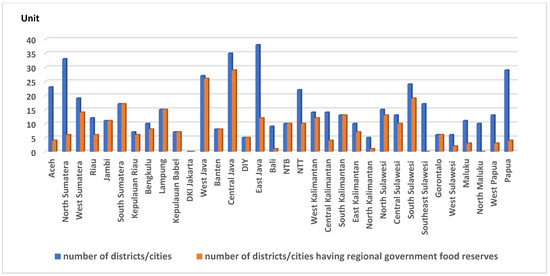
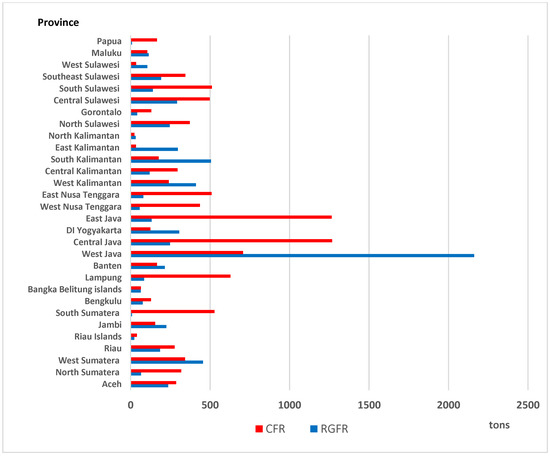
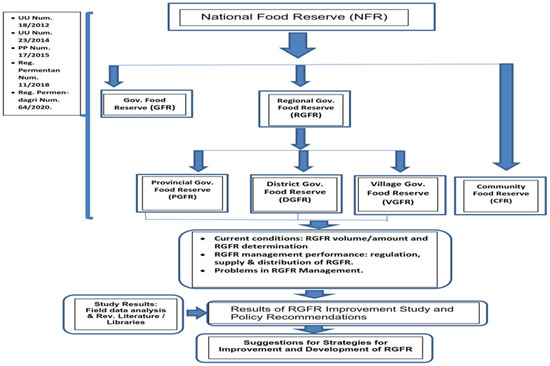
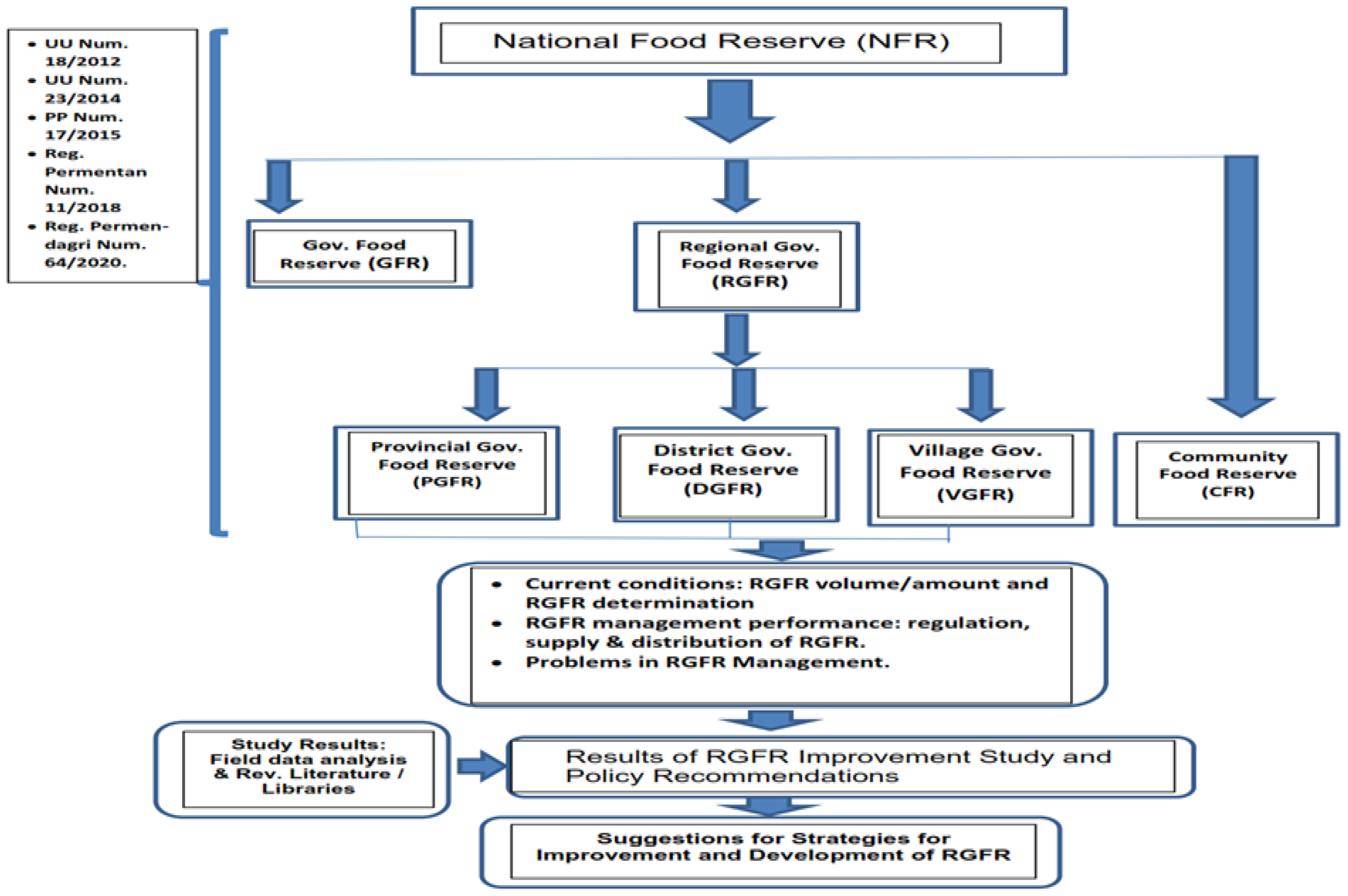
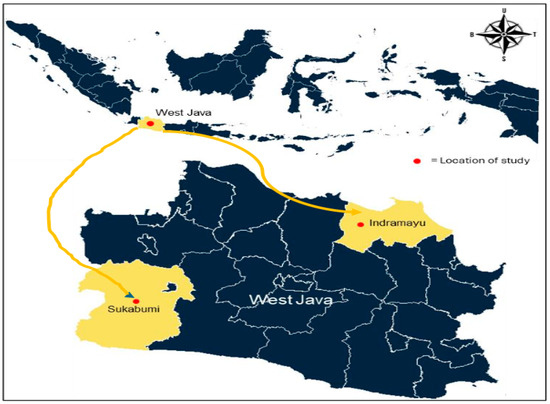
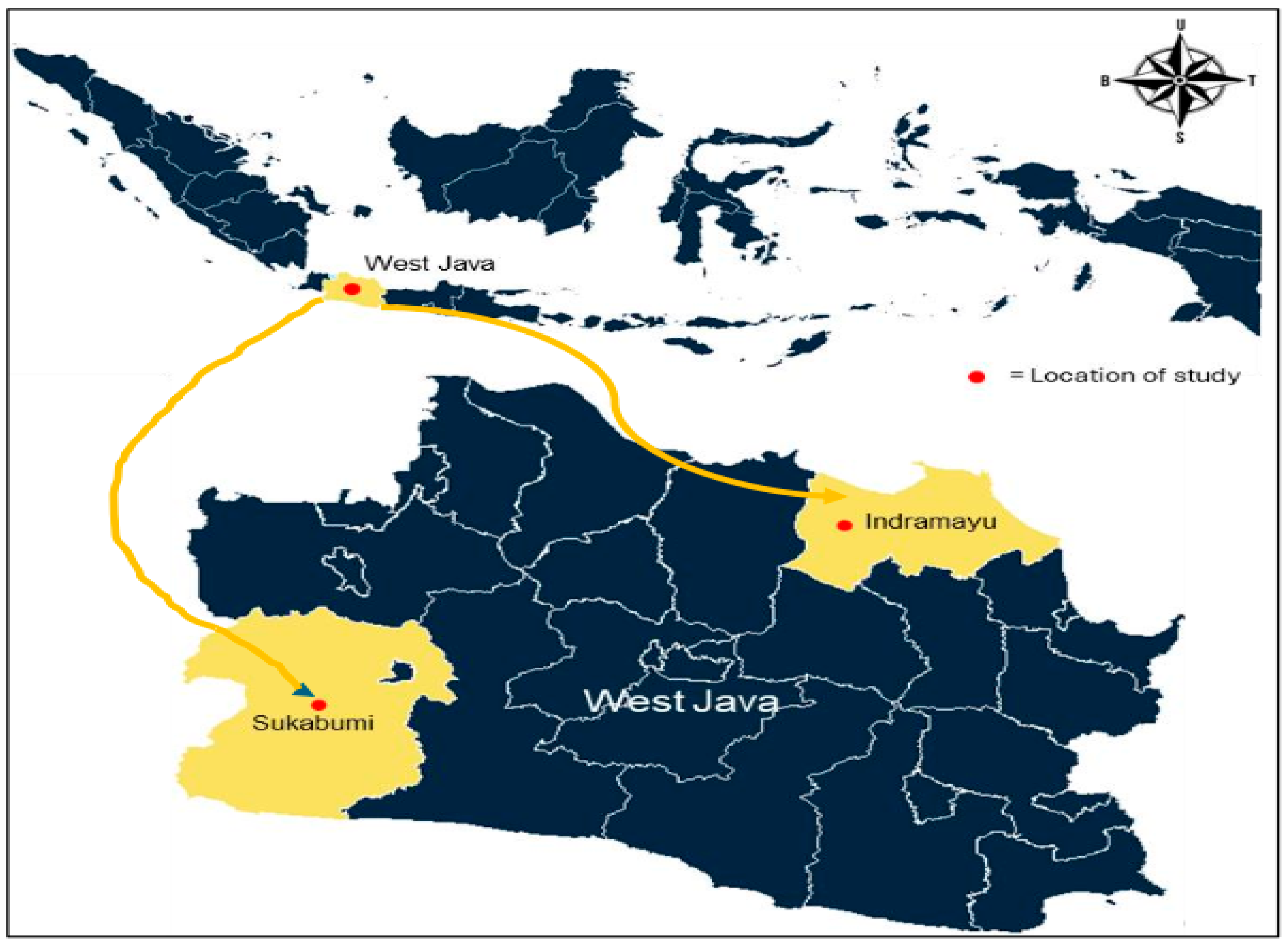
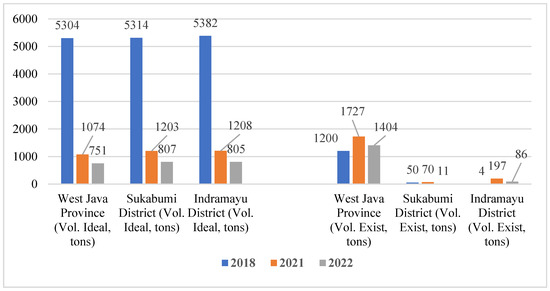
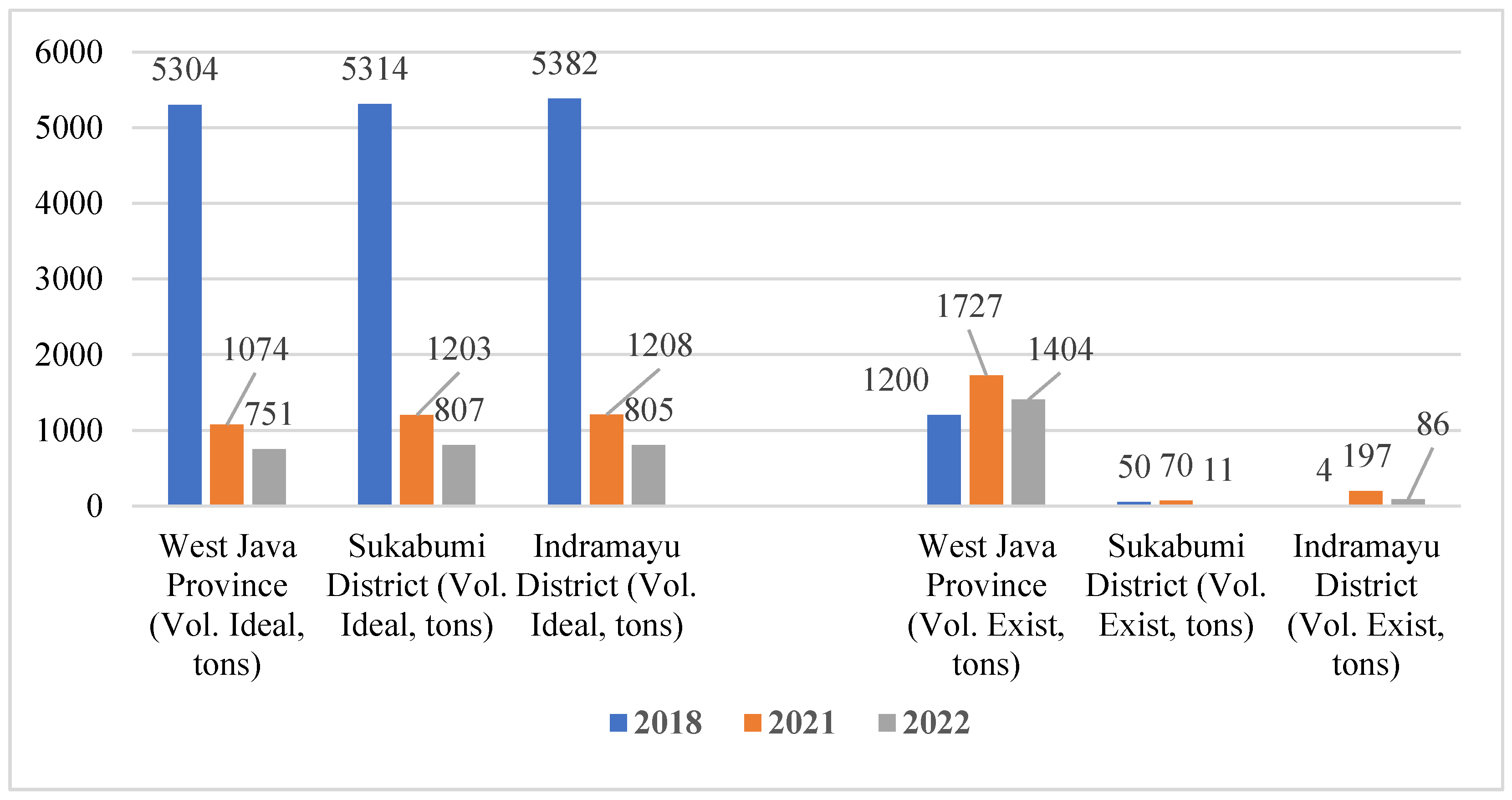
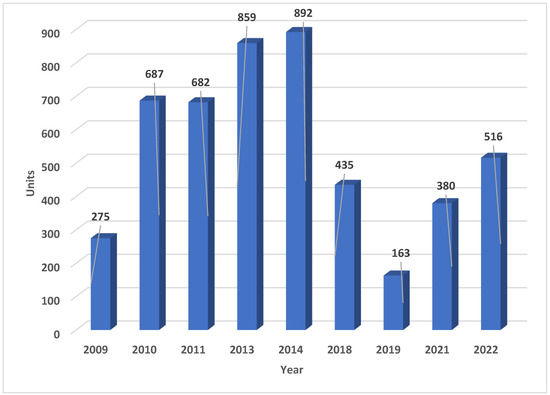
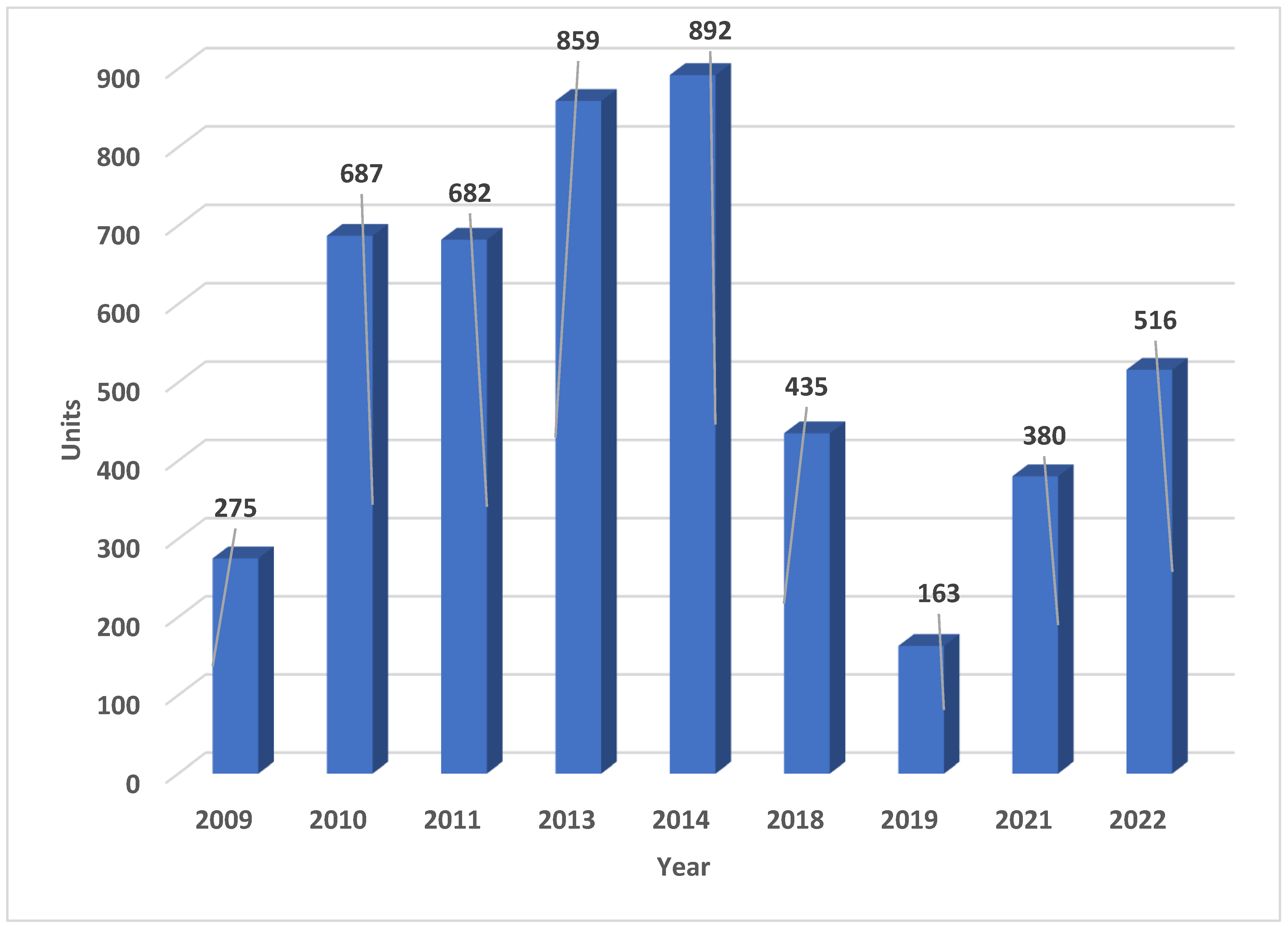

Disclaimer/Publisher’s Note: The statements, opinions and data contained in all publications are solely those of the individual author(s) and contributor(s) and not of MDPI and/or the editor(s). MDPI and/or the editor(s) disclaim responsibility for any injury to people or property resulting from any ideas, methods, instructions or products referred to in the content. |
© 2026 by the authors. Licensee MDPI, Basel, Switzerland. This article is an open access article distributed under the terms and conditions of the Creative Commons Attribution (CC BY) license.