Article

A Sleep Staging Method Based on Cardiopulmonary Signals Using a Unified Multimodal Model

1
School of Electrical and Electronic Engineering, Hubei University of Technology, Wuhan 430068, China
2
School of Sports Medicine, Wuhan Sports University, Wuhan 430079, China
*
Author to whom correspondence should be addressed.
Technologies 2026, 14(7), 441; https://doi.org/10.3390/technologies14070441

Submission received: 5 June 2026 / Revised: 9 July 2026 / Accepted: 16 July 2026 / Published: 17 July 2026

Abstract

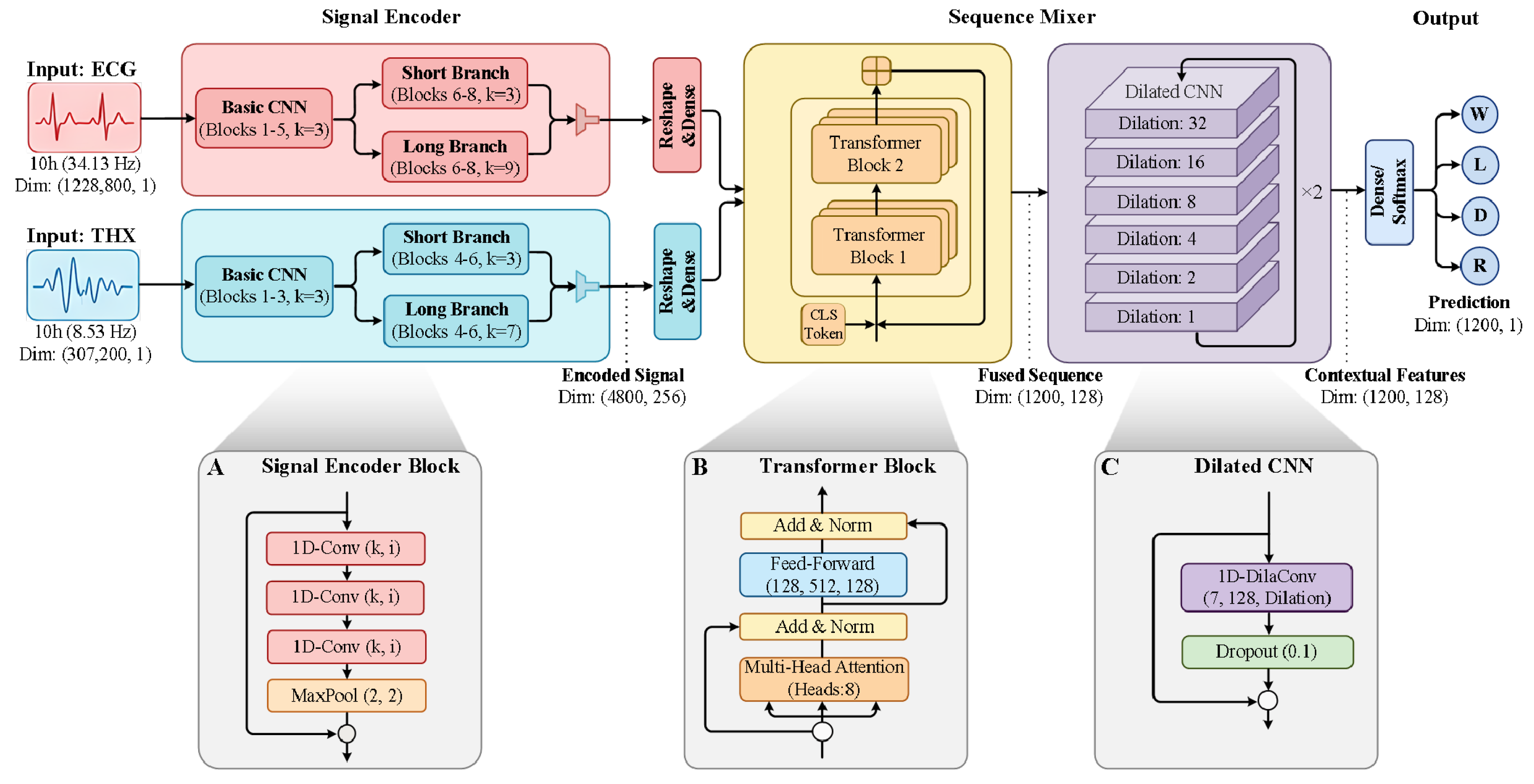
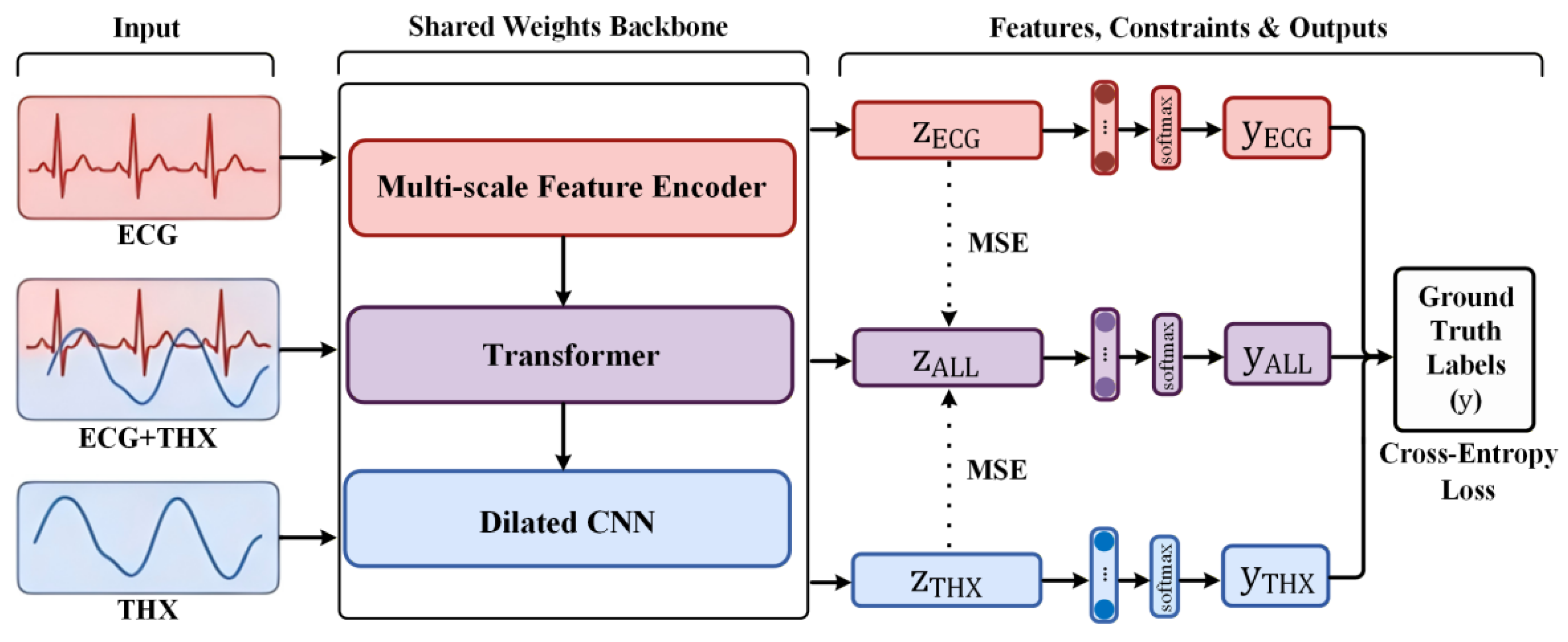
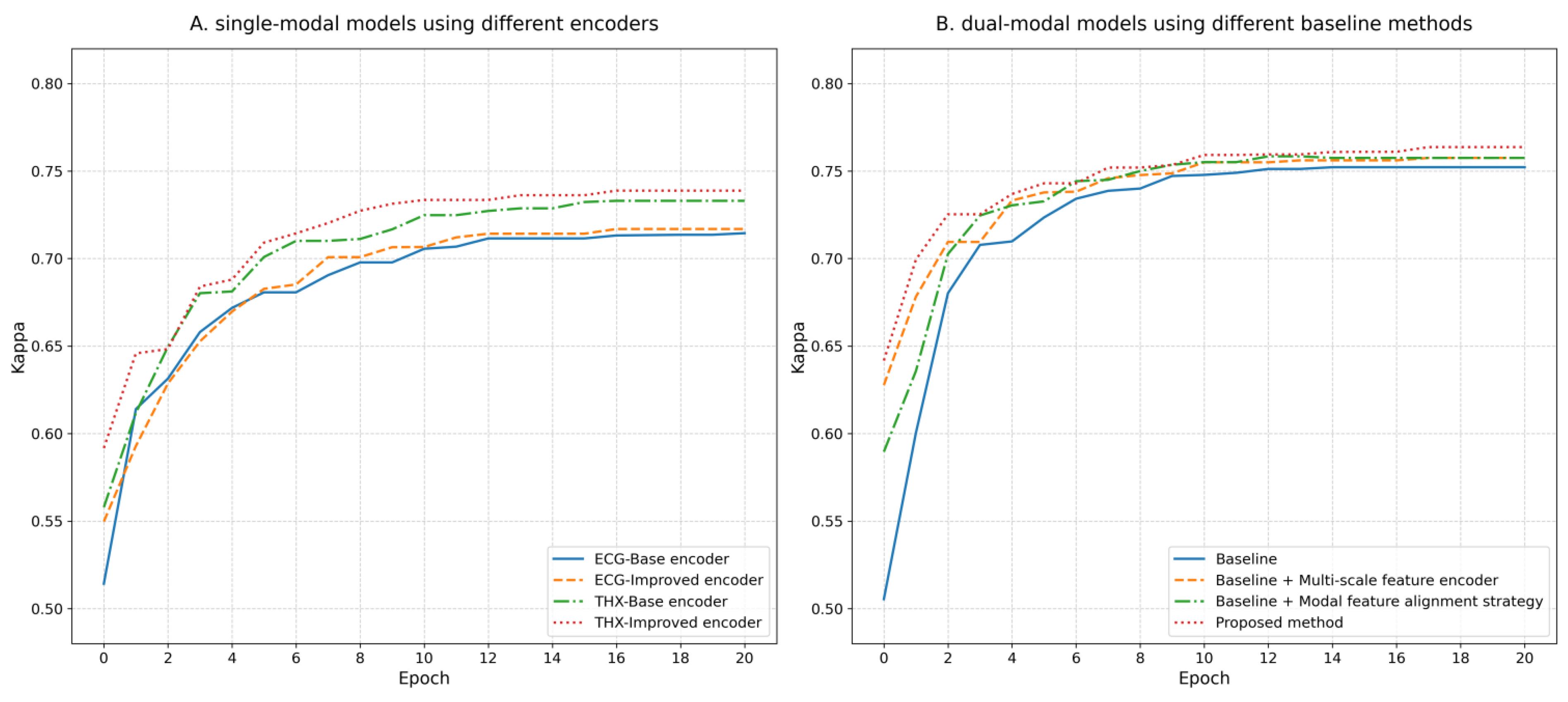
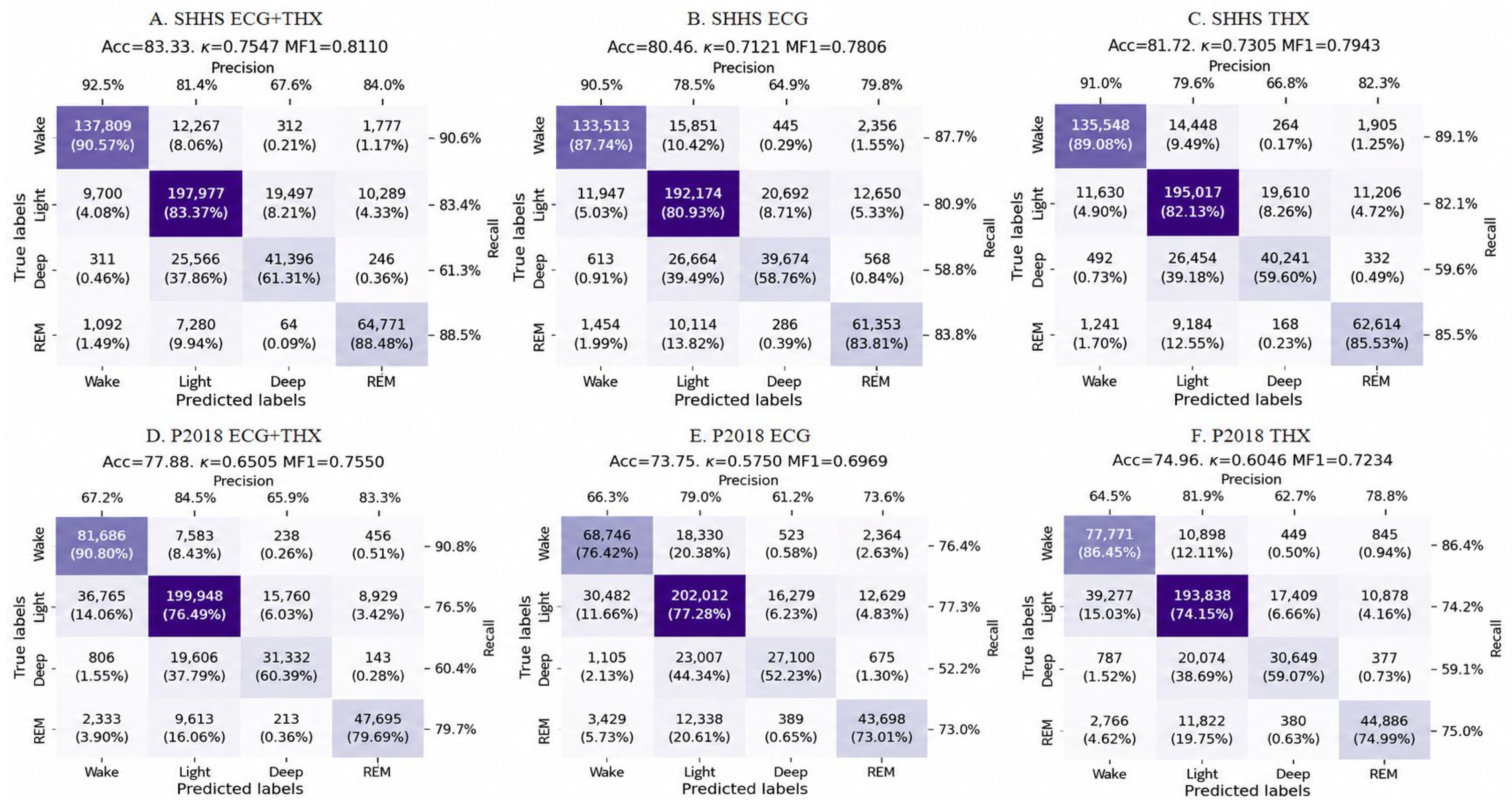
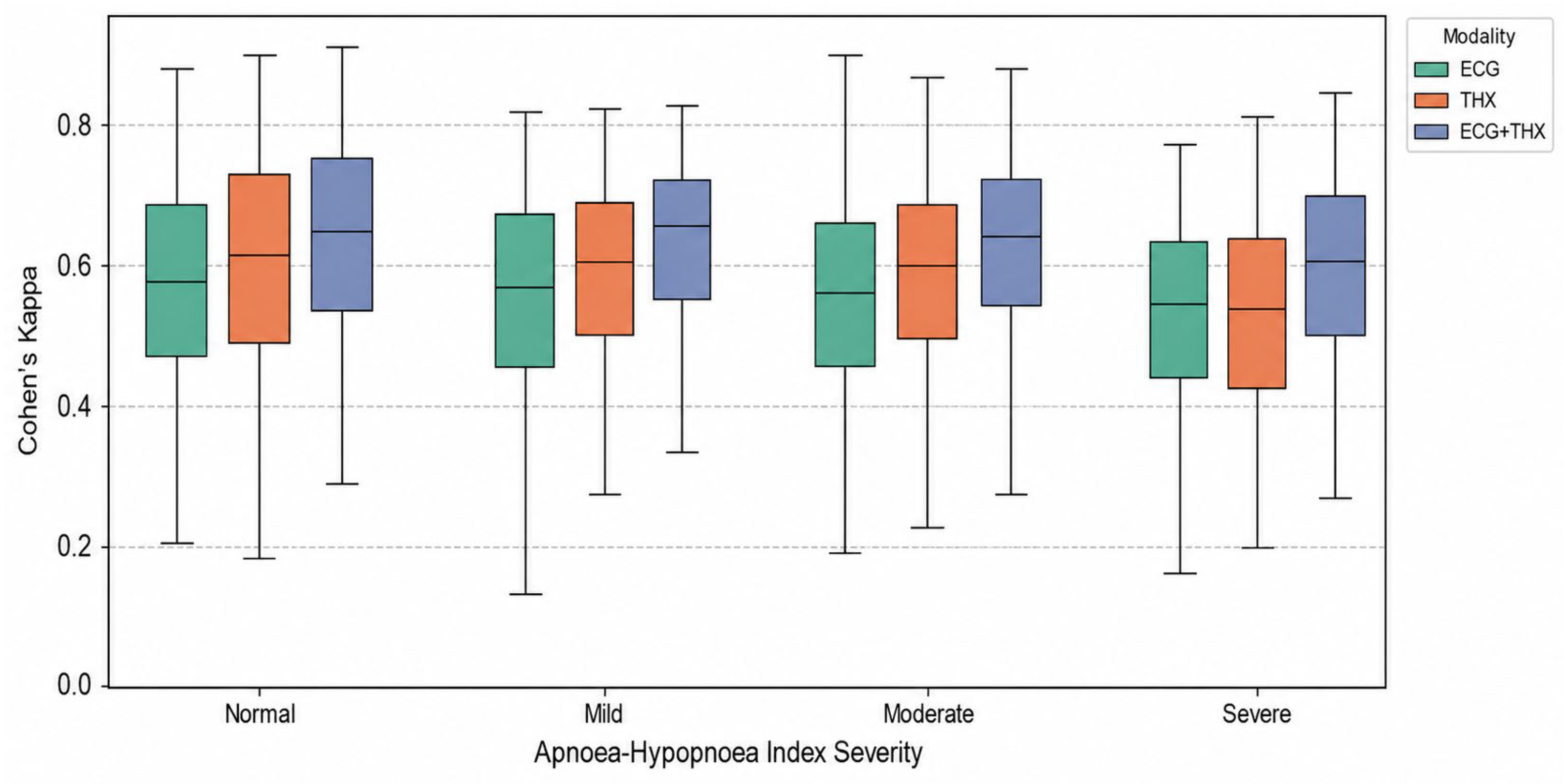
Sleep staging based on PSG is largely confined to clinical settings, while home-based sleep monitoring often faces the challenges of insufficient unimodal information and missing modalities. Aiming to overcome these challenges, this paper proposes a unified multimodal model for sleep staging based on cardiopulmonary signals. First, a heterogeneous multi-scale feature encoder with long and short branches is adopted to adapt to the cross-modal heterogeneity of ECG and THX. It combines a Transformer encoder and a Dilated CNN to complete feature fusion and temporal modeling. Subsequently, the unified model adaptively handles flexible modality combinations by introducing global context via a modal feature alignment strategy, which is built upon a framework consisting of a bimodal global branch and unimodal dedicated branches. On the SHHS dataset, the proposed model achieved Cohen’s kappa coefficients of 0.7547, 0.7121, and 0.7305 for four-stage sleep classification under ECG+THX, ECG-only, and THX-only inputs, respectively, demonstrating consistent improvements over three separately trained individual models. Furthermore, the model exhibits robust generalization performance on the P2018 external dataset and across samples with different severity levels of SDB. This work establishes a reliable algorithmic baseline for unobtrusive, long-term home sleep monitoring with missing modalities.
Keywords: sleep staging; cardiopulmonary signals; modal feature alignment; multi-scale feature encoder; home sleep monitoring sleep staging; cardiopulmonary signals; modal feature alignment; multi-scale feature encoder; home sleep monitoring