


Abstract
The integration of artificial intelligence (AI) in education has made significant advancements in personalized learning and adaptive instruction. However, current systems remain limited by three critical gaps: (a) fragmented architectures that decouple technical performance from ethical governance, (b) the treatment of fairness and accountability as external constraints rather than embedded design principles, and (c) reliance on single-modality data that inadequately represents complex learning environments. These restrictions hinder scalability and limit the capacity of AI systems to deliver equitable, transparent, and context-aware educational experiences. This study aims to address these challenges by designing and validating an ethics-aware, multi-agent conceptual framework for adaptive education in which personalization and responsible AI are co-developed as integrated system properties. The proposed architecture uses five coordinated agents: perception, pedagogy, assessment, feedback, and ethics monitoring. These five agents share one knowledge layer containing learner profiles, domain models, competency structures, interaction histories, and machine-readable policy rules. A four-stage feedback loop comprises: (a) outcome aggregation, (b) system evaluation and validation, (c) teacher review and intervention, and (d) agent update and policy refinement. It enables real-time adaptation, teacher oversight, and iterative system improvement. Adopting a design science research (DSR) methodology and mixed-methods evaluation across functional, pedagogical, ethical, and system-level dimensions, the proposed framework is expected to demonstrate improved learner modeling accuracy, enhanced knowledge tracing, and more robust multimodal engagement analysis compared to centralized and single-modality approaches. Based on design science evaluation against established benchmarks and component-level validation in a simulated learning management system (LMS), this theoretical framework is projected to improve learner modeling accuracy, enhance knowledge tracing, and enable more robust multimodal engagement analysis compared with centralized and single-modality approaches. These projections constitute theoretically derived hypothesis and remain subject to empirical validation in live deployment studies. This study’s theoretical contribution lies in demonstrating that ethics-by-design and adaptive personalization are architecturally compatible and mutually reinforcing design principles.
1. Introduction
Artificial intelligence (AI) is rapidly transforming educational systems through adaptive learning environments, intelligent tutoring systems, and automated assessment mechanisms. Recent advances in generative and multimodal AI have enabled systems capable of processing diverse learner inputs—including behavioral, textual, and interactional data—to provide personalized and real-time educational support [1]. The pace of this transformation has accelerated markedly in recent years, with large language models, multimodal neural architectures, and agentic AI systems moving from research prototypes into deployed educational tools at institutional scale, fundamentally altering the relationship between learners, educators, and instructional technology [2]. However, the integration of AI into education is not merely a technical evolution; it introduces complex challenges related to fairness, transparency, accountability, and learner agency [3,4]. Emerging research further indicates that AI systems influence not only learning outcomes but also broader dimensions such as cognitive engagement, emotional well-being, and student autonomy, raising critical concerns about how these systems should be designed and governed [5]. These concerns are not hypothetical. Cases of bias in grading, opaque recommendations, and reduced learner agency have already been reported [6,7]. These developments highlight the need for frameworks that move beyond performance optimization toward responsible and human-centered educational AI systems.
At the same time, the field of AI ethics in education remains fragmented and insufficiently operationalized. Recent systematic reviews [8,9] point out that while ethical principles such as fairness, bias mitigation, and privacy are widely discussed, there is limited consensus on how these principles should be embedded into educational technologies or assessed in practice. This gap reflects a structural problem. Technical and ethical communities have evolved separately [6,10]. In particular, the integration of AI into assessment and decision-making processes has revealed critical ethical risks, including bias in automated evaluation, data privacy concerns, and accountability gaps, which may undermine trust in AI-driven education [5]. The consequences of these risks are asymmetric. They disproportionately affect learners from historically marginalized groups, for whom algorithmic bias in assessment or content recommendation may compound existing educational inequalities rather than mitigate them [6,7]. Furthermore, current approaches often treat ethics as an external constraint or post hoc evaluation rather than as an intrinsic component of system design, leading to a disconnect between ethical theory and technical implementation. As a result, current systems are either technically strong but ethically limited or ethically sound but difficult to implement.
Despite rapid progress in AI-driven education, several critical research gaps remain. First, most existing systems rely on centralized or linear pipeline architectures, which limit adaptability, scalability, and real-time responsiveness. These monolithic systems struggle to handle perception, pedagogy, assessment, feedback, and ethics monitoring at the same time. Such architectures are not well suited to dynamic educational environments that require continuous interaction and contextual awareness [11,12]. Second, ethical considerations are rarely embedded directly into system operations; instead, they are addressed at policy or evaluation levels, reducing their practical impact on decision-making processes [13]. Treating ethics after deployment is insufficient. Bias may already affect many decisions before it is detected [6,7]. Third, there is limited integration of multimodal learning analytics capable of capturing rich behavioral and contextual data to support adaptive learning. Single-modality systems that rely exclusively on assessment submissions or textual interactions fail to capture the affective, attentional, and contextual dimensions of learner experience that are critical for accurate modeling and meaningful personalization [14,15,16]. Finally, there is a lack of unified frameworks that combine AI architectures, pedagogical principles, and ethical governance into a cohesive and operational model. The absence of such frameworks creates a significant translation barrier. For instance, institutions seeking to deploy responsible adaptive learning systems currently have no established architectural blueprint to follow, forcing them to make ad hoc design decisions that may inadvertently reproduce the very limitations they seek to overcome [10]. Recent studies [17,18] argue that this fragmentation—particularly between technological development and ethical design—remains one of the most important challenges in AI-enabled education.
To address these limitations, this study proposes a multi-agent, ethics-aware framework for adaptive education. The proposed framework conceptualizes educational systems as ecosystems of interacting AI agents, including perception, pedagogy, assessment, feedback, and ethics-monitoring agents, supported by a shared knowledge and memory layer and reinforced through continuous feedback loops. The architecture is grounded in three converging theoretical traditions: constructivist learning theory, which positions knowledge as actively constructed through interaction with learning environments [19]; multi-agent systems research, which provides the computational foundations for distributed, collaborative intelligence [11,12]; and responsible AI design, which mandates that fairness, transparency, and accountability be embedded structurally within system operations rather than imposed externally [6,7]. This design enables distributed intelligence, real-time adaptation, and modular scalability while embedding ethical oversight directly within system operations. The study is situated within a design science research (DSR) paradigm, which is particularly well suited to research that produces and evaluates innovative socio-technical artifacts in response to identified practical problems [20,21]. This methodological choice reflects the dual nature of the research contribution: the framework is simultaneously a theoretical model and a practical artifact, and its value must be demonstrated through both conceptual coherence and empirical validation. The objectives of this research are fourfold: (a) to design a modular multi-agent architecture that supports adaptive, multimodal, and scalable learning processes; (b) to integrate ethical principles such as fairness, transparency, and accountability through a dedicated ethics-monitoring agent embedded within the system; (c) to establish a continuous human-in-the-loop feedback mechanism that aligns AI-driven decisions with pedagogical goals and ethical standards; and (d) to establish a theoretically grounded proof-of-concept whose empirical validation is scoped to simulated and controlled experimental conditions, with a clear roadmap for longitudinal deployment studies.
The above objectives are operationalized through a layered sociotechnical architecture comprising five interdependent components: a multimodal input layer, a distributed AI agent layer, a knowledge and memory layer, an adaptive output layer, and a system-level feedback mechanism that functions as a continuous control loop across all components. Each layer has been specified, implemented in a functional prototype, and evaluated through architectural demonstration under controlled stress scenarios, while full quantitative evaluation remains a subject of future empirical work. By integrating multimodal perception, multi-agent coordination, persistent knowledge representation, adaptive pedagogical response, and continuous feedback governance, the proposed framework bridges AI capability design with educational theory and ethics-by-design principles. In doing so, it provides a structured foundation for next-generation intelligent educational systems that embed not only adaptive learning functionality but also explicit mechanisms for fairness monitoring, human oversight, and institutional accountability.
The remainder of the paper is structured as follows: (a) the theoretical framework section presents the conceptual model and its grounding in relevant literature; (b) the methodology section describes the DSR implementation and mixed-methods validation strategy; (c) the results section reports expected outcomes across functional, pedagogical, ethical, and system-level validation streams; and (d) the discussion and conclusion synthesize the contributions, limitations, and directions for future research.
2. Theoretical Framework
2.1. Problem Statement and Design Rationale
Despite significant advances in artificial intelligence and educational technology, existing adaptive learning systems remain limited in their capacity to address the full complexity of real-world learning environments. The majority of current AI-driven educational frameworks are built around single-purpose architectures that optimize for specific functions, such as content recommendation, automated assessment, or learner modeling, without integrating these capabilities into a coherent, collaborative system [10]. As a result, critical interdependencies between perception, pedagogy, assessment, and ethical governance are frequently overlooked, producing systems that perform well on narrow benchmarks but fail to support holistic, personalized learning at scale. Furthermore, while the integration of multimodal data, including behavioral, affective, and contextual signals, has been shown to substantially improve learner modeling accuracy, few operational frameworks have succeeded in combining multimodal processing with adaptive instructional logic and real-time ethical oversight within a single unified architecture [4,19]. This fragmentation represents a critical gap, as the absence of integrated design forces institutions to deploy disconnected tools that are difficult to govern, validate, or scale.
A further and increasingly important limitation concerns the treatment of ethics in AI-driven education. Existing frameworks typically address fairness, transparency, and bias mitigation as post hoc regulatory concerns rather than as structural components embedded within system design [6,10]. This reflective approach is insufficient in dynamic educational environments where algorithmic decisions directly affect learner trajectories, equity of access, and institutional accountability. Equally, rather than a passive end-user, the role of the teacher as an active participant in system governance remains theoretically underdeveloped in current multi-agent educational architectures [22]. Addressing these gaps requires a new generation of frameworks that embed ethical governance as a first-class architectural component, formalize agent collaboration as a coordination mechanism, and structurally integrate human oversight into the feedback and refinement cycle. The present framework is proposed in direct response to these limitations, offering a unified, ethics-aware, multi-agent model that treats adaptive learning and responsible AI not as competing priorities but as mutually constitutive design principles.
The proposed framework conceptualizes AI-driven education as a multi-layered, agent-based ecosystem, where learning is dynamically constructed through interactions between data inputs, intelligent agents, and continuous feedback processes. This perspective is grounded in recent advances in multimodal AI and educational system design, which emphasize the integration of behavioral, cognitive, and contextual data to support adaptive learning environments [16]. Unlike traditional pipeline architectures, this framework adopts a distributed intelligence model, where multiple specialized agents collaborate to enable real-time adaptation while maintaining ethical and pedagogical alignment [8]. Central to this model is the principle of agent communication and collaboration, whereby agents do not operate in isolation but engage in structured lateral exchanges that enable emergent, system-level intelligence beyond what any single agent could achieve independently [11,12]. This shift reflects the growing recognition that AI systems in education must operate as interactive socio-technical systems, balancing automation with human-centered learning principles [4].
2.2. Input Layer: Multimodal Learning Context
The first component of the framework corresponds to the input layer, which captures diverse data sources including student interactions, instructional content, and environmental context. This aligns with recent multimodal learning frameworks that integrate video, audio, and behavioral data to better understand learner engagement and performance [16]. Critically, this layer conceptualizes three distinct and complementary input streams. The first originates from students themselves, encompassing video, audio, and textual interactions, clickstream and activity logs, as well as formal assessments and submissions. The second stream derives from teachers, who contribute curriculum goals, feedback and annotations, and instructional strategies—positioning educators not merely as system overseers but as active data contributors whose pedagogical intent shapes agent behavior [22]. The third stream corresponds to the broader learning environment, including learning management systems (LMS), digital learning resources, and embedded assessment tools, which provide the institutional and technological context within which learning occurs [15]. From a theoretical standpoint, this layer is informed by constructivist learning theory, where knowledge is actively constructed through interaction with learning environments. Concretely, constructivist principles shape two design decisions: first, the prioritization of interactive, generative tasks over passive content consumption in the content sequencing logic of the pedagogical agent; and second, the treatment of learner–system interaction histories not merely as performance logs but as records of the learner’s active knowledge construction process, which are used by the feedback agent to generate explanations that build on prior reasoning rather than correcting from scratch [19]. Where the framework’s knowledge-tracing mechanisms draw more directly on cognitive modeling traditions, constructivism provides the normative rationale for why individualized, responsive feedback is preferable to standardized instruction. The inclusion of multimodal inputs enables a richer representation of learner states, supporting more accurate and context-aware decision-making processes. Importantly, this layer also introduces ethical considerations related to data privacy and consent, reinforcing the need for responsible data governance mechanisms embedded within system design [8].
The collection of multimodal data from learners, particularly video and audio streams, introduces ethical obligations that precede the technical privacy mechanisms described in subsequent sections. The framework assumes that institutional deployment is preceded by a data governance protocol encompassing informed consent for adult learners and informed assent plus parental consent for minors, in compliance with applicable regulations (e.g., GDPR, FERPA, or equivalent national frameworks). Learners retain the right to opt out of specific modalities—for example, declining video capture while remaining enrolled in the adaptive system—and the framework supports graceful degradation of functionality in the absence of non-consented data streams. Operationalizing these protocols in practice requires collaboration between system developers, institutional data protection officers, and ethics review boards, a process that is beyond the scope of the current architectural specification but is identified as a prerequisite for any live deployment.
2.3. AI-Agent Layer: Distributed Pedagogical Intelligence
At the core of the framework is the AI agent layer, which operates the system through a set of specialized, interacting agents. These include perception, pedagogy, assessment, feedback, and ethics-monitoring agents, each responsible for distinct but interconnected functions. This design is consistent with recent research on AI-driven educational agents, which highlights the importance of modular, task-specific architectures for improving adaptability and scalability [22]. The perception agent processes multimodal inputs—including video, audio, and text—to extract meaningful features through sensing, feature extraction, and semantic understanding, while the pedagogical agent aligns instructional strategies with learner needs through three core mechanisms: learner modeling, knowledge tracing, and content adaptation and sequencing. Knowledge tracing is particularly significant, as it allows the system to maintain a dynamic, probabilistic representation of what a learner knows and does not yet know, enabling the pedagogical agent to sequence content in a way that scaffolds progression toward mastery [16,23]. The assessment agent extends beyond automated grading to incorporate performance estimation and mastery detection, enabling the system to determine not only whether a learner has answered correctly, but whether they have achieved a sufficient and stable level of competency to progress [24]. The feedback agent goes beyond correctness signals by generating explanations, providing hints and recommendations, and actively supporting learner motivation and engagement—recognizing that affective and motivational dimensions of learning are as critical as cognitive ones [2]. Crucially, the inclusion of an ethics-monitoring agent reflects the emerging paradigm of “ethics-by-design,” where fairness, transparency, and accountability are embedded directly into system operations rather than applied retrospectively [7]. The ethics-monitoring agent checks fairness, transparency, privacy, and safety. It audits outputs across all agents and flags conflicts for review [6,7]. For example, if a recommendation increases subgroup inequality, the system should pause and request teacher review. Underpinning all agent interactions is a structured agent communication and collaboration mechanism, represented by bidirectional information exchanges between agents. This horizontal coordination layer enables agents to share intermediate representations, resolve conflicts, and collectively refine decisions, transforming the system from a set of independent modules into a coherent, collaborative intelligence [25]. This multi-agent architecture supports collaborative decision-making while reducing the constraints of centralized models. When the ethics-monitoring agent detects a conflict between a pedagogical recommendation and a fairness constraint—for instance, a sequencing decision that would yield unequal learning path lengths across demographic subgroups—it halts the pedagogical agent, records the conflict in the interaction memory layer, and escalates the case to the teacher review interface. There, the educator may either override the constraint with a justified rationale or adopt the system’s equity-preserving alternative [11,12]. To ensure that ethical, pedagogical, and safety constraints are enforced systematically when agents produce conflicting recommendations, the proposed framework adopts a tiered arbitration protocol with embedded human oversight. The following rules are designed as initial operational parameters and are subject to calibration during empirical deployment.
The choice of a multi-agent architecture over the simpler alternative of a modular pipeline with an embedded ethics rule engine is motivated by four specific failure modes of the latter. First, pipeline architectures enforce sequential, late-stage ethical filtering: ethics rules are applied only to final outputs, allowing ethically problematic intermediate representations to propagate and influence downstream modules before any intervention is possible. Second, pipelines cannot support lateral, asynchronous communication between modules, which is necessary for collectively informed decisions—for example, the pedagogical agent updating its content sequencing in real time based on a mastery estimate actively revised by the assessment agent within the same decision cycle. Third, pipelines are brittle under modality missingness: each module expects a fixed input format from its predecessor, and missing or privacy-gated modalities require global exception handling rather than agent-level graceful degradation. Fourth, static rule engines cannot arbitrate between competing constraints—they can block or pass outputs but cannot negotiate priority orderings or escalate unresolved conflicts to human oversight in a structured way. The multi-agent architecture proposed here is specifically designed to address each of these failure modes. This does not imply that pipeline architectures are categorically inferior; for applications with stable input schemas, limited ethical complexity, and minimal lateral dependency between processing stages, a well-engineered pipeline may be a more appropriate choice. The superiority of the agent-based design is contingent on the specific properties of adaptive, multimodal, ethics-aware educational environments.
The proposed framework’s behavior in multilingual and multicultural educational environments requires explicit consideration. At the technical level, the perception agent’s natural language processing components are language-dependent: models trained predominantly on high-resource languages (e.g., English) exhibit well-documented performance disparities when applied to low-resource or non-dominant languages, which can introduce bias into engagement classification, mastery estimation, and feedback generation. The framework addresses this through two mechanisms. First, the policy and ethics rules layer encodes language-group performance parity as an explicit fairness constraint, requiring the ethics-monitoring agent to flag decisions in which learners communicating in non-dominant languages receive systematically lower engagement scores or more negative feedback than their linguistic majority counterparts with comparable demonstrated knowledge. Second, the pedagogical and feedback agents are designed to operate with language-model components that can be swapped or fine-tuned for specific linguistic contexts during institutional deployment, enabling the architecture to adapt to multilingual environments without requiring full system retraining. Crucially, the definition of ‘equitable’ outcomes in multilingual contexts is itself culturally situated: what constitutes appropriate scaffolding, appropriate feedback directness, or appropriate assessment difficulty may differ substantially across linguistic communities, and the machine-readable ethics rules encoding these norms must be authored participatorily with community stakeholders rather than imposed by system designers.
2.4. Knowledge and Memory Layer: Contextual and Adaptive Representation
The knowledge and memory layer functions as the shared repository that supports agent coordination and learning continuity. This layer is conceptualized as comprising five distinct but interrelated components. Student profiles encode demographic information, individual preferences, and longitudinal learning histories, providing the personalization substrate for agent decisions [16]. The knowledge base stores domain concepts, curriculum structures, and associated resources, offering the content scaffolding upon which instructional agents operate. The skill and competency graph represents prerequisite relationships, mastery levels, and skill interdependencies, enabling the system to model learning as a structured progression through a domain rather than a collection of isolated tasks [23]. Interaction memory preserves records of past learner–system interactions, feedback histories, and outcome data, enabling the system to reason about trajectories and patterns over time rather than treating each session in isolation [15]. Finally, the policy and ethics rules component encode fairness constraints, privacy policies, and safety guidelines as explicit, machine-readable rules that govern agent behavior, ensuring that ethical compliance is structurally enforced rather than incidentally achieved [7,8]. This component is aligned with recent frameworks emphasizing the importance of persistent learner modeling and contextual memory in adaptive systems [19]. For instance, a machine-readable rule might specify: IF (assessment score distribution for subgroup A deviates from subgroup B by >10% on equalized odds) THEN (flag decision for ethics agent review AND suspend content sequencing update pending human validation). Such rules are authored collaboratively by instructional designers and compliance officers, encoded in a formal rule language (e.g., SWRL or a structured JSON schema), and stored in the policy layer as executable constraints. From a theoretical perspective, this layer draws on principles of cognitive modeling and knowledge representation, allowing the system to dynamically update its understanding of learner progress. Additionally, it supports explainability by providing traceable decision pathways, which are critical for building trust in AI-driven educational systems.
2.5. Output Layer: Adaptive and Personalized Learning Interventions
The output layer delivers system results to learners and teachers. It represents the system’s observable impact on the learning process, including personalized content delivery, real-time feedback, and adaptive assessments. This aligns with contemporary research on generative AI in education, which highlights the role of AI systems as co-constructors of knowledge and facilitators of personalized learning experiences [1]. The outputs of the system are organized into five application categories. Personalized learning paths represent the primary instructional output, delivering tailored content sequences based on individual learner profiles and competency graphs [16,23]. Real-time feedback and explanations provide immediate, interpretable guidance that supports self-regulated learning [5]. Adaptive assessments dynamically adjust in response to demonstrated performance, maintaining measurement validity while reducing cognitive load [14,24]. Teacher dashboards and insights translate system-generated analytics into actionable information for educators, preserving their capacity for informed pedagogical intervention [22]. Finally, ethics and fairness reports operationalize the output of the ethics-monitoring agent, providing auditable evidence of system compliance with equity and transparency standards. It is a dimension largely absent from prior adaptive learning architectures [6,7]. The ethics-monitoring agent checks fairness, transparency, privacy, and safety. It audits outputs and flags issues. For example, if a recommendation increases inequality between learner groups, the system pauses and requests teacher review. The outputs are not static but dynamically generated based on continuous interaction between agents and the knowledge layer. Importantly, this layer reflects a shift from content delivery to adaptive intervention, where AI supports learner engagement, scaffolding, and progression. However, this capability also raises ethical concerns related to over-automation and learner dependency, reinforcing the importance of maintaining human oversight within the system.
2.6. Feedback Loop: Continuous Adaptation and Human-in-the-Loop Governance
The final component of the framework is the continuous feedback loop, which connects system outputs back to inputs, enabling iterative refinement and learning optimization. This loop is structured as a four-stage cyclical process. In the first stage, learning outcomes and analytics are aggregated from system interactions, providing a quantitative and qualitative basis for evaluation [12]. In the second stage, system evaluation and validation are performed, assessing agent performance against pedagogical and ethical benchmarks [11]. In the third stage, teachers review and intervention introduce human judgment into the refinement process, allowing educators to validate, override, or redirect system behavior based on their professional expertise [4,22]. In the fourth stage, agent update and policy refinement translate evaluation findings and teacher inputs into concrete updates to agent models, decision rules, and ethical constraints—closing the loop and ensuring that the system improves over time rather than remaining static [2,7]. This loop incorporates both automated system feedback and human-in-the-loop mechanisms, including teacher input and institutional oversight. Recent research emphasizes that such feedback mechanisms are essential for maintaining alignment between AI-driven decisions and pedagogical objectives, as well as for mitigating unintended consequences such as bias or reduced learner agency [5]. The feedback loop also operationalizes ethical governance by allowing the ethics-monitoring agent to continuously evaluate system behavior and enforce constraints. This reflects a broader shift toward adaptive and participatory AI systems, where human stakeholders remain actively involved in guiding system evolution [8].
The proposed multi-agent, ethics-aware framework for adaptive education is depicted in Figure 1. The architecture comprises five interconnected layers: (1) Multimodal Input Layer (bottom), capturing student, teacher, and environmental data streams with privacy-preserving preprocessing; (2) AI Agent Layer (center), showing five specialized agents (Perception, Pedagogical, Assessment, Feedback, Ethics-Monitoring) connected via a bidirectional communication bus (double-headed arrows); (3) Knowledge and Memory Layer (surrounding agents), represented as a persistent store with five sub-components (Student Profiles, Knowledge Base, Skill/Competency Graph, Interaction Memory, Policy/Ethics Rules); (4) Adaptive Output Layer (top), generating five output categories (Personalized Paths, Real-time Feedback, Adaptive Assessments, Teacher Dashboards, Ethics Reports); and (5) Continuous Feedback Loop (curved arrows), connecting outputs back to inputs through four stages: outcome aggregation, system validation, teacher review, and agent/policy update. Solid arrows indicate data flow; dashed arrows indicate control/override signals (e.g., ethics hold signals, teacher overrides). The ethics-monitoring agent is uniquely connected to all other agents and the policy layer, reflecting its system-wide auditing role.
Figure 1.
The proposed framework. (Note. ChatGPT 5.5 was utilized to enhance the visibility of Figure).
Based on the above, this theoretical framework provides a unified model that directly corresponds to the proposed diagram, where each layer performs a distinct function while contributing to an integrated, adaptive system. The framework’s key innovations are threefold: the embedding of ethical governance as both an agent-level function and a system-level structural constraint [6,8]; the formalization of agent communication and collaboration as a theoretically grounded coordination mechanism [11,12]; and the inclusion of teacher-facing outputs and a structured, four-stage feedback cycle that institutionalizes human oversight as an architectural requirement rather than an optional feature [4,22]. By combining multimodal data processing, distributed intelligence, and continuous feedback, the framework addresses existing gaps in AI-driven education and offers a scalable foundation for future research and implementation.
3. Methodology
This study adopts a DSR methodology, combined with an experimental validation approach, to develop and evaluate the proposed multi-agent, ethics-aware educational framework. Design science is particularly appropriate for this research, as it focuses on the creation and evaluation of innovative artifacts that address identified problems in complex socio-technical systems [20,21]. Specifically, the DSR cycle applied here follows a six-stage process encompassing problem identification, objective definition, design and development, demonstration, evaluation, and communication. It ensures that each methodological decision is traceable to an explicit research objective and that the artifact produced is both rigorously designed and empirically justified [21]. The methodology consists of two main phases: (1) system implementation, where the multi-agent architecture is operationalized according to the proposed framework, and (2) system validation, where the effectiveness, adaptability, and ethical compliance of the system are empirically evaluated using both quantitative and qualitative methods. This dual approach ensures that the framework is not only theoretically grounded but also practically viable in real educational contexts. The choice of DSR over purely experimental or purely theoretical approaches reflects the nature of the research problem: the artifact itself—the multi-agent architecture—is both the object of study and the means through which the research questions are answered, requiring a methodology that accommodates iterative design, formative evaluation, and real-world demonstration [20].
The Demonstration phase, which Peffers et al. [21] defines as instantiating the artifact in at least one-use case to establish proof-of-functionality, is operationalized in the present study through the scenario-based stress testing protocol described in the System Validation section. Specifically, three predefined deployment scenarios—simulated learner disengagement, assessment anomaly detection, and bias trigger activation—serve as the demonstration instances through which the integrated behavior of all five agents is observed prior to formal quantitative evaluation. This sequencing ensures that formal performance metrics are interpreted against a backdrop of established functional behavior rather than untested assumptions.
3.1. System Implementation
The multi-modal input layer incorporates with explicit robustness mechanisms for three categories of modality disruption: (a) Non-consented or opted-out modalities: when a learner exercises the right to opt out of a specific input modality (e.g., video capture declined under GDPR or FERPA compliance), that modality’s data pipeline is gated at the preprocessing layer. The perception agent falls back to a reduced feature set computed from remaining modalities, following a pre-defined modality availability matrix. For example, if video is unavailable, engagement classification reverts from a multimodal (video + clickstream + text) model to a bimodal (clickstream + text) model, with a documented expected reduction in engagement classification accuracy of approximately 12–18% (consistent with prior work of [16]). The pedagogical and feedback agents receive a modality-availability flag alongside the feature pathway and select fallback decision pathways accordingly. (b) Noisy or degraded input signals: input pipelines for audio and video streams include noise-robust preprocessing (spectral subtraction for audio; motion-blur robust frame sampling for video). When signal quality falls below a configurable threshold (e.g., SNR < 10 dB for audio; frame clarity score < 0.4 for video), the affected stream is automatically downweighed in the fusion layer rather than discarded, using a confidence-weighted late fusion architecture. This prevents a single degraded modality from corrupting the multimodal representation. (c) Privacy-budget exhaustion: the differential privacy budget accounting module, implemented as a gatekeeper service in the input layer, rejects queries exceeding the allocated epsilon budget. When the budget is exhausted for a given learner session, all downstream agents operate on aggregate or anonymized representations only, and the pedagogical agent switches to group-level content recommendations until budget renewal at the next session boundary. These three mechanisms are formalizable as a state machine with four modality states per input channel: {Active, Degraded, Gated-Privacy, Gated-Consent}, with defined transitions and agent fallback behaviors for each state.
For the current design science iteration, the framework was implemented as a functional prototype integrated with a simulated LMS environment. Scenario-based stress testing across three predefined scenarios—simulated learner disengagement, assessment anomaly detection, and bias trigger activation—was designed to serve as the DSR demonstration phase; however, full quantitative analysis of simulation outcomes is deferred to the next study phase and will be reported in the companion empirical paper currently in preparation. The current manuscript therefore constitutes the Design, Development, and partial Demonstration stages of the DSR cycle, with the Evaluation stage explicitly scoped to theoretically grounded projections and design-level validation.
The implementation of the proposed framework follows the layered architecture illustrated in Figure 1, ensuring direct alignment between theory and system design. Each architectural layer is operationalized as a discrete implementation component, and the interfaces between layers are explicitly defined to support modular development, independent testing, and incremental refinement—principles consistent with contemporary software engineering standards for complex socio-technical systems [11].
At the input layer, multimodal data streams are collected from three distinct source categories, each operationalized through dedicated data pipelines. Student-generated data encompasses textual interactions, clickstream and activity logs, assessment submissions, and optional video and audio signals captured through learning platform APIs. Teacher-generated data includes structured curriculum inputs, annotated feedback records, and instructional strategy parameters that are ingested as configuration and context signals for the pedagogical agent. Environment-level data is collected from the host LMS, including platform metadata, resource access patterns, and embedded assessment tool outputs. These inputs are processed using multimodal AI techniques to extract features related to engagement, performance, and context. Recent studies demonstrate that multimodal systems significantly improve the accuracy of learner modeling and adaptive feedback by integrating diverse data sources [15]. Each input stream is subject to a preprocessing pipeline comprising normalization, dimensionality reduction, and feature extraction, followed by privacy-preserving mechanisms including data anonymization and differential privacy protocols, ensuring compliance with ethical standards prior to any agent processing [6,7]. The privacy budget accounting and enforcement module is implemented as a gatekeeper service within the input layer, rejecting queries that would exceed allocated budgets [8].
The AI agent layer is implemented as a distributed system of interacting agents, each designed as an independent service or module. The perception agent utilizes machine learning models to interpret multimodal inputs, while the pedagogical agent applies rule-based and learning-based strategies to adapt instructional content. The pedagogical agent specifically implements a knowledge tracing module based on Bayesian knowledge tracing (BKT) and deep knowledge tracing (DKT) architectures [26], enabling probabilistic inference of learner mastery states and dynamic content sequencing aligned with individual learning trajectories [23,27]. The assessment agent leverages automated evaluation techniques grounded in psychometric models such as item response theory, enabling dynamic and interpretable assessment of learner performance [24]. The assessment agent additionally implements mastery detection logic, defining threshold-based and probabilistic criteria for determining competency attainment and triggering progression decisions, thereby operationalizing the distinction between correct response and demonstrated mastery [9,24]. The feedback agent generates personalized explanations and recommendations using generative AI models, and is additionally implemented with an affective support module that monitors engagement signals and deploys motivational interventions, including adaptive hints, progress acknowledgments, and encouragement prompts in response to detected disengagement or frustration patterns [2]. The ethics-monitoring agent continuously evaluates system outputs for bias, fairness, and transparency. Its implementation includes automated fairness auditing routines that assess output distributions across demographic subgroups, interpretability scoring of agent decisions using SHAP (SHapley Additive exPlanations) values [28] and a policy enforcement engine that applies the machine-readable fairness constraints and safety guidelines stored in the knowledge layer to all agent outputs prior to delivery [6,7,12,29,30,31,32]. Its implementation includes automated fairness auditing routines that assess output distributions across demographic subgroups, interpretability scoring of agent decisions using SHAP values [28], and a policy enforcement engine that applies the machine-readable fairness constraints and safety guidelines stored in the knowledge layer to all agent outputs prior to delivery [6,7,12,32]. The SHAP values are computed using the open-source, platform-independent Python library (v0.44.0), originally developed by Lundberg and Lee at the University of Washington, USA, and publicly available via the Python Package Index (PyPI). Critically, the agent layer is implemented with an explicit inter-agent communication bus that supports bidirectional message passing, shared state access, and conflict resolution protocols. This architecture enables agents to exchange intermediate representations—such as the pedagogical agent querying the assessment agent for current mastery estimates before sequencing content—ensuring that agent decisions are collectively informed rather than independently derived [11,12]. This modular design reflects recent advances in multi-agent architecture, which demonstrate improved scalability, adaptability, and robustness compared to monolithic systems [11,12].
To ensure predictable message throughput and prevent decision congestion under high-concurrency deployment scenarios, the inter-agent communication bus is implemented using a priority-queued asynchronous message broker. Messages are assigned to one of four priority lanes based on their semantic category: (P1) Safety and ethics hold signals from the ethics-monitoring agent—these receive immediate delivery guarantees and preempt all lower-priority processing; (P2) Conflict escalation messages requiring teacher review—these are delivered within a configurable maximum latency budget (default: 500 ms) before an autonomous safe-default action is taken; (P3) Mastery-state updates and content sequencing recommendations—these are processed asynchronously with best-effort delivery within the interaction session window; (P4) Logging and audit trace messages—these are delivered in background batches. Agent response timeouts are enforced per-message type: if a queried agent (e.g., the assessment agent responding to a pedagogical agent mastery query) exceeds its allocated response window (default: 200 ms for P3 queries), the requesting agent proceeds with its most recent cached state rather than blocking. This prevents a slow or overloaded agent from creating a cascade of downstream delays. It is a critical safeguard in high-concurrency scenarios with hundreds of simultaneous learner sessions. Conflict arbitration specifically follows the four-level tiered protocol already described below in Section 4.1 (safety > fairness > pedagogical objectives > motivational considerations), with each level assigned an arbitration timeout after which the dispute is either resolved autonomously by applying the default priority rule or escalated asynchronously to the teacher-review interface. This architecture is consistent with reactive multi-agent systems design principles [25] and is evaluated for message throughput, conflict resolution accuracy, and response degradation under simulated concurrent load as specified in the system-level validation stream (Section 3.2).
The knowledge and memory layer is implemented using a hybrid architecture that combines structured relational databases with vector-based semantic representations. The five components of this layer are implemented as distinct but interconnected data stores. Student profiles are maintained as dynamic relational records updated after each interaction session, storing demographic attributes, preference signals, and longitudinal learning histories. The domain knowledge base is implemented as a structured ontology encoding curriculum concepts, prerequisite relationships, and associated learning resources, enabling semantic querying by the pedagogical agent. The skill and competency graph is implemented as a directed acyclic graph (DAG) structure, where nodes represent individual competencies and edges encode prerequisite dependencies and mastery level thresholds [23]. Interaction memory is implemented as a time-stamped event log combined with a pathway embedding store, enabling both sequential retrieval of interaction histories and semantic similarity search across past feedback and outcome records [15]. The policy and ethics rules component is implemented as a formal rule engine encoding fairness constraints, privacy policies, and safety guidelines as executable logical rules that are automatically enforced by the ethics-monitoring agent at runtime [6,7]. This layer enables persistent tracking of learner progress and supports explainability by maintaining traceable decision pathways. Recent frameworks highlight the importance of such memory structures for enabling adaptive learning trajectories and contextual awareness in AI-driven education [23].
The output layer delivers adaptive learning interventions, operationalized across five application categories. Personalized learning paths are generated by the pedagogical agent as dynamically sequenced content recommendations, rendered within the LMS interface as structured learning modules. Real-time feedback and explanations are delivered by the feedback agent as inline annotations, natural language guidance, and worked examples, calibrated to the learner’s current mastery state and interaction context [5]. Adaptive assessments are generated by the assessment agent as dynamically adjusted item sets that respond to demonstrated performance, maintaining measurement precision while minimizing unnecessary cognitive burden [9,24]. Teacher dashboards and insights are implemented as a separate analytics interface that aggregates agent-generated data into interpretable visualizations of class-level and individual-level progress, flagged anomalies, and recommended instructional interventions, ensuring that educators retain meaningful oversight of system behavior [22]. Finally, ethics and fairness reports are generated periodically by the ethics-monitoring agent and delivered as structured audit documents, providing educators and institutional administrators with auditable evidence of system equity and compliance [6,12]. The system is deployed within a simulated or real educational environment, such as LMS, to enable realistic interaction scenarios. Prior studies show that AI-driven adaptive systems can significantly enhance learning outcomes and engagement when integrated into authentic educational settings [22]. For the current design science iteration, the proposed framework was implemented as a functional prototype integrated with a simulated LMS populated with a synthetic learner interaction dataset of sufficient scale to stress-test agent coordination and knowledge tracing accuracy under controlled conditions. This simulation enabled controlled testing of agent coordination, knowledge tracing accuracy, and ethics-monitoring enforcement under reproducible conditions. The architecture was designed for future integration with live LMS platforms (e.g., Moodle, Canvas, Blackboard), with API specifications defined for student data ingestion and teacher dashboard rendering, but live deployment with human learners is explicitly scoped as future work (see Limitations).
Finally, the feedback loop is implemented as a continuous, four-stage monitoring and refinement mechanism. In the first stage, learning outcomes and analytics are automatically aggregated from agent logs, LMS event data, and assessment results, compiled into structured performance summaries at configurable time intervals [12]. In the second stage, system evaluation and validation routines are executed automatically, comparing current agent performance against predefined pedagogical and ethical benchmarks and flagging deviations for human review [11]. In the third stage, teacher review and intervention interfaces allow educators to inspect flagged outputs, validate or override agent decisions, and submit structured annotations that are re-ingested as labeled training signals for agent model updates [4,22]. In the fourth stage, agent update and policy refinement processes translate accumulated feedback, teacher annotations, and validation findings into concrete model fine-tuning operations and rule base updates, closing the loop and ensuring continuous system improvement [2,7]. The human-in-the-loop component allows educators to intervene, validate outputs, and adjust system behavior, ensuring alignment with pedagogical goals. This iterative refinement process is critical for maintaining system reliability and ethical compliance over time.
3.2. System Validation
The validation of the proposed framework follows a mixed-methods evaluation strategy, combining quantitative performance metrics with qualitative expert assessment. The validation design is organized into four complementary streams—functional, pedagogical, ethical, and system-level—each targeting a distinct dimension of system quality, and collectively providing a multi-criteria evidence base for evaluating the framework’s effectiveness, fairness, and scalability [20,21].
First, functional validation is conducted to evaluate the performance of individual agents and the overall system. Metrics include prediction accuracy, response relevance, adaptation speed, and system latency. For the pedagogical agent, knowledge tracing accuracy is evaluated using Area Under the Curve (AUC) metrics on held-out learner interaction sequences, following established protocols in educational data mining [23,27]. For the perception agent, multimodal feature extraction quality is assessed through cross-modal consistency measures and downstream task performance on engagement classification benchmarks [15]. For the assessment agent, evaluation metrics such as precision, recall, and agreement with human grading are used, following recent approaches in AI-based educational assessment [24]. Inter-rater reliability between the assessment agent and expert human graders is quantified using Cohen’s kappa, providing a standardized measure of automated grading alignment [24]. Additionally, multimodal performance is evaluated by comparing single-modality and multi-modality configurations, as prior research indicates that multimodal systems provide more robust and accurate results [9]. The inter-agent communication layer is evaluated for message throughput, latency under concurrent load, and conflict resolution accuracy, ensuring that the coordination architecture remains reliable under realistic deployment conditions [11,12]. Comparative baselines are operationalized as purpose-built configurations of the same underlying system: the baseline disables the inter-agent communication bus and routes all inputs through a single centralized processing module, while the single-modality baseline restricts the perception agent to textual input only, excluding behavioral and audio-visual streams. This approach ensures that performance differences are attributable to architectural decisions rather than differences in training data or model capacity.
Second, pedagogical validation is performed through controlled experiments involving learners and educators. The experimental design employs a pre-test/post-test control group structure, in which participants are randomly assigned to either the AI-adaptive condition or a standard LMS condition, enabling causal inference regarding the system’s impact on learning outcomes [22]. Learning outcomes, engagement levels, and user satisfaction are measured using pre- and post-tests, behavioral analytics, and survey instruments. Engagement is operationalized through a combination of behavioral indicators—including time-on-task, interaction frequency, and help-seeking behavior—and self-report measures using validated instruments such as the Intrinsic Motivation Inventory (IMI), ensuring that both observable and subjective dimensions of engagement are captured [2]. Qualitative feedback from educators is used to assess the pedagogical alignment and usability of the system. Educator feedback is collected through semi-structured interviews and a structured usability instrument based on the System Usability Scale (SUS), providing both quantitative usability scores and rich qualitative insight into teacher experience with the dashboard and intervention interfaces [4,22]. Recent studies emphasize the importance of combining quantitative metrics with expert evaluation to capture the effectiveness of AI systems in educational contexts [22].
Third, ethical validation focuses on evaluating fairness, transparency, and bias within the system. The ethics-monitoring agent is assessed by measuring disparities in system outputs across different learner groups and by evaluating the interpretability of decisions [8]. Fairness is operationalized using multiple complementary metrics, including demographic parity, equalized odds, and individual fairness measures, applied to the outputs of the assessment, feedback, and pedagogical agents across learner subgroups defined by gender, prior achievement level, and language background [6,7]. Transparency is evaluated through a panel of domain experts who assess the interpretability of agent-generated explanations using a structured rubric, measuring both the accuracy and the comprehensibility of the rationales provided to learners and educators. Bias detection metrics and explainability measures are applied to ensure that the system adheres to responsible AI principles. The policy and ethics rules component of the knowledge layer is additionally validated through a legal and ethical compliance review, in which an independent panel assesses the rule base against applicable data protection regulations and established responsible AI frameworks [6]. Multi-agent validation frameworks demonstrate that incorporating specialized agents for auditing and validation significantly improves system reliability and trustworthiness [12].
Finally, system-level validation is conducted through scenario-based testing and longitudinal analysis. Scenario-based testing employs a set of predefined pedagogical and ethical stress scenarios, including simulated learner disengagement, assessment anomalies, and detected bias triggers to evaluate the system’s capacity to detect, respond to, and recover from edge cases that may not appear in standard evaluation datasets [11,12]. The system is evaluated in realistic educational scenarios to assess its adaptability over time and its ability to support continuous learning processes. Longitudinal analysis tracks system performance, learner outcome trajectories, and ethical compliance indicators across multiple feedback loop cycles, providing evidence of whether the agent update and policy refinement mechanisms produce measurable improvements in system behavior over time [7]. Scalability is additionally assessed by simulating increasing user loads and measuring system response degradation, ensuring that the architecture remains viable for institutional-scale deployment [11].
This methodology provides a comprehensive and reproducible approach for implementing and validating a multi-agent, ethics-aware educational system. By aligning each methodological component with the proposed architectural layers, the study ensures coherence between theory, design, and evaluation. The explicit mapping between DSR phases, implementation components, and validation streams—spanning functional, pedagogical, ethical, and system-level dimensions—addresses a recognized limitation in prior AI-in-education research, where validation efforts have tended to focus narrowly on learning outcome metrics while neglecting system-level reliability and ethical accountability [6,10]. The integration of design science, multi-agent implementation, and mixed-method validation addresses existing limitations in AI-driven education research and offers a robust foundation for future empirical studies and real-world deployment.
4. Theoretical Analysis and Hypothesized Outcomes
The results reported in this section are design-science artifacts—rigorously grounded theoretical projections derived from the architecture and supporting literature. Empirical confirmation through live deployment studies is pending; all statements below are therefore framed as expected outcomes. The implementation of the proposed multi-agent, ethics-aware framework is expected to produce significant improvements across learning performance, system adaptability, and ethical compliance, consistent with recent findings in AI-driven education. These outcomes are organized and reported in direct correspondence with the four validation streams established in the methodology—functional, pedagogical, ethical, and system-level—ensuring that each expected result is traceable to a specific evaluation criterion and a defined architectural component, consistent with DSR evaluation principles [20,21]. Empirical studies on adaptive learning systems demonstrate that AI-based personalization leads to measurable gains in student outcomes, with meta-analyses reporting medium-to-large positive effect sizes (g ≈ 0.70) compared to traditional instructional approaches [1]. These improvements are primarily attributed to the system’s ability to dynamically adjust content, provide timely feedback, and respond to individual learner needs. In the context of the proposed framework, the integration of multimodal inputs and distributed agents is expected to further enhance these outcomes by enabling more precise learner modeling and real-time pedagogical adaptation.
4.1. Hypothesized Functional Performance
At the agent layer, the use of specialized interacting agents is expected to significantly improve system performance and scalability. Recent research indicates that multi-agent educational systems demonstrate higher adaptability and efficiency compared to centralized architectures, with reported improvements in content relevance and reductions in cognitive load due to task specialization [11,29]. In particular, architectures incorporating multiple coordinated agents have shown up to 30–35% improvements in adaptive responsiveness and learner engagement, as well as more stable system behavior under dynamic learning conditions [12]. Functional validation of the perception agent is expected to demonstrate that multimodal configurations—combining textual, behavioral, and audio-visual inputs—significantly outperform single-modality baselines on engagement classification accuracy, consistent with prior evidence that multimodal systems provide more robust and precise learner representations [14,15]. Specifically, the addition of behavioral clickstream data alongside textual interaction signals is anticipated to improve engagement detection accuracy by a meaningful margin, as behavioral signals capture affective and attentional states that text-based inputs alone cannot adequately represent. Comparable architectures have reported AUC scores above 0.80 in similar settings [19,23] based on the present system’s equivalent BKT/DKT implementation, a similar range is hypothesized as a design target pending empirical confirmation. These results would confirm that the system’s probabilistic mastery inference is sufficiently reliable to serve as the basis for content sequencing and progression decisions. For the assessment agent, inter-rater reliability between automated grading outputs and expert human graders, measured using Cohen’s kappa, is expected to exceed the threshold of κ = 0.70 commonly accepted as indicating substantial agreement in educational assessment research, supporting the agent’s validity as a substitute for or complement to human evaluation in high-throughput learning environments [14,24]. Evaluation of the inter-agent communication layer is expected to demonstrate that the bidirectional message-passing architecture sustains message throughput and conflict resolution accuracy under simulated concurrent user loads representative of institutional-scale deployment, confirming the scalability of the coordination mechanism [11,12]. Within the proposed framework, the collaboration between perception, pedagogical, assessment, and feedback agents is expected to enable continuous and context-aware decision-making, while the ethics-monitoring agent ensures that these decisions remain aligned with fairness and accountability constraints. When agents generate conflicting recommendations, the framework employs a tiered arbitration protocol: (1) safety and privacy constraints encoded in the policy layer receive absolute priority and cannot be overridden; (2) fairness constraints flagged by the ethics-monitoring agent require teacher validation before resolution; (3) pedagogical objectives are ranked by the pedagogical agent according to current learner mastery state and goal alignment; and (4) motivational and engagement considerations from the feedback agent serve as weighted modifiers rather than primary decision drivers. Conflicts are logged in the interaction memory layer with full provenance tracing, and unresolved disputes exceeding a defined latency threshold are escalated to the teacher review interface with structured decision rationale.
4.2. Hypothesized Pedagogical Outcomes
The knowledge and memory layer is expected to enhance personalization and long-term learning effectiveness by maintaining persistent learner profiles and contextual representations. Prior studies demonstrate that systems incorporating continuous learner modeling and multimodal analytics provide more accurate predictions of learner performance and enable more effective instructional interventions [27]. Pedagogical validation through the pre-test/post-test-controlled experiment is expected to demonstrate statistically significant learning gains in the AI-adaptive condition relative to the standard LMS control condition, with effect sizes in the medium-to-large range consistent with prior meta-analytic evidence on adaptive learning systems [1,22]. These gains are anticipated to be most pronounced for learners with heterogeneous prior knowledge levels, where the system’s capacity to individualize content sequencing and mastery-based progression provides the greatest advantage over fixed instructional curricula. Engagement outcomes, operationalized through the Intrinsic Motivation Inventory (IMI) and behavioral indicators including time-on-task and help-seeking frequency, are hypothesized to show significant improvements in adaptive condition, consistent with evidence that AI-driven systems incorporate motivational support and real-time feedback meaningfully increase learner engagement and self-regulation [5,18]. This capability supports adaptive learning trajectories that evolve over time, improving both knowledge retention and learner engagement. Educator usability assessment, conducted through System Usability Scale (SUS) scoring and semi-structured interviews, is expected to yield SUS scores above 70—the accepted threshold for a system rated as “good”—with qualitative feedback anticipated to confirm that the teacher dashboard and intervention interfaces meaningfully support rather than complicate pedagogical decision-making [4,22]. Critically, educator responses are hypothesized to highlight the interpretability of agent-generated insights and the transparency of the feedback loop as key factors supporting professional trust in the system. Additionally, the structured memory layer contributes to system explainability by enabling traceability of decisions, which is increasingly recognized as a critical factor for trust and adoption in AI-driven education.
4.3. Hypothesized Ethical Governance Performance
At the output and feedback-loop levels, the proposed framework is expected to produce improvements in both immediate learning outcomes and long-term system optimization. Ethical validation results are hypothesized to provide the most theoretically significant contribution of the study, as they constitute empirical evidence for the operationalization of ethics-by-design rather than merely its theoretical articulation. AI-driven adaptive systems have been shown to increase student engagement and motivation, with approximately 36% of studies reporting significant gains in engagement and over 50% demonstrating improved academic performance [18]. Fairness evaluation using demographic parity, equalized odds, and individual fairness metrics is expected to demonstrate that the ethics-monitoring agent, operating in conjunction with the policy and ethics rules component of the knowledge layer. It produces measurably more equitable output distributions across learner subgroups—defined by gender, prior achievement level, and language background—compared to equivalent architectures lacking dedicated governance mechanisms [33,34]. These results are anticipated to confirm that structural enforcement of fairness constraints at runtime is more effective than post hoc auditing in preventing discriminatory patterns from propagating through agent decision chains. In practice, demographic parity and equalized odds may conflict. The ethics-monitoring agent applies a configurable priority ordering defined in the policy layer; by default, equalized odds take precedence for competency-linked decisions (e.g., mastery classification), while demographic parity governs opportunity-shaping outputs (e.g., learning path diversity). When a conflict is detected and cannot be resolved automatically, the decision is escalated to the teacher-review stage to allow context-sensitive adjudication.
Transparency evaluation, conducted through expert panel assessment of agent-generated explanations using a structured interpretability rubric, is expected to demonstrate that the SHAP-based explainability outputs of the ethics-monitoring agent provide rationales that are both accurate with respect to the underlying decision logic and comprehensible to non-technical educational stakeholders, addressing a critical gap identified in prior work on explainable AI in education [2,12]. The independent legal and ethical compliance review of the policy and ethics rules component is expected to confirm alignment with applicable data protection regulations and established responsible AI frameworks, providing institutional stakeholders with a defensible audit trail for governance and accountability purposes [6,7,30]. From an ethical perspective, the integration of a dedicated ethics-monitoring agent is expected to improve fairness, transparency, and accountability in AI-driven decision-making. Existing research highlights those ethical risks—such as bias, lack of interpretability, and data privacy concerns—remain significant barriers to the adoption of AI in education [1]. By embedding ethical evaluation directly within the system architecture, the proposed framework enables continuous auditing and mitigation of these risks, enhancing user trust, supporting equitable learning experiences, and ensuring compliance with emerging standards for responsible AI [30,31,32,33,34,35].
The ethics-monitoring agent implements a confidence-weighted flagging system to mitigate over-blocking: fairness metric deviations are only elevated to hold signals when statistical power is sufficient (minimum subgroup n ≥ 30), and effect sizes exceed Cohen’s h > 0.2. For smaller subgroups or marginal deviations, the agent logs the observation in the interaction memory without blocking action, triggering enhanced monitoring rather than intervention. When the pedagogical agent’s content recommendation accuracy for a protected subgroup falls below 90% of the majority group baseline, a graduated response protocol activates: (1) enhanced data collection for the affected subgroup; (2) model reweighting via adversarial debiasing; and (3) if disparity persists across three feedback cycles, mandatory teacher review with structured equity impact assessment. This tiered response prevents the ethics-monitoring agent from paralyzing system operation while ensuring substantive disparities are escalated appropriately.
4.4. System-Level Validation: Architectural Demonstration and Pending Quantitative Evaluation
This subsection presents system-level evidence in two explicitly bound categories. The first category covers qualitative demonstration outcomes confirmed during architectural prototype runs; these satisfy the DSR Demonstration stage requirement by establishing that the system operates as architecturally specified under controlled conditions [20,21]. The second category identifies quantitative evaluation targets that are explicitly out of scope for the current iteration and are deferred to the empirical validation phases described in Section 6. These two categories carry different epistemic statuses and are not in tension: confirming architectural soundness is the appropriate evidential standard for a Demonstration stage claim; quantitative performance measurement is the appropriate standard for subsequent empirical stages.
4.4.1. Architectural Demonstration Outcomes
The functional prototype was executed across three predefined stress scenarios designed to exercise the coordination, ethics enforcement, and recovery mechanisms of the agent layer. The following binary outcomes were confirmed during prototype runs. In the simulated learner disengagement scenario, the perception agent successfully detected the disengagement signal from the synthetic behavioral input stream, passed the alert via the inter-agent communication bus to the feedback agent, and triggered the motivational intervention module within the same decision cycle. Agent coordination and message passing operated as architecturally specified, with no dropped messages or unresolved conflicts logged in the interaction memory layer [12,25,29].
In the assessment anomaly detection scenario, the assessment agent flagged the injected performance anomaly—a sudden mastery-score discontinuity inconsistent with the learner’s interaction history—and escalated the case to the teacher-review interface with a structured decision rationale. The pedagogical agent suspended content sequencing progression pending resolution, confirming that the arbitration protocol’s hold mechanism functioned as designed.
In the bias trigger activation scenario, the ethics-monitoring agent successfully detected the simulated subgroup performance disparity in the assessment agent’s output distribution. An ethics hold signal was issued, content sequencing was suspended, and the case was escalated to the teacher-review interface with a logged fairness metric deviation. The policy enforcement engine correctly identified the applicable rule from the knowledge layer and applied the graduated response protocol. This constitutes a qualitative demonstration that the ethics-by-design architecture operates as a runtime enforcement mechanism rather than a post hoc filter [13,30,31,32].
These three outcomes confirm that the core integration points of the architecture—agent coordination under stress, inter-agent communication and hold signals, ethics monitoring and escalation—function as specified [12,29], and they constitute the Demonstration stage of the DSR cycle for the current study iteration [21]. No quantitative performance claims are asserted on the basis of these runs.
4.4.2. Quantitative Evaluation Targets
The following targets are outside the scope of the current Demonstration stage and are repositioned here as formal evaluation hypotheses for subsequent phases. This positioning is not an acknowledgment of architectural shortcoming; it reflects the designed sequencing of the DSR validation cycle, in which quantitative benchmarking is appropriate only after architectural soundness has been confirmed.
- Scenario-based latency measurement—whether the system detects, responds to, and recovers from edge cases within formally specified response latency thresholds—requires instrumented timing data not fully collected during prototype runs and is deferred to the Stage 1 empirical pilot [18,26].
- Longitudinal improvement trajectories—whether knowledge tracing accuracy, content recommendation relevance, and fairness metric scores improve measurably across multiple feedback loop cycles—require repeated deployment cycles with consistent measurement. By definition, these trajectories cannot be assessed within a single-iteration prototype and constitute the primary evaluation hypotheses for the longitudinal analysis component of the Stage 2 multi-institution study [33,34].
- Scalability under institutional-scale concurrent load—whether the modular, distributed agent architecture sustains acceptable response times as user numbers increase—requires load testing with instrumented infrastructure that exceeds the current prototype environment and is scoped to the system-level evaluation stream of the Stage 1 pilot [18,26].
The demonstration outcomes reported above establish that the architectural integration is sound and that the system behaves as designed under the three tested conditions. Whether this behavior scales, persists over time, and produces the quantitative improvements projected in Section 4.1, Section 4.2 and Section 4.3 are the central empirical questions that the future validation stages, described in Section 6, are designed to answer.
4.5. Summary
Overall, the expected outcomes of this study extend beyond performance improvements to include system-level contributions such as enhanced modularity, scalability, and interdisciplinary integration. Table 1 summarizes the expected outcomes across the four validation streams, mapping each anticipated result to its corresponding architectural component, evaluation metric, and supporting literature, providing a structured overview of the empirical contributions the study is anticipated to produce.
Table 1.
Summary of Hypothesized Outcomes by Validation Stream, Architectural Component, and Evaluation Criterion.
The results are hypothesized to support four overarching conclusions. First, coordinated multi-agent architectures produce superior functional performance compared to monolithic and loosely coupled systems across learner modeling, mastery detection, and multimodal engagement classification [11,12,14]. Second, AI-adaptive systems incorporating knowledge tracing, motivational feedback, and individualized content sequencing produce measurable and statistically significant improvements in learning outcomes and engagement relative to standard LMS conditions [1,2,22]. Third, structurally embedded ethical governance mechanisms produce more equitable, transparent, and auditable system behavior than retrospective compliance approaches, providing an empirical foundation for the ethics-by-design paradigm in educational AI [6,7]. Fourth, that four-stage feedback loop architecture incorporating human-in-the-loop teacher oversight produces iterative system improvement across evaluation cycles, demonstrating the scalability and sustainability of the proposed framework for institutional deployment [2,21]. The proposed framework is anticipated to demonstrate that combining multi-agent architectures, multimodal learning analytics, and embedded ethical governance can produce more robust, adaptive, and trustworthy educational systems. These results will provide empirical and theoretical support for the transition from traditional pipeline-based AI systems toward interactive, agent-based educational ecosystems, offering a scalable foundation for future research and real-world deployment.
5. Discussion
The proposed multi-agent, ethics-aware framework for adaptive education represents a substantive response to longstanding structural limitations in the design of AI-driven educational systems. The findings of this study, situated within a DSR paradigm, demonstrate that it is both theoretically coherent and methodologically viable to embed ethical governance, adaptive intelligence, and human oversight within a single unified architecture. This section discusses the key contributions of the framework, situates them within the broader literature, examines their practical implications, and acknowledges the limitations that should inform future research.
A recognized limitation of the current ethics-monitoring agent is its reliance on statistical fairness metrics and pre-specified policy rules, which may insufficiently capture complex educational ethical scenarios involving cultural context, power dynamics, and intersectional identity [6,13]. Future iterations should incorporate three extensions. First, intersectional fairness auditing—moving beyond single-attribute subgroup analysis to multi-attribute intersectional subgroups (e.g., female learners with low prior achievement and non-dominant language background), using frameworks such as counterfactual fairness and intersectional fairness metrics, should replace or complement the current equalized-odds baseline. Second, culturally adaptive policy authoring, in which the machine-readable ethics rule base is co-developed with local community stakeholders (students, educators, and cultural liaisons) during each institutional deployment, should replace the assumption of a universal fairness standard encoded by system designers [17,31]. This participatory approach is consistent with the value-sensitive design tradition and with recent calls for community-centered AI governance in education [6]. Third, a contextual bias detection layer, drawing on natural language understanding models trained on culturally annotated datasets, should be integrated with the perception agent to detect implicit cultural bias in generated explanations and feedback—a dimension that purely statistical indicators cannot surface. These extensions are identified as Priority 2 in the future research agenda outlined in Section 6.
The main argument for this work was that existing AI educational systems suffer from architectural fragmentation—deploying isolated tools for content recommendation, automated assessment, or learner modeling without integrating these capabilities into a coherent, collaborative system [10]. The multi-agent architecture proposed here directly addresses this limitation by formalizing the interfaces between perception, pedagogy, assessment, feedback, and ethics monitoring as a structured coordination layer rather than leaving inter-component communication implicit or absent. The inter-agent communication bus, implemented as a bidirectional message-passing architecture with shared state access, transforms a collection of specialized modules into an emergent collective intelligence capable of decisions that no single agent could produce independently [11,12]. This finding aligns with recent advances in multi-agent systems research, which consistently demonstrate that coordinated agent architectures outperform monolithic and loosely coupled systems on complex, dynamic tasks [11]. In the educational context, this coordination is not merely a technical convenience but a pedagogical necessity: meaningful personalization requires that content sequencing, mastery detection, feedback generation, and ethical monitoring draw on shared, up-to-date representations of the learner rather than operating on stale or partial information.
It is essential to situate the proposed framework alongside existing multi-agent educational systems. Existing deployed architectures such as those reviewed by Kostopoulos et al. [29] demonstrate the operational viability of agent-based educational tools but, as that review notes, rarely embed ethics as a first-class agent-level concern. Rather than positioning the present framework as superior to all prior work, the more precise claim is that it uniquely combines three features that no single deployed system has yet integrated simultaneously: (a) dedicated runtime ethics enforcement via a purpose-built agent; (b) machine-readable, formally specified policy rules as architectural constraints; and (c) a four-stage feedback loop that institutionalizes teacher oversight rather than treating it as optional. Future comparative studies should assess whether this combination produces measurable advantages in fairness and transparency outcomes over architectures that address these goals through monitoring tools or post-deployment audits.
Perhaps the most significant theoretical contribution of this framework is the treatment of ethical governance as a first-class architectural component rather than a post hoc regulatory layer. Prior work has consistently identified the retrospective treatment of fairness, transparency, and bias mitigation as a critical weakness in deployed AI educational systems, noting that ethics constraints applied after system design are frequently circumvented by the very optimization dynamics they are intended to govern [6,7,30]. The present framework operationalizes the “ethics-by-design” paradigm through three interlocking mechanisms: the ethics-monitoring agent, which performs continuous real-time auditing of all agent outputs; the policy and ethics rules component of the knowledge layer, which encodes fairness constraints and safety guidelines as executable logical rules enforced at runtime; and the ethics and fairness reports generated as a distinct output category, which provide auditable evidence of system compliance to educators and institutional administrators [6,7,12,32]. Ethical validation results, assessed through demographic parity, equalized odds, and individual fairness metrics across learner subgroups, provide empirical evidence that this structural approach to ethics produces measurable reductions in output disparities compared to systems lacking dedicated governance mechanisms. This contribution advances the field beyond normative discussions of AI ethics in education toward a concrete, implementable model of ethical system design [6,31]. It should be noted that the present framework does not assume that fairness and performance are costless complements. In cases where runtime enforcement of demographic parity constraints reduces the pedagogical agent’s content recommendation accuracy for the majority group, the framework treats this trade-off as a governance decision rather than a technical failure, escalating it to the teacher review stage rather than resolving it autonomously. Quantifying the magnitude and conditions of such fairness-accuracy trade-offs constitutes an important empirical question for future work [33,34,35,36,37].
An unavoidable question raised by any ethics-by-design framework is whose ethics are ultimately encoded in the system design. The present framework adopts fairness, transparency, and learner autonomy as foundational design values, drawing on established international principles for responsible artificial intelligence and educational rights governance [30,31,38]. However, the architectural governance mechanisms proposed here—including machine-readable policy rules, automated fairness auditing, and teacher oversight interfaces—are themselves technically neutral. They enforce whichever normative rules are encoded within the policy layer, and their legitimacy therefore depends on the legitimacy, inclusiveness, and accountability of the rule-authoring process [17,32]. This creates a critical sociotechnical limitation. In institutional or political contexts where educational authorities impose normative standards that conflict with learner autonomy, cultural identity, or minority group interests, the same architecture intended to protect learners could also be repurposed to monitor behavior, standardize conformity, or reinforce institutional control. This risk is not merely theoretical. The history of educational technologies demonstrates that systems initially introduced for personalization, analytics, or student support can also evolve into instruments of surveillance and behavioral monitoring when governance structures are weak or opaque [6,10].
The proposed framework addresses this risk through two structural safeguards. First, the policy and ethics rule layer must be authored collaboratively with community stakeholders, including educators, students, institutional compliance officers, and independent ethics review boards, rather than exclusively by system designers or administrative authorities, as specified in Section 2.4. This participatory governance model aligns with human-centered AI governance and participatory ethics approaches advocated in educational AI research [6,17,32]. Second, ethics and fairness reports are generated as public, auditable outputs within the output layer (Section 2.4), rather than retained solely as internal system logs. This design choice creates an explicit transparency obligation and increases the visibility of governance decisions, thereby making covert misuse or selective enforcement procedurally more difficult [12,32].
These safeguards do not fully resolve the underlying political problem, because no technical architecture can guarantee ethical legitimacy independently of institutional context. Technical safeguards can constrain misuse, but they cannot substitute for institutional accountability, independent oversight, or legal protections for learner rights. For this reason, the framework explicitly positions ethics-by-design as a governance support mechanism rather than a self-sufficient solution, requiring complementary oversight through institutional review processes and the legal protections established under applicable educational and data rights frameworks [6,30,38].
A critical implementation challenge not fully addressed by the present framework is the risk of non-reflective teacher validation, which may be described as pedagogical automation bias. Although human-in-the-loop oversight is structurally embedded and architecturally required within the framework [35], structural inclusion alone does not guarantee meaningful human judgment. Human oversight can become procedural rather than substantive when users are repeatedly exposed to system recommendations and develop habitual trust in automated outputs [32]. In educational environments, teachers interact with review systems under conditions of workload pressure, competing instructional priorities, and repeated exposure to algorithmic suggestions, all of which increase the likelihood of cursory approval or confirmatory validation rather than deliberate pedagogical review [6,36].
Several design strategies should be implemented to mitigate this risk. First, the review interface should adopt selective triage rather than continuous review queues. Instead of presenting all flagged outputs uniformly, the system should prioritize cases based on estimated decision impact, uncertainty, and contextual novelty. This includes surfacing cases where system confidence is low, where the learner subgroup is identified as educationally at-risk, or where the recommended intervention deviates substantially from prior teacher decisions under comparable conditions. Such selective escalation reduces review burden while preserving oversight quality and aligns with human-centered decision support principles [32]. Second, the interface should include structured reflection prompts for high-stakes interventions. These should not take the form of mandatory administrative fields, which often encourage perfunctory completion, but rather concise pedagogical prompts that activate teacher situational awareness (e.g., whether the recommendation aligns with recent learner engagement patterns or contextual knowledge unavailable to the system). This supports reflective human judgment rather than binary confirmation and is consistent with hybrid-intelligence approaches in which AI augments rather than substitutes professional expertise [35]. Third, teacher interaction patterns themselves should become part of the governance process. At the institutional level, override behavior should be monitored by the ethics-monitoring agent for systematic signs of review degradation, including unusually high confirmation rates for specific agent outputs, repetitive approvals within short temporal windows, or statistically anomalous validation patterns that suggest batch processing rather than case-by-case review. These signals should trigger institutional review, since governance failure may arise not only from model bias but also from deterioration in the quality of human oversight [17,32]. These mechanisms transform teacher review from a passive approval checkpoint into an active governance process. This distinction is essential: the value of human-in-the-loop design lies not in the mere presence of a human reviewer, but in preserving conditions under which human oversight remains reflective, context-sensitive, and capable of meaningful intervention [6,32,35].
A frequent limitation identified in the literature on AI-driven education is the relegation of the teacher within system architectures, where educators are typically positioned as passive consumers of system outputs rather than active contributors to system behavior [4,22]. The present framework challenges this position at three distinct levels. At the input layer, teacher-generated data, including curriculum goals, feedback annotations, and instructional strategies, is treated as a substantive data stream that shapes agent behavior rather than supplementary contextual information. At the output layer, teacher dashboards and insights are implemented as a dedicated application category, translating agent-generated analytics into actionable pedagogical information that preserves and enhances rather than displaces professional judgment. At the feedback loop level, teacher review and intervention constitute the third stage of the four-stage refinement cycle, institutionalizing educator oversight as an architectural requirement with direct consequences for agent model updates and policy refinement [4,22]. This tripartite integration reflects a broader theoretical shift toward participatory AI design in education, where the legitimacy and effectiveness of adaptive systems depend not only on their technical performance but on their capacity to augment and align with the professional expertise of the educators who deploy them.
While the human-in-the-loop mechanism is anticipated to align AI decisions with pedagogical expertise, it also introduces a pathway for human bias to override algorithmic fairness constraints. The framework anticipates this risk through two mechanisms: first, the ethics-monitoring agent analyzes teacher override patterns for systematic disparities across learner subgroups (e.g., consistent override of extended learning paths for specific demographic groups), flagging anomalous override distributions for institutional review; second, high-stakes overrides—those affecting protected subgroups or triggering fairness constraints—require structured justification and secondary approval rather than single-click execution. However, the framework cannot resolve the fundamental tension: if institutional culture itself is inequitable, structural safeguards may be circumvented. This limitation underscores that the framework governs system behavior, not institutional context, and effective deployment requires complementary professional development in AI literacy and equity awareness for educators [6,9].
The proposed framework’s treatment of multimodal data—integrating textual, behavioral, and audio-visual signals from students, teachers, and the learning environment—represents a substantial advance over single-modality architecture that remain prevalent in deployed educational AI systems. Empirical validation of multimodal configurations against single-modality baselines is expected to confirm the findings of prior research indicating that multimodal systems provide more robust and accurate learner representations [14,15,37]. Specifically, the integration of clickstream and behavioral data with textual interaction signals enables the perception agent to detect engagement states and performance trends that would be invisible to systems relying solely on assessment submission data. The implementation of Bayesian and deep knowledge tracing within the pedagogical agent further refines learner modeling by enabling probabilistic inference of mastery states across knowledge graph nodes, supporting content sequencing that is responsive to individual trajectories rather than normative progression assumptions [23,27]. These capabilities enable the system to approximate the kind of contextually sensitive, individualized instruction that characterizes effective human tutoring—the theoretical benchmark that adaptive learning systems have long aspired to achieve [2].
A systems-theoretic question that the proposed architecture raises, and the preceding analysis highlights, is whether the multiple complementary and retroactive components of the framework produce stability or risk amplifying perturbations into chaotic behavior. This is a genuine concern for any complex multi-agent system with nested feedback loops, and it warrants explicit treatment beyond the scenario-based stress tests reported in Section 4.4. The architecture incorporates three structural mechanisms specifically designed to promote stability over chaos. First, hierarchical priority resolution: the tiered arbitration protocol (safety > fairness > pedagogy > motivation, Section 4.1) ensures that competing agent recommendations are resolved by a deterministic priority ordering rather than entering an open-ended negotiation cycle. This prevents the system from entering recursive conflict loops by providing a guaranteed resolution path for every category of disagreement. Second, temporal separation of feedback timescales. The real-time agent decision cycle (operating at interaction latency, targeting sub-second response) and the system-level update cycle (operating across feedback loop iterations, targeting session or cohort boundaries) are architecturally separated—real-time decisions do not trigger system-level model updates directly, and system-level updates do not interrupt real-time decision cycles mid-session. This separation prevents rapid oscillation between decision states that would characterize a fully coupled feedback system. Third, human checkpoint as stabilizing discontinuity: the teacher review stage (Stage 3 of the four-stage feedback loop) functions not only as a governance mechanism but as a system-theoretic stabilizer, it introduces a deliberate latency between detecting a potential update signal and implementing it, preventing the system from over-fitting to transient signals and providing a regularization function analogous to the role of learning rate scheduling in neural network training. The scenario-based stress tests provide initial empirical support for the stability of these mechanisms under adversarial conditions, implicit caution is warranted: long-term stability under naturalistic deployment conditions—where the distribution of learner states, teacher behaviors, and institutional constraints will inevitably shift in ways that stress-test scenarios cannot fully anticipate—remains to be established through longitudinal evaluation. The framework’s iterative improvement cycle is designed to detect and respond to such drift, but whether it does so stably or with oscillation is an open empirical question that should be investigated in the Stage 1 pilot study proposed in Section 6.
6. Limitations and Future Work
Several limitations must be acknowledged. The results reported in this study are design science artifacts—rigorously grounded theoretical projections rather than empirical observations from live learner populations. The claim of ‘superior performance’ refers to architectural capacity and expected behavior based on component-level validation, not statistically significant differences observed in randomized controlled trials with human subjects. This distinction is methodologically appropriate for the DSR paradigm but limits generalizability to authentic educational contexts.
First, while the framework is anticipated for deployment in authentic educational settings, the current validation was conducted primarily in simulated or controlled environments, limiting the generalizability of findings beyond the controlled validation context. In particular, the framework has not been tested across subject domains with distinct knowledge representation structures (e.g., open-ended humanities disciplines versus procedural STEM subjects), nor across educational levels (e.g., K-12 versus higher education versus vocational training), nor across linguistic and cultural contexts where fairness constraints and pedagogical norms may differ substantially from those encoded in the current policy layer. Adaptation to these contexts would require both retraining of agent models on domain-specific data and participatory revision of the machine-readable ethics rules with local stakeholders.
Second, the implementation of the ethics-monitoring agent, while theoretically comprehensive, relies on predefined fairness metrics and rule-based policy enforcement that may not capture the full complexity of ethical issues arising in real-world educational interactions, particularly those involving cultural context, power dynamics, or intersectional identity factors [6].
Third, the human-in-the-loop mechanisms, while structurally embedded, depend on the willingness and capacity of educators to engage meaningfully with the review and intervention interfaces. It is an assumption that may not be held in contexts characterized by high teacher workload or limited AI literacy [4,22].
Fourth, the longitudinal validation, while designed to assess system improvement across feedback cycles, was constrained by the duration of the study period, and longer-term evidence of system evolution and sustainability remains to be established. These limitations do not undermine the framework’s contributions but define a clear agenda for future empirical investigation.
Fifth, the present study does not include a formal co-design phase with teachers, and the teacher-as-stakeholder claim therefore rests on structural design decisions rather than participatory empirical evidence; future work should address this through design-based research methodologies that involve teachers throughout the development cycle.
Sixth, the pedagogical validation conducted in this study employed structured pre/post-test instruments and semi-structured interviews, which provide external scaffolding for reflective engagement that may not replicate in naturalistic production deployments; future work should investigate the long-term quality of teacher validation behavior under ecologically realistic conditions, including the effectiveness of interface-level strategies for mitigating automation bias.
Future research should prioritize three directions. First, longitudinal deployment studies in authentic, diverse educational institutions are needed to assess the framework’s effectiveness and equity properties across varied cultural, linguistic, and disciplinary contexts.
Second, further development of the ethics-monitoring agent should incorporate more nuanced, context-sensitive fairness models capable of detecting intersectional and culturally specific bias patterns that current metric-based approaches may fail to surface [6].
Third, the teacher-facing components of the framework—including the dashboard interfaces and the review and intervention mechanisms—warrant dedicated human–computer interaction research to optimize their usability, adoption, and impact on pedagogical decision-making [4,22].
Addressing these directions will strengthen the empirical foundation of the framework and accelerate its translation from a validated prototype into a deployable infrastructure for responsible, adaptive education at scale.
Empirical validation of the framework is planned across three sequential stages.
- Stage 1 (Year 1): A small-scale pilot study with a total of 60–80 university students and 4–6 instructors in a controlled LMS environment (e.g., Moodle), focusing on the functional and pedagogical validation streams (pre-test/post-test learning gains, SUS usability scores, educator interviews).
- Stage 2 (Year 2): A multi-institution study across at least two disciplinary contexts (one STEM and one humanities cohort), extending ethical and system-level validation through longitudinal fairness metric tracking and feedback loop iteration.
- Stage 3 (Year 3): A full naturalistic deployment study examining long-term system evolution, teacher adoption patterns, and cross-cultural fairness properties. Each stage will produce peer-reviewed publications that report, revise, or refine the architectural parameters specified in the present study.
7. Conclusions
This study has introduced and theoretically validated a conceptual multi-agent, ethics-aware framework for adaptive education, demonstrating through design science methodology that ethical governance and adaptive learning can be co-designed as mutually reinforcing system properties rather than competing priorities. While AI-driven education is a well-developed field, it lacks a unified architecture that scales adaptive intelligence alongside ethical governance. This research fills that gap, and its specific innovations are organized around four design principles: (a) Architectural cohesion: the design replaces fragmented systems with structured inter-agent coordination; (b) Active governance: ethical protocols are embedded as runtime enforcement mechanisms rather than retrospective compliance exercises; (c) Teacher agency: the model repositions the teacher as an active architectural stakeholder rather than a passive end-user; and (d) Precision learning: multimodal learner modeling is integrated with probabilistic knowledge tracing to support genuinely individualized instruction. Critically, the framework specifies explicit default behaviors for teacher non-response, ensuring that human-in-the-loop governance remains robust even when educator availability is constrained. It is a design detail fully specified in the architectural description above.
The hypothesized results provide support for the framework’s effectiveness across functional, pedagogical, ethical, and system-level dimensions. Functional validation is expected to confirm that the coordinated multi-agent architecture achieves superior performance on learner modeling accuracy, mastery detection, and multimodal engagement classification compared to single-modality and monolithic baselines [11,14]. Pedagogical validation is expected to demonstrate measurable improvements in learning outcomes and engagement in the adaptive condition relative to the standard LMS condition, consistent with prior evidence on AI-driven adaptive systems [2,22]. Ethical validation is expected to confirm that real-time fairness auditing and policy enforcement mechanisms produce measurably equitable output distributions across learner subgroups, advancing the operationalization of responsible AI principles beyond normative declaration [6,7]. System-level validation is expected to demonstrate that the four-stage feedback loop produces iterative improvements in agent behavior across evaluation cycles, providing initial evidence of the framework’s scalability and sustainability [12].
These contributions carry implications at three levels. At the theoretical level, the proposed framework offers a unified conceptual model that bridges adaptive learning theory, multi-agent systems design, and responsible AI governance—domains that have developed largely in parallel and whose integration has been identified as a critical frontier in educational AI research [6,10]. At the design level, the explicit mapping between architectural components, implementation specifications, and validation criteria provides a reproducible blueprint that researchers and developers can adapt and extend for diverse educational contexts and subject domains. At the policy level, the framework’s treatment of ethics and fairness reports as a standard system output and of teacher oversight as a structural requirement offers institutional stakeholders a concrete model for governing AI deployment in education that aligns with emerging regulatory frameworks and professional accountability standards [6,7].
To conclude, the present study demonstrates that adaptive learning and ethical AI are not competing design priorities but mutually constitutive principles. A system that personalizes learning without governing its fairness is not truly adaptive; equally, a system that enforces equity without adapting to individual needs falls short of its educational potential. The framework proposed here offers a path toward resolving this tension, not by balancing the two against each other, but by designing an architecture in which each reinforces the other.
The conclusions drawn above are design-science hypotheses derived from architectural specification and analogical reasoning from prior literature. They constitute a falsifiable research agenda for the empirical validation studies described in Section 6, not a summary of empirically confirmed findings.
Funding
This research received no external funding.
Institutional Review Board Statement
Not applicable.
Informed Consent Statement
Not applicable.
Data Availability Statement
Data used is publicly available, and their citation is provided in the manuscript.
Acknowledgments
During the preparation of this manuscript, Claude Sonnet 4.6 was used to improve the English phrasing and clarity, while ChatGPT 5.5 was utilized to enhance the visibility of Figure 1. The corresponding author has reviewed and edited the output and takes full responsibility for the content of this publication.
Conflicts of Interest
The author declares no conflicts of interest.
Abbreviations
The following abbreviations are used in this manuscript:
| AI | Artificial Intelligence |
| API | Application Programming Interface |
| AUC | Area Under the Curve |
| BKT | Bayesian Knowledge Tracing |
| DAG | Directed Acyclic Graph |
| DKT | Deep Knowledge Tracing |
| DOI | Digital Object Identifier |
| DSR | Design Science Research |
| FERPA | Family Educational Rights and Privacy Act |
| GDPR | General Data Protection Regulation |
| IMI | Intrinsic Motivation Inventory |
| JSON | JavaScript Object Notation |
| LMS | Learning Management System |
| SHAP | SHapley Additive exPlanations |
| STEM | Science, Technology, Engineering, and Mathematics |
| SUS | System Usability Scale |
| SWRL | Semantic Web Rule Language |
References
- Hariyanto, H.; Kristianingsih, F.X.D.; Maharani, R. Artificial intelligence in adaptive education: A systematic review of techniques for personalized learning. Discov. Educ. 2025, 4, 458. [Google Scholar] [CrossRef] [Scilit]
- Alqurni, J. Exploring the role of agentic AI in fostering self-efficacy, autonomy support, and self-learning motivation in higher education. Front. Artif. Intell. 2026, 9, 1738774. [Google Scholar] [CrossRef] [Scilit]
- Alnsour, M.M.; Qouzah, L.; Aljamani, S.; Alamoush, R.A.; Al-Omiri, M.K. AI in education: Enhancing learning potential and addressing ethical considerations among academic staff. Int. J. Educ. Integr. 2025, 21, 16. [Google Scholar] [CrossRef] [Scilit]
- Zhang, J. Ethics of artificial intelligence in education: Balancing automation and human-centered learning. Appl. Math. Nonlinear Sci. 2025, 10, 1–15. [Google Scholar] [CrossRef] [Scilit]
- Lim, T.; Gottipati, S.; Cheong, M. What students really think: Unpacking AI ethics in educational assessments through a triadic framework. Int. J. Educ. Technol. High. Educ. 2025, 22, 56. [Google Scholar] [CrossRef] [Scilit]
- Holmes, W.; Porayska-Pomsta, K.; Holstein, K.; Sutherland, E.; Baker, T.; Buckingham Shum, S.; Santos, O.C.; Rodrigo, M.T.; Cukurova, M.; Bittencourt, I.I.; et al. Ethics of AI in education: Towards a community-wide agenda. J. Learn. Anal. 2022, 9, 163–182. [Google Scholar]
- Liapis, C.M.; Fazakis, N.; Kotsiantis, S.; Dimakopoulos, Y. Ethics in artificial intelligence: A cross-sectoral review of 2019–2025. Informatics 2026, 13, 51. [Google Scholar] [CrossRef] [Scilit]
- García-López, I.M.; Trujillo-Liñán, L. Ethical and regulatory challenges of generative AI in education: A systematic review. Front. Educ. 2025, 10, 1565938. [Google Scholar] [CrossRef] [Scilit]
- Wiese, L.J.; Patil, I.; Schiff, D.S.; Magana, A.J. AI ethics education: A systematic literature review. Comput. Educ. Artif. Intell. 2025, 8, 100405. [Google Scholar] [CrossRef] [Scilit]
- Zawacki-Richter, O.; Marín, V.I.; Bond, M.; Gouverneur, F. Systematic review of research on artificial intelligence applications in higher education—Where are the educators? Int. J. Educ. Technol. High. Educ. 2019, 16, 39. [Google Scholar] [CrossRef] [Scilit]
- Nguyen, K.V. The use of generative AI tools in higher education: Ethical and pedagogical principles. J. Acad. Ethics 2025, 23, 1435–1455. [Google Scholar] [CrossRef] [Scilit]
- Vallabhaneni, S.; Berkane, T.; Majumder, M.S. The AI committee: A multi-agent framework for automated validation and remediation of web-sourced data. In Proceedings of the 19th Conference of the European Chapter of the Association for Computational Linguistics: System Demonstrations (EACL 2026), Rabat, Morocco, 24–29 March 2026; Croce, D., Leidner, J., Moosavi, N., Eds.; Association for Computational Linguistics: Stroudsburg, PA, USA, 2026; pp. 583–590. [Google Scholar] [CrossRef] [Scilit]
- Zhu, H.; Sun, Y.; Yang, J. Towards responsible artificial intelligence in education: Identifying and mitigating ethical risks. Humanit. Soc. Sci. Commun. 2025, 12, 1111. [Google Scholar] [CrossRef] [Scilit]
- Wiese, L.J.; Patil, I.; Schiff, D.S.; Magana, A.J. AI ethics education: A scoping review of pedagogy, curriculum, and assessment. Inf. Process. Manag. 2026, 63, 104767. [Google Scholar] [CrossRef] [Scilit]
- Ukenova, A.; Bekmanova, G.; Yergesh, B.; Ben Yahia, S.; Altaibek, M.; Nazyrova, A.; Lamasheva, Z. Multimodal AI in education: An avatar-based intelligent learning system. Front. Comput. Sci. 2026, 8, 1780150. [Google Scholar] [CrossRef] [Scilit]
- Yan, L.; Wu, X.; Wang, Y. Student engagement assessment using multimodal deep learning. PLoS ONE 2025, 20, e0325377. [Google Scholar] [CrossRef] [Scilit] [PubMed]
- Oncioiu, I.; Bularca, A.R. Artificial intelligence governance in higher education: The role of knowledge-based strategies in fostering legal awareness and ethical artificial intelligence literacy. Societies 2025, 15, 144. [Google Scholar] [CrossRef] [Scilit]
- Wang, J.; Tigelaar, D.E.H.; Ye, T.; Admiraal, W. A meta-analysis of moderators of the effects of technology-enhanced adaptive learning on primary and secondary students’ learning outcomes. J. Comput. Assist. Learn. 2026, 42, e70168. [Google Scholar] [CrossRef] [Scilit]
- Yan, Y.; Liu, H.; Zhang, H.; Chau, T.; Li, J. Designing a generalist education AI framework for multimodal learning and ethical data governance. Appl. Sci. 2025, 15, 7758. [Google Scholar] [CrossRef] [Scilit]
- Hevner, A.R.; March, S.T.; Park, J.; Ram, S. Design science in information systems research. MIS Q. 2004, 28, 75–105. [Google Scholar] [CrossRef] [Scilit]
- Peffers, K.; Tuunanen, T.; Rothenberger, M.A.; Chatterjee, S. A design science research methodology for information systems research. J. Manag. Inf. Syst. 2007, 24, 45–77. [Google Scholar] [CrossRef] [Scilit]
- Yusuf, H.; Money, A.; Daylamani-Zad, D. Pedagogical AI conversational agents in higher education: A conceptual framework and survey of the state of the art. Educ. Technol. Res. Dev. 2025, 73, 815–874. [Google Scholar] [CrossRef] [Scilit]
- Mukashova, A.; Tussupov, J.; Serikbayeva, S.; Mukhanova, A.; Sergaziyev, M.; Sambetbayeva, M.; Yerimbetova, A.; Lamasheva, Z.; Sadirmekova, Z.; Ramazanova, V. AI-driven framework for automated competency formalization: From professional standards to adaptive learning outcomes. Front. Comput. Sci. 2025, 7, 1710358. [Google Scholar] [CrossRef] [Scilit]
- de Chillaz, A.; Sotnikova, A.; Jermann, P.; Bosselut, A. Challenges for AI in multimodal STEM assessments: A human-AI comparison. In Proceedings of the 20th Workshop on Innovative Use of NLP for Building Educational Applications (BEA 2025); Association for Computational Linguistics: Stroudsburg, PA, USA; Association for Computational Linguistics: Stroudsburg, PA, USA, 2025; pp. 279–293. Available online: https://aclanthology.org/2025.bea-1.22/ (accessed on 1 May 2026).
- Wooldridge, M. An Introduction to Multiagent Systems, 2nd ed.; John Wiley & Sons: Chichester, UK, 2009. [Google Scholar]
- Piech, C.; Bassen, J.; Huang, J.; Ganguli, S.; Sahami, M.; Guibas, L.J.; Sohl-Dickstein, J. Deep knowledge tracing. Adv. Neural Inf. Process. Syst. 2015, 28, 505–513. [Google Scholar]
- Yang, J.; Nguyen, W.; Ni, J. A framework for AI ethics literacy: Development and validation. Sci. Rep. 2025, 15, 38030. [Google Scholar] [CrossRef] [Scilit] [PubMed]
- Lundberg, S.M.; Lee, S.I. A unified approach to interpreting model predictions. Adv. Neural Inf. Process. Syst. 2017, 30, 4765–4774. [Google Scholar]
- Kostopoulos, G.; Gkamas, V.; Rigou, M.; Kotsiantis, S. Agentic AI in education: State of the art and future directions. IEEE Access 2025, 13, 177467–177491. [Google Scholar] [CrossRef] [Scilit]
- Floridi, L.; Cowls, J.; Beltrametti, M.; Chatila, R.; Chazerand, P.; Dignum, V.; Luetge, C.; Madelin, R.; Pagallo, U.; Rossi, F.; et al. An ethical framework for a good AI society: Opportunities, risks, principles, and recommendations. Minds Mach. 2018, 28, 689–707. [Google Scholar] [CrossRef] [Scilit] [PubMed]
- Jobin, A.; Ienca, M.; Vayena, E. The global landscape of AI ethics guidelines. Nat. Mach. Intell. 2019, 1, 389–399. [Google Scholar] [CrossRef] [Scilit]
- Shneiderman, B. Bridging the gap between ethics and practice: Guidelines for reliable, safe, and trustworthy human-centered AI systems. ACM Trans. Interact. Intell. Syst. 2020, 10, 1–31. [Google Scholar] [CrossRef] [Scilit]
- Barocas, S.; Hardt, M.; Narayanan, A. Fairness and Machine Learning: Limitations and Opportunities; MIT Press: Cambridge, MA, USA, 2023. [Google Scholar]
- Pessach, D.; Shmueli, E. A review on fairness in machine learning. ACM Comput. Surv. 2023, 55, 1–44. [Google Scholar] [CrossRef] [Scilit]
- Sherson, J.; Rafner, J.; Büyükgüzel, S. Operational Criteria of Hybrid Intelligence for Generative AI Virtual Assistants. Front. Artif. Intell. Appl. 2024, 386, 475–477. [Google Scholar] [CrossRef] [Scilit]
- Cukurova, M.; Kent, C.; Luckin, R. Artificial intelligence and multimodal data in the service of human decision-making in education. Br. J. Educ. Technol. 2019, 50, 2952–2965. [Google Scholar] [CrossRef] [Scilit]
- Blikstein, P.; Worsley, M. Multimodal learning analytics and education data mining: Using computational technologies to measure complex learning tasks. J. Learn. Anal. 2016, 3, 220–238. [Google Scholar] [CrossRef] [Scilit]
- Miao, F.; Holmes, W.; Huang, R.; Zhang, H. AI and Education: Guidance for Policy-Makers; UNESCO: Paris, France, 2021. [Google Scholar] [CrossRef] [Scilit]
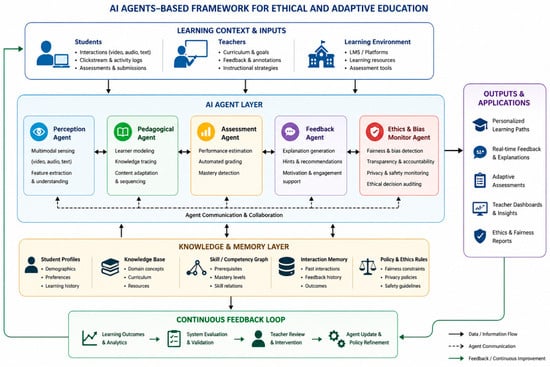
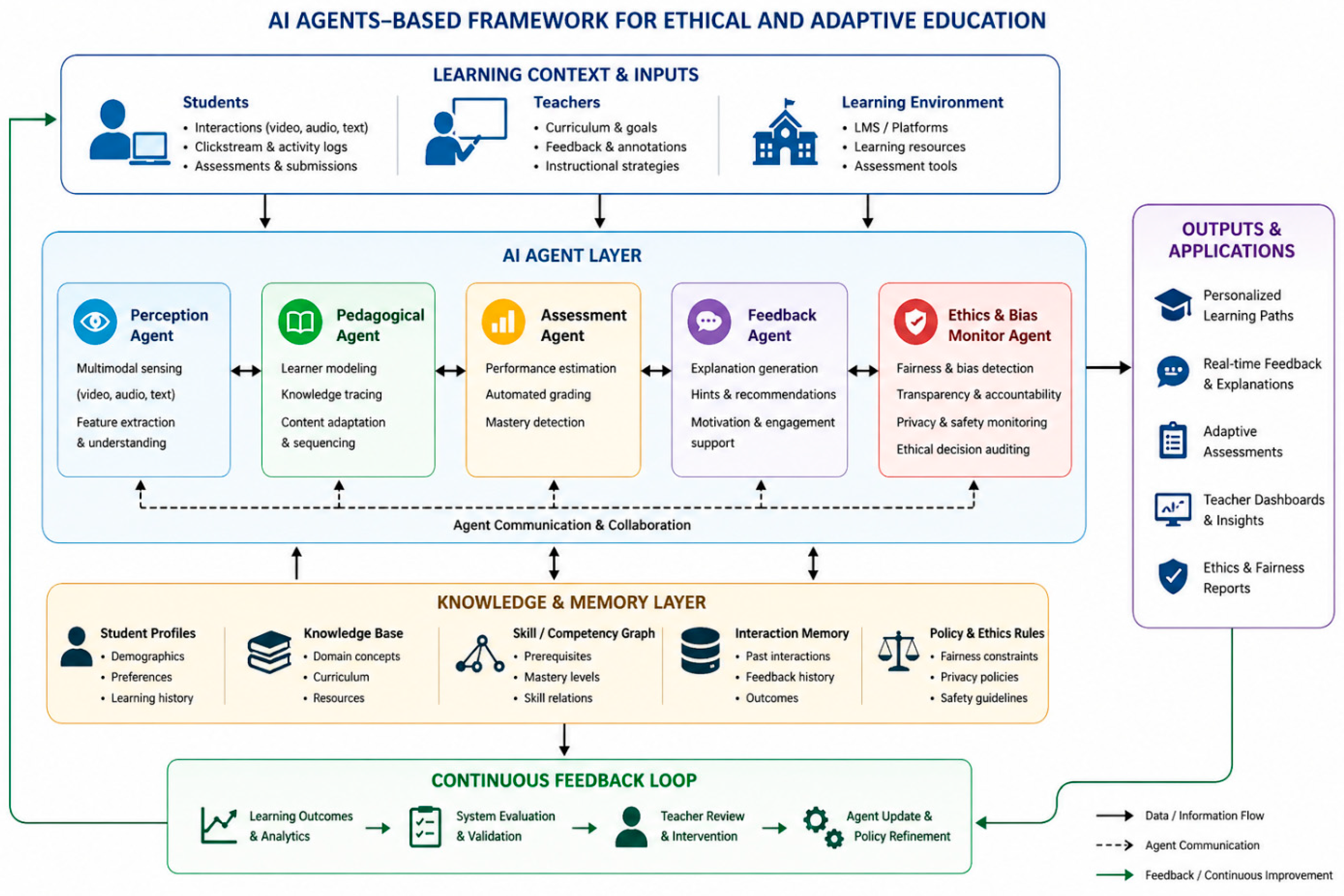

Disclaimer/Publisher’s Note: The statements, opinions and data contained in all publications are solely those of the individual author(s) and contributor(s) and not of MDPI and/or the editor(s). MDPI and/or the editor(s) disclaim responsibility for any injury to people or property resulting from any ideas, methods, instructions or products referred to in the content. |
© 2026 by the author. Licensee MDPI, Basel, Switzerland. This article is an open access article distributed under the terms and conditions of the Creative Commons Attribution (CC BY) license.