


Abstract
The number of patients with lower-limb dysfunction is increasing each year due to aging, illness, accidents, and other factors. Without timely rehabilitation and rapid recovery of walking function, further physical and mental deterioration may be accelerated, potentially leading to long-term bedriddenness. This study discusses gait training in rehabilitation therapy from the perspectives of kinesiology, cognitive science, walking function, and safety, and an omnidirectional gait training robot was developed. This study proposed a control system construction method for an omnidirectional gait training robot based on both prescription-based training and autonomous training. In the prescription-based training system, the target values are derived from the training prescription, and the control objective is to guide the patient to walk along the robot’s prescribed path and speed. In the autonomous training system, the target values are automatically generated based on the patient’s walking intentions, and the control objective is for the robot to safely follow the patient’s movement. A necessary condition for robot-assisted autonomous gait training is effective fall prevention. A fall prediction strategy based on foot position information and handrail pressure data was developed. Using this strategy, the robot can predict falls immediately before they occur, similar to a physical therapist, thereby reducing the risk of falls during gait training. Experimental results demonstrate the feasibility of implementing this strategy.
1. Introduction
The essence of life lies in movement, with walking as its primary form. Walking serves as one of the most effective forms of medicine, enhancing cardiovascular function, improving metabolism, regulating mood, strengthening bones and muscles, and reducing disease risk [1,2,3,4]. The World Health Organization (WHO) recognizes walking as one of the most beneficial forms of physical activity, and numerous countries have incorporated walking programs into national health initiatives [5,6]. Japan’s Ministry of Health, Labour and Welfare, in its national health guidance white paper Healthy Japan 21st Century, recommends a daily walking target of 7000 steps for older adults to prolong healthy life expectancy. However, with the emergence of aging societies, the number of individuals with lower-limb dysfunction is increasing annually due to aging, illness, falls, traffic accidents, and other factors [7,8]. Without timely rehabilitation therapy to restore walking function, individuals may enter a vicious cycle of walking impairment, musculoskeletal decline, and eventual bedridden status [9,10]. This progression not only causes suffering for patients but also imposes significant burdens on families and society.
In rehabilitation therapy, patients with lower-limb dysfunction must progress from stationary lower-limb strength training to mobile gait training at an appropriate stage to complete a comprehensive walking rehabilitation process and achieve independent walking [11,12,13,14,15]. Physical therapists adjust gait training methods and intensity in real time based on patient symptoms and gait patterns observed during therapy sessions. When assisting individuals with lower-limb dysfunction, therapists rely on manual feedback to detect changes in support forces, monitor gait and posture, and promptly identify and prevent signs of impending falls. This role requires substantial physical effort and advanced technical expertise. In recent years, the accelerating trend of declining birth rates and population aging has led to a growing number of older adults requiring gait training, resulting in a significant shortage of physical therapists. Consequently, gait training robots have become a major focus of research in rehabilitation robotics [16,17,18,19].
Using non-powered walkers or gait training walkers can easily lead to two types of falls: one occurs when the patient’s walking speed cannot keep pace with the training device, and the other results from postural collapse [20,21]. To address the fall risks associated with non-powered mobile gait training devices, various electrically controlled gait training devices and robots have been developed [22,23]. Human walking encompasses not only upright forward motion but also a range of gait actions, including lateral, diagonal, and backward movements, as well as turning and rotation. To effectively train the muscle groups involved in this range of gait activities, the concept of omnidirectional mobile gait training was proposed, and an omnidirectional gait training robot was developed [21,24,25,26].
Gait training robots differ from industrial robots in that their operational targets are not objects but patients with lower-limb dysfunction. In industrial robot systems, target values such as position and speed are externally defined, with the primary objective being high speed and operational efficiency [27]. In contrast, gait training robots are a type of welfare robot [28] that operate in human environments, interact directly with patients, and provide assistive support. Therefore, gait training robot systems prioritize patient safety and comfort rather than speed and efficiency. Directly applying traditional industrial robot control methods to gait training robots may not only result in unsatisfactory control performance but may also introduce safety risks. This study proposes a method for constructing a control system for a gait training robot.
In robot-assisted gait training, preventing patient falls is critical. If the robot can predict fall risk before it occurs, similar to a physical therapist, it can correct the patient’s posture by slowing down or moving in the opposite direction, thereby preventing falls during gait training. This study proposes a fall prediction strategy for an omnidirectional gait training robot control system based on foot position and handrail pressure information, ensuring safety during gait training by visually and mechanically simulating the skills of a physical therapist. Experimental results show that this strategy is feasible.
2. Classification of Gait Training
To date, a variety of walking training devices and robots have been developed, and confusion persists between lower-limb muscle strength training and gait training. Although walking may appear simple, it is in fact a highly complex movement [29]. This study discusses gait training from the perspectives of kinematics, cognitive science, walking function, neurology, and safety.
(1) From a kinematic perspective, the highest level and ultimate goal of gait training is to move the body’s center of gravity using the reaction force generated by actual friction between the foot and the ground [30,31,32]. This is because the essence of walking lies in moving the body’s center of gravity through friction. Only when patients with lower-limb dysfunction can freely control this real frictional force can walking function be reproduced, that is, restored.
(2) From the perspective of cognitive science, active walking cannot be achieved when visual information is inconsistent with the brain’s somatosensory perception or when the ground environment does not match this perception. This is because the brain recognizes walking speed through changes in the apparent size of surrounding objects. The legs function not only as actuators supporting the body but also as sensors of the ground environment. Active walking can only be achieved when both visual and tactile feedback accurately reflect the real environment [33,34,35]. Therefore, walking training should be performed on actual ground surfaces while simultaneously perceiving relative environmental changes, such as the distance to surrounding objects and variations in their apparent size.
(3) From the perspective of walking function, walking is not simply the forward movement of the center of gravity in an upright posture. Rather, walking function includes numerous complex movements, such as backward movement, lateral movement, diagonal movement, rotation/turning, standing, stair climbing, and balancing. The muscle groups and force requirements supporting each movement differ. Therefore, comprehensive and precise training of these complex movements is necessary to facilitate rapid rehabilitation [24,25,26].
(4) From a neurological perspective, walking is achieved through the coordinated control of muscles by command signals from the premotor and motor cortices, transmitted via the brainstem and spinal cord [36,37]. Therefore, accurate diagnosis of disease pathogenesis and location from a pathological perspective is essential for identifying effective training methods and achieving precise rehabilitation.
(5) From a safety perspective, two typical types of accidents occur in traditional gait training using non-powered walking devices or walkers: falls caused by the inability to match the speed of the training device and falls caused by postural collapse. Therefore, both types of accidents must be prevented in all gait training robots [20,21].
Based on the above discussion, this study classifies walking function training devices and robots into stationary types for lower-limb strength training and mobile types for gait training.
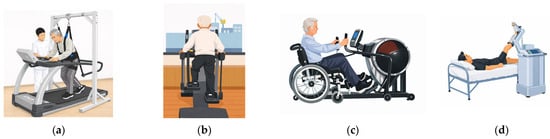
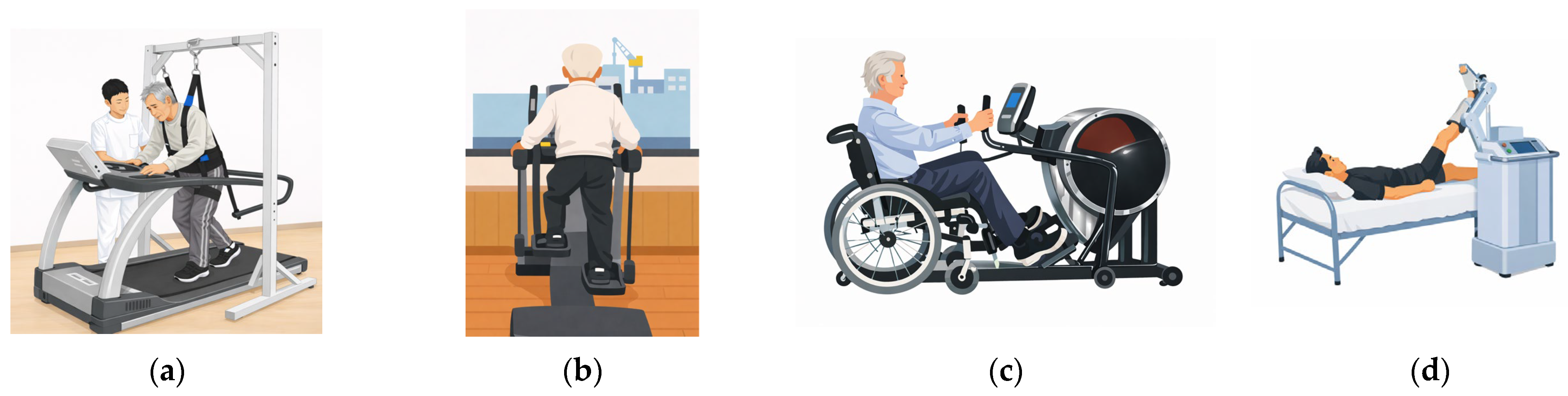
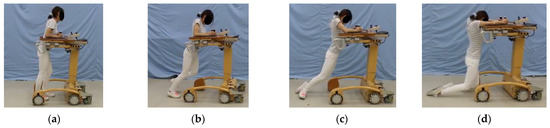
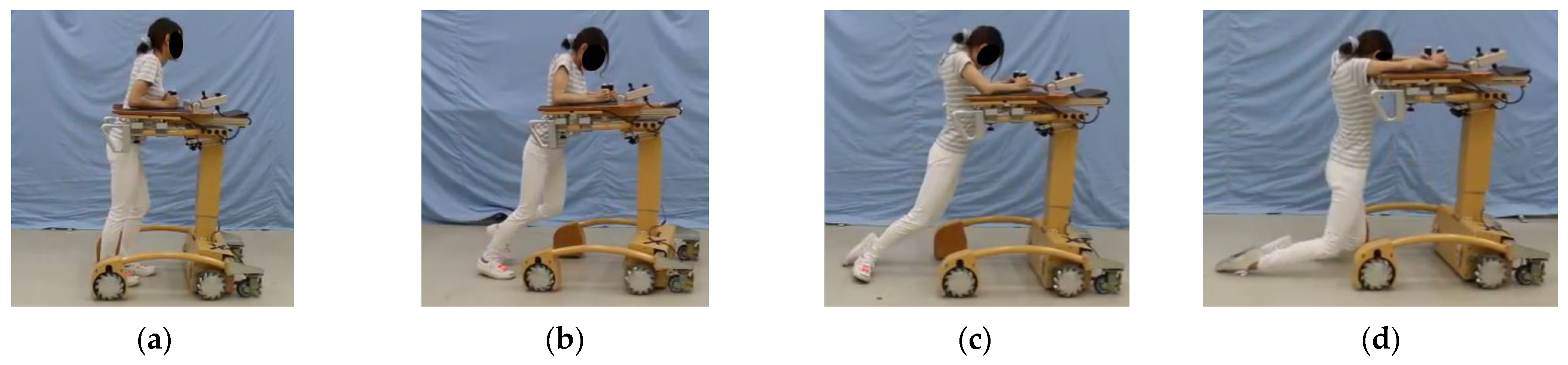
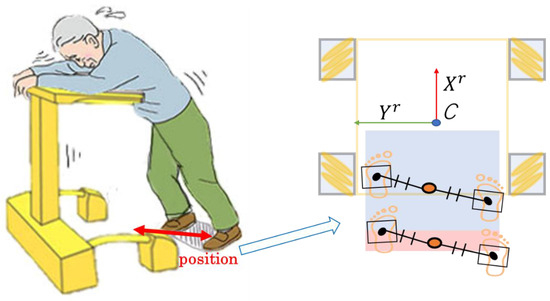
Figure 1 shows positional training using a platform and foot pedals in standing, sitting, and lying positions. Positional training involves the patient passively performing walking-like movements, such as lifting the feet and moving the lower-limb joints, as the platform or foot pedals move [11,38]. Since no reaction force is generated from friction with the ground to shift the body’s center of gravity [30,31,32], positional training only provides lower-limb muscle strength training. In addition, from a cognitive perspective, because the patient trains in a fixed position, movement speed is not reflected in the visual field and is not coordinated with visual perception [11,13,15,33,34].
Figure 1.
Positional rehabilitation training: (a) Standing; (b) Standing; (c) Seated position; (d) Lying down.
Mobile gait training involves actively pushing against the ground with the feet to generate a reaction force through friction, thereby shifting the body’s center of gravity. This type of training is conducted while walking in a real-world environment, where the patient’s vision continuously interacts with the surroundings. From a cognitive perspective, the brain’s sensory functions related to walking are also trained. Therefore, after stationary lower-limb strength training, patients with lower-limb dysfunction should transition to mobile gait training at an appropriate stage to complete the full gait rehabilitation process and achieve active walking [11,13,35,38,39].
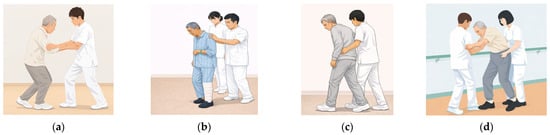
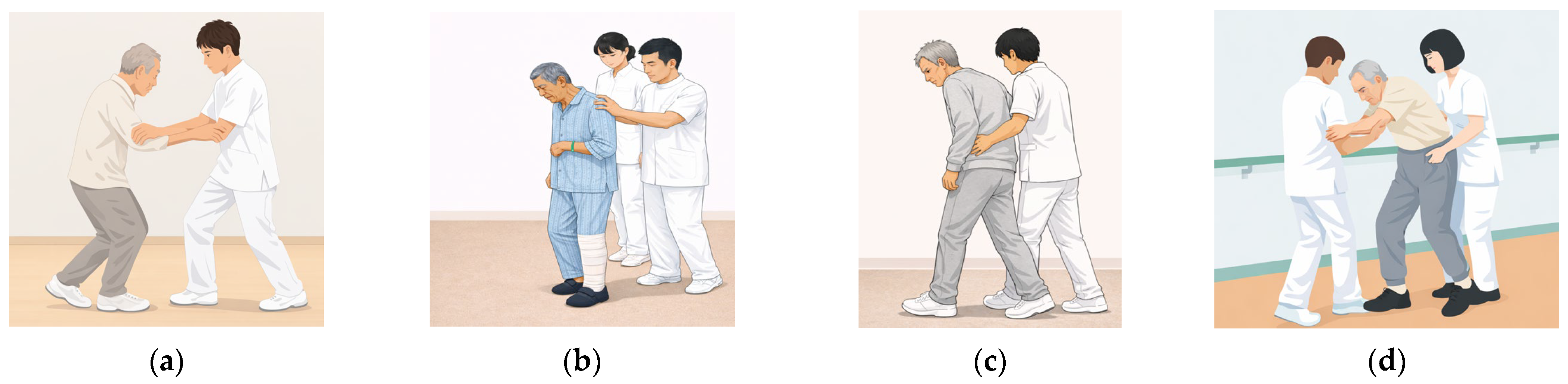
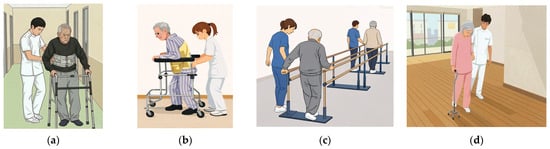
In rehabilitation therapy, as shown in Figure 2, therapist-assisted gait training using manual support is considered one of the most effective methods. The therapist adjusts the training method and intensity according to the patient’s symptoms and gait performance during training, while simultaneously sensing changes in support forces, observing gait and posture, and promptly detecting signs of potential falls to prevent them. The work of a physical therapist is physically demanding and requires a high level of expertise. With the increasing trend of declining birth rates and population aging, a severe shortage of physical therapists has emerged, necessitating the use of assistive devices and robots for walking rehabilitation training.
Figure 2.
Physical therapist providing manual assistance during gait training: (a) Forward support; (b) Rear support; (c) Lateral support; (d) Front and rear support.
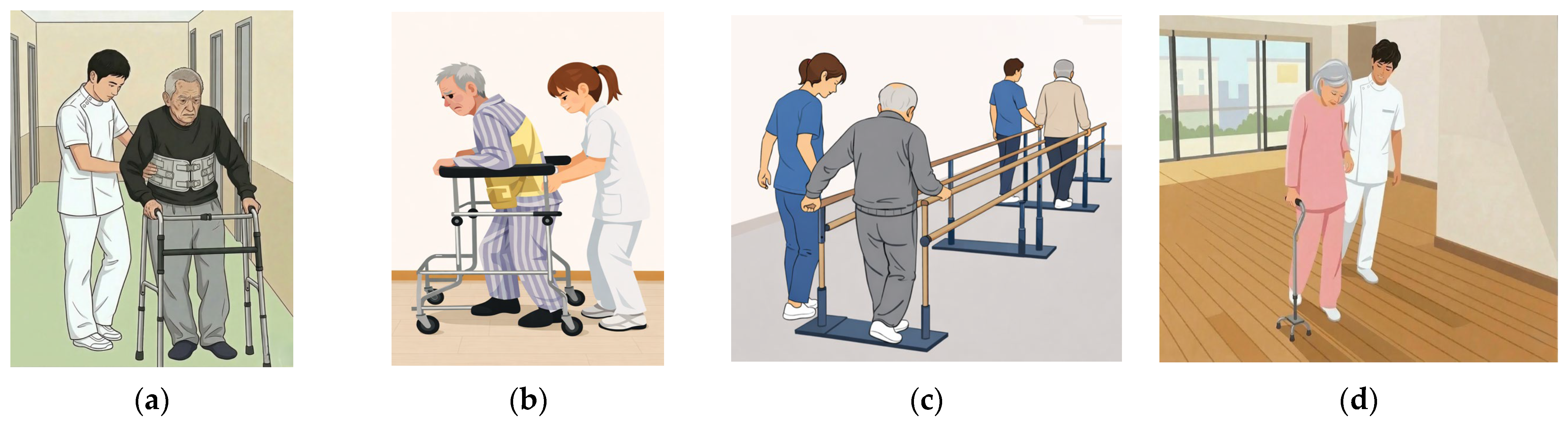
As shown in Figure 3, commonly used non-electrically controlled mobile gait training devices include walkers, walking carts, parallel bars, and canes. However, when using non-electrically controlled walkers and walking carts for gait training, it is not possible to actively provide optimal support (in terms of force and direction) according to the patient’s condition, as a physical therapist would. Instead, the movement remains passive, which increases the risk of falls, including forward falls and those caused by postural collapse, as discussed above [20,21,25].
Figure 3.
Non-powered gait training devices: (a) Walking machine; (b) Pedestrian vehicle; (c) Parallel bar; (d) Walking stick.
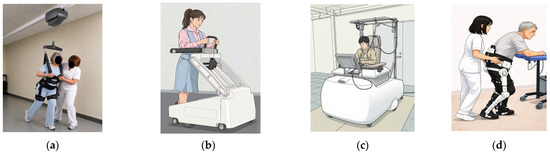
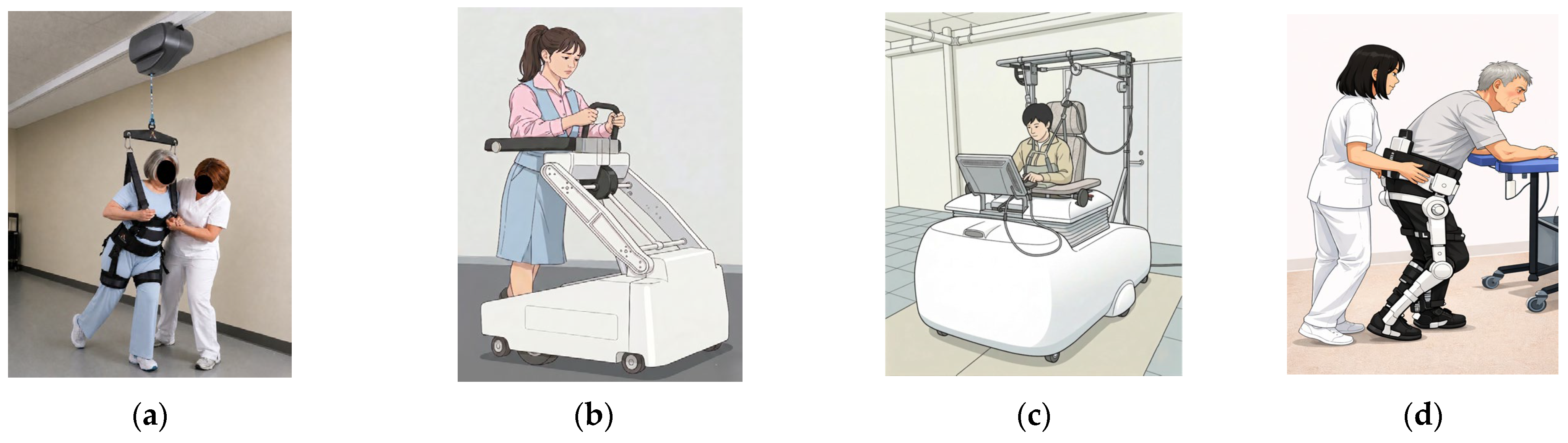
In response to the risks associated with non-electrically controlled mobile walking function training devices, various electrically controlled mobile walking function training devices have been developed, as shown in Figure 4.
Figure 4.
Powered gait training systems: (a) US NRT; (b) Hitachi, Ltd.; (c) KUT; (d) Wearable HAL.
3. Omnidirectional Gait Training Robot and System Design
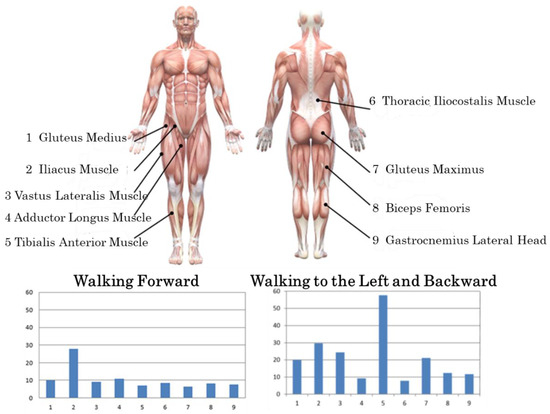
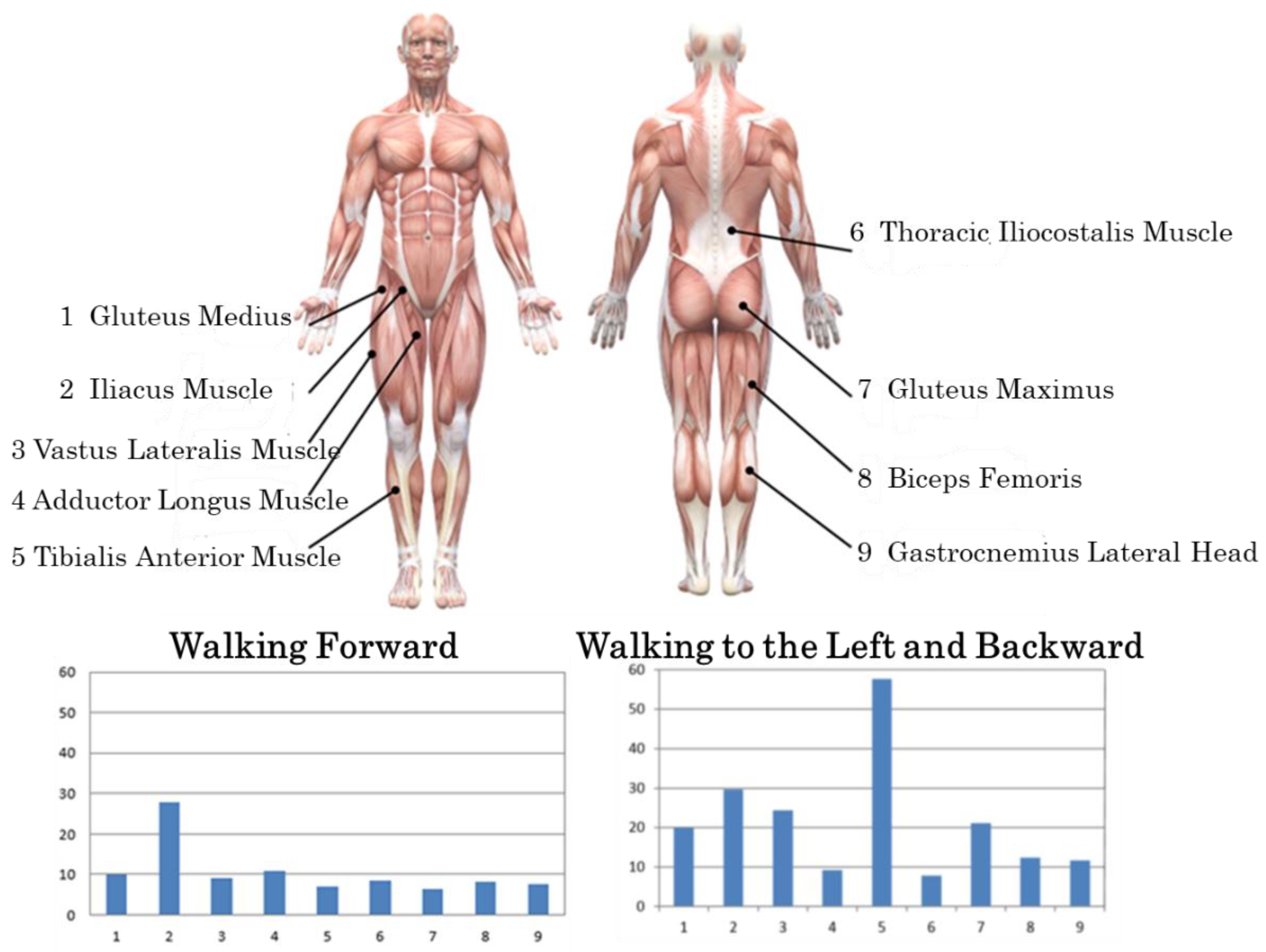
Human walking is not simply a matter of shifting the center of gravity forward while standing upright; rather, it involves complex multidirectional movements such as lateral, diagonal, and backward walking, as well as turning and rotation. Each of these movements engages different muscle groups and requires varying levels of strength. When patients with lower-limb dysfunction undergo gait training in different directions—that is, when performing different movements within the gait sequence—the degree of muscle strength improvement in the relevant areas varies. For example, as shown in Figure 5, when a person walks forward, the second iliacus muscle plays the most significant role, whereas when moving to the left and rear, the fifth tibialis longus tendon plays the most significant role. Therefore, training the second iliacus muscle through forward gait and the fifth tibialis longus tendon through left-rear gait can result in greater improvements in muscle strength. Thus, omnidirectional gait training enables precise rehabilitation by targeting specific muscle groups, thereby facilitating earlier recovery in patients with lower-limb dysfunction. To this end, omnidirectional gait training was proposed, and an omnidirectional gait training robot was successfully developed [21,24,25,26].
Figure 5.
Activity of various muscle groups during walking.
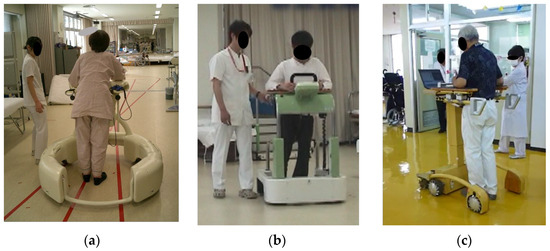
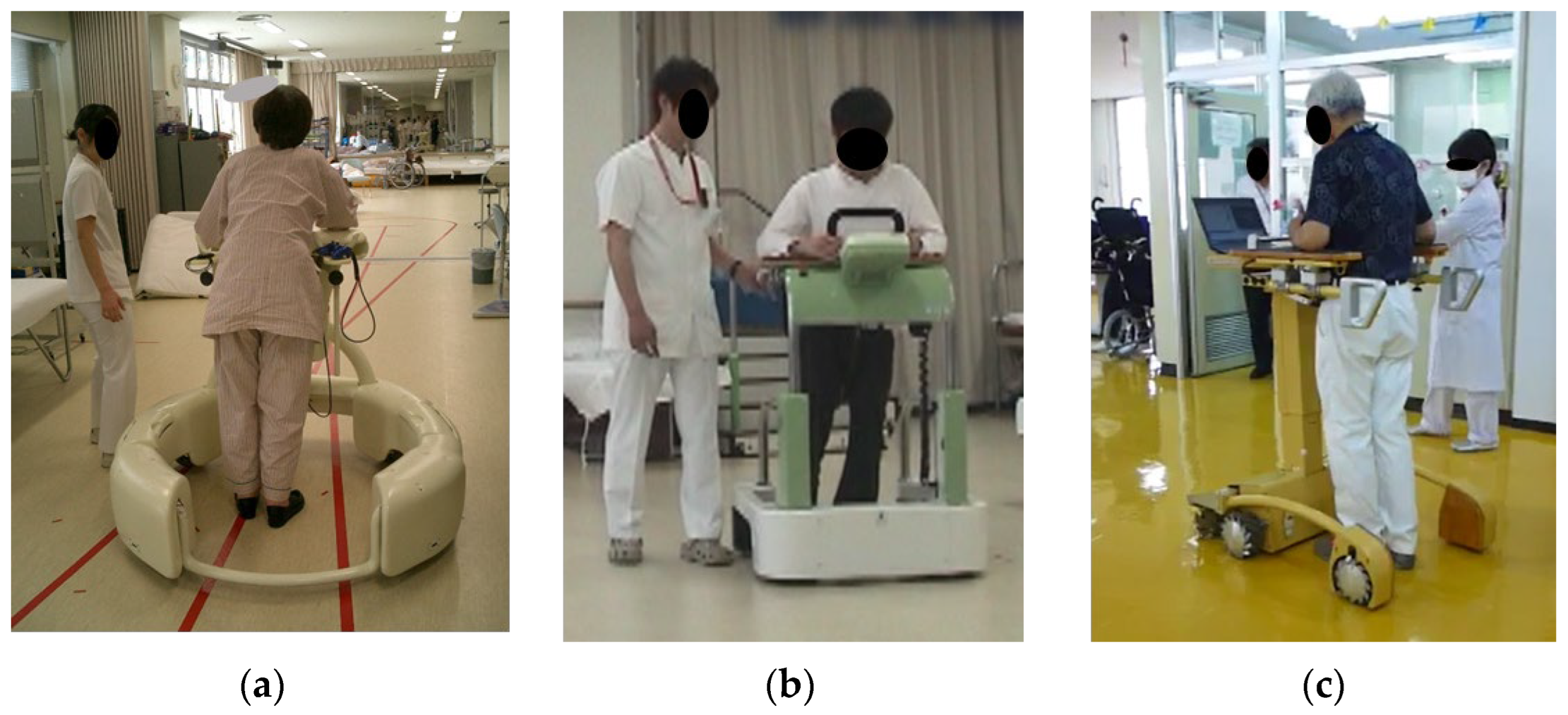
Figure 6a–c show prototype No. 1, 2, and 3 of the developed omnidirectional gait training robot.
Figure 6.
Omnidirectional gait training robot: (a) Robot No. 1; (b) Robot No. 2; (c) Robot No. 3.
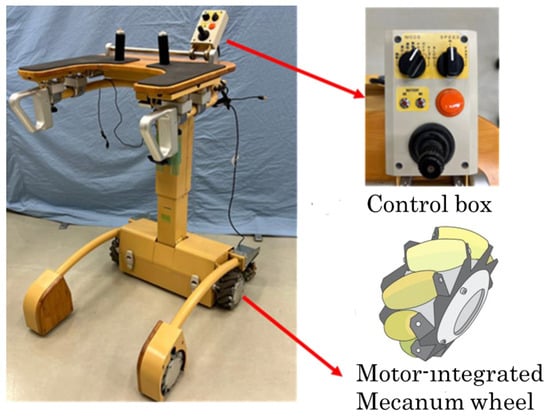
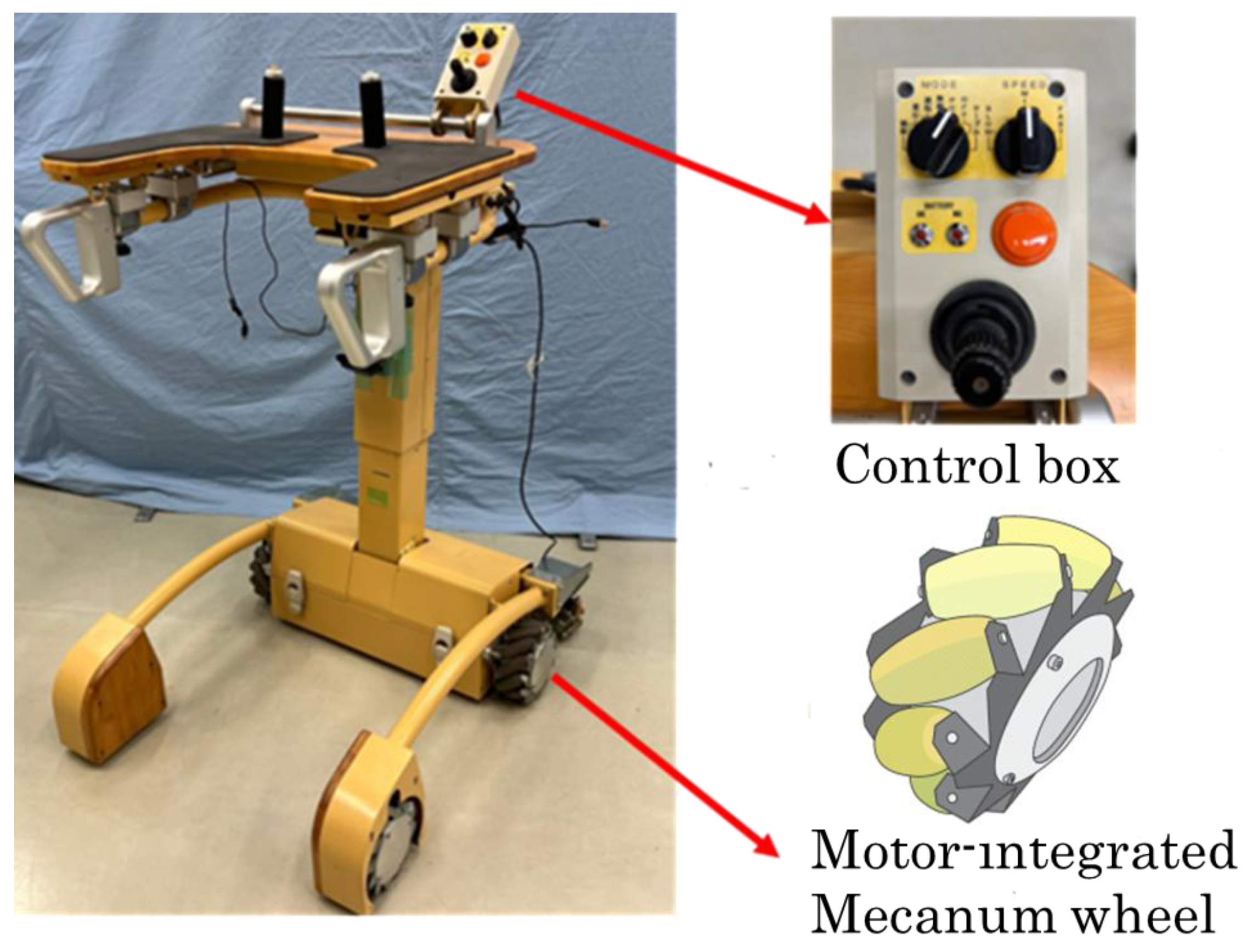
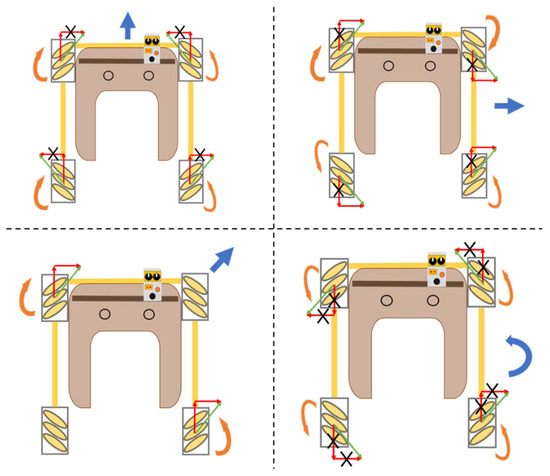
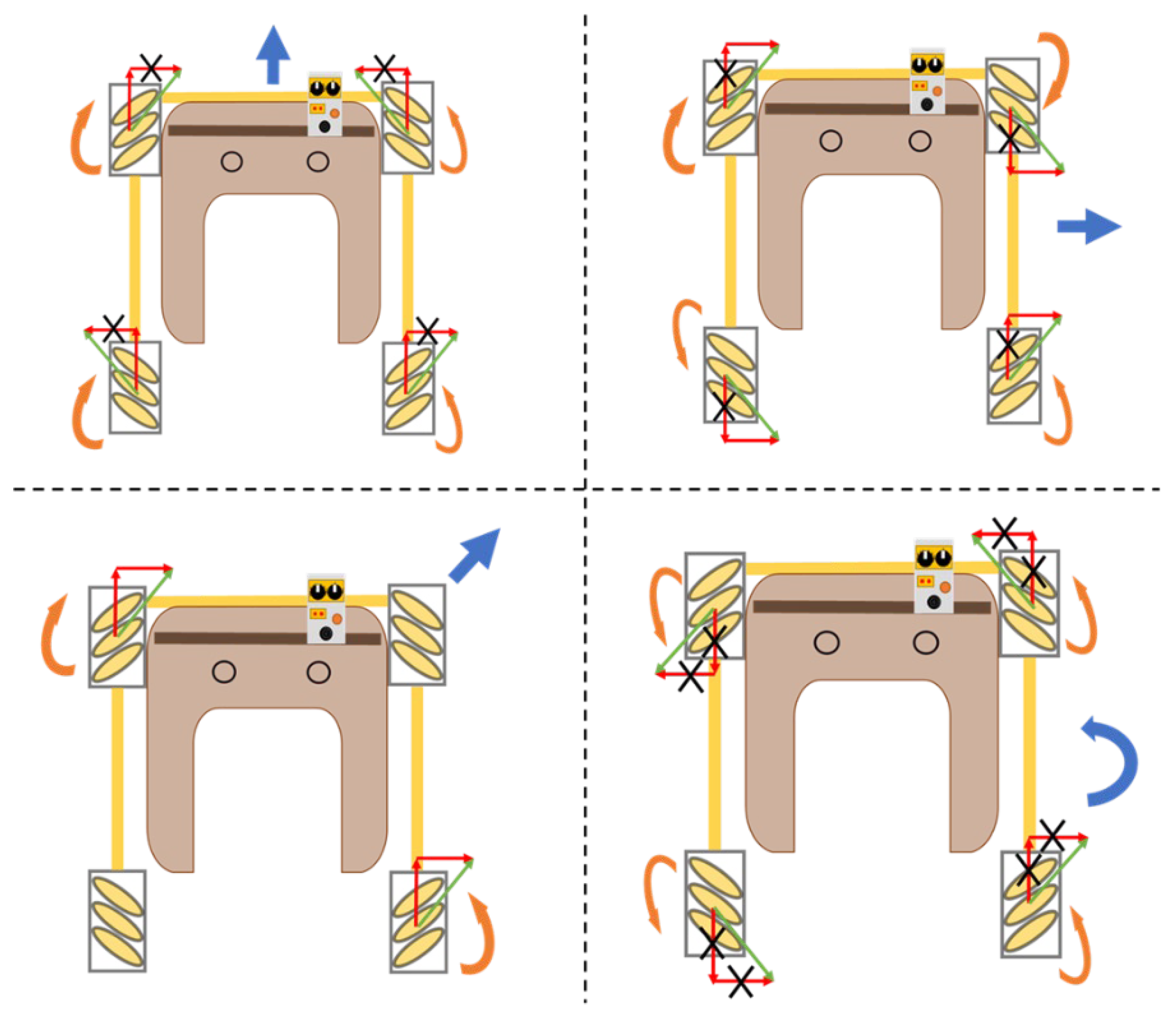
Figure 7 shows the control box and the motor-embedded Mecanum wheels of omnidirectional gait training robot No. 3. The control box allows selection of the robot’s operating mode. Small motor-embedded Mecanum wheels are mounted at the four corners of the robot’s base. As shown in Figure 8, different combinations of the rotational speeds of these motor-embedded Mecanum wheels enable omnidirectional movement, including forward movement, rightward and leftward turning, and rightward diagonal movement.
Figure 7.
Robot control box and mecanum wheels with integrated motors.
Figure 8.
Omnidirectional movement.
Patients with lower-limb dysfunction using this gait training robot can shift their center of gravity by pushing against the ground with their feet and generating a reaction force through ground friction. The robot not only trains patients in upright forward walking but also enables training in complex gait movements such as lateral, diagonal, and backward walking, as well as rotation [21,24,25,26]. Because walking training is conducted on the ground, patients can visually interact with their surroundings, develop real cognitive functions, and activate the sensory and motor cortices of the brain.
Omnidirectional gait training robots differ from industrial robots in that their operational targets are not physical objects but patients with lower-limb dysfunction undergoing rehabilitation training [25,27,28]. These robots operate in human environments, interact directly with patients, and provide assistive support. Omnidirectional gait training robots facilitate gait training by applying controlled forces and feedback to the patient. In contrast, the position, speed, and other target values of industrial robot systems are externally defined, with the objective of achieving high speed and operational efficiency. Gait training robots, however, prioritize patient safety and comfort. Directly applying industrial robot control methods to gait training robots may not only lead to unsatisfactory control performance but also introduce safety risks.
There are two training modes for gait training using omnidirectional gait training robots: prescription-based training and self-training. A prescription is a rehabilitation plan provided by physicians and physical therapists based on the type of lower-limb dysfunction, specifying the training direction and intensity (distance, speed, number of repetitions, etc.). Once the patient’s gait function has recovered to a certain extent through rehabilitation, training should transition to self-training [33]. Self-training is not based on a prescription but instead follows the patient’s own walking intentions (direction, distance, speed, etc.).
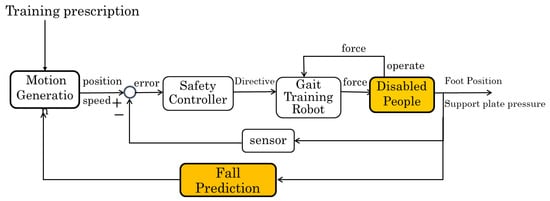
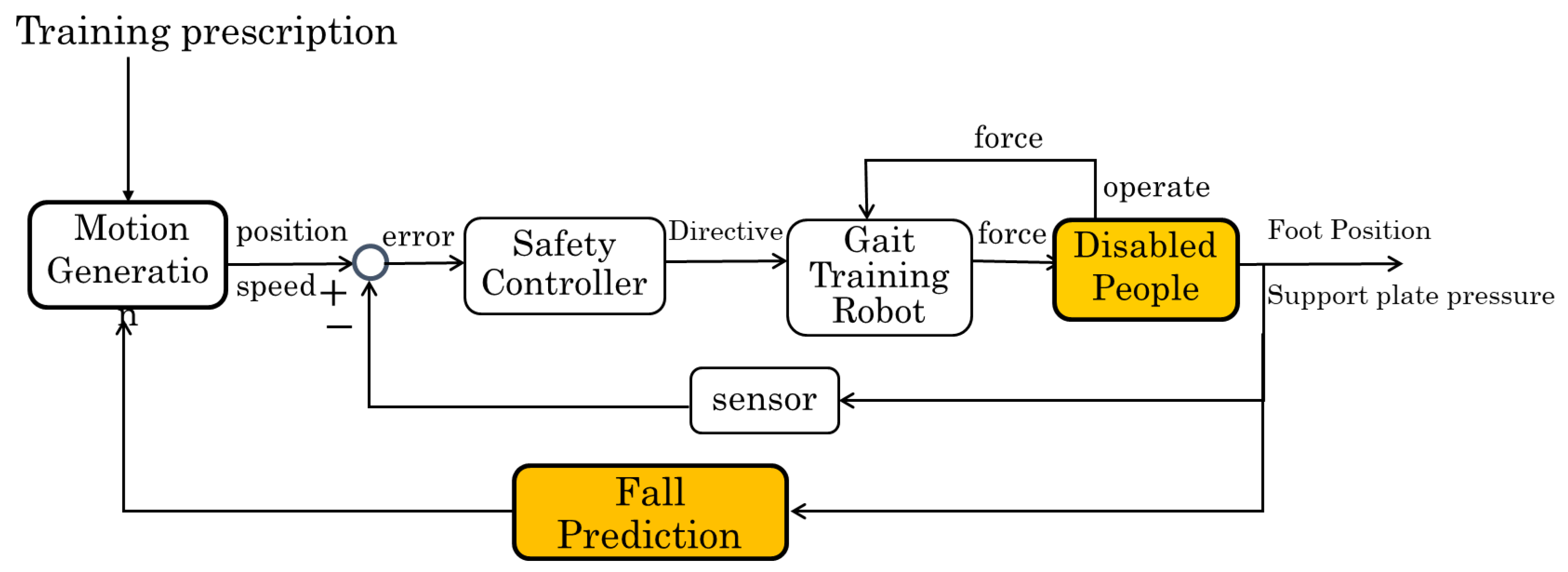
Figure 9 illustrates the structure of a gait training robot control system based on a training prescription. The system includes fall risk assessment and motion generation according to the training prescription. When the robot performs gait training for patients with lower-limb dysfunction based on the training prescription, the control system target values (path, training speed, trajectory, and time) are derived from the prescription. The control objective is for the robot to move according to these specified target values while patients with lower-limb dysfunction follow the robot’s motion during walking training.
Figure 9.
System construction based on training prescription.
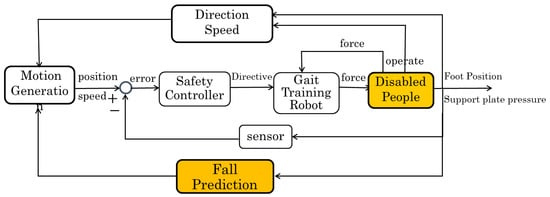
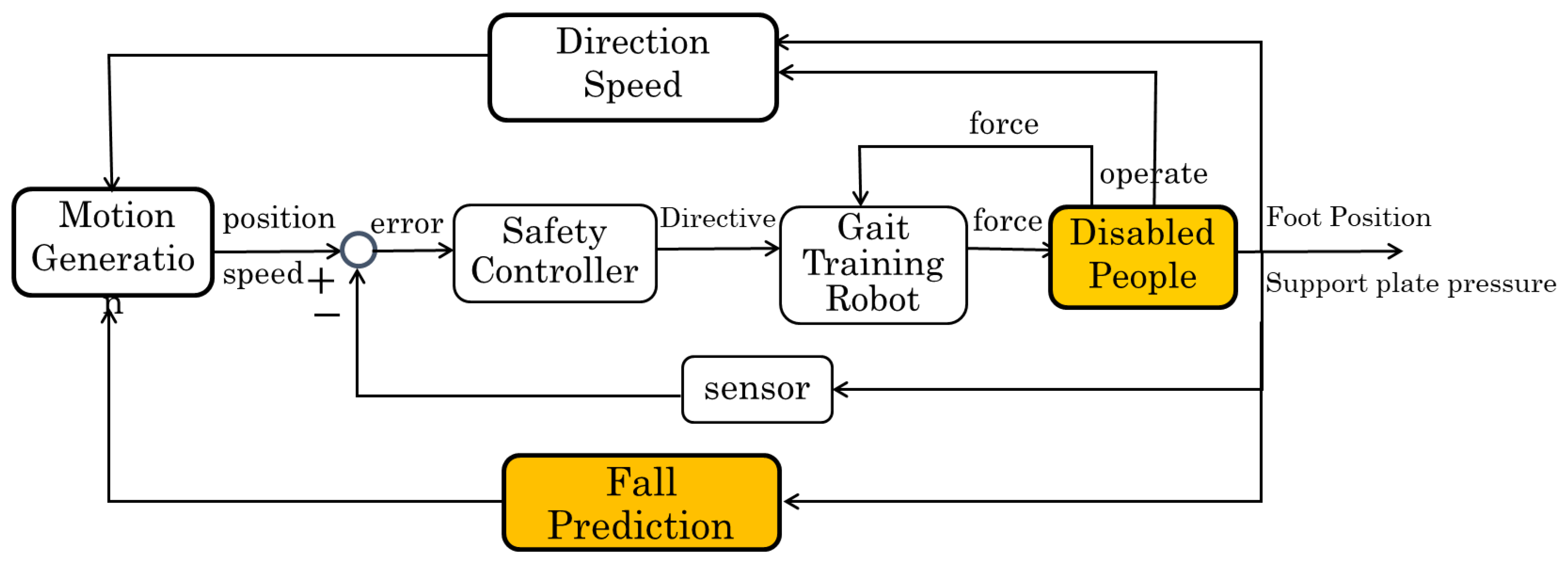
Figure 10 shows the structure of the control system for autonomous training of the omnidirectional gait training robot. The robot identifies the patient’s walking intention (speed, direction, etc.) based on foot position and handrail pressure information and predicts the risk of falling. Motion is generated according to the identified walking speed and direction, as well as the results of the fall prediction strategy. The robot must also determine whether fall prevention control measures are necessary based on this strategy. The autonomous training system differs from the above-mentioned prescription-based training system in that its target values are not derived from a training prescription but from the patient’s own walking intention. The control objective is not for the patient to follow the robot’s movement, but rather for the robot to follow the patient’s walking intention while ensuring safe movement.
Figure 10.
System construction for autonomous training.
4. Fall Prediction
During gait training, patient falls must be prevented. When a physical therapist performs manual gait training, (A) the therapist primarily predicts falls by observing the patient’s gait and trunk posture. (B) At times, the therapist predicts falls through physical contact with the patient. Method (B) allows the physical therapist to sense whether the patient’s posture is about to collapse based on support forces, enabling faster prediction than position- or velocity-based observations in Method (A). This is because force generates acceleration, the integral of acceleration yields velocity, and the integral of velocity yields position.
Preventing falls is also essential in robot-assisted autonomous walking training. Figure 11 illustrates the sequence of events when a patient falls forward: (a) shows normal training, (b) shows the moment just before postural collapse, (c) shows the onset of postural collapse, that is, immediately before a fall, (d) shows the patient after falling. If the robot can predict a fall at stages (b) and (c), it can slow down or move in the opposite direction to correct the patient’s posture, thereby preventing stage (d). In other words, if the robot can predict a fall immediately before it occurs, similar to a physical therapist, falls can be avoided. Therefore, to predict patient falls, the robot must incorporate the physical therapist skills described in (A) and (B) above.
Figure 11.
Forward falling scenario: (a) Normal training; (b) Pre-collapse posture; (c) Posture begins to collapse; (d) Forward-leaning fall.
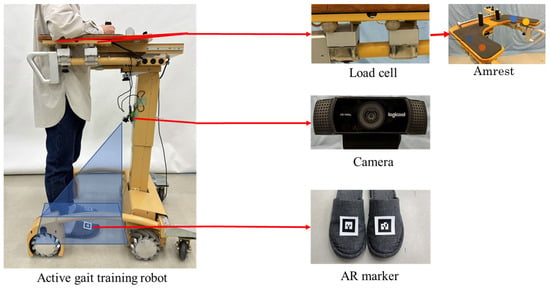
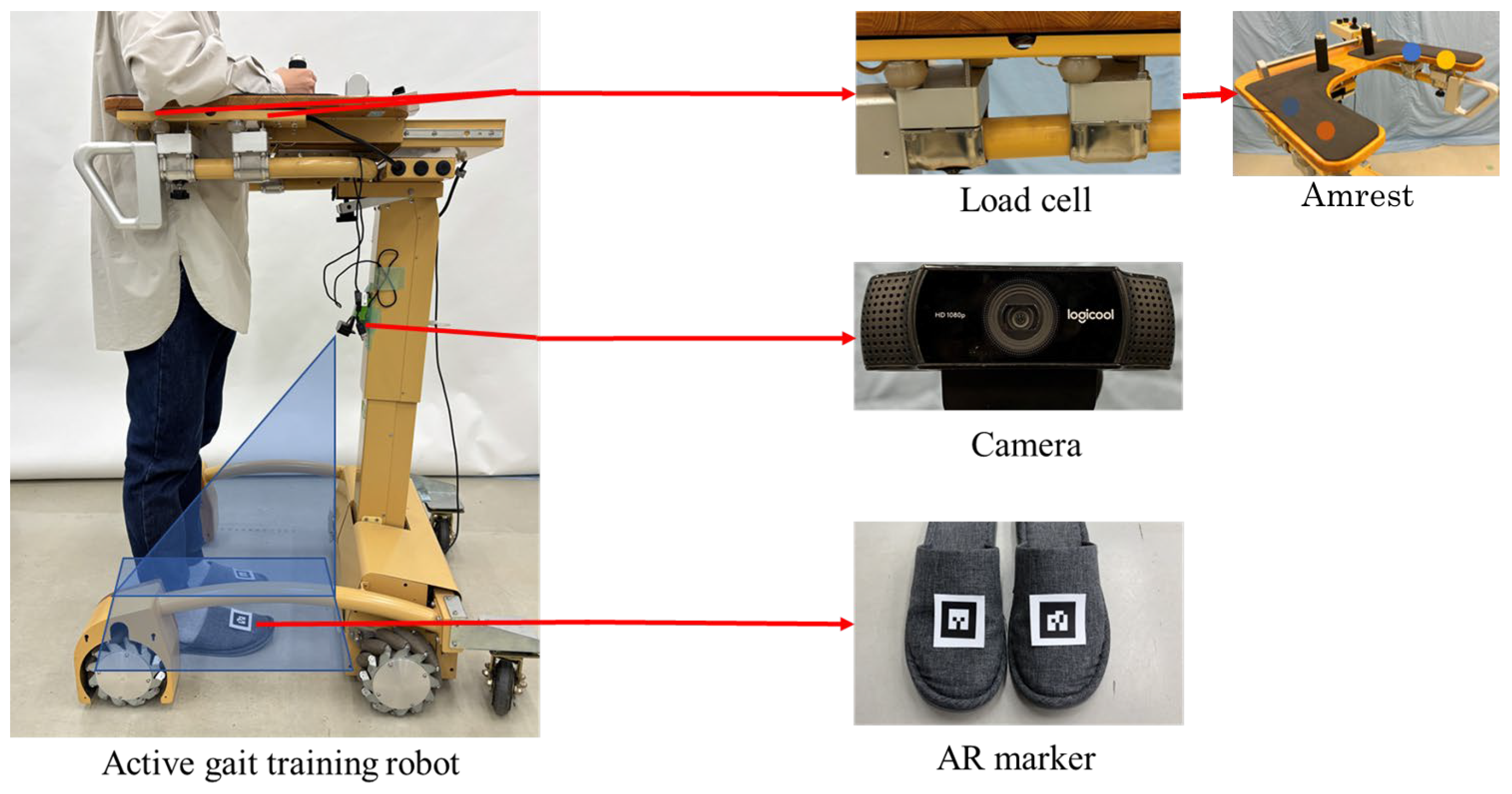
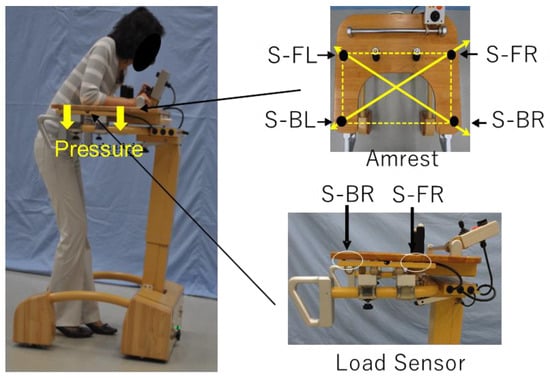
To measure the patient’s gait (A) and trunk posture (B), a camera and a load cell were installed. The specific installation locations are shown in Figure 12. The camera functions as the physical therapist’s eyes by visually measuring the position and posture of both feet. The load cell functions as the physical therapist’s hands by measuring the upper body center of gravity through force data. As shown in Figure 12, the four the load cell are located on the left and right sides of the bottom of the armrest. The force information is converted into voltage through an amplifier. In this study, these two types of information were used to predict falls.
Figure 12.
Vision and force sensors in the AGTR.
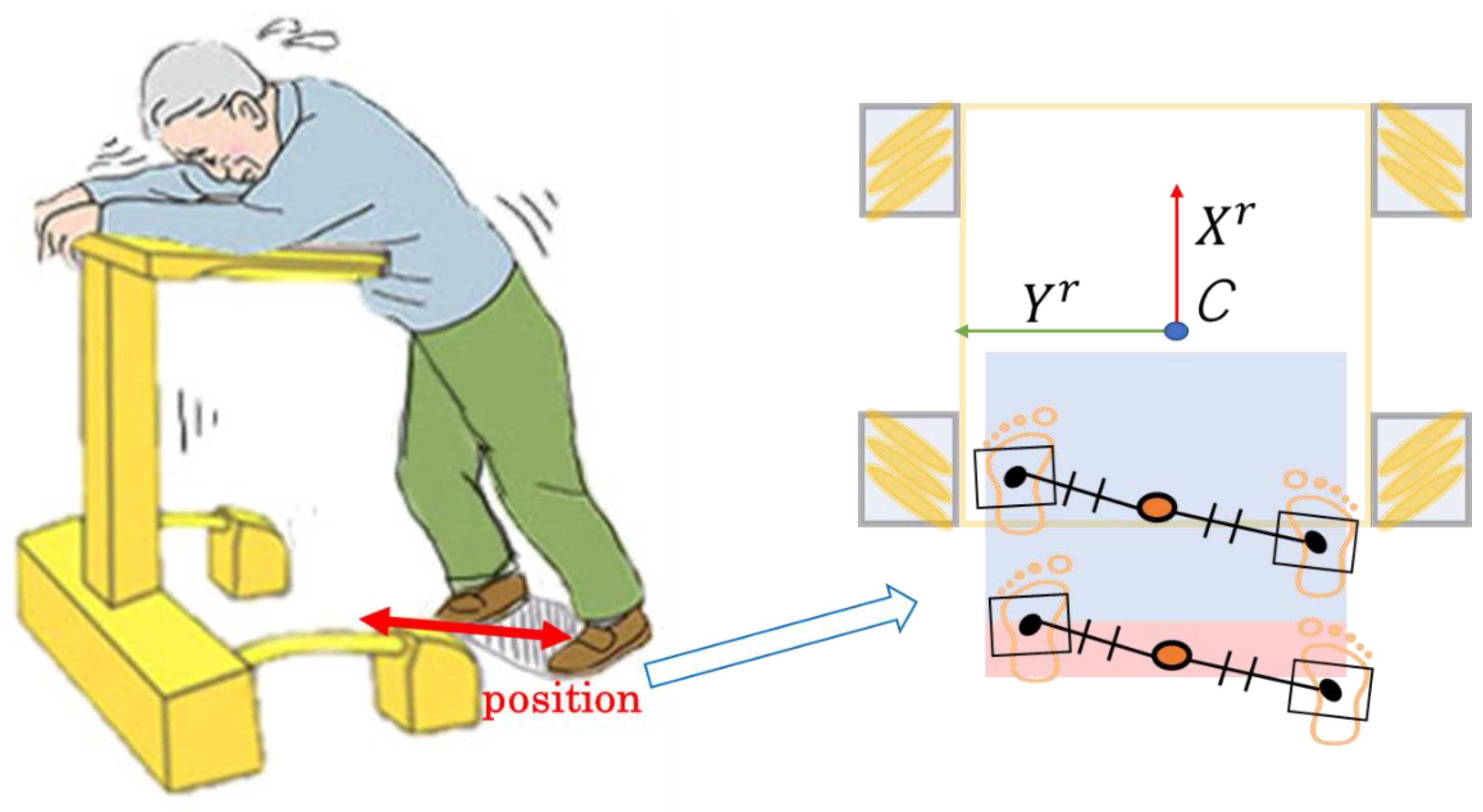
First, the concept of fall prediction is discussed using the example of a forward-leaning fall. Considering the relative positions of the patient’s feet and the robot’s four wheels, a safety zone is defined and shown in light blue in Figure 13. A danger zone is defined behind the safety zone relative to the forward walking direction and is shown in pink. If the midpoint of the line connecting the centers of both feet remains within the safety zone, the patient is considered stable and safe. However, if this midpoint enters the danger zone, the patient undergoing gait training may be unable to keep pace with the robot, indicating a risk of falling. In this case, the robot slows down and waits for the patient. If the midpoint moves further behind the danger zone, the robot moves backward, opposite to the direction of travel, to support the patient’s forward-leaning posture and ensure safety.
Figure 13.
Fall prediction based on foot position information.
Next, the concept of fall prediction based on trunk posture collapse measured using load cells is discussed. When patients use the robot for gait training, they rest their elbows on the support board to reduce the load on the lower body and support their posture. If load cells are installed inside the armrest, it can not only provide weight-bearing support, similar to the hands of a physical therapist, but also quickly detect the state immediately before trunk posture collapse. In this study, as shown in Figure 14, four load cells were installed at the bottom of the armrest.
Figure 14.
Installation of load cells on the omnidirectional gait training robot.
When the patient’s posture collapses, such as by leaning forward, to the left or right, or downward, the risk of falling increases. This postural collapse is reflected in the pressure exerted by the elbows on the armrest, resulting in different pressure distributions at various points on the armrest. Therefore, this pressure information can be used to predict trunk postural collapse. For example, if the pressure values at the rear (S-BL, S-BR) are greater than those at the front (S-FL, S-FR), it can be inferred that the patient’s trunk may be leaning forward while the gait training robot is moving. Specifically, in this study, to utilize the rapid response of the force sensors, both the absolute values and the relative differences among the sensor readings were formulated using binary logic.
Here, the four load cells S-FL, S-FR, S-BL, and S-BR are denoted as , respectively. The measured values are denoted by . The sign function of the measured values is defined in Equation (1) as follows:
The sign function for comparing the measured values between sensors and is defined as follows:
As represents value comparisons between and , there are such combinations. Including the four , there are 10 variables in total. Since each is a binary value, the robot can represent different trunk conditions. In this study, the four and six are used as inputs to the trunk posture collapse prediction system, and is used as the output. A truth table with 1024 rows (omitted in this study) was constructed, and trunk posture collapse was predicted using the following logical function for .
For example, if the robot’s speed exceeds the patient’s walking speed, the trunk posture may tilt forward. If forward hazard is denoted as , it can be calculated using the following logical formulas. A result of 1 indicates danger, whereas 0 indicates safety. Using this approach, the robot can quickly detect the risk of falling due to trunk posture (upper body tilt).
As described above, this walking assistance robot can ensure safety during gait training by visually and haptically mimicking the skills of a physical therapist. In other words, it can quickly detect fall risks and safely support patient gait training by slowing down, changing direction, and adjusting the armrests, similar to the actions of a physical therapist.
5. Experimental Results and Discussion
(1) Experimental Conditions
Robot No. 3, shown in Figure 6, was used in the experiments. The robot dimensions are 450 mm in width, 600 mm in depth, and an adjustable height ranging from 840 mm to 1240 mm with the lift function. To verify the feasibility of the proposed method, one male subject in his 20s was recruited. The subject placed both arms on the robot armrests and performed the experiment while facing forward. As shown in Figure 13, the safe zone and danger zone were defined as follows. As a fall prevention measure, the robot moved backward to support and guide the subject into the safe zone.
Dangerous region: .
Safe region: .
Each experiment was repeated three times. The reported results represent the average values obtained from the three trials.
(2) Experimental Content
Three experiments were conducted.
Experiment 1: The subject remained stationary while the robot moved forward. The robot predicted falls based on entry into the danger zone and executed fall prevention actions.
Experiment 2: The subject remained stationary while the robot moved forward. The robot predicted falls based on trunk posture instability and executed fall prevention actions.
Experiment 3: The subject walked forward voluntarily. The robot simultaneously performed visual and haptic fall prediction and executed fall prevention actions.
(3) Experimental Objectives
Experiment 1 demonstrated that, in human movement, force information can be detected faster than visual information. In other words, fall prediction should utilize force information in addition to positional information. Experiment 2 demonstrated that fall risks that cannot be predicted using positional information alone can be detected using force information. Experiment 3 demonstrated the feasibility of safe and independent walking training.
(4) Experimental Results
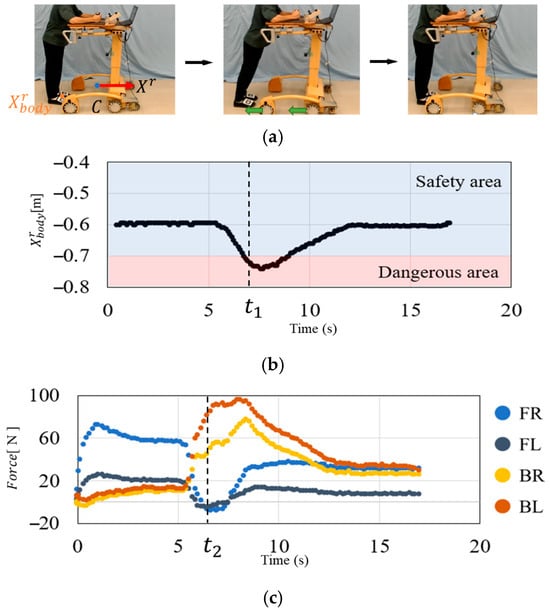
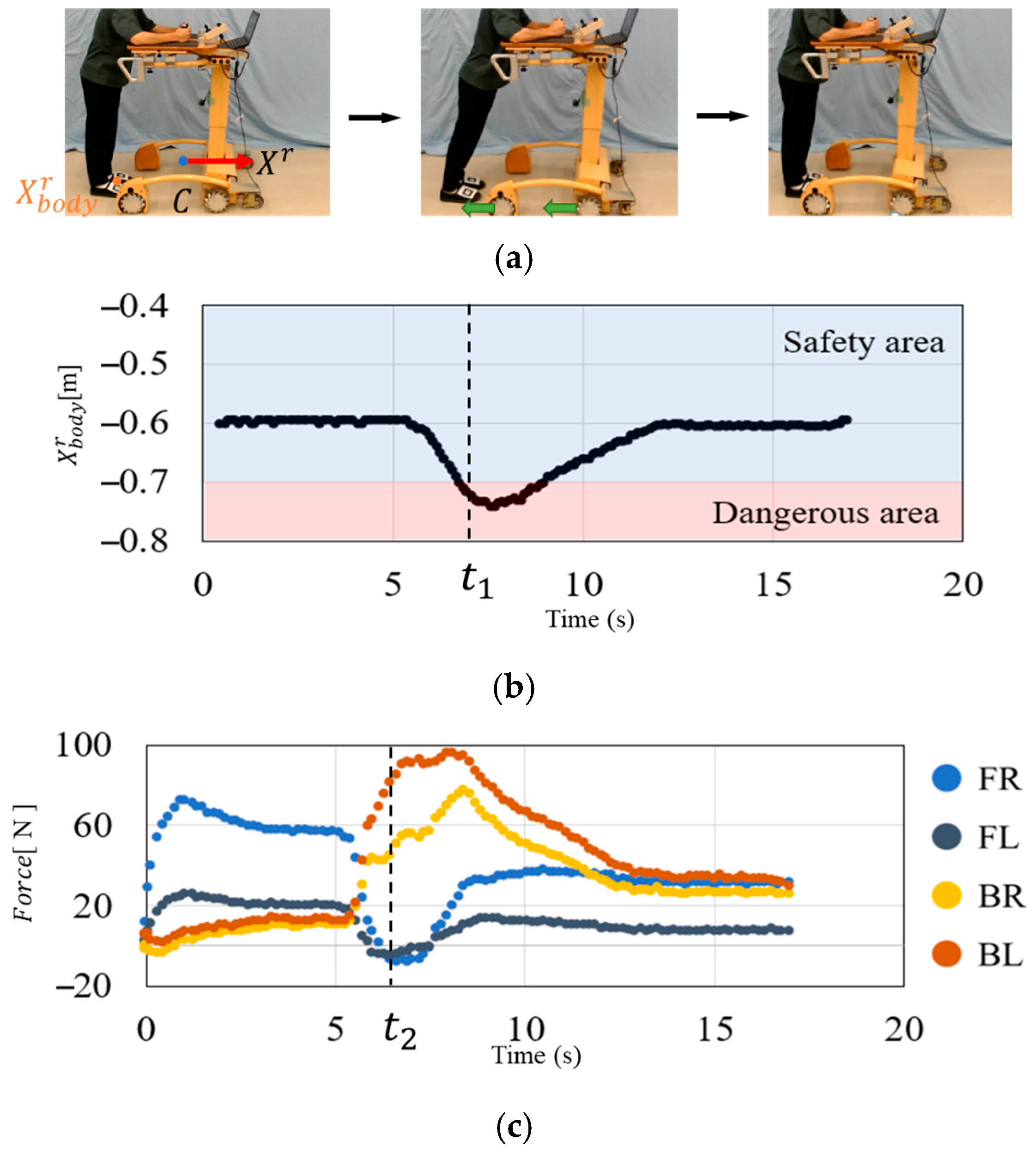
The three experimental setups and their corresponding results are presented below. Figure 15a shows the setup for Experiment 1, and Figure 15b,c present the corresponding results.
Figure 15.
Results of Experiment 1: (a) Experimental setup; (b) coordinates of the center of both feet; (c) output of the four load cells.
In Figure 15b, after approximately 5.0 s, the distance between the robot and the subject increased, causing the body center position to decrease in the coordinate system with the robot’s center as the origin C. Subsequently, at approximately t1 = 6.9 s, the subject entered the danger zone, and a fall risk was detected. continued to decrease until approximately 8.0 s; however, the robot performed a fall prevention action, bringing the subject and robot closer together. As a result, increased and reentered the safe zone. However, as shown in Figure 15c, the logical Formula (4), calculated from the force information, detected the risk of falling at approximately t2 = 5.7 s, indicating that danger can be detected approximately 1.2 s earlier than with position information.
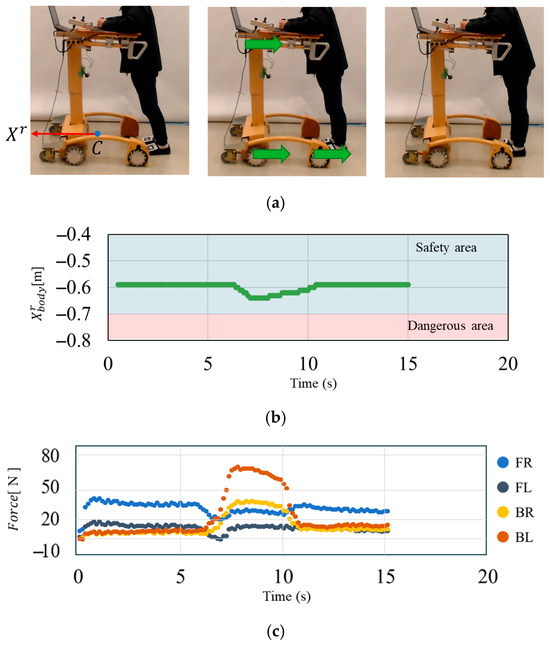
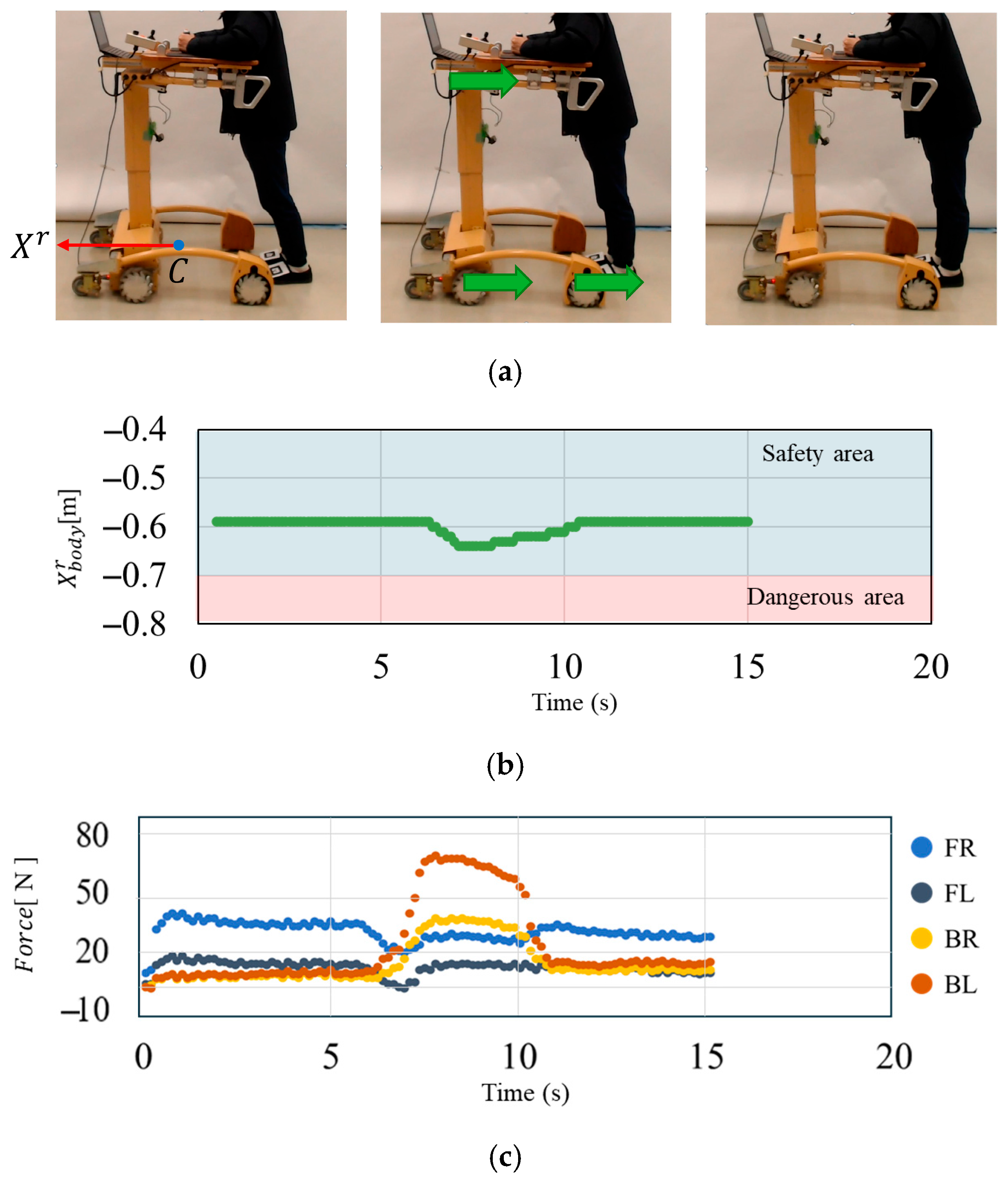
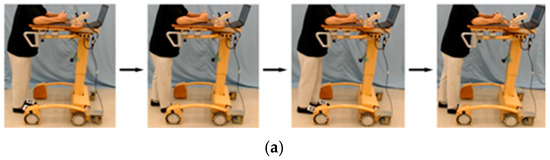
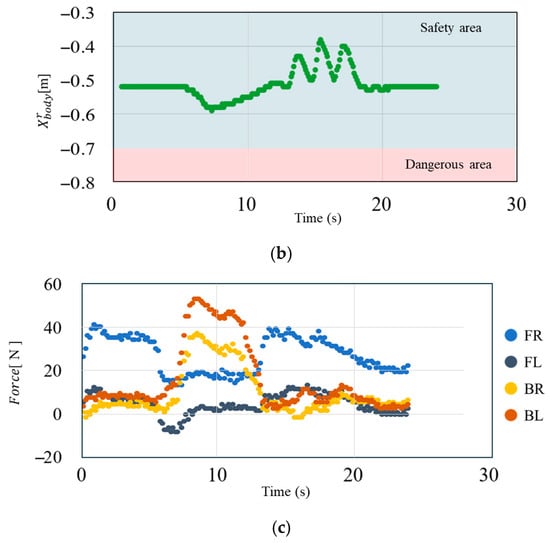
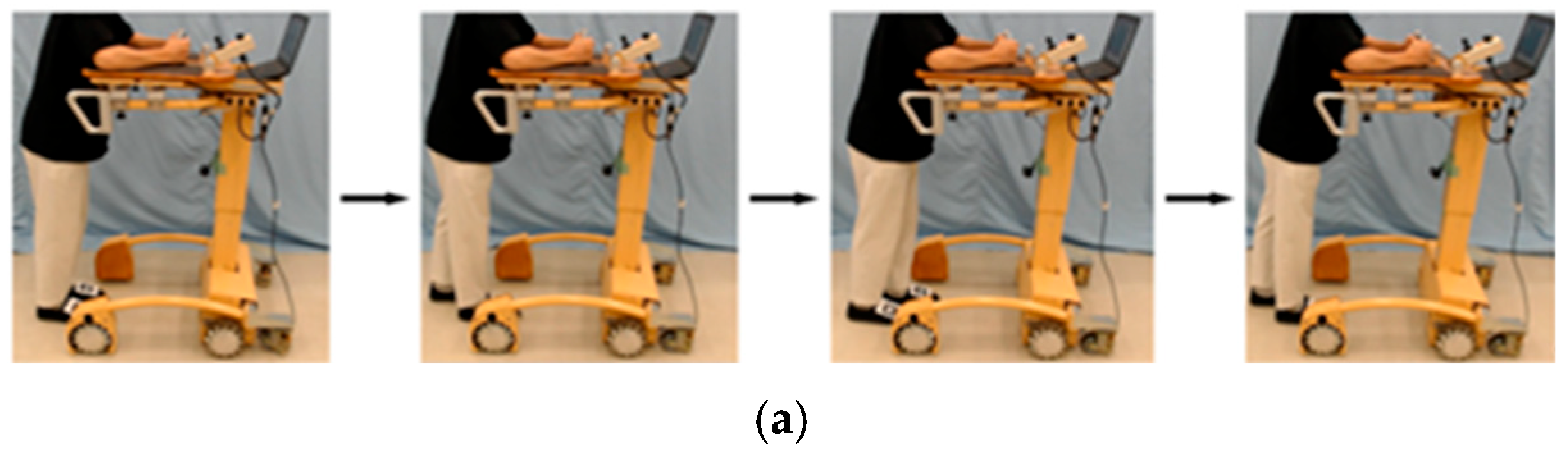
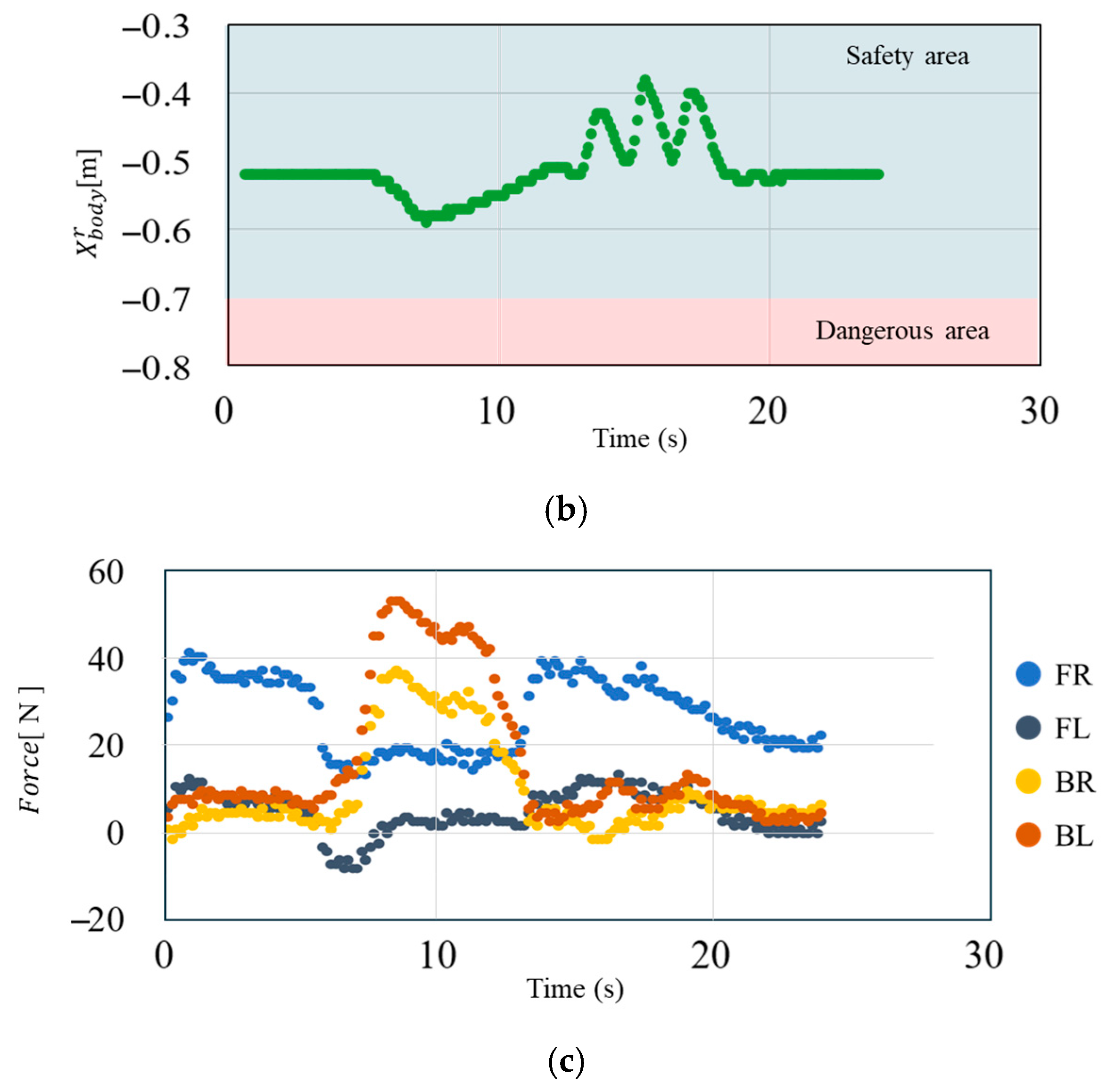
Next, Figure 16a shows the setup for Experiment 2, and Figure 16b,c show the results of Experiment 2.
Figure 16.
Results of Experiment 2: (a) Experimental setup; (b) coordinates of the center of both feet; (c) output of the four load cells.
In Figure 16b, when the center position of both feet had not yet entered the danger zone, the value of the prediction Formula (4) based on force information in Figure 16c was 1, indicating that the risk of falling was predicted from the upper trunk posture. Therefore, the robot predicted the fall risk based on force information and performed fall prevention actions, preventing the center position of both feet from entering the danger zone.
Furthermore, the setup for Experiment 3 is shown in Figure 17a, and the results of Experiment 3 are presented in Figure 17b,c.
Figure 17.
Results of Experiment 3: (a) Experimental setup; (b) coordinates of the center of both feet; (c) output of the four load cells.
This experiment demonstrates the potential of active walking training. As shown in Figure 17c, the robot was able to safely assist the subject’s active walking by predicting the risk of falling based on the values of prediction Formula (4) derived from force information, that is, by predicting fall risk from the posture of the upper body trunk. Throughout the entire process, the center position of both feet remained within the safe zone.
In summary, when physical therapists assist patients with lower-limb functional impairments during gait training, they use their hands to sense changes in support forces, observe the patient’s gait and posture, and remain alert to signs of potential falls to prevent them. When patients use a robot for gait training, they rest their elbows on the handrails to support their bodies; these handrails serve a function similar to the hands of a physical therapist. Experimental validation showed that fall prediction should not rely solely on foot position data but should also incorporate pressure data from the handrails. Therefore, a robotic fall risk prediction strategy based on foot position and handrail pressure can replicate a physical therapist’s ability to predict and prevent patient falls.
6. Conclusions
This study discussed gait training from the perspectives of kinematics, cognitive science, gait function, and safety, and classified gait rehabilitation training into stationary lower-limb strength training and mobile gait training. Seated, supine, fixed-point standing training, and mobile gait training have the following effects on gait function rehabilitation:
- Seated and supine training: Aims to improve joint range of motion.
- Fixed-point standing gait training: Improves joint range of motion and trains lower-limb strength; however, it does not reflect actual friction or speed conditions, and movement is not synchronized with visual feedback.
- Mobile gait training: Trains joint mobility, muscle strength, and dynamic balance; actual friction and speed conditions are preserved, and movement is synchronized with visual feedback.
After seated or supine training and fixed-point standing gait training, patients with lower-limb dysfunction should transition to mobile gait training to complete the gait rehabilitation process. To effectively train the muscle groups responsible for forward, lateral, diagonal, and backward walking, as well as turning movements, an omnidirectional gait training robot was developed.
This study proposed a control system construction method for an omnidirectional gait training robot based on both prescription-based training and autonomous training. In the prescription-based training system, the target values are derived from the training prescription, and the control objective is to guide the patient to walk along the robot’s prescribed path and speed. In the autonomous training system, the target values are automatically generated based on the patient’s walking intentions, and the control objective is for the robot to safely follow the patient’s movement. Because the target values and control objectives of these two control systems differ, their system structures also differ.
This study also proposed a fall prediction strategy for the omnidirectional gait training robot control system based on foot position information and handrail pressure data. This strategy can reduce fall risk for patients with lower-limb dysfunction and improve the safety of gait training robots. Experimental results show that this strategy is feasible.
Author Contributions
Conceptualization and methodology, S.W.; software, T.M.; validation, S.W. and T.M.; formal analysis, S.W.; investigation, S.W.; resources, S.W.; data curation, S.W. and T.M.; writing—original draft preparation, S.W.; writing—review and editing, S.W.; visualization, S.W.; supervision, S.W.; project administration, S.W.; funding acquisition, S.W. All authors have read and agreed to the published version of the manuscript.
Funding
This research was funded by JSPS Grant-in-Aid for Scientific Research under Grant number 15H03951 and 21300212, the Canon Foundation, Casio Science Promotion Foundation.
Institutional Review Board Statement
The safety of the assistive robot was reviewed and approved by the ethics committee of Kochi University of Technology prior to the experiment. The approval number was 31-132, 20 June 2019.
Informed Consent Statement
Written informed consent has been obtained from the patients to publish this paper.
Data Availability Statement
The datasets generated during this study are available from the corresponding author upon reasonable request.
Acknowledgments
The authors would like to express my gratitude to Kenji Ishida and Hayato Enoki for their advice in the field of rehabilitation medicine. We would also like to thank SATT SYSTEMS Ltd. for their technical support.
Conflicts of Interest
Author Taiki Miyaji was employed by the company TOYOTA AUTO BODY Co., Ltd. The remaining authors declare that the research was conducted in the absence of any commercial or financial relationships that could be construed as a potential conflict of interest.
References
- Eckstrom, E.; Neukam, S.; Kalin, L.; Wright, J. Physical activity and healthy aging. Clin. Geriatr. Med. 2020, 36, 671–683. [Google Scholar] [CrossRef] [Scilit]
- Ungvari, Z.; Fazekas-Pongor, V.; Csiszar, A.; Kunutsor, S.K. The multifaceted benefits of walking for healthy aging: From Blue Zones to molecular mechanisms. GeroScience 2023, 45, 3211–3239. [Google Scholar] [CrossRef] [Scilit] [PubMed]
- Oyabu, T.; Kimura, H.; Liu, A. Health care by walking in an aging society and encouragement for tourism. J. Glob. Tour. Res. 2017, 2, 25–31. [Google Scholar] [CrossRef] [Scilit] [PubMed]
- Brach, J.S.; Simonsick, E.M.; Kritchevsky, S.; Yaffe, K.; Newman, A.B. Health, Aging and Body Composition Study Research Group. The association between physical function and lifestyle activity and exercise in the health, aging and body composition study. J. Am. Geriatr. Soc. 2004, 52, 502–509. [Google Scholar] [CrossRef] [Scilit]
- Bull, F.C.; Al-Ansari, S.S.; Biddle, S.; Borodulin, K.; Buman, M.P.; Cardon, G.; Carty, C.; Chaput, J.P.; Chastin, S.; Chou, R.; et al. World Health Organization 2020 guidelines on physical activity and sedentary behaviour. Br. J. Sports Med. 2020, 54, 1451–1462. [Google Scholar] [CrossRef] [Scilit]
- Vuori, I. World Health Organization and Physical Activity. Prog. Prev. Med. 2018, 3, e0012. [Google Scholar] [CrossRef] [Scilit]
- Eggermont, L.H.; Gavett, B.E.; Volkers, K.M.; Blankevoort, C.G.; Scherder, E.J.; Jefferson, A.L.; Steinberg, E.; Nair, A.; Green, R.C.; Stern, R.A. Lower-extremity function in cognitively healthy aging, mild cognitive impairment, and Alzheimer’s disease. Arch. Phys. Med. Rehabil. 2010, 91, 584–588. [Google Scholar] [CrossRef] [Scilit]
- Grimmer, M.; Riener, R.; Walsh, C.J.; Seyfarth, A. Mobility related physical and functional losses due to aging and disease—A motivation for lower limb exoskeletons. J. Neuroeng. Rehabil. 2019, 16, 2. [Google Scholar] [CrossRef] [Scilit]
- Ward, R.E.; Beauchamp, M.K.; Latham, N.K.; Leveille, S.G.; Percac-Lima, S.; Kurlinski, L.; Ni, P.; Goldstein, R.; Jette, A.M.; Bean, J.F. Neuromuscular impairments contributing to persistently poor and declining lower-extremity mobility among older adults: New findings informing geriatric rehabilitation. Arch. Phys. Med. Rehabil. 2016, 97, 1316–1322. [Google Scholar] [CrossRef] [Scilit]
- Qian, G.; Cai, X.; Xu, K.; Tian, H.; Meng, Q.; Ossowski, Z.; Liang, J. Which gait training intervention can most effectively improve gait ability in patients with cerebral palsy? A systematic review and network meta-analysis. Front. Neurol. 2023, 13, 1005485. [Google Scholar] [CrossRef] [Scilit] [PubMed]
- Tillman, A.; Muthalib, M.; Hendy, A.M.; Johnson, L.G.; Rantalainen, T.; Kidgell, D.J.; Enticott, P.G.; Teo, W.P. Lower Limb progressive resistance training improves leg strength but not gait speed or balance in Parkinson’s disease: A systematic review and meta-analysis. Front. Aging Neurosci. 2015, 7, 40. [Google Scholar] [CrossRef] [Scilit]
- Selves, C.; Stoquart, G.; Lejeune, T. Gait rehabilitation after stroke: Review of the evidence of predictors, clinical outcomes and timing for interventions. Acta Neurol. Belg. 2020, 120, 783–790. [Google Scholar] [CrossRef] [Scilit] [PubMed]
- Peurala, S.H.; Tarkka, I.M.; Pitkänen, K.; Sivenius, J. The effectiveness of body weight-supported gait training and floor walking in patients with chronic stroke. Arch. Phys. Med. Rehabil. 2005, 86, 1557–1564. [Google Scholar] [CrossRef] [Scilit]
- Capecci, M.; Pournajaf, S.; Galafate, D.; Sale, P.; Le Pera, D.; Goffredo, M.; De Pandis, M.F.; Andrenelli, E.; Pennacchioni, M.; Ceravolo, M.G.; et al. Clinical effects of robot-assisted gait training and treadmill training for Parkinson’s disease. A randomized controlled trial. Ann. Phys. Rehabil. Med. 2019, 62, 303–312. [Google Scholar] [CrossRef] [Scilit] [PubMed]
- Calabrò, R.S.; Sorrentino, G.; Cassio, A.; Mazzoli, D.; Andrenelli, E.; Bizzarini, E.; Campanini, I.; Carmignano, S.M.; Cerulli, S.; Chisari, C.; et al. Robotic-assisted gait rehabilitation following stroke: A systematic review of current guidelines and practical clinical recommendations. Eur. J. Phys. Rehabil. Med. 2021, 57, 460–471. [Google Scholar] [CrossRef] [Scilit]
- Pennycott, A.; Wyss, D.; Vallery, H.; Klamroth-Marganska, V.; Riener, R. Towards more effective robotic gait training for stroke rehabilitation: A review. J. Neuroeng. Rehabil. 2012, 9, 65. [Google Scholar] [CrossRef] [Scilit]
- Morone, G.; Paolucci, S.; Cherubini, A.; De Angelis, D.D.; Venturiero, V.; Coiro, P.; Iosa, M. Robot-assisted gait training for stroke patients: Current state of the art and perspectives of robotics. Neuropsychiatr. Dis. Treat. 2017, 13, 1303–1311. [Google Scholar] [CrossRef] [Scilit]
- Nedergård, H.; Arumugam, A.; Sandlund, M.; Bråndal, A.; Häger, C.K. Effect of robotic-assisted gait training on objective biomechanical measures of gait in persons post-stroke: A systematic review and meta-analysis. J. Neuroeng. Rehabil. 2021, 18, 64. [Google Scholar] [CrossRef] [Scilit] [PubMed]
- Nam, K.Y.; Kim, H.J.; Kwon, B.S.; Park, J.W.; Lee, H.J.; Yoo, A. Robot-assisted gait training (Lokomat) improves walking function and activity in people with spinal cord injury: A systematic review. J. Neuroeng. Rehabil. 2017, 14, 24. [Google Scholar] [CrossRef] [Scilit]
- Promsri, A.; Cholamjiak, P.; Federolf, P. Walking stability and risk of falls. Bioengineering 2023, 10, 471. [Google Scholar] [CrossRef] [Scilit]
- Shen, B.; Wang, S. A User’s steps considered motion control approach of an intelligent walking training robot. In Proceedings of the 2018 IEEE International Conference on Mechatronics and Automation, Changchun, China, 5–8 August 2018; IEEE: New York, NY, USA, 2018; pp. 1281–1286. [Google Scholar] [CrossRef] [Scilit]
- Bruni, M.F.; Melegari, C.; De Cola, M.C.D.; Bramanti, A.; Bramanti, P.; Calabrò, R.S. What does best evidence tell us about robotic gait rehabilitation in stroke patients: A systematic review and meta-analysis. J. Clin. Neurosci. 2018, 48, 11–17. [Google Scholar] [CrossRef] [Scilit] [PubMed]
- Chaparro-Cárdenas, S.L.; Lozano-Guzmán, A.A.; Ramirez-Bautista, J.A.; Hernández-Zavala, A. A review in gait rehabilitation devices and applied control techniques. Disabil. Rehabil. Assist. Technol. 2018, 13, 819–834. [Google Scholar] [CrossRef] [Scilit] [PubMed]
- Tan, R.; Wang, S.; Jiang, Y.; Ishida, K.; Nagano, M. Adaptive Controller for Motion Control of an Omni-directional Walker. In Proceedings of the 2010 IEEE International Conference on Mechatronics and Automation, Xi’an, China, 4–7 August 2010; IEEE: New York, NY, USA, 2010; pp. 156–161. [Google Scholar] [CrossRef] [Scilit]
- Wang, S.; Ishida, K.; Enoki, H.; Yang, G.; Okuhata, K.; Ino, S.; Mizobuchi, Y.; Fujie, M.; Mukaidono, M. Develop ment and clinical evaluation of an omnidirectional walking training robot for simultaneous gait improvement and posture correction. J. Biomed. Fuzzy Syst. Assoc. 2021, 26, 21–35. [Google Scholar]
- Wang, Y.; Wang, S. A new directional-intent recognition method for walking training using an omnidirectional robot. J. Intell. Robot. Syst. 2017, 87, 231–246. [Google Scholar] [CrossRef] [Scilit]
- Bilancia, P.; Schmidt, J.; Raffaeli, R.; Peruzzini, M.; Pellicciari, M. An overview of industrial robots control and programming approaches. Appl. Sci. 2023, 13, 2582. [Google Scholar] [CrossRef] [Scilit]
- Wang, S. Research on welfare robots: A multifunctional assistive robot and human–machine system. Appl. Sci. 2025, 15, 1621. [Google Scholar] [CrossRef] [Scilit]
- Ziaei, M.; Mokhtarinia, H.; Tabatabai Ghomshe, F.T.; Maghsoudipour, M. Coefficient of friction, walking speed and cadence on slippery and dry surfaces: Shoes with different groove depths. Int. J. Occup. Saf. Ergon. 2019, 25, 524–529. [Google Scholar] [CrossRef] [Scilit]
- Chang, W.R.; Matz, S.; Chang, C.C. A comparison of required coefficient of friction for both feet in level walking. Saf. Sci. 2012, 50, 240–243. [Google Scholar] [CrossRef] [Scilit]
- Cao, L.; Händel, B. Walking enhances peripheral visual processing in humans. PLoS Biol. 2019, 17, e3000511. [Google Scholar] [CrossRef] [Scilit]
- Xie, M.; Niehorster, D.C.; Lappe, M.; Li, L. Roles of visual and non-visual information in the perception of scene-relative object motion during walking. J. Vis. 2020, 20, 15. [Google Scholar] [CrossRef] [Scilit]
- Sun, P.; Zhou, P.; Wang, S.; Chang, H. Tracking control with active and passive training cycle switching for rehabilitation training walker. Robot. Auton. Syst. 2025, 185, 104887. [Google Scholar] [CrossRef] [Scilit]
- Bishnoi, A.; Holtzer, R.; Hernandez, M.E. Brain activation changes while walking in adults with and without neurological disease: Systematic review and meta-analysis of functional near-infrared spectroscopy studies. Brain Sci. 2021, 11, 291. [Google Scholar] [CrossRef] [Scilit]
- Busse, M.E.; Wiles, C.M.; van Deursen, R.W.M. Community walking activity in neurological disorders with leg weakness. J. Neurol. Neurosurg. Psychiatry 2006, 77, 359–362. [Google Scholar] [CrossRef] [Scilit]
- Schmidt, H.; Werner, C.; Bernhardt, R.; Hesse, S.; Krüger, J. Gait rehabilitation machines based on programmable footplates. J. Neuroeng. Rehabil. 2007, 4, 2. [Google Scholar] [CrossRef] [Scilit]
- Kim, S.; Lockhart, T.; Yoon, H.Y. Relationship between age-related gait adaptations and required coefficient of friction. Saf. Sci. 2005, 43, 425–436. [Google Scholar] [CrossRef] [Scilit] [PubMed]
- Mikolajczyk, T.; Ciobanu, I.; Badea, D.I.; Iliescu, A.; Pizzamiglio, S.; Schauer, T.; Seel, T.; Seiciu, P.L.; Turner, D.L.; Berteanu, M. Advanced technology for gait rehabilitation: An overview. Adv. Mech. Eng. 2018, 10, 1687814018783627. [Google Scholar] [CrossRef] [Scilit]
- Calabrò, R.S.; Cacciola, A.; Bertè, F.; Manuli, A.; Leo, A.; Bramanti, A.; Naro, A.; Milardi, D.; Bramanti, P. Robotic gait rehabilitation and substitution devices in neurological disorders: Where are we now? Neurol. Sci. 2016, 37, 503–514. [Google Scholar] [CrossRef] [Scilit] [PubMed]
Disclaimer/Publisher’s Note: The statements, opinions and data contained in all publications are solely those of the individual author(s) and contributor(s) and not of MDPI and/or the editor(s). MDPI and/or the editor(s) disclaim responsibility for any injury to people or property resulting from any ideas, methods, instructions or products referred to in the content. |
© 2026 by the authors. Licensee MDPI, Basel, Switzerland. This article is an open access article distributed under the terms and conditions of the Creative Commons Attribution (CC BY) license.