


Abstract
The ubiquitous use of electronic devices requires outdoor charging capabilities. A successful approach uses solar photovoltaic (PV)-powered picnic tables, but the existing designs share several limitations including proprietary designs that limit replication/modification and high costs. This study addresses these limitations by presenting the design of a novel open-source solar-powered picnic table fabricated from reused, decommissioned PVs and recycled plastic lumber. The open-source solar-powered picnic table acts as a conventional picnic table and provides electrical charging that supports learning and connectivity by providing outdoor power. The system integrates a 320 W PV module, maximum power point charge controller, and 12 V LiFePO4 battery, enabling reliable off-grid power generation and storage. The device was validated under real outdoor operating conditions using everyday user loads, including smartphones, tablets, and laptops as individual and multiple connected devices at different times of the day and night. In addition to this functionality, the materials cost was <USD 450, 90–95% less than commercially available options. The system, built using recycled and repurposed components, further enhances sustainability while maintaining durability for outdoor deployment. These results indicate that open-source solar furniture can provide an affordable and replicable approach for expanding renewable-powered charging access in outdoor environments.
1. Introduction
The ubiquitous use of electronic devices has risen over time [1], increasing energy demand [2], which in turn has had negative environmental consequences [3]. When indoors, electronic devices can be charged with grid power. The environmental impact of this charging is decreasing because of rapid decarbonization [4]. This is primarily due to the rapid growth in solar photovoltaic (PV) systems, which are the lowest-cost form for producing electricity in history [5]. Outdoor power access, however, is limited or unavailable in most areas, even in developed communities [6]. For example, university campuses rarely have outlets accessible to students, faculty and staff outside the campus buildings [7]. Students and others are highly dependent on the daily use of electronics [8]. Although electric batteries allow people to work outdoors, there is a growing need for reliable outdoor charging options for batteries, and a substantial body of literature shows the positive benefits of outdoor charging in academic contexts [9].
Access to reliable power outdoors is a growing challenge [10], as people depend heavily on electronic devices for learning, communication, and daily activities. Providing charging options in outdoor spaces encourages people to spend more time studying and socializing outside while remaining connected [11]. A solar-powered picnic table addresses this need by combining functionality with sustainability, reducing the dependence on grid electricity. The feasibility of solar-powered picnic tables and benches has been demonstrated through multiple projects in academic and public settings. In one study, a solar-powered picnic table was developed with both tabletop and canopy-mounted panel options, enabling USB charging in a university environment [12]. Another project introduced a “smart table” concept that combined solar-powered charging with environmental sensors, providing both user benefits and data collection capabilities [13]. More recently, a smart bench was implemented with integrated lighting and mobile charging, further validating the utility of PVs for outdoor public spaces [14]. Additional initiatives, such as a student-led solar picnic table at Cal Poly [15], the Solar-Powered Outdoor Table (SPOT) at the University of Illinois [16], and a solar table project at the University of Georgia [17], highlight the growing interest in combining seating infrastructure with renewable energy to support campus sustainability goals. Commercial systems have also entered the market. Products such as the Solar Power-Dok by EnerFusion [18] and the ST1010 solar charging table by SELS [19] are scalable, integrating USB, wireless charging, and AC outlets. One of the prominent models by EnerFusion, the ‘Aurora Solar Picnic Table’, features PV panels mounted on canopy structures. Depending on the canopy configuration, the price for this model starts at approximately USD 10,965, excluding shipping and handling [20]. Similarly, the SELS ST1010 solar picnic table [21], which combines integrated charging and connectivity functions, is listed at around USD 3100. While these examples prove that solar-powered outdoor systems are both technically feasible and attractive to users, they share several limitations: (i) proprietary designs, (ii) high costs, and (iii) limited accessibility for replication or modification.
This paper addresses these limitations by presenting the design of a novel open-source solar-powered picnic table. Following standard open-hardware design practices [22], the information provided includes a complete bill of materials, detailed wiring diagrams, and CAD designs of the table structure, all openly shared with a license that enables both replication and modification [23]. To further improve the environmental sustainability of the design compared to past smart picnic table designs, this design also incorporates both reused decommissioned PVs and recycled plastic lumber, adding a sustainability dimension through material reuse and durability. Unlike previous work [12,13,14,15,16,17,18,19], this project ensures that every component of the design can be reproduced, adapted, and improved in different contexts worldwide. In doing so, this study not only demonstrates the feasibility of photovoltaic-powered seating for outdoor charging but also contributes an openly available, low-cost solution that universities, communities, and public organizations can readily adopt. Specifically, the open-source solar-powered picnic table features the following:
- •
- Mechanically functions as a conventional picnic table with electrical charging.
- •
- Integrates a discarded solar panel along with battery, MPPT, and USB ports.
- •
- Promotes sustainability through renewable energy and recycled materials.
- •
- Supports learning and connectivity by providing outdoor power on a campus.
2. Materials and Methods
This project followed a practical open-hardware-based design and implementation approach [24]. The table dimensions are based on an existing picnic table at Western University but were modified to accommodate a solar PV module that was retired during the repowering of a large-scale PV array in Ontario. The photovoltaic module used in this study was a polycrystalline Heliene 72M 320 W panel manufactured by Heliene Inc. (Sault Ste. Marie, ON, Canada) with a nominal power rating of 320 W [25]. The module was manufactured in October 2014, corresponding to an operational age of approximately 11 years at the time of testing (years 2025–2026). Prior to installation, basic characterization was performed by measuring the open-circuit voltage (Voc) and short-circuit current (Isc), which were approximately 40–41 V and 8–8.5 A, respectively, slightly lower than the manufacturer-rated values, consistent with expected aging and non-standard test conditions. Photovoltaic modules are often considered “retired” once they reach the end of their manufacturer warranty (typically 20–30 years), but in practice many still retain a substantial proportion of their original power output beyond that period. The annual degradation rates for crystalline-silicon cell based PV modules generally fall between 0.2% and 0.8%, with a global median of approximately 0.5% per year, indicating that even after 25 years many panels can still deliver 85–90% of their initial capacity, depending on environmental conditions and maintenance practices [26]. Long-term field data from 23 PV systems across different climates in the United States showed the median degradation rate was 0.5–0.6%/year, with numerous systems remaining fully operational after three decades [27]. Furthermore, recent advancements in materials, encapsulation, and manufacturing processes have significantly enhanced module durability, with studies indicating that modern PV modules can reliably operate for 30 years or more under typical field conditions [28]. Evidence indicates that PV degradation mainly occurs due to environmental factors such as humidity, ultraviolet exposure, and temperature cycling, rather than intrinsic material failure [29]. In Canada, the Ontario Society of Professional Engineers has noted that many PV installations continue to generate usable electricity well past their 25-year warranty period, creating opportunities for repurposing retired modules in secondary applications such as community projects or educational infrastructure [30]. Used modules can be quickly characterized with online diagnostics built into inverters [31] or with I-V curve tracers to determine their operation. Although warranty expiration is often seen as the end of service life, many modules continue to operate reliably for years and are well-suited for reuse in open-source, small-scale systems such as solar-powered picnic tables.
A full CAD model of the structure was created using Onshape (web-based CAD platform, PTC Inc., Boston, MA, USA, accessed in 2026) [32], a freely available 3D design platform. The solar-powered picnic table was then assembled with a photovoltaic panel integrated directly into the tabletop, a maximum power point (MPPT) charge controller, a battery for energy storage, and USB output ports for charging. Performance testing was carried out under real outdoor conditions, focusing on key parameters such as voltage, current, and device charging capability. The charging performance of the solar-powered picnic table was evaluated through multiple tests. First, single-load testing was performed by connecting one USB-powered device to record charging voltage, current, and time under normal sunlight, establishing baseline performance. Second, multiple-load testing was carried out using multiple USB ports simultaneously to observe how the system performed when several devices were connected. Finally, battery-only operation was tested by disconnecting the photovoltaic input to replicate cloudy or night-time conditions. Together, these tests characterized the charging reliability and energy management capability of the system under different environmental and load conditions.
2.1. Design and Bill of Materials
The complete bill of materials used for constructing the open-source solar-powered picnic table is shown in Table 1. The picnic table structure was built from recycled plastic lumber sourced from pallets from GreenWell Plastics, which is a plastic lumber manufacturer in Ontario, Canada, that converts landfill-destined and recycled plastics into new products and resources. As can be seen in Table 1, the vast majority of the components by both part count and total material mass and volume were either recycled or re-sed materials, selected specifically to minimize the environmental impact of the device.
Table 1.
Bill of materials for solar-powered picnic table.
2.2. Mechanical Design
Onshape [32] CAD software was used to design the picnic table structure. All dimensions were identical to the Western University picnic table’s original design, except for the table length and width, which were adjusted to accommodate the solar panel. Figure 1 presents an isometric view of the CAD model with the solar panel mounted on top, followed by a view without the panel for clarity in Figure 2.
Figure 1.
CAD model of the picnic table with the solar panel.
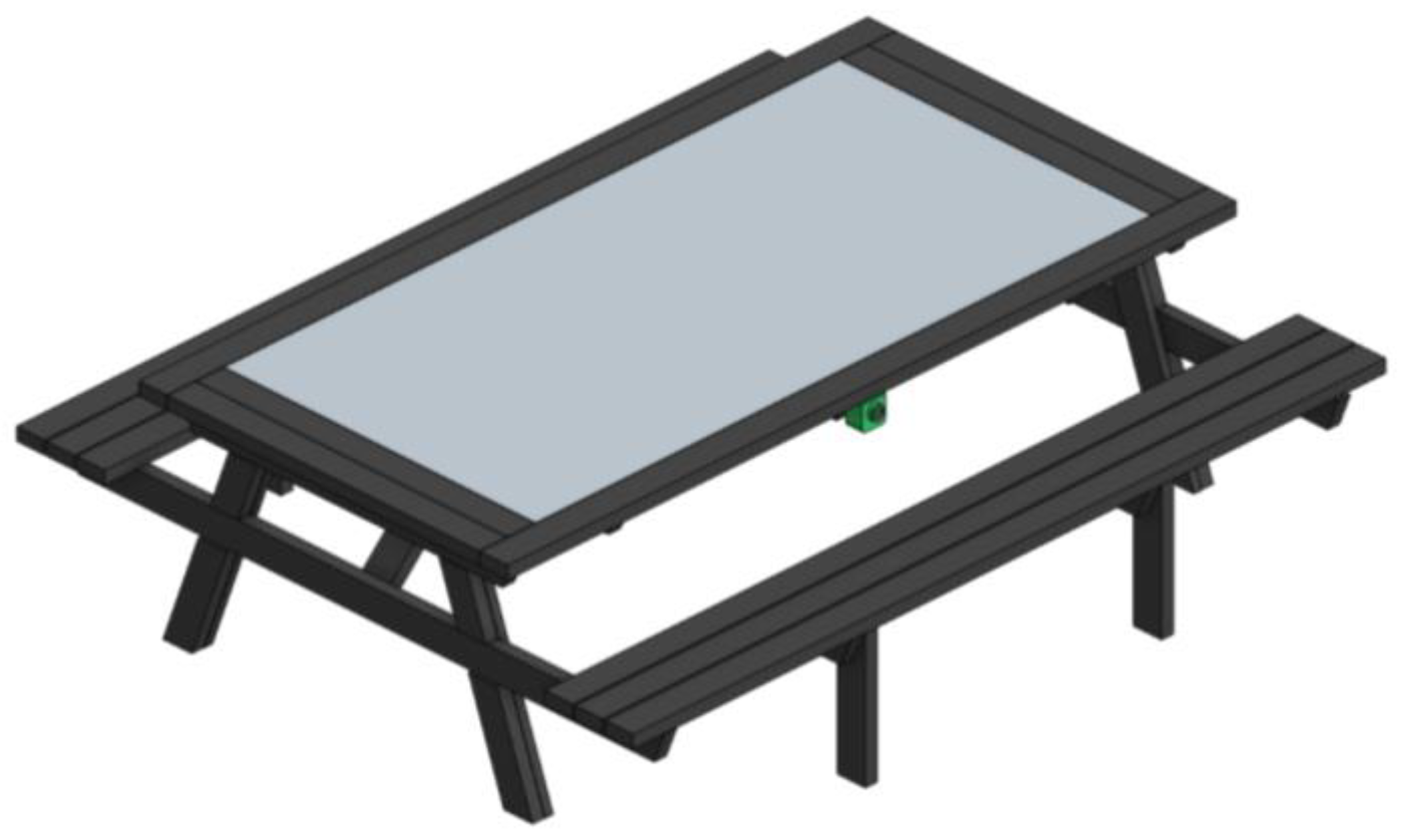
Figure 2.
CAD model of the picnic table without the solar panel.
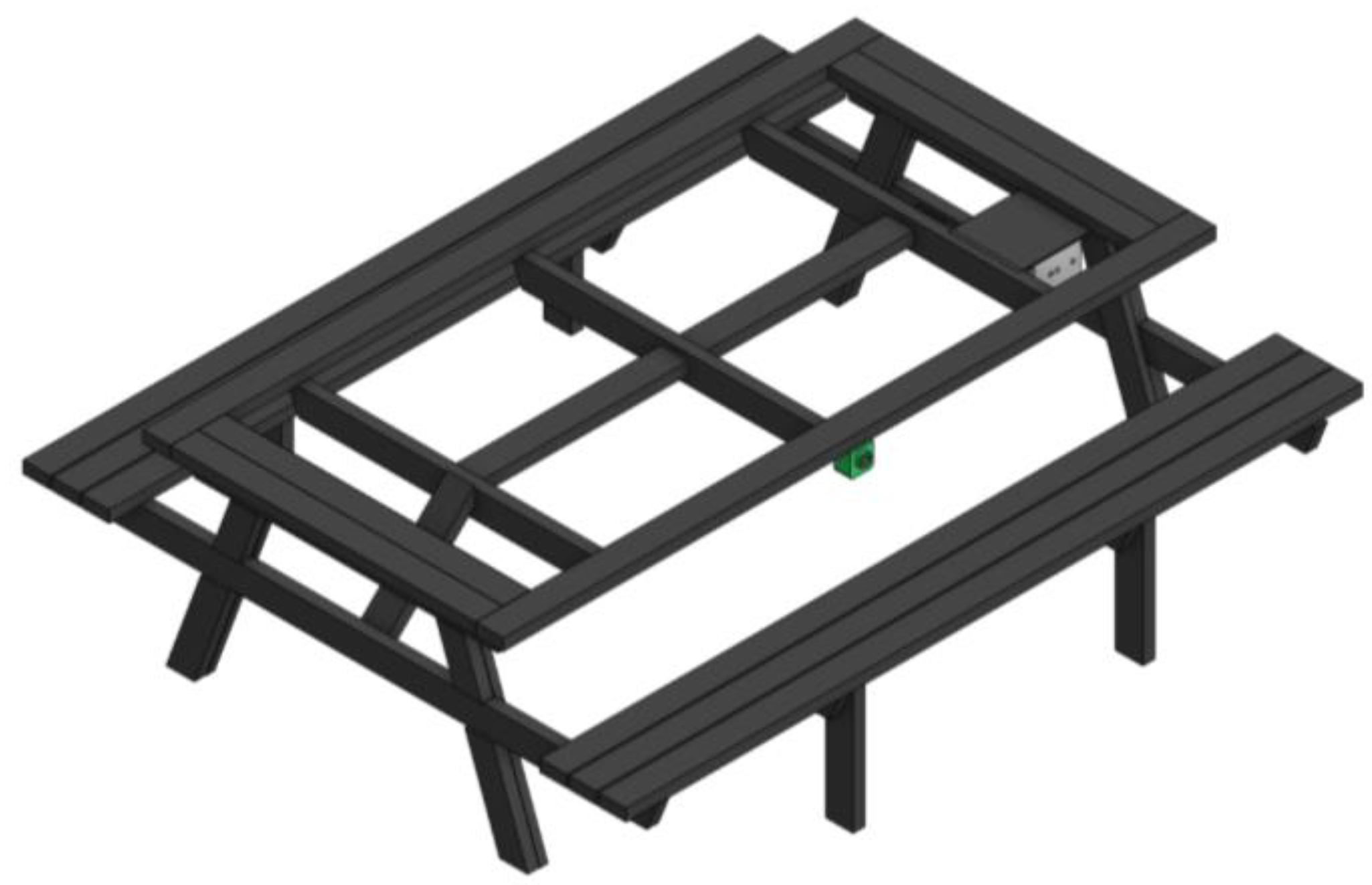
Figure 3 shows an exploded view of the assembly to illustrate the individual components and overall structure of the table. Each structural element is labeled with the corresponding part number to identify the individual components in the design. Based on these labeled parts, the required cut lengths, quantities, and cut types are summarized in the cut sheet provided in Table 2.
Figure 3.
Exploded CAD view of the solar-powered picnic table. Numbered callouts correspond to the part numbers listed in Table 2.
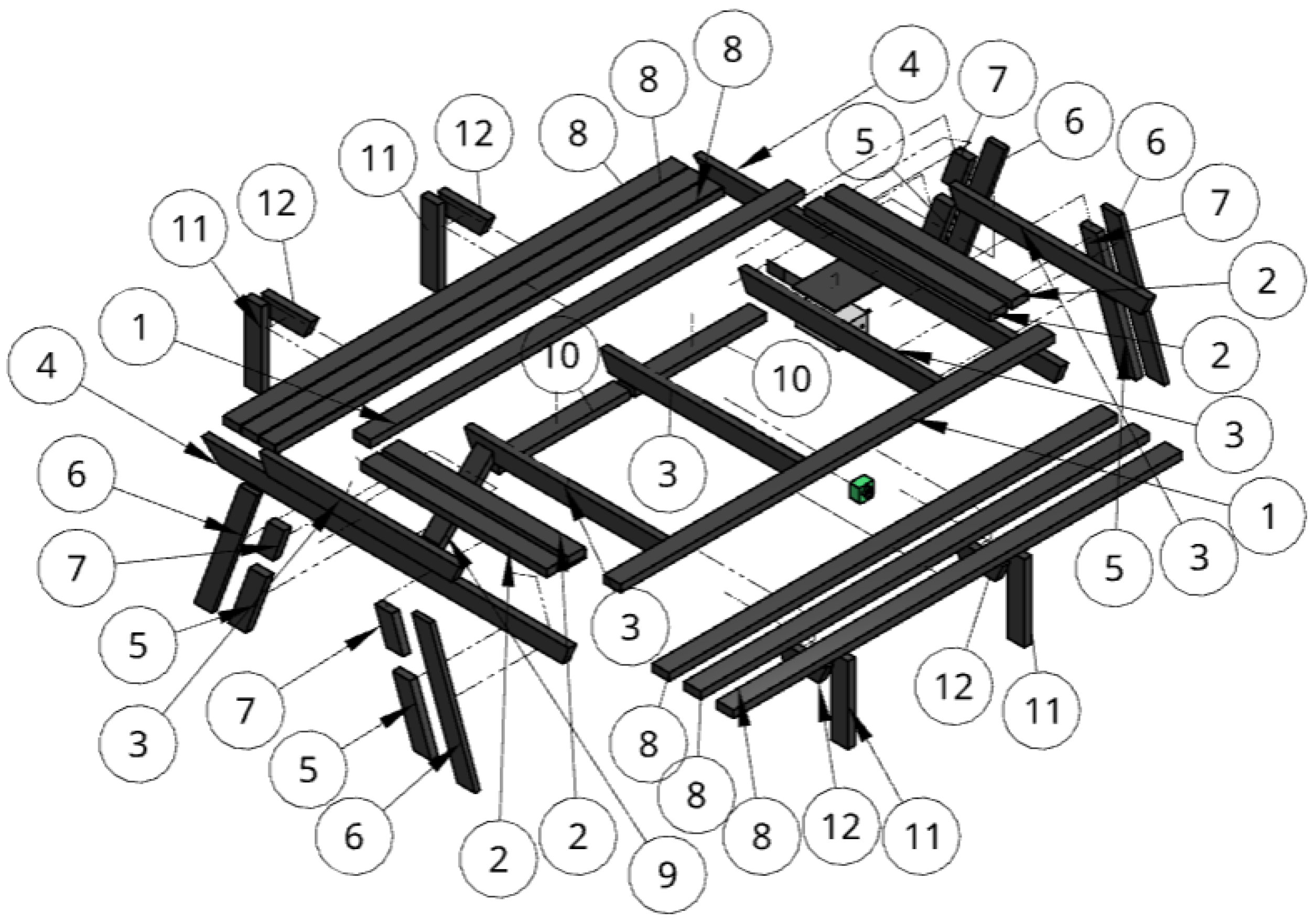
Table 2.
Cut sheet for solar-powered picnic table frame.
2.3. Electrical Design
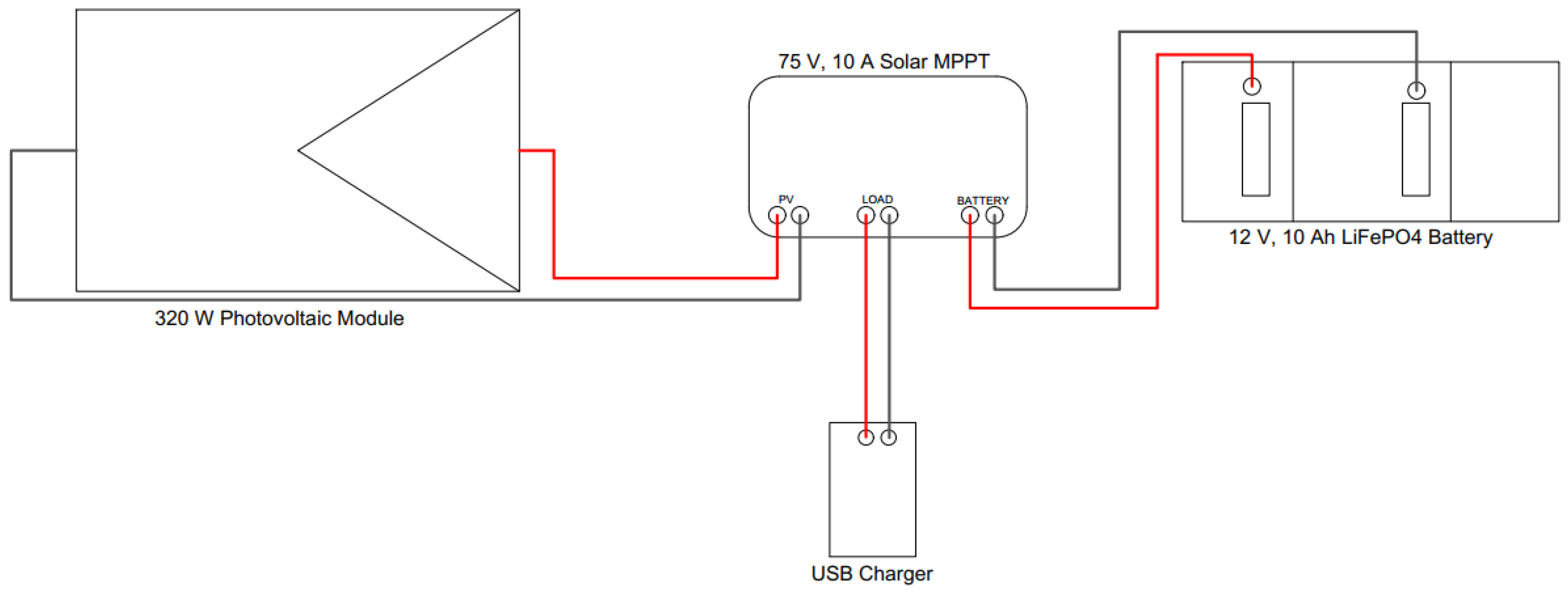
Figure 4 shows the electrical connection for the picnic table. A 320 W photovoltaic module was connected to the input terminals of a 75 V, 10 An MPPT charge controller. This controller regulated the power harvested from the panel and optimized energy transfer under varying irradiance conditions. The battery output terminals of the MPPT were connected to a 12 V, 10 Ah lithium iron phosphate (LiFePO4) battery bank, which provided energy storage for periods of low or no solar availability, such as during cloudy conditions or night-time operation.
Figure 4.
Schematic diagram of electrical parts of the open-source solar-powered picnic table. Red lines indicate positive connections, and black lines indicate negative connections.
2.4. Validation
The solar-powered picnic table was validated under real outdoor operating conditions using everyday user loads, including smartphones, tablets, and laptops, at different times of the day. Devices were connected during both daylight and night-time operation. During daylight, loads were applied while the PV module was generating power, and, after sunset, devices were connected when PV generation was zero. Additional tests were performed by charging multiple devices simultaneously to represent realistic group use on campus.
All measurements were obtained using the Victron Connect mobile application v6.10 [38] connected to a SmartSolar MPPT controller via Bluetooth. The application provided real-time and historical data on PV voltage and power, battery voltage and current, and load current. During each test, the interface was used to observe how power was supplied and how the battery responded. These tests confirmed that the system not only charged devices reliably but also autonomously managed energy flow between solar generation, storage, and load under real outdoor conditions.
Additional field testing was conducted on 27 March in London, ON, Canada, to evaluate system performance under real environmental conditions and partial shading. Ambient temperature and solar irradiance data were obtained from a nearby meteorological (MET) station installed by German Solar Corp. (London, ON, Canada) [39] to ensure accurate environmental characterization.
3. Results
With all components from the bill of materials available, the construction of the solar-powered picnic table was completed in several steps by two people working together. First, the recycled plastic lumber was measured, marked, and cut to the required dimensions according to the cut sheet provided in Table 2. Next, the mechanical parts of the system were assembled following Figure 1, Figure 2 and Figure 3. Finally, the photovoltaic panel and electrical components were installed. This included mounting the solar panel and connecting the MPPT charge controller, battery, and USB charging ports following Figure 4. Overall, the full construction and setup process took about a day.
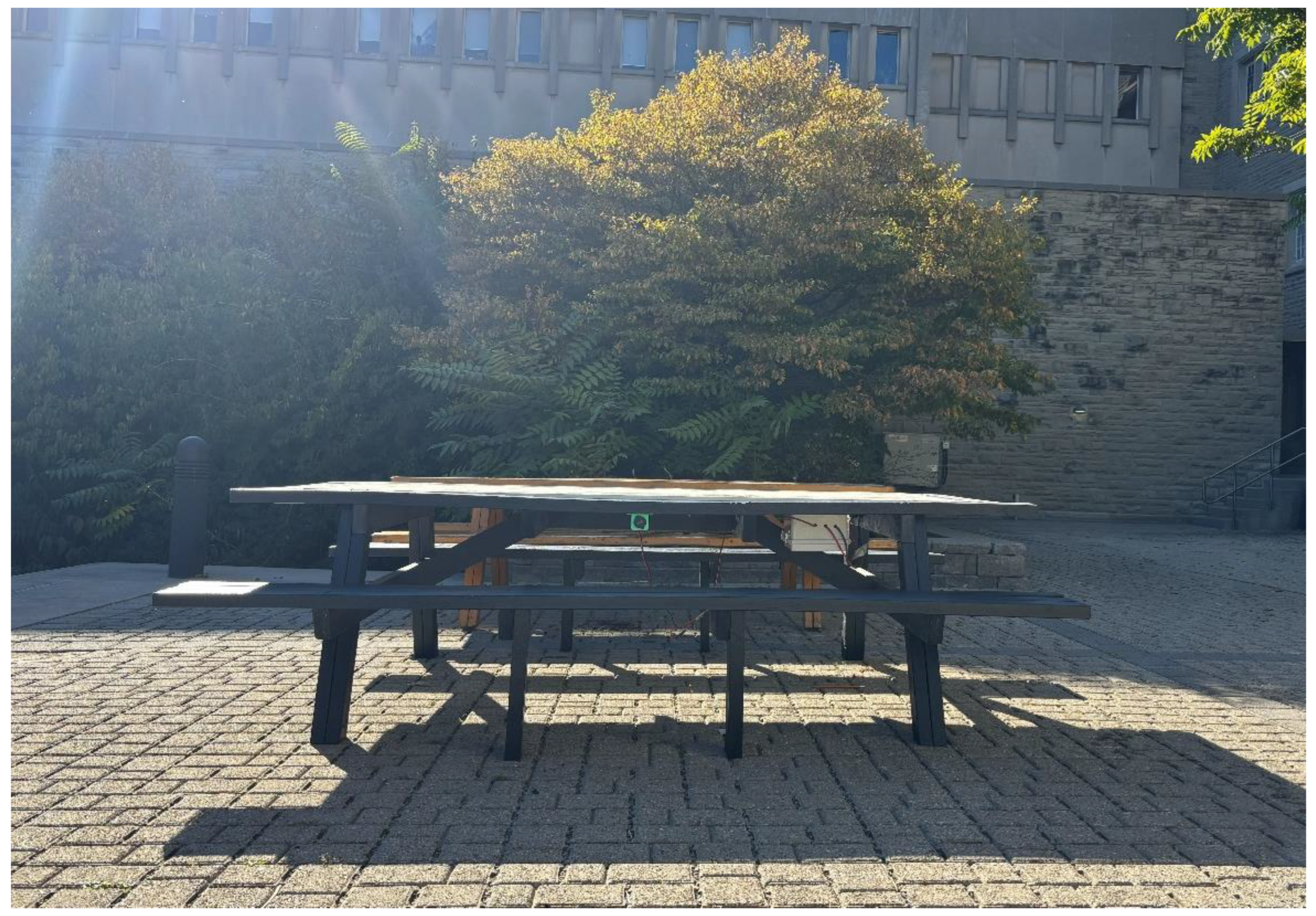
Photographs of the completed open-source solar-powered picnic table are presented in Figure 5 and Figure 6. The table was installed in the Engineering Garden at Western University, Ontario, Canada, where it was used as a functional outdoor workspace and a demonstration of the proposed design.
Figure 5.
Solar-powered picnic table installed at Western University.
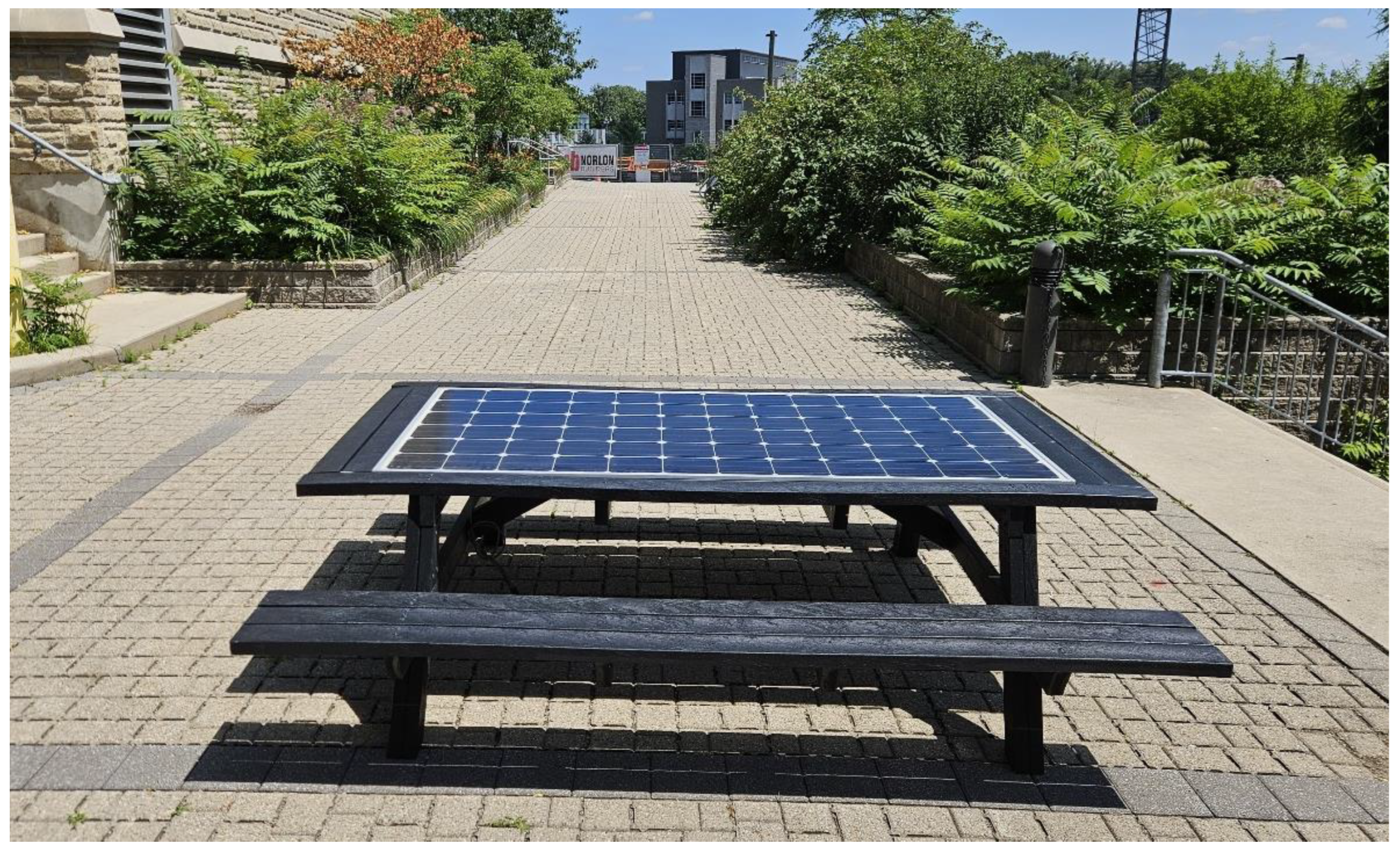
Figure 6.
Side view of the solar-powered picnic table.
The initial results, recorded using the Victron Connect app [38], gave an overview of the real0-time PV power generation, battery condition, and energy consumption of the solar-powered picnic table. Figure 7 shows a representative operating snapshot during which the PV module produced approximately 70 W (39.88 V, 1.8 A). At the same time, the battery voltage was approximately 13.69 V, and the controller indicated bulk charging with a positive battery current. This confirmed active PV generation and battery charging under outdoor conditions.
Figure 7.
Victron Connect status view of the solar-powered picnic table.
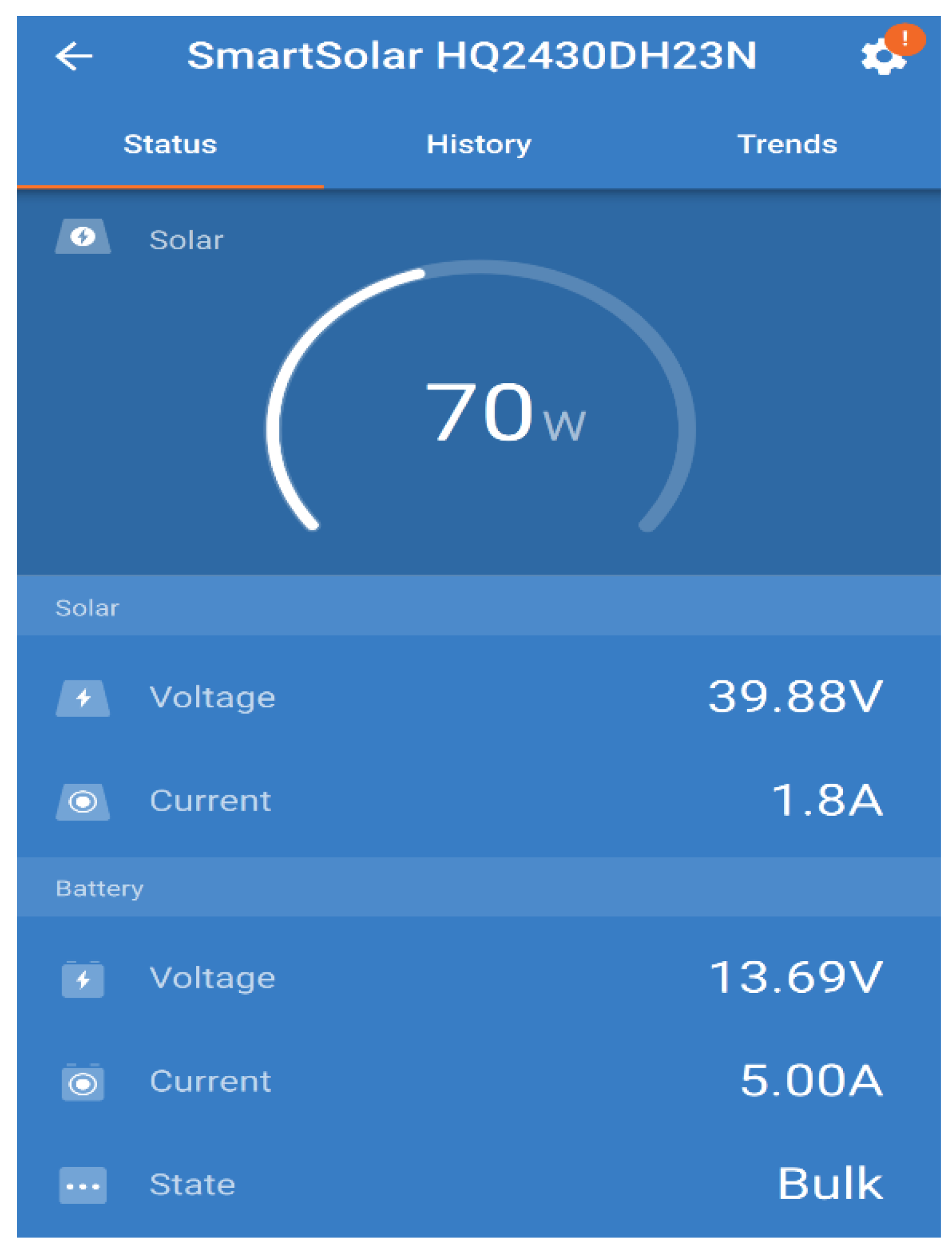
Figure 8 shows a test performed under no-sunlight conditions. During this period (in the evening), the PV module was not generating power. When a device was connected, the load current (blue trace) increased while the battery current (orange trace) became negative. Here negative battery current indicated discharge, confirming that the battery was supplying the connected load. This validated battery-only operation demonstrated that the system continued to provide charging power in the absence of solar input.
Figure 8.
Battery and load current under no-sunlight conditions.
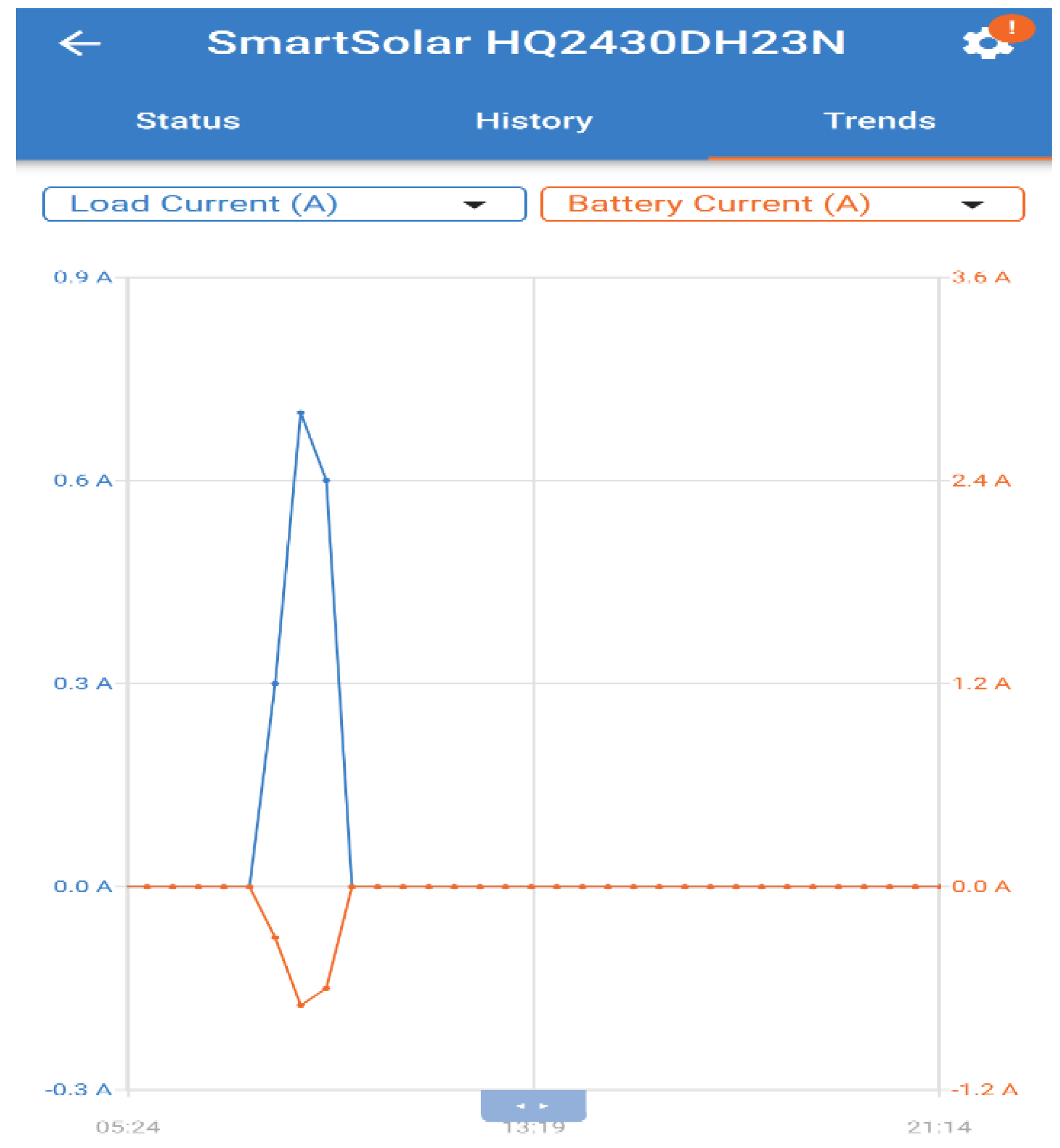
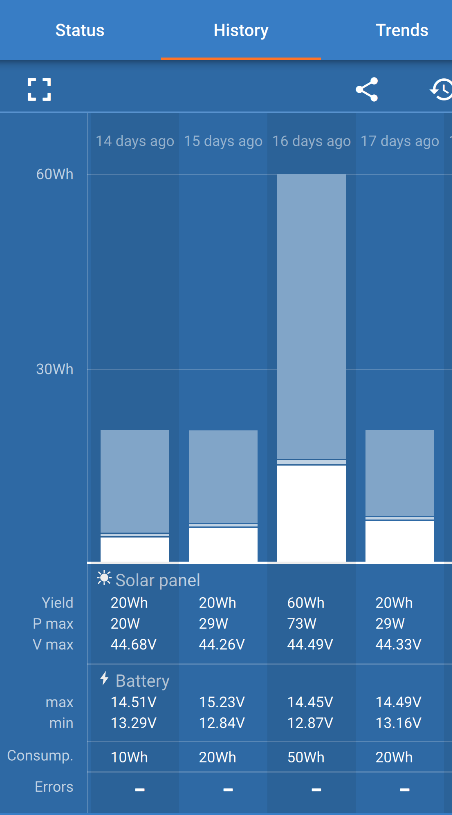
Figure 9 presents a daily historical view of system operation. On day with the highest recorded consumption, a test was conducted during which three devices were connected simultaneously. On this day, the total load energy reached approximately 50 Wh, while the PV module achieved a peak power of about 73 W. Despite the power demand from multiple devices, the system operated without interruption. This confirmed that the solar-powered picnic table can reliably support simultaneous charging under realistic campus use. System efficiency was assessed based on system architecture and component specifications. As the system operated entirely in the DC domain, conversion losses were minimized. The MPPT charge controller had a peak efficiency of approximately 98%, as specified by the manufacturer [40], while additional losses were limited to battery charge–discharge and USB conversion. Due to short conductor lengths, resistive (I2R) losses were negligible. Overall, the system was expected to operate with high efficiency due to its DC-coupled design and minimal conversion stages. In contrast, on days when no external devices were connected, the recorded daily consumption was found to be 10 Wh. This represented the standing power required to keep the system active and ready for user interaction, even in the absence of load.
Figure 9.
Daily energy history of solar-powered picnic table under multiple-device tests and no charging.
Partial shading field testing was conducted for 1.5 h on a sunny day. During the test period, solar irradiance ranged from approximately 848 to 935 W/m2, with an average of approximately 908 W/m2, while ambient temperature varied between approximately −2.0 and 0.45 °C.
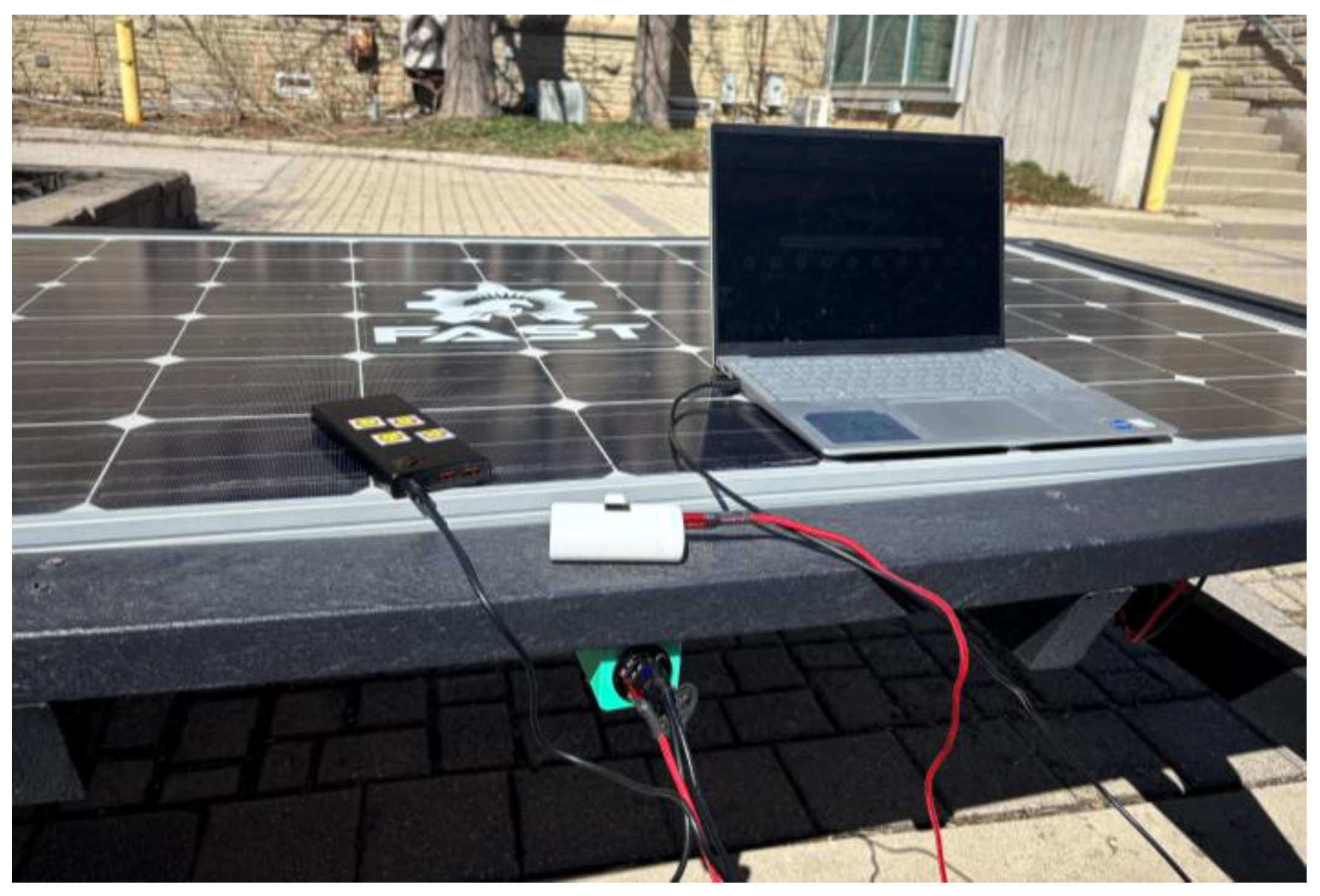
Initially, a single load (power bank at 75% state of charge) was connected, drawing approximately 14 W, which was fully supplied by the PV system. A second power bank (23% state of charge) was then added, increasing the total load to approximately 26 W, which was again fully supported by solar generation. Next, a, a laptop (25% state of charge) was connected (Figure 10), increasing the total demand to approximately 57 W. These objects caused partial shading, but the PV production was able to handle the charging demand.
Figure 10.
System performance of the solar-powered picnic table with multiple loads connected that naturally caused partial shading conditions. This shading was then augmented for shading testing.
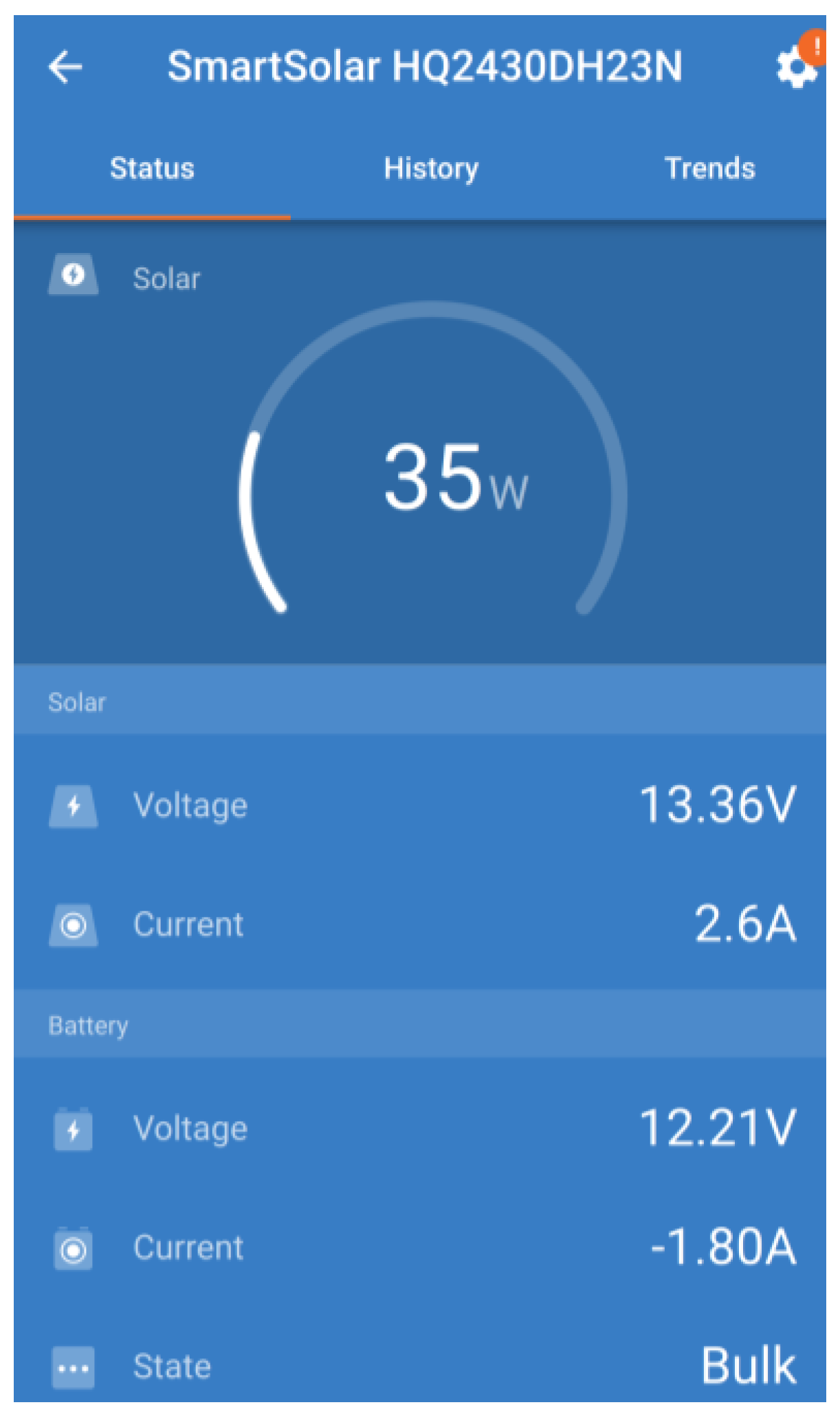
Then to evaluate partial shading effects further, approximately 30% of the PV surface was intentionally obstructed using typical items such as electronic devices and books placed on the table. Under these conditions, the PV output was approximately 35 W, with the remaining demand supplied by the battery (Figure 11). This reduction in output was attributed to a combination of partial shading, cloud conditions, and suboptimal panel exposure.
Figure 11.
Victron Connect status view showing the effect of 30% partial shading.
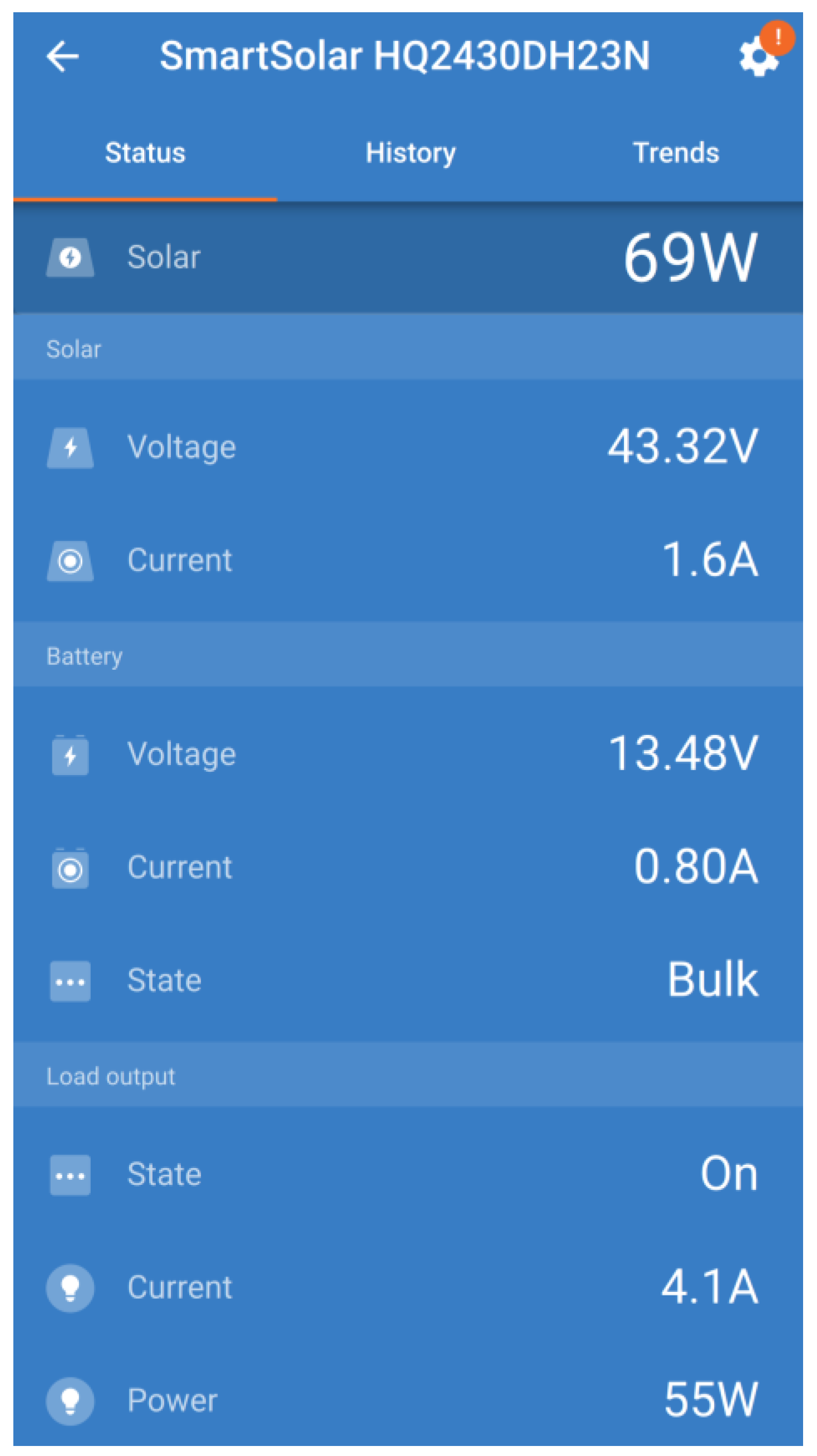
After removing the obstructions, the PV output recovered immediately, supplying approximately 55 W to the load while generating up to 70 W in total, with surplus power used to charge the battery, as shown in Figure 12. This demonstrates the sensitivity of PV performance to partial shading and confirms that the system can simultaneously supply loads and charge the battery under adequate solar conditions.
Figure 12.
Victron Connect status view showing full power operation.
During the test period, approximately 105 Wh of energy was consumed by the connected devices, of which approximately 92 Wh was supplied directly by the PV system and the remainder by the battery. At the conclusion of testing, one power bank was fully charged, while the remaining devices reached approximately 70–75% charge.
It should be noted that the MPPT charge controller current was limited to 5 A to ensure the safe operation of the battery. As a result, the combined load and battery charging current did not exceed this limit, which constrained the maximum instantaneous power delivery despite the panel’s higher generation capability.
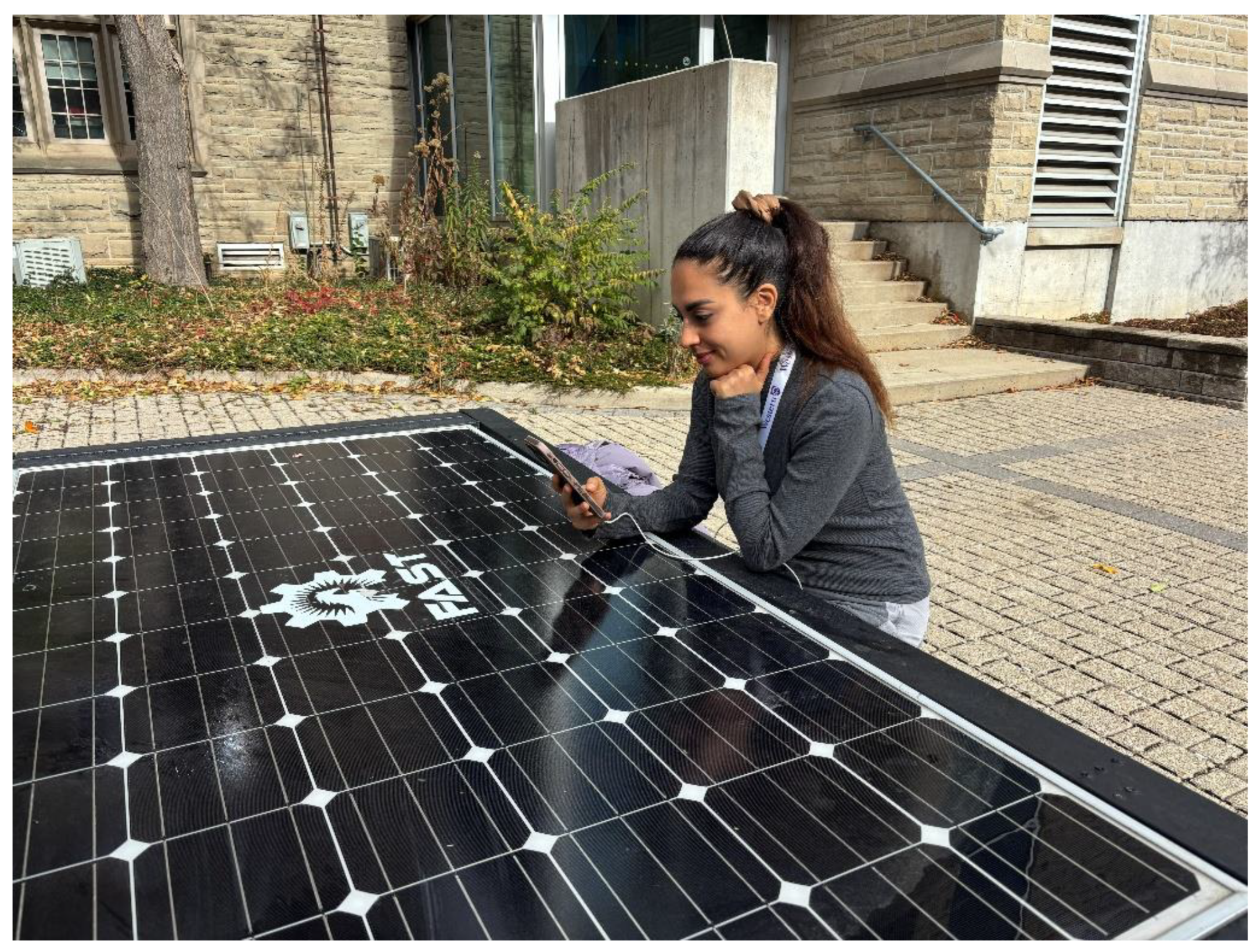
Photographs of students using the solar-powered picnic table are shown in Figure 13 and Figure 14. These images capture the system in real use on campus. Students were seen charging their laptops and phones while studying and collaborating outdoors. The photos highlight how the table provided both a convenient power source and a comfortable workspace, encouraging outdoor learning, social interaction, and sustainable technology use within the university environment.
Figure 13.
Students using the solar-powered picnic table.
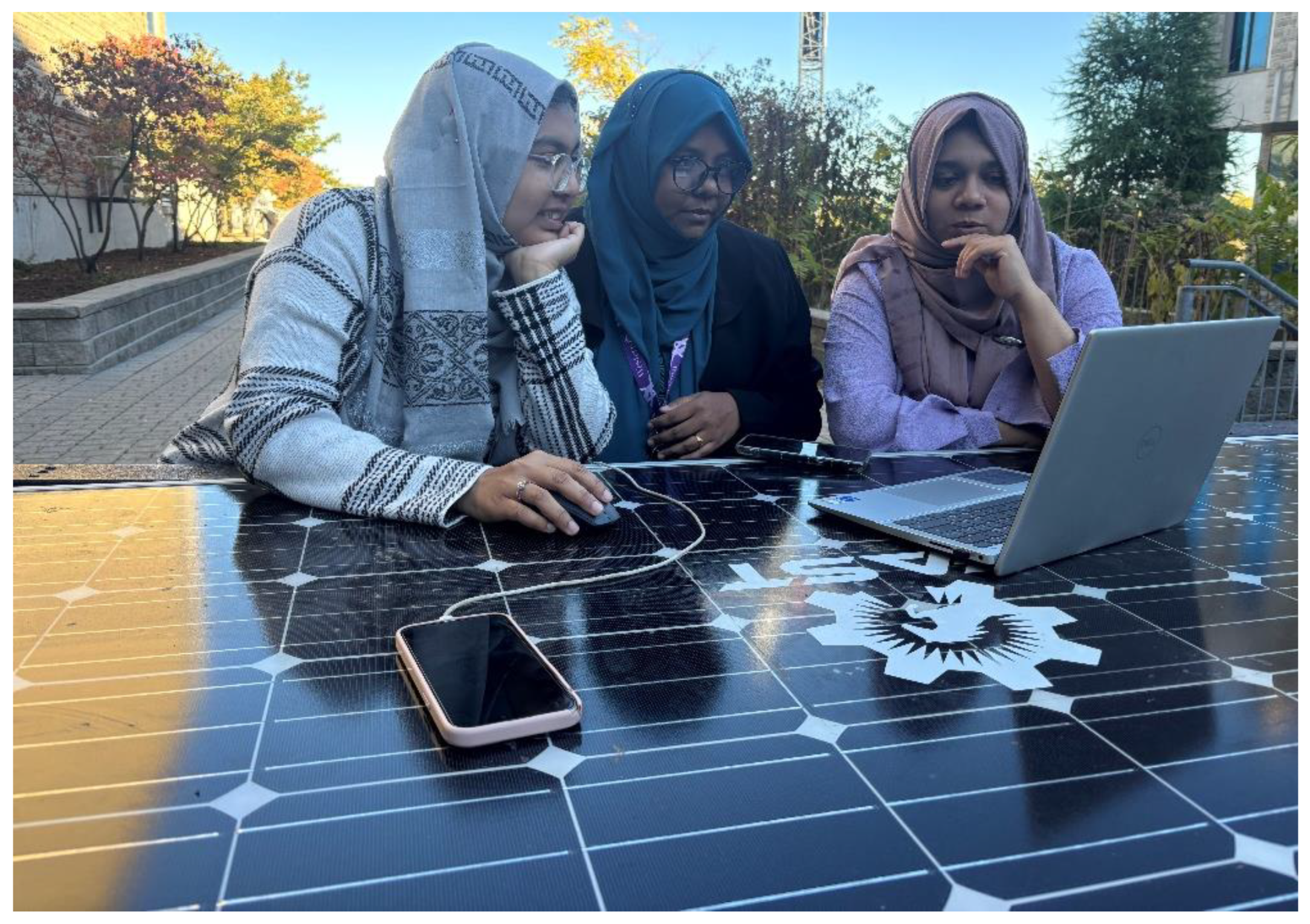
Figure 14.
Outdoor device charging on campus using the solar-powered picnic table.
4. Discussion
Providing students with opportunities to spend time outdoors in nature-integrated campus spaces, such as by using a solar-powered picnic table, aligns with a large body of evidence linking nature exposure to improvements in mental health, cognitive performance, and social–emotional development. Consistent outdoor time during the school day has been associated with reductions in stress, increased attention, improved resilience, and enhanced physical health among young learners [41]. A systematic review of nature-based outdoor learning reported gains in student engagement, self-regulation, social skills, and academic outcomes [42]. Similarly, a comprehensive review of the literature highlights improvements in mood, attention restoration, cognitive function, and sleep quality with regular exposure to green spaces [43]. The evidence further demonstrates that time spent outdoors is associated with improved academic performance. A school-based study using objective monitoring found that up to approximately 2.3 h of outdoor time per day correlated with higher academic achievement across multiple subjects without negatively affecting study time, challenging traditional assumptions that time outdoors detracts from learning [44]. In addition to cognitive and academic benefits, outdoor environments play a key role in supporting social and emotional learning. Qualitative research with Canadian educators revealed that outdoor learning contexts foster autonomy, collaboration, emotional regulation, and self-confidence [45]. These findings suggest that integrating accessible outdoor learning infrastructure capable of powering electronic devices on campus serves as a proactive support for student wellbeing, aligning with whole-person developmental goals.
In addition to supporting student wellbeing, the use of recycled plastic lumber in the picnic table enhances the durability and sustainability of outdoor campus infrastructure. Recycled plastic lumber is highly persistent in outdoor environments because common polymer structures are resistant to microbial degradation and moisture absorption [46]. As plastics typically fragment into smaller particles rather than biodegrade, materials can maintain integrity for extended periods in exposed conditions [47]. Plastic materials can persist for hundreds of years in natural environments due to their slow degradation rates, contributing to long-term structural stability [48]. Furthermore, wood–plastic composite lumber has been shown to maintain stable mechanical performance and strong weathering resistance when manufactured with UV-stabilizing additives [49]. Together, these properties demonstrate that recycled plastic lumber provides a robust, low-maintenance, and environmentally responsible alternative to traditional wood for campus applications.
It is well-established that solar PVs are a sustainable energy source [50], but the technology still faces challenges with end-of-life environmental impact [51]. Recycling conventional laminated panels is generally economical when incentives or regulations are issued [52], and circular PV panel design has been relatively unexplored for both polymer-based PV [53] and glass [54]. There are approaches under investigation for a circular PV ecosystem [55,56]. Although photovoltaic technologies are frequently deployed in large-scale commercial and utility projects, the literature demonstrates that they can be effectively adapted to smaller, off-grid infrastructure where their modular form factor and power density remain advantageous [55]. For example, in an agrivoltaics study, reused PV modules deployed over a 384 m2 horticultural area maintained strong performance ratios above 0.93, demonstrating that second-life panels retain reliable energy output even when repurposed into alternative applications [57]. Additionally, field investigations of decommissioned PV arrays show that a substantial proportion of modules more than 20 years old remains suitable for redeployment, supporting continued electricity generation rather than disposal [58]. Further analyses indicated that the reuse of balance-of-system components (such as racking and inverters) extends service life and reduces material demand within circular economy supply chains [56]. A time-explicit life cycle assessment of second-life solar deployments also showed that environmental “handprints” (benefits realized through avoided grid electricity and displacement of new production) exceed reuse-related “footprints” after several years of continued operation, emphasizing the sustainability advantage of redeploying modules rather than prematurely recycling them [59]. Together, these findings support the integration of decommissioned PV modules originally designed for larger systems into small off-grid installations such as the open-source solar-powered picnic table here, where their remaining generating potential can be fully utilized rather than discarded.
Commercial solar-powered picnic tables available on the market are significantly more expensive than the prototype developed in this work. For example, commercially available solar charging picnic tables such as those described in [19,46] typically cost several thousand dollars, whereas the total bill of materials for the table design presented here is approximately USD 450. This represents a reduction in material costs of greater than 90% compared with typical commercial products. Due to the relatively low material costs and the use of commonly available components, the proposed design could be constructed within university environments using existing fabrication spaces or student-led sustainability initiatives. Although open hardware is well-known to be less expensive than proprietary hardware [60], this was not meant to be a full economic analysis, as labor costs were not included in the evaluation here, primarily because the cost of labor is highly variable around the world. Using a Canadian university environment as an example, the labor costs could range from 35 USD/h for post-docs to USD 0 for a project part of a class or a student club. Such projects can provide practical experience with renewable energy systems, basic electronics, and fabrication while also expanding access to outdoor charging infrastructure on campuses. In contrast to commercial systems, which are generally proprietary and manufactured as fully integrated products, the table presented here is based on an open and modular design using widely available components, making it easier to reproduce, repair, and adapt to different applications.
While the prototype of the solar-powered picnic table demonstrates reliable functionality and user convenience, several limitations remain. The testing in this study was limited to short-term field evaluations and did not include a full seasonal assessment. The results obtained under the presented test conditions showed that system performance was dependent on the available irradiance, with reduced output observed under lower solar conditions. In cold climates such as that in Canada, outdoor infrastructure including picnic tables is often inaccessible during winter due to snow accumulation, ice, and limited maintenance. This was also observed with the installed picnic table, where access was restricted during winter months to the area where the picnic table was located. As a result, the practical usability and performance of the system under winter conditions remain uncertain. Even under low irradiance and snowy conditions, however, the PV module and battery were able to maintain system operation by keeping the MPPT active. This is partly a function of the reduced snow fall in Canada because of climate change, which is predicted to result in snow losses being a minor loss mechanism for PV in general [61]. The presented design was primarily optimized for USB-based charging, which restricts its use to mobile phones, tablets, and specific laptops such as MacBooks that support USB-C input. Conventional older laptops and higher-power electronic devices cannot be charged directly using the existing setup. Additionally, the system’s power generation capacity was limited using a single repurposed PV module, which constrained total available power under low-irradiance or high-demand conditions.
Future development can focus on addressing these limitations. Upcoming iterations can explore customized photovoltaic panels that can be better integrated into the table’s surface, enhancing both esthetics and energy output. The use of multiple PV modules will be tested to increase total power capacity, enabling support for higher-power loads such as standard laptops, e-bikes, and small DC appliances. The next version can also include a small AC inverter to supply standard AC power, allowing users to plug regular laptop chargers, e-bike chargers, or other small electronic devices directly into the table. This also opens up the possibility of combining higher-power solar picnic tables to form a DC nanogrid [62] or even more sophisticated topologies [63] for larger-scale outdoor picnic areas. Together, these enhancements will expand the table’s functionality while maintaining its open-source, sustainable, and user-friendly design philosophy.
5. Conclusions
This study developed a low-cost, open-source solar-powered picnic table designed to provide outdoor charging for electronic devices. The system integrated a 320 W photovoltaic module, MPPT charge controller, and 12 V LiFePO4 battery, enabling reliable off-grid power generation and storage. Field testing confirmed stable operation and daily energy delivery reaching about 50 Wh during periods of active use with multiple connected devices. Despite this functionality, the total bill of materials cost was approximately USD 450, which is 90–95% less than commercially available solar charging tables. The structure, built using recycled plastic lumber and repurposed photovoltaic modules, further enhanced sustainability while maintaining durability for outdoor deployment. With a total construction time of a day, practical outdoor charging infrastructure can be fabricated with modest effort using readily available components. These results indicate that open-source solar furniture can provide an affordable and replicable approach for expanding renewable-powered charging access in outdoor environments.
Author Contributions
Conceptualization, J.M.P.; methodology, S.K. and J.M.P.; software, S.K.; validation, S.K.; formal analysis, S.K. and J.M.P.; investigation, S.K.; resources, J.M.P.; data curation, S.K. and J.M.P.; writing—original draft preparation, S.K. and J.M.P.; writing—review and editing, S.K. and J.M.P.; visualization, S.K.; supervision, J.M.P.; project administration, J.M.P.; funding acquisition, J.M.P. All authors have read and agreed to the published version of the manuscript.
Funding
This work was supported by a Western University Sustainability Impact Fund, the Thompson Endowment and the Natural Sciences and Engineering Research Council of Canada.
Institutional Review Board Statement
Not applicable.
Informed Consent Statement
Not applicable.
Data Availability Statement
All data are available on the Open Science Framework: https://osf.io/894h2/overview, accessed on 13 March 2026.
Acknowledgments
We thank the Western University Sustainability Impact Fund and staff for their support.
Conflicts of Interest
The authors declare no conflicts of interest. The funders had no role in the design of this study; in the collection, analyses, or interpretation of data; in the writing of the manuscript; or in the decision to publish the results.
References
- Malmodin, J.; Moberg, Å; Lundén, D.; Finnveden, G.; Lövehagen, N. Greenhouse Gas Emissions and Operational Electricity Use in the ICT and Entertainment & Media Sectors. J. Ind. Ecol. 2010, 14, 770–790. [Google Scholar] [CrossRef] [Scilit]
- Belkhir, L.; Elmeligi, A. Assessing ICT global emissions footprint: Trends to 2040 & recommendations. J. Clean. Prod. 2018, 177, 448–463. [Google Scholar] [CrossRef] [Scilit]
- Freitag, C.; Berners-Lee, M.; Widdicks, K.; Knowles, B.; Blair, G.S.; Friday, A. The real climate and transformative impact of ICT: A critique of estimates, trends, and regulations. Patterns 2021, 2, 100340. [Google Scholar] [CrossRef] [Scilit] [PubMed]
- Stanbery, B.J.; Woodhouse, M.; van de Lagemaat, J. Photovoltaic Deployment Scenarios toward Global Decarbonization: Role of Disruptive Technologies. Sol. RRL 2023, 7, 2300102. [Google Scholar] [CrossRef] [Scilit]
- Wang, R.; Hasanefendic, S.; Von Hauff, E.; Bossink, B. The cost of photovoltaics: Re-evaluating grid parity for PV systems in China. Renew. Energy 2022, 194, 469–481. [Google Scholar] [CrossRef] [Scilit]
- Kaya, Ö. Photovoltaic mobile charging station for green infrastructure: A data-driven case study. Urban Clim. 2025, 60, 102358. [Google Scholar] [CrossRef] [Scilit]
- Działek, J.; Homiński, B.; Miśkowiec, M.; Świgost-Kapocsi, A.; Gwosdz, K. The assessment of the quality of campus public spaces as key parts of the learning landscape: Experience from a crowdsensing study on the Third Campus of Jagiellonian University, Krakow, Poland. Urban Des. Int. 2024, 29, 77–92. [Google Scholar] [CrossRef] [Scilit]
- Crompton, H.; Burke, D. The use of mobile learning in higher education: A systematic review. Comput. Educ. 2018, 123, 53–64. [Google Scholar] [CrossRef] [Scilit]
- Mason, L.; Ronconi, A.; Scrimin, S.; Pazzaglia, F. Short-Term Exposure to Nature and Benefits for Students’ Cognitive Performance: A Review. Educ. Psychol. Rev. 2022, 34, 609–647. [Google Scholar] [CrossRef] [Scilit]
- Mobile Solar Charging Stations for Parks and Open Spaces—NYC Civic Engagement Commission (CEC). Available online: https://www.participate.nyc.gov/processes/Citywidepb2023/f/8/proposals/11843 (accessed on 2 March 2026).
- Hasan, N.; Hijazi, I.; Enab, D.; Qanazi, S.; Shahrour, I.; Al-Qadi, H.; Qamhieh, K. Influence of Campus Outdoor Spaces on Students Behavior: Enhancing Social Interaction and Learning at An-Najah University. An-Najah Univ. J. Res. Nat. Sci. 2024, 39, 125–136. [Google Scholar] [CrossRef] [Scilit]
- Potts, C. Solar Powered Picnic Table for Charging Cellphones and Other Small Devices. Electron. Theses Diss. 2015. Available online: https://dc.etsu.edu/etd/2593 (accessed on 14 March 2026).
- Smart Table|Engineering at Sonoma State University. Available online: https://ee.sonoma.edu/smart-table (accessed on 15 September 2025).
- Kango, R.; Hadiyanto, H.; Pongtularan, E.H.; Abas, M.I. Implementation Of Solar Cell Based Smart Chair As A Green Open Space Electric Energy Source. Int. J. Pap. Adv. Sci. Rev. 2021, 2, 6–13. [Google Scholar] [CrossRef] [Scilit]
- Gerny, L.; Gonzalez, E.; Gigone, C.; Dean, R. Picnic Table Solar Powered Shade. Mech. Eng. 2022. Available online: https://digitalcommons.calpoly.edu/mesp/657 (accessed on 14 March 2026).
- InSPIRE Solar Powered Outdoors Table (SPOT) (Completed)|iCAP Portal|University of Illinois. Available online: https://icap.sustainability.illinois.edu/project/inspire-solar-powered-outdoors-table-spot (accessed on 12 September 2025).
- Lentini, A. UGA Charges Ahead with Solar-Powered Picnic Table, UGA Today. Available online: https://news.uga.edu/uga-solar-powered-picnic-table/ (accessed on 12 September 2025).
- General 1, EnerFusion Inc.—Power-Up GREEN! Available online: https://www.enerfusioninc.com/solar-power-dok (accessed on 12 September 2025).
- SELS - Smart Era Lighting Systems. Available online: https://selsled.com/collections/all-products/solar-charging-station (accessed on 20 April 2026).
- Aurora Picnic Table, EnerFusion Inc.—Power-Up GREEN! Available online: https://www.enerfusioninc.com/aurora-solar-picnic (accessed on 4 March 2026).
- SELS. Solar Panel Picnic Tables|Made in the USA|SELS Solar. Available online: https://selsled.com/products/picnic-table-st1010-solar-charging-table (accessed on 13 March 2026).
- Oberloier, S.; Pearce, J.M. General Design Procedure for Free and Open-Source Hardware for Scientific Equipment. Designs 2018, 2, 2. [Google Scholar] [CrossRef] [Scilit]
- Gibb, A. Building Open Source Hardware: DIY Manufacturing for Hackers and Makers; Addison-Wesley Professional: Boston, MA, USA, 2014. [Google Scholar]
- Pearce, J.M. Create, Share, and Save Money Using Open-Source Projects; McGraw-Hill Education: New York, NY, USA, 2020. [Google Scholar]
- 72-Cell Monocrystalline Photovoltaic Module|HELIENE. Available online: https://heliene.com/72-cell-monocrystalline-photovoltaic-module/ (accessed on 20 April 2026).
- Jordan, D.; Kurtz, S. Photovoltaic Degradation Rates—An Analytical Review. Prog. Photovolt. Res. Appl. 2013, 21, 12–29. [Google Scholar] [CrossRef] [Scilit]
- Jordan, D.C.; Kurtz, S.R. Compendium of photovoltaic degradation rates. Prog. Photovolt. Res. Appl. 2016, 24, 978–989. [Google Scholar] [CrossRef] [Scilit]
- Kim, J.; Rabelo, M.; Padi, S.P.; Yousuf, H.; Cho, E.-C.; Yi, J. A Review of the Degradation of Photovoltaic Modules for Life Expectancy. Energies 2021, 14, 4278. [Google Scholar] [CrossRef] [Scilit]
- Rahman, T.; Al Mansur, A.; Lipu, M.S.H.; Rahman, M.S.; Ashique, R.H.; Houran, M.A.; Elavarasan, R.M.; Hossain, E. Investigation of Degradation of Solar Photovoltaics: A Review of Aging Factors, Impacts, and Future Directions toward Sustainable Energy Management. Energies 2023, 16, 3706. [Google Scholar] [CrossRef] [Scilit]
- Baijul. The Life and Afterlife of Solar Panels, Ontario Society of Professional Engineers. Available online: https://ospe.on.ca/advocacy/the-life-and-afterlife-of-solar-panels/ (accessed on 14 October 2025).
- Esposito, M.; Bruel, G.M.; López, A.B.C.; Pearce, J.M.; Mesbahi, O. Online Diagnostics as a First Step in the Safe Use of Damaged Photovoltaic Modules. Sustainability 2026, 18, 1948. [Google Scholar] [CrossRef] [Scilit]
- Onshape|Product Development Platform. Available online: https://www.onshape.com/en/ (accessed on 21 October 2025).
- Victron Energy SmartSolar MPPT 75V 10 amp 12/24-Volt Solar Charge Controller (Bluetooth): Amazon.ca: Patio, Lawn & Garden. Available online: https://www.amazon.ca/Victron-SmartSolar-MPPT-75-10/dp/B075NTT8GH/ref=sr_1_5 (accessed on 27 October 2025).
- CYCLENBATT 12V 10Ah Lithium Battery, 5000+ Cycles deep cycle battery, lifepo4 battery Built-in 10A BMS, 12V lithium battery Great for Fish Finder Battery, Power Wheels, Solar Battery, UPS, HAM Radio: Amazon.ca: Health & Personal Care. Available online: https://www.amazon.ca/CYCLENBATT-10Ah-LiFePO4-Lithium-Battery/dp/B0CB5KFKNR/ref=sr_1_5?th=1 (accessed on 27 October 2025).
- Dual PD USB C Ports & Dual Quick Charge 3.0 Ports Car Charger Socket, VANONE Aluminum Alloy Waterproof 12V USB Outlet, Accessories for Car Boat Marine Motorcycle RV ATV Truck Golf Cart, etc.: Amazon.ca: Electronics. Available online: https://www.amazon.ca/VANONE-Aluminum-Waterproof-Accessories-Motorcycle/dp/B0D5HL4K9L/ref=sr_1_4?th=1 (accessed on 27 October 2025).
- QILIPSU Waterproof Outdoor Junction Box, IP67 ABS Plastic Electrical Enclosure with Mounting Plate, Wall Brackets, Weatherproof Hinged Door for Projects (11.2″ × 7.7″ × 5.1″): Amazon.ca: Tools & Home Improvement. Available online: https://www.amazon.ca/QILIPSU-Stainless-285x195x130mm-Waterproof-Electrical/dp/B08B5QN2LS/ref=sr_1_1_sspa?th=1 (accessed on 27 October 2025).
- GreenWell Plastic Lumber Products|Sustainable Building Materials, Greenwell Plastics. Available online: https://www.greenwellplastics.ca/lumber (accessed on 27 October 2025).
- VictronConnect, Victron Energy. Available online: https://www.victronenergy.com/panel-systems-remote-monitoring/victronconnect (accessed on 22 January 2026).
- German Solar Corporation. German Solar Corporation. Available online: https://germansolarcorp.com/ (accessed on 30 March 2026).
- 9. Technical specifications. Available online: https://www.victronenergy.com/media/pg/Manual_BlueSolar_MPPT_75-10_up_to_100-20/en/technical-specifications.html?utm_source=chatgpt.com (accessed on 26 March 2026).
- Patchen, A.K.; Edwards, A.; Rakow, D.A.; Meredith, G.R. Supporting children’s wellbeing through outdoor time: Opportunities to integrate consistent outdoor time into the elementary school day. Front. Public Health 2024, 12, 1483862. [Google Scholar] [CrossRef] [Scilit]
- Mann, J.; Gray, T.; Truong, S.; Brymer, E.; Passy, R.; Ho, S.; Sahlberg, P.; Ward, K.; Bentsen, P.; Curry, C.; et al. Getting out of the classroom and into nature: A systematic review of nature-specific outdoor learning on school children’s learning and development. Front. Public Health 2022, 10, 877058. [Google Scholar] [CrossRef] [Scilit] [PubMed]
- Jimenez, M.P.; DeVille, N.V.; Elliott, E.G.; Schiff, J.E.; Wilt, G.E.; Hart, J.E.; James, P. Associations between Nature Exposure and Health: A Review of the Evidence. Int. J. Environ. Res. Public Health 2021, 18, 4790. [Google Scholar] [CrossRef] [Scilit] [PubMed]
- Wang, J.; Sankaridurg, P.; Naduvilath, T.; Li, W.; Morgan, I.G.; Rose, K.A.; Weng, R.; Xu, X. Time outdoors positively associates with academic performance: A school-based study with objective monitoring of outdoor time. BMC Public Health 2023, 23, 645. [Google Scholar] [CrossRef] [Scilit] [PubMed]
- Molyneux, T.; Zeni, M.; Oberle, E. Choose Your Own Adventure: Promoting Social and Emotional Development Through Outdoor Learning. Early Child. Educ. J. 2022, 51, 1525–1539. [Google Scholar] [CrossRef] [Scilit]
- Andrady, A.L. Persistence of Plastic Litter in the Oceans. In Marine Anthropogenic Litter; Bergmann, M., Gutow, L., Klages, M., Eds.; Springer: Cham, Switzerland, 2015; pp. 57–72. [Google Scholar] [CrossRef] [Scilit]
- Barnes, D.K.A.; Galgani, F.; Thompson, R.C.; Barlaz, M. Accumulation and fragmentation of plastic debris in global environments. Philos. Trans. R. Soc. B Biol. Sci. 2009, 364, 1985–1998. [Google Scholar] [CrossRef] [Scilit]
- Thompson, R.; Moore, C.; vom Saal, F.; Swan, S. Plastics, the environment and human health: Current consensus and future trends. Philos. Trans. R. Soc. B Biol. Sci. 2009, 364, 2153–2166. [Google Scholar] [CrossRef] [Scilit]
- Ibach, R.E. Durability of wood-plastic composite lumber. In McGraw-Hill Yearbook of Science & Technology; McGraw-Hill Education: New York, NY, USA, 2010; pp. 113–116. [Google Scholar]
- Pearce, J.M. Photovoltaics—A path to sustainable futures. Futures 2002, 34, 663–674. [Google Scholar] [CrossRef] [Scilit]
- Mahmoudi, S.; Huda, N.; Alavi, Z.; Islam, M.T.; Behnia, M. End-of-life photovoltaic modules: A systematic quantitative literature review. Resour. Conserv. Recycl. 2019, 146, 1–16. [Google Scholar] [CrossRef] [Scilit]
- McDonald, N.C.; Pearce, J.M. Producer responsibility and recycling solar photovoltaic modules. Energy Policy 2010, 38, 7041–7047. [Google Scholar] [CrossRef] [Scilit]
- Abdullayev, J.; Givans, J.; Pearce, J.M. Open-source distributed production of polycarbonate solar photovoltaic modules designed for disassembly. J. Clean. Prod. 2026, 551, 147931. [Google Scholar] [CrossRef] [Scilit]
- Biosphere Solar. Available online: https://www.biosphere.solar/ (accessed on 13 March 2026).
- Basnet, R.; Jones, L.; Azmie, M.A.; Jones, M.; McCann, M.; Ernst, M. Advancing circular economy of silicon Photovoltaics: Current status and challenges of PV module reuse. Sol. Energy Mater. Sol. Cells 2025, 292, 113816. [Google Scholar] [CrossRef] [Scilit]
- Marinna, P.; Laís, V.; Fernando, O.R.P.; Ricardo, R. Circular solar economy: PV modules decision-making framework for reuse. J. Clean. Prod. 2025, 493, 144941. [Google Scholar] [CrossRef] [Scilit]
- Nieto-Morone, M.-B.; Muñoz-García, M.-Á; Pérez López, D.; Bernal-Basurco, C.; García Rosillo, F.; Alonso-García, M.d.C. Agrivoltaics: Integration of Reused PV Modules. Agronomy 2025, 15, 730. [Google Scholar] [CrossRef] [Scilit]
- Stromberg, R. Impacts of PV Reliability on Social and Technical Factors Affecting Reuse Solar Arrays. 2023.
- de Zilva, D.; Fishman, T.; Tukker, A.; Hu, M. Deconstructing Value in Circular Economy Interventions with Time-Explicit Life Cycle Assessment and Costing: Three Cases of Reused Solar Panels. Resour. Conserv. Recycl. 2025, 226, 108699. [Google Scholar]
- Pearce, J.M. Cut costs with open-source hardware. Nature 2014, 505, 618. [Google Scholar] [CrossRef] [Scilit]
- Williams, R.A.; Lizzadro-McPherson, D.J.; Pearce, J.M. The impact of snow losses on solar photovoltaic systems in North America in the future. Energy Adv. 2023, 2, 1634–1649. [Google Scholar] [CrossRef] [Scilit]
- Rahman, M.M.; Pearce, J.M. Modular open source solar photovoltaic-powered DC nanogrids with efficient energy management system. J. Sol. Energy Sustain. Dev. 2024, 13, 1–15. [Google Scholar] [CrossRef] [Scilit]
- Burmester, D.; Rayudu, R.; Seah, W.; Akinyele, D. A review of nanogrid topologies and technologies. Renew. Sustain. Energy Rev. 2017, 67, 760–775. [Google Scholar] [CrossRef] [Scilit]
Disclaimer/Publisher’s Note: The statements, opinions and data contained in all publications are solely those of the individual author(s) and contributor(s) and not of MDPI and/or the editor(s). MDPI and/or the editor(s) disclaim responsibility for any injury to people or property resulting from any ideas, methods, instructions or products referred to in the content. |
© 2026 by the authors. Licensee MDPI, Basel, Switzerland. This article is an open access article distributed under the terms and conditions of the Creative Commons Attribution (CC BY) license.