


Abstract
For high-voltage power transmission, the surface voltage gradient (SVG) of the conductor plays a crucial role in meeting corona performance requirements. The SVG is greatly impacted by the smoothness of the conductor’s surface. Under identical conditions, the SVG of smooth, round conductors differs from that of stranded conductors with the same outer radius. This paper uses Finite Element Analysis (FEA) to study the effect of different stranded conductor geometries and three-phase line topologies with stranded conductor bundles on the SVG. Although industry standards and the scientific literature often rely on simplified smooth-cylinder approximations, this research demonstrates that surface irregularities significantly increase electrical stress compared to idealized smooth surfaces. Through simulating various three-phase configurations, the study reveals a nearly constant field enhancement factor across diverse stranded designs. These results enable us to apply formulas developed for smooth conductors to more realistic power line applications involving stranded conductor bundles. Consequently, this FEA approach offers engineers a precise, versatile method for designing high-voltage transmission lines. The findings presented here facilitate a deeper understanding of the SVG surrounding stranded conductors, particularly with regard to its influence on corona phenomena.
1. Introduction
Corona performance is a key design aspect in the design of high-voltage transmission lines [1,2]. Due to raising electrical power demand, extra-high voltage (EHV) and ultra-high voltage (UHV) transmission systems are becoming widespread [3]. To minimize corona performance issues and ensure environmentally compliant, reliable, and efficient transmission line operation, the SVG of power line conductors must be controlled. Corona activity is a multifaceted phenomenon, which is characterized by audible noise, electromagnetic interference, power loss, and the generation of chemicals such as nitrogen oxides and ozone [2]. Controlling the surface voltage gradient (SVG) is fundamental to limiting corona losses in the design of high-voltage transmission lines [4], which greatly impact corona losses [5]. However, the physicochemical properties of the insulating gas and the rate at which the electric field decays away from the conductor surface also impact corona performance [6]. The likelihood of corona occurrence depends on various factors, including SVG, local weather conditions, and surface condition. Water drops, accumulated dirt scratches and sharp points tend to raise the local SVG, thus triggering corona activity and increasing associated corona losses [7]. However, there is no physical evidence supporting a specific corona onset voltage [8].
According to the IEEE Std 605 standard [8], the threshold for corona onset varies, with surface voltage gradients typically ranging from 10 kV/cm to over 30 kV/cm. Recommended limits for conductor SVGs are determined by the current type (AC vs. DC) and the specific requirements of regulatory or industry bodies. While there are no official, universal specifications, the primary design objective is to keep electric field strengths below 20 kVrms/cm to mitigate corona effects [9]. To reduce radio noise, the USDA recommends keeping gradients below 16 kVrms/cm for AC conductors [10], a threshold supported by EPRI [11]. Both Cigré [12] and Siemens [13] suggest an operating window of 15–17 kVrms/cm for AC conductors. In the absence of formal mandates, standard practice (ABB source [14]) typically limits the SVG to 19 kVrms/cm. DC conductors can operate at higher gradients before corona-related issues arise. Siemens [13] suggests a threshold value of 25 kV/cm, while Cigré [12] suggests a slightly higher limit of 26 kV/cm. According to [15], the critical SVG for 10 mm radius smooth round cylinders is about 27 kVrms/cm, falling to 21 kVrms/cm for stranded conductors. However, it is recommended that the SVG for overhead stranded conductors be limited to around 17 kVrms/cm in practice.
Stranded conductors are widely used in distribution and transmission lines due to their many advantages. They are easier to manufacture because larger sizes are achieved by adding successive layers of strands twisted in opposite directions. They are also more flexible and easier to handle than solid conductors. The EN 50182 standard [16] deals with round wire, bare, concentric-lay, conductors for overhead power lines, in which the layers are stranded in opposite directions. Aluminum conductors steel-reinforced (ACSR) are particularly common in transmission lines because the steel core gives them a high strength-to-weight ratio [9]. ACSR conductors have a core composed of zinc-coated steel or aluminum-clad steel wires, surrounded by one or more layers of hard-drawn aluminum or aluminum alloy wires. The EN 50182 standard dictates that the surface of such conductors must be free of visible imperfections such as indentations and nicks. Other types of conductor also used in transmission lines include all-aluminum conductors (AAC), all-aluminum alloy conductors (AAAC), aluminum conductor alloy-reinforced (ACAR), and different types of higher-temperature low-sag (HTLS) conductors, some of which can operate above 200 °C [17].
Corona activity causes power losses that power plant operators must compensate for. Although average annual corona losses are typically less than 10% of Joule losses in properly sized and maintained overhead transmission lines, under adverse weather conditions, corona losses can reach values similar to Joule losses [18].
The corona inception voltage (CIV) of a conductor depends on the SVG and the specific conductor geometry. Due to this dependence, corona losses greatly depend on the operating voltage. Thus, they increase in low-loaded transmission lines due to the inherent voltage rise [19]. For a given operating voltage, the SVG depends heavily on the conductor’s radius and surface smoothness [20], resulting in significant differences between solid round conductors and stranded conductors. The maximum SVG, Emax, triggers the corona onset. When dealing with conductor bundles, Emax is typically found on the subconductors’ outer edges, and determines the critical inception corona voltage Vc. Above this value, corona losses (Pc) increase dramatically with the operating line voltage. Since ionization occurrence is directly related to Emax, it is the probably the most critical parameter for delaying the onset of corona losses. Eaverage, on the other hand, is a measure of the overall electric stress, and correlates to the corona power loss. Eaverage is the mean electric field strength across the entire surface of the conductor (or bundle). It is often used to estimate the equivalent radius of a conductor or bundle in order to simplify calculations.
Early studies by Peek [21,22] and Whitehead [23] introduced the irregularity factor m to quantify how stranding reduces corona onset voltage relative to smooth conductors. While Peek [21,22] suggested a representative m of 0.82 for 7-strand conductors, Whitehead [23] proposed values of m = 0.85 and 0.92 for 3- and 9-strand in the outer layer, respectively. Stone [24] later demonstrated that m approaches unity as the number of strands increases. Theoretical attempts using surface electric field enhancement factors, such as those by Adams (m = 0.72) [25] and Iyer [6], yielded nearly constant values (m = 0.71, 0.70 and 0.69 for 7-, 19- and 37-strand conductors in the outer layer, respectively). According to [20], Tikhodeev proposed a factor of m = 0.82 for specific geometries (outer radius of stranded conductor >1 cm and 17 ≤ n ≤ 24, where n is the number of strands in the outer layer), while Lewis proposed m = 0.73 [6]. The significant dispersion in reported m values motivates the need for a more rigorous model.
This paper uses a finite element analysis (FEA) model to examine various stranded conductors specified in the EN 50182 standard [16]. FEA is a powerful numerical method that is widely recognized for solving complex problems [26] for which analytical equations are unavailable. FEA serves as a superior alternative to classical analytical developments by eliminating the need for simplified geometric approximations. By discretizing the complex stranded profile of EN 50182-compliant conductors, FEA provides a precise mapping of the spatial electric field distribution. Instead of relying on simplified mathematical formulations, this paper utilizes modern numerical modeling to determine the surface electric field distribution of stranded conductors.
Rather than evaluating corona performance or inception values directly, this paper focuses on accurately determining the surface voltage gradient, which international guidelines limit to mitigate the risk of corona activity. The analysis determines the impact of the non-smooth surface of stranded conductors on the maximum and average SVG values. Additionally, the work evaluates the impact of surface irregularities, such as valleys and peaks, on stranded conductors installed in three-phase line configurations with conductor bundles. The analysis reveals that stranded conductors generate significantly higher electrical stress than the idealized smooth models, which are commonly used in formulas for grid design. Additionally, the analysis supplements and clarifies the values of surface irregularity factors found in various international references. For this purpose, the maximum and average SVG of the stranded conductors are compared to those of a smooth, solid, round conductor with the same outer diameter. This topic is important because engineers often use simplified, smooth, cylindrical approximations to avoid the computational complexity required to model intricate, multi-strand geometries with finite element analysis (FEA) models. Many widely recognized formulas, some of which are published in ANSI NEMA [27] or IEEE [8] standards and in different research papers [14,28,29] allow for determining the maximum and average SVG for single smooth conductors, for three-phase lines with smooth single conductors and for three-phase lines with conductor bundles. However, these formulas ignore the field enhancement effect due to the stranding. Using accurate FEA simulations, this work demonstrates that the field enhancement factor is nearly constant for all analyzed stranded conductors and all analyzed line configurations with conductor bundles. Therefore, the results of this paper generalize the applicability of the published formulas for smooth single conductors and for smooth conductors in three-phase lines to stranded conductors, which is much more realistic because most practical power lines use stranded conductors. Additionally, the FEA model is demonstrated to be a general, versatile, and accurate alternative that can be applied to any conductor or overhead line configuration, regardless of their specific geometry. The results of this paper may also enhance our understanding of the SVG surrounding stranded conductors and its effect on corona activity and power loss.
2. Isolated Single Conductors
This section describes the analyzed isolated conductors, i.e., single conductors parallel to a flat ground plane. These conductors are used to determine the surface voltage gradient. Since the conductors used in overhead transmission lines differ by country, as specified in the EN 50182 standard [16], analyzing all of them is not feasible. Therefore, this section selects some representative conductor topologies to understand the effect of geometry on the SVG.
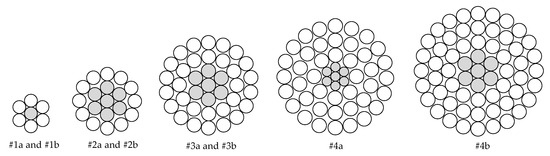
Table 1 shows the configurations of the analyzed conductors, as described in the EN 50182 standard for overhead line conductors consisting of concentric-lay stranded round wire conductors [16]. Aluminum conductors steel-reinforced (ACSR) are widely used in transmission lines. They include a galvanized steel wire core that provides mechanical strength to the conductor. The core is surrounded by layers of aluminum or aluminum alloy strands twisted in opposite directions, which provide a low-resistance path for electric current [30]. Thus, most of the current flows through the aluminum strands surrounding the core [31]. The conductors analyzed in this study range from one to three aluminum layers. The outer layer includes between 6 and 24 strands to ensure a wide range of surface smoothness.
Table 1.
Stranded conductors analyzed in this work, whose geometric parameters are found in the EN 50182 standard [16].
Figure 1.
Analyzed ACSR conductors (not to scale). The gray circles represent the steel strands (core), and the white circles represent the aluminum strands (conductor itself). All of the strands have the same electric potential.
This work analyzes ACSR conductors; however, it is noted that the results can also be generalized to other types of conductors with round strands.
3. Conductor Bundles in Three-Phase Lines
In real-world applications, conductors are rarely isolated. Instead, they form the basis of three-phase lines. As transmission voltages increase, the diameter of the conductors should also increase in order to limit the SVG and the accompanying corona loss [32,33]. Below 200 kV, increasing the conductor diameter limits the SVG, resulting in satisfactory corona performance. However, this solution becomes impractical at higher voltage levels due to the large size of the required conductors. Therefore, conductor bundles are used to reduce the SVG. Conductor bundles consist of several subconductors connected in parallel, so that each phase consists of a bundle of conductors rather than a single conductor. Using more and larger subconductors in a bundle distributes the SVG more evenly. This reduces the maximum SVG (Emax) for a given line voltage, making corona formation more difficult. Conductor bundles have a larger equivalent diameter than a single conductor, substantially lowering the maximum SVG [12] and increasing the corona inception voltage (CIV). This reduces corona activity and loss [34]. Conductor bundles have other beneficial effects, including reduced surge impedance, higher power capability, and lower electromagnetic interference. However, they increase circuit cost, especially for lightly loaded lines [35]. Due to the interaction among subconductors within conductor bundles, the SVG of each subconductor varies according to a cosine law over its circumference and is therefore not uniform [2].
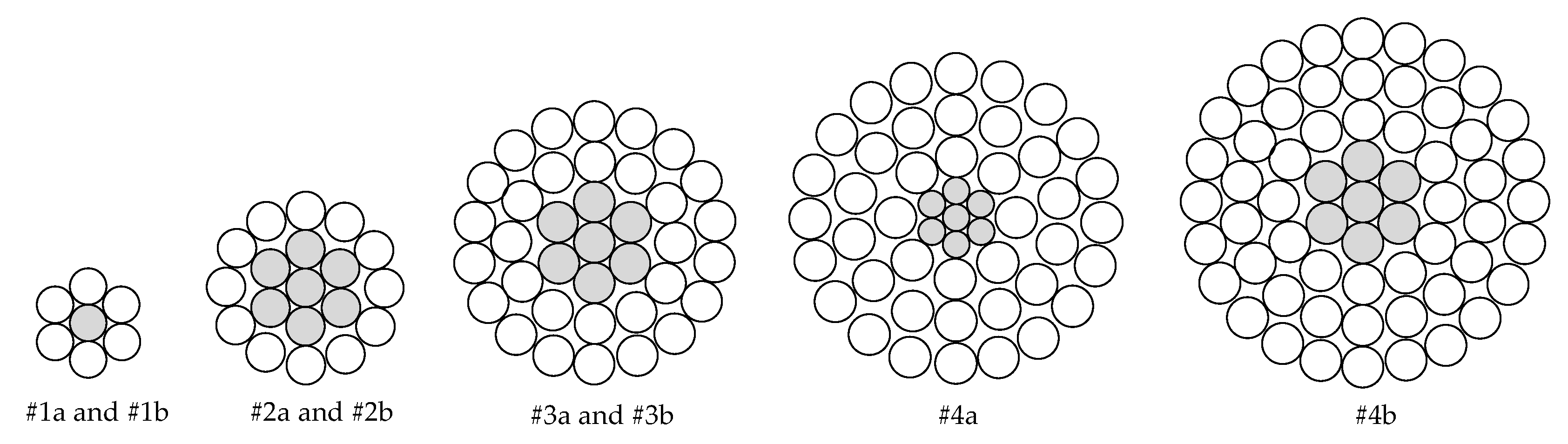
Figure 2 shows the geometry of the lines analyzed in this work. They include single-conductor lines and bundled lines with n = 2, 3, 4, or 8, where n represents the number of subconductors in each bundle.
Figure 2.
Analyzed three-phase line configurations. (a) Single conductor three-phase line. (b) Bundle-2 three-phase line. (c) Bundle-3 three-phase line. (d) Bundle-4 three phase line. (e) Bundle-8 three-phase line.
Table 2.
Main parameters of the lines analyzed in this work (see Figure 2) [2].
4. The Surface Irregularity Factor
Corona activity and associated power loss are directly related to the SVG, which in turn is affected by surface conditions. Smooth surfaces tend to reduce the SVG [8], so it is important to know how smooth the conductor surface is. The surface irregularity factor m is typically used for this purpose to determine the smoothness of the surface voltage gradient. The surface irregularity factor can be determined by comparing the theoretical SVG of a smooth cylinder with the same outer diameter as the stranded conductor to the SVG of a stranded conductor as
m = Esmooth/Estranded
The value of m is highly sensitive to the conductor’s stranding and bundling arrangement [4]. Directly measuring the SVG is not feasible, so its value is usually calculated using analytical expressions or numerical methods. Since the SVG is generally not constant along the conductor’s circumference, the surface irregularity factor is calculated from the maximum SVG value across the circumference of the conductor,
m = Esmooth,max/Estranded,max
Table 3 shows the values of m used by engineers in their calculations. These values are compiled from various sources, including research papers, Cigré, IEEE, and EPRI. As can be seen, for clean, newly installed, and well-maintained stranded conductors, the surface irregularity factor m typically falls within the range m ∈ [0.75, 0.85] [1,36,37]. However, m values tend to decrease as conductor surfaces become more irregular due to aging, surface defects, or contamination and deposits on the surface.
Table 3.
Tabulated values of the surface irregularity factor m.
5. The FEA Model
The two-dimensional (2D) electrostatic simulations in this study rely on the solution of Maxwell’s equations using COMSOL Multiphysics®. An unstructured triangular mesh was used because triangle elements can conform seamlessly to curved surfaces and sharp corners, where the electric field stress is greatest. A mesh with adaptable resolution was used, with a higher density in areas of high electric field, i.e., at the interface between the round conductors and the air. Far from the conductors, toward the far-field domains, a progressive mesh coarsening strategy was applied where the potential gradient is more linear and the decay is smoother. Coarser elements limit the computational load while maintaining numerical stability in these areas. The solver integrated in the FEA package numerically solves the following equations,
where E is the electric field strength in V/m, U is the electric potential expressed in V, D is the electric displacement in C/m2, = (d/dx,d/dy,d/dz) expressed in 1/m, ρV is the volumetric charge density in C/m3, which is assumed to be zero, ε0 [] is the vacuum dielectric permittivity expressed in C2s2/(kg·m3), and εr is the dimensionless relative dielectric permittivity, which is nearly 1 for air.
The computational domain is discretized using a triangular mesh, where each element represents a discrete sub-domain for approximating the governing physics equations. To ensure high-fidelity results, the maximum element size is constrained to 0.1 mm, resulting in approximately 1.5 million elements depending on the specific conductor geometry. The element growth rate is limited to 1.5 to maintain a smooth transition between mesh densities. The MUMPS direct solver was employed with a pivot threshold and a relative tolerance of 10−3. Accuracy is further ensured through automatic error estimation and iterative refinement, with the maximum number of refinements set to 15.
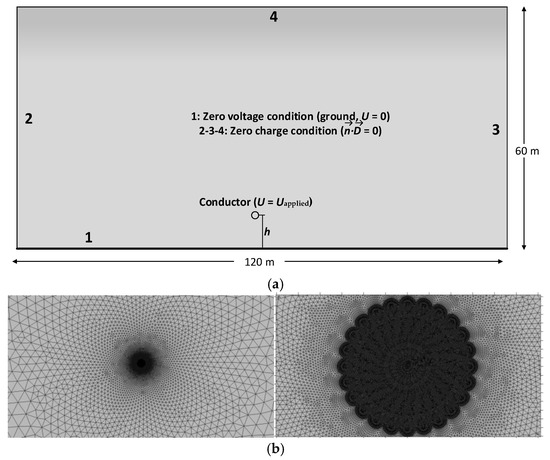
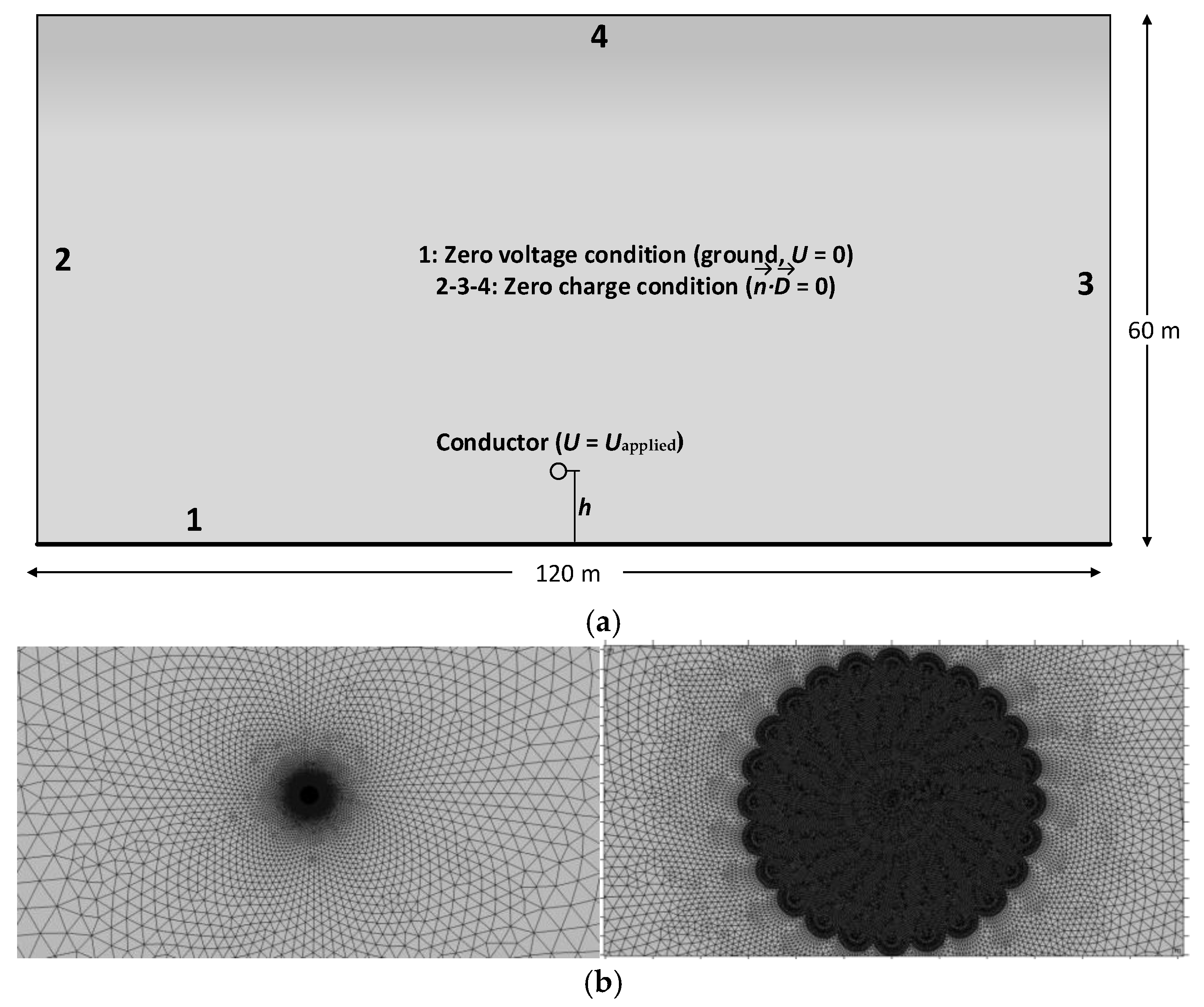
Regarding the boundary conditions, the conductor surface is defined as an Electric Potential boundary (set to the peak AC voltage), while the ground plane is maintained at zero potential. The remaining boundaries of the computational domain are assigned the Zero Charge condition (electric insulation) to simulate an open-field environment (see Figure 3a).
Figure 3.
(a) Domain and boundary conditions used in the 2D FEA simulations. (b) Detail of the triangular mesh.
Figure 3 shows the analyzed domain and the boundary conditions (zero voltage for the ground plane and zero charge for the remaining boundaries).
It is worth noting that, although microscopic surface defects such as roughness, scratches, and nicks can cause localized field enhancement, their impact on the surface voltage gradient is secondary compared to the prominent effect of the conductor’s stranded profile. Periodic electric field fluctuations from the outer strands provide a baseline gradient that mitigates the impact of surface irregularities. Due to the specified maximum element size, these irregularities do not exceed 0.1 mm.
6. Results
This section presents the results obtained using the conductors shown in Table 1 and Figure 1, and the three-phase lines shown in Table 2 and Figure 2.
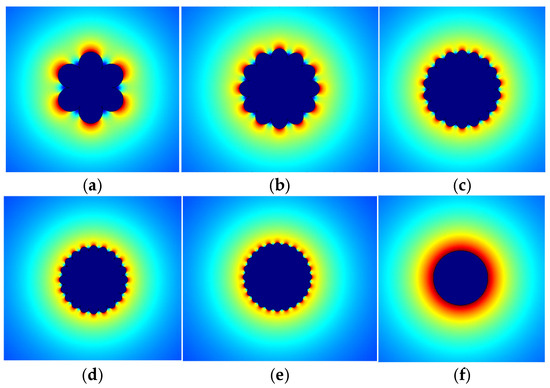
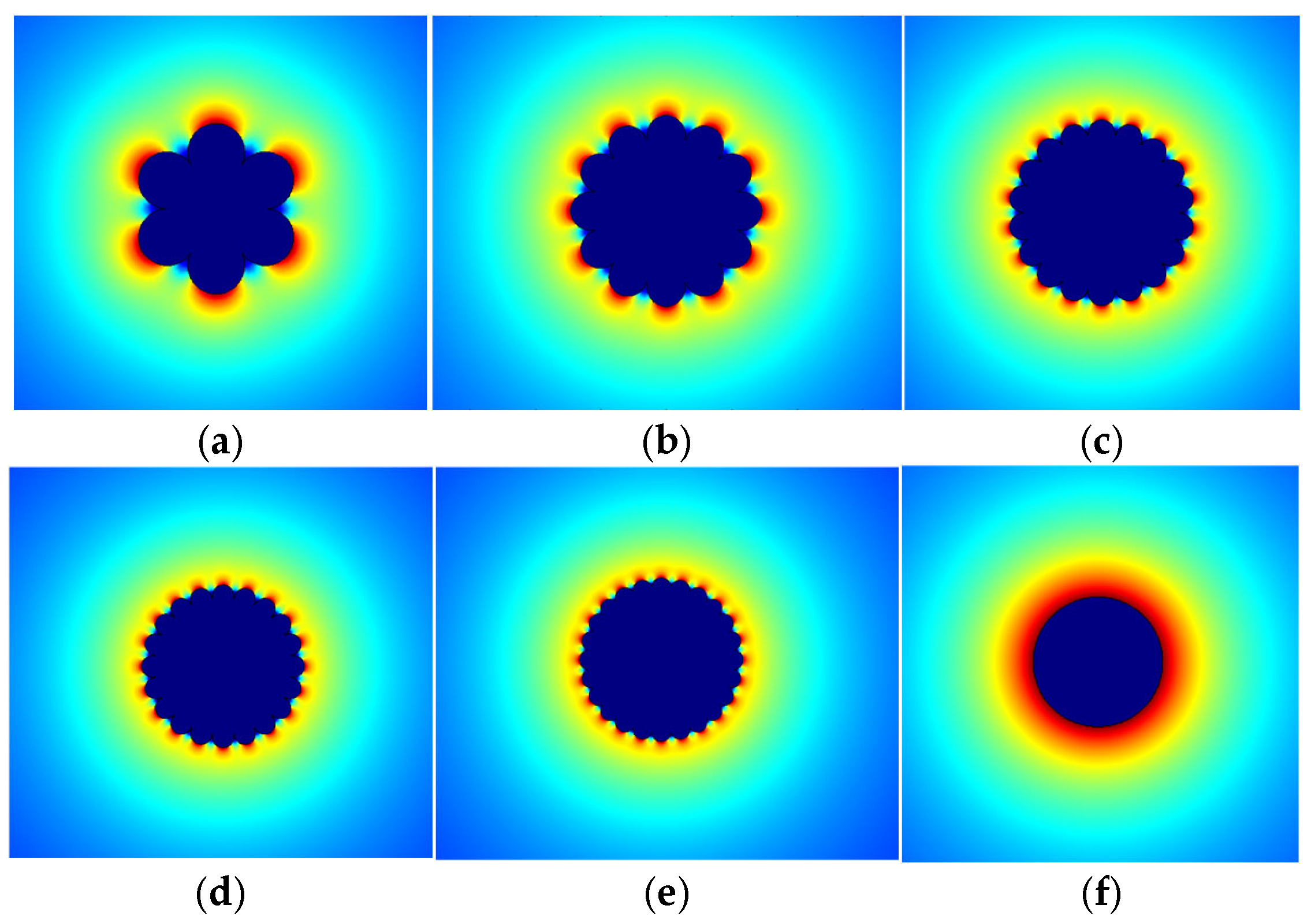
Figure 4 illustrates the electric field distribution around the isolated conductors, as determined by FEA simulations.
Figure 4.
Electric field distribution generated by a single conductor. (a) Steel core with 1 wire and a single Al layer with 6 strands. (b) Steel core with 7 wires (1/6) and a single Al layer with 12 strands. (c) Steel core with 7 wires (1/6) and a two Al layers with 12/18 strands. (d) Steel core with 7 wires (1/6) and a three Al layers with 8/14/20 strands. (e) Steel core with 7 wires (1/6) and a three Al layers with 12/18/24 strands. (f) Smooth round conductor.
As shown in Figure 4, the results clearly demonstrate that increasing the number of strands in the outer layer results in a more uniform SVG.
Table 4 shows the FEA results for the average and maximum surface SVG, Eaverage and Emax, respectively, obtained with the stranded conductors presented in Table 1 and smooth conductors of the same outer diameter. Note that all simulations were performed with an applied voltage of Uapplied = 1 kV since the SVG scales with the applied voltage for a given geometry.
Table 4.
FEA results for the different analyzed isolated conductors when applying 1 kV. Eaverage and Emax are the average and maximum surface voltage gradients over the conductor circumference, respectively.
As shown in Table 4, the Eaverage/Emax ratio is approximately 0.5 for stranded conductors and nearly 1 for smooth conductors. This indicates that the SVG around the circumference of stranded conductors is highly non-uniform due to the peaks and valleys on their surfaces. Conversely, smooth, round conductors exhibit nearly constant SVG around their circumference. It can also be deduced that m = Emax,smooth/Emax,stranded is always below 0.736 for single conductors, approaching 0.71 independently of the specific conductor geometry (e.g., number of strands in the outer layer, strand diameter and conductor diameter) and the distance to ground. These values are close to those presented in [6], where a field enhancement factor 1/m = Emax,stranded/Emax,smooth ≈ 1.436 is calculated for n = 19 strands. This results in m ≈ 0.70, which is very close to the values summarized in Table 4. This indicates that the SVG in stranded conductors peaks at surface protuberances caused by the individual strands. These peaks are 1.4 times greater than the SVG values in perfectly smooth conductors.
Table 4 compares the results obtained with the stranded conductor #1a to those of a smooth conductor with the same outer diameter, which correspond to the three-phase lines summarized in Table 2. The purpose of this study is to evaluate the impact of neighboring conductors on Eaverage and Emax of the most stressed conductor.
As shown in Table 5, the values of m = Emax,smooth/Emax,stranded are still very close to 0.71 for all five analyzed line configurations, regardless of the line and bundle configuration (see Figure 2 and Table 2). Additionally, this value of 0.71 is close to that obtained with single, isolated conductors. Therefore, it can be deduced that the surface irregularity factor, m = Emax,smooth/Emax,stranded, is minimally affected by the presence of other subconductors in the bundle or the other phases. These results suggest that stranded conductors generate a maximum SVG that is approximately 1.4 times greater than that of smooth conductors of the same outer diameter, whether they are in a single-conductor configuration or a bundled three-phase configuration. This presents critical design challenges for overhead high-voltage power lines. The immediate implication is that corona activity begins at a lower line voltage for stranded conductors than for smooth conductors. The electric field is concentrated at the prominence points of the individual outer strands, allowing for the air to ionize more easily at those points. Since the SVG is higher, stranded conductors experience more intense corona losses for a given operating voltage and under identical weather conditions. These losses are of special concern during foul weather (rain, snow, or high humidity). The higher SVG also triggers more radio and TV interference, or electromagnetic noise, which can disrupt communication signals near the line. The increased SVG also makes the line significantly noisier than a smooth conductor.
Table 5.
Results with the different lines when applying 1 kV using conductors #1a. The main parameters (h, D, s) of the lines #a, #b, #c, #d and #e are specified in Table 2.
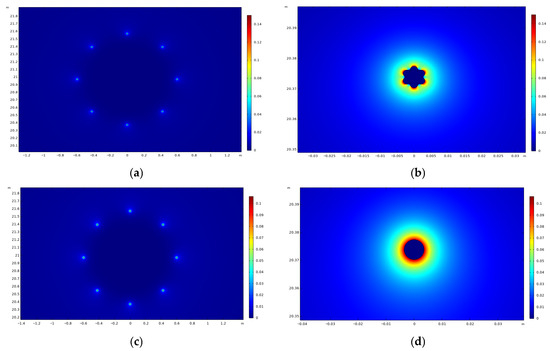
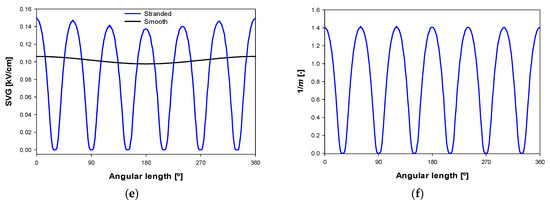
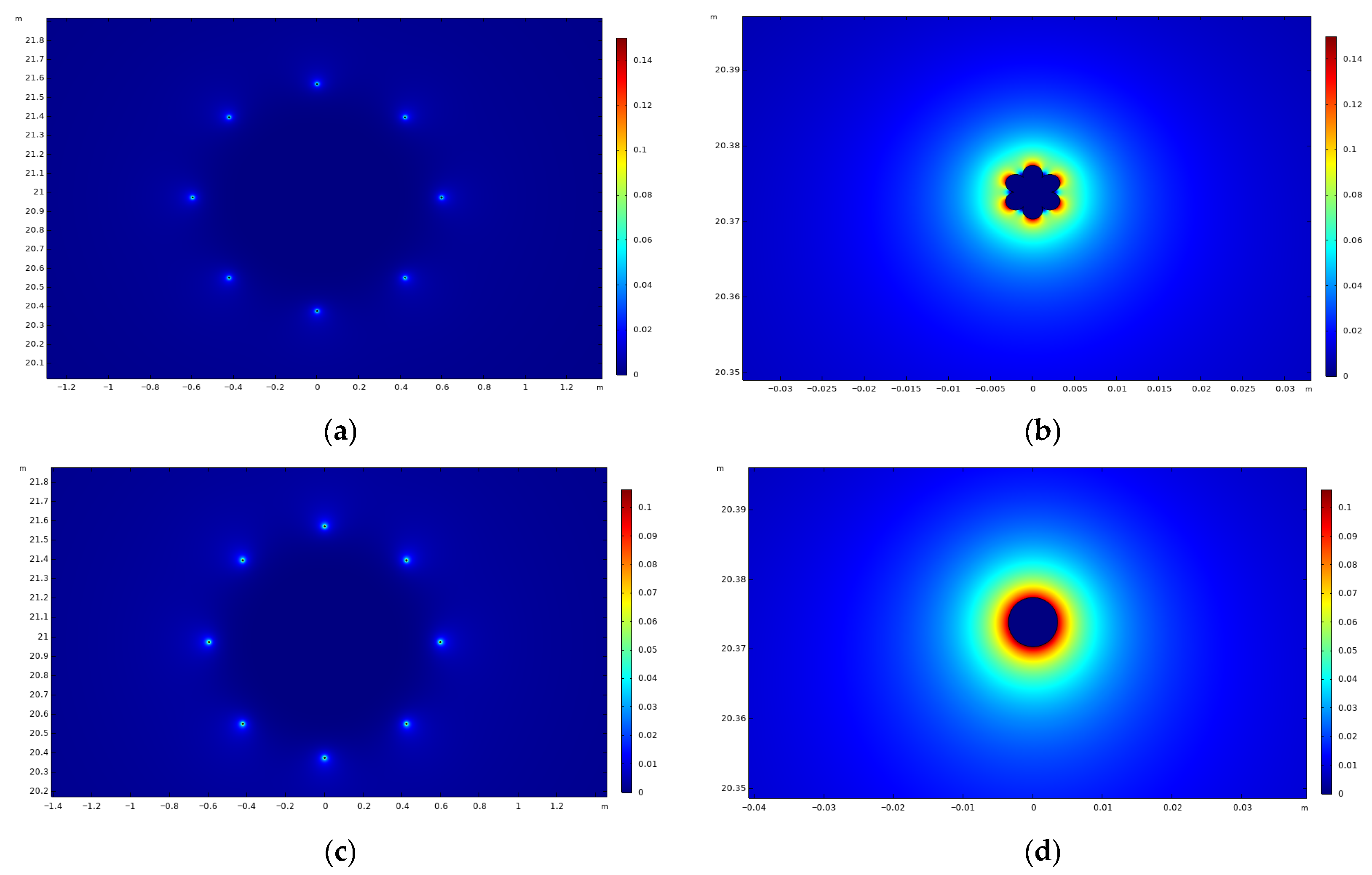
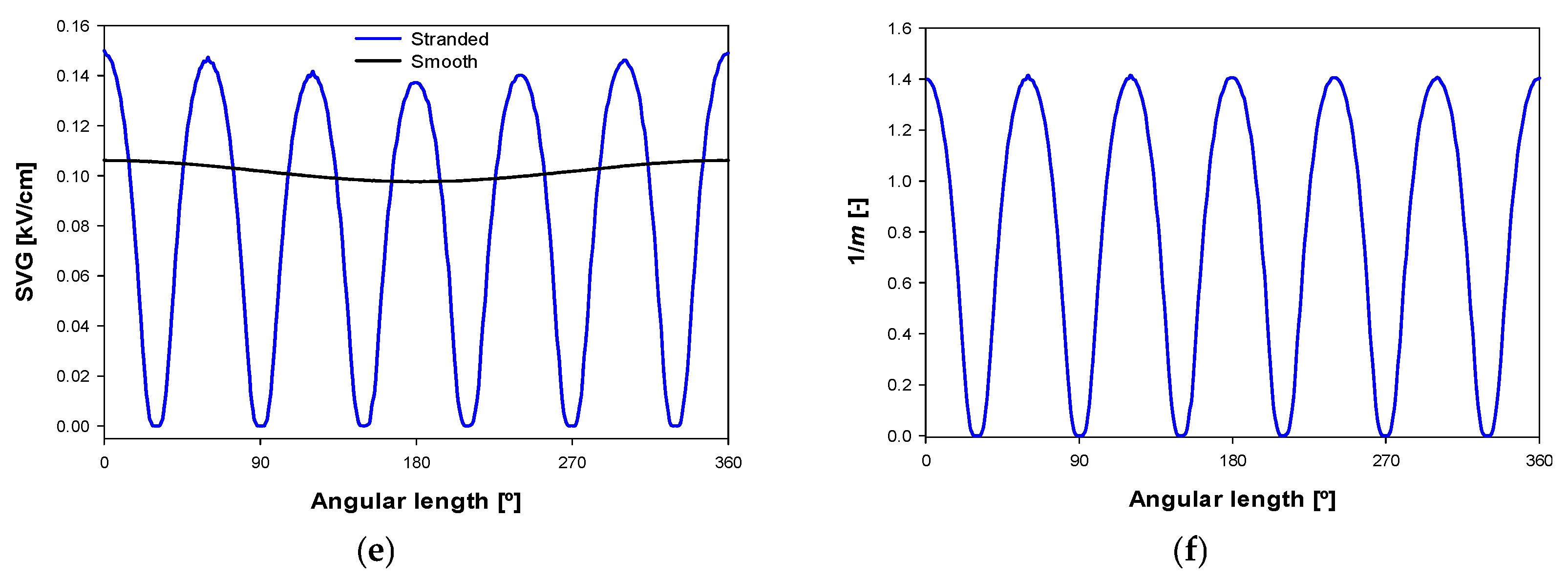
Figure 5, for example, shows the electric field distribution generated by Line #e, as well as a detailed view of the electric field distribution in kV/cm around the bottom conductor of the center phase.
Figure 5.
Electric field distribution generated by a bundle-8 three-phase line (Line #e) when applying 1 kV using conductors #1a. (a) Stranded conductors. Full view of the center phase bundle. (b) Stranded conductors. Bottommost subconductor of the center phase bundle. (c) Smooth conductors. Full view of the center phase bundle. (d) Smooth conductors. Bottommost subconductor of the center phase bundle. (e) SVG across the circumference of the bottommost subconductor of the center phase bundle. 0° correspond to the bottommost point in the circumference. (f) Inverse of the surface irregularity factor m along the circumference of the bottommost subconductor of the center phase bundle.
As shown in Figure 5, the stranded conductor exhibits the typical pronounced peak–valley SVG distribution even in a bundle configuration. In contrast, smooth, round conductors in a bundle demonstrate a much more uniform SVG distribution. Additionally, the maximum field-enhancing factor value of the stranded conductor in an eight-conductor bundle is approximately 1.4, corresponding to m = 0.71.
ANSI NEMA-CC1 [27] and IEEE Std 605 [8] provide approximate formulas for calculating the maximum and average shunt voltage gain (SVG) for three-phase lines with smooth single conductors. Several references provide formulas for three-phase lines with conductor bundles [14,27,28,29]. However, since these formulas are all derived for smooth conductors, they do not account for the field enhancement factor due to stranding. Using accurate finite element analysis (FEA) simulations, this work has shown that the field enhancement factor is approximately 1.4 (m ≈ 0.71 for new conductors in good condition) for the three-phase lines analyzed with stranded conductor bundles. Therefore, the applicability of the published formulas for smooth single conductors and smooth conductors in three-phase lines can be generalized to stranded conductors.
While this study provides an accurate analysis of the geometric stranding effect on new conductors, it is acknowledged that in-service aging factors such as oxidation, mechanical burrs, and environmental pollution, introduce additional stochastic variables. These factors act as localized field intensifiers that can further reduce the corona onset voltage beyond the predicted geometric values. Consequently, m values tend to decrease as conductors develop irregularities from aging, mechanical defects, or the accumulation of environmental deposits.
7. Conclusions
The corona performance of high-voltage overhead transmission lines is a fundamental design constraint, particularly for lines operating at extra-high voltage (EHV) and ultra-high (UHV) voltages. The surface voltage gradient of the conductor significantly impacts corona performance. Therefore, accurately characterizing the voltage gradient is essential for studying corona phenomena and designing transmission lines.
This paper has analyzed the SVG generated by different stranded conductors found in the EN 50182 standard, both when isolated and when installed in realistic three-phase line configurations with conductor bundles as described in IEEE publications. Accurate finite element analysis (FEA) simulations were used to quantify and understand the impact of the non-smooth surfaces of stranded conductors, which have peaks and valleys, on maximum and average SVG values.
It has been shown that stranded conductors create significantly higher electrical stress than smooth conductors with the same outer diameter. The latter are often considered in simplified formulas used for grid design. The results presented in this paper also allow us to supplement and specify the values of the surface irregularity factors found in the literature due to stranding. This study proved that the field enhancement factor remains essentially constant across analyzed stranded conductors and three-phase lines with conductor bundle configurations. Therefore, existing formulas for smooth conductors can be applied to realistic lines with stranded conductor bundles. Additionally, this study highlights the FEA model as a robust and universal tool for analyzing any overhead line configuration, regardless of geometric complexity. These results facilitate a deeper understanding of the SVG surrounding stranded conductors, which is important due to its potential influence on power line corona performance.
The value of the surface irregularity factor (the inverse of the field enhancement factor), m = Emax,smooth/Emax,stranded, is always around 0.71, regardless of whether we are dealing with isolated conductors with a different number of layers and strands in the outer layer or conductor bundles with a different number of subconductors. Therefore, the presence of other subconductors in the bundle and the presence of other phases have very little effect on m. The calculated value of m ≈ 0.71 is lower and more conservative than the proposed range of m ∈ [0.75, 0.85] by Cigré and EPRI for new, well-conditioned stranded conductors.
Funding
This project received funding from grant PID2023-147016OB-I00, by MICIU/AEI/https://doi.org/10.13039/501100011033 and by ERDF “A way of making Europe,” by the European Union and from the Agència de Gestió d’Ajuts Universitaris i de Recerca-AGAUR (2021 SGR 00392).
Institutional Review Board Statement
Not applicable.
Informed Consent Statement
Not applicable.
Data Availability Statement
The original contributions presented in this study are included in the article. Further inquiries can be directed to the corresponding author.
Acknowledgments
No GenAI has been used for purposes such as generating text, data, or graphics, or for study design, data collection, analysis, or interpretation of data. The authors have reviewed and edited the output and take full responsibility for the content of this publication.
Conflicts of Interest
The author declares no conflicts of interest. The funders had no role in the design of the study; in the collection, analyses, or interpretation of data; in the writing of the manuscript; or in the decision to publish the results.
References
- Khan, M.A.; Ghassemi, M. Corona Loss Calculation for Unconventional High Surge Impedance Loading Transmission Lines. In Proceedings of the 2023 North American Power Symposium (NAPS), Asheville, NC, USA, 15–17 October 2023. [Google Scholar] [CrossRef] [Scilit]
- Group, I.R.N. A Survey of Methods for Calculating Transmission Line Conductor Surface Voltage Gradients: IEEE Corona and Field Effects Subcommittee Report. IEEE Trans. Power Appar. Syst. 1979, 6, 1996–2014. [Google Scholar] [CrossRef] [Scilit]
- Thanassoulis, P.; Comsa, R.P. Calculation of Maximum Voltage Gradients, Part I: Bundle Conductors. IEEE Trans. Power Appar. Syst. 1971, PAS-90, 145–150. [Google Scholar] [CrossRef] [Scilit]
- Li, Q.; Rowland, S.M.; Shuttleworth, R. Calculating the Surface Potential Gradient of Overhead Line Conductors. IEEE Trans. Power Deliv. 2015, 30, 43–52. [Google Scholar] [CrossRef] [Scilit]
- Kurniawan, I.; Suwarno; Pischler, O.; Schichler, U. Audible Noise Calculation for Different Overhead Transmission Lines. In Proceedings of the 2018 53rd International Universities Power Engineering Conference (UPEC), Glasgow, UK, 4–7 September 2018. [Google Scholar] [CrossRef] [Scilit]
- Iyer, K.S.; Pillai, K.P.P. Analysis of Irregularity Factor of Stranded Conductors. Proc. Inst. Electr. Eng. 1968, 115, 364. [Google Scholar] [CrossRef] [Scilit]
- Carroll, J.B.B.; Bailey, B.M.M. Progress Report on BPA HV DC Test Line Radio Noise and Corona Loss. IEEE Trans. Power Appar. Syst. 1967, PAS-86, 1141–1145. [Google Scholar] [CrossRef] [Scilit]
- IEEE Std 605-2023; IEEE Guide for Bus Design in Air Insulated Substations. IEEE: New York, NY, USA, 2023.
- Glover, J.D.; Overbye, T.; Sarma, M.S. Power System Analysis and Design, 6th ed.; Cengage Learning: Boston, MA, USA, 2011. [Google Scholar]
- USDA(.gov). Design Manual for High Voltage Transmission Lines; USDA: Washington, DC, USA, 2015.
- Electric Power Research Institute. Transmission Line Reference Book 345 KV and Above; Electric Power Research Institute (EPRI): Palo Alto, CA, USA, 2014. [Google Scholar]
- Cigré Green Books. Overhead Lines; Papailiou, K.O., Ed.; Cigré Green Books: Malters, Switzerland, 2017. [Google Scholar]
- Siemens. Power Engineering Guide; Siemens AG: Erlangen, Germany, 2017. [Google Scholar]
- ABB Switchgear Manual 2006; ABB: Auburn Hills, MI, USA, 2006; p. 876.
- Kiessling, F. Overhead Power Lines: Planning, Design, Construction; Springer: Berlin/Heidelberg, Germany, 2003. [Google Scholar]
- UNE UNE EN 50182:2002; Conductors for Overhead Lines—Round Wire Concentric Lay Stranded Conductors. British Standards Institution: London, UK, 2002; pp. 1–73.
- Riba, J.-R.; Bogarra, S.; Gómez-Pau, Á.; Moreno-Eguilaz, M. Uprating of Transmission Lines by Means of HTLS Conductors for a Sustainable Growth: Challenges, Opportunities, and Research Needs. Renew. Sustain. Energy Rev. 2020, 134, 110334. [Google Scholar] [CrossRef] [Scilit]
- Deri, A.; Fodor, G. Influence of Geometric Parameters on the Corona Loss of 220 and 400 KV Overhead Transmission Lines. Period. Polytech. Electr. Eng. 1970, 14, 43–52. [Google Scholar]
- Bajramovic, Z.; Carsimamovic, S.; Veledar, M.; Hadzic, S.; Carsimamovic, A. Temporary Power Frequency Overvoltage in 220 KV and 400 KV Transmission Network. In Proceedings of the CIGRE C4 Colloquium on Power Quality and Lightning, Sarajevo, Bosnia and Herzegovina, 13–16 May 2012; Cigré: Sarajevo, Bosnia and Herzegovina, 2012; pp. 13–16. [Google Scholar]
- Yamazaki, K.; Olsen, R.G. Application of a Corona Onset Criterion to Calculation of Corona Onset Voltage of Stranded Conductors. IEEE Trans. Dielectr. Electr. Insul. 2004, 11, 674–680. [Google Scholar] [CrossRef]
- Peek, F.W. The Law of Corona and the Dielectric Strength of Air-II. Proc. Am. Inst. Electr. Eng. 1911, XXXI, 1051–1092. [Google Scholar] [CrossRef] [Scilit]
- Peek, F.W. Dielectric Phenomena in High-Voltage Engineering; McGraw-Hill Book Company, Inc.: New York, NY, USA, 1929. [Google Scholar]
- Whitehead, J.B. The Electric Strength of Air.-II. Trans. Am. Inst. Electr. Eng. 1911, 30, 1857–1887. [Google Scholar] [CrossRef] [Scilit]
- Stone, L.N. EHV Single and Twin Bundle Conductors–Influence of Conductor Diameter and Strand Diameter on Radio Influence Voltage and Corona Initiation Voltage. Trans. Am. Inst. Electr. Eng. Part III Power Appar. Syst. 1959, 78, 1434–1438. [Google Scholar] [CrossRef] [Scilit]
- Adams, G.E.E. Voltage Gradients on High-Voltage Lines. Electr. Eng. 1955, 74, 198. [Google Scholar] [CrossRef]
- Guo, D.; Li, X.; Xu, J.; Geng, Z.; Zhang, K. Dynamic Characteristics of Electric Field Distribution at SF6-Insulator Interface in DC-GIL under Polarity Reversal. Chin. J. Electr. Eng. 2025, 11, 18–28. [Google Scholar] [CrossRef] [Scilit]
- ANSI/NEMA ANSI/NEMA CC 1-2018; Electric Power Connection for Substations. ANSI: Washington, DC, USA, 2024; p. 45.
- Abi-Samra, N. Power Grid Resiliency for Adverse Conditions; Artech House: Norwood, MA, USA, 2017. [Google Scholar]
- Larsson, A. A Special-Case Surface Voltage Gradient Formula. IEEE Trans. Power Deliv. 1996, 11, 1771–1775. [Google Scholar] [CrossRef] [Scilit]
- Massaro, F. Alternating Current (AC) Resistance of Helically Stranded Conductors; Cigré: Paris, France, 2008; Volume 35, pp. 1–59. [Google Scholar]
- Riba, J.-R. The Role of AC Resistance of Bare Stranded Conductors for Developing Dynamic Line Rating Approaches. Appl. Sci. 2024, 14, 8982. [Google Scholar] [CrossRef] [Scilit]
- Kumar, A. Corona Effect on Transmission Lines. Int. J. Electr. Electron. Eng. Res. 2013, 3, 133–136. [Google Scholar]
- Riba, J.R. On the Accuracy of the Surface Voltage Gradient Calculation on Round Conductors Using Standard Formulas. Electr. Power Syst. Res. 2025, 247, 111794. [Google Scholar] [CrossRef] [Scilit]
- Xiao, F.; Zhang, B.; Deng, Y. Experimental Study on Impulse Corona Characteristics of HVDC Conductors with Space Charges. IEEE Trans. Power Deliv. 2021, 36, 1705–1713. [Google Scholar] [CrossRef] [Scilit]
- ABB. Electrical Transmission and Distribution Reference Book; ABB: Raleigh, NC, USA, 1997. [Google Scholar]
- Cigré. B2/B4/C1.17 Impacts of HVDC Lines on the Economics of HVDC Projects; Cigré: Paris, France, 2009. [Google Scholar]
- EPRI. EPRI AC Transmission Line Reference Book: 200 KV and Above; Electric Power Research Institute: Palo Alto, CA, USA, 2014. [Google Scholar]
- Lucas, J.R. High Voltage Engineering; University of Moratuwa: Moratuwa, Sri Lanka, 2001; p. 204. [Google Scholar]

Disclaimer/Publisher’s Note: The statements, opinions and data contained in all publications are solely those of the individual author(s) and contributor(s) and not of MDPI and/or the editor(s). MDPI and/or the editor(s) disclaim responsibility for any injury to people or property resulting from any ideas, methods, instructions or products referred to in the content. |
© 2026 by the author. Licensee MDPI, Basel, Switzerland. This article is an open access article distributed under the terms and conditions of the Creative Commons Attribution (CC BY) license.