


Abstract
The global shift toward decarbonized power systems is driving unprecedented penetration of variable renewable energy sources, especially wind and solar PV. Legacy grid architectures, built around centralized, dispatchable synchronous generation, are ill-suited to manage the bidirectional power flows, reduced inertia, and new stability constraints introduced by inverter-based resources. Existing research offers deep but fragmented insights into individual elements of this transition, such as advanced power electronics, microgrids, or market design, but rarely integrates them into a coherent architectural vision for resilient, high-renewable grids. This review closes that gap by synthesizing technical, architectural, and institutional perspectives into a unified framework for resilient grid design toward 2030 and beyond. First, it traces the evolution from traditional hierarchical grids to smart, prosumer-centric, and modular multi-layer architectures, highlighting the implications for reliability and resilience. Second, it critically examines the core technical challenges of high VRES penetration, including stability, power quality, protection, and operational planning in converter-dominated systems. Third, it reviews the enabling roles of advanced power electronics, hierarchical control and wide-area monitoring, microgrids, and hybrid AC/DC networks. Case studies from Germany, China, and Egypt are used to distil context-dependent pathways and common design principles. Building on these insights, the paper proposes a scalable multi-layer framework spanning physical, data, control, and regulatory/market layers. The framework is intended to guide researchers, planners, and policymakers in designing resilient, converter-dominated grids that are not only technically robust but also economically viable and socially sustainable.
1. Introduction
The accelerating push toward decarbonization is driving unprecedented deployment of variable renewable energy sources (VRESs), particularly wind and solar PV [1]. These resources are essential for meeting climate targets; however, they introduce profound operational and stability challenges for power systems that were originally designed around centralized, synchronous generation. Modern grids must now manage decentralized generation, declining inertia, and increased cyber-physical risks, stretching legacy architectures beyond their design limits [2].
1.1. The Global Energy Transition Imperative
International decarbonization commitments, including the Paris Agreement, require rapid scaling of VRESs. The International Energy Agency projects that renewables will supply nearly 90% of global electricity demand by 2050, with solar PV becoming the dominant source [3]. Record annual renewable additions (~510 GW in 2023) confirm this trajectory [4]. This transition is driven by climate policy, energy security concerns [5], and sharp cost declines. For instance, utility-scale PV costs have fallen by over 85% in the past decade, while onshore wind costs have dropped over 55% [6]. Corporate procurement initiatives such as RE100 add further momentum [7].
Regions such as California and South Australia already experience intervals of 100% renewable supply [8], illustrating how VRESs can dominate instantaneous demand. However, VRESs introduce bidirectional power flows, decreasing inertia, and increased volatility [9], fundamentally altering power system dynamics.
1.2. The Paradigm Shift in Power Systems
The traditional hierarchical grid architecture centered on centralized synchronous generation and unidirectional power flow is increasingly incompatible with high VRES operation. These legacy grids relied on synchronous machines for inertia, damping, and fault current support [10]. Today, the generation is geographically and electrically decentralized, increasing the prominence of distributed energy resources (DERs) and prosumers [11,12]. As synchronous machines retire, system inertia declines [13], frequency excursions accelerate, and bidirectional flows destabilize distribution networks designed for one-way flow [14]. High VRES penetration intensifies four system-level stresses:
- Declining inertia, requiring synthetic inertia and fast frequency response [15].
- Voltage instability, due to reduced dynamic reactive power support [16].
- Frequency volatility, driven by Inverter-Based Resources (IBRs)-dominated dynamics [17].
- Cyber-physical risk, stemming from widespread digital control and communication layers [18].
These challenges reflect an irreversible shift from electromechanical to power-electronics-dominated system behavior.
1.3. Defining “Resilience” in the Modern Context
In this article, resilience refers to the power system’s ability to anticipate, withstand, adapt to, and rapidly recover from disruptive events across both the physical and cyber layers of the grid. Traditional reliability metrics (SAIDI, SAIFI) capture performance during everyday disturbances but fail to address high-impact low-probability events [19]. Organizations such as NERC and the U.S. DOE define resilience as the ability to anticipate, withstand, adapt to, and rapidly recover from disruptive events [20,21]. The four-phase resilience framework, anticipation, absorption, adaptation, and recovery, reflects this expanded perspective [20]. The curves in Figure 1 show a system’s performance over time, dipping during the disruptive event and then gradually recovering to normal.
Figure 1.
Conceptual resilience curve showing system performance during a disruptive event and subsequent recovery. The curve illustrates the phases of degradation and restoration associated with anticipation, absorption, adaptation, and recovery. The figure is illustrative rather than system-specific.
VRESs both strengthen and complicate the system’s ability to achieve the resilience capabilities defined in Section 1.3. Distributed PV and microgrids can sustain critical loads during outages [22], yet weather-dependent resources introduce new vulnerabilities if not supported by forecasting, storage, and advanced inverter controls [23].
Terminology Clarification
For clarity, several closely related concepts are used with distinct meanings in this paper. Reliability refers to the ability of the power system to deliver electricity under normal operating conditions and to withstand routine, high-probability disturbances, typically quantified using indices such as SAIDI and SAIFI. Robustness denotes the inherent strength of system components or configurations to resist disturbances without changing structure or control. Flexibility describes the system’s capability to adjust generation, demand, or network operation in response to variability and uncertainty, particularly from renewable energy sources. Resilience, as used in this work, extends beyond these concepts and refers to the ability of the power system to anticipate, absorb, adapt to, and recover from high-impact, low-probability events across physical and cyber domains. These definitions are applied consistently throughout the remainder of the paper.
1.4. Research Gap and Article Motivation
The modernization of power systems under high renewable penetration involves tightly coupled technological and institutional challenges. Technologically, the shift toward inverter-based resources reduces system inertia, alters fault behavior, and increases reliance on fast, software-defined control and communication infrastructures. Institutionally, existing grid codes, market mechanisms, and regulatory frameworks, largely designed for centralized, synchronous generation, struggle to accommodate these new dynamics and to properly value flexibility, fast-response services, and resilience. Fragmented governance between transmission and distribution further complicates coordinated deployment of advanced control and data-sharing strategies. This misalignment between emerging technical capabilities and legacy institutional structures constitutes a central barrier to resilient grid evolution and motivates the need for an integrated architectural perspective.
Despite extensive literature on smart grids [9], renewable integration [24,25], power electronics [26] and storage [27], existing work remains siloed. Most studies analyze:
- control algorithms for microgrids or Virtual Power Plants (VPPs) without integrating them into system-wide architectures [28,29].
- FACTS/HVDC solutions in isolation, without positioning them within a unified grid blueprint [30].
- regulatory frameworks detached from engineering realities [31].
Few studies offer a multi-layer, interdisciplinary synthesis bridging power electronics and system-strength technologies, hierarchical and distributed control, and policy, regulation, and markets.
This leaves a critical gap. This gap is the lack of a unified architectural framework that synthesizes these technical, architectural, and institutional dimensions into a coherent blueprint that supports the resilience attributes defined in Section 1.3 under high VRES penetration.
This review article is motivated by the urgent need to synthesize these disparate strands of research into a cohesive whole. Rather than proposing a new control algorithm or mathematical model, its novelty lies in offering an integrative architectural synthesis of how advanced technologies, architectural patterns, and institutional frameworks can be aligned to support resilient, high-renewable grids.
Unlike existing review papers that focus on individual domains, such as inverter control strategies, microgrids, power electronics, or market mechanisms, this work does not aim to introduce new models, algorithms, or component-level designs. Instead, its novelty lies in the integrative synthesis of these fragmented strands into a coherent, multi-layer architectural framework explicitly oriented toward resilience under high renewable penetration. By jointly considering physical infrastructure, control intelligence, data systems, and regulatory–market structures, the paper addresses system-level interactions that are typically treated in isolation. This architectural perspective is intended to complement, rather than replace, detailed technical studies by providing a unifying context for their coordinated application.
1.5. Summary of Key Contributions
This article offers four main contributions to the emerging field of resilient, high-renewable power system architecture.
- A unified four-layer architectural framework is proposed, bringing together physical infrastructure, communication systems, intelligent control, and market-regulatory functions into a coordinated structure capable of supporting high renewable penetration.
- Insights from power electronics, cyber-physical control, interoperability standards, cybersecurity, and market design are integrated into a single architectural perspective. This cross-domain synthesis demonstrates that system-level resilience depends on coordinated advancement across traditionally separate disciplines.
- The concept of contextual resilience is introduced through a comparative analysis of Germany, China, and Egypt. This contribution highlights the need to tailor architectural principles to national and regional differences in infrastructure maturity, governance models, and socio-economic conditions.
- A structured roadmap for research and implementation is presented, outlining the technical, regulatory, and human-capital enablers required for next-generation grid development and identifying opportunities linked to emerging technologies such as AI-driven control, edge computing, and advanced inverter capabilities.
This review intentionally focuses on system-level architectural principles and cross-domain integration rather than detailed component design. It does not seek to define specific inverter control algorithms, protection coordination schemes, or communication protocol implementations. Instead, the objective is to articulate a coherent architectural context within which such technical solutions can be developed, compared, and deployed in a consistent and resilience-oriented manner.
The remainder of this article progresses toward the proposed architectural framework. Section 2 reviews the evolution of grid architecture and the limitations of current high-renewable approaches. Section 3 analyzes operational challenges of inverter-based resources, including stability, control, and security. Section 4 introduces core principles for resilient architecture, and Section 5 applies them through three national case studies illustrating contextual resilience [32,33]. Section 6 presents the unified four-layer framework, while Section 7 examines the regulatory, standardization, and human-capital requirements for implementation [34]. Section 8 outlines future research directions, and Section 9 concludes with key insights for grid modernization. A Glossary of Technical Terms and Acronyms is given in Appendix A.
2. Evolution of Grid Architectures: From Traditional to Adaptive
The transition toward a resilient, renewable-powered grid can only be understood in the context of how power systems have historically evolved [35]. This section traces the progression from the rigid, centralized architectures of the 20th century to the emerging modular and intelligent structures capable of supporting high penetrations of inverter-based resources (IBRs) [36,37]. As illustrated conceptually in Figure 2, this evolution reflects changes in technology, system behavior, and operational philosophy. Figure 2 illustrates the transition from centralized, unidirectional power flow with synchronous generation (left), through smart-grid digitalization with enhanced monitoring and automation (center), toward decentralized, modular architectures integrating inverter-based resources, microgrids, hybrid AC/DC networks, and hierarchical control layers (right). Key changes include increasing bidirectional power flows, reduced reliance on synchronous inertia, greater participation of distributed energy resources and prosumers, and tighter coupling between physical infrastructure and digital control layers.
Figure 2.
Conceptual evolution of grid architectures from centralized, unidirectional systems to smart grids and modular, multi-layer architectures. The figure highlights increasing bidirectional power flow, distributed resources, and hierarchical control. Arrows indicate power and information flows.
2.1. The Traditional Hierarchical Model
2.1.1. Fundamentals of the Traditional Hierarchical Model
For most of the 20th century, power systems were designed around a centralized, hierarchical model in which large synchronous generators supplied bulk power through meshed transmission networks to passive distribution feeders [38]. Stability services, frequency regulation, inertia, damping, and fault current were inherently provided by the rotating masses of synchronous machines. Operationally, this architecture relied on top-down control, with Energy Management Systems (EMSs) and Supervisory Control and Data Acquisition (SCADA) systems supervising predictable load patterns and dispatchable generators using slow control loops [39].
2.1.2. Strengths and Growing Inadequacies
The Traditional Hierarchical Model provided reliable and cost-effective electricity for decades, but several foundational assumptions are no longer suitable for high-VRES systems.
- Centralization creates Critical vulnerability points. Outages in single generators or corridors can trigger cascading failures [40].
- Dependence on synchronous inertia becomes a liability as units retire. The loss of synchronous machines reduces natural frequency stability [41].
- Assumptions of predictable, one-directional power flows no longer hold. Distribution networks designed for one-way flows now face reverse power flows and overvoltage during high PV output [42,43].
- Centralized control cannot manage large populations of DERs. Traditional SCADA cannot manage high-speed, high-volume, distributed control requirements [44].
2.2. The Smart Grid Evolution
The Smart Grid movement in the 2000s represented an incremental modernization of existing systems through sensing, digital communication, and automation technologies [45]. Key upgrades included Advanced Metering Infrastructure (AMI), Phasor Measurement Units (PMUs), and Distribution Automation (DA). These tools improved observability, outage response, and power quality management [46,47,48]. However, smart grids primarily digitalized the legacy architecture; they did not fundamentally restructure it. Several limitations persisted:
- Control remained centralized, introducing bottlenecks under high DER penetration [49].
- Interoperability issues emerged from proprietary protocols and vendor silos [50,51].
- Market designs and retail pricing remained largely unchanged, limiting the potential for distributed flexibility [52].
In essence, the smart grid solved the “data scarcity” of the traditional grid but created a new challenge: how to effectively use abundant data to manage decentralized systems at scale.
2.3. Emerging of the Prosumer-Centric Grid
The rise of prosumers, customers who actively generate, store, and manage energy, has driven the shift toward Active Distribution Networks [52,53], requiring:
- Real-time power flow control
- Soft Open Points (SOPs) and reconfiguration for congestion and voltage management [54].
- Integration of DERs, including rooftop PV, batteries, EVs, and flexible loads [55].
- Emergence of Transactive Energy platforms enabling local markets, Peer-to-Peer Energy, and price-based coordination [56].
This model unlocks flexibility and resilience but also introduces new challenges:
- Operational complexity, because uncoordinated DER behavior can worsen peaks [57,58].
- Regulatory strain, implying that legacy tariffs and utility revenue models become outdated [59].
- Cybersecurity exposure since millions of endpoints dramatically expand the attack surface [60,61].
The prosumer-centric grid provides flexibility and localized resilience but requires coordination tools and governance structures that remain in early stages of development.
2.4. The End-State Vision: Modular, Multi-Layer Resilient Grid
The emerging modular, multi-layer grid architecture represents the culmination of technological and structural evolution [60,61,62,63]. It is based on interoperable building blocks that combine local autonomy with system-wide coordination. Key features include:
A. Networked Microgrids and VPPs
Microgrids, capable of grid-connected or islanded operation, serve as resilience hubs, managing local generation, storage, and critical loads [62,63,64].
B. Hybrid AC/DC Architectures
Because most modern resources (PV, batteries, EVs) are inherently DC, hybrid AC/DC microgrids reduce conversion losses and integrate DERs more efficiently. Standards such as IEEE 2030.10 support this transition [64,65].
C. Layered Control Hierarchy
- Primary control: Fast voltage/frequency stabilization
- Secondary control: Setpoint recovery and power flow optimization
- Tertiary control: Market-based dispatch and coordination with the bulk grid [65,66].
D. Interoperability and Standardization
Modularity requires interoperability, enabled through standards (IEEE 2030.5, IEC 61850) and common communication frameworks [66,67].
E. Cyber-Physical Integration
Digitalization forces the co-design of power systems with secure communication, monitoring, and cyber-defense structures [68].
F. Regulatory Transformation
Current regulations do not define the roles, responsibilities, or revenue models for microgrids, VPPs, or AC/DC hybrid zones. Market evolution is required to compensate resilience services and DER flexibility [68,69].
Overall, the modular multi-layer architecture enables a power system that is flexible, interoperable, self-healing, and resilient, capable of supporting high VRES penetration without sacrificing stability or reliability.
Key Takeaways—Evolution of Grid Architectures
- The hierarchical grid was optimized for predictability and centralized control, but cannot accommodate renewable variability or DER proliferation.
- Smart grids added visibility and automation but did not fundamentally alter system structure.
- Prosumer-centric architectures advance decentralization but require new coordination, markets, and cybersecurity frameworks.
- The modular, multi-layer grid integrates microgrids, DERs, hybrid AC/DC networks, and hierarchical controls into a scalable architecture for resilience and flexibility.
This architectural evolution sets the foundation for understanding the technical challenges explored in Section 3.
3. Core Technical Challenges of High Renewable Penetration
High penetrations of VRESs, particularly wind and solar PV, fundamentally transform the physical behavior of power systems. As IBRs displace synchronous machines, system dynamics shift from electromechanical to control-dominated regimes. This section synthesizes the major technical challenges identified in the literature, focusing on stability, power quality, and operational planning constraints associated with converter-dominated grids.
3.1. Stability Challenges in Converter-Dominated Systems
High renewable penetration displaces synchronous inertia and fault strength, causing faster frequency deviations, weaker voltage support, and greater sensitivity to disturbances. Inverter controls, especially PLL-based synchronization, can interact and destabilize weak grids, while limited fault current reduces system robustness. Maintaining stability in such converter-dominated systems requires grid-forming controls, fast synthetic inertia, and coordinated reactive power support [70,71].
3.1.1. Loss of Inertia and Frequency Stability
Traditional grids rely on synchronous machine inertia to buffer frequency deviations. As synchronous generation declines, total system inertia drops significantly, increasing the rate of change in frequency (RoCoF) and reducing frequency nadir during disturbances. Fast-acting controls from IBRs can help, but without careful coordination, these responses may not fully replicate inertial behavior [70,71]. Key issues include:
- Reduced primary frequency response due to limited kinetic energy storage
- Higher RoCoF, risking under-frequency load shedding
- Tighter coupling between control loops and frequency dynamics, increasing instability risks [72,73].
Future systems require grid-forming controls, synthetic inertia, and fast frequency response to maintain acceptable frequency stability margins.
The fundamental frequency dynamics of synchronous machines are governed by the swing equation [74]:
where is the inertia constant, is the damping coefficient, is the rotor electrical angular frequency, and and are the mechanical and electrical power outputs. Neglecting damping for clarity, the frequency derivative becomes:
which highlights how declining inertia in converter-dominated systems increases the RoCoF following disturbances [74]. Because the IBRs affect both frequency dynamics through reduced inertia and voltage behavior through limited reactive power capability, the stability challenges extend naturally from frequency control to the voltage and reactive power issues discussed next.
3.1.2. Voltage Stability and Reactive Power Limitations
Synchronous machines naturally provide voltage support through excitation systems. By contrast, most IBRs have limited reactive power capability, especially near their active power limits [72,73]. Challenges include:
- Voltage fluctuations from rapid PV/wind output changes
- Weakened short-circuit strength in remote areas, increasing voltage instability risk
- Difficulty maintaining voltage profiles in long radial feeders without synchronous support
For inverter-based resources, primary frequency regulation is typically implemented through active-power–frequency droop, expressed as:
where is the droop coefficient determines the inverter’s sensitivity to frequency deviations. This mechanism enables grid-forming inverters to emulate the stabilizing behavior of synchronous machines during disturbances.
3.1.3. Small-Signal, Control Interactions and Transient Stability
Unlike synchronous machines, inverter-based resources are dominated by fast control loops whose dynamic behavior depends on software algorithms rather than electromechanical inertia. As penetration increases, these control-driven dynamics introduce new forms of small-signal interactions that can compromise system stability. Large populations of inverters may generate multi-inverter oscillations, particularly when operating through weak-grid conditions that heighten PLL-based synchronization sensitivity. Furthermore, grid-forming and grid-following inverters can exhibit complex and sometimes unpredictable interactions under high loading or during disturbances, creating stability concerns not captured by traditional synchronous-machine models. The practical relevance of small-signal interaction challenges has been demonstrated in operating power systems with high inverter-based resource penetration. Field experience has shown that phase-locked loop interactions among grid-following inverters can trigger poorly damped oscillations in weak grids, particularly in wind-integrated transmission corridors and renewable-rich remote areas. Similar issues have been reported in hybrid AC/DC systems, where interactions between inverter-based generation and VSC-HVDC controls required post-commissioning returning to restore adequate damping. At the distribution level, clustered photovoltaic installations have also been linked to resonance and voltage oscillations under specific grid impedance conditions. These cases confirm that small-signal stability is an operational concern that directly affects grid-code requirements, commissioning practices, and ongoing stability monitoring in converter-dominated networks [75,76].
Addressing these challenges requires modern stability assessment methods that extend beyond classical eigenvalue analysis to incorporate control interactions, grid strength variability, and the diverse operating modes of advanced IBRs.
Synchronous machines tolerate large disturbances through rotor inertia and electromagnetic coupling. IBRs, however, are limited by converter ratings and may rapidly disconnect if controls are not designed for fault ride-through [75,76]. This reduces the system’s ability to withstand severe faults or line outages unless reinforced by advanced grid-forming controls, storage resources, and FACTS devices for fast support.
3.2. Power Quality Challenges
The proliferation of power electronics alters the harmonic environment of the grid. Previously dominated by large industrial loads, power quality issues now arise from millions of distributed converters operating under diverse conditions [77,78,79,80].
3.2.1. Harmonics and Resonances
The interactions of inverter-based resources can magnify harmonic levels and create resonant conditions in modern distribution grids. Key challenges include:
- Inverters inject harmonics due to switching actions
- High penetration of passive filters and capacitor banks may trigger resonances
- Distribution systems with EV charging clusters amplify harmonic distortion [81].
3.2.2. Voltage Fluctuations and Aggregated Effects
Rapid changes in solar irradiance, wind output, and distributed charging loads can cause flicker, voltage swings, and phase unbalance, especially in distribution feeders not designed for highly variable DER behavior. When these fluctuations occur across large numbers of devices, their aggregated impact can exacerbate local disturbances, amplify voltage deviations, and create system-wide power-quality issues [82,83].
Key challenges include:
- Short-term flicker and rapid voltage swings from variable PV and wind outputs
- Phase unbalance caused by uneven DER distribution across phases
- Aggregated behavior of many small converters intensifying local voltage disturbances
- Difficulty predicting and mitigating system-wide effects from clustered DER or EV charging activity [84].
Power-electronics interfaces alter system damping and can lead to poorly damped inter-area oscillations. Moreover, their limited fault-current capability fundamentally changes transient stability behavior and necessitates re-evaluating conventional protection schemes [85,86].
These stability challenges highlight that future grid stability will rely more on control systems than on physical machine properties. The paradigm is shifting from inherent electromechanical stability to engineered stability through advanced control algorithms. High-renewable grids will require standardized control functions, reliable communication architectures, and new stability assessment tools capable of managing increasing system complexity [87].
These dynamic stability concerns lead directly to the steady-state power quality issues discussed next. The same power-electronic interfaces that challenge stability also introduce distinct power-quality impacts requiring careful management. Figure 3 shows a typical post-disturbance frequency trajectory, where reduced inertial arrest and higher RoCoF under high IBR penetration highlight the need for fast frequency support, synthetic inertia, and advanced controls as synchronous inertia declines [88].
Figure 3.
Representative frequency response (50-Hz System) following a disturbance in low-inertia, inverter-dominated power systems. Reduced synchronous inertia leads to higher RoCoF and deeper frequency deviations, emphasizing the need for fast frequency support.
In high-renewable grids, power quality challenges shift from managing a few large disturbances to addressing the aggregated impact of numerous small, distributed sources. Traditional mitigation methods designed for centralized systems are insufficient when thousands of injection points simultaneously influence voltage and harmonic profiles. This requires a distributed power-quality management paradigm in which smart inverters provide localized harmonic filtering, voltage regulation, and flicker mitigation in real time. Effective implementation depends on standardized communication frameworks and coordinated control algorithms that optimize network-wide performance while avoiding adverse control interactions [80,89].
3.3. Operational and Planning Challenges
High renewable penetration introduces interconnected operational, protection, and planning challenges. This section is organized into three parts: (A) operational uncertainty and congestion, (B) protection system coordination, and (C) planning paradigm limitations, progressing from real-time impacts to protection constraints and ultimately to long-term planning implications.
A. Operational Uncertainty and Network Congestion
Variability in utility-scale and distributed renewable output complicates day-ahead, intraday, and real-time scheduling, increasing reserve requirements and operational costs. These uncertainties also reshape congestion patterns, as renewable peaks often occur where transmission capacity is limited, creating dynamic bottlenecks and reverse power flows in distribution feeders [90,91]. Addressing these effects requires improved forecasting, flexible demand and storage, and active network management strategies that exceed the capabilities of deterministic operational tools [92,93].
B. Protection System Coordination Challenges
Legacy protection schemes were designed for unidirectional power flow and high fault-current contributions from synchronous generators. With widespread deployment of inverter-based resources, available fault current declines substantially, increasing the risk of protection blinding and relay miscoordination. Bidirectional flows and frequent topology changes in active distribution networks further require adaptive, condition-aware protection systems capable of dynamic adjustment [94,95].
C. Need for New Planning Paradigms
Traditional deterministic planning methods cannot adequately represent renewable uncertainty, changing power-flow patterns, or interactions across transmission, distribution, and resource adequacy. Planners must adopt probabilistic and scenario-based approaches supported by updated standards, regulatory modernization, and analytical tools suited to converter-dominated system behavior [96,97].
Renewable variability increases operational uncertainty, reserve needs, and congestion complexity, while low fault-current contributions and bidirectional flows weaken the effectiveness of legacy protection systems, making adaptive schemes essential. Deterministic planning approaches are no longer sufficient; renewable-dominant grids require probabilistic, scenario-based, and cross-domain methods to ensure reliable performance. Collectively, these operational, protection, and planning challenges underscore the need for flexible resources, improved forecasting, and modernized analytical and regulatory frameworks.
4. Role of Power Electronics and Control Systems
The stability, power-quality, and operational challenges outlined in Section 3 require advanced power electronics and intelligent control systems to actively sustain grid stability. This section reviews the key enabling technologies, grid-forming inverters, flexible AC transmission systems, and wide-area monitoring, that transform renewable variability into controllable, grid-supporting capabilities and form the technical foundation of resilient, inverter-dominated power systems.
4.1. Advanced Power Electronics Interfaces
The architectural evolution toward a high-renewable grid represents not simply a shift in generation sources but a fundamental change in underlying power-system physics. This transformation is enabled by advanced power electronics, which act as the critical interface between variable, decentralized renewable resources and the stability and power-quality requirements of the bulk system. These converter-based interfaces function as the grid’s actuators, transforming intermittent energy into controllable, grid-supportive behavior and enabling the transition from passive renewable integration to active system participation [98,99].
4.1.1. Power-Electronics for a Flexible Grid
Smart inverters have progressed from basic power converters to active grid-supporting devices, marked by the shift from grid-following to grid-forming control strategies. Grid-following inverters behave as controlled current sources that depend on an existing voltage waveform, whereas grid-forming inverters operate as voltage sources capable of establishing and regulating local voltage and frequency, thereby providing services such as virtual inertia and autonomous grid support.
Figure 4 contrasts these two control architectures. In grid-following mode, synchronization is achieved through a phase-locked loop (PLL), and a current controller injects current based on the PLL-derived angle, making the inverter reliant on a strong external grid. In grid-forming mode, droop or virtual-inertia control combined with an inner voltage-control loop generates voltage and frequency references, enabling the inverter to establish and support local grid conditions, even in weak-grid or islanded environments. This distinction aligns with established control frameworks discussed in [100].
Figure 4.
Schematic comparison of grid-following and grid-forming inverter control. Grid-following inverters synchronize to an external voltage, while grid-forming inverters regulate voltage and frequency directly. The diagram illustrates functional differences rather than specific implementations.
This capability is revolutionary: it allows IBRs to create synthetic inertia by manipulating power output in direct response to df/dt, effectively emulating the inertial response of rotating masses. This addresses the core stability challenge identified in Section 3.1. Furthermore, advanced inverters can provide dynamic reactive power support (Q-V droop) and programmable fault ride-through capabilities, making them active participants in voltage regulation and grid recovery. The implementation of IEEE 1547-2018 is a pivotal step, but a significant challenge remains in ensuring interoperability and preventing adverse interactions when thousands of such devices from different manufacturers respond to the same grid stimuli [83,101].
Flexible AC Transmission Systems (FACTSs) have become essential for enhancing transmission flexibility and capacity in high-renewable grids. Beyond traditional voltage regulation, STATCOMs and related devices provide fast voltage support at weak grid locations and mitigate fluctuations from variable solar and wind output. FACTSs also enable active congestion management by redirecting power flows from overloaded corridors to underutilized paths, improving use of existing infrastructure. The next step is coordinated, wide-area FACTSs control through PMU-based real-time data, creating an actively managed transmission system capable of adapting to the spatial and temporal variability of renewable generation [102,103].
HVDC, especially in its Voltage Source Converter form (VSC-HVDC), has evolved from serving point-to-point links and asynchronous ties to becoming the backbone technology of emerging super grid or macro-grid architecture. VSC-HVDC enables efficient bulk transfer of renewable power from remote resource-rich regions—such as offshore wind zones and desert solar hubs—to distant load centers with lower losses than comparable AC transmission. The transition to Multi-Terminal HVDC (MTDC) networks marks an even greater advancement. MTDC systems can interconnect multiple renewable hubs and load centers, forming a continental-scale transmission backbone that pools resources and smooths geographic variability. Low output in one region can be balanced by importing power from another, significantly improving reliability and resource adequacy. Achieving this vision depends on developing fast, reliable HVDC circuit breakers for selective fault isolation and advanced control systems capable of coordinating complex AC–DC power flow interactions [104,105].
Although power-electronics devices provide unparalleled control, the proliferation of power electronics is a double-edged sword. They also fundamentally alter the dynamic behavior of the power system, replacing well-understood electromechanical transients with much faster electromagnetic transients.
4.1.2. Digital Inertia and Emerging Stability Challenges
As power electronics displace synchronous machines, system stability becomes increasingly dependent on the control algorithms embedded within converters, a shift from physical to “digital” inertia. This reliance introduces new stability risks, including sub-synchronous oscillations arising from interactions between converter controls and network resonances, which are difficult to capture with traditional simulation tools and require specialized modeling.
In parallel, the reliability of a power-electronics-dominated grid hinges on the cybersecurity of these devices, which collectively create a far larger attack surface. The power system is thus evolving from an electromechanical domain into a cyber-physical one, where resilience depends not only on advanced hardware but also on secure, verifiable control software and standards that ensure stable and predictable interaction among complex, distributed systems [106,107].
The hardware capabilities of advanced power electronics are a necessary but insufficient condition for a resilient grid. Their potential can only be fully realized when governed by a sophisticated, multi-layered control intelligence. The following section will, therefore, delve into the control systems and data analytics platforms that form the central nervous system of the future grid, enabling the coordination of millions of assets to achieve secure and efficient operation.
4.2. Control Systems and Grid Intelligence
The advanced power electronics interfaces discussed in the previous section provide the essential muscle for the future grid, but it is the control systems and intelligence platforms that constitute its central nervous system. These systems transform raw data into actionable intelligence, enabling the coordination of millions of distributed assets to maintain stability, optimize efficiency, and enhance resilience in a highly dynamic and uncertain environment [108,109]. The evolution from centralized SCADA/EMS to distributed AI-driven control architectures represents a fundamental shift in grid operation philosophy.
4.2.1. Wide-Area Monitoring and Control Systems (WAMCs)
WAMCs have become indispensable for managing the stability of large-scale interconnected power systems. Based on synchronized phasor PMUs that provide data with microsecond-level precision, WAMCS offers a real-time, dynamic snapshot of the entire grid’s health. This is crucial for detecting emerging stability issues, such as inter-area oscillations or voltage instability, that are invisible to traditional SCADA systems with update rates of several seconds. The true potential of WAMCS is realized in Wide-Area Control (WAC), where PMU data is used to design closed-loop control systems that can dampen oscillations or provide voltage support by sending control signals to widely dispersed actuators like FACTS devices or generator exciters. However, the reliance on high-speed, low-latency communication networks makes WAC vulnerable to cyber threats and communication failures, creating a critical dependency that must be secured with robust, redundant architectures [110,111].
Figure 5 illustrates the hierarchical control architecture envisioned for future converter-dominated power systems. At the lowest level, primary control delivers fast, local stabilization for inverter- and machine-driven dynamics; secondary control restores voltage and frequency across feeders; tertiary control coordinates economic dispatch and power flow across regions; and wide-area control supervises system-level behavior through EMSs, Automatic Generation Control, and WAMCS. Together, this layered structure supports scalable and resilient operation in high-renewable grids [112].
Figure 5.
Hierarchical control architecture for modern power systems, showing primary, secondary, and tertiary control layers coordinated through wide-area monitoring. The figure emphasizes functional roles and time-scale separation.
4.2.2. Advanced Distribution Management Systems (ADMSs)
At the distribution level, ADMSs are evolving into the operational brain of the active network. Modern ADMS platforms integrate traditionally separate functions like SCADA, Outage Management Systems (OMS), and, most critically, Distributed Energy Resource Management Systems (DERMSs). A DERMS acts as the orchestrator for thousands of behind-the-meter resources, aggregating their flexibility to provide grid services such as voltage regulation, congestion management, and peak shaving. For example, during periods of reverse power flow causing overvoltage, a DERMS can strategically curtail solar generation or activate reactive power absorption from smart inverters to maintain voltage within limits. The transition from traditional volt-VAR control to model-predictive control (MPC) within ADMSs represents a significant advancement, allowing operators to not just react to current conditions but to anticipate and mitigate future violations based on forecasted generation and load [113,114,115].
4.2.3. Artificial Intelligence (AI) and Machine Learning (ML)
The most transformative development is the integration of AI and ML into grid operations. AI/ML algorithms are uniquely suited to handle the complexity and non-linearity of modern power systems. Key applications include Forecasting, Anomaly Detection, Cybersecurity, and Autonomous Control.
Deep learning models such as Long Short-Term Memory networks and Transformers are enhancing the accuracy of short-term solar and wind generation forecasts [116]. By analyzing historical data, weather patterns, and satellite imagery, these models reduce the uncertainty that complicates unit commitment and scheduling of grid resources. Their ability to capture complex temporal relationships makes them especially valuable for integrating variable renewable energy.
Machine learning algorithms are also transforming anomaly detection and cybersecurity in modern power systems [117]. They can process network traffic and operational data in real time to identify subtle patterns that may signal a cyberattack, such as false data injection, or an early stage of equipment failure. Detecting threats before they escalate allows operators to respond proactively and maintain system stability.
Reinforcement learning is emerging as a promising approach for autonomous grid control [118]. In this framework, an AI agent interacts continuously with the grid environment and learns optimal control policies for tasks like network reconfiguration or set-point adjustment. This adaptive strategy can outperform traditional optimization techniques when dealing with the complexity and uncertainty of highly dynamic power systems.
The Autonomy vs. Assurance Dilemma
The push towards greater automation and intelligence introduces a fundamental tension between operational autonomy and system assurance. While AI-driven systems can process information and execute actions far faster than human operators, they operate as “black boxes,” making it difficult to verify their decisions or predict their behavior in novel, off-design scenarios. This creates a significant challenge for reliability standards and regulatory compliance. Furthermore, the data-intensive nature of these systems raises critical concerns about data privacy, ownership, and governance, who owns the data from millions of smart meters and inverters, and how can it be used ethically? The ultimate insight is that the future grid controller will not be a purely automated AI, but a human-in-the-loop or human-on-the-loop system, where AI handles fast, complex pattern recognition and optimization, while human operators provide overarching supervision, strategic decision-making, and ethical judgment, especially during extreme events [119,120].
The sophisticated control and intelligence layer described here is the key to unlocking the value of both the physical infrastructure and the architectural models previously discussed. Having established the technological toolkit, the article will next examine how these strategies are being applied in practice through global case studies, which provide critical insights into real-world implementation challenges and successes.
4.3. Architectural Solutions: Microgrids and Hybrid Systems
While the advanced control systems discussed in the previous section provide the intelligence for grid management, architectural solutions like microgrids and hybrid systems represent the physical embodiment of resilience and flexibility. These are not merely technological components but fundamental reorganizations of power system topology that enable localized energy balancing, enhance survivability during disturbances, and create platforms for integrating diverse energy resources. Microgrids serve as the building blocks of modular, multi-layer grid vision, operationalizing the theoretical benefits of decentralization into practical, scalable systems [121,122].
The defining characteristic of a microgrid is its ability to operate in both grid-connected and intentional islanding modes. In grid-connected mode, the microgrid interacts with the main grid, importing or exporting power based on economic signals or grid support requirements. During a disturbance on the main grid, such as a fault, voltage collapse, or wildfire-related de-energization, the microgrid can autonomously or manually disconnect and continue to power its critical loads using its local generation and storage. This “self-healing” capability is the cornerstone of its resilience value. The technological heart of this capability is the microgrid controller, a sophisticated system that performs real-time monitoring, protection coordination, and economic dispatch within the microgrid. Advanced controllers employ optimization algorithms to manage a mix of dispatchable generators (for instance, natural gas microturbines), non-dispatchable renewables (solar, wind), and energy storage systems, ensuring stability within the island despite the variability of renewables [123,124,125].
A significant architectural innovation is the development of Hybrid AC/DC Microgrids. Traditional AC microgrids face efficiency penalties when integrating native DC resources like solar PV, batteries, and electric vehicles, as each connection requires an AC/DC converter. Hybrid microgrids feature both AC and DC buses interconnected by a bidirectional interlinking converter. This architecture allows DC resources to connect directly to the DC bus, eliminating conversion losses and reducing system cost and complexity. For instance, a solar panel can charge a battery bank and supply DC loads with minimal power conversion, significantly improving overall system efficiency. Standards like IEEE 2030.10 provide guidelines for DC microgrids, but challenges remain in protection coordination for DC systems (where current does not naturally go through zero) and in the stable operation of the interlinking converter under various loading conditions [126,127].
From an economic standpoint, hybrid AC/DC architectures involve a trade-off between higher initial investment and improved long-term efficiency. Although additional converters, protection, and control systems can increase capital costs, hybrid designs reduce repeated power conversions for DC-native resources such as photovoltaics, batteries, and electric vehicles, lowering operational losses over the system lifetime. These architectures can also defer conventional network reinforcements by enabling localized energy balancing and congestion management within microgrids. Their modularity supports phased deployment, allowing investment to scale with demand growth and financing capacity. As a result, the cost-effectiveness of hybrid AC/DC systems is highly context-dependent, with the strongest economic value observed in networks with high DC-resource penetration or high costs of traditional grid expansion.
The true potential of microgrids is unlocked through standardized interoperability frameworks that enable plug-and-play integration of devices and seamless communication. Standards such as IEEE 2030.5 [128] and IEEE 1815 [129] (DNP3) ensure that inverters, meters, and controllers from different manufacturers can communicate effectively. This is crucial for scaling microgrid concepts from single-campus installations to community-wide or utility-scale deployments. Furthermore, the aggregation of multiple microgrids forms a networked microgrid system, where adjacent microgrids can exchange power and support each other during extended outages, creating a resilient mesh that is far more robust than individual islands. This vision, however, demands advanced transactive energy platforms to manage the energy exchanges and complex protection schemes to maintain stability across the interconnected microgrid boundaries [130,131].
The primary barriers to the widespread adoption of microgrids are no longer predominantly technical, but rather economic and regulatory. While the resilience benefits are clear, the business case for a microgrid often depends on the value of avoided outages, which is difficult to quantify and monetize under traditional utility regulations. The split between front-of-the-meter (utility-owned) and behind-the-meter (customer-owned) assets creates complex questions about ownership, operation, and cost recovery. Furthermore, the ability of a microgrid to island can conflict with utility protection schemes and may be perceived as a threat to the traditional utility business model based on volumetric energy sales. Successfully navigating these hurdles requires new regulatory frameworks that value resilience as a service, create standardized interconnection protocols for microgrids, and establish fair compensation mechanisms for the grid services they provide. The insight is that a microgrid is not just an engineering project but a socio-technical-economic system whose success hinges on aligning the interests of technology providers, utilities, regulators, and end-customers [132,133].
Key Takeaways—Power Electronics and Grid Intelligence
Advanced power electronic interfaces have become the central actuators of the modern power system. Technologies such as grid-forming inverters, FACTS devices, and VSC-based HVDC links now provide synthetic inertia, dynamic reactive power support, congestion relief, and the ability to interconnect remote renewable resources. As these converter-based devices proliferate, system dynamics shift from electromechanical to software-defined behavior, making stability increasingly dependent on control algorithms, parameter tuning, and secure communication.
Hierarchical control architectures, wide-area monitoring systems, and advanced distribution management platforms form the system’s coordinating intelligence. These tools enable multi-scale decision-making, from millisecond-level device control to system-level optimization, while AI and machine learning enhance forecasting, anomaly detection, and autonomous operation. However, the rise in automation introduces an autonomy–assurance dilemma: while automated controls increase speed and adaptability, they also create verification challenges, expand the cyber-attack surface, and may behave unpredictably under extreme conditions.
The overarching insight is that hardware capabilities alone cannot deliver resilience. Future grid robustness will depend on tightly integrated cyber-physical design, secure communication architectures, and standardized, interoperable control frameworks capable of governing millions of distributed, fast-acting devices.
The architectural solutions provided by microgrids and hybrid systems represent a critical piece of the resilient grid puzzle, demonstrating how localized control and resource integration can enhance system-wide robustness. Having established the enabling technologies and control paradigms required for converter-dominated grids, the next section examines how different countries have applied these principles in practice and the resilience challenges encountered during large-scale renewable integration.
5. Case Studies of Resilient Grids
The technological and architectural strategies explored in Section 4 are not merely theoretical concepts but are being actively implemented and tested in power systems around the world. This section transitions from technological potential to practical application by examining real-world case studies that exemplify the pursuit of grid resilience under high renewable penetration. By analyzing specific approaches from diverse contexts, Germany’s decentralized Energiewende, China’s centralized mega-project model, and Egypt’s rapid utility-scale integration, we can extract critical lessons on the implementation challenges, economic trade-offs, and scalability of different resilience strategies. These case studies provide a grounded assessment of what works, what does not, and how geographical, political, and regulatory contexts shape the path to a resilient energy future.
Figure 6 illustrates the proposed architecture as a layered yet tightly coupled system. The physical layer provides fast, localized stability through grid-forming assets and modular infrastructure. The data and communication layer enables situational awareness and coordination across spatial scales. Above it, the control and intelligence layer transforms data into operational decisions across multiple time horizons, while the market and regulatory layer supplies economic signals and governance structures. Together, these layers operate on overlapping time scales, enabling rapid disturbance response alongside longer-term system optimization.
Figure 6.
Conceptual map linking the proposed multi-layer architecture to the Germany, China, and Egypt case studies. The figure illustrates interactions among physical, communication, control, and market layers across different system contexts.
5.1. Case Study 1: Germany (Energiewende)
As a global pioneer in renewable energy integration, Germany’s Energiewende (“energy transition”) provides a critical case study in managing the shift from centralized fossil-fuel and nuclear generation to a decentralized, renewable-based system. Initiated over two decades ago, this transition offers profound insights into the technical and regulatory challenges of achieving high renewable penetration, particularly from variable sources like wind and solar PV [134,135]. The German experience exemplifies the architectural evolution discussed in Section 2, demonstrating both the successes of a prosumer-centric model and the significant hurdles that emerge when a system’s physical infrastructure and market design lag behind its policy ambitions.
Germany’s rapid deployment of distributed renewables, especially distribution-connected solar PV and northern offshore wind, has created significant north–south transmission imbalances. The legacy grid, designed for power flows from northern fossil plants to southern industry, now faces volatile, bidirectional flows and chronic congestion. As a result, redispatch costs have risen to billions of euros per year, highlighting the need for transmission modernization to keep pace with renewable expansion [136,137].
The German case powerfully illustrates the limitations of the “smart grid evolution” phase. Despite advanced monitoring and a high degree of digitalization, the core challenge remains a structural and regulatory one. The need for new north–south HVDC transmission corridors, such as the long-delayed SuedLink project, underscores the fact that advanced power electronics and control systems alone cannot fully compensate for a fundamental geographical mismatch between generation and load without adequate physical infrastructure. Furthermore, the energy-only energy market, coupled with the phase-out of dispatchable nuclear and coal capacity, has exposed the system to price volatility and adequacy concerns during periods of prolonged low renewable generation (the “dark doldrums”), emphasizing the need for robust capacity mechanisms or alternative flexibility resources like demand response and large-scale storage [138,139].
Lessons on the Pace and Integration of Transition
The German Energiewende illustrates the importance of sequencing and system-wide coordination in an energy transition. It shows that rapid renewable deployment without parallel investment in enabling infrastructure, especially transmission expansion, storage, and flexible demand, can create inefficiencies, raise system costs, and even increase emissions. Germany has successfully driven innovation and reduced renewable energy costs, demonstrating the technical feasibility of high penetration levels. Yet it also highlights the socio-political barriers to infrastructure development, where public opposition and lengthy permitting processes become major constraints. The central insight is that a resilient grid architecture requires more than clean generation; it depends on a holistically planned system in which generation, transmission, markets, and regulation evolve together. Germany’s ongoing effort to balance decarbonization with system stability and affordability serves as a cautionary example, underscoring that a transition driven by top-down policy must ultimately align with the bottom-up realities of grid physics and economic viability [140,141].
While Germany’s journey highlights the challenges of a decentralized, policy-driven transition in a densely populated, industrialized nation, a different model has emerged in China. The following case study will examine a centralized, infrastructure-led approach to renewable integration at a scale unparalleled anywhere else in the world.
5.2. Case Study 2: China (Ultra-HVDC and Mega Projects)
In stark contrast to Germany’s decentralized, community-driven Energiewende, China presents a paradigm of centralized, state-directed renewable integration at an unprecedented scale. Where Germany faced constraints in transmission development, China has made ultra-high-voltage direct current (UHVDC) transmission the cornerstone of its energy strategy, embodying the “macro-grid” vision discussed in Section 4.1. This approach addresses the fundamental geographical mismatch between China’s energy resources, with vast solar and wind potential in the sparsely populated western and northern regions, and its major load centers concentrated along the eastern and southern coasts [142,143,144]. The scale and speed of China’s grid modernization offer critical insights into the technical and operational challenges of managing continent-scale power systems with high renewable penetration.
China has developed the world’s largest UHVDC transmission backbone, operating at ±800 kV and ±1100 kV, to connect remote renewable mega-bases in the west and north with major coastal load centers. These multi-gigawatt corridors, such as the 12-GW Changji–Guquan link, enable efficient long-distance power transfer and smooth regional variability by integrating wind, solar, and hydro resources across vast geographic zones. This infrastructure forms the core of China’s centralized, continent-scale renewable integration strategy [145,146].
However, this centralized model introduces its own stability and control challenges. The integration of large point-to-point UHVDC links into a predominant AC network creates a hybrid AC/DC system with complex dynamic interactions. Disturbances on the receiving-end AC grid can trigger commutation failures in HVDC converters, causing abrupt power deficits and contributing to frequency instability. Reliance on a few major transmission corridors also increases system vulnerability, as the loss of a single UHVDC link may create substantial power shortfalls in load centers, necessitating rapid reserves or under-frequency load shedding to preserve stability. These conditions demand sophisticated WAMCS capabilities, coordinated HVDC power modulation, and advanced stability assessment tools to manage cross-regional flows and maintain synchronism across interconnected AC systems [147,148].
The Scalability and Resilience of the Centralized Model
China’s experience demonstrates both the strengths and risks of a centralized, infrastructure-intensive approach to renewable integration. This model enables rapid national-scale decarbonization and captures economies of scale in construction and technology deployment. Yet it also raises important questions about system resilience and adaptability. Concentrating generation and transmission assets creates vulnerability to natural disasters and targeted disruptions, while a highly top-down planning structure may struggle to accommodate the distributed flexibility and bottom-up innovation seen in more decentralized systems such as Germany’s. The key insight is that although UHVDC technology is a powerful mechanism for long-distance resource sharing, a resilient future grid will likely require a hybrid architecture that couples these macro-grid backbones with distributed resources and microgrids to provide layered redundancy and defensive depth. China’s parallel investments in UHVDC expansion and widespread distributed solar reflect an emerging recognition of the need for this balanced approach [149,150].
While China and Germany represent large-scale, established industrial approaches, the final case study examines a different context altogether: rapid, large-scale renewable integration in an emerging economy with a traditionally weaker grid. The experience of Egypt highlights the distinct challenges and opportunities of building resilience from the ground up.
5.3. Case Study 3: Egypt (Rapid Solar Integration)
In contrast to the established industrial grids of Germany and China, Egypt presents a compelling case study of rapid, large-scale renewable integration within an emerging economy and a traditionally weaker transmission network. The focus here shifts from managing an existing complex grid to building resilience through new infrastructure, exemplified by the Benban Solar Park—one of the world’s largest photovoltaic installations with a planned capacity of 1.8 GW. Egypt’s experience highlights the unique challenges and opportunities of leapfrogging traditional grid development stages while addressing fundamental stability issues in networks with limited inherent strength [151,152].
The Benban Solar Park concentrates a very large volume of inverter-based resources within a single region of the Egyptian Unified Grid, creating typical weak-grid challenges. Low short-circuit strength, sensitivity to rapid solar fluctuations, and associated voltage and frequency instability risks required Egypt to implement extensive system-strengthening measures such as new 220 kV lines, substations, and strict grid-code requirements for voltage ride-through and reactive power support [153,154].
Egypt’s approach provides critical insights into the system-level planning and operational adaptations necessary for high renewable penetration in developing contexts. The Egyptian Electricity Transmission Company has had to implement advanced forecasting systems for solar generation to manage the variability and reduce the need for spinning reserves from conventional plants. Furthermore, the concentration of solar generation in Upper Egypt has altered national power flow patterns, required careful congestion management and highlighted the need for enhanced grid flexibility. The experience underscores that rapid renewable integration, even when utility-scale, demands a holistic upgrade of grid management capabilities, from planning and forecasting to real-time operation and stability assessment [155,156].
The Leapfrogging Paradox and Future Resilience
Egypt’s experience highlights the “leapfrogging paradox,” where the ability to deploy modern renewable technologies without legacy constraints is offset by the difficulty of integrating them into an infrastructure that is still developing. Large-scale solar can be built rapidly, but doing so ahead of a robust nationwide grid introduces immediate operational stresses that must be addressed. A key insight is the importance of strong grid codes and interconnection standards from the outset; by requiring advanced inverter capabilities, Egypt has effectively future-proofed new generation assets and ensured they enhance rather than compromise system stability. Yet long-term resilience challenges remain. Reliance on a few major renewable hubs can heighten exposure to localized weather events or security risks compared to a more geographically diversified portfolio. Egypt’s future task will be to complement its flagship projects with distributed resources and storage, creating a more balanced and resilient architecture with fewer single points of failure and reduced dependence on long-distance transmission [157,158].
The examination of these three diverse case studies reveals that there is no single pathway to a resilient, high-renewable grid. The optimal architecture is context-dependent, shaped by existing infrastructure, resource availability, and regulatory frameworks. Building on these practical lessons, the following section will synthesize the technological strategies and case study insights to propose a unified, scalable framework for grid design that can be adapted to meet the challenges of 2030 and beyond.
5.4. Comparative Analysis and Synthesis of Lessons Learned
The examination of Germany, China, and Egypt reveals three distinct archetypes of renewable integration, each demonstrating unique pathways and confronting specific challenges in the pursuit of grid resilience. This comparative analysis synthesizes the core lessons from these case studies, moving beyond individual narratives to extract universal principles and contextual dependencies that can inform future grid architecture decisions globally. The synthesis reveals that while technological solutions are increasingly universal, their effective application is profoundly shaped by existing infrastructure, governance models, and geographical constraints [159,160].
In addition to these archetypes, less advanced systems, such as low-income grids with limited automation or small-island and remote networks, face a distinct resilience reality shaped by weak system strength, higher technical and non-technical losses, sparse monitoring, and constrained operational reserves. In these contexts, the primary challenge is often not optimizing complex multi-area coordination, but ensuring basic stability, controllability, and service continuity under frequent disturbances and fuel-supply risks. As a result, resilience strategies tend to prioritize modularity at smaller scales (community microgrids and hybrid AC/DC mini-grids), storage-backed grid-forming capability, simplified but enforceable interconnection rules, and incremental observability upgrades (such as feeder-level monitoring) before advanced transactive markets. This comparison reinforces the article’s central claim that “contextual resilience” is determined not only by renewable penetration, but also by institutional capacity and infrastructure maturity, which jointly shape feasible pathways for modernization.
A key comparison axis is the centralization–decentralization spectrum. China represents a highly centralized model built around UHVDC transmission that integrates large remote renewable bases but introduces significant single-corridor vulnerabilities. Germany lies at the decentralized end, with DER-driven growth that boosts local resilience but creates transmission congestion and costly redispatch. Egypt presents a hybrid model, combining centralized solar mega-projects with the need to strengthen a weaker grid, showing that centralized strategies in emerging systems face distinct stability and infrastructure challenges [161,162].
The case studies collectively highlight the importance of sequencing and enabling infrastructure in renewable integration. Germany demonstrates the risks of allowing policy-driven renewable deployment to outpace transmission modernization. China, by contrast, has expanded transmission and generation in parallel, though the resulting macro-grid corridors introduce their own dynamic stability challenges. Egypt shows that in emerging systems, enabling infrastructure extends beyond transmission to the fundamental strength, controllability, and flexibility of the entire network, all of which must develop alongside large-scale renewable additions. Across these contexts, the common insight is clear: resilience must be embedded from the outset through coordinated planning of generation, transmission, and distribution rather than addressed reactively [163,164].
While the case studies are discussed qualitatively, indicative quantitative metrics reported in the literature help contextualize their technical challenges. In Germany, high renewable shares have been achieved and redispatch costs have increased to billions of euros per year, reflecting congestion and flexibility constraints [134]. In China, UHVDC corridors transfer multi-gigawatt power blocks, including links on the order of 12 GW, which increases the consequences of converter-driven disturbances and places stringent requirements on system strength and wide-area coordination [145]. In Egypt, the Benban Solar Park (~1.8 GW planned capacity) represents a highly concentrated inverter-based injection into a comparatively weaker grid, motivating reinforced transmission, substations, and stricter grid-code provisions for ride-through and reactive support [153]. These indicative figures reinforce how system scale, grid strength, and renewable concentration shape distinct resilience challenges across regions.
The Emergence of Contextual Resilience
The most profound insight from this comparative analysis is the concept of contextual resilience, there is no one-size-fits-all architectural blueprint. The optimal pathway is determined by a nation’s specific conditions, as illustrated in Table 1, which summarizes how Germany, China, and Egypt differ in context, strategic priorities, and key challenges for achieving resilient, high-renewable power grids.
Table 1.
Comparative priorities and challenges for resilient grid development.
The synthesis of these models points toward a hybrid future grid that incorporates the strengths of each: the resource-sharing capability of macro-scale HVDC links, the resilience and flexibility of decentralized DERs and microgrids, and the robust operational standards enabled by advanced grid codes. The key to success is not choosing one model over another but designing a layered architecture where these elements can coexist and synergize [165,166].
Key Takeaways—International Case Study Insights
The experiences of Germany, China, and Egypt illustrate how renewable-dominant grids evolve differently depending on governance structures, infrastructure maturity, and system constraints. Germany shows that decentralized, policy-driven expansion can outpace transmission upgrades and market adaptation, creating operational bottlenecks. China demonstrates that a centralized, transmission-heavy strategy can rapidly scale renewables but introduces new stability dependencies and concentrated points of failure. Egypt reveals the opportunities and risks of leapfrogging with large-scale solar in weak-grid environments, highlighting the necessity of strong grid codes and parallel network reinforcement.
Across all three cases, several principles consistently emerge: enabling infrastructure must advance alongside renewable deployment; advanced inverter capabilities and clear interoperability requirements are essential; and resilience arises from combining robust transmission backbones with distributed flexibility at the grid edge. These lessons confirm that while national pathways differ, resilient energy transitions share common architectural needs, insights that directly inform the unified multi-layer framework developed in the next section.
6. Proposed Unified Framework for a 2030-Resilient Grid Architecture
This section integrates the technological foundations from Section 4 with the international lessons from Section 5 to propose a unified, resilient grid architecture for 2030. The framework addresses the identified gap in current approaches by combining advanced hardware, intelligent control, and supportive regulatory structures into a cohesive architectural model.
Figure 7 depicts the proposed multi-layer resilient grid framework, integrating system-level coordination, distribution-level operations, converter-level controls, and device-level functions. This layered structure formalizes the hierarchical flow of information and control, from wide-area situational awareness and TSO–DSO interactions to local optimization, inverter controls, and field-level DER and protection devices. Such architecture ensures cross-domain interoperability and supports fast, stable, and adaptive system responses under high renewable penetration.
Figure 7.
Proposed Multi-Layer Resilient Grid Framework.
Moving beyond isolated technological solutions, the proposed multi-layered architecture is founded on the core principles of modularity, interoperability, and adaptive resilience. It aims to provide a scalable and adaptable template for power system architects, planners, and policymakers to systematically navigate the complexities of the energy transition. This unified framework serves as the principal contribution of this review, offering a structured pathway to materialize the vision of a secure, clean, and resilient electricity infrastructure.
6.1. Core Principles of the Unified Framework
The synthesis of technological strategies and international case studies presented in previous sections reveals that a successful transition to a high-renewable grid requires adherence to several foundational principles. These principles form the philosophical and technical bedrock of the proposed unified framework, ensuring that the resulting architecture is not merely a collection of advanced components but a coherent, future-proof system. The framework is built upon four interdependent pillars: modularity, scalability, interoperability, and layered defense, each addressing critical vulnerabilities of traditional grid architectures while enabling adaptive evolution toward 2030 targets [167,168].
While several multi-layer grid architectures exist in the smart-grid and cyber-physical systems literature, such as the CIGRE system-of-systems model, ENTSO-E’s digital grid architecture, and classical three-layer CPS frameworks, these typically emphasize ICT or control hierarchies without integrating physical modularity, inverter-based stability needs, data interoperability, and market/governance mechanisms into one resilience-oriented design. The proposed four-layer architecture therefore contributes by synthesizing these strands into a unified framework explicitly shaped around operation under high VRES penetration and converter-dominated conditions. To situate the contribution of the proposed four-layer framework, Table 2 compares it against the principal architectural models referenced throughout this article.
Table 2.
Comparison of prior architectures with the proposed four-layer resilience-focused framework.
Scalability ensures the framework can operate effectively from community-scale systems to national grids, addressing the cross-scale barriers noted in both Germany and China [169,170]. It is supported by hierarchical control structures in which fast local control acts autonomously while slower secondary and tertiary layers coordinate broader areas. This allows new modules to be added through plug-and-play interfaces without centralized redesign. Cloud-native grid management platforms further enhance scalability by allocating computational resources dynamically as system complexity and renewable penetration increase [171,172].
Interoperability underpins both modularity and scalability, as the case studies show that most integration challenges arise at interfaces between vendors and operational domains. This principle emphasizes adherence to standards such as IEC 61850 [129], IEEE 2030.5, and IEEE 1547 [97], along with common semantic data frameworks to enable consistent communication among transmission operators, distribution utilities, aggregators, and prosumers. The framework therefore requires interoperability certification for grid-edge devices to ensure that growing DER deployments support, rather than weaken, overall system stability [173,174]. To balance innovation with interoperability, the framework adopts a ‘loose-coupling’ approach in which interface standards are strict while internal implementations remain flexible.
While loose coupling reduces systemic fragility by limiting tight cross-dependencies, it does not eliminate integration risk, particularly when coordinating large populations of heterogeneous DERs with legacy grid equipment. Effective application therefore requires strict interface definitions, interoperability certification, and staged integration processes to prevent emergent coordination failures. In this sense, loose coupling shifts complexity toward well-defined interfaces rather than assuming seamless integration across all system layers. This approach is intended to manage, not trivialize, large-scale integration risk in evolving power systems.
Layered Defense adapts the cybersecurity principle of defense-in-depth to grid resilience by moving beyond traditional N-1 planning to address high-impact, low-probability events. It combines physical hardening, cybersecurity protections, rapid operational reconfiguration, and market mechanisms for resource adequacy. The framework also emphasizes diversity in technologies, fuel sources, and geographic distribution to ensure the system can withstand and recover from disruptions that would challenge more homogeneous architectures [175,176].
6.2. The Architectural Layers: A Multi-Layer Defense Strategy
Building upon the core principles established in Section 6.1, the proposed unified framework materializes as a multi-layer architecture that systematically addresses the technical challenges outlined in Section 3. This layered approach moves beyond traditional siloed planning by explicitly defining the interactions between physical infrastructure, data flows, control intelligence, and market mechanisms. Each layer operates on different timescales and with distinct functionalities, yet they are deeply interconnected, creating a resilient, adaptive system where defense-in-depth is inherent to the design [177,178].
Practical experience suggests that vulnerabilities often arise from interactions between layers rather than failures within a single domain. For instance, market-based price signals intended to activate flexible demand, or storage, may trigger highly synchronized responses from large numbers of distributed resources, inadvertently stressing local voltage or frequency stability at the physical layer. Similarly, delays or data loss within the communication layer can degrade the effectiveness of secondary control coordination, forcing greater reliance on local primary control and reducing overall system efficiency. These examples highlight the importance of cross-layer coordination and reinforce the need for architectural evaluation methods that explicitly account for coupled cyber-physical dynamics [179].
6.2.1. Physical Layer: Hybrid Infrastructure and Grid-Forming Assets
The foundation of the architecture is the physical layer, comprising the power hardware and electrical infrastructure. This layer has evolved from a purely AC system to a hybrid AC/DC architecture that optimizes efficiency for modern energy sources and loads. Key components include:
- Grid-forming inverters at utility-scale renewable plants and large storage facilities, which provide the foundational stability (voltage and frequency reference) previously supplied by synchronous generators.
- Modular HVDC links that create strategic corridors for bulk power transfer, interconnecting regional asynchronous grids and offshore wind resources.
- Distributed energy resources (DERs), including solar PV, batteries, and flexible loads, which are aggregated into VPPs or microgrids to provide localized resilience.
- Advanced power flow control devices such as SOPs and unified power flow controllers (UPFCs) that enable dynamic reconfiguration of distribution networks.
The critical innovation at this layer is the treatment of inverter-based resources as active grid assets rather than passive energy sources. By mandating grid-forming capabilities and advanced functionality through grid codes, these resources collectively create a “digital inertia” that maintains stability even with high renewable penetration [180,181].
Although the proposed framework is intentionally architectural rather than numerical, it is useful to briefly contextualize its operation using indicative quantitative ranges reported in the literature. In converter-dominated systems, grid-forming inverters typically respond on millisecond-to-second time scales, enabling fast voltage and frequency support that partially substitutes for the inertial response of synchronous machines. Depending on control design and power capacity, virtual inertia contributions equivalent to several seconds have been demonstrated in experimental and pilot deployments. At the distribution level, field experience shows that renewable and DER penetration levels exceeding 60% of local peak demand can be accommodated without loss of stability when coordinated control and protection strategies are in place. These values are not intended as design targets but illustrate that the architectural concepts discussed here align with observed system behavior in emerging high-renewable grids [182,183].
6.2.2. Data and Communication Layer: Secure, Low-Latency Connectivity
Sitting above the physical layer is the data and communication infrastructure that enables real-time monitoring and control. This layer must support:
- High-speed, time-synchronized data collection from PMUs providing grid-wide visibility at sub-second intervals.
- Secure, redundant communication networks combining fiber optics, 5G cellular, and satellite communications to ensure reliability under diverse conditions.
- Standardized data protocols (IEC 61850, IEEE 2030.5) that enable interoperability between devices from different manufacturers and across different grid domains.
- Edge computing capabilities that allow for localized data processing and control decisions, reducing latency and communication bandwidth requirements.
Architecture employs a fog computing model where critical control decisions are made locally at the edge, while non-time-sensitive data is processed in the cloud for analytics and long-term planning. This distributed approach enhances cybersecurity by limiting the impact of communication failures or attacks on any single point [184,185].
Although low-latency communication improves hierarchical coordination, the framework does not depend on its continuous availability. In communication-constrained or remote regions, stability and resilience can be maintained through locally autonomous control, edge-based decision-making, and island-capable microgrids. System-wide coordination can be re-engaged when connectivity is restored, enabling practical deployment under varying infrastructure conditions.
6.2.3. Control and Intelligence Layer: Hierarchical, AI-Driven Decision Making
This layer transforms data into actionable intelligence through a hierarchical control structure:
- Primary control (milliseconds to seconds) operates locally at the device level, maintaining immediate stability through techniques like droop control in inverters.
- Secondary control (seconds to minutes) manages energy balancing within microgrids or control areas, using MPC to optimize resource dispatch.
- Tertiary control (minutes to hours) performs economic dispatch across wider areas, coordinating between different grid modules and managing power exchanges.
- Artificial intelligence and machine learning systems provide predictive analytics for forecasting, anomaly detection, and optimization, enabling proactive rather than reactive grid management.
The control layer implements a cyber-physical system (CPS) approach where control algorithms continuously adapt to changing grid conditions. Reinforcement learning techniques enable controllers to discover optimal strategies through experience, particularly valuable for managing the uncertainty associated with renewable generation and flexible loads [186,187].
Although artificial intelligence offers powerful capabilities for forecasting and optimization, the framework does not assign safety-critical control actions to opaque or unverified learning algorithms. Deterministic primary and secondary control layers remain responsible for real-time stability, while AI-based functions operate within bounded decision spaces, support higher-level optimization, and remain subject to human oversight. Fallback strategies ensure that safe operation is maintained if AI components fail or behave unexpectedly. This layered approach mitigates safety risks while enabling the benefits of advanced data-driven intelligence.
6.2.4. Market and Regulatory Layer: Enabling Frameworks for Flexibility
The outermost layer encompasses the market structures, regulations, and standards that enable the technical layers to function effectively:
- Dynamic pricing mechanisms that provide signals for flexible demand response and storage operation.
- Markets for ancillary services that value fast-response capabilities from DERs, such as frequency regulation and voltage support.
- Standardized interconnection protocols that streamline the integration of new resources while maintaining system stability.
- Cybersecurity standards and compliance frameworks that ensure the secure operation of critical infrastructure.
This layer creates economic incentives for investment in flexibility resources and ensures that regulatory frameworks keep pace with technological innovation. It represents the crucial bridge between technical capabilities and practical implementation [188,189].
Recent studies show that game-theoretical models, particularly when combined with reinforcement learning, are effective for representing strategic and adaptive behavior of market participants in renewable-dominant electricity systems. Such approaches capture how aggregators, prosumers, and storage operators adjust bidding and flexibility provision in response to uncertainty and evolving market signals. These learning-enabled frameworks support decentralized market mechanisms that remain efficient and stable under high renewable penetration. Their inclusion reinforces the need for market designs that evolve in parallel with grid architecture and control intelligence [190].
Cybersecurity risks manifest differently across architectural layers. At the physical layer, threats include compromised inverter firmware or device tampering. The data and communication layer is vulnerable to latency manipulation, spoofing, and denial-of-service attacks that may indirectly affect stability. At the control and intelligence layer, adversarial interference with learning-based controllers or corrupted training data presents emerging risks. Finally, the market layer may be exposed to manipulation of price signals or false data injection, affecting economic coordination. Addressing these heterogeneous threats requires coordinated, layer-aware protection strategies rather than isolated security measures [191].
The Integration Challenge and Emergent Behavior
The greatest challenge in implementing this multi-layer architecture lies in managing the complex interactions between layers. A decision at the market layer (e.g., price signals) triggers responses at the control layer, which commands actions on the physical layer, with data flowing back through the communication layer. These interactions can create emergent behaviors that are difficult to predict through traditional modeling. For instance, coordinated responses from thousands of DERs to a price signal could inadvertently create new stability challenges. Therefore, the framework must include cross-layer coordination mechanisms and digital twins for simulating these interactions before implementation. The architecture’s success ultimately depends on treating these layers as an integrated whole rather than independent domains [192,193].
The multi-layer architecture defined here provides the structural blueprint for the 2030 grid. The following section will address the essential policy, standardization, and regulatory implications that must be addressed to transition from this theoretical framework to practical implementation.
6.3. Framework for Future Simulation Studies
This section outlines a conceptual simulation framework intended to illustrate how the proposed architecture could be evaluated under representative disturbance scenarios. While no numerical results are presented here, the scenarios define a structured basis for future studies and clarify how the architectural layers interact under cyber-physical, weather-driven, and converter-dominated stress conditions [194,195].
A future evaluation of the proposed architecture would require a co-simulation environment capable of capturing interactions across the physical, communication, and control layers. Such a framework could integrate power system simulators (for instance, PowerFactory or PSS®E) for dynamic behavior, communication network tools (such as, NS-3 or OPNET) for modeling latency and congestion, and control or AI libraries (MATLAB/Simulink 2023A or Python 3.12-based platforms) for implementing hierarchical and distributed control schemes. This type of integrated setup is essential for studying the cyber-physical dynamics emphasized in the framework, particularly the influence of communication delays, coordination overhead, or cybersecurity events on grid stability. A representative test system for these studies would typically consist of a benchmark model (such as a modified IEEE 300-bus network or a European transmission test case) augmented with high penetrations of IBRs, DERs, and the multi-layer control constructs described in the architecture [196,197].
Three critical contingency scenarios are analyzed to stress-test the architecture:
Scenario 1: Representative Cyber-Physical Disturbance
This scenario illustrates how the proposed architecture would coordinate responses across physical, data, control, and market layers during a cyber-physical disruption. It simulates a coordinated attack that disrupts communication between the control layer and physical assets. The analysis measures the system’s ability to maintain stability through localized, autonomous control (primary layer) when wide-area coordination (secondary/tertiary layers) is compromised. Key metrics include frequency deviation, voltage recovery time, and the success rate of microgrid islanding procedures.
Scenario 2: Representative Extreme-Weather Stress Event
This scenario illustrates how the framework could be evaluated under compound weather-driven stress conditions typical of high-renewable grids. Modeling a scenario such as a hurricane followed by rapid temperature changes, this test evaluates the framework’s resilience to sequential, correlated failures. The simulation assesses how the architecture manages cascading failures, the effectiveness of network reconfiguration by SOPs, and the role of distributed energy resources in forming resilience hubs to power critical loads during extended outages.
Scenario 3: Representative Converter-Dominated Contingency
This scenario illustrates how future studies may examine the behavior of low-inertia, converter-dominated systems under large disturbances. This high-impact, low-probability event tests the system’s inertia response and frequency stability. The performance of grid-forming inverters in providing synthetic inertia is quantified, comparing the RoCoF and nadir frequency against a traditional system reliant on synchronous generators.
Critical Analysis: The Fidelity Gap and the Path to Real-World Deployment
While advanced simulations offer valuable preliminary insight, they cannot fully capture real-world complexity. Future evaluation of the proposed architecture will require power hardware-in-the-loop (PHIL) and controller hardware-in-the-loop (CHIL) testing to assess controller behavior under realistic noise, latency, and non-ideal conditions. Simulation fidelity also depends on the accuracy of IBR and control models, which are often simplified or proprietary. Ultimately, phased deployment in living labs or selected grid segments is needed to compare predicted and actual performance. As noted in [198], simulation is not a substitute for field testing but an essential filter for refining concepts before large-scale investment.
The scenarios presented here outline a structured approach for future simulation and hardware-integrated studies rather than a completed validation effort. Even with rigorous technical assessment, successful deployment will require supportive policy, regulatory, and standardization frameworks. Table 3 summarizes the distinctions between traditional grids, smart grids, and the proposed 2030 resilient architecture, highlighting differences in philosophy, enabling technologies, and approaches to scalability and resilience.
Table 3.
Comparative Summary of Grid Architecture Frameworks.
Implementation Steps for the Proposed Unified Framework
Phase 1: Foundation & Standardization (2024–2026)
- Action: Update and enforce grid codes to mandate advanced inverter functionalities (especially grid-forming) for all new resources.
- Action: Accelerate the adoption of interoperability standards (e.g., IEEE 2030.5, IEC 61850) for all new grid-edge devices.
- Outcome: Creates a foundational layer of “smart” assets capable of participating in a resilient grid.
Phase 2: Modular Deployment & Layer Activation (2027–2030)
- Action: Promote the development of standalone microgrids and VPPs for critical infrastructure (hospitals, data centers) and vulnerable communities.
- Action: Deploy WAMCs and begin implementing AI-driven forecasting and analytics at the control layer.
- Action: Initiate regulatory pilots for dynamic pricing and markets for resilience services.
- Outcome: Activates multi-layer architecture in key areas, building operational experience and demonstrating value.
Phase 3: System Integration & Federation (2030+)
- Action: Develop and deploy sophisticated cyber-physical coordination algorithms to manage interactions between the layers and prevent emergent instability.
- Action: Establish the regulatory and market structures to enable transactive energy exchanges between networked microgrids and the bulk power system.
- Outcome: Achieves a fully integrated, self-healing, and federated grid architecture that is resilient by design.
Key Takeaways—Unified Framework for a 2030-Resilient Grid
The unified framework consolidates the review’s technical, architectural, and policy insights into a multi-layer, modular design that supports high renewable penetration without compromising stability or resilience. By grounding system development in the principles of modularity, scalability, interoperability, and layered defense, the framework enables a coherent transition from legacy, centralized systems to converter-dominated, digitally coordinated grids.
Rather than prescribing a single technical configuration, it provides a structured pathway for planners and regulators to sequence investments, prioritize standards, and align institutional reforms, ensuring that resilience is embedded across physical, cyber, and operational layers.
Validation and operationalization of the proposed four-layer framework can proceed through complementary approaches. Simulation-based studies can benchmark system behavior against existing grid architectures under representative disturbances, including low-inertia events and communication constraints. Pilot projects and living laboratories can evaluate coordinated control, interoperability, and resilience services in real operational environments. In parallel, comparative benchmarking against current transmission- and distribution-centric architectures can assess performance in terms of stability margins, recovery time, and flexibility utilization. Together, these approaches provide a structured pathway for translating the conceptual framework into validated practice.
6.4. Architectural Limitations and Underlying Assumptions
The proposed multi-layer framework is conceptual in nature and does not claim validated performance under large-scale or extreme cyber-physical disturbances. Its purpose is to integrate and organize established technologies, control strategies, and regulatory mechanisms into a coherent architectural reference that can support systematic evaluation and design. Emergent instability under complex disturbances is recognized as a critical risk, but its mitigation depends on implementation-specific factors such as control tuning, communication latency, and protection coordination. Accordingly, the framework should be viewed as a structured foundation for future quantitative simulations, hardware-in-the-loop testing, and staged field demonstrations rather than as a proven operational solution.
Although the framework emphasizes performance-based grid codes, it does not require their immediate or comprehensive enforcement. In regions with limited regulatory capacity or fragmented governance, implementation can begin with minimal functional requirements applied to new assets or pilot projects. Modular solutions such as island-capable microgrids and storage-backed grid-forming resources can deliver resilience benefits under existing institutional constraints. Experience gained from these deployments can then support gradual harmonization of grid codes and governance structures over time.
While unified architecture offers a coherent synthesis across technical and institutional domains, it necessarily rests on a set of assumptions that constrain its applicability. First, it presumes broad adoption of performance-based grid codes requiring inverter-based resources to actively contribute to system stability, an outcome that depends on regulatory capacity and enforcement. Second, architecture assumes the availability of a reliable communication infrastructure with bounded latency, which may not be consistently achievable in remote or resource-constrained regions. Third, although artificial intelligence is positioned as a key enabler, assurance and certification frameworks for learning-based controllers are still evolving, particularly for safety-critical grid functions. Finally, successful implementation depends on sustained coordination among operators, regulators, market actors, and technology providers, an institutional challenge that may progress more slowly than technological innovation. Recognizing these limitations clarifies that the proposed framework is best understood as an adaptive reference architecture rather than a universally prescriptive solution.
The proposed architecture does not present a standalone quantitative economic assessment of resilience investments. Upfront costs associated with advanced control platforms and communication infrastructure are acknowledged, but their justification depends on context-specific valuation of avoided outage costs, deferred grid reinforcements, improved asset utilization, and enhanced service continuity. In practice, these benefits are often realized through phased deployment, targeted investments in critical nodes, and regulatory mechanisms that recognize resilience as a system service. The framework therefore supports economic evaluation by structuring where and how such costs and benefits arise, rather than prescribing a single cost–benefit outcome.
7. Policy, Standardization, and Human Capital Implications
The successful implementation of the unified architectural framework proposed in Section 6 depends critically on parallel advancements in policy, regulation, and standardization. While the previous sections established the technical blueprint, this section addresses the essential non-technical enablers required to bridge the gap from theoretical concept to operational reality. We examine the necessary reforms in grid codes, market design, cybersecurity protocols, and international standards that must evolve to support the transition to a modular, high-renewable power system.
7.1. Regulatory and Policy Reforms
The technical architecture in Section 6 cannot be implemented in a policy vacuum; it depends on modernizing regulatory frameworks that still reflect a centralized, unidirectional grid. Existing rules often discourage the flexibility and resilience the future system needs. Three areas are particularly urgent: updated grid codes, markets that value resilience services, and utility business models aligned with 2030 objectives [199,200]. These reforms also face institutional resistance, since regulatory changes reshape stakeholder incentives; technological innovation must therefore be paired with institutional innovation to ensure implementation [198,199].
Grid code modernization is the most immediate priority. Traditional requirements focused on fault ride-through for large generators rather than mandating active stability support. With widespread IBRs, grid codes must become performance-based, requiring resources to provide essential reliability services, including grid-forming capabilities for a portion of new solar, wind, and storage, as well as dynamic reactive power, ramping, and power-quality performance. Recent developments such as IEEE 1547-2018 and the European RfG codes, are important steps but need stronger enforcement and international coordination to avoid fragmented requirements that undermine interoperability [200,201,202].
Market design must also evolve, since energy-only markets that pay mainly for delivered energy do not adequately value services needed in renewable-dominated systems. New arrangements are required to procure resilience as a service, including fast-frequency response products with second-scale delivery, capacity mechanisms that recognize VPPs, demand response, and other DER contributions, and local flexibility markets allowing DSOs to manage congestion and voltage issues through DER procurement rather than only grid reinforcement. These markets must feature appropriate gate-closure times and spatial granularity so that digital coordination can unlock a diverse set of flexible resources [203,204].
The transition toward modular, digitally coordinated grid architectures also introduces important economic trade-offs. While enhanced flexibility and resilience can reduce long-term outage costs and operational risks, they often require higher upfront investment in communication infrastructure, advanced control platforms, and inverter capabilities. Moreover, shifting value creation from centralized generation to distributed flexibility raises questions of cost allocation among utilities, consumers, and prosumers. Without careful market design, these shifts may exacerbate equity concerns or slow adoption. Explicitly recognizing these economic dimensions is therefore essential for translating architectural concepts into broadly accepted regulatory frameworks [205].
Finally, utility business models must shift from capex-driven incentives toward performance-based regulation. The traditional model, earning regulated returns on infrastructure, encourages building assets rather than optimizing them, while prosumers and DERs erode volumetric sales. Performance-based frameworks can reward reliability, emissions reduction, and customer outcomes, supported by revenue decoupling and incentives for non-wires alternatives such as DERMSs and VPPs. Without such changes, utilities may see distributed, modular architecture as a threat instead of an opportunity [206,207].
7.2. The Critical Role of Standardization
Building on the regulatory reforms outlined previously, technical standards provide concrete specifications that make interoperability, safety, and coordinated operation possible across the proposed multi-layer grid architecture. Standardization provides the technical foundation that allows thousands of diverse devices, platforms, and control layers to operate as a coherent system. For a modular and distributed 2030 grid, standards ensure consistent communication, predictable performance, and secure interaction across equipment from different vendors and jurisdictions. Without strong and widely adopted standards, the benefits of interoperability and advanced control architecture cannot be realized at scale [208,209].
Communication and interoperability standards are fundamental for integrating millions of DERs from diverse vendors. IEEE 2030.5 and IEC 61850 provide common data models and messaging structures, but future systems require multi-party coordination rather than today’s bilateral operator–device interactions. Standardized APIs for grid data exchange will also be essential to support third-party innovation and enable an open, rapidly evolving ecosystem [202,203].
Cybersecurity standards must evolve alongside grid digitalization, addressing device-level protections (secure boot, encryption, certificate management), network-level defenses (secure communication protocols, intrusion detection, segmentation), and system-level monitoring through SIEM platforms. While the NIST Cybersecurity Framework 2.0 and IEC 62351 offer important foundations, they require sector-specific implementation guidance and certification processes to ensure consistent protection across heterogeneous grid components [177,210,211,212,213,214].
Performance and testing standards are needed to ensure advanced technologies, such as grid-forming inverters, behave predictably under real operating conditions. This includes standardized protocols for validating grid-forming functionality, benchmark models for comparing control strategies, and interoperability certification programs to verify multi-vendor compatibility. These measures reduce integration risks and build confidence among utilities and regulators as deployments scale [177,212].
A persistent challenge in grid standardization is balancing speed with rigor. Consensus-driven processes often lag behind technological change, while rushed standards risk locking in suboptimal solutions. A modular, layered approach, defining essential interfaces and safety requirements while allowing innovation within components, can help resolve this tension. More agile “living standards,” updated through streamlined revision cycles, are also needed to keep pace with rapid innovation. The aim is a standards ecosystem that ensures safety and interoperability without constraining technological progress [213,215].
7.3. Educating the Next Generation of Power Engineers
The standardization frameworks outlined in Section 7.2 depend on a workforce capable of translating technical specifications into operational practice. Building a cyber-physical power system therefore requires transforming traditional engineering education into integrated programs that combine power systems, computer science, data analytics, and cybersecurity, an essential condition for realizing the resilient grid architectures presented in this review [215,216,217].
Future power engineers must operate confidently across both physical and digital domains, requiring substantial curriculum modernization. Programs should integrate power system fundamentals with computing, including communication protocols, control algorithms, and real-time digital simulation. Hands-on training with HIL platforms is critical for exposing students to the cyber-physical behavior of modern grids [218,219].
Given the explosion of grid data from PMUs, smart meters, and sensors, engineers need strong foundations in machine learning, pattern recognition, and predictive analytics. Coursework should emphasize practical applications of AI for forecasting, anomaly detection, and autonomous grid control rather than purely theoretical methods [219].
Cybersecurity must be embedded throughout power engineering curricula. Students should learn secure coding for grid control software, analyze vulnerabilities in communication protocols, and design systems resilient to cyber-physical attacks [220].
The major barrier to this educational transformation is institutional inertia: universities remain organized around narrow disciplines, hindering interdisciplinary programs. Progress requires collaborative teaching across electrical engineering, computer science, and cybersecurity; strong industry partnerships to ensure relevance; and modular credentials that allow professionals to acquire targeted skills without pursuing full degrees. Dedicated energy systems engineering programs may offer the most effective solution by integrating these disciplines from the outset [221,222].
Next-generation engineers must also develop systems thinking, policy literacy, and stakeholder engagement skills to navigate the complex trade-offs inherent in multi-layer grid architectures. Continuous learning will be essential, as rapid technological evolution demands ongoing professional development for the existing workforce [223,224].
This educational shift has significant global equity implications. Many developing countries, most in need of grid modernization lack the resources to implement comparable interdisciplinary programs, creating risks of widening technical divide. International partnerships, open-access educational platforms, and knowledge-sharing initiatives are therefore vital to ensuring equitable access to the skills required for the global energy transition [225].
The success of the proposed architectural framework ultimately rests on developing a workforce with the multidisciplinary capabilities to implement, operate, and continually enhance these complex systems. With the technical, regulatory, and human capital dimensions now established, the concluding section synthesizes these elements and outlines a path forward.
8. Future Directions
The following research directions outline the key technical, institutional, and socio-economic advances required to realize the proposed 2030 resilient grid architecture. They are presented across five thematic domains, progressing from immediate priorities to long-term innovation pathways.
8.1. Large-Scale Validation and Real-World Demonstration
Future work must validate the proposed architecture under realistic operating conditions. Priority areas include:
- Integrated pilot deployments that test grid-forming controls, synthetic inertia, and distributed intelligence.
- Stress testing under extreme events, including high DER variability, cyber-physical attacks, and low-inertia disturbances.
- Interoperability verification among devices and platforms from diverse vendors.
- These pilots should quantify emergent behavior across layers and identify boundary conditions for reliable operation.
8.2. Next-Generation Modeling, Simulation, and Co-Simulation
Current tools cannot fully capture the cross-domain interactions of a cyber-physical grid. Future research should develop:
- High-fidelity multi-domain models combining EMT, real-time digital simulation, and communication network emulation.
- Hybrid digital–physical testbeds integrating co-simulation with hardware-in-the-loop platforms.
- Probabilistic and agent-based methods for analyzing emergent phenomena and systemic risks.
Such environments are essential for studying scalability, uncertainty, and complex interactions.
8.3. AI, Autonomy Assurance, and Intelligent Control
Advances in computation will reshape grid management. Key directions include:
- AI-driven decision support, including reinforcement learning, graph neural networks, and foundation models for forecasting.
- Autonomous grid segments capable of self-healing and self-optimization.
- Assurance frameworks that ensure learning-based controllers remain transparent, verifiable, and fail-safe.
A central challenge is ensuring deterministic reliability from inherently probabilistic AI systems.
8.4. Emerging Computing Paradigms and Distributed Architectures
Revolutionary computing technologies may unlock new operational capabilities:
- Quantum optimization for real-time unit commitment, OPF, and security-constrained dispatch.
- Edge and neuromorphic computing enabling ultra-fast control loops for power-electronic-dominated grids.
- Distributed intelligence architectures that reduce latency and improve local autonomy.
These paradigms require new integration models and governance rules.
8.5. Long-Term Innovation Pathways and Architectural Evolution
Beyond 2030, disruptive concepts may redefine grid design altogether:
- Space-based solar power systems and long-distance wireless power transfer.
- Bio-inspired grid architectures that mimic neural, cellular, or ecological networks.
- Federated microgrid ecosystems enabling transactive energy coordination.
Though speculative, these visions underscore the value of designing an adaptive and evolvable architecture today.
8.6. Socio-Economic and Institutional Research Needs
Technical innovations must be paired with societal readiness. Future work should address:
- Equity and access, ensuring communities benefit from distributed resources.
- Policy and market evolution, including adaptive governance structures.
- Workforce development and lifelong learning, enabling global participation in grid modernization.
These dimensions will determine the feasibility and fairness of the energy transition.
8.7. Unifying Perspective
Together, these research directions highlight the need for a learning, adaptive, and self-evolving grid, one capable of integrating new technologies, responding to uncertainty, and supporting a resilient, renewable-dominated energy ecosystem for decades to come.
Future research should be complemented by a phased roadmap that aligns technological validation with policy implementation. In the near term, priorities include standardizing grid-forming inverter requirements, interoperability protocols, and data-sharing frameworks, alongside pilot demonstrations of microgrids and hybrid AC/DC systems in representative network conditions. In the medium term, large-scale field trials and regulatory sandboxes can be used to validate coordinated control strategies, flexibility markets, and resilience services under real operational constraints. These pilots should inform adaptive grid codes, market rules, and cybersecurity requirements based on observed system behavior. In the longer term, validated solutions can be scaled through national planning frameworks, supported by institutional capacity building and workforce development. This staged approach helps ensure that technological innovation, regulatory reform, and system reliability evolve coherently under high renewable penetration.
9. Conclusions
The primary contribution of this review is not the development of new analytical methods, but the consolidation of diverse technical and institutional insights into a unified architectural framework for resilient, renewable-dominant power systems. By contrasting isolated technology-focused reviews with a system-level synthesis, the paper clarifies how stability, control, digitalization, and market design must co-evolve to manage emerging risks in converter-dominated grids. This framing positions the proposed architecture as a reference for future research, policy design, and validation efforts rather than a prescriptive or fully validated solution.
This review has shown that enabling high penetrations of renewable energy requires a fundamental rethinking of power system architecture, moving beyond centralized, hierarchical paradigms toward decentralized, modular, and cyber-physical grid structures. The unified four-layer framework developed in this work integrates physical infrastructure, communication systems, intelligent control, and market-regulatory mechanisms into a cohesive architectural approach designed to embed resilience by design rather than as an operational add-on. This synthesis highlights how inverter-based resources, distributed energy assets, and advanced digital platforms can transition from peripheral elements to core contributors of system stability when supported by appropriate standards, architectures, and control strategies.
A key contribution of this review lies in consolidating insights across power electronics, control theory, communications, cybersecurity, market design, and regulation into a coherent architectural model for the 2030 grid. The analysis demonstrates that technological innovation alone is insufficient; grid architectures emerge only when physical, digital, and institutional layers evolve together. The comparative examination of Germany, China, and Egypt further underscores that resilience must be context-dependent, shaped by regional infrastructure maturity, governance models, and socio-economic constraints. Yet despite these differences, the principles of modularity, interoperability, layered defense, and distributed intelligence remain universally applicable.
Ultimately, the findings of this review emphasize that the transition to high-renewable power systems is as much an architectural challenge as it is a technological one. Realizing resilient, flexible, and sustainable grids will require coordinated progress in engineering practice, regulatory modernization, standardization, and workforce development. By articulating structured architecture and identifying the technical and institutional enablers required for its implementation, this review provides a foundation for researchers, policymakers, and practitioners working to guide the evolution of future energy systems.
While this review integrates insights across technical, regulatory, and operational domains, several limitations should be acknowledged. The architectural framework presented here is conceptual and has not yet been validated through large-scale field demonstrations or quantitative simulation studies. The review also emphasizes universal architectural principles rather than region-specific implementation strategies, which will require detailed tailoring to local grid conditions, regulatory environments, and socio-economic constraints. Additionally, emerging technologies such as quantum computing, neuromorphic hardware, or bio-inspired architectures are discussed at a high level, and their practical feasibility remains uncertain. These limitations do not diminish the value of the proposed framework; rather, they highlight the need for continued interdisciplinary research, pilot projects, and iterative refinement as power systems evolve toward high-renewable, cyber-physical operation.
From an implementation perspective, several practical implications emerge. Regulators should prioritize performance-based grid codes and market mechanisms that explicitly value resilience services. Utilities and system operators should focus on modular infrastructure, interoperability, and cross-layer coordination tools, including digital twins for system-level testing. Researchers are encouraged to emphasize validation, assurance, and scalability challenges rather than isolated component optimization. Finally, educators and policymakers must support interdisciplinary training pathways that prepare engineers to operate across physical, digital, and institutional domains.
Author Contributions
Conceptualization, H.A.; methodology, H.A.; formal analysis, H.A. and E.H.E.B.; investigation, H.A. and E.H.E.B.; writing—original draft preparation, H.A.; writing—review and editing, E.H.E.B.; visualization, H.A. All authors have read and agreed to the published version of the manuscript.
Funding
This research received no external funding.
Data Availability Statement
No new data were created or analyzed in this study. Data sharing is not applicable to this article.
Conflicts of Interest
The authors declare no conflicts of interest.
Appendix A. Glossary of Technical Terms and Acronyms
This glossary provides definitions for technical terms and acronyms used throughout this article to ensure clarity and consistency for all readers.
| No. | Acronym | Technical Term | Brief Explanation |
| 1 | ADMS | Advanced Distribution Management System | Integrated platform for monitoring and controlling distribution network operations |
| 2 | AI | Artificial Intelligence | Computer systems performing tasks typically requiring human intelligence |
| 3 | AMI | Advanced Metering Infrastructure | System of smart meters enabling two-way communication between utilities and customers |
| 4 | BESS | Battery Energy Storage System | System that stores electrical energy for later use |
| 5 | DER | Distributed Energy Resource | Small-scale power generation/storage units located near demand centers |
| 6 | DERMS | Distributed Energy Resource Management System | Software platform for monitoring and controlling multiple DERs |
| 7 | DSO | Distribution System Operator | Entity responsible for operating the distribution network |
| 8 | EUG | Egyptian Unified Grid | Egypt’s national electricity transmission network |
| 9 | FACTS | Flexible AC Transmission System | Power electronics devices enhancing AC transmission controllability |
| 10 | FFR | Fast Frequency Response | Rapid power injection/absorption to stabilize grid frequency |
| 11 | FLISR | Fault Location, Isolation, and Service Restoration | Automated system for fault management and service restoration |
| 12 | HVDC | High-Voltage Direct Current | Technology for efficient long-distance power transmission |
| 13 | IBR | Inverter-Based Resource | Generation resources using power electronics for grid connection |
| 14 | IEC | International Electrotechnical Commission | International organization for electrical standards |
| 15 | IEEE | Institute of Electrical and Electronics Engineers | Professional organization developing technical standards |
| 16 | LVRT | Low Voltage Ride-Through | Capability to remain connected during voltage dips |
| 17 | ML | Machine Learning | AI technique enabling systems to learn from data |
| 18 | MPC | Model Predictive Control | Control algorithm using models to predict system behavior |
| 19 | NERC | North American Electric Reliability Corporation | Organization ensuring North American grid reliability |
| 20 | NIST | National Institute of Standards and Technology | US agency developing technology and measurement standards |
| 21 | OWPP | Offshore Wind Power Plant | Electricity generation facility using offshore wind turbines |
| 22 | PBR | Performance-Based Regulation | Regulatory framework linking utility revenues to performance |
| 23 | PMU | Phasor Measurement Unit | Device providing synchronized grid measurements |
| 24 | PV | Photovoltaic | Technology converting sunlight directly into electricity |
| 25 | RoCoF | Rate of Change in Frequency | Speed of grid frequency changes following imbalances |
| 26 | SCADA | Supervisory Control and Data Acquisition | System for remote monitoring and control of grid equipment |
| 27 | SCR | Short-Circuit Ratio | Measure of grid strength at a connection point |
| 28 | SOP | Soft Open Point | Power electronic device enabling flexible distribution network control |
| 29 | STATCOM | Static Synchronous Compensator | FACTS device for dynamic reactive power support |
| 30 | SVC | Static Var Compensator | FACTS device for fast reactive power compensation |
| 31 | TSO | Transmission System Operator | Entity responsible for operating the transmission network |
| 32 | UHVDC | Ultra-High-Voltage Direct Current | HVDC technology operating at very high voltages (>800 kV) |
| 33 | VPP | Virtual Power Plant | Cloud-based system aggregating distributed resources |
| 34 | VRE | Variable Renewable Energy | Renewable sources with weather-dependent output |
| 35 | VSC | Voltage Source Converter | Converter type used in modern HVDC systems |
| 36 | WAMCs | Wide-Area Monitoring and Control System | Network of PMUs for real-time grid monitoring |
| 37 | WAC | Wide-Area Control | Control system using wide-area measurements for grid stabilization |
References
- Khaleel, M.; Yusupov, Z. Advancing sustainable energy transitions: Insights on finance, policy, infrastructure, and demand-side integration. Unconv. Resour. 2026, 9, 100274. [Google Scholar] [CrossRef] [Scilit]
- Ochoa-Correa, D.; Arévalo, P.; Martinez, S. Pathways to 100% Renewable Energy in Island Systems: A Systematic Review of Challenges, Solutions Strategies, and Success Cases. Technologies 2025, 13, 180. [Google Scholar] [CrossRef] [Scilit]
- Edoo, M.N.; King, R.T.F.A. 100% renewable energy system for the island of Mauritius by 2050: A techno-economic study. Smart Energy 2025, 19, 100199. [Google Scholar] [CrossRef] [Scilit]
- IEA. Renewables 2023. Available online: https://www.iea.org/data-and-statistics/data-product/renewables-2023-dataset (accessed on 20 January 2026).
- Aliu, S.; Traxler, A.A.; Greiling, D. How do European Union electric utilities contribute to the Sustainable Development Goals? Empirical insights on reporting and management control practices. Util. Policy 2025, 96, 101966. [Google Scholar] [CrossRef] [Scilit]
- International Renewable Energy Agency. Renewable Power Generation Costs in 2022. Available online: https://www.irena.org/Publications/2023/Aug/Renewable-Power-Generation-Costs-in-2022 (accessed on 20 January 2026).
- RE100 Climate Group. RE100 2023 Annual Disclosure Report. Available online: https://www.there100.org/our-work/publications/re100-2023-annual-disclosure-report (accessed on 14 November 2025).
- Heynes, G. Renewables Supply 100% of South Australia’s Electricity Demand for Almost a Third of 2024. Available online: https://www.pv-tech.org/renewables-supply-100-of-south-australias-electricity-demand-for-almost-a-third-of-2024 (accessed on 2 December 2025).
- Lasseter, R.H.; Chen, Z.; Pattabiraman, D. Grid-Forming Inverters: A Critical Asset for the Power Grid. IEEE J. Emerg. Sel. Top. Power Electron. 2020, 8, 925–935. [Google Scholar] [CrossRef] [Scilit]
- Amin, M. Toward self-healing energy infrastructure systems. IEEE Comput. Appl. Power 2001, 14, 20–28. [Google Scholar] [CrossRef] [Scilit]
- Ihsan, A.; Brear, M.J.; Jeppesen, M. Impact of operating uncertainty on the performance of distributed, hybrid, renewable power plants. Appl. Energy 2001, 282, 116256. [Google Scholar] [CrossRef] [Scilit]
- Santos, S.F.; Fitiwi, D.Z.; Bizuayehu, A.W.; Shafie-Khah, M.; Asensio, M.; Contreras, J.; Cabrita, C.M.P.; Catalao, J.P.S. Impacts of Operational Variability and Uncertainty on Distributed Generation Investment Planning: A Comprehensive Sensitivity Analysis. IEEE Trans. Sustain. Energy 2016, 8, 855–869. [Google Scholar] [CrossRef] [Scilit]
- Du, P.; Matevosyan, J. Forecast system inertia condition and its impact to integrate more renewables. IEEE Trans. Smart Grid 2018, 9, 1531–1533. [Google Scholar] [CrossRef] [Scilit]
- Takele, H. Distributed generation adverse impact on the distribution networks protection and its mitigation. Heliyon 2022, 8, e09624. [Google Scholar] [CrossRef] [Scilit]
- Alsharif, H.; Jalili, M.; Hasan, K.N. Fast frequency response services in low inertia power systems—A review. Energy Rep. 2023, 9, 228–237. [Google Scholar] [CrossRef] [Scilit]
- Ali, J.S.; Qiblawey, Y.; Alassi, A.; Massoud, A.M.; Muyeen, S.M.; Abu-Rub, H. Power System Stability with High Penetration of Renewable Energy Sources: Challenges, Assessment, and Mitigation Strategies. IEEE Access 2025, 13, 39912–39934. [Google Scholar] [CrossRef] [Scilit]
- Prastiantono, A.; Ramadhan, U.F.; Kim, D.; Hur, D.; Yoon, M. Evaluating Frequency Stability with a Generic Model for IBR Penetration and the Implementation of Grid-Forming Control Strategies. Energies 2024, 17, 2779. [Google Scholar] [CrossRef] [Scilit]
- Zografopoulos, I.; Hatziargyriou, N.D.; Konstantinou, C. Distributed Energy Resources Cybersecurity Outlook: Vulnerabilities, Attacks, Impacts, and Mitigations. IEEE Syst. J. 2023, 17, 6695–6709. [Google Scholar] [CrossRef] [Scilit]
- 1366-2022; IEEE Guide for Electric Power Distribution Reliability Indices. IEEE: New York, NY, USA, 2022. [CrossRef] [Scilit]
- NERC. 2021 Long-Term Reliability Assessment; NERC: Atlanta, GA, USA, 2021. [Google Scholar]
- Panteli, M.; Mancarella, P. The grid: Stronger, bigger, smarter?: Presenting a conceptual framework of power system resilience. IEEE Power Energy Mag. 2015, 13, 58–66. [Google Scholar] [CrossRef] [Scilit]
- Jasiūnas, J.; Lund, P.D.; Mikkola, J. Energy system resilience—A review. Renew. Sustain. Energy Rev. 2021, 150, 111476. [Google Scholar] [CrossRef] [Scilit]
- Mohanty, A.; Ramasamy, A.; Verayiah, R.; Bastia, S.; Dash, S.S.; Cuce, E.; Khan, T.Y.; Soudagar, M.E.M. Power system resilience and strategies for a sustainable infrastructure: A review. Alex. Eng. J. 2024, 105, 261–279. [Google Scholar] [CrossRef] [Scilit]
- Xu, N.; Tang, Z.; Si, C.; Bian, J.; Mu, C. A Review of Smart Grid Evolution and Reinforcement Learning: Applications, Challenges and Future Directions. Energies 2025, 18, 1837. [Google Scholar] [CrossRef] [Scilit]
- NREL; Grid Planning and Analysis Center. Status of Power System Transformation Leading Topics of 2024; NREL: Golden, CO, USA, 2024. [Google Scholar]
- Wang, X.; Taul, M.G.; Wu, H.; Liao, Y.; Blaabjerg, F.; Harnefors, L. Grid-Synchronization Stability of Converter-Based Resources—An Overview. IEEE Open J. Ind. Appl. 2020, 1, 115–134. [Google Scholar] [CrossRef] [Scilit]
- Zakeri, B.; Syri, S. Electrical energy storage systems: A comparative life cycle cost analysis. Renew. Sustain. Energy Rev. 2015, 42, 569–596. [Google Scholar] [CrossRef] [Scilit]
- Chen, C.; Wang, J.; Qiu, F.; Zhao, D. Resilient Distribution System by Microgrids Formation after Natural Disasters. IEEE Trans. Smart Grid 2015, 7, 958–966. [Google Scholar] [CrossRef] [Scilit]
- Shi, J.; Ma, L.; Li, C.; Liu, N.; Zhang, J. A comprehensive review of standards for distributed energy resource grid-integration and microgrid. Renew. Sustain. Energy Rev. 2022, 170, 112957. [Google Scholar] [CrossRef] [Scilit]
- Beerten, J.; Cole, S.; Belmans, R. Modeling of multi-terminal VSC HVDC systems with distributed DC voltage control. IEEE Trans. Power Syst. 2013, 29, 34–42. [Google Scholar] [CrossRef] [Scilit]
- Shi, Y.; Dong, S.; Guo, C.; Chen, Z.; Wang, L. Enhancing the Flexibility of Storage Integrated Power System by Multi-Stage Robust Dispatch. IEEE Trans. Power Syst. 2020, 36, 2314–2322. [Google Scholar] [CrossRef] [Scilit]
- Sonnenschein, J.; Hennicke, P.; Berlo, K.; Hauptstock, D.; Hey, C.; Jänicke, M.; Kopatz, M.; Leprich, U.; Linz, M.; Luhmann, H.-J.; et al. The German Energiewende: A Transition Towards an Efficient, Sufficient Green Energy Economy; Sonnenschein, J., Hennicke, P., Eds.; International Institute for Industrial Environmental Economics & Wuppertal Institute for Climate, Environment and Energy: Wuppertal, Germany, 2015. [Google Scholar]
- Qiu, C.; Huang, S.; Hu, Y. Review of HVDC Tap. Chin. J. Electr. Eng. 2025, 11, 1–15. [Google Scholar] [CrossRef] [Scilit]
- IEC. Stable Grid Operations in a Future of Distributed Electric Power; IEC: Geneva, Switzerland, 2018; White Paper. [Google Scholar]
- Arraño-Vargas, F.; Shen, Z.; Jiang, S.; Fletcher, J.; Konstantinou, G. Challenges and Mitigation Measures in Power Systems with High Share of Renewables—The Australian Experience. Energies 2022, 15, 429. [Google Scholar] [CrossRef] [Scilit]
- Hagh, M.T.; Borhany, M.A.J.; Taghizad-Tavana, K.; Oskouei, M.Z. A comprehensive review of flexible alternating current transmission system (FACTS): Topologies, applications, optimal placement, and innovative models. Heliyon 2024, 11, e41001. [Google Scholar] [CrossRef] [Scilit]
- Kurella, P.K.; Mikkili, S. A comprehensive review of DERMS for smart and secure energy networks: Standards, protocols, and security considerations. Int. J. Ambient Energy 2025, 46, 2506703. [Google Scholar] [CrossRef] [Scilit]
- Wood, A.J.; Wollenberg, B.F.; Sheble, G.B. Power Generation, Operation, and Control, 3rd ed.; Wiley: Hoboken, NJ, USA, 2013. [Google Scholar]
- Schweppe, F.C.; Tabors, R.D.; Kirtley, J.L.; Outhred, H.R.; Pickel, F.H.; Cox, A.J. Homeostatic utility control. IEEE Trans. Power Appar. Syst. 1980, PAS-99, 1151–1163. [Google Scholar] [CrossRef] [Scilit]
- U.S.-Canada Power System Outage Task Force. Final Report on the Blackout in the United States and Canada: Causes and Recommendations; U.S. Department of Energy, Office of Scientific and Technical Information: Oak Ridge, TN, USA, 2003. [Google Scholar]
- Riesz, J.; Palermo, J. International Review of Frequency Control Adaptation Australian Energy Market Operator; DGA Consulting: Hunters Hill, Australia, 2016. [Google Scholar]
- Public Utilities Comission. August 2020 Heat Wave. Available online: https://www.cpuc.ca.gov/industries-and-topics/electrical-energy/summer-2021-reliability/august-2020-heat-wave (accessed on 20 January 2026).
- Singh, S.; Singh, S. Advancements and Challenges in Integrating Renewable Energy Sources Into Distribution Grid Systems: A Comprehensive Review. J. Energy Resour. Technol. 2024, 146, 090801. [Google Scholar] [CrossRef] [Scilit]
- 2020 Smart Grid System Report. Available online: https://www.energy.gov/oe/articles/2020-smart-grid-system-report (accessed on 20 January 2026).
- Pedrasa, M.A.A.; Spooner, T.D.; MacGill, I.F. Coordinated scheduling of residential distributed energy resources to optimize smart home energy services. IEEE Trans. Smart Grid 2010, 1, 134–143. [Google Scholar] [CrossRef] [Scilit]
- Phadke, A.G.; Thorp, J.S. Synchronized Phasor Measurements and Their Applications; Springer Nature: Durham, NC, USA, 2017. [Google Scholar] [CrossRef] [Scilit]
- Hosseini, M.M.; Umunnakwe, A.; Parvania, M. Automated Switching Operation for Resilience Enhancement of Distribution Systems. In Proceedings of the 2019 IEEE Power & Energy Society General Meeting (PESGM), Atlanta, GA, USA, 4–8 August 2019. [Google Scholar] [CrossRef] [Scilit]
- Mahar, U.; Raza, M.A.; Karim, A.; Azan, M.; Muhammad, K.; Soomro, S. A Review on Artificial Intelligence Based Smart Electrical Power Systems. In Proceedings of the IEEE International Multi Topic Conference (INMIC), Karachi, Pakistan, 30–31 December 2024. [Google Scholar] [CrossRef] [Scilit]
- 2030-2011; IEEE Guide for Smart Grid Interoperability of Energy Technology and Information Technology Operation with the Electric Power System (EPS), End-Use Applications, and Loads. IEEE: New York, NY, USA, 2011. [CrossRef] [Scilit]
- Gazijahani, F.S.; Salehi, J. Reliability constrained two-stage optimization of multiple renewable-based microgrids incorporating critical energy peak pricing demand response program using robust optimization approach. Energy 2018, 161, 999–1015. [Google Scholar] [CrossRef] [Scilit]
- Huang, Q.; Amin, W.; Umer, K.; Gooi, H.B.; Eddy, F.Y.S.; Afzal, M.; Shahzadi, M.; Khan, A.A.; Ahmad, S.A. A review of transactive energy systems: Concept and implementation. Energy Rep. 2021, 7, 7804–7824. [Google Scholar] [CrossRef] [Scilit]
- IEA. Empowering People—The Role of Local Energy Communities in Clean Energy Transitions. Available online: https://www.iea.org/commentaries/empowering-people-the-role-of-local-energy-communities-in-clean-energy-transitions (accessed on 20 January 2026).
- Zhang, T.; Yu, X.; Mu, Y.; Jia, H.; Hou, K.; Jin, X. Multiple Sources Restoration for Soft Open Points in Distribution Networks with a Two-Stage Accelerated Algorithm. IEEE Trans. Sustain. Energy 2022, 14, 892–905. [Google Scholar] [CrossRef] [Scilit]
- Awad, A.S.A.; EL-Fouly, T.H.M.; Salama, M.M.A. Optimal ESS Allocation for Benefit Maximization in Distribution Networks. IEEE Trans. Smart Grid 2015, 8, 1668–1678. [Google Scholar] [CrossRef] [Scilit]
- Andoni, M.; Robu, V.; Flynn, D.; Abram, S.; Geach, D.; Jenkins, D.; McCallum, P.; Peacock, A. Blockchain technology in the energy sector: A systematic review of challenges and opportunities. Renew. Sustain. Energy Rev. 2019, 100, 143–174. [Google Scholar] [CrossRef] [Scilit]
- Ringler, P.; Keles, D.; Fichtner, W. Agent-based modelling and simulation of smart electricity grids and markets—A literature review. Renew. Sustain. Energy Rev. 2016, 57, 205–215. [Google Scholar] [CrossRef] [Scilit]
- Hanemann, P.; Behnert, M.; Bruckner, T. Effects of electric vehicle charging strategies on the German power system. Appl. Energy 2017, 203, 608–622. [Google Scholar] [CrossRef] [Scilit]
- Omar, M.A. Assessing the Economic Impacts of Net Metering on Residential Solar Photovoltaic Adoption: A Palestinian Case Study. Int. J. Energy Res. 2025, 2025, 1370101. [Google Scholar] [CrossRef] [Scilit]
- Wadhawan, Y.; Almajali, A.; Neuman, C. A comprehensive analysis of smart grid systems against cyber-physical attacks. Electronics 2018, 7, 249. [Google Scholar] [CrossRef] [Scilit]
- Suryani, A.; Sulaeman, I.; Rosyid, O.A.; Moonen, N.; Popovic, J. Interoperability in Microgrids to Improve Energy Access: A Systematic Review. IEEE Access 2024, 12, 64267–64284. [Google Scholar] [CrossRef] [Scilit]
- Dong, H.; Wei, Z.; Peiyi, C.; Yiqing, L.; Hua, H. Multi-Layered Optimization for Adaptive Decoy Placement in Cyber-Resilient Power Systems Under Uncertain Attack Scenarios. ET Renew. Power Gener. 2025, 19, 70078. [Google Scholar] [CrossRef] [Scilit]
- Farzin, H.; Fotuhi-Firuzabad, M.; Moeini-Aghtaie, M. Enhancing Power System Resilience Through Hierarchical Outage Management in Multi-Microgrids. IEEE Trans. Smart Grid 2016, 7, 2869–2879. [Google Scholar] [CrossRef] [Scilit]
- Graditi, G.; Di Somma, M. Distributed Energy Resources in Local Integrated Energy Systems; Elsevier: Amsterdam, The Netherlands, 2021. [Google Scholar] [CrossRef] [Scilit]
- 2030.10-2021; IEEE Standard for DC Microgrids for Rural and Remote Electricity Access Applications. IEEE: New York, NY, USA, 2021. [CrossRef] [Scilit]
- Salem, Q.; Aljarrah, R.; Karimi, M.; Al-Quraan, A. Grid-Forming Inverter Control for Power Sharing in Microgrids Based on P/f and Q/V Droop Characteristics. Sustainability 2023, 15, 11712. [Google Scholar] [CrossRef] [Scilit]
- Syahbani, M.A.; Ramli, M.A.M.; Megantoro, P.; Ardiansyah, A.; Cahyani, I.D.; Dinata, N.F.P.; Firmansyah, R.; Zohri, M.; Budiman, F.N. Performance enhancement of grid-forming inverter-controlled PV systems: A comparative study with and without battery energy storage under intermittent and unbalanced load conditions. Results Eng. 2025, 27, 105980. [Google Scholar] [CrossRef] [Scilit]
- Kanabar, M.; Cosoreanu, C. Building the Grid of the Future to Accelerate Energy Transition: Innovations and Digital Transformation for Global Utilities. IEEE Power Energy Mag. 2024, 22, 90–99. [Google Scholar] [CrossRef] [Scilit]
- Dehghani, N.L.; Shafieezadeh, A. Multi-Stage Resilience Management of Smart Power Distribution Systems: A Stochastic Robust Optimization Model. IEEE Trans. Smart Grid 2022, 13, 3452–3467. [Google Scholar] [CrossRef] [Scilit]
- Nguyen, T.L.; Alrashide, A.; Mohammed, O. A Cyber-Physical Platform to Assess Power System Operation with Communication Network and Heterogeneous Controllers. IEEE Trans. Ind. Appl. 2024, 60, 4776–4785. [Google Scholar] [CrossRef] [Scilit]
- Reliability and Security Technical Committee 2025–2026 Strategic Plan. Available online: https://www.nerc.com/globalassets/who-we-are/standing-committees/rstc/rstc_strategic_plan.pdf (accessed on 1 February 2026).
- Khan, M.; Wu, W.; Li, L. Grid-forming control for inverter-based resources in power systems: A review on its operation, system stability, and prospective. IET Renew. Power Gener. 2024, 18, 887–907. [Google Scholar] [CrossRef] [Scilit]
- Heylen, E.; Teng, F.; Strbac, G. Challenges and opportunities of inertia estimation and forecasting in low-inertia power systems. Renew. Sustain. Energy Rev. 2021, 147, 111176. [Google Scholar] [CrossRef] [Scilit]
- Sami, I.; Ullah, N.; Muyeen, S.M.; Techato, K.; Chowdhury, S.; Ro, J.S. Control Methods for Standalone and Grid Connected Micro-Hydro Power Plants with Synthetic Inertia Frequency Support: A Comprehensive Review. IEEE Access 2020, 8, 176313–176329. [Google Scholar] [CrossRef] [Scilit]
- Jafari, M.; Gharehpetian, G.B.; Anvari-Moghaddam, A. On the Role of Virtual Inertia Units in Modern Power Systems: A Review of Control Strategies, Applications and Recent Developments. Int. J. Electr. Power Energy Syst. 2024, 159, 110067. [Google Scholar] [CrossRef] [Scilit]
- Hosseinzadeh, N.; Aziz, A.; Mahmud, A.; Gargoom, A.; Rabbani, M. Voltage stability of power systems with renewable-energy inverter-based generators: A review. Electronics 2021, 10, 115. [Google Scholar] [CrossRef] [Scilit]
- Perera, U.; Oo, A.M.T.; Zamora, R. Sub Synchronous Oscillations under High Penetration of Renewables—A Review of Existing Monitoring and Damping Methods, Challenges, and Research Prospects. Energies 2022, 15, 8477. [Google Scholar] [CrossRef] [Scilit]
- 1159-2019; IEEE Recommended Practice for Monitoring Electric Power Quality. IEEE: New York, NY, USA, 2019. [CrossRef] [Scilit]
- Perera, D.; Ciufo, P.; Meegahapola, L.; Perera, S. Power quality emission assessment of photovoltaic inverters based on IEC Technical Report 61000-3-15:2011. In Proceedings of the 2013 Australasian Universities Power Engineering Conference (AUPEC), Hobart, Australia, 29 September–3 October 2013. [Google Scholar] [CrossRef] [Scilit]
- Jha, K.; Shaik, A.G. A comprehensive review of power quality mitigation in the scenario of solar PV integration into utility grid. e-Prime 2023, 3, 100103. [Google Scholar] [CrossRef] [Scilit]
- Razmi, D.; Lu, T.; Papari, B.; Akbari, E.; Fathi, G.; Ghadamyari, M. An Overview on Power Quality Issues and Control Strategies for Distribution Networks with the Presence of Distributed Generation Resources. IEEE Access 2023, 11, 10308–10325. [Google Scholar] [CrossRef] [Scilit]
- Reguieg, Z.; Bouyakoub, I.; Mehedi, F. Harmonic mitigation in grid-integrated renewable energy systems with nonlinear loads. Energy 2025, 324, 135882. [Google Scholar] [CrossRef] [Scilit]
- Sharma, S.K.; Chandra, A.; Saad, M.; Lefebvre, S.; Asber, D.; Lenoir, L. Voltage Flicker Mitigation Employing Smart Loads with High Penetration of Renewable Energy in Distribution Systems. IEEE Trans. Sustain. Energy 2016, 8, 414–424. [Google Scholar] [CrossRef] [Scilit]
- Lin, Y.; Eto, J.; Johnson, B.; Flicker, J.; Lasseter, R.; Pico, H.V.; Seo, G.-S.; Pierre, B.; Ellis, A. Research Roadmap on Grid-Forming Inverters. Available online: https://research-hub.nrel.gov/en/publications/research-roadmap-on-grid-forming-inverters (accessed on 1 January 2026).
- Islam, M.; Mithulananthan, N.; Hossain, J.; Shah, R. Dynamic voltage stability of unbalanced distribution system with high penetration of single-phase PV units. J. Eng. 2019, 2019, 4074–4080. [Google Scholar] [CrossRef] [Scilit]
- Kenyon, R.W.; Bossart, M.; Marković, M.; Doubleday, K.; Matsuda-Dunn, R.; Mitova, S.; Julien, S.A.; Hale, E.T.; Hodge, B.-M. Stability and control of power systems with high penetrations of inverter-based resources: An accessible review of current knowledge and open questions. Sol. Energy 2020, 210, 149–168. [Google Scholar] [CrossRef] [Scilit]
- Telukunta, V.; Pradhan, J.; Agrawal, A.; Singh, M.; Srivani, S.G. Protection challenges under bulk penetration of renewable energy resources in power systems: A review. CSEE J. Power Energy Syst. 2017, 3, 365–379. [Google Scholar] [CrossRef] [Scilit]
- Fang, J.; Liu, C. Artificial intelligence techniques for stability analysis in modern power systems. iEnergy 2024, 3, 194–215. [Google Scholar] [CrossRef] [Scilit]
- Denholm, P.; Mai, T.; Kenyon, R.W.; Kroposki, B.; O’Malley, M. Inertia and the Power Grid: A Guide Without the Spin; NREL: Golden, CO, USA, 2020. [Google Scholar] [CrossRef] [Scilit]
- Kang, S.J.; Noh, J.; Park, J.W. Active Distribution Management System Based on Smart Inverter Control of PV/ESS Integrated System. IEEE Trans. Ind. Electron. 2021, 69, 7994–8003. [Google Scholar] [CrossRef] [Scilit]
- 2023 Long-Term Reliability Assessment. 2023. Available online: https://www.nerc.com/globalassets/programs/rapa/ra/nerc_ltra_2023.pdf (accessed on 1 February 2026).
- Cavus, M. Advancing Power Systems with Renewable Energy and Intelligent Technologies: A Comprehensive Review on Grid Transformation and Integration. Electronics 2025, 14, 1159. [Google Scholar] [CrossRef] [Scilit]
- Ahmad, T.; Zhang, H.; Yan, B. A review on renewable energy and electricity requirement forecasting models for smart grid and buildings. Sustain. Cities Soc. 2020, 55, 102052. [Google Scholar] [CrossRef] [Scilit]
- Roald, L.A.; Pozo, D.; Papavasiliou, A.; Molzahn, D.K.; Kazempour, J.; Conejo, A. Power systems optimization under uncertainty: A review of methods and applications. Electr. Power Syst. Res. 2022, 214, 108725. [Google Scholar] [CrossRef] [Scilit]
- Numan, M.; Khan, A.Z.; Asif, M.; Malik, S.M.; Imran, K. Exploiting the Inherent Flexibility in Transmission Network for Optimal Scheduling, Wind Power Utilization, and Network Congestion Management. IEEE Access 2021, 9, 88746–88758. [Google Scholar] [CrossRef] [Scilit]
- Azmi, K.H.M.; Radzi, N.A.M.; Azhar, N.A.; Samidi, F.S.; Zulkifli, I.T.; Zainal, A.M. Active Electric Distribution Network: Applications, Challenges, and Opportunities. IEEE Access 2022, 10, 134655–134689. [Google Scholar] [CrossRef] [Scilit]
- Usama, M.; Mokhlis, H.; Moghavvemi, M.; Mansor, N.N.; Alotaibi, M.A.; Muhammad, M.A.; Bajwa, A.A. A comprehensive review on protection strategies to mitigate the impact of renewable energy sources on interconnected distribution networks. IEEE Access 2021, 9, 35740–35765. [Google Scholar] [CrossRef] [Scilit]
- 1547.2-2023; IEEE Application Guide for IEEE Std 1547TM-2018, IEEE Standard for Interconnection and Interoperability of Distributed Energy Resources with Associated Electric Power Systems Interfaces. IEEE: New York, NY, USA, 2024. Available online: https://ieeexplore.ieee.org/document/10534228 (accessed on 1 January 2026).
- Rocabert, J.; Luna, A.; Blaabjerg, F.; Rodríguez, P. Control of power converters in AC microgrids. IEEE Trans. Power Electron. 2012, 27, 4734–4749. [Google Scholar] [CrossRef] [Scilit]
- Taibi, E.; Nikolakakis, T.; Gutierrez, L.; Fernandez, C.; Kiviluoma, J.; Lindroos, T.J.; Rissanen, S. Power System Flexibility for the Energy Transition, Part 2: IRENA FlexTool Methodology. Available online: https://www.irena.org/-/media/Files/IRENA/%20%20%20%20Agency/Publication/2018/Nov/IRENA_Power_system_flexibility_2_2018.pdf?la=en&hash=B7028E2E169%20%20%20%20CF239269EC9695D53276E084A29AEURL (accessed on 1 January 2026).
- Cárdenas, P.A.; Martínez, M.; Molina, M.G.; Mercado, P.E. Development of Control Techniques for AC Microgrids: A Critical Assessment. Sustainability 2023, 15, 15195. [Google Scholar] [CrossRef] [Scilit]
- 1547-2018; IEEE Standard for Interconnection and Interoperability of Distributed Energy Resources with Associated Electric Power Systems Interfaces. IEEE: New York, NY, USA, 2018. [CrossRef] [Scilit]
- Hingorani, N.G.; Gyugyi, L. Understanding FACTS: Concepts and Technology of Flexible AC Transmission Systems; IEEE: New York, NY, USA, 2020. [Google Scholar]
- Adetokun, B.B.; Muriithi, C.M. Application and control of flexible alternating current transmission system devices for voltage stability enhancement of renewable-integrated power grid: A comprehensive review. Heliyon 2021, 7, e06461. [Google Scholar] [CrossRef] [Scilit] [PubMed]
- Van Hertem, D.; Gomis-Bellmunt, O.; Liang, J. HVDC Grids for Transmission of Electrical Energy: Offshore Grids and a Future Supergrid; Wiley: Hoboken, NJ, USA; IEEE: New York, NY, USA, 2016. [Google Scholar] [CrossRef] [Scilit]
- Franck, C.M. HVDC circuit breakers: A review identifying future research needs. IEEE Trans. Power Deliv. 2011, 26, 998–1007. [Google Scholar] [CrossRef] [Scilit]
- Chen, X.; Huang, T.; Zhang, D. Modeling, Control and Stability Analysis of Power Systems Dominated by Power Electronics. Energies 2022, 15, 6041. [Google Scholar] [CrossRef] [Scilit]
- Freitas, L.C.G.; Simoes, M.G.; Praça, P.P. Power Electronics Converters for On-Board Electric Power Systems. Energies 2023, 16, 3771. [Google Scholar] [CrossRef] [Scilit]
- De La Ree, J.; Centeno, V.; Thorp, J.S.; Phadke, A.G. Synchronized Phasor Measurement Applications in Power Systems. IEEE Trans. Smart Grid 2010, 1, 20–27. [Google Scholar] [CrossRef] [Scilit]
- NERC. Distributed Energy Resources Connection, Modeling, and Reliability Considerations; NERC: Atlanta, GA, USA, 2017. [Google Scholar]
- Gupta, P.; Pal, A.; Vittal, V. Coordinated Wide-Area Damping Control Using Deep Neural Networks and Reinforcement Learning. IEEE Trans. Power Syst. 2021, 37, 365–376. [Google Scholar] [CrossRef] [Scilit]
- Chen, B.; Yim, S.I.; Kim, H.; Kondabathini, A.; Nuqui, R. Cybersecurity of Wide Area Monitoring, Protection, and Control Systems for HVDC Applications. IEEE Trans. Power Syst. 2020, 36, 592–602. [Google Scholar] [CrossRef] [Scilit]
- Guerrero, J.M.; Vasquez, J.C.; Matas, J.; De Vicuña, L.G.; Castilla, M. Hierarchical control of droop-controlled AC and DC microgrids—A general approach toward standardization. IEEE Trans. Ind. Electron. 2011, 58, 158–172. [Google Scholar] [CrossRef] [Scilit]
- Avazov, A.R.; Sobinova, L.A. Advanced distribution management system. EPJ Web Conf. 2016, 110, 01004. [Google Scholar] [CrossRef] [Scilit]
- Valverde, G.; Van Cutsem, T. Model predictive control of voltages in active distribution networks. IEEE Trans. Smart Grid 2013, 4, 2152–2161. [Google Scholar] [CrossRef] [Scilit]
- Athanasiadis, C.L.; Papadopoulos, T.A.; Kryonidis, G.C.; Doukas, D.I. A review of distribution network applications based on smart meter data analytics. Renew. Sustain. Energy Rev. 2023, 191, 114151. [Google Scholar] [CrossRef] [Scilit]
- Mo, F.; Jiao, X.; Li, X.; Du, Y.; Yao, Y.; Meng, Y.; Ding, S. A novel multi-step ahead solar power prediction scheme by deep learning on transformer structure. Renew. Energy 2024, 230, 120780. [Google Scholar] [CrossRef] [Scilit]
- Pourshirazi, M.; Simab, M.; Mirzaee, A.; Fani, B. False Data Injection Anomaly Detection in Smart Grids: A Multi-Classifier OWA Data Fusion Approach. Energy Sci. Eng. 2025, 13, 4501–4514. [Google Scholar] [CrossRef] [Scilit]
- Sutton, R.S.; Barto, A.G. Reinforcement Learning: An Introduction, 2nd ed.; in progress; MIT Press: Cambridge, MA, USA, 2014. [Google Scholar]
- Tabassi, E. Artificial Intelligence Risk Management Framework (AI RMF 1.0); National Institute of Standards and Technology: Gaithersburg, ML, USA, 2023. [Google Scholar] [CrossRef] [Scilit]
- Alvarez, M.A.P.; Havens, J.; Winfield, A.F. Ethically Aligned Design a Vision for Prioritizing Human Well-being with Autonomous and Intelligent Systems, 1st ed.; IEEE: New York, NY, USA, 2019. [Google Scholar]
- Grid Modernization Strategy 2024. Available online: https://www.energy.gov/sites/default/files/2024-12/Grid%20Modernization%20Strategy%202024.pdf (accessed on 1 February 2026).
- Guerrero, J.M.; Chandorkar, M.; Lee, T.L.; Loh, P.C. Advanced control architectures for intelligent microgridspart i: Decentralized and hierarchical control. IEEE Trans. Ind. Electron. 2013, 60, 1254–1262. [Google Scholar] [CrossRef] [Scilit]
- Cavus, M.; Allahham, A.; Adhikari, K.; Zangiabadi, M.; Giaouris, D. Energy Management of Grid-Connected Microgrids Using an Optimal Systems Approach. IEEE Access 2023, 11, 9907–9919. [Google Scholar] [CrossRef] [Scilit]
- Tuan, L.A.; Bouloumpasis, I.; Steen, D. Resilience-Driven Planning and Real-Time Control Strategies: Challenges and Solutions. Curr. Sustain. Energy Rep. 2025, 12, 22. [Google Scholar] [CrossRef] [Scilit]
- Kasina, S.; Schlag, N.; Olson, A.; Orans, R. Resilience in Planning: Its Relationship to Reliability and a Practical Implementation Guide; Energy and Environmental Economics, Inc.: San Francisco, CA, USA, 2024. [Google Scholar]
- Sahoo, B.; Routray, S.K.; Rout, P.K. AC, DC, and hybrid control strategies for smart microgrid application. Int. Trans. Electr. Energy Syst. 2020, 31, e12683. [Google Scholar] [CrossRef] [Scilit]
- Alsafran, A.S. A Feasibility Study of Implementing IEEE 1547 and IEEE 2030 Standards for Microgrid in the Kingdom of Saudi Arabia. Energies 2023, 16, 1777. [Google Scholar] [CrossRef] [Scilit]
- 2030.5-2023; IEEE Standard for Smart Energy Profile Application Protocol. IEEE: New York, NY, USA, 2024. Available online: https://ieeexplore.ieee.org/document/10785536 (accessed on 1 January 2026).
- 1815.1-2015; IEEE Standard for Exchanging Information Between Networks Implementing IEC 61850 and IEEE Std 1815(TM) [Distributed Network Protocol (DNP3)]. IEEE: New York, NY, USA, 2016. Available online: https://ieeexplore.ieee.org/document/7786998 (accessed on 1 January 2026).
- Ustun, T.S.; Hadbah, A.; Kalam, A. Interoperability and interchangeability considerations in microgrids employing IEC61850 standard. In Proceedings of the 2013 IEEE International Conference on Smart Energy Grid Engineering (SEGE), Oshawa, ON, Canada, 28–30 August 2013. [Google Scholar] [CrossRef] [Scilit]
- IEC 61850-7-420; Communications Standard for Distributed Energy Resources (DER). IEEE: New York, NY, USA, 2008. [CrossRef] [Scilit]
- Klein, B.; Thathiana, P.; Nrel, B. ABF Past Accomplishments—TEA/LCA. DOE; Bioenergy Technologies Office: Washington, DC, USA, 2023. [Google Scholar]
- Satchwell, A.; Mills, A.; Barbose, G. Quantifying the financial impacts of net-metered PV on utilities and ratepayers. Energy Policy 2015, 80, 133–144. [Google Scholar] [CrossRef] [Scilit]
- Public Electricity Generation 2023: Renewable Energies Cover the Majority of German Electricity Consumption for the First Time—Fraunhofer ISE. Available online: https://www.ise.fraunhofer.de/en/press-media/press-releases/2024/public-electricity-generation-2023-renewable-energies-cover-the-majority-of-german-electricity-consumption-for-the-first-time.html (accessed on 20 January 2026).
- Federal Ministry for Economic Affairs and Climate Action (BMWK). Directive on the Funding of Climate-Neutral Production Processes in Industry through Carbon Contracts for Difference (Funding Guideline for Carbon Contracts for Difference-FRL KSV); Federal Ministry for Economic Affairs and Climate Action: Berlin, Germany, 2024. [Google Scholar]
- Bundesnetzagentur Monitoring Report 2023 in Accordance with Section 63(3) in Conjunction with Section 35 EnWG and Section 48(3) in Conjunction with Section 53(3) GWB. 2023. Available online: https://data.bundesnetzagentur.de/Bundesnetzagentur/SharedDocs/Downloads/EN/Areas/ElectricityGas/CollectionCompanySpecificData/Monitoring/MonitoringReport2023.pdf (accessed on 1 February 2026).
- Steinbach, A. Steinbach Barriers and solutions for expansion of electricity grids-the German experience. Energy Policy 2013, 63, 224–229. [Google Scholar] [CrossRef] [Scilit]
- Ritter, D.; Grafmüller, D.; Bauknecht, D.; Wingenbach, M.; Dünzen, K. Electricity market design for 100 % renewable energy in Germany—Challenges and solutions. Energy Rep. 2025, 14, 634–647. [Google Scholar] [CrossRef] [Scilit]
- Network Development Plan Electricity. Available online: https://www.netzentwicklungsplan.de/en (accessed on 20 January 2026).
- Hake, J.F.; Fischer, W.; Venghaus, S.; Weckenbrock, C. The German Energiewende—History and status quo. Energy 2015, 92, 532–546. [Google Scholar] [CrossRef] [Scilit]
- GGR 333—Energy and Society—Germany’s Energiewende. Available online: https://geog.utm.utoronto.ca/desrochers/ggr-333-energy-and-society-energiewende/ (accessed on 20 January 2026).
- IEA. China’s Emissions Trading Scheme. Available online: https://www.iea.org/reports/chinas-emissions-trading-scheme (accessed on 20 January 2026).
- Wang, H.; Zhang, Y.; Lin, W.; Wei, W. Transregional electricity transmission and carbon emissions: Evidence from ultra-high voltage transmission projects in China. Energy Econ. 2023, 123, 106751. [Google Scholar] [CrossRef] [Scilit]
- Wang, Y.; Zhen, J.; Pan, H. Ultra-High-Voltage Construction Projects and Total Factor Energy Efficiency: Empirical Evidence on Cross-Regional Power Dispatch in China. Sustainability 2024, 16, 8083. [Google Scholar] [CrossRef] [Scilit]
- Chen, Y.X. Review of the development of multi-terminal HVDC and DC power grid. IOP Conf. Ser. Earth Environ. Sci. 2017, 93, 012044. [Google Scholar] [CrossRef] [Scilit]
- Li, P.; Shu, Y.; Gu, C.; Liu, T.; Zhao, L. Development and prospect of UHV transmission technology. Renew. Energy Syst. Equip. 2025, 1, 8–19. [Google Scholar] [CrossRef] [Scilit]
- Mohammadi, F.; Rouzbehi, K.; Hajian, M.; Niayesh, K.; Gharehpetian, G.B.; Saad, H.; Ali, M.H.; Sood, V.K. HVDC Circuit Breakers: A Comprehensive Review. IEEE Trans. Power Electron. 2021, 36, 13726–13739. [Google Scholar] [CrossRef] [Scilit]
- Chen, W.; Song, Y.; Li, M.; Wang, Z.; Su, Y.; Ding, Y.; Zhu, S. Stability Mechanism Analysis and Improvement Measures for Sending End Near Area Power Grid with UHVDC Transmission System. In 2022 5th International Conference on Renewable Energy and Power Engineering, REPE 2022; IEEE: New York, NY, USA, 2022; pp. 210–215. [Google Scholar] [CrossRef] [Scilit]
- Summary of China’s Energy and Power Sector Statistics in 2023, China Energy Policy Newsletter—Special Issue of March 2024. Available online: https://usercontent.one/wp/www.cet.energy/wp-content/uploads/2024/03/2024-03-CET_Summary-of-Chinas-Energy-and-Power-Sector-Statistics-in-2023.pdf (accessed on 1 February 2026).
- Overview of China’s Electric Power Development in 2024 and Development Prospect in 2025. Available online: https://datonglongyuan.com/en/news/448.html (accessed on 20 January 2026).
- A New Solar Park Shines a Light on Egypt’s Energy Potential. Available online: https://www.ifc.org/en/stories/2010/benban-solar-park-egypt (accessed on 20 January 2026).
- EEHC. Annual Report 2022–2023. Available online: https://www.eehc.gov.eg/CMSEehc/en/company-info/annual-report-2022-2023/ (accessed on 20 January 2026).
- Balobaid, A.; Abd-Elhafiez, W.M.; Nagy, S.M.; Trabay, D.W. Integrating Multi-Criteria Decision-Making Techniques in Assessing Renewable Energy Potential: A Case Study of Egypt. IEEE Access 2024, 12, 103594–103605. [Google Scholar] [CrossRef] [Scilit]
- Sultan, H.M.; Diab, A.A.Z.; Kuznetsov, O.N.; Ali, Z.M.; Abdalla, O. Evaluation of the impact of high penetration levels of PV power plants on the capacity, frequency and voltage stability of Egypt’s unified grid. Energies 2019, 12, 552. [Google Scholar] [CrossRef] [Scilit]
- Abubakr, H.; Vasquez, J.C.; Mahmoud, K.; Darwish, M.M.F.; Guerrero, J.M. Comprehensive Review on Renewable Energy Sources in Egypt—Current Status, Grid Codes and Future Vision. IEEE Access 2022, 10, 4081–4101. [Google Scholar] [CrossRef] [Scilit]
- Salah, S.I.; Eltaweel, M.; Abeykoon, C. Towards a sustainable energy future for Egypt: A systematic review of renewable energy sources, technologies, challenges, and recommendations. Clean. Eng. Technol. 2022, 8, 100497. [Google Scholar] [CrossRef] [Scilit]
- Egypt-PV: Success Stories. Available online: https://www.undp.org/egypt/publications/egypt-pv-success-stories (accessed on 20 January 2026).
- Regional Projects. Available online: https://mena.fes.de/topics/climate-and-energy (accessed on 20 January 2026).
- Solargis. Welcome to the Global Solar Atlas. Available online: https://globalsolaratlas.info/map (accessed on 20 January 2026).
- International Energy Agency. World Energy Outlook 2023. Available online: https://www.iea.org/reports/world-energy-outlook-2023 (accessed on 1 January 2026).
- Luo, J.; Li, H.; Huang, G.; Wang, S. A multi-dimensional performance assessment framework for microgrids concerning renewable penetration, reliability, and economics. J. Build. Eng. 2022, 63, 105508. [Google Scholar] [CrossRef] [Scilit]
- Ye, W.; Chaiyapa, W. Impact of governance on resilience in the energy transition. An analysis of China and Germany. Util. Policy 2024, 87, 101732. [Google Scholar] [CrossRef] [Scilit]
- Bolwig, S.; Bazbauers, G.; Klitkou, A.; Lund, P.D.; Blumberga, A.; Gravelsins, A.; Blumberga, D. Review of modelling energy transitions pathways with application to energy system flexibility. Renew. Sustain. Energy Rev. 2019, 101, 440–452. [Google Scholar] [CrossRef] [Scilit]
- Amiri, A.A.; Wahid, M.N.; Al-Buraiki, A.S.; Al-Sharafi, A. A strategic multi-criteria decision-making framework for renewable energy source selection in Saudi Arabia using AHP-TOPSIS. Renew. Energy 2024, 236, 121523. [Google Scholar] [CrossRef] [Scilit]
- Renewable Power Generation Costs in 2023. Available online: https://www.irena.org/-/media/Files/IRENA/Agency/Publication/2024/Sep/IRENA_Renewable_power_generation_costs_in_2023.pdf (accessed on 1 February 2026).
- Yu, H.; Niu, S.; Shao, Z.; Jian, L. A scalable and reconfigurable hybrid AC/DC microgrid clustering architecture with decentralized control for coordinated operation. Int. J. Electr. Power Energy Syst. 2022, 135, 107476. [Google Scholar] [CrossRef] [Scilit]
- 2023 Grid Modernization Lab Call. Available online: https://www.energy.gov/gmi/2023-grid-modernization-lab-call (accessed on 1 February 2026).
- IEC SRD 63235:2021; Smart City System—Methodology for Concepts Building. IEC Central Office: Geneva, Switzerland, 2021. Available online: https://standards.iteh.ai/catalog/standards/iec/06423d07-286d-4bbc-aae0-4d6bc483fd9a/iec-srd-63235-2021?srsltid=AfmBOoqc6LzW6EuGz99wUSNzJOCMxQTH9vVBl2uWW-IgtAsSO4ylAou6 (accessed on 20 January 2026).
- Beikbabaei, M.; Kwiatkowski, B.M.; Mehrizi-Sani, A. Model-Free Resilient Grid-Forming and Grid-Following Inverter Control Against Cyberattacks Using Reinforcement Learning. Electronics 2025, 14, 288. [Google Scholar] [CrossRef] [Scilit]
- Mîndra, T.; Chenaru, O.; Dobrescu, R.; Toma, L. Modular Microgrid Technology with a Single Development Environment Per Life Cycle. Energies 2024, 17, 5016. [Google Scholar] [CrossRef] [Scilit]
- Rathnayake, D.B.; Akrami, M.; Phurailatpam, C.; Me, S.P.; Hadavi, S.; Jayasinghe, G.; Zabihi, S.; Bahrani, B. Grid Forming Inverter Modeling, Control, and Applications. IEEE Access 2021, 9, 114781–114807. [Google Scholar] [CrossRef] [Scilit]
- Luo, X.; Zhang, S.; Litvinov, E. Practical design and implementation of cloud computing for power system planning studies. IEEE Trans. Smart Grid 2018, 10, 2301–2311. [Google Scholar] [CrossRef] [Scilit]
- Leccese, F. An overwiev on IEEE Std 2030. In Proceedings of the 2012 11th International Conference on Environment and Electrical Engineering, Venice, Italy, 18–25 May 2012. [Google Scholar]
- IEC TR 62357-1:2012; Power Systems Management and Associated Information Exchange—Part 1: Reference Architecture. IEC: Geneva, Switzerland, 2012. Available online: https://standards.iteh.ai/catalog/standards/iec/db149c47-4876-4dba-a330-e78b738d62eb/iec-tr-62357-1-2012?srsltid=AfmBOorztwd1279nrrwwYik4t3omfBp2P90Wq61rkb50htVtyts2Cdjo (accessed on 1 February 2026).
- NIST. The NIST Cybersecurity Framework (CSF) 2.0; NIST: Gaithersburg, ML, USA, 2024. [Google Scholar] [CrossRef] [Scilit]
- Reliability Guidelines. Available online: https://www.nerc.com/our-work/guidelines/reliability-guidelines (accessed on 3 January 2026).
- IEC TS 62898-1; Microgrids—Part 1: Guidelines for Microgrid Projects Planning and Specification. IEC: Geneva, Switzerland, 2023. Available online: https://cdn.standards.iteh.ai/samples/21245/ac6d258d7b804c918d6ff74c8d2a5e15/IEC-TS-62898-1-2017.pdf (accessed on 20 January 2026).
- Taft, J.D. Architectural Framework for Variable Structure Grids. 2021. Available online: https://gridarchitecture.pnnl.gov/media/advanced/Architectural_Framework_for_Variable_Structure_Grids.pdf (accessed on 3 January 2026).
- Fazal, S.; Haque, M.E.; Arif, M.T.; Gargoom, A.; Oo, A.M.T. Grid integration impacts and control strategies for renewable based microgrid. Sustain. Energy Technol. Assess. 2023, 56, 103069. [Google Scholar] [CrossRef] [Scilit]
- Hossain, R.R.; Chatterjee, K.; Nandanoori, S.P.; Kundu, S.; Marinovici, L.; Kalsi, K.; Baldwin, D. Coordinated Frequency Regulation in Grid-Forming Storage Network via Safety-Consensus. In 2025 IEEE Electrical Energy Storage Applications and Technologies Conference, EESAT 2025; IEEE: New York, NY, USA, 2025. [Google Scholar] [CrossRef] [Scilit]
- Mirmohammad, M.; Azad, S.P. Control and Stability of Grid-Forming Inverters: A Comprehensive Review. Energies 2024, 17, 3186. [Google Scholar] [CrossRef] [Scilit]
- Fernández-Guillamón, A.; Gómez-Lázaro, E.; Muljadi, E.; Molina-García, Á. Power systems with high renewable energy sources: A review of inertia and frequency control strategies over time. Renew. Sustain. Energy Rev. 2019, 115, 109369. [Google Scholar] [CrossRef] [Scilit]
- Tina, G.M.; Maione, G.; Ventura, C. Evaluation of the Impact of Grid Forming Inverter Penetration on Frequency Transients in Systems with a High Percentage of Renewables. Smart Grids Sustain. Energy 2025, 11, 1. [Google Scholar] [CrossRef] [Scilit]
- Ferrag, M.A.; Babaghayou, M.; Yazici, M.A. Cyber security for fog-based smart grid SCADA systems: Solutions and challenges. J. Inf. Secur. Appl. 2020, 52, 102500. [Google Scholar] [CrossRef] [Scilit]
- Ghanem, K.; Ugwuanyi, S.; Asif, R.; Irvine, J. Challenges and Promises of 5G for Smart Grid Teleprotection Applications. In 2021 International Symposium on Networks, Computers and Communications, ISNCC 2021; IEEE: New York, NY, USA, 2021. [Google Scholar] [CrossRef] [Scilit]
- Sutton, R.S.; Barto, A.G. Reinforcement Learning: An Introduction. IEEE Trans. Neural Netw. 2005, 9, 1054. [Google Scholar] [CrossRef] [Scilit]
- Zhang, Z.; Zhang, D.; Qiu, R.C. Deep reinforcement learning for power system applications: An overview. CSEE J. Power Energy Syst. 2019, 6, 213–225. [Google Scholar] [CrossRef] [Scilit]
- International Renewable Energy Agency. Power System Flexibility for the Energy Transition, Part 1: Overview for Policy Makers. 2018. Available online: https://www.irena.org/-/media/Files/IRENA/Agency/%20%20%20%20Publication/2018/Nov/IRENA_Power_system_flexibility_1_2018.pdf (accessed on 3 January 2026).
- Commission Proposes Reform of the EU Electricity Market Design to Boost Renewables, Better Protect Consumers and Enhance Industrial Competitiveness. Available online: https://ec.europa.eu/commission/presscorner/detail/en/ip_23_1591 (accessed on 20 January 2026).
- Cheng, L.; Huang, P.; Zhang, M.; Yang, R.; Wang, Y. Optimizing Electricity Markets Through Game-Theoretical Methods: Strategic and Policy Implications for Power Purchasing and Generation Enterprises. Mathematics 2025, 13, 373. [Google Scholar] [CrossRef] [Scilit]
- Soliman, H.; Bayoumi, E.; Lee, S. Ellipsoidal Design of Robust Secure Frequency Control in Smart Cities Under Denial-of-Service Cyberattack. Smart Cities 2025, 8, 39. [Google Scholar] [CrossRef] [Scilit]
- Thwe, M.M.; Stefanov, A.; Rajkumar, V.S.; Palensky, P. Digital Twins for Power Systems: Review of Current Practices, Requirements, Enabling Technologies, Data Federation, and Challenges. IEEE Access 2025, 13, 105517–105540. [Google Scholar] [CrossRef] [Scilit]
- NIST. Cybersecurity Framework. Available online: https://www.nist.gov/cyberframework (accessed on 20 January 2026).
- Grid Modernization Lab Consortium. Available online: https://www.energy.gov/gmi/grid-modernization-lab-consortium (accessed on 3 January 2026).
- Microgrids-Part 3-1: Technical Requirements—Protection and Dynamic Control. IEC: Geneva, Switzerland, 2023. Available online: https://cdn.standards.iteh.ai/samples/23569/21ed57b63f164368a69a2bcad9be8c07/IEC-TS-62898-3-1-2020.pdf (accessed on 20 January 2026).
- Falcone, A.; Garro, A. Distributed Co-Simulation of Complex Engineered Systems by Combining the High Level Architecture and Functional Mock-up Interface. Simul. Model. Pract. Theory 2019, 97, 101967. [Google Scholar] [CrossRef] [Scilit]
- Jason, M.H.C.; Ben, K.Y.L. Examining grid-forming inverters for power restoration using power-hardware in-the-loop and Digital Twins approaches with Real-time Digital Simulation. Front. Energy Res. 2024, 12, 1421969. [Google Scholar] [CrossRef] [Scilit]
- 242-1986; IEEE Recommended Practice for Protection and Coordination of Industrial and Commercial Power Systems. IEEE: New York, NY, USA, 1985. [CrossRef] [Scilit]
- Performance-Based Regulation. Available online: https://www.naruc.org/core-sectors/energy-resources-and-the-environment/valuation-and-ratemaking/performance-based-regulation/ (accessed on 22 January 2026).
- World Bank. Just Transition for All. Available online: https://www.worldbank.org/en/topic/extractiveindustries/justtransition (accessed on 20 January 2026).
- Erdogdu, E. A cross-country analysis of electricity market reforms: Potential contribution of New Institutional Economics. Energy Econ. 2013, 39, 239–251. [Google Scholar] [CrossRef] [Scilit]
- Commission Regulation (EU) 2016/631 of 14 April 2016, Establishing a Network code on Requirements for Grid Connection of Generators. Available online: https://eur-lex.europa.eu/eli/reg/2016/631/oj/eng (accessed on 20 January 2026).
- Michaelis, A.; Schneider, M.; Weibelzahl, M. Designing local flexibility markets: A toolbox for policymakers and market operators. Energy 2025, 329, 136051. [Google Scholar] [CrossRef] [Scilit]
- Arman, A.; Krishnan, V.V.G.; Srivastava, A.; Wu, Y.; Sindhu, S. Cyber Physical Security Analytics for Transactive Energy Systems Using Ensemble Machine Learning. In 2018 North American Power Symposium, NAPS 2018; IEEE: New York, NY, USA, 2018. [Google Scholar] [CrossRef] [Scilit]
- Bayoumi, E.H.E. Power Electronics in Smart Grid Distribution Power Systems: A Review. Int. J. Ind. Electron. Drives 2016, 3, 20–48. [Google Scholar] [CrossRef] [Scilit]
- Botelho, D.F.; Dias, B.H.; de Oliveira, L.W.; Soares, T.A.; Rezende, I.; Sousa, T. Innovative business models as drivers for prosumers integration—Enablers and barriers. Renew. Sustain. Energy Rev. 2021, 144, 111057. [Google Scholar] [CrossRef] [Scilit]
- Bronski, P.; Dyson, M.; Lehrman, M.; Mandel, J.; Morris, J.; Palazzi, T.; Ramirez, S.; Touati, H. The Economics of Demand Flexibility. Available online: https://rmi.org/wp-content/uploads/2017/05/RMI_Document_Repository_Public-Reprts_RMI-TheEconomicsofDemandFlexibilityFullReport.pdf (accessed on 1 February 2026).
- IEC. IEC Smart Grid Standardization Roadmap; Edition 1.0; IEC: Geneva, Switzerland, 2010. [Google Scholar]
- 2800-2022; IEEE Standard for Interconnection and Interoperability of Inverter-Based Resources (IBRs) Interconnecting with Associated Transmission Electric Power Systems. IEEE: New York, NY, USA, 2022. [CrossRef] [Scilit]
- Diop, D. Using IEC 61850 and CIM (Common Information Model) for the Incremental and Distributed Management of an Electrical Distribution Network in Presence of DERs. Available online: https://theses.hal.science/tel-03828420v1 (accessed on 1 February 2026).
- Valova, R.; Brown, G. Distributed energy resource interconnection: An overview of challenges and opportunities in the United States. Sol. Compass 2022, 2, 100021. [Google Scholar] [CrossRef] [Scilit]
- Marović, M.; Đerek, A.; Groš, S.; Kovačević, I. Threat model for IEC 61850 based substation automation system. Int. J. Crit. Infrastruct. Prot. 2025, 51, 100789. [Google Scholar] [CrossRef] [Scilit]
- Draft Standardisation Request as Regards Plastics Recycling and Recycled Plastics in Support of the Implementation of the European Strategy for Plastics in a Circular Economy. Available online: https://ec.europa.eu/docsroom/documents/48814 (accessed on 20 January 2026).
- Digitalisation of the Energy Systems. Available online: https://energy.ec.europa.eu/topics/eus-energy-system/digitalisation-energy-system_en (accessed on 20 January 2026).
- Weishaupt, T. Workforce development in low-carbon energy transitions: The case of horizontal governance in Schleswig-Holstein (Germany). Environ. Innov. Soc. Transit. 2025, 57, 101040. [Google Scholar] [CrossRef] [Scilit]
- Al Hajri, R. Empowering Engineering Students for the Energy Transition Via a Project-Based Learning Initiative in Collaboration with Industry Experts. In 2024 World Engineering Education Forum—Global Engineering Deans Council, WEEF-GEDC; IEEE: New York, NY, USA, 2024. [Google Scholar] [CrossRef] [Scilit]
- The Energy Transition at the Heart of IFP School’s Training Programs and Research. Available online: https://www.ifp-school.com/en/node/1594 (accessed on 20 January 2026).
- Kotsampopoulos, P.C.; Kleftakis, V.A.; Hatziargyriou, N.D. Laboratory Education of Modern Power Systems Using PHIL Simulation. IEEE Trans. Power Syst. 2016, 32, 3992–4001. [Google Scholar] [CrossRef] [Scilit]
- Čelanović, N.; Čelanović, I.; Grabić, S.; Katić, V.; Ivanović, Z.; Vekić, M. Cyber physical systems approach to power electronics education. Electron. ETF 2012, 16, 125–129. [Google Scholar] [CrossRef] [Scilit]
- Abdelkader, S.; Amissah, J.; Kinga, S.; Mugerwa, G.; Emmanuel, E.; Mansour, D.-E.A.; Bajaj, M.; Blazek, V.; Prokop, L. Securing modern power systems: Implementing comprehensive strategies to enhance resilience and reliability against cyber-attacks. Results Eng. 2024, 23, 102647. [Google Scholar] [CrossRef] [Scilit]
- Accreditation Criteria & Supporting Documents—ABET. Available online: https://www.abet.org/accreditation/accreditation-criteria/ (accessed on 20 January 2026).
- Education MIT. Available online: https://energy.mit.edu/education/ (accessed on 20 January 2026).
- The Utility Knowledge Exchange (UKEP) Platform. Available online: https://www.worldbank.org/en/topic/energy/brief/the-utility-knowledge-exchange-ukep-platform (accessed on 20 January 2026).
- 2025 IEEE PES Workforce Development Report—IEEE Power & Energy Society. Available online: https://ieee-pes.org/climate-change/2025-ieee-pes-workforce-development-report/ (accessed on 20 January 2026).
- Biswas, W.K.; John, M. Engineering for Sustainable Development; Wiley: Hoboken, NJ, USA, 2022. [Google Scholar] [CrossRef] [Scilit]
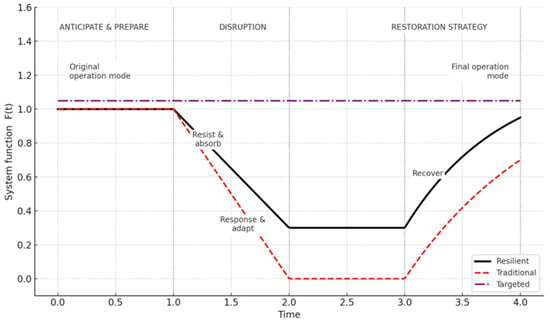
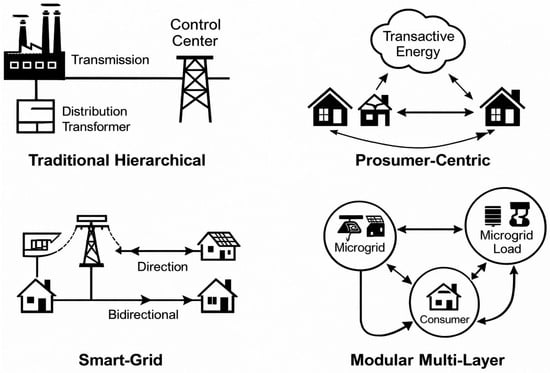
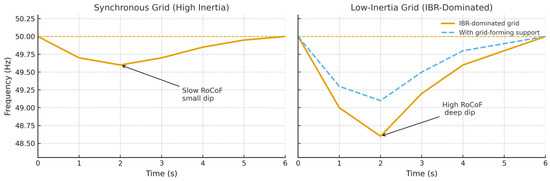
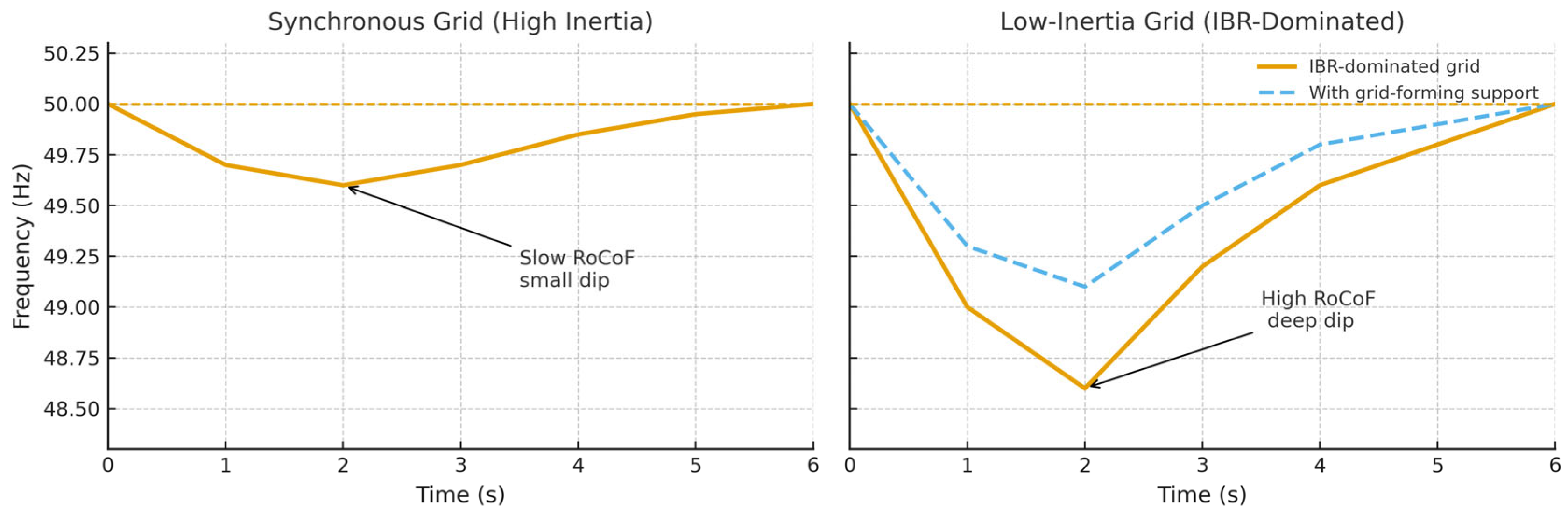
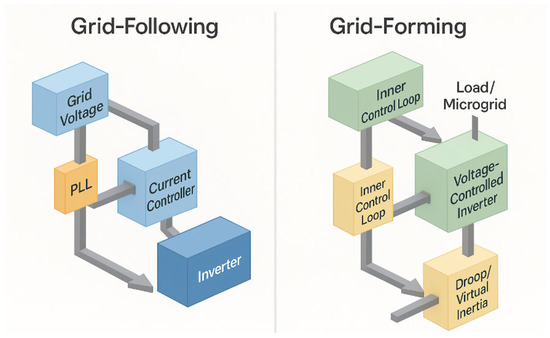
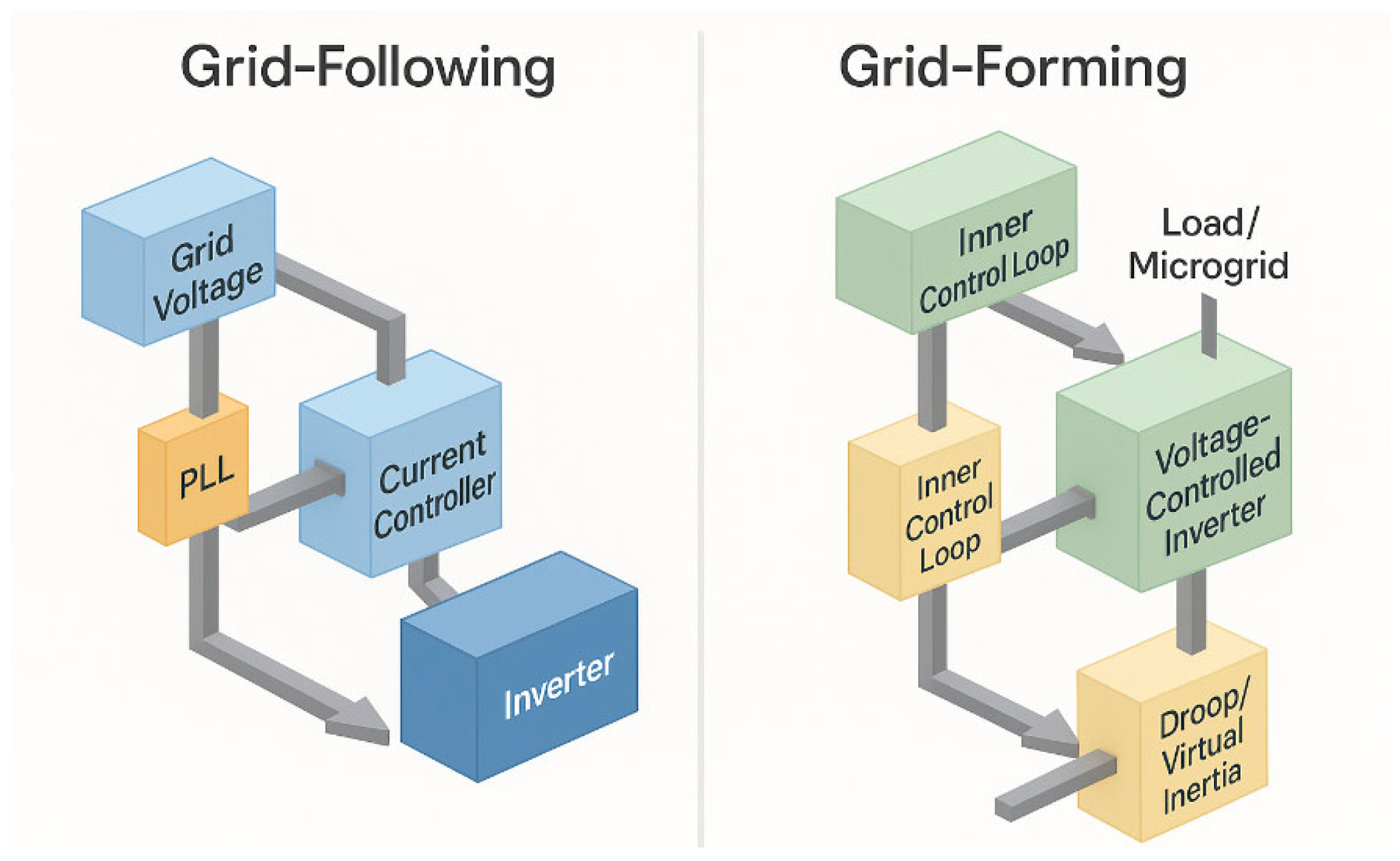
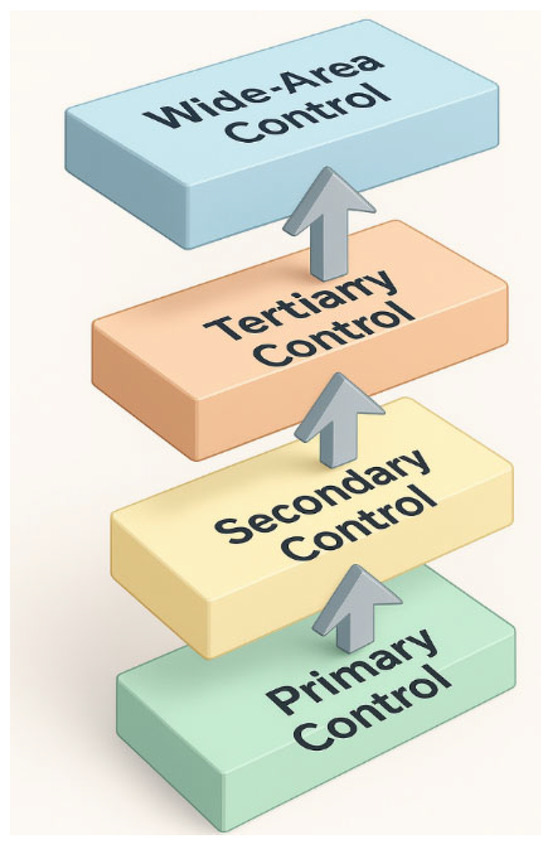
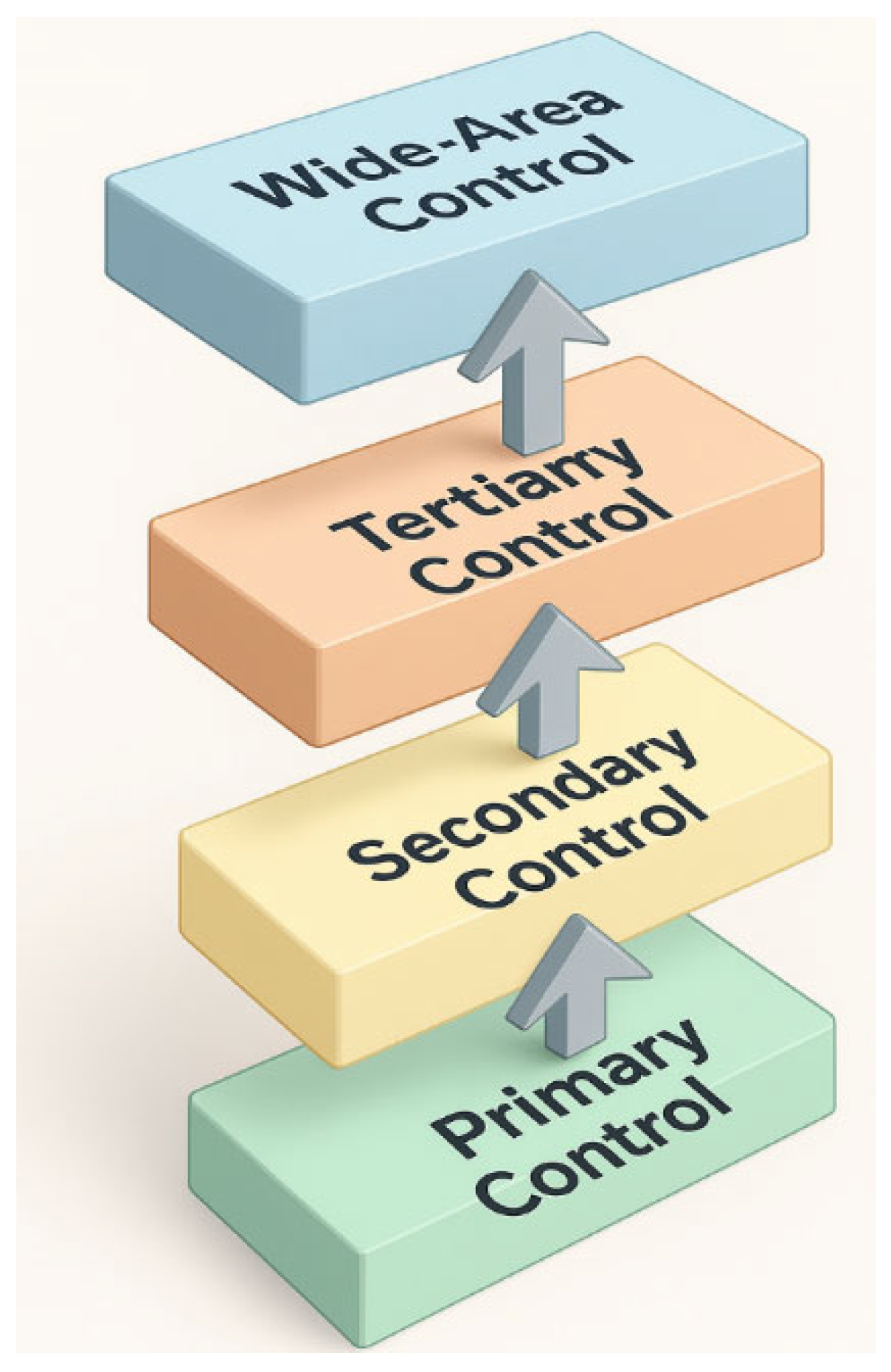
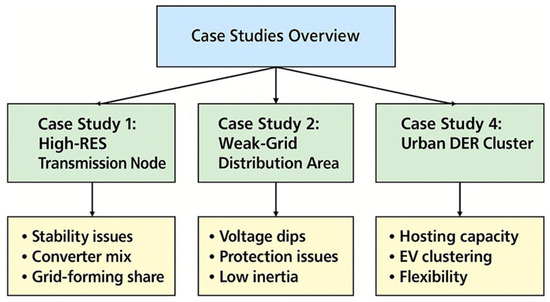
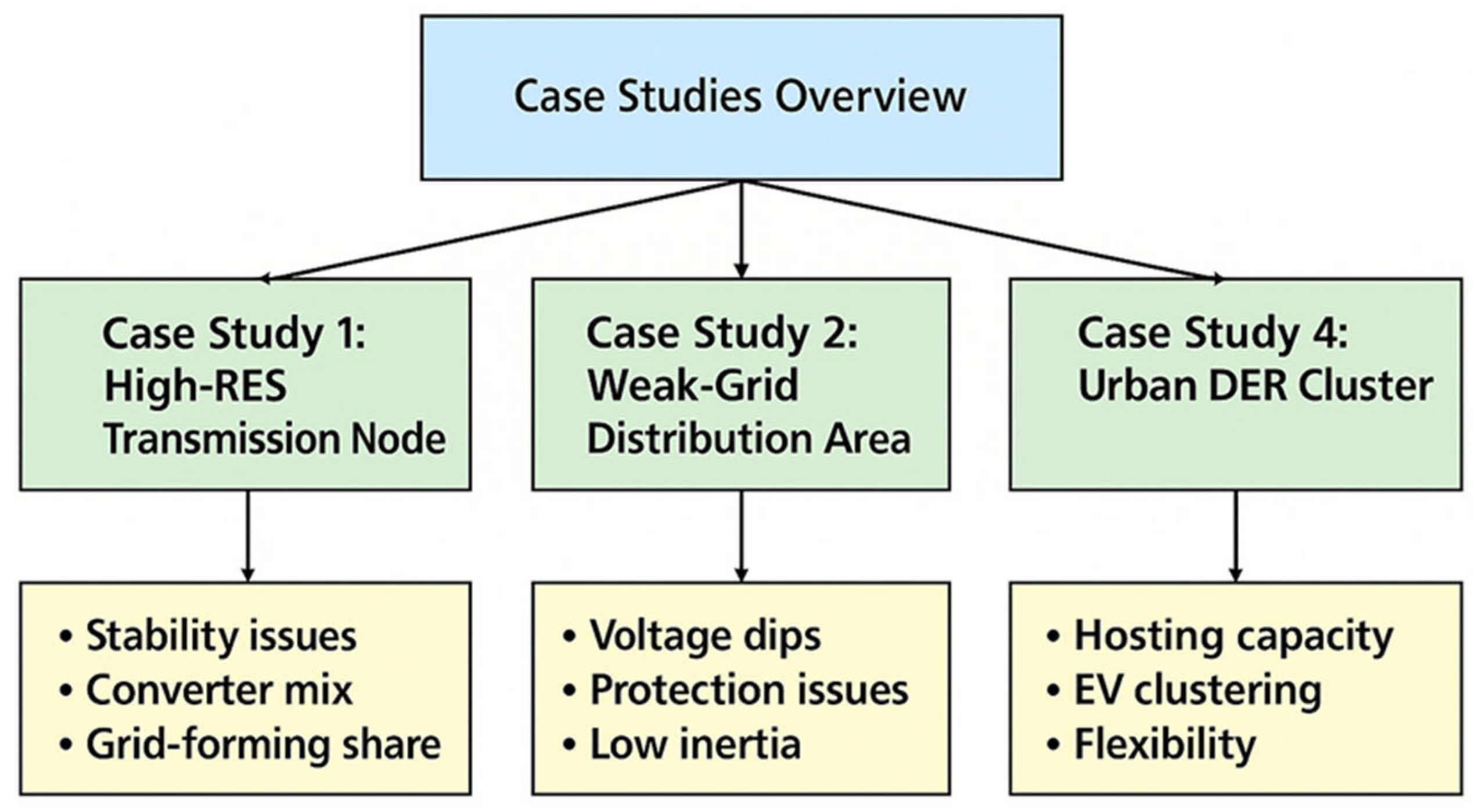
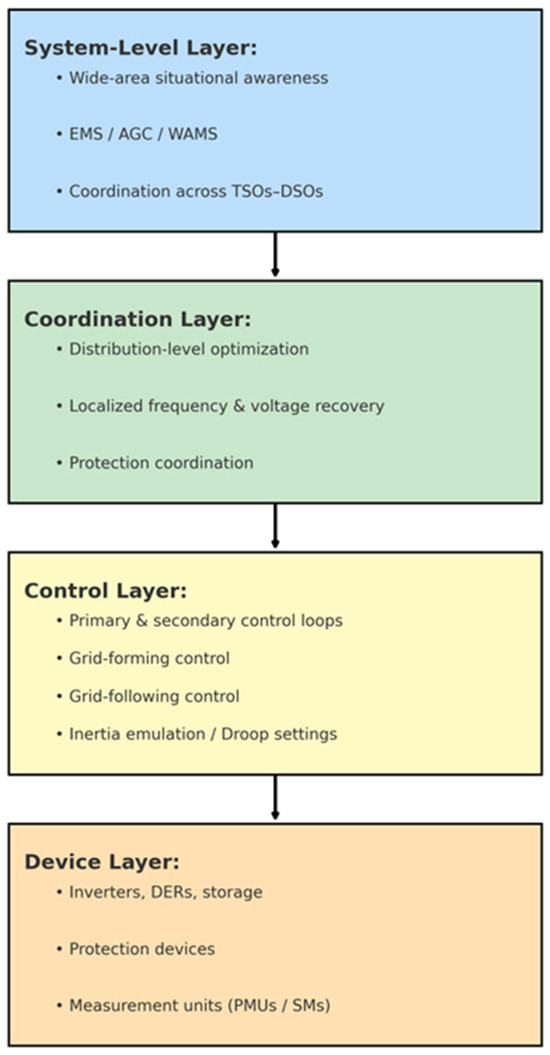
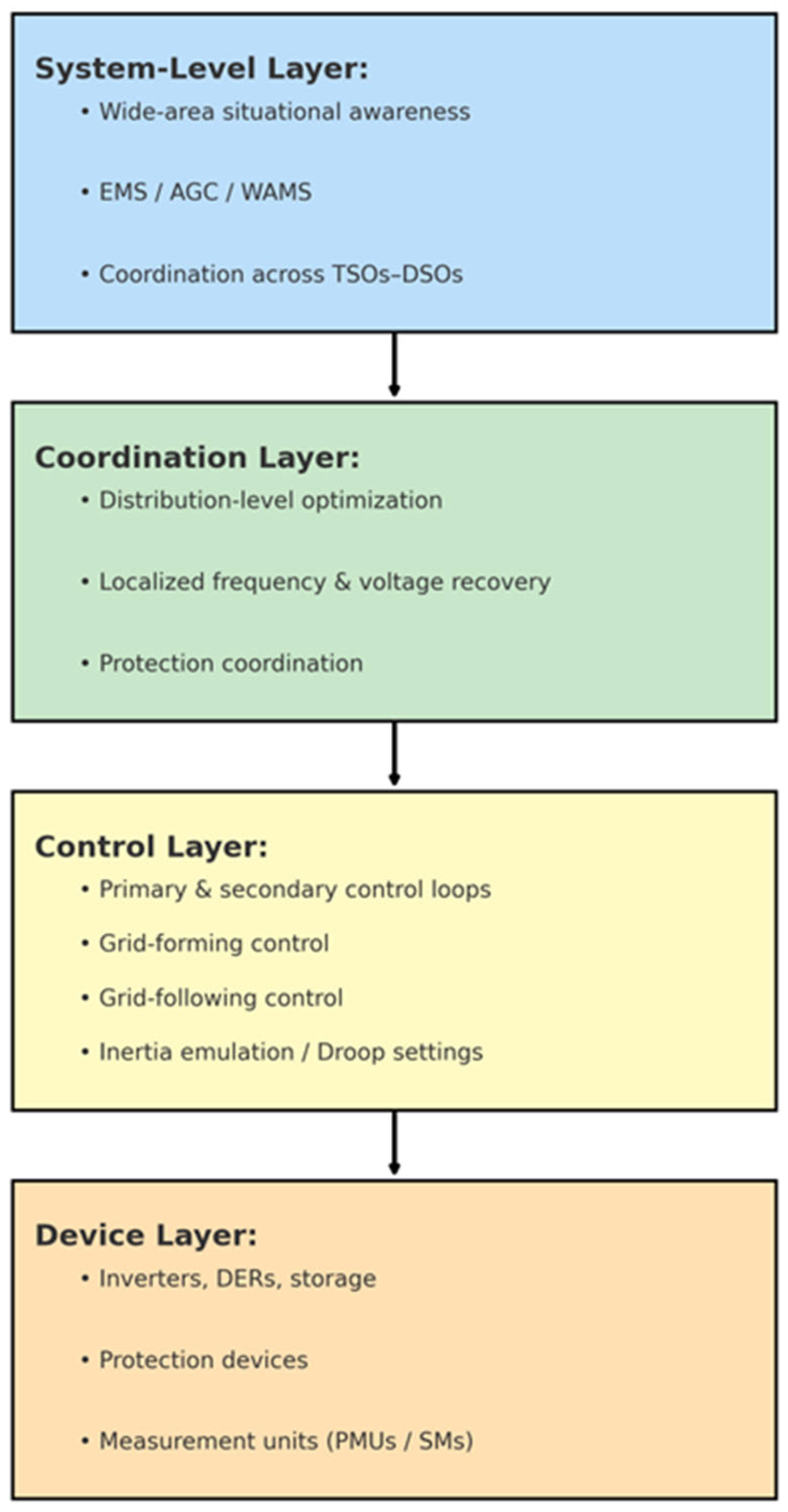

Disclaimer/Publisher’s Note: The statements, opinions and data contained in all publications are solely those of the individual author(s) and contributor(s) and not of MDPI and/or the editor(s). MDPI and/or the editor(s) disclaim responsibility for any injury to people or property resulting from any ideas, methods, instructions or products referred to in the content. |
© 2026 by the authors. Licensee MDPI, Basel, Switzerland. This article is an open access article distributed under the terms and conditions of the Creative Commons Attribution (CC BY) license.