


Abstract
The multilayer composite structure of waste toothpaste packaging hinders its effective recovery through conventional sorting and recycling processes. In this study, a flexible single-electrode triboelectric sensor based on waste toothpaste tubes (WTT sensor) was fabricated by functionally repurposing and integrating different components of toothpaste packaging waste. The aluminum–plastic composite film and aluminum foil recovered from discarded toothpaste tubes constituted the core triboelectric functional unit, with the aluminum foil also serving as the conductive electrode, while cardboard from the outer toothpaste box was used to construct an elastic spacer. At an excitation frequency of 1 Hz, increasing the applied force from 10 to 300 N raised the open-circuit voltage from approximately 15 to 40 V and the short-circuit current from approximately 0.1 to 0.3 μA. The output voltage exhibited a piecewise linear relationship with the applied force, with sensitivities of below 50 N and above 50 N. The output signal remained relatively stable over 1000 consecutive contact–separation cycles. The WTT sensor was attached to the heel region of an athletic shoe to acquire distinct electrical signals corresponding to five types of human motion: tiptoe standing, jumping, squatting, walking, and running. Subsequently, 15 features encompassing time-domain, peak-related, and frequency-domain characteristics were extracted and used in conjunction with an optimized ExtraTrees model for motion pattern recognition. To minimize the risk of data leakage, Complete motion recordings were first assigned exclusively to either the training or test set at a ratio of 7:3; all action samples segmented from a given recording were kept in the same subset to avoid data leakage. The optimized model achieved an overall classification accuracy of 96.18% on the independent test set. In addition, the WTT sensor was used as a self-powered input unit to wirelessly control multiple movements of a remote-controlled car. This work provides a simple and feasible upcycling strategy for converting difficult-to-recycle toothpaste packaging waste into value-added flexible smart sensing devices.
1. Introduction
Multilayer composite packaging combines polymers, metals, and paper-based materials to achieve favorable barrier properties, sealing performance, and mechanical strength [1,2,3]. However, its material heterogeneity and strong interlayer adhesion also make it one of the most difficult categories of post-consumer solid waste to recycle [4]. Conventional mechanical sorting and melt reprocessing generally require waste streams with relatively homogeneous and compatible compositions [5]. In contrast, the components of aluminum–plastic composite packaging differ substantially in melting point, processing temperature, and mechanical properties, making direct reprocessing difficult without effective separation. Although chemical separation, pyrolysis, and solvent-based recovery can improve the recovery of certain components, these approaches are often associated with high energy consumption, complex processing procedures, or secondary environmental burdens [6,7]. Accordingly, moving beyond conventional recycling strategies based primarily on complete separation and material regeneration, and instead exploiting the intrinsic properties of individual components in composite waste to construct value-added functional devices, is becoming an important direction in solid-waste valorization [8].
Triboelectric nanogenerators (TENGs), which operate through contact electrification and electrostatic induction, can convert human motion, mechanical vibration, and other low-frequency mechanical disturbances into electrical signals [9,10,11]. Their broad material compatibility, flexible structural design, relatively simple fabrication, and dual capability for mechanical energy harvesting and self-powered sensing make triboelectric technology an attractive platform for the functional reuse of waste materials [12,13]. In recent years, waste plastics, discarded paper, textile waste, disposable medical products, and various forms of biomass waste have been used to fabricate triboelectric devices for mechanical energy harvesting, human-motion monitoring, tactile sensing, and human–machine interaction [14]. These studies indicate that waste materials need not be limited to low-value recycled feedstocks; their surface charge characteristics, flexibility, electrical conductivity, and mechanical strength can also be translated into device functions through appropriate structural design.
Nevertheless, most existing waste-derived triboelectric devices remain focused on replacing a conventional triboelectric layer with a single waste material. In many cases, only one component of the waste stream is utilized, whereas the counterpart triboelectric layer, electrode, spacer, or supporting structure still relies on additional commercial functional materials [14,15,16,17,18]. Consequently, the complementary properties of different components within composite waste have not yet been fully exploited. Some waste materials also require dissolution and recasting, carbonization, electrospinning, or surface modification to achieve suitable electrical or mechanical properties [19,20,21]. Although these treatments may improve device output, they also increase fabrication complexity and resource consumption. Moreover, previous studies have primarily focused on output voltage, current, and energy-harvesting performance, while application demonstrations have often been limited to simple motion responses or signal triggering. Systematic investigations into the integration of multidimensional signal features with pattern-recognition methods for the effective interpretation of complex human-motion information remain limited [22,23,24]. In toothpaste packaging waste, the aluminum–plastic composite film and aluminum foil from the tube, together with the cardboard from the outer box, offer potential functions in triboelectrification, electrical conduction, and elastic support, respectively. However, their coordinated utilization within a single triboelectric device has not been sufficiently explored.
To address this issue, waste toothpaste packaging materials were functionally repurposed to construct a waste-toothpaste-tube-derived flexible single-electrode triboelectric sensor (WTT sensor). The aluminum–plastic composite film and aluminum foil recovered from discarded toothpaste tubes formed the triboelectric contact interface, with the aluminum foil also serving as the charge-transport electrode. Cardboard from the outer toothpaste box was used to create an elastic contact–separation space, while polyimide was employed for device encapsulation and structural protection. After evaluating the material characteristics and basic sensing performance, multidimensional feature extraction and machine-learning methods were further integrated to recognize human-motion patterns. The sensor was also implemented as a human–machine interaction input unit for remote-controlled vehicle operation. This study seeks to establish an upcycling route that links the coordinated use of multiple components from composite packaging waste with flexible intelligent sensing applications.
2. Experimental Section
2.1. Materials and Characterization
The waste materials used in this study included discarded toothpaste tubes and their outer cardboard boxes. Polyimide film was used for device encapsulation, a thin copper wire was used for electrical signal output, and deionized water was used for sample cleaning.
The discarded toothpaste tubes were first disassembled and completely immersed in deionized water for ultrasonic cleaning for 3 min to remove residual toothpaste from the inner surface and other surface contaminants. After drying, the composite tube materials were subjected to hot-air-assisted delamination to obtain the aluminum–plastic composite film and aluminum foil required for device fabrication. The outer cardboard boxes were cut and used to fabricate the spacer layer.
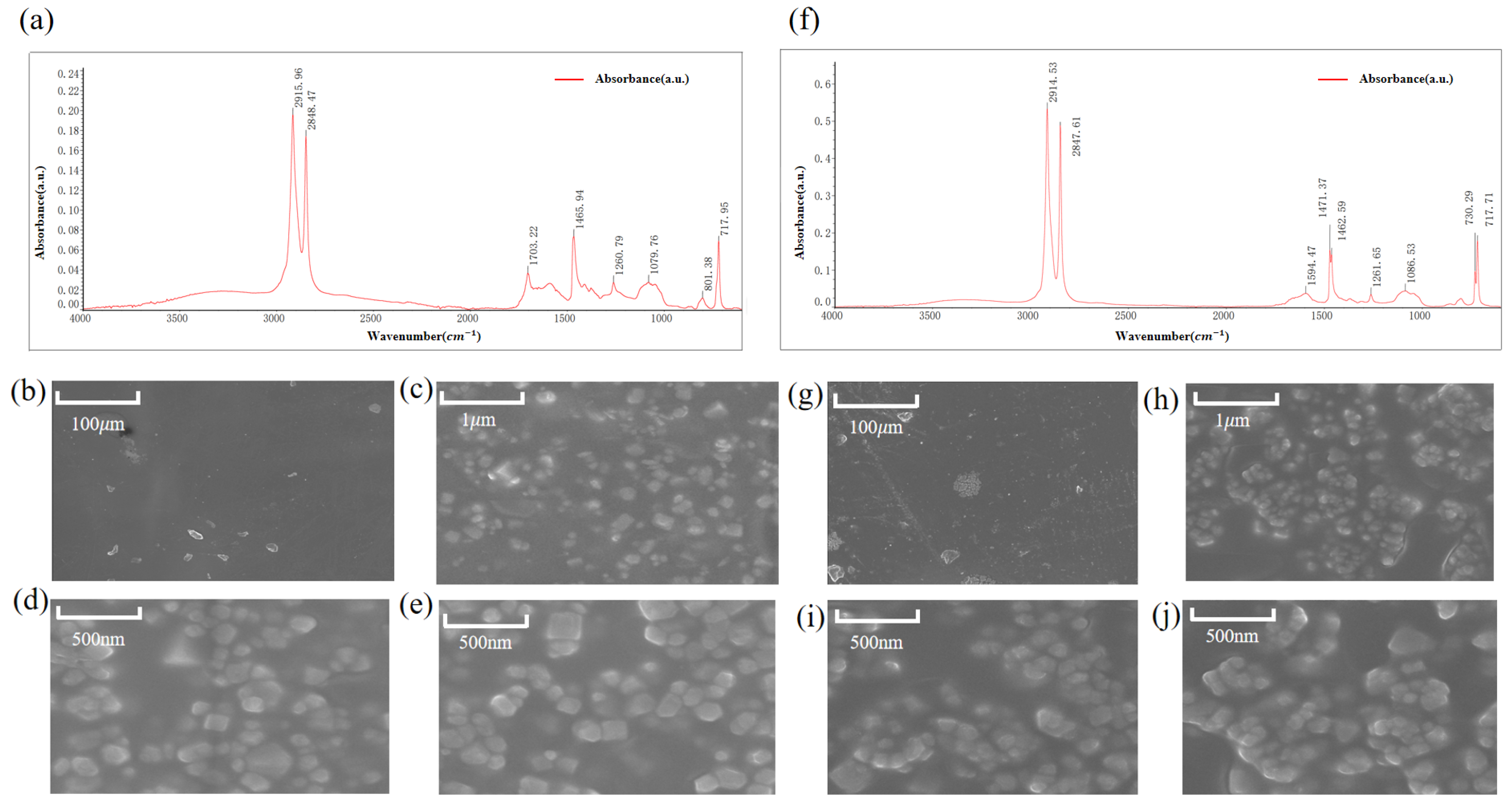
Scanning electron microscopy (SEM, SU8010, Hitachi, Tokyo, Japan) was used to examine the surface morphologies of the unpeeled aluminum–plastic composite material and the aluminum foil exposed after delamination. Images were acquired at different magnifications. Fourier-transform infrared (FTIR) spectra of the original aluminum–plastic composite film and the delaminated aluminum foil were also recorded.
2.2. Fabrication of the WTT Sensor
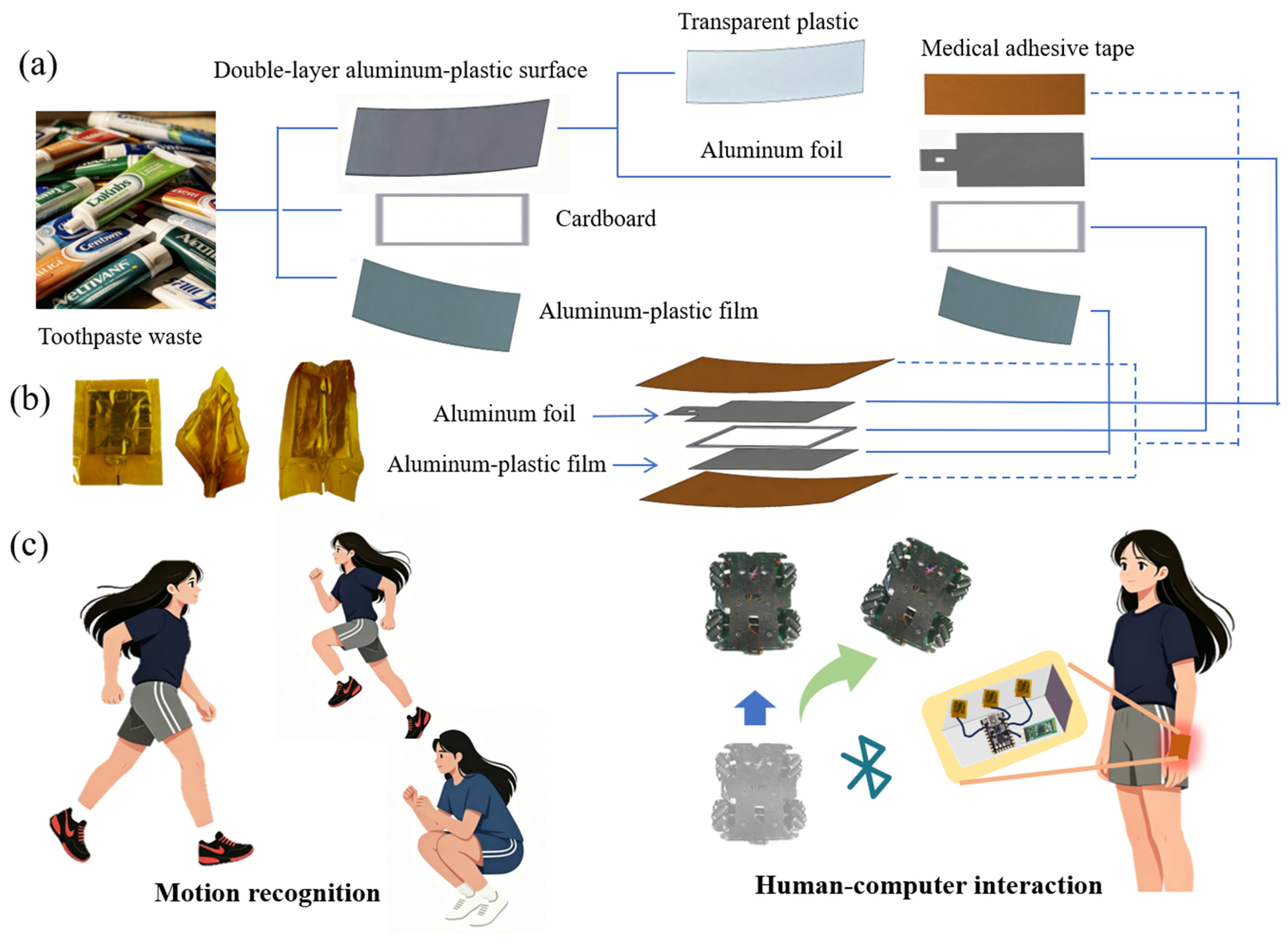
The WTT sensor adopted a single-electrode contact–separation configuration. The material treatment, recovery of functional components, and device assembly process are illustrated in Figure 1a. The device consisted of an aluminum–plastic composite film, aluminum foil, a cardboard spacer, and polyimide encapsulation layers. The aluminum–plastic composite film and aluminum foil served as the contact–separation pair, with the aluminum foil also functioning as the signal-output electrode. The cardboard served as the spacer, while the polyimide film was used for device encapsulation.
Figure 1.
Fabrication, structure, and application framework of the WTT sensor: (a) processing of waste toothpaste packaging materials, recovery of functional components, and assembly process of the WTT sensor; (b) structural schematic, photographs, and flexibility demonstration of the WTT sensor; (c) schematic illustration of the applications of the WTT sensor in human-motion signal acquisition, motion-pattern recognition, and human–machine interaction control.
The polyimide film was cut into 30 mm × 30 mm squares, while the cleaned and dried aluminum–plastic composite film and aluminum foil were separately cut into 25 mm × 25 mm squares. Cardboard with a thickness of approximately 0.5 mm was obtained from the outer toothpaste box and cut into a square-frame shape with a border width of 5 mm and a central opening of 15 mm × 15 mm. The cardboard frames were stacked and secured to form the spacer structure. One end of a thin copper wire was fixed to the edge of the aluminum foil, and electrical continuity was checked using a multimeter.
The device was assembled in the following sequence: polyimide encapsulation layer, aluminum–plastic composite film, cardboard spacer, aluminum foil, and polyimide encapsulation layer. The individual layers were maintained in alignment during encapsulation. Photographs and a flexibility demonstration of the fabricated WTT sensor are presented in Figure 1b. The sensor had lateral dimensions of 30 mm × 30 mm, a thickness of approximately 2.2 mm, and a mass of approximately 0.65 g.
2.3. Equipment and Measurements
The electrical performance testing system for the WTT sensor consisted of a reciprocating motion testing platform, a 500 mm × 500 mm vibration-isolation optical table, a Keithley 6514 electrometer(Keithley Instruments, Cleveland, OH, USA), and the associated data acquisition software. During testing, the sensor was horizontally fixed on the reciprocating motion platform, and the aluminum-foil electrode was directly connected to the electrometer through a copper wire. The open-circuit voltage and short-circuit current of the device were then recorded.
At an excitation frequency of 1 Hz, forces ranging from 10 to 300 N were applied to the sensor, and the corresponding output voltage and current were recorded. Under a constant applied force of 10 N, the excitation frequency was sequentially set to 1, 2, and 3 Hz, and the resulting output signals were collected. The cycling test was conducted under an applied force of 10 N and an excitation frequency of 1 Hz for 1000 consecutive contact–separation cycles.
In addition, supplementary experiments were conducted under different relative humidity conditions to further clarify the environmental testing conditions. Specifically, the WTT sensor was tested at relative humidities of 50%, 60%, and 70%. The corresponding results have been added to Figure S5. These experiments were designed to evaluate the influence of ambient humidity on the response characteristics of the WTT sensor and to provide a more comprehensive assessment of its performance under different environmental conditions.
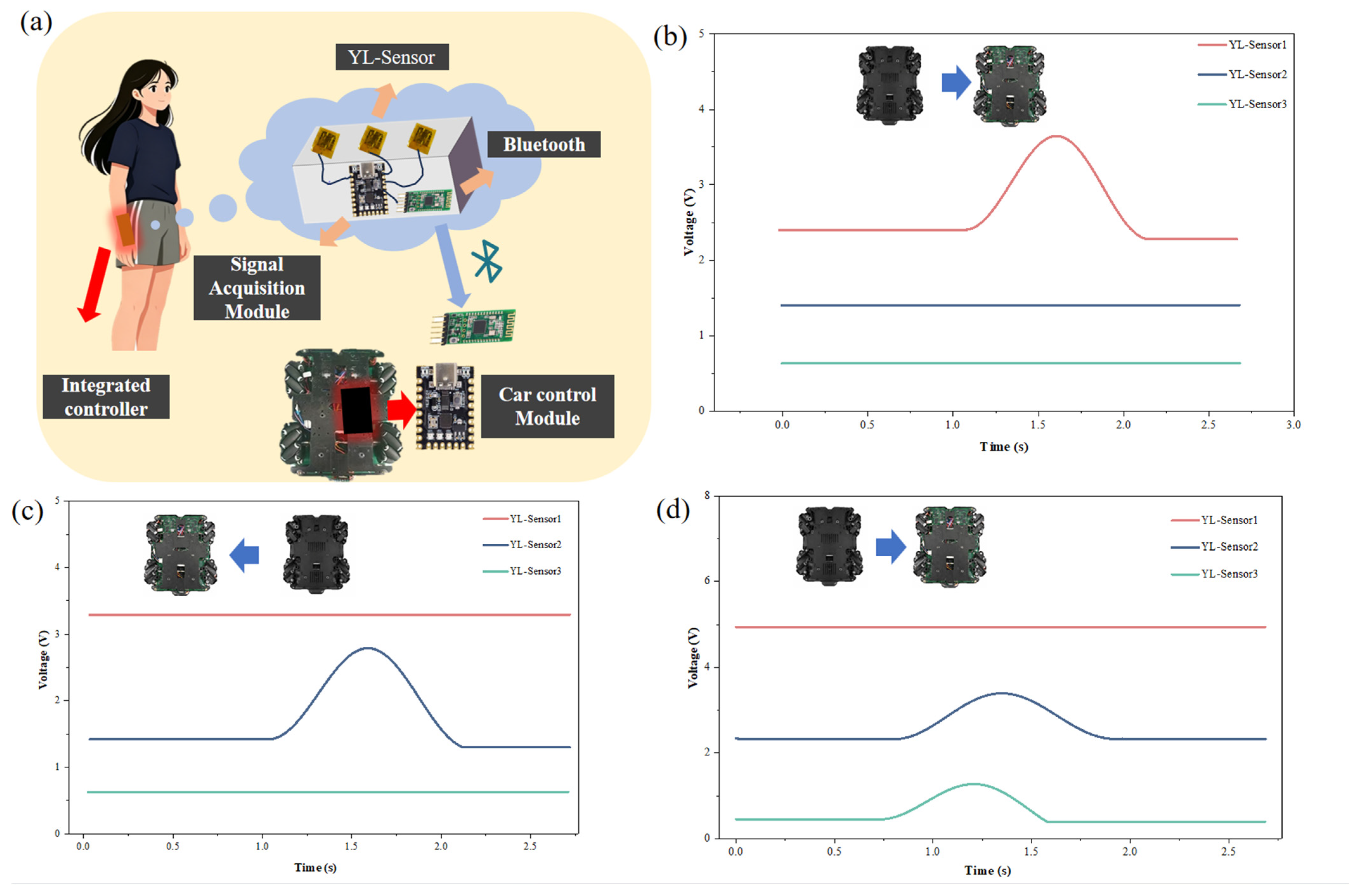
The overall framework for motion recognition and human–machine interaction applications based on the WTT sensor is illustrated in Figure 1c. The human–machine interaction testing system consisted of three WTT sensors, a signal acquisition module, a microcontroller, a Bluetooth communication module, and an on-board control unit. Signals generated by the three sensors were transmitted to the microcontroller through the signal acquisition module. The microcontroller generated control commands according to the activated channel and predefined threshold values and transmitted them to the on-board control unit through the Bluetooth module. Pressing Sensor 1 commanded the vehicle to move forward, pressing Sensor 2 commanded it to move backward, and simultaneously pressing Sensors 2 and 3 triggered lateral movement.
2.4. Motion-Pattern Recognition Algorithm
The motion signals were sampled at a frequency of 1000 Hz. The acquired raw motion signals were preprocessed using a fourth-order Butterworth low-pass filter with a cutoff frequency of 10 Hz to attenuate the influence of high-frequency noise on the mechanical response signals induced by human motions. Five adult male participants were recruited for the study. Each participant completed the five representative motion tasks once, with each task recorded continuously for 100 s. All measurements for each participant were completed within a single experimental session. Accordingly, each participant contributed five continuous motion recordings, yielding a total of 25 recordings from the five participants. Each 100 s recording contained multiple repetitions of complete motion cycles. By requiring all five participants to perform the same five motion tasks under standardized experimental conditions, the source and acquisition procedure of the human-motion dataset were more clearly defined, thereby improving the representativeness of the dataset and strengthening the reliability of the subsequent motion-recognition analysis.
In the data processing pipeline, continuous signals were not segmented with high overlap using fixed-length sliding windows. Instead, the continuous motion recordings were segmented into individual complete actions according to the actual full response waveform generated during each movement. Each complete action waveform was treated as an independent classification sample. Therefore, each classification sample corresponded to one physically completed full action rather than a signal window with an artificially defined time duration. This processing strategy can well preserve dynamic characteristics within a single action, including amplitude variations, peak-valley evolutions and frequency distribution. Meanwhile, it avoids the problem of inflated model performance caused by a large number of highly similar samples generated from high-overlap sliding windows.
After segmentation into individual complete actions, each full action waveform was adopted as the minimum classification sample. First, the 25 complete recordings were divided into training and test recording groups at 7:3. Second, each recording was segmented into complete action waveforms; all waveforms from the same recording were assigned to the same subset. Each complete action waveform was assigned exclusively to either the training set or the test set without reuse or augmentation via overlapping windows. Seventy percent of the action instances were used for model training and hyperparameter optimization, while the remaining 30% were reserved solely for final model performance evaluation. This partitioning strategy prevents the same action instance from appearing in both training and test sets and eliminates sample-level information leakage introduced by high-overlap sliding windows, which would otherwise lead to overly optimistic estimates of test performance.
Fifteen time-domain and frequency-domain features were extracted from each segmented single complete action waveform, including the mean, standard deviation, maximum, skewness, kurtosis, number of peaks, mean interpeak interval, mean peak-valley time interval, mean peak prominence, spectral centroid, spectral entropy, relative energy in 0–2, 2–5, and 5–10 Hz bands, and root mean square. These features characterize the overall amplitude level, fluctuation intensity, local impact signatures, periodic properties of action waveforms, and the distribution difference in energy in the frequency domain.
An ensemble tree classifier, Extremely Randomized Trees (ExtraTrees), was adopted to classify the five motion patterns. Hyperparameter optimization, including the number of trees, maximum tree depth, minimum number of samples required for splitting, and class weights, was performed solely on the training set. Once the model hyperparameters were finalized, no further tuning was conducted using the test set. The pre-reserved 30% independent test samples were fed into the trained classifier. Evaluation metrics including Accuracy, Precision, Recall, F1-score and Macro-F1 were calculated by comparing the ground-truth category and model-predicted category to quantitatively assess the recognition performance for the five motion patterns.
To further analyze the differences among motion patterns in the feature space, the importance of each input feature was calculated using the trained tree model. Representative time-domain and frequency-domain features were selected to plot a normalized feature radar chart. In addition, t-distributed stochastic neighbor embedding (t-SNE) was used to map high-dimensional motion features into a two-dimensional space to intuitively visualize the clustering and overlap of different motion patterns within the feature space.
This study primarily aimed to evaluate the capability of the WTT sensor to extract and discriminate mechanical response features originating from different motion patterns, rather than constructing a subject-independent recognition model for entirely unknown subjects. Therefore, a stratified 70%/30% train-test split containing samples from multiple subjects was adopted as the main evaluation strategy. Leave-One-Subject-Out (LOSO) cross-validation represents a more stringent cross-subject generalization evaluation scheme. Because the WTT sensor relies on plantar mechanical load variations, inter-subject differences in body weight, height, foot size, gait habits, and shoe sole structure may alter the pressure magnitude, pressure distribution, and effective contact area exerted on the sensor, resulting in pronounced inter-individual mechanical differences. Therefore, to further evaluate the generalization performance of the model on unseen subjects, the LOSO evaluation scheme was adopted in this study to verify the subject-independent generalization capability of the proposed recognition framework.
3. Results
3.1. Working Mechanism of the WTT Sensor
The WTT sensor operates in a single-electrode contact–separation mode. Its core contact interface is formed by the polymer surface of the aluminum–plastic composite film from the toothpaste tube and the aluminum foil, with the aluminum foil serving as both a triboelectric layer and the signal-output electrode. Owing to the different electron-donating and electron-accepting tendencies of the two materials in the triboelectric series, electrons are transferred from the aluminum foil to the polymer surface of the aluminum–plastic composite film upon contact. As a result, the polymer surface becomes negatively charged, while the aluminum foil carries an equal amount of positive charge. As the distance between the two triboelectric layers changes periodically under an external force, the electric potential of the aluminum-foil electrode relative to the ground changes accordingly, thereby driving electrons to flow back and forth between the aluminum-foil electrode and the ground and generating alternating electrical signals in the external circuit.
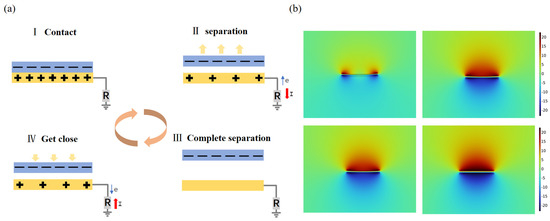
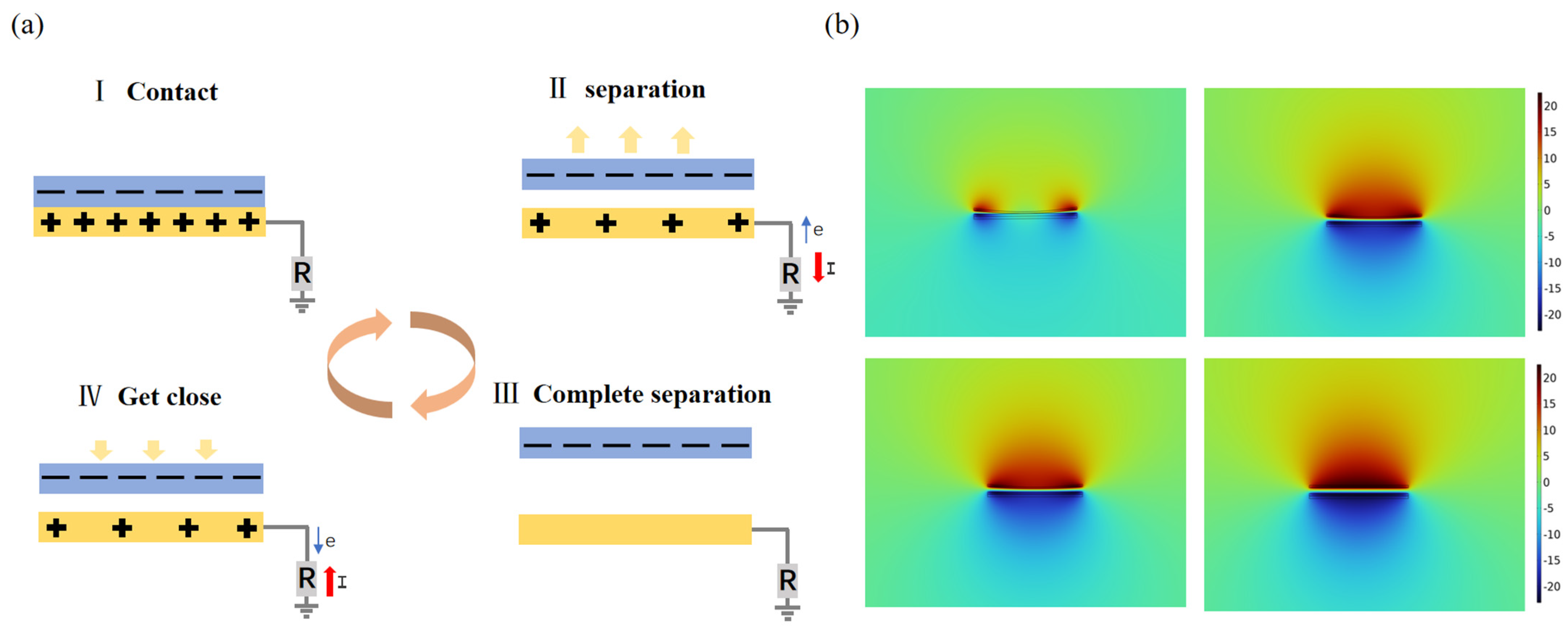
A complete working cycle of the WTT sensor can be divided into four states, as shown in Figure 2a. State I corresponds to the fully contacted stage, in which the external force brings the aluminum–plastic composite film and the aluminum foil into full contact, resulting in triboelectric charge transfer at the interface. When the charge distribution reaches equilibrium, the potential difference between the aluminum-foil electrode and the ground is small, and no obvious net charge flow occurs in the external circuit. State II corresponds to the separation stage. After the external force is released, the cardboard spacer recovers its deformation and drives the two triboelectric layers to separate gradually. As the negatively charged polymer surface moves away from the aluminum foil, a positive potential is established at the aluminum-foil electrode relative to the ground, which drives electrons to flow from the ground to the aluminum-foil electrode through the external circuit, thereby producing an instantaneous current in one direction. State III corresponds to the maximum separation stage. When the distance between the two triboelectric layers reaches its maximum, the charge transfer induced by electrostatic induction approaches equilibrium, the open-circuit potential of the device reaches a relatively high level, and the instantaneous current in the external circuit decreases to nearly zero. State IV corresponds to the re-contact stage. When the external force is applied again, the two triboelectric layers gradually approach each other. The negatively charged polymer surface electrostatically repels the induced electrons in the aluminum foil, causing electrons to flow back from the aluminum-foil electrode to the ground and generating an instantaneous current opposite to that in the separation stage. As the contact–separation process repeats periodically, the device continuously outputs alternating pulsed electrical signals.
Figure 2.
Working mechanism of the WTT sensor: (a) four working states in one complete contact–separation cycle and the corresponding charge-transfer processes; (b) simulated open-circuit potential distributions of the WTT sensor under different contact–separation states.
To further illustrate the evolution of the internal electric potential during the contact–separation process, the potential distribution of the WTT sensor under open-circuit conditions was simulated using COMSOL Multiphysics 2024, as shown in Figure 2b. When the two triboelectric layers are in contact, the potential difference inside the device is small. As the separation distance increases, the potential difference between the aluminum–plastic composite film and the aluminum foil gradually increases and reaches its maximum at the maximum separation state. When the two triboelectric layers approach each other again, the potential difference decreases accordingly. The simulation results are consistent with the theoretical trend of potential variation in single-electrode contact–separation triboelectric devices and support the working mechanism of the WTT sensor from the perspective of potential evolution.
COMSOL Simulation: To simulate the variation in electrostatic potential during the contact–separation process of the WTT sensor, a two-dimensional axisymmetric electrostatic model was established using COMSOL Multiphysics 2024. The model geometry was constructed according to the actual layered configuration of the device and consisted of the aluminum–plastic composite film, aluminum foil electrode, and the air gap between them. Both the aluminum–plastic composite film and aluminum foil were assigned dimensions of 25 mm × 25 mm, while the surrounding air region was included as the computational domain to represent the actual operating environment. Based on the device configuration, representative contact and separation states were established, with separation distances of 0, 1, 2, and 3 mm, respectively, to investigate the effect of separation distance on the potential distribution.
In this study, a two-dimensional (2D) axisymmetric model was developed using COMSOL Multiphysics to simplify the actual geometry of the sensor. The primary objective was to visualize the evolution of the internal electrostatic potential distribution during the pressing and releasing processes and to investigate its dependence on the separation distance between the upper and lower triboelectric layers. Since the simulation primarily focused on analyzing the electrostatic potential distribution under different contact–separation states rather than accurately reproducing the three-dimensional (3D) deformation of the entire device, the actual square geometry of the sensor was approximated using a 2D axisymmetric model. By varying the separation distance between the triboelectric layers, the evolution of the electrostatic potential distribution during the transition from contact to separation was investigated, providing insights into the underlying working mechanism of the sensor.
Regarding the geometric approximation, the actual 3D structure of the sensor was simplified into a 2D axisymmetric model to highlight the electrostatic behavior of the upper and lower triboelectric layers during the contact–separation process. The triboelectric structure was represented by simplified 2D cross-sectional geometries under the assumption of rotational symmetry, neglecting geometric variations associated with the actual square configuration and complex 3D deformations. Static geometric configurations corresponding to different contact–separation states were established to investigate the influence of the separation distance between the triboelectric layers on the electrostatic potential distribution. In addition, a circular air domain and an infinite element domain were introduced around the device to approximate an unbounded electrostatic environment.
The effective surface charge density (σ) in the model was determined through a parameter calibration procedure based on the experimentally measured open-circuit output voltage. First, the open-circuit voltage range of the WTT sensor was determined from experimental measurements, and corresponding electrostatic models were established in COMSOL for different operating states. Subsequently, the effective surface charge densities applied to the upper and lower triboelectric surfaces were progressively adjusted while keeping the geometry, material properties, and boundary conditions of each operating state unchanged. The resulting simulated potential differences were calculated and compared with the experimentally measured open-circuit voltages to determine the effective surface charge density values that reproduced the corresponding experimental voltage responses.
To further investigate the evolution of the electrostatic potential in the WTT sensor during the contact–separation process, a two-dimensional (2D) electrostatic model was established using the Electrostatics module in COMSOL Multiphysics. Considering the complex interfacial charge transfer involved in contact electrification, an effective surface charge density (σ) was introduced to represent the interfacial charge distribution generated after contact electrification. Surface charge densities of equal magnitude but opposite polarity were applied to the polymer surface of the aluminum–plastic composite film and the aluminum foil electrode, respectively, to approximate the charge distribution on the two triboelectric surfaces.
The effective surface charge density was calibrated against the experimentally measured open-circuit output voltages of the WTT sensor, in conjunction with the electrostatic theory of contact–separation-mode triboelectric nanogenerators. Specifically, the effective surface charge densities were set to ±2.5 × 10⁻⁸ C/m2 for State I, ±1.0 × 10⁻⁸ C/m2 for States II and III, and ±5.0 × 10⁻⁸ C/m2 for State IV. These values were employed as equivalent electrostatic parameters to obtain simulated potential distributions corresponding to the experimentally measured output voltage range under different mechanical states, rather than representing actual variations in the amount of triboelectric charge generated during a single contact–separation cycle.
Based on the established model, the electrostatic potential distributions of the WTT sensor under different contact–separation states were calculated. The simulation results illustrate the evolution of the potential distribution during the contact and separation processes, providing a visual representation of the electrostatic response under different operating conditions.
It should be emphasized that, since the effective surface charge densities were calibrated using experimentally measured output voltages, the simulation results should be regarded as experimentally calibrated representations of the electrostatic potential distribution. Accordingly, these simulations were primarily intended to qualitatively characterize the electrostatic potential evolution under different operating states and facilitate the interpretation of the WTT sensor’s working mechanism, rather than serve as an independent validation of the sensing mechanism.
For the material properties, the aluminum foil was modeled as a metallic conductor with an electrical conductivity of 3.56 × 10⁷ S m−1. The polymer layer of the aluminum–plastic composite film was modeled as a dielectric material with a relative permittivity of 3.0, while the relative permittivity of the air domain was set to 1. According to the contact-electrification mechanism, a uniform surface charge density was applied to the polymer surface as the initial charge condition. The surface charge density was defined as ±σ, with its specific value determined according to the experimentally measured output-voltage range. The outer boundaries of the air domain were assigned electrical insulation boundary conditions. The bottom aluminum foil electrode was set as the ground boundary (V = 0), while electric potential continuity was imposed in the upper air domain.
A free triangular mesh was employed for spatial discretization, with local mesh refinement applied near the triboelectric interface and within the air-gap region to improve computational accuracy in regions exhibiting large electric-field gradients. The final model contained approximately 1.7 × 10⁴ triangular elements, and the mesh quality was sufficient for electrostatic-field calculations. A stationary solver was employed, and the Electrostatics (es) physics interface was used to calculate the electric potential distributions at different separation distances.
3.2. Surface Morphology and Chemical Characteristics of the Recovered Materials
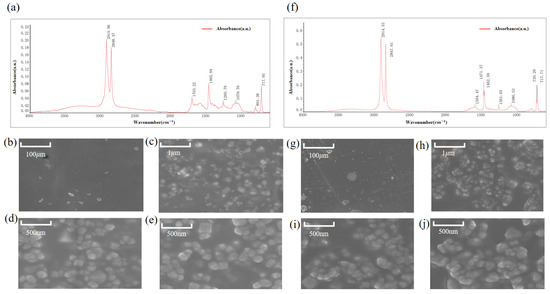
To investigate the surface characteristics of the toothpaste-tube composite material before and after delamination, the surface of the original, undelaminated aluminum–plastic composite and the aluminum-foil surface exposed after delamination were examined using scanning electron microscopy. As shown in Figure 3b–e, the polymer-covered surface of the original aluminum–plastic composite was generally continuous and smooth, with only limited local undulations. In contrast, the delaminated aluminum-foil surface exhibited more pronounced wrinkles, irregular protrusions, and localized depressions, as shown in Figure 3g–j. These surface features may have resulted from the combined effects of rolling, lamination, and subsequent mechanical delamination during the manufacture and processing of the toothpaste-tube composite.
Figure 3.
Surface chemical characteristics and microstructures of the materials recovered from waste toothpaste tubes: (a) FTIR spectrum of the original, undelaminated aluminum–plastic composite; (b–e) SEM images of the surface of the original, undelaminated aluminum–plastic composite at different magnifications; (f) FTIR spectrum of the delaminated aluminum foil; (g–j) SEM images of the delaminated aluminum-foil surface at different magnifications.
Triboelectrification is affected by the surface condition of the materials and their actual contact behavior. Compared with the relatively smooth polymer-covered surface, the irregular microstructures of the delaminated aluminum foil may form a more complex local contact interface under an applied force and increase the real contact area and local deformation during contact–separation. Therefore, this naturally formed rough morphology may facilitate triboelectric charge generation and sensing-signal output.
To obtain information on the organic components present on the material surfaces, Fourier-transform infrared spectroscopy was further performed on the original aluminum–plastic composite and the delaminated aluminum foil. As shown in Figure 3a, the original aluminum–plastic composite exhibited distinct absorption signals associated with organic functional groups, which were mainly attributed to the surface polymer layer. No distinct characteristic absorption bands suitable for identifying the aluminum substrate were observed in the FTIR spectrum of the delaminated aluminum foil. Only weak C–H vibrational signals appeared at approximately 2850–2960 and 1450–1470 cm−1, as shown in Figure 3f.
Because metallic aluminum does not exhibit conventional molecular vibrational modes, FTIR spectroscopy has limited capability for directly identifying the aluminum substrate. The weak organic signals observed in the spectrum of the delaminated aluminum foil were therefore more likely associated with residual adhesives, lubricating components, or small amounts of polymer remaining from the composite-manufacturing process. These results indicate that mechanical delamination clearly altered the surface morphology of the toothpaste-tube composite and exposed an aluminum-foil surface with irregular microstructures. Meanwhile, a small amount of organic residue may have remained on the exposed surface. The rough morphology and residual surface components collectively define the material characteristics of the actual contact–separation interface in the WTT sensor, although their individual contributions to the triboelectrification process require further investigation.
Considering that small amounts of adhesive or polymer residues may remain on the aluminum–plastic composite materials after mechanical separation of waste toothpaste packaging, their influence on the triboelectric output performance requires further verification. Therefore, a control sensor using pure aluminum foil as the triboelectric layer was fabricated and compared with the WTT sensor based on waste toothpaste packaging materials.
As shown in Table S1, both sensors generated stable triboelectric response signals. The pure aluminum foil-based sensor exhibited an average output signal of 7.91 ± 0.58 (a.u.), whereas the waste toothpaste packaging material-based sensor exhibited an average output signal of 2.06 ± 0.70 (a.u.). Compared with the pure aluminum foil structure, the output amplitude of the waste-derived sensor was reduced. This may be attributed to the effects of trace residual adhesives, polymer coatings, as well as differences in the surface morphology and composition of aluminum foil generated during recycling on the interfacial contact electrification process.
Further statistical analysis reveals that the coefficient of variation (CV = 0.339) of the waste-derived sensor is higher than that of the pure aluminum foil control group (CV = 0.074). This indicates that the recycled materials inherently possess a certain degree of variation in composition and surface state, leading to more obvious dispersion in the device output signals. Nevertheless, the sensor fabricated from waste toothpaste packaging can still maintain stable triboelectric responses and exhibit reliable functional repeatability. This result demonstrates that although recycled materials exhibit larger output fluctuations compared with high-purity aluminum foil, their aluminum layers can still effectively participate in contact electrification and charge induction processes, verifying the feasibility of waste-derived materials as functional layers for triboelectric sensors.
Therefore, this control experiment demonstrates that the small amount of residual adhesive present in waste toothpaste packaging materials does not lead to sensor failure. Instead, its influence is mainly reflected in a reduction in output amplitude rather than a change in the fundamental triboelectric sensing mechanism. These findings further validate that complete removal of residual components is not necessary for the functional utilization of waste aluminum–plastic composite materials, providing experimental support for the development of low-cost and sustainable triboelectric sensors.
3.3. Output Performance of the WTT Sensor
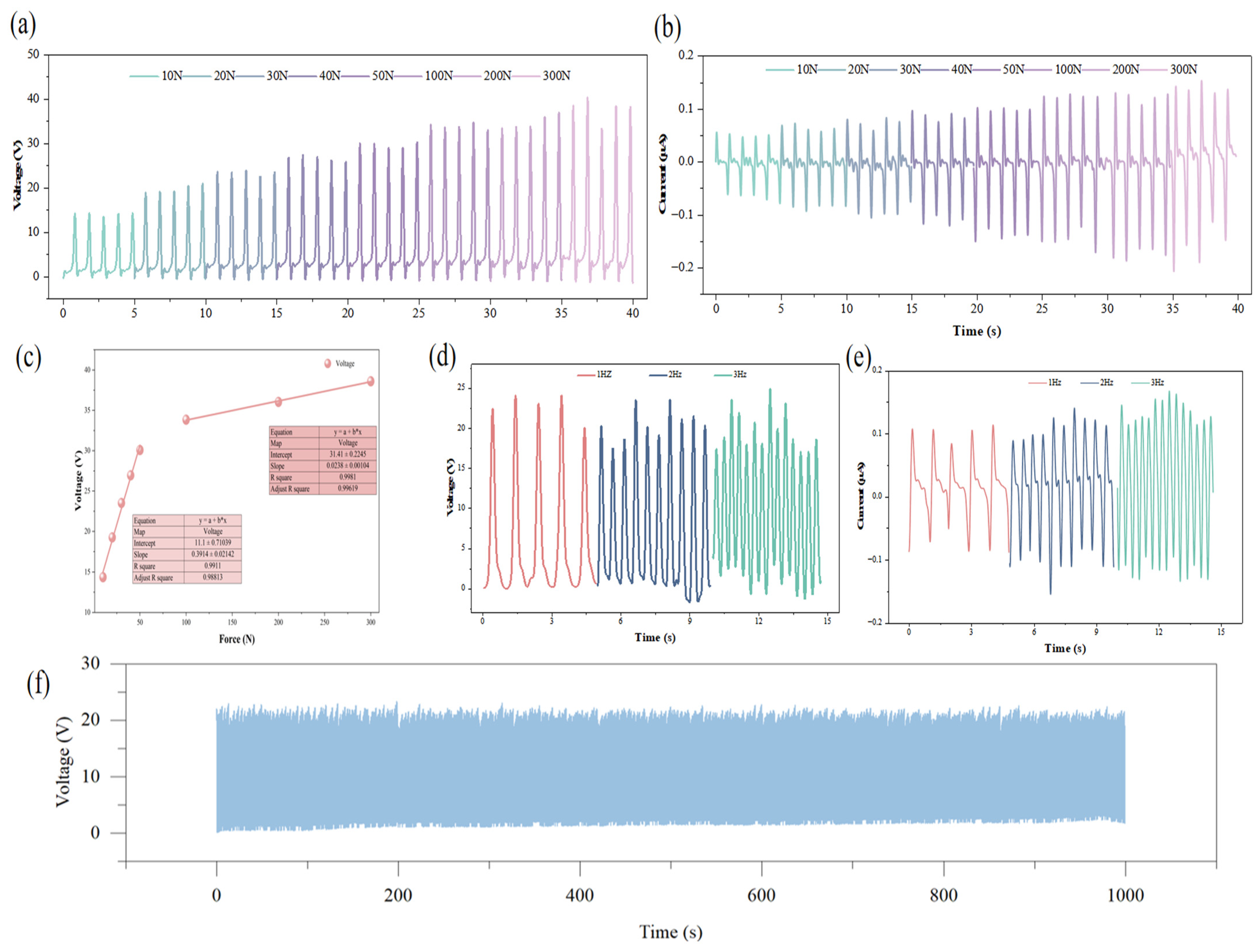
To evaluate the response characteristics of the WTT sensor under external mechanical excitation, gradient forces ranging from 10 to 300 N were first applied at a fixed frequency of 1 Hz, and the open-circuit voltage and short-circuit current of the device were recorded, respectively. As shown in Figure 4a,b, the sensor generated continuous pulsed signals with good repeatability under the same applied force. With increasing force, the peak values of both the open-circuit voltage and short-circuit current showed an overall upward trend. When the applied force increased from 10 to 300 N, the open-circuit voltage increased from approximately 15 to 40 V, and the short-circuit current increased from approximately 0.1 to 0.3 μA, indicating that the WTT sensor was capable of responding to mechanical load variations over a relatively wide range.
Figure 4.
Output performance of the WTT sensor: (a,b) open-circuit voltage and short-circuit current under different applied forces (10–300 N) at an excitation frequency of 1 Hz; (c) piecewise linear fitting of the relationship between open-circuit voltage peaks and applied force; (d,e) open-circuit voltage and short-circuit current at different excitation frequencies (1, 2, and 3 Hz) under an applied force of 10 N; (f) output-voltage stability of the WTT sensor over 1000 contact–separation cycles under an applied force of 10 N and an excitation frequency of 1 Hz.
The open-circuit voltage peaks obtained under different applied forces were further extracted, and the relationship between voltage and force was fitted using a piecewise linear model, as shown in Figure 4c. The output voltage exhibited two approximately linear response regions with different slopes, and the coefficients of determination (R2) for both fitted segments were close to 0.99. When the applied force was below 50 N, the force sensitivity of the sensor was 0.3914 V N−1. When the applied force exceeded 50 N, the sensitivity decreased to 0.0238 V N−1.
The WTT sensor exhibited an apparent piecewise linear response behavior during force-dependent measurements, with a sensitivity transition occurring near 50 N. This transition point was not manually predefined but was determined through piecewise linear fitting of the voltage–force relationship. In the low-load region (10–50 N), increasing external force gradually enhanced the contact pressure between the aluminum–plastic composite film and aluminum foil. The microscopic rough structures at the interface underwent elastic deformation, resulting in a rapid increase in the effective contact area between the two materials. Meanwhile, more microscopic contact regions participated in the triboelectric charging process, leading to enhanced interfacial charge transfer. Consequently, the open-circuit voltage increased rapidly with increasing force, resulting in a relatively high force sensitivity of 0.3914 V N−1.
When the applied force was further increased (>50 N), the cardboard spacer layer underwent continuous compression, and its deformation gradually approached the structural limitation. As a result, the internal contact distance and effective contact area of the sensor tended to stabilize. Since most available interfacial regions for triboelectric charging had already reached contact, further increases in force induced only limited changes in the contact area, resulting in a slower increase in newly generated triboelectric charges. Meanwhile, the reduced recovery space of the compressed spacer layer decreased the variation amplitude of the contact–separation distance, leading to a reduced increment in electrostatic potential variation. Therefore, the output voltage exhibited a slower growth rate in the high-load region, corresponding to the lower sensitivity of 0.0238 V N−1.
Under a fixed applied force of 10 N, the effects of excitation frequencies of 1, 2, and 3 Hz on the output signals of the WTT sensor were further investigated. As shown in Figure 4d,e, the sensor maintained clear periodic output signals at different frequencies, and the peak values of both the open-circuit voltage and short-circuit current increased with increasing excitation frequency. These results indicate that the WTT sensor exhibits a stable dynamic response within the low-frequency mechanical excitation range of 1–3 Hz and can satisfy the basic requirements for the acquisition of common human-motion signals.
To verify the long-term stability and device-to-device consistency of sensors fabricated from waste-derived raw materials, three independent sensor devices (S1–S3) were prepared using identical raw materials and fabrication processes. A 1000 s continuous cyclic test was performed on the WTT sensors, and the results are shown in Figure 4f. The output stability of different devices was analyzed by statistically evaluating the sensor output responses during the cycling test. The results show that the average output voltages of the three sensors were 1.28 V, 1.20 V, and 1.07 V, respectively, with an overall average output voltage of 1.18 V, indicating favorable output consistency among sensors fabricated under identical preparation conditions. Furthermore, Statistical analysis was conducted on the selected response cycles during the cyclic test of each device, and the 95% confidence intervals of the variation in response signals were calculated. The corresponding 95% confidence intervals for the three sensors were −0.03563–−0.01113, 0.02136–0.04424, and −0.00134–0.01940, all exhibiting small fluctuation ranges. The above results demonstrate that the sensor can maintain stable output responses during long-duration mechanical cycling, and good consistency exists between different devices. This confirms that the proposed fabrication method possesses favorable repeatability and the potential for scalable manufacturing. In addition to output signal retention, the baseline drift behavior during prolonged operation was further analyzed to evaluate the long-term electrical stability of the device. Comparison of the baseline signals before and after long-term testing revealed that the output baseline remained nearly unchanged, with no obvious continuous drift observed. This result indicates that prolonged mechanical cycling does not induce significant charge accumulation or zero-point drift.
To further evaluate the response reliability of the WTT sensor under dynamic pressure loading, its loading–unloading hysteresis characteristics and response/recovery behavior were investigated. As shown in Figure S2, during the unloading process with gradually decreasing pressure, the normalized output signal decreases as the pressure reduces, while the output signal gradually recovers during loading. Although the loading and unloading curves exhibited similar overall trends, a certain deviation remained between them, indicating the existence of hysteresis during pressure loading and release. The hysteresis value (H) calculated from the maximum deviation between the loading and unloading curves was 11.2%.
The observed hysteresis mainly originated from the elastic deformation and recovery process of the internal spacer layer, variations in the actual interfacial contact area, and charge redistribution during the contact–separation process. Overall, the hysteresis value of 11.2% indicates that the device can maintain relatively consistent pressure-response behavior during repeated loading and unloading cycles, demonstrating good mechanical recovery capability and dynamic pressure sensing stability.
Meanwhile, to characterize the dynamic response capability of the WTT sensor toward transient mechanical stimuli, a single complete loading–release process was locally enlarged and analyzed, as shown in Figure S3. After the application of an external mechanical stimulus, the output signal rapidly increased from the initial state to a stable response region, with a response time of approximately 200 ms. After removal of the external stimulus, the output signal gradually recovered toward the initial baseline, with a recovery time of approximately 190 ms.
The short and comparable response and recovery times indicate that the device can rapidly complete interfacial contact formation, triboelectric charge generation, and electrostatic induction processes after mechanical stimulation, while quickly restoring the original contact–separation state after stimulus removal. The above hysteresis and dynamic response results collectively demonstrate that the WTT sensor can maintain stable signal output and rapid state recovery under repeated mechanical stimulation, providing a reliable foundation for its further application in dynamic sensing scenarios, including human motion monitoring and human–machine interaction.
3.4. Human-Motion Sensing and Pattern Recognition Using the WTT Sensor
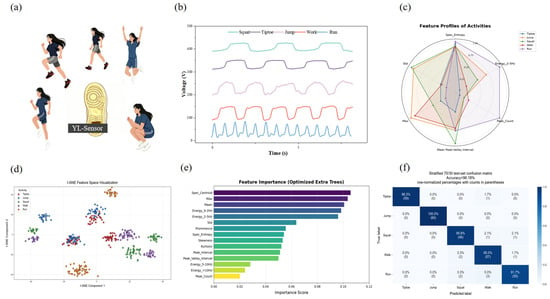
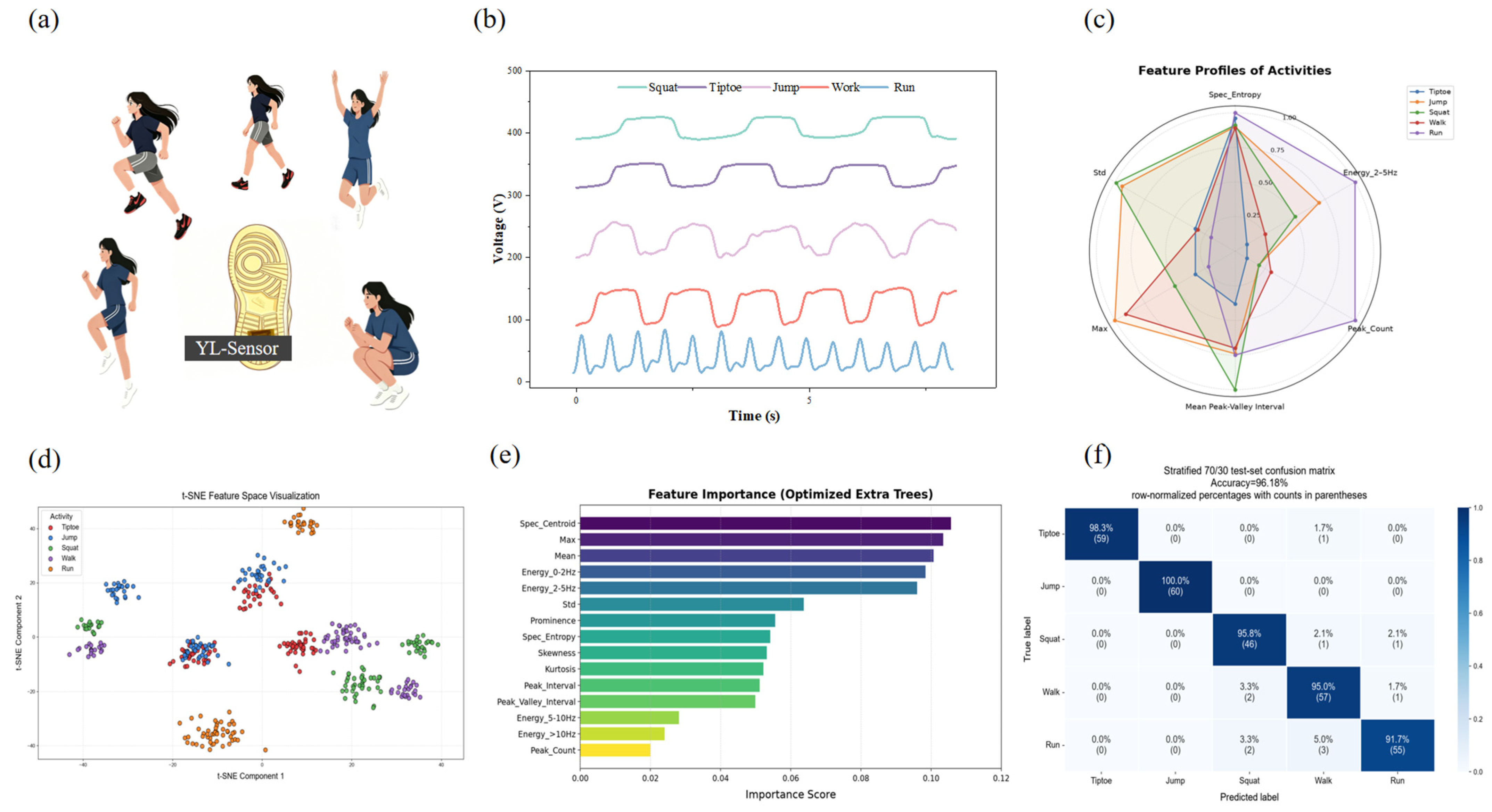
To evaluate the feasibility of the WTT sensor for human-motion sensing, the sensor was attached to the heel region of a sports shoe, and electrical signals generated during five representative motions, namely tiptoe standing, jumping, squatting, walking, and running, were collected, as shown in Figure 5a. Representative output waveforms for the five motions are presented in Figure 5b. To prevent overlap among the signals, the curves were vertically offset for visualization. This treatment did not alter their amplitude variations, periodicity, or waveform morphology. The signals generated by different motions exhibited distinct waveform and temporal characteristics. For example, the running signal showed a higher pulse frequency and more densely distributed periodic peaks, whereas jumping produced pronounced transient signal variations. These differences provided the signal basis for subsequent motion-pattern classification.
Figure 5.
Human-motion sensing and pattern recognition using the WTT sensor: (a) attachment of the WTT sensor to the heel region and schematic illustrations of representative human motions; (b) representative output waveforms generated during tiptoe standing, jumping, squatting, walking, and running, with the signals vertically offset for clarity; (c) normalized radar chart of the feature profiles of the five motions; (d) two-dimensional t-SNE visualization of the multidimensional motion-signal features; (e) feature importance obtained from the optimizedextremely randomized trees model; (f) confusion matrix of the ExtraTrees model based on the record-level 70%/30% train-test split.
To further compare the characteristics of different motion signals, six representative features, including spectral entropy, the relative energy contribution in the 2–5 Hz band, number of peaks, mean peak–valley time interval, maximum, and standard deviation, were selected to construct the normalized radar chart shown in Figure 5c. The different motions exhibited distinct combinations of features rather than being distinguishable by any single feature alone. For example, running showed relatively high normalized values for spectral entropy, energy in the 2–5 Hz band, and number of peaks, reflecting its relatively rapid and complex periodic signal variations. Walking exhibited a relatively high standard deviation, whereas tiptoe standing showed a distinct mean peak–valley time interval. These results indicate that time-domain statistical, peak-related, and frequency-domain features describe the differences among motion signals from complementary perspectives.
After t-SNE dimensionality reduction was performed using all extracted features, the different motion patterns exhibited a certain degree of clustering in the two-dimensional feature space, as shown in Figure 5d. It should be noted that t-SNE was used primarily to visualize the relative distribution of high-dimensional features. Its coordinate axes do not have explicit physical meanings, and the visualization cannot replace the quantitative evaluation of the classification model. The local overlap among several categories suggests that motions involving similar loading processes may share certain time- or frequency-domain characteristics and therefore require the integration of multiple features for discrimination.
The feature importance obtained from the optimized extremely randomized trees model is shown in Figure 5e. Skewness, the relative energy contribution in the 2–5 Hz band, standard deviation, and spectral entropy contributed relatively strongly to the classification, followed by spectral centroid, the relative energy contribution in the 0–2 Hz band, and signal maximum. These results indicate that recognition of the five motions was associated not only with signal amplitude, but also with the asymmetry of the waveform distribution, the degree of signal fluctuation, and the distribution of energy across different frequency bands. The combined use of time- and frequency-domain features therefore provided more comprehensive motion information than a single peak-related or maximum-amplitude feature.
The confusion matrix of the ExtraTrees model was plotted based on the prediction results from the independent test set, as shown in Figure 5f. To avoid potential data leakage induced by sliding-window segmentation, dataset partitioning was performed at the level of complete human motion recordings in this study. A total of 25 groups of human motion signal data were collected and divided into a training set and an independent test set at a ratio of 7:3. Seventy percent of the data was used for ExtraTrees model training and hyperparameter optimization, and the remaining 30% was adopted for final model performance evaluation. All segmented samples derived from a single continuous motion recording were assigned exclusively to either the training set or the test set, ensuring that test data was not involved in the model training process.
The independent test set contained 288 complete action waveform samples, including 60 Walk, 60 Jump, 60 Tiptoe, 60 Run, and 48 Squat samples. Based on the predictions on the independent test set, the ExtraTrees model correctly identified 277 samples, yielding an overall classification accuracy of 96.18%. The 95% confidence interval of the overall accuracy calculated via the Wilson method was 93.29–97.85%, demonstrating that the model achieves high and stable recognition performance for the five motion patterns.
To further comprehensively assess the classification performance of the model, the precision, recall and F1-score of each motion category were calculated. The macro-averaged F1-score (Macro-F1) and balanced accuracy were also evaluated. The results show that the model achieves a Macro-F1 of 96.12% and a balanced accuracy of 96.17%, indicating robust multi-class recognition performance. Among all categories, Jump achieved the best recognition performance, with precision, recall and F1-score all reaching 100%. The F1-scores of the other motion categories were all higher than 93%, which verifies that the motion signal features captured by the WTT sensor can effectively discriminate different human motion patterns.
Although the independent test results based on record-level splitting demonstrate that the model achieves high accuracy for motion classification, the training and test sets in this evaluation scheme are derived from different recordings of the same multiple subjects. Hence, this scheme cannot fully reflect the recognition performance of the model when confronted with new unseen subjects. To further assess the subject-independent generalization performance of the model, Leave-One-Subject-Out (LOSO) cross-validation was adopted for verification. In the LOSO evaluation, all motion data from one subject were used as the independent test set in each fold, while data from the remaining subjects were employed for model training. This ensures that the test subjects were completely excluded from model construction.
Under the rigorous LOSO evaluation condition, the model achieved an overall recognition accuracy of 84.0% for the five motion patterns. Compared with the accuracy of 96.18% obtained via the 7:3 record-level split, the performance degradation under LOSO mainly stems from additional challenges introduced by cross-subject variations. Since the WTT sensor realizes motion sensing by detecting changes in plantar mechanical load, inter-subject differences in body weight, foot morphology, gait habits and sole structure alter the pressure distribution, contact area and signal amplitude characteristics, leading to a certain degree of domain shift between training and test data.
Despite the stricter nature of LOSO evaluation, the model still maintains favorable capability for motion pattern recognition. This indicates that the extracted time-domain and frequency-domain features do not merely rely on individual-specific characteristics, but also contain valid information that can characterize distinct motion patterns. This result further verifies the application potential of the WTT sensor-based motion recognition framework for unseen subjects.
3.5. Human–Machine Interaction and Remote-Controlled Vehicle Operation Using the WTT Sensor
To further verify the feasibility of the WTT sensor as an interactive input unit, a wireless vehicle-control system consisting of three WTT sensors, a signal acquisition module, a microcontroller, a Bluetooth communication module, and an on-board control unit was constructed, as shown in Figure 6a. When a WTT sensor was pressed by a finger, the contact–separation process generated transient triboelectric signals. The controller generated the corresponding control commands according to the channel in which the triggering signal occurred and the combination of activated channels, and then transmitted these commands to the on-board control unit through the Bluetooth module, as shown in Figure S4.
Figure 6.
Human–machine interaction and wireless vehicle control based on the WTT sensor: (a) schematic illustration of the system consisting of three WTT sensors, a signal acquisition module, a microcontroller, a Bluetooth communication module, and an on-board control unit; (b) three-channel output signals and the forward response of the vehicle when Sensor 1 was pressed; (c) three-channel output signals and the backward response of the vehicle when Sensor 2 was pressed; (d) three-channel output signals and the lateral-motion response of the vehicle when Sensors 2 and 3 were pressed simultaneously.
Considering the inherent variations in surface conditions and component distributions of waste toothpaste packaging materials, the output signals of the WTT sensors exhibited a certain degree of amplitude fluctuation. Therefore, a discrete command-encoding strategy based on voltage-amplitude thresholds was adopted for human–machine interaction control. After signal conditioning by the acquisition module, different output-voltage levels were used as the criteria for command recognition. When the output of WTT sensor No. 1 reached the preset triggering threshold of 1 V, the microcontroller recognized the signal and transmitted a forward-motion command to the onboard control unit, thereby driving the vehicle forward. When the output of sensor No. 2 reached a triggering threshold of approximately 2 V, the system recognized the signal as a backward-motion command. When sensors No. 2 and No. 3 were pressed simultaneously and both output signals reached the preset triggering threshold of 3 V, the system recognized the combined input as a composite control command, enabling lateral motion of the vehicle. To avoid command conflict, a 200 ms decision window was used, and combined-channel input had higher priority than single-channel input. Therefore, when Sensors 2 and 3 were activated within the same decision window, the lateral-motion command was executed instead of the backward-motion command. Output signals below 0.5 V were regarded as invalid fluctuations and did not trigger any control command, as shown in Figure S4. It should be emphasized that the WTT sensors served only as self-powered signal input units in this system. Their output voltages were used for control-command determination, whereas the energy required for vehicle movement was independently supplied by the onboard power source.
As shown in Figure 6b–d, different sensing-channel inputs corresponded to different vehicle motion modes. When sensor No. 1 was pressed, only channel 1 generated a distinct response, and the vehicle moved forward. When sensor No. 2 was pressed, channel 2 produced an effective signal, and the vehicle moved backward. When sensors No. 2 and No. 3 were pressed simultaneously, both channels generated output signals synchronously, causing the vehicle to move laterally. These results demonstrate that the WTT sensor system can generate multiple control commands through both single-channel inputs and multichannel combinations, providing experimental validation for the application of waste-derived flexible triboelectric sensors in human–machine interaction.
To further evaluate the practical control performance of the human–machine interaction system, 500 repeated vehicle-control trials were conducted, and the command success rate, false-trigger rate, and system response time were statistically analyzed. A successful control event was defined as a trial in which the vehicle correctly executed the predefined motion corresponding to the intended user command. In contrast, a false-trigger event was defined as a trial in which variations in pressing force, operational differences, or fluctuations in sensor output amplitude caused the actual signal to enter the voltage threshold range associated with a different command, thereby resulting in an unintended vehicle motion.
The experimental results showed that the WTT-sensor-based control system achieved an overall command success rate of approximately 92%, a false-trigger rate of approximately 6%, and an average response time of approximately 300 ms, as shown in Figure S4. False-trigger events mainly occurred when the output signal shifted between adjacent voltage discrimination ranges. For example, variations in manually applied force could cause the output voltage corresponding to a target command to enter the triggering range of another command, leading to an incorrect motion response. Such errors mainly originated from the inherent output-amplitude variability of waste-derived sensors and variations in manually applied force rather than from an inability of the sensors to generate stable output signals.
In addition, the signal independence among multiple sensing channels was evaluated. Because the three WTT sensors were connected to independent acquisition channels, the non-target channels remained below their corresponding triggering thresholds during single-channel activation. Similarly, when sensors No. 2 and No. 3 were activated simultaneously as a combined input, channel 1 remained in the non-triggered state. No erroneous control events caused by unintended responses from non-target channels were observed during the 500 repeated control trials, indicating that the current three-channel configuration exhibits good signal independence and is capable of supporting multi-command human–machine interaction.
The repeated-operation tests further demonstrated that the WTT sensors maintained stable functionality throughout 500 consecutive human–machine interaction control operations. Together with the stable output observed during the previously described 1000 contact–separation cycling tests, these results indicate that the WTT sensors fabricated from waste toothpaste packaging possess not only good mechanical cycling stability but also sufficient durability to support repeated human–machine interaction operations.
In summary, the WTT sensor can serve as a self-powered flexible input unit for controlling the forward, backward, and lateral motions of a Mecanum-wheel-based mobile vehicle through voltage-threshold discrimination and multichannel combination encoding. The results of 500 control trials showed that the system achieved a command success rate of approximately 92%, a false-trigger rate of 6%, and a response time of approximately 300 ms, demonstrating the application potential of waste toothpaste packaging materials in flexible sensing and wireless human–machine interaction.
4. Discussion
In this study, a flexible single-electrode triboelectric sensor was constructed through the functional allocation and coordinated utilization of different components from waste toothpaste packaging materials. The aluminum–plastic composite film and aluminum foil recovered from discarded toothpaste tubes formed the core triboelectric functional unit, with the aluminum foil also serving as the signal-output electrode for charge transport. Cardboard from the outer toothpaste box was used to maintain the contact–separation space, while polyimide was employed for device encapsulation and structural protection. This design enabled the different waste-derived components to perform triboelectrification, electrical conduction, and mechanical support functions within a single device, thereby achieving the device-level utilization of toothpaste packaging waste without introducing additional commercial triboelectric functional films.
Performance tests showed that the WTT sensor generated clear and repeatable electrical signals under different applied forces and excitation frequencies. Its output voltage exhibited a piecewise response with increasing applied force and remained relatively stable over 1000 repeated contact–separation cycles. The wrinkles and irregular microstructures on the delaminated aluminum-foil surface may facilitate interfacial contact, although their specific contributions to the triboelectric output require further quantitative investigation. These results indicate that the different materials recovered from waste toothpaste packaging can be rationally integrated to satisfy the basic requirements of a flexible triboelectric sensor for charge generation, signal transmission, and structural support.
At the application level, the WTT sensor collected distinguishable electrical signals generated by different human motions. By integrating time-domain, peak-related, and frequency-domain features with an optimized extremely randomized trees classifier, five motion patterns—tiptoe standing, jumping, squatting, walking, and running—were effectively recognized. The sensor was further used as a self-powered control input unit to trigger the forward, backward, and lateral movements of a remote-controlled vehicle, demonstrating the feasibility of extending the device from mechanical-signal sensing to motion recognition and human–machine interaction.
In addition, to further clarify the performance positioning of the proposed WTT sensor among waste-derived triboelectric devices, representative waste-derived triboelectric nanogenerators/sensors reported in recent years were selected for comparative analysis. A comprehensive comparison was conducted in terms of waste source, processing requirements, additional commercial materials, output performance, sensitivity, durability, motion-recognition methods, classification performance, and applications, with detailed results provided in Table S2 [16,18,25,26,27,28,29]. The comparison demonstrates that the WTT sensor achieves multifunctional applications, including mechanical signal sensing, human motion recognition, and human–machine interaction, while maintaining relatively simplified waste-processing and device-fabrication procedures. These results highlight the potential of waste toothpaste composite packaging as a valuable resource for flexible intelligent sensing devices.
Overall, the principal contribution of this study lies in converting difficult-to-recycle toothpaste packaging waste into an intelligent sensing device capable of flexible mechanical sensing, motion-pattern recognition, and human–machine interaction. This work offers a design strategy for the value-added utilization of multilayer composite packaging waste.
Supplementary Materials
The following supporting information can be downloaded at https://www.mdpi.com/article/10.3390/technologies14100640/s1: Figure S1: Baseline voltage drift test; Figure S2: Hysteresis characteristics of the pressure response of the sensor; Figure S3: Response/recovery time test; Figure S4: Schematic diagram of wireless human-machine interaction control from finger pressing to vehicle motion; Figure S5: Voltage response of the WTT sensor under different relative humidity conditions; Figure S6: Descriptive Statistics of Output Performance for Three Identical-Type Sensors Fabricated from Toothpaste Waste; Figure S7: Voltage responses of the sensor attached to the elbow joint at different bending angles of 60°, 90°, and 120°; Figure S8: Voltage response of the WTT sensor at different wrist bending angles; Table S1: Descriptive statistics of the output voltage of the waste toothpaste packaging-based sensor and the pure aluminum foil control sensor; Table S2: Comprehensive comparison between the proposed sensor and representative waste-derived triboelectric nanogenerator (TENG) devices reported in the literature.
Author Contributions
Conceptualization, S.X.; methodology, S.X. and Y.W.; validation, Y.W. and L.J.; formal analysis, S.X., D.H. and S.Z.; investigation, Y.W., D.H. and S.Z.; resources, D.H. and S.Z.; data curation, Y.W., D.H. and S.Z.; writing—original draft preparation, S.X. and Y.W.; writing—review and editing, D.H. and S.Z.; visualization, L.J.; supervision, S.X.; project administration, S.X.; funding acquisition, S.X.; Response, Y.Y. All authors have read and agreed to the published version of the manuscript.
Funding
The work was supported by the Fundamental Research Program of Shanxi Province (No. 202303021221176), the Key R&D Project of Lvliang City (No. 2024GX10).
Institutional Review Board Statement
This study was reviewed and approved by the Ethics Committee of Lyuliang University (Approval No. 20260908, approved on 8 September 2026). All experiments involving human participants were conducted after obtaining ethical approval and were performed in accordance with the approved protocol.
Informed Consent Statement
Written informed consent was obtained from all participants involved in the study prior to the commencement of the experiments.
Data Availability Statement
The data that support the findings of this study are available from the corresponding author upon reasonable request.
Acknowledgments
We sincerely appreciate all participants in the human motion sensing experiments. We also thank the relevant personnel for their assistance in material characterization and sample preparation.
Conflicts of Interest
The authors declare no conflicts of interest.
Abbreviations
The following abbreviations are used in this manuscript:
| WTT | Waste Toothpaste Tube |
| TENG | Triboelectric nanogenerator |
| GenAI | Generative artificial intelligence |
| SEM | Scanning electron microscopy |
| t-SNE | t-distributed stochastic neighbor embedding |
References
- Kaiser, K.; Schmid, M.; Schlummer, M. Recycling of Polymer-Based Multilayer Packaging: A Review. Recycling 2018, 3, 1. [Google Scholar] [CrossRef] [Scilit]
- Schmidt, J.; Grau, L.; Auer, M.; Maletz, R.; Woidasky, J. Multilayer Packaging in a Circular Economy. Polymers 2022, 14, 1825. [Google Scholar] [CrossRef] [Scilit] [PubMed]
- Tamizhdurai, P.; Mangesh, V.L.; Santhosh, S.; Vedavalli, R.; Kavitha, C.; Bhutto, J.K.; Alreshidi, M.A.; Yadav, K.K.; Kumaran, R. A state-of-the-art review of multilayer packaging recycling: Challenges, alternatives, and outlook. J. Clean. Prod. 2024, 447, 141403. [Google Scholar] [CrossRef] [Scilit]
- de Mello Soares, C.T.; Ek, M.; Östmark, E.; Gällstedt, M.; Karlsson, S. Recycling of multi-material multilayer plastic packaging: Current trends and future scenarios. Resour. Conserv. Recycl. 2022, 176, 105905. [Google Scholar] [CrossRef] [Scilit]
- Schyns, Z.O.G.; Shaver, M.P. Mechanical Recycling of Packaging Plastics: A Review. Macromol. Rapid Commun. 2020, 42, e2000415. [Google Scholar] [CrossRef] [Scilit] [PubMed]
- Walker, T.W.; Frelka, N.; Shen, Z.; Chew, A.K.; Banick, J.; Grey, S.; Kim, M.S.; Dumesic, J.A.; Van Lehn, R.C.; Huber, G.W. Recycling of multilayer plastic packaging materials by solvent-targeted recovery and precipitation. Sci. Adv. 2020, 6, eaba7599. [Google Scholar] [CrossRef] [Scilit] [PubMed]
- Siddiqui, M.Z.; Park, Y.-K.; Kang, Y.; Watanabe, A.; Kim, S.; Kim, Y.-M. Effective use of aluminum-plastic laminate as a feedstock for catalytic pyrolysis over micro and mesoporous catalysts. J. Clean. Prod. 2019, 229, 1093–1101. [Google Scholar] [CrossRef] [Scilit]
- Korley, L.T.J.; Epps, T.H.; Helms, B.A.; Ryan, A.J. Toward polymer upcycling—Adding value and tackling circularity. Science 2021, 373, 66–69. [Google Scholar] [CrossRef] [Scilit] [PubMed]
- Fan, F.-R.; Tian, Z.-Q.; Lin Wang, Z. Flexible triboelectric generator. Nano Energy 2012, 1, 328–334. [Google Scholar] [CrossRef] [Scilit]
- Wang, Z.L.; Wang, A.C. On the origin of contact-electrification. Mater. Today 2019, 30, 34–51. [Google Scholar] [CrossRef] [Scilit]
- Zou, H.; Zhang, Y.; Guo, L.; Wang, P.; He, X.; Dai, G.; Zheng, H.; Chen, C.; Wang, A.C.; Xu, C.; et al. Quantifying the triboelectric series. Nat. Commun. 2019, 10, 1427. [Google Scholar] [CrossRef] [Scilit] [PubMed]
- Wang, Y.; Yang, Y.; Wang, Z.L. Triboelectric nanogenerators as flexible power sources. npj Flex. Electron. 2017, 1, 10. [Google Scholar] [CrossRef] [Scilit]
- Wang, Z.; Chen, J.; Lin, L. Progress in triboelectric nanogenertors as new energy technology and self-powered sensors. Energy Environ. Sci. 2015, 8, 2250–2282. [Google Scholar] [CrossRef] [Scilit]
- Feng, X.; Li, Q.; Wang, K. Waste Plastic Triboelectric Nanogenerators Using Recycled Plastic Bags for Power Generation. ACS Appl. Mater. Interfaces 2020, 13, 400–410. [Google Scholar] [CrossRef] [Scilit] [PubMed]
- Sahu, M.; Hajra, S.; Panda, S.; Rajaitha, M.; Panigrahi, B.K.; Rubahn, H.-G.; Mishra, Y.K.; Kim, H.J. Waste textiles as the versatile triboelectric energy-harvesting platform for self-powered applications in sports and athletics. Nano Energy 2022, 97, 107208. [Google Scholar] [CrossRef] [Scilit]
- Navaneeth, M.; Potu, S.; Babu, A.; Rajaboina, R.K.; K, U.K.; Divi, H.; Kodali, P.; K., B. A medical waste X-ray film based triboelectric nanogenerator for self-powered devices, sensors, and smart buildings. Environ. Sci. Adv. 2023, 2, 848–860. [Google Scholar] [CrossRef] [Scilit]
- Navaneeth, M.; Potu, S.; Babu, A.; Lakshakoti, B.; Rajaboina, R.K.; K, U.K.; Divi, H.; Kodali, P.; Balaji, K. Transforming Medical Plastic Waste into High-Performance Triboelectric Nanogenerators for Sustainable Energy, Health Monitoring, and Sensing Applications. ACS Sustain. Chem. Eng. 2023, 11, 12145–12154. [Google Scholar] [CrossRef] [Scilit]
- Shen, C.; Jia, L.; Yang, Y. Fully Medical Waste-Based Triboelectric Nanogenerator for Energy Harvesting and Intelligent Human Motion Sensing. ACS Sustain. Chem. Eng. 2024, 12, 14141–14152. [Google Scholar] [CrossRef] [Scilit]
- Li, W.; Lv, Y.; Luo, D.; Wang, Z.L. Turning trash into treasure: Recent advances in triboelectric nanogenerator based on waste-derived carbonized materials. J. Mater. Chem. A 2023, 11, 9194–9215. [Google Scholar] [CrossRef] [Scilit]
- Pagett, M.; Teng, K.S.; Sullivan, G.; Zhang, W. Reusing waste coffee grounds as electrode materials: Recent advances and future opportunities. Glob. Chall. 2023, 7, 2200093. [Google Scholar] [CrossRef] [Scilit] [PubMed]
- Siau, L.-J.; Lim, W.Y.-H.; Chee, P.-S.; Lim, E.-H.; Tan, C.-H.; Low, J.-H. Sustainable and high performance triboelectric nanogenerator using water-processable and non-toxic Arabic gum-graphite composite green electrodes for enabling circular recyclability. Smart Mater. Struct. 2025, 34, 115004. [Google Scholar] [CrossRef] [Scilit]
- Yu, X.; Luo, Z.; Ouyang, X.; Ye, H.; Liu, Y.; Jiang, X.; Xiang, L. Self-Adhesive, Self-Healing, and Water-Soluble Polymeric Dry Electrodes for Robust Physiological Signal Monitoring. ACS Appl. Electron. Mater. 2024, 6, 5201–5211. [Google Scholar] [CrossRef] [Scilit]
- Zhu, J.; Ji, S.; Yu, J.; Shao, H.; Wen, H.; Zhang, H.; Xia, Z.; Zhang, Z.; Lee, C. Machine learning-augmented wearable triboelectric human-machine interface in motion identification and virtual reality. Nano Energy 2022, 103, 107766. [Google Scholar] [CrossRef] [Scilit]
- An, S.; Pu, X.; Zhou, S.; Wu, Y.; Li, G.; Xing, P.; Zhang, Y.; Hu, C. Deep Learning Enabled Neck Motion Detection Using a Triboelectric Nanogenerator. ACS Nano 2022, 16, 9359–9367. [Google Scholar] [CrossRef] [Scilit] [PubMed]
- Xue, S.; Wang, Y.; Jia, L.; He, D.; Zhang, S.; Yang, Y. A Waste Cooling Patch-Derived Flexible Triboelectric Sensor for Wearable Motion and Throat Vibration Monitoring. AIP Adv. 2026, 16, 085029. [Google Scholar] [CrossRef] [Scilit]
- Basith, S.A.; Chandrasekhar, A. COVID-19 Clinical Waste Reuse: A Triboelectric Touch Sensor for IoT-Cloud Supported Smart Hand Sanitizer Dispenser. Nano Energy 2023, 108, 108183. [Google Scholar] [CrossRef] [Scilit] [PubMed]
- Li, S.; Liu, H.; Du, C.; Che, Y.; Chu, C.; Dai, X. High-Sensitivity Bio-Waste-Derived Triboelectric Sensors for Capturing Pathological Motor Features in Hemiplegia Rehabilitation. Micromachines 2026, 17, 395. [Google Scholar] [CrossRef] [Scilit] [PubMed]
- Dudem, B.; Dharmasena, R.D.I.G.; Riaz, R.; Vivekananthan, V.; Wijayantha, K.G.U.; Lugli, P.; Petti, L.; Silva, S.R.P. Wearable Triboelectric Nanogenerator from Waste Materials for Autonomous Information Transmission via Morse Code. ACS Appl. Mater. Interfaces 2022, 14, 5328–5337. [Google Scholar] [CrossRef] [Scilit] [PubMed]
- Suneetha, V.L.; Mahesh, V.; Uday Kumar, K.; Kumar, R.R. Upcycling Medical Tablet Blister Waste into High-Performance Triboelectric Nanogenerators for Sustainable Energy Harvesting. Nanoenergy Adv. 2025, 5, 19. [Google Scholar] [CrossRef] [Scilit]

Disclaimer/Publisher’s Note: The statements, opinions and data contained in all publications are solely those of the individual author(s) and contributor(s) and not of MDPI and/or the editor(s). MDPI and/or the editor(s) disclaim responsibility for any injury to people or property resulting from any ideas, methods, instructions or products referred to in the content. |
© 2026 by the authors. Licensee MDPI, Basel, Switzerland. This article is an open access article distributed under the terms and conditions of the Creative Commons Attribution (CC BY) license.