


Abstract
This study conducts a bibliometric analysis of green finance research from 2000 to 2025 using Scopus data and VOSviewer (version 1.6.21) and Bibliometrix® (version 5.4.1). It analyzes publication trends, geographic distribution, collaboration patterns, and thematic evolution. A clear inflection appears around 2015, aligned with the Paris Agreement, followed by rapid growth in output. Keyword mapping identifies core themes, including green finance, sustainable finance, green bonds, climate finance, and climate change. Citation and co-citation networks reveal an increasingly coherent knowledge structure, signaling rising intellectual maturity. The findings inform future research agendas and support evidence-based policy design for green finance development across markets and institutions globally.
1. Introduction
1.1. General Overview: Green Finance as an Expanding Field of Research
Green finance initially emerged as a strategic lever to channel financial resources toward projects, companies, and initiatives aimed at reducing greenhouse gas emissions, preserving ecosystems, promoting the sustainable management of natural resources, and, more broadly, building a low-carbon economic model (Han & Gao, 2024; Déséglise & Freijido, 2019). This shift in financial logic reflects a profound reversal of perspective: market performance is no longer assessed solely on the basis of profitability criteria but also in terms of environmental impact and the capacity to contribute to long-term sustainability (Piao & Mei, 2025). In this context, the OECD (2020) emphasizes that the core objective of green finance is to ‘mobilize the capital required for the transition to a low-carbon and climate-resilient economy.’ To achieve this goal, a variety of financial instruments are deployed, including green bonds, sustainable loans, and investments structured according to ESG frameworks (Yang, 2025). Moreover, this field has gradually taken shape at the intersection of several disciplines, including economics, law, finance, and environmental sciences, thereby reinforcing both its academic credibility and practical relevance. Its consolidation has been further accelerated by the emergence of international regulatory frameworks, such as the European taxonomy, the recommendations of the Task Force on Climate-related Financial Disclosures (TCFD), and the disclosure requirements of the Corporate Sustainability Reporting Directive (CSRD), all of which have contributed to its institutionalization. In their cross-country study spanning 42 nations, Al Mamun et al. (2025) demonstrate that national environmental regulations not only help establish common standards but also enhance the attractiveness of green finance by increasing its maturity and reducing its perceived risk, thereby facilitating its broader development (Al Mamun et al., 2025).
Since the mid-2010s, academic interest in green finance has grown steadily, as evidenced by the increasing number of scientific studies dedicated to this field (Chandran & Chandran MC, 2024). This momentum reflects a growing enthusiasm for examining the intersections between finance, sustainable governance, and climate policy. However, despite the richness of existing contributions, there remains a noticeable lack of in-depth bibliometric analyses capable of providing a comprehensive overview of key authors, foundational concepts, and emerging trends. Among the existing contributions, the study conducted by Tao and Chao (2023) represents one of the most notable bibliometric analyses in this area, employing scientometric tools such as VOSviewer and Bibliometrix(R) to map the landscape of academic publications, research collaborations, and dominant themes connecting green finance to the energy transition.
To address these limitations, the present study provides a comprehensive bibliometric review of green finance research based on 7768 Scopus-indexed publications published between 2000 and 2025. Unlike previous studies that focused on specific subtopics, narrower datasets, or a limited range of bibliometric indicators, this research integrates performance analysis, co-authorship networks, bibliographic coupling, co-citation analysis, thematic evolution, and keyword co-occurrence mapping within a unified analytical framework. By combining these complementary approaches through Bibliometrix and VOSviewer, the study offers a comprehensive assessment of the intellectual, conceptual, and social structure of green finance research. It thus provides an updated understanding of the field’s evolution, identifies emerging research fronts, and proposes avenues for future investigation.
It is within this framework that the present study is situated. It aims to provide a detailed mapping of the scientific literature on green finance from 2000 to 2025. Through a rigorous bibliometric analysis, the study seeks to highlight major contributions, collaborative networks, dominant research axes, and emerging terminological trends, with the objective of gaining a deeper understanding of the evolution of this rapidly transforming field.
1.2. Research Questions
This study is structured around the following four research questions:
RQ1: How has scientific output on green finance evolved between 2000 and 2025 in terms of publication volume, contributing countries, and disciplinary scope?
RQ2: How are scientific networks structured through author collaborations, and what are the major contributions of countries, authors, and institutions in this field?
RQ3: What are the main thematic trends and conceptual developments in green finance?
RQ4: What insights can be drawn from citation analysis, bibliographic coupling, and co-citation analysis to understand the key centers of influence, the intellectual structure, and the documentary convergences within this domain?
2. Materials and Methods
To map the research dynamics in green finance, this study relies on a bibliometric analysis based on data extracted from the Scopus database, which is widely recognized for the richness and reliability of its scientific metadata. A targeted query was formulated using the following key expressions: TITLE-ABS-KEY (“green finance” OR “sustainable finance” OR “climate finance” OR “green bonds” OR “sustainable investment” OR “ESG investing” OR “impact investing” OR “low-carbon finance” OR “environmental finance” OR “green banking” OR “green credit” OR “sustainability-linked bonds”). This selection reflects a logic of comprehensiveness, aiming to capture the full spectrum of studies addressing sustainable financial instruments and responsible investment strategies. The data were extracted from Scopus on 1 May 2025. No language restrictions were applied during the data collection process. No language restrictions were applied during the data collection process. Although no language restrictions were applied, the exclusive use of Scopus may still underrepresent certain regional publications and non-English sources due to differences in database coverage. Consequently, the results should be interpreted within the scope of the database employed.
However, the choice of 2000 as the starting point for the analysis is justified by the academic and institutional emergence of the concept of ‘green finance’ at that time. Indeed, the year 2000 marks both the first appearance of the term in the scientific literature—particularly in pioneering studies conducted in China—and its official recognition in reference works such as the American Heritage Dictionary. This starting point thus makes it possible to trace the evolution of research from the initial introduction of the concept to its consolidation as a major interdisciplinary field, closely linked to international climate agreements and the Sustainable Development Goals adopted in 2015 (Tao & Chao, 2023).
The document selection process is presented in Table 1.
Table 1.
Document selection process.
The results of the query were refined by selecting only high-value-added scientific documents—namely, 7349 research articles and 419 literature reviews—while excluding conference papers, book chapters, and other types of publications. This choice was made to ensure methodological consistency and comparability across records, as peer-reviewed articles and reviews constitute the most validated forms of scientific knowledge. Visual data analysis was then conducted using the VOSviewer and Bibliometrix software, which enabled graphical representations of keyword co-occurrence networks, author collaborations, and thematic clusters.
The analyses were conducted using VOSviewer with the full counting method and association-strength normalization, while thresholds were established according to the objectives of each network analysis (e.g., a minimum of eight documents for co-authorship networks and 25 citations for co-citation analyses) to ensure both readability and robustness. Bibliometrix was additionally employed to generate performance indicators and to explore the thematic evolution and conceptual structure of the green finance literature.
No extensive manual harmonization procedure was applied, and the analyses relied primarily on the standardized metadata provided by Scopus and the data-processing functionalities embedded in VOSviewer and Bibliometrix, which may result in minor inconsistencies but are unlikely to affect the overall robustness of the findings.
This methodological combination provides a comprehensive, structured, and precise overview of the scientific field, revealing dominant currents, interactions between research communities, and emerging themes that are shaping the future of sustainable finance.
3. Results and Discussion
The results presented below aim to map the quantitative and structural evolution of the literature. They are organized around six main axes: the temporal evolution of scientific output, the identification of the most productive authors and institutions, the geographical distribution of contributions, collaboration networks, the analysis of keywords and dominant themes, and finally, the emergence of new research streams.
3.1. Evolution of the Volume of Scientific Publications (2000–2025)
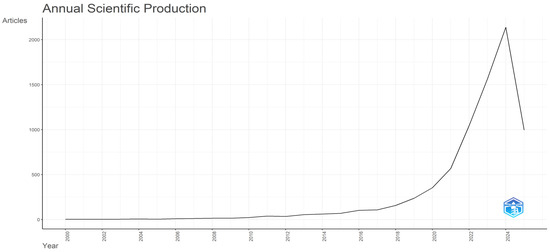
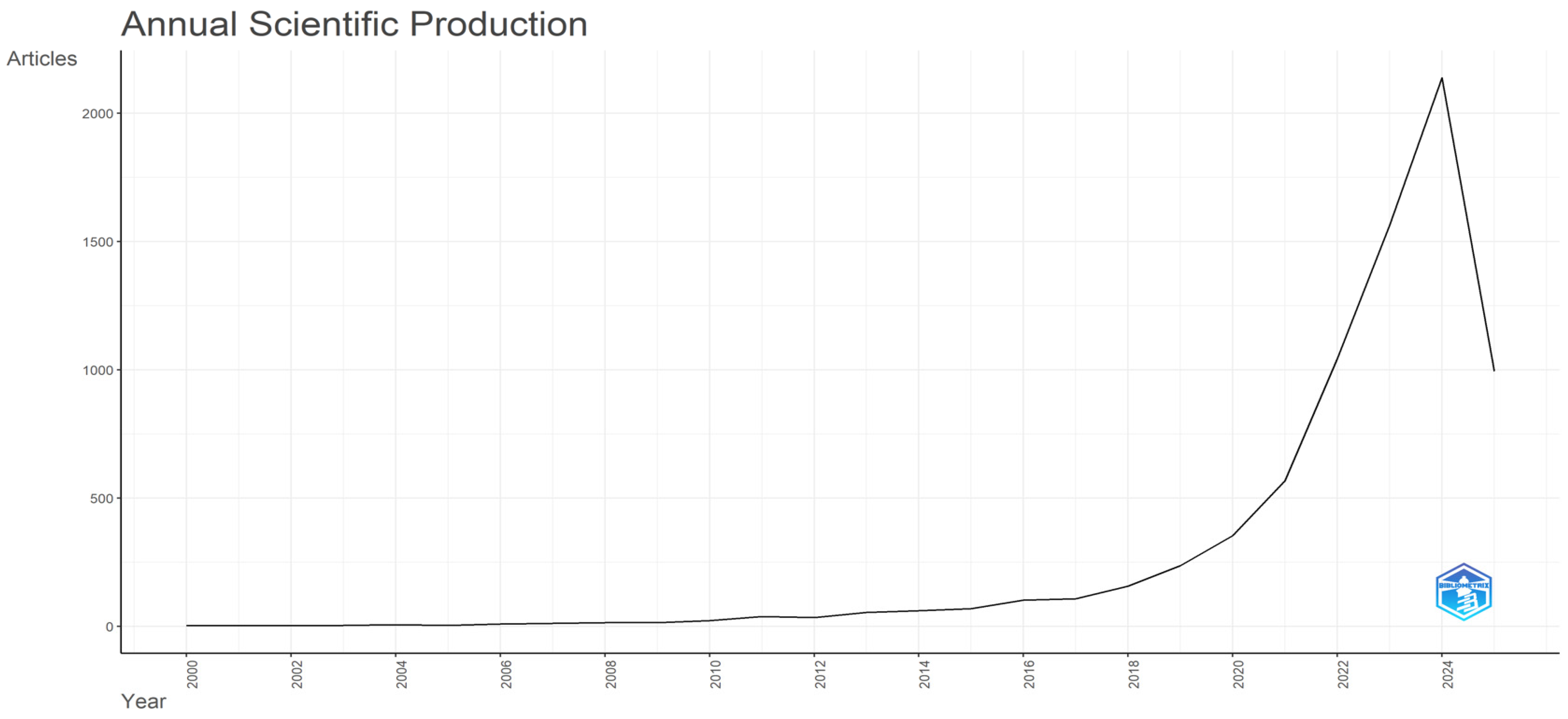
As shown in Figure 1, the analysis of academic publications related to green finance, based on data extracted from the Scopus database, reveals a significant increase in the number of articles published between 2000 and 2025. This upward trend reflects not only the growing prominence of this topic within academic research but also the gradual consolidation of an interdisciplinary field at the intersection of economics, finance, environmental studies, and public policy (Tao & Chao, 2023).
Figure 1.
Annual scientific output (2000–2025). Source: Scopus database, analyzed using Bibliometrix.
During the initial period from 2000 to 2014, scientific output remained relatively modest, with fewer than 100 articles published annually. Johnson (2000) highlighted the conceptual immaturity of environmental finance, which was still seeking clear theoretical foundations. Similarly, Hogarth (2012) lamented the lack of consensus on the institutional functions of climate finance, pointing to a persistent theoretical fragmentation (Johnson, 2000; Hogarth, 2012). At that time, the very notion of ‘green finance’ remained embryonic and only marginally institutionalized within scientific databases. A notable shift occurred starting in 2015, directly linked to the signing of the Paris Agreement. This moment served as a true catalyst, prompting increased engagement from economic, political, and financial actors around climate-related challenges (UNFCCC, 2015; Flammer, 2021). From that point forward, the pace of publications accelerated, rising from 69 articles in 2015 to 157 in 2018, reflecting a growing global awareness and the emergence of green finance as a structured field of research.
Moreover, the post-2020 period marks a significant increase in scientific output, driven by several converging dynamics: the growing integration of ESG criteria into investment decision-making (Friede et al., 2015; Tang & Zhang, 2020), the rise of green bonds as key instruments for sustainable financing (Akomea-Frimpong et al., 2021), and the implementation of ambitious regulatory frameworks such as the European Green Taxonomy and the TCFD guidelines (OECD, 2020; EU TEG, 2020). In addition, post-COVID economic recovery plans have supported environmentally oriented initiatives, further reinforcing the integration of climate concerns into national and international economic strategies (Agliardi & Agliardi, 2021).
This dynamic has resulted in a dramatic surge in publications: 354 in 2020, 1044 in 2022, and a remarkable peak of 2139 documents in 2024. These figures confirm that green finance is no longer a marginal niche but has become a well-established research field, engaging multiple disciplines and attracting the interest of a wide range of researchers (Ng & Tao, 2016; Alsmadi et al., 2023). It is worth noting that the apparent decline observed in 2025 (992 publications) likely does not indicate a loss of interest in the field but can rather be attributed to temporary under-indexing, a common occurrence in bibliographic extractions conducted early in the year, before all publications have been fully recorded.
Overall, this upward trajectory reflects the growing importance attributed to sustainability issues within the financial and economic sciences. It also illustrates the gradual realignment of academic research with global climate objectives and a reorientation of scientific priorities toward more responsible finance, geared toward the green transition (Z. Zhang et al., 2022).
3.2. Geographical Distribution: Leading Countries in Green Finance Research
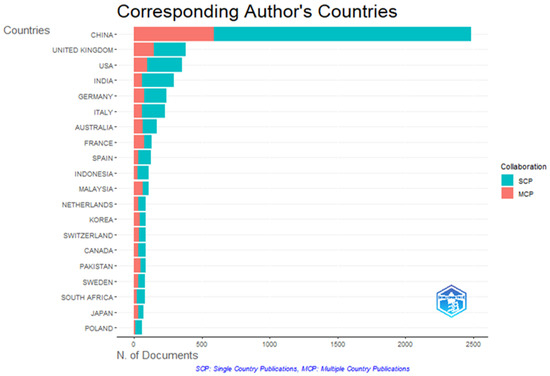
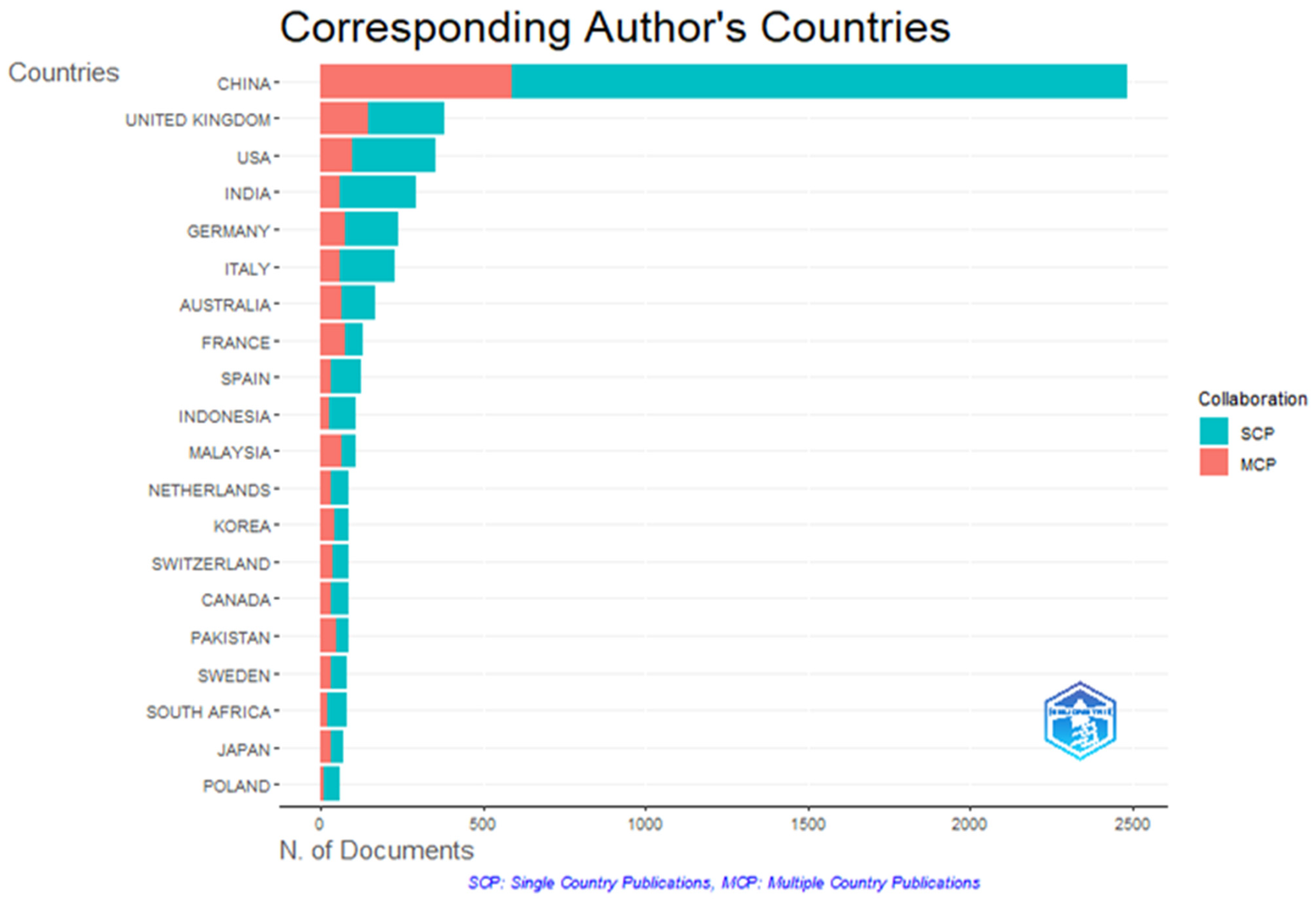
The contribution to the academic literature on green finance reveals significant disparities between countries, as illustrated by Table 2 and the graph below (Figure 2).
Table 2.
Leading countries in green finance research.
Figure 2.
Corresponding author’s countries. Source: Scopus database, analyzed using Bibliometrix.
The analysis of the geographical distribution of publications, based on the corresponding author’s country of affiliation, highlights the clear dominance of China, which surpasses all other countries with 2484 articles, accounting for over 32% of the total scientific output in the field of green finance. This dominance can be attributed to the Chinese government’s strategic orientation toward sustainable development, as well as the implementation of incentive-based policies such as the national guidelines on green bonds introduced as early as 2016 (Z. Zhang et al., 2022; IFC, 2017). However, this dominance should be interpreted primarily as an indicator of scientific productivity rather than a direct measure of intellectual influence or research quality, which also depends on citation impact and knowledge diffusion.
Trailing at a considerable distance are the United Kingdom (382 articles), the United States (354 articles), and India (296 articles), which emerge as secondary yet influential hubs. These countries exhibit relatively high levels of international collaboration, as reflected in the percentage of multi-country publications (MCPs): 38.48% for the United Kingdom and 28.53% for the United States, for example. These figures illustrate their active integration into transnational scientific networks.
By contrast, countries such as France, Pakistan, and Malaysia stand out for their exceptionally high rates of international co-publication: 57.14%, 57.65%, and 59.81%, respectively, reflecting both a heightened reliance on external collaborations and a deliberate openness to international scientific exchange. This finding suggests that scientific visibility may be strengthened not only through publication volume but also through participation in global research networks and international knowledge exchange. Also noteworthy are the strong performances of Germany (241 articles) and Italy (232 articles), which confirm their structuring role within the European research landscape.
The particular cases of South Korea and Switzerland, both of which report MCP percentages exceeding 45%, highlight research strategies that are strongly oriented toward international collaboration. This approach enhances their global visibility despite a comparatively modest volume of scientific output.
In sum, this distribution highlights two distinct patterns of scientific contribution in green finance: on one hand, major producing countries such as China, India, and the United States, which assert their dominance through volume; on the other, intermediate or emerging countries that rely on international cooperation to gain visibility and exert influence in academic debates. This contrast underscores that leadership dynamics are not solely defined by volume but also by network structures, partnerships, and the transboundary dissemination of knowledge. However, despite this growing geographical diversification, some regions, particularly Sub-Saharan Africa and parts of Latin America, remain underrepresented, raising questions about access to research funding and the equitable diffusion of scientific knowledge (Ng & Tao, 2016). This underrepresentation may also reflect disparities in research infrastructure, publication capacity, and access to international collaboration networks. Given the increasing exposure of developing economies to climate-related challenges, strengthening research capacities in these regions is essential for fostering a more inclusive and globally representative green finance knowledge base.
3.3. Co-Authorship Networks Among Researchers
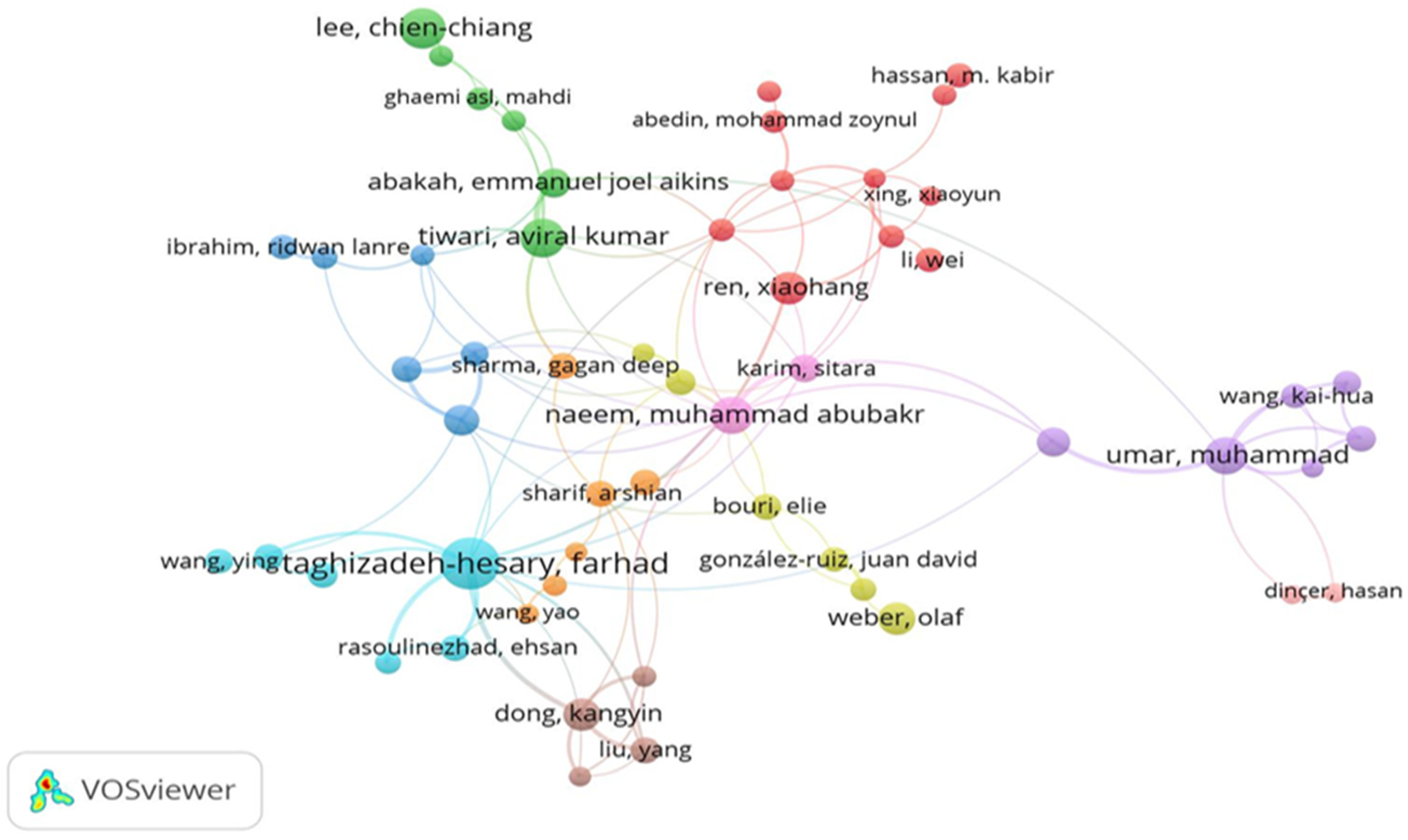
The analysis of co-authorship networks provides insight into the collaboration dynamics among the most active researchers in the field of green finance. The map above (Figure 3) illustrates the connections between authors who have published at least eight documents, highlighting the most structured scientific communities built around recurring collaborations.
Figure 3.
Co-authorship network among authors. Source: Scopus database, analyzed using VOSviewer.
The visualization reveals an organization into several distinct color-coded groups, each representing a cluster of closely connected authors. These clusters generally reflect well-established research networks, often formed within the same institution, country, or international collaborative program. Among the most central figures is Farhad Taghizadeh-Hesary, whose name appears as a major node within the light blue cluster. His numerous connections with other authors, such as Ehsan Rasoulinezhad and Wang Yao, reflect his pivotal role within an active research network in Asia, primarily focused on energy policy, sustainable investment, and green bonds in emerging markets (Z. Zhang et al., 2022). The red cluster, centered around Ren Xiaohang, includes authors such as Li Wei, Xing Xiaoyun, and Ji Qiang, suggesting a dense concentration of collaborations likely stemming from a Chinese or East Asian academic environment, with a particular focus on the regulation of sustainable financial markets. Another notable figure is Muhammad Umar, who leads a purple cluster alongside collaborators such as Wang Kai-Hua and Hasan Dinçer. His central positioning and multiple links to other clusters suggest a bridging role between different academic communities, particularly those based in South Asia, Europe, and the Middle East.
Finally, researchers such as Aviral Kumar Tiwari, Emmanuel Joel Aikins Abakah, and Chien-Chiang Lee also emerge as key actors within their respective groups, demonstrating high productivity and active involvement in well-structured co-publication networks, often within the field of econometrics applied to climate finance.
3.4. Keyword Analysis: Underlying Trends and Thematic Structure
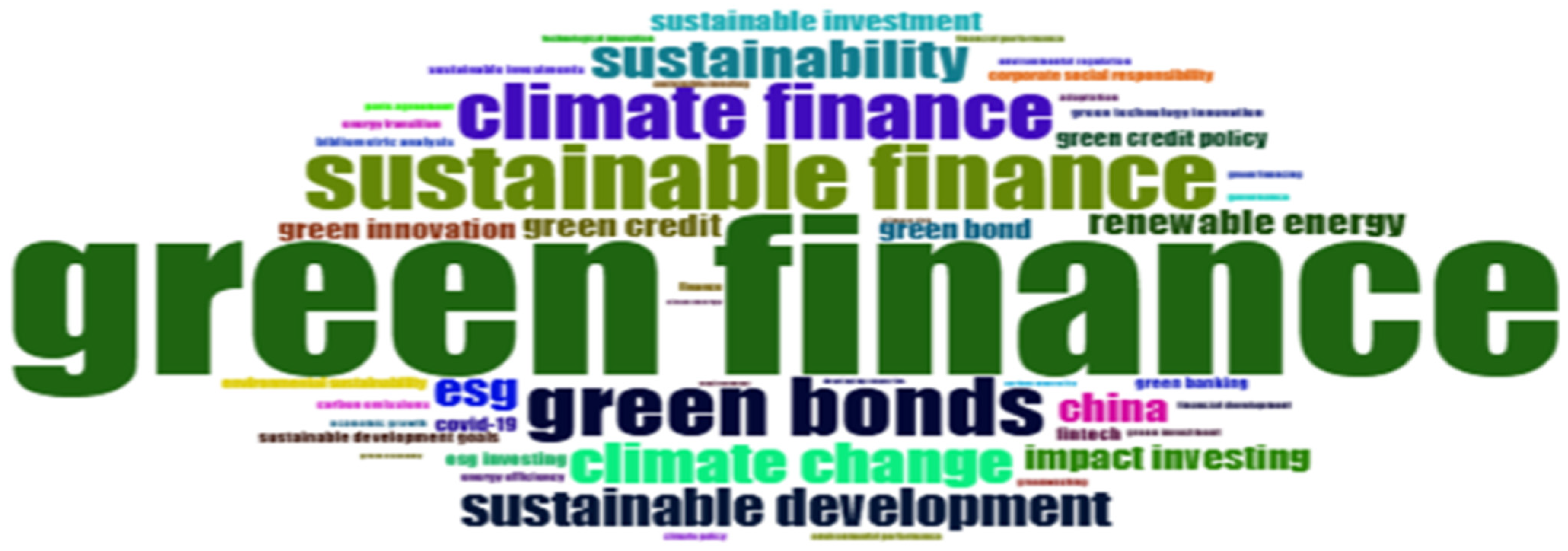
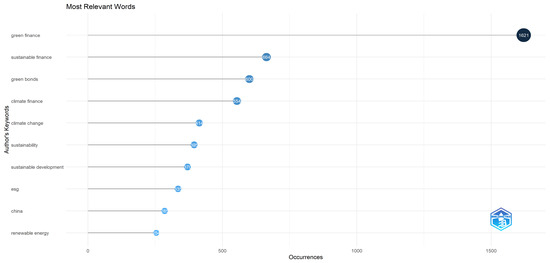
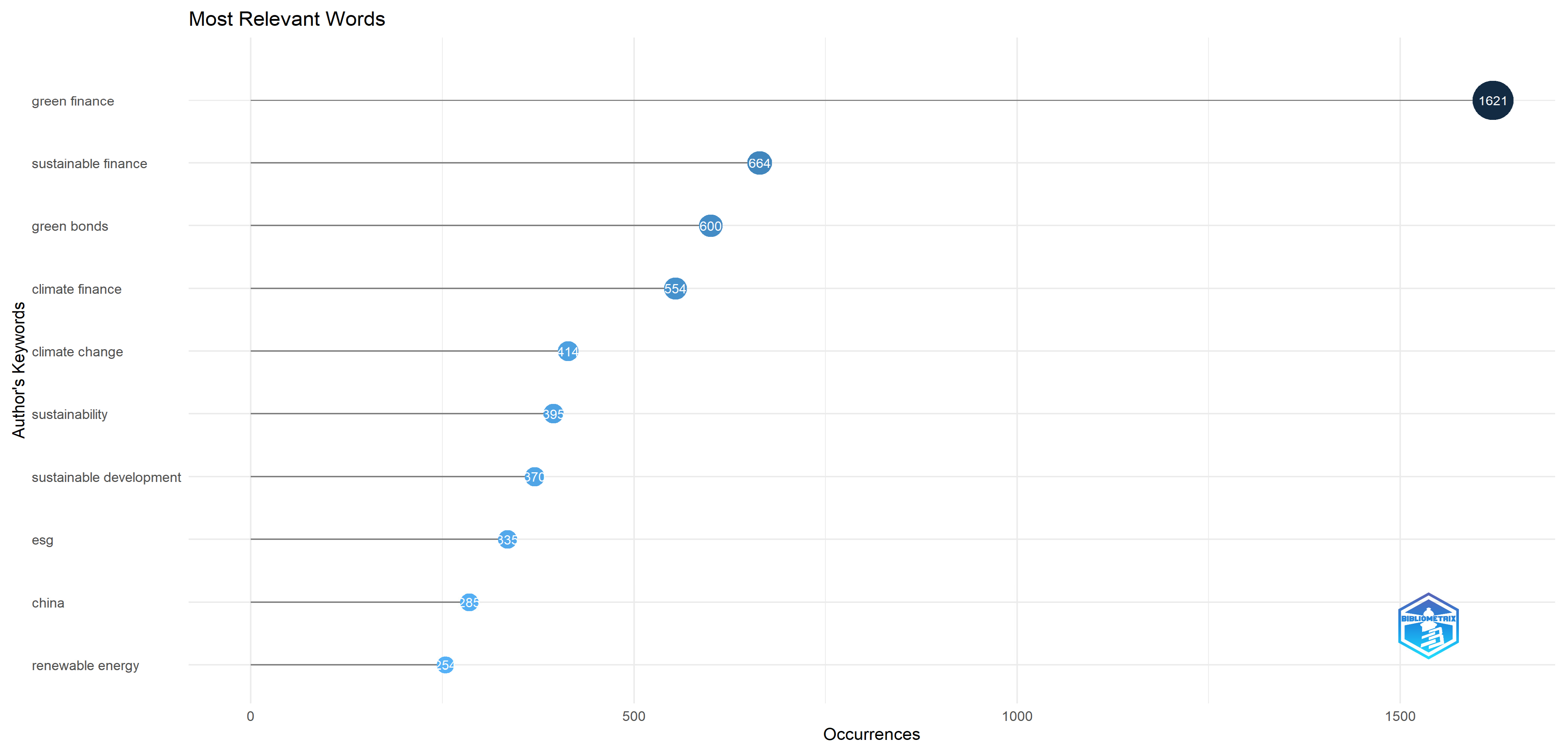
As shown in Figure 4 and Figure 5 and Table 3, The analysis of the most frequently used keywords in the scientific literature on green finance reveals a clear hierarchy of the concepts most commonly employed by researchers. Accordingly, the top ten ranked terms meaningfully reflect the dominant thematic axes shaping this rapidly expanding field of research. At the top of the list, the term ‘green finance,’ with 1621 occurrences, stands out as the lexical and conceptual cornerstone of the corpus. It represents the central node around which other concepts are organized, reaffirming its status as a key keyword in academic output. Close behind are ‘sustainable finance’ (664 mentions) and ‘green bonds’ (600), reflecting the growing interest in financial instruments dedicated to ecological transition and responsible investment.
Figure 4.
Frequency of keywords used by authors. Source: Scopus database, analyzed using Bibliometrix.
Figure 5.
Ranking of keywords by frequency of occurrence. Source: Scopus database, analyzed using Bibliometrix.
Table 3.
Frequency of the ten most frequently used author keywords.
The term ‘climate finance,’ appearing 554 times, broadens this perspective by highlighting the alignment of financial flows with global climate policy agendas. This orientation is further reinforced by the frequency of the term ‘climate change’ (414 occurrences), which underscores the increasingly central role of climate-related issues in contemporary financial discourse. However, broader concepts such as ‘sustainability’ (395 occurrences) and ‘sustainable development’ (370) serve as a reminder that green finance is not confined to an environmental logic alone but is embedded within a systemic vision of sustainable development, one that also encompasses economic and social dimensions (Dobre et al., 2015).
In parallel, the keyword ‘ESG’ (335 occurrences) reflects the growing prominence of non-financial criteria in investment evaluation, signaling a shift in priorities toward more responsible governance (Wang et al., 2023). Finally, the prominent presence of ‘China’ (285 occurrences) among the most frequent keywords highlights the major role played by the country in the development and global dissemination of green finance practices (Liu & You, 2023). The keyword ‘renewable energy,’ which rounds out the top ten with 254 mentions, further confirms the strong link between sustainable finance and the energy transition.
Overall, this selection of the ten most recurring keywords provides an accurate snapshot of the main thematic clusters structuring scientific research in green finance while also reflecting the evolving priorities and inquiries within this constantly shifting field.
3.5. Strategic Thematic Map Analysis: Conceptual Structure and Evolutionary Trajectories
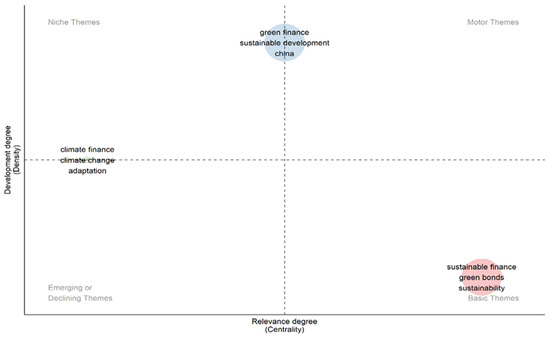
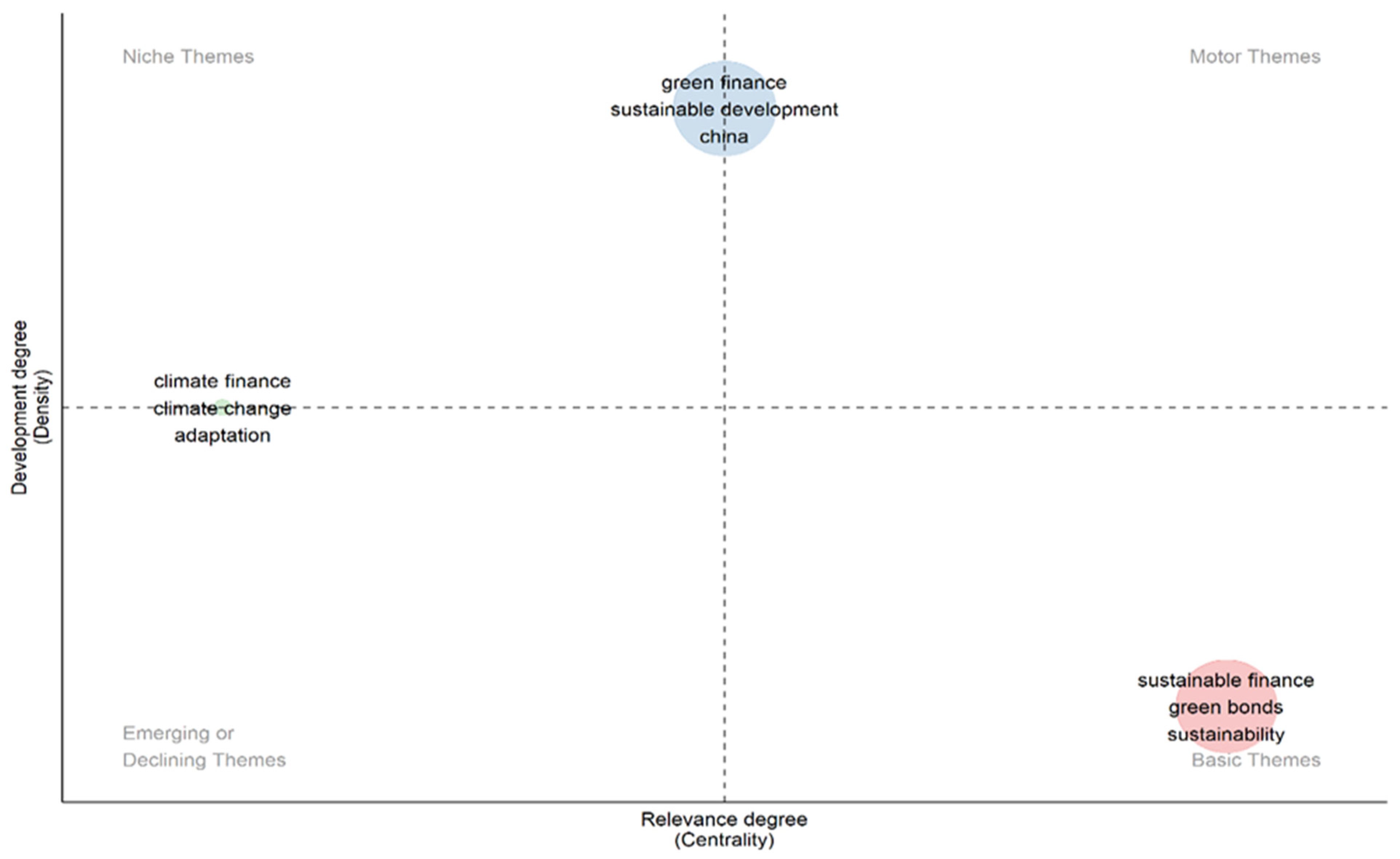
The thematic map generated using the Bibliometrix tool (Figure 6) provides a concise yet valuable representation of how the key concepts related to green finance are organized and interrelated within the scientific literature. By combining two key indicators, centrality, which measures a theme’s structural role within the overall field, and density, which reflects its degree of theoretical development, this visualization makes it possible to classify themes according to their maturity and strategic position within the research ecosystem (Aria & Cuccurullo, 2017).
Figure 6.
Thematic map of keywords. Source: Scopus database, analyzed using Bibliometrix.
In the upper part of the map, a cluster composed of ‘green finance,’ ‘sustainable development,’ and ‘China’ is positioned among the niche themes. These concepts are well-developed from a scientific standpoint, yet their connectivity with other research areas remains relatively limited. This configuration suggests a high degree of specialization, particularly within Asian contributions to sustainable finance, but also points to an underexploited potential for cross-domain integration (Tao & Chao, 2023; Wang & Zhi, 2016).
By contrast, the keywords ‘sustainable finance,’ ‘green bonds,’ and ‘sustainability,’ located in the lower-right quadrant, represent fundamental themes. Their high centrality underscores their essential role in structuring the field, while their still moderate density suggests that they offer room for further theoretical development. These concepts form the pillars upon which much of the recent research is built, particularly studies focusing on environmental performance and responsible investment mechanisms (Friede et al., 2015; Flammer, 2021).
In the lower-left quadrant of the map, concepts such as ‘climate finance,’ ‘climate change,’ and ‘adaptation’ appear as either emerging or declining themes. Their low density may reflect a dual trend: on one hand, a certain loss of momentum in their direct treatment; and on the other, a shift toward more specialized approaches, such as climate finance applied to emission reduction policies or green innovation (D’Orazio, 2022; Du et al., 2025).
Finally, it is noteworthy that no motor theme, defined as a concept that is both central and highly developed, appears to dominate at this stage. This absence may indicate a transitional phase in which the field is still seeking to consolidate its theoretical core. However, recent trends suggest that certain areas, such as green technological innovation or the environmental regulation of financial markets, could soon occupy this strategic position in the coming years (Chen et al., 2025).
Overall, the thematic map indicates that research on green finance is presently anchored in well-established and influential themes, including sustainable finance, green bonds, and sustainability, which continue to provide the field with its main conceptual foundations. In parallel, subjects such as climate finance, climate change, and adaptation seem to represent emerging or relatively less developed areas of inquiry, offering significant opportunities for future theoretical advancement and empirical exploration. Moreover, the lack of clearly dominant motor themes suggests that green finance is still an evolving research domain, marked by continuous expansion, increasing thematic diversity, and ongoing refinement of its conceptual frameworks.
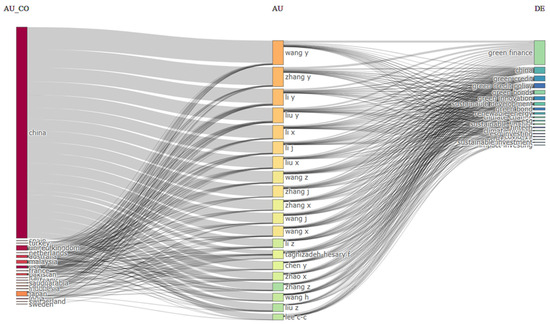
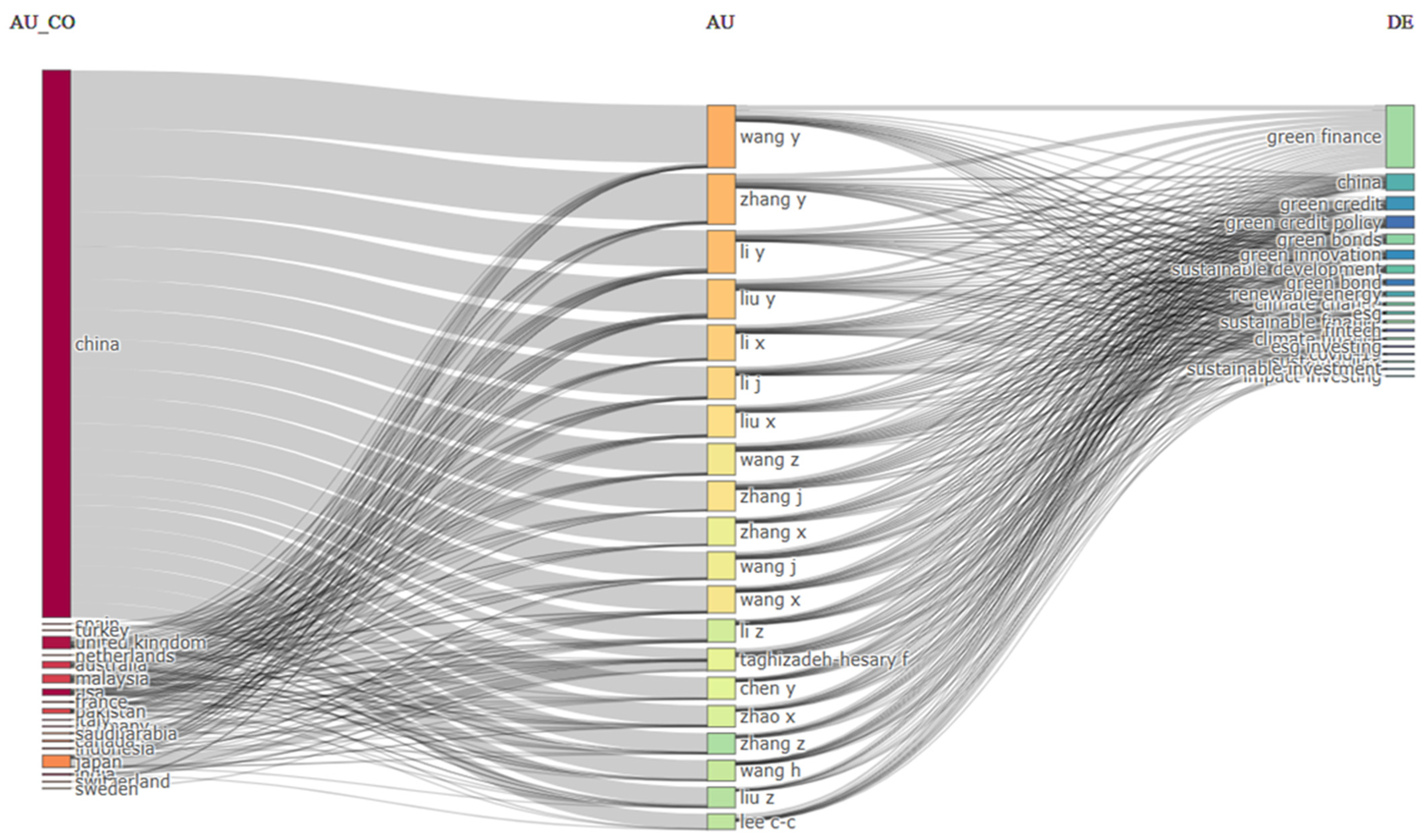
3.6. Tripartite Analysis of Scientific Contributions: Countries, Authors, and Dominant Themes
The visualization above (Figure 7) offers a tripartite analysis of scientific contributions in green finance by intersecting three fundamental dimensions: the leading research-producing countries, the most prolific authors, and the most frequently used keywords. This three-field plot thus enables the mapping of influence, output, and specialization relationships within a rapidly expanding field. First and foremost, it is evident that China dominates the academic landscape of green finance, both in terms of publication volume and the number of affiliated researchers. This hegemony is confirmed by several recent bibliometric studies that highlight China’s growing prominence in the areas of sustainable finance, green innovation, and environmental policy (Gyamerah & Asare, 2024).
Figure 7.
Tripartite mapping of scientific contributions. Source: Scopus database, analyzed using Bibliometrix.
Next, the most active authors, such as Wang Y., Zhang Y., Li Y., and Liu Y., are predominantly affiliated with Chinese institutions. Their high publication output suggests an institutional concentration of expertise around research centers specialized in green economics and transition finance (Chandran & Chandran MC, 2024). Moreover, the recurring presence of these authors within co-citation networks indicates that they also hold a central position in the dissemination and evolution of knowledge within the field. As for the keywords most commonly associated with these researchers, there is a clear dominance of structuring concepts such as green finance, green bonds, sustainable finance, green credit policy, and renewable energy. This reflects a strong anchoring of research in the economic and institutional dimensions of green finance, with a marked focus on financial instruments and support mechanisms for the ecological transition (Xie, 2024; Xie et al., 2024).
By extension, this chart (Figure 7) also reveals a thematic specialization by country: while China stands out for its massive output on institutional green finance, countries such as the United Kingdom, the United States, and Japan, less visible here but frequently present in Scopus databases, tend to focus on subtopics such as ESG investing, impact investing, and climate governance issues.
Beyond the sheer volume of publications, China’s prominent position within the tripartite network highlights a strong convergence between national research agendas, institutional backing, and the evolution of key themes in green finance. The close linkage between Chinese scholars and topics such as green credit, green bonds, and renewable energy underscores the country’s proactive policy efforts aimed at promoting sustainable finance and facilitating the transition toward a low-carbon economy. This observation suggests that China’s leading role in the field is driven not only by its substantial scientific output but also by its capacity to influence and shape the principal research trajectories that define the global green finance landscape.
3.7. Citation Analysis: Most Influential Authors and Intellectual Structure of the Field
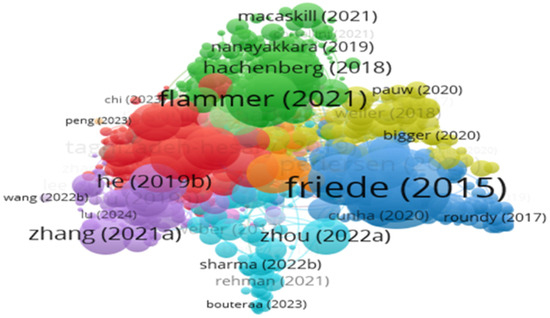
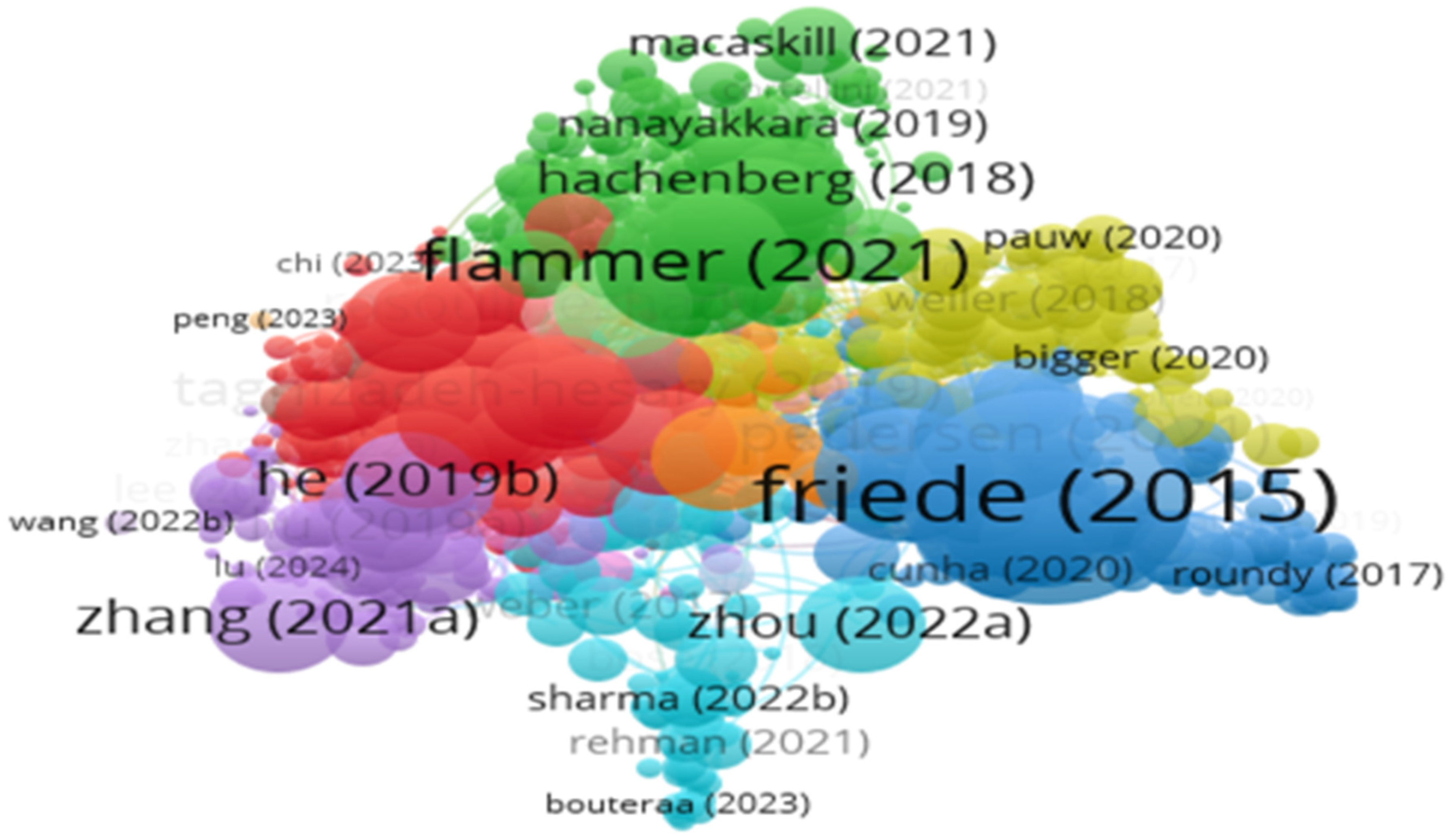
The study of co-citations provides additional insight into the structure of research in green finance by identifying the works most frequently cited together in the literature. This approach makes it possible to identify not only key reference authors but also the dominant intellectual currents that have shaped the field in recent years. The map above (Figure 8), generated from cross-citation data, reveals several centers of influence, represented by distinct color-coded clusters. Each node corresponds to an author or publication, and its size reflects the total number of citations received. The more frequently an author is co-cited with others, the more central their position within the network.
Figure 8.
Citation map of the most influential authors. Source: Scopus database, analyzed using VOSviewer.
Among the most prominent names on the map, the study by Friede et al. (2015) stands out clearly. This seminal work, now considered a cornerstone in the field, synthesizes over 2000 empirical studies on the financial performance of ESG investments. Its dominant position within the blue cluster reflects its widespread recognition as a theoretical anchor for numerous subsequent publications (Friede et al., 2015). Located nearby is Flammer (2021), whose research on green bonds and the impact of climate policies on firms has gained rapid recognition. Her growing influence, illustrated here by the size of the node within the green cluster, confirms the central role that the analysis of green financial instruments now occupies in contemporary scholarly debates (Flammer, 2021).
The analysis also highlights several other recurring authors, such as D. Zhang et al. (2021), He et al. (2019), and Taghizadeh-Hesary and Yoshino (2019), who are frequently associated with publications on energy transition, green credit policies, or emerging markets. These researchers are grouped within the red and purple clusters, suggesting the existence of a current oriented toward macroeconomic and regional analyses of sustainable finance, with a strong Asian presence. The green cluster, by contrast, brings together authors such as Hachenberg and Schiereck (2018), Nanayakkara and Colombage (2019), and MacAskill et al. (2021), indicating a more quantitative orientation focused on the performance of sustainable financial assets, risk modeling, and market-based finance applied to environmental challenges. The yellow cluster, dominated by Pauw et al. (2020), Bigger and Millington (2020), and Weiler (2018), reflects a more critical and institutionalist approach, exploring the relationships between climate governance, environmental justice, and development policy.
This co-citation network reveals the intellectual structure of the field. The most central, and often most cited, authors form the foundation upon which much of the recent research is built. The patterns in which publications are cited together help identify theoretical currents, as well as methodological divergences (quantitative vs. critical approaches), and even geographical specializations. In other words, co-citation patterns help delineate the contours of distinct schools of thought in green finance: on one side, a rigorous financial approach focused on ESG performance; on the other, broader, more systemic or institutional perspectives.
3.8. Bibliographic Coupling Analysis: Documentary Convergences and the Emergence of Research Clusters
Bibliographic coupling analysis enables the identification of publications that share a common set of references. In other words, two articles are considered coupled when they cite the same source documents, suggesting an intellectual or methodological proximity. This method highlights the most influential documents within the field while revealing the underlying connections that link various studies together.
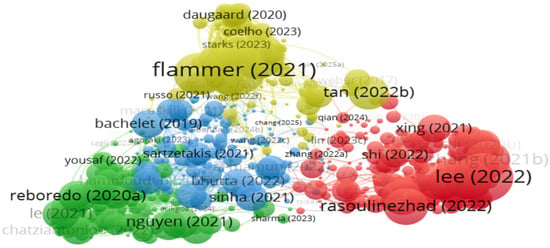
The map presented above (Figure 9) displays the main clusters of documents connected through shared references. The size of each bubble represents the bibliographic weight of an article, that is, the number of other works with which it shares references. The colors indicate the formation of document communities based on observed bibliographic similarities.
Figure 9.
Bibliographic coupling. Source: Scopus database, analyzed using VOSviewer.
Among all the publications analyzed, the article authored by Flammer (2021) holds a truly strategic position. It emerges as a central node on the reference map, distinguished by an impressive level of connectivity: this work is frequently cited alongside numerous other studies, granting it the role of a bibliographic pivot. Its dominant position reflects its major significance in current academic debates, particularly in exploring issues related to green bonds and the economic effects associated with sustainable finance (Flammer, 2021).
Surrounding this foundational reference are several clearly defined thematic clusters, each revealing specific content affinities and guiding research directions. First, the red cluster stands out, dominated by authors such as Lee and Lee (2022), Rasoulinezhad and Taghizadeh-Hesary (2022), and Xing et al. (2021). This group focuses its efforts on analyzing the macroeconomic dynamics related to green finance, with particular attention to the Asian region. These studies address core topics such as the energy transition, green credit policies, and environmental efficiency in emerging economies, thereby highlighting the structural challenges of financial sustainability in rapidly developing contexts. The blue cluster, meanwhile, brings together researchers such as Bachelet et al. (2019), Sartzetakis (2021), and Bhutta et al. (2022). These studies are more oriented toward the evaluation of sustainable financial instruments and the performance of ESG markets. They converge on a common foundation: understanding to what extent green finance can impact shareholder value and stock market returns, questions that are crucial for institutional investors and financial market participants.
On the left side of the graph, the green cluster brings together key figures such as Reboredo and Ugolini (2020), Nguyen et al. (2021), and Yousaf et al. (2022). This group places emphasis on the financial risks associated with sustainable finance. Drawing on quantitative approaches and tools from applied econometrics, these studies seek to untangle the links between financial sustainability and market volatility, offering nuanced insights into the stability of green assets in the face of economic shocks. Finally, somewhat peripheral but closely connected to the central hub represented by Flammer (2021), the yellow cluster stands out for its smaller size. It brings together recent studies, such as those by Tan and Zhu (2022) and Coelho et al. (2023), which explore emerging trends: new international regulations, impact finance, and the evaluation of climate policies on a global scale. This group introduces fresh perspectives by integrating strategic questions related to the evolution of sustainable financial standards and instruments.
This research landscape clearly shows that the structuring of the field is not limited to author prominence; rather, it is certain key documents that serve as foundational pillars around which numerous studies are organized. When an article is cited across multiple clusters, it reveals its ability to inform diverse lines of inquiry, a sign of strong intellectual cross-cutting relevance. Moreover, this organization reflects the progressive consolidation of the field: researchers now increasingly rely on a shared set of references that structure the theoretical foundation of the discipline. This academic maturity also fosters the emergence of specialized subfields, for instance, on the performance of green bonds, the macroeconomic impact of climate policies, or innovations driven by green fintech.
Ultimately, bibliographic coupling analysis provides a clear and dynamic mapping of scientific networks. It reveals fertile intersections between foundational publications and shows that recent studies, particularly those published between 2021 and 2023, are increasingly integrating seamlessly into these established networks. This confirms that green finance, far from being a passing trend, is becoming firmly rooted in the academic landscape.
3.9. Co-Citation Analysis of Cited References: Centers of Influence and the Structure of Shared Knowledge
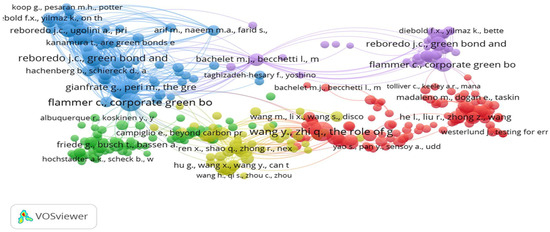
The co-citation analysis of cited references aims to identify the works that researchers consistently cite together in their publications. This method allows for the mapping of the theoretical and empirical pillars of the green finance field, revealing the authors and articles that constitute the shared intellectual foundation upon which recent literature is built. The map above (Figure 10) illustrates these co-citations by grouping together the authors most frequently cited jointly in bibliographies. The size of the bubbles indicates the frequency of co-citation, while the colors represent different clusters of references, suggesting distinct schools of thought or thematic approaches.
Figure 10.
Co-citation analysis of cited references. Source: Scopus database, analyzed using VOSviewer.
The co-citation analysis conducted using VOSviewer, based on references with a minimum threshold of 25 citations, reveals a clear and coherent structuring of the green finance domain into several distinct thematic clusters. A first group, strongly centered around the works of Reboredo (2018), Flammer (2021), and Gianfrate and Peri (2019), primarily explores green bond markets, their valuation dynamics, and their capacity to signal credible environmental commitment. A second cluster, dominated by authors such as Wang, He, and Zhong, focuses on the synergies between public policy, ecological innovation, and green finance, particularly in the Chinese context, where research activity has intensified significantly. In parallel, authors such as Friede et al. (2015) have established themselves as key references for studies examining the financial performance of responsible investments incorporating ESG criteria. Other contributions, such as those by Campiglio (2016) and Becchetti and Conzo (2022), adopt a more macroeconomic perspective by analyzing the role of monetary and fiscal policies in supporting the energy transition. Overall, this scientific mapping illustrates the rise of green finance as a fully fledged field of research, structured around multiple disciplinary approaches and undergoing continuous international expansion.
4. Conclusions
This bibliometric study provides a structured overview of the scientific evolution surrounding green finance, highlighting the interdisciplinary dynamics and research trajectories that have shaped the field over the past two decades. By employing advanced analytical techniques such as keyword mapping and bibliographic network visualization, it offers a comprehensive synthesis of the major thematic and methodological axes that are emerging. The results reveal a progressive shift from broad sustainability-oriented discussions toward more specialized themes such as green bonds, ESG investing, climate finance, and sustainable investment strategies, reflecting the increasing maturity of the field.
Three main contributions emerge from this approach. First, the study offers researchers a clear reference framework for better understanding the history, transformations, and dominant currents in green finance. Second, by tracing the evolution of key concepts (such as green finance, sustainable finance, green bonds, climate finance, climate change, sustainability, and sustainable development), it becomes possible to identify the intellectual nodes around which current research is organized. Third, the identification of citation and co-citation networks highlights the emergence of robust research clusters anchored in foundational works, reflecting the progressive structuring of the field and its evolution toward a clearly established intellectual maturity.
Beyond its academic scope, this mapping also carries practical implications for public policy and regulation. It encourages policymakers to adopt development strategies that are aligned with the regional specificities of green finance and to promote transnational cooperation. The pooling of technological innovations, the creation of targeted financial incentives, and the support of banking institutions are identified as key levers for fostering the emergence of a greener, more robust, and more inclusive ecosystem. If coordinated at the international level, these efforts could accelerate the restructuring of energy models and contribute to the transition toward a low-carbon economy.
Future research will need to better integrate the realities of countries in the Global South, which remain largely underrepresented in current studies. Particular attention should be devoted to Sub-Saharan Africa and Latin America, whose scientific contribution remains limited despite their increasing exposure to climate-related risks. Furthermore, emerging topics identified through recent keyword dynamics, including sustainability-linked bonds, climate risk disclosure, fintech-enabled green finance, and artificial intelligence applications in sustainable investment, deserve further investigation. More comparative and cross-country studies are also needed to better understand how institutional and regulatory environments influence the development of green finance. By leveraging recent analytical tools such as artificial intelligence, machine learning, and foresight simulation, researchers will be able to enhance diagnostics, refine impact assessment policies, and open up new avenues for action.
In sum, green finance has emerged as a strategic field at the intersection of economic, environmental, and societal dynamics. Its vitality lies as much in the strength of its scientific foundations as in its capacity to adapt to constantly evolving challenges. By documenting its progress, this study contributes to the emergence of a more systemic, inclusive, and operational vision of global financial sustainability. More broadly, the study identifies both mature research streams and emerging areas of inquiry, thereby providing a roadmap for future scientific research and policy development in green finance.
Author Contributions
Study design: Y.E.-c. and A.E.; Data analysis: Y.E.-c. and A.E.; manuscript preparation: Y.E.-c. and A.E. All authors have read and agreed to the published version of the manuscript.
Funding
This research received no external funding.
Institutional Review Board Statement
Not applicable.
Informed Consent Statement
Not applicable.
Data Availability Statement
The original contributions presented in this study are included in the article. Further inquiries can be directed to the corresponding author.
Acknowledgments
The authors used generative artificial intelligence tools (e.g., ChatGPT-5.5, OpenAI, is available at https://chatgpt.com/ (accessed on 11 November 2025)) to assist in language refinement, grammar correction, and improving the clarity of the manuscript. The AI tools were not used to generate original scientific content, data analysis, or results. All ideas, interpretations, and conclusions presented in this study are the sole responsibility of the authors.
Conflicts of Interest
The authors declare no conflicts of interest.
References
- Agliardi, E., & Agliardi, R. (2021). Corporate green bonds: Understanding the greenium in a two-factor structural model. Environmental and Resource Economics, 80, 257–278. [Google Scholar] [CrossRef] [Scilit] [PubMed]
- Akomea-Frimpong, I., Adeabah, D., Ofosu, D., & Tenakwah, E. J. (2021). A review of studies on green finance of banks, research gaps and future directions. Journal of Sustainable Finance & Investment, 12(4), 1241–1264. [Google Scholar] [CrossRef] [Scilit]
- Al Mamun, M., Boubaker, S., Hassan, M. Z., & Manita, R. (2025). Towards net zero: Implications of environmental regulations on green finance. Finance Research Letters, 79, 107299. [Google Scholar] [CrossRef] [Scilit]
- Alsmadi, A., Al-Matari, E. M., Al Kurdi, B., Ahmed, U., & Alshareef, M. (2023). A bibliometric analysis of green bonds and sustainable green energy: Evidence from the last fifteen years (2007–2022). Sustainability, 15(7), 5778. [Google Scholar] [CrossRef] [Scilit]
- Aria, M., & Cuccurullo, C. (2017). bibliometrix: An R-tool for comprehensive science mapping analysis. Journal of Informetrics, 11(4), 959–975. [Google Scholar] [CrossRef] [Scilit]
- Bachelet, M. J., Becchetti, L., & Manfredonia, S. (2019). The green bonds premium puzzle: The role of issuer characteristics and third-party verification. Sustainability, 11(4), 1098. [Google Scholar] [CrossRef] [Scilit]
- Becchetti, L., & Conzo, G. (2022). Preferences for climate change-related fiscal policies in European countries: Drivers and seasonal effects. Economia Politica, 39, 1083–1113. [Google Scholar] [CrossRef] [Scilit]
- Bhutta, U. S., Tariq, A., Farrukh, M., Raza, A., & Iqbal, M. K. (2022). Green bonds for sustainable development: Review of literature on development and impact of green bonds. Technological Forecasting and Social Change, 175, 121378. [Google Scholar] [CrossRef] [Scilit]
- Bigger, P., & Millington, N. (2020). Getting soaked? Climate crisis, adaptation finance, and racialized austerity. Environment and Planning E: Nature and Space, 3(3), 601–623. [Google Scholar]
- Campiglio, E. (2016). Beyond carbon pricing: The role of banking and monetary policy in financing the transition to a low-carbon economy. Ecological Economics, 121, 220–230. [Google Scholar] [CrossRef] [Scilit]
- Chandran, R., & Chandran MC, S. (2024). Green finance and sustainability: Mapping research development through bibliometric analysis. Discover Sustainability, 5, 339. [Google Scholar] [CrossRef] [Scilit]
- Chen, P., Sun, P., & Li, Z. (2025). A ride on the wave of “digital” and an advance towards “green”: The spatial and temporal impacts of the integration of digital and green finance on the pollution and carbon reduction performance in China. Sustainability, 17(6), 2584. [Google Scholar] [CrossRef] [Scilit]
- Coelho, R., Jayantilal, S., & Ferreira, J. J. (2023). The impact of social responsibility on corporate financial performance: A systematic literature review. Corporate Social Responsibility and Environmental Management, 30(3), 1334–1348. [Google Scholar] [CrossRef] [Scilit]
- Déséglise, C., & Freijido, D. L. (2019). Financing sustainable infrastructure at scale. Journal of International Affairs, 73(1), 33–48. [Google Scholar]
- Dobre, E., Stanila, G. O., & Brad, L. (2015). The influence of environmental and social performance on financial performance: Evidence from Romania’s listed entities. Sustainability, 7(3), 2513–2553. [Google Scholar] [CrossRef] [Scilit]
- D’Orazio, P. (2022). Mapping the emergence and diffusion of climate-related financial policies: Evidence from a cluster analysis on G20 countries. International Economics, 169, 135–147. [Google Scholar] [CrossRef] [Scilit]
- Du, Y., Chen, W., Dai, X., & Li, J. (2025). Research on the impact of carbon emission trading policies on urban green economic efficiency—Based on dual macro and micro perspectives. Sustainability, 17(6), 2670. [Google Scholar] [CrossRef] [Scilit]
- EU Technical Expert Group. (2020). Taxonomy: Final report. European Commission. Available online: https://ec.europa.eu (accessed on 4 August 2025).
- Flammer, C. (2021). Corporate green bonds. Journal of Financial Economics, 142(2), 499–516. [Google Scholar] [CrossRef] [Scilit]
- Friede, G., Busch, T., & Bassen, A. (2015). ESG and financial performance: Aggregated evidence from more than 2000 empirical studies. Journal of Sustainable Finance & Investment, 5(4), 210–233. [Google Scholar] [CrossRef] [Scilit]
- Gianfrate, G., & Peri, M. (2019). The green advantage: Exploring the convenience of issuing green bonds. Journal of Cleaner Production, 219, 127–135. [Google Scholar] [CrossRef] [Scilit]
- Gyamerah, S. A., & Asare, C. (2024). A critical review of the impact of uncertainties on green bonds. Green Finance, 6(1), 78–91. [Google Scholar] [CrossRef] [Scilit]
- Hachenberg, B., & Schiereck, D. (2018). Are green bonds priced differently from conventional bonds? Journal of Asset Management, 19, 371–383. [Google Scholar] [CrossRef] [Scilit]
- Han, J., & Gao, H. Y. (2024). Green finance, social inclusion, and sustainable economic growth in OECD member countries. Humanities and Social Sciences Communications, 11(1), 140. [Google Scholar] [CrossRef] [Scilit]
- He, L., Liu, R., Zhong, Z., Wang, D., & Xia, Y. (2019). Can green financial development promote renewable energy investment efficiency? A consideration of bank credit. Renewable Energy, 143, 974–984. [Google Scholar] [CrossRef] [Scilit]
- Hogarth, J. R. (2012). The role of climate finance in innovation systems. Climate and Development, 4(3), 257–273. [Google Scholar] [CrossRef] [Scilit]
- IFC. (2017). China green bond market 2017 report. International Finance Corporation. [Google Scholar]
- Johnson, C. L. (2000). Environmental finance: Sowing intellectual seeds to cultivate a new field. Journal of Public Affairs Education, 6(2), 123–128. [Google Scholar] [CrossRef] [Scilit]
- Lee, C.-C., & Lee, C.-C. (2022). How does green finance affect green total factor productivity? Evidence from China. Energy Economics, 107, 105863. [Google Scholar] [CrossRef] [Scilit]
- Liu, Q., & You, Y. (2023). FinTech and green credit development—Evidence from China. Sustainability, 15(7), 5903. [Google Scholar] [CrossRef] [Scilit]
- MacAskill, S., Roca, E., Liu, B., Stewart, R. A., & Şahin, O. (2021). Is there a green premium in the green bond market? Systematic literature review revealing premium determinants. Journal of Cleaner Production, 280, 124491. [Google Scholar] [CrossRef] [Scilit]
- Nanayakkara, M., & Colombage, S. (2019). Do investors in Green Bond market pay a premium? Global evidence. Applied Economics, 51(40), 4425–4437. [Google Scholar] [CrossRef] [Scilit]
- Ng, T. H., & Tao, J. Y. (2016). Bond financing for renewable energy in Asia. Energy Policy, 95, 509–517. [Google Scholar] [CrossRef] [Scilit]
- Nguyen, T. T. H., Naeem, M. A., Balli, F., Balli, H. O., & Vo, X. V. (2021). Time-frequency comovement among green bonds, stocks, commodities, clean energy, and conventional bonds. Finance Research Letters, 40, 101739. [Google Scholar] [CrossRef] [Scilit]
- OECD. (2020). Developing sustainable finance definitions and taxonomies. Available online: https://www.oecd.org/finance/ (accessed on 27 August 2025).
- Pauw, W. P., Castro, P., Pickering, J., & Bhasin, S. (2020). Conditional nationally determined contributions in the Paris Agreement: Foothold for equity or Achilles heel? Climate Policy, 20(4), 468–484. [Google Scholar] [CrossRef] [Scilit]
- Piao, X., & Mei, B. (2025). On the corporate performance of issuers of various green assets. Finance Research Letters, 78, 107177. [Google Scholar] [CrossRef] [Scilit]
- Rasoulinezhad, E., & Taghizadeh-Hesary, F. (2022). Role of green finance in improving energy efficiency and renewable energy development. Energy Efficiency, 15, 14. [Google Scholar] [CrossRef] [Scilit] [PubMed]
- Reboredo, J. C. (2018). Green bond and financial markets: Co-movement, diversification and price spillover effects. Energy Economics, 74, 38–50. [Google Scholar] [CrossRef] [Scilit]
- Reboredo, J. C., & Ugolini, A. (2020). Price connectedness between green bond and financial markets. Economic Modelling, 88, 25–38. [Google Scholar] [CrossRef] [Scilit]
- Sartzetakis, E. S. (2021). Green bonds as an instrument to finance low carbon transition. Economic Change and Restructuring, 54, 755–779. [Google Scholar] [CrossRef] [Scilit]
- Taghizadeh-Hesary, F., & Yoshino, N. (2019). The way to induce private participation in green finance and investment. Finance Research Letters, 31, 98–103. [Google Scholar] [CrossRef] [Scilit]
- Tan, Y., & Zhu, Z. (2022). The effect of ESG rating events on corporate green innovation in China: The mediating role of financial constraints and managers’ environmental awareness. Technology in Society, 71, 101906. [Google Scholar] [CrossRef] [Scilit]
- Tang, D. Y., & Zhang, Y. (2020). Do shareholders benefit from green bonds? Journal of Corporate Finance, 61, 101427. [Google Scholar] [CrossRef] [Scilit]
- Tao, Z., & Chao, J. (2023). A bibliometric and visualized analysis of research on green finance and energy in a global perspective. Research in Globalization, 7, 100156. [Google Scholar] [CrossRef] [Scilit]
- UNFCCC. (2015). The Paris agreement. Available online: https://unfccc.int/process-and-meetings/the-paris-agreement (accessed on 13 September 2025).
- Wang, Y., Liu, J., Yang, X., Shi, M., & Ran, R. (2023). The mechanism of green finance’s impact on enterprises’ sustainable green innovation. Green Finance, 5(3), 452–478. [Google Scholar] [CrossRef] [Scilit]
- Wang, Y., & Zhi, Q. (2016). The role of green finance in environmental protection: Two aspects of market mechanism and policies. Energy Procedia, 104, 311–316. [Google Scholar] [CrossRef] [Scilit]
- Weiler, F. (2018). Vulnerability, good governance, or donor interests? The allocation of bilateral adaptation aid from 2010 to 2015. World Development, 104, 65–77. [Google Scholar] [CrossRef] [Scilit]
- Xie, Y. (2024). The interactive impact of green finance, ESG performance, and carbon neutrality. Journal of Cleaner Production, 456, 142269. [Google Scholar] [CrossRef] [Scilit]
- Xie, Y., Jiang, J., & Wang, D. (2024). Green finance policy and labor demand: Evidence from China. Pacific-Basin Finance Journal, 86, 102434. [Google Scholar] [CrossRef] [Scilit]
- Xing, C., Zhang, Y., & Tripe, D. (2021). Green credit policy and corporate access to bank loans in China: The role of environmental disclosure and green innovation. International Review of Financial Analysis, 77, 101838. [Google Scholar] [CrossRef] [Scilit]
- Yang, B. (2025). Green finance instruments and empowering sustainability in East Asian economies. Humanities and Social Sciences Communications, 12(11), 11. [Google Scholar] [CrossRef] [Scilit]
- Yousaf, I., Suleman, M. T., & Demirer, R. (2022). Green investments: A luxury good or a financial necessity? Energy Economics, 105, 105745. [Google Scholar] [CrossRef] [Scilit]
- Zhang, D., Mohsin, M., Rasheed, A. K., Chang, Y., & Taghizadeh-Hesary, F. (2021). Public spending and green economic growth in BRI region: Mediating role of green finance. Energy Policy, 153, 112256. [Google Scholar] [CrossRef] [Scilit]
- Zhang, Z., Liu, Y., Han, Z., & Liao, X. (2022). Green finance and carbon emission reduction: A bibliometric analysis and systematic review. Frontiers in Environmental Science, 10, 929250. [Google Scholar] [CrossRef] [Scilit]

Disclaimer/Publisher’s Note: The statements, opinions and data contained in all publications are solely those of the individual author(s) and contributor(s) and not of MDPI and/or the editor(s). MDPI and/or the editor(s) disclaim responsibility for any injury to people or property resulting from any ideas, methods, instructions or products referred to in the content. |
© 2026 by the authors. Licensee MDPI, Basel, Switzerland. This article is an open access article distributed under the terms and conditions of the Creative Commons Attribution (CC BY) license.