


Abstract
As a key engine of corporate innovation, digital transformation permeates business management. Can digital transformation improve corporate financial flexibility by leveraging the external supply chain? Our sample comprises Chinese listed companies over the period from 2015 to 2024, employing Python 3.10 crawling to measure the degree of digital transformation and utilizing the entropy weight method to construct supply chain resilience. Using a moderated mediation model, this analysis examines how corporate innovation mediates the relationship between digital transformation and financial flexibility, and how supply chain resilience exerts a phased moderating effect along this pathway. The findings reveal the following: (1) Digital transformation has a positive effect on financial flexibility, where corporate innovation plays a mediating role. (2) The promoting effect of digital transformation on financial flexibility exhibits significant heterogeneity, varying with firm-specific micro-level characteristics and internal control quality. (3) Supply chain resilience plays a significant moderating role throughout the entire mediation path. It positively moderates the chain of “digital transformation → corporate innovation → financial flexibility”. This study provides empirical evidence on the mechanisms of digital transformation’s impact on corporate financial flexibility and offers a theoretical view for evaluating the outcomes of digital transformation from a financial perspective.
1. Introduction
Since the concept of the “Digital China” strategy was introduced, China has witnessed remarkable growth in its digital economy. Between 2015 and 2024, the productivity of China’s digital economy improved consistently, emerging as a critical driver of overall economic efficiency (Jiang & Li, 2024). Notably, industrial digitization now accounts for over 80% of the digital economy, signaling significant progress in the digital transformation of traditional industries through total factor productivity improvements. At the micro level, digital transformation has become a strategically imperative for firm survival and growth. Driven by both technological tides and supportive policies such as the push for the deep integration of digital and real economies, the macro environment provides a fertile ground for enterprise-level digital transformation (Kraus et al., 2021). This backdrop offers a unique setting to investigate how digital strategies translate into corporate financial outcomes.
There is a broad consensus among both academics and practitioners that the deep integration of the digital and real economies triggers profound transformations in economic paradigms, playing a pivotal role in achieving high-quality economic development (Zhai et al., 2022; Vial, 2021). However, despite this macro-level agreement, the specific mechanisms, impact pathways, and economic consequences of digital transformation at the firm level remain underexplored, leaving substantial room for further investigation.
Digital transformation is a systematic process that uses efficient data flows to optimize resource allocation across time and space, thereby buffering firms from operational uncertainties. This process is inherently complex and exploratory, necessitating intensified R&D and innovation efforts (Matt et al., 2015). While such endeavors generate learning costs and managerial expenses, they also promise potential improvements in financial performance and financial management capabilities. This duality implies that, regardless of the analytical lens adopted, the effects of digital transformation ultimately converge on corporate finance, either directly or indirectly. In other words, digital transformation cannot be fully understood without a financial perspective, and financial flexibility emerges as a critical dimension in this regard.
Financial flexibility, defined as a firm’s capacity to proactively adapt to dynamic financial environments and effectively manage financial uncertainties, can encompass both corporate cash flow management and financing capabilities (Wieland & Durach, 2021; Byoun, 2008). It reflects the firm’s comprehensive financial capacity to prepare for future uncertainties and seize opportunities. The extant literature has established that financial flexibility significantly influences dividend policies, corporate performance, and firm value (Xiao et al., 2013; Gamba & Triantis, 2008). However, prior studies have largely focused on isolated financial outcomes, such as cash flow or financing costs, overlooking the holistic impact of digital transformation on firms’ financial management capabilities. This study addresses this gap by adopting financial flexibility as an integrative lens.
Furthermore, existing research on the mechanisms underlying digital transformation pays insufficient attention to the firm’s external business environment, particularly supply chain relationships. As critical resources, relationships with upstream suppliers and downstream customers shape a firm’s operational resilience (Tukamuhabwa et al., 2015). Logistics disruptions and supply chain risks can be transmitted along nodes and affect corporate financial stability and vulnerability (X. Li et al., 2023). In this context, supply chain resilience serves as an important buffer against such disruptions and helps mitigate risk transmission and financial volatility. Nevertheless, supply chain resilience, as a key indicator of supply chain quality and management effectiveness, has been largely overlooked in the digital transformation literature. It is imperative to incorporate supply chain resilience as a boundary condition in this research domain.
Finally, corporate innovation constitutes a vital link in the chain through which digital transformation enhances firm operations and value creation (Bharadwaj et al., 2013; Chen et al., 2021). Whether the increased innovation investments driven by digital transformation ultimately empower firms directly determines their ability to reap the economic dividends of digitalization (Wen et al., 2022). However, the mediating role of corporate innovation, especially its potential heterogeneous effects remain insufficiently examined.
To address these theoretical gaps, our sample comprises Chinese listed companies over the period from 2015 to 2024 to investigate the impact of digital transformation on corporate financial flexibility. A moderated mediation model is constructed to examine the mediating role of corporate innovation and the moderating effect of supply chain resilience in this relationship. The study period covers several major exogenous shocks that underscore the importance of financial flexibility, including the US–China trade tensions, the COVID-19 pandemic, and the ensuing global supply chain disruptions. Such disruptions can transmit supply chain risks along nodes and threaten corporate financial stability (X. Li et al., 2023), while supply chain resilience serves as a critical buffer that mitigates this risk transmission and reduces financial volatility. Digital transformation can further strengthen firms’ ability to respond to these shocks by enhancing operational efficiency and information transparency. During these episodes, firms with stronger financial flexibility were better positioned to navigate liquidity shortages, sustain R&D investment, and capitalize on post-crisis opportunities. Consequently, understanding how digital transformation and supply chain resilience jointly shape financial flexibility offers direct insights into how firms can build financial buffers against macroeconomic uncertainty.
The main contributions of this paper are as follows. First, by introducing financial flexibility as the dependent variable, this study extends the research perspective beyond isolated financial indicators to explore the holistic impact of digital transformation on firms’ financial management capabilities. This deepens the understanding of how digitalization shapes corporate financial outcomes. Second, it employs a moderated mediation framework to comprehensively test the role of supply chain resilience along the “digital transformation → corporate innovation → financial flexibility” pathway. This approach simultaneously captures the bridging function of corporate innovation and the boundary condition imposed by supply chain resilience, offering a more nuanced understanding of the underlying mechanisms. Third, compared with other prior studies that focus on generic mediation analysis, this study focuses on the specific numerical values and effective intervals of the mediating effect of corporate innovation under different levels of supply chain resilience. These granular findings provide actionable insights for firms seeking to leverage their supply chain resilience to maximize the financial benefits of digital transformation.
The remainder of this paper is organized as follows. Section 2 reviews the theoretical literature and develops the research hypotheses. Section 3 describes the sample selection, variable definitions, and empirical models. Section 4 presents the empirical analysis, including descriptive statistics, correlation analysis, benchmark results, moderated mediation analysis, robustness tests, and heterogeneity analysis. Section 5 concludes the study, discusses the implications for enterprises and government authorities, and acknowledges the limitations of the research.
2. Theoretical Analysis and Research Hypotheses
2.1. Digital Transformation and Financial Flexibility
Digital transformation refers to the process by which firms integrate digital technologies into their operations, strategies, and value creation activities (Vial, 2021). It encompasses the adoption of technologies such as artificial intelligence, big data, cloud computing, and the Internet of Things, which fundamentally alter how firms operate and compete. The measurement of firm-level digital transformation in the literature follows two main approaches. The first uses textual analysis of annual reports, counting keywords related to digital technologies (Gu & He, 2026; Kraus et al., 2021). The second employs financial indicators such as digital intangible assets or IT capital expenditure (P. Li et al., 2025). Financial flexibility reflects the firm’s comprehensive financial capacity to prepare for future uncertainties and seize opportunities (Byoun, 2008). In the context of this study, we define financial flexibility more specifically as the speed and ability of a firm to mobilize internal cash reserves and attract external financing in response to crisis situations or market changes. This specification emphasizes two key dimensions: the speed of resource mobilization and the ability to access both internal and external financial sources under adverse conditions. From a resource-based view (RBV) perspective, financial flexibility can also be understood as a firm’s capacity to rapidly reallocate financial resources. This capacity is a valuable and difficult-to-imitate capability that supports strategic adaptation under uncertainty (Barney, 1991; Gamba & Triantis, 2008). The sources of financial flexibility are both internal and external. Internal sources include funds generated from asset disposals and adjustments to payout policies, provided these actions do not disrupt normal operations. External sources consist of equity and debt financing obtained from capital markets. Accordingly, financial flexibility encompasses two key dimensions: cash flexibility from internal sources and debt flexibility from external sources.
The importance of financial flexibility to corporate sustainability is well established. On the one hand, firms with greater financial flexibility can better manage financing costs when confronted with adverse shocks, thereby reducing the likelihood of financial distress and protecting firm value (Ross et al., 2017; Warner & Wäger, 2019). On the other hand, strong financial flexibility implies effective management of free cash flow, enabling firms to deploy resources promptly when investment opportunities arise and create firm value (Z. Liu et al., 2025). At the technological level, the nexus between digital transformation and financial flexibility is rooted in the deployment of advanced digital instruments, including data visualization, NFC payments, and cloud computing, across operational activities. The ensuing integration of these digital solutions into routine business operations, in turn, strengthens management capabilities via two key mechanisms. First, digital transformation generates significant synergy and spillover effects. These effects improve market efficiency and total factor productivity, which in turn contribute to better corporate performance (Fitzgerald et al., 2014). Given the positive relationship between firm performance and cash flow management, improvements in the latter naturally lead to greater cash flexibility. Second, digital transformation helps dismantle market barriers, mitigate information asymmetry, and reduce agency costs. These changes broaden firms’ financing channels and lower debt default rates. A lower default risk facilitates greater access to debt financing, thereby enhancing debt flexibility. This logic aligns with dynamic capability theory, which posits that firms must continuously integrate, build, and reconfigure resources to respond to rapidly changing environments (Teece et al., 1997). Digital transformation serves as a dynamic capability that reshapes how firms acquire and deploy financial resources to enhance financial flexibility.
Taken together, these arguments suggest that digital transformation can directly enhance financial flexibility by strengthening both its cash-based and debt-based dimensions. Hence, we propose the following hypothesis:
H1.
Digital transformation can positively improve a firm’s financial flexibility.
2.2. The Mediating of Corporate Innovation
The digital era has accelerated the flow of technological resources by breaking down information barriers, enabling firms to more readily access external knowledge and technologies (Bahoo et al., 2023). Meanwhile, digital transformation raises operational standards and intensifies market competition, prompting firms to increasingly invest in innovative technologies and R&D activities (Q. Li et al., 2023; P. Zhang et al., 2024). This evidence suggests that digital transformation has the ability to stimulate corporate innovation.
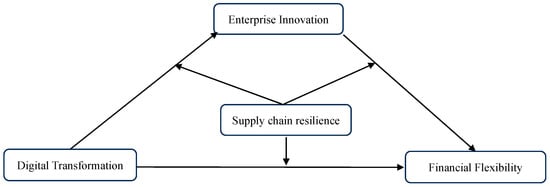
Innovation activities run through all stages of business operations and are inherently linked to corporate finance. As such, they inevitably influence financial flexibility. This logical relationship suggests that corporate innovation may serve as a mediating mechanism in the relationship between digital transformation and financial flexibility (Chu et al., 2019). Specifically, digital transformation may enhance financial flexibility by stimulating corporate innovation activities. Figure 1 illustrates this indirect pathway.
Figure 1.
The Indirect Path of Digital Transformation Affecting Financial Flexibility.
Hence, the hypothesis to be tested in this study is as follows:
H2.
Enterprise innovation mediates the relationship between digitization level and financial flexibility.
2.3. The Moderating of Supply Chain Resilience
Resilience refers to a system’s ability to adapt to environmental changes, thereby mitigating uncertainties and maintaining stability. In the economic context, resilience encompasses not only the capacity to quickly withstand and recover from external shocks, but also the ability to continuously transform and upgrade resource structures (Atieh Ali et al., 2024). Building on this conceptual foundation, this study defines supply chain resilience as a firm’s capacity to respond to internal and external environmental disturbances affecting its supply chain relationships (Ponomarov & Holcomb, 2009). Specifically, it measures the firm’s ability to maintain stable supply chain relationships, rapidly adjust and restore operations after disruptions, and even seize opportunities for transformation upgrading (Behzadi et al., 2020).
Supply chain relationships constitute a critical strategic resource for firms. The concentration of upstream suppliers and downstream customers reflects the distribution of stakeholder relationships along the supply chain and plays a vital role in fostering inter-firm collaboration and promoting economic development among trading parties (P. Li et al., 2025). Close supply chain relationships enable firms to strengthen coordination with stakeholders, gain competitive advantages, achieve mutual gains, and enhance the overall value of the supply chain (Dubey et al., 2023). Moreover, supply chain stability is closely tied to operational efficiency. Firms with higher supply chain efficiency can accelerate the turnover of raw material procurement and product sales, as well as generate sustained and stable cash flows (Zhao et al., 2023).
In the context of global economic uncertainty and frequent operational disruptions, supply chain risks may transmit along chain nodes and exacerbate corporate financial vulnerability (X. Li et al., 2023). Maintaining stable relationships with upstream and downstream stakeholders while accelerating supply chain upgrading has thus become an urgent priority for firms. Due to the close link between supply chain resilience and corporate financial performance, the role of supply chain resilience is essential when examining the effects of digital transformation and innovation on financial flexibility (P. Li et al., 2025).
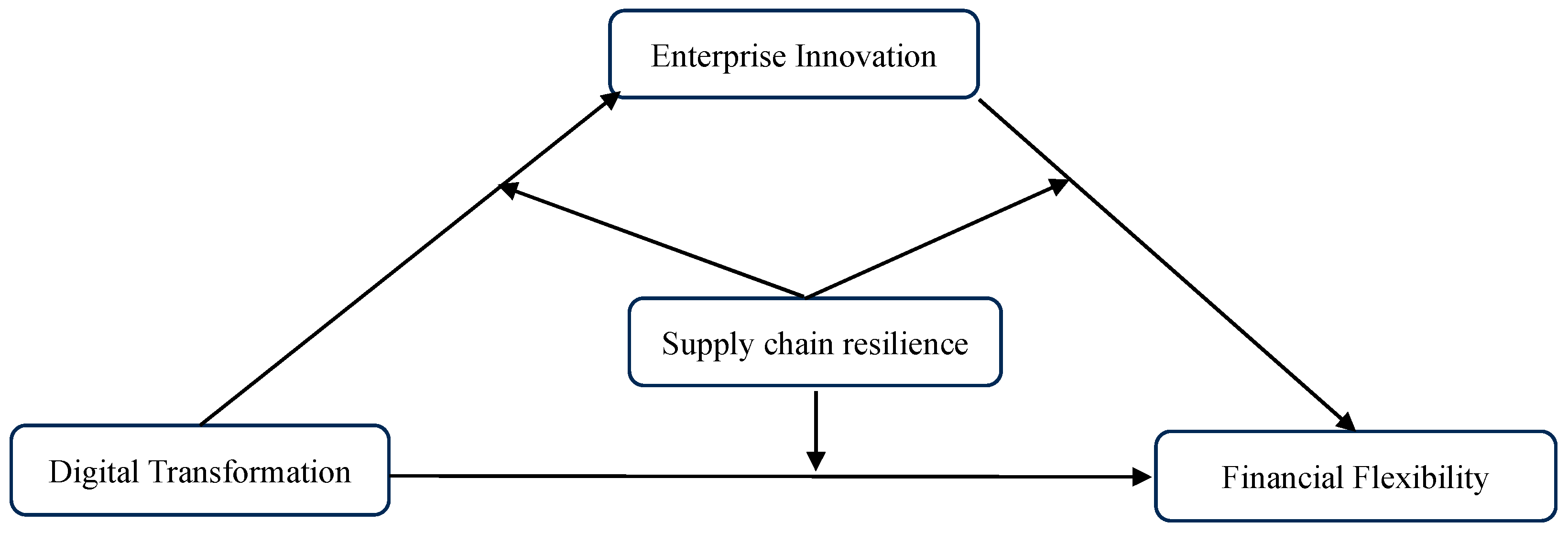
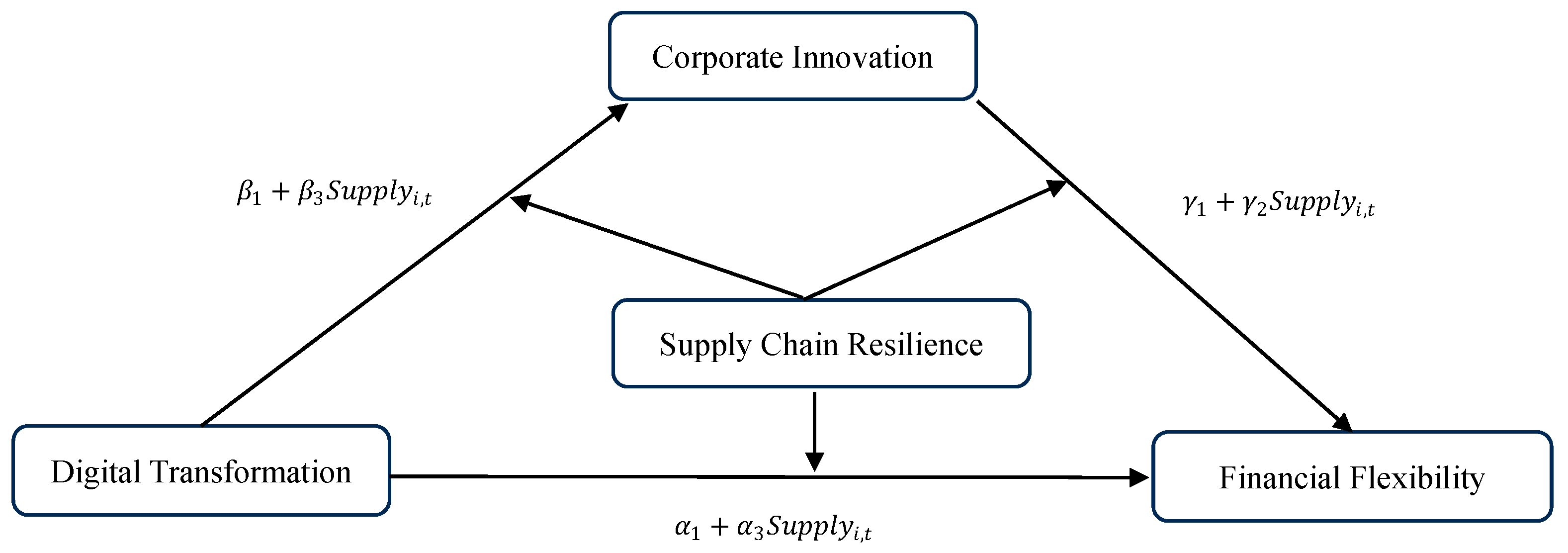
For theoretical analysis, resource dependence theory (RDT) offers a complementary lens for understanding the moderating role of supply chain resilience (Pfeffer & Salancik, 1978). RDT suggests that firms’ strategic outcomes are shaped by their dependence on external actors who control critical resources. Supply chain relationships with upstream suppliers and downstream customers represent a key source of such dependence. Firms with low supply chain resilience face high dependence on specific partners, making them vulnerable to disruptions in material supply or product demand. Conversely, high supply chain resilience reduces this dependence, granting firms greater strategic discretion. In the context of our study, RDT implies that the benefits of digital transformation and corporate innovation for financial flexibility should be amplified when supply chain resilience is high (reduced dependence) and diminished when it is low (heightened vulnerability). Specifically, firms with strong supply chain resilience are better positioned to sustain the “procurement → production → sales” cycle even under macroeconomic downturn pressures, alleviating financing constraints and securing operating cash flows in a timely manner. Furthermore, supply chain resilience influences firms’ strategic decisions and operational choices. Firms with higher supply chain resilience tend to exhibit stronger innovation orientation. To maintain their market advantages, they are often early movers in pursuing digital transformation and intensifying R&D efforts (Modgil et al., 2022). These dynamics suggest that supply chain resilience may exert a moderating effect along the “digital transformation → corporate innovation → financial flexibility” pathway, as illustrated in Figure 2.
Figure 2.
Moderate Effect of Supply Chain Resilience.
Hence, the hypothesis to be tested in this study is as follows:
H3.
Supply chain resilience moderates the mediating pathway of “digital transformation → corporate innovation → financial flexibility”.
3. Research Design
3.1. Sample Selection and Data Sources
This study employs Chinese A-share listed companies on the Shanghai and Shenzhen Stock Exchanges from 2015 to 2024 as the initial sample. Data on digital transformation are obtained through textual analysis of annual reports using Python 3.10, and financial data are sourced from the CSMAR database.
To ensure the robustness of the findings, the sample is refined as follows: (1) firms in the financial industry are excluded; (2) observations from the listing year are removed; (3) observations with missing or abnormal financial indicators are excluded; (4) observations with severe data missing are eliminated. These procedures generate a final sample comprising 6414 firm-year observations. To reduce the influence of outliers, we winsorize all continuous variables at the 1st and 99th percentiles.
3.2. Variable Definition
3.2.1. Dependent Variable: Financial Flexibility ()
According to the research of Byoun (2008), this study defines financial flexibility as the sum of cash flexibility ) and debt flexibility . These two components operationalize the two dimensions of our conceptual definition: cash flexibility captures the internal mobilization ability, while debt flexibility captures the external financing ability. Cash flexibility is defined as the difference between a firm’s cash holding ratio and the industry average cash holding ratio, which means the enterprises have the ability of payment with a highly flexible cash flow. Debt flexibility is defined as Max (0, industry average debt ratio–a firm’s actual debt ratio), which means the enterprises have the ability to obtain external financing at any time with a lower financial leverage.
3.2.2. Independent Variable: Digital Transformation
The measurement of firm-level digital transformation in the literature follows two main approaches. The first uses textual analysis of annual reports, counting keywords related to digital technologies (Gu & He, 2026; Kraus et al., 2021). The second employs financial indicators such as digital intangible assets or IT capital expenditure (P. Li et al., 2025). Textual measures may capture disclosure strategies rather than actual investment, while financial measures may underestimate digital activities that are expensed. Following recent studies in the Chinese context, we adopt the textual approach as our primary measure and use a financial-based alternative in robustness checks.
Following Gu and He (2026), this study employs textual analysis to measure the degree of corporate digital transformation. Specifically, using Python 3.10 web crawling, we first download all annual reports of A-share listed companies from 2014 to 2023 from the official websites of the Shanghai and Shenzhen Stock Exchanges. Then we pre-process annual reports by removing punctuation, numbers, and stop words, perform tokenization using the Jieba segmentation library, and count keyword occurrences (Loughran & McDonald, 2016; Gentzkow et al., 2019). A keyword dictionary is then constructed across five technological dimensions: artificial intelligence, big data, blockchain, cloud computing, and digital technology applications. As presented in Table 1, these keywords are extracted and refined from relevant digital transformation reports and closely align with the concept of “digitalization,” capturing both the pace and quality of firms’ digital transformation in the digital economy era. Finally, the digital transformation indicator is constructed as the natural logarithm of one plus the total frequency of these keywords appearing in each annual report. This textual measurement captures a firm’s disclosed strategic commitment to digital technologies. However, it may miss digital activities that are not voluntarily disclosed or are embedded in routine operations without explicit keyword mention. Conversely, it may overstate digitalization if firms engage in superficial disclosure without substantive investment. We partially address this limitation by employing a financial-based alternative measure in robustness checks.
Table 1.
Keywords for Corporate Digital Transformation.
3.2.3. Mediating Variable: Corporate Innovation ()
Following prior studies (Q. Zhang & Yang, 2023), we measure corporate innovation using R&D intensity, calculated as R&D expenses scaled by main business revenue. This normalization accounts for heterogeneity in firm size.
3.2.4. Moderating Variable: Supply Chain Resilience ()
The entropy weight method is an objective weighting approach that determines weights based on the information content of indicators, thereby effectively avoiding subjectivity bias (P. Liu & Zhang, 2011). Although the prior literature has largely concentrated on the role of customer demand in shaping firm operations, the determinants of supply chain resilience are considerably broader and more multifaceted. Regarding the measurement of supply chain resilience, this study focuses on three indicators: supplier concentration, customer concentration, and supply chain efficiency. First, supplier and customer concentration capture the redundancy dimension of resilience. A firm with low concentration maintains a diversified base of suppliers and customers, making it less dependent on any single external partner (S. Zhang et al., 2018). In this way, they are better able to withstand disruptions from specific upstream or downstream shocks (Behzadi et al., 2020). Second, measured by inventory turnover and cash conversion cycles, supply chain efficiency can better capture the speed dimension of resilience. Efficient supply chains can quickly restore normal operations after a disruption and maintain stable cash flows (Tukamuhabwa et al., 2015). Therefore, we measure supply chain resilience using three indicators: supplier concentration, customer concentration, and supply chain efficiency. The entropy weight method is then invoked to synthesize these indicators into one composite measure. This method assigns weights in an objective manner, drawing on the informational richness of each indicator, so as to preclude any arbitrary or subjective interference.
3.2.5. Control Variables
Following the related literature (Ali et al., 2019; Bai et al., 2024), we include a set of control variables that may influence corporate financial flexibility, including Size , Debt-to-Asset Ratio , Ownership Concentration (), CEO/Chairman duality (), Return on Equity (), Tobin’s Q () and Listing Age (). The variable definitions are shown in Table 2.
Table 2.
Variables.
3.3. Model Setting
For testing the hypotheses, we employ a moderated mediation model. This framework integrates both mediating and moderating effects, where the independent variable influences the dependent variable through a mediator, and this indirect effect is contingent upon a moderator.
Following the stepwise analytical approach, we examine the pathways through which digital transformation affects financial flexibility. Moreover, we quantify the magnitude and effective intervals of the mediating effect of corporate innovation, conditional upon the moderating role of supply chain resilience. The specific estimation procedure is as follows:
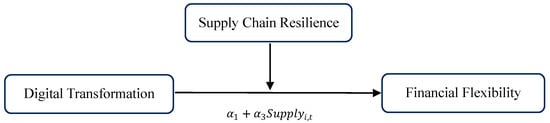
The first step is to verify whether the direct impact of digital transformation on financial flexibility is moderated by supply chain resilience (see Figure 3).
Figure 3.
Full Path Moderation.
The specific moderating model formula is as follows:
In Formula (1), i represents enterprises, and t represents the year. The dependent variable is Financial Flexibility (FF), which is the sum of cash flexibility and debt flexibility. Digital transformation () is a core independent variable. is the indicator of supply chain resilience. is the constant term. represents the set of control variables. is the random error term. In addition, in order to mitigate the interference caused by omitted variables, this study also includes industry fixed effects and year fixed effects . If is obvious, supply chain resilience moderates the direct effect between digital transformation and financial flexibility. Furthermore, the influence of corporate digital transformation on financial flexibility is .
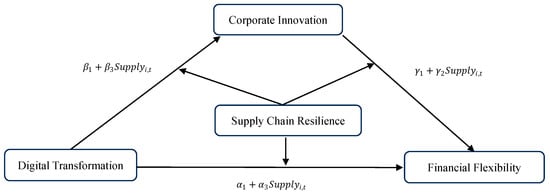
The second step is to examine the mediating effect of digital transformation on financial flexibility through enterprise innovation, and whether this mediating effect is moderated by supply chain resilience (Figure 4).
Figure 4.
Moderated Mediating Effect.
Two regression analyses are conducted in sequence.
Equation (2) captures the first half of the mediation pathway, testing whether supply chain resilience moderates the effect of digital transformation on corporate innovation. A statistically significant coefficient would indicate that supply chain resilience moderates this first-stage relationship. Under this specification, the marginal effect of digital transformation on corporate innovation is given by .
Formula (3) is the second half of the path for mediating effects. It examines whether supply chain resilience has a moderating effect on the relationship between corporate innovation and financial flexibility. If is obvious, supply chain resilience moderates the second half of the path. At the same time, the effect of corporate innovation on financial flexibility is .
4. Empirical Results and Discussion
4.1. Descriptive Statistics
Table 3 presents the main variables’ descriptive statistics. The mean value of financial flexibility is 0.128, with some firms exhibiting negative values, indicating that the overall level of financial flexibility among Chinese listed companies is relatively low and has considerable room for improvement. The standard deviations of digital transformation and corporate innovation are 1.231 and 5.358, respectively, suggesting substantial variation across sample firms.
Table 3.
Descriptive Statistical Results.
4.2. Correlation Analysis
Table 4 reports the correlation coefficients among the main variables. Digital transformation (Dig) is positively correlated with financial flexibility (FF). Corporate innovation (RD) exhibits significant positive correlations with both Dig and FF. Supply chain resilience (Supply) is significantly correlated with both RD and FF. However, the causal relationships among these variables require further empirical testing. The control variables also show significant correlations with financial flexibility. Size is negatively correlated with FF, indicating that larger firms tend to have lower financial flexibility. Lev is negatively associated with FF, suggesting that higher debt levels reduce financial flexibility. ROE is positively correlated with FF, implying that more profitable firms enjoy greater financial flexibility.
Table 4.
Results of Correlation Analysis.
To assess multicollinearity, variance inflation factors (VIFs) are calculated for all variables. The VIF values are all below 3, with a mean of 2.17, indicating that multicollinearity is not a serious concern in this study.
4.3. Benchmark Test and the Mediation Effect of Corporate Innovation
We first test the mediating role of corporate innovation in the relationship between digital transformation and financial flexibility without considering the moderating effect of supply chain resilience. The regression results are presented in Table 5.
Table 5.
Benchmark Test and Mediating Effect of Corporate Innovation.
Column (1) reports the direct effect of digital transformation () on financial flexibility (). The coefficient is positive and statistically significant, indicating that digital transformation enhances corporate financial flexibility. Thus, Hypothesis H1 is supported. Columns (2) and (3) examine the mediating effect of corporate innovation (). The results show that partially mediates the relationship between and , with a mediating effect size of . This suggests that firms with higher levels of digital transformation tend to increase innovation investment, which in turn improves their financial condition and enhances financial flexibility.
To test the robustness of the mediating effect, we conduct Sobel and bootstrap tests based on the baseline regression, which are presented in Table 6 and Table 7. The Sobel test results show that the coefficients of the indirect effect and direct effect are 0.002 and 0.008, respectively, both significant at the 1% level. This confirms that corporate innovation partially mediates the relationship between digital transformation and financial flexibility. The bootstrap test results, reported in Table 7, further support this finding. The confidence intervals for both the direct effect (bs_1) and the indirect effect (bs_2) exclude zero, indicating that the mediating effect remains significant. Taken together, these results provide robust evidence for Hypothesis H2.
Table 6.
Sobel Test.
Table 7.
Bootstrap Test.
4.4. Test of Moderated Mediation Effect
Building on the mediation model, we further examine how supply chain resilience shapes the mediating pathway through which digital transformation affects financial flexibility. The regression results are presented in Table 8.
Table 8.
Test of Moderated Mediation Effect with Supply Chain Resilience.
Column (1) reports the interaction term between supply chain resilience and digital transformation (Supply × Dig). The coefficient is 0.0237, significant at the 5% level, indicating that supply chain resilience positively moderates the direct effect of digital transformation on financial flexibility. This direct effect can be expressed as a linear function of supply chain resilience: , implying that higher supply chain resilience strengthens the positive effect of digital transformation on financial flexibility.
Turning to the mediating pathway, Column (2) presents the interaction term in the innovation equation. The coefficient is 0.7955, significant at the 1% level, suggesting that supply chain resilience moderates the first stage of the mediation process (digital transformation → corporate innovation). The effect of digital transformation on innovation is , indicating that supply chain resilience amplifies the positive relationship between digital transformation and innovation activities. Column (3) further reveals that supply chain resilience also moderates the second stage of the mediating pathway (corporate innovation → financial flexibility), as evidenced by the significant positive coefficient of the interaction term Supply × RD (0.0139, p < 0.01). The effect of innovation on financial flexibility is conditional on supply chain resilience, taking the form of . This pattern represents a statistically supported conditional relationship rather than a fully observed managerial causal process. When Supply <0.158, the conditional effect is negative. This result suggests that firms with low supply chain resilience face greater constraints in resource coordination, cash flow stability, and risk resistance. Under such conditions, increased innovation investment may raise short-term financial pressure and reduce financial flexibility. When Supply exceeds 0.158, the conditional effect turns positive, indicating that stronger supply chain resilience helps firms translate innovation inputs into operational efficiency and stable cash flows, thereby improving financial flexibility.
Taken together, these results confirm that the mediating pathway “digital transformation → corporate innovation → financial flexibility” is significant and is moderated by supply chain resilience at both its first and second stages. Thus, Hypothesis H2 is further validated, and Hypothesis H3 is supported.
4.5. Robust Test
4.5.1. Alternative Measurement of Independent Variable
The textual analysis based on annual report keyword frequency is adopted as the primary measure of corporate digital transformation in this study. This approach captures firms’ strategic disclosure and external positioning regarding digital development, which covers multiple dimensions, including artificial intelligence, big data, blockchain, cloud computing, and digital technology application. However, this indicator may inevitably reflect firms’ digital rhetoric or voluntary disclosure intensity rather than actual digital investment and operational practices. For mitigating the potential measurement bias, we measure digital transformation with the ratio of digital-related intangible assets to total assets, named as . We further use the ratio of digital-related intangible assets to total assets as an alternative financial indicator. This financial measure focuses on firms’ substantial capital investment in digital construction rather than their disclosure strategies, partially mitigating the potential measurement noise associated with keyword-based textual analysis.
Table 9 presents the regression results using as the alternative independent variable. Columns (1) to (3) report the results for financial flexibility, corporate innovation, and the moderated mediation model, respectively.
Table 9.
Results of the Alternative Measurement of the Independent Variable.
The results show that in Column (1), the coefficient of is 0.0081 and significant at the 5% level, consistent with the baseline finding. In Column (2), the coefficient of is 0.1724 (p < 0.1), and the interaction term is 0.7888 (p < 0.01), indicating that supply chain resilience positively moderates the relationship between digital transformation and corporate innovation. In Column (3), the coefficient of is −0.0022 (p < 0.1), and the is 0.0135 (p < 0.01), both consistent in sign and significance with the baseline results reported in Table 8. The empirical results based on the two distinct measurement methods are highly consistent in coefficient sign and statistical significance. This outcome verifies that our main findings are not driven by firms’ annual report disclosure behaviors, and the positive relationship between digital transformation and corporate financial flexibility is robust.
4.5.2. Sensitivity Test for Entropy Weights
To address the concern that the entropy weighting scheme may influence our results, we construct an alternative supply chain resilience measure using equal weights. Specifically, we take the arithmetic mean of the three standardized indicators: supplier concentration, customer concentration, and supply chain efficiency. This equally weighted measure () does not rely on the information content of each indicator and serves as a robustness check against the potential subjectivity of the entropy weight method.
The re-estimate results using are reported in Table 10. Columns (1) to (3) correspond to the same specifications as in Table 10. All core coefficients remain consistent in sign, significance, and magnitude with the baseline results reported in Table 8. This sensitivity test confirms that our findings are not driven by the specific weighting method used to construct the supply chain resilience index.
Table 10.
Results of the Sensitivity Test for Entropy Weights.
4.5.3. Instrumental Variable Test
To address potential reverse causality, we employ an instrumental variable approach and re-estimate the model using two-stage least squares (2SLS).
Following Wang et al. (2024), we construct a provincial-level digitalization index using the entropy weight method based on four indicators: provincial internet penetration rate, the proportion of employees in the IT field, software, and IT services sector, mobile phone penetration rate, and the Peking University Digital Financial Inclusion Index. This index serves as the instrumental variable. The relevance condition is satisfied because a firm’s digital transformation is closely related to the level of digital infrastructure and digital adoption in its province. Regarding the exclusion restriction, while provincial digital conditions may correlate with local financing environments, this concern is largely absorbed by our comprehensive set of controls, including year fixed effects, industry fixed effects, and firm-level financial characteristics.
The 2SLS regression results are reported in Table 11. The first stage F statistic for the excluded instrument is 24.37, exceeding the conventional threshold of 10 proposed by Stock and Yogo (2005). This rejects the null hypothesis of weak instrument bias, confirming the relevance of the provincial digitalization index as an instrument for firm-level digital transformation. We acknowledge that the provincial digitalization index may correlate with local financing environments and regional innovation ecosystems, posing potential challenges to the exclusion restriction of the instrumental variable. To mitigate this concern, we include a full set of firm-level control variables, together with industry and year fixed effects to absorb unobserved macroeconomic and time-varying factors. Overall, the IV results mainly serve to mitigate reverse causality concerns and strengthen the robustness of our findings.
Table 11.
Results of the Instrumental Variable Test.
4.6. Heterogeneity Test
4.6.1. Heterogeneity Test Based on Enterprise Nature
The positive effect of digital transformation on financial flexibility documented above may vary across firms with different micro-level characteristics. To gain a more comprehensive understanding of this relationship, we conduct subgroup analyses based on geographical location and internal control quality. The results are presented in Table 12.
Table 12.
Heterogeneity Test by Enterprise Nature.
Columns (1) and (2) of Table 12 report the subsample regression results by region. In the eastern region subsample, the coefficient of is 0.0124, significant at the 1% level, indicating that digital transformation significantly enhances financial flexibility. In the non-eastern region subsample, however, the coefficient is positive but not statistically significant, suggesting that the effect of digital transformation on financial flexibility is more pronounced in eastern regions. This regional disparity may be attributed to several interconnected factors. Eastern regions benefit from more developed economies and higher digital levels, which create a favorable macro-environment for digital transformation. Moreover, intensified market competition in these regions has rendered traditional business models less viable, strengthening firms’ incentives to pursue digital transformation for sustainable development. Additionally, the geographical advantages of eastern regions facilitate more frequent international exchanges, fostering innovation capabilities that provide technological support for digital advancement. Consequently, firms in eastern regions tend to achieve more effective digital transformation and, in turn, greater improvements in financial flexibility compared to their counterparts in other regions.
We follow Luo and Tian (2023) in measuring internal control quality by using the logarithmic transformation of the internal control index provided from the DIB Database. Firms are then classified into high and low internal control groups according to the median of this measure in the full sample. Columns (3) and (4) of Table 12 present the subsample regression results for internal control quality. In the high internal control quality group, the coefficient of Dig is 0.0193, significant at the 1% level, while in the low internal control quality group, the coefficient is 0.0126, also significant at the 1% level. The suest test confirms a significant difference in coefficients between the two groups, indicating that internal control quality positively moderates the effect of digital transformation on financial flexibility, with the enhancing effect being more pronounced in firms with higher internal control quality. This pattern likely stems from the fact that firms with stronger internal control tend to exhibit greater operational efficiency and more comprehensive risk management systems, enabling them to swiftly adapt their production models during digital transformation and thereby amplify their positive impact on corporate finance and financial flexibility.
4.6.2. Heterogeneity Test by Corporate Lifecycle
Firms at different life cycle stages exhibit distinct organizational and financial characteristics, which may moderate the effects of digital transformation. Focusing on growth and mature firms—as listed companies typically have passed the start-up stage—we follow Koval et al. (2017) and classify life cycles using the cash flow combination method based on operating, financing, and investing cash flow signs. Table 13 presents the classification criteria and sample distribution.
Table 13.
Cash Flow Combination Method for Corporate Lifecycle Stages.
Based on the cash flow combination method for enterprise life cycles, the samples are finally divided into the growth stage, the maturity stage, and the decline stage. The study conducts the heterogeneity test on the mechanism of digital transformation–corporate innovation–financial flexibility. As Table 14 displays, the mechanisms of “digital transformation → corporate innovation → financial flexibility” in both the growth and maturity stages of enterprises are supported, but the mediating effect is not significant when enterprises are in the decline stage.
Table 14.
Results of the Heterogeneity Test by Corporate Lifecycle.
5. Conclusions and Suggestions
5.1. Conclusions
Using a sample of Chinese listed companies from 2015 to 2024, this study employs a moderated mediation model to investigate the mediating role of corporate innovation and the moderating effect of supply chain resilience in the relationship between digital transformation and financial flexibility. We summarize the main findings as follows. First, by strengthening both innovation capacity and supply chain resilience, digital transformation can significantly enhance corporate financial flexibility. This facilitating effect is more pronounced among firms located in eastern coastal regions and enterprises with superior internal control quality, and this effect is stronger for firms in eastern coastal regions and those with higher internal control quality. Second, corporate innovation mediates this relationship, amplifying the positive effect of digital transformation on financial flexibility. This mediating effect exhibits heterogeneity across firms at different lifecycle stages. Finally, supply chain resilience moderates the entire mediating pathway of “digital transformation → corporate innovation → financial flexibility”, exerting a significant moderating effect on both the first and second stages of the mediation process.
5.2. Suggestions
Based on the findings above, this study offers the following suggestions for enterprises and government authorities.
For enterprises, digital transformation can improve financial flexibility and strengthen core competitiveness. Firms are suggested to prioritize digitalizing their supply chain management systems, including inventory tracking, supplier payment processing, and customer demand forecasting. These specific applications directly affect cash conversion cycles and working capital management. In addition, enterprises should thoroughly assess the characteristics of their own supply chains and fully consider the level of supply chain resilience, as this resilience significantly moderates the benefits of both digital transformation and innovation. Finally, enterprises should align their digital transformation strategies with the external environment, as the impact varies across different policies, markets, and technological conditions.
For government authorities, we recommend three specific actions. First, increase policy support and financial subsidies for digital transformation of firms in central and western China, where the positive effect on financial flexibility is weaker than in eastern regions. Relevant policies should also guide local firms to enhance innovation capabilities and supply chain resilience simultaneously. Second, improve supply chain infrastructure and promote coordinated digital transformation across upstream and downstream industries, as supply chain resilience amplifies the benefits of digitalization. Third, strengthen supply chain finance support for small and medium-sized enterprises (SMEs) to alleviate financing constraints, enabling them to invest in innovation and digital technologies to enhance their financial flexibility. Policymakers should avoid overemphasizing digital transformation in isolation and build a supportive ecosystem integrating digital development, innovation, and supply chain stability.
5.3. Discussions
While this study focuses on corporate innovation as the mediating mechanism, we acknowledge that alternative pathways may exist. Several limitations point to directions for future research. First, the measurement of digital transformation relies on keyword frequency in annual reports, which may capture firms’ disclosure strategies rather than their actual digital investments. Although we employ an alternative financial-based measure in robustness checks, future research could develop more refined metrics. Second, our sample consists exclusively of Chinese listed firms, which limits the generalizability of our findings to other institutional contexts or unlisted firms. Cross-country comparisons or studies focusing on small and medium-sized enterprises would be valuable extensions. Third, our supply chain resilience measure is based on concentration and efficiency indicators, thereby capturing the redundancy and speed dimensions of resilience. It should be explicitly noted that the current index mainly evaluates firms’ supply chain structure and daily operational efficiency and reflects the basic risk-resistance capability of the supply chain in regular scenarios. However, this set of indicators cannot fully capture the real-time response and dynamic recovery capacity of the supply chain when facing sudden disruptions. In subsequent research, more dynamic indicators linked to disruption events can be incorporated to further optimize the measurement of supply chain resilience. Fourth, while this study identifies corporate innovation as a key mediating mechanism, we acknowledge that alternative pathways may exist. Digital transformation can improve operational efficiency by streamlining production processes, reducing inventory costs, and accelerating cash conversion cycles. In this way, operational efficiency could therefore serve as a more direct mechanism through which digital transformation enhances financial flexibility. Future research could compare the relative explanatory power of these competing mediators across different industry contexts or economic conditions.
Author Contributions
Conceptualization, C.W. and T.A.C.; methodology, C.W.; software, Y.D.; validation, C.W., T.A.C. and Y.D.; formal analysis, T.A.C.; investigation, Y.D.; resources, T.A.C.; data curation, Y.D.; writing—original draft preparation, C.W.; writing—review and editing, T.A.C. and Y.D.; visualization, Y.D.; supervision, T.A.C.; project administration, C.W.; funding acquisition, T.A.C. All authors have read and agreed to the published version of the manuscript.
Funding
UTM Fundamental Research (UTMFR), grant number Q.J130000.3829.23H26, Ministry of Higher Education (MOHE) Malaysia.
Institutional Review Board Statement
Not applicable.
Informed Consent Statement
Not applicable.
Data Availability Statement
Data on digital transformation are obtained through textual analysis of annual reports using Python3.10, and financial data are sourced from the CSMAR database.
Acknowledgments
During the preparation of this manuscript, the author used GPT 4.0 for the purpose of polishing the article. The authors have reviewed and edited the output and take full responsibility for the content of this publication.
Conflicts of Interest
The authors declare no conflicts of interest.
References
- Ali, Z., Gongbing, B., & Mehreen, A. (2019). Predicting supply chain effectiveness through supply chain finance: Evidence from small and medium enterprises. The International Journal of Logistics Management, 30(2), 488–505. [Google Scholar] [CrossRef] [Scilit]
- Atieh Ali, A. A., Sharabati, A. A. A., Allahham, M., & Nasereddin, A. Y. (2024). The relationship between supply chain resilience and digital supply chain and the impact on sustainability: Supply chain dynamism as a moderator. Sustainability, 16(7), 3082. [Google Scholar] [CrossRef] [Scilit]
- Bahoo, S., Cucculelli, M., & Qamar, D. (2023). Artificial intelligence and corporate innovation: A review and research agenda. Technological Forecasting and Social Change, 188, 122264. [Google Scholar] [CrossRef] [Scilit]
- Bai, H., Huang, L., & Wang, Z. (2024). Supply chain financing, digital financial inclusion and enterprise innovation: Evidence from China. International Review of Financial Analysis, 91, 103044. [Google Scholar] [CrossRef] [Scilit]
- Barney, J. (1991). Firm resources and sustained competitive advantage. Journal of Management, 17(1), 99–120. [Google Scholar] [CrossRef] [Scilit]
- Behzadi, G., O’Sullivan, M. J., & Olsen, T. L. (2020). On metrics for supply chain resilience. European Journal of Operational Research, 287(1), 145–158. [Google Scholar] [CrossRef] [Scilit]
- Bharadwaj, A., El Sawy, O. A., Pavlou, P. A., & Venkatraman, N. V. (2013). Digital business strategy: Toward a next generation of insights. MIS Quarterly, 37(2), 471–482. [Google Scholar] [CrossRef] [Scilit]
- Byoun, S. (2008). How and when do firms adjust their capital structures toward targets? The Journal of Finance, 63(6), 3069–3096. [Google Scholar] [CrossRef] [Scilit]
- Chen, L., Moretto, A., Jia, F., Caniato, F., & Xiong, Y. (2021). The role of digital transformation to empower supply chain finance: Current research status and future research directions. International Journal of Operations & Production Management, 41(4), 277–288. [Google Scholar] [CrossRef] [Scilit]
- Chu, Y., Tian, X., & Wang, W. (2019). Corporate innovation along the supply chain. Management Science, 65(6), 2445–2466. [Google Scholar] [CrossRef] [Scilit]
- Dubey, R., Bryde, D. J., Dwivedi, Y. K., Graham, G., Foropon, C., & Papadopoulos, T. (2023). Dynamic digital capabilities and supply chain resilience: The role of government effectiveness. International Journal of Production Economics, 258, 108790. [Google Scholar] [CrossRef] [Scilit]
- Fitzgerald, M., Kruschwitz, N., Bonnet, D., & Welch, M. (2014). Embracing digital technology: A new strategic imperative. MIT Sloan Management Review, 55(2), 1. [Google Scholar] [CrossRef] [Scilit]
- Gamba, A., & Triantis, A. (2008). The value of financial flexibility. The Journal of Finance, 63(5), 2263–2296. [Google Scholar] [CrossRef] [Scilit]
- Gentzkow, M., Kelly, B., & Taddy, M. (2019). Text as data. Journal of Economic Literature, 57(3), 535–574. [Google Scholar] [CrossRef] [Scilit]
- Gu, W., & He, Y. (2026). The impact of digital transformation on corporate innovation: An analysis of mediating effects from the management perspective. International Journal of Entrepreneurial Behavior & Research, 32(1), 123–144. [Google Scholar]
- Jiang, W., & Li, J. (2024). Digital transformation and its effect on resource allocation efficiency and productivity in Chinese corporations. Technology in Society, 78, 102638. [Google Scholar] [CrossRef] [Scilit]
- Koval, V., Prymush, Y., & Popova, V. (2017). The influence of the enterprise life cycle on the efficiency of investment. Baltic Journal of Economic Studies, 3(5), 183–187. [Google Scholar] [CrossRef] [Scilit]
- Kraus, S., Jones, P., Kailer, N., Weinmann, A., Chaparro-Banegas, N., & Roig-Tierno, N. (2021). Digital transformation: An overview of the current state of the art of research. Sage Open, 11(3), 21582440211047576. [Google Scholar] [CrossRef] [Scilit]
- Li, P., Chen, Y., & Guo, X. (2025). Digital transformation and supply chain resilience. International Review of Economics & Finance, 99, 104033. [Google Scholar] [CrossRef] [Scilit]
- Li, Q., Chen, H., Chen, Y., Xiao, T., & Wang, L. (2023). Digital economy, financing constraints, and corporate innovation. Pacific-Basin Finance Journal, 80, 102081. [Google Scholar] [CrossRef] [Scilit]
- Li, X., Chen, Y., & Huang, J. (2023). Supply chain disruptions and economic vulnerability: A logistics perspective. Sustainability, 15(8), 6782. [Google Scholar]
- Liu, P., & Zhang, X. (2011). Research on the supplier selection of a supply chain based on entropy weight and improved ELECTRE-III method. International Journal of Production Research, 49(3), 637–646. [Google Scholar] [CrossRef] [Scilit]
- Liu, Z., Zhang, J., Cao, L., & Xu, Y. (2025). The influence of digital transformation on the supply chain finance level. Frontiers in Physics, 13, 1683315. [Google Scholar] [CrossRef] [Scilit]
- Loughran, T., & McDonald, B. (2016). Textual analysis in accounting and finance: A survey. Journal of Accounting Research, 54(4), 1187–1230. [Google Scholar] [CrossRef] [Scilit]
- Luo, B., & Tian, Z. (2023). Improving internal control quality as a corporate response to the Forbes Rich List. China Journal of Accounting Research, 16(3), 100317. [Google Scholar] [CrossRef] [Scilit]
- Matt, C., Hess, T., & Benlian, A. (2015). Digital transformation strategies. Business & Information Systems Engineering, 57(5), 339–343. [Google Scholar] [CrossRef] [Scilit]
- Modgil, S., Singh, R. K., & Hannibal, C. (2022). Artificial intelligence for supply chain resilience: Learning from COVID-19. The International Journal of Logistics Management, 33(4), 1246–1268. [Google Scholar]
- Pfeffer, J., & Salancik, G. R. (1978). The external control of organizations: A resource dependence perspective. Harper & Row. [Google Scholar]
- Ponomarov, S. Y., & Holcomb, M. C. (2009). Understanding the concept of supply chain resilience. The International Journal of Logistics Management, 20(1), 124–143. [Google Scholar] [CrossRef] [Scilit]
- Ross, J. W., Beath, C. M., & Sebastian, I. M. (2017). How to develop a great digital strategy. MIT Sloan Management Review, 58(2), 7–9. [Google Scholar]
- Stock, J. H., & Yogo, M. (2005). Testing for weak instruments in linear IV regression. In D. W. K. Andrews, & J. H. Stock (Eds.), Identification and inference for econometric models (pp. 80–108). Cambridge University Press. [Google Scholar]
- Teece, D. J., Pisano, G., & Shuen, A. (1997). Dynamic capabilities and strategic management. Strategic Management Journal, 18(7), 509–533. [Google Scholar] [CrossRef] [Scilit]
- Tukamuhabwa, B. R., Stevenson, M., Busby, J., & Zorzini, M. (2015). Supply chain resilience: Definition, review and theoretical foundations for further study. International Journal of Production Research, 53(18), 5592–5623. [Google Scholar] [CrossRef] [Scilit]
- Vial, G. (2021). Understanding digital transformation: A review and a research agenda. In Managing digital transformation (pp. 13–66). Routledge. [Google Scholar]
- Wang, Z., Liu, X., Qin, Y., & Zhang, Y. (2024). How rural digitization promote coordinated urban-rural development: Evidence from a quasi-natural experiment in China. Agriculture, 14(12), 2323. [Google Scholar] [CrossRef] [Scilit]
- Warner, K. S., & Wäger, M. (2019). Building dynamic capabilities for digital transformation: An ongoing process of strategic renewal. Long Range Planning, 52(3), 326–349. [Google Scholar] [CrossRef] [Scilit]
- Wen, H., Zhong, Q., & Lee, C. C. (2022). Digitalization, competition strategy and corporate innovation: Evidence from Chinese manufacturing listed companies. International Review of Financial Analysis, 82, 102166. [Google Scholar] [CrossRef] [Scilit]
- Wieland, A., & Durach, C. F. (2021). Two perspectives on supply chain resilience. Journal of Business Logistics, 42(3), 315–322. [Google Scholar] [CrossRef] [Scilit]
- Xiao, L., Li, Z., & Liu, S. (2013). Financial flexibility, corporate investment and performance: Evidence from China’s listed companies. In 2013 fourth international conference on intelligent systems design and engineering applications (pp. 318–321). IEEE. [Google Scholar]
- Zhai, H., Yang, M., & Chan, K. C. (2022). Does digital transformation enhance a firm’s performance? Evidence from China. Technology in Society, 68, 101841. [Google Scholar] [CrossRef] [Scilit]
- Zhang, P., Wang, Y., Wang, R., & Wang, T. (2024). Digital finance and corporate innovation: Evidence from China. Applied Economics, 56(5), 615–638. [Google Scholar]
- Zhang, Q., & Yang, M. (2023). Digital transformation, top management team heterogeneity, and corporate innovation: Evidence from a quasi-natural experiment in China. Sustainability, 15(3), 1780. [Google Scholar] [CrossRef] [Scilit]
- Zhang, S., Xu, S., Zhang, W., Yu, D., & Chen, K. (2018). A hybrid approach combining an extended BBO algorithm with an intuitionistic fuzzy entropy weight method for QoS-aware manufacturing service supply chain optimization. Neurocomputing, 272, 439–452. [Google Scholar] [CrossRef] [Scilit]
- Zhao, N., Hong, J., & Lau, K. H. (2023). Impact of supply chain digitalization on supply chain resilience and performance: A multi-mediation model. International Journal of Production Economics, 259, 108817. [Google Scholar] [CrossRef] [Scilit] [PubMed]




Disclaimer/Publisher’s Note: The statements, opinions and data contained in all publications are solely those of the individual author(s) and contributor(s) and not of MDPI and/or the editor(s). MDPI and/or the editor(s) disclaim responsibility for any injury to people or property resulting from any ideas, methods, instructions or products referred to in the content. |
© 2026 by the authors. Licensee MDPI, Basel, Switzerland. This article is an open access article distributed under the terms and conditions of the Creative Commons Attribution (CC BY) license.