


Abstract
Nowadays, Global Value Chains (GVCs) play a vital role in job creation, income generation, knowledge diffusion, and productivity growth. However, significant disparities exist across countries in terms of their integration into GVCs, and Tunisia is no exception to this pattern. In this regard, the question about factors that influence GVCs’ participation is yet to be discussed, to formulate and implement appropriate strategies and reforms. Thus, using firm-level data from the 2025 World Bank Enterprise Survey, this paper examines the role of female leadership and innovation in determining Tunisian firms’ participation in GVCs. Participation in GVCs is captured by a dummy variable indicating the firm’s export and import status. Estimation results from the logit model show that female representation in decision-making positions significantly increases the likelihood of firms’ participation in GVCs. The results also highlight the importance of process innovation in GVC participation, while product innovation appears to have no significant effect. Notably, when firms combine both types of innovation, their likelihood of joining GVCs increases further. Regarding control variables, firm size appears to be an important determinant, as larger firms display a greater tendency to participate in GVCs. The findings further indicate that firm certification and foreign equity participation significantly promote integration into GVCs, while corruption constitutes a major constraint on the integration of Tunisian firms. From a policy perspective, these findings highlight the need to rethink industrial policies, with a stronger focus on process innovation as a key lever of productive sector modernization. Achieving this transformation also requires the development of an inclusive policy ecosystem that supports meaningful and sustainable progress in female’s leadership representation.
1. Introduction
A defining characteristic of global trade over the past two decades is the rise of global value chains (GVCs)1, where value added is realized in multiple countries. Indeed, the fragmentation of production has played a significant role in the development of competitive advantages between territories (Dovis & Zaki, 2020). The integration of a company into a GVC occurs if the latter intervenes at least at one stage of goods or services production (Antràs, 2020; Elshaarawy & Ezzat, 2023). According to the World Bank (2020) and Reddy and Sasidharan (2023), 80% of global trade can be classified as trade within the GVC framework. By engaging in GVCs, they could realize a structural shift into industrialization and therefore achieve Sustainable Development Goals (SDGs) (Ayadi et al., 2024). GVCs play a critical role in job creation, income generation, Knowledge diffusion, and productivity enhancement (Yanikkaya & Altun, 2020). In this context, the factors influencing firms’ participation in GVCs have attracted increasing attention from both managers and policymakers worldwide, as they seek to design and implement appropriate strategies and reforms. Accordingly, this paper aims to examine the impact of corporate innovation and female leadership on the integration of Tunisian firms into GVCs.
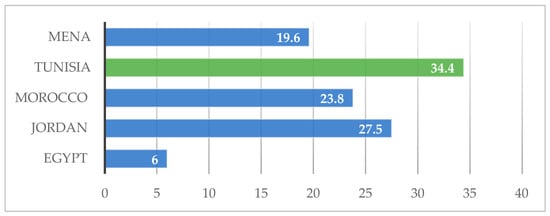
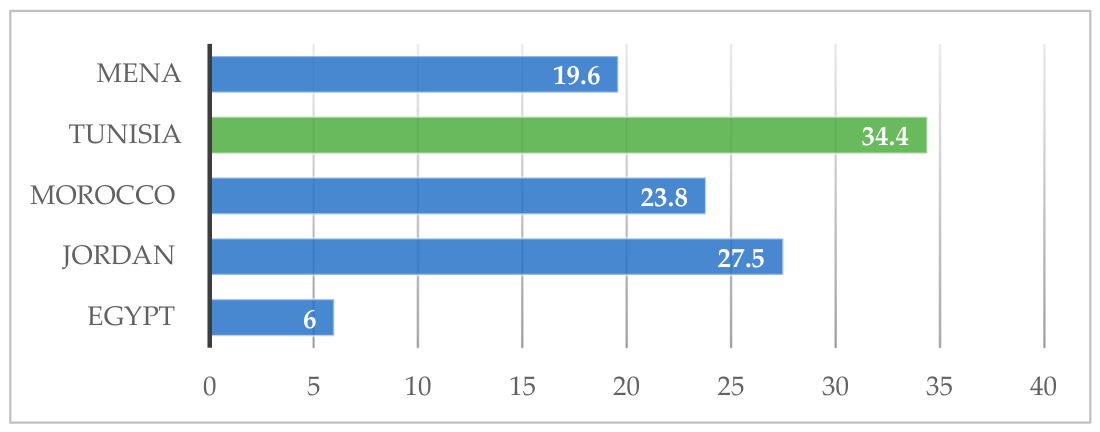
According to the INS (2023), Tunisian exports to the European Union represent two-thirds of total exports, while imports from the European Union represent roughly half of total Tunisian imports. Indeed, the association agreement signed in 1996 between Tunisia and the European Union aims to progressively reduce trade barriers. Furthermore, Tunisia’s participation GVCs has progressed significantly both upstream and downstream, particularly in the electronics, mechanical and electrical industries, textiles and clothing, chemicals, and agri-food sectors (Sammoud & Dhaoui, 2019). Figure 1 confirms this observation, since Tunisian companies are the most integrated into GVCs2 compared to other countries in the Middle East and North Africa (MENA) region. This top ranking is partly due to the role of the offshore sector (OECD, 2024). Indeed, companies that are entirely export-oriented benefited from tax exemptions and simplified customs procedures. This has had a ripple effect on the rest of the economy.
Figure 1.
Percentage of Firms Involved in GVCs, by MENA Country. Source: Adapted from Hazem and Zaki (2025), Table 1, p. 9.
This raises the question: how can Tunisia achieve greater integration into GVCs? To address this question, it is necessary to examine the determinants of firms’ participation in GVCs. In this context, this study aims to investigate the role of female leadership and innovation in the participation of Tunisian firms in GVCs. In recent years, women’s participation in managerial roles has increased significantly, with more women serving on boards of directors and contributing to strategic decision-making related to firms’ international expansion. Although, the statistics regarding women’s roles in the internationalization processes of companies in African countries, such as Tunisia, are inconclusive and insufficient.
Furthermore, economists demonstrate that a firm’s competitive advantage is closely linked to its ability to adopt new production methods and introduce product improvements, rather than simply investing in R&D (Ganotakis & Love, 2011). Indeed, R&D investments do not fully capture the innovative behavior of firms that lack formal R&D departments (Edeh et al., 2020). This limitation is particularly relevant in the Tunisian context, where the productive structure is dominated by small businesses (IACE, 2025). Furthermore, WBES data (2025) show that only 4.7% of SMEs report R&D expenditures, compared to 27.3% of large companies. Consequently, relying solely on R&D investments could underestimate innovative activities in SME-dominated economies like Tunisia.
Within this framework, our paper makes four primary contributions to the existing literature. First, most research that has studied the link between trade and gender equality has focused on the effect of international trade on women’s inclusion in the labor market (Klein et al., 2013; Juhn et al., 2014; Kalliny & Zaki, 2024). There are few theoretical or empirical works that study the inverse dimension of the subject, namely the role of women in export and integration into GVCs (Karam & Zaki, 2021). Second, given the relatively small number of studies investigating the effect of innovation on participation in GVCs, our research has the advantage of including both product and process innovation. Moreover, we examine the effects of these two types of innovation both separately and jointly. Attention is also paid to firm size, as the mode of engagement in GVCs varies across firms of different sizes (Karakara & Osabuohien, 2024; Karakara et al., 2025). Therefore, we divide Tunisian companies into three categories: small, medium, and large enterprises. Finally, drawing on successful policy experiences from countries such as Canada and France, the study also provides policy recommendations to strengthen the integration of Tunisian firms into GVCs.
For this research, we use the logit model. Much like linear regression, binary logistic regression allows us to assess the relevance of predictors regarding the categorical dependent variable and to measure the overall goodness-of-fit. It also provides a precise summary of the classification accuracy (Labrecque et al., 2021). Alternatively, this study provides the marginal effects of the regressors, capturing how GVC participation fluctuates in relation to specific firm-level characteristics.
In addition, we run nine separate regressions to analyze the impact of our regressors on GVC involvement. The initial two specifications reveal that female top management, foreign ownership, certification, and firm size are all positively associated with the integration of Tunisian companies into GVCs, whereas corruption is inversely linked to this integration. To test the robustness of our results, Model 3 replaces the female top manager variable with female ownership. The observation remains the same as the advancement of women to top executive positions serves as a key lever for firms’ international integration. Models 4, 5, and 6 point to a positive association between firm scale and international market engagement, with larger firms exhibiting greater involvement. The last three specifications introduce various measures of innovation. Our results reveal that product innovation does not statistically influence GVC participation; conversely, process innovation is positively associated with global integration. Notably, the synergy between these two forms of innovation further bolsters the international presence of Tunisian firms.
The examination of the Tunisian case offers a unique contribution to the international economic literature for three fundamental reasons. First, Tunisia serves as an analytical laboratory for transition economies; it illustrates the challenges faced by nations seeking to move beyond low-value-added specialization to achieve more sustainable integration into GVCs. Second, this context allows for an investigation of the role of female leadership as a performance lever in the MENA region. Thus, our study provides new insights into gender diversity as a strategic asset in emerging economies. Finally, our results highlight the decisive role of process innovation. By demonstrating that technical modernization, combined with inclusive governance, enables firms to better penetrate global markets; our findings could offer strategic perspectives applicable to numerous other developing economies.
2. Literature Review
This section provides a brief review of the literature on how the presence of women in leadership and ownership positions, as well as innovation, influence firms’ participation in GVCs.
2.1. Women and Firms’ Participation in GVCs
The review of the existing empirical studies reveals mixed and inconclusive results. Cieślik et al. (2019), for example, investigate the determinants of firm participation in GVCs. They use data from the 2011–2014 Firm-level Business Environment and Enterprise Performance Survey for 29 Central and Eastern European (CEE) countries. The findings reveal that firms led by female top managers are generally less likely to participate in GVC. This might be the result of structural barriers or gender biases in the organizations. Along the same lines of thought, Bannò and Filippi (2024) mention that women-led enterprises are less likely to start exporting. However, once involved in foreign trade, the gender of the CEO has no effect on the intensity of exporting. Garg and Shastri (2022) reveal that female-owned firms in India exhibit a reduced propensity to engage in exporting activities; however, the export intensity is not affected. Their capacity to create direct export channels may be hampered by institutional, network, and financial obstacles. Likewise, Karakara et al. (2025) find no evidence that a female top manager influences GVC involvement in Gambia, Kenya, Rwanda, and Zambia. The same result is reported by Mardones and Ibañez (2025) for 1246 Chilean firms. Tsambou and Diallo (2025) find that the gender variables do not influence GVC participation.
These different results might be explained by the fact that female top managers can contribute positively to GVC integration under specific environments. For instance, Pindado et al. (2023) and Anggadwita and Indarti (2025) find that women-led enterprises in highly gender-discriminatory environments are more likely to expand abroad to overcome domestic barriers.
Many studies outline the various channels through which the participation of females on the board of a company may influence positively or negatively its internationalization. Chen et al. (2018), Kanadlı et al. (2018), Kirsch (2018), and Kamenou-Aigbekaen (2019) argue that the inclusion of female on boards may enhance the decision-making process by facilitating more effective decisions, fostering corporate innovation, enhancing the analysis of complex problems, and generating additional knowledge, ideas, and information that strengthen the board’s ability to deal with non-routine issues. In the same vein, a company that promotes gender equality in response to social diversity standards may gain a competitive advantage and strengthen its relationship with external stakeholders (Hillman et al., 2007; Knippen et al., 2019). According to Boustanifar et al. (2022), a company’s internationalization decisions contain several risks and enhance business complexity; as a result, the decision-makers’ risk preferences affect the company’s global expansion. In this context, some studies indicate that women in management are more likely than men to make risky decisions (e.g., Charness & Gneezy, 2012; Poletti-Hughes & Briano-Turrent, 2019). Some other studies confirm that a female top manager and company risk attitudes are negatively correlated (e.g., Carter et al., 2017; Zalata et al., 2022).
Analytically, data from the United States show that women-owned exporting firms are 3.5 times more productive than non-exporting firms owned by women. Similarly, exporting companies owned by women are on average about 1.2 times more productive than their male counterparts (International Trade Center, 2015; Karam & Zaki, 2021). Tsambou and Diallo (2025) find that the gender variables do not influence GVC participation.
In Tunisia, only 5.3% of corporate board members are women, while 19% of formal businesses are led by women (Mohamed et al., 2022). Women entrepreneurs often face structural barriers such as restricted access to capital, weaker business networks, and institutional constraints. UNECA (2025) reports that although women lead 31% of Tunisian SMEs and these businesses exhibit strong digital dynamism; they are often assessed as having lower export potential. To the best of our knowledge, little is known about the role of female top manager in the participation of Tunisian firms in GVCs.
Thus, we propose the following hypothesis:
H1.
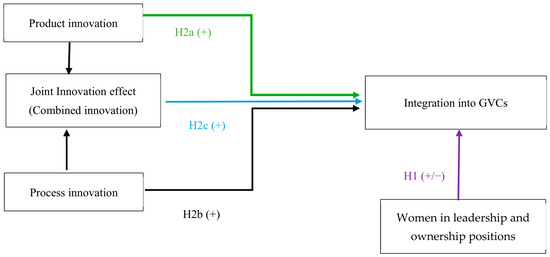
The effect of women in leadership and ownership positions on firms’ participation in GVCs may be either positive or negative.
2.2. The Role of Innovation
Innovation, broadly conceived, may affect firms’ integration into GVCs. It is essential for recognizing opportunities and overcoming challenges in GVC contexts (Gereffi, 2005). Additionally, innovation may contribute to value co-creation by enabling collaboration, communication, and the sharing of ideas among participants in the chain, thus generating value for both stakeholders and end users (Prahalad & Ramaswamy, 2004). Differentiation through innovation enables firms to enhance efficiency and achieve a sustainable competitive advantage, which makes it easier for it to engage in exports (Bernard et al., 2007). Firms that innovate are better positioned to integrate into GVCs when their products comply with specialized standards, hold international certifications, align with customer preferences, and respond to specific international market conditions (Tsambou & Diallo, 2025). The impact of innovation on firms’ integration into GVCs differs depending on the sector and region (Tsambou & Diallo, 2025).
Innovation is a multidimensional phenomenon (e.g., Demircioglu et al., 2019; Demircioglu & Audretsch, 2020). There are different forms of innovation, namely product, process and organizational innovation. Empirical findings depend on the measures of innovation used, the sector of activity, the economic context, and the prevailing policy framework (Tsambou & Diallo, 2025).
Early empirical studies use R&D expenditure as a measure of innovation input to investigate its impact on firms’ export behavior. Contrary to Lefebvre et al. (1998) and Sterlacchini (2001), Ito and Pucik (1993) and Braunerhjelm (1996) find a positive and significant effect of innovation input on firms’ export behavior. Later studies use survey data, which allows researchers to use direct measures of innovation outcomes, and to examine which type of innovation matters. The results are mixed. According to Tsambou and Diallo (2025), few studies have examined how innovation affects firms’ participation in GVCs, and most of them focus on developed and emerging countries. Thus, evidence on African economies remains limited. Roper and Love (2002) find that the probability and propensity to export increase with the innovative capacity of the UK and German manufacturing plants. Caldera (2010) demonstrates that the seven indicators of innovation, provided in the World Bank Enterprise Surveys (WBES) dataset, have heterogeneous impacts on firms’ export participation. Unlike cost-reducing process innovation, product upgrading appears to have a stronger impact on export participation of 1890 Spanish firms over 1991–2002. These results imply that, in contrast to improvements in manufacturing methods, product upgrading gives Spanish companies a stronger competitive advantage in export markets. This might be seen as a way for firms to differentiate their products from those of their rivals through product upgrades, which could give them a greater advantage in export markets than the cost savings from process innovation. Also, Tavassoli (2018) shows that sales of innovative products (innovation output) have a positive effect on export intensity, while efforts devoted to innovation (innovation input) do not appear to have a direct impact on exports behavior of Swedish firms. Edeh et al. (2020) find an insignificant relationship between product innovation and the export performance of sub-Saharan African firms. Besides, innovation enhances small firms’ integration into GVCs, particularly when they adopt foreign technology, introduce process innovation, invest in R&D, and use digital communication tools. Tsambou and Diallo (2025) confirm the findings of Edeh et al. (2020) based on a sample of 9535 firms from 18 French-speaking African countries. However, Van Beveren and Vandenbussche (2010) find that both product and process innovations impact the export propensity (measured as the probability of exporting). Reddy et al. (2021) also highlight the role of innovation outcomes in driving firms into GVCs across 90 countries during 2006–2017. Azar and Ciabuschi (2017) show that organizational innovation has direct and indirect effect on export performance of 218 Swedish ventures by supporting technological innovation. Furthermore, by examining the mediating role of technological innovation—considering its radicalness and extensiveness—the result indicates that organizational innovation fosters both dimensions of technological innovation. However, only the extensiveness of technological innovation translates into a tangible benefit for export performance. Consequently, the following hypotheses are proposed:
H2a.
The impact of product innovation on firms’ participation in GVCs is positive.
H2b.
The effect of process innovation on firms’ participation in GVCs is positive.
H2c.
There is a positive relationship between combined innovation and firms’ participation in GVCs.
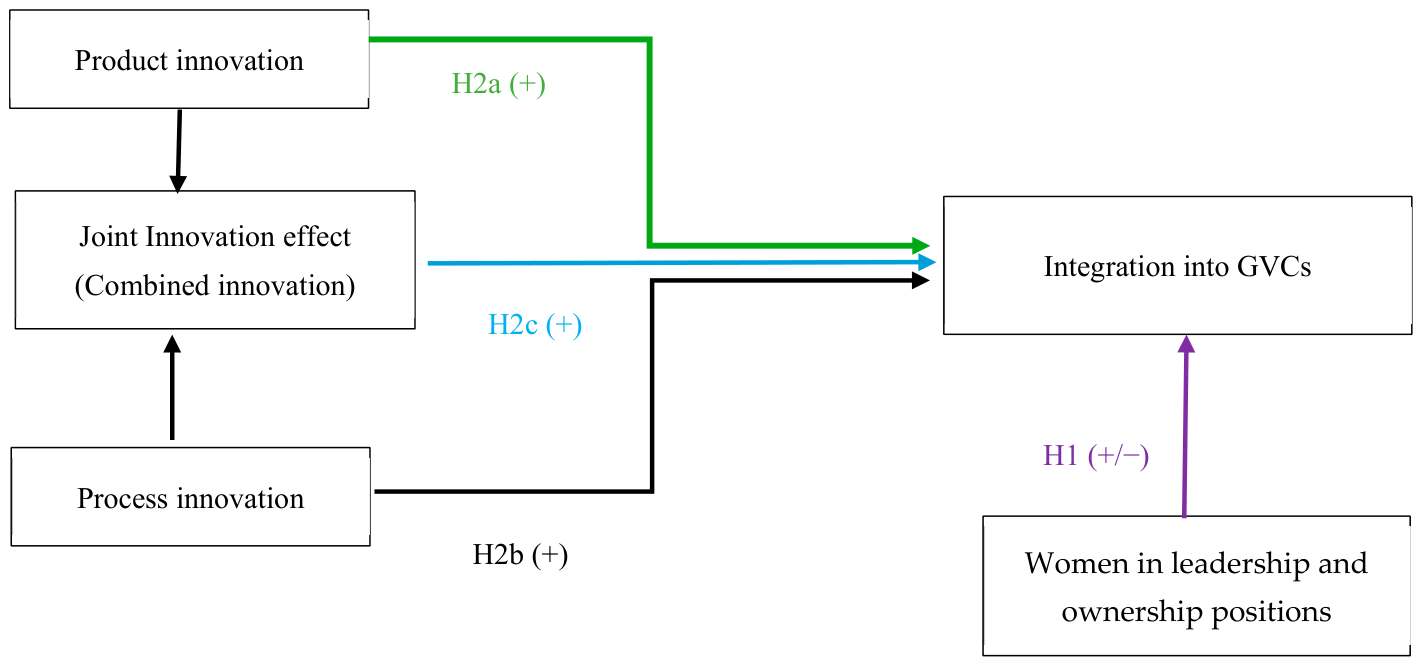
Figure 2 summarizes our hypotheses.
Figure 2.
Conceptual framework.
3. Materials and Methods
To test our first hypothesis (H1), we estimate a logit model, guided by the binary nature of the dependent variable (Reddy & Sasidharan, 2023). Moreover, the logit model provides understandable and consistent results. The parameter estimates are asymptotically convergent and normal, allowing the equivalent of the regression t-test to be applied (Karakara et al., 2025).
Equation (1) presents the logistic regression model where3:
where subscript i refers to firm. GVC is the dependent variable. Following the work of Dovis and Zaki (2020) and Aboushady and Zaki (2025), we constructed a measure of firm integration into GVCs. GVC is a dummy variable that takes the value of one if the firm is a two-way trader. In other words, this measure takes value 1 if the company makes direct or indirect exports4 of at least 10% of sales and at the same time imported inputs compared to total input should be equal to or greater than 10%. Dovis and Zaki (2020) propose four measures of GVCs. GVC1 implies that firms engage in import and export operations at the same time. GVC2 extends the first measure to include international certifications. GVC3 integrates firms that conduct bidirectional trade and in which a portion of the capital is held by a foreign entity. GVC4 encompasses exporting and importing firms that have foreign participation and hold foreign certifications simultaneously. In the case of Tunisia, we are considering GVC1. This choice is justified by the limited number of firms in the sample when alternative measures are considered. Only 4.7% of companies are classified as GVC4, while 10.1% fall under GVC3 and 12.4% under GVC2.
The variable W represents women’s role in the firm: a dummy for female top manager and a dummy for female-owned firm used for robustness checks. These variables are introduced sequentially in Equation (1) (Kinuthia, 2024). βj is a vector of associated unknown parameters. Z is a vector of firm-level control variables, including corruption (COR), foreign participation (FPART), certification (CERT), and company size (SIZE). ɛi is the error term.
Regarding control variables, the “sand” view argues that corruption increases transaction costs and limits firms’ revenues and potential returns on investment. It also creates uncertainty, undermines contract enforcement, and promotes illegal activities, as bribery enables firms to circumvent sanctions. Moreover, it may deter lead firms due to reputational risks and ultimately hinders both the entry and upgrading of firms within global production networks (Olney, 2016; Boudreaux et al., 2018). In contrast, according to the “grease” view, the public sector delivers certain vital services that are fundamental for the functioning of the private sector. This situation grants public officials a favorable position, enabling them to take advantage of the private sector (Williams & Kedir, 2019). Thus, corruption mitigates the adverse impacts of complex bureaucratic procedures (e.g., demand for permits, licenses) on the activities of companies, particularly exporting firms, and helps them “get things done” (Sequeira & Djankov, 2014; Ahsan, 2017). Aidt (2009) reveals that the “greasing” function of corruption can only occur in nations with weak governance and ineffective bureaucracies. Firms will compete for a scarce number of goods and services and will thus resort to corruption as a reaction to market distortions. Corruption takes the value of 1 if the company obtained or attempted to obtain a government contract in exchange for a bribe payment. Moreover, Foreign-owned firms have better access to resources, technology, and hence are more likely to participate in the foreign market when compared to others (Cieślik et al., 2019; Reddy et al., 2021). FPART takes the value of 1 if the foreign participation in the capital of the company is at least equal to 10%. Furthermore, obtaining certifications not only enhances a firm’s credibility but also reinforces its competitive position within the GVC network (Nguyen et al., 2025). CERT takes value 1 if the company has an internationally recognized quality certification, for example, ISO 9000 or 14000 (International Organization for Standardization, 2015). Following other studies, a myriad of firm-level controls are included. Firm size reflects a company’s resource endowment (Audia & Greve, 2006) and is therefore expected to be positively associated with its integration into GVCs (Reddy et al., 2021). SIZE is represented by the number of workers employed. To refine the analysis, we decided to divide the companies into small (5–19 employees), medium (20–99), and large (100 or more) (Karakara & Osabuohien, 2024; Karakara et al., 2025). According to Boffa et al. (2021) and Reddy et al. (2021), smaller firms are less likely to participate in GVCs than larger ones, highlighting a positive link between SMEs’ competitiveness and their GVC participation. Smaller firms that do participate often do so indirectly through partnerships with larger firms (Cusolito et al., 2016). Such differences stem from disparities in productivity, growth potential, access to finance, market reach, and trade capacity—all areas where large firms generally have an advantage. The government should therefore help small firms move closer to the technological frontier and enhance their integration into GVCs (Reddy et al., 2021).
To test the role of innovation in the integration of Tunisian companies into GVCs (H2a, H2b, and H2c), Equation (1) is written as follows:
INNOV is a binary variable equal to 1 if the firm introduced either product or process innovation (or both), and 0 otherwise. Product innovation refers to the development and launch of a new or improved good or service, whereas process innovation involves improvements in methods, technologies, and workflows within an organization to enhance efficiency, effectiveness, and quality (Kagere et al., 2025).
Table 1 presents the definition of the variables used in the study5. All variables are extracted from the WBES (2025) (World Bank, 2025)6.
Table 1.
Variables definition.
From Equations (1) and (2), we estimate several models that sequentially introduce the main independent variables, control variables, and firm size, with separate estimations for small, medium, and large firms. This approach allows us to test the robustness of the results. To facilitate the interpretation of the logit model results, we calculate marginal effects (ME). We conduct several diagnostic checks, including Variance Inflation Factors (VIF) to detect multicollinearity, and we use robust standard errors to account for potential heteroskedasticity. We also report the Wald chi2 statistic, its associated p-value (Prob > chi2), and the pseudo to assess the overall significance and explanatory power of the model.
4. Results and Discussion
4.1. Descriptive Statistics and Correlations
Table 2 provides valuable information on the participation of Tunisian companies in GVCs, the presence of women leaders and innovation activities. According to the WBES (2025), approximately one-third of Tunisian companies participate in GVCs (28.7%). This rate is higher than the average observed in lower-middle-income and upper-middle-income economies. Indeed, Tunisia has adopted an economic strategy focused on exports and industrialization. This orientation has been reinforced by a proactive policy to attract foreign investment, leading to the import of technologies and the acquisition of know-how (Ficarra et al., 2022). Furthermore, the share of businesses managed by women is limited compared to that of businesses managed by men in Tunisia. Indeed, only one-tenth of Tunisian firms are managed by female leaders. Although this rate of 10% is higher than that recorded by comparable countries (e.g., Egypt, Jordan and Morocco) (Karam & Zaki, 2021), it remains lower than that recorded by developed countries. Hence, female top managers in Tunisia continue to face a complex mix of systemic gender biases, economic barriers, societal expectations, and limited institutional support that restrict their career advancement and leadership presence (Alaref et al., 2020). Moreover, companies in the MENA region are primarily confronted with institutional problems (Kalliny & Zaki, 2024). In this context, 10% of Tunisian entrepreneurs report having experienced attempted bribery by public officials. The data shows that a modest proportion of companies are engaged in product innovation (16.5%) and process innovation (12.2%), which indicates an innovation constraint.
Table 2.
Descriptive statistics.
Table 3 shows that GVC participation is positively and significantly correlated with most explanatory variables, except for product innovation (not significant) and corruption (negative correlation).
Table 3.
Correlation Matrix.
Notably, all pairwise correlations among independent variables are less than 0.7, minimize the risks of multicollinearity and ensure the validity of the subsequent multivariate analysis (Wooldridge, 2015). The VIF values are significantly less than 10 and the average VIF values are less than 6, which confirms the absence of multicollinearity7.
4.2. The Impact of Female in Leadership and Ownership on GVCs
Table 4 shows that the models are globally significant (Wald chi2 probability = 0.000). The results also reveal a positive impact of female’s presence in top management on the participation of Tunisian firms in GVCs. Female participation in top management increases firms’ participation in GVCs by 12.6 percentage points (Model 1) and 15.1 percentage points (Model 2). The findings also indicate a positive relationship between female ownership and integration into GVCs. Women’s ownership of capital generates an 8.2 percentage point increase in the participation of Tunisian firms in GVCs. Barrientos (2019) emphasizes that the inclusion of women in GVCs presents an opportunity for developing and emerging countries to improve their economic and social performance. Promoting women’s access to decision-making positions thus represents a strategic lever not only for equity, but also for economic competitiveness and export growth (McKinsey & Company, 2020). Including women on the board gives a positive image to the company, which can strengthen competitive advantage and improve links with external stakeholders (Knippen et al., 2019; Eden & Wagstaff, 2020; Fitzsimmons et al., 2023). In addition, women top managers and women owners may influence Tunisian firms’ participation in GVCs through improved decision-making quality, greater innovation, and a stronger ability to address complex strategic issues, as highlighted by Chen et al. (2018), Kanadlı et al. (2018), Kirsch (2018), and Kamenou-Aigbekaen (2019). Our Outcome supports the implementation of Sustainable Development Goal 5 on gender equality (SDG 5).
Table 4.
The Effect of Women leadership and ownership on GVCs.
However, the results show a significant negative influence of corruption on the integration of Tunisian companies into global supply chains. Our study empirically supports the “sand in the gears” hypothesis. Tunisia suffered from an environment of corruption and a significant proportion of politically connected companies during Ben Ali’s rule8 (Aboushady & Zaki, 2025). Unlike formal institutions (regulations, laws, and taxation policies), informal institutions such as corruption increase uncertainty and transaction costs, thereby decreasing productivity, innovation and development of trade (Rialp-Criado & Komochkova, 2017; Sdiri & Ayadi, 2022; Sdiri, 2024). In other words, corruption presents a constraint for Tunisian firms.
Furthermore, foreign contribution in the capital of Tunisian companies facilitates their participation in GVCs. Indeed, foreign ownership allows better access to technologies and foreign markets (Lu et al., 2018; Reddy & Sasidharan, 2023).
Similarly, holding an international certification facilitates integration into GVCs by boosting international credibility, standardizing processes (production, management, environment), and improving competitiveness and performance (Rigo, 2021). When a company meets international standards for either quality or environmental management, it can acquire new markets and strengthen ties with international partnerships.
By focusing on company size as assessed by the number of workers, columns 4 and 6 indicate a significant but modest effect of this measure on participation in GVCs (coefficient = 0.004, ME = 0.001). Thus, we distinguish between SMEs and large corporations. Table 4 indicates a negative impact of small firms on integration into GVCs. Indeed, the presence of small firms reduces participation in international value chains by 40%. Medium-sized firms are integrated into GVCs. However, this participation remains modest compared to that of large firms. In this context, the transition from a small firm to a large one is associated with a 29.5 percentage point increase in GVC participation. These findings are consistent with those reported by Cusolito et al. (2016), Boffa et al. (2021) and Reddy et al. (2021).
4.3. Innovation as a Contributor to GVC Participation
In Table 5, Model 7 introduces product innovation, Model 8 introduces process innovation, and Model 9 introduces combined product and process innovation. All three models are estimated from Equation (2) and are globally significant (Wald chi2 p-value = 0.000). The significance and magnitude of the independent variables9 remain broadly similar to those in Table 4. Product innovation does not have a significant effect on the integration of Tunisian firms into GVCs. Hypothesis H2a is rejected. Our results support the conclusions of Edeh et al. (2020) but contradict the findings of Tavassoli (2018). The latter studied the case of Sweden, a developed country, while we are focusing on the case of Tunisia, a developing country. Another argument is that companies are not innovative enough to allow Tunisian products and services to be internationally competitive.
Table 5.
The Effect of Innovation on GVCs.
The results presented in Table 5, column 4, show that process innovation stimulates participation in GVCs. Indeed, the presence of this type of innovation increases integration by 10.7 percentage points. This result partially corroborates the findings of Caldera (2010), Gunday et al. (2011), and Waheed (2011), who demonstrate that process innovation plays a key role in improving productivity and export performance at the firm level. Process innovation is essential for successful entry into the international market as it will allow for the reduction in unit production or delivery costs and the improvement of quality in logistics. According to Taglioni and Winkler (2016), policies aimed at promoting innovation and developing local capabilities are essential for enhancing participation in GVCs, as innovation enables countries to engage in higher value-added activities while building the skills needed to effectively integrate into and benefit from GVCs. Therefore, hypothesis H2b is validated.
Column 5 of Table 5 demonstrates that combined innovation supports the integration of enterprises into GVCs, with a positive coefficient (0.817) and statistically significant at the 5% level. Similarly, column 6 shows that simultaneous product and process innovation generates a 14.6% increase in GVC participation. Hypothesis H2c is therefore verified. For comparison, Van Beveren and Vandenbussche (2010) and Aldieri et al. (2021) suggest that when product and process innovation are carried out jointly, the company achieves gains in productivity and exports. The results demonstrate that efficiency gains and cost reductions resulting from process innovation are a prerequisite, or even an essential complement, to the successful commercialization of new products in international markets. The success of Tunisian companies in international markets is closely linked to their ability to produce high-quality goods and adopt efficient production processes. This finding underscores the need for a rethinking of industrial policies, placing process innovation at the core of strategies aimed at modernizing the Tunisian productive sector.
While the Logit model identifies robust correlations, the cross-sectional nature of our data does not allow for a strict temporal dynamic to be isolated. These data remain ‘silent’ regarding the chronology of events, leaving open the possibility of reverse causality: integration into global networks may, in turn, demand technological and managerial upgrading. However, the sample size (ranging from 610 to 616) ensures sufficient statistical power to validate the robustness of these associations. In the absence of panel data, these results represent a critical step by confirming, across a wide spectrum of Tunisian firms, the theories of self-selection10 among high-performing companies.
5. Conclusions, Recommendations, Limitations and Future Directions
This study highlights the role of female ownership and female top management as key determinants of Tunisian firms’ participation in GVCs, using data from the WBES (2025). The results are robust across alternative model specifications. While product innovation has no significant effect, process innovation significantly enhances firms’ participation in GVCs. Moreover, the joint adoption of both types of innovation generates a significant synergistic effect, increasing the probability of GVC participation by 14.6 percentage points. In addition, certification, foreign ownership, and firm size—particularly for medium-sized and large firms—facilitate participation in GVCs. By contrast, corruption hinders firms’ integration into GVCs, and SMEs are less likely to participate.
The outcomes of our study allow us to draw up recommendations dedicated to policy makers.
In 2025, Tunisia ranked 123rd out of 148 countries in the Global Gender Gap Report, falling from 115th place in 2024. The country’s overall gender gap score declined slightly from 0.668 in 2024 to 0.654 in 2025. This setback is mainly driven by the “Economic Participation and Opportunity” pillar, where Tunisia scored only 0.515 and ranked 135th worldwide, reflecting persistent barriers to female participation and progression in the labor market. Political Empowerment remains critically low at 0.157 (100th), underscoring the continuing underrepresentation of women in decision-making roles (World Economic Forum, 2025). Hence, women managers or owners in Tunisia continue to meet a range of cultural, social, economic and financial obstacles and limited institutional support. Thus, their visibility, mentorship opportunities, and access to markets are affected (Alaref et al., 2020; World Bank, 2021).
In Tunisia, initiatives aimed at increasing women’s representation in top corporate management remain limited. Addressing this gap may require the adoption of an ambitious national strategy, inspired by international best practices yet tailored to local institutional and socio-economic realities.
Public authorities could implement targeted funding programs, modeled, for example, on Canada’s Women Entrepreneurship Strategy in 2018, to better meet the needs of women leaders. These programs should be strengthened through the adaptation of banking services.
The institutional and legal framework should also be reformed by introducing tax incentives and integrating parity criteria (e.g., Norway’s 2008 gender-quota law; France’s Rixain Law in 2021). It is essential to measure and evaluate progress by requiring large companies to publish gender parity indicators (e.g., the United Kingdom’s mandatory gender pay gap reporting 2017).
At the same time, robust work–life balance policies are crucial—particularly expanding affordable childcare following Sweden’s long-established subsidized model—to sustain women’s career progression. Cultural and educational reforms should also be pursued, including media campaigns that highlight women’s success stories, the integration of women’s entrepreneurship into school curricula, and the promotion of female participation in Science, Technology, Engineering, and Mathematics (STEM) fields.
According to the Global Innovation Index (WIPO, 2025), Tunisia occupies the last places in the ranking in terms of partnership between public research and industry (136th place) and investment (132nd place). In addition, it lags in areas critical for a modern knowledge economy, such as a lack of dynamic entrepreneurial culture, an absence of international recognition for Tunisian brands, and the non-existence of high value-added unicorn startups (WIPO, 2025). Political authorities should therefore address these obstacles to innovation.
The government should encourage collaboration between public research and private industry, stimulating venture capital in the seed stage, and promoting a more effective entrepreneurial culture. To guide this transformation, policymakers could look to benchmark countries that have successfully navigated similar challenges. For instance, Portugal’s “Interface mission” of 2018 specifically targets the industry–science collaboration gap by funding collaborative R&D projects between companies and technology centers. In the MENA region, the United Arab Emirates (UAE) has been a forerunner with the “Dubai Internet City” (1999), an early dedicated tech hub, and the “National Innovation Strategy” (2014) which set a clear agenda for R&D focus areas.
Another crucial point is the importance of process innovation. To achieve this, entrepreneurs should significantly and continuously improve their working methods and operational tools. Indeed, when processes are not optimized, costs increase and production decreases. This inefficiency results in a higher workload and lower quality of products and services. Therefore, the gains resulting from process innovation allow firms in general, and SMEs in particular, to more easily integrate into the export market (Becker & Egger, 2013; Edeh et al., 2020). Modernizing internal production capacities leads to improved product quality, which in turn allows the company to increase its competitive advantage, acquire additional market share, satisfy customers, and thus achieve better participation in GVCs. The UAE, for example, has implemented the “Projects of the 50” (2021), a suite of economic initiatives that include the “National In-Country Value (ICV) Program”, designed to boost local manufacturing and technological adoption.
Strengthening the position of women as top managers and owners may positively impact innovation (Lee & Chung, 2022; Kong et al., 2024). The government should support them through innovation financing and technology training initiatives. For instance, the United Kingdom has launched the Women in Innovation program to help female business leaders develop and scale innovative projects within their firms.
Looking ahead, this study has several limitations that open avenues for future research. First, although the results can be generalized to other countries, future research could extend the analysis to multiple countries, particularly in the MENA region, to allow for relevant comparisons.
Second, due to methodological changes and differences in questionnaire design across the WBES (for example between the 2013 and 2020 waves), our analysis relies on cross-sectional data. As a result, we examine only the static impact of women and innovation on the integration of Tunisian firms into GVCs. Access to consistent panel data would allow future studies to analyze the dynamic effects of these variables. More harmonized and regularly conducted surveys would therefore be highly valuable.
Third, we did not use alternative measures of firms’ participation in GVCs because doing so would have significantly reduced the number of firms in the sample. This limitation prevented us from conducting robustness checks of our findings.
Fourth, the availability of panel data would have made it possible to better examine causal relationships.
Finally, the potential effect of participation in GVCs on gender outcomes remains relatively understudied, particularly in emerging markets and developing economies (Gopalan et al., 2025). Future studies should explore this relationship further to help address this gap in the literature.
Author Contributions
Conceptualization, M.I.G., T.E.G. and F.M.C.; Methodology, M.I.G. and T.E.G.; Software, M.I.G.; Validation, M.I.G. and T.E.G.; Formal Analysis, M.I.G.; Investigation, M.I.G.; Resources, T.E.G.; Data Curation, M.I.G.; Writing—Original Draft Preparation, M.I.G. and T.E.G.; Writing—Review & Editing, M.I.G., T.E.G. and F.M.C.; Visualization, M.I.G., T.E.G. and F.M.C. All authors have read and agreed to the published version of the manuscript.
Funding
This research received no external funding.
Informed Consent Statement
Not applicable.
Data Availability Statement
The original data presented in the study are openly available from the WBES, provided by the World Bank, and accessible at enterprisesurveys.org (accessed on 10 September 2025).
Conflicts of Interest
The authors declare no conflicts of interest.
Abbreviations
The following abbreviations are used in this manuscript:
| CEE | Central and Eastern European |
| GVCs | Global value chains |
| MENA | Middle East and North Africa |
| SDGs | Sustainable Development Goals |
| SMEs | Small- and medium-sized enterprises |
| STEM | Science, Technology, Engineering, and Mathematics |
| VIF | Variance Inflation Factor |
| WBES | World Bank Enterprise Surveys |
Notes
| 1 | The rise of protectionism, through the imposition of tariff and non-tariff barriers, has contributed to the slowdown in integration into GVCs. Furthermore, financial and health crises (e.g., the subprime mortgage crisis and the COVID-19 pandemic) have reinforced protectionist tendencies (Ezzat & Zaki, 2025). However, these periods of crisis represented only stagnation, not a decline, in GVCs. |
| 2 | In this context, GVC designates companies that simultaneously carry out export (directly or indirectly) and import activities. |
| 3 | We are adopting a cross-sectional design for the year 2024. This method is preferred to panel data due to methodological changes and the evolution of questionnaires compared to previous versions (e.g., 2013–2020). In this context, several studies have used cross-sectional data (e.g, Sdiri & Ayadi, 2022; Sdiri, 2024; Kagere et al., 2025). |
| 4 | Indirect exporting is a strategy where a company sells its products or services abroad using an intermediary rather than dealing directly with the end customer. This intermediary, such as a broker, sales agent, distributor, or international trading company, handles sales, distribution, and customer relations with the foreign market. |
| 5 | We opted for a sectoral study of the fields of activity. However, this choice was influenced by the limited information from the WBES which only considers Tunisian companies operating in retail services, manufacturing, and other services. Furthermore, measures such as access to financing do not have a significant impact on the participation of Tunisian companies in GVCs. |
| 6 | For more details, see World Bank (n.d.). |
| 7 | The results of VIF are available upon request. |
| 8 | The Tunisian revolution led to the overthrow of President Ben Ali’s regime on 14 January 2011. This president ruled the country with an iron fist for 23 years. |
| 9 | We first estimated the models including the SIZE variable. Although its coefficient is statistically significant, its economic effect is small. Moreover, the coefficients of the other variables keep the same sign and remain statistically significant. Therefore, we report the results of the models excluding SIZE. |
| 10 | Theoretically, the self-selection effect (Melitz, 2003) posits that only the most productive firms can access export markets. Within this framework, innovation and managerial quality are prerequisites for entry. The barriers to entry in GVCs are so high that only firms that have already invested in certification and managerial talent can overcome them. |
References
- Aboushady, N., & Zaki, C. (2025). Political connections and participation in global value chains: Evidence from MENA firms. European Journal of Political Economy, 89, 102742. [Google Scholar] [CrossRef] [Scilit]
- Ahsan, R. N. (2017). Does corruption attenuate the effect of red tape on exports? Economic Inquiry, 55(3), 1192–1212. [Google Scholar] [CrossRef] [Scilit]
- Aidt, T. S. (2009). Corruption, institutions, and economic development. Oxford Review of Economic Policy, 25(2), 271–291. [Google Scholar] [CrossRef] [Scilit]
- Alaref, J. J. S., Nikaein Towfighian, S., Paez Salamanca, G. N., & Audah, M. T. M. (2020). The impact of employer discrimination on female labor market outcomes: Experimental evidence from Tunisia (No. 9361). The World Bank. [Google Scholar]
- Aldieri, L., Barra, C., Paolo Vinci, C., & Zotti, R. (2021). The joint impact of different types of innovation on firm’s productivity: Evidence from Italy. Economics of Innovation and New Technology, 30(2), 151–182. [Google Scholar] [CrossRef] [Scilit]
- Anggadwita, G., & Indarti, N. (2025). Thematic analysis of women entrepreneurship in the internationalization of small and medium-sized enterprises (SMEs). Journal of Entrepreneurship in Emerging Economies, 17(1), 45–72. [Google Scholar] [CrossRef] [Scilit]
- Antràs, P. (2020). Conceptual aspects of global value chains. The World Bank Economic Review, 34(3), 551–574. Available online: https://documents1.worldbank.org/curated/en/541931579622262085/pdf/Conceptual-Aspects-of-Global-Value-Chains.pdf (accessed on 15 January 2026). [CrossRef] [Scilit]
- Audia, P. G., & Greve, H. R. (2006). Less likely to fail: Low performance, firm size, and factory expansion in the shipbuilding industry. Management Science, 52(1), 83–94. [Google Scholar] [CrossRef] [Scilit]
- Ayadi, R., Giovannetti, G., Marvasi, E., & Zaki, C. (2024). Trade networks and the productivity of MENA firms in global value chains. Structural Change and Economic Dynamics, 69, 10–23. [Google Scholar] [CrossRef] [Scilit]
- Azar, G., & Ciabuschi, F. (2017). Organizational innovation, technological innovation, and export performance: The effects of innovation radicalness and extensiveness. International Business Review, 26(2), 324–336. [Google Scholar] [CrossRef] [Scilit]
- Bannò, M., & Filippi, E. (2024). Women in top echelon positions and firm internationalisation strategies: What do we know? How do we know? Where should we be heading? Journal of Management and Governance, 28(4), 1257–1302. [Google Scholar] [CrossRef] [Scilit]
- Barrientos, S. (2019). Gender and work in global value chains: Capturing the gains? Development trajectories in global value chains. Cambridge University Press. [Google Scholar] [CrossRef] [Scilit]
- Becker, S. O., & Egger, P. H. (2013). Endogenous product versus process innovation and a firm’s propensity to export. Empirical Economics, 44(1), 329–354. [Google Scholar] [CrossRef] [Scilit]
- Bernard, A. B., Jensen, J. B., Redding, S. J., & Schott, P. K. (2007). Firms in international trade. Journal of Economic Perspectives, 21(3), 105–130. [Google Scholar] [CrossRef] [Scilit]
- Boffa, M., Jansen, M., & Solleder, O. (2021). Participating to compete: Do small firms in developing countries benefit from global value chains? Economies, 9(1), 12. [Google Scholar] [CrossRef] [Scilit]
- Boudreaux, C. J., Nikolaev, B. N., & Holcombe, R. G. (2018). Corruption and destructive entrepreneurship. Small Business Economics, 51(1), 181–202. [Google Scholar] [CrossRef] [Scilit]
- Boustanifar, H., Zajac, E. J., & Zilja, F. (2022). Taking chances? The effect of CEO risk propensity on firms’ risky internationalization decisions. Journal of International Business Studies, 53(2), 302–325. [Google Scholar] [CrossRef] [Scilit]
- Braunerhjelm, P. (1996). The relation between firm-specific intangibles and exports. Economics Letters, 53(2), 213–219. [Google Scholar] [CrossRef] [Scilit]
- Caldera, A. (2010). Innovation and exporting: Evidence from Spanish manufacturing firms. Review of World Economics, 146(4), 657–689. [Google Scholar] [CrossRef] [Scilit]
- Carter, M. E., Franco, F., & Gine, M. (2017). Executive gender pay gaps: The roles of female risk aversion and board representation. Contemporary Accounting Research, 34(2), 1232–1264. [Google Scholar] [CrossRef] [Scilit]
- Charness, G., & Gneezy, U. (2012). Strong evidence for gender differences in risk taking. Journal of Economic Behavior & Organization, 83(1), 50–58. [Google Scholar] [CrossRef] [Scilit]
- Chen, J., Leung, W. S., & Evans, K. P. (2018). Female board representation, corporate innovation and firm performance. Journal of Empirical Finance, 48, 236–254. [Google Scholar] [CrossRef] [Scilit]
- Cieślik, A., Michałek, J. J., & Szczygielski, K. (2019). What matters for firms’ participation in global value chains in central and east European countries? Equilibrium. Quarterly Journal of Economics and Economic Policy, 14(3), 481–502. [Google Scholar] [CrossRef] [Scilit]
- Cusolito, A. P., Safadi, R., & Taglioni, D. (2016). Inclusive global value chains: Policy options for small and medium enterprises and low-income countries. World Bank Publications. Available online: https://www.oecd.org/content/dam/oecd/en/publications/reports/2017/04/inclusive-global-value-chains_g1g62482/9789264249677-en.pdf (accessed on 3 May 2025).
- Demircioglu, M. A., & Audretsch, D. B. (2020). Conditions for complex innovations: Evidence from public organizations. The Journal of Technology Transfer, 45(3), 820–843. [Google Scholar] [CrossRef] [Scilit]
- Demircioglu, M. A., Audretsch, D. B., & Slaper, T. F. (2019). Sources of innovation and innovation type: Firm-level evidence from the United States. Industrial and Corporate Change, 28(6), 1365–1379. [Google Scholar] [CrossRef] [Scilit]
- Dovis, M., & Zaki, C. (2020). Global value chains and local business environments: Which factors really matter in developing countries? Review of Industrial Organization, 57(2), 481–513. [Google Scholar] [CrossRef] [Scilit]
- Edeh, J. N., Obodoechi, D. N., & Ramos-Hidalgo, E. (2020). Effects of innovation strategies on export performance: New empirical evidence from developing market firms. Technological Forecasting and Social Change, 158, 120167. [Google Scholar] [CrossRef] [Scilit]
- Eden, L., & Wagstaff, M. F. (2020). Evidence-based policymaking and the wicked problem of SDG 5 Gender Equality. Journal of International Business Policy, 4(1), 28–57. [Google Scholar] [CrossRef] [Scilit]
- Elshaarawy, R., & Ezzat, R. A. (2023). Global value chains, financial constraints, and innovation. Small Business Economics, 61(1), 223–257. [Google Scholar] [CrossRef] [Scilit]
- Ezzat, A., & Zaki, C. (2025). An empirical assessment of the nexus between competition policy and global value chains (No. 6). Sustainable Global Supply Chains Discussion Papers. Research Network Sustainable Global Supply Chains. [Google Scholar]
- Ficarra, M., Gokten, M., Harasztosi, P., Koczan, Z., Lesma, R., Pál, R., & Weiss, C. (2022). Trade and innovation in MENA. EBRD Working Paper No. 267. The World Bank. [Google Scholar]
- Fitzsimmons, S., Özbilgin, M. F., Thomas, D. C., & Nkomo, S. (2023). Equality, diversity, and inclusion in international business: A review and research agenda. Journal of International Business Studies, 54(8), 1402–1422. [Google Scholar] [CrossRef] [Scilit]
- Ganotakis, P., & Love, J. H. (2011). R&D, product innovation, and exporting: Evidence from UK new technology based firms. Oxford Economic Papers, 63(2), 279–306. [Google Scholar] [CrossRef] [Scilit]
- Garg, K., & Shastri, S. (2022). Export behaviour of firms in India: Does gender of the firm owner matter? International Journal of Gender and Entrepreneurship, 14(3), 417–434. [Google Scholar] [CrossRef] [Scilit]
- Gereffi, G. (2005). The global economy: Organization, governance, and development. In N. J. Smelser, & R. Swedberg (Eds.), The handbook of economic sociology (2nd ed., pp. 160–182). Princeton University Press. [Google Scholar] [CrossRef] [Scilit]
- Gopalan, S., Reddy, K., & Sasidharan, S. (2025). Can participation in global value chains improve female labor force participation? A firm-level empirical investigation. Review of World Economics, 161(2), 611–634. [Google Scholar] [CrossRef] [Scilit]
- Gunday, G., Ulusoy, G., Kilic, K., & Alpkan, L. (2011). Effects of innovation types on firm performance. International Journal of Production Economics, 133(2), 662–676. [Google Scholar] [CrossRef] [Scilit]
- Hazem, N., & Zaki, C. (2025). Environmental stringency and firms’ participation in global value chains: Evidence for MENA countries (No. 11161). The World Bank. [Google Scholar]
- Hillman, A. J., Shropshire, C., & Cannella, A. A., Jr. (2007). Organizational predictors of women on corporate boards. Academy of Management Journal, 50(4), 941–952. [Google Scholar] [CrossRef] [Scilit]
- IACE. (2025). Rapport national sur l’entreprise en Tunisie. Available online: https://iace.tn/rapport-national-sur-lentreprise-en-tunisie-2025-premiere-edition/ (accessed on 15 January 2026).
- INS. (2023). Commerce extérieur aux prix courants, Décembre 2023. Available online: https://www.ins.tn/publication/commerce-exterieur-aux-prix-courants-decembre-2023 (accessed on 3 May 2025).
- International Organization for Standardization. (2015). Quality management systems—Fundamentals and vocabulary (ISO 9000:2015). International Organization for Standardization.
- International Trade Center. (2015). Unlocking markets for women to trade. International Trade Center. Available online: https://www.intracen.org/file/womenintradeweb1pdf (accessed on 3 May 2025).
- Ito, K., & Pucik, V. (1993). R&D spending, domestic competition, and export performance of Japanese manufacturing firms. Strategic Management Journal, 14(1), 61–75. [Google Scholar] [CrossRef] [Scilit]
- Juhn, C., Ujhelyi, G., & Villegas-Sanchez, C. (2014). Men, women, and machines: How trade impacts gender inequality. Journal of Development Economics, 106, 179–193. [Google Scholar] [CrossRef] [Scilit]
- Kagere, B. R., Mwebaze, T., Kilimani, N., & Nair, R. G. (2025). Competition, access to finance, and manufacturing firm innovation behavior. Development and Sustainability in Economics and Finance, 8, 100077. [Google Scholar] [CrossRef] [Scilit]
- Kalliny, M. A., & Zaki, C. (2024). Are global value chains women friendly in developing countries? Evidence from firm-level data. World Bank Open Knowledge Repository. [Google Scholar] [CrossRef] [Scilit]
- Kamenou-Aigbekaen, N. (2019). Gender equality and corporate social responsibility in the Middle East. In B. Rettab, & K. Mellahi (Eds.), Practising CSR in the middle east. Palgrave Macmillan. [Google Scholar] [CrossRef] [Scilit]
- Kanadlı, S. B., Torchia, M., & Gabaldon, P. (2018). Increasing women’s contribution on board decision making: The importance of chairperson leadership efficacy and board openness. European Management Journal, 36(1), 91–104. [Google Scholar] [CrossRef] [Scilit]
- Karakara, A. A. W., Obeng, C. K., Armah, M. K., & Nunoo, J. (2025). Nature, sector, and GVC participation of firms: Empirical insights from firm-level data in selected SSA countries. Cogent Economics & Finance, 13(1), 2488830. [Google Scholar] [CrossRef] [Scilit]
- Karakara, A. A. W., & Osabuohien, E. S. (2024). Size, geography, and GVC participation of firms in Nigeria and Rwanda: Implications for the AfCFTA. Research in Globalization, 8, 100193. [Google Scholar] [CrossRef] [Scilit]
- Karam, F., & Zaki, C. (2021). On women participation and empowerment in international trade: Impact on trade margins in the MENA region. The Journal of International Trade & Economic Development, 30(3), 384–406. [Google Scholar] [CrossRef] [Scilit]
- Kinuthia, B. K. (2024). Factors that influence global value chains: Evidence from the manufacturing sector in Kenya. Working Papers 206048e4-8485-44a6-9635-b. African Economic Research Consortium. [Google Scholar]
- Kirsch, A. (2018). The gender composition of corporate boards: A review and research agenda. The Leadership Quarterly, 29(2), 346–364. [Google Scholar] [CrossRef] [Scilit]
- Klein, M. W., Moser, C., & Urban, D. M. (2013). Exporting, skills and wage inequality. Labour Economics, 25, 76–85. [Google Scholar] [CrossRef] [Scilit]
- Knippen, J. M., Shen, W., & Zhu, Q. (2019). Limited progress? The effect of external pressure for board gender diversity on the increase of female directors. Strategic Management Journal, 40(7), 1123–1150. [Google Scholar] [CrossRef] [Scilit]
- Kong, L., Usman, M., Yue, W., Yasmin, F., & Sokolova, M. (2024). Leadher: Role of women leadership in shaping corporate innovation. Humanities and Social Sciences Communications, 11(1), 1313. [Google Scholar] [CrossRef] [Scilit]
- Labrecque, J. A., Hunink, M. M., Ikram, M. A., & Ikram, M. K. (2021). Do case-control studies always estimate odds ratios? American Journal of Epidemiology, 190(2), 318–321. [Google Scholar] [CrossRef] [Scilit]
- Lee, J., & Chung, J. (2022). Women in top management teams and their impact on innovation. Technological Forecasting and Social Change, 183, 121883. [Google Scholar] [CrossRef] [Scilit]
- Lefebvre, E., Lefebvre, L. A., & Bourgault, M. (1998). R&D-related capabilities as determinants of export performance. Small Business Economics, 10(4), 365–377. [Google Scholar] [CrossRef] [Scilit]
- Lu, Y., Shi, H., Luo, W., & Liu, B. (2018). Productivity, financial constraints, and firms’ global value chain participation: Evidence from China. Economic Modelling, 73, 184–194. [Google Scholar] [CrossRef] [Scilit]
- Mardones, J. G., & Ibañez, M. J. (2025). Women’s participation in top management business positions and the internationalization process. Evidence for Chilean companies. SAGE Open, 15(2), 21582440251335079. [Google Scholar] [CrossRef] [Scilit]
- McKinsey & Company. (2020). Diversity wins: How inclusion matters. Available online: https://www.mckinsey.com/~/media/mckinsey/featured%20insights/diversity%20and%20inclusion/diversity%20wins%20how%20inclusion%20matters/diversity-wins-how-inclusion-matters-vf.pdf (accessed on 3 May 2025).
- Melitz, M. J. (2003). The impact of trade on intra-industry reallocations and aggregate industry productivity. Econometrica, 71(6), 1695–1725. [Google Scholar] [CrossRef] [Scilit]
- Mohamed, E. B., Makhlouf, L., Fatma, E. B., & Omrane, A. (2022). Women entrepreneurs in Tunisia. In Environments for women entrepreneurship in North Africa (pp. 103–122). World Scientific book chapters. World Scientific. [Google Scholar] [CrossRef] [Scilit]
- Nguyen, A. P., Pham, D. Q., Nguyen, T. M., Chu, Y. T. B., & Doan, T. N. (2025). Effect of international quality standards certification on participation in the global value chain of Vietnamese enterprises. Foreign Trade Review, 00157325251347710. [Google Scholar] [CrossRef] [Scilit]
- OECD. (2024). FDI qualities review of Tunisia; boosting productivity and creating better jobs. Available online: https://www.oecd.org/en/publications/fdi-qualities-review-of-tunisia_d8a28bca-en.html (accessed on 4 May 2025).
- Olney, W. W. (2016). Impact of corruption on firm-level export decisions. Economic Inquiry, 54(2), 1105–1127. [Google Scholar] [CrossRef] [Scilit]
- Pindado, E., Alarcon, S., Sanchez, M., & Martínez, M. G. (2023). International entrepreneurship in Africa: The roles of institutional voids, entrepreneurial networks and gender. Journal of Business Research, 166, 114109. [Google Scholar] [CrossRef] [Scilit]
- Poletti-Hughes, J., & Briano-Turrent, G. C. (2019). Gender diversity on the board of directors and corporate risk: A behavioural agency theory perspective. International Review of Financial Analysis, 62, 80–90. [Google Scholar] [CrossRef] [Scilit]
- Prahalad, C. K., & Ramaswamy, V. (2004). Co-creation experiences: The next practice in value creation. Journal of Interactive Marketing, 18(3), 5–14. [Google Scholar] [CrossRef] [Scilit]
- Reddy, K., Chundakkadan, R., & Sasidharan, S. (2021). Firm innovation and global value chain participation. Small Business Economics, 57(4), 1995–2015. [Google Scholar] [CrossRef] [Scilit]
- Reddy, K., & Sasidharan, S. (2023). Digitalization and global value chain participation: Firm-level evidence from Indian manufacturing. Journal of Industrial and Business Economics, 50(3), 551–574. [Google Scholar] [CrossRef] [Scilit]
- Rialp-Criado, A., & Komochkova, K. (2017). Innovation strategy and export intensity of Chinese SMEs: The moderating role of the home-country business environment. Asian Business & Management, 16(3), 158–186. [Google Scholar] [CrossRef] [Scilit]
- Rigo, D. (2021). Global value chains and technology transfer: New evidence from developing countries. Review of World Economics, 157(2), 271–294. [Google Scholar] [CrossRef] [Scilit]
- Roper, S., & Love, J. H. (2002). Innovation and export performance: Evidence from the UK and German manufacturing plants. Research Policy, 31(7), 1087–1102. [Google Scholar] [CrossRef] [Scilit]
- Sammoud, I., & Dhaoui, S. (2019). The Tunisian integration into global value chains the role of offshore regime & FDI (No. 21). EMNES Working Paper. Available online: http://www.itceq.tn/files/climat-des-affaires-competitivite/emnes-the-tunisian-integration-into-global-value-chains.pdf (accessed on 3 May 2025).
- Sdiri, H. (2024). Impact of formal and informal institutional constraints on innovation: Firm-level evidence from Tunisia. Journal of the Knowledge Economy, 15(3), 15027–15052. [Google Scholar] [CrossRef] [Scilit]
- Sdiri, H., & Ayadi, M. (2022). Does innovation foster or mitigate the corruption obstacle? Firm-level evidence from Tunisia. Journal of the Knowledge Economy, 13(1), 367–386. [Google Scholar] [CrossRef] [Scilit]
- Sequeira, S., & Djankov, S. (2014). Corruption and firm behavior: Evidence from African ports. Journal of International Economics, 94(2), 277–294. [Google Scholar] [CrossRef] [Scilit]
- Sterlacchini, A. (2001). The determinants of export performance: A firm-level study of Italian manufacturing. Review of World Economics, 137(3), 450–472. [Google Scholar] [CrossRef] [Scilit]
- Taglioni, D., & Winkler, D. (2016). Making global value chains work for development. World Bank Publications. [Google Scholar] [CrossRef] [Scilit]
- Tavassoli, S. (2018). The role of product innovation on export behavior of firms: Is it innovation input or innovation output that matters? European Journal of Innovation Management, 21(2), 294–314. [Google Scholar] [CrossRef] [Scilit]
- Tsambou, A. D., & Diallo, T. M. (2025). Firm participation in global value chains in francophone Africa: Can adoption of innovation make a difference? (No. 11). Sustainable Global Supply Chains Discussion Papers. Research Network Sustainable Global Supply Chains. [Google Scholar] [CrossRef]
- UNECA. (2025, September 10). From opportunity to action: Empowering SMEs in Libya and Tunisia through AfCFTA. Available online: https://www.uneca.org/stories/%5Bblog%5D-from-opportunity-to-action-empowering-smes-in-libya-and-tunisia-through-afcfta (accessed on 9 January 2026).
- Van Beveren, I., & Vandenbussche, H. (2010). Product and process innovation and firms’ decision to export. Journal of Economic Policy Reform, 13(1), 3–24. [Google Scholar] [CrossRef] [Scilit]
- Waheed, A. (2011). Innovation and firm-level productivity: Econometric evidence from Bangladesh and Pakistan. MERIT Working Papers 061. United Nations University—Maastricht Economic and Social Research Institute on Innovation and Technology (MERIT). [Google Scholar]
- Williams, C. C., & Kedir, A. M. (2019). Explaining cross-country variations in the prevalence of informal sector competitors: Lessons from the World Bank Enterprise Survey. International Entrepreneurship and Management Journal, 15(3), 677–696. [Google Scholar] [CrossRef] [Scilit]
- WIPO. (2025). Global innovation index 2025. Available online: https://www.wipo.int/edocs/gii-ranking/2025/tn.pdf (accessed on 3 May 2025).
- Wooldridge, J. M. (2015). Introductory econometrics: A modern approach. Nelson Education Ontario. [Google Scholar]
- World Bank. (n.d.). Methodology. Available online: https://www.enterprisesurveys.org/en/methodology (accessed on 3 May 2025).
- World Bank. (2020). World development report 2020: Trading for development in the age of global value chains. Available online: https://www.worldbank.org/en/publication/wdr2020 (accessed on 3 May 2025).
- World Bank. (2021). Women, business and the law 2021. World Bank Group. Available online: https://wbl.worldbank.org/content/dam/sites/wbl/documents/2021/02/WBL2021_ENG_v2.pdf (accessed on 3 May 2025).
- World Bank. (2025). World Bank Enterprise Surveys 2025. Available online: www.enterprisesurveys.org (accessed on 3 May 2025).
- World Economic Forum. (2025). The global gender gap report 2025. Available online: https://reports.weforum.org/docs/WEF_GGGR_2025.pdf (accessed on 3 May 2025).
- Yanikkaya, H., & Altun, A. (2020). The impact of global value chain participation on sectoral growth and productivity. Sustainability, 12(12), 4848. [Google Scholar] [CrossRef] [Scilit]
- Zalata, A. M., Ntim, C., Aboud, A., & Gyapong, E. (2022). Female CEOs and core earnings quality: New evidence on the ethics versus risk-aversion puzzle. In Business and the ethical implications of technology (pp. 209–228). Springer Nature. [Google Scholar]

Disclaimer/Publisher’s Note: The statements, opinions and data contained in all publications are solely those of the individual author(s) and contributor(s) and not of MDPI and/or the editor(s). MDPI and/or the editor(s) disclaim responsibility for any injury to people or property resulting from any ideas, methods, instructions or products referred to in the content. |
© 2026 by the authors. Licensee MDPI, Basel, Switzerland. This article is an open access article distributed under the terms and conditions of the Creative Commons Attribution (CC BY) license.