


Abstract
Background: Patients often must change their behaviors to prevent and mitigate the impact of chronic disease, yet deciding to begin and adhere to these changes can be challenging. Motivational interviewing (MI), a patient-centered communication approach, has been utilized by pharmacists to support patients in making these changes. Thus, this systematic review aimed to describe the outcomes of MI interventions by pharmacists and student pharmacists. Methods: Using PRISMA methodology and registered in PROSPERO (CRD42024546509), PubMed, CINAHL, and Web of Science were searched for articles matching the study objective (pharmacists, motivational interviewing, and patient outcomes) from January 2014 to April 2024. Two reviewers independently screened titles, abstracts, and full texts. Data from included articles were extracted, synthesized categorically, and underwent quality assessment using the Mixed Methods Assessment Test. Results: Out of 356 identified articles, 45 were included. Randomized controlled trial designs implemented in ambulatory care or community pharmacies in the Global North were most common. Studies most frequently addressed diabetes, hypertension, and smoking cessation. Overall, MI interventions were associated with positive or neutral outcomes, with no studies reporting worsened results. Conditions such as hypertension and lipidemia and the need for nicotine cessation had positive outcomes, while diabetes and cardiovascular conditions contained both positive and neutral outcomes. Conclusions: Given its low implementation burden, MI represents a potential strategy for pharmacists and student pharmacists to improve patient outcomes, though future research should evaluate intervention fidelity and expand settings studied.
1. Introduction
Patients face a variety of health challenges associated with chronic diseases, including significant morbidity and mortality [1]. To prevent and lessen chronic disease burden, patients must make self-care-related behavioral changes, such as modifying their diet, integrating exercise into their routines, and taking medications. These changes can be challenging for patients to implement, often resulting in poor adherence to self-care practices [2,3]. One approach to aiding patients in making these changes is motivational interviewing (MI). MI is a patient-centered communication strategy aimed at improving health outcomes by facilitating behavior change [4]. While originally utilized within addiction care, it is now used across the patient care spectrum. In MI, patient decision-making is at the center of the behavior change process; providers must understand behavior change principles. They serve as guides to patients by walking them through thought processes that lead to behavior change, providing advice in relation to aspects that drive a specific patient’s motivation [5]. MI has been successfully utilized across a range of conditions, including vaccine hesitancy [6,7,8,9,10], cardiovascular conditions [11], and diabetes [12].
MI can be delivered as a stand-alone intervention or embedded as part of a larger bundled intervention or service, such as pharmacist-led services (i.e., comprehensive medication management, medication therapy management, and medication adherence). Given pharmacists’ roles in a variety of patient-facing settings, including community pharmacies and ambulatory care, they are well-positioned to address patient self-care adherence and utilize MI skills [13]. Many pharmacy curricula integrate MI as an essential patient communication skill [14,15], and multiple studies have provided evidence of the positive impact of student pharmacist and pharmacist-based MI patient interventions [8,16,17].
There are limited summaries regarding the outcomes of MI-based interventions by pharmacists and student pharmacists. While prior systematic reviews have examined pharmacist-led MI in specific disease contexts (e.g., cardiovascular disease) or for medication adherence alone [18,19], no review has broadly synthesized outcomes across conditions and the full spectrum of pharmacy-based providers, including student pharmacists. A systematic review is well-suited to synthesize this body of evidence, inform future research, and strengthen pharmacist-delivered patient care. Thus, the objective of this project is to describe the outcomes of MI interventions by pharmacists and student pharmacists.
2. Materials and Methods
To address the objective, a systematic review of the literature was conducted using PRISMA methodology [20] (see Table S1 for the PRISMA checklist). The search terms and inclusion criteria were established before beginning the process. The strategy was registered in PROSPERO (CRD42024546509). A research librarian was used to refine the search terms and process. Full inclusion and exclusion criteria can be found in Table 1, and an example search strategy can be found in Table S2. The inclusion criteria consisted of research studies (no review articles or commentaries), full-text availability, and being written in English. Meta-analyses, systematic reviews, and scoping reviews were excluded after searching the reference lists for any missing studies from the search. MI was included whether it was a standalone measure or embedded as part of a bundle of services. The search terms were determined to be (1) “motivational interviewing” or “directive counseling” or “counseling” and (2) “pharmacy student(s)” or “pharmacy” or “pharmacist.” These search terms were refined by a research librarian, who then tested the search strategy in different databases before finalizing. The databases utilized for these searches included PubMed, CINAHL, and Web of Science, and searches were conducted from 1 January 2014 to 9 April 2024. A 10-year period was chosen to provide a more contemporary overview of interventions, along with the rising increase in MI use among pharmacists during that time period. All references were then imported into Zotero for cleaning and uploaded into Covidence, a systematic review management system, for review.
Table 1.
Inclusion and exclusion criteria.
Once the search was uploaded into Covidence and duplicates were removed, the screening process was started. Multiple articles by the same research group were included, as long as they presented different findings or a sub-analysis of the prior findings. The first step included two members of the group reviewing titles and abstracts of articles to see if they matched the inclusion criteria, with “yes” or “maybe” to move to the next stage and a “no” to exclude. A third member of the group (AC) resolved any disagreements about articles that should be included or excluded. The next step was the full-text review. In the full-text review, two members of the group read each article to ensure inclusion criteria were met. If yes, the articles moved to data extraction. If no, the reviewers selected “no” and a pre-specified reason for exclusion aligned with the exclusion criteria. A third member of the group (AC) managed any disagreements about the articles in this step as well. In the final step of the review process, two members of the research team performed data extraction from the full-text articles using a pre-specified template. The extracted data included: author, year of publication, country of publication, objective, study design, patient outcomes, and patient characteristics. Quality assessment was also performed at this step using the Mixed Methods Assessment Tool (MMAT) [21]. The MMAT was chosen because of its use across different study designs, which fit the broader scope of this systematic review. It has been previously used in systematic reviews with varying study designs [22,23], with the following scoring system [23]. Scores on the MMAT could range from 0 to 7, with higher scores indicating higher quality. This data was then examined by another member of the research team (AC) to ensure the accuracy of the completed work and resolve any discrepancies. Once completed, the results were synthesized into themes for reporting. The studies were then re-reviewed for categorization according to themes and verified by the entire research group. Then, a narrative synthesis was performed, as interventions, comparators, and outcome assessments were substantially different between studies.
3. Results
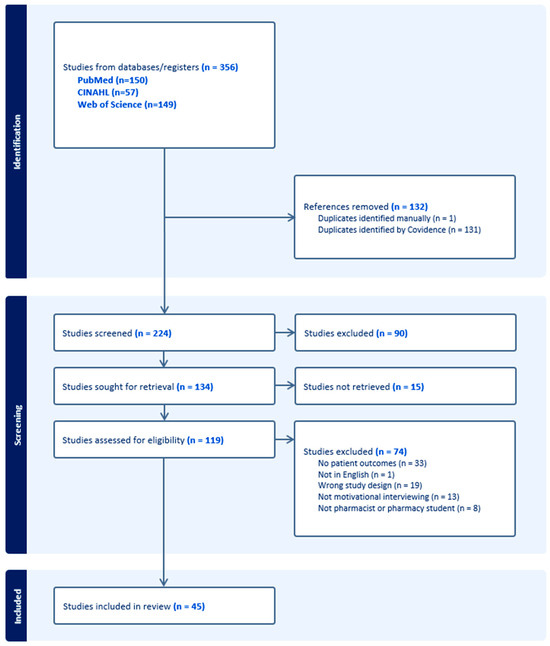
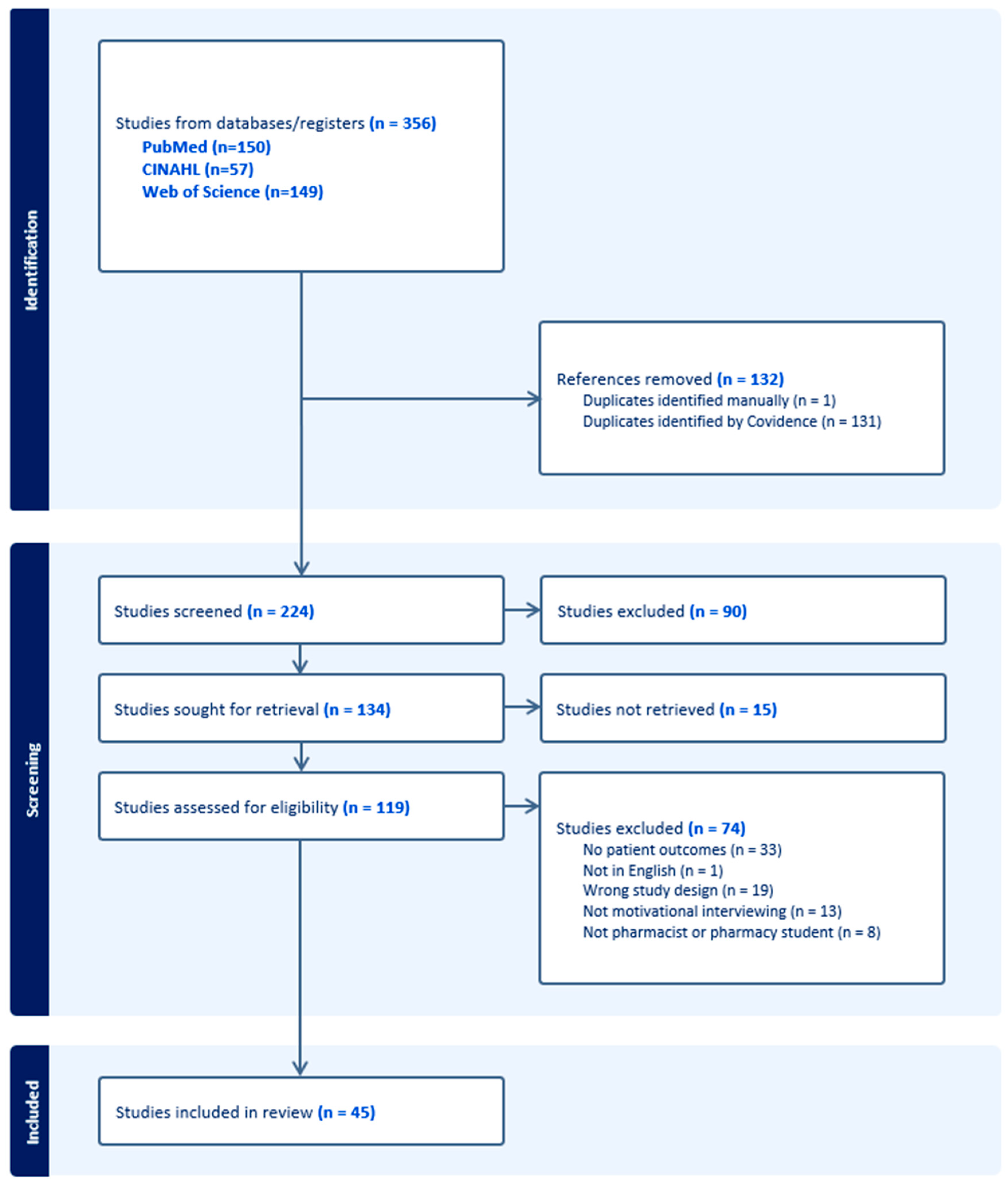
A total of 356 articles were initially identified for review, and after duplicates were removed, 224 articles underwent title and abstract screening. This produced 134 articles that received full-text review. Articles were excluded during this step for reasons such as lack of patient outcomes, lack of an available full-text article, wrong study design, not pharmacist-centered, and not MI (example excluded article [24]). A final total of 45 studies were included for data extraction. The breakdown of article screening and inclusion is shown in the PRISMA diagram (see Figure 1).
Figure 1.
PRISMA flow diagram of included and excluded studies.
The average score for quality assessment of the articles used was 6.3, with 43/45 studies (96%) having a quality rating of 5 or higher (see Table 2).
Table 2.
Quality assessment of extracted studies using the Mixed Methods Appraisal Tool (MMAT).
All of the studies are summarized in detail in Table 4. Most of these studies were randomized controlled trials (n = 18, 40%) or quasi-experimental studies (n = 17, 37.8%). They were often conducted in the Global North, the United States (n = 22, 48.9%) or Europe (n = 15, 33.3%), after the year 2015 (n = 36, 80%). Studies evaluated pharmacist or pharmacy student MI interventions in settings such as ambulatory care clinics (n = 20, 44.4%), community pharmacies (n = 12, 26.7%), hospitals (n = 7, 15.6%), or managed care organizations (n = 6, 13.3%) (see Table 3). These studies included a variety of other interventions, such as group-based education classes [25], one-on-one patient appointments [26], medication list reviews [27], and interprofessional care [28,29,30].
Table 3.
Characteristics of included articles.
An overview of the studies can be found in Table 4. Studies most commonly focused on utilizing MI for health conditions such as diabetes (n = 11), hypertension (n = 10), smoking cessation (n = 5), hyperlipidemia (n = 4), other cardiovascular conditions (n = 5), and kidney disease (n = 4). Most interventions involved multiple sessions rather than individual encounters and were delivered in person, though virtual and hybrid delivery methods were utilized. Most studies evaluated clinical outcomes of the MI interventions, followed by medication adherence and humanistic outcomes. Overall, studies reported a positive impact of the MI interventions, with no studies reporting a negative or worsened outcome. For instance, all studies evaluating the impact of MI on hypertension, smoking cessation, and hyperlipidemia outcomes had primarily positive outcomes reported. Studies that had neutral outcomes were focused on diabetes (n = 2), kidney disease (n = 1), other cardiovascular conditions (n = 2), or other clinical conditions (n = 6). Ten studies incorporated pharmacy students into the MI intervention [16,30,31,32,33,34,35,36,37,38]. These were distributed across managed care organizations (n = 5) [16,31,34,35,37], ambulatory care (n = 4) [30,32,33,36], and hospital (n = 1) [38] settings. Notably, the five studies conducted in the managed care organizations all evaluated a medication adherence outcome, and each reported positive results.
Table 4.
Summary of included studies.
The specific measures assessed within each outcome category are summarized in Table 5. Measured outcomes were predominantly surrogate or process endpoints. Among the clinical outcomes, blood pressure was most common (n = 11), followed by A1c (n = 5), healthcare utilization (n = 5), and lipids (n = 4). Adherence was assessed mainly by adherence scales (n = 11) and proportion of days covered (n = 8), and humanistic outcomes focused on patient satisfaction (n = 7) and quality of life (n = 4).
Table 5.
Specific outcome measures assessed across included studies.
3.1. Medication Adherence Outcomes
Most studies on medication adherence had positive outcomes (17/22, 77.3%). Studies utilized a variety of methods to assess medication adherence, including both self-report and more objective measures, so the definition of improvement in medication adherence may not be consistent across these results. For example, a brief, in-person MI intervention for diabetes found significant improvement in a direct measure of adherence, but no significant improvement in the self-perceived medication adherence [40]. Similarly, claims-based adherence measures, such as PDC and MPR, were positively impacted post-intervention [16,31,34,35,36,37,41]. These findings were not always consistent, as there were no differences post-intervention in stroke/TIA patients’ MPR [27].
Studies that used self-report measures of adherence often reported no or mixed changes in adherence, such as a rheumatoid arthritis intervention [25], an atrial fibrillation intervention [62], and a hypertension intervention [46]. A diabetes intervention had mixed findings with overall no differences but some potential benefits for patients who had more intervention sessions [47].
3.2. Clinical Outcomes
There were 23 of 32 studies (71.9%) evaluating clinical outcomes that had positive results. Studies looking at blood pressure lowering often had positive results [28,29,45,46], including single-encounter models [45], multi-encounter models [46], and team-based models [28,29]. Of note, a kidney-focused intervention with hypertension as a second outcome found no differences in blood pressure [39]. Smoking cessation interventions also had primarily positive outcomes, including higher quit rates in large RCTs [17] and smaller ambulatory care and hospital-based interventions [30,58,59]. Vaccine-focused interventions were mixed, with positive impacts seen in Hepatitis B [51] and overall vaccination rates [53], while others reported increased readiness to be vaccinated but no change in actual rates [52].
Studies evaluating glycemic changes had mixed results (positive [29,66], neutral [47]), which was similar to those evaluating healthcare utilization (positive [48,50], neutral [38,49]). Two ambulatory care-based studies with regular patient follow-up found significant improvements in A1c [28,29], but a larger phone-delivered intervention did not find significant improvements [47]. With healthcare utilization, an MTM intervention reduced ED visits and a discharge-based intervention reduced 30- and 180-day readmission rates. [50]. A pediatric asthma intervention, however, did not result in reduced healthcare visits [49], and an inpatient psychiatric intervention reduced ED visits only among those who received at least two sessions [38].
3.3. Humanistic Outcomes
Studies that evaluated humanistic outcomes had largely positive results (12/17, 70.6%). Often, these humanistic outcomes, such as patient satisfaction, acceptability, and confidence, were secondary outcomes, relying on self-reporting. Satisfaction with MI-based pharmacist encounters was consistently high in the studies, regardless of disease or delivery mode, including stroke/TIA [27], hemodialysis [64], and opioid misuse [61], indicating high acceptability for pharmacist-delivered MI interventions regardless of outcomes.
3.4. Variability Among Studies
Delivery mode was examined across the studies. Telephone-only MI interventions were effective in improving objective adherence measures, whether delivered by pharmacists or student pharmacists [16,31,34,35,36,37]. These most often occurred in the managed care setting [16,31,35,37,67]. In-person or a hybrid delivery (initially in-person, with phone follow-ups) was positive in certain diseases, such as blood pressure interventions [28,29,45,46]. No study directly compared the delivery mode of MI and its impact on outcomes.
There were also differences in findings between some of the study designs. For example, designs that did not include a usual care comparator (i.e., non-RCT) more frequently reported positive outcomes [28,29,44,48,56,57], while RCTS often found mixed or no change in outcomes [25,46,47,49,62]. It is unknown, however, the extent to which behavior-related communication styles are present within standard/usual care practices.
Finally, as previously noted, objective measures of adherence (claims data, refill data) were more likely to have positive findings associated with MI, while subjective measures were not.
4. Discussion
Pharmacists and student pharmacists implemented MI across 45 studies, at least 8 disease states, 4 practice settings, and multiple study designs. In this systematic review, the outcomes of the 45 MI interventions were mostly positive. These results emphasize the importance of implementing MI by pharmacists and pharmacy students in hospitals, clinics, and community pharmacies to benefit the health and medication adherence of their patients. The high methodological quality of most studies, i.e., higher MMAT scores based on clear research questions and appropriate reporting of all study elements, provides further support for these outcomes. Our findings are consistent with previous systematic reviews that reinforce the idea that pharmacist-led interventions are effective in improving outcomes and adherence, particularly in chronic disease states [18,19]. Our particular study is unique due to it being solely focused on MI.
The most common settings utilized across studies were ambulatory care (44%), with community pharmacies less common (27%). Pharmacy models in ambulatory care can lend to MI-based encounters with more time, established follow-up structures, and pharmacists embedded in an appointment-based disease management model. Alternatively, community pharmacies often have time constraints and “walk-in” patients. Examples across these studies can help pharmacists determine a feasible model, as positive impacts were seen in both models [8,10,53]. It is important to note that many of the studies had a multiple-session model, noting that the nature of MI does lend itself to relationship-building and follow-up rather than a single encounter for more complex disease states. The expansion of pharmacists in managed care organizations, where they may work to drive patient adherence to therapy, provides another avenue for a multi-session model. However, vaccine-based interventions can work in a single-encounter model [8,9,53] more readily than chronic disease interventions. Of note, delivery mode did matter, depending on setting. Telephone-only interventions were effective in managed care settings [16,31,34,35,37], while in-person and hybrid deliveries were more effective in other settings [28,29,45,68,69,70]. Direct comparison of delivery modes should be an area of future exploration to determine the most effective means of delivering MI in pharmacy settings.
Several patterns across the different studies may explain the heterogeneity of findings. These patterns should be further explored, as it will be important to assess these in order to determine the true impact of MI across disease states. First, how adherence was measured (objective or subjective) seemed to have resulted in different outcomes, even when examined among the same patients in the same study [40]. Self-report measures can be subjective due to recall bias and social desirability bias; thus, they may not adequately capture the behavioral change. Secondly, health conditions that require multiple behavioral elements and often have multiple comorbidities may be more challenging to measure, determine the impact of an intervention, and change with brief or limited MI-based interventions. For example, diabetes and cardiovascular conditions more frequently had a neutral outcome, as compared to hypertension, smoking cessation, and hyperlipidemia, which had no neutral outcomes. Perhaps the complexity of these conditions and the corresponding self-care measures needed [71] or other barriers, such as the social determinants of health [72], contributed to this outcome. It may take more than MI to elicit behavior change when diseases are complex rather than more behavior-oriented conditions like smoking cessation. This would be consistent with the findings of Werremeyer 2019, which found that at least two sessions were needed for a change to occur [38]. Further, this could mean that there is a dose–response relationship between MI interventions and behavioral change. This is an area of further exploration within pharmacy-based MI interventions.
Study design also may have contributed to the differences seen among studies. Single-arm studies, cohort studies, and non-RCT experimental designs often found improvements [28,29,44,48,56,57], while RCTS with a comparator group (usual care) did not or found mixed results [25,46,47,49,62]. The RCTs were often in an ambulatory care setting, with the comparator being provider-based usual care. Thus, it may be that MI does not have as much of an impact on patient outcomes as simply providing usual care, or providers could be providing some elements of behavior-based interventions as part of usual care practices. This should be further explored in studies to determine not only whether MI works but whether usual care has also evolved to include more behavioral interventions, particularly when the comparator is ambulatory care practice.
Notably, none of the 45 studies reported a negative or worsened outcome. Thus, the risk versus benefit of implementing MI could be fairly high, resulting in equivalent outcomes at worst. Indeed, most studies found positive outcomes. Given the ability to implement MI without a formulary change, collaborative practice agreement, or prescribing authority, the barrier to implementation is lower than some other practice changes. For example, interventions can be brief, limiting the time investment [54]. While sites will need to invest in training their staff, several studies outlined their training models [17,55], which could provide some guidance. Sites should also identify how best to implement this in their workflow; successful integration in large chain pharmacy settings could provide an example model [53]. If sites have limited resources, student pharmacists may aid in lessening the investment needed. Several studies included in this review examined the role of pharmacy students leading interventions and found them to be effective [16,30,36]. Pharmacy programs often include MI as part of their curriculum [14], providing a trained workforce to provide MI interventions.
Limitations
There are several limitations to this systematic review. First, few studies described measures taken to assess the fidelity of the MI interventions (i.e., how well the pharmacists implemented the MI intervention as described) [73]. Additionally, while these studies included an MI component, it is important to note that other interventions often happened alongside them. It is therefore difficult to extrapolate how much of the impact seen in a study is due to the MI component versus another factor [41]. Secondly, while we found a lack of negative outcomes across studies, this could be due to publication bias. Researchers may not have published findings that did not show a benefit. Thirdly, studies were heterogeneous in nature, limiting the ability to truly compare outcomes. Multiple studies by the same author group were included, which may present different components of the results from the same study. This could have introduced bias into the findings. Finally, studies were mainly implemented in the Global North (the United States and Europe), limiting generalizability to other pharmacy settings in the Global South. Future work should evaluate the impact of standardized, high-fidelity MI interventions, the implementation of MI and its outcomes in underrepresented settings (such as hospital systems and managed care organizations), other disease states that require behavior change, and the number of sessions needed for change to occur (single MI intervention versus multiple sessions).
5. Conclusions
Our systematic review of pharmacist-delivered MI interventions was consistently associated with positive or neutral outcomes, notably in hypertension, smoking cessation, and hyperlipidemia. No studies reported negative outcomes. Given the low implementation barrier for MI-based interventions, MI could be a scalable, low-resource strategy for pharmacists to positively impact the health of communities and improve patient outcomes. Future research should explore the fidelity of MI-based interventions as well as expand efforts across a variety of diseases and settings.
Supplementary Materials
The following supporting information can be downloaded at: https://www.mdpi.com/article/10.3390/pharmacy14060136/s1, Table S1: PRISMA 2020 Main Checklist for the Study; Table S2: Search Strategy Example.
Author Contributions
Conceptualization: A.M.H.C.; methodology: A.M.H.C.; formal analysis: B.W., A.L., B.E. and S.M.T.; writing—original draft preparation: A.M.H.C., B.W. and S.M.T.; writing—review and editing: A.M.H.C., B.W., A.L., B.E. and S.M.T.; project administration: A.M.H.C. All authors have read and agreed to the published version of the manuscript.
Funding
This research received no external funding.
Institutional Review Board Statement
Not applicable.
Informed Consent Statement
Not applicable.
Data Availability Statement
No new data were created or analyzed in this study. Data sharing is not applicable to this article.
Acknowledgments
Thank you to Jess Elder, Cedarville University, for her assistance in the literature search process.
Conflicts of Interest
Aleda M. H. Chen and Stephanie Tubb have received research grant funding through the Merck Investigator Studies Program. The other authors declare no conflicts of interest.
References
- Centers for Disease Control and Prevention. Deaths and Mortality. Available online: https://www.cdc.gov/nchs/fastats/deaths.htm (accessed on 22 July 2026).
- Middleton, K.R.; Anton, S.D.; Perri, M.G. Long-term adherence to health behavior change. Am. J. Lifestyle Med. 2013, 7, 395–404. [Google Scholar] [CrossRef] [Scilit] [PubMed]
- Religioni, U.; Barrios-Rodríguez, R.; Requena, P.; Borowska, M.; Ostrowski, J. Enhancing therapy adherence: Impact on clinical outcomes, healthcare costs, and patient quality of life. Medicina 2025, 61, 153. [Google Scholar] [CrossRef] [Scilit] [PubMed]
- Miller, W.R.; Rollnick, S. Motivational Interviewing: Helping People Change; The Gilford Press: New York, NY, USA, 2013. [Google Scholar]
- Rollnick, S.; Miller, W.R.; Butler, C.C.; Aloia, M.S. Motivational interviewing in health care: Helping patients change behavior. COPD J. Chronic Obstr. Pulm. Dis. 2008, 5, 203. [Google Scholar] [CrossRef] [Scilit]
- Gagneur, A.; Battista, M.-C.; Boucher, F.D.; Tapiero, B.; Quach, C.; De Wals, P.; Lemaitre, T.; Farrands, A.; Boulianne, N.; Sauvageau, C.; et al. Promoting vaccination in maternity wards—motivational interview technique reduces hesitancy and enhances intention to vaccinate, results from a multicentre non-controlled pre- and post-intervention RCT-nested study, Quebec, March 2014 to February 2015. Eurosurveillance 2019, 24, 1800641. [Google Scholar] [CrossRef] [Scilit] [PubMed]
- Lemaitre, T.; Carrier, N.; Farrands, A.; Gosselin, V.; Petit, G.; Gagneur, A. Impact of a vaccination promotion intervention using motivational interview techniques on long-term vaccine coverage: The PromoVac strategy. Hum. Vaccin. Immunother. 2019, 15, 732–739. [Google Scholar] [CrossRef] [Scilit] [PubMed]
- Chen, A.M.H.; Anthony, A.; Balogun, A.; Pereira, R.; Cole, J.W. The impact of motivational interviewing and MOTIVE tool use by pharmacists on vaccine acceptance. Pharmacy 2024, 12, 114. [Google Scholar] [CrossRef] [Scilit] [PubMed]
- Cole, J.; Berman, S.; Gardner, J.; McGuire, K.; Chen, A.M.H. Implementation of a motivational interviewing-based decision tool to improve childhood vaccination rates: Pilot study protocol. Res. Soc. Adm. Pharm. 2021, 17, 619–624. [Google Scholar] [CrossRef] [Scilit] [PubMed]
- Cole, J.W.; Chen, A.M.H.; McGuire, K.; Berman, S.; Gardner, J.; Teegala, Y. Motivational interviewing and vaccine acceptance in children: The MOTIVE study. Vaccine 2022, 40, 1846–1854, Erratum in Vaccine 2022, 40, 3482. https://doi.org/10.1016/j.vaccine.2022.04.084. [Google Scholar] [CrossRef] [Scilit] [PubMed]
- Mifsud, J.L.; Galea, J.; Garside, J.; Stephenson, J.; Astin, F. Motivational interviewing to support modifiable risk factor change in individuals at increased risk of cardiovascular disease: A systematic review and meta-analysis. PLoS ONE 2020, 15, e0241193. [Google Scholar] [CrossRef] [Scilit] [PubMed]
- Ekong, G.; Kavookjian, J. Motivational interviewing and outcomes in adults with type 2 diabetes: A systematic review. Patient Educ. Couns. 2016, 99, 944–952. [Google Scholar] [CrossRef] [Scilit] [PubMed]
- Valliant, S.N.; Burbage, S.C.; Pathak, S.; Urick, B.Y. Pharmacists as accessible health care providers: Quantifying the opportunity. J. Manag. Care Spec. Pharm. 2022, 28, 85–90. [Google Scholar] [CrossRef] [Scilit] [PubMed]
- Widder-Prewett, R.; Draime, J.A.; Cameron, G.; Anderson, D.; Pinkerton, M.; Chen, A.M.H. Impact of student vs faculty facilitators on motivational interviewing student outcomes. Am. J. Pharm. Educ. 2017, 81, 107. [Google Scholar] [CrossRef] [Scilit] [PubMed]
- Sifontis, N.M.; Connor, S.E.; Ho, J.A.-C.; Morley, S.; O’Brien, C.E.; Rotzenberg, K.; Varadarajan, R.; Covvey, J.R. A modified Delphi process to achieve consensus on Social/Administrative Science topics in pharmacy curricula. Am. J. Pharm. Educ. 2025, 89, 101349, Erratum in Am. J. Pharm. Educ. 2025, 89, 101873. https://doi.org/10.1016/j.ajpe.2025.101873. [Google Scholar] [CrossRef] [Scilit] [PubMed]
- Abughosh, S.; Wang, X.; Serna, O.; Esse, T.; Mann, A.; Masilamani, S.; Holstad, M.M.; Essien, E.J.; Fleming, M. A motivational interviewing intervention by pharmacy students to improve medication adherence. J. Manag. Care Pharm. 2017, 23, 549–560. [Google Scholar] [CrossRef] [Scilit] [PubMed]
- Caponnetto, P.; DiPiazza, J.; Aiello, M.R.; Polosa, R. Training pharmacists in the stage-of-change model of smoking cessation and motivational interviewing: A randomized controlled trial. Health Psychol. Open 2017, 4, 2055102917736429. [Google Scholar] [CrossRef] [Scilit] [PubMed]
- Aubeeluck, E.; Al-Arkee, S.; Finlay, K.; Jalal, Z. The impact of pharmacy care and motivational interviewing on improving medication adherence in patients with cardiovascular diseases: A systematic review of randomised controlled trials. Int. J. Clin. Pract. 2021, 75, e14457. [Google Scholar] [CrossRef] [Scilit] [PubMed]
- Alongi, R.; Yang, H.; Harmon, G.; Kavookjian, J. Effects of pharmacist-led motivational interviewing on medication adherence: A systematic review. Res. Soc. Adm. Pharm. 2023, 19, 1. [Google Scholar] [CrossRef] [Scilit]
- Page, M.J.; McKenzie, J.E.; Bossuyt, P.M.; Boutron, I.; Hoffmann, T.C.; Mulrow, C.D.; Shamseer, L.; Tetzlaff, J.M.; Akl, E.A.; Brennan, S.E.; et al. The PRISMA 2020 statement: An updated guideline for reporting systematic reviews. BMJ 2021, 372, n71. [Google Scholar] [CrossRef] [Scilit] [PubMed]
- Hong, Q.N.; Fàbregues, S.; Bartlett, G.; Boardman, F.; Cargo, M.; Dagenais, P.; Gagnon, M.-P.; Griffiths, F.; Nicolau, B.; O’Cathain, A.; et al. The Mixed Methods Appraisal Tool (MMAT) version 2018 for information professionals and researchers. Educ. Inf. 2018, 34, 285–291. [Google Scholar] [CrossRef] [Scilit]
- Grinalds, M.S.; Yoder, C.; Krauss, Z.; Chen, A.M.; Rhoney, D.H. Scoping review of rational polytherapy in patients with drug-resistant epilepsy. Pharmacotherapy 2023, 43, 53–84. [Google Scholar] [CrossRef] [Scilit] [PubMed]
- Chen, A.M.H.; Draime, J.A.; Engert, M.; Pachucki, A.; Zan, T.; Craig, E.; Gibson, N.; Chukwuemeka, C.; Tubb, S.M.; Cole, J.W. Utilization of Provider–Patient Communication Tools and Approaches to Facilitate Vaccine Confidence: A Systematic Review. Vaccines 2025, 13, 1121. [Google Scholar] [CrossRef] [Scilit] [PubMed]
- Abughosh, S.M.; Wang, X.; Serna, O.; Henges, C.; Masilamani, S.; Essien, E.J.; Chung, N.; Fleming, M. A pharmacist telephone intervention to identify adherence barriers and improve adherence among nonadherent patients with comorbid hypertension and diabetes in a Medicare Advantage plan. J. Manag. Care Spec. Pharm. 2016, 22, 63–73. [Google Scholar] [CrossRef] [Scilit] [PubMed]
- Zwikker, H.E.; van den Ende, C.H.; van Lankveld, W.G.; den Broeder, A.A.; van den Hoogen, F.H.; van de Mosselaar, B.; van Dulmen, S.; van den Bemt, B.J. Effectiveness of a group-based intervention to change medication beliefs and improve medication adherence in patients with rheumatoid arthritis: A randomized controlled trial. Patient Educ. Couns. 2014, 94, 356–361. [Google Scholar] [CrossRef] [Scilit] [PubMed]
- Östbring, M.J.; Eriksson, T.; Petersson, G.; Hellström, L. Effects of a pharmaceutical care intervention on clinical outcomes and patient adherence in coronary heart disease: The MIMeRiC randomized controlled trial. BMC Cardiovasc. Disord. 2021, 21, 367. [Google Scholar] [CrossRef] [Scilit] [PubMed]
- Hedegaard, U.; Kjeldsen, L.J.; Pottegård, A.; Bak, S.; Hallas, J. Multifaceted intervention including motivational interviewing to support medication adherence after stroke/transient ischemic attack: A randomized trial. Cerebrovasc. Dis. Extra 2014, 4, 221–234. [Google Scholar] [CrossRef] [Scilit] [PubMed]
- Kim, M.G.; Lee, N.E.; Sohn, H.S. Gap between patient expectation and perception during pharmacist-patient communication at community pharmacy. Int. J. Clin. Pharm. 2020, 42, 677–684, Erratum in Int. J. Clin. Pharm. 2020, 42, 1539. https://doi.org/10.1007/s11096-020-01120-2. [Google Scholar] [CrossRef] [Scilit] [PubMed]
- Hurst, H.; Dunn, S.; Fuji, K.T.; Gilmore, J.; Wilt, S.; Webster, S.; Parikh, P. Clinical impact of a pharmacist + health coach chronic disease management program in a rural free clinic. J. Am. Pharm. Assoc. 2021, 61, 442–449. [Google Scholar] [CrossRef] [Scilit] [PubMed]
- Buckley, K.; Tsu, L.; Hormann, S.; Giang, K.; Bills, A.; Early, N.; Jackowski, R. A health sciences studente-run smoking cessation clinic experience within a homeless population. J. Am. Pharm. Assoc. 2017, 57, 109–115. [Google Scholar] [CrossRef] [Scilit] [PubMed]
- Abughosh, S.M.; Vadhariya, A.; Johnson, M.L.; Essien, E.J.; Esse, T.W.; Serna, O.; Gallardo, E.; Boklage, S.H.; Choi, J.; Holstad, M.M.; et al. Enhancing statin adherence using a motivational interviewing intervention and past adherence trajectories in patients with suboptimal adherence. J. Manag. Care Pharm. 2019, 25, 1053–1062. [Google Scholar] [CrossRef] [Scilit] [PubMed]
- Chen, A.M.H.; Gardner, J.; Wandling, E.; Wicker, E.; Grauer, P.; Sweeney, M.A. The impact of a provider motivational interviewing-based training on chronic pain management in a federally-qualified health center. Res. Soc. Adm. Pharm. 2022, 18, 3839–3845. [Google Scholar] [CrossRef] [Scilit] [PubMed]
- DePatis, K.; Harrington, C. The impact of pharmacist-delivered motivational interviewing on chronic kidney disease identification and management in patients with diabetes mellitus and low socioeconomic status. Innov. Pharm. 2019, 10. [Google Scholar] [CrossRef] [Scilit] [PubMed]
- Majd, Z.; Mohan, A.; Fatima, B.; Johnson, M.L.; Essien, E.J.; Abughosh, S.M. Trajectories of adherence to ACEI/ARB medications following a motivational interviewing intervention among Medicare Advantage beneficiaries in Texas. Patient Educ. Couns. 2024, 119, 108073. [Google Scholar] [CrossRef] [Scilit] [PubMed]
- Mohan, A.; Majd, Z.; Johnson, M.L.; Essien, E.J.; Barner, J.; Serna, O.; Gallardo, E.; Fleming, M.L.; Ordonez, N.; Holstad, M.M.; et al. A motivational interviewing intervention to improve adherence to ACEIs/ARBs among nonadherent older adults with comorbid hypertension and diabetes. Drugs Aging 2023, 40, 377–390. [Google Scholar] [CrossRef] [Scilit] [PubMed]
- Osbaugh, N.A.; Billups, S.J. A shared decision-making intervention by pharmacy students to improve statin adherence. J. Am. Coll. Clin. Pharm. 2022, 5, 34–41. [Google Scholar] [CrossRef] [Scilit]
- Paranjpe, R.; Vadhariya, A.; Choi, J.; Essien, E.J.; Esse, T.W.; Gallardo, E.; Serna, O.; Abughosh, S. Evaluating trajectories of statin adherence after a motivational interviewing intervention. J. Am. Pharm. Assoc. 2020, 60, 892–898. [Google Scholar] [CrossRef] [Scilit] [PubMed]
- Werremeyer, A.; Orr, M. Pharmacist-led medication education groups on an inpatient psychiatric unit-Impact on readmissions and emergency department visits. J. Am. Coll. Clin. Pharm. 2019, 2, 228–235. [Google Scholar] [CrossRef] [Scilit]
- Bandiera, C.; Dotta-Celio, J.; Locatelli, I.; Nobre, D.; Wuerzner, G.; Pruijm, M.; Lamine, F.; Burnier, M.; Zanchi, A.; Schneider, M.P. The differential impact of a 6-versus 12-month pharmacist-led interprofessional medication adherence program on medication adherence in patients with diabetic kidney disease: The randomized PANDIA-IRIS study. Front. Pharmacol. 2024, 15, 1294436. [Google Scholar] [CrossRef] [Scilit] [PubMed]
- Ekong, G.; Chou, C.; Lakin, J.; Hardin, A.; Fox, B.; Hunt, C.; Kavookjian, J. Pharmacist-led motivational interviewing for diabetes medication adherence in a worksite wellness program. J. Am. Pharm. Assoc. 2020, 60, e224–e229. [Google Scholar] [CrossRef] [Scilit] [PubMed]
- Hedegaard, U.; Kjeldsen, L.J.; Pottegård, A.; Henriksen, J.E.; Lambrechtsen, J.; Hangaard, J.; Hallas, J. Improving medication adherence in patients with hypertension: A randomized trial. Am. J. Med. 2015, 128, 1351–1361. [Google Scholar] [CrossRef] [Scilit] [PubMed]
- Ismail, S.; Al-Subhi, A.; Youssif, E.; Ahmed, M.; Almalki, A.; Seger, D.L.; Seger, A.C.; Cook, E. Patient-centered pharmacist care in the hemodialysis unit: A quasi-experimental interrupted time series study. BMC Nephrol. 2019, 20, 408. [Google Scholar] [CrossRef] [Scilit] [PubMed]
- Jalal, Z.; Smith, F.; Taylor, D.; Finlay, K.; Patel, H.; Antoniou, S. Impact of pharmacy care upon adherence to cardiovascular medicines: A feasibility pilot controlled trial. Eur. J. Hosp. Pharm. 2016, 23, 250–256. [Google Scholar] [CrossRef] [Scilit] [PubMed]
- Klamerus, M.L.; Kerr, E.A.; Bosworth, H.B.; Schmittdiel, J.A.; Heisler, M. Characteristics of diabetic patients associated with achieving and maintaining blood pressure targets in the Adherence and Intensification of Medications program. Chronic Illn. 2014, 10, 60–73. [Google Scholar] [CrossRef] [Scilit] [PubMed]
- Okada, H.; Onda, M.; Shoji, M.; Sakane, N.; Nakagawa, Y.; Sozu, T.; Kitajima, Y.; Tsuyuki, R.T.; Nakayama, T. Effects of lifestyle advice provided by pharmacists on blood pressure: The COMmunity Pharmacists ASSist for Blood Pressure (COMPASS-BP) randomized trial. Biosci. Trends 2018, 11, 632–639. [Google Scholar] [CrossRef] [Scilit] [PubMed]
- Stewart, K.; George, J.; Mc Namara, K.P.; Jackson, S.L.; Peterson, G.M.; Bereznicki, L.R.; Gee, P.R.; Hughes, J.D.; Bailey, M.J.; Hsueh, Y.A.; et al. A multifaceted pharmacist intervention to improve antihypertensive adherence: A cluster-randomized, controlled trial (HAPPy trial). J. Clin. Pharm. Ther. 2014, 39, 527–534. [Google Scholar] [CrossRef] [Scilit] [PubMed]
- Lauffenburger, J.C.; Ghazinouri, R.; Jan, S.; Makanji, S.; Ferro, C.A.; Lewey, J.; Wittbrodt, E.; Lee, J.; Haff, N.; Fontanet, C.P.; et al. Impact of a novel pharmacist-delivered behavioral intervention for patients with poorly-controlled diabetes: The ENhancing outcomes through Goal Assessment and Generating Engagement in Diabetes Mellitus (ENGAGE-DM) pragmatic randomized trial. PLoS ONE 2019, 14, e0214754. [Google Scholar] [CrossRef] [Scilit] [PubMed]
- Moreno, G.; Fu, J.Y.; Chon, J.S.; Bell, D.S.; Grotts, J.; Tseng, C.-H.; Maranon, R.; Skootsky, S.S.; Mangione, C.M. Reducing emergency department visits among patients with diabetes by embedding clinical pharmacists in the primary care teams. Med. Care 2021, 59, 348–353. [Google Scholar] [CrossRef] [Scilit] [PubMed]
- Mosquera, R.A.; Avritscher, E.B.C.; Yadav, A.; Pedroza, C.; Samuels, C.L.; Harris, T.S.; Tetzlaff, C.; Eapen, J.; Gonzales, T.R.; Green, C.; et al. Unexpected results of a randomized quality improvement program for children with severe asthma. J. Asthma 2021, 58, 596–603. [Google Scholar] [CrossRef] [Scilit] [PubMed]
- Ravn-Nielsen, L.V.; Duckert, M.L.; Lund, M.L.; Henriksen, J.P.; Nielsen, M.L.; Eriksen, C.S.; Buck, T.C.; Pottegård, A.; Hansen, M.R.; Hallas, J. Effect of an In-Hospital Multifaceted Clinical Pharmacist Intervention on the Risk of Readmission A Randomized Clinical Trial. Jama Intern. Med. 2018, 178, 375–382. [Google Scholar] [CrossRef] [Scilit] [PubMed]
- Berenbrok, L.A.; Gessler, C.; Kirisci, L.; Herrera-Restrepo, O.; Coley, K.C. Impact of pharmacist motivational interviewing on hepatitis B vaccination in adults with diabetes. J. Am. Pharm. Assoc. 2023, 63, 66–73.e61. [Google Scholar] [CrossRef] [Scilit] [PubMed]
- Brackett, A.; Butler, M.; Chapman, L. Using motivational interviewing in the community pharmacy to increase adult immunization readiness: A pilot evaluation. J. Am. Pharm. Assoc. 2015, 55, 182–186. [Google Scholar] [CrossRef] [Scilit] [PubMed]
- Coley, K.C.; Gessler, C.; McGivney, M.; Richardson, R.; DeJames, J.; Berenbrok, L.A. Increasing adult vaccinations at a regional supermarket chain pharmacy: A multi-site demonstration project. Vaccine 2020, 38, 4044–4049. [Google Scholar] [CrossRef] [Scilit] [PubMed]
- Dhital, R.; Norman, I.; Whittlesea, C.; Murrells, T.; McCambridge, J. The effectiveness of brief alcohol interventions delivered by community pharmacists: Randomized controlled trial. Addiction 2015, 110, 1586–1594. [Google Scholar] [CrossRef] [Scilit] [PubMed]
- Jaffray, M.; Matheson, C.; Bond, C.M.; Lee, A.J.; McLernon, D.J.; Johnstone, A.; Skea, L.; Davidson, B. Does training in motivational interviewing for community pharmacists improve outcomes for methadone patients? A cluster randomised controlled trial. Int. J. Pharm. Pract. 2014, 22, 4–12. [Google Scholar] [CrossRef] [Scilit] [PubMed]
- Ikolaba, F.S.A.; Schafheutle, E.I.; Steinke, D. Development, feasibility, impact and acceptability of a community pharmacy-based diabetes care plan in a low-middle-income country. Pharmacy 2023, 11, 109. [Google Scholar] [CrossRef] [Scilit] [PubMed]
- Okuyan, B.; Ozcan, V.; Balta, E.; Durak-Albayrak, O.; Turker, M.; Sancar, M.; Yavuz, B.B.; Uner, S.; Ozcebe, H. The impact of community pharmacists on older adults in Turkey. J. Am. Pharm. Assoc. 2021, 61, E83–E92. [Google Scholar] [CrossRef] [Scilit] [PubMed]
- Deeks, L.S.; Kosari, S.; Develin, A.; Peterson, G.M.; Naunton, M. Smoking cessation and the general practice pharmacist. J. Smok. Cessat. 2019, 14, 186–189. [Google Scholar] [CrossRef] [Scilit]
- Dobrinas, M.; Blanc, A.L.; Rouiller, F.; Christen, G.; Coronado, M.; Tagan, D.; Schäli, C. Clinical pharmacist’s role in implementing a smoking cessation intervention in a Swiss regional hospital: An exploratory study. Int. J. Clin. Pharm. 2014, 36, 526–534. [Google Scholar] [CrossRef] [Scilit] [PubMed]
- Cantillana-Suárez, M.G.; Robustillo-Cortés, M.D.; Gutiérrez-Pizarraya, A.; Morillo-Verdugo, R. Impact and acceptance of pharmacist-led interventions during HIV care in a third-level hospital in Spain using the Capacity-Motivation-Opportunity pharmaceutical care model: The IRAFE study. Eur. J. Hosp. Pharm. 2021, 28, E157–E163. [Google Scholar] [CrossRef] [Scilit] [PubMed]
- Cochran, G.; Chen, Q.; Field, C.; Seybert, A.L.; Hruschak, V.; Jaber, A.; Gordon, A.J.; Tarter, R. A community pharmacy-led intervention for opioid medication misuse: A small-scale randomized clinical trial. Drug Alcohol. Depend. 2019, 205, 107570. [Google Scholar] [CrossRef] [Scilit] [PubMed]
- Shiga, T.; Kimura, T.; Fukushima, N.; Yoshiyama, Y.; Iwade, K.; Mori, F.; Ajiro, Y.; Haruta, S.; Yamada, Y.; Sawada, E.; et al. Effects of a pharmacist-led educational interventional program on electronic monitoring-assessed adherence to direct oral anticoagulants: A randomized, controlled trial in patients with nonvalvular atrial fibrillation. Clin. Ther. 2022, 44, 1494–1505. [Google Scholar] [CrossRef] [Scilit] [PubMed]
- Morillo-Verdugo, R.; Robustillo-Cortés, M.D.; García, M.M.; Almeida-González, C.V. Influence of pharmacist intervention, based on CMO model, to improve activation in HIV patients. Rev. Esp. Quim. 2019, 32, 40–49. [Google Scholar]
- Paneerselvam, G.S.; Kenneth, L.K.C.; Aftab, R.A.; Sirisinghe, R.G. Medication adherence among hemodialysis patients: The impact of pharmacist-led motivational interviewing. Pharm. Pract. 2023, 21, 1–8. [Google Scholar] [CrossRef] [Scilit]
- Hedegaard, U.; Hallas, J.; Ravn-Nielsen, L.V.; Kjeldsen, L.J. Process- and patient-reported outcomes of a multifaceted medication adherence intervention for hypertensive patients in secondary care. Res. Soc. Adm. Pharm. 2016, 12, 302–318. [Google Scholar] [CrossRef] [Scilit] [PubMed]
- Kim, J.; Powers, S.; Rice, C.; Cawley, P. Interprofessional medication self-management program for older underserved adults. Patient Prefer. Adherence 2020, 14, 839–845. [Google Scholar] [CrossRef] [Scilit] [PubMed]
- Majd, Z.; Mohan, A.; Johnson, M.L.; Essien, E.J.; Barner, J.C.; Serna, O.; Gallardo, E.; Fleming, M.L.; Ordonez, N.; Holstad, M.M.; et al. Patient-Reported Barriers to Adherence Among ACEI/ARB Users from a Motivational Interviewing Telephonic Intervention. Patient Prefer. Adherence 2022, 16, 2739–2748. [Google Scholar] [CrossRef] [Scilit] [PubMed]
- Bandiera, C.; Lam, L.; Locatelli, I.; Dotta-Celio, J.; Duarte, D.; Wuerzner, G.; Pruijm, M.; Zanchi, A.; Schneider, M.P. Understanding reasons and factors for participation and non-participation to a medication adherence program for patients with diabetic kidney disease in Switzerland: A mixed methods study. Diabetol. Metab. Syndr. 2022, 14, 140. [Google Scholar] [CrossRef] [Scilit] [PubMed]
- Iyngkaran, P.; Harris, M.; Ilton, M.; Kangaharan, N.; Battersby, M.; Stewart, S.; Brown, A. Implementing guideline based heart failure care in the northern territory: Challenges and solutions. Heart Lung Circ. 2014, 23, 391–406. [Google Scholar] [CrossRef] [Scilit] [PubMed]
- Goldberg, E.M.; Gettel, C.J.; Hayes, K.; Shield, R.R.; Guthrie, K.M. GAPcare: The Geriatric Acute and Post-Acute fall prevention intervention for emergency department patients—A qualitative evaluation. OBM Geriatr. 2019, 3, 20. [Google Scholar] [CrossRef] [Scilit] [PubMed]
- Chlebowy, D.O. The complexity of diabetes self-care. West. J. Nurs. Res. 2021, 43, 287. [Google Scholar] [CrossRef] [Scilit] [PubMed]
- Hill-Briggs, F.; Adler, N.E.; Berkowitz, S.A.; Chin, M.H.; Gary-Webb, T.L.; Navas-Acien, A.; Thornton, P.L.; Haire-Joshu, D. Social determinants of health and diabetes: A scientific review. Diabetes Care 2020, 44, 258–279. [Google Scholar] [CrossRef] [Scilit] [PubMed]
- National Implementation Research Network. Active Implementation Hub: Definitions and Fidelity. Available online: https://fpg.unc.edu/publications/active-implementation-hub (accessed on 14 December 2021).

Disclaimer/Publisher’s Note: The statements, opinions and data contained in all publications are solely those of the individual author(s) and contributor(s) and not of MDPI and/or the editor(s). MDPI and/or the editor(s) disclaim responsibility for any injury to people or property resulting from any ideas, methods, instructions or products referred to in the content. |
© 2026 by the authors. Licensee MDPI, Basel, Switzerland. This article is an open access article distributed under the terms and conditions of the Creative Commons Attribution (CC BY) license.