


Abstract
Research has shown that bilinguals’ first (L1) and second language (L2) interact constantly. One well-documented case is the gender congruency effect, where grammatical gender retrieval is facilitated when a noun has the same gender in both languages. While this effect has been extensively studied in the direction of the L1 influencing the L2, less is known about how gender retrieval in the L1 is influenced by gender in the L2. The present study investigated whether exposure to L2 Dutch affects grammatical gender retrieval in L1 German among speakers who are constantly exposed to the L2. We tested 40 L1 German–L2 Dutch bilinguals living in the Netherlands and 28 L1 German monolinguals using a gender decision task in German. Stimuli included nouns with congruent and incongruent gender in the two languages, as well as cognates and non-cognates. Results revealed no evidence that L2 Dutch affected L1 German gender retrieval in bilinguals, indicating that grammatical gender in the L1 appears robust to L2 influence during online processing, even after prolonged immersion in the L2 environment.
1. Introduction
In languages with a gender system, grammatical gender (hereafter gender) is an inherent property of nouns (Corbett, 1991). It is reflected in the syntactic agreement it establishes with other elements (Corbett, 1991; Salamoura & Williams, 2007), such as adjectives or determiners. The present study focuses on the retrieval of gender during determiner selection in German.
In order to select the appropriate determiner, a speaker must access gender information stored in the mental lexicon (Levelt, 1989). According to influential models of language production, such as WEAVER++ (Levelt et al., 1999), lexical access involves activation spreading from the conceptual level (word meanings) to the lemma level, which is linked to syntactic features such as gender nodes, and subsequently to the word-form level for phonological encoding. For nouns, the gender node is shared by nouns of the same gender (Levelt et al., 1999). In summary, gender is linked to a noun as a gender node and becomes accessible to the speaker as soon as the noun’s lemma is activated. Determiner selection therefore depends on the efficient retrieval of gender information during lexical access.
The accessibility of first language (L1) lexical entries has been argued to be particularly vulnerable in the context of second language (L2) acquisition and use in speakers of two languages, hereafter bilinguals, due to attrition (Gallo et al., 2021; Paradis, 2007; Schmid & Köpke, 2009; Zingaretti et al., 2025). In the present study, attrition is understood as reduced accessibility or increased processing difficulty in retrieving gender information during online production.
While numerous attrition studies have examined gender in bilinguals, these have almost exclusively involved an L1 with gender and L2 English, which lacks (grammatical) gender in lexical noun phrases (e.g., Altenberg, 1991; Bergmann et al., 2015; De Bot & Clyne, 1994; Schmid, 2014). Such language combinations do not provide any information about the attrition effect of gender processing in L1 caused by the presence of gender in the L2. Cross-linguistic interaction between gender systems can instead be examined through the gender congruency effect, which refers to processing differences depending on whether a noun shares the same gender across two languages (e.g., Casado et al., 2023; Klassen, 2016; Lemhöfer et al., 2008; Salamoura & Williams, 2007). This effect has been studied predominantly in the direction of L1 influence on L2 processing. Only recently have studies begun to examine whether L2 gender affects gender retrieval in the L1 (Długosz, 2023; Sá-Leite et al., 2023). Importantly, these studies tested bilinguals primarily residing in their L1 environment. Therefore, it remains unclear whether sustained exposure to the L2 in the L2 environment affects the retrieval of L1 gender information in the long term.
The present study investigates whether Dutch as an L2 influences gender retrieval in German L1 speakers living in the Netherlands. By examining gender congruency effects in this context, the study assesses whether prolonged L2 exposure increases cross-linguistic interference at the level of L1 gender retrieval. Because gender has a lexical and syntactically relevant dimension, examining its retrieval allows insight into the stability of lexical–syntactic features in bilingual language production and processing.
2. Previous Research
2.1. Gender Congruency
In the present study, which is concerned with the cross-linguistic influence on grammatical gender, the following two factors are examined: firstly, the gender congruency of nouns, i.e., when nouns share the same gender in the two languages spoken by bilinguals; and secondly, the cognate status of nouns. In this section, the focus is on gender congruency and its role in bilingual gender processing. Research has shown that bilinguals’ two languages are simultaneously activated and constantly interact (Casado et al., 2023; Kroll et al., 2014). This cross-linguistic interaction occurs during reading (Dijkstra, 2005; Kroll et al., 2005; Van Hell & Tanner, 2012), speaking (Hoshino & Thierry, 2011; Kroll et al., 2005), listening (Marian & Spivey, 2003; Shook & Marian, 2019), and writing (Iniesta et al., 2021).
In the case of speaking, the influence of the non-intended language on the intended language has been observed in impaired retrieval of the gender of nouns (Casado et al., 2023). Specifically, nouns that share the same gender across a bilingual’s two languages tend to be retrieved more easily by bilingual speakers than nouns whose gender differs across languages. For example, when bilingual speakers produce a noun that has an incongruent gender in Spanish and Italian (e.g., caramelomasc and caramellafem, respectively, meaning ‘candy’), they show longer naming latencies in the word production task than when they produce a noun that has a congruent grammatical gender in Spanish and Italian (e.g., botellafem and bottigliafem, respectively, meaning ‘bottle’) (Casado et al., 2023).
One influential account that explains this effect is the gender-integrated hypothesis (Costa et al., 2003), according to which the bilingual’s two languages collectively share gender nodes. Bilinguals are thought to possess a distinct mental lexicon for each language, along with a shared conceptual–semantic system that is linked to entries in both mental lexicons. The activation of a semantic concept activates the lexical item linked to that concept in both languages (Bailey et al., 2024), which, in the case of a noun, activates the attached gender node at the lemma level in the integrated gender system.
Based on this gender-integrated view of bilingual gender representation, the gender retrieval of a noun sharing the same gender node in both languages (gender congruency) is facilitated because the gender node receives activation from both lexical items in both languages. Conversely, the gender retrieval of a noun having two different gender nodes in both languages (gender incongruency) is impaired because the two gender nodes compete for selection. Therefore, in comparison to gender incongruency, gender congruency results in shorter naming latencies in word production tasks, a phenomenon referred to as the gender congruency effect (Casado et al., 2023; Sá-Leite et al., 2023). The gender congruency effect has been the subject of extensive research over the last two decades, with a predominant focus on the influence of the L1 on the L2 (Sá-Leite et al., 2023). This influence has been observed in numerous studies across various L1–L2 pairs (Bordag, 2004; Bordag & Pechmann, 2007; Casado et al., 2023; Klassen, 2016; Lemhöfer et al., 2008; Manolescu & Jarema, 2015; Morales et al., 2011, 2016; Paolieri et al., 2010, 2019; Salamoura & Williams, 2007; Weber & Paris, 2004), although null effects have also been reported (Bordag & Pechmann, 2008; Costa et al., 2003; Sá-Leite et al., 2023).
Among the L1–L2 pairs investigated in the cited studies are German and Dutch, the two Germanic languages of the present study. In this context, Lemhöfer et al. (2008) investigated the influence of gender in L1 German on gender processing in L2 Dutch across three experiments using word recognition and picture naming tasks. The initial experiment demonstrated a faster recognition of gender-congruent nouns in comparison to gender-incongruent nouns. The subsequent experiment did not reveal faster naming latencies for gender-congruent nouns than for gender-incongruent nouns, but it exhibited a higher occurrence of gender errors for the gender-incongruent nouns in comparison to the gender-congruent nouns. The pre-experimental training on the Dutch nouns’ gender of the third experiment reduced the high error rate and revealed response-time advantages for gender-congruent nouns. Taken together, the findings of Lemhöfer et al. (2008) demonstrated a gender congruency effect, namely a processing facilitation for gender-congruent nouns compared to gender-incongruent nouns. Lemhöfer et al. (2008) concluded that the L1 affects the gender processing of the L2, a finding that aligns with the results of the previously cited studies.
While previous research on gender congruency has primarily focused on L1-to-L2 influences, the present study builds on this line of research by investigating whether the L2 can, in turn, affect grammatical gender processing in the L1, as expected in the context of L1 attrition.
2.2. Cognates
Cognates are words that share the same meaning and have similar phonological and orthographic form across two languages (e.g., Hundgerman–honddutch ‘dog’) (Lemhöfer et al., 2008). Such words are common between closely related languages. Accordingly, cognates are a natural occurrence in the German–Dutch language pair (Lemhöfer et al., 2008). Notably, L1 speakers of German who are also proficient in Dutch show a tendency to overuse cognates compared to L1 speakers of German with no knowledge of Dutch (Schmid & Jarvis, 2014).
Investigating the role of cognates in gender processing and in the process of attrition is intriguing. This is because, despite the assumption that typological proximity of the L1 and L2 contributes to L1 attrition (Baker, 2024; Castro et al., 2017; Schmid & Köpke, 2017a), cognates appear to be more protected from L1 attrition than non-cognates (Baus et al., 2013). Their relative robustness is thought to stem from conceptual representations in the mental lexicon that are more tightly connected due to their overlap of form and meaning compared to non-cognates (Broersma, 2009). Furthermore, cognates show language processing benefits, which are often referred to as cognate effects (Bailey et al., 2024) because they have manifested in faster responses to cognates than to non-cognates in various experimental tasks (e.g., Degani et al., 2018; Jacobs et al., 2016; Lemhöfer et al., 2008; Salamoura & Williams, 2007).
The cognate effect can be explained through the co-activation of lexical information from multiple sources (Bailey et al., 2024). Cognates share semantic, phonological and/or orthographic, and morphological representations. Non-cognate translation equivalents, on the other hand, share only semantic representations. Consequently, the processing benefits of cognates are considered to be a result of the aggregate co-activation across multiple representation levels (Bailey et al., 2024). To illustrate word production, the English–Dutch cognate tomato–tomaat activates the shared semantic representation, which spreads activation to phonological encoding, with the phonemes /t/, /o/, /m/, and /a/ receiving activation from two sources, thereby facilitating phonemic selection. In contrast, the English–Dutch non-cognate tree–boom exhibits a lack of phonological overlap, leading to reduced activation levels of the phonemes and, consequently, no facilitation (Winther et al., 2023).
The cognate effect has been the subject of investigation in the context of bilinguals’ dominant and non-dominant languages, with the dominant language referring to the language that is most frequently used and usually also acquired first (Costa et al., 2000). For instance, studies employing a picture naming task in both languages with cognate status as a manipulation (Costa et al., 2000; Poarch & Van Hell, 2012; Strijkers et al., 2010) have observed the cognate facilitation effect in the dominant and non-dominant language. Of particular interest is the observation that the effect was larger in the non-dominant language than in the dominant language (Costa et al., 2000; Poarch & Van Hell, 2012). This phenomenon can be attributed to differences in activation thresholds and semantic connectedness per language. The link between the conceptual–semantic system and the lexical item in the mental lexicon is stronger in the dominant language than in the non-dominant language (Costa et al., 2000; Kroll & Stewart, 1994). Consequently, lexical items in the dominant language achieve higher levels of activation than lexical items in the non-dominant language (Costa et al., 2000). When naming pictures in the non-dominant language, the co-activation of words in the dominant language is strong because of the strong link between the conceptual–semantic system and the lexical item, and probably also because of lower activation thresholds, leading to stronger cross-language influences during task performance (Bailey et al., 2024; Costa et al., 2000). When naming pictures in the dominant language, the co-activation of words in the non-dominant language is weaker, leading to less strong cross-language influences during task performance (Bailey et al., 2024; Costa et al., 2000).
Given that the cognate effect has been observed in bilinguals, the question arises as to whether the cognate status of a word modulates the gender congruency effect, the other variable observed in bilinguals. Two studies investigating the gender congruency effect (Lemhöfer et al., 2008; Salamoura & Williams, 2007) included cognate status as a predictor. In the study by Salamoura and Williams (2007), participants translated bare nouns and adjective–noun phrases from L1 Greek into L2 German. Half of the nouns were cognates and half were non-cognates; within each group, half were gender-congruent and half were gender-incongruent in the two languages (Salamoura & Williams, 2007). The results showed that cognates were translated faster than non-cognates. There was no significant interaction between cognate status and gender congruency, although the gender congruency effect was descriptively larger with a difference of 45 milliseconds for cognates than for non-cognates. Moreover, cognate translations exhibited significantly higher error rates for gender-incongruent translation pairs compared to gender-congruent translation pairs. For gender-incongruent translation pairs, participants generated more errors with cognates by using the gender of the presented Greek noun in the German translation than with non-cognates (Salamoura & Williams, 2007).
Lemhöfer et al. (2008) found similar results for the effect of L1 German on L2 Dutch. In the word recognition task of their first experiment, in which participants decided whether or not a letter string preceded by a gender-marked definite determiner or a gender-neutral indefinite determiner was an existing Dutch word, cognates exhibited shorter response times than non-cognates. Compared to the baseline with preceding gender-neutral indefinite determiners, gender-incongruent cognates preceded by gender-marked definite determiners required significantly more processing time than gender-congruent cognates. Although not statistically significant, gender-incongruent non-cognates tended to be processed more slowly than the baseline, whereas gender-congruent non-cognates showed no clear difference in processing time. Consequently, the interaction between cognate status and gender congruency exerted a measurable effect only on cognates, which was particularly detrimental in the case of gender incongruency (Lemhöfer et al., 2008).
The two picture naming tasks of Lemhöfer et al.’s (2008) second and third experiment, in which participants named pictures using either the corresponding gender-marked determiner or the bare noun, showed similar results. Compared to the bare noun baseline, both gender-congruent and gender-incongruent cognates required more processing time, but gender-congruent cognates were processed faster than gender-incongruent cognates. This pattern was mirrored in the results of the non-cognates. It is noteworthy that gender congruency was more beneficial to cognates than non-cognates, and that gender incongruency was more detrimental to cognates than to non-cognates (Lemhöfer et al., 2008). With regard to error rates, the three experiments showed that gender-incongruent cognates increased the error rate more than gender-incongruent non-cognates (Lemhöfer et al., 2008).
In summary, the findings of both studies (Lemhöfer et al., 2008; Salamoura & Williams, 2007) that examined the interaction between cognate status and gender congruency indicated that gender-incongruent cognates exert more processing difficulties than gender-incongruent non-cognates, and that gender-congruent cognates exert more processing facilitation than gender-congruent non-cognates. In other words, cognates appear to enhance the gender congruency effect, leading to stronger facilitation in the gender-congruent condition and stronger interference in the gender-incongruent condition compared to non-cognates (Sá-Leite et al., 2019). Building on these findings, the present study investigates whether a similar modulation of the gender congruency effect by cognate status can be observed in the reverse direction, that is, whether L2 knowledge amplifies facilitation and interference effects in L1 grammatical gender processing in the context of L1 attrition.
2.3. L1 Attrition of Grammatical Gender
L1 attrition has been argued to emerge relatively early in the process of acquiring and using an L2 (Martín-Villena, 2023). It describes the process by which the L1 becomes less accessible or changes to some extent due to the acquisition and use of the L2 (Schmid & Köpke, 2017a). These changes are generally attributed to regular use of the L2, which may lead to cross-linguistic interaction and competition between the two language systems, and to reduced use of the L1, which may lead to accessibility problems (Schmid & Jarvis, 2014). However, alternative accounts have proposed that attrition effects may reflect processing vulnerability under increased cognitive load in bilingual language use, particularly due to the need to manage cross-linguistic competition and inhibit the non-intended language (e.g., Sorace, 2011, 2016).
Of the various linguistic domains, the lexicon appears to be particularly susceptible to attrition (Gallo et al., 2021; Paradis, 2007; Schmid & Köpke, 2009; Zingaretti et al., 2025). Experimental evidence suggests that lexical accessibility can be affected after relatively brief periods of linguistic immersion, sometimes as short as three to six months (e.g., Baus et al., 2013; Linck et al., 2009). According to the previously mentioned WEAVER++ model, gender is represented as a gender node linked to a noun in the mental lexicon. This raises the question whether attrition may also affect gender retrieval in language production.
Several studies have examined whether gender is susceptible to L1 attrition (e.g., Altenberg, 1991; Baker, 2024; Bergmann et al., 2015; De Bot & Clyne, 1994; Keijzer, 2007; Schmid, 2002, 2014; Stolberg & Münch, 2010). Across methodologies tapping either linguistic competence or online processing, gender has proven to be stable in attrition contexts (Altenberg, 1991; Baker, 2024; Bergmann et al., 2015). For instance, Bergmann et al. (2015) investigated L1 German–L2 English speakers living in North America and compared them to monolingual German controls using an event-related potential (ERP) paradigm. Participants listened to German sentences containing either grammatical or ungrammatical determiner–noun combinations. After each sentence, participants provided a binary acceptability judgment. In both groups, gender violations elicited a late posterior positivity (P600), a neural signature typically associated with syntactic errors (Kaan, 2007). Crucially, the bilingual group did not differ from monolingual controls in their neural response, suggesting intact online processing of grammatical gender despite prolonged residence in an L2 (Bergmann et al., 2015).
However, it is important to note that most of the aforementioned studies investigated language pairs in which only one of the two languages exhibits gender, i.e., L1 German–L2 English and L1 Dutch–L2 English. In such asymmetrical pairings, it remains unclear how gender retrieval in the L1 would be affected, as L2 English lacks gender. The absence of gender in the L2 has been proposed as a possible reason for the observed stability of gender in these contexts (Altenberg, 1991; Schmid, 2002). It remains unclear whether the observed stability would extend to language pairs in which both languages mark gender. Only a few studies have addressed this question. One such study is Baker (2024), who investigated L1 German–L2 Dutch speakers living in the Netherlands and thus examined a setting in which both languages mark gender. To assess potential changes in L1 gender representation, Baker (2024) employed a bimodal acceptability judgment task in which participants rated short sentences on a 5-point Likert scale. Each sentence contained a definite determiner that either matched or mismatched the gender of the subsequent noun. The results indicated that extended residence in the Netherlands did not lead to detectable changes in L1 gender representation. Although Baker (2024) tested a language pair in which both languages have gender, only congruent nouns were used. Therefore, the study did not investigate the role of congruency or cognate status.
However, studies that have investigated gender congruency have primarily focused on L1-to-L2 influences. Only two recent studies on the gender congruency effect (Długosz, 2023; Sá-Leite et al., 2023) have tested the influence of a gender-marked L2 on a gender-marked L1 in gender processing, making them particularly relevant to the present study. It is important to note, however, that the participants in Długosz’s (2023) study, and slightly more than half of the participants in Sá-Leite et al.’s (2023) study, were living in the L1 country at the time of testing and therefore do not constitute typical cases of L1 attrition associated with prolonged residence in an L2 environment.
Sá-Leite et al. (2023) tested several groups of adult bilinguals of L1 European Portuguese and L2 German, including early bilinguals since childhood and late sequential learners. The latter group, which more closely resembles the participants in the present study, acquired German in a classroom context as teenagers or adults and had either studied German for at least five years or lived in a German-speaking country as adults. At the time of testing, participants resided in Germany, Switzerland, Portugal, or Northern Spain. To examine the influence of the gender of one language on gender processing in the other language, Sá-Leite et al. (2023) employed a translation task using nouns whose translation equivalents were either gender-congruent (feminine–feminine, masculine–masculine) or gender-incongruent (feminine–masculine/neuter, masculine–feminine/neuter). In separate blocks, participants were instructed to translate German bare nouns into Portuguese and Portuguese bare nouns into German as quickly as possible. When participants translated L2 German nouns into L1 Portuguese, response times were shorter for gender-congruent than for gender-incongruent nouns, indicating a cross-linguistic gender congruency effect. By contrast, when translating L1 Portuguese nouns into L2 German, translation latencies did not differ between gender-congruent and gender-incongruent nouns (Sá-Leite et al., 2023).
To our knowledge, only one study (Długosz, 2023) has examined the influence of the L2 on the L1 in terms of a cross-linguistic gender congruency effect in an explicit gender decision task that necessitates the retrieval of a noun’s gender from the mental lexicon (Bobb et al., 2015; Długosz, 2023; Radeau & Van Berkum, 1996). In this study, participants were bilinguals with Polish as the L1 and German as the L2, divided into two groups based on their German proficiency. The highly proficient group consisted of instructors teaching German at Polish universities, whereas the less proficient group comprised students studying German at a Polish university. Proficiency was assessed using the German version of LexTALE (Lemhöfer & Broersma, 2012), with the instructor group scoring substantially higher than the student group. The gender decision task comprised Polish nouns that were either gender-congruent with their German translation equivalents (e.g., listmasc and Briefmasc ‘letter’) or gender-incongruent (e.g., czasmasc and Zeitfem ‘time’). Both languages possess masculine, feminine, and neuter genders. Participants were presented with Polish bare nouns on a computer screen and instructed to indicate each noun’s gender as quickly and accurately as possible by pressing one of three gender-labelled response keys. The results revealed that the highly proficient group responded faster to gender-congruent than to gender-incongruent nouns. Conversely, no gender congruency effect was observed in the less proficient group. This discrepancy suggests that proficiency modulated the gender congruency effect (Długosz, 2023).
These findings highlight a gap in the attrition literature. Most prior work either examined asymmetrical language pairs or did not explicitly test gender retrieval, and thus could not assess how gender congruency or lexical similarity (cognate status) affects L1 processing. The present study addresses this gap by investigating L2-to-L1 gender effects in German–Dutch bilinguals, where both languages mark gender.
2.4. Grammatical Gender in German and Dutch
German and Dutch, the two languages examined in the present study, differ in the number of gender values for nouns. German distinguishes three gender values, namely feminine, masculine, and neuter, with relative proportions of approximately 46%, 33%, and 21%, respectively (Dudenredaktion, 2023). Dutch, by contrast, possesses two gender values, namely common and neuter, with relative proportions of approximately 70% and 30%, respectively (Kraaikamp, 2012; Van Berkum, 1996).
Given the differing number of gender values in German and Dutch, it is not immediately obvious how translation equivalents in German and Dutch can be gender-congruent. Historically, Dutch underwent a merger of the former feminine and masculine gender values into a single gender value, now referred to as common gender (Audring, 2014; Kraaikamp, 2012). As a result, many translation equivalents can be considered gender-congruent in the sense that German feminine and masculine gender map onto Dutch common gender, while German neuter gender maps onto Dutch neuter gender (Lemhöfer et al., 2008). In their study on the influence of L1 German gender on L2 Dutch, Lemhöfer et al. (2008) referred to this type of correspondence as ‘gender compatibility’. As reported above, Lemhöfer et al. (2008) found a gender congruency effect, with facilitated gender processing for ‘gender-compatible’ nouns relative to ‘gender-incompatible’ nouns.
In addition, there is empirical evidence that bilingual children acquiring Dutch as a heritage language treat common gender as equivalent to both masculine and feminine gender in German, suggesting that these gender values are represented as belonging to the same class rather than as distinct mappings (Van Zwet et al., 2026). This supports the assumption that the feminine/masculine–common mappings do not differ categorically from the neuter–neuter mapping with respect to how gender congruency is represented.
Besides Lemhöfer et al. (2008), who examined a language pair with a differing number of gender values, Klassen (2016) investigated gender congruency effects in the Spanish–German language pair, in which Spanish distinguishes feminine and masculine gender, whereas German additionally has neuter. The results showed a processing advantage for gender-congruent (feminine–feminine, masculine–masculine) nouns relative to gender-incongruent (feminine–masculine, masculine–feminine) nouns. Nouns that were incongruent due to the German neuter gender (feminine–neuter, masculine–neuter), a gender value absent in Spanish, elicited shorter response times than nouns that were incongruent due to mismatches between feminine and masculine gender, which are present in both languages. The study showed that gender incongruency due to a gender value unavailable in one language may interfere less with processing than incongruency between competing gender values shared across languages (Klassen, 2016). Although the mismatch of gender values in Spanish–German bears some resemblance to that in German–Dutch, the latter differs in that Dutch does not lack a German gender value. Rather, German feminine and masculine gender form one class in Dutch, namely the common gender (Audring, 2014; Kraaikamp, 2012; Van Zwet et al., 2026).
Beyond the differences in the number of gender values, German and Dutch also differ in their degree of gender transparency. Gender transparency refers to the relationship between a noun’s form and its gender (Sá-Leite & Lago, 2024). For instance, Spanish is considered a gender-transparent language because a substantial number of nouns ending in ‘-o’ are masculine and a substantial number of nouns ending in ‘-a’ are feminine. By contrast, Dutch is considered a gender-intransparent language because a noun’s gender can hardly be deduced from its form (Sá-Leite & Lago, 2024). According to a classification system distinguishing three gender transparency types, Spanish is classified as Type I because of its transparent gender-marking system, German as Type II because of its semi-transparent gender-marking system, and Dutch as Type III because of its lack of a transparent gender-marking system (Rodina et al., 2020). Hence, German, for which multiple gender regularities exist (Sá-Leite & Lago, 2024), is more gender-transparent than Dutch (Sá-Leite et al., 2024; Velnić, 2020).
2.5. Present Study
The aim of the present study is to investigate to what extent L2 Dutch affects the retrieval of grammatical gender in L1 German in adult L1 German speakers living in the Netherlands, and thus experiencing sustained exposure to an L2-dominant environment. Specifically, the study examines how gender congruency between the L1 and L2 affects gender processing, and how cognate status modulates this effect.
Based on the findings of previous studies as discussed above, the present study is guided by the following hypotheses and predictions.
Hypothesis 1.
Gender congruency between translation equivalents facilitates gender processing. We predict that participants determine the grammatical gender of German nouns faster and with greater accuracy when they are gender-congruent with the Dutch translation equivalent than when they are gender-incongruent.
Hypothesis 2.
A noun’s cognate status affects gender processing. We predict that participants respond faster and with fewer errors to cognates than to non-cognates.
Hypothesis 3.
A noun’s cognate status modulates the gender congruency effect. We expect an interaction between cognate status and gender congruency, with cognates being processed faster and with fewer errors in the gender-congruent condition but more slowly and with more errors in the gender-incongruent condition than non-cognates.
Hypothesis 4.
The proficiency level in the L2 modulates the gender congruency effect in the L1. We predict that the higher the proficiency level in L2 Dutch, the easier it will be to retrieve gender for gender-congruent nouns in L1 German and the more difficult for gender-incongruent nouns in L1 German.
3. Materials and Methods
To test the four hypotheses, we used a gender decision task similar to that described in Długosz (2023).
3.1. Participants
We recruited participants via personal networks, social media outreach (e.g., WhatsApp, Facebook, LinkedIn), and SONA, a participant pool of Radboud University. Participants were required to be adults, to have German as their L1, and to have grown up in a German-speaking country, such as Germany, Austria, or Switzerland. Furthermore, participants had to possess a high proficiency level in Dutch as their L2. The prerequisite was that they had started learning Dutch during or after puberty.
Forty participants took part in the study. We excluded one participant from further analysis because, according to the language background questionnaire about exposure to and use of Dutch, they had grown up speaking Dutch from birth, leaving 39 participants (mean age = 29.87, age range = 19–60 years; mean length of residence in the Netherlands = 9.23 years, range = seven months to 38 years; 13 men, 26 women). Although we aimed to recruit participants with a high proficiency level in L2 Dutch, the evaluation of the Dutch version of LexTALE (Lemhöfer & Broersma, 2012) showed that the mean LexTALE performance score of 80.35% (SD = 10.57) was at the lower end of the high proficiency range, with performance scores ranging from 53.75% to 98.75% (see Figure 1a). To provide context for interpretation, a performance score of 80% or above is indicative of the CEFR proficiency levels C1 to C2 (Lemhöfer & Broersma, 2012). Based on the language background questionnaire, the participants were distributed across a wide spectrum in terms of Dutch being their predominant language in everyday life, with index values ranging from 9% to 98% (see Figure 1b; for the calculation of the language dominance index, see S1 of Supplementary Materials).
Figure 1.
(a) Participants’ LexTALE score; (b) participants’ language dominance index of Dutch. Panel (b) displays fewer data points than panel (a) because not all participants responded appropriately to the questions in the language background questionnaire, which was used to derive the language dominance index (for the calculation of the language dominance index, see S1 of Supplementary Materials).
In addition to the 40 participants tested in the Netherlands, we tested a control group of 28 adults at the University of Cologne in Germany (mean age = 29.5, age range = 19–66 years; 11 men, 16 women, 1 non-binary). We recruited them via the mailing distribution list of the linguistics lab of the University of Cologne and personal networks. The inclusion criteria stipulated that they must have been raised monolingually in German and have no knowledge of Dutch. The purpose of including the monolingual control group was to establish whether any effects observed in the German–Dutch bilingual group but not in the monolingual control group were attributable to the influence of the L2 Dutch on the L1 German.
3.2. Materials and Design
The experiment comprised a gender decision task in which participants indicated the gender of German nouns. The selection of 144 nouns was based on the MultiPic word list (https://www.bcbl.eu/databases/multipic, accessed on 5 February 2025) of the Max Planck Institute for Psycholinguistics. This list contains 750 individual concrete concepts and has been normed in six European languages for psycholinguistic studies, including German and Dutch (Duñabeitia et al., 2018). An additional four nouns were selected for the practice session, which were not included in the 144 nouns of the test session.
We selected nouns on the basis of a number of criteria. First, the nouns had to describe inanimate concepts because gender congruency effects have been observed for inanimate but not animate concepts (Sá-Leite et al., 2021). Second, we excluded compounds composed of two nouns, such as Badezimmer (‘bathroom’). Third, we excluded interlingual homographs (also called ‘false friends’) on the basis that these have an identical or similar form in both languages but different meanings (e.g., Mond means ‘moon’ in German but ‘mouth’ in Dutch). Fourth, we discarded nouns with gender-revealing suffixes: -ling, -eur as indicators of masculine gender; -ung, -heit, -ei as indicators of feminine gender; -chen as an indicator of neuter gender (Hohlfeld, 2006). Although dialectal variation in the gender of some nouns exists across German-speaking countries, it is unlikely that this would systematically affect the results, as the stimuli contained nouns with unambiguous gender assignment in the targeted language, Standard German1.
From the remaining nouns, we selected 48 nouns for each gender in German (masculine, feminine, neuter). Of the 48 nouns per gender, 24 were gender-congruent with the Dutch translation equivalent, while the remaining 24 were gender-incongruent. The gender-congruent German–Dutch word pairs consisted of masculine–common, feminine–common, and neuter–neuter matches, while the gender-incongruent German–Dutch word pairs comprised masculine–neuter, feminine–neuter, and neuter–common mismatches.
For each German gender and gender congruency condition, 12 nouns were cognates and 12 nouns were non-cognates. The degree of cognateness of the German noun and its Dutch translation equivalent was measured using an AWSM tool (https://awsm-tools.com, accessed on 5 February 2025), which calculates the formal overlap based on the Levenshtein distance and the maximum length of the two nouns. We used a value greater than 0.5 on the Levenshtein function to classify a word pair as cognates (Schepens et al., 2012), with a value of 1 indicating perfect formal overlap. Where fewer than 12 nouns met the criteria, additional items were identified using the WebCelex database (Baayen et al., 1995). We matched the stimuli of the Gender Congruency and Cognate Status conditions as closely as possible in terms of log frequency, number of letters, and number of syllables (WebCelex; Baayen et al., 1995). ANOVA analyses revealed no significant differences between the four conditions (all p-values > .05). Table 1 summarizes the characteristics of the stimulus materials, a full list of which can be found in Appendix A.
Table 1.
Characteristics of the stimulus materials for the gender congruency and cognate status conditions.
3.3. Procedure
For the participants in the Netherlands, the experimental session consisted of the main experiment (the gender decision task in German), a language background questionnaire, and the LexTALE in Dutch (Lemhöfer & Broersma, 2012). Participants were instructed in their L1, German, and were thus tested in a monolingual L1 context. Testing took place individually in soundproof booths using the same laptop across multiple test locations (i.e., Nijmegen, Leiden, Tilburg, Velp) to ensure consistency; the same machine was also used for the control group in Cologne, Germany.
The main experiment was implemented in OpenSesame (Mathôt et al., 2012) and began with a short practice session (4 stimuli), followed by the test session (144 stimuli, with an optional break after 72 stimuli). In each trial, a fixation cross appeared (500 milliseconds), followed by a blank screen (200 milliseconds) and then a German bare noun in the nominative singular (e.g., Apfel ‘apple’). The noun was presented in white Mono font (size 80) on a black background for 1500 milliseconds or until response. The subsequent trial commenced after an inter-trial interval of 1000 milliseconds. Participants were instructed to indicate the noun’s grammatical gender in the targeted language, Standard German, as quickly and accurately as possible by pressing one of three buttons labelled der, die, and das, aligned in this order from left to right, on a button box with their dominant hand’s index finger. We asked them to return the index finger to a central starting position after each response to prevent the finger from accidentally pressing an incorrect button or reducing response times due to its placement on a button. The experiment followed a within-subjects design, in which all participants saw the same stimuli, but in a randomized order. The experiment software ensured this randomization across participants and prevented nouns of the same gender from appearing more than three times in a row.
Following the gender decision task, participants completed a language background questionnaire via Qualtrics (https://www.qualtrics.com/, accessed on 24 February 2025), a survey administration software, on a separate computer or laptop. The questionnaire contained questions regarding the duration of their residence in the Netherlands, the commencement of their Dutch acquisition, the use of Dutch and German in their daily lives, and their self-assessment of their Dutch language skills (see S2 of Supplementary Materials for the questions used in the questionnaire).
Following the language background questionnaire, participants completed the LexTALE in Dutch (Lemhöfer & Broersma, 2012) within the same Qualtrics session. The standardized vocabulary test provided a measure of the participants’ proficiency level in Dutch, based on their LexTALE scores. The total duration of the procedure, encompassing all three tasks, along with the provision of instructions, was approximately 35 min.
For the participants in Cologne, Germany, the experimental session comprised only the gender decision task, identical to that in the Netherlands. Following the experiment, we recorded age and gender and verified that participants had no knowledge of Dutch. No language background questionnaire or LexTALE was administered. The total duration of the procedure was approximately 15 min.
4. Results
4.1. Data Pre-Processing and Analysis
We imported the data from OpenSesame into R (v4.3.1; R Core Team, 2023) and added each participant’s LexTALE score from the Qualtrics language background questionnaire. LexTALE scores were centered by subtracting the mean score. The dependent variable was response time in milliseconds, defined as the difference between noun onset and button press. We removed responses exceeding the 1500-millisecond stimulus presentation time, incorrect responses, and responses more than two standard deviations away from the participant mean and item mean (adding up to a total of 9.63% data points).
To investigate the effect of L2 activation on response time in the L1, we fitted linear mixed-effects models using the R package lme4 (Bates et al., 2015). The final model included fixed effects of German Gender, the interaction between Gender Congruency and Cognate Status, and the interaction between Gender Congruency and LexTALE Score, as well as random intercepts for participants and items. All categorical variables were coded using simple contrast coding; Gender Congruency: congruent (−1/2), incongruent (+1/2); Cognate Status: cognate (−1/2), non-cognate (+1/2); German Gender: feminine (−1/3), masculine (+2/3), neuter (+2/3). Model diagnostics indicated no violations of assumptions: residuals were normally distributed, Cook’s distance revealed no cases of undue influence, and all VIF values were below 3, suggesting no multicollinearity (Zuur et al., 2010).
Regarding the effect of L2 activation on response accuracy in the L1, examination of our data revealed a ceiling effect with accuracy rates above 95.7%. As a result, we did not analyse response accuracy further.
4.2. Main Findings
The data revealed no significant main effects or interactions between the variables (all p-values > .05), except for the main effect of German Gender (see Appendix B for the results of the linear mixed-effects model). This main effect indicated that feminine nouns were processed faster when compared to both masculine nouns (β = 122.32, SE = 6.64, t(133.95) = 18.42, p < .001, 95% CI [109.45, 135.19]) and neuter nouns (β = 100.25, SE = 6.65, t(134.21) = 15.09, p < .001, 95% CI [87.38, 113.13]). Participants responded approximately 122 milliseconds and 100 milliseconds faster, respectively, when prompted with feminine nouns as opposed to masculine or neuter nouns. Table 2 shows mean response times and standard errors for the variables Gender Congruency, Cognate Status, and German Gender.
Table 2.
Mean response times (ms) and standard errors.
Following Długosz (2023), who reported a gender congruency effect exclusively for the group of highly proficient L2 speakers (mean LexTALE score = 90.5%) but not for the group of less proficient L2 speakers (mean LexTALE score = 71.5%), we conducted a post hoc exploratory proficiency-based subgroup analysis. In line with the proficiency interpretation of LexTALE scores provided by Lemhöfer and Broersma (2012), who classify scores between 60–80% as upper intermediate and scores between 80–100% as proficient users, we used 80% as the cut-off to distinguish highly proficient L2 Dutch speakers from less proficient speakers. This classification corresponds to the proficiency levels reported for the two groups in Długosz (2023). This resulted in a subgroup of 21 out of the 39 participants (53.85%) with a LexTALE score of 80% or above (M = 88.46%, SD = 5.03). Except for the main effect of German Gender (p < .001), the model run for this subgroup revealed no significant main effects (all p-values > .05; see Appendix C for the results). These results should be interpreted with caution given the reduced sample size.
For the highly proficient subgroup identified in the post hoc exploratory analysis, descriptive patterns in the data showed that the estimated response time difference between the L1–L2 gender-congruent and gender-incongruent nouns was numerically larger for cognates than for non-cognates. As shown in Table 3 and visualized in Figure 2, the estimated difference was 19 milliseconds for cognates and 1 millisecond for non-cognates. However, the linear mixed-effects model did not reveal a significant interaction between Gender Congruency and Cognate Status (p = .089); the observed pattern should therefore be interpreted with caution.
Table 3.
Mean response time difference (ms) per gender congruency and cognate status condition.
Figure 2.
Predicted values of response time (ms) by gender congruency and cognate status for highly proficient L2 speakers.
For the same highly proficient subgroup, descriptive patterns in the post hoc exploratory analysis showed that the estimated response time difference between the gender-congruent and gender-incongruent conditions was numerically larger at higher proficiency levels. As shown in Table 4 and visualized in Figure 3, the estimated difference was 2 milliseconds at 80% proficiency, 11 milliseconds at 90%, and 22 milliseconds at 98.75%. However, the linear mixed-effects model did not reveal a significant interaction between Gender Congruency and LexTALE score (p = .088); the observed pattern should therefore be interpreted with caution. For visualization, we used the R packages ggplot2 (Wickham, 2016) and sjPlot (Lüdecke, 2024).
Table 4.
Mean response time difference (ms) per gender congruency condition and LexTALE score.
Figure 3.
Response time (ms) by LexTALE Score and Gender Congruency.
Finally, we ran a linear mixed-effects model for the monolingual control group, incorporating the same fixed effects and random intercepts as the model for the bilingual group. However, the LexTALE Score was omitted as a fixed effect, as well as its interaction with Gender Congruency. There was a significant effect of German Gender (p < .001): response times were fastest for feminine nouns, followed by neuter and then masculine nouns, a pattern also observed in the experimental group. No significant effects were found for Gender Congruency, Cognate Status, or their interaction (p-values > .05; see Appendix D for the results).
5. Discussion
The aim of the study was to investigate to what extent L2 Dutch affects the retrieval of grammatical gender in L1 German in adult L1 German speakers living in the Netherlands. To this end, we used a gender decision task that required participants to retrieve a noun’s gender from the mental lexicon to indicate its gender in L1 German. The study examined whether this gender retrieval process is affected by the noun’s L1–L2 gender congruency and cognate status. As the accuracy of the responses provided by the participants was not analyzed due to ceiling effects, the discussion of the results will focus on response time in relation to L1 gender retrieval processing.
The data revealed no effect of gender congruency or cognate status but an effect of grammatical gender. The latter was reflected in significantly faster response times for feminine nouns (796 milliseconds) than for masculine (919 milliseconds) or neuter nouns (897 milliseconds). Importantly, this grammatical gender effect was also present in the control group, indicating that it reflects general gender processing patterns in German rather than L2 influence. Our data are in line with the findings of Opitz and Pechmann (2016), who investigated processing differences between nouns of different genders in German among L1 German speakers and found that masculine nouns consistently elicited longer response times than feminine nouns (for similar results, see Seyboth & Domahs, 2023), with neuter nouns falling in between. One hypothesis that may account for the faster processing of feminine nouns in the present study is that 62.5% of our feminine stimuli ended in ‘-e’, which, as one of the reviewers noted, can function as an indicator of the feminine gender. However, Bordag et al. (2006), who investigated how noun endings affect gender processing in L1 German speakers, found no processing differences between nouns with typical (‘-e’), ambiguous, or atypical endings. They argued that L1 German speakers may rely less on phonological cues of noun endings for gender processing than speakers of languages with more transparent and thus more reliable mappings between phonological cues and gender, such as Italian and Russian. An alternative explanation for the faster processing of feminine nouns is the frequency with which the three gender values occur in German. As noted earlier in Section 2.4 on grammatical gender in German and Dutch, the feminine gender is the most frequent, followed with some distance by the masculine and neuter gender (Dudenredaktion, 2023). The fast response times for feminine nouns may be attributable to the dominance of the feminine gender in German. The subsequent discussion will address the outcomes related to Hypotheses 1–4.
5.1. Hypothesis 1
The results showed no effect in support of Hypothesis 1, which predicted faster response times for L1–L2 gender-congruent nouns than for L1–L2 gender-incongruent nouns. This finding contrasts with the results reported by Długosz (2023), who observed a gender congruency effect in L1 Polish among highly proficient L2 German speakers. It should be noted that a key difference between the participants in Długosz’s (2023) study and those in the present study was that the former were living in their L1 country, while the latter were living in their L2 country. Therefore, a greater impact of the L2 on the L1 would be expected in our participants (Martín-Villena, 2023; Zingaretti et al., 2025); however, this is not supported by the data.
We propose five possible explanations—which are not necessarily mutually exclusive—for why we did not observe a gender congruency effect as in Długosz’s (2023) study. First, the participants in the present study formed a less homogeneous group than the participants in Długosz’s (2023) study. Długosz (2023) described the highly proficient speakers as university teachers of German as the L2 and emphasized their daily use of German in the classroom and their research activities. Furthermore, Długosz (2023) stated that if a language other than German was used by the highly proficient speakers, namely English, this occurred occasionally and predominantly in reading. In contrast to this, the participants of the present study were not university teachers of Dutch as the L2. Our group of participants was more heterogeneous and may have had a wide range of occupations—occupations that do not revolve around the formal, academic instruction of L2 skills. The data from the language background questionnaire demonstrated that, in contrast to Długosz’s (2023) group, the participants’ use of languages other than L2 Dutch and L1 German was not limited to occasional instances and was not primarily focused on reading. In fact, the participants regularly speak languages other than L2 Dutch and L1 German for up to 80% of their time in an average week. In addition, they use languages other than L2 Dutch and L1 German for media consumption and reading, accounting for up to 100% of their time in an average week (for additional information about the variability among the participants, as indicated by the language background questionnaire, see S3 of Supplementary Materials).
In summary, the participants of the present study showed considerable individual variation in terms of L2 Dutch exposure and use. Although Knopp (2022) found that dominance in exposure does not directly lead to dominance in lexical ability, factors such as daily exposure to and use of a language have been shown to modulate the degree of influence of one language on the other during language processing (Sá-Leite et al., 2023), and individual differences can manifest themselves in the fact that speakers differ in the extent of cross-linguistic influence (Barking et al., 2022; Schmid & Köpke, 2017b; Sorace, 2020). This may have reduced the gender congruency effect observed in Długosz’s (2023) study to a null result in the present study. It is important to acknowledge that within L1 attrition research, the impact of L1 and L2 exposure and use on attrition is far from consistent (for a comprehensive review of this topic, see Schmid, 2019).
The second possible explanation for the presence of a gender congruency effect in Długosz’s (2023) study but not in the present study pertains to the participants of Długosz’s (2023) study being L2 teachers of German. Długosz (2023) acknowledged that the gender congruency effect observed may be related to metalinguistic knowledge of gender, given that all participants had learned German in an instructed manner. The participants of the present study were not different from those in Długosz’s (2023) study in that they had learned Dutch in an instructed manner. However, it may be assumed that the metalinguistic gender knowledge of the former was less pronounced than that of the latter, who were engaged in professional activities involving the teaching of L2 skills, and possibly even the instruction of regularities concerning the gender assignment of L2 German nouns. There is evidence that metalinguistic knowledge is strengthened on the basis of increased L2 competence (Roehr, 2008). This may have contributed to Długosz’s (2023) finding of a significant gender congruency effect for speakers with high L2 competence, whereas in the present study no such effect was observed for German–Dutch speakers in the gender-congruent condition.
The third possible explanation for the null result of the gender congruency effect pertains to language dominance. As stated in the introduction, when performing a task in a non-dominant language, the co-activation of words in the dominant language is strong because of their strong link to meaning, resulting in stronger cross-linguistic influences; when performing a task in a dominant language, the co-activation of words in the non-dominant language is weaker, resulting in weaker cross-linguistic influences (Bailey et al., 2024; Costa et al., 2000). In the present study, participants performed the gender decision task in German. We assume that this was the dominant language among a considerable number of the participants, as evidenced by the observation that 64% of those for whom a dominance index could be calculated had an index of 50% or below. Low index values indicate that Dutch is not used predominantly in everyday life. A correlation analysis revealed a significant positive association between Dutch proficiency and Dutch dominance, indicating that lower Dutch proficiency was indeed associated with lower dominance of Dutch in everyday language use (see S4 of Supplementary Materials). The co-activation of the words in the non-dominant language, Dutch, appeared not sufficient to elicit a gender congruency effect. This would suggest that Długosz’s (2023) highly proficient L2 speakers demonstrated a considerably higher L2 dominance because a gender congruency effect was observed among these L2 speakers. A measure of language dominance to compare this difference between the two studies, however, is not available.
The fourth possible explanation for the absence of a gender congruency effect in the present study relates to language gender transparency. German is more gender-transparent than Dutch (Rodina et al., 2020; Sá-Leite et al., 2024; Velnić, 2020), as discussed earlier in Section 2.4 on grammatical gender in German and Dutch. German was the L2 in Długosz’s (2023) study, and Dutch was the L2 in the present study. Because higher gender transparency facilitates gender retrieval (Sá-Leite et al., 2024), the gender of the L2 may have interfered more with the L1 in Długosz’s (2023) study than in the present study. The impact of gender transparency on the L2 gender processing is said to modulate the magnitude of gender congruency effects (Długosz & Olszewska, 2024; Sá-Leite et al., 2023). In addition, Polish is considered a gender-transparent language and is, thus, more transparent than German (Długosz & Olszewska, 2024). Polish was the L1 in Długosz’s (2023) study, and German was the L1 in the present study. Taken together, gender nodes may have been more readily activated in a transparent–semi-transparent language pair, as in Długosz’s (2023) L1 Polish–L2 German study, than in a semi-transparent–intransparent language pair, as in the present L1 German–L2 Dutch study, potentially giving rise to a gender congruency effect only in the former.
The fifth possible explanation for the presence of a gender congruency effect in Długosz’s (2023) study but not in the present study may lie in the symmetry versus asymmetry of the gender systems in the respective language pairs. While both Polish and German in Długosz’s (2023) study distinguish between feminine, masculine, and neuter, Dutch and German differ in the number of gender categories. As previously stated, German distinguishes three gender values, whereas Dutch has two: common and neuter. A one-to-one mapping, as between Polish and German, may facilitate congruency effects because each category has a direct counterpart in the other language. Such a correspondence is not available in the German–Dutch language pair. The Dutch common gender, by definition, does not distinguish between feminine and masculine and therefore cannot map uniquely onto either gender category in German, potentially attenuating congruency effects. In line with this reasoning, gender categories that are not present in one language appear to interfere less with processing than categories shared across languages, as shown by Klassen (2016) for Spanish and German. However, Dutch does not simply lack a German gender category; rather, the German feminine and masculine genders historically merged into the single common gender in Dutch (Audring, 2014; Kraaikamp, 2012). The asymmetry account alone cannot explain why Lemhöfer et al. (2008), examining the same language pair as the present study, observed facilitation for gender-congruent (common–feminine/masculine, neuter–neuter) relative to gender-incongruent (common–neuter, neuter–feminine/masculine) nouns. Nor does it account for the finding that Dutch–German bilingual children performed better in a gender assignment task on items with congruent gender values than on items with incongruent gender values, with the congruency effect increasing with higher proficiency in Dutch (Van Zwet et al., 2026). The findings of these latter studies instead suggest that bilingual speakers of German and Dutch may treat the German feminine and masculine genders as belonging to the same category as the Dutch common gender. Thus, while structural asymmetry between German and Dutch may attenuate gender congruency effects, it does not appear sufficient to explain why no such effect emerged in the present study, given that congruency effects have been reported in other studies examining the same language pair.
5.2. Hypothesis 2
The results showed no effect in support of Hypothesis 2, which predicted faster response times for cognates than for non-cognates. This is in contrast with the results observed by Salamoura and Williams (2007) and Lemhöfer et al. (2008), who reported processing facilitation for cognates compared to non-cognates. The main difference between their cognate effect and the null result of the present study may be ascribed to the directionality of the cross-linguistic influence. Both of the aforementioned studies (Lemhöfer et al., 2008; Salamoura & Williams, 2007) investigated the influence of the L1 on the L2. Consequently, the L2 was the target language, which, in the case of the studies’ L1-dominant participants, was vulnerable to the strong activation of word stimuli in the dominant L1, leading to facilitated processing of cognates compared to non-cognates. In contrast, the present study investigated the cross-linguistic influence in the reversed direction, i.e., the influence of the L2 on the L1. Consequently, the L1 was the target language. For a considerable number of participants, this target language was also the dominant language. For these participants, when performing the gender decision task in German, the co-activation of words in the non-dominant language, Dutch, was not sufficiently strong to elicit a similar cognate effect.
5.3. Hypothesis 3
Our data did not support Hypothesis 3, which predicted an interaction between cognate status and gender congruency. Although the post hoc exploratory analysis of the highly proficient subgroup descriptively suggested a numerically larger response time difference between the gender-congruent and gender-incongruent conditions for cognates than for non-cognates, this pattern was not statistically significant. No conclusions can therefore be drawn regarding a modulation of gender congruency effects by cognate status, and future research is needed to determine whether this descriptive pattern reflects a reliable effect.
5.4. Hypothesis 4
Hypothesis 4, which predicted that L2 proficiency would modulate the gender congruency effect in the L1, was not supported by the data. Although the post hoc exploratory analysis descriptively suggested a numerically larger response time difference between gender-congruent and gender-incongruent nouns at higher levels of L2 proficiency, the interaction between gender congruency and proficiency did not reach statistical significance. These findings therefore do not provide evidence for a modulation of the gender congruency effect by L2 proficiency. Future studies with a larger number of highly proficient L1 German–L2 Dutch speakers are needed to determine whether the observed descriptive pattern reflects a reliable effect.
5.5. Concluding Remarks
The present study set out to test four hypotheses concerning the processing of grammatical gender in L1 German speakers living in the Netherlands: (i) faster processing of gender-congruent than gender-incongruent nouns, (ii) faster processing of cognates than non-cognates, (iii) a modulation of the gender congruency effect by cognate status, and (iv) a modulation of the gender congruency effect by L2 proficiency. Examining response time, we did not identify measurable effects supporting any of these hypotheses. Under the experimental conditions employed here, no significant effect of L2 Dutch on L1 German gender retrieval was detected.
Although these findings are null, they extend previous research in two important respects. On the one hand, they extend research on gender attrition (e.g., Altenberg, 1991; De Bot & Clyne, 1994; Keijzer, 2007; Schmid, 2002, 2014), which has examined asymmetrical language pairings such as L1 German–L2 English or L1 Dutch–L2 English. In such language pairings, only one of the two languages marks gender. This restricts the possibility of examining the influence of the L2 on the L1 when processing gender. By contrast, the present study investigated a pairing in which both languages, German and Dutch, mark gender, thereby allowing for potential cross-linguistic influence at the level of gender retrieval.
On the other hand, the findings contribute to the gender congruency literature, which has predominantly focused on L1-to-L2 influences in gender processing. Only a small body of recent work (Długosz, 2023; Sá-Leite et al., 2023) has explored the reverse direction, namely L2-to-L1 influence, and among these, only Długosz (2023) examined explicit gender retrieval. Crucially, in contrast to Długosz (2023), the present study investigated speakers who actually lived in the L2 environment and were thus constantly exposed to the L2. Under such conditions of intensive L2 exposure, cross-linguistic influence on L1 gender retrieval would be expected to be at least as likely, if not more likely, to emerge. Shorter response times in the case of gender congruency or longer response times in the case of gender incongruency would have been compatible with increased cross-linguistic influence during online gender retrieval. However, no such results were observed. Moreover, neither cognate status nor L2 proficiency modulated gender processing. The absence of effects across these conditions suggests that lexical overlap and high levels of L2 proficiency do not destabilize L1 gender retrieval mechanisms.
Taken together, the results indicate that grammatical gender in the L1 appears robust to L2 influence during online processing, even after prolonged immersion in a language with competing gender values.
Supplementary Materials
The following supporting information can be downloaded at Radboud Data Repository: https://doi.org/10.34973/19v2-gp56, S1: Calculation of the language dominance index; S2: Language background questionnaire; S3: Variability among participants; S4: Correlation analysis.
Author Contributions
Conceptualization, A.W., E.K. and H.d.H.; methodology, A.W.; software, A.W.; validation, A.W., E.K. and H.d.H.; formal analysis, A.W.; investigation, A.W.; resources, A.W.; writing—original draft preparation, A.W.; writing—review and editing, A.W., E.K. and H.d.H.; visualization, A.W.; supervision, E.K. and H.d.H. All authors have read and agreed to the published version of the manuscript.
Funding
This research received no external funding.
Institutional Review Board Statement
The study was approved by the Ethics Committee for the Humanities of Radboud University (EACH) (processing number 2025-8042, 6 March 2025).
Informed Consent Statement
Informed consent was obtained from all participants involved in the study.
Data Availability Statement
The data that support the findings of this study are openly available at Radboud Data Repository: https://doi.org/10.34973/19v2-gp56.
Acknowledgments
We want to thank Claartje Levelt for providing the lab facilities at Leiden University, Marie Barking for providing the lab facilities at Tilburg University, and Petra Schumacher and Claudia Kilter for providing the lab facilities at the University of Cologne. Further, we thank Birgit Knudsen and Annelies van Wijngaarden from the Max Planck Institute for Psycholinguistics for promoting the study among first language German speakers. We would also like to thank Naomi Smolenaers for her help with participant recruitment. Finally, thanks are due to all of our participants.
Conflicts of Interest
The authors declare no conflicts of interest.
Abbreviations
The following abbreviations are used in this manuscript:
| L1 | First language |
| L2 | Second language |
| CEFR | Common European Framework of Reference for Languages |
Appendix A
Stimulus Materials.
| German | Gender | Dutch | Gender | Gender Congruency | Cognate Status | English |
| Banane | feminine | banaan | common | congruent | cognate | banana |
| Bohne | feminine | boon | common | congruent | cognate | bean |
| Brille | feminine | bril | common | congruent | cognate | glasses |
| Bürste | feminine | borstel | common | congruent | cognate | brush |
| Butter | feminine | boter | common | congruent | cognate | butter |
| Fackel | feminine | fakkel | common | congruent | cognate | torch |
| Gitarre | feminine | gitaar | common | congruent | cognate | guitar |
| Harfe | feminine | harp | common | congruent | cognate | harp |
| Lampe | feminine | lamp | common | congruent | cognate | lamp |
| Lunge | feminine | long | common | congruent | cognate | lung |
| Tomate | feminine | tomaat | common | congruent | cognate | tomato |
| Zitrone | feminine | citroen | common | congruent | cognate | lemon |
| Birne | feminine | peer | common | congruent | non-cognate | pear |
| Ecke | feminine | hoek | common | congruent | non-cognate | corner |
| Gabel | feminine | vork | common | congruent | non-cognate | fork |
| Hose | feminine | broek | common | congruent | non-cognate | trousers |
| Karotte | feminine | wortel | common | congruent | non-cognate | carrot |
| Kartoffel | feminine | aardappel | common | congruent | non-cognate | potato |
| Kerze | feminine | kaars | common | congruent | non-cognate | candle |
| Krawatte | feminine | stropdas | common | congruent | non-cognate | tie |
| Schaufel | feminine | schep | common | congruent | non-cognate | shovel |
| Welle | feminine | golf | common | congruent | non-cognate | wave |
| Zunge | feminine | tong | common | congruent | non-cognate | tongue |
| Zwiebel | feminine | ui | common | congruent | non-cognate | onion |
| Adresse | feminine | adres | neuter | incongruent | cognate | address |
| Kanone | feminine | kanon | neuter | incongruent | cognate | cannon |
| Maske | feminine | masker | neuter | incongruent | cognate | mask |
| Nummer | feminine | nummer | neuter | incongruent | cognate | number |
| Orgel | feminine | orgel | neuter | incongruent | cognate | organ |
| Pistole | feminine | pistool | neuter | incongruent | cognate | pistol |
| Serviette | feminine | servet | neuter | incongruent | cognate | napkin |
| Spur | feminine | spoor | neuter | incongruent | cognate | trace |
| Station | feminine | station | neuter | incongruent | cognate | station |
| Terrasse | feminine | terras | neuter | incongruent | cognate | terrace |
| Toilette | feminine | toilet | neuter | incongruent | cognate | toilet |
| Ziffer | feminine | cijfer | neuter | incongruent | cognate | cipher |
| Ampel | feminine | verkeerslicht | neuter | incongruent | non-cognate | traffic light |
| Bühne | feminine | toneel | neuter | incongruent | non-cognate | stage |
| Feier | feminine | feest | neuter | incongruent | non-cognate | party |
| Insel | feminine | eiland | neuter | incongruent | non-cognate | island |
| Narbe | feminine | litteken | neuter | incongruent | non-cognate | scar |
| Schlucht | feminine | ravijn | neuter | incongruent | non-cognate | ravine |
| Schnur | feminine | touw | neuter | incongruent | non-cognate | string |
| Statue | feminine | standbeeld | neuter | incongruent | non-cognate | statue |
| Stirn | feminine | voorhoofd | neuter | incongruent | non-cognate | forehead |
| Strecke | feminine | traject | neuter | incongruent | non-cognate | route |
| Tapete | feminine | behang | neuter | incongruent | non-cognate | wallpaper |
| Tastatur | feminine | toetsenbord | neuter | incongruent | non-cognate | keyboard |
| Apfel | masculine | appel | common | congruent | cognate | apple |
| Ballon | masculine | ballon | common | congruent | cognate | balloon |
| Besen | masculine | bezem | common | congruent | cognate | broom |
| Eimer | masculine | emmer | common | congruent | cognate | bucket |
| Finger | masculine | vinger | common | congruent | cognate | finger |
| Koffer | masculine | koffer | common | congruent | cognate | suitcase |
| Ring | masculine | ring | common | congruent | cognate | ring |
| Salat | masculine | salade | common | congruent | cognate | salad |
| Spiegel | masculine | spiegel | common | congruent | cognate | mirror |
| Stein | masculine | steen | common | congruent | cognate | stone |
| Stuhl | masculine | stoel | common | congruent | cognate | chair |
| Trichter | masculine | trechter | common | congruent | cognate | funnel |
| Ast | masculine | tak | common | congruent | non-cognate | branch |
| Faden | masculine | draad | common | congruent | non-cognate | thread |
| Fluss | masculine | rivier | common | congruent | non-cognate | river |
| Käfig | masculine | kooi | common | congruent | non-cognate | cage |
| Korb | masculine | mand | common | congruent | non-cognate | basket |
| Schlitten | masculine | slee | common | congruent | non-cognate | sledge |
| Schrank | masculine | kast | common | congruent | non-cognate | wardrobe |
| Tisch | masculine | tafel | common | congruent | non-cognate | table |
| Topf | masculine | pan | common | congruent | non-cognate | pot |
| Turm | masculine | toren | common | congruent | non-cognate | tower |
| Zahn | masculine | tand | common | congruent | non-cognate | tooth |
| Zug | masculine | trein | common | congruent | non-cognate | train |
| Altar | masculine | altaar | neuter | incongruent | cognate | altar |
| Anker | masculine | anker | neuter | incongruent | cognate | anchor |
| Apparat | masculine | apparaat | neuter | incongruent | cognate | gadget |
| Balkon | masculine | balkon | neuter | incongruent | cognate | balcony |
| Kanal | masculine | kanaal | neuter | incongruent | cognate | canal |
| Kompass | masculine | kompas | neuter | incongruent | cognate | compass |
| Kontinent | masculine | continent | neuter | incongruent | cognate | continent |
| Park | masculine | park | neuter | incongruent | cognate | park |
| Pfad | masculine | pad | neuter | incongruent | cognate | path |
| Sand | masculine | zand | neuter | incongruent | cognate | sand |
| Schaum | masculine | schuim | neuter | incongruent | cognate | foam |
| Strand | masculine | strand | neuter | incongruent | cognate | beach |
| Anzug | masculine | pak | neuter | incongruent | non-cognate | suit |
| Gaumen | masculine | gehemelte | neuter | incongruent | non-cognate | palate |
| Herd | masculine | fornuis | neuter | incongruent | non-cognate | cooker |
| Knochen | masculine | bot | neuter | incongruent | non-cognate | bone |
| Körper | masculine | lichaam | neuter | incongruent | non-cognate | body |
| Schlamm | masculine | slijk | neuter | incongruent | non-cognate | mud |
| Sumpf | masculine | moeras | neuter | incongruent | non-cognate | swamp |
| Teller | masculine | bord | neuter | incongruent | non-cognate | plate |
| Teppich | masculine | tapijt | neuter | incongruent | non-cognate | carpet |
| Vorhang | masculine | gordijn | neuter | incongruent | non-cognate | curtain |
| Wald | masculine | bos | neuter | incongruent | non-cognate | forest |
| Zaun | masculine | hek | neuter | incongruent | non-cognate | fence |
| Bein | neuter | been | neuter | congruent | cognate | leg |
| Bier | neuter | bier | neuter | congruent | cognate | beer |
| Blatt | neuter | blad | neuter | congruent | cognate | leaf |
| Ei | neuter | ei | neuter | congruent | cognate | egg |
| Geld | neuter | geld | neuter | congruent | cognate | money |
| Glas | neuter | glas | neuter | congruent | cognate | glass |
| Hemd | neuter | hemd | neuter | congruent | cognate | shirt |
| Museum | neuter | museum | neuter | congruent | cognate | museum |
| Nest | neuter | nest | neuter | congruent | cognate | nest |
| Ohr | neuter | oor | neuter | congruent | cognate | ear |
| Schiff | neuter | schip | neuter | congruent | cognate | ship |
| Wasser | neuter | water | neuter | congruent | cognate | water |
| All | neuter | heelal | neuter | congruent | non-cognate | outer space |
| Büro | neuter | kantoor | neuter | congruent | non-cognate | office |
| Gelände | neuter | terrein | neuter | congruent | non-cognate | terrain |
| Gelenk | neuter | gewricht | neuter | congruent | non-cognate | joint |
| Gemälde | neuter | schilderij | neuter | congruent | non-cognate | painting |
| Gerät | neuter | apparaat/toestel | neuter | congruent | non-cognate | device |
| Geschirr | neuter | vaatwerk/servies | neuter | congruent | non-cognate | dishes |
| Getreide | neuter | graan | neuter | congruent | non-cognate | grain |
| Loch | neuter | gat | neuter | congruent | non-cognate | hole |
| Muster | neuter | patroon | neuter | congruent | non-cognate | pattern |
| Obst | neuter | fruit | neuter | congruent | non-cognate | fruit |
| Rad | neuter | wiel | neuter | congruent | non-cognate | wheel |
| Auto | neuter | auto | common | incongruent | cognate | car |
| Boot | neuter | boot | common | incongruent | cognate | boat |
| Foto | neuter | foto | common | incongruent | cognate | photo |
| Gefängnis | neuter | gevangenis | common | incongruent | cognate | prison |
| Kabel | neuter | kabel | common | incongruent | cognate | cable |
| Kanu | neuter | kano | common | incongruent | cognate | canoe |
| Kinn | neuter | kin | common | incongruent | cognate | chin |
| Knie | neuter | knie | common | incongruent | cognate | knee |
| Lineal | neuter | liniaal | common | incongruent | cognate | ruler |
| Radio | neuter | radio | common | incongruent | cognate | radio |
| Taxi | neuter | taxi | common | incongruent | cognate | taxi |
| Telefon | neuter | telefoon | common | incongruent | cognate | telephone |
| Brett | neuter | plank | common | incongruent | non-cognate | board |
| Geländer | neuter | leuning | common | incongruent | non-cognate | handrail |
| Gemüse | neuter | groente | common | incongruent | non-cognate | vegetables |
| Genick | neuter | nek | common | incongruent | non-cognate | neck |
| Gepäck | neuter | bagage | common | incongruent | non-cognate | luggage |
| Geschäft | neuter | winkel | common | incongruent | non-cognate | shop |
| Gesetz | neuter | wet | common | incongruent | non-cognate | law |
| Kino | neuter | bioscoop | common | incongruent | non-cognate | cinema |
| Rohr | neuter | buis | common | incongruent | non-cognate | tube |
| Sieb | neuter | zeef | common | incongruent | non-cognate | sieve |
| Zelt | neuter | tent | common | incongruent | non-cognate | tent |
| Zimmer | neuter | kamer | common | incongruent | non-cognate | room |
Appendix B
Linear mixed-effects model.
| Fixed Effects | β | SE | t-Value | p-Value | 95% CI |
| (Intercept) | 870.59 | 9.03 | 96.38 | <.001 | [852.94, 888.22] |
| Gender Congruency | 9.15 | 5.43 | 1.69 | .094 | [−1.37, 19.67] |
| Cognate Status | −0.84 | 5.43 | −0.16 | .877 | [−11.36, 9.68] |
| LexTALE Score | 76.92 | 82.56 | 0.93 | .358 | [−84.81, 238.63] |
| German Gender (M) | 122.32 | 6.64 | 18.42 | <.001 | [109.45, 135.19] |
| German Gender (N) | 100.25 | 6.65 | 15.09 | <.001 | [87.38, 113.13] |
| Gender Congruency × Cognate Status | −11.92 | 10.86 | −1.1 | .274 | [−32.95, 9.12] |
| Gender Congruency × LexTALE Score | 21.03 | 26.43 | 0.8 | .426 | [−30.85, 72.78] |
| Note: M = masculine. N = neuter. | |||||
Appendix C
Linear mixed-effects model with highly proficient Dutch speakers.
| Fixed Effects | β | SE | t-Value | p-Value | 95% CI |
| (Intercept) | 878.6 | 21.96 | 40.02 | <.001 | [835.7, 921.48] |
| Gender Congruency | −1.54 | 8.66 | −0.18 | .859 | [−18.39, 15.31] |
| Cognate Status | −1.11 | 5.96 | −0.19 | .853 | [−12.64, 10.44] |
| LexTALE Score | 39.94 | 224.58 | 0.18 | .861 | [−399.08, 478.9] |
| German Gender (M) | 107.61 | 7.28 | 14.78 | <.001 | [93.5, 121.72] |
| German Gender (N) | 97.79 | 7.29 | 13.42 | <.001 | [83.68, 111.92] |
| Gender Congruency × Cognate Status | −20.43 | 11.92 | −1.72 | .089 | [−43.5, 2.67] |
| Gender Congruency × LexTALE Score | 132.29 | 77.55 | 1.71 | .088 | [−20.02, 284.05] |
| Note: M = masculine. N = neuter. | |||||
Appendix D
Linear mixed-effects model for control group.
| Fixed Effects | β | SE | t-Value | p-Value | 95% CI |
| (Intercept) | 889.52 | 19.29 | 46.12 | <.001 | [851.11, 927.94] |
| Gender Congruency | 6.98 | 5.29 | 1.32 | .189 | [−3.27, 17.22] |
| Cognate Status | −0.71 | 5.28 | −0.14 | .893 | [−10.96, 9.53] |
| German Gender (M) | 111.5 | 6.47 | 17.24 | <.001 | [98.96, 124.03] |
| German Gender (N) | 87.5 | 6.45 | 13.57 | <.001 | [75.0, 99.99] |
| Gender Congruency × Cognate Status | −6.99 | 10.57 | −0.66 | .509 | [−27.47, 13.49] |
| Note: M = masculine. N = neuter. | |||||
Note
| 1 | An inspection of the erroneous responses provided by eight participants in the bilingual group, who indicated in the language background questionnaire that they spoke a dialect of German in addition to standard German, revealed no abnormalities in comparison with those who did not indicate that they spoke a dialect. The response times of the dialect speakers did not differ significantly from those who did not indicate any dialect as their language. The core linear mixed-effects model analysis with the response times, excluding the dialect speakers, did not differ from the core analysis without their exclusion. |
References
- Altenberg, E. P. (1991). Assessing first language vulnerability to attrition. In H. W. Seliger, & R. M. Vago (Eds.), First language attrition (1st ed., pp. 189–206). Cambridge University Press. [Google Scholar] [CrossRef] [Scilit]
- Audring, J. (2014). Gender as a complex feature. Language Sciences, 43, 5–17. [Google Scholar] [CrossRef] [Scilit]
- Baayen, R. H., Piepenbrock, R., & Gulikers, L. (1995). The CELEX lexical database (Release 2) [CD-ROM]. Linguistic Data Consortium, University of Pennsylvania. [Google Scholar]
- Bailey, L. M., Lockary, K., & Higby, E. (2024). Cross-linguistic influence in the bilingual lexicon: Evidence for ubiquitous facilitation and context-dependent interference effects on lexical processing. Bilingualism: Language and Cognition, 27(3), 495–514. [Google Scholar] [CrossRef] [Scilit]
- Baker, L. (2024). The role of linguistic input in adult grammars: Modelling L1 morphosyntactic attrition [Doctoral thesis, University of Southampton]. [Google Scholar] [CrossRef]
- Barking, M., Backus, A., & Mos, M. (2022). Similarity in language transfer—Investigating transfer of light verb constructions from Dutch to German. Journal of Language Contact, 15(1), 198–239. [Google Scholar] [CrossRef] [Scilit]
- Bates, D., Mächler, M., Bolker, B., & Walker, S. (2015). Fitting linear mixed-effects models using lme4. Journal of Statistical Software, 67(1), 1–48. [Google Scholar] [CrossRef] [Scilit]
- Baus, C., Costa, A., & Carreiras, M. (2013). On the effects of second language immersion on first language production. Acta Psychologica, 142(3), 402–409. [Google Scholar] [CrossRef] [Scilit]
- Bergmann, C., Sprenger, S. A., & Schmid, M. S. (2015). The impact of language co-activation on L1 and L2 speech fluency. Acta Psychologica, 161, 25–35. [Google Scholar] [CrossRef] [Scilit]
- Bobb, S. C., Kroll, J. F., & Jackson, C. N. (2015). Lexical constraints in second language learning: Evidence on grammatical gender in German. Bilingualism: Language and Cognition, 18(3), 502–523. [Google Scholar] [CrossRef] [Scilit] [PubMed]
- Bordag, D. (2004). Interaction of L1 and L2 systems at the level of grammatical encoding: Evidence from picture naming. EuroSLA Yearbook, 4, 203–230. [Google Scholar] [CrossRef] [Scilit]
- Bordag, D., Opitz, A., & Pechmann, T. (2006). Gender processing in first and second languages: The role of noun termination. Journal of Experimental Psychology: Learning, Memory, and Cognition, 32(5), 1090–1101. [Google Scholar] [CrossRef] [Scilit]
- Bordag, D., & Pechmann, T. (2007). Factors influencing L2 gender processing. Bilingualism: Language and Cognition, 10(3), 299–314. [Google Scholar] [CrossRef] [Scilit]
- Bordag, D., & Pechmann, T. (2008). Grammatical gender in translation. Second Language Research, 24(2), 139–166. [Google Scholar] [CrossRef] [Scilit]
- Broersma, M. (2009). Triggered codeswitching between cognate languages. Bilingualism: Language and Cognition, 12(4), 447–462. [Google Scholar] [CrossRef] [Scilit]
- Casado, A., Ferré, P., & Paolieri, D. (2023). Gender congruency between languages influence second-language comprehension: Behavioral and electrophysiological evidence. Journal of Neurolinguistics, 68, 101156. [Google Scholar] [CrossRef] [Scilit]
- Castro, T., Rothman, J., & Westergaard, M. (2017). On the directionality of cross-linguistic effects in bidialectal bilingualism. Frontiers in Psychology, 8, 1382. [Google Scholar] [CrossRef] [Scilit]
- Corbett, G. G. (1991). Gender. Cambridge University Press. [Google Scholar]
- Costa, A., Caramazza, A., & Sebastián-Gallés, N. (2000). The cognate facilitation effect: Implications for models of lexical access. Journal of Experimental Psychology: Learning, Memory, and Cognition, 26(5), 1283–1296. [Google Scholar] [CrossRef]
- Costa, A., Kovacic, D., Franck, J., & Caramazza, A. (2003). On the autonomy of the grammatical gender systems of the two languages of a bilingual. Bilingualism: Language and Cognition, 6(3), 181–200. [Google Scholar] [CrossRef] [Scilit]
- De Bot, K., & Clyne, M. (1994). A 16-year longitudinal study of language attrition in Dutch immigrants in Australia. Journal of Multilingual and Multicultural Development, 15(1), 17–28. [Google Scholar] [CrossRef] [Scilit]
- Degani, T., Prior, A., & Hajajra, W. (2018). Cross-language semantic influences in different script bilinguals. Bilingualism: Language and Cognition, 21(4), 782–804. [Google Scholar] [CrossRef] [Scilit]
- Dijkstra, T. (2005). Bilingual visual word recognition and lexical access. In J. F. Kroll, & A. M. B. de Groot (Eds.), Handbook of bilingualism: Psycholinguistic approaches (pp. 179–201). Oxford University Press. [Google Scholar]
- Długosz, K. (2023). The effect of L2 German on grammatical gender access in L1 Polish: Proficiency matters. Linguistics Vanguard, 9(1), 87–97. [Google Scholar] [CrossRef] [Scilit]
- Długosz, K., & Olszewska, A. (2024). The gender congruency effect in sentence context depends on gender transparency and L2 proficiency: A self-paced reading study with Polish–German bilinguals. International Journal of Bilingualism, 29(5), 1474–1488. [Google Scholar] [CrossRef] [Scilit]
- Dudenredaktion. (2023). Duden—Deutsches universalwörterbuch: Das große Bedeutungswörterbuch (10th ed.). Duden. [Google Scholar]
- Duñabeitia, J. A., Crepaldi, D., Meyer, A. S., New, B., Pliatsikas, C., Smolka, E., & Brysbaert, M. (2018). MultiPic: A standardized set of 750 drawings with norms for six European languages. Quarterly Journal of Experimental Psychology, 71(4), 808–816. [Google Scholar] [CrossRef] [Scilit]
- Gallo, F., Bermudez-Margaretto, B., Shtyrov, Y., Abutalebi, J., Kreiner, H., Chitaya, T., Petrova, A., & Myachykov, A. (2021). First language attrition: What it is, what it isn’t, and what it can be. Frontiers in Human Neuroscience, 15, 686388. [Google Scholar] [CrossRef] [Scilit]
- Hohlfeld, A. (2006). Accessing grammatical gender in German: The impact of gender-marking regularities. Applied Psycholinguistics, 27(2), 127–142. [Google Scholar] [CrossRef] [Scilit]
- Hoshino, N., & Thierry, G. (2011). Language selection in bilingual word production: Electrophysiological evidence for cross-language competition. Brain Research, 1371, 100–109. [Google Scholar] [CrossRef] [Scilit] [PubMed]
- Iniesta, A., Rossi, E., Bajo, M. T., & Paolieri, D. (2021). The influence of cross-linguistic similarity and language background on writing to dictation. Frontiers in Psychology, 12, 679956. [Google Scholar] [CrossRef] [Scilit]
- Jacobs, A., Fricke, M., & Kroll, J. F. (2016). Cross-language activation begins during speech planning and extends into second language speech. Language Learning, 66(2), 324–353. [Google Scholar] [CrossRef] [Scilit] [PubMed]
- Kaan, E. (2007). Event-related potentials and language processing: A brief overview. Language and Linguistics Compass, 1(6), 571–591. [Google Scholar] [CrossRef] [Scilit]
- Keijzer, M. (2007). Last in first out? An investigation of the regression hypothesis in Dutch emigrants in Anglophone Canada [Doctoral thesis, Vrije Universiteit Amsterdam]. [Google Scholar] [CrossRef] [Scilit]
- Klassen, R. (2016). The representation of asymmetric grammatical gender systems in the bilingual mental lexicon. Probus, 28(1), 9–28. [Google Scholar] [CrossRef] [Scilit]
- Knopp, E. (2022). Effects of dominance and linguistic distance in the bilingual proficiency profiles of Dutch–German and Greek–German school-age bilinguals. Journal of Home Language Research, 5(1), 1–20. [Google Scholar] [CrossRef] [Scilit]
- Kraaikamp, M. (2012). The semantics of the Dutch gender system. Journal of Germanic Linguistics, 24(3), 193–232. [Google Scholar] [CrossRef] [Scilit]
- Kroll, J. F., Bobb, S. C., & Hoshino, N. (2014). Two languages in mind: Bilingualism as a tool to investigate language, cognition, and the brain. Current Directions in Psychological Science, 23(3), 159–163. [Google Scholar] [CrossRef] [Scilit]
- Kroll, J. F., & Stewart, E. (1994). Category interference in translation and picture naming: Evidence for asymmetric connections between bilingual memory representations. Journal of Memory and Language, 33, 149–174. [Google Scholar] [CrossRef] [Scilit]
- Kroll, J. F., Sumutka, B. M., & Schwartz, A. I. (2005). A cognitive view of the bilingual lexicon: Reading and speaking words in two languages. International Journal of Bilingualism, 9(1), 27–48. [Google Scholar] [CrossRef] [Scilit]
- Lemhöfer, K., & Broersma, M. (2012). Introducing LexTALE: A quick and valid lexical test for advanced learners of English. Behavior Research Methods, 44(2), 325–343. [Google Scholar] [CrossRef] [Scilit]
- Lemhöfer, K., Spalek, K., & Schriefers, H. (2008). Cross-language effects of grammatical gender in bilingual word recognition and production. Journal of Memory and Language, 59(3), 312–330. [Google Scholar] [CrossRef] [Scilit]
- Levelt, W. J. M. (1989). Speaking: From intention to articulation. The MIT Press. [Google Scholar] [CrossRef] [Scilit]
- Levelt, W. J. M., Roelofs, A., & Meyer, A. S. (1999). A theory of lexical access in speech production. Behavioral and Brain Sciences, 22(1), 1–38. [Google Scholar] [CrossRef] [Scilit]
- Linck, J. A., Kroll, J. F., & Sunderman, G. (2009). Losing access to the native language while immersed in a second language: Evidence for the role of inhibition in second-language learning. Psychological Science, 20(12), 1507–1515. [Google Scholar] [CrossRef] [Scilit] [PubMed]
- Lüdecke, D. (2024). sjPlot: Data visualization for statistics in social science. R package version 2.8.16. Available online: https://CRAN.R-project.org/package=sjPlot (accessed on 14 April 2025).
- Manolescu, A., & Jarema, G. (2015). Grammatical gender in Romanian–French bilinguals. The Mental Lexicon, 10(3), 390–412. [Google Scholar] [CrossRef] [Scilit]
- Marian, V., & Spivey, M. (2003). Competing activation in bilingual language processing: Within- and between-language competition. Bilingualism: Language and Cognition, 6(2), 97–115. [Google Scholar] [CrossRef] [Scilit]
- Martín-Villena, F. (2023). L1 morphosyntactic attrition at the early stages: Evidence from production, interpretation, and processing of subject referring expressions in L1 Spanish-L2 English instructed and immersed bilinguals [Doctoral thesis, Universidad de Granada]. Available online: https://hdl.handle.net/10481/81920 (accessed on 21 February 2026).
- Mathôt, S., Schreij, D., & Theeuwes, J. (2012). OpenSesame: An open-source, graphical experiment builder for the social sciences. Behavior Research Methods, 44(2), 314–324. [Google Scholar] [CrossRef] [Scilit]
- Morales, L., Paolieri, D., & Bajo, T. (2011). Grammatical gender inhibition in bilinguals. Frontiers in Psychology, 2, 284. [Google Scholar] [CrossRef] [Scilit] [PubMed]
- Morales, L., Paolieri, D., Dussias, P. E., Kroff, J. R. V., Gerfen, C., & Bajo, M. T. (2016). The gender congruency effect during bilingual spoken-word recognition. Bilingualism: Language and Cognition, 19(2), 294–310. [Google Scholar] [CrossRef] [Scilit] [PubMed]
- Opitz, A., & Pechmann, T. (2016). Gender features in German: Evidence for underspecification. The Mental Lexicon, 11(2), 216–241. [Google Scholar] [CrossRef] [Scilit]
- Paolieri, D., Cubelli, R., Macizo, P., Bajo, T., Lotto, L., & Job, R. (2010). Grammatical gender processing in Italian and Spanish bilinguals. Quarterly Journal of Experimental Psychology, 63(8), 1631–1645. [Google Scholar] [CrossRef] [Scilit]
- Paolieri, D., Padilla, F., Koreneva, O., Morales, L., & Macizo, P. (2019). Gender congruency effects in Russian–Spanish and Italian–Spanish bilinguals: The role of language proximity and concreteness of words. Bilingualism: Language and Cognition, 22(1), 112–129. [Google Scholar] [CrossRef] [Scilit]
- Paradis, M. (2007). L1 attrition features predicted by a neurolinguistic theory of bilingualism. In B. Köpke, M. S. Schmid, M. Keijzer, & S. Dostert (Eds.), Studies in bilingualism (Vol. 33, pp. 121–133). John Benjamins Publishing Company. [Google Scholar] [CrossRef] [Scilit]
- Poarch, G. J., & Van Hell, J. G. (2012). Cross-language activation in children’s speech production: Evidence from second language learners, bilinguals, and trilinguals. Journal of Experimental Child Psychology, 111(3), 419–438. [Google Scholar] [CrossRef] [Scilit]
- Radeau, M., & Van Berkum, J. J. A. (1996). Gender decision. Language and Cognitive Processes, 11(6), 605–610. [Google Scholar] [CrossRef] [Scilit]
- R Core Team. (2023). R: A language and environment for statistical computing. R Foundation for Statistical Computing. Available online: https://www.R-project.org/ (accessed on 7 September 2023).
- Rodina, Y., Kupisch, T., Meir, N., Mitrofanova, N., Urek, O., & Westergaard, M. (2020). Internal and external factors in heritage language acquisition: Evidence from heritage Russian in Israel, Germany, Norway, Latvia and the United Kingdom. Frontiers in Education, 5, 20. [Google Scholar] [CrossRef] [Scilit]
- Roehr, K. (2008). Metalinguistic knowledge and language ability in university-level L2 learners. Applied Linguistics, 29(2), 173–199. [Google Scholar] [CrossRef] [Scilit]
- Salamoura, A., & Williams, J. N. (2007). The representation of grammatical gender in the bilingual lexicon: Evidence from Greek and German. Bilingualism: Language and Cognition, 10(3), 257–275. [Google Scholar] [CrossRef] [Scilit]
- Sá-Leite, A. R., Flores, C., Eira, C., Haro, J., & Comesaña, M. (2023). Language balance rather than age of acquisition: A study on the cross-linguistic gender congruency effect in Portuguese–German bilinguals. Bilingualism: Language and Cognition, 26(5), 1079–1092. [Google Scholar] [CrossRef] [Scilit]
- Sá-Leite, A. R., Fraga, I., & Comesaña, M. (2019). Grammatical gender processing in bilinguals: An analytic review. Psychonomic Bulletin & Review, 26(4), 1148–1173. [Google Scholar] [CrossRef] [Scilit] [PubMed]
- Sá-Leite, A. R., Haro, J., Comesaña, M., & Fraga, I. (2021). Of beavers and tables: The role of animacy in the processing of grammatical gender within a picture-word interference task. Frontiers in Psychology, 12, 661175. [Google Scholar] [CrossRef] [Scilit] [PubMed]
- Sá-Leite, A. R., & Lago, S. (2024). The role of word form in gender processing during lexical access: A theoretical review and novel proposal in language comprehension. Psychonomic Bulletin & Review, 31(5), 1934–1953. [Google Scholar] [CrossRef] [Scilit]
- Sá-Leite, A. R., Simpson, I. C., Fraga, I., & Comesaña, M. (2024). A standardized approach to measuring gender transparency in languages. Acta Psychologica, 246, 104236. [Google Scholar] [CrossRef] [Scilit]
- Schepens, J., Dijkstra, T., & Grootjen, F. (2012). Distributions of cognates in Europe as based on Levenshtein distance. Bilingualism: Language and Cognition, 15(1), 157–166. [Google Scholar] [CrossRef] [Scilit]
- Schmid, M. S. (2002). First language attrition, use, and maintenance: The case of German Jews in Anglophone countries. John Benjamins. [Google Scholar]
- Schmid, M. S. (2014). The debate on maturational constraints in bilingual development: A perspective from first-language attrition. Language Acquisition, 21(4), 386–410. [Google Scholar] [CrossRef] [Scilit]
- Schmid, M. S. (2019). The impact of frequency of use and length of residence on L1 attrition. In M. S. Schmid, & B. Köpke (Eds.), The Oxford handbook of language attrition (pp. 287–303). Oxford University Press. [Google Scholar] [CrossRef] [Scilit]
- Schmid, M. S., & Jarvis, S. (2014). Lexical access and lexical diversity in first language attrition. Bilingualism: Language and Cognition, 17(4), 729–748. [Google Scholar] [CrossRef] [Scilit]
- Schmid, M. S., & Köpke, B. (2009). L1 attrition and the mental lexicon. In A. Pavlenko (Ed.), The bilingual mental lexicon (pp. 209–238). Multilingual Matters. [Google Scholar] [CrossRef] [Scilit]
- Schmid, M. S., & Köpke, B. (2017a). The relevance of first language attrition to theories of bilingual development. Linguistic Approaches to Bilingualism, 7(6), 637–667. [Google Scholar] [CrossRef] [Scilit]
- Schmid, M. S., & Köpke, B. (2017b). When is a bilingual an attriter? Response to the commentaries. Linguistic Approaches to Bilingualism, 7(6), 763–770. [Google Scholar] [CrossRef] [Scilit]
- Seyboth, M., & Domahs, F. (2023). Why do he and she disagree: The role of binary morphological features in grammatical gender agreement in German. Journal of Psycholinguistic Research, 52(3), 923–955. [Google Scholar] [CrossRef] [Scilit] [PubMed]
- Shook, A., & Marian, V. (2019). Covert co-activation of bilinguals’ non-target language: Phonological competition from translations. Linguistic Approaches to Bilingualism, 9(2), 228–252. [Google Scholar] [CrossRef] [Scilit] [PubMed]
- Sorace, A. (2011). Pinning down the concept of “interface” in bilingualism. Linguistic Approaches to Bilingualism, 1(1), 1–33. [Google Scholar] [CrossRef] [Scilit]
- Sorace, A. (2016). Referring expressions and executive functions in bilingualism. Linguistic Approaches to Bilingualism, 6(5), 669–684. [Google Scholar] [CrossRef] [Scilit]
- Sorace, A. (2020). L1 attrition in a wider perspective. Second Language Research, 36(2), 203–206. [Google Scholar] [CrossRef] [Scilit]
- Stolberg, D., & Münch, A. (2010). “Die Muttersprache vergisst man nicht”—Or do you? A case study in L1 attrition and its (partial) reversal. Bilingualism: Language and Cognition, 13(1), 19–31. [Google Scholar] [CrossRef] [Scilit]
- Strijkers, K., Costa, A., & Thierry, G. (2010). Tracking lexical access in speech production: Electrophysiological correlates of word frequency and cognate effects. Cerebral Cortex, 20(4), 912–928. [Google Scholar] [CrossRef] [Scilit]
- Van Berkum, J. J. A. (1996). The psycholinguistics of grammatical gender: Studies in language comprehension and production. Max Planck Institute of Psycholinguistics. [Google Scholar]
- Van Hell, J. G., & Tanner, D. (2012). Second language proficiency and cross-language lexical activation. Language Learning, 62(s2), 148–171. [Google Scholar] [CrossRef] [Scilit]
- Van Zwet, J. L., Unsworth, S., Schoonen, R., & Knopp, E. (2026). Cross-linguistic influence in the acquisition of grammatical gender in Dutch as a heritage language in bilingual children. Bilingualism: Language and Cognition, 1–16. [Google Scholar] [CrossRef] [Scilit]
- Velnić, M. (2020). Acquisition of a transparent gender system: A comparison of Italian and Croatian. Frontiers in Psychology, 11, 571674. [Google Scholar] [CrossRef] [Scilit]
- Weber, A., & Paris, G. (2004). The origin of the linguistic gender effect in spoken-word recognition: Evidence from non-native listening. In K. Forbus, D. Gentner, & T. Regier (Eds.), Proceedings of the twenty-sixth annual conference of the cognitive science society (pp. 1446–1451). Erlbaum. [Google Scholar]
- Wickham, H. (2016). ggplot2: Elegant graphics for data analysis. Springer. Available online: https://CRAN.R-project.org/web/packages/ggplot2 (accessed on 28 September 2023).
- Winther, I. E., Matusevych, Y., & Pickering, M. J. (2023). Can learning explain cognate effects in bilingual comprehension and production? In M. Santesteban, J. A. Duñabeitia, & C. Baus (Eds.), Bilingualism through the prism of psycholinguistics (Vol. 17, pp. 104–129). John Benjamins Publishing Company. [Google Scholar] [CrossRef] [Scilit]
- Zingaretti, M., Chondrogianni, V., Ladd, D. R., & Sorace, A. (2025). L1 attrition vis-à-vis L2 acquisition: Lexicon, syntax–pragmatics interface, and prosody in L1-English L2-Italian late bilinguals. Languages, 10(9), 224. [Google Scholar] [CrossRef] [Scilit]
- Zuur, A. F., Ieno, E. N., & Elphick, C. S. (2010). A protocol for data exploration to avoid common statistical problems. Methods in Ecology and Evolution, 1(1), 3–14. [Google Scholar] [CrossRef] [Scilit]
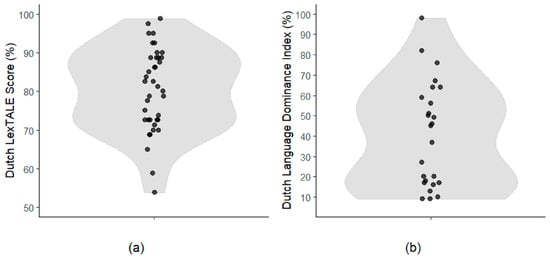
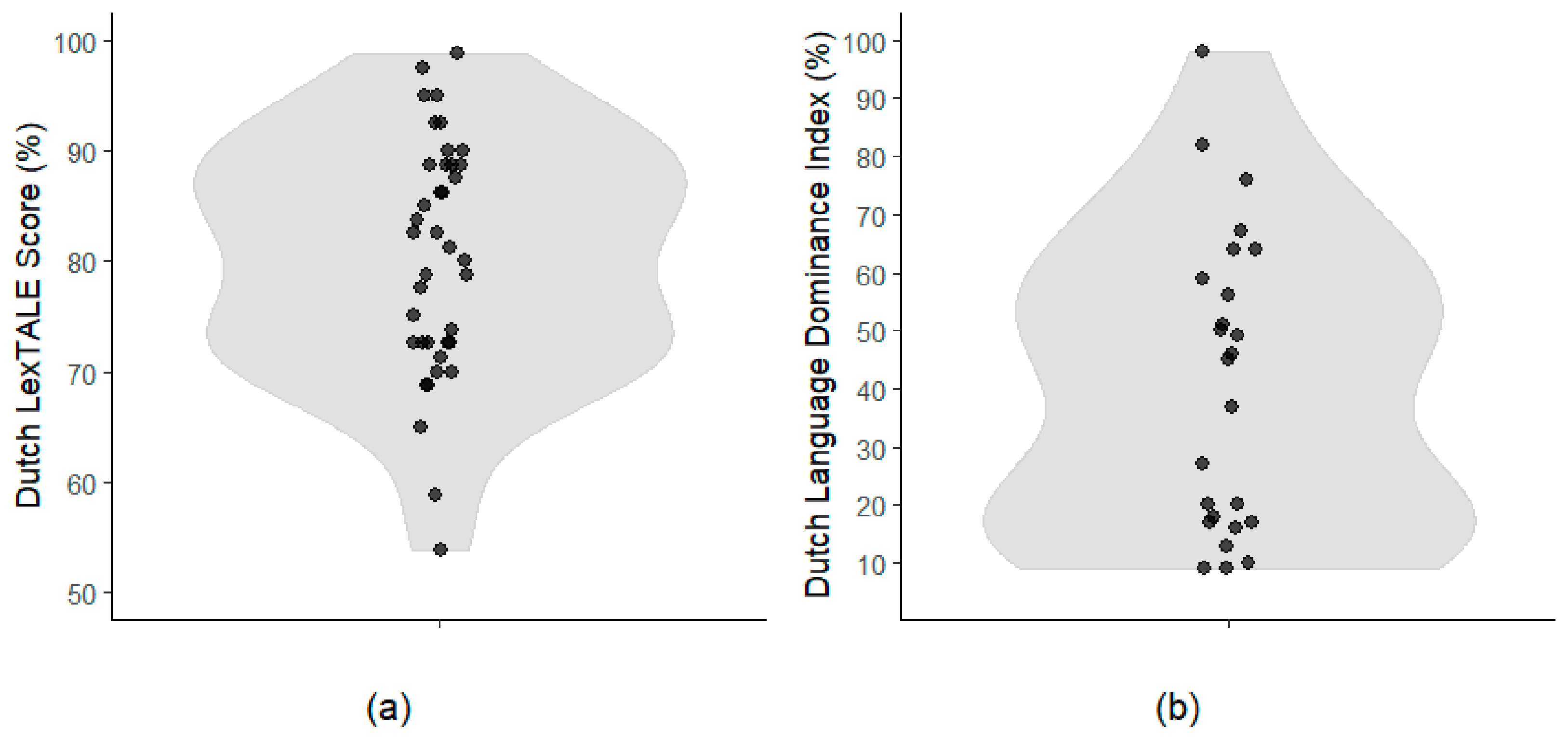
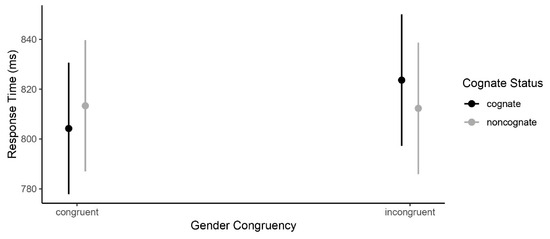
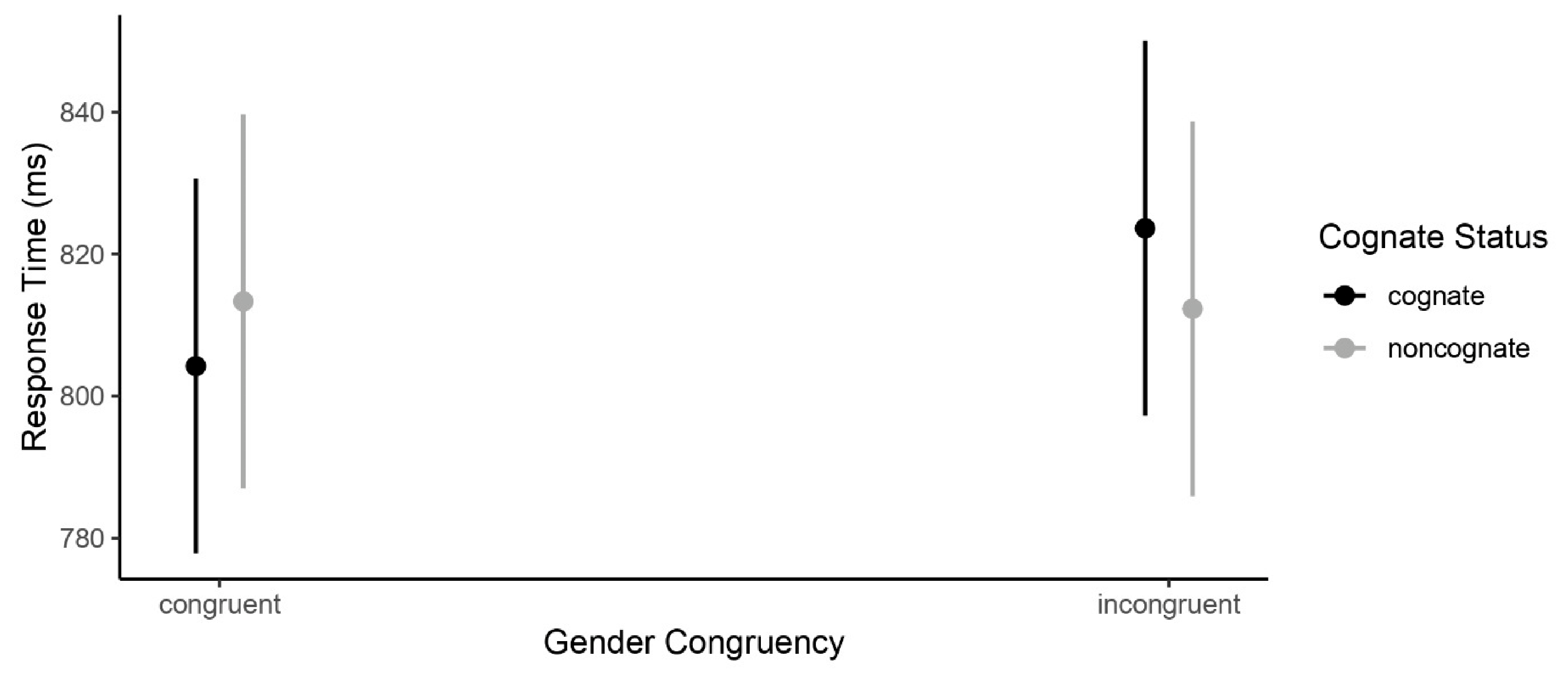
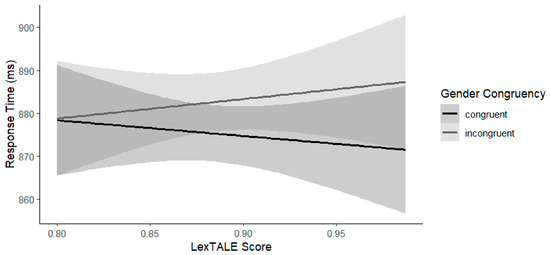
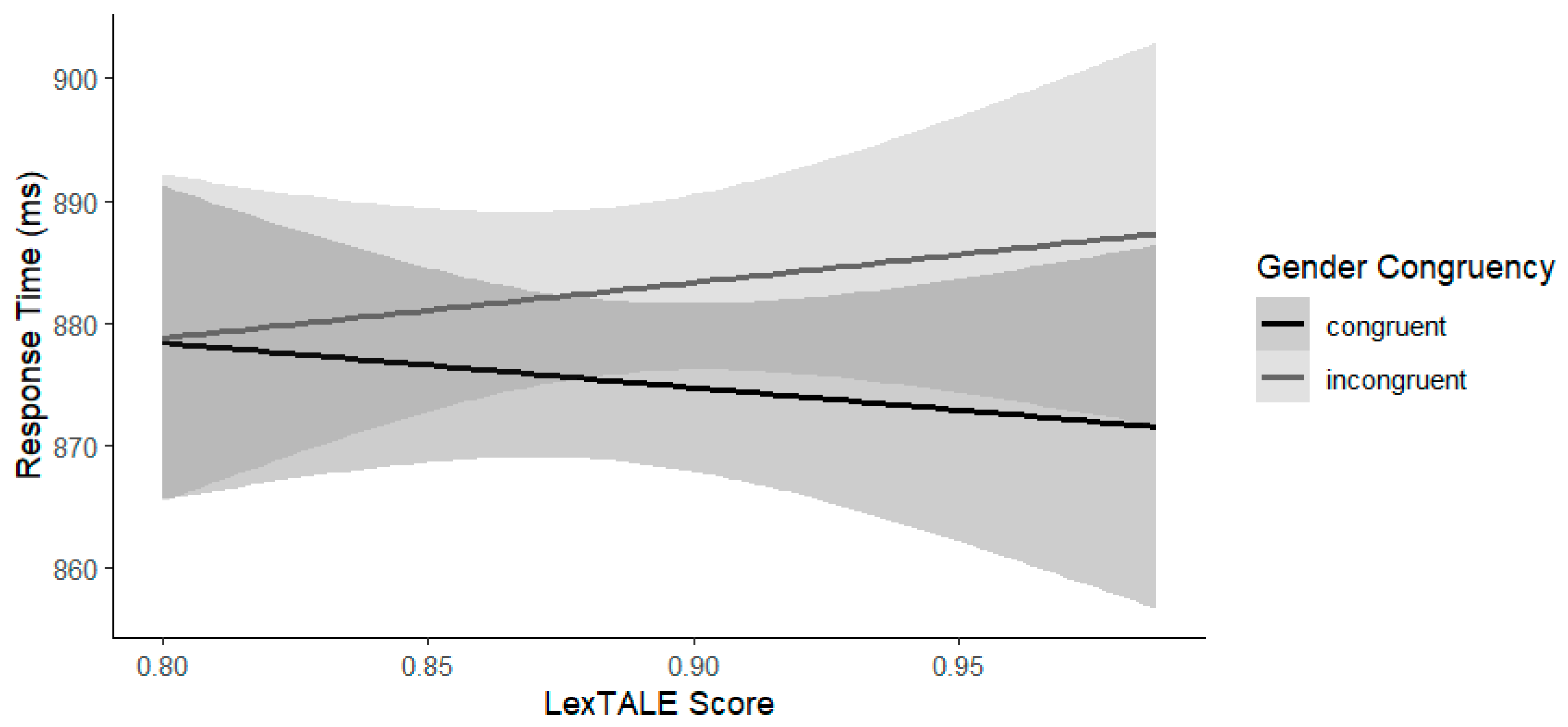

Disclaimer/Publisher’s Note: The statements, opinions and data contained in all publications are solely those of the individual author(s) and contributor(s) and not of MDPI and/or the editor(s). MDPI and/or the editor(s) disclaim responsibility for any injury to people or property resulting from any ideas, methods, instructions or products referred to in the content. |
© 2026 by the authors. Licensee MDPI, Basel, Switzerland. This article is an open access article distributed under the terms and conditions of the Creative Commons Attribution (CC BY) license.