


Abstract
The focus of our contribution is on lexical Austriacisms, i.e., lexical features of the Austrian standard language. Whereas in previous studies, only a small set of Austriacisms has been examined, with food terms being particularly popular, this contribution considers 76 lexical variables with 205 variants (Austriacisms and their co-variants), which are examined through complex variationist corpus analyses. The data is provided by the Austrian Media Corpus (amc), which represents the language use of the Austrian print media landscape in the 21st century. The analyses are both (short-term) diachronic and synchronic, taking into account the variation in vivo. Irrespective of the frequency-based “starting point” of a variant at the beginning of the 21st century, its relative frequency remains at comparable levels in the course of the observation period. Contrary to the threat scenarios of previous studies, our corpus analyses indicate the relative stability of the majority of Austriacisms over the 23 years studied (2001–2023).
1. Introduction
This article focuses on Austriacisms, i.e., linguistic features of standard Austrian German, with our analyses concentrating on the lexical level. The present analyses follow a large number of previous studies, which can largely be divided into two types, namely (a) studies based on questionnaire surveys, which constitute the large majority, and (b) studies based on corpus-linguistic approaches. The surveys, on the one hand, typically aim to determine attitudes toward and perceptions of Austriacisms. On the other hand, they also aim to investigate the use of Austriacisms by asking participants about their individual language use or that of their community (What do you yourself say (or, less commonly, write) in register X or in context Y? What does your community usually say?). Corpus-linguistic studies are somewhat less common than questionnaire surveys and focus on the use of Austriacisms in written language contexts. In all existing studies of both types, only a small set of Austriacisms is examined, with food terms being particularly popular (see Accession Protocol in Section 2). Previous studies focus primarily on Austriacisms, addressing possible co-variants to a limited extent only.
Our analyses address the aforementioned research desiderata by considering 76 variables with 205 variants. This set includes different types of Austriacisms (cf. Ammon, 1995) from a wide range of lexical domains, as well as their co-variants. All variables are examined through complex variationist corpus analyses. Corpus data is provided by the Austrian Media Corpus (amc), representing the language use of the Austrian print media landscape in the 21st century. The analyses are both (short-term) diachronic, covering a period of 23 years, and synchronic, taking into account variation in vivo.
The study intends to tackle the following research questions:
- How do the selected Austriacisms and their co-existing/competing variants vary in a large corpus of Austrian written standard language (amc) over the observation period (2001–2023)? Do their variation patterns change over time?
- Can different types of Austriacisms be identified based on their variation patterns, e.g., Austriacisms that decrease in frequency over time in favor of their co-existing/competing variants vs. those that remain stable?
The article is structured as follows:
Section 2 provides a comprehensive overview of research on Austriacisms, revealing controversies regarding the definition and empirical operationalization of Austriacisms. It addresses questions such as: What is an Austriacism? In which German lexicographical reference works are they presented, and how? How are Austriacisms made empirically tangible or analyzed in research to date? Section 3 is dedicated to a complex variationist linguistic corpus analysis, using both quantitative analyses (including cluster analysis) and qualitative in-depth investigations (through selected example variables) to explore the research questions outlined above. Section 4 concludes with a summary and an outlook.
2. Research on Austriacisms to Date
2.1. On the Term Austriacism—Scientific Overview
From a linguistic point of view, the German language can be considered a pluricentric language, i.e., a language that is used as an official language in more than one “center”, and that therefore exhibits distinct linguistic features on the level of standard language (cf. Ammon et al., 2016, p. XIL). In general, pluricentricity refers to the existence of different (i.e., more than one) centers within a certain linguistic territory or speech community. If these linguistic specifics at the standard level are codified (by the respective center), the center is regarded as a “full-center”; if there is no such (internal) codex available, it is referred to as “half-center” (cf. Ammon, 1995, p. 96; Ammon et al., 2016, p. XIL). In the case of German, the question of whether centers are primarily defined by national state borders (in a plurinational approach) or by areal structures (in a pluriareal approach) is the subject of recurring scientific discussion within linguistics (cf. Auer, 2021; Ammon, 1995; De Cillia & Ransmayr, 2019; Dollinger, 2019; Elspaß, 2025; Elspaß et al., 2017; Glauninger, 2013; Koppensteiner & Lenz, 2021; Lenz et al., 2022; Muhr, 2017; Niehaus, 2025; Scheuringer, 1996; Schmidlin, 2011). More recently, Auer (2021, p. 35) fundamentally criticizes general key terms of the pluricentric concept (in the sense of plurinationality) as inadequate:
the term “pluricentricity” resonates with presuppositions that reflect its origin in the sociolinguistics of emerging nations and their need to develop national standards distinct from those of their former linguistic model countries. The term is therefore too restrictive and fails to cover the variety of multi-standard languages we find in the world today. In addition, it presupposes the existence of various centres with their peripheries, without providing a clear and meaningful definition of these centres.(Auer, 2021, p. 35)
Consequently, Auer (2021, p. 35) proposes “a more neutral term, that is, language with multiple standards (multi-standard language for short) [highlighted in original; the authors] instead of […] pluricentric language. A multi-standard language is simply one that is standardized differently in different states” with the benefits of being terminologically “neutral and carry[ing] no ideological baggage”, allowing for the development of “fine-grained […], comprehensive typologies of multi-standard languages”. While this proposal is worth considering, we will follow in this paper—and for now—the established terminology within the pluricentric paradigm to align and embed our results accordingly.
Lexical variants within standard German are of particular importance in the discussion on the pluricentricity (not only) of German, regardless of how the centers of German are conceptually defined. In the context of the standard language in Austria, these variants are often classified as lexical Austriacisms.1 The term Austriacism (Austriazismus in German) is documented in the linguistic literature as early as the 19th century, when the Austrian scholar Lewi (1875) labeled Austriacisms as faulty or deviant (cf. Ammon, 1995, p. 123; Schmidlin, 2011, p. 75). While Ammon (1995, p. 123) interprets this as an instance of missing “consciousness of varietal autonomy” (“Varietäteneigenständigkeitsbewusstsein”), such consciousness seems to rise in the course of the 20th century (cf. Ammon, 1995, pp. 124–128; see also De Cillia & Wodak, 2006; De Cillia et al., 2020) and especially in its second half: “the Austrian variety of standard German has for some Austrians become an important symbolic expression of the (emerging) Austrian nation after 1945” (Auer, 2021, p. 36).2 This includes, e.g., the usage of certain Austriacisms (cf. Section 2.2) to demonstrate (national or social) affiliation. Ammon (1995, p. 154) aptly calls them “demonstrational Austriacisms” (“Demonstrationsaustriazismen”), hinting at attitudinal implications inherent to (linguistic) identity. According to Ammon (1995, p. 154), lexical variants particularly qualify as “demonstrational Austriacisms” since non-linguists show a comparatively high(er) awareness of lexical (national) variants than they do of variants on other linguistic levels.
However, while the term Austriacism is linguistically undisputed within the scientific community as the denomination for Austrian variants on the level of standard German, there are different approaches to defining this term. These approaches can be divided into three categories: (1) norm-oriented, (2) usage-oriented, and (3) attitude-oriented. In the following, these categories are briefly sketched out.
Ad. (1): The norm-oriented approach relies on codices on German standard language that indicate the validity of certain variants for nations or certain areas, which are conceptualized based on geographical or political parameters. State-official codices are used to legitimize certain (standard) variants as normative for, e.g., the area of a whole state. An interior codex (‘Binnenkodex’) is compiled within the respective country, while an exterior codex (‘Außenkodex’) is compiled outside of the respective country, i.e., within a third country (Ammon, 1995, p. 77). Typically, such interior codices (‘Binnenkodizes’) do not label variants considered typical for the state/country as “domestic”, unlike exterior codices (‘Außenkodizes’) and codices from neighboring countries. Thus, the (normative) validity of a certain (standard) variant can be deduced by contrasting different codices. One of the key problems of this approach is that for the Austrian situation, only one (official) codex is available, namely a dictionary (ÖWB, 2022) for the lexical level, while all other linguistic levels are yet to be codified—despite the fact that Austriacisms pertain to all linguistic (standard) levels (cf. Ebner, 1980/2014; Lenz, 2021; Muhr, 1995; Wiesinger, 2014). Consequently, the norm-oriented approach seems primarily useful when the target of observation is lexis.3 However, the (currently) most comprehensive definition available for the term Austriacism, as given by Ammon (1995, pp. 143–145), relies on this approach.4 According to this definition, Austriacisms are either found in dictionaries on the Austrian standard language (e.g., Ebner, 1980/2014; ÖWB, 2022) or included in dictionaries oriented towards transnational, common German (‘gemeindeutsch’) or aspects related to German in Germany (‘bundesdeutsch’). In addition, the latter dictionaries typically include specific references to Austria. Conversely, dictionaries of the former type (i.e., on Austrian standard language) lack such explicit references.
Recent analyses of current dictionaries on the German language (cf., e.g., Lenz et al., 2023, on variants of match [‘Zündholz’] and cap/bonnet [‘Haube/Mütze’]) support the assumption that the centers of the German language (cf. above) are ‘asymmetrical’. According to this, Germany acts as a socio-linguistically dominant center, while Austria (and other German-speaking countries) is described as a non-dominant center in the research literature (cf. Clyne, 1992, 1995; Markhardt, 2004; Schmidlin, 2011). This relationship promotes the view of centers being distributed in an asymmetrical way. From a lexicographic perspective, this asymmetrical (i.e., unequal) relationship is reflected in how certain variants are marked (or not marked) in dictionaries: while a variant is unmarked in the official Austrian dictionary (ÖWB, 2022) and is thus considered a norm-conforming standard variant, the same variant is concomitantly often marked in other dictionaries on the German language as “colloquial” or “regional”.
If the lexicographical findings do not indicate whether or not a variant is considered an Austriacism, then—according to Ammon (1995, pp. 143–145)—the variant can be regarded as an Austriacism, so long as it can be derived from other sources, such as newspaper articles (or other “model texts” related to standard language) and/or scientific publications by linguists. While some of the above mentioned dictionaries cover both aspects of geographical and legal validity—such as the Österreichisches Wörterbuch (ÖWB), which is prescribed in the official Austrian (political-)administrative sphere—a pronounced, legally grounded documentation of Austriacisms is Protocol No 10 “On the use of specific Austrian terms of the German language in the framework of the European Union”, an annex to Austria’s treaty of accession to the European Union.5 The protocol states (verbatim):
In the framework of the European Union, the following shall apply:
- The specific Austrian terms of the German language contained in the Austrian legal order and listed in the Annex to this Protocol shall have the same status and may be used with the same legal effect as the corresponding terms used in Germany listed in that Annex.
- In the German language version of new legal acts the specific Austrian terms mentioned in the Annex to this Protocol shall be added in appropriate form to the corresponding terms used in Germany. (Official Journal of the European Communities 37, p. 370)
The protocol lists as few as 23 pairs of lexical variants (Austrian German vs. German German, i.e., German spoken in Germany) stemming exclusively from the culinary sphere. Among other aspects, the (overhasty) genesis of the protocol, the selection of variants as well as its legal status and actual relevance of (and to) language use has led to criticism (cf. De Cillia, 1995; Ebner, 2008; Lutz, 1994; Markhardt, 2002, 2006). Still, the protocol is the first legal document to stipulate (standard) variants of a certain country, even though it can primarily be considered an attempt of (linguistic) identity management (cf. De Cillia, 1995, 1997, 2006; Ebner, 1980/2014; Koppensteiner, 2015; Lutz, 1994; Markhardt, 2002, 2004, 2006; Wiesinger, 2002, 2014).
Ad. (2): The usage-oriented approach relies on observations of actual language use to determine specific variants of Austria. Based on frequency-oriented analyses, the status of a variant is documented and (diachronically) compared to prior surveys. This perspective is not unproblematic either, as it is questionable whether frequency alone is sufficient for indicating (national) linguistic specificity. As Auer (2021, p. 40) points out (in the context of the pluricentricity of multiple German standards):
Usage-based studies plot the occurrences of a variable’s realization on a map and identify areal patterns. They do not differentiate these realizations with respect to their prestige or the ideological values attached to them. This, however, is exactly what needs to be done in a sociolinguistic context of nation-building (such as post-World War II Austria).(Auer, 2021, p. 40)
Within the usage-based approach, Austriacisms are defined as “words and grammatical features used exclusively or much more frequently in Austria than even in adjoining areas of Germany” (Auer, 2021, p. 40)6. From a methodological point of view, usage-based studies offer a wide range of approaches to at least partly address the problem of relying primarily on codices (if available at all) outlined above, including (more) direct methods of surveys (such as questionnaires, translation tasks, and linguistic descriptions of images) as well as corpus-based approaches (cf. Section 2.2). An example of a corpus-driven overview on the national and areal distribution of specific linguistic variants of the German (standard) language is the Variantenwörterbuch des Deutschen (Dictionary of standard variants of German; henceforth Ammon et al., 2016). It documents nationally and regionally distributed standard variants in all German-speaking countries and areas (Ammon et al., 2016, p. XII). For the Austrian standard language, Ammon et al. (2016) make use of a large corpus of Austrian press texts which has been gathered since 1986, and which is one of the largest German-speaking press corpora available as of today (cf. Dorn et al., 2023, p. 41). Through both qualitative and quantitative corpus analyses, Ammon et al. (2016) document frequency-based usage of Austriacisms not only for the whole country but also for four sub-regions within Austria (A-east [A-ost], A-southeast [A-südost], A-middle [A-mitte], A-west [A-west]), revealing a heterogeneous distribution of certain variants (Ammon et al., 2016, p. XXV).
Ad. (3), the attitudinal-perceptual approach: As already touched upon in the above cited remark by Auer (2021; cf. usage-based approach), attitudinal aspects within the realm of (language) ideology and (types of) prestige attached to ‘national’ variants need to be excluded from conceptualizations of linguistic forms that bear relevance for their speakers—especially in Austria, where the connection between language and (national) identity is a recurring topic (cf. Ammon, 1995; De Cillia & Ransmayr, 2019; Pollak, 1992; Wiesinger, 2014; Wolf, 1994). Protocol No. 10 (cf. norm-oriented approach) can be seen as the (official) political-legal expression of such views. In that light, Austriacisms can be grasped as linguistic forms associated with the country (or “nation”) and concomitantly with (social/non-linguistic) values. As such, they are the result of processes of enregisterment (Agha, 2003) and, consequently, “encode national identity against the alterity of the other language centres” (Auer, 2014, p. 35). Explicit definitions in the context of this attitude-oriented approach are difficult to find. However, some definitions include attitude-oriented instantiations. Based on empirical results, Markhardt (2004, p. 18; own translation, the authors) defines Austriacisms as “variants of the A-nation, which are perceived as ‘deviations’ from a universal standard”.7 Konecky (2017, p. 8; own translation, the authors) mixes the attitude-oriented and the usage-based approach in reference to Glück and Rödel (2016, p. 76)8, describing Austriacisms as “terms/words which are typical here [i.e., in Austria, the authors] but not in other linguistic areas, where they are perceived as typically Austrian or not known at all”.9 In conclusion, the importance and relevance of attitudinal aspects for the conceptualization of Austriacisms are broadly recognized nowadays, while applicable definitions in this respect are still lacking. Definitions in the realm of this attitudinally oriented approach arguably face a problem of perspective: if they are formulated based on empirical data—i.e., attitudinal utterances (of any kind) from non-linguists—such definitions might deviate from the linguistic consensus. As Höll and Koppensteiner (2021) demonstrate based on the analysis of user comments on an Austrian newspaper website, the term Austriacism itself can be considered known outside the linguistic scientific community. However, the term’s linguistic conceptual “restriction” to standard variants (and arguably, to some extent, supra-regional distribution) seems to be challenged by non-linguists, who also include non-standard variants and regionally diversified variants into their individual concept(s) of ‘Austriacism’.
2.2. Empirical Analyses on Austriacisms—Overview of Studies on Lexical Variation
This Section provides an overview of studies dealing with Austriacisms with a focus on lexical variation. For comparability reasons, only those studies are included that are based on large corpora or data sets. Their results will subsequently be compared to our own findings (cf. Section 3). The studies being focused on hint at recurring topics within the realm of Austriacisms. These topics are characterized by rather fluid transitions and (partly) overlap. To structure the overview, these topics are categorized as follows: (1) usage frequency, (2) socio-demographic parameters, and (3) attitudinal perspectives.
Ad. (1), Usage frequency: This paragraph sketches previous research on Austriacisms based on (quantitative) occurrences of (codified) Austriacisms in language use. This includes findings from either self-reports via questionnaires or corpus analyses of the relative usage frequency of Austriacisms in comparison to variants from Germany10 or common German (‘gemeindeutsch’) variants, i.e., variants that are not regionally marked and used throughout the whole German language area. For instance, an online survey by Retti (1999, p. 336) indicates a substantially higher usage frequency of Austrian variants compared to German ones.11 In contrast to this, a questionnaire survey among students in Wiesinger (2015, pp. 117–118) suggests that selected Austrian variants used in the questionnaire are gradually replaced by ones from Germany, though the extent of this development strongly varies depending on the variables chosen (cf. Wiesinger, 2015, p. 117; cf. socio-demographic parameters discussed below). Results in Pfrehm (2010, pp. 453–455), however, did not indicate a significantly higher reported use of German German variants within the young(est) group of participants. A questionnaire survey by Fröhlich (2019) on the primary school level (Volksschule) evaluated whether the usage of Austrian and German German variants depends on the L1 of the children (German as a first language vs. German as a second language). Although there were minor differences between the groups of children analyzed, the relation of Austrian and German German variants did not vary considerably (cf. Fröhlich, 2019, p. 43).
However, there are studies that indicate minor developments in the overall usage of Austrian German, German German or common German variants. Such developments might be driven by changes in the use of relatively few, yet highly frequent, variants. Based on corpus analyses of items included in Protocol No 10 (cf. Section 2.1) using the Austrian Media Corpus (amc)—one of the largest German press corpora available, comprising a substantial number of Austrian press publications equivalent to 11bn tokens (cf. Dorn et al., 2023; Ransmayr & Pirker, 2023; see also Section 3)—Koppensteiner (2015) reports a minor decrease in Austrian variants in press releases between the years 1994–2003 and 2004–2013, which is predominantly linked to the high frequency of the variants Kartoffel (‘potato’, compared to Erdapfel) and Tomate (‘tomato’, compared to Paradeiser). Both spreading variants (i.e., Kartoffel and Tomate) are considered common German variants (cf. Ammon et al., 2016, pp. 372, 745). Konecky (2017, p. 133) similarly concludes, based on corpus-linguistic analyses of the amc (observation period 1986–2016), that most of the variants in the study’s focus exhibit a rather stable development. Minor exceptions to this are, e.g., a decrease in the lexical Austriacisms Bub (‘boy’, compared to Junge) and Erdapfel (‘potato’, compared to Kartoffel). A recent study by Rivadossi (2023, pp. 123–125) based on the amc reports similar results, especially for the culinary variants included in the study. In conclusion, this indicates only slight changes in the usage of Austriacisms and German German variants within print media during the last 25 years, which appear to be variant-dependent. Studies suggest that a range of socio-demographic parameters influences the use and choice of certain variants, as discussed in the following paragraph.
Ad. (2), Socio-demographic parameters: As already indicated in the previous paragraph, the usage of certain variants is tied to a range of socio-demographic parameters. Naturally, the country of origin (‘nationality’) of speakers (and writers, respectively) is one of these decisive parameters. Pfrehm (2007, p. 53) showed that “[f]or frequency of use of the ASG [Austrian Standard German; the authors] words among Austrians the mean was significantly higher than among Germans” and vice versa. It is worth noting that ‘familiarity with the variant’ must be considered in this respect. According to Pfrehm (2007, p. 54), German participants indicated that, for 39% of the (alleged) Austrian variants, they were “not familiar with word”, whereas Austrian participants marked only 0.003% of the German German variants as unfamiliar.
In general, the areal distribution of Austriacisms varies between eastern and western parts of Austria, according to studies of both actual and self-reported usage. Following Břenek (2017, p. 96), Vienna, Lower Austria and Burgenland are considered the Austrian federal states that use Austriacisms the most. Teachers’ corrections align with these results, as teachers from the eastern parts of the country marked Austrian variants as faulty significantly less often than teachers from Western Austria, while the opposite was the case for variants from Germany (cf. De Cillia & Ransmayr, 2019, pp. 171–172). Various studies with different participant samples also show that the further west in Austria one goes, the more that variants from Germany are preferred or used (cf. De Cillia & Ransmayr, 2019, pp. 192–193; Koppensteiner, 2015, pp. 122–125; Lenz et al., 2021, pp. 412–414; Lenz et al., 2026, p. 379; Strigl, 2017, p. 85; Wiesinger, 2015, pp. 118–119). Results based on the amc (cf. above) in Koppensteiner (2015, p. 124) indicate that German variants are traceable in eastern Austria as well. However, such trends need to be interpreted with due caution, as this does not uniformly apply to all (Austrian) variants. Ziegler (2022, pp. 85–86) examines linking elements within compound nouns, showing that western Austria not only differs from the rest of the country, but even the two westernmost states, Vorarlberg and Tyrol, differ from each other regarding morphological variation. At the same time, Lenz et al. (2021, p. 418) demonstrate that while the Austriacism Paradeiser (‘tomato’) is primarily found in Eastern Austria, it is not necessarily associated with Vienna; similarly, Tomate is not attitudinally tied to western Austria.
The socio-demographic variable ‘age’ is another decisive factor for the usage of certain lexical variants, as repeatedly shown by studies. Pfrehm (2010, pp. 453–454) showed “that the older the informant in this study, the more they report using and liking the ASG [Austrian standard German; the authors] items” (see also Pfrehm, 2007, p. 56). This result is also found in De Cillia and Ransmayr (2019, p. 190), suggesting inter-generational differences (and potential changes) in actual language use. Lenz et al. (2021, pp. 410–412) showcased this effect for the variable Tomato, where the Austrian variant Paradeiser dominated in older participants’ self-reported use while the common German variant Tomate prevailed in younger ones. Questionnaire survey results reported in Lenz et al. (2023, pp. 96–97, 104–105) indicate, for the variables of study Cap/Bonnet and Match, that the respective common German variants, i.e., Mütze (Cap/Bonnet) and Streichholz (Match), occur considerably more frequently among younger participants than older ones, while the Austriacisms Haube ‘cap/bonnet’ and Zündholz ‘match’ and other variants occur less frequently. Results by Břenek (2017, p. 96; own translation, the authors) indicate a similar pattern. Some of the Austrian variants examined in their online questionnaire “seem to be forgotten by the younger generation or replaced by common German or German German equivalents”,12 such as Kartoffel (‘potato’), Schrank (‘cupboard’), Tomaten (‘tomatoes’) or Krankenhaus (‘hospital’). This age-related effect has also been (self-)reported in school contexts: De Cillia and Ransmayr (2019, pp. 187–188) demonstrate that pupils prefer German German variants (54%) to Austrian ones (46%), while the opposite is found in teachers’ preferences (German German variants 38.8% vs. Austrian variants 61.2%). However, findings related to age need to be interpreted with caution, as Pfrehm (2010, p. 459) stresses based on his results:
When compared with their older compatriots, the younger respondents appear to be less preferential toward the ASG [Austrian standard German; the authors] variety. On the other hand, when one focuses on the younger participants and compares this group’s perceptions by national variety, it is clear that younger Austrians prefer their own national variants to the German ones (insofar as concerns the tokens presented to them in the questionnaire).(Pfrehm, 2010, p. 459)
Previous research also indicates the relevance of mobility (i.e., frequency of travel to Germany, cf. Pfrehm, 2007, p. 57) and the associated contact with (alleged) contrast varieties for the use of Austriacisms. Results in, e.g., Pfrehm (2007, p. 57) suggest that “the less mobile respondents were, the more likely they were to rate ASG items [i.e., Austrian Standard German variants; the authors] as frequently used”.
Regarding the relevance of the formal level of education for (the usage of) Austriacisms, Pfrehm (2007, p. 58) reports that “more educated respondents were more likely than their less educated counterparts to assign higher ratings of […] frequency of use to ASG but not to GSG [German Standard German; the authors] items”. At the same time, results in Strigl (2017, p. 84) indicate that participants with a lower formal level of education tend to more often assess (the given syntactic) Austrian variants as ‘standard’ (standardsprachlich) compared to the German variants, whereas participants with a higher formal level of education often assessed both variants given, meaning the Austrian and German ones, as ‘standard’.
Ad. (3), Attitudinal perspectives: As language use is related to individual preferences, attitudinal aspects also play an important role in (country-specific) variant choice. According to Pfrehm (2007, p. 53), Austrian participants rate Austrian variants as significantly more likable than German ones, while the opposite is reported for German participants. Variants associated with their own country thus seem to have an evaluative edge over (perceived) ‘foreign’ variants from other countries. The question of whether a variant is perceived as being ‘foreign’ is also of importance beyond purely attitudinal aspects, as Lenz et al. (2021) demonstrate: In their questionnaire, participants rated 14 stereotypical statements around the topic of lexical variation using Likert scales. Exemplified by the variable Tomato, Lenz et al. (2021, p. 418) showed that 75.1% of the participants disagreed (combining the responses ‘strongly disagree’ and ‘rather disagree’) with the deliberately stereotypical statement “Tomate is a word from Germany, which does not belong to Austria”; 72.8% disagreed with “If you live in Austria, you should use Paradeiser instead of Tomate”; and 87.1% negated the statement “I would never use the word Tomate.”13 This applies even though Tomate is linguistically classified as a common German variant and listed in Protocol No 10 as a German German variant (cf. above). However, evaluative differences are detectable even among the ‘own’ variants: As Pfrehm (2007, p. 83) reports, the culinary variants listed in Protocol No 10 are liked most, even in comparison to other Austriacisms. In his questionnaire, Pfrehm (2007, p. 85) used Marille ‘apricot’, Fisolen ‘green beans’, Faschierte(s) ‘ground beef’, Kren ‘horseradish’, and Karfiol ‘cauliflower’. Pfrehm (2007, p. 85) relates these findings to their (alleged) importance for Austria’s identity and culture:14
Thus, as argued by Wodak et al. [1998; the authors] and De Cillia [2006; the authors], the food-related vocabulary bears a particular high value, or significance, with respect to what it means to an Austrian to be “Austrian,” [sic!] and what “Austria”—the political, socio-cultural region they call home—is. The data from the present study support this argument.(Pfrehm, 2007, p. 85)
As Wiesinger (2015, p. 120) points out, there is a fear found among Austrian speakers that Austrian variants will be replaced by German German ones, which is, at the same time, a fear of losing Austrian identity. This may explain why certain German culinary variants are explicitly disliked (which is the case for Meerrettich ‘horseradish’; cf. Pfrehm, 2007, p. 67)15 or evaluated as not appropriate for menus in Austrian restaurants (cf. Mikula, 2009, p. 80). According to De Cillia and Ransmayr (2019, p. 155), the latter evaluations may be age-related as well: While ¾ of the teachers in their study indicated that they would be bothered by German German variants in menus in Austrian restaurants (this includes variants such as Rinderbraten ‘roast beef‘, Quarktasche ‘cream cheese pastry’ or Schorle ‘spritzer’, cf. De Cillia and Ransmayr (2019, p. 155)), half of the pupils in the sample would easily accept them.16 In Lenz et al. (2021, p. 418), 62.3% of the participants from the questionnaire survey agreed (respondents who answered ‘strongly agree’ and ‘rather agree’ combined) with the statement “Older persons rather use the word Paradeiser than Tomate”, indicating perceived inter-generational differences in language use. Based on intergenerationally divergent evaluations, Pfrehm (2010, p. 459) concludes: “[I]t appears that the older participants possess a more pronounced, or robust, perceptual loyalty toward their national variety” while “younger Austrian respondents do not harbor an equally vigorous linguistic patriotism”. Even though there are clear differences between generations regarding the preference of ‘national’ variants, such evaluation tendencies need not necessarily lead to a fundamental change in attitudinal perspectives—as Pfrehm (2010, p. 461) puts it:
[Y]ounger Austrians report using and liking Austrian German words less [than German German words; the authors], but they do not report using or liking German German words more, than their older compatriots. To wit, these findings do not support the linguistic element of sociological ‘drifting apart’ that, as older Austrians express in their questionnaire comments, is occurring between the young and old in Austria.(Pfrehm, 2010, p. 461)
A further recurring theme within the realm of attitudes revolves around the question of whether a given variant is classified as a standard or non-standard variant. While this question can be linguistically addressed using codices (cf. Ammon, 1995; Ammon et al., 2016; Lenz et al., 2021; cf. Section 2.1), it is less clear from an attitudinal perspective (cf. Höll & Koppensteiner, 2021). First, the perception of a certain variant as conforming to the ‘standard’ correlates with the country of origin of the evaluating person: Austrian speakers consider Austriacisms as ‘standard’,17 participants from Germany exhibit the same evaluations for German variants (cf. Pfrehm, 2007, p. 53). It is worth mentioning that such transnational evaluations differ, though. While Austrian participants evaluate German variants as ‘standard’, German participants, by contrast, tend to rate Austrian variants as ‘non-standard’ (cf. Pfrehm, 2007, pp. 68–71). According to Strigl’s (2017, p. 85) online questionnaire on (syntactic) Austriacisms, the variants from Germany were judged to be more correct than the ones from Austria. Such evaluations are partly reflected in teachers’ corrections as well. Results found by De Cillia and Ransmayr (2019, p. 179) indicate that Austrian variants were corrected (i.e., marked as faulty) significantly more often by Austrian teachers than variants from Germany. An age effect is evident here, too: Younger teachers accepted variants from Germany to a higher degree than older teachers (cf. De Cillia & Ransmayr, 2019, p. 170). Older teachers corrected more German variants than younger teachers, who in turn marked more Austrian variants as incorrect than their older colleagues (cf. De Cillia & Ransmayr, 2019, pp. 172–173).
These results from previous research on Austriacisms, summarized above, rely on rather heterogeneous (and sometimes limited) sets of variants elicited. In addition to the varying selection of lexical phenomena, direct inter-study comparability is hampered by the different elicitation periods (up to two decades, depending on the respective studies) and varying methods of elicitation. This includes, amongst others, the (sometimes considerably) diverging formulation of questions and tasks in the numerous questionnaire surveys on Austriacisms. As a consequence, the elicited data possess varying explanatory power. In the following section, the heterogeneous results of previous results—often based on questionnaire surveys—will be contrasted with our own corpus analyses based on the amc.
3. Variationist Linguistic Corpus Analyses
This paper ties into the state of research discussed above (cf. Section 2.2) and intends to shed new light on diachronic and diatopic perspectives of 76 selected lexical variables (Austriacisms and their co-existing variants, in sum, 205 variants). It focuses on current language use in the written standard language of Austria, providing comprehensive corpus analyses of Austrian press texts included in the amc. The amc is the result of the cooperation of the Austrian Press Agency (APA) and the Austrian Centre for Digital Humanities (ACDH) of the Austrian Academy of Sciences (ÖAW).18 It comprises a large number of Austrian (daily and weekly) newspapers, magazines and other press texts. Today, the amc is considered the biggest corpus of written German standard language in Austria (Dorn et al., 2023, p. 44). As the amc data is comprehensively annotated and enriched with metadata (cf. Ransmayr & Pirker, 2023, pp. 207–208), it provides grounds to not only uncover variations in the patterns of lexical distribution over time (observation period of this paper: years 2001–2023) but also in space (i.e., regional distribution across Austria by assigning the included media to sub-regions). The focus on lexical Austriacisms is motivated by several factors: First, the lexicon is the level of the language system that occupies the most space in public discourse when it comes to the specific features of the Austrian language. Second, and related to this, lexical Austriacisms have so far attracted the greatest interest in linguistic research, allowing us to build on existing studies while significantly expanding them methodologically. Third, the amc is the most comprehensive corpus available on German in Austria. However, this corpus comes with the limitation that it allows for analyses focused on written language, but not—or only to a limited extent—analyses of phonetic variation.
The empirical approach and process of variable selection will be elaborated on in Section 3.1, followed by a presentation and critical discussion of general results (cf. Section 3.2), complemented by exemplary in-depth analyses (cf. Section 3.3).
3.1. Methodological Approach
According to Ebner (1980/2014) and Wiesinger (2014, p. 7), the number of (lexical) Austriacisms is estimated at approx. 7000–8000 lexemes. For pragmatic reasons, only a selection of these could be considered in the corpus-linguistic analyses. Variants were selected through a multi-level process. The initial pool included variants considered in previous studies (discussed in Section 2.2), as well as recent dictionaries (in particular Ammon et al., 2016) and selected scientific projects (e.g., DYSEN19). Only variants labeled as ‘Austrian’ in Ammon et al. (2016) were included. Referring to Ammon (1995), the variants qualifying as ‘Austrian’ were either ‘specific’ variants (regional distribution restricted to Austria [or parts of the country], labeled as, e.g., “A” [or “A (without west)”] in Ammon et al., 2016) or ‘unspecific’ ones (i.e., beyond its Austrian distribution, the variant is used in other regions as well, but not in the whole German language area and not necessarily with standard language status). In addition, variants that are not considered ‘standard’, including those classified as “border cases of standard” (‘Grenzfälle des Standards’) according to Ammon et al. (2016), were excluded from further consideration. This was also the case for variants classified as official political/administrative terminology (‘Amtssprache’), as such variants could not be used for analyses on (inner-Austrian) regional variation.
The total frequency of the 790 remaining ‘Austrian’ variants over the observation period (2001–2023) was examined in the amc. Only variants with at least 2000 total hits within the observation period were included in the further selection process. In addition, all 46 variants from Protocol No 10 (cf. Section 2.1) were added (if not already included in the variants mentioned above) to the pool, as well as variants examined in questionnaire-based studies by the Special Research Program (SFB) “German in Austria. Variation–Contact–Perception” (FWF F060)20 for reasons of comparison (cf. Lenz, 2025).21 These 16 variants were also included if they did not reach the threshold of 2000 hits in total.
For reasons of comparability, variants relevant for our analyses required at least one ‘competing’, i.e., co-existing, variant. Thus, variables consisting only of a single variant (such as, e.g., Feschak, ‘handsome man’) were excluded. To qualify as a ‘competing’ variant, the variant had to share at least one meaning with the (by then) remaining 340 ‘Austrian’ variants and be listed in at least two of the following dictionaries (representing German standard language, in Austria or across borders): Ammon et al. (2016), ÖWB (2022), Dudenredaktion (1991/2020), Duden Online (2023), Dudenredaktion (2019) as well as DWDS (incl. Thesaurus). Those competing variants were then tested for their total number of hits within the observation period (in the amc), and, if the number of hits exceeded 400, included in the pool of potential variants. To rule out diverging/irrelevant meanings (such as personal names or toponyms) as well as homonyms, an optimized search syntax was applied. For each variant, a random sample of 200 hits (KWIC) was drawn from the amc and manually screened. Variants with fewer than 100 relevant hits (out of 200) were excluded from the analyses as well. The number of relevant meanings found was then extrapolated from all hits during the observation period for pragmatic reasons, as an exhaustive manual review of all hits within the corpus was not possible. In the end, this selection process resulted in a total number of 76 variables consisting of at least one (lexicographically attested) Austriacism (‘Austrian’ variant) and at least one competing/co-varying variant, with a total of 205 variants.
Following this is a presentation of the results: First, an overview of the overall results and general trends is given (cf. Section 3.2). These results are then extended by in-depth analyses of selected variables to broaden the complex perspectives on Austriacisms in space and time (cf. Section 3.3).
3.2. Presentation of Results: General Overview
As indicated in Section 3.1, 76 variables with a total of 205 variants form the basis for the following corpus analysis, employing data from the amc within the observation period of 2001–2023. In a first step, we examined the development of all variants for each variable separately (cf. Table A1 in Appendix A). For example, we examined the developments of the variants Zahlschein and Erlagschein for the variable Payment Form. Each of these variants is associated with a time series of proportions reflecting its dominance within the corresponding variable. For each time series, a Gaussian linear model was fit (with time as predictor and proportion as outcome variable). The slope of this model was extracted to operationalize the rate of change in the variant’s proportion. For example, the rate of change in the variant Zahlschein is r = 0.014, indicating an increase of 1.4%-points per year. For each rate of change, we checked whether it is significantly positive (95% confidence interval above zero rate of change; significantly increasing), negative (95% confidence interval below zero rate of change; significantly decreasing), or neither of the two. Finally, we examined for each variable whether it contains at least one variant exhibiting a significant increase or decrease.
In total, 126 variables show no significant change in their variant distribution, while 79 variables contain at least one significantly changing variant (cf. Table A1 in Appendix A). Fitting a logistic regression model (logit link) with the presence of significant changes in a variable as a binary outcome variable predicted by the number of variants in that variable, we find, somewhat unsurprisingly, that the number of variants is positively associated with change. Each additional variant increases the odds of the variable to display change by 2.41 (95% confidence interval from 1.01 to 5.82).
Next, the aim was to identify variables that exhibit a comparable behavioral pattern to their variants. To this end, a hierarchical cluster analysis was employed. More specifically, we clustered the time series of all variants in our dataset. Euclidean distance was used to make pairwise comparisons of variant time series, and Ward’s method of minimizing within-cluster variance was employed to build clusters of variant time series. Note that the data points (i.e., time series) are not independent from each other, since sets of variants always belong to single variables. Hence, it is to be expected that variants that belong to a single variable do not surface in the same cluster. We used the Caliński-Harabasz index to identify the optimal number of clusters (Caliński & Harabasz, 1974), revealing a four-cluster solution. Table 1 and Figure 1 show the relative proportions of the variants included in each cluster, with regard to mean (mean), minimum (min), and maximum (max) values. These figures are given for both the first (2001) and last year (2023) of the observation period, and additionally at five-year intervals (2006, 2011, 2016, and 2021) to indicate any trends within these cluster proportions.
Table 1.
Four-cluster solution (Ward.D2) based on the proportion of the variants within their variables. Mean, min and max figures indicate the relative proportion that the variants exhibit within the cluster per year. The observation period was divided into five-year intervals to indicate any trends within these proportions.
Figure 1.
Four-cluster solution (Ward.D2) based on the proportion of the variants within their variables. The charts indicate the relative proportion that the variants exhibit within the cluster per respective year, visualized by both box plot and single variants scatter plotted per observation period. The observation period was divided into five-year intervals to indicate any trends within these proportions.
Table 1 and Figure 1 reveal that the variants with the highest (relative) proportion, compared to other variants of the same variable, are assigned to cluster 4. Variants in this cluster dominate their respective variable, consistently averaging to a mean value of 86–89% over the observation period. As the values slightly increase over time, these variants appear to consolidate their dominant position within their variable. Variants of cluster 4 include, e.g., Marille (Apricot) and Jänner (January). If cluster 4 is considered the cluster of ‘dominant variants’, the opposite goes for cluster 2, which could be termed ‘marginalized variants’. Variants in this cluster play a marginal role, accounting for less than 10% of their respective variable. The marginal role does not seem to change throughout the observation period either. Variants of cluster 2 include, e.g., Pfifferling (Chanterelle) and Eiskasten (Fridge).
Cluster 3 can be conceptualized as ‘reasonably frequent variants’. Variants in this cluster, such as Gelse (Mosquito) and Fleischhauer_in (Butcher), exhibit a mean relative value of around 55% within their respective variables. Cluster 1, in turn, comprises ‘less frequent variants’, as the variants in this cluster make up approx. 30% of their variables. In addition, there is a slight trend towards a decrease over the observation period (from 32% in 2001 to 30% in 2023). Variants of cluster 1 include Schlagrahm (Whipped Cream) and Mülltonne (Dustbin).
As a general result, however, the variants’ proportions within each cluster can be described as constant throughout the observation period, with the exception of cluster 4 (significantly positive increase of 0.14% points per year on average; 95% CI from 0.12 to 0.26; confidence intervals of all other clusters (1–3) include zero rate of change). This indicates relative stability over the 23 years studied (2001–2023) and, in particular, that dominant variants (cluster 4) did not cede ground.
The analysis was further refined by focusing on (a) which variants are included in which cluster and (b) how variables are distributed over the clusters. Below, the variables will be discussed regarding their variants’ distribution across their respective clusters. As Table 2 reveals, there are eight different types of cluster combinations available. The table reads as follows: the variables Apricot and Scrambled Eggs both have a variant in cluster 2 (Aprikose; Rührei) and cluster 4 (Marille; Eierspeis(e)) and can therefore both be characterized by the cluster combination 2 + 4.
Table 2.
Groups of variables based on cluster combinations of their variants (sorted by ‘number of variables’).
In what follows, the four most frequent combinations will be discussed separately. The largest group of variables comprises variants from cluster 4 (‘dominant variants’) and cluster 2 (‘marginal variants’). This type subsumes nearly 41% of the variables included in this study. Table 3 provides an overview of all the variables within this group.
Table 3.
Variables distributed between cluster 2 (‘marginal variants’) and cluster 4 (‘dominant variants’). Regional distribution according to Ammon et al. (2016) in brackets (A = Austria; D = Germany; CH = Switzerland; Vbg. = Vorarlberg; comG. = ‘common German variant’; “-” = not assigned). Variants marked as “-” (i.e., ‘not assigned’) are those that are not regionally specified or listed in Ammon et al. (2016).
As Table 3 indicates, 20 out of these 31 variables consist of two variants each, a ‘dominant variant’ (cluster 4) and a ‘marginal’ one (cluster 2). Out of these 20 variants in cluster 4, the vast majority is labeled as “A” in Ammon et al. (2016), indicating a distribution (a) restricted to Austria (11 variants: Eierschwammerl, Karfiol, Marille, Jänner, Jause, Trafik, detto, Eierspeis(e), Faschierte(s), Vogerlsalat, and Maturant_in), (b) restricted to parts of Austria as “A (without west)” (two variants: Obers and Fisole) or (c) in Austria and further regions as “A [plus further regions]” (three variants: Kren, Marmelade and Leintuch). The remaining variants are considered ‘common German variants’ (gemeindeutsch; abbreviated “comG.”) according to Ammon et al. (2016) (three variants: Februar (variable February), Pilz (Mushroom) and Reißverschluss (Zipper)) or are not listed there (Langeweile).
In contrast, only three variants allocated to cluster 2 (Feber, Fadesse and Zipp) are labeled as exclusive to Austria. Four further variants (Pfifferling, Blumenkohl, Feldsalat and Schwammerl) include (parts of) Austria in their regional classification. Eight cluster 2 variants (Sahne, Meerrettich, Aprikose, Brotzeit, Konfitüre, Hackfleisch, Abiturient_in and dito) are regionally distributed over Germany and/or Switzerland (but not Austria) according to Ammon et al. (2016). The remaining variants (Januar, Bettlaken and Rührei) are considered ‘common German variants’. They are not labeled in Ammon et al. (2016) (which is the case for Grüne Bohne) or not listed there (Tabaktrafik).
Nine variables from a combination of cluster 4 and cluster 2 comprise three variants. In this pattern, the ‘dominant’ variant in cluster 4 is opposed to two variants in cluster 2. In these cases, the picture differs from the one just described (with two variants per variable) insofar as (only) five variants with exclusive (Zwetschke, dag) or at least partial codification for Austria (Topfen, Rauchfangkehrer, Maroni) according to Ammon et al. (2016) are found in cluster 4. The remaining four variants are considered ‘common German variants’ (Kühlschrank, Heidelbeere) or are not listed in Ammon et al. (2016), which is the case for Decke (Ceiling) and Decke (Blanket). In two cases, the variables include four variants each, with Sackerl (“A” in Ammon et al., 2016) and Matura (“A CH”) dominating.
To conclude, the variants assigned to Austria (according to Ammon et al., 2016) make up 74.19% of all variants assigned to cluster 4 (‘dominant variants’) within the variables that have been assigned the combination cluster 2 + 4. In general, the ratios of variation shown in Figure 2 indicate at least a stable trend, with the tendency for the variants in cluster 4 to increase their proportion. Figure 2 visualizes this trend: With the exception of three variants (these exceptions only pertain to a single year each: Faschierte(s), Obers (both in 2001) and Zwetschke (in 2012)), variants located in cluster 4 amount to at least 70% within their respective variables.
Figure 2.
Relative proportions of variants (variables with cluster combination 2 + 4 over time). The black line indicates the mean proportion of variants of cluster 4, while the black dotted line indicates the mean proportion of variants of cluster 2.
The second largest group of variables (cf. Table 2) consists of variables with a combination of variants allocated to cluster 1 (‘less frequent variants’), cluster 2 (‘marginal variants’) and cluster 3 (‘reasonably frequent variants’). This cluster combination features variables with a more heterogeneous proportional distribution of their respective variants (cf. Table 4). A total of 13 out of 15 variables included within this cluster combination comprise three or four variants.
Table 4.
Variables distributed between cluster 1 (‘less frequent variants’), cluster 2 (‘marginal variants’) and cluster 3 (‘reasonably frequent variants’). Regional distribution according to Ammon et al. (2016) in brackets (A = Austria; D = Germany; CH = Switzerland; Vbg. = Vorarlberg; comG. = ‘common German variant’; “-” = not assigned).
In general, cluster 1 and cluster 3 consist of a single variant each, while cluster 2 includes all other variants of the respective variable (cf. Table 4). Variants in cluster 2 do not play a significant role in the proportional interplay with the other two clusters, exhibiting grosso modo stagnating to declining trends. A closer comparison of the variants in cluster 3 (‘reasonably frequent variants’) and cluster 1 (‘less frequent variants’) reveals that both cluster 3 and cluster 1 include a comparable number of variants with regional codification for Austria (10 variants in cluster 3, 11 variants in cluster 1). This distribution differs insofar as there are more variants restricted specifically to Austria (“A” according to Ammon et al., 2016, or even to certain regions within the country) in cluster 3 (six variants: Vorraum, Gelse, Wurzelwerk, Rindssuppe, Fleischhauer and Schlagobers—the latter restricted to Austria aside from certain western parts of the country) than in cluster 1 (four variants: Vorzimmer, Hausbesorger_in as well as Buschenschank and Greißlerei—the latter two even restricted to certain areas within Austria). According to Ammon et al. (2016), the other variants are not restricted to Austria but are used in other parts of German language-speaking areas as well. In addition, variants that are not common in Austria (according to Ammon et al., 2016) are typically found in cluster 2. There is a single exception: Mücke, a variant of Mosquito distributed in CH D (Switzerland and Germany, respectively) (cf. Ammon et al., 2016, p. 270) but not in Austria, is located in cluster 1.
To conclude, the variables combining clusters 1, 2 and 3 exhibit a clearly more heterogeneous pattern compared to the variables combining clusters 2 and 4 due to the absence of dominant variants. While certain variants in the largest cluster, cluster 3, lean slightly towards a declining trend (Gelse, Rindsuppe, Bursch(e), Mütze, Krankenhaus, Greißler; cf. Table A1 in Appendix A), variants in the second largest cluster, cluster 1, do not increase their proportions based on the losses in cluster 3. Complexity within this cluster combination stems primarily from developments in clusters 1 and 3, while the variants in cluster 2 seem to play no significant role in this respect.
According to Table 2, there are two cluster combinations that both include nine variables: cluster 1 and cluster 3, as well as cluster 3 only. These will now be presented, starting with the combination of clusters 1 and 3 (cf. Table 5).
Table 5.
Variables distributed between cluster 1 (‘less frequent variants’) and cluster 3 (‘reasonably frequent variants’). Regional distribution according to Ammon et al. (2016) in brackets (A = Austria; D = Germany; CH = Switzerland; Vbg. = Vorarlberg; comG. = ‘common German variant’; “-” = not assigned).
As Table 5 indicates, only dichotomous variables are included in this cluster distribution, each comprising exactly one variant per cluster. By taking a closer look at the variants of the respective clusters, several observations can be made. Four (out of nine) variants in cluster 3 (‘reasonably frequent variants’) are considered ‘common German variants’ (according to Ammon et al., 2016; these variants include Filet, Tomate, Erkältung and Karussell), while only one such variant (Johannisbeere) is found in cluster 1 (‘less frequent variants’). For certain variables consisting of an Austrian variant and a ‘common German variant’ (as defined in Ammon et al., 2016), there is a decrease in the Austrian variant over the observation period detectable, regardless of whether they are assigned to cluster 1 or 3 (cf. Table A1 in Appendix A). This is the case for Verkühlung (vs. Erkältung; Cold), Ringelspiel (vs. Karussell; Carousel) and Lungenbraten (vs. Filet; Filet).22 In comparison, the proportions of Paradeiser (vs. Tomate; Tomato) remain stable (cf. Table A1 in Appendix A). Furthermore, Aubergine is the only variant found in the cluster combination not codified for Austria at all (CH D only, according to Ammon et al., 2016). The relative proportions of the ‘competing’ Austrian variant Melanzani seem to remain stable, though there are fluctuations in certain years as well (cf. Table A1 in Appendix A).
The last group of variables discussed in this paper encompasses only variants placed in cluster 3 (cf. Table 2). This combination is somewhat special, as both variants of the respective variables are placed within the same cluster and exhibit comparable proportions. Table 6 provides an overview of the variables within this group.
Table 6.
Variables distributed in cluster 3 (‘reasonably frequent variants’) exclusively. Regional distribution according to Ammon et al. (2016) in brackets (A = Austria; D = Germany; CH = Switzerland; Vbg. = Vorarlberg; comG. = ‘common German variant’; “-” = not assigned).
Even though the variants are located within the same cluster, there is typically one variant that exhibits a slightly higher value (relative proportion) than the other within their respective variable. This is the case for Erdapfel (vs. Kartoffel), Sessel (vs. Stuhl), Polster (vs. Kissen), or Stiege (vs. Treppe). In all these cases, the variant exclusively codified for Austria (“A” according to Ammon et al., 2016) is slightly more frequent than the ‘German German variant’ (Ammon et al., 2016). Statistical analyses (cf. Table A1 in Appendix A) indicate that Sessel (A), Kartoffel (comG.) and Polster (A) decrease, while there is no significant change in Stiege (A)/Treppe (comG.). However, the proportional differences between the variants located in cluster 3 exclusively (cf. Table 6) are too small to draw generalized conclusions.
In summary, the results of the cluster analyses indicate an overall astounding stability over time. Irrespective of the actual frequency level at the initial starting point of this study (i.e., year 2001), there are rather few fluctuations detectable over the whole period of observation (23 years). In the following (cf. Section 3.3), these results are extended through illustrative analyses of selected variables to further deepen the complex perspectives on Austriacisms, not only in time but in space as well.
3.3. Selected Case Studies
As presented in Section 3.2, the variants of many variables (31 out of 76 variables) are distributed over the combination of cluster 2 and cluster 4 (cf. Table 2). A differentiated look at the frequency distributions of these variants (cf. Table 3) reveals that in 23 out of 31 variables, the variants in cluster 4 (‘dominant variants’) bear (exclusive or at least in part) reference to Austria. Fourteen of them are even considered “specific Austriacisms” (cf. Figure 3), i.e., Austriacisms that are valid for the whole Austrian area and—at the same time—do not hold standard-language status in any other region outside Austria (cf. Ammon, 1995). Conversely, amongst the (frequency-based) ‘marginal variants’ (cluster 2), there are only six specific Austriacisms (cf. Figure 3). In this cluster, 14 variants are not assigned to Austria at all (six variants exclusively attributed to German Standard German, two variants assigned to certain regions of Germany, and six variants codified for both German-speaking Switzerland and Germany).
Figure 3.
Number of variants per region based on 31 variables with variants in cluster 4 (‘dominant variants’) and cluster 2 (‘marginal variants’).
Figure 4 showcases Chimney Sweep as an example, a variable in the cluster combination 2 + 4. The dashboard used to visualize the results in Figure 4 (and in subsequent Figure 5, Figure 6 and Figure 7) was developed by Theresa Ziegler in the course of her master’s thesis on linking elements within compound nouns (cf. Ziegler, 2022). It also was used in further amc analyses (cf., e.g., Lenz et al., 2026). Regarding the variable Chimney Sweep, its dominant variant Rauchfangkehrer_in (found in cluster 4) is labeled as both A ‘Austria’ and D-südost ‘southeastern Germany’, the latter referring to a region directly adjacent to Austria at the German–Austrian border. This variable, Chimney Sweep (see also Lenz et al., 2026, pp. 379–380), includes three variants (Rauchfangkehrer_in, Schornsteinfeger_in and Kaminkehrer_in). The line charts show the normalized frequency as parts per million (ppm) of each of the three variants per year, over the entire corpus (‘hits in the corpus’) and across four sub-regions (‘hits in the corpus per region’, cf. Section 2.1). The stacked bar charts represent the relative frequency of the variants within the variable per year (in %, ‘variants in relation to each other per year’) and compare the four sub-regions in two periods of time (2001–2012 and 2013–2023; ‘variants in relation to each other per region’). Across all visualizations, Rauchfangkehrer_in is clearly the dominant variant (cluster 4) with a stable and high frequency through the observation period. The other two variants, Schornsteinfeger_in (codification according to Ammon et al., 2016, in both A[ustria] and D [Germany]) and Kaminkehrer_in, are represented at stable but comparatively low frequencies (cluster 2). One exception is Kaminkehrer_in in western Austria (‘awest’ in Figure 4), where the variant reaches approx. 30% of all occurrences and has remained at this proportion in a relatively stable manner over the last 25 years. These frequency-based findings correspond to the areal classification of Ammon et al. (2016), who locate this variant—beyond just southern Germany—in region A-west (‘western Austria’).
Figure 4.
Frequencies (in parts per million and in % respectively) of variants Rauchfangkehrer_in, Schornsteinfeger_in and Kaminkehrer_in of variable Chimney Sweep in amc and its sub-regions (period of investigation: 2001–2023).
Figure 5.
Frequencies (in parts per million and in % respectively) of variants Haube, Mütze and Kappe of variable Cap/Bonnet in amc and its sub-regions (period of investigation: 2001–2023).
Figure 6.
Frequencies (in parts per million and in % respectively) of variants Fleischhauer_in, Fleischer_in and Schlachter_in of variable Butcher in amc and its sub-regions (period of investigation: 2001–2023).
Figure 7.
Frequencies (in parts per million and in % respectively) of variants Tomate and Paradeiser of variable Tomato in amc and its sub-regions (period of investigation: 2001–2023).
The variable Cap/Bonnet (cf. Figure 5) clearly represents a different case, with variants distributed over cluster 1 (‘less frequent variants’), cluster 2 (‘marginal variants’) and cluster 3 (‘reasonably frequent variants’). As Table 4 indicates, 15 variables in total are part of this second most frequent cluster combination. In the entire corpus (visualized in the upper line chart in Figure 5), the variants Haube (cluster 1 ‘less frequent variants’) and Mütze (cluster 3 ‘reasonably frequent variants’) have higher frequencies, while those of Kappe (cluster 2 ‘marginal variants’) are noticeably lower. Taking a closer look at the four sub-regions, areal specifics in the variants’ distribution become evident. In western Austria (‘awest’ in Figure 5), Mütze—from a lexicographic perspective classified as “common German” (‘gemeindeutsch’; cf. Ammon et al., 2016)—dominates the other two variants. However, Haube—according to Ammon et al. (2016), a variant distributed in Austria and southern Germany—exhibits the highest relative frequency of all three variants in eastern (‘aeast’ in Figure 5) and southeastern Austria (‘asoutheast’ in Figure 5). In middle Austria (‘amiddle’ in Figure 5), however, the relationships between the variants are less clear: the stacked bar charts (‘Variants in relation to each other per region’, cf. Figure 5) indicate a slightly higher ratio for Mütze (44.9%) followed by Haube (40.7%) in the first 12 years (2001–2012), with Mütze increasing to 51.1% in the subsequent eleven years (2013–2023). The variant Kappe exhibits a noticeably lower frequency across all four sub-regions, reaching its highest ratio in eastern Austria (‘aeast’) at 26.4% and 21.6%, respectively.
The variable Butcher (cf. Figure 6) varies even more: its variants are also distributed over cluster 1 (‘less frequent variants’), cluster 2 (‘marginal variants’) and cluster 3 (‘reasonably frequent variants’), with a total of four variants in the amc (that meet the frequency criteria for our study, cf. Section 3.1). According to lexicographic reference works, all four variants hold standard (language) status, but they exhibit differences over the (national) regions considered. In Ammon et al. (2016, p. 241), Fleischhauer_in is categorized as an Austriacism used all over Austria (with reference to the rest of the German-speaking area where it is labeled “outdated” ‘veraltet’ like in DWDS “Fleischhauer”23). Fleischer_in, however, is prevalent in both Austria and Germany (cf. Ammon et al., 2016, p. 241), while Schlachter_in is a variant restricted to Germany (cf. Ammon et al., 2016, p. 627). The fourth variant, Metzger_in, is codified for German-speaking Switzerland and middle and southwestern Germany, as well as middle and western Austria (cf. Ammon et al., 2016, p. 473).
These lexicographic categorizations correspond only partially with the corpus analyses based on the amc (cf. Section 3.2). First, despite being categorized as a German German variant in Ammon et al. (2016), Schlachter_in occurs in all four sub-regions of the amc, with the highest relative frequency in western Austria (frequency between 21% and 28% over the observation period). However, based on the Austria-wide cluster analysis, Schlachter_in is located in cluster 2, indicating it to be a ‘marginal variant’. Similarly, Metzger_in dominates in western Austria (relative to its total occurrences), even increasing in relative frequency by nearly 9% in the years 2013–2023. Yet, Metzger_in is a variant of cluster 2 and, thus, considered ‘marginal’. Fleischer_in (cluster 1, ‘less frequent variants’) is found particularly frequently and—increasingly—in southeastern Austria, while in middle Austria its occurrences decline over time. In the western part of Austria, Fleischer_in is of lesser importance, ranking only third in relative frequency within the variable Butcher. As already pointed out, the variant Fleischhauer_in (cluster 3, ‘reasonably frequent variants’) is considered exclusively prevalent in Austria (i.e., in all parts of the country) according to lexicographic references. In the cluster analysis, however, it exhibits low frequency rates (around 13–15%) in western Austria, while reaching between 35% and 52% in the other sub-regions, with the highest percentages in the eastern parts of the country.
The fourth and final example discusses Tomato, a variable that includes variants in cluster combination 1 + 3 (cf. Table 5). The variable Tomato is one of the most frequently studied and concomitantly highly debated variationist phenomena in the context of Austriacisms (for an overview on the research status see Lenz et al., 2021, pp. 401–404). Figure 7 compares the variation in the common German (‘gemeindeutsch’) variant Tomate (cluster 3, ‘reasonably frequent variant’) to the variant Paradeiser (cluster 1, ‘less frequent variant’), the latter being regionally categorized as a standard variant in “Austria without west” (“A [ohne west]”) according to Ammon et al. (2016, p. 523). Over the observation period in the amc, the ratios between the two variants remain stable per year (with Tomate as the slightly dominating variant), as the bar chart in Figure 7 (on the right) indicates (‘Variants in relation to each other per year’). A closer look at the sub-regions reveals, again, inter-regional differences. While the relative frequencies of Paradeiser increase in southeastern and eastern parts of the country over the observed years, the ratios of this Austriacism decline in middle and western Austria.
As a preliminary conclusion, the results of the corpus analyses indicate stability with respect to time, based on the relative frequencies of all variants in the study over the observation period (cf. Section 3.2). In contrast, the case studies for selected variables show more heterogeneous and complex lexical dynamics regarding Austriacisms and their co-existing variants. This stresses the importance of the parameter ‘area’ (cf. Section 3.3).
4. Synopsis and Outlook
The present study is situated within the context of pluricentricity and research on “multi-standard languages” (languages with multiple standards, cf. Auer, 2021). It focuses on lexical features that are attributed to the Austrian standard language. In both the scientific literature and public discourse(s), these features are referred to as Austriacisms. At the beginning of this article, our comprehensive overview of previous research on Austriacisms highlights the heterogeneous conceptualizations of the term Austriacism within scientific research. Equally heterogeneous are the term’s meta-linguistic classifications in the referenced lexicographic works on present-day German.
A considerable number of empirical studies on Austriacisms to date rely either on questionnaire surveys or on corpus analyses of written language. On the one hand, most questionnaire surveys (dealing with attitudinal-perceptual aspects of Austriacisms or individual language use) support threat scenarios (found in public discourse at the same time), which suggest a diminishing usage and relevance of Austriacisms. On the other hand, results based on corpus-linguistic studies on the written Austrian standard language tend to indicate the stability of Austriacisms. All previous studies, however, are subject to certain methodological issues, which could be summarized as: first, a limited number of Austriacisms analyzed per study; second, frequent unilateral focus on food-related terms and third, neglect of variationist-linguistic conditions which would result from including co-variants of Austriacisms into (contrastive) analyses.
This study addresses these research desiderata by including 76 variables from different areas of the lexicon in complex variationist-linguistic analyses. A total of 205 variants—including both Austriacisms and their lexical co-variants—provide ground for the quantitative corpus analyses, which are complemented by qualitative in-depth analyses. Our data consist of press media texts from the Austrian Media Corpus (amc), representing the language use of the Austrian print media landscape in the 21st century. The observation period spans the first 23 years of the 21st century (January 2001–December 2023). The study adopts both a diachronic perspective, covering the entire period of 23 years, and a synchronic one, accounting for variation in vivo.
Our analyses focused on selected Austriacisms that, according to lexicographic reference works, are distributed across the whole Austrian area (and not only in certain regions within Austria). Our lexicographic research indicates that 50 of these “national” Austriacisms are “specific Austriacisms” in Ammon’s (1995) sense, i.e., they are restricted to Austria and—according to Ammon et al. (2016)—do not possess standard language status in other countries or regions of the German language area.24 The total number of 205 variants (out of 76 analyzed variables) occurring in our standard language-oriented corpus alone indicates complex ratios of variation within the amc. On average, this corresponds to three variants per variable in our amc analyses.
A cluster analysis of all variants (Austriacisms and their co-variants) based on relative usage frequency (calculated per variable) revealed four clusters. Initially, the observation period was divided into five-year intervals to trace potential trends within these proportions. However, both very high and very low usage frequency remained rather stable over time. The fluctuation within all four clusters of variants proved to be small, which hints at a surprising overall stability of the lexical ratios of variation. Thus, irrespective of the frequency-based “starting point” of a variant at the beginning of the 21st century, its relative frequency remains at comparable levels through the subsequent 23 years. In particular, this applies to the majority of Austriacisms focused on by the study.
The results of the cluster analysis of all variants (based on their respective usage frequency) shed light on the question of how the variants of one and the same variable are distributed over the different clusters. We were particularly interested in the distribution of Austriacisms across the four clusters compared to their respective co-variants. Figure 8 summarizes the allocation of the 50 specific Austriacisms to the four determined clusters. As shown, specific Austriacisms are found in all four clusters, but the majority are allocated to either ‘dominant’ (cluster 4) or ‘reasonably frequent’ (cluster 3) variants. This supports the thesis that specific Austriacisms exhibit a stable dominance in relation to their respective co-variants.
Figure 8.
Number of “specific” Austriacisms (Ammon, 1995, pp. 143–145) per cluster.
In total, eight groups of variables emerged based on cluster combinations of their respective variants. Addressing the question “Which variants of which countries and regions respectively (co-)vary with each other?” uncovered highly complex patterns of variation. This also includes the specific Austriacisms, on which this article put a special focus. Both quantitatively and qualitatively oriented analyses of the cluster combinations shed light on the heterogeneity of their ratios of variation. To illustrate this aspect, the 16 specific Austriacisms in cluster 4 (harboring the most frequent variants) are opposed to 17 variants with 10 different country/regional assignments as co-variants (cf. Figure 9). Only four of these are considered “specific” Teutonisms (Ammon, 1995, pp. 330–333), i.e., variants assigned to Germany that, according to lexicographic sources, are distributed throughout Germany and do not have standard variant status in any other German-speaking country or region. The remaining co-variants of the highly frequent specific Austriacisms are either regionally restricted within Germany, are considered ‘common German’ (gemeindeutsch), are distributed both in Germany and Switzerland (and occasionally in western parts of Austria as well), or are Austriacisms that are not restricted to Austria. “Specific” Helvetisms (Ammon, 1995, pp. 251–253) are not found among these co-variants at all. Swiss variants only occur in combination with German or Austrian variants (in diverse regional diffusion, respectively).
Figure 9.
National/regional distribution of co-variants of ‘dominant’ specific Austriacisms.
In addition to the quantitatively oriented analyses, qualitative in-depth investigations uncovered complex patterns regarding the ratio of variants within a variable, especially when taking subsidiary regions into consideration. As demonstrated for four selected variables, regional classifications found in lexicographic reference works may deviate from patterns of language use found in the media corpus. This divergence of lexicographic information and actual language use is particularly pronounced in western Austria. As our corpus-linguistic analyses indicate, the ratios of variation in this region often deviate from those found in other Austrian regions. These findings correspond to the equally confirmed theory that even in written standard language data such as the amc used for our analyses, parameter ‘space‘ contributes substantially to explaining variation in Austria.
Overall, our article demonstrates the complexity of lexical variation in Austria, observable within the context of a “multi-standard language” such as the German language, even at the level of standard language.
Author Contributions
Conceptualization, A.N.L., W.K., A.D. and T.Z.; methodology, W.K., A.B., T.Z. and C.M.; analyses, A.N.L., W.K., A.B., C.M. and T.Z.; writing—original draft preparation, A.N.L., W.K., A.B. and C.M.; writing—review and editing, A.D., C.M. and T.Z.; visualization, W.K., C.M. and T.Z.; supervision, A.N.L. All authors have read and agreed to the published version of the manuscript.
Funding
The underlying research project is funded by the Austrian Science Fund (FWF), grant number F-60 (PI/speaker: Prof. Dr. Alexandra N. Lenz). For open access purposes, the authors have applied a CC BY public copyright license to any author accepted manuscript version arising from this submission.
Data Availability Statement
The original data presented in the study is available in the Austrian Media Corpus. Requests to access the corpus should be directed to: https://amc.acdh.oeaw.ac.at/access-conditions/, accessed on 27 March 2026.
Acknowledgments
Open Access Funding by the University of Vienna. The authors thank the anonymous reviewers for their valuable comments.
Conflicts of Interest
The authors declare no conflicts of interest.
Abbreviations
The following abbreviations are used in this manuscript:
| A | Austria |
| ACDH | Austrian Centre for Digital Humanities |
| amc | Austrian Media Corpus |
| APA | Austrian Press Agency |
| ASG | Austrian Standard German |
| CH | Switzerland |
| comG. | Common German (gemeindeutsch) |
| D | Germany |
| EN | Endnote |
| KWIC | Key words in context |
| GSG | German Standard German |
| ÖAW | Austrian Academy of Sciences (Österreichische Akademie der Wissenschaften) |
| ÖWB | (official) Austrian dictionary (Österreichisches Wörterbuch) |
| ppm | Parts per million |
Appendix A
Table A1.
Breakdown of all variables: variables; number of variants; list of variants together with indication of whether the variant increases (↑), decreases (↓), or does not exhibit significant change; indication of whether any of the variants changes significantly (✓).
Notes
| 1 | While the corresponding term for specific Swiss variants is typically called Helvetisms, the situation for Germany is less clear: the options used in the scientific literature include, e.g., Teutonisms (‘Teutonismen’), Germanisms, and Germany-isms (‘Deutschlandismen’; cf. Ammon, 1995; Ammon et al., 2016; Auer, 2021; De Cillia & Ransmayr, 2019; Fröhlich, 2019; Koppensteiner, 2015; Pfrehm, 2007, 2010; Schmidlin, 2011). According to Schmidlin (2011, p. 75), the unclear terminological situation regarding linguistic specifics of Germany might be caused by a lack of awareness of national variants of German, which in turn can be attributed to the dominant monocentric perspective in Germany. |
| 2 | For a comprehensive overview see also Ammon (1995); Ebner (1980/2014); Glauninger (2024); Schmidlin (2011); Wiesinger (2014). |
| 3 | However, even on a lexical level, the distribution of Austriacisms varies regarding the parameter text type: “Austriacisms are rarely found in a lot of non-fiction books or also in literate works. But they are highly frequent in other fields: kitchen, administration and political sphere, schooling system and also social fabric” (Ebner, 1980/2014, p. 450; own translation, the authors). Original quote in German: “In vielen Sachbüchern oder auch literarischen Werken sind kaum Austriazismen zu finden. Sie zeigen sich aber hochfrequent in einigen Sachgebieten: der Küche, der Verwaltung und Politik, des Schulwesens und auch des Gesellschaftslebens” (Ebner, 1980/2014, p. 450). In his Austriacism-centered dictionary, Ebner (1980/2014) includes more than 8000 entries, which are neither restricted to standard levels nor valid for the whole Austrian area. |
| 4 | The rather lengthy definition of Austriacisms according to Ammon (1995, pp. 143–145) can be abbreviated, summarized (and translated by the authors) for pragmatic reasons as follows: “[…] variants are considered Austriacisms if they fulfill one of the following five conditions: (1) The variant is included in the Österreichisches Wörterbuch [i.e., the official Austrian dictionary; the authors], not marked as non-standard or of foreign nationality and unmarked in official codices of Germany (Duden. Das große Wörterbuch der deutschen Sprache ‘Duden. large dictionary of the German langugage’ [Duden, 1993–1995; the authors]; Aussprache-Duden ‘pronunciation-Duden’ [Kleiner & Knöbl, 1990/2023; the authors]) or Switzerland (codex of the German-speaking part of the country); (2) If (1) does not apply, the variant is considered an Austriacism if it is marked as standard Austrian in certain German codices (Rechtschreib-Duden ‘orthography-Duden’ [Dudenredaktion, 1991/2020; the authors]; Duden. Redewendungen ‘Duden-idioms’ [Dudenredaktion, 1992/2020; the authors]); (3) If the above does not apply, the variant is considered an Austriacism if it is included in Ebner (1980/2014) and not marked as non-standard; (4) If the above does not apply, the variant is considered an Austriacism if it is included in Siebs (1969) and marked as ‘Austrian’; (5) If the above does not apply, the variant is considered an Austriacism if it can be deducted from other sources, including other codices, newspaper articles (model texts) and scientific publications from linguistic experts” (Ammon, 1995, pp. 143–145). A less diversified definition is found in Pfrehm (2010, p. 443), designating Austriacisms as “national variants, that is, linguistic tokens, which have been codified”. |
| 5 | The protocol’s text in German can be found here: https://www.ris.bka.gv.at/GeltendeFassung.wxe?Abfrage=Bundesnormen&Gesetzesnummer=10007687 (accessed on 20 November 2025). |
| 6 | This definition points to a recurring result in surveys on (national) variants, according to which primarily variants from Germany (Teutonisms; cf. Note 1) are found (i.e., used) in Austria, while this is not at all the case for variants from Switzerland (Helvetisms), where such transfer seems to be of minor (linguistic) relevance. |
| 7 | Original full quote in German: “Die Probanden verfügen mehrheitlich über ein spontanes Register an Austriazismen (also Varianten der A-Nation, die als “Abweichungen” vom allgemeingültigen Standard empfunden werden), nicht oder kaum an Teutonismen (also Varianten der D-Nation, die aber als “Hochdeutsch” gelten)” (Markhardt, 2004, p. 18). By using “A-nation” Markhardt (2004, p. 22; own translation, the authors) refers to “the other, non-dominant nation” (original quote in German: “die andere, nicht dominante Nation (Terminus nach Clyne, 1995)”), a term coined by Clyne (1992, 1995). |
| 8 | Original quote in German: “Für die österr. Varietäten typ., im übrigen dt. Sprachgebiet unübl. und als typ. österr. empfundene (z. B. Schlagobers) oder unverständl. Ausdrücke (z. B. Ribisln, Paradeiser).” (Glück & Rödel, 2016, p. 76; italics in original, the authors.) |
| 9 | Original full quote in German: “Im österreichischen Deutsch gibt es Austriazismen, Ausdrücke, die hier typisch sind, aber in anderen Sprachgebieten ungebräuchlich, als typisch empfunden oder unbekannt sind” (Konecky, 2017, p. 8). |
| 10 | It seems worth mentioning that Helvetisms, i.e., variants associated with Switzerland, are typically not included in such comparative studies. |
| 11 | An exception to his finding is the variant Tomate (‘tomato’) which is used more frequently in his data than the Austrian variant Paradeiser (cf. Retti, 1999, pp. 324–325, 336). This finding is also confirmed by a recent (online) questionnaire survey by Lenz et al. (2021). Recent lexicographic classifications also indicate that Tomate ‘tomato’ can be considered a common German variant, rather than a German German variant (cf. Ammon et al., 2016, p. 745; Lenz et al., 2021, p. 404). |
| 12 | Original full quote in German: “In allen Bundesländern kommt es aber dazu, dass einige als österreichisch geltende (und auch so kodifizierte) Sprachvarianten bei der jüngeren Generation entweder in Vergessenheit geraten sind, oder durch gemeindeutsche oder eher bundesdeutsche Äquivalente ersetzt werden” (Břenek, 2017, p. 96). |
| 13 | For details and additional attitudinal aspects targeted in the stereotype rating test (such as the perceived regional distribution of variants Paradeiser and Tomate, or questions such as which variant should be used in schools and national media formats), see Lenz et al. (2021). |
| 14 | According to the results of an MA thesis by Mikula (2009, p. 82), nearly 60% of participants reported typical Austrian dishes (Wiener Schnitzel ‘Viennese schnitzel’, Beiried ‘rump’, Apfelstrudel ‘apple strudel’, Tafelspitz ‘boiled fillet’ and Sachertorte ‘Sacher cake’) as ‘symbols of identity’. In particular, culinary variants stand metonymically for Austrian culture, tradition, and identity (cf. Mikula, 2009, pp. 93–94). See, e.g., De Cillia and Ransmayr (2019) and Wiesinger (2015) for further discussion of the relation of Austrian identity and Austrian variants (as well as Austrian German respectively). |
| 15 | Apart from Meerrettich, the least liked variants rated in Pfrehm (2007, pp. 67–68) by Austrian participants were non-culinary ones: Tüte ‘bag’ and Schnürsenkel ‘shoe lace’. |
| 16 | Similar results are found in shopping situations: While nearly half of the teachers were (strongly) bothered by German German variants (such as Blumenkohl ‘cauliflower’ or Brötchen ‘roll’), this was only the case in 25% of the pupils (cf. De Cillia & Ransmayr, 2019, pp. 156–157). |
| 17 | The variants of Protocol No 10 used in Pfrehm (2007, pp. 83–85) exhibit remarkably high ratings, which might be related to the socio-semiotic importance of culinary items, as already discussed above. |
| 18 | For further information on the amc corpus, see https://amc.acdh.oeaw.ac.at/ (accessed on 25 July 2025). |
| 19 | DYSEN (Dynamische Sedimentanalyse als emotionaler Kompass für die digitale Medienlandschaft): a joint project of TU Vienna, University of Vienna and the Austrian Academy of Sciences, cf. https://dylen.acdh.oeaw.ac.at/dysen/ (accessed on 1 April 2024). See also Kolb et al. (2022). |
| 20 | For details, see the project website https://www.dioe.at/en (accessed on 24 July 2025). |
| 21 | These questionnaires are part of LexAT21—Atlas on lexical variation in Austria in the 21st century. See https://lexat21.lapis-online.at/en (accessed on 24 July 2025) for further details. |
| 22 | This trend is also the case for Croissant (vs. Kipferl). However, Croissant is not regionally labeled in Ammon et al. (2016) and thus not included in the above list. |
| 23 | Cf. “Fleischhauer” in DWDS, https://www.dwds.de/wb/Fleischhauer (accessed on 24 July 2025). |
| 24 | In Ammon et al. (2016), the number of lemmas restricted to “A” is 1083 (excluding polysemous articles and border cases of standard). The corresponding number of lemmas restricted to certain region(s) in Austria (but not the whole country) is 116. |
References
Primary Sources
Austrian Media Corpus (amc). https://amc.acdh.oeaw.ac.at/ (accessed on 25 July 2025).DWDS (Digitales Wörterbuch der deutschen Sprache). https://www.dwds.de/ (accessed on 24 July 2024).DWDS: Abfallkorb. https://www.dwds.de/wb/Abfallkorb (accessed on 23 August 2025).DWDS: Fleischhauer. https://www.dwds.de/wb/Fleischhauer (accessed on 24 July 2025).DWDS: Greißler. https://www.dwds.de/wb/Grei%C3%9Fler (accessed on 23 August 2025).DWDS: Tabaktrafik. https://www.dwds.de/wb/Tabaktrafik (accessed on 23 August 2025).DYSEN (Dynamische Sedimentanalyse als emotionaler Kompass für die digitale Medienlandschaft). https://dylen.acdh.oeaw.ac.at/dysen/ (accessed on 1 April 2024).LexAT21—Atlas on lexical variation in Austria in the 21st century. https://lexat21.lapis-online.at/en (accessed on 24 July 2025).Protocol No 10 [in English] = Official Journal of the European Communities 37/C241. https://eur-lex.europa.eu/legal-content/EN/TXT/PDF/?uri=OJ:C:1994:241:FULL (accessed on 20 November 2025).Protocol No 10 [in German] = Protokoll Nr. 10 über die Verwendung spezifisch österreichischer Ausdrücke der deutschen Sprache im Rahmen der Europäischen Union. https://www.ris.bka.gv.at/GeltendeFassung.wxe?Abfrage=Bundesnormen&Gesetzesnummer=10007687 (accessed on 20 November 2025).SFB “German in Austria. Variation—Contact—Perception” (FWF F060). https://www.dioe.at/en (accessed on 1 August 2025).Secondary Sources
- Agha, A. (2003). The social life of cultural value. Language & Communication, 23, 231–273. [Google Scholar] [CrossRef] [Scilit]
- Ammon, U. (1995). Die deutsche Sprache in Deutschland, Österreich und der Schweiz. Das problem der nationalen Varietäten. De Gruyter. [Google Scholar]
- Ammon, U., Bickel, H., & Lenz, A. N. (2016). Variantenwörterbuch des Deutschen. Die Standardsprache in Österreich, der Schweiz, Deutschland, Liechtenstein, Luxemburg, Ostbelgien und Südtirol sowie Rumänien, Namibia und Mennonitensiedlungen (2., völlig neu bearbeitete und erweiterte Auflage). De Gruyter. [Google Scholar]
- Auer, P. (2014). Enregistering pluricentric German. In A. Soares da Silva (Ed.), Pluricentricity. Language variation and sociocognitive dimensions (pp. 19–48). De Gruyter. [Google Scholar]
- Auer, P. (2021). Reflections on linguistic pluricentricity. Sociolinguistica, 35(1), 29–47. [Google Scholar] [CrossRef] [Scilit]
- Břenek, O. (2017). Sprachgebrauch und Sprachbeurteilung in Österreich am Beispiel der jüngeren Generation. Frank&Timme. [Google Scholar]
- Caliński, T., & Harabasz, J. (1974). A dendrite method for cluster analysis. Communications in Statistics-Theory and Methods, 3(1), 1–27. [Google Scholar] [CrossRef] [Scilit]
- Clyne, M. (1992). German as a Pluricentric Language. In M. C. Michael (Ed.), Pluricentric languages. Differing norms in different nations (pp. 117–147). Mouton de Gruyter. [Google Scholar]
- Clyne, M. (1995). The German language in a changing Europe. Cambridge University Press. [Google Scholar]
- De Cillia, R. (1995). Erdäpfelsalat bleibt Erdäpfelsalat. Österreichisches Deutsch und EU-Beitritt. In R. Muhr, R. Schrodt, & P. Wiesinger (Eds.), Österreichisches Deutsch. Linguistische, Sozialpsychologische und sprachpolitische Aspekte einer nationalen Variante des Deutschen (pp. 121–131). Hölder-Pichler-Tempsky. [Google Scholar]
- De Cillia, R. (1997). “Alles bleibt, wie es ißt.” Österreichs EU-Beitritt und die Frage des österreichischen Deutsch. Jahrbuch Deutsch als Fremdsprache, 23, 239–258. [Google Scholar]
- De Cillia, R. (2006). “Sieg im Marmeladekrieg”—Das Protokoll Nr. 10 zehn Jahre danach. In A. Fill, G. Marko, D. Newby, & H. Penz (Eds.), Linguists (Don’t) only talk about it. Essays in honour of bernhard kettemann (pp. 123–139). Stauffenburg. [Google Scholar]
- De Cillia, R., & Ransmayr, J. (2019). Österreichisches Deutsch macht Schule. Bildung und Deutschunterricht im Spannungsfeld von sprachlicher Variation und Norm. Unter Mitarbeit von Ilona Elisabeth Fink. Böhlau. [Google Scholar]
- De Cillia, R., & Wodak, R. (2006). Ist Österreich ein “deutsches” Land? Sprachenpolitik und Identität in der Zweiten Republik. StudienVerlag. [Google Scholar]
- De Cillia, R., Wodak, R., Rheindorf, M., & Lehner, S. (2020). Österreichische Identitäten im Wandel. Empirische Untersuchungen zu ihrer diskursiven Konstruktion 1995–2015. Springer. [Google Scholar]
- Dollinger, S. (2019). The pluricentricity Debate. On Austrian German and other Germanic Standard varieties. Routledge. [Google Scholar]
- Dorn, A., Höll, J., Ziegler, T., Koppensteiner, W., & Pirker, H. (2023). Die österreichische Presselandschaft digital: Das Austrian Media Corpus (amc) und sein Potential für die Linguistik. In M. Kupietz, & T. Schmidt (Eds.), Neue entwicklungen in der Korpuslandschaft der Germanistik. Beiträge zur IDS-Methodenmesse 2022 (pp. 44–57). Narr. [Google Scholar]
- Duden. Das große Wörterbuch der deutschen Sprache. (1993–1995). Drosdowski, G. u.a. (bearb. und ed.) 8 Bde. Dudenverlag. (Original work published 1976–1981).
- Duden Online. (2023). Available online: https://www.duden.de/ (accessed on 9 May 2024).
- Dudenredaktion (Ed.). (2019). Duden. Das Synonymwörterbuch (8. Aufl.). Dudenverlag. [Google Scholar]
- Dudenredaktion (Ed.). (2020). Duden. Die deutsche Rechtschreibung—Auf Grundlage der aktuellen amtlichen Rechtschreibregeln (28. Aufl.). Dudenverlag. (Original work published 1991). [Google Scholar]
- Dudenredaktion (Ed.). (2020). Duden. Redewendungen und sprichwörtliche Redensarten (5. Aufl.). Dudenverlag. (Original work published 1992). [Google Scholar]
- Ebner, J. (2008). Duden: Österreichisches Deutsch. Eine Einführung von Jakob Ebner. Dudenverlag. [Google Scholar]
- Ebner, J. (2014). Wie sagt man in Österreich? Wörterbuch des österreichischen Deutsch (4., völlig überarbeitete Auflage). Dudenverlag. (Original work published 1980). [Google Scholar]
- Elspaß, S. (2025). Pluriareal languages and the case of German. In P. Meer, & R. Durgasingh (Eds.), Pluricentricity and pluriareality. dialects, variation, and standards (pp. 15–44). John Benjamins Publishing Company. [Google Scholar]
- Elspaß, S., Dürscheid, C., & Ziegler, A. (2017). Zur grammatischen Pluriarealität der deutschen Gebrauchsstandards—Oder: Über die Grenzen des Plurizentrizitätsbegriffs. In H. Sieburg, & H.-J. Solms (Eds.), Das Deutsche als plurizentrische Sprache. Ansprüche—Ergebnisse—Perspektiven (Vol. 136, pp. 69–91). Sonderheft Zeitschrift für deutsche Philologie. [Google Scholar]
- Fröhlich, E. (2019). Deutsch als plurizentrische Sprache—Austriazismen und Deutschlandismen in der Volksschule [Master’s thesis, University of Vienna]. [Google Scholar]
- Glauninger, M. M. (2013). Deutsch im 21. Jahrhundert: »pluri-«, »supra-« oder »postnational«? In I. Fiala-Fürst, J. Joachimsthaler, & W. Schmitz (Eds.), Mitteleuropa. Kontakte und Kontroversen. Dokumentation des II. Kongresses des Mitteleuropäischen Germanistenverbandes (MGV) in Olomouc/Olmütz (pp. 459–465). Thelem. [Google Scholar]
- Glauninger, M. M. (2024). “Österreichisches Deutsch”—Paradoxien und Perspektiven der deutschen standard- bzw. Unterrichts- und Bildungssprache in Österreich. In J. Meier, V. Blaschitz, & İ. Dirim (Eds.), Handbuch Mehrsprachigkeit und soziale Teilhabe. Interdisziplinäre Zugänge (pp. 343–354). Julius Klinkhardt. [Google Scholar]
- Glück, H., & Rödel, M. (Eds.). (2016). Metzler Lexikon Sprache (5., aktualisierte und überarbeitete Auflage. Mit 52 Abbildungen und 12 vierfarbigen Karten). J. B. Metzler. [Google Scholar]
- Höll, J., & Koppensteiner, W. (2021). Wenn die Frage »Zwetschken oder Pflaumen?« nicht powidl ist. Zur Diskussion von Austriazismen in Online-Foren. In A. Kim, K. Korecky-Kröll, L. M. Breuer, J. Höll, & W. Koppensteiner (Eds.), Vom Tun nicht lassen können. Historische und rezente Perspektiven auf sprachliche Variation (in Österreich und darüber hinaus). Festgabe für Alexandra N. Lenz zum runden Geburtstag (Vol. 89, pp. 355–393). Wiener Linguistische Gazette. [Google Scholar]
- Kleiner, S., & Knöbl, R. (Eds.). (2023). Duden. Das Aussprachewörterbuch. Wörterbuch der deutschen Standardsprache (8. Aufl.). Dudenverlag. (Original work published 1990). [Google Scholar]
- Kolb, T., Sekanina, K., Kern, B. M. J., Neidhardt, J., Wissik, T., & Baumann, A. (2022). The ALPIN sentiment dictionary: Austrian language polarity in newspapers. In N. Calzolari, F. Bechet, P. Blache, K. Choukri, C. Cieri, T. Declerck, S. Goggi, H. Isahara, B. Maegaard, J. Mariani, H. Mazo, J. Odijk, & S. Piperidis (Eds.), Proceedings of the Thirteenth language resources and evaluation conference, Marseille, France (pp. 4708–4716). European Language Resources Association. [Google Scholar]
- Konecky, A. (2017). “Pfiati sagt leise Servus” Diachrone Untersuchung anhand ausgewählter Austriazismen in österreichischen Medien [Master’s thesis, University of Vienna]. [Google Scholar]
- Koppensteiner, W. (2015). Das österreichische Deutsch im plurizentrischen Kontext: Eine korpuslinguistische Untersuchung der österreichischen Presse im Zeitraum von 1986–2013 [Diploma thesis, University of Vienna]. [Google Scholar]
- Koppensteiner, W., & Lenz, A. N. (2021). Standard(s) aus der Perspektive von “Nicht-LinguistInnen” in Österreich. In T. Hoffmeister, M. Hundt, & S. Naths (Eds.), Laien, Wissen, Sprache. Theoretische, methodische und domänenspezifische Perspektiven (pp. 391–416). De Gruyter. [Google Scholar]
- Lenz, A. N. (2021). Ein Austriazismus auf Erfolgskurs—Geben als Basisverb der zielorientierten Objektsbewegung. Linguistik Online, 110(5), 51–74. [Google Scholar] [CrossRef] [Scilit]
- Lenz, A. N. (Ed.). (2025). LexAT21—Ein Lexikatlas und seine Hintergründe. In LexAT21: Atlas zur lexikalischen Variation in Österreich im 21. Jahrhundert. Available online: https://lexat21.lapis-online.at/de/articles/lexat21-einfuehrung (accessed on 1 August 2025).
- Lenz, A. N., Dorn, A., & Ziegler, T. (2021). Lexik aus areal-horizontaler und vertikal-sozialer Perspektive—Erhebungsmethoden zur inter- und intraindividuellen Variation. Sprachwissenschaft, 46(4), 387–431. [Google Scholar]
- Lenz, A. N., Höll, J., & Ziegler, T. (2023). Lexikalische Variation in Österreich. Ausgewählte Austriazismen im Stadt-Land-Vergleich. Muttersprache, 133, 82–115. [Google Scholar] [CrossRef] [Scilit] [PubMed]
- Lenz, A. N., Koppensteiner, W., Mattes, C., & Korecky-Kröll, K. (2026). Variationssensitive Ansätze zur korpuslinguistischen Erforschung lexikalischer Dynamik im 21. Jahrhundert. In A. Brunner, G. Diewald, S. Hansen, K. Kopf, & A. Wöllstein (Eds.), Deutsch im wandel. Jahrbuch des Instituts fürDeutsche Sprache 2025 (pp. 369–399). De Gruyter. [Google Scholar]
- Lenz, A. N., Soukup, B., & Koppensteiner, W. (2022). Standard German in Austria from the folk perspective: Conceptualizations, attitudes, perceptions. In A. N. Lenz, B. Soukup, & W. Koppensteiner (Eds.), Standard languages in Germanic-Speaking Europe: Attitudes and perception (pp. 23–57). Novus. [Google Scholar]
- Lewi, H. (1875). Das österreichische Hochdeutsch. Versuch einer Darstellung seiner hervorstechendsten Fehler und fehlerhaften Eigenthümlichkeiten. Bermann und Altmann. [Google Scholar]
- Lutz, F. (1994). Das Austriazismenprotokoll im EU-Beitrittsvertrag. Ecolex Jg, 1994, 880–883. [Google Scholar]
- Markhardt, H. (2002). Das österreichische Deutsch im Rahmen der Europäischen Union. Das “Protokoll Nr. 10 über die Verwendung österreichischer Ausdrücke der deutschen Sprache” zum österreichischen EU-Beitrittsvertrag und die Folgen: Eine empirische Studie zum österreichischen Deutsch in der EU. Bd. 1 [Ph.D. dissertation, University of Vienna]. [Google Scholar]
- Markhardt, H. (2004). Das österreichische Deutsch im Rahmen der Europäischen Union. Das “Protokoll Nr. 10 über die Verwendung österreichischer Ausdrücke der deutschen Sprache” zum österreichischen EU-Beitrittsvertrag und die Folgen. Lebende Sprachen, 1(2004), 15–22. [Google Scholar]
- Markhardt, H. (2006). 10 Jahre “Austriazismenprotokoll” in der EU. Wirkung und Nichtwirkung—Chancen und Herausforderungen. In R. Muhr, & M. B. Sellner (Eds.), Zehn Jahre Forschung zum Österreichischen Deutsch: 1995–2005. Eine Bilanz (pp. 11–38). Peter Lang. [Google Scholar]
- Mikula, K. (2009). Das österreichische Deutsch in der Gastronomie. Speisenamen als Identitätsvermittler unter Österreichern [Diploma thesis, University of Vienna]. [Google Scholar]
- Muhr, R. (1995). Merkmale des österreichischen Deutsch—Ihre Beschreibung und Kodifizierung—Das Österreichische Wörterbuch. In R. Muhr, R. Schrodt, & P. W. Peter (Eds.), Österreichisches Deutsch. Linguistische, Sozialpsychologische und sprachpolitische Aspekte einer nationalen Variante des Deutschen (pp. 75–121). Hölder-Pichler-Tempsky. [Google Scholar]
- Muhr, R. (2017). Das Österreichische Deutsch. In H. Sieburg, & H.-J. Solms (Eds.), Das Deutsche als plurizentrische Sprache. Ansprüche—Ergebnisse—Perspektiven (Sonderheft Zeitschrift für deutsche Philologie 136) (pp. 23–41). Erich Schmidt. [Google Scholar]
- Niehaus, K. (2025). Regiocentric use and national indexicality: Enregisterment as a theoretical integration for standard German. In P. Meer, & R. Durgasingh (Eds.), Pluricentricity and pluriareality. Dialects, variation, and standards (pp. 66–89). John Benjamins Publishing Company. [Google Scholar]
- ÖWB Österreichisches Bundesministerium für Bildung, Wissenschaft und Forschung (Ed.). (2022). Österreichisches Wörterbuch (44. Auflage. Vollständige Ausgabe mit dem amtlichen Regelwerk). Österreichischer Bundesverlag. [Google Scholar]
- Pfrehm, J. W. (2007). An empirical study of the pluricentricity of German: Comparing German and Austrian nationals’ perceptions of the use, pleasantness, and standardness of Austrian Standard and German Standard lexical items [Ph.D. dissertation, University of Wisconsin-Madison]. [Google Scholar]
- Pfrehm, J. W. (2010). The role of age in Austrian’s perceptions of the frequency of use and likeability of lexical Teutonisms and Austriacisms. Folia Linguistica, 44(2), 439–470. [Google Scholar] [CrossRef] [Scilit]
- Pollak, W. (1992). Was halten die Österreicher von ihrem Deutsch? Eine sprachpolitische und soziosemiotische Analyse der sprachlichen Identität der Österreicher. Mit einem Geleitwort von Christine Nöstlinger und einem Vorwort von Wolfgang Bandhauer. ÖGS/ISSS. [Google Scholar]
- Ransmayr, J., & Pirker, H. (2023). Das Austrian Media Corpus (amc): Inhalte, Zugang und Möglichkeiten. The Austrian Media Corpus (amc): Contents, access and possibilities. Zeitschrift für Germanistische Linguistik, 51(1), 203–212. [Google Scholar] [CrossRef] [Scilit]
- Retti, G. (1999). Austriazismen in Wörterbüchern. Zum Binnen- und Außenkodex des österreichischen Deutsch [Ph.D. dissertation, University of Innsbruck]. [Google Scholar]
- Rivadossi, M. (2023). Das Österreichische Deutsch. Eine Analyse der Austriazismen im Austrian Media Corpus [Master’s thesis, Università degli Studi di Bergamo]. [Google Scholar]
- Scheuringer, H. (1996). Das Deutsche als pluriareale Sprache: Ein Beitrag gegen staatlich begrenzte Horizonte in der Diskussion um die deutsche Sprache in Österreich. Die Unterrichtspraxis/Teaching German, 29(2), 147–153. [Google Scholar] [CrossRef] [Scilit]
- Schmidlin, R. (2011). Die Vielfalt des Deutschen: Standard und Variation. Gebrauch, Einschätzung und Kodifizierung einer plurizentrischen Sprache. De Gruyter. [Google Scholar]
- Siebs, T. (1969). Deutsche Aussprache. Reine und gemäßigte Hochlautung mit Aussprachewörterbuch (H. v. H. de Boor, H. Moser, & C. Winkler, Eds.). (19., umgearbeitete Auflage). De Gruyter & Co. [Google Scholar]
- Strigl, U. (2017). Syntaktische Austriazismen aus der Sprecherperspektive [Master’s thesis, University of Vienna]. [Google Scholar]
- Wiesinger, P. (2002). Austriazismen als Politikum. Zur Sprachpolitik in Österreich. In V. Ágel, A. Gardt, U. Haß-Zumkehr, & T. Roelcke (Eds.), Das Wort—Seine strukturelle und kulturelle Dimension. Festschrift für Oskar Reichmann zum 65. geburtstag (pp. 159–182). Niemeyer. [Google Scholar]
- Wiesinger, P. (2014). Das Deutsche in Österreich. In P. Wiesinger (Ed.), Das österreichische Deutsch in Gegenwart und Geschichte (3., aktualisierte und neuerlich erweiterte Auflage, pp. 7–25). LIT. [Google Scholar]
- Wiesinger, P. (2015). Das österreichische Deutsch in der globalisierten Umwelt: Wandlungen durch bundesdeutsche Einflüsse. In A. N. Lenz, T. Ahlers, & M. M. Glauninger (Eds.), Dimensionen des Deutschen in Österreich. Variation und Varietäten im sozialen Kontext (pp. 91–122). Peter Lang. [Google Scholar]
- Wodak, R., De Cillia, R., Reisigl, M., Liebhart, K., Hofstätter, K., & Kargl, M. (1998). Zur diskursiven Konstruktion von nationaler Identität. Suhrkamp. [Google Scholar]
- Wolf, N. R. (1994). Österreichisches zum Österreichischen Deutsch. Zeitschrift für Dialektologie und Linguistik, 61, 66–76. [Google Scholar]
- Ziegler, T. (2022). Beispiel-Ø-fall vs. Beispiel-s-fall. Korpusanalysen zur (areal-horizontalen) Verfugungsvariation lexikographierter NN-Komposita in der österreichischen Standard(schrift)sprache [Master’s thesis, University of Vienna]. [Google Scholar]
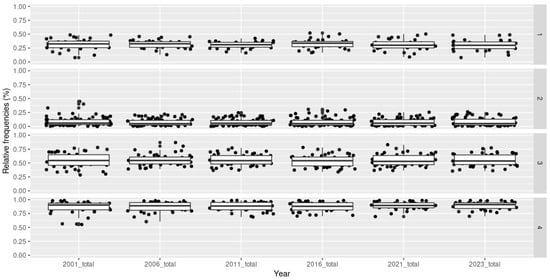
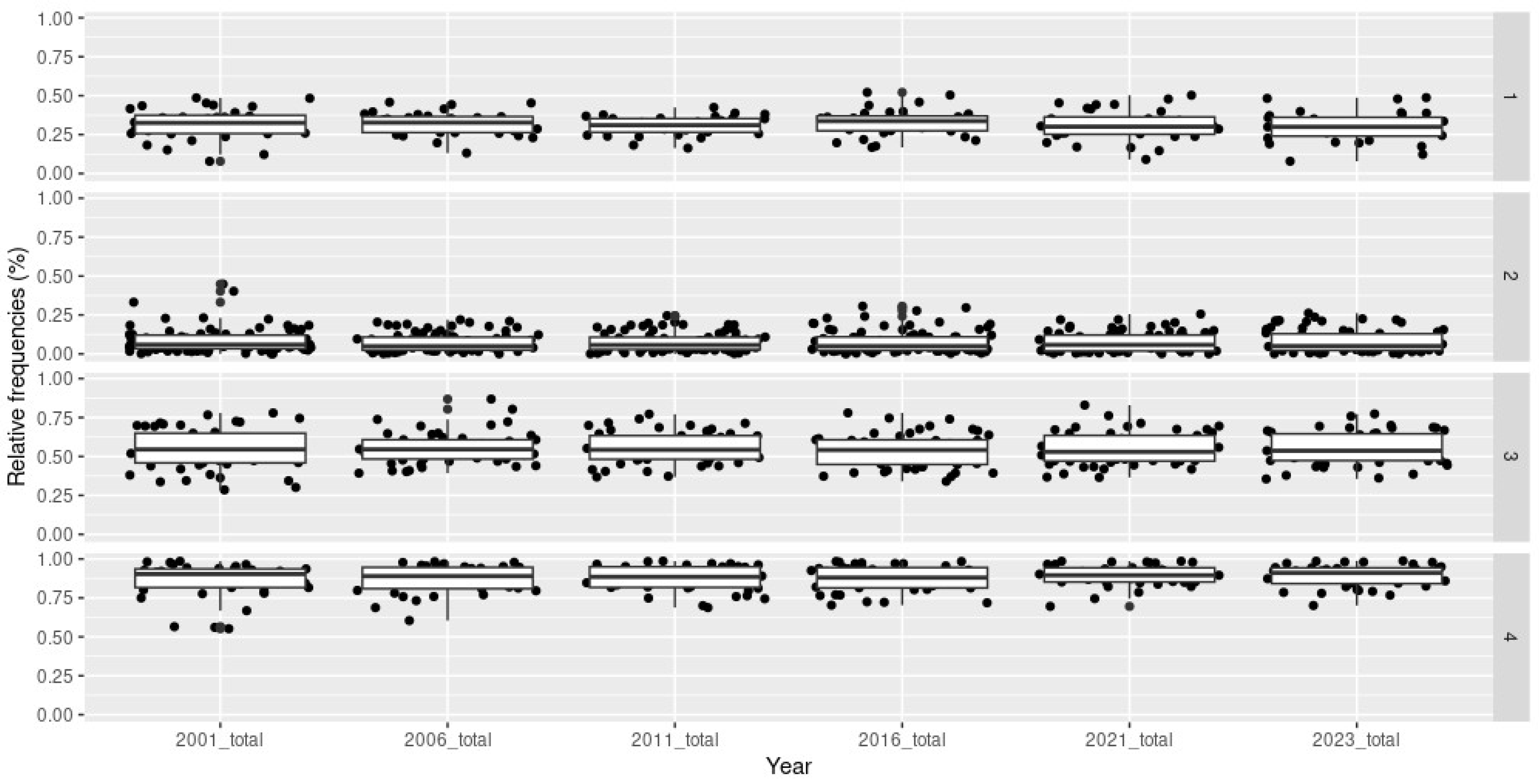
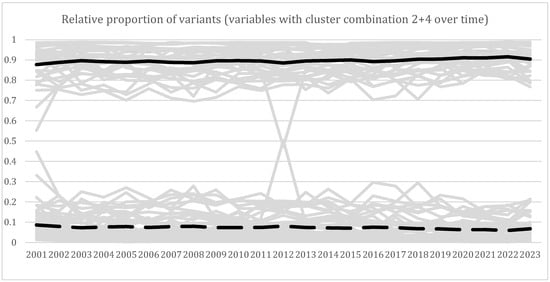
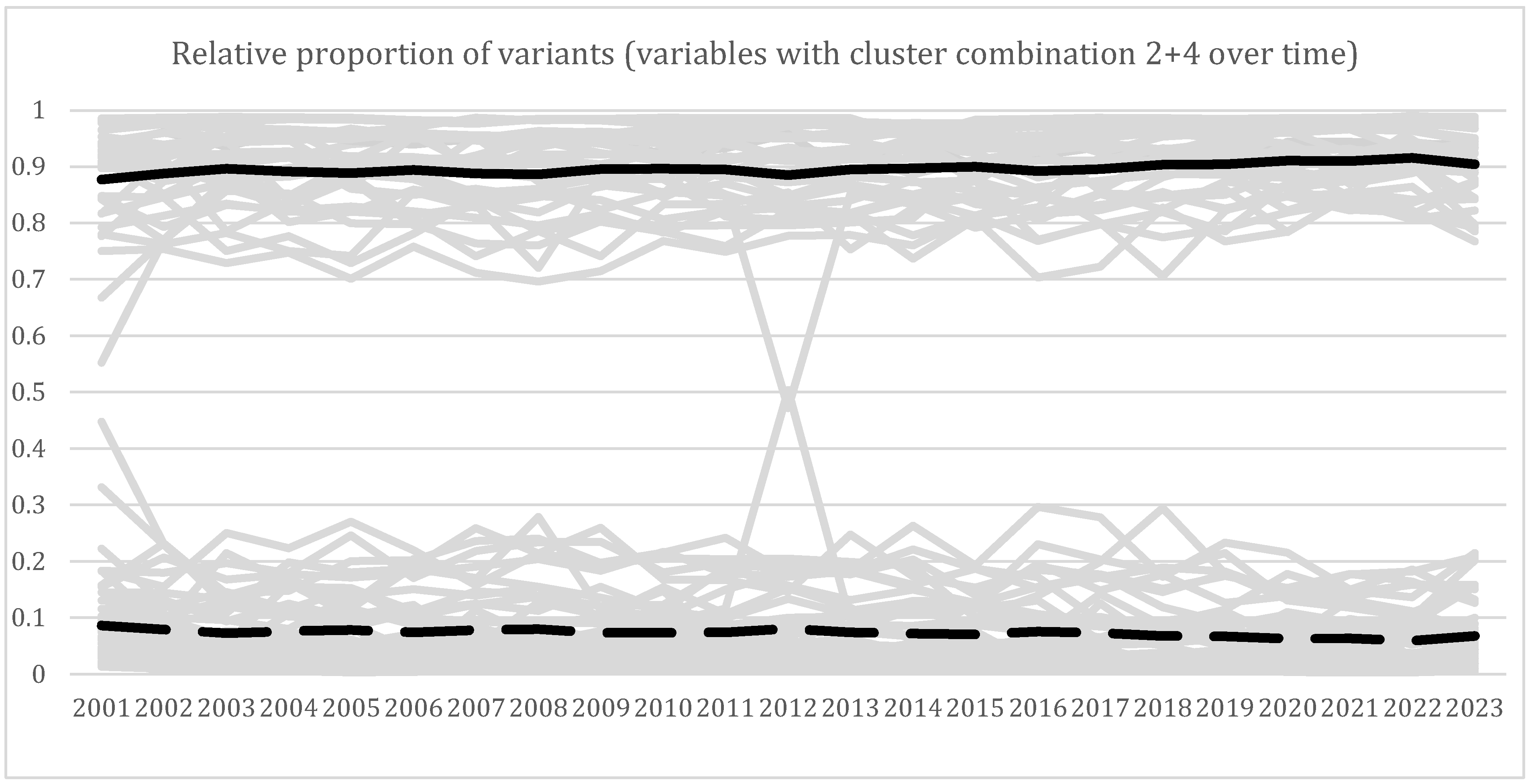
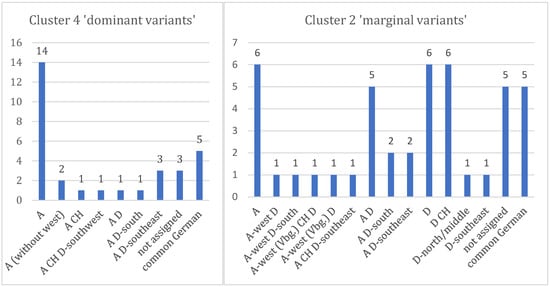
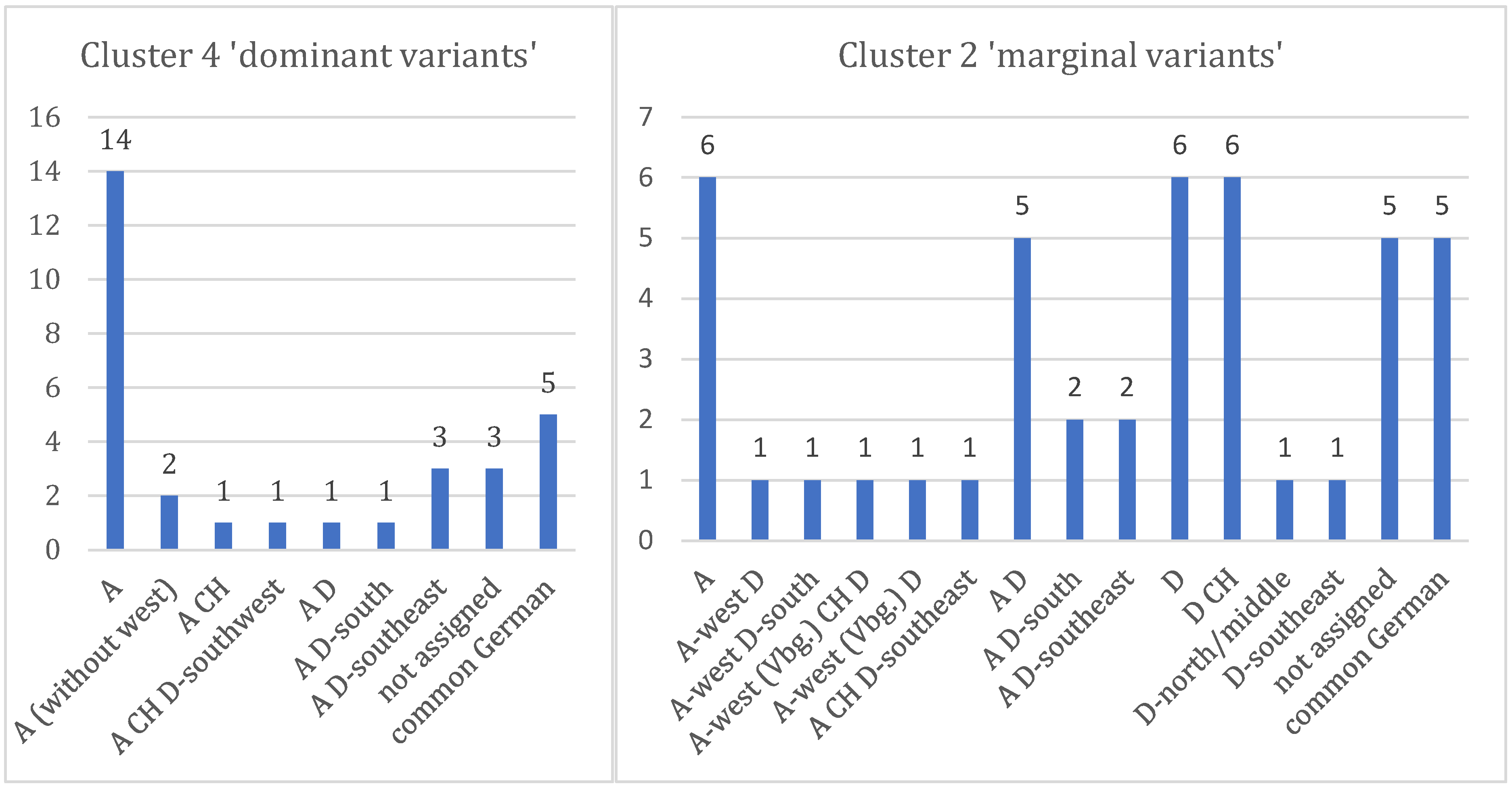
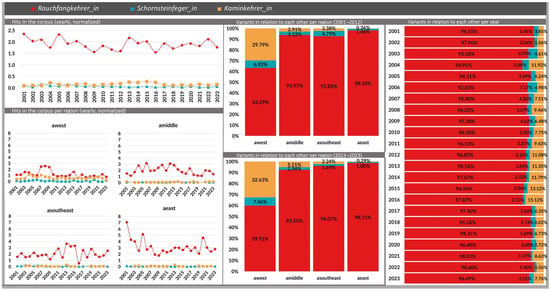
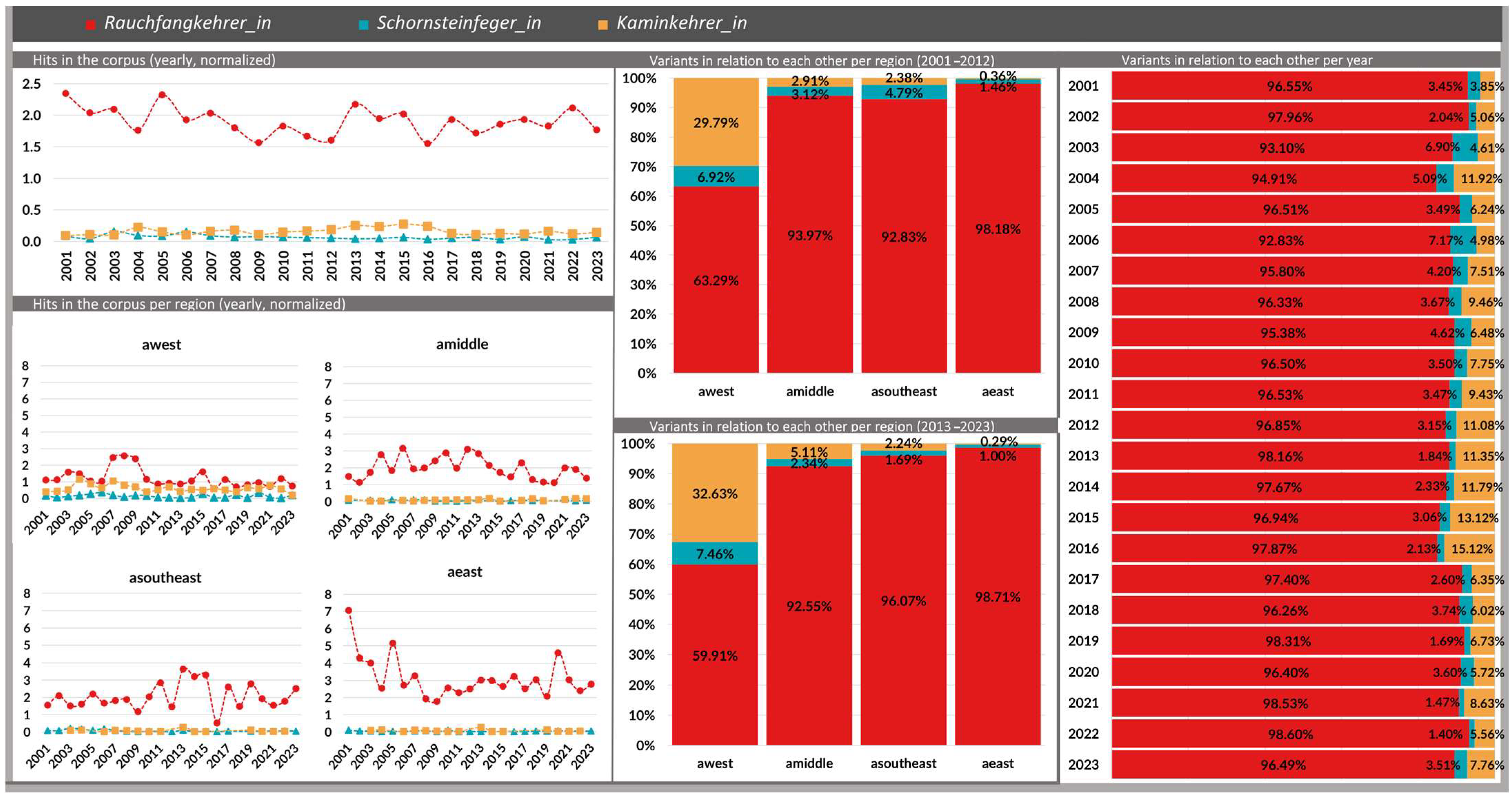
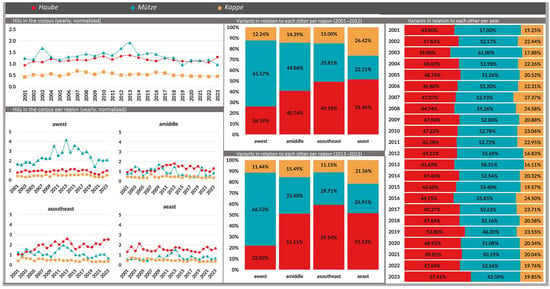
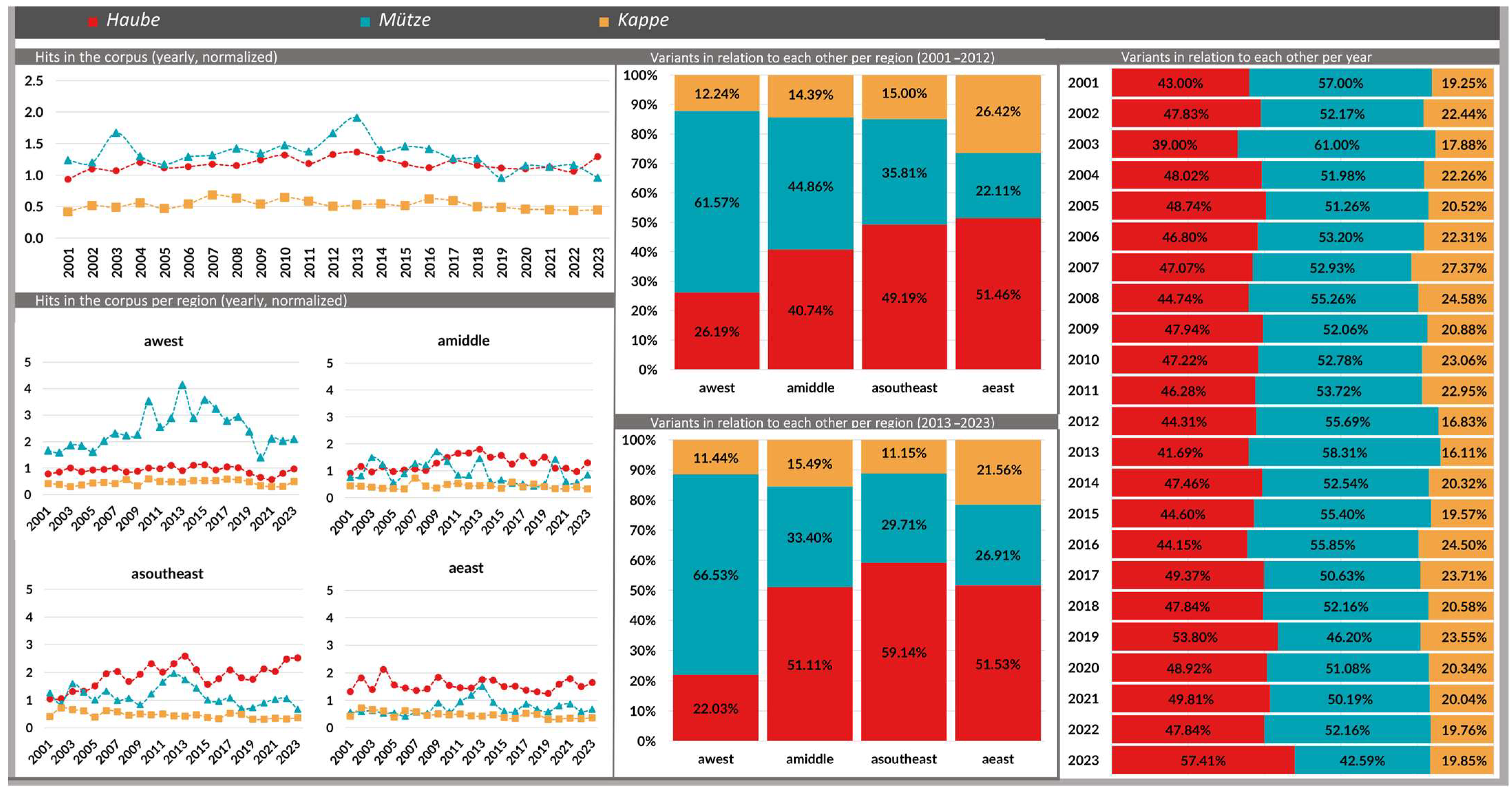
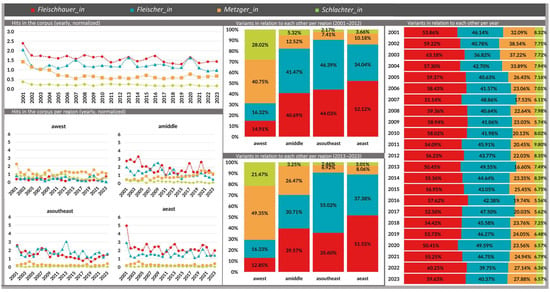
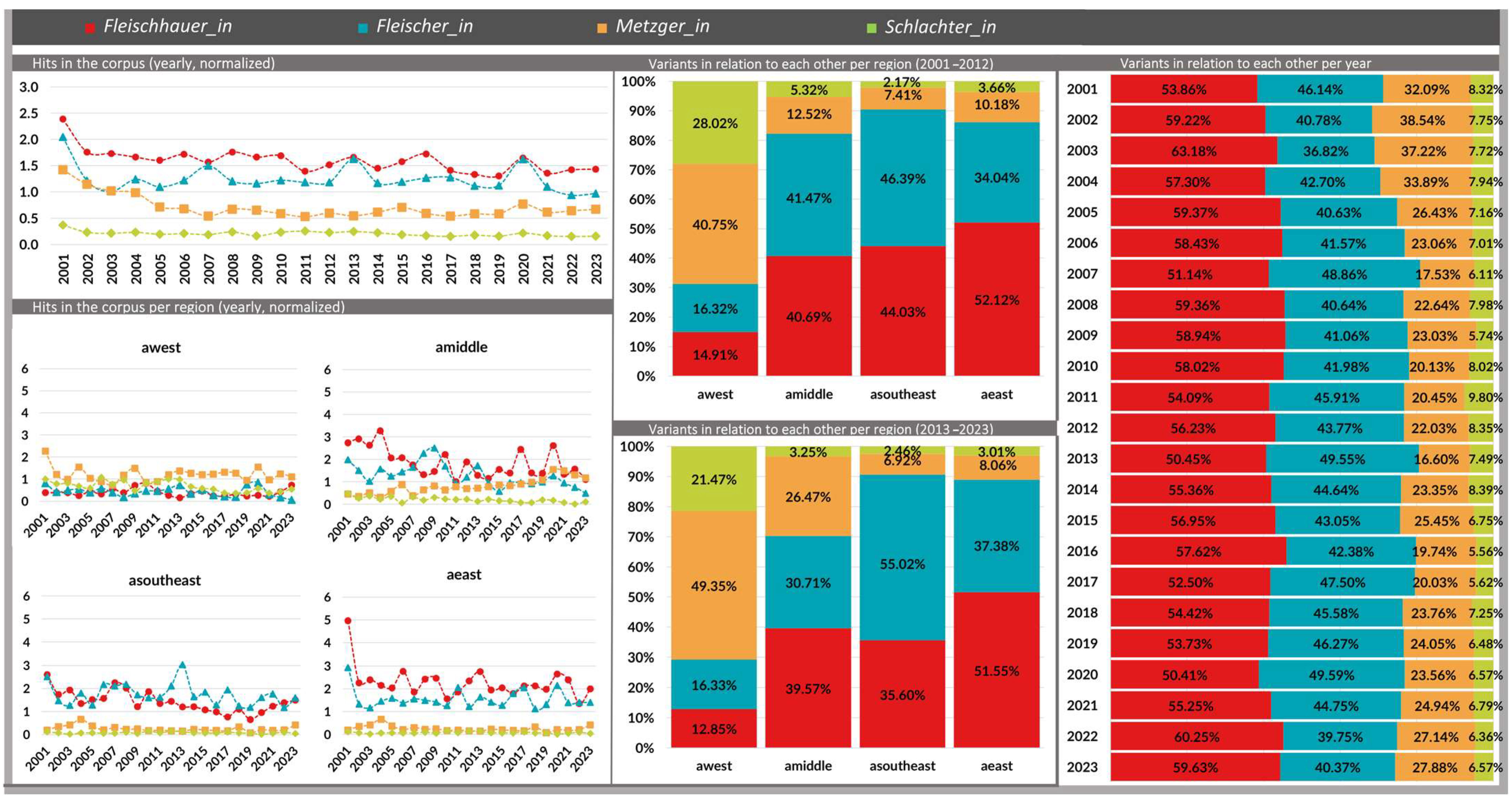
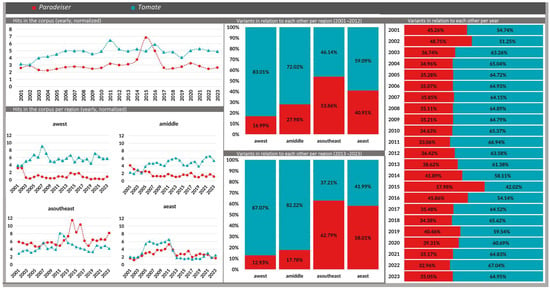
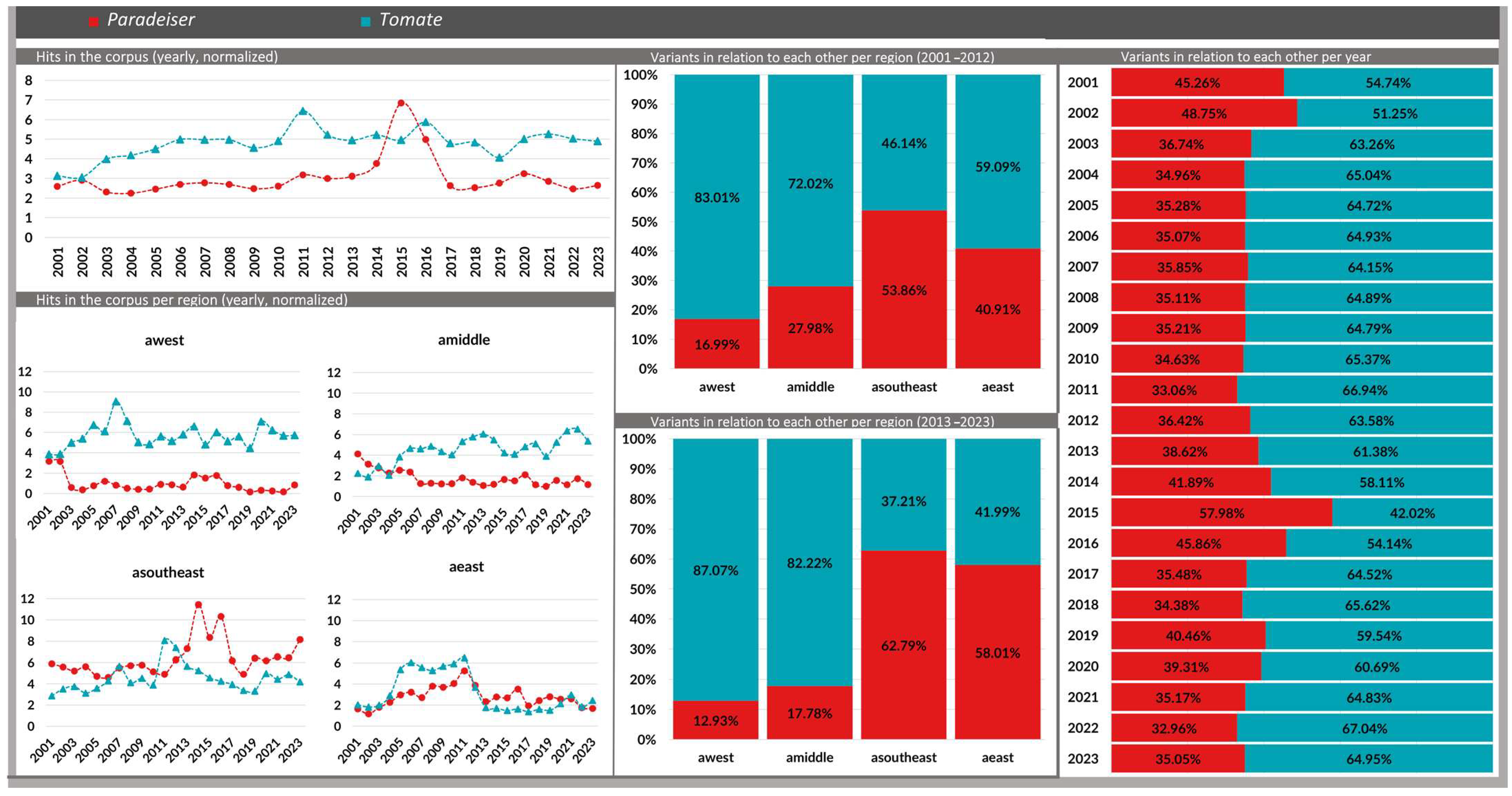
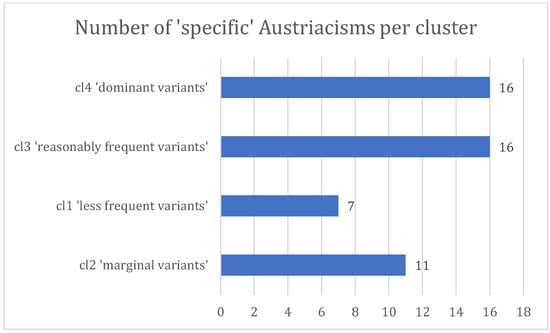
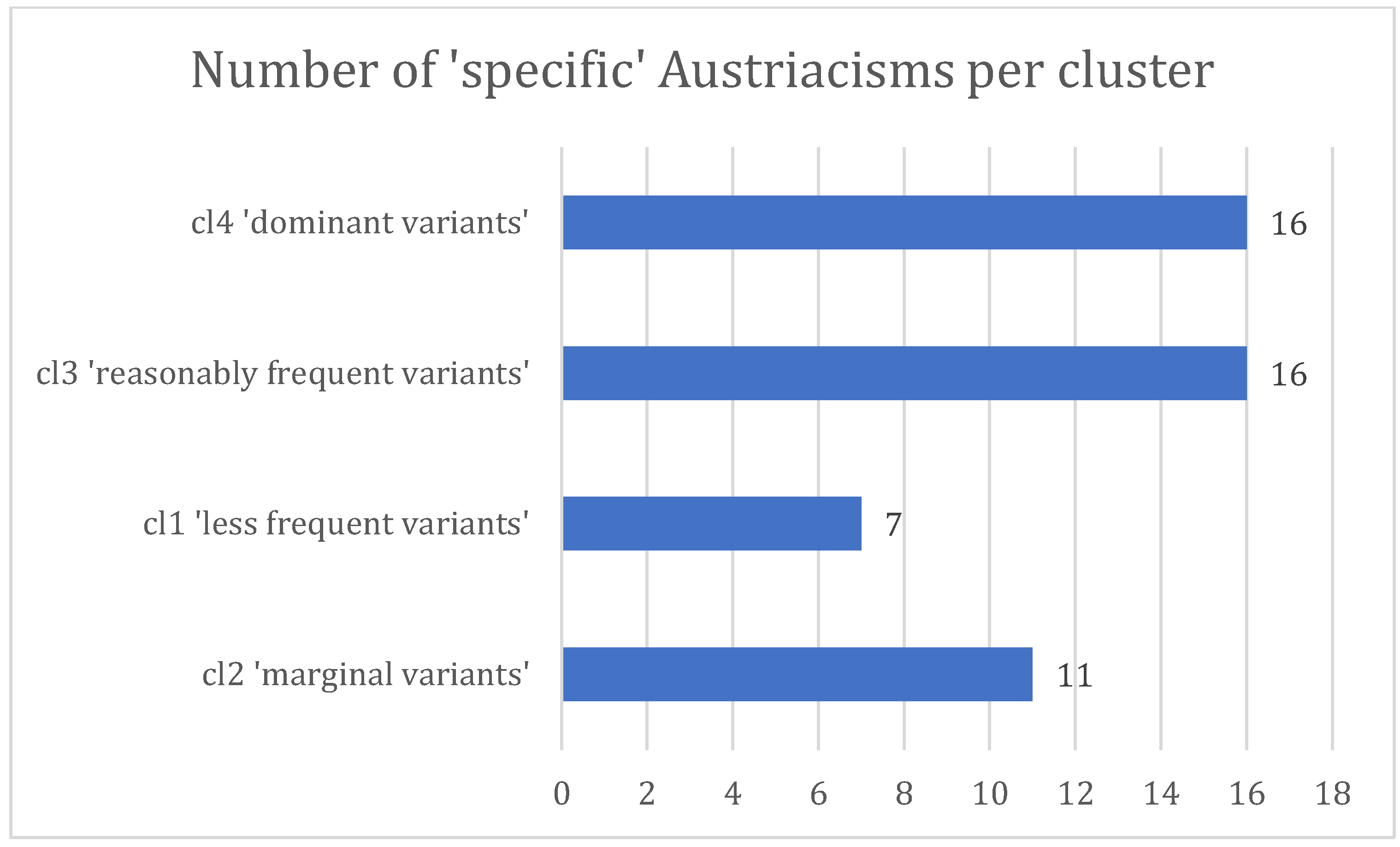
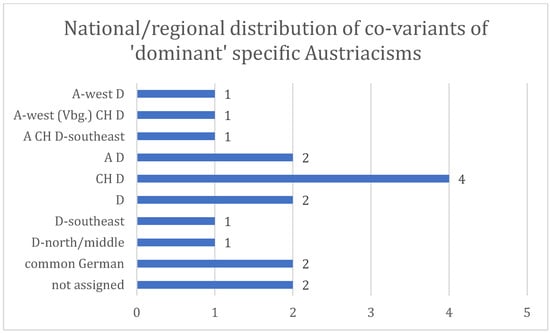

Disclaimer/Publisher’s Note: The statements, opinions and data contained in all publications are solely those of the individual author(s) and contributor(s) and not of MDPI and/or the editor(s). MDPI and/or the editor(s) disclaim responsibility for any injury to people or property resulting from any ideas, methods, instructions or products referred to in the content. |
© 2026 by the authors. Licensee MDPI, Basel, Switzerland. This article is an open access article distributed under the terms and conditions of the Creative Commons Attribution (CC BY) license.