


Abstract
Two-dimensional C/SiC are promising candidates for use in high-temperature structures in aeroengines and thermal protection systems in the aerospace industry, which will be subjected to loads in various directions during service. In this paper, the in-plane tensile, compressive, and shear mechanical properties of 2D C/SiC were investigated over a strain-rate range of 10−5 s−1 to 10 s−1. The failure mechanisms of the material under different loading conditions were analyzed. The study reveals that 2D C/SiC exhibits nonlinear stress–strain relationships under tension and shear, while it displays a linear stress–strain relationship under compression similar to the quasi-static loading state. The strain-rate strengthening effect is most pronounced under compression, whereas the effect is less significant under tensile loading. The reason for the observed increase in strength is the additional energy consumed by multiple crack initiation and propagation. A rate-dependent constitutive model was fitted, which agrees well with the experimental data for both tensile and shear loading conditions.
1. Introduction
Due to their outstanding properties, such as high specific strength, high stiffness, and excellent mechanical behavior at high temperatures, two-dimensional carbon fiber-reinforced silicon carbide composites (2D C/SiC) are promising candidates for use in high-temperature structures in aeroengines and thermal protection systems in the aerospace industry [1,2,3]. In general, engineering applications will be subjected to loads in various directions during service. In addition to static loads, these aeroengines and thermal protection systems are sometimes exposed to the threat of impact loads. Several studies have indicated that stress state and strain rate are important factors influencing the mechanical response of materials. Therefore, it is of great significance to understand the dependence and sensitivity of material mechanical behavior to load types and strain rates to meet the design requirements of thermal structural materials and to accurately characterize their mechanical behavior.
In recent years, many efforts have been devoted to investigating the mechanical properties of 2D C/SiC composites. Tension, compression, and shear tests at different strain rates and temperatures have been conducted to investigate the mechanical behaviors and failure mechanisms of 2D C/SiC [4,5,6,7,8,9,10,11,12,13,14,15,16,17,18,19,20,21,22,23,24]. Several constitutive models [12,25,26,27,28,29] have been proposed to characterize the behavior of C/SiC.
Extensive experimental studies have proved that 2D C/SiC composites exhibit a nonlinear stress–strain relationship under tension but a linear stress–strain relationship under compression, indicating that the material exhibits significant unilateral mechanical behavior [4,5,6,7,8,9,10,11,12,13,14,15,16,17]. In addition, Chen [8,9], Li [13], and Suo [16] found that both the tensile and compressive strengths of 2D C/SiC exhibit a positive strain effect based on the split Hopkinson bar experiments.
In terms of research on shear mechanical properties of the material, Guan [18] studied the static in-plane shear strength (IPSS) of 2D C/SiC at room temperature. The shear stress–strain curve of C/SiC at room temperature is nonlinear, and its shear failure mechanism depends on the interaction between fiber and matrix microcracks. Zhang [19] also investigated the effect of porosity on static interlaminar and in-plane shear performance of 2D C/SiC. Results demonstrated that as the porosity of 2D C/SiC increased, the shear strength decreased. Hu [22] conducted the dynamic interlaminar shear performance test of 2D C/SiC using modified split Hopkinson pressive bars and suggested that the change in crack initiation and propagation under dynamic loading led to the strain-rate sensitivity of interlaminar shear strength. However, limited research has been conducted on the dynamic in-plane shear mechanical behavior of the material.
Furthermore, many researchers have conducted more in-depth studies on the mechanical behavior of the material under combined conditions of temperature, oxidation, and strain rate [14,16,20,23,24]. The investigations proved that the strengths of 2D C/SiC exhibit a nonlinear dependence on the temperature. The mechanical behavior of C/SiC is significantly influenced by the coupling effects of temperature and strain rate.
In general, high-speed destructive impacts, such as those caused by foreign objects, usually fall within the high-strain-rate range. However, scenarios involving high pulse pressure, high overload, or sudden pressure changes, such as nozzle ignition or rocket separation, generally exhibit strain rates not exceeding 100 s−1, falling within the range of medium strain rate.
However, previous research on the mechanical properties of C/SiC composites mostly focused on the quasi-static (10−5 s−1 to 10−3 s −1) and high-strain-rate ranges (102 s−1 to 104 s−1). Due to limitations in testing methods, there has been limited research on the mechanical responses of 2D C/SiC in the medium-strain-rate range (0.01 s−1 to 10 s−1), and the failure mechanism of the material at these strain rates remains unclear. Therefore, further research is needed on the mechanical properties and failure mechanisms of the material in the range of medium strain rates. This is of great significance for a comprehensive understanding of the mechanical behavior of the material.
In this paper, the in-plane tensile, compressive, and shear mechanical properties of 2D C/SiC were investigated under quasi-static to medium strain rates at room temperature using a universal mechanical testing machine and a high-speed hydraulic servo testing machine. The damage and failure mechanism of the recovered specimens was studied by a scanning electron microscope (SEM). The influence of strain rates and loading conditions on the mechanical behavior of 2D C/SiC was discussed. Based on the experimental data, a rate-dependent constitutive model was fitted. The research result can provide fundamental support for subsequent studies on the high-temperature mechanical properties and coupling effects of C/SiC in the medium-strain-rate range.
2. Materials and Experiment
2.1. Material Preparation
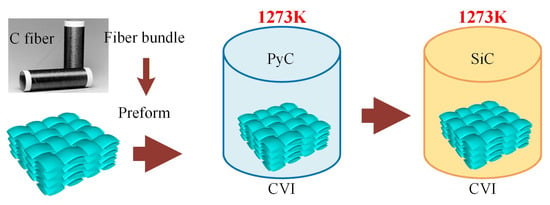
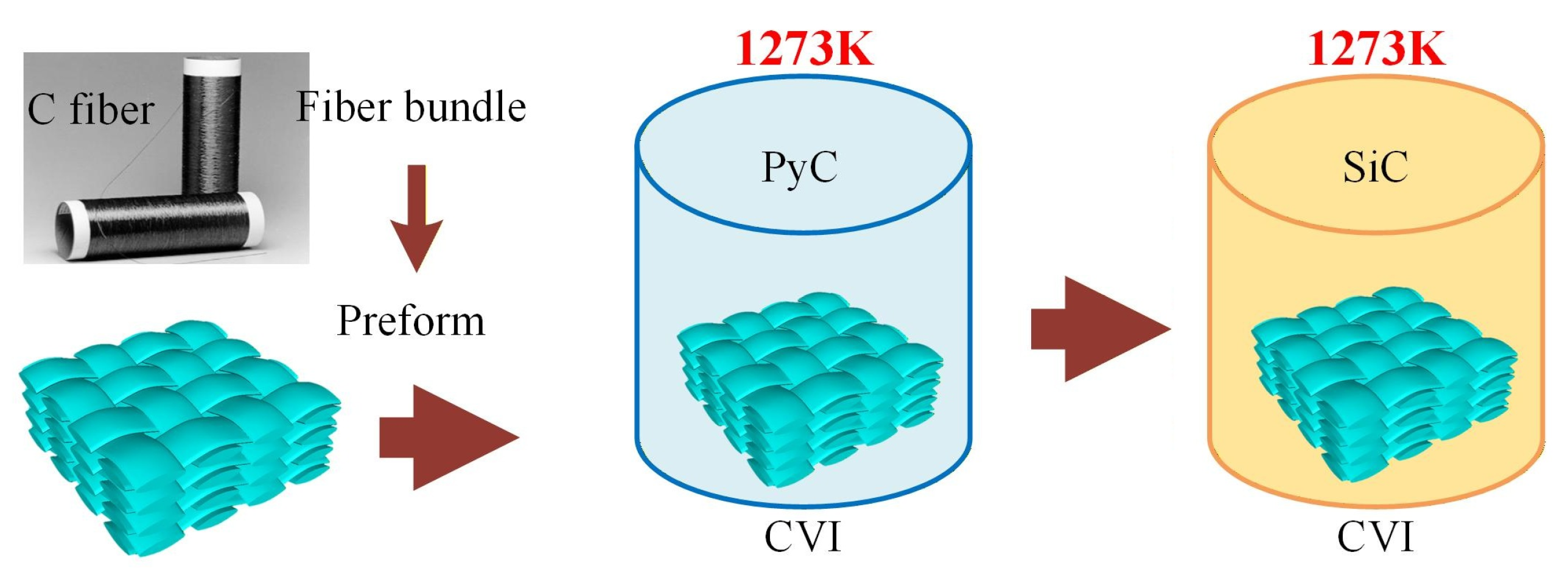
The 2D C/SiC used in this study was fabricated by the chemical vapor infiltration (CVI) technique. First, the 300-1K carbon fiber plain woven fabric was stacked into a preform plate. Then, the thermal decomposition carbon interface and SiC matrix were sequentially deposited on the fiber surface using the CVI process at 1273 K. After that, the plate was cut to meet the geometric requirements of the specimen. Finally, a layer of SiC coating was deposited on the surface of the specimen to improve its oxidation resistance, as shown in Figure 1. The density of the specimen was about 1.95 g/cm3. The volume fraction of the carbon fiber was about 40%, and the porosity was about 10%.
Figure 1.
Material preparation process.
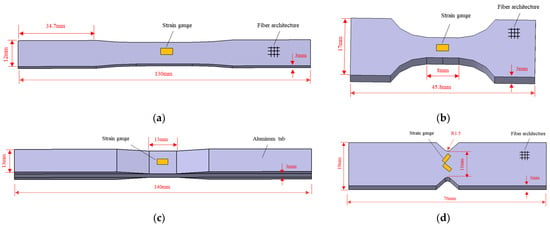
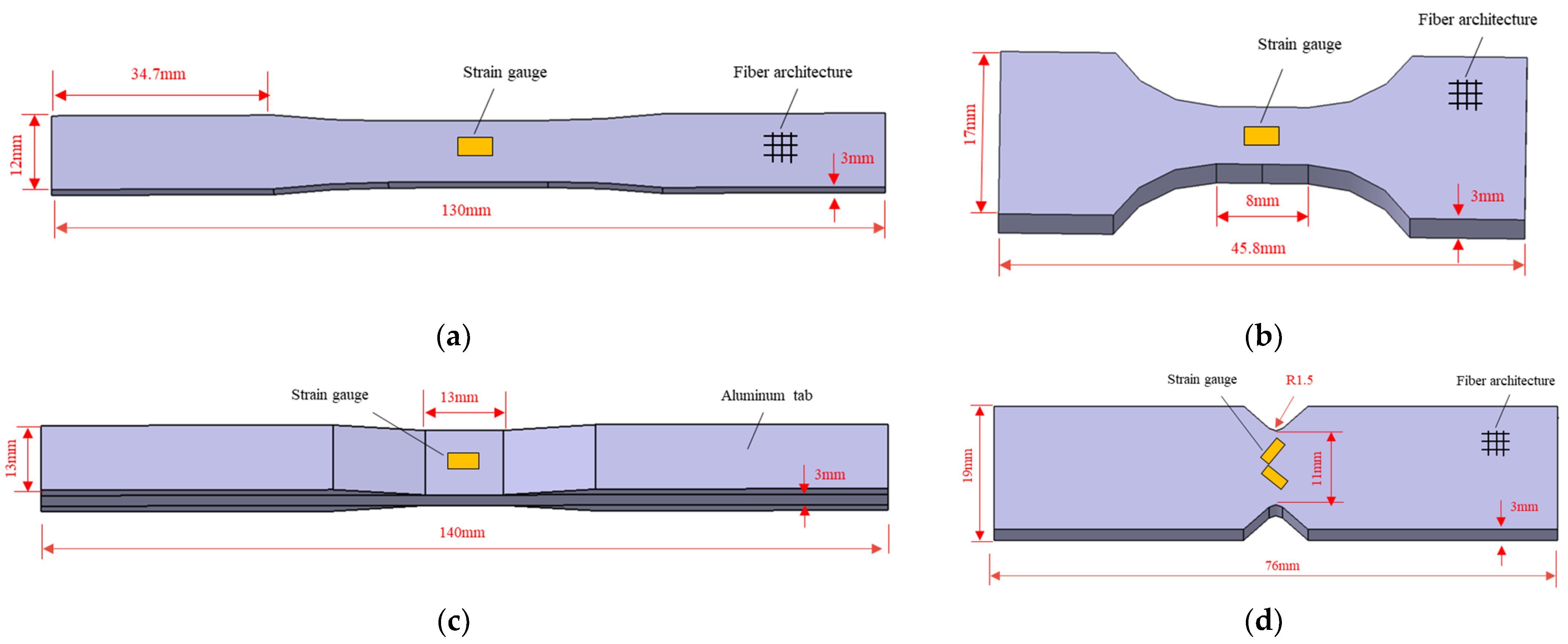
The shape and basic dimensions of tension, compression, and shear specimens are shown in Figure 2. The thickness of the specimens for the tensile, compressive, and shear tests was all 3 mm. Aluminum tabs were pasted on the clamping ends of the specimens to prevent crushing. The pasting position of the strain gauges is also indicated in Figure 1. Back-to-back strain gauges were used to monitor and correct any possible twisting effects on the test results. The engineering shear strain was equal to the sum of the absolute values of the normal strains measured by two gauge elements mounted at ±45° to the length direction of the specimen.
Figure 2.
Schematic diagrams of the specimens and the locations of the strain gauges: (a) quasi-static tension, (b) dynamic tension, (c) compression specimen, (d) shear.
2.2. Quasi-Static Experiments
The quasi-static tensile experiments were performed in air at room temperature using an electronic universal testing machine (LE5051, Lishi Instrument Co., Ltd., Shanghai, China) with a 100 kN load cell. The quasi-static compressive and shear tests were conducted on an electronic universal testing machine (CSS-88010, Mechanical Engineering Research Institute Co., Ltd., Changchun, China) with a 100 kN load cell. The test load was measured by the force sensor on the test machine. Strain measurements were continuously recorded by strain gauges attached to both sides of the specimen.
2.3. Medium-Strain-Rate Experiments
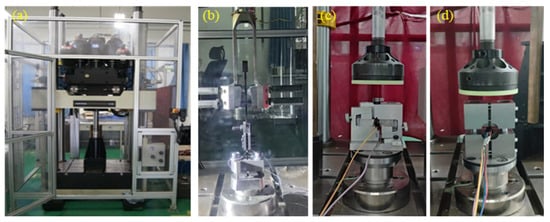
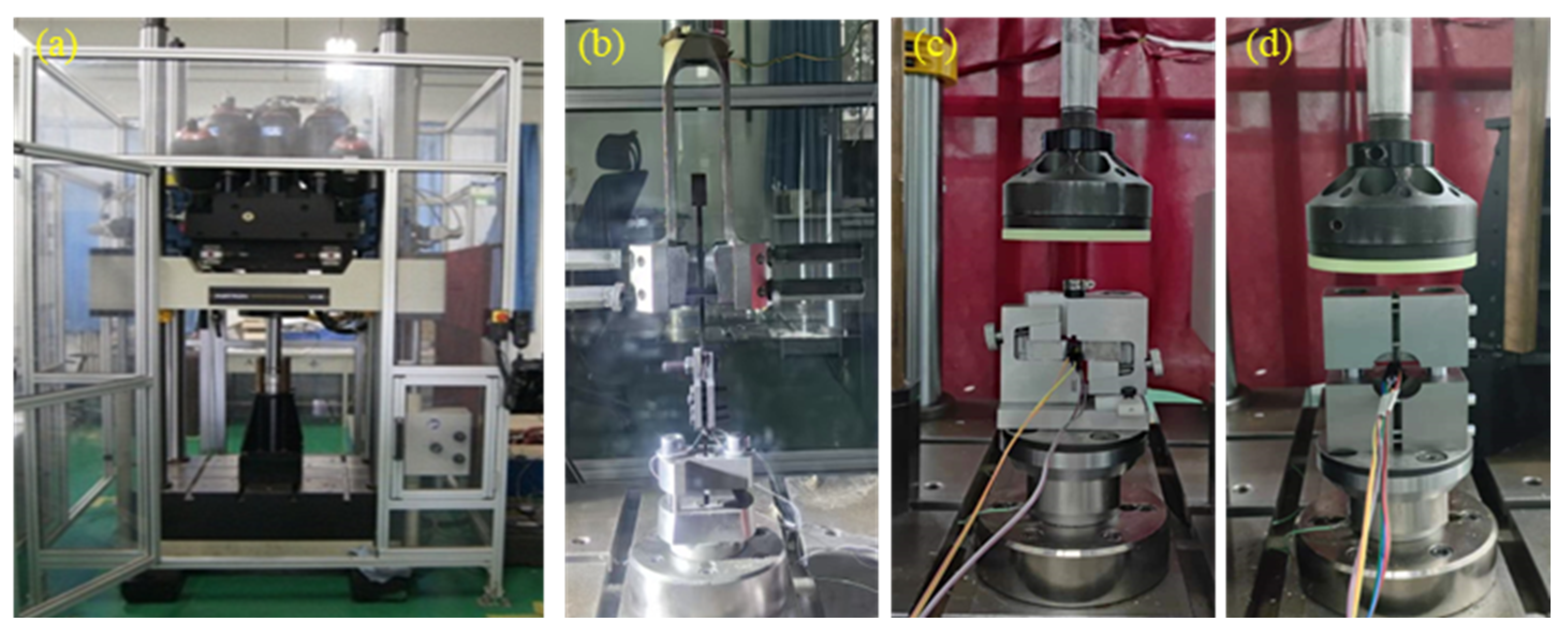
The high-speed hydraulic servo testing machine (Instron VHS 160/100-20, Instron Ltd., Buckinghamshire, UK) was used for the medium-strain-rate experiments. The testing machine consists of a hydraulic system, a water cooling system, a frame, and a control system. The loading energy is provided by a combination of a hydraulic actuator cylinder and gas energy storage to achieve constant speed dynamic loading. The maximum loading speed of the testing machine is 20 m/s, and the maximum impact dynamic load is 100 kN. The test load and strain were measured by the force sensor on the test machine, and the strain gauges were pasted on the specimen, as shown in Figure 3.
Figure 3.
Medium-strain-rate experimental setup: (a) INSTRON VHS 160 high-speed material testing machine; (b) tensile testing fixture and specimen; (c) shear testing fixture and specimen; (d) compressive testing fixture and specimen.
3. Result and Discussion
3.1. Stress–Strain Curves
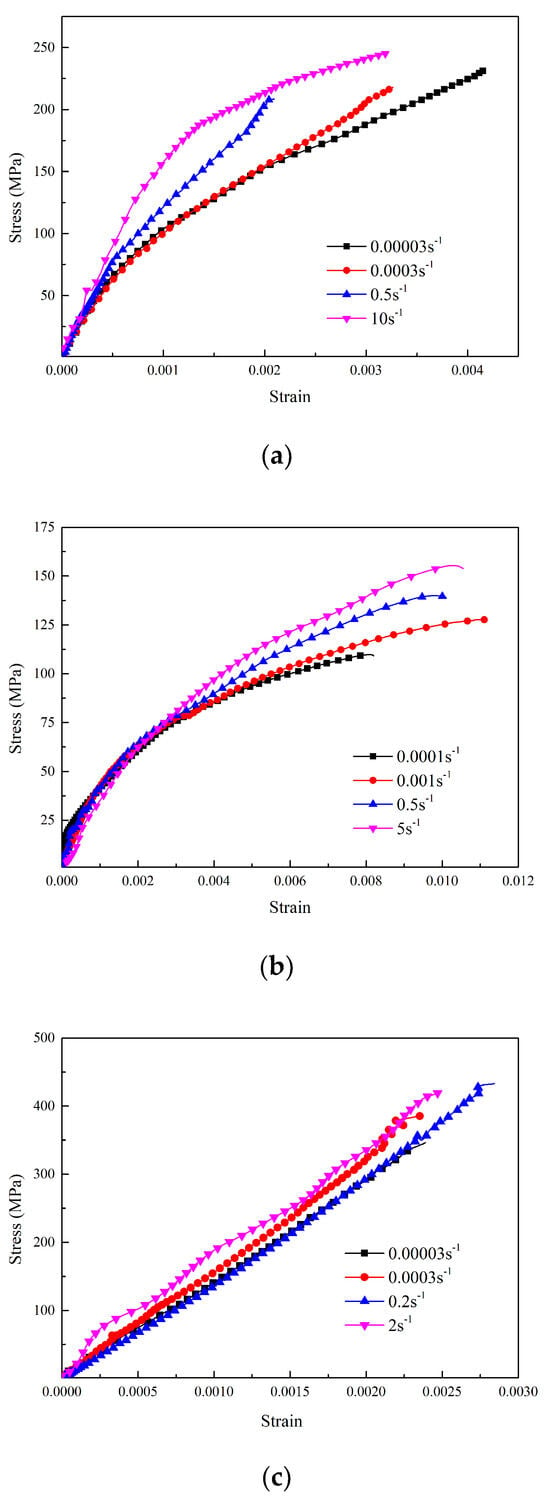
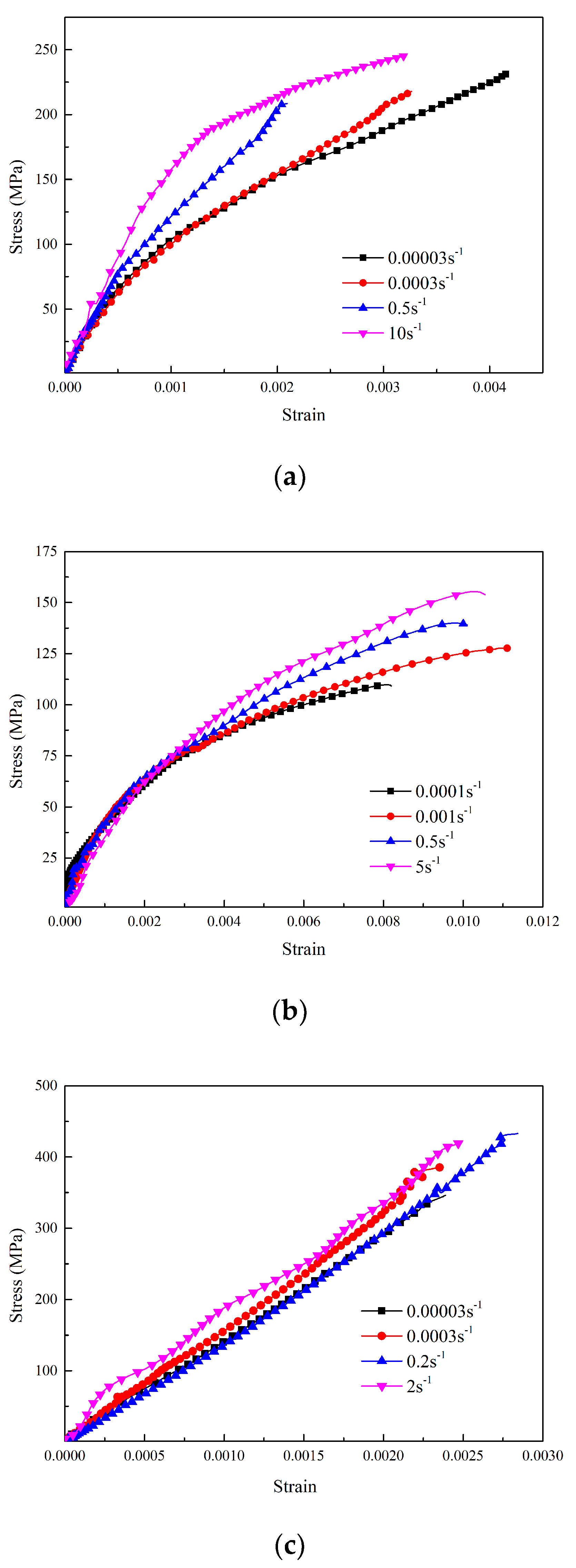
The typical stress–strain curves of C/SiC composites under different loading conditions are shown in Figure 4. It can be seen that under tensile and shear loading, the material exhibits significant nonlinearity in the initial loading stage, indicating the onset of internal damage at low stress levels. Additionally, the failure strength of the material increases with the strain rate. Under compressive load, the stress–strain curve is approximately linear, indicating that no significant damage accumulates before fracture.
Figure 4.
Typical strain-stress curves of C/SiC: (a) in-plane tension, (b) in-plane shear, (c) in-plane compression.
3.2. Strain-Rate Sensitivity
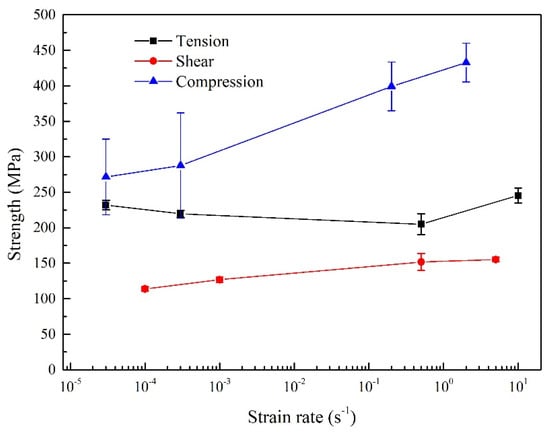
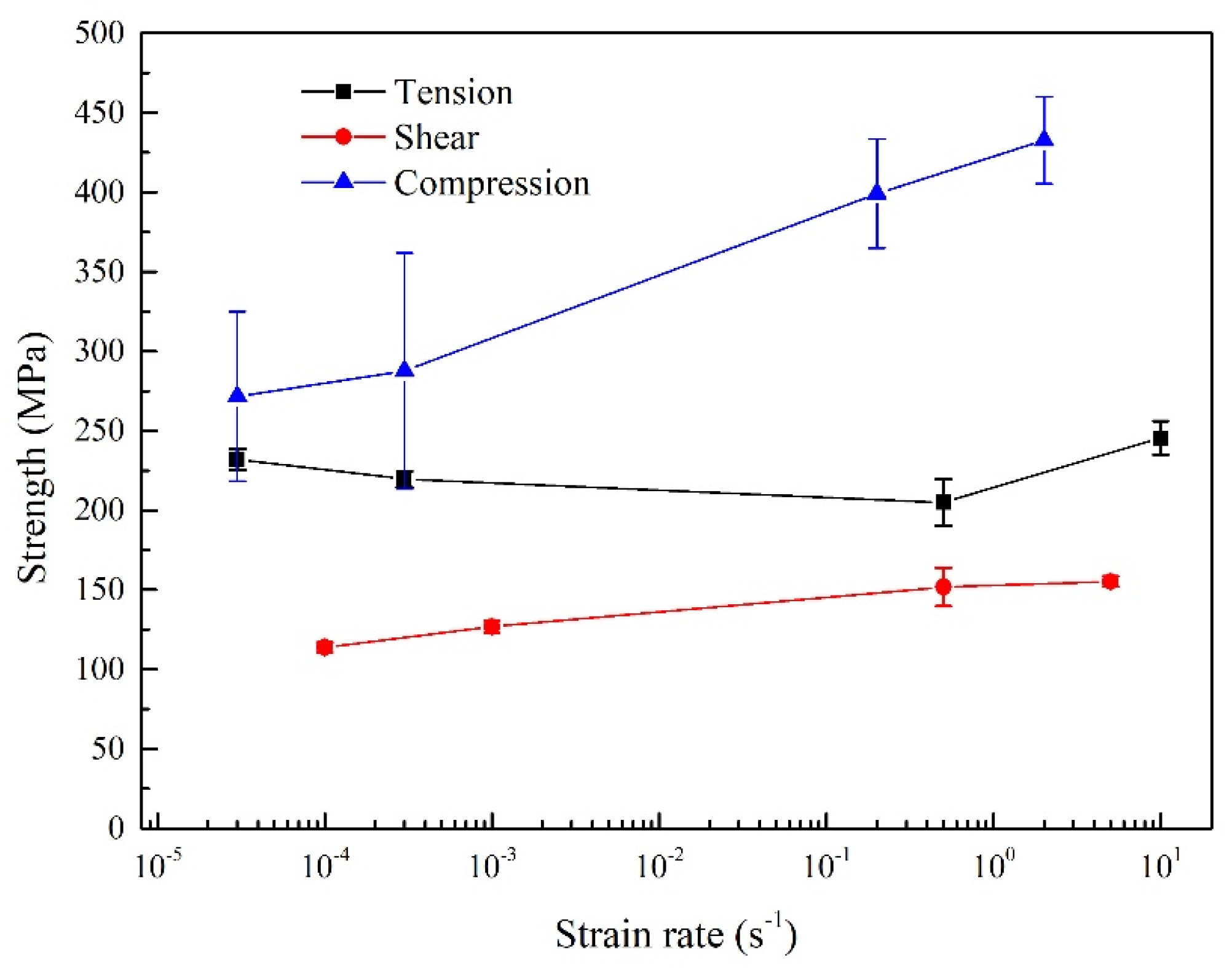
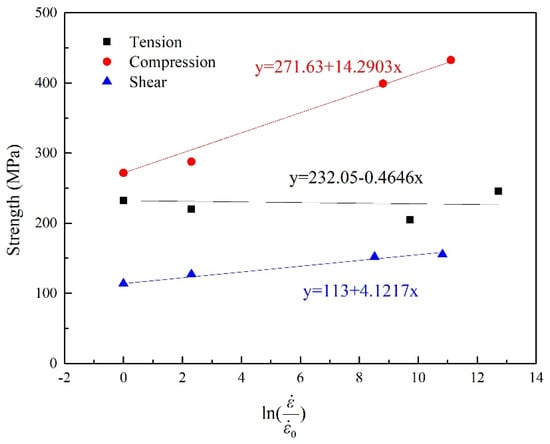
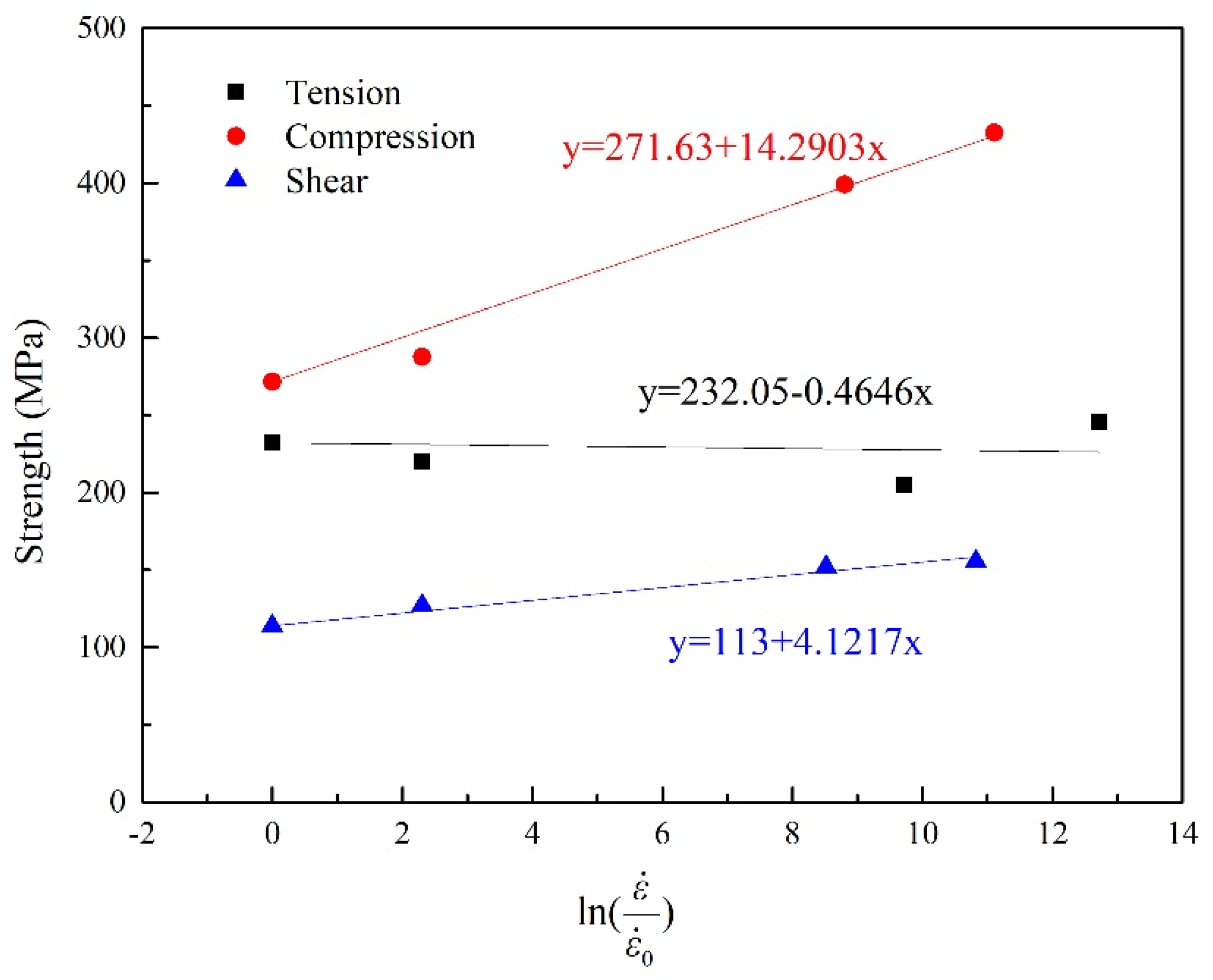
To quantify the relationship between strain rate and strength, the variation in the strength with strain rate under different loading conditions is shown in Figure 5. It can be observed that the strain-rate strengthening effect of the material is pronounced under compressive and shear loading, while the strain-rate effect under tensile loading is less noticeable.
Figure 5.
Variation in the strength with strain rate under different loading conditions.
3.3. Failure Mechanism
3.3.1. In-Plane Tension
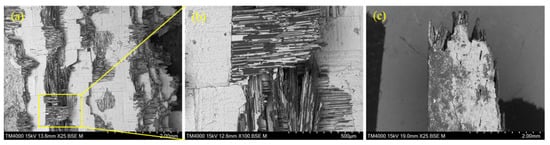
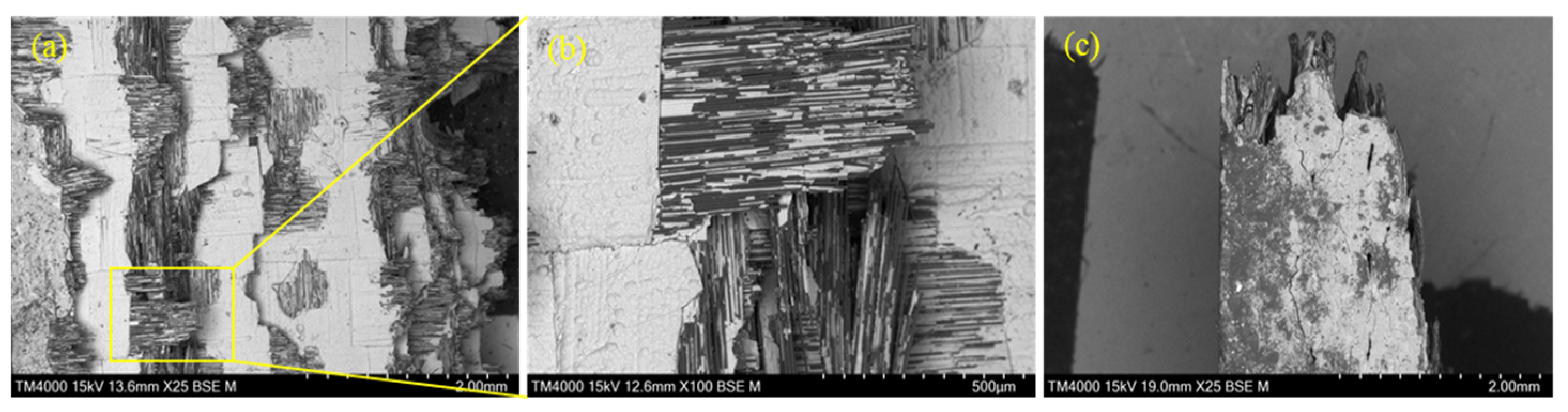
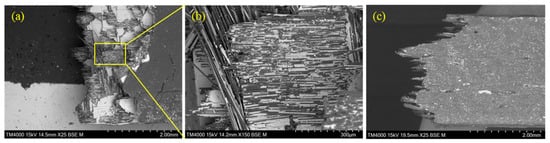
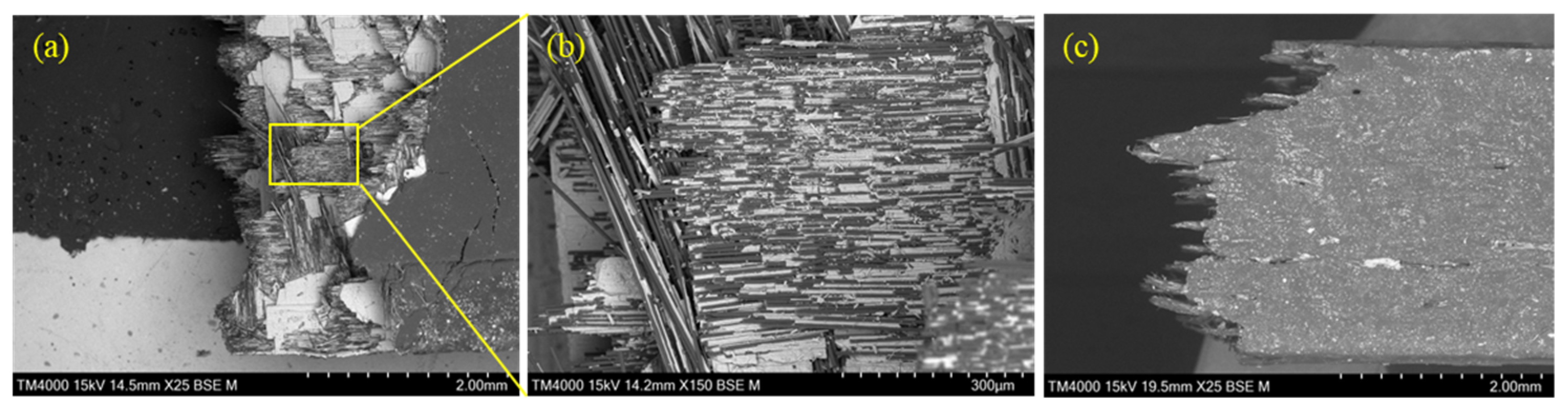
The fracture morphology of the specimen under tension is shown in Figure 6 and Figure 7. It can be seen that a variety of micro-damage modes, such as matrix cracking, interface debonding, fiber fracture, and fiber pull-out, occur within the material under tensile load. From the side view of the specimen, the fracture position of each layer is different, resulting in an uneven fracture along the thickness direction. When the 0° fiber bundle is pulled out, part of the 90° fiber bundle is also taken away, leading to a layered pull-out appearance, with an uneven fracture surface on the fiber bundles. The matrix around the fiber bundle is peeled off, and the fiber bundles are basically broken at the 0°/90° lap position. Under dynamic tensile loading with a strain rate of 10 s−1, the pulling out of the fiber bundle is more obvious, and more matrix crushing on the pulled fiber bundle can be observed, indicating that more matrix cracks are generated during the loading process, as shown in Figure 7.
Figure 6.
Fracture morphology of the specimen after a quasi-static tensile test at a strain rate of 0.00003 s−1: (a) frontal view; (b) enlarged view; (c) side view.
Figure 7.
Fracture morphology of the specimen after a dynamic tensile test at a strain rate of 10 s−1: (a) frontal view; (b) enlarged view; (c) side view.
3.3.2. In-Plane Shear
The typical failure morphology of the specimen under shear is shown in Figure 8 and Figure 9. Under in-plane shear loading, shear fractures occur in the transverse fiber bundles, accompanied by cracking in the peripheral matrix, with a direction of approximately 45° to the fiber orientation. Additionally, the interface between fibers and matrix inside the fiber bundle experiences debonding and cracking due to miscutting. A small amount of the matrix around the longitudinal fiber bundle was peeled off at the fracture area. The initiation and accumulation of several damage modes degrade the shear stiffness of the material. The shear fracture of the transverse fiber bundle ultimately leads to the complete destruction of the material.
Figure 8.
Fracture morphology of the specimen after a quasi-static shear test at a strain rate of 0.0001 s−1: (a) frontal view; (b) enlarged view.
Figure 9.
Fracture morphology of the specimen after the dynamic shear test at a strain rate of 5 s−1: (a) frontal view; (b) frontal view of the other side.
3.3.3. In-Plane Compression
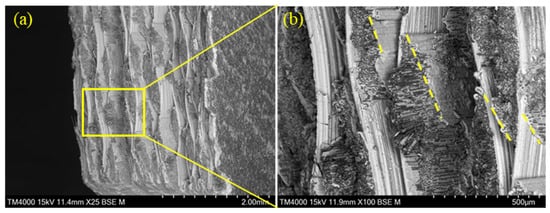
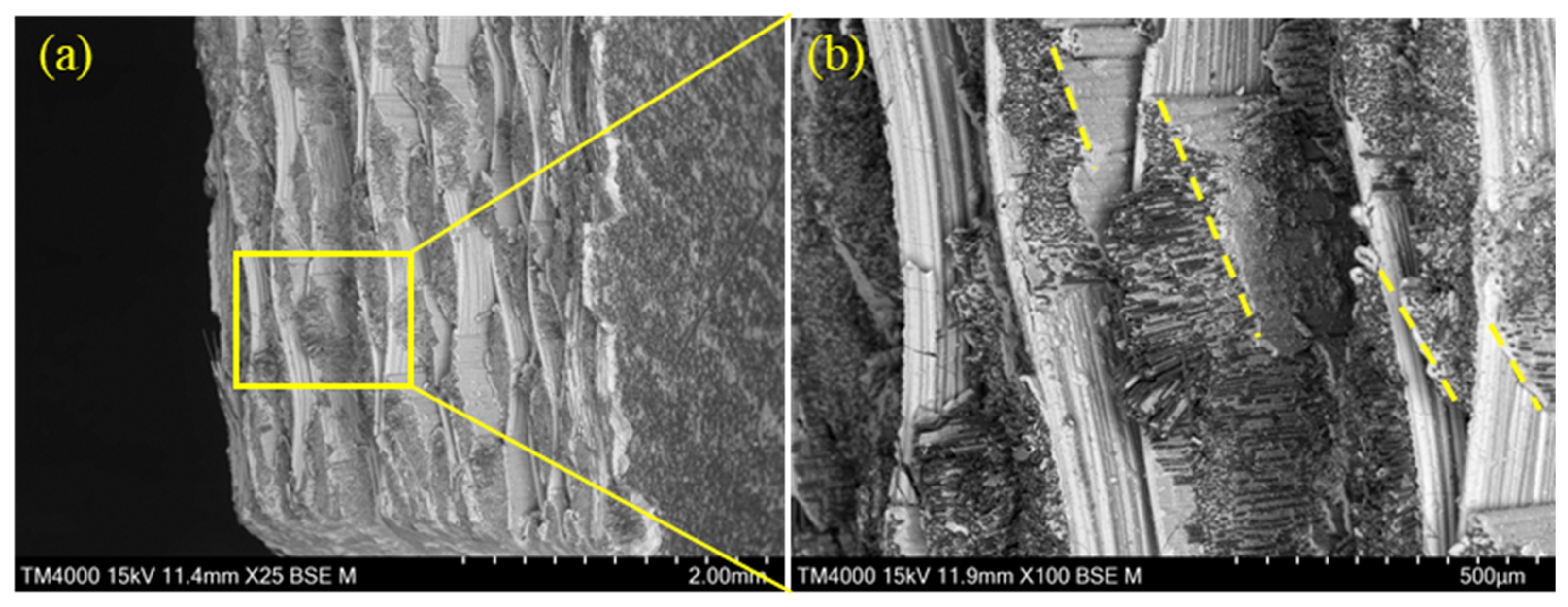
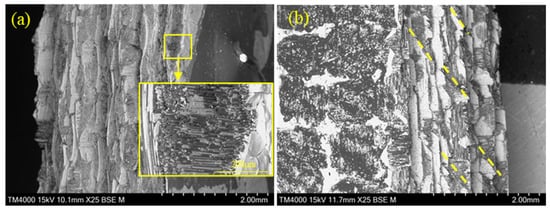
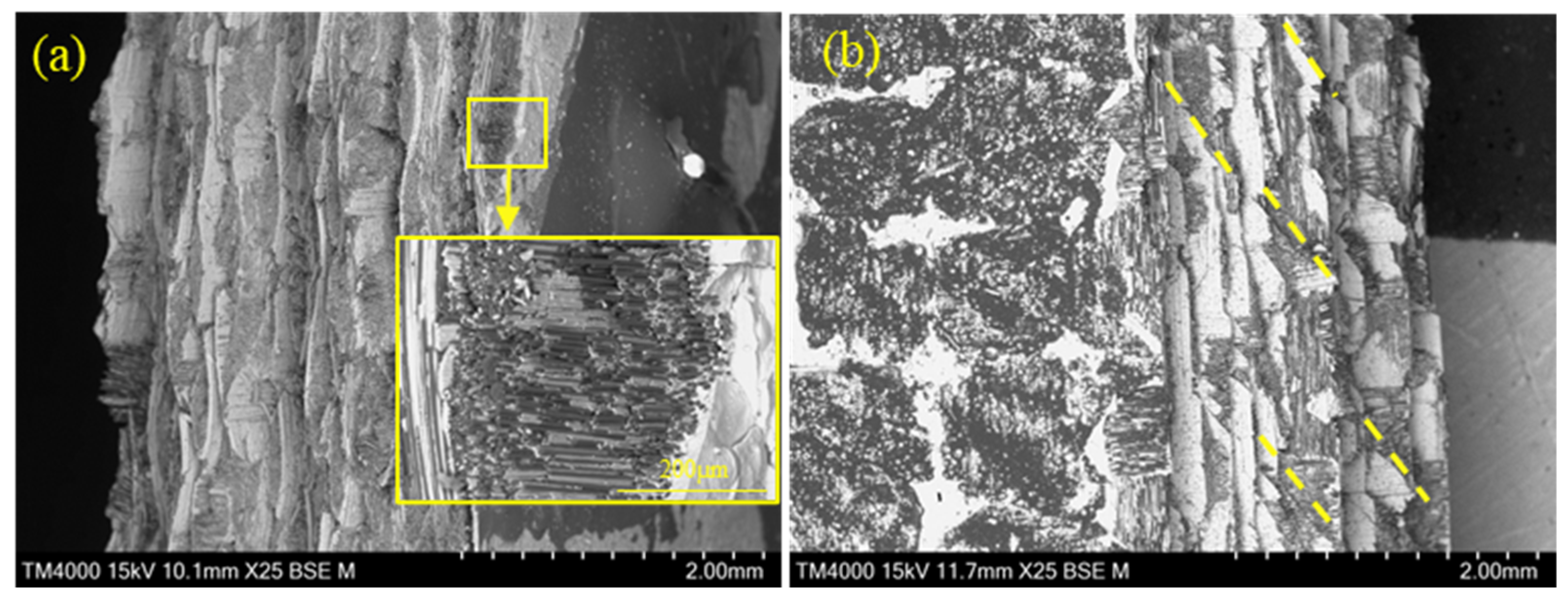
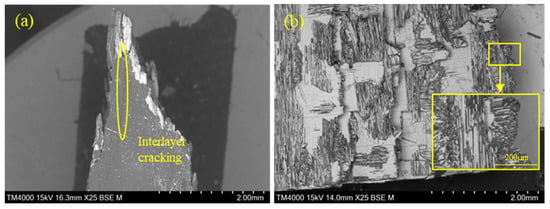
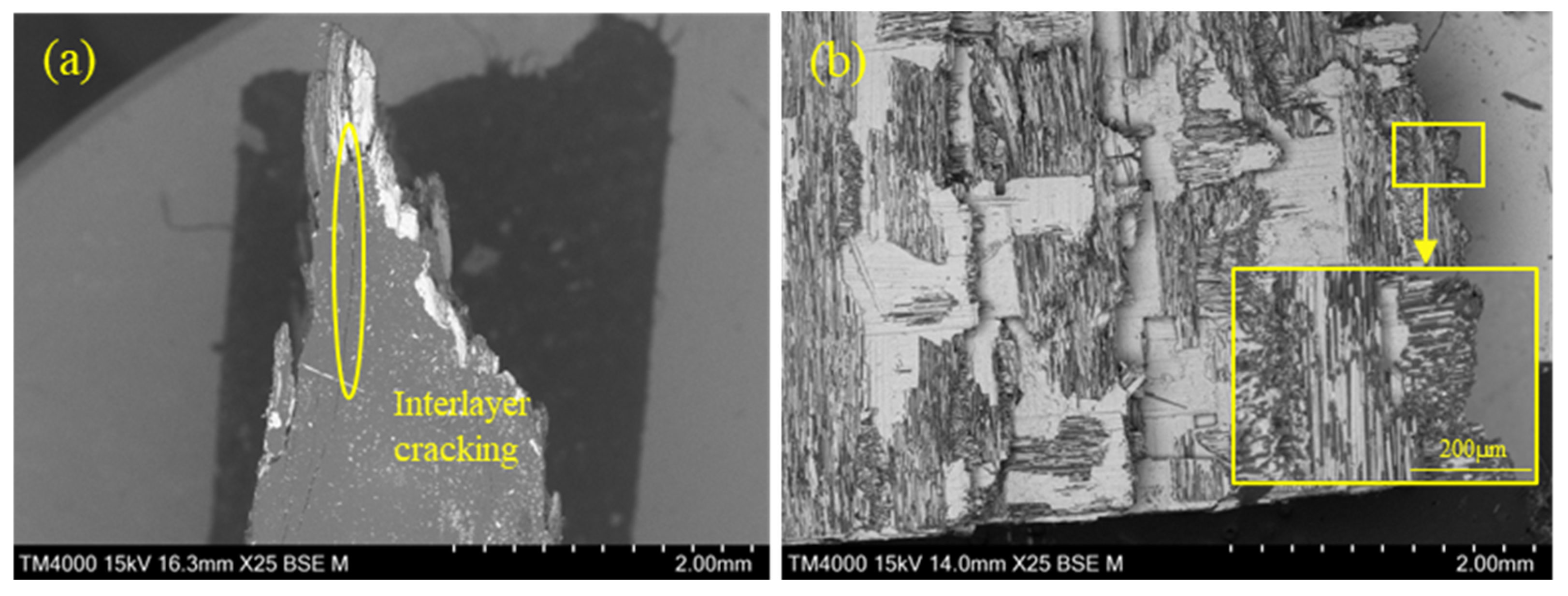
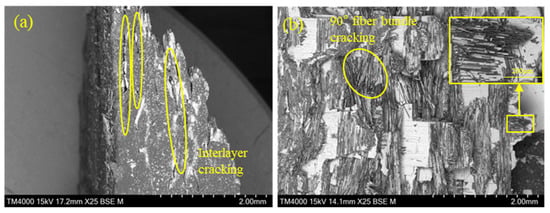
The fracture morphology of the specimen under compression is shown in Figure 10 and Figure 11. Two primary types of cracks form inside the material. One type appears in the area of stress concentration around large holes in the material and propagates along the surface of the fiber bundle, which is controlled by the interlayer properties. The other type of crack expands within the 90° fiber bundles and is controlled by the binding properties between the fibers and the matrix within the fiber bundle. The 0° fiber bundle fracture, matrix stripping around the 90° fiber bundle, fiber bundle separation, fiber cutout, and stratification occur inside the material. Compared to quasi-static compression, the specimen exhibits more interlayer cracking and matrix stripping on the fiber bundle under dynamic compression.
Figure 10.
Fracture morphology of the specimen after a quasi-static compressive test at a strain of 0.00003 s−1: (a) side view; (b) frontal view.
Figure 11.
Fracture morphology of the specimen after the dynamic compressive test at a strain rate of 2 s−1: (a) side view; (b) frontal view.
4. Constitutive Model
For 2D C/SiC composites, due to the large number of initial microcracks and pores in the interior and the obvious strain-rate strengthening effect, the constitutive equation of the composites is related to the complex damage mode and failure process under dynamic loading conditions. In this paper, we adopt the rate-dependent constitutive model established by Liu [12]. For in-plane tensile and shear, the corresponding constitutive equation is given by Equations (1)–(4).
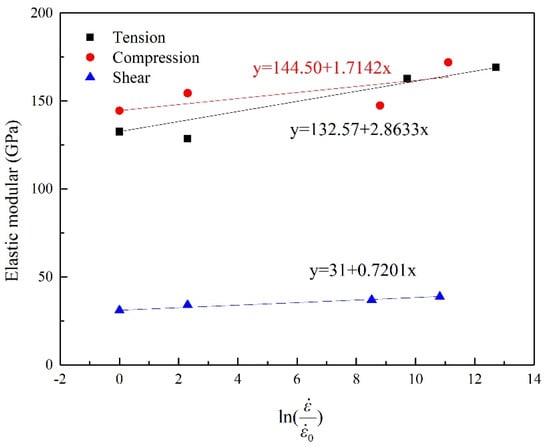
where is the stress of the material associated with the damage model, respectively; Ed is the initial elastic modulus at different strain rates; is the strain of the material; and are the referenced strain rate and strain rate, respectively; m is a rate-dependent parameter; and D is the damage parameter, which is assumed to follow a Weibull distribution. The parameter e is the base of the natural logarithm. The parameter n defines the shape of the damage growth curve. For 2D C/SiC composites, proposed by Liu, n can be defined as Equation (4), where a1, a2, and a3 are parameters to be determined from test data. For 2D C/SiC composites, the elastic modulus varies linearly with the logarithm of strain rate. The elastic modulus Ed is defined as in Equation (3), where E0 is the initial elastic modulus at the referenced strain rate. A represents the trend of the elastic modulus changing with the strain rate.
For in-plane compression, the stress–strain curve is approximately linear, so its constitutive equation is given by Equation (5).
The material failure criteria are shown in Equation (6).
where is the failure strength of the material at different strain rates, and B is a parameter to be determined.
The changes in elastic modulus and failure strength with strain rates were fitted as shown in Figure 12 and Figure 13.
Figure 12.
The elastic modular versus logarithmic strain-rate curves of 2D C/SiC under different loading conditions.
Figure 13.
The failure strength versus logarithm strain-rate curves of 2D C/SiC under different loading conditions.
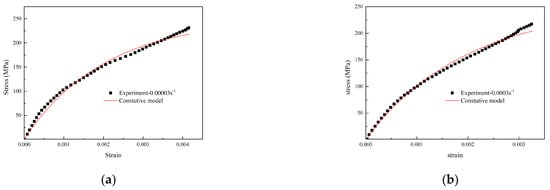
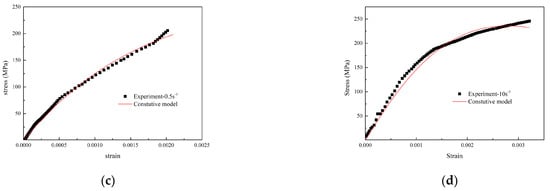
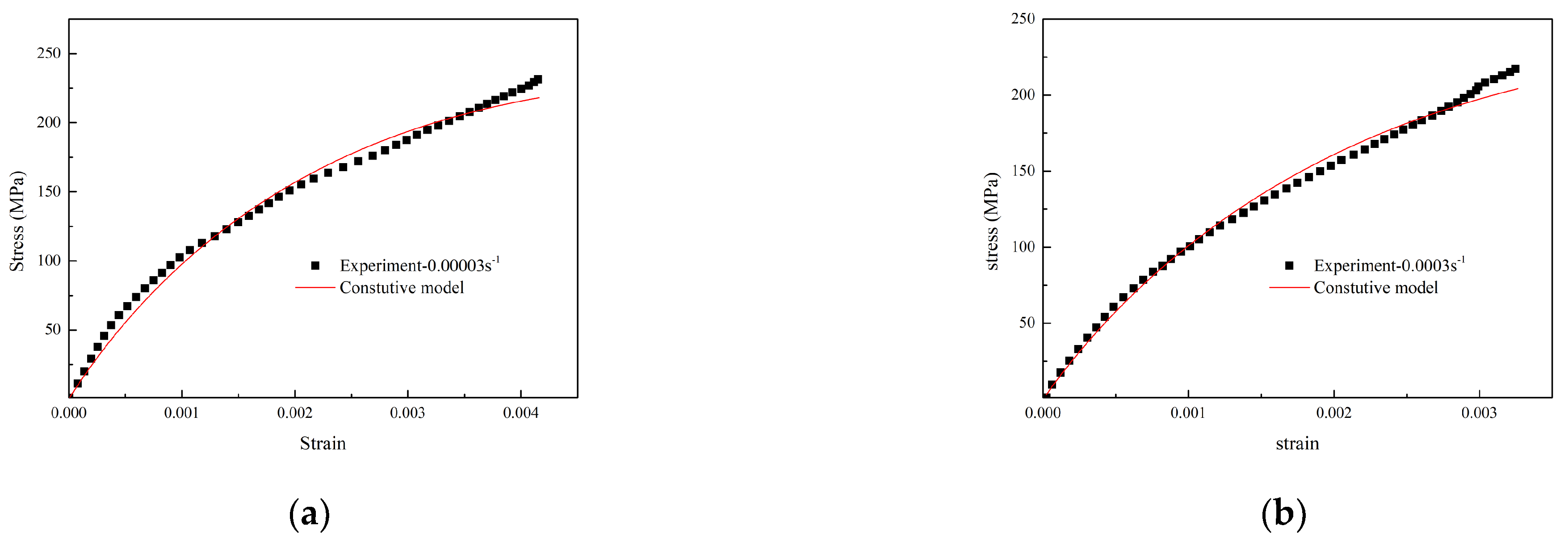
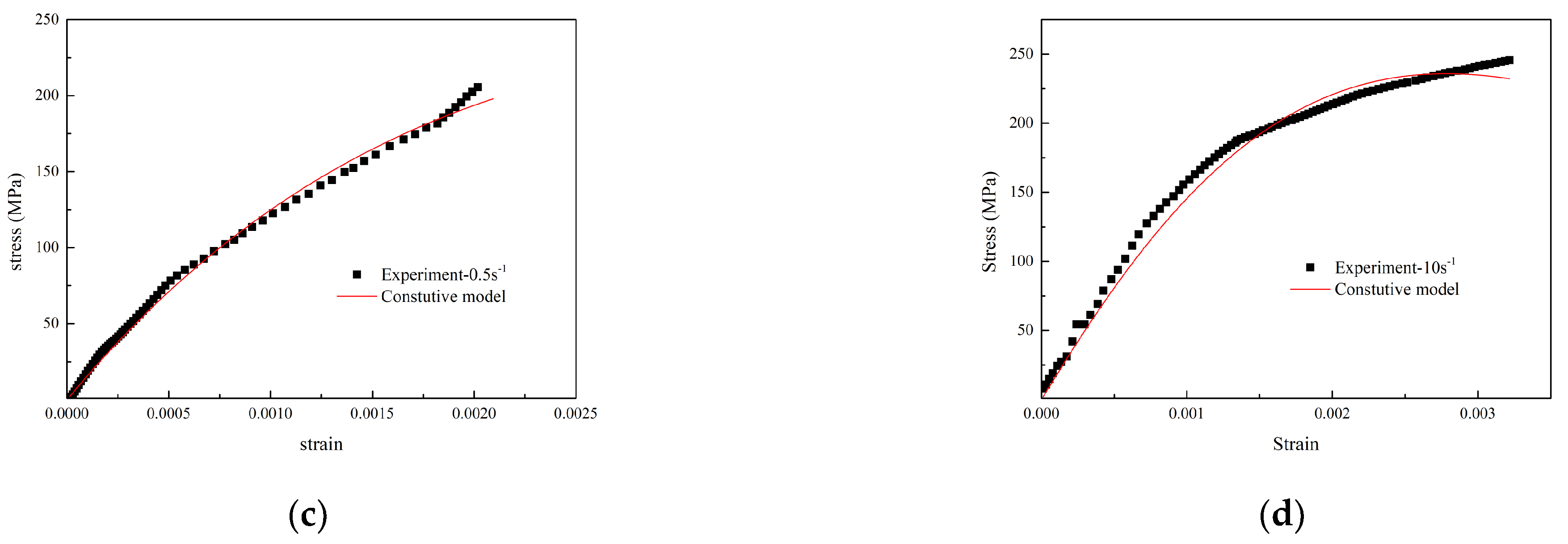
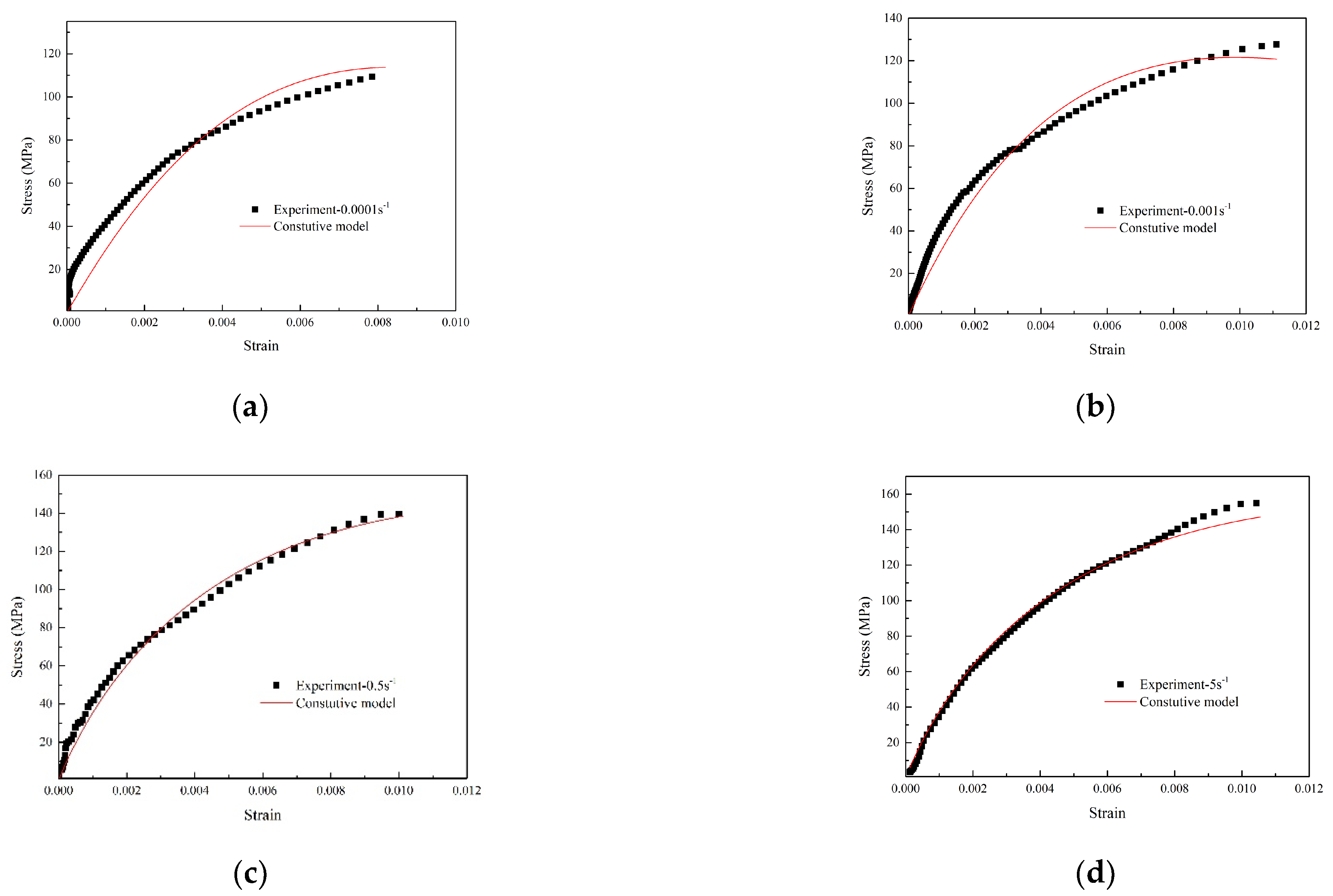
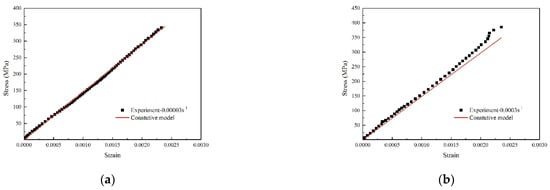
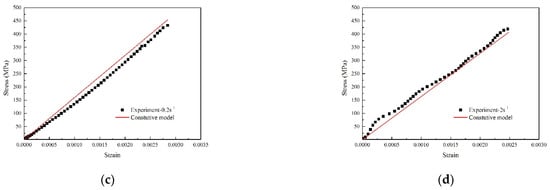
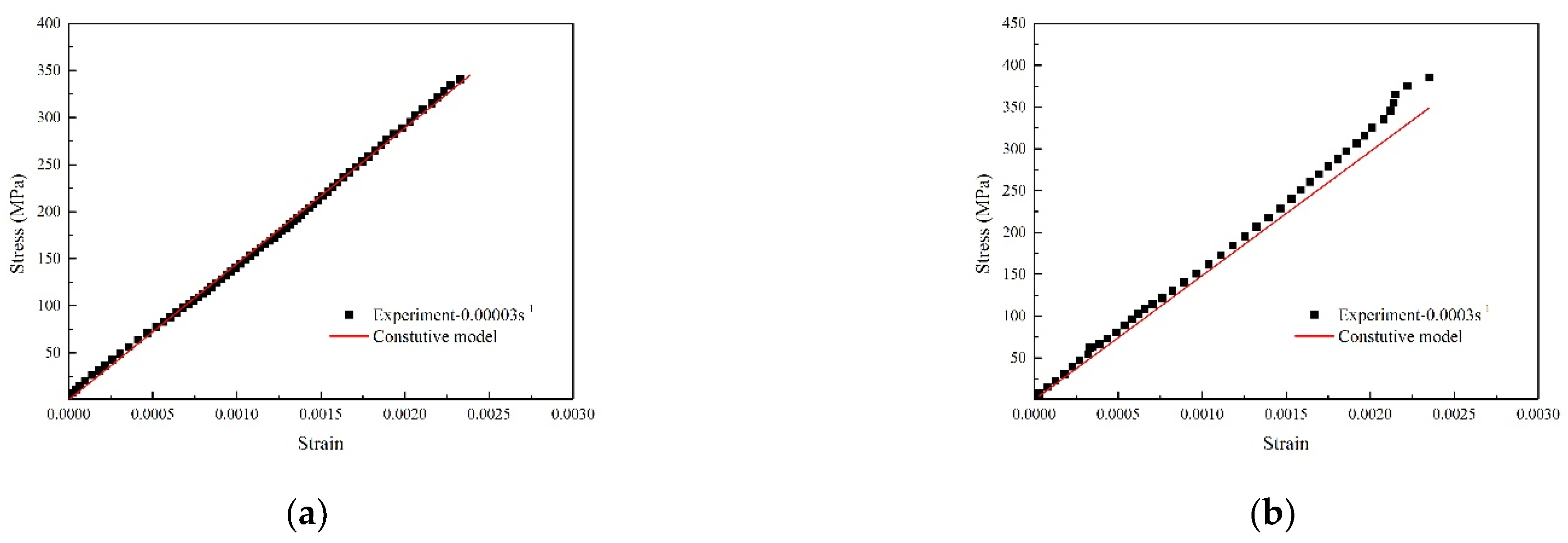
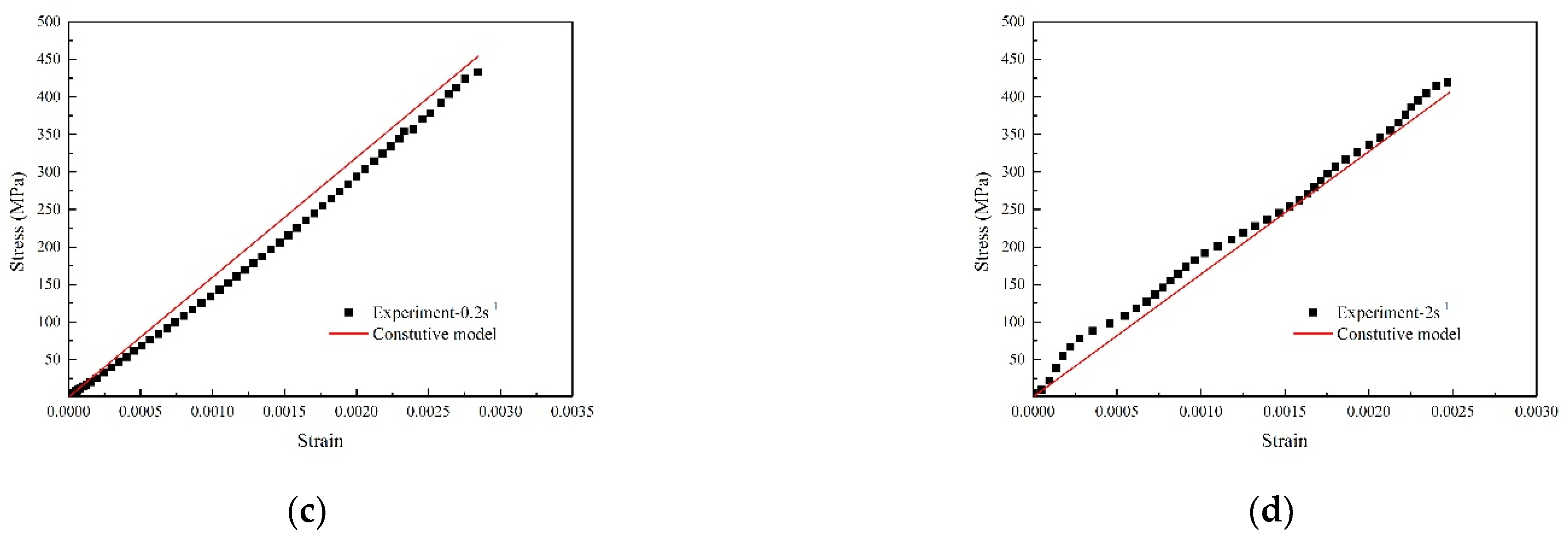
The parameters of the constitutive model are presented in Table 1. Figure 14, Figure 15 and Figure 16 compare the constitutive model with experimental data of 2D C/SiC composites at different strain rates. The constitutive model agrees well with the experimental data under tension, shear, and compression loading conditions.
Table 1.
The parameters of the 2D C/SiC composite dynamical constitutive model.
Figure 14.
The comparison between the constitutive model and the in-plane tensile experimental data at strain rates of 0.00003 s−1 (a), 0.0003 s−1 (b), 0.5 s−1 (c), and 10 s−1 (d).
Figure 15.
The comparison between the constitutive model and the in-plane shear experimental data at strain rates of 0.0001 s−1 (a), 0.001 s−1 (b), 0.5 s−1 (c), and 5 s−1 (d).
Figure 16.
The comparison between the constitutive model and the in-plane compressive experimental data at strain rates of 0.00003 s−1 (a), 0.0003 s−1 (b), 0.2 s−1 (c), and 2 s−1 (d).
5. Conclusions
In this study, the quasi-static and medium-strain-rate mechanical properties of 2D C/SiC composites under in-plane tension, shear, and compression loading were tested and discussed. The relationship between strain rate and strength was examined, and an analysis of the failure mechanisms of the materials under different loading conditions was conducted. A rate-dependent constitutive model was fitted. Several conclusions are drawn as follows.
(1) Two-dimensional C/SiC composites exhibited nonlinear stress–strain relationships under tension and shear but linear stress–strain relationships under compression, similar to the behavior under quasi-static loading.
(2) The mechanical properties of 2D C/SiC composites are rate-dependent. The strain-rate strengthening effect is most pronounced under compression, while the effect under tensile loading is less significant within the strain-rate range from quasi-static to 10 s−1. More energy consumed by multiple crack initiation and propagation is the main reason for the improvement of the strength.
(3) The rate-dependent constitutive model proposed is suitable for describing the in-plane tension and shear behavior of 2D C/SiC composites.
The results obtained in this study suggest the need for further investigations. Further research on the mechanical properties under the coupling of multiple factors, such as temperature and strain rate, should be conducted at medium strain rates. In addition, a constitutive model considering the temperature influence needs to be established to support the impact design of the C/SiC structures at high temperatures.
Author Contributions
Conceptualization, X.Z. (Xinyue Zhang); Methodology, C.Z. (Chao Zhang); Software, X.Z. (Xinyue Zhang) and X.X. (Xulong Xi); Investigation, C.B. (Chunyu Bai); Resources, C.B. (Chunyu Bai); Data curation, X.L. (Xiaocheng Li). Writing—original draft, X.Z. (Xinyue Zhang); Writing—review & editing, C.Z. (Chao Zhang); Project administration, X.L. (Xiaochuan Liu). All authors have read and agreed to the published version of the manuscript.
Funding
This research was funded by the National Natural Science Foundation of China grant number [12472188 and 12002321] and the APC was funded by [12472188].
Data Availability Statement
The original contributions presented in the study are included in the article, further inquiries can be directed to the corresponding author.
Conflicts of Interest
The authors declare no conflict of interest.
References
- Padture, N.P. Advanced structural ceramics in aerospace propulsion. Nat. Mater. 2016, 15, 804–809. [Google Scholar] [CrossRef] [Scilit]
- Christin, F. Design, Fabrication, and Application of Thermostructural Composites (TSC) like C/C, C/SiC, and SiC/SiC Composites. Adv. Eng. Mater. 2002, 4, 903–912. [Google Scholar] [CrossRef] [Scilit]
- Zhang, L.; Cheng, L. Discussion on strategies of sustaininable of continuous fiber reinforced ceramic matrix composites. Acta Mater. Compos. Sin. 2007, 24, 1–6. [Google Scholar]
- Yang, C.; Zhang, L.; Wang, B.; Huang, T.; Jiao, G.Q. Tensile behavior of 2D-C/SiC composites at elevated temperatures: Experiment and modeling. J. Eur. Ceram. Soc. 2017, 4, 37. [Google Scholar] [CrossRef] [Scilit]
- Cheng, T.; Wang, X.; Zhang, R.; Pei, Y.; Ai, S.; He, R.; Fang, D.; Yang, Y. Tensile properties of two-dimensional carbon fiber reinforced silicon carbide composites at temperatures up to 2300 °C. J. Eur. Ceram. Soc. 2020, 40, 630–635. [Google Scholar] [CrossRef] [Scilit]
- Li, J.; Jiao, G.; Wang, B.; Yang, C.; Wang, G. Damage characteristics and constitutive modeling of the 2D C/SiC composite: Part I-Experiment and analysis. Chin. J. Aeronaut. 2014, 27, 1586–1597. [Google Scholar] [CrossRef] [Scilit]
- Guan, G.; Jiao, G.; Zhang, Z. Uniaxial macro-mechanical property and failure mode of a 2D-woven C/SiC composites. Acta Mater. Compos. Sin. 2005, 22, 81–85. [Google Scholar]
- Chen, X.; Li, Y. Dynamic tensile behavior of two-dimensional carbon fiber reinforced silicon carbide matrix composites. Mater. Sci. Eng. Anal. Bound. Elem. 2011, 528, 6998–7004. [Google Scholar]
- Chen, X.; Li, Y.; Shi, C.; Suo, T. The dynamic tensile properties of 2D-C/SiC composites at elevated temperatures. Int. J. Impact Eng. 2015, 79, 75–82. [Google Scholar] [CrossRef] [Scilit]
- Mei, H.; Bai, Q.; Li, H.; Yu, C.; Cheng, L. Effect of loading rate and temperature on monotonic tensile behavior in two-dimensional C/SiC composites. Ceram. Int. 2014, 40, 16635–16640. [Google Scholar] [CrossRef] [Scilit]
- Liu, M.; Li, Y.; Tao, L.; Xu, F.; Cheng, L. Layer-directional dynamic compressive mechanical properties of two kinds of densifications 2D-C/SiC. Acta Mater. Compos. Sin. 2007, 24, 90–96. [Google Scholar]
- Liu, M.; Li, Y.; Xu, F.; Xu, Z.; Cheng, L. Dynamic compressive mechanical properties and a new constitutive model of 2D-C/SiC composites. Mater. Sci. Eng. 2008, 489, 120–126. [Google Scholar]
- Li, T.; Fan, D.; Lu, L.; Huang, J.Y.; Zhao, F.; Qi, M.L.; Sun, T.; Fezzaa, K.; Xiao, X.H.; Zhou, X.M.; et al. Dynamic fracture of C/SiC composites under high strain-rate loading: Microstructures and mechanisms. Carbon 2015, 91, 468–478. [Google Scholar] [CrossRef] [Scilit]
- Li, T.; Duan, Y.; Jin, K.; Suo, T.; Yu, X.; Li, Y. Dynamic compressive fracture of C/SiC composites at different temperatures: Microstructure and mechanism. Int. J. Impact Eng. 2017, 109, 391–399. [Google Scholar] [CrossRef] [Scilit]
- Guan, T.; Li, Y.; Zhang, C.; Wang, Z.; Hu, W.; Suo, T. Transition of in-plane compressive strength and failure mechanism of 2D-C/SiC: Influence of off-axis loading angle and loading rate. Compos. Struct. 2023, 324, 15. [Google Scholar] [CrossRef] [Scilit]
- Suo, T.; Fan, X.; Hu, G.; Li, Y.; Tang, Z.; Xue, P. Compressive behavior of C/SiC composites over a wide range of strain rates and temperatures. Carbon 2013, 62, 481–492. [Google Scholar] [CrossRef] [Scilit]
- Jacobsen, T.; Brøndsted, P. Mechanical Properties of Two Plain-Woven Chemical Vapor Infiltrated Silicon Carbide-Matrix Composites. J. Am. Ceram. Soc. 2001, 84, 1043–1051. [Google Scholar] [CrossRef] [Scilit]
- Guan, G.; Jiao, G.; Zhang, Z. In-plane shear fracture characteristics of plain-woven C/SiC composite. Mech. Sci. Technol. 2005, 24, 515–517. [Google Scholar]
- Zhang, Y.; Zhang, L.; Zhang, J.; Yin, X.; Liu, C. Effects of z-pin’s porosity on shear properties of 2D C/SiC z-pinned joint. Compos. Struct. 2017, 173, 106–114. [Google Scholar] [CrossRef] [Scilit]
- Zhang, Y.; Zhang, L.; Liu, Y.; Liu, X.; Chen, B. Oxidation effects on in-plane and interlaminar shear strengths of two-dimensional carbon fiber reinforced silicon carbide composites. Carbon 2016, 98, 144–156. [Google Scholar] [CrossRef] [Scilit]
- Yan, K.; Zhang, C.; Qiao, S.; Li, M.; Han, D. Failure and strength of 2D-C/SiC composite under in-plane shear loading at elevated temperatures. Mater. Des. 2011, 32, 3504–3508. [Google Scholar] [CrossRef] [Scilit]
- Hu, W.; Huang, J.; Zhang, C.; Ren, T.; Guan, T.; Wu, K.; Wang, B.; Aamir, R.M.; Sheikh, M.Z.; Suo, T. Effect of shear strain rate on interlaminar shear behavior of 2D-C/SiC composites: A damage transition from notch ends initiation to gauge section initiation. Carbon 2020, 167, 770–784. [Google Scholar] [CrossRef] [Scilit]
- Zhang, C.; Ren, T.; Zhang, X.; Hu, W.; Wang, Z.; Wang, B.; Suo, T. Study of dynamic compressive behaviors of 2D C/SiC composites at elevated temperatures based on in-situ observation. J. Eur. Ceram. Soc. 2020, 40, 5103–5119. [Google Scholar] [CrossRef] [Scilit]
- Zhang, C.; Guan, T.; Zhang, X.; Zhang, C.; Wang, B.; Suo, T. Tensile properties of 2D-C/SiC composites at temperatures up to 1873 K at wide-ranging strain rates. Compos. Struct. 2023, 319, 117110. [Google Scholar] [CrossRef] [Scilit]
- Rajan, V.P.; Shaw, J.H.; Rossol, M.N.; Zok, F.W. An elastic–plastic constitutive model for ceramic composite laminates. Compos. Part A Appl. Sci. Manuf. 2014, 66, 44–57. [Google Scholar] [CrossRef] [Scilit]
- Li, J.; Jiao, G.; Wang, B.; Li, L.; Yang, C. Damage characteristics and constitutive modeling of the 2D C/SiC composite: Part II-Material model and numerical implementation. Chin. J. Aeronaut. 2015, 28, 314–326. [Google Scholar] [CrossRef] [Scilit]
- Yang, C.; Jiao, G.; Wang, B.; Huang, T.; Guo, H.B. Damage-based failure theory and its application to 2D-C/SiC composites. Compos. Part A 2015, 77, 181–187. [Google Scholar] [CrossRef] [Scilit]
- Yang, C.; Jia, F.; Wang, B.; Huang, T.; Jiao, G. Constitutive model and failure criterion for orthotropic ceramic matrix composites under macroscopic plane stress. J. Am. Ceram. Soc. 2021, 104, 1002–1013. [Google Scholar] [CrossRef] [Scilit]
- Gao, X.; Li, L.; Song, Y. A temperature-dependent constitutive model for fiber-reinforced ceramic matrix composites and structural stress analysis. Int. J. Damage Mech. 2014, 23, 507–522. [Google Scholar]

Disclaimer/Publisher’s Note: The statements, opinions and data contained in all publications are solely those of the individual author(s) and contributor(s) and not of MDPI and/or the editor(s). MDPI and/or the editor(s) disclaim responsibility for any injury to people or property resulting from any ideas, methods, instructions or products referred to in the content. |
© 2026 by the authors. Licensee MDPI, Basel, Switzerland. This article is an open access article distributed under the terms and conditions of the Creative Commons Attribution (CC BY) license.