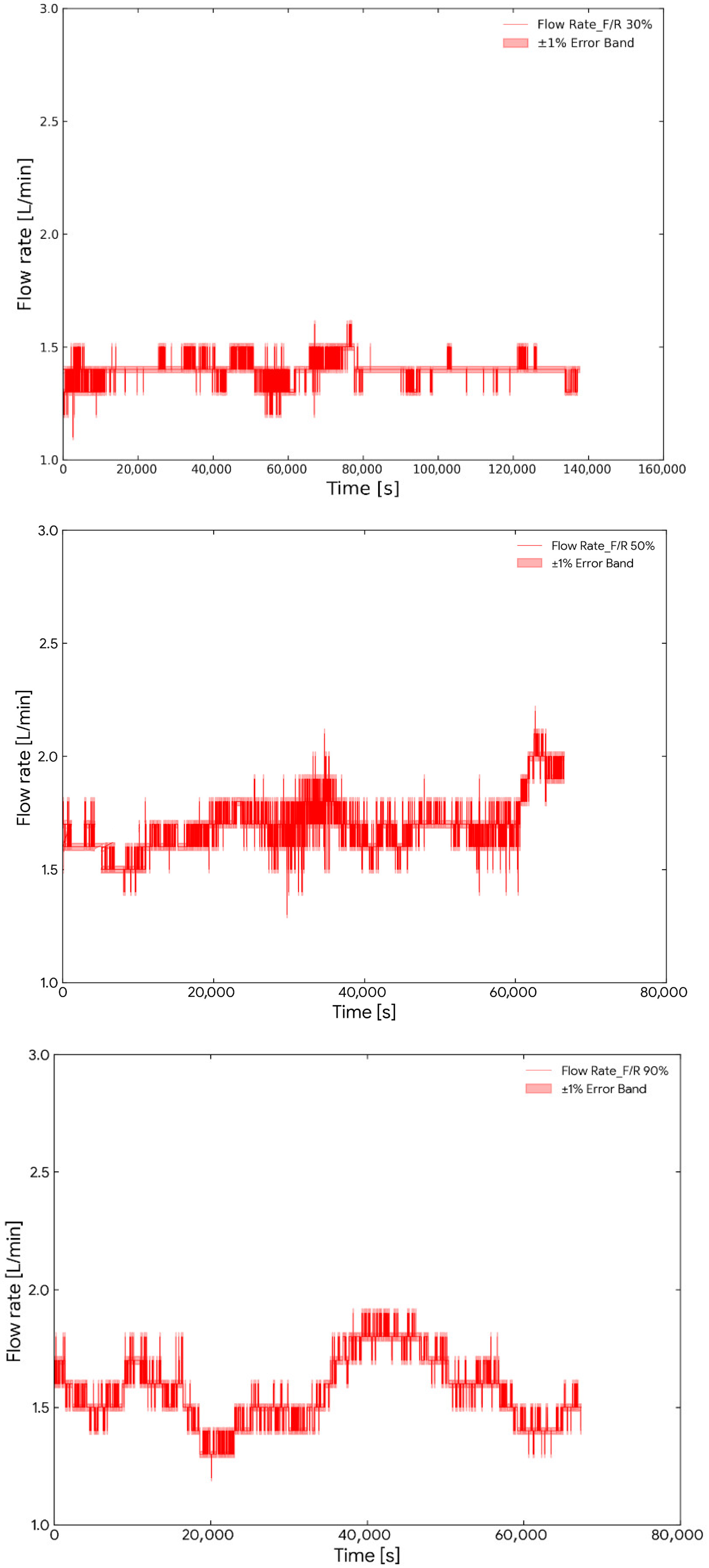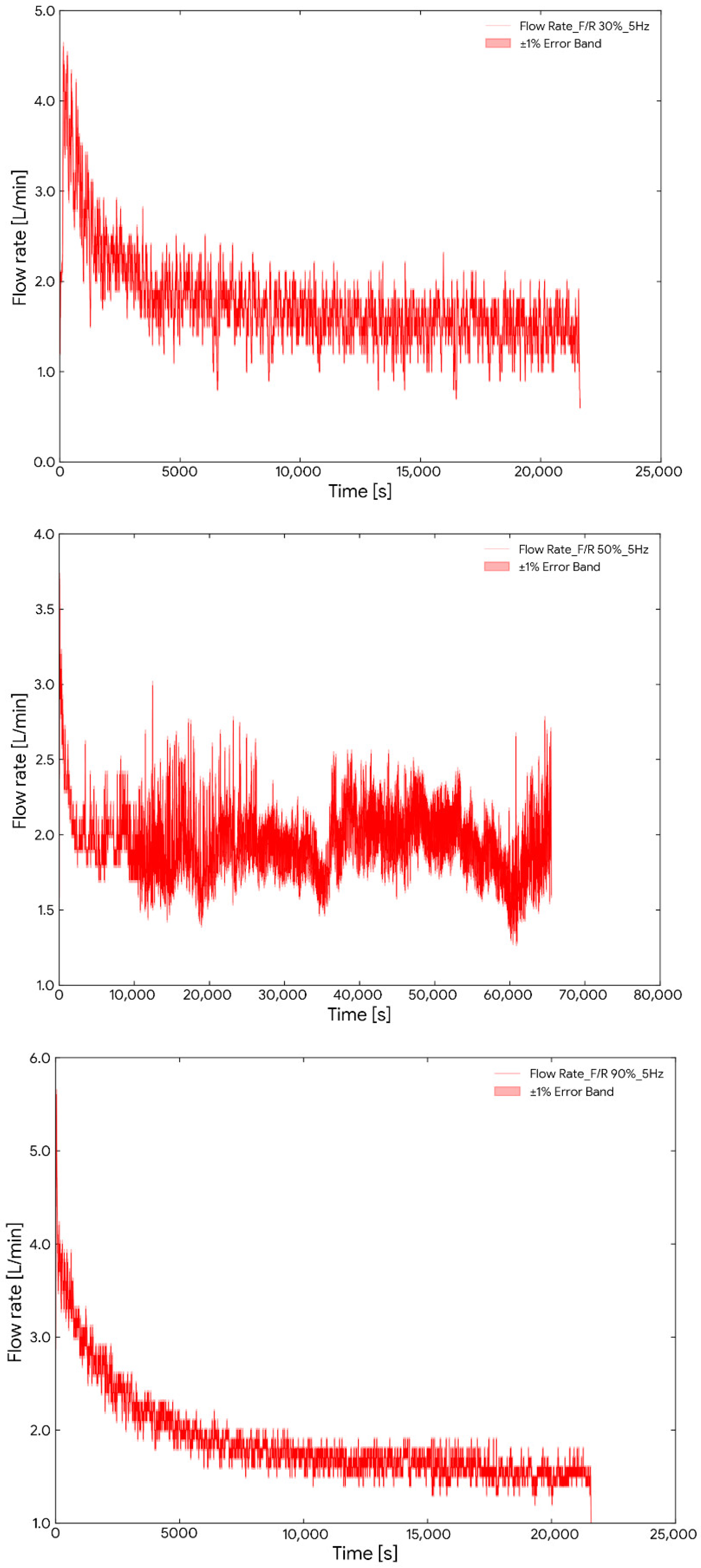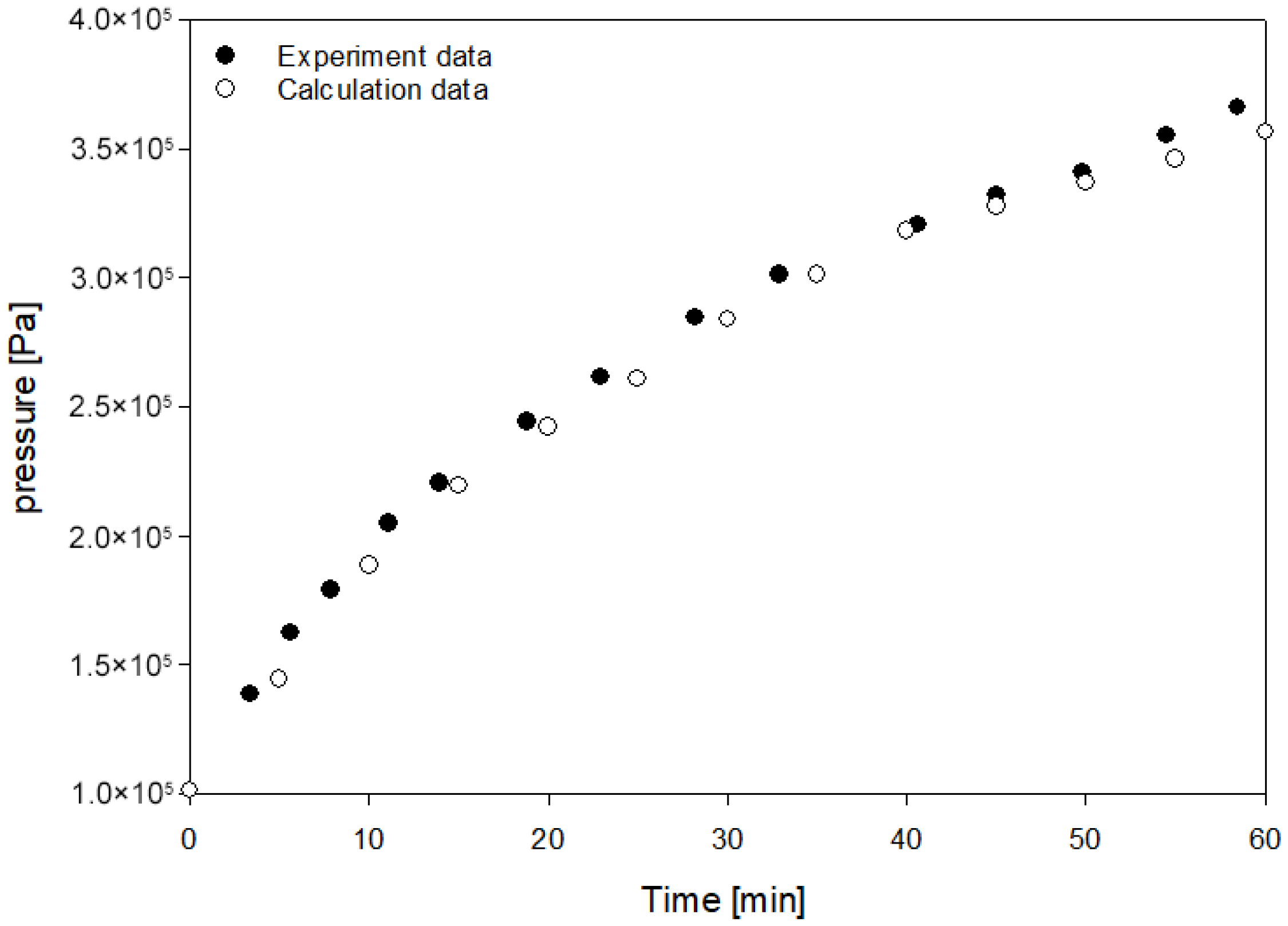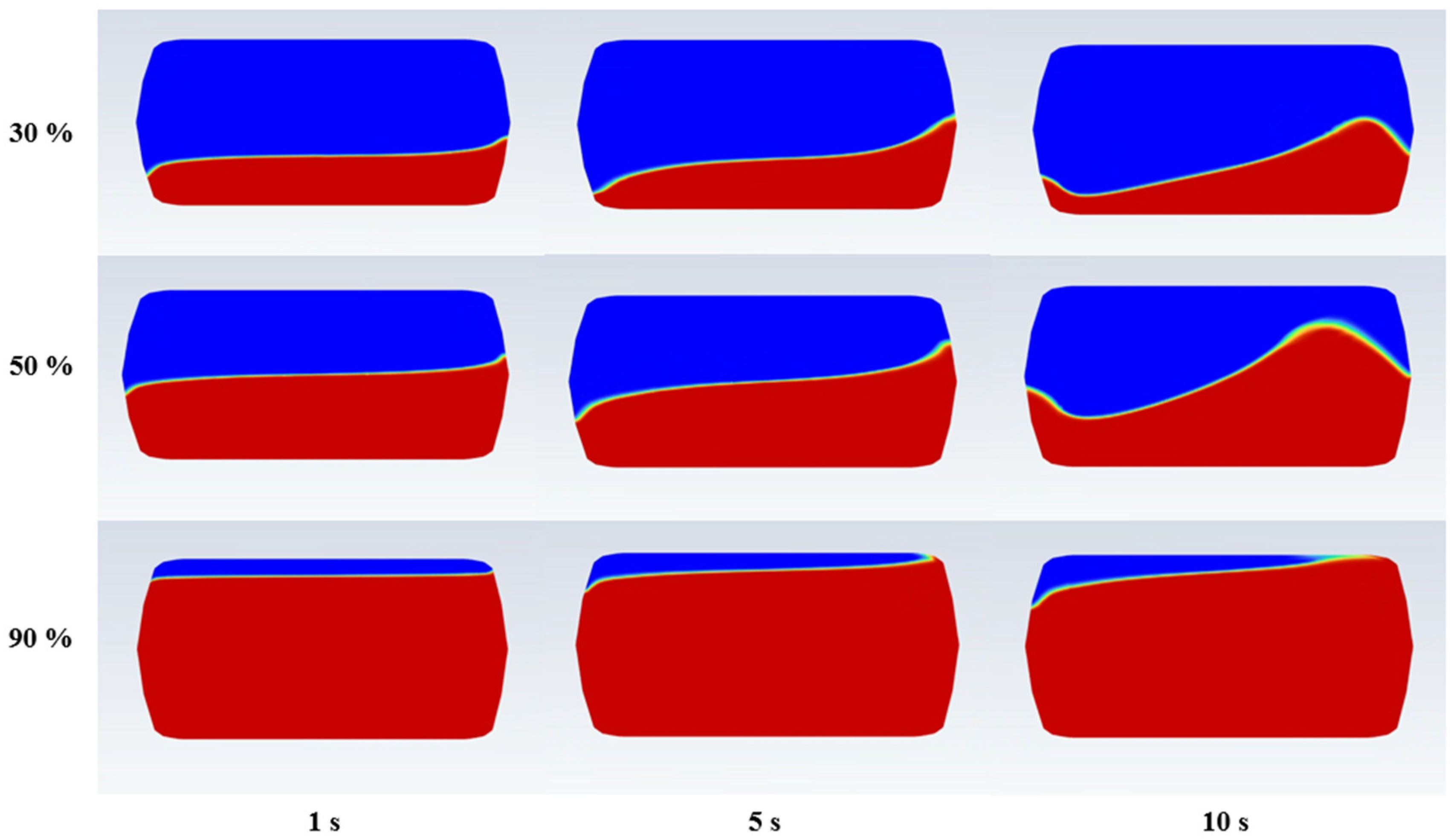

Boil-Off Rate Behavior in a Double-Shell Vacuum-Insulated Cryogenic Storage Tank with Multilayer Insulation

 ,
,
Abstract
1. Introduction
2. Theory
2.1. Optimization of the Layer Density in MLI Applications
2.2. Governing Equations for Cryogenic Fluid Flow and Phase Change Modeling
3. Methods
3.1. Experimental Setup
3.2. Calculation Conditions
4. Results and Discussion
4.1. Experimental Results Under Static Conditions
4.2. Experimental Results Under Dynamic Conditions
4.2.1. Dynamic Conditions (5 Hz)
4.2.2. Dynamic Conditions (10 Hz)
4.3. Numerical Results
4.3.1. Numerical Validation
4.3.2. Numerical Results Under 5 Hz Dynamic Excitation
4.3.3. Numerical Results Under 10 Hz Dynamic Excitation
4.4. Discussion for the BOG Phenomenon
5. Conclusions
- ⬝
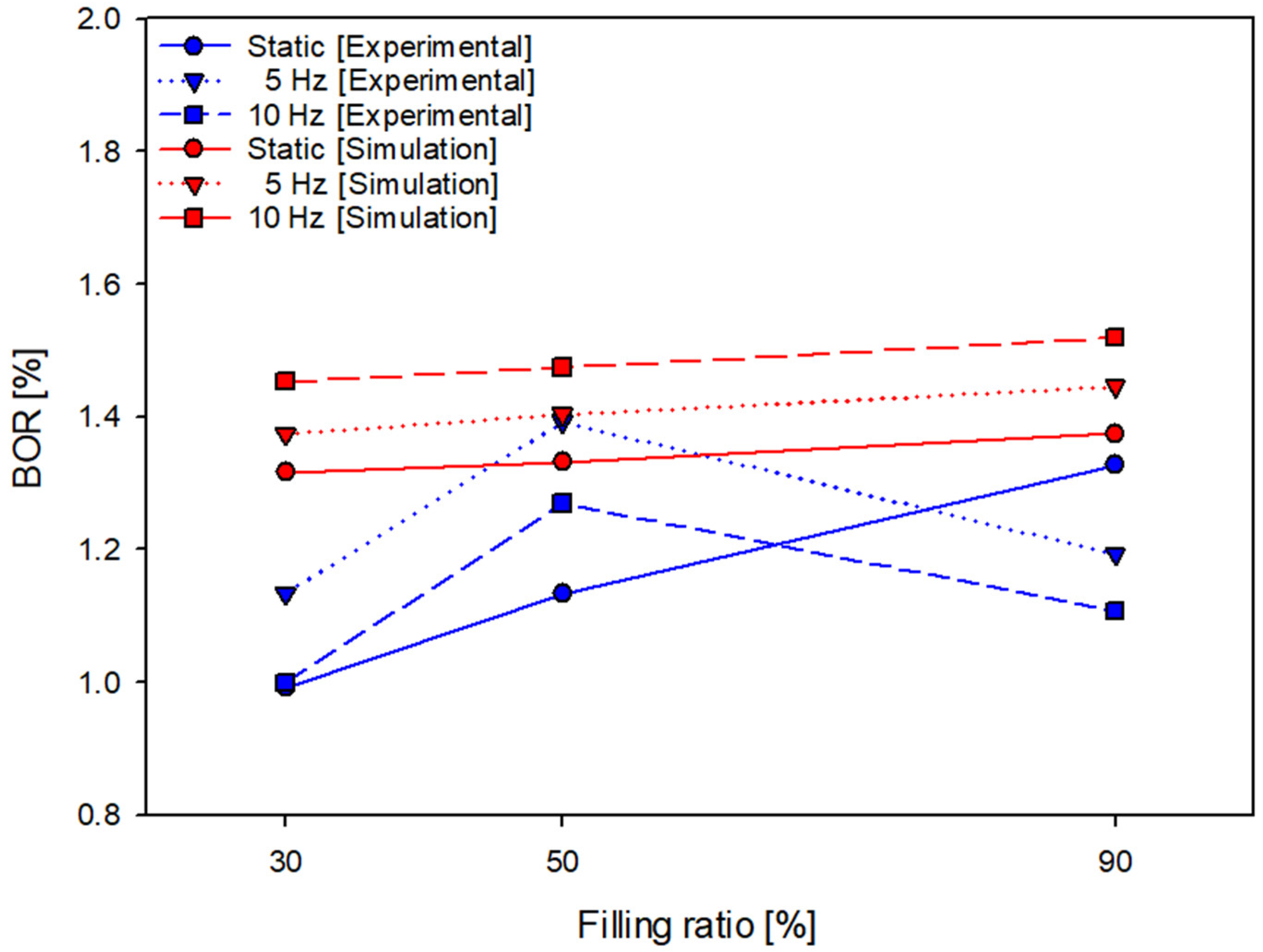
- The numerical model was successfully validated against experimentally measured boil-off gas (BOG) data under all tested conditions. The transient VOF-based phase-change approach effectively captured interfacial heat and mass transfer, confirming the reliability of the model for predicting BOG generation under dynamic sloshing conditions.
- ⬝
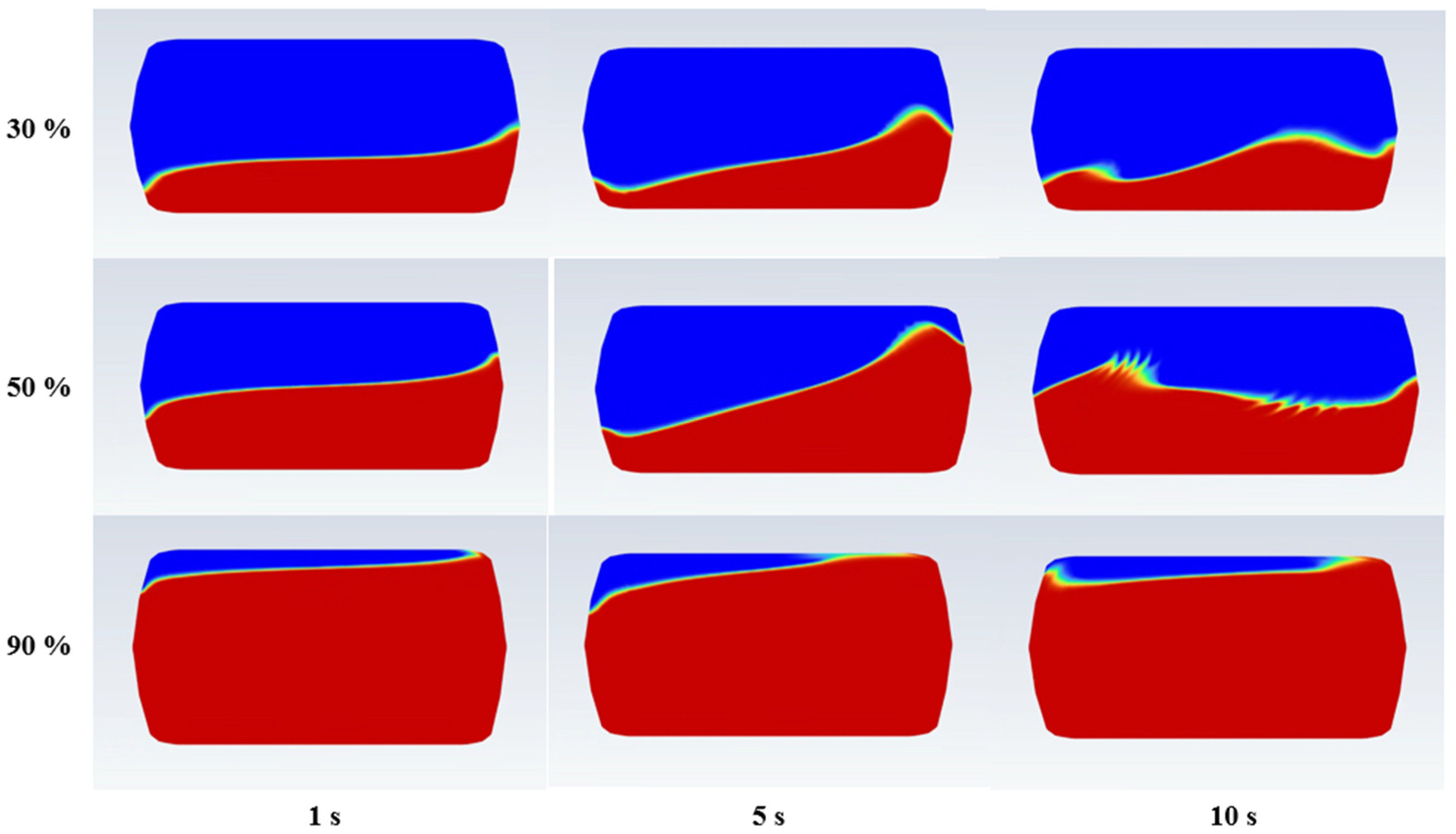
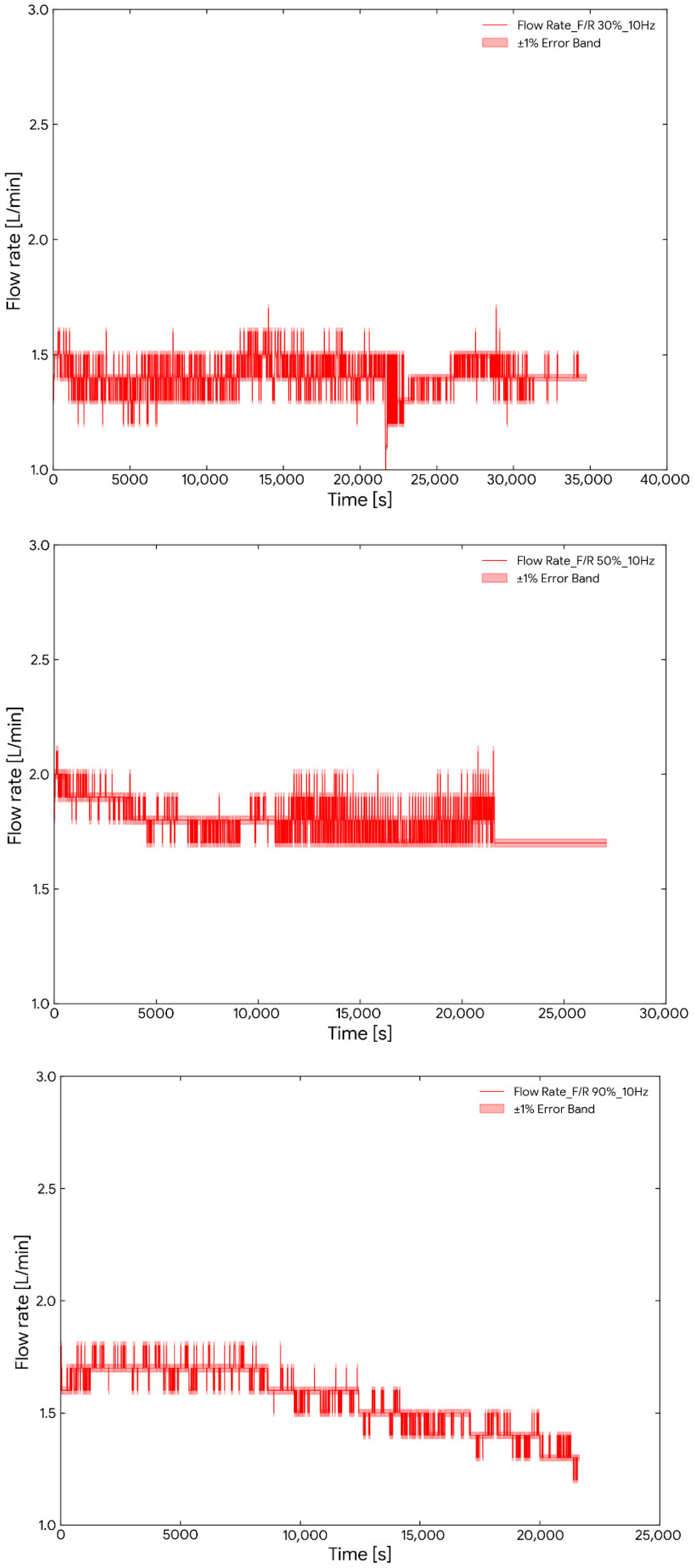
- Sloshing behavior exhibits a strong frequency dependence, significantly influencing heat transfer and BOG generation. At 5 Hz, dynamic sloshing motion promotes distributed thermal stratification, resulting in a higher BOR (1.4%/day at a 50% fill ratio). In contrast, at 10 Hz, increased viscous damping suppresses sloshing amplitude, leading to localized wall heating and a reduced overall BOR (1.3%/day at a 50% fill ratio).
- ⬝
- The effect of fill ratio under dynamic conditions shows a nonlinear trend, in clear contrast to static scenarios. Unlike static conditions, the dynamic BOR reaches a maximum at a 50% fill ratio. This peak reflects an optimal balance between enhanced interfacial disturbances due to sloshing at lower fill levels and geometric constraints—such as reduced ullage volume and weakened convective mixing—at higher fill levels.
- ⬝
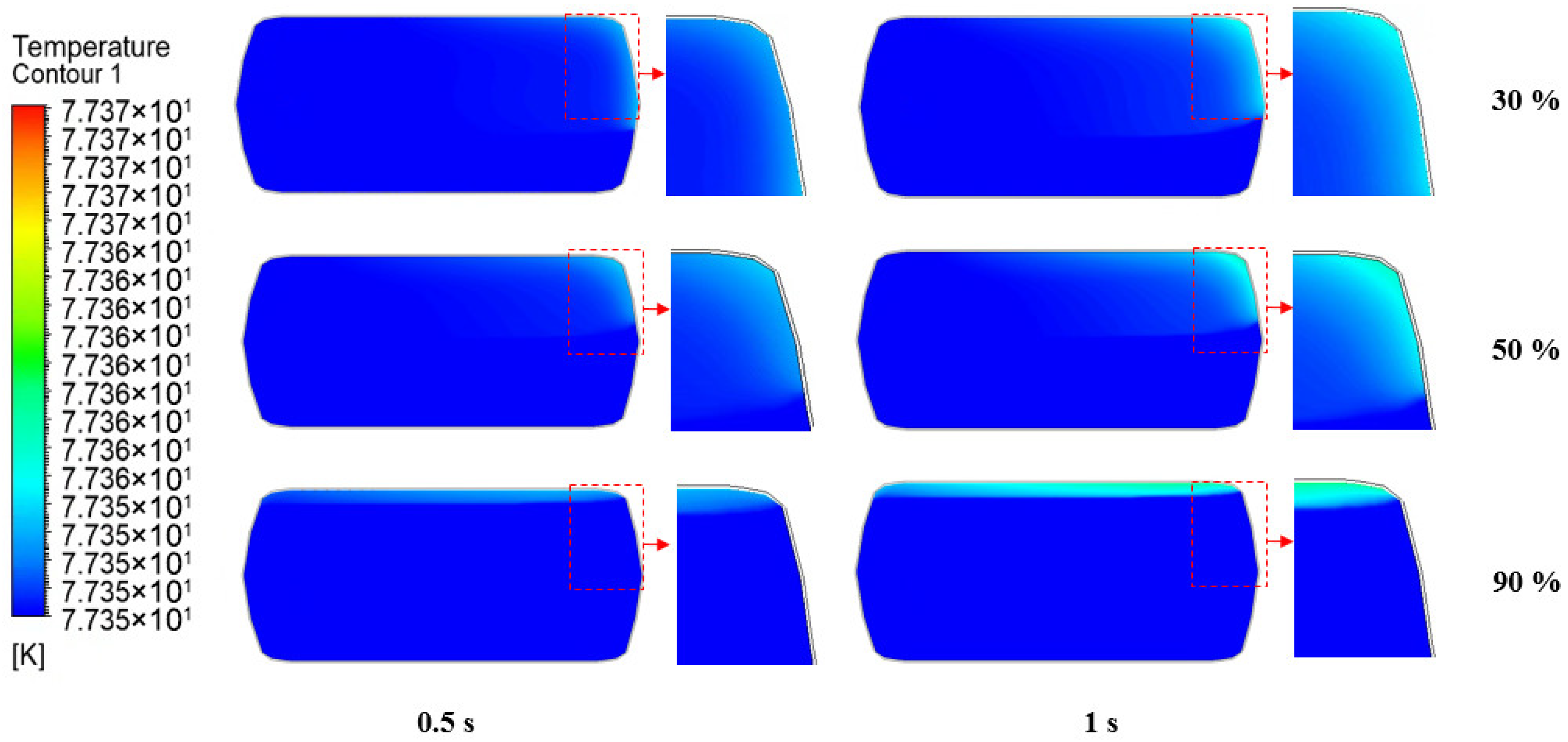
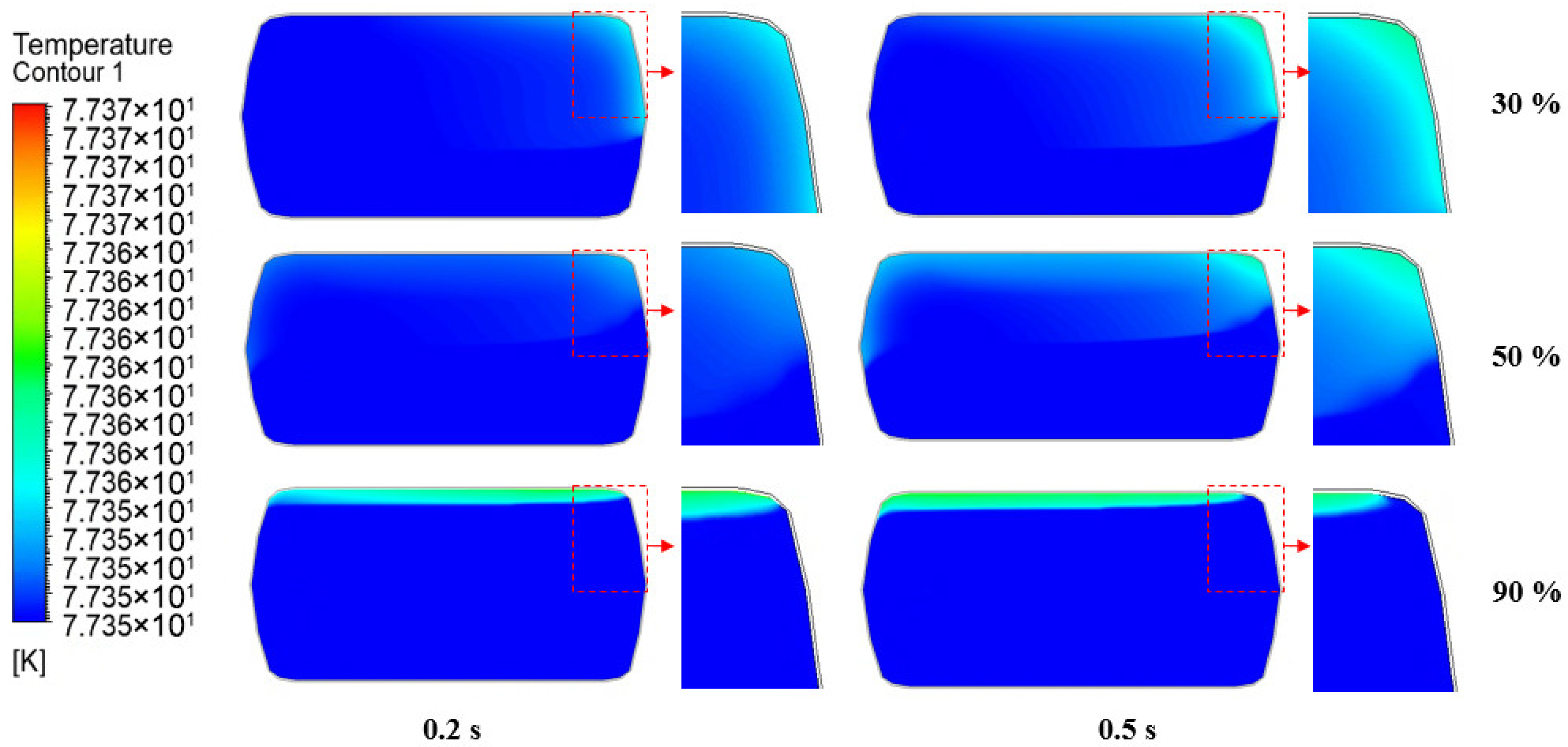
- The development of thermal stratification is strongly dependent on excitation frequency. At 5 Hz, temperature gradients develop uniformly throughout the liquid domain and gradually intensify over time. At 10 Hz, thermal generation is significantly suppressed at 30% and 50% fill ratios, whereas at a 90% fill ratio, sharp and localized temperature gradients form near the tank wall due to geometric confinement and limited convective mixing.
- ⬝
- The proposed experimental–numerical framework enables reliable prediction of thermal behavior, pressurization, and BOR in cryogenic storage tanks under realistic dynamic operating conditions. The findings provide valuable insights for the design optimization of liquid hydrogen (LH2) storage tanks for marine transportation, as well as cryogenic fuel tanks for space propulsion systems.
Author Contributions
Funding
Data Availability Statement
Acknowledgments
Conflicts of Interest
Nomenclature
| Accommodation coefficient | |
| Surface area | |
| Gas conduction coefficient | |
| Specific heat | |
| Radiation coefficient | |
| Solid conduction coefficient | |
| E | Total energy |
| Latent heat | |
| Gas conduction | |
| Separator material conductivity | |
| Thermal conductivity | |
| L | empirical coefficient |
| Number of layers | |
| Layer density | |
| Pressure | |
| P | Gas pressure |
| Turbulent Prandtl number | |
| Q | Heat transfer rate |
| S | Heat energy |
| Time | |
| Temperature | |
| Inner layer temperature | |
| Outer layer temperature | |
| Saturation temperature | |
| Actual thickness separator between reflectors | |
| Coarse grid with a lower number of nodes | |
| Fine grid with a higher number of nodes | |
| Greek Symbols | |
| Volume fraction | |
| Kronecker delta tensor | |
| Emissivity | |
| Relative density of the separator compared to solid material | |
| Effective viscosity | |
| Turbulence viscosity | |
| Fluid density | |
| Stefan–Boltzmann constant | |
| Deviatoric stress tensor | |
| Frequency |
References
- The White House. Executive Order on Tackling the Climate Crisis at Home and Abroad; The White House: Washington, DC, USA, 2021. [Google Scholar]
- Newell, R.G.; Raimi, D. Global Energy Outlook Comparison Methods: 2020 Update; Report 20-06; Resources for the Future: Washington, DC, USA, 2020. [Google Scholar]
- Lee, C.S.; Cho, J.R.; Kim, W.S.; Noh, B.J.; Kim, M.H.; Lee, J.M. Evaluation of sloshing resistance performance for LNG carrier insulation system based on fluid-structure interaction analysis. Int. J. Nav. Archit. Ocean Eng. 2013, 5, 1–20. [Google Scholar] [CrossRef]
- Schinas, O.; Butler, M. Feasibility and commercial considerations of LNG-fueled ships. Ocean Eng. 2016, 122, 84–96. [Google Scholar] [CrossRef]
- Dukku, H.B.; Arnaut, J.; Johnstone, C.; Riccardi, A.; Sanchez, S.O. Techno-economic feasibility study of hydrogen transportation in Greenland using pipeline and maritime routes. J. Ocean Eng. Technol. 2025, 39, 122–132. [Google Scholar] [CrossRef]
- Kim, S.-J.; Park, S.-J. Riser configuration design for a 15-MW floating offshore wind turbine integrated with a green hydrogen facility. J. Ocean Eng. Technol. 2024, 38, 137–147. [Google Scholar] [CrossRef]
- Jiang, W.; Yang, Y.; Hu, C.; Li, P.; Sun, P.; Huang, Y. Experimental study on composite insulation with foam, multilayer and vapor cooled shield for cryogen storage under different vacuum conditions. Cryogenics 2023, 129, 103604. [Google Scholar] [CrossRef]
- Kumar, S.; Kwon, H.-T.; Choi, K.-H.; Lim, W.; Cho, J.H.; Tak, K.; Moon, I. LNG: An eco-friendly cryogenic fuel for sustainable development. Appl. Energy 2011, 88, 4264–4273. [Google Scholar] [CrossRef]
- Kwak, D.H.; Heo, J.H.; Park, S.H.; Seo, S.J.; Kim, J.K. Energy-efficient design and optimization of boil-off gas (BOG) re-liquefaction process for liquefied natural gas (LNG)-fuelled ship. Energy 2018, 148, 915–929. [Google Scholar] [CrossRef]
- Kim, D.; Hwang, C.; Gundersen, T.; Lim, Y. Process design and economic optimization of boil-off-gas re-liquefaction systems for LNG carriers. Energy 2019, 173, 1119–1129. [Google Scholar] [CrossRef]
- Romero Gómez, J.; Romero Gómez, M.; Lopez Bernal, J.; Baaliña Insua, A. Analysis and efficiency enhancement of a boil-off gas reliquefaction system with cascade cycle on board LNG carriers. Energy Convers. Manag. 2015, 94, 261–274. [Google Scholar] [CrossRef]
- Jeong, S.-K.; Kim, J.-S.; Kim, Y.-T. Optimization study of BOG re-liquefaction process for ammonia fueled ship. J. Adv. Mar. Eng. Technol. 2024, 48, 167–176. [Google Scholar] [CrossRef]
- Zhang, Q.; Huang, H.; Lei, C.; Liu, Y.; Li, W. Review of Lightweight, High-Temperature Thermal Insulation Materials for Aerospace. Materials 2025, 18, 2383. [Google Scholar] [CrossRef]
- Sutheesh, P.M.; Chollackal, A. Thermal performance of multilayer insulation: A review. IOP Conf. Ser. Mater. Sci. Eng. 2018, 396, 012061. [Google Scholar] [CrossRef]
- NASA. Thermal Performance of Multilayer Insulation; NASA Technical Paper 2000-210390; NASA: Washington, DC, USA, 2000.
- Johnson, W.L. Thermal Performance of Cryogenic Multilayer Insulation at Various Layer Spacings; No. KSC-2010-181; NASA Kennedy Space Center: Cape Canaveral, FL, USA, 2010.
- Johnson, W.L.; Plachta, D.W.; Valenzuela, J.G.; Feller, J.R. Tank applied testing of load-bearing multilayer insulation (LB-MLI). In Proceedings of the 50th AIAA/ASME/SAE/ASEE Joint Propulsion Conference, Cleveland, OH, USA, 28–30 July 2014. [Google Scholar]
- Vevere, L.; Yakushin, V.; Sture-Skela, B.; Andersons, J.; Cabulis, U. Cryogenic insulation—Towards environmentally friendly polyurethane foams. Polymers 2024, 16, 2406. [Google Scholar] [CrossRef]
- Sun, P.J.; Wu, J.Y.; Zhang, P.; Xu, L.; Jiang, M.L. Experimental study of the influences of degraded vacuum on multilayer insulation blankets. Cryogenics 2009, 49, 719–726. [Google Scholar] [CrossRef]
- Johnson, W.L.; Fesmire, J.E. Cryogenic testing of different seam concepts for multilayer insulation systems. AIP Conf. Proc. 2010, 1218, 905–907. [Google Scholar] [CrossRef]
- Johnson, W.L.; Kelly, A.O.; Heckle, K.W.; Jumper, K.M.; Fesmire, J.E. Calorimeter testing of thermal degradation of multilayer insulation due to the presence of penetrations. AIP Conf. Proc. 2014, 1573, 701–707. [Google Scholar]
- Seo, M.; Jeong, S. Analysis of self-pressurization phenomenon of cryogenic fluid storage tank with thermal diffusion model. Cryogenics 2010, 50, 549–555. [Google Scholar] [CrossRef]
- Barsi, S.; Kassemi, M. Investigation of tank pressurization and pressure control—Part I: Experimental study. J. Therm. Sci. Eng. Appl. 2013, 5, 041005. [Google Scholar] [CrossRef]
- Fesmire, J.E. Standardization in cryogenic insulation systems testing and performance data. Phys. Procedia 2015, 67, 1089–1097. [Google Scholar] [CrossRef]
- Han, K.C.; Hwang, S.W.; Cho, J.R.; Kim, J.S.; Yoon, J.W.; Lim, O.; Lee, S.B. A Study on the boil-off rate pre diction of LNG cargo containment filled with insulation powders. J. Comput. Struct. Eng. Inst. Korea 2011, 24, 193–200. [Google Scholar]
- Koukou, M.K.; Dogkas, G.; Vrachopoulos, M.G.; Konstantaras, J.; Pagkalos, C.; Stathopoulos, V.N.; Pandis, P.K.; Lymperis, K.; Coelho, L.; Rebola, A. Experimental assessment of a full scale prototype thermal energy storage tank using paraffin for space heating application. Int. J. Thermofluids 2020, 1–2, 100003. [Google Scholar] [CrossRef]
- Ludwig, C.; Dreyer, M. Investigations on thermodynamic phenomena of the active-pressurization process of a cryogenic propellant tank. Cryogenics 2014, 63, 1–16. [Google Scholar] [CrossRef]
- Jeong, H.; Shim, W.J. Calculation of boil-off gas (BOG) generation of KC-1 membrane LNG tank with high density rigid polyurethane foam by numerical analysis. Pol. Marit. Res. 2017, 24, 100–114. [Google Scholar] [CrossRef]
- Lin, Y.; Ye, C.; Yu, Y.-Y.; Bi, S.-W. An approach to estimating the boil-off rate of LNG in type C independent tank for floating storage and regasification unit under different filling ratio. Appl. Therm. Eng. 2018, 135, 463–471. [Google Scholar] [CrossRef]
- Kartuzova, O.V.; Kassemi, M.; Umemura, Y.; Kinefuchi, K.; Himeno, T. CFD modeling of phase change and pressure drop during violent sloshing of cryogenic fluid in a small-scale tank. In Proceedings of the AIAA Propulsion and Energy 2020 Forum, Virtual Event, 24–28 August 2020. [Google Scholar]
- Wu, S.; Ju, Y. Numerical study of the boil-off gas (BOG) generation characteristics in a type C independent liquefied natural gas (LNG) tank under sloshing excitation. Energy 2021, 223, 120001. [Google Scholar] [CrossRef]
- Jeon, G.-M.; Park, J.-C.; Kim, J.-W.; Lee, Y.-B.; Kim, D.-S.; Kang, D.-E.; Lee, S.-B.; Lee, S.-W.; Ryu, M.-C. Experimental and numerical investigation of change in boil-off gas and thermodynamic characteristics according to filling ratio in a C-type cryogenic liquid fuel tank. Energy 2022, 255, 124530. [Google Scholar] [CrossRef]
- Rossetti, F.; Pizzarelli, M.; Pellegrini, R.C.; Cavallini, E.; Bernardini, M. Development of a numerical methodology for the simulation of active-pressurization of cryogenic tanks. Cryogenics 2024, 144, 103959. [Google Scholar] [CrossRef]
- Choi, S.W.; Lee, W.I.; Kim, H.S. Numerical analysis of convective flow and thermal stratification in a cryogenic storage tank. Numer. Heat Transf. Part A Appl. 2017, 71, 402–422. [Google Scholar] [CrossRef]
- Kartuzova, O.V.; Kassemi, M.; Hauser, D.M. Modeling Autogenous Pressurization and Draining of a Cryogenic Storage Tank in Normal Gravity. In Proceedings of the AIAA SCITECH 2023 Forum, National Harbor, MD, USA & Online, 23–27 January 2023. [Google Scholar]
- Jeon, G.-M.; Jeong, S.-M.; Park, J.-C. Experimental and numerical investigation of the influences of sloshing motion on the change in boil-off gas/boil-off rate in a cryogenic liquid tank. Ocean Eng. 2024, 298, 117173. [Google Scholar] [CrossRef]
- Chen, H.; Xu, P.; Wan, Z.; Song, W.; Yang, G.; Wu, J. Analysis of convection and boil-off in multi-scale membrane LNG tanks under sloshing excitations. Appl. Therm. Eng. 2025, 259, 124863. [Google Scholar] [CrossRef]
- Hastings, L.J.; Hedayat, A.; Brown, T.M. Analytical Modeling and Test Correlation of Variable Density Multilayer Insulation for Cryogenic Storage; NASA/TM-2004-213175; NASA Marshall Space Flight Center: Huntsville, AL, USA, 2004.
- McIntosh, G.E. Layer by layer MLI calculation using a separated mode equation. In Advances in Cryogenic Engineering; Springer: Boston, MA, USA, 1994; pp. 1683–1690. [Google Scholar]
- Yuan, T.; Song, C.; Bao, J.; Zhang, N.; Zhang, X.; He, G. Minimizing power consumption of boil off gas (BOG) recondensation process by power generation using cold energy in liquefied natural gas (LNG) regasification process. J. Clean. Prod. 2019, 238, 117949. [Google Scholar] [CrossRef]
- Lee, W.H. A pressure iteration scheme for two-phase flow modeling. In Multiphase Transport Fundamentals, Reactor Safety, Applications; Hemisphere Publishing: Washington, DC, USA, 1980; Volume 1, pp. 407–431. [Google Scholar]
- Vishnu, S.B.; Biju, T.K. Experimental and numerical investigation of self-pressurization with different methods of insulation for ground and space applications. IOP Conf. Ser. Mater. Sci. Eng. 2022, 1240, 012007. [Google Scholar] [CrossRef]
- Ryu, M.-R.; Yun, S.; Kim, B.-K.; Kang, D.; Kim, G.; Lee, H. Numerical analysis of sloshing effects in cryogenic liquefied-hydrogen storage tanks for trains under various vibration conditions. Cryogenics 2024, 143, 103961. [Google Scholar] [CrossRef]
- Lee, D.-H.; Cha, S.-J.; Kim, J.-D.; Kim, J.-H.; Kim, S.-K.; Lee, J.-M. Practical prediction of the boil-off rate of independent-type storage tanks. J. Mar. Sci. Eng. 2021, 9, 36. [Google Scholar] [CrossRef]








| Parameter | Value |
|---|---|
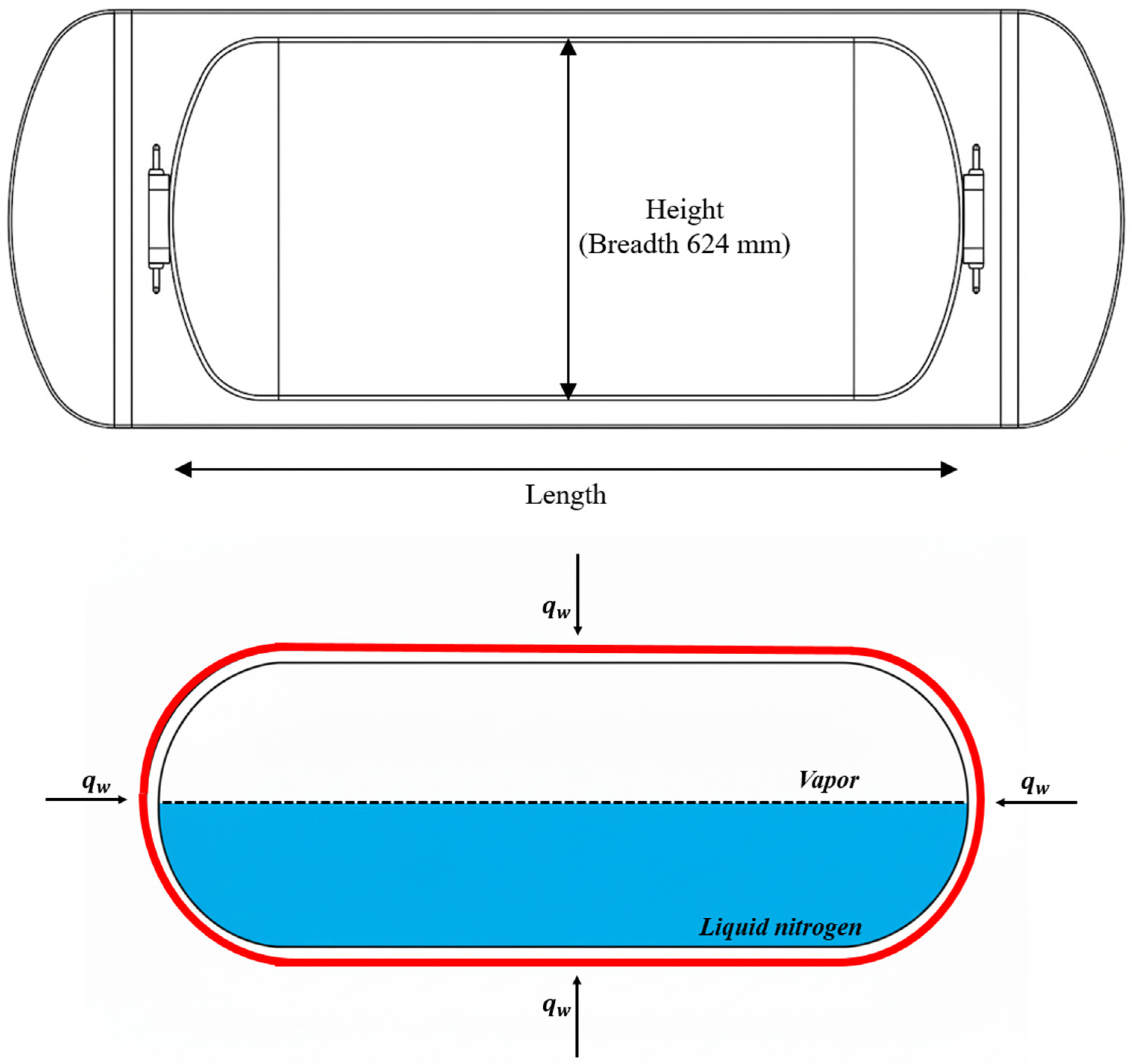
| Tank capacity | 0.127 m3 |
| Breadth | 624 mm |
| Height | 612 mm |
| length | 1414 mm |
| Case No. | Total Number of Nodes | Total Number of Elements | Difference in Ullage Pressure (%) |
|---|---|---|---|
| 1 | 13,338 | 15,572 | 1.87 |
| 2 | 24,127 | 24,287 | 0.35 |
| 3 | 33,601 | 32,258 | 0.10 |
| 4 | 49,709 | 48,782 | Under 0.01 |
| Parameters | Values |
|---|---|
| Material | Gas nitrogen, Liquid nitrogen |
| Turbulence Model | SST with low-Re correction |
| Multiphase Model | VOF (Volume of Fluid) |
| Phase Change Model | Lee Model (UDF) |
| Spatial Discretization | Second Order Upwind |
| Initial pressure/temperature | 101.325 kPa/77.39 K |
| Initial liquefied-nitrogen filling ratio | 30, 50, 90% |
| External Wall (Static) | Natural Convection + Radiation |
| External Wall (Dynamic) | Forced Convection (UDF) |
| Internal Wall | Conjugate Heat Transfer (Coupled) |
| Gravitational acceleration for vibration | a(x) = |
| Vibration Amplitude () | 4.97 mm (5 Hz), 1.24 mm (10 Hz) |
| Max Acceleration | 4.905 |
Disclaimer/Publisher’s Note: The statements, opinions and data contained in all publications are solely those of the individual author(s) and contributor(s) and not of MDPI and/or the editor(s). MDPI and/or the editor(s) disclaim responsibility for any injury to people or property resulting from any ideas, methods, instructions or products referred to in the content. |
© 2026 by the authors. Licensee MDPI, Basel, Switzerland. This article is an open access article distributed under the terms and conditions of the Creative Commons Attribution (CC BY) license.
Share and Cite
Lee, S.; Kim, Y.; Lee, D.; Choi, J.; Kim, J.; Choi, S. Boil-Off Rate Behavior in a Double-Shell Vacuum-Insulated Cryogenic Storage Tank with Multilayer Insulation. Aerospace 2026, 13, 169. https://doi.org/10.3390/aerospace13020169
Lee S, Kim Y, Lee D, Choi J, Kim J, Choi S. Boil-Off Rate Behavior in a Double-Shell Vacuum-Insulated Cryogenic Storage Tank with Multilayer Insulation. Aerospace. 2026; 13(2):169. https://doi.org/10.3390/aerospace13020169
Chicago/Turabian StyleLee, Seongwoo, Younghun Kim, Dongha Lee, Jiwoong Choi, Jeonghyeon Kim, and Sungwoong Choi. 2026. "Boil-Off Rate Behavior in a Double-Shell Vacuum-Insulated Cryogenic Storage Tank with Multilayer Insulation" Aerospace 13, no. 2: 169. https://doi.org/10.3390/aerospace13020169
APA StyleLee, S., Kim, Y., Lee, D., Choi, J., Kim, J., & Choi, S. (2026). Boil-Off Rate Behavior in a Double-Shell Vacuum-Insulated Cryogenic Storage Tank with Multilayer Insulation. Aerospace, 13(2), 169. https://doi.org/10.3390/aerospace13020169