


Abstract
This paper presents the mission concept and design of a low-cost stratospheric balloon payload developed for the measurement of gamma rays, X-rays, and atmospheric radiation. The payload integrates multiple sensors, including a NaI(Tl) scintillation detector coupled to a photomultiplier tube, a Geiger counter for total radiation counting, and a BME280 environmental sensor for temperature, pressure, and humidity measurements. A Raspberry Pi Zero is used as the central data acquisition and control unit, enabling real-time logging and processing of sensor data. Positioning and tracking are achieved through GPS modules, including a SIM-based tracker for telemetry and payload recovery. Additional instrumentation such as visible and infrared cameras provides contextual imaging of atmospheric conditions during flight. The system is designed to be lightweight, power-efficient, and modular to meet the constraints of a high-altitude balloon. The configuration evaluated in this study is a laboratory engineering prototype intended to establish functional integration and preliminary spectral performance. It has not yet undergone mechanical vibration, shock, low-pressure, or low-temperature qualification; consequently, flight robustness is not claimed in the present work. Laboratory calibration experiments using a multi-channel analyser were conducted to characterize the spectral response of the radiation detectors and validate measurement capabilities. The resulting spectra were compared with reference data to confirm detector performance. The payload architecture enables simultaneous acquisition of radiation, environmental, and positional data throughout ascent. Balloon-borne measurements therefore can capture a transition from ground-dominated gamma radiation to a regime increasingly governed by cosmic interactions in the atmosphere. The laboratory results establish the functional feasibility of the integrated acquisition architecture and provide a foundation for a mechanically secured and environmentally qualified high-altitude balloon payload and a potential CubeSat mission after passing vibrational and thermal analysis.
1. Introduction
Near the Earth’s surface, the ambient gamma and X-ray background is dominated by the natural radioactivity of crustal materials. Long-lived isotopes such as uranium-238, thorium-232, and potassium-40 decay within soils and rocks, producing gamma emissions that propagate into the lower atmosphere [1,2]. Radon gas and its short-lived progeny contribute additional gamma radiation, particularly in regions with elevated terrestrial radioactivity [3]. These emissions are strongest at low altitudes, where the detector is closest to the source material. With increasing height, the terrestrial component decreases due to geometric spreading and atmospheric attenuation [4].
Above the lower troposphere, radiation from cosmic origins becomes increasingly significant. Primary cosmic rays, composed mainly of high-energy protons and heavier nuclei, interact with atmospheric atoms and initiate cascades of secondary particles [5]. These interactions generate gamma rays, X-rays, muons, electrons, and neutrons through nuclear and electromagnetic processes. Bremsstrahlung from energetic electrons and positron annihilation contribute to the high-energy photon field. The intensity of secondary radiation increases with altitude up to the Pfotzer maximum in the upper troposphere and lower stratosphere [6]. Variations in geomagnetic latitude influence the penetration of primary cosmic particles, resulting in geographic differences in radiation flux. Solar activity also modulates cosmic ray intensity, with enhanced solar wind conditions temporarily reducing galactic cosmic ray penetration [7]. During solar particle events, however, short-term increases in high-energy radiation can occur.
In addition to in situ measurements of secondary cosmic radiation in the atmosphere, a wide range of spaceborne and suborbital missions have been dedicated to studying high-energy photons and particles above the bulk of the atmosphere. Satellite observatories such as the Compton Gamma Ray Observatory [8], Fermi Gamma-ray Space Telescope [9], Chandra X-ray Observatory [10], XMM-Newton, and Swift have provided long-term, high-sensitivity monitoring of cosmic gamma-ray and X-ray sources from low-Earth orbit [11]. These platforms operate above most atmospheric absorption, enabling precise spectral and timing studies of astrophysical phenomena including supernova remnants, pulsars, active galactic nuclei, and gamma-ray bursts.
Sounding rockets have played an essential role in high-energy astrophysics by offering short-duration access to altitudes above 100 km, where atmospheric attenuation is minimal. Rocket-borne detectors allow rapid testing of new instrumentation concepts and targeted observations of transient or solar-driven events [6,12,13,14]. Large scientific balloon missions provide another complementary platform, lifting payloads to altitudes of 30–40 km in the stratosphere. At these heights, the residual atmosphere is sufficiently thin to permit measurements of hard X-rays, soft gamma rays, and secondary cosmic rays while maintaining relatively low mission cost and rapid turnaround compared to satellites [15,16]. Balloon experiments such as gamma-ray polarimeters and cosmic-ray spectrometers have contributed valuable data on high-energy particle interactions and astrophysical sources. Together, satellites, rockets, and high-altitude balloons form a multi-tiered observational strategy that enables continuous, flexible, and cost-effective exploration of the high-energy universe.
In this paper, we present the design and laboratory validation of a compact, low-cost, payload intended for repeated measurements of the altitude-dependent atmospheric radiation field during high-altitude balloon flights. The payload combines a NaI(Tl) scintillation detector coupled to a photomultiplier tube for energy-resolved gamma-ray measurements with a Geiger detector for gross ionizing-radiation count rates. Synchronized measurements of temperature, pressure, humidity, GPS position, altitude, and time provide the atmospheric and spatial context required to interpret the radiation data, while visible and near-infrared imaging documents cloud cover, surface features, and atmospheric conditions during ascent. A SIM-enabled tracking unit provides an independent means of locating and recovering the payload when cellular coverage is available. The intended scientific data product is a vertically resolved radiation profile that can be correlated with atmospheric conditions and used to characterize the transition from the decreasing terrestrial gamma-ray contribution at lower altitudes to the increasing contribution of secondary cosmic radiation at higher altitudes. This paper evaluates the integrated payload architecture, mass and power budgets, custom data-acquisition software, and laboratory spectral response. The current work demonstrates laboratory functionality rather than flight robustness, and stratospheric performance will be evaluated in subsequent work.
The intended flight objective is not a site-specific survey of atmospheric or geologically radioactive sites (example volcanic radioactivity). The planned balloon mission will obtain a non-directional vertical profile of the detector response from ground level to approximately 35 km. Measurements near the surface and in the lower atmosphere may include gamma radiation associated with terrestrial radionuclides and airborne radon progeny. With increasing altitude, the terrestrial contribution is expected to decrease, while secondary radiation produced by cosmic-ray interactions in the atmosphere becomes increasingly important. The payload is therefore intended to investigate the broad altitude-dependent transition between terrestrial and cosmic-ray-induced components of the mixed atmospheric radiation field. It is not designed to determine the direction, momentum, charge, mass, or identity of individual primary cosmic rays.
2. Materials and Methods
In this mission, the primary radiation payload consists of two complementary detectors: a Geiger counter and a photomultiplier tube (PMT) based scintillation detector. For energy-resolved gamma measurements, we use a Bicron 1.5M2.25/1.5L NaI(Tl) Gamma Scintillation Detector Probe (Bicron Corporation/Saint-Gobain Crystals, Newbury, OH, USA, functionally similar to common Scionix NaI(Tl) probe assemblies). In this detector, incident gamma rays deposit energy in the NaI(Tl) crystal, generating scintillation light that is converted by the PMT into electrical pulses; the pulse amplitudes are then used to form a pulse-height spectrum and to track spectral changes with altitude. In parallel, the Geiger counter model MightyOhm Geiger Counter v1.0 (MightyOhm, Seattle, WA, USA) provides a robust count-rate measurement of ionizing radiation, supporting redundancy and enabling cross-comparison with the scintillator’s total rate. Together, these instruments provide both gross radiation intensity and spectral information across the ascent profile, allowing the mission to capture the transition from ground-dominated radioactivity to atmospheric and cosmic-ray-driven radiation in the upper troposphere and stratosphere.
The Geiger counter provides an independent gross count-rate measurement of ionizing radiation but does not discriminate against particle type or deposited energy. Its gamma-ray detection efficiency is substantially lower than that of the NaI(Tl) scintillation detector and depends on the photon energy, tube-wall material, geometry, and sensitive volume. It is therefore not used as the primary gamma-ray detector. In the present prototype, its purpose is to provide a simple diagnostic channel for identifying broad changes in the radiation environment and for comparison with the total count rate derived from the scintillation detector.
The photomultiplier tube-based detector serves as the main instrument for energy-resolved measurements of X-ray and gamma-ray photons. Coupled to a scintillation crystal, the PMT converts incident high-energy photons into light pulses and subsequently into electrical signals proportional to deposited energy. This configuration enables pulse-height analysis and the construction of radiation spectra, allowing identification of energy-dependent features in the gamma and X-ray background. Together, the Geiger counter and PMT provide both total intensity and spectral information, improving confidence in interpreting atmospheric radiation profiles.
Environmental monitoring is carried out using a BME280 sensor (Bosch Sensortec GmbH, Reutlingen, Germany), which measures temperature, atmospheric pressure, and relative humidity. These parameters are critical for correlating radiation measurements with atmospheric structure, particularly during transitions from the troposphere to the stratosphere. Pressure data are also used to estimate altitude independently of GPS measurements, providing redundancy in vertical profiling.
The primary GNSS reception is supported by an active GPS navigation antenna with an SMA male connector (BROLEO, China), designed for external mounting and enhanced signal acquisition during flight. The GPS continuously reports latitude, longitude, altitude, and time. This enables precise mapping of radiation intensity as a function of geographic location and height. A secondary positioning and telemetry unit is implemented using a TKMARS TK905B 4G GPS Tracker (10,000 mAh battery, Shenzhen Juneo Technology Limited, Shenzhen, China), which integrates GPS positioning with SIM-based cellular communication to provide real-time location updates and backup data transmission during flight and recovery operations, ensuring payload recovery and live data access during flight.
A Raspberry Pi Zero (Raspberry Pi Ltd., Cambridge, UK) serves as the onboard data acquisition and control unit. It interfaces with the radiation detectors, environmental sensors, GPS modules, and communication systems. The Pi records data locally to storage media while simultaneously managing telemetry transmission through a radio link. Its low power consumption and compact form factor make it suitable for high-altitude balloon applications.
Data transmission is supported by a dedicated antenna system optimized for the chosen radio frequency. The antenna ensures reliable downlink of telemetry, including radiation counts, environmental parameters, GPS coordinates, and system status. By integrating radiation detection, environmental sensing, imaging, positioning, onboard processing, and wireless communication, the payload forms a compact multi-sensor observatory designed to characterize atmospheric radiation profiles from ground level to stratospheric altitudes.
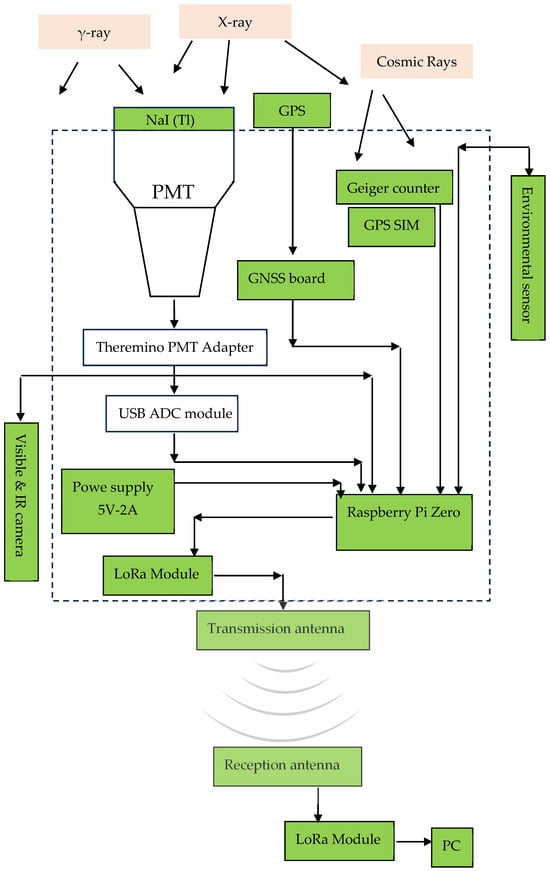
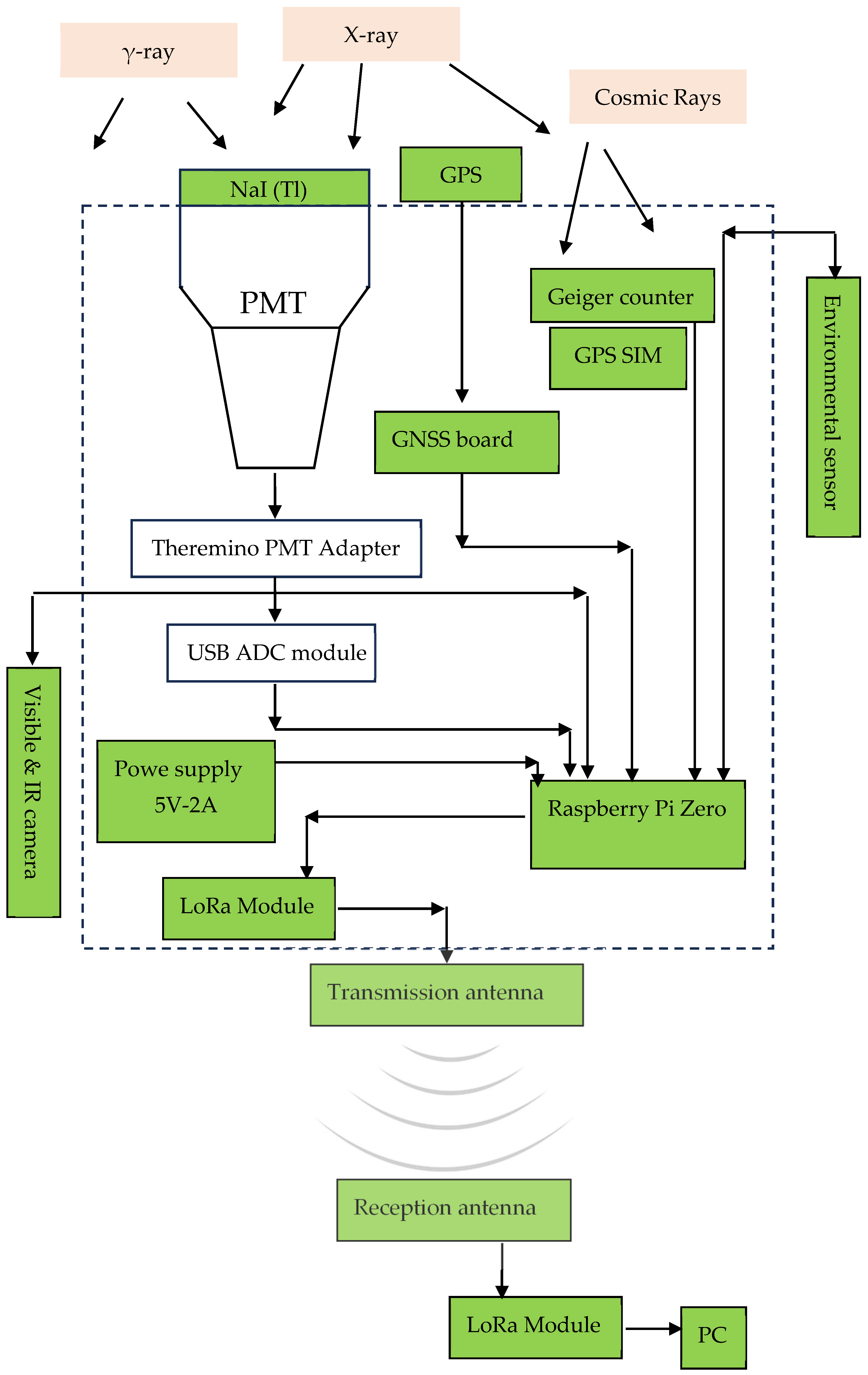
Figure 1 illustrates the overall system architecture of the balloon-borne payload and its telemetry configuration. High-energy radiation (gamma rays, X-rays, and cosmic rays) is detected by the NaI(Tl) scintillation detector coupled to a photomultiplier tube and by the Geiger counter. Environmental parameters, GPS positioning, and imaging data are acquired through dedicated onboard sensors and processed by the Raspberry Pi Zero. Power is supplied by a regulated 5 V source, distributing energy to all subsystems within the payload enclosure. Data are transmitted via a LoRa communication module to a ground-based receiver connected to a PC for monitoring and storage.
Figure 1.
Block Diagram of the Balloon Payload Instrumentation and Telemetry System.
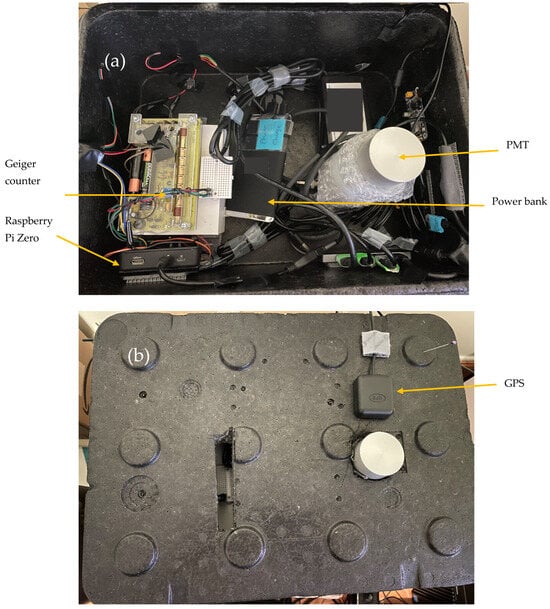
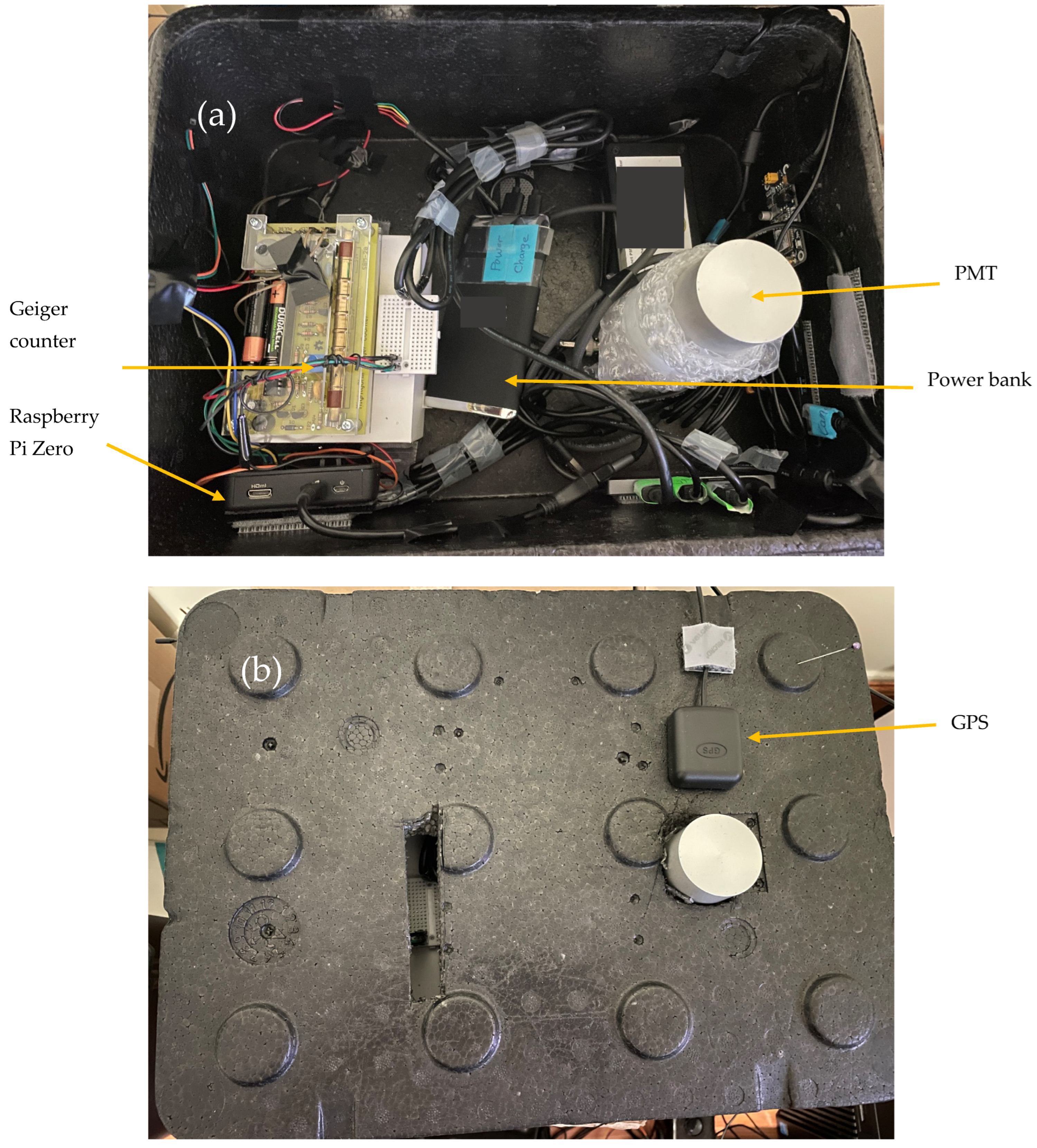
Figure 2 presents the physical configuration of the balloon-borne payload and the placement of its major subsystems. Panel (a) shows the internal arrangement of the electronics and radiation detectors within the insulated enclosure. The Geiger counter and Raspberry Pi Zero are mounted on the left side, while the NaI(Tl) scintillation detector coupled to the photomultiplier tube (PMT) is positioned on the right to allow unobstructed exposure to incoming radiation. A portable power bank provides regulated 5 V power to the onboard instruments.
Figure 2.
Structural and Instrumentation Layout of the Balloon-Borne Radiation System: (a) Internal Electronics, (b) External Sensor Placement.
Panel (b) shows the external view of the payload lid, highlighting the placement of the GPS receiver and the protruding detector window. The GPS unit is mounted on the top surface to maintain a clear line of sight to satellites throughout the flight. Openings in the enclosure allow environmental exposure for the detectors while preserving thermal insulation. Overall, the configuration demonstrates the integration of radiation detectors, navigation systems, and power electronics into a compact balloon payload.
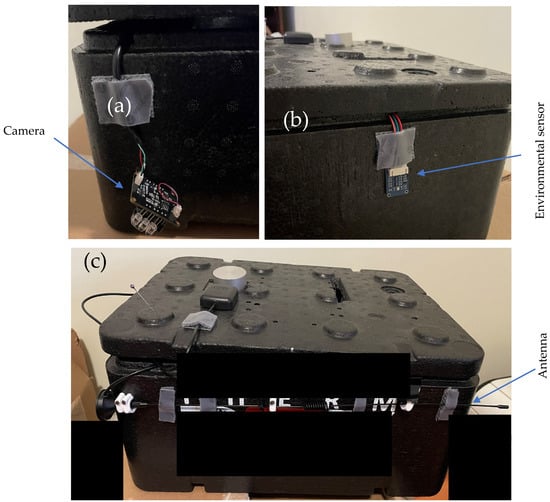
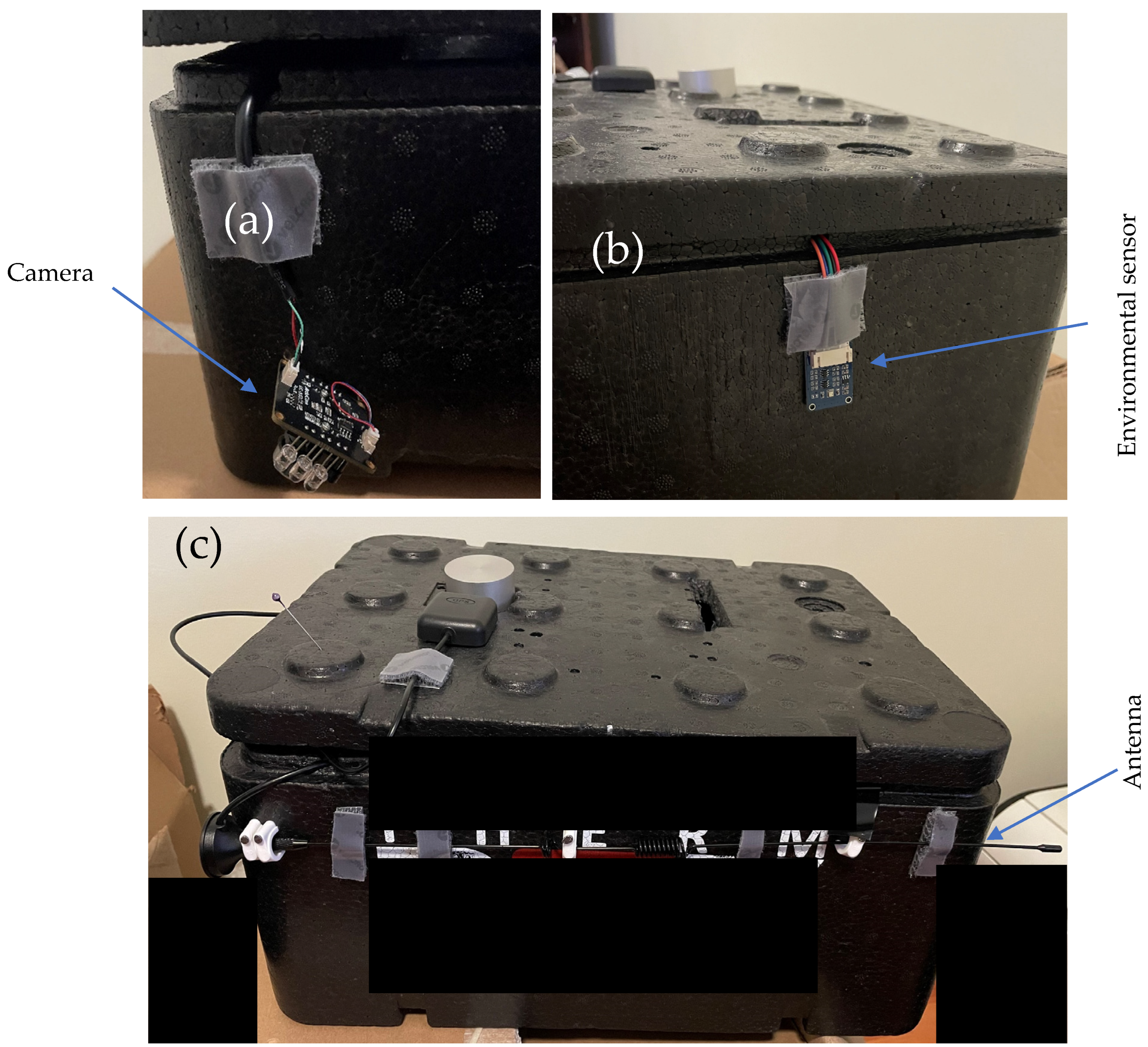
Figure 3 shows the temporary external placement of the camera, environmental sensor, and communication antenna during laboratory integration. The camera mount shown in Figure 3a was used only to verify camera operation and field of view and is not intended as a flight-qualified mounting arrangement. In the final flight configuration, the camera will be installed in a rigid structural bracket with secondary retention and cable strain relief. The BME280 sensor shown in Figure 3b is positioned too close to the payload enclosure to guarantee measurement of undisturbed ambient temperature because its readings may be influenced by heat transfer from the electronics, solar heating of the enclosure, and restricted airflow. For flight deployment, the sensor will be displaced from the enclosure using a ventilated, low-thermal-conductivity support and provided with appropriate radiation shielding. Environmental measurements obtained in the configuration shown here are therefore used for functional testing only and are not interpreted as representative of the undisturbed atmosphere.
Figure 3.
Location of sensor and antenna: (a) Camera, (b) environmental sensor, and (c) transmission antenna.
Table 1 summarizes the electrical power budget of all onboard subsystems integrated into the balloon payload. It lists the operating voltage, current consumption, power requirements, and duty cycle for each instrument to estimate total energy demand during flight. This power allocation analysis is essential for sizing the battery system and ensuring reliable operation throughout the mission duration.
Table 1.
Power Budget and Operating Parameters of Payload Components.
2.1. Gamma Scintillation Detector NaI(Tl)
The primary gamma-ray detection system used in this mission is a Scionix NaI(Tl) Gamma Scintillation Detector coupled to a Theremino-compatible photomultiplier tube (PMT) and front-end electronics module. The detector consists of a thallium-doped sodium iodide NaI(Tl) scintillation crystal optically coupled to a PMT, which converts scintillation light produced by incident gamma photons into electrical pulses. These pulses are processed by an external electronics unit that provides signal amplification, pulse shaping, and digital acquisition via a USB interface.
The system incorporates an internal high-voltage generator to bias the PMT, eliminating the need for an external high-voltage power supply and simplifying balloon integration. The detector operates from a low-voltage DC input supplied through the USB interface at 5 V. Typical operating current is on the order of 300–500 mA, corresponding to an estimated power consumption of approximately 1.5–2.5 W, depending on gain settings and data acquisition mode. The cylindrical probe geometry provides efficient detection of gamma photons over a broad energy range, while maintaining moderate mass suitable for balloon payloads. The combination of NaI(Tl) scintillation efficiency and PMT amplification enables energy-resolved spectroscopy in the X-ray and gamma-ray bands. This configuration offers a balance between sensitivity, stability, and power efficiency appropriate for long-duration stratospheric balloon missions.
2.2. Geiger Counter
The Geiger counter used in this mission is a MightyOhm Geiger Counter Kit Bundle, a compact ionizing radiation detector that can be integrated into custom data acquisition systems such as those based on a Raspberry Pi. It is built around a Geiger–Müller tube (the included SBM-20 tube), which serves as the radiation sensing element sensitive to beta and gamma radiation. When ionizing radiation penetrates the inert gas inside the Geiger tube, it creates ion pairs that momentarily conduct, producing a detectable electrical pulse. The instrument’s printed circuit board (PCB) conditions and counts these pulses, converting them into digital count rates that represent the incidence of radiation events. The electronics include a high-voltage generator that biases the Geiger tube, typically at several hundred volts, necessary for the Townsend discharge effect to occur within the tube. An LED and piezoelectric speaker provide immediate visual and audible feedback for each detection event. The unit is powered by two AAA batteries, making it lightweight and suitable for portable or balloon payload use. Expansion headers on the PCB allow the counter to interface with microcontrollers or single-board computers for data logging or telemetry. It can output counts per second (CPS), counts per minute (CPM), and equivalent dose readings through a serial connection, enabling integration with onboard systems. The device’s straightforward design and open-source hardware nature facilitate modification and integration into larger systems. Its sensitivity to both beta particles and gamma photons complements the higher-energy spectral measurements of the NaI(Tl)/PMT detector onboard. While the Geiger–Müller tube does not discriminate photon energy, it provides a robust measure of overall ionizing particle flux. The electronics are designed to be simple and reliable, with minimal amplification stages beyond the high-voltage bias and pulse discriminator. This makes the Geiger counter particularly useful for tracking relative changes in ambient radiation levels during balloon ascent. The kit configuration and available documentation also allow for future upgrades or replacement of the Geiger tube for enhanced sensitivity or different radiation types if needed. Overall, the integration of this Geiger counter enriches the radiation dataset collected by the stratospheric platform by adding independent total ionization count information.
2.3. Environmental Sensor
The environmental measurements onboard the balloon are performed using a Bosch BME280 digital environmental sensor, which integrates temperature, relative humidity, and barometric pressure sensing in a compact module. The BME280 operates over a supply voltage range of 1.8–3.6 V, with most breakout boards designed to run directly from 3.3 V, making it fully compatible with the Raspberry Pi GPIO logic levels. Typical current consumption is very low, on the order of a few microamperes in sleep mode and less than 1 mA during active measurements, making it well suited for low-power balloon applications. The sensor communicates digitally via either I2C or SPI interfaces, allowing flexible integration into embedded systems. In this project, the I2C interface is used for simplicity and reduced wiring. I2C must be enabled in the Raspberry Pi configuration settings prior to operation. Once connected, the sensor provides calibrated digital readings of temperature, pressure, and humidity, which are logged by the onboard Raspberry Pi. These environmental parameters are essential for correlating radiation measurements with atmospheric conditions and for estimating altitude through pressure-derived calculations during ascent.
It is important to mention that due to the limited ascent and float durations, temperature and humidity measurements may lag behind the ambient atmospheric conditions owing to sensor thermal inertia, solar heating, and limited ventilation, whereas pressure measurements are expected to respond more rapidly but must still be interpreted within the sensor’s specified operating range, response time, and associated uncertainty.
2.4. GPS Navigation Antenna
The GNSS signal reception is supported by an active GPS navigation antenna with an SMA male connector, operating at the standard GPS L1 frequency of 1575.42 MHz (±3 MHz). The antenna incorporates a low-noise amplifier (LNA) with a gain of approximately 28 dB, improving signal acquisition and maintaining stable satellite lock during ascent and dynamic flight conditions. It is powered via the coaxial cable with a DC supply range of 3–5 V, drawing a maximum current of approximately 10 mA, making it highly suitable for low-power balloon applications. The antenna includes a magnetic mounting base and waterproof housing, allowing secure external placement on the payload structure to ensure unobstructed sky visibility. The 3 m coaxial cable enables flexible positioning relative to the onboard GPS receiver module while minimizing signal attenuation. Its compact, lightweight design supports integration into stratospheric balloon systems where mass and power constraints are critical. The active amplification stage enhances signal-to-noise ratio, improving positioning reliability at high altitude where dynamic motion and orientation changes may affect satellite geometry.
2.5. 4G LTE GPS Tracker
Redundant positional tracking and telemetry are provided by a TKMARS TK905B 4G LTE GPS tracker, which integrates GNSS positioning with cellular communication capabilities. The device operates using GPS satellite signals for location determination and transmits position data via a SIM-based 4G LTE network. It contains an internal 10,000 mAh rechargeable lithium battery, enabling extended autonomous operation with standby times up to several weeks, depending on transmission frequency. The tracker supports real-time position reporting, historical route storage, and geofencing functions through SMS or mobile application interfaces. Its compact enclosure incorporates a magnetic mounting system and is designed for outdoor deployment. The unit provides latitude, longitude, speed, and timestamp information, which can be used as a backup navigation and recovery system during balloon missions. Operating independently of the onboard Raspberry Pi, the TK905B ensures payload tracking even in the event of primary system failure. The cellular tracker is intended primarily as an independent recovery aid before launch and after descent into an area with cellular coverage. Primary in-flight telemetry is provided by the LoRa link, while scientific data are stored locally.
2.6. Camera
The imaging subsystem employs an Arducam 1080P Day & Night Vision USB Camera, featuring a 2 MP CMOS sensor (OV2710) capable of Full HD resolution (1920 × 1080 pixels). The camera incorporates an automatic IR-cut filter that switches between visible-light imaging during daytime and infrared sensitivity under low-light conditions. Integrated infrared LEDs provide illumination for night-time or low-visibility environments, enabling continuous imaging capability throughout ascent. The device operates via a standard USB 2.0 interface and is fully compliant with the UVC (USB Video Class) protocol, ensuring compatibility with Linux-based systems such as the Raspberry Pi.
The camera is powered directly through the USB connection at 5 V DC, with a typical operating current in the range of 200–400 mA, depending on resolution and whether the IR LEDs are active. This corresponds to an estimated power consumption of approximately 1–2 W during continuous operation. When IR illumination is enabled, the current draw may increase due to LED power consumption. Connection to the Raspberry Pi Zero is achieved through the USB data port using a micro-USB OTG adapter, allowing both power supply and video data transfer through a single cable.
The present mounting arrangement demonstrated adequate mechanical stability during laboratory handling; however, it has not yet undergone vibration or environmental testing representative of balloon-flight conditions. Table 2 illustrates the mass budget of the payload components.
Table 2.
Mass budget parameters of Payload Components.
3. Results and Discussion
The present study is limited to payload development, laboratory integration, software implementation, and preliminary detector testing. No balloon flight or stratospheric measurement was performed as part of this work, and all radiation spectra presented in this section were acquired under laboratory conditions. Consequently, the present manuscript does not report flight duration, ascent rate, maximum altitude, float time, counting statistics, or in-flight measurement cadence.
NaI(Tl) detector
UCS-30 multi-channel analyzer
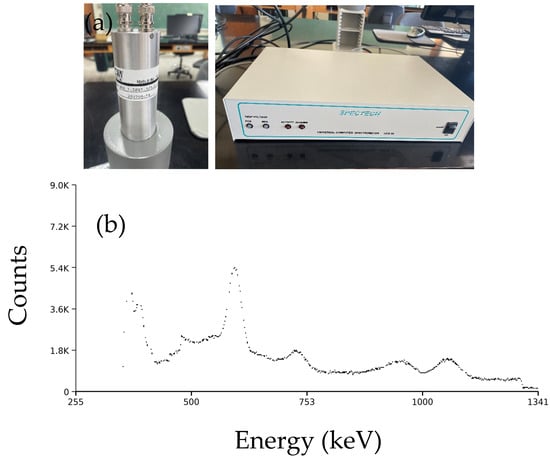
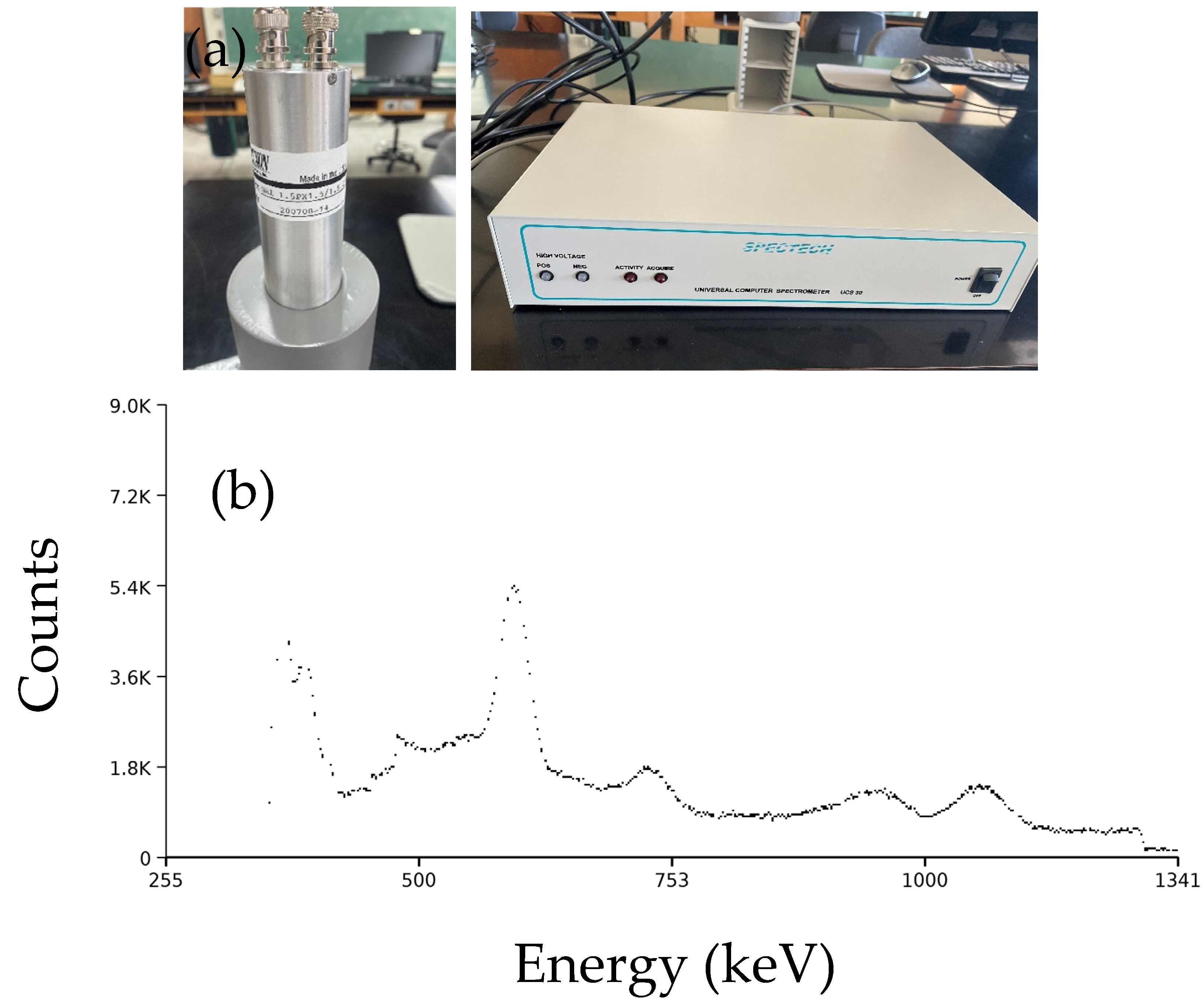
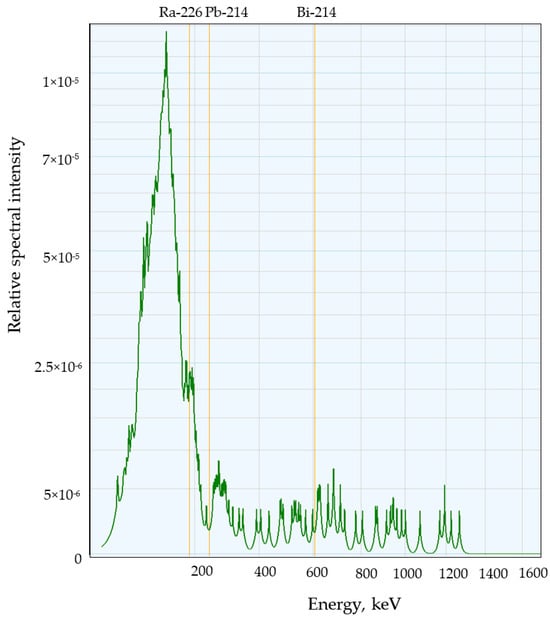
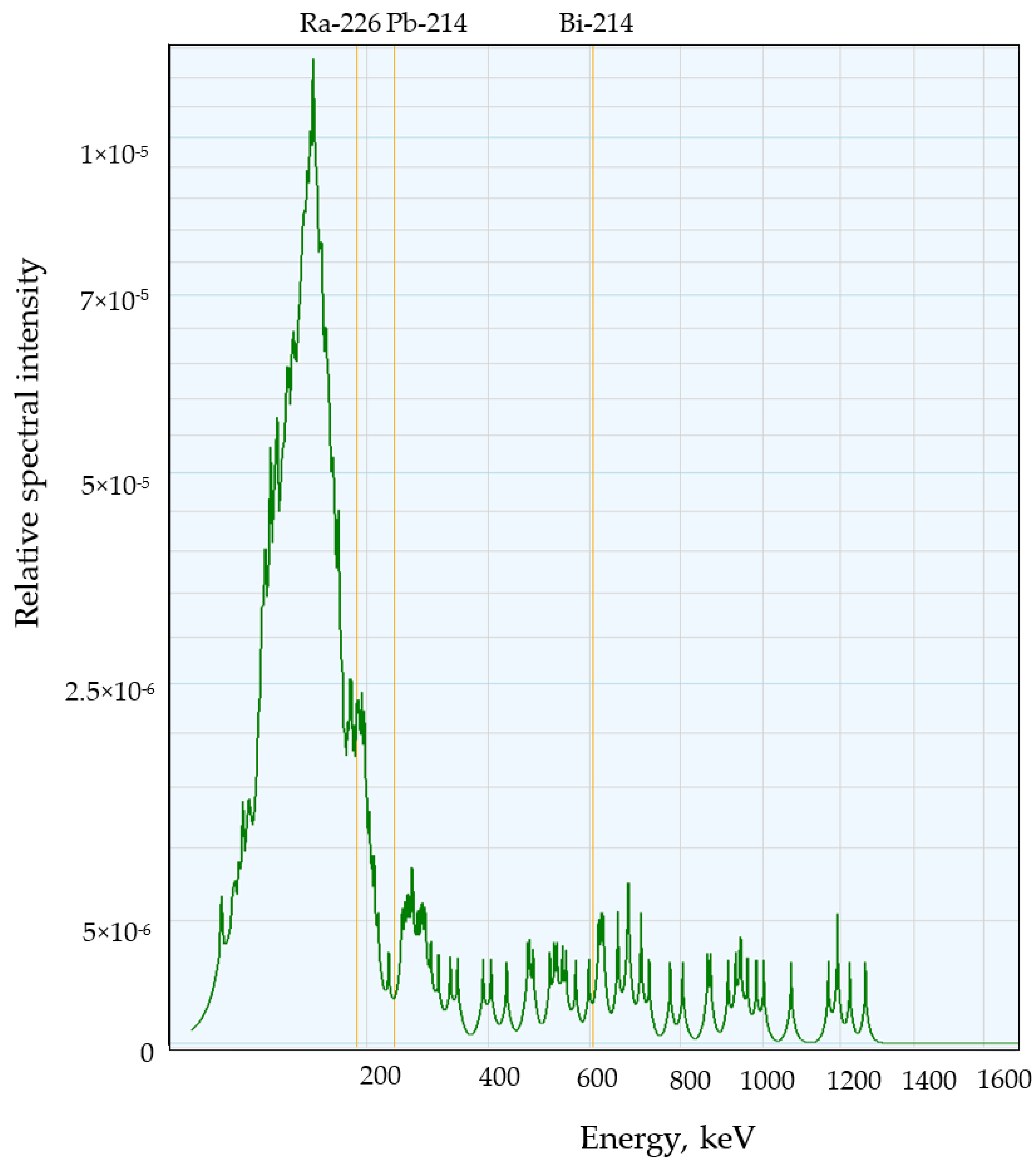
To validate the expected spectral response of a Ra-226 source and establish an energy calibration reference, a laboratory experiment (Figure 4a,b) was conducted using a bench-top multi-channel analyzer (MCA), model UCS-30 (Spectrum Techniques). The UCS-30 is a 4096-channel computer-controlled spectrometer equipped with an internal amplifier and high-voltage supply designed for scintillation detectors. Unlike the compact Scionix detector used in the balloon payload, this laboratory system operates with externally adjustable high voltage and precision gain control. The scintillation probe was connected to the MCA input, and the high voltage was set according to the detector specifications. The UCS-30 provides a regulated high-voltage output up to 2048 V at 1 mA maximum, allowing stable operation of the NaI(Tl) detector. Amplifier coarse and fine gain parameters were adjusted to position the prominent Ra-226 daughter peaks within the dynamic range of the ADC. Energy calibration was performed using a known Ra-226 gamma-emitting radioactive source, following the MCA’s two-point or three-point calibration procedure. The calibration ensured that channel numbers were accurately converted to energy in keV. Lower-level and upper-level discriminators were configured to suppress low-energy noise and electronic background.
Figure 4.
Laboratory Calibration Spectrum of Ra-226 Using the UCS-30 Multi-Channel Analyzer (a) MCA, and (b) Ra-226 spectrum generated by the MCA.
The resulting laboratory spectrum (Figure 4b) exhibited multiple distinct peaks corresponding to gamma emissions from Ra-226 and its progeny, including Pb-214 and Bi-214. The observed peaks qualitatively match the reference spectrum reported by [17], where characteristic lines such as 186.5 keV (Ra-226), 295 keV and 352 keV (Pb-214), and 609 keV (Bi-214) are clearly resolved.
The relative intensities and energy positions show strong agreement with the published data, confirming proper detector response and calibration.
Minor differences in peak height and continuum structure are attributed to differences in acquisition time, detector geometry, shielding configuration, and source activity.
3.1. NaI(Tl)/PMT Detector Measurements
The compact NaI(Tl) detector is intended to measure broad spectral features and relative changes in the hard-X-ray and gamma-ray radiation field rather than to perform high-resolution spectroscopy. Its small crystal volume limits detection efficiency and full-energy absorption probability, particularly as photon energy increases. The achievable energy resolution is also affected by the intrinsic scintillation response of NaI(Tl), light-collection efficiency, PMT gain stability, electronic noise, pulse-shaping performance, and counting statistics. These limitations are more pronounced in the compact Raspberry Pi-based acquisition system than in the laboratory multi-channel analyzer. Consequently, peak assignments in the following spectra are treated as approximate, and closely spaced emission lines may appear as a single broad feature.
The NaI(Tl)/PMT detector response was examined using three acquisition configurations: (1) the Theremino-compatible interface using Theremino MCA V7.4 on a Windows PC, (2) the UCS-30 multi-channel analyzer served as the laboratory reference, providing an intermediate compact acquisition configuration, and (3) the detector output was processed using the custom Python-based (Python 3.14.6) acquisition system implemented on the Raspberry Pi. This sequence was used to assess the extent to which the simplified Raspberry Pi system could reproduce the broad spectral features observed with established acquisition systems.
Figure 5 shows the Ra-226 gamma-ray spectrum acquired using the Scionix NaI(Tl) scintillation detector connected via USB to a Windows 10 PC with Theremino MCA V7.4 software installed. The horizontal axis represents photon energy in keV following energy calibration, while the vertical axis corresponds to count rate (counts per second). A dominant broad structure is visible in the low-energy region, primarily associated with Compton scattering and overlapping gamma emissions from Ra-226 progeny. Several resolved peaks are observed between approximately 200–400 keV, which are consistent with Pb-214 gamma lines at 295 keV and 352 keV. A distinct peak is also visible near 609 keV, corresponding to Bi-214, one of the major daughters in the Ra-226 decay chain. Higher-energy peaks above 1 MeV appear weaker but are still detectable, indicating the detector’s sensitivity across a broad energy range.
Figure 5.
Calibration Spectrum of Ra-226 Using the Scionix NaI(Tl) detector with Theremino software V7.4 installed on a PC machine with Windows 10 installed.
Compared to the laboratory spectrum obtained using the UCS-30 multi-channel analyzer, the Theremino spectrum exhibits noticeably lower peak resolution. In the laboratory system, peaks appear sharper and better separated due to optimized amplifier shaping, stable high-voltage control, and higher channel resolution. The laboratory MCA typically provides 1024–4096 channels with precise gain adjustment, allowing more accurate energy calibration and reduced peak broadening. In contrast, the Theremino system relies on audio-based digitization and simplified pulse processing, which inherently limits spectral resolution.
Additionally, the laboratory setup benefits from improved shielding and controlled environmental conditions, resulting in lower background noise and reduced Compton continuum contribution. The Theremino configuration, optimized for portability and low mass, likely has thinner shielding and simplified analogue filtering, leading to broader peaks and a higher relative background. Electronic noise and reduced signal shaping precision also contribute to peak widening in the Theremino spectrum. The difference in acquisition electronics, signal processing algorithms, and channel linearity further explains the variation in spectral clarity. The difference in acquisition electronics, signal processing algorithms, and channel linearity further explains the variation in spectral clarity.
Nevertheless, despite these limitations, the Theremino spectrum successfully reproduces the characteristic energy features of Ra-226 and its progeny. The presence of the expected gamma lines confirms proper detector operation and energy calibration. While the laboratory MCA system provides superior spectral quality for detailed quantitative analysis, the Theremino system demonstrates adequate performance for field deployment in balloon missions where compactness and power efficiency are prioritized.
3.2. Scionix NaI(Tl)/Theremino Custom Python-Based System
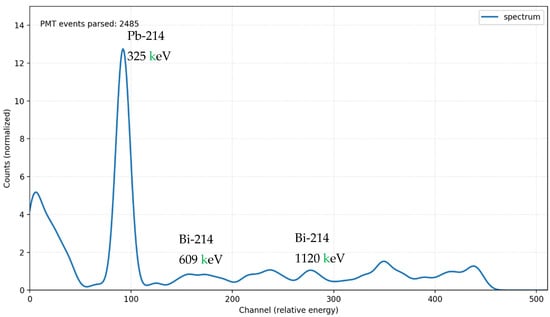
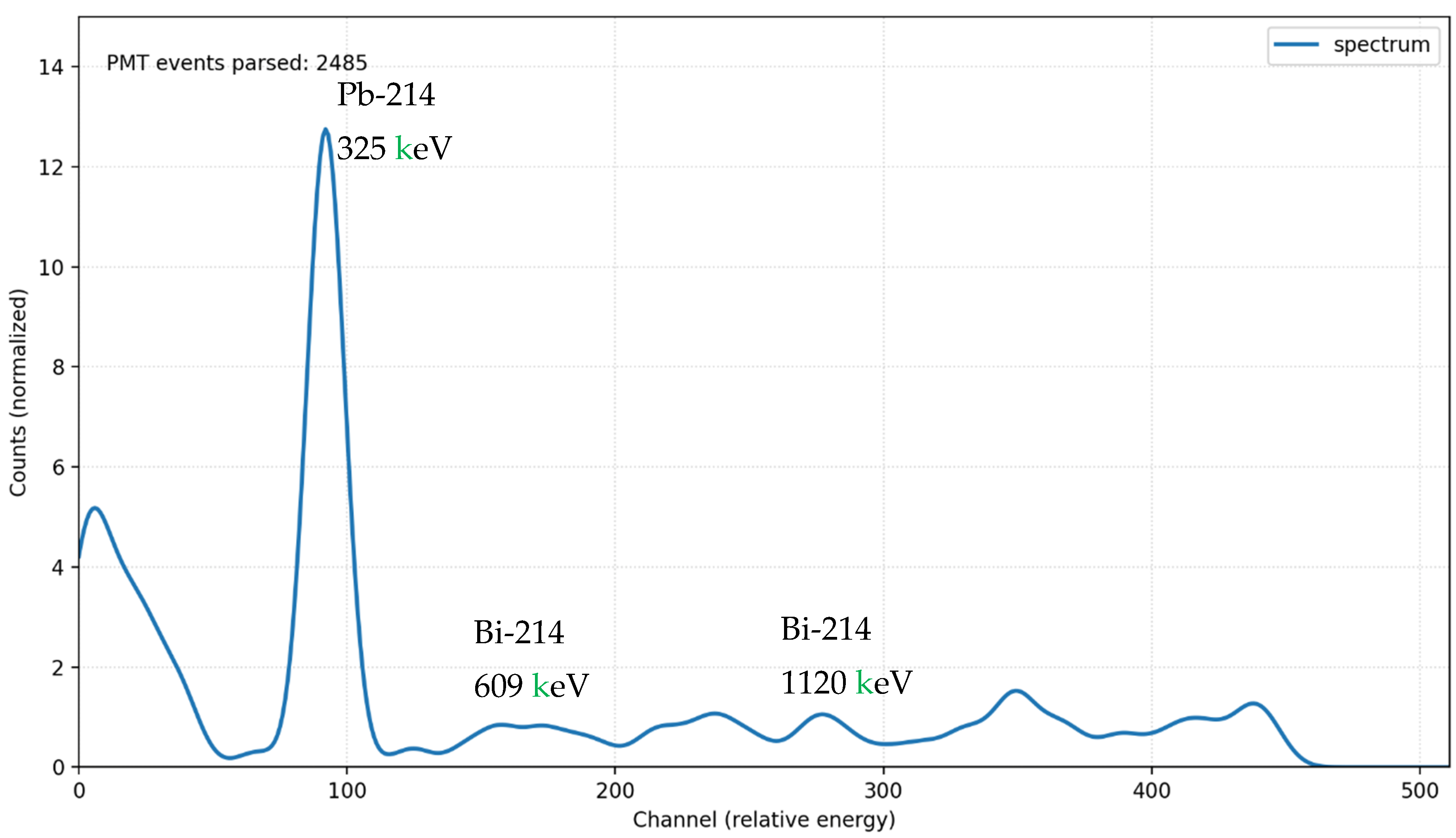
Figure 6 represents the Ra-226 measurement obtained using the custom Python-based system running on a Raspberry Pi with a Scionix NaI(Tl) detector onboard the balloon payload. The horizontal axis corresponds to the relative energy (channel number), while the vertical axis represents normalized counts. The spectrum exhibits a dominant peak around channel ~100, which is consistent with gamma emissions from Pb-214 (≈295–352 keV region after calibration scaling). Additional weaker structures are visible at higher channels, corresponding to Bi-214 emissions near 609 keV and 1120 keV. The presence of a continuous background at low channels indicates contributions from Compton scattering and electronic noise. Overall, the spectrum successfully captures the characteristic features of the Ra-226 decay chain, demonstrating that the Python-based data acquisition and processing pipeline is functioning correctly.
Figure 6.
Ra-226 measurement obtained using the custom Python-based system running on a Raspberry Pi with a Scionix NaI(Tl) detector.
However, compared to the reference spectrum reported in [17], several differences are evident. The reference spectrum shows significantly higher statistics, with smoother curves and well-defined peaks due to a much larger number of detected events and optimized laboratory conditions. In contrast, the Raspberry Pi spectrum contains relatively fewer counts (≈2500 events), leading to noticeable statistical fluctuations and reduced peak clarity. Additionally, the reference spectrum clearly resolves multiple Pb-214 peaks (295 keV and 352 keV) as distinct features, whereas in the Python-generated spectrum these peaks are merged into a broader structure due to limited resolution and simplified signal processing. The Compton continuum is also more pronounced and better shaped in the referenced data, reflecting improved detector calibration and shielding.
Despite these differences, the agreement in peak positions and general spectral shape between the two spectra confirms that the custom implementation provides a reasonable qualitative representation of the Ra-226 gamma-ray spectrum. The discrepancies are primarily due to lower statistics, reduced energy resolution, and less sophisticated electronics compared to the laboratory-grade system. Nevertheless, the results demonstrate that the developed code and Raspberry Pi-based acquisition system are capable of identifying key gamma-ray features, making them suitable for field applications such as balloon-borne measurements where compactness and power efficiency are prioritized over high-resolution spectroscopy.
Meanwhile, the spectrum obtained using the UCS-30 multi-channel analyser (Figure 4) exhibits significantly improved quality compared to the Python-based spectrum generated on the Raspberry Pi. The UCS-30 spectrum displays smooth, well-defined peaks with minimal statistical fluctuations, indicating a much higher number of accumulated counts and optimized signal processing. Distinct gamma-ray peaks corresponding to Ra-226 progeny, particularly Pb-214 and Bi-214, are clearly resolved. The Compton continuum is also well-shaped, gradually decreasing with energy, which is characteristic of a properly calibrated scintillation detector system with appropriate gain and shaping settings.
In contrast, the spectrum produced using the Python code and Raspberry Pi shows a similar overall structure but with noticeably reduced resolution and higher noise levels. Peaks appear broader and less distinct, and closely spaced lines, such as the Pb-214 emissions around 295 keV and 352 keV, are merged into a single wider feature. This is primarily due to the lower number of detected events, simplified pulse processing, and lack of precise analogue shaping electronics in the Raspberry Pi-based system. Additionally, statistical fluctuations are more pronounced, reflecting the limited counting statistics.
Another key difference lies in the energy calibration and channel linearity. The UCS-30 system provides precise control over high voltage, amplifier gain, and ADC conversion, resulting in accurate energy scaling and stable peak positioning. The Python-based system initially records relative pulse amplitudes, which were converted to energy by calibrating the amplitude scale against the identifiable peaks in Figure 6. The remaining peak broadening may be attributed to detector resolution, electronic noise, and pulse-processing effects. Furthermore, the UCS-30 benefits from better noise rejection through hardware-based discriminators, whereas the Python implementation relies on software thresholds, which are less effective in isolating true events.
Despite these limitations, the Python-generated spectrum successfully reproduces the essential features of the Ra-226 decay chain, including the presence of major gamma-ray peaks and the overall spectral shape. This demonstrates that the custom data acquisition system is capable of performing qualitative gamma spectroscopy. However, the comparison highlights that laboratory-grade MCA systems such as the UCS-30 provide superior spectral resolution, stability, and quantitative accuracy, while the Raspberry Pi-based approach is more suitable for compact, low-power applications where high precision is not critical.
The spectra shown in Figure 4, Figure 5 and Figure 6 were obtained using different acquisition systems and were not necessarily recorded using identical acquisition times, source-to-detector geometries, and energy binning. Their absolute count levels, curve smoothness, and statistical fluctuations therefore cannot be compared quantitatively. The comparison presented here is restricted to whether the compact acquisition system reproduces the broad spectral regions associated with the Ra-226 decay chain.
It is important to mention that the laboratory results establish the ability of the acquisition chain to record qualitative spectral features. Its ability to measure altitude-dependent radiation profiles remains to be demonstrated during a balloon flight.
During future flights, the primary output will be gamma-ray count rate and pulse-height spectra as functions of atmospheric pressure, GPS altitude, geographic position, and time. These measurements are intended to characterize the vertical transition from terrestrial radiation to secondary cosmic-ray-induced radiation. Repeated flights under comparable operating conditions may also allow investigation of temporal variability associated with atmospheric structure, geographic location, and solar modulation.
The payload is designed for reuse in repeated balloon flights, if it is successfully recovered and passes the required post-flight structural and functional inspections.
4. Conclusions
This study presents the development and validation of a compact, low-cost balloon-borne payload for measuring atmospheric gamma and X-ray radiation. The system successfully integrates a NaI(Tl) scintillation detector with a photomultiplier tube, a Geiger counter, environmental sensors, imaging systems, and telemetry units into a single modular platform. Laboratory calibration using a high-resolution multi-channel analyzer demonstrated clear identification of characteristic Ra-226 daughter peaks, confirming the expected spectral response of the detector under controlled conditions. However, comparison with spectra obtained using the Theremino-based system highlights the limitations of simplified acquisition electronics, particularly in terms of reduced energy resolution, higher background noise, and broader peak structures.
The observed differences between laboratory and field-style measurements emphasize the impact of detector shielding, signal processing, and statistical count rates on spectral quality. While the laboratory MCA system provides precise energy discrimination, the balloon-compatible system prioritizes portability, low power consumption, and real-time operation, resulting in a trade-off between resolution and practicality. Despite these limitations, the laboratory prototype can record broad spectral features from natural radioactive sources under ambient laboratory conditions. Its ability to measure changes in the radiation field with altitude remains to be demonstrated during a balloon flight.
The integration of environmental sensing, GPS tracking, and imaging adds significant value by enabling correlation of radiation data with atmospheric conditions and flight dynamics. Importantly, the results confirm that meaningful radiation measurements can be obtained using a simplified, cost-effective platform, even in the presence of inherent system constraints. The laboratory measurements demonstrate functional integration and preliminary spectral capability but do not establish stratospheric or spaceflight robustness. Low-temperature, low-pressure, vibration, shock, electromagnetic-compatibility, and full-duration power tests remain necessary before flight deployment.
The novelty of the proposed payload does not arise from the development of a new radiation detector or environmental sensor. Rather, it lies in the integration of commercially available sensors into a synchronized and reproducible acquisition system, together with a custom Raspberry Pi-based gamma-spectrum processing software. This approach is intended to reduce the cost and development time required for repeated balloon measurements while retaining both spectral and environmental context.
All measurements reported in this study were performed under ambient laboratory conditions. The payload has not yet undergone a balloon flight or simulated stratospheric environmental testing. Consequently, the present results establish functional integration and preliminary detector response only; they do not demonstrate mechanical robustness, thermal stability, low-pressure compatibility, or reliable operation during flight.
Future work will focus on improving spectral resolution through enhanced signal conditioning, optimizing detector shielding, and increasing data acquisition rates to reduce statistical noise. Additional developments may include real-time energy calibration, improved telemetry bandwidth, and integration of higher-performance detectors. Overall, the presented system establishes a practical foundation for atmospheric radiation studies and provides a scalable approach for future balloon-based scientific investigations.
Author Contributions
Conceptualization, A.F. and J.C.M.O.; methodology, A.F. and J.C.M.O.; software, A.F. and J.C.M.O.; validation, A.F. and J.C.M.O.; formal analysis, A.F.; investigation, A.F.; resources, J.C.M.O. and S.D.B.; data curation A.F.; writing—original draft, A.F., J.C.M.O.; writing—review and editing, A.F., J.C.M.O., S.D.B.; supervision, J.C.M.O. and S.D.B.; project administration, J.C.M.O.; funding acquisition, A.F. All authors have read and agreed to the published version of the manuscript.
Funding
Author A.F. would like to acknowledge the Deanship of Research (DR) at the King Fahd University of Petroleum and Minerals (KFUPM) for funding this work under the Ibn Battuta Global Scholarship Program–2025, project No. ISP2645. Author J.C.M.O. acknowledges the support of NASA grants 80NSSC20K1282 and 80NSSC22M0098.
Data Availability Statement
The data are available upon request to the corresponding author.
Acknowledgments
The authors thank Chris Moeckel, Space Science Laboratory (SSL), University of California, Berkeley, for his technical support with electronics.
Conflicts of Interest
The authors declare no conflicts of interest.
References
- Hussein, E.M.A. Imaging with Naturally Occurring Radiation. Appl. Radiat. Isot. 2019, 145, 223–239. [Google Scholar] [CrossRef] [Scilit] [PubMed]
- Freese, S.; Reddy, A.P.; Lehnhardt, K. Radiation Impacts on Human Health during Spaceflight beyond Low Earth Orbit. REACH 2016, 2–4, 1–7. [Google Scholar] [CrossRef] [Scilit]
- Tzortzis, M.; Tsertos, H. Determination of Thorium, Uranium and Potassium Elemental Concentrations in Surface Soils in Cyprus. J. Environ. Radioact. 2004, 77, 325–338. [Google Scholar] [CrossRef] [Scilit] [PubMed]
- Kurnaz, A.; Küçükömeroğlu, B.; Keser, R.; Okumusoglu, N.T.; Korkmaz, F.; Karahan, G.; Çevik, U. Determination of Radioactivity Levels and Hazards of Soil and Sediment Samples in Fırtına Valley (Rize, Turkey). Appl. Radiat. Isot. 2007, 65, 1281–1289. [Google Scholar] [CrossRef] [Scilit] [PubMed]
- Cosmic Rays at Earth. Available online: https://www.sciencedirect.com/book/monograph/9780444507105/cosmic-rays-at-earth (accessed on 28 March 2026).
- Bazilevskaya, G.A.; Svirzhevskaya, A.K. On The Stratospheric Measurements of Cosmic Rays. Space Sci. Rev. 1998, 85, 431–521. [Google Scholar] [CrossRef] [Scilit]
- Farahat, A.; Zhang, M.; Rassoul, H.; Connell, J.J. Cosmic Ray Transport and Production in the Galaxy: A Stochastic Propagation Simulation Approach. Astrophys. J. 2008, 681, 1334. [Google Scholar] [CrossRef] [Scilit] [PubMed]
- GLAST Facility Science Team; Gehrels, N.; Michelson, P. GLAST: The next-Generation High Energy Gamma-Ray Astronomy Mission. Astropart. Phys. 1999, 11, 277–282. [Google Scholar] [CrossRef] [Scilit]
- Atwood, W.B.; Abdo, A.A.; Ackermann, M.; Althouse, W.; Anderson, B.; Axelsson, M.; Baldini, L.; Ballet, J.; Band, D.L.; Barbiellini, G.; et al. The Large Area Telescope on the Fermi Gamma0ray Space Telescope Mission. Astrophys. J. 2009, 697, 1071. [Google Scholar] [CrossRef] [Scilit]
- Weisskopf, M.C.; Brinkman, B.; Canizares, C.; Garmire, G.; Murray, S.; Speybroeck, L.P.V. An Overview of the Performance and Scientific Results from the Chandra X-Ray Observatory. Publ. Astron. Soc. Pac. 2002, 114, 1. [Google Scholar] [CrossRef] [Scilit]
- Jansen, F.; Lumb, D.; Altieri, B.; Clavel, J.; Ehle, M.; Erd, C.; Gabriel, C.; Guainazzi, M.; Gondoin, P.; Much, R.; et al. XMM-Newton Observatory—I. The Spacecraft and Operations. Astron. Astrophys. 2001, 365, L1–L6. [Google Scholar] [CrossRef] [Scilit]
- Sounding Rockets Overview—NASA. Available online: https://www.nasa.gov/soundingrockets/overview/ (accessed on 1 July 2026).
- Adams, J.S.; Baker, R.; Bandler, S.R.; Bastidon, N.; Danowski, M.E.; Doriese, W.B.; Eckart, M.E.; Figueroa-Feliciano, E.; Goldfinger, D.C.; Heine, S.N.T.; et al. First Operation of TES Microcalorimeters in Space with the Micro-X Sounding Rocket. J. Low. Temp. Phys. 2020, 199, 1062–1071. [Google Scholar] [CrossRef] [Scilit]
- Athiray, P.S.; Winebarger, A.R.; Champey, P.; Kobayashi, K.; Vigil, G.D.; Haight, H.; Johnson, S.; Bethge, C.; Rachmeler, L.A.; Savage, S.; et al. Calibration of the MaGIXS Experiment. I. Calibration of the X-Ray Source at the X-Ray and Cryogenic Facility. Astrophys. J. 2020, 905, 66. [Google Scholar] [CrossRef] [Scilit]
- Riggi, F. Detecting the Cosmic Radiation at Balloon and Airplane Altitudes. In Educational and Amateur Geiger Counter Experiments: 50+ Activities for Beginners and Beyond; Riggi, F., Ed.; Springer Nature: Cham, Switzerland, 2024; pp. 235–238. [Google Scholar]
- Takada, A.; Kubo, H.; Nishimura, H.; Ueno, K.; Hattori, K.; Kabuki, S.; Kurosawa, S.; Miuchi, K.; Mizuta, E.; Nagayoshi, T.; et al. Observation of the Diffusion Cosmic and Atmospheric Gamma Rays at Balloon Altitudes with an Electron-Tracking Compton Camera. Astrophys. J. 2011, 733, 13. [Google Scholar] [CrossRef] [Scilit]
- Ezzulddin, S.K.; Mansour, H.H. Radon and Radium Activity Concentration Measurement in Drinking Water Resources in Kurdistan Region-Iraq. J. Radioanal. Nucl. Chem. 2020, 324, 963–976. [Google Scholar] [CrossRef] [Scilit]

Disclaimer/Publisher’s Note: The statements, opinions and data contained in all publications are solely those of the individual author(s) and contributor(s) and not of MDPI and/or the editor(s). MDPI and/or the editor(s) disclaim responsibility for any injury to people or property resulting from any ideas, methods, instructions or products referred to in the content. |
© 2026 by the authors. Licensee MDPI, Basel, Switzerland. This article is an open access article distributed under the terms and conditions of the Creative Commons Attribution (CC BY) license.