Article

Effect of EDTA and Zero-Valent Iron Nanoparticles on Phytoremediation Capacity of Cistanthe grandiflora

1
Departamento de Ingeniería Química y Ambiental, Universidad Técnica Federico Santa María, Avenida España 1680, Valparaíso 2390123, Chile
2
Instituto de Química, Universidad de Valparaíso, Avenida Gran Bretaña 1111, Valparaíso 2360102, Chile
3
Centro de Observación Marina para Estudios de Riesgos del Ambiente Costero (COSTA-R), Universidad de Valparaíso, Valparaíso 2540006, Chile
4
Hochschule Burgenland, University of Applied Sciences, Campus Pinkafeld, Steinamangerstraße 21, A-7423 Pinkafeld, Austria
*
Author to whom correspondence should be addressed.
Plants 2026, 15(8), 1183; https://doi.org/10.3390/plants15081183

Submission received: 15 March 2026 / Revised: 5 April 2026 / Accepted: 8 April 2026 / Published: 12 April 2026
(This article belongs to the Special Issue Heavy Metal Contamination in Plants and Soil)

Abstract

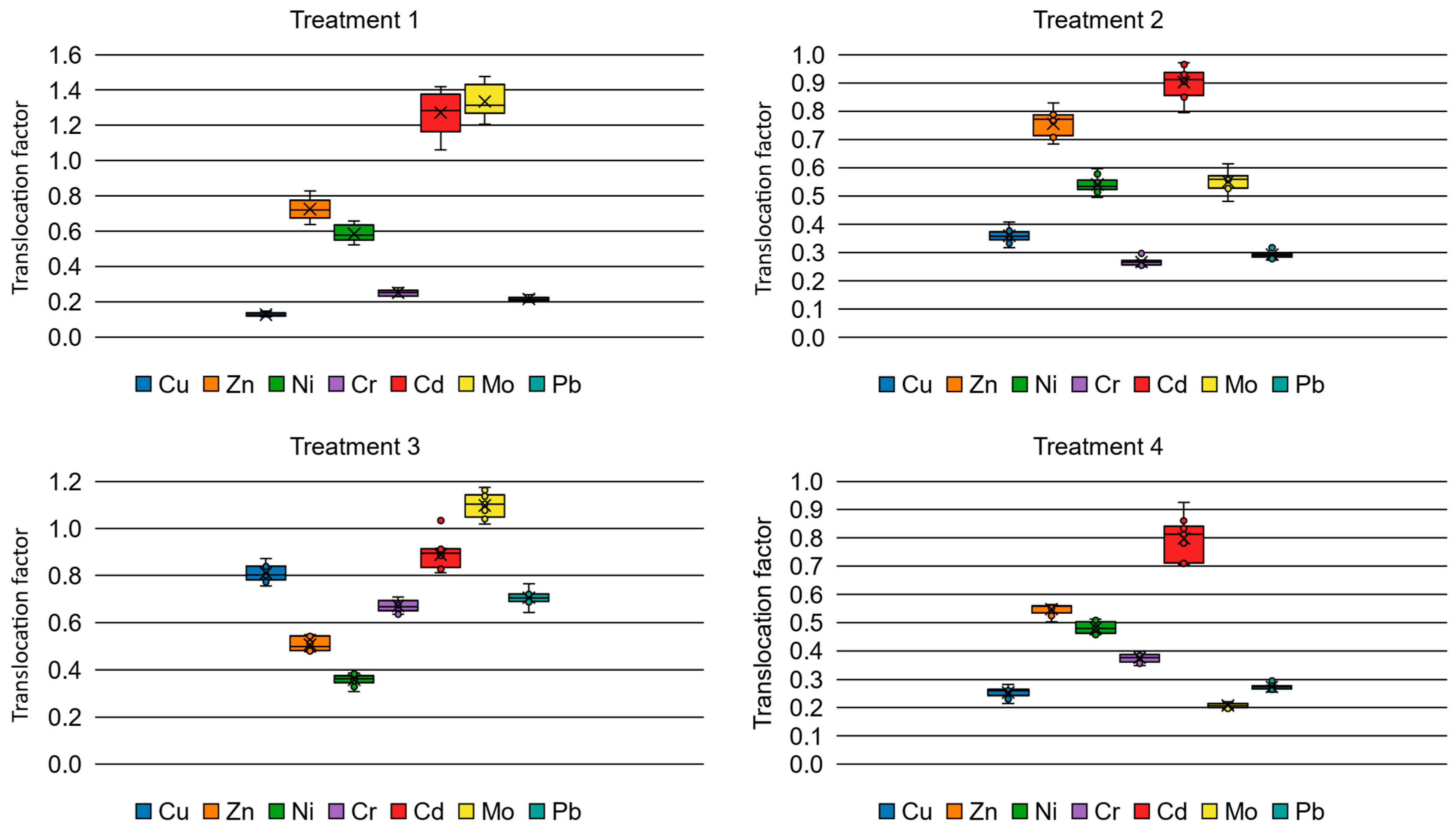
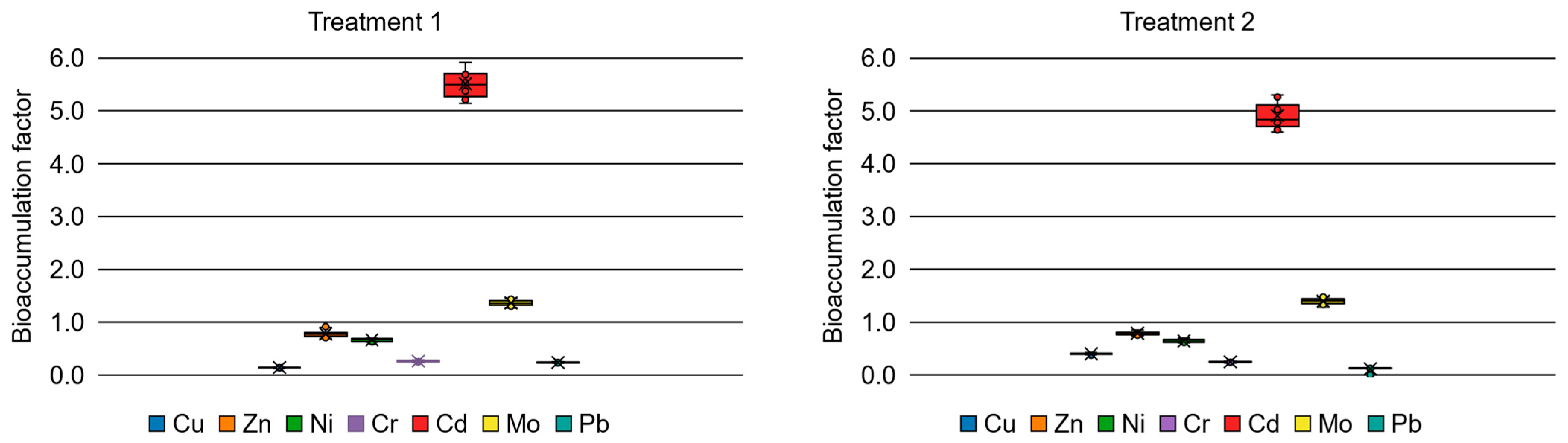
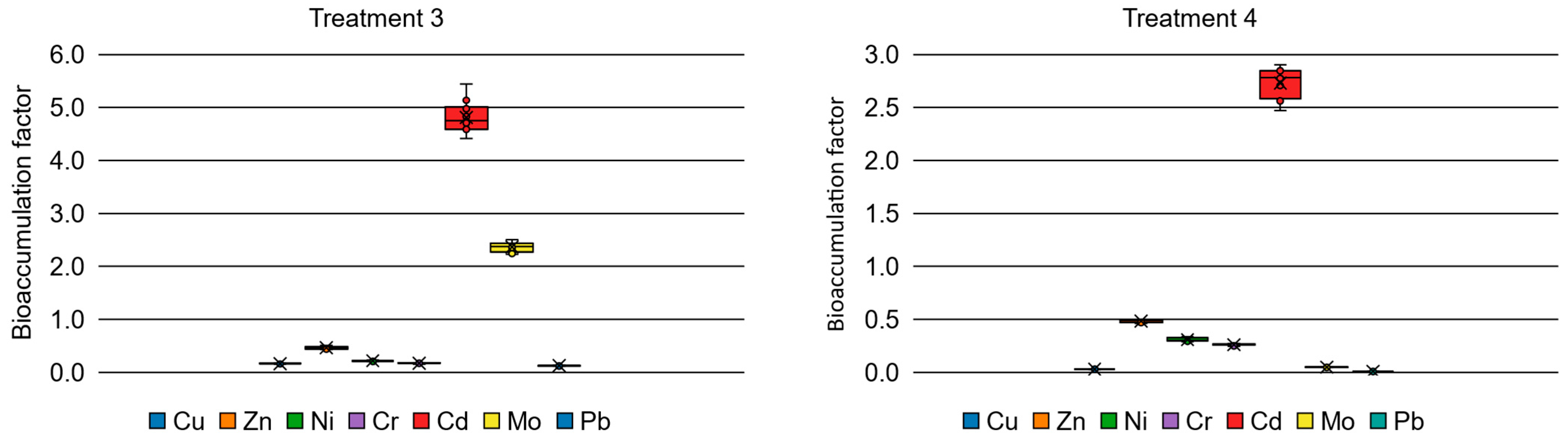
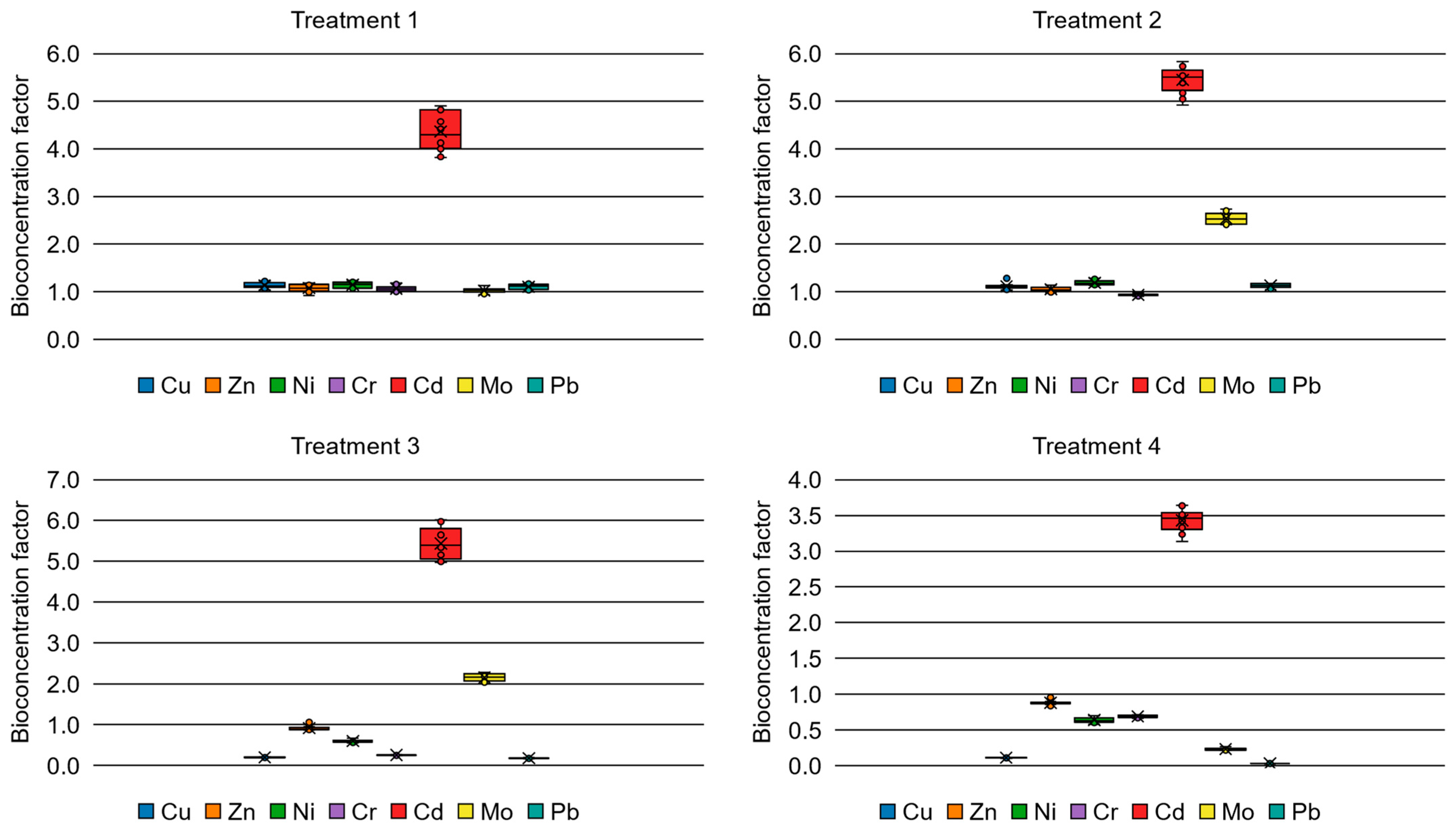
Mining activities in Chile generate massive amounts of tailings, creating significant environmental risks due to heavy metal contamination. Phytoremediation offers an eco-friendly solution, yet studies on native Chilean species are scarce. This study evaluates the effects of ethylenediamine tetraacetic acid (EDTA) and nanoscale zero-valent iron (nZVI) on the potential of the native Cistanthe grandiflora for the phytoremediation of copper mine tailings. A six-month pot experiment was conducted with four treatments: EDTA 300 mg·kg−1, EDTA 600 mg·kg−1, nZVI 500 mg·kg−1, and a control group without additions. The results indicate that Cistanthe grandiflora primarily acts as a phytostabilizer, accumulating higher metal concentrations in roots than in aerial parts. The application of EDTA significantly enhanced the Bioconcentration Factor for Cu, Ni, Pb, and Mo, increasing BCF values from 0.5 to 1.0 or more in several cases. Specifically, a lower dose of EDTA (300 mg·kg−1) successfully increased the Translocation Factor (TF) of cadmium to 1.3, suggesting a potential for phytoextraction for this element. Conversely, nZVI application showed a limited impact, slightly improving the Translocation factor for copper and chromium but without exceeding unity. These findings demonstrate that Cistanthe grandiflora, assisted by EDTA, is a promising candidate for the phytostabilization of heavy metals in mine tailings.
Keywords: phytoremediation; tailings; nanoparticles; EDTA phytoremediation; tailings; nanoparticles; EDTA