


Abstract
Extreme weather events such as higher temperatures, droughts, and soil salinization are projected to increase as atmospheric CO2 concentrations rise and climate change progresses. These factors have a negative impact on global food security, the water supply, and ecosystem productivity. The focus of this review is on modern concepts, comparative studies, and our data on the mechanisms of adaptation of halophytes and glycophytes with different types of photosynthetic metabolism (C3, C4) to the individual and combined effects of climatic factors. The analysis revealed that C3 and C4 species and C4-NAD-ME and C4-NADP-ME species differ in terms of stability and photosynthetic plasticity. Under drought conditions, both individually and in combination with other factors, C4 halophytes demonstrate the advantages of efficient photosynthesis and salt tolerance. Halophytes with C4-NADP-ME are characterized by uniquely high levels of plasticity and variability in photosynthetic metabolism. This is reflected in their ability to mitigate the negative effects of elevated temperatures and drought through the use of elevated CO2 (eCO2). The mitigating effect of eCO2 on photosynthesis at elevated temperatures was not detected in halophytes, regardless of photosynthesis type. Halophytes possess an augmented capacity for heat tolerance. Integrating fundamental scientific knowledge with urgent practical needs will enable us to predict changes in ecosystems and create new, sustainable agricultural systems.
1. Introduction
Increasing concentrations of CO2 in the atmosphere and climate change may lead to more frequent and intense extreme weather events, such as rising temperatures, heavy rainfall, droughts, and salinization [1,2]. All of these factors have a negative impact on plant growth, development, and productivity [2,3,4,5,6], and as a consequence, on global food security, the water supply, ecosystem productivity, and the global carbon cycle [7]. The effects of climate change are becoming increasingly unpredictable. Plants in their natural environment rarely encounter abiotic stresses in isolation. Instead, they are usually exposed to the combined impact of several climatic factors simultaneously. These combined stress factors cause more complex and unpredictable plant responses than individual factors do [2,7]. Furthermore, combined abiotic stresses often occur gradually and are sublethal, i.e., they are relatively weak compared to severe stresses [2]. The combination of weak actions and factors can induce significant acclimation responses, enabling plants to optimize their metabolism under suboptimal conditions [2,8,9]. In recent years, a large amount of scientific research has been conducted into the mechanisms by which plants adapt to complex environmental factors. It has been established that plant responses occur at various levels of organization, which are regulated by highly coordinated, complex molecular networks [2,10].
Plant growth and productivity are largely determined by photosynthesis, a fundamental and multi-stage physiological process [11,12,13]. Photosynthesis involves light reactions, also known as the electron transport chain (ETC), and dark reactions (Calvin–Benson–Bassham cycle). These reactions are controlled by numerous genes/gene products encoded by either chloroplasts or the nucleus. Gene expression in both cellular compartments is highly dynamic and dependent on environmental factors [14,15]. Abiotic factors such as high temperatures and water deficit affect plant growth, development, and productivity by causing numerous biochemical, structural and physiological changes. A decrease in transpiration caused by stomatal closure, inhibition of photosynthetic enzymes and ATP synthase activity leads to a reduction in the activity of photosynthesis. Metabolism of proteins and membrane stability are disrupted, while oxidative stress increases [16,17,18,19].
The emergence of C4 plants was one of the most successful evolutionary responses to climate change. Although C4 species account for just 3% of angiosperm species, they are responsible for around 25% of net primary productivity on Earth [20,21,22,23]. Compared to C3 species, C4 plants are characterized by a number of biochemical and morphological features [21,22]. They have an effective carbon concentrating mechanism (CCM), which leads to increased drought and heat tolerance in C4 species [20,21,24,25,26,27,28]. However, opinions differ regarding the limited capacity of C4 species to withstand multiple concurrent climatic stressors [29,30,31,32,33,34,35]. Thus, the response of C4 plants to complex changes in climatic factors and resistance mechanisms is extremely diverse [35,36,37], and the limits of their resistance are unclear, especially under the combined impact of climate stressors [26,31,33].
Global climate change, particularly warming and drought, leads to increased evaporation and consequently contributes to secondary soil salinization [38,39,40]. Soil salinization is currently becoming an increasingly global problem that is seriously affecting the productivity of important agricultural crops worldwide. Halophytes, or salt-tolerant plants, are able to survive and complete their life cycle in highly saline environments (200–500 mM NaCl). These species have great potential for phytoremediation of saline soils, as well as for improving plant tolerance to salinity [41]. The identification and characterization of salt tolerance-related genes that encode signaling components in halophytes has enabled the development of transgenic crops with improved salt tolerance [42]. However, the widespread use of wild halophytes as a potential model system for studying salt tolerance is limited by the lack of complete genomic information and insufficient systematic study of their regulatory molecular mechanisms of tolerance [39]. Concepts regarding the tolerance of C3 and C4 halophytes to climate change are contradictory, and their physiological, biochemical, and molecular-genetic mechanisms have not been sufficiently studied [19,39,43,44,45,46,47,48,49,50,51,52].
Consequently, salinity, combined with climatic factors, seriously limits the growth and productivity of new potential food and fodder crops. Understanding the relationship between salt tolerance and photosynthetic metabolism, and the adaptive strategies that enable halophytes to survive in saline conditions, is of great scientific and practical interest.
This review discusses and analyzes modern concepts and comparative studies, as well as our own data on the adaptation mechanisms of halophytes and glycophytes with different types of photosynthetic metabolism to the combined effects of climatic factors. Our aim was to test the following hypotheses: (1) Plants with different types (C3 and C4) and subtypes (C4-NAD-ME and C4-NADP-ME) of photosynthetic metabolism exhibit different levels of tolerance and photosynthetic plasticity in response to the combined effects of climatic factors. (2) Salt-tolerant species have high resistance to other abiotic factors. (3) The unique ecological capabilities of salt-tolerant species are associated with the type of photosynthetic metabolism and its plasticity.
2. Halophytes and Their Physiological Responses to Salt
2.1. Halophytes
Climate change could affect the ability of global agricultural systems to provide food and fuel for the world’s population, especially as salt-affected lands increase [19,53]. Fewer than 1% of plant species can tolerate soil salinity [39,54,55,56]. Halophytes, or salt-tolerant plants, are able to survive in saline environments subjected to osmotic and toxic ionic stresses. The significant diversity in the ecology, morphology, anatomy, and physiology of salt-tolerant plants has led to a variety of definitions and classifications of “halophytes” [54,57,58,59,60]. Halophytes are divided into facultative, which can grow in both non-saline and saline soils, and obligate (“true”), which require a certain concentration of salts in the soil for optimal growth depending on their sodium requirement for growth and development.
Salt-tolerant plants are divided into two groups based on the nature of their main osmolytes: salt-tolerant glycophytes (main osmolytes are organic osmolytes, such as low molecular weight compounds and amino acids) and halophytes (main osmolytes are inorganic ions Na+ and Cl−). The latter group includes salt accumulators (euhalophytes), which store and compartmentalize sodium and chlorine in the vacuoles of above-ground organs’ cells. This group also includes recretohalophytes (secretors, crinohalophytes), which secrete excess inorganic ions through salt glands and salt hairs onto the leaf surface. Halophytes can be categorized according to their habitats as hydrohalophytes (growing on wet or damp soils, such as sea coasts or wet salt marshes) and xerohalophytes (growing on dry soils in arid zones, such as deserts or semi-deserts) [39,54,56,57]. According to their degree of halophyticity, extreme halophytes (irreversible and reversible) and mesohalophytes can be distinguished [47,60] (Figure 1).
Figure 1.
Schematic diagram of the classification of salt-tolerant plant species.
Significant differences were found between salt-tolerant monocotyledonous and dicotyledonous species. Most dicotyledonous halophytes grow optimally at 50–250 mM NaCl, while salt-tolerant monocotyledonous species generally prefer non-saline or slightly saline substrates (≤50 mM NaCl) [57].
The potential of halophytes as agricultural crops for saline soils, as well as for the bioremediation of degraded land (reclamation, phytoremediation, and phytodesalination), has recently been the subject of active investigation [55,56,61,62,63]. However, little data exists on the impact of salinity on their yield potential. The impact of salinity on fodder and grain quality varies depending on the species, although it often reduces quality [64]. Nevertheless, the overall impact of salinity on livestock production and livestock feeding has rarely been evaluated [55,64]. Furthermore, halophytes produce phenols at concentrations that give them high antioxidant and antimicrobial activity. This makes them ideal sources of bioactive molecules for a variety of industries [65]. Research has shown that repeated planting and harvesting of halophytes through phytodesalination can effectively restore saline land, converting it from wasteland into farmland [41,56,66,67]. A new concept, “circular halophytes mixed farming (CHMF),” is currently being developed. In this model, halophytes are cultivated alongside agricultural crops to manage the dynamics of soil, water, and plant salinity [39,64] (see Section 5).
2.2. Mechanisms of Salt Tolerance
Salinity causes two types of stress in plants: osmotic and ionic. It was previously thought that the effects of osmotic and ionic toxicity occurred at different times: general osmotic stress caused early responses, while sodium-specific responses were induced later [19,68,69,70]. However, the discovery of rapid salt signaling and the rapid sodium-induced response of root growth has challenged this concept [71,72]. The first plant responses to salinity have been found to occur within seconds to hours of salt stress [73,74]. Three majors early signaling compounds have been identified: glycosylinositol phosphorylceramide (GIPC, a sphingolipid), 3′,5′-cyclic guanosine monophosphate (cGMP), and reactive oxygen species (ROS) [72,73,74,75,76]. Osmotic adaptation involves altering ionic homeostasis by exclusion, accumulation, or excretion of ions through salt glands/bladders and the synthesis of osmoprotectants. Quaternary derivatives of amino acids, such as proline, glycine, glycine betaine, and α-alanine, as well as complex sugars such as raffinose, play an important role in osmotic regulation [19,61,77,78].
The decline in productivity under saline conditions is primarily caused by the negative impact of salinity on photosynthesis, which is typically associated with stomatal and non-stomatal limitations [79,80]. Salinity causes a decrease in leaf osmotic potential and stomatal closure, resulting in decreased stomatal conductance and photosynthetic rate. It also leads to the inactivation of photosystem II (PSII) reaction centers and the destruction of the oxygen-evolving complex. Furthermore, salinity decreases the electron transport rate and the maximum quantum yield of PSII [19,80]. Salinity also leads to an increased ROS level in plant tissues, resulting in oxidative damage to membrane lipids, proteins, and nucleic acids [19,81,82]. In order to neutralize high ROS levels, plants have developed an effective system of non-enzymatic and enzymatic antioxidants [19,39,46,61,83,84]. Salt-tolerant plants often experience lower levels of oxidative stress than salt-sensitive plants, which is associated with an effective antioxidant system [46,48,49,85,86].
Along with heat and drought, salinity is one of the main environmental conditions for the evolution of C4 plants [20]. C4 species have been shown to account for a particularly high proportion of the herbaceous flora of saline soils [87,88,89]. Salt tolerance is significantly more common among C4 grass species than in C3 grass species [90]. Within the Chenopodiaceae family, C4 photosynthesis likely evolved in salt-tolerant species [89,91]. The possible causal relationships between C4 photosynthesis and salt tolerance are investigated and discussed [90,91,92].
Salinity causes changes in the expression of many genes of various functional categories that are responsible for minimizing osmotic and ion-toxic effects [19,93]. These genes encode proteins that are associated with photosynthesis, the synthesis of osmolytes, membrane channels, and antioxidant enzymes, as well as signaling and regulatory elements, including transcription factors, such as bZIP, DREB, MYC, MYB, NAC, and WRKY, etc. Their significant correlation with salinity suggests that they have great potential to increase plant tolerance to salt stress [19]. Furthermore, halophytes have been shown to mediate salt tolerance by regulating stress-responsive genes through regulatory mechanisms, including abscisic acid [47].
In general, halophyte salt tolerance mechanisms include osmotic adaptation through altered ion homeostasis and synthesis of osmoprotectants, induction of antioxidants, and activation of genes involved in these pathways [19,39,47,94,95,96,97]. It is assumed that all plants have similar mechanisms for regulating salt tolerance, with quantitative rather than qualitative differences between halophytes and glycophytes. This may be due to the higher expression of key genes involved in the salt tolerance mechanism or higher activity of halophytic enzymes compared to corresponding glycophytic enzymes [47,96,97,98].
3. Types of Photosynthesis
3.1. C3 Photosynthesis
In most plants, photosynthesis occurs via the C3 pathway. In this process carbon dioxide (CO2) is fixed directly in the Calvin–Benson–Bassham cycle in mesophyll cells to form a three-carbon compound called 3-phosphoglycerate. Photosynthesis consists of the electron transport chain (ETC) and the Calvin–Benson–Bassham cycle. The ETC includes the pigment–protein complexes of photosystem II (PS II; EC 1.10.3.9) and photosystem I (PS I; EC 1.97.1.12) operating in two main modes. One of these modes is linear electron transfer (LET), which involves two photochemical reactions that carry out the photolysis of water and the formation of oxygen and the reduced form of Fd, NADPH, and ATP. The other mode is the cyclic electron transport around PSI (CET PSI), which involves only one photochemical reaction center and leads to the ATP formation [99]. Photosynthesis is a complex process integrated into changing conditions. The efficiency of the electron transport chain is closely coordinated with the activity of the Calvin–Benson–Bassham cycle enzymes. However, it is unclear how the intrinsic temperature sensitivity of the electron transport system will interact with that of carbon metabolism under changing climatic factors [99]. Analyzing this relationship is crucial for understanding how the C3 pathway functions and for the relative advantages and disadvantages of the C3 pathway compared to the C4 pathway. There are many quantitative models of C3 photosynthesis that facilitate the analysis of physiological parameters under stressful conditions. One promising model links the Cyt b6f-based description of the response to changes in CO2 concentrations [99,100].
3.2. C4 Photosynthesis
In C4 plants, the Hatch–Slack cycle involves the initial fixation of CO2 first in mesophyll cells as a four-carbon compound (oxaloacetate). This compound is then transported as organic acids to the bundle sheath cells, where it is released and utilized in the Calvin–Benson–Bassham cycle. This metabolic superstructure functions physiologically as a CCM (carbon concentrating mechanism), providing many of the benefits of C4 photosynthesis, such as higher photosynthetic efficiency and suppression of photorespiration, particularly under adverse conditions [20,21,24]. Plants with C4-type photosynthesis are divided into three large biochemical groups or subtypes depending on the decarboxylating enzyme: NAD-ME (aspartate), NADP-ME (malate), and PEPCK (PEP carboxykinase, aspartate) [20,21,22,24]. The NADP-ME subtype was the first C4 photosynthesis biochemical pathway to be studied. This pathway is used by important agricultural crops such as maize, sorghum, and sugarcane in the process of photosynthesis. Malate and pyruvate act as transport products [101]. In the NAD-ME subtype, the main transport product, aspartate, is synthesized in the cytosol of mesophyll cells, whereas malate formation and decarboxylation of NAD-ME occur in the mitochondria of bundle sheath cells [22,102,103]. PEPCK, as a type of C4 photosynthesis, is not found in pure form in plants. It functions as an auxiliary decarboxylase in plants with other subtypes of C4 photosynthesis [104]. Representatives of the various biochemical groups of C4 plants respond differently to stress. Plants with the NAD-ME subtype are considered to be more drought-tolerant [22,105,106] and salt-tolerant [92] than species with the NADP-ME subtype. For instance, a lineage of Chloridoideae grasses, predominantly composed of NAD-ME species, exhibits significantly greater increases in water use efficiency under drought conditions than grasses with the NADP-ME subtype [105,107]. Plants with the NADP-ME subtype tend to exhibit higher nitrogen use efficiency than other C4 species [22,108,109,110,111]. In addition, it has been shown that species with the NADP-ME photosynthetic subtype are more variable and plastic under stressful conditions than C4 NAD-ME species [92].
CET PSI is known to play a special role in the functioning of the ETC in C4 plants [112,113]. CET PSI consists of two distinct pathways: (1) a major PGR5/PGRL1 pathway (PGR5, which is dependent on proton gradient-5 and PGR5-like photosynthetic phenotype (1)) and (2) a minor pathway dependent on the chloroplast NADH dehydrogenase (NDH) complex [112,113,114]. It is proposed that the NDH-mediated CET pathway largely supplies the additional 2 ATP molecules required for C4 CCM function [112,115,116]. In C4 species, the activity of NDH-dependent CET activity is higher than PGR5/PGRL1 [115], and the content of the NDH complex can be 10-fold higher than in C3 species [112,116]. The key factor in determining the electron transport is ferredoxin, which exists in plants in two isoforms (FDI and FDII). FDI stimulates LET and is localized in mesophyll cells, whereas FDII activates CET PSI in bundle sheath cells and is required for C4 CCM [113,117]. Furthermore, it is suggested that CET PSI is involved in plant tolerance mechanisms by balancing the need for ATP and NADPH during adaptation of the photosynthetic apparatus to changing environmental conditions [118]. Adverse conditions (e.g., drought, cold, heat, and low/high light) have been shown to activate both the PGR5/PGR5L1 and NDH CET pathways, but the preferred pathway varies depending on the plant species [119,120,121].
Despite the increased interest in these plants in the context of food security under ongoing climate change, there is still no consensus regarding the drought and heat tolerance of C4 species [25,27,28,30,31,33,34].
The ability to tolerate salts has evolved independently in various families, including those with C4 photosynthesis. However, the observed link between the evolution of C4 photosynthesis and salt tolerance may simply be due to the peculiarities of the phylogenetic distribution of halophytes and C4 species. A phylogenetic analysis of the relationship between the photosynthetic pathway and salt tolerance in Poaceae grasses and salt tolerance revealed that salt tolerance is significantly more prevalent in C4 lines than in C3 lines [90]. In C3 and C4 halophytes of the Poaceae and Amaranthaceae families, C4 species were detected to exhibit stronger osmotic adaptation and greater salt tolerance than C3 species [122,123]. In the subfamily Chenopodiaceae (family Amaranthaceae), leaf/stem succulence is one of the adaptations to salinity, due to the development of water-storage cells around the vascular bundle. This adaptation is present in both C3 and C4 species. Moreover, Kranz cells are located around water-storing mesophyll cells, rather than the vascular bundle, indicating that C4 syndrome emerged after succulence [89,124,125]. Furthermore, it has been suggested that the acquisition of C4 photosynthesis by Chenopodiaceae species may represent an adaptation of halophilic flora photosynthesis to seasonal soil desalination and drying [91].
4. Mechanisms of Adaptation of C3 and C4 Plants Under Individual and Combined Action of Climatic Factors
Environmental factors can significantly limit plant growth and productivity. The physiological response of plants to abiotic stresses involves a complex series of processes. This begins with the perception of stress and triggers a cascade of molecular events that occur at the physiological, metabolic, and developmental levels [19,126]. During the adaptation process in plants, changes are observed in a whole complex of processes, including the light and dark reactions of photosynthesis, cell wall composition, nutrient translocation, gene transcriptional activity, metabolite and lipid profiles [127,128,129,130,131,132]. Protective and antioxidant resistance mechanisms are activated [133,134]. All changes caused by abiotic stresses lead to a systemic imbalance of metabolic and energy processes. Redirecting energy and nutrients to defense mechanisms results in a decrease in growth rate, and, consequently, in a decline in biomass and grain production [19].
4.1. Elevated Concentrations of Atmospheric CO2
In recent years, a great deal of information has been accumulated on the effects of elevated CO2 (eCO2) concentrations on plant growth and productivity. eCO2 has generally been shown to improve photosynthesis rates, plant growth, and yield [19,26,37,135,136,137,138]. It is believed that C3 species exhibit a greater positive effect of eCO2 compared to C4 crops [139]. Due to their efficient CO2 fixation and CCM in the sheath cells, C4 plants usually show less stimulation of photosynthesis and growth under eCO2 compared to C3 plants [33,37,140,141,142]. However, other studies have found no moderating effect of eCO2 on C3 glycophyte (barley) [34,35] and C3 halophyte (quinoa) under drought, associated with increased dark respiration and reduced antioxidant enzyme activity [52]. Conversely, C4 species have demonstrated that eCO2 effectively stimulates photosynthetic metabolism [143] through higher water use efficiency (WUE) [144]. Additionally, ultra-high CO2 concentrations have induced a decrease in the rate of photosynthesis in both C3 and C4 species [145,146]. There is currently no consensus on whether eCO2 mitigates the negative consequences of drought and elevated temperatures in C3 and C4 species with different salt tolerance levels.
4.2. Drought
A water deficit is a critical abiotic stress that affects plant growth and yield productivity [147,148]. Water typically constitutes 50 and 90% of a plant’s fresh mass, with most of it (60–90%) located inside the cells and the remainder mainly in the cell walls [19,149]. Plants experience water deficiency when the transpiration rate from the leaf surface exceeds the water absorption rate by the roots. This disrupts the normal plant functioning, particularly leading to a decrease in stomatal conductance and the accumulation of osmolytes, antioxidants, and other protective compounds. It also leads to a decrease in photosynthesis rate and growth [150,151,152,153]. Moderate water deficiency causes significant morphological and physiological changes, while severe deficiency can lead to plant death [154]. The duration of plant reactions depends on the length and severity of the water deficit, as well as on the species, age, and ontogenetic developmental stage of the plant [155]. Plants have developed various adaptation and acclimatization strategies at different levels to maintain water balance [156]. Drought tolerance depends on the ability of plants to support physiological activity under water deficiency through altered gene regulation and metabolic pathways that reduce stress-induced damage [19,157,158].
An important indicator characterizing the water balance of plants is water use efficiency (WUE), which is defined as the amount of carbon assimilated as biomass or grain yield per unit of water used [19,159,160]. Identification of genomic regions controlling WUE revealed quantitative trait loci (QTL) associated with carbon isotope discrimination, transpiration, stomatal conductance, leaf temperature, and so on [19]. In the C3 plant Arabidopsis, the genetic basis of WUE was revealed through the assessment of δ13C [161,162]. The ERECTA gene was identified as being responsible for variation in WUE, primarily due to its effects on stomatal density, the epidermis, and stomatal conductance [162]. Similarly, a single naturally occurring amino acid substitution in MITOGEN-ACTIVATED PROTEIN KINASE 12 significantly reduced WUE in Arabidopsis by reducing stomatal response [26]. C3 and C4 plants exhibit different responses to drought at the cellular level. Drought suppresses stomatal development in C3 species but has little effect on stomata in C4 plants. These differences may be related to divergent expression of their SPEECHLESS genes. Notably, C4 cultures have evolved multiple SPEECHLESS homologues with distinct genetic structures and expression levels [27].
There is currently no consensus regarding the drought tolerance of C4 plants. Due to CCM, C4 plants are thought to be able to minimize stomatal conductance, leading to greater drought tolerance than C3 species [27,37,163,164], although the limits of their tolerance remain unclear [33]. However, there is also evidence that C4 species have weaker drought tolerance than C3 species, despite having higher WUE values [30,34,35]. Drought has been shown to negatively affect the light and dark reactions of C4 photosynthesis [34,35,147]. Some authors suggest that selection pressures have driven C4 plant diversity. Such plant diversity is achieved through adaptive changes, primarily in the hydraulic system, which are aimed at increasing WUE rather than improving carbon fixation [165]. While some researchers consider drought tolerance in C4 plants to be a species-specific trait, this view is not universally accepted [30]. Consider, for instance, the decline in the apparent photosynthetic rate of maize. This decline has been linked to restrictions in stomatal CO2 diffusion, diminished CO2 saturation around Rubisco and PEPC, and reduced carbonic anhydrase (CA) activity [148,166,167].
Comparing some C3 and C4 halophytes revealed different drought tolerance strategies. The C3 halophyte Karelinia caspica accumulates water (it is succulent), whereas the C4 halophyte Atriplex tatarica reduces water loss (it has a higher WUE) to survive in dry and saline conditions [168]. Meanwhile, the C4 halophytes Atriplex halimus, A. nummularia, A. portulacoides, as well as C3 halophyte A. prostrata, displayed similar tolerance to water deficits on average [169]. Thus, the relationship between the C4 syndrome and salt-and drought tolerance remains unclear. Therefore, studying the adaptive strategies of C4 species, which are characterized by resistance and high productivity under stress—particularly C4 halophytes, which have mechanisms that tolerate osmotic and ionic stress—is a relevant and promising task.
4.3. Elevated Temperatures (eT)
Rising average annual temperatures pose a serious threat to plant growth and productivity [2,37,170,171]. Temperature increases under natural conditions often occur gradually and smoothly, only a few degrees above the ambient temperature range, yet even these temperature changes trigger plant responses [2,172]. The first responses are reflected in morphological changes, such as an increase in the root biomass and hyponasty (an increase in the angle of leaf inclination), as well as a decrease in leaf area thickness and the number of stomata. These morphological and structural features help plants to avoid water loss due to evapotranspiration [19,173,174]. The eT shortens the plant life cycle by decreasing the duration of different phenophases in C3 and C4 species [37,175,176]. Long-term exposure to high temperatures has been reported to enhance photorespiration in plants [25,37]. Plants respond to heat stress (eT) by activating several defense mechanisms, including synthesizing heat shock proteins (HSPs), accumulating antioxidants, changing membrane fluidity, and gene expression, particularly Rubisco activase [35,177,178]. However, long-term exposure to high temperatures can lead to growth and development inhibition and even irreversible damage to plant tissues [35].
The eT rapidly induces the expression of heat shock transcription factors (HSFs) such as NAC, MYB, WRKY, RAV, bZIP, AP2/ERF, and ZAT, which regulate the expression of heat stress-responsive genes. This includes the accumulation of heat shock proteins (HSPs), which are protective proteins including Hsp100, Hsp90, Hsp70, Hsp60, and some MAPKs (mitogen-activated protein kinases) [179,180,181]. Transcription is activated by the binding of TFs to the cis-elements (ARE, CORE, W-box, GCC box, and as-1-like, etc.) in the promoters of these stress-inducible genes [19,182]. Heat stress-responsive genes such as NADPH oxidase (Rboh), dehydration-responsive element-binding protein 2A (DREB2A), heat shock factors (HsfA2, HsfA7a, and HsfBs), multiprotein binding factor 1C (MBF1C), and MAPK are regulated by HSFs. This promotes the resumption of normal cellular and physiological activity while reducing cell damage [2,183]. In Arabidopsis, heat perception has been shown to be partly mediated by the phytochrome B (phyB) photoreceptor, which controls the expression of a subset of heat-responsive genes [2,184,185]. A mediator involved in thermomorphogenesis is PHYTOCHROME INTERACTING FACTOR 4 (PIF4), which acts as a primary transcription factor that regulates downstream responses [186,187,188]. Along with PIF4, PIF7 is also implicated as a critical regulator of thermomorphogenic responses and is considered a true thermoreceptor [2,189,190,191].
The eT effect on photosynthetic capacity, including the light and dark reactions of photosynthesis, is a complex process and depends on both the initial leaf temperature and the degree of warming [35,192,193]. Heat stress negatively affects cell membrane thermal stability, and also, like drought, it affects stomatal conductance, osmotic regulation, and photosynthetic enzyme activity [194,195,196]. The Rubisco typically operates efficiently in the temperature range of 20 to 30 °C. When these conditions are exceeded, the rate of photosynthesis typically decreases due to limited activity of the electron transport system and Rubisco [19,25,100]. eT affects various components of the ETC differently: LET usually decreases after the thermal optimum is reached [25]; CET PSI is stimulated relative to LET [100,197]; NPQ increases [198]; the plastoquinone pool becomes more oxidized [199]; and the Cyt b6f turnover constant increases [200].
C4 species have evolved metabolic strategies, such as CCM, which enable them to respond to unfavorable conditions and ensure greater efficiency of Rubisco and photosynthesis in general, even at extremely high temperatures, compared to C3 plants [19,25,28,201]. However, a decrease in PSII function and apparent photosynthesis was observed in C4 sorghum under eT [202]. Furthermore, high temperature acclimation in C4 species is largely associated with biochemical changes. In particular, C4 plants grown at eT exhibit lower Rubisco and carbonic anhydrase activity [203]. A decrease in Rubisco activity may be associated with reduced ribulose bisphosphate regeneration and Rubisco activase activity [145,176,204,205,206]. In C4 halophytes (Kochia prostrata), acclimation to eT can lead to an increase in the dark respiration intensity (Rd) and potassium ion content, as well as changing the role of sodium and potassium ions and proline in salt tolerance mechanisms [207]. The accumulation of anions and cations in response to high temperatures allows halophytes to adapt osmotically to increased transpired water [208].
A decrease in PSII efficiency at elevated temperatures may be accompanied by an increase in the expression of genes encoding PSII components and LET, as well as Rubisco [209]. In the halophyte Halimione portulacoides (C3), eT resulted in a decrease in the maximum rate of electron transport, an increase in the rate of RC closure, a decrease in the quinone pool, and a decrease in connectivity between PSII antennae, all while inhibiting electron transport. This was more pronounced in the donor region of PSII, as it is a consequence of damage to the oxygen-evolving complex [210]. The effect of damage to PSII due to decreased oxygen-evolving complex activity has been described in other studies [211].
Significant differences in the thermal stability of light and dark reactions of photosynthesis were revealed in C3 and C4 halophytes depending on their adaptability to salinity. For instance, salt-adapted C3 (Artemisia anethifolia) and C4 (Atriplex centralasiatica) plants maintained notably higher Fv/Fm values and net CO2 assimilation rates than non-adapted plants at temperatures exceeding 42 °C. This increased thermotolerance is associated with improved thermotolerance of PSII reaction centers, oxygen-evolving complexes, and the light-harvesting complex [212,213].
Heat stress disrupts redox homeostasis, leading to the formation of ROS and causing oxidative stress. Increased ROS induces the oxidation of molecules, membrane destruction, enzyme inactivation, and changes in gene expression [182]. At eT, both enzymatic and non-enzymatic antioxidants are involved in the detoxification of excess ROS [214]. Oxidative stress can lead to epigenetic changes, such as modification of histones that regulate gene expression [19,183,215]. Genes encoding Rubisco activase and antioxidant enzymes involved in the ROS detoxification process are promising candidates for the development of heat-tolerant crops [19,215,216].
4.4. Combined Action of Abiotic Factors
During climate change, stresses caused by factors such as eCO2 and warming do not occur in isolation; these stresses act simultaneously [23,217,218]. Individual climatic factors often interact synergistically, antagonistically, or cumulatively (additively) [7,219,220]. Furthermore, plant responses can vary greatly; for instance, photosynthetic responses to eCO2 and eT can be synergistic in certain conditions but antagonistic in others [23,221,222,223,224].
The response to combined stress depends on the species, the plant developmental stage, the type of photosynthetic metabolism, and the characteristics of the acting factors [7,219,220]. For example, the response of plants to the individual action of eT or drought alone largely depends on the type of photosynthesis (C3 or C4). C3 species experience less yield loss to eT than C4 plants, while C4 species are more resistant to drought. However, the combined effects of eT and drought on yield do not differ significantly between C3 and C4 species [35].
When studying how plants adapt to combined stresses, it is important to consider the number, complexity, and dosage of the stresses to which the plants are exposed. Even slight effects from multiple stressors can still have rapid and severe consequences for plant growth, productivity, and ecosystem stability [2,7,225]. In general, the morphophysiological and molecular response to a combination of some stresses is mainly determined by the most severe stress factor [2,226]. The duration of exposure to stressors also plays a major role [2,227,228,229]. The order in which factors act may also be crucial in determining the size of the plant response. When plants encounter a combination of sequential stresses, even weak initial exposure can induce priming or memory effects, altering responses to future challenges, a process known as cross-acclimation [219,230,231,232]. It has also been established that the morphophysiological response to combined stress depends on the severity of each stressor. For instance, in Arabidopsis, sublethal high temperature (27 °C) combined with progressive drought results in stomatal closure via a “gas-and-brake” regulatory mechanism. High temperature activates TARGET OF TEMPERATURE 3 (TOT3) kinase, which promote stomatal opening via the H+-ATPase (ARABIDOPSIS H+-ATPase 1, AHA1). Under drought conditions, OPEN STOMATA 1 (OST1) phosphorylates TOT3, which inhibits stomatal opening [2,233]. Comparative transcriptional and metabolic analyses of plant responses to combined and individual stresses show that stress combinations trigger specific signal transduction pathways in plants that differ from those activated by individual stresses. In addition, there is cross-talk between pathways and interactions between different metabolic components, which complicates the study of adaptive mechanisms [7,136,227,234].
When studying plant TFs and their functions in adapting to the combined effects of stressors, one of the largest TF families, NAC (NAM, ATAF1/2, and CUC2), is often analyzed. This family is involved in regulating resistance in various species [2,235,236,237]. Transcriptome analysis of Arabidopsis revealed a significant increase in HSFs, with their regulation differing under combined and individual heat and drought stress. These differences were mainly related to the expression of the HsfC1 level and the presence of HsfA6a, HsfA2, and HsfA37 transcripts [238]. A meta-analysis identified 340 genes that were transcriptionally upregulated in common during combined drought and heat [238], salinity and heat [239], and high light and heat [240] treatments in Arabidopsis [241]. Among these transcripts, TFs belonging to the HSF, MYELOBLASTOSIS (MYB), and ETHYLENE RESPONSIVE FACTOR (ERF) families were significantly increased. Moreover, the distinct expression patterns of these TFs under combined stress as opposed to individual stresses suggest that the transcriptomic responses of plants to each stress combination may be regulated by unique, specialized TFs. This may occur through the additive, subtractive, or combinatorial effects of the expression (patterns) of different TF groups, creating a distinct overall TF signature that is unique to a combination of stresses [2,242].
Currently, there is no consensus on the mitigating effect of eCO2 on the negative impacts of drought and eT. A mitigating effect was demonstrated on C3 glycophytes under eT and water deficit conditions [243], whereas no such mitigating effect was observed in C3 halophytes [52]. C4 plants exhibit a more adaptive mechanism for regulating stomatal conductance under the combined action of eCO2 and drought or eT than C3 species due to the presence of CCM. This ensures low stomatal conductance and increases and/or stabilizes WUE [26,28]. The improved thermotolerance of C4 plants under eCO2 may be associated with increased respiratory metabolism and the activation of protein and metabolite biosynthesis [244,245]. In the C4-NADP halophyte Kochia prostrata, eCO2 mitigated the negative impact of eT and water deficit on CO2/H2O gas exchange (apparent photosynthesis, transpiration) but enhanced their negative impact on PSII functioning. It also contributed to a significant increase in proline content and the activation of antioxidant protection involving catalase, phenolic compounds, and CET PSI [155].
It has been found that eCO2 activates different salt tolerance mechanisms in halophytes with different types of photosynthesis [246]. eCO2 supported photosynthesis in both C3 (Chenopodium quinoa) and C4 (Atriplex nummularia) species; however, C3 species remained significantly less salt tolerant than C4 species. In C3 species, protection against oxidative stress was achieved by mitigating the limitation of photosynthesis by stomata, resulting in a decrease in ETR/Agross. In C4 species, eCO2 did not stimulate photosynthesis. The decrease in ROS formation in C4 species was associated with a decrease in electron transfer in the ETC; in other words, there was an indirect non-stomatal effect [246].
The complex interaction between eCO2 and other climatic factors causes metabolic changes in halophytes with different types of photosynthesis. Exposure to eCO2 in combination with drought and salinity and eT resulted in changes to the lipid profile of Salicornia ramosissima (C3) [247], while exposure to eCO2 in combination with drought and salinity resulted in changes in the metabolite profile and increased antioxidant activity in some Suaeda species (C4) [6].
At the same time, some studies suggest that the beneficial impact of eCO2 on the negative impact of climate factors is exaggerated [35]. In fact, there is evidence to accept that eCO2 can have a negative effect on C4 photosynthesis under heat and water stress [33,248]. The ambiguity of responses to the combination of eCO2 and elevated temperature or drought in C4 species is thought to be due to species specificity [249], the diverse effects of these factors on transpiration [250], or a decrease in temperature-sensitive photosynthesis parameters, such as apparent photosynthesis, stomatal conductance, and PSII efficiency [29,155].
5. Comparative Analysis of the Adaptive Responses of Glycophytes and Halophytes (With C3 and C4 Types of Photosynthesis) to Climatic Factors (On Model Species)
Unlike glycophytes, halophytes have genetic and physiological mechanisms that enable them to survive and complete their full development cycle under saline conditions. Mechanisms that allow halophytes to cope with osmotic stress and ionic toxicity are believed to enhance their ability to adapt to changing environmental conditions. Salt-tolerant plants can accumulate salts in vacuoles or synthesize compatible solutes/osmolytes to maintain water balance and protect cells from damage. They also have mechanisms to stabilize cellular structure, which is important for maintaining normal metabolism under extreme conditions [39,43,45,47,51,251]. Furthermore, halophyte plants often exhibit less oxidative stress than salt-sensitive ones due to a more efficient antioxidant system [19,46,48,49,65]. However, some halophytes demonstrate sensitivity to drought [44,50,52] and to elevated temperatures [33,212]. Therefore, the question of halophyte tolerance to abiotic stress remains unresolved.
In recent years, a large amount of experimental material has been accumulated, and many articles have been published on the study of the mechanisms of complex stability of photosynthetic processes and plant productivity in response to the individual and combined action of two or three climatic factors in glycophytes with C3 [19,243] and C4 types of photosynthesis [33,37], as well as in halophytes with C3 [33,209,247,252] and C4 types of photosynthesis [6,207,212,253,254]. Comparative studies have also been conducted on the combined effects of two factors on C3 and C4 species of glycophytes [28,29] and halophytes [36,143,252,254]. However, there are far fewer studies that consider the combined effects of three or more climatic factors (eCO2, eT, drought, and salinity) on both C3 and C4 species simultaneously [35,255]. These types of studies allow for a more accurate comparative analysis of the adaptive responses of plants to climatic factors.
We conducted a comparative analysis using data from studies investigating the combined effects of three climatic factors—elevated eCO2 (eCO2), elevated temperatures (eT), and drought (D)—on C3 and C4 halophytes under identical conditions [52,155,256], as well as C3 and C4 glycophytes [35,255], which had a similar set of physiological parameters.
5.1. Comparison of Adaptive Responses of C3 and C4 Halophytes to Climatic Factors
To compare the adaptive responses to elevated CO2 concentration, eT, and D, individually and in various combinations, model salt-tolerant species used for fodder and food with different types of photosynthesis were investigated: Chenopodium quinoa (C3), Kochia prostrata (C4-NADP-ME), and Amaranthus retroflexus (C4-NAD-ME) [36,52,155,256].
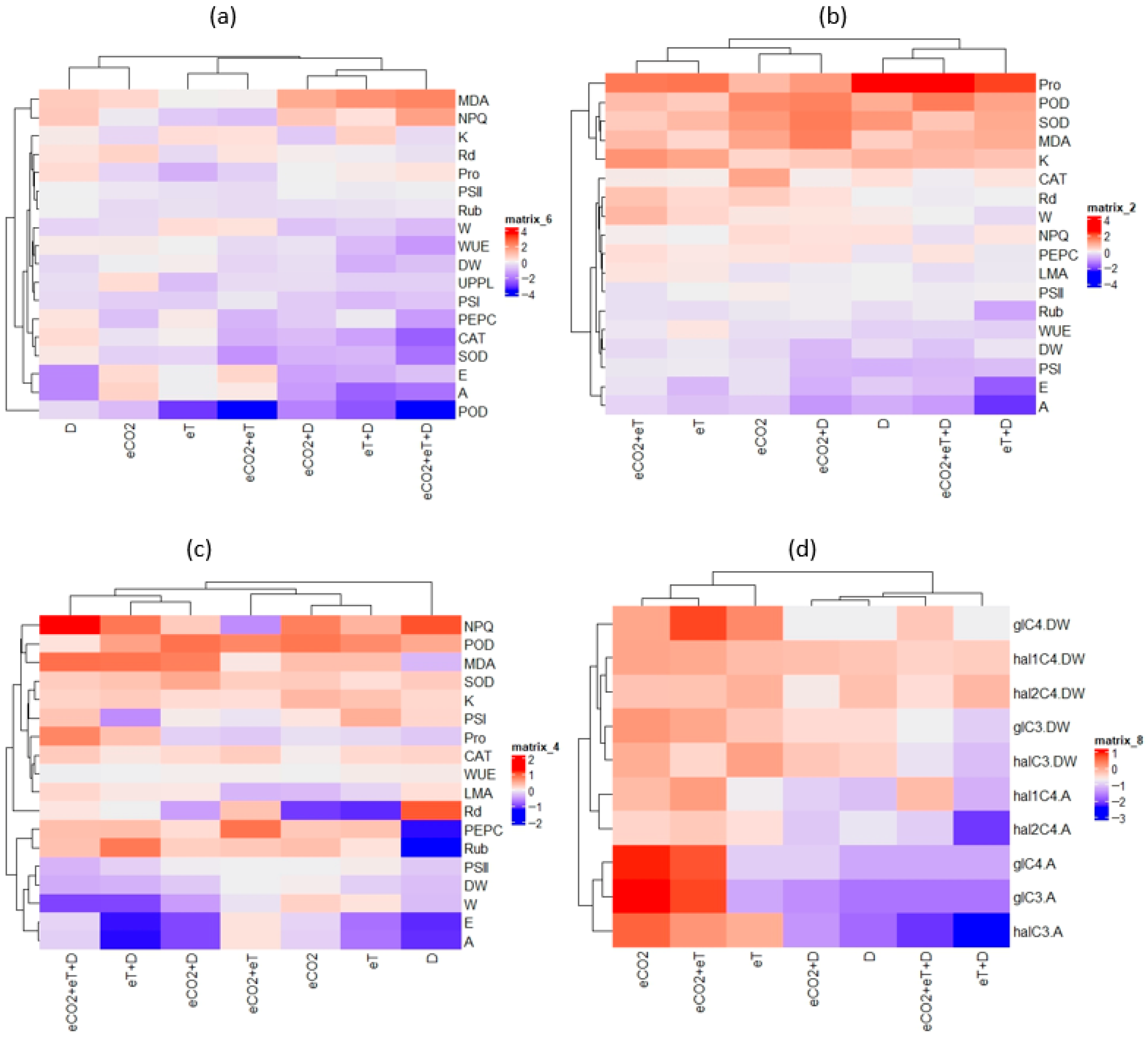
The selected C3 and C4 halophytes exhibited a similar sensitivity to the individual effects of D or eT on photosynthesis, a phenomenon that was more pronounced in the C4-NADP-ME species and was associated with limitations in stomatal and metabolic processes. However, changes in photosynthesis had little effect on plant growth in all model species, indicating their tolerance to D or eT (Figure 2). Similar results demonstrating stability in plant growth parameters under D were obtained for other C3 and C4-NAD-ME halophytes of the genus Atriplex [169]. At the same time, some studies have shown that C4 halophytes can be less resistant than C3 halophytes under water deficit conditions [168,257]. This may be due to the characteristics of the root system (C4-NADP halophyte Atriplex tatarica) and salt accumulation (e.g., C3 halophyte Karelinia caspica). The shallow root system of A. tatarica ensures lower transpiration water loss and stable leaf water potential, supporting this species to survive under water-deficit conditions. However, it reduces growth more than the C3 halophyte, whose strategy involves water accumulation [168].
Analysis of the combined action of two climatic factors (eT+D) on halophytes revealed a negative cumulative effect on the growth of C3 species and photosynthesis of C4-NAD-ME species (Figure 1). A similar behavior was described in the halophytes Crithmum maritimum (C3) [252] and Amaranthus species (C4 NAD-ME) [253].
No mitigating effect of eCO2 at eT was detected in C3 and C4-NAD-ME halophytes (Figure 2). However, it was observed in C4-NADP-ME species, which demonstrate high plasticity in photosynthetic and energy metabolism. The observed increases in photosynthesis and transpiration rates, reduced oxidative stress, and stable growth were likely due to increased PEPC content, enhanced adaptive dark mitochondrial respiration, and reduced dissipative non-photochemical costs in PSII (Figure 2). No mitigating effect of eCO2 on the negative impact of D was detected in C3 and C4 halophytes (Figure 2). Interestingly, an adaptive increase in the Rubisco and PEPC content did not result in positive changes to the photosynthesis and productivity of C4-NADP-ME species (Figure 2).
Climate change often involves three factors changing simultaneously: eCO2, eT, and D [6,247,258]. The mitigating effect of eCO2 on the combined action of eT+D for photosynthesis was only detected in C4 halophytes and was most pronounced in C4-NADP-ME species. However, elevated proline accumulation indicates increased osmotic stress in C4 species (Figure 2). A number of studies have also shown that the positive effect of eCO2 is weakened under the combined action of climatic factors [259,260,261].
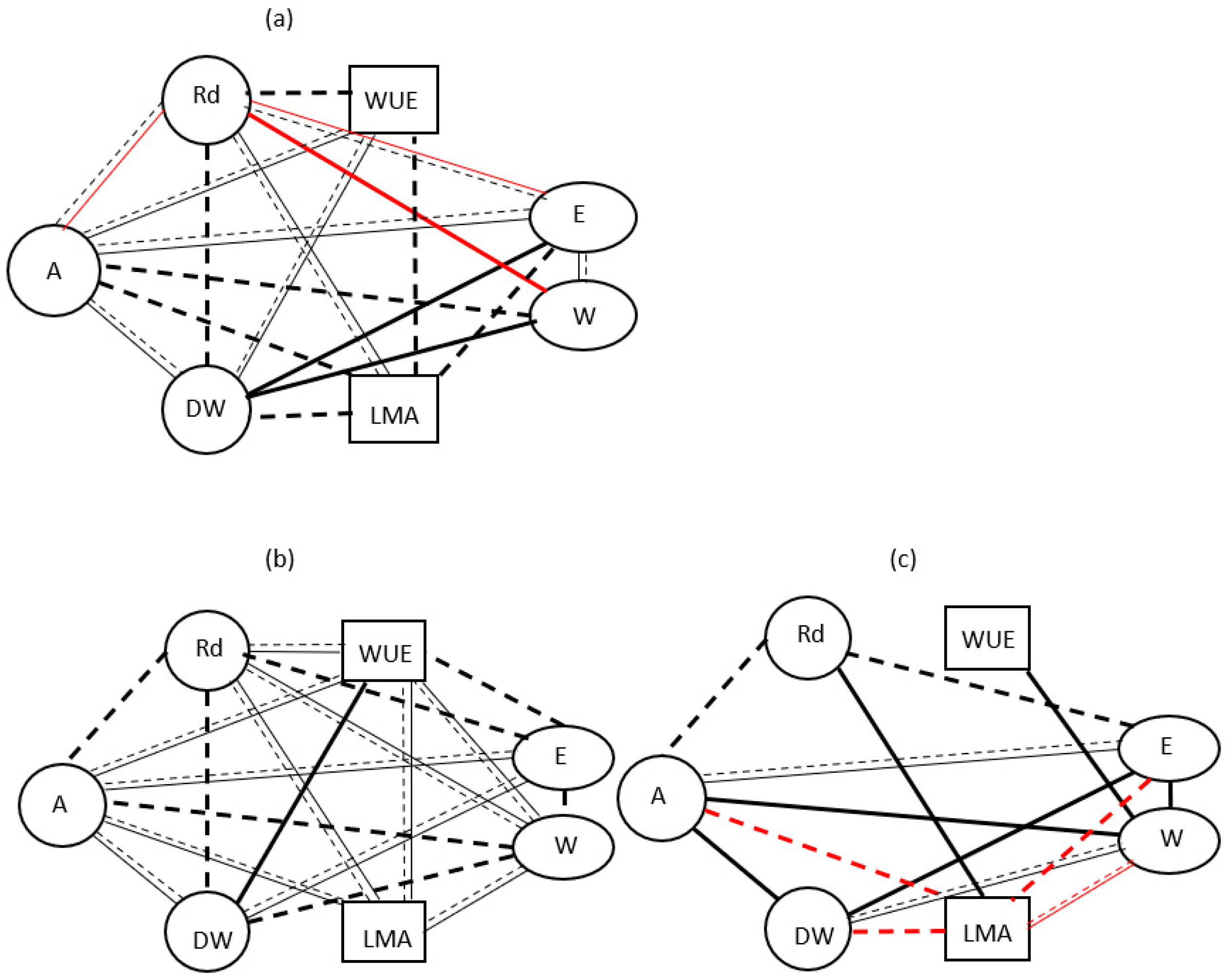
A comparison of the consistency of changes in carbon and water exchange parameters (using correlation analysis) in model salt-tolerant species under the individual and combined action of eCO2, eT, and D showed that C4 halophytes differ from C3 halophytes in that they have a close relationship between water use efficiency (WUE, the ratio of apparent photosynthesis to transpiration) and leaf water content (W), as well as between W and leaf mass per unit area (LMA). In other words, WUE is more closely related to leaf water content and thickness than to photosynthesis and transpiration (Figure 3). The C4-NADP-ME species differed from the C3 and C4-NAD-ME species in that they exhibited greater variability in carbon and water exchange parameters, with few correlations observed between individual parameters (Figure 3).
Figure 2.
Heatmap changes in physiology-biochemical parameters in the following plants: (a) Chenopodium quinoa (C3), (b) Amaranthus retroflexus (C4-NAD-ME), (c) Kochia prostrata (C4-NADP-ME), and (d) in C3 and C4 glycophytes (gl) and halophytes (hal) [35,52,157,260] under individual and combined effects of drought (D), elevated temperature (eT), and elevated CO2 concentrations (eCO2) relative to control plants. Abbreviations: hal1C4—C4-NADP-ME; hal2C4—C4-NAD-ME; MDA—malondialdehyde content; SOD—superoxide dismutase, POD—peroxidase; CAT—catalase; Rub—ribulose-1,5-bisphosphate carboxylase/oxygenase (Rubisco) large subunit; PEPC—phosphoenolpyruvate carboxylase; PSI—activity of cyclic electron transport of PSI; NPQ—non-photochemical quenching; K—K+ content; A—apparent photosynthesis; E—transpiration intensity; WUE—water use efficiency; Rd—dark respiration; DW—dry biomass.
At the same time, high water use efficiency did not result in high biomass productivity in C4-NADP-ME species, as evidenced by the lack of a relationship between biomass accumulation and WUE. Furthermore, only a relationship was found between biomass accumulation and CO2/H2O gas exchange indices (A and E) under ambient CO2 concentration (Figure 3). As no relationship was found between biomass accumulation and dark respiration intensity, it can be assumed that a significant increase in respiration associated with adaptation was observed alongside growth respiration (Figure 3). In contrast, high correlations were found between biomass productivity and WUE in C4-NAD-ME species and C3 species. However, this relationship of the C3 species was independent of CO2 concentration; in the C4-NAD-ME species, it only occurred at ambient CO2 concentration (Figure 3). In both species, most of the energy expenditure at eCO2 was likely associated with biomass accumulation, as indicated by the correlation between DW and Rd (Figure 3).
The analysis of adaptive reactions in response to climatic factors in C3 and C4 halophytes showed that different D options (D, eT+D, eCO2+eT+D) negatively affected the intensity of photosynthesis and the growth in all plants, regardless of photosynthesis type. At the same time, it was shown that C4 species had some advantages under unfavorable conditions, demonstrating greater stability of the photosynthetic apparatus than C3 species. This was probably facilitated by a more effective antioxidant system in C4 halophytes (Figure 1) [19,262] and a higher photosynthetic plasticity, most pronounced in the C4-NADP-ME halophyte, compared to C3 species (Figure 3), as confirmed by other studies [93,263].
Figure 3.
The degree of coordination between carbon and water metabolism based on correlation analysis in (a) Chenopodium quinoa (C3), (b) Amaranthus retroflexus (C4-NAD-ME), and (c) Kochia prostrata (C4-NADP-ME) in the adaptation to climatic factors (drought, elevated temperature, and elevated CO2 concentrations). Solid lines show the correlations at ambient CO2 concentration; dashed lines show the correlations at elevated CO2. Red lines indicate negative correlations. Thin lines correspond to r = 0.6–0.7, and thick lines correspond to r = 0.8–0.9. These diagrams are based on correlation analysis conducted using R software (v.3.6.1). A—apparent photosynthesis; E—transpiration intensity; WUE—water use efficiency; Rd—dark respiration; DW—dry biomass. W—water content; LMA—leaf mass per unit area.
5.2. Comparison of Adaptive Responses of Halophytes and Glycophytes with Different Types of Photosynthesis to Climatic Factors
To compare the adaptive responses of halophytes and glycophytes with different types of photosynthesis to eCO2, eT and D, individually and various combinations, we used the intensity of photosynthesis (CO2 assimilation, A) and productivity (dry biomass accumulation, DW) as the main physiological parameters. These parameters are often interrelated and largely determine the adaptive potential and final productivity of plants [11,261]. The table presents the results of the analysis, which allowed us to identify the characteristic features of the C4 plant adaptation (glycophytes and halophytes) and confirm existing knowledge. The first part of the table contains the general characteristics of halophytes and glycophytes with C3 and C4 types of photosynthesis, as previously described by many authors. So, C4 species are known to have high photosynthetic efficiency due to the CCM [20,21,24,25,26,27,28], antioxidant activity, which limits oxidative damage under stress [35,36,262,264,265]. The most plastic C4 species (halophytes and glycophytes) are those with the C4-NADP-ME type of photosynthesis [35,36,93,263].
Despite their high-water use efficiency, there is currently no consensus regarding the drought tolerance of C4 plants [30,34,35,37,163,164]. The table presents the results of our analysis of literature data and experiments on the reaction of glycophytes and halophytes with different types of photosynthesis to the action of climatic factors. Our study of the plant response to D showed that C3 and C4 glycophytes were less drought-tolerant than C3 and C4 halophytes, as evidenced by stable growth of the latter (Table 1) [34,35,52,155,256]. The eT reduces the intensity of photosynthesis in both glycophytes and halophytes with different types of photosynthesis. However, eT does not affect their growth (see Table 1) [25,35,52,155,256]. The low thermal stability of some C4 species may be associated with increased respiration (Rd), i.e., dissipation processes [29,32,35]. Furthermore, C4 plants have a higher temperature optimum for photosynthesis than C3 plants; their range is relatively narrow [25].
Physiological responses to combined stresses do not necessarily coincide with tolerance to individual stresses. This is because combined stress can induce unique and significant biochemical and molecular alterations, which often depend on adaptation to a specific combination of stresses and genotype [266]. The combined effects of eT and D (eT+D) also induce a complex plant response due to the molecular regulatory mechanism of “gas and brake” that controls the opening/closing of stomata in response to the simultaneous action of these factors [233,267,268,269]. According to some reports, the response to the combined effect of eT+D in C3 and C4 plants does not differ significantly [35,270]. Compared to the individual effect of these factors, the combined stress exhibits an additive/cumulative (negative) effect, increasing disruption to photosynthesis in both C3 and C4 species [9,253]. However, a comparative analysis of the combined effect of eT+D on glycophytes and halophytes with different types of photosynthesis showed that C3 species were less resistant, regardless of salt tolerance, exhibiting decreased plant productivity. The photosynthetic apparatus was sensitive only in C4-NAD-ME halophytes (see Table 1) [35,52,155].
Table 1.
A comparison of the reactions of glycophytes and halophytes with different types of photosynthesis in terms of the intensity of CO2 assimilation (A) and plant productivity in relation to climatic factors.
The mitigating effect of eCO2 on the negative impacts of warming or D remains unresolved. In particular, stresses caused by eCO2 and warming often occur simultaneously under climate change [217,218], and photosynthetic responses to these stresses can be either synergistic or antagonistic depending on circumstances [23,36,221,222,244,245,249,250]. The ambiguity of plant responses to eCO2+eT is due to the fact that eT reduces the solubility of CO2 in water, which eCO2 can compensate for this factor [275,276]. Furthermore, eCO2 and eT have conflicting effects on stomatal limitation: eCO2 decreases stomatal conductance, whereas eT can enhance it [23,247,277,278,279,280]. The mitigating effect of eCO2 under eT is shown to be more pronounced in glycophytes and C4-NADP-ME halophytes (Table 1) [244,245]. The mitigating effect of eCO2 on the negative impact of D on photosynthesis was found only for glycophytes, regardless of the type of photosynthesis (Table 1) [35,52,155,256,273].
The question of the mitigating effect of eCO2 on the negative consequences of the combined action of D and eT (eT+D) in plants with different types of photosynthesis also remains unanswered. While the mitigating effect has been demonstrated on both C3 [243] and C4 [26,28,36] plants, there is information that an increased eCO2 concentration negatively affects C4 photosynthesis under heat and D, without affecting biomass [33,253]. It has been shown that the mitigating effect of eCO2 on the negative impacts of D and heat stress is stronger in terms of the physiology and yield of C3 crops than in C4 species. Notably, no positive effect of eCO2 was observed under eT+D in C3 halophytes, as evidenced by unchanged photosynthesis and productivity (see Table 1) [35,52,155,255,256,274].
To generalize the available information, a comparative analysis of the physiological and biochemical reactions of model fodder and food glycophytes (C3 barley and C4-NADP-ME sorghum) and halophytes (C3 quinoa, C4-NADP-ME Kochia, and C4-NAD-ME amaranth) to climatic factors was carried out using heat maps (Figure 2d). Glycophytes and halophytes were clearly divided into groups based on their physiological responses to climatic factors, depending on their photosynthetic metabolism. C3 species were less tolerant to the individual and combined effects of these factors than C4 species.
The climatic factors were grouped into two categories based on the analysis of plant responses to them. The first group comprised different D variants (D, eT+D, and eCO2+eT+D), and the second group included the individual and combined actions of eCO2 and eT. The factors of the 1st group had the most negative impact on photosynthesis and productivity of all species; however, the C3 species were more sensitive. Moreover, C3 halophytes were less tolerant than C3 glycophytes to the combined action of eT+D and eCO2+eT+D. The exception was the C4-NAD-ME halophytes, which demonstrated sensitivity of photosynthesis to eT+D without affecting productivity. In general, halophytes showed greater stability in plant growth parameters under different D conditions. Overall, therefore, C4 species were more resilient to the action of D and eT factors of this group (Figure 4). Glycophytes were more sensitive to the climatic factors of the 2nd group, regardless of photosynthetic metabolism type. Photosynthesis was suppressed at eT, and it is stimulated at eCO2. Therefore, plant thermotolerance depended more on the salt tolerance than on the photosynthesis type (Figure 2d). The mitigating effect of eCO2 on photosynthesis and productivity at eT was more pronounced in glycophytes and was independent of photosynthesis type.
Figure 4.
Bioremediation of salt-affected farmlands through cultivation of halophytes. High saline abandoned farmland (1) planted by halophytes with salt removal capacity alternated with salt tolerant glycophytes (2). After 3.5 to 8.0 years of cultivating various combinations of C3 and C4 halophytes and glycophytes, saline land becomes productive and suitable for growing salt-sensitive traditional crops.
A comparative analysis of the combined effect of eT+D showed that C3 species were less resistant, regardless of salt tolerance, demonstrating a decrease in photosynthesis and productivity. The photosynthetic apparatus was also found to be sensitive in C4-NAD-ME halophytes. C4 species exhibited advantages under the combined influence of three factors (eCO2, D, and eT). The moderating effect of eCO2 under eT+D condition on photosynthesis was more pronounced in the C4-NADP-ME halophytes and on productivity in the C4-NADP-ME glycophytes. The advantages of C4 halophytes under various D conditions and associated factors are related to the combination of halophyte tolerance mechanisms and C4 photosynthesis characteristics. For example, the ability to resist osmotic and ionic stress enables them to more easily overcome osmotic shock. The presence of C4 CCM ensures relative independence from stomatal limitation of CO2 assimilation during photosynthesis and regulates plant water exchange. Furthermore, C4 species are characterized by a higher level of antioxidant protection (Figure 2d).
6. Prospects for the Domestication and Practical Use of Halophytes
Recently, halophytes have been widely utilized as agricultural crops in saline soils and for the bioremediation of degraded lands aimed to improve their productivity [55,56,62,281]. However, the data on selecting appropriate halophyte species for the phytoremediation of salinized soil is limited in the literature [282]. Halophytes with a higher degree of salt tolerance have better growth dynamics and greater structural plasticity, and seem to be more effective in phytoremediation. The ability to remove salts and the capacity of species to be phytoextracted are not the only factors affecting the uptake of salts and heavy metal ions from the soils. Several other issues must also be considered, including the chemical composition and concentration of salt, redox potential, pH, and organic matter content, among others [283,284]. The cultivation of C3 and C4 species, for example Amaranthus retroflexus (C4), Atriplex nitens (C3), Kochia scoparia (C4), and Karelina caspia (C3) in pure stands and in mixed trials on highly saline land yielded the biggest biomass production at the end of the vegetation period, while maximum salt uptake was detected during their active growth stage in summer [285]. A. nitens was the most promising species, removing salts from the soil at a rate of about 1.8 kg NaCl equivalent/kg-dry soil during the peak growth and beginning of flowering ontogenetic stages [282].
A wide range of genetic diversity in the halophyte species is being exploited to breed and select improved lines with enhanced salt tolerance, biomass production, and agronomic performance [55,286,287,288]. For example, quantitative trait loci mapping for nine agronomic traits has been reported in Amaranthus hypochondriacus [289]. A genetic study using F1 and F2 populations of Amaranthus cruentus and Amaranthus spp. revealed a single genetic locus for seed shattering on chromosome 2B [290]. Significant genetic diversity has been documented among natural populations in Atriplex, providing valuable genetic resources for breeding and selection [291,292,293].
Circular halophytic mixed farming (CHMF) increases the productivity of saline land. Long-term and year-round cultivation of C3 and C4 halophytes in CHMF returns promising results in terms of green biomass and seed production (Figure 4). This approach implies the continuous growth and subsequent disposal of halophytes’ aboveground plant tissues to reverse salinization levels and eventually reclaim desalinized land for alternative agricultural use. Succulent halophytes in particular accumulate higher levels of Na+ and Cl− (3000–5000 mmol/kg) than other salt-tolerant species [251,294]. Results suggested the consecutive cultivation of the halophytes for 3–6 years would rehabilitate the high-saline farmland, allowing the growth of mung beans, sunflowers, foxtails, pearl millet, sorghum, and other glycophytes that are less salt-tolerant [295]. The aboveground biomass of salt accumulator halophytes was thought to be utilized as an alternative fuel, biocompost, and other useful products during the phytoremediation of salinized farmlands [296]. Previous studies emphasized the importance of incorporating neglected and underutilized crops (NUCs), including both C3 and C4 species, into saline dryland farming systems [297]. These species have been marginalized historically by intensive conventional agriculture. Promoting NUCs has become a key interest for farmers and agropastoralists, driven by their climate resilience and economic benefits, especially as livestock feed and grains for human consumption [281,298]. To maximize crop production after the phytoremediation, the continuous cultivation of halophytes reverses salinization levels and reclaims marginal lands for agricultural and other potentially economically beneficial uses.
An equally important and promising area of application of wild halophytes is their potential use as carriers of genes for resistance to osmotic and ionic stress in the development of climate-resilient crops. C4 halophytes are particularly promising for this purpose, as they demonstrate a combination of salt tolerance and efficient photosynthesis under changing environments. Creating new crop varieties requires an interdisciplinary approach that integrates advanced technologies, such as multi-omics (transcriptomics, proteomics, and metabolomics) and functional genomics. This involves understanding the role of genes in the plant genome and their influence on plant functional traits and phenotype [2,299,300,301]. Accelerated selection, speed breeding methods, and synthetic biology, in combination with genome editing methods (CRISPR/Cas9), show promise and benefit [2,7,302]. Combining systems biology and artificial intelligence methods in combination with meta-analysis will provide insight into plant stress response mechanisms and interpret complex interactions between multiple stresses. This will enable the development of effective climate change adaptation and mitigation strategies [2,7,229]. To develop new plant varieties that are more resilient to climate change, it is necessary to identify the key breeding targets that balance the plant’s responses to multiple stresses while promoting growth recovery [225,280,303,304]. Additionally, advancing studies aim to identify TFs that play a pivotal role in how plants respond to combinations of stresses and to further explore photosystem II (PSII) [240] and PSI and its role in CCM in C4 species [305]. The mechanisms that maintain potassium homeostasis [306], the formation of stress-resistant metabolites under stress, and their potential use as markers in plant breeding [7,285,307] are also being studied.
7. Conclusions and Prospects for Future Research
Rising eCO2 and climate change are leading to unpredictable combinations of abiotic stress factors (D, eT, and salinity), which seriously affect plant growth and productivity. The combination of these stress factors dramatically reduces the efficiency of photosynthesis and crop yields, highlighting the need to develop resistant crop varieties. However, there is currently no consensus regarding the D and heat tolerance of C4 plants, despite their high water use efficiency. There is also very varied and often contradictory information on the mitigating effect of eCO2 on the negative impact of D and eT on C3 and C4 species. Recently, the potential of halophytes as agricultural crops for saline soils, for reclamation of degraded land, and as carriers of genes for resistance to osmotic and ionic stress has been actively studied. Meanwhile, it is assumed that halophytes and glycophytes have virtually identical mechanisms for regulating salt tolerance, differing only in the higher expression of key genes and the activity of salt-tolerance-associated enzymes in halophytes. Consequently, further systematic study of the molecular regulatory mechanisms of tolerance in halophytes is promising, despite the limited genomic information available [39].
An analysis of the results of various comparative studies, including our own, has enabled us to identify the characteristic features and universal adaptive strategies of halophytes and glycophytes with different types of photosynthesis in response to the impact of climatic factors (Figure 5). The analysis revealed that plants with different types (C3 and C4) and subtypes of photosynthetic metabolism (C4-NAD-ME and C4-NADP-ME) exhibit different levels of tolerance and photosynthetic plasticity in response to individual and combined climatic factors. Specifically, C4 halophytes and glycophytes had an advantage in D conditions, while both C3 and C4 halophytes performed well in condition eT. This phenomenon indicates that salt tolerance mechanisms play a more significant role in plant heat tolerance than the photosynthetic type.
Figure 5.
The impact of climate change on glycophytes and halophytes with different types of photosynthesis. *—Individual adaptive responses; **—Adaptive responses associated with salt tolerance; ***—Adaptive responses associated with the type of photosynthetic metabolism. Yellow: (1) different drought variants (D, eT+D, eCO2+D+eT) (1st group of factors). Green-blue: (2) eCO2 and eT (2nd group of factors).
Elevated CO2 levels are thought to have a more positive impact on C3 species. However, we found that the mitigating effect of eCO2 on photosynthesis was more pronounced at eT in glycophytes with different types of photosynthesis (C3 and C4), as well as in the C4-NADP-ME halophytes. The mitigation effect of eCO2 under the negative impact of D was not strong for all model species. Meanwhile, C4 species demonstrated benefits from the combined action of three factors (eCO2+eT+D). The mitigating effect of eCO2 at eT and D was observed in C4-NADP-ME halophytes on photosynthesis and in C4-NADP-ME glycophytes on growth.
The hypothesis that salt-tolerant species have a high potential for resistance to other abiotic external factors was confirmed only for the action of eT. Halophytes also showed a slight advantage under D conditions, but only those with C4 photosynthesis. Unlike C3 and C4-NAD-ME, a unique feature of C4-NADP-ME halophytes is their high metabolic plasticity and variability of photosynthesis, which is reflected in the mitigating effect of eCO2 on the negative effects of eT and D.
Thus, our analysis revealed that C4 halophytes are the most promising group of plants in a changing climate. Their unique ecological capabilities are closely linked to their type of photosynthetic metabolism and plasticity. The advantages of C4 halophytes under different D conditions, including the simultaneous action of three factors, are associated with a combination of halophyte tolerance mechanisms and the characteristics of C4 photosynthesis. These findings, obtained in model plants, require further, more detailed studies across a larger number of species. However, the insights described in this article enable us to formulate unanswered questions and identify prospects for further research. The following questions remain, in particular: How do plants coordinate physiological, biochemical, and molecular responses when subjected to multiple stresses? What are their tolerance thresholds for different combinations of stress factors? How do plants cope with oxidative stress under the influence of multiple factors? Similar questions have been raised by the authors of other studies [302]. Further studies aimed at identifying “general responses” independent of the stress type and “specific responses” associated with stress combinations, with significant overlap of TFs and signaling pathways, are promising [7,230,308]. Given that plants will predominantly respond to the primary stressor, including complex signaling pathways, it is necessary to understand the priority and dominance of responses to stress combinations [230,309,310], which can lead to stress memory and increased stress resistance [7,10,281,311].
Author Contributions
Z.R. and E.S.—conceptualization, writing—original draft preparation. K.T.—writing—review and editing, K.A.—reviewing and editing. All authors have read and agreed to the published version of the manuscript.
Funding
This research was funded by the state assignment of the Ministry of Science and Higher Education of the Russian Federation (126012615950-2) and the Science and Technology Research Partnership for Sustainable Development (SATREPS) project (JPMJSA2001) from JICA and JST.
Data Availability Statement
Data are contained within the article.
Conflicts of Interest
The authors declare no conflicts of interest.
References
- IPCC. Climate Change 2023: Synthesis Report. Contribution of Working Groups I, II and III to the Sixth Assessment Report of the Intergovernmental Panel on Climate Change; Core Writing Team, Lee, H., Romero, J., Eds.; IPCC: Geneva, Switzerland, 2023; p. 184. [Google Scholar] [CrossRef] [Scilit]
- Jiang, Z.; van Zanten, M.; Sasidharan, R. Mechanisms of plant acclimation to multiple abiotic stresses. Commun. Biol. 2025, 8, 655. [Google Scholar] [CrossRef] [Scilit]
- Silva, R.G.D.; Alves, R.C.; Zingaretti, S.M. Increased [CO2] Causes Changes in Physiological and Genetic Responses in C4 Crops: A Brief Review. Plants 2020, 13, 1567. [Google Scholar] [CrossRef] [Scilit]
- Zhou, R.; Yu, X.; Wen, J.; Jensen, N.B.; Dos Santos, T.M.; Wu, Z.; Rosenqvist, E.; Ottosen, C.O. Interactive effects of elevated CO2 concentration and combined heat and drought stress on tomato photosynthesis. BMC Plant Biol. 2020, 7, 260. [Google Scholar] [CrossRef] [Scilit] [PubMed]
- Hussain, S.; Ulhassan, Z.; Brestic, M.; Zivcak, M.; Zhou, W.; Allakhverdiev, S.I.; Yang, X.; Safdar, M.E.; Yang, W.; Liu, W. Photosynthesis research under climate change. Photosynth. Res. 2021, 150, 5–19. [Google Scholar] [CrossRef] [Scilit] [PubMed]
- Yadav, S.; Elansary, H.O.; Mattar, M.A.; Elhindi, K.M.; A. Alotaibi, M.; Mishra, A. Differential Accumulation of Metabolites in Suaeda Species Provides New Insights into Abiotic Stress Tolerance in C4-Halophytic Species in Elevated CO2 Conditions. Agronomy 2021, 11, 131. [Google Scholar] [CrossRef] [Scilit]
- Jing, Z.; Liu, N.; Zhang, Z.; Hou, X. Research Progress on Plant Responses to Stress Combinations in the Context of Climate Change. Plants 2024, 13, 469. [Google Scholar] [CrossRef] [Scilit]
- Clauw, P.; Coppens, F.; De Beuf, K.; Dhondt, S.; Van Daele, T.; Maleux, K.; Storme, V.; Clement, L.; Gonzalez, N.; Inzé, D. Leaf responses to mild drought stress in natural variants of Arabidopsis. Plant Physiol. 2015, 167, 800–816. [Google Scholar] [CrossRef] [Scilit] [PubMed]
- Zhu, T.; De Lima, C.F.F.; De Smet, I. The Heat is On: How Crop Growth, Development and Yield Respond to High Temperature. J. Exp. Bot. 2021, 29, erab308. [Google Scholar] [CrossRef] [Scilit]
- Zandalinas, S.I.; Fichman, Y.; Devireddy, A.R.; Sengupta, S.; Azad, R.K.; Mittler, R. Systemic signaling during abiotic stress combination in plants. Proc. Natl. Acad. Sci. USA 2020, 16, 13810–13820. [Google Scholar] [CrossRef] [Scilit]
- Foyer, C.H.; Ruban, A.V.; Nixon, P.J. Photosynthesis solutions to enhance productivity. Phil. Trans. R. Soc. B 2017, 372, 20160374. [Google Scholar] [CrossRef] [Scilit]
- Calzadilla, P.I.; Carvalho, F.E.L.; Gomez, R.; Lima Neto, M.C.; Signorelli, S. Assessing photosynthesis in plant systems: A cornerstone to aid in the selection of resistant and productive crops. Environ. Exp. Bot. 2022, 201, 104950. [Google Scholar] [CrossRef] [Scilit]
- Batista-Silva, W.; da Fonseca-Pereira, P.; Martins, A.O.; Zsögön, A.; Nunes-Nesi, A.; Araújo, W.L. Engineering Improved Photosynthesis in the Era of Synthetic Biology. Plant Commun. 2020, 13, 100032. [Google Scholar] [CrossRef] [Scilit]
- Berry, J.O.; Yerramsetty, P.; Zielinski, A.M.; Mure, C.M. Photosynthetic gene expression in higher plants. Photosynth. Res. 2013, 117, 91–120. [Google Scholar] [CrossRef] [Scilit] [PubMed]
- Nouri, M.Z.; Moumeni, A.; Komatsu, S. Abiotic Stresses: Insight into Gene Regulation and Protein Expression in Photosynthetic Pathways of Plants. Int. J. Mol. Sci. 2015, 28, 20392–20416. [Google Scholar] [CrossRef] [Scilit] [PubMed]
- Wahid, A. Physiological implications of metabolite biosynthesis for net assimilation and heat-stress tolerance of sugarcane (Saccharum officinarum) sprouts. J. Plant Res. 2007, 120, 219–228. [Google Scholar] [CrossRef] [Scilit]
- Farooq, M.; Wahid, A.; Kobayashi, N.; Fujita, D.; Basra, S.M.A. Plant drought stress: Effects, mechanisms and management. Agron. Sustain. Dev. 2009, 29, 185–212. [Google Scholar] [CrossRef] [Scilit]
- Zandalinas, S.I.; Balfagón, D.; Arbona, V.; Gómez-Cadenas, A.; Inupakutika, M.A.; Mittler, R. ABA is required for the accumulation of APX1 and MBF1c during a combination of water deficit and heat stress. J. Exp. Bot. 2016, 67, 5381–5390. [Google Scholar] [CrossRef] [Scilit] [PubMed]
- dos Santos, T.B.; Ribas, A.F.; de Souza, S.G.H.; Budzinski, I.G.F.; Domingues, D.S. Physiological Responses to Drought, Salinity, and Heat Stress in Plants: A Review. Stresses 2022, 2, 113–135. [Google Scholar] [CrossRef] [Scilit]
- Sage, R.F. The evolution of C4 photosynthesis. New Phytol. 2004, 161, 341–370. [Google Scholar] [CrossRef] [Scilit]
- Sage, R.F.; Sage, T.L.; Kocacinar, F. Photorespiration and the evolution of C4 photosynthesis. Annu. Rev. Plant Biol. 2012, 63, 19–47. [Google Scholar] [CrossRef] [Scilit]
- Rao, X.; Dixon, R.A. The Differences between NAD-ME and NADP-ME Subtypes of C4 Photosynthesis: More than Decarboxylating Enzymes. Front. Plant Sci. 2016, 7, 1525. [Google Scholar] [CrossRef] [Scilit] [PubMed]
- Zheng, T.; Yu, Y.; Kang, H. Short-term elevated temperature and CO2 promote photosynthetic induction in the C3 plant Glycine max, but not in the C4 plant Amaranthus tricolor. Funct. Plant Biol. 2022, 49, 995–1007. [Google Scholar] [CrossRef] [Scilit] [PubMed]
- Sage, R.F. Environmental and evolutionary preconditions for the origin and diversification of the C4 photosynthetic syndrome. Plant Biol. 2001, 3, 202–213. [Google Scholar] [CrossRef] [Scilit]
- Yamori, W.; Hikosaka, K.; Way, D.A. Temperature response of photosynthesis in C3, C4, and CAM plants: Temperature acclimation and temperature adaptation. Photosynth. Res. 2014, 119, 101–117. [Google Scholar] [CrossRef] [Scilit]
- Leakey, A.D.B.; Ferguson, J.N.; Pignon, C.P.; Wu, A.; Jin, Z.; Hammer, G.L.; Lobell, D.B. Water use efficiency as a constraint and target for improving the resilience and productivity of C3 and C4 crops. Annu. Rev. Plant Biol. 2019, 70, 781–808. [Google Scholar] [CrossRef] [Scilit]
- Song, Z.; Wang, L.; Lee, M.; Yue, G.H. The evolution and expression of stomatal regulators in C3 and C4 crops: Implications on the divergent drought tolerance. Front. Plant Sci. 2023, 14, 1100838. [Google Scholar] [CrossRef] [Scilit]
- Tian, W.; Su, C.; Zhang, N.; Zhao, Y.; Tang, L. Simulation of the physiological and photosynthetic characteristics of C3 and C4 plants under elevated temperature and CO2 concentration. Ecol. Model. 2024, 495, 110805. [Google Scholar] [CrossRef] [Scilit]
- Wang, D.; Heckathorn, S.A.; Barua, D.; Joshi, P.; Hamilton, E.W.; LaCroix, J.J. Effects of elevated CO2 on the tolerance of photosynthesis to acute heat stress in C3, C4, and CAM species. Am. J. Bot. 2008, 95, 165–176. [Google Scholar] [CrossRef] [Scilit] [PubMed]
- Ghannoum, O. C4 photosynthesis and water stress. Ann. Bot. 2009, 103, 635–644. [Google Scholar] [CrossRef] [Scilit] [PubMed]
- Lobell, D.B.; Hammer, G.L.; McLean, G.; Messina, C.; Roberts, M.J.; Schlenker, W. The critical role of extreme heat for maize production in the United States. Nat. Clim. Change 2013, 3, 497–501. [Google Scholar] [CrossRef] [Scilit]
- Wasim, M.; Iqbal, R.M.; Akram, M. Growth and physiology of Panicum species for thermotolerance under hydroponic conditions. J. Anim. Plant Sci. 2013, 23, 860–864. [Google Scholar]
- Al-Salman, Y.; Ghannoum, O.; Cano, F.J. Elevated [CO2] negatively impacts C4 photosynthesis under heat and water stress without penalizing biomass. J. Exp. Bot. 2023, 27, 2875–2890. [Google Scholar] [CrossRef] [Scilit]
- Bellasio, C.; Stuart-Williams, H.; Farquhar, G.D.; Flexas, J. C4 maize and sorghum are more sensitive to rapid dehydration than C3 wheat and sunflower. New Phytol. 2023, 240, 2239–2252. [Google Scholar] [CrossRef] [Scilit]
- Opoku, E.; Sahu, P.P.; Findurova, H.; Holub, P.; Urban, O.; Klem, K. Differential physiological and production responses of C3 and C4 crops to climate factor interactions. Front. Plant Sci. 2024, 15, 1345462. [Google Scholar] [CrossRef] [Scilit]
- Rakhmankulova, Z.F.; Shuyskaya, E.V.; Prokofieva, M.Y.; Saidova, L.T.; Voronin, P.Y. Effect of elevated CO2 and temperature on plants with different type of photosynthesis: Quinoa (C3) and Amaranth (C4). Russ. J. Plant Physiol. 2023, 70, 117. [Google Scholar] [CrossRef] [Scilit]
- Vanaja, M.; Sarkar, B.; Sathish, P.; Jyothi Lakshmi, N.; Yadav, S.K.; Mohan, C.; Sushma, A.; Yashavanth, B.S.; Srinivasa Rao, M.; Prabhakar, M.; et al. Elevated CO2 ameliorates the high temperature stress effects on physio-biochemical, growth, yield traits of maize hybrids. Sci. Rep. 2024, 5, 2928. [Google Scholar] [CrossRef] [Scilit] [PubMed]
- Okur, B.; Nesrin, Ö. Soil salinization and climate change. In Climate Change and Soil Interactions; Elsevier: Amsterdam, The Netherlands, 2020; pp. 331–350. [Google Scholar]
- Mann, A.; Lata, C.; Kumar, N.; Kumar, A.; Sheoran, P. Halophytes as new model plant species for salt tolerance strategies. Front. Plant Sci. 2023, 14, 1137211. [Google Scholar] [CrossRef] [Scilit] [PubMed]
- Ma, Z.; Ge, Y.; Pang, B.; Liang, W.; Ruze, T. Characteristics of soil salinity and water-salt transport in the vadose zone of salt-impacted regions with variable permeability. Environ. Geochem. Health 2024, 46, 442. [Google Scholar] [CrossRef] [Scilit]
- Sangcharoen, R.; Kitithammarong, T.; Sun, M.; Toderich, K.; Tolibaev, E.; Qurbanov, A.; Jollibekov, B.; Ryosuke, E.; Kazuki, S.; Mitsuharu, T.; et al. Screening Halophytic Plant Species for Phytoremediation to Rehabilitate Salinised Farmlands in Uzbekistan. J. Water Environ. Technol. 2025, 23, 179–193. [Google Scholar] [CrossRef] [Scilit]
- Rahman, M.M.; Mostofa, M.G.; Keya, S.S.; Siddiqui, M.N.; Ansary, M.M.U.; Das, A.K.; Rahman, M.A.; Tran, L.S.-P. Adaptive Mechanisms of Halophytes and Their Potential in Improving Salinity Tolerance in Plants. Int. J. Mol. Sci. 2021, 22, 10733. [Google Scholar] [CrossRef] [Scilit] [PubMed]
- Rozema, J.; Schat, H. Salt tolerance of halophytes, research questions reviewed in the perspective of saline agriculture. Environ. Exp. Bot. 2013, 92, 83–95. [Google Scholar] [CrossRef] [Scilit]
- Rakhmankulova, Z.F.; Voronin, P.Y.; Shuyskaya, E.V.; Kuznetsova, N.A.; Zhukovskaya, N.V.; Toderich, K.N. Effect of NaCl and iso-osmotic PEG stress on CO2/H2O exchange in shoots of the C4 xero-halophyte Haloxylon aphyllum (Chenopodiaceae). Photosynthetica 2014, 52, 437–443. [Google Scholar] [CrossRef] [Scilit]
- Cheeseman, J.M. The evolution of halophytes, glycophytes and crops, and its implications for food security under saline conditions. New Phytol. 2015, 206, 557–570. [Google Scholar] [CrossRef] [Scilit]
- AbdElgawad, H.; Zinta, G.; Hegab, M.M.; Pandey, R.; Asard, H.; Abuelsoud, W. High Salinity Induces Different Oxidative Stress and Antioxidant Responses in Maize Seedlings Organs. Front. Plant Sci. 2016, 8, 276. [Google Scholar] [CrossRef] [Scilit]
- Mishra, A.; Tanna, B. Halophytes: Potential resources for salt stress tolerance genes and promoters. Front. Plant Sci. 2017, 8, 829. [Google Scholar] [CrossRef] [Scilit] [PubMed]
- Abdelaziz, M.E.; Abdelsattar, M.; Abdeldaym, E.A.; Atia, M.A.; Mahmoud, A.W.M.; Saad, M.M.; Hirt, H. Piriformospora indica alters Na+/K+ homeostasis, antioxidant enzymes and LeNHX1 expression of greenhouse tomato grown under salt stress. Sci. Hortic. 2019, 256, 108532. [Google Scholar] [CrossRef] [Scilit]
- Chung, Y.S.; Kim, K.S.; Hamayun, M.; Kim, Y. Silicon confers soybean resistance to salinity stress through regulation of reactive oxygen and reactive nitrogen species. Front. Plant Sci. 2020, 13, 1725. [Google Scholar] [CrossRef] [Scilit]
- Calone, R.; Mircea, D.-M.; González-Orenga, S.; Boscaiu, M.; Zuzunaga-Rosas, J.; Barbanti, L.; Vicente, O. Effect of Recurrent Salt and Drought Stress Treatments on the Endangered Halophyte Limonium angustebracteatum Erben. Plants 2023, 12, 191. [Google Scholar] [CrossRef] [Scilit] [PubMed]
- Iwuala, E.; Unung, O.; Adekoya, M.; Abiodun, I.; Odjegba, V.; Ajiboye, A.; Phiri, E.; Alam, A. Drought and salinity synergistically modulate the physiology and growth pattern of the facultative halophyte red mangrove (Rhizophora mangle). Acta Physiol. Plant 2023, 45, 131. [Google Scholar] [CrossRef] [Scilit]
- Rakhmankulova, Z.; Shuyskaya, E.; Prokofieva, M.; Toderich, K.; Saidova, L.; Lunkova, N.; Voronin, P. Drought has a greater negative effect on the growth of the C3 Chenopodium quinoa crop halophyte than elevated CO2 and/or high temperature. Plants 2024, 13, 1666. [Google Scholar] [CrossRef] [Scilit]
- Munns, R.; Gilliham, M. Salinity tolerance of crops—What is the cost? New Phytol. 2015, 208, 668–673. [Google Scholar] [CrossRef] [Scilit]
- Abobatta, W.F. Plant responses and tolerance to extreme salinity: Learning from halophyte tolerance to extreme salinity. In Salt and Drought Stress Tolerance in Plants: Signaling Networks and Adaptive Mechanisms; Springer: Cham, Switzerland, 2020. [Google Scholar]
- Garcia-Caparros, P.; Al-Azzawi, M.J.; Flowers, T.J. Economic Uses of Salt-Tolerant Plants. Plants 2023, 12, 2669. [Google Scholar] [CrossRef] [Scilit]
- Boorboori, M.R.; Zhang, H. The role of halophytes in phyto-desalination: Mechanisms and potential. Environ. Pollut. Bioavailab. 2025, 37, 2552171. [Google Scholar] [CrossRef] [Scilit]
- Flowers, T.J.; Colmer, T.D. Salinity tolerance in halophytes. New Phytol. 2008, 179, 945–963. [Google Scholar] [CrossRef] [Scilit] [PubMed]
- Aslam, R.; Bostan, N.; Maria, M.; Safdar, W. A critical review on halophytes: Salt tolerant plants. J. Med. Plants Res. 2011, 5, 7108–7118. [Google Scholar] [CrossRef] [Scilit]
- Shabala, S. Learning from halophytes: Physiological basis and strategies to improve abiotic stress tolerance in crops. Ann. Bot. 2013, 112, 1209–1221. [Google Scholar] [CrossRef] [Scilit]
- Grigore, M.-N.; Toma, C. A proposal for a new halophytes classification, based on integrative anatomy observations. Olten. Stud. Comun. Ştiinţele Nat. (Olten. J. Stud. Nat. Sci.) 2010, 26, 45–50. Available online: http://biozoojournals.ro/oscsn/cont/26_1/B08-Grigore.pdf (accessed on 23 December 2025).
- Yamanaka, N.; Toderich, K.N. Salinization in Drylands; Imai Print Co., Ltd.: Tottori, Japan, 2020; 101p. [Google Scholar]
- Caparros, P.G.; Ozturk, M.; Gul, A.; Batool, T.S.; Pirasteh-Anosheh, H.; Unal, B.T.; Altay, V.; Toderich, K.N. Halophytes have potential as heavy metal phytoremediators: A comprehensive review. Environ. Exp. Bot. 2022, 193, 104666. [Google Scholar] [CrossRef] [Scilit]
- Toderich, K.; Yasui, H.; Akinshiuna, N.; Naoko, M.; Endo, R.; Khujanazarov, T.; Shkineva, A.; Sultanova, Z.; Qurbanov, A.; Yamanaka, N.; et al. Circular halophytes mixed farming (CHMF) to improve food security in salt affected irrigated arid and semi-arid ecosystems. J. Arid. Land. Stud. 2022, 32, 71. [Google Scholar] [CrossRef]
- Toderich, K.N.; Mamadrahimov, A.A.; Khaitov, B.B.; Karimov, A.A.; Soliev, A.A.; Nanduri, K.R.; Shuyskaya, E. Differential impact of salinity stress on seeds minerals, storage proteins, fatty acids and squalene composition of new Quinoa genotype, grown in hyper arid desert environments. Front. Plant Sci. 2020, 11, 1985. [Google Scholar] [CrossRef] [Scilit]
- Lopes, M.; Sanches-Silva, A.; Castilho, M.; Cavaleiro, C.; Ramos, F. Halophytes as source of bioactive phenolic compounds and their potential applications. Crit. Rev. Food Sci. Nutr. 2023, 63, 1078–1101. [Google Scholar] [CrossRef] [Scilit]
- Boorboori, M.R.; Lin, W.; Zhan, W.; Fang, C. The role of silicon to increase arsenic tolerance in rice (Oryza sativa L.) seedlings by reinforcing anti-oxidative defense. Bioagro 2020, 32, 159–168. [Google Scholar]
- Cao, Q.; Yang, B.; Li, J.; Wang, R.; Liu, T.; Xiao, H. Characteristics of soil water and salt associated with Tamarix ramosissima communities during normal and dry periods in a semi-arid saline environment. Catena 2020, 193, 104661. [Google Scholar] [CrossRef] [Scilit]
- Munns, R.; Tester, M. Mechanisms of salinity tolerance. Ann. Rev. Plant Biol. 2008, 59, 651–681. [Google Scholar] [CrossRef] [Scilit]
- Shavrukov, Y. Salt stress or salt shock: Which genes are we studying? J. Exp. Bot. 2013, 64, 119. [Google Scholar] [CrossRef] [Scilit] [PubMed]
- Negrão, S.; Schmöckel, S.M.; Tester, M. Evaluating physiological responses of plants to salinity stress. Ann. Bot. 2017, 119, 1–11. [Google Scholar] [CrossRef] [Scilit]
- Galvan-Ampudia, C.S.; Julkowska, M.M.; Darwish, E.; Gandullo, J.; Korver, R.A.; Brunoud, G.; Haring, M.A.; Munnik, T.; Vernoux, T.; Testerink, C. Halotropism is a response of plant roots to avoid a saline environment. Curr. Biol. 2013, 23, 2044–2050. [Google Scholar] [CrossRef] [Scilit]
- Zelm, E.; Zhang, Y.; Testerink, C. Salt tolerance mechanisms of plants. Annu. Rev. Plant Biol. 2020, 71, 403–433. [Google Scholar] [CrossRef] [Scilit] [PubMed]
- Julkowska, M.M.; Testerink, C. Tuning plant signaling and growth to survive salt. Trends Plant Sci. 2015, 20, 586–594. [Google Scholar] [CrossRef] [Scilit] [PubMed]
- Lamers, J.; Meer, T.; Testerink, C. How plants sense and respond to stressful environments. Plant Physiol. 2020, 182, 1624–1635. [Google Scholar] [CrossRef] [Scilit]
- Yang, Y.; Guo, Y. Unraveling salt stress signaling in plants. J. Integr. Plant Biol. 2018, 60, 796–804. [Google Scholar] [CrossRef] [Scilit]
- Chen, X.; Ding, Y.; Yang, Y.; Song, C.H.; Wang, B.; Yang, S.H.; Guo, Y.; Gong, Z. Protein kinases in plant responses to drought, salt, and cold stress. J. Integr. Plant Biol. 2021, 63, 53–78. [Google Scholar] [CrossRef] [Scilit] [PubMed]
- dos Santos, T.B.; Budzinski, I.G.; Marur, C.J.; Petkowicz, C.L.; Pereira, L.F.; Vieira, L.G. Expression of three galactinol synthase isoforms in Coffea arabica L. and accumulation of raffinose and stachyose in response to abiotic stresses. Plant Physiol. Biochem. 2011, 49, 441–448. [Google Scholar] [CrossRef] [Scilit] [PubMed]
- Patel, M.K.; Mishra, A.; Jha, B. Untargeted metabolomics of halophytes. In Marine Omics: Principles and Applications; Kim, S., Ed.; CRC Press: Boca Raton, FL, USA, 2016; pp. 309–325. [Google Scholar] [CrossRef] [Scilit]
- Chaves, M.; Flexas, J.; Pinheiro, C. Photosynthesis under drought and salt stress: Regulation mechanisms from whole plant to cell. Ann. Bot. 2009, 103, 551–560. [Google Scholar] [CrossRef] [Scilit]
- Pan, T.; Liu, M.; Kreslavski, V.D.; Zharmukhamedov, S.K.; Nie, C.; Yu, M.; Kuznetsov, V.V.; Allakhverdiev, S.I.; Shabala, S. Non-stomatal limitation of photosynthesis by soil salinity. Crit. Rev. Environ. Sci. Technol. 2020, 51, 791–825. [Google Scholar] [CrossRef] [Scilit]
- Acosta-Motos, J.R.; Ortuño, M.F.; Bernal-Vicente, A.; Diaz-Vivancos, P.; Sanchez-Blanco, M.J.; Hernandez, J.A. Plant responses to salt stress: Adaptive mechanisms. Agronomy 2017, 7, 18. [Google Scholar] [CrossRef] [Scilit]
- Hernández, J.A.; Jiménez, A.; Mullineaux, P.M.; Sevilla, F. Tolerance of pea (Pisum sativum L.) to long-term salt stress is associated with induction of antioxidant defenses. Plant Cell Environ. 2000, 23, 853–862. [Google Scholar] [CrossRef] [Scilit]
- Gill, S.S.; Tuteja, N. Reactive oxygen species and antioxidant machinery in abiotic stress tolerance in crop plants. Plant Physiol. Biochem. 2010, 48, 909–930. [Google Scholar] [CrossRef] [Scilit] [PubMed]
- Sgherri, C.; Pinzino, C.; Quartacci, M.F. Reactive oxygen species and photosynthetic functioning: Past and present. In Reactive Oxygen Species in Plants: Boon or Bane—Revisiting the Role of ROS; Wiley: Chichester, UK, 2018; pp. 137–155. [Google Scholar] [CrossRef] [Scilit]
- Wang, X.; Wang, W.; Huang, J.; Peng, S.; Xiong, D. Diffusional conductance to CO2 is the key limitation to photosynthesis in salt-stressed leaves of rice (Oryza sativa). Physiol. Plant. 2018, 163, 45–58. [Google Scholar] [CrossRef] [Scilit]
- Hussain, N.; Ghaffar, A.; Zafar, Z.U.; Javed, M.; Shah, K.H.; Noreen, S.; Manzoor, H.; Iqbal, M.; Hassan, I.F.Z.; Bano, H.; et al. Identification of novel source of salt tolerance in local bread wheat germplasm using morpho-physiological and biochemical attributes. Sci. Rep. 2021, 11, 10854. [Google Scholar] [CrossRef] [Scilit]
- Pyankov, V.I.; Gunin, P.D.; Tsoog, S.; Black, C.C. C4 plants in the vegetation of Mongolia: Their natural occurrence and geographical distribution in relation to climate. Oecologia 2000, 123, 15–31. [Google Scholar] [CrossRef] [Scilit] [PubMed]
- Wang, R.Z. C4 plants in the deserts of China: Occurrence of C4 photosynthesis and its morphological functional types. Photosynthetica 2007, 45, 167–171. [Google Scholar] [CrossRef] [Scilit]
- Grigore, M.N.; Toma, C.; Zamfirache, M.; Boscaiu, M.; Olteanu, Z.; Cojocaru, D. Ecological anatomy in halophytes with C4 photosynthesis: Discussing adaptative features in endangered ecosystems. Carpathian J. Earth Environ. Sci. 2012, 7, 13–21. [Google Scholar]
- Bromham, L.; Bennett, T.H. Salt tolerance evolves more frequently in C4 grass lineages. J. Evol. Biol. 2014, 27, 653–659. [Google Scholar] [CrossRef] [Scilit]
- Voronin, P.Y.; Shuyskaya, E.V.; Toderich, K.N.; Rajabov, T.F.; Ronzhina, D.A.; Ivanova, L.A. Distribution of C4 Plants of the Chenopodiaceae Family According to the Salinization Profile of the Kyzylkum Desert. Russ. J. Plant Physiol. 2019, 66, 375–383. [Google Scholar] [CrossRef] [Scilit]
- Burundukova, O.L.; Shuyskaya, E.V.; Rakhmankulova, Z.F.; Burkovskaya, E.V.; Chubar, E.V.; Gismatullina, L.G.; Toderich, K.N. Kali komarovii (Amaranthaceae) is a xero-halophyte with facultative NADP-ME subtype of C4 photosynthesis. Flora 2017, 227, 25–35. [Google Scholar] [CrossRef] [Scilit]
- Nakhla, W.R.; Sun, W.; Fan, K.; Yang, K.; Zhang, C.; Yu, S. Identification of QTLs for Salt Tolerance at the Germination and Seedling Stages in Rice. Plants 2021, 24, 428. [Google Scholar] [CrossRef] [Scilit] [PubMed]
- Shabala, S.; Bose, J.; Hedrich, R. Salt bladders: Do they matter? Trends. Plant Sci. 2014, 19, 687–691. [Google Scholar] [CrossRef] [Scilit]
- Slama, I.; Abdelly, C.; Bouchereau, A.; Flowers, T.; Savoure, A. Diversity, distribution and roles of osmoprotective compounds accumulated in halophytes under abiotic stress. Ann. Bot. 2015, 115, 433–447. [Google Scholar] [CrossRef] [Scilit] [PubMed]
- Himabindu, Y.; Chakradhar, T.; Reddy, M.C.; Kanygin, A.; Redding, K.E.; Chandrasekhar, T. Salt-tolerant genes from halophytes are potential key players of salt tolerance in glycophytes. Environ. Exp. Bot. 2016, 124, 39–63. [Google Scholar] [CrossRef] [Scilit]
- Volkov, V. Salinity tolerance in plants. Quantitative approach to ion transport starting from halophytes and stepping to genetic and protein engineering for manipulating ion fluxes. Front. Plant Sci. 2015, 6, 873. [Google Scholar] [CrossRef] [Scilit]
- Muchate, N.S.; Nikalje, G.C.; Rajurkar, N.S.; Suprasanna, P.; Nikam, T.D. Plant salt stress: Adaptive responses, tolerance mechanism and bioengineering for salt tolerance. Bot. Rev. 2016, 82, 371–406. [Google Scholar] [CrossRef] [Scilit]
- Johnson, J.E.; Field, C.B.; Berry, J.A. The limiting factors and regulatory processes that control the environmental responses of C3, C3-C4 intermediate, and C4 photosynthesis. Oecologia 2021, 197, 841–866. [Google Scholar] [CrossRef] [Scilit] [PubMed]
- Johnson, J.E.; Berry, J.A. The role of cytochrome b6f in the control of steady-state photosynthesis: A conceptual and quantitative model. Photosynth. Res. 2021, 148, 101–136. [Google Scholar] [CrossRef] [Scilit]
- Yin, X.; Struik, P.C. Exploiting differences in the energy budget among C4 subtypes to improve crop productivity. New Phytol. 2021, 229, 2400–2409. [Google Scholar] [CrossRef] [Scilit]
- Edwards, G.E.; Walker, D.A. C3, C4: Mechanism, and Cellular and Environmental Regulation, of Photosynthesis; Blackwell Scientific Publications: Oxford, UK, 1983. [Google Scholar]
- Weber, A.P.; von Caemmerer, S. Plastid transport and metabolism of C3 and C4 plants--comparative analysis and possible biotechnological exploitation. Curr Opin Plant Biol. 2010, 13, 257–265. [Google Scholar] [CrossRef] [Scilit]
- Wang, Y.; Bräutigam, A.; Weber, A.P.; Zhu, X.G. Three distinct biochemical subtypes of C4 photosynthesis? A modelling analysis. J. Exp. Bot. 2014, 65, 3567–3578. [Google Scholar] [CrossRef] [Scilit] [PubMed]
- Ghannoum, O.; Caemmerer, S.V.; Conroy, J.P. The effect of drought on plant water use efficiency of nine NAD-ME and nine NADP-ME Australian C4 grasses. Funct. Plant Biol. 2002, 29, 1337–1348. [Google Scholar] [CrossRef] [Scilit] [PubMed]
- Taub, D.R. Climate and the U.S. distribution of C4 grass subfamilies and decarboxylation variants of C4 photosynthesis. Am. J. Bot. 2000, 87, 1211–1215. [Google Scholar] [CrossRef] [Scilit] [PubMed]
- Liu, H.; Osborne, C.P. Water relations traits of C4 grasses depend on phylogenetic lineage, photosynthetic pathway, and habitat water availability. J. Exp. Bot. 2015, 66, 761–773. [Google Scholar] [CrossRef] [Scilit] [PubMed]
- Taub, D.R.; Lerdau, M.T. Relationship between leaf nitrogen and photosynthetic rate for three NAD-ME and three NADP-ME C4 grasses. Am. J. Bot. 2000, 87, 412–417. [Google Scholar] [CrossRef] [Scilit]
- Ghannoum, O. Faster Rubisco is the key to superior nitrogen-use efficiency in NADP-malic enzyme relative to NAD-malic enzyme C4 grasses. Plant Physiol. 2005, 137, 638–650. [Google Scholar] [CrossRef] [Scilit] [PubMed]
- Pinto, H.; Powell, J.R.; Sharwood, R.E.; Tissue, D.T.; Ghannoum, O. Variations in nitrogen use efficiency reflect the biochemical subtype while variations in water use efficiency reflect the evolutionary lineage of C4 grasses at inter-glacial CO2. Plant Cell Environ. 2015, 39, 514–526. [Google Scholar] [CrossRef] [Scilit]
- Pinto, H.; Sharwood, R.E.; Tissue, D.T.; Ghannoum, O. Photosynthesis of C3, C3-C4, and C4 grasses at glacial CO2. J. Exp. Bot. 2014, 65, 3669–3681. [Google Scholar] [CrossRef] [Scilit]
- Nakamura, N.; Iwano, M.; Havaux, M.; Yokota, A.; Munekage, Y.N. Promotion of cyclic electron transport around photosystem I during the evolution of NADP–malic enzyme-type C4 photosynthesis in the genus Flaveria. New Phytol. 2013, 199, 832. [Google Scholar] [CrossRef] [Scilit]
- Shikanai, T. Central role of cyclic electron transport around photosystem I in the regulation of photosynthesis. Curr. Opin. Biotechnol. 2014, 26, 25–30. [Google Scholar] [CrossRef] [Scilit] [PubMed]
- Munekage, Y.; Hashimoto, M.; Miyake, C.; Tomizawa, K.; Endo, T.; Tasaka, M.; Shikanai, T. Cyclic electron flow around photosystem I is essential for photosynthesis. Nature 2004, 3, 579–582. [Google Scholar] [CrossRef] [Scilit] [PubMed]
- Takabayashi, A.; Kishine, M.; Asada, K.; Endo, T.; Sato, F. Differential use of two cyclic electron flows around photosystem I for driving CO2-concentration mechanism in C4 photosynthesis. Proc. Natl. Acad. Sci. USA 2005, 102, 16898. [Google Scholar] [CrossRef] [Scilit] [PubMed]
- Ishikawa, N.; Takabayashi, A.; Noguchi, K.; Tazoe, Y.; Yamamoto, H.; von Caemmerer, S.; Sato, F.; Endo, T. NDH-mediated cyclic electron flow around photosystem I is crucial for C4 photosynthesis. Plant Cell Physiol. 2016, 57, 2020–2028. [Google Scholar] [CrossRef] [Scilit]
- Shikanai, T. Cyclic electron transport around photosystem I: Genetic approaches. Annu. Rev. Plant Biol. 2007, 58, 199–217. [Google Scholar] [CrossRef] [Scilit] [PubMed]
- Shen, L.; Tang, K.; Wang, W.; Wang, C.; Wu, H.; Mao, Z.; An, S.; Chang, S.; Kuang, T.; Shen, J.R.; et al. Architecture of the chloroplast PSI–NDH supercomplex in Hordeum vulgare. Nature 2022, 601, 649–654. [Google Scholar] [CrossRef] [Scilit] [PubMed]
- Suorsa, M. Cyclic electron flow provides acclimatory plasticity for the photosynthetic machinery under various environmental conditions and developmental stages. Front. Plant Sci. 2015, 6, 800. [Google Scholar] [CrossRef] [Scilit] [PubMed]
- Ma, M.; Liu, Y.; Bai, C.; Yong, J.W.H. The significance of chloroplast NAD(P)H dehydrogenase complex and its dependent cyclic electron transport in photosynthesis. Front. Plant Sci. 2021, 12, 661863. [Google Scholar] [CrossRef] [Scilit]
- Ma, M.; Liu, Y.; Bai, C.; Yang, Y.; Sun, Z.; Liu, X.; Zhang, S.; Han, X.; Yong, J.W.H. The Physiological Functionality of PGR5/PGRL1-Dependent Cyclic Electron Transport in Sustaining Photosynthesis. Front. Plant Sci. 2021, 12, 702196. [Google Scholar] [CrossRef] [Scilit]
- Guo, C.Y.; Wang, X.Z.; Chen, L.; Ma, L.N.; Wang, R.Z. Physiological and biochemical responses to saline-alkaline stress in two halophytic grass species with different photosynthetic pathways. Photosynthetica 2015, 53, 128–135. [Google Scholar] [CrossRef] [Scilit]
- Calone, R.; Cellini, A.; Manfrini, L.; Lambertini, C.; Gioacchini, P.; Simoni, A.; Barbanti, L. The C4 Atriplex halimus vs. the C3 Atriplex hortensis: Similarities and Differences in the Salinity Stress Response. Agronomy 2021, 11, 1967. [Google Scholar] [CrossRef] [Scilit]
- Voznesenskaya, E.V.; Koteyeva, N.K.; Akhani, H.; Roalson, E.H.; Edwards, G.E. Structural and physiological analyses in Salsoleae (Chenopodiaceae) indicate multiple transitions among C3, intermediate, and C4 photosynthesis. J. Exp. Bot. 2013, 64, 3583–3604. [Google Scholar] [CrossRef] [Scilit]
- Freitag, H.; Kadereit, G. C3 and C4 leaf anatomy types in Camphorosmeae (Camphorosmoideae, Chenopodiaceae). Plant Syst. Evol. 2014, 300, 665–687. [Google Scholar] [CrossRef] [Scilit]
- Bhargava, S.; Sawant, K. Drought stress adaptation: Metabolic adjustment and regulation of gene expression. Plant Breed. 2013, 132, 21–32. [Google Scholar] [CrossRef] [Scilit]
- Tenhaken, R. Cell wall remodeling under abiotic stress. Front. Plant Sci. 2015, 5, 771. [Google Scholar] [CrossRef] [Scilit]
- Makarevitch, I.; Waters, A.J.; West, P.T.; Stitzer, M.; Hirsch, C.N.; Ross-Ibarra, J.; Springer, N.M. Transposable elements contribute to activation of maize genes in response to abiotic stress. PLoS Genet. 2015, 11, e1004915. [Google Scholar]
- Nakabayashi, R.; Saito, K. Integrated metabolomics for abiotic stress responses in plants. Curr. Opin. Plant Biol. 2015, 24, 10–16. [Google Scholar] [CrossRef] [Scilit] [PubMed]
- Hou, Q.; Ufer, G.; Bartels, D. Lipid signalling in plant responses to abiotic stress. Plant Cell Environ. 2016, 39, 1029–1048. [Google Scholar] [CrossRef] [Scilit] [PubMed]
- Menezes-Silva, P.E.; Sanglard, L.M.V.P.; Ávila, R.T.; Morais, L.E.; Martins, S.C.V.; Nobres, P.; Patreze, C.M.; Ferreira, M.A.; Araújo, W.L.; Fernie, A.R.; et al. Photosynthetic and metabolic acclimation to repeated drought events play key roles in drought tolerance in coffee. J. Exp. Bot. 2017, 10, 4309–4322. [Google Scholar] [CrossRef] [Scilit]
- Bryant, C.; Fuenzalida, T.I.; Brothers, N.; Mencuccini, M.; Sack, L.; Binks, O.; Ball, M.C. Shifting access to pools of shoot water sustains gas exchange and increases stem hydraulic safety during seasonal atmospheric drought. Plant Cell Environ. 2021, 44, 2898–2911. [Google Scholar] [CrossRef] [Scilit] [PubMed]
- Demidchik, V. Mechanisms of oxidative stress in plants: From classical chemistry to cell biology. Environ. Exp. Bot. 2015, 109, 212–228. [Google Scholar] [CrossRef] [Scilit]
- Choudhury, F.K.; Rivero, R.M.; Blumwald, E.; Mittler, R. Reactive oxygen species, abiotic stress and stress combination. Plant J. 2017, 90, 856–867. [Google Scholar] [CrossRef] [Scilit]
- Reyes-Fox, M.; Steltzer, H.; Trlica, M.J.; McMaster, G.S.; Andales, A.A.; LeCain, D.R.; Morgan, J.A. Elevated CO2 further lengthens growing season under warming conditions. Nature 2014, 12, 259–262. [Google Scholar] [CrossRef] [Scilit]
- Souza, J.P.; Melo, N.M.J.; Halfeld, A.D.; Vieira, K.I.C.; Rosa, B.L. Elevated atmospheric CO2 concentration improves water use efficiency and growth of a widespread Cerrado tree species even under soil water deficit. Acta Bot. Bras. 2019, 33, 425–436. [Google Scholar] [CrossRef] [Scilit]
- Helman, D.; Bonfil, D.J. Six decades of warming and drought in the world’s top wheat-producing countries offset the benefits of rising CO2 to yield. Sci. Rep. 2022, 12, 7921. [Google Scholar] [CrossRef] [Scilit]
- Gardi, M.; Haussmann, B.I.G.; Malik, W.A.; Högy, P. Effects of elevated atmospheric CO2 and its interaction with temperature and nitrogen on yield of barley (Hordeum vulgare L.): A meta-analysis. Plant Soil. 2022, 475, 535–550. [Google Scholar] [CrossRef] [Scilit]
- Ghannoum, O.; Von Caemmerer, S.; Ziska, L.H.; Conroy, J.P. The growth response of C4 plants to rising atmospheric CO2 partial pressure: A reassessment. Plant Cell Environ. 2000, 23, 931–942. [Google Scholar] [CrossRef] [Scilit]
- Poorter, H.; Navas, M.L. Plant growth and competition at elevated CO2: On winners, losers and functional groups. New Phytol. 2003, 157, 175–198. [Google Scholar] [CrossRef] [Scilit] [PubMed]
- Ainsworth, E.A.; Long, S.P. What have we learned from 15 years of free-air CO2 enrichment (FACE)? A meta-analytic review of the responses of photosynthesis, canopy properties and plant production to rising CO2. New Phytol. 2005, 165, 351–371. [Google Scholar] [CrossRef] [Scilit] [PubMed]
- Sage, R.F.; Kubien, D.S. The temperature response of C3 and C4 photosynthesis. Plant Cell Environ. 2007, 30, 1086–1106. [Google Scholar] [CrossRef] [Scilit]
- Jothiramshekar, S.; Benjamin, J.J.; Krishnasamy, R.; Pal, A.K.; George, S.; Swaminathan, R.; Parida, A. Responses of selected C3 and C4 halophytes to elevated CO2 concentration under salinity. Curr. Sci. 2018, 114, 1913–1918. [Google Scholar] [CrossRef] [Scilit]
- Faria, A.P.; Marabesi, M.A.; Gaspar, M.; França, M.G. The increase of current atmospheric CO2 and temperature can benefit leaf gas exchanges, carbohydrate content and growth in C4 grass invaders of the Cerrado biome. Plant Physiol. Biochem. 2018, 127, 608. [Google Scholar] [CrossRef] [Scilit]
- Wang, M.; Xie, B.; Fu, Y.; Dong, C.; Hui, L.; Guanghui, L.; Liu, H. Effects of different elevated CO2 concentrations on chlorophyll contents, gas exchange, water use efficiency, and PSII activity on C3 and C4 cereal crops in a closed artificial ecosystem. Photosynth. Res. 2015, 126, 351–362. [Google Scholar] [CrossRef] [Scilit]
- Zheng, Y.; Li, F.; Hao, L.; Yu, J.; Guo, L.; Zhou, H.; Ma, C.; Zhang, X.; Xu, M. Elevated CO2 concentration induces photosynthetic down-regulation with changes in leaf structure, non-structural carbohydrates and nitrogen content of soybean. BMC Plant Biol. 2019, 19, 255. [Google Scholar] [CrossRef] [Scilit]
- Yuan, F.; Guo, J.; Shabala, S.; Wang, B. Reproductive Physiology of Halophytes: Current Standing. Front. Plant Sci. 2019, 9, 1954. [Google Scholar] [CrossRef] [Scilit]
- Sales, C.R.G.; Wang, Y.; Evers, J.B.; Kromdijk, J. Improving C4 photosynthesis to increase productivity under optimal and suboptimal conditions. J. Exp. Bot. 2021, 2, 5942–5960. [Google Scholar] [CrossRef] [Scilit]
- Gimenez, C.; Gallardo, M.; Thompson, R.B. Plant water relations. In Encyclopedia of Soils in the Environment; Hillel, D., Ed.; Elsevier: Oxford, UK, 2005; pp. 231–238. [Google Scholar]
- Salehi-Lisar, S.Y.; Motafakkerazad, R.; Hossain, M.M.; Rahman, I.M.M. Water stress in plants: Causes, effects and responses. In Water Stress; Rahman, M., Hasegawa, H., Eds.; InTech: Rijeka, Croatia, 2012; pp. 1–14. [Google Scholar] [CrossRef] [Scilit]
- Anjum, S.A.; Wang, L.C.; Farooq, M.; Hussain, M.; Xue, L.L.; Zou, C.M. Brassinolide application improves the drought tolerance in maize through modulation of enzymatic antioxidants and leaf gas exchange. J. Agron. Crop Sci. 2011, 197, 177–185. [Google Scholar] [CrossRef] [Scilit]
- Zhao, S.Y.; Zeng, W.H.; Li, Z.; Peng, Y. Mannose regulates water balance, leaf senescence, and genes related to stress tolerance in white clover under osmotic stress. Biol. Plant 2020, 64, 406–416. [Google Scholar] [CrossRef] [Scilit]
- Rakhmankulova, Z.F.; Shuyskaya, E.V.; Prokofieva, M.Y.; Kazantseva, V.V.; Saidova, L.T.; Zagoskina, N.V.; Voronin, P.Y. Effect of elevated CO2 concentrations on drought and heat tolerance of the C4-NADP species Kochia prostrata. Russ. J. Plant Physiol. 2024, 71, 85. [Google Scholar] [CrossRef] [Scilit]
- Zingaretti, S.M.; Rodrigues, F.A.; Graca, J.P.; Pereira, L.M.; Lourenco, M.V. Sugarcane responses at water deficit conditions. In Water Stress, 1st ed.; Rahman, I.M.M., Ed.; IntechOpen: Shanghai, China, 2012; pp. 255–276. [Google Scholar] [CrossRef] [Scilit]
- Larcher, W. Climatic constraints drive the evolution of low temperature resistance in woody plants. J. Agric. Meteorol. 2005, 61, 189–202. [Google Scholar] [CrossRef] [Scilit]
- Kapoor, D.; Bhardwaj, S.; Landi, M.; Sharma, A.; Ramakrishnan, M.; Sharma, A. The impact of drought in plant metabolism: How to exploit tolerance mechanisms to increase crop production. Appl. Sci. 2020, 10, 5692. [Google Scholar] [CrossRef] [Scilit]
- Fang, Y.; Xiong, L. General mechanisms of drought response and their application in drought resistance improvement in plants. Cell Mol. Life Sci. 2015, 72, 673–689. [Google Scholar] [CrossRef] [Scilit]
- Perlikowski, D.; Kosmala, A. Mechanisms of drought resistance in introgression forms of Lolium multiflorum/Festuca arundinacea. Biol. Plant. 2020, 64, 497–503. [Google Scholar] [CrossRef] [Scilit]
- Hatfield, J.L.; Dold, C. Water-Use Efficiency: Advances and Challenges in a Changing Climate. Front. Plant Sci. 2019, 10, 103. [Google Scholar] [CrossRef] [Scilit] [PubMed]
- Abd El Baki, H.M.; Fujimaki, H.; Toderich, K.; Nana, J.B.; Qureshi, A.S. Impact of saline Water Irrigation on Soil Salinity, Growth, and Productivity of Triticale in Sandy Soil. Soil. Syst. 2025, 9, 28. [Google Scholar] [CrossRef] [Scilit]
- Masle, J.; Gilmore, S.R.; Farquhar, G.D. The ERECTA gene regulates plant transpiration efficiency in Arabidopsis. Nature 2005, 436, 866–870. [Google Scholar] [CrossRef] [Scilit]
- Mojica, J.P.; Mullen, J.; Lovell, J.T.; Monroe, J.G.; Paul, J.R.; Oakley, C.G.; McKay, J.K. Genetics of water use physiology in locally adapted Arabidopsis thaliana. Plant Sci. 2016, 251, 12–22. [Google Scholar] [CrossRef] [Scilit] [PubMed]
- Dias, M.C.; Brüggemann, W. Water-use efficiency in Flaveria species under drought-stress conditions. Photosynthetica 2010, 48, 469–473. [Google Scholar] [CrossRef] [Scilit]
- Alfonso, S.U.; Brüggemann, W. Photosynthetic responses of a C3 and three C4 species of the genus Panicum (s.l.) with different metabolic subtypes to drought stress. Photosynth. Res. 2012, 112, 175–191. [Google Scholar] [CrossRef] [Scilit]
- Reeves, G.; Singh, P.; Rossberg, T.A.; Sogbohossou, E.O.D.; Schranz, M.E.; Hibberd, J.M. Natural Variation within a Species for Traits Underpinning C4 Photosynthesis. Plant Physiol. 2018, 177, 504–512. [Google Scholar] [CrossRef] [Scilit] [PubMed]
- Studer, A.J.; Gandin, A.; Kolbe, A.R.; Wang, L.; Cousins, A.B.; Brutnell, T.P. A limited role for carbonic anhydrase in C4 photosynthesis as revealed by a ca1ca2 double mutant in maize. Plant Physiol. 2014, 165, 608–617. [Google Scholar] [CrossRef] [Scilit]
- Kolbe, A.R.; Cousins, A.B. Mesophyll conductance in Zea mays responds transiently to CO2 availability: Implications for transpiration efficiency in C4 crops. New Phytol. 2018, 217, 1463–1474. [Google Scholar] [CrossRef] [Scilit]
- Fan, Y.; Li, P.; Hou, Z.; Ren, T.; Xiong, C.; Zhang, B. Water adaptive traits of deep-rooted C3 halophyte (Karelinia caspica (Pall.) Less.) and shallow-rooted C4 halophyte (Atriplex tatarica L.) in an arid region, Northwest China. J. Arid. Land. 2012, 4, 469–478. [Google Scholar] [CrossRef] [Scilit]
- Nada, R.M.; Khedr, A.H.A.; Serag, M.S.; El-Qashlan, N.R.; Abogadallah, G.M. Diurnal light fitness of the C3 and C4 species from the genus Atriplex under control and drought conditions. Photosynth. Res. 2025, 11, 35. [Google Scholar] [CrossRef] [Scilit]
- Hatfield, J.L.; Prueger, J.H. Temperature Extremes: Effect on Plant Growth and Development. J. Weather. Clim. Extrem. 2015, 10, 4–10. [Google Scholar] [CrossRef] [Scilit]
- Yu, W.; Wang, L.; Zhao, R.; Sheng, J.; Zhang, S.; Li, R.; Shen, L. Knockout of SlMAPK3 enhances tolerance to heat stress involving ROS homeostasis in tomato plants. BMC Plant Biol. 2019, 14, 354. [Google Scholar] [CrossRef] [Scilit]
- Lee, J.H.; Kim, J.Y.; Kim, J.I.; Park, Y.J.; Park, C.M. Plant thermomorphogenic adaptation to global warming. J. Plant Biol. 2020, 63, 1–9. [Google Scholar] [CrossRef] [Scilit]
- Sicher, R.C.; Timlin, D.; Bailey, B. Responses of growth and primary metabolism of water-stressed barley roots to rehydration. J. Plant Physiol. 2012, 1, 686–695. [Google Scholar] [CrossRef] [Scilit] [PubMed]
- Goufo, P.; Moutinho-Pereira, J.M.; Jorge, T.F.; Correia, C.M.; Oliveira, M.R.; Rosa, E.A.S.; António, C.; Trindade, H. Cowpea (Vigna unguiculata L. Walp.) Metabolomics: Osmoprotection as a Physiological Strategy for Drought Stress Resistance and Improved Yield. Front. Plant Sci. 2017, 20, 586. [Google Scholar] [CrossRef] [Scilit]
- Haque, M.S.; Karimi, M.A.; Haque, M.M.; Hamid, A.; Nawata, E. Effect of elevated CO2 concentration on growth, chlorophyll content and yield of mungbean (Vigna radiata L. Wilczek) genotypes. Jpn. J. Trop. Agric. 2005, 49, 189–196. [Google Scholar]
- Abebe, A.; Pathak, H.; Singh, S.D.; Bhatia, A.; Harit, R.C.; Kumar, V. Growth, yield and quality of maize with elevated atmospheric carbon dioxide and temperature in north-west India. Agric. Ecosyst. Environ. 2016, 218, 66–72. [Google Scholar] [CrossRef] [Scilit]
- Jat, M.L.; Dagar, J.C.; Sapkota, T.B.; Yadvinder-Singh; Govaerts, B.; Ridaura, S.L.; Saharawat, Y.S.; Sharma, R.K.; Tetarwal, J.P.; Jat, R.K.; et al. Chapter three- climate change and agriculture: Adaptation strategies and mitigation opportunities for food security in South Asia and Latin America. In Advances in Agronomy; Sparks, D.L., Ed.; Academic Press: Cambridge, MA, USA, 2016; pp. 127–235. [Google Scholar] [CrossRef] [Scilit]
- Kim, S.Y.; Slattery, R.A.; Ort, D.R. A role for differential Rubisco activase isoform expression in C4 bioenergy grasses at high temperature. Glob. Change Biol. Bioeng. 2021, 13, 211–223. [Google Scholar] [CrossRef] [Scilit]
- Todaka, D.; Nakashima, K.; Shinozaki, K.; Yamaguchi-Shinozaki, K. Toward understanding transcriptional regulatory networks in abiotic stress responses and tolerance in rice. Rice J. 2012, 5, 6. [Google Scholar] [CrossRef] [Scilit]
- Stief, A.; Altmann, S.; Hoffmann, K.; Pant, B.D.; Scheible, W.-R.; Bäurle, I. Arabidopsis miR156 Regulates Tolerance to Recurring Environmental Stress through SPL Transcription Factors. Plant Cell 2014, 26, 1792–1807. [Google Scholar] [CrossRef] [Scilit]
- Moustafa, K.; AbuQamar, S.; Jarrar, M.; Al-Rajab, A.J.; Trémouillaux-Guiller, J. MAPK cascades and major abiotic stresses. Plant Cell Rep. 2014, 33, 1217–1225. [Google Scholar] [CrossRef] [Scilit] [PubMed]
- Singh, A.; Kumar, A.; Yadav, S.; Singh, I.K. Reactive oxygen species-mediated signaling during abiotic stress. Plant Gene 2019, 18, 100–173. [Google Scholar] [CrossRef] [Scilit]
- Albertos, P.; Dündar, G.; Schenk, P.; Carrera, S.; Cavelius, P.; Sieberer, T.; Poppenberger, B. Transcription factor BES1 interacts with HSFA1 to promote heat stress resistance of plants. EMBO J. 2022, 41, e108664. [Google Scholar] [CrossRef] [Scilit]
- Mathur, S.; Agrawal, D.; Jajoo, A. Photosynthesis: Response to high temperature stress. J. Photochem. Photobiol. B Biol. 2014, 137, 116–126. [Google Scholar] [CrossRef] [Scilit]
- Jung, J.H.; Domijan, M.; Klose, C.; Biswas, S.; Ezer, D.; Gao, M.; Khattak, A.K.; Box, M.S.; Charoensawan, V.; Cortijo, S.; et al. Phytochromes function as thermosensors in Arabidopsis. Science 2016, 18, 886–889. [Google Scholar] [CrossRef] [Scilit] [PubMed]
- Quint, M.; Delker, C.; Franklin, K.A.; Wigge, P.A.; Halliday, K.J.; Van Zanten, M. Molecular and genetic control of plant thermomorphogenesis. Nat. Plants 2016, 2, 15190. [Google Scholar] [CrossRef] [Scilit] [PubMed]
- Proveniers, M.C.; van Zanten, M. High temperature acclimation through PIF4 signaling. Trends Plant Sci. 2013, 18, 59–64. [Google Scholar] [CrossRef] [Scilit]
- Park, Y.J.; Kim, J.Y.; Lee, J.H.; Han, S.H.; Park, C.M. External and internal reshaping of plant thermomorphogenesis. Trends Plant Sci. 2021, 26, 810–821. [Google Scholar] [CrossRef] [Scilit]
- Leivar, P.; Monte, E.; Al-Sady, B.; Carle, C.; Storer, A.; Alonso, J.M.; Ecker, J.R.; Quail, P.H. The Arabidopsis Phytochrome-interacting Factor PIF7, together with PIF3 and PIF4, regulates responses to prolonged red light by modulating phy B Levels. Plant Cell 2008, 20, 337–352. [Google Scholar] [CrossRef] [Scilit]
- Chung, B.Y.W.; Balcerowicz, M.; Di Antonio, M.; Jaeger, K.E.; Geng, F.; Franaszek, K.; Marriott, P.; Brierley, I.; Firth, A.E.; Wigge, P.A. An RNA thermoswitch regulates daytime growth in Arabidopsis. Nat. Plants 2020, 6, 522–532. [Google Scholar] [CrossRef] [Scilit]
- Fiorucci, A.S.; Galvão, V.C.; Ince, Y.Ç.; Boccaccini, A.; Goyal, A.; Allenbach Petrolati, L.; Trevisan, M.; Fankhauser, C. PHYTOCHROME INTERACTING FACTOR 7 is important for early responses to elevated temperature in Arabidopsis seedlings. New Phytol. 2020, 226, 50–58. [Google Scholar] [CrossRef] [Scilit]
- Dusenge, M.E.; Duarte, A.G.; Way, D.A. Plant carbon metabolism and climate change: Elevated CO2 and temperature impacts on photosynthesis, photorespiration and respiration. New Phytol. 2019, 221, 32–49. [Google Scholar] [CrossRef] [Scilit] [PubMed]
- Tiwari, Y.K.; Yadav, S.K. High temperature stress tolerance in maize (Zea mays L.): Physiological and molecular mechanisms. J. Plant Biol. 2019, 62, 93–102. [Google Scholar] [CrossRef] [Scilit]
- Kotak, S.; Larkindale, J.; Lee, U.; von Koskull-Döring, P.; Vierling, E.; Scharf, K.D. Complexity of the heat stress response in plants. Curr. Opin. Plant Biol. 2007, 10, 310–316. [Google Scholar] [CrossRef] [Scilit]
- Hemantaranjan, A.; Nishant Bhanu, A.; Singh, M.N.; Yadav, D.K.; Patel, P.K.; Singh, R.; Katiyar, D. Heat stress responses and thermotolerance. Adv. Plants Agric. Res. 2014, 1, 00012. [Google Scholar] [CrossRef] [Scilit]
- Zhao, J.; Lu, Z.; Wang, L.; Jin, B. Plant responses to heat stress: Physiology, transcription, noncoding RNAs, and epigenetics. Int. J. Mol. Sci. 2020, 24, 117. [Google Scholar] [CrossRef] [Scilit]
- Ivanov, A.G.; Velitchkova, M.Y.; Allakhverdiev, S.I.; Huner, N.P.A. Heat stress-induced effects of photosystem I: An overview of structural and functional responses. Photosynth. Res. 2017, 133, 17–30. [Google Scholar] [CrossRef] [Scilit] [PubMed]
- Demmig-Adams, B.; Garab, G.; Adams, W., III; Govindjee, U. Non photochemical quenching and energy dissipation in plants, algae, and cyanobacteria. In Advances in Photosynthesis and Respiration; Springer: New York, NY, USA, 2014; Volume 40. [Google Scholar] [CrossRef] [Scilit]
- Sharkey, T.D.; Zhang, R. High temperature effects on electron and proton circuits of photosynthesis. J. Integr. Plant Biol. 2010, 52, 712–722. [Google Scholar] [CrossRef] [Scilit] [PubMed]
- Tikhonov, A.N. The cytochrome b6f complex: Biophysical aspects of its functioning in chloroplasts. In Membrane Protein Complexes: Structure and Function; Harris, J.R., Boekema, E.J., Eds.; Springer: Singapore, 2018; Volume 87, pp. 287–328. [Google Scholar] [CrossRef] [Scilit]
- Bett, M.; Bauwe, H.; Busch, F.; Fernie, A.R.; Keech, O.; Levey, M.; Ort, D.R.; Parry, M.A.J.; Sage, R.; Timm, S.; et al. Manipulating photorespiration to increase plant productivity: Recent advances and perspectives for crop improvement. J. Exp. Bot. 2016, 67, 2977–2988. [Google Scholar] [CrossRef] [Scilit]
- Yan, K.; Chen, P.; Shao, H.; Zhao, S.; Zhang, L.; Zhang, L.; Xu, G.; Sun, J. Responses of photosynthesis and photosystem II to higher temperature and salt stress in sorghum. J. Agron. Crop Sci. 2012, 198, 218–226. [Google Scholar] [CrossRef] [Scilit]
- Dwyer, S.A.; Ghannoum, O.; Nicotra, A.; von Caemmerer, S. High temperature acclimation of C4 photosynthesis is linked to changes in photosynthetic biochemistry. Plant Cell Environ. 2007, 30, 53–66. [Google Scholar] [CrossRef] [Scilit] [PubMed]
- Carmo-Silva, A.E.; Salvucci, M.E. The temperature response of CO2 assimilation, photochemical activities and Rubisco activation in Camelina sativa, a potential bioenergy crop with limited capacity for acclimation to heat stress. Planta 2012, 236, 1433–1445. [Google Scholar] [CrossRef] [Scilit]
- Perdomo, J.A.; Capó-Bauçà, S.; Carmo-Silva, E.; Galmés, J. Rubisco and Rubisco Activase Play an Important Role in the Biochemical Limitations of Photosynthesis in Rice, Wheat, and Maize under High Temperature and Water Deficit. Front. Plant Sci. 2017, 8, 490. [Google Scholar] [CrossRef] [Scilit]
- Degen, G.E.; Orr, D.J.; Carmo-Silva, E. Heat-induced changes in the abundance of wheat Rubisco activase isoforms. New Phytol. 2021, 229, 1298–1311. [Google Scholar] [CrossRef]
- Rakhmankulova, Z.F.; Shuyskaya, E.V.; Prokofieva, M.Y.; Toderich, K.N.; Yamanaka, N.; Voronin, P.Y. The effect of elevated temperature on salt tolerance mechanism in C4 xero-halophyte Kochia prostrata. Russ. J. Plant Physiol. 2022, 69, 137. [Google Scholar] [CrossRef] [Scilit]
- Yang, A.; Akhtar, S.S.; Amjad, M.; Iqbal, S.; Jacobsen, S.-E. Growth and physiological responses of quinoa to drought and temperature stress. J. Agron. Crop Sci. 2016, 202, 445–453. [Google Scholar] [CrossRef] [Scilit]
- Shuyskaya, E.; Rakhmankulova, Z.; Prokofieva, M.; Kazantseva, V.; Lunkova, N. Impact of salinity, elevated temperature, and their interaction with the photosynthetic efficiency of halophyte crop Chenopodium quinoa Willd. Agriculture 2023, 13, 1198. [Google Scholar] [CrossRef] [Scilit]
- Duarte, B.; Santos, D.; Silva, H.; Marques, J.C.; Caçador, I. Photochemical and biophysical feedbacks of C3 and C4 Mediterranean halophytes to atmospheric CO2 enrichment confirmed by their stable isotope signatures. Plant Physiol. Biochem. 2014, 80, 10–22. [Google Scholar] [CrossRef] [Scilit] [PubMed]
- Terentyev, V.V.; Trubitsina, L.I.; Khoroshaeva, T.P.; Trubitsin, I.V. Protective effect of α-carbonic anhydrase CAH3 against photoinhibition and thermal inactivation of photosystem II in membrane preparations as compared with α-carbonic anhydrase CA4. Biochemistry 2025, 90, 860–872. [Google Scholar] [CrossRef] [Scilit] [PubMed]
- Qiu, N.; Lu, C. Enhanced tolerance of photosynthesis against high temperature damage in salt-adapted halophyte Atriplex centralasiatica plants. Plant Cell Environ. 2003, 26, 1137–1145. [Google Scholar] [CrossRef] [Scilit]
- Wen, X.; Qiu, N.; Lu, Q.; Lu, C. Enhanced thermotolerance of photosystem II in salt-adapted plants of the halophyte Artemisia anethifolia. Planta 2005, 220, 486–497. [Google Scholar] [CrossRef] [Scilit]
- Ohama, N.; Sato, H.; Shinozaki, K.; Yamaguchi-Shinozaki, K. Transcriptional Regulatory Network of Plant Heat Stress Response. Trends Plant Sci. 2017, 22, 53–65. [Google Scholar] [CrossRef] [Scilit]
- Liu, J.; Feng, L.; Li, J.; He, Z. Genetic and epigenetic control of plant heat responses. Front. Plant Sci. 2015, 24, 267. [Google Scholar] [CrossRef] [Scilit]
- Wang, Q.; Serban, A.J.; Wachter, R.M.; Moerner, W.E. Single-molecule diffusometry reveals the nucleotide-dependent oligomerization pathways of Nicotiana tabacum Rubisco activase. J. Chem. Phys. 2018, 28, 123319. [Google Scholar] [CrossRef] [Scilit] [PubMed]
- Norby, R.J.; Luo, Y. Evaluating ecosystem responses to rising atmospheric CO2 and global warming in a multi-factor world. New Phytol. 2004, 162, 281–293. [Google Scholar] [CrossRef] [Scilit]
- Luo, Y.; Gerten, D.; Le Maire, G.; Parton, W.J.; Weng, E.; Zhou, X.; Keough, C.; Beier, C.; Ciais, P.; Cramer, W.; et al. Modeled interactive effects of precipitation, temperature, and [CO2] on ecosystem carbon and water dynamics in different climatic zones. Glob. Change Biol. 2008, 14, 1986–1999. [Google Scholar] [CrossRef] [Scilit]
- Zhang, H.; Sonnewald, U. Differences and commonalities of plant responses to single and combined stresses. Plant J. 2017, 90, 839–855. [Google Scholar] [CrossRef] [Scilit]
- Zandalinas, S.I.; Mittler, R.; Balfagón, D.; Arbona, V.; Gómez-Cadenas, A. Plant adaptations to the combination of drought and high temperatures. Physiol. Plant. 2018, 62, 2–12. [Google Scholar] [CrossRef] [Scilit]
- Dieleman, W.I.J.; Vicca, S.; Dijkstra, F.A.; Hagedorn, F.; Hovenden, M.J.; Larsen, K.S.; Morgan, J.A.; Volder, A.; Beier, C.; Dukes, J.S.; et al. Simple additive effects are rare: A quantitative review of plant biomass and soil process responses to combined manipulations of CO2 and temperature. Glob. Change Biol. 2012, 18, 2681–2693. [Google Scholar] [CrossRef] [Scilit]
- Smith, N.G.; Dukes, J.S. Plant respiration and photosynthesis in global-scale models: Incorporating acclimation to temperature and CO2. Glob. Change Biol. 2013, 19, 45–63. [Google Scholar] [CrossRef] [Scilit]
- Xu, Z.; Shimizu, H.; Yagasaki, Y.; Ito, S.; Zheng, Y.; Zhou, G. Interactive effects of elevated CO2, drought, and warming on plants. J. Plant Growth Regul. 2013, 32, 692–707. [Google Scholar] [CrossRef] [Scilit]
- Xu, Z.; Shimizu, H.; Ito, S.; Yagasaki, Y.; Zou, C.; Zhou, G.; Zheng, Y. Effects of elevated CO2, warming and precipitation change on plant growth, photosynthesis and peroxidation in dominant species from North China grassland. Planta 2014, 239, 421–435. [Google Scholar] [CrossRef] [Scilit]
- Zandalinas, S.I.; Mittler, R. Plant responses to multifactorial stress combination. New Phytol. 2022, 234, 1161–1167. [Google Scholar] [CrossRef] [Scilit]
- Pandey, P.; Ramegowda, V.; Senthil-Kumar, M. Shared and unique responses of plants to multiple individual stresses and stress combinations: Physiological and molecular mechanisms. Front. Plant Sci. 2015, 16, 723. [Google Scholar] [CrossRef] [Scilit]
- Mittler, R. Abiotic stress, the field environment and stress combination. Trends Plant Sci. 2006, 11, 15–19. [Google Scholar] [CrossRef] [Scilit]
- Anwar, K.; Joshi, R.; Dhankher, O.P.; Singla-Pareek, S.L.; Pareek, A. Elucidating the response of crop plants towards individual, combined and sequentially occurring abiotic stresses. Int. J. Mol. Sci. 2021, 22, 6119. [Google Scholar] [CrossRef] [Scilit]
- Nadeem, H.; Khan, A.; Gupta, R.; Hashem, M.; Alamri, S.; Siddiqui, M.A.; Ahmad, F. Stress combination: When two negatives may become antagonistic, synergistic or additive for plants? Pedosphere 2023, 33, 287–300. [Google Scholar] [CrossRef] [Scilit]
- Ahmed, I.M.; Nadira, U.A.; Bibi, N.; Zhang, G.; Wu, F. Tolerance to Combined Stress of Drought and Salinity in Barley. In Combined Stresses in Plants; Mahalingam, R., Ed.; Springer International Publishing: Cham, Switzerland, 2015; pp. 93–121. [Google Scholar] [CrossRef] [Scilit]
- Hilker, M.; Schwachtje, J.; Baier, M.; Balazadeh, S.; Bäurle, I.; Geiselhardt, S.; Hincha, D.K.; Kunze, R.; Mueller-Roeber, B.; Rillig, M.C.; et al. Priming and memory of stress responses in organisms lacking a nervous system. Biol. Rev. Camb. Philos. Soc. 2016, 91, 1118–1133. [Google Scholar] [CrossRef] [Scilit] [PubMed]
- Zandalinas, S.I.; Sengupta, S.; Fritschi, F.B.; Azad, R.K.; Nechushtai, R.; Mittler, R. The impact of multifactorial stress combination on plant growth and survival. New Phytol. 2021, 230, 1034–1048. [Google Scholar] [CrossRef] [Scilit]
- Xu, X.; Liu, H.; Praat, M.; Pizzio, G.A.; Jiang, Z.; Driever, S.M.; Wang, R.; Van De Cotte, B.; Villers, S.L.; Gevaert, K.; et al. Stomatal opening under high temperatures is controlled by the OST1-regulated TOT3–AHA1 module. Nat. Plants 2025, 11, 105–117. [Google Scholar] [CrossRef] [Scilit] [PubMed]
- Rivero, R.M.; Mittler, R.; Blumwald, E.; Zandalinas, S.I. Developing climate-resilient crops: Improving plant tolerance to stress combination. Plant J. 2022, 109, 373–389. [Google Scholar] [CrossRef] [Scilit]
- Jensen, M.K.; Kjaersgaard, T.; Nielsen, M.M.; Galberg, P.; Petersen, K.; O’Shea, C.; Skriver, K. The Arabidopsis thaliana NAC transcription factor family: Structure-function relationships and determinants of ANAC019 stress signalling. Biochem. J. 2010, 9, 183–196. [Google Scholar] [CrossRef] [Scilit]
- Shao, H.; Wang, H.; Tang, X. NAC transcription factors in plant multiple abiotic stress responses: Progress and prospects. Front. Plant Sci. 2015, 29, 902. [Google Scholar] [CrossRef] [Scilit]
- Li, W.; Li, X.; Chao, J.; Zhang, Z.; Wang, W.; Guo, Y. Family transcription factors in tobacco and their potential role in regulating leaf senescence. Front. Plant Sci. 2018, 9, 1900. [Google Scholar] [CrossRef] [Scilit]
- Rizhsky, L.; Liang, H.; Shuman, J.; Shulaev, V.; Davletova, S.; Mittler, R. When defense pathways collide. The response of Arabidopsis to a combination of drought and heat stress. Plant Physiol. 2004, 134, 1683–1696. [Google Scholar] [CrossRef] [Scilit] [PubMed]
- Suzuki, N.; Bassil, E.; Hamilton, J.S.; Inupakutika, M.A.; Zandalinas, S.I.; Tripathy, D.; Luo, Y.; Dion, E.; Fukui, G.; Kumazaki, A.; et al. ABA is required for plant acclimation to a combination of salt and heat stress. PLoS ONE 2016, 29, e0147625. [Google Scholar] [CrossRef] [Scilit]
- Balfagón, D.; Sengupta, S.; Gómez-Cadenas, A.; Fritschi, F.B.; Azad, R.K.; Mittler, R.; Zandalinas, S.I. Jasmonic acid is required for plant acclimation to a combination of high light and heat stress. Plant Physiol. 2019, 181, 1668–1682. [Google Scholar] [CrossRef] [Scilit]
- Zandalinas, S.I.; Fritschi, F.B.; Mittler, R. Signal transduction networks during stress combination. J. Exp. Bot. 2020, 12, 1734–1741. [Google Scholar] [CrossRef] [Scilit]
- Zandalinas, S.I.; Fritschi, F.B.; Mittler, R. Global Warming, Climate Change, and Environmental Pollution: Recipe for a Multifactorial Stress Combination Disaster. Trends Plant Sci. 2021, 26, 588–599. [Google Scholar] [CrossRef] [Scilit]
- Abdelhakim, L.O.A.; Zhou, R.; Ottosen, C.O. Physiological responses of plants to combined drought and heat under elevated CO2. Agronomy 2022, 12, 2526. [Google Scholar] [CrossRef] [Scilit]
- Yu, J.; Li, R.; Fan, N.; Yang, Z.; Huang, B. Metabolic Pathways Involved in Carbon Dioxide Enhanced Heat Tolerance in Bermudagrass. Front. Plant Sci. 2017, 1506. [Google Scholar] [CrossRef] [Scilit]
- Bordignon, L.; de Faria, A.P.; Costa França, M.G.; Fernandes, G.W. Osmotic stress at membrane level and photosystem II activity in two C4 plants after growth in elevated CO2 and temperature. Ann. Appl. Biol. 2019, 174, 113–122. [Google Scholar] [CrossRef] [Scilit]
- Geissler, N.; Hussin, S.; El-Far, M.; Koyro, H. Elevated atmospheric CO2 concentration leads to different salt resistance mechanisms in a C3 (Chenopodium quinoa Willd.) and a C4 (Atriplex nummularia) halophyte. Environ. Exp. Bot. 2015, 118, 67–77. [Google Scholar] [CrossRef] [Scilit]
- Mesa-Marín, J.; Mateos-Naranjo, E.; Carreiras, J.; Feijão, E.; Duarte, B.; Matos, A.R.; Betti, M.; Del Rio, C.; Romero-Bernal, M.; Montaner, J.; et al. Interactive Temperature and CO2 Rise, Salinity, Drought, and Bacterial Inoculation Alter the Content of Fatty Acids, Total Phenols, and Oxalates in the Edible Halophyte Salicornia ramosissima. Plants 2023, 12, 1395. [Google Scholar] [CrossRef] [Scilit]
- Boretti, A.; Florentine, S. Atmospheric CO2 concentration and other limiting factors in the growth of C3 and C4 plants. Plants 2019, 8, 92. [Google Scholar] [CrossRef] [Scilit] [PubMed]
- Jeong, H.M.; Kim, H.R.; Hong, S.; You, Y.-H. Effects of elevated CO2 concentration and increased temperature on leaf quality responses of rare and endangered plants. J. Ecol. Environ. 2018, 42, 1. [Google Scholar] [CrossRef] [Scilit]
- Kirschbaum, M.U.F.; McMillan, A.M.S. Warming and elevated CO2 have opposing influences on transpiration. Which is more important? Curr. For. Rep. 2018, 4, 51–71. [Google Scholar] [CrossRef] [Scilit]
- Matsuo, N.; Ojika, K.; Shuyskaya, E.; Radjabov, T.; Toderich, K.; Yamanaka, N. Responses of the carbon and oxygen isotope compositions of desert plants to spatial variation in soil salinity in Central Asia. Ecol. Res. 2013, 28, 717–723. [Google Scholar] [CrossRef] [Scilit]
- Martins-Noguerol, R.; Rico-Jiménez, D.; Matías, L.; Pérez-Ramos, I.; Moreira, X.; Francisco, M.; Álvarez, R.; Gandullo, J.; Pedroche, J.; Martínez-Force, E.; et al. Effects of drought and increased temperature on phytochemical traits of the edible halophyte Crithmum maritimum: Perspectives for future climatic scenarios. Environ. Exp. Bot. 2024, 226, 105924. [Google Scholar] [CrossRef] [Scilit]
- Netshimbupfe, M.H.; Berner, J.; Gouws, C. The interactive effects of drought and heat stress on photosynthetic efficiency and biochemical defense mechanisms of Amaranthus species. Plant Environ. Interact. 2022, 3, 212–225. [Google Scholar] [CrossRef] [Scilit]
- Shuyskaya, E.V.; Rakhmankulova, Z.F.; Toderich, K.N.; Saidova, L.T.; Anisina, A.A.; Prokofieva, M.Y. Effect of drought, elevated temperature, and their combination on photosynthetic genes expression in Chenopodium quinoa and Willd. and Amaranthus retroflexus L. Sci. Innov. 2024, 3, 394–398. [Google Scholar] [CrossRef]
- Vijayalakshmi, D.; Priya, J.R.; Vinitha, A.; Ramya, G. Interactive effects of elevated CO2 with combined heat and drought stresses on the physiology and yield of C3 and C4 plants. J. Crop Sci. Biotechnol. 2023. [Google Scholar] [CrossRef] [Scilit]
- Rakhmankulova, Z.; Shuyskaya, E.; Prokofieva, M.; Saidova, L.; Lunkova, N.; Voronin, P. Climatic factors affect the cyclic electron transport of PSI in Amaranthus retroflexus (C4-NAD-ME). Theor. Exp. Plant Physiol. 2026, in press. [Google Scholar]
- Rakhmankulova, Z.F.; Shuyskaya, E.V.; Voronin, P.Y.; Usmanov, I.Y. Comparative study on resistance of C3 and C4 xerohalophytes of the genus Atriplex to water deficit and salinity. Russ. J. Plant Physiol. 2019, 66, 250–258. [Google Scholar] [CrossRef] [Scilit]
- Umaña, M.; Thiessen, S.; Fuentes-Rohwer, T.; Desai, H.; Ibáñez, I. How do drought and elevated temperatures influence CO2 fertilization effects on tree seedling performance? A global meta-analysis. J. Ecol. 2025, 113, 2875–2888. [Google Scholar] [CrossRef] [Scilit]
- Xu, Z.; Jiang, Y.; Zhou, G. Response and adaptation of photosynthesis, respiration, and antioxidant systems to elevated CO2 with environmental stress in plants. Front. Plant Sci. 2015, 6, 701. [Google Scholar] [CrossRef] [Scilit]
- Chen, Z.; Wang, W.; Forzieri, G.; Cescatti, A. Transition from positive to negative indirect CO2 effects on the vegetation carbon uptake. Nat. Commun. 2024, 15, 1500. [Google Scholar] [CrossRef] [Scilit]
- Gawinowski, M.; Chenu, K.; Deswarte, J.; Launay, M.; Bancal, M. Plant plasticity in the face of climate change—CO2 offsetting effects to warming and water deficit in wheat. A review. Environ. Exp. Bot. 2025, 232, 106113. [Google Scholar] [CrossRef] [Scilit]
- Pirasteh-Anosheh, H.; Samadi, M.; Kazemeini, S.A.; Ozturk, M.; Ludwiczak, A.; Piernik, A. ROS Homeostasis and Antioxidants in the Halophytic Plants and Seeds. Plants 2023, 12, 3023. [Google Scholar] [CrossRef] [Scilit]
- Pyankov, V.I.; Kuzmin, A.N.; Demidov, E.D.; Maslov, A.I. Diversity of biochemical pathways of CO2 fixation in plants of the families Poaceae and Chenopodiaceae from arid zone of Central Asia. Sov. Plant Physiol. 1992, 39, 411–420. [Google Scholar]
- Stepien, P.; Klobus, G. Antioxidant Defense in the Leaves of C3 and C4 Plants under Salinity Stress. Physiol. Plant. 2005, 125, 31–40. [Google Scholar] [CrossRef] [Scilit]
- Nayyar, H.; Gupta, D. Differential Sensitivity of C3 and C4 Plants to Water Deficit Stress: Association with Oxidative Stress and Antioxidants. Environ. Exp. Bot. 2006, 58, 106–113. [Google Scholar] [CrossRef] [Scilit]
- Zandalinas, S.I.; Peláez-Vico, M.Á.; Sinha, R.; Pascual, L.S.; Mittler, R. The impact of multifactorial stress combination on plants, crops, and ecosystems: How should we prepare for what comes next? Plant J. 2024, 117, 1800–1814. [Google Scholar] [CrossRef] [Scilit]
- Rizhsky, L.; Liang, H.; Mittler, R. The combined effect of drought stress and heat shock on gene expression in tobacco. Plant Physiol. 2002, 130, 1143–1151. [Google Scholar] [CrossRef] [Scilit]
- Zandalinas, S.I.; Rivero, R.M.; Martínez, V.; Gómez-Cadenas, A.; Arbona, V. Tolerance of citrus plants to the combination of high temperatures and drought is associated to the increase in transpiration modulated by a reduction in abscisic acid levels. BMC Plant Biol. 2016, 16, 105. [Google Scholar] [CrossRef] [Scilit]
- Sinha, R.; Shostak, B.; Induri, S.P.; Sen, S.; Zandalinas, S.I.; Joshi, T.; Fritschi, F.B.; Mittler, R. Differential transpiration between pods and leaves during stress combination in soybean. Plant Physiol. 2023, 31, 753–766. [Google Scholar] [CrossRef] [Scilit]
- Cohen, I.; Zandalinas, S.I.; Huck, C.; Fritschi, F.B.; Mittler, R. Meta analysis of drought and heat stress combination impact on crop yield and yield components. Physiol. Plant. 2021, 171, 66–76. [Google Scholar] [CrossRef] [Scilit]
- Wang, C.; Guo, L.; Li, Y.; Wang, Z. Systematic comparison of C3 and C4 plants based on metabolic network analysis. BMC Syst. Biol. 2012, 6, S9. [Google Scholar] [CrossRef] [Scilit] [PubMed]
- Monson, R.K.; Li, S.; Ainsworth, E.A.; Fan, Y.; Hodge, J.G.; Knapp, A.K.; Leakey, A.D.B.; Lombardozzi, D.; Reed, S.C.; Sage, R.F.; et al. C4 Photosynthesis, Trait Spectra and the Fast-efficient Phenotype. New Phytol. 2025, 246, 879–893. [Google Scholar] [CrossRef] [Scilit]
- Seneweera, S.; Ghannoum, O.; Conroy, J.P. Root and shoot factors contribute to the effect of drought on photosynthesis and growth of the C4 grass Panicum coloratum at elevated CO2 partial pressures. Aust. J. Plant Physiol. 2001, 28, 451–460. [Google Scholar] [CrossRef]
- Zinta, G.; AbdElgawad, H.; Domagalska, M.A.; Vergauwen, L.; Knapen, D.; Nijs, I.; Janssens, I.A.; Beemster, G.T.; Asard, H. Physiological, biochemical, and genome-wide transcriptional analysis reveals that elevated CO2 mitigates the impact of combined heat wave and drought stress in Arabidopsis thaliana at multiple organizational levels. Glob. Change Biol. 2014, 20, 3670–3685. [Google Scholar] [CrossRef] [Scilit]
- Jordan, D.B.; Ogren, W.L. The CO2/O2 specificity of ribulose 1,5-bisphosphate carboxylase/oxygenase. Planta 1984, 161, 308–313. [Google Scholar] [CrossRef] [Scilit] [PubMed]
- Foyer, C.H.; Bloom, A.J.; Queval, G.; Noctor, G. Photorespiratory metabolism: Genes, mutants, energetics, and redox signaling. Annu. Rev. Plant Biol. 2009, 60, 455–484. [Google Scholar] [CrossRef] [Scilit]
- Kaiser, E.; Morales, A.; Harbinson, J.; Kromdijk, J.; Heuvelink, E.; Marcelis, L.F.M. Dynamic photosynthesis in different environmental conditions. J. Exp. Bot. 2015, 66, 2415–2426. [Google Scholar] [CrossRef] [Scilit]
- Kaiser, E.; Kromdijk, J.; Harbinson, J.; Heuvelink, E.; Marcelis, L.F.M. Photosynthetic induction and its diffusional, carboxylation and electron transport processes as affected by CO2 partial pressure, temperature, air humidity and blue irradiance. Ann. Bot. 2017, 119, 191–205. [Google Scholar] [CrossRef] [Scilit] [PubMed]
- Wachendorf, M.; Kpers, M. Effects of leaf temperature on initial stomatal opening and their roles in overall and biochemical photosynthetic induction. Trees 2017, 31, 1667–1681. [Google Scholar] [CrossRef] [Scilit]
- Moore, C.E.; Meacham-Hensold, K.; Lemonnier, P.; Slattery, R.A.; Benjamin, C.; Bernacchi, C.J.; Lawson, T.; Cavanagh, A.P. The effect of increasing temperature on crop photosynthesis: From enzymes to ecosystems. J. Exp. Bot. 2021, 72, 2822–2844. [Google Scholar] [CrossRef] [Scilit]
- Toderich, K.; Matsuo, N.; Khujanazarov, T.; Shomuradov, K.; Yamanaka, N. (Eds.) Halophytes of the Aralkum Saline Desert and Its Adjacent Territories; IMAISYUPPAN: Tottori, Japan, 2024; 303p. [Google Scholar]
- Sangcharoen, R.; Kitithammarong, T.; Sun, M.; Toderich, K.; Endo, R.; Sugawara, K.; Terashima, M.; Yasui, H. Methane recovery from the inedible portion of mature Vigna radiata biomass (mung bean) using anaerobic reactor equipped with a solid/liquid separation module, and its kinetic analysis. J. Water Environ. Technol. 2024, 22, 168–181. [Google Scholar] [CrossRef] [Scilit]
- Reboreda, R.; Caçador, I. Halophyte vegetation influences in salt marsh retention capacity for heavy metals. Environ. Pollut. 2007, 146, 147–154. [Google Scholar] [CrossRef] [Scilit] [PubMed]
- Ozturk, M.; Metin, M.; Altay, V.; Kawano, T.; Gul, A.; Turkyilmaz Unal, B.; Unal, D.; Ahmad Bhat, R.; Aslam Dervash, M.; Toderich, K.; et al. Aluminum Toxicity: A Case Study on Tobacco (Nicotiana tabacum L.). Phyton-Int. J. Exp. Bot. 2022, 92, 165–192. [Google Scholar] [CrossRef] [Scilit]
- Toderich, K.; Matsuo, N.; Akinshina, N.; Khujanazarov, T.; Khasankhanova, G.; Qurbanov, A.; Jollibekov, B.; Prokopyeva, K. Sustainable saline agriculture based on circular halophytic mixed farming. In Proceedings of the Second Meeting of the International Network of Salt-Affected Soils (INSAS), “Managing Salt-affected Soils for Sustainable Future”, Tashkent-Nukus, Uzbekistan, 22–26 May 2023; FAO: Rome, Italy, 2023. [Google Scholar]
- Gigore, M.N.; Vicente, O. Wild Halophytes: Tools for Understanding Salt Tolerance Mechanisms of Plants and for Adapting Agriculture to Climate Change. Plants 2023, 12, 221. [Google Scholar] [CrossRef] [Scilit]
- Priyadarsini, S.; Acharya, G.C.; Tripathy, P.; Mishra, N.; Singh, S.; Choudhari, P.; Chikh-Rouhou, H.; Dash, M.; Nandi, A.; Kumari, M. Insights into genomic resources and molecular breeding strategies of Amaranth (Amaranthus spp.): A new millennium crop with versatile potential. S. Afr. J. Bot. 2025, 184, 1085–1100. [Google Scholar] [CrossRef] [Scilit]
- Sun, Y.; Netzel, M.E.; Sivakumar, D.; Sultanbawa, Y. Climate-smart Halophyte: The role of Atriplex in future food security. Trends Food Sci. Technol. 2025, 156, 104869. [Google Scholar] [CrossRef] [Scilit]
- Zaelani, A.; Isobe, S.; Shirasawa, K.; Yoshioka, Y. QTL mapping of key phenological and morphological traits in grain amaranth (Amaranthus hypochondriacus L.). Breed. Sci. 2025, 75, 392–399. [Google Scholar] [CrossRef] [Scilit]
- Kondo, F.; Mikoshiba, T.; Fujihara, R.; Matsushima, K.; Nemoto, K. Identification of inheritance manner and responsible locus (Acsh) related to seed-shattering in grain amaranthus (Amaranthus cruentus). Euphytica 2024, 220, 136. [Google Scholar] [CrossRef] [Scilit]
- Brignone, N.F.; Pozner, R.; Denham, S.S. Macroevolutionary trends and diversification dynamics in Atripliceae (Amaranthaceae s.l., Chenopodioideae): A first approach. Ann. Bot. 2022, 130, 199–214. [Google Scholar] [CrossRef] [Scilit]
- Sukhorukov, A.P.; Singh, N.; Kushunina, M.; Zaika, M.A.; Sennikov, A.N. A new species of Atriplex (Amaranthaceae) from the Indian subcontinent. PhytoKeys 2023, 229, 167–183. [Google Scholar] [CrossRef] [Scilit]
- Tahmasebi, A.; Nasrollahi, F.; Esmaeili, M.M. Evaluation of molecular and morphological diversity of the rangeland species of Atriplex canescens (Amaranthaceae) in Iran. Acta Biol. Szeged. 2023, 67, 63–74. [Google Scholar] [CrossRef] [Scilit]
- Breckle, S.W.; Wucherer, W. Aralkum—A Man-Made Desert: The Desiccated Floor of the Aral Sea (Central Asia). Ecol. Stud. 2012, 218, 271–299. [Google Scholar]
- Khujanazarov, T.; Toderich, K.; Gintzbuger, G.; Matsuo, N.; Rajabov, T.; Mukimov, T.; Khasankhanova, G.; Qurbanov, A.; Khabibullaev, B.; Tolibaev, E.; et al. Central Asian Winter Cold Desert Rangelands (CACDR): Climate-smart approaches towards restoration and conservation. In Proceedings of the XII International Rangeland Congress, 2–6 June 2025, Adelaide, Australia; Mcdonald, S., Hacker, R., Presland, T., Silcock, J., Reseigh, J., Beutel, T., Eds.; IRC: Adelaide, Australia, 2025. [Google Scholar]
- Meena, M.R.; Govindaraj, P.; Kumar, R.A.; Elayaraja, K.; Appunu, C.; Kumar, R.; Chhabra, M.L.; Kulshreshtha, N.; Hemaprabha, G. Biomass and energy potential of Erianthus arundinaceus and Saccharum spontaneum-derived novel sugarcane hybrids in rainfed environments. BMC Plant Biol. 2024, 24, 198. [Google Scholar] [CrossRef] [Scilit] [PubMed]
- Farooq, M.; Siddique, K.H.M. (Eds.) Neglected and Underutilized Crops: Future Smart Food; Academic Press: Cambridge, MA, USA, 2023; p. 836. [Google Scholar]
- Li, X.; Yadav, R.; Siddique, K.H.M. Neglected and Underutilized Crop Species: The Key to Improving Dietary Diversity and Fighting Hunger and Malnutrition in Asia and the Pacific. Front. Nutr. 2020, 7, 593711. [Google Scholar] [CrossRef] [Scilit]
- Villikudathil, A.T.; Jayachandran, K.; Radhakrishnan, E.K.; Singha, D.L. Technical development and current applications of artificial intelligence and machine learning in plant functional genomics. In AI Technologies for Crop Breeding; Academic Press: Cambridge, MA, USA, 2026; pp. 35–43. [Google Scholar]
- Bhaskara, G.B.; Lasky, J.R.; Razzaque, S.; Zhang, L.; Haque, T.; Bonnette, J.E.; Civelek, G.Z.; Verslues, P.E.; Juenger, T.E. Natural variation identifies new effectors of water-use efficiency in Arabidopsis. Proc. Natl. Acad. Sci. USA 2022, 119, e2205305119. [Google Scholar] [CrossRef] [Scilit] [PubMed]
- Xue, Z.; Ferrand, M.; Gilbault, E.; Zurfluh, O.; Clément, G.; Marmagne, A.; Huguet, S.; Jiménez-Gómez, J.M.; Krapp, A.; Meyer, C.; et al. Natural variation in response to combined water and nitrogen deficiencies in Arabidopsis. Plant Cell 2024, 36, 3378–3398. [Google Scholar] [CrossRef] [Scilit]
- Khan, N.A.; Owens, L.; Nuñez, M.A.; Khan, A.L. Complexity of combined abiotic stresses to crop plants. Plant Stress. 2025, 17, 100926. [Google Scholar] [CrossRef] [Scilit]
- Zarattini, M.; Farjad, M.; Launay, A.; Cannella, D.; Soulié, M.C.; Bernacchia, G.; Fagard, M. Every cloud has a silver lining: How abiotic stresses affect gene expression in plant-pathogen interactions. J. Exp. Bot. 2021, 72, 1020–1033. [Google Scholar] [CrossRef] [Scilit]
- Leisner, C.P.; Potnis, N.; Sanz-Saez, A. Crosstalk and trade-offs: Plant responses to climate change-associated abiotic and biotic stresses. Plant Cell Environ. 2023, 46, 2946–2963. [Google Scholar] [CrossRef] [Scilit]
- Shuyskaya, E.V.; Rakhmankulova, Z.F.; Lunkova, N.F. Chloroplast NADH Dehydrogenase-Like Complex as Part of Cyclic Electron Transport around Photosystem I in C3 and C4 Plants. Russ. J. Plant Physiol. 2025, 72, 147. [Google Scholar] [CrossRef] [Scilit]
- Nieves-Cordones, M.; Ródenas, R.; Lara, A.; Martínez, V.; Rubio, F. The Combination of K+ Deficiency with Other Environmental Stresses: What Is the Outcome? Physiol. Plant 2019, 165, 264–276. [Google Scholar] [CrossRef] [Scilit]
- Xu, Y.; Fu, X. Reprogramming of Plant Central Metabolism in Response to Abiotic Stresses: A Metabolomics View. Int. J. Mol. Sci. 2022, 23, 5716. [Google Scholar] [CrossRef] [Scilit]
- Romero-Puertas, M.C.; Terrón-Camero, L.C.; Peláez-Vico, M.Á.; Molina-Moya, E.; Sandalio, L.M. An update on redox signals in plant responses to biotic and abiotic stress crosstalk: Insights from cadmium and fungal pathogen interactions. J. Exp. Bot. 2021, 11, 5857–5875. [Google Scholar] [CrossRef] [Scilit]
- Zandalinas, S.I.; Balfagón, D.; Gómez-Cadenas, A.; Mittler, R. Plant responses to climate change: Metabolic changes under combined abiotic stresses. J. Exp. Bot. 2022, 2, 3339–3354. [Google Scholar] [CrossRef] [Scilit]
- Balfagón, D.; Zandalinas, S.I.; Mittler, R.; Gómez-Cadenas, A. High Temperatures Modify Plant Responses to Abiotic Stress Conditions. Physiol. Plant 2020, 170, 335–344. [Google Scholar] [CrossRef] [Scilit] [PubMed]
- Zandalinas, S.I.; Mittler, R. Vascular and nonvascular transmission of systemic reactive oxygen signals during wounding and heat stress. Plant Physiol. 2021, 6, 1721–1733. [Google Scholar] [CrossRef] [Scilit]
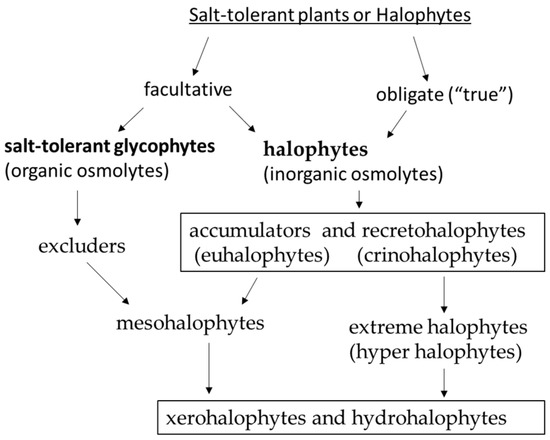
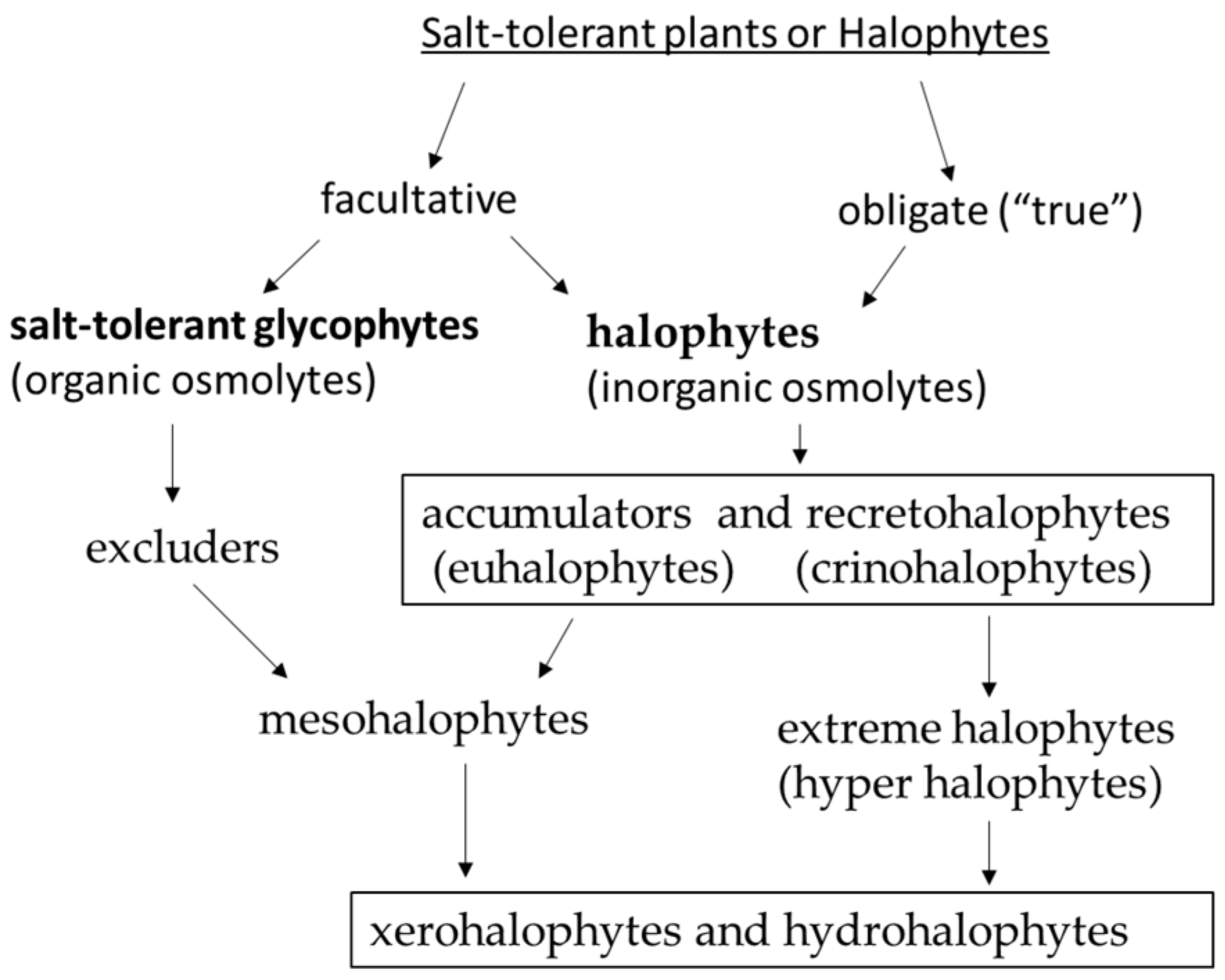
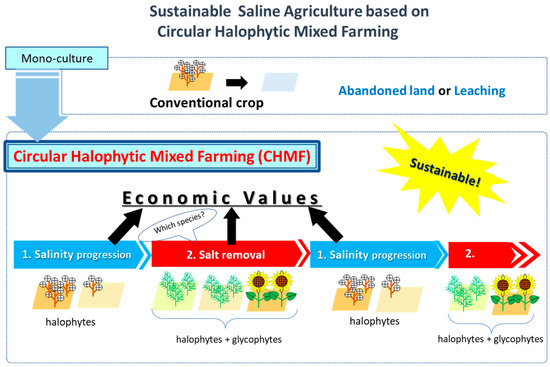
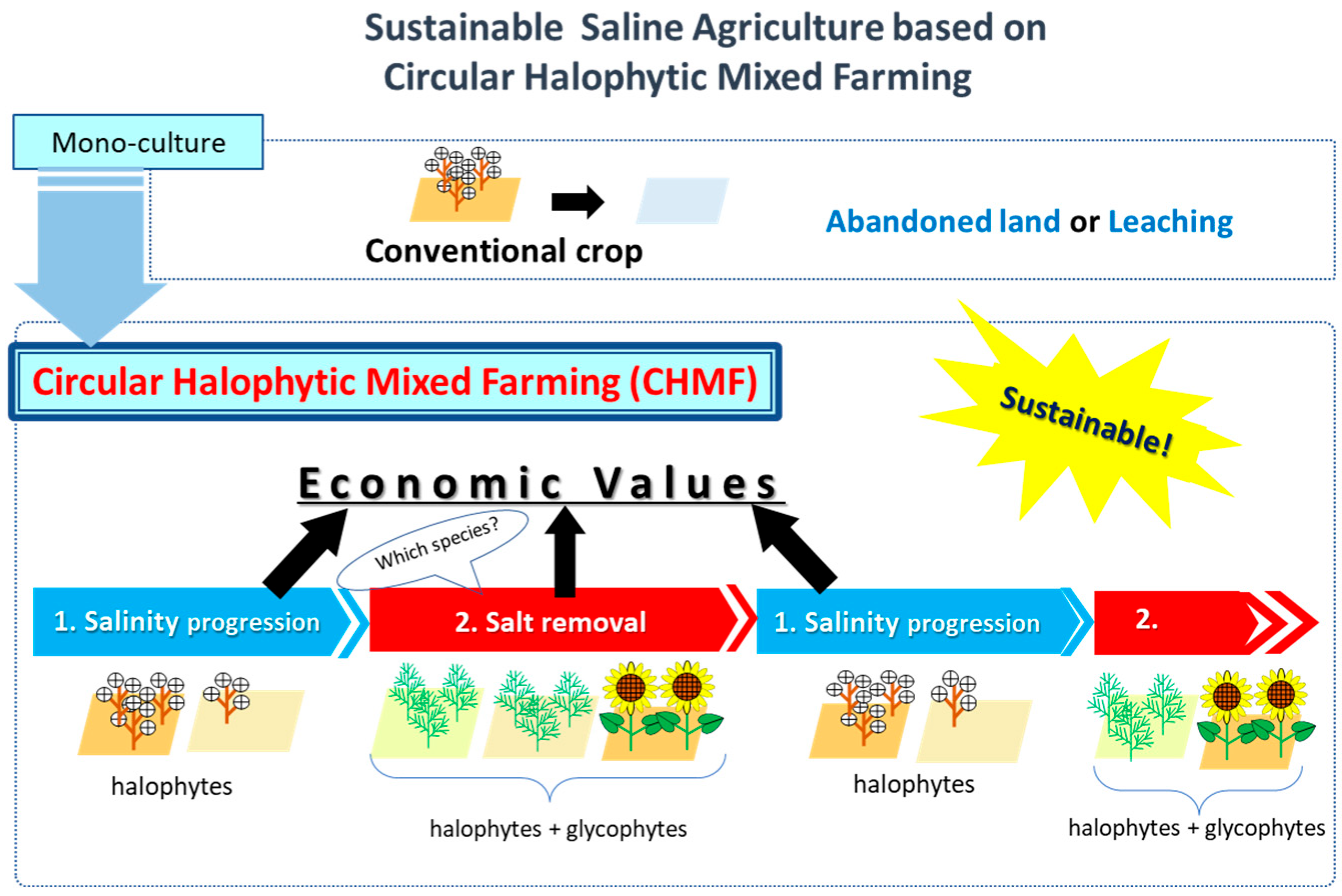
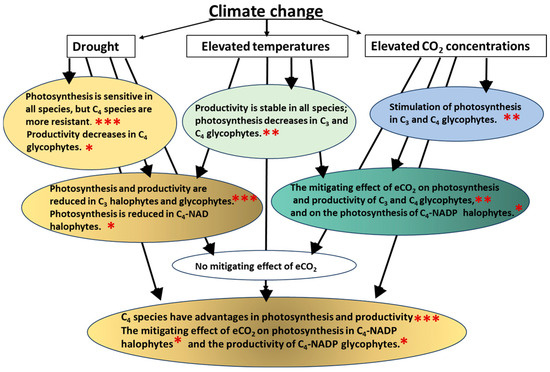
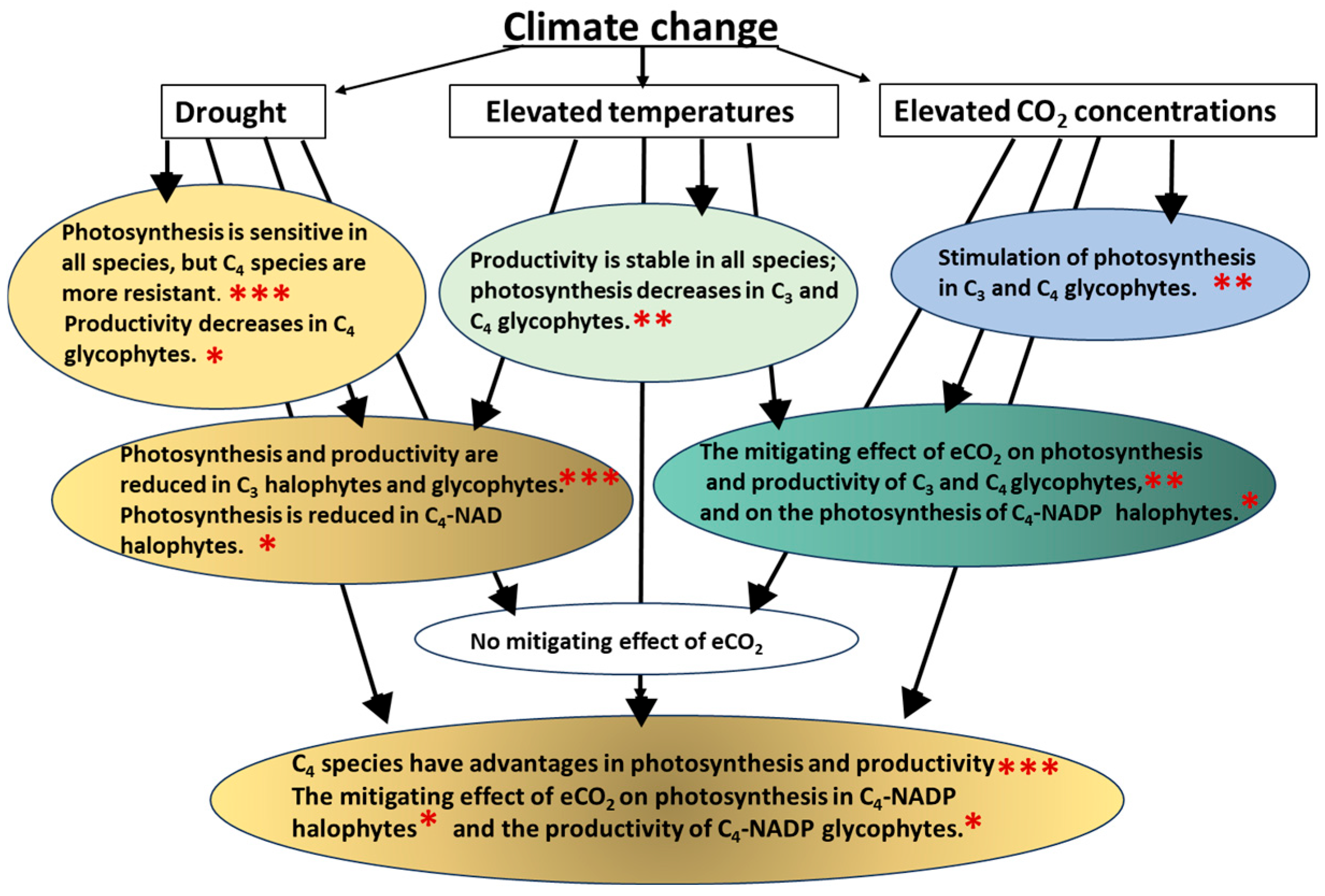
Disclaimer/Publisher’s Note: The statements, opinions and data contained in all publications are solely those of the individual author(s) and contributor(s) and not of MDPI and/or the editor(s). MDPI and/or the editor(s) disclaim responsibility for any injury to people or property resulting from any ideas, methods, instructions or products referred to in the content. |
© 2026 by the authors. Licensee MDPI, Basel, Switzerland. This article is an open access article distributed under the terms and conditions of the Creative Commons Attribution (CC BY) license.