Article

Exploring Endophytic Bacteria from Artemisia spp. and Beneficial Traits on Pea Plants
by
Shervin Hadian
1,*,
Donald L. Smith
2,
Stanislav Kopriva
3,
Eglė Norkevičienė
4 and
Skaidrė Supronienė
1
1
Microbiology Laboratory, Lithuanian Research Centre for Agriculture and Forestry, Institute of Agriculture, Instituto Ave. 1, Akademija, LT-58344 Kėdainiai, Lithuania
2
Department of Plant Science, McGill University, Montreal, QC H9X 3V9, Canada
3
Botanical Institute, University of Cologne, 50674 Cologne, Germany
4
Department of Grass Breeding, Lithuanian Research Centre for Agriculture and Forestry, Institute of Agriculture, Instituto Ave. 1, Akademija, LT-58344 Kėdainiai, Lithuania
*
Author to whom correspondence should be addressed.
Plants 2024, 13(12), 1684; https://doi.org/10.3390/plants13121684

Submission received: 14 May 2024 / Revised: 14 June 2024 / Accepted: 15 June 2024 / Published: 18 June 2024

Abstract

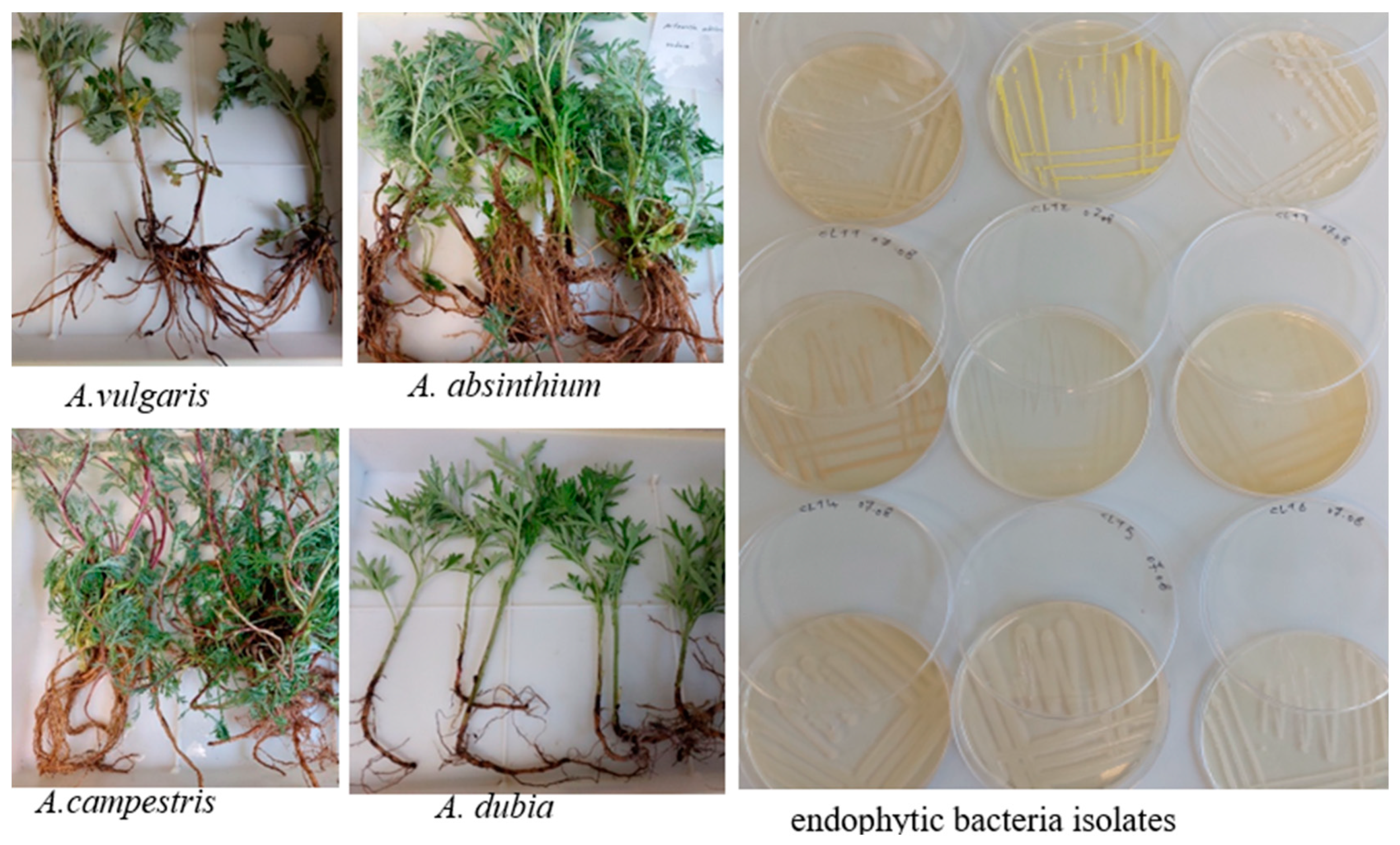
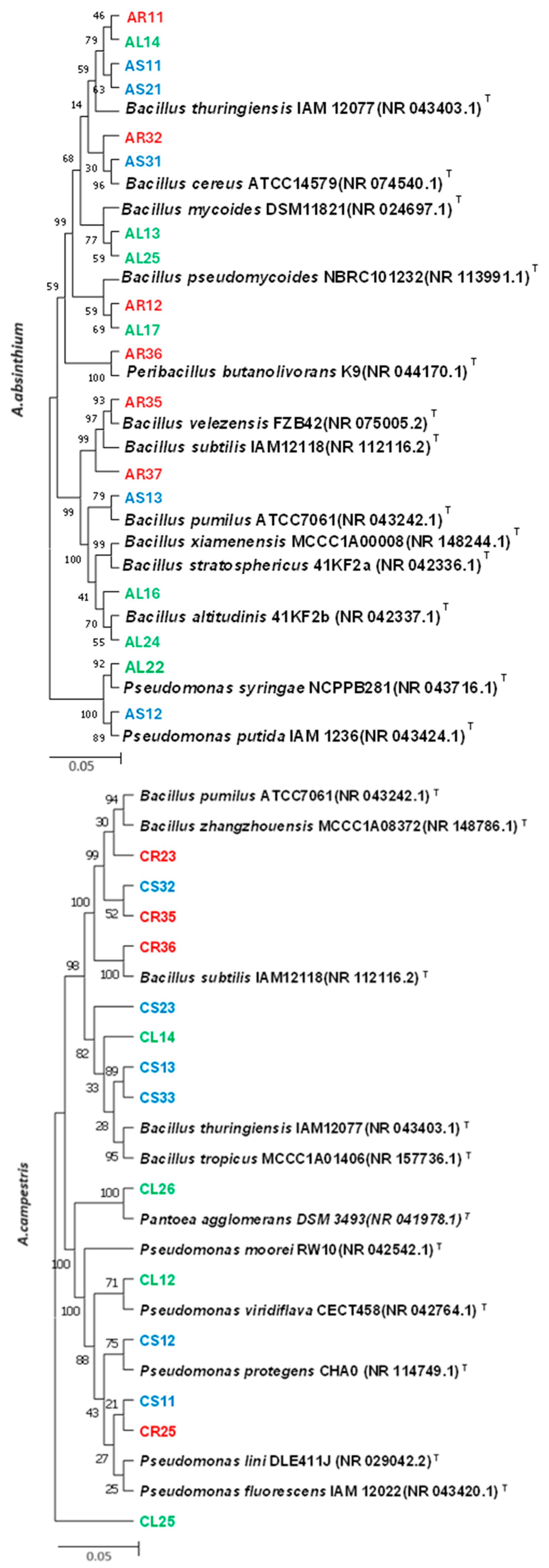
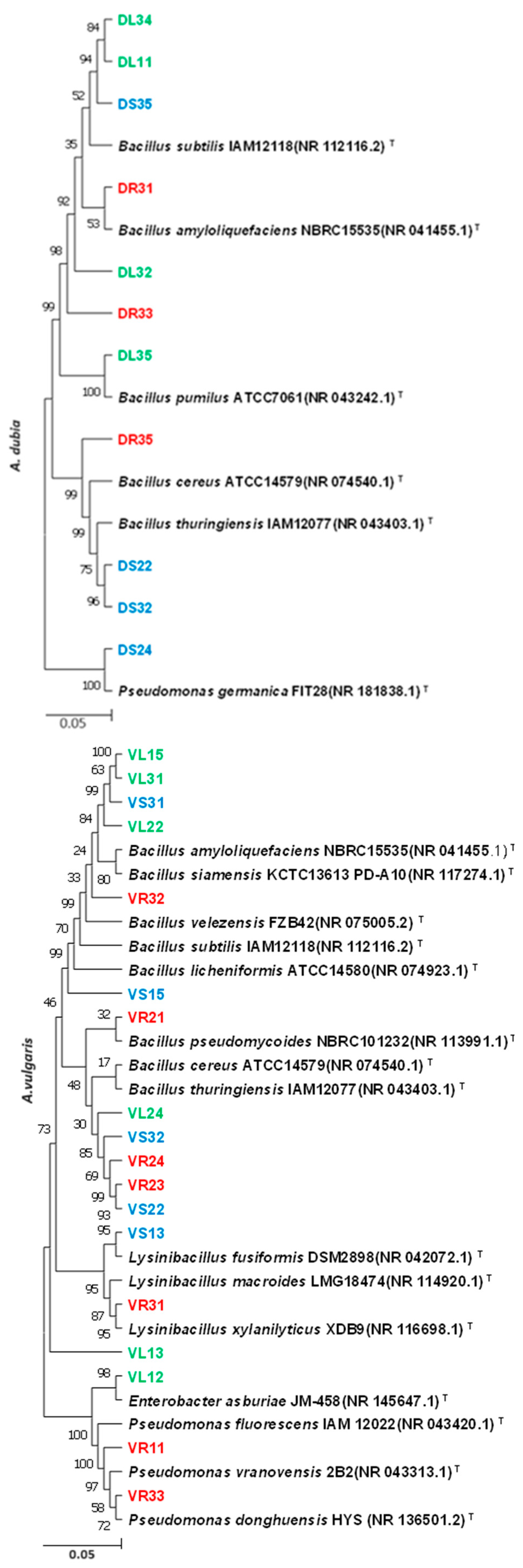
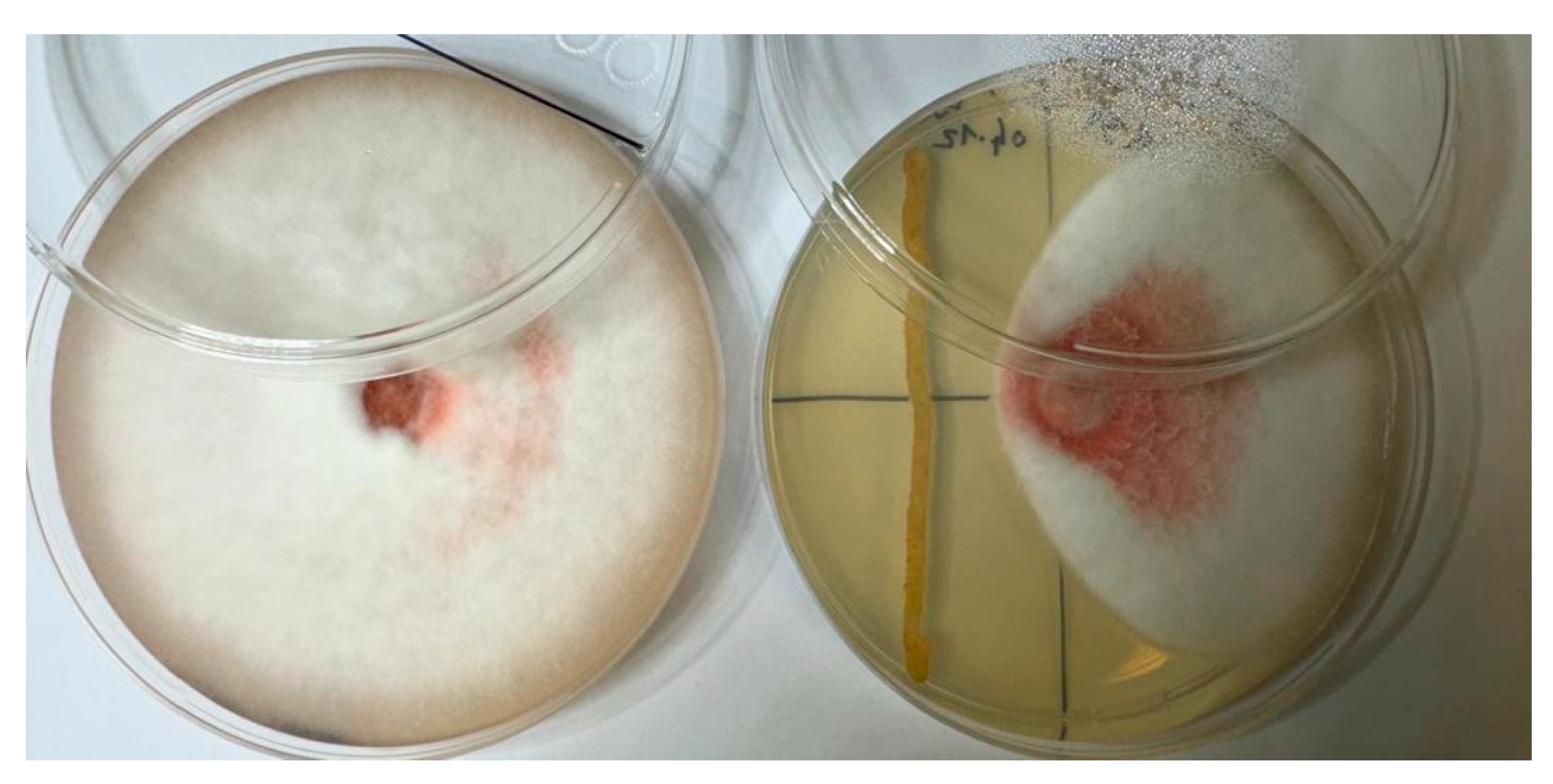
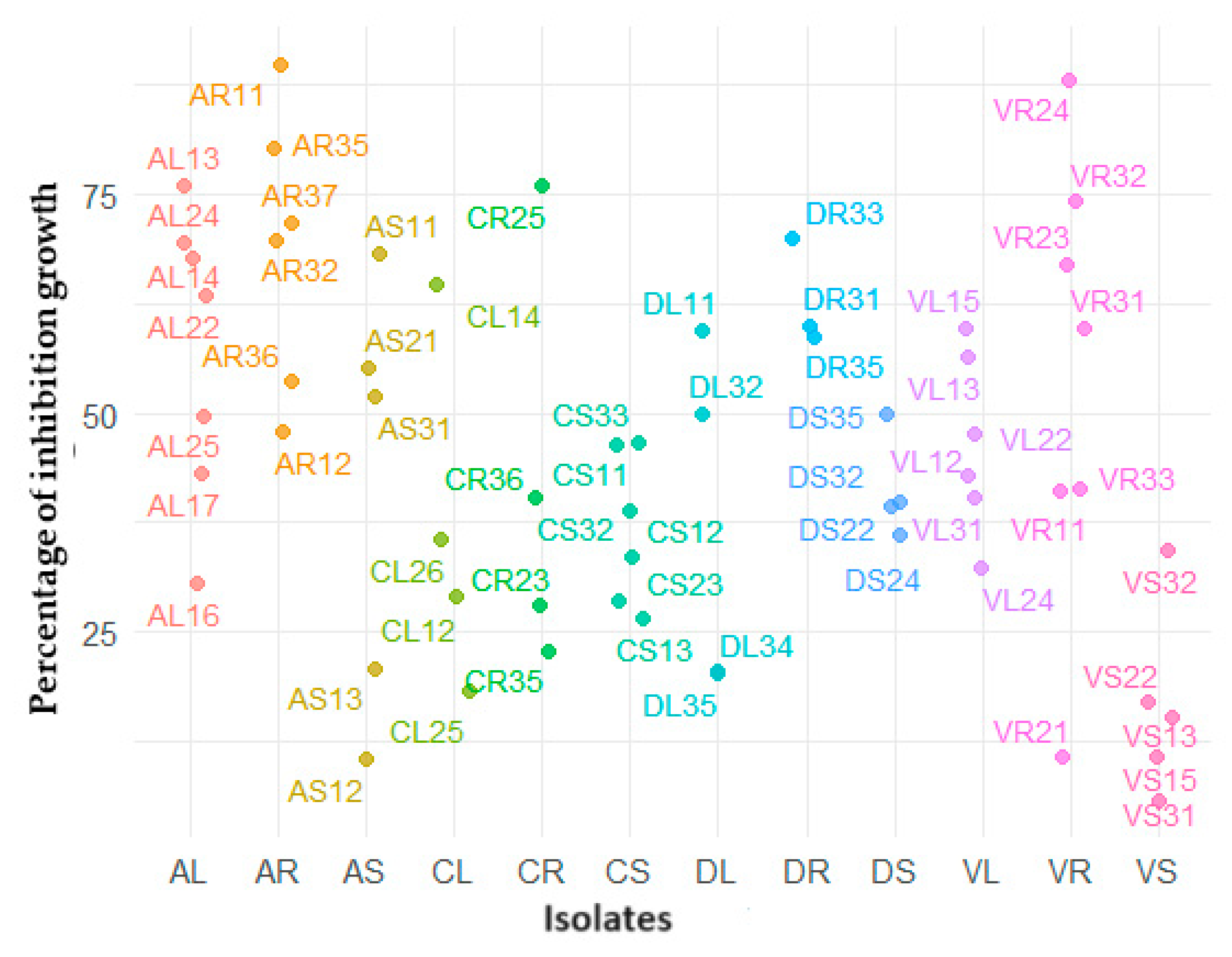
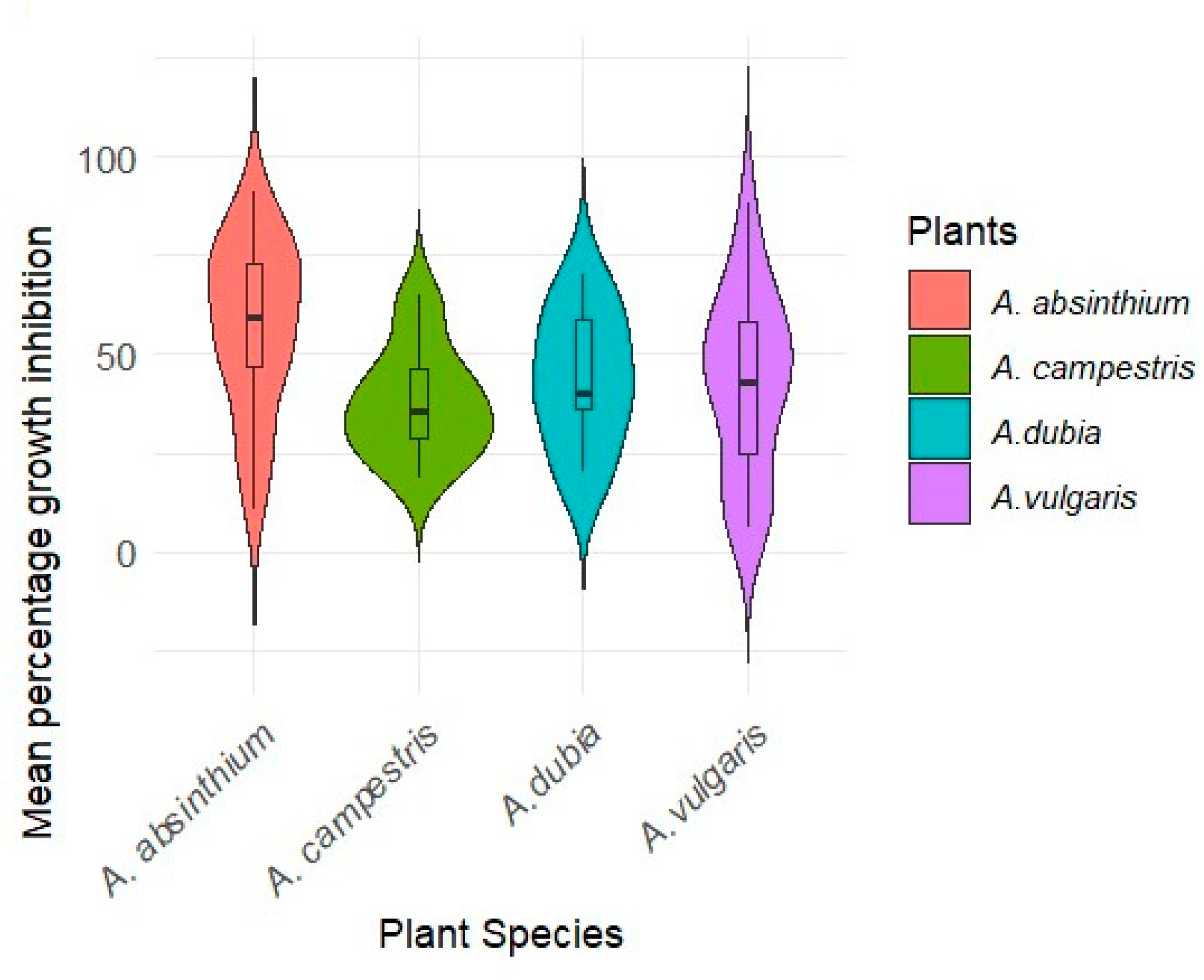
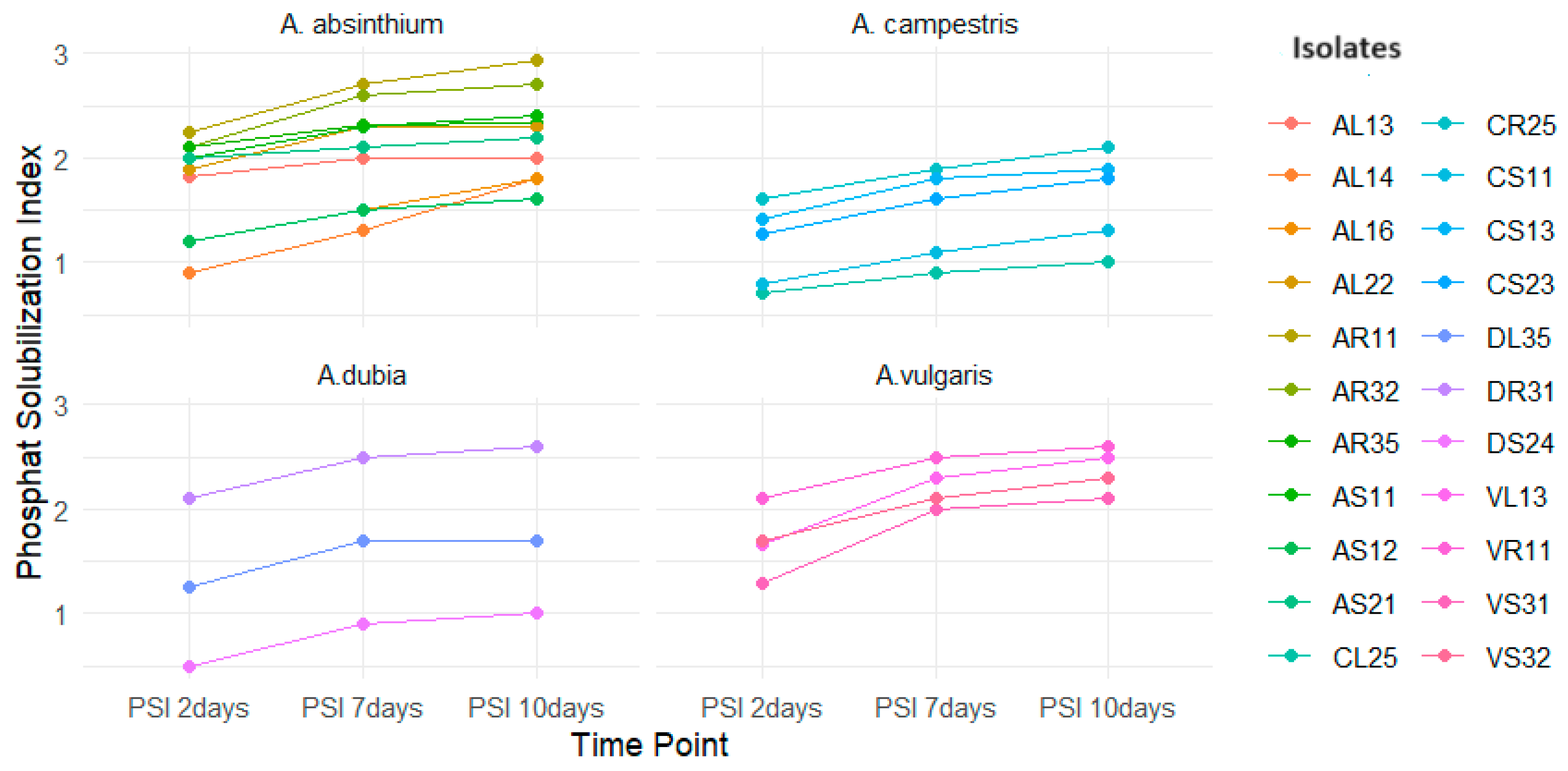
Endophytic microorganisms represent promising solutions to environmental challenges inherent in conventional agricultural practices. This study concentrates on the identification of endophytic bacteria isolated from the root, stem, and leaf tissues of four Artemisia plant species. Sixty-one strains were isolated and sequenced by 16S rDNA. Sequencing revealed diverse genera among the isolated bacteria from different Artemisia species, including Bacillus, Pseudomonas, Enterobacter, and Lysinibacillus. AR11 and VR24 obtained from the roots of A. absinthium and A. vulgaris demonstrated significant inhibition on Fusarium c.f. oxysporum mycelial growth. In addition, AR11, AR32, and CR25 exhibited significant activity in phosphatase solubilization, nitrogen fixation, and indole production, highlighting their potential to facilitate plant growth. A comparative analysis of Artemisia species showed that root isolates from A. absinthium, A. campestris, and A. vulgaris have beneficial properties for inhibiting pathogen growth and enhancing plant growth. AR11 with 100% similarity to Bacillus thuringiensis, could be considered a promising candidate for further investigation as microbial biofertilizers. This finding highlights their potential as environmentally friendly alternatives to chemical pesticides, thereby contributing to sustainable crop protection practices.
Keywords: Artemisia sp.; Fusarium sp.; nitrogen fixation; pea; phosphate solubilization Artemisia sp.; Fusarium sp.; nitrogen fixation; pea; phosphate solubilization