


Abstract
Three-dimensional (3D) reconstruction serves as a key technology bridging the real and digital worlds, with broad application in remote sensing, autonomous driving, and robotics. In recent years, its technical paradigm has shifted from geometry-based methods to data-driven approaches, with diffusion models emerging as a major driving force due to their stable training process, strong ability to learn priors from large-scale datasets, and excellent controllability over outputs. Despite the proliferation of diverse architectures, a systematic analysis and comparison of these methods remains absent. In this paper, we present a comprehensive review of diffusion-based 3D reconstruction methods. Based on the space where diffusion operates, we first categorize existing approaches into four types—image diffusion, latent diffusion, 3D diffusion, and hybrid diffusion—and we provide a detailed analysis of their methodologies. We then summarize commonly used 3D datasets and provide a comparative evaluation of these methods across three dimensions: reconstruction accuracy, computational efficiency, and generalization capabilities. Finally, we discuss future developments of diffusion-based 3D reconstruction methods.
1. Introduction
Three-dimensional (3D) reconstruction aims to recover the complete geometry and appearance of an object or scene from single or multi-view 2D images [1,2,3]. It has wide application value in computer graphics [4], virtual reality [5,6,7], autonomous driving [8,9,10], remote sensing and urban mapping [11,12,13,14], and robotics [15]. Diffusion models have recently shown promising potential in remote sensing 3D reconstruction, from satellite LiDAR super-resolution to cross-modal cloud removal and city-scale digital twin generation [11,16].
Based on the modeling paradigm, existing 3D reconstruction approaches can be broadly categorized into four types of methods: traditional geometry methods, neural 3D representations, generative model-based methods, and large model-based methods. Traditional geometric methods reconstruct 3D point clouds or meshes using geometric constraints, such as feature matching and triangulation, as seen in Structure-from-Motion (SfM) and multi-view stereo (MVS) [17,18,19,20], which are widely foundational in UAV photogrammetry and aerial mapping. While theoretically mature and often accurate, these methods are sensitive to the texture quality, viewpoint coverage, and lighting conditions. Neural 3D representations include Neural Radiance Fields (NeRF) [21] and 3D Gaussian splatting (3DGS) [22,23,24,25,26]. They greatly improve novel view synthesis and 3D reconstruction for both object-level and large-scale urban scenes. They work by optimizing continuous or discrete radiance fields. However, they usually need dense multi-view images for training and they struggle to predict or generate unseen 3D structures. Generative model-based methods add deep data-driven priors into the reconstruction process and design specific network structures. Early learning methods adopted U-Net for shadow-based single-view reconstruction [27]. Modern methods use deep generative models like Variational Autoencoders (VAEs) [28], generative adversarial networks (GANs) [29,30,31,32,33], and diffusion models [34,35] to provide strong visual priors [36]. However, GANs have unstable training and mode collapse problems. VAEs often produce overly smooth outputs. In general, early generative methods lack strong real-world priors. They perform poorly with sparse inputs and unlabeled data. They also struggle with unseen categories. Recently, diffusion models have become the most popular generative methods. This is because they have stable training and strong generation abilities. Large model-guided methods represent an emerging paradigm in which large multimodal models [37,38], including prompt learning [39], serve as reasoning systems to guide downstream 3D generation modules and scene understanding [40,41], such as automated building footprint extraction and semantic city modeling. However, they continue to face key challenges in multimodal fusion, including cross-modal alignment, managing information redundancy versus complementarity, and designing effective integration mechanisms.
Diffusion models offer a viable avenue for 3D reconstruction. They recover structural information from noisy inputs via an iterative denoising process [42,43], where the randomness inherent to the process helps to evade local optima, thus showing potential advantages over conventional methods. Diffusion models possess three main advantages: stable training, rich priors, and flexible control. These properties enable them to learn complex data distributions from large-scale datasets and support multimodal conditional generation [44,45]. Owing to these strengths, diffusion models have expanded from image generation to 3D vision tasks [46]. As shown in Figure 1, diffusion model-based 3D reconstruction (diffusion 3D reconstruction) is developing rapidly, transforming the ways in which we capture, understand, and create 3D digital content.
Figure 1.
The evolution of diffusion 3D reconstruction methods. The horizontal timeline displays the publication year from left to right, while different colors distinguish various methods. The boxes display the method abbreviations and their corresponding publication venues, where the venue abbreviations denote computer vision and artificial intelligence conferences and journals: CVPR (IEEE/CVF Conference on Computer Vision and Pattern Recognition), ICCV (IEEE/CVF International Conference on Computer Vision), ECCV (European Conference on Computer Vision), NeurIPS (Annual Conference on Neural Information Processing Systems), ICLR (International Conference on Learning Representations), AAAI (AAAI Conference on Artificial Intelligence), and TPAMI (IEEE Transactions on Pattern Analysis and Machine Intelligence). The ellipsis “More to come …” and the upward arrow indicates that this is a continuous and rapidly evolving field with many future works anticipated.
Geospatial information science is one of the key areas for diffusion-based 3D reconstruction. In photogrammetry and remote sensing, diffusion models show great power for 3D data reconstruction. For example, Sat2Scene [47] and Sat2City [48] can generate complete 3D urban structures directly from satellite images. These methods successfully solve a major problem in traditional photogrammetry, where building roofs and facades are often missing. Therefore, they provide a promising new way to process complex remote sensing data. Diffusion models are also very useful for 3D city modeling and urban digital twins. Large-scale urban reconstruction is required to handle complex layouts and dynamic objects. Some specialized networks can help with this task. For instance, ScenDi [49] uses multimodal conditions to generate realistic urban street scenes; XCube [50] reconstructs large-scale sparse voxels for autonomous driving environments. For building-level modeling, BuilDiff [51] generates building shapes with rich architectural detail. In short, these specific applications prove that diffusion models can easily obtain useful data and reduce the computational cost for urban digital twins.
Recent years have witnessed rapid advancements in both 3D reconstruction and diffusion models, leading to a growing body of research at their intersection. While existing surveys have separately explored progress in 3D reconstruction [52,53,54] or the broader application of diffusion models in computer vision [55,56,57,58], a systematic review dedicated specifically to diffusion-based 3D reconstruction remains absent. This gap is particularly significant given the unique challenges and opportunities that arise when applying diffusion models to 3D reconstruction tasks, which differ substantially from conventional 2D or discriminative settings. To address this, we present a comprehensive review of diffusion 3D reconstruction, organizing the rapidly evolving landscape and providing a structured understanding of its methodologies, data, and challenges. Compared with previous surveys, the main contributions and differences are summarized as follows.
- Hierarchical Methodology Framework: We divide diffusion 3D reconstruction methods into four types based on the modality of the input data in the diffusion process, as illustrated in Figure 2, providing a systematic analysis of their core concepts, methodologies, and representative works.
- Performance Comparison on Benchmarks: We introduce several mainstream 3D reconstruction datasets, detailing their specifications and applicable scenarios, and provide a systematic comparison of method performance across these benchmarks.
- Comprehensive Analysis and Future Outlook: We discuss current challenges and outline promising avenues, including multi-level architectures, co-evolving data with models, and multi-aspect collaboration.
Figure 2.
The characteristics of diffusion 3D reconstruction methods.
We conduct a literature search in major databases, including Google Scholar, Web of Science, and IEEE Xplore. The literature is searched using keywords such as “diffusion model” and “3D reconstruction”, alongside geospatial terms like “urban modeling” or “satellite 3D generation”, published within the last five years. We primarily select papers that fundamentally improve diffusion pipelines or innovatively apply them to geoinformation, while excluding works without clear 3D reconstruction implementations. This initial retrieval yields approximately 200 papers, which undergo screening through abstract and full-text evaluation to ultimately identify around 150 relevant studies.
2. Methodologies for Diffusion 3D Reconstruction
Diffusion models are latent-variable generative models that transform a simple noise distribution into the target data distribution by reversing a Markovian noise injection process [42,56,59]. They consist of a forward diffusion process q and a reverse generative process . The forward process q is a noise-accumulating Markov chain: it starts from uncorrupted initial data and incrementally corrupts the input with Gaussian noise over T discrete timesteps, until the data become statistically indistinguishable from white noise. Formally, the step-by-step update for this forward process q is given by
Here, is the noisy data at timestep t, denotes the data state from the previous timestep (which, for , is the initial clean data ), is a standard Gaussian noise vector, and is a pre-defined variance schedule parameter that dictates the level of noise added at each step. We also define as the cumulative product of values up to timestep t, which plays a key role in the reverse process .
The reverse process seeks to invert the forward corruption, recovering the original clean data from pure noise. This is achieved by learning a neural network to model each denoising step, forming another Markov chain. The update rule for stepping from back to in this reverse process is
where is the neural network’s estimate of the noise accumulated by timestep t. The term denotes the standard deviation of the noise for the reverse denoising step, which is typically set to a fixed value or learned jointly with the network. Furthermore, researchers have developed latent diffusion models (LDMs) [34] to reduce the computational costs. LDMs work in a smaller compressed latent space instead of the pixel space. They use a U-Net network with a cross-attention mechanism. This mechanism allows the model to take extra conditions, such as text or images, to guide the generation process.
In 3D reconstruction, diffusion models leverage a strong generative prior to recover missing information from sparse observations, such as partial point clouds or multi-view images, producing semantically consistent and physically plausible 3D structures with fine-grained geometric detail, even under ambiguous input conditions. According to the modality of the input data, existing diffusion 3D reconstruction methods can be categorized into four types. The following sections explain the technical principles and representative works for each category, with their key characteristics summarized in Figure 2.
It is worth noting that modern 3D reconstruction methods often combine multiple techniques. To establish clear taxonomy boundaries, our classification depends on the primary innovation and core contribution of each method. For example, DiffGS utilizes a latent diffusion model, but its core breakthrough is the novel fusion mechanism with 3DGS. Therefore, we classify it under hybrid diffusion. This rule ensures that each method is categorized based on its most significant technical contribution.
2.1. Image Diffusion-Based Reconstruction Methods
The image diffusion-based 3D reconstruction methods do not operate directly on 3D data but instead leverage 2D diffusion models, such as Stable Diffusion [34] and Imagen [35], as visual priors. These diffusion models are trained on large-scale image–text pairs and are used to guide 3D generation without requiring explicit 3D training data.
As illustrated in Figure 3, the reconstruction workflow begins with feeding an input image into a 2D diffusion model. The model then generates a set of consistent multi-view 2D images, which are decoded into an initial 3D representation. This 3D representation is then passed to a differentiable renderer, which outputs rendered views. These rendered views are supervised by the 2D ground truth, typically the original input image or the generated multi-view images, to compute a loss signal. This loss drives an iterative optimization loop, where gradients are backpropagated to refine the 3D representation. The process continues until the rendered views achieve semantic and perceptual alignment with the ground truth. Owing to their ability to generate open-domain 3D content without paired 3D supervision, image diffusion-based methods have emerged as a leading approach in single-image 3D reconstruction.
Figure 3.
The workflow of image diffusion-based 3D reconstruction.
As a pioneering work, DreamFusion [46] achieves unsupervised text-to-3D generation via its innovative score distillation sampling (SDS). As shown in Figure 4, SDS optimizes a randomly initialized NeRF by repeatedly rendering views; evaluating them with a pre-trained, text-conditioned diffusion model; and using the resulting gradient to update only the NeRF parameters. This confines all learning to the 3D representation, directly leveraging strong 2D priors to produce detailed, coherent 3D shapes, thereby establishing cross-modal prior transfer as a viable and effective paradigm.
Figure 4.
The pipeline of the DreamFusion method [46] (reproduced under a CC BY 4.0 license). The pink and light blue regions denote the 3D NeRF representation and the pre-trained 2D diffusion model, respectively. The grey arrows indicate the forward rendering process, while the bottom backward arrow represents the gradient backpropagation to update the NeRF weights.
Despite its breakthroughs, DreamFusion suffers from some limitations: efficiency, geometric quality, and multi-view consistency. The SDS optimization requires thousands of iterative rendering and gradient steps, resulting in prohibitively slow generation. Furthermore, due to the inherent lack of 3D structural understanding in 2D diffusion models, outputs often exhibit geometric distortions, topological errors, and view inconsistencies, especially on occluded surfaces. Additionally, SDS gradients can be dominated by individual viewpoints, leading to overfitting and further undermining overall 3D coherence.
To overcome these challenges, subsequent research has advanced along two primary trajectories: one focused on enhancing the core generation framework and another directed toward expanding into practical, application-specific scenarios. These complementary lines of work systematically address the aforementioned limitations in speed, output fidelity, and real-world usability.
Multiple studies have systematically refined the SDS optimization process. Magic3D [60] introduces a coarse-to-fine pipeline, first generating a low-resolution proxy on an efficient hash grid before refining it in a high-resolution NeRF, thereby significantly improving the speed and visual fidelity. To increase the training stability, ProlificDreamer [61] integrates latent diffusion models, performing denoising and gradient distillation in a compressed latent space. For structural control, PartGen [62] generates multi-view part-segmented images via 2D diffusion, subsequently fusing them into a coherent 3D assembly. Meanwhile, OpenLRM [63] contributes a standardized, scalable training pipeline, facilitating the industrial adoption of these methods.
Concurrently, researchers have adapted the diffusion prior framework to constrained, real-world settings. Zero-1-to-3 [64] tackles single-image 3D reconstruction by leveraging a diffusion model’s inherent novel-view synthesis ability, generating consistent multi-view images as input for traditional reconstruction pipelines. Similarly, Dream-to-Recon [65] distills monocular depth from an image via a diffusion prior; it then applies Poisson reconstruction to obtain a complete 3D mesh. For interactive editing, Instruct-NeRF2NeRF [66] enables language-guided modifications of existing neural radiance fields, supporting material changes, pose adjustments, and component replacement. DP-RECON [67] further specializes the approach, employing SDS to optimize the neural representation of individual objects from sparse views. Recently, researchers have also applied these 2D diffusion priors to geospatial and remote sensing tasks. TreeD Fusion [68] uses score distillation sampling from 2D diffusion models. It reconstructs 3D city trees from single images to support ecological simulations. Furthermore, 2D diffusion models help with multimodal earth observation. CrossModalityDiffusion [69] uses specific 2D diffusion models to synthesize novel views across different sensing modalities. It maps various remote sensing data into a unified representation space. A recent noise-tolerant method [70] uses denoising diffusion to reduce speckle noise in synthetic aperture radar (SAR) images for 3D reconstruction under all-weather conditions.
2.1.1. Commonalities and Differences
The image diffusion-based 3D reconstruction methods share a unified paradigm built on 2D diffusion priors, differentiable rendering, and gradient distillation, enabling 2D-to-3D knowledge transfer without real 3D annotations. Nevertheless, their implementations differ substantially. These methods adopt diverse 2D-to-3D knowledge transfer mechanisms (e.g., direct score distillation, view-guided consistency propagation, encoder–decoder-based feature mapping) and employ distinct optimization logics (e.g., single-particle SDS, coarse-to-fine hierarchical optimization, particle-based variational reasoning). They also show different adaptability to specialized data formats like SAR or multimodal remote sensing images. Such design variations result in distinct reconstruction performance in terms of generation quality, computational efficiency, and generalization.
2.1.2. Advantages and Challenges
These methods require no real 3D data, instead leveraging large-scale image-text pre-training to achieve semantic richness and stylistic diversity. This enables text-to-3D generation, single-image reconstruction, and editing tasks. However, they also face fundamental limitations. First, iterative optimization without geometric constraints causes computational inefficiency and multi-view inconsistency. Second, random initialization often leads to varied geometric outcomes. Third, out-of-distribution inputs undermine generalization. Together, these limitations reflect a core trade-off: flexibility from 2D priors comes at the cost of 3D geometric fidelity and controllability. In remote sensing applications, handling severe sensor noise and aligning different modalities pose additional significant challenges.
2.2. Latent Diffusion-Based Reconstruction Methods
The latent diffusion-based reconstruction methods operate in a compressed, semantically rich latent space rather than a high-dimensional 3D space. The core idea is to encode 3D data into a low-dimensional representation and perform diffusion and denoising within this efficient latent space, reducing the computational complexity while preserving geometric detail.
As shown in Figure 5, the reconstruction workflow begins with an input vector, which is processed by a latent diffusion model. The vector is encoded into an optimized representation and then decoded into a 3D model. This approach reduces the computational cost and mitigates training instability. The 3D representation is iteratively refined, supervised by the 3D ground truth, until it aligns with the target.
Figure 5.
The workflow of latent diffusion-based 3D reconstruction.
As a representative work, SDFusion [71] first uses a 2D latent diffusion model as a semantic guide to iteratively optimize the geometric representation of a neural signed distance field (SDF) network, enabling high-quality 3D shape reconstruction from text or a single image. As shown in Figure 6, SDFusion leverages stable semantic signals from the latent space, eliminating the reliance on real 3D training data and addressing the instability issues of traditional SDS. This method establishes a closed loop between 3D geometry and 2D visual knowledge, laying the foundation for multimodal generation research.
Figure 6.
An adapted pipeline of the SDFusion method. Adapted from [71].
Despite its advancements, SDFusion has key limitations: inefficiency and instability. It relies on differentiable rendering, which is slow and computationally expensive. This, combined with iterative optimization, often results in instability, especially for complex structures. Additionally, its performance depends on capturing the complexity of 3D shapes, and failure to do so results in poor output quality [34].
To address these limitations, recent research has focused on two main areas: improving the core generation framework and adapting it to real-world applications. These efforts aim to resolve issues with efficiency, stability, and practical use. On the core framework side, many methods focus on refining the latent space design and ensuring stable optimization. Shap-E [72] enhances the encoder to map 3D objects into lower-dimensional vectors and trains a separate diffusion model in this space. This allows for faster, end-to-end generation, significantly reducing the inference time. In contrast to SDFusion, Shap-E produces nearly instant text-to-3D results using well-trained latent priors. ProlificDreamer [61] improves the optimization process by applying gradient distillation in the latent space of Stable Diffusion [34], reducing noise and enhancing the semantic accuracy. OpenLRM combines the advantages of SDFusion and DreamFusion to improve standardization, modularity, and reproducibility.
Regarding practical applications, diffusion-based 3D generation has been extended to tasks like editing, reconstruction, and user interaction. Instruct-NeRF2NeRF [66] enables 3D scene editing through text commands by leveraging the semantic knowledge of a latent diffusion model, updating the neural radiance fields consistently across different views. Furthermore, researchers have applied latent diffusion to large-scale geospatial tasks. For example, Sat2City [48] generates 3D city structures from a single satellite image. It uses a cascaded latent diffusion framework. This method progressively recovers dense geometry, sparse geometry, and sparse appearances. It also introduces a Re-Hash operation in the Variational Autoencoder (VAE) to resolve feature collision problems. This allows the model to handle structural ambiguity and generate city-level 3D scenes. These techniques allow for the controllable manipulation of 3D content using text prompts, sparse views, or other inputs, enhancing their applicability in real-world scenarios.
2.2.1. Commonalities and Differences
The latent diffusion-based 3D reconstruction methods share the common paradigm of performing diffusion and denoising within a compressed, semantically rich latent space for greater efficiency and controllability. Nevertheless, their implementations differ substantially. These methods leverage diverse latent spaces (e.g., SDF-based geometric, unified 3D, multi-view, sparse voxel-aligned, and modular 3D), employ different latent–diffusion coupling schemes (e.g., end-to-end integration, module decoupling, cross-view feature association, and cascaded progressive generation), and adopt various latent code optimization strategies (e.g., iterative diffusion, full denoising, synchronized cross-view denoising, distribution-guided sampling trajectory optimization). Such designs result in distinct reconstruction performance in terms of accuracy, efficiency, and flexibility.
2.2.2. Advantages and Challenges
These methods derive core advantages from latent space–diffusion coupling: integrating latent compression with diffusion denoising alleviates the computational burden of high-dimensional 3D diffusion and enables efficient generation, while combining semantic latent encoding with diffusion priors enhances cross-category generalization and semantic alignment. Despite these benefits, the paradigm faces a critical challenge: geometric fidelity degradation. Irreversible latent compression discards high-frequency geometric details, and diffusion denoising in low-dimensional spaces further exacerbates such information loss, leading to blurred results and geometric distortions. This reveals a fundamental trade-off: the efficiency and generalization enabled by latent–diffusion coupling are achieved at the cost of geometric fidelity. Additionally, scaling these models to city-level scenes often causes structural ambiguity. This requires complex cascaded designs to maintain geometric constraints.
2.3. Three-Dimensional Diffusion-Based Reconstruction Methods
The 3D diffusion-based reconstruction methods do not rely on 2D diffusion priors or latent variable mappings. Instead, they define the forward noising and reverse denoising processes directly in the 3D representation space, which includes voxels, point clouds, meshes, or implicit fields. These methods do not require differentiable rendering or multi-view consistency optimization, resulting in higher geometric fidelity and more stable training. In recent years, they have demonstrated strong performance in tasks such as single-image-to-3D reconstruction, shape completion, and sparse-view reconstruction.
As illustrated in Figure 7, the reconstruction workflow begins with a partial 3D shape, which is input into a 3D diffusion model. The model then decodes it into a full 3D representation, which is supervised by the corresponding 3D ground truth. Unlike methods relying on 2D diffusion models, this approach builds a complete end-to-end 3D diffusion framework and learns the shape distribution directly from real 3D data. The model gradually recovers complete geometric structures from random noise, producing results that are more accurate, controllable, and physically plausible overall.
Figure 7.
The workflow of 3D diffusion-based reconstruction.
As a pioneering work, PC2 [73] performs conditional diffusion modeling directly in the 3D point cloud space. As shown in Figure 8, the method starts from pure noise and generates a 3D shape using a 3D U-Net, conditioned on a single input image. At each denoising step, the point cloud is projected onto the image plane via a differentiable renderer and aligned with the input image, providing an additional gradient signal. The projection conditioning mechanism incorporates 2D image information into the 3D diffusion process, reducing geometric distortions and ensuring that the generated shape matches the input image. This results in stable 3D reconstruction.
Figure 8.
An adapted pipeline of the PC2 method. Adapted from [73]. The ellipsis denotes the intermediate diffusion steps. The horizontal and downward arrows represent the generation progression and feature projection conditioning, respectively.
Despite its breakthroughs, PC2 has several limitations: limited representation expressiveness, low tolerance for complex scenes, and poor data efficiency. It relies solely on point clouds, which lack explicit surface geometry and often fail to capture fine structural details or smooth manifolds. Moreover, it assumes known camera poses and is restricted to single-object reconstruction, preventing it from scaling to multi-object scenes or large-scale environments with unknown viewpoints. In addition, training the diffusion model from scratch on 3D data requires a large amount of ground-truth 3D training data, which are costly and difficult to obtain in practice.
To address these challenges, subsequent research has progressed along two main directions: one focuses on developing native 3D diffusion models with richer geometric representations, while the other aims to scale generation to complex real-world scenes. These efforts shift the paradigm from 2D prior-based optimization toward direct 3D generative modeling.
Multiple studies have developed diffusion models directly in structured 3D spaces. DiffusionSDF [74,75] extends the diffusion process to the signed distance field space, performing denoising on continuous implicit functions and producing smoother surfaces with higher geometric accuracy than point clouds. LN3Diff [76] also operates in an implicit 3D representation space, introducing neural field parametrization with multi-scale consistency to enhance shape coherence. In contrast, SPAR3D [77] performs diffusion directly on point clouds and enforces geometric consistency through differentiable projection constraints, enabling efficient and accurate reconstruction.
Building on these advancements, researchers have tailored 3D diffusion models to geospatial and urban-scale applications. For building reconstruction, BuilDiff [51] designs a hierarchical point cloud diffusion model. It generates high-resolution 3D building shapes from a single image by combining a base diffusion model and an upsampling diffusion model. In addition to dense point clouds, a precise geometric topology is important for photogrammetry. EdgeDiff [78] proposes an edge-aware diffusion network. It reconstructs 3D building wireframes directly from noise. It refines parametrized edges from incomplete point clouds. To resolve memory limits, XCube [50] introduces a hierarchical voxel diffusion model. It uses sparse voxel data structures to generate large-scale outdoor scenes with a high resolution. Furthermore, Sat2Scene [47] applies 3D diffusion to satellite imagery. It uses a 3D sparse diffusion model to generate texture colors directly on geometric point clouds. This enables the direct generation of complex 3D urban scenes from satellite views. Additionally, AniSym-Net [79] advances non-rigid point cloud registration, complementing diffusion-based reconstruction.
2.3.1. Commonalities and Differences
The 3D diffusion-based reconstruction methods share a unified paradigm: they tightly couple diverse 3D representations with diffusion models to construct an end-to-end generative framework for 3D recovery. Nevertheless, their architectural designs differ significantly. These methods employ distinct coupling schemes between 3D representations and diffusion processes, including diffusion coupled with point cloud spaces, diffusion conducted in implicit SDF continuous fields, diffusion applied to parametrized wireframes, diffusion integrated with neural fields, and diffusion tailored to sparse voxel hierarchies in large-scale scenes. Such divergent designs lead to distinct reconstruction capabilities in terms of representation expressiveness, computational efficiency, and application scalability.
2.3.2. Advantages and Challenges
These methods benefit from the tight coupling between diverse 3D representations and diffusion models, enabling faster generation, higher geometric fidelity, and more stable training. They avoid the shape distortions caused by 2D priors and support 3D reconstruction without differentiable rendering or complex multi-view optimization. However, such methods still suffer from critical limitations. The strong coupling between 3D representations and diffusion models leads to an inherent drawback: the diffusion denoising process is heavily constrained by the representation capacity. Inadequate or ill-suited 3D representations directly limit the quality of diffusion-based generation, resulting in insufficient geometric detail and unstable reconstruction. Moreover, when scaled to large geospatial data, these models demand massive computational memory and struggle to handle severe occlusion in urban environments.
2.4. Hybrid Diffusion-Based Reconstruction Methods
The hybrid diffusion-based 3D reconstruction methods typically employ diffusion models as the core engine, integrating complementary strengths from multiple techniques. These include generative adversarial networks (GANs), 3D Gaussian splatting (3DGS), neural fields, and others, collectively forming a unified “generation + optimization” framework. This integration enhances the generation quality, detail recovery, and semantic consistency, establishing it as a key paradigm for high-performance 3D content creation.
As shown in Figure 9, the reconstruction workflow starts with multimodal inputs, such as text, images, or partial 3D shapes. These inputs are first aligned in a shared feature space and then processed through a combined framework that integrates diffusion models with other supporting techniques. The output is then decoded into a 3D representation, which is supervised against a multimodal ground truth, including textual descriptions, multi-view images, and 3D object data. By bridging different modalities, these approaches enable seamless collaboration among multiple modules within a unified pipeline.
Figure 9.
The workflow of hybrid diffusion-based 3D reconstruction.
As a pioneering work, DiffGS [23] integrates 3D Gaussian splatting with diffusion modeling through a functionally decoupled joint generation framework. As illustrated in Figure 10, the fitted 3D Gaussian representation is decomposed into three types of Gaussian splatting functions that model the probability distribution, color attributes, and geometric transformations, respectively. Based on this decoupled representation, DiffGS builds a conditional latent diffusion model to progressively recover a complete and consistent set of Gaussian attributes for 3D generation.
Figure 10.
An adapted pipeline of the DiffGS method. Adapted from [23]. Solid and dashed arrows indicate primary data flows and the loss computation, respectively. The red star is a queried point mapped to the triplane. The yellow, green, and pink blocks correspond to predicted Gaussian attributes: Probability (GauPF), Color (GauCF), and Transform (GauTF).
Despite its advances in 3D reconstruction, DiffGS [23] suffers from geometric instability, a high computational cost, and limited cross-domain adaptability. Its implicit feature learning lacks strong geometric regularization, leading to unstable reconstructions for complex objects, and its heavy reliance on multi-view rendering further increases the training time. The absence of explicit shape or pose priors also limits its performance in structured scenarios, highlighting the need for more structured hybrid designs.
To overcome these challenges, subsequent research has advanced along two primary trajectories: one focuses on enhancing geometric control and stability in native 3D representations, and another is directed toward domain-specific adaptation and open-world scalability. These complementary efforts address the limitations of hybrid methods like DiffGS in terms of reconstruction robustness, computational efficiency, and prior integration.
Recent studies have strengthened geometric constraints in diffusion-based Gaussian frameworks. GeoGS3D [80] adds curvature regularization and rigid deformation priors to improve the stability for non-rigid and articulated objects, while HumanSplat [81] integrates the pose prior [82] to generate animatable human representations from a single image. DiffLiGS [83] further incorporates LiDAR depth maps as geometric supervision, improving the geometric accuracy in urban-scale reconstruction. To further improve urban scene generation, researchers have combined multiple diffusion models with 3DGS. For example, ScenDi [49] cascades a 3D model for spatial layout with a 2D model for rendering enhancement, effectively overcoming the inherent limitations of single-domain pure 3D or 2D methods. Meanwhile, hybrid approaches that combine diffusion models with traditional 3D reconstruction methods, such as multi-view surface reconstruction, mesh optimization, and neural fields, have emerged. For example, GaussianAnything [84] creates a coarse Gaussian layout in the latent space and then refines local details, while CRM [85], TripoSR [86], and InstantMesh [87] generate high-quality geometries from sparse inputs. These works suggest that future 3D generative systems will favor modular, collaborative designs that separately handle geometry, semantics, and dynamics, rather than relying on monolithic models.
2.4.1. Commonalities and Differences
The hybrid diffusion-based methods share a fundamental commonality: they all integrate diffusion models with other advanced techniques to form hybrid 3D generation frameworks. By combining complementary advantages across modules, they achieve stronger performance, higher efficiency, and better quality than single diffusion-based pipelines. Nevertheless, their implementations differ substantially. These methods adopt two major fusion paradigms: model-level integration and 3D representation fusion. Model-level fusion focuses on synergizing diffusion with 3D Gaussian splatting, structural priors, and cascaded 2D/3D diffusion networks in an end-to-end learning pipeline. Three-dimensional representation fusion unifies diffusion models with various 3D data formats, such as point clouds, meshes, and neural fields, to flexibly support diverse reconstruction tasks. Such design differences lead to distinct reconstruction performance in terms of quality, efficiency, and applicability.
2.4.2. Advantages and Challenges
These methods gain obvious advantages by integrating diffusion models with complementary technologies (e.g., 3D Gaussian splatting, structural priors). They not only retain the high generative quality of diffusion models but also leverage the strengths of the fused technologies to enhance geometric controllability, improve multimodal adaptability, and facilitate high-fidelity downstream tasks such as novel-view synthesis [88]. However, this fusion paradigm also faces key challenges: the integration of heterogeneous technologies easily causes semantic misalignment between diffusion models and fused modules, while the redundant structure brought by multi-technique fusion (such as cascaded 3D and 2D models) leads to high memory consumption and computational latency, limiting the models’ scalability in complex scenes.
In summary, these four diffusion paradigms have clear differences in their generative pipelines, supervision requirements, and application scopes. We systematically summarize the representative works, core architectures (pipelines), key advantages (across accuracy, efficiency, and robustness), inherent limitations, common datasets, and application scopes of these different paradigms in Table 1.
Table 1.
Comprehensive comparison of different diffusion-based 3D reconstruction paradigms.
3. Commonly Used 3D Databases
The datasets play a critical role in both the training and evaluation of diffusion 3D reconstruction. The four types of methods, namely image diffusion, 3D diffusion, latent diffusion, and hybrid diffusion, each favor distinct types of datasets due to differences in their generative mechanisms and input–output representations. This section reviews widely adopted datasets, outlines their key characteristics, and analyzes how these properties lead to their adoption in specific approaches. A comparative summary of these datasets is provided in Table 2.
Table 2.
The most commonly used datasets for diffusion 3D reconstruction.
3.1. ShapeNet Dataset
ShapeNet [92,114] is a large-scale 3D model dataset released by Stanford University, containing over 51,300 high-quality CAD models across 55 semantic categories. These models are stored in mesh format and include detailed geometric and texture information. ShapeNet excels in its broad category coverage, high-quality models, and strong standardization, making it ideal for shape completion and implicit function modeling.
Advantages. ShapeNet has three core features that align well with diffusion-based models: a clean, noise-free geometry to learn stable shape priors; flexible format compatibility with most diffusion frameworks; and diverse object categories, enabling general 3D generation capabilities. Specially, SDFusion [71] adopts the signed distance field (SDF) representations from ShapeNet, where the precise boundary information of these SDFs addresses the blurriness problem in 3D reconstruction. Magic3D [60] utilizes pre-trained hash grids from ShapeNet to provide the necessary geometric priors to improve the stability and quality of text-to-3D generation. Diffusion-SDF [74] and PC2 [73] also benefits from ShapeNet: its high-quality, consistent 3D geometry ensures the stable training of its encoder–decoder pipelines and helps to build effective diffusion priors for experimental setups.
Limitations. The key limitations are a real-world domain gap from synthetic CAD models, the lack of real details like surface imperfections and complex lighting, and limited fine-grained/specialized categories.
3.2. ModelNet Dataset
ModelNet [98], released by Princeton University, includes ModelNet10 and ModelNet40, providing approximately 120,000 rendered images and thousands of simplified 3D models. ModelNet is typically offered in mesh format and was originally designed for 3D classification tasks. It is characterized by well-defined categories and regular structures but lacks fine geometric detail. Consequently, this dataset is particularly suitable for lightweight experiments, rapid algorithm validation, and single-image 3D reconstruction tasks.
Advantages. ModelNet has three core features that align well with diffusion-based models: simple regular 3D structures to reduce the computational cost and enable fast denoising validation; standard mesh formats compatible with mainstream diffusion frameworks; and balanced clear categories to learn basic shape priors without overfitting. Specially, 3D-DDPM [74,99,100] uses its low-resolution voxels to solve full-resolution computation issues and validate pure 3D diffusion feasibility. BuilDiff [51] leverages its regular geometry to reduce training instability caused by complex inputs. Point-E [101] trains lightweight decoders with its point clouds, lowering noise sensitivity in point cloud diffusion.
Limitations. The key limitations are that it lacks fine geometric detail, has a domain gap between synthetic data and real-world scenes, and covers only a small number of object categories.
3.3. Pix3D Dataset
Pix3D [93,115] is a real-world furniture dataset released by MIT, containing approximately 10,000 RGB images captured in real environments. Each image is paired with a corresponding 3D model and aligned camera pose information. The dataset emphasizes pixel-level correspondence between the images and 3D models, addressing the limitations of synthetic datasets like ShapeNet, which lack realistic lighting, backgrounds, and occlusion effects. It provides key data support for diffusion models to move from laboratory training to real-scene validation and thus plays an irreplaceable role in the development of single-image 3D reconstruction methods.
Advantages. Pix3D features three key strengths for diffusion-based 3D reconstruction: real-scene data with natural lighting/occlusion for robust real-world visual priors; precise image–3D alignment for closed-loop differentiable rendering optimization; and complete camera poses, guiding conditional diffusion to reduce geometric ambiguity. Specially, Pix3D has become a standard benchmark for validating 3D reconstruction methods due to its unique combination of real-world imagery and precise 3D alignment. Wonder3D [102], Make-It-3D [103], and SyncDreamer [104] use Pix3D to train and evaluate their single-image 3D reconstruction performance. These methods rely on Pix3D to ensure that their generated 3D geometries are both realistic and geometrically consistent, while other works like Zero-1-to-3 [64] and Instruct-NeRF2NeRF [66] use it to validate generalization to real-world inputs.
Limitations. The key limitations are limited category coverage (only nine furniture types), an insufficient scale (10,000 samples) for training large diffusion models, and a single mesh format without point clouds or voxels to support diverse diffusion frameworks.
3.4. CO3D Dataset
CO3D [105] is a representative real-world multi-view dataset for diffusion-based 3D reconstruction. It focuses on multi-view image collections of common objects. Created by Meta, CO3D includes 20 Pascal VOC categories, with approximately 18,000 images from around 1500 individual object instances. Each object has an average of 10–15 views, along with rough camera pose estimates. The dataset strikes a balance between realism and controllability, making it particularly suitable for novel-view synthesis tasks.
Advantages. CO3D has three features that make it ideal for diffusion models: real multi-views of daily objects for learning complete structures and reducing geometric ambiguity; effective camera poses providing spatial guidance for conditional diffusion; and stable real-scene complexity for robust multi-view diffusion training. Specially, latent diffusion-based 3D reconstruction methods, including Zero-1-to-3 [64] and SparseFusion [106], employ CO3D for model training and performance evaluation. These diffusion-driven approaches leverage the dataset’s real-world multi-view observations to improve the spatial consistency and geometric plausibility of reconstructed 3D results. Accordingly, image diffusion-based and hybrid diffusion-based methods widely favor CO3D for its reliable real-world multi-view data support.
Limitations. The key limitations are rough camera poses, leading to alignment errors in multi-view diffusion fusion; limited instances per category, hindering large-scale generative diffusion training; and insufficient dense views and high-resolution annotations for high-precision reconstruction.
3.5. Objaverse Dataset
Objaverse [89,109] is a large-scale, open-domain 3D asset collection released in recent years, containing over one million 3D objects in GLB format across a broad range of everyday categories. Most objects are sourced from community contributions, such as those on Sketchfab [116]. Its vast quantity of data makes it an ideal resource for zero-shot transfer and large-scale text-to-3D generation tasks.
Advantages. Objaverse offers three features making it ideal for diffusion-based reconstruction: a massive scale (1M+ objects), providing sufficient data to learn generalized 3D priors; broad category coverage with rich semantic annotations, enabling text-conditioned diffusion for unseen object types; and high diversity, helping models to adapt to real-world 3D content beyond synthetic CAD models. Specifically, Point-E [101] and its subsequent versions, such as Shap-E [72] and LGM [110], extensively use Objaverse for training. These models encode Objaverse’s 3D content into a latent space and perform diffusion processes for efficient text-driven 3D generation. Latent diffusion-based and hybrid diffusion-based methods favor Objaverse for its unparalleled data diversity, which enables them to generate 3D content for unseen categories.
Limitations. The key limitations are inconsistent model quality, introducing training noise; a lack of standardized annotations for controlled experiments; and the dominance of everyday objects, limiting the application scope.
3.6. KITTI Dataset
KITTI [95,111] is a widely used autonomous driving dataset jointly developed by the Karlsruhe Institute of Technology in Germany and the Toyota Research Institute in the United States. It comprises LiDAR [112,117] point clouds, stereo image sequences, and camera calibration parameters collected in urban road environments. A key strength of this dataset lies in its coverage of real-world dynamic scenes, making it especially suitable for tasks such as outdoor large-scale 3D perception and sparse 3D reconstruction.
Advantages. KITTI has three core features that align well with diffusion-based 3D reconstruction: sparse LiDAR, simulating real-world inputs to learn inpainting and upsampling capabilities; multimodal data, providing complementary cues for reliable cross-modal diffusion; and dynamic urban scenes, enabling strong real-world generalization. Specifically, DiffusionLiDAR [112] performs upsampling, and PointDiffuse [113] performs depth completion. They utilize diffusion mechanisms to inpaint missing regions and achieve dense reconstruction from sparse inputs. Furthermore, ScenDi [49] uses this dataset to generate high-quality urban scenes by combining 3DGS with diffusion models. KITTI is valued here for its complex real-world geometry and temporal coherence, offering a challenging benchmark for diffusion-based 3D reconstruction.
Limitations. The key limitations are the lack of complete closed-surface models, limited generalization due to its urban scene focus, and the highly sparse LiDAR point clouds.
3.7. GSO Dataset
Google Scanned Objects (GSO) [90] is a high-quality dataset of real-world objects collected by Google Research, featuring 3D scans of over 1000 common household items. Each model includes high-resolution meshes, realistic textures, and physical properties, all processed with a consistent scale and orientation. It is well suited for tasks that require high geometric accuracy and physical simulation.
Advantages. GSO has three key features for diffusion-based 3D reconstruction: high-resolution assets for fine-grained reconstruction, standardized data for stable training, and annotated physical properties for physics-aware diffusion. Specifically, 3DiM [107], Diffusion-SDF [74], SPAR3D [77], and One-2-3-45++ [108] utilize GSO for training and evaluation. These methods leverage GSO’s real-scanned textures and geometry to enhance the accuracy of detail and material reconstruction. In fact, the main benefit is that GSO supports the physics-aware generation of 3D shapes that conform to real-world physical principles. Additionally, GSO stabilizes the diffusion noise schedule, narrowing the gap between synthetic data and real-world scenes, thereby improving the model’s generalization in practical applications.
Limitations. The key limitations are its small scale, limiting scalability for zero-shot generation; strict category restriction to household items, narrowing the application scope; and high-resolution scans, raising deployment barriers for edge platforms.
3.8. DTU Dataset
DTU [91], released by the Technical University of Denmark, is a standard benchmark in multi-view stereo 3D reconstruction. It consists of 124 scanned scenes of various objects, captured in a controlled lab environment using a robot arm and camera, with images taken from 49 or 64 fixed viewpoints under seven different lighting conditions. The dataset provides accurate intrinsic and extrinsic camera parameters, along with high-precision ground-truth point clouds obtained through structured-light scanning, making it the gold standard for assessing geometric reconstruction quality in diffusion-based multi-view stereo (MVS) tasks.
Advantages. DTU offers three features that are valuable for diffusion-based 3D reconstruction: a controlled lab setting for accurate shape evaluation; fixed camera views enabling fair MVS comparisons; and a high-precision ground truth for reliable geometric metrics. Specifically, Zero-1-to-3 uses DTU’s precise camera poses and ground truth to evaluate the geometric accuracy of the generated results, resolving the problem of unquantifiable geometric fidelity in generative diffusion models. Magic3D [60] leverages DTU’s standardized multi-view data to assess the consistency of its text-driven 3D diffusion results, overcoming the challenge of fair comparison across different generative 3D reconstruction methods. The key reason is that DTU offers a controlled environment with precise camera poses and a reliable ground truth, making it an ideal benchmark for assessing the geometric fidelity of both generative and discriminative 3D reconstruction algorithms.
Limitations. The key limitations are its restriction to controlled static scenes without dynamic content, a lack of real-world complexity, and the small sample size for model training.
3.9. BuildingNet Dataset
BuildingNet [94] is a large-scale 3D dataset focusing on building structures. It contains thousands of building models with exterior and interior geometric details, making it highly suitable for urban 3D modeling and building reconstruction tasks.
Advantages. BuildingNet has three core features that align well with diffusion-based 3D reconstruction. It provides diverse building styles, supports easy point cloud sampling, and contains precise topological structures that serve as essential priors for recovering complex architectural geometries. Specifically, BuilDiff [51] utilizes BuildingNet to train conditional point cloud diffusion models for single-image building generation.
Limitations. The key limitations are the lack of real-world textures and complex surrounding environments like trees or roads.
3.10. HoliCity Dataset
HoliCity [97] is a city-scale dataset for urban scene understanding. It aligns accurate 3D CAD models with street-view panoramas and satellite images, making it highly valuable for satellite photogrammetry and urban digital twin applications.
Advantages. HoliCity provides three core features for generative models. It offers real-world city layouts, contains accurate depth and normal maps, and provides extreme viewpoint variations. Specifically, Sat2Scene [47] relies on HoliCity to guide 3D diffusion models, synthesizing 3D urban scenes and dense point clouds directly from satellite imagery. HoliCity provides the necessary spatial constraints for such cross-view generation tasks.
Limitations. The key limitations are the massive memory requirements for processing city-scale data and the presence of severe occlusion in street views.
3.11. Waymo Open Dataset
The Waymo open dataset [96] is a large-scale autonomous driving and mobile mapping dataset. It contains dense LiDAR scans and multi-camera images collected in complex urban environments, providing a high-resolution outdoor geometry that makes it an excellent benchmark for scene-level 3D diffusion.
Advantages. This dataset has three core features. It provides dense LiDAR point clouds, captures dynamic urban scenes, and covers diverse weather conditions. Recently, diffusion models have begun to leverage its rich geometric data. For instance, XCube [50] uses this dataset to train sparse voxel diffusion models. ScenDi [49] uses it for cascaded 3D-to-2D scene diffusion. These large-scale datasets are essential for moving diffusion models from single objects to outdoor environments.
Limitations. The key limitations are the lack of complete building roofs due to ground-level scanning and the highly complex data structures.
In summary, 3D diffusion-based and latent diffusion-based methods typically utilize synthetic datasets with complete structures and uniform formats, while image diffusion-based and hybrid diffusion models rely on real-world observation data with accurate multi-view alignment. In addition to the datasets discussed, other datasets also contribute significantly to specific tasks. For instance, FAUST [118] is used for human body shape modeling, ABC [119] supports parametric CAD model generation, Matterport3D [120] is suited to large-scale indoor navigation and reconstruction, ScanNet [121] provides richly annotated RGB-D scans for indoor scene understanding, and ObjectFolder [122] offers multi-view synthetic images for rapid prototype validation. Collectively, these datasets form the ecosystem supporting diffusion 3D reconstruction, enabling explorations ranging from static objects and dynamic scenes.
4. Performance Comparison of Diffusion 3D Reconstruction Methods
To evaluate the four types of diffusion 3D reconstruction methods, we perform comprehensive quantitative and qualitative comparisons across various datasets, as shown in Table 3, Table 4 and Table 5.
Table 3.
The accuracy and quality comparison of diffusion-based reconstruction methods.
Table 4.
The computational complexity and efficiency comparison of diffusion-based reconstruction methods.
Table 5.
The robustness and generalization comparison of diffusion-based reconstruction methods.
4.1. Evaluation Metrics
For a comprehensive evaluation, we adopt three categories of metrics: reconstruction accuracy, computational complexity and efficiency, and robustness and generalization.
- 1.
- Reconstruction accuracy and quality. These metrics reflect the geometric precision and visual realism of the generated 3D models. For geometric accuracy, the Chamfer Distance (CD) and Earth Mover’s Distance (EMD) measure the average point-wise distance (lower is better). The F-Score and Volume Intersection over Union (Vol. IoU) measure the spatial overlap of 3D volumes. For visual and perceptual quality, the Peak Signal-to-Noise Ratio (PSNR) and Structural Similarity Index Measure (SSIM) evaluate pixel-level and structural reconstruction fidelity, while the Learned Perceptual Image Patch Similarity (LPIPS) and Contextual Distance are used to evaluate high-level semantic realism in 2D renderings. FID measures the distribution gap between generated and real images, while the Fréchet Video Distance (FVD) evaluates spatial–temporal consistency in continuous scene generation. Contrastive Language-Image Pre-Training (CLIP) evaluates the semantic alignment between inputs and outputs, and User-Pref reflects human visual satisfaction. Furthermore, in macroscopic geospatial applications, specialized metrics are used. TransErr and RotErr measure spatial alignment errors in urban scenes, while Texture Patch/Scene Quality (TPQ/TSC) and Geometry Patch/Scene Quality (GPQ/GSC) specifically evaluate the appearance and geometry of satellite 3D city generation.
- 2.
- Computational complexity and efficiency. These metrics reflect the inference time (Time) and data efficiency (Views). Generating 3D assets via diffusion models often faces time bottlenecks because of the iterative denoising process. Optimization-based image diffusion methods (e.g., Zero123 XL) can take several minutes to hours per object. In contrast, feed-forward latent and 3D diffusion methods (e.g., Shap-E, LGM) take only a few seconds. However, when scaling to macroscopic geospatial scenes, peak memory usage (VRAM) becomes a critical bottleneck, often demanding tens of gigabytes of VRAM to process massive environmental data. Furthermore, the number of input views (Views) represents data efficiency. A model that achieves high-quality reconstruction from a single view significantly reduces the computational burden of data acquisition and feature extraction compared to multi-view methods.
- 3.
- Robustness and generalization. These metrics reflect whether a model can work stably across diverse scenarios. For example, the 1-Nearest Neighbor Accuracy (1-NNA) is a strict metric based on CD and EMD to evaluate generation diversity and penalize mode collapse. Furthermore, evaluating models across diverse object categories (e.g., airplane, chair, car) and shifting from clean synthetic data (ShapeNet, Pix3D) to complex real-world datasets (GSO, DTU, KITTI-360) tests their generalization capabilities. A robust model should maintain a good balance between accuracy and structural consistency in complex, unseen environments.
4.2. Reconstruction Accuracy
The reconstruction accuracy of diffusion methods varies significantly depending on the task complexity and spatial scale. To systematically evaluate their performance, we trace their progression from generating basic topological shapes to recovering fine-grained object geometries and ultimately to modeling macroscopic geospatial scenes.
For basic shape generation, we evaluate the models’ ability to capture global structural priors and generate plausible 3D topologies. Latent and 3D diffusion models demonstrate strong baseline performance in this regard. As shown in Part II of Table 5, the 3D diffusion method PC2 [73] effectively performs point cloud diffusion to achieve a solid F-Score on ShapeNet. DiffGS [23] shows a strong unconditional generation ability with low FID scores (Part III of Table 3). Similarly, latent diffusion-based methods like Shap-E [72] generate reasonable global shapes and achieve a solid F-Score (92.2%) (Part III of Table 4). However, Shap-E suffers from information loss during VAE encoding, which smooths out high-frequency geometric details. Notably, the latent-based method SDFusion [71] provides excellent single-view reconstruction results on the Pix3D dataset (Part II of Table 3). It offers crucial structural priors that serve as stepping stones for more complex architectural reconstruction.
For the detail reconstruction of fine-grained objects, we evaluate the models’ ability to maintain geometric stability and semantic richness. The hybrid and 3D diffusion models demonstrate superior performance in this regard. As shown in Part I of Table 4, the hybrid method One-2-3-45++ [108] reduces artifacts through explicit optimization. It achieves a high user preference rate (87.6%) and F-Score (93.6%). Furthermore, Make-It-3D-enhanced [103] combines diffusion priors with MVS fusion. It obtains a high CLIP score (95.65%) and low LPIPS (0.0908) on the DTU dataset (Part II of Table 4), recovering highly accurate textures. Similarly, the 3D diffusion method SPAR3D [77] performs denoising directly in the point cloud space. It achieves the lowest Chamfer Distance (0.120) and the highest F-Score (98.3%) on the GSO dataset (Part III of Table 4). In contrast, image diffusion methods like Zero123 XL [109] and SyncDreamer [104] lack explicit 3D constraints. They often suffer from geometric distortion and lower user preference rates.
For macroscopic geospatial scenes, we evaluate the models’ ability to handle large-scale layouts and complex environments. Latent and hybrid diffusion models demonstrate immense potential in this area. As shown in Part III of Table 5, for satellite city modeling, the latent diffusion method Sat2City [48] achieves significantly higher appearance quality (TPQ of 7.35 and TSC of 8.03) than image diffusion baselines. For dynamic urban street scenes, the hybrid architecture ScenDi [49] achieves a competitive low FID score (22.9) and FVD score (262.6) on the KITTI-360 dataset (Part IV of Table 5). Additionally, the 3D diffusion method XCube [50] effectively handles large-scale sparse voxel generation. It achieves the lowest Chamfer Distance errors (Part I of Table 5). Notably, as shown in the quantitative evaluations for geospatial-scale benchmarks (Parts IV and V of Table 3), diffusion models maintain competitive accuracy even in macro-level environments. For instance, in satellite-to-3D urban generation, the hybrid method Sat2Scene [47] outperforms the baselines, achieving a high PSNR of 31.54 and SSIM of 0.956 (Part IV). At the geographic building level, the 3D diffusion method BuilDiff [51] yields superior geometric accuracy on the BuildingNet-SVI dataset with a low EMD of 10.84 and a high F-score of 21.41 (Part V). In summary, these specific scene-level evaluations prove the strong applicability of diffusion models in macroscopic geoinformation tasks.
4.3. Computational Complexity and Efficiency
The computational complexity of diffusion methods varies significantly depending on the generation paradigm and spatial scale. To systematically evaluate their performance, we trace their progression from slow iterative optimization to fast feed-forward generation and ultimately to massive memory challenges in macroscopic scenes.
For optimization-based generation, we evaluate the models’ inference speeds and real-time deployment feasibility. Image diffusion methods show clear limitations in this regard. They usually need many steps of differentiable rendering and backpropagation to optimize a 3D sample. They use SDS without explicit 3D parameters during generation. This leads to extremely long optimization times. As shown in Part I of Table 4, Zero123 XL [109] takes 30 min to generate a single object. SyncDreamer [104] needs 6 min. DreamGaussian [40] replaces NeRF with 3D Gaussian splatting to accelerate this process. It reduces the time to 2 min. However, this is still far from real time. Their slow inference severely limits practical use and interactive experience. They cannot run end-to-end forward inference, so they are entirely unsuitable for real-time applications.
For feed-forward generation, we evaluate the models’ ability to balance fast inference and training costs. Latent, 3D, and hybrid diffusion models demonstrate superior inference speeds in this area. As shown in Table 4, the hybrid method One-2-3-45++ [108] reconstructs high-quality geometries in just 60 s (Part I). Other hybrid methods like LGM [110] and InstantMesh [87] take about 36 to 41 s (Part III). They are slightly slower because they need to fuse dense multi-view features. Latent diffusion methods like Shap-E [72] take only a few seconds. The 3D diffusion method SPAR3D [77] performs single-pass forward generation without iterative optimization. It achieves a very fast inference speed of 0.7 s (Part III). Non-diffusion baselines like TripoSR [86] even reach 0.2 s. Furthermore, data efficiency is another key aspect of the computational cost. As shown in Part II of Table 4, Make-It-3D-enhanced [103] requires only a single input view (Views = 1). This significantly reduces the computational burden of multi-view data collection. However, these fast methods need pre-training on large 3D datasets. This brings high training costs. Thus, there is a clear trade-off between the inference speed and training cost across these paradigms.
For macroscopic geospatial scenes, we evaluate the models’ ability to handle massive memory requirements and avoid out-of-memory (OOM) issues. Specialized data structures and cascaded architectures demonstrate immense potential in this area. Beyond standard object generation, city-scale reconstruction processes massive amounts of points and pixels. This easily triggers OOM issues on standard GPUs. To solve this memory problem, the 3D diffusion method XCube [50] utilizes a sparse voxel hierarchy. This design significantly reduces memory consumption in large-scale driving scenes, while still maintaining low geometric errors (Part I of Table 5). Similarly, the latent diffusion method Sat2City [48] adopts a cascaded generation process. It splits the heavy 3D generation into smaller steps to balance the computational load. To directly assess whether the accuracy–efficiency trade-offs observed on object-level benchmarks extend to the geospatial domain, we summarize the actual computational costs of representative macro-scale models in Part IV of Table 4. Scaling to city-level or macroscopic datasets amplifies the hardware requirements. Even during the feed-forward inference phase, these methods impose massive memory burdens, often demanding 40 GB to 80 GB of VRAM. Furthermore, while object-level generation can reach sub-second speeds, macroscopic inference times extend to tens of seconds. This evidence highlights that expanding diffusion models to macroscopic geographic environments entails a strict trade-off between reconstruction quality and heavy computational constraints.
4.4. Robustness and Generalization
The robustness and generalization of diffusion methods vary significantly depending on the task environment and data distribution. To systematically evaluate their performance, we trace their progression from cross-category generation to sparse-view real-world reconstruction and ultimately to complex geospatial environments.
For cross-category reconstruction and generation diversity, 3D diffusion models demonstrate strong performance. We evaluate the models’ ability to handle unseen categories and prevent mode collapse. As shown in Part II of Table 5, the 3D diffusion method PC2-FM [73] achieves the highest average score (0.343) across seven different categories on the ShapeNet dataset. This indicates its strong zero-shot transfer ability for novel concepts. Furthermore, we evaluate generation diversity using the strict 1-NNA metric. The 3D diffusion method XCube [50] achieves the lowest Chamfer Distance and EMD errors for the airplane, chair, and car categories (Part I of Table 5). This shows that it successfully generates diverse shapes and avoids mode collapse. In contrast, standard latent methods often struggle to maintain stability across different object domains.
For cross-view reconstruction, hybrid diffusion models demonstrate superior robustness. We evaluate the models’ ability to maintain structural consistency under limited inputs and real-world noise. Shifting from clean synthetic data to complex real-world datasets heavily tests this generalization capability. As shown in Part II of Table 4, Make-It-3D-enhanced [103] uses only one single view on the real-world DTU dataset. It achieves the lowest LPIPS (0.0908) and Contextual Distance (1.59). Similarly, on the complex GSO dataset, hybrid methods like CRM [85] and InstantMesh [87] achieve very high F-Scores (Part III of Table 4). In contrast, image diffusion methods depend strongly on the knowledge in frozen 2D models and are highly sensitive to the initial object pose. Therefore, they often suffer from geometric inconsistencies when facing rare categories or unclear prompts.
For synthetic-to-real-world transfer, the domain gap poses a fundamental challenge in practical applications. Synthetic datasets like ShapeNet provide perfect 3D ground truths, but they lack the complexity of real-world environments. As a result, models pre-trained exclusively on synthetic data often generalize poorly to real scenes, which are typically noisy, occluded, and cluttered. Fortunately, diffusion models offer unique advantages to bridge this gap. Unlike traditional 3D networks that easily overfit to clean synthetic shapes, current diffusion models leverage strong semantic priors learned from massive 2D natural image datasets. These rich pre-trained priors enable them to logically infer missing details and plausibly reconstruct occluded geometries. Furthermore, by employing robust conditioning mechanisms (such as depth maps, normal maps, or text prompts), diffusion models can maintain strong structural constraints even in cluttered environments. This demonstrates their practical generalization capabilities.
For macroscopic geospatial scenes, latent and hybrid diffusion models demonstrate immense potential. We evaluate the models’ ability to generalize to complex environmental layouts and massive domain shifts. Real-world geoinformation data contain severe noise, shadows, and occlusion. As shown in Part III of Table 5, the latent diffusion method Sat2City [48] successfully generalizes to custom satellite urban datasets. It achieves high GPQ (6.27) and GSC (7.02) scores for geometry quality. For dynamic urban street scenes, the hybrid architecture ScenDi [49] maintains stable generation under forward-moving situations on the KITTI-360 dataset (Part IV of Table 5). These scene-level evaluations prove that diffusion models can stably adapt to the strict generalization requirements of geoinformation tasks.
In summary, the four types of diffusion-based 3D reconstruction methods have distinct strengths and limitations.
- Image diffusion-based methods offer strong semantic capabilities and easy deployment but struggle with efficiency and geometric plausibility.
- Latent diffusion-based methods balance efficiency and diversity for fast generation, although they need improvements in detail reconstruction and consistency.
- 3D diffusion-based methods provide high geometric accuracy and structural control but depend heavily on paired data and have limited generalization.
- Hybrid diffusion-based methods combine the strengths of other approaches and are emerging as the leading solution, offering a better balance between speed, quality, and consistency.
Building on the comparison of these methods, future development may focus on creating unified training frameworks that enhance geometric precision and semantic control, while ensuring efficient inference. For the geoinformation domain, this also requires building models that are robust to sensor noise and large-scale occlusions. This could ultimately lead to the realization of an intelligent 3D generation system that integrates realism, diversity, and interactivity.
5. Conclusions and Future Development
In recent years, diffusion-based 3D reconstruction has achieved remarkable progress and formed four major technical routes: image-guided diffusion, 3D native diffusion, latent diffusion, and hybrid diffusion. These pipelines differ significantly in terms of prior knowledge, generative space, and optimization design. Understanding these differences can help to select appropriate models for practical scenarios and provides theoretical support for developing high-performance 3D generation systems. Based on the comprehensive analysis, we draw the following conclusions.
- Reconstruction precision can be improved by enriching priors and expanding the generative space. Incorporating multi-level priors (e.g., semantic, geometric, and latent) provides complementary information that resolves ambiguities and enhances the modeling accuracy. Expanding the generative space to support diverse 3D representations allows the model to capture complementary structural details. Together, these strategies enable finer detail expression and more robust reconstruction. In geospatial applications, this entails not only fusing optical textures with LiDAR geometric priors but also extending the generative space from 2D image planes to large-scale 3D city coordinate systems for accurate structural recovery.
- Balancing semantic quality, geometric fidelity, and efficiency remains the core challenge. Image diffusion methods excel in semantics but often lack geometric consistency, while 3D diffusion methods achieve high geometric accuracy at prohibitive computational costs. Latent diffusion offers efficiency but may sacrifice fine-grained detail, highlighting that no single paradigm yet achieves the optimal balance. For 3D city modeling, the prohibitive computational cost of 3D diffusion severely limits its scalability over large areas. Therefore, developing efficient latent or hybrid alternatives is not just beneficial but a critical goal for geoinformation science.
- Hybrid diffusion systems that integrate multiple modalities and representations show clear advantages. By combining complementary diffusion paradigms, hybrid systems leverage the strengths of each while mitigating their respective weaknesses. This integration enables superior robustness to noisy inputs, higher output quality, and greater flexibility across diverse reconstruction tasks. Consequently, hybrid approaches consistently outperform single-paradigm methods in complex 3D reconstruction scenarios. In remote sensing, hybrid architectures effectively decouple complex Earth observation tasks by cascading different paradigms, such as utilizing image diffusion to synthesize high-resolution semantic textures, subsequently conditioned on native 3D diffusion to ensure precise terrain geometry.
These conclusions naturally lead to four coherent and non-overlapping future research directions.
- Unified multi-level generative architecture. Current methods rely on fixed, single-modality pipelines that limit performance. A unified architecture should support adaptive switching among latent codes, meshes, point clouds, and 3D Gaussians based on task requirements and resource constraints. A coarse-to-fine hybrid inference paradigm can simultaneously achieve high efficiency, high fidelity, and strong controllability. For Earth observation, this unified representation capability allows the system to flexibly output massive point clouds for precise terrain elevation and compact 3D Gaussians for real-time urban rendering, depending on the specific multimodal inputs (e.g., optical, SAR, LiDAR).
- Robust fusion and alignment of heterogeneous modules. Fusing diffusion with other techniques often causes semantic misalignment. Future research should explore unified cross-modal alignment strategies, spatial consistency constraints, and end-to-end structural regularization to eliminate inconsistencies between diffusion priors and 3D representations. In photogrammetry, resolving these internal feature misalignments is essential in ensuring that semantics extracted from satellite images map flawlessly onto complex geometries without introducing hallucinated structural errors.
- Lightweight representation and efficient inference. Heavy 3D representations and iterative denoising lead to high memory and computational costs. Future work should develop compact 3D representations, shift from iterative denoising to feed-forward inference paradigms, and explore compressed latent spaces and model acceleration techniques for real-world deployment. This is critical for large-scale urban digital twins, where processing massive UAV photogrammetry data inevitably creates severe memory bottlenecks under traditional iterative generation.
- Collaborative optimization of geometry, data, and controllability. High-quality 3D generation requires explicit structural constraints, physically plausible regularization, and large-scale diverse 3D data. Meanwhile, integrating explicit condition controls (e.g., semantic layouts, physical priors) will further improve the generation reliability. In geographic information systems (GIS), this advanced controllability implies that the generative process must strictly adhere to geographic coordinate systems and physical illumination models, thereby ensuring that the generated structures are both visually realistic and spatially accurate.
In summary, diffusion-based 3D reconstruction is evolving rapidly. Future 3D content generation will extend from static objects to dynamic scenes and virtual world applications, with diffusion models acting as a key bridge between reality and virtuality. This survey provides a systematic taxonomy, comparison, and analysis of mainstream methods, which we hope will serve as a foundation for future breakthroughs toward more efficient, accurate, and flexible 3D reconstruction systems.
Author Contributions
Conceptualization, Qianwen Yao and Caixia Liu; methodology, Qianwen Yao and Caixia Liu; writing—original draft preparation, Qianwen Yao and Caixia Liu; resources, Caixia Liu; supervision, Caixia Liu; writing—review and editing, Jiulin Liang, Haisheng Li, Xiaoqun Wu and Xiaoqiang Teng; validation, Jiulin Liang and Haisheng Li. All authors have read and agreed to the published version of the manuscript.
Funding
The work is supported by the National Natural Science Foundation of China, grant numbers 62402018, 62277001, and U25A20446; the Beijing Natural Science Foundation, grant number L233026; the R&D Program of the Beijing Municipal Education Commission, grant numbers KM202410011017 and KM202411232017; and the Research Foundation for Youth Scholars of Beijing Technology and Business University, grant number RFYS2025. The APC was funded by the authors.
Institutional Review Board Statement
Not applicable.
Informed Consent Statement
Not applicable.
Data Availability Statement
The original contributions presented in this study are included in the article. Further inquiries can be directed to the corresponding author.
Acknowledgments
During the preparation of this manuscript, the authors used Gemini 3.1 pro for language polishing. The authors have reviewed and edited the output and take full responsibility for the content of this publication.
Conflicts of Interest
The authors declare that they have no known competing financial interests or personal relationships that could have appeared to influence the work reported in this paper.
References
- Sun, Y. A Survey of 3D Reconstruction Based on Single Image. J. North China Univ. Technol. 2011, 23, 9–13. [Google Scholar]
- Melas-Kyriazi, L.; Laina, I.; Rupprecht, C.; Vedaldi, A. RealFusion: 360° Reconstruction of Any Object from a Single Image. In Proceedings of the IEEE/CVF Conference on Computer Vision and Pattern Recognition; IEEE: Piscataway, NJ, USA, 2023; pp. 8446–8455. [Google Scholar]
- Wu, Z.; Wang, Y.; Feng, M.; Xie, H.; Mian, A. Sketch and Text Guided Diffusion Model for Colored Point Cloud Generation. In Proceedings of the IEEE/CVF International Conference on Computer Vision; IEEE: Piscataway, NJ, USA, 2023; pp. 8929–8939. [Google Scholar]
- Cai, X.; Lou, J.; Bu, J.; Dong, J.; Wang, H.; Yu, H. Single depth image 3D face reconstruction via domain adaptive learning. Front. Comput. Sci. 2024, 18, 181342. [Google Scholar] [CrossRef] [Scilit]
- Liu, Z.; Zhang, Z.; Cao, Y.; Hu, H.; Tong, X. Group-Free 3D Object Detection via Transformers. In Proceedings of the IEEE/CVF International Conference on Computer Vision; IEEE: Piscataway, NJ, USA, 2021; pp. 2949–2958. [Google Scholar]
- Misra, I.; Girdhar, R.; Joulin, A. An End-to-End Transformer Model for 3D Object Detection. In Proceedings of the IEEE/CVF International Conference on Computer Vision; IEEE: Piscataway, NJ, USA, 2021; pp. 2906–2917. [Google Scholar]
- Shu, M.; Xue, L.; Yu, N.; Martín-Martín, R.; Niebles, J.C.; Xiong, C.; Xu, R. Model-Agnostic Hierarchical Attention for 3D Object Detection. arXiv 2023, arXiv:2301.02650. [Google Scholar]
- Huang, K.; Shi, B.; Li, X.; Li, X.; Huang, S.; Li, Y. Multi-Modal Sensor Fusion for Auto Driving Perception: A Survey. arXiv 2022, arXiv:2202.02703. [Google Scholar]
- Kumar, V.R.; Eising, C.; Witt, C.; Yogamani, S.K. Surround-View Fisheye Camera Perception for Automated Driving: Overview, Survey & Challenges. IEEE Trans. Intell. Transp. Syst. 2023, 24, 3638–3659. [Google Scholar] [CrossRef] [Scilit]
- Milioto, A.; Vizzo, I.; Behley, J.; Stachniss, C. RangeNet++: Fast and Accurate LiDAR Semantic Segmentation. In Proceedings of the IEEE/RSJ International Conference on Intelligent Robots and Systems; IEEE: Piscataway, NJ, USA, 2019; pp. 4213–4220. [Google Scholar]
- Wang, M.; Hu, S.; Song, Y.; Shi, Y. SAR-DeCR: Latent Diffusion for SAR-Fused Thick Cloud Removal. Remote Sens. 2025, 17, 2241. [Google Scholar] [CrossRef] [Scilit]
- Wang, J.; Liu, J.; Yuan, Z.; Pan, Z.; Fu, Y.; Liu, L.; Lu, B. Diffusion Model with Detail Complement for Super-Resolution of Remote Sensing. Remote Sens. 2022, 14, 4834. [Google Scholar] [CrossRef] [Scilit]
- Wang, J.; Sun, H.; Tang, T.; Sun, Y.; He, Q.; Lei, L.; Ji, K. Leveraging Visual Language Model and Generative Diffusion Model for Zero-Shot SAR Target Recognition. Remote Sens. 2024, 16, 2927. [Google Scholar] [CrossRef] [Scilit]
- Liu, Y.; Yue, J.; Xia, S.; Ghamisi, P.; Xie, W.; Fang, L. Diffusion Models Meet Remote Sensing: Principles, Methods, and Perspectives. IEEE Trans. Geosci. Remote Sens. 2024, 62, 4708322. [Google Scholar] [CrossRef] [Scilit]
- Zhou, P.; Peng, R.; Xu, M.; Wu, V.; Navarro-Alarcon, D. Path Planning with Automatic Seam Extraction over Point Cloud Models for Robotic Arc Welding. IEEE Robot. Autom. Lett. 2021, 6, 5002–5009. [Google Scholar] [CrossRef] [Scilit]
- Ramirez-Jaime, A.; Arce, G.R.; Porras-Diaz, N.; Ieremeiev, O.; Rubel, A.; Lukin, V.; Kopytek, M.; Lech, P.; Fastowicz, J.; Okarma, K. Generative Diffusion Models for Compressed Sensing of Satellite LiDAR Data: Evaluating Image Quality Metrics in Forest Landscape Reconstruction. Remote Sens. 2025, 17, 1215. [Google Scholar] [CrossRef] [Scilit]
- Schonberger, J.L.; Frahm, J.M. Structure-from-Motion Revisited. In Proceedings of the IEEE Conference on Computer Vision and Pattern Recognition; IEEE: Piscataway, NJ, USA, 2016; pp. 4104–4113. [Google Scholar]
- Seitz, S.M.; Curless, B.; Diebel, J.; Scharstein, D.; Szeliski, R. A Comparison and Evaluation of Multi-View Stereo Reconstruction Algorithms. In Proceedings of the IEEE Computer Society Conference on Computer Vision and Pattern Recognition; IEEE: Piscataway, NJ, USA, 2006; Volume 1, pp. 519–528. [Google Scholar]
- Furukawa, Y.; Hernández, C. Multi-View Stereo: A Tutorial. Found. Trends Comput. Graph. Vis. 2015, 9, 1–148. [Google Scholar]
- Li, R.; Wang, X.; Huang, G.; Yang, W.; Zhang, K.; Gu, X.; Tran, S.N.; Garg, S.; Alty, J.; Bai, Q. A Comprehensive Review on Deep Supervision in Computer Vision. Neurocomputing 2025, 600, 132193. [Google Scholar]
- Mildenhall, B.; Srinivasan, P.P.; Tancik, M.; Barron, J.T.; Ramamoorthi, R.; Ng, R. NeRF: Representing Scenes as Neural Radiance Fields for View Synthesis. Commun. ACM 2021, 65, 99–106. [Google Scholar] [CrossRef] [Scilit]
- Fei, B.; Xu, J.; Zhang, R.; Zhou, Q.; Yang, W.; He, Y. 3D Gaussian Splatting as New Era: A Survey. IEEE Trans. Vis. Comput. Graph. 2024, 30, 1234–1245. [Google Scholar]
- Zhou, J.; Zhang, W.; Liu, Y.S. DiffGS: Functional Gaussian Splatting Diffusion. Adv. Neural Inf. Process. Syst. 2024, 37, 37535–37560. [Google Scholar] [CrossRef] [Scilit]
- Luan, F.; Sun, S.; Zhang, H.; Yin, Y.; Wang, K.; Yang, J. 3D Gaussian splatting technologies and extensions: A review. Neurocomputing 2025, 598, 127885. [Google Scholar]
- Han, D.; Su, C.Y.; Zeng, F.Y.; Zhang, F.L.; Wang, M. Dynamic scene representation in the era of neural rendering: From NeRFs to 3DGSs. Front. Comput. Sci. 2026, 20, 2011708. [Google Scholar] [CrossRef] [Scilit]
- Wu, T.; Yuan, Y.J.; Zhang, L.X.; Yang, J.; Cao, Y.P.; Yan, L.Q.; Gao, L. Recent advances in 3d gaussian splatting. Comput. Vis. Media 2024, 10, 613–642. [Google Scholar] [CrossRef] [Scilit]
- Li, Z.; Ji, S.; Fan, D.; Yan, Z.; Wang, F.; Wang, R. Reconstruction of 3D information of buildings from single-view images based on shadow information. ISPRS Int. J. Geo-Inf. 2024, 13, 62. [Google Scholar] [CrossRef] [Scilit]
- Zhao, X.; Han, Z.; Liu, Y.-S.; Zwicker, M. 3D Shape Generation and Reconstruction with Deep Generative Models: A Survey. IEEE Trans. Pattern Anal. Mach. Intell. 2021, 43, 4148–4168. [Google Scholar]
- Liu, C.; Kong, D.; Wang, S.; Li, J.; Yin, B. DLGAN: Depth-preserving latent generative adversarial network for 3D reconstruction. IEEE Trans. Multimed. 2021, 23, 2843–2856. [Google Scholar]
- Liu, C.; Kong, D.; Wang, S.; Li, J.; Yin, B. Latent feature-aware and local structure-preserving network for 3D completion from a single depth view. In Proceedings of the International Conference on Artificial Neural Networks; Springer: Cham, Switzerland, 2021; pp. 67–79. [Google Scholar]
- Liu, C.; Kong, D.; Wang, S.; Li, J.; Yin, B. A spatial relationship preserving adversarial network for 3D reconstruction from a single depth view. ACM Trans. Multimed. Comput. Commun. Appl. 2022, 18, 110. [Google Scholar] [CrossRef] [Scilit]
- Liu, C.; Kong, D.; Wang, S.; Li, Q.; Li, J.; Yin, B. Multi-scale latent feature-aware network for logical partition based 3D voxel reconstruction. Neurocomputing 2023, 533, 22–34. [Google Scholar]
- Liu, C.; Chen, Y.; Zhu, M.; Hao, C.; Li, H.; Wang, X. DEGAN: Detail-Enhanced Generative Adversarial Network for Monocular Depth-Based 3D Reconstruction. ACM Trans. Multimed. Comput. Commun. Appl. 2024, 20, 365. [Google Scholar] [CrossRef] [Scilit]
- Rombach, R.; Blattmann, A.; Lorenz, D.; Esser, P.; Ommer, B. High-Resolution Image Synthesis with Latent Diffusion Models. In Proceedings of the IEEE/CVF Conference on Computer Vision and Pattern Recognition; IEEE: Piscataway, NJ, USA, 2022; pp. 10684–10695. [Google Scholar]
- Saharia, C.; Chan, W.; Saxena, S.; Li, L.; Whang, J.; Denton, E.L.; Ghasemipour, K.; Gontijo Lopes, R.; Karagol Ayan, B.; Salimans, T.; et al. Photorealistic Text-to-Image Diffusion Models with Deep Language Understanding. Adv. Neural Inf. Process. Syst. 2022, 35, 36479–36494. [Google Scholar] [CrossRef] [Scilit]
- Zhu, H.; Nie, Y.; Yue, T.; Cao, X. The role of prior in image based 3D modeling: A survey. Front. Comput. Sci. 2017, 11, 175–191. [Google Scholar] [CrossRef] [Scilit]
- Liu, H.; Li, C.; Wu, Q.; Lee, Y.J. Visual Instruction Tuning. Adv. Neural Inf. Process. Syst. 2023, 36, 34892–34916. [Google Scholar] [CrossRef] [Scilit]
- Alayrac, J.B.; Donahue, J.; Luc, P.; Miech, A.; Barr, I.; Hasson, Y.; Lenc, K.; Mensch, A.; Millican, K.; Reynolds, M.; et al. Flamingo: A Visual Language Model for Few-Shot Learning. Adv. Neural Inf. Process. Syst. 2022, 35, 23716–23736. [Google Scholar] [CrossRef] [Scilit]
- Lei, Y.; Li, J.; Li, Z.; Cao, Y.; Shan, H. Prompt learning in computer vision: A survey. Front. Inf. Technol. Electron. Eng. 2024, 25, 42–63. [Google Scholar] [CrossRef] [Scilit]
- Tang, J.; Ren, J.; Zhou, H.; Liu, Z.; Zeng, G. DreamGaussian: Generative Gaussian Splatting for Efficient 3D Content Creation. In Proceedings of the International Conference on Learning Representations; OpenReview.net: Amherst, MA, USA, 2024; pp. 1–12. [Google Scholar]
- Wu, S.; Lin, Y.; Zhang, F.; Zeng, Y.; Xu, J.; Torr, P.; Cao, X.; Yao, Y. Direct3D: Scalable Image-to-3D Generation via 3D Latent Diffusion Transformer. Adv. Neural Inf. Process. Syst. 2024, 37, 121859–121881. [Google Scholar]
- Ho, J.; Jain, A.; Abbeel, P. Denoising Diffusion Probabilistic Models. In Proceedings of the Advances in Neural Information Processing Systems; Curran Associates, Inc.: Red Hook, NY, USA, 2020; Volume 33, pp. 6840–6851. [Google Scholar]
- Sohl-Dickstein, J.; Weiss, E.A.; Maheswaranathan, N.; Ganguli, S. Deep Unsupervised Learning Using Nonequilibrium Thermodynamics. In Proceedings of the International Conference on Machine Learning; PMLR: Brookline, MA, USA, 2015; pp. 2256–2265. [Google Scholar]
- Yang, L.; Zhang, Z.; Song, Y.; Hong, S.; Xu, R.; Zhao, Y.; Zhang, W.; Cui, B.; Yang, M.H. Diffusion models: A comprehensive survey of methods and applications. ACM Comput. Surv. 2023, 56, 105. [Google Scholar] [CrossRef] [Scilit]
- Ho, J.; Salimans, T. Classifier-Free Diffusion Guidance. arXiv 2022, arXiv:2207.12598. [Google Scholar]
- Poole, B.; Jain, A.; Barron, J.T.; Mildenhall, B. DreamFusion: Text-to-3D using 2D Diffusion. In Proceedings of the International Conference on Learning Representations; OpenReview.net: Amherst, MA, USA, 2023; pp. 1–10. [Google Scholar]
- Li, Z.; Li, Z.; Cui, Z.; Pollefeys, M.; Oswald, M.R. Sat2scene: 3d urban scene generation from satellite images with diffusion. In Proceedings of the IEEE/CVF Conference on Computer Vision and Pattern Recognition; IEEE: Piscataway, NJ, USA, 2024; pp. 7141–7150. [Google Scholar]
- Hua, T.; Jiang, L.; Chen, Y.C.; Zhao, W. Sat2city: 3d city generation from a single satellite image with cascaded latent diffusion. In Proceedings of the IEEE/CVF International Conference on Computer Vision; IEEE: Piscataway, NJ, USA, 2025; pp. 27978–27988. [Google Scholar]
- Guo, H.; Shao, J.; Chen, X.; Tan, X.; Miao, S.; Shen, Y.; Liao, Y. ScenDi: 3D-to-2D Scene Diffusion Cascades for Urban Generation. arXiv 2026, arXiv:2601.15221. [Google Scholar]
- Ren, X.; Huang, J.; Zeng, X.; Museth, K.; Fidler, S.; Williams, F. Xcube: Large-scale 3d generative modeling using sparse voxel hierarchies. In Proceedings of the IEEE/CVF Conference on Computer Vision and Pattern Recognition; IEEE: Piscataway, NJ, USA, 2024; pp. 4209–4219. [Google Scholar]
- Wei, Y.; Vosselman, G.; Yang, M.Y. BuilDiff: 3D Building Shape Generation Using Single-Image Conditional Point Cloud Diffusion Models. In Proceedings of the IEEE/CVF International Conference on Computer Vision; IEEE: Piscataway, NJ, USA, 2023; pp. 2910–2919. [Google Scholar]
- Liu, C.; Kong, D.; Wang, S.; Wang, Z.; Yin, B. Deep3D reconstruction: Methods, data, and challenges. Front. Inf. Technol. Electron. Eng. 2021, 22, 652–672. [Google Scholar] [CrossRef] [Scilit]
- Han, X.F.; Laga, H.; Bennamoun, M. Image-Based 3D Object Reconstruction: State-of-the-Art and Trends in the Deep Learning Era. IEEE Trans. Pattern Anal. Mach. Intell. 2021, 43, 1578–1604. [Google Scholar] [CrossRef] [Scilit] [PubMed]
- Li, J.; Qi, X.; Nabaei, S.H.; Liu, M.; Chen, D.; Sun, Q.; Zhang, X.; Yin, X.; Li, Z. A survey on 3D reconstruction techniques in plant phenotyping: From classical methods to Neural Radiance Fields (NeRF), 3D Gaussian Splatting (3DGS), and beyond. Plant Phenomics 2025, 7, 100137. [Google Scholar] [CrossRef] [Scilit] [PubMed]
- Sallami, M.N.; Fredj, O.B. Survey on Diffusion Models. In Proceedings of the International Symposium on Systems, Advanced Technologies and Knowledge; IEEE: Piscataway, NJ, USA, 2024; Volume 1, pp. 1–7. [Google Scholar]
- Croitoru, F.A.; Hondru, V.; Ionescu, R.T.; Shah, M. Diffusion Models in Vision: A Survey. IEEE Trans. Pattern Anal. Mach. Intell. 2023, 45, 10850–10869. [Google Scholar] [CrossRef] [Scilit] [PubMed]
- Cao, H.; Tan, C.; Gao, Z.; Xu, Y.; Chen, G.; Heng, P.A.; Li, S.Z. A Survey on Generative Diffusion Models. IEEE Trans. Autom. Control 2024, 36, 17. [Google Scholar] [CrossRef] [Scilit]
- Xing, Z.; Feng, Q.; Chen, H.; Dai, Q.; Hu, H.; Xu, H.; Wu, Z.; Jiang, Y.G. A Survey on Video Diffusion Models. ACM Comput. Surv. 2025, 57, 42. [Google Scholar]
- Ulhaq, A.; Akhtar, N. Efficient diffusion models for vision: A survey. arXiv 2022, arXiv:2210.09292. [Google Scholar]
- Lin, C.H.; Gao, J.; Tang, L.; Takikawa, T.; Zeng, X.; Huang, X.; Kreis, K.; Fidler, S.; Liu, M.Y.; Lin, T.Y. Magic3D: High-Resolution Text-to-3D Content Creation. In Proceedings of the IEEE/CVF Conference on Computer Vision and Pattern Recognition; IEEE: Piscataway, NJ, USA, 2023; pp. 300–309. [Google Scholar]
- Wang, Z.; Lu, C.; Wang, Y.; Bao, F.; Li, C.; Su, H.; Zhu, J. ProlificDreamer: High-Fidelity and Diverse Text-to-3D Generation with Variational Score Distillation. Adv. Neural Inf. Process. Syst. 2023, 36, 8406–8441. [Google Scholar]
- Chen, M.; Shapovalov, R.; Laina, I.; Monnier, T.; Wang, J.; Novotny, D.; Vedaldi, A. PartGen: Part-Level 3D Generation and Reconstruction with Multi-View Diffusion Models. In Proceedings of the IEEE/CVF Conference on Computer Vision and Pattern Recognition; IEEE: Piscataway, NJ, USA, 2025; pp. 5881–5892. [Google Scholar]
- Hong, Y.; Zhang, K.; Gu, J.; Bi, S.; Zhou, Y.; Liu, D.; Liu, F.; Sunkavalli, K.; Bui, T.; Tan, H. LRM: Large Reconstruction Model for Single Image to 3D. arXiv 2023, arXiv:2311.04400. [Google Scholar]
- Liu, R.; Wu, R.; Van Hoorick, B.; Tokmakov, P.; Zakharov, S.; Vondrick, C. Zero-1-to-3: Zero-Shot One Image to 3D Object. In Proceedings of the IEEE/CVF International Conference on Computer Vision; IEEE: Piscataway, NJ, USA, 2023; pp. 9298–9309. [Google Scholar]
- Wulff, P.; Wimbauer, F.; Muhle, D.; Cremers, D. Dream-to-Recon: Monocular 3D Reconstruction with Diffusion-Depth Distillation from Single Images. In Proceedings of the IEEE/CVF International Conference on Computer Vision; IEEE: Piscataway, NJ, USA, 2025; pp. 9352–9362. [Google Scholar]
- Haque, A.; Tancik, M.; Efros, A.A.; Holynski, A.; Kanazawa, A. Instruct-NeRF2NeRF: Editing 3D Scenes with Instructions. In Proceedings of the IEEE/CVF International Conference on Computer Vision; IEEE: Piscataway, NJ, USA, 2023; pp. 19740–19750. [Google Scholar]
- Ni, J.; Liu, Y.; Lu, R.; Zhou, Z.; Zhu, S.C.; Chen, Y.; Huang, S. Decompositional Neural Scene Reconstruction with Generative Diffusion Prior. In Proceedings of the IEEE/CVF Conference on Computer Vision and Pattern Recognition; IEEE: Piscataway, NJ, USA, 2025; pp. 6022–6033. [Google Scholar]
- Lee, J.J.; Li, B.; Beery, S.; Huang, J.; Fei, S.; Yeh, R.A.; Benes, B. Tree-d fusion: Simulation-ready tree dataset from single images with diffusion priors. In Proceedings of the European Conference on Computer Vision; Springer: Berlin/Heidelberg, Germany, 2024; pp. 439–460. [Google Scholar]
- Berian, A.; Brignac, D.; Wu, J.Y.; Daba, N.; Mahalanobis, A. CrossModalityDiffusion: Multi-Modal Novel View Synthesis with Unified Intermediate Representation. In Proceedings of the Winter Conference on Applications of Computer Vision; IEEE: Piscataway, NJ, USA, 2025; pp. 498–506. [Google Scholar]
- Rahimi, A.; Yu, S. Noise-Tolerant Novel-View SAR Synthesis via Denoising Diffusion. IEEE Trans. Geosci. Remote Sens. 2026, 64, 5202111. [Google Scholar] [CrossRef] [Scilit]
- Cheng, Y.C.; Lee, H.Y.; Tulyakov, S.; Schwing, A.G.; Gui, L.Y. SDFusion: Multimodal 3D Shape Completion, Reconstruction, and Generation. In Proceedings of the IEEE/CVF Conference on Computer Vision and Pattern Recognition; IEEE: Piscataway, NJ, USA, 2023; pp. 4456–4465. [Google Scholar]
- Jun, H.; Nichol, A. Shap-E: Generating Conditional 3D Implicit Functions. arXiv 2023, arXiv:2305.02463. [Google Scholar]
- Melas-Kyriazi, L.; Rupprecht, C.; Vedaldi, A. PC2: Projection-Conditioned Point Cloud Diffusion for Single-Image 3D Reconstruction. In Proceedings of the IEEE/CVF Conference on Computer Vision and Pattern Recognition; IEEE: Piscataway, NJ, USA, 2023; pp. 12923–12932. [Google Scholar]
- Chou, G.; Bahat, Y.; Heide, F. Diffusion-SDF: Conditional Generative Modeling of Signed Distance Functions. In Proceedings of the IEEE/CVF International Conference on Computer Vision; IEEE: Piscataway, NJ, USA, 2023; pp. 2262–2272. [Google Scholar]
- Li, M.; Duan, Y.; Zhou, J.; Lu, J. Diffusion-SDF: Text-to-Shape via Voxelized Diffusion. In Proceedings of the IEEE/CVF Conference on Computer Vision and Pattern Recognition; IEEE: Piscataway, NJ, USA, 2023; pp. 12642–12651. [Google Scholar]
- Lan, Y.; Hong, F.; Zhou, S.; Yang, S.; Meng, X.; Chen, Y.; Lyu, Z.; Dai, B.; Pan, X.; Loy, C.C. LN3DIFF++: Scalable Latent Neural Fields Diffusion for Speedy 3D Generation. IEEE Trans. Pattern Anal. Mach. Intell. 2025, 47, 123–135. [Google Scholar]
- Huang, Z.; Boss, M.; Vasishta, A.; Rehg, J.M.; Jampani, V. Spar3D: Stable Point-Aware Reconstruction of 3D Objects from Single Images. In Proceedings of the IEEE/CVF Conference on Computer Vision and Pattern Recognition; IEEE: Piscataway, NJ, USA, 2025; pp. 16860–16870. [Google Scholar]
- Liu, Y.; Wang, R.; Huang, S.; Cai, G. EdgeDiff: Edge-aware diffusion network for building reconstruction from point clouds. In Proceedings of the Computer Vision and Pattern Recognition Conference; IEEE: Piscataway, NJ, USA, 2025; pp. 17008–17018. [Google Scholar]
- Lu, X.; Wang, J.; Bennamoun, M.; Sheng, B. Non-Rigid Point Cloud Registration via Anisotropic Hybrid Field Harmonization. IEEE Trans. Pattern Anal. Mach. Intell. 2025, 47, 7898–7915. [Google Scholar] [CrossRef] [Scilit] [PubMed]
- Feng, Q.; Xing, Z.; Wu, Z.; Jiang, Y.G. GeoGS3D: Single-View 3D Reconstruction via Geometric-Aware Diffusion Model and Gaussian Splatting. arXiv 2024, arXiv:2403.10242. [Google Scholar]
- Pan, P.; Su, Z.; Lin, C.; Fan, Z.; Zhang, Y.; Li, Z.; Shen, T.; Mu, Y.; Liu, Y. HumanSplat: Generalizable Single-Image Human Gaussian Splatting with Structure Priors. Adv. Neural Inf. Process. Syst. 2024, 37, 74383–74410. [Google Scholar] [CrossRef] [Scilit]
- Loper, M.; Mahmood, N.; Romero, J.; Pons-Moll, G.; Black, M.J. SMPL: A Skinned Multi-Person Linear Model. In Proceedings of the Seminal Graphics Papers: Pushing the Boundaries; ACM: New York, NY, USA, 2023; Volume 2, pp. 851–866. [Google Scholar]
- Gong, S.; Xie, H.; Song, J.; Zhu, L.; Zhang, H. DiffLiGS: Diffusion-Guided LiDAR-Enhanced 3D Gaussian Splatting. ISPRS Int. J. Geo-Inf. 2026, 15, 140. [Google Scholar] [CrossRef] [Scilit]
- Yushi, L.; Zhou, S.; Lyu, Z.; Hong, F.; Yang, S.; Dai, B.; Pan, X.; Loy, C.C. GaussianAnything: Interactive Point Cloud Flow Matching for 3D Generation. In Proceedings of the Thirteenth International Conference on Learning Representations; OpenReview.net: Amherst, MA, USA, 2025; pp. 1–10. [Google Scholar]
- Wang, Z.; Wang, Y.; Chen, Y.; Xiang, C.; Chen, S.; Yu, D.; Li, C.; Su, H.; Zhu, J. CRM: Single Image to 3D Textured Mesh with Convolutional Reconstruction Model. In Proceedings of the European Conference on Computer Vision; Springer: Cham, Switzerland, 2024; pp. 57–74. [Google Scholar]
- Tochilkin, D.; Pankratz, D.; Liu, Z.; Huang, Z.; Letts, A.; Li, Y.; Liang, D.; Laforte, C.; Jampani, V.; Cao, Y.P. TriPoSR: Fast 3D Object Reconstruction from a Single Image. arXiv 2024, arXiv:2403.02151. [Google Scholar]
- Xu, J.; Cheng, W.; Gao, Y.; Wang, X.; Gao, S.; Shan, Y. InstantMesh: Efficient 3D Mesh Generation from a Single Image with Sparse-View Large Reconstruction Models. arXiv 2024, arXiv:2404.07191. [Google Scholar]
- Huang, W. Novel view synthesis based on similar perspective. Comput. Animat. Virtual Worlds 2025, 36, e70006. [Google Scholar] [CrossRef] [Scilit]
- Lin, C.; Liu, H.; Lin, Q.; Bright, Z.; Tang, S.; He, Y.; Liu, M.; Zhu, L.; Le, C. Objaverse++: Curated 3d object dataset with quality annotations. In Proceedings of the IEEE/CVF International Conference on Computer Vision; IEEE: Piscataway, NJ, USA, 2025; pp. 6813–6822. [Google Scholar]
- Downs, L.; Francis, A.; Koenig, N.; Kinman, B.; Hickman, R.; Reymann, K.; McHugh, T.B.; Vanhoucke, V. Google Scanned Objects: A High-Quality Dataset of 3D Scanned Household Items. In Proceedings of the International Conference on Robotics and Automation; IEEE: Piscataway, NJ, USA, 2022; pp. 2553–2560. [Google Scholar]
- Jensen, R.; Aanaes, H.; Kahl, F. DTU Robot Benchmark Datasets for High Accuracy Multi-View Stereo. In Proceedings of the International Conference on 3D Vision; IEEE: Piscataway, NJ, USA, 2014; pp. 125–132. [Google Scholar]
- Chang, A.X.; Funkhouser, T.; Guibas, L.; Hanrahan, P.; Huang, Q.; Li, Z.; Savarese, S.; Savva, M.; Song, S.; Su, H.; et al. ShapeNet: An Information-Rich 3D Model Repository. In Proceedings of the IEEE Conference on Computer Vision and Pattern Recognition; IEEE: Piscataway, NJ, USA, 2016; pp. 2498–2506. [Google Scholar]
- Sun, X.; Wu, J.; Zhang, X.; Zhang, Z.; Song, S.; Bashir, F.; Funkhouser, T.; Xiao, J. Pix3D: Dataset and Methods for Single-Image 3D Shape Modeling. In Proceedings of the IEEE Conference on Computer Vision and Pattern Recognition; IEEE: Piscataway, NJ, USA, 2018; pp. 2975–2983. [Google Scholar]
- Selvaraju, P.; Nabail, M.; Loizou, M.; Maslioukova, M.; Averkiou, M.; Andreou, A.; Chaudhuri, S.; Kalogerakis, E. Buildingnet: Learning to label 3d buildings. In Proceedings of the IEEE/CVF International Conference on Computer Vision; IEEE: Piscataway, NJ, USA, 2021; pp. 10397–10407. [Google Scholar]
- Behley, J.; Garbade, M.; Milioto, A.; Quenzel, J.; Behnke, S.; Stachniss, C.; Gall, J. Semantickitti: A dataset for semantic scene understanding of lidar sequences. In Proceedings of the IEEE/CVF International Conference on Computer Vision; IEEE: Piscataway, NJ, USA, 2019; pp. 9297–9307. [Google Scholar]
- Sun, P.; Kretzschmar, H.; Dotiwalla, X.; Chouard, A.; Patnaik, V.; Tsui, P.; Guo, J.; Zhou, Y.; Chai, Y.; Caine, B.; et al. Scalability in perception for autonomous driving: Waymo open dataset. In Proceedings of the IEEE/CVF Conference on Computer Vision and Pattern Recognition; IEEE: Piscataway, NJ, USA, 2020; pp. 2446–2454. [Google Scholar]
- Zhou, Y.; Huang, J.; Dai, X.; Liu, S.; Luo, L.; Chen, Z.; Ma, Y. HoliCity: A city-scale data platform for learning holistic 3D structures. arXiv 2020, arXiv:2008.03286. [Google Scholar]
- Wu, Z.; Song, S.; Khosla, A.; Yu, F.; Zhang, L.; Tang, X.; Xiao, J. 3D ShapeNets: A Deep Representation for Volumetric Shapes. In Proceedings of the IEEE Conference on Computer Vision and Pattern Recognition; IEEE: Piscataway, NJ, USA, 2015; pp. 1912–1920. [Google Scholar]
- Dhariwal, P.; Nichol, A. Diffusion Models Beat GANs on Image Synthesis. In Proceedings of the Advances in Neural Information Processing Systems; Curran Associates, Inc.: Red Hook, NY, USA, 2021; Volume 34, pp. 8780–8794. [Google Scholar]
- Song, Y.; Sohl-Dickstein, J.; Kingma, D.P.; Kumar, A.; Ermon, S.; Poole, B. Score-Based Generative Modeling through Stochastic Differential Equations. In Proceedings of the International Conference on Learning Representations; OpenReview.net: Amherst, MA, USA, 2022; pp. 1–20. [Google Scholar]
- Nichol, A.; Jun, H.; Dhariwal, P.; Mishkin, P.; Chen, M. Point-E: A System for Generating 3D Point Clouds from Complex Prompts. arXiv 2022, arXiv:2212.08751. [Google Scholar]
- Xu, P.; Chen, X.; Wang, X.; Liu, X.; Loy, C.C.; Theobalt, C.; Ge, Z. Wonder3D: Single Image to 3D Using Cross-Domain Diffusion. In Proceedings of the IEEE/CVF Conference on Computer Vision and Pattern Recognition; IEEE: Piscataway, NJ, USA, 2024; pp. 18945–18955. [Google Scholar]
- Tang, J.; Wang, T.; Zhang, B.; Zhang, T.; Yi, R.; Ma, L.; Chen, D. Make-It-3D: High-Fidelity 3D Creation from a Single Image with Diffusion Prior. In Proceedings of the IEEE/CVF International Conference on Computer Vision; IEEE: Piscataway, NJ, USA, 2023; pp. 22819–22829. [Google Scholar]
- Liu, Y.; Lin, C.; Zeng, Z.; Long, X.; Liu, L.; Komura, T.; Wang, W. SyncDreamer: Generating Multiview-consistent Images from a Single-view Image. In Proceedings of the International Conference on Learning Representations; OpenReview.net: Amherst, MA, USA, 2024; pp. 1–12. [Google Scholar]
- Reizenstein, J.; Shapovalov, R.; Henzler, P.; Sbordone, L.; Labatut, P.; Novotny, D. Common Objects in 3D: Large-Scale Learning and Evaluation of Real-Life 3D Category Reconstruction. In Proceedings of the IEEE/CVF International Conference on Computer Vision; IEEE: Piscataway, NJ, USA, 2021; pp. 10901–10911. [Google Scholar]
- Zhou, Z.; Tulsiani, S. SparseFusion: Distilling View-Conditioned Diffusion for 3D Reconstruction. In Proceedings of the IEEE/CVF Conference on Computer Vision and Pattern Recognition; IEEE: Piscataway, NJ, USA, 2023; pp. 16842–16852. [Google Scholar]
- Watson, D.; Chan, W.; Martin-Brualla, R.; Ho, J.; Tagliasacchi, A.; Norouzi, M. Novel view synthesis with diffusion models. arXiv 2022, arXiv:2210.04628. [Google Scholar]
- Liu, M.; Shi, R.; Chen, L.; Zhang, Z.; Xu, C.; Wei, X.; Chen, H.; Zeng, C.; Gu, J.; Su, H. One-2-3-45++: Fast Single Image to 3D Objects with Consistent Multi-View Generation and 3D Diffusion. In Proceedings of the IEEE/CVF Conference on Computer Vision and Pattern Recognition; IEEE: Piscataway, NJ, USA, 2024; pp. 10072–10083. [Google Scholar]
- Deitke, M.; Schwenk, D.; Salvador, J.; Weihs, L.; Michel, O.; VanderBilt, E.; Schmidt, L.; Ehsani, K.; Kembhavi, A.; Farhadi, A. Objaverse: A Universe of Annotated 3D Objects. In Proceedings of the IEEE/CVF Conference on Computer Vision and Pattern Recognition; IEEE: Piscataway, NJ, USA, 2023; pp. 13142–13153. [Google Scholar]
- Lin, C.; Liu, L.; Li, X.; Zhang, B.; Zhou, S. LGM: Latent Geometric Mapping for Text-to-3D Generation. In Proceedings of the International Conference on Learning Representations; OpenReview.net: Amherst, MA, USA, 2024; pp. 1–10. [Google Scholar]
- Geiger, A.; Lenz, P.; Urtasun, R. Are We Ready for Autonomous Driving? The KITTI Vision Benchmark Suite. In Proceedings of the IEEE/CVF Conference on Computer Vision and Pattern Recognition; IEEE: Piscataway, NJ, USA, 2012; pp. 3354–3361. [Google Scholar]
- Wang, C.; Li, Z.; Zhang, Y.; Chen, X. DiffusionLiDAR: Diffusion-Based LiDAR Point Cloud Upsampling and Completion for 3D Reconstruction. In Proceedings of the IEEE/CVF Conference on Computer Vision and Pattern Recognition; IEEE: Piscataway, NJ, USA, 2024; pp. 17890–17900. [Google Scholar]
- Li, J.; Zhang, W.; Liu, Y.; Chen, M.; Wang, J. PointDiffuse: Point Cloud Diffusion for Dense 3D Reconstruction from Sparse LiDAR Data. In Proceedings of the IEEE International Conference on Robotics and Automation; IEEE: Piscataway, NJ, USA, 2023; pp. 5678–5684. [Google Scholar]
- Li, G.; Choi, B.; Xu, J.; Bhowmick, S.S.; Chun, K.P.; Wong, G.L.H. ShapeNet: A Shapelet-Neural Network Approach for Multivariate Time Series Classification. In Proceedings of the AAAI Conference on Artificial Intelligence; AAAI Press: Washington, DC, USA, 2021; pp. 8375–8383. [Google Scholar]
- Xie, H.; Yao, H.; Sun, X.; Zhou, S.; Zhang, S. Pix2vox: Context-aware 3d reconstruction from single and multi-view images. In Proceedings of the IEEE/CVF International Conference on Computer Vision; IEEE: Piscataway, NJ, USA, 2019; pp. 2690–2698. [Google Scholar]
- Jacobs, H.L. SketchUp and Sketchfab: Tools for Teaching with 3D. J. Soc. Archit. Hist. 2022, 81, 256–259. [Google Scholar] [CrossRef] [Scilit]
- Zhang, L.; Liu, Y.; Chen, M.; Hu, S.M. LiDAR-Diffusion: Dynamic 3D Scene Reconstruction with Diffusion Models from Sparse LiDAR Scans. In Proceedings of the IEEE/CVF International Conference on Computer Vision; IEEE: Piscataway, NJ, USA, 2023; pp. 12345–12355. [Google Scholar]
- Bogo, F.; Romero, J.; Loper, M.; Black, M.J. FAUST: Dataset and Evaluation for 3D Mesh Registration. In Proceedings of the IEEE Conference on Computer Vision and Pattern Recognition; IEEE: Piscataway, NJ, USA, 2014; pp. 3794–3801. [Google Scholar]
- Koch, S.; Matveev, A.; Jiang, Z.; Williams, F.; Artemov, A.; Burnaev, E.; Alexa, M.; Zorin, D.; Panozzo, D. ABC: A Big CAD Model Dataset for Geometric Deep Learning. In Proceedings of the IEEE/CVF Conference on Computer Vision and Pattern Recognition; IEEE: Piscataway, NJ, USA, 2019; pp. 9601–9611. [Google Scholar]
- Chang, A.X.; Dai, A.; Funkhouser, T.; Halber, M.; Niener, M.; Savva, M.; Song, S.; Zeng, A.; Zhang, Y. Matterport3D: Learning from RGB-D Data in Indoor Environments. In Proceedings of the International Conference on 3D Vision (3DV); IEEE: Piscataway, NJ, USA, 2017; pp. 589–598. [Google Scholar]
- Dai, A.; Chang, A.X.; Savva, M.; Halber, M.; Funkhouser, T.; Nießner, M. ScanNet: Richly-Annotated 3D Reconstructions of Indoor Scenes. In Proceedings of the IEEE Conference on Computer Vision and Pattern Recognition; IEEE: Piscataway, NJ, USA, 2017; pp. 5828–5839. [Google Scholar]
- Gao, R.; Si, Z.; Chang, Y.Y.; Clarke, S.; Bohg, J.; Fei-Fei, L.; Yuan, W.; Wu, J. ObjectFolder 2.0: A Multisensory Object Dataset for Sim2Real Transfer. In Proceedings of the IEEE/CVF Conference on Computer Vision and Pattern Recognition; IEEE: Piscataway, NJ, USA, 2022; pp. 10598–10608. [Google Scholar]
- Qian, G.; Mai, J.; Hamdi, A.; Ren, J.; Siarohin, A.; Li, B.; Lee, H.Y.; Skorokhodov, I.; Wonka, P.; Tulyakov, S.; et al. Magic123: One image to high-quality 3d object generation using both 2d and 3d diffusion priors. In Proceedings of the International Conference on Learning Representations; OpenReview.net: Amherst, MA, USA, 2024; Volume 2024, pp. 48142–48159. [Google Scholar]
- Liu, M.; Xu, C.; Jin, H.; Chen, L.; Varma, T.M.; Xu, Z.; Su, H. One-2-3-45: Any Single Image to 3D Mesh in 45 Seconds without Per-Shape Optimization. Adv. Neural Inf. Process. Syst. 2023, 36, 22226–22246. [Google Scholar] [CrossRef] [Scilit]
- Xie, H.; Yao, H.; Zhang, S.; Zhou, S.; Sun, W. Pix2Vox++: Multi-scale context-aware 3D object reconstruction from single and multiple images. Int. J. Comput. Vis. 2020, 128, 2919–2935. [Google Scholar]
- Mittal, P.; Cheng, Y.C.; Singh, M.; Tulsiani, S. Autosdf: Shape priors for 3d completion, reconstruction and generation. In Proceedings of the IEEE/CVF Conference on Computer Vision and Pattern Recognition; IEEE: Piscataway, NJ, USA, 2022; pp. 306–315. [Google Scholar]
- Gao, J.; Shen, T.; Wang, Z.; Chen, W.; Yin, K.; Li, D.; Litany, O.; Gojcic, Z.; Fidler, S. Get3d: A generative model of high quality 3d textured shapes learned from images. Adv. Neural Inf. Process. Syst. 2022, 35, 31841–31854. [Google Scholar] [CrossRef] [Scilit]
- Berest, I.; Arnold, C.; Reyes-Palomares, A.; Palla, G.; Rasmussen, K.D.; Giles, H.; Bruch, P.M.; Huber, W.; Dietrich, S.; Helin, K.; et al. Quantification of differential transcription factor activity and multiomics-based classification into activators and repressors: DiffTF. Cell Rep. 2019, 29, 3147–3159. [Google Scholar] [CrossRef] [Scilit] [PubMed]
- Li, Z.; Li, Z.; Cui, Z.; Qin, R.; Pollefeys, M.; Oswald, M.R. Sat2vid: Street-view panoramic video synthesis from a single satellite image. In Proceedings of the IEEE/CVF International Conference on Computer Vision; IEEE: Piscataway, NJ, USA, 2021; pp. 12436–12445. [Google Scholar]
- Deng, Z.; He, X.; Peng, Y.; Zhu, X.; Cheng, L. Mv-diffusion: Motion-aware video diffusion model. In Proceedings of the 31st ACM International Conference on Multimedia; ACM: New York, NY, USA, 2023; pp. 7255–7263. [Google Scholar]
- Grover, A.; Dhar, M.; Ermon, S. Flow-gan: Combining maximum likelihood and adversarial learning in generative models. In Proceedings of the AAAI Conference on Artificial Intelligence; AAAI Press: Washington, DC, USA, 2018; Volume 32. [Google Scholar]
- Zhou, L.; Du, Y.; Wu, J. 3D Shape Generation and Completion through Point-Voxel Diffusion. In Proceedings of the IEEE/CVF International Conference on Computer Vision; IEEE: Piscataway, NJ, USA, 2021; pp. 5826–5835. [Google Scholar]
- Jain, A.; Tancik, M.; Abbeel, P. Putting NeRF on a Diet: Semantically Consistent Few-Shot View Synthesis. In Proceedings of the IEEE/CVF International Conference on Computer Vision; IEEE: Piscataway, NJ, USA, 2021; pp. 5885–5894. [Google Scholar]
- Xu, D.; Jiang, Y.; Wang, P.; Fan, Z.; Shi, H.; Wang, Z. SinNeRF: Training Neural Radiance Fields on Complex Scenes from a Single Image. In Proceedings of the European Conference on Computer Vision; Springer: Cham, Switzerland, 2022; pp. 736–753. [Google Scholar]
- Shih, M.L.; Su, S.Y.; Kopf, J.; Huang, J.B. 3D Photography Using Context-Aware Layered Depth Inpainting. In Proceedings of the IEEE/CVF Conference on Computer Vision and Pattern Recognition; IEEE: Piscataway, NJ, USA, 2020; pp. 8028–8038. [Google Scholar]
- Vahdat, A.; Williams, F.; Gojcic, Z.; Litany, O.; Fidler, S.; Kreis, K.; Kautz, J. LION: Latent Point Diffusion Models for 3D Shape Generation. Adv. Neural Inf. Process. Syst. 2022, 35, 10021–10039. [Google Scholar] [CrossRef] [Scilit]
- Shue, J.R.; Chan, E.R.; Po, R.; Ankner, Z.; Wu, J.; Wetzstein, G. 3d neural field generation using triplane diffusion. In Proceedings of the IEEE/CVF Conference on Computer Vision and Pattern Recognition; IEEE: Piscataway, NJ, USA, 2023; pp. 20875–20886. [Google Scholar]
- Hui, K.H.; Li, R.; Hu, J.; Fu, C.W. Neural wavelet-domain diffusion for 3d shape generation. In Proceedings of the SIGGRAPH Asia 2022 Conference Papers; ACM: New York, NY, USA, 2022; pp. 1–9. [Google Scholar]
- Zheng, X.Y.; Pan, H.; Wang, P.S.; Tong, X.; Liu, Y.; Shum, H.Y. Locally attentional sdf diffusion for controllable 3d shape generation. ACM Trans. Graph. (ToG) 2023, 42, 91. [Google Scholar] [CrossRef] [Scilit]
- Zhang, B.; Tang, J.; Niessner, M.; Wonka, P. 3dshape2vecset: A 3d shape representation for neural fields and generative diffusion models. ACM Trans. Graph. (TOG) 2023, 42, 92. [Google Scholar]
- Choy, C.B.; Xu, D.; Gwak, J.; Chen, K.; Savarese, S. 3d-r2n2: A unified approach for single and multi-view 3d object reconstruction. In Proceedings of the European Conference on Computer Vision; Springer: Berlin/Heidelberg, Germany, 2016; pp. 628–644. [Google Scholar]
- Yagubbayli, F.; Wang, Y.; Tonioni, A.; Tombari, F. Legoformer: Transformers for block-by-block multi-view 3d reconstruction. arXiv 2021, arXiv:2106.12102. [Google Scholar]
- Xie, H.; Chen, Z.; Hong, F.; Liu, Z. Citydreamer: Compositional generative model of unbounded 3d cities. In Proceedings of the IEEE/CVF Conference on Computer Vision and Pattern Recognition; IEEE: Piscataway, NJ, USA, 2024; pp. 9666–9675. [Google Scholar]
- Xu, Y.; Chai, M.; Shi, Z.; Peng, S.; Skorokhodov, I.; Siarohin, A.; Yang, C.; Shen, Y.; Lee, H.Y.; Zhou, B.; et al. Discoscene: Spatially disentangled generative radiance fields for controllable 3d-aware scene synthesis. In Proceedings of the IEEE/CVF Conference on Computer Vision and Pattern Recognition; IEEE: Piscataway, NJ, USA, 2023; pp. 4402–4412. [Google Scholar]
- Bahmani, S.; Park, J.J.; Paschalidou, D.; Yan, X.; Wetzstein, G.; Guibas, L.; Tagliasacchi, A. Cc3d: Layout-conditioned generation of compositional 3d scenes. In Proceedings of the IEEE/CVF International Conference on Computer Vision; IEEE: Piscataway, NJ, USA, 2023; pp. 7171–7181. [Google Scholar]
- Yang, Y.; Shen, Y.; Wang, Y.; Geiger, A.; Liao, Y. UrbanGen: Urban Generation with Compositional and Controllable Neural Fields. IEEE Trans. Pattern Anal. Mach. Intell. 2025, 11130421. [Google Scholar] [CrossRef] [Scilit] [PubMed]
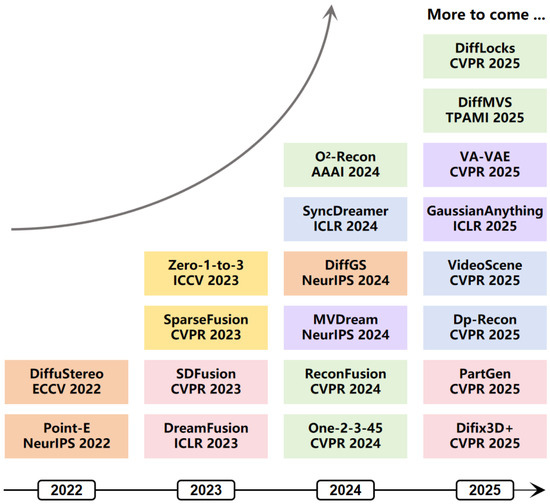
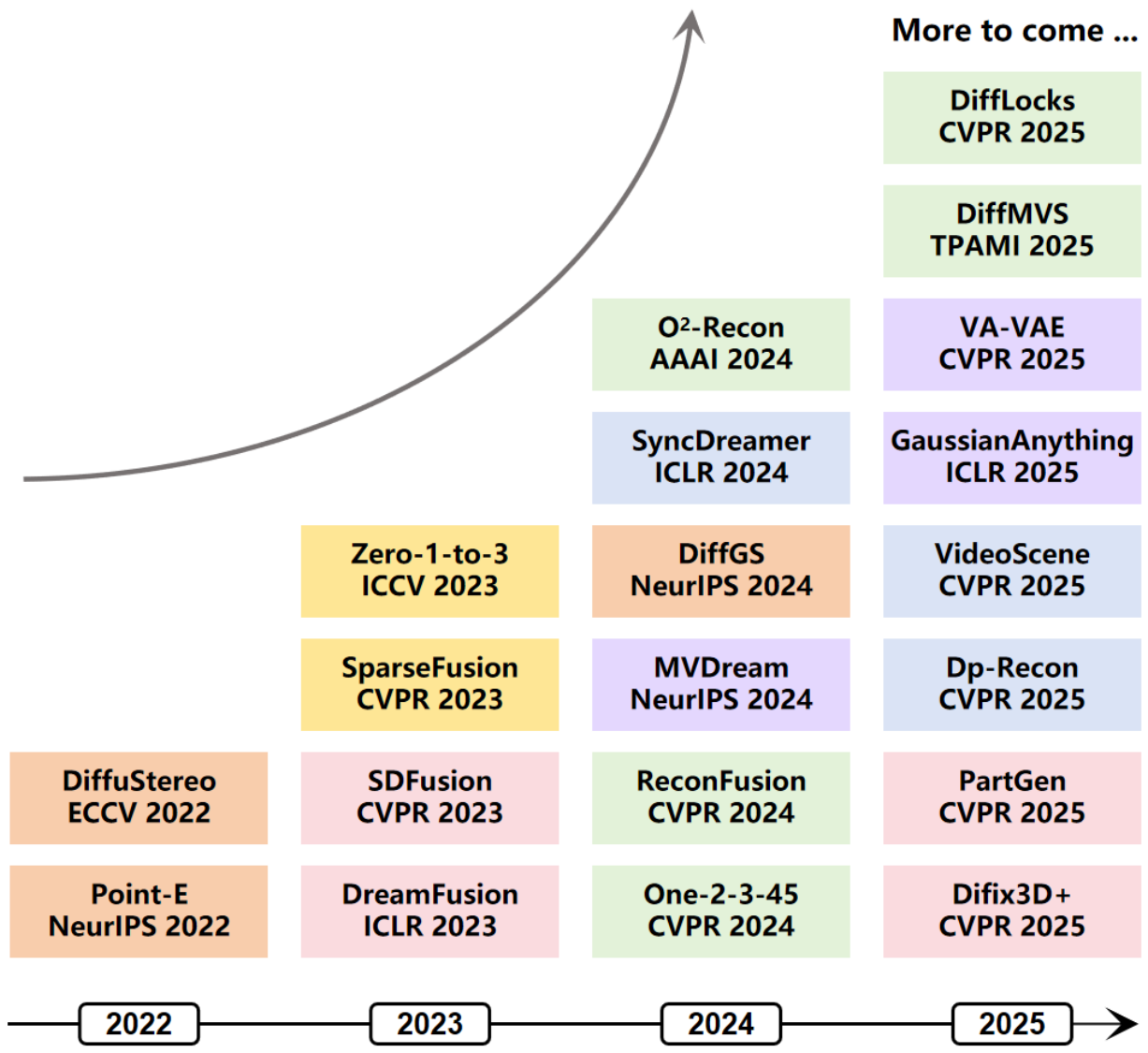
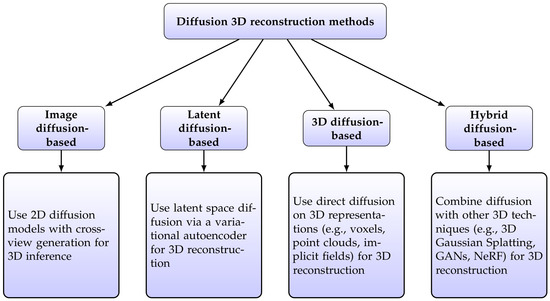
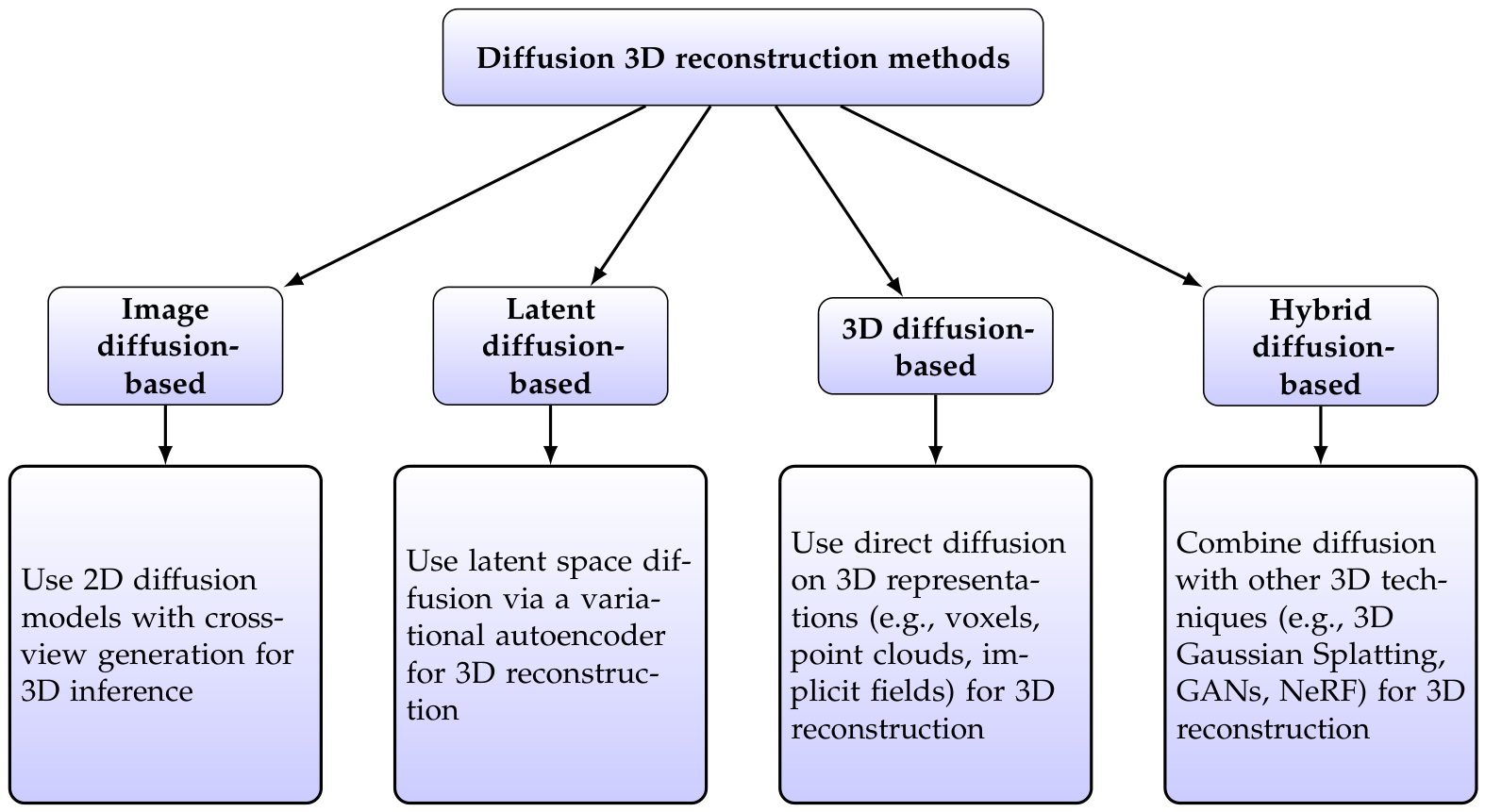


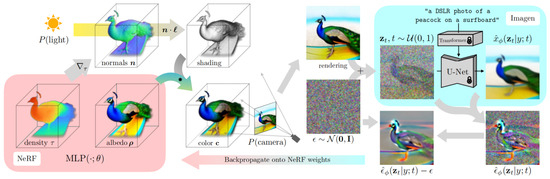
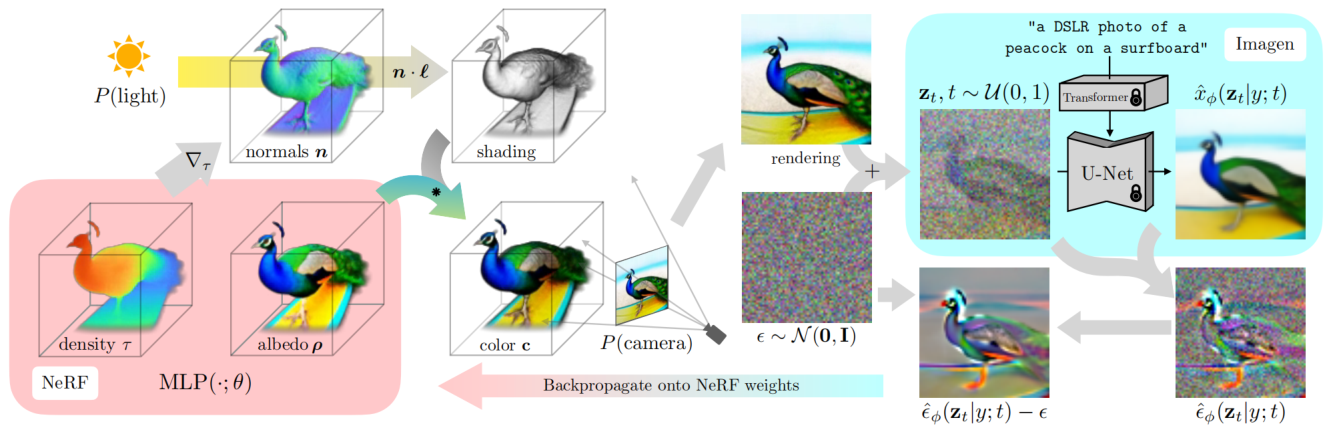


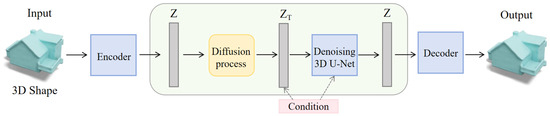
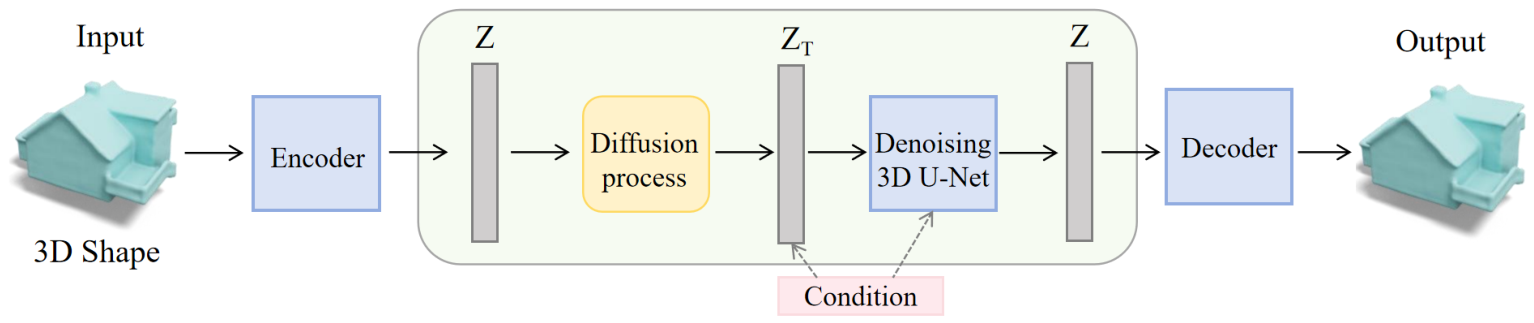


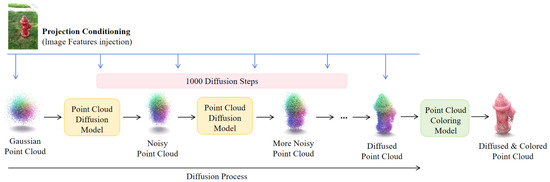
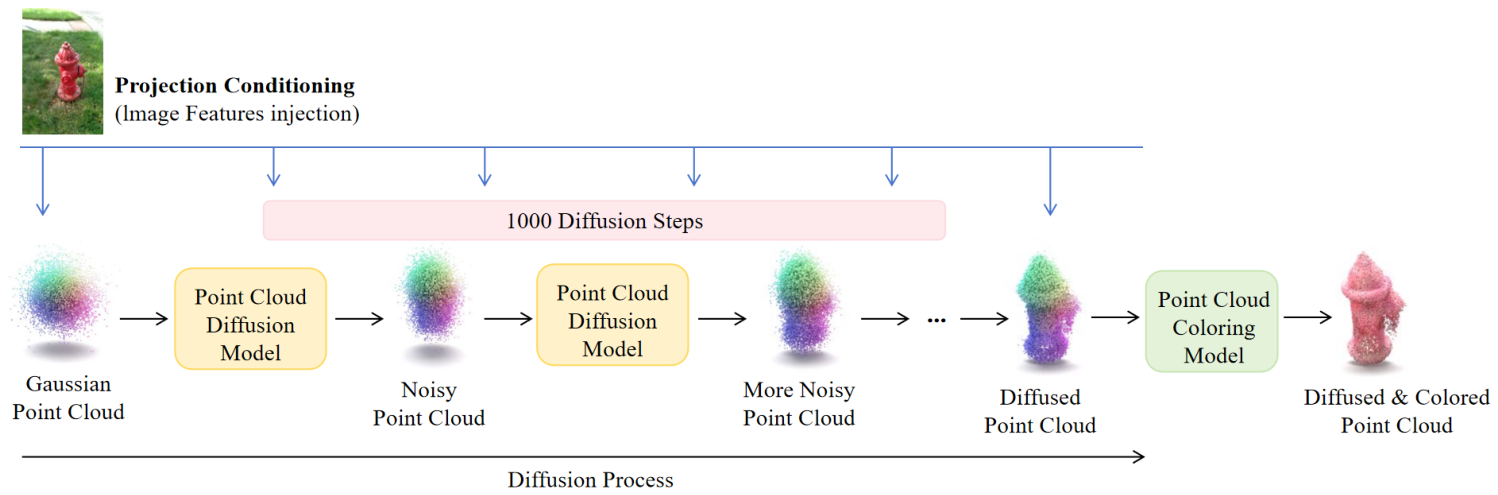


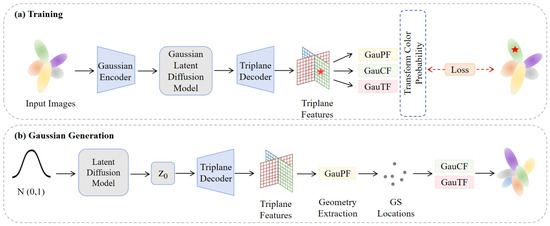
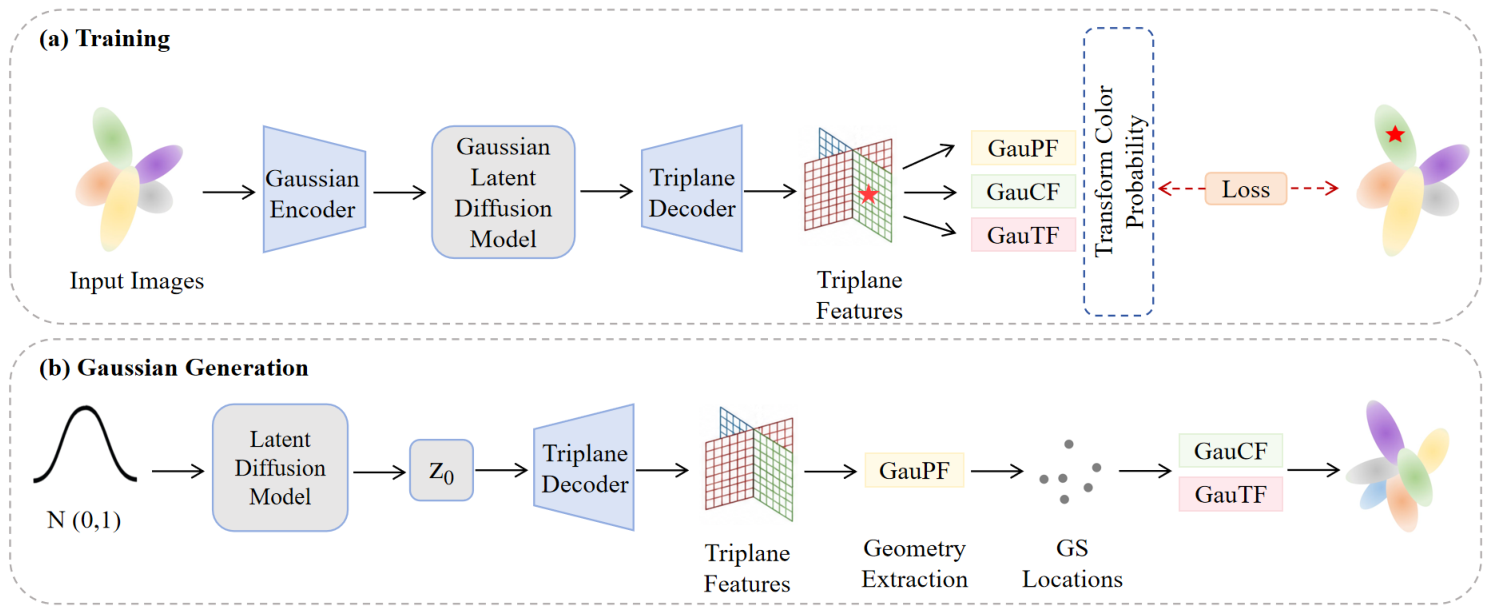

Disclaimer/Publisher’s Note: The statements, opinions and data contained in all publications are solely those of the individual author(s) and contributor(s) and not of MDPI and/or the editor(s). MDPI and/or the editor(s) disclaim responsibility for any injury to people or property resulting from any ideas, methods, instructions or products referred to in the content. |
© 2026 by the authors. Published by MDPI on behalf of the International Society for Photogrammetry and Remote Sensing. Licensee MDPI, Basel, Switzerland. This article is an open access article distributed under the terms and conditions of the Creative Commons Attribution (CC BY) license.