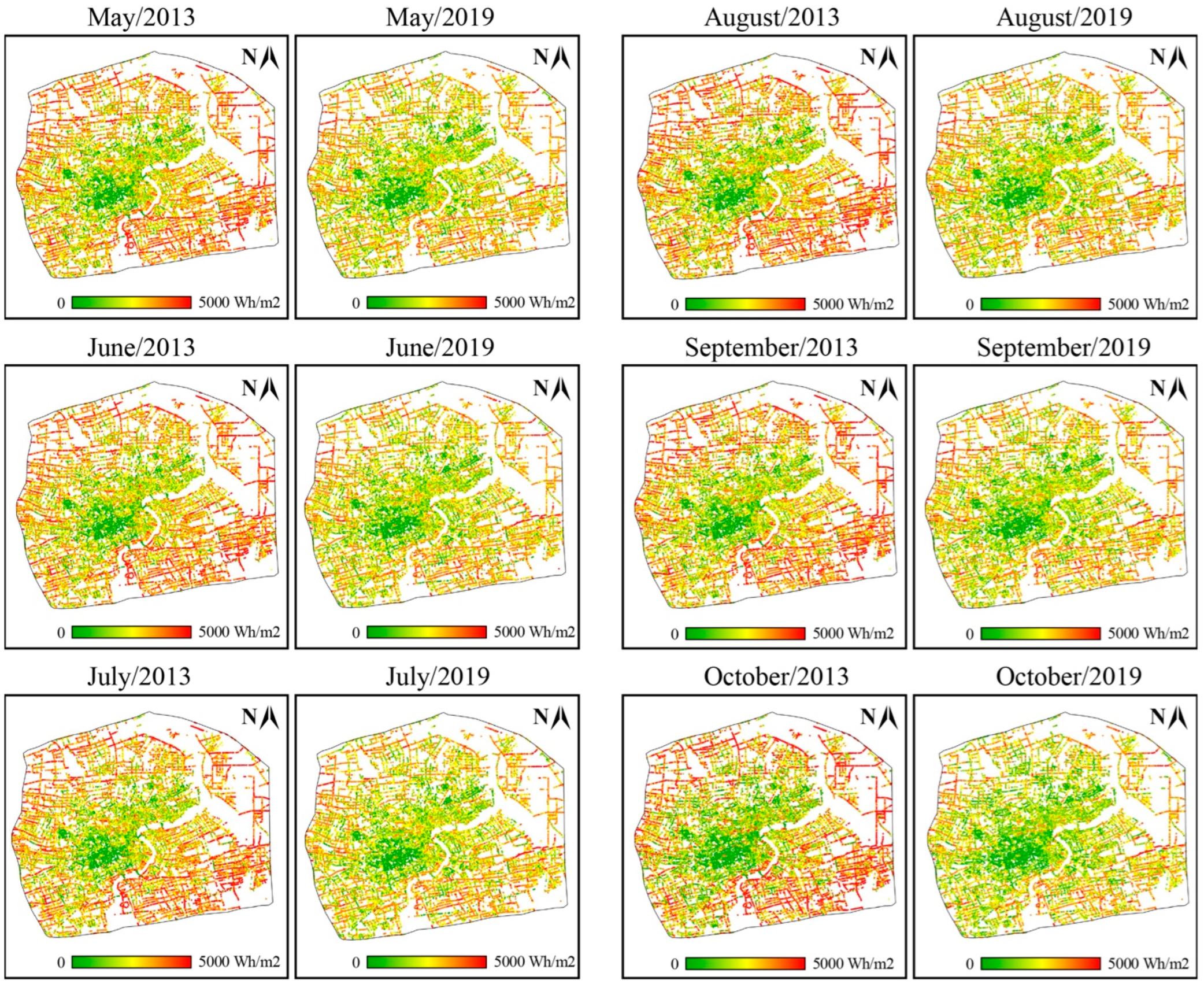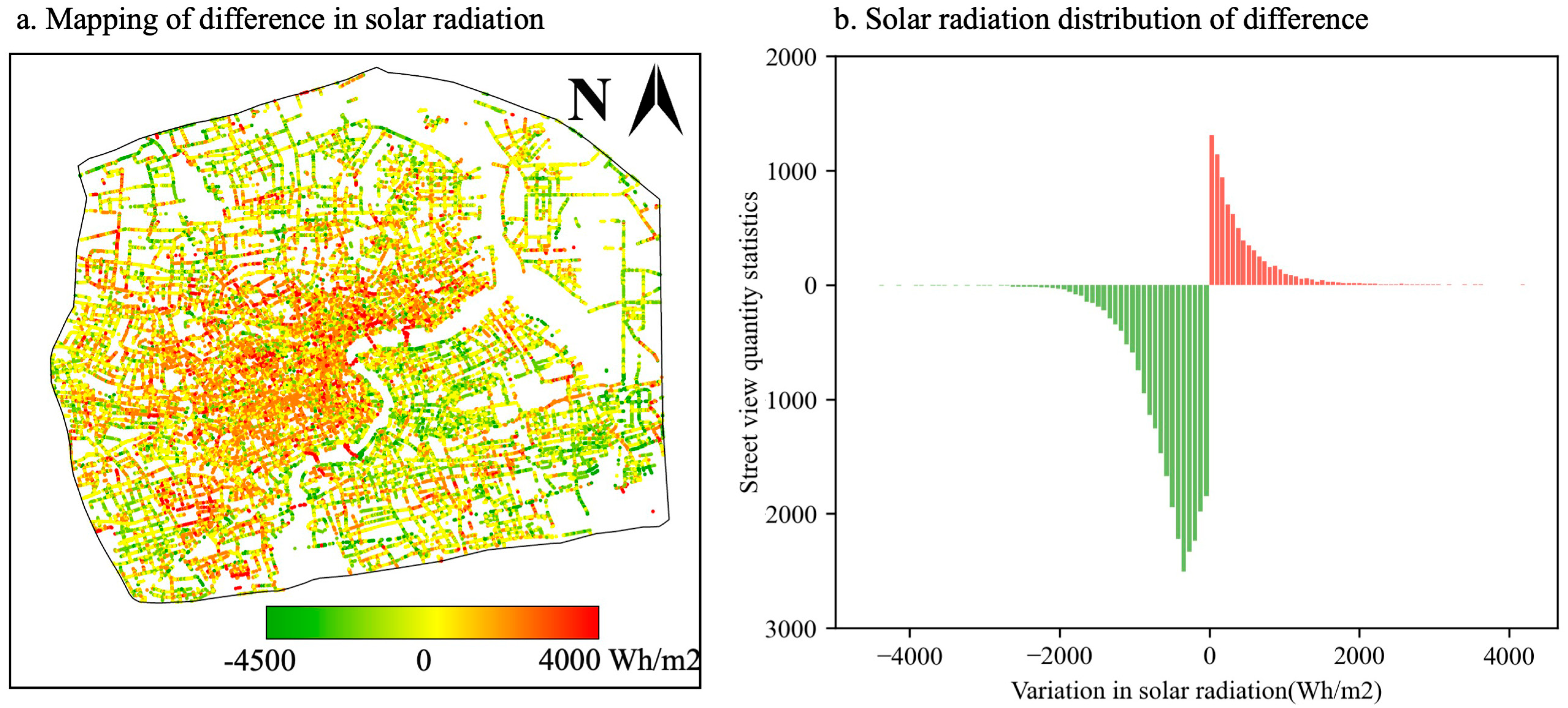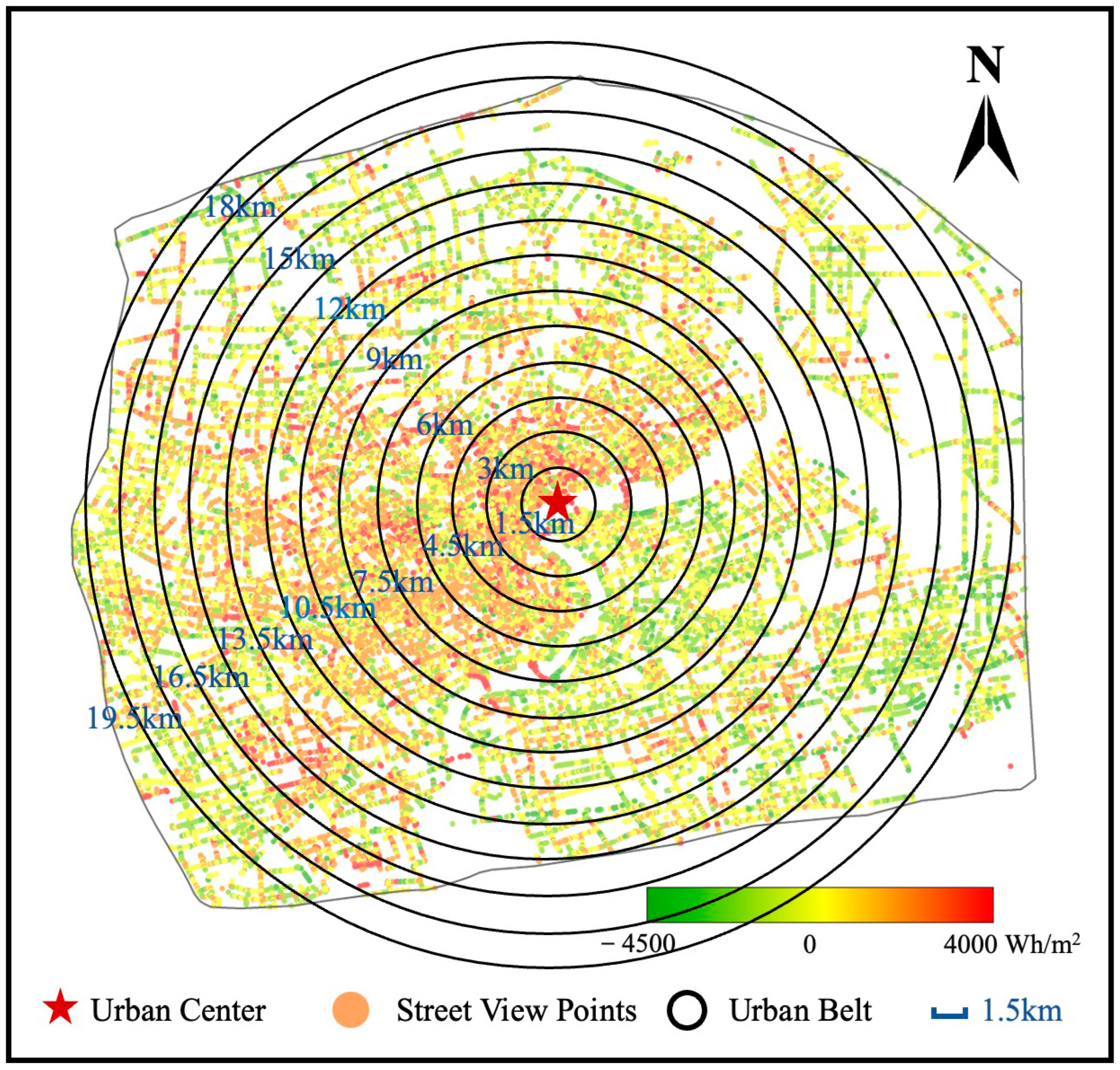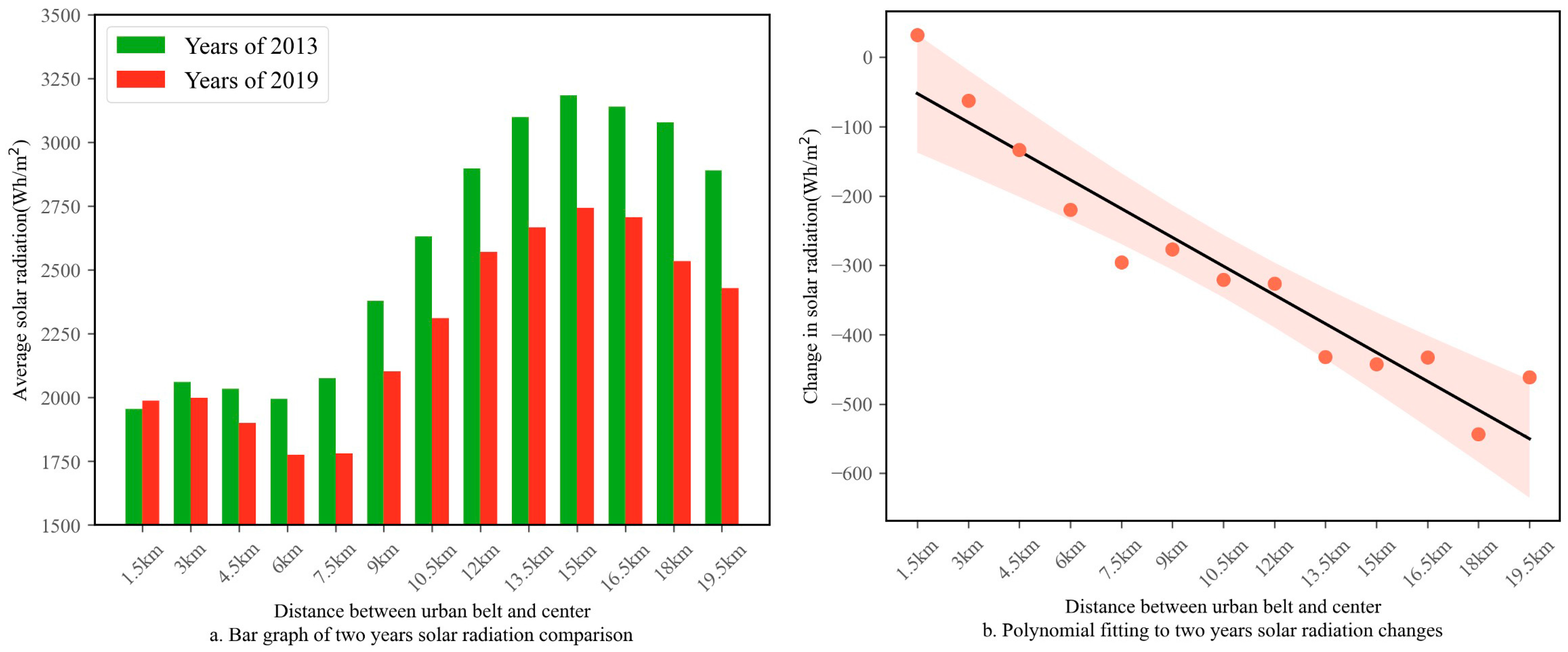


Analysing the Spatio-Temporal Variations of Urban Street Summer Solar Radiation through Historical Street View Images: A Case Study of Shanghai, China



Abstract
Share and Cite
Wang, L.; Zhang, L.; He, J. Analysing the Spatio-Temporal Variations of Urban Street Summer Solar Radiation through Historical Street View Images: A Case Study of Shanghai, China. ISPRS Int. J. Geo-Inf. 2024, 13, 190. https://doi.org/10.3390/ijgi13060190
Wang L, Zhang L, He J. Analysing the Spatio-Temporal Variations of Urban Street Summer Solar Radiation through Historical Street View Images: A Case Study of Shanghai, China. ISPRS International Journal of Geo-Information. 2024; 13(6):190. https://doi.org/10.3390/ijgi13060190
Chicago/Turabian StyleWang, Lei, Longhao Zhang, and Jie He. 2024. "Analysing the Spatio-Temporal Variations of Urban Street Summer Solar Radiation through Historical Street View Images: A Case Study of Shanghai, China" ISPRS International Journal of Geo-Information 13, no. 6: 190. https://doi.org/10.3390/ijgi13060190
APA StyleWang, L., Zhang, L., & He, J. (2024). Analysing the Spatio-Temporal Variations of Urban Street Summer Solar Radiation through Historical Street View Images: A Case Study of Shanghai, China. ISPRS International Journal of Geo-Information, 13(6), 190. https://doi.org/10.3390/ijgi13060190