


Abstract
Herpes simplex viruses type 1 and 2 (HSV) are widespread human pathogens. Although acyclic nucleosides such as acyclovir (ACV) are effective against HSV, their prolonged use leads to the emergence of resistant strains, decreasing the efficacy of therapy. We assessed the ability of Rutan (a clinically-approved drug comprising sumac gallotannins) and geraniin (an ellagitannin of Geranium spp.) to inhibit drug-resistant HSV strains and synergize with nucleoside and non-nucleoside antivirals. Antiviral activity was evaluated in Vero E6 cells by quantifying the virus-induced cytopathic effect. Combination effects were analyzed using the Chou–Talalay methodology. Each polyphenol was equally active against reference and ACV-resistant HSV-1 and 2 strains, as well as HSV-1 clinical isolates that are resistant to ACV and show decreased sensitivity to cidofovir. Geraniin, along with Rutan and its component R5 (pentagalloylglucose), synergized with glycyrrhizic acid (GA) in inhibiting HSV replication. GA dose-dependently decreased IC50/IC95 values of those polyphenols 2- to 32-fold. Combining ACV with polyphenols resulted in strong synergy. Rutan, R5, and geraniin ensured teh inhibition of virus-induced CPE at 8- to 31-fold lower concentrations of ACV. Thus, combinations of polyphenols with GA and/or ACV offer promise as new anti-HSV drugs.
1. Introduction
Herpes simplex viruses type 1 and 2 (HSV-1 and HSV-2, herein collectively termed HSV) are the most widespread representatives of the Orthoherpesviridae family that are pathogenic to humans [1]. These two viruses have caused a silent and virtually uncontrollable pandemic: according to the latest WHO assessment, in some regions, their prevalence in humans is as high as 100% [2]. HSV infections are usually latent, but their recurrence may cause oral and genital lesions, conjunctivitis, keratitis, and encephalitis [3]. Furthermore, HSV often coinfects HIV patients, complicating their treatment [4,5]. There is also evidence that HSV may also contribute to the development of multiple sclerosis [6,7], Alzheimer’s disease [8,9], and several types of cancer [10,11,12].
Most treatment regimens for HSV infections are based on the use of nucleoside analogs. In infected cells, these compounds are converted into the corresponding nucleoside-5′-triphosphates which act as obligate terminators for herpesvirus DNA polymerase, thus inhibiting virus replication. This class of antiviral drugs is mostly represented by guanine acyclic nucleosides that lack sugar moiety, i.e., acyclovir (ACV), ganciclovir, and penciclovir. It is noteworthy that the first phosphorylation step of acyclic nucleosides is mediated by the viral thymidine kinase, as none of the host nucleoside kinases recognize those compounds [3]. On the one hand, this ensures selectivity of acyclic nucleosides towards herpesviruses. On the other hand, the emergence of resistance (especially during long-term treatment of immunocompromised patients) decreases their efficacy. The predominant majority of such cases is due to mutations in the thymidine kinase gene, preventing the conversion of acyclic nucleosides into 5′-monophosphates. An additional contribution to the observed decrease in efficacy is underlain by mutations in the viral DNA polymerase gene [13]. The second drawback of ACV and related drugs is their low solubility and the resulting moderate bioavailability, requiring the use of high doses in the treatment regimens (1–2 g per day) [14]. Bioavailability can be improved by the development of prodrugs, such as valacyclovir and famvir, which both contain esterified hydroxyl groups and 2-aminopurine substitutions for guanine [15]. Nevertheless, ACV remains the first-line treatment due to its low price, making it affordable for all patients. Finally, none of these drugs can eliminate latent HSV [3].
The prevalence of infections caused by ACV-resistant HSV strains in immunocompetent individuals typically does not exceed 1% [13]. If the infection involves immune privileged organs and tissues, the prevalence of drug-resistant strains is substantially higher (e.g., up to 6.4% of patients with recurrent herpetic keratitis are infected with ACV-resistant HSV strains [16]). Immune privileged organs and tissues include the brain, testes, ovaries, hair follicles, the inner chambers of the eye, and the pregnant uterus [17]. HSV infections of the cornea [18,19], retina [20], brain [21,22,23,24], and testes [25] are difficult to treat (and lead to patient disability and death), even in cases where the involved strains retain sensitivity to ACV and its analogues. In immunocompromised patients, the prevalence of ACV-resistant HSV strains is even higher, ranging from 2.5% to 10.9% in HIV-infected individuals and recipients of myelosuppressive chemotherapy or solid organ transplants [13], or from 14% to 46.5% after allogeneic hematopoietic stem cell transplantation, with a tendency to increase [26,27]. In the case of ACV-resistant strains, the only treatment option is intravenous administration of rather toxic foscarnet, but its efficacy remains questionable [28]. Thus, the search for new drugs among synthetic and natural compounds active against both drug-sensitive and -resistant HSV strains is still warranted.
Plant antioxidants, such as flavonoids, polyphenols and stilbenoids, represent a group of compounds that display activity against various viruses, including members of the Orthoherpesviridae family. We recently reported that Rutan, a drug approved in the Republic of Uzbekistan for treatment of influenza and COVID-19, suppresses replication of various herpesviruses, including HSV-1, HSV-2, human cytomegalovirus (CMV) and the Epstein–Barr virus (EBV). The pharmaceutical composition of Rutan comprises water-soluble polyphenols obtained from sumac (Rhus coriaria)—variants of galloylated glucose with individual profiles of antiviral activity [29], of which the most widely known is 1,2,3,4,6-penta-O-galloyl-β-D-glucose (PGG) [30]. In the same paper, we also reported the high activity of geraniin (a drug approved in Japan for treatment of diarrhea) against HIV, respiratory viruses, and HSV [29]. Thus, the aim of the study was to broaden the range of possible clinical applications of Rutan and geraniin. We have therefore undertaken to assess the ability of Rutan and its components active against HSV-1/HSV-2 to (i) inhibit drug-resistant strains of those viruses and (ii) synergize with nucleoside and non-nucleoside antivirals. The second goal was based on the increasing evidence that the emergence of drug-resistant HSV strains is delayed or even prevented by the simultaneous use of several drugs, particularly those with distinct mechanisms of action [31,32,33]. An additional benefit of identifying combinations that produce synergistic effects could be the use of lower concentrations of the drugs with similar efficacy.
Here, we demonstrate that Rutan and geraniin exhibit the same activity against nucleoside-sensitive and nucleoside-resistant HSV strains. We also describe plant polyphenol combinations with ACV or glycyrrhizic acid (GA) which exert synergistic effects in inhibiting HSV reproduction.
2. Materials and Methods
2.1. Chemicals
Acyclovir (ACV), cidofovir (CID), dimethylsulfoxide (DMSO), and the In Vitro Toxicology Assay Kit (based on the use of the MTT [3-(4,5-dimethylthiazol-2-yl)-2,5-diphenyltetrazolium bromide] dye) were purchased from Sigma-Aldrich (St. Louis, MO, USA).
2.2. Isolation, Purification and Identification of Polyphenols
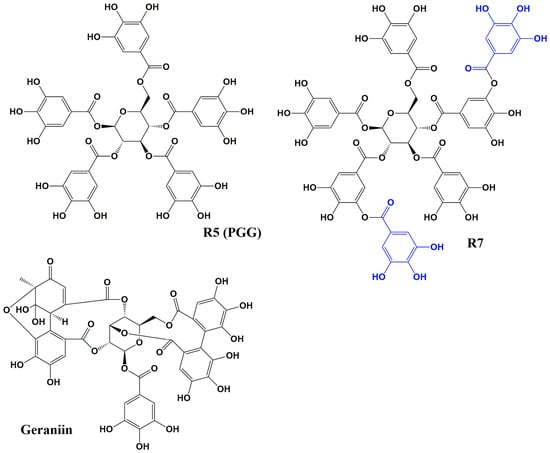
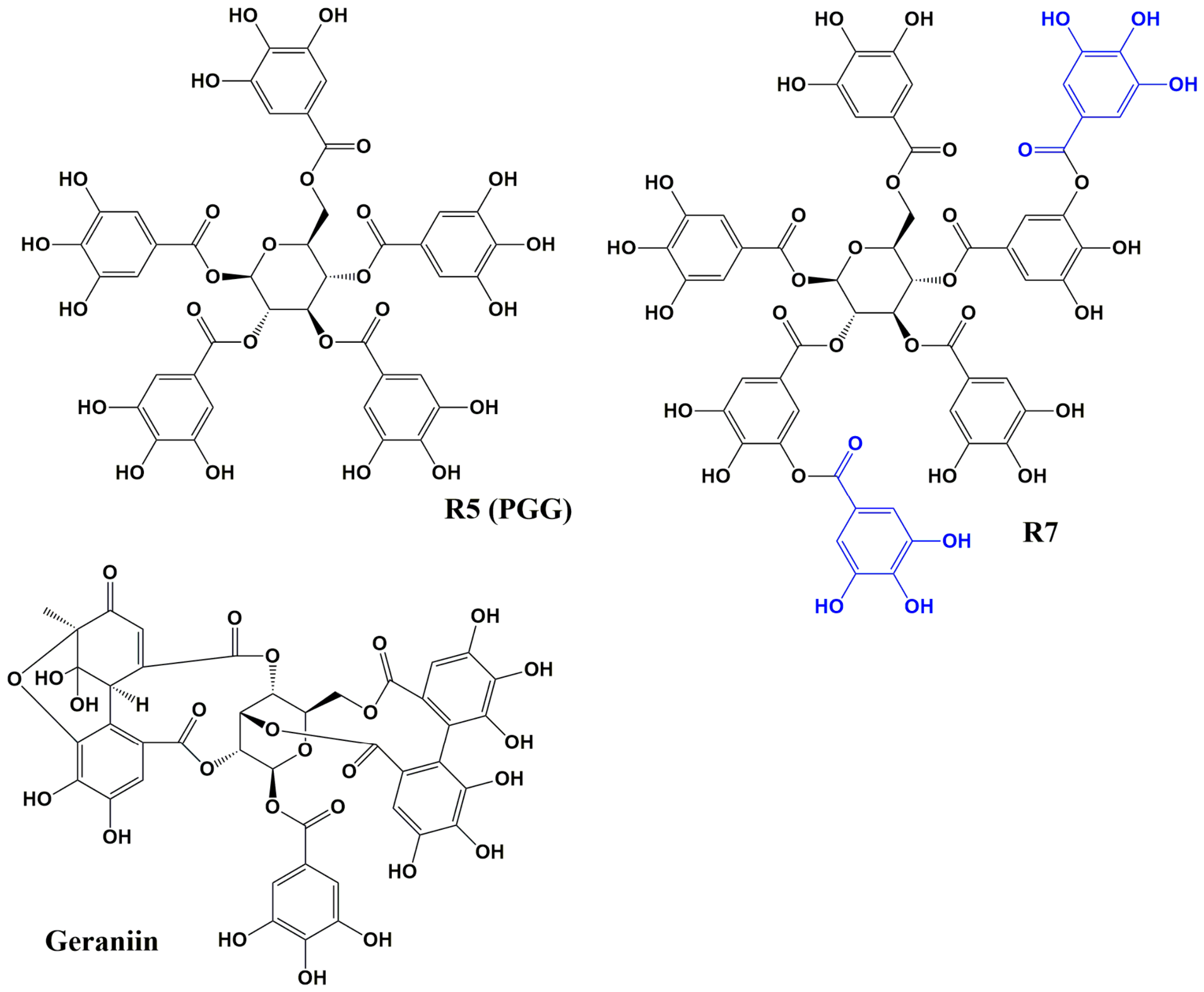
Rutan (comprised of water-soluble polyphenols of sumac leaves, Rhus coriaria L.), its components active against HSV (R5 [1,2,3,4,6-penta-O-galloyl-β-D-glucose] and R7 [2,4-bis-O-galloyl-1,3,6-tri-O-galloyl-β-D-glucose]), and geraniin (ellagitannin of Geranium sanguineum L.) were isolated, purified, and identified as explicitly described in the previous paper [29] and its patents [34,35]. Briefly, the crushed dried leaves of the respective plant were subjected to sequential extraction with aqueous ethanol, chloroform and ethyl acetate, followed by precipitation of the polyphenol fraction; individual compounds were obtained by hydrophobic chromatography. The purity of each compound was >95%, according to HPLC and high-resolution mass spectrometry. The structures of geraniin, R5 (the most active compounds in the cited study), and R7 are shown in Figure 1. Chromatograms and spectral data were presented in the previous paper [29], and this study was based on the same preparations of all compounds.
Figure 1.
Structures of pentagalloylglucose (R5, PGG), R7 and geraniin. Blue color marks two additional pyrogallol residues, compared to those for R5.
2.3. Isolation and Purification of GA
GA was isolated from the roots of licorice (Glycyrrhiza glabra L.), as described in [36] (with additional recrystallization at the last stage of purification). The purity of GA was 95% (see Figure S1), as identified by mass spectrometry (Figure S2) and NMR spectroscopy (Tables S1 and S2). The spectral data are in accordance with literature data [37,38,39,40,41] (discussed in Supplement in details).
2.4. Evaluation of In Vitro Antiviral Activity in Permissive Cell Cultures
2.4.1. Herpesvirus Strains
HSV-1L2, HSV-1L2-ACVR [42], HSV-1Avd and HSV-1Tot [43], HSV-2BH, and HSV-2BH-ACVR strains of Herpes simplex virus, as well as Vero E6 cells, were obtained from the State Collection of Viruses and the Russian Collection of Cell Cultures, respectively, of the Ivanovsky Institute of Virology (a division of the Gamaleya Research Center for Epidemiology and Microbiology of the Russian Ministry of Health, Moscow, Russia). As there is no consensus on the definition of drug-resistant HSV-1 strains (as exemplified by different criteria in various papers [44,45,46]), we classify strains based on the IC50 value increase relative to the reference HSV-1L2 strain, using thresholds similar to those reported in [44]. Specifically, a strain is referred to as resistant if the IC50 value is increased by 10-fold compared to that of the sensitive HSV-1L2 strain; highly resistant, if it increased by >50 fold; or with reduced sensitivity to a drug, if the IC50 value increased by 4–8 fold. Strains highly resistant to acyclovir HSV-1L2-ACVR and HSV-2BH-ACVR were initially obtained by serial passaging of respective HSV-1L2 and HSV-2BH strains in the presence of increasing ACV concentrations. These strains are resistant to ACV at concentrations up to 100 µg/mL (Tables 1 and 2). The HSV-1L2-ACVR strain harbors V12A, W88R (the key mutation conferring resistance to ACV), and R220H substitutions in the thymidine kinase gene and D46N, D151G, A346T, S866F, G1085E substitutions in DNA polymerase gene [47]. HSV-1Avd and HSV-1Tot were previously isolated from patients [43] with decreased sensitivity to cidofovir (Table 3). Among them, HSV-1Avd is resistant and HSV-1Tot and highly resistant to ACV. They harbor mutations in both the DNA polymerase and thymidine kinase genes [47].
2.4.2. Cytotoxicity Assay
All polyphenols, ACV, CID, and GA were dissolved in DMSO, and their working solutions were prepared by diluting the initial stock solutions with culture media (the final DMSO concentration did not exceed 1%). Culture medium supplemented with DMSO at the same concentration was used as a negative control.
The cytotoxicity of all compounds was determined using MTT dye [48]. Briefly, Vero E6 cells were cultivated in EMEM (Paneco, Moscow, Russia) supplemented with 5% FBS (BioSera, Cholet, France), 2 mM glutamine (Paneco) and 100 U/mL benzylpenicillin (Sigma, Darmstadt, Germany) in a humid atmosphere with 5% CO2 at 37 °C. For toxicity assay, they were seeded on 96-well plates; the next day, the compound was added and the mixture was held for 72 h. Then, the medium was removed, and 0.5 mg/mL of MTT (Sigma) solution in fresh DMEM was added for 4 h. Afterwards, the medium was removed, formazan crystals were dissolved in 0.04 M HCl (Reachim, Moscow, Russia) solution in 2-propanol (Reachim), and absorbance was measured at 570 nm.
Half-maximal cytotoxic concentrations (CC50) were calculated from the curves of the dependence of the proportion of viable cells incubated with a compound (relative to the number of mock-treated cells) on its concentration, using nonlinear regression equations (four parameters).
2.4.3. Antiviral Activity
The antiviral activity of polyphenols at nontoxic concentrations towards HSV-1 and HSV-2 was studied using the virus-induced CPE assay, as described previously [49,50]. The titer of viral stocks was determined using the method of Sarisky et al. [51]. Serial dilutions of the compounds were added to 96-well plates with monolayers of Vero E6 cells, followed by addition of a respective virus at a multiplicity of infection of 0.1 PFU/cell. As a control, the cells were infected similarly in the absence of compounds. Two days later, CPE was visualized to assess IC50 and IC95 values, providing 50% and complete inhibition of the development of viral CPE, respectively.
For each concentration, the coefficient of inhibition of virus reproduction (CI), or the protection index, was calculated:
where Ac and Ae are the levels of virus reproduction in the control and the experiment, respectively. The half-maximum inhibitory concentration for each compound (IC50) was determined from the curves of CI dependence on compound concentration, using nonlinear regression equations (four parameters).
CI = [(Ac − Ae)/Ac] × 100 (%)
The selectivity index (SI) was calculated using the following formula:
SI = CC50/IC50
2.5. Analysis of Combination Effects
Combination effects were analyzed using the combination index (Ic), derived from the Chou–Talalay theorem [52]:
where Dx,1 and Dx,2 are the individual concentrations of substances 1 and 2, producing an effect of amplitude X, and d1 and d2 are the concentrations of substances 1 and 2 in combination, producing an effect of the same amplitude. In our case, an “effect of amplitude X” is a twofold suppression of virus reproduction, which means that Dx,1 and Dx,2 are the half-maximum inhibitory concentrations (IC50) of the two components of the combination, and d1 and d2 are the fractional IC50 values of the same two components, obtained when they are combined (i.e., used as parts of a combination). If Ic < 1, the combination produces a synergistic effect; at Ic = 1, the effect is additive; and if Ic > 1, the components of the combination are antagonistic to each other.
Ic = d1/Dx,1 + d2/Dx,2,
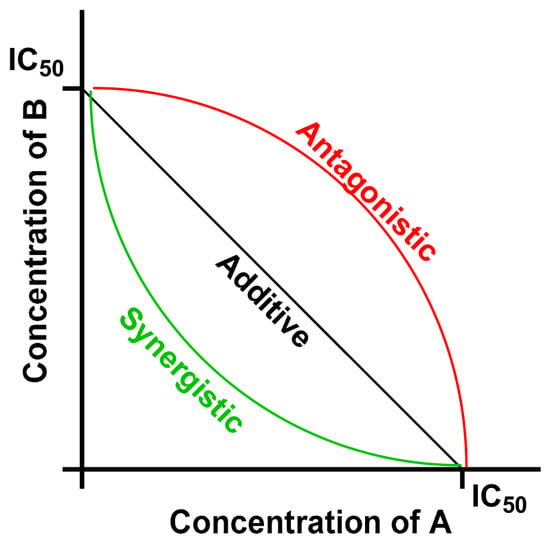
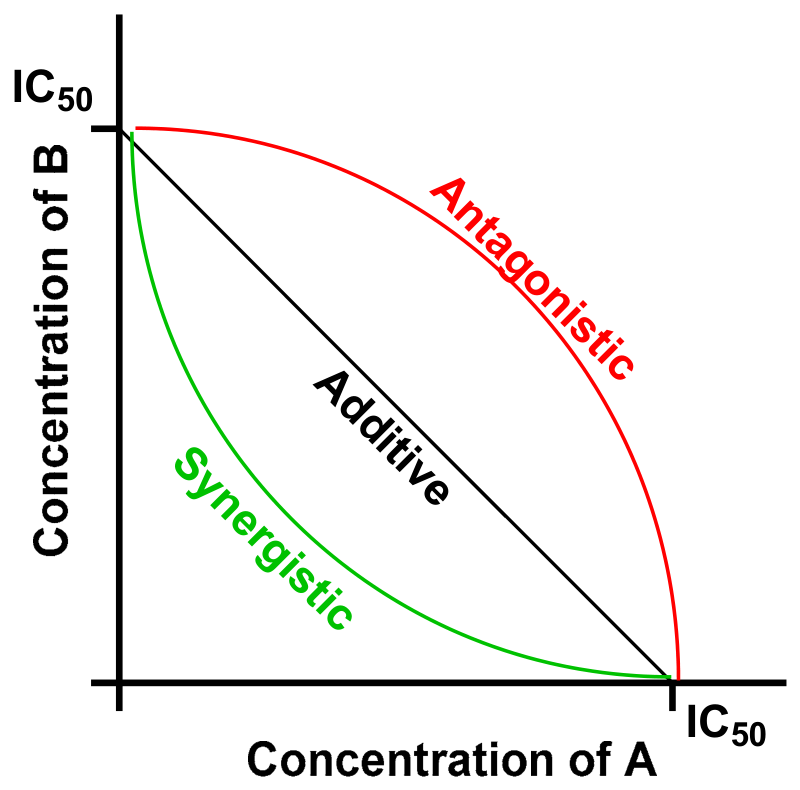
Formula (3) provides a basis of the isobolographic method. An isobologram is a graph in a rectangular coordinate system, the points of which correspond to equipotent concentrations (i.e., causing the effect of amplitude X). The concentrations of substances 1 and 2 are plotted along the two coordinate axes. A line corresponding to an additive interaction may also be shown on the graph. When individual concentration-response curves of substances 1 and 2 have the same maximum amplitude, the graph of an additive interaction shows a straight line that cuts on the coordinate axes segments corresponding to values of Dx,1 and Dx,2. If the isobole of the combination under study deviates from the additive interaction line toward the origin, the combination is synergistic; otherwise, it is antagonistic (Figure 2).
Figure 2.
Types of isobolograms, depending on the value of the combination index (Ic).
One of major objectives of identifying a synergistic drug combination is to reduce the concentration(s) of the drug(s) used, thereby decreasing the toxicity while maintaining efficacy. Inverting each term of Formula 3 gives concentration-reduction indices (CRIs) for the combined drugs. A CRI is a measure of the number of folds the concentration of each drug in a synergistic combination may be reduced to achieve the same effect level, compared with the concentrations of each drug alone [52]. Thus, for a two-drug combination,
Ic = 1/CRI1 + 1/CRI2.
2.6. Statistical Analysis
All experiments were performed in triplicate at least three times independently. The data present mean values ± standard deviation (SD). Differences between two groups were compared using a two-tailed unpaired Student’s t-test.
3. Results
3.1. Selection of Polyphenols
Rutan is a drug approved in Uzbekistan for treatment of infections caused by SARS-CoV-2 and influenza A viruses [53]. It is a mixture of several polyphenols—galloylated derivatives of glucose—extracted from sumac (Rhus coriaria). Previously, we demonstrated that Rutan and one of its major components, pentagalloylglucose (R5, PGG), exhibit pronounced activity against members of three subfamilies of Orthoherpesviridae (HSV, CMV, and EBV) at nontoxic concentrations [29]. In addition to these two polyphenols, we have included in the present experiments R7 (another component of Rutan) and geraniin, an ellagitannin from Geranium sanguineum (as a reference polyphenol with a broad spectrum of antiviral activity; see [29] and the references therein), which did not affect CMV and EBV, but suppressed the reproduction of HSV [29].
Rutan and its components were isolated by sequential extraction with aqueous ethanol, chloroform and ethyl acetate, followed by precipitation and hydrophobic chromatography, as described previously [29]. The purity and structures of all individual compounds (geraniin, R5, R7) were confirmed by high-resolution mass-spectrometry and NMR or crystal X-ray structure analysis. Since we used the same preparations of the compounds as those used in previously reported experiments [29], the detailed procedures and spectral data from the previous reference are not reproduced herein.
3.2. Rutan and Geraniin Are Active Against Drug-Resistant HSV Strains
The first goal was to investigate whether geraniin and Rutan can suppress the replication of drug-resistant HSV-1 and HSV-2. We used (i) highly ACV-resistant strains with mutations in the thymidine kinase gene (HSV-1L2-ACVR and HSV-2BH-ACVR), obtained by serial passaging of the reference strains HSV-1L2 and HSV-2BH in the presence of increasing ACV concentrations, followed by cloning, and (ii) clinical isolates of HSV-1 that exhibit decreased sensitivity to CID (4–8 fold) and are resistant (HSV-1Avd) or highly resistant (HSV-1Tot) to ACV (10- and >200-fold, respectively), with mutations in thymidine kinase and DNA polymerase genes [47]. The activity of the compounds was evaluated in Vero E6 cells that are highly permissive to HSV-1 and HSV-2. Virus replication was assessed by quantifying virus-induced cytopathic effects (CPE). For each compound, we measured concentrations at which they suppressed virus replication by 50% and 95% (IC50 and IC95, respectively) or caused death of 50% of cells (CC50). Representative images of CPE induced by HSV-1 and HSV-2 and its reduction by geraniin are presented in the Supplementary Materials (Figures S3 and S4). Indeed, ACV failed to suppress replication of the resistant virus strains (Table 1 and Table 2). In contrast, Rutan and geraniin were each equally active against ACV-resistant and ACV-sensitive HSV-1 and HSV-2 strains.
Table 1.
Activity of plant polyphenols against reference HSV-1L2 strain and its ACV-resistant counterpart (HSV-1L2-ACVR) in Vero E6 cells.
Table 2.
Activity of plant polyphenols against the reference HSV-2BH strain and its ACV-resistant counterpart (HSV-2BH-ACVR) in Vero E6 cells.
Next, we assessed the activity of the Rutan and geraniin clinical isolates of HSV-1 that are resistant (or highly resistant) to ACV and exhibit decreased sensitivity to other acyclic nucleos(t)ides such as CID due to mutations in the DNA polymerase gene [47]. Again, both polyphenols retained their antiviral activity (Table 3).
Table 3.
Activity of plant polyphenols against Herpes simplex clinical isolates HSV-1Avd and HSV-1Tot resistant to ACV and with reduced sensitivity to CID in Vero E6 cells.
Thus, each of the polyphenols tested was equally active in suppressing reference strains of HSV, their laboratory-developed ACV-resistant counterparts, and clinical isolates that are resistant to ACV but are less sensitive to acyclic nucleotide drugs (i.e., CID). This implies that either the viral thymidine kinase and polymerase are not the targets of Rutan and geraniin, or (at least) the amino acid substitutions conferring resistance to ACV are not involved in the interaction with the polyphenols.
3.3. Polyphenols Synergize with GA in Inhibiting HSV-1 and HSV-2 Replication
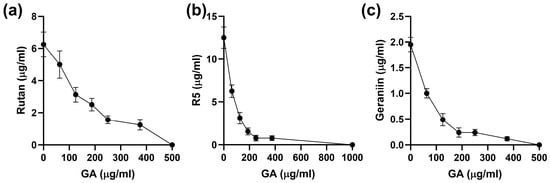
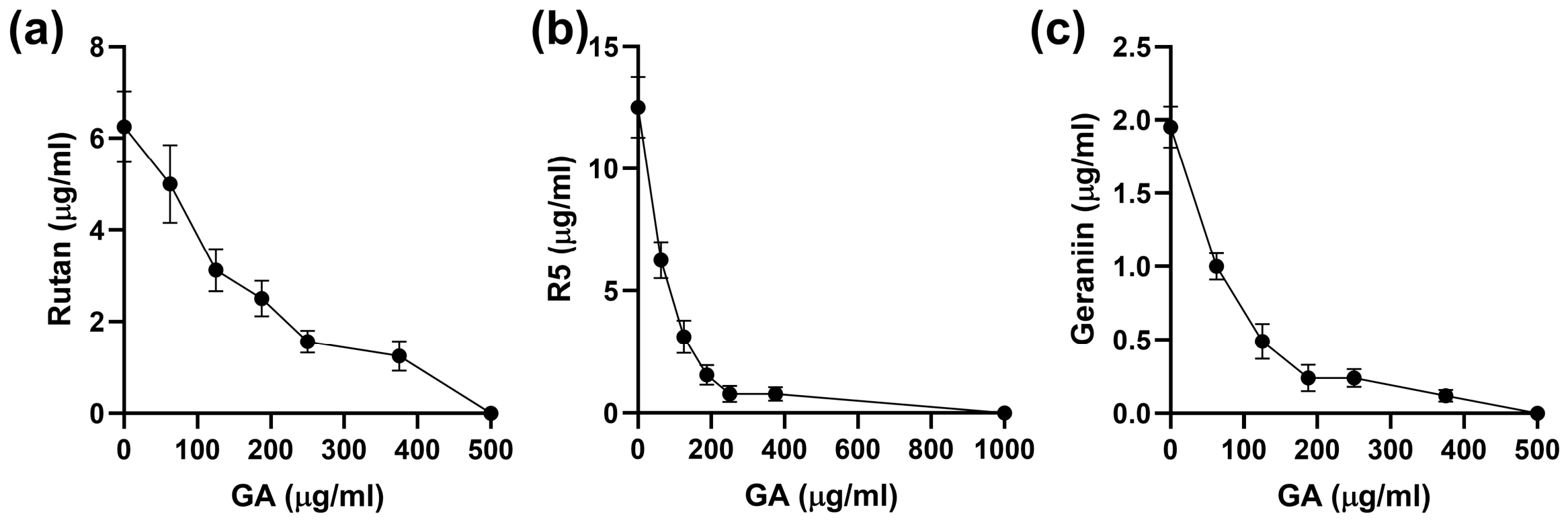
The next goal was to determine whether polyphenols can be used in combination with non-nucleoside antivirals. For this investigation, we chose glycyrrhizic acid (GA), which is a broad-spectrum antiviral approved for clinical use, including as a treatment for HSV infections [54,55,56]. It is non-toxic to Vero cells in concentrations up to 1000 µM, and its antiviral activity towards HSV-1 and HSV-2 are presented in Tables S3 and S4 (column 2). Specifically, GA inhibits HSV-1 and HSV-2, with IC50 values of 500 and 1000 µg/mL, respectively. Indeed, geraniin, as well as Rutan and its component R5, were capable of synergizing with GA, judging by the appearance of the isobolograms (Figure 3). Similar data were obtained for HSV-2. The synergy was most pronounced for R5 and geraniin, which suggests that their combinations with GA show promise as new anti-HSV pharmaceuticals. Noteworthily, no cytotoxicity was observed for any of the drug combinations.
Figure 3.
Isobolograms of 50% inhibition of HSV-1 replication (IC50) by combinations of Rutan (a), R5 (b), or geraniin (c) with GA. The data present means ± SD.
We then undertook a more detailed study involving polyphenols R5 and R7, with a view of identifying the component of Rutan responsible for the observed synergy. Extensive data describing the interactions between polyphenols and GA are provided in Tables S3 and S4. Drug–drug interactions in those datasets were characterized by (i) calculated combination indices Ic (columns 11) and descriptions assigned to each Ic value (columns 12) [52], as well as by (ii) GA to polyphenol molar ratios (columns 10), where applicable.
Tables S3 and S4 demonstrate that R7, despite displaying a high antiviral activity, exhibited no synergy with GA. This implies that the moderate synergistic effects observed for combinations of Rutan and GA are attributable to the interaction between R5 and GA.
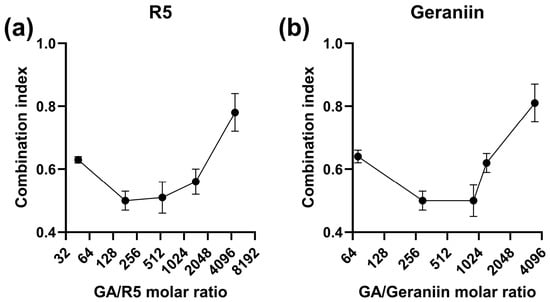
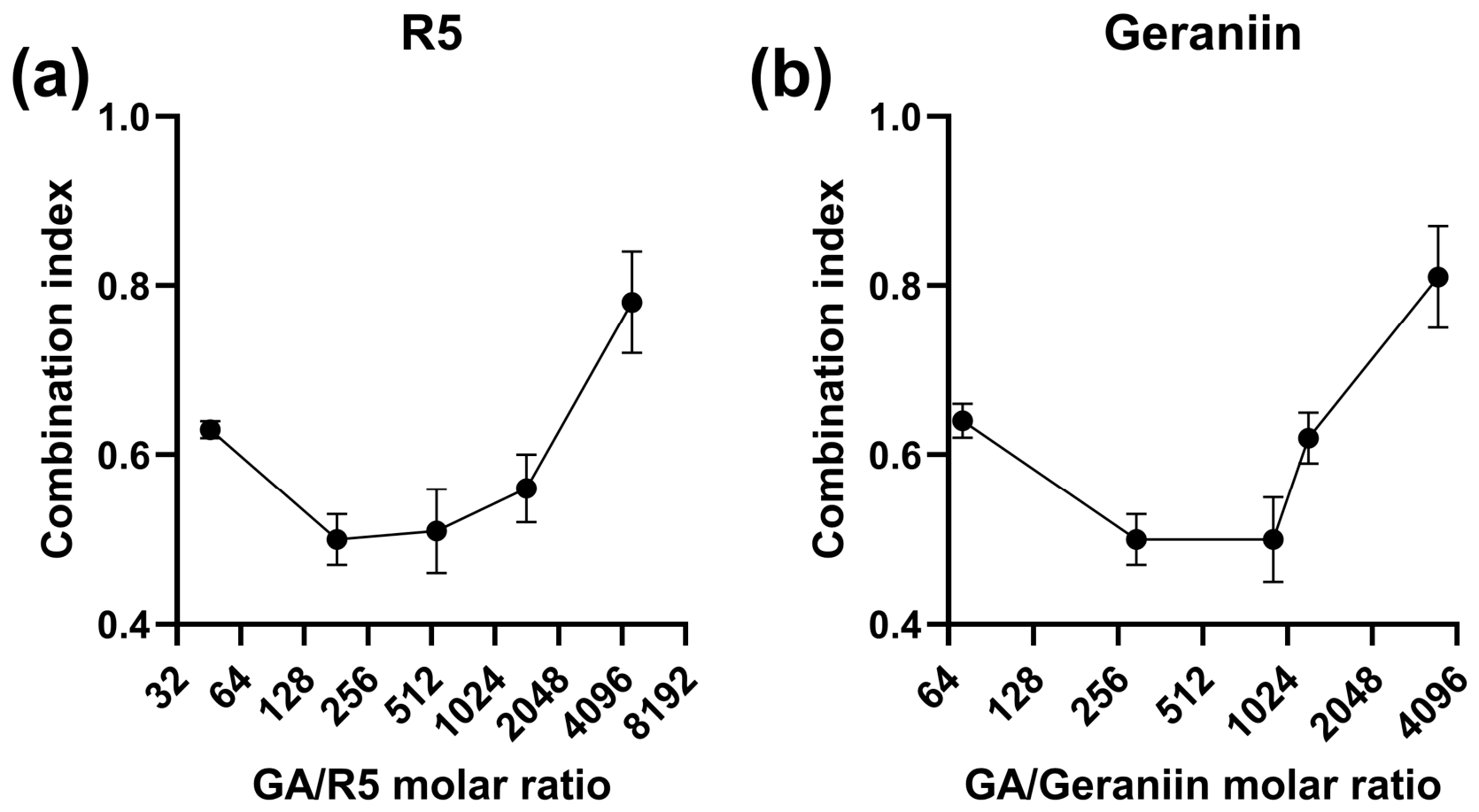
It is important to note that synergy was observed within the range of GA to polyphenol molar ratios from about 100 to ≥1000, as exemplified by the plots of Ic against GA to polyphenol molar ratio, constructed for HSV-1 inhibition via combinations involving R5 and geraniin (Figure 4). This indicates that the synergistic effects were not due to equimolar GA–polyphenol interactions.
Figure 4.
Dependences of the extent of synergistic effects on GA-to-polyphenol molar ratio for R5 (a) and geraniin (b) in GA–polyphenol combinations suppressing the replication of HSV-1. Numerical data are taken from Table S3. The data present means ± SD.
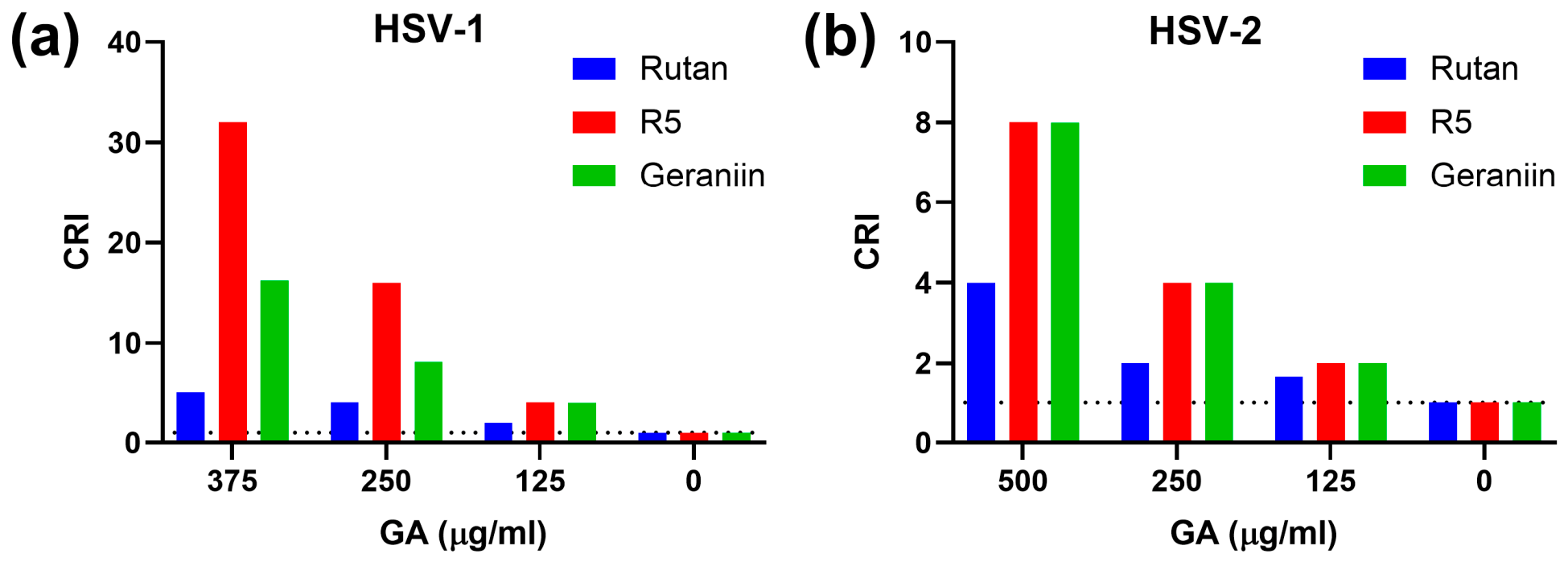
The dependences of concentration-reduction index (CRI) for Rutan, R5, and geraniin on GA concentration are provided in Figure 5, which demonstrates that GA decreases IC50 values of those polyphenols 2- to 32-fold.
Figure 5.
Concentration-dependent reduction indices of IC50 values (CRI) for polyphenols in GA–polyphenol combinations suppressing the replication of HSV-1 (panel (a)) and HSV-2 (panel (b)). The dotted line marks the CRI value of 1.
We also determined the concentrations at which GA and polyphenols ensured complete or near-complete inhibition of virus-induced CPE (Table S5). Since Ic is derived from the medium-effect equation [47], Table S5 does not contain columns for Ic and the GA-to-polyphenol molar ratio. Nevertheless, our data show that the addition of GA to polyphenols decreases their IC95 values severalfold.
3.4. Polyphenols Synergize with ACV in Inhibiting HSV-1 and HSV-2 Replication
We further assessed the ability of polyphenols to synergize with ACV, which is the gold standard for HSV treatment [57]. Indeed, combining ACV with polyphenols results in strong synergy (Table 4 and Table 5, columns 13 and 14). Importantly, Rutan, R5, and geraniin ensured inhibition of HSV-induced CPE at 8- to 31-fold lower concentrations of ACV (Table 6, columns 6 and 12).
Table 4.
Effect of acyclovir (ACV) and plant polyphenols (PP) on HSV-1L2 replication in cultured Vero E6 cells.
Table 5.
Effect of acyclovir (ACV) and plant polyphenols (PP) on HSV-2BH replication in cultured Vero E6 cells.
Table 6.
Acyclovir (ACV), plant polyphenols (PP) and combinations thereof precluding HSV-1L2 and HSV-2BH replication in cultured Vero E6 cells.
4. Discussion
Polyphenols are natural compounds with diverse biological activities, including the ability to suppress DNA and RNA viruses [58]. To give just a few examples, the flavonoid quercetin present in onion and apples [59] is active against hepatitis C virus (HCV) [60]; influenza A virus [61]; SARS-CoV-2 [62]; and dengue [63], Zika [64], and Ebola [65] viruses, as well as HSV-1 and HSV-2 [66]. A stilbenoid polyphenol resveratrol, obtained from grapes and nuts [67], was reported to inhibit influenza A virus [68], coronaviruses [58], human immunodeficiency virus (HIV-1) [68], HSV-1 and HSV-2 [69], as well as EBV [70]. Epigallocatechin-3-gallate (EGCG), which is a major catechin from green tea, exhibits antiviral activity against adenoviruses, HIV-1, herpesviruses, HCV, and hepatitis B virus (HBV), as well as human papilloma, Zika, dengue, Ebola, and influenza viruses (ref. [71] and references therein). These compounds can block replication of viruses via diverse mechanisms, such as impairment of virion binding to host cell receptors [72] and fusion of the viral envelope with the cell membrane [73], interference with clathrin-dependent endocytosis [74], and selective inhibition of viral polymerases [75] or proteases [76]. In the case of HBV, the antiviral activity of EGCG is associated with the induction of a complete autophagy, which is unfavorable for virus replication [77], as well as with autophagy-dependent degradation of the capsid protein [78]. Therefore, this group of natural compounds merits further studies for the development of new antiviral agents.
1,2,3,4,6-Penta-O-galloyl-β-D-glucose (PGG) is another plant polyphenol with a broad spectrum of antiviral activity. It suppresses HSV-1 and HSV-2, CMV, EBV, SARS-CoV-2, and influenza viruses, as shown by us [29] and other groups [79,80,81]. This compound can be obtained from Paeonia lactiflora, Punica granatum, and various other medicinal plants [30]. It is the major component (R5) of the drug Rutan, approved in Uzbekistan for treatment of respiratory viral infections [53]. Various groups reported different mechanisms of its activity against herpesviruses: PGG/R5 can (i) induce autophagy [79]; (ii) downregulate cofilin 1, a factor critical for actin rearrangements required for productive infection [82]; and (iii) interfere with functions of dynein and viral UL31/34 proteins, thereby blocking, respectively, nuclear transport of HSV particles and nucleocapsid egress [83]. And we cannot rule out the existence of other, as yet undiscovered, mechanisms of antiviral activity of this and structurally-related compounds towards herpesviruses. As such, PGG, being a tannin, could also possibly prevent virion binding to the cells through interaction with either viral glycoproteins or cell membrane glycosaminoglycans. Indeed, PGG and similar tannins were reported to act at early stages of the virus life cycle [84].
A large piece of evidence suggests that plant polyphenols retain their activity against viral strains resistant to classical drugs, such as oseltamivir-resistant variants of influenza A virus or ACV-resistant HSV-1 strains, as shown for quercetin [85] and resveratrol [86] derivatives. Of note, suppression of ACV-resistant HSV-1 was reported previously for PGG and explained by its ability to interfere with several steps in the life cycle of the virus, not involving viral thymidine kinase or DNA polymerase (virion adsorption, nuclear transport, nucleocapsid egress, and translational inhibition of the replicated viral genome) [87]. Here, we show for the first time that Rutan and geraniin fully retain the ability to suppress both ACV-sensitive and ACV-resistant HSV strains (Table 1 and Table 2). Therefore, these polyphenols could potentially be used for treatment of immunocompromised patients who are infected with the viruses with developed resistance to acyclic nucleosides. Indeed, our data on clinical isolates (Table 3) support this assumption.
Another finding of our study is the synergy of polyphenols with ACV (Table 4, Table 5 and Table 6) and GA (Tables S3–S5). This is the first such observation for geraniin and Rutan, along with its components, albeit the ability of plant polyphenols to synergize with antivirals has already been documented. Previously, synergistic effects were reported for the oxyresveratrol–ACV combinations against HSV-1 [86] and isoquercetin–amantadine [85] or punicalagin–oseltamivir against influenza A virus [87]. Moreover, C-glucosidic ellagitannins (castalagin, vescalagin, and grandinin) were found to exhibit significant activity against ACV-resistant strains of HSV-1/HSV-2, as well as pronounced synergistic effects when used in combination with ACV [88].
Synergism has two important outputs. The first is the possibility to achieve the desired antiviral effect with lower doses of polyphenols and ACV (which represent classes of compounds having moderate bioavailability [14,89]). A combination, therefore, might help attaining sufficient intracellular levels of both components. The second output is that when standard doses of both drugs are used, the stronger antiviral effect, together with targeting multiple steps in the viral life cycle, might hamper the development of resistance to ACV [31,32,33].
Our data show that geraniin, Rutan, and at least one of its components (PGG) synergize not only with acyclic nucleosides but also with GA. The mechanisms of this synergy are not clear. It is tempting to speculate that this could be due to the capacity of GA for (a) forming complexes with polyphenols [90,91,92] (and PGG or geraniin, in particular [93]) and for (b) self-associating into supramolecular micellar assemblies, described in the literature [91,92,94]. If this is the case, GA could act not only as a second antiviral agent but also as a carrier [95,96] for plant polyphenols that are likely to exhibit moderate bioavailability. This assumption (although still requiring experimental validation) is supported by the fact that synergy was observed at high GA-to-polyphenol molar ratios.
5. Conclusions
In summary, we have shown that Rutan and its major polyphenol R5/PGG, as well as geraniin, effectively suppress replication of drug-resistant HSV-1 and HSV-2 strains and HSV-1 clinical isolates. They also exert synergistic effects with nucleoside (ACV) and non-nucleoside (GA) antivirals. Thus, these plant polyphenols could possibly be used for treatment of HSV infections caused by wild-type and drug-resistant viruses. As we assessed antiviral activity using virus-induced CPE, this could require additional validation of the antiviral effects by other methods such as the virus titration of qPCR. In addition, the data warrant in vivo validation of this activity, as pronounced synergy observed in laboratory in vitro models may not be reproduced in animals (e.g., due to bioavailability issues, common to polyphenols). However, even in this case, synergy could possibly help in reaching concentrations at which these polyphenols can suppress virus replication.
Another limitation of the present study is the unclear mechanism of action of the polyphenols. Although a defined mechanism of action is commonly viewed as a criterion that must be met by an antiviral drug to be judged as safe and effective, polyphenols may eventually affect every stage of the virus life cycle, which hampers identification of their exact targets. It should also be noted that, for a number of clinically approved antivirals (such as ribavirin), the mode of action is still disputed. Nevertheless, research into the mechanisms underlying the antiviral activity of geraniin, as well as Rutan and its constituents, should be continued.
Supplementary Materials
The following supporting information can be downloaded at: https://www.mdpi.com/article/10.3390/biom16121727/s1, Figure S1: HPLC of the purified glycyrrhizic acid (diode array detector); Figure S2. Mass spectrum of glycyrrhizic acid and its fragmentation mechanism; Scheme S1. Structure of glycyrrhizic acid; Table S1. NMR spectral data (δ, ppm) for glycyrrhizic acid in pyridine-d5 (aglycone moiety); Table S2. NMR spectral data (δ, ppm) for glycyrrhizic acid in pyridine-d5 (glycosidic moiety); Figure S3. Antiviral activity of geraniin towards HSV-1/L2 in Vero E6 cells; Figure S4. Antiviral activity of geraniin towards HSV-2/BH in Vero E6 cells; Table S3. Effect of glycyrrhizic acid (GA) on the suppression by plant polyphenols (PP) of HSV-1L2 replication in cultured Vero E6 cells; Table S4. Effect of glycyrrhizic acid (GA) on the suppression by plant polyphenols (PP) of HSV-2BH replication in cultured Vero E6 cells; Table S5. Effect of glycyrrhizic acid (GA) on the abrogation by plant polyphenols (PP) of HSV-1L2 and HSV-2BH replication in cultured Vero E6 cells.
Author Contributions
Conceptualization, S.I.S., A.S.T., V.L.A., A.V.I. and E.V.K.; methodology, S.I.S., V.L.A. and E.V.K.; formal analysis, A.S.T., V.L.A., A.V.I. and E.V.K.; investigation, J.F.Z., N.S.B., A.O.G., V.L.A. and S.N.N.; resources, S.I.S., V.L.A., A.V.I. and E.V.K.; data curation, J.F.Z., N.S.B., A.O.G., A.S.T., V.L.A., S.N.N., A.V.I. and E.V.K.; writing—original draft preparation, S.I.S., A.S.T., V.L.A., A.V.I. and E.V.K.; writing—review and editing, S.I.S., J.F.Z., N.S.B., A.O.G., A.S.T., V.L.A., A.V.I. and E.V.K.; visualization, A.V.I.; supervision, S.I.S., A.V.I. and E.V.K.; project administration, S.I.S., A.V.I. and E.V.K.; funding acquisition, S.I.S., A.V.I. and E.V.K. All authors have read and agreed to the published version of the manuscript.
Funding
The Russian team was funded by the Russian Ministry of Science and Higher Education, agreement No. 075-15-2026-238. The team from Uzbekistan was supported by the Ministry of Higher Education, Science and Innovation of Uzbekistan within the framework of an applied project “Development of a drug against SARS-CoV-2, based on the study of the structure and molecular mechanism of action of biologically active substances from Geranium sanguineum” (ALM-202304076-07).
Institutional Review Board Statement
Not applicable.
Informed Consent Statement
Not applicable.
Data Availability Statement
The raw data supporting the conclusions of this article will be made available by the authors on request.
Conflicts of Interest
The authors declare no conflicts of interest. The funders had no role in the design of this study; in the collection, analyses, or interpretation of the data; in the writing of the manuscript; or in the decision to publish the results.
References
- Azab, W.; Osterrieder, K. Initial Contact: The First Steps in Herpesvirus Entry. Adv. Anat. Embryol. Cell Biol. 2017, 223, 1–27. [Google Scholar] [CrossRef] [Scilit] [PubMed]
- Harfouche, M.; AlMukdad, S.; Alareeki, A.; Osman, A.M.M.; Gottlieb, S.; Rowley, J.; Abu-Raddad, L.J.; Looker, K.J. Estimated global and regional incidence and prevalence of herpes simplex virus infections and genital ulcer disease in 2020: Mathematical modelling analyses. Sex. Transm. Infect. 2025, 101, 214–223. [Google Scholar] [CrossRef] [Scilit] [PubMed]
- Majewska, A.; Mlynarczyk-Bonikowska, B. 40 Years after the Registration of Acyclovir: Do We Need New Anti-Herpetic Drugs? Int. J. Mol. Sci. 2022, 23, 3431. [Google Scholar] [CrossRef] [Scilit] [PubMed]
- Tan, D.H.; Kaul, R.; Walsmley, S. Left out but not forgotten: Should closer attention be paid to coinfection with herpes simplex virus type 1 and HIV? Can. J. Infect. Dis. Med. Microbiol. 2009, 20, e1–e7. [Google Scholar] [CrossRef] [Scilit] [PubMed]
- Sheth, P.M.; Sunderji, S.; Shin, L.Y.; Rebbapragada, A.; Huibner, S.; Kimani, J.; Macdonald, K.S.; Ngugi, E.; Bwayo, J.J.; Moses, S.; et al. Coinfection with herpes simplex virus type 2 is associated with reduced HIV-specific T cell responses and systemic immune activation. J. Infect. Dis. 2008, 197, 1394–1401. [Google Scholar] [CrossRef] [Scilit] [PubMed]
- Jakhmola, S.; Upadhyay, A.; Jain, K.; Mishra, A.; Jha, H.C. Herpesviruses and the hidden links to Multiple Sclerosis neuropathology. J. Neuroimmunol. 2021, 358, 577636. [Google Scholar] [CrossRef] [Scilit] [PubMed]
- Duarte, L.F.; Gatica, S.; Castillo, A.; Kalergis, A.M.; Bueno, S.M.; Riedel, C.A.; Gonzalez, P.A. Is there a role for herpes simplex virus type 1 in multiple sclerosis? Microbes Infect. 2023, 25, 105084. [Google Scholar] [CrossRef] [Scilit] [PubMed]
- Li, D.Y.; Choi, E.S.; Bao, X. HSV-1 as a Potential Driver of Alzheimer’s Disease. Pathogens 2025, 14, 1022. [Google Scholar] [CrossRef] [Scilit] [PubMed]
- Laval, K.; Enquist, L.W. The Potential Role of Herpes Simplex Virus Type 1 and Neuroinflammation in the Pathogenesis of Alzheimer’s Disease. Front. Neurol. 2021, 12, 658695. [Google Scholar] [CrossRef] [Scilit] [PubMed]
- Jain, M. Assesment of Correlation of Herpes Simplex Virus-1 with Oral Cancer and Precancer- A Comparative Study. J. Clin. Diagn. Res. 2016, 10, ZC14–ZC17. [Google Scholar] [CrossRef] [Scilit] [PubMed]
- Alibek, K.; Baiken, Y.; Kakpenova, A.; Mussabekova, A.; Zhussupbekova, S.; Akan, M.; Sultankulov, B. Implication of human herpesviruses in oncogenesis through immune evasion and supression. Infect. Agents Cancer 2014, 9, 3. [Google Scholar] [CrossRef] [Scilit] [PubMed]
- Thomas, F.; Elguero, E.; Brodeur, J.; Le Goff, J.; Misse, D. Herpes simplex virus type 2 and cancer: A medical geography approach. Infect. Genet. Evol. 2011, 11, 1239–1242. [Google Scholar] [CrossRef] [Scilit] [PubMed]
- Poole, C.L.; James, S.H. Antiviral Therapies for Herpesviruses: Current Agents and New Directions. Clin. Ther. 2018, 40, 1282–1298. [Google Scholar] [CrossRef] [Scilit] [PubMed]
- Taylor, M.; Gerriets, V. Acyclovir. In StatPearls; StatPearls Publishing: Treasure Island, FL, USA, 2026. [Google Scholar]
- De Clercq, E.; Li, G. Approved Antiviral Drugs over the Past 50 Years. Clin. Microbiol. Rev. 2016, 29, 695–747. [Google Scholar] [CrossRef] [Scilit] [PubMed]
- Duan, R.; de Vries, R.D.; Osterhaus, A.D.; Remeijer, L.; Verjans, G.M. Acyclovir-resistant corneal HSV-1 isolates from patients with herpetic keratitis. J. Infect. Dis. 2008, 198, 659–663. [Google Scholar] [CrossRef] [Scilit] [PubMed]
- Hong, S.; Van Kaer, L. Immune privilege: Keeping an eye on natural killer T cells. J. Exp. Med. 1999, 190, 1197–1200. [Google Scholar] [CrossRef] [Scilit] [PubMed]
- Antony, F.; Kinha, D.; Nowinska, A.; Rouse, B.T.; Suryawanshi, A. The immunobiology of corneal HSV-1 infection and herpetic stromal keratitis. Clin. Microbiol. Rev. 2024, 37, e0000624. [Google Scholar] [CrossRef] [Scilit] [PubMed]
- Xu, H.; Zhou, N.; Huang, Z.; Wu, J.; Qian, Y. Harmol used for the treatment of herpes simplex virus induced keratitis. Virol. J. 2024, 21, 118. [Google Scholar] [CrossRef] [Scilit] [PubMed]
- Mooss, V.S.; Murthy, K.R.; Babu, K.; Tirumalai, A.A. Clinical profile and treatment outcomes in acute retinal necrosis in a South Indian patient population. Indian J. Ophthalmol. 2025, 73, 858–863. [Google Scholar] [CrossRef] [Scilit] [PubMed]
- de Sousa, R.M.P.; Garcia, L.S.; Lemos, F.S.; de Campos, V.S.; Machado Ferreira, E.; de Almeida, N.A.A.; Maron-Gutierrez, T.; de Souza, E.M.; de Paula, V.S. CRISPR/Cas9 Eye Drop HSV-1 Treatment Reduces Brain Viral Load: A Novel Application to Prevent Neuronal Damage. Pathogens 2024, 13, 1087. [Google Scholar] [CrossRef] [Scilit] [PubMed]
- Huang, Z.; Li, S.; Zhong, L.; Su, Y.; Li, M.; Wang, X.; Wang, Z.; Wang, Z.; Ye, C.; Ren, Z.; et al. Effect of resveratrol on herpesvirus encephalitis: Evidences for its mechanisms of action. Phytomedicine 2024, 127, 155476. [Google Scholar] [CrossRef] [Scilit] [PubMed]
- Khayer, S.; Sellam, I.; Abouhali, B.; ELfane, M. Herpetic meningomyelitis: An exceptional presentation of herpes simplex virus. Radiol. Case Rep. 2025, 20, 3625–3627. [Google Scholar] [CrossRef] [Scilit] [PubMed]
- Aboelezz, A.; Kharouba, M.; Mahmoud, S.H. Acyclovir dosing strategies in herpes encephalitis: A retrospective charts review. J. Clin. Neurosci. 2025, 136, 111230. [Google Scholar] [CrossRef] [Scilit] [PubMed]
- Fromentin, D.M.; Gauzit, R.; Gille, B.; Samama, C.M. First description of herpes simplex virus type 1 epididymo-orchitis: A new clinical form of herpes simplex virus infection during septic shock? IDCases 2016, 6, 26–28. [Google Scholar] [CrossRef] [Scilit] [PubMed][Green Version]
- Frobert, E.; Burrel, S.; Ducastelle-Lepretre, S.; Billaud, G.; Ader, F.; Casalegno, J.S.; Nave, V.; Boutolleau, D.; Michallet, M.; Lina, B.; et al. Resistance of herpes simplex viruses to acyclovir: An update from a ten-year survey in France. Antivir. Res. 2014, 111, 36–41. [Google Scholar] [CrossRef] [Scilit] [PubMed]
- Ariza-Heredia, E.J.; Chemaly, R.F.; Shahani, L.R.; Jang, Y.; Champlin, R.E.; Mulanovich, V.E. Delay of alternative antiviral therapy and poor outcomes of acyclovir-resistant herpes simplex virus infections in recipients of allogeneic stem cell transplant—A retrospective study. Transpl. Int. 2018, 31, 639–648. [Google Scholar] [CrossRef] [Scilit] [PubMed]
- Sadowski, L.A.; Upadhyay, R.; Greeley, Z.W.; Margulies, B.J. Current Drugs to Treat Infections with Herpes Simplex Viruses-1 and -2. Viruses 2021, 13, 1228. [Google Scholar] [CrossRef] [Scilit] [PubMed]
- Salikhov, S.I.; Oshchepkova, Y.I.; Ziyavitdinov, J.F.; Ashurov, J.M.; Berdiev, N.S.; Kolundin, M.S.; Gaidarov, A.O.; Turgiev, A.S.; Yurlov, K.I.; Larichev, V.F.; et al. Sumac Polyphenols as Pan-Herpesvirus Inhibitors. Int. J. Mol. Sci. 2025, 26, 10398. [Google Scholar] [CrossRef] [Scilit] [PubMed]
- Ren, Y.; Chen, X. Distribution, Bioactivities and Therapeutical Potentials of Pentagalloylglucopyranose. Curr. Bioact. Compd. 2007, 3, 81–89. [Google Scholar] [CrossRef] [Scilit]
- Chono, K.; Katsumata, K.; Suzuki, H.; Shiraki, K. Synergistic activity of amenamevir (ASP2151) with nucleoside analogs against herpes simplex virus types 1 and 2 and varicella-zoster virus. Antivir. Res. 2013, 97, 154–160. [Google Scholar] [CrossRef] [Scilit] [PubMed]
- Schalkwijk, H.H.; Snoeck, R.; Andrei, G. Acyclovir resistance in herpes simplex viruses: Prevalence and therapeutic alternatives. Biochem. Pharmacol. 2022, 206, 115322. [Google Scholar] [CrossRef] [Scilit] [PubMed]
- Schalkwijk, H.H.; Andrei, G.; Snoeck, R. Combined use of pritelivir with acyclovir or foscarnet suppresses evolution of HSV-1 drug resistance. Virus Evol. 2024, 10, veae101. [Google Scholar] [CrossRef] [Scilit] [PubMed]
- Salikhov, S.I.; Abdurakhmanov, I.Y.; Egorov, A.M.; Turaev, A.S.; Oshchepkova, Y.I.; Ziyavitdinov, Z.F.; Berdiev, N.S. Complex of Polyphenolic Compounds with Inhibitory Activity Against 3CL Protease and Method for its Preparation. Patent UZ IAP 07461, 17 August 2023. [Google Scholar]
- Salikhov, S.I.; Egorov, A.M.; Karamov, E.V.; Oshchepkova, Y.I.; Turgiev, A.S.; Ziyavitdinov, Z.F.; Kornilaeva, G.V.; Berdiev, N.S.; Fedyakina, I.T.; Larichev, V.F. An Agent with Antiviral Activity Against Coronavirus Infection SARS-CoV-2. Patent UZ FAP 2665, 14 February 2025. [Google Scholar]
- Baltina, L.A.; Somov, N.A.; Serdjuk, N.G.; Murinov, J.I.; Flekhter, O.B.; Krasnova, L.V.; Tolstikov, G.A. Method of Glycyrrhizic Acid Preparing. Patent RU 2082716 C1, 27 June 1997. [Google Scholar]
- Zheng, Y.-F.; Qi, L.-W.; Zhou, J.-L.; Li, P. Structural characterization and identification of oleanane-type triterpene saponins in Glycyrrhiza uralensis Fischer by rapid-resolution liquid chromatography coupled with time-of-flight mass spectrometry. Rapid Commun. Mass Spectrom. 2010, 24, 3261–3270. [Google Scholar] [CrossRef] [Scilit] [PubMed]
- Tao, W.; Duan, J.; Zhao, R.; Li, X.; Yan, H.; Li, J.; Guo, S.; Yang, N.; Tang, Y. Comparison of three officinal Chinese pharmacopoeia species of Glycyrrhiza based on separation and quantification of triterpene saponins and chemometrics analysis. Food Chem. 2013, 141, 1681–1689. [Google Scholar] [CrossRef] [Scilit] [PubMed]
- Gibadullina, N.N.; Yakovishin, L.A.; Grishkovets, V.I.; Spirikhin, L.V.; Vakhitov, V.A.; Ishmetova, D.V.; Dokichev, V.A. Molecular complexes of triterpene glycosides with 5-fluorouracil sodium salt: Spectral characterization and cytotoxic activity. Russ. Chem. Bull. 2024, 73, 179–188. [Google Scholar] [CrossRef] [Scilit]
- Tykarska, E.; Dutkiewicz, Z.; Baranowski, D.; Gdaniec, Z.; Gdaniec, M. Effect of Neighbors on the Conformational Preferences of Glycosidic Linkages in Glycyrrhizic Acid and Its Mono- and Dideprotonated Forms: X-ray, NMR, and Computational Studies. J. Cryst. Growth Des. 2014, 14, 5871–5880. [Google Scholar] [CrossRef] [Scilit]
- Baltina, L.A.; Kunert, O.; Fatykhov, A.A.; Kondratenko, R.M.; Spirikhin, L.V.; Baltina, L.A.; Galin, F.Z.; Tolstikov, G.A.; Haslinger, E. High-Resolution 1H and 13C NMR of Glycyrrhizic Acid and Its Esters. Chem. Nat. Compd. 2005, 41, 432–435. [Google Scholar] [CrossRef] [Scilit]
- Gus’kova, A.A.; Zagurnyi, A.V.; Skoblov, M.; Baranova, A.V.; Andronova, V.L.; Iankovskii, N.K.; Galegov, G.A.; Skoblov Iu, S. Molecular genetic analysis of thimidine kinase from herpes simplex virus type 1. Mol. Biol. 2005, 39, 155–158. [Google Scholar] [CrossRef] [Scilit]
- L’Vov, N.D.; Andronova, V.L.; Leont’eva, N.A.; Galegov, G.A. Isolation of acyclovir-resistant strains of herpes simplex virus from clinical material. Vopr. Virusol. 1999, 44, 247–249. [Google Scholar] [PubMed]
- Andrei, G.; Snoeck, R.; De Clercq, E.; Esnouf, R.; Fiten, P.; Opdenakker, G. Resistance of herpes simplex virus type 1 against different phosphonylmethoxyalkyl derivatives of purines and pyrimidines due to specific mutations in the viral DNA polymerase gene. J. Gen. Virol. 2000, 81, 639–648. [Google Scholar] [CrossRef] [Scilit] [PubMed]
- Piret, J.; Boivin, G. Resistance of herpes simplex viruses to nucleoside analogues: Mechanisms, prevalence, and management. Antimicrob. Agents Chemother. 2011, 55, 459–472. [Google Scholar] [CrossRef] [Scilit] [PubMed]
- Andrei, G.; Snoeck, R.; De Clercq, E. Differential Susceptibility of Several Drug-Resistant Strains of Herpes Simplex Virus Type 2 to Various Antiviral Compounds. Antivir. Chem. Chemother. 1997, 8, 457–461. [Google Scholar] [CrossRef] [Scilit][Green Version]
- Korovina, A.N.; Gus’kova, A.A.; Skoblov, M.; Andronova, V.L.; Galegov, G.A.; Kochetkov, S.N.; Kukhanova, M.K.; Skoblov Iu, S. Mutations in the DNA polymerase and thymidine kinase genes of herpes simplex virus clinical isolates resistant to antiherpetic drugs. Mol. Biol. 2010, 44, 431–438. [Google Scholar] [CrossRef] [Scilit] [PubMed]
- Tolosa, L.; Donato, M.T.; Gomez-Lechon, M.J. General Cytotoxicity Assessment by Means of the MTT Assay. Methods Mol. Biol. 2015, 1250, 333–348. [Google Scholar] [CrossRef] [Scilit] [PubMed]
- Krasnov, V.P.; Andronova, V.L.; Belyavsky, A.V.; Borisevich, S.S.; Galegov, G.A.; Kandarakov, O.F.; Gruzdev, D.A.; Vozdvizhenskaya, O.A.; Levit, G.L. Large Subunit of the Human Herpes Simplex Virus Terminase as a Promising Target in Design of Anti-Herpesvirus Agents. Molecules 2023, 28, 7375. [Google Scholar] [CrossRef] [Scilit] [PubMed]
- Fateev, I.V.; Sasmakov, S.A.; Abdurakhmanov, J.M.; Ziyaev, A.A.; Khasanov, S.S.; Eshboev, F.B.; Ashirov, O.N.; Frolova, V.D.; Eletskaya, B.Z.; Smirnova, O.S.; et al. Synthesis of Substituted 1,2,4-Triazole-3-Thione Nucleosides Using E. coli Purine Nucleoside Phosphorylase. Biomolecules 2024, 14, 745. [Google Scholar] [CrossRef] [Scilit] [PubMed]
- Sarisky, R.T.; Nguyen, T.T.; Duffy, K.E.; Wittrock, R.J.; Leary, J.J. Difference in incidence of spontaneous mutations between Herpes simplex virus types 1 and 2. Antimicrob. Agents Chemother. 2000, 44, 1524–1529. [Google Scholar] [CrossRef] [Scilit] [PubMed]
- Chou, T.C. Theoretical basis, experimental design, and computerized simulation of synergism and antagonism in drug combination studies. Pharmacol. Rev. 2006, 58, 621–681. [Google Scholar] [CrossRef] [Scilit] [PubMed]
- Salikhov, S.I.; Abdurakhmonov, I.Y.; Oshchepkova, Y.I.; Ziyavitdinov, J.F.; Berdiev, N.S.; Aisa, H.A.; Shen, J.; Xu, Y.; Xu, H.E.; Jiang, X.; et al. Repurposing of Rutan showed effective treatment for COVID-19 disease. Front. Med. 2023, 10, 1310129. [Google Scholar] [CrossRef] [Scilit] [PubMed]
- Garcia-Salazar, G.; Urban-Morlan, Z.; Mendoza-Elvira, S.; Quintanar-Guerrero, D.; Mendoza, S. Broad Antiviral Spectrum of Glycyrrhizic Acid for Human and Veterinary Medicine: Reality or Fiction? Intervirology 2023, 66, 41–53. [Google Scholar] [CrossRef] [Scilit] [PubMed]
- Rehman, M.U.; Farooq, A.; Ali, R.; Bashir, S.; Bashir, N.; Majeed, S.; Taifa, S.; Ahmad, S.B.; Arafah, A.; Sameer, A.S.; et al. Preclinical Evidence for the Pharmacological Actions of Glycyrrhizic Acid: A Comprehensive Review. Curr. Drug Metab. 2020, 21, 436–465. [Google Scholar] [CrossRef] [Scilit] [PubMed]
- Huan, C.; Xu, Y.; Zhang, W.; Guo, T.; Pan, H.; Gao, S. Research Progress on the Antiviral Activity of Glycyrrhizin and its Derivatives in Liquorice. Front. Pharmacol. 2021, 12, 680674. [Google Scholar] [CrossRef] [Scilit] [PubMed]
- Klysik, K.; Pietraszek, A.; Karewicz, A.; Nowakowska, M. Acyclovir in the Treatment of Herpes Viruses—A Review. Curr. Med. Chem. 2020, 27, 4118–4137. [Google Scholar] [CrossRef] [Scilit] [PubMed]
- Burkard, M.; Piotrowsky, A.; Leischner, C.; Detert, K.; Venturelli, S.; Marongiu, L. The Antiviral Activity of Polyphenols. Mol. Nutr. Food Res. 2025, 69, e70042. [Google Scholar] [CrossRef] [Scilit] [PubMed]
- Anand David, A.V.; Arulmoli, R.; Parasuraman, S. Overviews of Biological Importance of Quercetin: A Bioactive Flavonoid. Pharmacogn. Rev. 2016, 10, 84–89. [Google Scholar] [CrossRef] [Scilit] [PubMed]
- Gonzalez, O.; Fontanes, V.; Raychaudhuri, S.; Loo, R.; Loo, J.; Arumugaswami, V.; Sun, R.; Dasgupta, A.; French, S.W. The heat shock protein inhibitor Quercetin attenuates hepatitis C virus production. Hepatology 2009, 50, 1756–1764. [Google Scholar] [CrossRef] [Scilit] [PubMed]
- Kim, M.; Kim, Y.B. Uncovering Quercetin’s Effects against Influenza A Virus Using Network Pharmacology and Molecular Docking. Processes 2021, 9, 1627. [Google Scholar] [CrossRef] [Scilit]
- Roy, A.V.; Chan, M.; Banadyga, L.; He, S.; Zhu, W.; Chretien, M.; Mbikay, M. Quercetin inhibits SARS-CoV-2 infection and prevents syncytium formation by cells co-expressing the viral spike protein and human ACE2. Virol. J. 2024, 21, 29. [Google Scholar] [CrossRef] [Scilit] [PubMed]
- Zandi, K.; Teoh, B.T.; Sam, S.S.; Wong, P.F.; Mustafa, M.R.; Abubakar, S. Antiviral activity of four types of bioflavonoid against dengue virus type-2. Virol. J. 2011, 8, 560. [Google Scholar] [CrossRef] [Scilit] [PubMed]
- Saivish, M.V.; Menezes, G.L.; da Silva, R.A.; Fontoura, M.A.; Shimizu, J.F.; da Silva, G.C.D.; Teixeira, I.D.S.; Mistrao, N.F.B.; Hernandes, V.M.; Rahal, P.; et al. Antiviral Activity of Quercetin Hydrate against Zika Virus. Int. J. Mol. Sci. 2023, 24, 7504. [Google Scholar] [CrossRef] [Scilit] [PubMed]
- Fanunza, E.; Iampietro, M.; Distinto, S.; Corona, A.; Quartu, M.; Maccioni, E.; Horvat, B.; Tramontano, E. Quercetin Blocks Ebola Virus Infection by Counteracting the VP24 Interferon-Inhibitory Function. Antimicrob. Agents Chemother. 2020, 64, e00530-20. [Google Scholar] [CrossRef] [Scilit] [PubMed]
- Lyu, S.Y.; Rhim, J.Y.; Park, W.B. Antiherpetic activities of flavonoids against herpes simplex virus type 1 (HSV-1) and type 2 (HSV-2) in vitro. Arch. Pharmacal Res. 2005, 28, 1293–1301. [Google Scholar] [CrossRef] [Scilit] [PubMed]
- Bouchard, J.; Gasparre, N.; Netticadan, T.; Rosell, C.M. Resveratrol in food systems: Challenges, innovations, and health potential. J. Funct. Foods 2026, 136, 107127. [Google Scholar] [CrossRef] [Scilit]
- Chan, C.N.; Trinite, B.; Levy, D.N. Potent Inhibition of HIV-1 Replication in Resting CD4 T Cells by Resveratrol and Pterostilbene. Antimicrob. Agents Chemother. 2017, 61, e00408-17. [Google Scholar] [CrossRef] [Scilit] [PubMed]
- Docherty, J.J.; Fu, M.M.; Stiffler, B.S.; Limperos, R.J.; Pokabla, C.M.; DeLucia, A.L. Resveratrol inhibition of herpes simplex virus replication. Antivir. Res. 1999, 43, 145–155. [Google Scholar] [CrossRef] [Scilit] [PubMed]
- De Leo, A.; Arena, G.; Lacanna, E.; Oliviero, G.; Colavita, F.; Mattia, E. Resveratrol inhibits Epstein Barr Virus lytic cycle in Burkitt’s lymphoma cells by affecting multiple molecular targets. Antivir. Res. 2012, 96, 196–202. [Google Scholar] [CrossRef] [Scilit] [PubMed]
- Kaihatsu, K.; Yamabe, M.; Ebara, Y. Antiviral Mechanism of Action of Epigallocatechin-3-O-gallate and Its Fatty Acid Esters. Molecules 2018, 23, 2475. [Google Scholar] [CrossRef] [Scilit] [PubMed]
- Chuang, K.T.; Pan, S.C.; Chiang, B.L.; Chen, S.H.; Pan, M.H.; Chen, Y.L.; Lin, C.S.; Pan, C.K.; Lin, J.Y.; Lin, Y.L. Pterostilbene Exhibits Broad-Spectrum Antiviral Activity by Targeting the Enterovirus Capsid, Inactivating Viral Particles, Blocking Viral Binding, and Protecting Mice From Lethal EV-A71 Challenge. Phytother. Res. 2025, 39, 2672–2688. [Google Scholar] [CrossRef] [Scilit] [PubMed]
- Dubey, A.; Kumar, M.; Tufail, A. Suppressing viral assembly in human metapneumovirus by targeting fusion protein with natural compounds: A structural dynamics and energetics study. J. Mol. Model. 2026, 32, 146. [Google Scholar] [CrossRef] [Scilit] [PubMed]
- Huang, H.C.; Tao, M.H.; Hung, T.M.; Chen, J.C.; Lin, Z.J.; Huang, C. (−)-Epigallocatechin-3-gallate inhibits entry of hepatitis B virus into hepatocytes. Antivir. Res. 2014, 111, 100–111. [Google Scholar] [CrossRef] [Scilit] [PubMed]
- Ibrahim, A.M.M.; Challa, R.R.; Vallamkonda, B.; Mohan, V.K.; Prasad, P.D.; Kareemulla, S.; Velraj, M. Natural Product-inspired Antiviral Drug Discovery: A Systematic Review On The Multi-target Efficacy Of Plant Metabolites. Mini Rev. Med. Chem. 2026, 26. [Google Scholar] [CrossRef] [Scilit] [PubMed]
- Ajami, M.; Sotoudeheian, M.; Houshiar-Rad, A.; Esmaili, M.; Naeini, F.; Mohammadi Nasrabadi, F.; Doaei, S.; Milani-Bonab, A. Quercetin may reduce the risk of developing the symptoms of COVID-19. Avicenna J. Phytomed. 2024, 14, 189–201. [Google Scholar] [CrossRef] [Scilit] [PubMed]
- Zhong, L.; Hu, J.; Shu, W.; Gao, B.; Xiong, S. Epigallocatechin-3-gallate opposes HBV-induced incomplete autophagy by enhancing lysosomal acidification, which is unfavorable for HBV replication. Cell Death Dis. 2015, 6, e1770. [Google Scholar] [CrossRef] [Scilit] [PubMed]
- Yang, Y.; Yang, D.; Yang, Y.; Wang, Z.; Li, L.; Wang, M.; Xu, J.; Zhang, B.; Hou, L.; Tian, Z.; et al. Epigallocatechin-3-gallate suppresses Hepatitis B virus replication through activating the AMPK/TFEB pathway to promote autophagic degradation of viral core protein. Chin. J. Nat. Med. 2026, 24, 300–312. [Google Scholar] [CrossRef] [Scilit] [PubMed]
- Pei, Y.; Chen, Z.P.; Ju, H.Q.; Komatsu, M.; Ji, Y.H.; Liu, G.; Guo, C.W.; Zhang, Y.J.; Yang, C.R.; Wang, Y.F.; et al. Autophagy is involved in anti-viral activity of pentagalloylglucose (PGG) against Herpes simplex virus type 1 infection in vitro. Biochem. Biophys. Res. Commun. 2011, 405, 186–191. [Google Scholar] [CrossRef] [Scilit] [PubMed]
- Ezell, J.; Al-Horani, R.A. Chemically Synthesized 1,2,3,4,6-Pentakis-O-Galloyl-beta-D-Glucopyranoside Blocks SARS-CoV-2 Spike Interaction with Host ACE-2 Receptor. Med. Chem. 2024, 20, 986–991. [Google Scholar] [CrossRef] [Scilit] [PubMed]
- Kim, S.; Kim, J.W.; Ayoobi, A.; Lee, S.; Jeon, S.; Yoon, S.W.; Choi, H.W.; Jang, Y.H. A plant gallotannin pentagalloyl d-glucose elicits antiviral activity against influenza A and B viruses through multi-targeting mechanisms. Arch. Virol. 2026, 171, 139. [Google Scholar] [CrossRef] [Scilit] [PubMed]
- Pei, Y.; Xiang, Y.F.; Chen, J.N.; Lu, C.H.; Hao, J.; Du, Q.; Lai, C.C.; Qu, C.; Li, S.; Ju, H.Q.; et al. Pentagalloylglucose downregulates cofilin1 and inhibits HSV-1 infection. Antivir. Res. 2011, 89, 98–108. [Google Scholar] [CrossRef] [Scilit] [PubMed]
- Jin, F.; Ma, K.; Chen, M.; Zou, M.; Wu, Y.; Li, F.; Wang, Y. Pentagalloylglucose Blocks the Nuclear Transport and the Process of Nucleocapsid Egress to Inhibit HSV-1 Infection. Jpn. J. Infect. Dis. 2016, 69, 135–142. [Google Scholar] [CrossRef] [Scilit] [PubMed]
- Lavoie, S.; Cote, I.; Pichette, A.; Gauthier, C.; Ouellet, M.; Nagau-Lavoie, F.; Mshvildadze, V.; Legault, J. Chemical composition and anti-herpes simplex virus type 1 (HSV-1) activity of extracts from Cornus canadensis. BMC Complement. Altern. Med. 2017, 17, 123. [Google Scholar] [CrossRef] [Scilit] [PubMed]
- Kim, Y.; Narayanan, S.; Chang, K.O. Inhibition of influenza virus replication by plant-derived isoquercetin. Antivir. Res. 2010, 88, 227–235. [Google Scholar] [CrossRef] [Scilit] [PubMed]
- Chuanasa, T.; Phromjai, J.; Lipipun, V.; Likhitwitayawuid, K.; Suzuki, M.; Pramyothin, P.; Hattori, M.; Shiraki, K. Anti-herpes simplex virus (HSV-1) activity of oxyresveratrol derived from Thai medicinal plant: Mechanism of action and therapeutic efficacy on cutaneous HSV-1 infection in mice. Antivir. Res. 2008, 80, 62–70. [Google Scholar] [CrossRef] [Scilit] [PubMed]
- Haidari, M.; Ali, M.; Ward Casscells, S., 3rd; Madjid, M. Pomegranate (Punica granatum) purified polyphenol extract inhibits influenza virus and has a synergistic effect with oseltamivir. Phytomedicine 2009, 16, 1127–1136. [Google Scholar] [CrossRef] [Scilit] [PubMed]
- Vilhelmova-Ilieva, N.; Jacquet, R.; Quideau, S.; Galabov, A.S. Ellagitannins as synergists of ACV on the replication of ACV-resistant strains of HSV 1 and 2. Antivir. Res. 2014, 110, 104–114. [Google Scholar] [CrossRef] [Scilit] [PubMed]
- Aatif, M. Current Understanding of Polyphenols to Enhance Bioavailability for Better Therapies. Biomedicines 2023, 11, 2078. [Google Scholar] [CrossRef] [Scilit] [PubMed]
- Wang, S.; Wang, R. Supramolecular self-assembly of natural herb extracts: From molecular interactions to functional biomaterials. Innov. Mater. 2026, 4, 100206. [Google Scholar] [CrossRef] [Scilit]
- Zhong, J.; Mareque-Rivas, J.C.; Lan, X.; Su, Y.-X. Supramolecular Assembly of Triterpenoids: Current State and Biomedical Perspectives. Aggregate 2025, 6, e70081. [Google Scholar] [CrossRef] [Scilit]
- Zhou, L.; Deng, Y.; Ou, M.; Wang, Z. The self-assembly mechanisms of glycyrrhizic acid: Permeation enhancement and transdermal applications. Int. J. Pharm. X 2026, 11, 100539. [Google Scholar] [CrossRef] [Scilit] [PubMed]
- Patel, A.R.; Seijen-ten-Hoorn, J.; Heussen, P.C.; Drost, E.; Hazekamp, J.; Velikov, K.P. Straightforward preparation of organic colloidal particles by harnessing spontaneous non-covalent interactions of active molecules from natural origin. J. Colloid Interface Sci. 2012, 374, 150–156. [Google Scholar] [CrossRef] [Scilit] [PubMed]
- Hou, Y.; Zou, L.; Li, Q.; Chen, M.; Ruan, H.; Sun, Z.; Xu, X.; Yang, J.; Ma, G. Supramolecular assemblies based on natural small molecules: Union would be effective. Mater. Today Bio 2022, 15, 100327. [Google Scholar] [CrossRef] [Scilit] [PubMed]
- Selyutina, O.Y.; Mastova, A.V.; Shelepova, E.A.; Polyakov, N.E. pH-Sensitive Glycyrrhizin Based Vesicles for Nifedipine Delivery. Molecules 2021, 26, 1270. [Google Scholar] [CrossRef] [Scilit] [PubMed]
- Selyutina, O.Y.; Polyakov, N.E. Glycyrrhizic acid as a multifunctional drug carrier—From physicochemical properties to biomedical applications: A modern insight on the ancient drug. Int. J. Pharm. 2019, 559, 271–279. [Google Scholar] [CrossRef] [Scilit] [PubMed]

Disclaimer/Publisher’s Note: The statements, opinions and data contained in all publications are solely those of the individual author(s) and contributor(s) and not of MDPI and/or the editor(s). MDPI and/or the editor(s) disclaim responsibility for any injury to people or property resulting from any ideas, methods, instructions or products referred to in the content. |
© 2026 by the authors. Licensee MDPI, Basel, Switzerland. This article is an open access article distributed under the terms and conditions of the Creative Commons Attribution (CC BY) license.