


Abstract
Betulinic acid (BA) is a high-value post-squalene triterpenoid with various pharmacological activities, and microbial biosynthesis offers an alternative route to its production. Mitochondrial compartmentalization of the mevalonate (MVA) pathway has been widely adopted to boost squalene supply, yet its impact on post-squalene triterpenoid biosynthesis remains poorly characterized. Here, we systematically engineered Saccharomyces cerevisiae for efficient BA production via combinatorial strategies including enzyme screening, protein-peptide interaction-mediated multienzyme assembly, mitochondrial MVA pathway engineering and optimization of the cytochrome P450 (CYP450)/cytochrome P450 reductase (CPR) module. We first identified the RoCYP01 (CYP716A155)/RoCPR pair from Rosmarinus officinalis as a better catalyst for sequential C28 oxidation, outperforming the BPLO (CYP716A180)/LjCPR pair. A protein-peptide-based assembly strategy involving Olea europaea lupeol synthase (OeLUP) and RoCYP01 further increased BA titer by 27%. Strikingly, mitochondrial reconstruction of the MVA pathway substantially increased squalene accumulation but caused a sharp decline in post-squalene triterpenoids. Transcriptomic profiling identified changes in the expression of genes associated with protein folding and auxiliary electron transfer, suggesting possible perturbations of endoplasmic reticulum-associated processes. Relieving 2,3-oxidosqualene constraints and engineering reduced nicotinamide adenine dinucleotide phosphate (NADPH) metabolism failed to restore BA biosynthesis effectively. After removal of the mitochondrial MVA module and optimization of BA synthesis module copy numbers, the engineered strain C7P produced 102.26 ± 8.99 mg/L betulinic acid in shake flasks. Its auxotrophic marker complemented derivative C8P achieved 323 mg/L betulinic acid and 946 mg/L betulin in a 5 L fed-batch bioreactor. Collectively, this study establishes an engineered yeast strain with improved BA production and shows that the mitochondria-targeted MVA engineering did not improve BA production, despite increasing squalene accumulation. These findings highlight the need to evaluate mitochondria-targeted precursor engineering.
1. Introduction
Betulinic acid (BA), a lupane-type pentacyclic triterpenoid, possesses multiple valuable pharmacological properties including anticancer [1,2], activity against human immunodeficiency virus (HIV) [3], anti-inflammatory [4], and antimalarial activities [5], and has attracted considerable attention as a promising lead compound for drug development. Naturally, betulinic acid has been reported to accumulate in the bark of birch trees (Betula spp.) [6,7] and can be detected in several other plant species such as Prunella vulgaris, Syzygium formosanum, and Ziziphus joazeiro [8,9,10]. Plant extraction and semi-synthesis from betulin are two routes for obtaining betulinic acid [11], followed by complicated purification processes. This traditional approach suffers from high cost, seasonal resource constraints and ecological concerns. Therefore, microbial cell factories, especially Saccharomyces cerevisiae, have emerged as an attractive, sustainable alternative for de novo biosynthesis of betulinic acid.
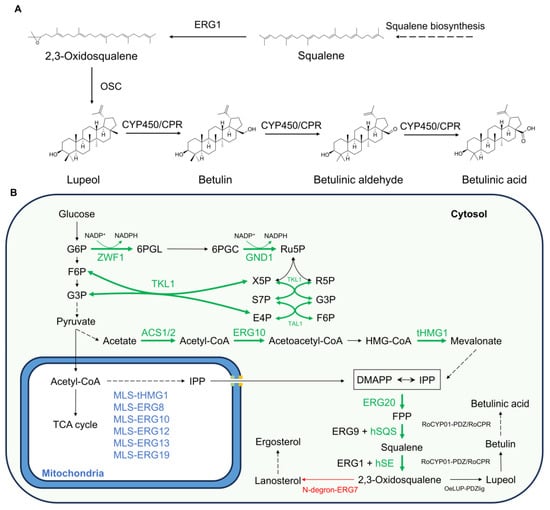
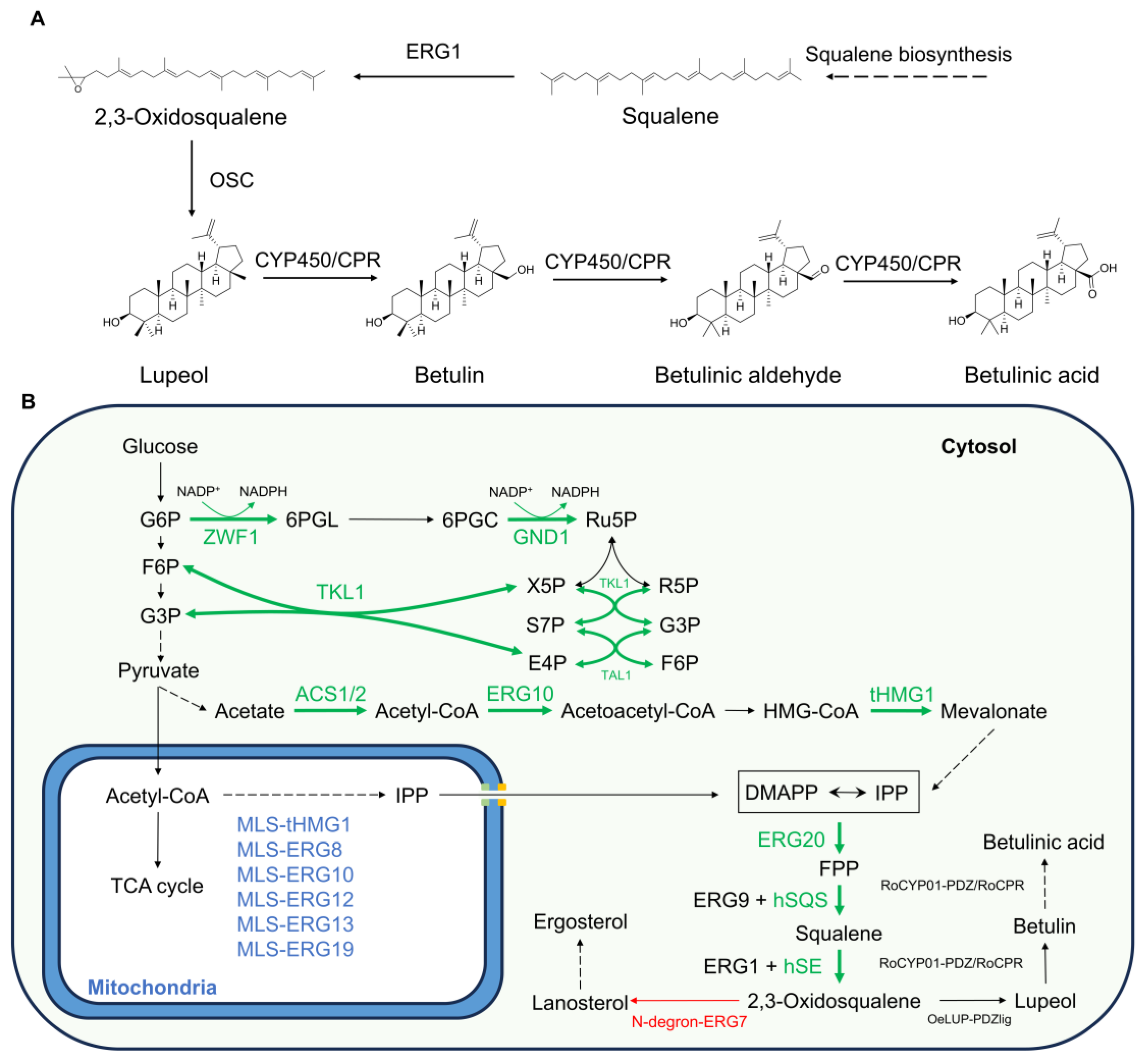
In yeast, the biosynthetic route toward betulinic acid originates from the mevalonate (MVA) pathway. The pathway proceeds via 2,3-oxidosqualene cyclization catalyzed by oxidosqualene cyclase (OSC) to yield lupeol, which undergoes three sequential C28-oxidation reactions catalyzed by plant-derived cytochrome P450-reductase pairs to produce betulin, betulinic aldehyde, and finally betulinic acid (Figure 1). Early pioneering work realized the heterologous production of betulinic acid in yeast by introducing BPLO (CYP716A180) from Betula platyphylla, yet this enzyme exhibited incomplete oxidation capacity and resulted in massive betulin accumulation [12]. Later, RoCYP01 (CYP716A155) from Rosmarinus officinalis was reported to display improved multi-step oxidation performance toward lupeol [13]. Nevertheless, systematic side-by-side evaluation of catalytic efficiency between enzyme pairs of BPLO/LjCPR and RoCYP01/RoCPR remains limited. Apart from optimizing the terminal oxidation module, most previous engineering efforts focused on reinforcing the cytosolic MVA pathway to elevate isopentenyl pyrophosphate (IPP) supply. However, simple overexpression of upstream genes cannot fully resolve pathway bottlenecks originating from subcellular compartment constraints. Other strategies such as coordinated cytoplasmic and peroxisomal engineering and reduced nicotinamide adenine dinucleotide phosphate (NADPH) supplementation have been applied to improve BA production in S. cerevisiae [14].
Figure 1.
Strategies adopted for biosynthesis of betulinic acid in this study. Solid and dashed arrows indicate single and multiple reaction steps, respectively. Green denotes gene overexpression, red denotes ERG7 downregulation, and blue labels indicate mitochondria-targeted enzymes. (A) Biosynthetic pathway of betulinic acid. Squalene is converted by ERG1 to 2,3-oxidosqualene, which is further cyclized to lupeol by oxidosqualene cyclase (OSC). Cytochrome P450 coupled with cytochrome P450 reductase (CYP450/CPR) mediates successive oxidation steps to transform lupeol into betulin, betulinic aldehyde and betulinic acid. (B) Metabolic engineering strategy adopted for betulinic acid biosynthesis. The central carbon metabolism and mevalonate pathway were rewired, including enhancing the pentose phosphate pathway, recruiting mitochondrial MVA pathway modules, and optimizing the downstream terpene biosynthetic cascade to supply sufficient precursors for betulinic acid production. Abbreviations: MLS, mitochondrial localization sequence; ZWF1, glucose-6-phosphate dehydrogenase; GND1, 6-phosphogluconate dehydrogenase; TAL1, transaldolase; TKL1, transketolase; ACS1/2, acetyl-CoA synthetase isoforms 1 and 2; ERG10, acetyl-CoA C-acetyltransferase; tHMG1, N-truncated HMG-CoA reductase 1; ERG20, farnesyl diphosphate synthetase; ERG9, farnesyl-diphosphate farnesyltransferase (squalene synthase); ERG8, phosphomevalonate kinase; ERG12, mevalonate kinase; ERG13, 3-hydroxy-3-methylglutaryl-CoA (HMG-CoA) synthase; ERG19, mevalonate diphosphate decarboxylase; ERG1, squalene epoxidase; hSQS, Homo sapiens squalene synthase; hSE, Homo sapiens squalene epoxidase; N-degron-ERG7, lanosterol synthase tagged with UbR48-N-degron K3K15-GSG module; OeLUP-PDZlig, Olea europaea lupeol synthase fused to a C-terminal PDZ ligand; RoCYP01-PDZ, Rosmarinus officinalis C28 oxidase (CYP716A155) fused to a C-terminal PDZ domain; RoCPR, R. officinalis NADPH-cytochrome P450 reductase. Metabolite abbreviations are defined in the Abbreviations section.
Subcellular compartment engineering represents a powerful strategy to rewire metabolic flux by exploiting native organelle microenvironments [14,15]. Yeast mitochondria are enriched in acetyl coenzyme A (acetyl-CoA), adenosine triphosphate (ATP) and multiple cofactors, making them an appealing compartment for terpenoid precursor generation. Several studies have demonstrated that mitochondrial reconstruction of the MVA pathway greatly improves yields of monoterpenes and isoprene, whose complete biosynthetic steps can be housed inside mitochondria [16,17]. Nevertheless, the benefits of mitochondrial MVA engineering cannot be simply generalized for the biosynthesis of triterpenoids such as betulinic acid. P450 enzymes involved in betulinic acid biosynthesis can exhibit membrane-associated localization, as reported for BPLO expressed in Yarrowia lipolytica [18]. More generally, the endoplasmic reticulum (ER) provides a membrane environment for the localization and folding of heterologous P450 enzymes in S. cerevisiae [19]. Consequently, IPP generated inside mitochondria must be efficiently exported across the mitochondrial inner membrane to fuel downstream triterpenoid synthesis outside mitochondria. Mitochondrial accumulation of pyrophosphorylated MVA intermediates such as IPP and mevalonate diphosphate carries intrinsic cytotoxic risks via forming toxic ATP analogs [20]. To date, few studies have systematically investigated the global cellular consequences of mitochondrial MVA reconstruction for triterpenoids requiring cross-organelle intermediate transport. It remains unclear whether mitochondrial MVA reprogramming would boost betulinic acid titers or trigger unforeseen physiological perturbations that compromise cytosolic–ER localized downstream cascades.
Multienzyme assembly mediated by protein–peptide interaction offers another promising strategy to alleviate intermediate dissipation in multi-step cascade reactions. Through substrate channeling effects, spatially assembled enzyme complexes shorten the diffusion distance of labile or hydrophobic intermediates and increase the probability of intermediate capture by successive catalytic enzymes [21]. The interaction between postsynaptic density-95/discs large/zonula occludens-1 (PDZ) domain and its ligand (PDZ ligand, PDZlig) has been successfully deployed to construct intracellular self-assembled enzyme reactors for plant natural product synthesis, for instance, enhancing baicalein production in yeast [22]. However, the effectiveness of such protein assembly strategies has rarely been validated for hydrophobic triterpenoid cascades involving ER-anchored cytochrome P450 enzymes. Lipid droplet engineering has been explored to support betulinic acid synthesis and storage in yeast [15]. The potential partitioning of hydrophobic intermediates into intracellular storage compartments may counteract the advantages brought by enzyme proximity. Thus, the practical performance of a multienzyme complex for betulinic acid biosynthesis requires dedicated experimental validation.
In the present study, we adopted a combinatorial metabolic-engineering workflow to advance betulinic acid biosynthesis in S. cerevisiae. First, we directly compared two representative C28 oxidation systems and identified RoCYP01/RoCPR as the more efficient catalytic pair for successive oxidation from lupeol to betulinic acid. We further constructed a PDZ-PDZlig-based intracellular Olea europaea lupeol synthase (OeLUP)-RoCYP01 multienzyme complex to improve lupeol-consuming flux. Next, we attempted mitochondrial compartmentalization of the complete MVA pathway to enhance precursor supply. Unexpectedly, mitochondrial MVA reconstruction strongly suppressed post-squalene triterpenoid accumulation despite elevated squalene titers. Transcriptomic profiling was therefore applied to dissect cross-organelle metabolic perturbations, with particular attention to potential changes in ER-, mitochondria-, and energy metabolism-associated processes. We then relieved the 2,3-oxidosqualene bottleneck via N-degron-mediated ERG7 downregulation and heterologous lanosterol synthase replacement. After removing the mitochondrial compartmentalized MVA module, we tuned RoCYP01-PDZ/RoCPR copy numbers to further strengthen downstream oxidative capacity. Finally, the best-performing engineered strain was scaled up in a 5 L fed-batch bioreactor, which produced 323 mg/L betulinic acid and 946 mg/L betulin. Collectively, our work establishes a high-yield yeast chassis for betulinic acid. This study also provides mechanistic insights for rational subcellular engineering toward triterpenoid biosynthesis, highlighting potential risks when deploying mitochondrial MVA strategies for pathways relying on cytosolic–ER resident downstream reactions.
2. Materials and Methods
2.1. Strains and Reagents
The Saccharomyces cerevisiae strain CEN.PK2-1C (MATa; ura3-52; trp1-289; leu2-3,112; his3Δ1; MAL2-8C; SUC2) was obtained from EUROSCARF (European Saccharomyces cerevisiae Archive for Functional Analysis, Accession No. 30000A). Competent Escherichia coli DH5α was purchased from KT Life Technology Co., Ltd. (Shenzhen, China). Standard chemicals, including nonadecanoic acid, squalene, 2,3-oxidosqualene, lanosterol, ergosterol, ursolic acid, lupeol, betulin, and betulinic acid, were purchased from Yuanye Biotechnology Co., Ltd. (Shanghai, China), with a purity exceeding 95%. N,O-Bis(trimethylsilyl)trifluoroacetamide (BSTFA) was procured from Regis Technologies, Inc. (Morton Grove, IL, USA).
2.2. Plasmid Construction and Yeast Transformation
All yeast strains constructed in this study are listed in the Supplementary Table S1. Yeast competent cell preparation and DNA transformation were carried out using a PEG/LiAc Transformation Kit (Sangon Biotech Co., Ltd., Shanghai, China). For genomic integration, 500–1000 bp 5′ and 3′ homology arms flanking the intended integration locus were amplified. An approximately 50 bp overlapping region was designed between the integrated expression cassette and each homology arm. Yeast cells were co-transformed with 0.5 μg of linear donor DNA harboring the target-gene expression cassettes together with the upstream and downstream homology arms, and 0.5 μg of the pCUT plasmid carrying the URA3 selection marker. Transformants were preliminarily screened via genomic DNA PCR and further verified by Sanger sequencing. Prior to the next round of integration, positive colonies were streaked onto SC plates containing 1 mg/mL 5-fluoroorotic acid (5-FOA) to cure the pCUT plasmid.
All plasmids used in this study are listed in Supplementary Table S2. High-fidelity PRIMESTAR MAX DNA polymerase (Takara Bio Inc., Kusatsu, Shiga, Japan) was used to amplify endogenous genes (tHMG1, ERG20, ACS1, ACS2, ERG10, PGAL4-GAL4, ZWF1, GND1, TKL1, TAL1) from the genomic DNA of CEN.PK2-1C. The remaining genes, including those encoding hSQS, hSE, PDZ domain, OeLUP, BPLO, LjCPR, RoCYP01, RoCPR, TfLS, N-degron-ERG7, and the mitochondrial localization sequence (MLS) fusion proteins MLS-tHMG1, MLS-ERG10, MLS-ERG12, MLS-ERG19, MLS-ERG13 and MLS-ERG8, were optimized for expression in S. cerevisiae and synthesized by GENEWIZ, Inc. (Suzhou, China). Amino acid sequences of the MLS peptide and heterologous proteins used in this study are listed in Supplementary Table S3. Restriction endonucleases used for construction of plasmids were purchased from New England Biolabs (Beijing) Ltd. (Beijing, China). Plasmid construction was achieved using the ClonExpress II One Step Cloning Kit (Vazyme Biotech Co., Ltd., Nanjing, China). All target genes were cloned into the pESC-URA and/or pESC-HIS vectors under the control of the bidirectional promoter PGAL1-PGAL10. E. coli DH5α cells harboring the recombinant constructs were cultured on Luria–Bertani (LB) agar plates supplemented with 100 μg/mL ampicillin and incubated at 37 °C for 12–16 h. All recombinant constructs were verified by Sanger sequencing. The pCUT plasmid harboring Cas9 and guide RNA (gRNA) was previously constructed in our laboratory [23] and employed for clustered regularly interspaced short palindromic repeats (CRISPR)/Cas9-mediated gene editing. Target gRNA cleavage sites were designed using CHOPCHOP (https://chopchop.cbu.uib.no/ (accessed on 15 May 2026)). The desired gRNA sequence was introduced into the pCUT backbone by overlap-extension PCR using custom-designed primers carrying the target gRNA sequence.
2.3. Shake-Flask Cultivation
Engineered yeast strains were streaked on 2% glucose(Glu) YPD plates. Ten single colonies derived from each strain were inoculated into 5 mL of 2% Glu YPD medium and cultured overnight at 30 °C with shaking at 220 rpm. Subsequently, 200 μL of the overnight culture was transferred into 20 mL of 2% Glu YPD medium, and incubation was continued until the optical density at 600 nm (OD600) reached 0.8. Yeast cells were harvested by centrifugation, and the supernatant was discarded. After washing with sterile distilled water, the cell pellets were resuspended in 20 mL of 2% galactose (Gal) YPD medium, followed by 5-day cultivation at 30 °C and 220 rpm. For the gal80Δ strains, washed cells were alternatively resuspended in 20 mL of 2% Glu YPD medium. For episomal transformants carrying genes separately cloned on the pESC-URA and pESC-HIS plasmids, 2% Glu or Gal SD-URA-HIS medium was adopted in the induction culture.
2.4. Fed-Batch Fermentation
Ten single colonies were inoculated into 5 mL of YPD medium and cultivated at 30 °C with shaking at 220 rpm for 16 h. Subsequently, 150 μL of the seed culture was transferred into two 250 mL flasks containing 15 mL of YPD and cultivated for 12 h at 220 rpm. Then, 3 mL of the culture was inoculated into three 500 mL shake flasks containing 100 mL of YPD and cultivated for another 12 h at 220 rpm. The final seed culture was inoculated into the 5 L bioreactor (Mancang Technology Co., Ltd., Beijing, China) at an inoculation ratio of 10% (v/v) for fed-batch fermentation.
The initial optimized YPD fermentation medium (2.5 L) consisted of 20 g/L glucose, 20 g/L peptone, 10 g/L yeast extract, 8 g/L KH2PO4, 5 g/L MgSO4·7H2O, 0.72 g/L ZnSO4·7H2O, 10 mL/L trace metal solution and 12 mL/L vitamin solution. The 100 mL trace metal solution comprised: 8 mL 0.5 M EDTA solution (pH = 8.0), 0.032 g MnCl2·4H2O, 0.575 g ZnSO4·7H2O, 0.048 g Na2MoO4·2H2O, 0.047 g CoCl2·6H2O, 0.280 g FeSO4·7H2O, 0.050 g CuSO4·5H2O, and 0.290 g CaCl2·2H2O. The 100 mL vitamin solution comprised: 0.100 g nicotinic acid, 0.005 g biotin, 0.020 g p-aminobenzoic acid, 0.100 g pyridoxine hydrochloride, 2.500 g inositol, 0.100 g thiamine hydrochloride, and 0.100 g calcium pantothenate. Fermentation was performed at 30 °C with pH maintained at 5.5 by 5 M NH4OH. Dissolved oxygen (DO) was maintained at 40% for the first 60 h and above 20% thereafter via cascade control of agitation speed (250–900 rpm). The aeration rate was set to 3 vvm (air volume/culture volume/minute) for the first 60 h and then reduced to 2 vvm. An online monitoring system (Sieman Technology Co., Ltd., Shenzhen, China) was connected to continuously measure glucose and ethanol concentrations. During the first 60 h, glucose concentration was kept below 1 g/L by feeding concentrated medium containing 600 g/L glucose, 20 g/L peptone, 10 g/L yeast extract, 8 g/L KH2PO4, 5 g/L MgSO4·7H2O, 3.5 g/L K2SO4, 0.28 g/L Na2SO4, 20 mL/L trace metal solution and 24 mL/L vitamin solution. Glucose feeding was suspended for 8 h at 60 h. Afterwards, glucose was pulse-fed every 8 h to a final concentration of 10 g/L. Briefly, 500 μL of DF-103 (DOW, Midland, MI, USA) was initially applied as an antifoaming agent. A 1:3 (v/v) dilution of the sterilized DF-103 was added at 1.5 mL per pulse to prevent subsequent foaming. The total fermentation duration was 120 h.
2.5. Metabolite Extraction and GC-MS Quantification
A 1 mL aliquot of sample medium was centrifuged to separate yeast cells from the supernatant. For intracellular product extraction, cell pellets were resuspended in 500 μL of 50 mM phosphate buffer (pH = 7.0), followed by addition of an equal volume of acid-washed 425–600 μm glass beads (Sigma-Aldrich Co., St. Louis, MO, USA). Both 10 μg ursolic acid and 4 μg nonadecanoic acid were added as internal standards at this stage. Cell disruption was performed at 30 Hz for 1 h using a SCIENTZ-48 tissue grinder (SCIENTZ Biotechnology Co., Ltd., Ningbo, China). Then, samples were acidified to pH = 2.0 and extracted twice with 500 μL ethyl acetate. The organic phase was collected, washed once with 500 μL of ultrapure water, and dried in a SCIENTZ-1LS vacuum concentrator (SCIENTZ Biotechnology Co., Ltd., Ningbo, China). For extracellular product extraction from the culture medium, 10 μg ursolic acid was added beforehand as the internal standard. The supernatant was acidified to pH = 2.0 with 2 M HCl, followed by two rounds of extraction with 1 mL of ethyl acetate. The organic phase was collected, washed once with 1 mL of ultrapure water, and dried using a vacuum concentrator. All extracted samples were stored at −20 °C.
Briefly, 50 μL of BSTFA was added to the dried extracts, and the mixtures were incubated at 80 °C for 1 h. After the reaction, 50 μL of chloroform was added to each sample, and then mixed thoroughly. The supernatant was collected after centrifugation at 14,000 rpm for 1 min for GC-MS analysis. Samples were analyzed using a Shimadzu QP 2010 Plus gas chromatography–mass spectrometry (GC-MS) system (Shimadzu Corporation, Kyoto, Japan) with a DB-5MS column (30 m × 0.25 mm × 0.25 μm). Helium served as the carrier gas at a flow rate of 1.2 mL/min. The injection volume was 1 μL. Both the injector and ion-source temperatures were set to 250 °C. The column temperature was initially set at 80 °C and held for 2 min, then increased at 20 °C/min to 310 °C and held for 15 min. Mass spectrometry scan range was set to 50–600 m/z.
2.6. Transcriptome Analysis
Following 24 h of galactose induction in shake-flask cultures, three biological replicates were harvested from each strain (CEN.PK2-1C, C3P, and C3M4P). The strains CEN.PK2-1C, C3P, and C3M4P were designated as groups C, C3P and C3M4P, respectively. Three biological replicates were sequenced per strain. Total RNA extraction and transcriptome sequencing were performed by Shanghai Majorbio Bio-Pharm Technology Co., Ltd. (Shanghai, China). All software and analytical platforms adopted for data processing are summarized in Supplementary Table S4. Differential gene expression analysis was performed using DESeq2 v1.42.0, with thresholds of |log2FC| ≥ 1 and adjusted p-value (padj) < 0.05. Differentially expressed genes (DEGs) were further subjected to Kyoto Encyclopedia of Genes and Genomes (KEGG) pathway enrichment analysis.
3. Results
3.1. Screening of High-Activity Enzymes for Betulinic Acid Biosynthesis
Lupeol serves as the key precursor for betulinic acid biosynthesis (Figure 1). In our previous study [24], we compared the catalytic activities of lupeol synthases derived from different organisms and identified O. europaea-derived OeLUP as a high-activity lupeol synthase. Therefore, OeLUP was selected for lupeol synthesis in the present study. Several previous studies have screened efficient enzymes capable of converting lupeol to betulinic acid and established two superior enzyme combination systems. The first system consists of BPLO from B. platyphylla and LjCPR from Lotus japonicus [12,18], while the second comprises RoCYP01 and RoCPR from R. officinalis [13]. However, the catalytic efficiency of these two combinations has not been systematically compared. To clarify their enzymatic performance, the two enzyme combinations were co-expressed with OeLUP in the yeast chassis strain CEN.PK2-1C, respectively. Specifically, two recombinant plasmid combinations were transformed into CEN.PK2-1C to construct two engineered yeast strains: strain pBP harboring “pESC-HIS-OeLUP and pESC-URA-BPLO-LjCPR”, and strain pRo harboring “pESC-HIS-OeLUP and pESC-URA-RoCYP01-RoCPR”. All heterologous target genes were driven by the bidirectional PGAL1–PGAL10 promoter.
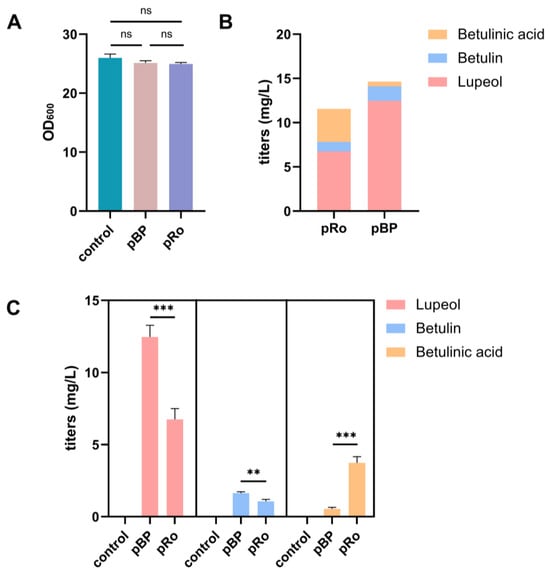
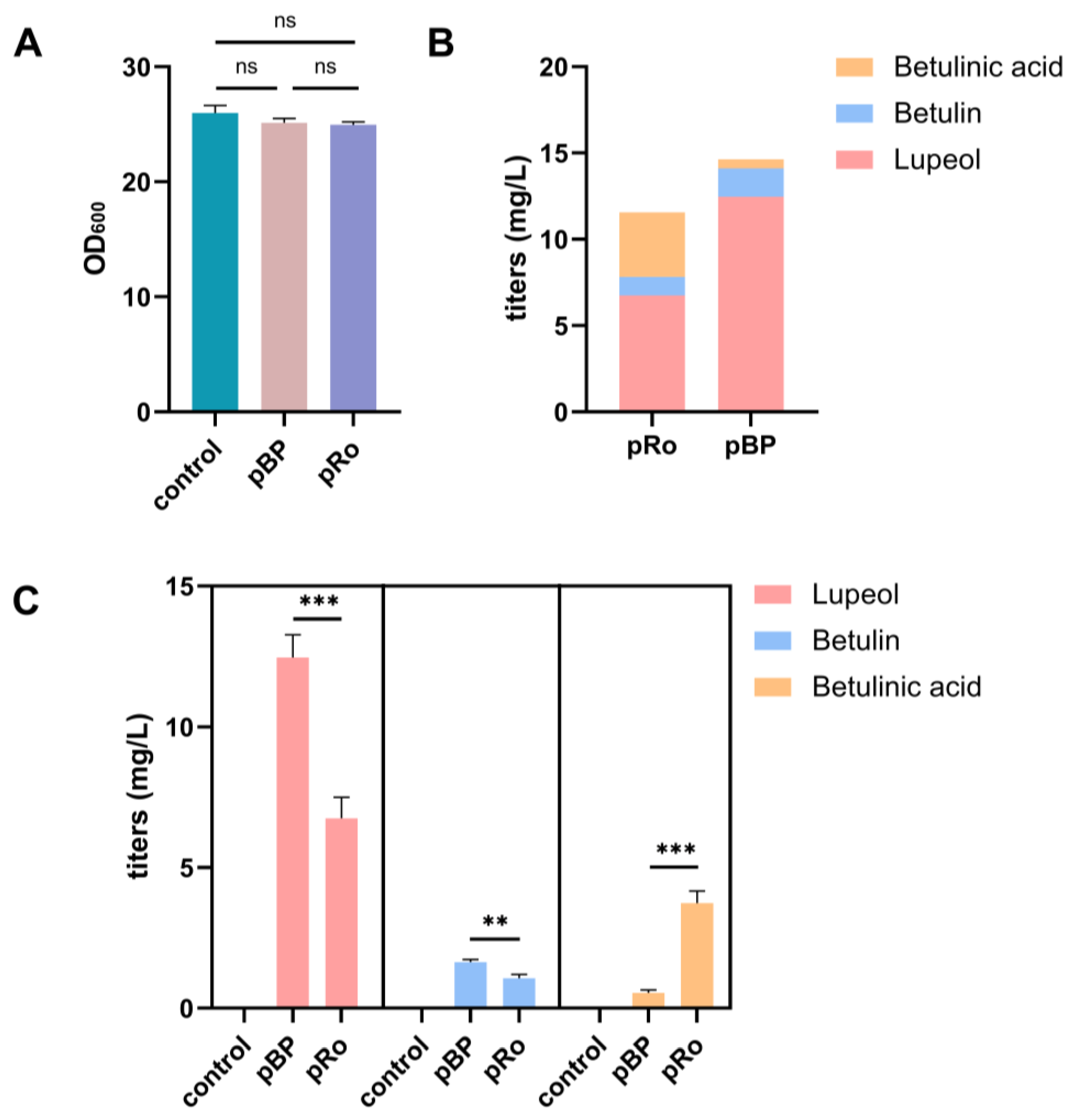
Both strains were induced in 100 mL shake flasks using 20 mL of SD-URA-HIS medium supplemented with 2% galactose. No obvious differences in cell growth were observed between the two strains (Figure 2A). The betulinic acid (BA) titer of the pRo strain reached 3.74 ± 0.43 mg/L, which was 6.8 times higher than that of the pBP strain (0.55 ± 0.10 mg/L). By contrast, betulin (BN) accumulated to a markedly lower level in pRo relative to pBP (Figure 2B). Among the combined betulin and betulinic acid fraction, betulinic acid accounted for 25% in strain pBP and 77.8% in strain pRo (Figure 2C). This result demonstrated that betulinic acid was the dominant product within the BN and BA fraction in pRo, and that the RoCYP01/RoCPR pair possessed substantially higher oxidative activity than BPLO/LjCPR. Moreover, the lupeol titer was significantly greater in pBP (12.46 ± 0.80 mg/L) than in pRo (6.75 ± 0.75 mg/L) (Figure 2C), implying more efficient substrate consumption and an improved metabolic flux toward downstream products in the RoCYP01-expressing strain. Accordingly, the RoCYP01/RoCPR redox pair was selected for the subsequent engineering.
Figure 2.
Comparison of catalytic activities between BPLO/LjCPR and RoCYP01/RoCPR. (A) Cell growth measured as optical density at 600 nm (OD600) of strains after fermentation. (B) Total triterpenoid titers and compositions. (C) Comparative analysis of the titers of lupeol, betulin and betulinic acid among strains control, pBP and pRo. Strains: control, CEN.PK2-1C empty vector control; pBP, CEN.PK2-1C strain expressing OeLUP and BPLO/LjCPR; pRo, CEN.PK2-1C strain expressing OeLUP and RoCYP01/RoCPR. Statistical analysis was performed using GraphPad Prism version 10.1.2. Data are presented as mean ± standard deviation (SD) from three biological replicates. Two-tailed unpaired t-tests were used for significance evaluation. Statistical significance levels: ns, not significant; **, p < 0.01; and ***, p < 0.001.
3.2. Improving Betulinic Acid Biosynthesis via an Enzyme Complex
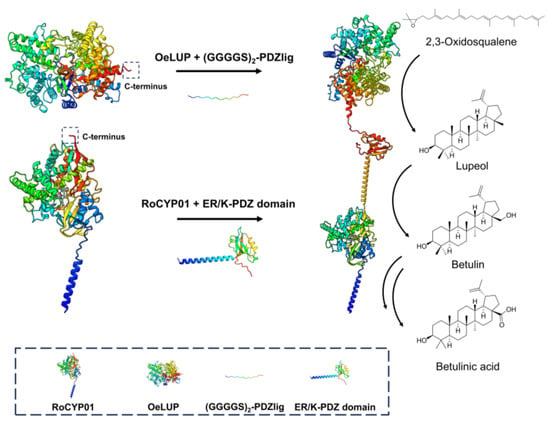
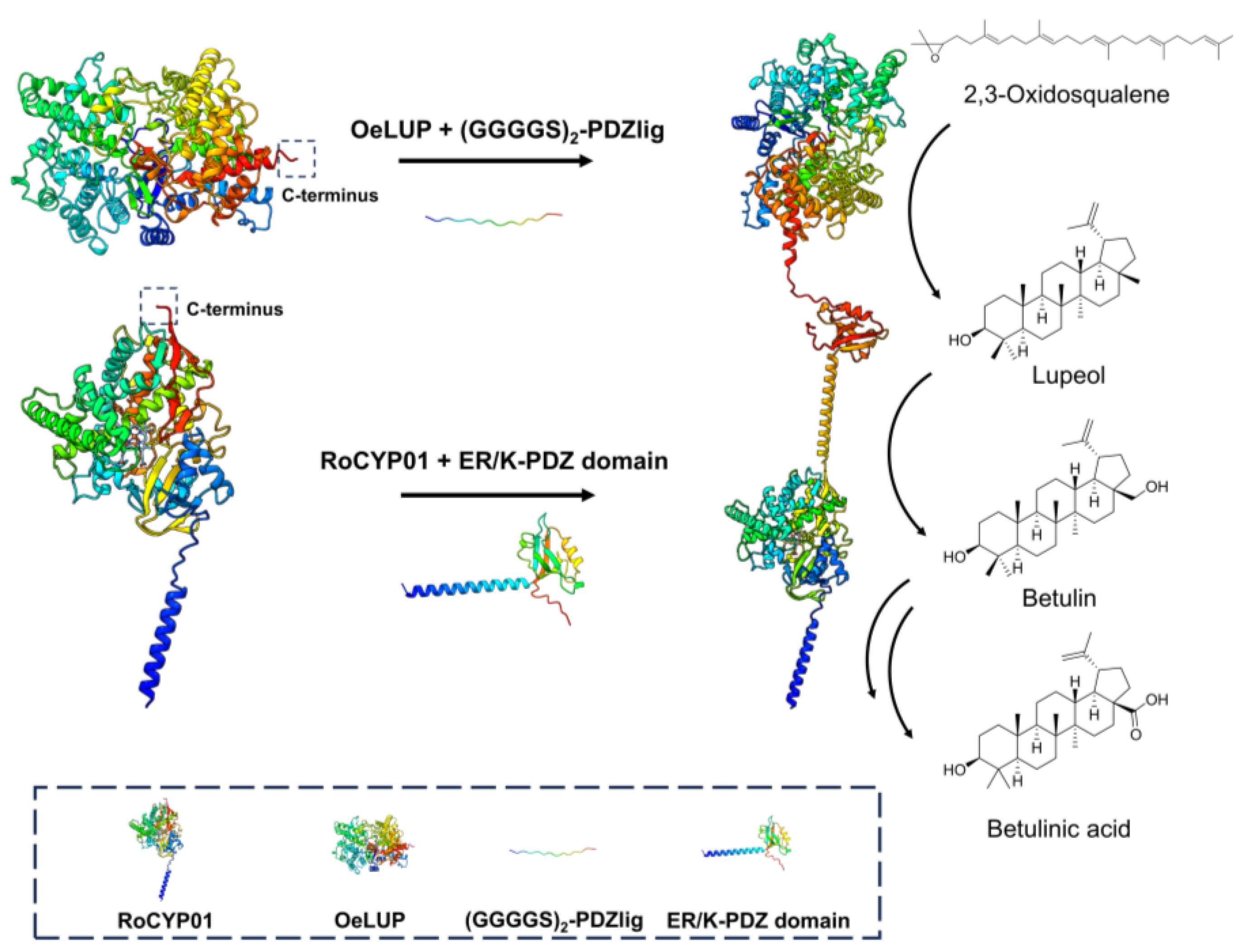
A large proportion of lupeol remained unconverted into betulin in the pRo strain (Figure 2B,C), indicating considerable room for optimization of the downstream catalytic conversion process. To enhance lupeol utilization, we constructed a multienzyme complex by assembling OeLUP and RoCYP01. The protein structures of OeLUP and RoCYP01 were predicted by AlphaFold 3 [25], and both proteins exhibited exposed C-terminal regions (Figure 3). For complex assembly, a PDZ domain was fused to the C-terminus of RoCYP01, with a 5 nm rigid ER/K linker inserted between RoCYP01 and the PDZ domain. Meanwhile, a PDZ ligand (PDZlig) was attached to the C-terminus of OeLUP via a flexible (GGGGS)2 linker. The specific and high-affinity interaction between the PDZ domain and PDZlig was subsequently harnessed to facilitate the assembly of the OeLUP-RoCYP01 catalytic complex (Figure 3).
Figure 3.
Schematic illustration of the OeLUP-RoCYP01 multienzyme complex. Protein and peptide structures are rainbow-colored from the N-terminus (blue) to the C-terminus (red). Protein structures of OeLUP and RoCYP01 were predicted using AlphaFold 3. Both predicted structures suggested exposed C-terminal regions, enabling rational modular modification for complex construction. RoCYP01 was fused with a PDZ domain at its C-terminus via a 5 nm rigid ER/K linker, while OeLUP was conjugated with a PDZ ligand (PDZlig) through a flexible (GGGGS)2 linker. The specific binding interaction between PDZ and PDZlig mediates the spontaneous assembly of the OeLUP-RoCYP01 catalytic complex, which is designed to enhance lupeol bioconversion efficiency. Amino acid sequences of PDZ, PDZlig, 5 nm ER/K linker and (GGGGS)2 linker are listed in Supplementary Table S3.
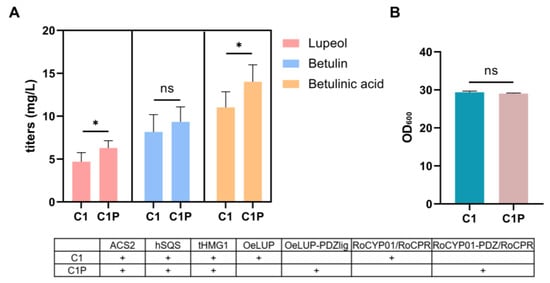
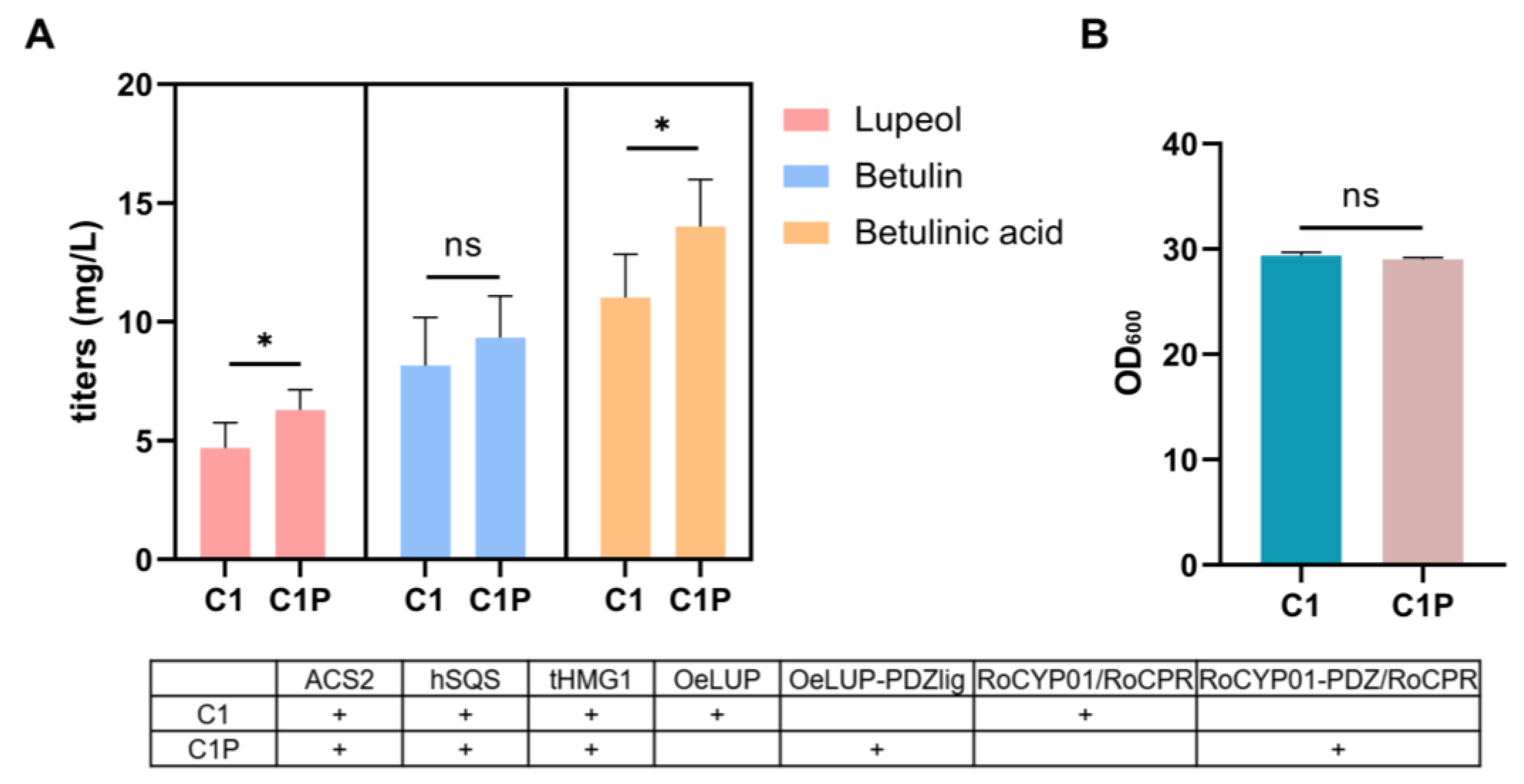
Expression cassettes encoding the multienzyme complex and non-complex enzyme sets were both integrated into the strain CEN.PK2-1C via genomic integration. A cassette containing TADH1-ACS2-PGAL10-PGAL1-hSQS-TCYC1, together with one copy of tHMG1, was also introduced to further boost triterpenoid production. Consequently, two strains were constructed: C1P harboring the multienzyme complex and the control strain C1 lacking this complex (see the details in Supplementary Table S1). Following galactose-induced shake-flask fermentation, the titers of lupeol, betulin, and betulinic acid in strain C1P increased by 34%, 14%, and 27%, respectively, relative to strain C1. The betulinic acid titer of C1P reached 14.00 ± 1.72 mg/L (Figure 4A). No significant difference in cell growth was observed between the two strains (Figure 4B). Collectively, formation of the multienzyme complex significantly improved the production of betulinic acid. Notably, lupeol accumulation was also elevated, whereas biomass remained comparable for both strains. This phenomenon may be attributed to enhanced catalytic flux in the downstream pathway, which redirects carbon flux toward lupeol synthesis. On the basis of these results, strain C1P was selected as the platform chassis for subsequent optimization.
Figure 4.
Effects of the multienzyme complex on triterpenoid biosynthesis. (A) Titers of lupeol, betulin, and betulinic acid produced by strains C1 and C1P. (B) Cell growth (OD600) of the tested strains following shake-flask fermentation. The table below lists the engineered genes for each strain. Each plus symbol (+) represents one gene copy. Data are presented as mean ± standard deviation (SD) from three biological replicates. Statistical significance levels: *, p < 0.05; ns, not significant.
3.3. Identification of Key Bottlenecks Restricting Betulinic Acid Biosynthesis upon Mitochondria-Targeted Expression of the Entire MVA Pathway
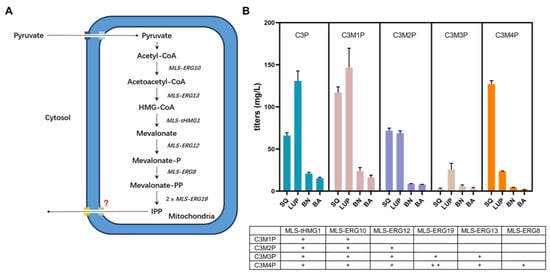
Previous studies have demonstrated that mitochondrial expression of the entire MVA pathway in yeast can substantially enhance squalene biosynthesis [20], and squalene serves as a critical precursor for betulinic acid synthesis. Accordingly, this study investigated the effects of mitochondrial MVA pathway expression on betulinic acid production. It has been reported that the cytoplasmic overexpression of tHMG1 can significantly alleviate the adverse effects caused by the integrated expression of the MVA pathway in yeast mitochondria [20]. On this basis, prior to the mitochondrial integration of the MVA pathway, key genes involved in acetyl-CoA supply, the MVA pathway, and squalene epoxidation, including ACS1, ERG10, tHMG1, and hSE, were genomically integrated and overexpressed in the cytoplasm of the engineered strain C1P, yielding the engineered strain C3P. Subsequently, using C3P as the basal strain, genes responsible for different steps of the MVA pathway were expressed in its mitochondria, generating four engineered strains designated C3M1P, C3M2P, C3M3P, and C3M4P, respectively (Figure 5). Our results revealed that mitochondrial-targeted expression of the complete MVA pathway significantly improved squalene production in strain C3M4P relative to its parental strain C3P (Figure 5B). Nevertheless, the titers of lupeol, betulin, and betulinic acid dropped sharply (Figure 5B). These findings suggest that mitochondria-targeted compartmentalization of the MVA pathway efficiently boosted squalene synthesis without improving post-squalene triterpenoid synthesis.
Figure 5.
Effects of mitochondrial MVA-pathway compartmentalization on titers of squalene and the BA-pathway-associated triterpenoids. (A) Schematic diagram of the mitochondria-targeted MVA pathway. Transport components are shown in different colors. The red question mark indicates that the mechanism of IPP export remains unresolved. (B) Metabolite titers in strains harboring mitochondrial-compartmentalized genes at different steps of the MVA pathway. The table below summarizes the genetic modifications introduced into the parental strain C3P. Each plus symbol (+) represents one gene copy. Abbreviations: SQ, squalene; LUP, lupeol; BN, betulin; BA, betulinic acid.
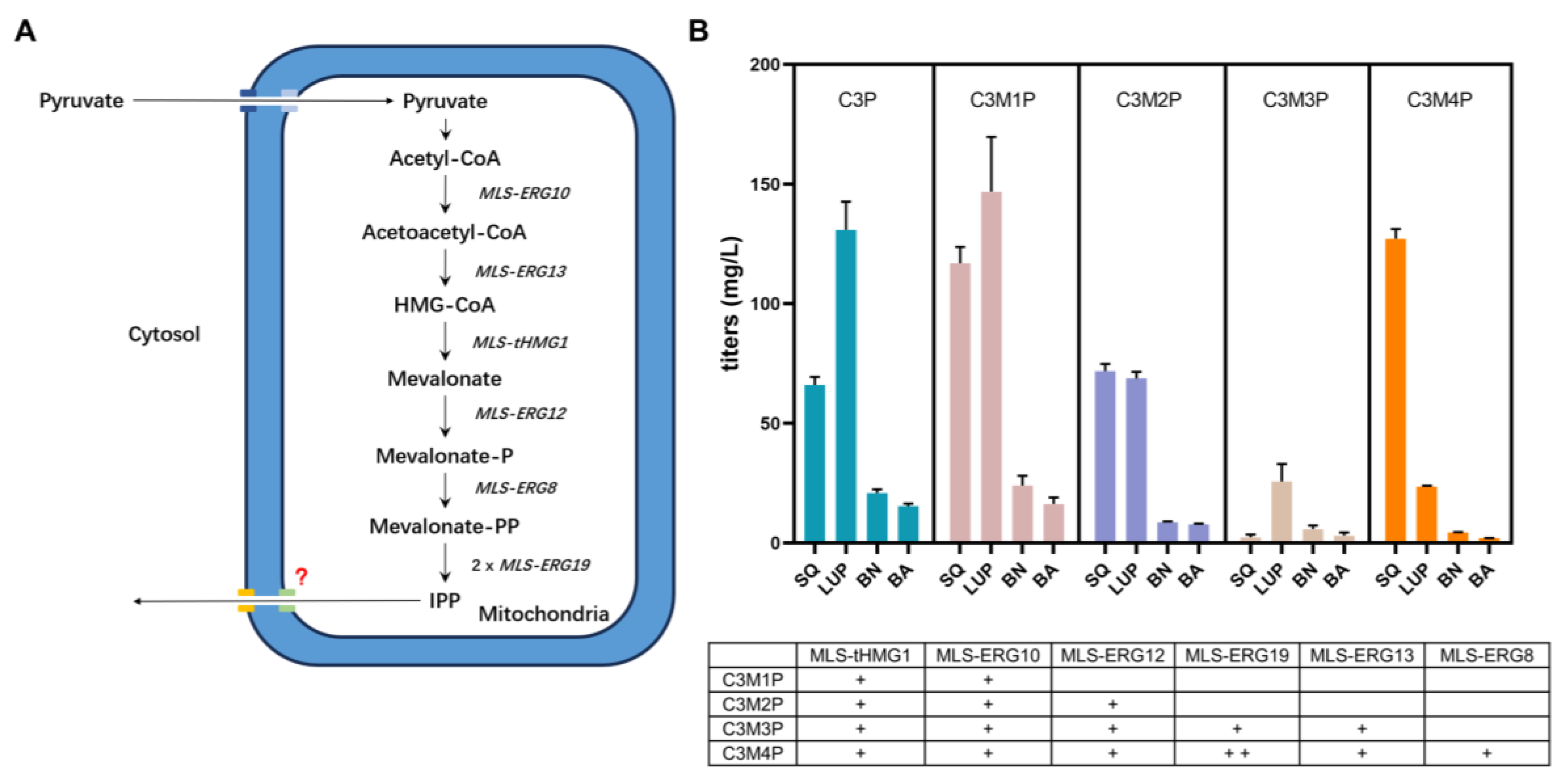
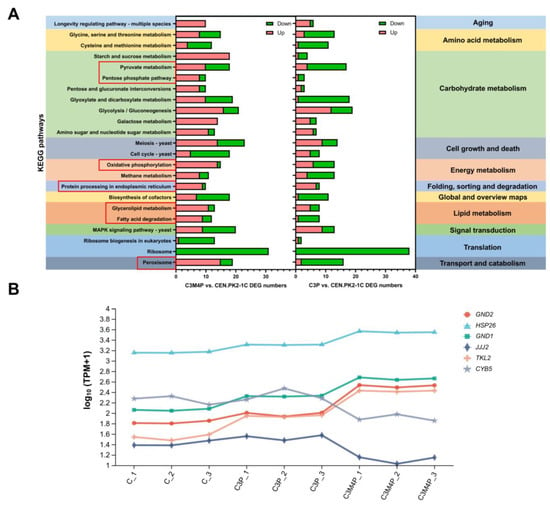
To investigate the molecular mechanisms underlying post-squalene pathway inhibition, we performed transcriptomic analysis on yeast strains C3P, C3M4P, and the control CEN.PK2-1C (C). Transcriptome reliability was validated via expression distribution profiles, correlation heatmaps, principal component analysis (PCA) plots, and DEG Venn diagram (Supplementary Figures S10 and S11). As shown in Figure 6A, C3P and C3M4P exhibited distinct transcriptional signatures relative to the control. In C3M4P, differentially expressed genes were distributed across pathways associated with amino acid, carbohydrate, lipid, terpenoid, and energy metabolism. Pathways governing mitochondrial function and redox homeostasis including the pentose phosphate pathway, oxidative phosphorylation, peroxisome function, and pyruvate metabolism were also induced. These changes may reflect an adaptive response to altered energy and redox requirements after mitochondrial engineering. In line with this observation, expression of GND1, GND2, and TKL2 in the pentose phosphate pathway was upregulated (Figure 6B). Notably, although energy-redox-metabolism-related genes were induced, CYB5, encoding an auxiliary electron transfer component for ER-targeted cytochrome P450 oxidation, was downregulated. The decrease in CYB5 transcript abundance suggests a potential change in auxiliary electron-transfer capacity, which may hinder electron transfer from NADPH-dependent reductases to P450 monooxygenases, affecting sequential oxidation of squalene-derived intermediates to betulinic acid. Additionally, HSP26 transcript abundance increased, whereas JJJ2, encoding a protein containing a J-domain that is potentially related to heat shock protein regulation, was repressed. Collectively, these transcriptional changes suggest altered chaperone-related and redox-associated responses.
Figure 6.
Kyoto Encyclopedia of Genes and Genomes (KEGG) pathway classification of transcriptomic data. (A) Numbers of upregulated and downregulated differentially expressed genes (DEGs) from the transcriptome comparisons C3M4P vs. CEN.PK2-1C and C3P vs. CEN.PK2-1C. CEN.PK2-1C served as the control group for differential-expression analysis. KEGG pathways containing more than 9 DEGs were listed and grouped by KEGG level 2 categories with different color sections. Red boxes highlight the KEGG pathways related to mitochondrial functions, redox homeostasis, ER-related protein folding and lipid metabolism. (B) Transcriptional levels of GND1, GND2, CYB5, HSP26, TKL2, and JJJ2.
3.4. Effects of NADPH Metabolism Engineering and ERG7 Modification on Triterpenoid Production in the Mitochondria-Targeted MVA-Engineered Strain
As shown in Figure 6, mitochondrial expression of the MVA pathway substantially upregulated genes related to NADPH synthesis in the pentose phosphate pathway, which prompted us to test whether engineering NADPH metabolism could improve BA production in C3M4P. To relieve metabolic bottlenecks induced by mitochondrial metabolic engineering, we overexpressed four genes (ZWF1, GND1, TKL1, and TAL1) to improve NADPH availability and simultaneously deleted GDH1 and GDH2 to alter glutamate metabolism, reducing NADPH consumption. These modifications generated strain C3M4P N. Metabolic profiling showed that C3M4P N exhibited significantly reduced levels of squalene, lupeol, and betulin, relative to C3M4P (Supplementary Figure S12A,E,F), whereas the contents of betulinic acid, lanosterol, and ergosterol remained unchanged (Supplementary Figure S12C,D,G). Notably, the key intermediate 2,3-oxidosqualene was undetectable in both strains (Supplementary Figure S12B), which implied insufficient squalene epoxidation in the strains.
We therefore investigated whether modifying the endogenous sterol branch could improve post-squalene triterpenoid production. Compared with strain C3P, strain C3M4P exhibited a 5.6-fold reduction in lupeol content, accompanied by a 1.9-fold increase in squalene titer (Figure 5). This observation suggested a more pronounced post-squalene limitation after mitochondrial MVA pathway engineering, thereby inhibiting the biosynthesis of lupeol, betulin and betulinic acid. Previous studies have reported that squalene epoxidase ERG1 is a critical bottleneck that limits epoxidation of squalene, and may be negatively regulated by lanosterol and lanosterol synthase ERG7 [26,27]. Thus, to alleviate this inhibition, two strategies were applied in the C3M4P N strain to bypass the endogenous ERG7-mediated regulation: we either fused an N-terminal degron sequence to ERG7 to diminish its protein abundance [26], generating the strain C3M4P N ND-ERG7, or replaced yeast ERG7 with TfLS from Talaromyces flavus, which functions as a lanosterol synthase but shows a low homology to ERG7 [26], yielding the strain C3M4P N TfLS. Amino acid sequences of the UbR48-N-degron K3K15-GSG module and TfLS are listed in Supplementary Table S3.
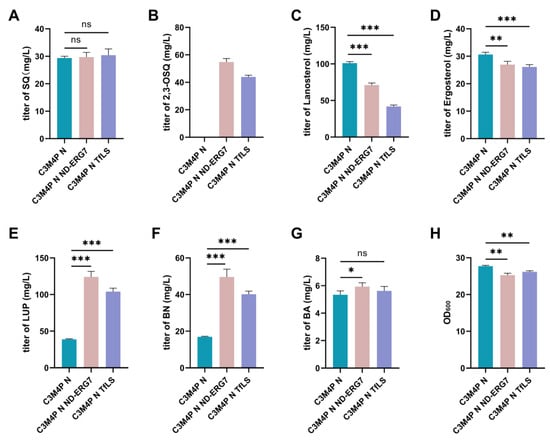
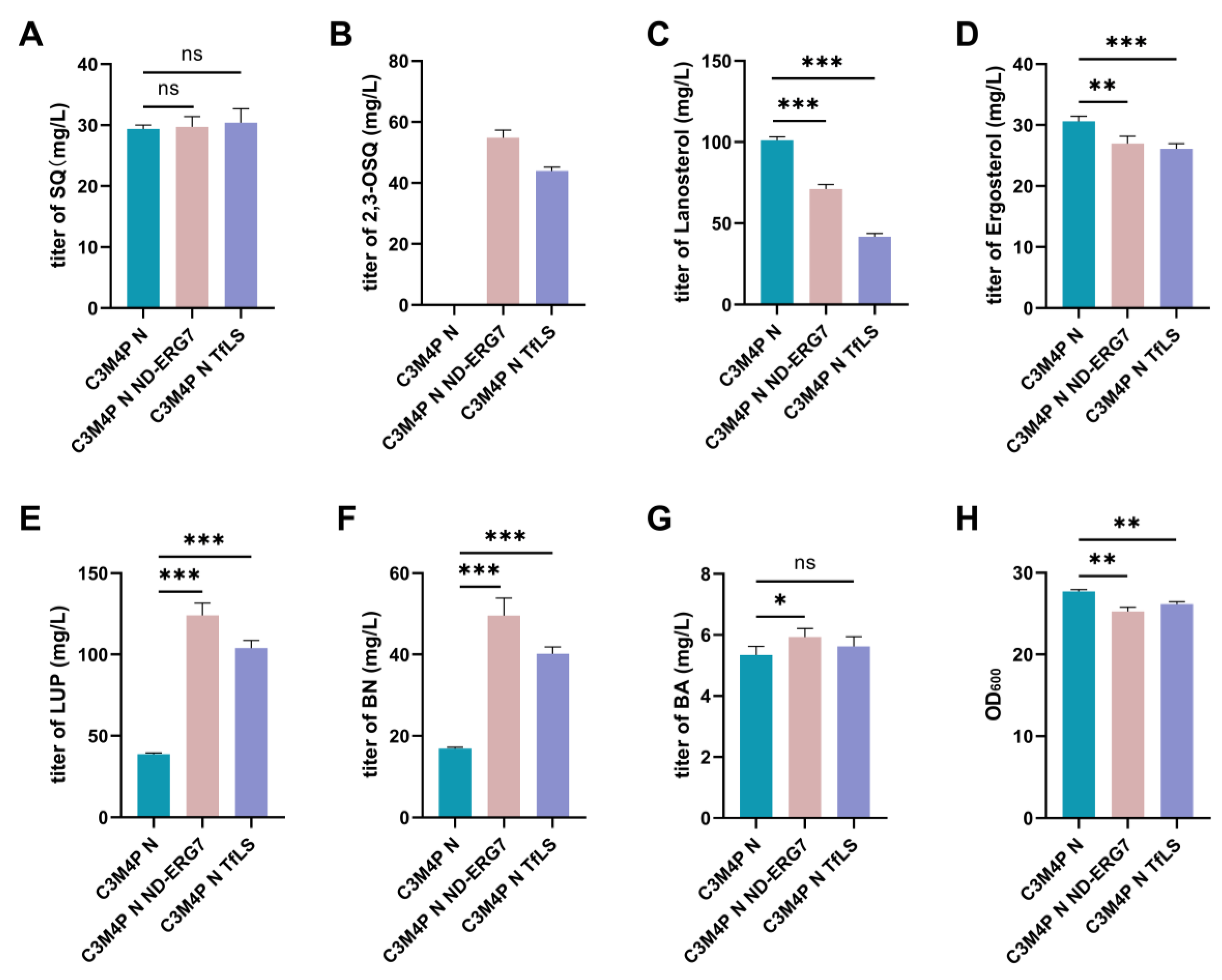
A similar growth property was found for both C3M4P N ND-ERG7 and C3M4P N TfLS (Figure 7H). Substantial 2,3-oxidosqualene accumulation was observed in both strains (Figure 7B). Consistent with the intended reduction in endogenous lanosterol pathway activity, lanosterol and ergosterol titers decreased (Figure 7C,D). Concurrently, downstream triterpenoids (lupeol and betulin) were markedly elevated (Figure 7E,F), demonstrating that the bottleneck was partially alleviated. However, betulinic acid titers were still not able to be recovered (Figure 7G), implying that the RoCYP01-mediated oxidation of betulin to betulinic acid is still limited by other constraints.
Figure 7.
Effects of ERG7 downregulation and replacement of endogenous ERG7 with Talaromyces flavus lanosterol synthase (TfLS) on the titers of squalene (A), 2,3-oxidosqualene (2,3-OSQ) (B), lanosterol (C), ergosterol (D), lupeol (E), betulin (F), betulinic acid (G) and cell biomass measured as OD600 values (H). Data are presented as mean ± SD. Statistical significance: ns, not significant; *, p < 0.05, **, p < 0.01, ***, p < 0.001.
3.5. Construction of Yeast Strain C7P for High-Level Betulinic Acid Production
Since the adverse effects caused by the mitochondrial metabolic strategy were not completely eliminated, the betulinic acid titer remained at a relatively low level in C3M4P N ND-ERG7. Therefore, further genetic modifications were performed on the strain C3M4P N ND-ERG7. The GAL4 activator for the PGAL1-PGAL10 promoter was overexpressed, and galactose-metabolism-related genes GAL1, GAL7, and GAL10 were knocked out, generating the engineered strain C4M4P. To avoid the utilization of expensive galactose as the carbon source, we then deleted GAL80 and further reinforced precursor supplementation by overexpressing tHMG1 and ERG20 and deleting ATF2, obtaining strain C5M4P. The entire mitochondrial-targeted MVA pathway was then deleted from strain C5M4P while retaining the adh4Δ, gpd1Δ, adh3Δ, gre3Δ deletions to obtain the strain C5P. To improve the deep oxidation of betulin to betulinic acid, one or two additional copies of the RoCYP01-PDZ/RoCPR expression cassette were integrated into C5P, yielding strains C6P and C7P, respectively.
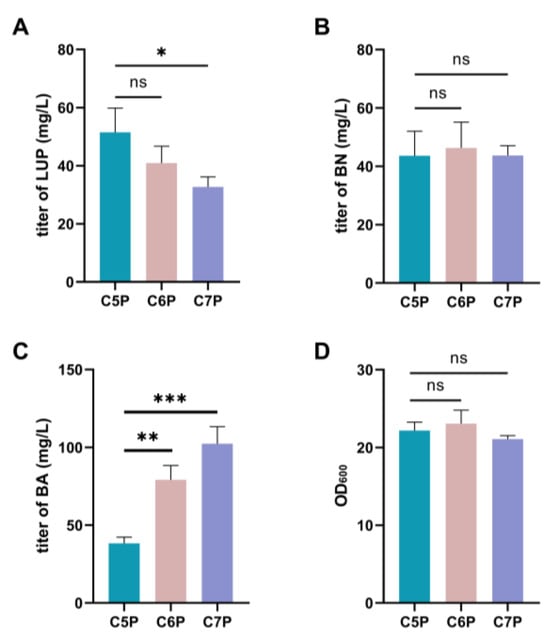
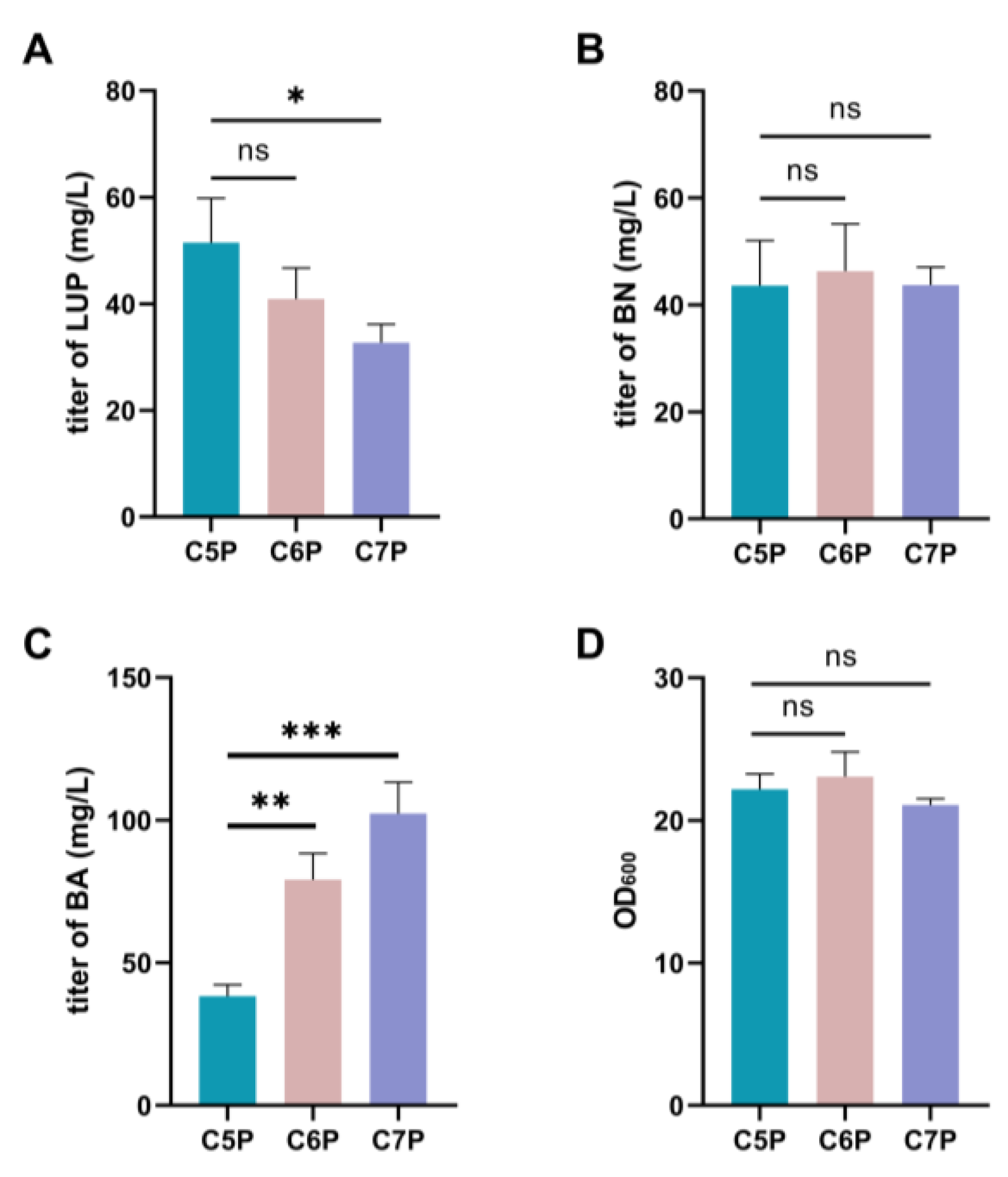
Compared with C5M4P, C5P showed lower OD600-normalized lupeol production, while the OD600-normalized yield of betulin and betulinic acid increased by 1.9-fold and 13.6-fold, respectively (Supplementary Figure S13). This result indicated that the deletion of the mitochondrial-targeted MVA pathway recovered betulinic acid production. With the increased copy numbers of RoCYP01-PDZ/RoCPR, the lupeol titer decreased gradually (Figure 8A), whereas the betulinic acid titer was progressively improved (Figure 8C). Specifically, the maximum betulinic acid titer of 102.26 ± 8.99 mg/L was achieved in strain C7P harboring three copies of RoCYP01-PDZ/RoCPR (Figure 8C). Notably, no significant variation in betulin accumulation was observed with the increasing copy numbers of RoCYP01-PDZ/RoCPR (Figure 8B). The enhanced expression of RoCYP01-PDZ/RoCPR exerted no inhibitory effect on yeast cell growth (Figure 8D).
Figure 8.
Effect of increasing copy number of RoCYP01-PDZ/RoCPR on titers of lupeol (A), betulin (B), betulinic acid (C) and cell biomass measured as OD600 values (D). LUP, lupeol; BN, betulin; BA, betulinic acid. Strains C5P, C6P, and C7P carry 1 × RoCYP01-PDZ/RoCPR, 2 × RoCYP01-PDZ/RoCPR, and 3 × RoCYP01-PDZ/RoCPR, respectively. Data are presented as mean ± SD. Statistical significance: ns, not significant; *, p < 0.05, **, p < 0.01, ***, p < 0.001.
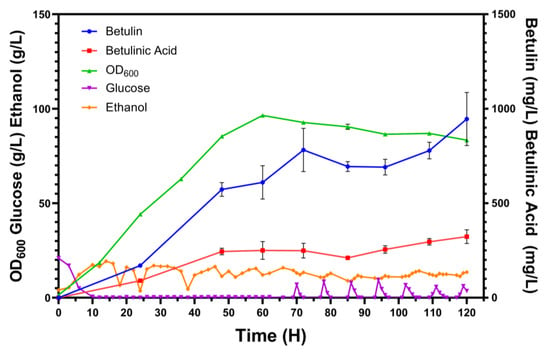
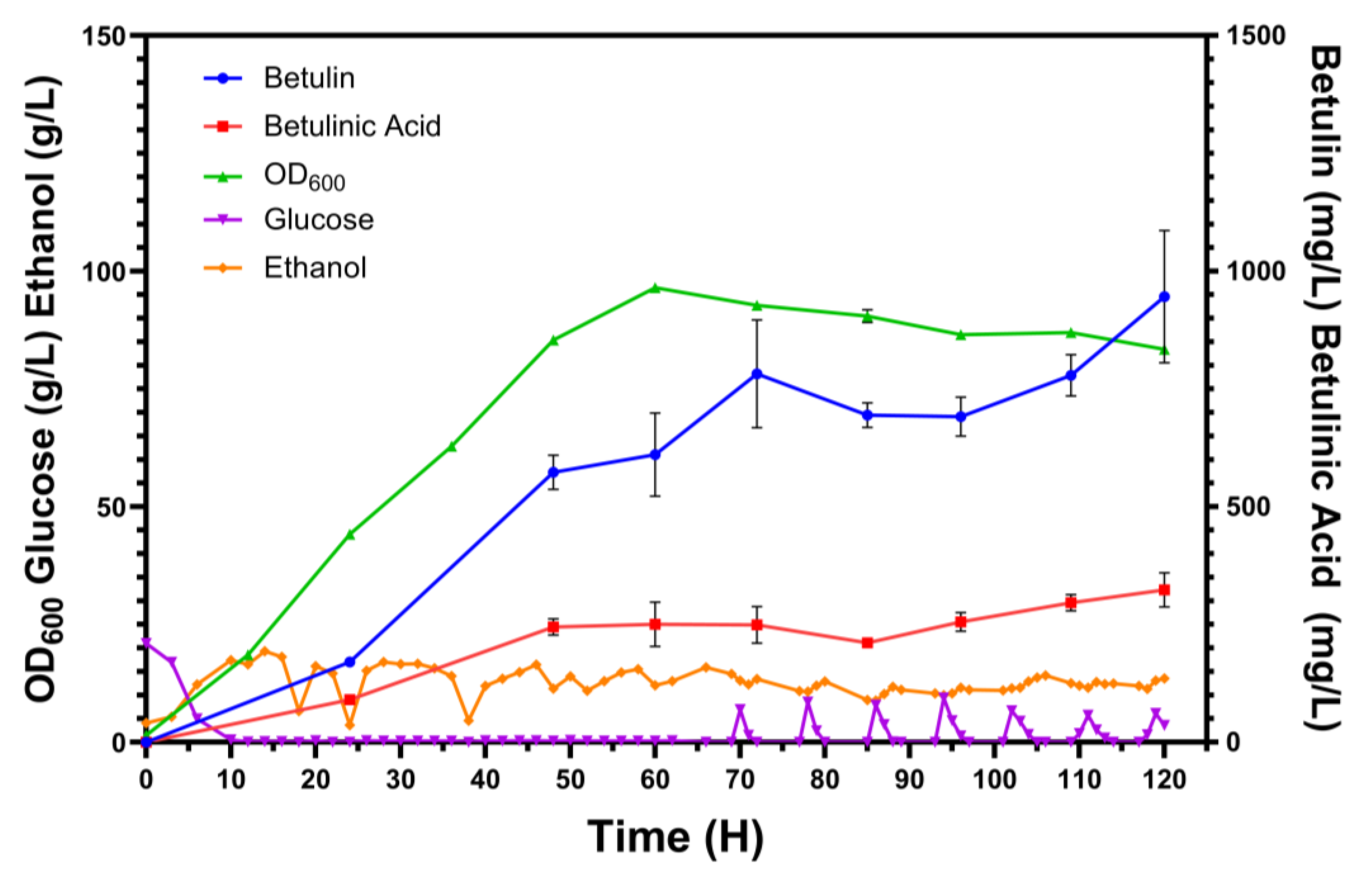
The strain C8P was obtained via auxotrophic marker (URA/TRP/LEU/HIS) and GDH1 complementation from C7P for growth optimization and used for fed-batch fermentation. As shown in Figure 9, C8P reached an OD600 of 90 at 60 h. The maximum titers of betulinic acid and betulin reached 323 mg/L and 946 mg/L, respectively.
Figure 9.
Two-stage fed-batch fermentation in a 5 L bioreactor for BA production. Data were obtained from a single fermentation run. Cell density, betulin, and betulinic acid data are presented as the mean ± SD of 3 technical replicate measurements at each sampling time point. Glucose and ethanol concentrations were monitored online.
4. Discussion
Here, we systematically evaluated and optimized the catalytic modules governing betulinic acid biosynthesis in S. cerevisiae. Our data showed that RoCYP01/RoCPR outperformed BPLO/LjCPR in the conversion of betulin to betulinic acid, yielding a BA:BN product ratio of 77.8:22.2 (Figure 2). Structural simulation provided a hypothesis that the substrate binding pocket of RoCYP01 enables more favorable positioning of the C28-hydroxymethyl group of betulin toward the heme iron catalytic center (Supplementary Figure S14), which partially explained its higher oxidative activity. Even so, incomplete oxidation still occurred and the intermediate betulin continuously accumulated (Figure 2), indicating that the sequential oxidation cascade catalyzed by RoCYP01 remained a major rate-limiting step. To improve the metabolic flux from lupeol toward downstream products, we constructed an intracellular OeLUP-RoCYP01 multienzyme complex via PDZ-PDZlig interaction inspired by a previous study [22]. This spatial assembly resulted in 34%, 14% and 27% increases in the titers of lupeol, betulin and betulinic acid, respectively (Figure 4). Nevertheless, this protein-based assembly could not fully synchronize the cascade reaction rates, as there was still a certain amount of lupeol and betulin accumulation in strain C1P. The intracellular distribution of hydrophobic intermediates may influence their availability for downstream conversion. Nonlinear microscopy has enabled non-invasive and dynamic monitoring of triterpenoid accumulation in living S. cerevisiae cells, providing a basis for investigating triterpenoid subcellular distribution [28]. However, the subcellular localization and trafficking of lupeol and betulin in S. cerevisiae remain poorly characterized, and the extent to which compartmentalization limits their accessibility to downstream enzymes remains unclear. Further genomic integration of multiple copies of RoCYP01-PDZ/RoCPR effectively enhanced the overall oxidation capacity and raised final betulinic acid titer (Figure 8). Previous studies have highlighted ER protein folding [19], cytochrome b5-mediated support of particular plant P450 reactions [29] and cofactor availability such as NADPH [14] and heme [30] as relevant considerations in yeast production systems. Whether these factors constrain RoCYP01-mediated oxidation in the strains developed here remains to be determined.
Mitochondrial compartmentalization of the mevalonate pathway has been regarded as an appealing strategy for squalene overproduction, owing to the abundant acetyl-CoA, ATP and cofactor pools inside yeast mitochondria [20]. In the present study, we reconstructed the complete MVA pathway in mitochondria via COX4-derived mitochondrial localization sequences [20], aiming to supply sufficient isopentenyl pyrophosphate precursors for betulinic acid biosynthesis. As anticipated, mitochondrial MVA engineering substantially elevated squalene accumulation in strain C3M4P (Figure 5B), consistent with increased upstream precursor supply following introduction of the mitochondria-targeted MVA genes. Nevertheless, sharp declines in lupeol, betulin and betulinic acid titers were observed (Figure 5B), revealing a severe metabolic block downstream of squalene.
Transcriptomic comparisons between C3P, C3M4P and the parental strain CEN.PK2-1C uncovered widespread cellular metabolic reprogramming triggered by mitochondrial pathway reconstruction. Multiple genes in core metabolic categories, including amino acid, carbohydrate, lipid and energy metabolism pathways, were coordinately upregulated, alongside induced expression of genes participating in the pentose phosphate pathway, oxidative phosphorylation and peroxisome-related processes (Figure 6A), which reflected augmented demands for energy and NADPH to cope with heterologous metabolic burden. Notably, genes critical for endoplasmic reticulum homeostasis were affected: CYB5, which provides auxiliary electron transfer for ER-resident cytochrome P450 enzymes, was significantly downregulated; meanwhile, JJJ2, encoding a J-domain protein, was suppressed, whereas the heat shock gene HSP26 was induced (Figure 6B). Altered expression of CYB5 and chaperone-related genes may be associated with perturbations in electron transfer and protein processing within the ER, which may impair the catalytic performance of RoCYP01 located on the endoplasmic reticulum membrane.
To relieve the metabolic constraints, we engineered NADPH metabolism and mitigated the ERG7-mediated post-translational repression of ERG1 either by N-degron-dependent protein degradation or heterologous replacement with T. flavus lanosterol synthase. Although such modifications restored the pool of 2,3-oxidosqualene and partially recovered downstream lupeol and betulin titers, betulinic acid production still failed to improve prominently (Figure 7). One hypothesis motivated by previous studies is that the accumulation of phosphorylated MVA intermediates (e.g., IPP, MVA-PP) in mitochondria could contribute to cell metabolic stress [20]. An extra MLS-ERG19 copy drives the conversion of MVA-PP to downstream product IPP [20]. However, whether mitochondrial IPP export is efficient enough to fully transport IPP to the cytosol remains unknown. Enhancing IPP export may alleviate mitochondrial toxicity if IPP accumulates within mitochondria. However, the mechanism underlying IPP mitochondrial transportation in yeast is not fully understood. Even after easing the 2,3-oxidosqualene bottleneck, the additional constraints to which disturbed ER protein folding and electron supply for P450 oxidation may have contributed still persisted. Ultimately, complete deletion of the mitochondrial-targeted MVA pathway significantly increased OD600-normalized BA production in strain C5P (Supplementary Figure S13).
Based on these results, our work demonstrates that mitochondrial MVA reconstruction is not universally beneficial for all terpenoid pathways. For biosynthetic routes where downstream reactions must occur in the cytosol–ER compartment, mitochondrial pathway introduction may provoke survival-oriented metabolic reprogramming, counteracting the benefits brought by elevated upstream precursor supply. Future attempts could focus on screening and overexpressing mitochondrial IPP exporters, tuning the expression strength of mitochondrial MVA enzymes to avoid toxic intermediate buildup, or engineering ER-associated auxiliary components to counteract secondary organelle stress, so as to fully exploit the potential of mitochondrial compartmentalization for triterpenoid biosynthesis.
In fed-batch fermentation, we observed a substantial improvement in betulinic acid titers relative to shake-flask cultures (Figure 8 and Figure 9). Nevertheless, betulin emerged as the dominant accumulated metabolite (Figure 9), indicating that the oxidative conversion from betulin to betulinic acid remained a critical rate-limiting step. The 5 L bioreactor differed from shake-flask cultivation in aspects such as pH and oxygen supply. In shake flasks, pH drifts without external regulation and typically drops to 3–4 at the late fermentation phase; by contrast, pH was stably held at 5.5 throughout bioreactor runs. A two-stage pH control strategy could be explored to optimize product distribution. In addition, the bioreactor provides a more efficient and controllable oxygen supply. Therefore, fine-tuning DO levels offers an additional lever to improve betulinic acid biosynthesis.
A further key distinction lies in carbon-source feeding regimes: fed-batch bioreactors deliver continuous carbon supply, whereas shake-flask experiments just rely on initial carbon addition. We hypothesize that sustained carbon feeding may maintain abundant pools of upstream intermediates, such as lupeol, sustaining high metabolic flux through the RoCYP01-driven oxidation. If this oxidation favors betulin formation over its subsequent oxidation into betulinic acid, a massive amount of betulin would build up due to continuously fed upstream substrates. In shake-flask cultures, by comparison, upstream intermediate pools may gradually deplete over time as carbon is exhausted. The lowered flux toward betulin synthesis may thereby permit a larger fraction of generated betulin to undergo further oxidation to betulinic acid. As demonstrated by Chen et al., engineering RoCYP01/RoCPR to optimize substrate–product channel, electron transfer and enzyme–substrate interaction can boost the betulin-to-betulinic acid conversion efficiency [31]. The E120Q substitution in RoCYP01 has been applied in Y. lipolytica to improve its catalytic performance for betulinic acid production [32]. Therefore, combinatorial strategies merging fermentation condition optimization with enzyme engineering are expected to strengthen betulin oxidation and further advance betulinic acid yields.
5. Conclusions
In summary, the present work reported the systematic metabolic engineering of S. cerevisiae for improved de novo biosynthesis of betulinic acid. We first compared two plant-derived C28 oxidation systems and identified RoCYP01/RoCPR as a superior catalytic pair with an initial titer of 3.74 ± 0.43 mg/L betulinic acid. Genomic integration of the BA synthesis module and key enzyme overexpression were applied to achieve strain C1, resulting in a betulinic acid titer of 11.02 ± 1.58 mg/L. The PDZ/PDZlig-based multienzyme complex increased BA titer by 27% on the basis of C1. Further improvements were applied to the cytosolic precursor pathway to obtain strain C3P with a betulinic acid titer of 15.33 ± 1.17 mg/L. Although mitochondrial compartmentalization of the complete MVA pathway successfully boosted squalene accumulation, it triggered global cellular metabolic reprogramming and severely impaired post-squalene metabolic flux. Alleviation of the ERG7-mediated inhibitory effect partially restored 2,3-oxidosqualene supply yet failed to recover final betulinic acid titers. With the deletion of the mitochondrial MVA pathway, enhanced 2,3-oxidosqualene supply, modified pentose phosphate pathway and galactose metabolism, and further metabolism optimizations in the cytosol, strain C5P reached a titer of 38.30 ± 4.04 mg/L BA. After increasing the gene copy number of RoCYP01-PDZ/RoCPR, the engineered strain C7P achieved a betulinic acid titer of 102.26 ± 8.99 mg/L in shake-flask cultivation. Subsequent fed-batch fermentation of the marker-complemented strain C8P in a 5 L bioreactor further yielded 323 mg/L betulinic acid alongside massive betulin accumulation, revealing that the oxidative conversion from betulin to betulinic acid remained a persistent bottleneck even under high-titer conditions. Our findings demonstrate that subcellular compartment engineering for terpenoid biosynthesis should be carefully evaluated for potential cross-organelle physiological perturbations. Future efforts combining protein engineering of RoCYP01, optimization of host ER microenvironment, and fine-tuned fermentation control will be required to further elevate betulinic acid proportion and realize cost-competitive microbial production.
Supplementary Materials
The following supporting information can be downloaded at: https://www.mdpi.com/article/10.3390/biom16111593/s1, Figure S1: GC-MS analysis of lupeol produced by the engineered yeast strain C3M4P N ND-ERG7; Figure S2: GC-MS analysis of betulin produced by the engineered yeast strain C3M4P N ND-ERG7; Figure S3: GC-MS analysis of betulinic acid produced by the engineered yeast strain C3M4P N ND-ERG7; Figure S4: GC-MS analysis of internal standard ursolic acid extracted from samples of C3M4P N ND-ERG7; Figure S5: GC-MS analysis of internal standard nonadecanoic acid extracted from samples of C3M4P N ND-ERG7; Figure S6: GC-MS analysis of squalene produced in the engineered yeast strain C3M4P N ND-ERG7; Figure S7: GC-MS analysis of 2,3-oxidosqualene produced in the engineered yeast strain C3M4P N ND-ERG7; Figure S8: GC-MS analysis of ergosterol produced in the engineered yeast strain C3M4P N ND-ERG7; Figure S9: GC-MS analysis of lanosterol produced in the engineered yeast strain C3M4P N ND-ERG7; Figure S10: Comparative transcriptomic analysis of parental strain CEN.PK2-1C (C), C3P and C3M4P yeast strains; Figure S11: Venn diagram showing the overlap of differentially expressed genes (DEGs) across three pairwise comparisons: C3M4P vs. C3P, C3P vs. C, and C3M4P vs. C; Figure S12: Effects of NADPH metabolism engineering on the biosynthesis of betulinic acid and its related pathway metabolites; Figure S13: Effects of mitochondrial MVA pathway deletion on betulinic acid biosynthesis; Figure S14: Docking simulations of RoCYP01-BN and BPLO-BN complexes comparing the positioning of the C28-hydroxymethyl group to the heme iron; Table S1: Yeast strains constructed in this study; Table S2: Plasmids used in this study; Table S3: Amino acid sequences of peptides, N-degron module and heterologous proteins used in this study; Table S4: Software and platforms used in transcriptome analysis.
Author Contributions
Z.X.: Methodology, Investigation, Writing—original draft. C.Z.: Methodology, Validation. K.Y.: Methodology, Validation. C.L.: Supervision, Project Administration. Y.Z.: Supervision, Writing—review and editing, Funding acquisition. All authors have read and agreed to the published version of the manuscript.
Funding
This research was funded by the National Key Research and Development Program of China (No. 2018YFC1706200).
Institutional Review Board Statement
Not applicable.
Informed Consent Statement
Not applicable.
Data Availability Statement
The RNA-seq data generated in this study have been deposited in the NCBI Sequence Read Archive (SRA), under BioProject accession PRJNA1535524.
Acknowledgments
We thank Yong Wang from the CAS Center for Excellence in Molecular Plant Science for his insightful and extensive discussions on the technical details of the fed-batch fermentation conducted in this study. We also gratefully acknowledge Mengmeng Zheng from the School of Life Sciences, Shanghai University, for her guidance on the modeling of the RoCYP01-BN and BPLO-BN complexes. During the preparation of this manuscript, the author(s) used GPT-6 Astra for the purpose of improving English language and readability. The authors have reviewed and edited the output and take full responsibility for the content of this publication.
Conflicts of Interest
The authors declare no conflicts of interest.
Abbreviations
The following abbreviations are used in this manuscript:
| 2,3-OSQ | 2,3-Oxidosqualene |
| 5-FOA | 5-Fluoroorotic acid |
| 6PGC | 6-Phosphogluconate |
| 6PGL | 6-Phospho-D-glucono-1,5-lactone |
| ATP | Adenosine triphosphate |
| BA | Betulinic acid |
| BN | Betulin |
| BPLO | Betula platyphylla lupeol oxidase (CYP716A180) |
| BSTFA | N,O-Bis(trimethylsilyl)trifluoroacetamide |
| Cas9 | CRISPR-associated protein 9 |
| CoA | Coenzyme A |
| COX4 | Cytochrome c oxidase subunit IV |
| CPR | cytochrome P450 reductase |
| CRISPR | Clustered regularly interspaced short palindromic repeats |
| CYP450/P450 | Cytochrome P450 |
| E4P | Erythrose 4-phosphate |
| EDTA | Ethylenediaminetetraacetic acid |
| ER | Endoplasmic reticulum |
| F6P | Fructose 6-phosphate |
| FC | Fold change |
| G3P | Glyceraldehyde 3-phosphate |
| G6P | Glucose 6-phosphate |
| Gal | Galactose |
| Glu | Glucose |
| gRNA | Guide RNA |
| KEGG | Kyoto Encyclopedia of Genes and Genomes |
| LB | Luria–Bertani medium |
| LiAc | Lithium acetate |
| LjCPR | Lotus japonicus cytochrome P450 reductase |
| LUP | Lupeol |
| MLS | Mitochondrial localization sequence |
| MVA | Mevalonate |
| MVA-P | Mevalonate 5-phosphate |
| MVA-PP | Mevalonate 5-diphosphate |
| NADPH | Reduced nicotinamide adenine dinucleotide phosphate |
| OD600 | Optical density at 600 nm |
| OeLUP | Olea europaea lupeol synthase |
| OSC | Oxidosqualene cyclase |
| PCA | Principal component analysis |
| PCR | Polymerase chain reaction |
| PEG | Polyethylene glycol |
| R5P | Ribose 5-phosphate |
| RoCPR | Rosmarinus officinalis cytochrome P450 reductase |
| RoCYP01 | Rosmarinus officinalis C28 oxidase (CYP716A155) |
| Ru5P | Ribulose 5-phosphate |
| S7P | Sedoheptulose 7-phosphate |
| SC | Synthetic complete medium |
| SD | Synthetic defined medium/Standard deviation, depending on context |
| SQ | Squalene |
| TCA cycle | Tricarboxylic acid cycle |
| TfLS | Talaromyces flavus lanosterol synthase |
| tHMG1 | N-terminally truncated 3-hydroxy-3-methylglutaryl-CoA reductase 1 |
| TPM | Transcripts per million |
| vvm | Volume of gas per volume of liquid per minute |
| X5P | Xylulose 5-phosphate |
| YPD | Yeast extract peptone dextrose medium |
References
- Pisha, E.; Chai, H.; Lee, I.-S.; Chagwedera, T.E.; Farnsworth, N.R.; Cordell, G.A.; Beecher, C.W.W.; Fong, H.H.S.; Kinghorn, A.D.; Brown, D.M.; et al. Discovery of betulinic acid as a selective inhibitor of human melanoma that functions by induction of apoptosis. Nat. Med. 1995, 1, 1046–1051. [Google Scholar] [CrossRef] [Scilit]
- Huang, J.; Li, Q.; Wang, H.; Zhang, S.; Zhou, X.; Huang, F.; Chen, J.; Xu, L.; Kang, D. Betulinic Acid Inhibits Glioma Progression by Inducing Ferroptosis Through the PI3K/Akt and NRF2/HO-1 Pathways. J. Gene Med. 2025, 27, e70011. [Google Scholar] [CrossRef] [Scilit]
- Fujioka, T.; Kashiwada, Y.; Kilkuskie, R.E.; Cosentino, L.M.; Ballas, L.M.; Jiang, J.B.; Janzen, W.P.; Chen, I.-S.; Lee, K.-H. Anti-AIDS Agents, 11. Betulinic Acid and Platanic Acid as Anti-HIV Principles from Syzigium claviflorum, and the Anti-HIV Activity of Structurally Related Triterpenoids. J. Nat. Prod. 1994, 57, 243–247. [Google Scholar] [CrossRef] [Scilit]
- Oliveira Costa, J.F.; Barbosa-Filho, J.M.; de Azevedo Maia, G.L.; Guimarães, E.T.; Meira, C.S.; Ribeiro-dos-Santos, R.; Pontes de Carvalho, L.C.; Soares, M.B.P. Potent anti-inflammatory activity of betulinic acid treatment in a model of lethal endotoxemia. Int. Immunopharmacol. 2014, 23, 469–474. [Google Scholar] [CrossRef] [Scilit]
- de Sá, M.S.; Costa, J.F.O.; Krettli, A.U.; Zalis, M.G.; Maia, G.L.A.; Sette, I.M.F.; Câmara, C.A.; Barbosa Filho, J.M.; Giulietti-Harley, A.M.; Ribeiro dos Santos, R.; et al. Antimalarial activity of betulinic acid and derivatives in vitro against Plasmodium falciparum and in vivo in P. berghei-infected mice. Parasitol. Res. 2009, 105, 275–279. [Google Scholar] [CrossRef] [Scilit]
- Cîntă Pînzaru, S.; Leopold, N.; Kiefer, W. Vibrational spectroscopy of betulinic acid HIV inhibitor and of its birch bark natural source. Talanta 2002, 57, 625–631. [Google Scholar] [CrossRef] [Scilit]
- Luque-Jurado, I.; Rivas, S.; Lebrón-Aguilar, R.; Quintanilla-López, J.E.; Sanz, M.L.; Soria, A.C. Ultrasound-assisted extraction of bioactive birch (Betula sp.) bark triterpenoids using hydrophobic natural deep eutectic solvents. Anal. Bioanal. Chem. 2026, 418, 1713–1723. [Google Scholar] [CrossRef] [Scilit]
- Chang, C.-W.; Wu, T.-S.; Hsieh, Y.-S.; Kuo, S.-C.; Chao, P.-D.L. Terpenoids of Syzygium formosanum. J. Nat. Prod. 1999, 62, 327–328. [Google Scholar] [CrossRef] [Scilit]
- Schühly, W.; Heilmann, J.; Çalis, I.; Sticher, O. New Triterpenoids with Antibacterial Activity from Zizyphus joazeiro. Planta Med. 1999, 65, 740–743. [Google Scholar] [CrossRef] [Scilit]
- Mir, R.H.; Bhat, M.F.; Sawhney, G.; Kumar, P.; Andrabi, N.I.; Shaikh, M.; Mohi-ud-Din, R.; Masoodi, M.H. Prunella vulgaris L: Critical Pharmacological, Expository Traditional Uses and Extensive Phytochemistry: A Review. Curr. Drug Discov. Technol. 2022, 19, e140122191102. [Google Scholar] [CrossRef] [Scilit]
- An, T.; Zha, W.; Zi, J. Biotechnological production of betulinic acid and derivatives and their applications. Appl. Microbiol. Biotechnol. 2020, 104, 3339–3348. [Google Scholar] [CrossRef] [Scilit]
- Zhou, C.; Li, J.; Li, C.; Zhang, Y. Improvement of betulinic acid biosynthesis in yeast employing multiple strategies. BMC Biotechnol. 2016, 16, 59. [Google Scholar] [CrossRef] [Scilit]
- Huang, J.; Zha, W.; An, T.; Dong, H.; Huang, Y.; Wang, D.; Yu, R.; Duan, L.; Zhang, X.; Peters, R.J.; et al. Identification of RoCYP01 (CYP716A155) enables construction of engineered yeast for high-yield production of betulinic acid. Appl. Microbiol. Biotechnol. 2019, 103, 7029–7039. [Google Scholar] [CrossRef] [Scilit]
- Tang, M.; Xu, X.; Liu, Y.; Li, J.; Du, G.; Lv, X.; Liu, L. Combinatorial Metabolic Engineering for Improving Betulinic Acid Biosynthesis in Saccharomyces cerevisiae. ACS Synth. Biol. 2024, 13, 1798–1808. [Google Scholar] [CrossRef] [Scilit]
- Tang, S.; Ji, W.; Zhao, Y.; Zhang, J.; Wei, D.; Wang, F.-Q. De novo biosynthesis of betulinic acid in engineered Saccharomyces cerevisiae. Bioorganic Chem. 2024, 152, 107737. [Google Scholar] [CrossRef] [Scilit]
- Yee, D.A.; DeNicola, A.B.; Billingsley, J.M.; Creso, J.G.; Subrahmanyam, V.; Tang, Y. Engineered mitochondrial production of monoterpenes in Saccharomyces cerevisiae. Metab. Eng. 2019, 55, 76–84. [Google Scholar] [CrossRef] [Scilit]
- Lv, X.; Wang, F.; Zhou, P.; Ye, L.; Xie, W.; Xu, H.; Yu, H. Dual regulation of cytoplasmic and mitochondrial acetyl-CoA utilization for improved isoprene production in Saccharomyces cerevisiae. Nat. Commun. 2016, 7, 12851. [Google Scholar] [CrossRef] [Scilit]
- Jin, C.-C.; Zhang, J.-L.; Song, H.; Cao, Y.-X. Boosting the biosynthesis of betulinic acid and related triterpenoids in Yarrowia lipolytica via multimodular metabolic engineering. Microb. Cell Fact. 2019, 18, 77. [Google Scholar] [CrossRef] [Scilit]
- Luo, Y.; Zhong, J.-J.; Xiao, H. Mechanism and engineering of endoplasmic reticulum-localized membrane protein folding in Saccharomyces cerevisiae. Metab. Eng. 2025, 90, 43–56. [Google Scholar] [CrossRef] [Scilit]
- Zhu, Z.-T.; Du, M.-M.; Gao, B.; Tao, X.-Y.; Zhao, M.; Ren, Y.-H.; Wang, F.-Q.; Wei, D.-Z. Metabolic compartmentalization in yeast mitochondria: Burden and solution for squalene overproduction. Metab. Eng. 2021, 68, 232–245. [Google Scholar] [CrossRef] [Scilit]
- Pröschel, M.; Detsch, R.; Boccaccini, A.R.; Sonnewald, U. Engineering of Metabolic Pathways by Artificial Enzyme Channels. Front. Bioeng. Biotechnol. 2015, 3, 168. [Google Scholar] [CrossRef] [Scilit]
- Ji, D.; Li, J.; Xu, F.; Ren, Y.; Wang, Y. Improve the Biosynthesis of Baicalein and Scutellarein via Manufacturing Self-Assembly Enzyme Reactor In Vivo. ACS Synth. Biol. 2021, 10, 1087–1094. [Google Scholar] [CrossRef] [Scilit]
- Tang, N.; Xu, Y.; Li, C.; Zhang, Y. Mitochondrial Targeting of MVA Pathway Triggers Severe Inhibition of Post-Squalene Cholesterol Biosynthesis: Transcriptomic and Proteomic Insights in Yeast. Molecules 2026, 31, 1999. [Google Scholar] [CrossRef] [Scilit]
- Qiao, W.; Zhou, Z.; Liang, Q.; Mosongo, I.; Li, C.; Zhang, Y. Improving lupeol production in yeast by recruiting pathway genes from different organisms. Sci. Rep. 2019, 9, 2992. [Google Scholar] [CrossRef] [Scilit]
- Abramson, J.; Adler, J.; Dunger, J.; Evans, R.; Green, T.; Pritzel, A.; Ronneberger, O.; Willmore, L.; Ballard, A.J.; Bambrick, J.; et al. Accurate structure prediction of biomolecular interactions with AlphaFold 3. Nature 2024, 630, 493–500. [Google Scholar] [CrossRef] [Scilit]
- Du, M.-M.; Zhang, G.-G.; Zhu, Z.-T.; Zhao, Y.-Q.; Gao, B.; Tao, X.-Y.; Wang, F.-Q.; Wei, D.-Z. Boosting the epoxidation of squalene to produce triterpenoids in Saccharomyces cerevisiae. Biotechnol. Biofuels Bioprod. 2023, 16, 76. [Google Scholar] [CrossRef] [Scilit]
- Foresti, O.; Ruggiano, A.; Hannibal-Bach, H.K.; Ejsing, C.S.; Carvalho, P. Sterol homeostasis requires regulated degradation of squalene monooxygenase by the ubiquitin ligase Doa10/Teb4. eLife 2013, 2, e00953. [Google Scholar] [CrossRef] [Scilit]
- Dianat, M.; Münchberg, U.; Blank, L.M.; Freier, E.; Ebert, B.E. Non-invasive monitoring of microbial triterpenoid production using nonlinear microscopy techniques. Front. Bioeng. Biotechnol. 2023, 11, 1106566. [Google Scholar] [CrossRef] [Scilit]
- Liu, Y.; Zhao, X.; Gan, F.; Chen, X.; Deng, K.; Crowe, S.A.; Hudson, G.A.; Belcher, M.S.; Schmidt, M.; Astolfi, M.C.T.; et al. Complete biosynthesis of QS-21 in engineered yeast. Nature 2024, 629, 937–944. [Google Scholar] [CrossRef] [Scilit]
- Zhu, J.; Zhang, K.; He, Y.; Zhang, Q.; Ran, Y.; Tan, Z.; Cui, L.; Feng, Y. Metabolic engineering of Saccharomyces cerevisiae for chelerythrine biosynthesis. Microb. Cell Fact. 2024, 23, 183. [Google Scholar] [CrossRef] [Scilit]
- Chen, Y.; Deng, Z.; Zhang, Y.; Yuan, Z.; Liu, C.; Luo, Z.; Rao, Y. Balancing Consecutive Two-Step Oxidations Catalyzed by a Single Cytochrome P450 Enables Efficient Biosynthesis of Plant Natural Products. ACS Synth. Biol. 2026, 15, 1617–1627. [Google Scholar] [CrossRef] [Scilit]
- Li, X.; Jiao, L.; Zhao, G.; Li, Y.; Yan, Y.; Yan, J. Multidimensional metabolic engineering of Yarrowia lipolytica for highly efficient biosynthesis of betulinic acid. Green Chem. 2025, 27, 6855–6868. [Google Scholar] [CrossRef] [Scilit]
Disclaimer/Publisher’s Note: The statements, opinions and data contained in all publications are solely those of the individual author(s) and contributor(s) and not of MDPI and/or the editor(s). MDPI and/or the editor(s) disclaim responsibility for any injury to people or property resulting from any ideas, methods, instructions or products referred to in the content. |
© 2026 by the authors. Licensee MDPI, Basel, Switzerland. This article is an open access article distributed under the terms and conditions of the Creative Commons Attribution (CC BY) license.